WSP Global Inc · TSX:WSP
WSP Global — ESG Presentation (May 2023)
45 slides from WSP Global's sustainability presentation, May 9, 2023
Slide 1: Setting a Science Based Target Supplier Webinar
WSP Global Setting a Science Based Target Supplier Webinar MAY, 9 TH 2023 Go to slide master to update this footer 1
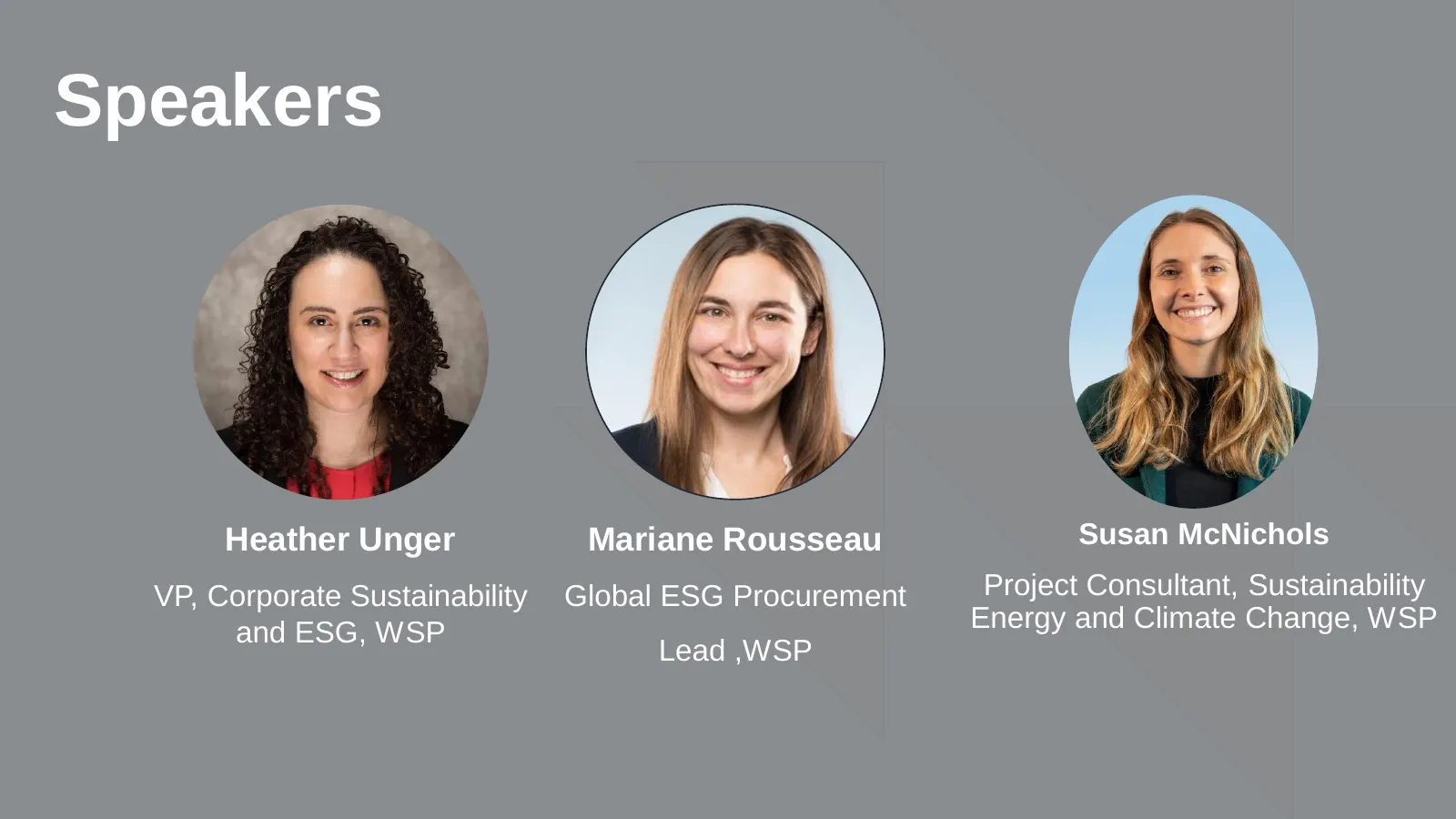
Slide 2: Speakers
Speakers Go to slide master to update this footer Heather Unger Mariane Rousseau Susan McNichols VP, Corporate Sustainability Global ESG Procurement Project Consultant, Sustainability and ESG, WSP Energy and Climate Change, WSP Lead ,WSP 2
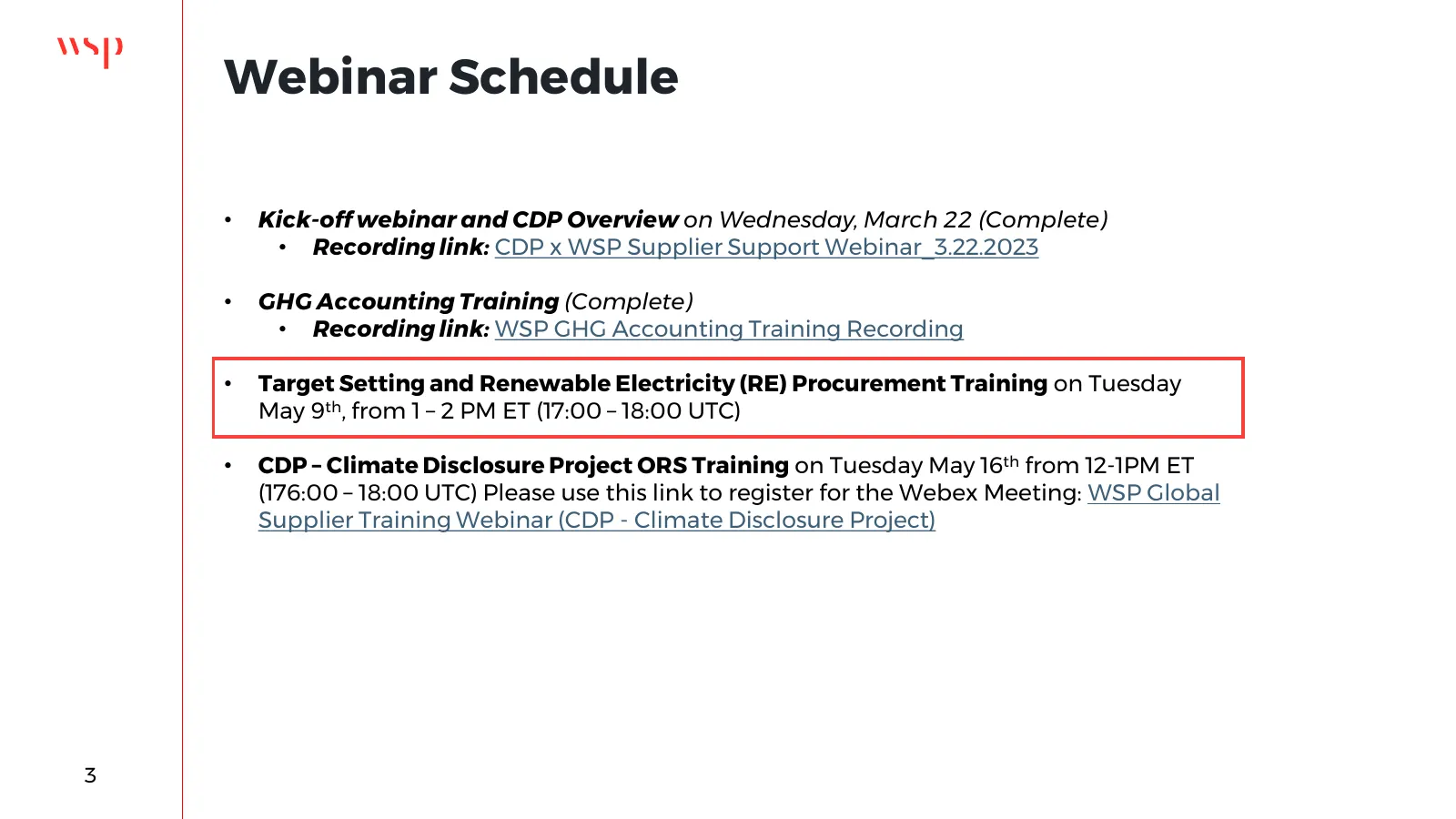
Slide 3: Webinar Schedule
Webinar Schedule • Kick-off webinar and CDP Overview on Wednesday, March 22 (Complete) • Recording link: CDP x WSP Supplier Support Webinar_3.22.2023 • GHG Accounting Training (Complete) • Recording link: WSP GHG Accounting Training Recording • Target Setting and Renewable Electricity (RE) Procureme
Slide 4: Webinar Objectives
Webinar Objectives • Attendees will understand: • What a science-based target is • The SBTi requirements and goal setting timeline • The resources available to proceed in setting a science-based target approved by the SBTi Go to slide master to update this footer • How to enter target information in
Slide 5: Agenda
Agenda WSP Ambitions Setting a Science Based Target Go to slide master to update this footer Reporting a Target through CDP Renewable Electricity Overview 5

Slide 6: WSP Ambitions
6 6 Go to slide master to update this footer WSP Ambitions
Slide 7: WSP committed to ambitious science-based emissions targets
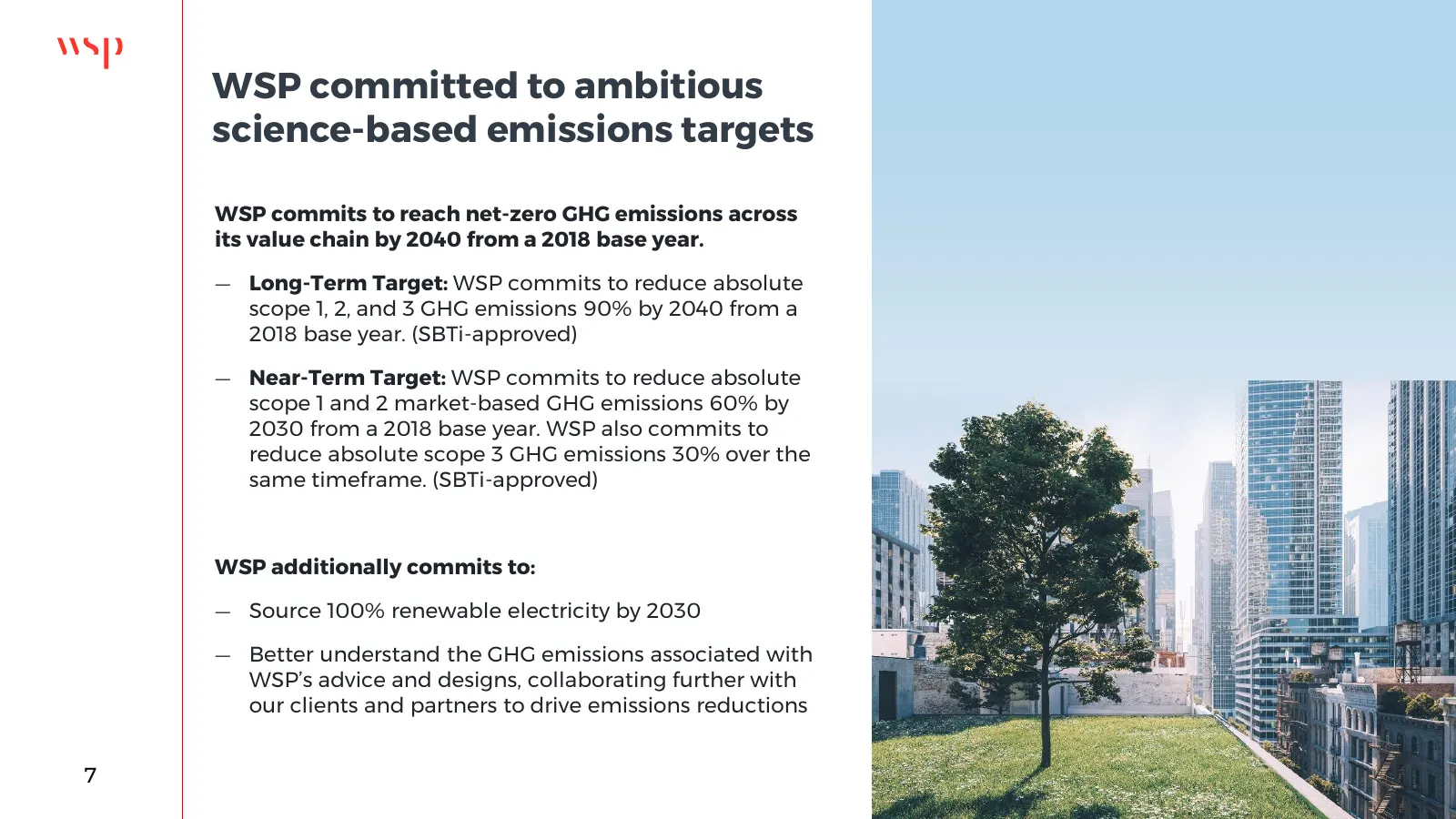
WSP committed to ambitious science-based emissions targets WSP commits to reach net-zero GHG emissions across its value chain by 2040 from a 2018 base year. — Long-Term Target: WSP commits to reduce absolute scope 1, 2, and 3 GHG emissions 90% by 2040 from a 2018 base year. (SBTi-approved) — Near-Te
Slide 8: Supplier disclosure and reduction requirements
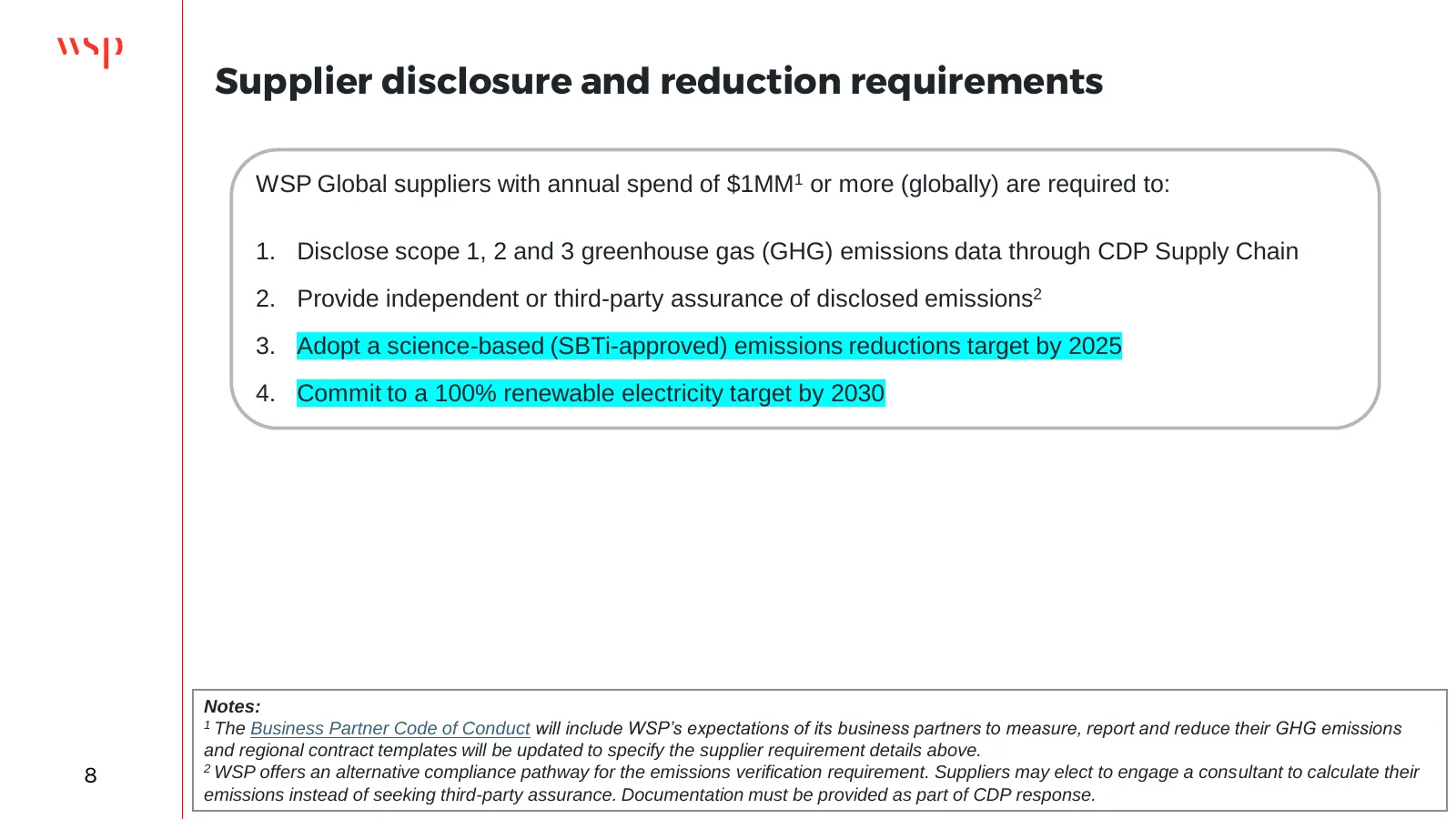
Supplier disclosure and reduction requirements WSP Global suppliers with annual spend of $1MM1 or more (globally) are required to: 1. Disclose scope 1, 2 and 3 greenhouse gas (GHG) emissions data through CDP Supply Chain 2. Provide independent or third-party assurance of disclosed emissions2 3. Adop

Slide 9: Setting a Science Based Target
9 9 Go to slide master to update this footer Based Target Setting a Science
Slide 10: The Science Based Targets initiative
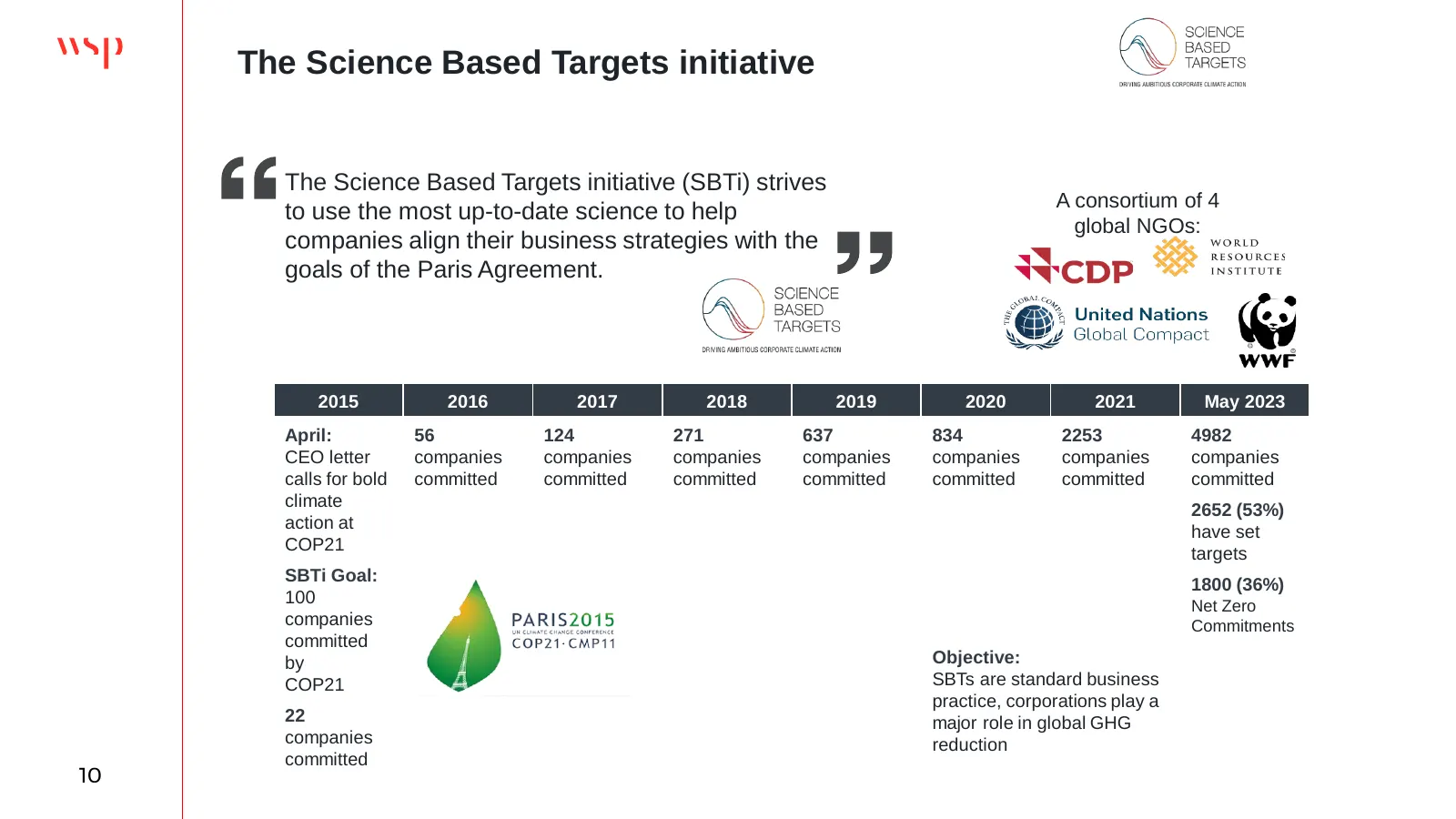
The Science Based Targets initiative The Science Based Targets initiative (SBTi) strives A consortium of 4 to use the most up-to-date science to help global NGOs: companies align their business strategies with the goals of the Paris Agreement. 2015 2016 2017 2018 2019 2020 2021 May 2023 April: 56 12
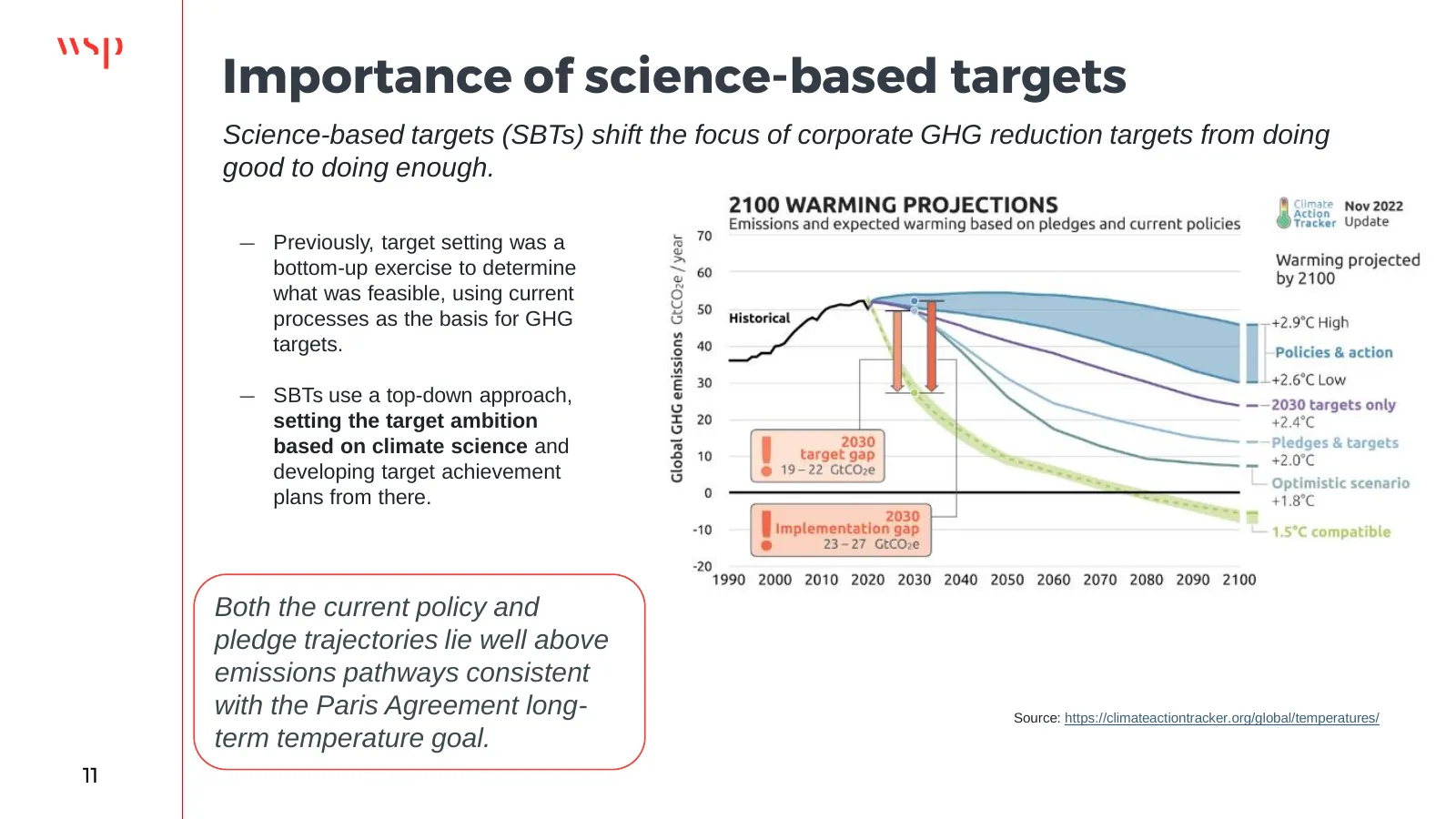
Slide 11: Importance of science-based targets
Importance of science-based targets Science-based targets (SBTs) shift the focus of corporate GHG reduction targets from doing good to doing enough. — Previously, target setting was a bottom-up exercise to determine what was feasible, using current processes as the basis for GHG targets. — SBTs use
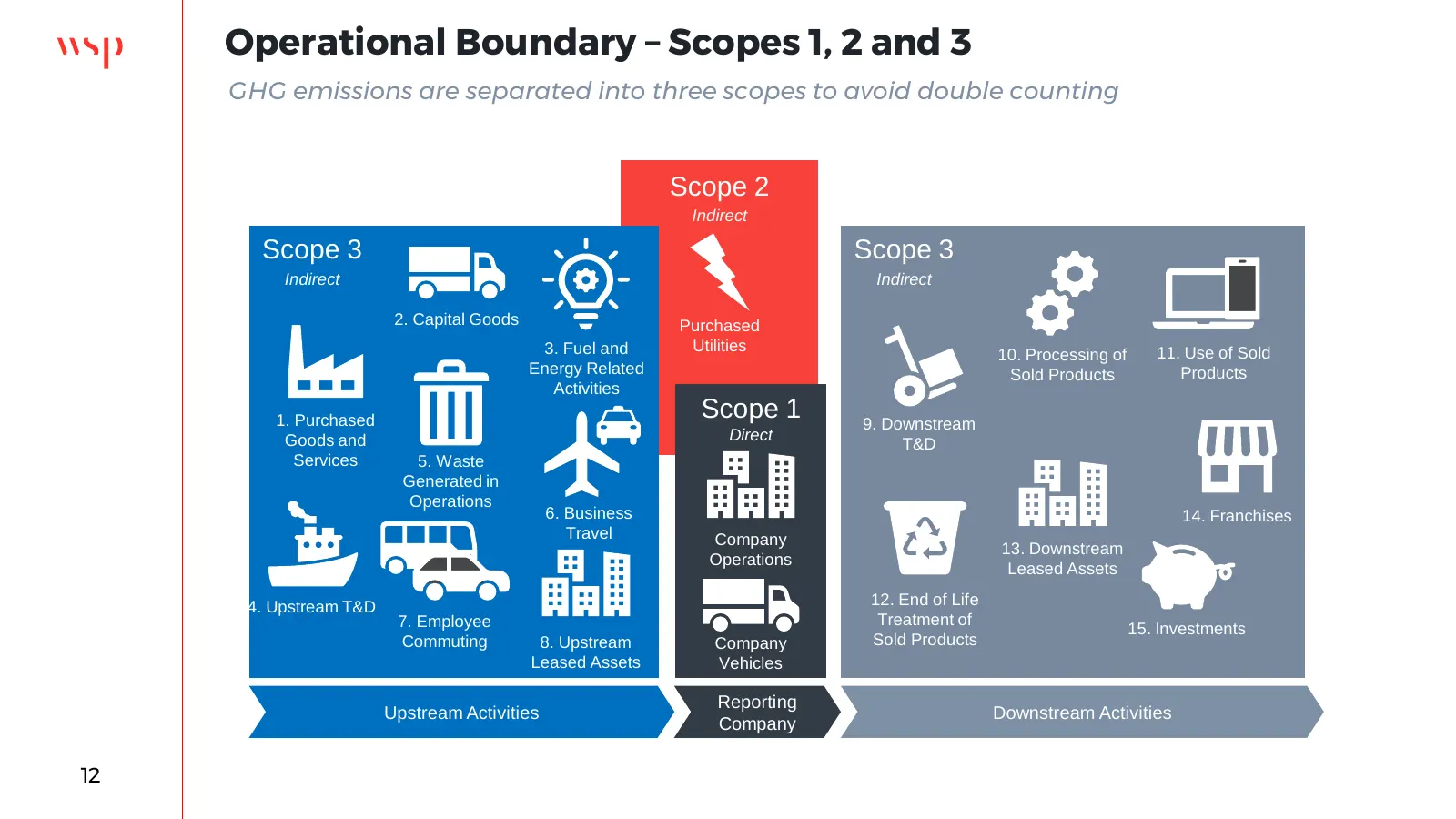
Slide 12: Operational Boundary – Scopes 1, 2 and 3
Operational Boundary – Scopes 1, 2 and 3 GHG emissions are separated into three scopes to avoid double counting Scope 2 Indirect Scope 3 Scope 3 Indirect Indirect 2. Capital Goods Purchased 3. Fuel and Utilities 11. Use of Sold 10. Processing of Energy Related Sold Products Products Activities 1. Pu
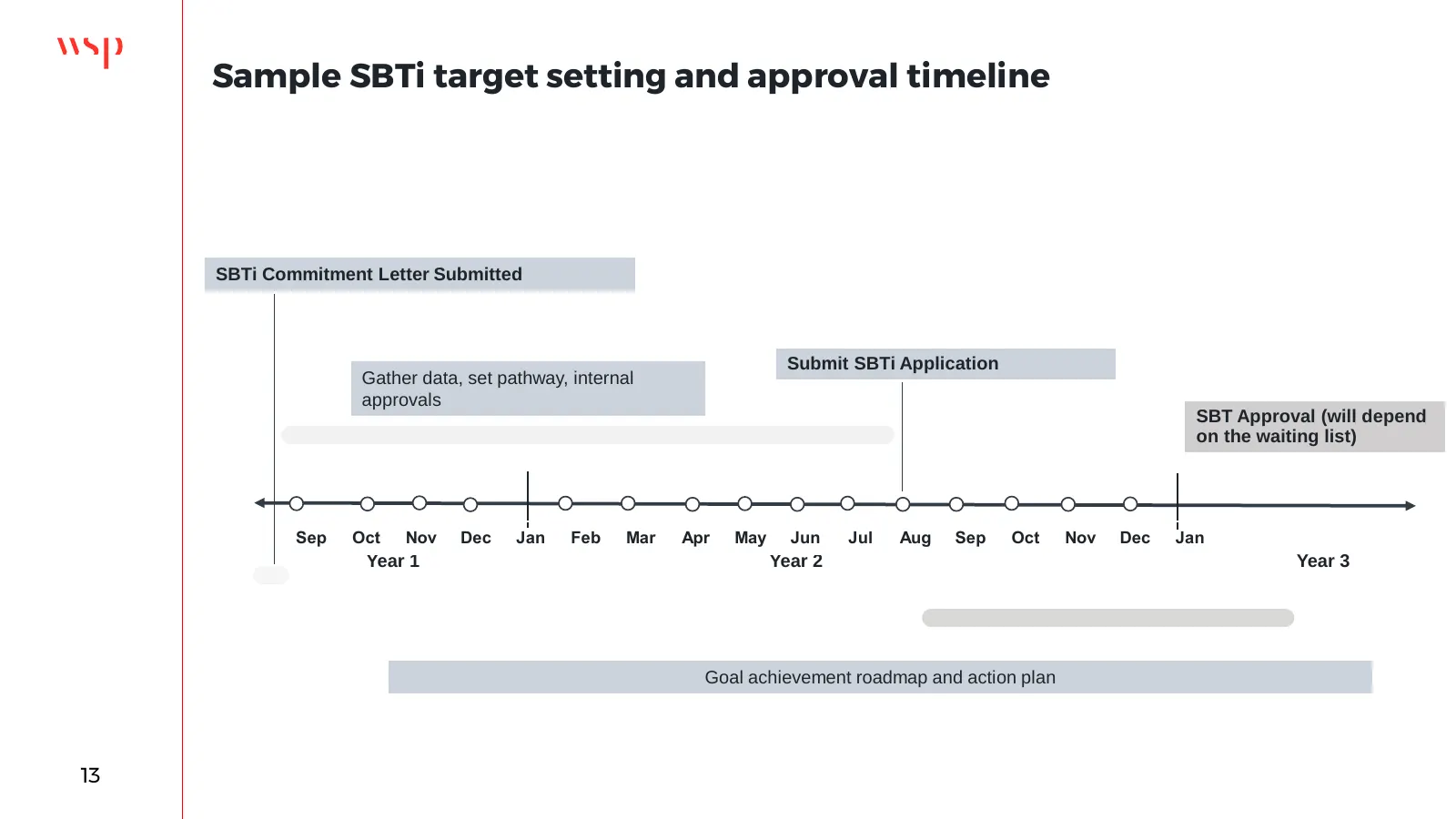
Slide 13: Sample SBTi target setting and approval timeline
Sample SBTi target setting and approval timeline SBTi Commitment Letter Submitted Submit SBTi Application Gather data, set pathway, internal approvals SBT Approval (will depend on the waiting list) Go to slide master to update this footer Sep Oct Nov Dec Jan Feb Mar Apr May Jun Jul Aug S
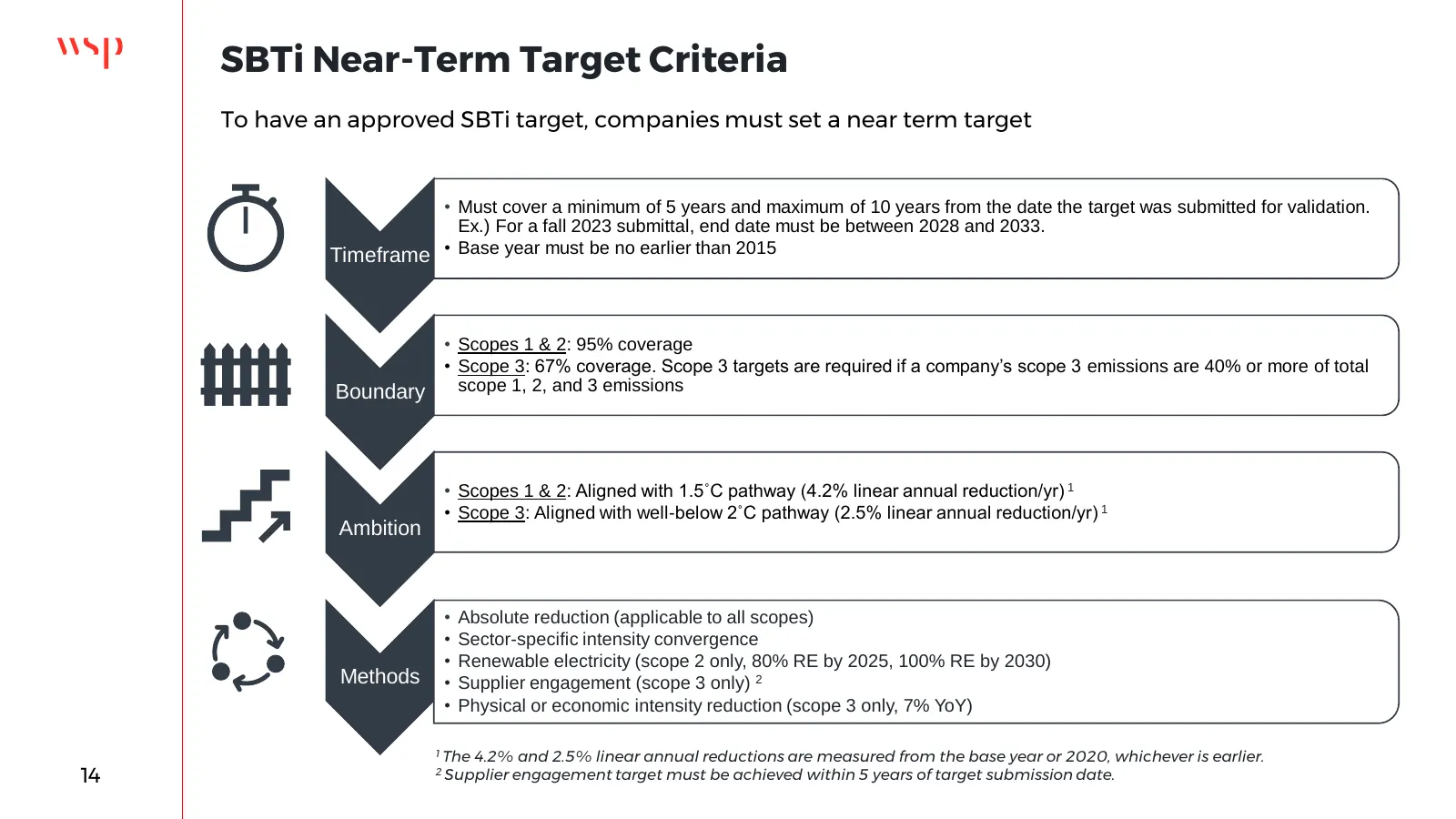
Slide 14: SBTi Near-Term Target Criteria
SBTi Near-Term Target Criteria To have an approved SBTi target, companies must set a near term target • Must cover a minimum of 5 years and maximum of 10 years from the date the target was submitted for validation. Ex.) For a fall 2023 submittal, end date must be between 2028 and 2033. • Timeframe B
Slide 15: SBTi Net Zero Target Criteria
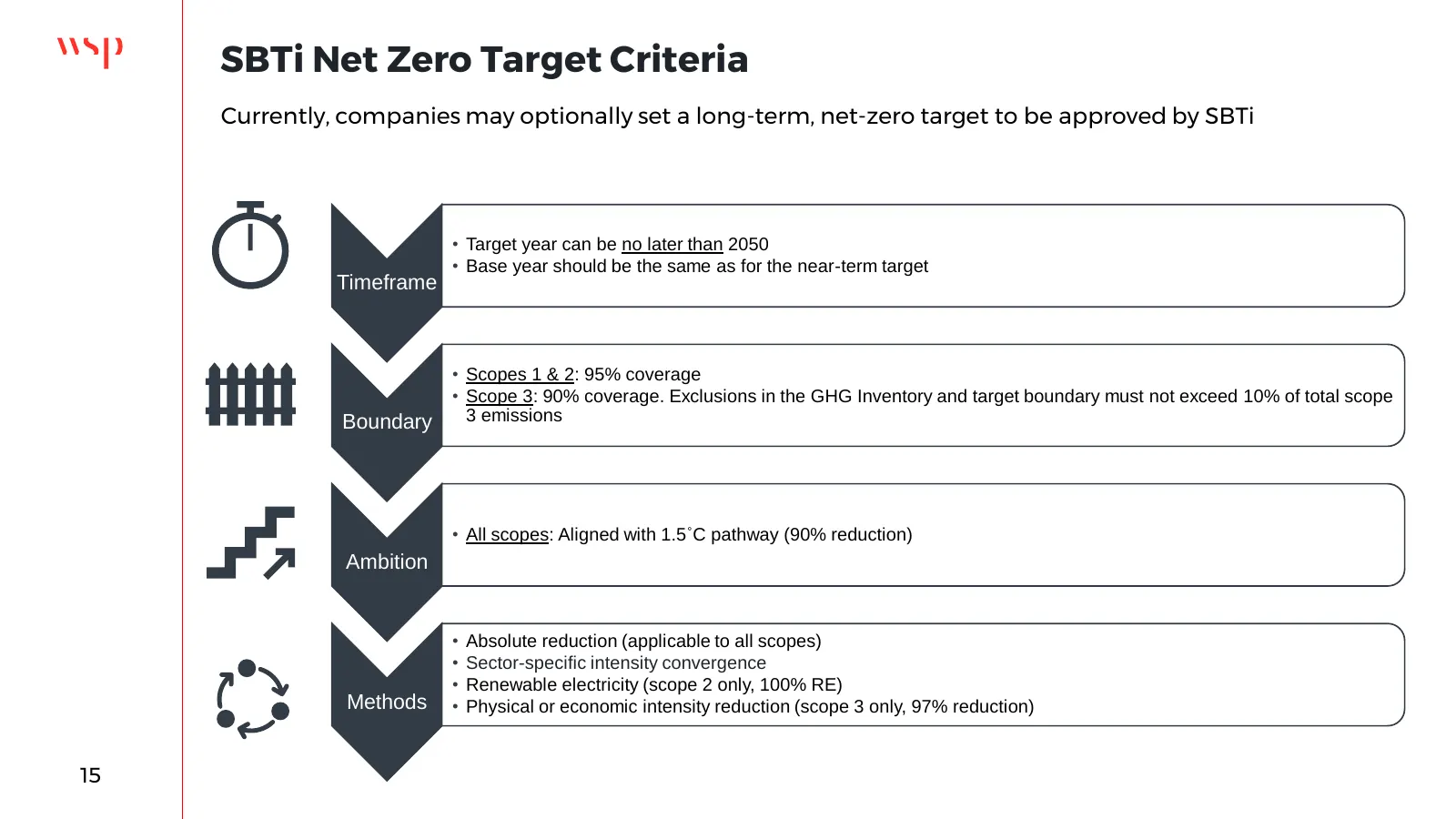
SBTi Net Zero Target Criteria Currently, companies may optionally set a long-term, net-zero target to be approved by SBTi • Target year can be no later than 2050 • Base year should be the same as for the near-term target Timeframe • Scopes 1 & 2: 95% coverage • Scope 3: 90% coverage. Exclusions in t
Slide 16: SBTi Pathway for Small and Medium-Sized Enterprises (SMEs)
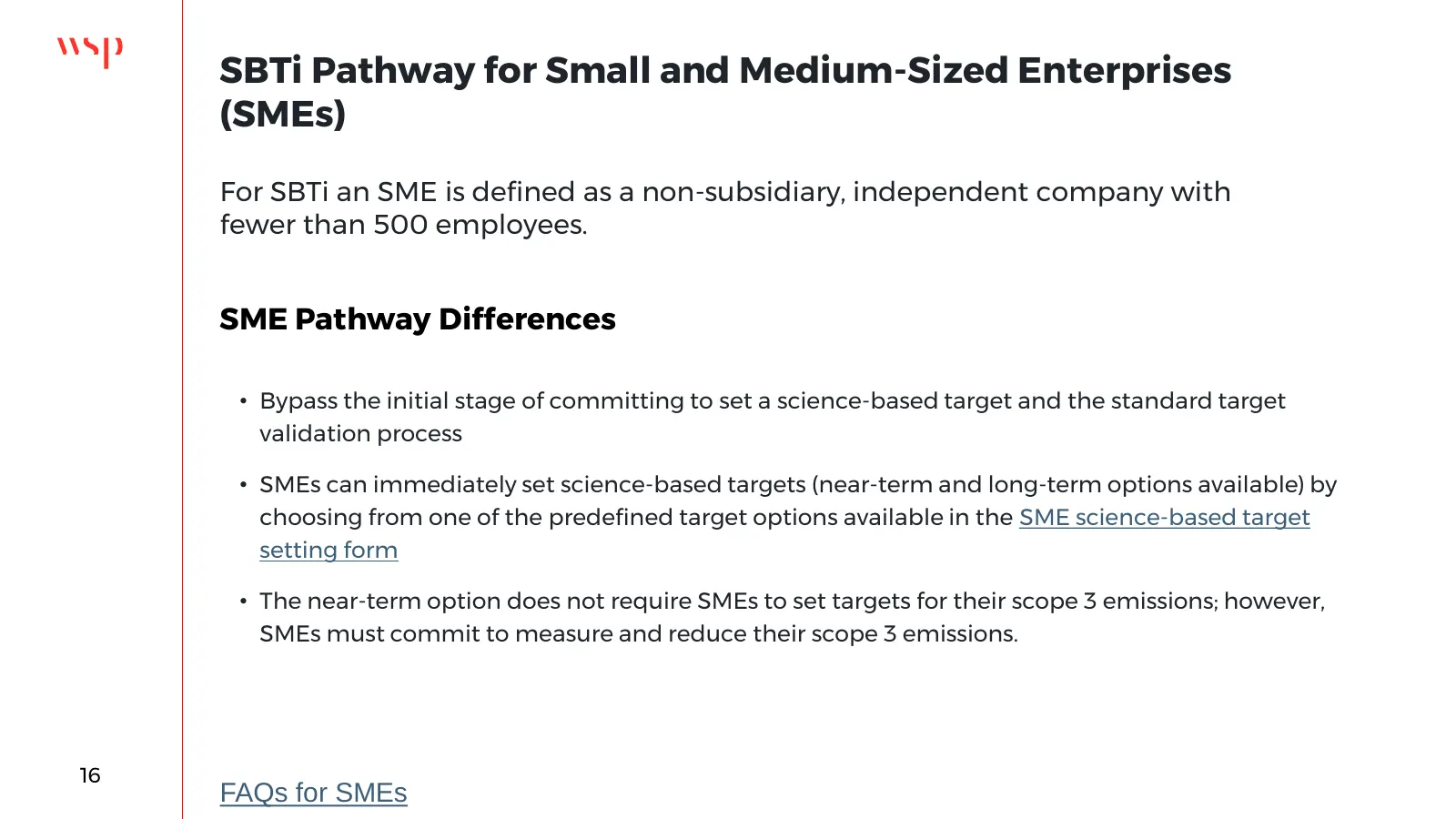
SBTi Pathway for Small and Medium-Sized Enterprises (SMEs) For SBTi an SME is defined as a non-subsidiary, independent company with fewer than 500 employees. SME Pathway Differences • Bypass the initial stage of committing to set a science-based target and the standard target validation process Go t
Slide 17: Time Frame Considerations
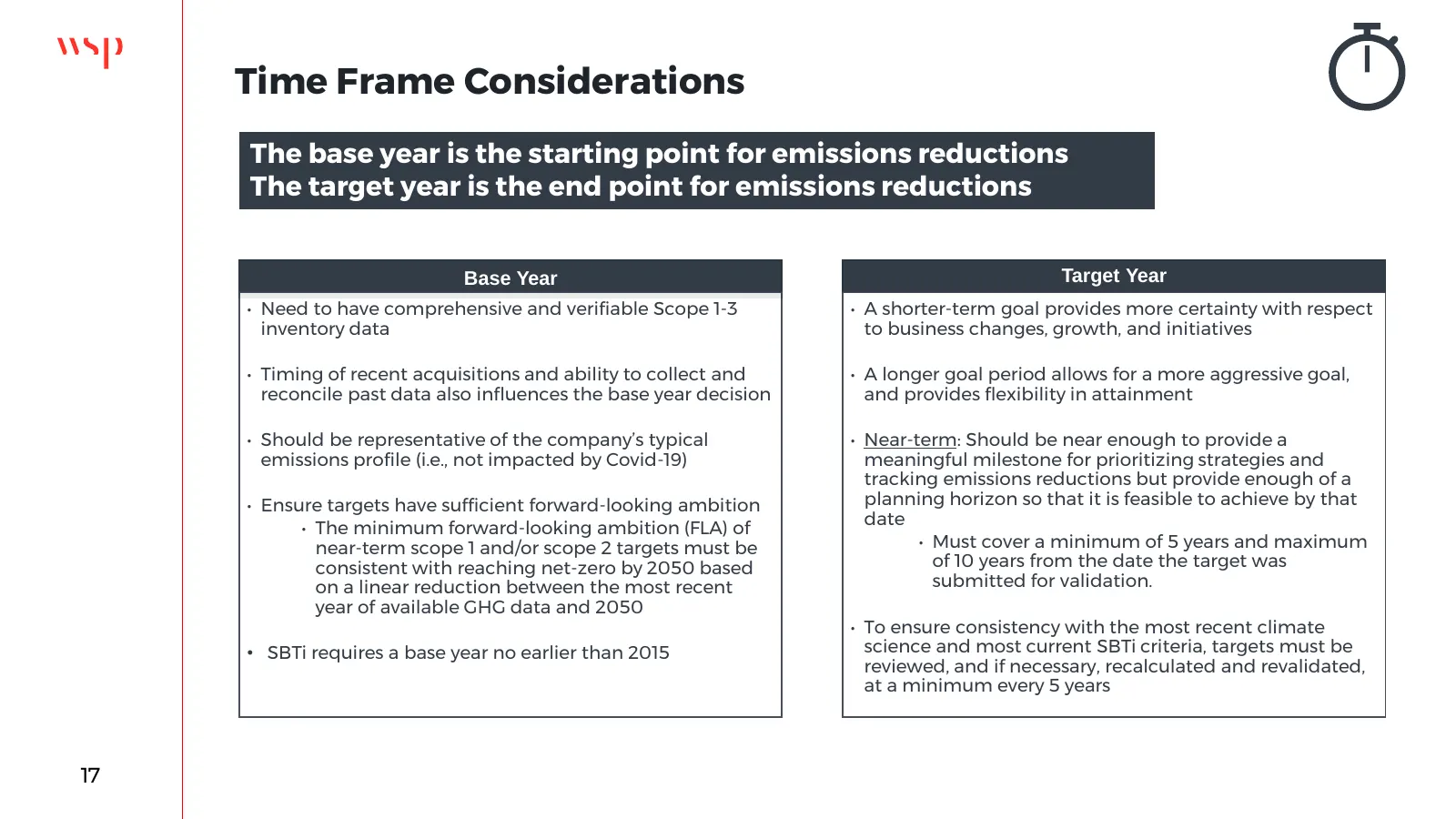
Time Frame Considerations The base year is the starting point for emissions reductions The target year is the end point for emissions reductions Base Year Target Year • Need to have comprehensive and verifiable Scope 1-3 • A shorter-term goal provides more certainty with respect inventory data to bu
Slide 18: Boundary Considerations
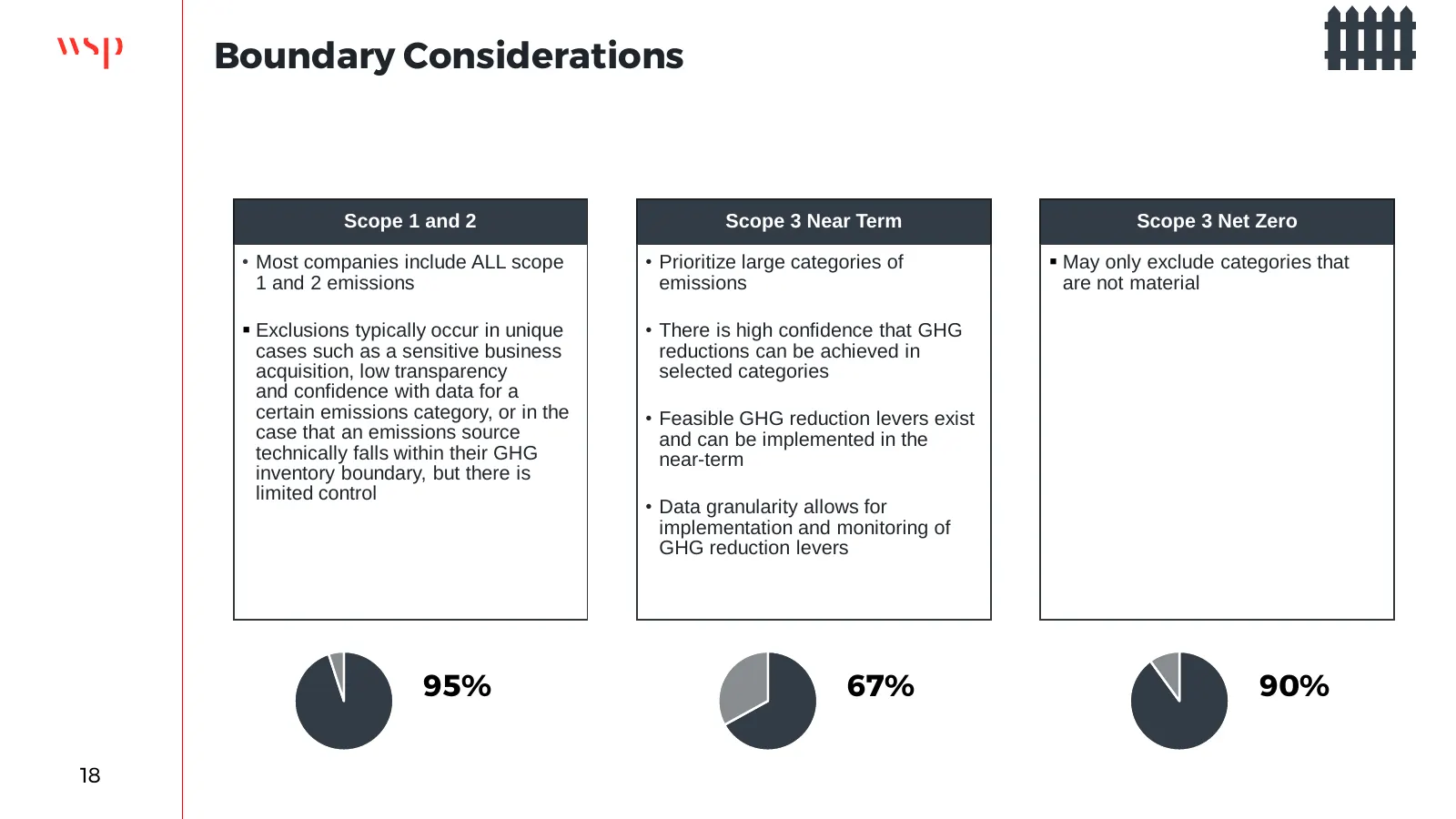
Boundary Considerations Scope 1 and 2 Scope 3 Near Term Scope 3 Net Zero • Most companies include ALL scope • Prioritize large categories of ▪ May only exclude categories that 1 and 2 emissions emissions are not material ▪ Exclusions typically occur in unique • There is high confidence that GHG case
Slide 19: Method Considerations
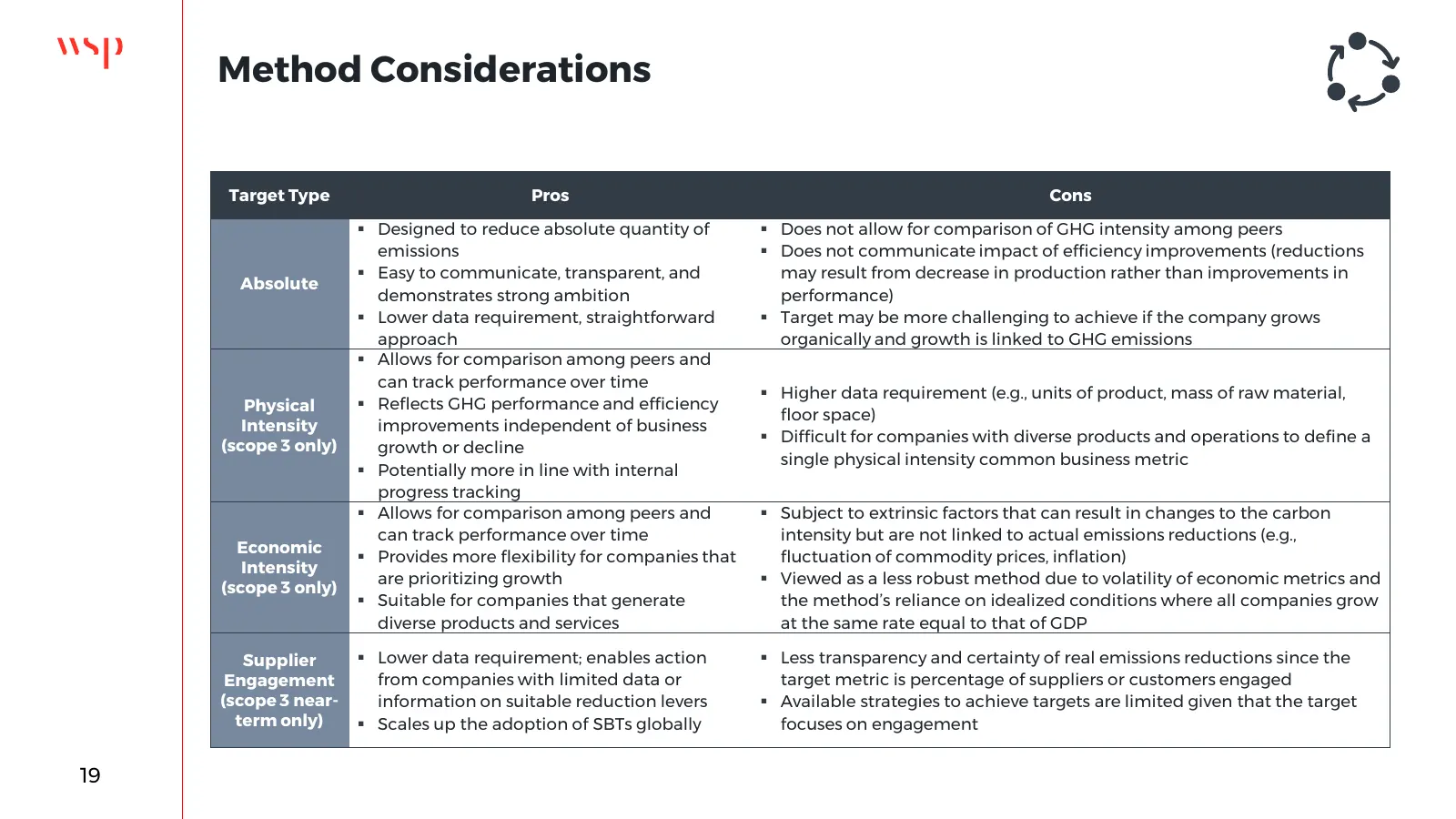
Method Considerations Target Type Pros Cons ▪ Designed to reduce absolute quantity of ▪ Does not allow for comparison of GHG intensity among peers emissions ▪ Does not communicate impact of efficiency improvements (reductions ▪ Easy to communicate, transparent, and may result from decrease in produc
Slide 20: Target Achievement Reduction Levers
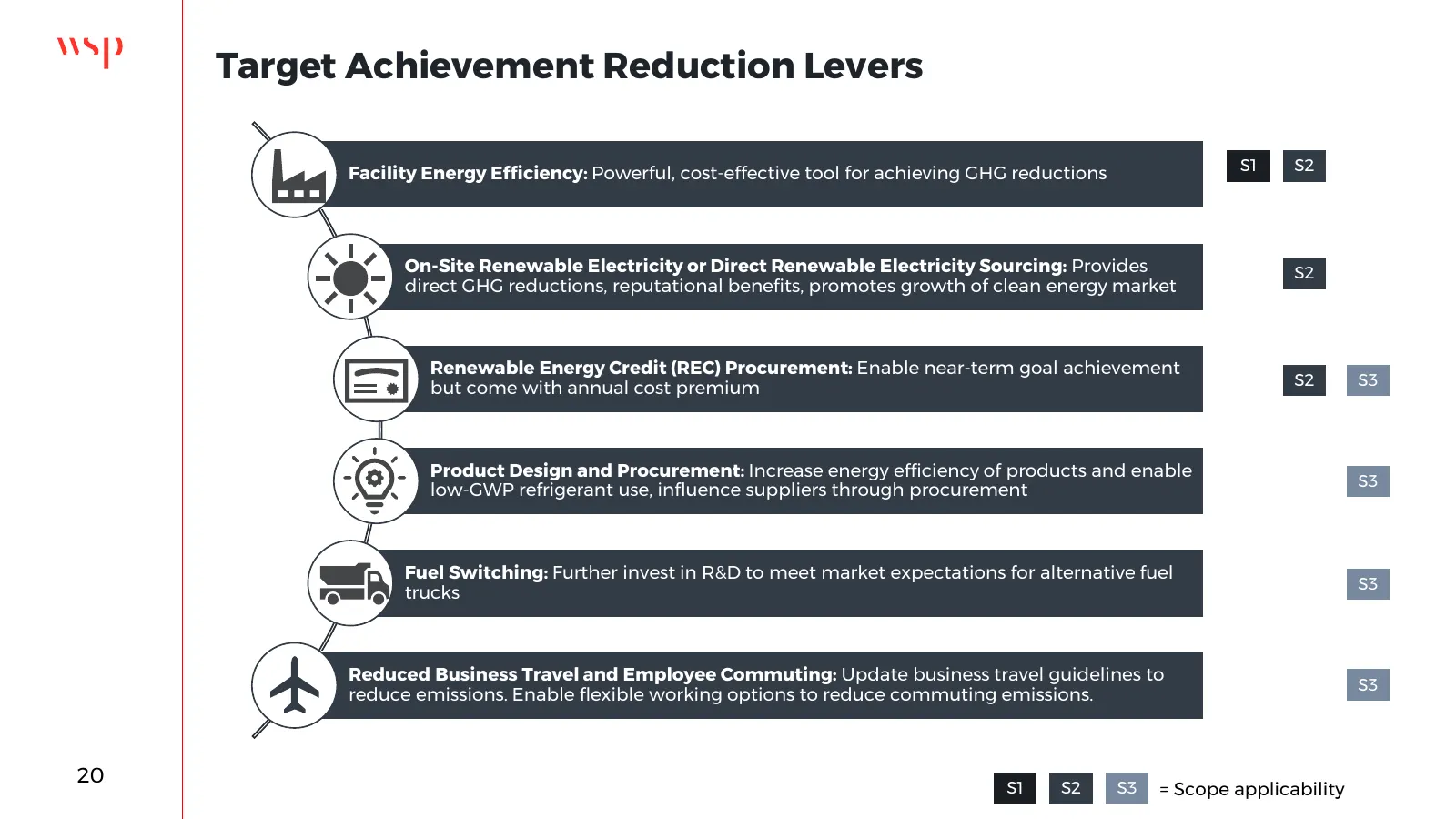
Target Achievement Reduction Levers Facility Energy Efficiency: Powerful, cost-effective tool for achieving GHG reductions S1 S2 On-Site Renewable Electricity or Direct Renewable Electricity Sourcing: Provides S2 direct GHG reductions, reputational benefits, promotes growth of clean energy market Re
Slide 21: Reporting Targets Through CDP
21 Go to slide master to update this footer 21 Through CDP Reporting Targets
Slide 22: Reporting GHG Targets: C4.1
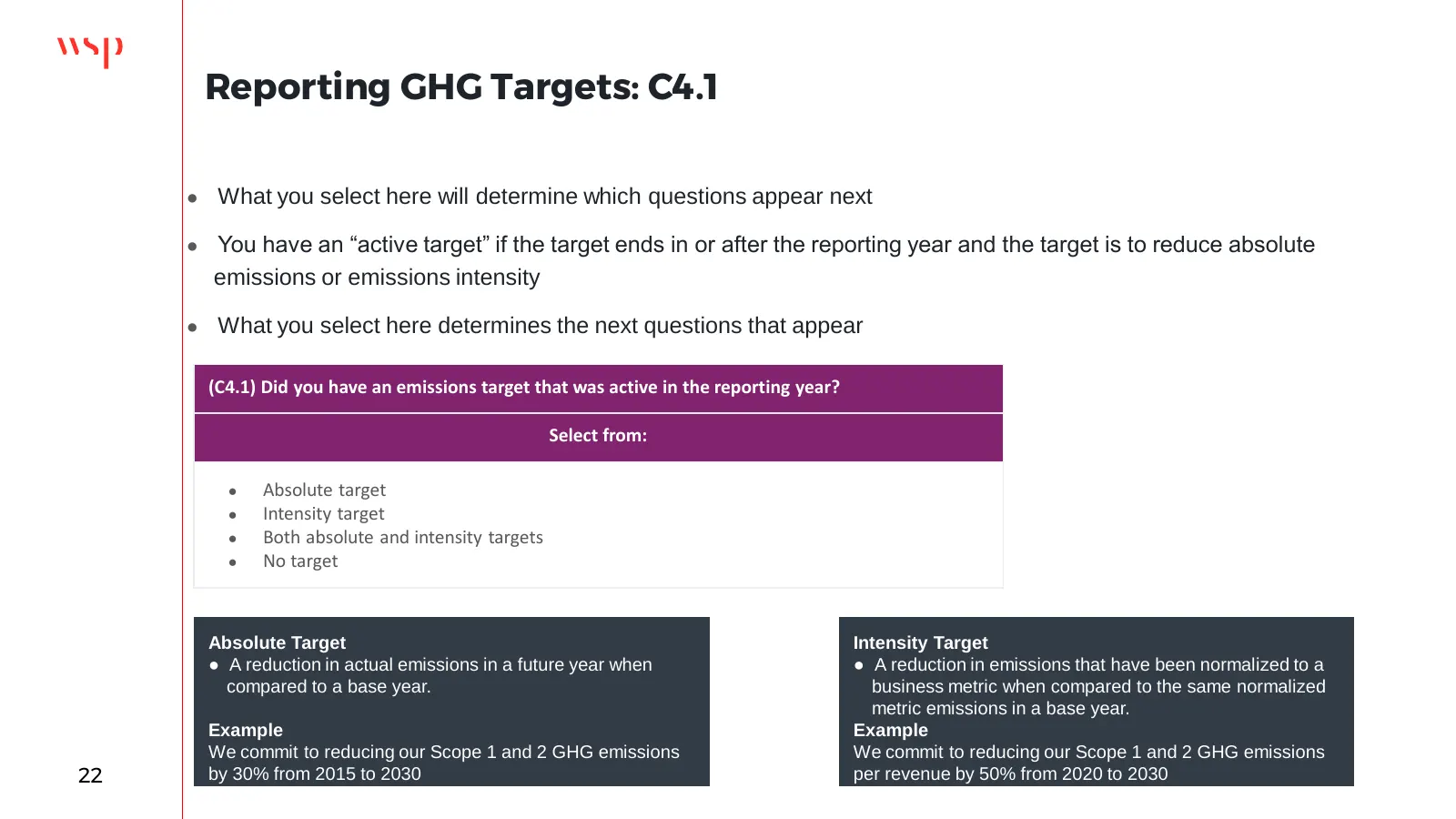
Reporting GHG Targets: C4.1 ● What you select here will determine which questions appear next ● You have an “active target” if the target ends in or after the reporting year and the target is to reduce absolute emissions or emissions intensity ● What you select here determines the next questions tha
Slide 23: Reporting GHG Targets: C4.1a, Absolute Targets
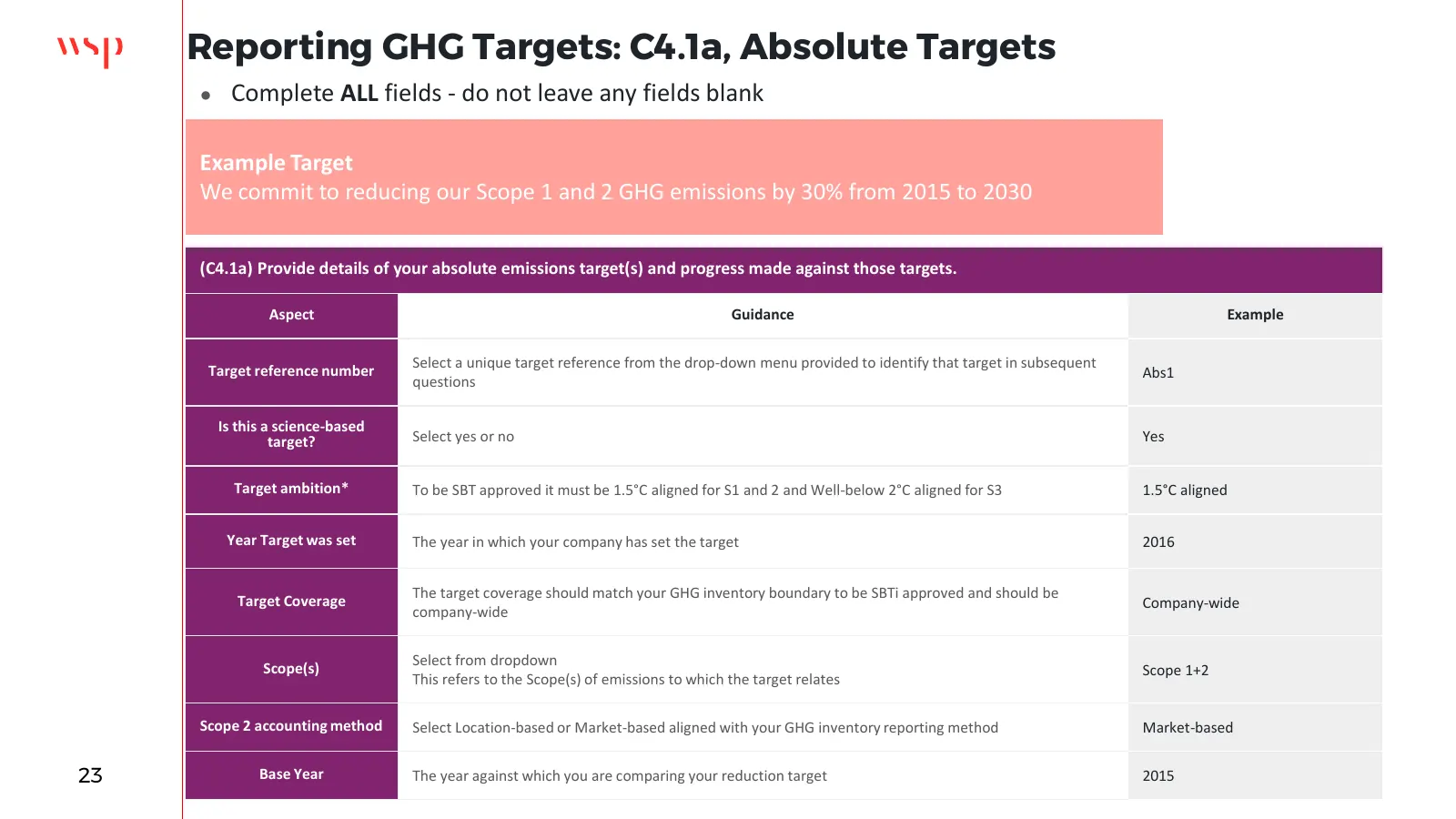
Reporting GHG Targets: C4.1a, Absolute Targets ● Complete ALL fields - do not leave any fields blank Example Target We commit to reducing our Scope 1 and 2 GHG emissions by 30% from 2015 to 2030 (C4.1a) Provide details of your absolute emissions target(s) and progress made against those targets. Asp
Slide 24: Reporting GHG Targets: C4.1a, Absolute Targets
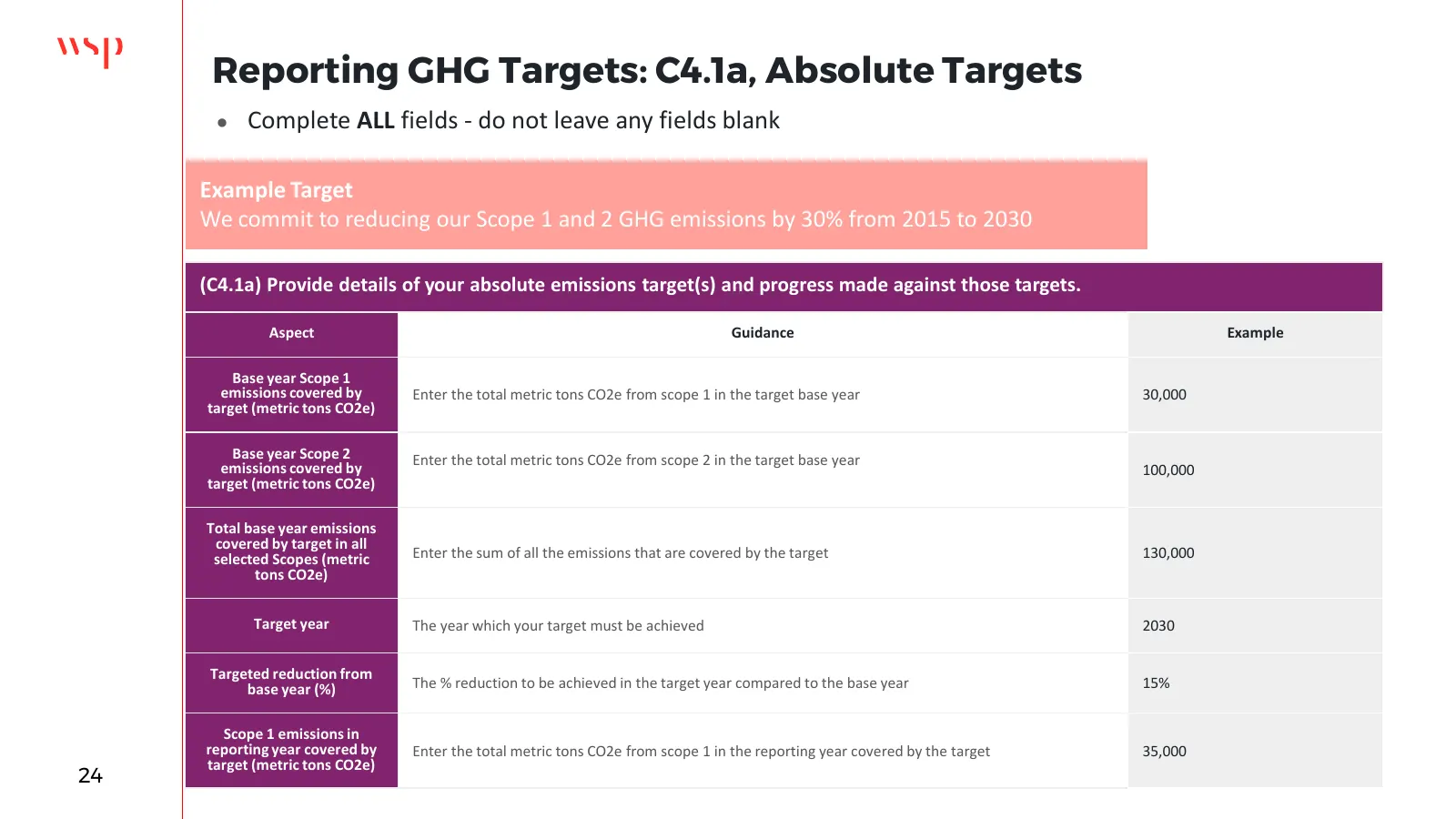
Reporting GHG Targets: C4.1a, Absolute Targets ● Complete ALL fields - do not leave any fields blank Example Target We commit to reducing our Scope 1 and 2 GHG emissions by 30% from 2015 to 2030 (C4.1a) Provide details of your absolute emissions target(s) and progress made against those targets. Asp
Slide 25: Reporting GHG Targets: C4.1a, Absolute Targets
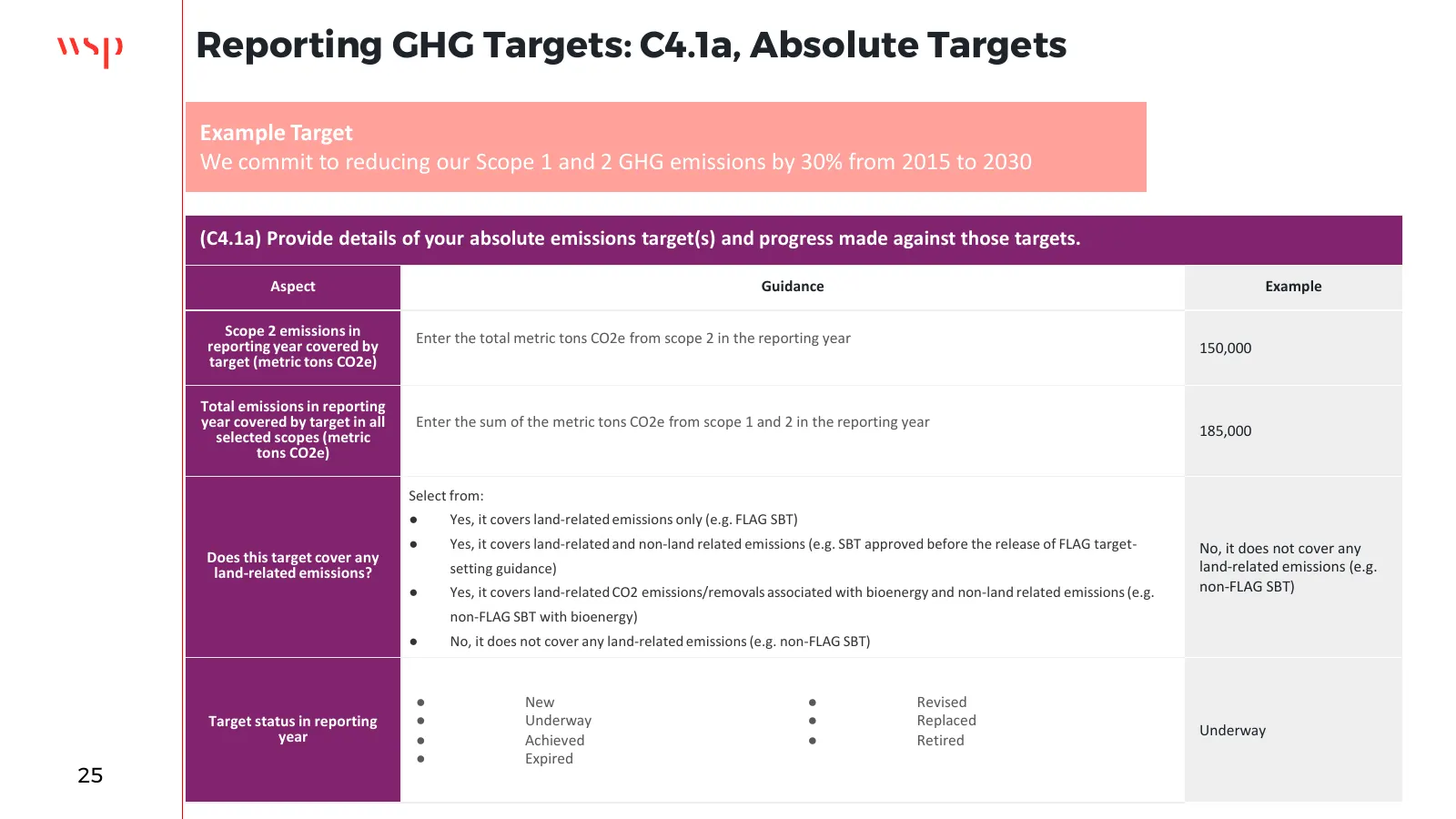
Reporting GHG Targets: C4.1a, Absolute Targets Example Target We commit to reducing our Scope 1 and 2 GHG emissions by 30% from 2015 to 2030 (C4.1a) Provide details of your absolute emissions target(s) and progress made against those targets. Aspect Guidance Example Scope 2 emissions in Enter the to

Slide 26: Questions so Far?
26 Go to slide master to update this footer 26 Questions so Far?

Slide 27: Renewable Electricity Overview
27 Go to slide master to update this footer 27 Overview Electricity Renewable
Slide 28: 100% renewable electricity target requirements
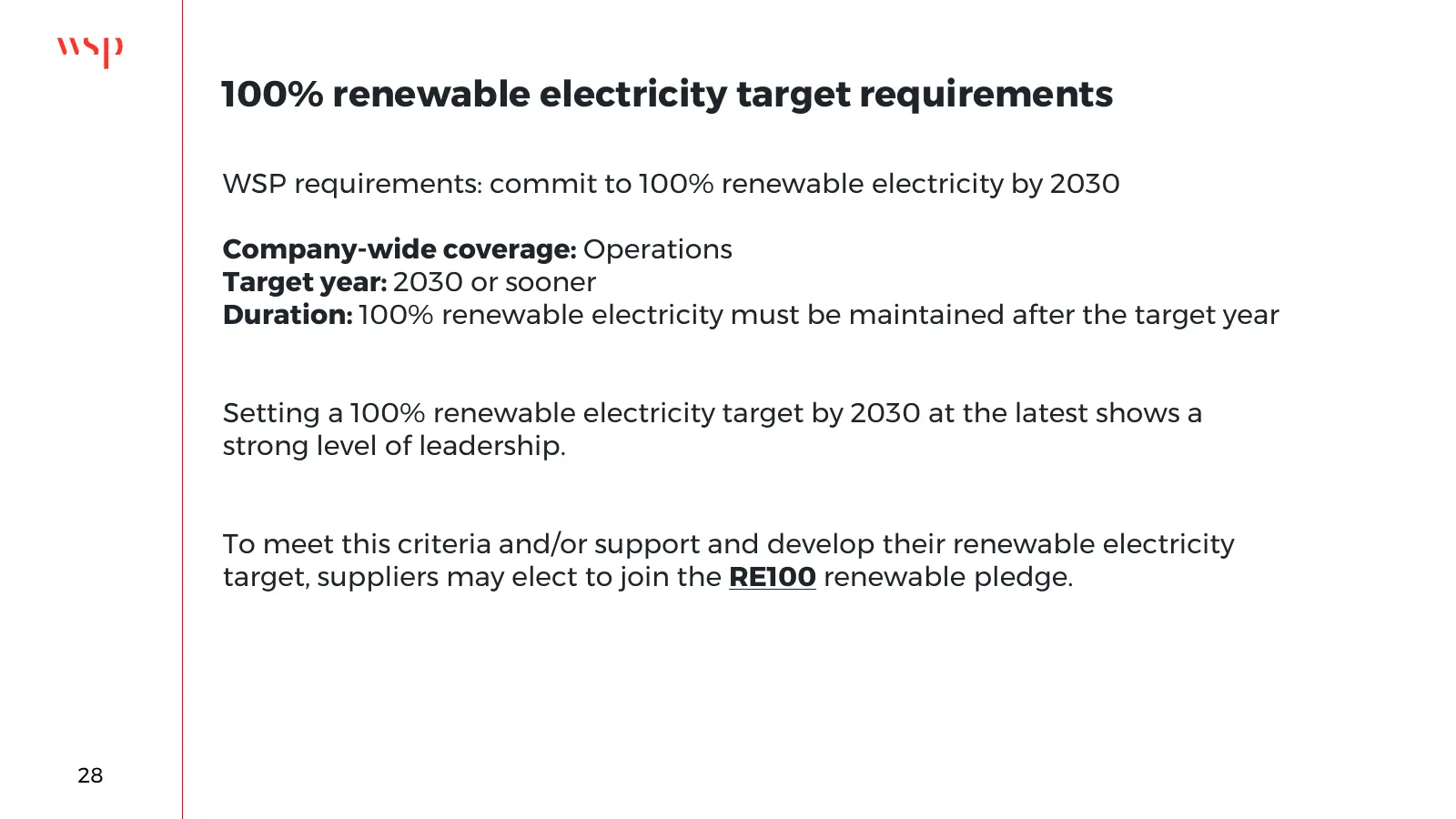
100% renewable electricity target requirements WSP requirements: commit to 100% renewable electricity by 2030 Company-wide coverage: Operations Target year: 2030 or sooner Duration: 100% renewable electricity must be maintained after the target year Setting a 100% renewable electricity target by 203
Slide 29: Sources of Electricity
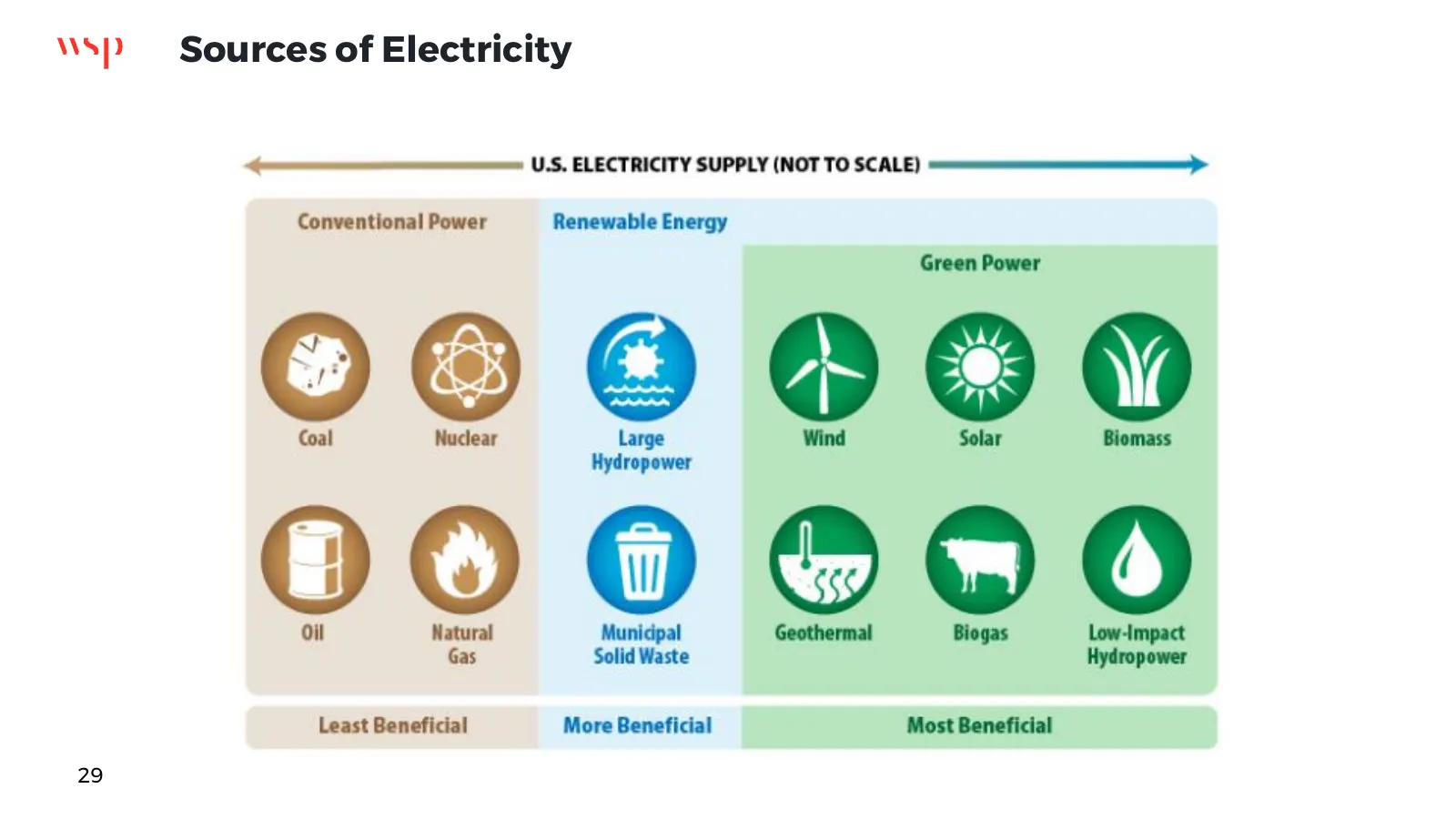
Go to slide master to update this footer 29 Sources of Electricity
Slide 30: Renewable Electricity Credits (RECs) vs Electricity
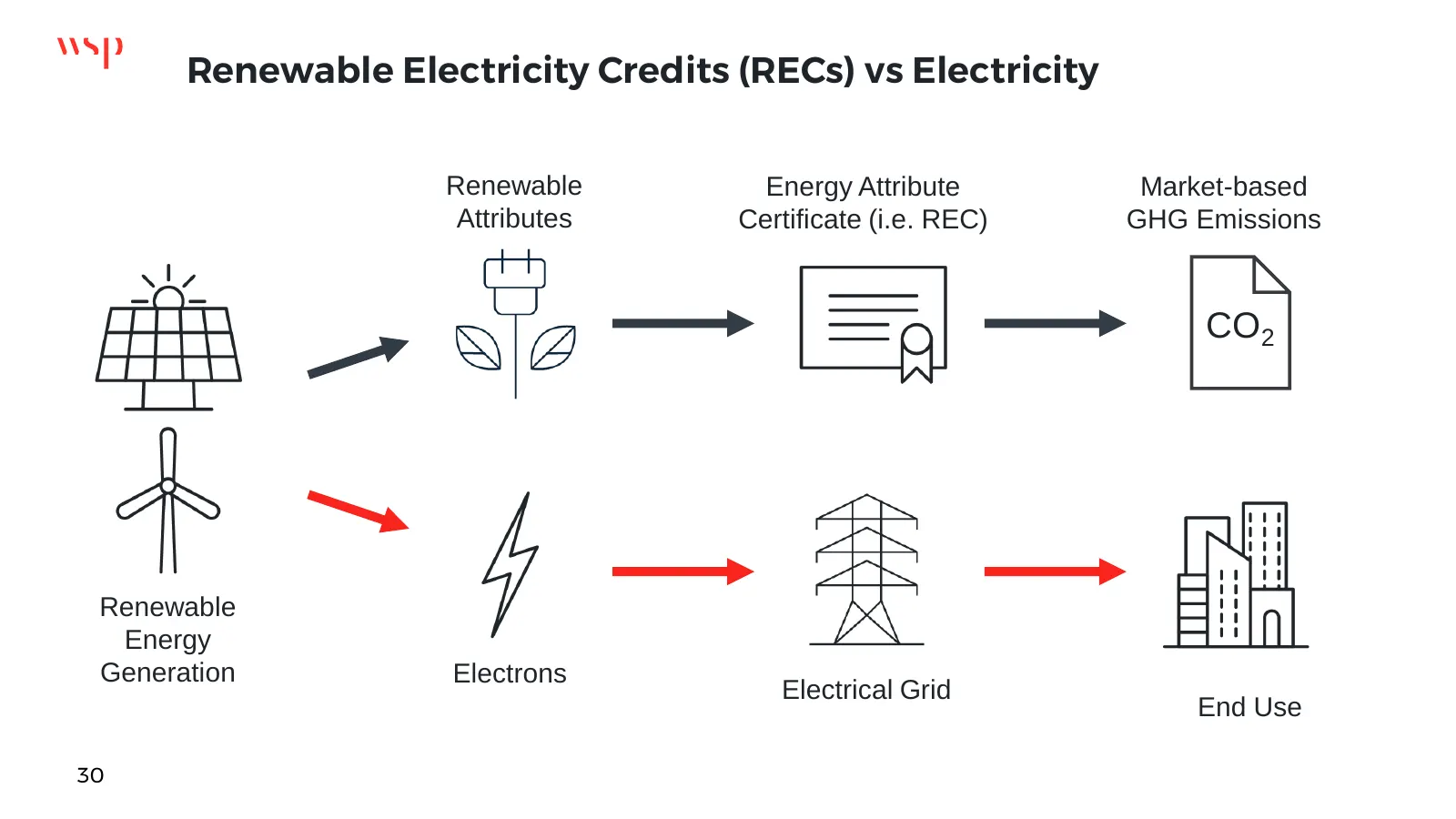
Renewable Electricity Credits (RECs) vs Electricity Renewable Energy Attribute Market-based Attributes Certificate (i.e. REC) GHG Emissions CO2 Go to slide master to update this footer Renewable Energy Generation Electrons Electrical Grid End Use 30
Slide 31: Renewable energy procurement options
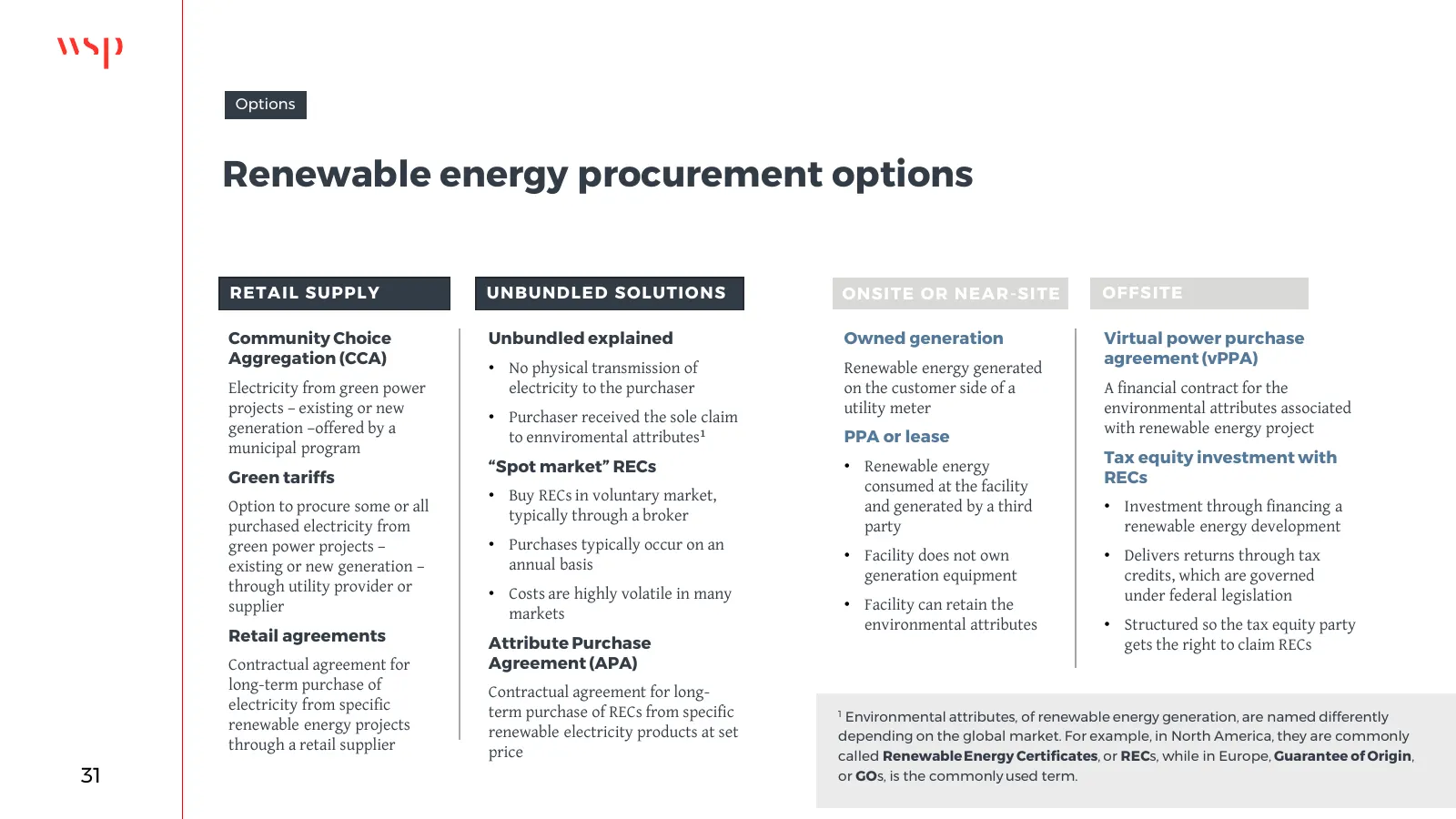
Options Renewable energy procurement options RETAIL SUPPLY UNBUNDLED SOLUTIONS ONSITE OR NEAR-SITE OFFSITE Community Choice Unbundled explained Owned generation Virtual power purchase Aggregation (CCA) • No physical transmission of Renewable energy generated agreement (vPPA) Electricity from green p
Slide 32: Renewable Electricity Procurement Options
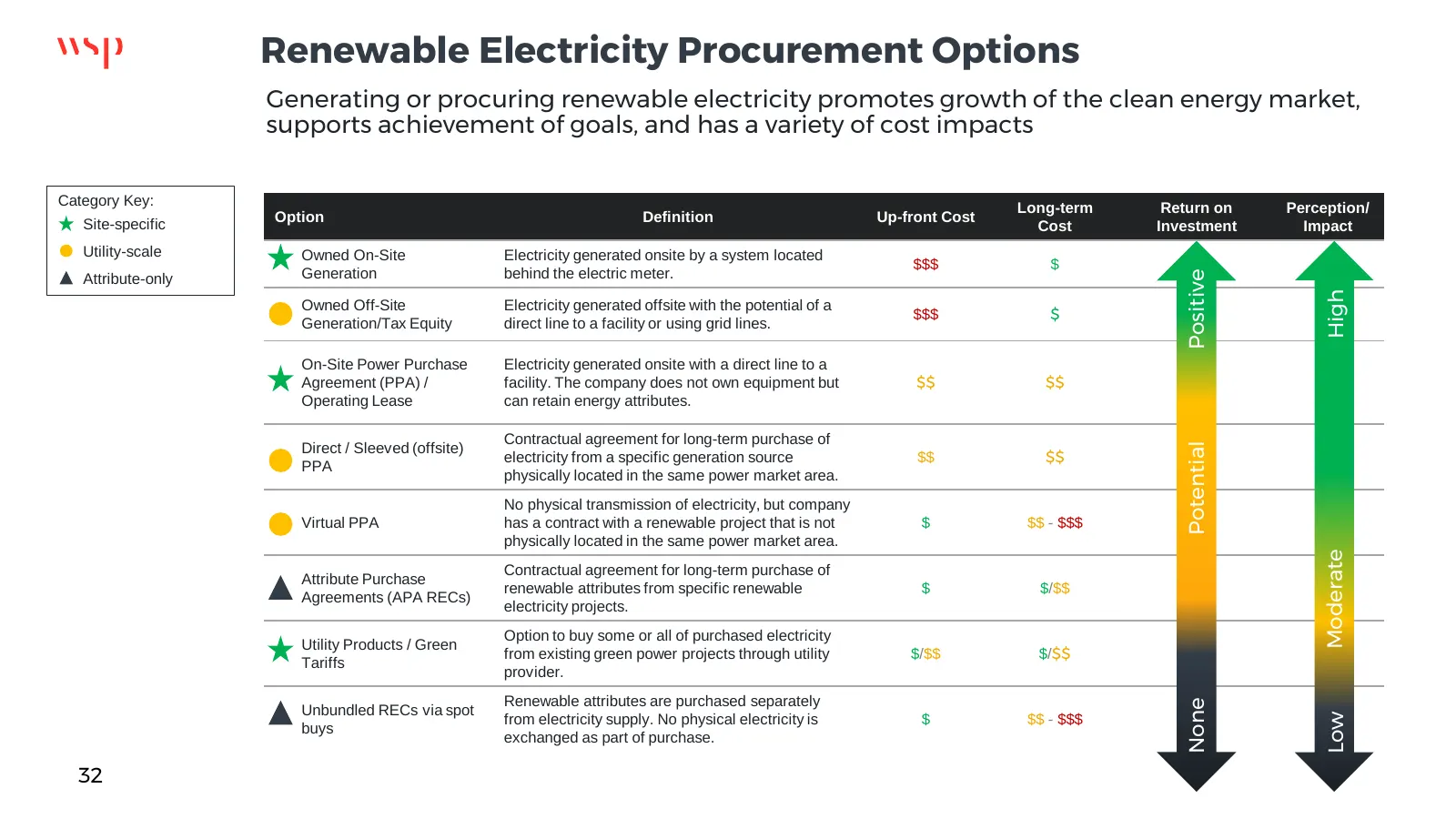
Renewable Electricity Procurement Options Generating or procuring renewable electricity promotes growth of the clean energy market, supports achievement of goals, and has a variety of cost impacts Category Key: Long-term Return on Perception/ Site-specific Option Definition Up-front Cost Cost Invest
Slide 33: Considerations for Different RE Options
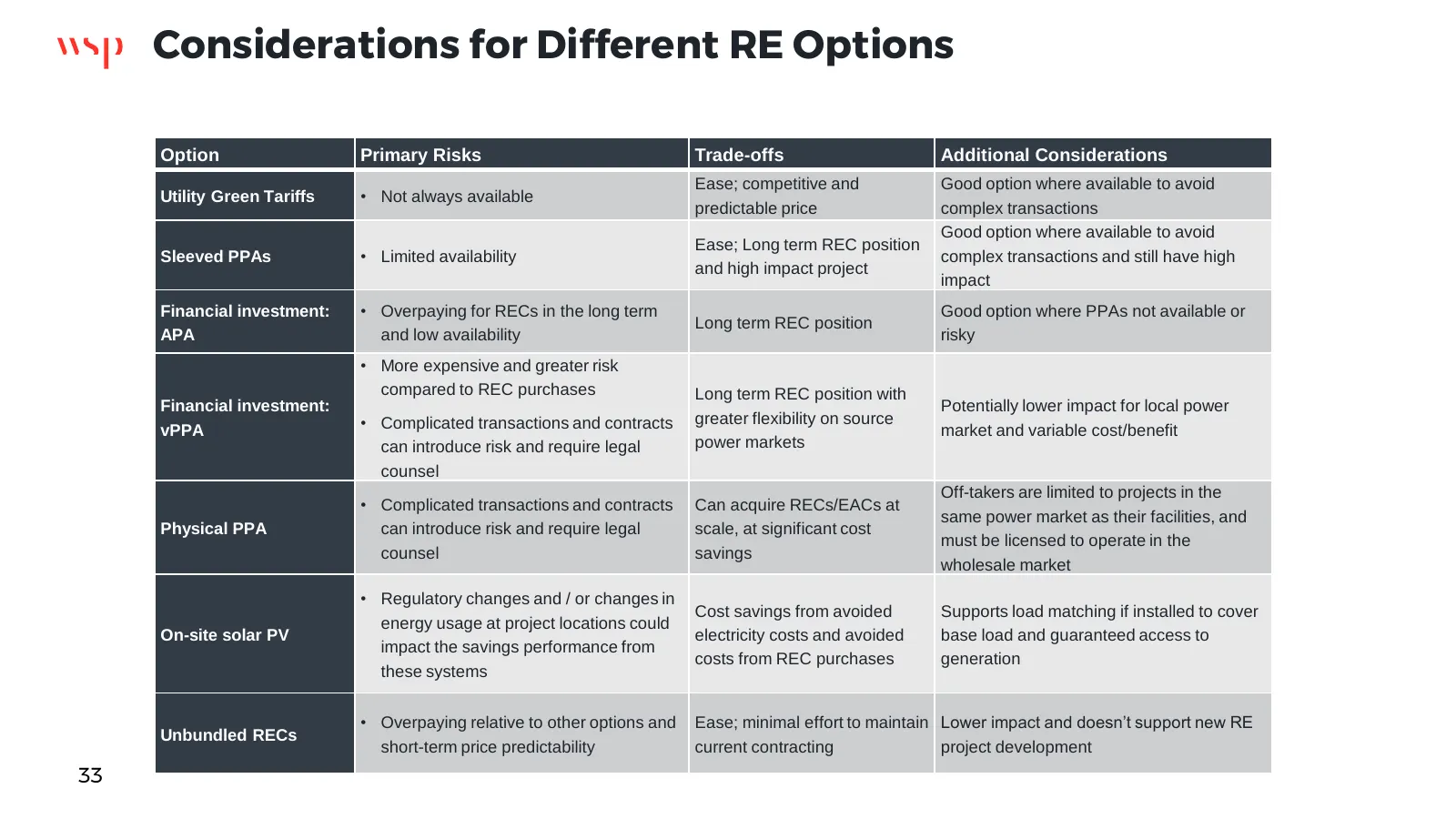
Considerations for Different RE Options Option Primary Risks Trade-offs Additional Considerations Ease; competitive and Good option where available to avoid Utility Green Tariffs • Not always available predictable price complex transactions Good option where available to avoid Ease; Long term REC po
Slide 34: RECs, Utility Contracts & Green Tariffs Resources
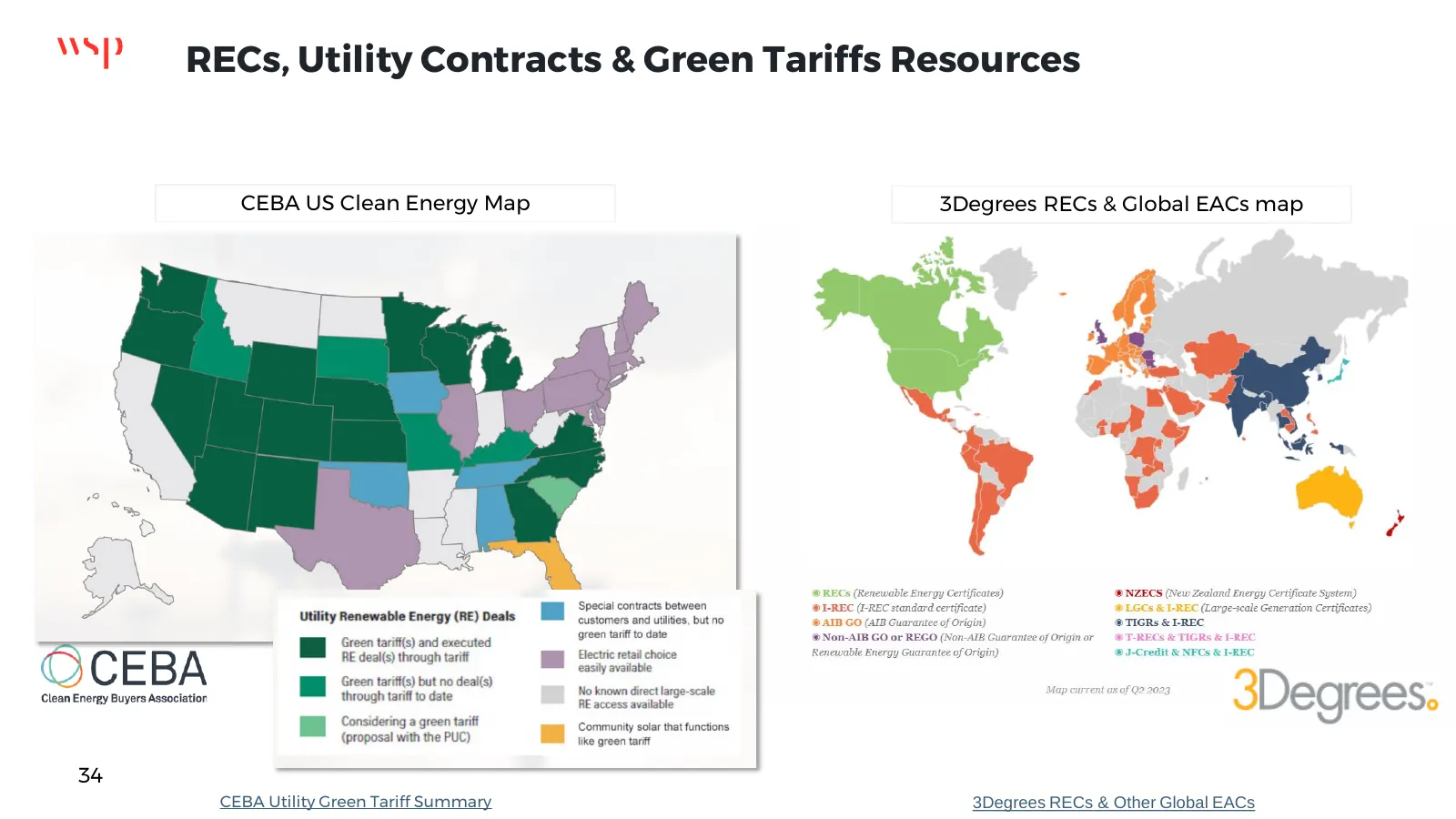
RECs, Utility Contracts & Green Tariffs Resources CEBA US Clean Energy Map 3Degrees RECs & Global EACs map Go to slide master to update this footer 34 CEBA Utility Green Tariff Summary 3Degrees RECs & Other Global EACs
Slide 35: Market-based GHG Accounting
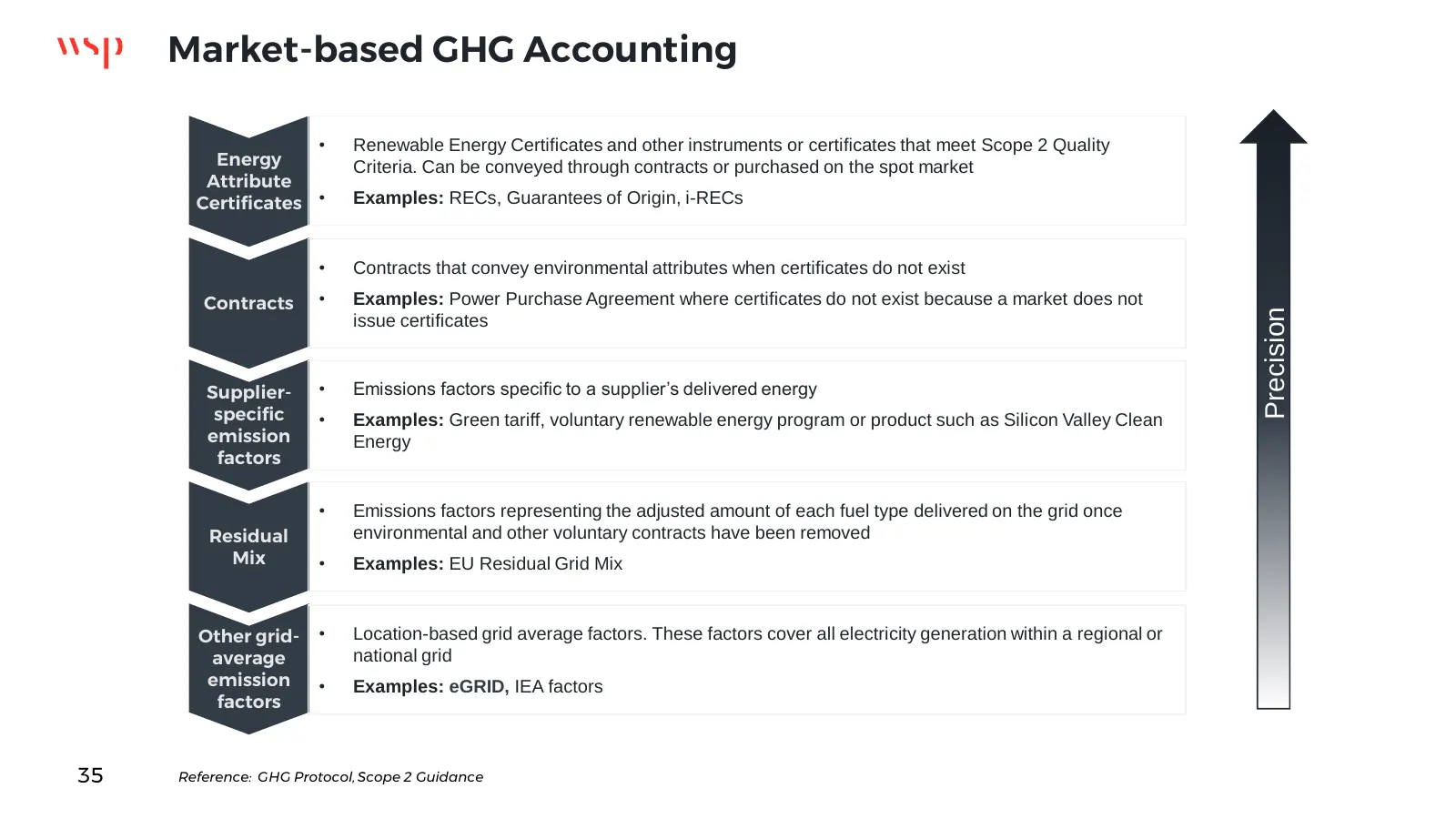
Market-based GHG Accounting • Renewable Energy Certificates and other instruments or certificates that meet Scope 2 Quality Energy Criteria. Can be conveyed through contracts or purchased on the spot market Attribute Certificates • Examples: RECs, Guarantees of Origin, i-RECs • Contracts that convey
Slide 36: Process Overview: RE Buyer's Roadmap
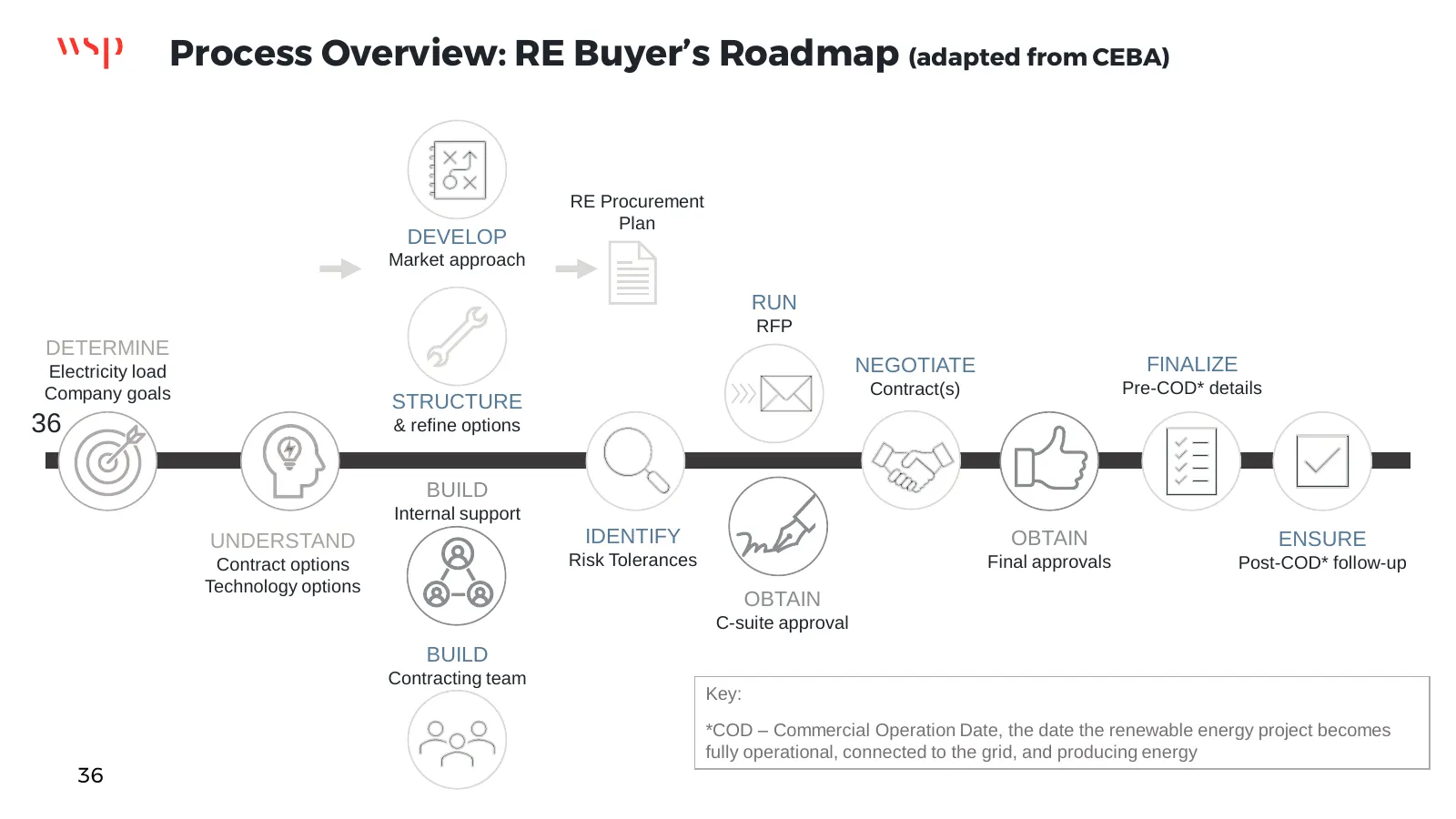
Process Overview: RE Buyer’s Roadmap (adapted from CEBA) RE Procurement Plan DEVELOP Market approach RUN RFP DETERMINE Electricity load NEGOTIATE FINALIZE Company goals Contract(s) Pre-COD* details STRUCTURE 36 & refine options Go to slide master to update this footer BUILD Internal support UNDERSTA

Slide 37: Summary and Next Steps
37 Go to slide master to update this footer 37 Steps and Next Summary
Slide 38: Target Setting Next Steps
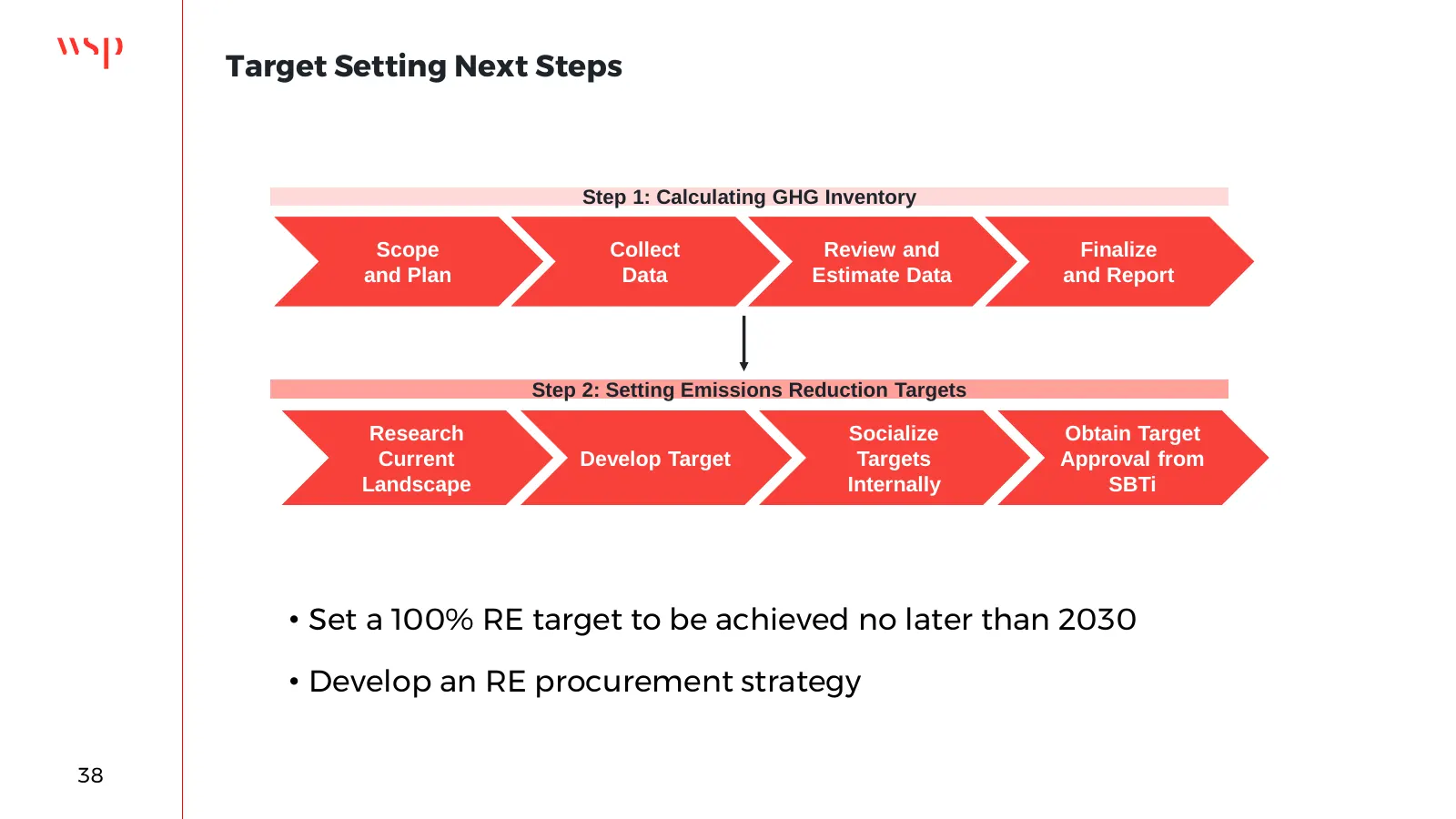
Target Setting Next Steps Step 1: Calculating GHG Inventory Scope Collect Review and Finalize and Plan Data Estimate Data and Report Step 2: Setting Emissions Reduction Targets Research Socialize Obtain Target Current Develop Target Targets Approval from Go to slide master to update this footer Land
Slide 39: Target Setting Resources and Tools
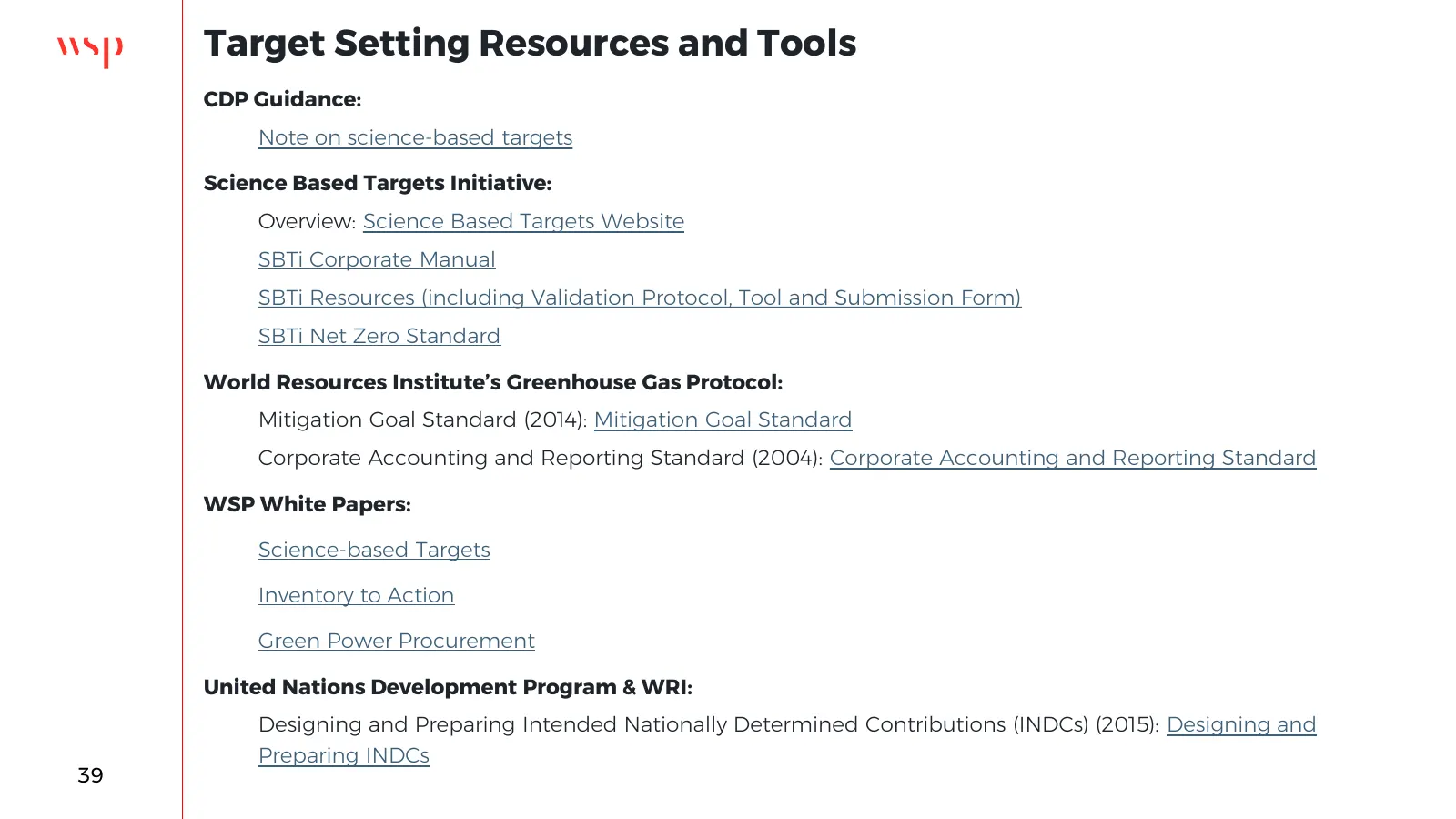
Target Setting Resources and Tools CDP Guidance: Note on science-based targets Science Based Targets Initiative: Overview: Science Based Targets Website SBTi Corporate Manual SBTi Resources (including Validation Protocol, Tool and Submission Form) SBTi Net Zero Standard World Resources Institute’s G
Slide 40: Renewable Electricity Resources
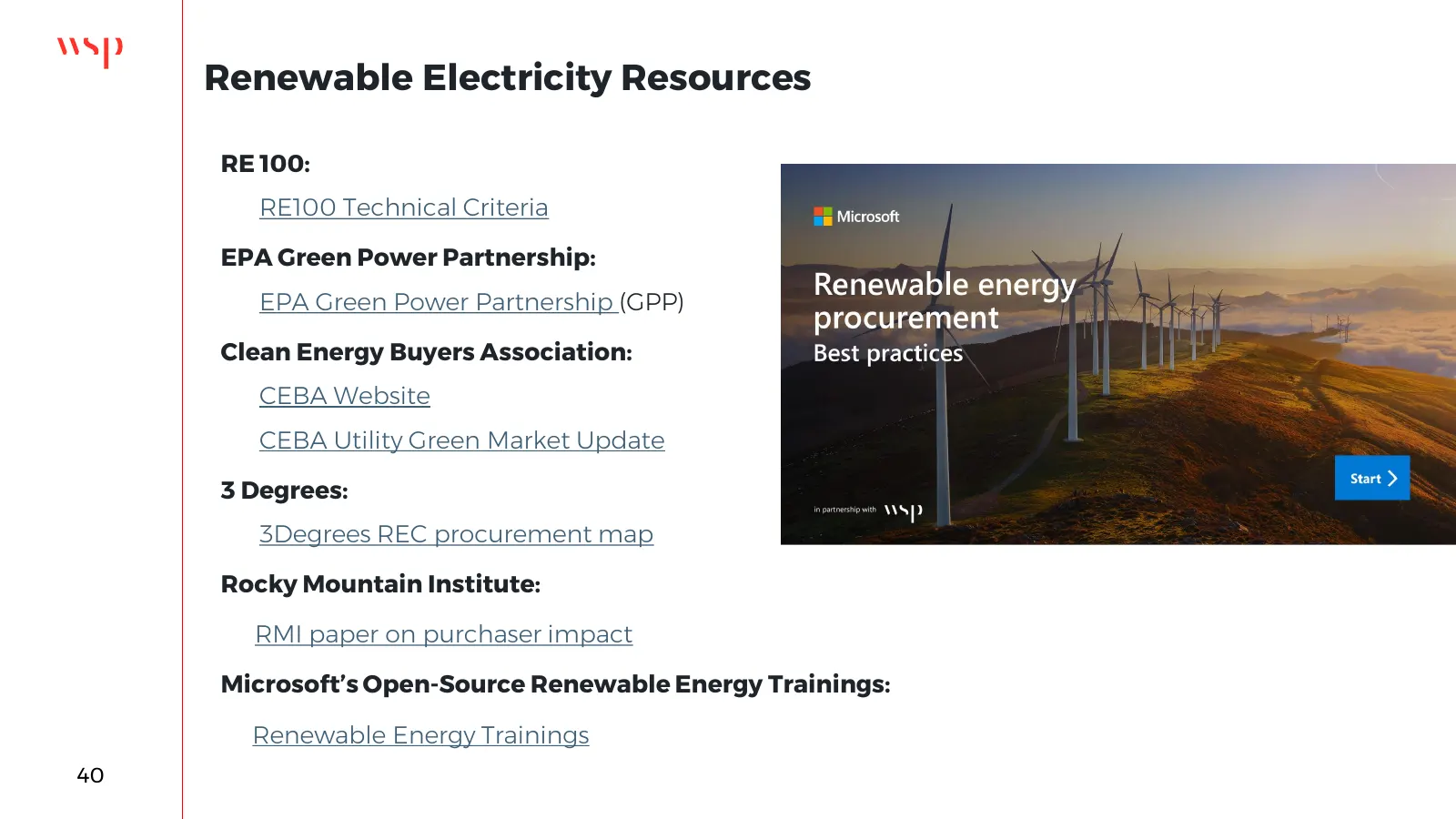
Renewable Electricity Resources RE 100: RE100 Technical Criteria EPA Green Power Partnership: EPA Green Power Partnership (GPP) Clean Energy Buyers Association: CEBA Website CEBA Utility Green Market Update Go to slide master to update this footer 3 Degrees: 3Degrees REC procurement map Rocky Mounta
Slide 41: Next Steps
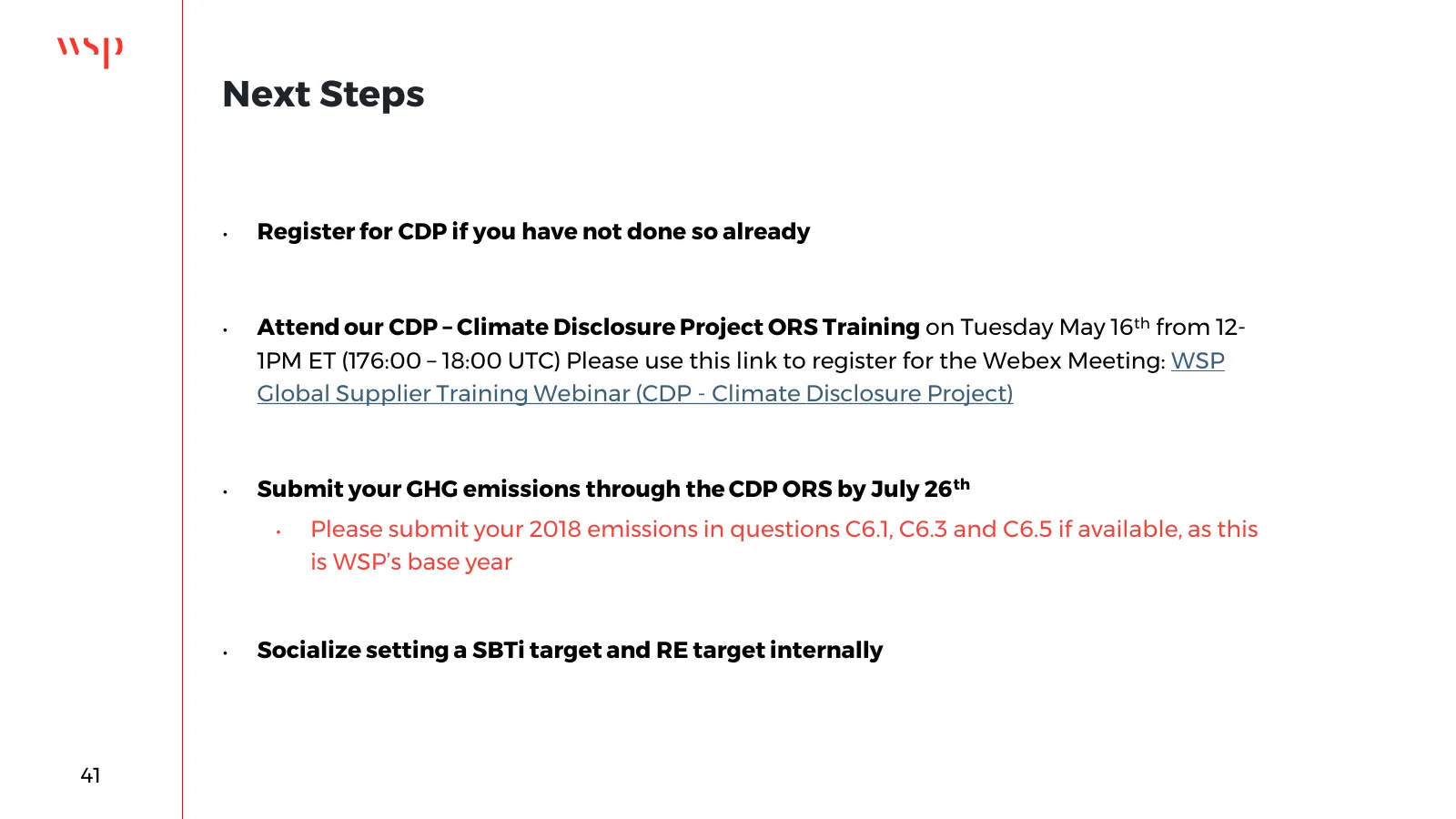
Next Steps • Register for CDP if you have not done so already • Attend our CDP – Climate Disclosure Project ORS Training on Tuesday May 16th from 12- 1PM ET (176:00 – 18:00 UTC) Please use this link to register for the Webex Meeting: WSP Global Supplier Training Webinar (CDP - Climate Disclosure Pro

Slide 42: Thank you Questions?
42 Go to slide master to update this footer 42 Thank you Questions?

Slide 43: Appendix
43 Go to slide master to update this footer 43 Appendix
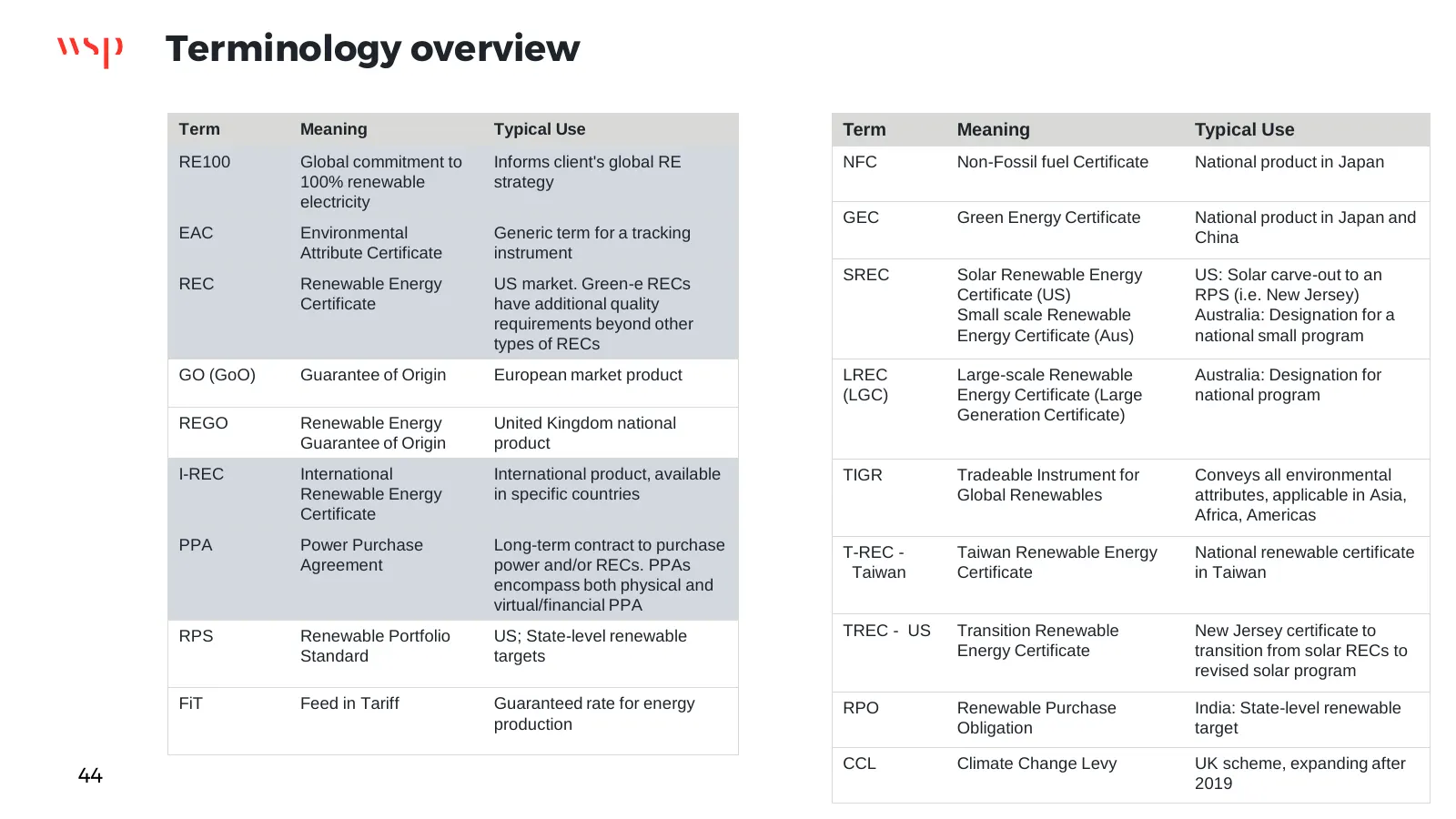
Slide 44: Terminology overview
Terminology overview Term Meaning Typical Use Term Meaning Typical Use RE100 Global commitment to Informs client's global RE NFC Non-Fossil fuel Certificate National product in Japan 100% renewable strategy electricity GEC Green Energy Certificate National product in Japan and EAC Environmental Gene
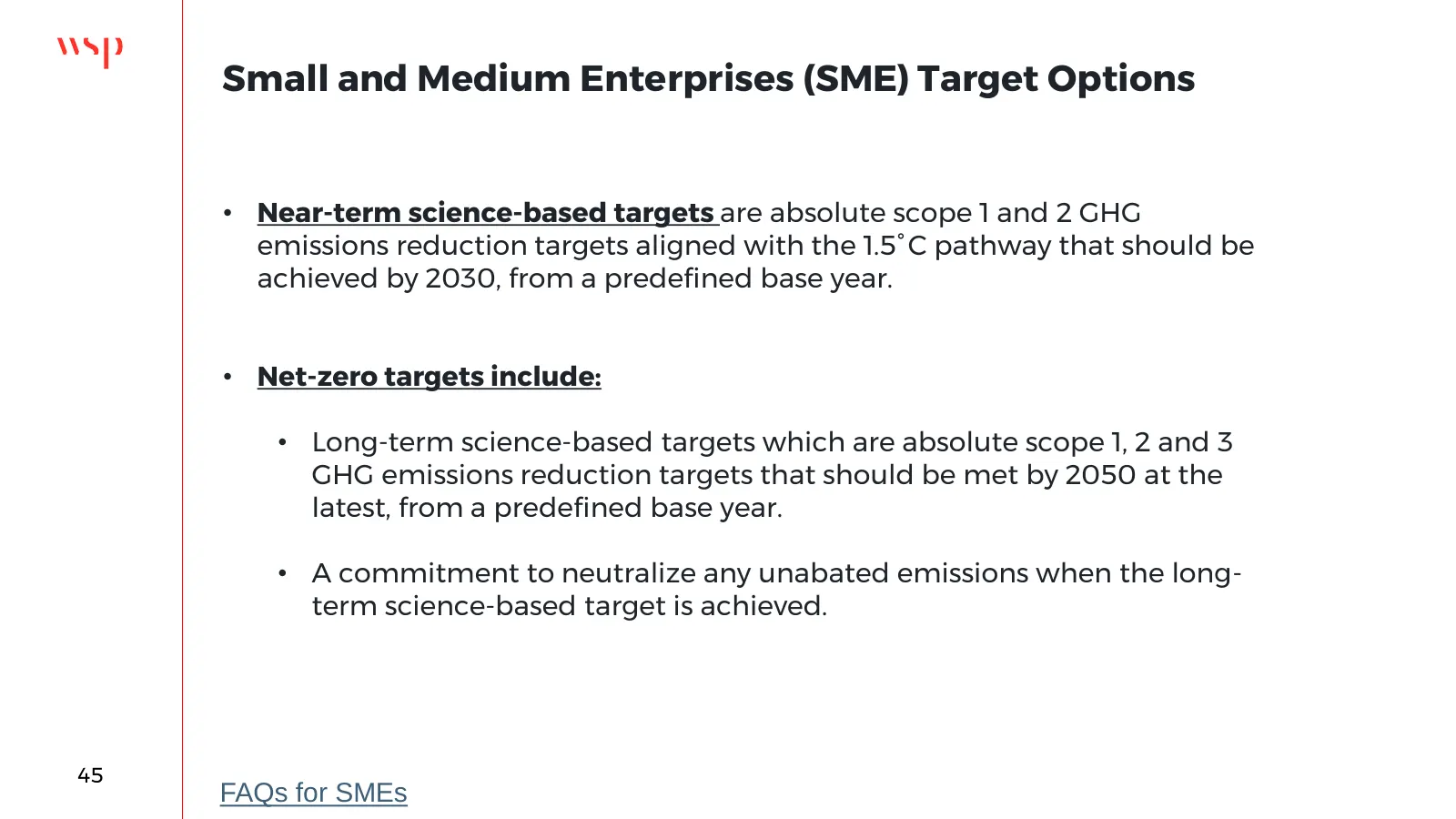
Slide 45: Small and Medium Enterprises (SME) Target Options
Small and Medium Enterprises (SME) Target Options • Near-term science-based targets are absolute scope 1 and 2 GHG emissions reduction targets aligned with the 1.5˚C pathway that should be achieved by 2030, from a predefined base year. • Net-zero targets include: • Long-term science-based targets wh
Source: Internet Archive copy of wsp.com
More decks from WSP Global Inc
 Q3 2026 Earnings Presentation13 slides · Nov 5, 2026
 Q2 2026 Earnings Presentation13 slides · Aug 6, 2026
 Investor Presentation (July 2026)28 slides · July 2026
 Q1 2026 Earnings Presentation13 slides · May 7, 2026
 Q4 2025 Earnings Presentation14 slides · Feb 26, 2026
 Fact Sheet (2025)2 slides · Nov 6, 2025