DiaMedica Therapeutics Inc. · NASDAQ:DMAC
DiaMedica Therapeutics — Technical Presentation (November 2026)
46 slides from DiaMedica Therapeutics's technical presentation, November 2026
Slide 1: The Potential of DM199 to Treat Fetal Growth Restriction: Topline Clinical Data
KEY OPINION LEADER EVENT The Potential of DM199 to Treat Fetal Growth Restriction: Topline Clinical Data November 2026 Mechanism, trial design, and Cohorts 1&2 interim results from the first-ever clinical program with DM199 in early-onset fetal growth restriction
Slide 2: Cautionary Note Regarding Forward-Looking Statements
Cautionary Note Regarding Forward-Looking Statements This presentation contains forward-looking statements within the meaning of the U.S. Private Securities Litigation Reform Act of 1995 and forward-looking information that are based on the beliefs of management and reflect management’s current expe

Slide 3: Today's Speakers
INTRODUCTIONS Today's Speakers Professor Sue Walker Professor Stephen Tong Professor Catherine Cluver Professor Andrew Shennan University of Melbourne University of Melbourne Stellenbosch University, Cape Town King's College London Head of Obstetrics, Gynaecology and Obstetrician-scientist at the Un
Slide 4: What We'll Cover Today
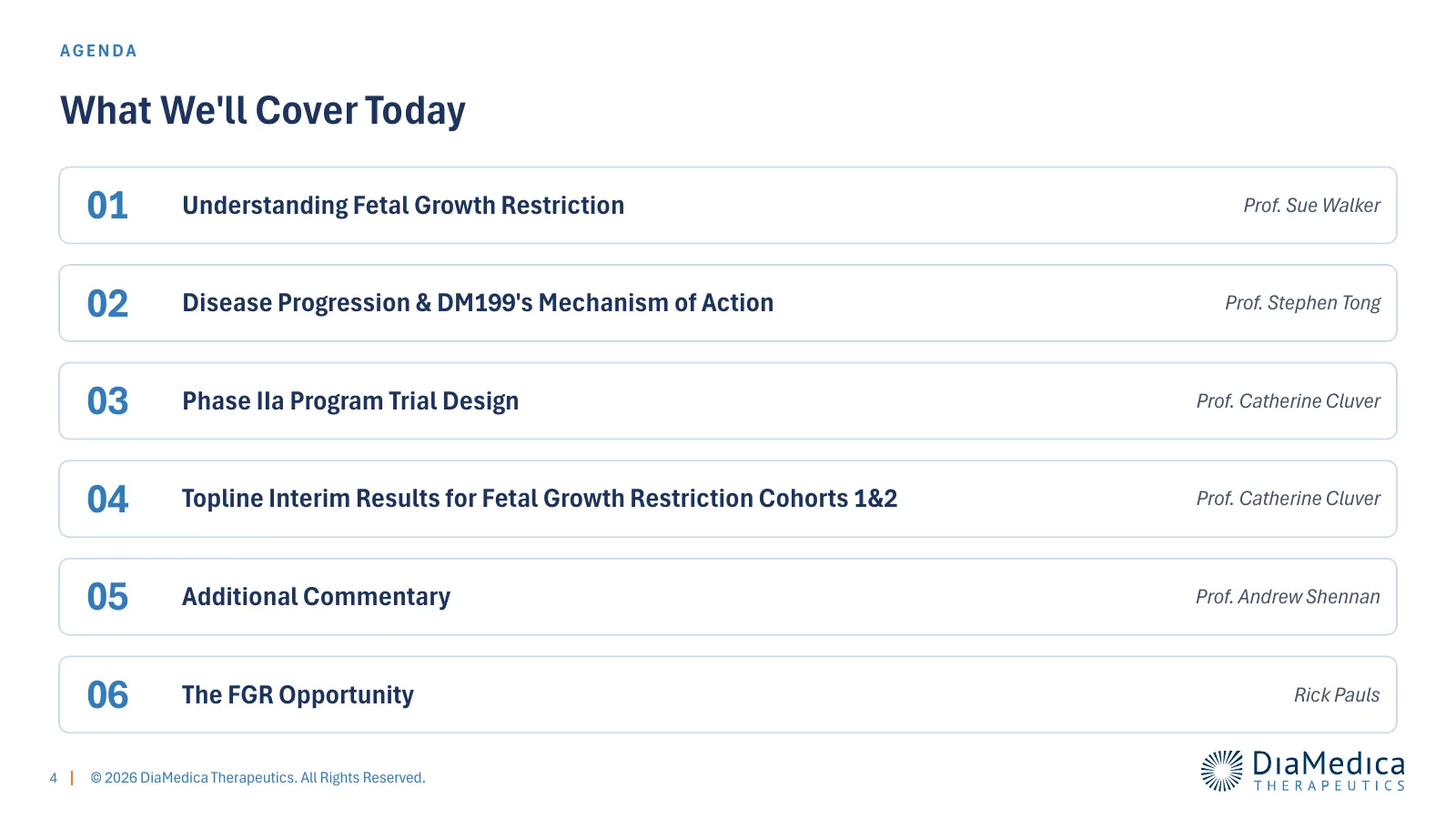
AGENDA What We'll Cover Today 01 Understanding Fetal Growth Restriction Prof. Sue Walker 02 Disease Progression & DM199's Mechanism of Action Prof. Stephen Tong 03 Phase IIa Program Trial Design Prof. Catherine Cluver 04 Topline Interim Results for Fetal Growth Restriction Cohorts 1&2 Prof. Catherin
Slide 5: Understanding Fetal Growth Restriction
01 Understanding Fetal Growth Restriction
Slide 6: Fetal Growth Restriction: Why It Happens and Why It Matters
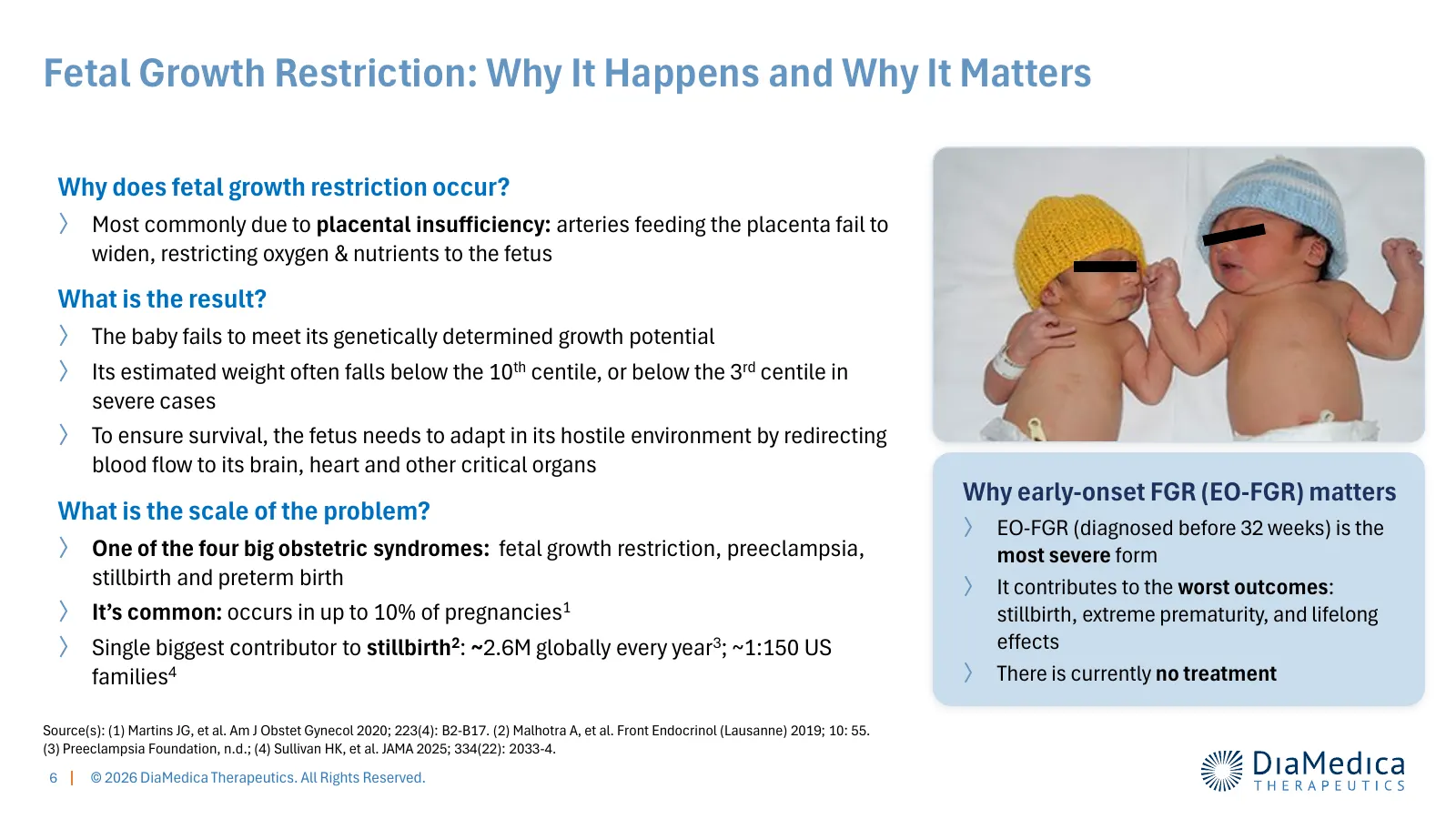
Fetal Growth Restriction: Why It Happens and Why It Matters Why does fetal growth restriction occur? 〉 Most commonly due to placental insufficiency: arteries feeding the placenta fail to widen, restricting oxygen & nutrients to the fetus What is the result? 〉 The baby fails to meet its genetically d
Slide 7: Growth Restriction is Linked to an Increase in Perinatal Death Risk
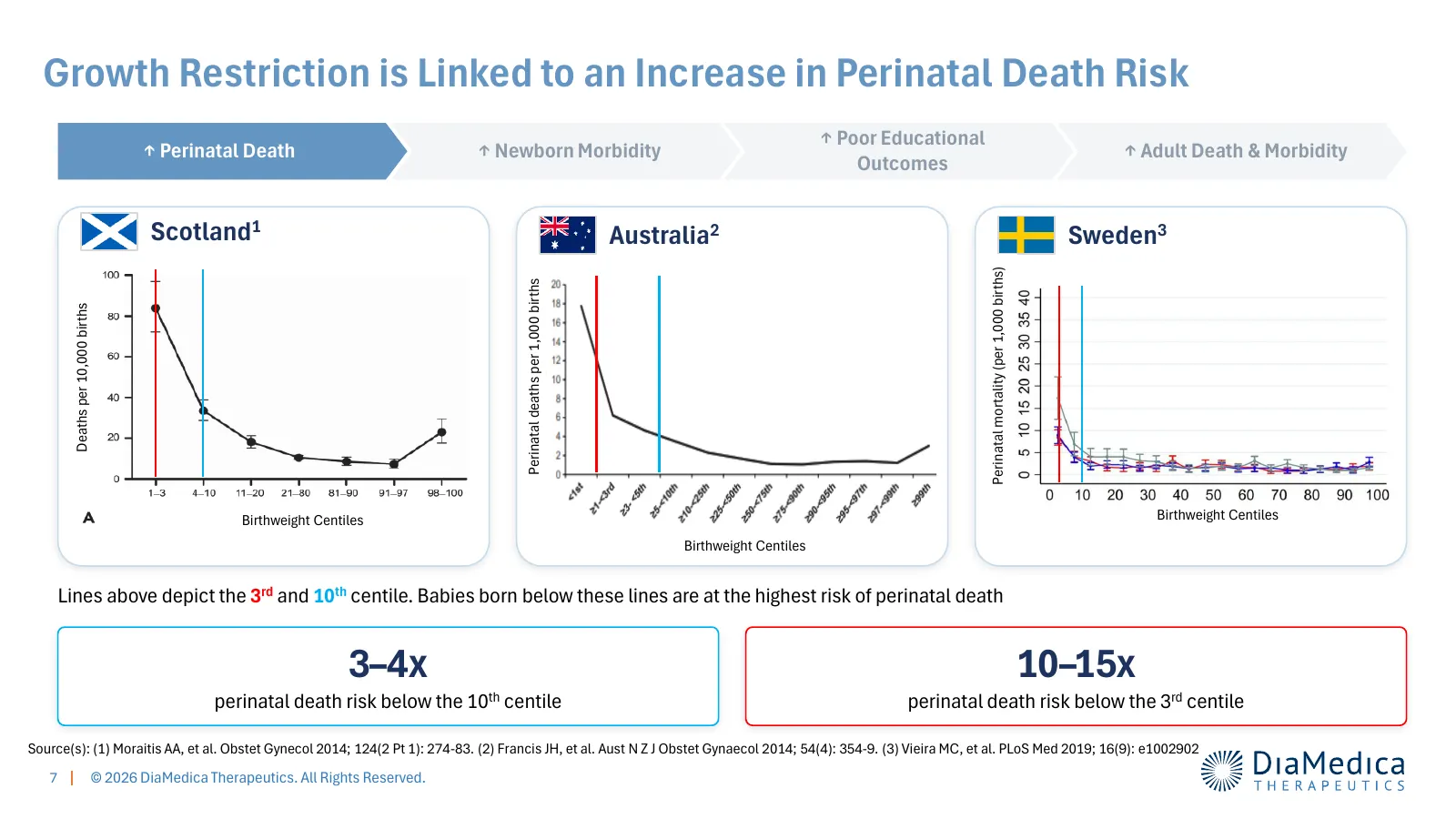
Growth Restriction is Linked to an Increase in Perinatal Death Risk ↑ Poor Educational ↑ Perinatal Death ↑ Newborn Morbidity ↑ Adult Death & Morbidity Outcomes Scotland1 Australia2 Sweden3 Perinatal mortality (per 1,000 births) Perinatal deaths per 1,000 births Deaths per 10,000 births Birthweight C
Slide 8: Growth-Restricted Babies Face More Complications and Longer NICU Stays
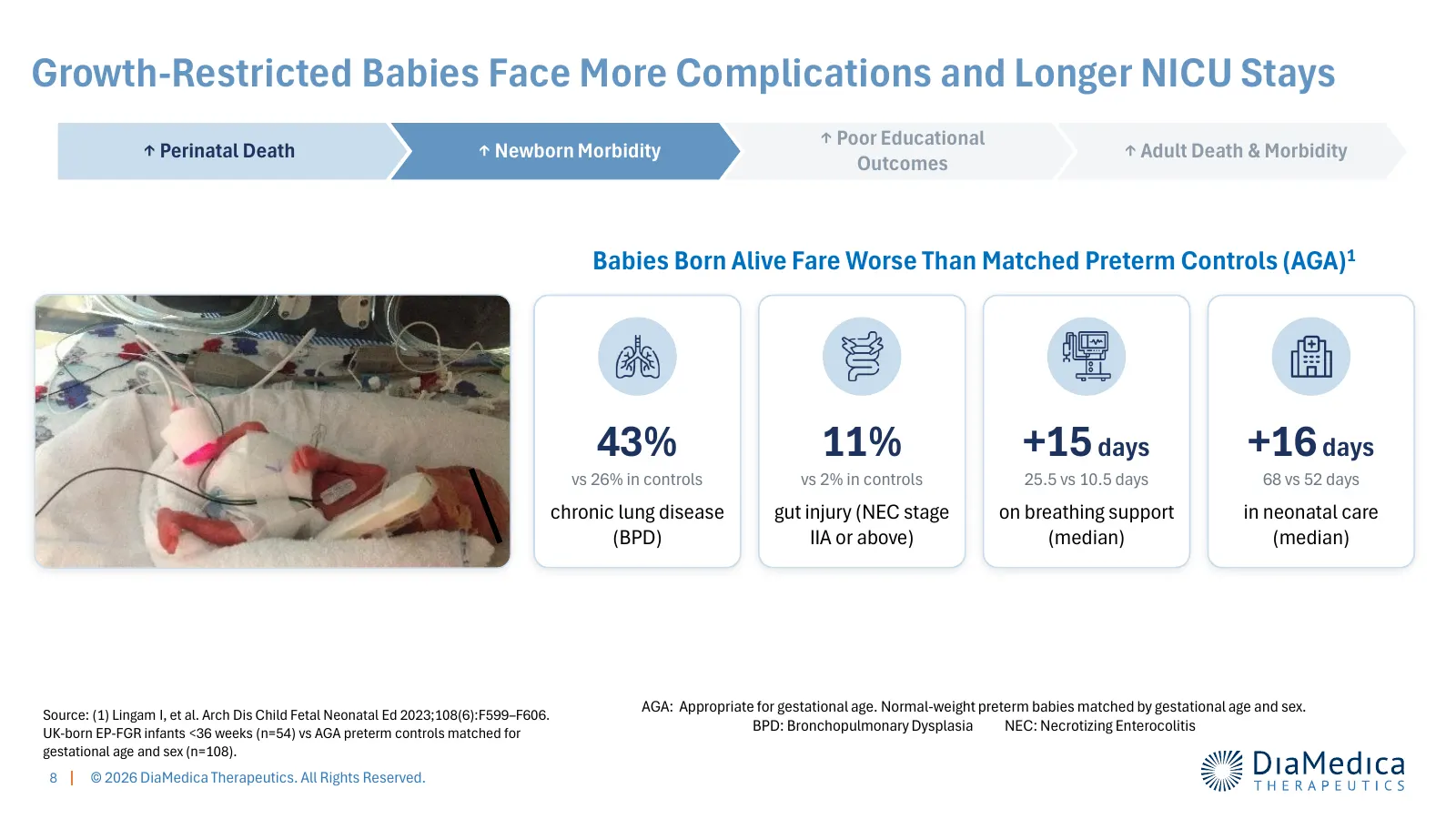
Growth-Restricted Babies Face More Complications and Longer NICU Stays ↑ Poor Educational ↑ Perinatal Death ↑ Newborn Morbidity ↑ Adult Death & Morbidity Outcomes Babies Born Alive Fare Worse Than Matched Preterm Controls (AGA)1 43% 11% +15 days +16 days vs 26% in controls vs 2% in controls 25.5 vs
Slide 9: Children Born Growth-Restricted Score Lower on IQ Tests and Fall Behind at School
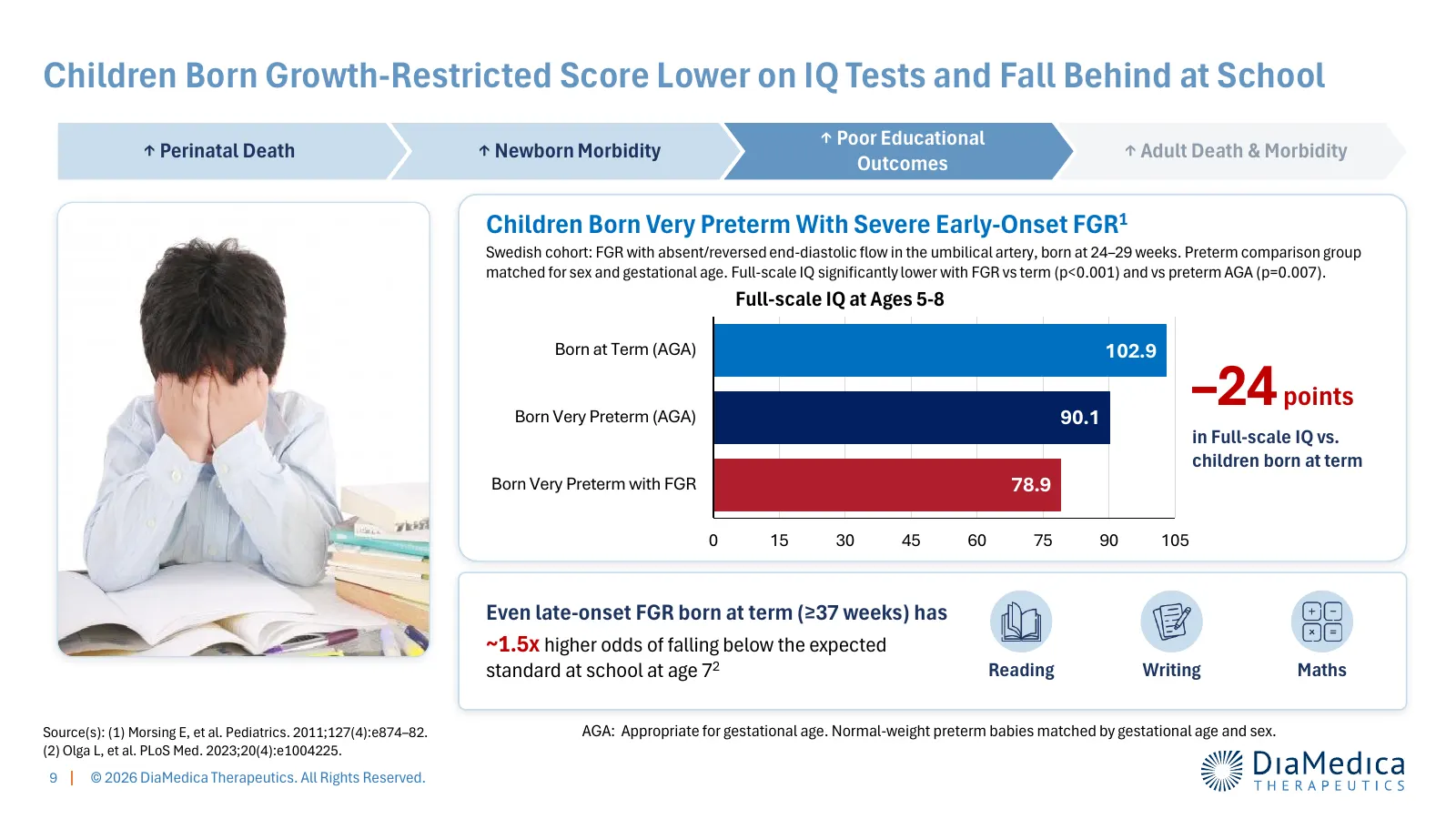
Children Born Growth-Restricted Score Lower on IQ Tests and Fall Behind at School ↑ Poor Educational ↑ Perinatal Death ↑ Newborn Morbidity ↑ Adult Death & Morbidity Outcomes Children Born Very Preterm With Severe Early-Onset FGR1 Swedish cohort: FGR with absent/reversed end-diastolic flow in the umb
Slide 10: The Consequences of Growth Restriction May Span a Lifetime
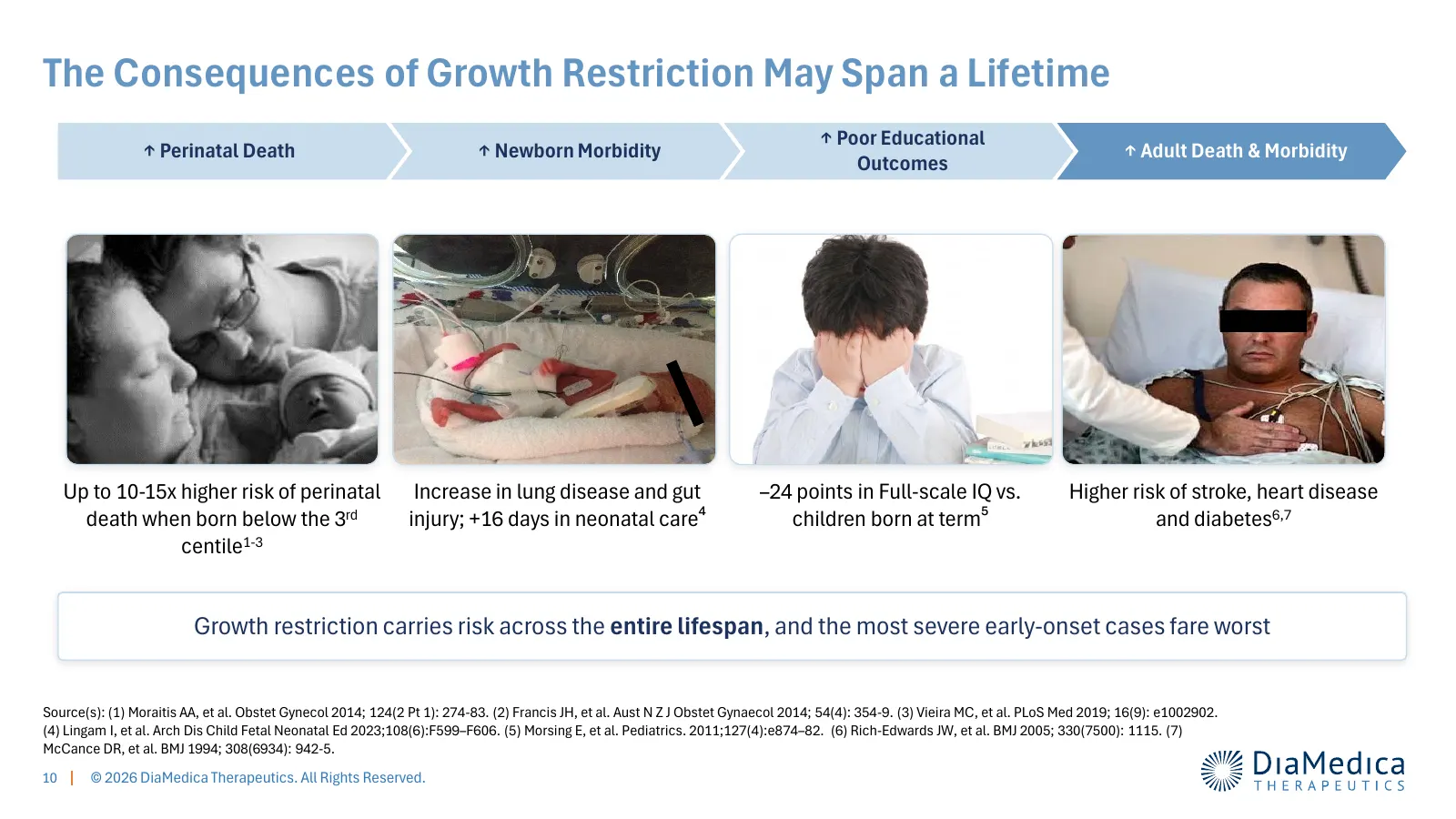
The Consequences of Growth Restriction May Span a Lifetime ↑ Poor Educational ↑ Perinatal Death ↑ Newborn Morbidity ↑ Adult Death & Morbidity Outcomes Up to 10-15x higher risk of perinatal Increase in lung disease and gut –24 points in Full-scale IQ vs. Higher risk of stroke, heart disease death whe
Slide 11: Preterm Growth Restriction: The Course of Events
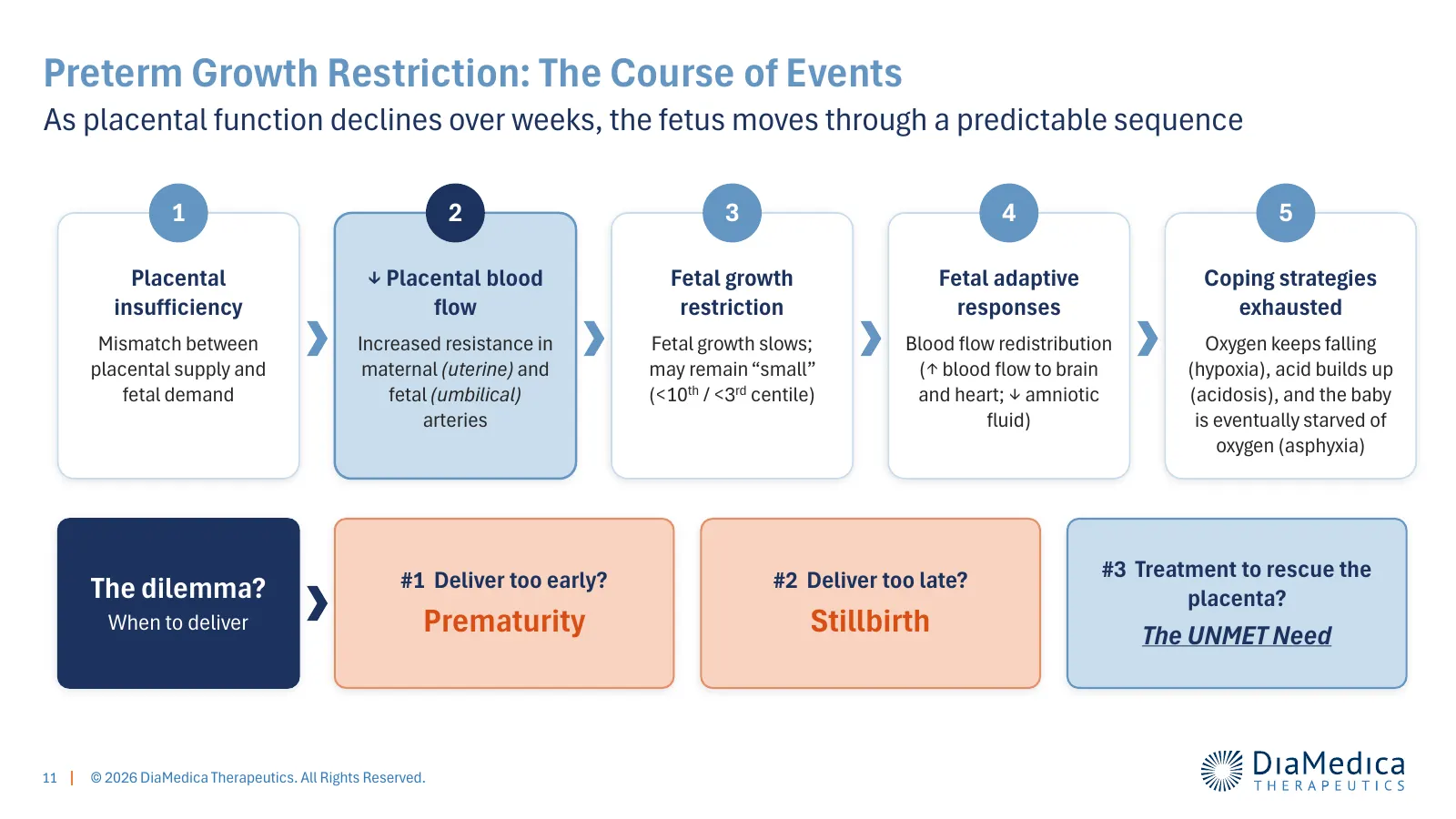
Preterm Growth Restriction: The Course of Events As placental function declines over weeks, the fetus moves through a predictable sequence 1 2 3 4 5 Placental ↓ Placental blood Fetal growth Fetal adaptive Coping strategies insufficiency flow restriction responses exhausted Mismatch between Increased
Slide 12: The Signature of Preterm FGR: The Umbilical Artery Doppler
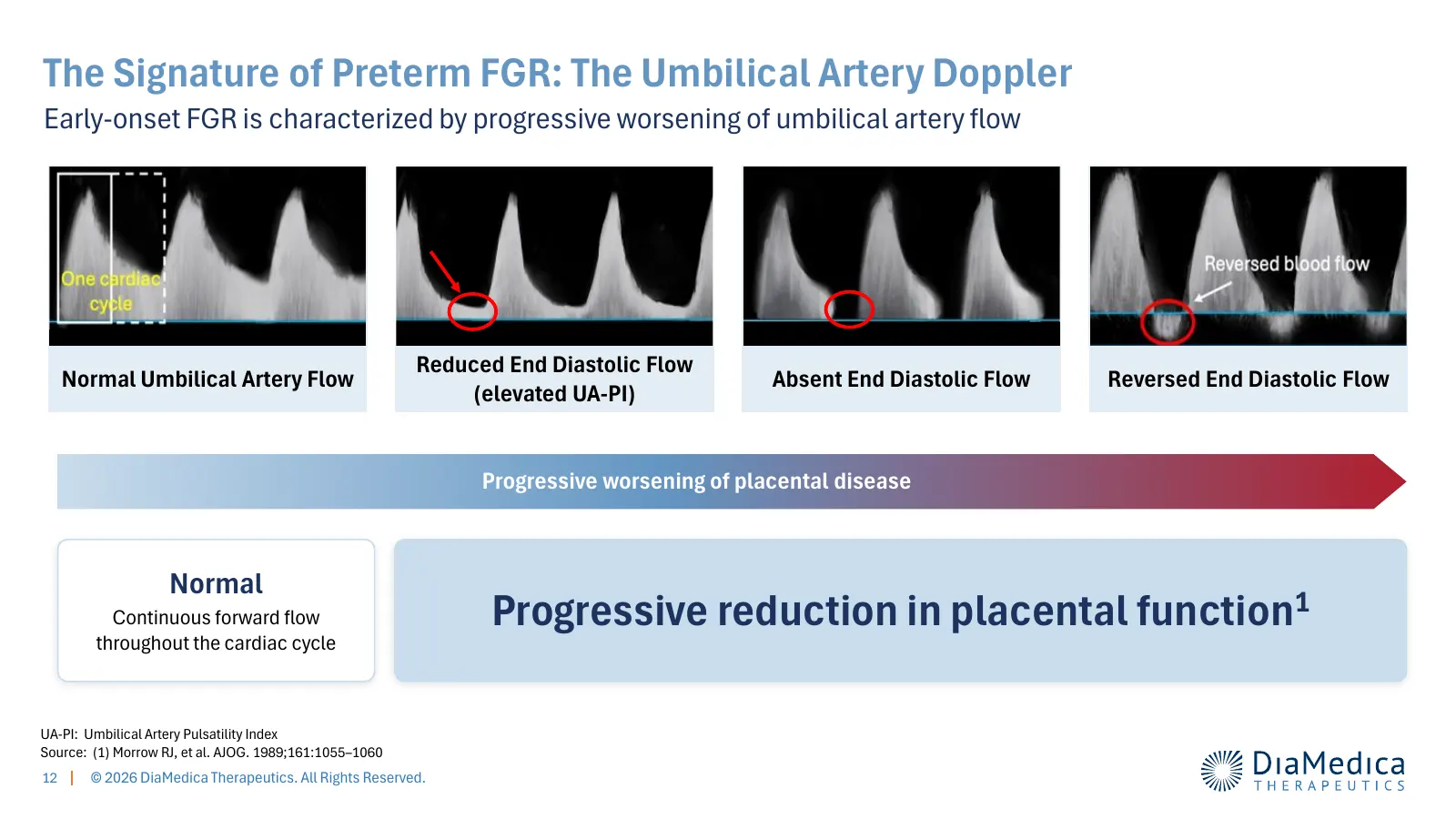
The Signature of Preterm FGR: The Umbilical Artery Doppler Early-onset FGR is characterized by progressive worsening of umbilical artery flow Reduced End Diastolic Flow Normal Umbilical Artery Flow Absent End Diastolic Flow Reversed End Diastolic Flow (elevated UA-PI) Progressive worsening of placen
Slide 13: The Signature of Preterm FGR: The Umbilical Artery Doppler
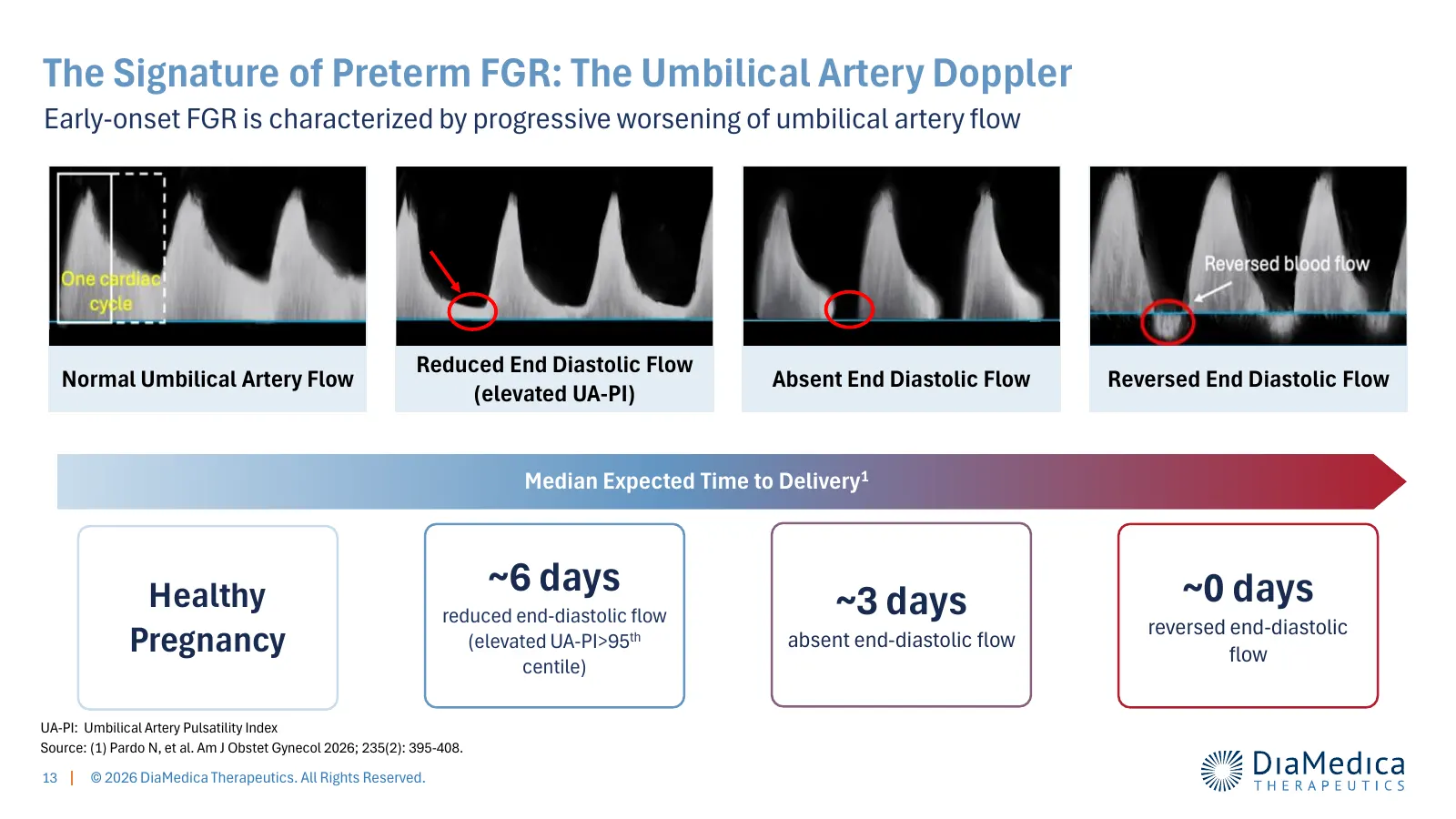
The Signature of Preterm FGR: The Umbilical Artery Doppler Early-onset FGR is characterized by progressive worsening of umbilical artery flow Reduced End Diastolic Flow Normal Umbilical Artery Flow Absent End Diastolic Flow Reversed End Diastolic Flow (elevated UA-PI) Progressive Median worsening Ex
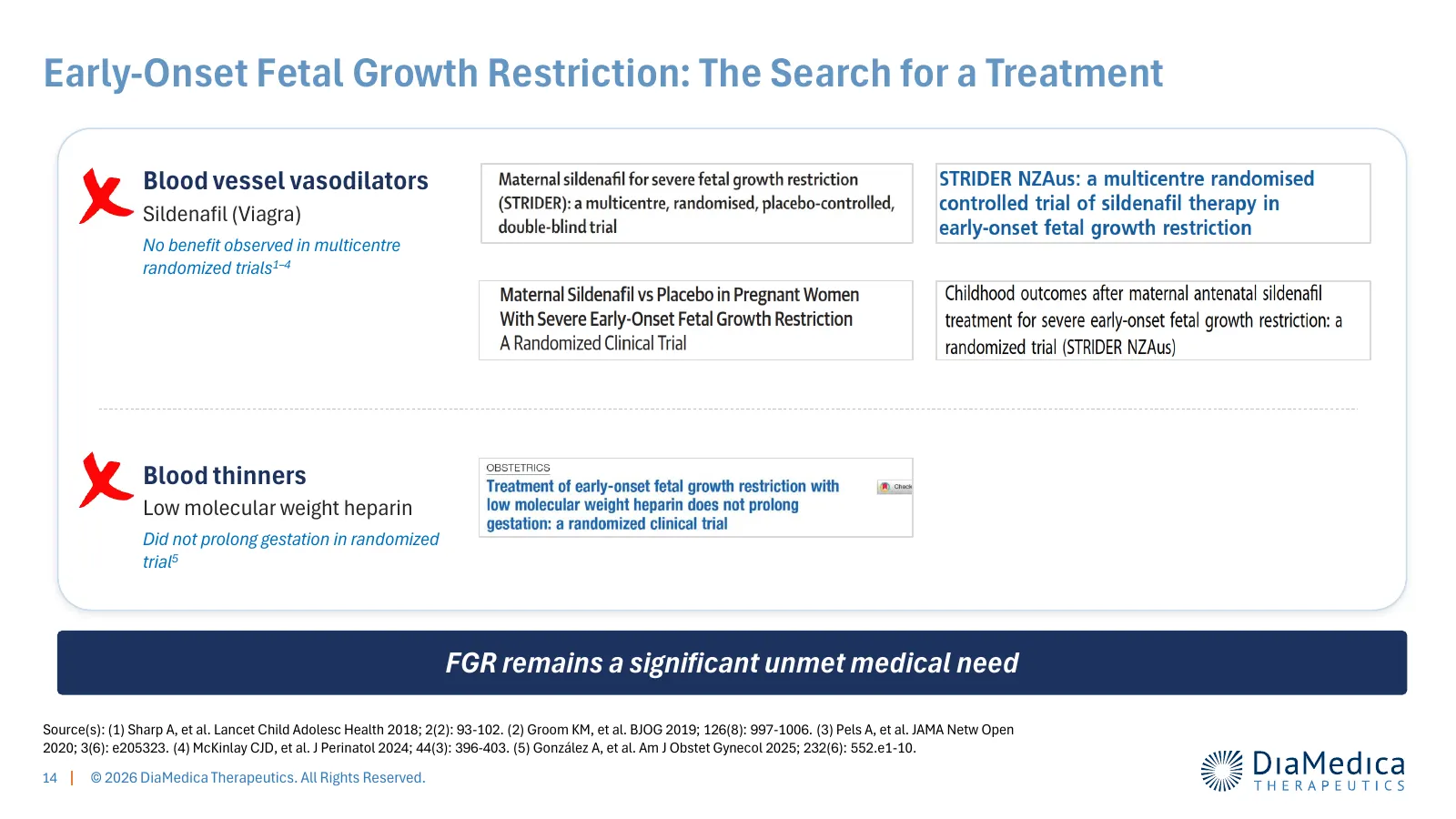
Slide 14: Early-Onset Fetal Growth Restriction: The Search for a Treatment
Early-Onset Fetal Growth Restriction: The Search for a Treatment Blood vessel vasodilators Sildenafil (Viagra) No benefit observed in multicentre randomized trials1–4 Blood thinners Low molecular weight heparin Did not prolong gestation in randomized trial5 FGR remains a significant unmet medical ne
Slide 15: Disease Progression & DM199's Mechanism of Action
02 Disease Progression & DM199's Mechanism of Action
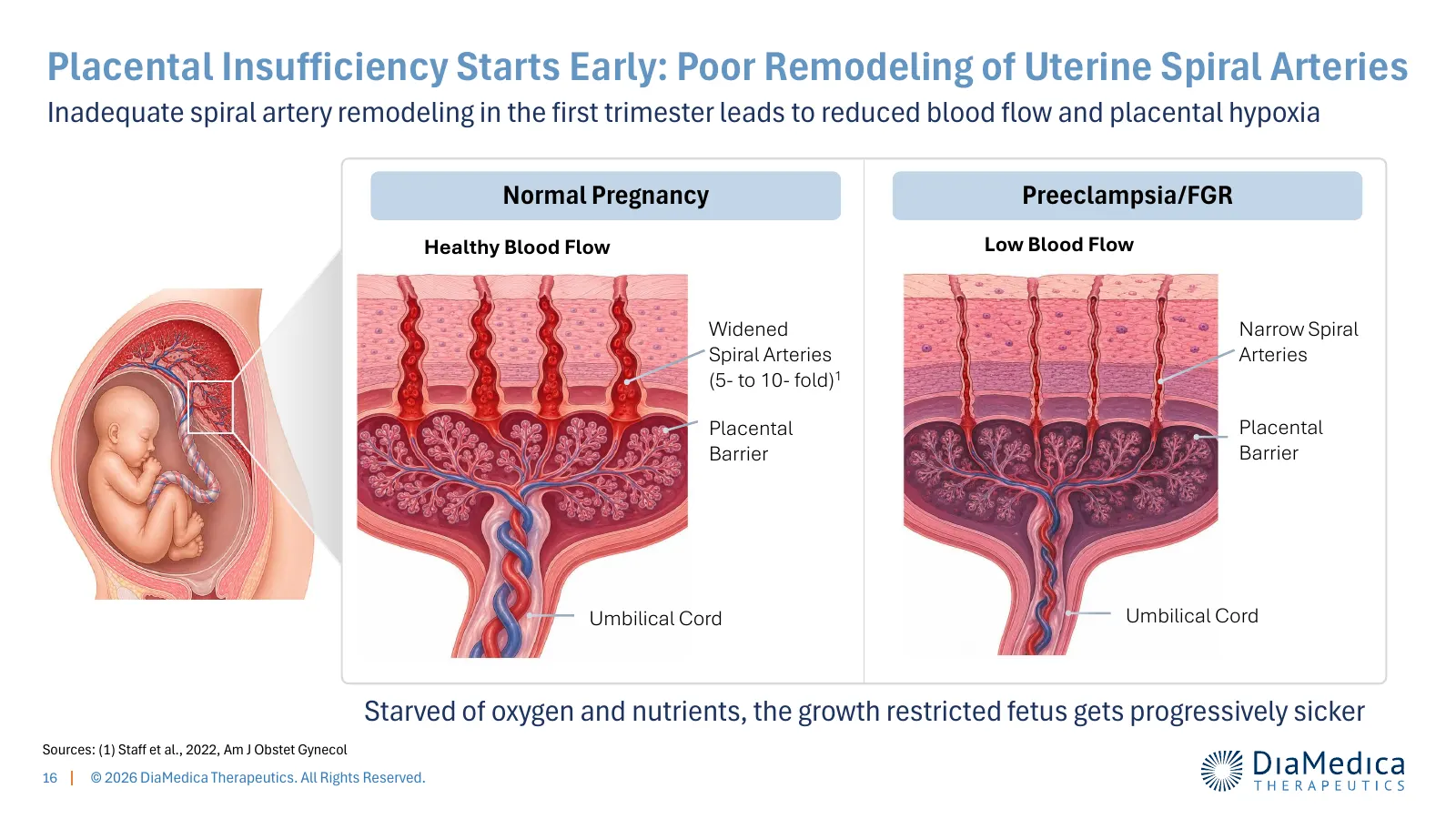
Slide 16: Placental Insufficiency Starts Early: Poor Remodeling of Uterine Spiral Arteries
Placental Insufficiency Starts Early: Poor Remodeling of Uterine Spiral Arteries Inadequate spiral artery remodeling in the first trimester leads to reduced blood flow and placental hypoxia Normal Pregnancy Preeclampsia/FGR Healthy Blood Flow Low Blood Flow Widened Narrow Spiral Spiral Arteries Arte
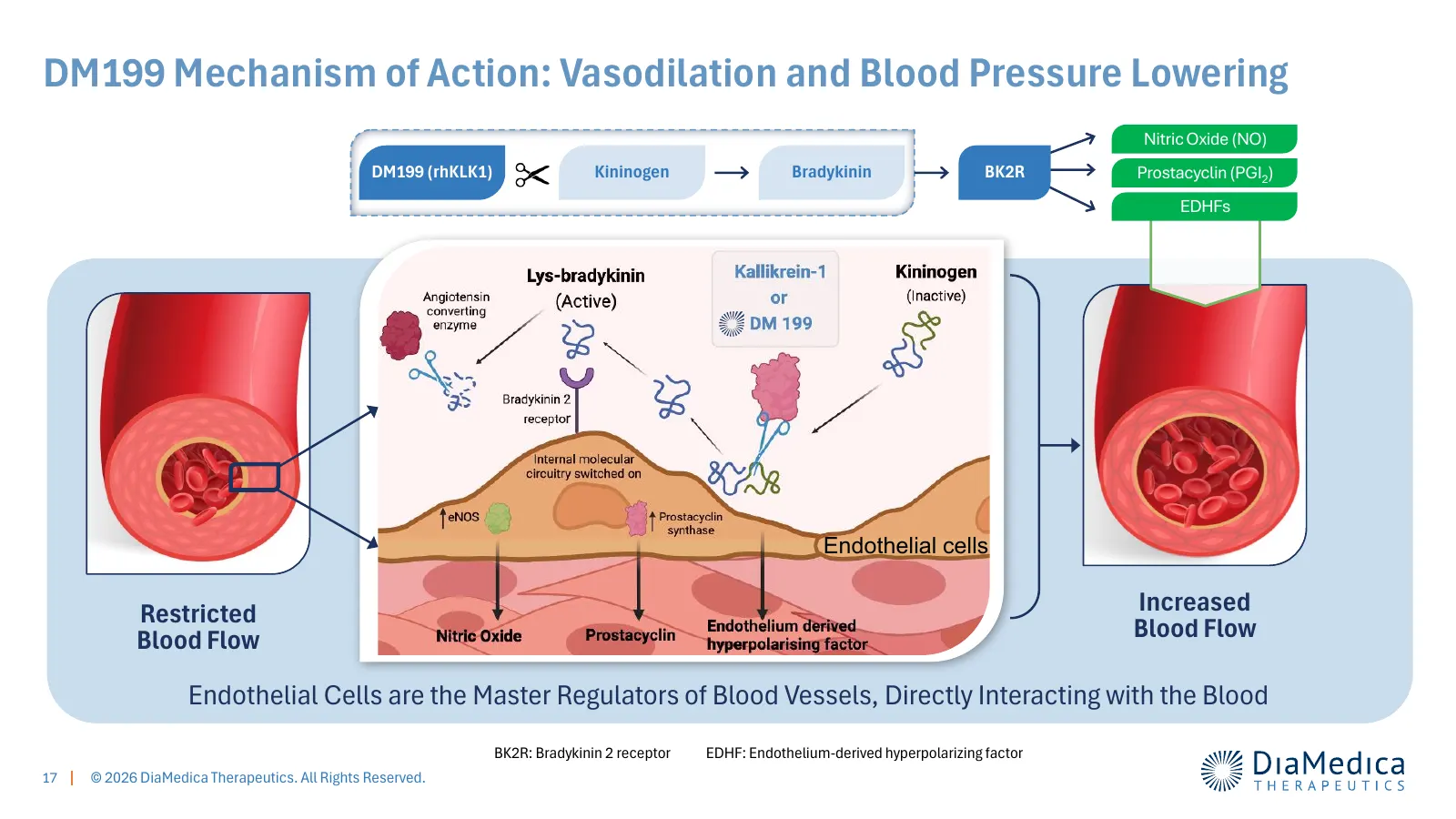
Slide 17: DM199 Mechanism of Action: Vasodilation and Blood Pressure Lowering
DM199 Mechanism of Action: Vasodilation and Blood Pressure Lowering Nitric Oxide (NO) DM199 (rhKLK1) Kininogen Bradykinin BK2R Prostacyclin (PGI2) EDHFs Endothelial cells Restricted Increased Blood Flow Blood Flow Endothelial Cells are the Master Regulators of Blood Vessels, Directly Interacting wit
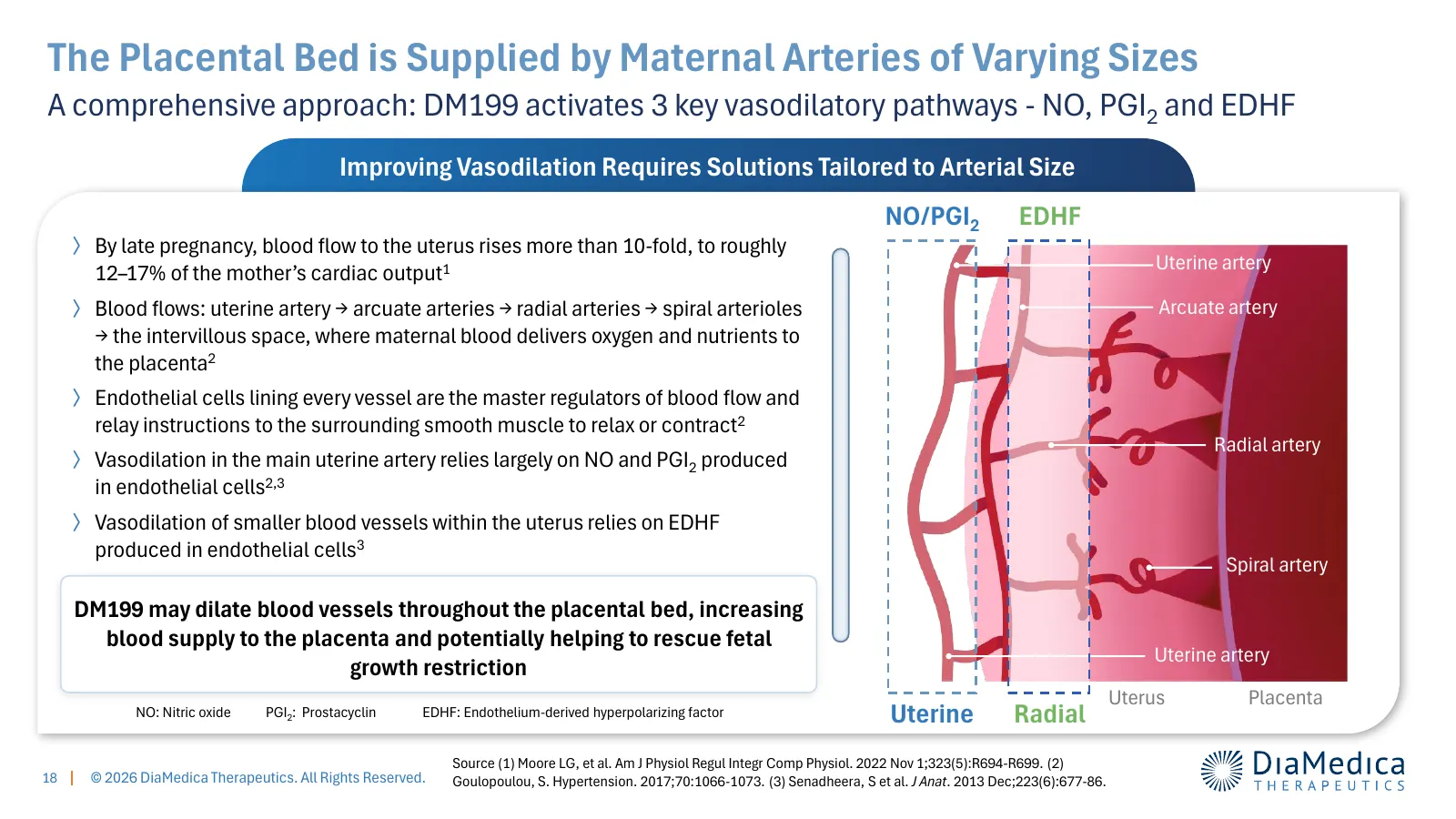
Slide 18: The Placental Bed is Supplied by Maternal Arteries of Varying Sizes
The Placental Bed is Supplied by Maternal Arteries of Varying Sizes A comprehensive approach: DM199 activates 3 key vasodilatory pathways - NO, PGI2 and EDHF Improving Vasodilation Requires Solutions Tailored to Arterial Size NO/PGI2 EDHF 〉 By late pregnancy, blood flow to the uterus rises more than
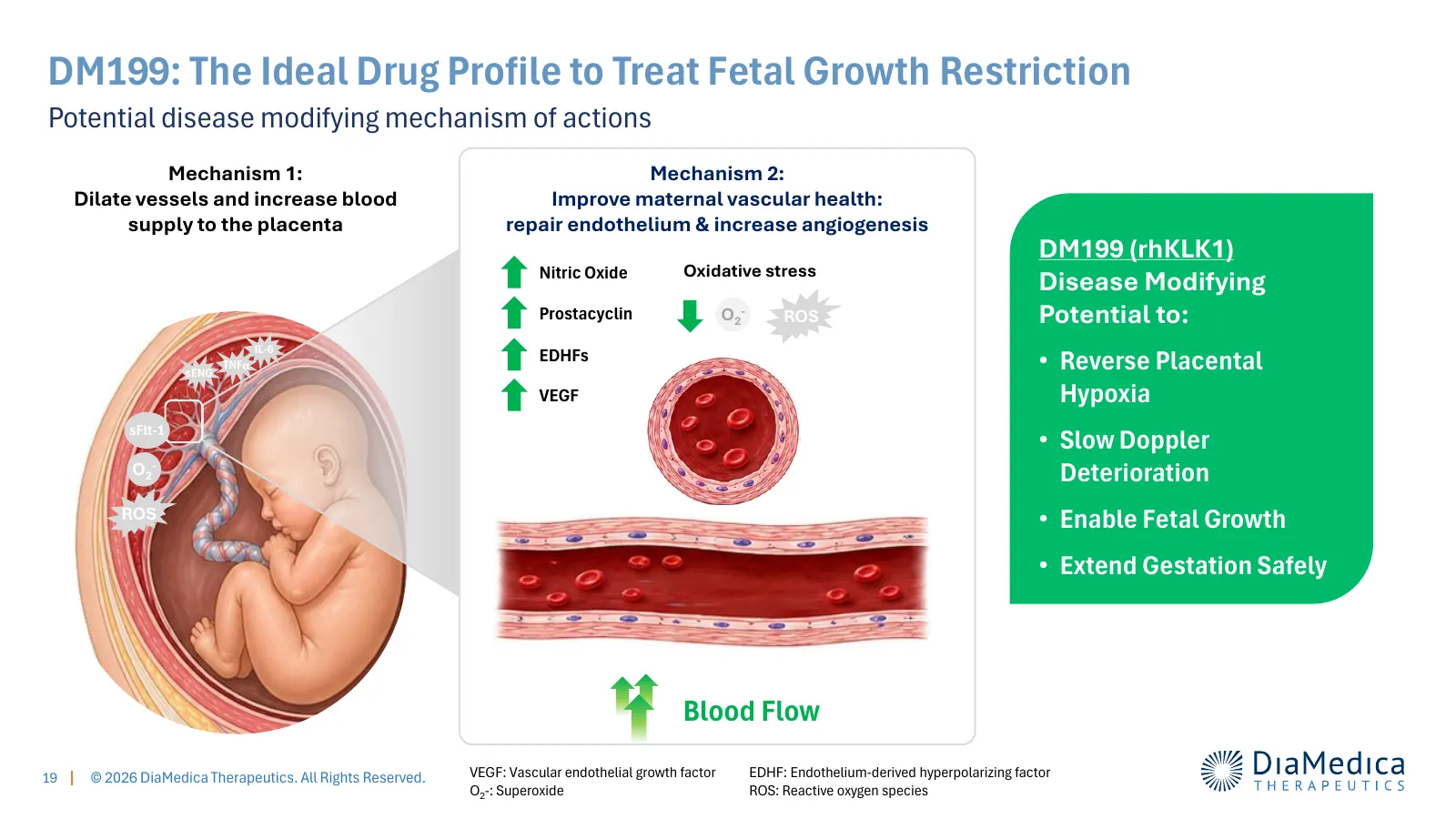
Slide 19: DM199: The Ideal Drug Profile to Treat Fetal Growth Restriction
DM199: The Ideal Drug Profile to Treat Fetal Growth Restriction Potential disease modifying mechanism of actions Mechanism 1: Mechanism 2: Dilate vessels and increase blood Improve maternal vascular health: supply to the placenta repair endothelium & increase angiogenesis DM199 (rhKLK1) Nitric Oxide
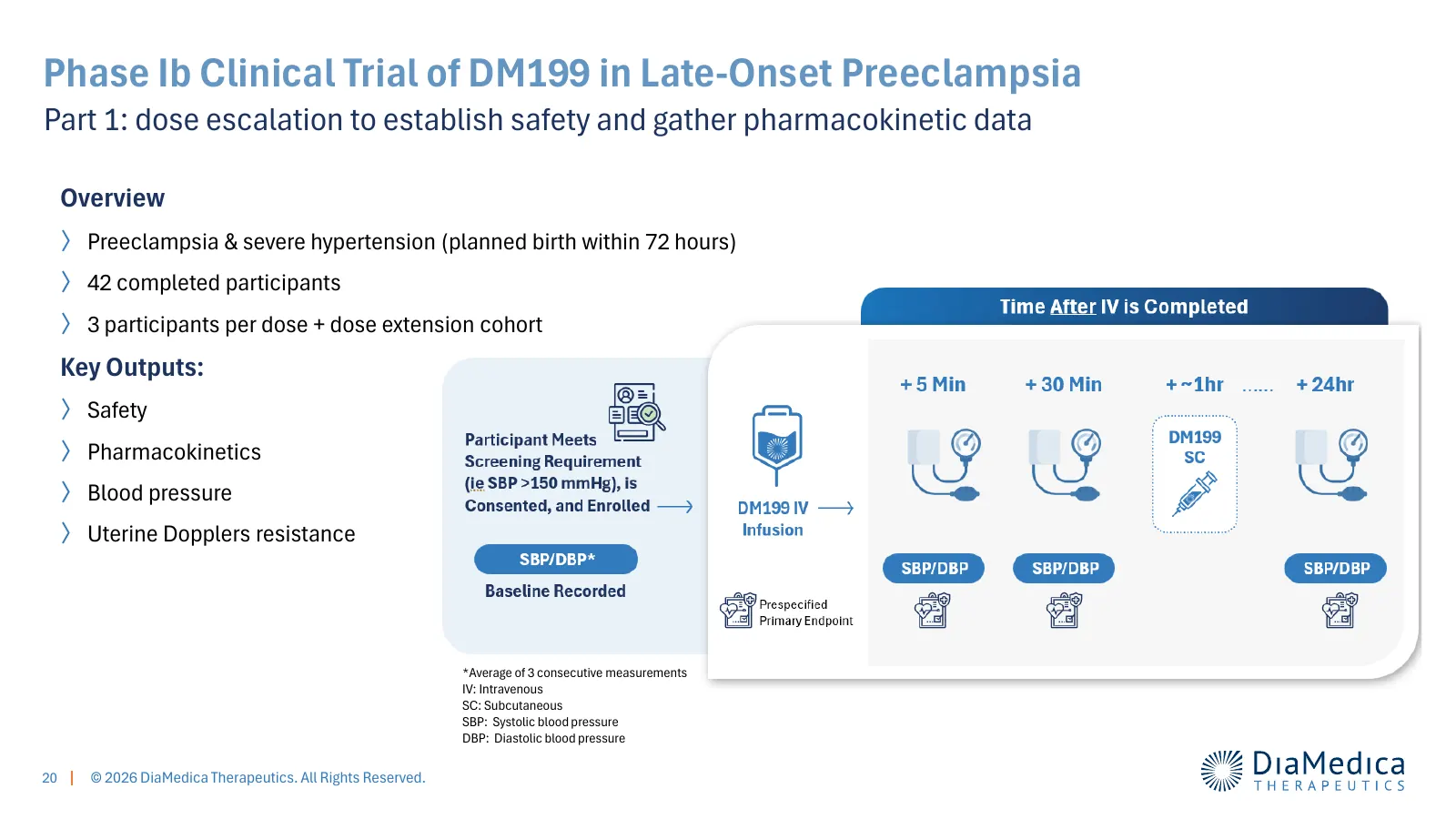
Slide 20: Phase Ib Clinical Trial of DM199 in Late-Onset Preeclampsia
Phase Ib Clinical Trial of DM199 in Late-Onset Preeclampsia Part 1: dose escalation to establish safety and gather pharmacokinetic data Overview 〉 Preeclampsia & severe hypertension (planned birth within 72 hours) 〉 42 completed participants 〉 3 participants per dose + dose extension cohort Key Outp
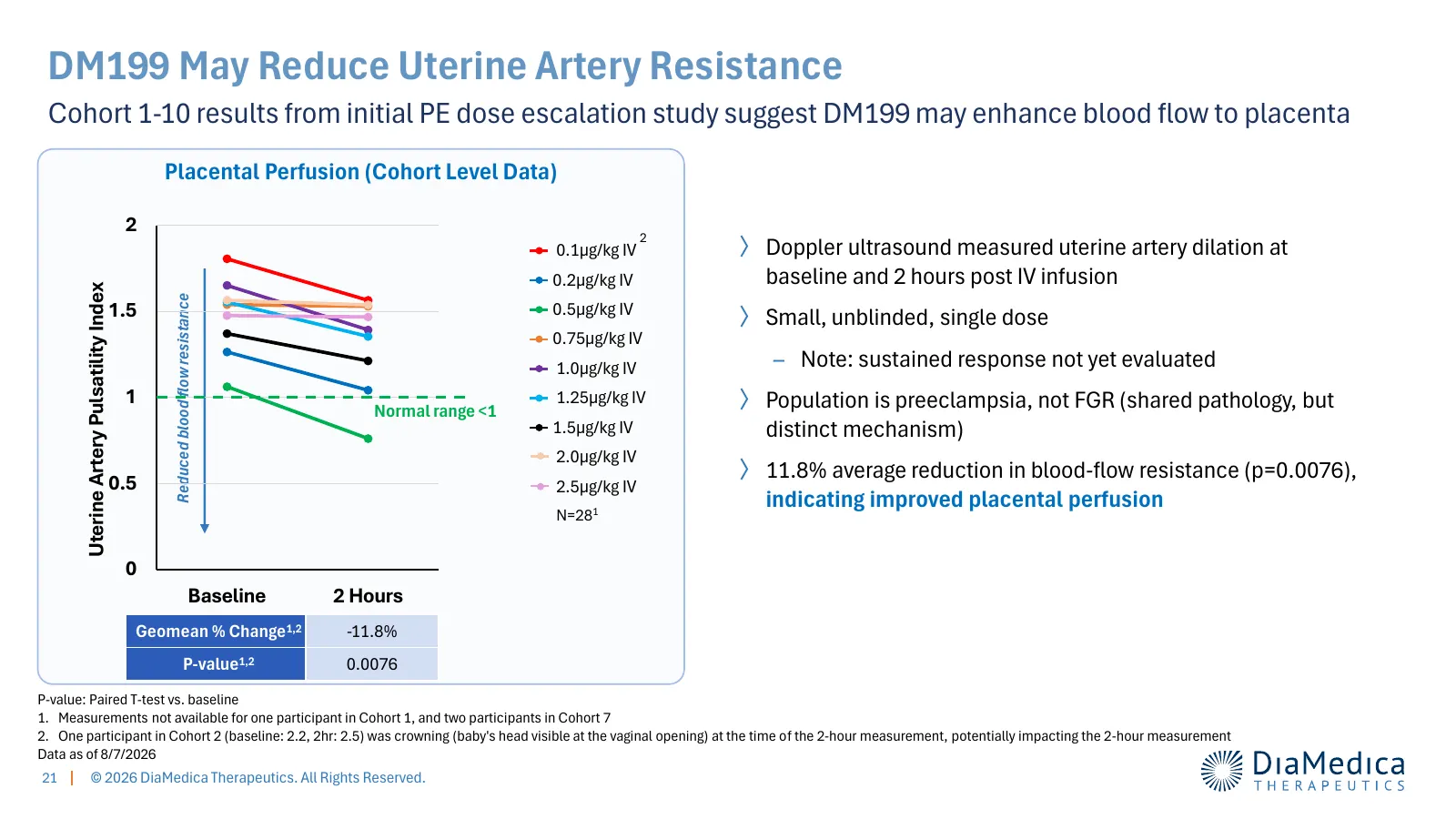
Slide 21: DM199 May Reduce Uterine Artery Resistance
DM199 May Reduce Uterine Artery Resistance Cohort 1-10 results from initial PE dose escalation study suggest DM199 may enhance blood flow to placenta Placental Perfusion (Cohort Level Data) 2 2 0.1µg/kg IV 〉 Doppler ultrasound measured uterine artery dilation at 0.2µg/kg IV baseline and 2 hours post
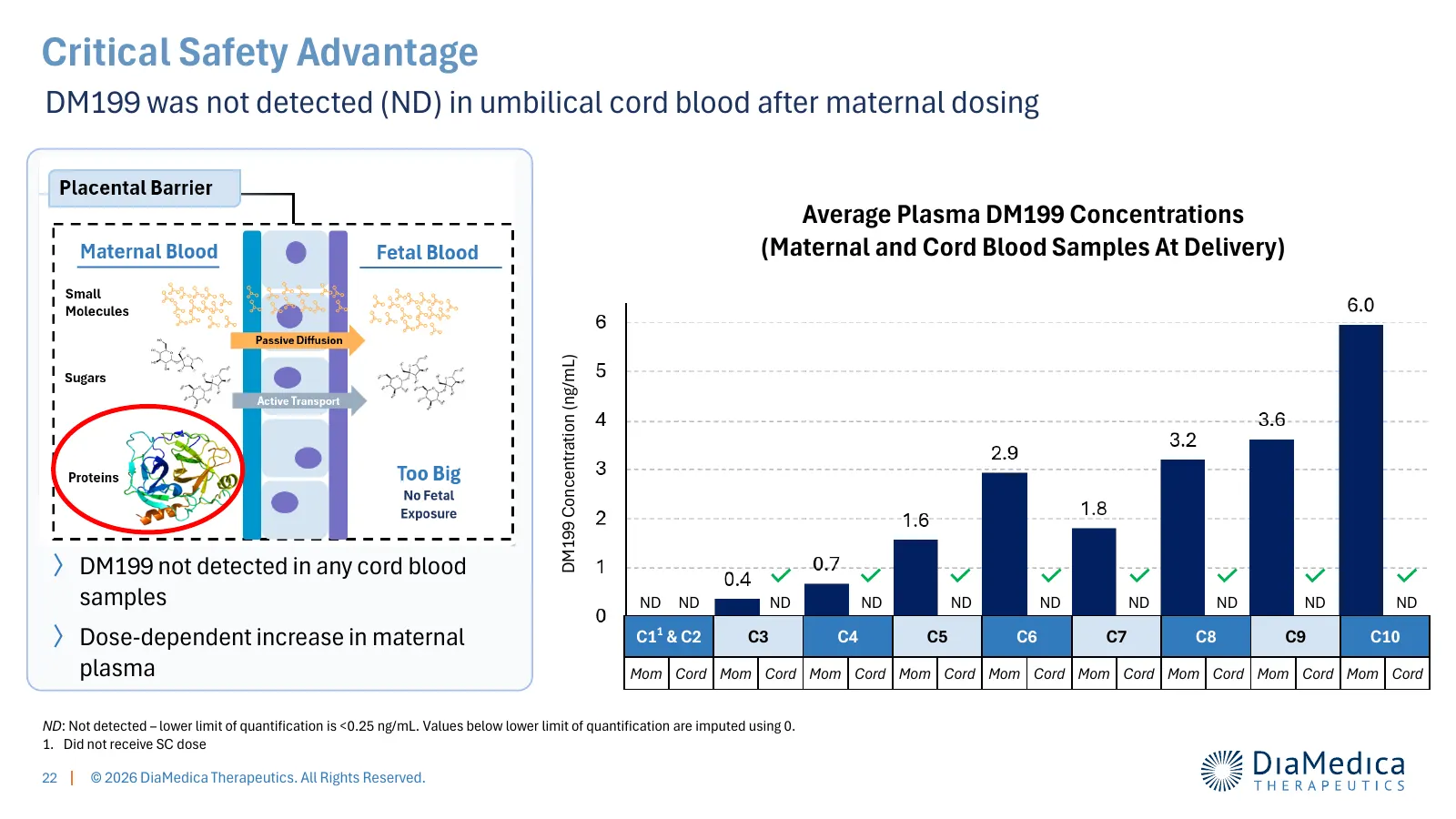
Slide 22: Critical Safety Advantage
Critical Safety Advantage DM199 was not detected (ND) in umbilical cord blood after maternal dosing Average Plasma DM199 Concentrations (Maternal and Cord Blood Samples At Delivery) 〉DM199 not detected in any cord blood DM199 Concentration (ng/mL) samples ND ND ND ND ND ND ND ND ND ND 〉Dose-dependen
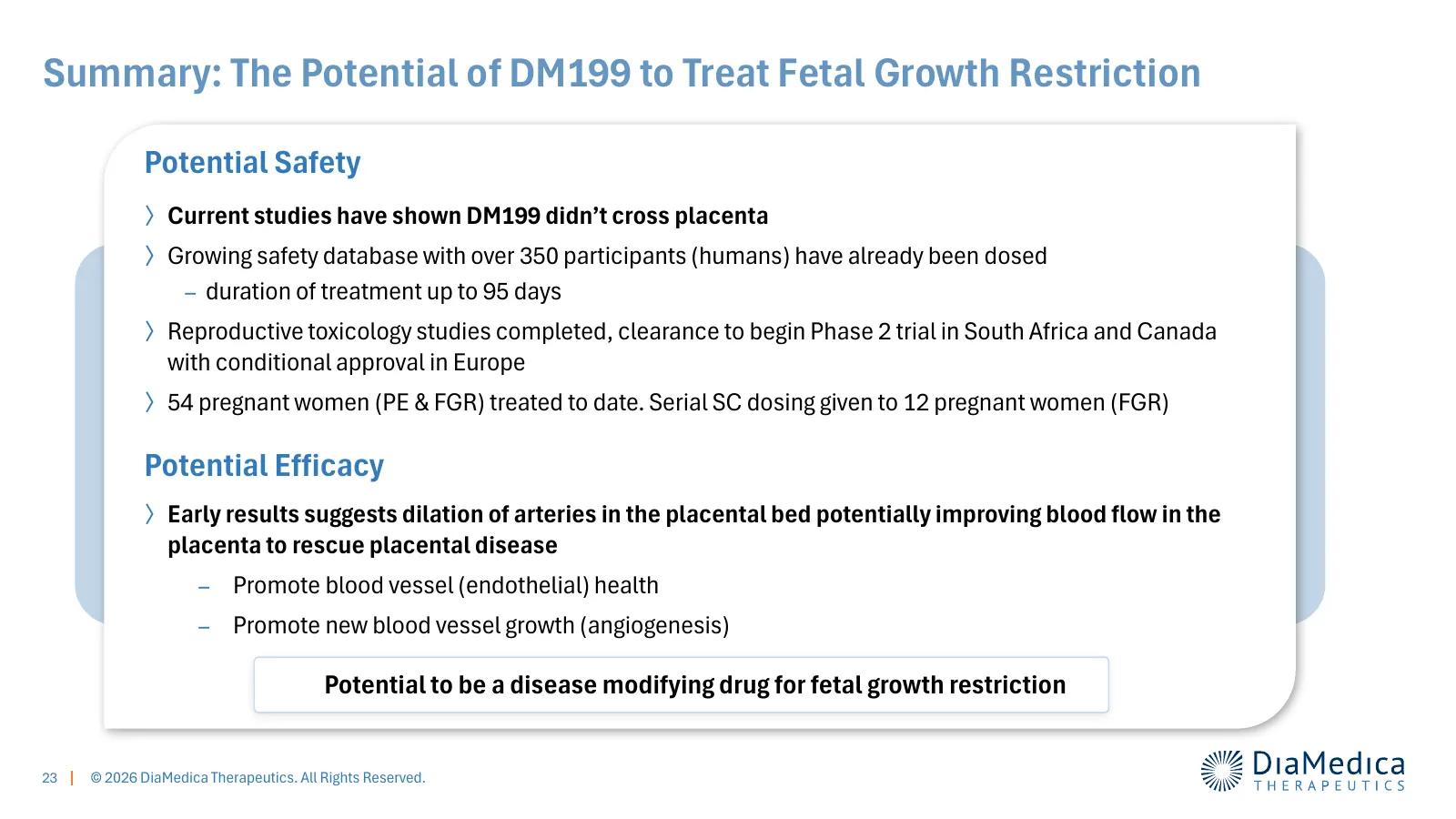
Slide 23: Summary: The Potential of DM199 to Treat Fetal Growth Restriction
Summary: The Potential of DM199 to Treat Fetal Growth Restriction Potential Safety 〉Current studies have shown DM199 didn’t cross placenta 〉Growing safety database with over 350 participants (humans) have already been dosed – duration of treatment up to 95 days 〉Reproductive toxicology studies compl

Slide 24: Phase IIa Program Trial Design
03 Phase IIa Program Trial Design
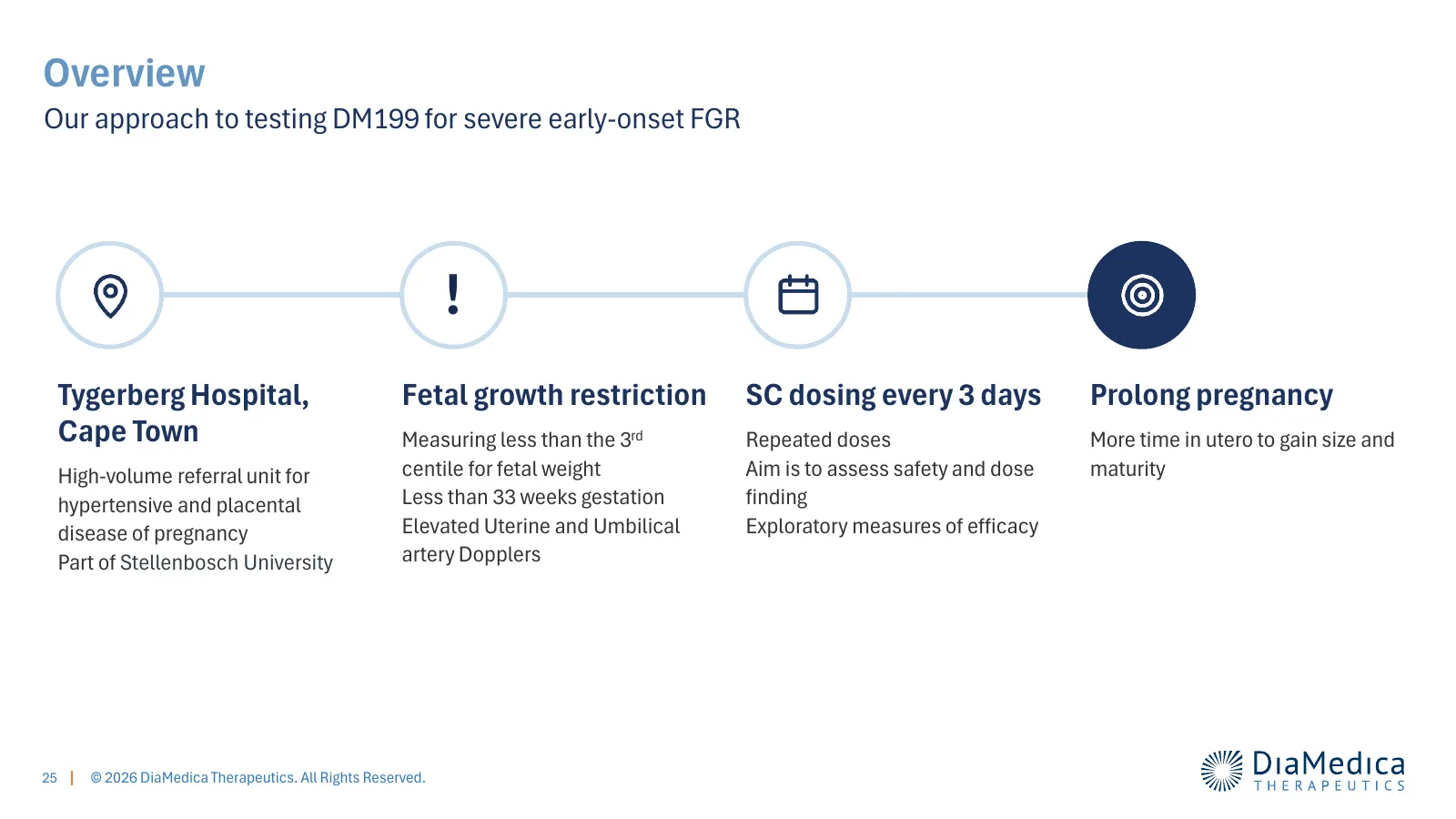
Slide 25: Overview
Overview Our approach to testing DM199 for severe early-onset FGR ! Tygerberg Hospital, Fetal growth restriction SC dosing every 3 days Prolong pregnancy Cape Town Measuring less than the 3rd Repeated doses More time in utero to gain size and High-volume referral unit for centile for fetal weight Ai
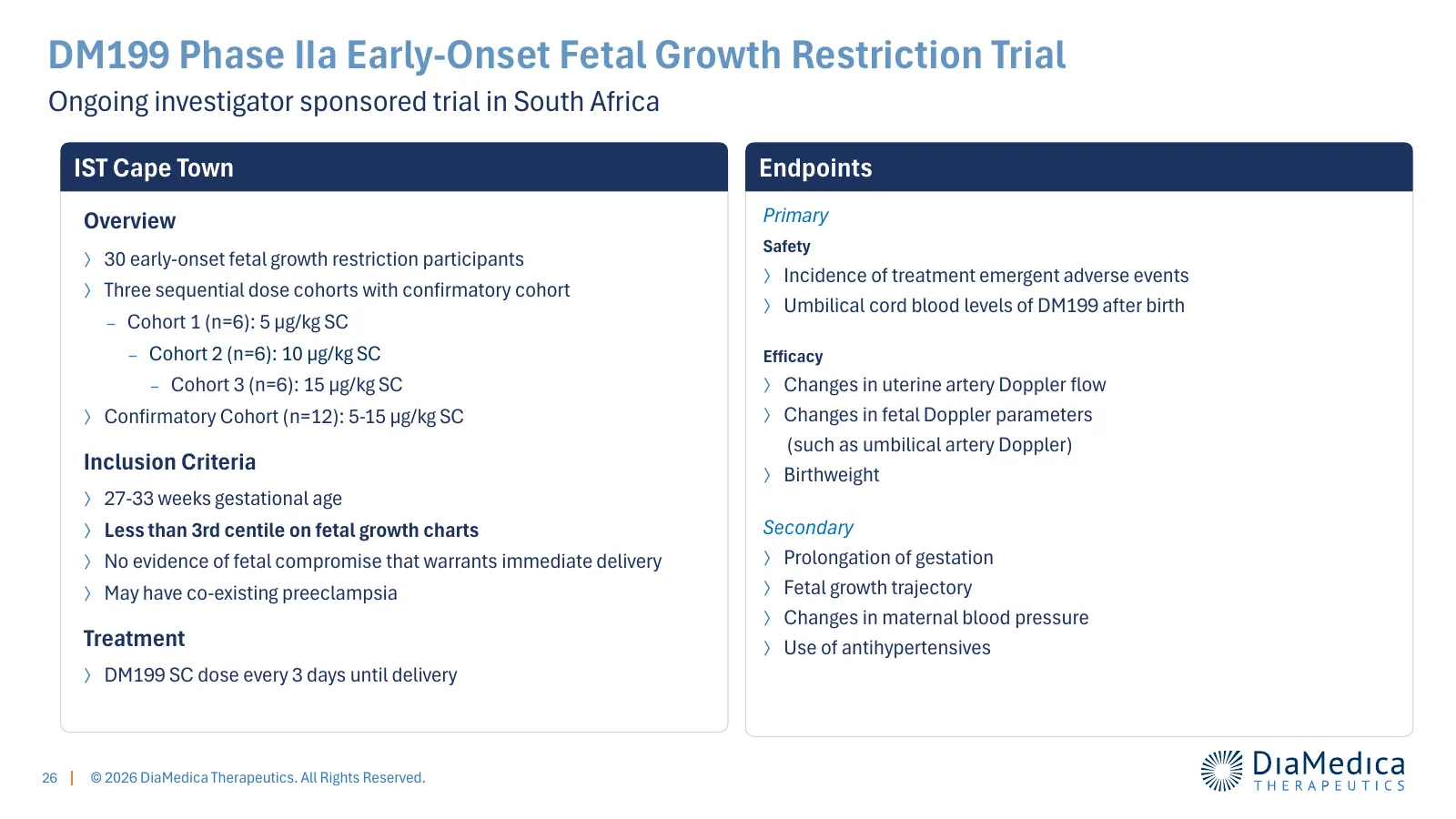
Slide 26: DM199 Phase IIa Early-Onset Fetal Growth Restriction Trial
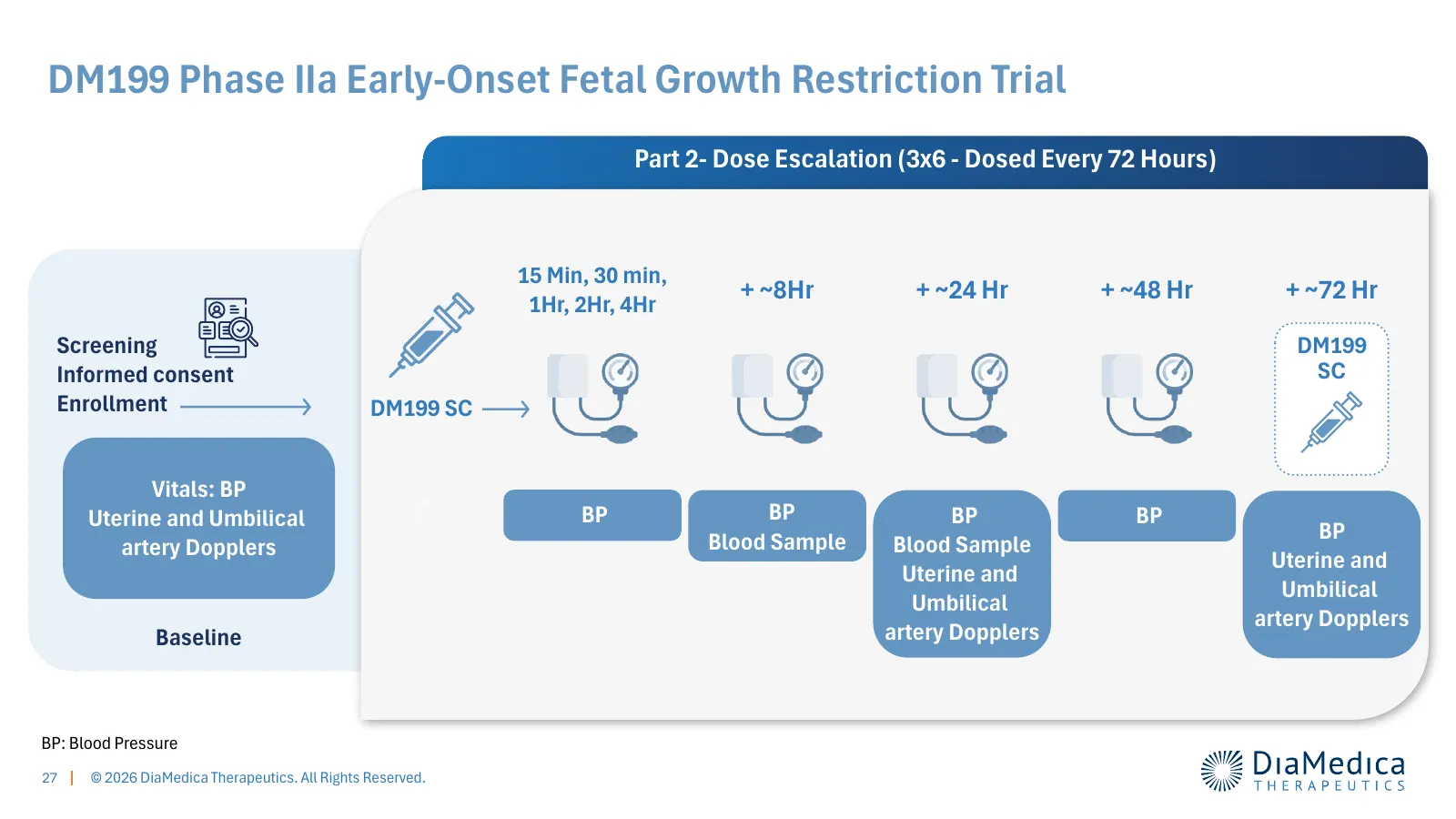
DM199 Phase IIa Early-Onset Fetal Growth Restriction Trial Ongoing investigator sponsored trial in South Africa IST Cape Town Endpoints Overview Primary Safety 〉 30 early-onset fetal growth restriction participants 〉 Incidence of treatment emergent adverse events 〉 Three sequential dose cohorts with
Slide 27: DM199 Phase IIa Early-Onset Fetal Growth Restriction Trial
DM199 Phase IIa Early-Onset Fetal Growth Restriction Trial Part 2- Dose Escalation (3x6 - Dosed Every 72 Hours) 15 Min, 30 min, 1Hr, 2Hr, 4Hr + ~8Hr + ~24 Hr + ~48 Hr + ~72 Hr Screening DM199 Informed consent SC Enrollment DM199 SC Vitals: BP Uterine and Umbilical BP BP BP BP Blood Sample BP artery
Slide 28: Topline Interim Results for Fetal Growth Restriction Cohorts 1&2
04 Topline Interim Results for Fetal Growth Restriction Cohorts 1&2
Slide 29: Cohorts 1&2 Summary Characteristics: Study Enrolled Participants <3rd Centile
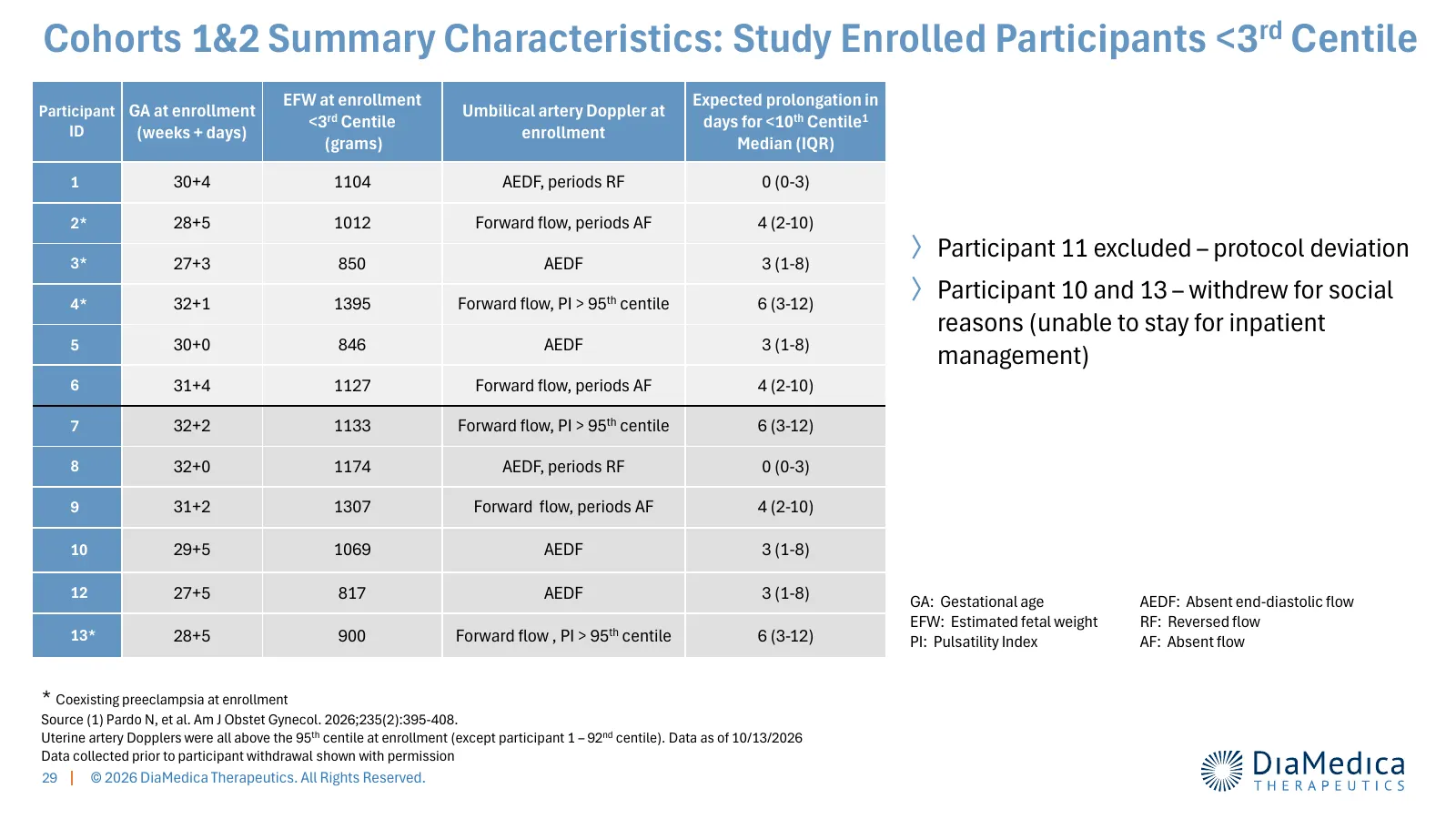
Cohorts 1&2 Summary Characteristics: Study Enrolled Participants <3rd Centile EFW at enrollment Expected prolongation in Participant GA at enrollment Umbilical artery Doppler at <3rd Centile days for <10th Centile1 ID (weeks + days) enrollment (grams) Median (IQR) 1 30+4 1104 AEDF, periods RF 0 (0-3
Slide 30: DM199 Appears Well Tolerated
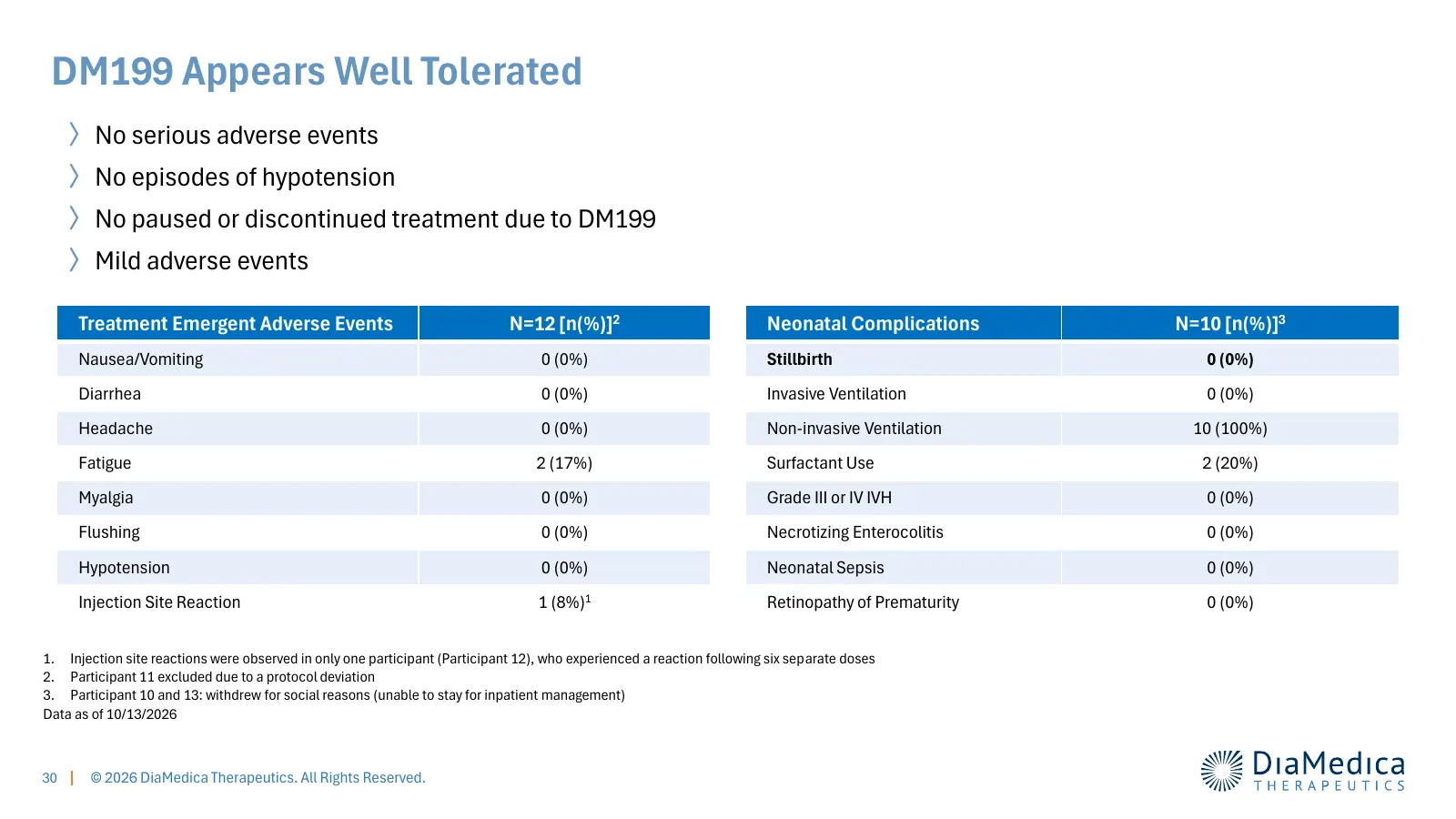
DM199 Appears Well Tolerated 〉No serious adverse events 〉No episodes of hypotension 〉No paused or discontinued treatment due to DM199 〉Mild adverse events Treatment Emergent Adverse Events N=12 [n(%)]2 Neonatal Complications N=10 [n(%)]3 Nausea/Vomiting 0 (0%) Stillbirth 0 (0%) Diarrhea 0 (0%) Invas
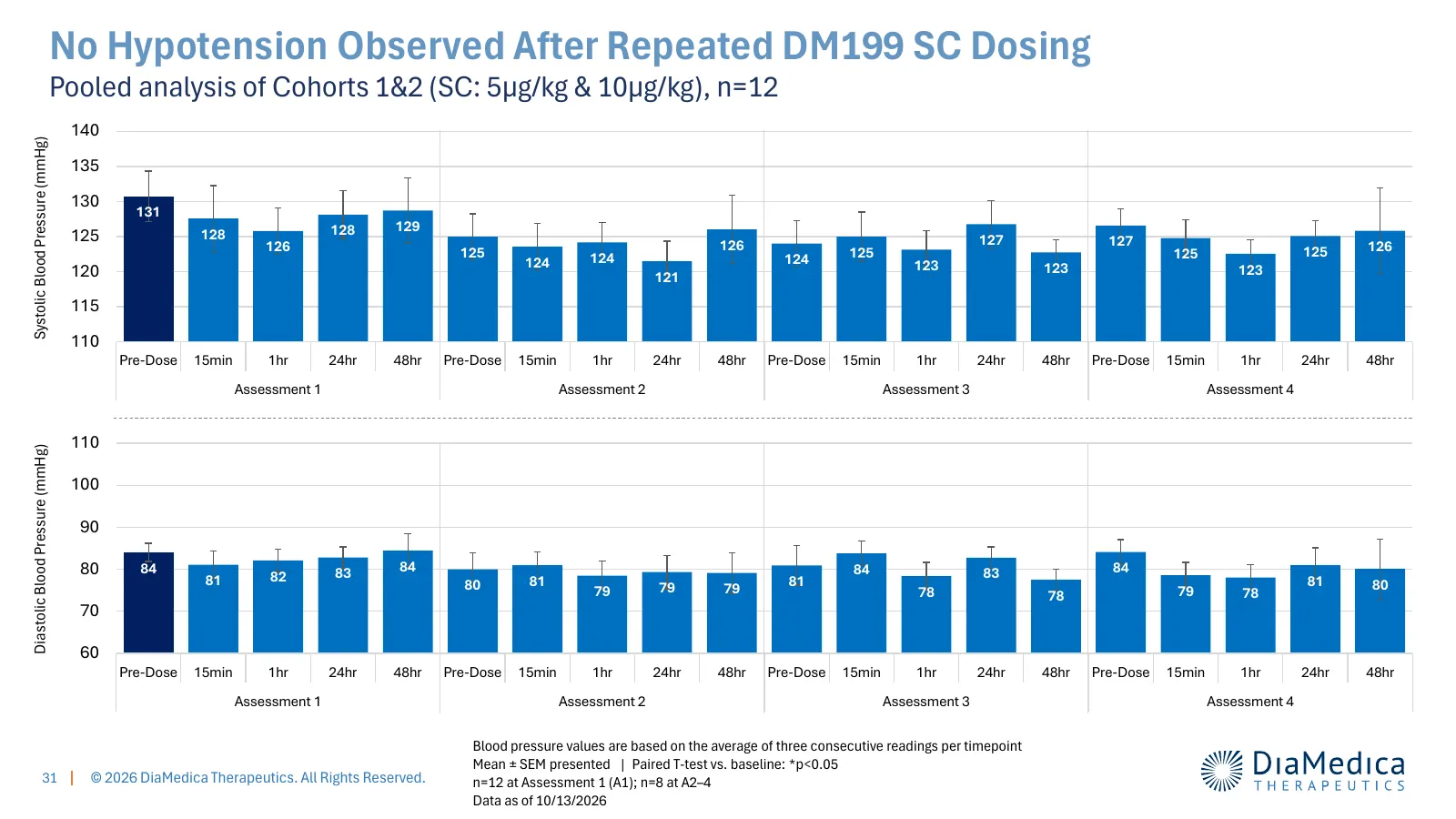
Slide 31: No Hypotension Observed After Repeated DM199 SC Dosing
No Hypotension Observed After Repeated DM199 SC Dosing Pooled analysis of Cohorts 1&2 (SC: 5μg/kg & 10μg/kg), n=12 140 Systolic Blood Pressure (mmHg) 135 130 131 128 129 125 128 126 127 127 126 125 125 125 125 126 124 124 124 123 120 123 123 121 115 110 Pre-Dose 15min 1hr 24hr 48hr Pre-Dose 15min 1h

Slide 32: Potential for Prolongation
Potential for Prolongation YZ DiaMedica AWS THERAPEUTICS
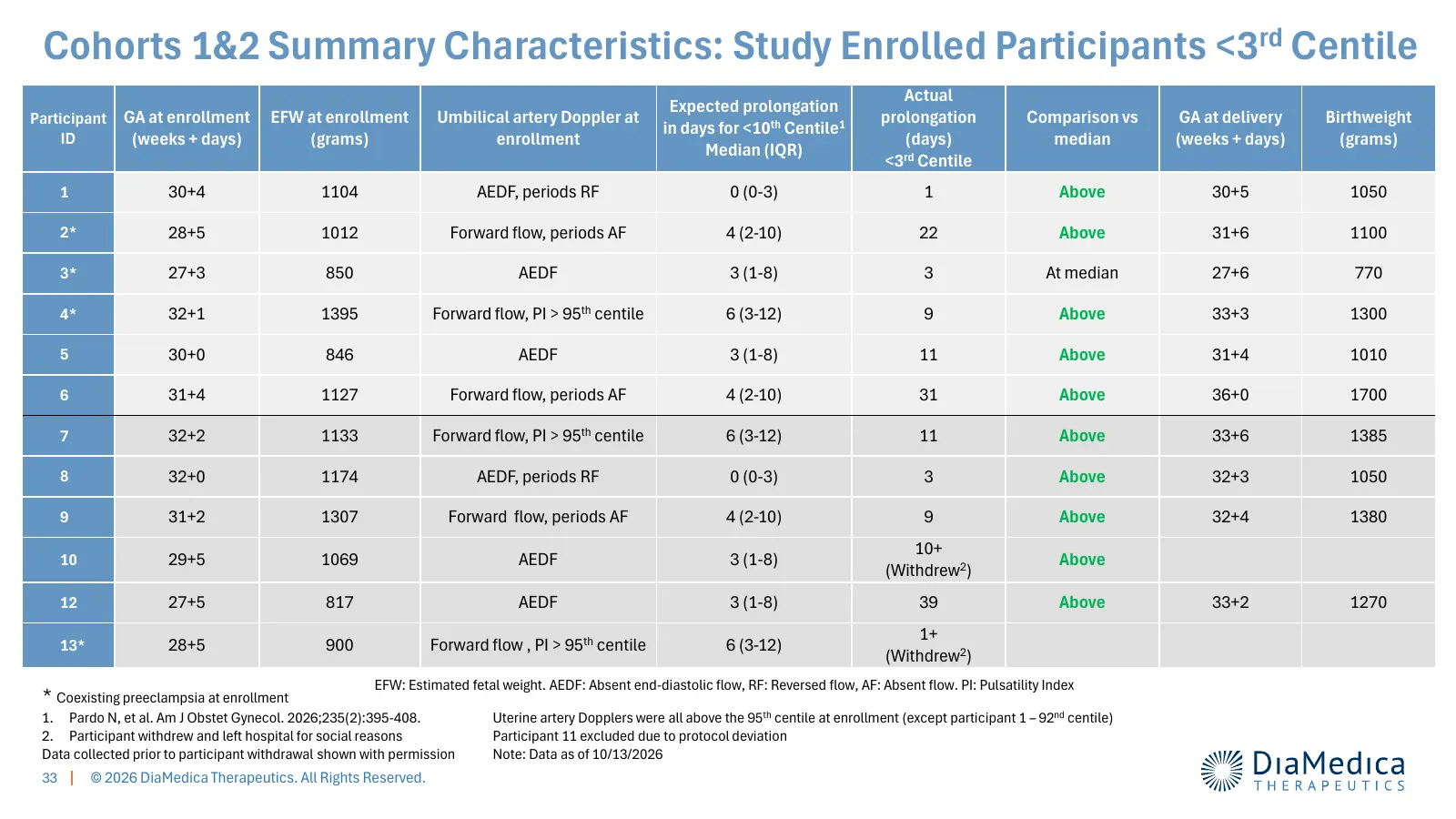
Slide 33: Cohorts 1&2 Summary Characteristics: Study Enrolled Participants <3rd Centile
Cohorts 1&2 Summary Characteristics: Study Enrolled Participants <3rd Centile Actual Expected prolongation Participant GA at enrollment EFW at enrollment Umbilical artery Doppler at prolongation Comparison vs GA at delivery Birthweight in days for <10th Centile1 ID (weeks + days) (grams) enrollment
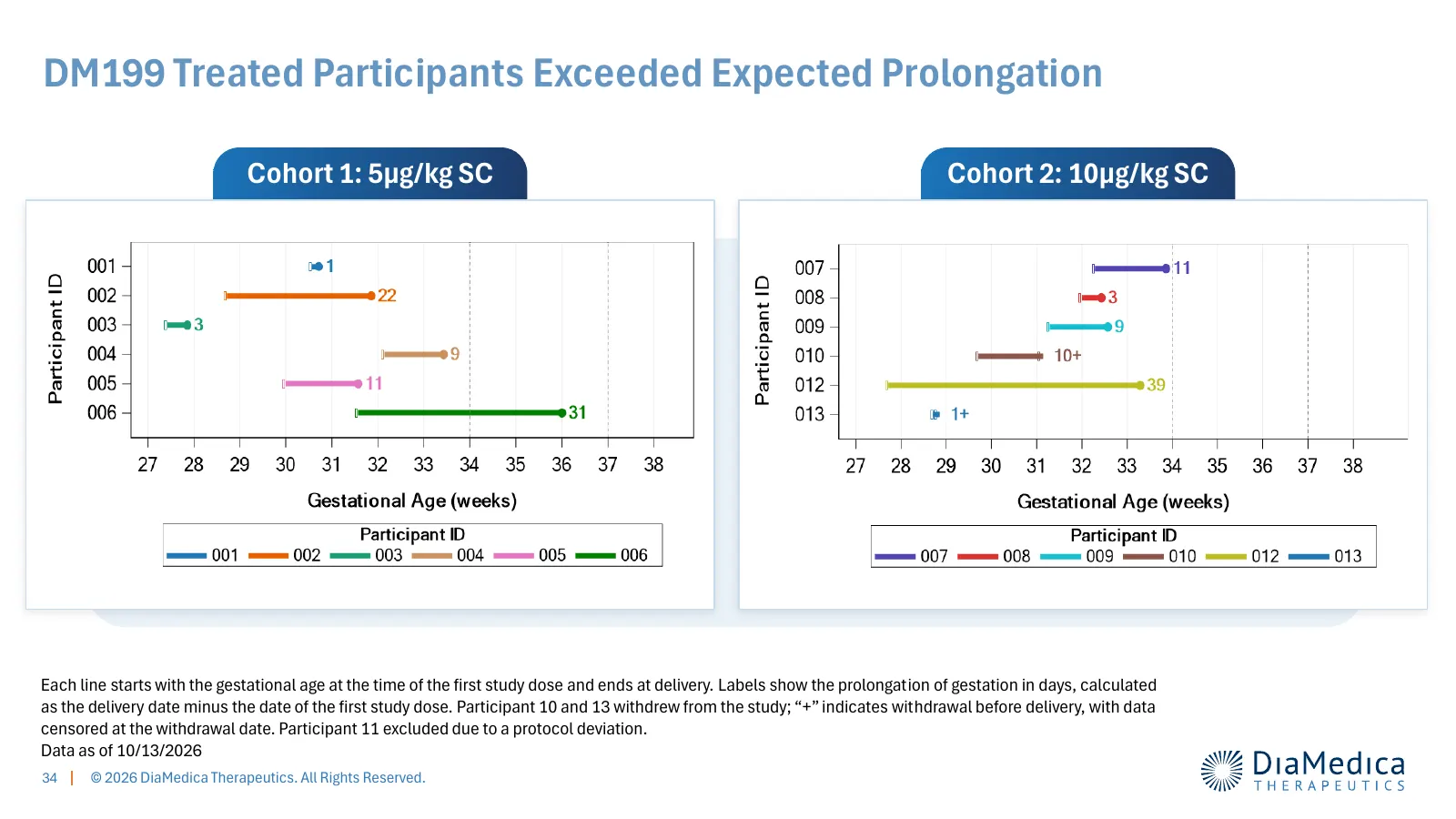
Slide 34: DM199 Treated Participants Exceeded Expected Prolongation
DM199 Treated Participants Exceeded Expected Prolongation Cohort 1: 5µg/kg SC Cohort 2: 10µg/kg SC Each line starts with the gestational age at the time of the first study dose and ends at delivery. Labels show the prolongation of gestation in days, calculated as the delivery date minus the date of
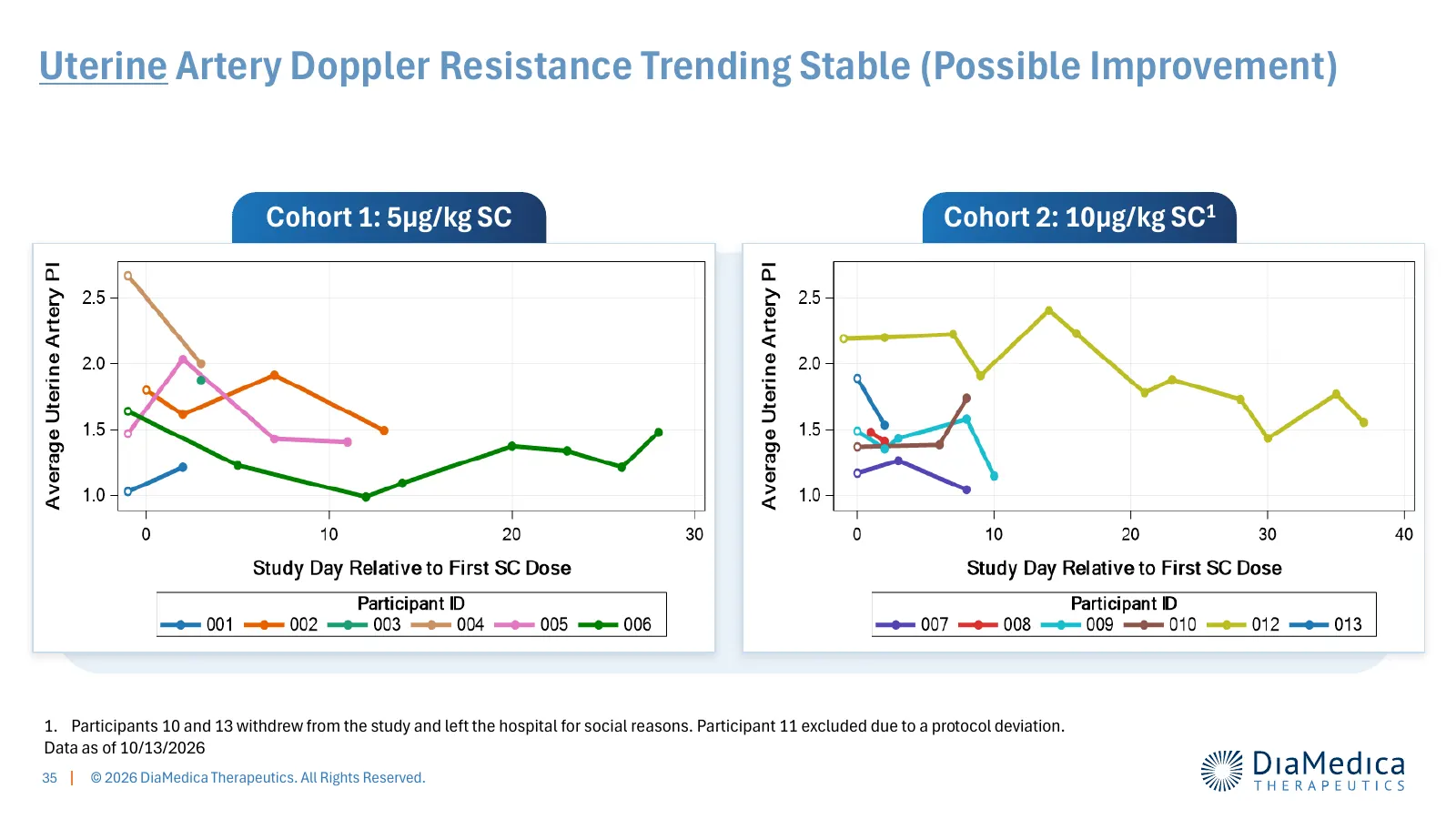
Slide 35: Uterine Artery Doppler Resistance Trending Stable (Possible Improvement)
Uterine Artery Doppler Resistance Trending Stable (Possible Improvement) Cohort 1: 5µg/kg SC Cohort 2: 10µg/kg SC1 1. Participants 10 and 13 withdrew from the study and left the hospital for social reasons. Participant 11 excluded due to a protocol deviation. Data as of 10/13/2026 35 © 2026 DiaMedic
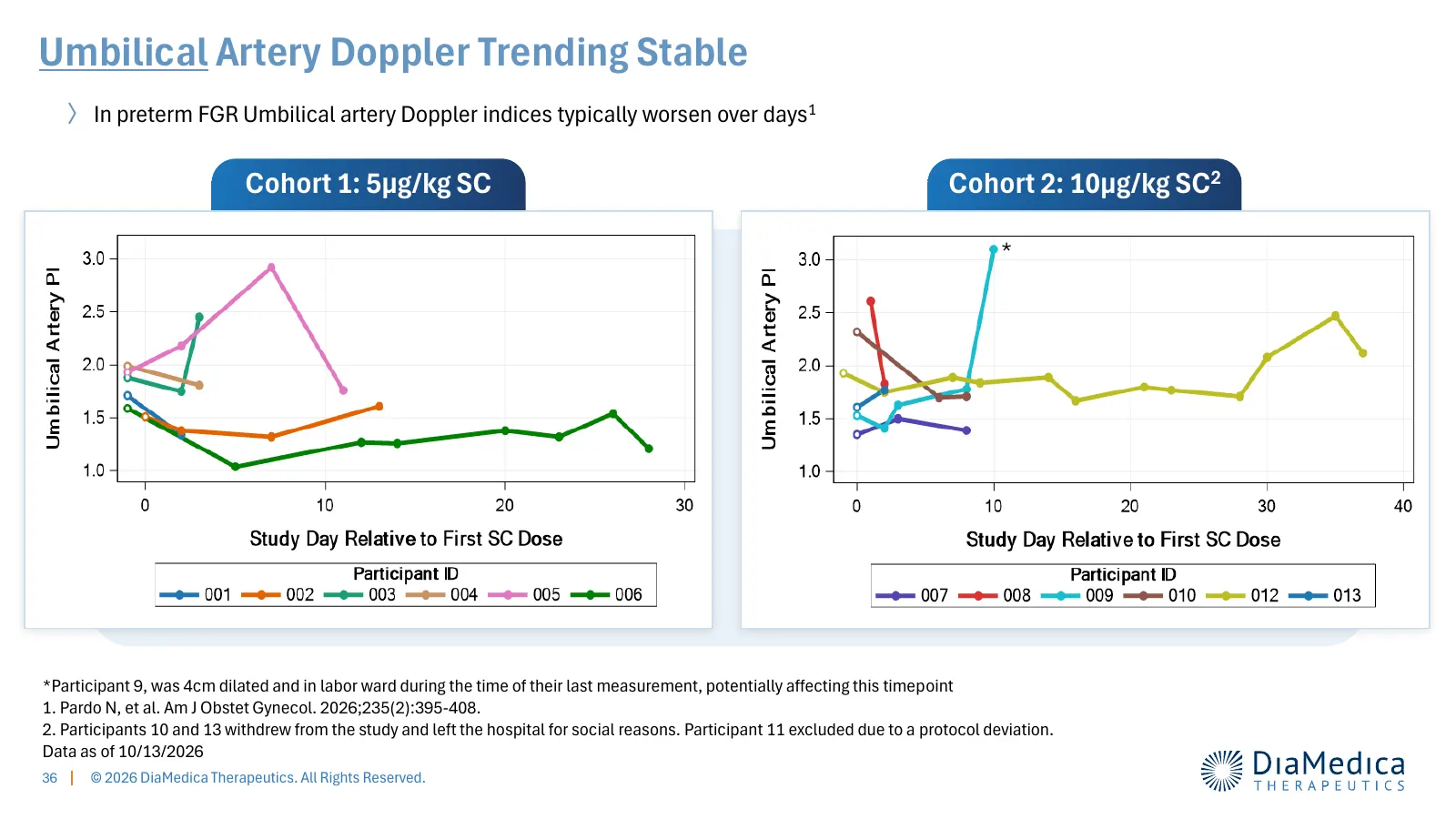
Slide 36: Umbilical Artery Doppler Trending Stable
Umbilical Artery Doppler Trending Stable 〉 In preterm FGR Umbilical artery Doppler indices typically worsen over days1 Cohort 1: 5µg/kg SC Cohort 2: 10µg/kg SC2 * *Participant 9, was 4cm dilated and in labor ward during the time of their last measurement, potentially affecting this timepoint 1. Pard

Slide 37: Fetal Weight
Fetal Weight YZ DiaMedica AWS THERAPEUTICS
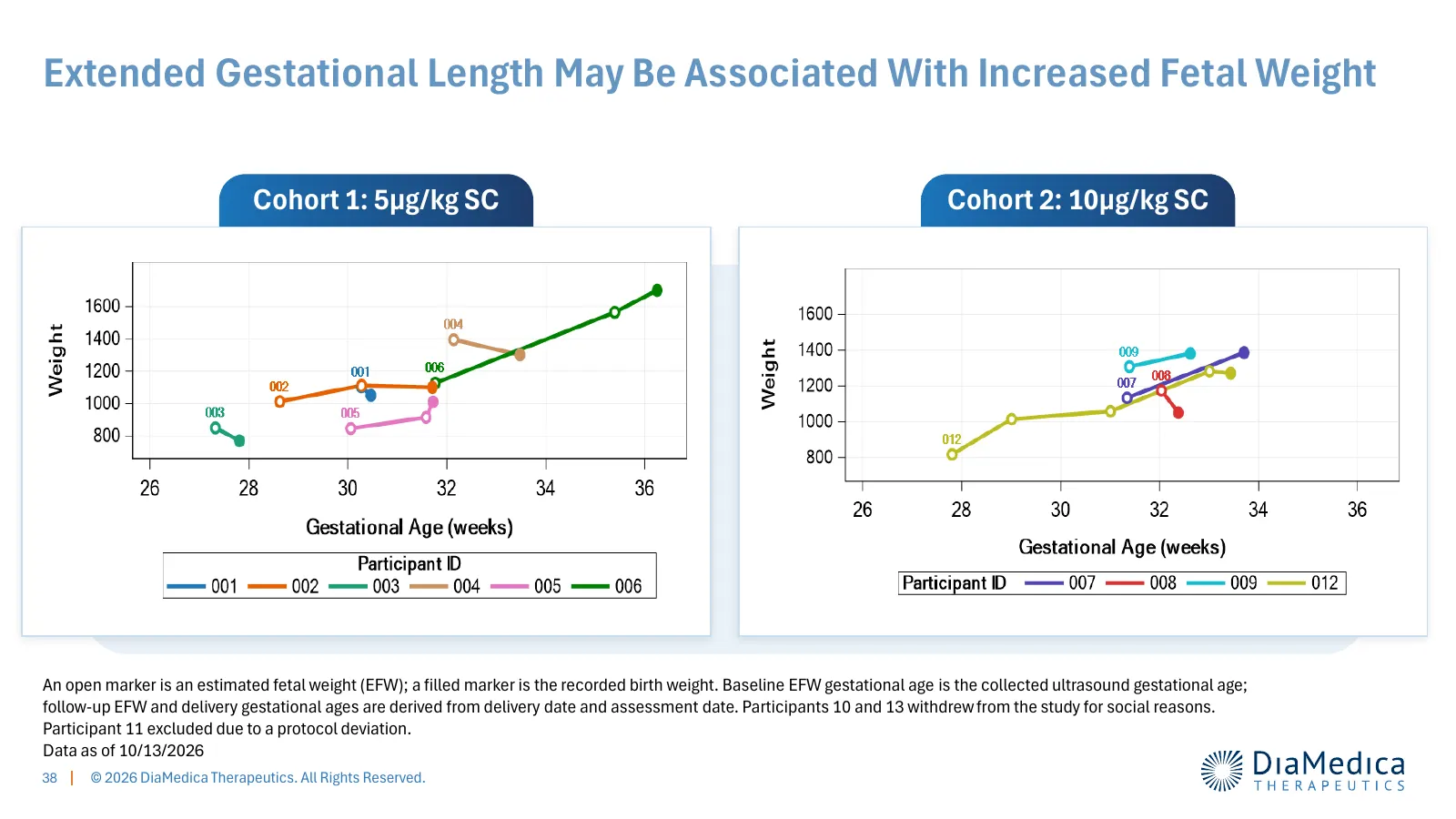
Slide 38: Extended Gestational Length May Be Associated With Increased Fetal Weight
Extended Gestational Length May Be Associated With Increased Fetal Weight Cohort 1: 5µg/kg SC Cohort 2: 10µg/kg SC An open marker is an estimated fetal weight (EFW); a filled marker is the recorded birth weight. Baseline EFW gestational age is the collected ultrasound gestational age; follow-up EFW
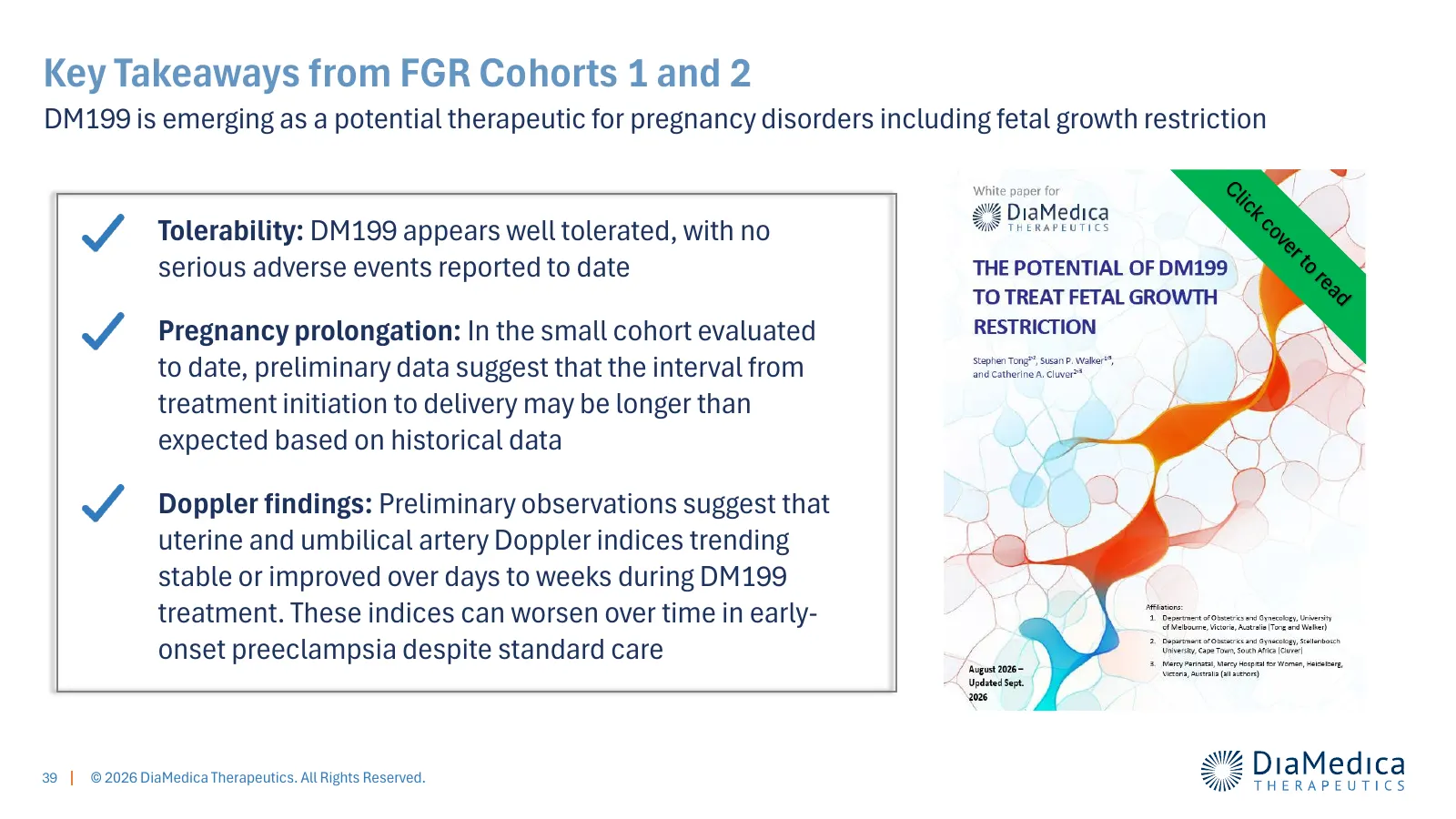
Slide 39: Key Takeaways from FGR Cohorts 1 and 2
Key Takeaways from FGR Cohorts 1 and 2 DM199 is emerging as a potential therapeutic for pregnancy disorders including fetal growth restriction Tolerability: DM199 appears well tolerated, with no serious adverse events reported to date Pregnancy prolongation: In the small cohort evaluated to date, pr

Slide 40: Additional Commentary
05 Additional Commentary © 2026 DiaMedica Therapeutics. All Rights Reserved. 40

Slide 41: The FGR Opportunity
The FGR Opportunity "Z DiaMedica AWS Wy
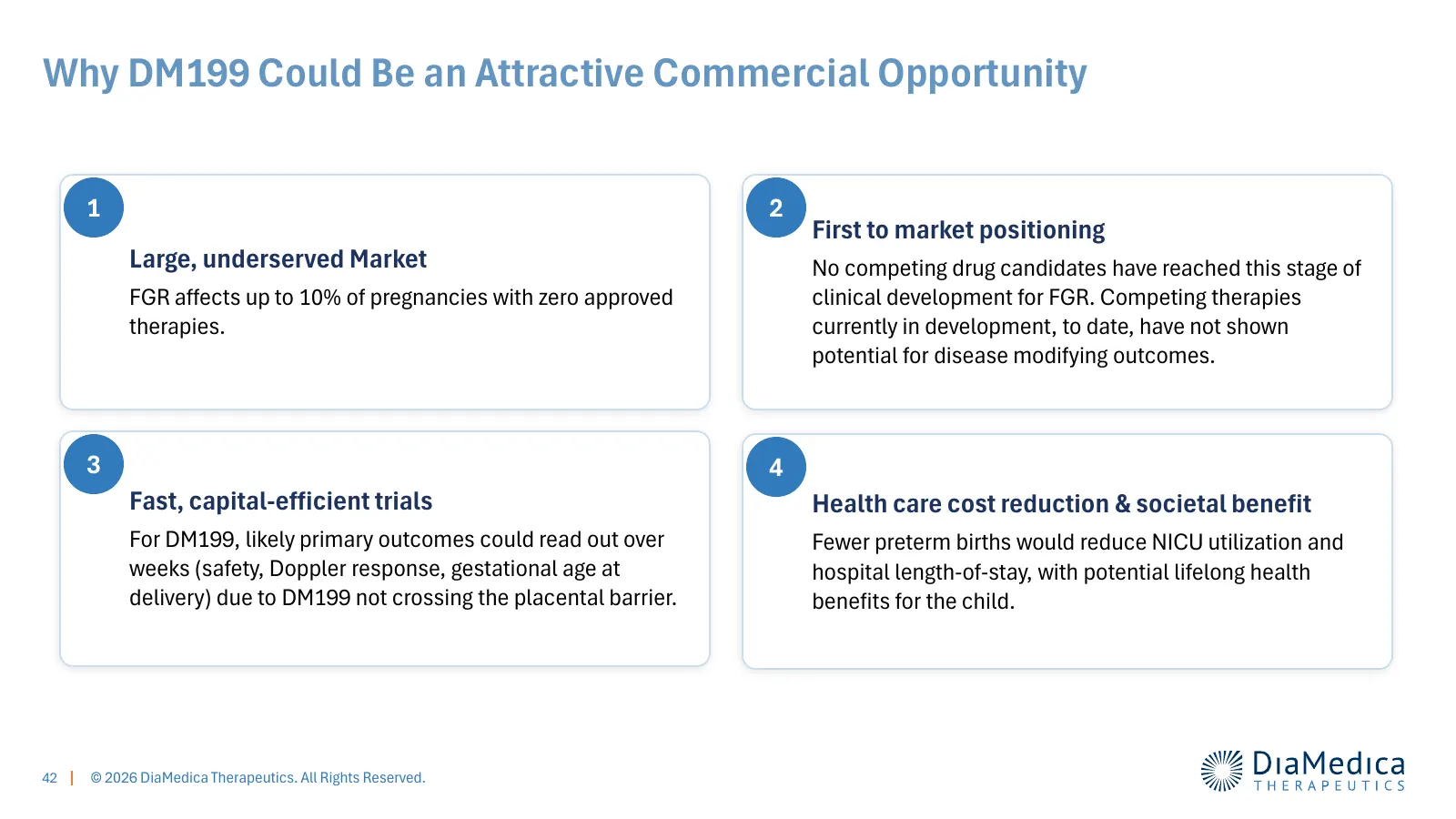
Slide 42: Why DM199 Could Be an Attractive Commercial Opportunity
Why DM199 Could Be an Attractive Commercial Opportunity 1 2 First to market positioning Large, underserved Market No competing drug candidates have reached this stage of FGR affects up to 10% of pregnancies with zero approved clinical development for FGR. Competing therapies therapies. currently in

Slide 43: Q&A
Q&A © 2026 DiaMedica Therapeutics. All Rights Reserved. 43

Slide 44: Appendix
Appendix © 2026 DiaMedica Therapeutics. All Rights Reserved. 44
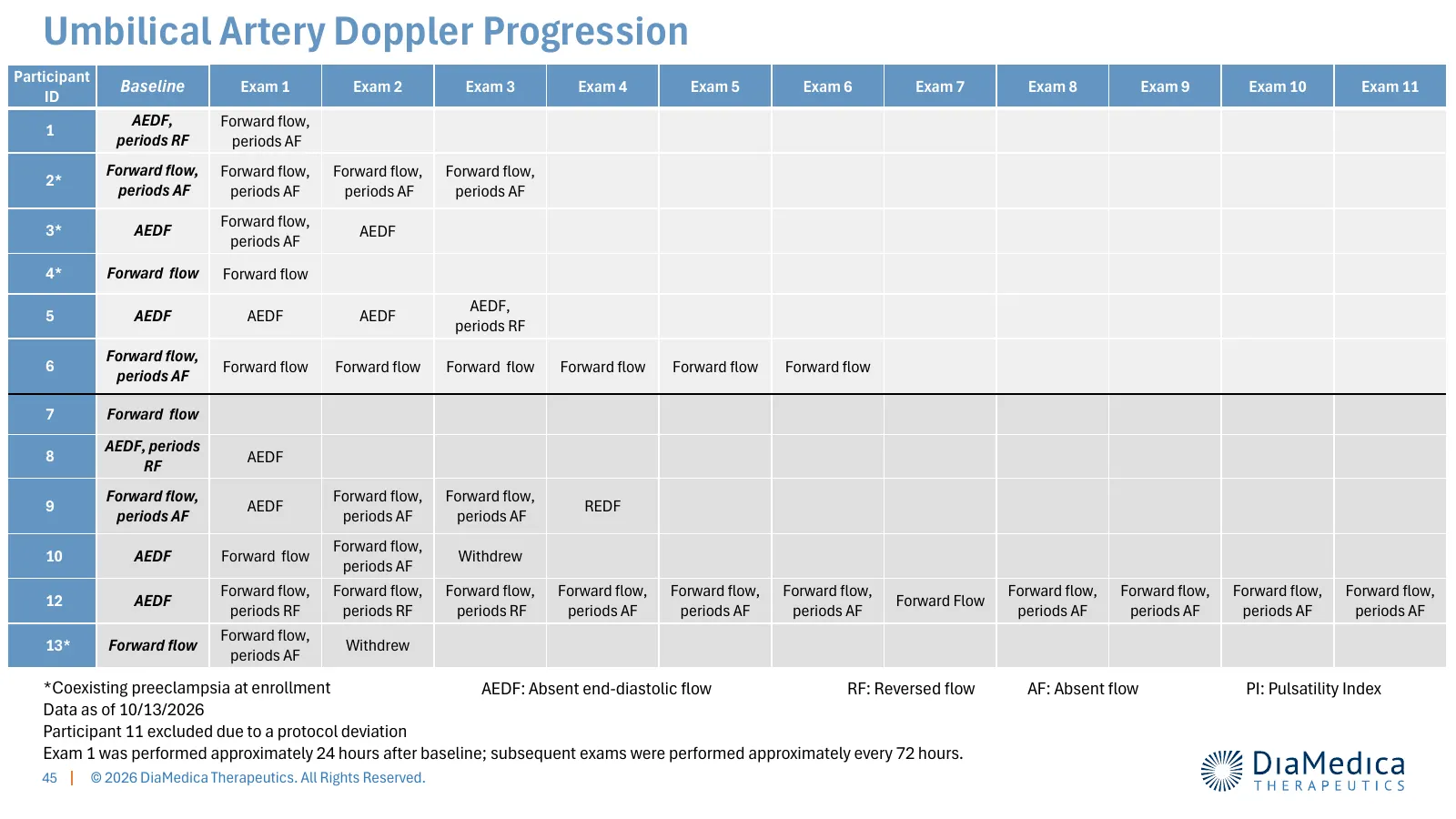
Slide 45: Umbilical Artery Doppler Progression
Umbilical Artery Doppler Progression Participant Baseline Exam 1 Exam 2 Exam 3 Exam 4 Exam 5 Exam 6 Exam 7 Exam 8 Exam 9 Exam 10 Exam 11 ID AEDF, Forward flow, 1 periods RF periods AF Forward flow, Forward flow, Forward flow, Forward flow, 2* periods AF periods AF periods AF periods AF Forward flow,
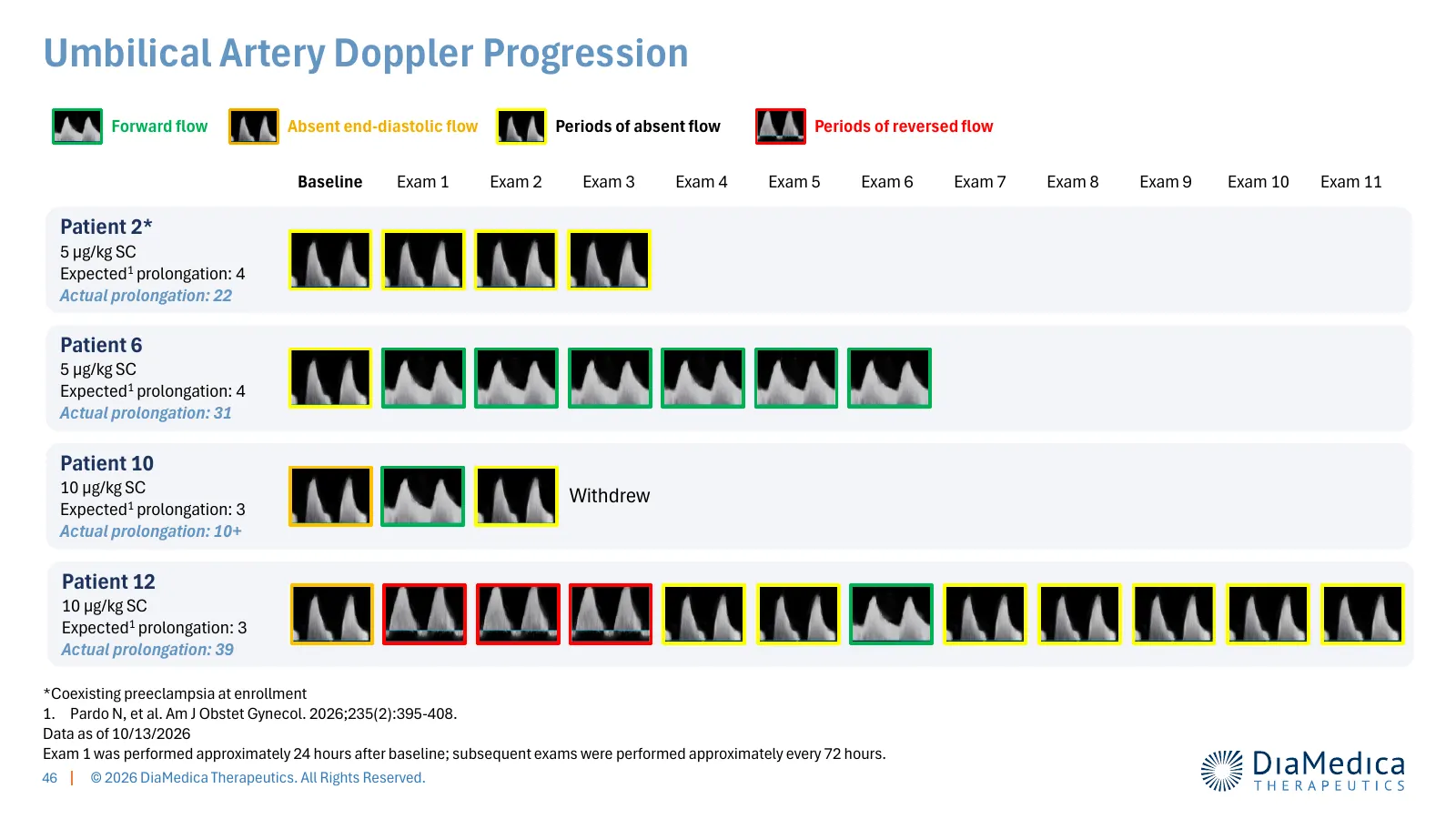
Slide 46: Umbilical Artery Doppler Progression
Umbilical Artery Doppler Progression Forward flow Absent end-diastolic flow Periods of absent flow Periods of reversed flow Baseline Exam 1 Exam 2 Exam 3 Exam 4 Exam 5 Exam 6 Exam 7 Exam 8 Exam 9 Exam 10 Exam 11 Patient 2* 5 µg/kg SC Expected1 prolongation: 4 Actual prolongation: 22 Patient 6 5 µg/k
Source: company website
More decks from DiaMedica Therapeutics Inc.
 Technical Presentation (November 2026)47 slides · Nov 24, 2026
 Investor Presentation (November 2026)38 slides · November 2026
 Investor Presentation (June 2026)39 slides · June 2026
 Q4 2025 Earnings Presentation40 slides · Mar 31, 2026
 Q2 2025 Earnings Presentation46 slides · Aug 13, 2025
 Technical Presentation (July 2025)21 slides · Jul 17, 2025