Biophytis SA · EURONEXT:ALBPS
Biophytis SA — ICFSR 2019 Biophytis Lunch Industry Symposium
21 slides from Biophytis SA's conference presentation, Feb 21, 2019
Slide 1: Biophytis: The biotech specialist in aging diseases
biophytis NEW THERAPEUTICS FOR AGING DISEASES THE BIOTECH SPECIALIST IN AGING DISEASES
Slide 2: Designing a clinical program for BIO101, a Mas receptor activator to target Age Related Sarcopenia
Designing a clinical program for BIO101, a Mas receptor activator to target Age Related Sarcopenia ICFSR 2019 Biophytis Lunch Industry Symposium February 21st 2019 Waly Dioh, PhD VP Clinical Development
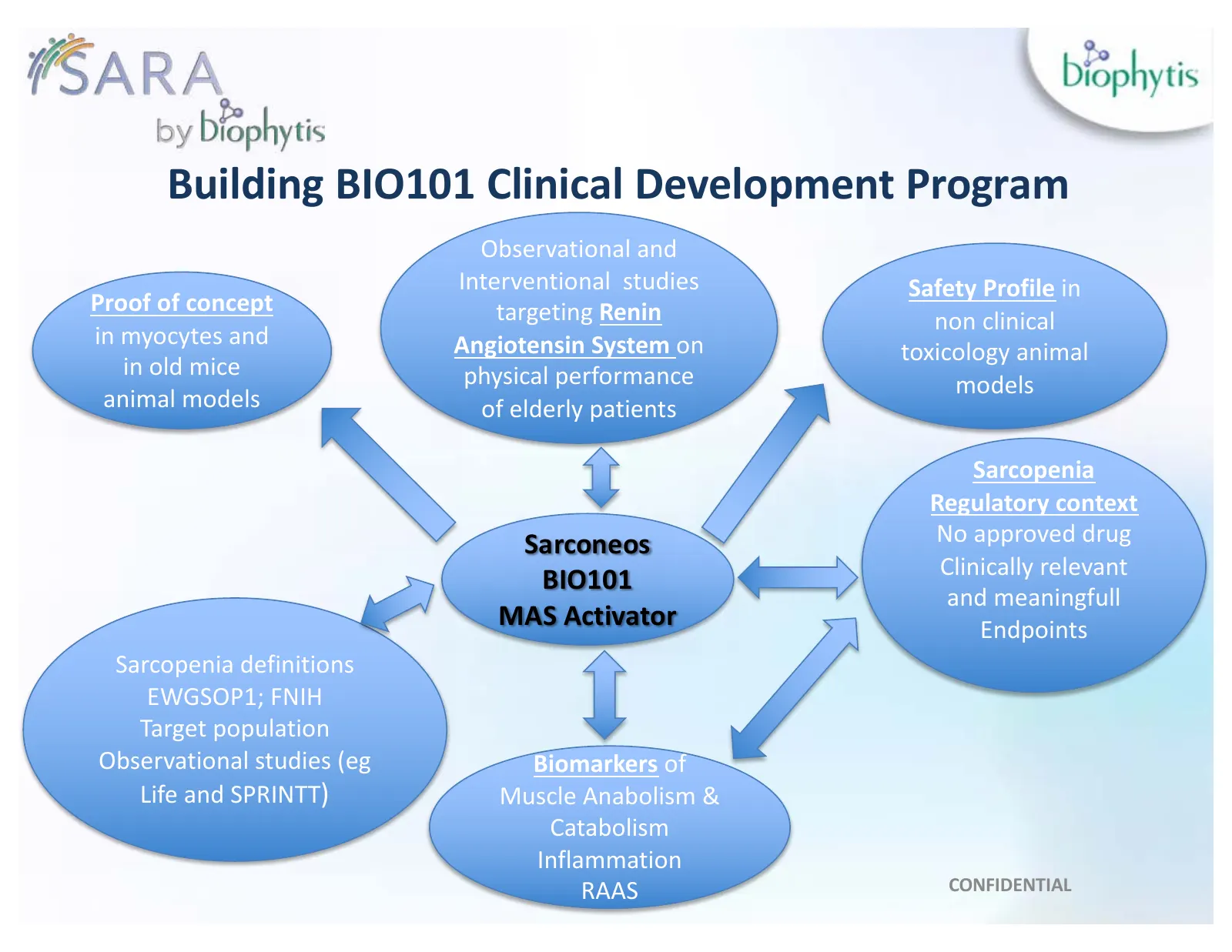
Slide 3: Building BIO101 Clinical Development Program
Building BIO101 Clinical Development Program Observational and Interventional studies Safety Profile in Proof of concept targeting Renin non clinical in myocytes and Angiotensin System on toxicology animal in old mice physical performance models animal models of elderly patients Sarcopenia Regulator
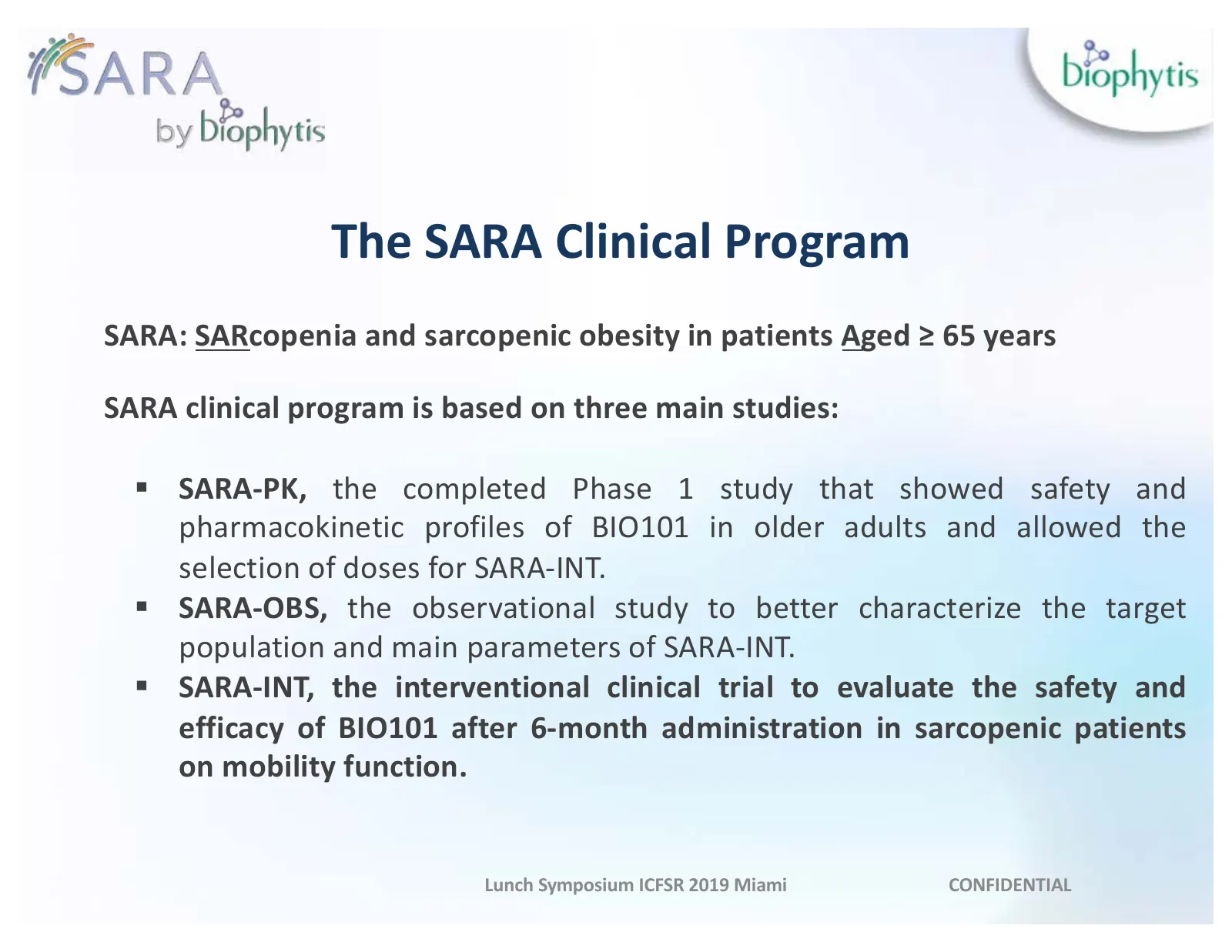
Slide 4: The SARA Clinical Program
The SARA Clinical Program SARA: SARcopenia and sarcopenic obesity in patients Aged ≥ 65 years SARA clinical program is based on three main studies: § SARA-PK, the completed Phase 1 study that showed safety and pharmacokinetic profiles of BIO101 in older adults and allowed the selection of doses for
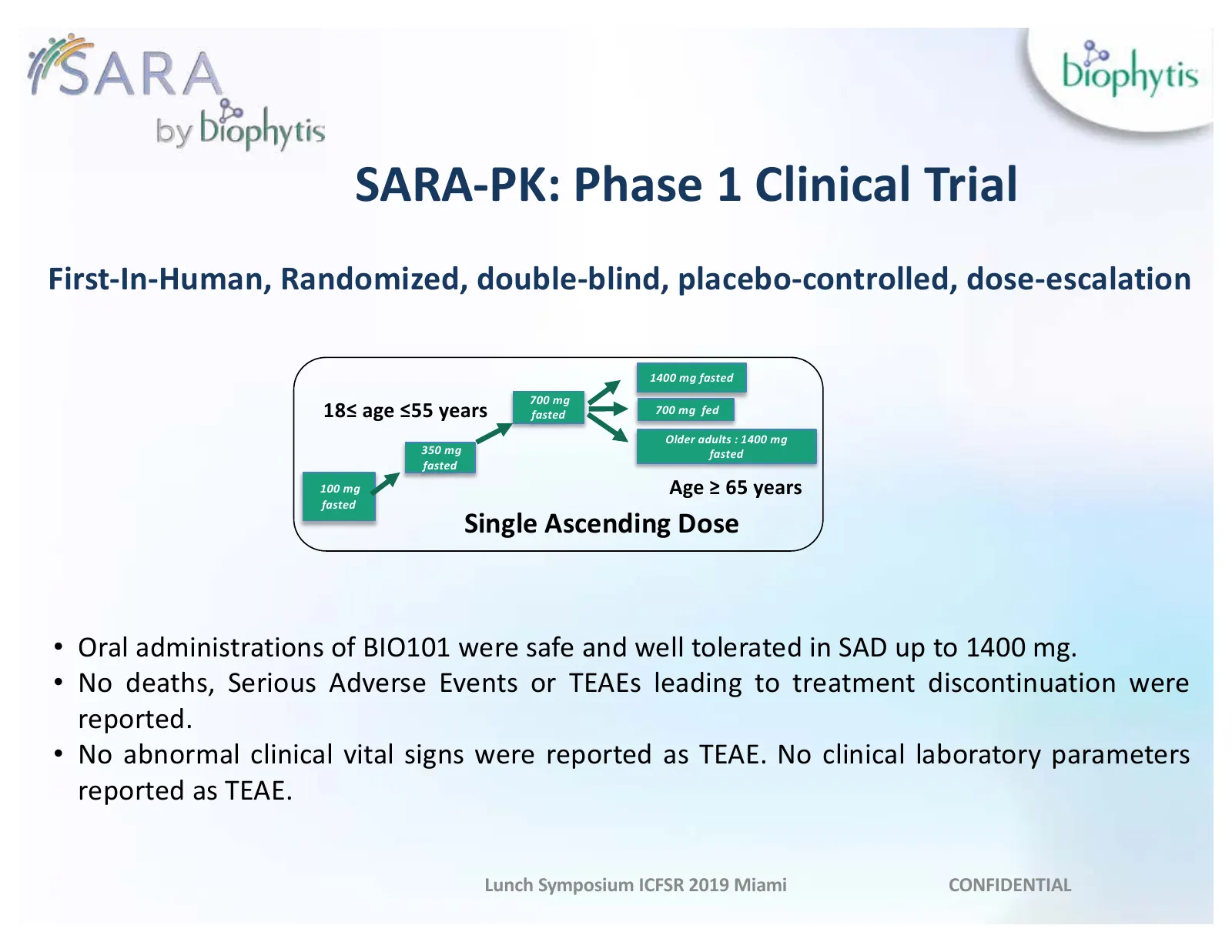
Slide 5: SARA-PK: Phase 1 Clinical Trial
SARA-PK: Phase 1 Clinical Trial First-In-Human, Randomized, double-blind, placebo-controlled, dose-escalation 1400 mg fasted 700 mg 18≤ age ≤55 years fasted 700 mg fed Older adults : 1400 mg 350 mg fasted fasted 100 mg Age ≥ 65 years fasted Single Ascending Dose • Oral administrations of BIO101 were
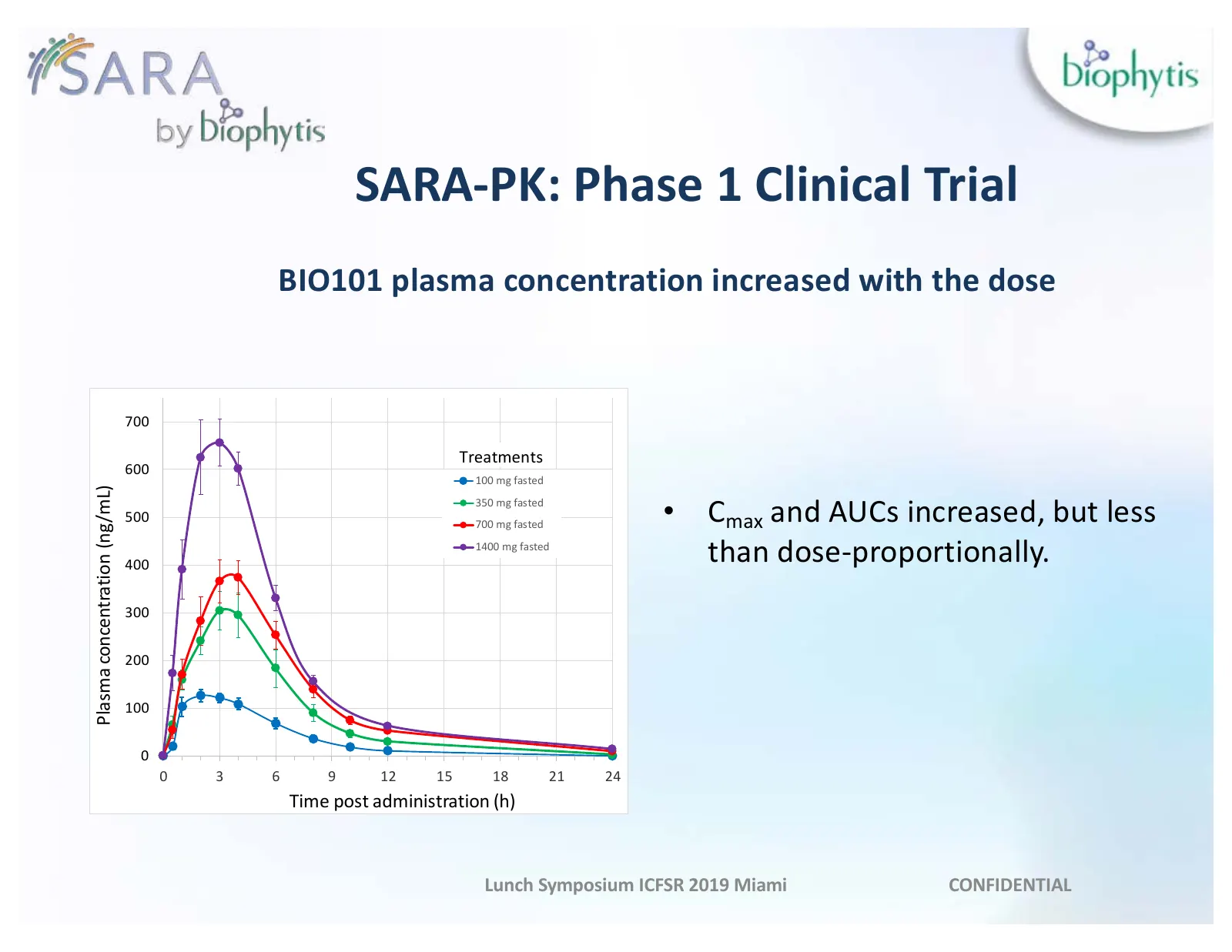
Slide 6: SARA-PK: BIO101 plasma concentration increased with the dose
SARA-PK: Phase 1 Clinical Trial BIO101 plasma concentration increased with the dose 700 Treatments 600 100 mg fasted Plasma concentration (ng/mL) 350 mg fasted 500 700 mg fasted • Cmax and AUCs increased, but less 400 1400 mg fasted than dose-proportionally. 300 200 100 0 0 3 6 9 12 15 18 21 24 Time
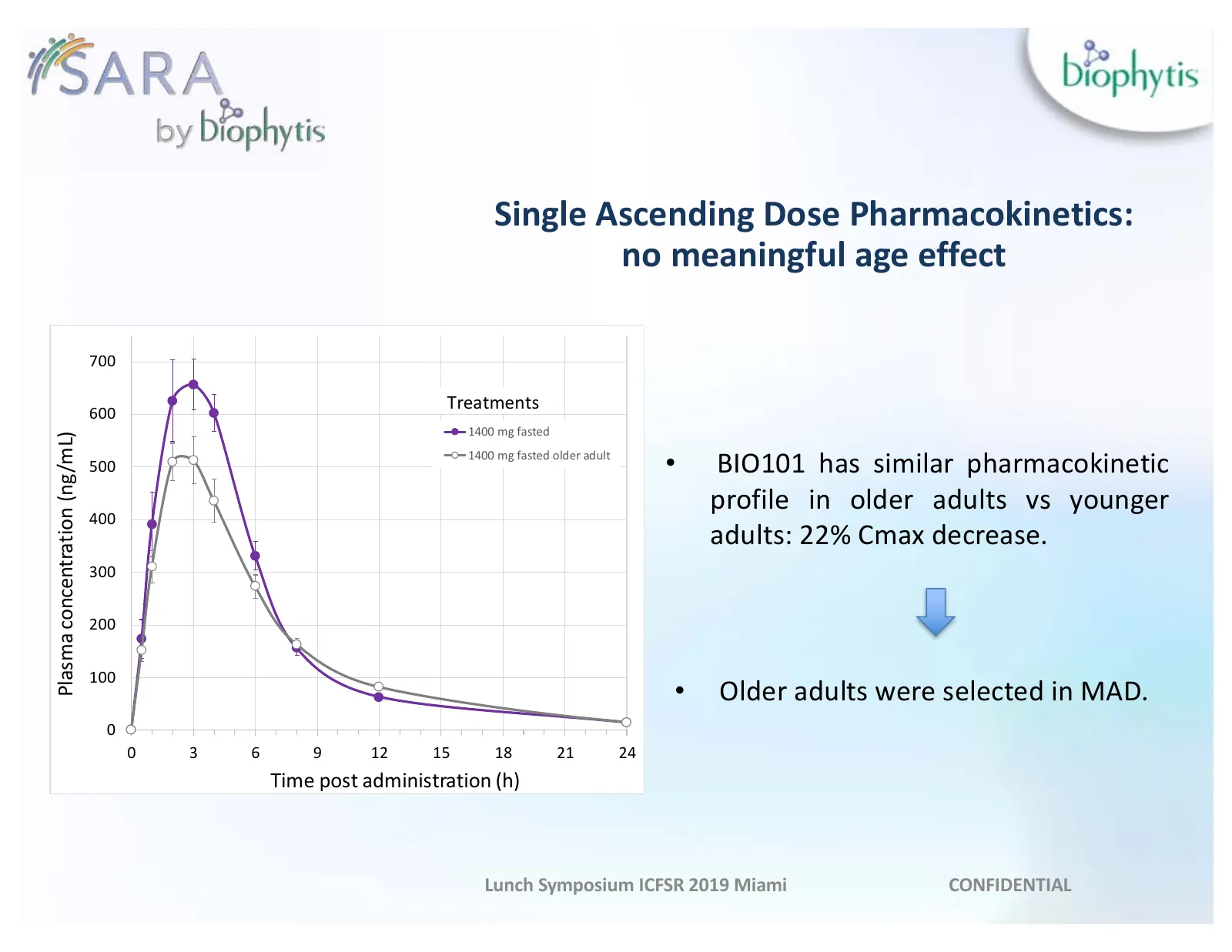
Slide 7: Single Ascending Dose Pharmacokinetics: no meaningful age effect
Single Ascending Dose Pharmacokinetics: no meaningful age effect 700 Treatments 600 1400 mg fasted Plasma concentration (ng/mL) 1400 mg fasted older adult 500 • BIO101 has similar pharmacokinetic profile in older adults vs younger 400 adults: 22% Cmax decrease. 300 200 100 • Older adults were select
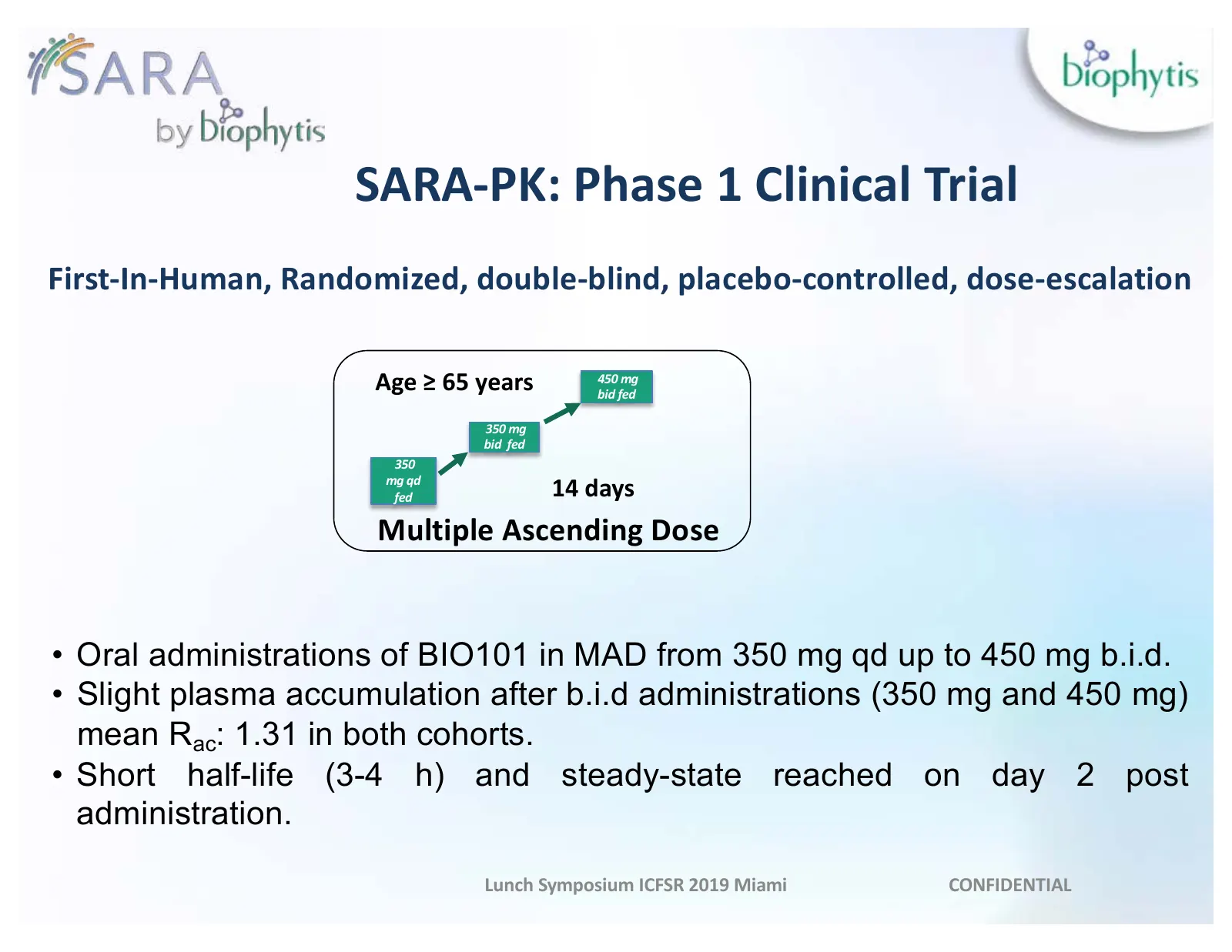
Slide 8: SARA-PK: Phase 1 Clinical Trial (Multiple Ascending Dose)
SARA-PK: Phase 1 Clinical Trial First-In-Human, Randomized, double-blind, placebo-controlled, dose-escalation Age ≥ 65 years 450 mg bid fed 350 mg bid fed 350 mg qd fed 14 days Multiple Ascending Dose • Oral administrations of BIO101 in MAD from 350 mg qd up to 450 mg b.i.d. • Slight plasma accumula
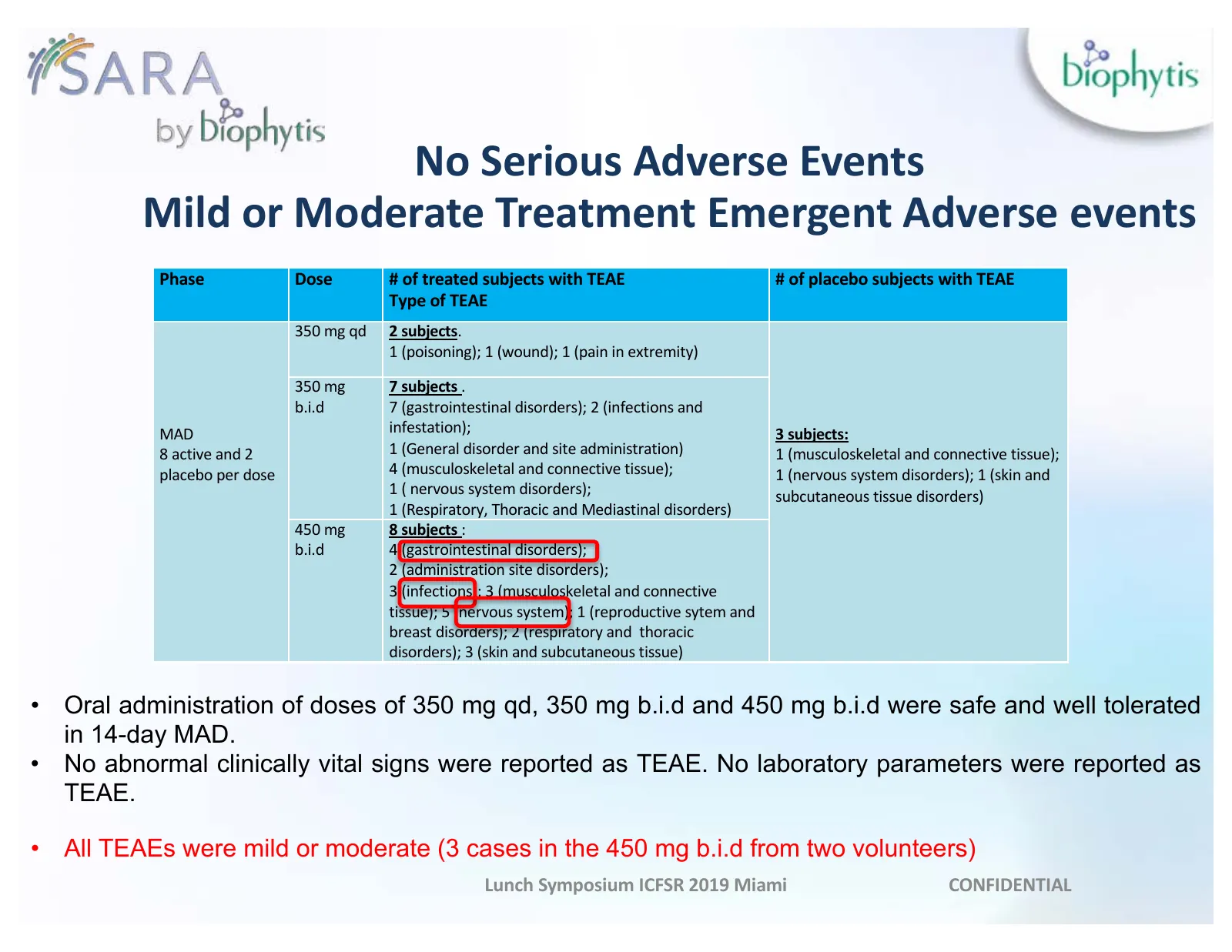
Slide 9: No Serious Adverse Events; Mild or Moderate TEAEs
No Serious Adverse Events Mild or Moderate Treatment Emergent Adverse events Phase Dose # of treated subjects with TEAE # of placebo subjects with TEAE Type of TEAE 350 mg qd 2 subjects. 1 (poisoning); 1 (wound); 1 (pain in extremity) 350 mg 7 subjects . b.i.d 7 (gastrointestinal disorders); 2 (infe
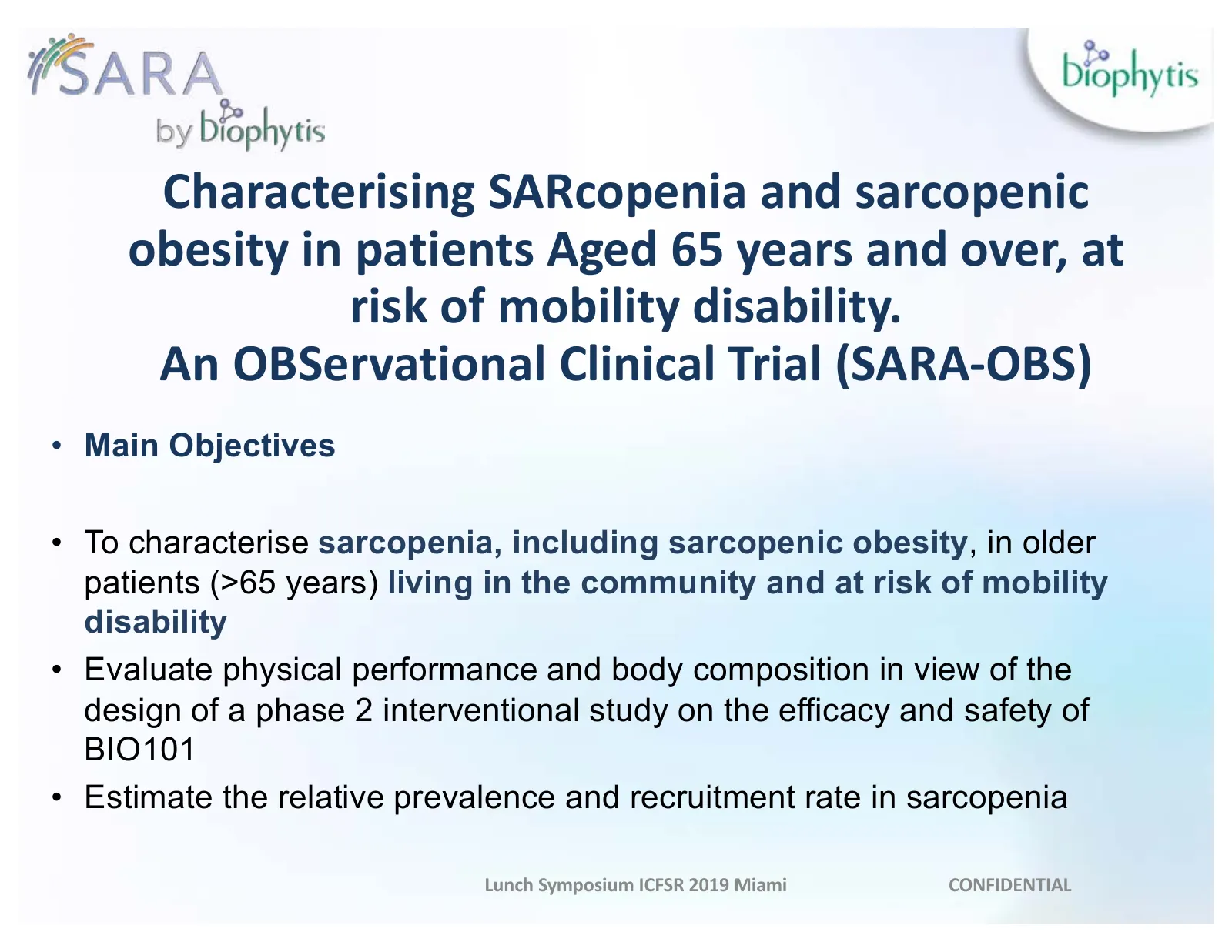
Slide 10: Characterising SARcopenia and sarcopenic obesity: SARA-OBS
Characterising SARcopenia and sarcopenic obesity in patients Aged 65 years and over, at risk of mobility disability. An OBServational Clinical Trial (SARA-OBS) • Main Objectives • To characterise sarcopenia, including sarcopenic obesity, in older patients (>65 years) living in the community and at r
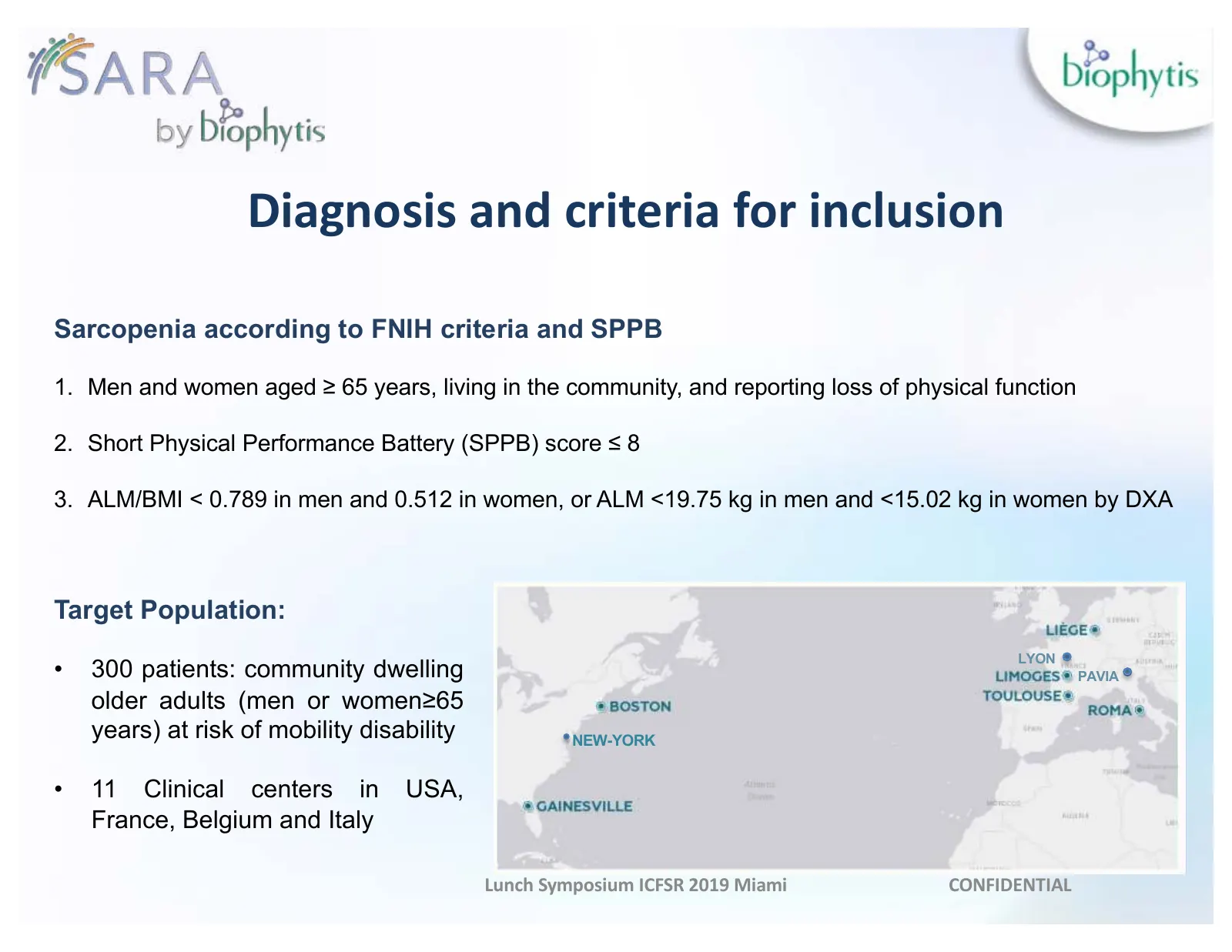
Slide 11: Diagnosis and criteria for inclusion
Diagnosis and criteria for inclusion Sarcopenia according to FNIH criteria and SPPB 1. Men and women aged ≥ 65 years, living in the community, and reporting loss of physical function 2. Short Physical Performance Battery (SPPB) score ≤ 8 3. ALM/BMI < 0.789 in men and 0.512 in women, or ALM <19.75 kg
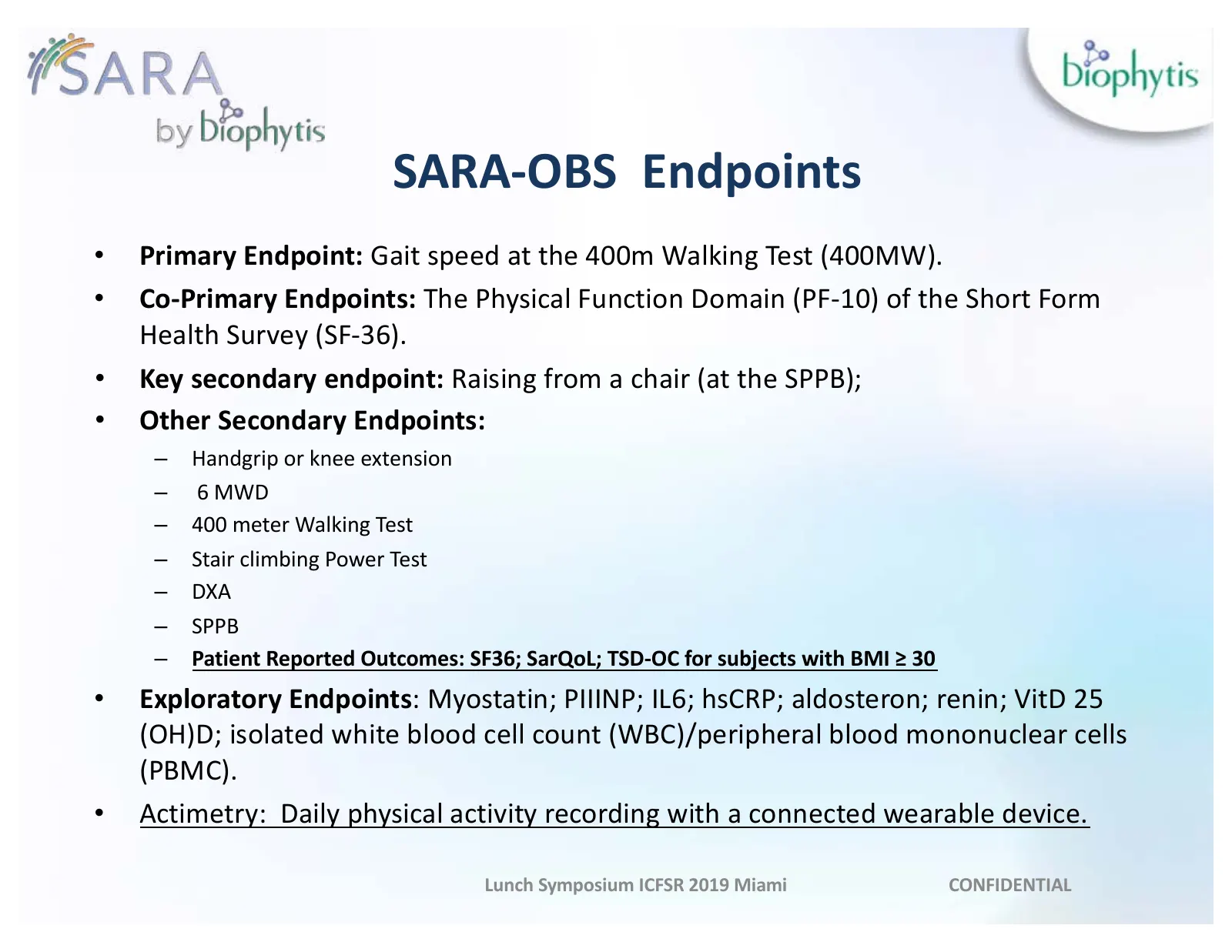
Slide 12: SARA-OBS Endpoints
SARA-OBS Endpoints • Primary Endpoint: Gait speed at the 400m Walking Test (400MW). • Co-Primary Endpoints: The Physical Function Domain (PF-10) of the Short Form Health Survey (SF-36). • Key secondary endpoint: Raising from a chair (at the SPPB); • Other Secondary Endpoints: – Handgrip or knee exte
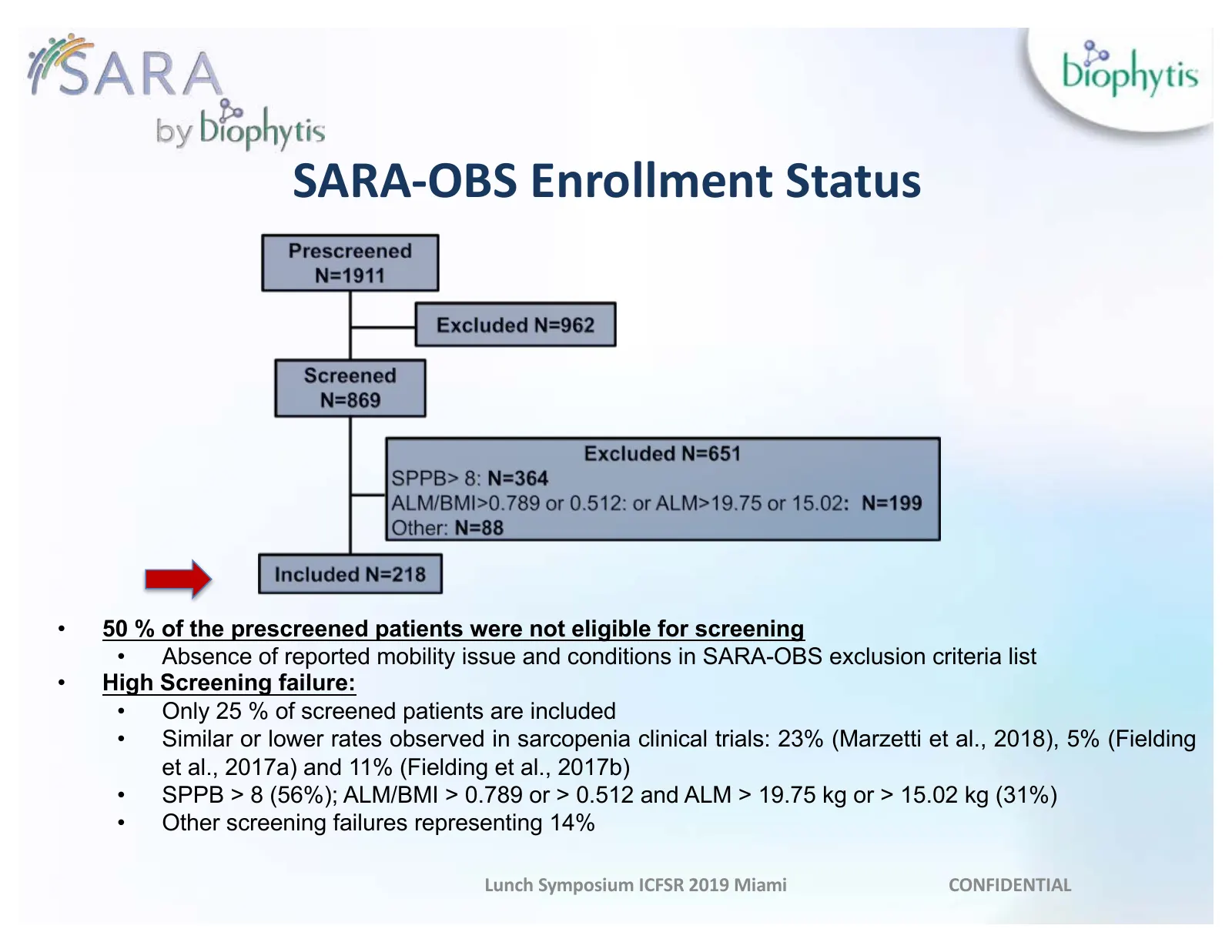
Slide 13: SARA-OBS Enrollment Status
SARA-OBS Enrollment Status • 50 % of the prescreened patients were not eligible for screening • Absence of reported mobility issue and conditions in SARA-OBS exclusion criteria list • High Screening failure: • Only 25 % of screened patients are included • Similar or lower rates observed in sarcopeni
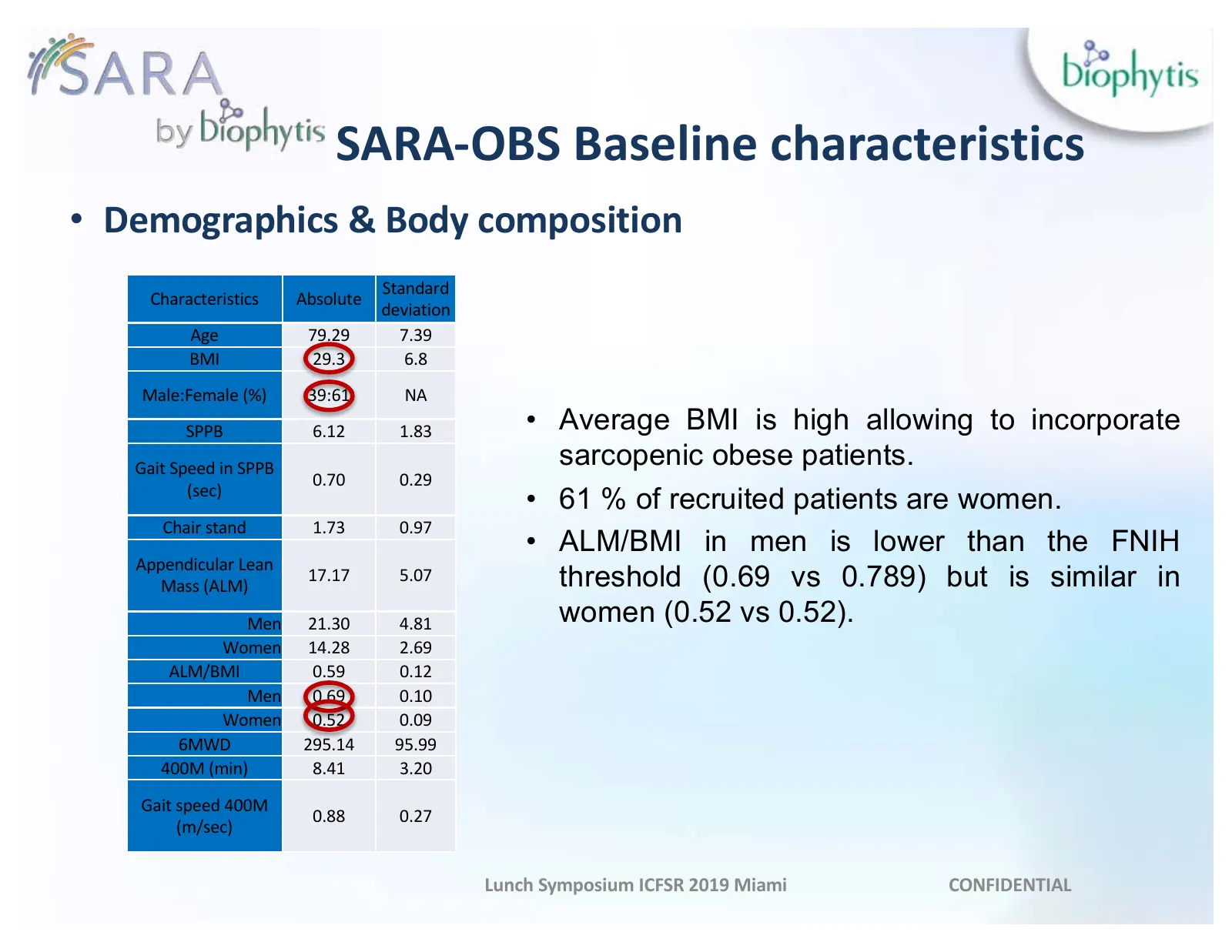
Slide 14: SARA-OBS Baseline characteristics
SARA-OBS Baseline characteristics • Demographics & Body composition Standard Characteristics Absolute deviation Age 79.29 7.39 BMI 29.3 6.8 Male:Female (%) 39:61 NA SPPB 6.12 1.83 • Average BMI is high allowing to incorporate Gait Speed in SPPB sarcopenic obese patients. 0.70 0.29 (sec) • 61 % of re
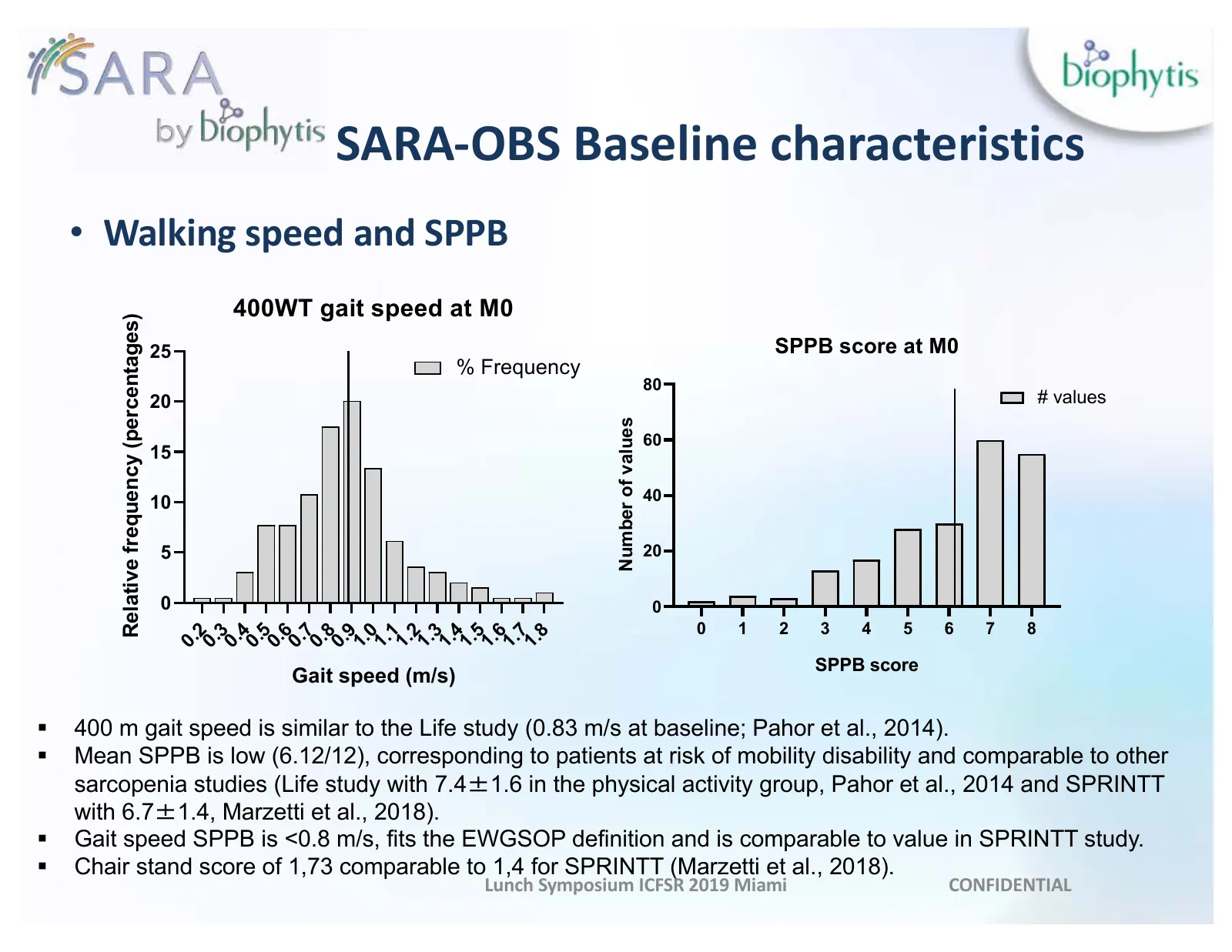
Slide 15: SARA-OBS Baseline characteristics: walking speed and SPPB
SARA-OBS Baseline characteristics • Walking speed and SPPB 400WT gait speed at M0 Relative frequency (percentages) 25 SPPB score at M0 % Frequency 80 20 # values Number of values 60 15 10 40 5 20 0 0 0 1 2 3 4 5 6 7 8 2 3 4 5 6 7 8 9 0 1 2 3 4 5 6 7 8 0. 0. 0. 0. 0. 0. 0. 0. 1. 1. 1. 1. 1. 1. 1. 1.
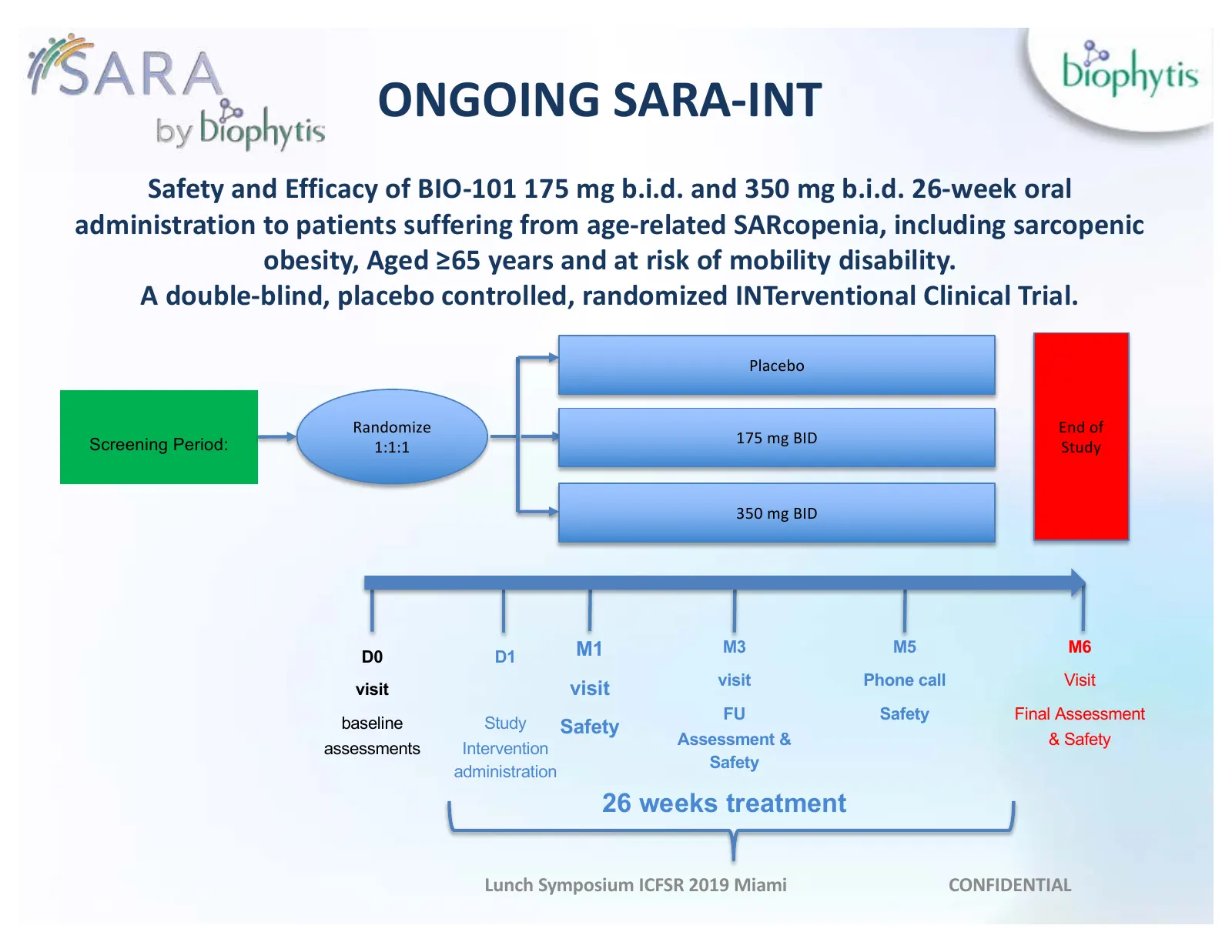
Slide 16: ONGOING SARA-INT
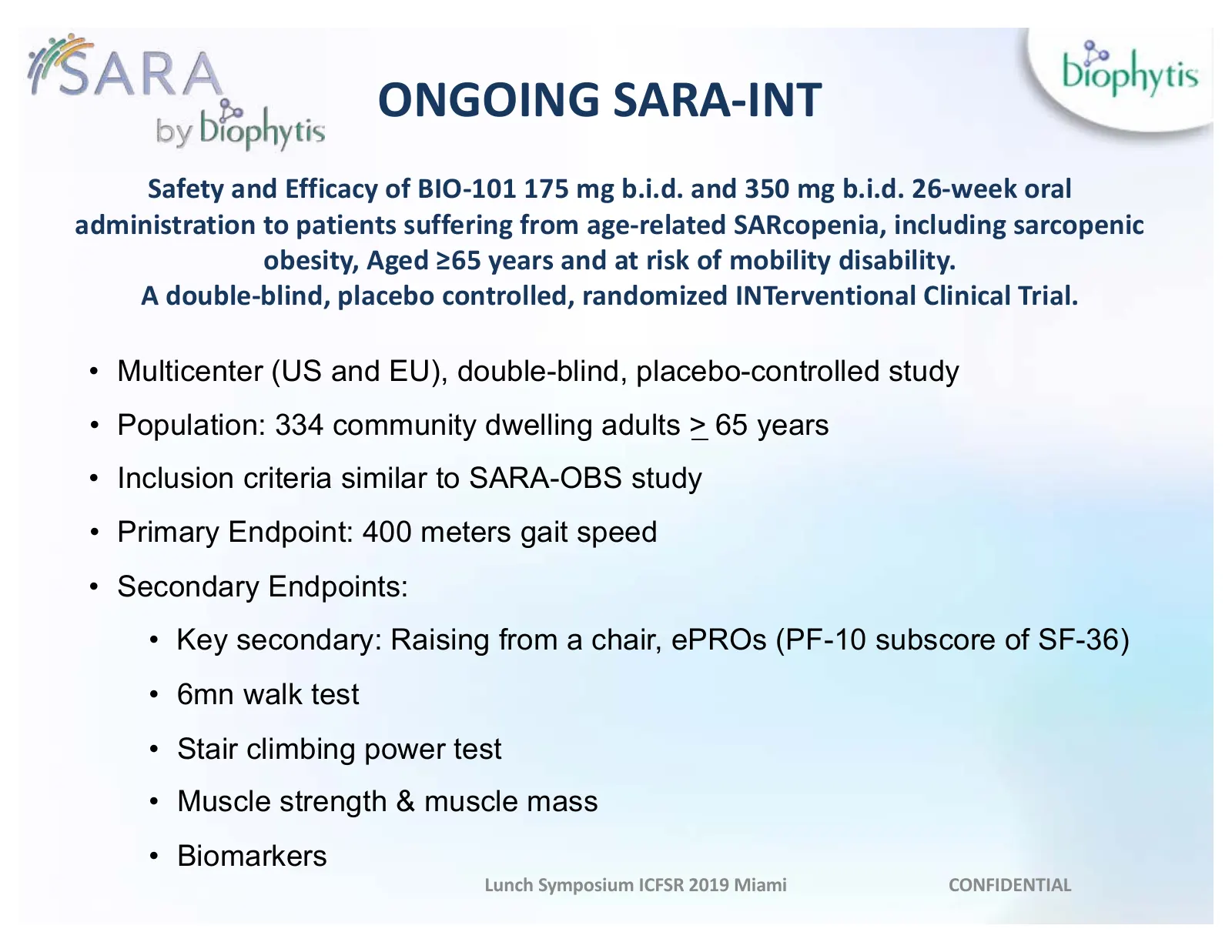
ONGOING SARA-INT Safety and Efficacy of BIO-101 175 mg b.i.d. and 350 mg b.i.d. 26-week oral administration to patients suffering from age-related SARcopenia, including sarcopenic obesity, Aged ≥65 years and at risk of mobility disability. A double-blind, placebo controlled, randomized INTerventiona
Slide 17: ONGOING SARA-INT
ONGOING SARA-INT Safety and Efficacy of BIO-101 175 mg b.i.d. and 350 mg b.i.d. 26-week oral administration to patients suffering from age-related SARcopenia, including sarcopenic obesity, Aged ≥65 years and at risk of mobility disability. A double-blind, placebo controlled, randomized INTerventiona
Slide 18: Conclusions
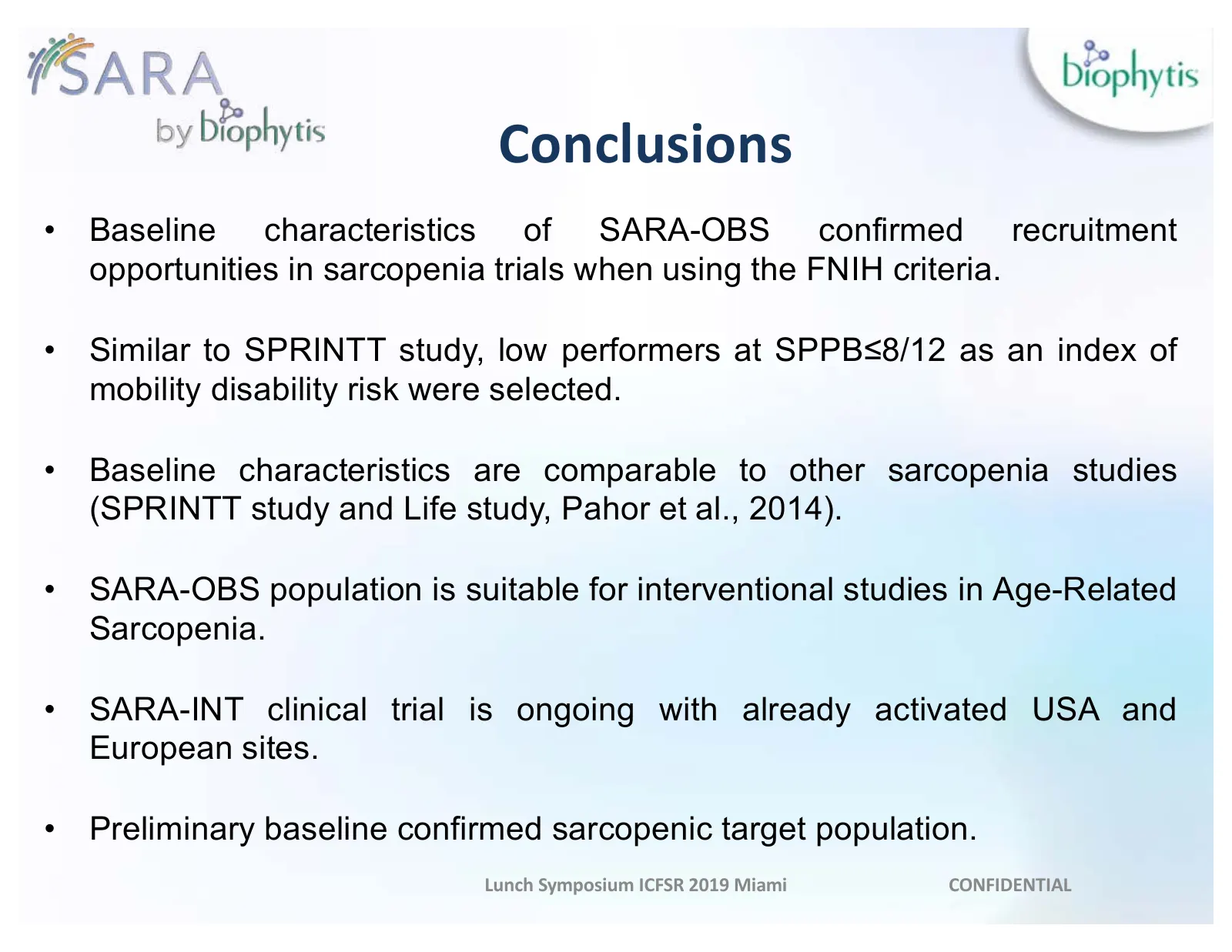
Conclusions • Baseline characteristics of SARA-OBS confirmed recruitment opportunities in sarcopenia trials when using the FNIH criteria. • Similar to SPRINTT study, low performers at SPPB≤8/12 as an index of mobility disability risk were selected. • Baseline characteristics are comparable to other
Slide 19: Biophytis Research and Development Team
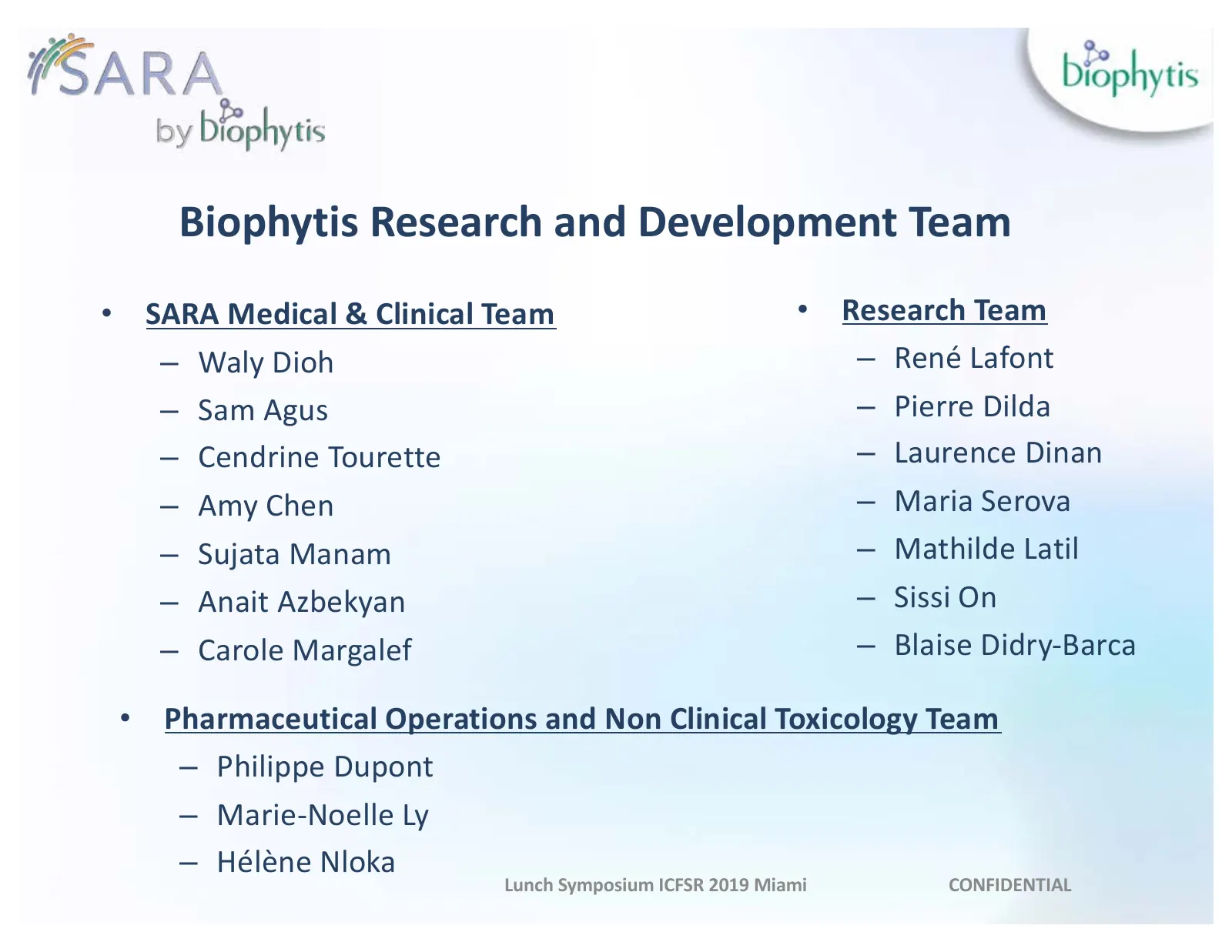
Biophytis Research and Development Team • SARA Medical & Clinical Team • Research Team – Waly Dioh – René Lafont – Sam Agus – Pierre Dilda – Cendrine Tourette – Laurence Dinan – Amy Chen – Maria Serova – Sujata Manam – Mathilde Latil – Anait Azbekyan – Sissi On – Carole Margalef – Blaise Didry-Barca

Slide 20: Thank you
biophytis a — Thank you
Slide 21: Main exclusion criteria
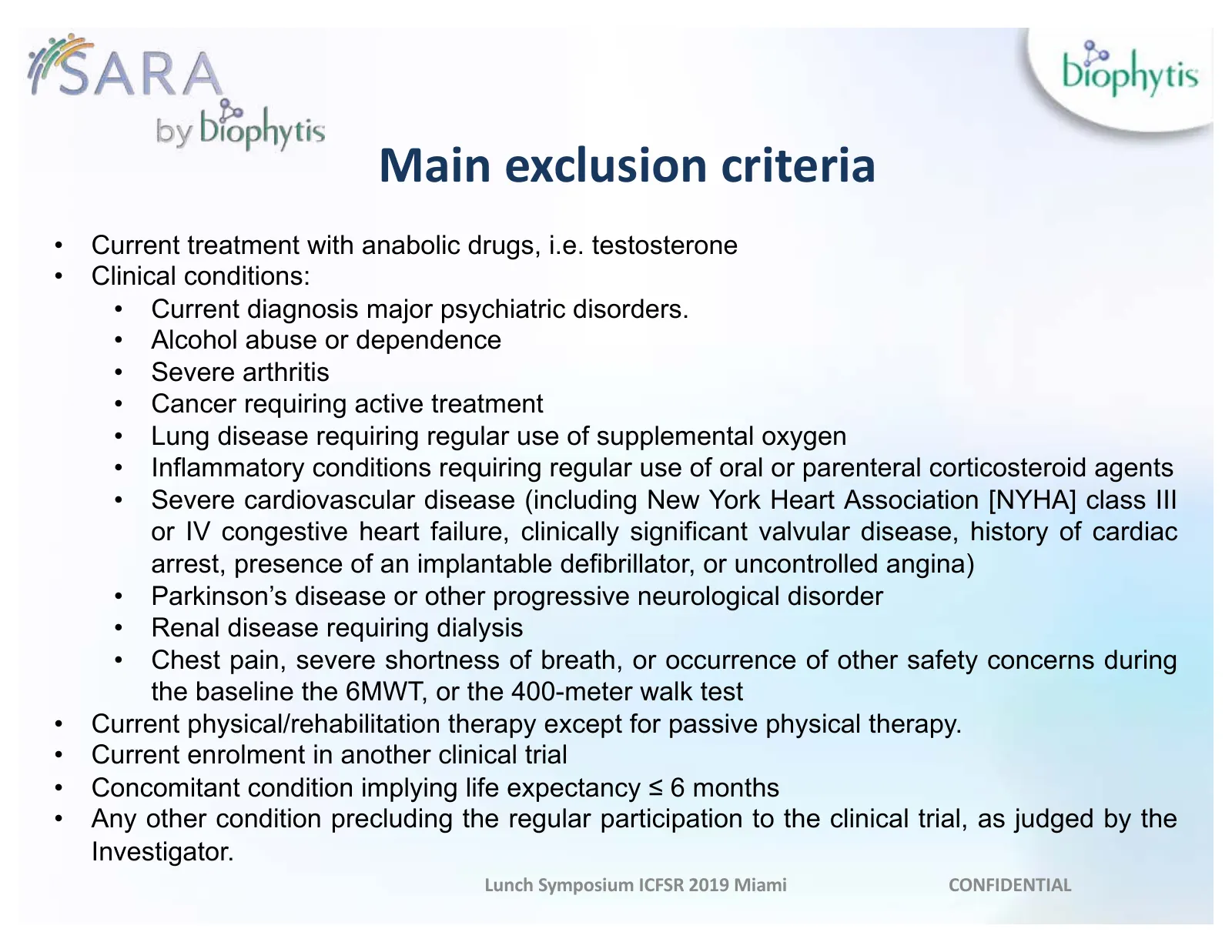
Main exclusion criteria • Current treatment with anabolic drugs, i.e. testosterone • Clinical conditions: • Current diagnosis major psychiatric disorders. • Alcohol abuse or dependence • Severe arthritis • Cancer requiring active treatment • Lung disease requiring regular use of supplemental oxygen
Source: company website
More decks from Biophytis SA
 Investor Presentation (August 2026)19 slides · August 2026
 Investor Presentation (August 2026)19 slides · August 2026
 Investor Presentation (March 2026)21 slides · March 2026
 Investor Presentation (March 2026)21 slides · March 2026
 Investor Presentation (January 2025)32 slides · January 2025
 Investor Presentation (December 2024)48 slides · Dec 6, 2024