Dogwood Therapeutics, Inc. · NASDAQ:DWTX
Dogwood Therapeutics — Investor Presentation (November 2026)
46 slides from Dogwood Therapeutics's investor presentation, November 2026
Slide 1: Halneuron for the Treatment of Chronic Neuropathic Pain
Halneuron® for the Treatment of Chronic Neuropathic Pain November 2026 NASDAQ: DWTX
Slide 2: Forward-Looking Statements
Forward-Looking Statements Statements in this presentation contain “forward-looking statements,” within the meaning of the U.S. Private Securities Litigation Reform Act of 1995, that are subject to substantial risks and uncertainties. All statements, other than statements of historical fact, contain
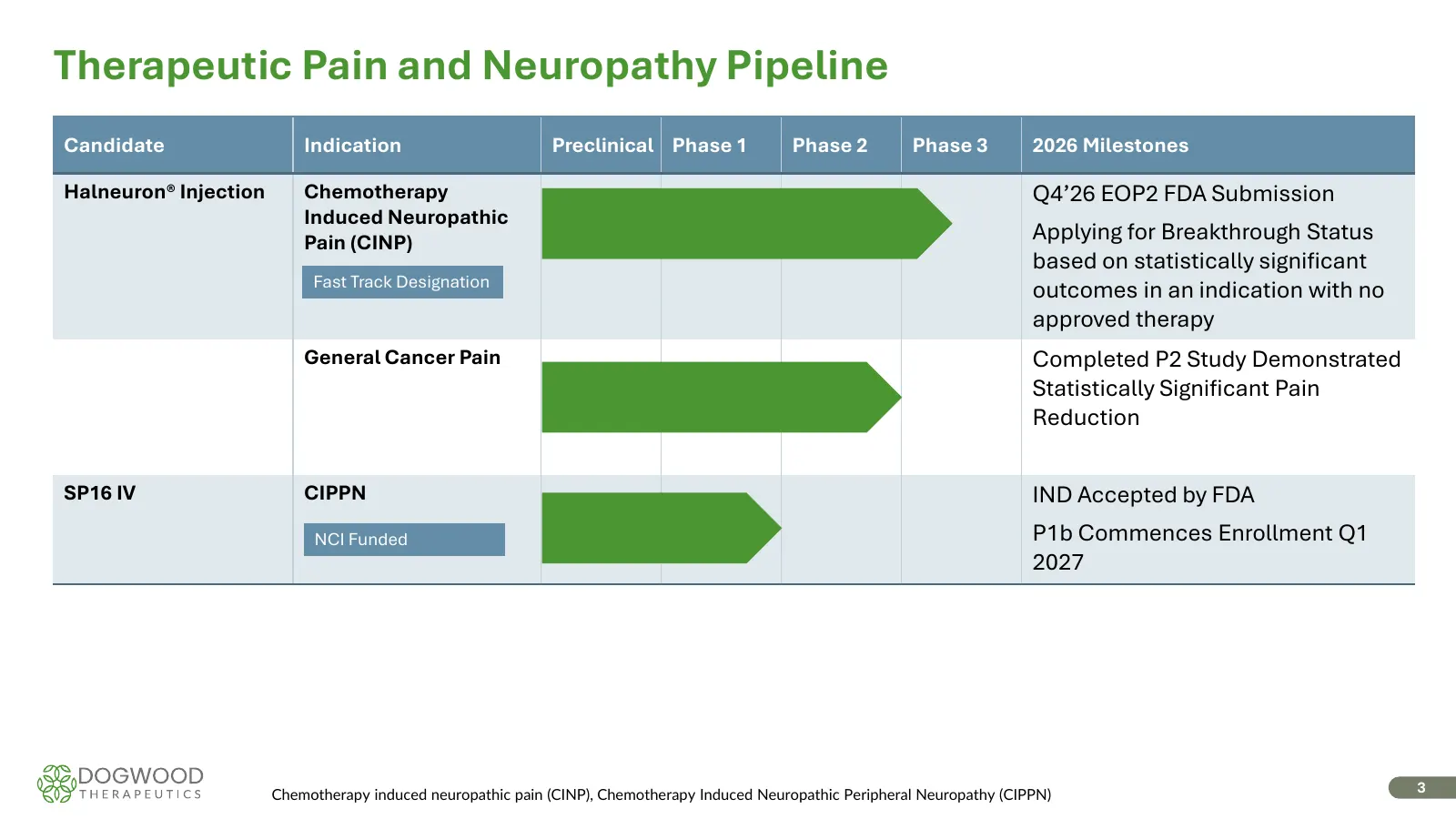
Slide 3: Therapeutic Pain and Neuropathy Pipeline
Therapeutic Pain and Neuropathy Pipeline Candidate Indication Preclinical Phase 1 Phase 2 Phase 3 2026 Milestones Halneuron® Injection Chemotherapy Q4’26 EOP2 FDA Submission Induced Neuropathic Pain (CINP) Applying for Breakthrough Status based on statistically significant Fast Track Designation out
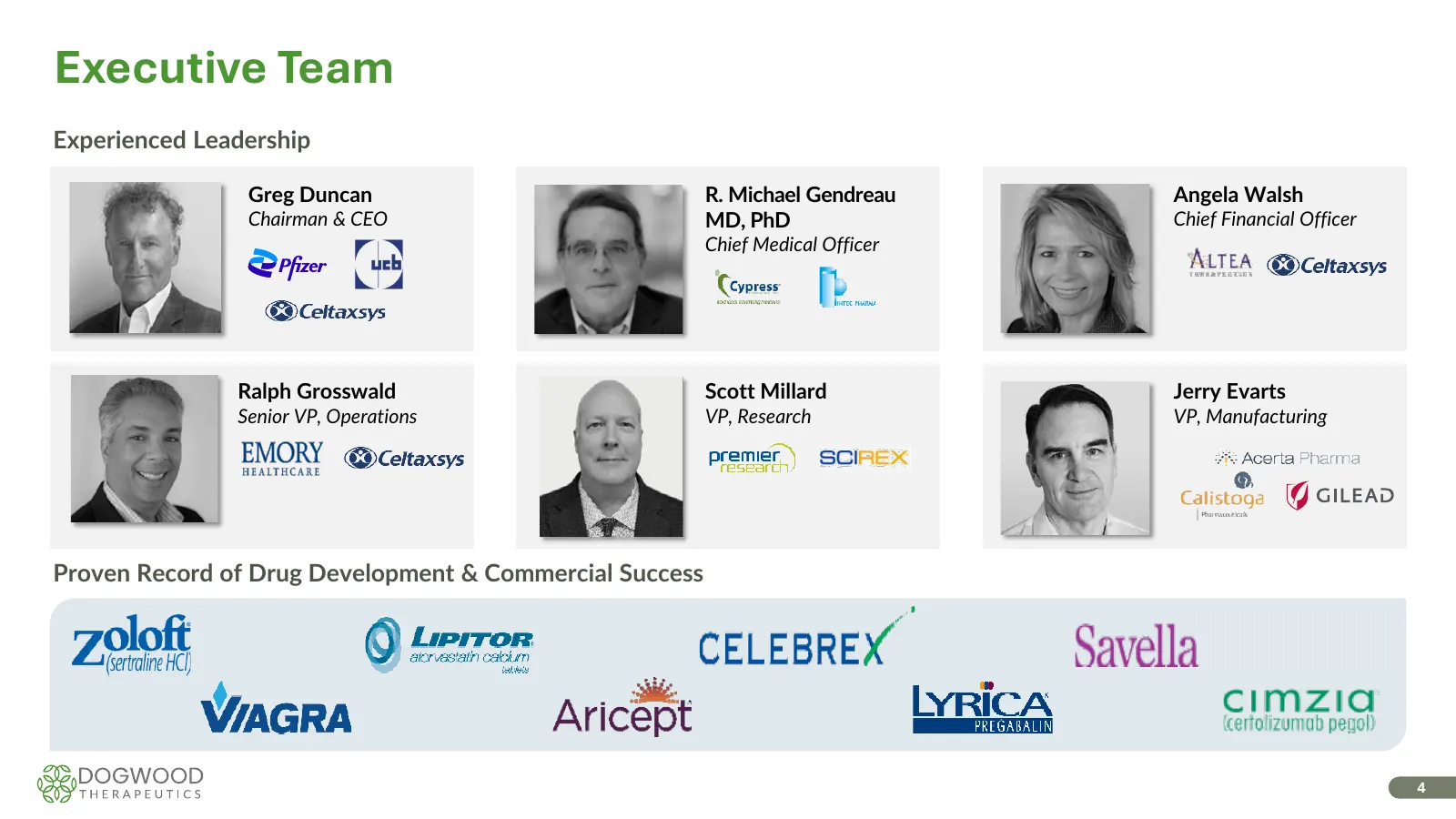
Slide 4: Executive Team
Executive Team Experienced Leadership Greg Duncan R. Michael Gendreau Angela Walsh Chairman & CEO MD, PhD Chief Financial Officer Chief Medical Officer Ralph Grosswald Scott Millard Jerry Evarts Senior VP, Operations VP, Research VP, Manufacturing Proven Record of Drug Development & Commercial Succe
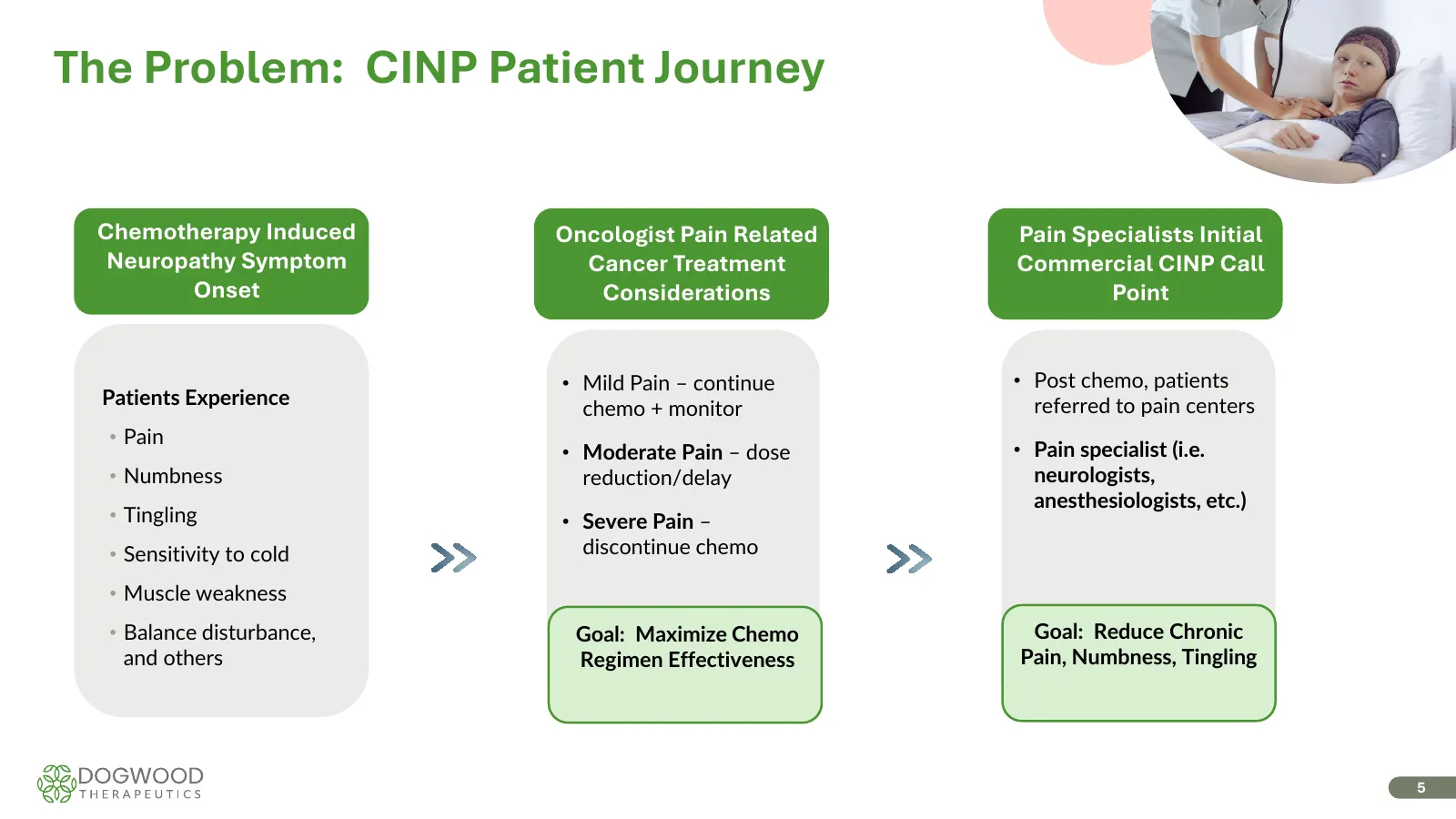
Slide 5: The Problem: CINP Patient Journey
The Problem: CINP Patient Journey Chemotherapy Induced Oncologist Pain Related Pain Specialists Initial Neuropathy Symptom Cancer Treatment Commercial CINP Call Onset Considerations Point • Mild Pain – continue • Post chemo, patients Patients Experience referred to pain centers chemo + monitor • Pai
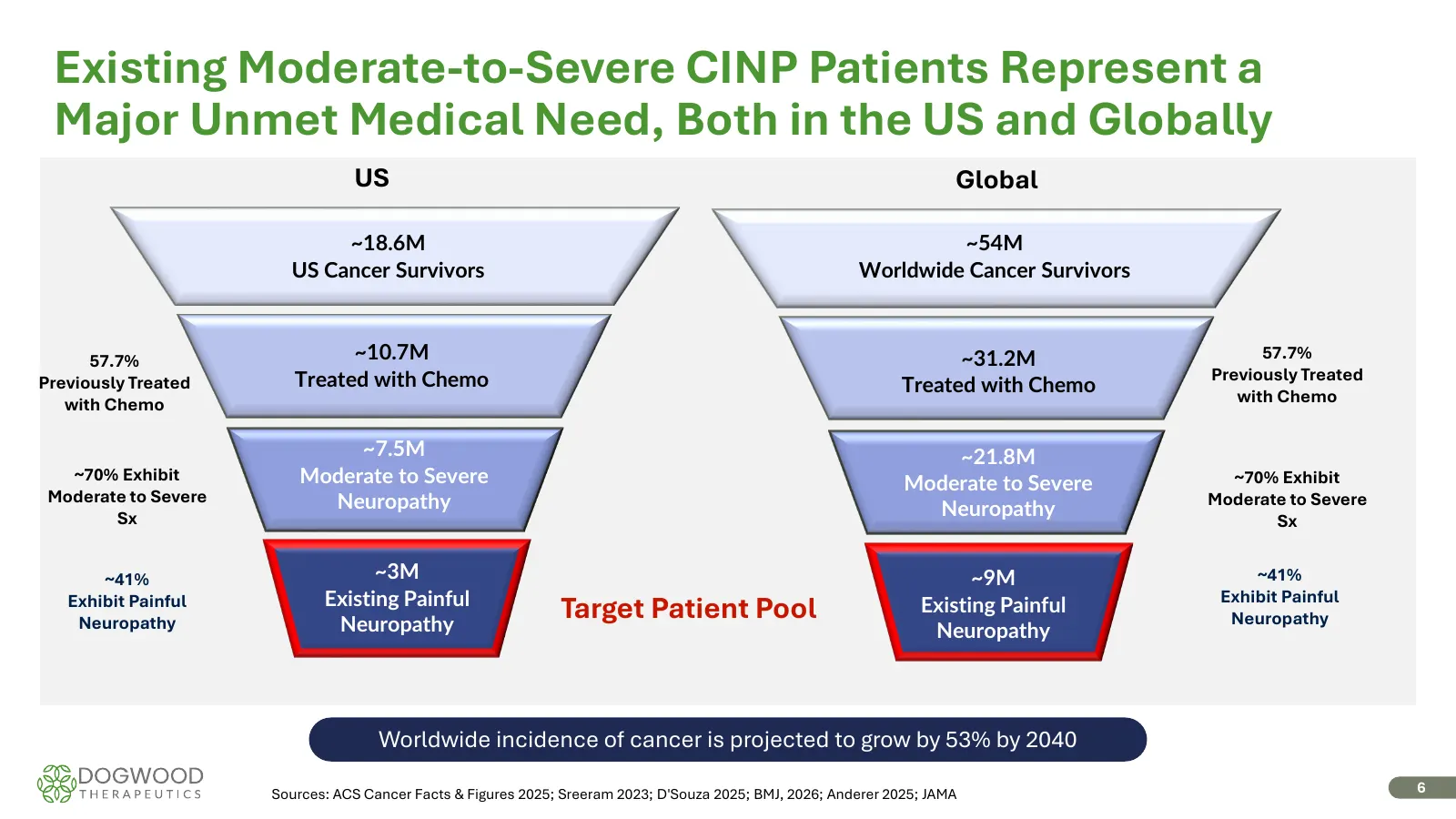
Slide 6: Existing Moderate-to-Severe CINP Patients Represent a Major Unmet Medical Need
Existing Moderate-to-Severe CINP Patients Represent a Major Unmet Medical Need, Both in the US and Globally US Global ~18.6M ~54M US Cancer Survivors Worldwide Cancer Survivors 57.7% ~10.7M ~31.2M 57.7% Treated with Chemo Previously Treated Previously Treated Treated with Chemo with Chemo with Chemo
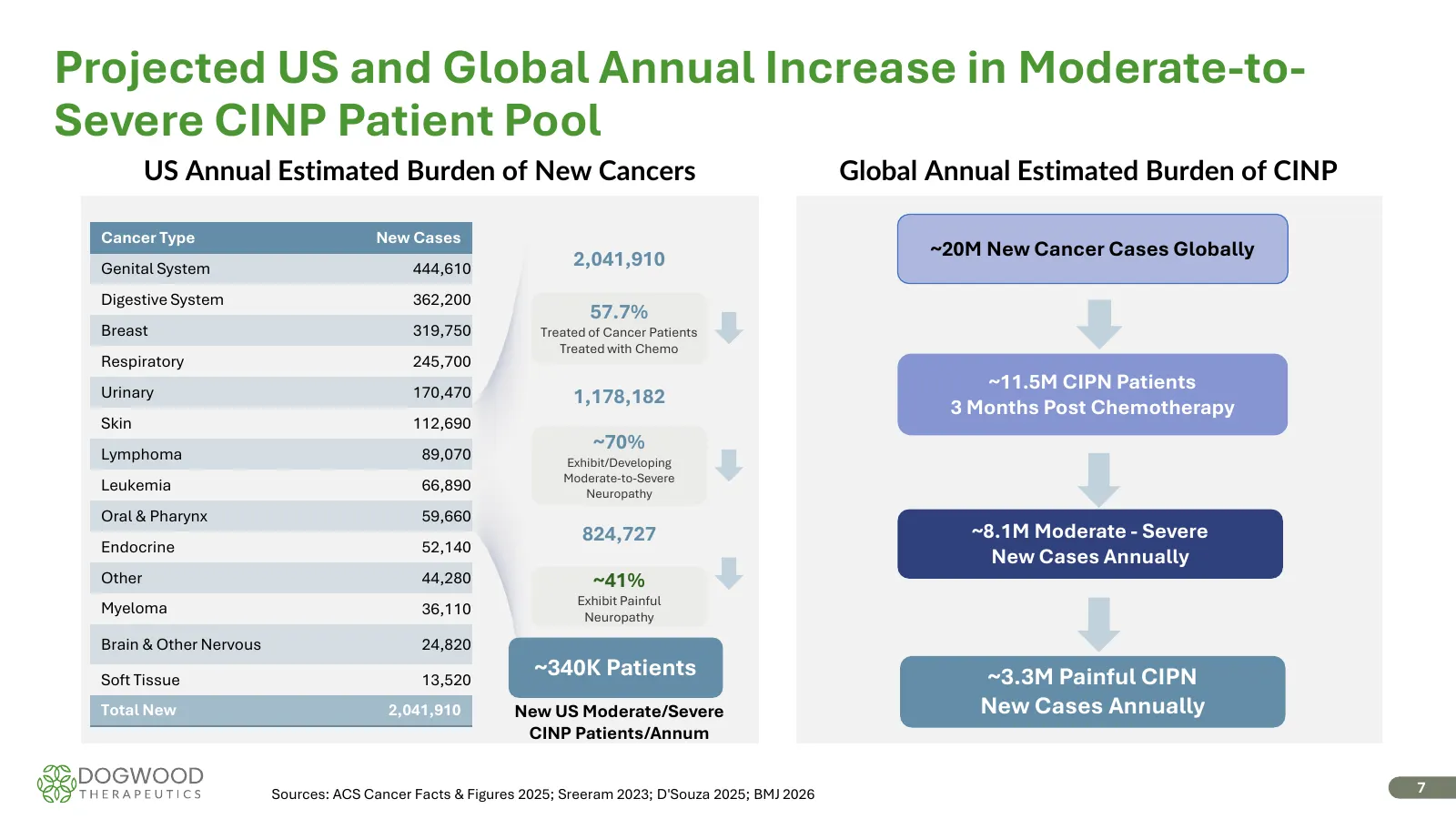
Slide 7: Projected US and Global Annual Increase in Moderate-to-Severe CINP Patient Pool
Projected US and Global Annual Increase in Moderate-to- Severe CINP Patient Pool US Annual Estimated Burden of New Cancers Global Annual Estimated Burden of CINP Cancer Type New Cases 2,041,910 ~20M New Cancer Cases Globally Genital System 444,610 Digestive System 362,200 57.7% Breast 319,750 Treate
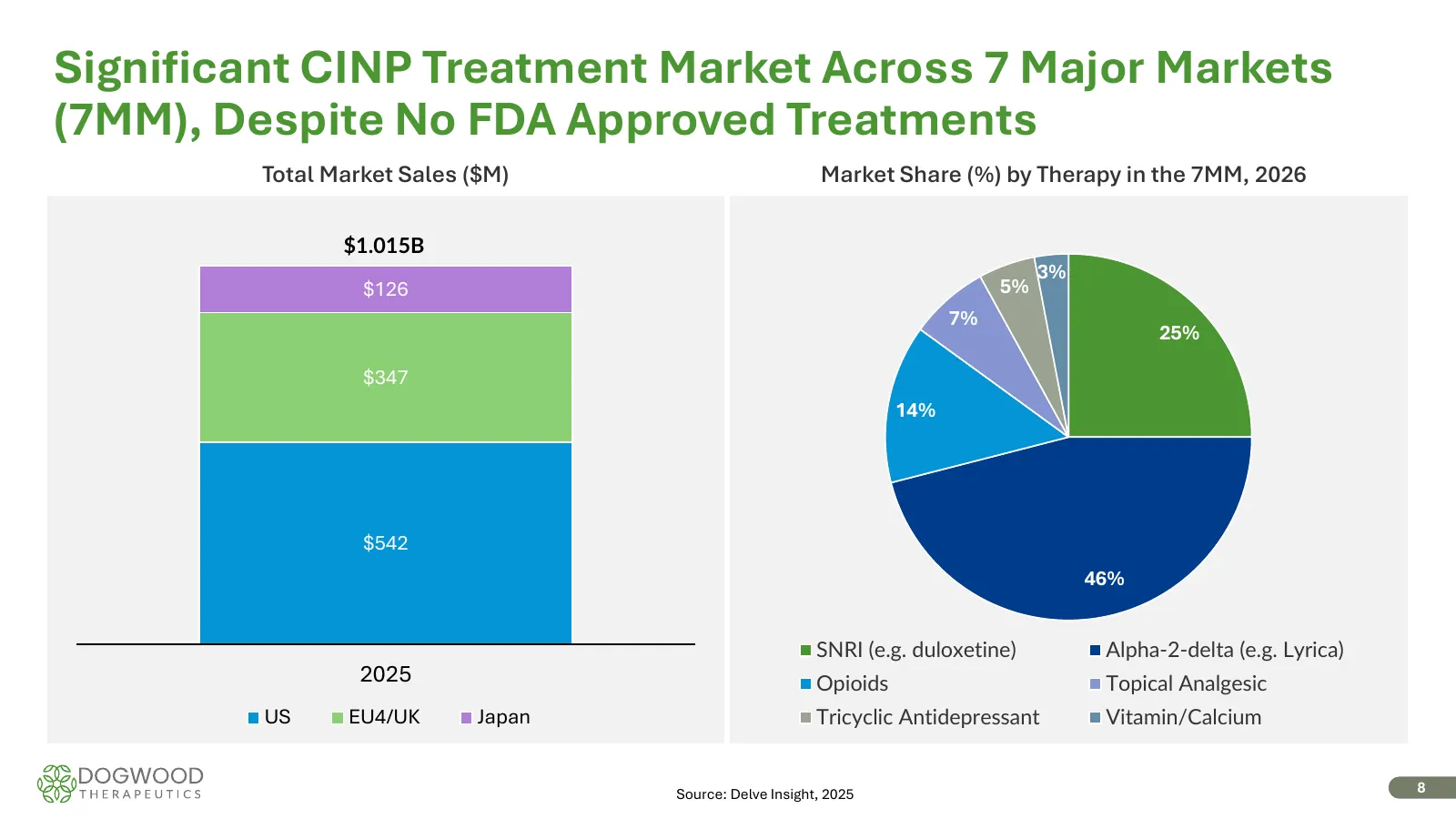
Slide 8: Significant CINP Treatment Market Across Major Markets Despite No FDA Approved Treatments
Significant CINP Treatment Market Across 7 Major Markets (7MM), Despite No FDA Approved Treatments Total Market Sales ($M) Market Share (%) by Therapy in the 7MM, 2026 $1.015B 3% $126 5% 7% 25% $347 14% $542 46% SNRI (e.g. duloxetine) Alpha-2-delta (e.g. Lyrica) 2025 Opioids Topical Analgesic US EU4

Slide 9: Halneuron Background
Halneuron® Background
Slide 10: Our Solution Halneuron
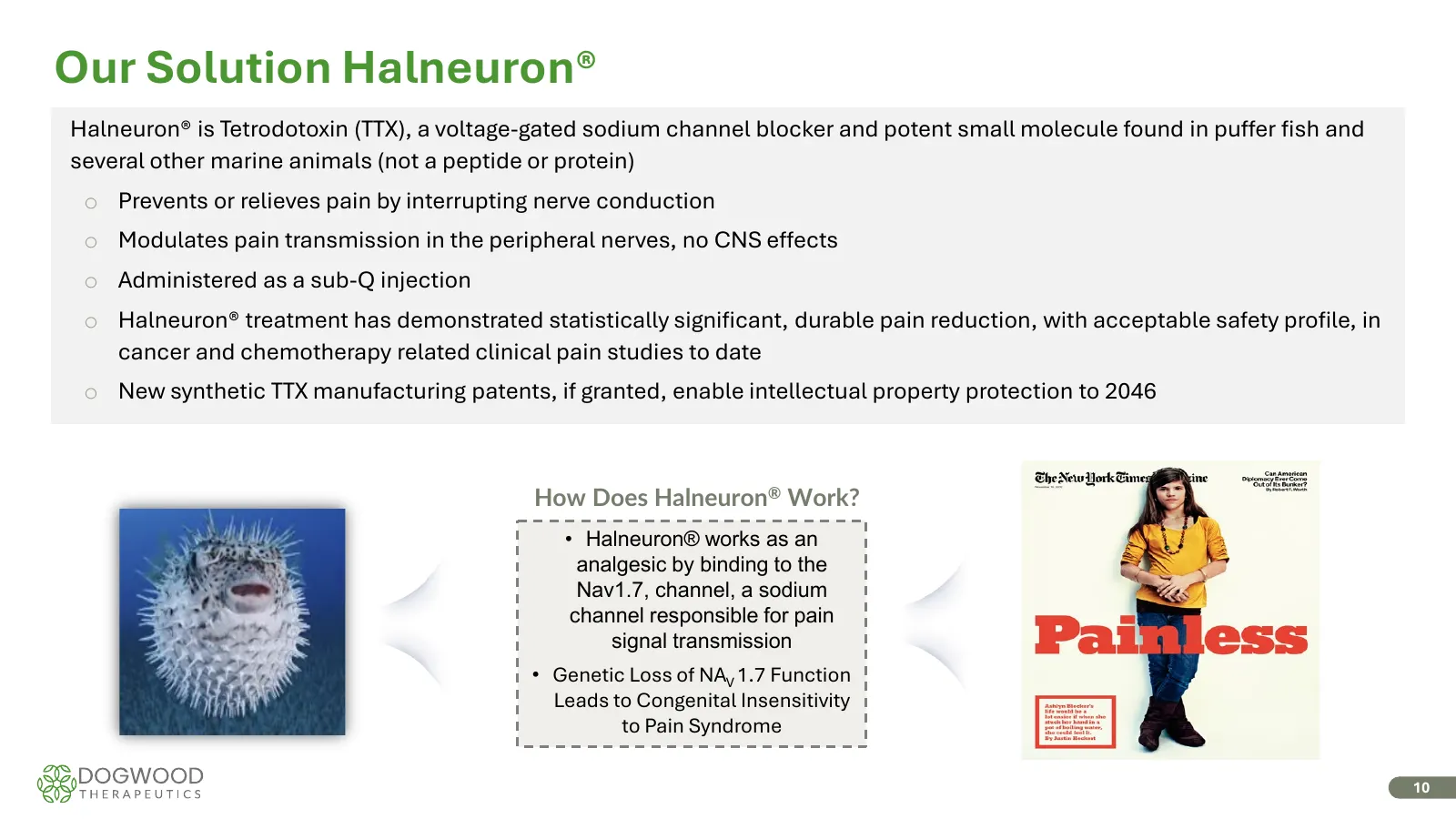
Our Solution Halneuron® Halneuron® is Tetrodotoxin (TTX), a voltage-gated sodium channel blocker and potent small molecule found in puffer fish and several other marine animals (not a peptide or protein) o Prevents or relieves pain by interrupting nerve conduction o Modulates pain transmission in th
Slide 11: Nav Sodium Channel Signaling
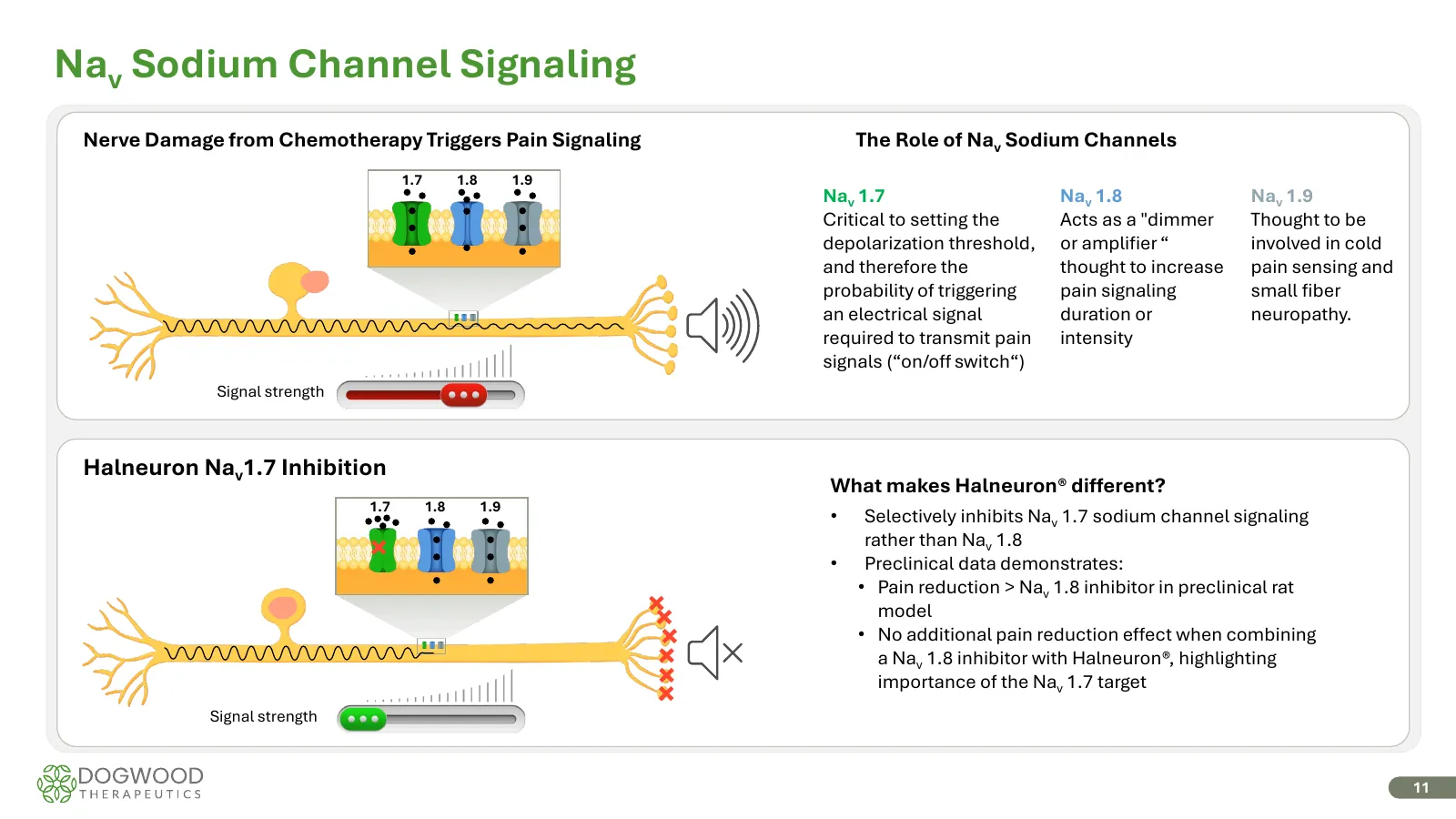
Nav Sodium Channel Signaling Nerve Damage from Chemotherapy Triggers Pain Signaling The Role of Nav Sodium Channels 1.7 1.8 1.9 Nav 1.7 Nav 1.8 Nav 1.9 Critical to setting the Acts as a "dimmer Thought to be depolarization threshold, or amplifier “ involved in cold and therefore the thought to incre
Slide 12: Halneuron (TTx) Sensitivity to Sodium Channel Isoforms
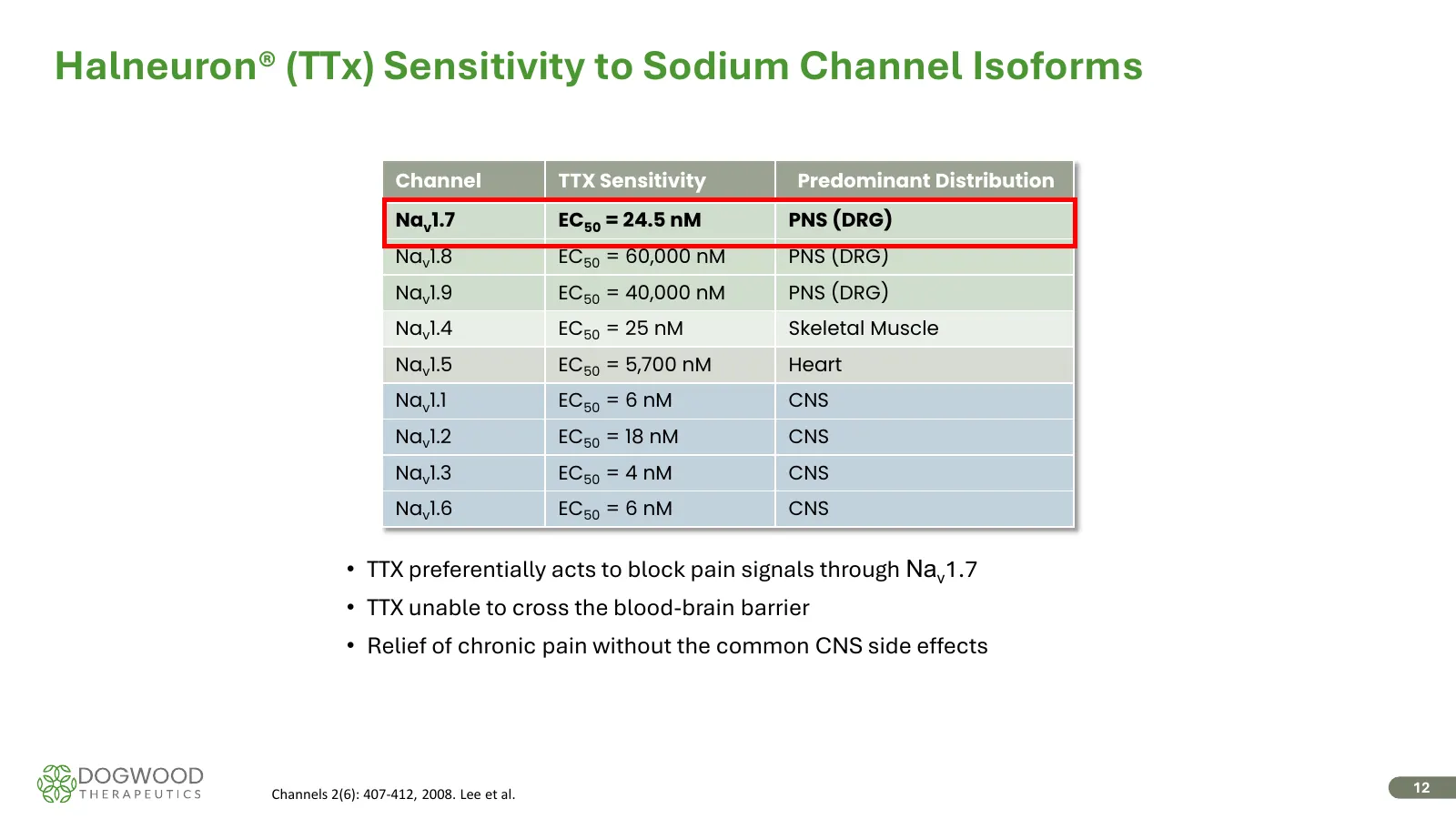
Halneuron® (TTx) Sensitivity to Sodium Channel Isoforms Channel TTX Sensitivity Predominant Distribution Nav1.7 EC50 = 24.5 nM PNS (DRG) Nav1.8 EC50 = 60,000 nM PNS (DRG) Nav1.9 EC50 = 40,000 nM PNS (DRG) Nav1.4 EC50 = 25 nM Skeletal Muscle Nav1.5 EC50 = 5,700 nM Heart Nav1.1 EC50 = 6 nM CNS Nav1.2
Slide 13: Halneuron Demonstrated Pain Reduction in Preclinical Chemotherapeutic-Induced Rat Pain Model
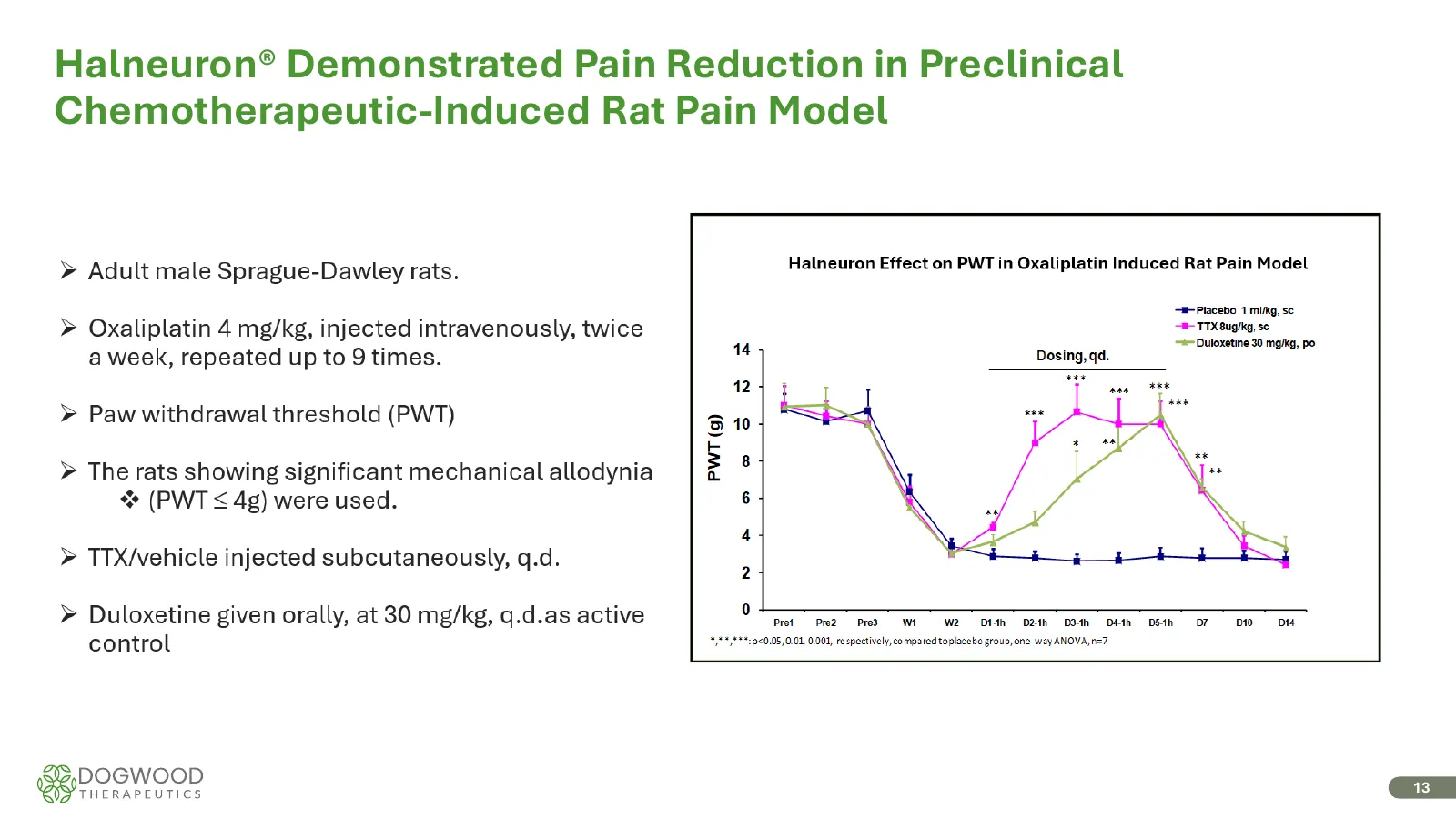
Halneuron® Demonstrated Pain Reduction in Preclinical Chemotherapeutic-Induced Rat Pain Model 13
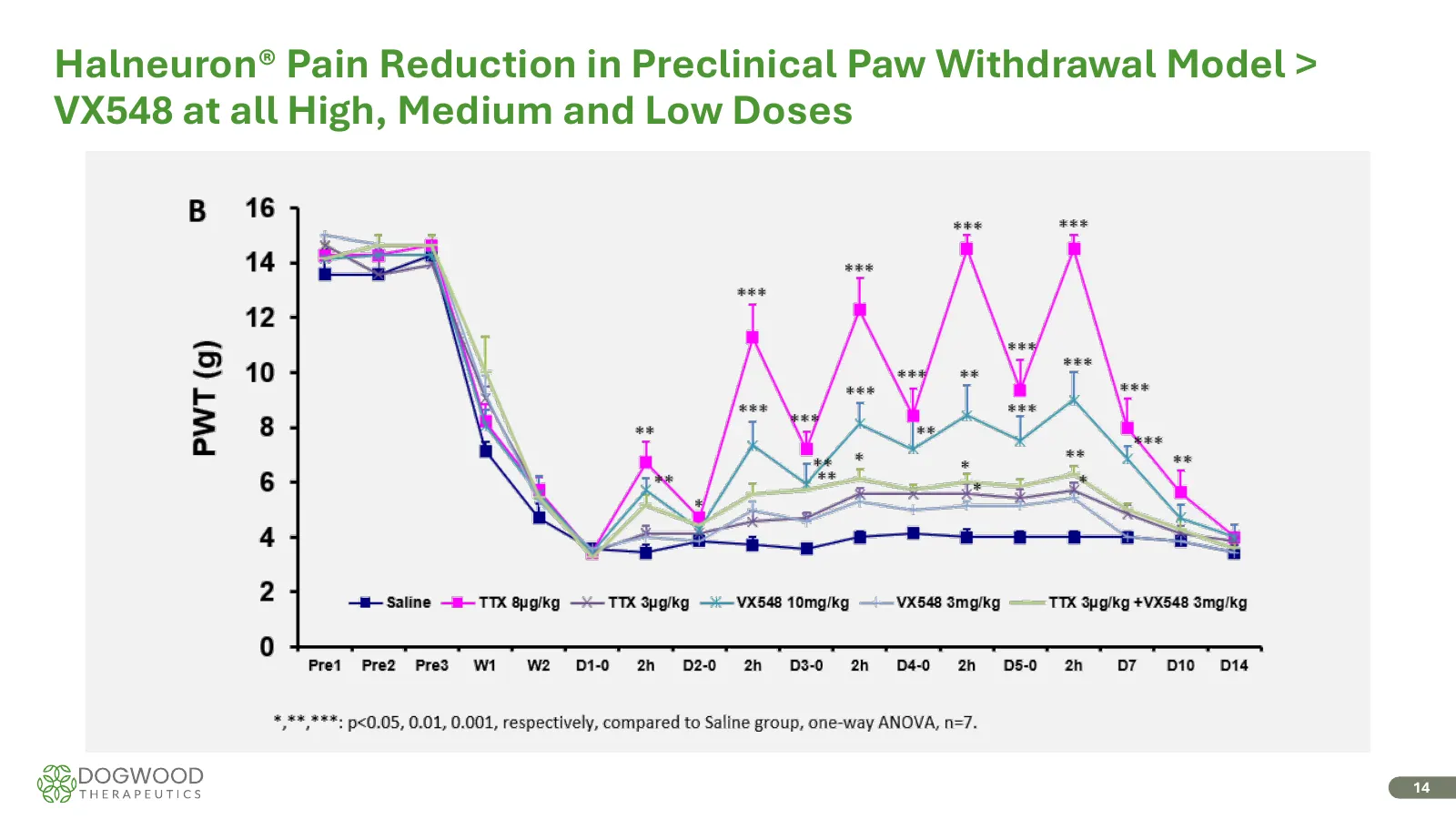
Slide 14: Halneuron Pain Reduction in Preclinical Paw Withdrawal Model > VX548
Halneuron® Pain Reduction in Preclinical Paw Withdrawal Model > VX548 at all High, Medium and Low Doses 14
Slide 15: Halneuron Phase 2b Study
Halneuron® Phase 2b Study
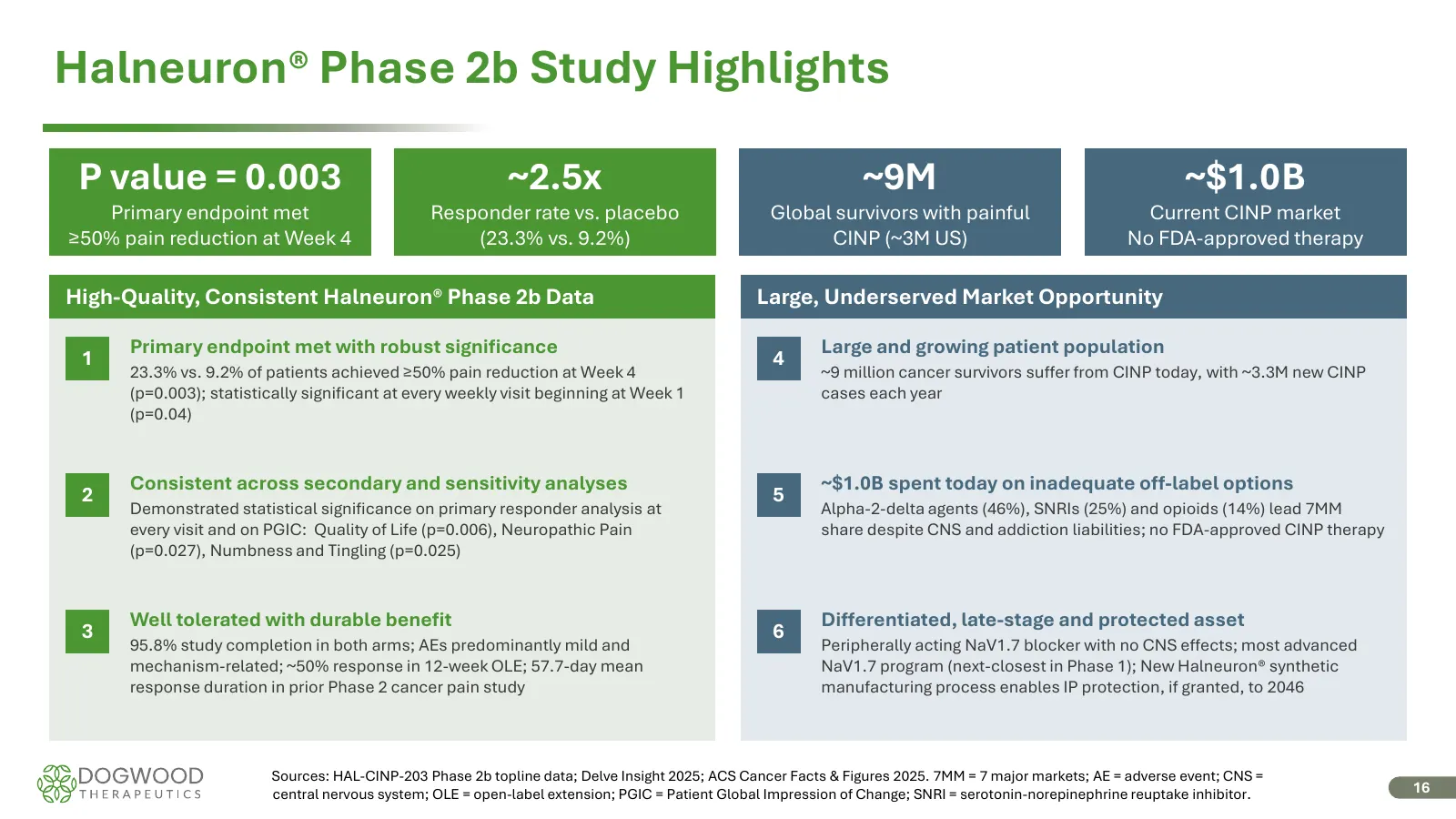
Slide 16: Halneuron Phase 2b Study Highlights
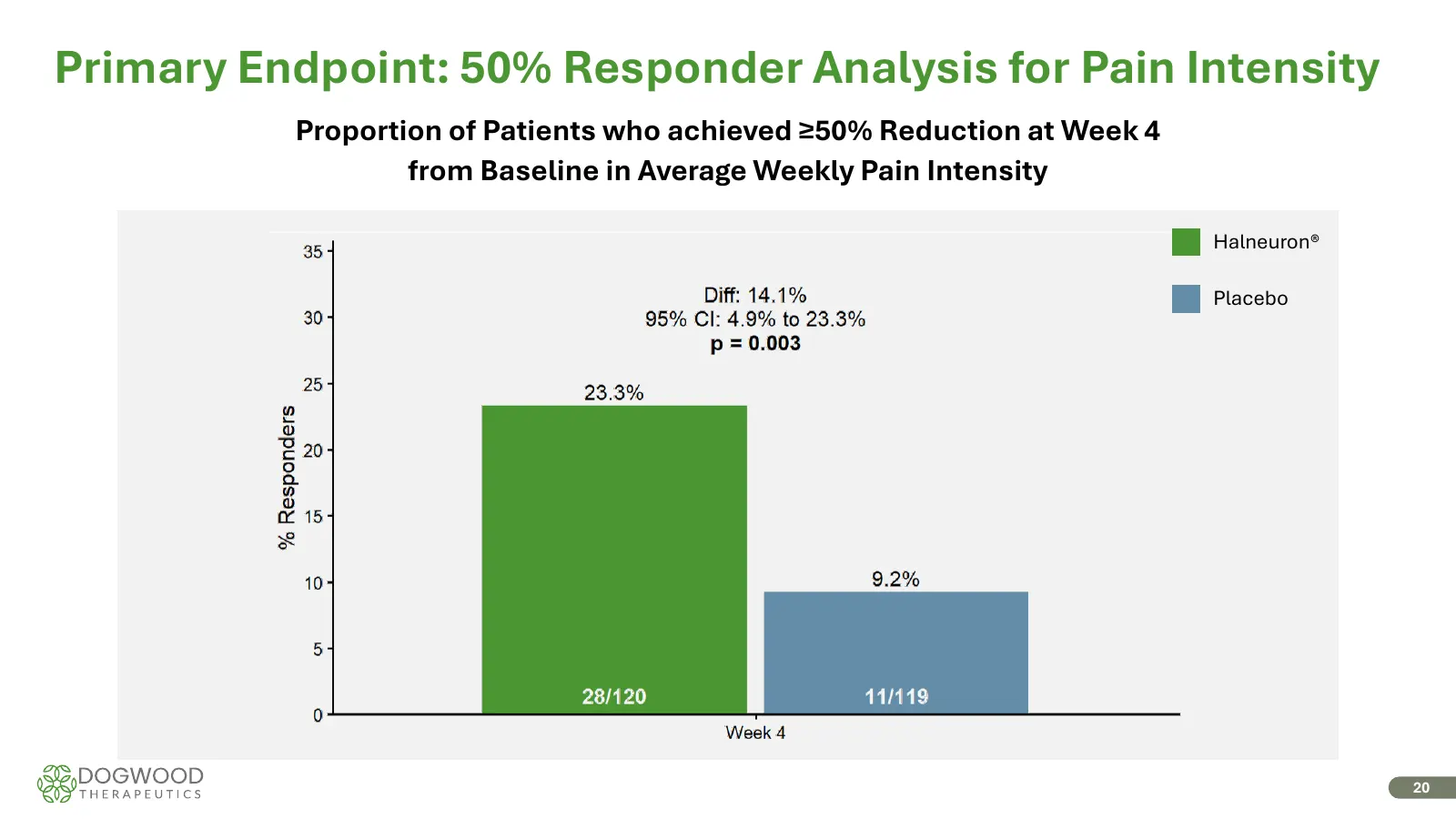
Halneuron® Phase 2b Study Highlights P value = 0.003 ~2.5x ~9M ~$1.0B Primary endpoint met Responder rate vs. placebo Global survivors with painful Current CINP market ≥50% pain reduction at Week 4 (23.3% vs. 9.2%) CINP (~3M US) No FDA-approved therapy High-Quality, Consistent Halneuron® Phase 2b Da
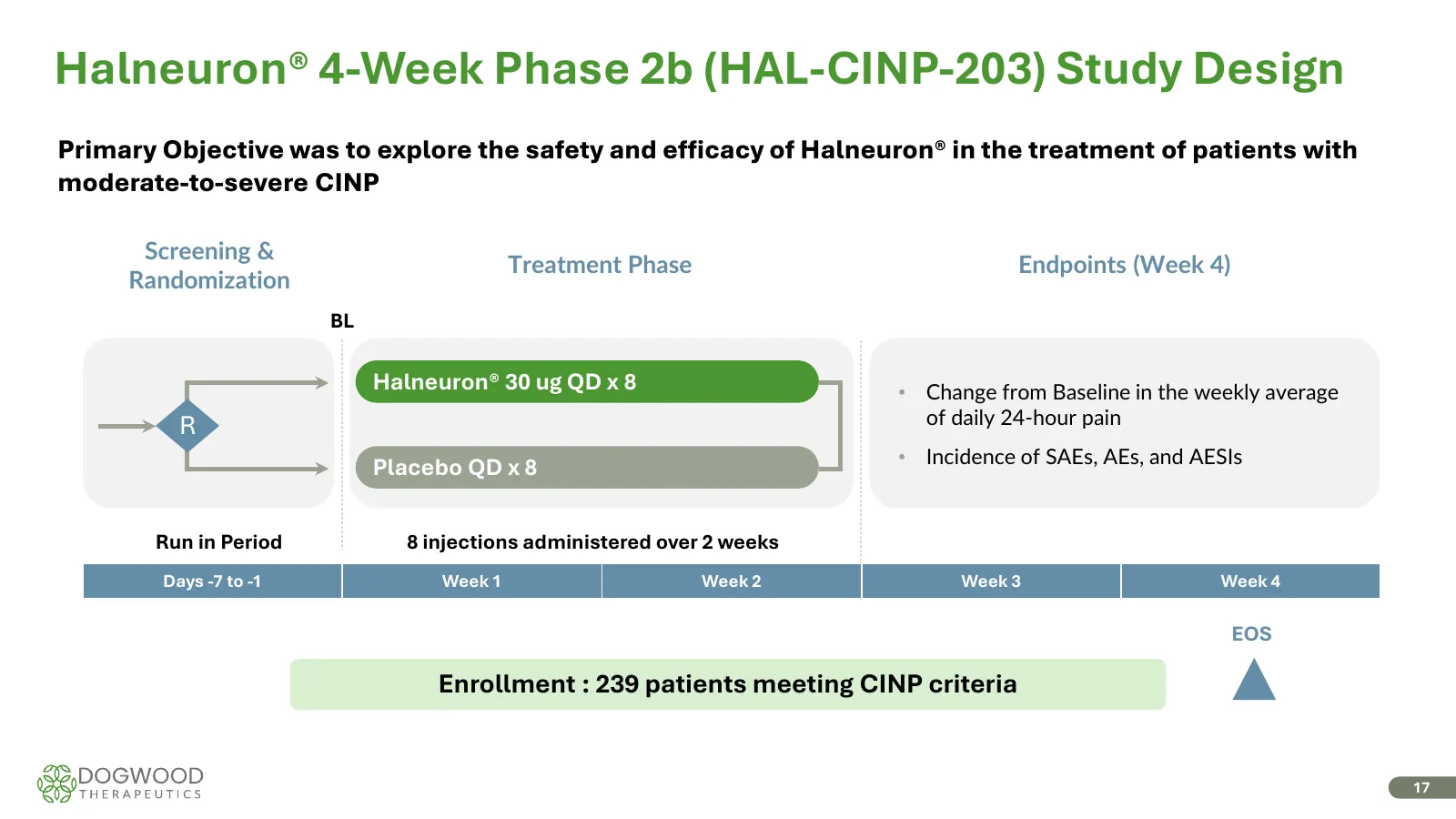
Slide 17: Halneuron 4-Week Phase 2b (HAL-CINP-203) Study Design
Halneuron® 4-Week Phase 2b (HAL-CINP-203) Study Design Primary Objective was to explore the safety and efficacy of Halneuron® in the treatment of patients with moderate-to-severe CINP Screening & Treatment Phase Endpoints (Week 4) Randomization BL Halneuron® 30 ug QD x 8 • Change from Baseline in th
Slide 18: HAL-CINP-203: Disposition
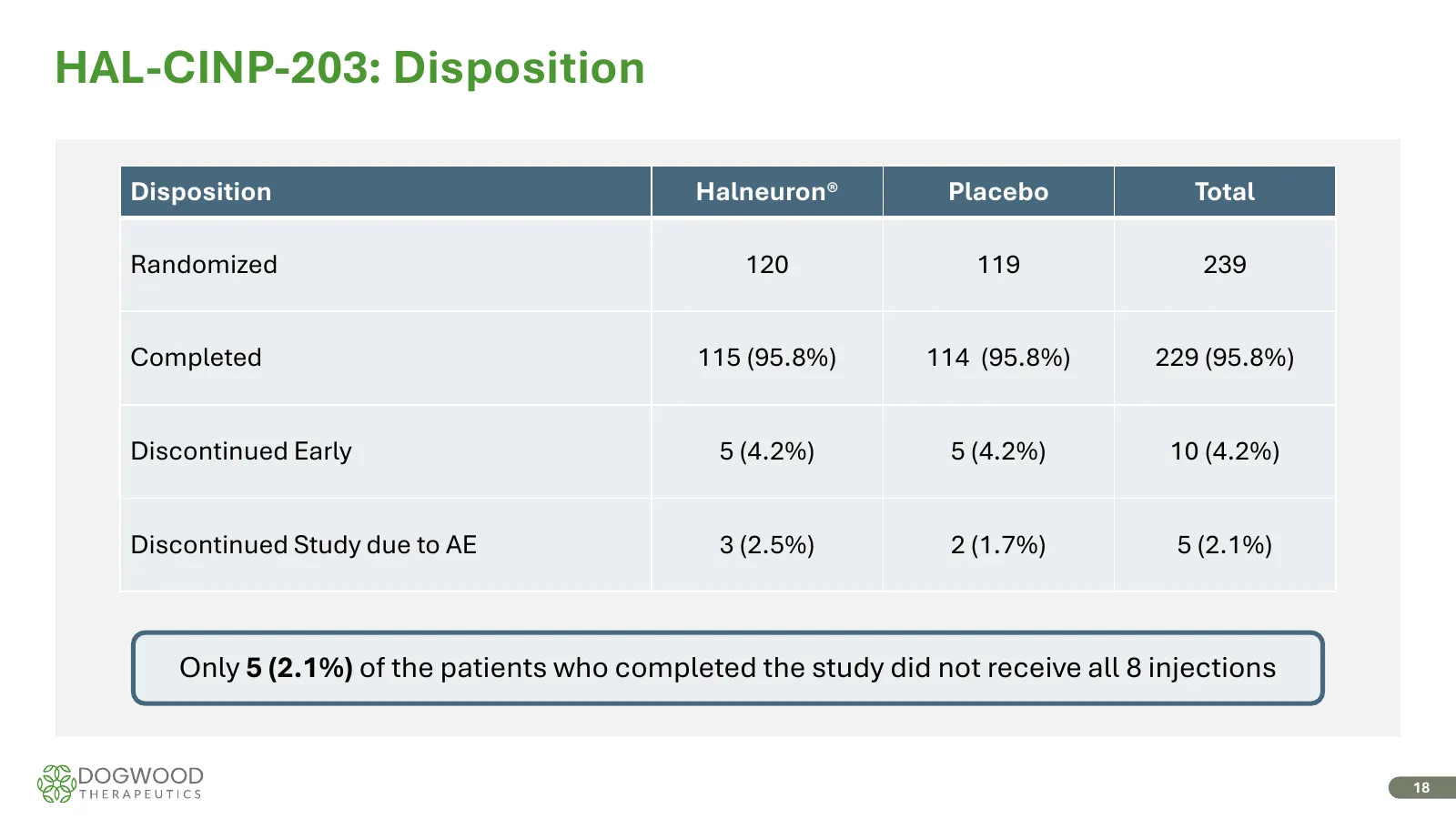
HAL-CINP-203: Disposition Disposition Halneuron® Placebo Total Randomized 120 119 239 Completed 115 (95.8%) 114 (95.8%) 229 (95.8%) Discontinued Early 5 (4.2%) 5 (4.2%) 10 (4.2%) Discontinued Study due to AE 3 (2.5%) 2 (1.7%) 5 (2.1%) Only 5 (2.1%) of the patients who completed the study did not rec
Slide 19: HAL-CINP-203: Baseline Characteristics
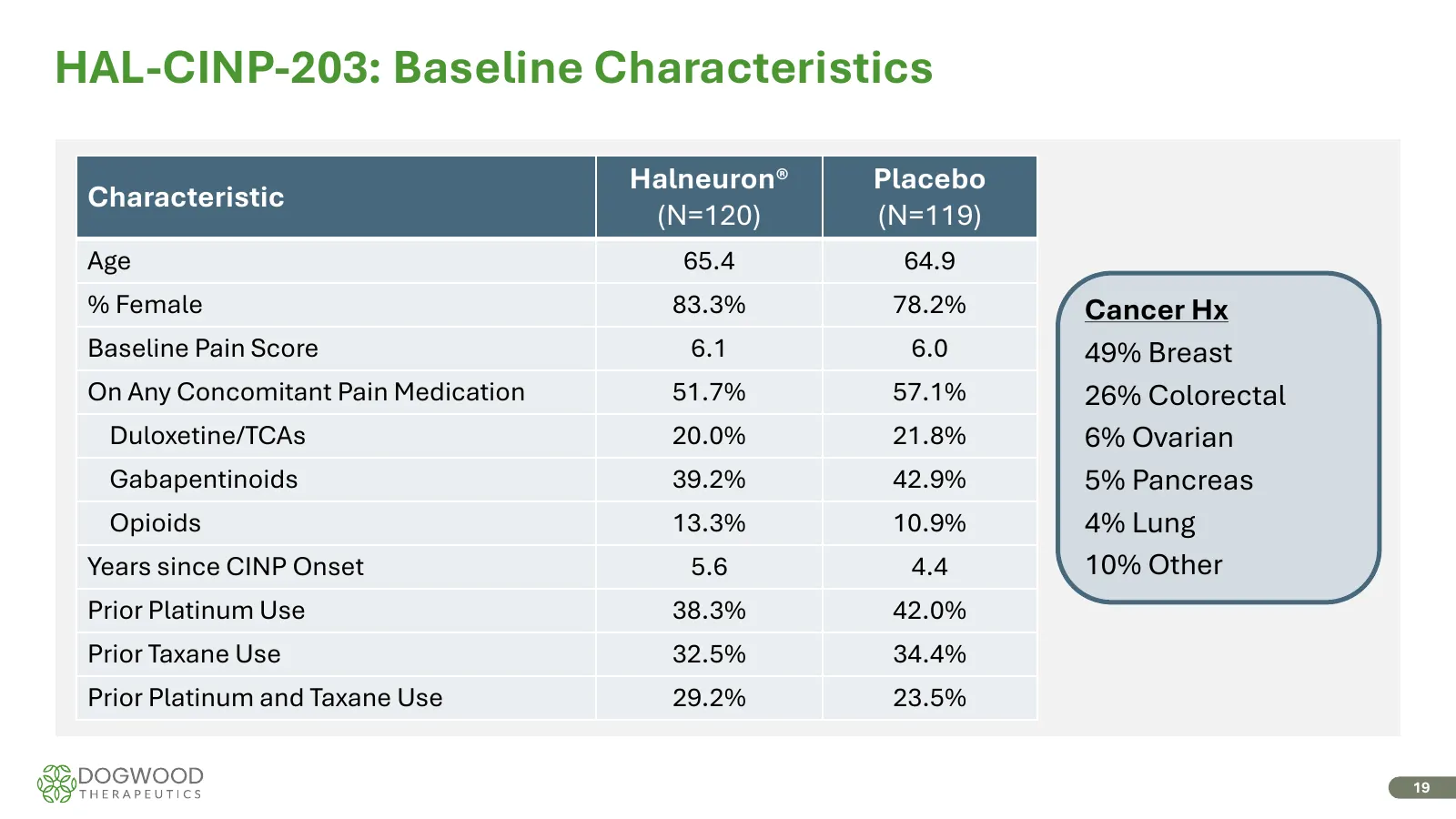
HAL-CINP-203: Baseline Characteristics Halneuron® Placebo Characteristic (N=120) (N=119) Age 65.4 64.9 % Female 83.3% 78.2% Cancer Hx Baseline Pain Score 6.1 6.0 49% Breast On Any Concomitant Pain Medication 51.7% 57.1% 26% Colorectal Duloxetine/TCAs 20.0% 21.8% 6% Ovarian Gabapentinoids 39.2% 42.9%
Slide 20: Primary Endpoint: 50% Responder Analysis for Pain Intensity
Primary Endpoint: 50% Responder Analysis for Pain Intensity Proportion of Patients who achieved ≥50% Reduction at Week 4 from Baseline in Average Weekly Pain Intensity Halneuron® Placebo 20
Slide 21: Primary Endpoint: 50% Responder Analysis By Week
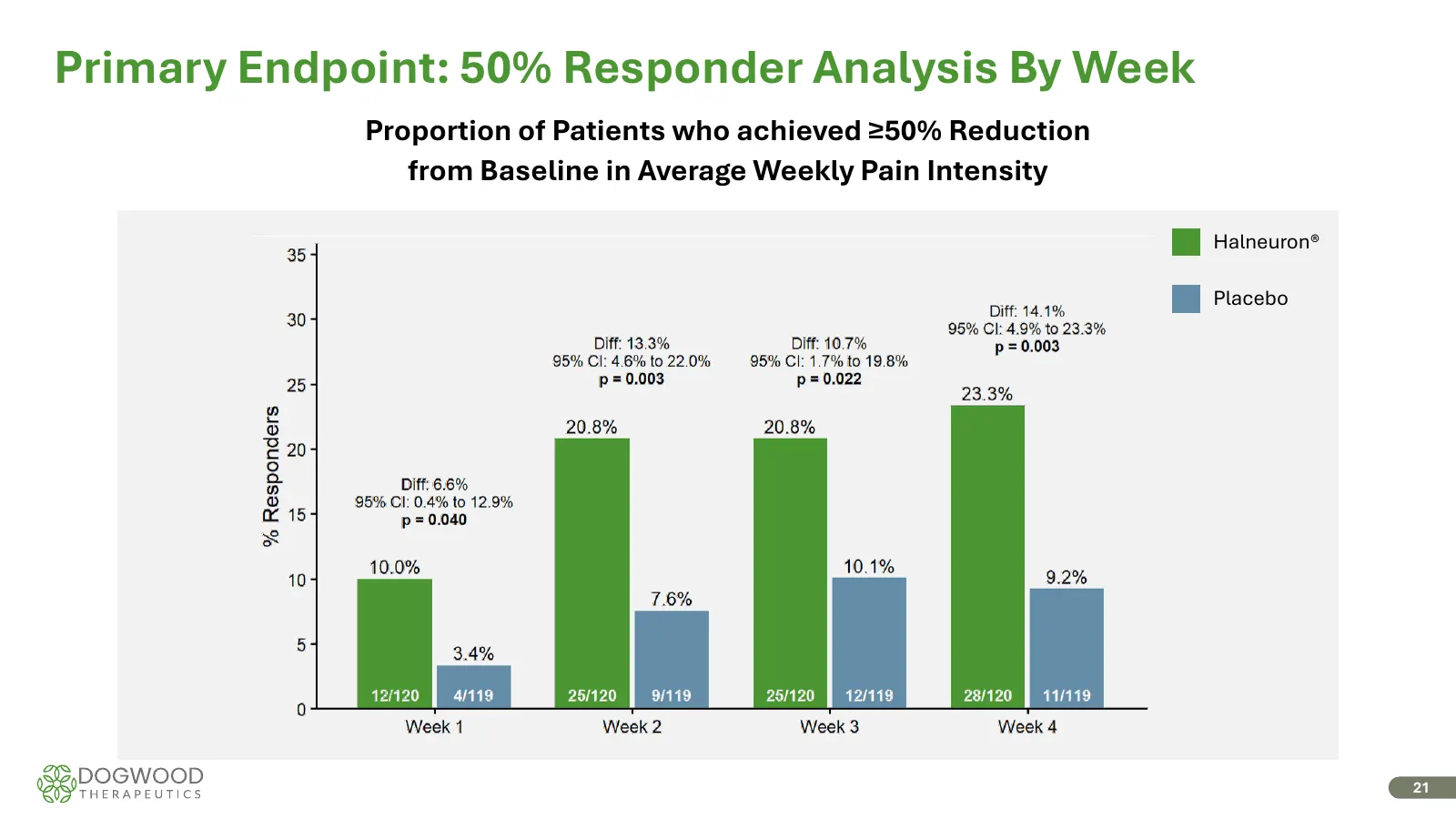
Primary Endpoint: 50% Responder Analysis By Week Proportion of Patients who achieved ≥50% Reduction from Baseline in Average Weekly Pain Intensity Halneuron® Placebo 21
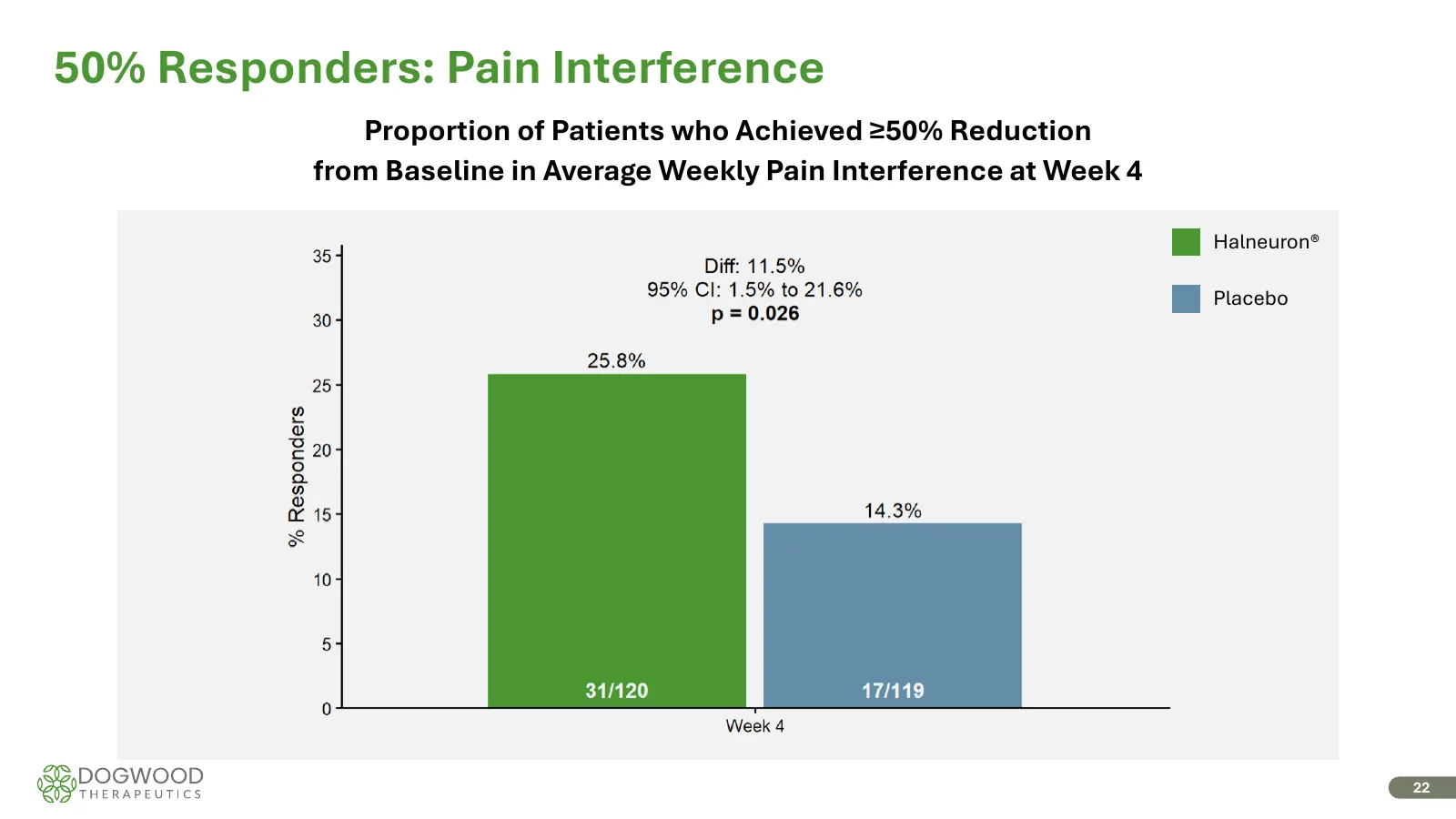
Slide 22: 50% Responders: Pain Interference
50% Responders: Pain Interference Proportion of Patients who Achieved ≥50% Reduction from Baseline in Average Weekly Pain Interference at Week 4 Halneuron® Placebo 22
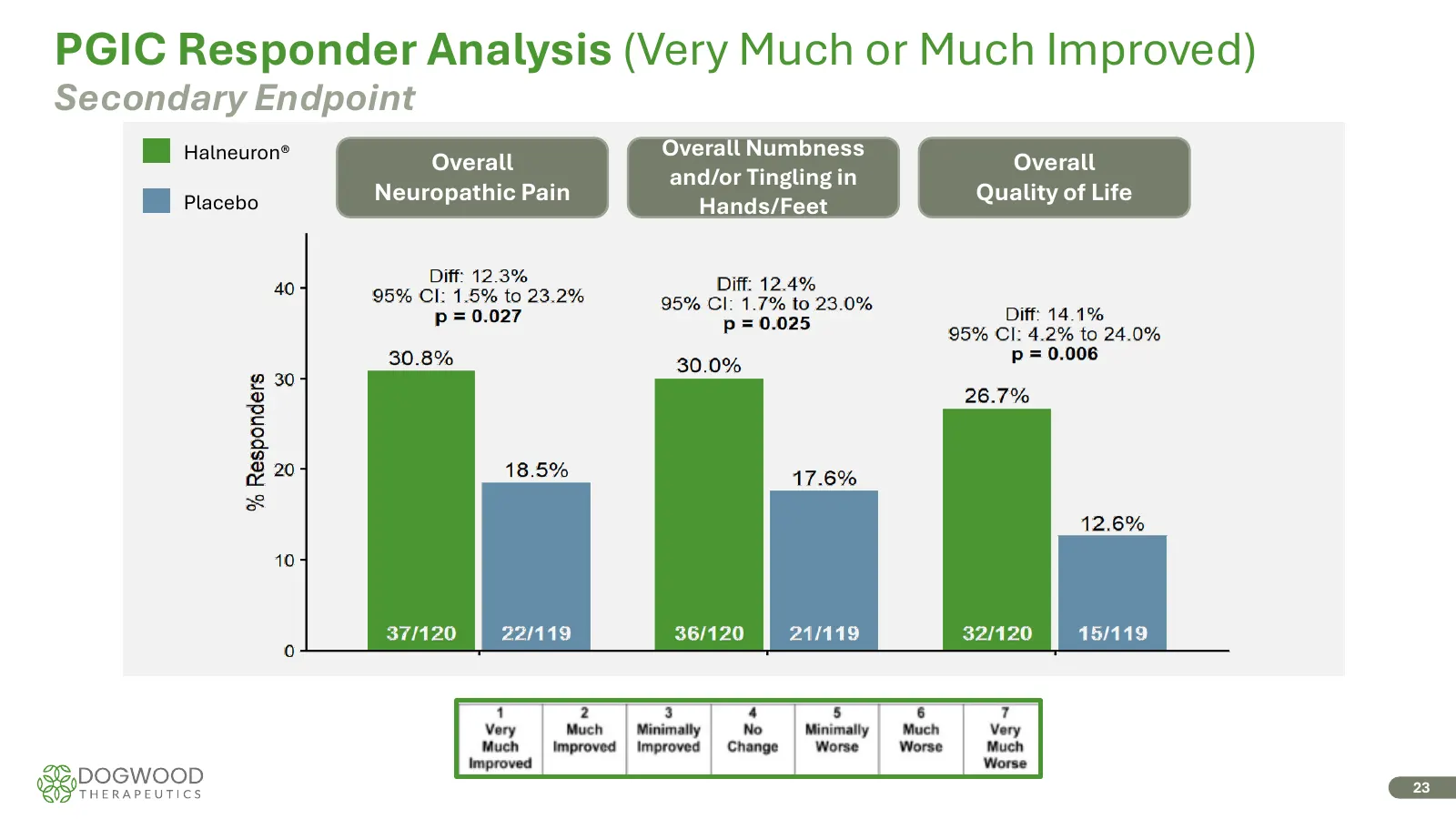
Slide 23: PGIC Responder Analysis (Very Much or Much Improved)
PGIC Responder Analysis (Very Much or Much Improved) Secondary Endpoint Halneuron® Overall Numbness Overall Overall and/or Tingling in Placebo Neuropathic Pain Quality of Life Hands/Feet 23
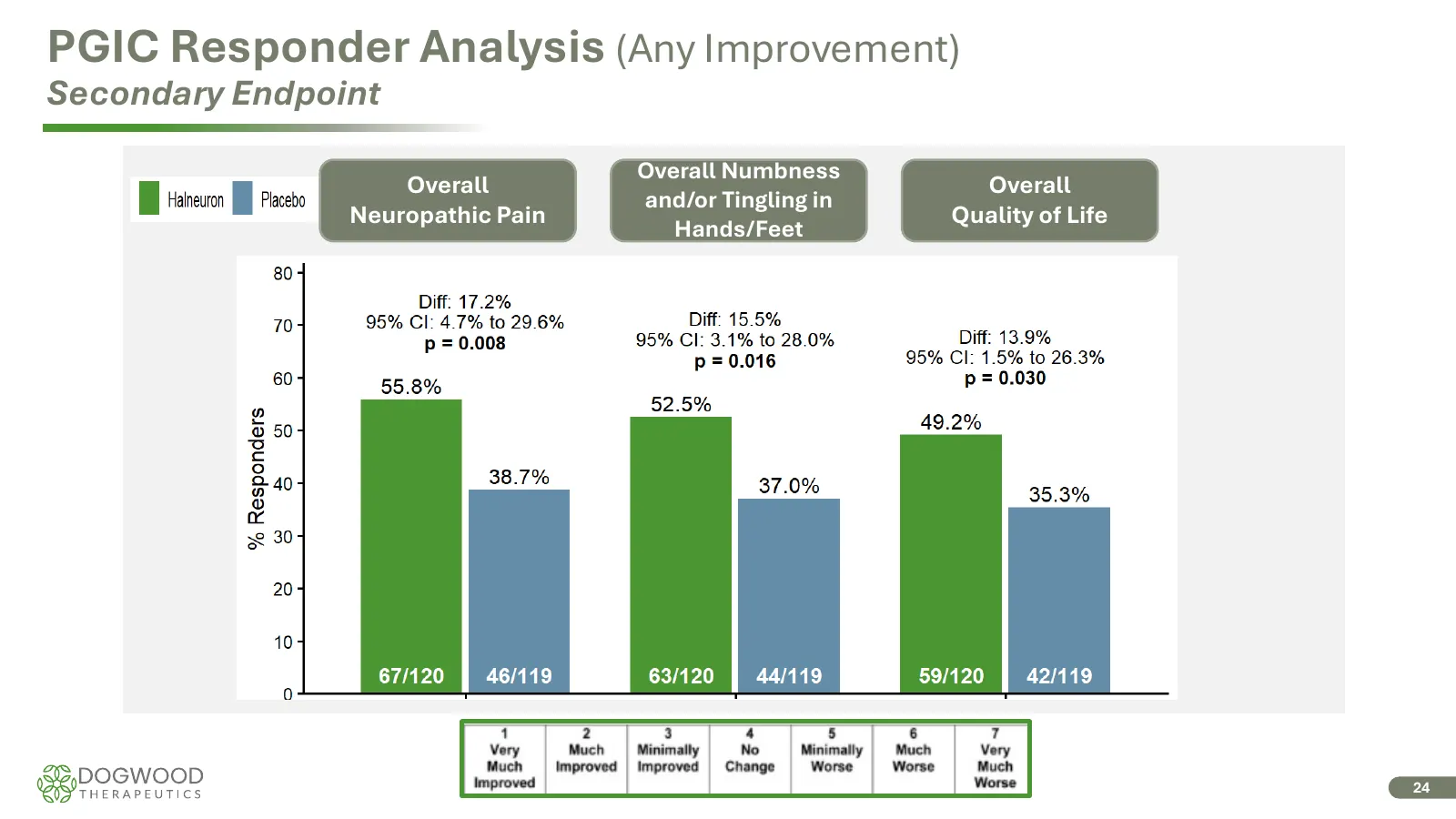
Slide 24: PGIC Responder Analysis (Any Improvement)
PGIC Responder Analysis (Any Improvement) Secondary Endpoint Overall Numbness Overall Overall and/or Tingling in Neuropathic Pain Quality of Life Hands/Feet 24
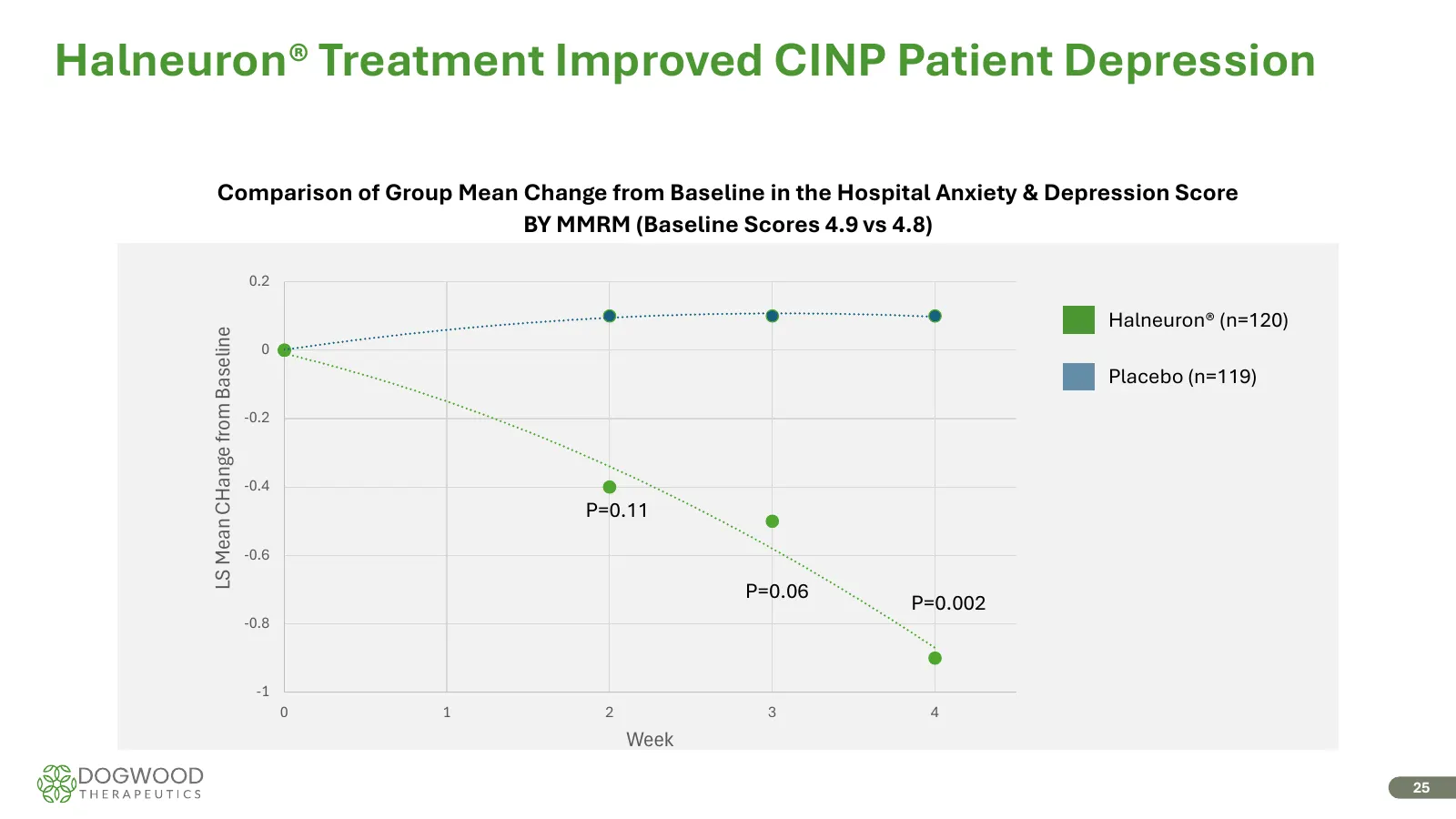
Slide 25: Halneuron Treatment Improved CINP Patient Depression
Halneuron® Treatment Improved CINP Patient Depression Comparison of Group Mean Change from Baseline in the Hospital Anxiety & Depression Score BY MMRM (Baseline Scores 4.9 vs 4.8) 0.2 Halneuron® (n=120) LS Mean CHange from Baseline 0 Placebo (n=119) -0.2 -0.4 P=0.11 -0.6 P=0.06 P=0.002 -0.8 -1 0 1 2
Slide 26: Subset Analysis of Primary Endpoint
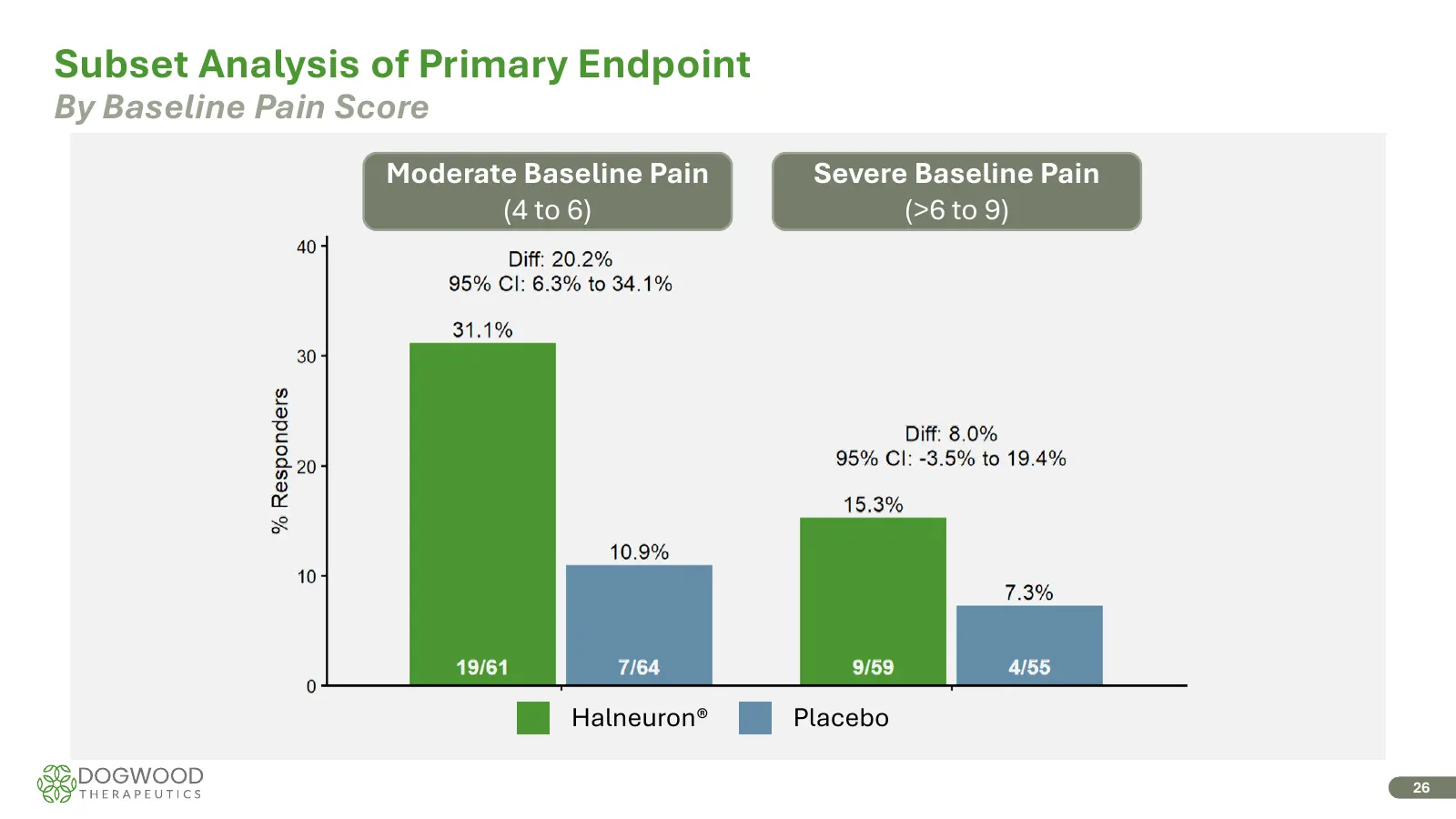
Subset Analysis of Primary Endpoint By Baseline Pain Score Moderate Baseline Pain Severe Baseline Pain (4 to 6) (>6 to 9) Halneuron® Placebo 26
Slide 27: Subset Analysis of Primary Endpoint
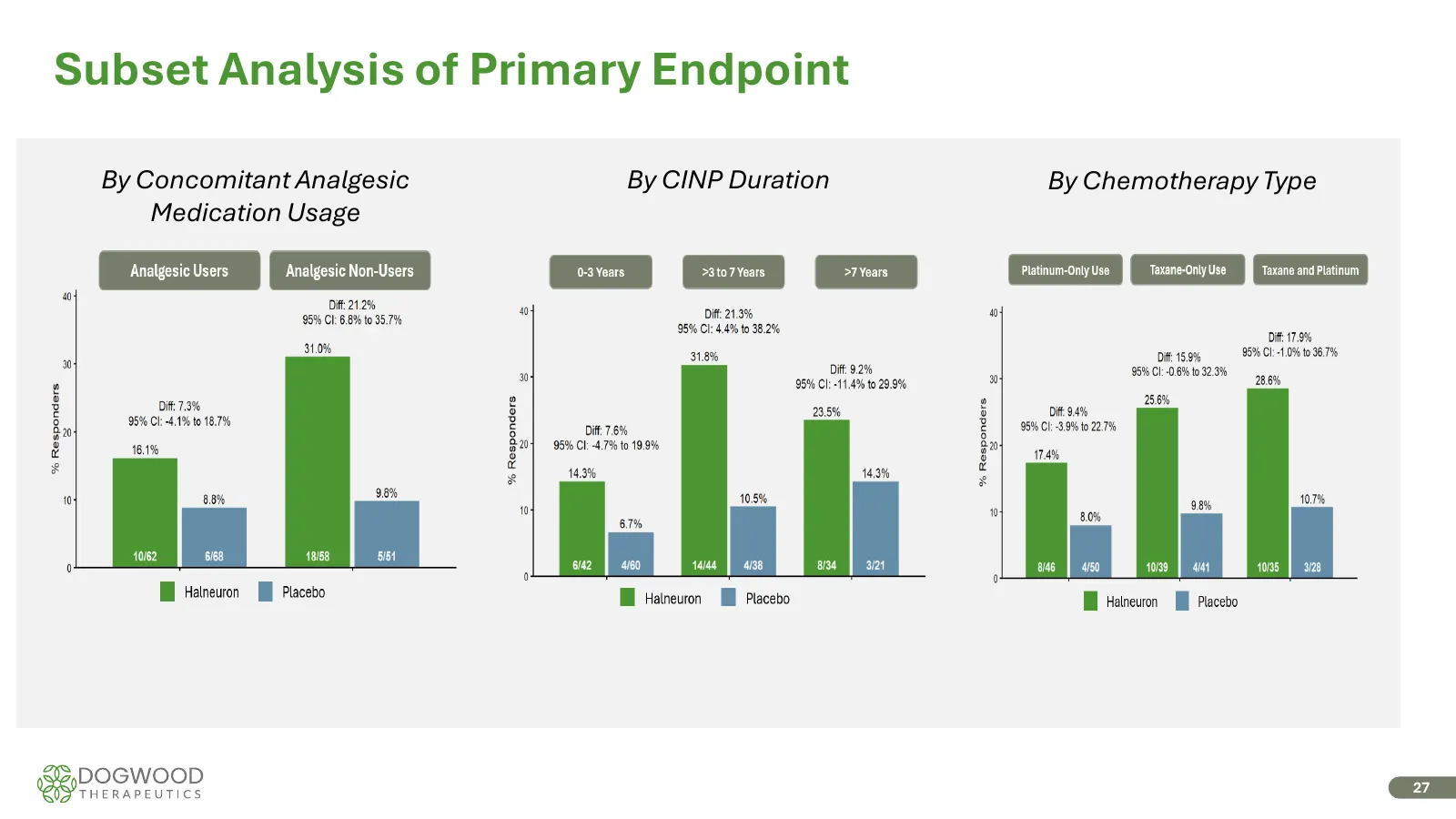
Subset Analysis of Primary Endpoint By Concomitant Analgesic By CINP Duration By Chemotherapy Type Medication Usage 27
Slide 28: Treatment-Emergent Adverse Events
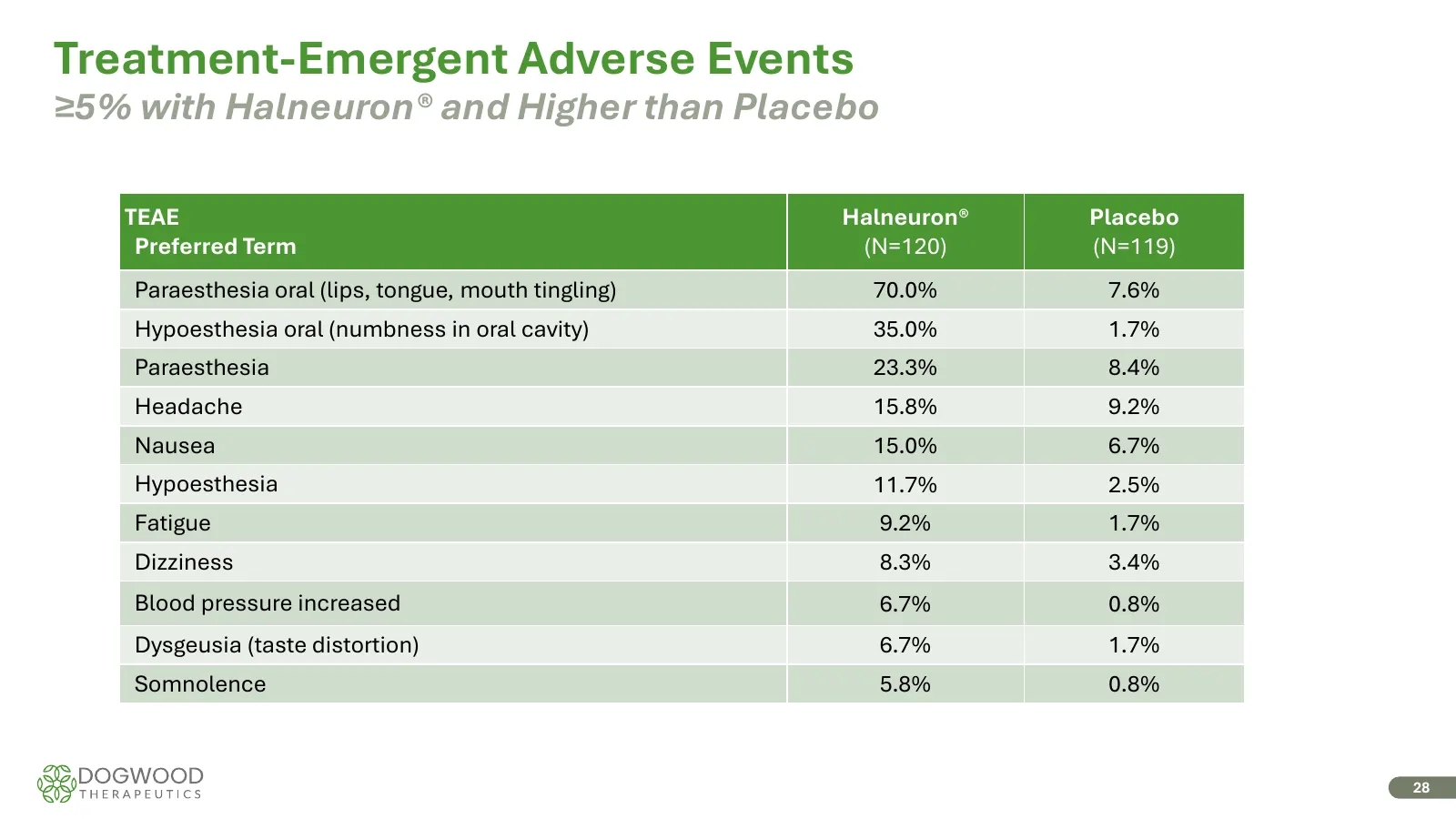
Treatment-Emergent Adverse Events ≥5% with Halneuron® and Higher than Placebo TEAE Halneuron® Placebo Preferred Term (N=120) (N=119) Paraesthesia oral (lips, tongue, mouth tingling) 70.0% 7.6% Hypoesthesia oral (numbness in oral cavity) 35.0% 1.7% Paraesthesia 23.3% 8.4% Headache 15.8% 9.2% Nausea 1
Slide 29: Details on Paraesthesias and Hypoesthesias in Halneuron Group
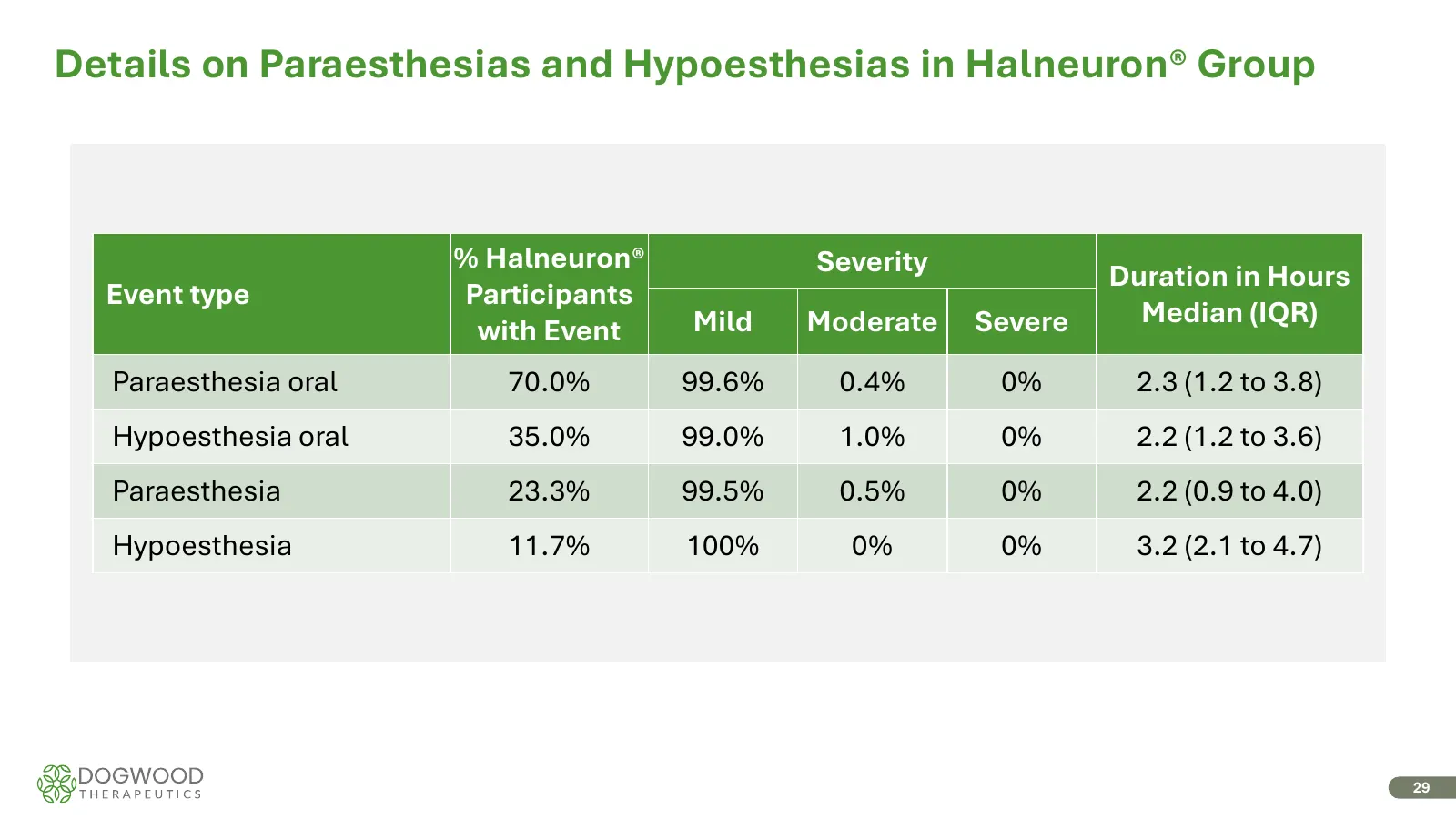
Details on Paraesthesias and Hypoesthesias in Halneuron® Group % Halneuron® Severity Duration in Hours Event type Participants Mild Moderate Severe Median (IQR) with Event Paraesthesia oral 70.0% 99.6% 0.4% 0% 2.3 (1.2 to 3.8) Hypoesthesia oral 35.0% 99.0% 1.0% 0% 2.2 (1.2 to 3.6) Paraesthesia 23.3%
Slide 30: Details Two SAEs
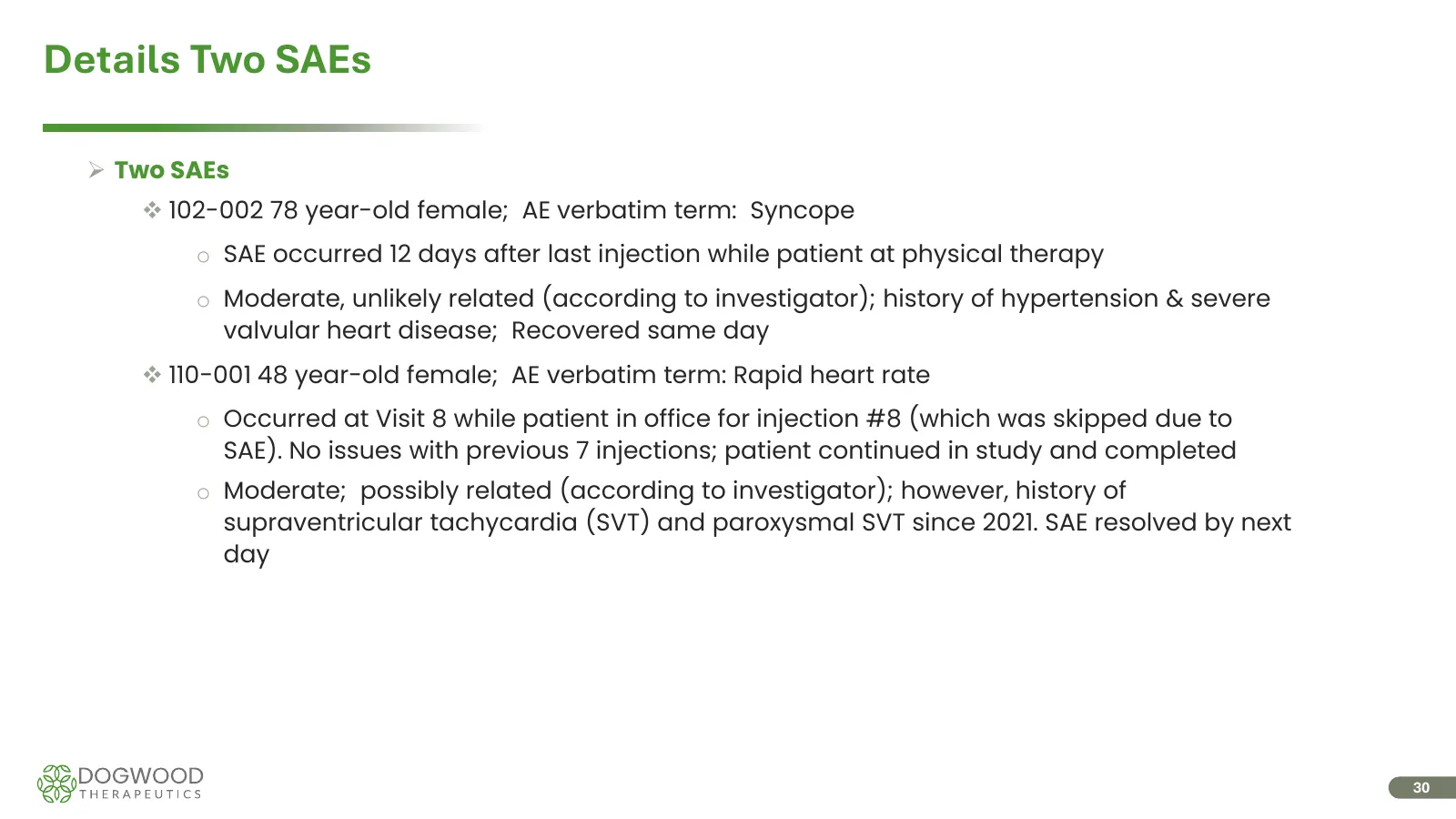
Details Two SAEs Two SAEs 102-002 78 year-old female; AE verbatim term: Syncope o SAE occurred 12 days after last injection while patient at physical therapy o Moderate, unlikely related (according to investigator); history of hypertension & severe valvular heart disease; Recovered same day 11
Slide 31: Consistently Achieved Statistical Significance Across Multiple Endpoints, with Favorable Tolerability
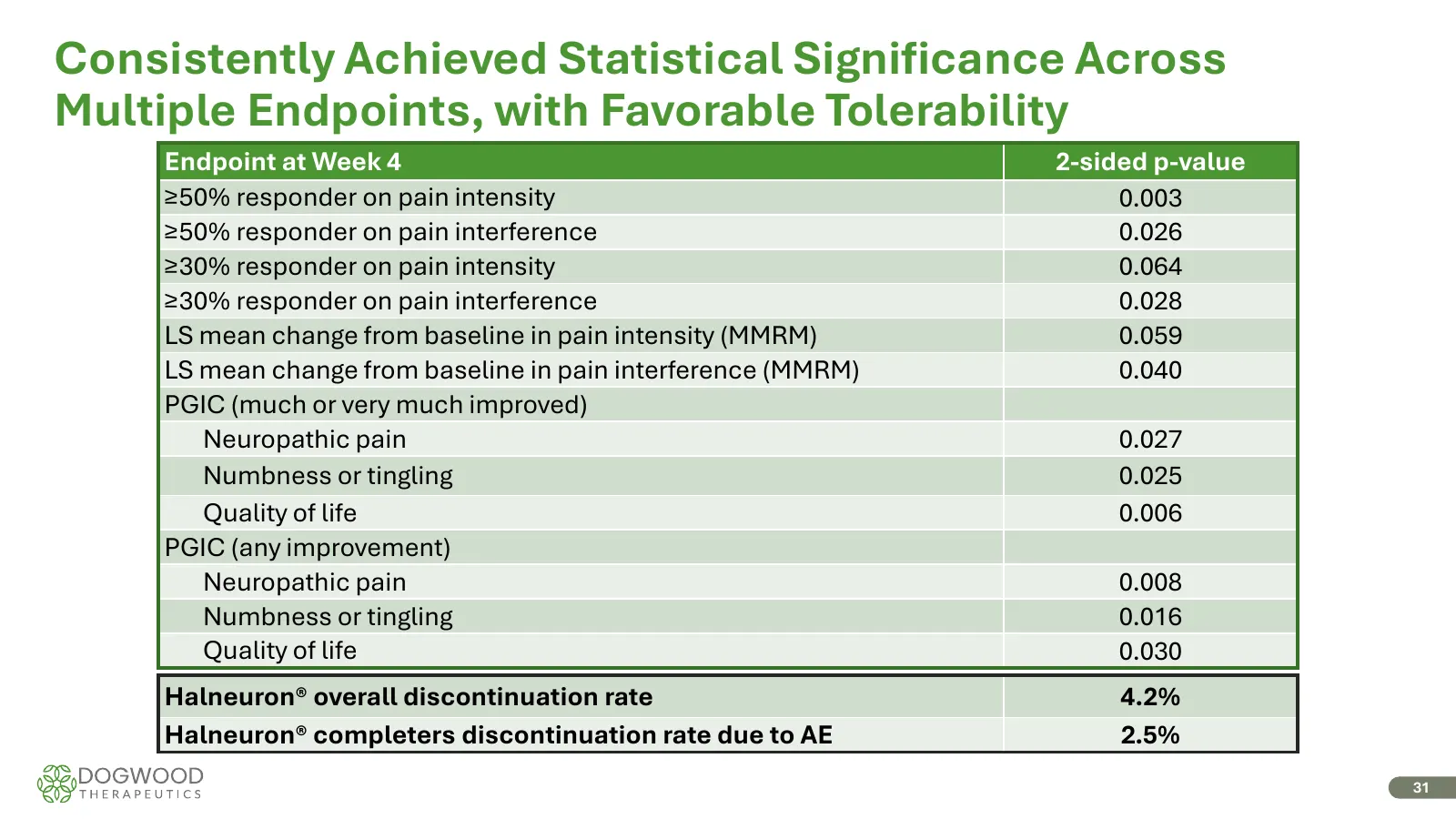
Consistently Achieved Statistical Significance Across Multiple Endpoints, with Favorable Tolerability Endpoint at Week 4 2-sided p-value ≥50% responder on pain intensity 0.003 ≥50% responder on pain interference 0.026 ≥30% responder on pain intensity 0.064 ≥30% responder on pain interference 0.028 L
Slide 32: Proposed Design for Halneuron 30ug Phase 3 Studies
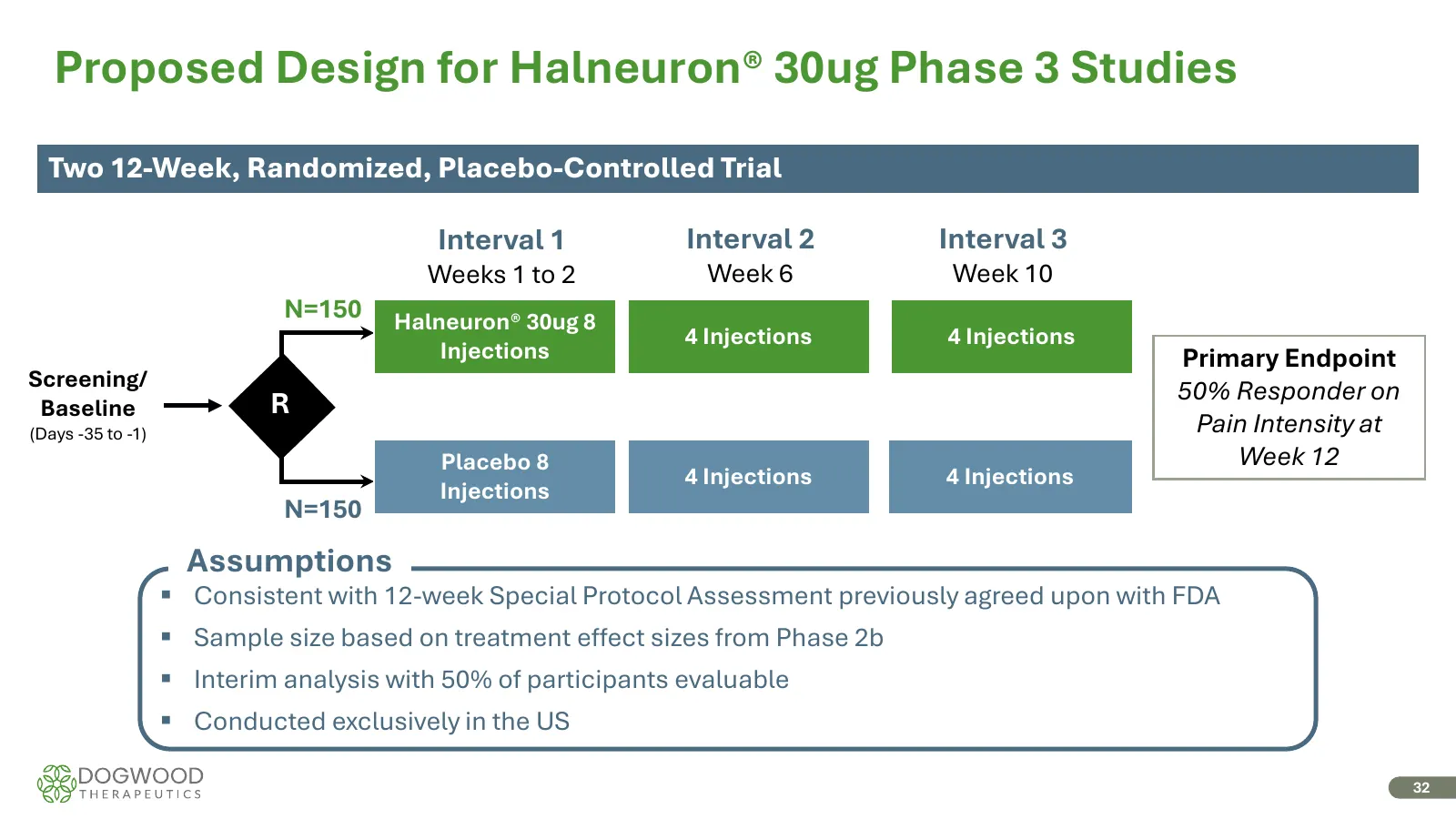
Proposed Design for Halneuron® 30ug Phase 3 Studies Two 12-Week, Randomized, Placebo-Controlled Trial Interval 1 Interval 2 Interval 3 Weeks 1 to 2 Week 6 Week 10 N=150 Halneuron® 30ug 8 4 Injections 4 Injections Injections Primary Endpoint Screening/ R 50% Responder on Baseline (Days -35 to -1) Pai
Slide 33: Next Steps: Projected Path to Halneuron Phase 3 & NDA
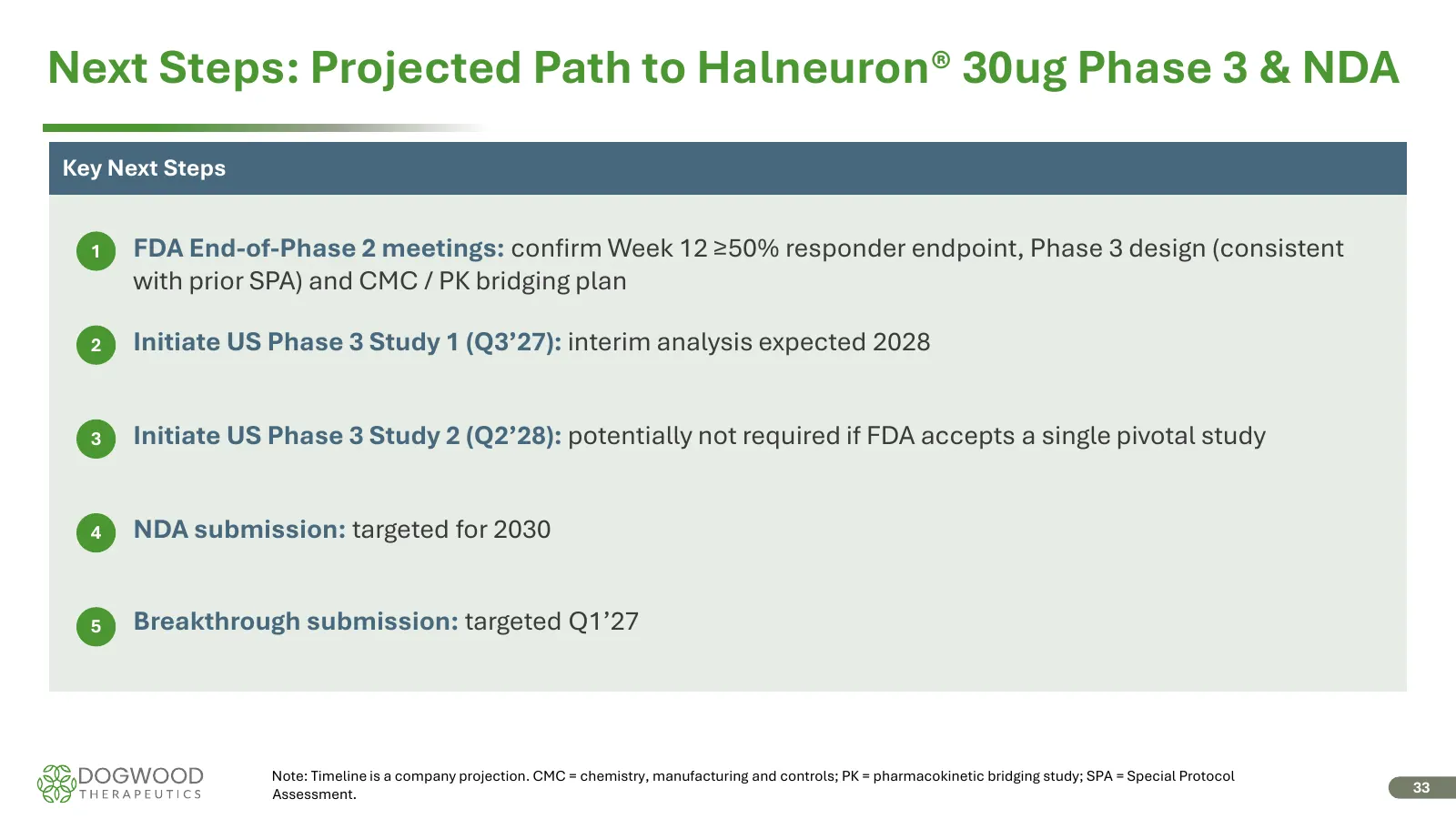
Next Steps: Projected Path to Halneuron® 30ug Phase 3 & NDA Key Next Steps 1 FDA End-of-Phase 2 meetings: confirm Week 12 ≥50% responder endpoint, Phase 3 design (consistent with prior SPA) and CMC / PK bridging plan 2 Initiate US Phase 3 Study 1 (Q3’27): interim analysis expected 2028 3 Initiate US
Slide 34: Key Takeaways: Halneuron Phase 2b Top-Line Results
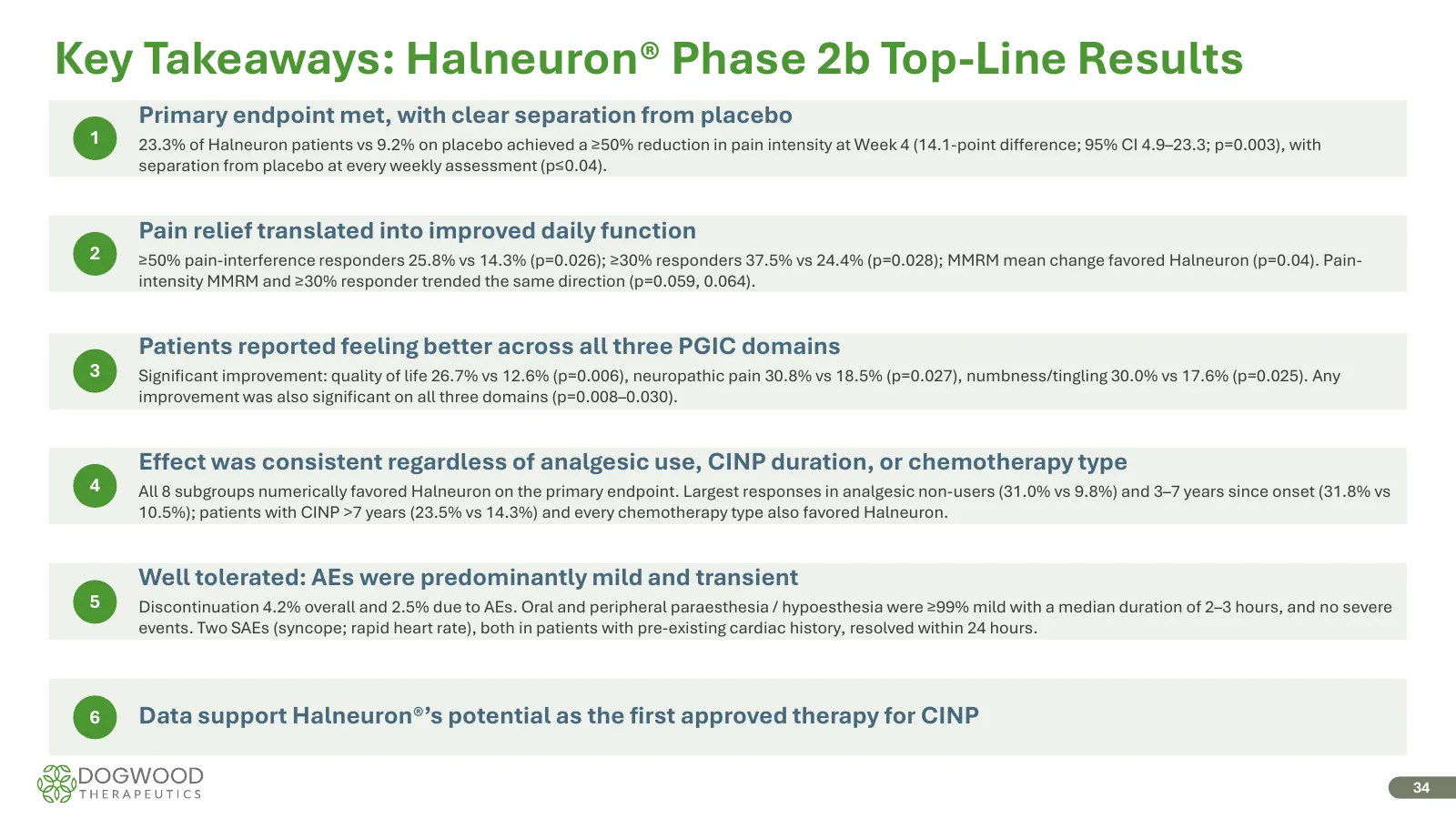
Key Takeaways: Halneuron® Phase 2b Top-Line Results Primary endpoint met, with clear separation from placebo 1 23.3% of Halneuron patients vs 9.2% on placebo achieved a ≥50% reduction in pain intensity at Week 4 (14.1-point difference; 95% CI 4.9–23.3; p=0.003), with separation from placebo at every
Slide 35: Halneuron Phase 2 Cancer Related Pain Study
Halneuron® Phase 2 Cancer Related Pain Study
Slide 36: CRP Phase 2 Study Design
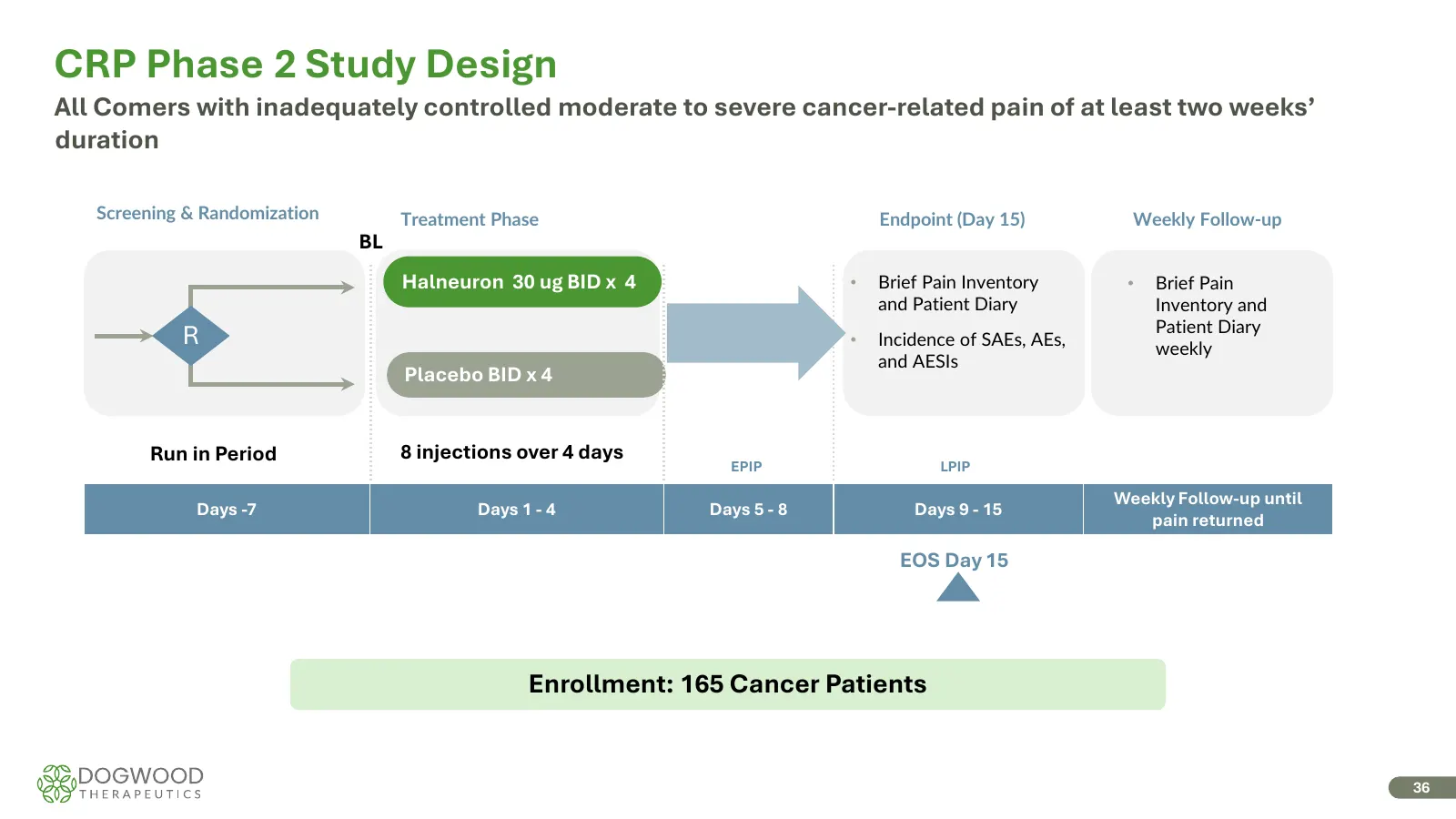
CRP Phase 2 Study Design All Comers with inadequately controlled moderate to severe cancer-related pain of at least two weeks’ duration Screening & Randomization Treatment Phase Endpoint (Day 15) Weekly Follow-up BL Halneuron 30 ug BID x 4 • Brief Pain Inventory • Brief Pain and Patient Diary Invent
Slide 37: Halneuron Demonstrated Statistically Significant Pain Reduction in Phase 2 Study
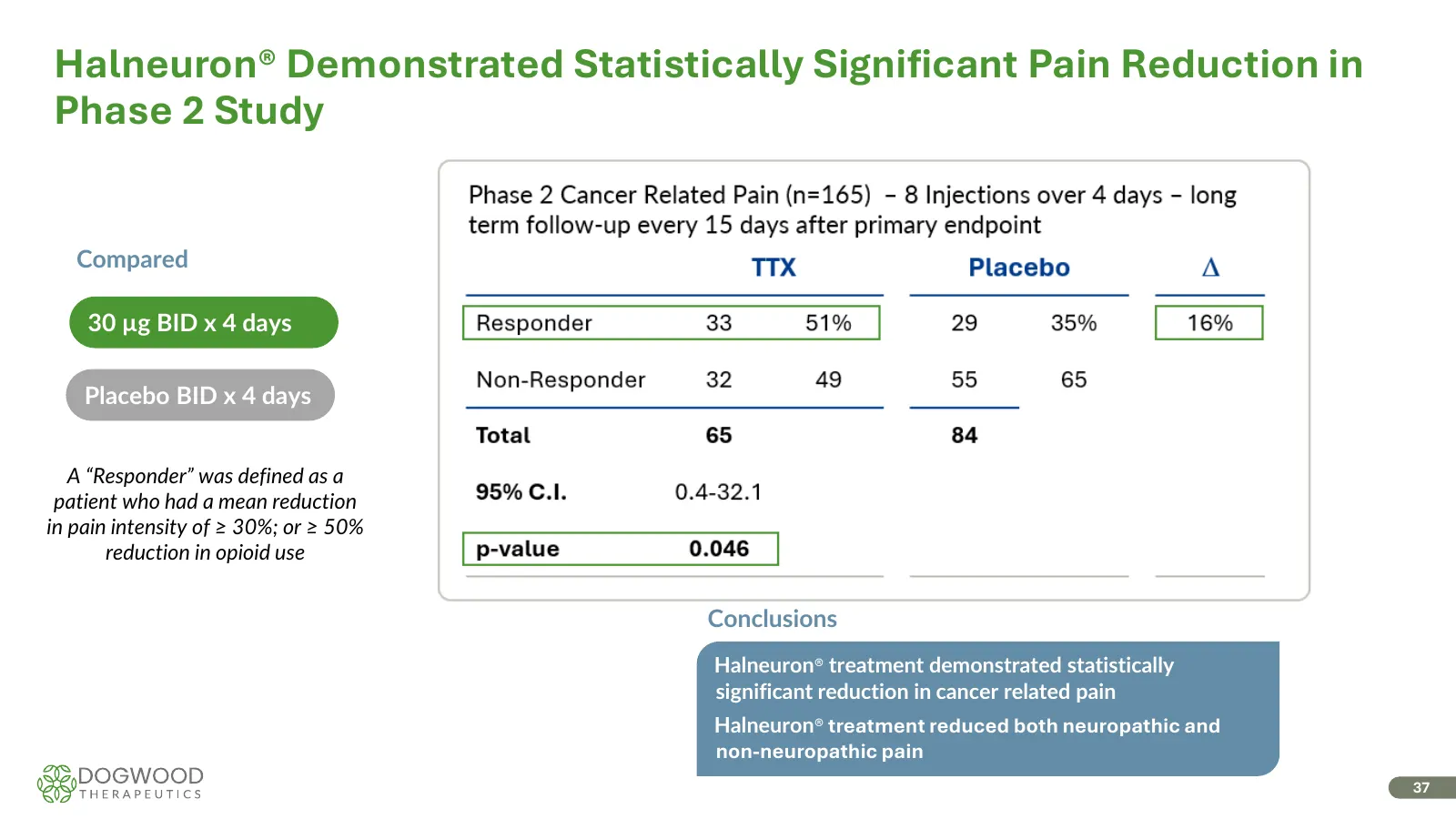
Halneuron® Demonstrated Statistically Significant Pain Reduction in Phase 2 Study Compared 30 µg BID x 4 days Placebo BID x 4 days A “Responder” was defined as a patient who had a mean reduction in pain intensity of ≥ 30%; or ≥ 50% reduction in opioid use Conclusions Halneuron® treatment demonstrate
Slide 38: Phase 2 CRP Study Demonstrated Durable Pain Relief in Initial Responders
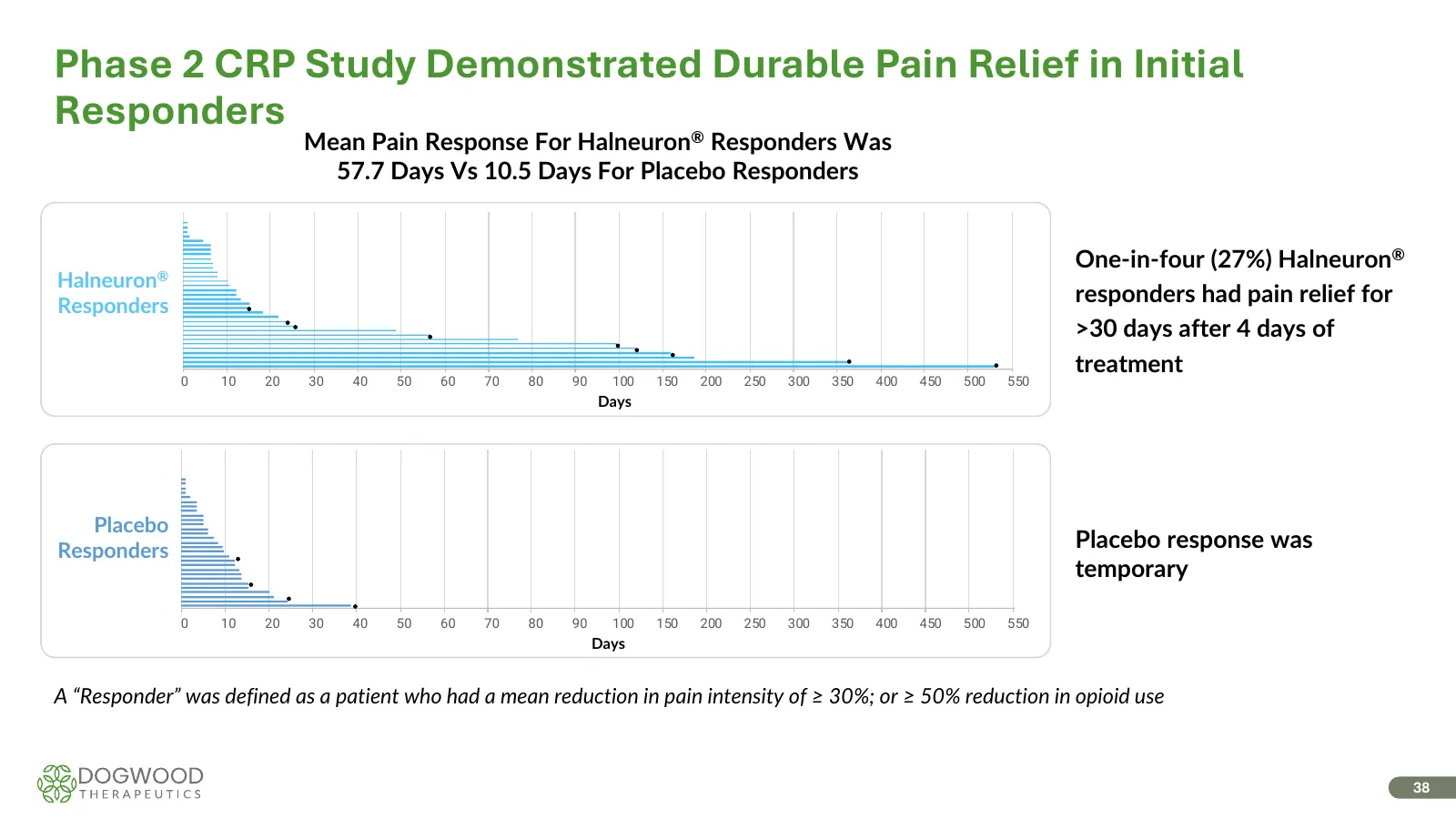
Phase 2 CRP Study Demonstrated Durable Pain Relief in Initial Responders Mean Pain Response For Halneuron® Responders Was 57.7 Days Vs 10.5 Days For Placebo Responders One-in-four (27%) Halneuron® Halneuron® Responders responders had pain relief for >30 days after 4 days of treatment 0 10 20 30 40 5
Slide 39: Halneuron Offers Potential Relief for Millions of Pain Sufferers in the US Alone
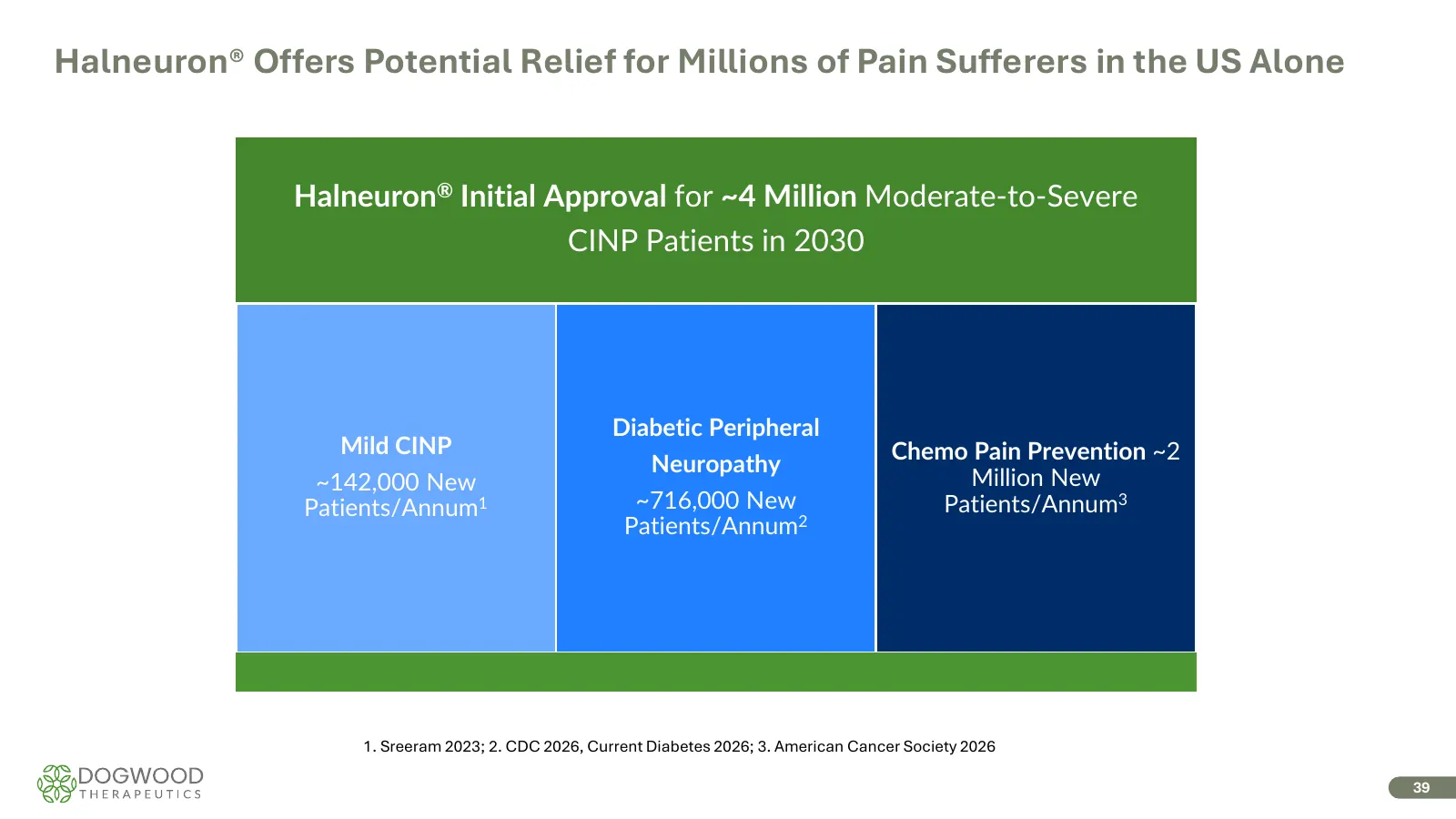
Halneuron® Offers Potential Relief for Millions of Pain Sufferers in the US Alone Halneuron® Initial Approval for ~4 Million Moderate-to-Severe CINP Patients in 2030 Diabetic Peripheral Mild CINP Chemo Pain Prevention ~2 Neuropathy ~142,000 New Million New Patients/Annum1 ~716,000 New Patients/Annum
Slide 40: Advantages of Synthetic Halneuron 30 ug for Injection
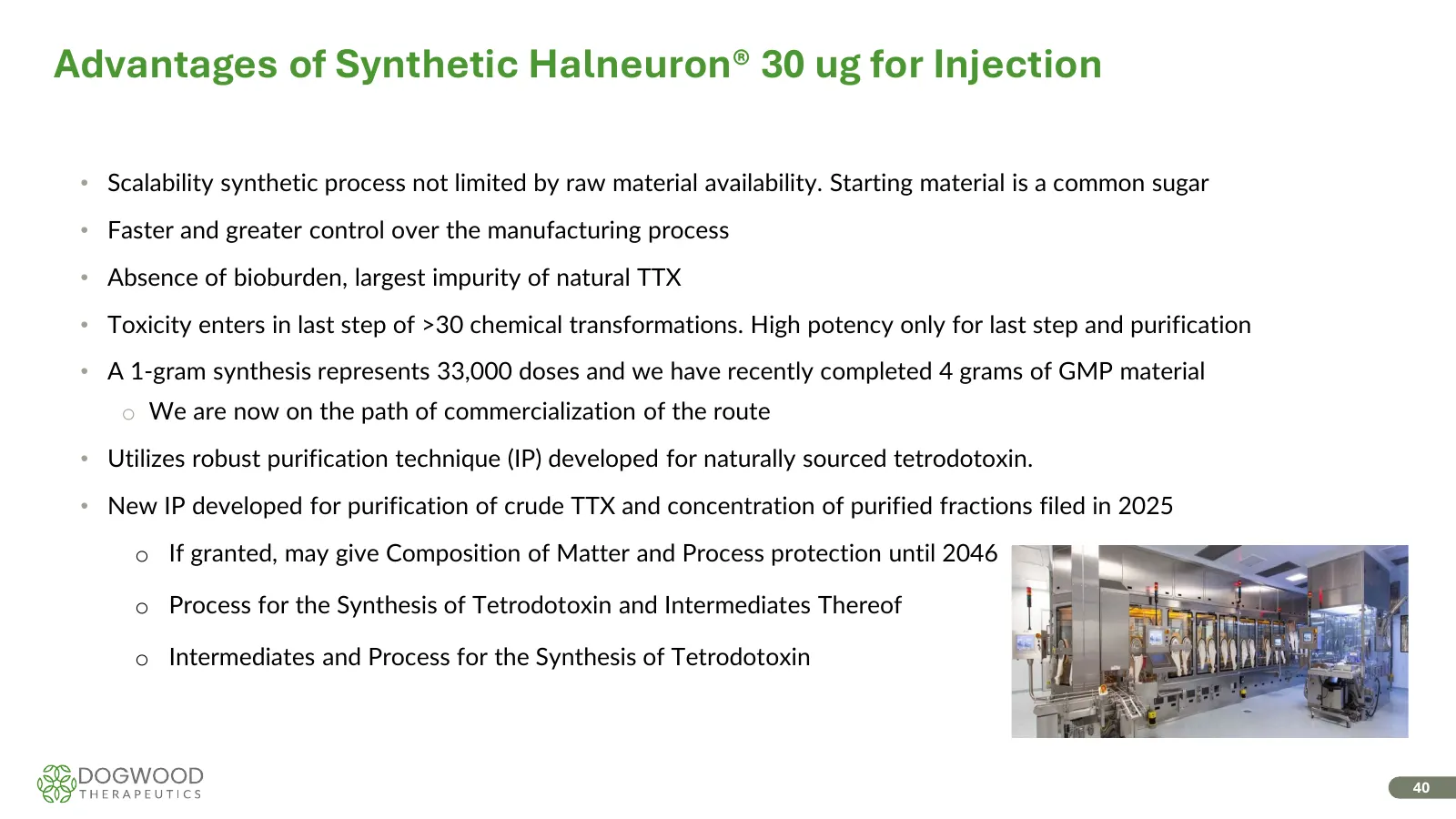
Advantages of Synthetic Halneuron® 30 ug for Injection • Scalability synthetic process not limited by raw material availability. Starting material is a common sugar • Faster and greater control over the manufacturing process • Absence of bioburden, largest impurity of natural TTX • Toxicity enters i
Slide 41: SP16 IV Therapy
SP16 IV Therapy Chemotherapy Induced Pain & Peripheral Neuropathy (CIPPN) Program Overview
Slide 42: SP16 Mechanism Allows for Healing During Inflammation
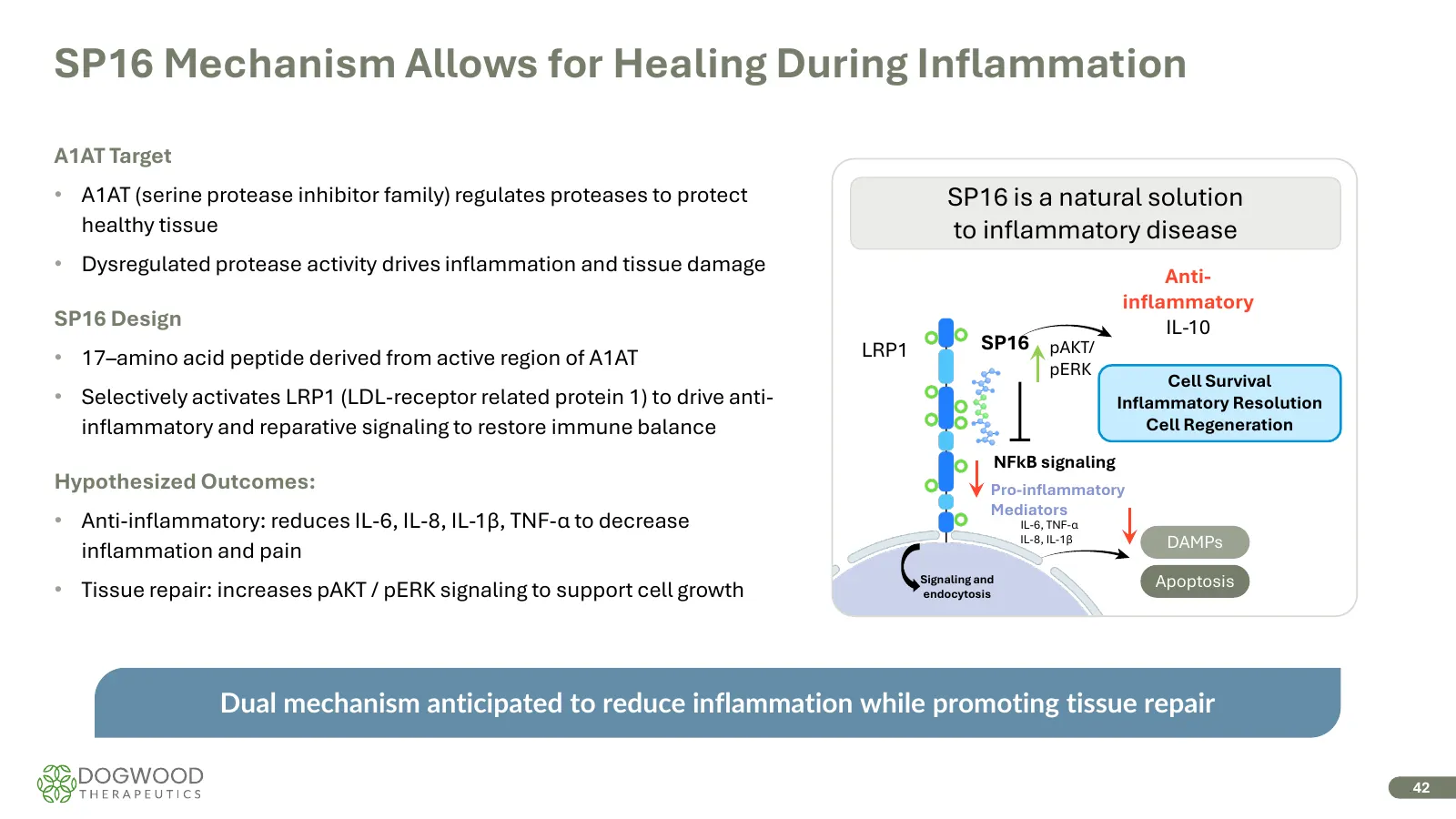
SP16 Mechanism Allows for Healing During Inflammation A1AT Target • A1AT (serine protease inhibitor family) regulates proteases to protect SP16 is a natural solution healthy tissue to inflammatory disease • Dysregulated protease activity drives inflammation and tissue damage Anti- inflammatory SP16
Slide 43: SP16 LRP1 Agonism Exhibits Potential to Prevent and/or Repair Nerve Damage
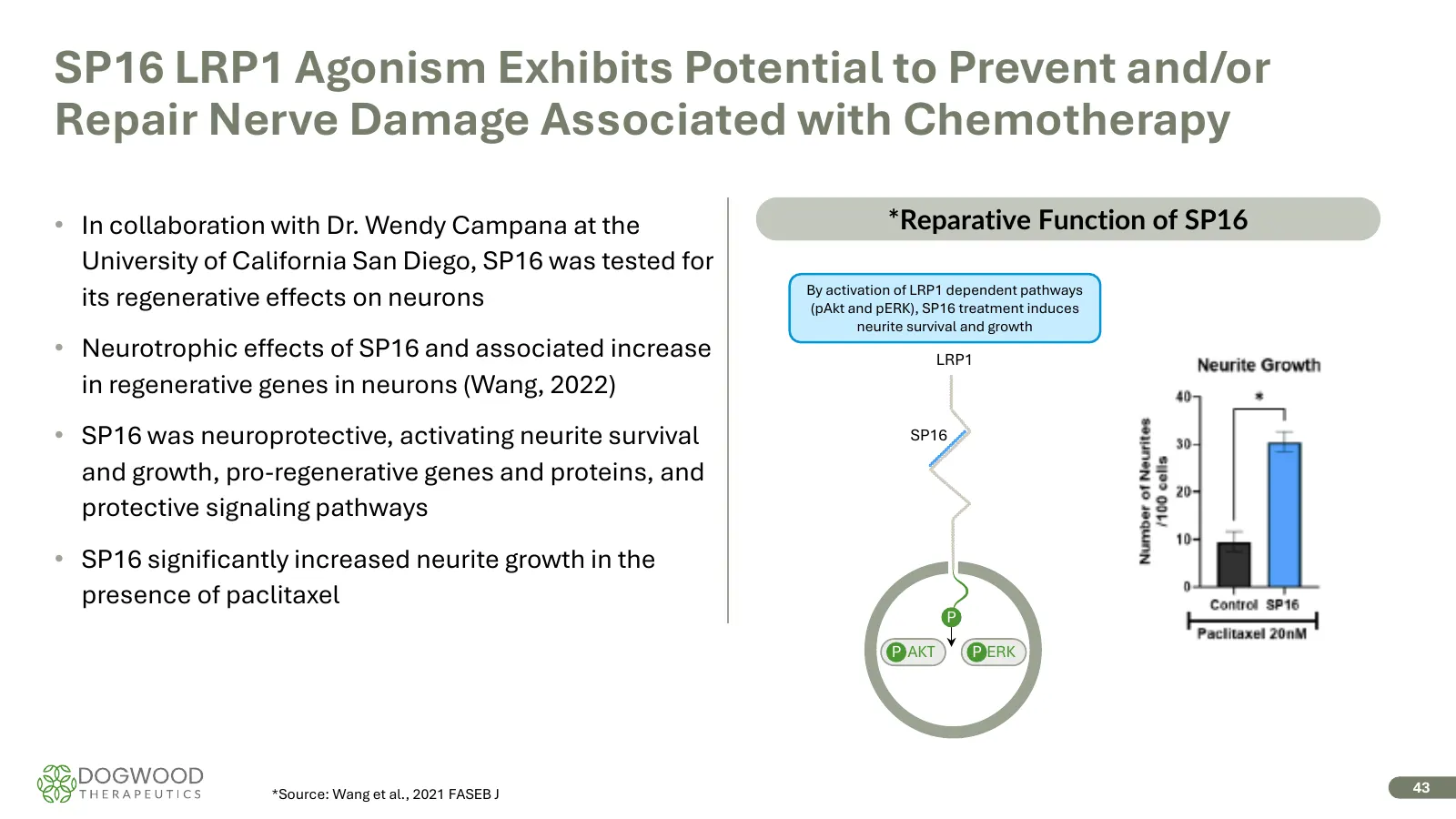
SP16 LRP1 Agonism Exhibits Potential to Prevent and/or Repair Nerve Damage Associated with Chemotherapy • In collaboration with Dr. Wendy Campana at the *Reparative Function of SP16 University of California San Diego, SP16 was tested for its regenerative effects on neurons By activation of LRP1 depe
Slide 44: NCI Funded SP16 Research Plan to be Finalized with FDA
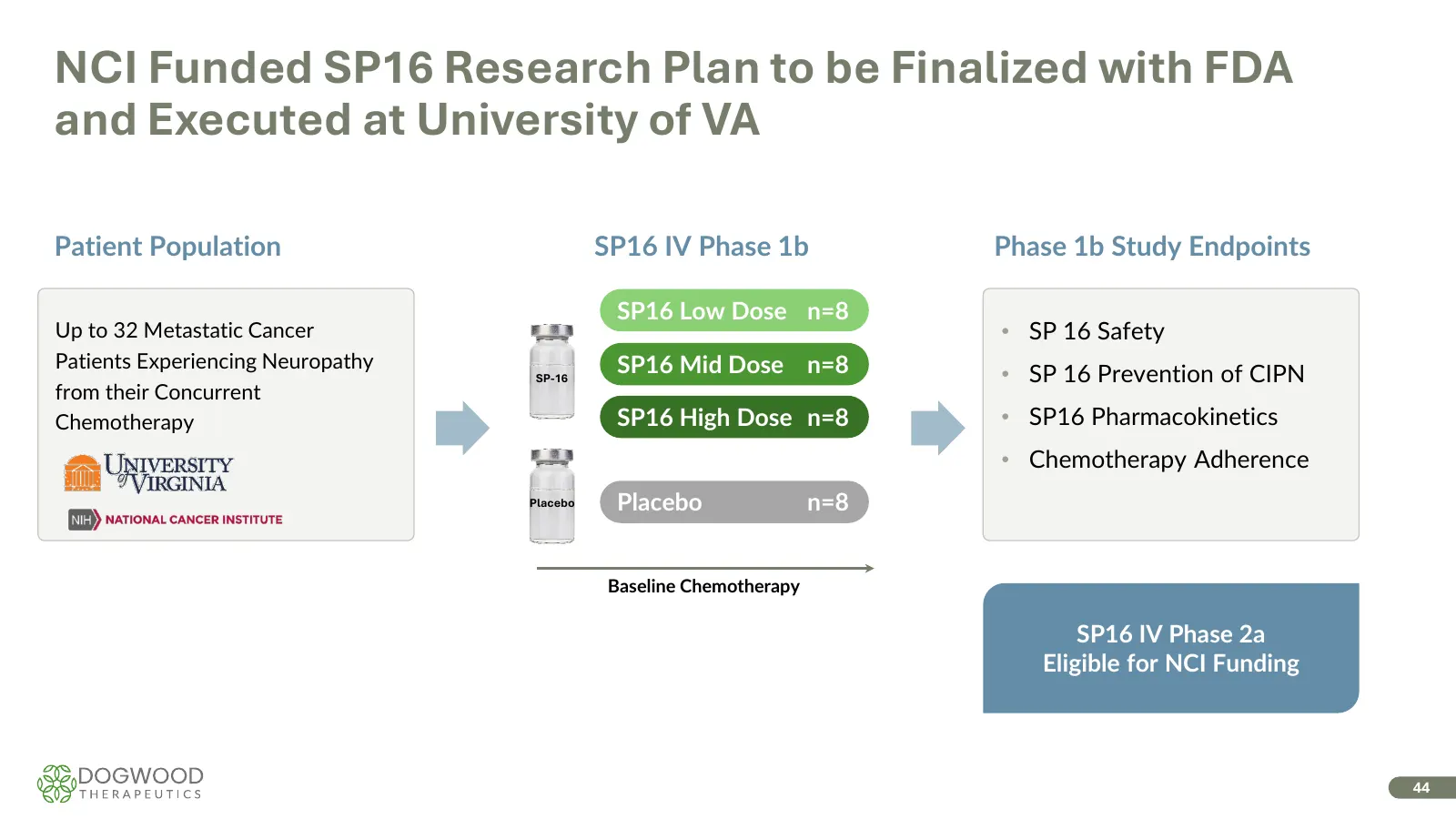
NCI Funded SP16 Research Plan to be Finalized with FDA and Executed at University of VA Patient Population SP16 IV Phase 1b Phase 1b Study Endpoints SP16 Low Dose n=8 Up to 32 Metastatic Cancer • SP 16 Safety Patients Experiencing Neuropathy SP16 Mid Dose n=8 SP-16 • SP 16 Prevention of CIPN from th
Slide 45: Open Label Extension Study Design
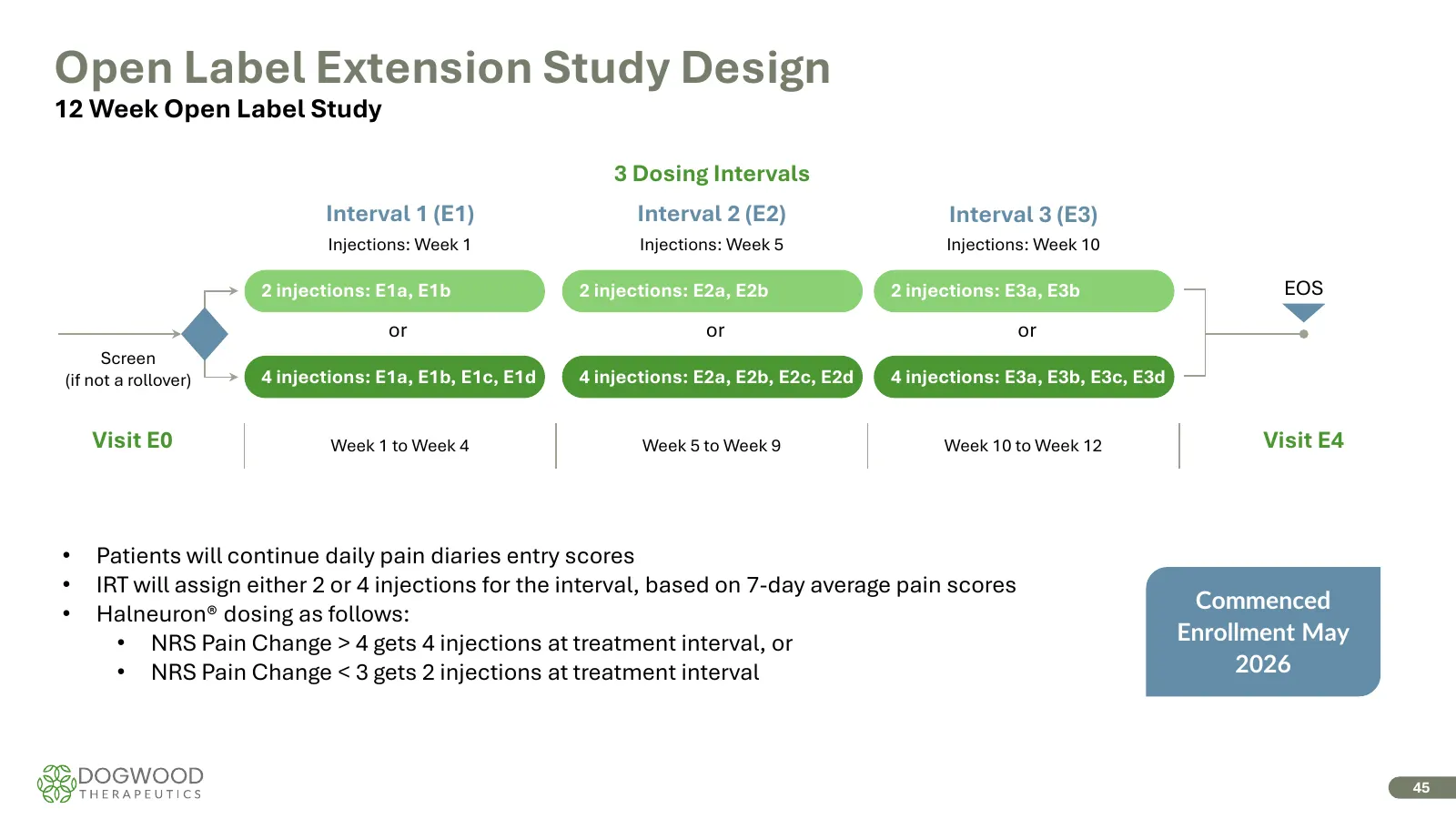
Open Label Extension Study Design 12 Week Open Label Study 3 Dosing Intervals Interval 1 (E1) Interval 2 (E2) Interval 3 (E3) Injections: Week 1 Injections: Week 5 Injections: Week 10 2 injections: E1a, E1b 2 injections: E2a, E2b 2 injections: E3a, E3b EOS or or or Screen (if not a rollover) 4 injec
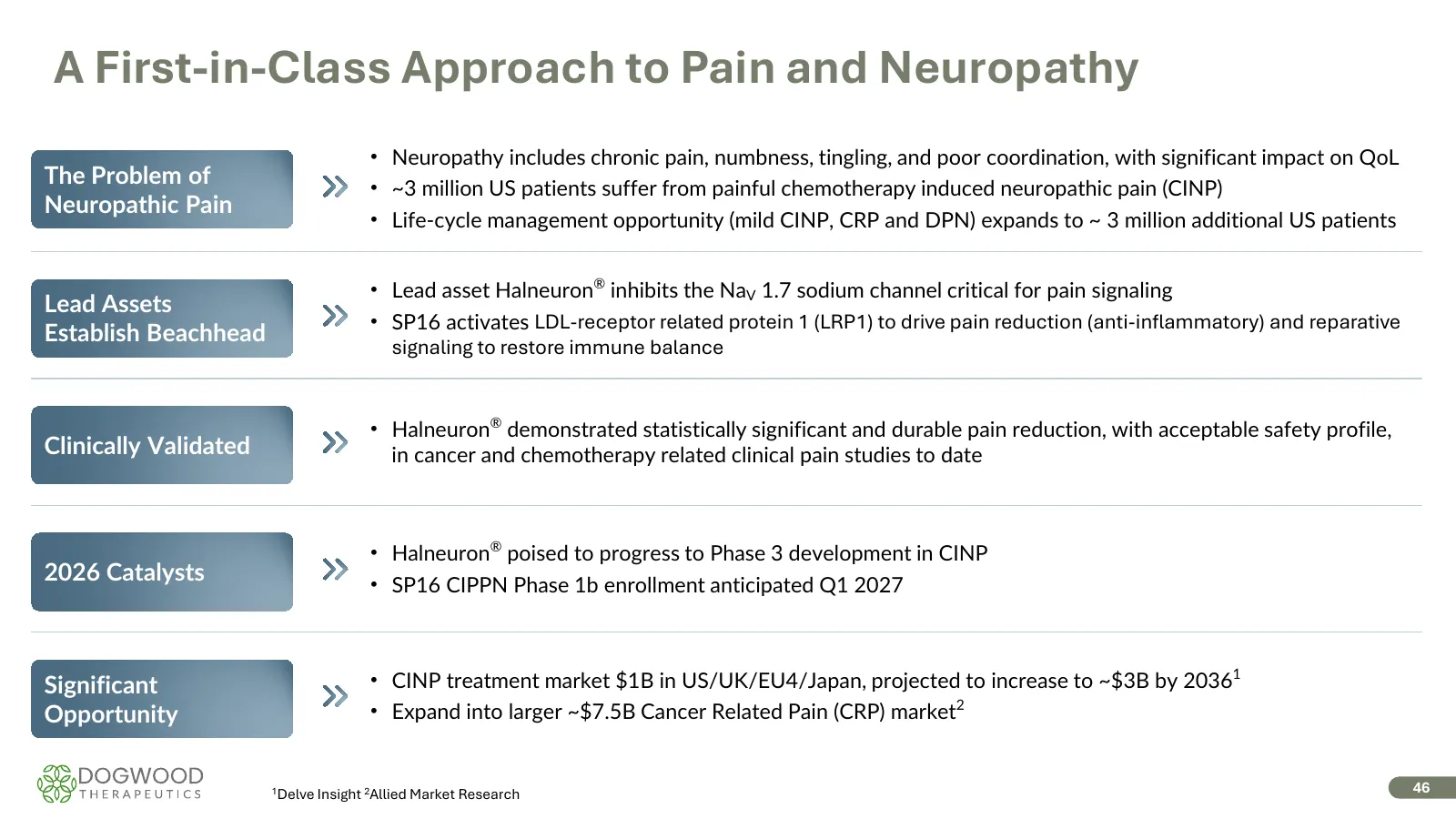
Slide 46: A First-in-Class Approach to Pain and Neuropathy
A First-in-Class Approach to Pain and Neuropathy • Neuropathy includes chronic pain, numbness, tingling, and poor coordination, with significant impact on QoL The Problem of • ~3 million US patients suffer from painful chemotherapy induced neuropathic pain (CINP) Neuropathic Pain • Life-cycle manage
Source: company website
More decks from Dogwood Therapeutics, Inc.
 Investor Presentation (November 2026)26 slides · Nov 23, 2026
 Corporate Update (September 2026)34 slides · September 2026
 Corporate Update (October 2025)32 slides · Oct 9, 2025
 Corporate Update (September 2025)16 slides · Sep 29, 2025
 Investor Presentation (February 2025)24 slides · February 2025
 Investor Presentation (January 2025)18 slides · January 2025