Questor Technology Inc. · TSXV:QST
Questor Technology — Investor Presentation (March 2004)
37 slides from Questor Technology's investor presentation, Mar 9, 2004
Slide 1: Questor Technology Inc. Waste Gas Incinerators
QUESTOR TECHNOLOGY INC. WASTE GAS INCINERATORS “Providing Solutions to your Burning Questions”
Slide 2: Who Is Questor Technology?
WHO IS QUESTOR TECHNOLOGY? • An Alberta based company incorporated in 1995 and is listed on the TSX Venture Exchange (QST) • Specializing in the custom design and installation of high efficiency waste gas incineration systems which incorporate sound technical, business and environmental solutions •
Slide 3: Our Clients
OUR CLIENTS • Altagas • Edge • Petro Canada • Anadarko • EnCana • Petroreef • Atco Pipelines • Enerchem • Pogo • BP • Enermark • Quintana • Bonavista • Exxon/Mobil • Rider • Calpine • Gauntlet • Samson • Canadian Forest • Hunt Oil • Sherritt • Compton • Husky • Star • Cougar/Starpoint • Lockwood • T
Slide 4: Why Incinerate?
WHY INCINERATE ? • Measured combustion efficiency in excess of 99.99% 9 Improves air quality and reduces greenhouse gases 9 No odour, smoke or visible flame 9 No emission of products of incomplete combustion 9 Lowest NOx in the industry • Lowers operating costs • Address landowner and community conc
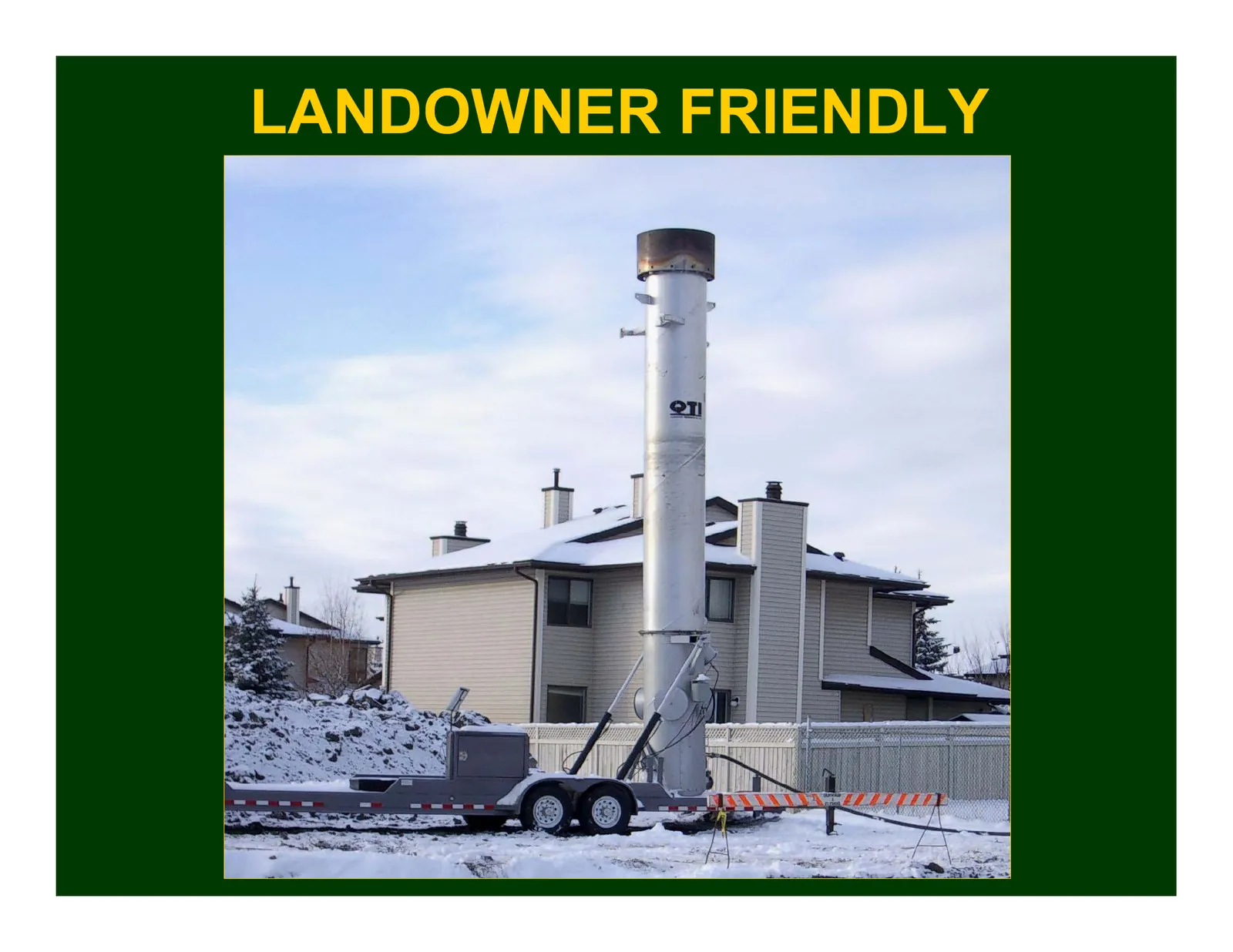
Slide 5: Landowner Friendly
LANDOWNER FRIENDLY
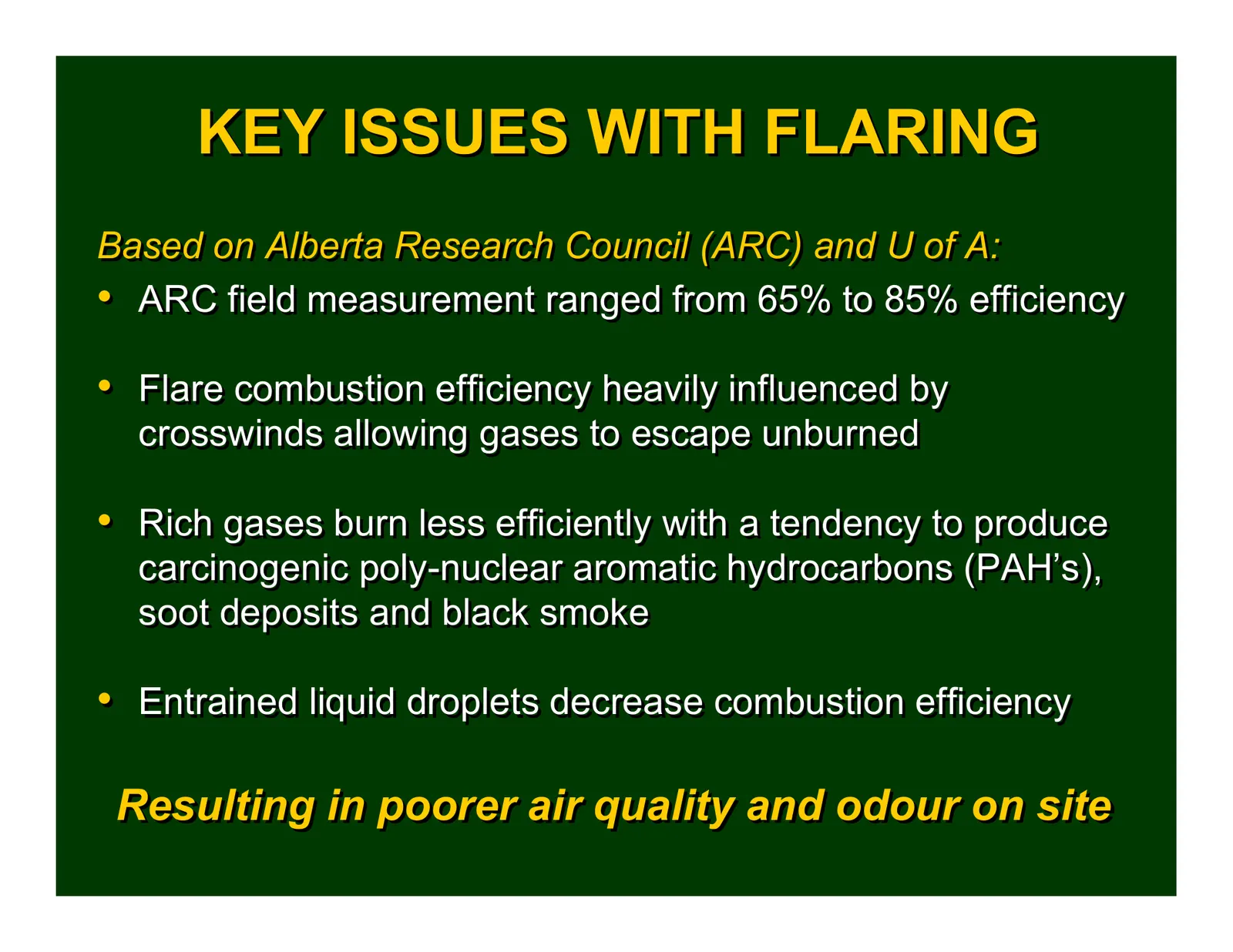
Slide 6: Key Issues with Flaring
KEY ISSUES WITH FLARING Based on Alberta Research Council (ARC) and U of A: • ARC field measurement ranged from 65% to 85% efficiency • Flare combustion efficiency heavily influenced by crosswinds allowing gases to escape unburned • Rich gases burn less efficiently with a tendency to produce carcino
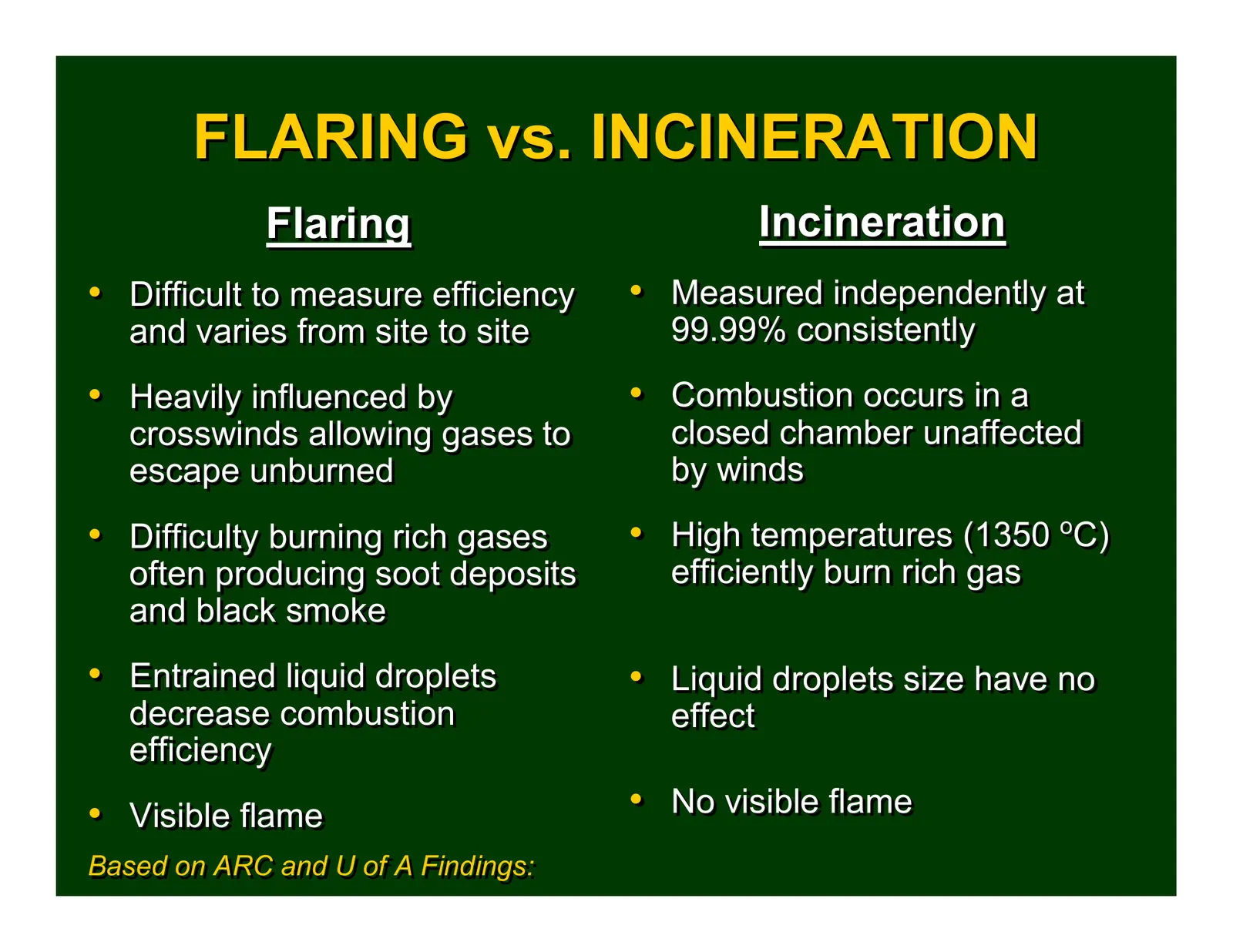
Slide 7: Flaring vs. Incineration
FLARING vs. INCINERATION Flaring Incineration • Difficult to measure efficiency • Measured independently at and varies from site to site 99.99% consistently • Heavily influenced by • Combustion occurs in a crosswinds allowing gases to closed chamber unaffected escape unburned by winds • Difficulty b
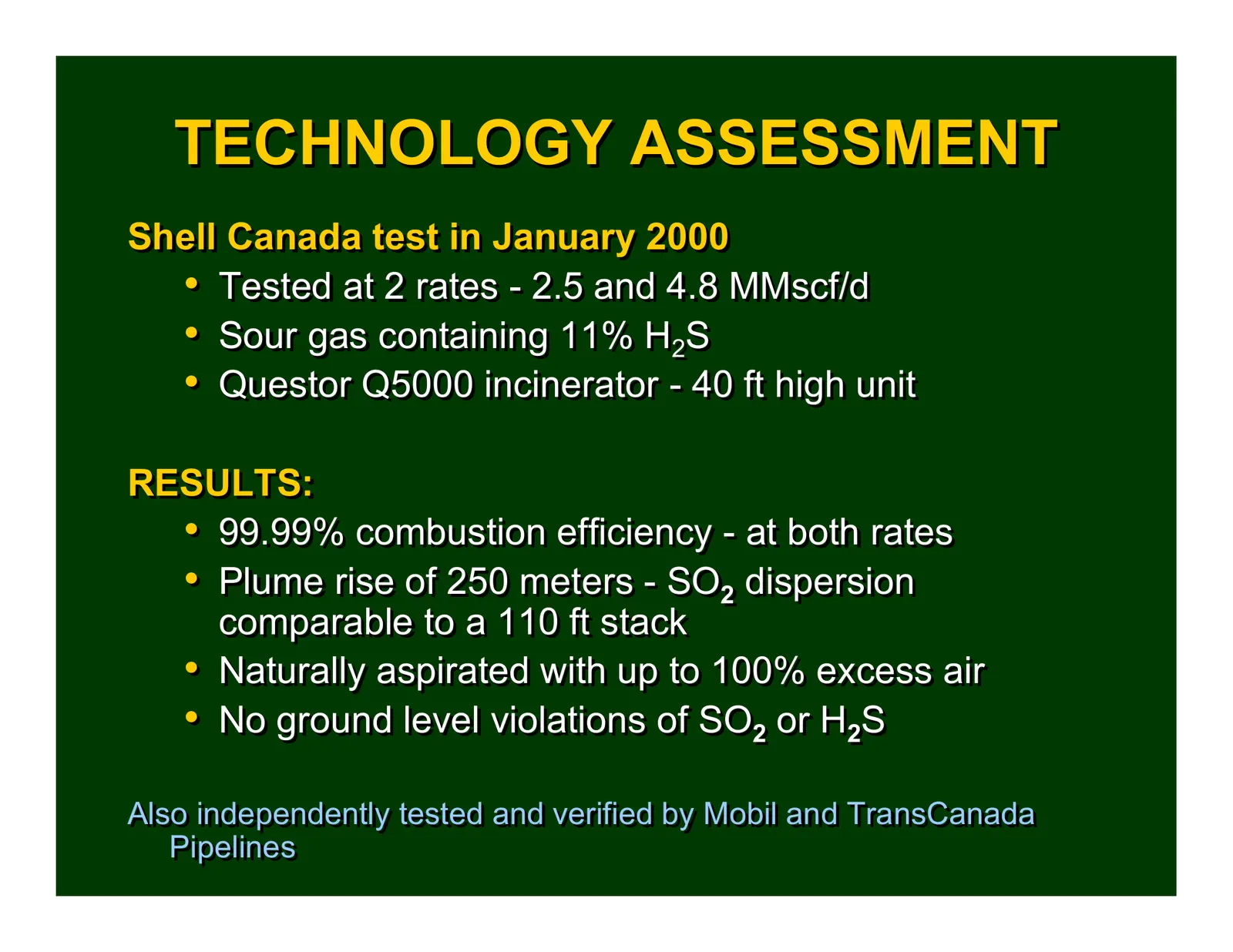
Slide 8: Technology Assessment
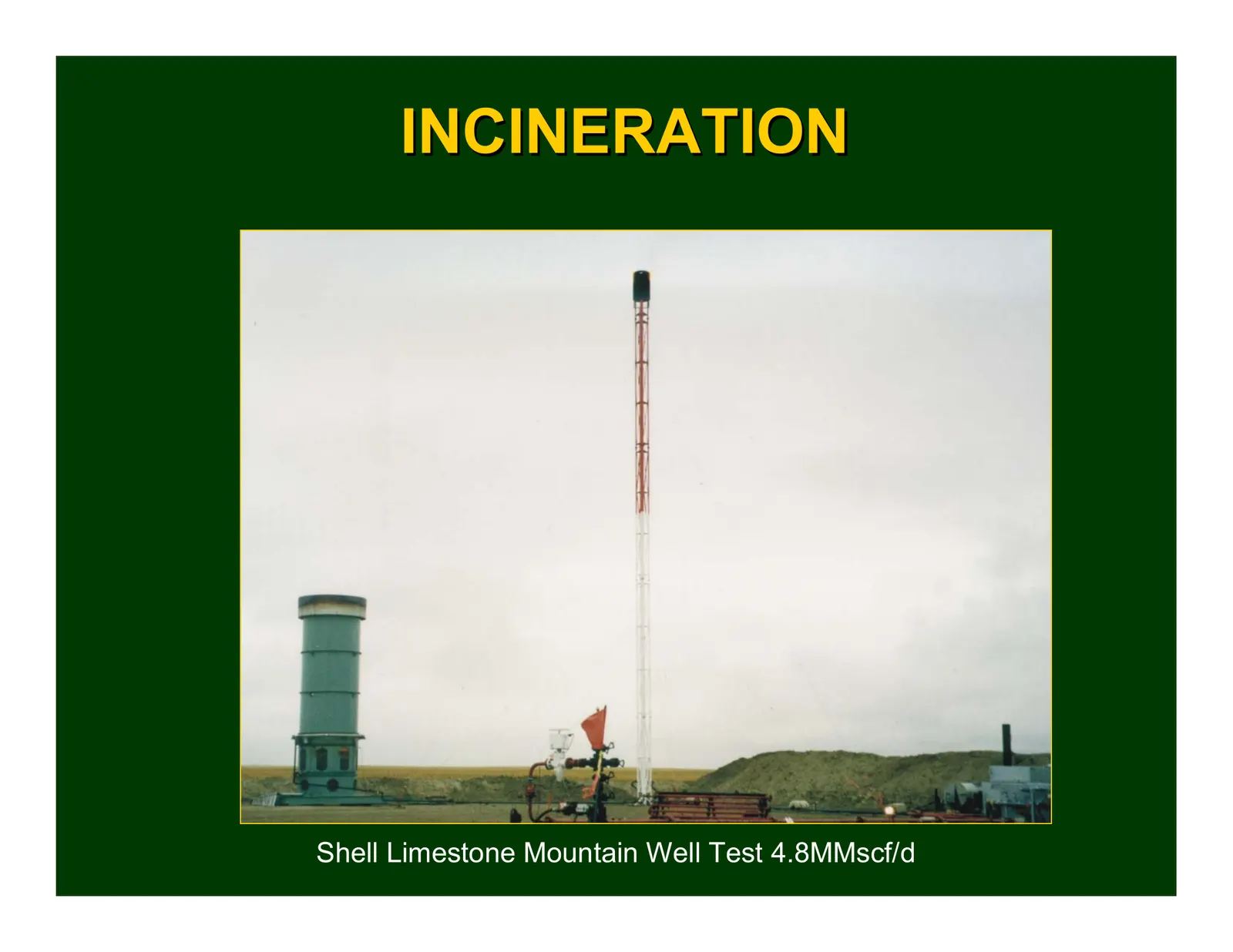
TECHNOLOGY ASSESSMENT Shell Canada test in January 2000 • Tested at 2 rates - 2.5 and 4.8 MMscf/d • Sour gas containing 11% H22S • Questor Q5000 incinerator - 40 ft high unit RESULTS: • 99.99% combustion efficiency - at both rates • Plume rise of 250 meters - SO22 dispersion comparable to a 110 ft s
Slide 9: Incineration
INCINERATION Shell Limestone Mountain Well Test 4.8MMscf/d
Slide 10: How It Works
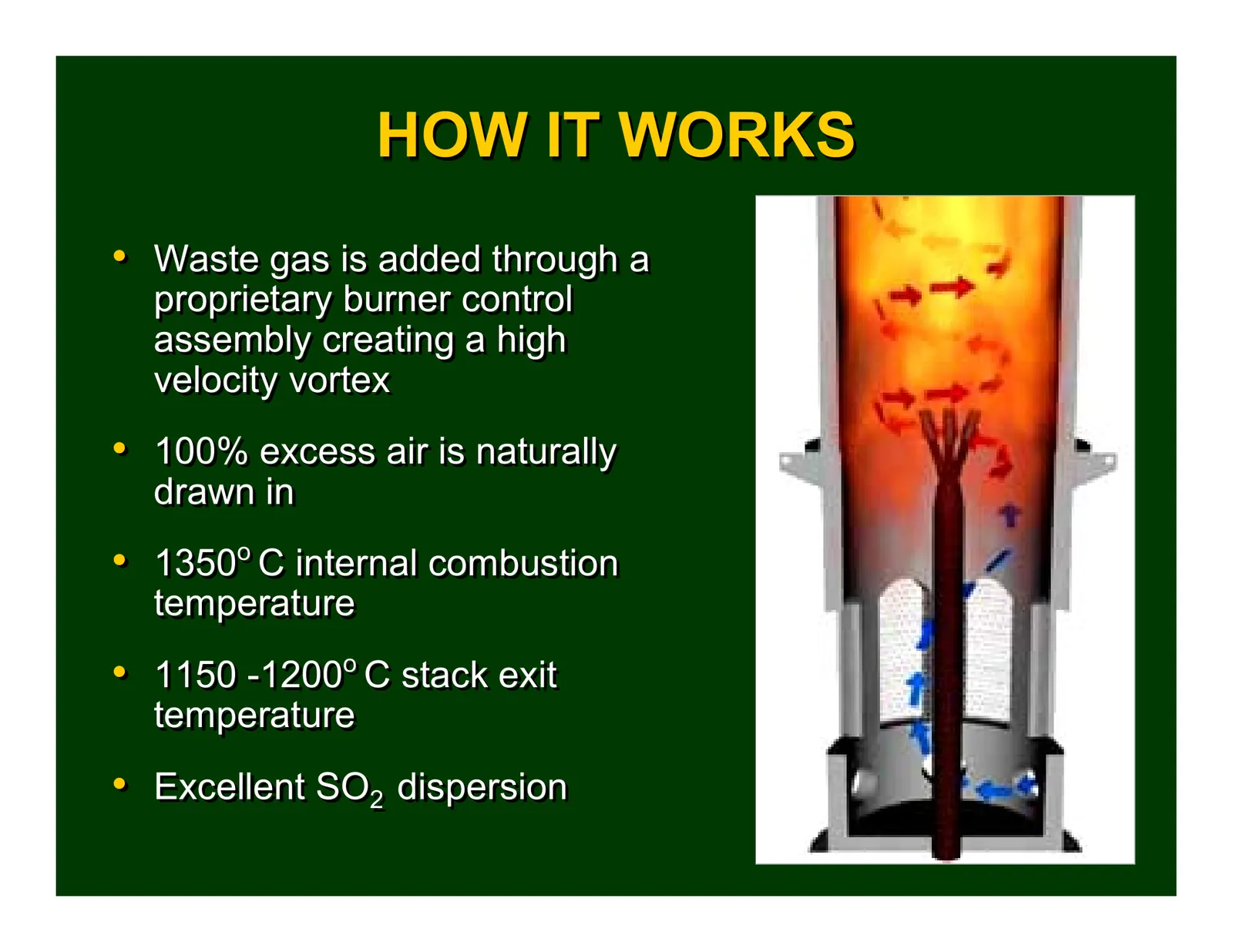
HOW IT WORKS • Waste gas is added through a proprietary burner control assembly creating a high velocity vortex • 100% excess air is naturally drawn in • 1350oo C internal combustion temperature • 1150 -1200oo C stack exit temperature • Excellent SO22 dispersion
Slide 11: Facility Incinerator Options
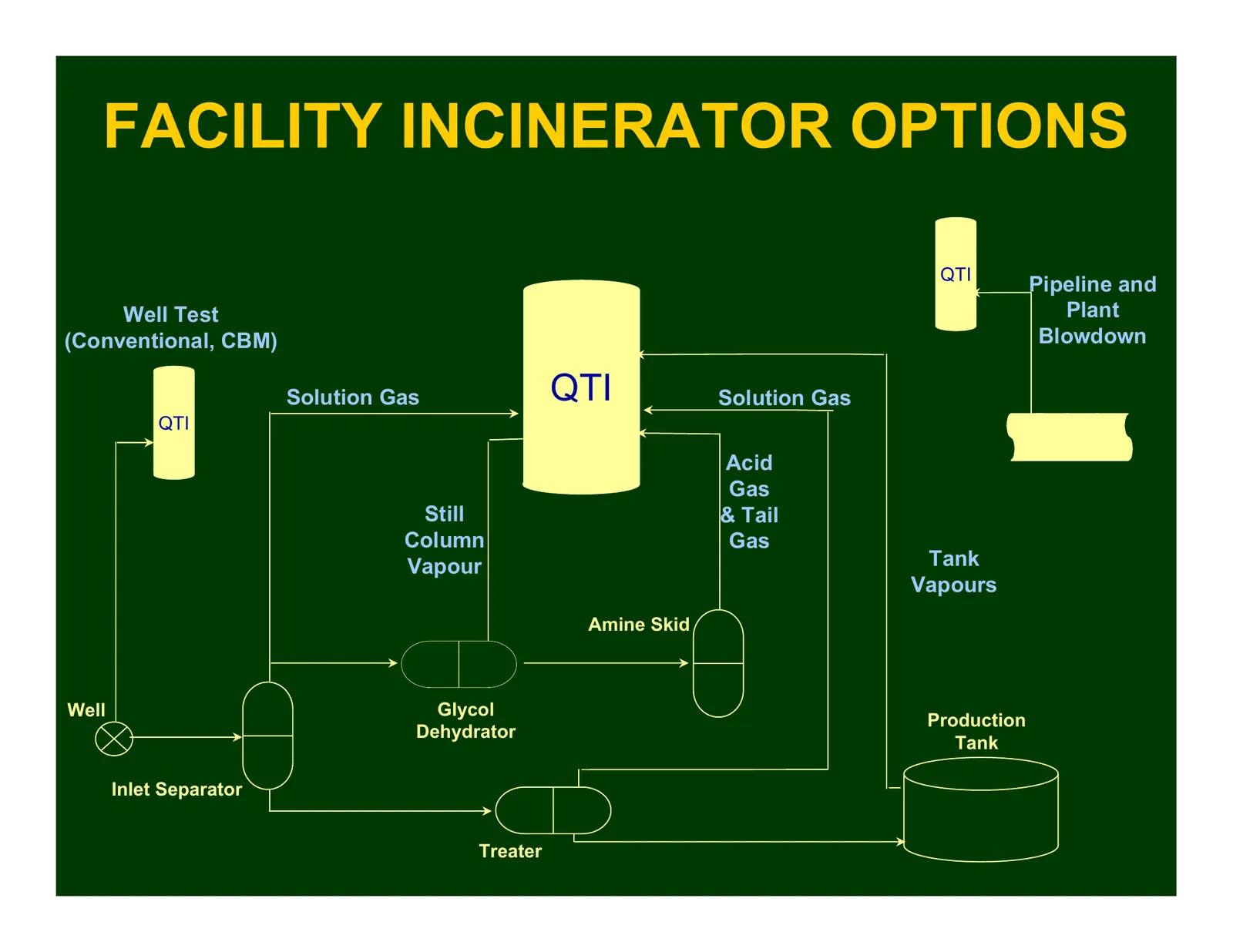
FACILITY INCINERATOR OPTIONS QTI Pipeline and Well Test Plant (Conventional, CBM) Blowdown QTI Solution Gas QTI QTI Solution Gas QTI Acid Gas Still & Tail Column Gas Vapour Tank Vapours Amine Skid Well Glycol Production Dehydrator Tank Inlet Separator Treater
Slide 12: Case Study: Cabre Kessler Battery
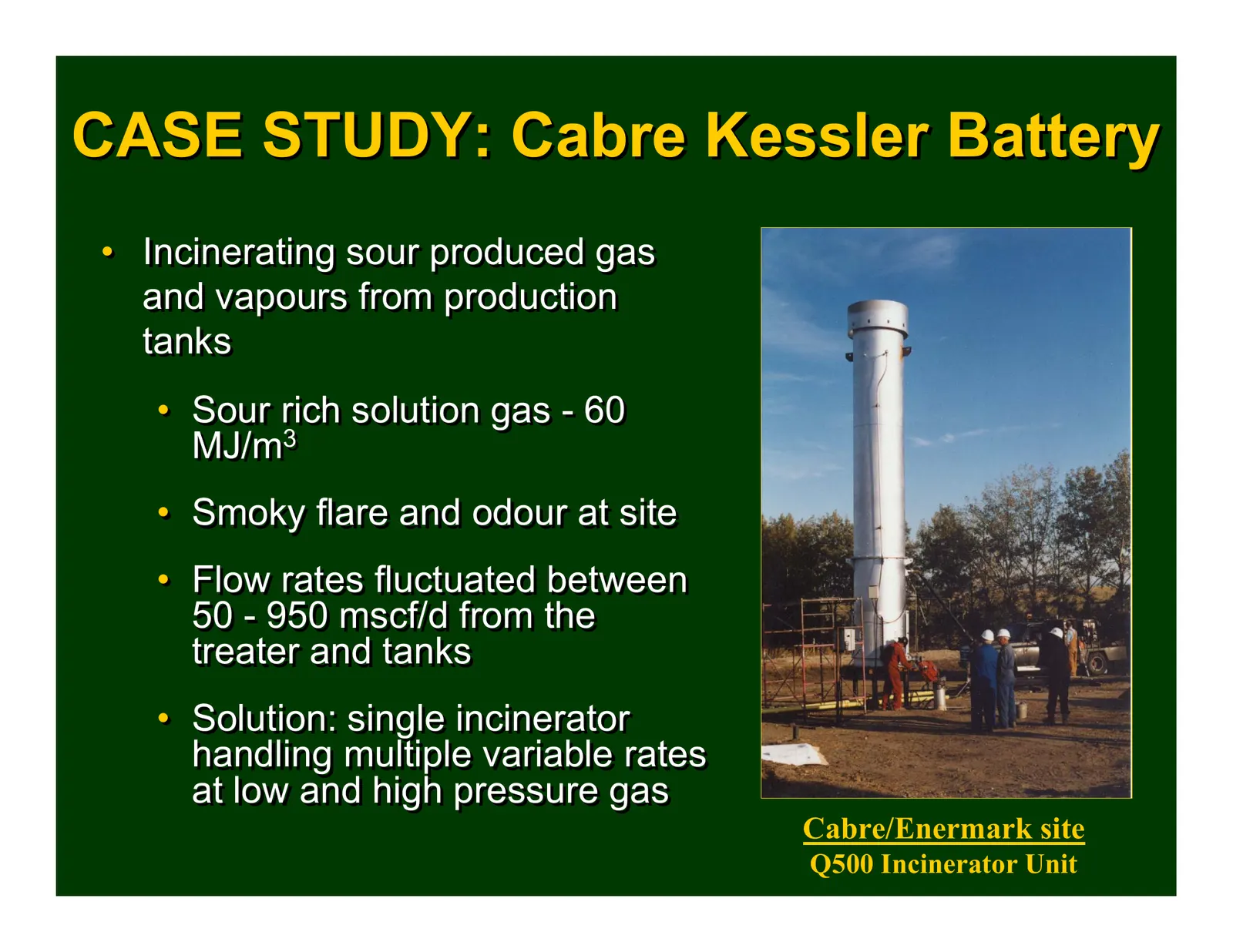
CASE STUDY: Cabre Kessler Battery • Incinerating sour produced gas and vapours from production tanks • Sour rich solution gas - 60 MJ/m33 • Smoky flare and odour at site • Flow rates fluctuated between 50 - 950 mscf/d from the treater and tanks • Solution: single incinerator handling multiple variab
Slide 13: Case Study: DECL Cache Facility
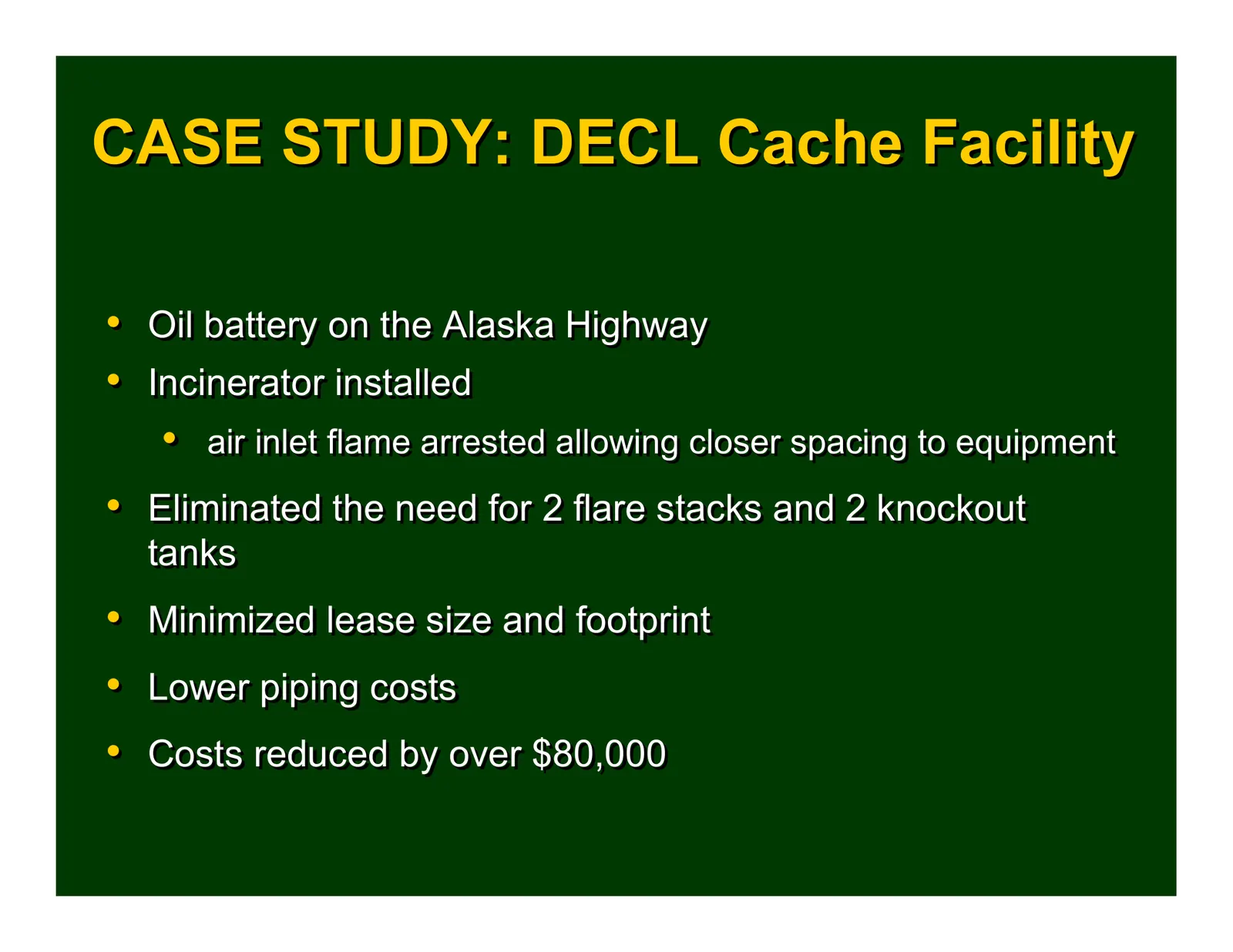
CASE STUDY: DECL Cache Facility • Oil battery on the Alaska Highway • Incinerator installed • air inlet flame arrested allowing closer spacing to equipment • Eliminated the need for 2 flare stacks and 2 knockout tanks • Minimized lease size and footprint • Lower piping costs • Costs reduced by over
Slide 14: Dominion 10-5 Cache Battery Site
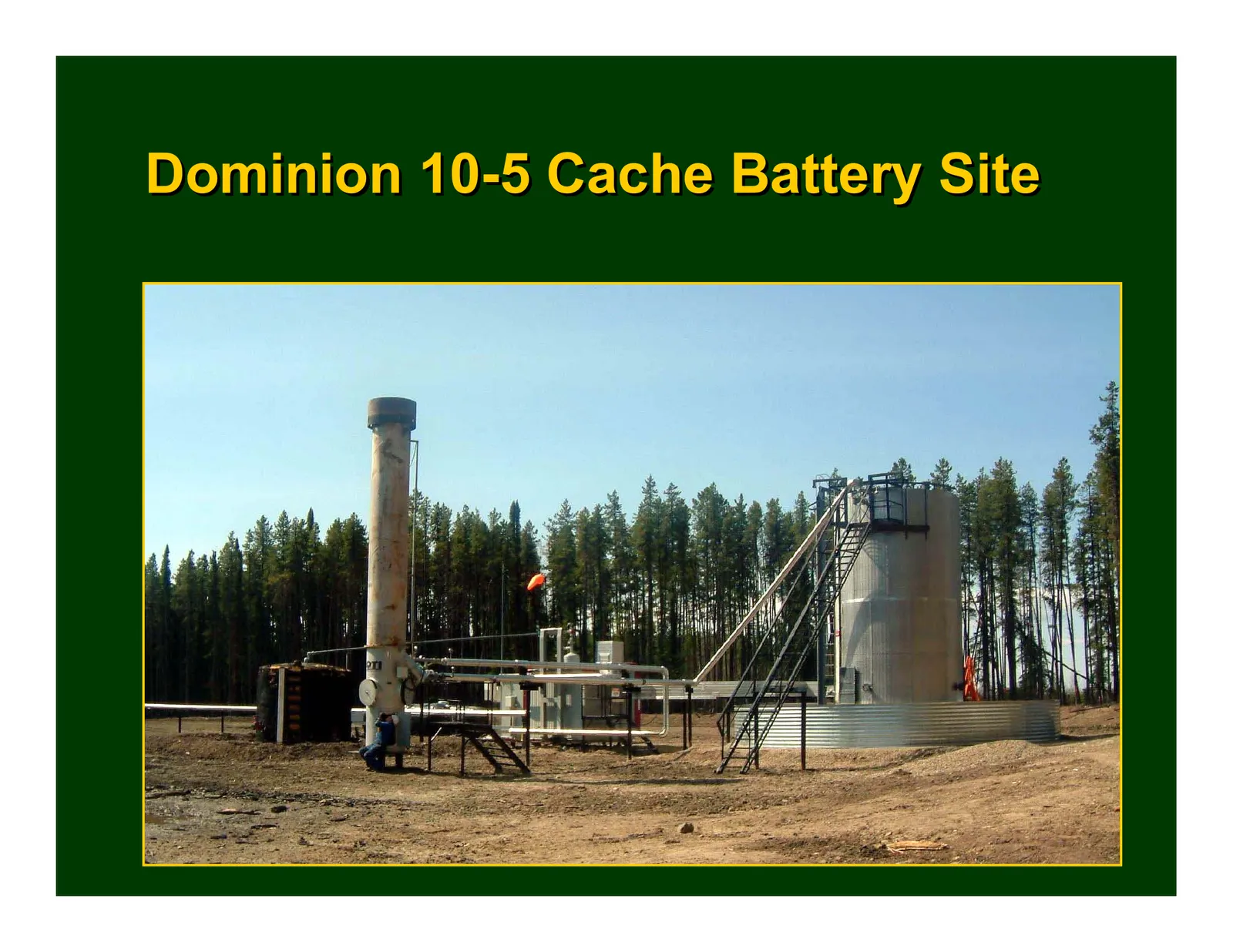
Dominion 10-5 Cache Battery Site
Slide 15: Tank Vapor Recovery
Tank Vapor Recovery • Passive continuous vapor recovery with incineration • Low capital cost ~ 30% of traditional VRU • Low operating cost • Reliable simple system; no moving parts • Ability to incorporate other waste streams • Treater gas, dehydrator or amine vapors
Slide 16: Battery Site with 250mcf/d Incinerator
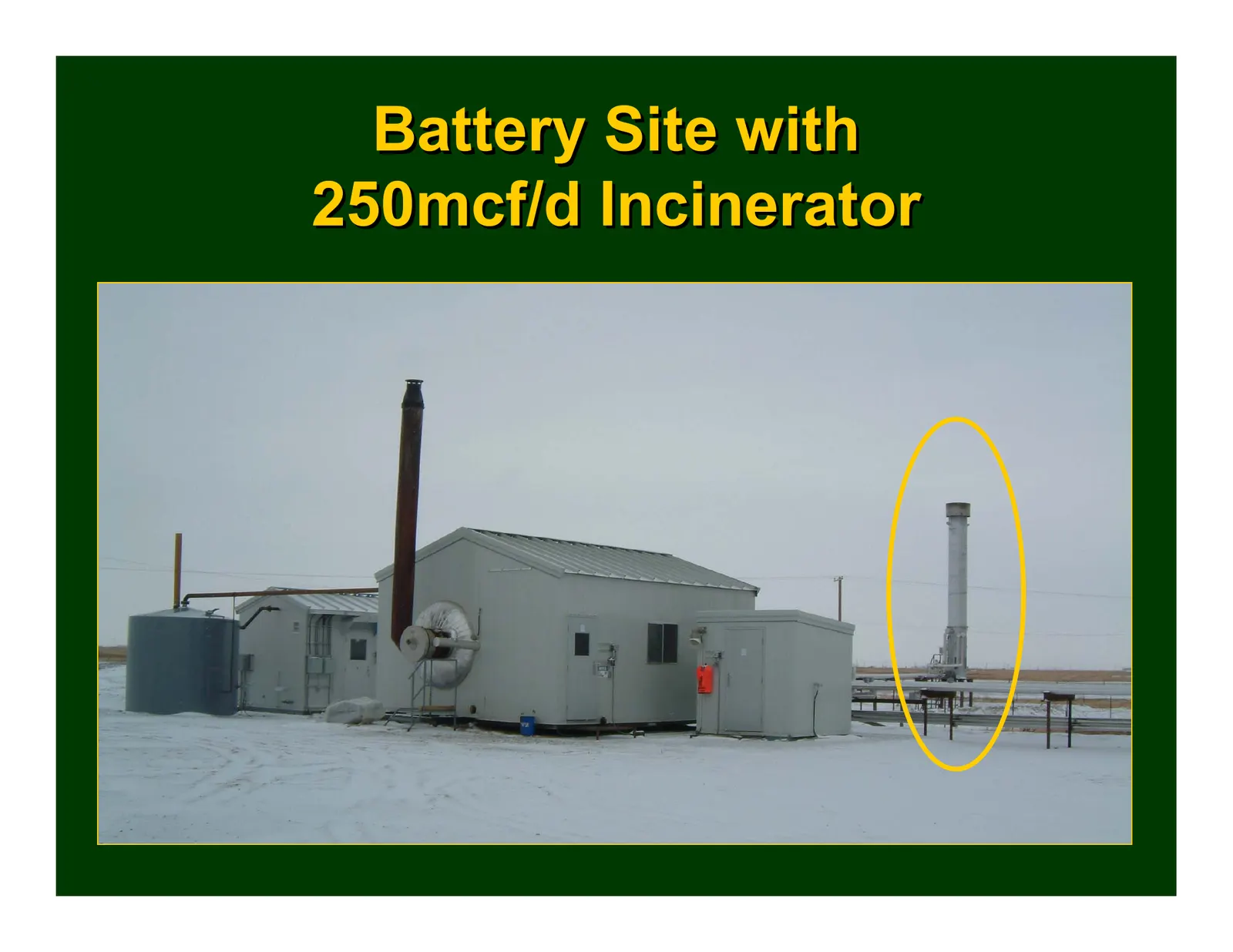
Battery Site with 250mcf/d Incinerator
Slide 17: Greenhouse Gas Emissions
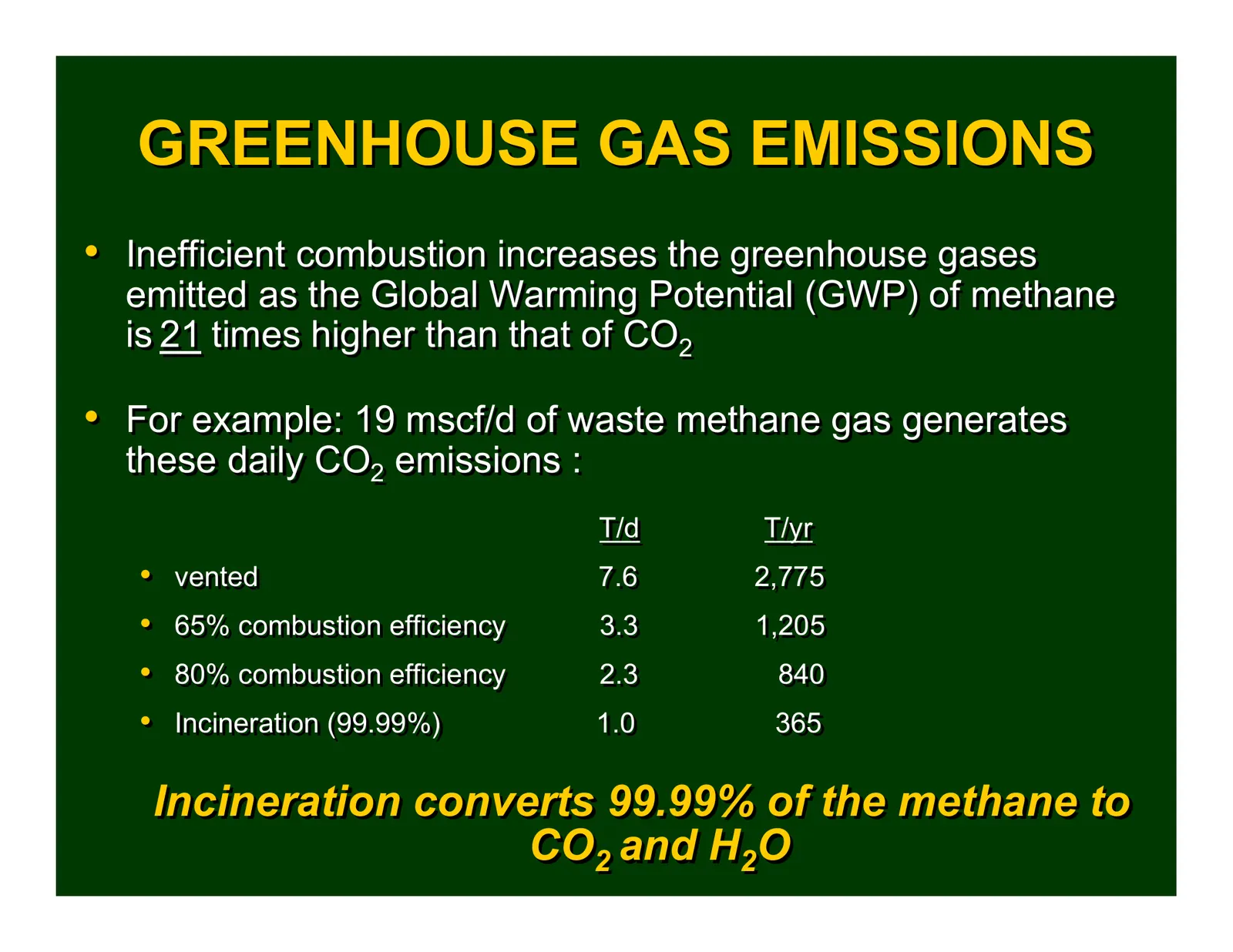
GREENHOUSE GAS EMISSIONS • Inefficient combustion increases the greenhouse gases emitted as the Global Warming Potential (GWP) of methane is 21 times higher than that of CO22 • For example: 19 mscf/d of waste methane gas generates these daily CO22 emissions : T/d T/d T/yr T/yr • vented vented 7.6 7.
Slide 18: CO2E Reduction and Combustion Efficiency
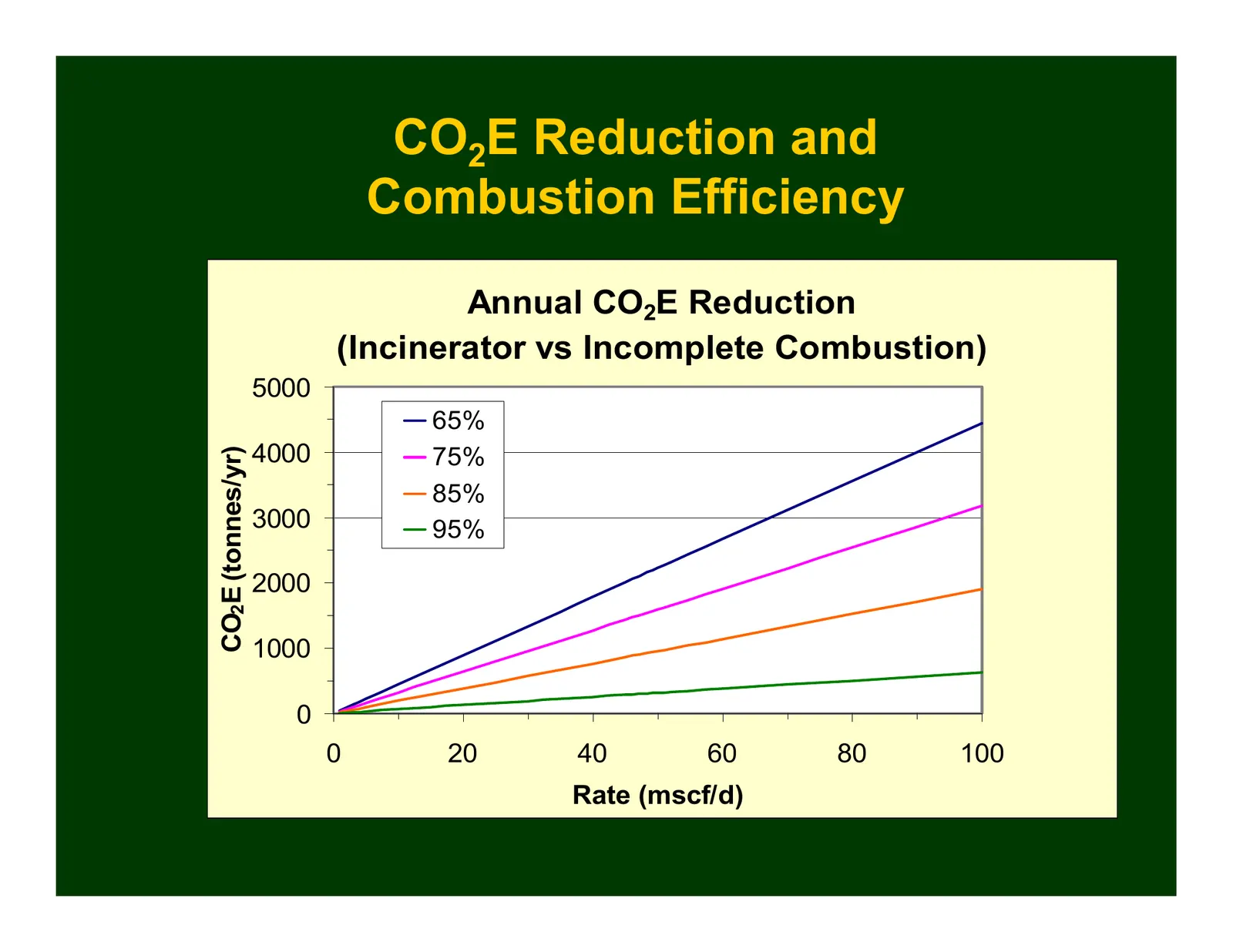
CO2E Reduction and Combustion Efficiency Annual CO2E Reduction (Incinerator vs Incomplete Combustion) 5000 65% 4000 75% CO2E (tonnes/yr) 85% 3000 95% 2000 1000 0 0 20 40 60 80 100 Rate (mscf/d)
Slide 19: DECL Knob Hill - Summary
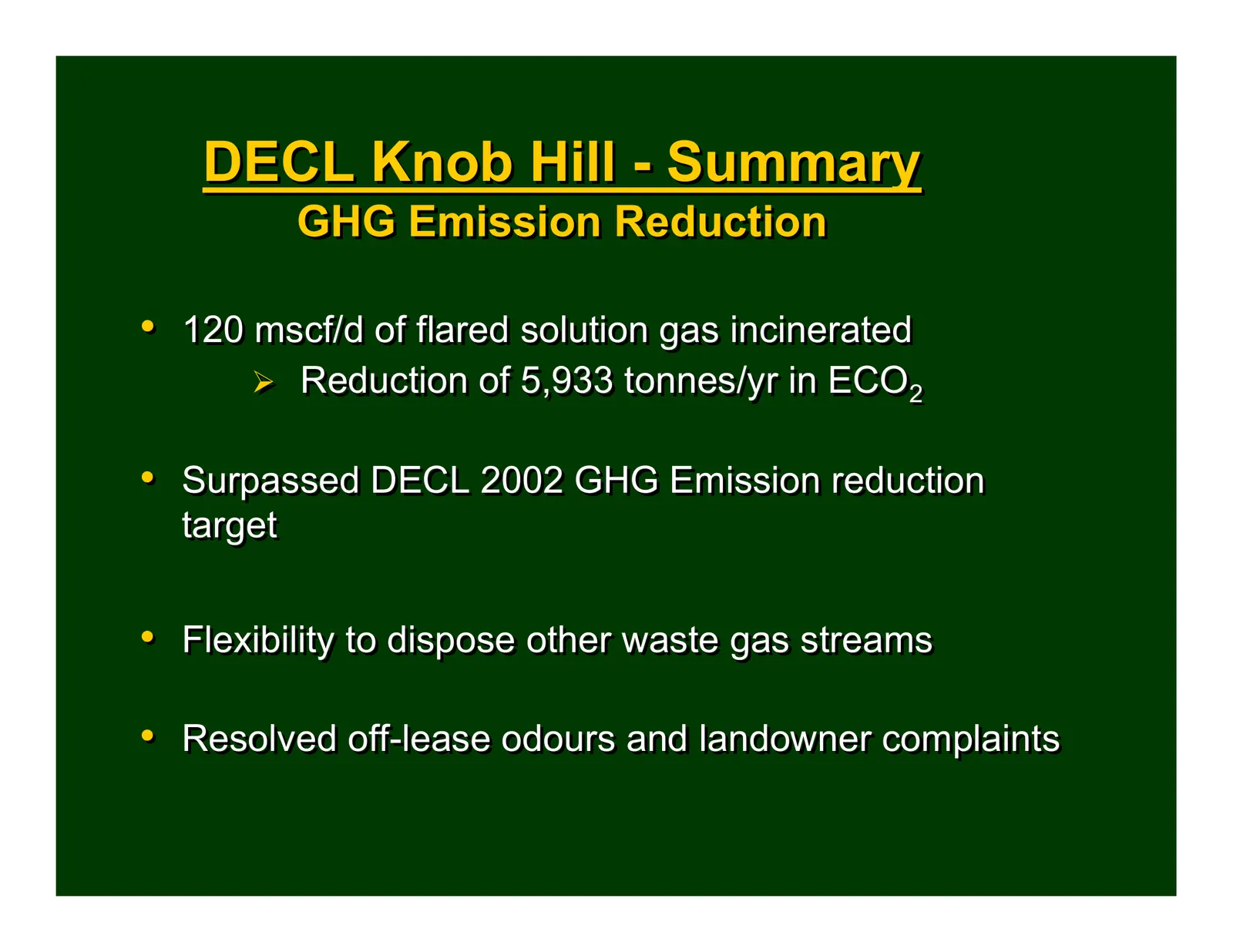
DECL Knob Hill - Summary GHG Emission Reduction • 120 mscf/d of flared solution gas incinerated ¾ Reduction of 5,933 tonnes/yr in ECO22 • Surpassed DECL 2002 GHG Emission reduction target • Flexibility to dispose other waste gas streams • Resolved off-lease odours and landowner complaints
Slide 20: Case Study: Acid Gas Combustion
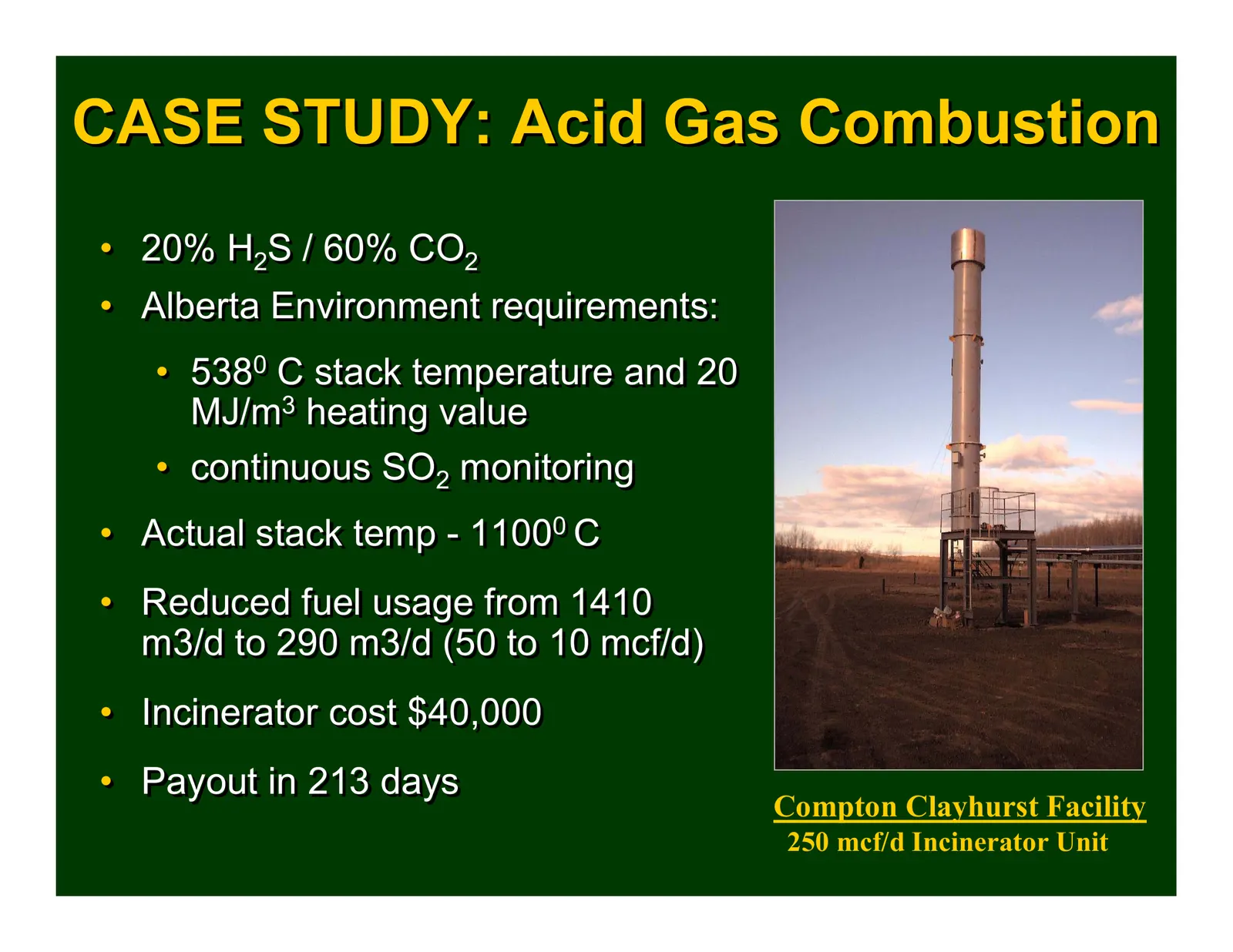
CASE STUDY: Acid Gas Combustion • 20% H22S / 60% CO22 • Alberta Environment requirements: • 53800 C stack temperature and 20 MJ/m33 heating value • continuous SO22 monitoring • Actual stack temp - 110000 C • Reduced fuel usage from 1410 m3/d to 290 m3/d (50 to 10 mcf/d) • Incinerator cost $40,000 •
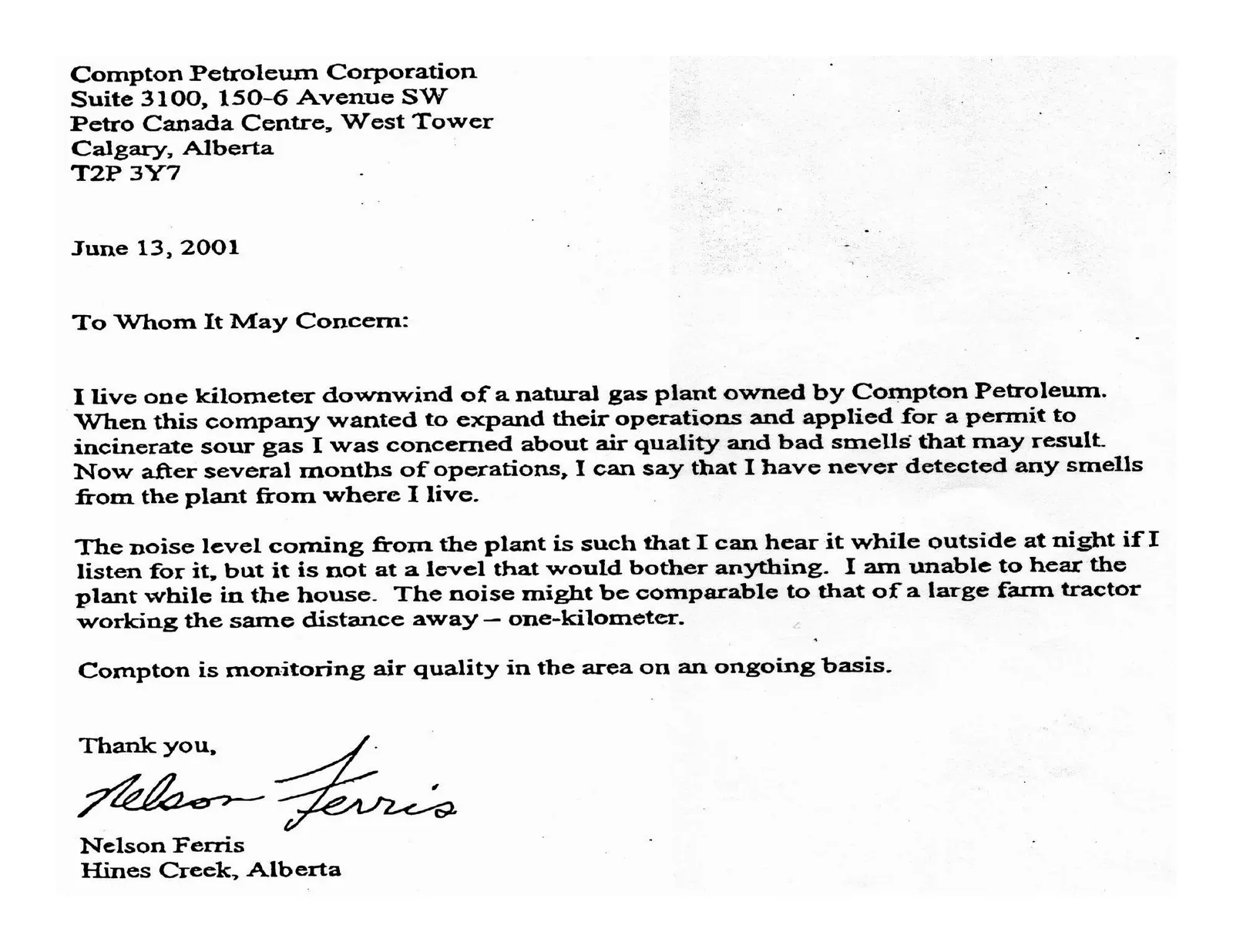
Slide 21: Compton Petroleum Corporation Letter
Compton Petroleum Corporation Suite 3100, 150-6 Avenue SW Petro Canada Centre, West Tower Calgary, Alberta T2P 3Y7 June 13, 2001 To Whom It May Concem: I live one kilometer downwind of a natural gas plant owned by Compton Petroleum. When this company wanted to expand their operations and applied for
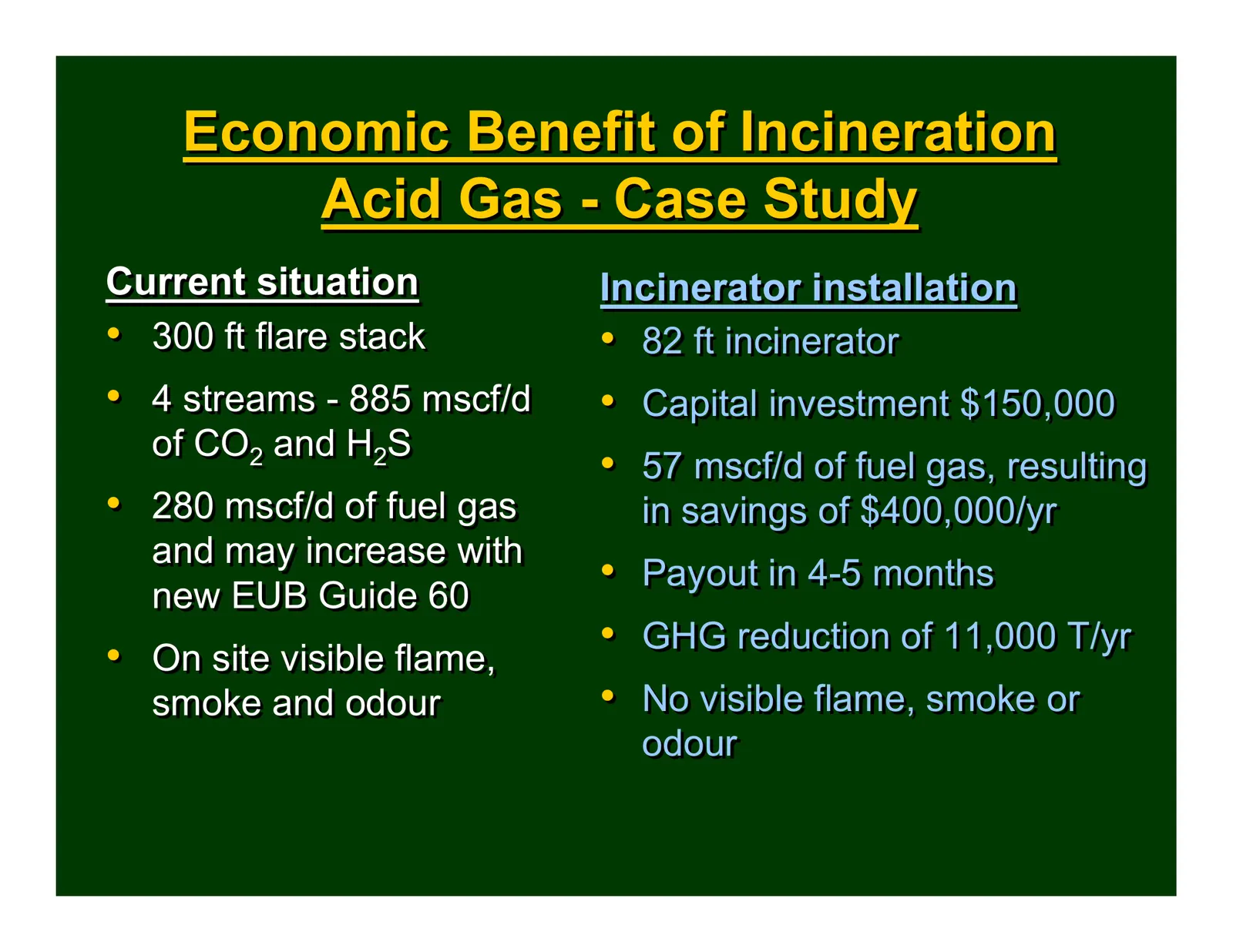
Slide 22: Economic Benefit of Incineration Acid Gas - Case Study
Economic Benefit of Incineration Acid Gas - Case Study Current situation Incinerator installation • 300 ft flare stack • 82 ft incinerator • 4 streams - 885 mscf/d • Capital investment $150,000 of CO22 and H22S • 57 mscf/d of fuel gas, resulting • 280 mscf/d of fuel gas in savings of $400,000/yr and
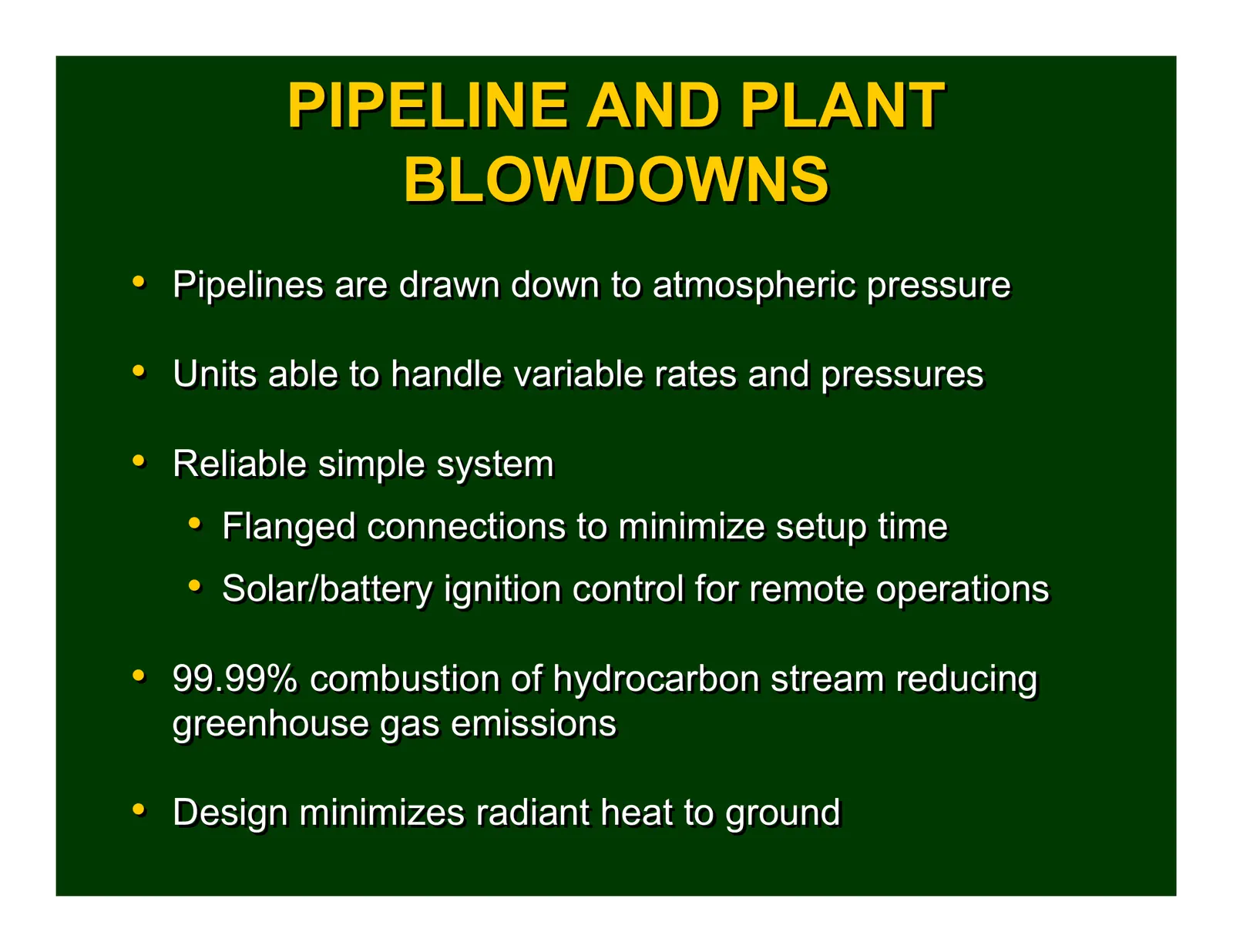
Slide 23: Pipeline and Plant Blowdowns
PIPELINE AND PLANT BLOWDOWNS • Pipelines are drawn down to atmospheric pressure • Units able to handle variable rates and pressures • Reliable simple system • Flanged connections to minimize setup time • Solar/battery ignition control for remote operations • 99.99% combustion of hydrocarbon stream r
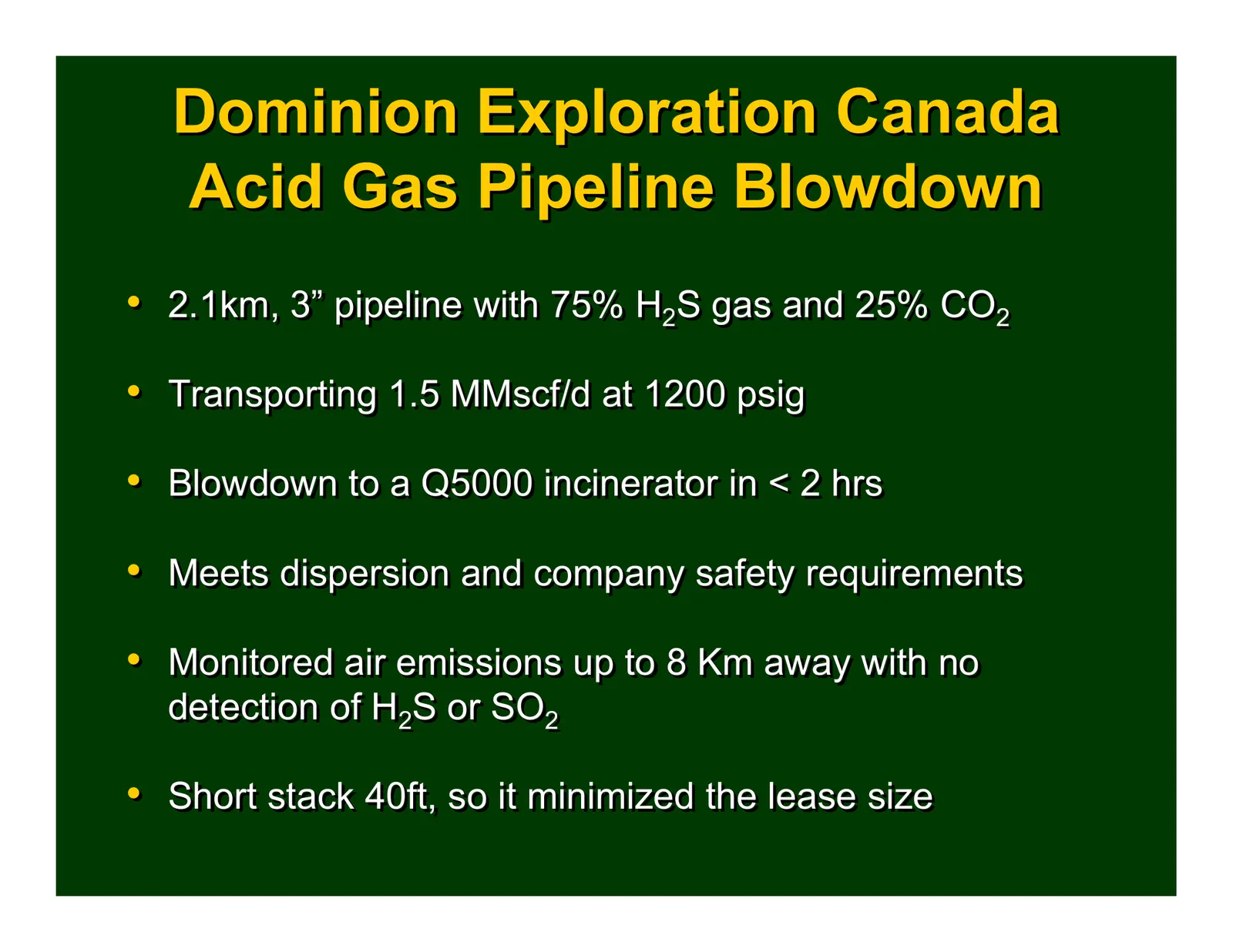
Slide 24: Dominion Exploration Canada Acid Gas Pipeline Blowdown
Dominion Exploration Canada Acid Gas Pipeline Blowdown • 2.1km, 3” pipeline with 75% H22S gas and 25% CO22 • Transporting 1.5 MMscf/d at 1200 psig • Blowdown to a Q5000 incinerator in < 2 hrs • Meets dispersion and company safety requirements • Monitored air emissions up to 8 Km away with no detecti
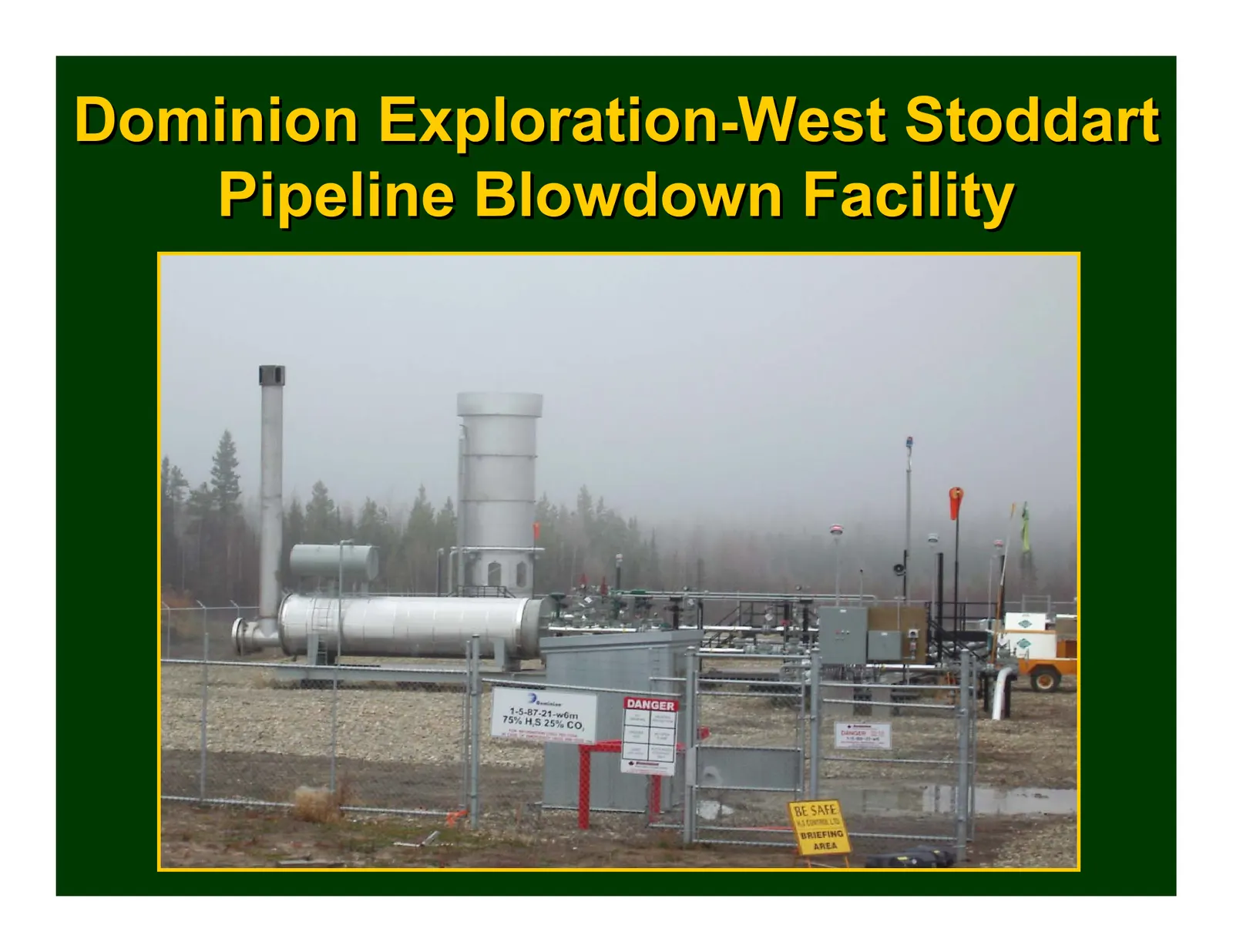
Slide 25: Dominion Exploration - West Stoddart Pipeline Blowdown Facility
Dominion Exploration-West Stoddart Pipeline Blowdown Facility
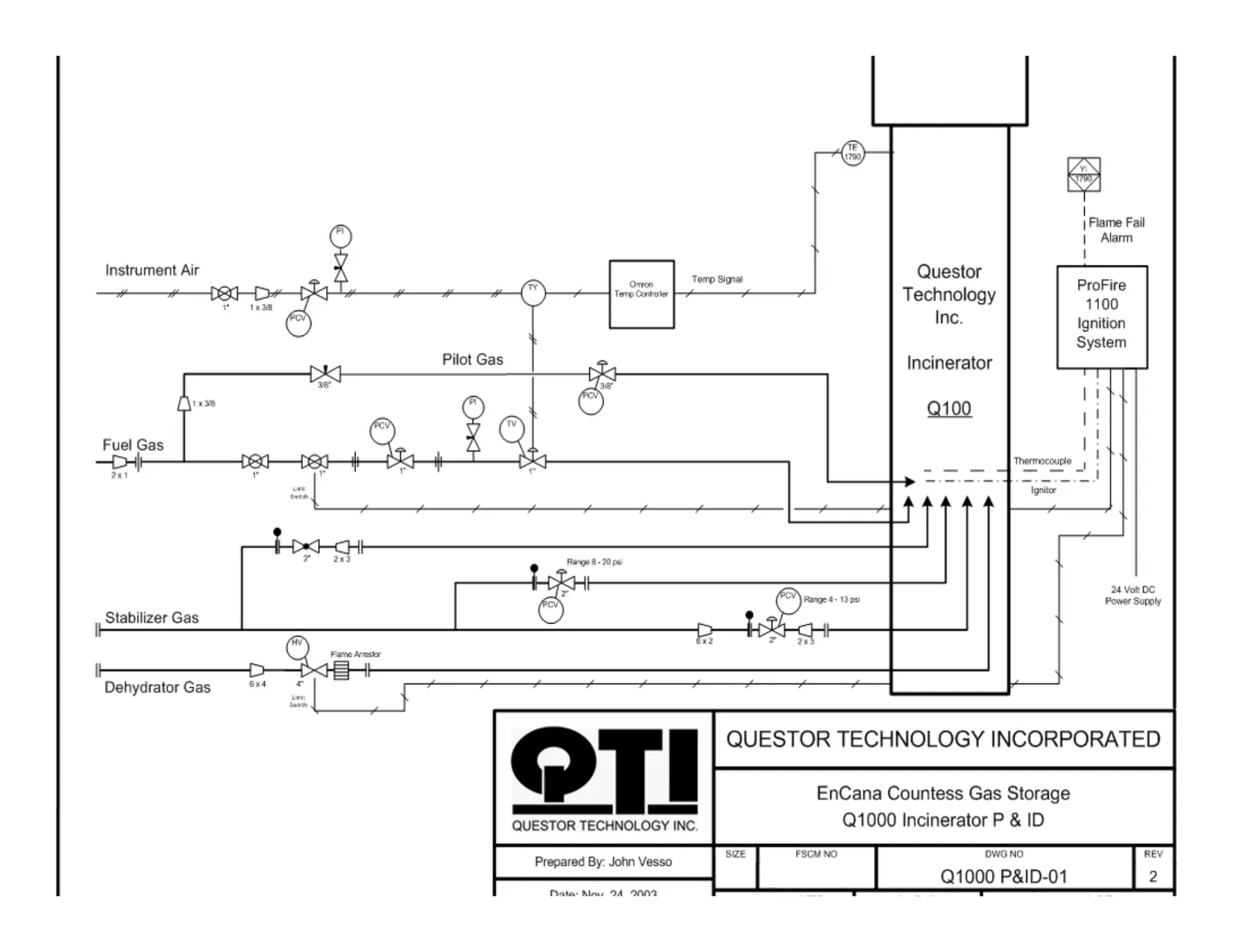
Slide 26: EnCana Countess Gas Storage Q1000 Incinerator P&ID
Ty qT | | Flame Fail | Alarm | Instrument Air _ Questor D&D. x (*) ete |p ProFire aaa ee Technology 4100 €) Inc. Ignition System Pilot Gas ° Incinerator ox K a tn ©) 100 ii Q I Fuel Gas oe) | i <} Thermocouple —D+t 1-184" Rp Merficeten HoetneMai uy zr 2x3 ’ __ mgs 8-20 ps oS mvane Range 4 13 psi Pow
Slide 27: Well Testing
WELL TESTING Some benefits incineration offers to well testing are: • Units that range from 50mcf/d up to 5MMscf/d based on methane gas equivalent • Handles both sweet and sour gas as well as multiple high and low pressure streams • Easy to set up and operate • Quick installation - ready to go in 1
Slide 28: Case Study – DECL Round Hill
CASE STUDY – DECL Round Hill Problem: Testing with a flare stack • DECL (Viking) had been testing with flare • Created landowner complaints • EUB called out at 2 AM • Well is 300 yards from church and close to town Solution: Used 3MMscf/d QTI incinerator for the test • No objections or complaints •
Slide 29: Case Study – DECL Violet Grove
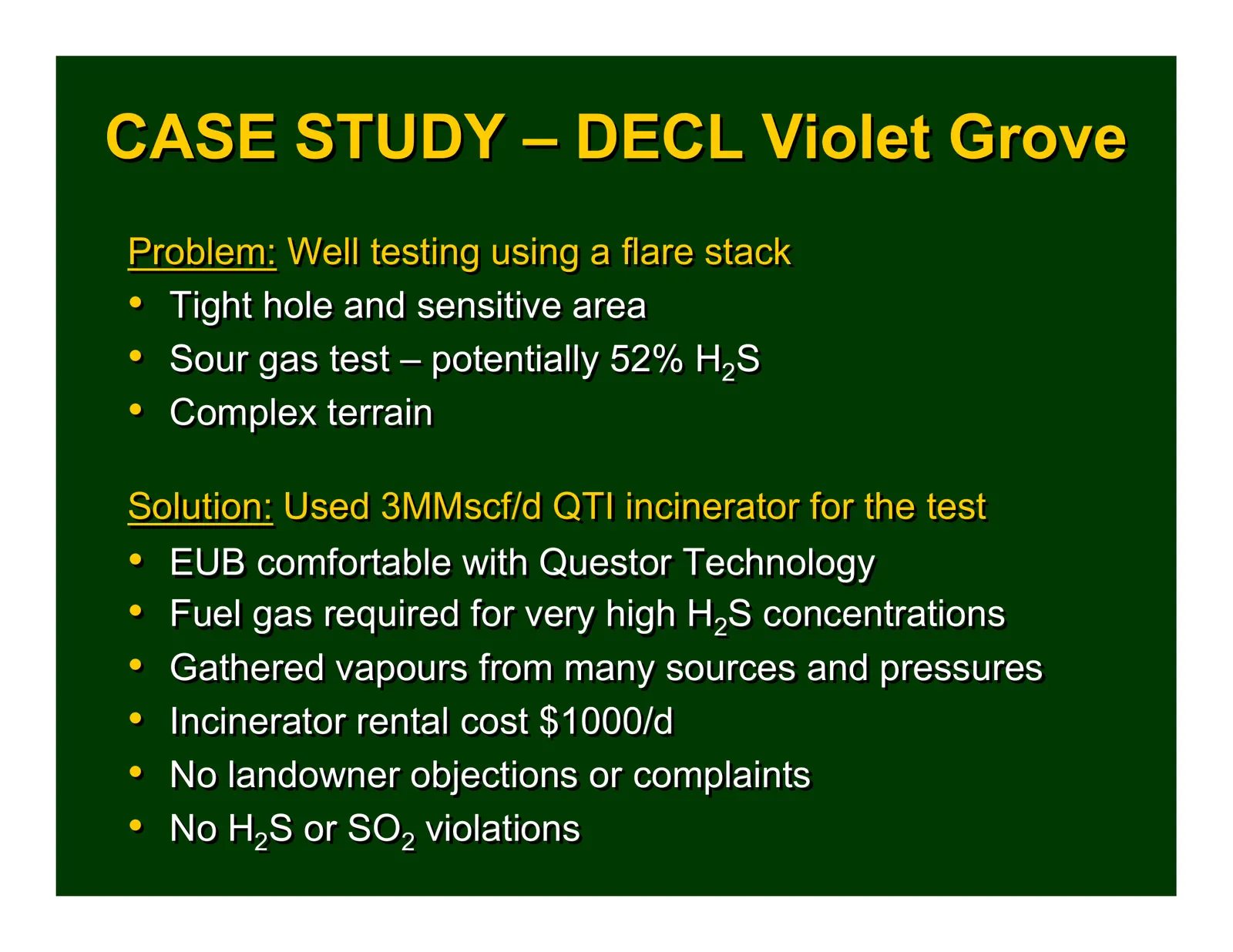
CASE STUDY – DECL Violet Grove Problem: Well testing using a flare stack • Tight hole and sensitive area • Sour gas test – potentially 52% H22S • Complex terrain Solution: Used 3MMscf/d QTI incinerator for the test • EUB comfortable with Questor Technology • Fuel gas required for very high H22S conc
Slide 30: Portable Skid Mounted 3 MMscf/d Incinerator
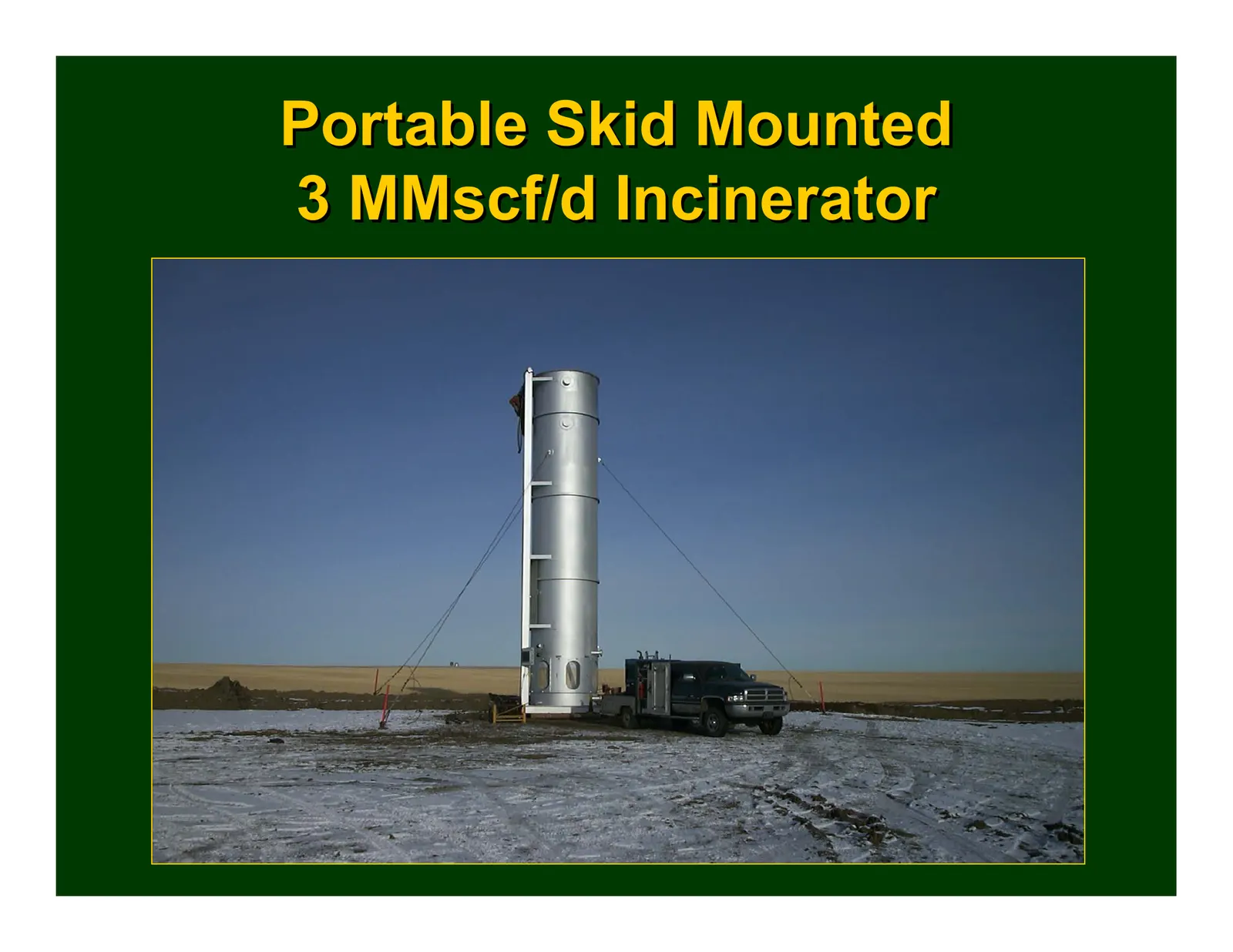
Portable Skid Mounted 3 MMscf/d Incinerator
Slide 31: Field Trailorized Incinerators
FIELD TRAILORIZED INCINERATORS • Portable incinerators on hydraulically operated trailers • Processes variable flow rates and pressures • Air arrested incinerator allows for tighter equipment spacing • Applicable and efficient for pipeline blowdowns, pigging, welltesting, plant turnarounds etc.
Slide 32: Trailer Mounted Q3000 Rental Unit
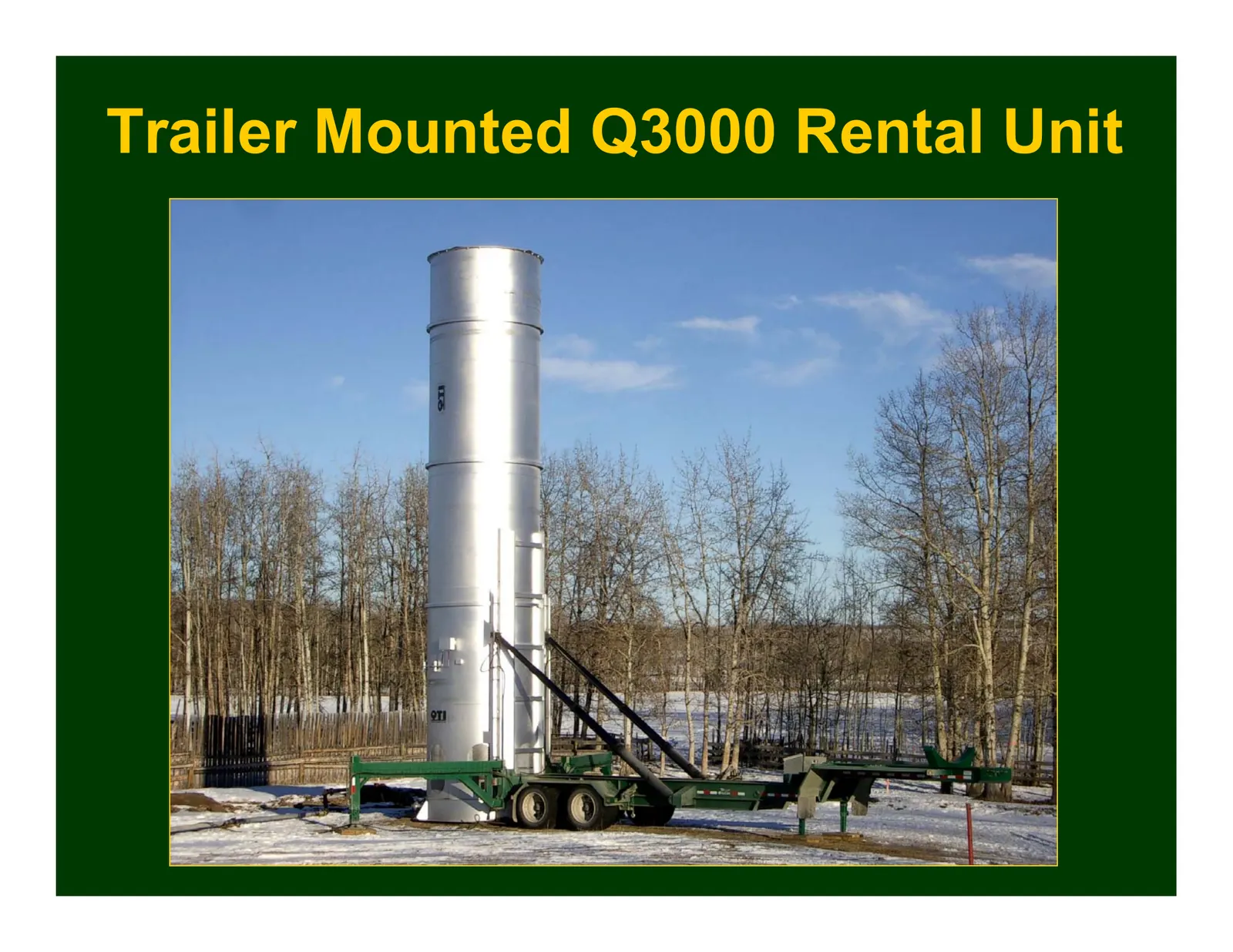
Trailer Mounted Q3000 Rental Unit
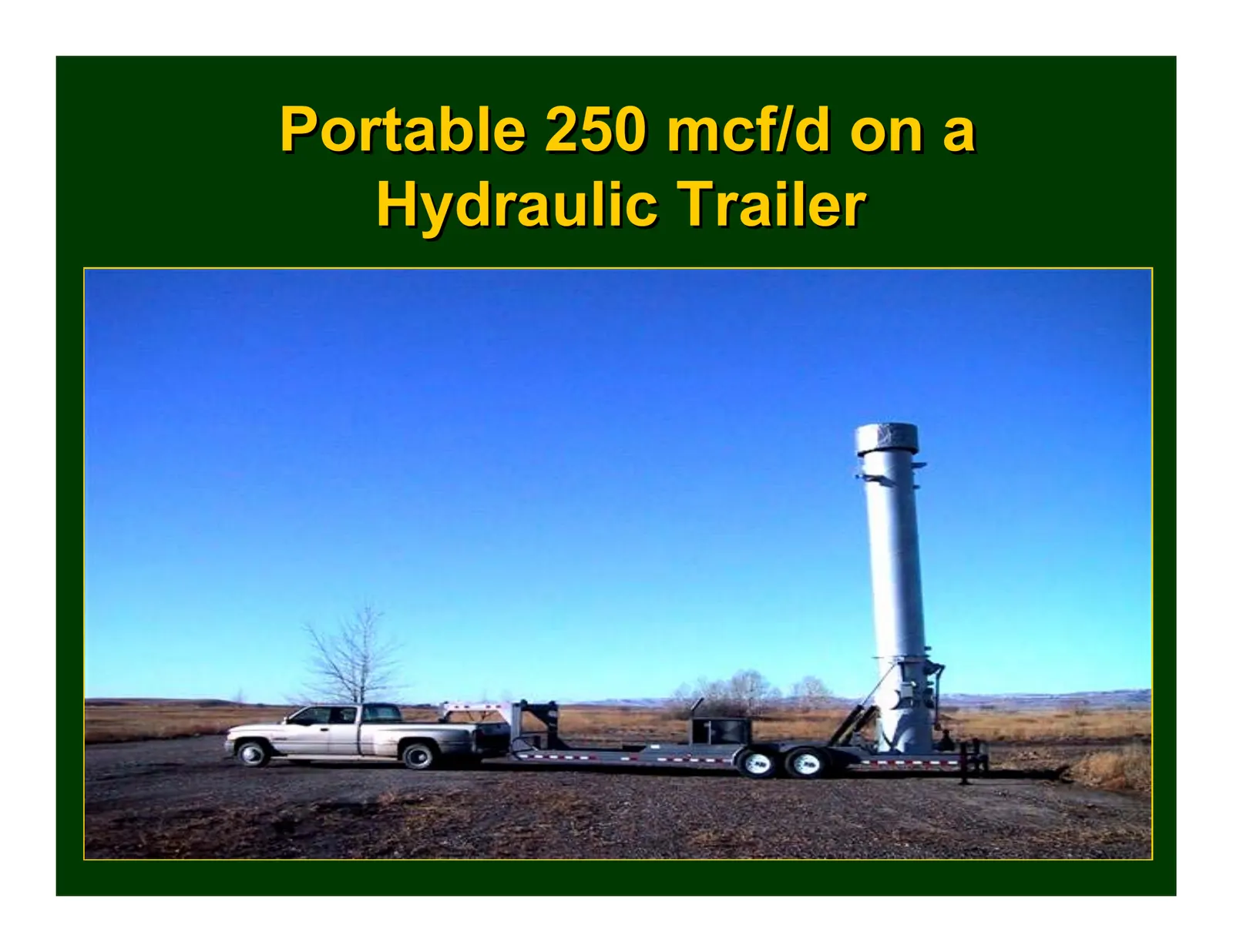
Slide 33: Portable 250 mcf/d on a Hydraulic Trailer
Portable 250 mcf/d on a Hydraulic Trailer
Slide 34: Coal Bed Methane Testing
COAL BED METHANE TESTING • Incineration is a valuable tool to address flaring and visibility concerns with testing • Tests are typically 6-8 months in duration to ensure an understanding of the reserve potential • Projects include : • BP testing at Ojay in B.C. • EnCana at Strathmore
Slide 35: New Developments
NEW DEVELOPMENTS • Recovering the heat generated from the incinerator to reduce the energy requirements on site • For example: • Preheat process streams • Plant site heating • Heat glycol in a dehydrator reboiler • Heat amine in a amine reboiler • Steam generation • Power generation
Slide 36: Conclusion
CONCLUSION • Incineration offers an efficient and economical way to significantly improve air quality wherever gas is flared or vented • Benefits accrue by addressing company, community and regulator concerns; generating goodwill and potentially avoiding costly hearings • Cost effective: ¾Base unit

Slide 37: Providing Solutions to your Burning Questions
Providing Solutions to your Burning Questions Calgary, Alberta (403) 571-1530 www.questortech.com
Source: Internet Archive copy of questortech.com
More decks from Questor Technology Inc.
 Proxy Contest (August 2026)21 slides · August 2026
 Investor Presentation (July 2023)24 slides · July 2023
 Shareholder Meeting (June 2022)14 slides · Jun 15, 2022
 Investor Presentation (March 2022)29 slides · March 2022
 Q3 2019 Earnings Presentation26 slides · November 2019
 Shareholder Meeting (July 2019)22 slides · Jul 10, 2019