Abbott Laboratories · NYSE:ABT
Abbott Laboratories — Technical Presentation (October 2021)
21 slides from Abbott Laboratories's technical presentation, October 2021
Slide 1: Educational purposes disclaimer
This presentation is offered for educational purposes only, intended to serve as continuing medical education for health care professionals. The content of the presentation represents the views and opinions of the original creators of such content and does not necessarily represent the views or opin

Slide 2: Behaviors and beliefs: The foundations of adherence
INTRODUCTION – BEHAVIORS AND BELIEFS: THE FOUNDATIONS OF ADHERENCE Behaviors and beliefs: The foundations of adherence Prof. Rob Horne Professor of Behavioural Medicine University College London, UK GLO2208856 | Oct-21 | 2

Slide 3: Disclosures
Disclosures Professor Rob Horne is supported by the National Institute for Health Research (NIHR),and Asthma UK (AUKCAR). The views expressed are those of the author(s) and not necessarily those of the NHS, the NIHR or the Department of Health. Speaker engagements with honoraria with the following c
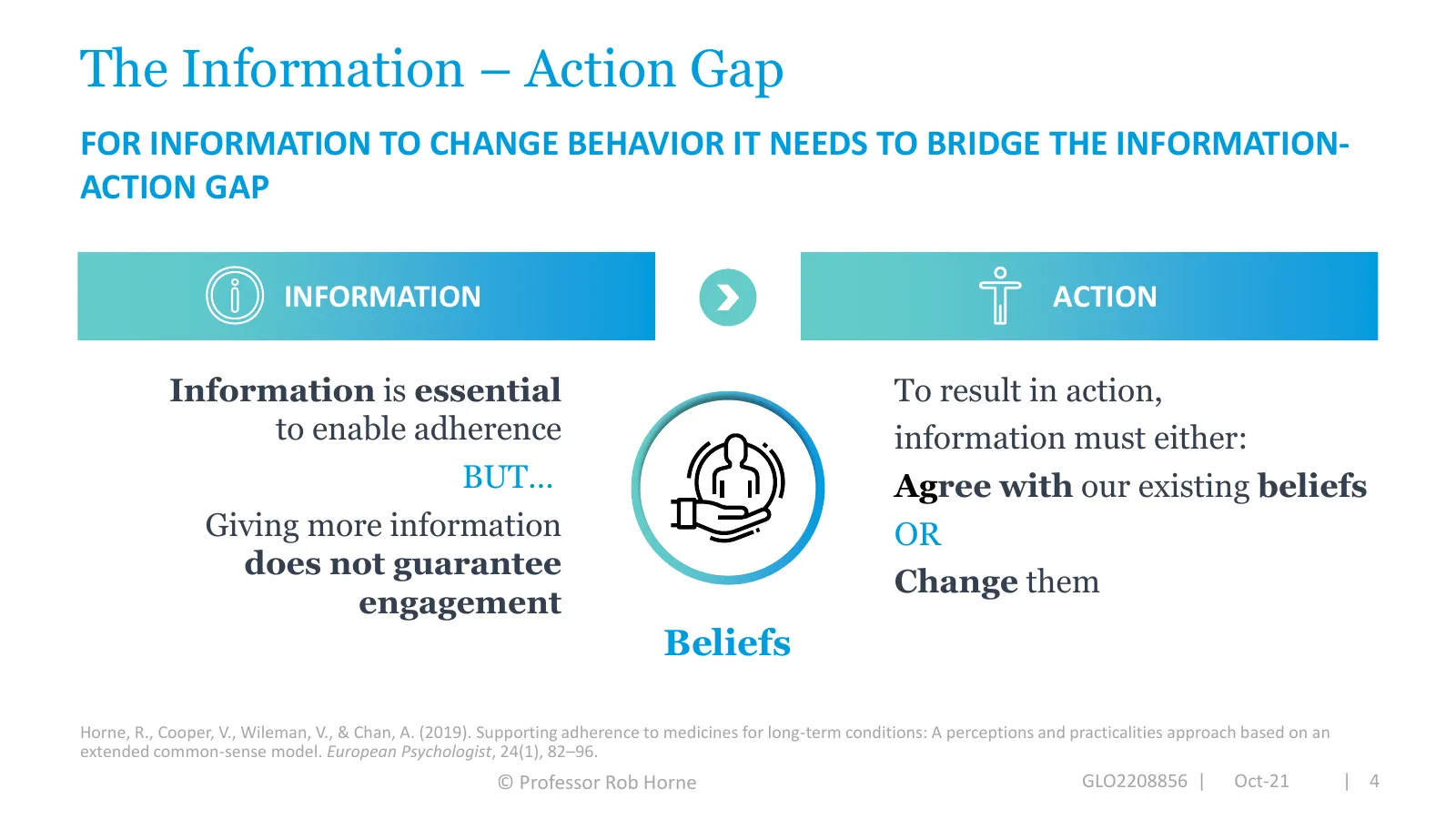
Slide 4: The Information – Action Gap
The Information – Action Gap FOR INFORMATION TO CHANGE BEHAVIOR IT NEEDS TO BRIDGE THE INFORMATION- ACTION GAP INFORMATION ACTION Information is essential To result in action, to enable adherence information must either: BUT… Agree with our existing beliefs Giving more information OR does not guaran
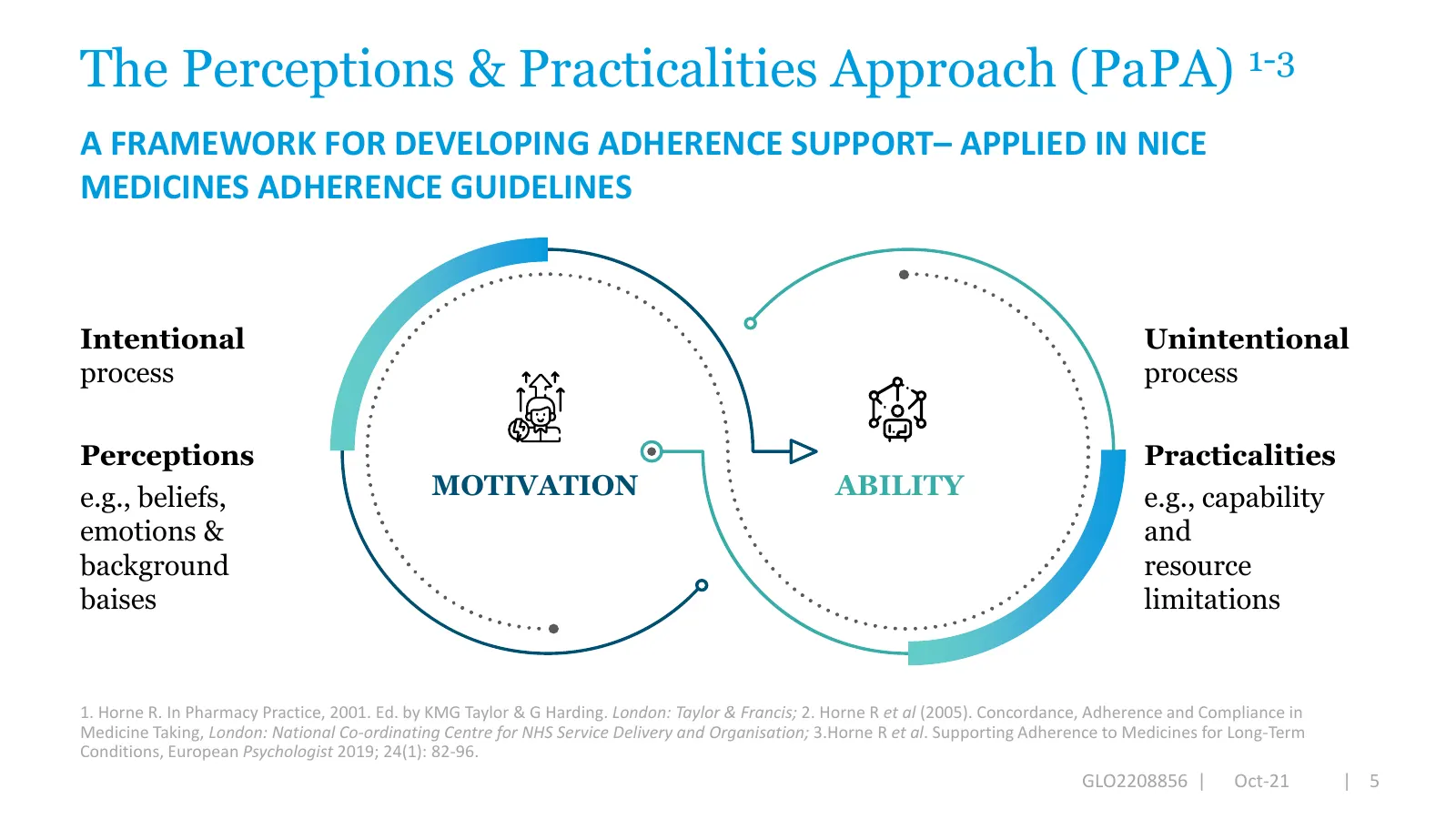
Slide 5: The Perceptions & Practicalities Approach (PaPA)
The Perceptions & Practicalities Approach (PaPA) 1-3 A FRAMEWORK FOR DEVELOPING ADHERENCE SUPPORT– APPLIED IN NICE MEDICINES ADHERENCE GUIDELINES Intentional Unintentional process process Perceptions Practicalities e.g., beliefs, MOTIVATION ABILITY e.g., capability emotions & and background resource
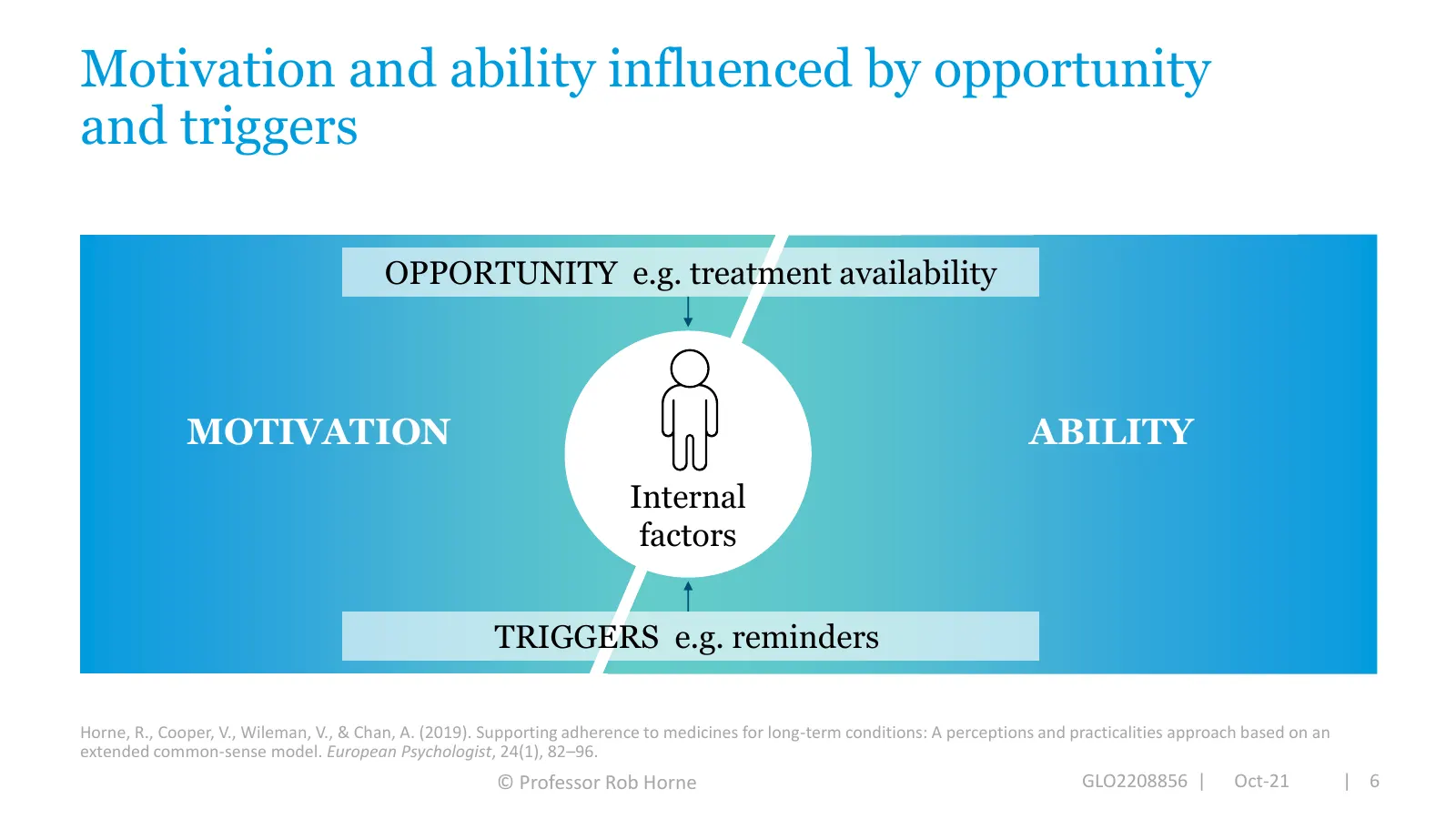
Slide 6: Motivation and ability influenced by opportunity and triggers
Motivation and ability influenced by opportunity and triggers OPPORTUNITY e.g. treatment availability MOTIVATION ABILITY Internal factors TRIGGERS e.g. reminders Horne, R., Cooper, V., Wileman, V., & Chan, A. (2019). Supporting adherence to medicines for long-term conditions: A perceptions and pract

Slide 7: What are the key beliefs influencing adherence?
What are the key beliefs influencing adherence? GLO2208856 | Oct-21 | 7
Slide 8: Understanding treatment beliefs: The Necessity-Concerns Framework
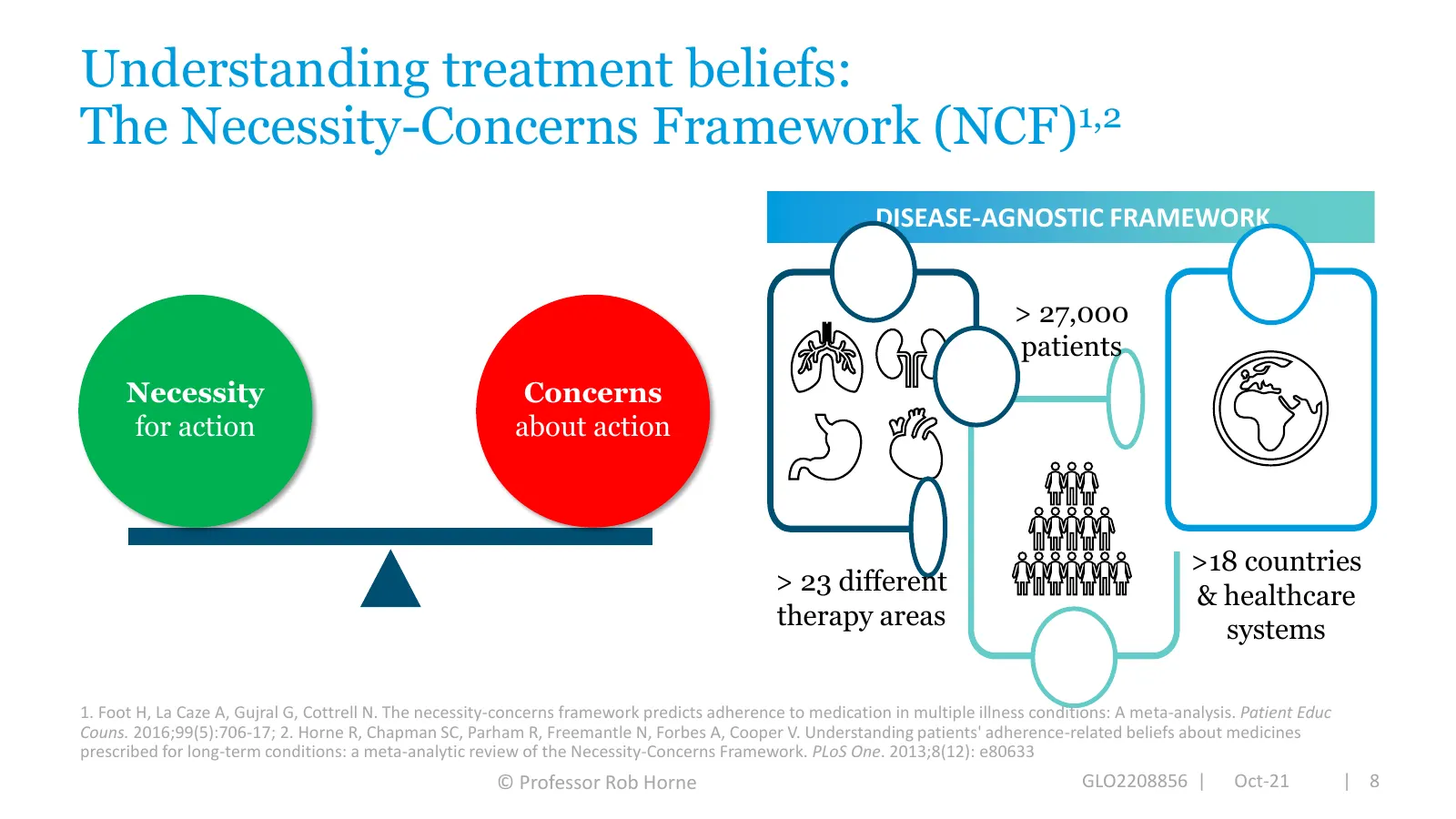
Understanding treatment beliefs: The Necessity-Concerns Framework (NCF)1,2 DISEASE-AGNOSTIC FRAMEWORK > 27,000 patients Necessity Concerns for action about action >18 countries > 23 different & healthcare therapy areas systems 1. Foot H, La Caze A, Gujral G, Cottrell N. The necessity-concerns framew
Slide 9: Specific concerns about medicines: Beyond side-effects
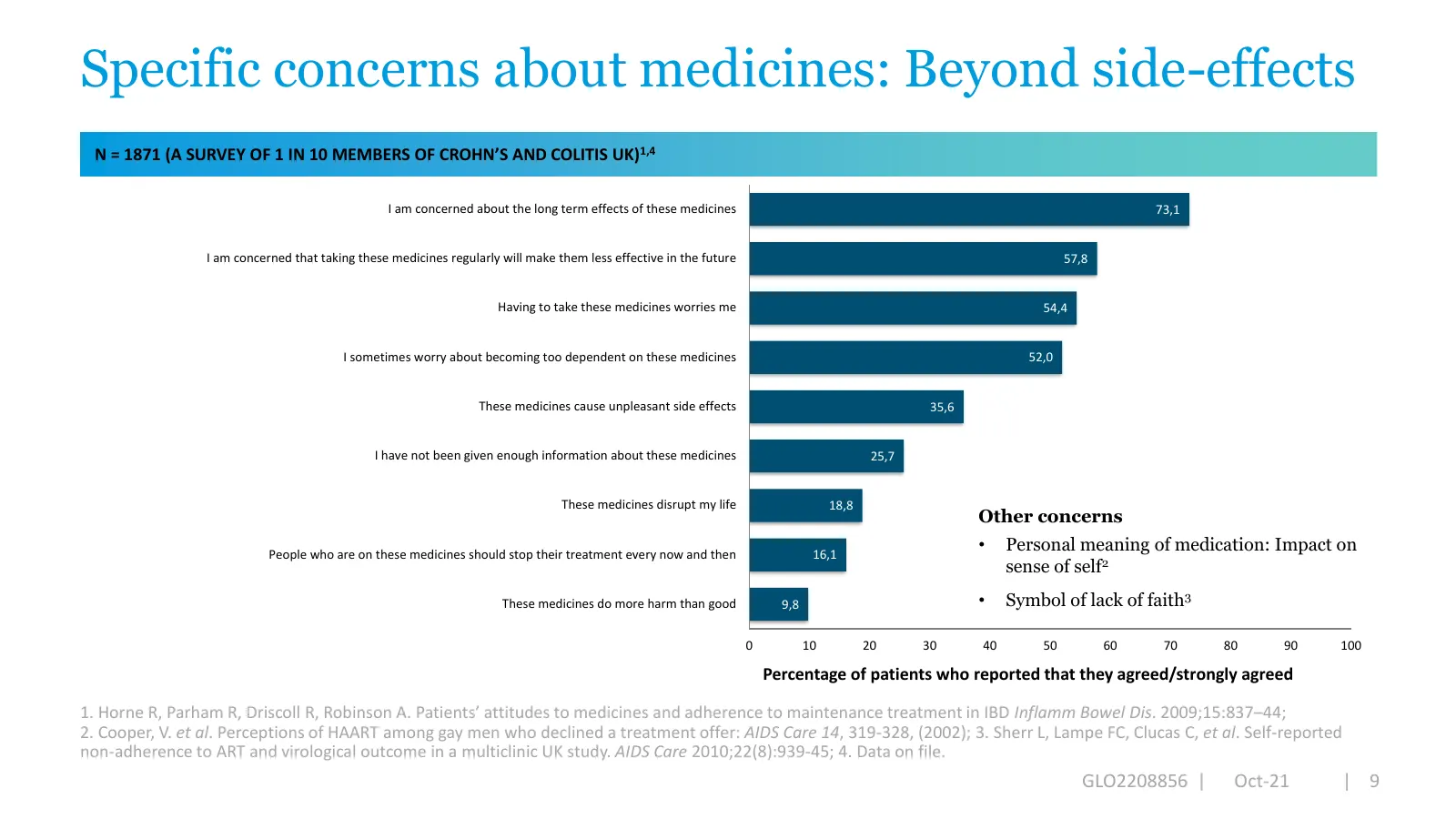
Specific concerns about medicines: Beyond side-effects N = 1871 (A SURVEY OF 1 IN 10 MEMBERS OF CROHN’S AND COLITIS UK)1,4 I am concerned about the long term effects of these medicines 73,1 I am concerned that taking these medicines regularly will make them less effective in the future 57,8 Having t

Slide 10: There may be disconnects between patient and HCP concerns
There may be disconnects between patient and HCP concerns Mismatch between patient and clinician ratings of ‘problems’? Patients rank ‘tolerability’ side effects as severe e.g. effect on family or partner, loss of hair, fatigue and nausea and vomiting1,2 Experience of subjective side effects reduces

Slide 11: Origins of Treatment Necessity beliefs and Concerns
Origins of Treatment Necessity beliefs and Concerns GLO2208856 | Oct-21 | 11
Slide 12: Common-sense fit and common-sense defaults
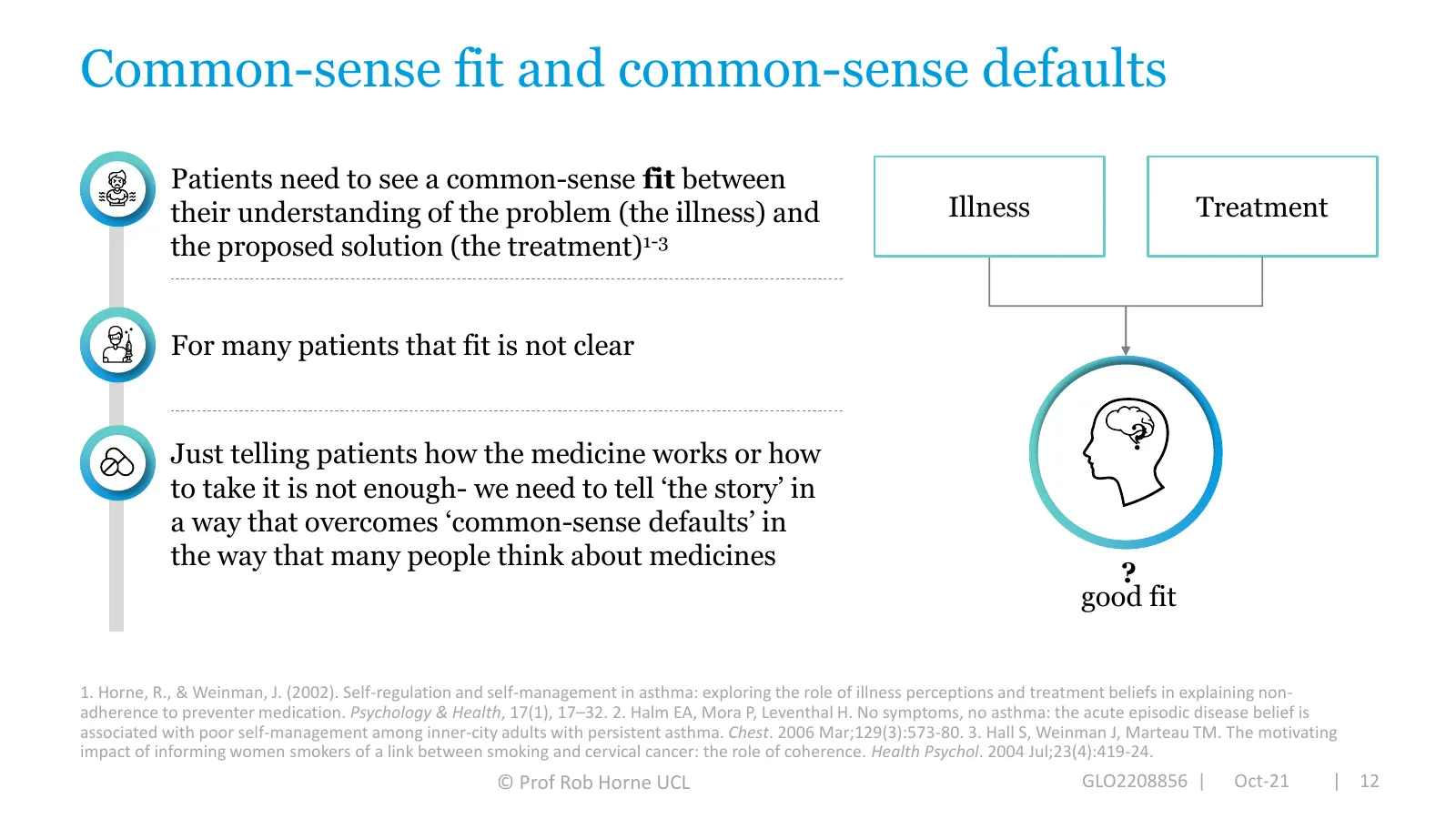
Common-sense fit and common-sense defaults Patients need to see a common-sense fit between their understanding of the problem (the illness) and Illness Treatment the proposed solution (the treatment)1-3 For many patients that fit is not clear Just telling patients how the medicine works or how ? to
Slide 13: Leventhal's common-sense model: Illness perceptions
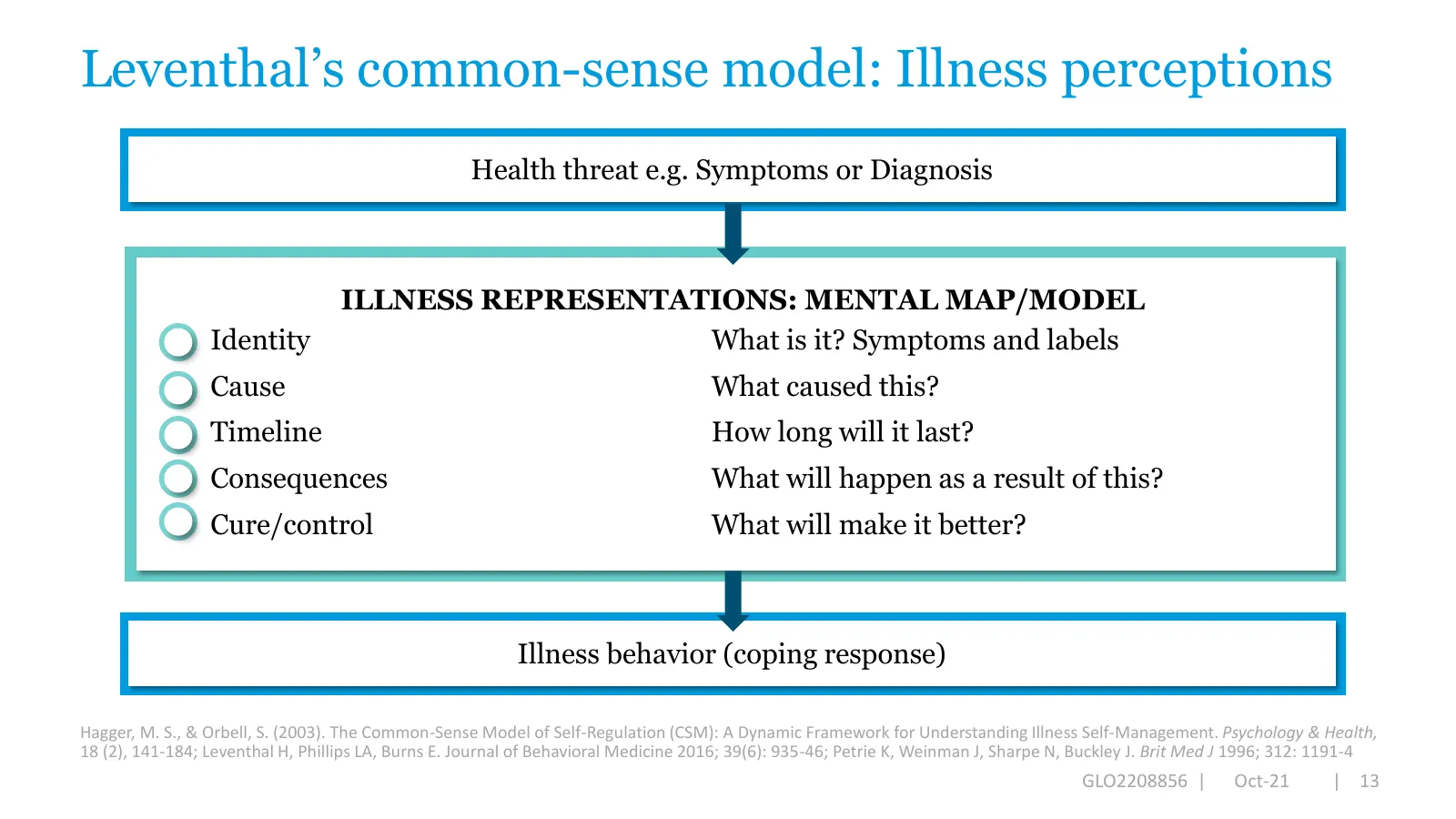
Leventhal’s common-sense model: Illness perceptions Health threat e.g. Symptoms or Diagnosis ILLNESS REPRESENTATIONS: MENTAL MAP/MODEL Identity What is it? Symptoms and labels Cause What caused this? Timeline How long will it last? Consequences What will happen as a result of this? Cure/control What
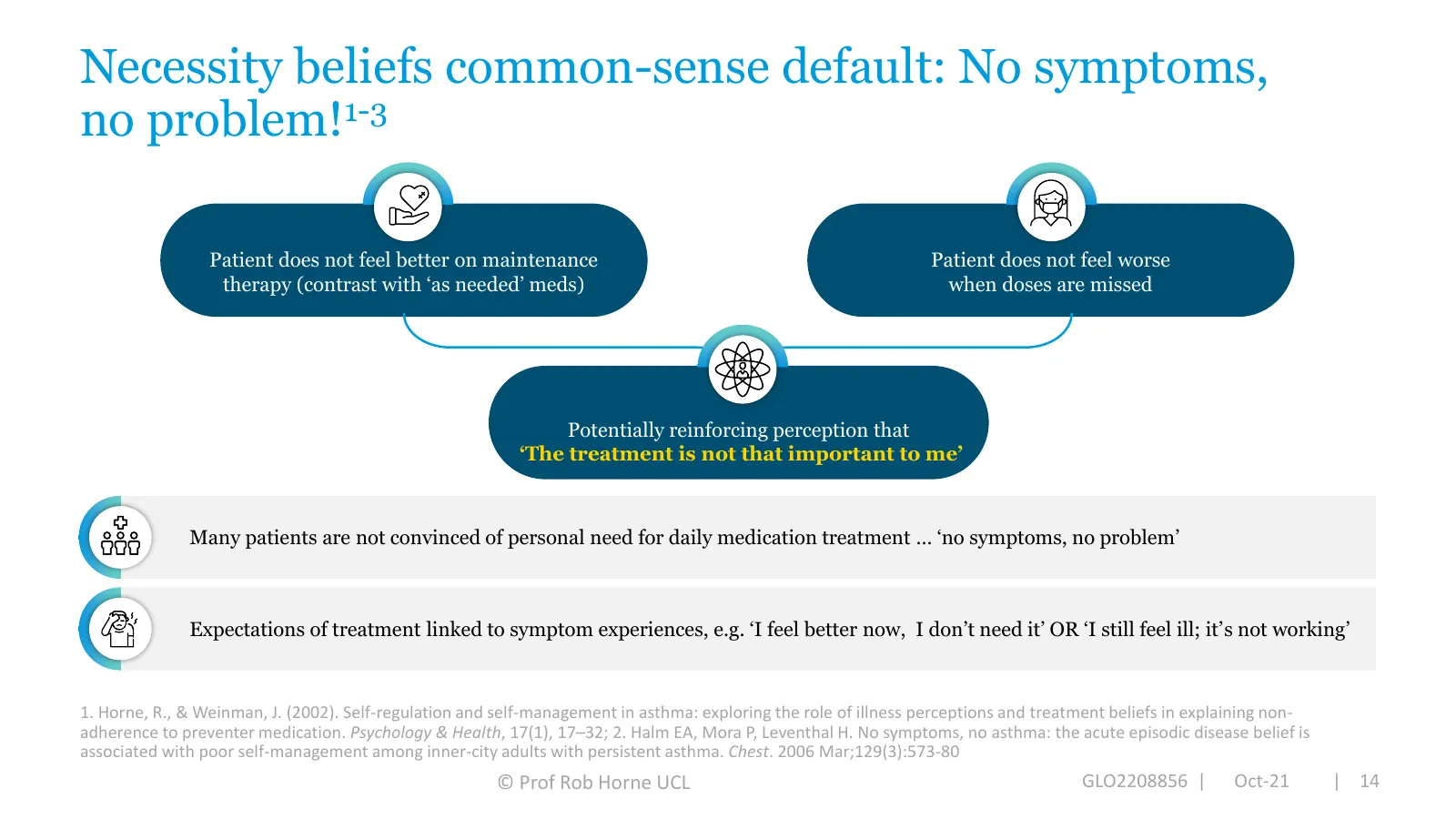
Slide 14: Necessity beliefs common-sense default: No symptoms, no problem
Necessity beliefs common-sense default: No symptoms, no problem!1-3 Patient does not feel better on maintenance Patient does not feel worse therapy (contrast with ‘as needed’ meds) when doses are missed Potentially reinforcing perception that ‘The treatment is not that important to me’ Many patients
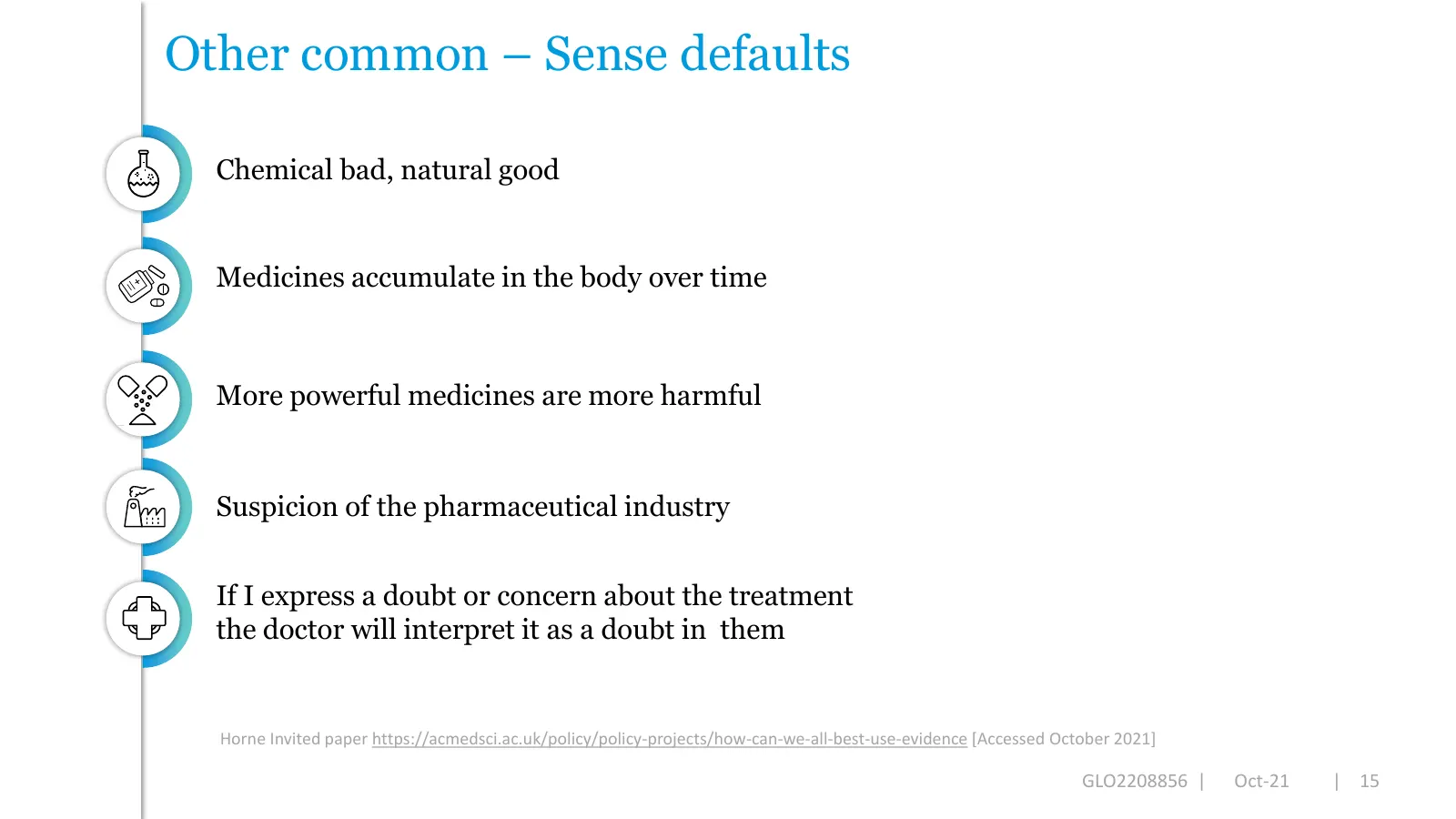
Slide 15: Other common-sense defaults
Other common – Sense defaults Chemical bad, natural good Medicines accumulate in the body over time More powerful medicines are more harmful Suspicion of the pharmaceutical industry If I express a doubt or concern about the treatment the doctor will interpret it as a doubt in them Horne Invited pape
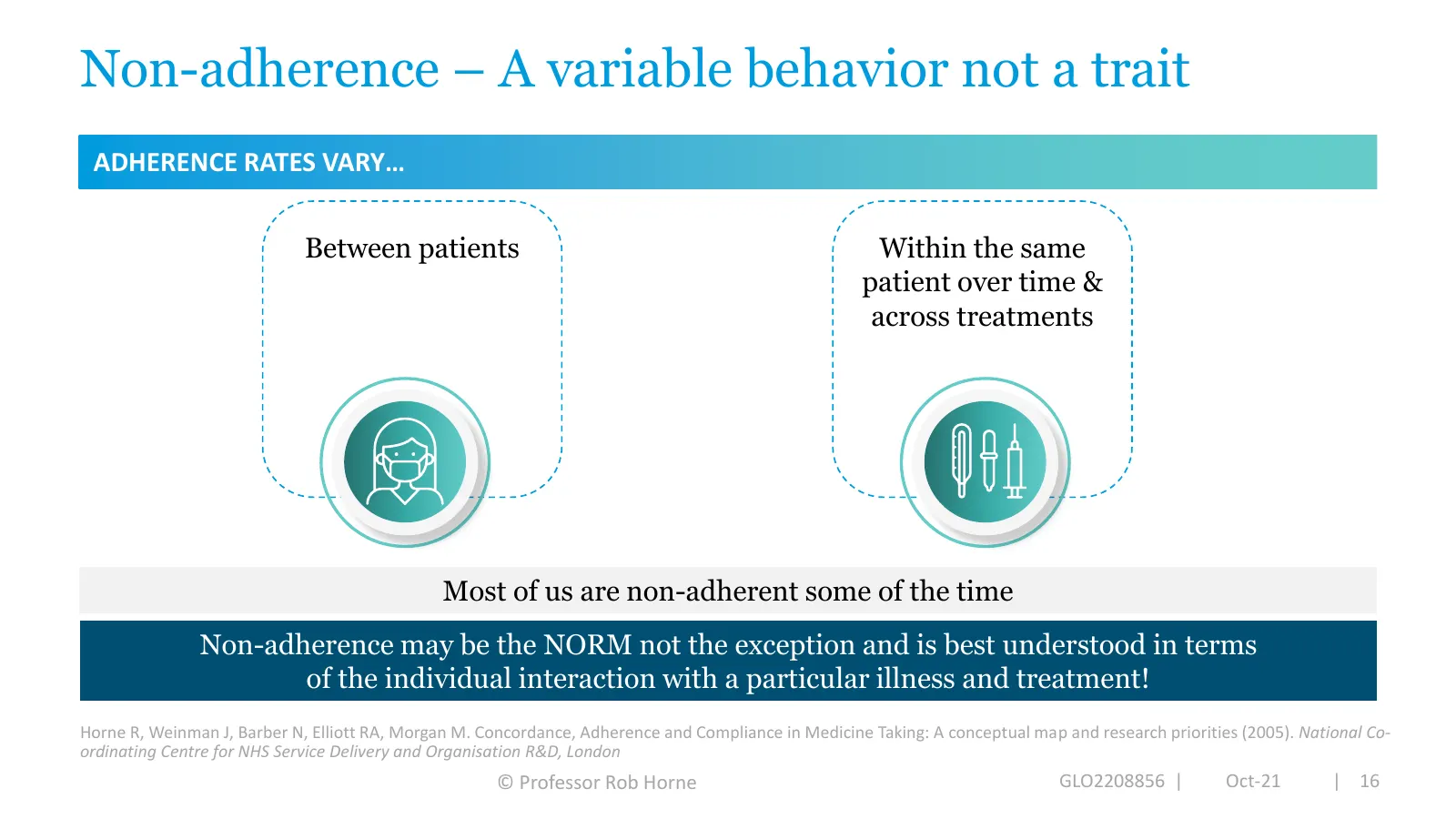
Slide 16: Non-adherence – A variable behavior not a trait
Non-adherence – A variable behavior not a trait ADHERENCE RATES VARY… Between patients Within the same patient over time & across treatments Most of us are non-adherent some of the time Non-adherence may be the NORM not the exception and is best understood in terms of the individual interaction with
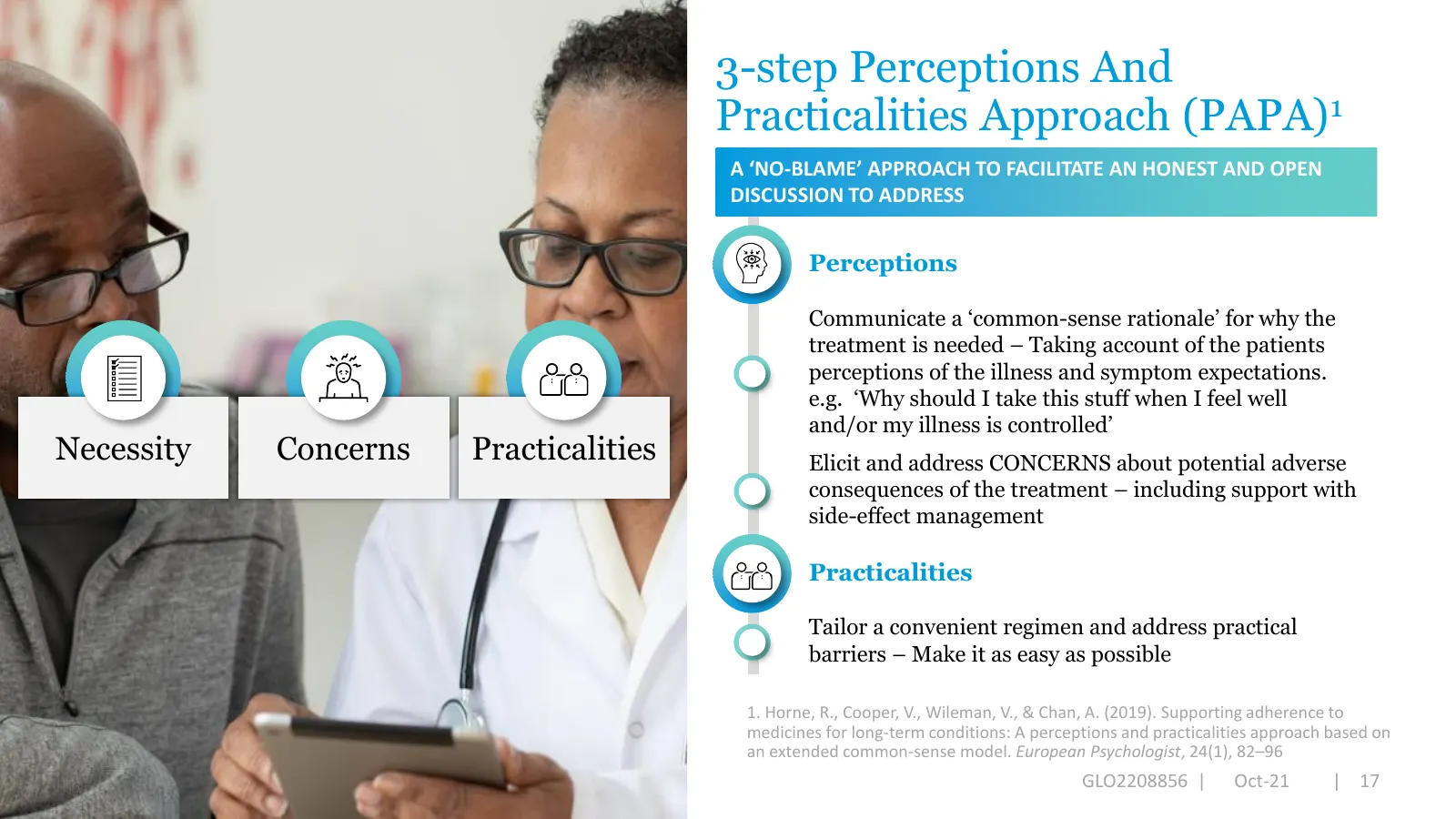
Slide 17: 3-step Perceptions And Practicalities Approach (PAPA)
3-step Perceptions And Practicalities Approach (PAPA)1 A ‘NO-BLAME’ APPROACH TO FACILITATE AN HONEST AND OPEN DISCUSSION TO ADDRESS Perceptions Communicate a ‘common-sense rationale’ for why the treatment is needed – Taking account of the patients perceptions of the illness and symptom expectations.
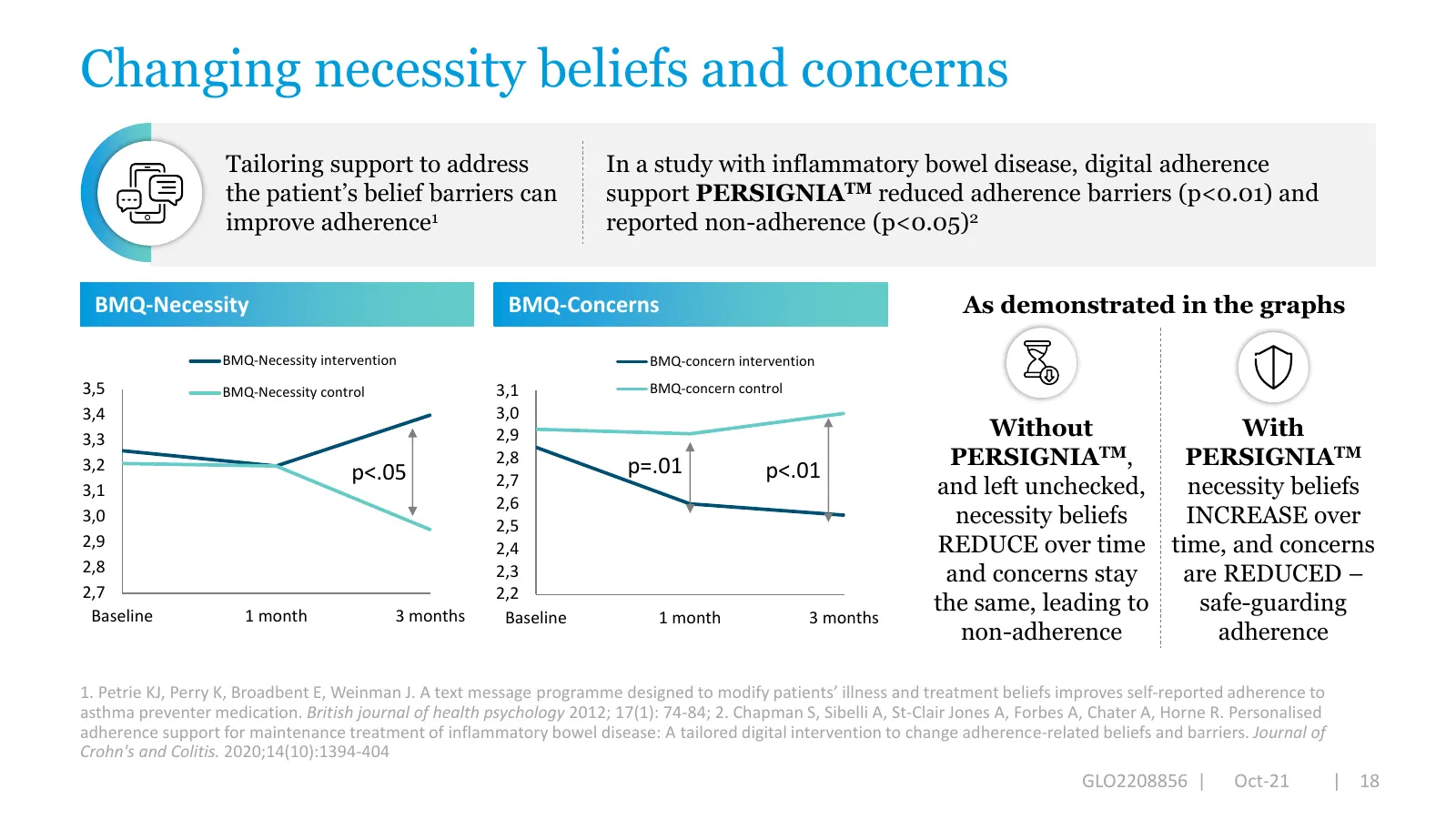
Slide 18: Changing necessity beliefs and concerns
Changing necessity beliefs and concerns Tailoring support to address In a study with inflammatory bowel disease, digital adherence the patient’s belief barriers can support PERSIGNIATM reduced adherence barriers (p<0.01) and improve adherence1 reported non-adherence (p<0.05)2 BMQ-Necessity BMQ-Conce
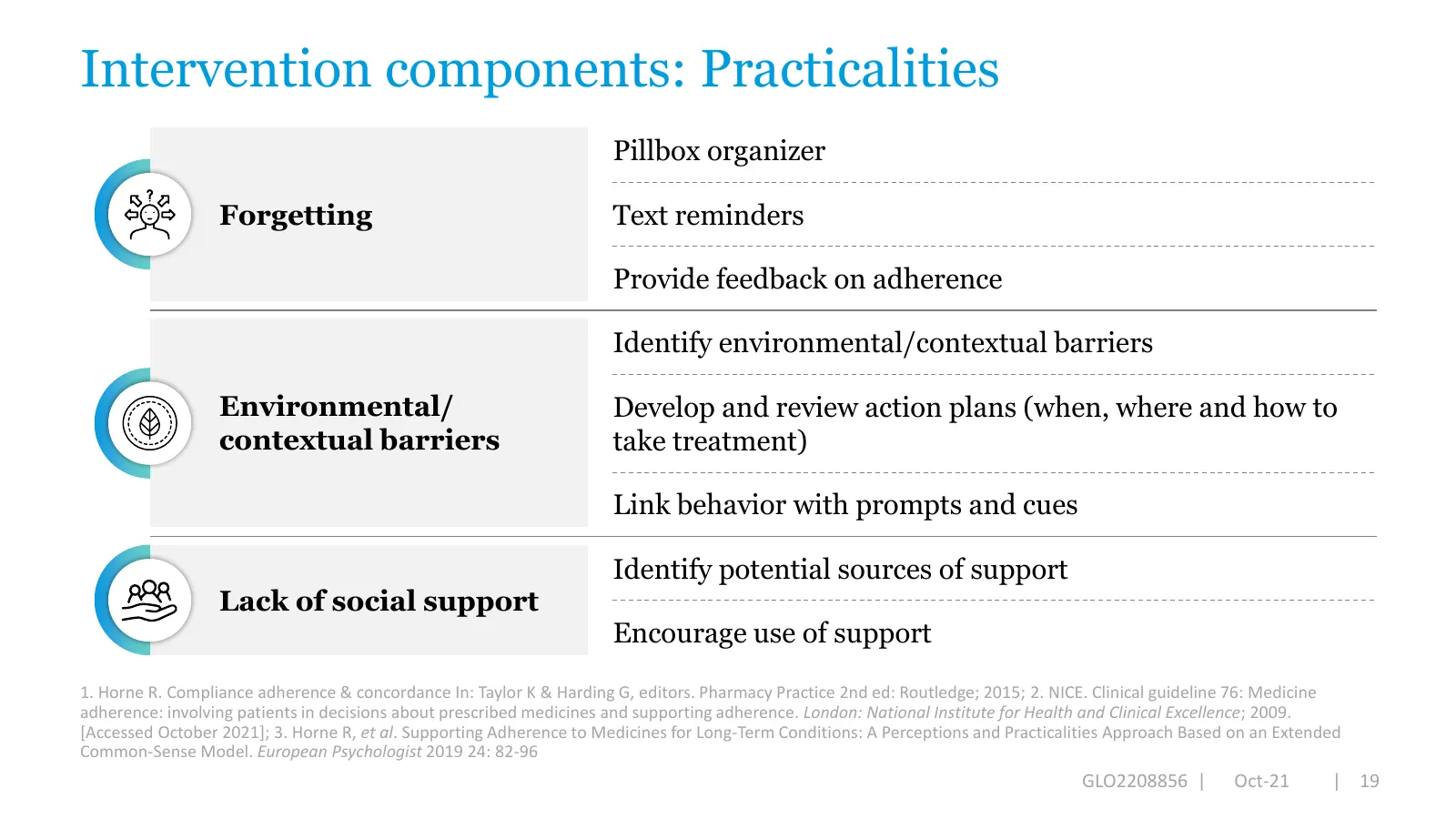
Slide 19: Intervention components: Practicalities
Intervention components: Practicalities Pillbox organizer Forgetting Text reminders Provide feedback on adherence Identify environmental/contextual barriers Environmental/ Develop and review action plans (when, where and how to contextual barriers take treatment) Link behavior with prompts and cues
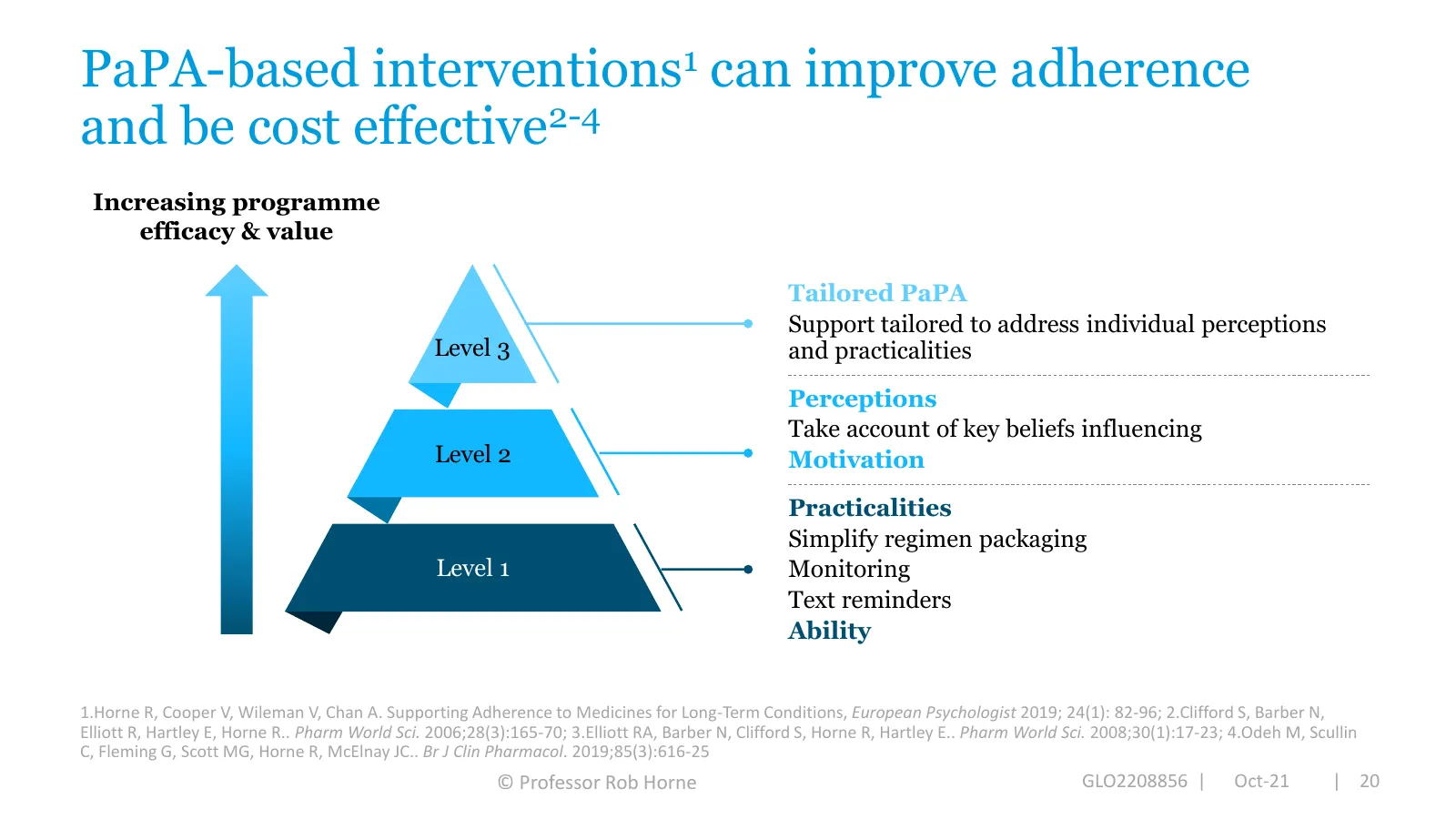
Slide 20: PaPA-based interventions can improve adherence and be cost effective
PaPA-based interventions1 can improve adherence and be cost effective2-4 Increasing programme efficacy & value Tailored PaPA Support tailored to address individual perceptions Level 3 and practicalities Perceptions Take account of key beliefs influencing Level 2 Motivation Practicalities Simplify re
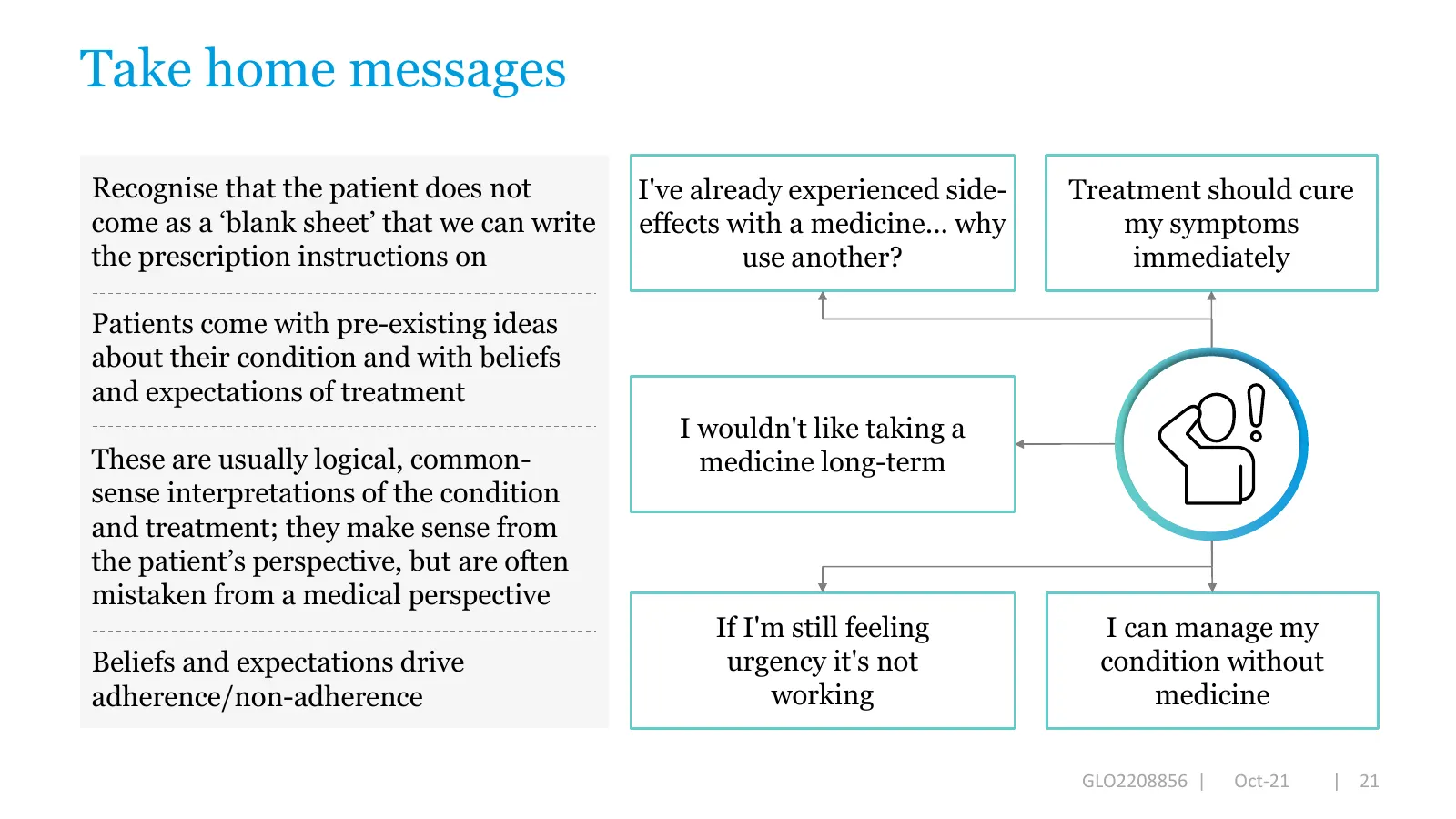
Slide 21: Take home messages
Take home messages Recognise that the patient does not I've already experienced side- Treatment should cure come as a ‘blank sheet’ that we can write effects with a medicine... why my symptoms the prescription instructions on use another? immediately Patients come with pre-existing ideas about their
Source: Internet Archive copy of acarepro.abbott.com
More decks from Abbott Laboratories
 Merger or Acquisition (November 2025)13 slides · Nov 20, 2025
 Technical Presentation (October 2025)16 slides · Oct 26, 2025
 Investor Presentation (October 2024)41 slides · October 2024
 Conference Presentation (October 2024)24 slides · October 2024
 Technical Presentation (November 2023)8 slides · November 2023
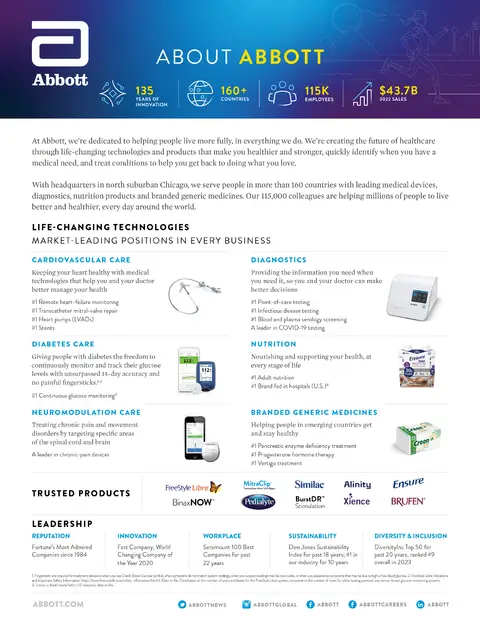 Fact Sheet (October 2023)1 slide · Oct 11, 2023