ARM Holdings PLC · NASDAQ:ARM
ARM — Technical Presentation
14 slides from ARM's technical presentation
Slide 1: 2GHz Capable Cortex-A9 Dual Core Processor Implementation
2GHZ CAPABLE CORTEX-A9 DUAL CORE PROCESSOR IMPLEMENTATION ARM Cortex processor and physical IP deliver high-performance and low-power processing for consumer and enterprise markets 1
Slide 2: Market Considerations
Market Considerations Today’s high performance embedded devices: Typically use a proprietary architecture such as x86, PowerPC or MIPS64 Available from only a single vendor, limiting choice Limited R&D investment and development roadmap Today ARM is a very successful low-power embedded pro
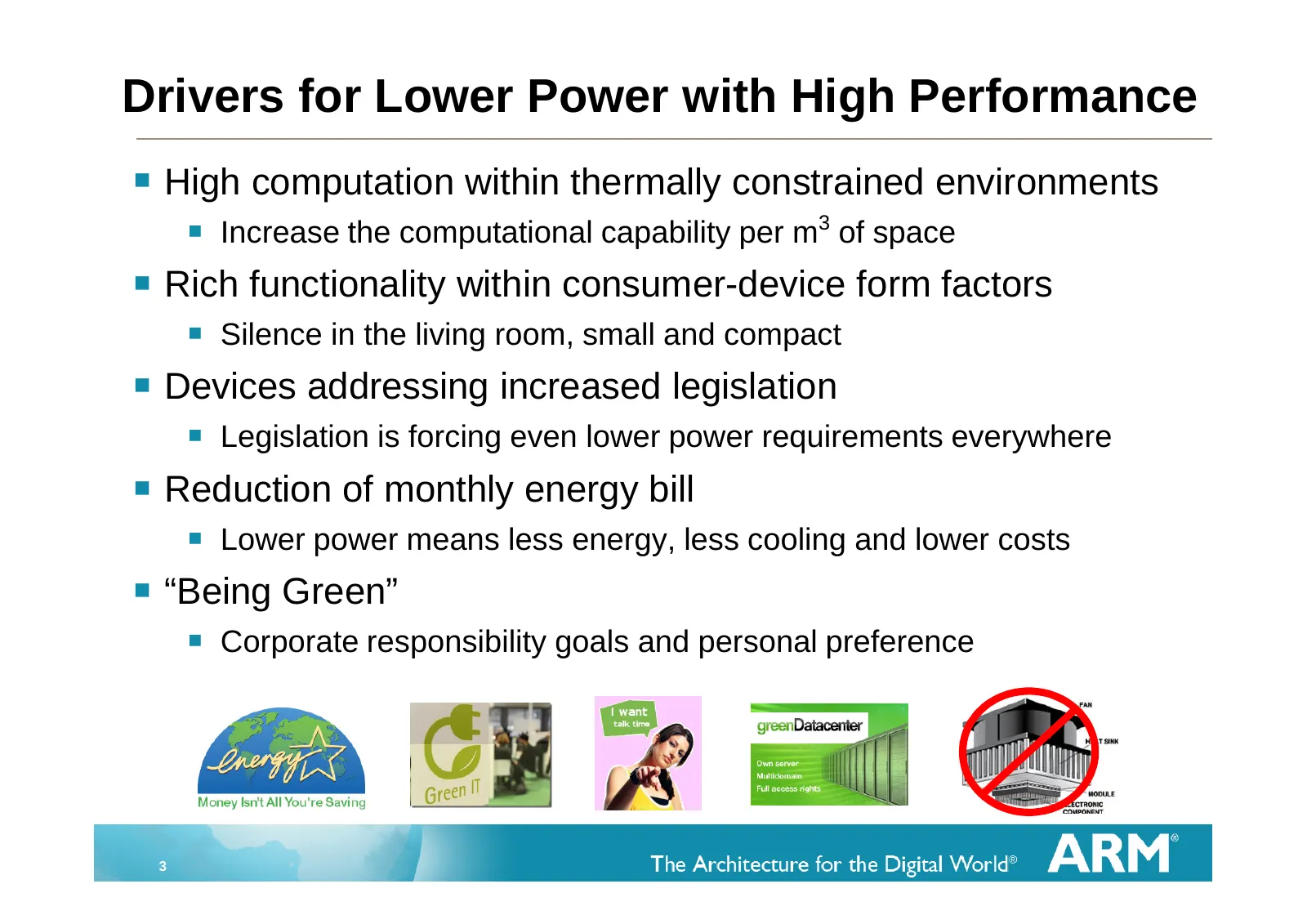
Slide 3: Drivers for Lower Power with High Performance
Drivers for Lower Power with High Performance High computation within thermally constrained environments Increase the computational capability per m3 of space Rich functionality within consumer-device form factors Silence in the living room, small and compact Devices addressing increased l
Slide 4: Introducing the Cortex-A9 Hard Macros
Introducing the Cortex-A9 Hard Macros Cortex-A9 TSMC 40G Speed Optimized implementation Performance optimized dual core processor for enterprise servers, networking, printers and other peak performance applications requiring 1 - 2GHz+ Cortex-A9 TSMC 40G Power Optimized implementation Power o
Slide 5: Expanding ARM low-power into new markets
Expanding ARM low-power into new markets Enabling new markets with the low-power leadership inherent in the ARM solution Utilizing the Cortex-A9 MPCore™ multicore processor announced for use in next generation mobile handsets Designed with advanced power management techniques and implemented w
Slide 6: Bringing Less Power, Higher Performance
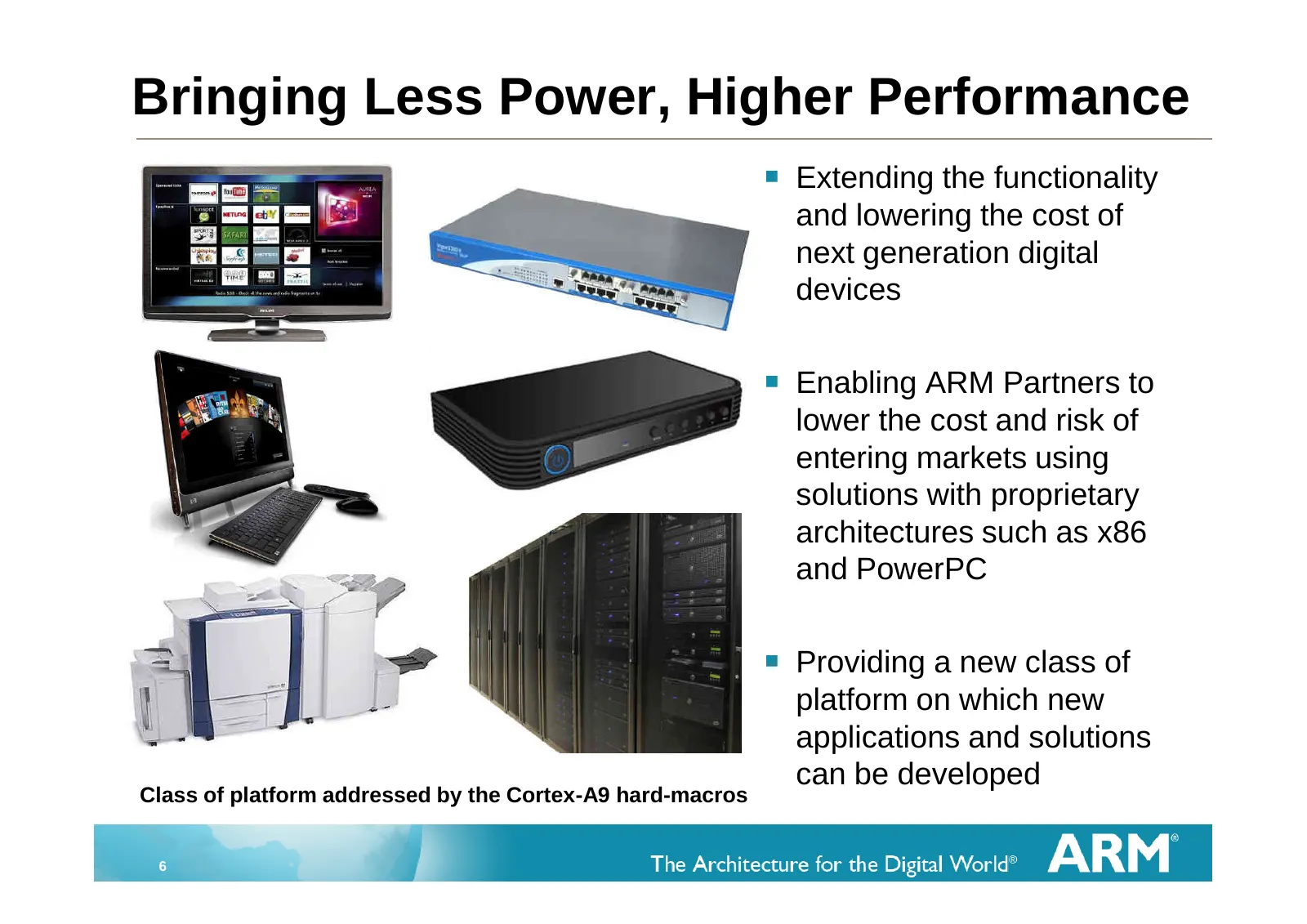
Bringing Less Power, Higher Performance Extending the functionality and lowering the cost of next generation digital devices Enabling ARM Partners to lower the cost and risk of entering markets using solutions with proprietary architectures such as x86 and PowerPC Providing a new class of plat
Slide 7: Macro Configuration and Floorplan
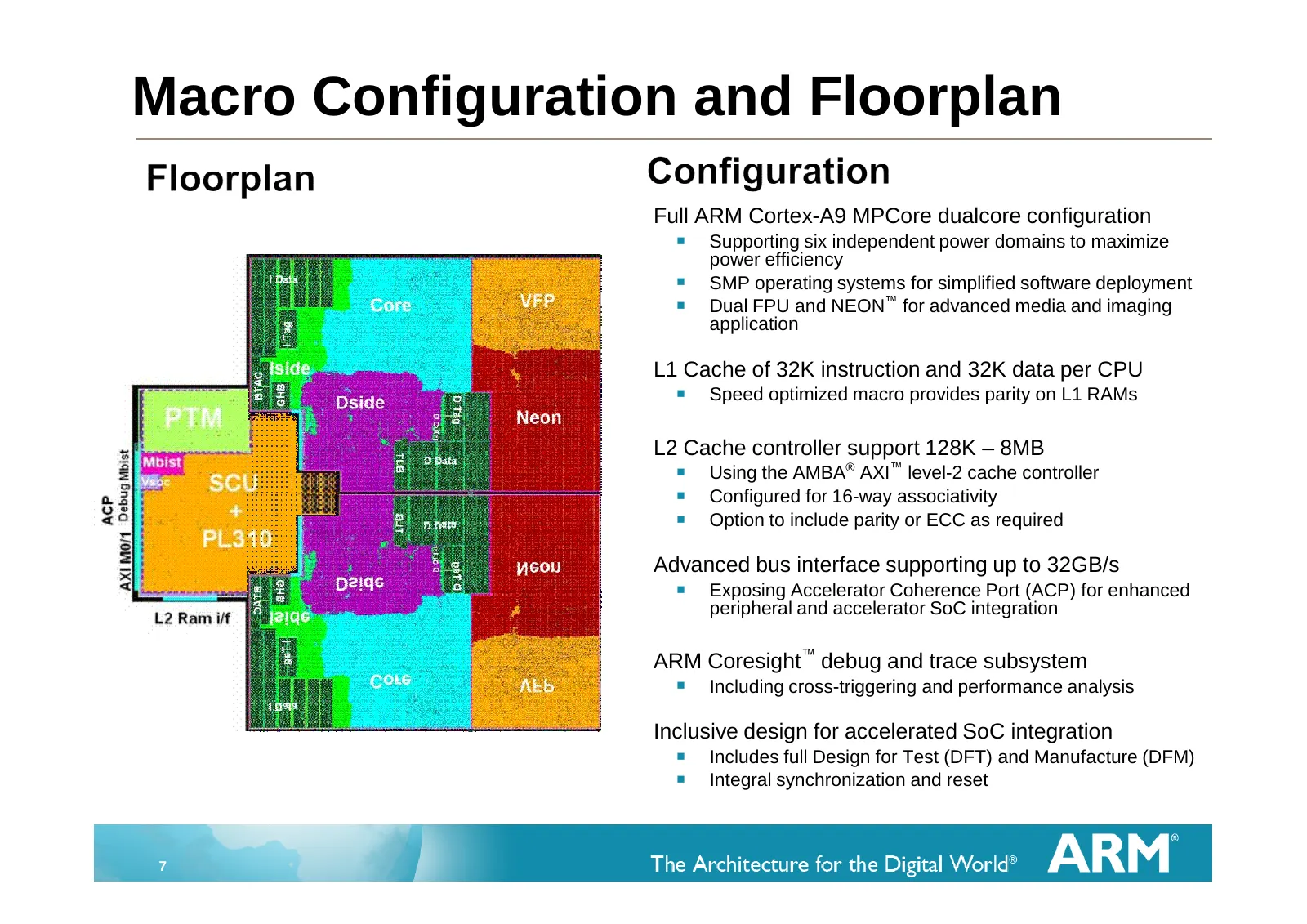
Macro Configuration and Floorplan Full ARM Cortex-A9 MPCore dualcore configuration Supporting six independent power domains to maximize power efficiency SMP operating systems for simplified software deployment Dual FPU and NEON™ for advanced media and imaging application L1 Cache of 32K inst
Slide 8: Design Characteristics
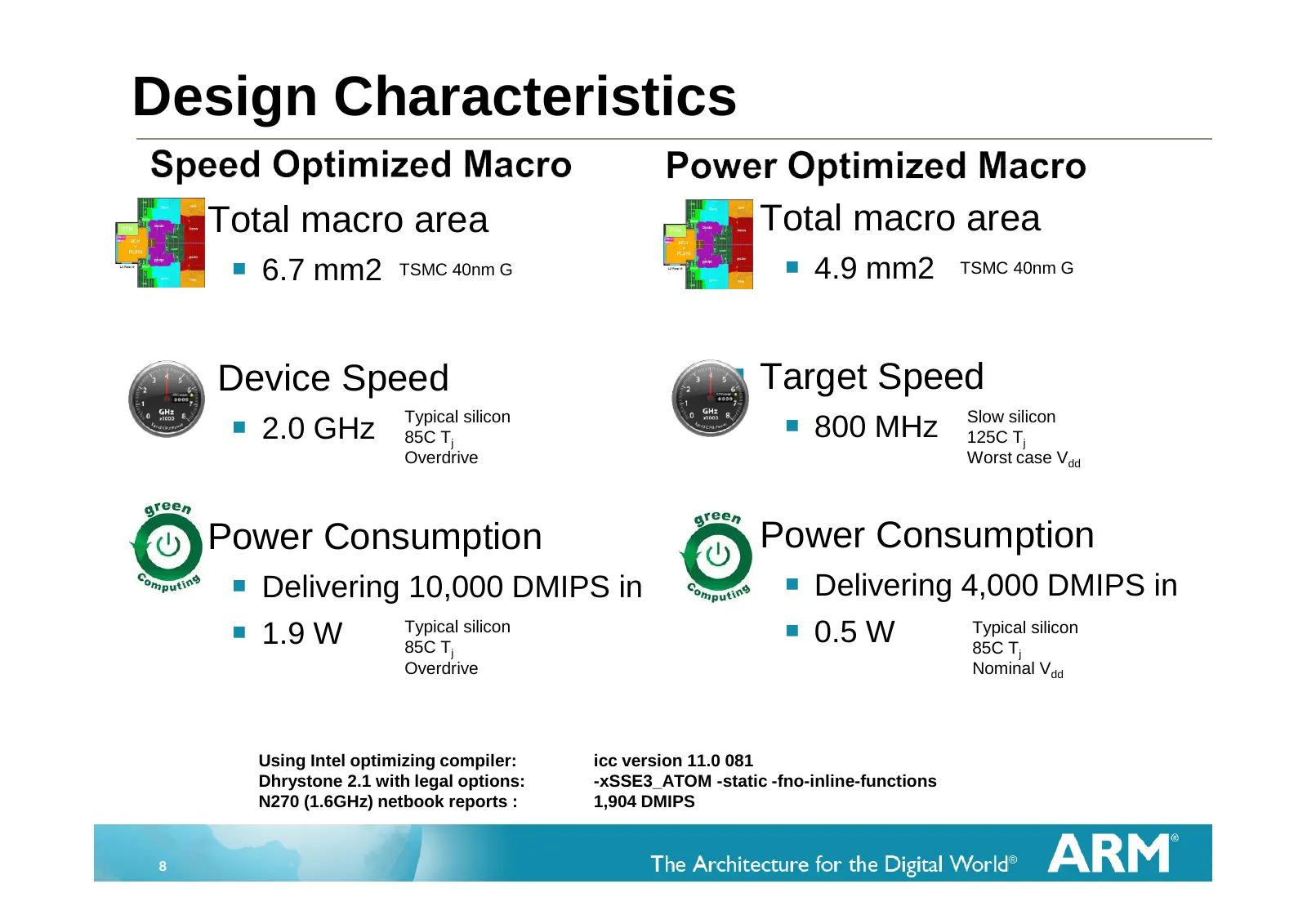
Design Characteristics Total macro area Total macro area 6.7 mm2 TSMC 40nm G 4.9 mm2 TSMC 40nm G Device Speed Target Speed 2.0 GHz Typical silicon 85C Tj 800 MHz Slow silicon 125C Tj Overdrive Worst case Vdd Power Consumption Power Consumption Delivering 10,000 DMIPS in Deliv
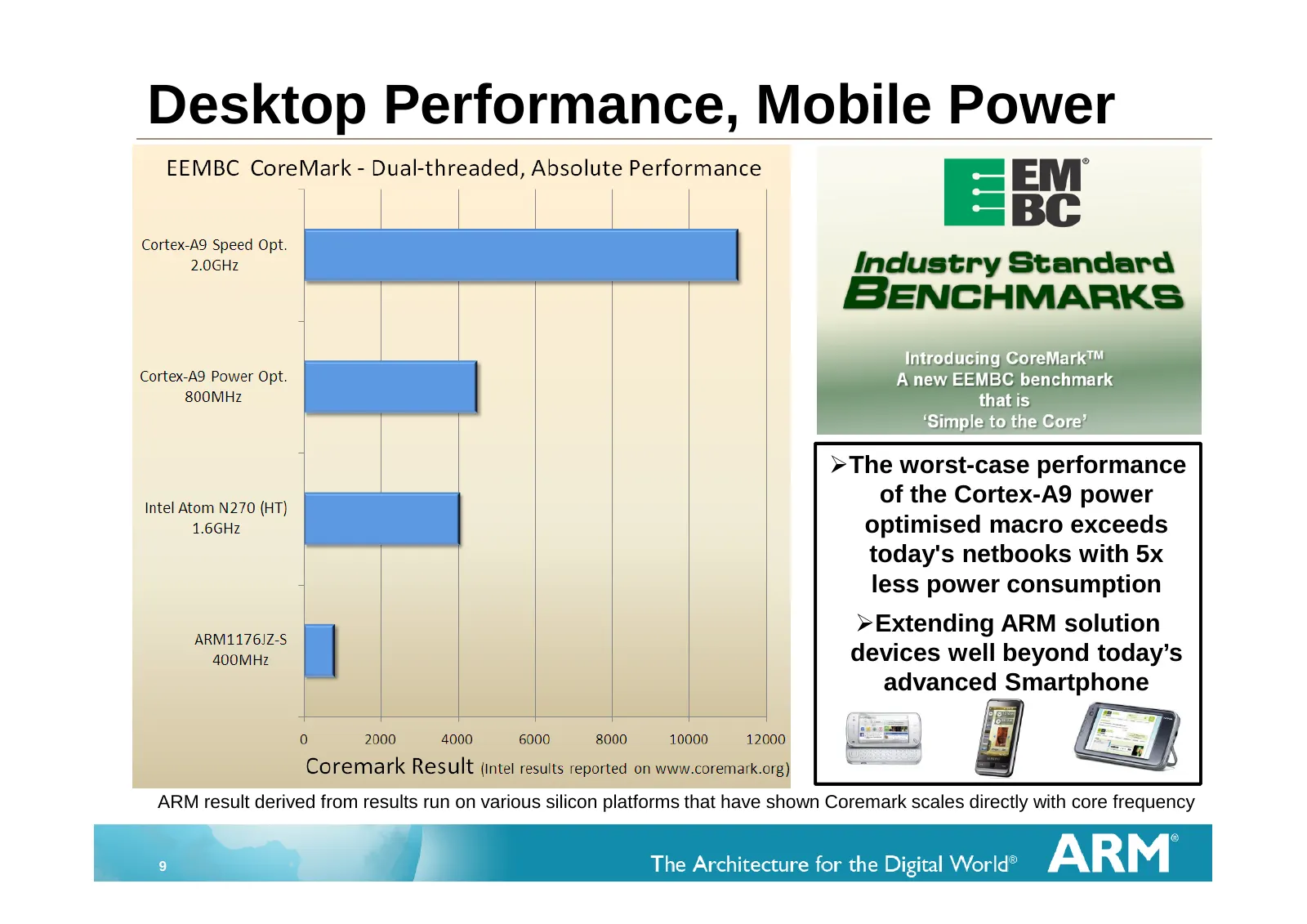
Slide 9: Desktop Performance, Mobile Power
Desktop Performance, Mobile Power The worst-case performance of the Cortex-A9 power optimised macro exceeds today's netbooks with 5x less power consumption Extending ARM solution devices well beyond today’s advanced Smartphone ARM result derived from results run on various silicon platforms that h
Slide 10: Advanced Power Management Support
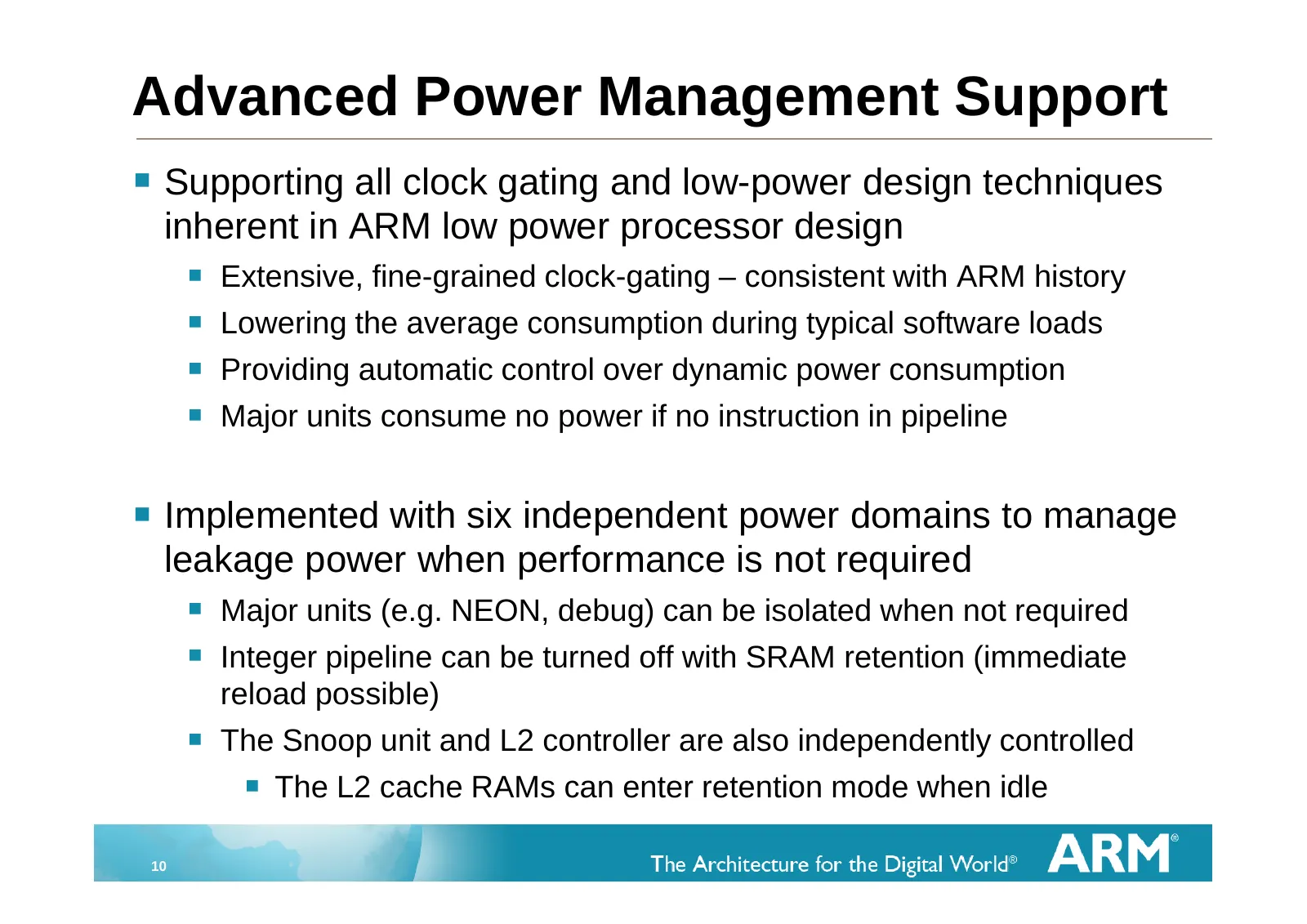
Advanced Power Management Support Supporting all clock gating and low-power design techniques inherent in ARM low power processor design Extensive, fine-grained clock-gating – consistent with ARM history Lowering the average consumption during typical software loads Providing automatic contr
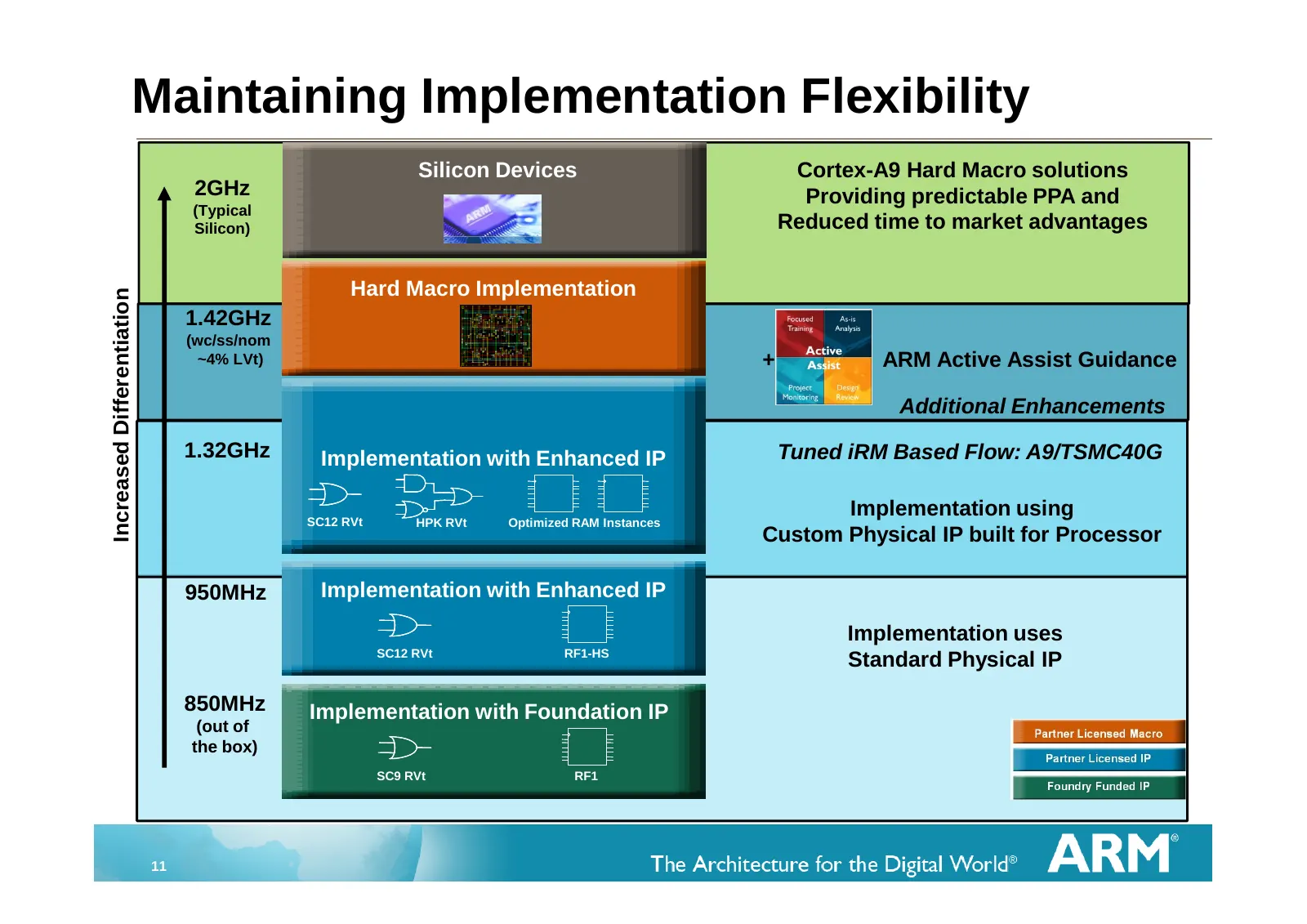
Slide 11: Increased Differentiation: Maintaining Implementation Flexibility
Maintaining Implementation Flexibility Silicon Devices Cortex-A9 Hard Macro solutions 2GHz Providing predictable PPA and (Typical Silicon) Reduced time to market advantages Hard Macro Implementation Increased Differentiation 1.42GHz (wc/ss/nom ~4% LVt) + ARM Active Assist Guidance Additional Enhance
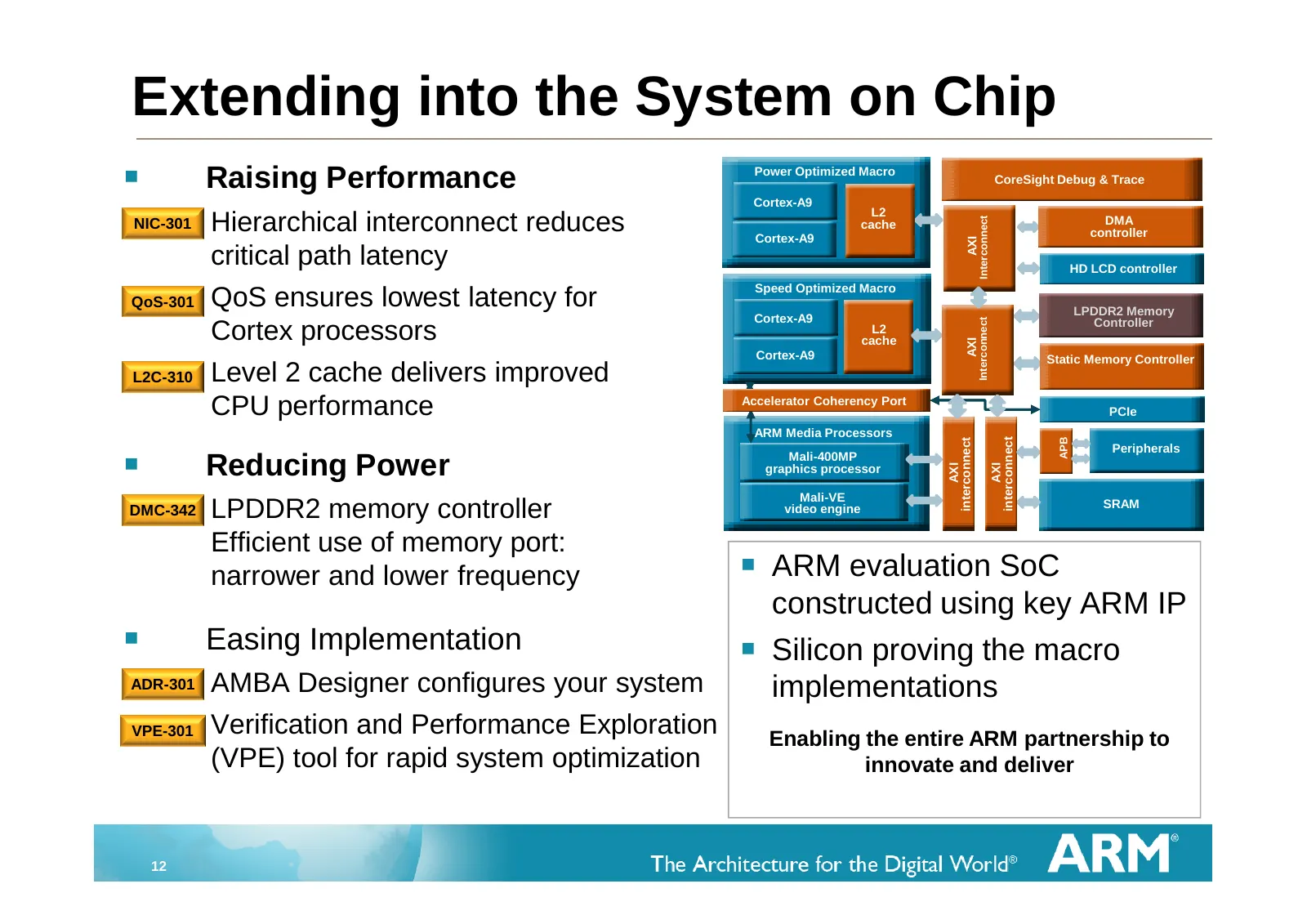
Slide 12: Extending into the System on Chip
Extending into the System on Chip Raising Performance Power Optimized Macro Cortex-A9 CoreSight Debug & Trace Hierarchical interconnect reduces L2 Interconnect NIC-301 cache DMA Cortex-A9 controller AXI critical path latency HD LCD controller QoS ensures lowest latency for QoS-301 Speed Optimi
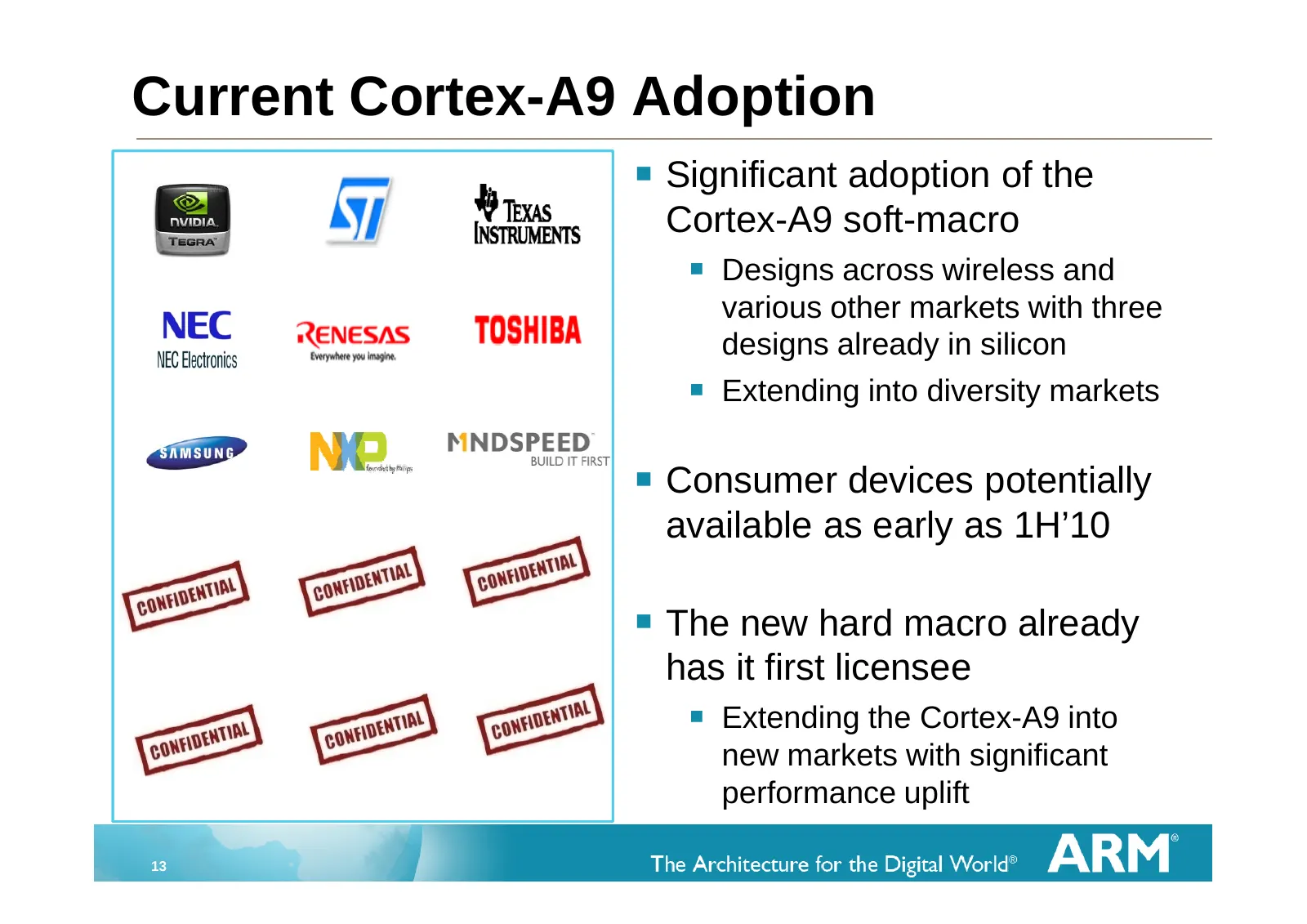
Slide 13: Current Cortex-A9 Adoption
Current Cortex-A9 Adoption Significant adoption of the Cortex-A9 soft-macro Designs across wireless and various other markets with three designs already in silicon Extending into diversity markets Consumer devices potentially available as early as 1H’10 The new hard macro already has it fi
Slide 14: Conclusions
Conclusions ARM introduces two hard macro implementations providing accelerated time to market and lower risk to our Partners to adopt the Cortex-A9 in new high-performance embedded computing platforms The performance and low power characteristics of these implementation are such that they could
Source: Internet Archive copy of arm.com
More decks from ARM Holdings PLC
 Q2 FYE27 Earnings Presentation15 slides · November 2026
 Technical Presentation (2026)29 slides · Aug 7, 2026
 Q1 FYE27 Earnings Presentation11 slides · August 2026
 Q4 FYE26 Earnings Presentation36 slides · May 6, 2026
 Investor Presentation (March 2026)29 slides · March 2026
 Q3 FYE26 Earnings Presentation24 slides · Feb 4, 2026