Daiichi Sankyo Company, Limited · TSE:4568
Daiichi Sankyo — Technical Presentation (2022)
109 slides from Daiichi Sankyo's technical presentation, 2022
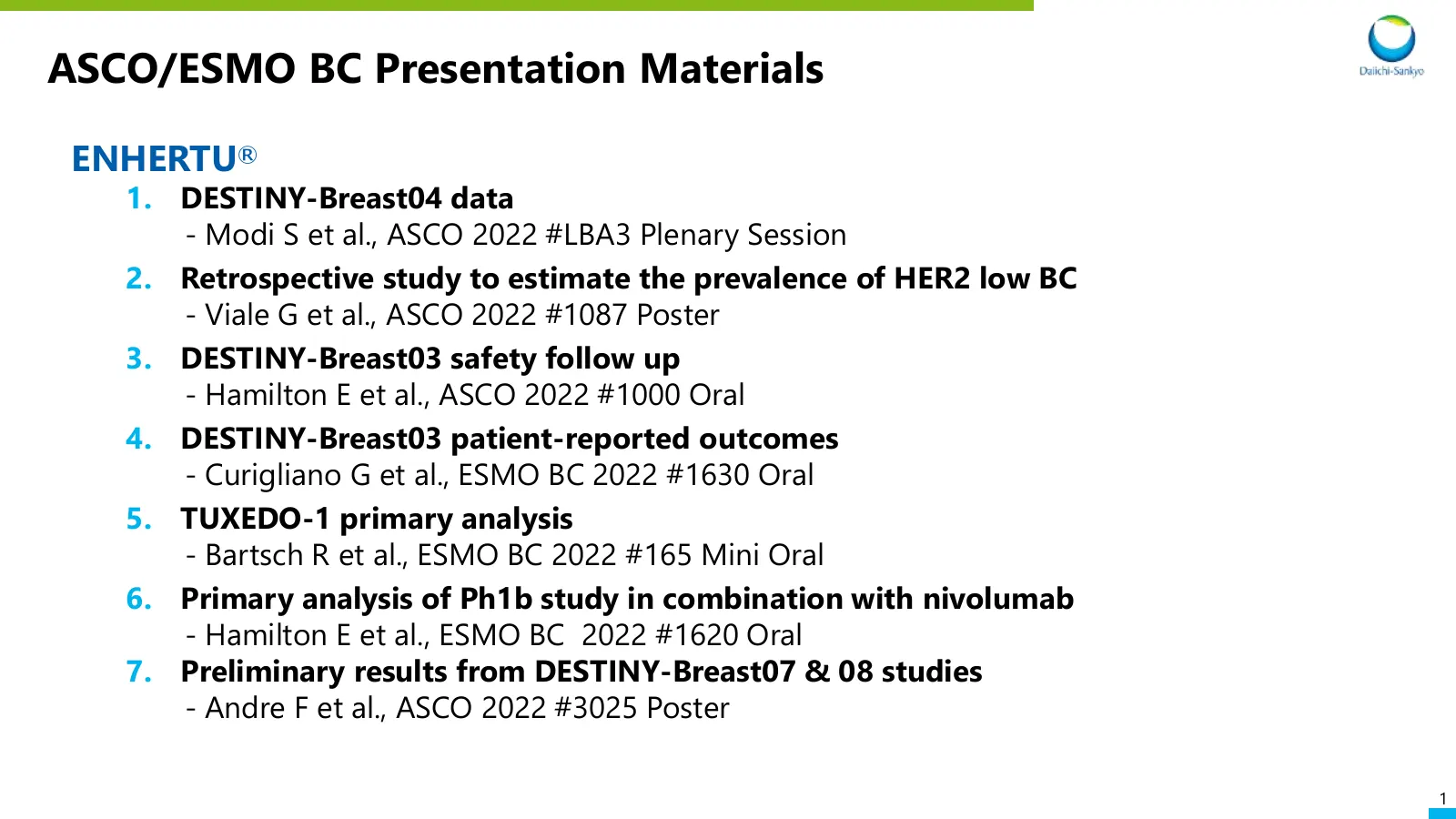
Slide 1: ASCO/ESMO BC Presentation Materials
ASCO/ESMO BC Presentation Materials ENHERTUⓇ 1. DESTINY-Breast04 data - Modi S et al., ASCO 2022 #LBA3 Plenary Session 2. Retrospective study to estimate the prevalence of HER2 low BC - Viale G et al., ASCO 2022 #1087 Poster 3. DESTINY-Breast03 safety follow up - Hamilton E et al., ASCO 2022 #1000 O
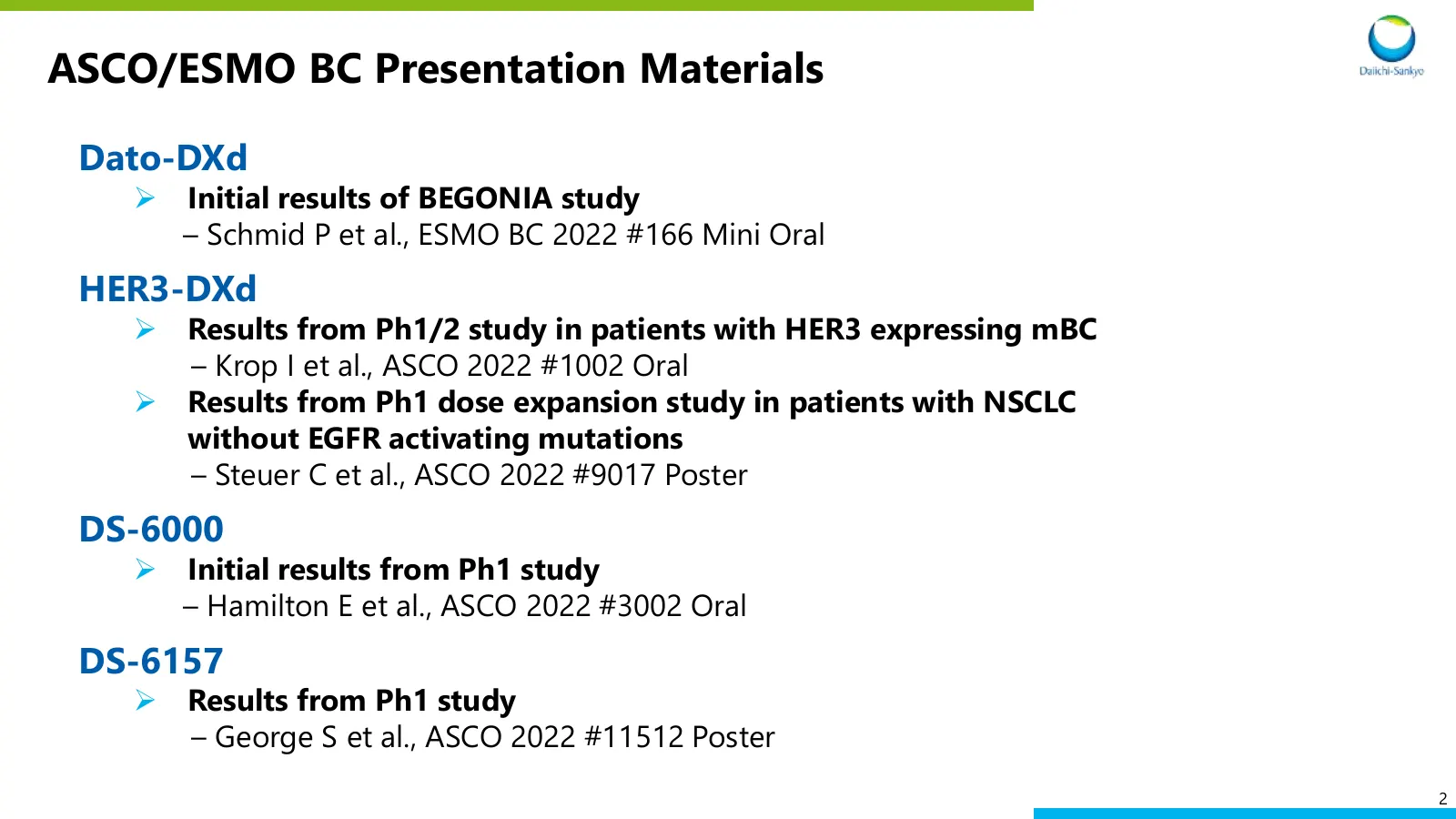
Slide 2: ASCO/ESMO BC Presentation Materials
ASCO/ESMO BC Presentation Materials Dato-DXd ➢ Initial results of BEGONIA study – Schmid P et al., ESMO BC 2022 #166 Mini Oral HER3-DXd ➢ Results from Ph1/2 study in patients with HER3 expressing mBC – Krop I et al., ASCO 2022 #1002 Oral ➢ Results from Ph1 dose expansion study in patients with NSCLC
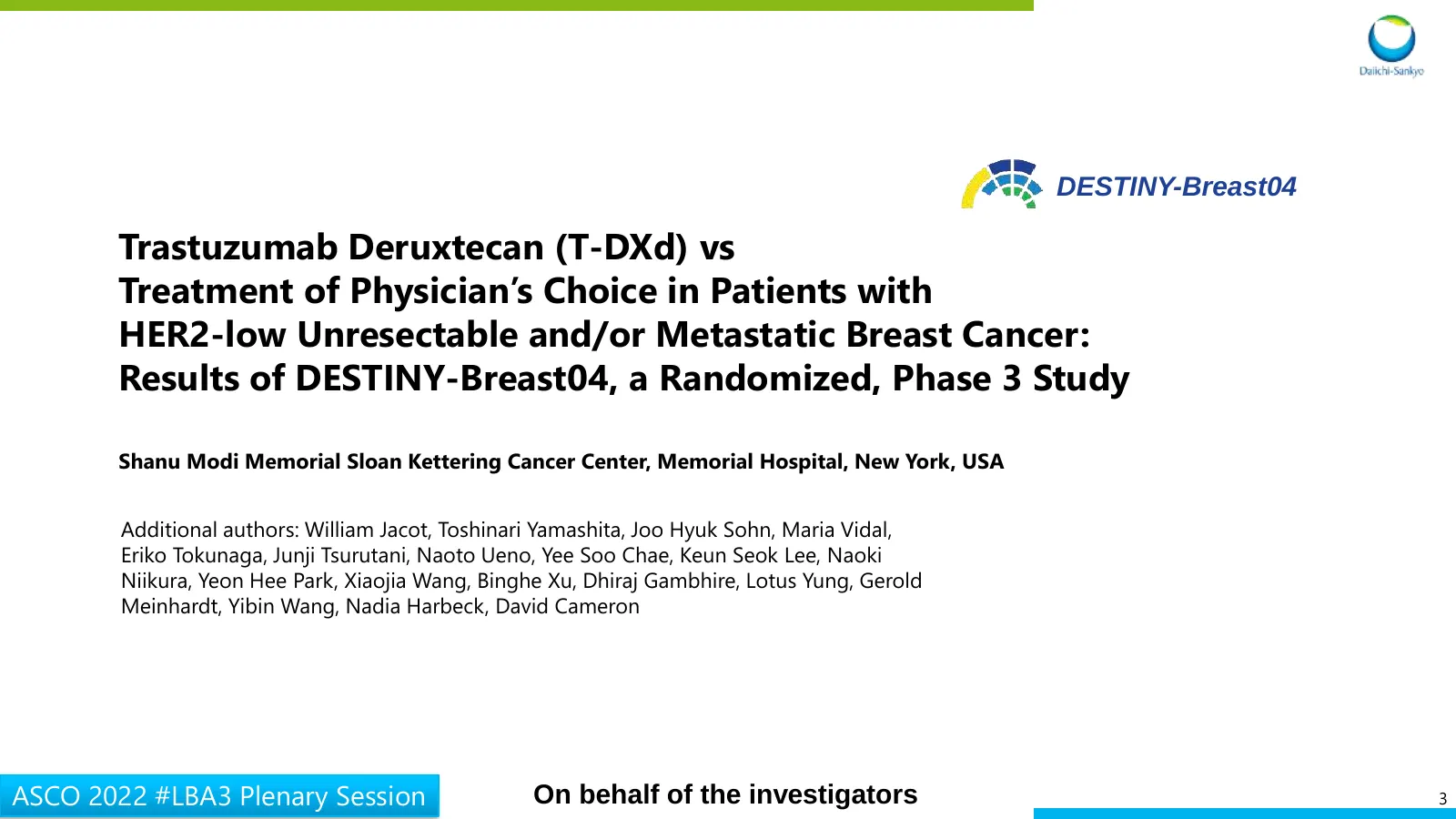
Slide 3: DESTINY-Breast04: T-DXd vs Treatment of Physician's Choice in HER2-low mBC
DESTINY-Breast04 Trastuzumab Deruxtecan (T-DXd) vs Treatment of Physician’s Choice in Patients with HER2-low Unresectable and/or Metastatic Breast Cancer: Results of DESTINY-Breast04, a Randomized, Phase 3 Study Shanu Modi Memorial Sloan Kettering Cancer Center, Memorial Hospital, New York, USA Addi
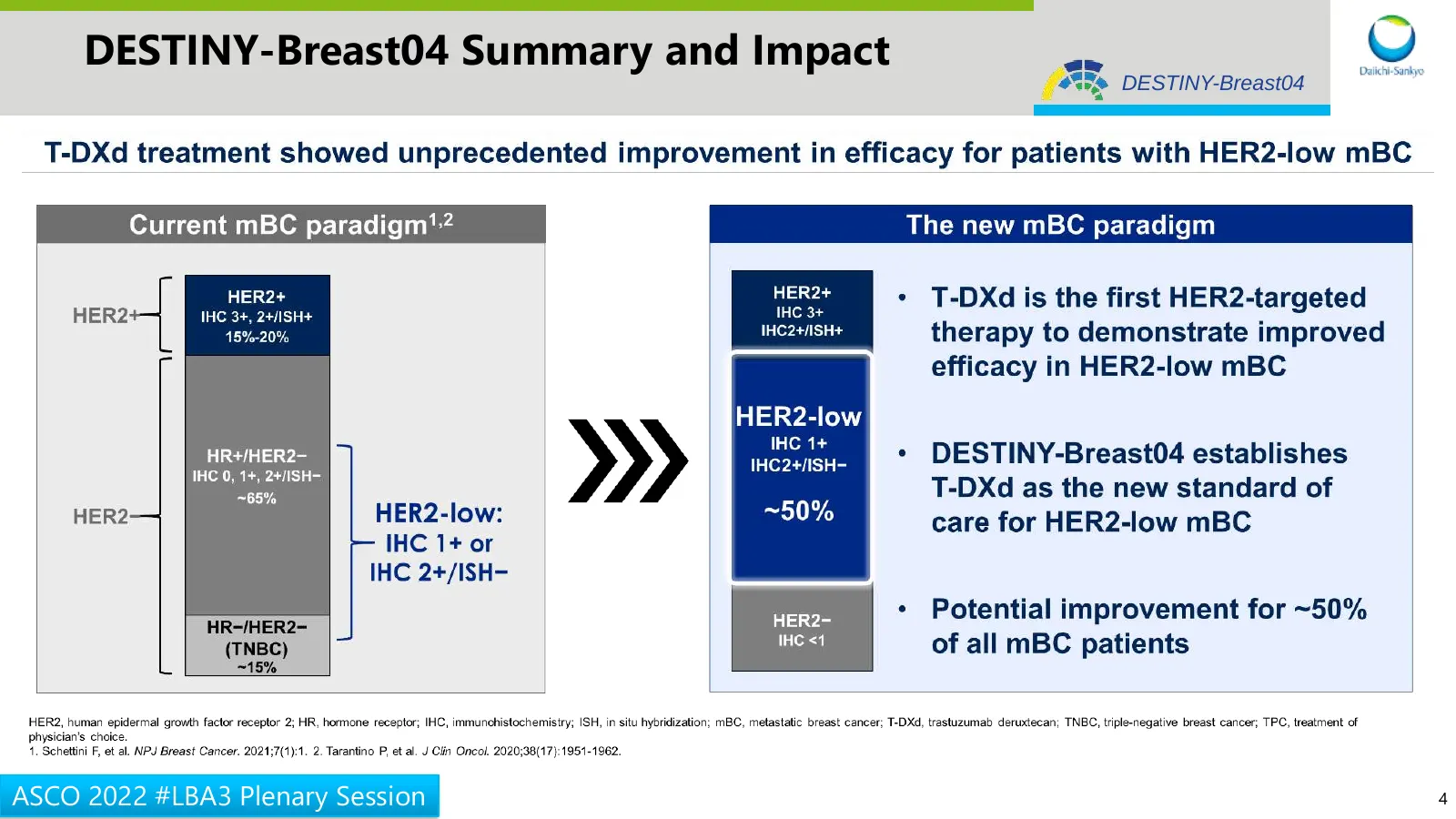
Slide 4: DESTINY-Breast04 Summary and Impact
DESTINY-Breast04 Summary and Impact DESTINY-Breast04 ASCO 2022 #LBA3 Plenary Session 4
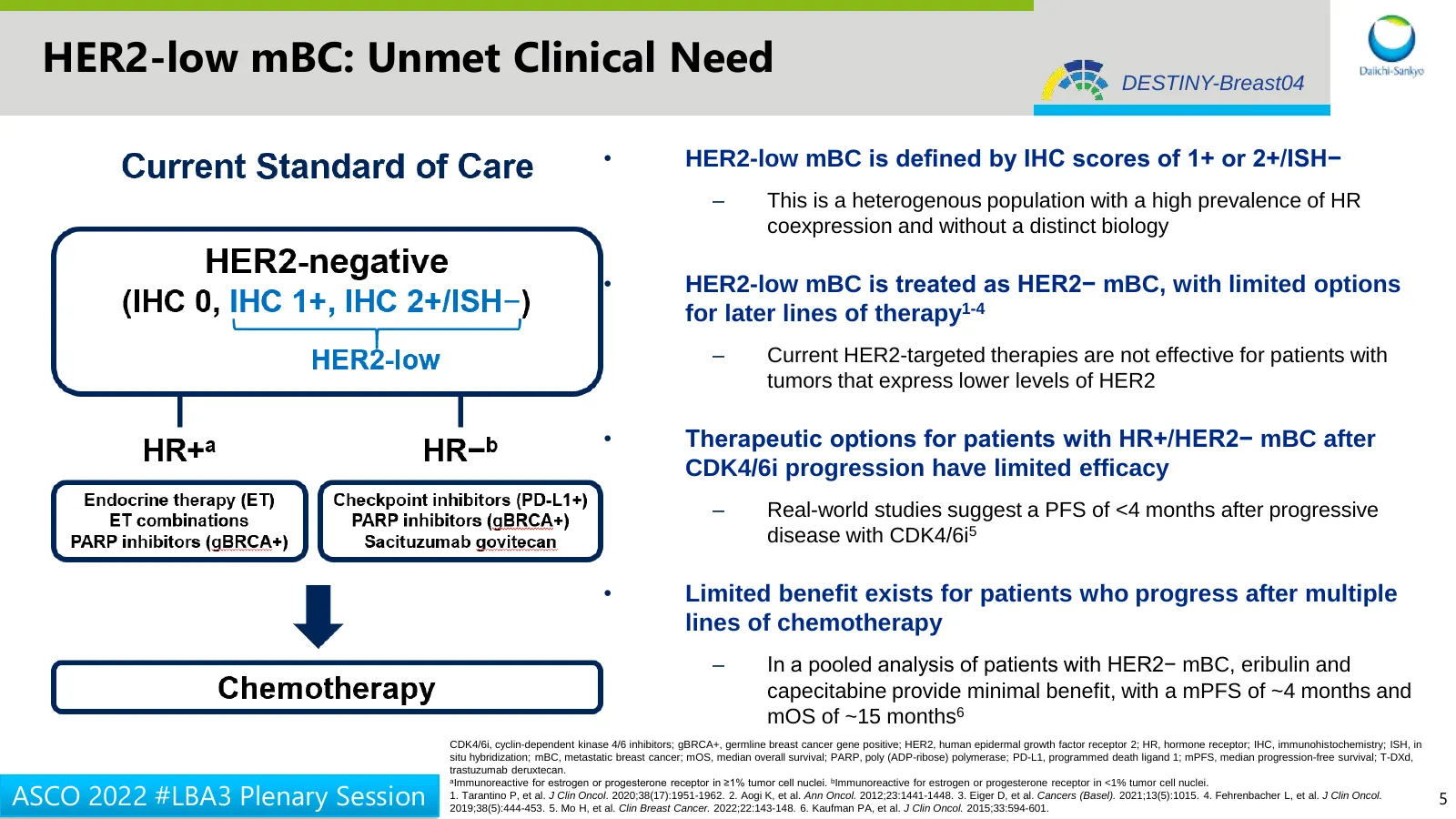
Slide 5: HER2-low mBC: Unmet Clinical Need
HER2-low mBC: Unmet Clinical Need DESTINY-Breast04 • HER2-low mBC is defined by IHC scores of 1+ or 2+/ISH− – This is a heterogenous population with a high prevalence of HR coexpression and without a distinct biology • HER2-low mBC is treated as HER2− mBC, with limited options for later lines of the
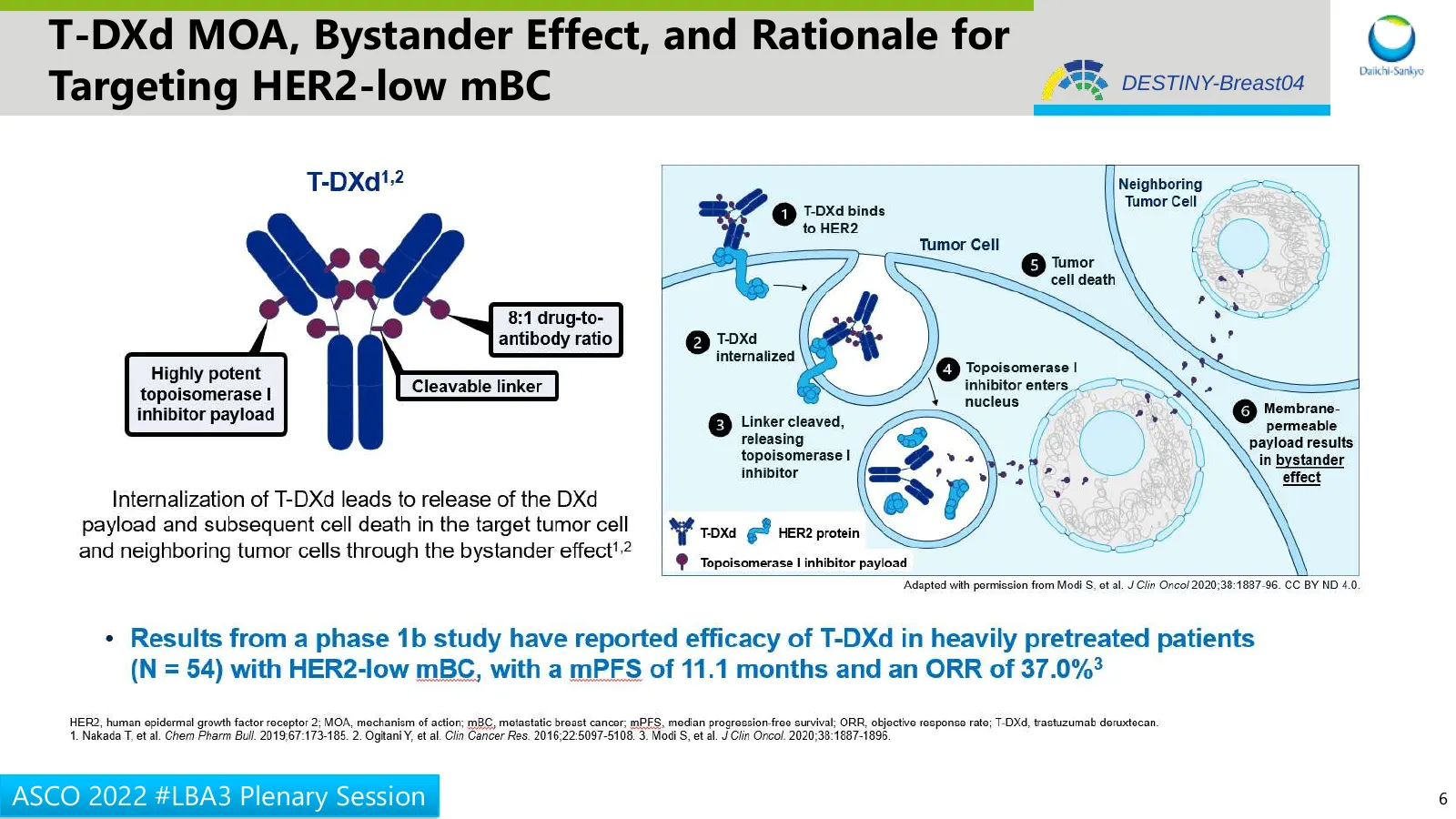
Slide 6: T-DXd MOA, Bystander Effect, and Rationale for Targeting HER2-low mBC
T-DXd MOA, Bystander Effect, and Rationale for Targeting HER2-low mBC DESTINY-Breast04 ASCO 2022 #LBA3 Plenary Session 6
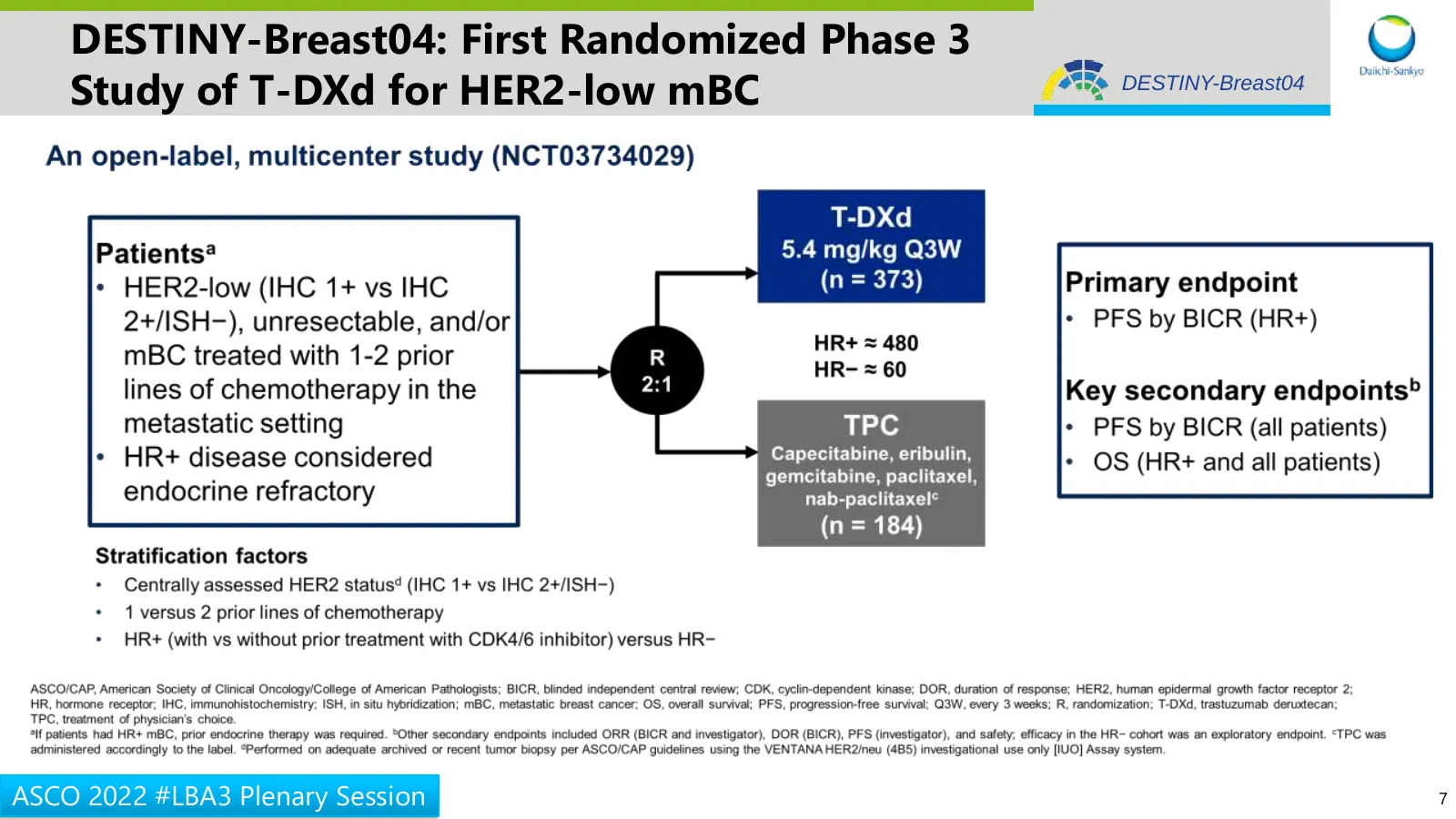
Slide 7: DESTINY-Breast04: First Randomized Phase 3 Study of T-DXd for HER2-low mBC
DESTINY-Breast04: First Randomized Phase 3 Study of T-DXd for HER2-low mBC DESTINY-Breast04 ASCO 2022 #LBA3 Plenary Session 7
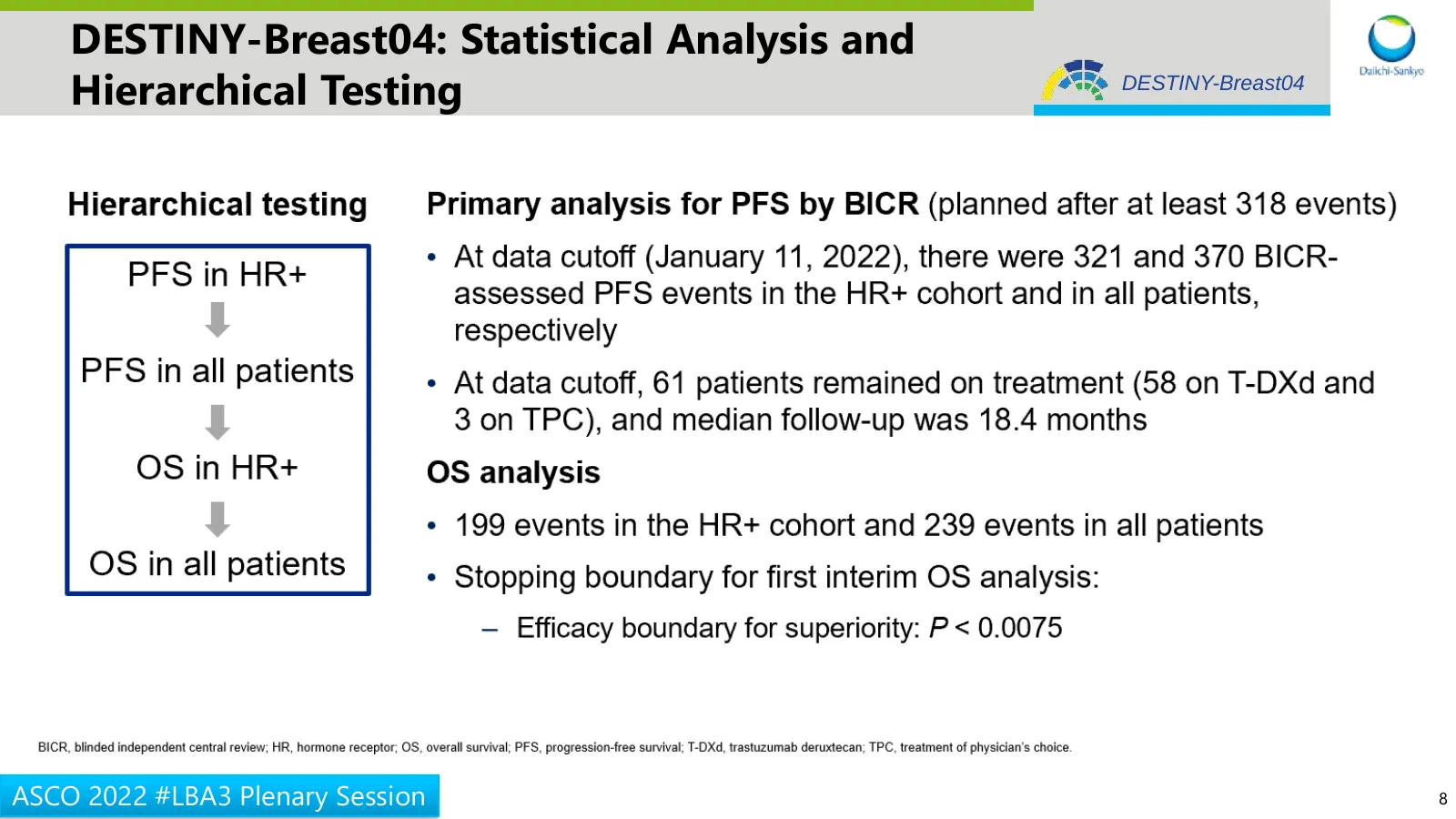
Slide 8: DESTINY-Breast04: Statistical Analysis and Hierarchical Testing
DESTINY-Breast04: Statistical Analysis and Hierarchical Testing DESTINY-Breast04 ASCO 2022 #LBA3 Plenary Session 8
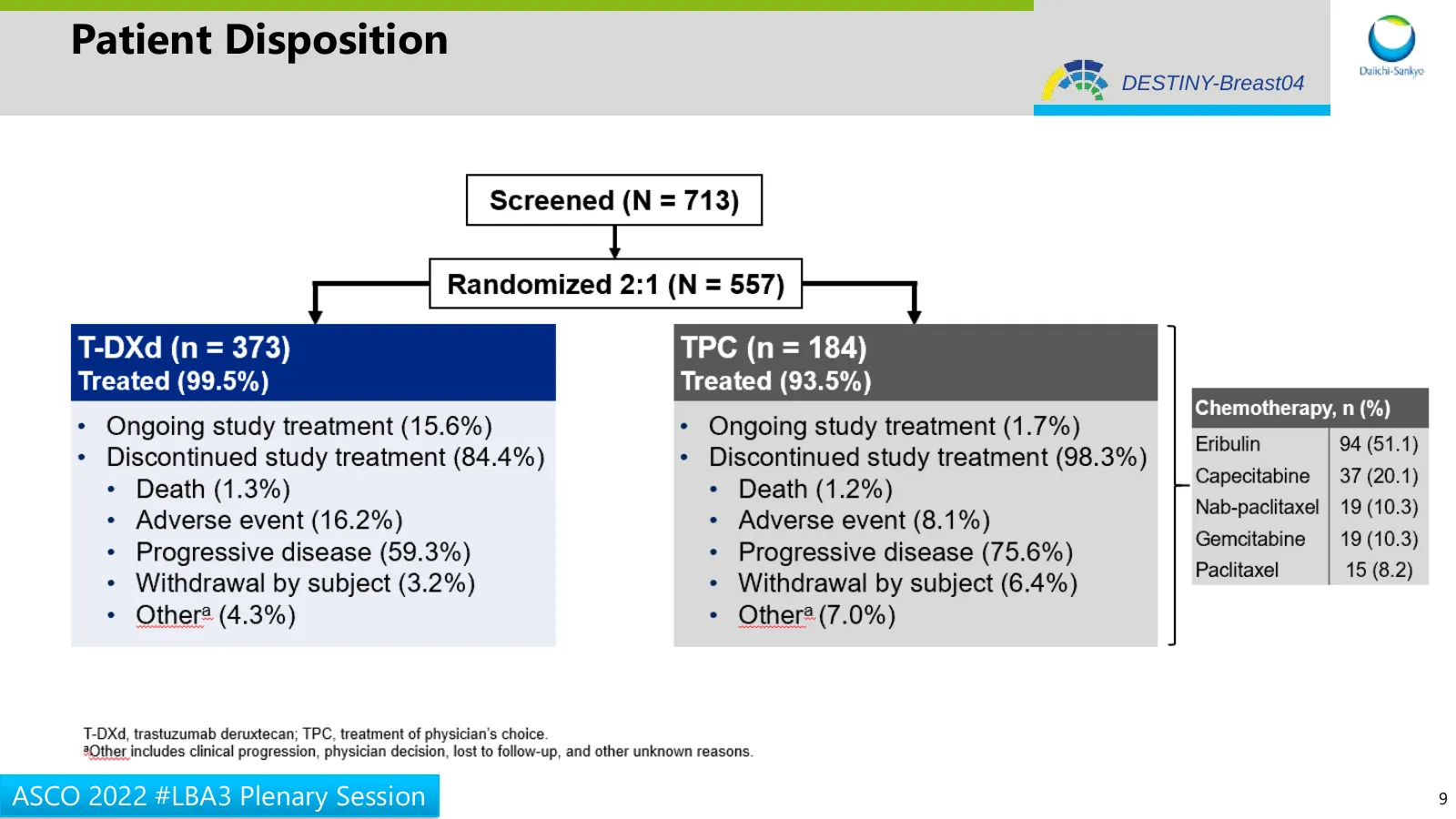
Slide 9: Patient Disposition
Patient Disposition DESTINY-Breast04 ASCO 2022 #LBA3 Plenary Session 9
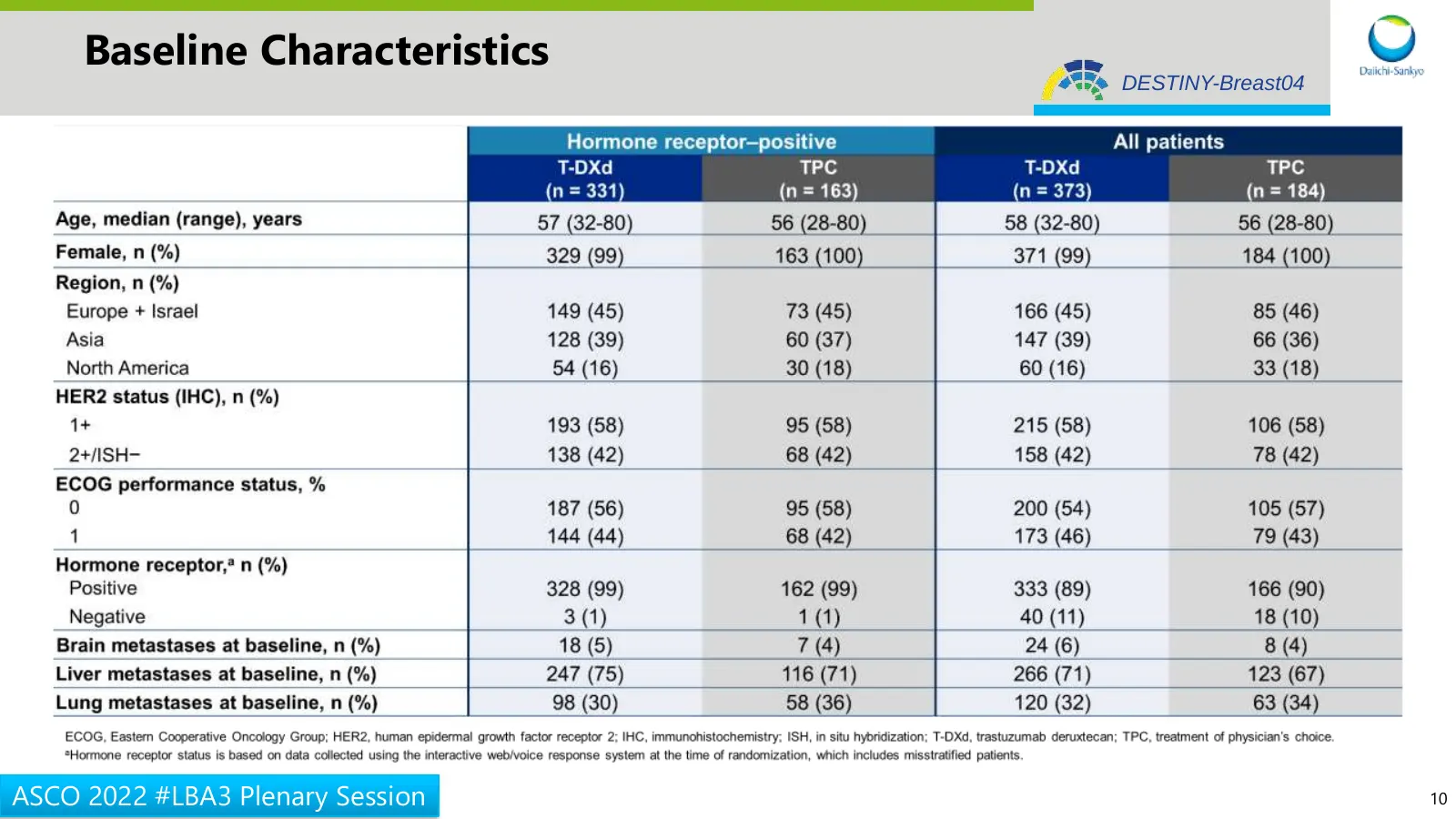
Slide 10: Baseline Characteristics
Baseline Characteristics DESTINY-Breast04 ASCO 2022 #LBA3 Plenary Session 10
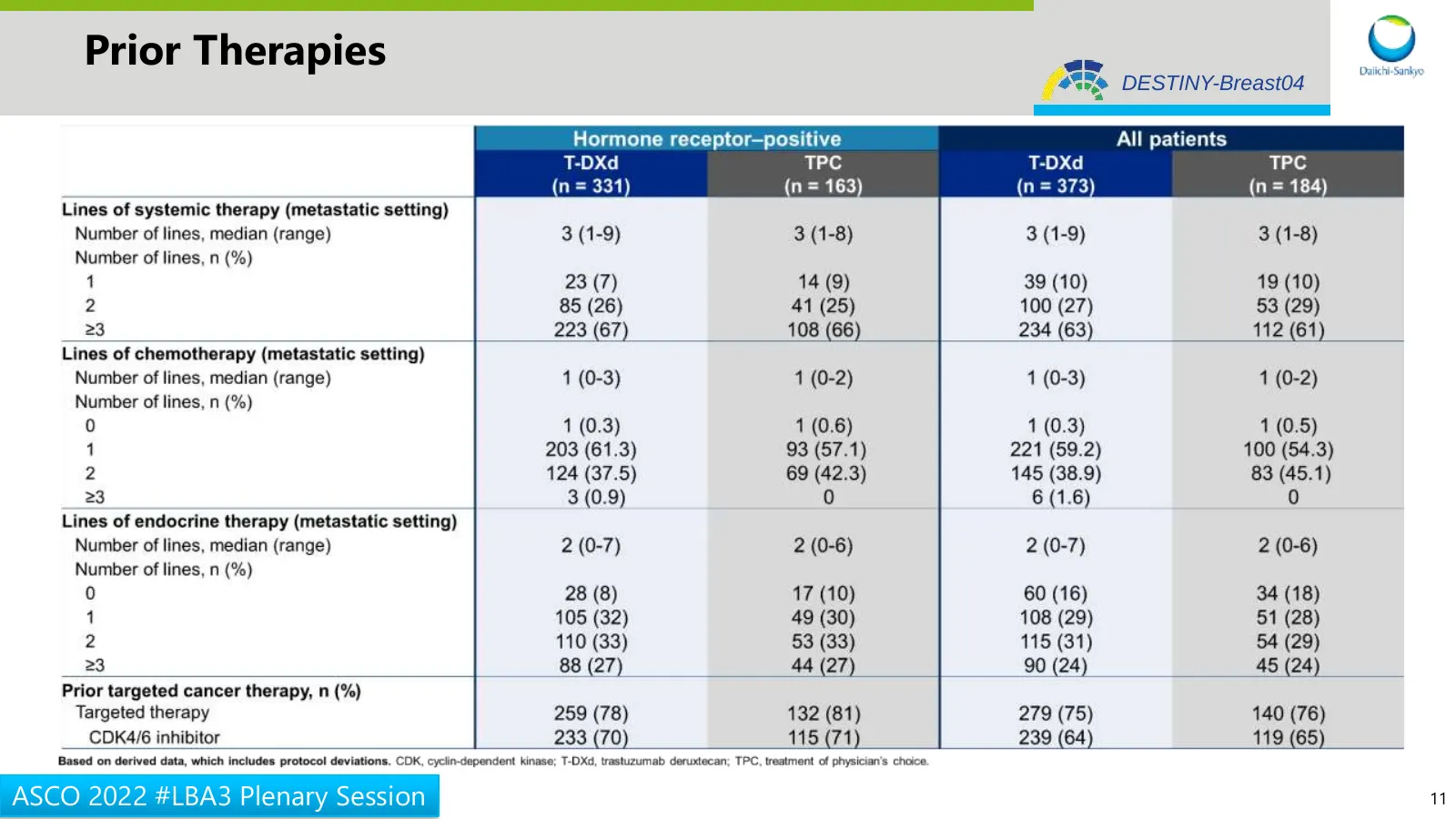
Slide 11: Prior Therapies
Prior Therapies DESTINY-Breast04 ASCO 2022 #LBA3 Plenary Session 11
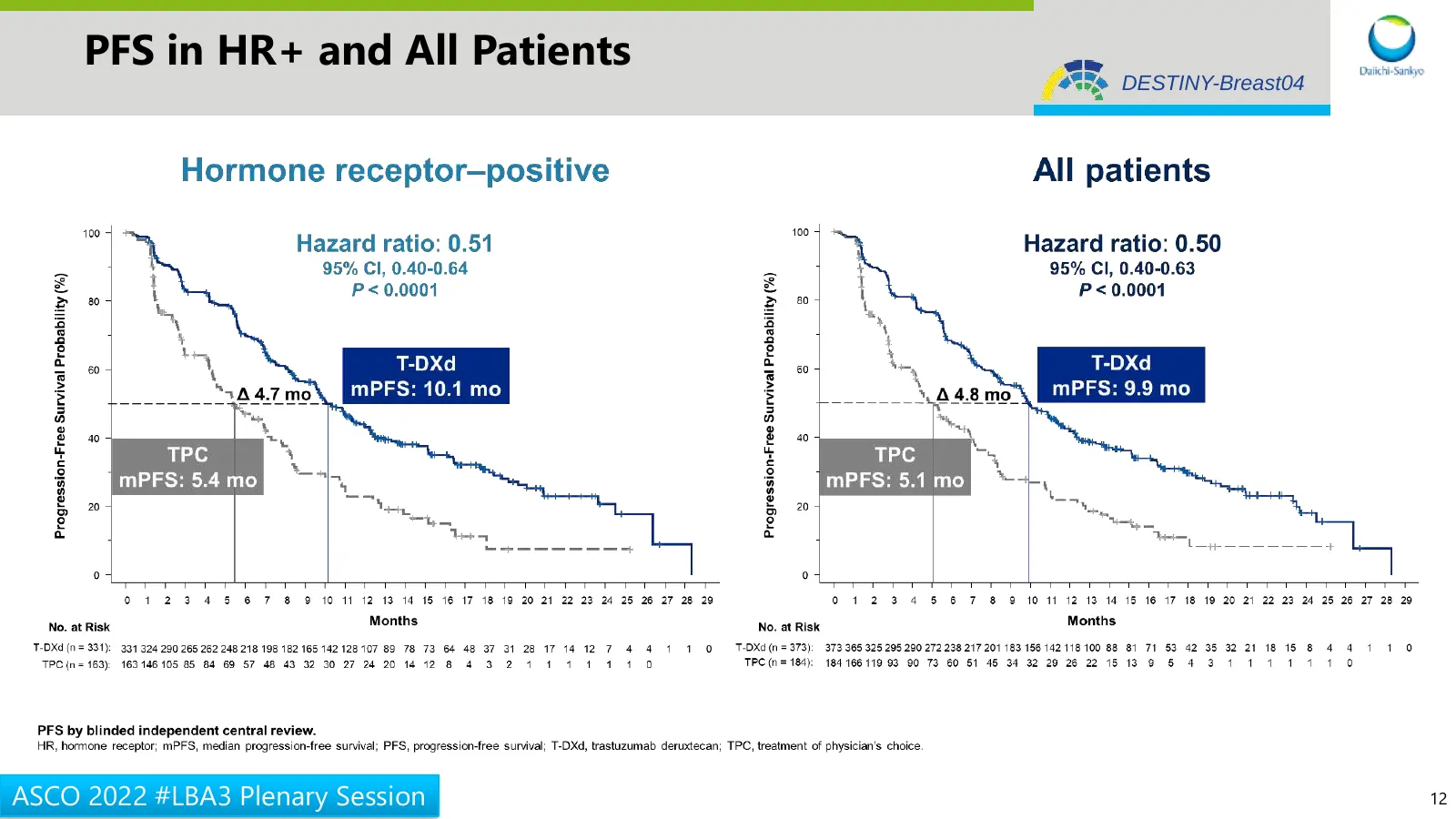
Slide 12: PFS in HR+ and All Patients
PFS in HR+ and All Patients DESTINY-Breast04 ASCO 2022 #LBA3 Plenary Session 12
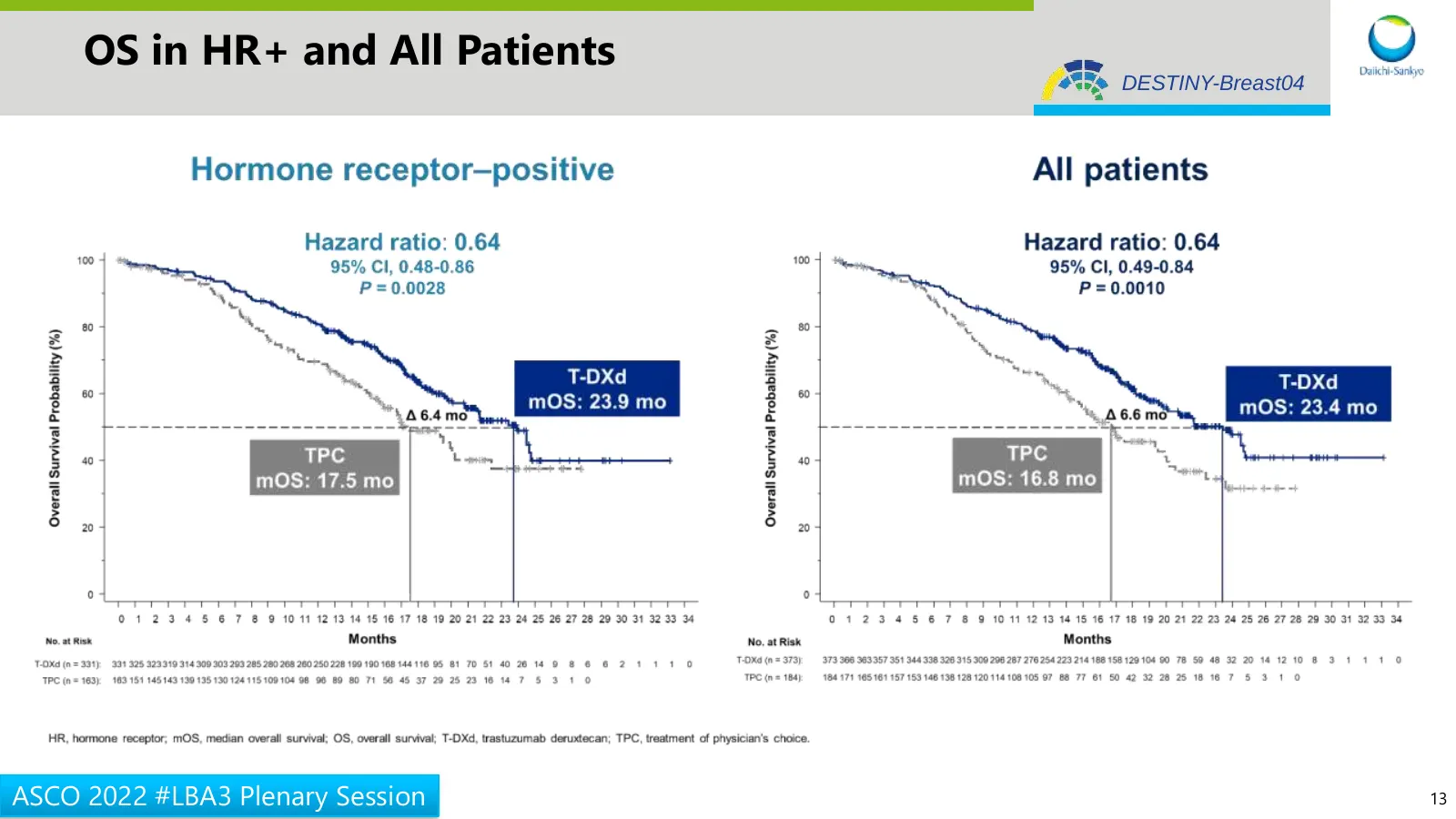
Slide 13: OS in HR+ and All Patients
OS in HR+ and All Patients DESTINY-Breast04 ASCO 2022 #LBA3 Plenary Session 13
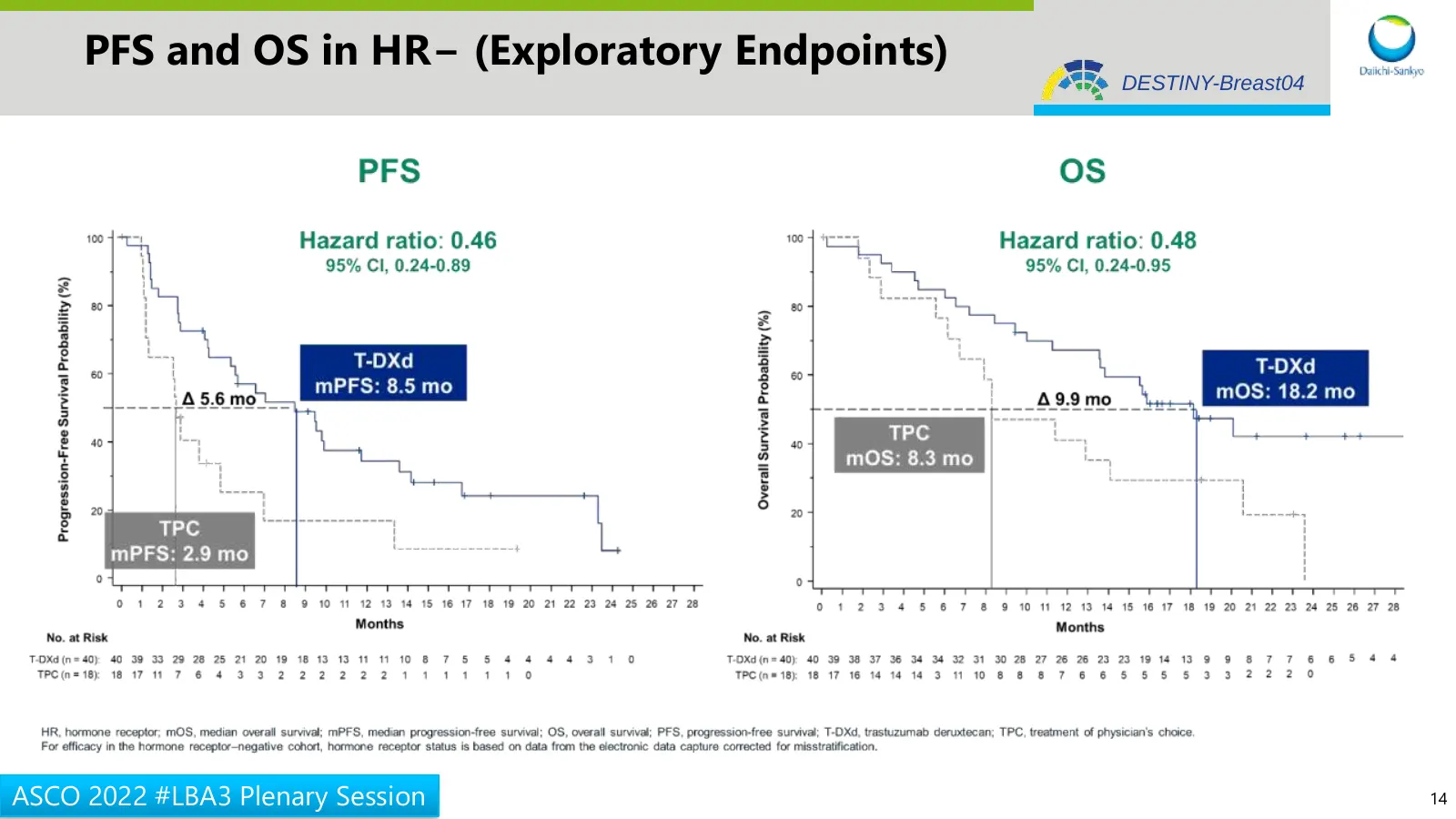
Slide 14: PFS and OS in HR− (Exploratory Endpoints)
PFS and OS in HR− (Exploratory Endpoints) DESTINY-Breast04 ASCO 2022 #LBA3 Plenary Session 14
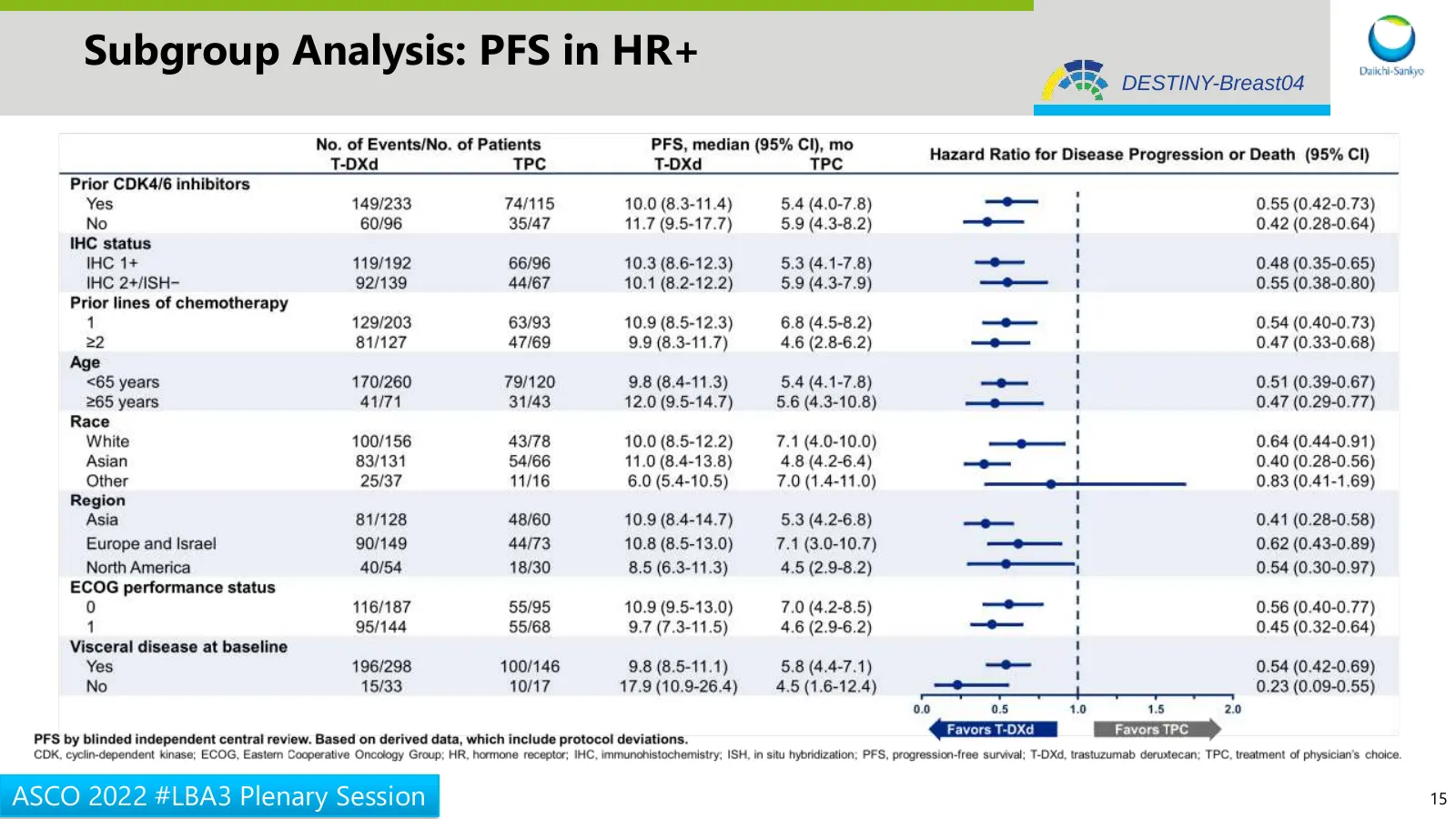
Slide 15: Subgroup Analysis: PFS in HR+
Subgroup Analysis: PFS in HR+ DESTINY-Breast04 ASCO 2022 #LBA3 Plenary Session 15
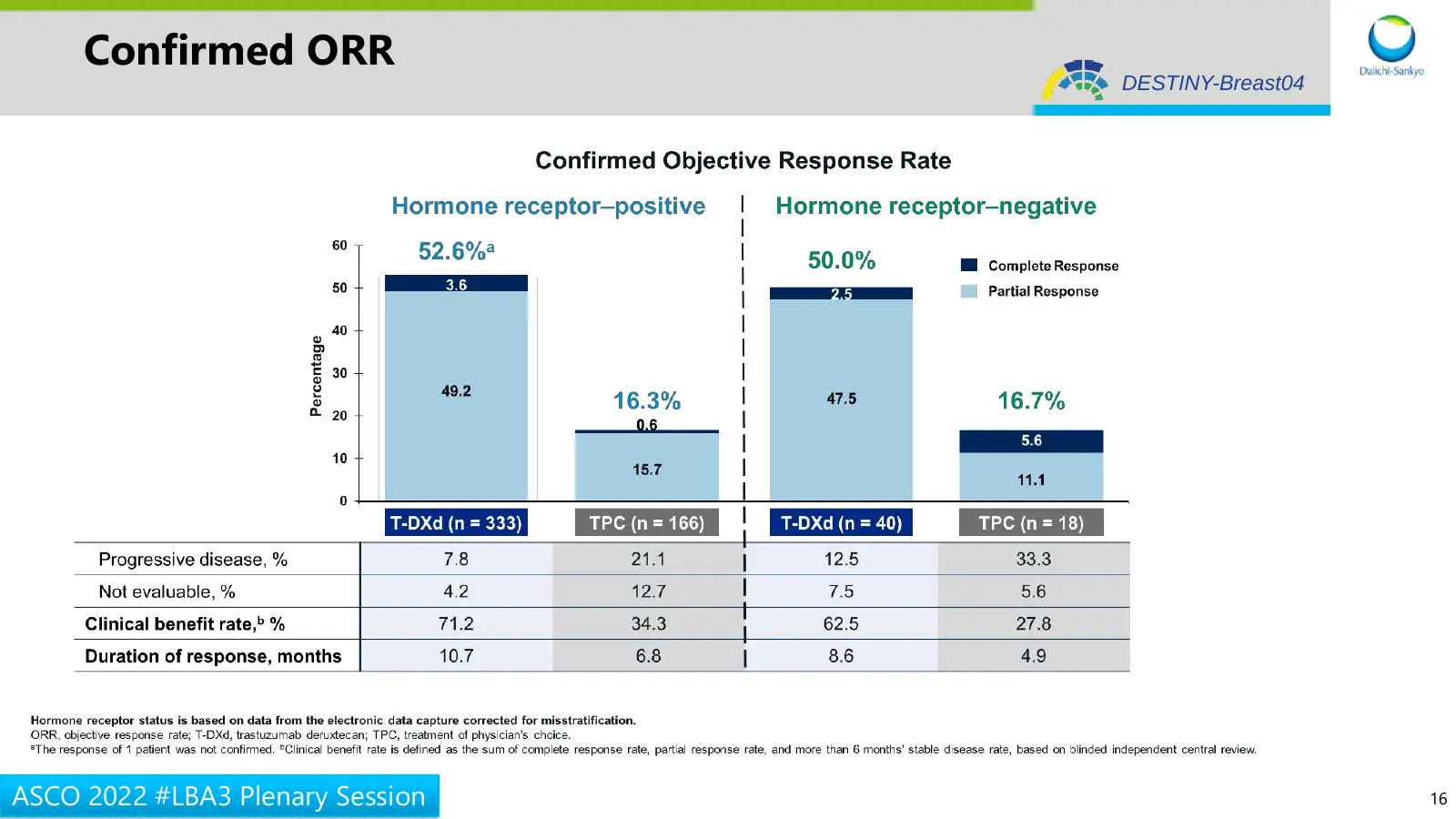
Slide 16: Confirmed ORR
Confirmed ORR DESTINY-Breast04 ASCO 2022 #LBA3 Plenary Session 16
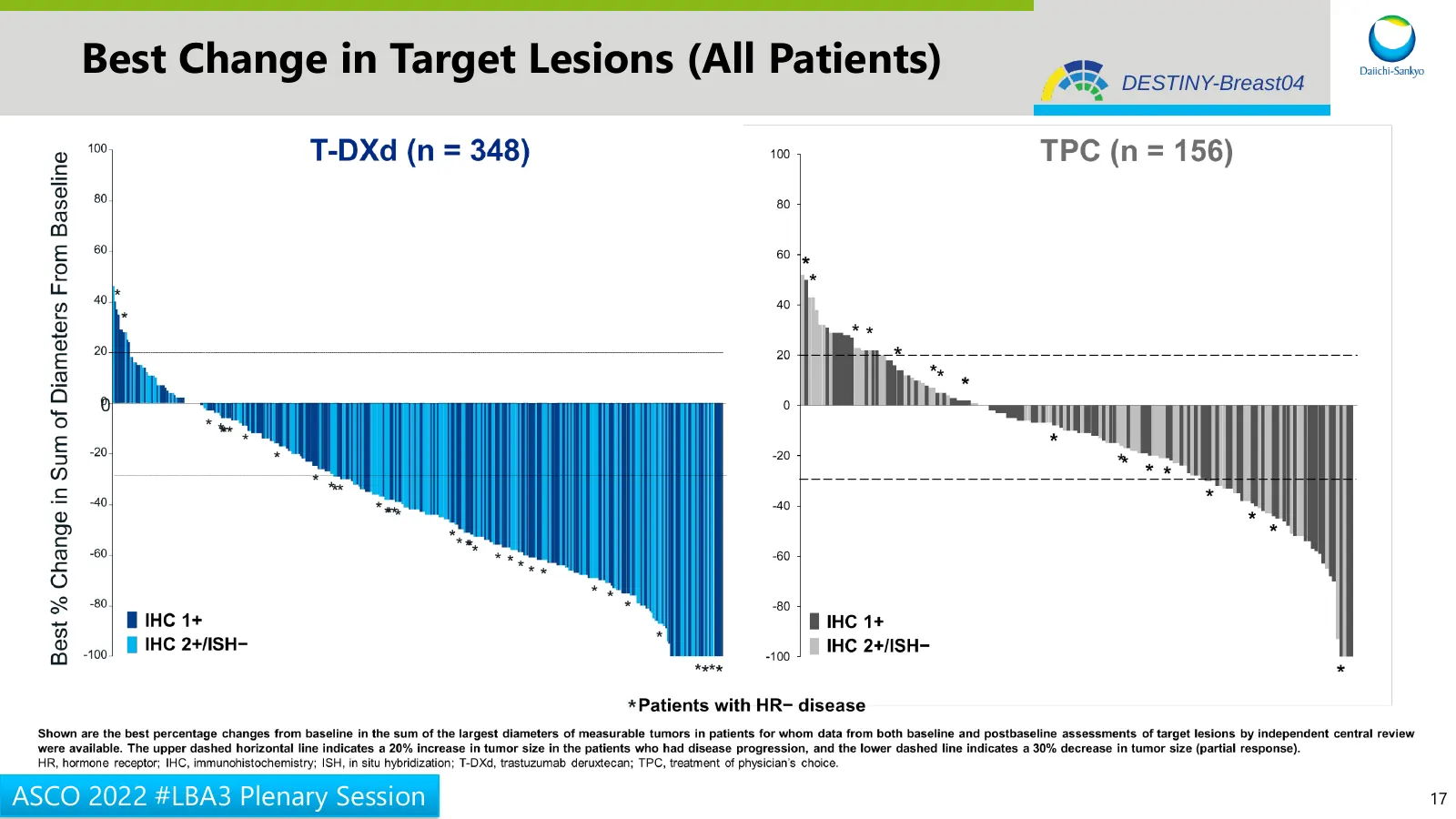
Slide 17: Best Change in Target Lesions (All Patients)
Best Change in Target Lesions (All Patients) DESTINY-Breast04 ASCO 2022 #LBA3 Plenary Session 17
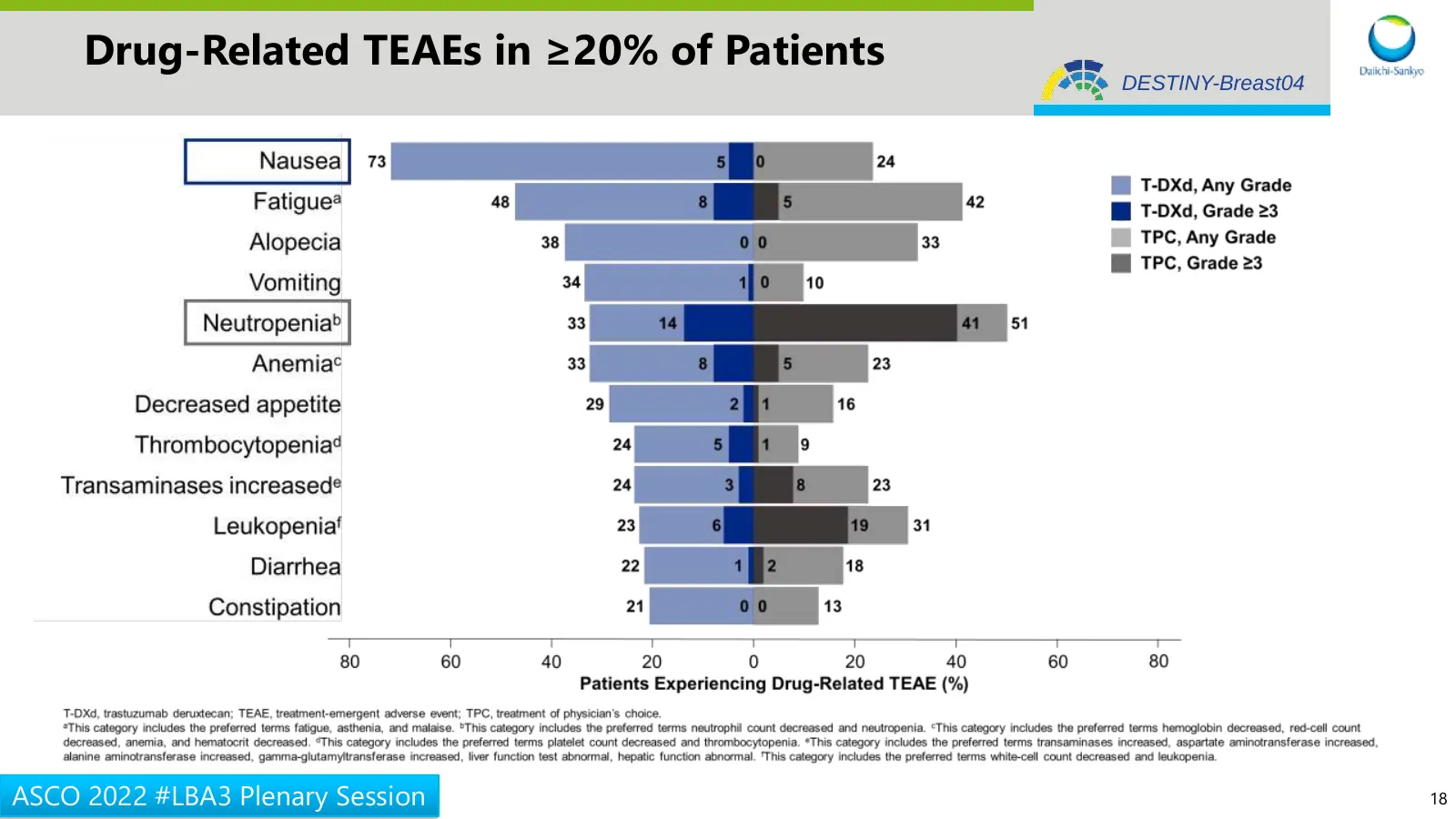
Slide 18: Drug-Related TEAEs in ≥20% of Patients
Drug-Related TEAEs in ≥20% of Patients DESTINY-Breast04 ASCO 2022 #LBA3 Plenary Session 18
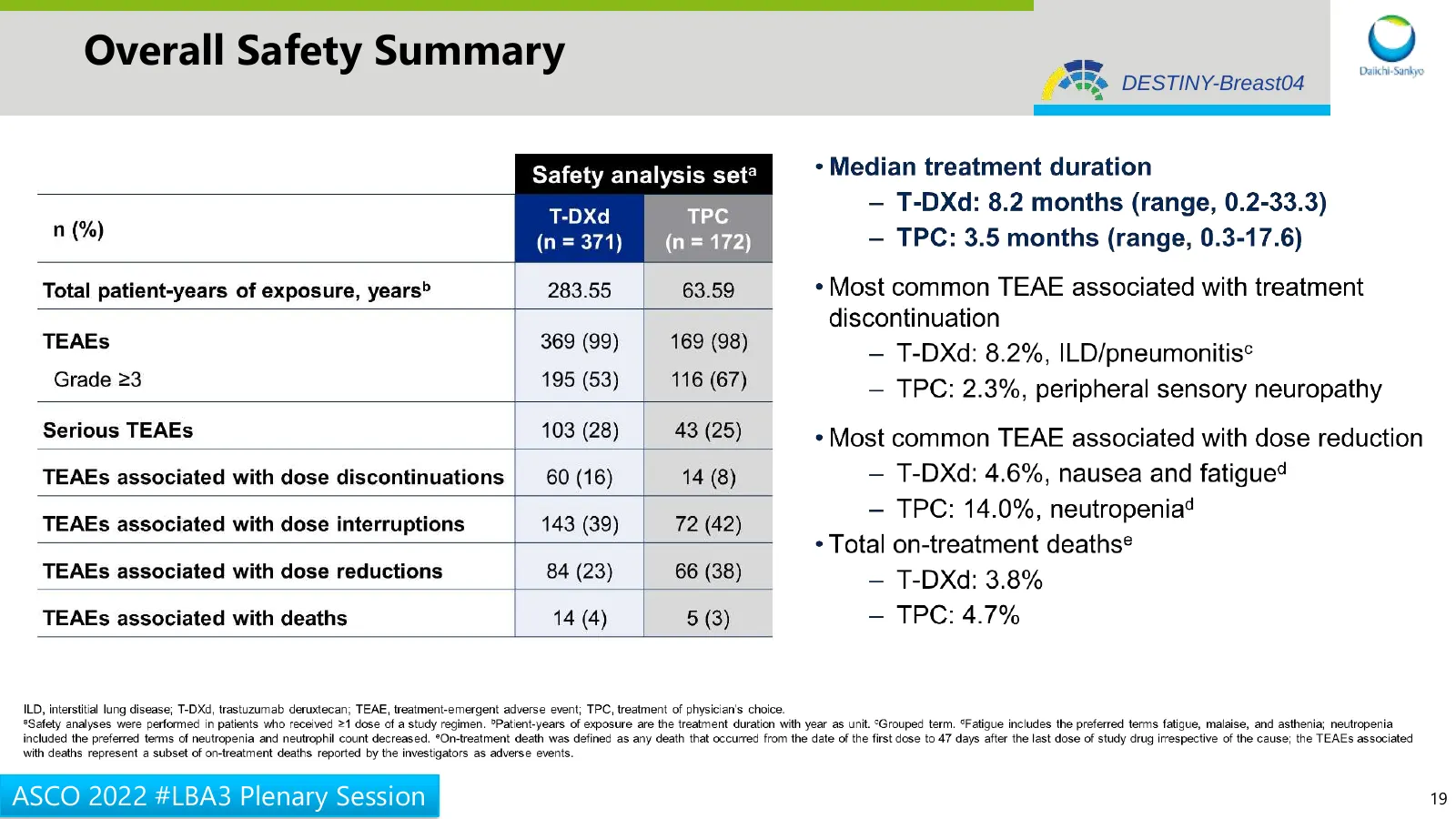
Slide 19: Overall Safety Summary
Overall Safety Summary DESTINY-Breast04 ASCO 2022 #LBA3 Plenary Session 19
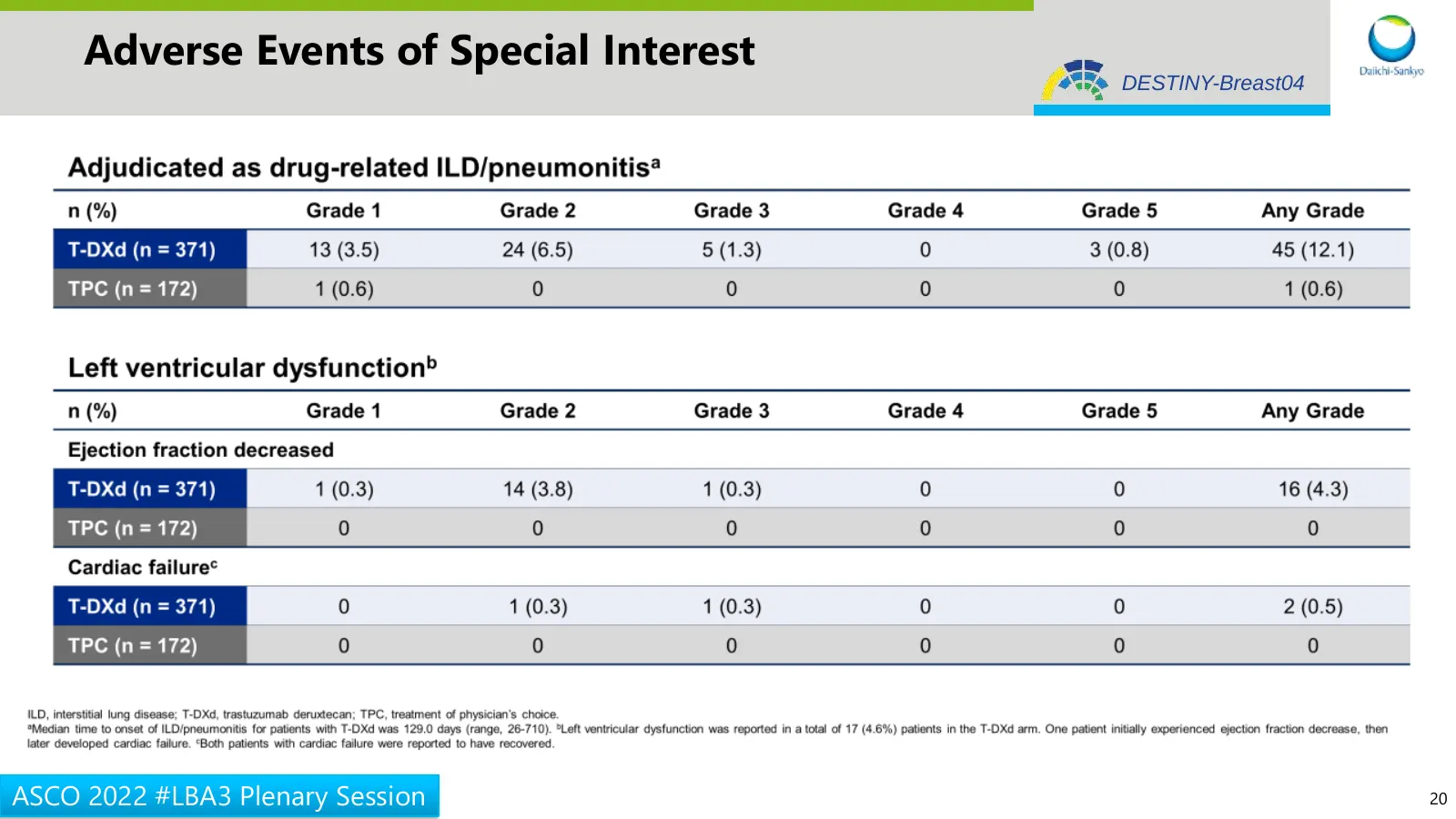
Slide 20: Adverse Events of Special Interest
Adverse Events of Special Interest DESTINY-Breast04 ASCO 2022 #LBA3 Plenary Session 20
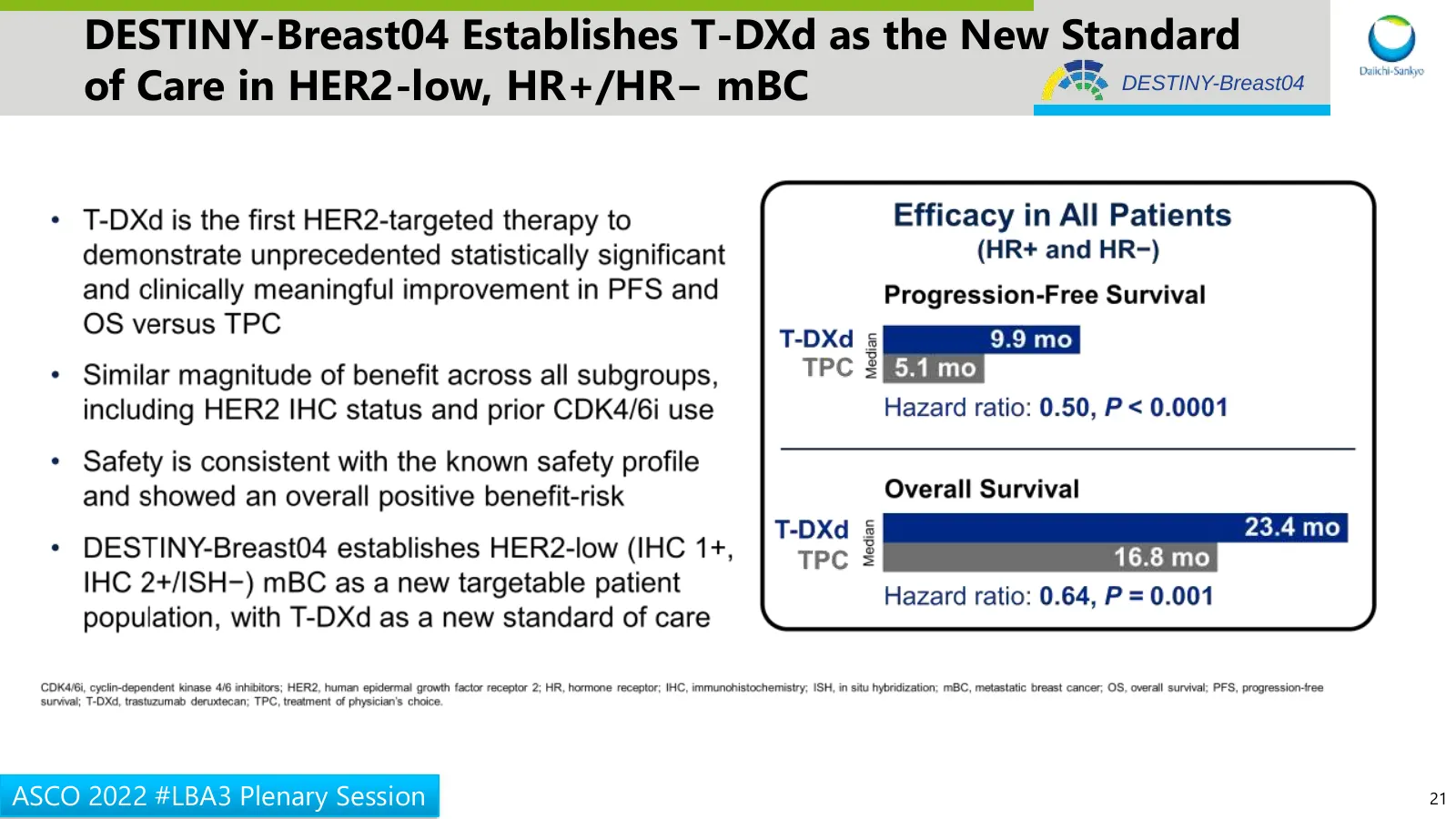
Slide 21: DESTINY-Breast04 Establishes T-DXd as New Standard of Care in HER2-low mBC
DESTINY-Breast04 Establishes T-DXd as the New Standard of Care in HER2-low, HR+/HR− mBC DESTINY-Breast04 ASCO 2022 #LBA3 Plenary Session 21
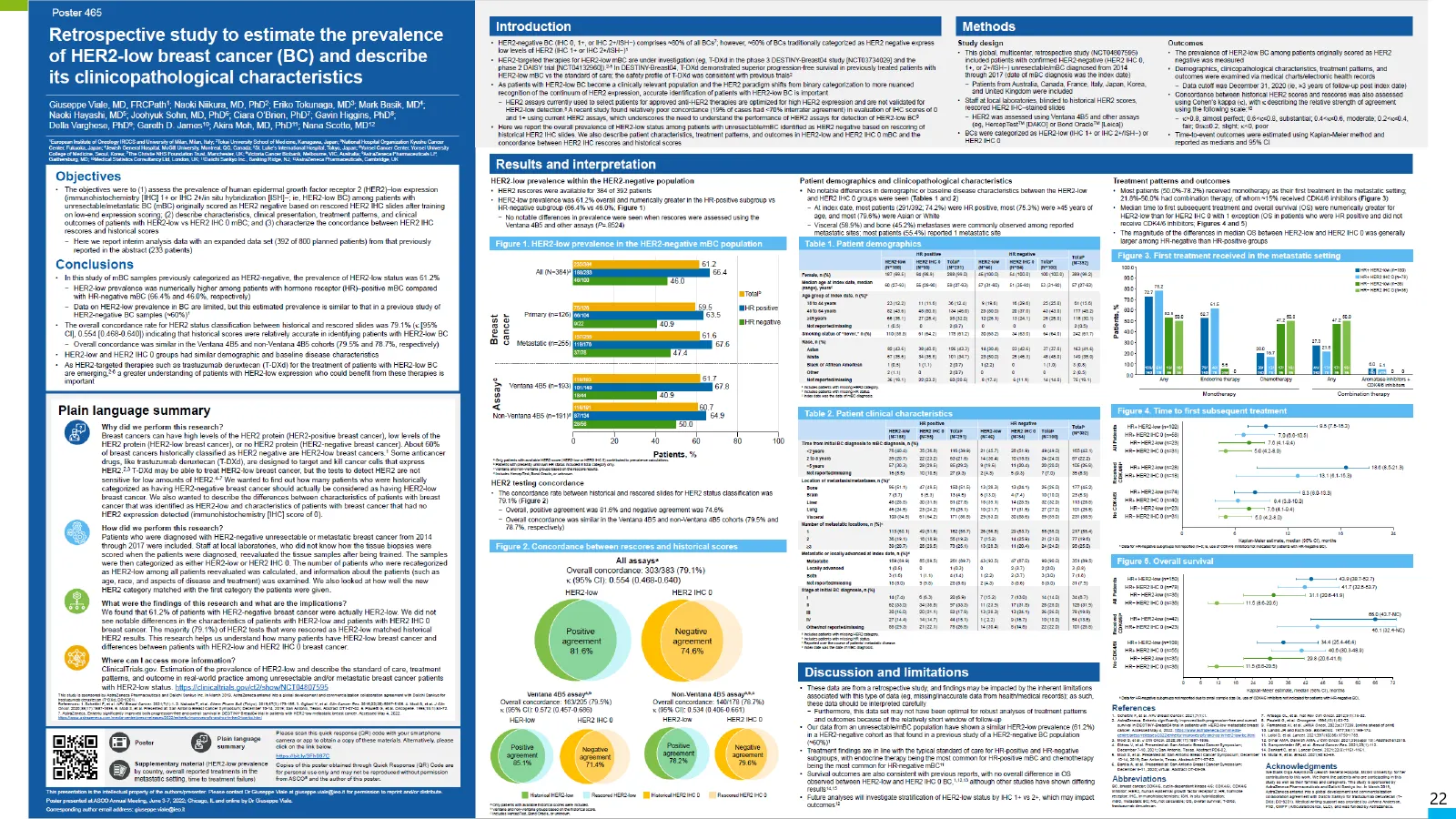
Slide 22: Retrospective study of prevalence of HER2-low breast cancer
ter 465 Retrospective study to estimate the prevalence a — of HER2-low breast cancer (BC) and describe er oe sn i ann feet hie eer, ee cae — Pare IS ie Gaitiimmaaiinss, - Seemvaanimadacuaeemaess' its clinicopathological characteristics _ heptane Bates sna sat noe TES pg son tx ma ad “targatsaAtnig a
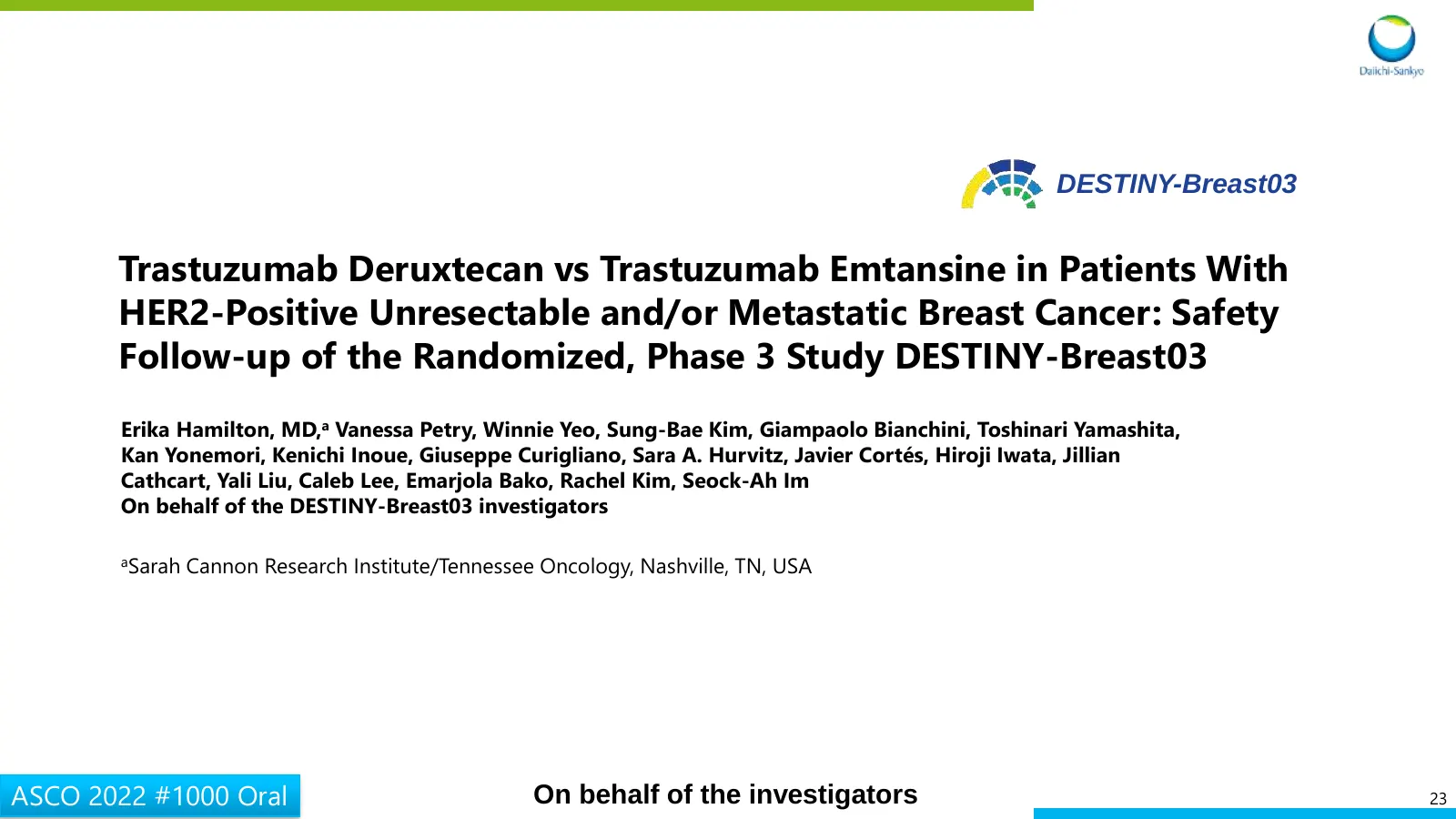
Slide 23: DESTINY-Breast03: Safety Follow-up of T-DXd vs T-DM1
DESTINY-Breast03 Trastuzumab Deruxtecan vs Trastuzumab Emtansine in Patients With HER2-Positive Unresectable and/or Metastatic Breast Cancer: Safety Follow-up of the Randomized, Phase 3 Study DESTINY-Breast03 Erika Hamilton, MD,a Vanessa Petry, Winnie Yeo, Sung-Bae Kim, Giampaolo Bianchini, Toshinar
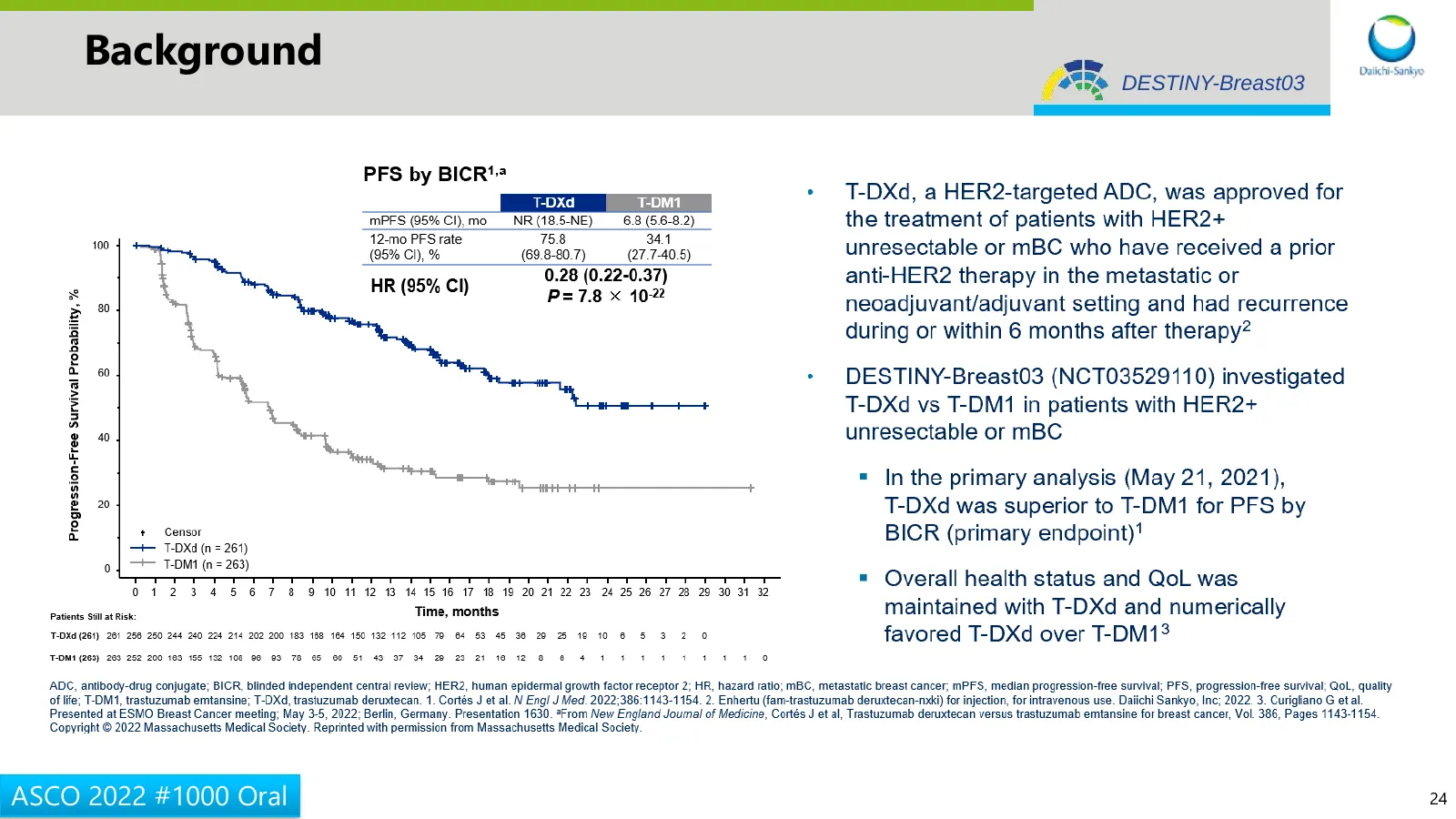
Slide 24: Background
Background DESTINY-Breast03 ASCO 2022 #1000 Oral 24
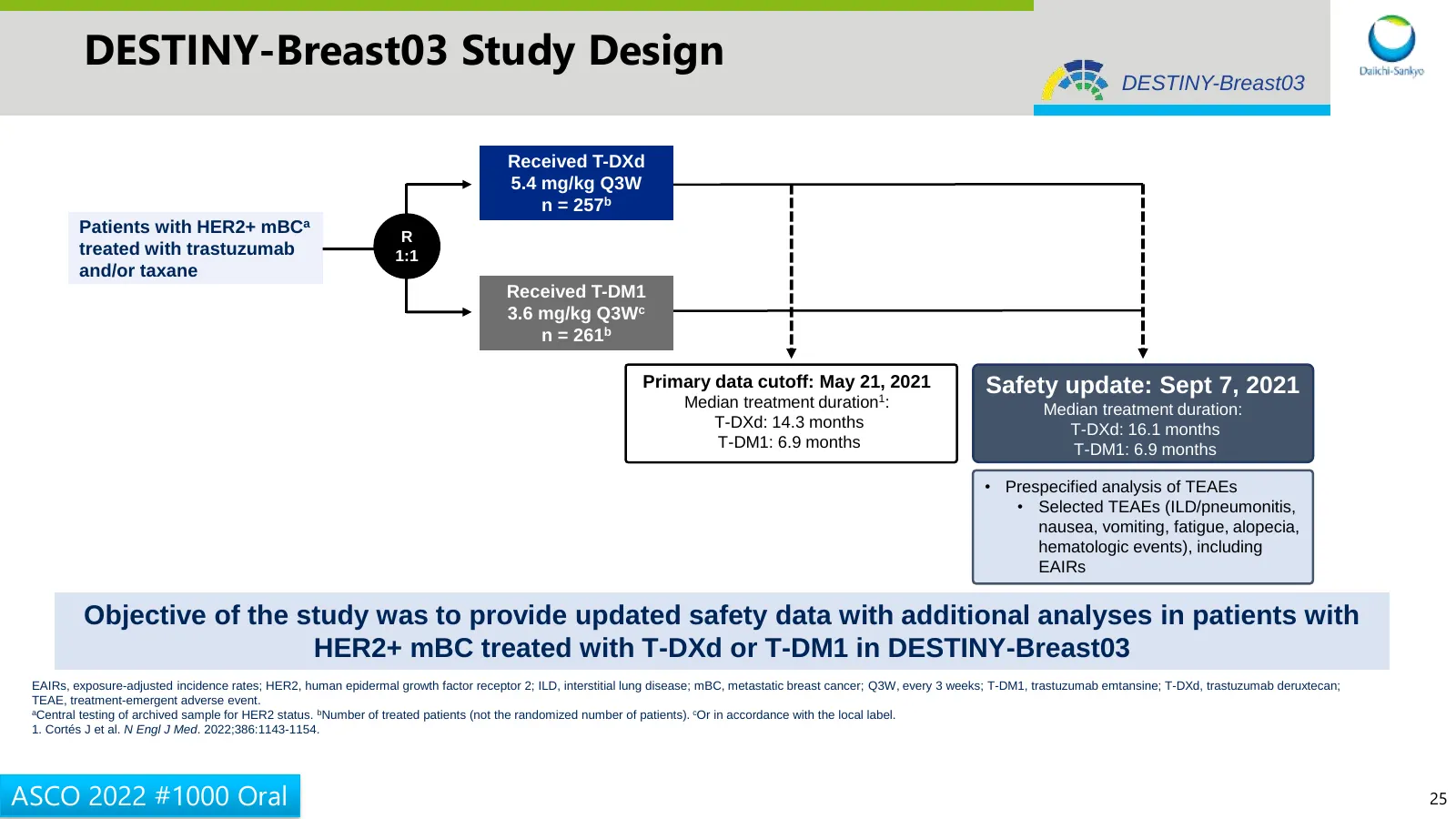
Slide 25: DESTINY-Breast03 Study Design
DESTINY-Breast03 Study Design DESTINY-Breast03 Received T-DXd 5.4 mg/kg Q3W n = 257b Patients with HER2+ mBCa R treated with trastuzumab 1:1 and/or taxane Received T-DM1 3.6 mg/kg Q3Wc n = 261b Primary data cutoff: May 21, 2021 Safety update: Sept 7, 2021 Median treatment duration1: Median treatment
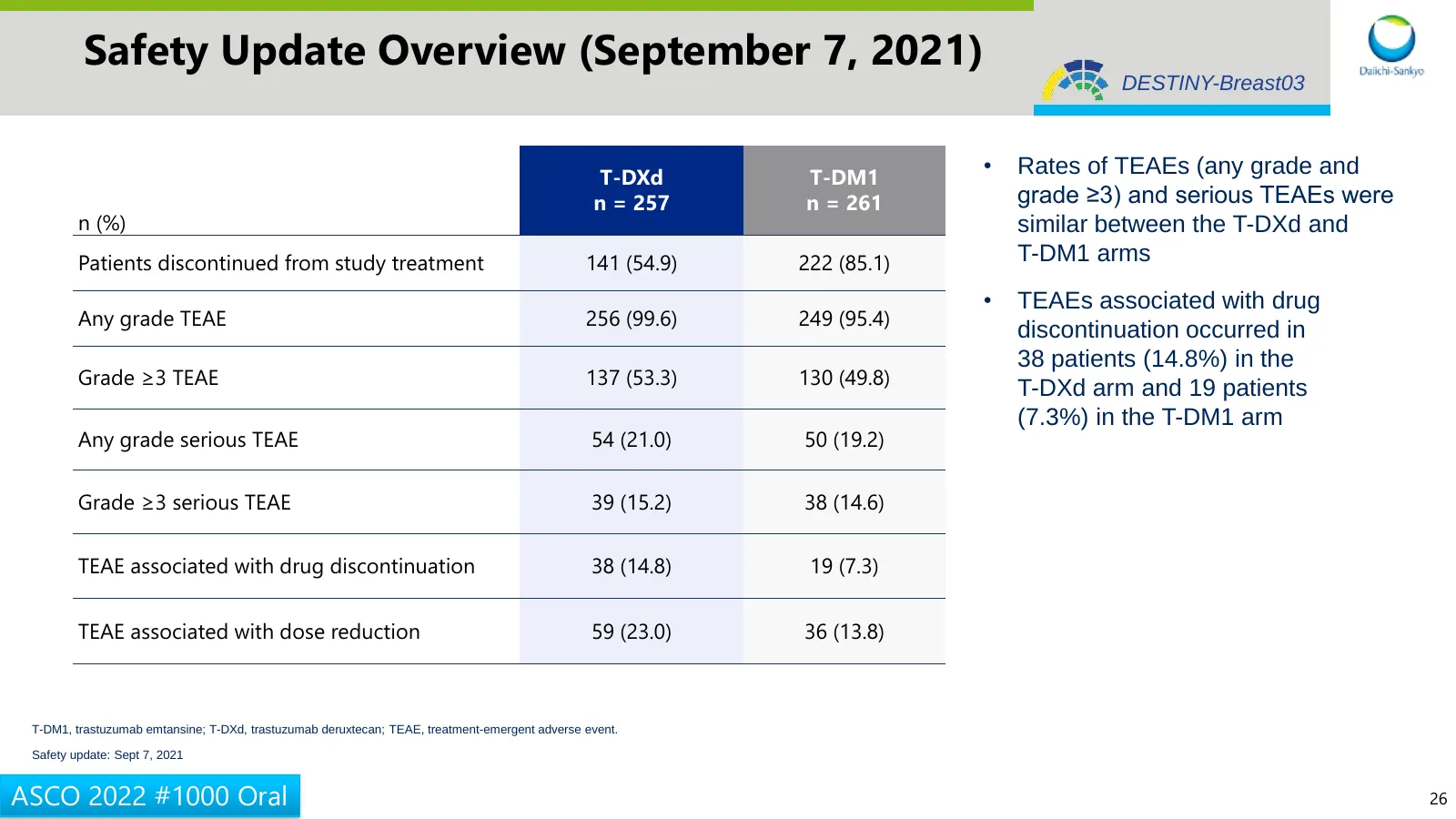
Slide 26: Safety Update Overview (September 7, 2021)
Safety Update Overview (September 7, 2021) DESTINY-Breast03 T-DXd T-DM1 • Rates of TEAEs (any grade and n = 257 n = 261 grade ≥3) and serious TEAEs were n (%) similar between the T-DXd and Patients discontinued from study treatment 141 (54.9) 222 (85.1) T-DM1 arms • TEAEs associated with drug Any gr
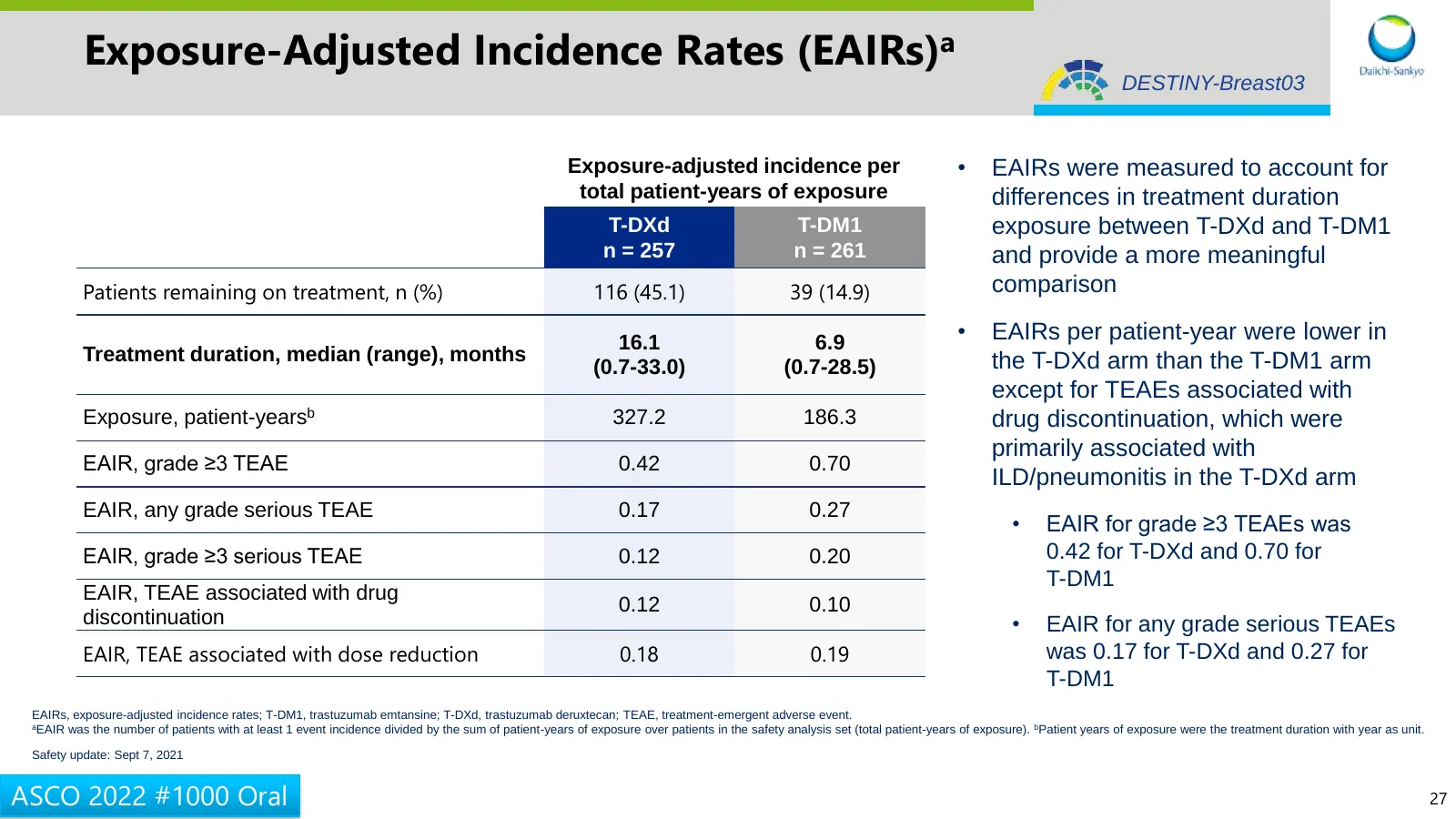
Slide 27: Exposure-Adjusted Incidence Rates (EAIRs)
Exposure-Adjusted Incidence Rates (EAIRs)a DESTINY-Breast03 Exposure-adjusted incidence per • EAIRs were measured to account for total patient-years of exposure differences in treatment duration T-DXd T-DM1 exposure between T-DXd and T-DM1 n = 257 n = 261 and provide a more meaningful Patients remai
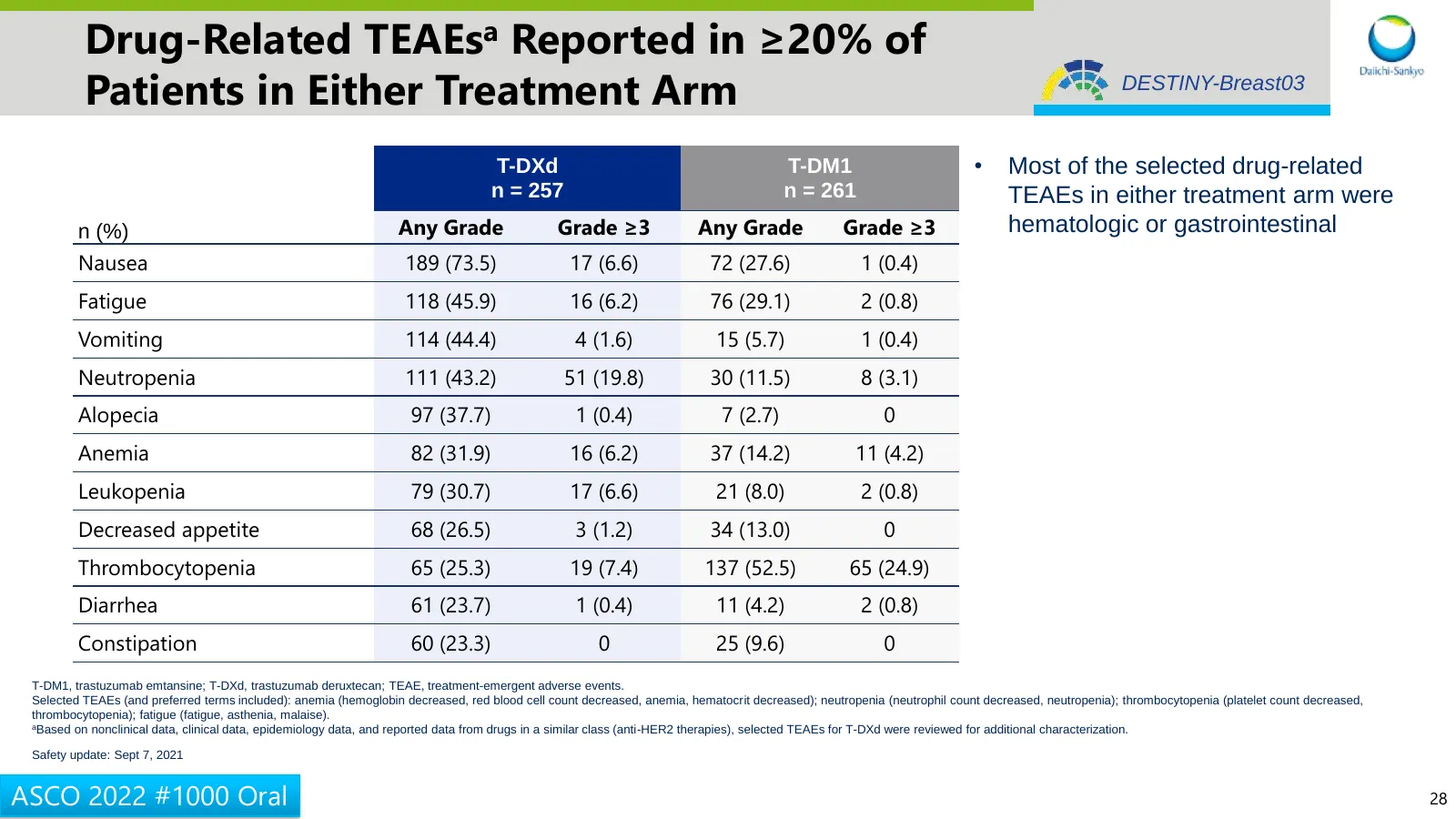
Slide 28: Drug-Related TEAEs Reported in ≥20% of Patients
Drug-Related TEAEsa Reported in ≥20% of Patients in Either Treatment Arm DESTINY-Breast03 T-DXd T-DM1 • Most of the selected drug-related n = 257 n = 261 TEAEs in either treatment arm were n (%) Any Grade Grade ≥3 Any Grade Grade ≥3 hematologic or gastrointestinal Nausea 189 (73.5) 17 (6.6) 72 (27.6
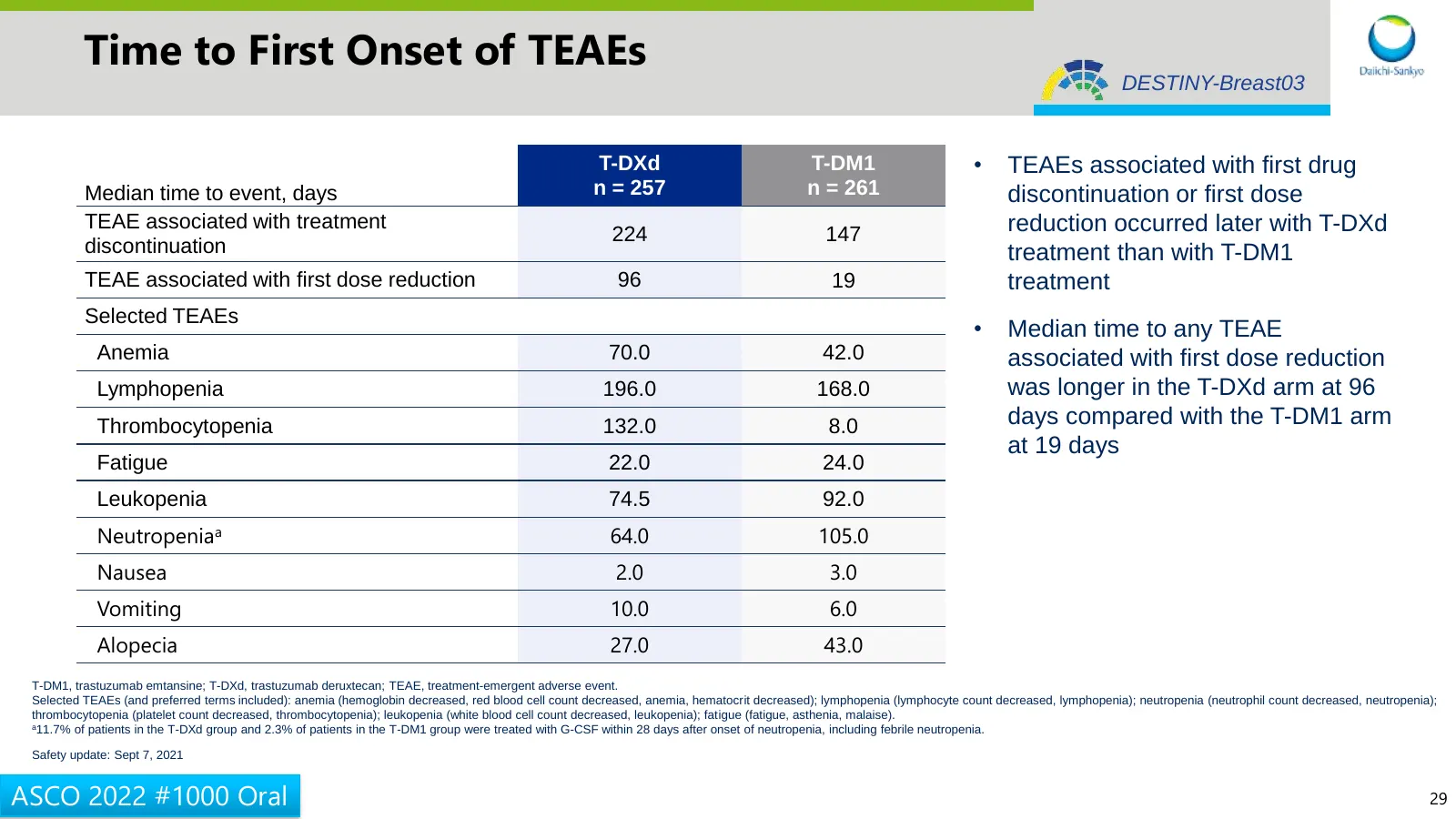
Slide 29: Time to First Onset of TEAEs
Time to First Onset of TEAEs DESTINY-Breast03 T-DXd T-DM1 • TEAEs associated with first drug Median time to event, days n = 257 n = 261 discontinuation or first dose TEAE associated with treatment reduction occurred later with T-DXd 224 147 discontinuation treatment than with T-DM1 TEAE associated w
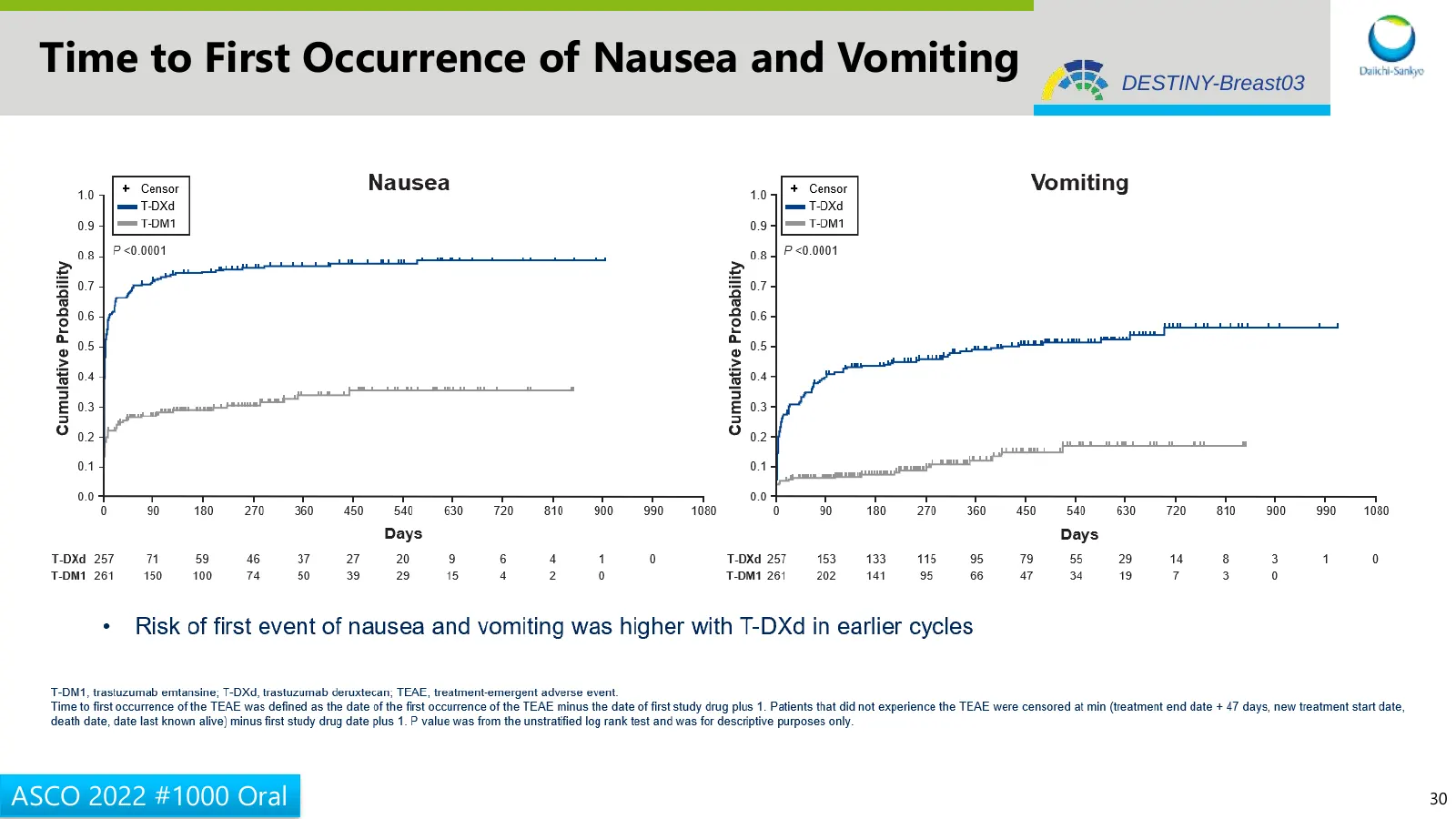
Slide 30: Time to First Occurrence of Nausea and Vomiting
Time to First Occurrence of Nausea and Vomiting DESTINY-Breast03 ASCO 2022 #1000 Oral 30
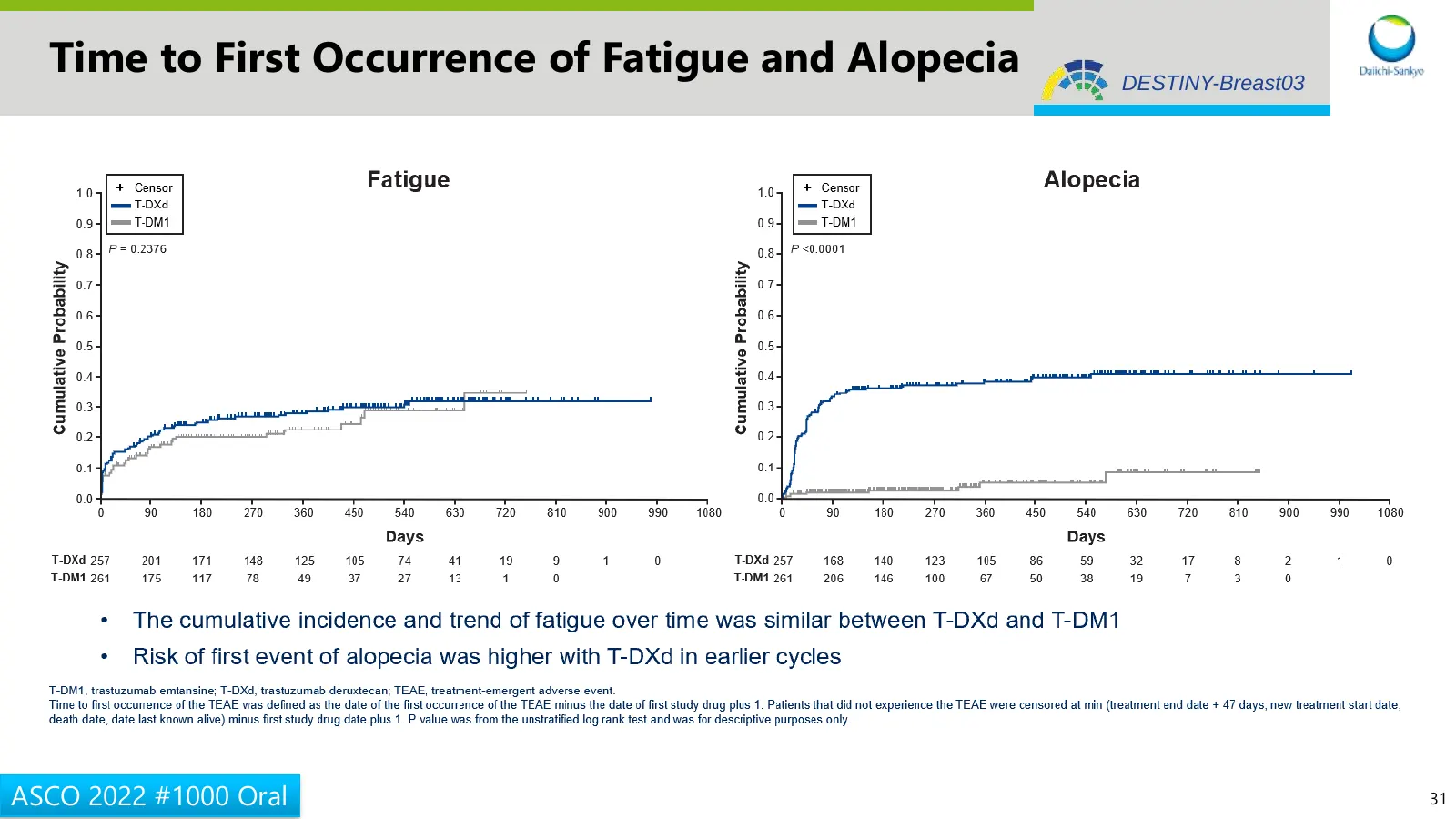
Slide 31: Time to First Occurrence of Fatigue and Alopecia
Time to First Occurrence of Fatigue and Alopecia DESTINY-Breast03 ASCO 2022 #1000 Oral 31
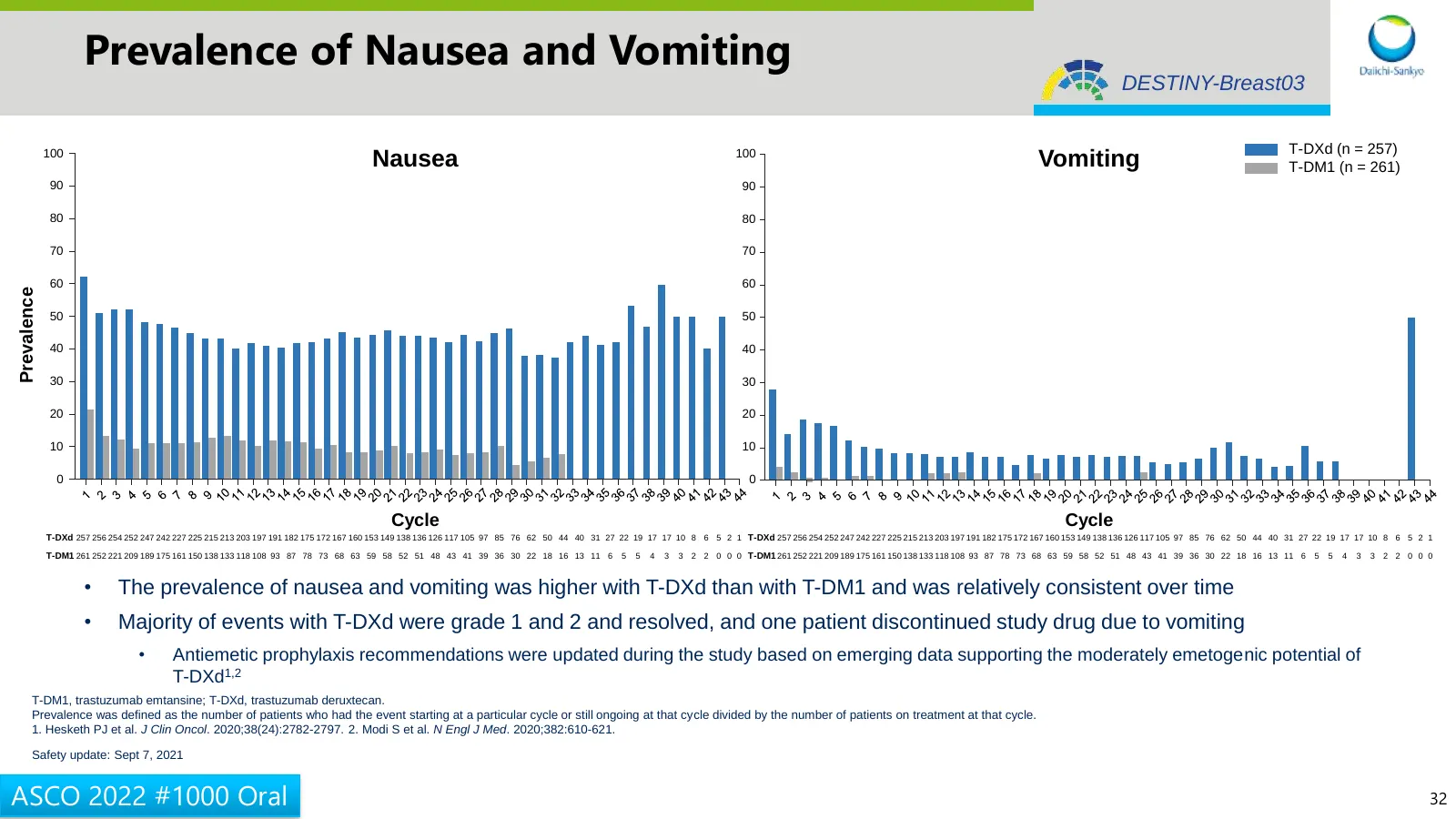
Slide 32: Prevalence of Nausea and Vomiting
Prevalence of Nausea and Vomiting DESTINY-Breast03 100 100 T-DXd (n = 257) Nausea Vomiting T-DM1 (n = 261) 90 90 80 80 70 70 60 60 Prevalence 50 50 40 40 30 30 20 20 10 10 0 0 Cycle Cycle T-DXd 257 256 254 252 247 242 227 225 215 213 203 197 191 182 175 172 167 160 153 149 138 136 126 117 105 97 85
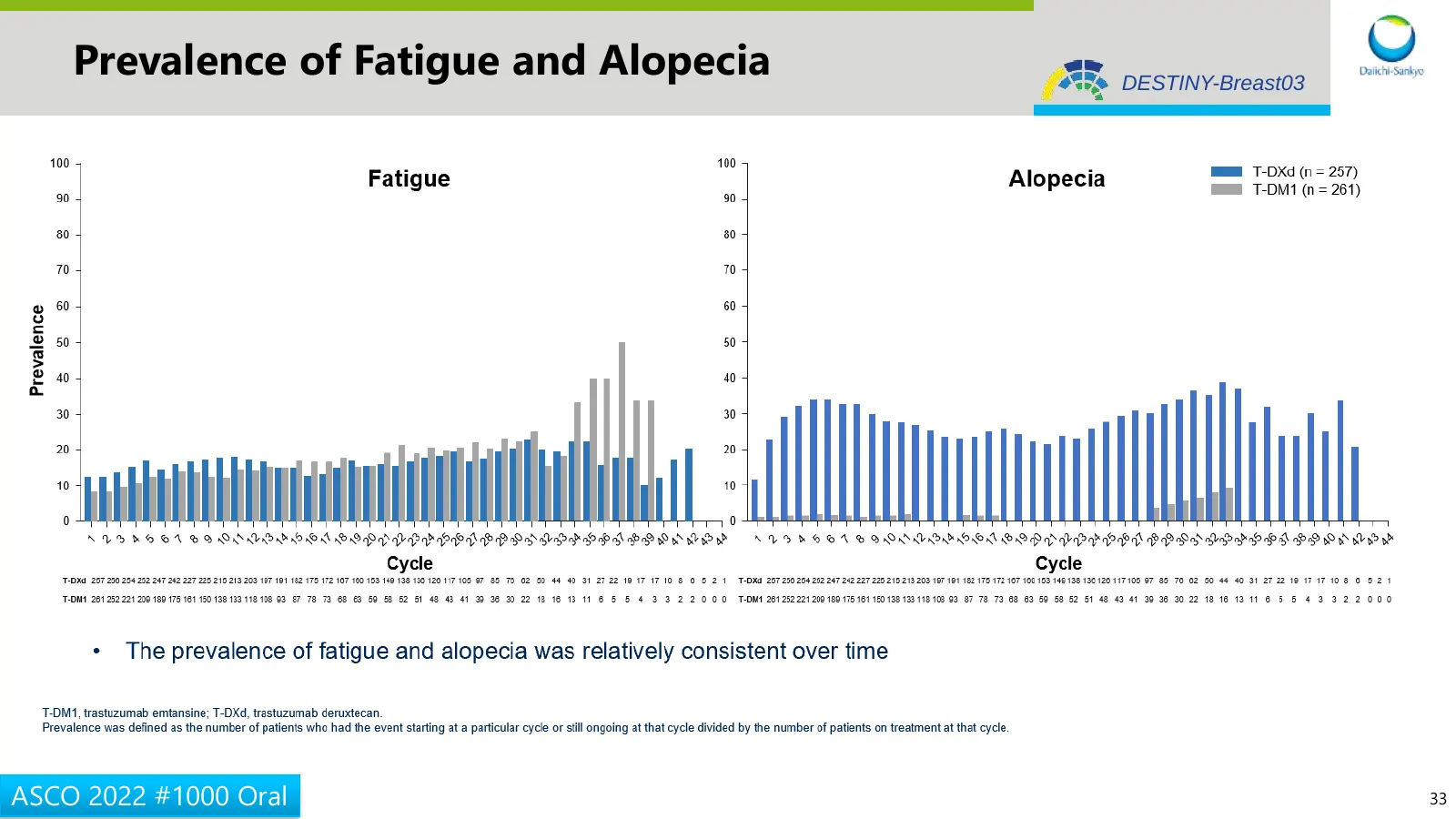
Slide 33: Prevalence of Fatigue and Alopecia
Prevalence of Fatigue and Alopecia DESTINY-Breast03 ASCO 2022 #1000 Oral 33
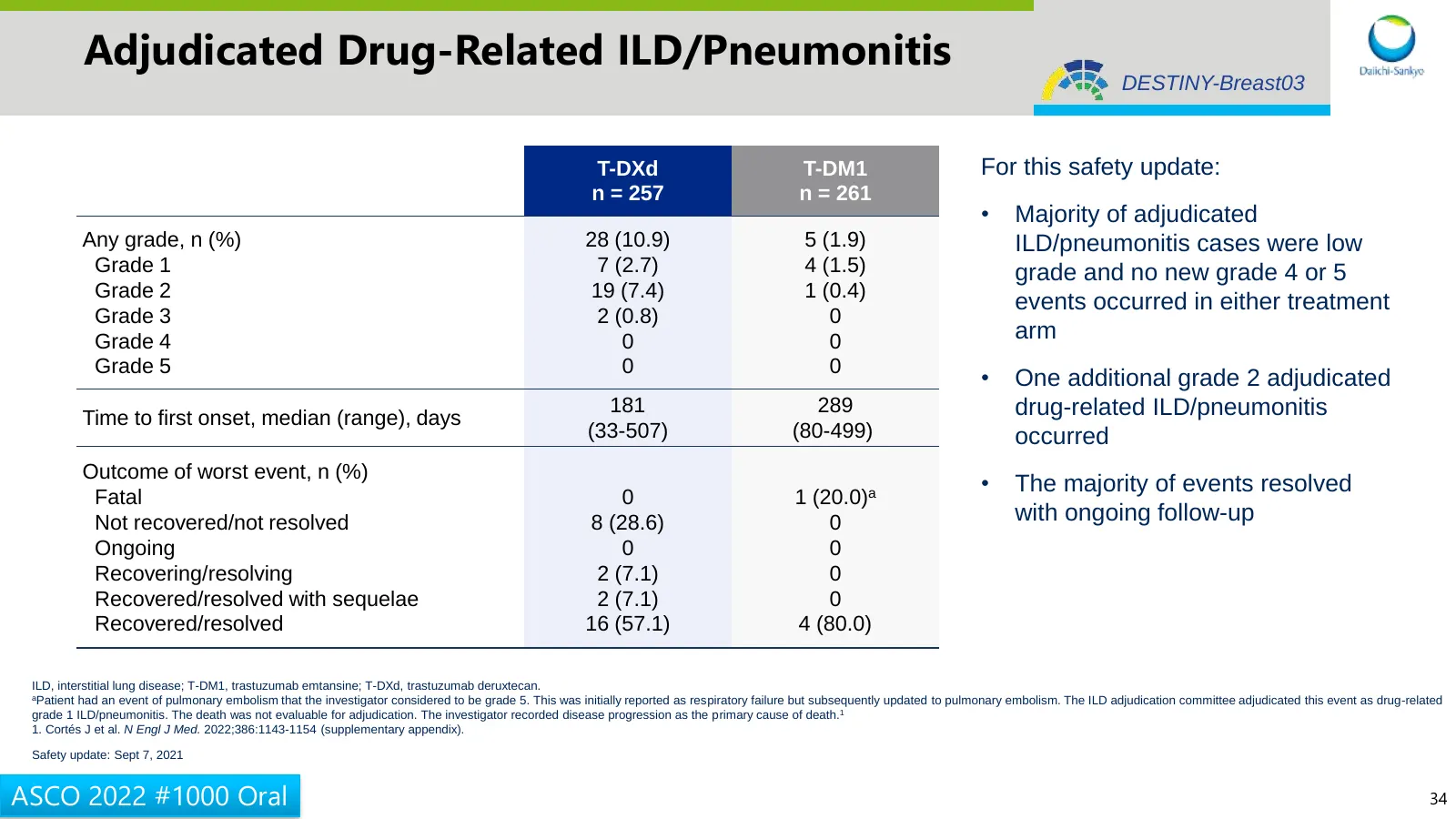
Slide 34: Adjudicated Drug-Related ILD/Pneumonitis
Adjudicated Drug-Related ILD/Pneumonitis DESTINY-Breast03 T-DXd T-DM1 For this safety update: n = 257 n = 261 • Majority of adjudicated Any grade, n (%) 28 (10.9) 5 (1.9) ILD/pneumonitis cases were low Grade 1 7 (2.7) 4 (1.5) grade and no new grade 4 or 5 Grade 2 19 (7.4) 1 (0.4) events occurred in
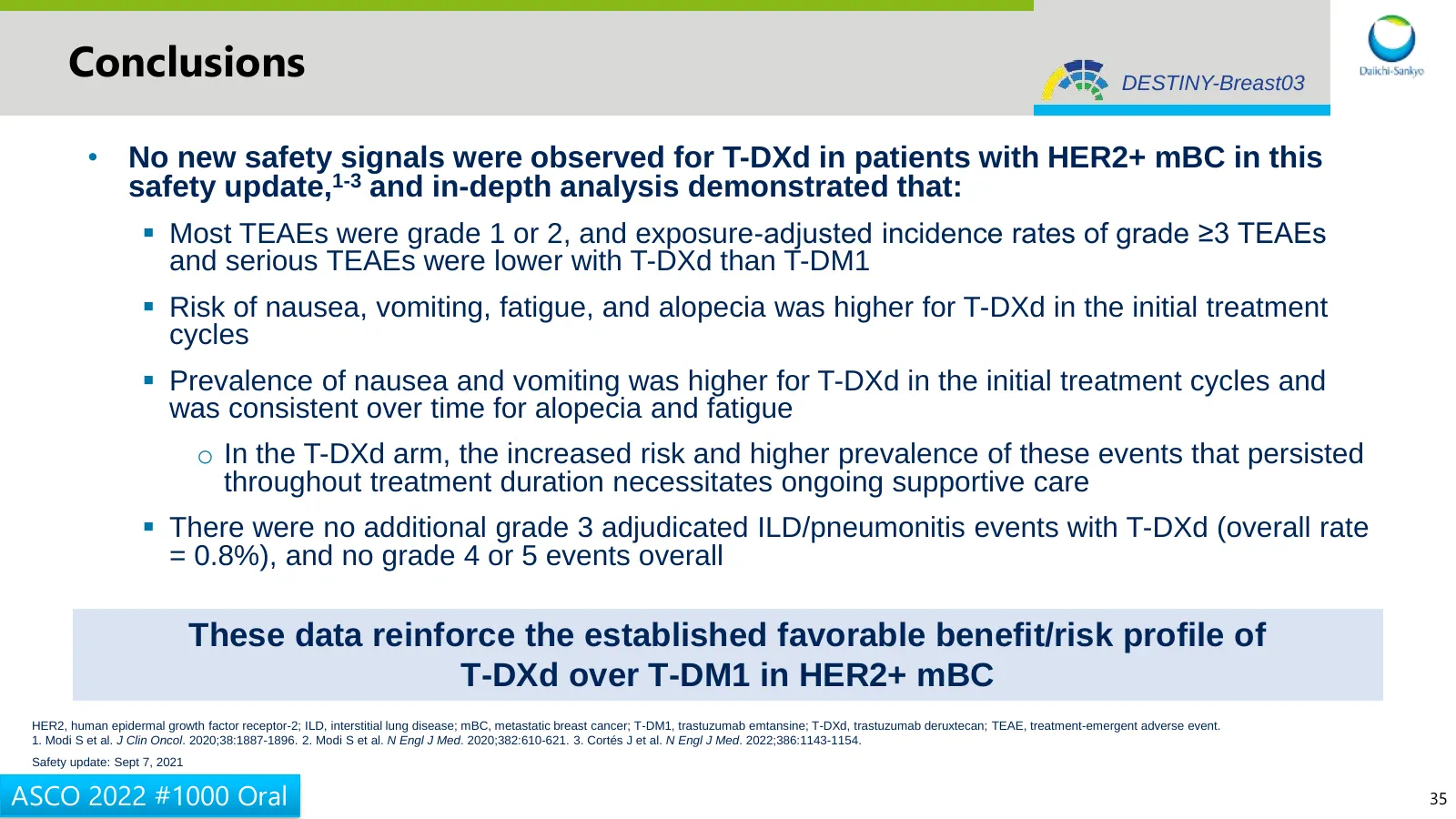
Slide 35: Conclusions
Conclusions DESTINY-Breast03 • No new safety signals were observed for T-DXd in patients with HER2+ mBC in this safety update,1-3 and in-depth analysis demonstrated that: ▪ Most TEAEs were grade 1 or 2, and exposure-adjusted incidence rates of grade ≥3 TEAEs and serious TEAEs were lower with T-DXd t
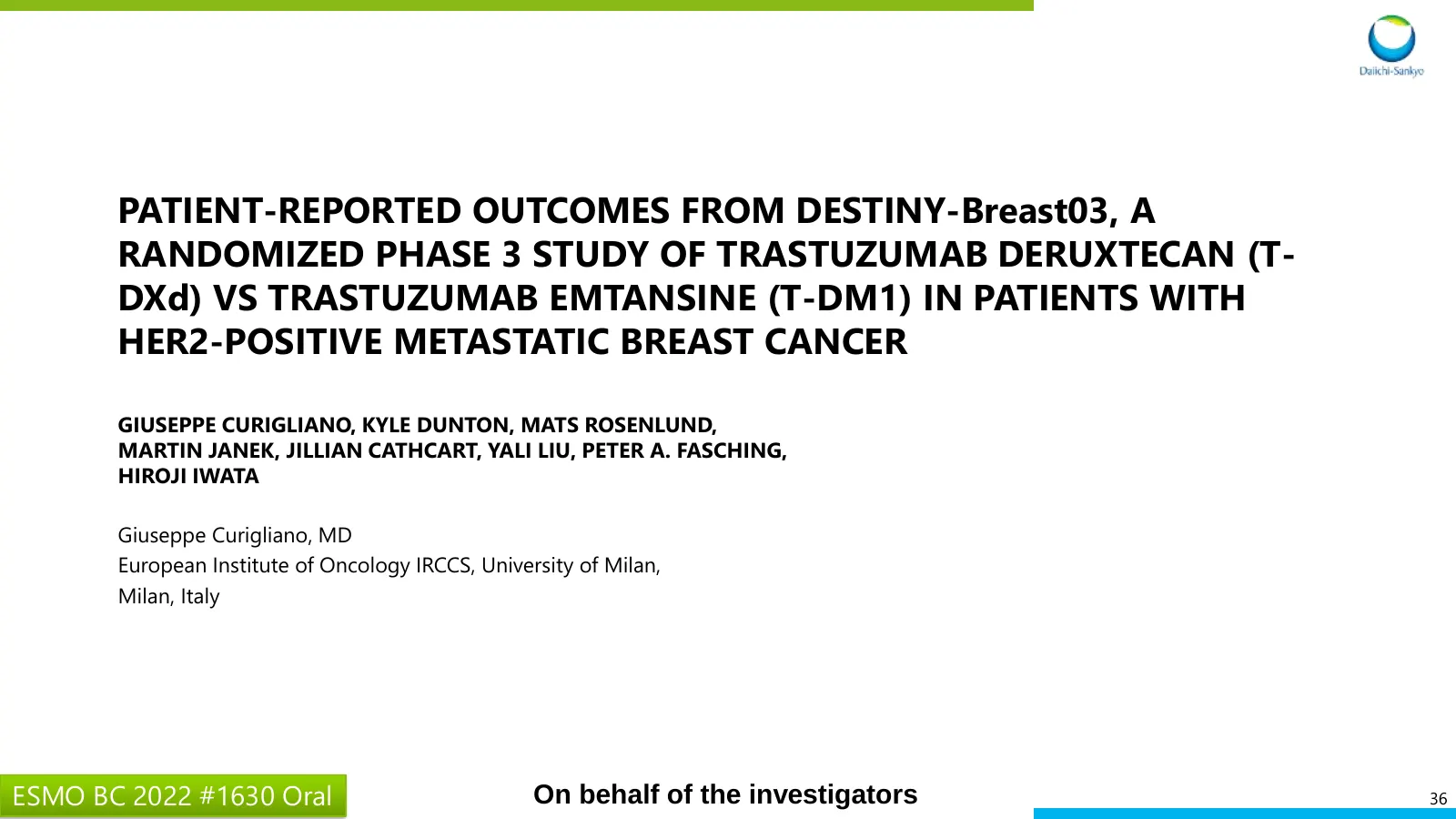
Slide 36: Patient-Reported Outcomes from DESTINY-Breast03
PATIENT-REPORTED OUTCOMES FROM DESTINY-Breast03, A RANDOMIZED PHASE 3 STUDY OF TRASTUZUMAB DERUXTECAN (T- DXd) VS TRASTUZUMAB EMTANSINE (T-DM1) IN PATIENTS WITH HER2-POSITIVE METASTATIC BREAST CANCER GIUSEPPE CURIGLIANO, KYLE DUNTON, MATS ROSENLUND, MARTIN JANEK, JILLIAN CATHCART, YALI LIU, PETER A.
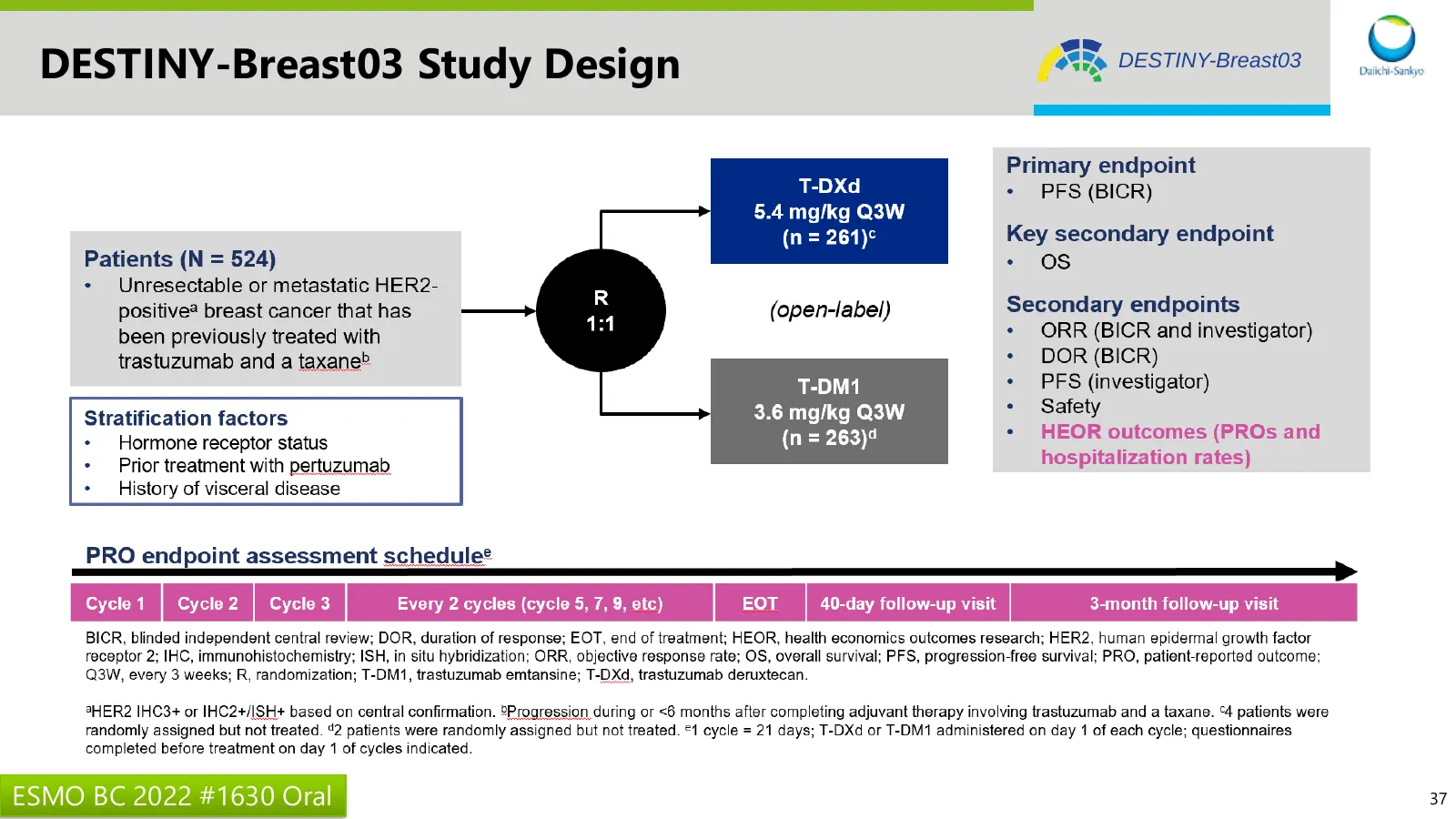
Slide 37: DESTINY-Breast03 Study Design
DESTINY-Breast03 Study Design DESTINY-Breast03 ESMO BC 2022 #1630 Oral 37
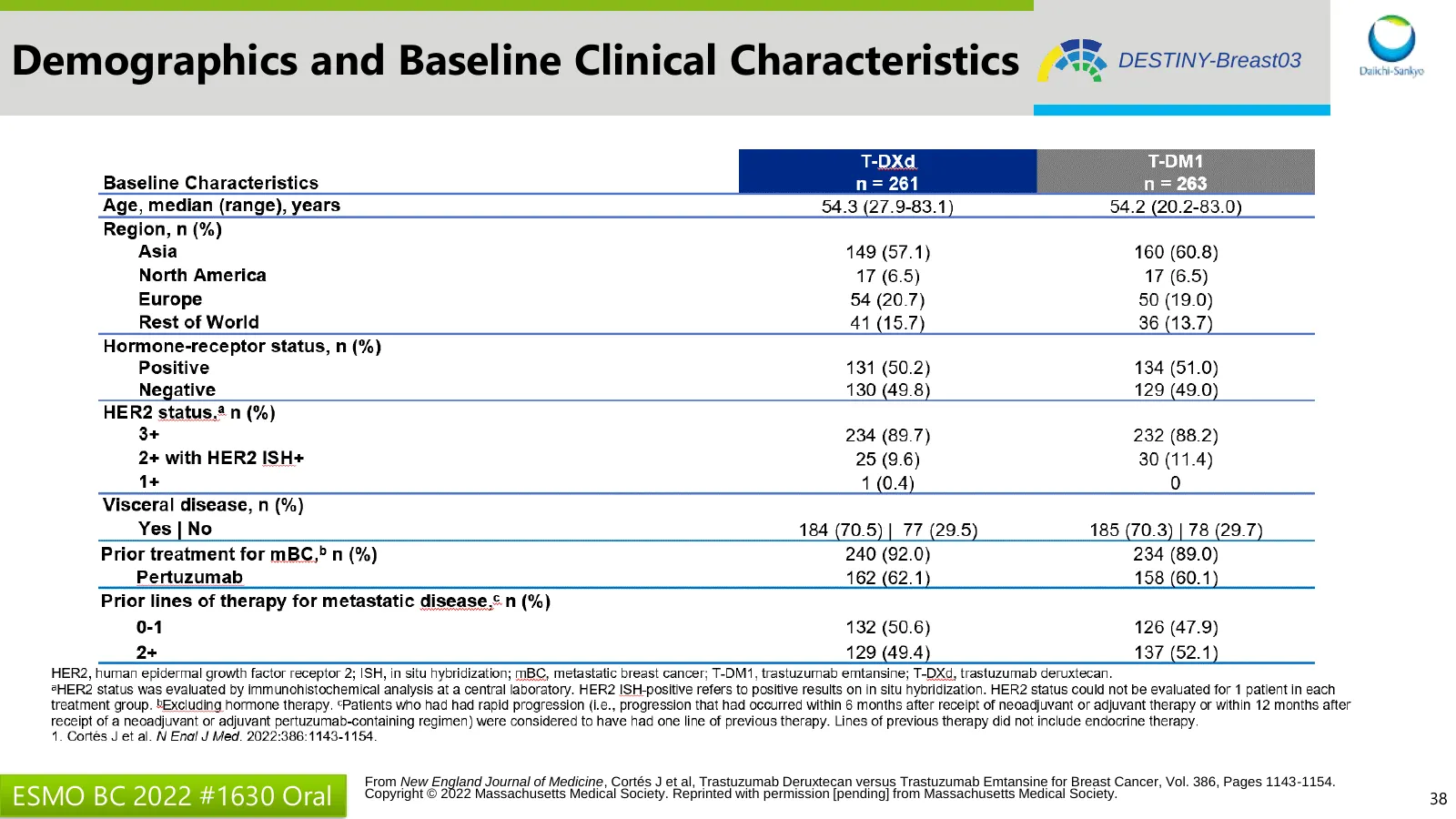
Slide 38: Demographics and Baseline Clinical Characteristics
Demographics and Baseline Clinical Characteristics DESTINY-Breast03 ESMO BC 2022 #1630 Oral From New England Journal of Medicine, Cortés J et al, Trastuzumab Deruxtecan versus Trastuzumab Emtansine for Breast Cancer, Vol. 386, Pages 1143-1154. Copyright © 2022 Massachusetts Medical Society. Reprinte
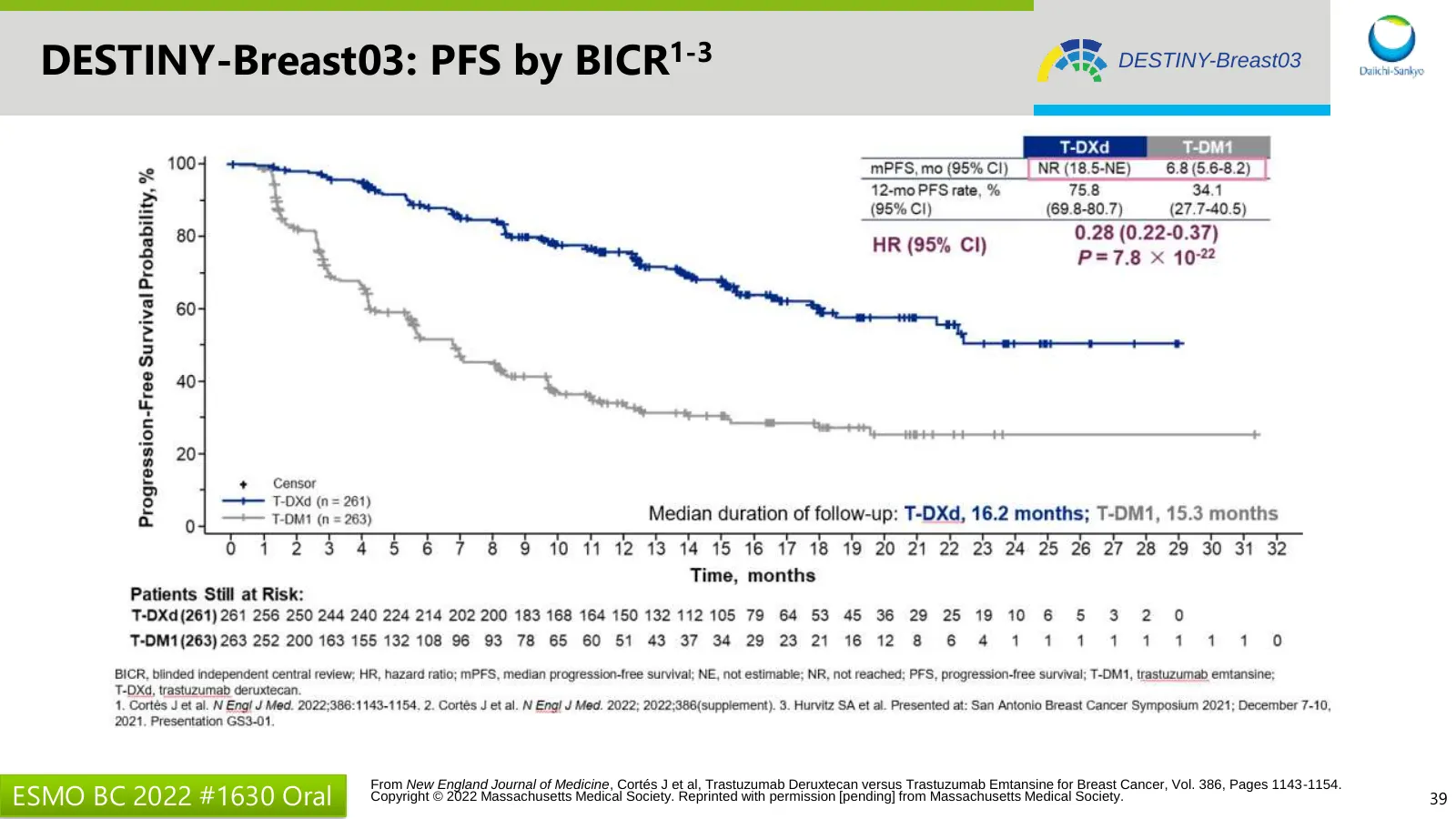
Slide 39: DESTINY-Breast03: PFS by BICR
DESTINY-Breast03: PFS by BICR1-3 DESTINY-Breast03 ESMO BC 2022 #1630 Oral From New England Journal of Medicine, Cortés J et al, Trastuzumab Deruxtecan versus Trastuzumab Emtansine for Breast Cancer, Vol. 386, Pages 1143-1154. Copyright © 2022 Massachusetts Medical Society. Reprinted with permission
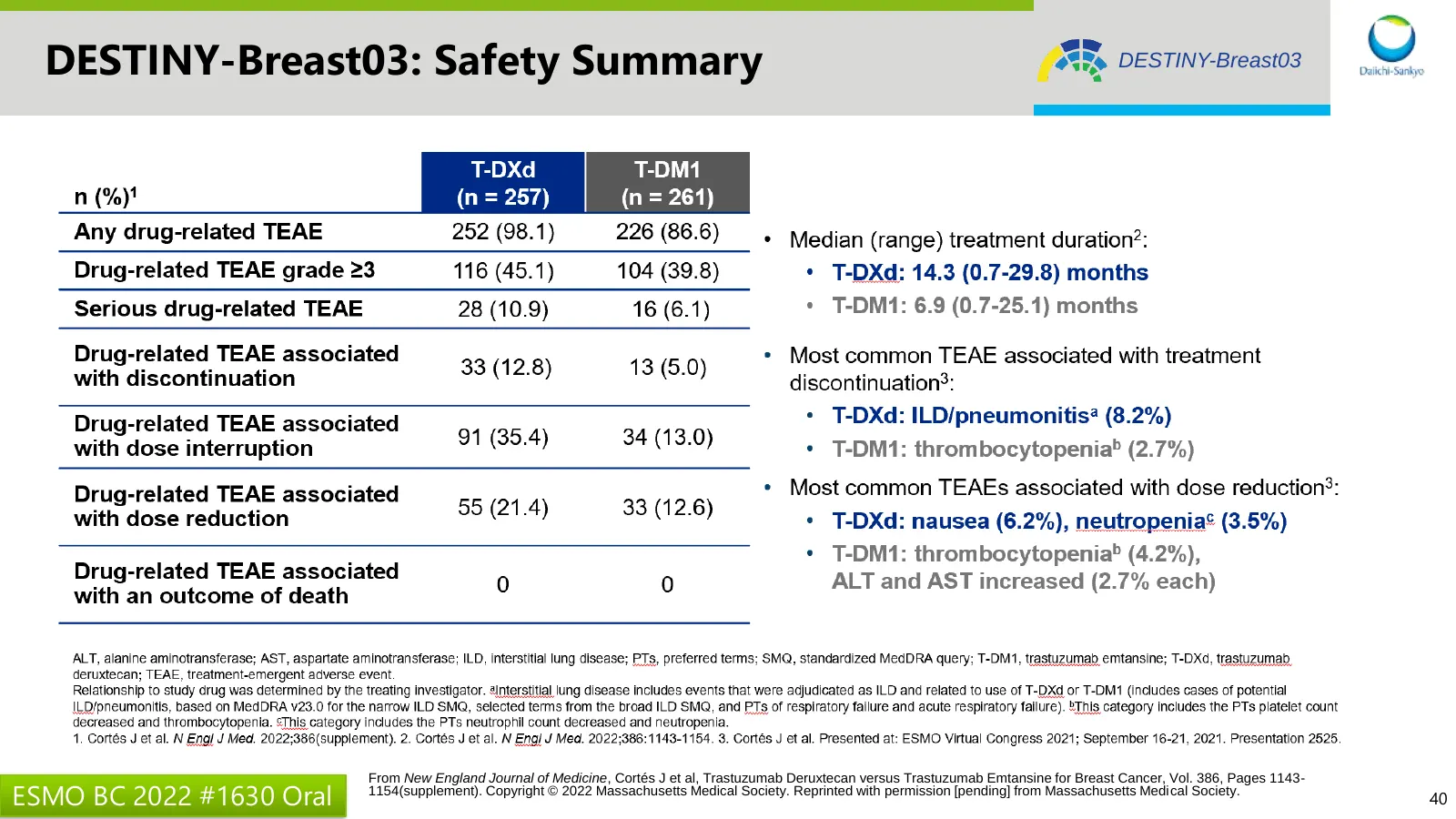
Slide 40: DESTINY-Breast03: Safety Summary
DESTINY-Breast03: Safety Summary DESTINY-Breast03 From New England Journal of Medicine, Cortés J et al, Trastuzumab Deruxtecan versus Trastuzumab Emtansine for Breast Cancer, Vol. 386, Pages 1143- ESMO BC 2022 #1630 Oral 1154(supplement). Copyright © 2022 Massachusetts Medical Society. Reprinted wit
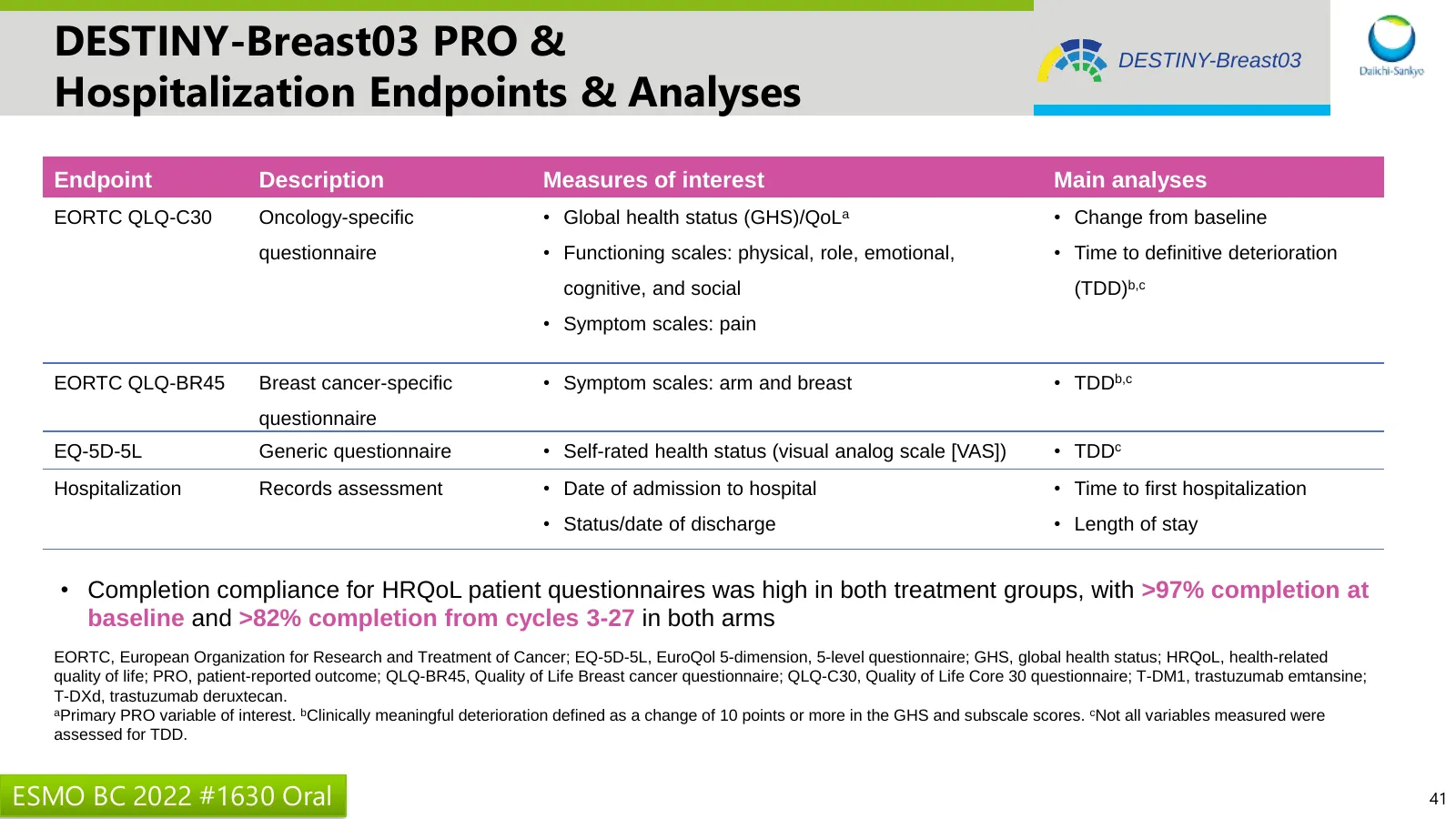
Slide 41: DESTINY-Breast03 PRO & Hospitalization Endpoints & Analyses
DESTINY-Breast03 PRO & DESTINY-Breast03 Hospitalization Endpoints & Analyses Endpoint Description Measures of interest Main analyses EORTC QLQ-C30 Oncology-specific • Global health status (GHS)/QoLa • Change from baseline questionnaire • Functioning scales: physical, role, emotional, • Time to defin
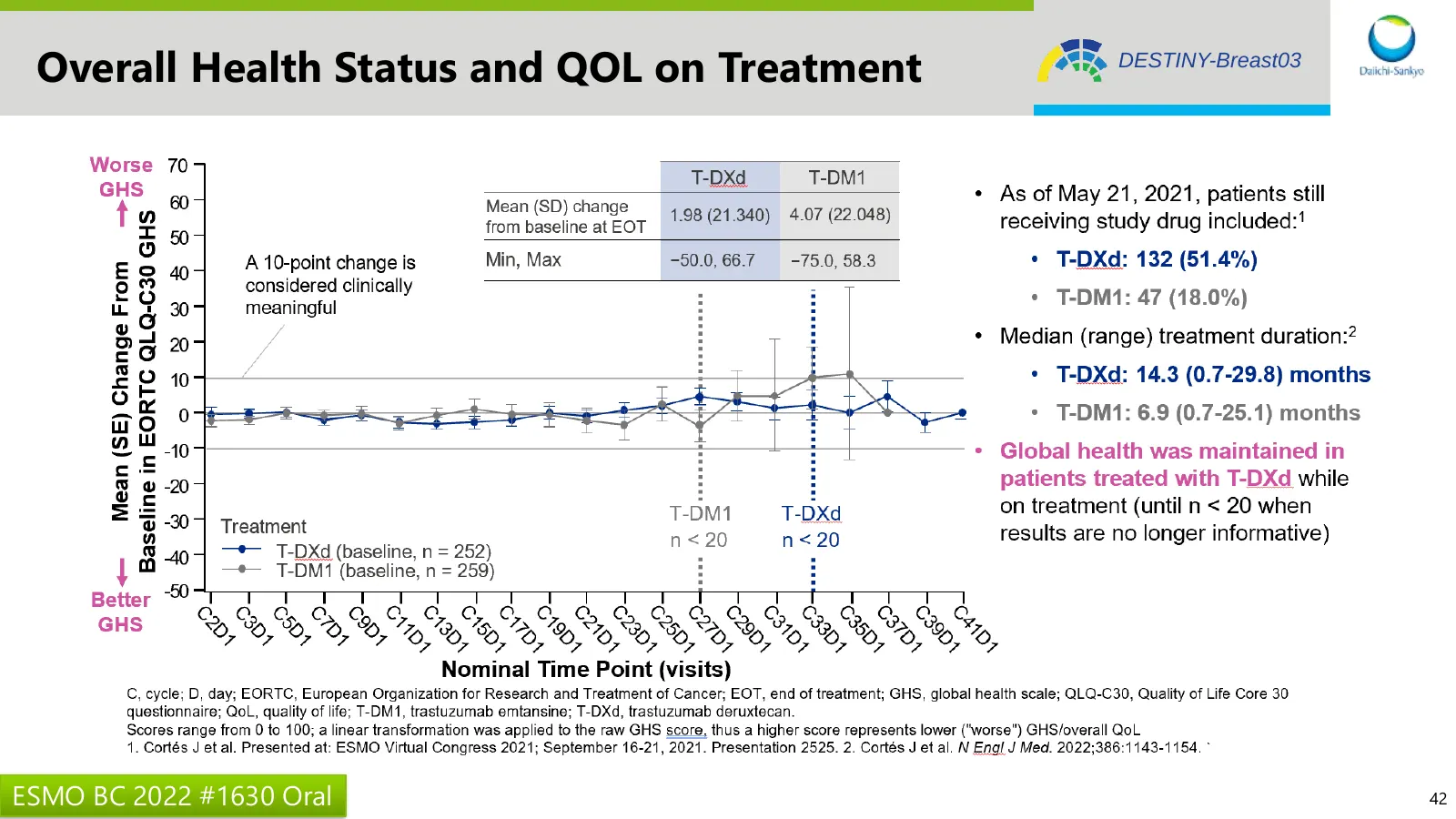
Slide 42: Overall Health Status and QOL on Treatment
Overall Health Status and QOL on Treatment DESTINY-Breast03 ESMO BC 2022 #1630 Oral 42
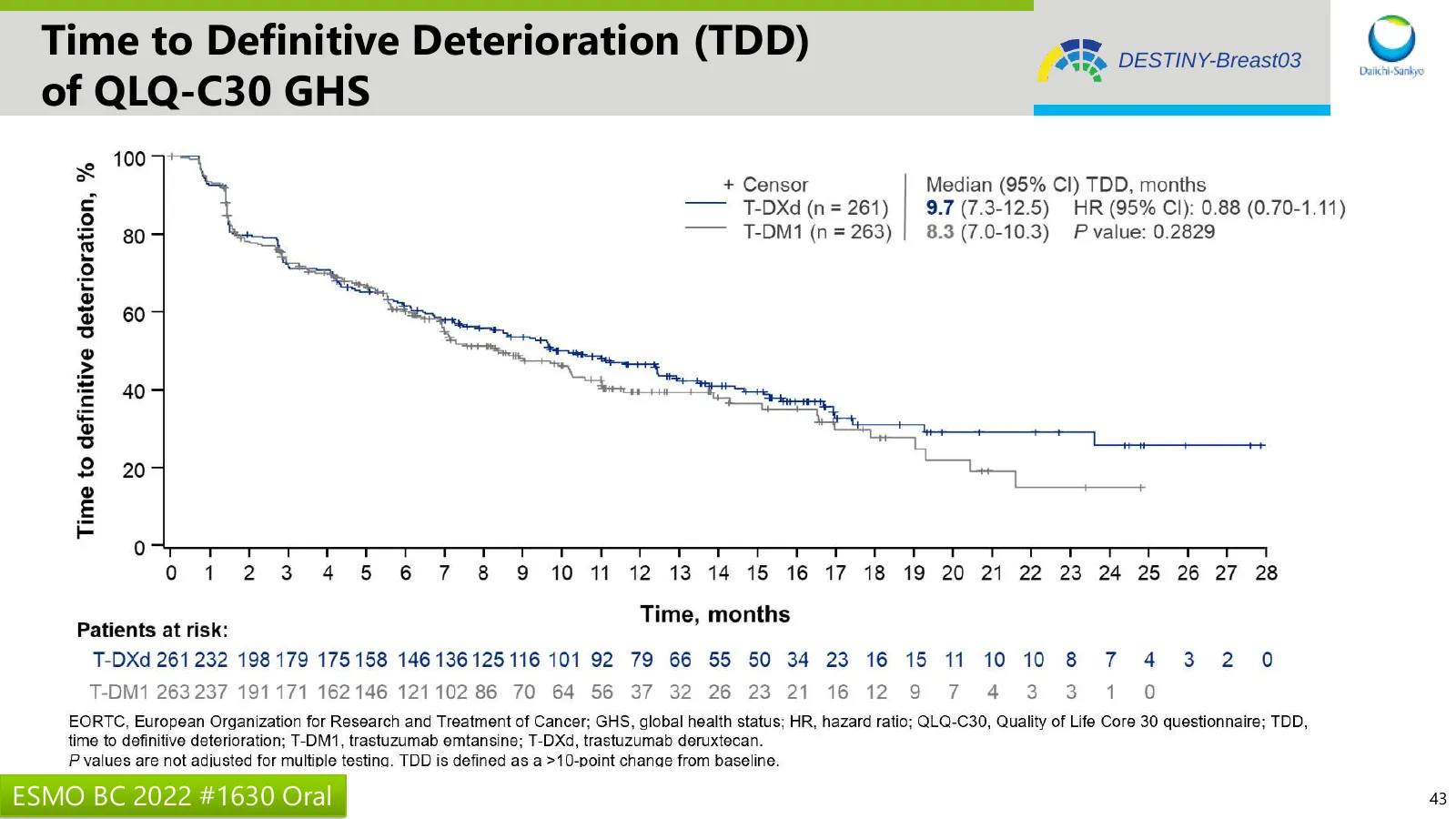
Slide 43: Time to Definitive Deterioration of QLQ-C30 GHS
Time to Definitive Deterioration (TDD) DESTINY-Breast03 of QLQ-C30 GHS ESMO BC 2022 #1630 Oral 43
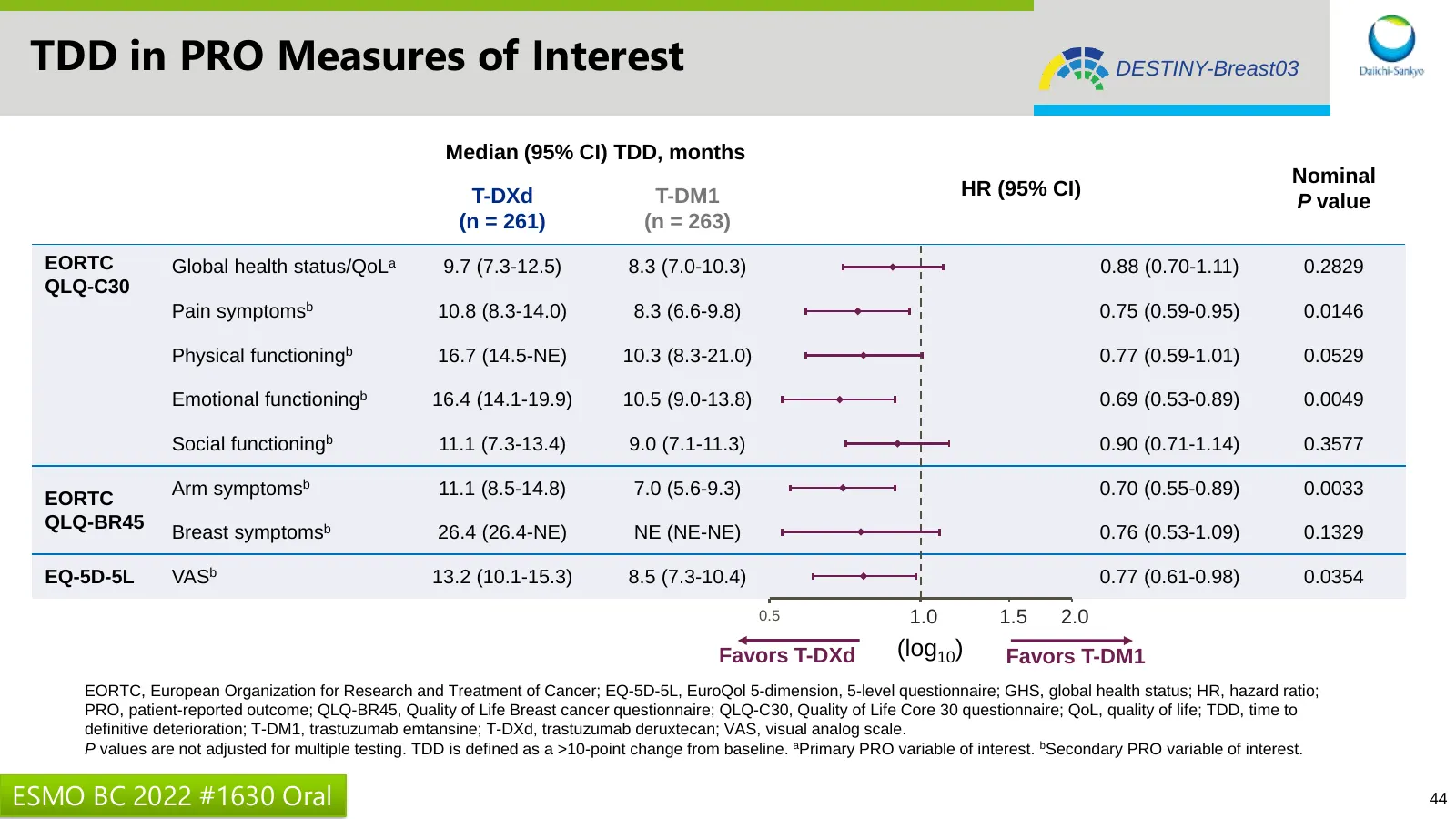
Slide 44: TDD in PRO Measures of Interest
TDD in PRO Measures of Interest DESTINY-Breast03 Median (95% CI) TDD, months Nominal T-DXd T-DM1 HR (95% CI) P value (n = 261) (n = 263) EORTC Global health status/QoLa 9.7 (7.3-12.5) 8.3 (7.0-10.3) 0.88 (0.70-1.11) 0.2829 QLQ-C30 Pain symptomsb 10.8 (8.3-14.0) 8.3 (6.6-9.8) 0.75 (0.59-0.95) 0.0146
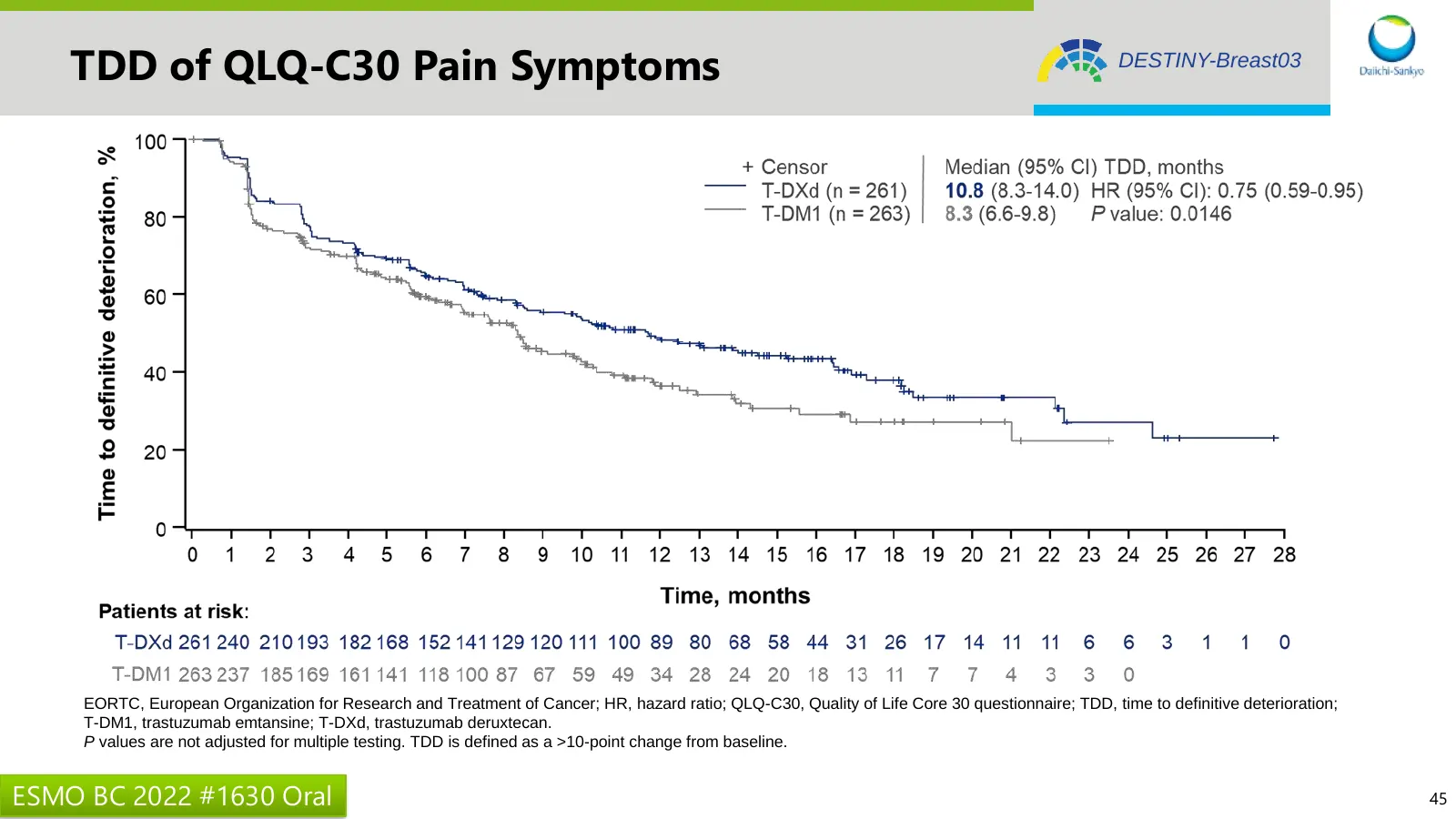
Slide 45: TDD of QLQ-C30 Pain Symptoms
TDD of QLQ-C30 Pain Symptoms DESTINY-Breast03 EORTC, European Organization for Research and Treatment of Cancer; HR, hazard ratio; QLQ-C30, Quality of Life Core 30 questionnaire; TDD, time to definitive deterioration; T-DM1, trastuzumab emtansine; T-DXd, trastuzumab deruxtecan. P values are not adju
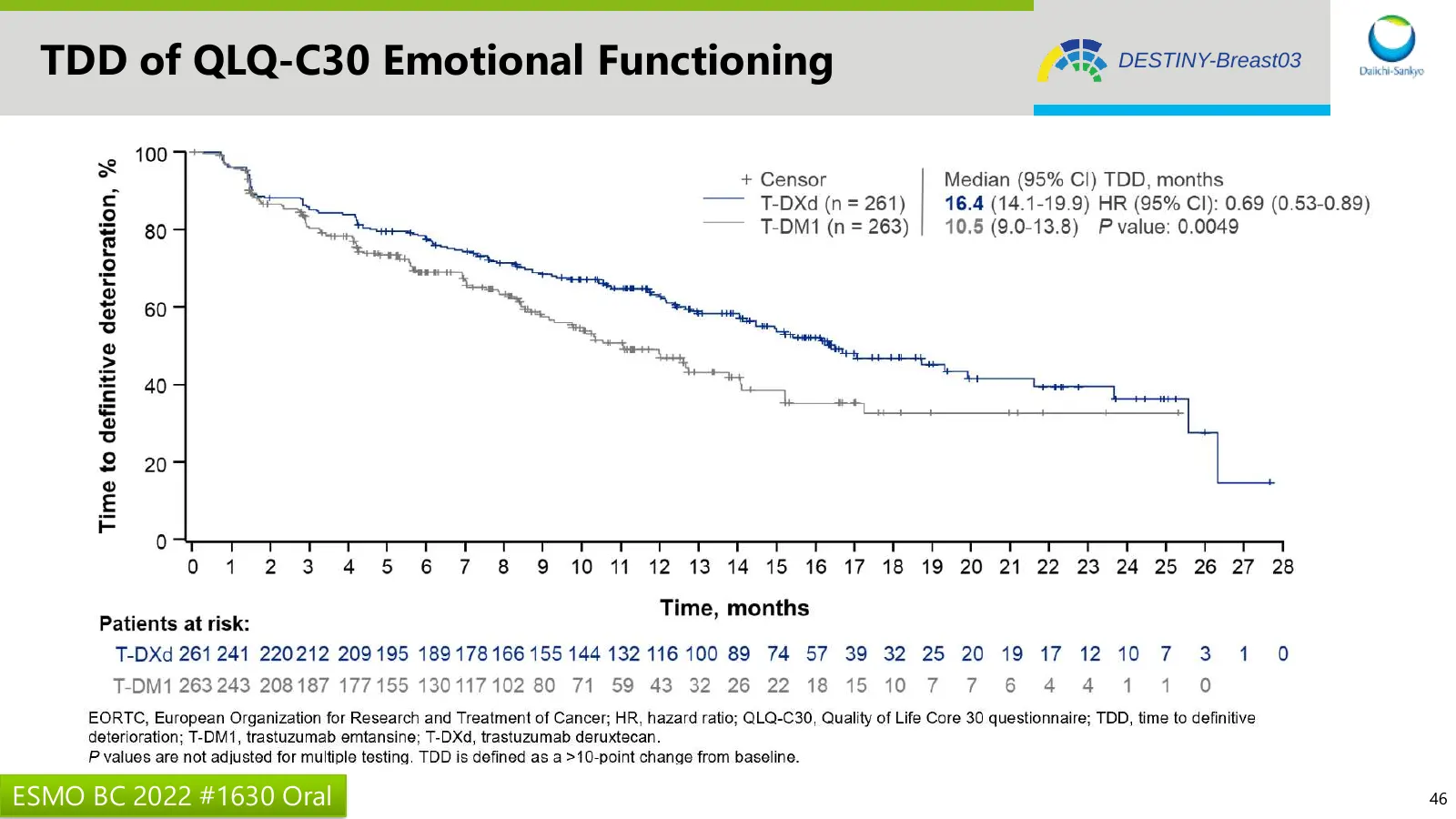
Slide 46: TDD of QLQ-C30 Emotional Functioning
TDD of QLQ-C30 Emotional Functioning DESTINY-Breast03 ESMO BC 2022 #1630 Oral 46
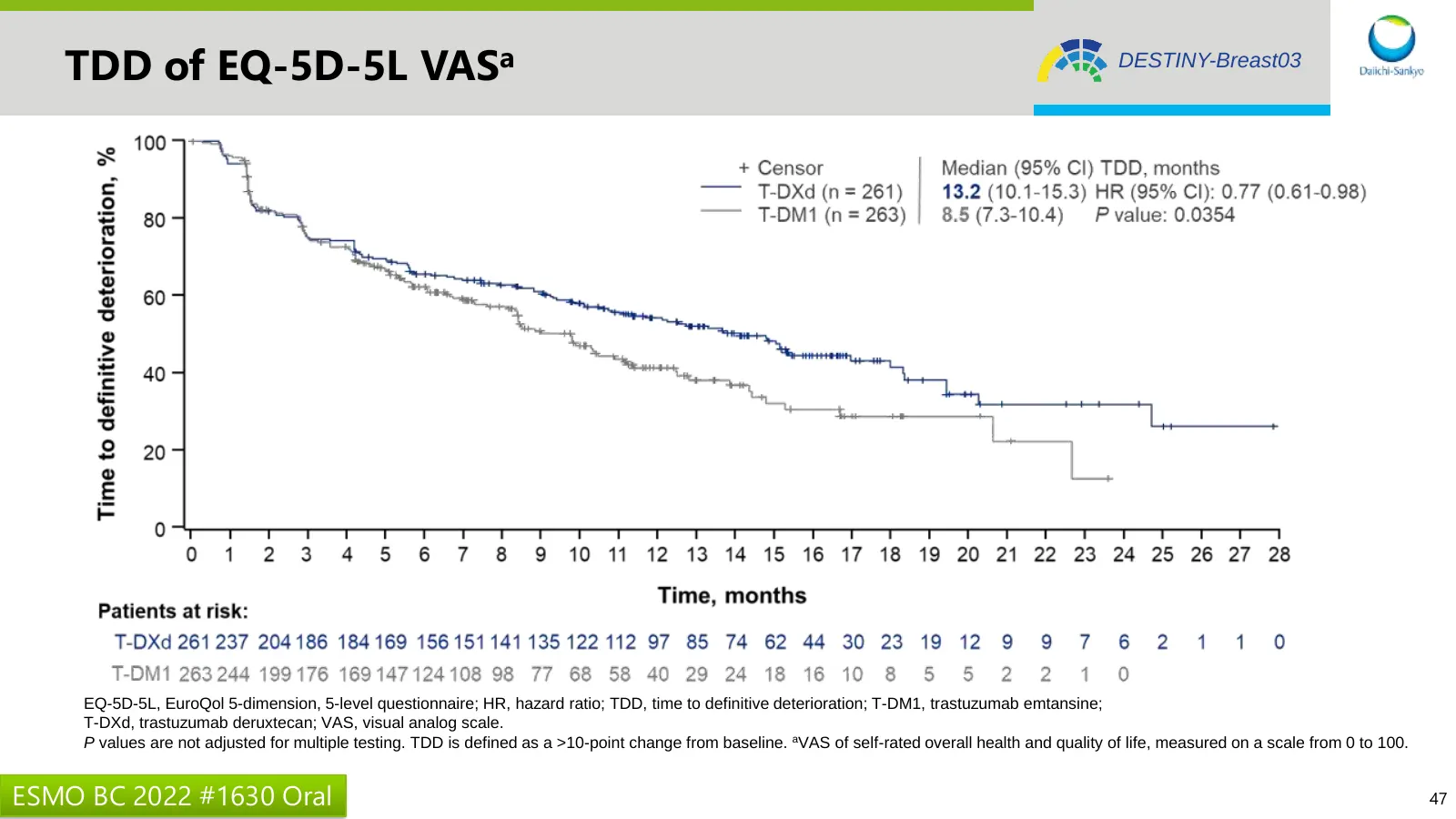
Slide 47: TDD of EQ-5D-5L VAS
TDD of EQ-5D-5L VASa DESTINY-Breast03 EQ-5D-5L, EuroQol 5-dimension, 5-level questionnaire; HR, hazard ratio; TDD, time to definitive deterioration; T-DM1, trastuzumab emtansine; T-DXd, trastuzumab deruxtecan; VAS, visual analog scale. P values are not adjusted for multiple testing. TDD is defined a
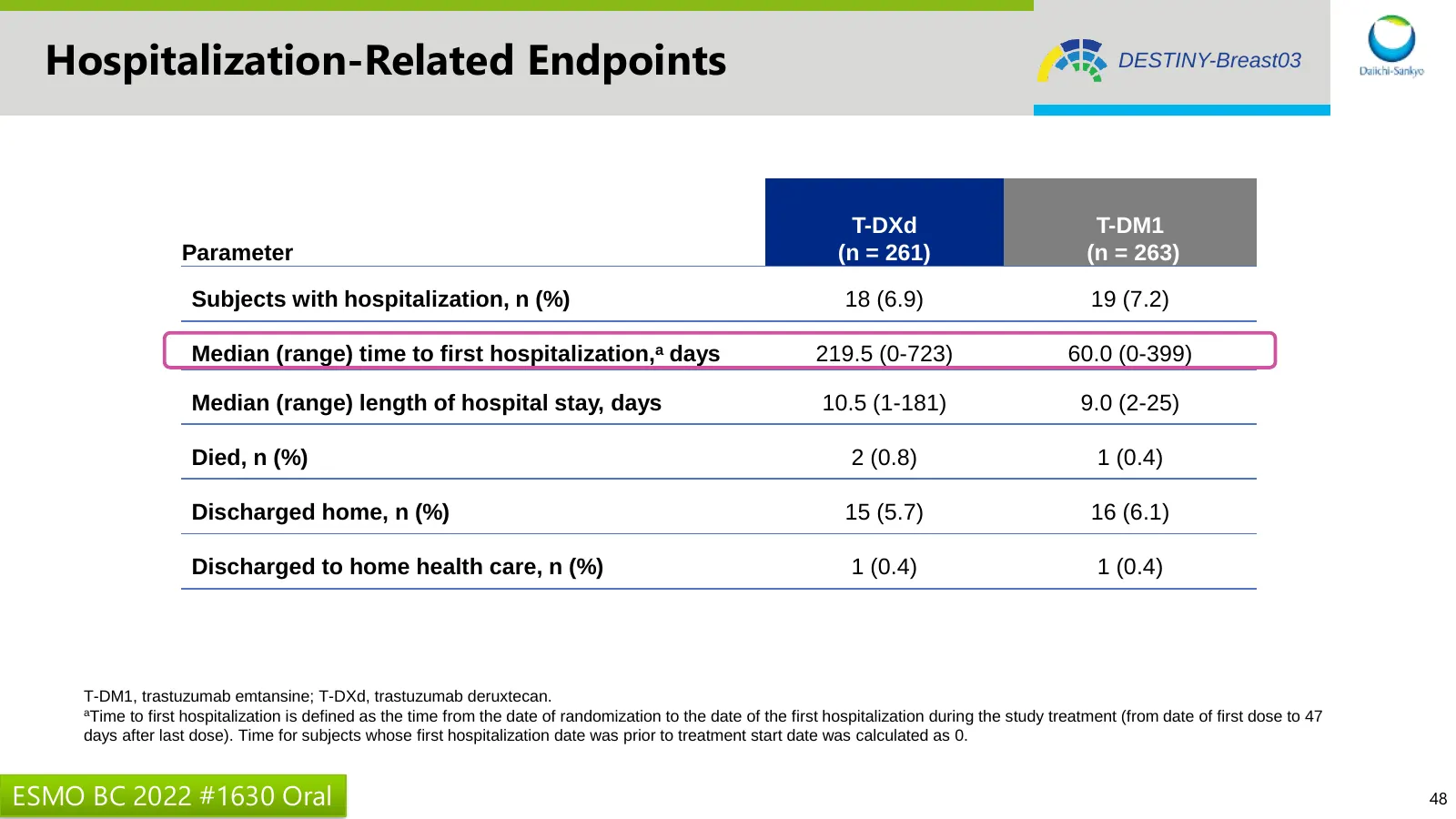
Slide 48: Hospitalization-Related Endpoints
Hospitalization-Related Endpoints DESTINY-Breast03 T-DXd T-DM1 Parameter (n = 261) (n = 263) Subjects with hospitalization, n (%) 18 (6.9) 19 (7.2) Median (range) time to first hospitalization,a days 219.5 (0-723) 60.0 (0-399) Median (range) length of hospital stay, days 10.5 (1-181) 9.0 (2-25) Died
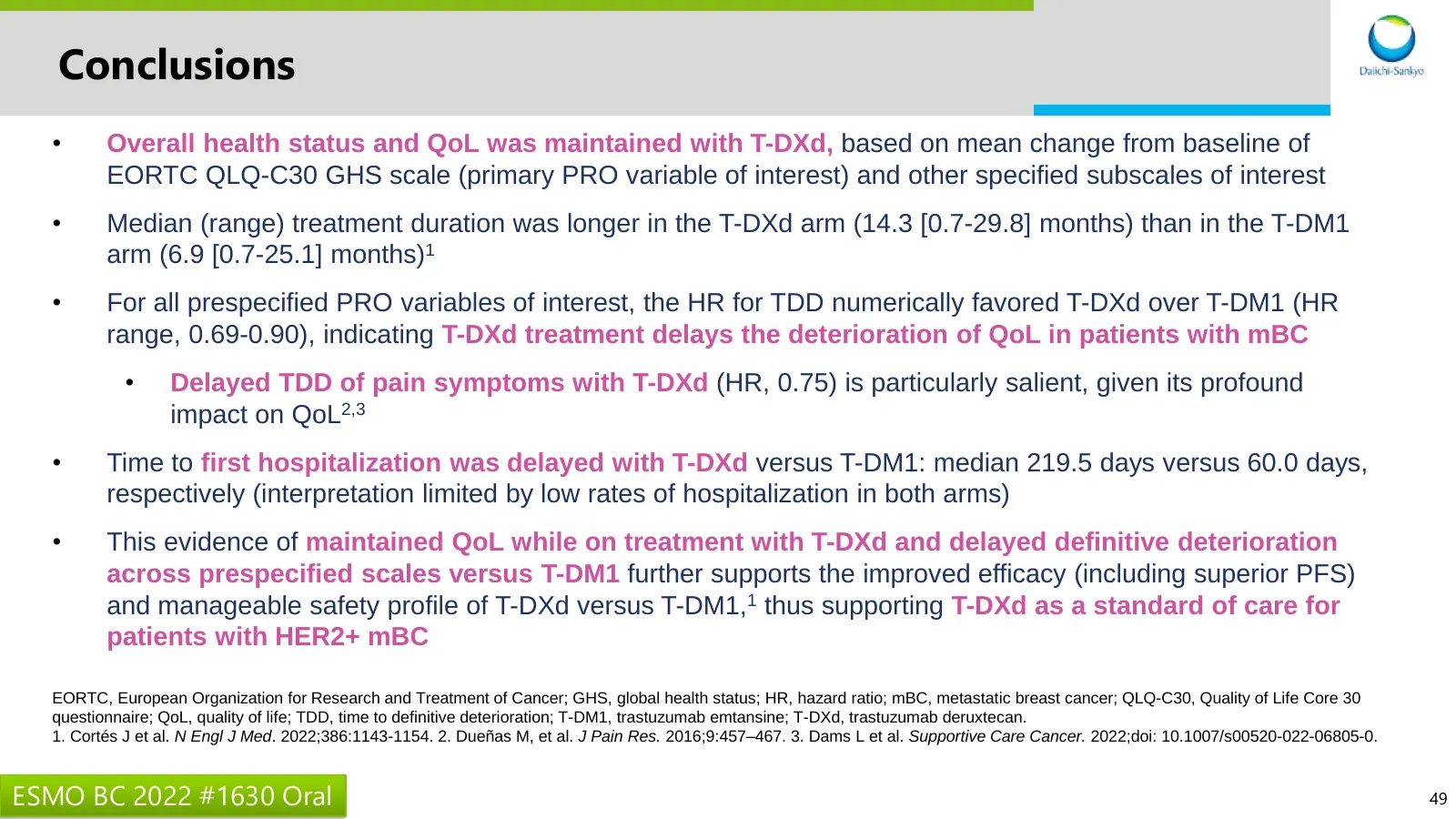
Slide 49: Conclusions
Conclusions • Overall health status and QoL was maintained with T-DXd, based on mean change from baseline of EORTC QLQ-C30 GHS scale (primary PRO variable of interest) and other specified subscales of interest • Median (range) treatment duration was longer in the T-DXd arm (14.3 [0.7-29.8] months) t
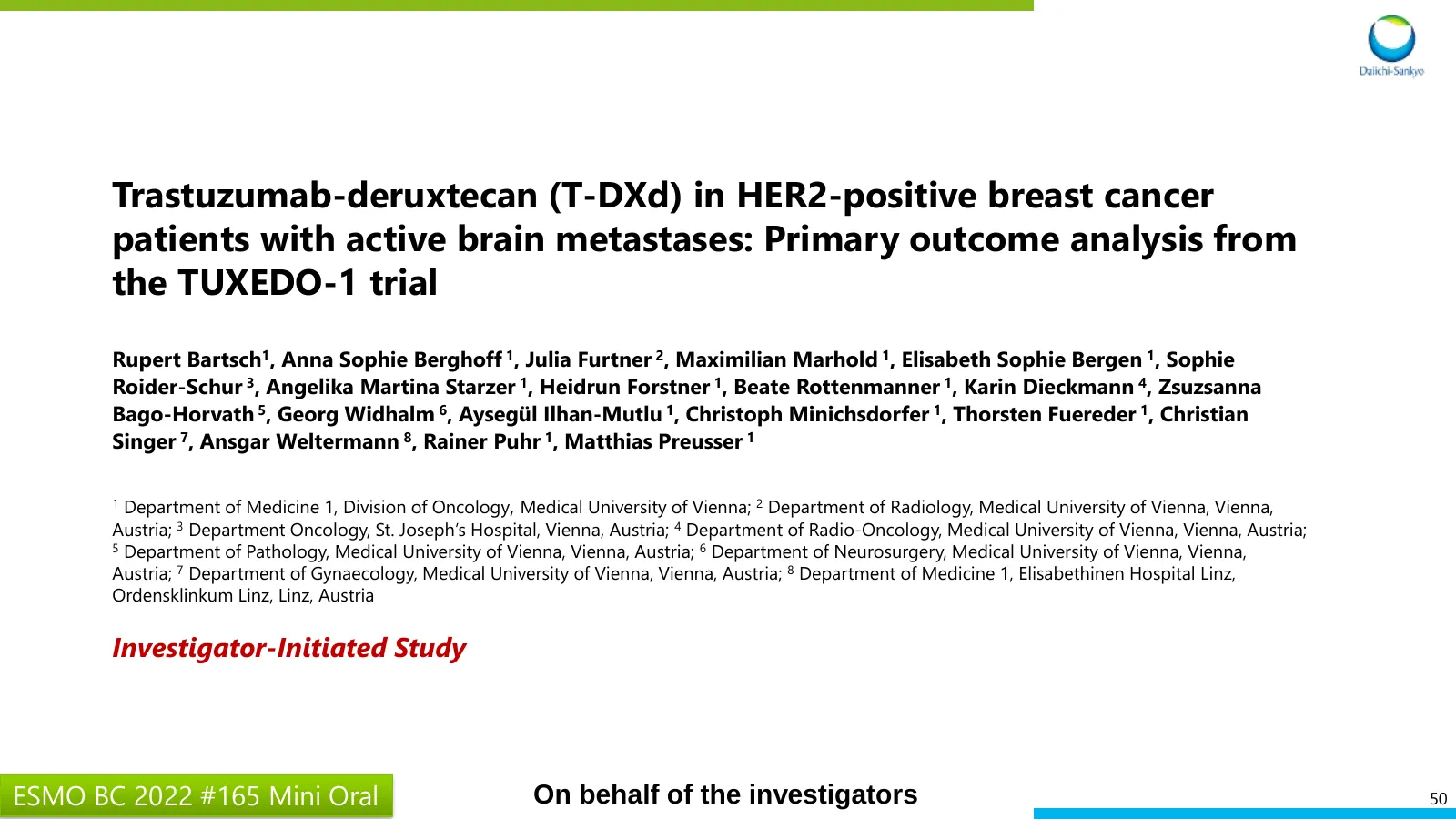
Slide 50: T-DXd in HER2-positive breast cancer with active brain metastases: TUXEDO-1
Trastuzumab-deruxtecan (T-DXd) in HER2-positive breast cancer patients with active brain metastases: Primary outcome analysis from the TUXEDO-1 trial Rupert Bartsch1, Anna Sophie Berghoff 1, Julia Furtner 2, Maximilian Marhold 1, Elisabeth Sophie Bergen 1, Sophie Roider-Schur 3, Angelika Martina Sta
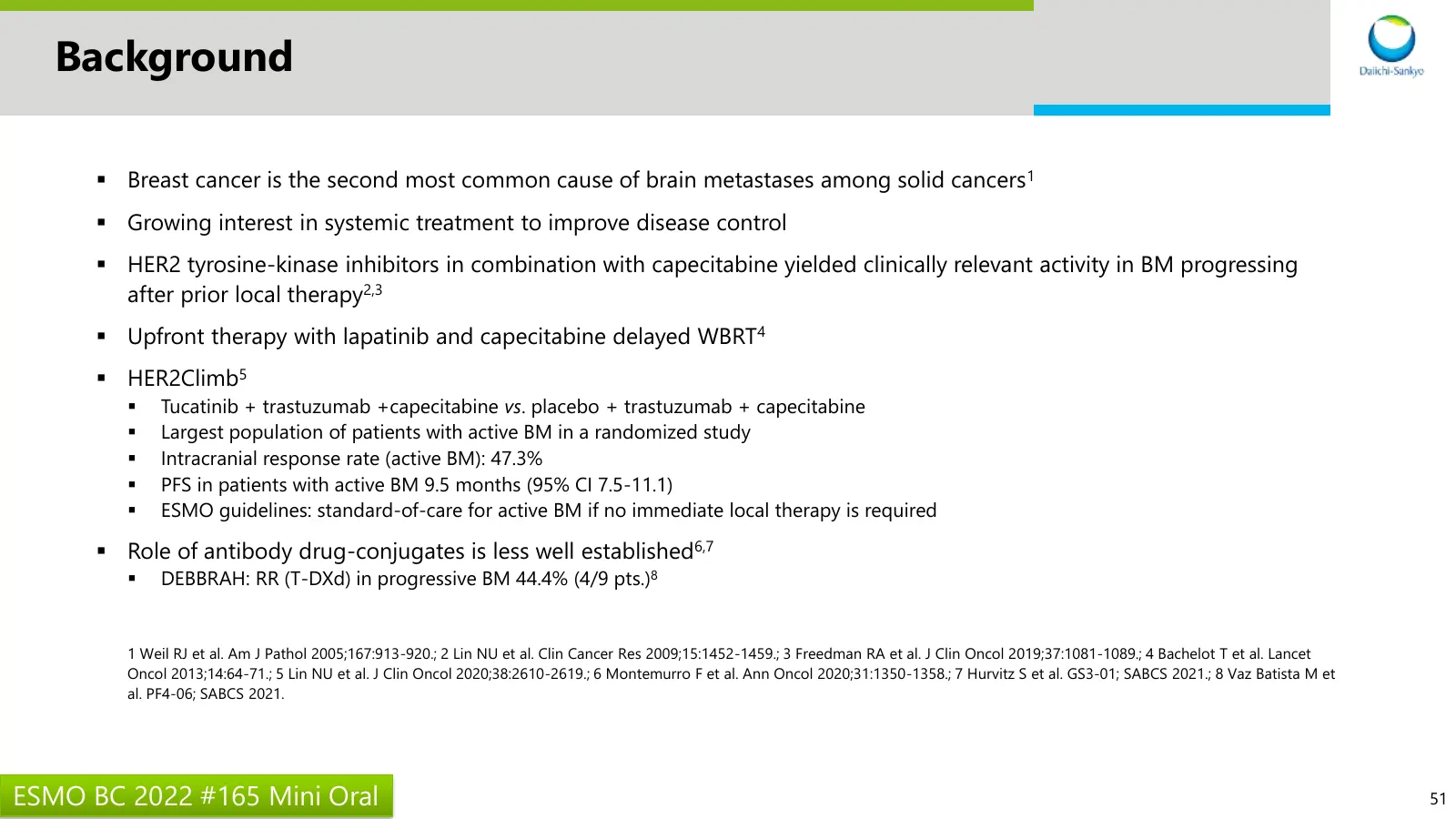
Slide 51: Background
Background ▪ Breast cancer is the second most common cause of brain metastases among solid cancers1 ▪ Growing interest in systemic treatment to improve disease control ▪ HER2 tyrosine-kinase inhibitors in combination with capecitabine yielded clinically relevant activity in BM progressing after prio
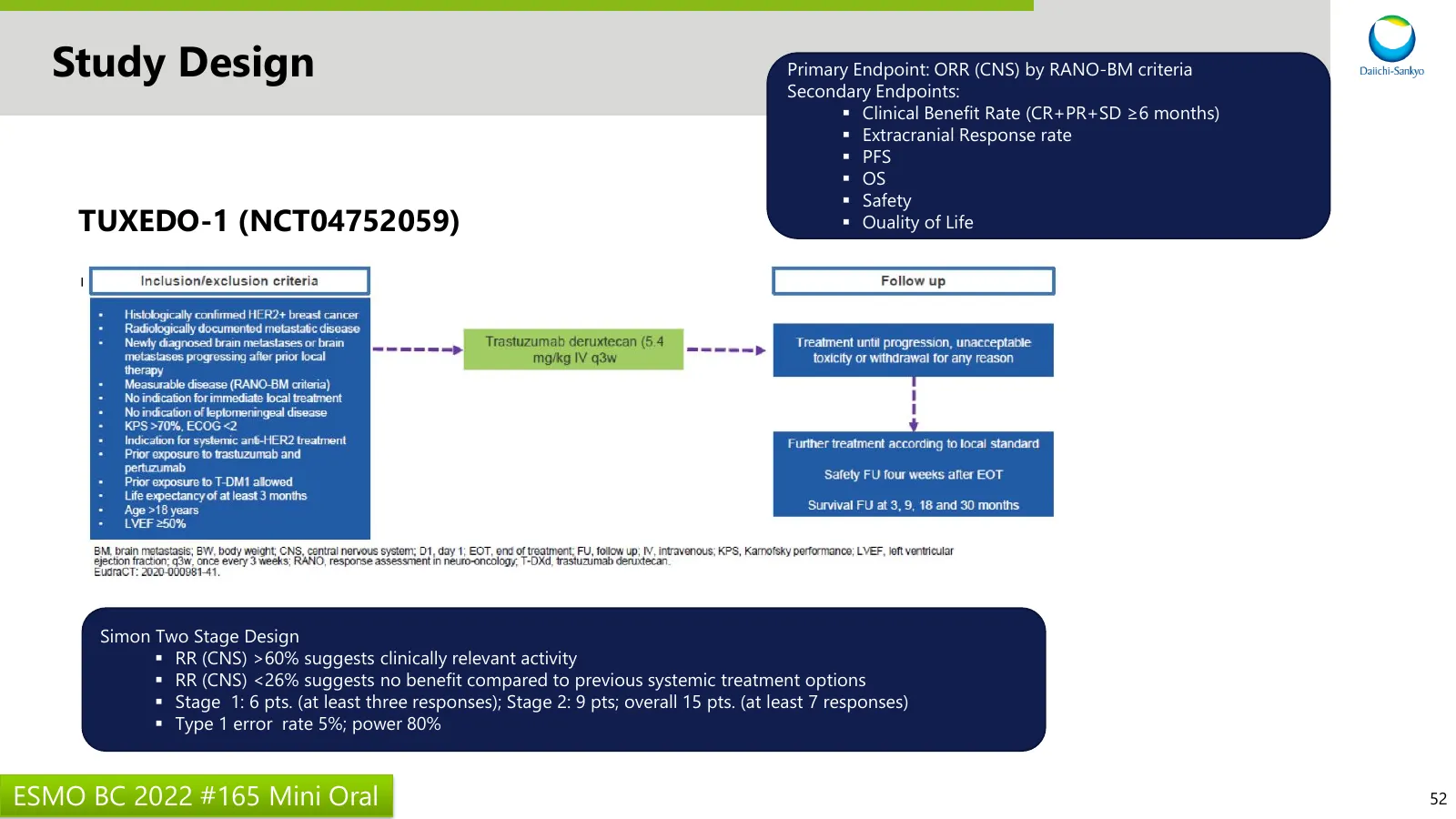
Slide 52: Study Design
Study Design Primary Endpoint: ORR (CNS) by RANO-BM criteria Secondary Endpoints: ▪ Clinical Benefit Rate (CR+PR+SD ≥6 months) ▪ Extracranial Response rate ▪ PFS ▪ OS ▪ Safety TUXEDO-1 (NCT04752059) ▪ Ouality of Life ▪ ) Simon Two Stage Design ▪ RR (CNS) >60% suggests clinically relevant activity ▪
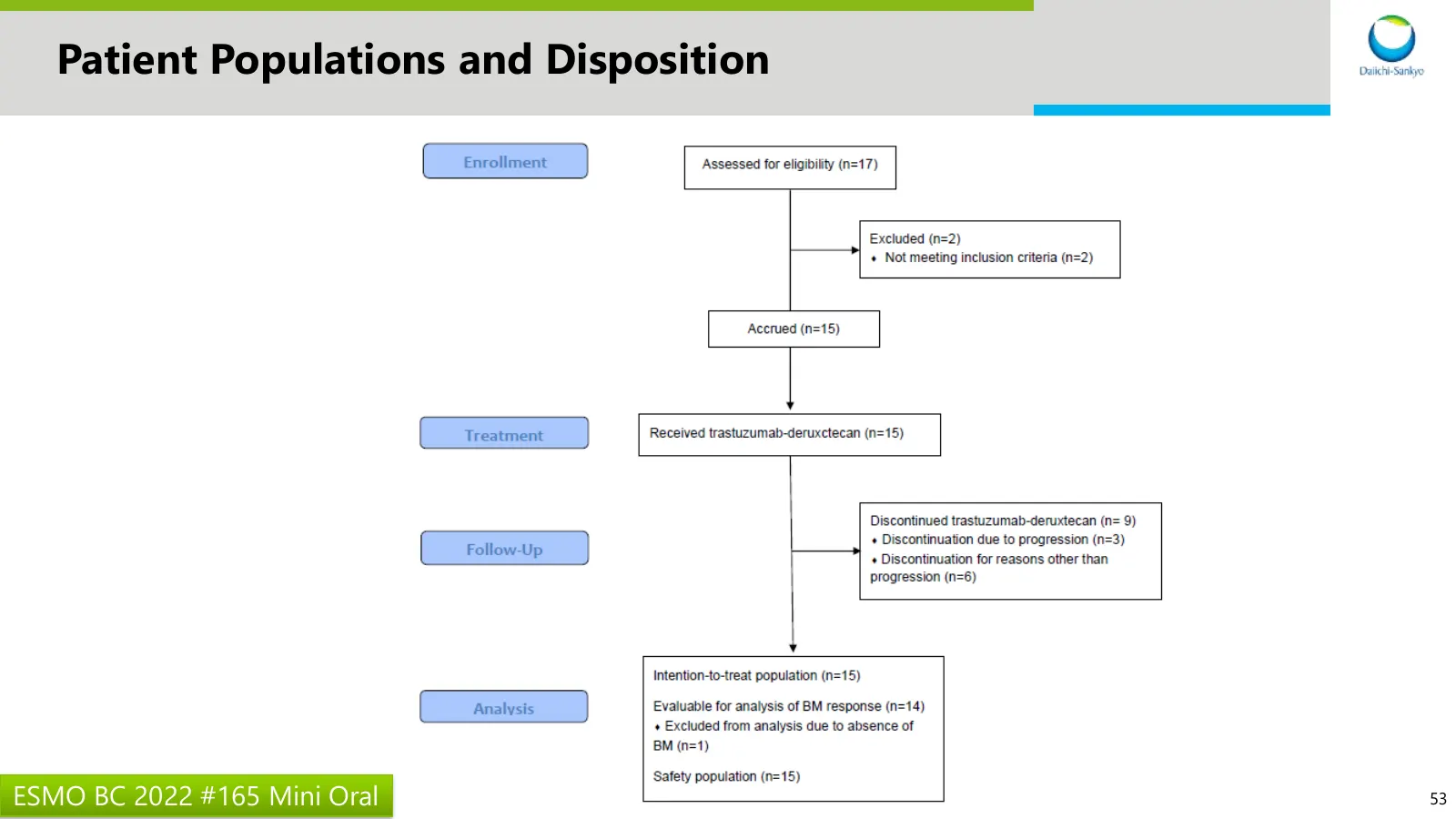
Slide 53: Patient Populations and Disposition
Patient Populations and Disposition ESMO BC 2022 #165 Mini Oral 53
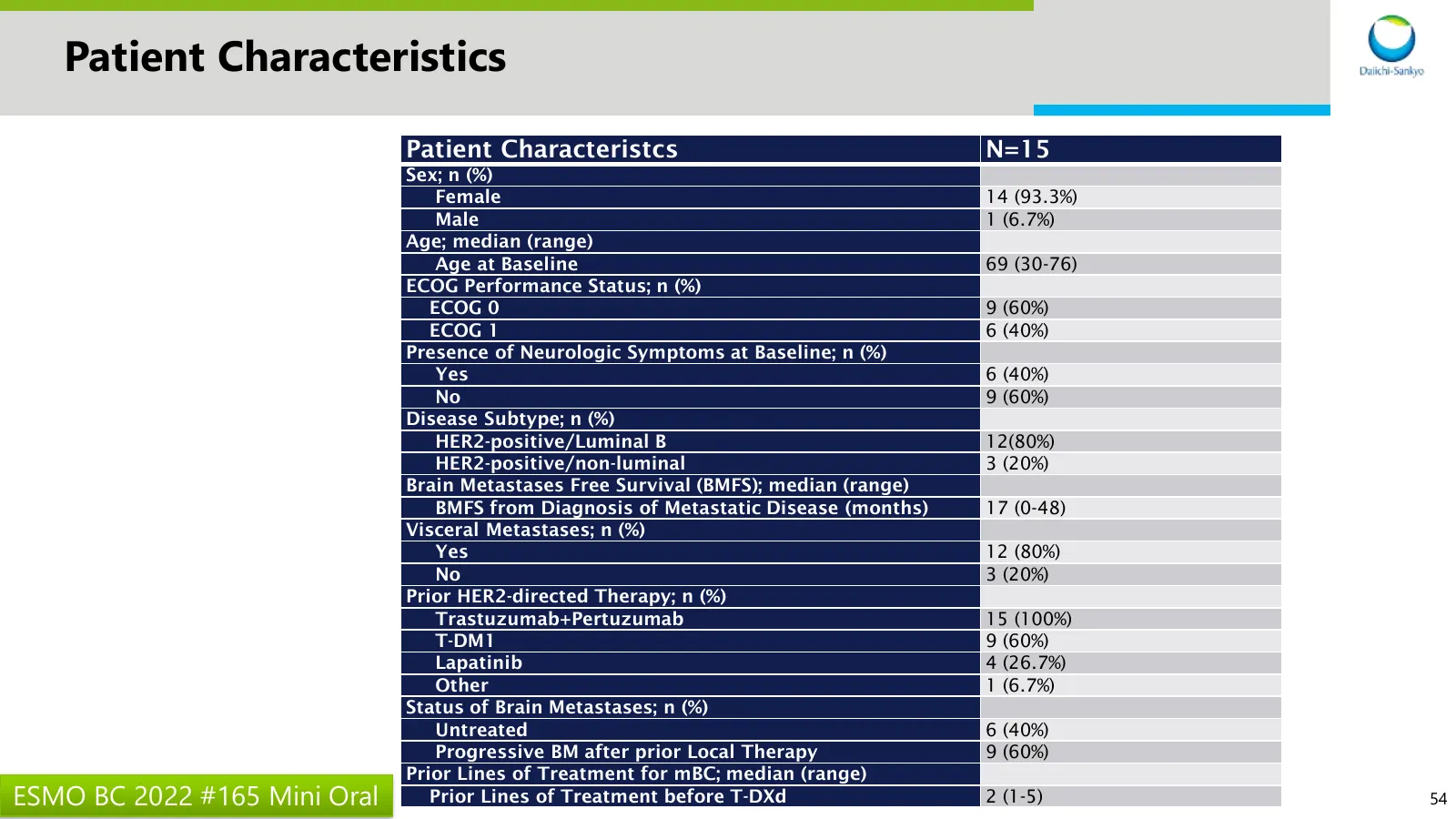
Slide 54: Patient Characteristics
Patient Characteristics Patient Characteristcs N=15 Sex; n (%) Female 14 (93.3%) Male 1 (6.7%) Age; median (range) Age at Baseline 69 (30-76) ECOG Performance Status; n (%) ECOG 0 9 (60%) ECOG 1 6 (40%) Presence of Neurologic Symptoms at Baseline; n (%) Yes 6 (40%) No 9 (60%) Disease Subtype; n (%)
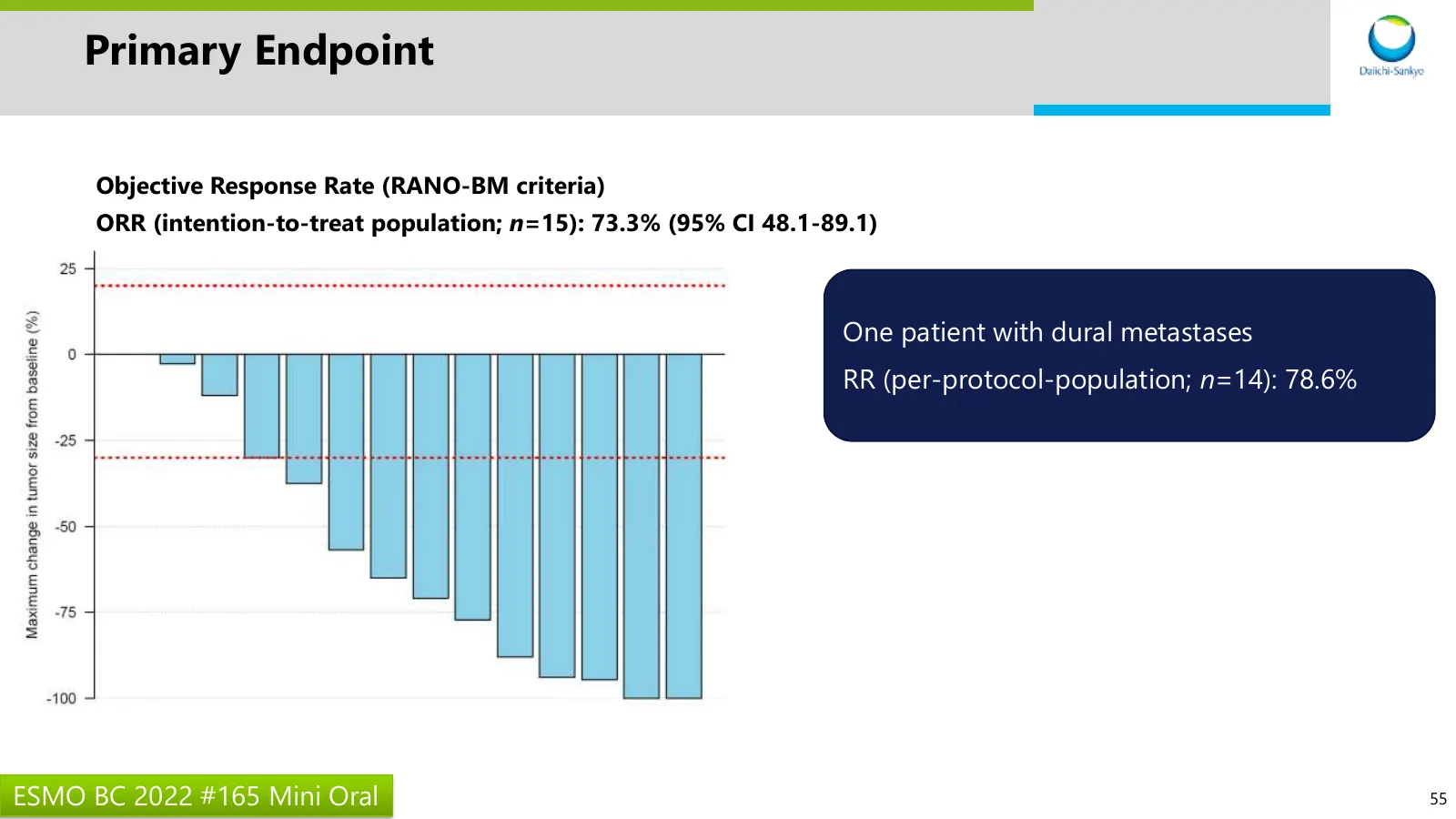
Slide 55: Primary Endpoint
Primary Endpoint Objective Response Rate (RANO-BM criteria) ORR (intention-to-treat population; n=15): 73.3% (95% CI 48.1-89.1) One patient with dural metastases RR (per-protocol-population; n=14): 78.6% ESMO BC 2022 #165 Mini Oral 55
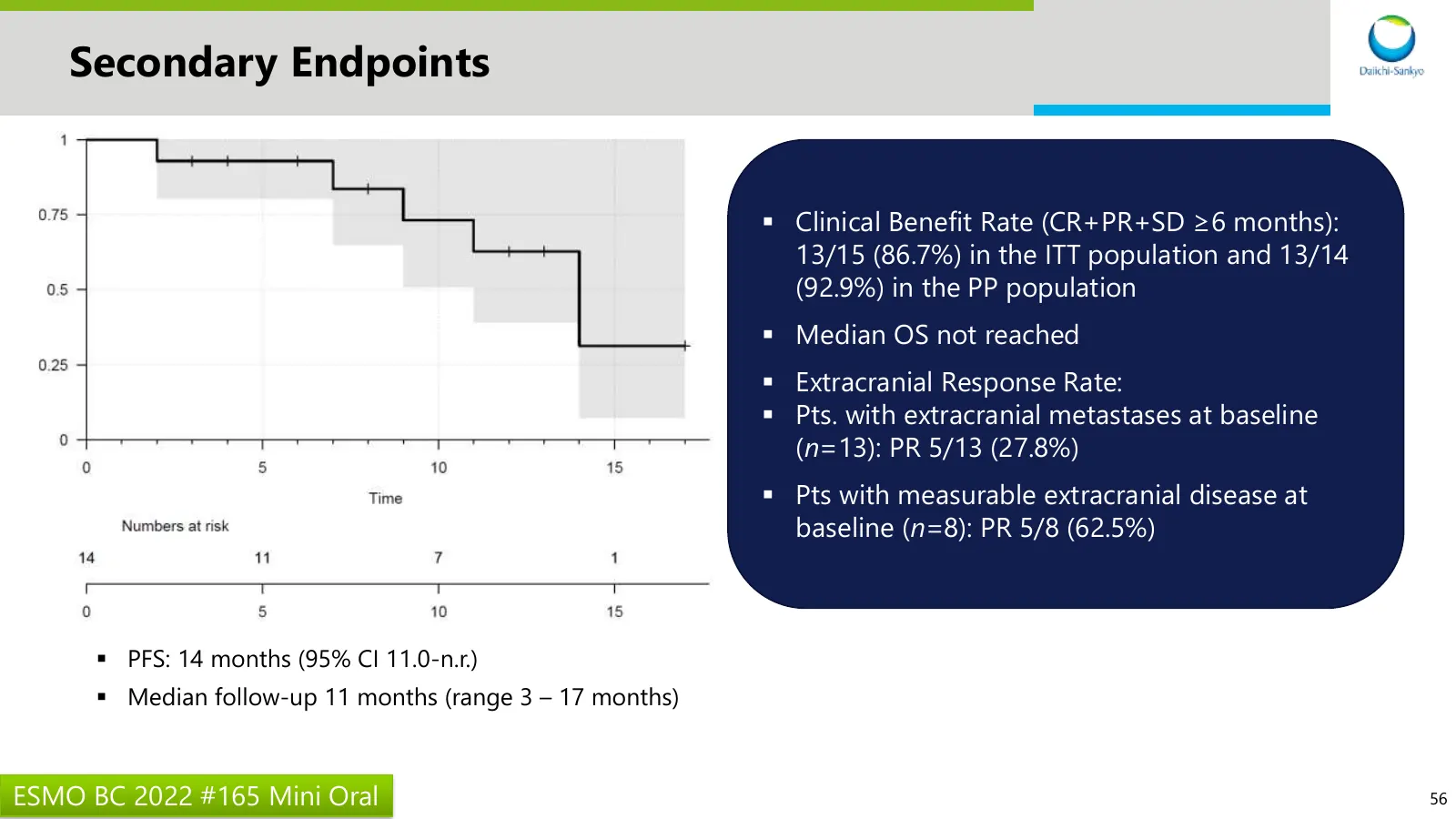
Slide 56: Secondary Endpoints
Secondary Endpoints ▪ Clinical Benefit Rate (CR+PR+SD ≥6 months): 13/15 (86.7%) in the ITT population and 13/14 (92.9%) in the PP population ▪ Median OS not reached ▪ Extracranial Response Rate: ▪ Pts. with extracranial metastases at baseline (n=13): PR 5/13 (27.8%) ▪ Pts with measurable extracrania
Slide 57: Safety
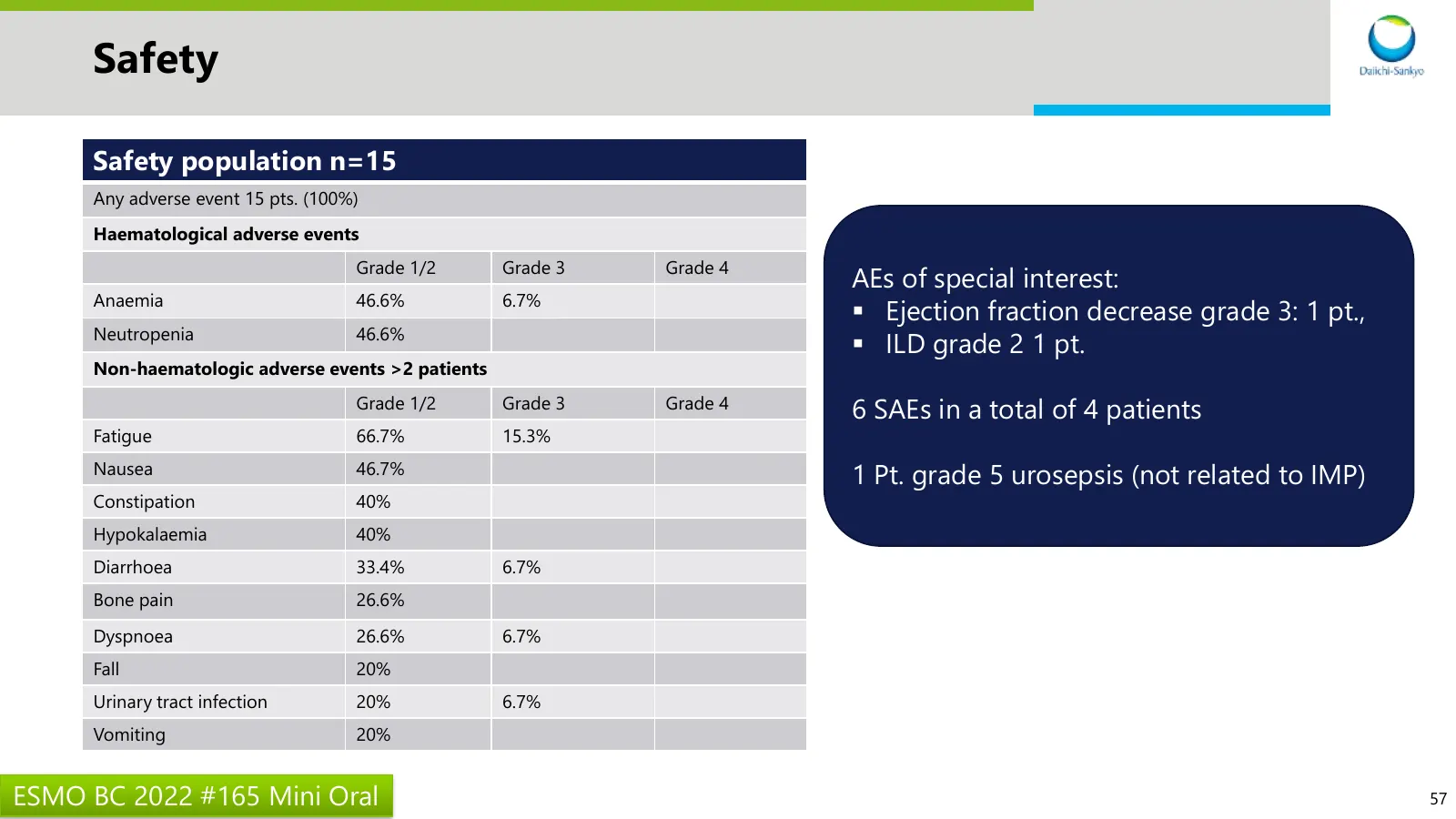
Safety Safety population n=15 Any adverse event 15 pts. (100%) Haematological adverse events Grade 1/2 Grade 3 Grade 4 AEs of special interest: Anaemia 46.6% 6.7% ▪ Ejection fraction decrease grade 3: 1 pt., Neutropenia 46.6% ▪ ILD grade 2 1 pt. Non-haematologic adverse events >2 patients Grade 1/2
Slide 58: Quality-of-Life
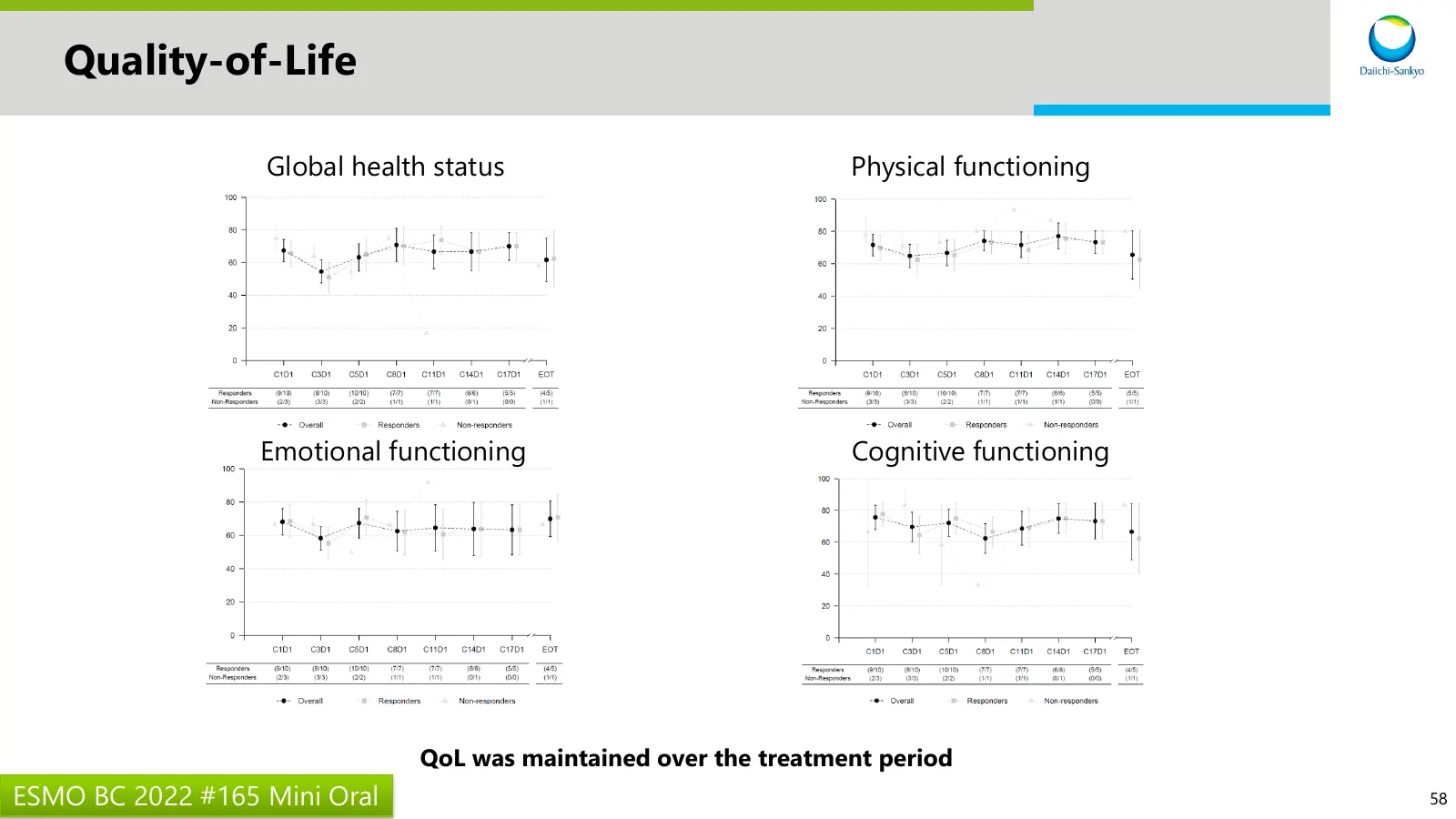
Quality-of-Life Global health status Physical functioning Emotional functioning Cognitive functioning QoL was maintained over the treatment period ESMO BC 2022 #165 Mini Oral 58
Slide 59: Conclusions
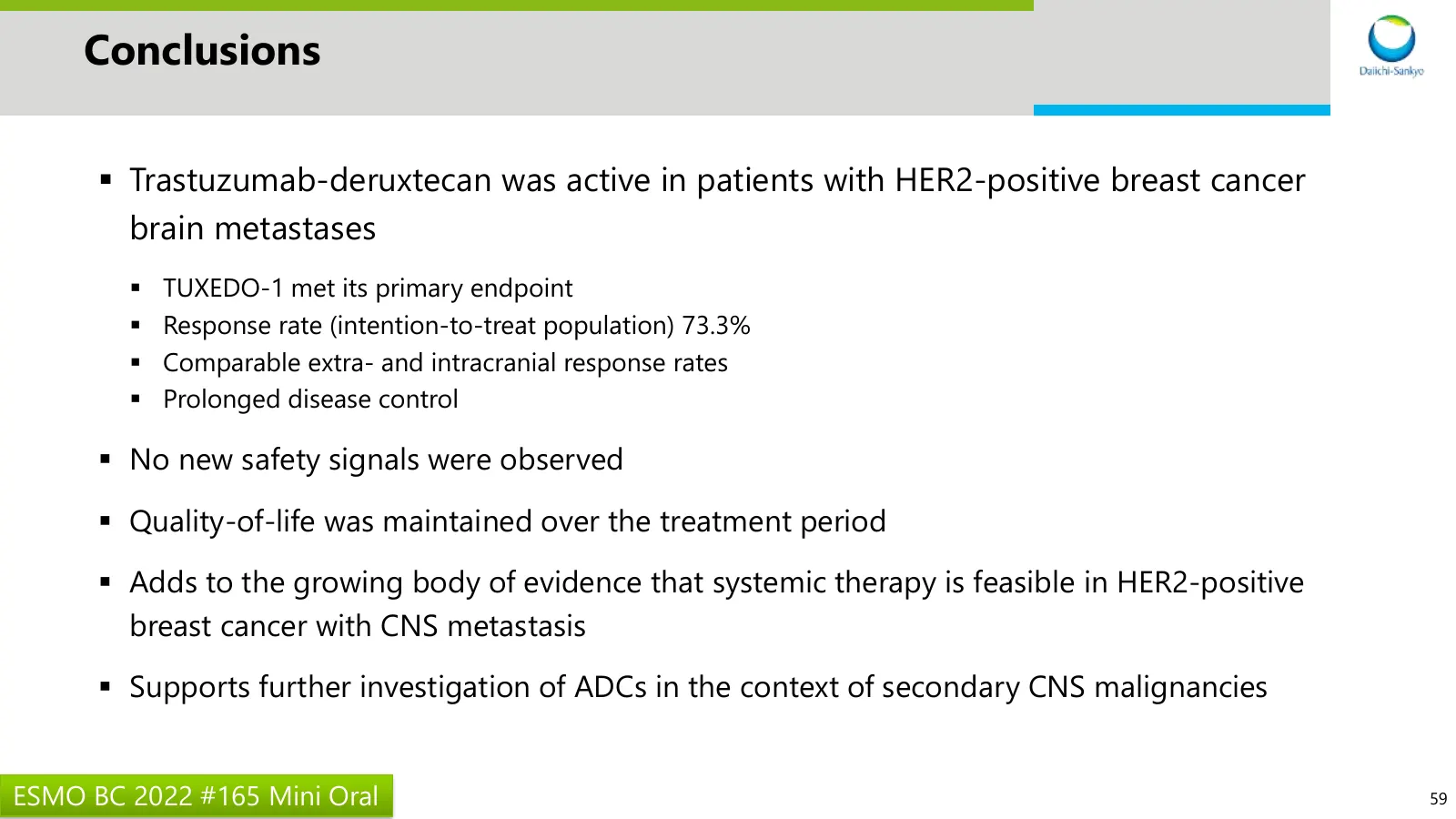
Conclusions ▪ Trastuzumab-deruxtecan was active in patients with HER2-positive breast cancer brain metastases ▪ TUXEDO-1 met its primary endpoint ▪ Response rate (intention-to-treat population) 73.3% ▪ Comparable extra- and intracranial response rates ▪ Prolonged disease control ▪ No new safety sign
Slide 60: Primary Analysis from DS8201-A-U105: T-DXd with Nivolumab in HER2-expressing Breast Cancer
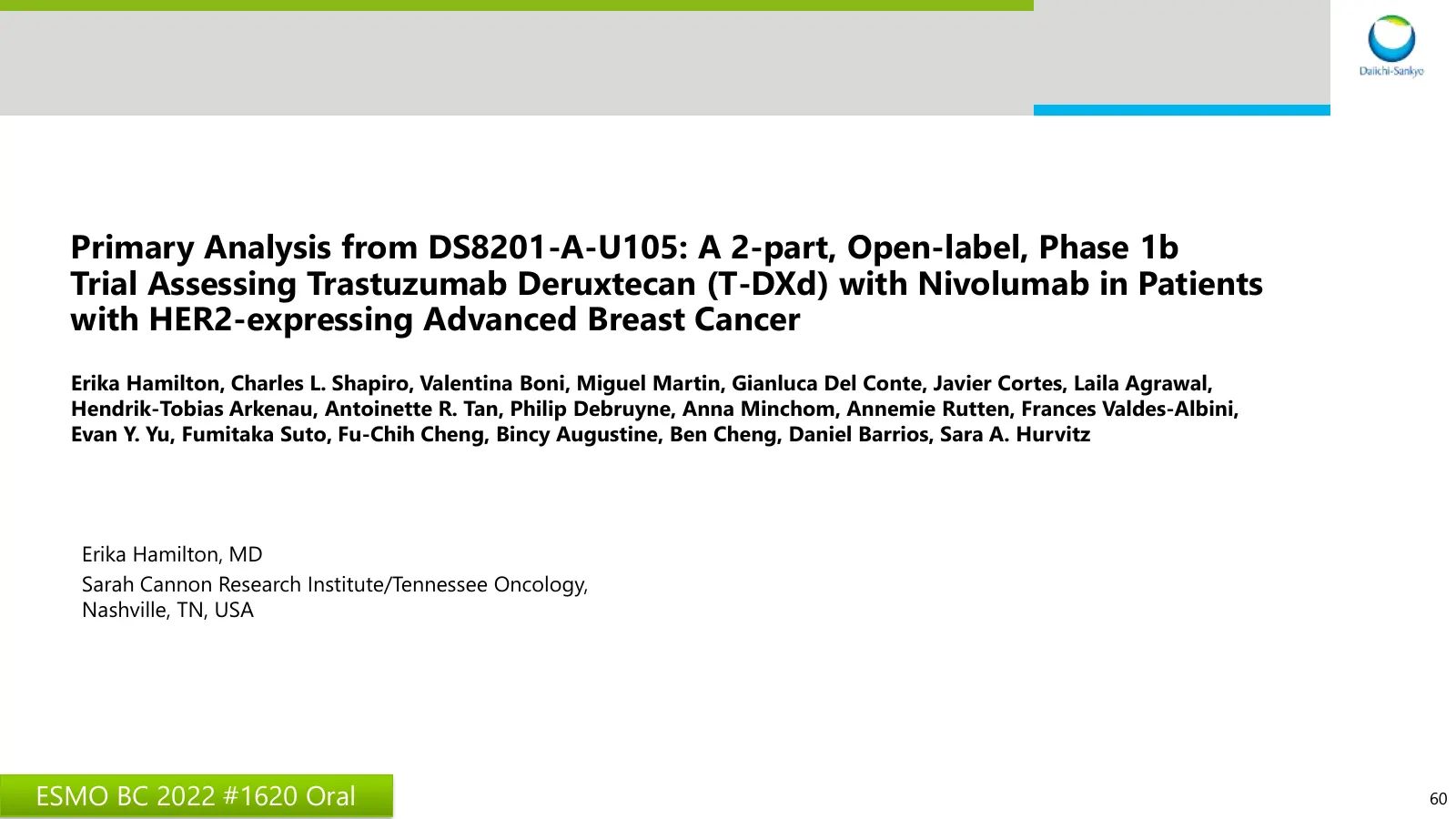
Primary Analysis from DS8201-A-U105: A 2-part, Open-label, Phase 1b Trial Assessing Trastuzumab Deruxtecan (T-DXd) with Nivolumab in Patients with HER2-expressing Advanced Breast Cancer Erika Hamilton, Charles L. Shapiro, Valentina Boni, Miguel Martin, Gianluca Del Conte, Javier Cortes, Laila Agrawa
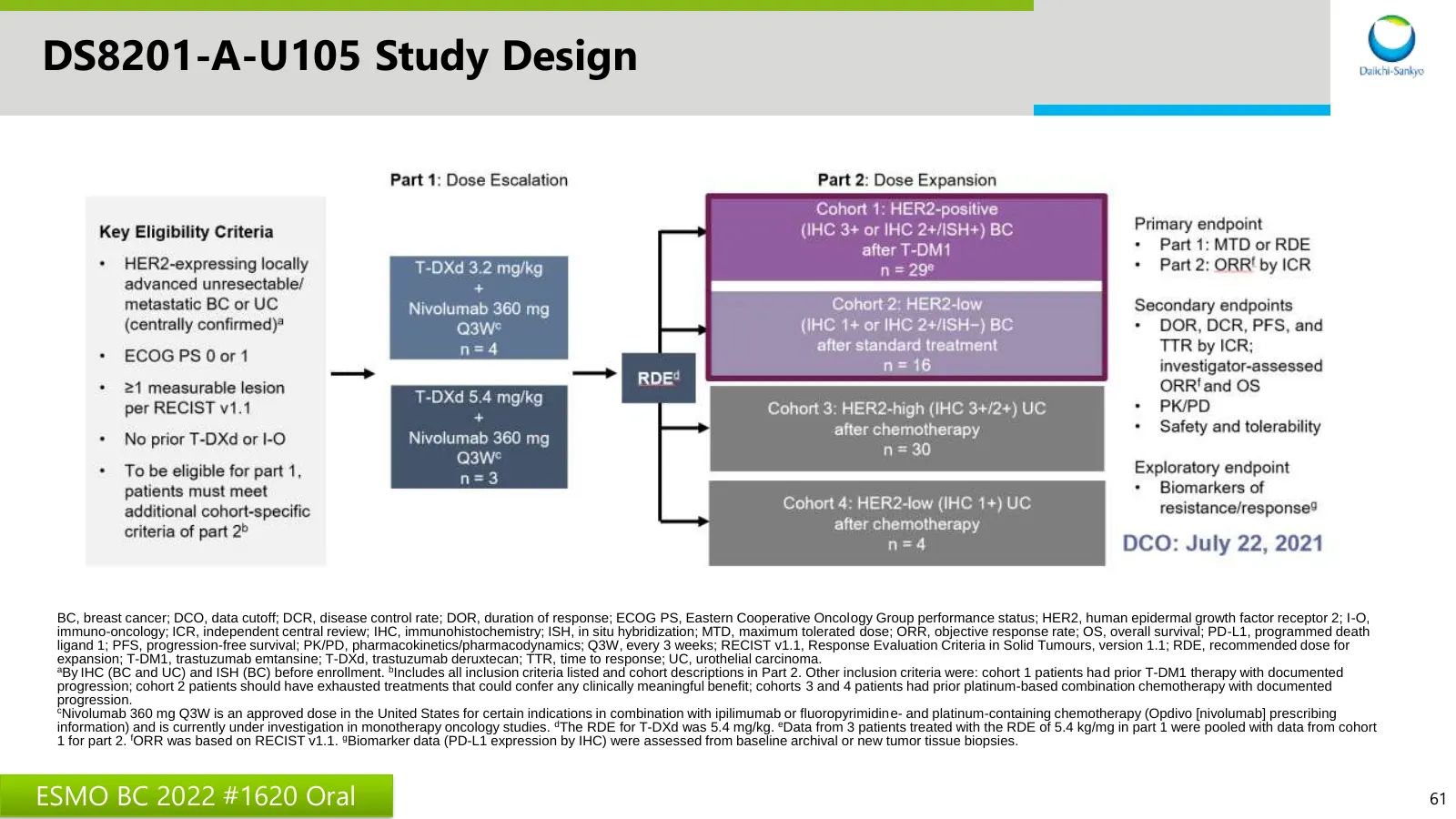
Slide 61: DS8201-A-U105 Study Design
DS8201-A-U105 Study Design BC, breast cancer; DCO, data cutoff; DCR, disease control rate; DOR, duration of response; ECOG PS, Eastern Cooperative Oncology Group performance status; HER2, human epidermal growth factor receptor 2; I-O, immuno-oncology; ICR, independent central review; IHC, immunohist
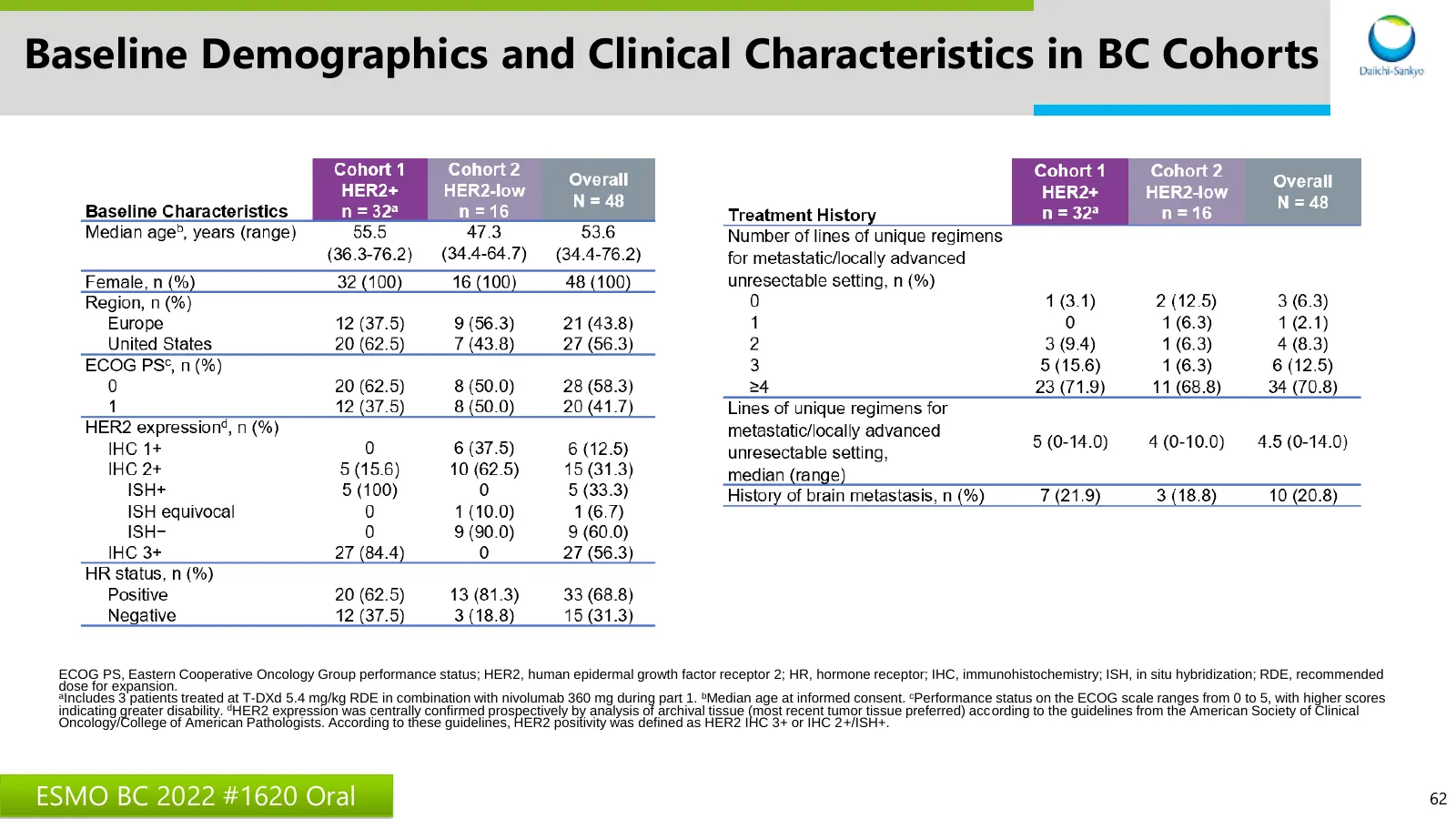
Slide 62: Baseline Demographics and Clinical Characteristics in BC Cohorts
Baseline Demographics and Clinical Characteristics in BC Cohorts ECOG PS, Eastern Cooperative Oncology Group performance status; HER2, human epidermal growth factor receptor 2; HR, hormone receptor; IHC, immunohistochemistry; ISH, in situ hybridization; RDE, recommended dose for expansion. aIncludes
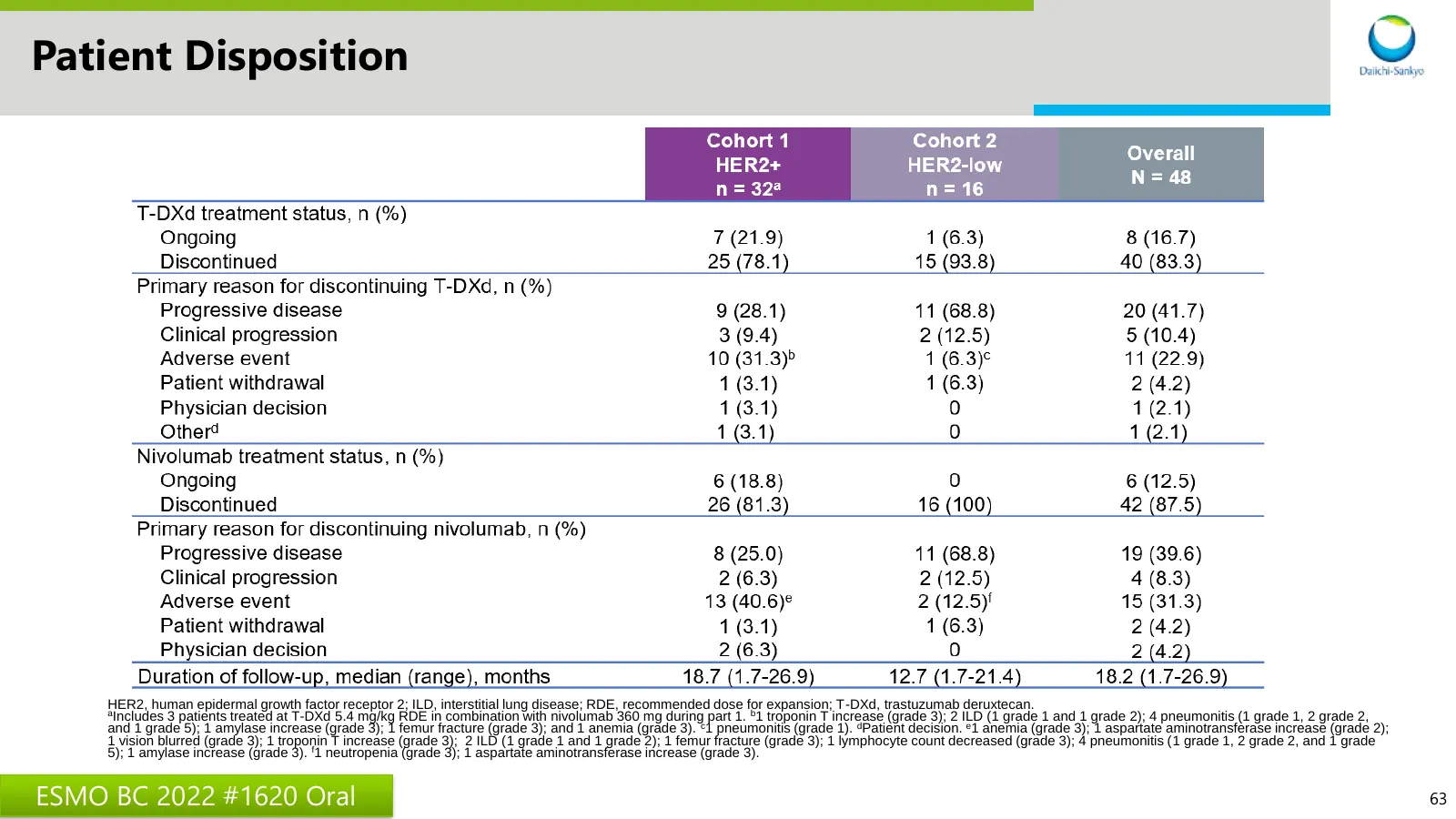
Slide 63: Patient Disposition
Patient Disposition HER2, human epidermal growth factor receptor 2; ILD, interstitial lung disease; RDE, recommended dose for expansion; T-DXd, trastuzumab deruxtecan. aIncludes 3 patients treated at T-DXd 5.4 mg/kg RDE in combination with nivolumab 360 mg during part 1. b1 troponin T increase (grad
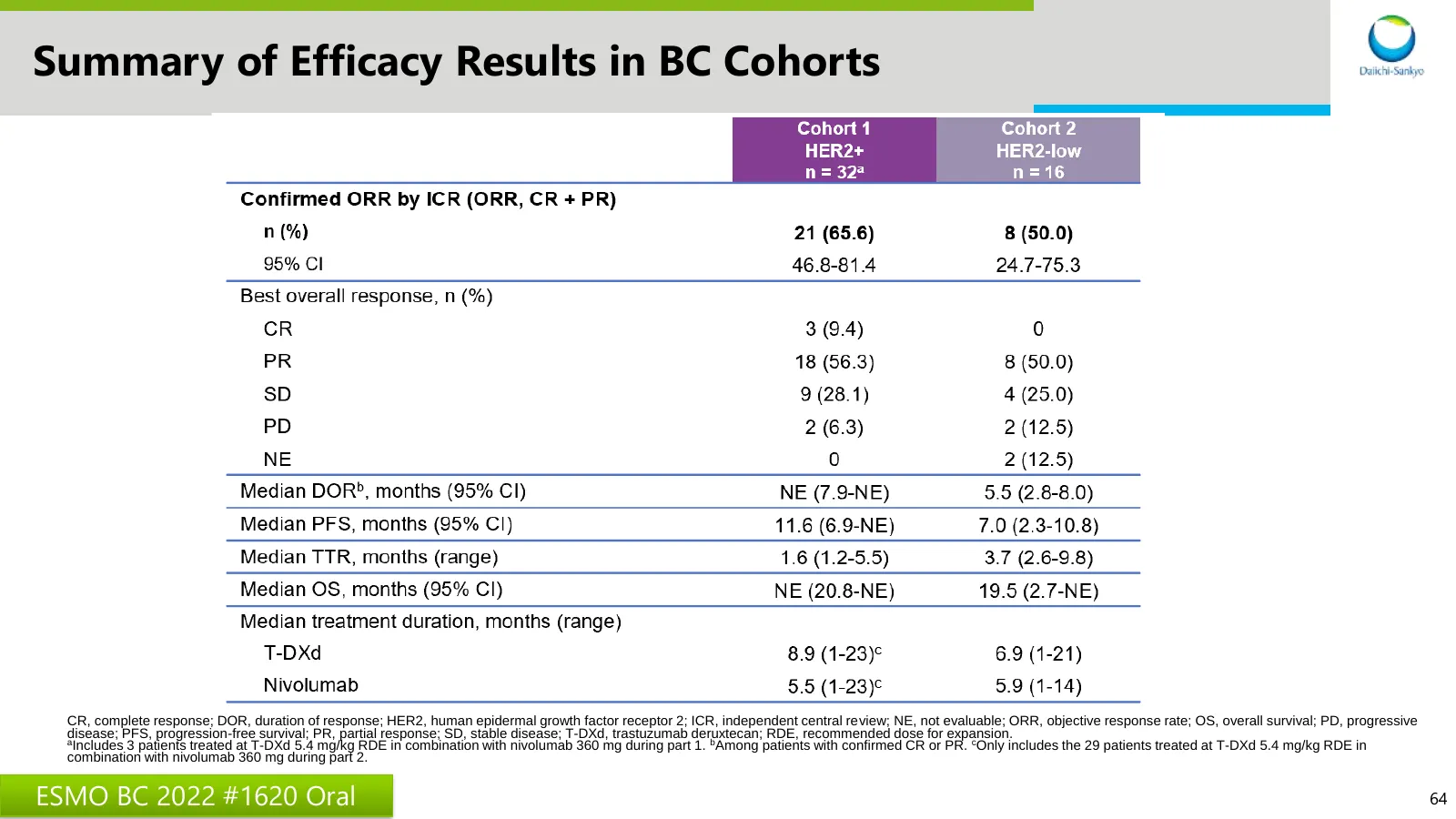
Slide 64: Summary of Efficacy Results in BC Cohorts
Summary of Efficacy Results in BC Cohorts CR, complete response; DOR, duration of response; HER2, human epidermal growth factor receptor 2; ICR, independent central review; NE, not evaluable; ORR, objective response rate; OS, overall survival; PD, progressive disease; PFS, progression-free survival;
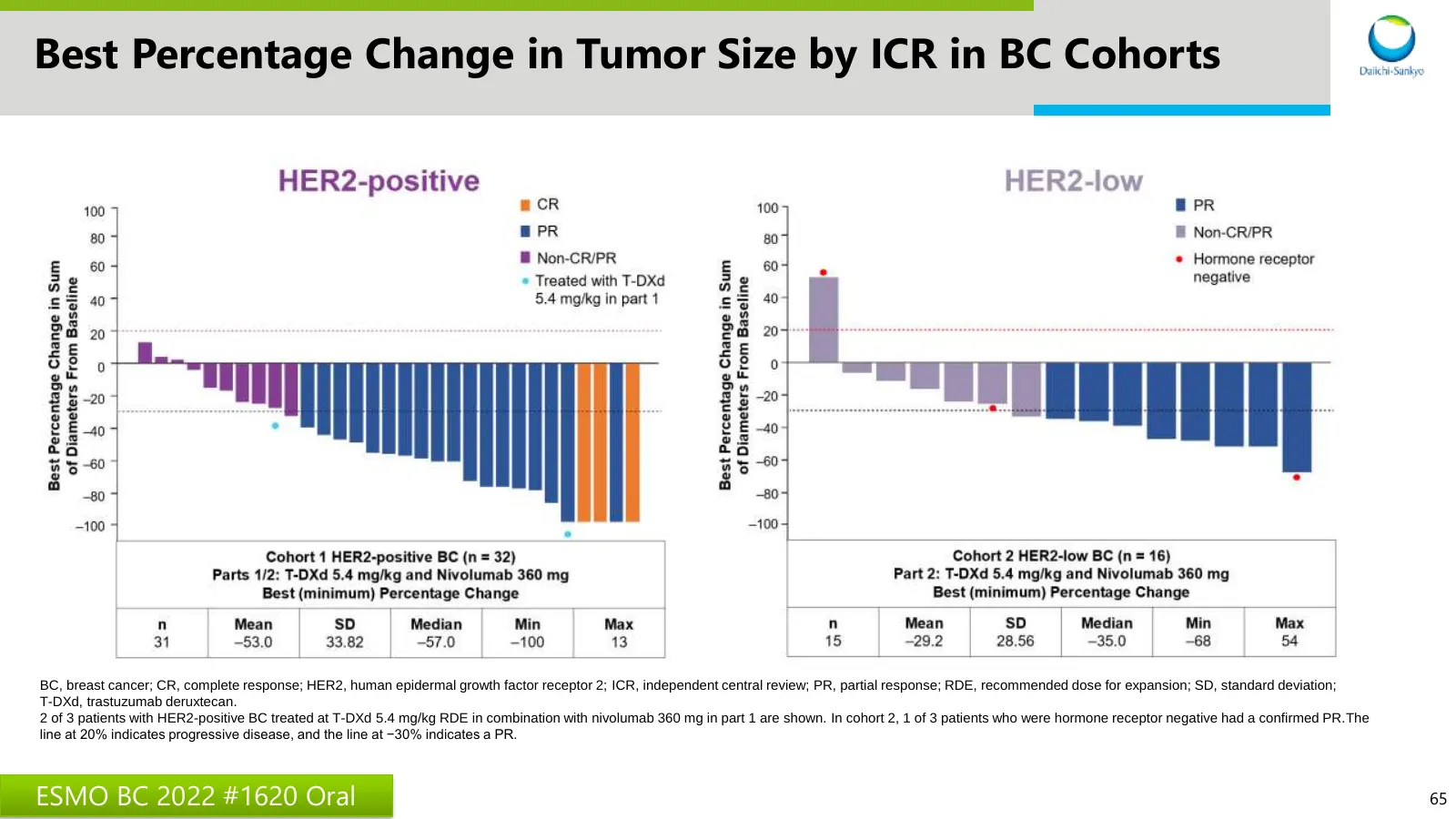
Slide 65: Best Percentage Change in Tumor Size by ICR in BC Cohorts
Best Percentage Change in Tumor Size by ICR in BC Cohorts BC, breast cancer; CR, complete response; HER2, human epidermal growth factor receptor 2; ICR, independent central review; PR, partial response; RDE, recommended dose for expansion; SD, standard deviation; T-DXd, trastuzumab deruxtecan. 2 of
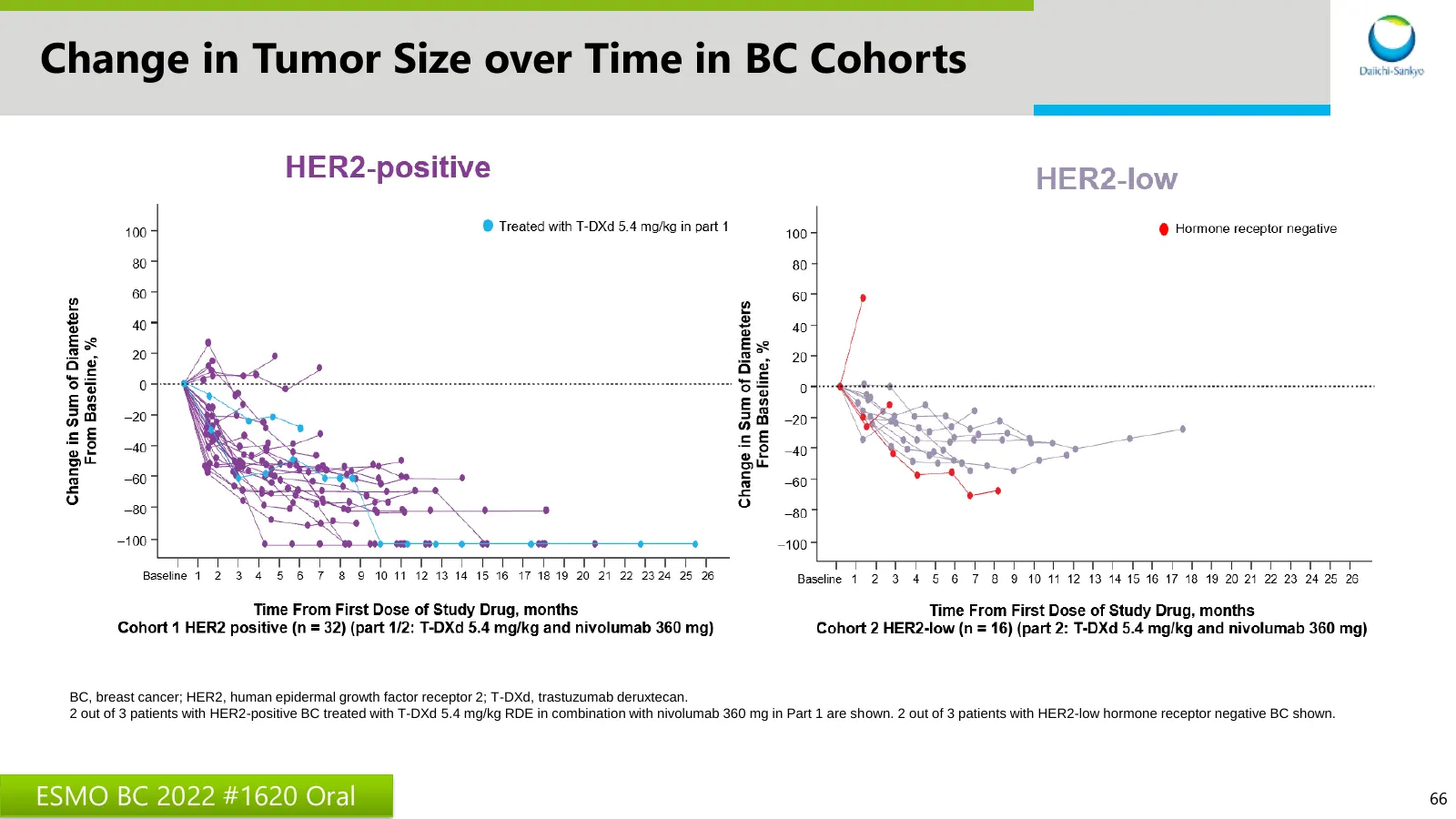
Slide 66: Change in Tumor Size over Time in BC Cohorts
Change in Tumor Size over Time in BC Cohorts BC, breast cancer; HER2, human epidermal growth factor receptor 2; T-DXd, trastuzumab deruxtecan. 2 out of 3 patients with HER2-positive BC treated with T-DXd 5.4 mg/kg RDE in combination with nivolumab 360 mg in Part 1 are shown. 2 out of 3 patients with
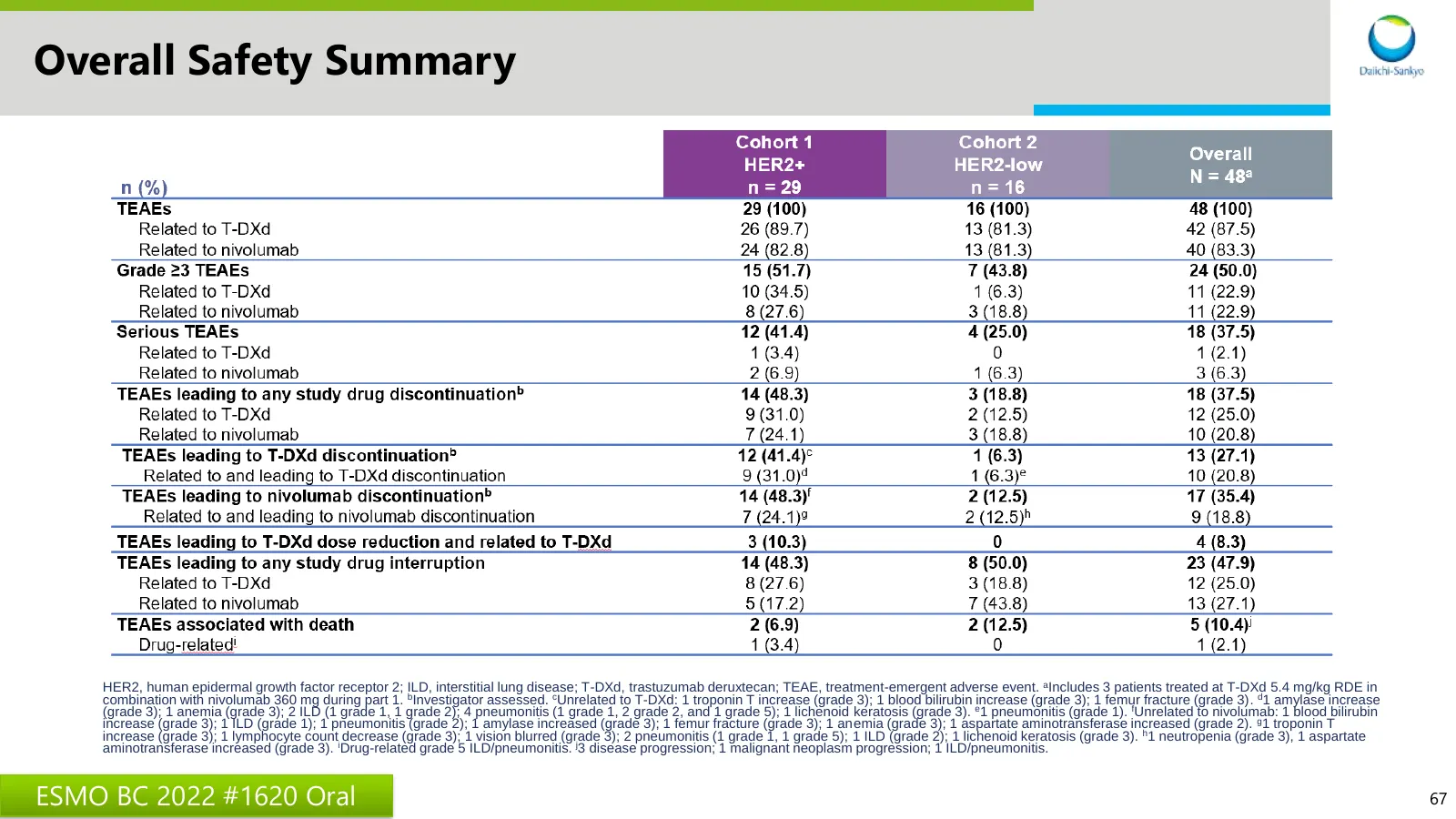
Slide 67: Overall Safety Summary
Overall Safety Summary HER2, human epidermal growth factor receptor 2; ILD, interstitial lung disease; T-DXd, trastuzumab deruxtecan; TEAE, treatment-emergent adverse event. aIncludes 3 patients treated at T-DXd 5.4 mg/kg RDE in combination with nivolumab 360 mg during part 1. bInvestigator assessed
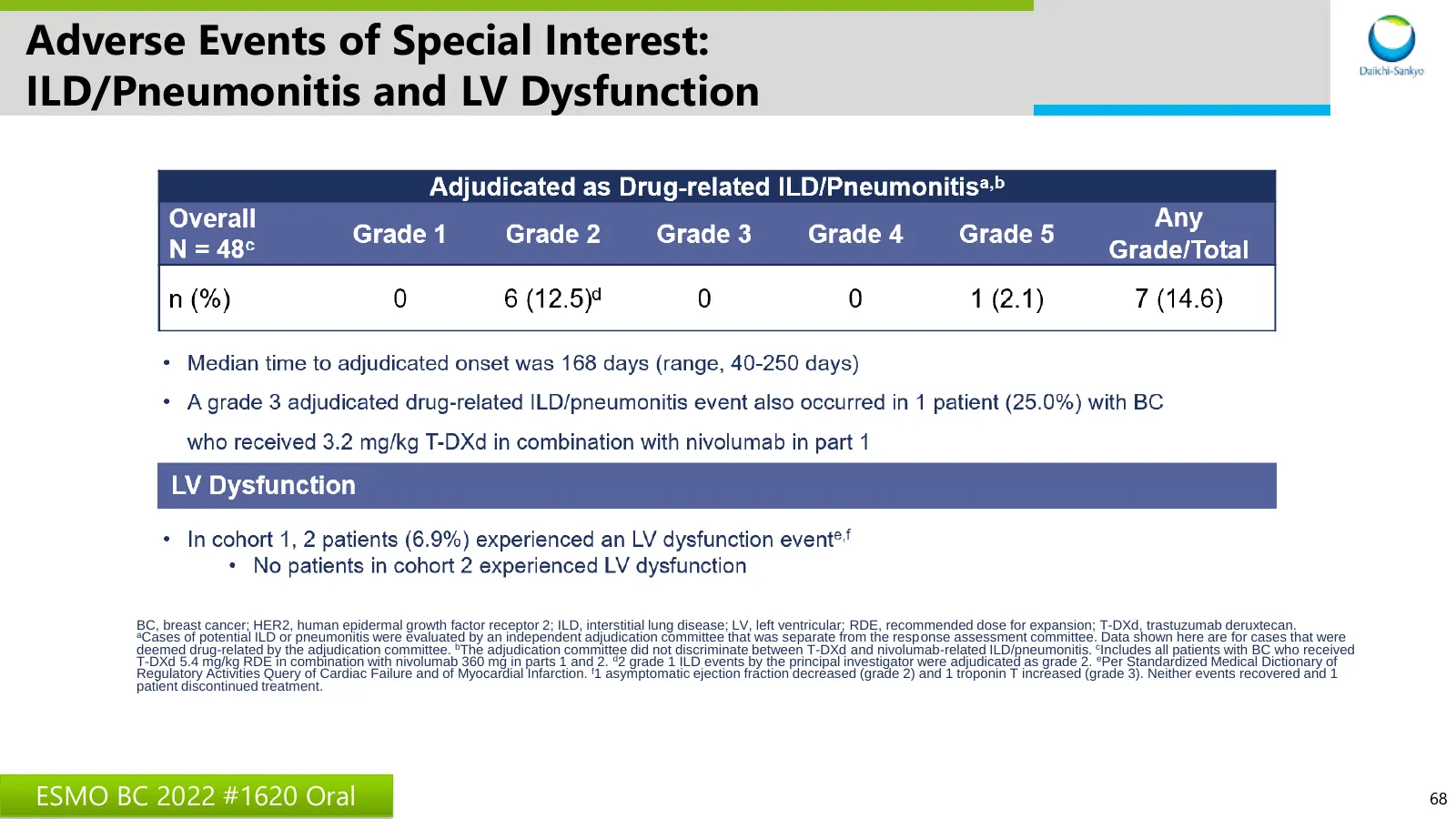
Slide 68: Adverse Events of Special Interest: ILD/Pneumonitis and LV Dysfunction
Adverse Events of Special Interest: ILD/Pneumonitis and LV Dysfunction BC, breast cancer; HER2, human epidermal growth factor receptor 2; ILD, interstitial lung disease; LV, left ventricular; RDE, recommended dose for expansion; T-DXd, trastuzumab deruxtecan. aCases of potential ILD or pneumonitis w
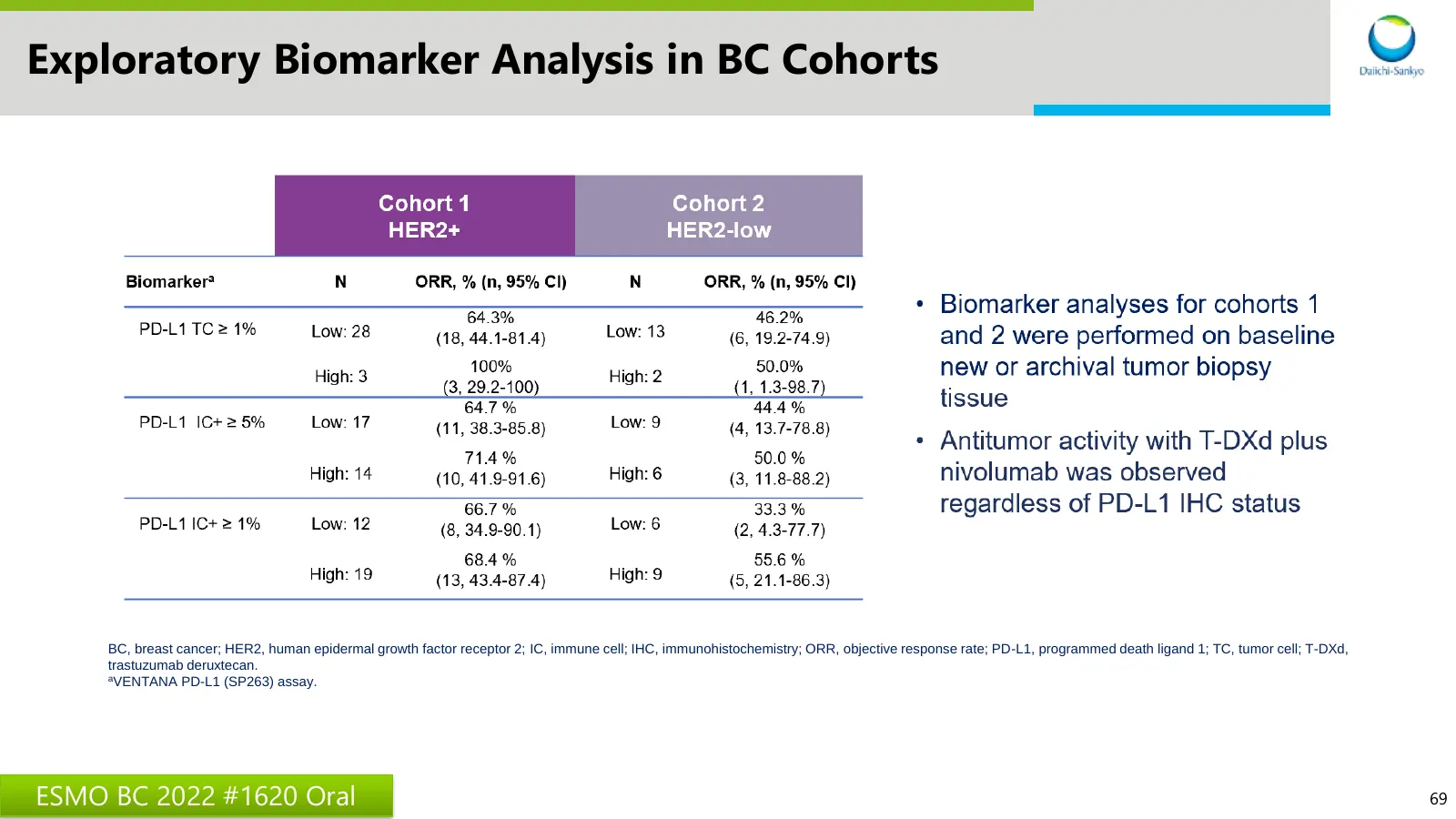
Slide 69: Exploratory Biomarker Analysis in BC Cohorts
Exploratory Biomarker Analysis in BC Cohorts BC, breast cancer; HER2, human epidermal growth factor receptor 2; IC, immune cell; IHC, immunohistochemistry; ORR, objective response rate; PD-L1, programmed death ligand 1; TC, tumor cell; T-DXd, trastuzumab deruxtecan. aVENTANA PD-L1 (SP263) assay. ESM
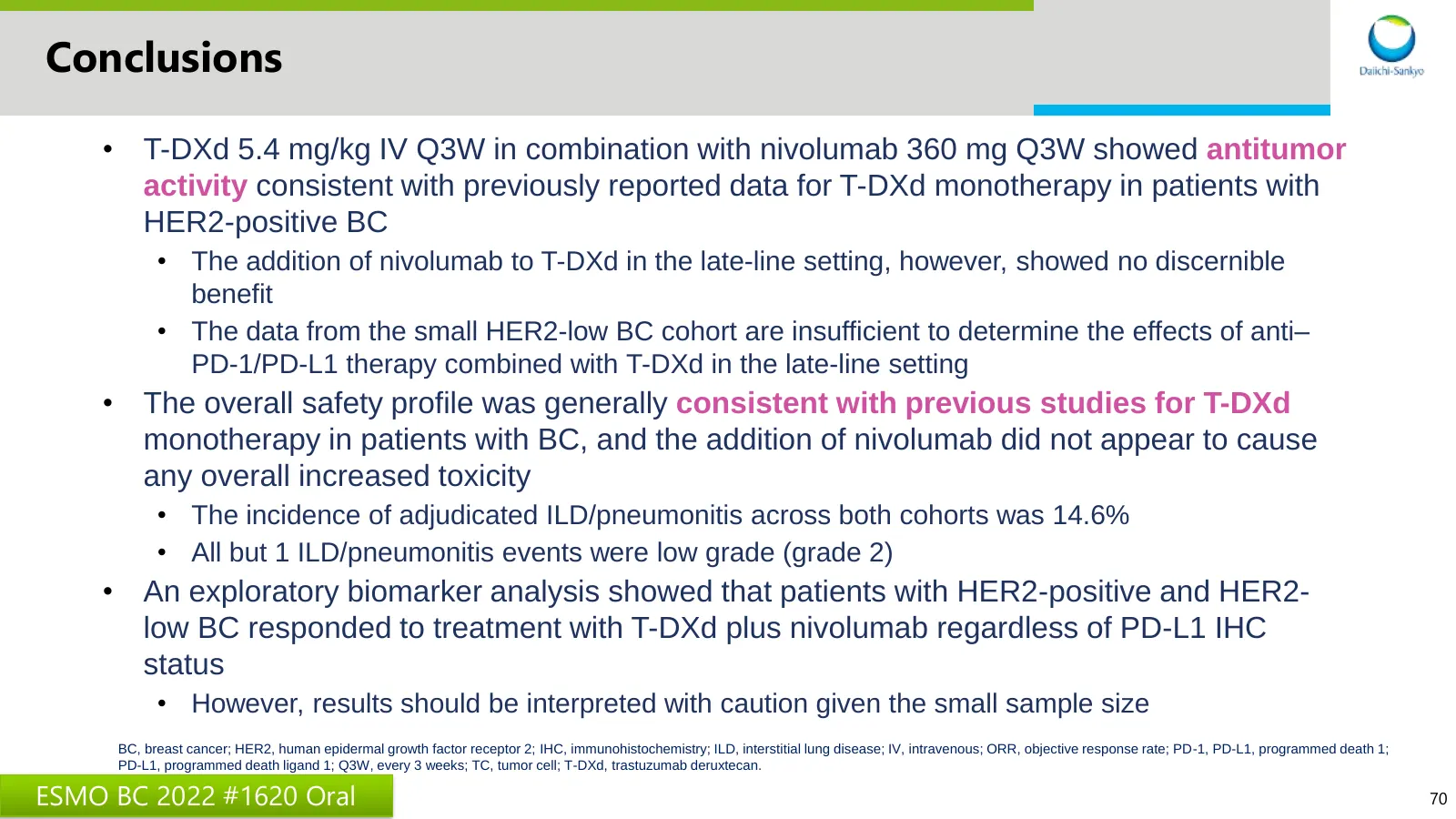
Slide 70: Conclusions
Conclusions • T-DXd 5.4 mg/kg IV Q3W in combination with nivolumab 360 mg Q3W showed antitumor activity consistent with previously reported data for T-DXd monotherapy in patients with HER2-positive BC • The addition of nivolumab to T-DXd in the late-line setting, however, showed no discernible benef
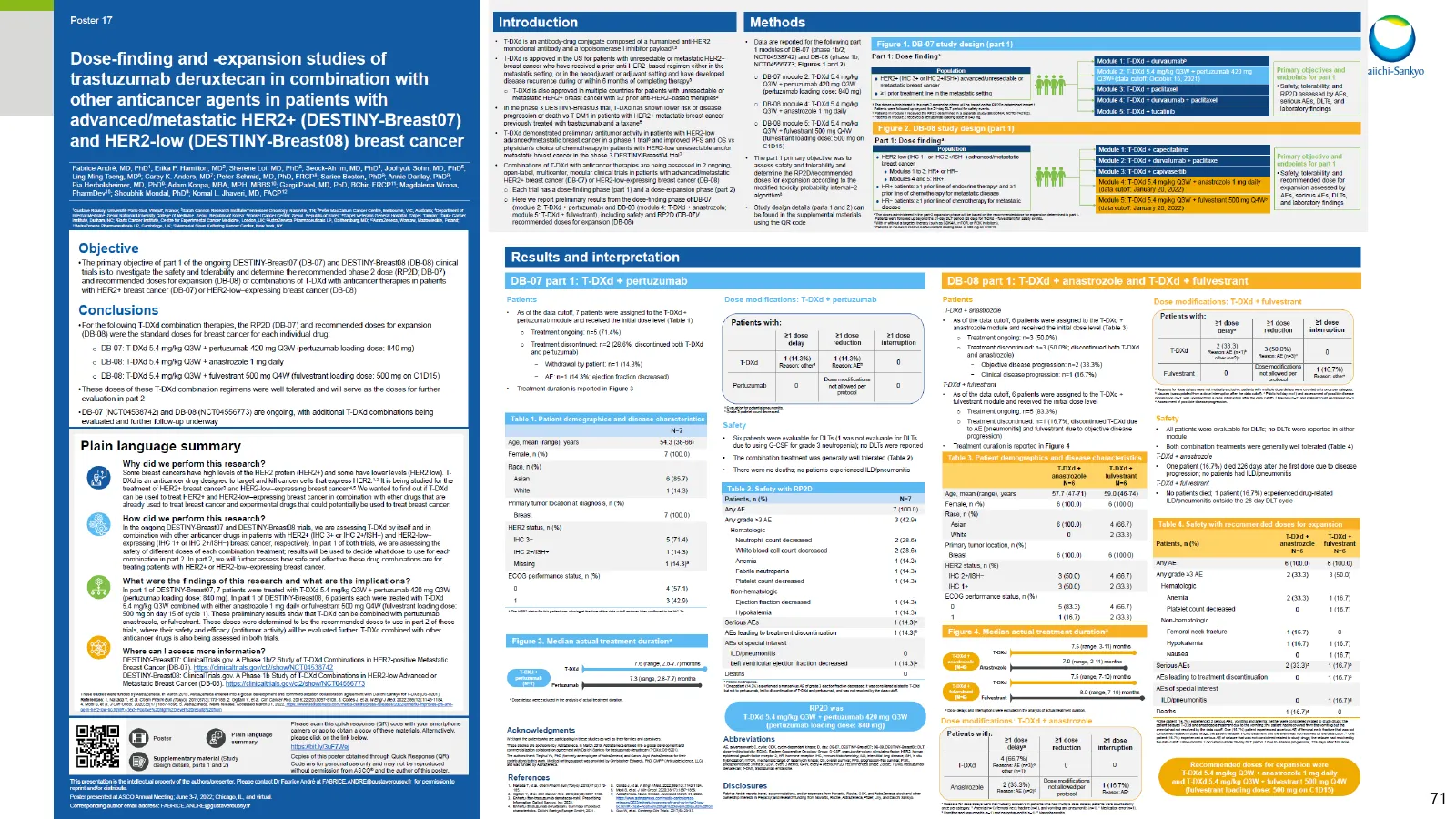
Slide 71: Poster: DESTINY-Breast07 and DESTINY-Breast08 Dose-finding Studies
Poster 17 Dose-finding and -expansion studies of trastuzumab deruxtecan in combination with other anticancer agents in patients with advanced/metastatic HER2+ (DESTINY-Breast07) and HER2-low (DESTINY-Breast08) breast cancer Objective “The pray tjocve of at tof he ongang DESTINY Sex (0B.07 ard DESTIN
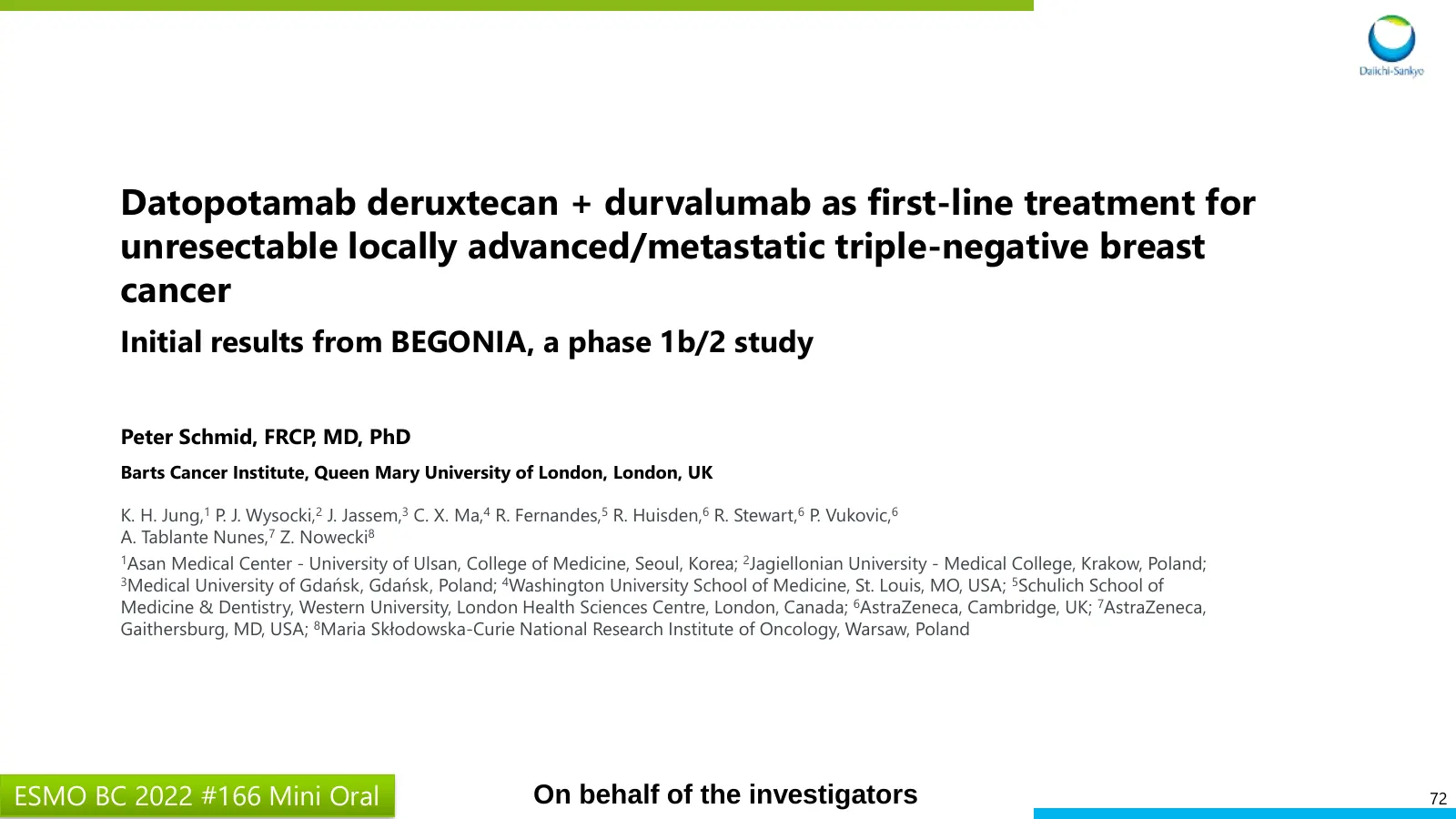
Slide 72: Dato-DXd + durvalumab in First-Line Triple-Negative Breast Cancer: BEGONIA
Datopotamab deruxtecan + durvalumab as first-line treatment for unresectable locally advanced/metastatic triple-negative breast cancer Initial results from BEGONIA, a phase 1b/2 study Peter Schmid, FRCP, MD, PhD Barts Cancer Institute, Queen Mary University of London, London, UK K. H. Jung,1 P. J. W
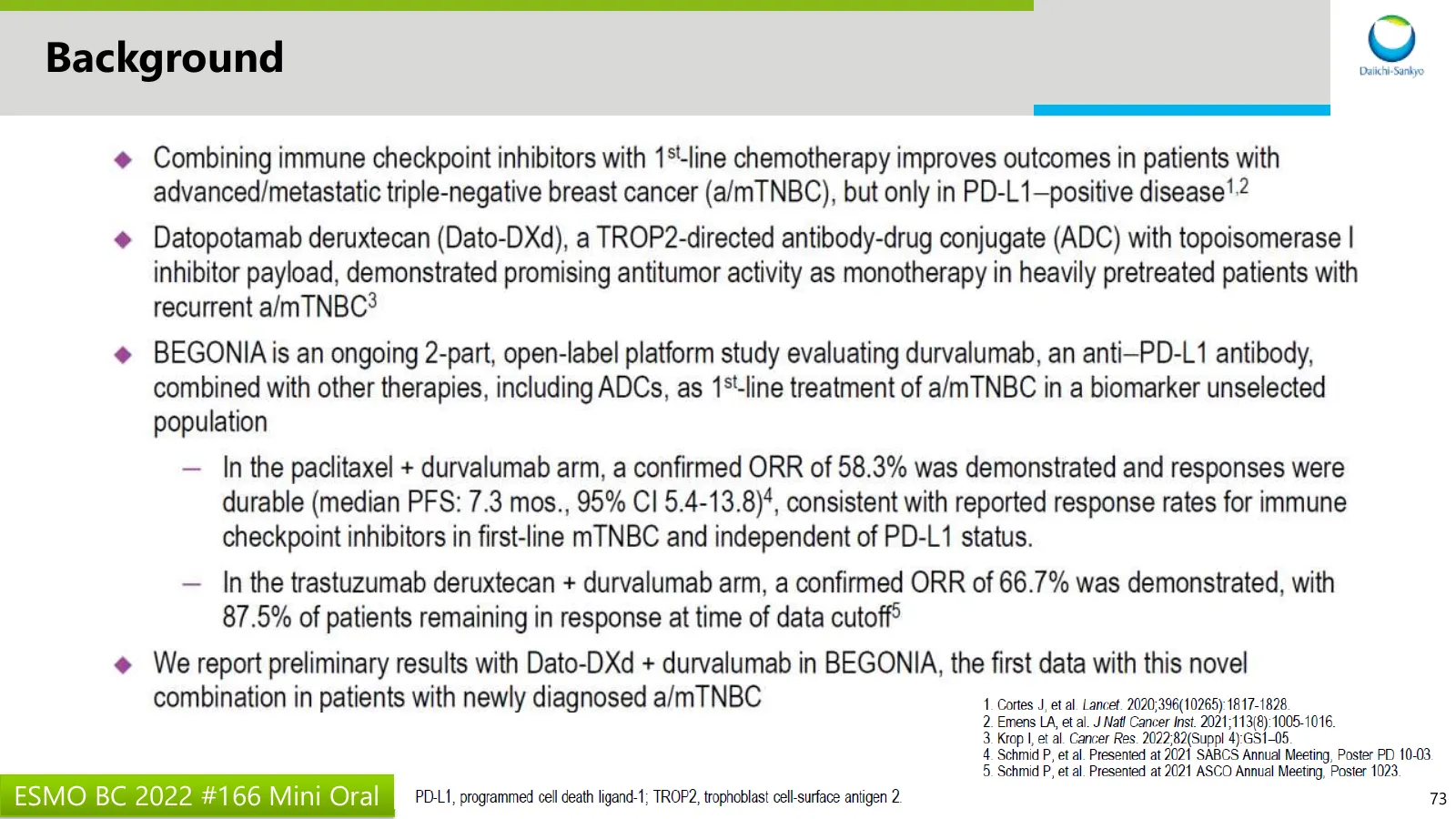
Slide 73: Background
Background ESMO BC 2022 #166 Mini Oral 73
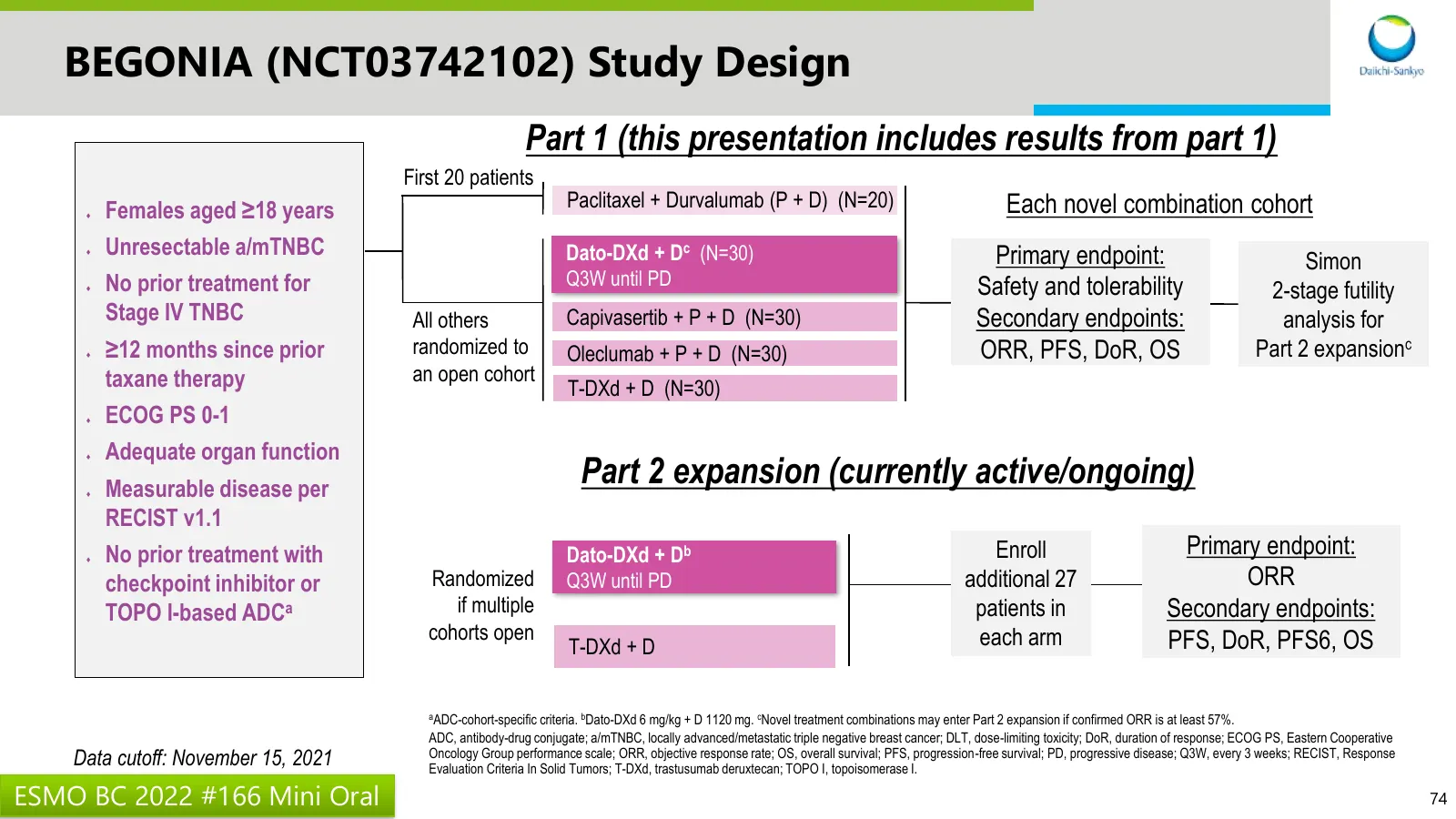
Slide 74: BEGONIA Study Design
BEGONIA (NCT03742102) Study Design Part 1 (this presentation includes results from part 1) First 20 patients ♦ Females aged ≥18 years Paclitaxel + Durvalumab (P + D) (N=20) Each novel combination cohort Unresectable a/mTNBC Dato-DXd + Dc (N=30) Primary endpoint: Simon ♦ No prior treatment for Q3W un
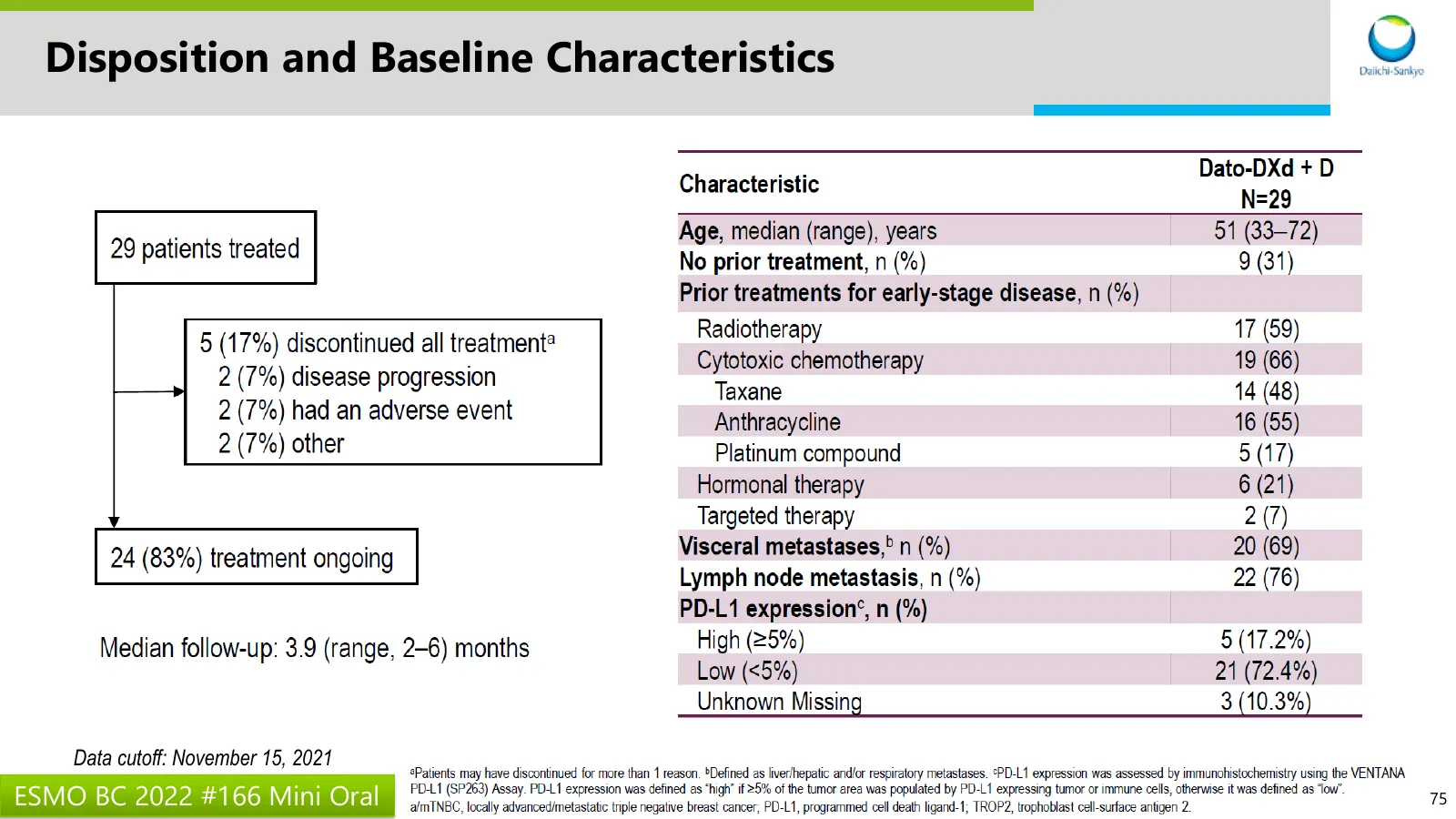
Slide 75: Disposition and Baseline Characteristics
Disposition and Baseline Characteristics Data cutoff: November 15, 2021 ESMO BC 2022 #166 Mini Oral 75
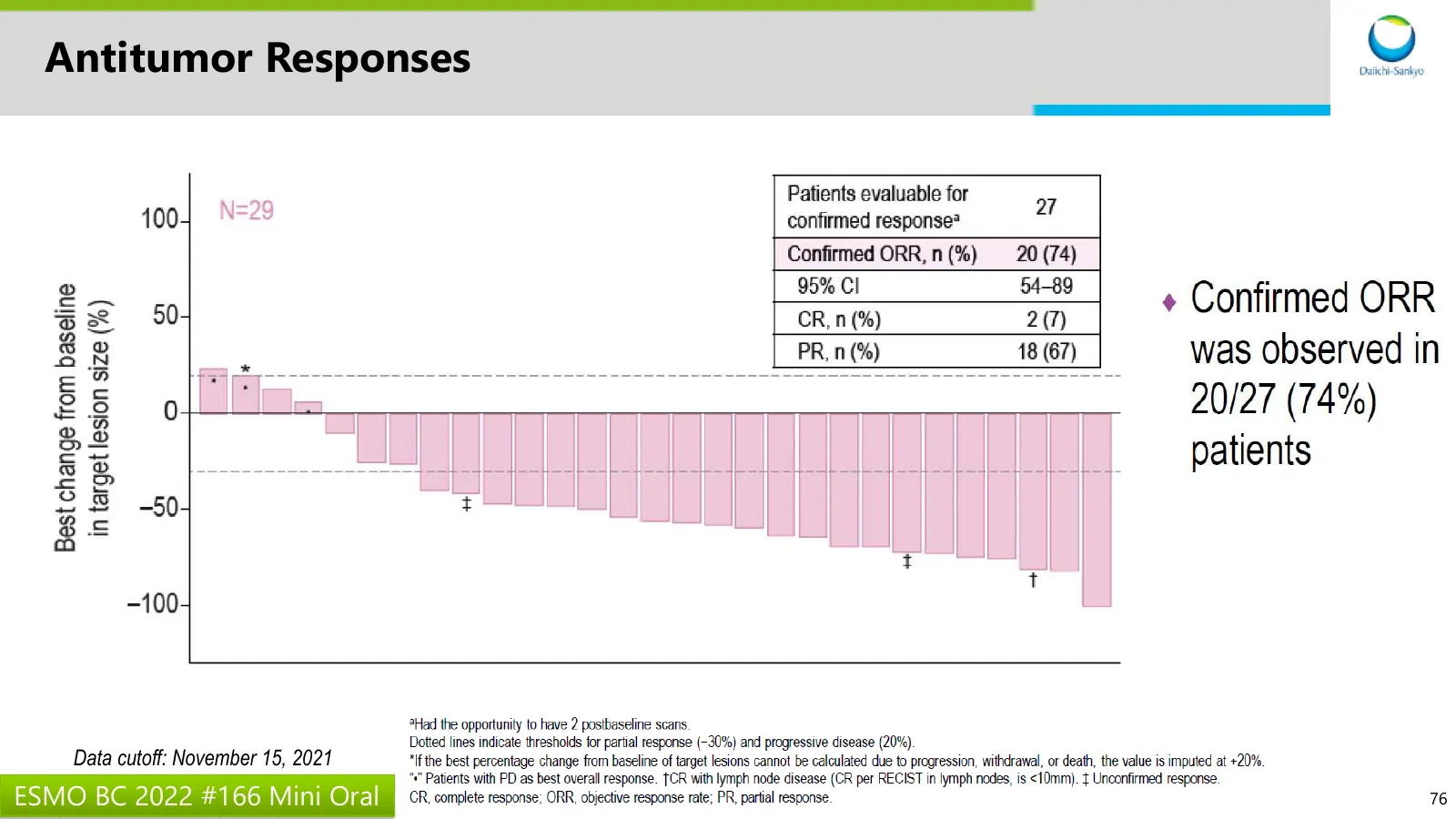
Slide 76: Antitumor Responses
Antitumor Responses Data cutoff: November 15, 2021 ESMO BC 2022 #166 Mini Oral 76
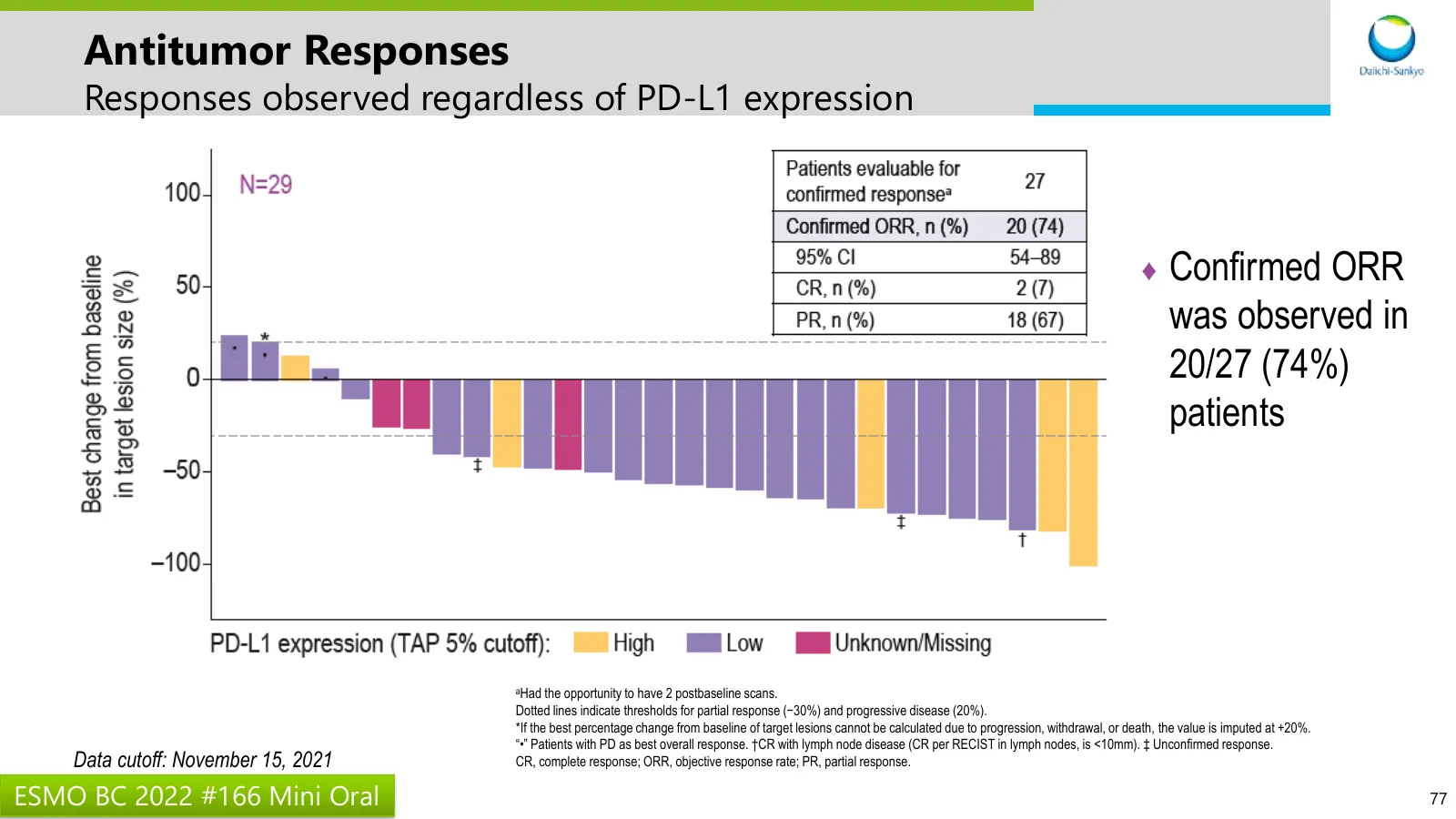
Slide 77: Antitumor Responses
Antitumor Responses Responses observed regardless of PD-L1 expression ♦ Confirmed ORR was observed in 20/27 (74%) patients aHad the opportunity to have 2 postbaseline scans. Dotted lines indicate thresholds for partial response (−30%) and progressive disease (20%). *If the best percentage change fro
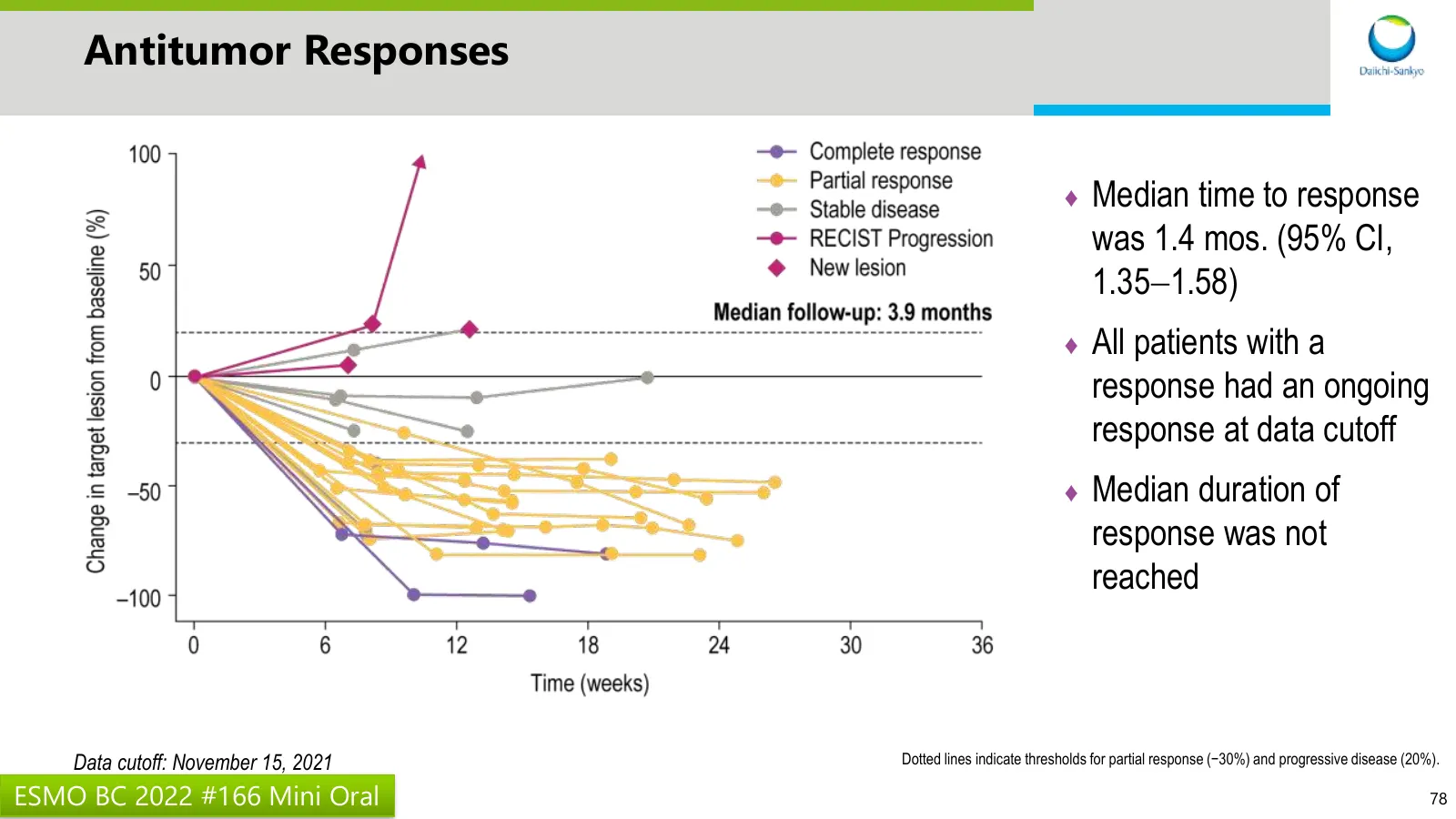
Slide 78: Antitumor Responses
Antitumor Responses ♦ Median time to response was 1.4 mos. (95% CI, 1.35−1.58) ♦ All patients with a response had an ongoing response at data cutoff ♦ Median duration of response was not reached Data cutoff: November 15, 2021 Dotted lines indicate thresholds for partial response (−30%) and progressi
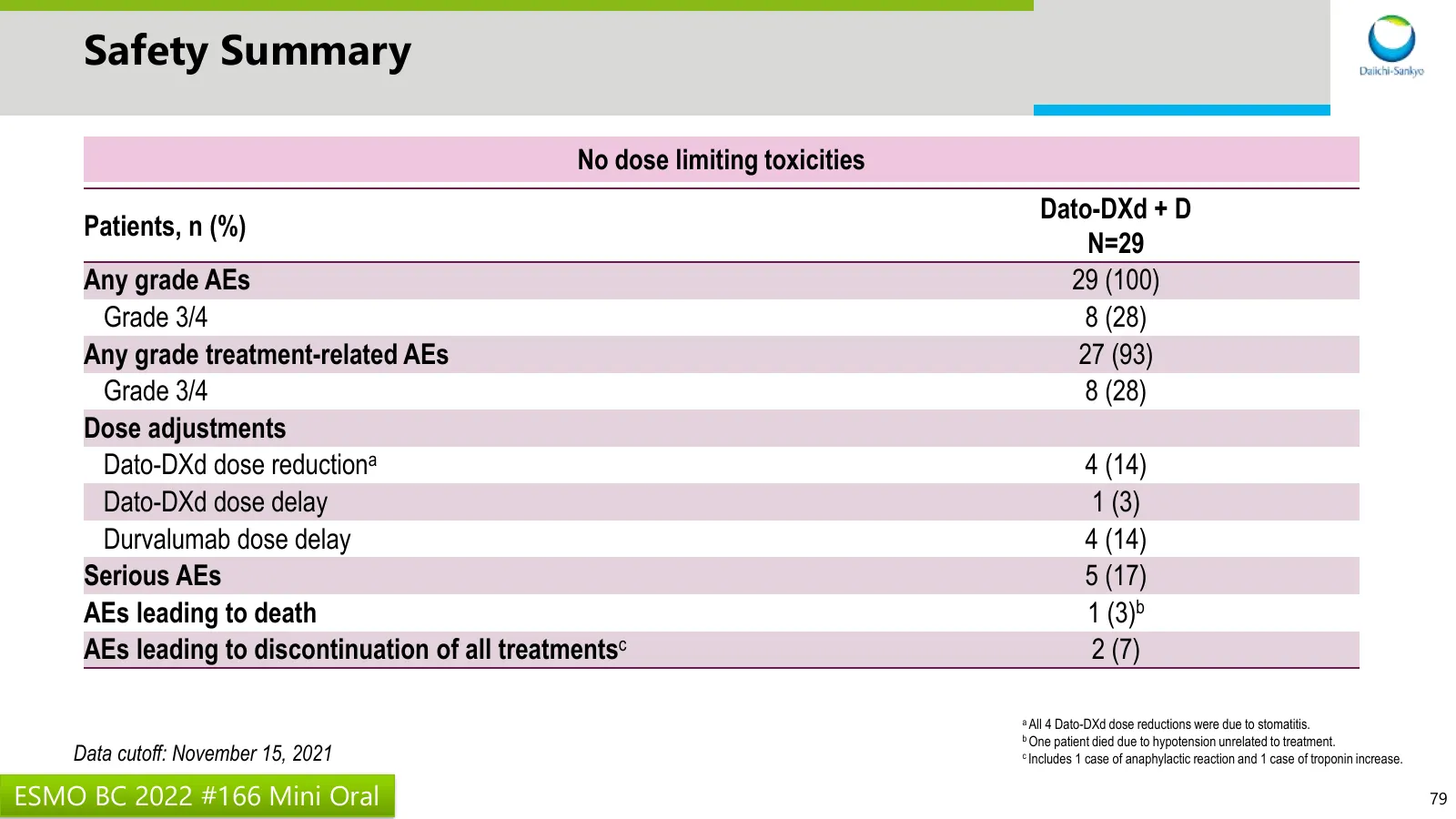
Slide 79: Safety Summary
Safety Summary No dose limiting toxicities Dato-DXd + D Patients, n (%) N=29 Any grade AEs 29 (100) Grade 3/4 8 (28) Any grade treatment-related AEs 27 (93) Grade 3/4 8 (28) Dose adjustments Dato-DXd dose reductiona 4 (14) Dato-DXd dose delay 1 (3) Durvalumab dose delay 4 (14) Serious AEs 5 (17) AEs
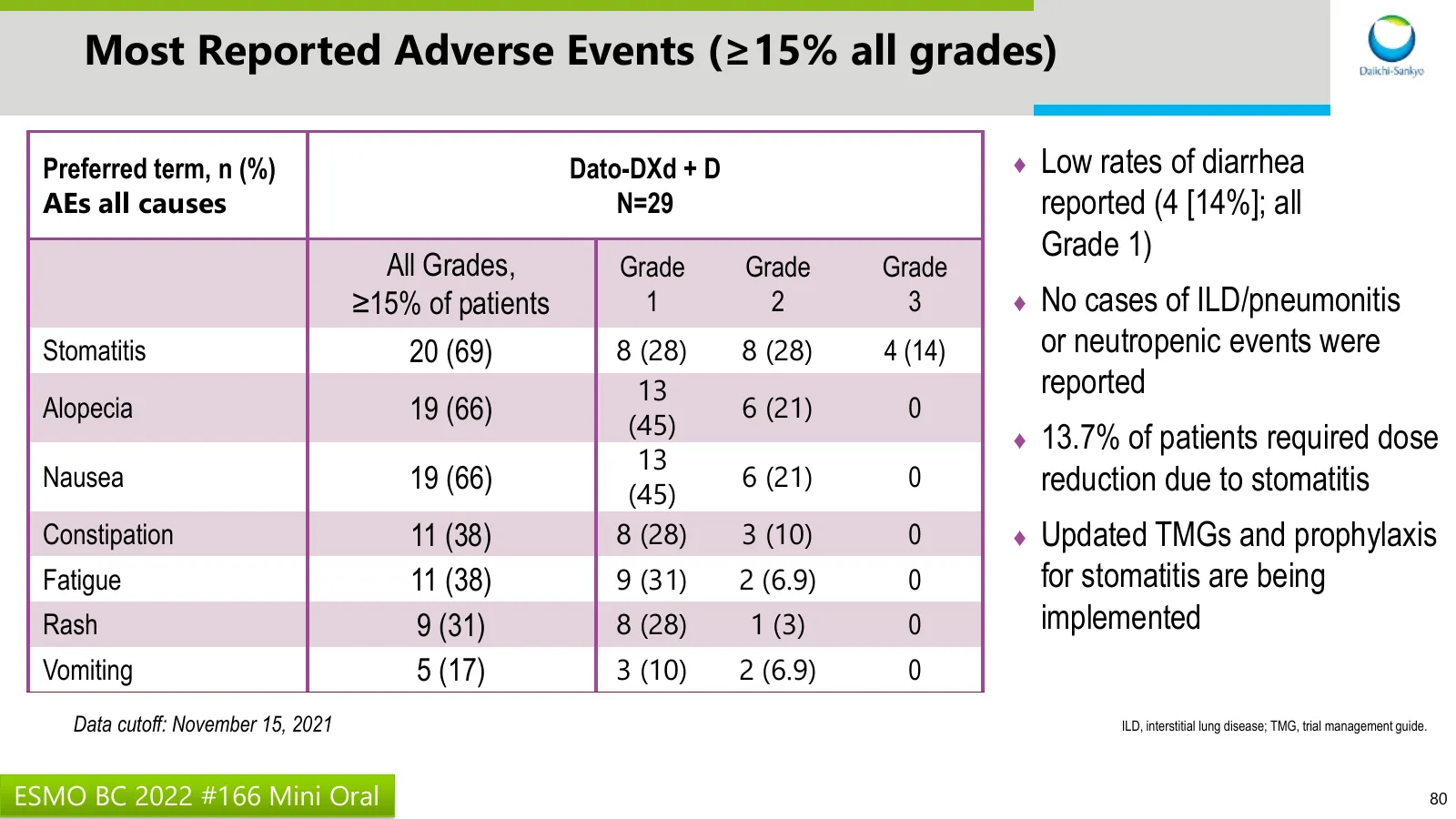
Slide 80: Most Reported Adverse Events (≥15% all grades)
Most Reported Adverse Events (≥15% all grades) Preferred term, n (%) Dato-DXd + D ♦ Low rates of diarrhea AEs all causes N=29 reported (4 [14%]; all Grade 1) All Grades, Grade Grade Grade ≥15% of patients 1 2 3 ♦ No cases of ILD/pneumonitis Stomatitis 20 (69) 8 (28) 8 (28) 4 (14) or neutropenic even
Slide 81: Conclusions
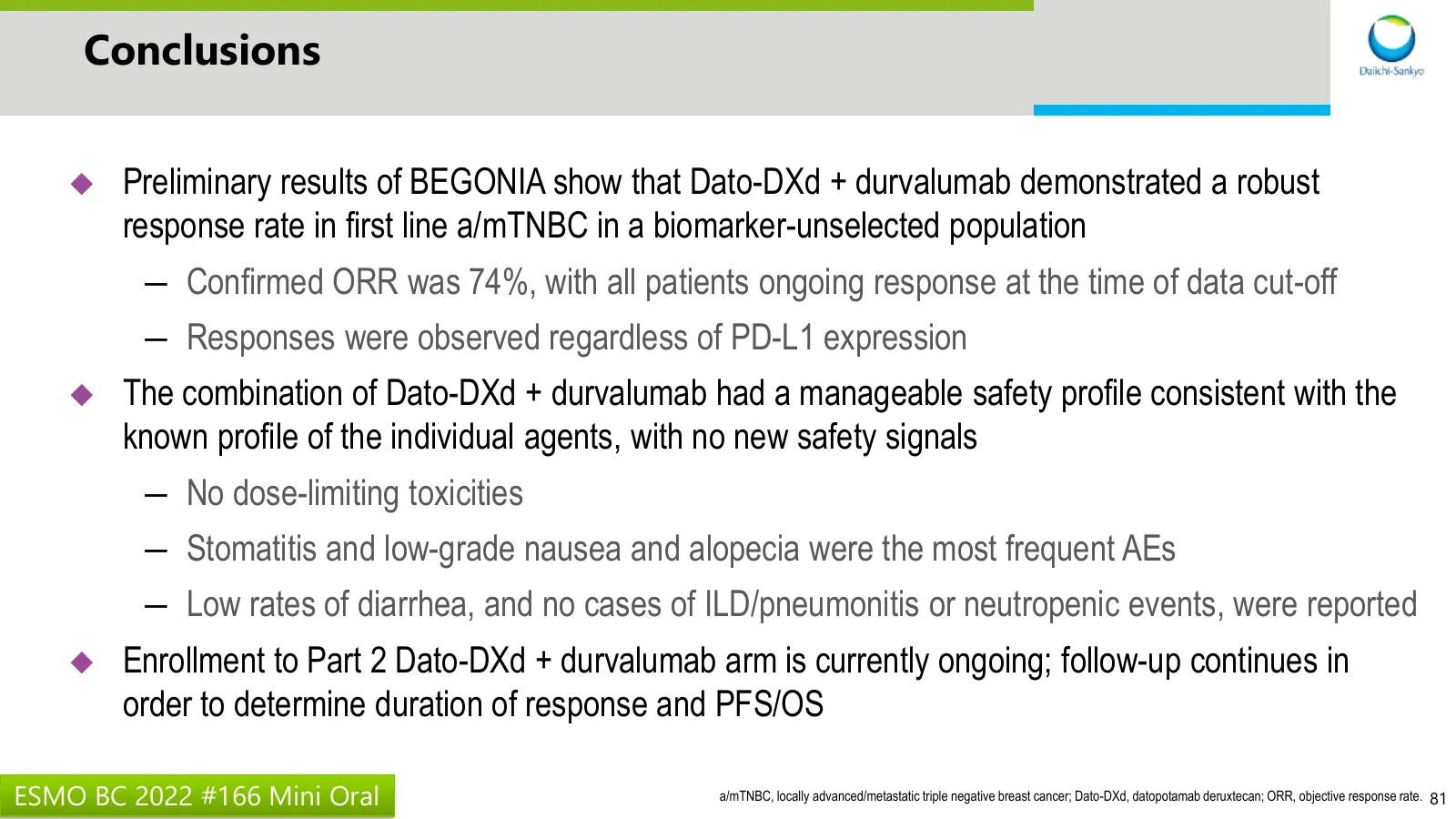
Conclusions ◆ Preliminary results of BEGONIA show that Dato-DXd + durvalumab demonstrated a robust response rate in first line a/mTNBC in a biomarker-unselected population ― Confirmed ORR was 74%, with all patients ongoing response at the time of data cut-off ― Responses were observed regardless of
Slide 82: Phase 1/2 Study of Patritumab Deruxtecan in HER3-Expressing Metastatic Breast Cancer
Results From the Phase 1/2 Study of Patritumab Deruxtecan, a HER3-Directed Antibody-Drug Conjugate (ADC), in Patients With HER3-Expressing Metastatic Breast Cancer Ian E. Krop,1 Norikazu Masuda,2 Toru Mukohara,3 Shunji Takahashi,4 Takahiro Nakayama,5 Kenichi Inoue,6 Hiroji Iwata,7 Tatsuya Toyama,8 Y
Slide 83: Patritumab Deruxtecan (HER3-DXd)
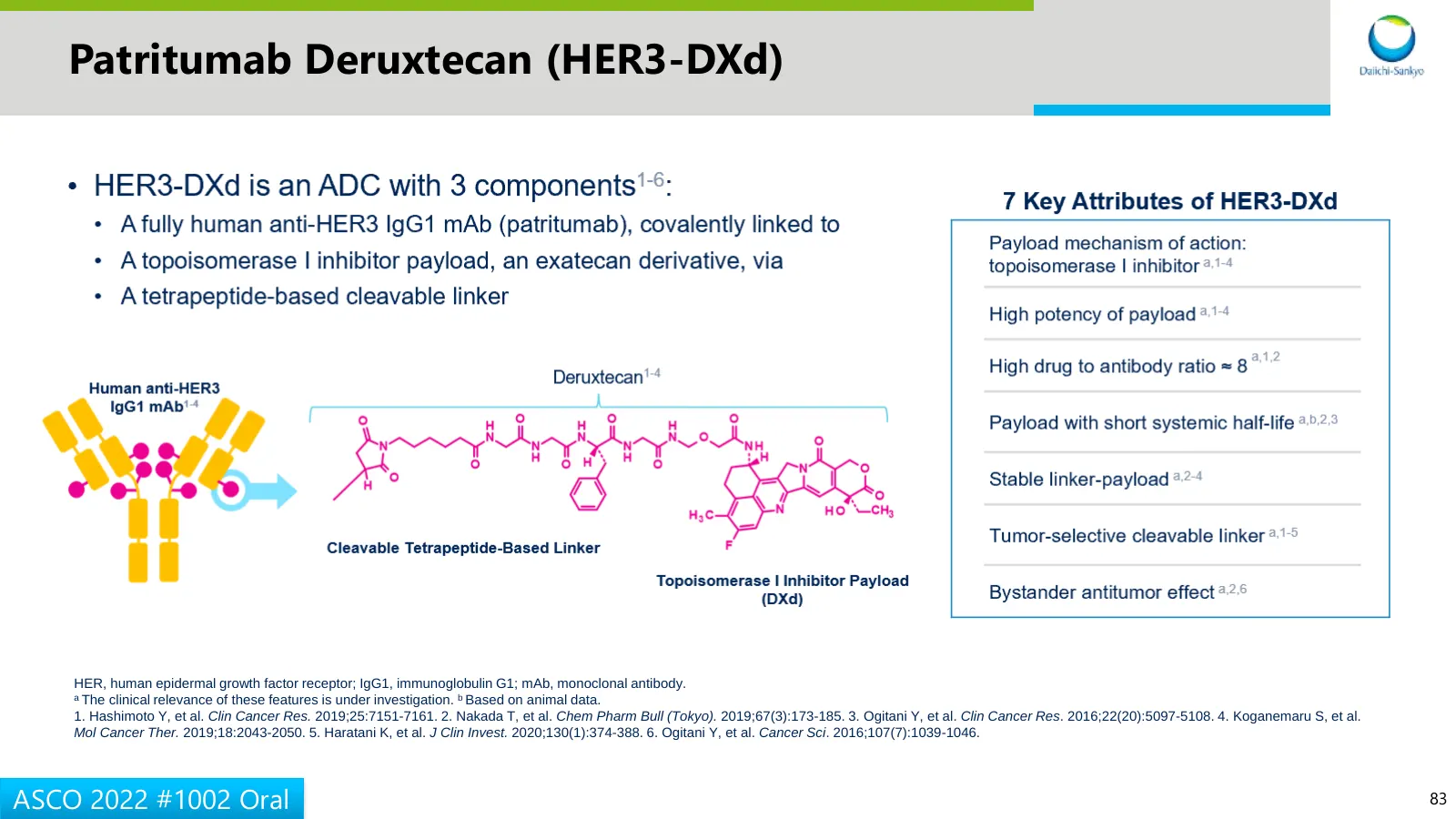
Patritumab Deruxtecan (HER3-DXd) HER, human epidermal growth factor receptor; IgG1, immunoglobulin G1; mAb, monoclonal antibody. a The clinical relevance of these features is under investigation. b Based on animal data. 1. Hashimoto Y, et al. Clin Cancer Res. 2019;25:7151-7161. 2. Nakada T, et al. C
Slide 84: Background
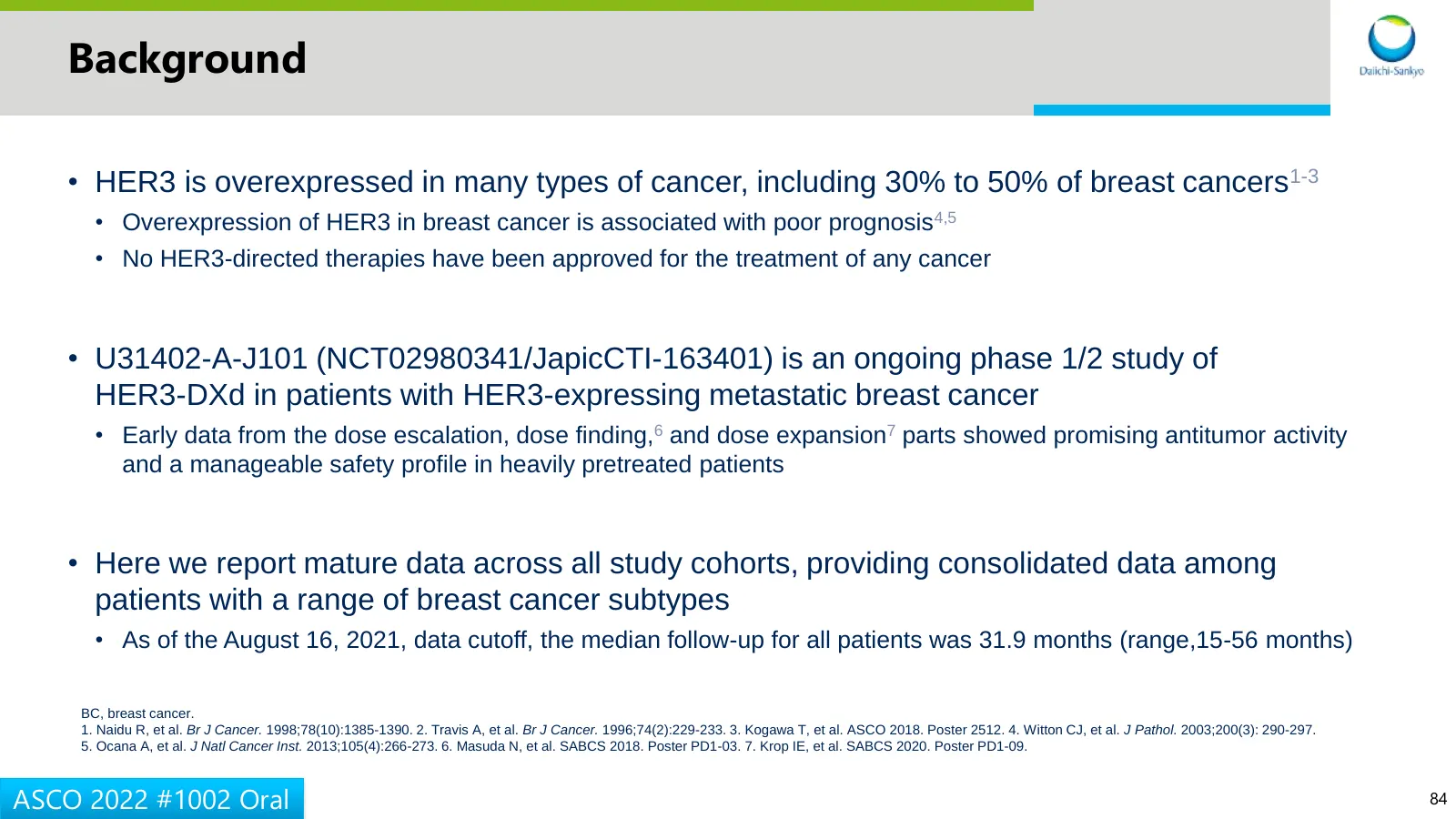
Background • HER3 is overexpressed in many types of cancer, including 30% to 50% of breast cancers1-3 • Overexpression of HER3 in breast cancer is associated with poor prognosis4,5 • No HER3-directed therapies have been approved for the treatment of any cancer • U31402-A-J101 (NCT02980341/JapicCTI-1
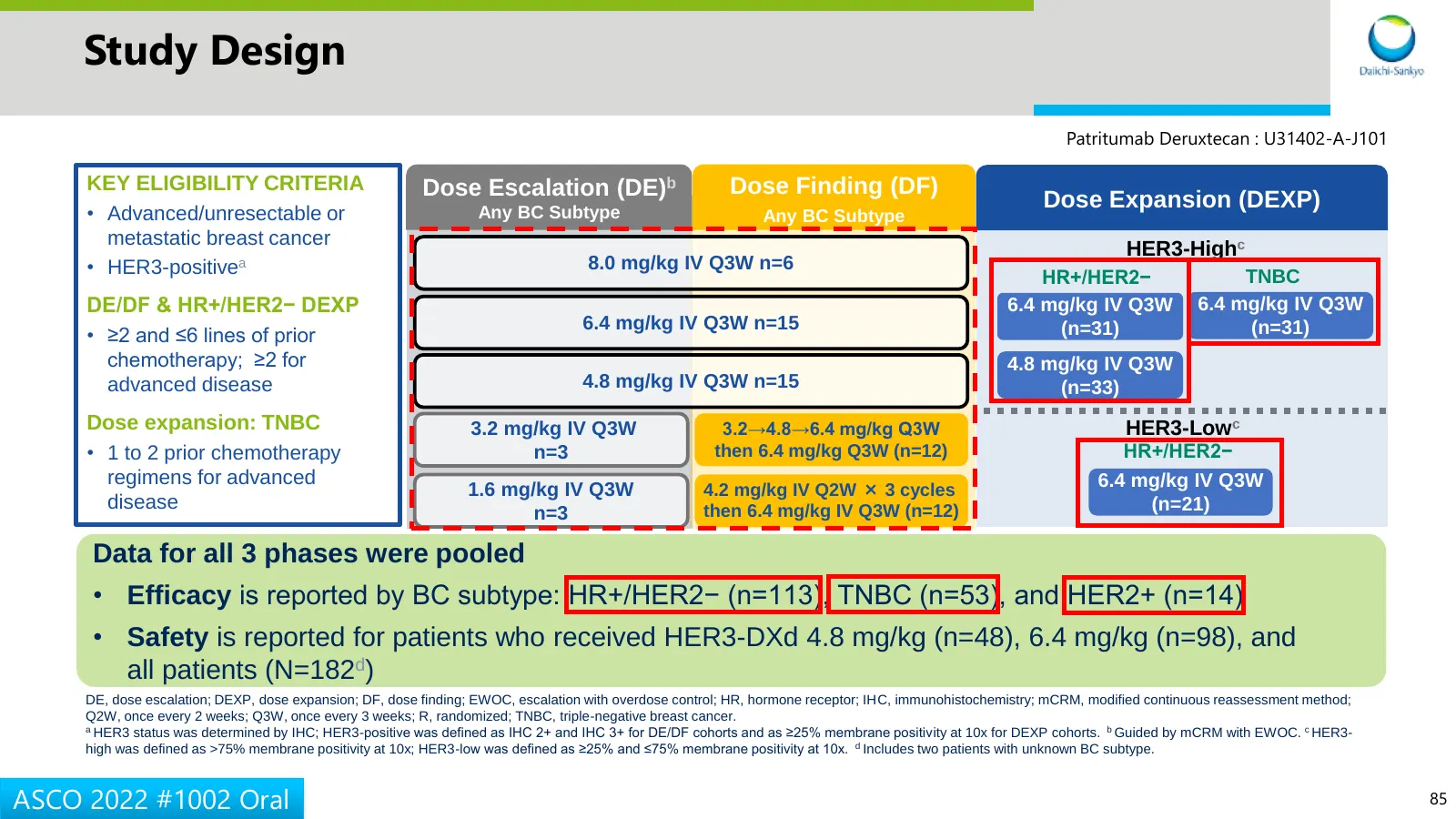
Slide 85: Study Design
Study Design Patritumab Deruxtecan : U31402-A-J101 Any BC Subtype KEY ELIGIBILITY CRITERIA Dose Escalation (DE)b Dose Finding (DF) • Advanced/unresectable or Any BC Subtype Dose Expansion (DEXP) Any BC Subtype metastatic breast cancer HER3-Highc • HER3-positivea 8.0 mg/kg IV Q3W n=6 HR+/HER2− TNBC D
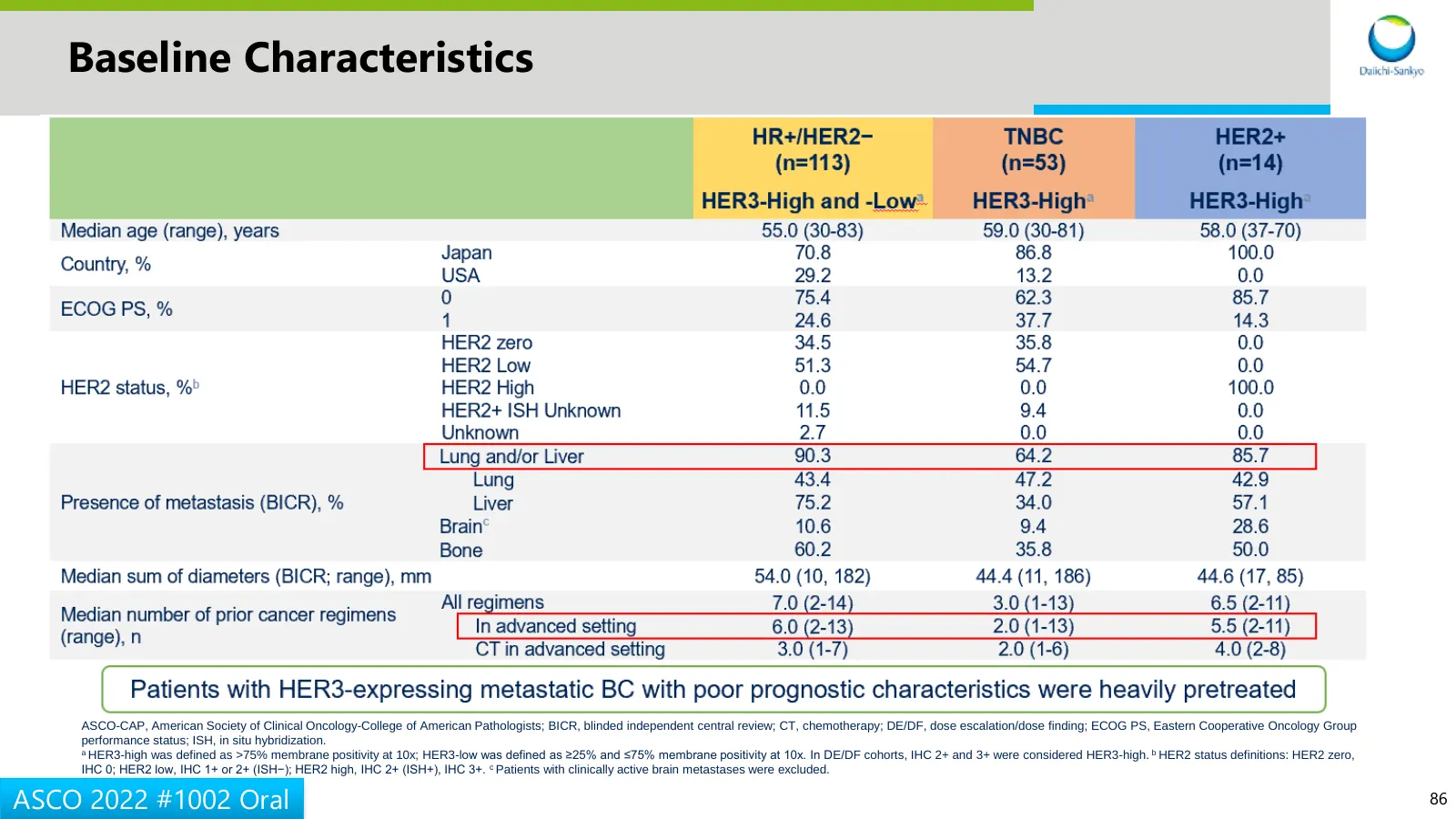
Slide 86: Baseline Characteristics
Baseline Characteristics ASCO-CAP, American Society of Clinical Oncology-College of American Pathologists; BICR, blinded independent central review; CT, chemotherapy; DE/DF, dose escalation/dose finding; ECOG PS, Eastern Cooperative Oncology Group performance status; ISH, in situ hybridization. a HE
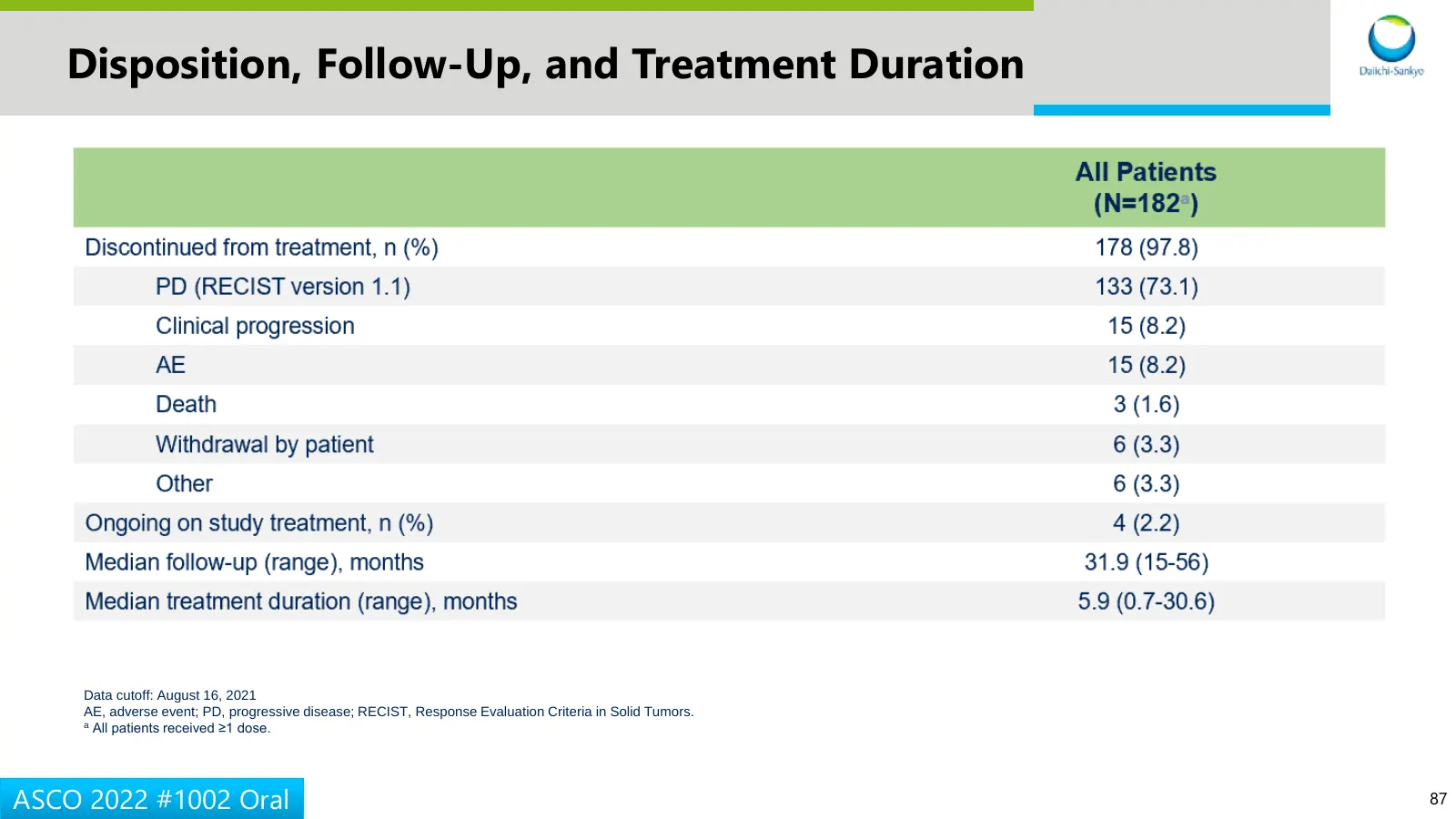
Slide 87: Disposition, Follow-Up, and Treatment Duration
Disposition, Follow-Up, and Treatment Duration Data cutoff: August 16, 2021 AE, adverse event; PD, progressive disease; RECIST, Response Evaluation Criteria in Solid Tumors. a All patients received ≥1 dose. ASCO 2022 #1002 Oral 87
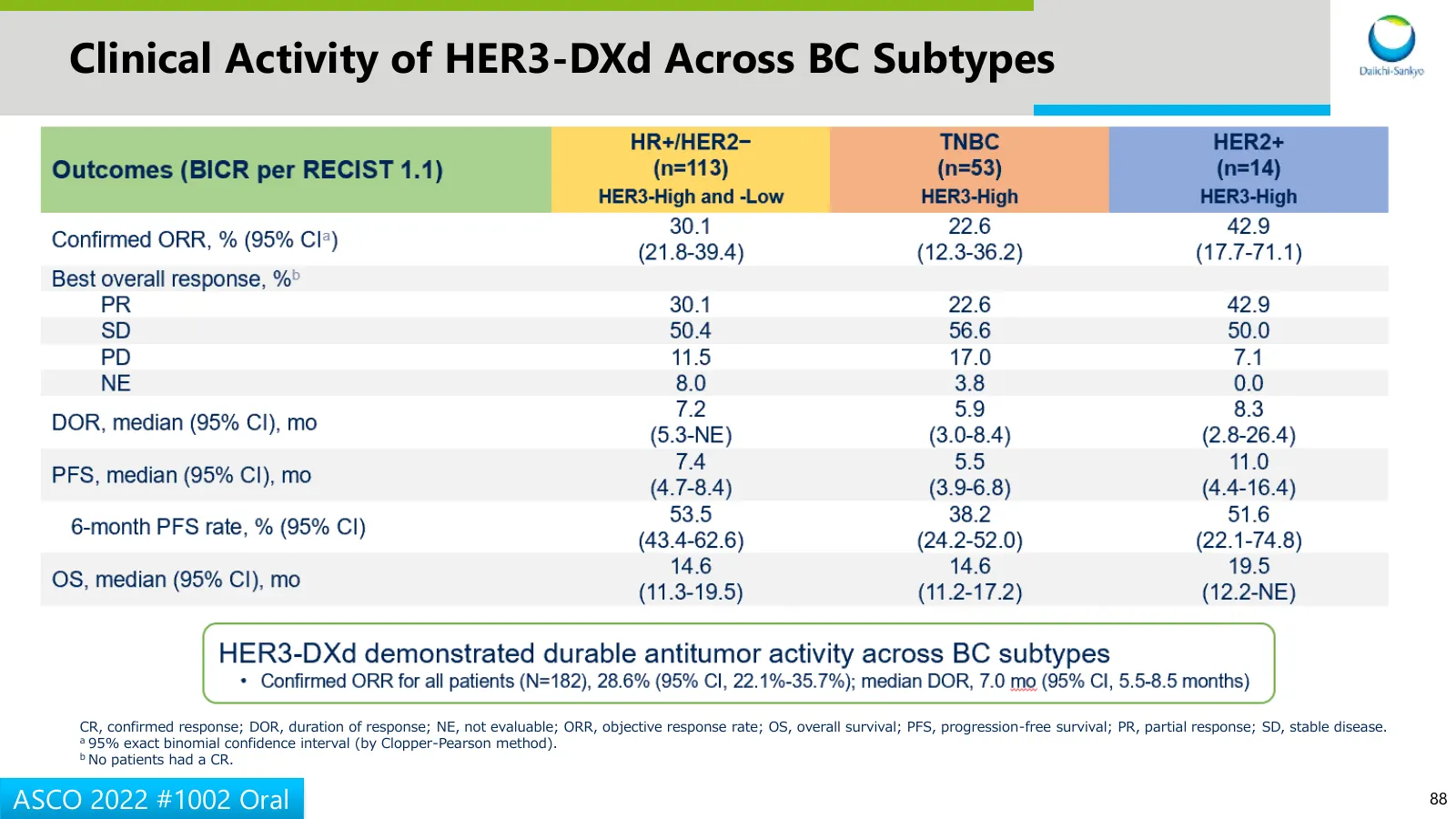
Slide 88: Clinical Activity of HER3-DXd Across BC Subtypes
Clinical Activity of HER3-DXd Across BC Subtypes CR, confirmed response; DOR, duration of response; NE, not evaluable; ORR, objective response rate; OS, overall survival; PFS, progression-free survival; PR, partial response; SD, stable disease. a 95% exact binomial confidence interval (by Clopper-Pe
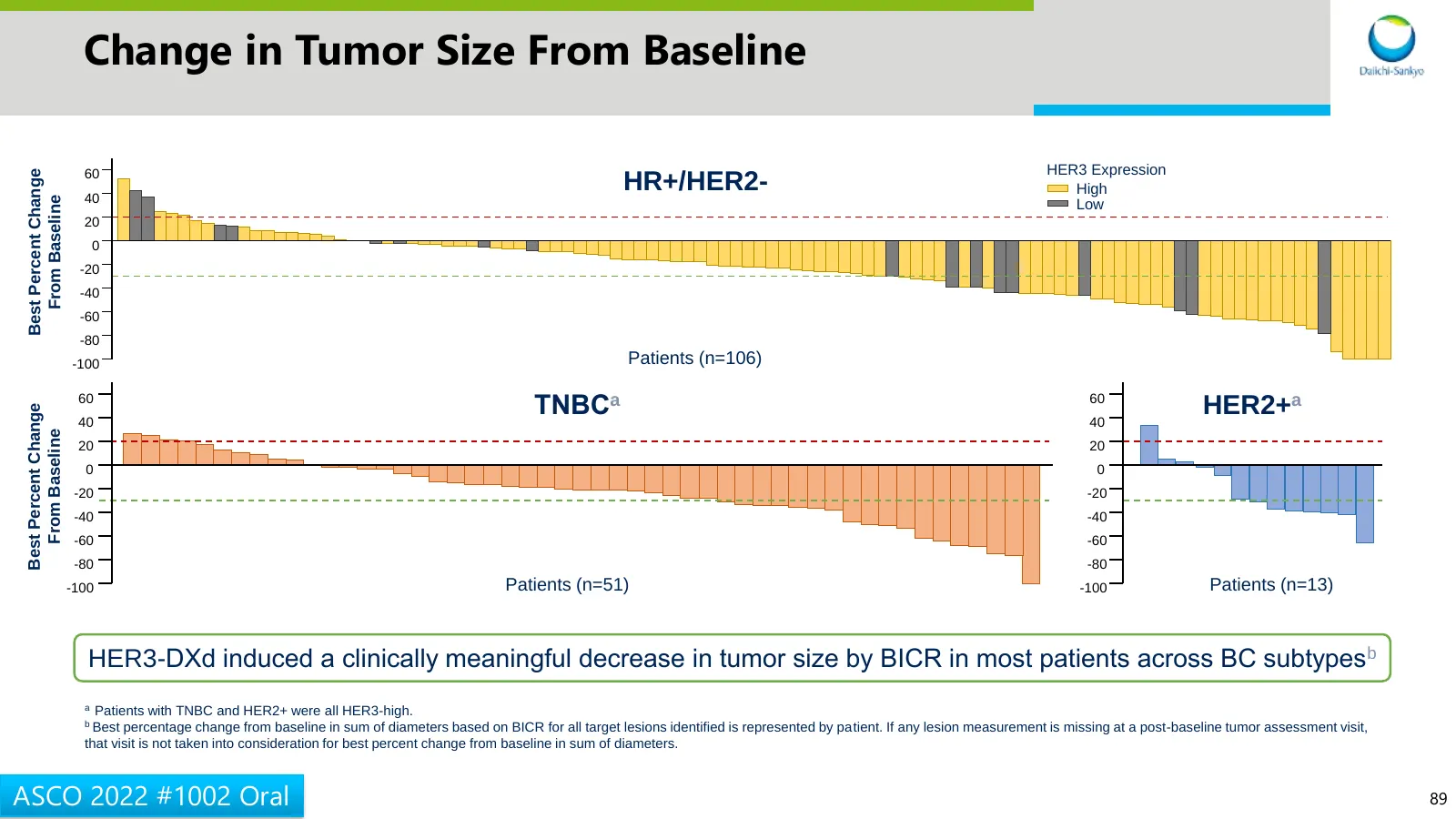
Slide 89: Change in Tumor Size From Baseline
Change in Tumor Size From Baseline HER3 Expression Best Percent Change 60 40 HR+/HER2- High From Baseline Low 20 0 -20 -40 -60 -80 -100 Patients (n=106) 60 TNBCa 60 HER2+a Best Percent Change 40 40 From Baseline 20 20 0 0 -20 -20 -40 -40 -60 -60 -80 -80 -100 Patients (n=51) -100 Patients (n=13) HER
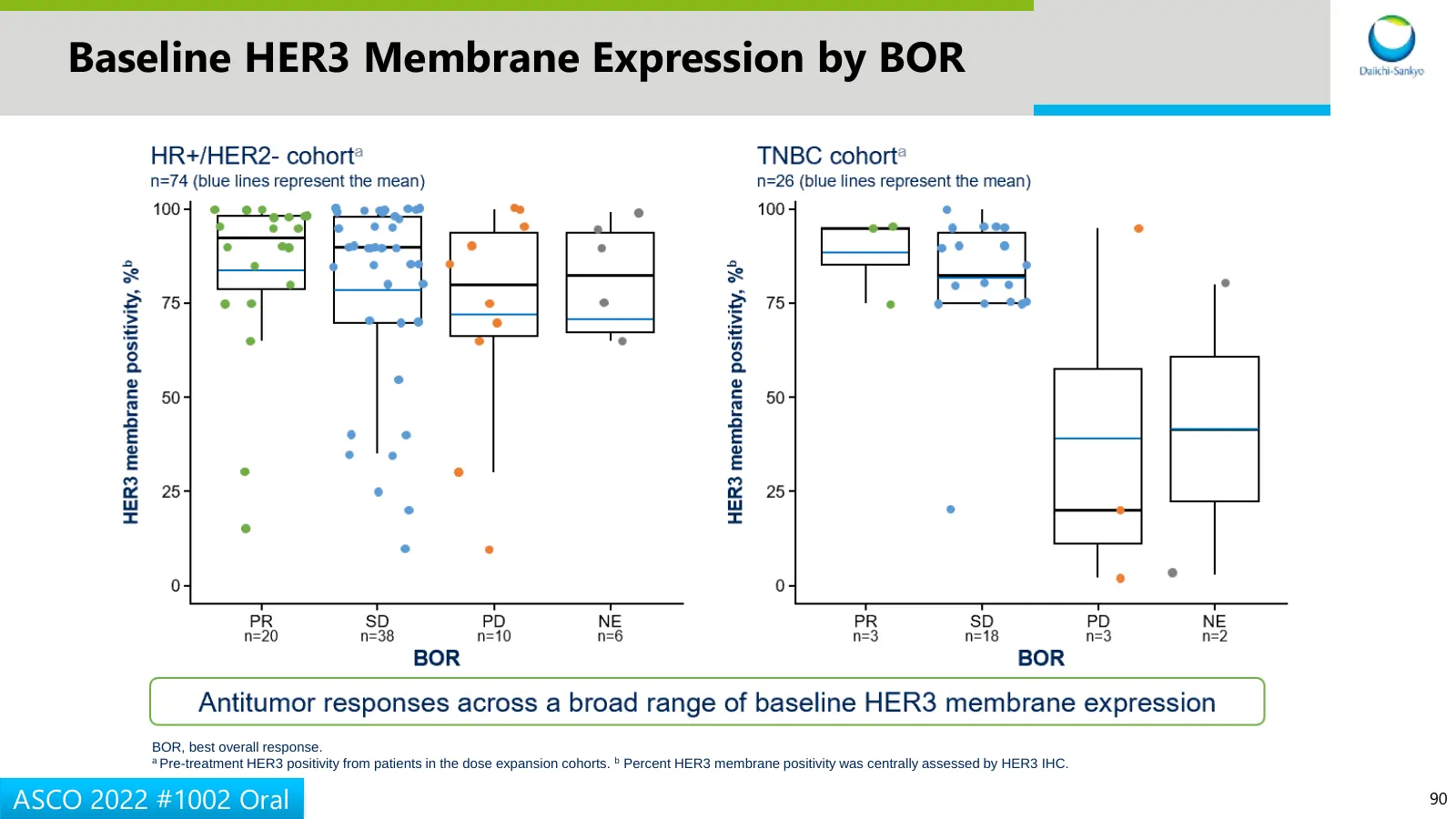
Slide 90: Baseline HER3 Membrane Expression by BOR
Baseline HER3 Membrane Expression by BOR BOR, best overall response. a Pre-treatment HER3 positivity from patients in the dose expansion cohorts. b Percent HER3 membrane positivity was centrally assessed by HER3 IHC. ASCO 2022 #1002 Oral 90
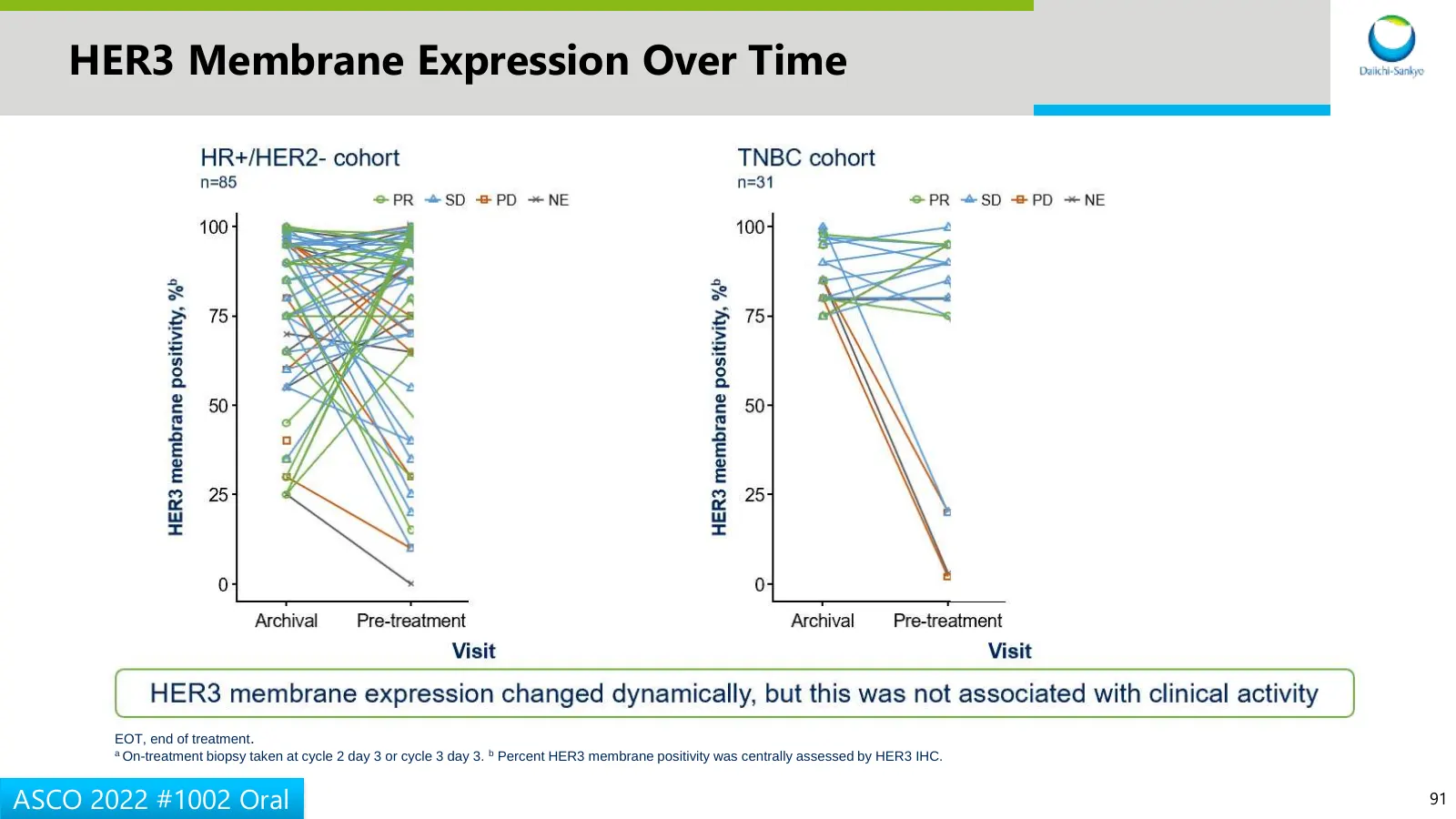
Slide 91: HER3 Membrane Expression Over Time
HER3 Membrane Expression Over Time EOT, end of treatment. a On-treatment biopsy taken at cycle 2 day 3 or cycle 3 day 3. b Percent HER3 membrane positivity was centrally assessed by HER3 IHC. ASCO 2022 #1002 Oral 91
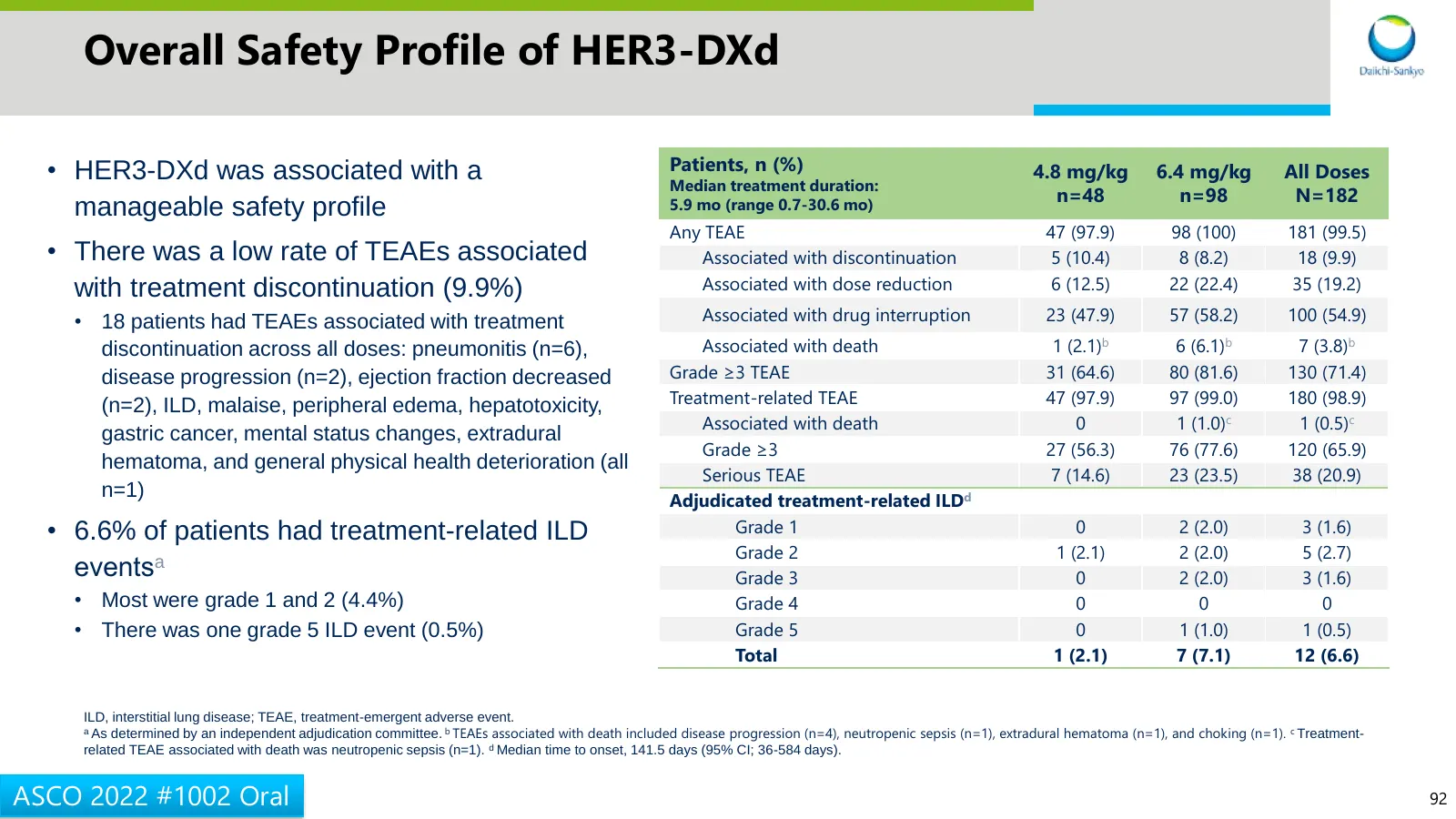
Slide 92: Overall Safety Profile of HER3-DXd
Overall Safety Profile of HER3-DXd • HER3-DXd was associated with a Patients, n (%) 4.8 mg/kg 6.4 mg/kg All Doses Median treatment duration: 5.9 mo (range 0.7-30.6 mo) n=48 n=98 N=182 manageable safety profile Any TEAE 47 (97.9) 98 (100) 181 (99.5) • There was a low rate of TEAEs associated Associat
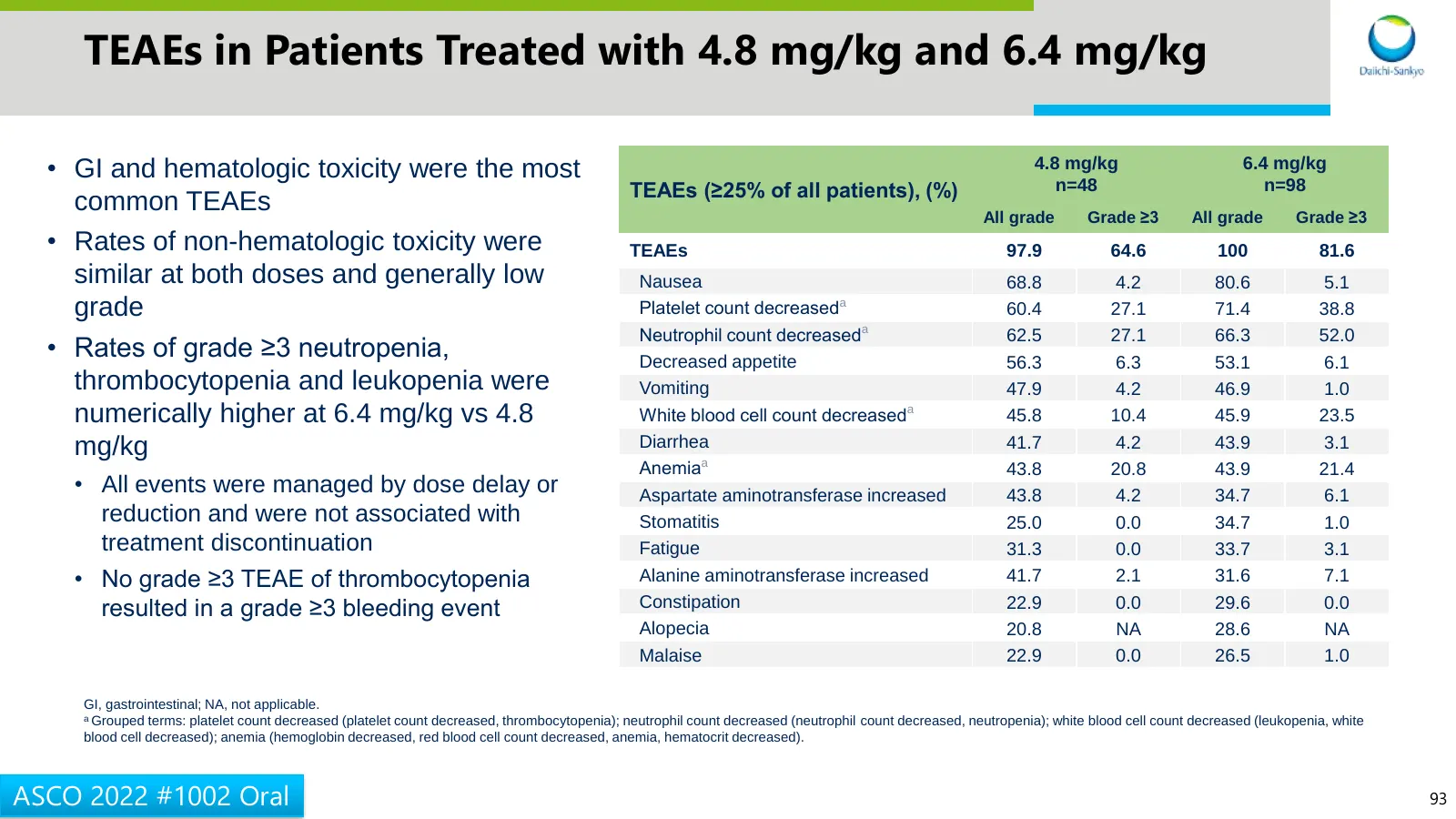
Slide 93: TEAEs in Patients Treated with 4.8 mg/kg and 6.4 mg/kg
TEAEs in Patients Treated with 4.8 mg/kg and 6.4 mg/kg • GI and hematologic toxicity were the most 4.8 mg/kg n=48 6.4 mg/kg n=98 TEAEs (≥25% of all patients), (%) common TEAEs All grade Grade ≥3 All grade Grade ≥3 • Rates of non-hematologic toxicity were TEAEs 97.9 64.6 100 81.6 similar at both dose
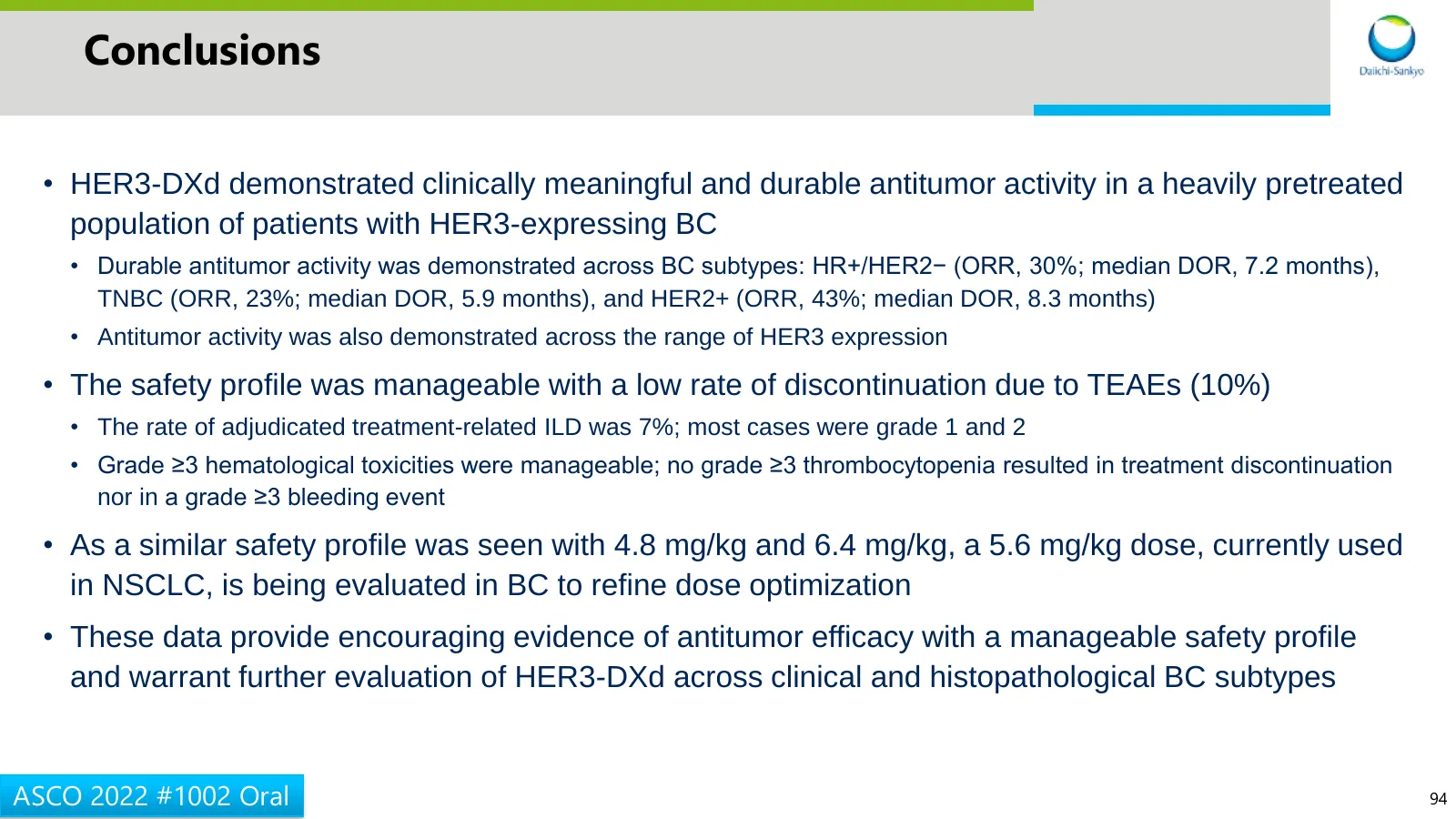
Slide 94: Conclusions
Conclusions • HER3-DXd demonstrated clinically meaningful and durable antitumor activity in a heavily pretreated population of patients with HER3-expressing BC • Durable antitumor activity was demonstrated across BC subtypes: HR+/HER2− (ORR, 30%; median DOR, 7.2 months), TNBC (ORR, 23%; median DOR,
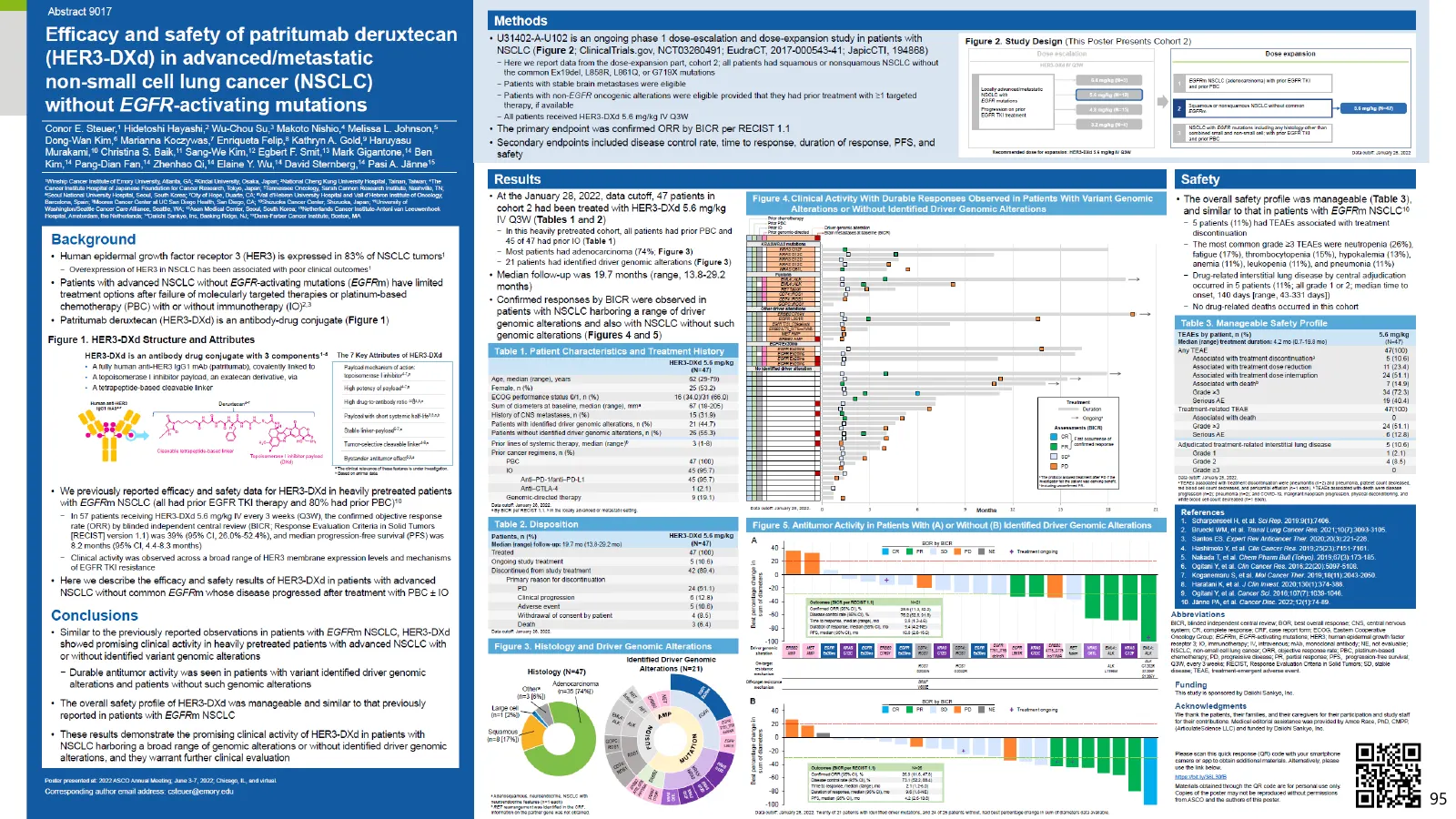
Slide 95: Abstract 9017: HER3-DXd in NSCLC without EGFR-activating mutations
Abstract 9017 Efficacy and safety of patritumab deruxtecan (HER3-DXqd) in advanced/metastatic non-small cell lung cancer (NSCLC) without EGFR-activating mutations ‘Conor E_ Steuer," Hideloshi Hayashi? Wu-Chou Su Makoto Nishio Melissa L_ Johnson Dong: Wan Kins Marianna Koczyas,’ Enriqueta Felip,* Kat
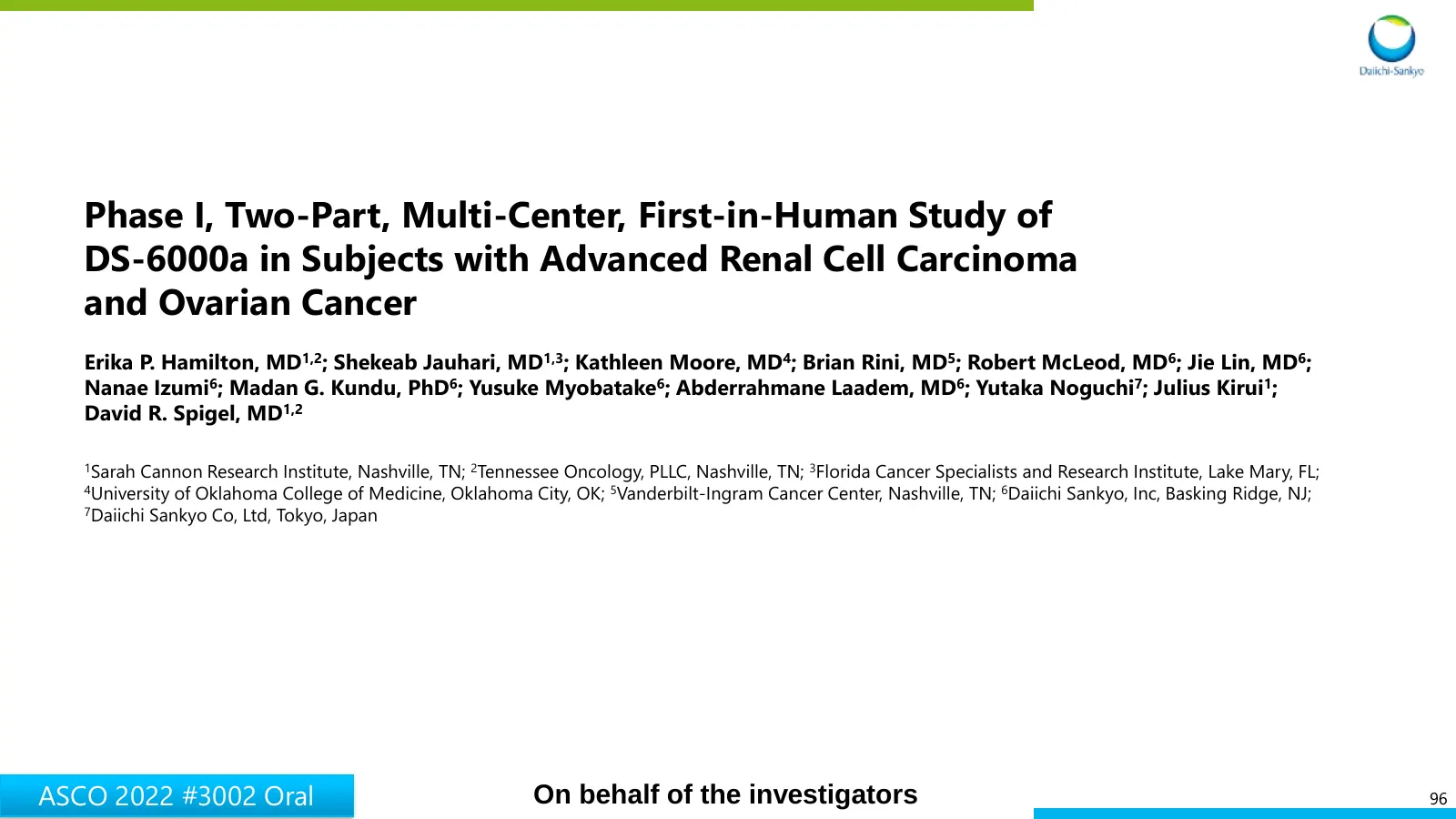
Slide 96: Phase I First-in-Human Study of DS-6000a in Renal Cell Carcinoma and Ovarian Cancer
Phase I, Two-Part, Multi-Center, First-in-Human Study of DS-6000a in Subjects with Advanced Renal Cell Carcinoma and Ovarian Cancer Erika P. Hamilton, MD1,2; Shekeab Jauhari, MD1,3; Kathleen Moore, MD4; Brian Rini, MD5; Robert McLeod, MD6; Jie Lin, MD6; Nanae Izumi6; Madan G. Kundu, PhD6; Yusuke Myo
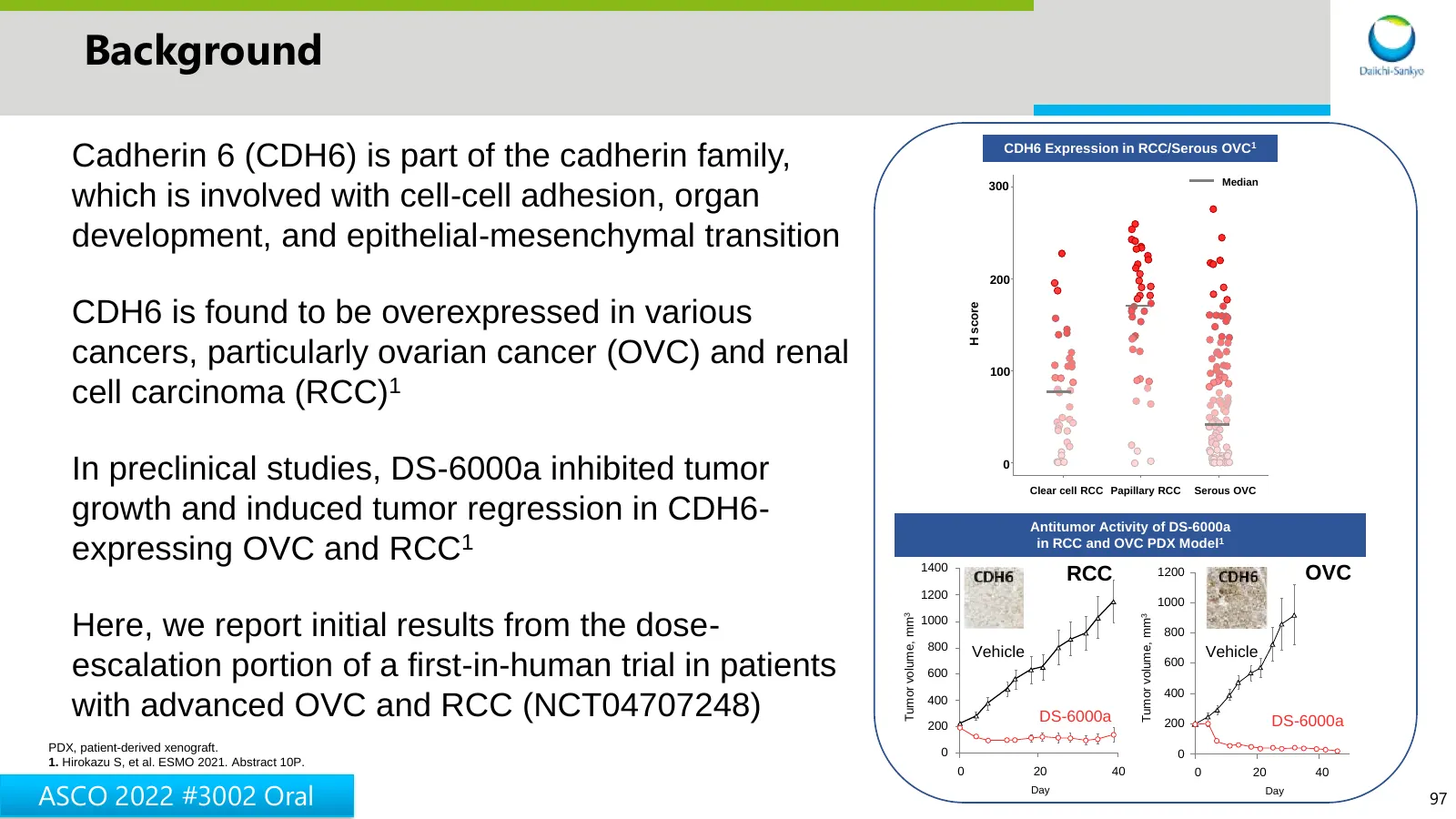
Slide 97: Background
Background • Cadherin 6 (CDH6) is part of the cadherin family, CDH6 Expression in RCC/Serous OVC1 300 Median which is involved with cell-cell adhesion, organ development, and epithelial-mesenchymal transition 200 • CDH6 is found to be overexpressed in various H score cancers, particularly ovarian ca
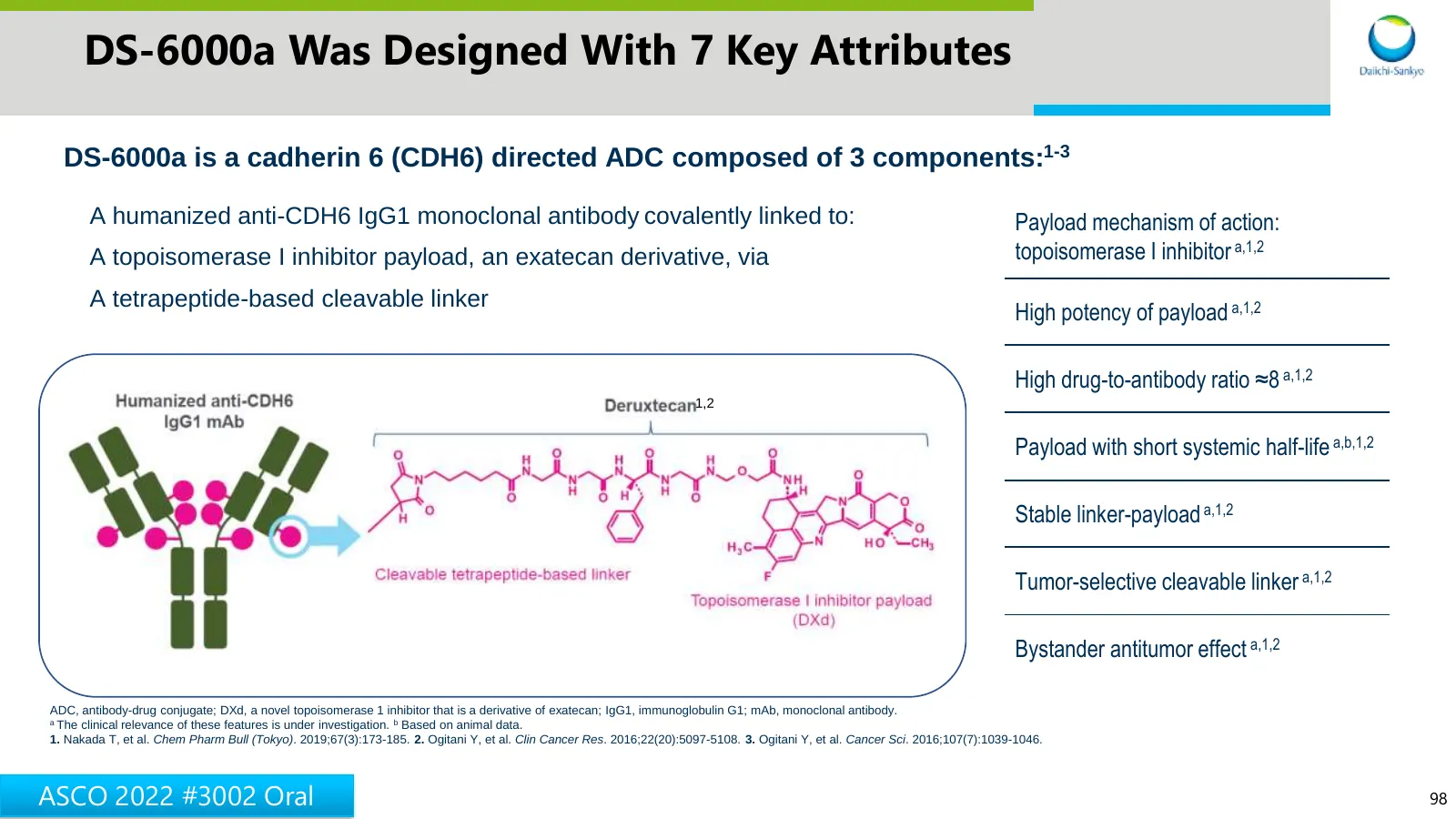
Slide 98: DS-6000a Was Designed With 7 Key Attributes
DS-6000a Was Designed With 7 Key Attributes DS-6000a is a cadherin 6 (CDH6) directed ADC composed of 3 components:1-3 • A humanized anti-CDH6 IgG1 monoclonal antibody covalently linked to: Payload mechanism of action: • A topoisomerase I inhibitor payload, an exatecan derivative, via topoisomerase I
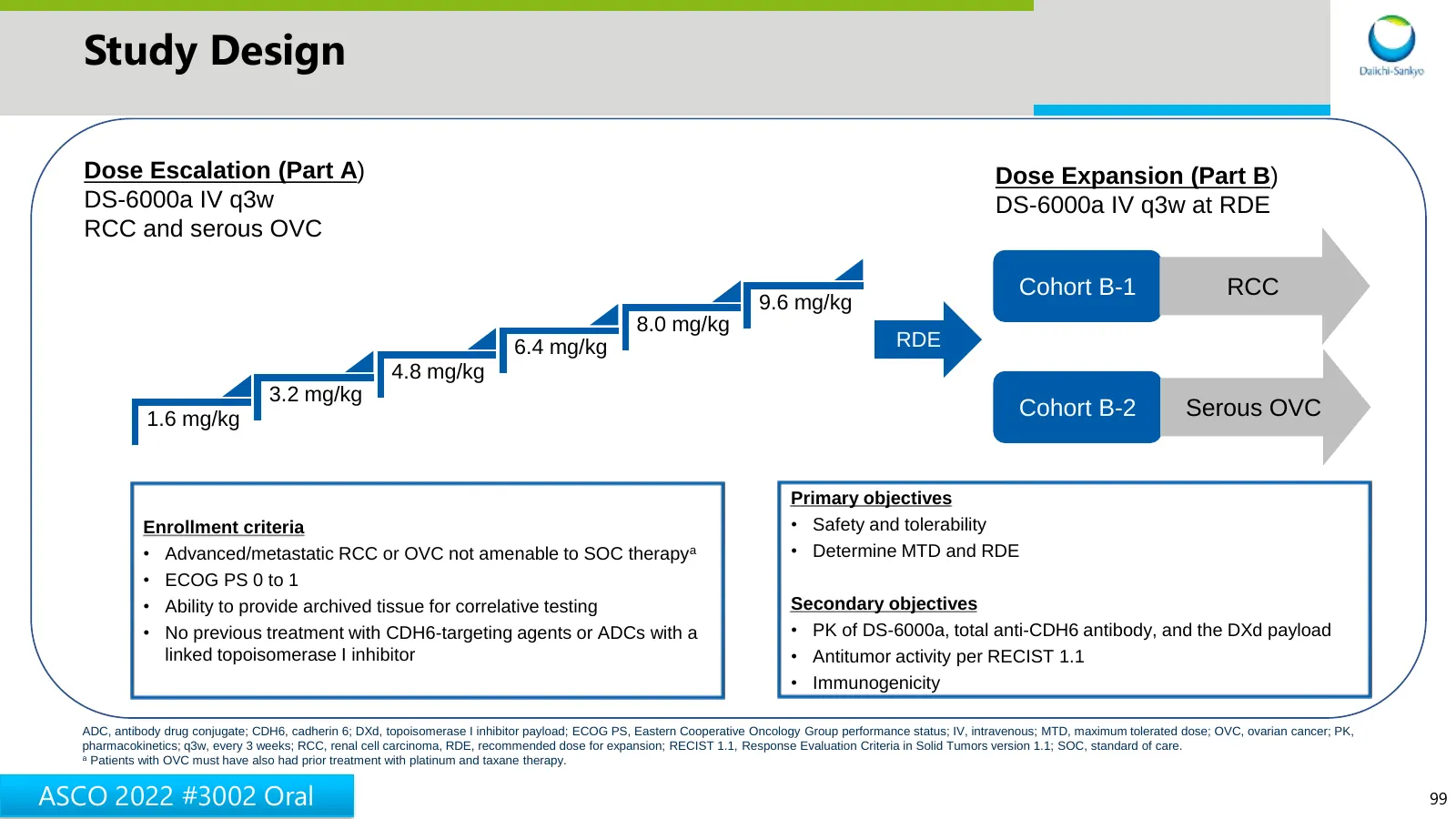
Slide 99: Study Design
Study Design Dose Escalation (Part A) Dose Expansion (Part B) DS-6000a IV q3w DS-6000a IV q3w at RDE RCC and serous OVC Cohort B-1 RCC 9.6 mg/kg 8.0 mg/kg 6.4 mg/kg RDE 4.8 mg/kg 3.2 mg/kg 1.6 mg/kg Cohort B-2 Serous OVC Primary objectives Enrollment criteria • Safety and tolerability • Advanced/met
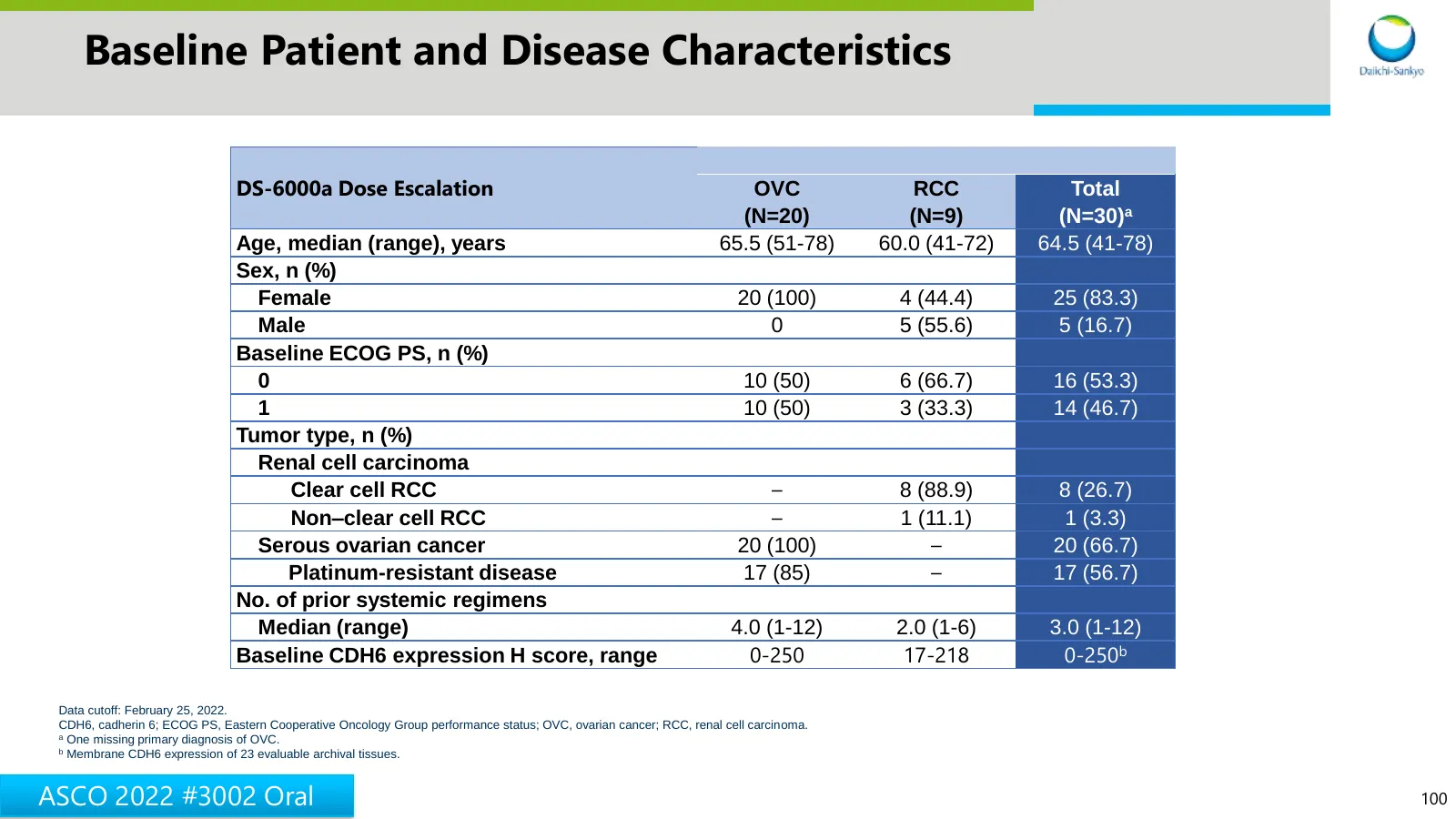
Slide 100: Baseline Patient and Disease Characteristics
Baseline Patient and Disease Characteristics DS-6000a Dose Escalation OVC RCC Total (N=20) (N=9) (N=30)a Age, median (range), years 65.5 (51-78) 60.0 (41-72) 64.5 (41-78) Sex, n (%) Female 20 (100) 4 (44.4) 25 (83.3) Male 0 5 (55.6) 5 (16.7) Baseline ECOG PS, n (%) 0 10 (50) 6 (66.7) 16 (53.3) 1 10
Slide 101: Patient and Treatment Summary
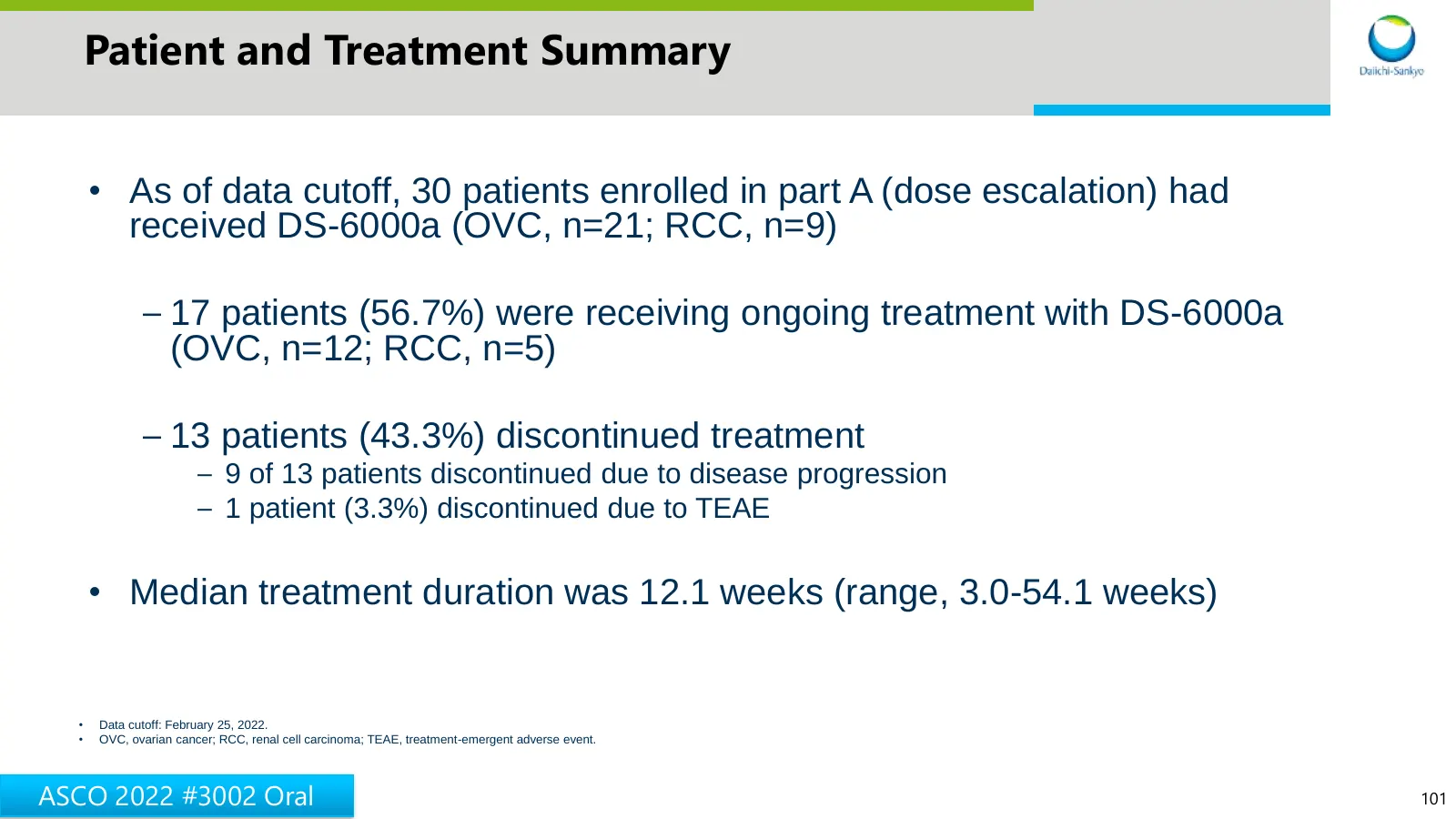
Patient and Treatment Summary • As of data cutoff, 30 patients enrolled in part A (dose escalation) had received DS-6000a (OVC, n=21; RCC, n=9) – 17 patients (56.7%) were receiving ongoing treatment with DS-6000a (OVC, n=12; RCC, n=5) – 13 patients (43.3%) discontinued treatment – 9 of 13 patients d
Slide 102: Treatment Related TEAEs (Any Grade) Occurring in ≥10% of Patients
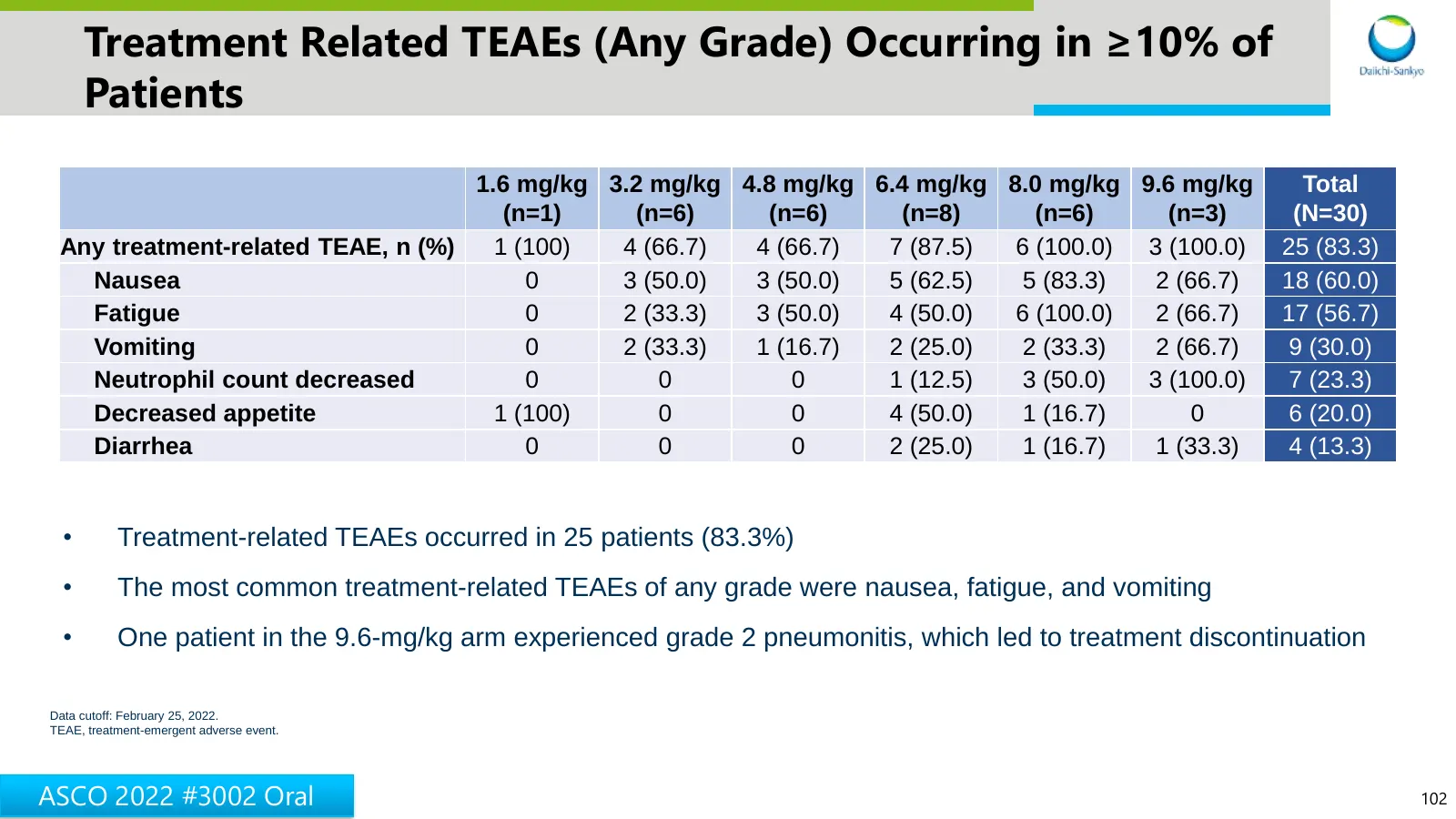
Treatment Related TEAEs (Any Grade) Occurring in ≥10% of Patients 1.6 mg/kg 3.2 mg/kg 4.8 mg/kg 6.4 mg/kg 8.0 mg/kg 9.6 mg/kg Total (n=1) (n=6) (n=6) (n=8) (n=6) (n=3) (N=30) Any treatment-related TEAE, n (%) 1 (100) 4 (66.7) 4 (66.7) 7 (87.5) 6 (100.0) 3 (100.0) 25 (83.3) Nausea 0 3 (50.0) 3 (50.0)
Slide 103: Treatment-Related TEAEs (Grade ≥3)
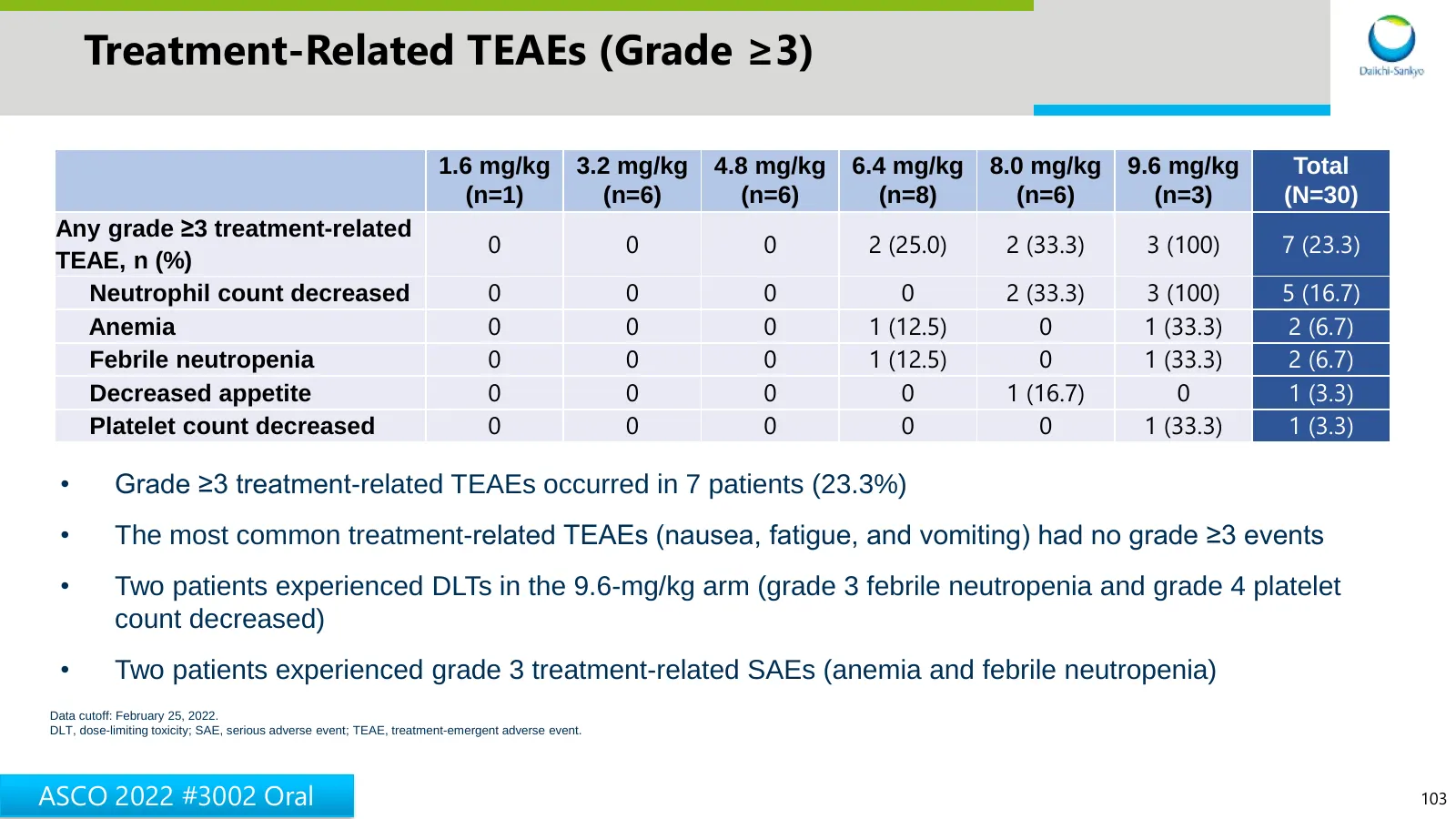
Treatment-Related TEAEs (Grade ≥3) 1.6 mg/kg 3.2 mg/kg 4.8 mg/kg 6.4 mg/kg 8.0 mg/kg 9.6 mg/kg Total (n=1) (n=6) (n=6) (n=8) (n=6) (n=3) (N=30) Any grade ≥3 treatment-related 0 0 0 2 (25.0) 2 (33.3) 3 (100) 7 (23.3) TEAE, n (%) Neutrophil count decreased 0 0 0 0 2 (33.3) 3 (100) 5 (16.7) Anemia 0 0
Slide 104: Change From Baseline in Target Lesions: OVC and RCC
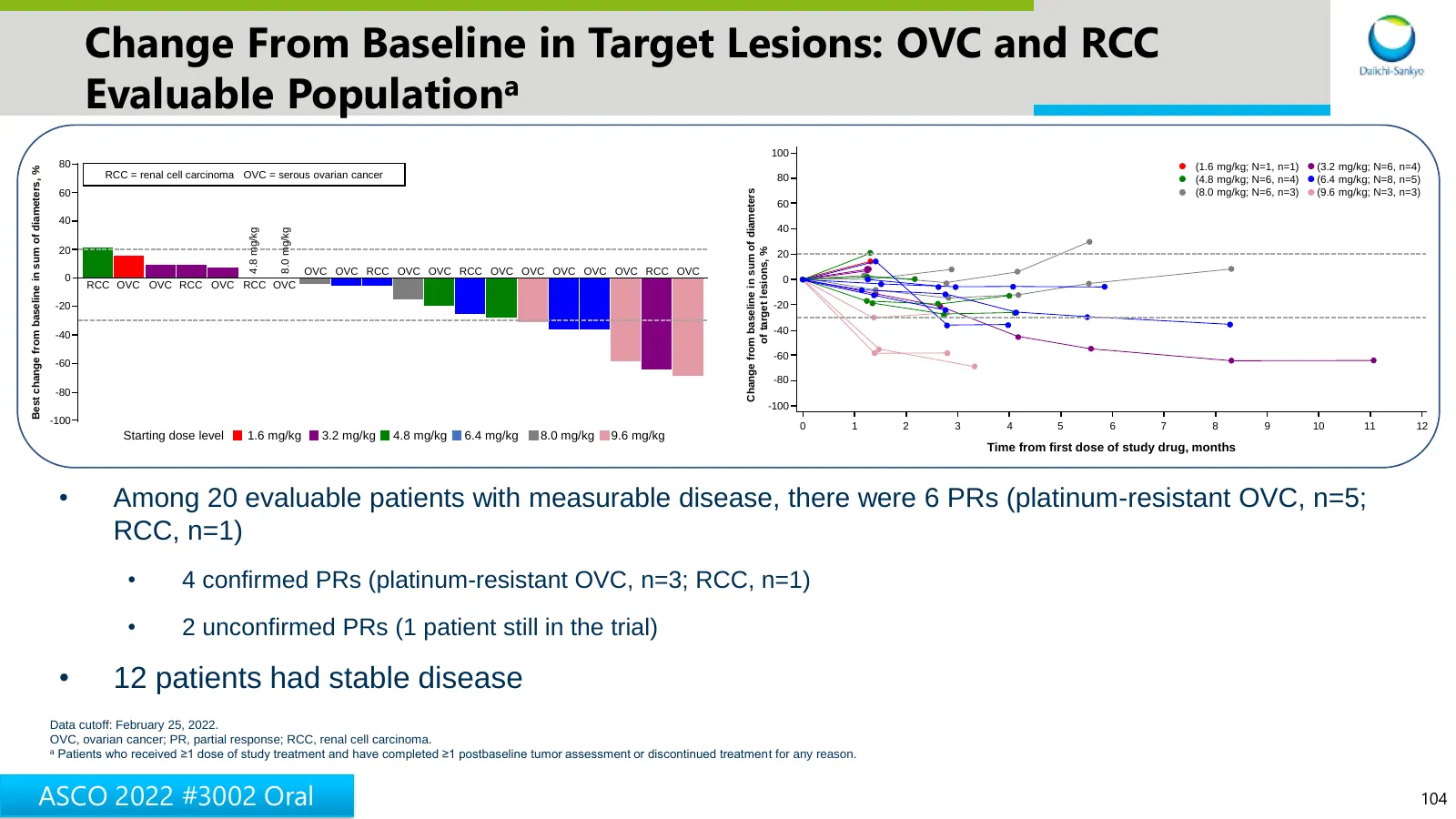
Change From Baseline in Target Lesions: OVC and RCC Evaluable Populationa 100 80 (1.6 mg/kg; N=1, n=1) (3.2 mg/kg; N=6, n=4) Best change from baseline in sum of diameters, % RCC = renal cell carcinoma OVC = serous ovarian cancer 80 (4.8 mg/kg; N=6, n=4) (6.4 mg/kg; N=8, n=5) Change from baseline in
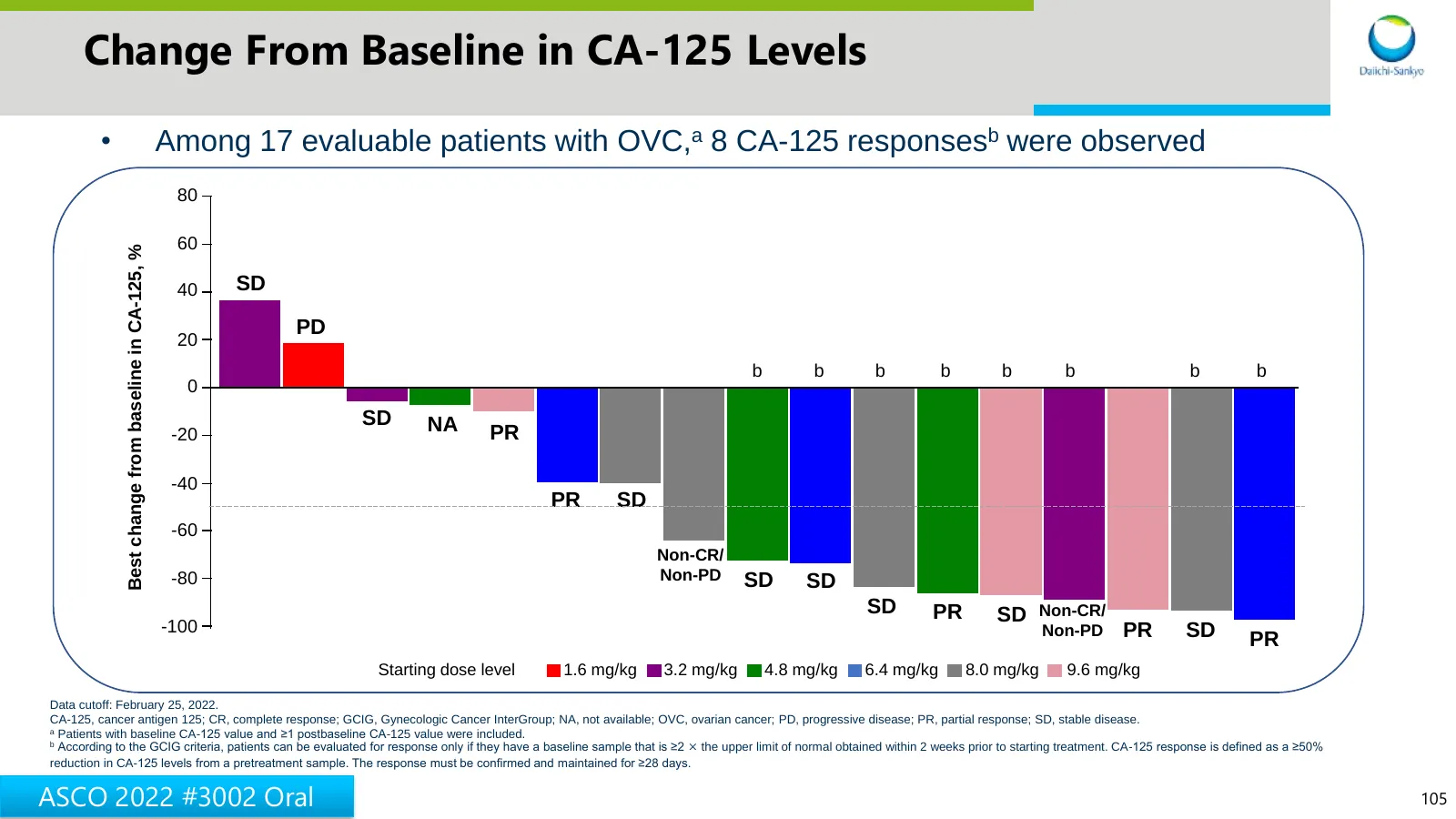
Slide 105: Change From Baseline in CA-125 Levels
Change From Baseline in CA-125 Levels • Among 17 evaluable patients with OVC,a 8 CA-125 responsesb were observed 80 60 Best change from baseline in CA-125, % 40 SD PD 20 b b b b b b b b 0 SD NA -20 PR -40 PR SD -60 Non-CR/ -80 Non-PD SD SD SD PR SD Non-CR/ -100 Non-PD PR SD PR Starting dose level 1.
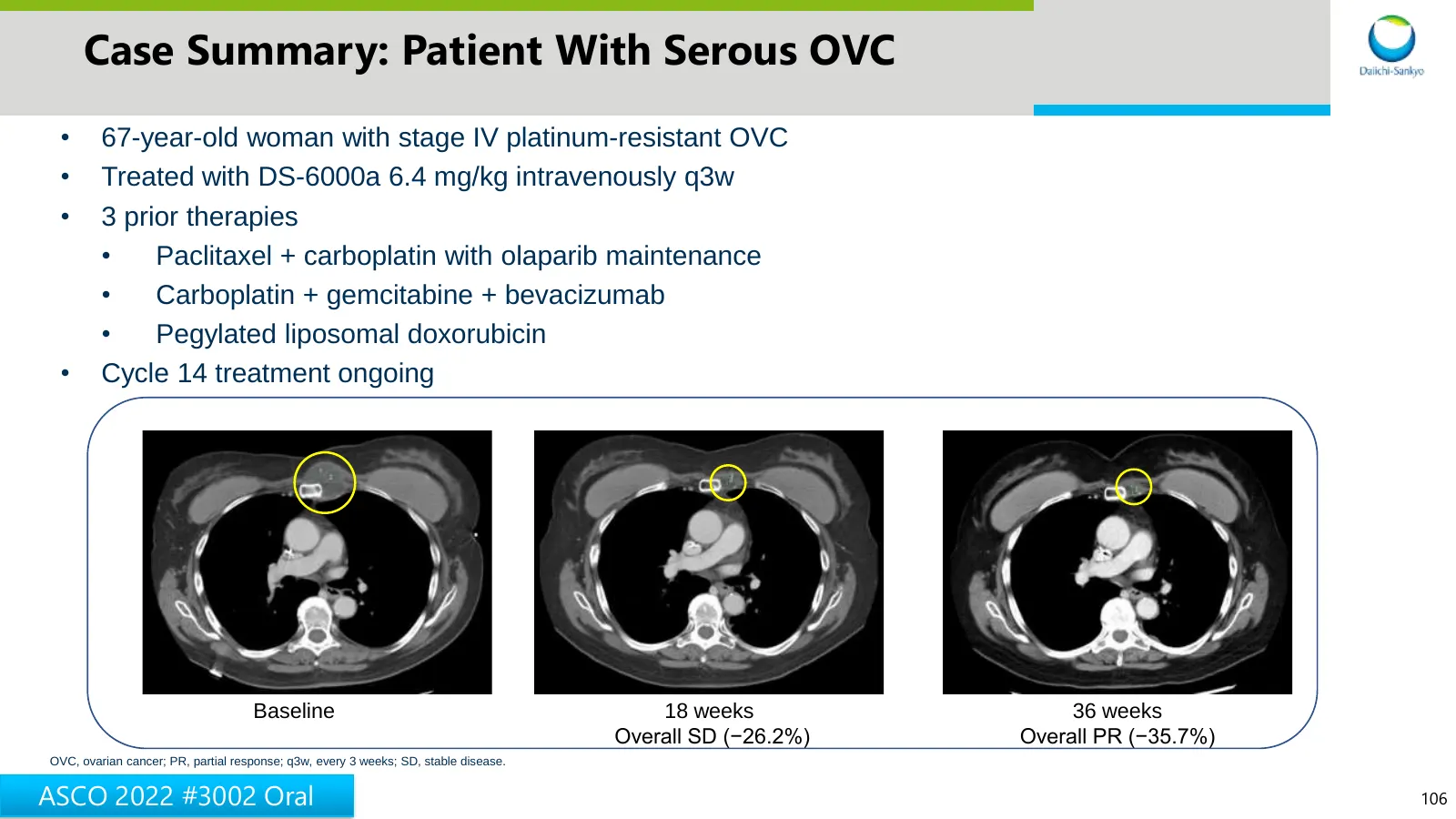
Slide 106: Case Summary: Patient With Serous OVC
Case Summary: Patient With Serous OVC • 67-year-old woman with stage IV platinum-resistant OVC • Treated with DS-6000a 6.4 mg/kg intravenously q3w • 3 prior therapies • Paclitaxel + carboplatin with olaparib maintenance • Carboplatin + gemcitabine + bevacizumab • Pegylated liposomal doxorubicin • Cy
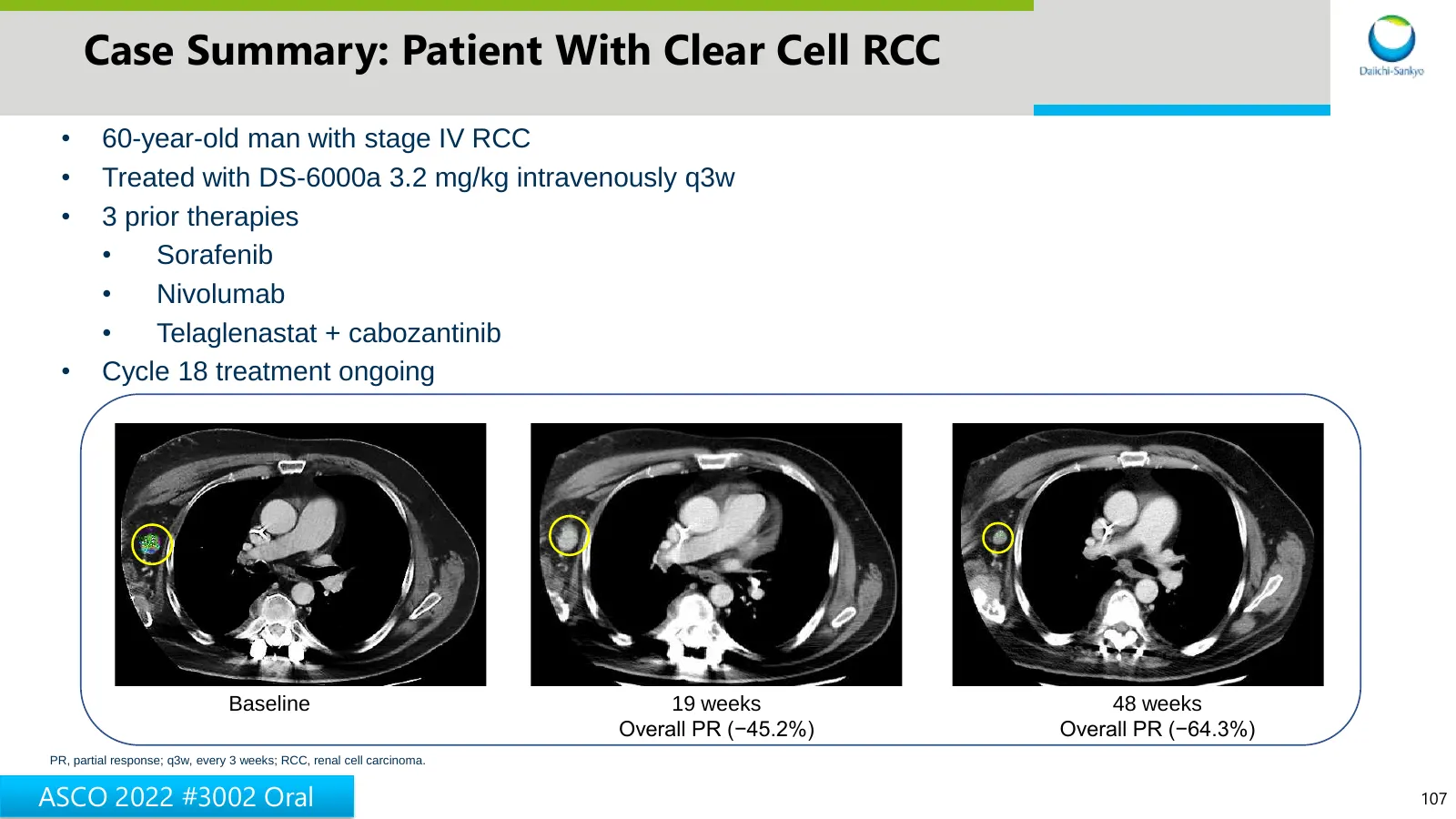
Slide 107: Case Summary: Patient With Clear Cell RCC
Case Summary: Patient With Clear Cell RCC • 60-year-old man with stage IV RCC • Treated with DS-6000a 3.2 mg/kg intravenously q3w • 3 prior therapies • Sorafenib • Nivolumab • Telaglenastat + cabozantinib • Cycle 18 treatment ongoing Baseline 19 weeks 48 weeks Overall PR (−45.2%) Overall PR (−64.3%)
Slide 108: Conclusions
Conclusions • DS-6000a was generally well tolerated, and the recommended dose for expansion (RDE) was declared 8.0 mg/kg • DS-6000a demonstrated early clinical signals (RECIST and CA-125 responses) in heavily pretreated patients with advanced platinum- resistant OVC and RCC • Expansion cohorts (part
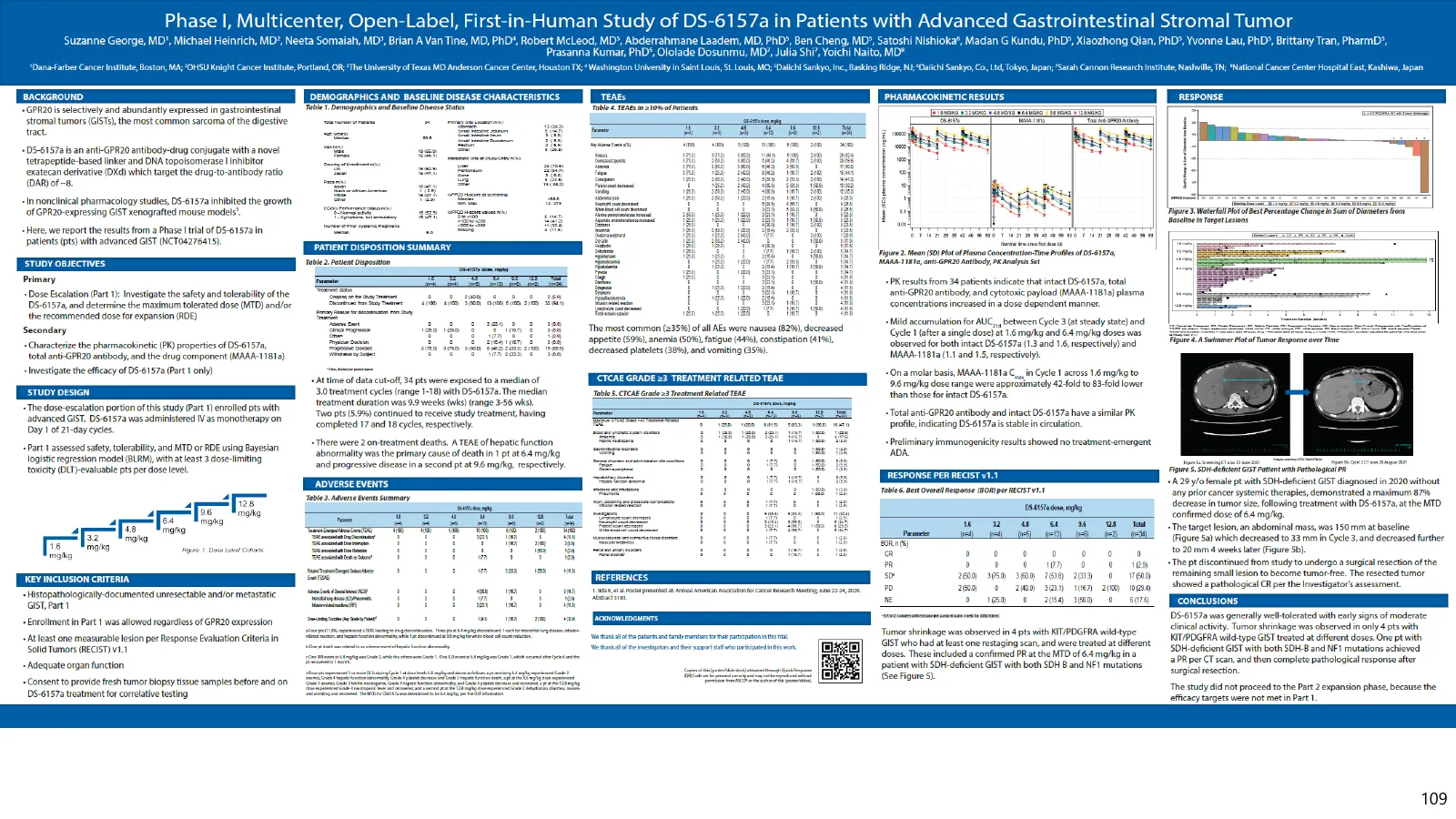
Slide 109: Phase I First-in-Human Study of DS-6157a in Advanced GIST
Phase I, Multicenter, Open-Label, First-in-Human Study of DS-6157a in Patients with Advanced Gastrointestinal Stromal Tumor Yonne Lau, PhD®, Brittany Tran, PharmD”, Suzanne George, MD’, Michael Heinrich, MD®, Neeta Somaiah, MD", Brian A Van Tine, MD, PhD, Robert McLeod, MD*, Abderrahmane Laadem, MD,
Source: company website
More decks from Daiichi Sankyo Company, Limited
 Q2 2026 Earnings Presentation40 slides · Oct 30, 2026
 Q2 FY2026 Earnings Presentation40 slides · Oct 30, 2026
 Q1 FY2026 Earnings Presentation38 slides · Jul 31, 2026
 Q1 FY2026 Earnings Presentation38 slides · Jul 31, 2026
 FY2025 Earnings Presentation80 slides · May 11, 2026
 FY2025 Earnings Presentation80 slides · May 11, 2026