Day One Biopharmaceuticals Inc
Day One Biopharmaceuticals — Investor Presentation (January 2025)
40 slides from Day One Biopharmaceuticals's investor presentation, Jan 13, 2025

Slide 1: Day One Biopharmaceuticals: Targeted therapies for people of all ages
Exhibit 99.3 Day One Biopharmaceuticals Targeted therapies for people of all ages January 2025
Slide 2: Disclaimer
Disclaimer This presentation and the accompanying oral commentary contain forward-looking statements that are based on our management’s beliefs and assumptions and on information currently available to our management. Forward-looking statements are inherently subject to risks and uncertainties, some

Slide 3: Developing new medicines for people of all ages with life-threatening diseases
Inspired by the urgent needs of children, Day One creatively and intentionally develops new medicines for people of all ages with life- threatening diseases 3
Slide 4: Bringing life-changing medicines to patients sooner
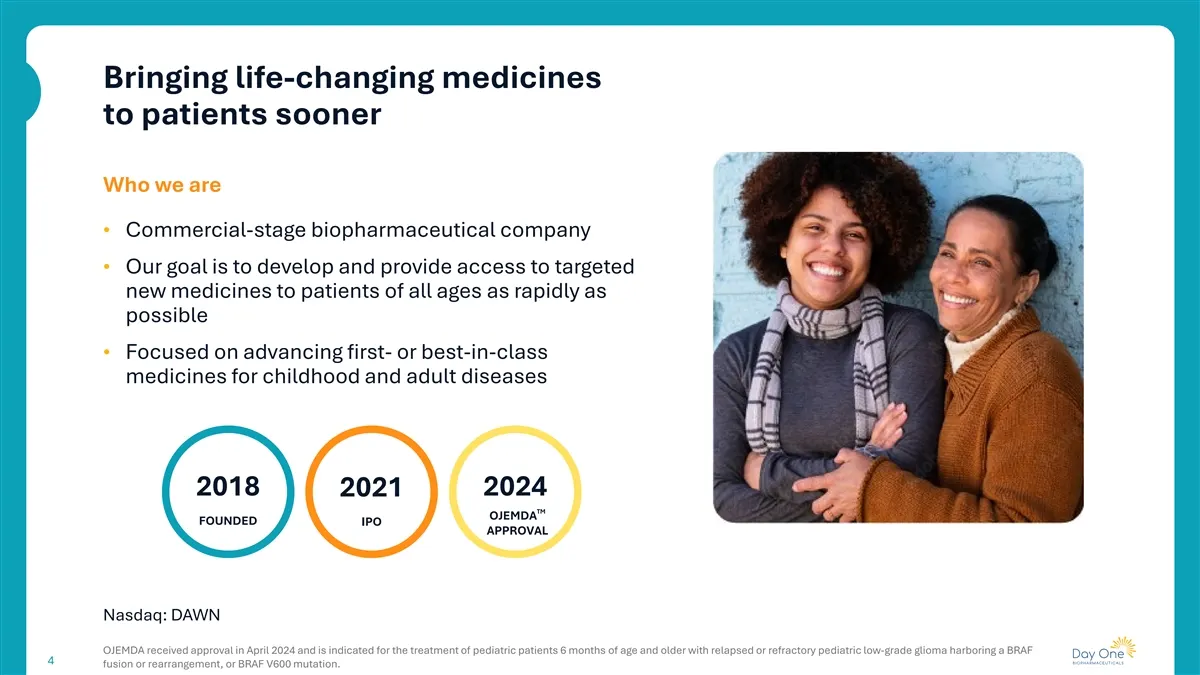
Bringing life-changing medicines to patients sooner Who we are • Commercial-stage biopharmaceutical company • Our goal is to develop and provide access to targeted new medicines to patients of all ages as rapidly as possible • Focused on advancing first- or best-in-class medicines for childhood and
Slide 5: Near-term opportunities are the foundation for long-term growth
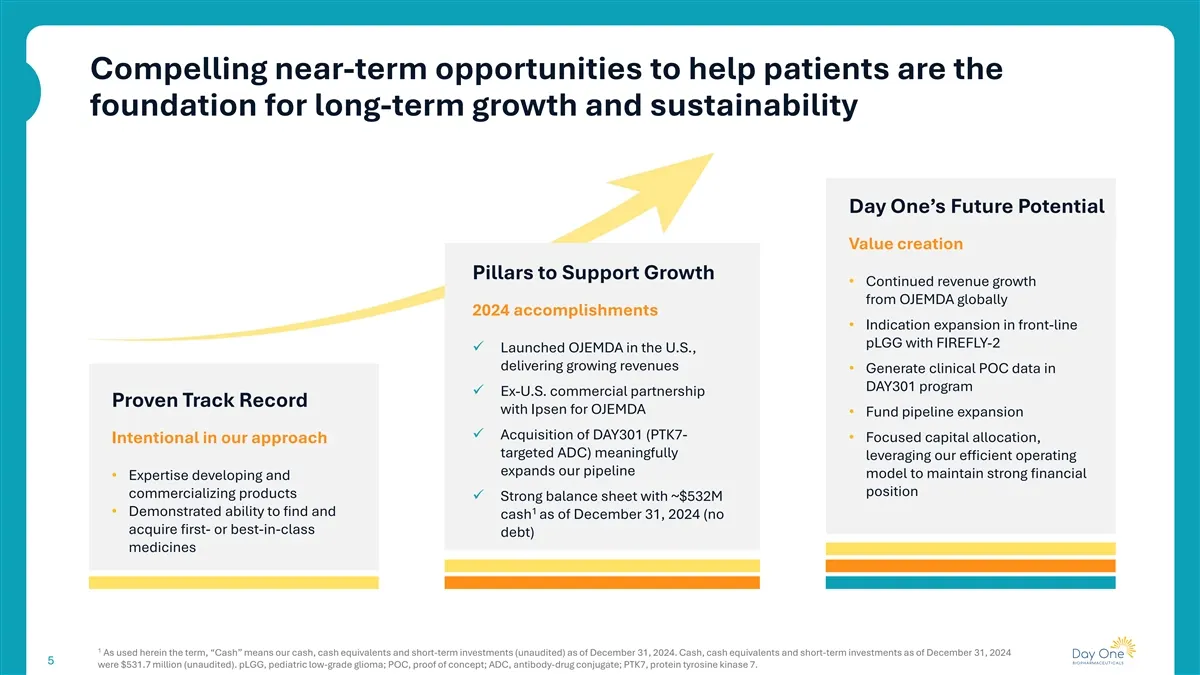
Compelling near-term opportunities to help patients are the foundation for long-term growth and sustainability Day One’s Future Potential Value creation Pillars to Support Growth • Continued revenue growth from OJEMDA globally 2024 accomplishments • Indication expansion in front-line pLGG with FIREF
Slide 6: Our pipeline
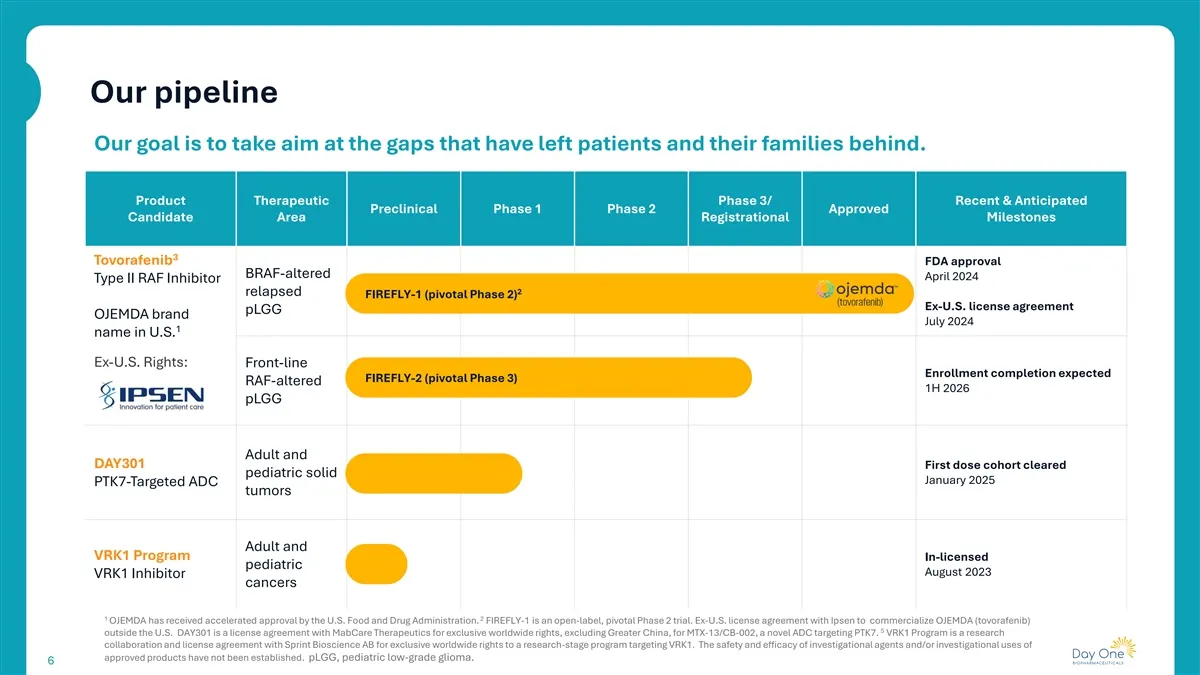
Our pipeline Our goal is to take aim at the gaps that have left patients and their families behind. Product Therapeutic Phase 3/ Recent & Anticipated Preclinical Phase 1 Phase 2 Approved Candidate Area Registrational Milestones 3 Tovorafenib FDA approval BRAF-altered April 2024 Type II RAF Inhibitor
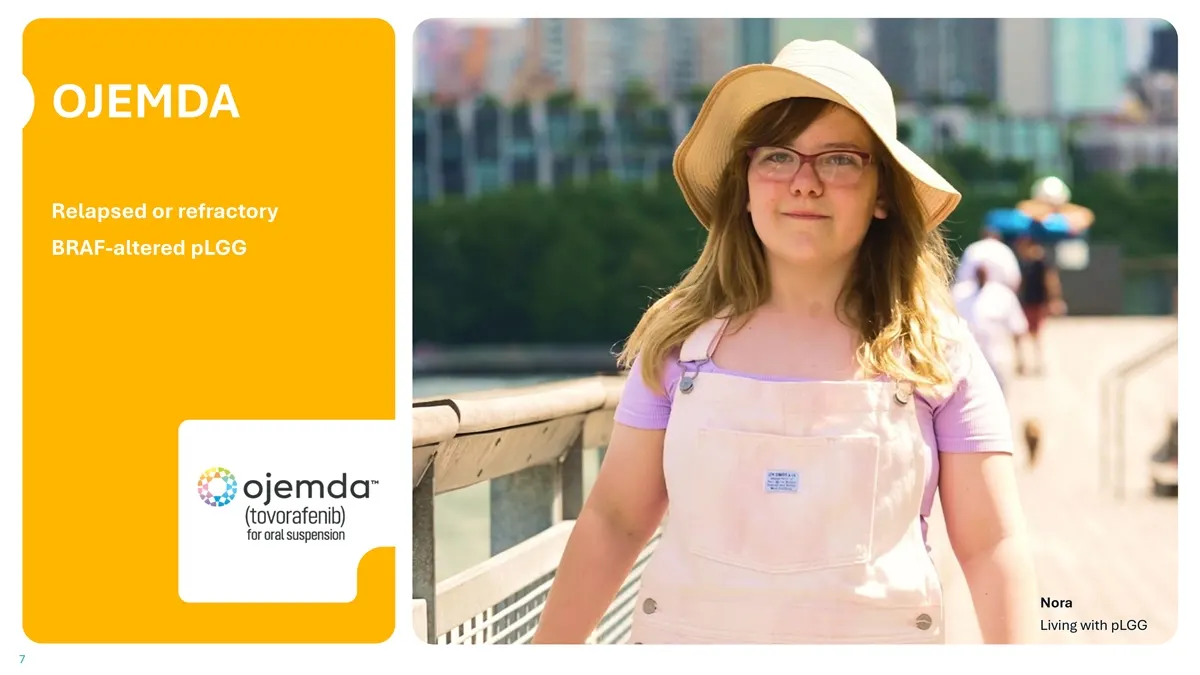
Slide 7: OJEMDA: Relapsed or refractory BRAF-altered pLGG
OJEMDA Relapsed or refractory BRAF-altered pLGG Nora Living with pLGG 7
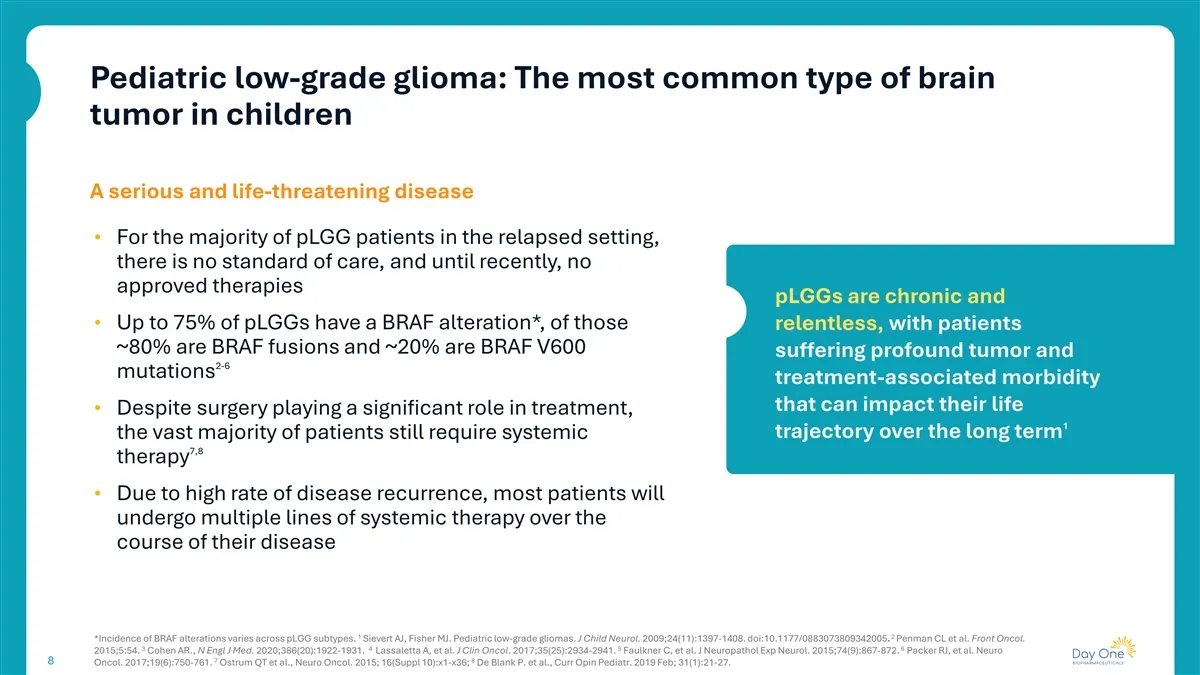
Slide 8: Pediatric low-grade glioma: most common brain tumor in children
Pediatric low-grade glioma: The most common type of brain tumor in children A serious and life-threatening disease • For the majority of pLGG patients in the relapsed setting, there is no standard of care, and until recently, no approved therapies pLGGs are chronic and • Up to 75% of pLGGs have a BR
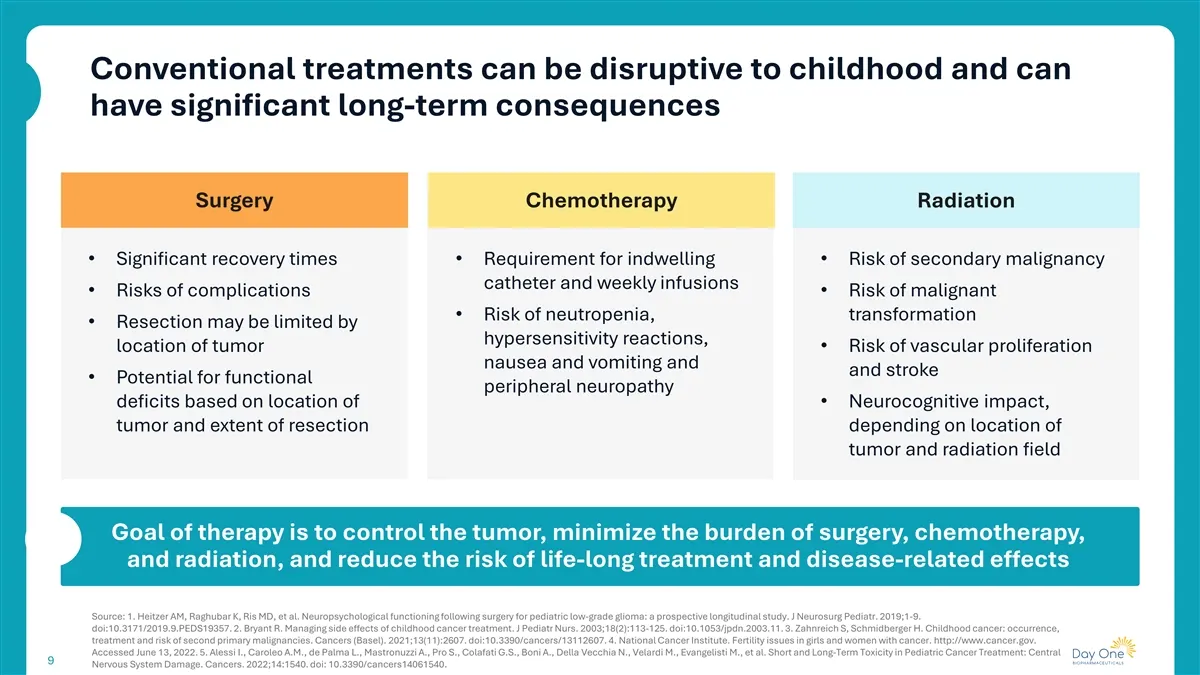
Slide 9: Conventional treatments can be disruptive to childhood
Conventional treatments can be disruptive to childhood and can have significant long-term consequences Surgery Chemotherapy Radiation • Significant recovery times • Requirement for indwelling • Risk of secondary malignancy catheter and weekly infusions • Risks of complications • Risk of malignant •
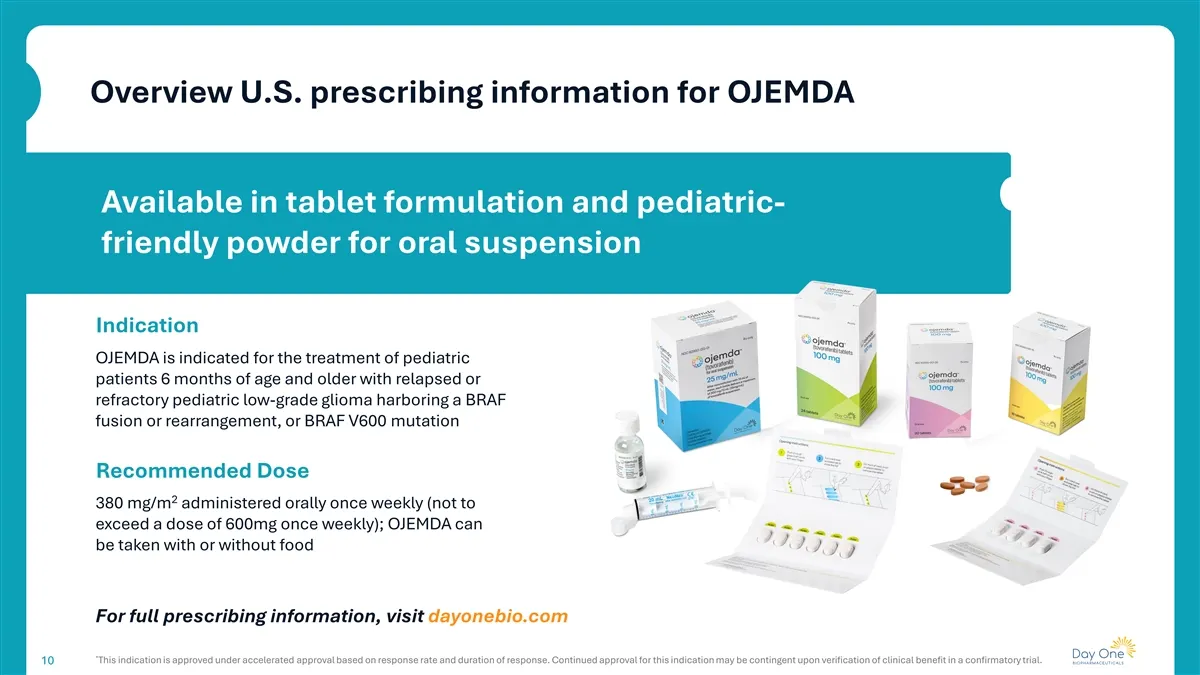
Slide 10: U.S. prescribing information for OJEMDA
Overview U.S. prescribing information for OJEMDA Available in tablet formulation and pediatric- friendly powder for oral suspension Indication OJEMDA is indicated for the treatment of pediatric patients 6 months of age and older with relapsed or refractory pediatric low-grade glioma harboring a BRAF
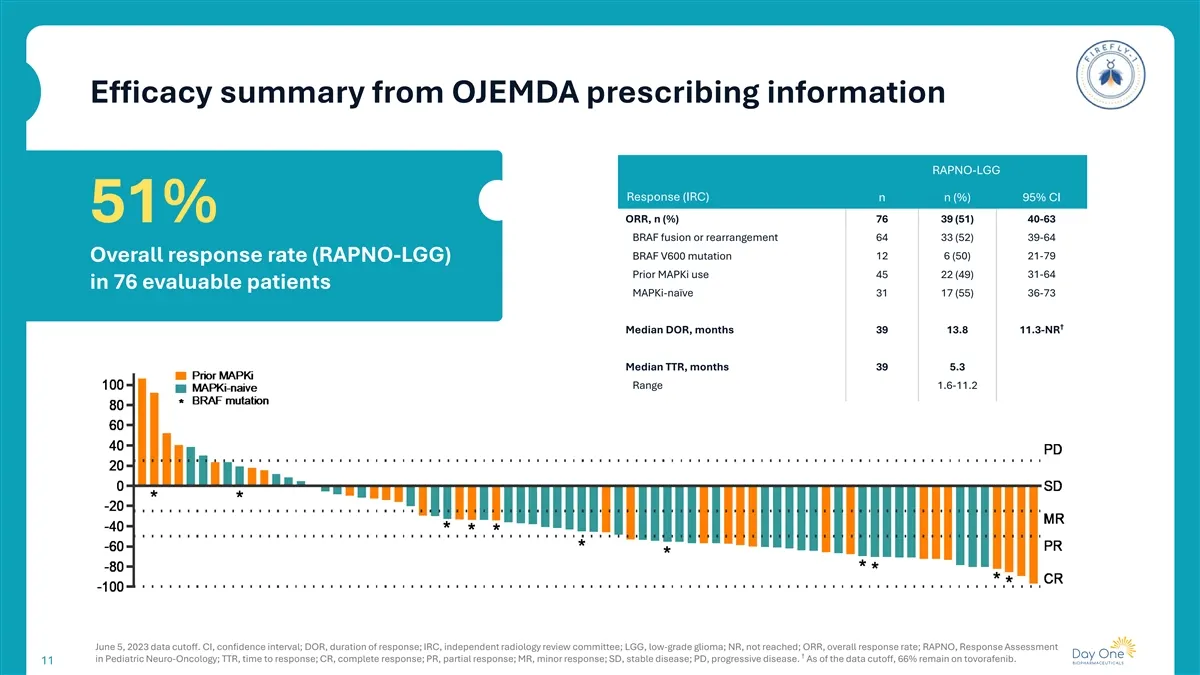
Slide 11: Efficacy summary from OJEMDA prescribing information
Efficacy summary from OJEMDA prescribing information RAPNO-LGG Response (IRC) n n (%) 95% CI 51% ORR, n (%) 76 39 (51) 40-63 BRAF fusion or rearrangement 64 33 (52) 39-64 BRAF V600 mutation 12 6 (50) 21-79 Overall response rate (RAPNO-LGG) Prior MAPKi use 45 22 (49) 31-64 in 76 evaluable patients MA
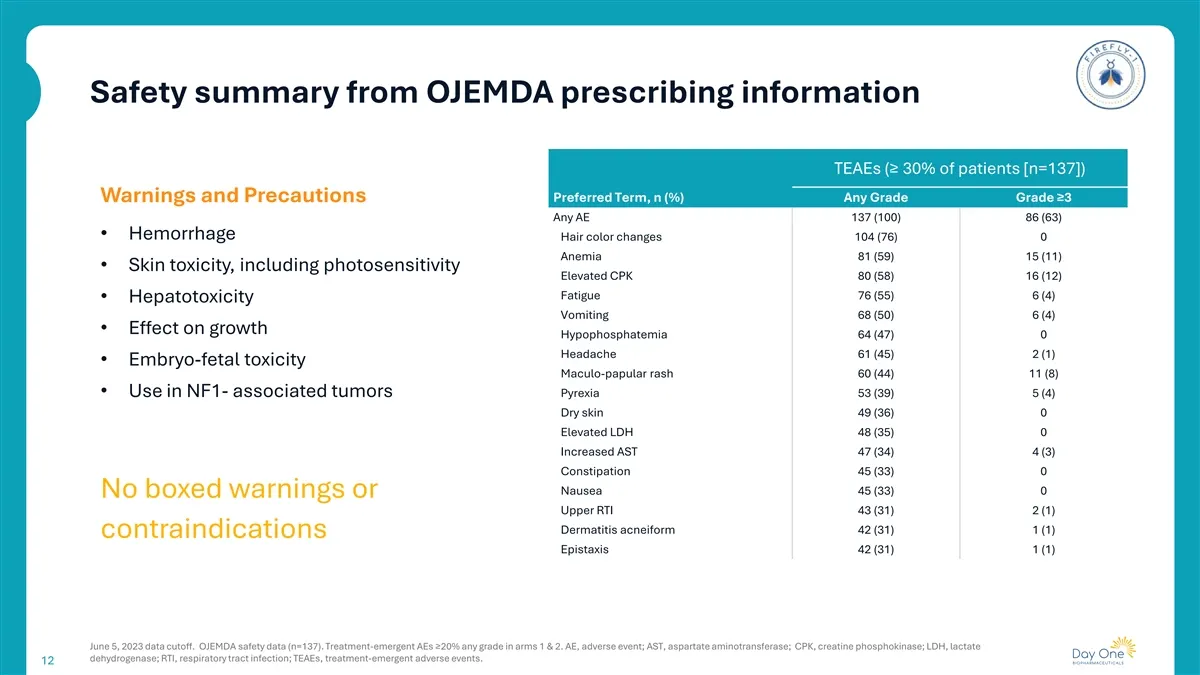
Slide 12: Safety summary from OJEMDA prescribing information
Safety summary from OJEMDA prescribing information TEAEs (≥ 30% of patients [n=137]) Warnings and Precautions Preferred Term, n (%) Any Grade Grade ≥3 Any AE 137 (100) 86 (63) • Hemorrhage Hair color changes 104 (76) 0 Anemia 81 (59) 15 (11) • Skin toxicity, including photosensitivity Elevated CPK 8
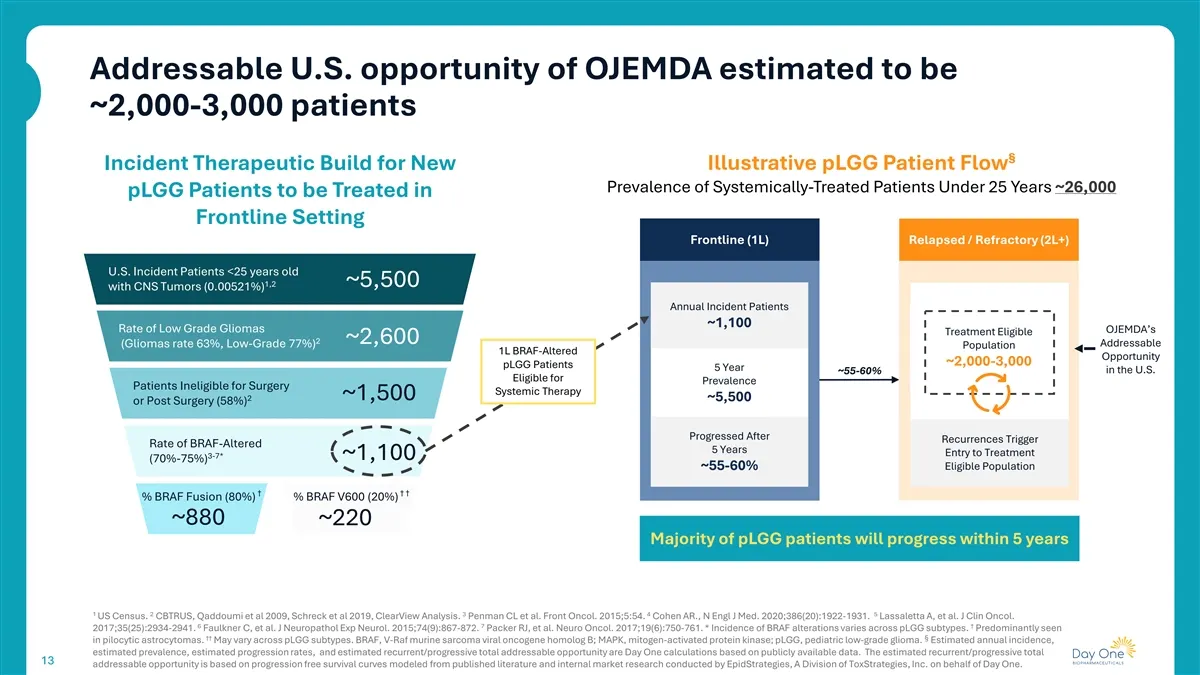
Slide 13: Addressable U.S. opportunity of OJEMDA
Addressable U.S. opportunity of OJEMDA estimated to be ~2,000-3,000 patients § Incident Therapeutic Build for New Illustrative pLGG Patient Flow Prevalence of Systemically-Treated Patients Under 25 Years ~26,000 pLGG Patients to be Treated in Frontline Setting Frontline (1L) Relapsed / Refractory (2
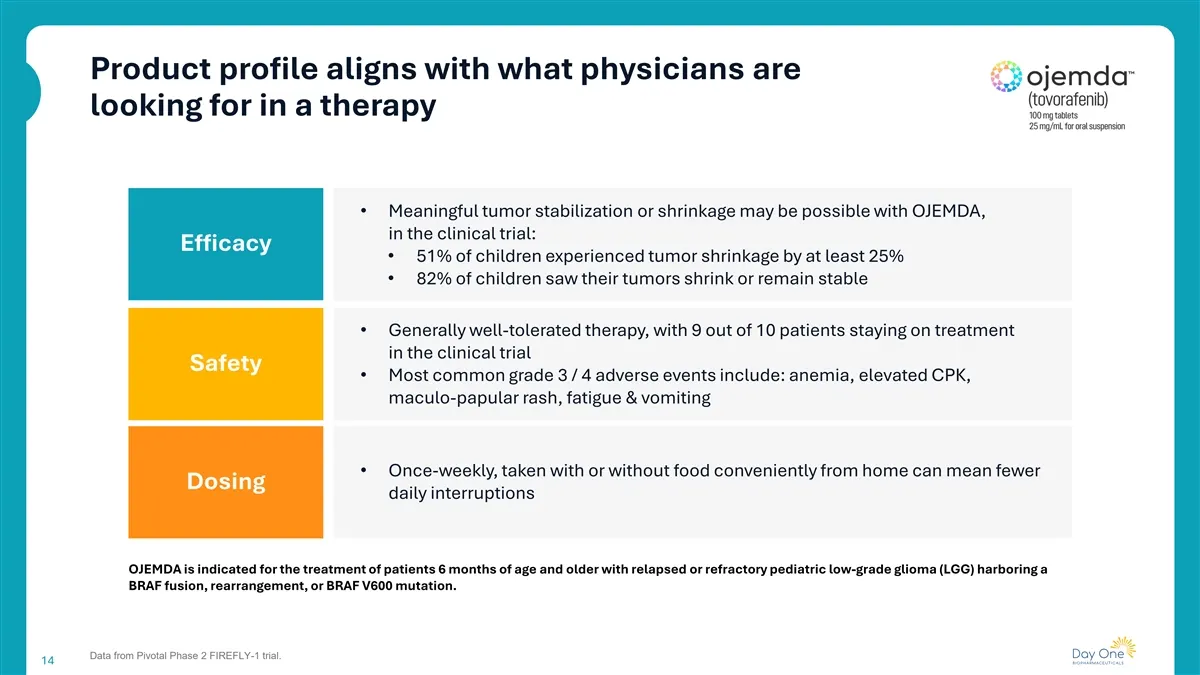
Slide 14: Product profile aligns with what physicians are looking for
Product profile aligns with what physicians are looking for in a therapy • Meaningful tumor stabilization or shrinkage may be possible with OJEMDA, in the clinical trial: Efficacy • 51% of children experienced tumor shrinkage by at least 25% • 82% of children saw their tumors shrink or remain stable
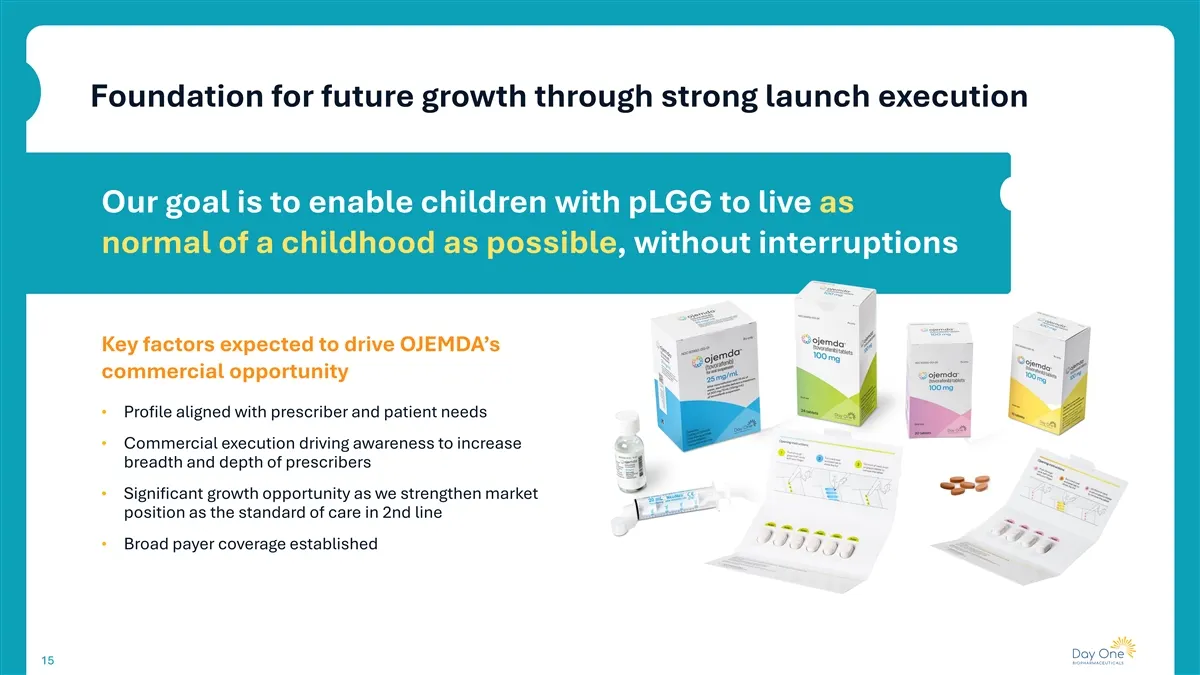
Slide 15: Foundation for future growth through strong launch execution
Foundation for future growth through strong launch execution Our goal is to enable children with pLGG to live as normal of a childhood as possible, without interruptions Key factors expected to drive OJEMDA’s commercial opportunity • Profile aligned with prescriber and patient needs • Commercial exe
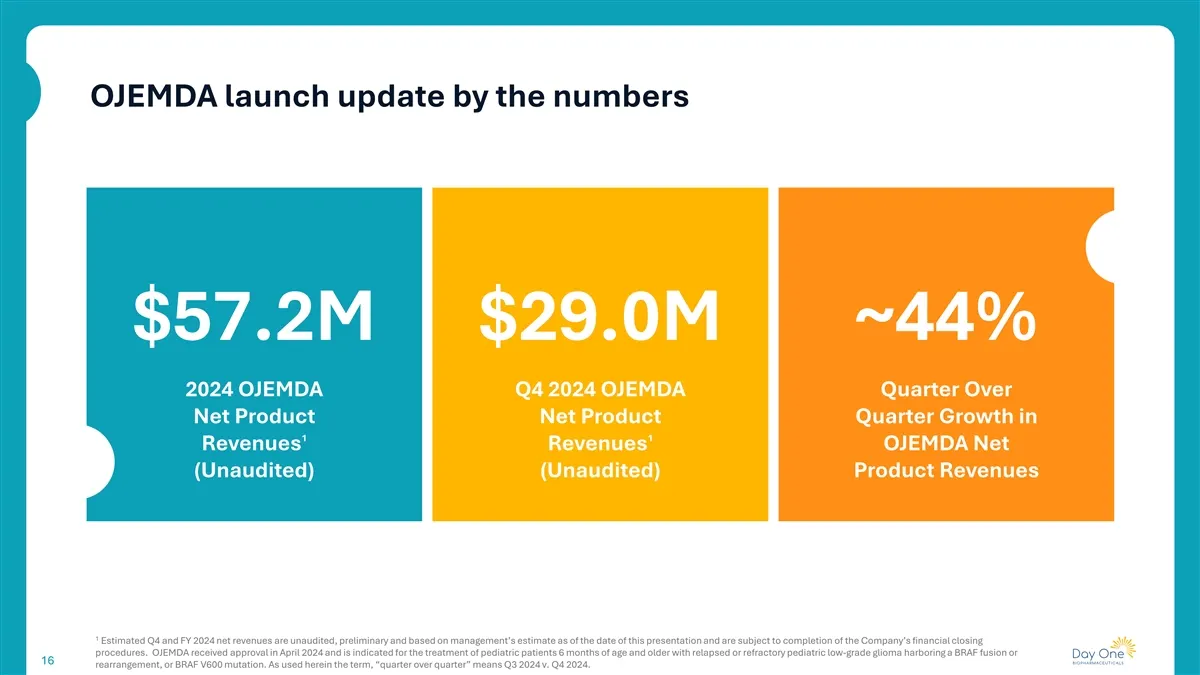
Slide 16: OJEMDA launch update by the numbers
OJEMDA launch update by the numbers $57.2M $29.0M ~44% 2024 OJEMDA Q4 2024 OJEMDA Quarter Over Net Product Net Product Quarter Growth in 1 1 Revenues Revenues OJEMDA Net (Unaudited) (Unaudited) Product Revenues 1 Estimated Q4 and FY 2024 net revenues are unaudited, preliminary and based on managemen
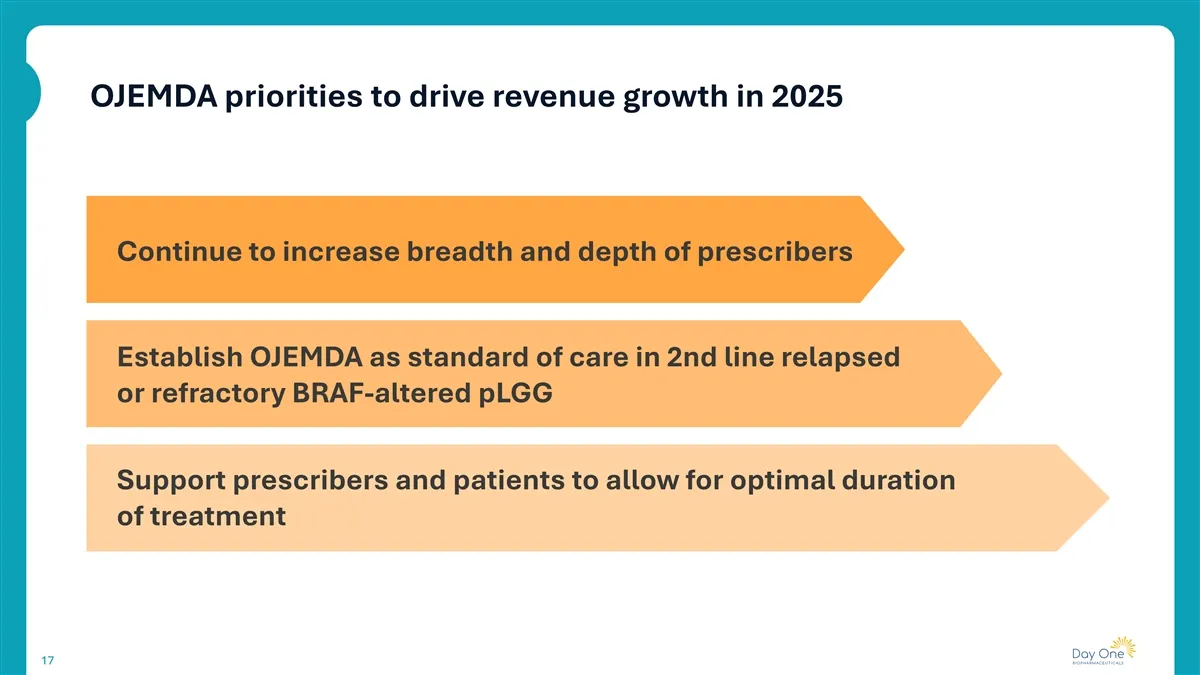
Slide 17: OJEMDA priorities to drive revenue growth in 2025
OJEMDA priorities to drive revenue growth in 2025 Continue to increase breadth and depth of prescribers Establish OJEMDA as standard of care in 2nd line relapsed or refractory BRAF-altered pLGG Support prescribers and patients to allow for optimal duration of treatment 17 17
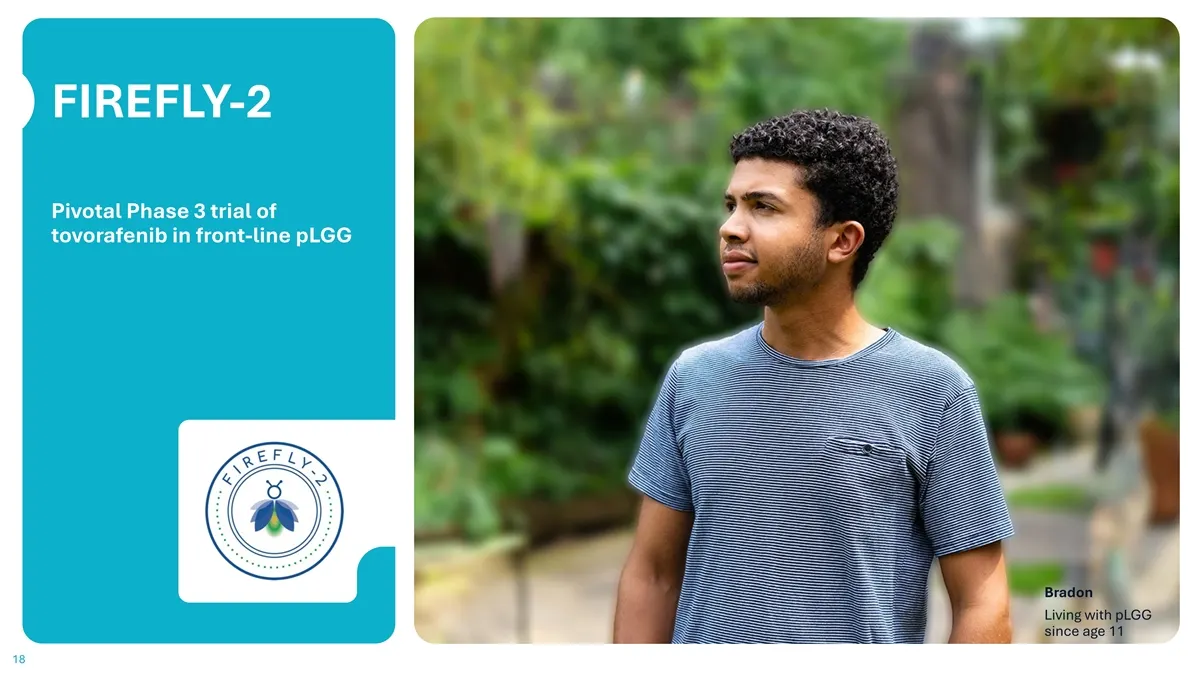
Slide 18: FIREFLY-2: Pivotal Phase 3 trial in front-line pLGG
FIREFLY-2 Pivotal Phase 3 trial of tovorafenib in front-line pLGG Bradon Living with pLGG since age 11 18
Slide 19: Front-line expansion opportunity for tovorafenib in pLGG
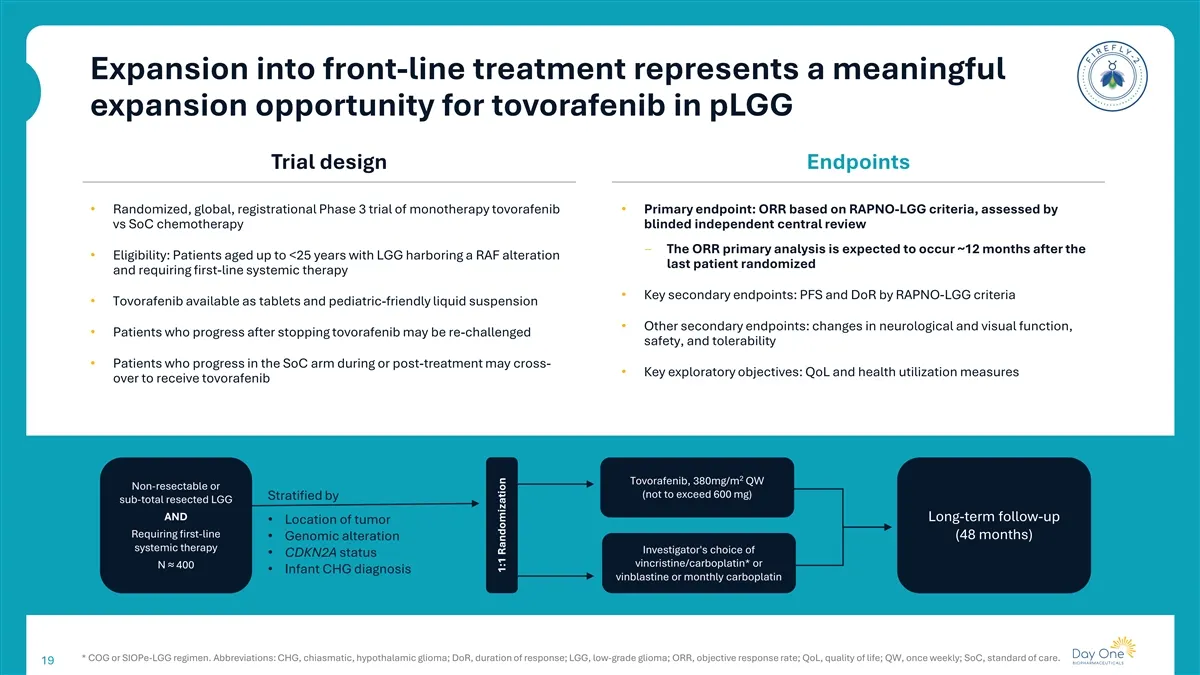
Expansion into front-line treatment represents a meaningful expansion opportunity for tovorafenib in pLGG Trial design Endpoints • Randomized, global, registrational Phase 3 trial of monotherapy tovorafenib • Primary endpoint: ORR based on RAPNO-LGG criteria, assessed by vs SoC chemotherapy blinded
Slide 20: DAY301: PTK7-targeted antibody-drug conjugate
DAY301 PTK7-targeted antibody-drug conjugate (ADC) 20
Slide 21: DAY301: Next generation ADC targeting PTK7
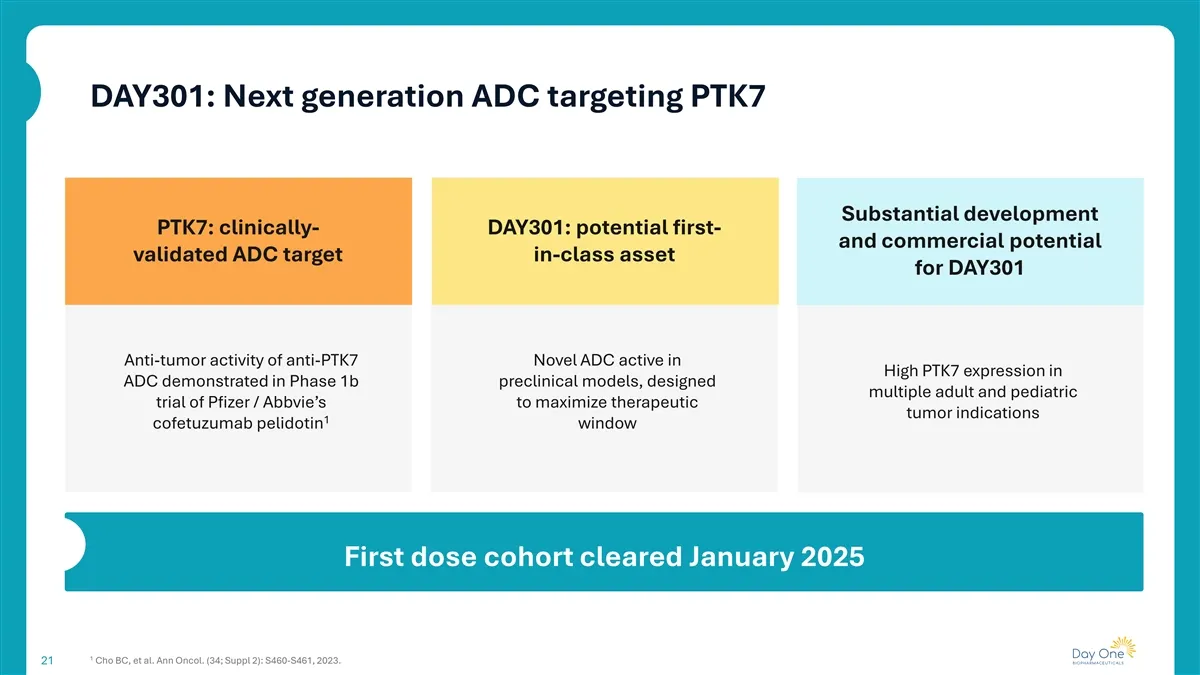
DAY301: Next generation ADC targeting PTK7 Substantial development PTK7: clinically- DAY301: potential first- and commercial potential validated ADC target in-class asset for DAY301 Anti-tumor activity of anti-PTK7 Novel ADC active in High PTK7 expression in ADC demonstrated in Phase 1b preclinical
Slide 22: PTK7: A clinically-validated ADC target
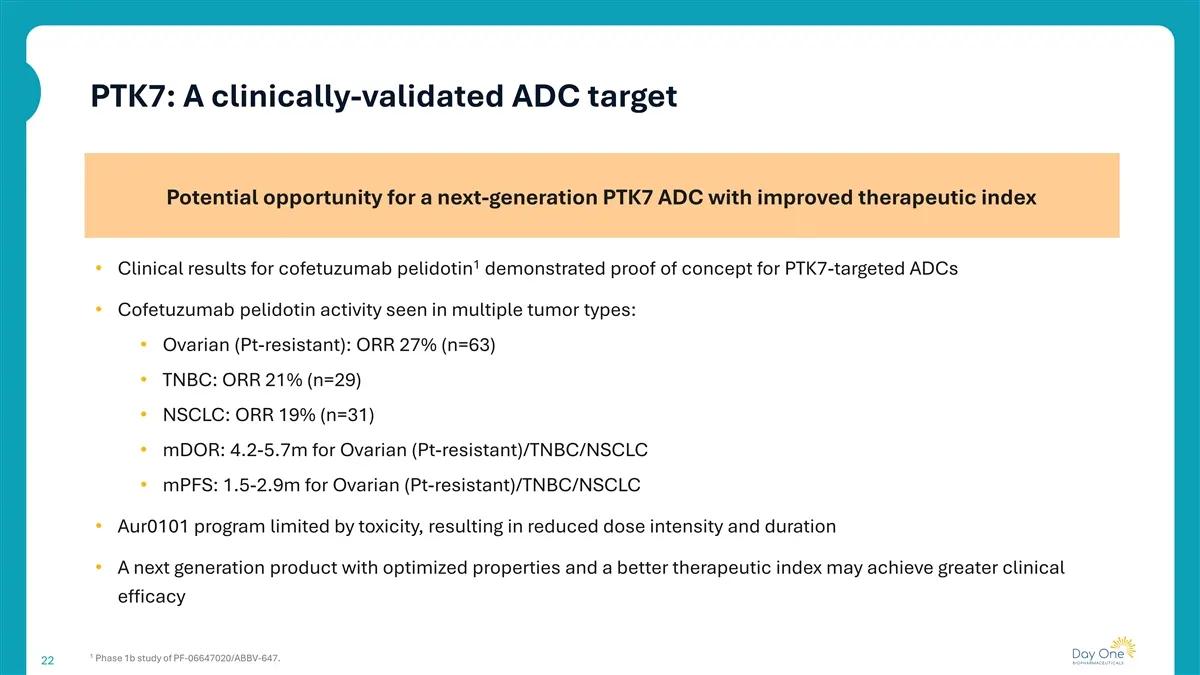
PTK7: A clinically-validated ADC target Potential opportunity for a next-generation PTK7 ADC with improved therapeutic index 1 • Clinical results for cofetuzumab pelidotin demonstrated proof of concept for PTK7-targeted ADCs • Cofetuzumab pelidotin activity seen in multiple tumor types: • Ovarian (P
Slide 23: DAY301: Potential first-in-class asset
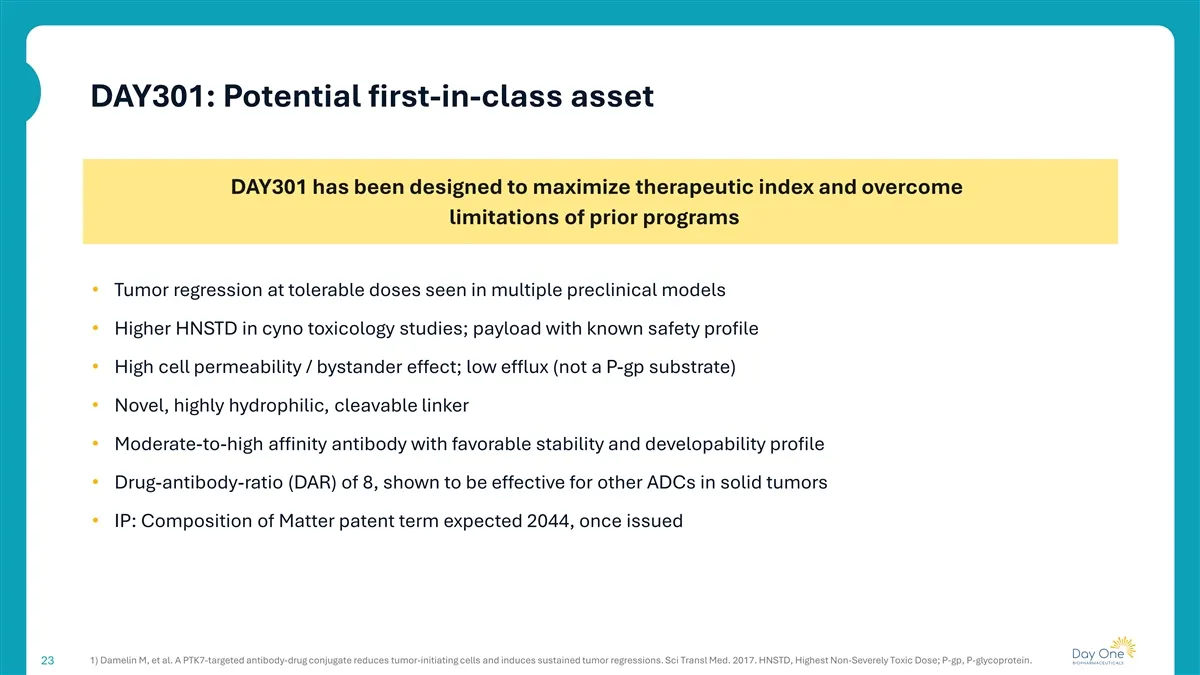
DAY301: Potential first-in-class asset DAY301 has been designed to maximize therapeutic index and overcome limitations of prior programs • Tumor regression at tolerable doses seen in multiple preclinical models • Higher HNSTD in cyno toxicology studies; payload with known safety profile • High cell
Slide 24: DAY301: First-in-class potential
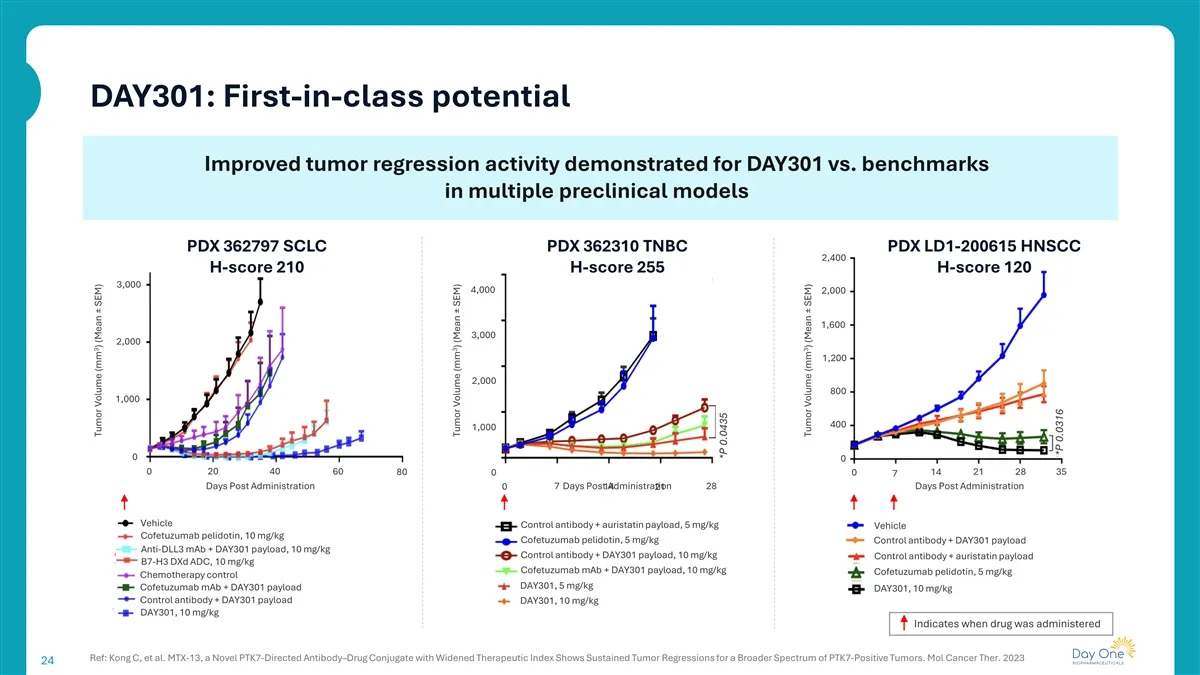
DAY301: First-in-class potential Improved tumor regression activity demonstrated for DAY301 vs. benchmarks in multiple preclinical models PDX 362797 SCLC PDX 362310 TNBC PDX LD1-200615 HNSCC 2,400 H-score 210 H-score 255 H-score 120 3,000 4,000 2,000 1,600 3,000 2,000 1,200 2,000 800 1,000 400 1,000
Slide 25: DAY301: Encouraging development and commercial opportunities
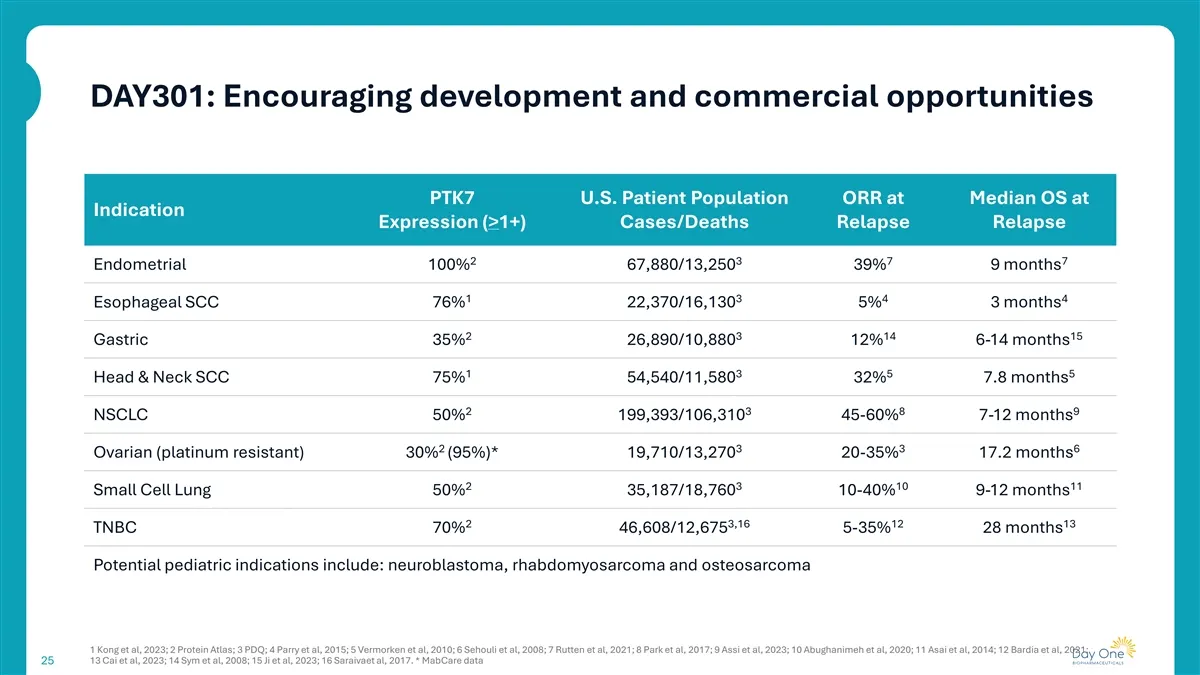
DAY301: Encouraging development and commercial opportunities PTK7 U.S. Patient Population ORR at Median OS at Indication Expression (>1+) Cases/Deaths Relapse Relapse 2 3 7 7 Endometrial 100% 67,880/13,250 39% 9 months 1 3 4 4 Esophageal SCC 76% 22,370/16,130 5% 3 months 2 3 14 15 Gastric 35% 26,890
Slide 26: DAY301: Initial Phase 1a/b clinical trial design
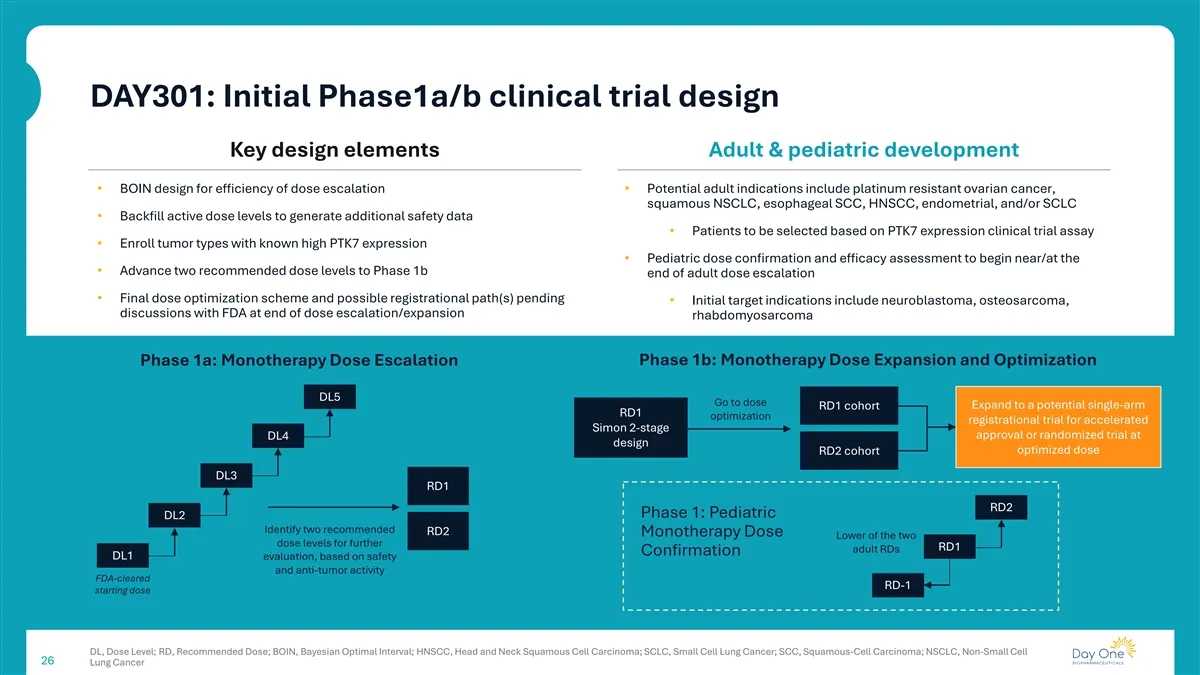
DAY301: Initial Phase1a/b clinical trial design Key design elements Adult & pediatric development • BOIN design for efficiency of dose escalation • Potential adult indications include platinum resistant ovarian cancer, squamous NSCLC, esophageal SCC, HNSCC, endometrial, and/or SCLC • Backfill active

Slide 27: Summary
Summary 27
Slide 28: Financial results
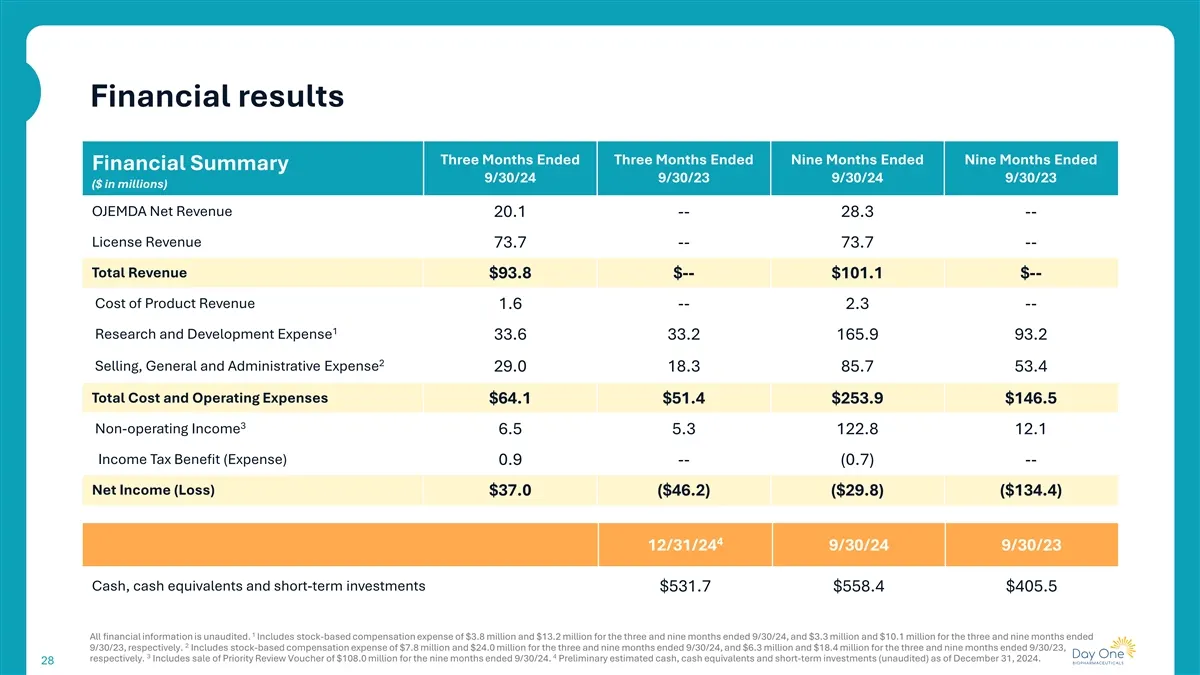
Financial results Three Months Ended Three Months Ended Nine Months Ended Nine Months Ended Financial Summary 9/30/24 9/30/23 9/30/24 9/30/23 ($ in millions) OJEMDA Net Revenue 20.1 -- 28.3 -- License Revenue 73.7 -- 73.7 -- Total Revenue $93.8 $-- $101.1 $-- Cost of Product Revenue 1.6 -- 2.3 -- 1
Slide 29: Well positioned for sustainable growth and long-term success
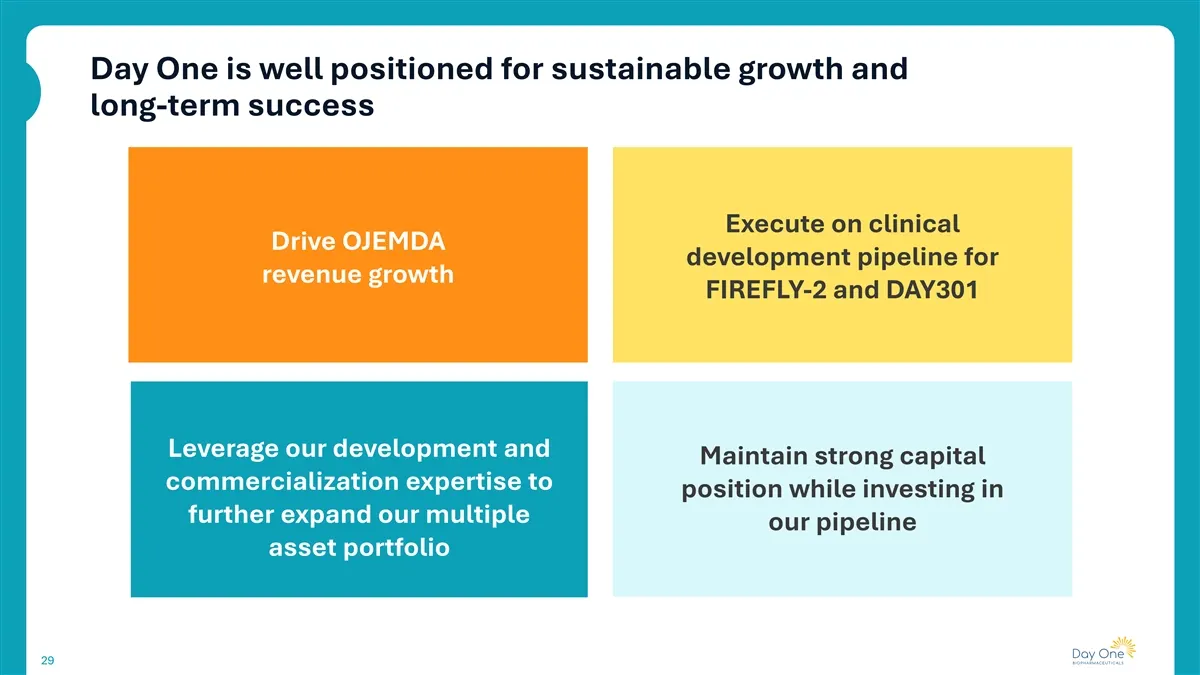
Day One is well positioned for sustainable growth and long-term success Execute on clinical Drive OJEMDA development pipeline for revenue growth FIREFLY-2 and DAY301 Leverage our development and Maintain strong capital commercialization expertise to position while investing in further expand our mul

Slide 30: Appendix
Appendix 30
Slide 31: Tovorafenib inhibits both BRAF fusions and BRAF V600 mutations
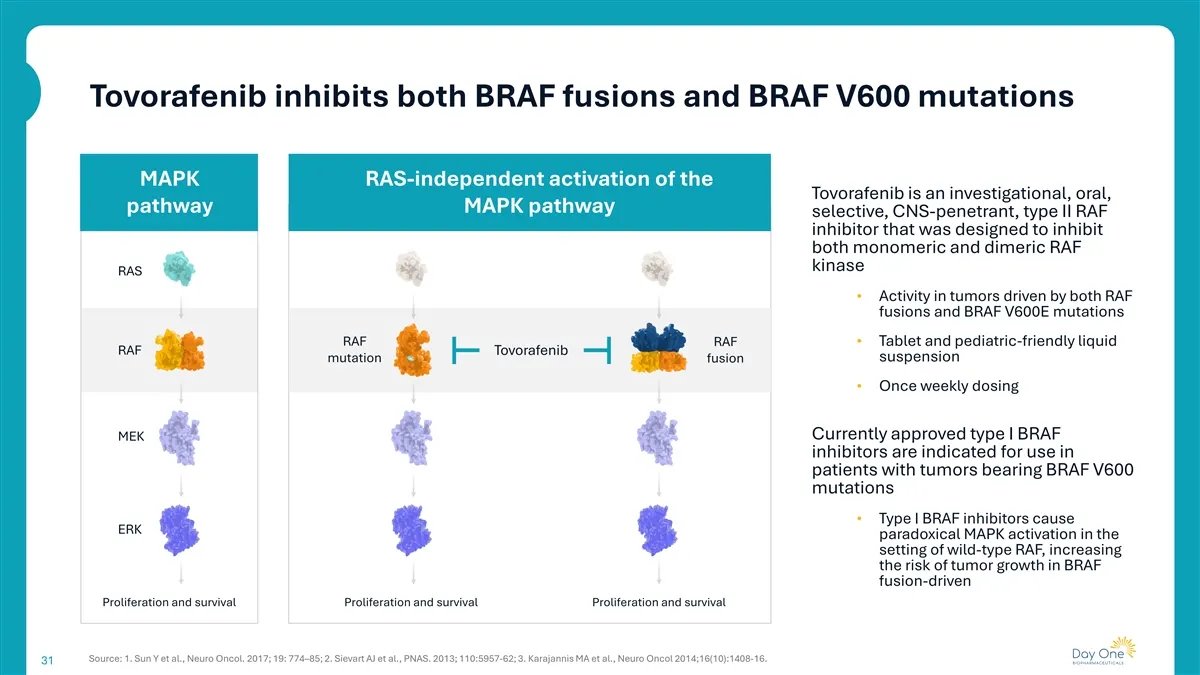
Tovorafenib inhibits both BRAF fusions and BRAF V600 mutations MAPK RAS-independent activation of the Tovorafenib is an investigational, oral, pathway MAPK pathway selective, CNS-penetrant, type II RAF inhibitor that was designed to inhibit both monomeric and dimeric RAF kinase RAS • Activity in tum
Slide 32: Pivotal Phase 2 trial of tovorafenib in relapsed or progressive pLGG (FIREFLY-1)
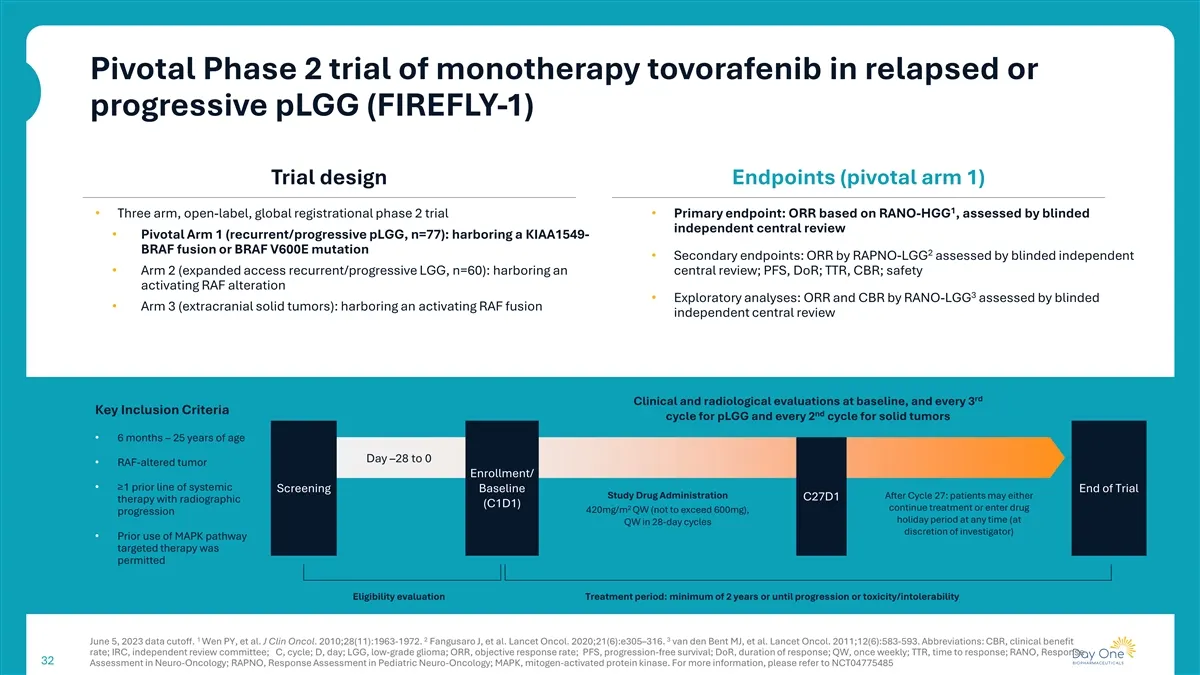
Pivotal Phase 2 trial of monotherapy tovorafenib in relapsed or progressive pLGG (FIREFLY-1) Trial design Endpoints (pivotal arm 1) 1 • Three arm, open-label, global registrational phase 2 trial • Primary endpoint: ORR based on RANO-HGG , assessed by blinded independent central review • Pivotal Arm
Slide 33: FIREFLY-1: Data from pivotal Phase 2 trial
FIREFLY-1 Data from pivotal phase 2 trial June 5, 2023 data cutoff 33
Slide 34: FIREFLY-1 baseline patient characteristics
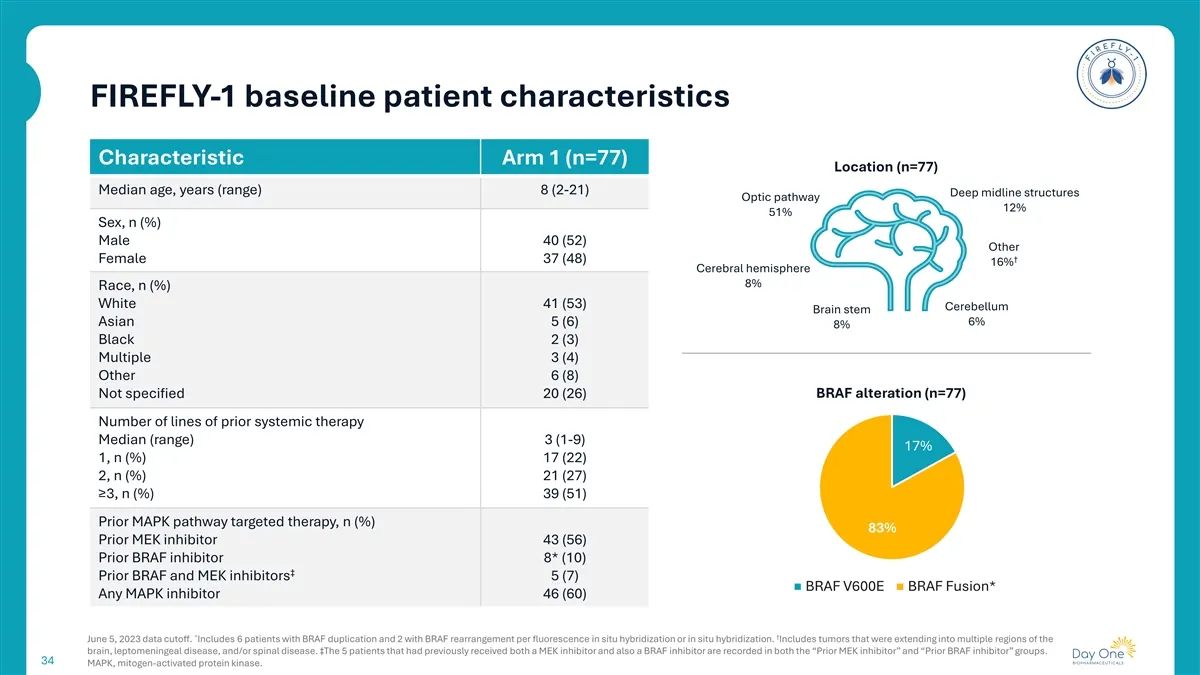
FIREFLY-1 baseline patient characteristics Characteristic Arm 1 (n=77) Location (n=77) Median age, years (range) 8 (2-21) Deep midline structures Optic pathway 12% 51% Sex, n (%) Male 40 (52) Other † Female 37 (48) 16% Cerebral hemisphere 8% Race, n (%) White 41 (53) Cerebellum Brain stem 6% Asian 5
Slide 35: Tumor response to tovorafenib using RAPNO-LGG, RANO-LGG and RANO-HGG
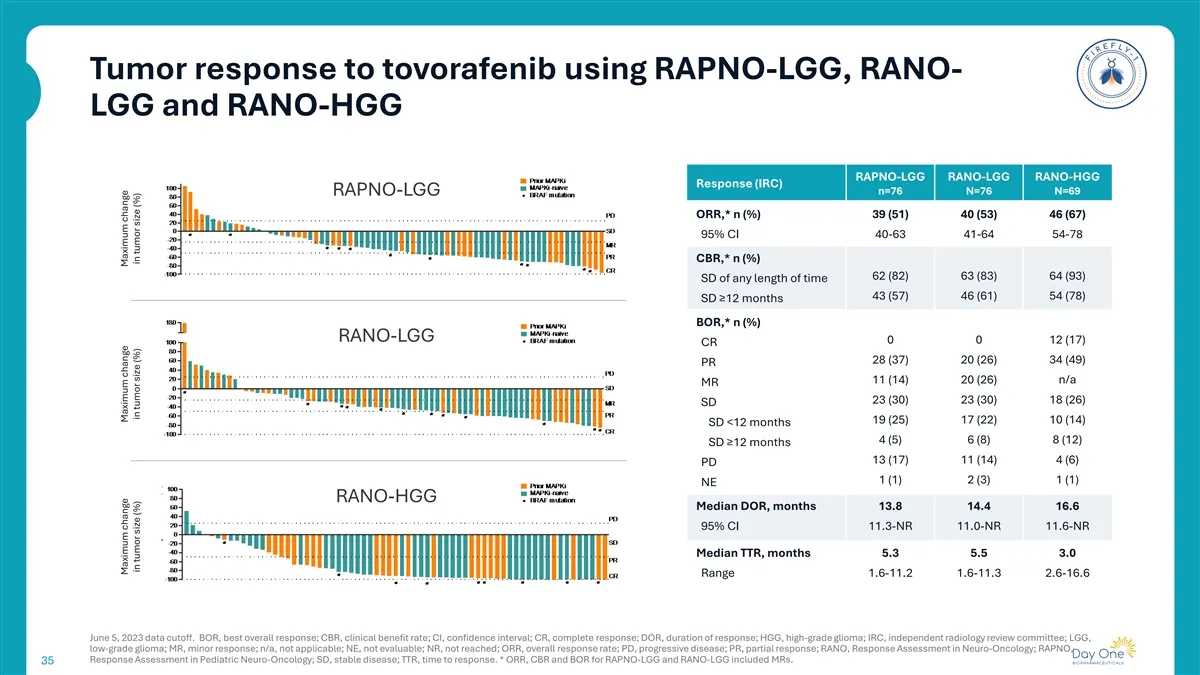
Tumor response to tovorafenib using RAPNO-LGG, RANO- LGG and RANO-HGG RAPNO-LGG RANO-LGG RANO-HGG Response (IRC) n=76 N=76 N=69 RAPNO-LGG ORR,* n (%) 39 (51) 40 (53) 46 (67) 95% CI 40-63 41-64 54-78 CBR,* n (%) 62 (82) 63 (83) 64 (93) SD of any length of time 43 (57) 46 (61) 54 (78) SD ≥12 months BO
Slide 36: Duration of therapy for RAPNO-LGG evaluable lesions
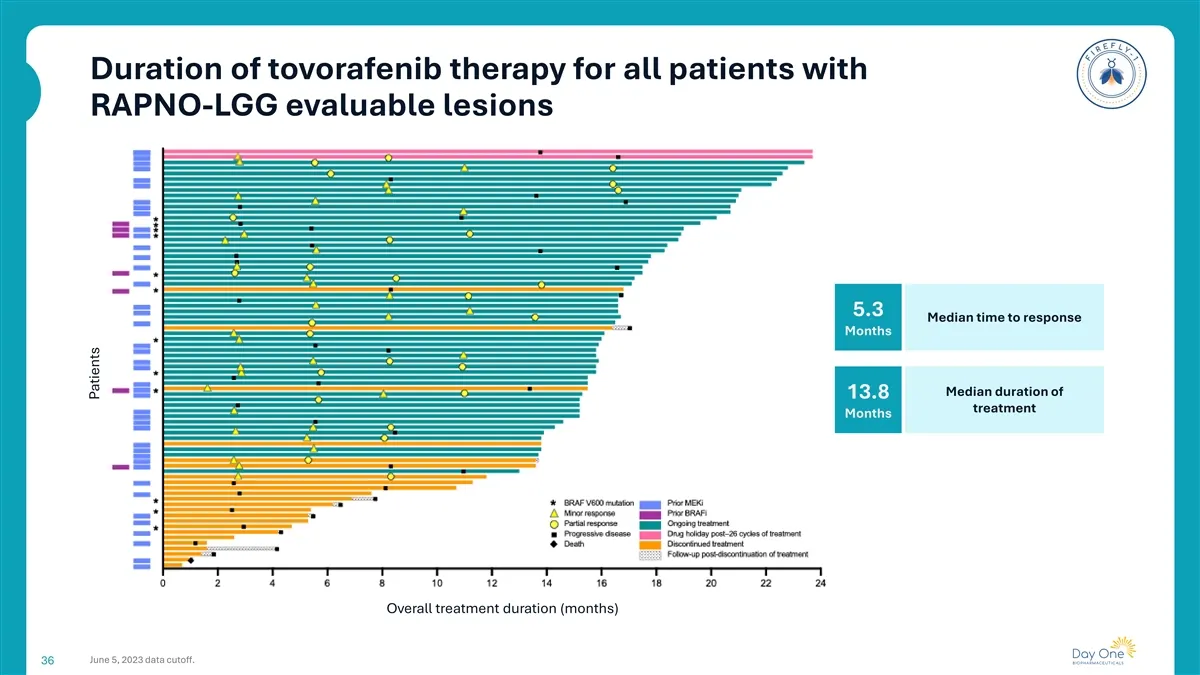
Duration of tovorafenib therapy for all patients with RAPNO-LGG evaluable lesions 5.3 Median time to response Months Median duration of 13.8 treatment Months Overall treatment duration (months) June 5, 2023 data cutoff. 36 Patients
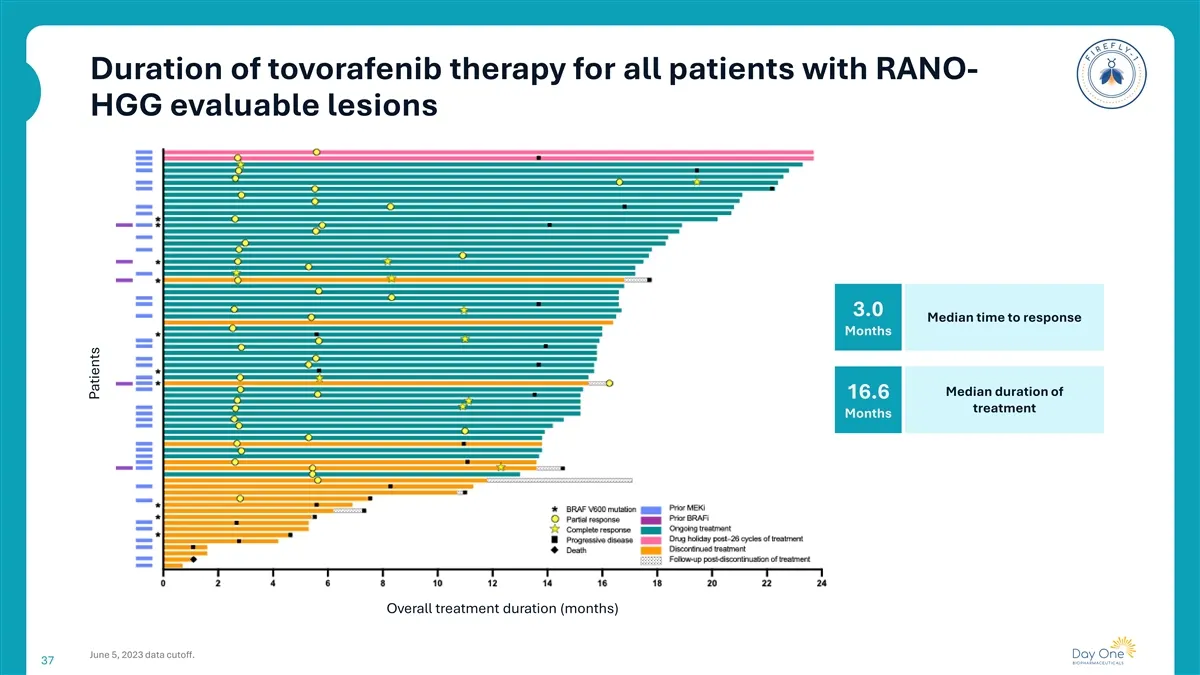
Slide 37: Duration of therapy for RANO-HGG evaluable lesions
Duration of tovorafenib therapy for all patients with RANO- HGG evaluable lesions 3.0 Median time to response Months Median duration of 16.6 treatment Months Overall treatment duration (months) June 5, 2023 data cutoff. 37 Patients
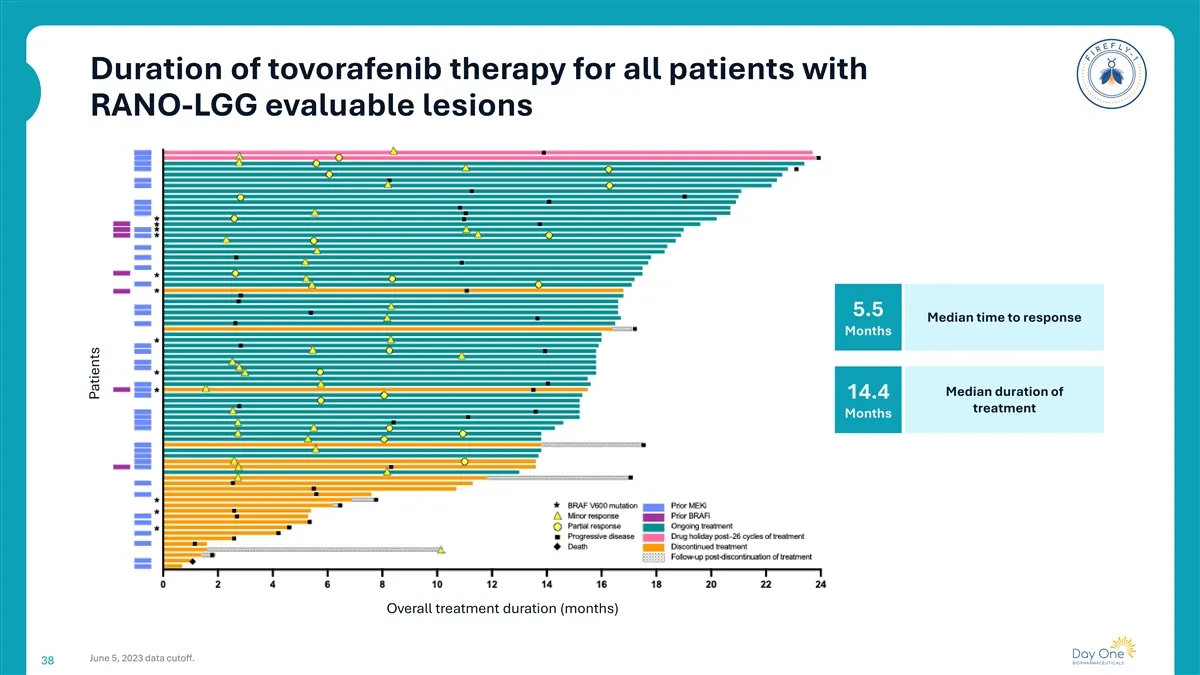
Slide 38: Duration of therapy for RANO-LGG evaluable lesions
Duration of tovorafenib therapy for all patients with RANO-LGG evaluable lesions 5.5 Median time to response Months Median duration of 14.4 treatment Months Overall treatment duration (months) June 5, 2023 data cutoff. 38 Patients
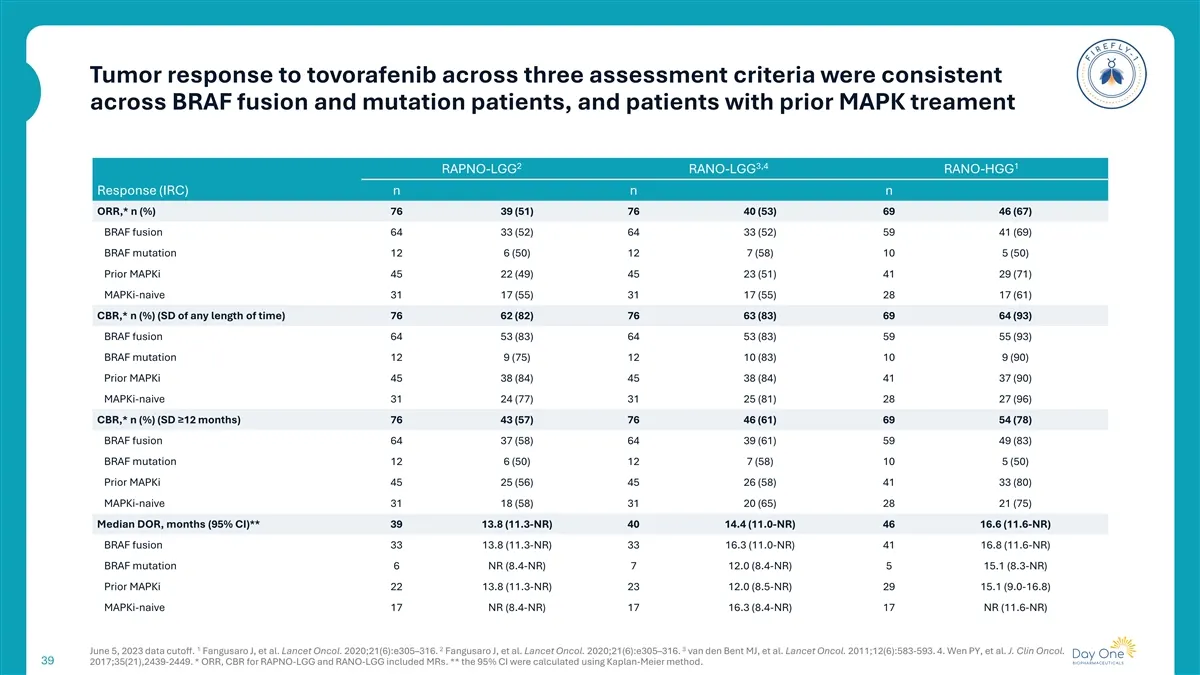
Slide 39: Tumor response consistent across BRAF fusion and mutation patients
Tumor response to tovorafenib across three assessment criteria were consistent across BRAF fusion and mutation patients, and patients with prior MAPK treament 2 3,4 1 RAPNO-LGG RANO-LGG RANO-HGG Response (IRC) n n n ORR,* n (%) 76 39 (51) 76 40 (53) 69 46 (67) BRAF fusion 64 33 (52) 64 33 (52) 59 41
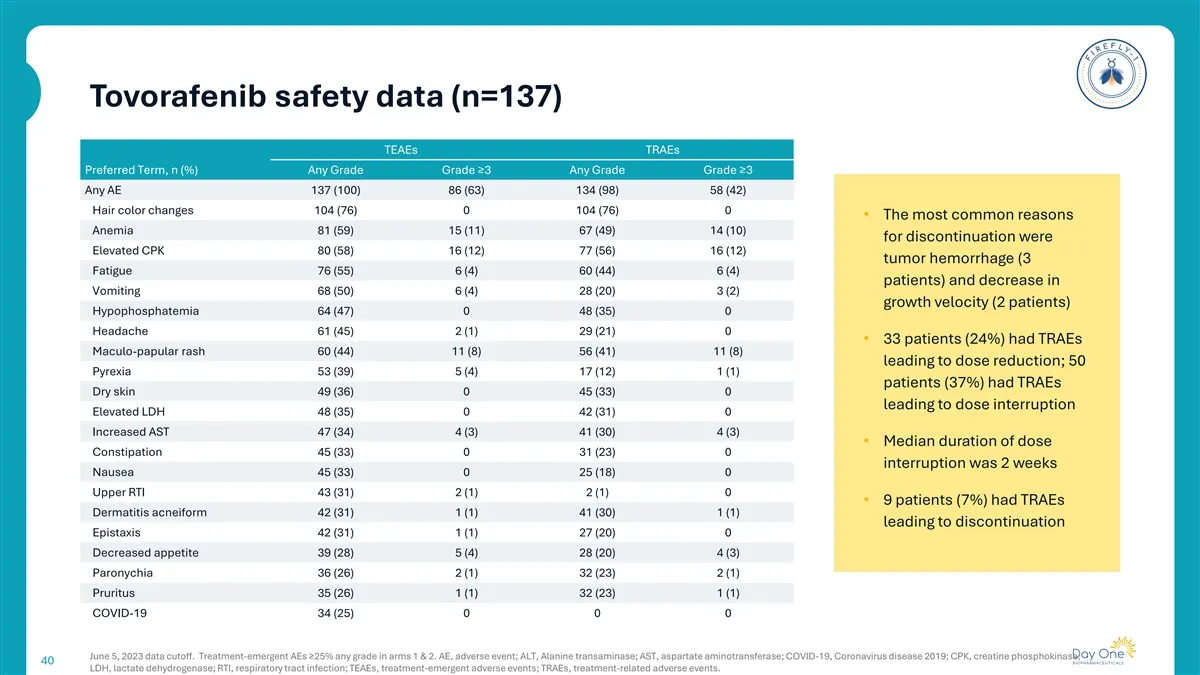
Slide 40: Tovorafenib safety data (n=137)
Tovorafenib safety data (n=137) TEAEs TRAEs Preferred Term, n (%) Any Grade Grade ≥3 Any Grade Grade ≥3 Any AE 137 (100) 86 (63) 134 (98) 58 (42) Hair color changes 104 (76) 0 104 (76) 0 • The most common reasons Anemia 81 (59) 15 (11) 67 (49) 14 (10) for discontinuation were Elevated CPK 80 (58) 16
Source: SEC EDGAR · 8-K filed Jan 13, 2025
More decks from Day One Biopharmaceuticals Inc
 Investor Presentation (March 2026)43 slides · Mar 2, 2026
 FY2025 Earnings Presentation20 slides · Feb 24, 2026
 Q4 2025 Earnings Presentation43 slides · February 2026
 Investor Presentation (January 2026)45 slides · Jan 12, 2026
 44th Annual J.P. Morgan Healthcare Conference (January 2026)21 slides · Jan 12, 2026
 Investor Presentation (January 2026)44 slides · Jan 6, 2026