Infinity Pharmaceuticals, Inc. · OTC:INFIQ
Infinity Pharmaceuticals — Investor Presentation (June 2008)
36 slides from Infinity Pharmaceuticals's investor presentation, Jun 9, 2008

Slide 1: Infinity Overview
June 2008 Infinity Overview Exhibit 99.1

Slide 2: Forward-Looking Statements
Forward-Looking Statements • This presentation contains forward-looking statements within the meaning of The Private Securities Litigation Reform Act of 1995. These statements involve risks and uncertainties that could cause actual results to be materially different from historical results or from a
Slide 3: Innovative small molecule cancer drug discovery and development
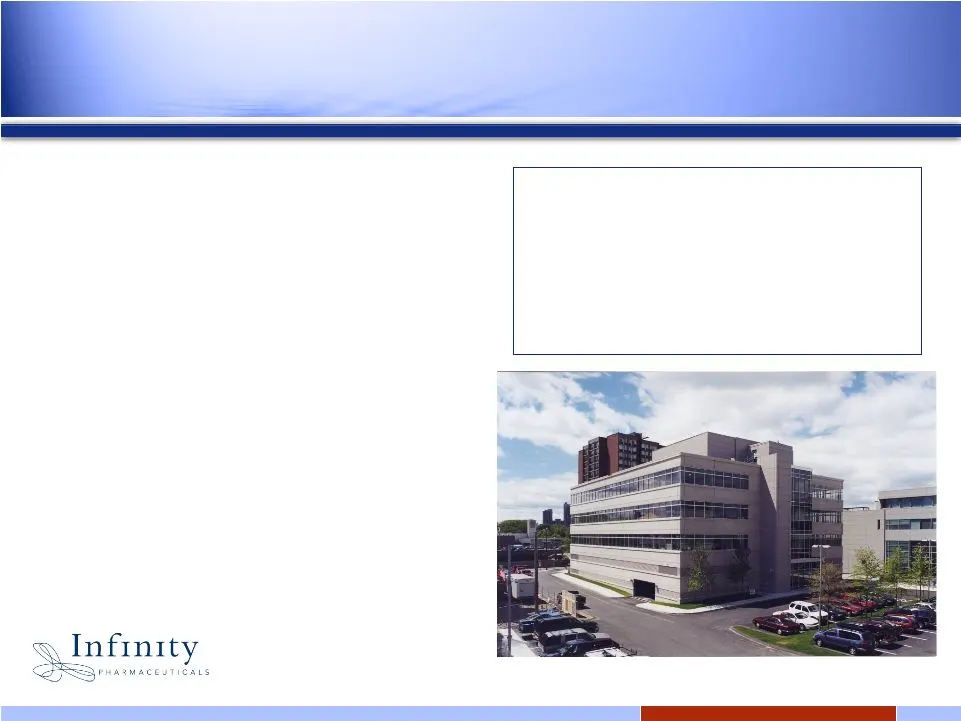
Infinity: Innovative small molecule cancer drug discovery and development Financial highlights • $105M in cash as of 3/31/2008 • Significant pipeline investment, and well- controlled burn NASDAQ: INFI Founded: 2001 Headquarters: Cambridge, MA Employees: ~140 R&D highlights • Lead program to enter Ph

Slide 4: Investment Thesis
INFI Investment Thesis • Sustainable pipeline of novel, small molecules for key targets – Hsp90 inhibitors : IPI - 504 i.v . and IPI - 493 p.o . – Hedgehog pathway inhibitor: IPI-926 • International Ph trial for IPI-504 to commence in 3Q08 under SPA – IPI-504 positioned as potential first-in-class a
Slide 5: INFI: Building a sustainable oncology pipeline
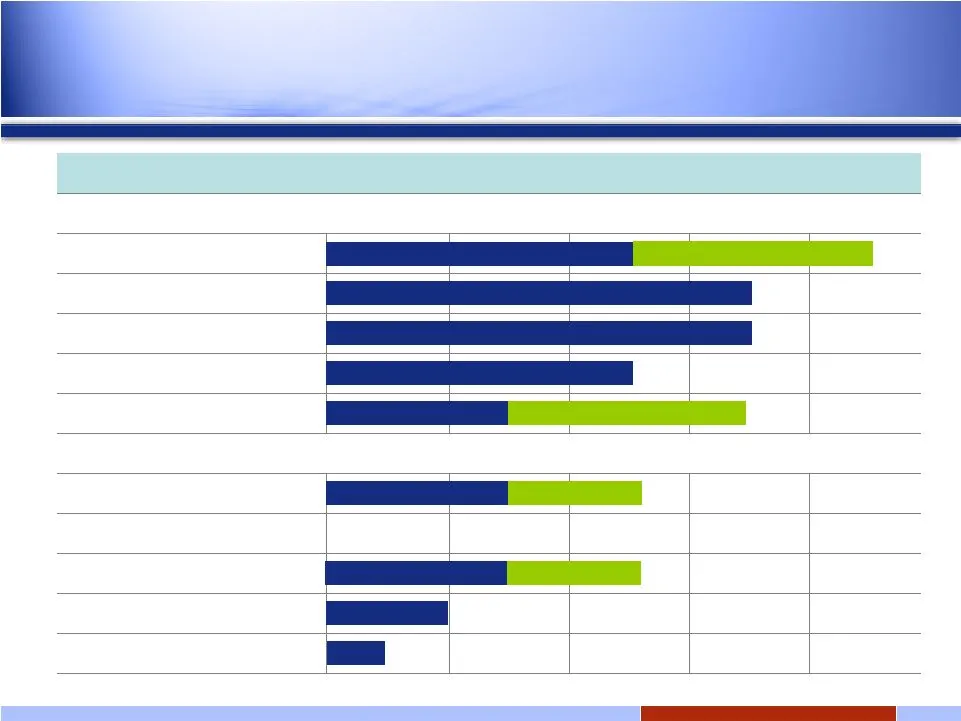
Solid tumors Hsp90 oral: IPI-493 Discovery Preclinical Phase 1 Phase 2 Phase 3 Hsp90 i.v.: IPI-504 (retaspimycin hydrochloride) GIST/STS NSCLC HRPC Taxotere ® Combo Additional Studies Solid tumors Hedgehog Pathway: IPI-926 Bcl-2/Bcl-xL Discovery Programs FPI mid-2008 In 2008 GIST Ph 3 FPI 3Q08 INFI:
Slide 6: Hsp90: Targeted Anti-Chaperone Therapy
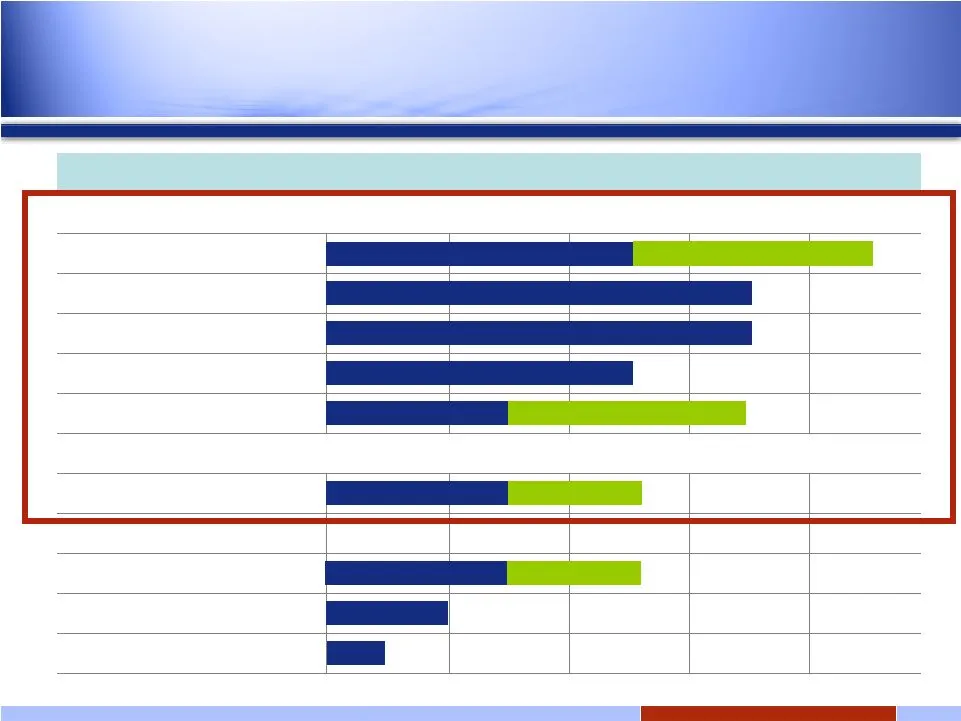
Solid tumors Hsp90 oral: IPI-493 Discovery Preclinical Phase 1 Phase 2 Phase 3 Hsp90 i.v.: IPI-504 (retaspimycin hydrochloride) GIST/STS NSCLC HRPC Taxotere ® Combo Additional Studies Solid tumors Hedgehog Pathway: IPI-926 Bcl-2/Bcl-xL Discovery Programs FPI mid-2008 In 2008 GIST Ph 3 FPI 3Q08 Hsp90

Slide 7: Targeting the Hsp90 chaperone: a novel strategy for cancer treatment
Targeting the Hsp90 chaperone: a novel strategy for cancer treatment • Lead product IPI-504 in late-stage clinical development – Water-soluable i.v. formulation – Issued U.S. patent, worldwide patents pending – Currently being evaluated in multiple cancers • IPI-493 expected to enter the clinic in m
Slide 8: Hsp90 Inhibition: How it works
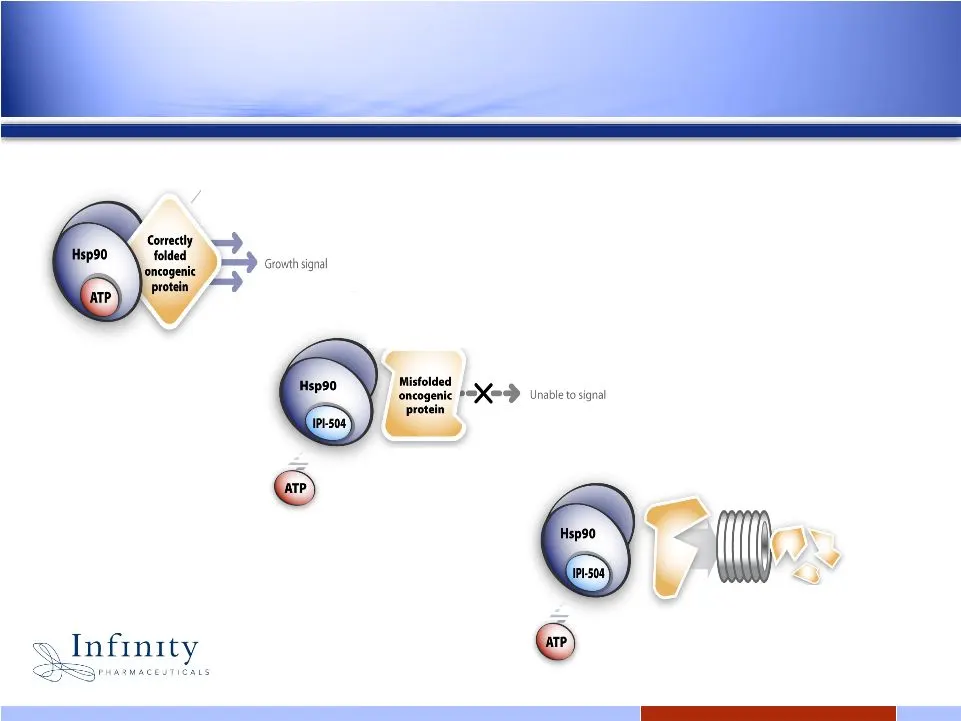
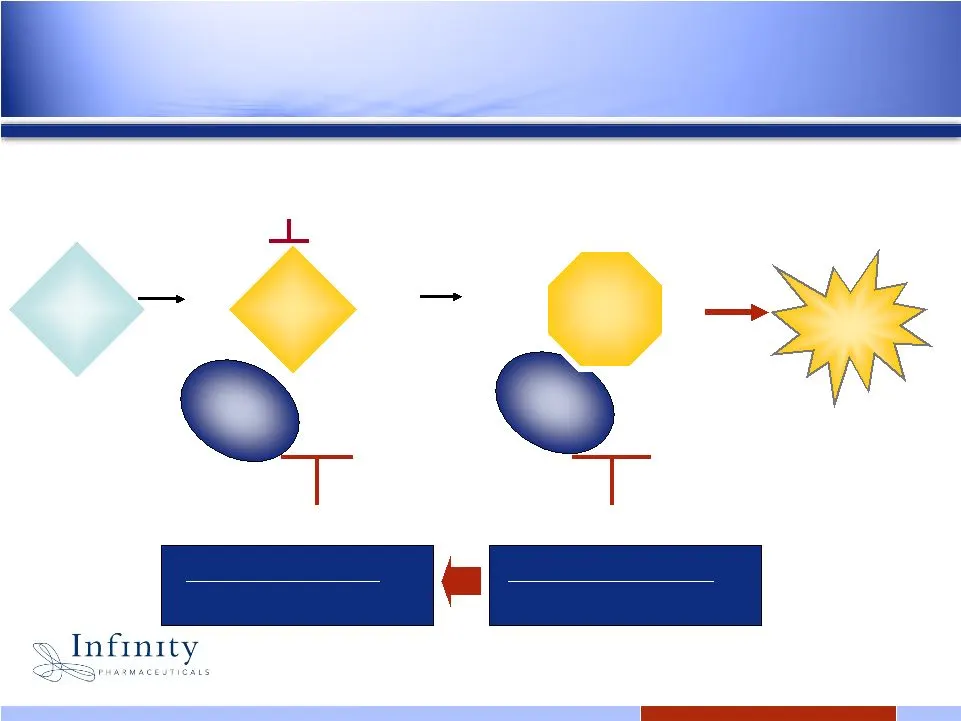
Hsp90 Inhibition: How it works Hsp90 is a “chaperone” protein responsible for supporting and stabilizing numerous oncogenic proteins IPI-504 binds at ATP site and inhibits cell stabilization Unstable oncogene degraded; tumor growth inhibited
Slide 9: Hsp90 Inhibition: A major new target
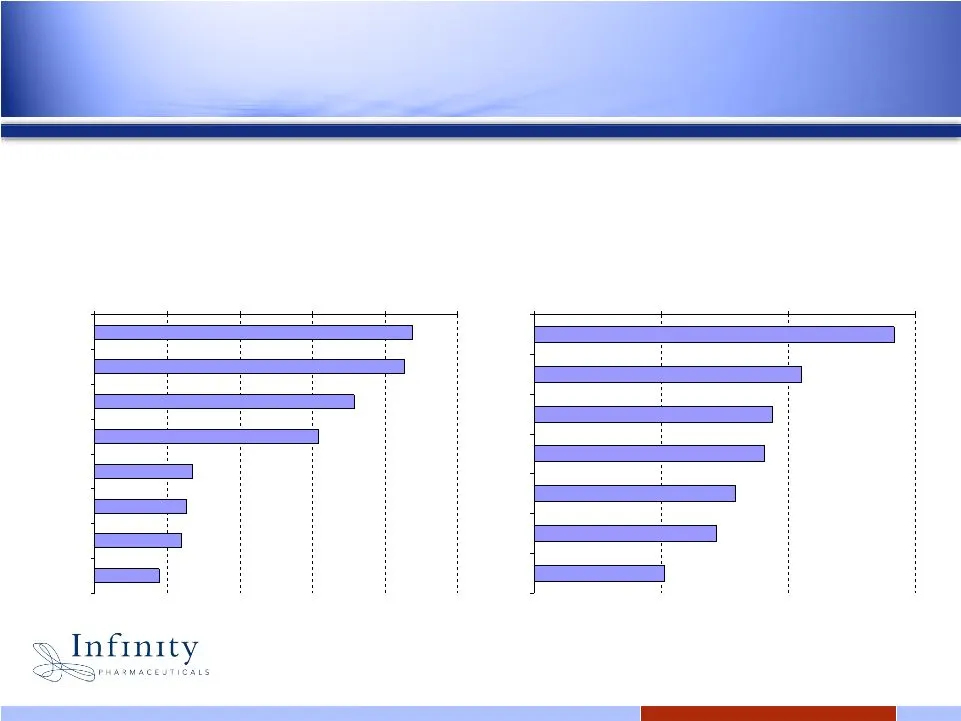
0.0 1.0 2.0 3.0 Rituxan Herceptin Avastin Eloxatin Taxotere Gleevec Gemzar 50,000 100,000 150,000 200,000 250,000 Prostate Lung Breast Colorectal Bladder NHL Melanoma Leukemia Hsp90 Inhibition: A major new target ** Sales in top 7 markets. Source: “Commercial insight: Top 20 cancer therapy brands 20
Slide 10: Hsp90 development paradigm: A new treatment approach
Rapid registration in refractory setting Expand potential in front-line / combo Oncogenic protein drives cancer cell survival & growth Cancer cell death Tyrosine kinase inhibitor (e.g., Gleevec, Tarceva) Normal protein Resistance mutations evade TKI therapy IPI-504 / IPI-493 (oral) IPI-504 Dependent

Slide 11: Clinical development strategy
Clinical development strategy • Rapid path to registration with IPI-504 – Single-agent therapy, refractory settings – GIST & NSCLC • Broaden potential through additional indications – Signal-finding trials in additional tumors (HRPC, others) – Combination therapy with standards of care (Taxotere®, o

Slide 12: Phase 1 Trial of IPI-504
Phase 1 Trial of IPI-504 • Patients with metastatic GIST refractory to Tyrosine Kinase Inhibitors (TKIs) – Gleevec® and Sutent® • Inter-cohort dose escalation trial – Twice weekly dosing for 2 weeks every 21 days – Twice weekly dosing continuously • Endpoints: – Safety and tolerability – Identify do
Slide 13: Patients in Phase 1 GIST study experienced multiple prior TKI therapies
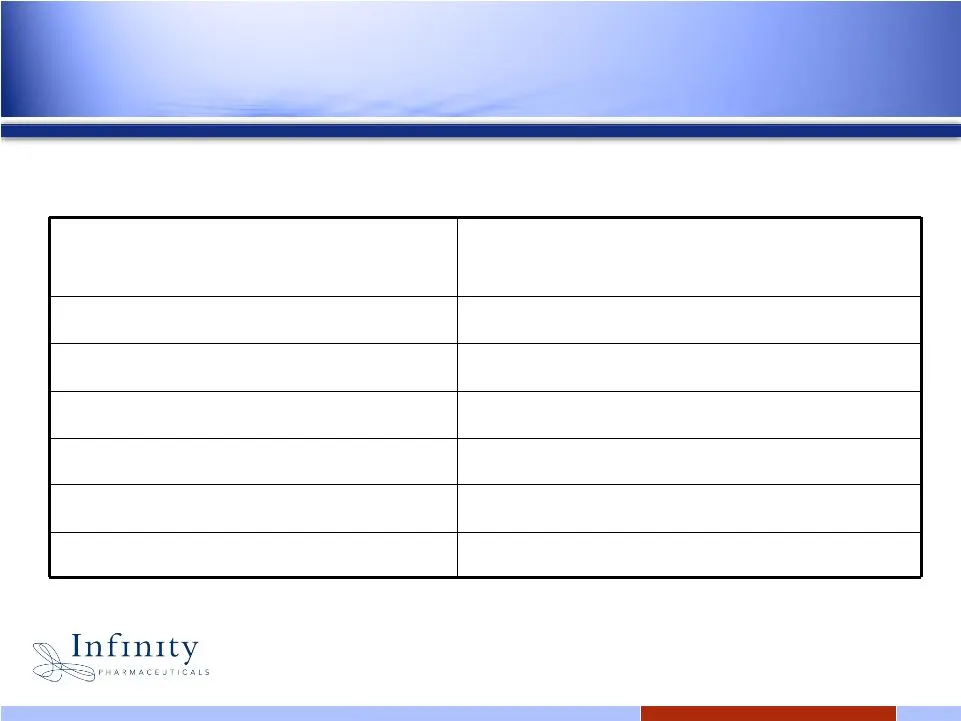
Patients in Phase 1 GIST study experienced multiple prior TKI therapies Prior Therapy Patients with refractory GIST treated with IPI-504 (n=45) Imatinib 45 (100%) Imatinib > 400 mg 36 (80%) Sunitinib 42 (93%) Nilotinib 9 (20%) 3 or more treatments 17 (38%) Prior surgery 33 (73%) 38% of patients had
Slide 14: Phase 1 results confirm activity and safety of IPI-504 in refractory GIST
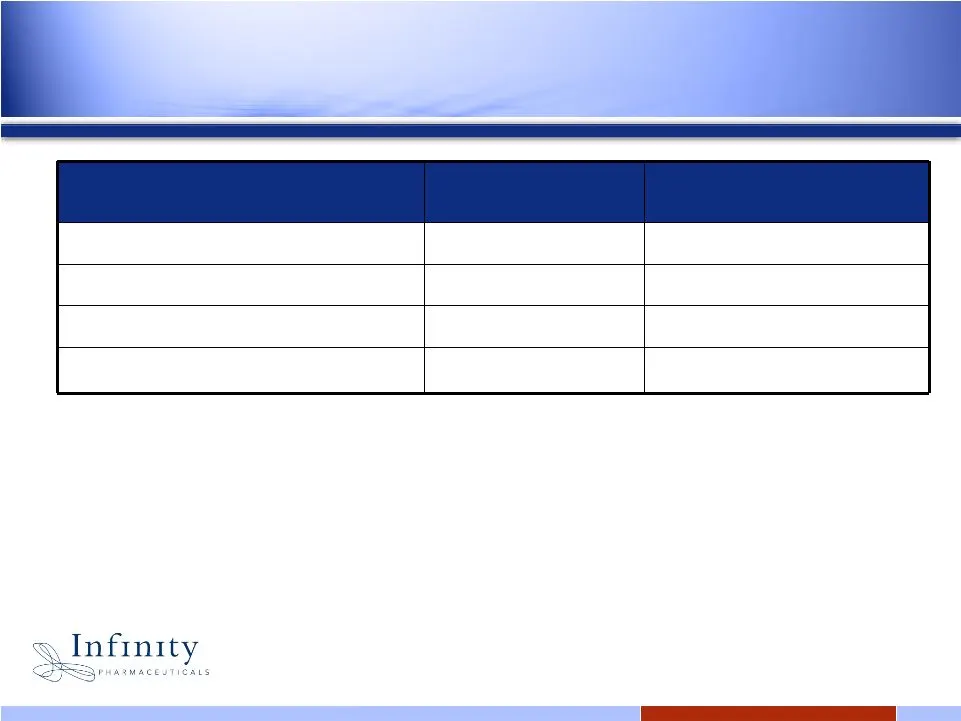
GIST Other STS Phase 1 results confirm activity and safety of IPI- 504 in refractory GIST • 70% overall disease control after cycles in patients with GIST • Estimated Progression Free Survival (PFS) of weeks • IPI-504 was generally well-tolerated with an acceptable safety profile Number of patients
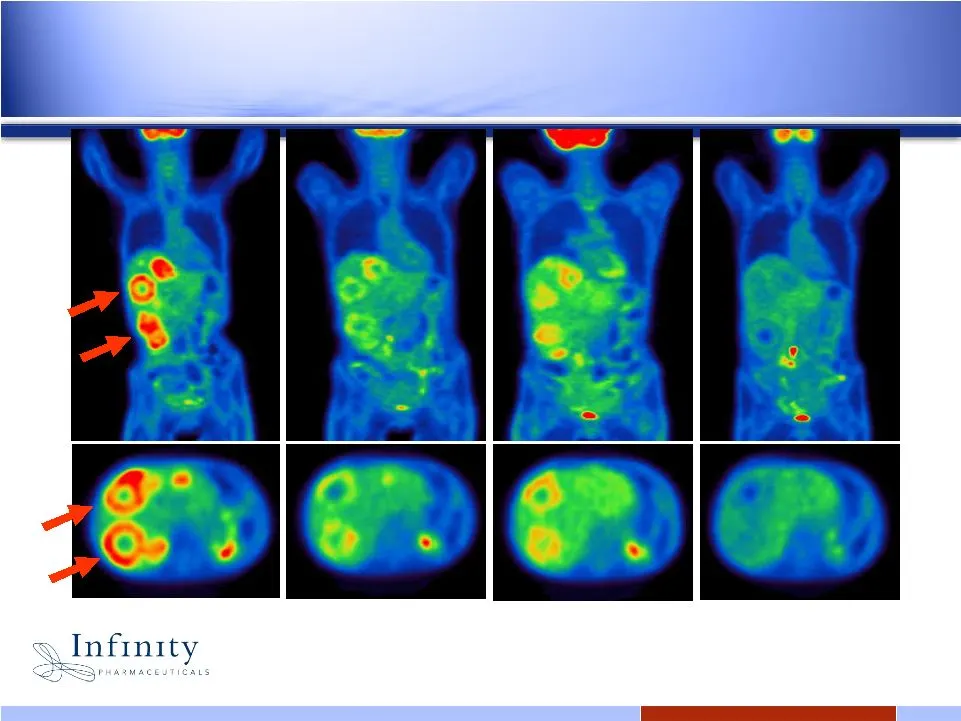
Slide 15: PET imaging demonstrates disease control in refractory GIST
Baseline Cycle 1, Day 21 After 10 days off IPI-504 Cycle 1, Day 11 72 hours post rd dose of IPI-504 Cycle 3, Day 12 After IPI-504 dosing resumed PET imaging demonstrates disease control in refractory GIST FDG-PET of Pt 201-007 following progression on imatinib, sunitinib, and nilotinib (IPI-504 dose
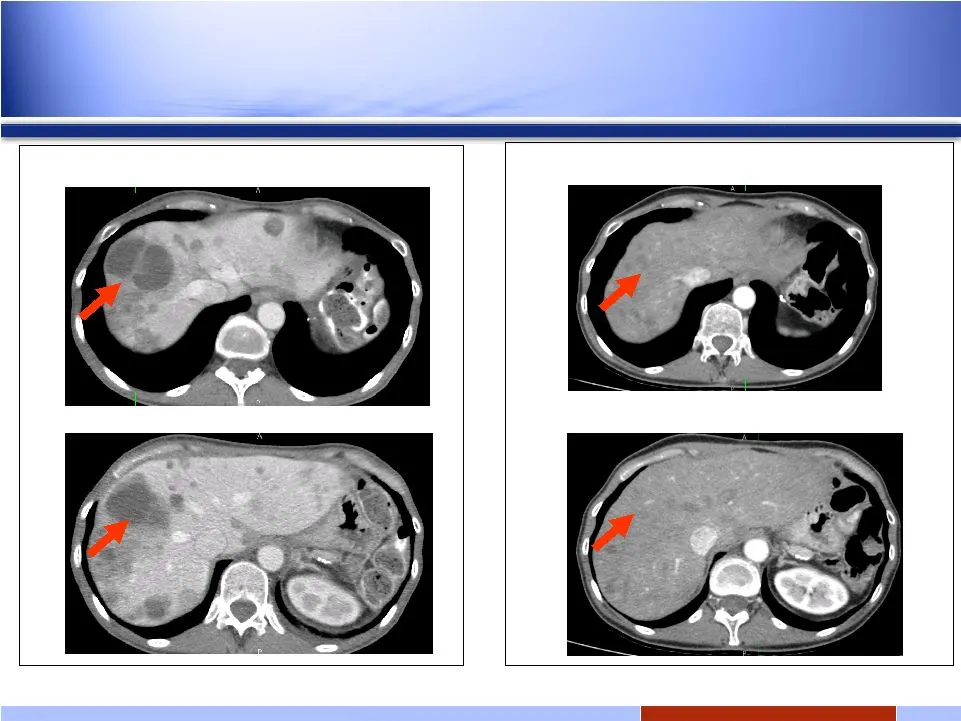
Slide 16: Partial response by RECIST in metastatic GIST after pretreatment with TKIs
Baseline Cycle 3 1 year on imatinib at 400 & 800 mg; 1 year on sunitinib at 37.5 & 50mg Patient remains on study as of cycle 5 (15 weeks) Partial response by RECIST (70% reduction) in metastatic GIST after pretreatment with TKIs
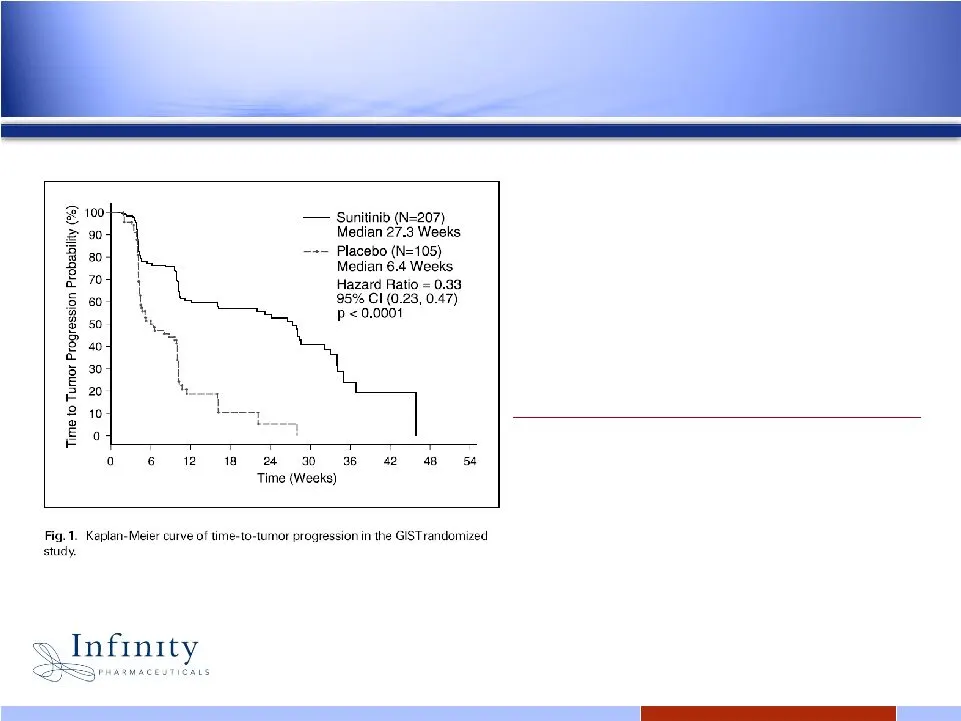
Slide 17: Stable disease for >6 weeks is meaningful in refractory GIST
Stable disease for >6 weeks is meaningful in the refractory GIST setting Results from the Phase 3 sunitinib trial in GIST TTP on Placebo: 6.4 weeks TTP on sunitinib: 27.3 weeks Goodman VL, Rock EP, Dagher R, Ramchandani RP, Abraham S, Gobburu JVS, Booth BP, Verbois SL, Morse DL, Liang CY, Chidambara

Slide 18: IPI-504: Rapid Advancement into Phase 3
IPI-504: Rapid Advancement into Phase 3 Phase 3 Registration trial to be initiated in 3Q 2008 under Special Protocol Assessment, and with scientific advice from EMEA • Study designed in consultation with international group of KOLs – Randomized, double-blind, placebo-controlled study • Patients to b
Slide 19: IPI-504 Phase 1/2 study in NSCLC: Potential rapid path to market
IPI-504 Phase 1/2 study in NSCLC: Potential rapid path to market Encouraging clinical data • Completed Ph 1 portion – Stage IIIb/IV NSCLC patients with >12 weeks previous TKI therapy • Phase 1 data at EORTC 2007* – 12 patients, dose-escalation – 7 of 9 (78%) Stable Disease – 1 pt with mtEGFR experie

Slide 20: IPI-504 anti-chaperone therapy: Significant potential beyond GIST & NSCLC
IPI-504 anti-chaperone therapy: Significant potential beyond GIST & NSCLC • Phase 2 Hormone-resistant prostate cancer (HRPC) – 2 groups: 1 docetaxel-naive, 1 post-docetaxel treatment – Establish potential utility in combination and/or as oral therapy • Phase 1b combo with docetaxel – Patients with a

Slide 21: Infinity's oral inhibitor of Hsp90: IPI-493
Infinity’s oral inhibitor of Hsp90: IPI - 493 • Demonstrated potent and selective Hsp90 inhibition preclinically • Excellent oral exposure : PK and half - life • Only oral geldanamycin analogue in clinical development – Previous class-based liabilities eliminated • IPI-493 on track to enter clinic i

Slide 22: MedImmune/AstraZeneca alliance on Hsp90
• Worldwide collaboration : R&D and commercial • Compelling economics : Control INFI cash burn, significant downstream participation – $70M upfront ; $215M potential milestones – R&D cost share and 50/50 WW profit split – Co-promotion rights in US • Provides global oncology infrastructure and reach
Slide 23: Hedgehog Pathway Inhibitor Program: IPI-926
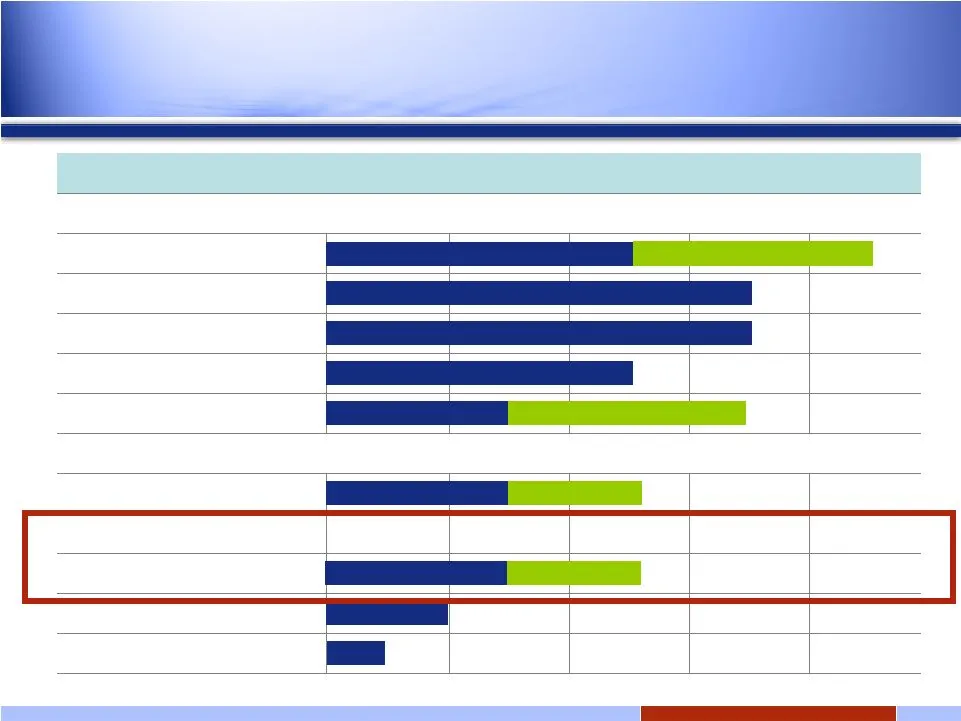
Solid tumors Hsp90 oral: IPI-493 Discovery Preclinical Phase 1 Phase 2 Phase 3 Hsp90 i.v.: IPI-504 (retaspimycin hydrochloride) GIST/STS NSCLC HRPC Taxotere ® Combo Additional Studies Solid tumors Hedgehog Pathway: IPI-926 Bcl-2/Bcl-xL Discovery Programs FPI mid-2008 In 2008 GIST Ph 3 FPI 3Q08 FPI 2
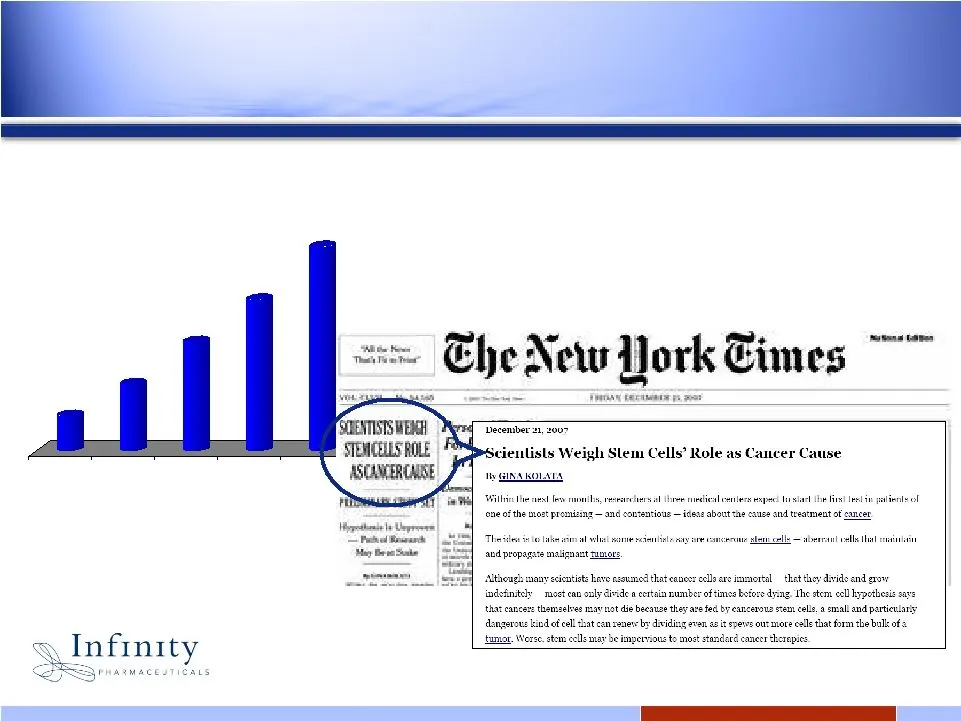
Slide 24: Burgeoning interest in Hedgehog pathway
AACR Meeting Abstracts on Hedgehog Pathway, 2004-2008 Burgeoning interest in Hedgehog pathway
Slide 25: The Hedgehog signaling pathway
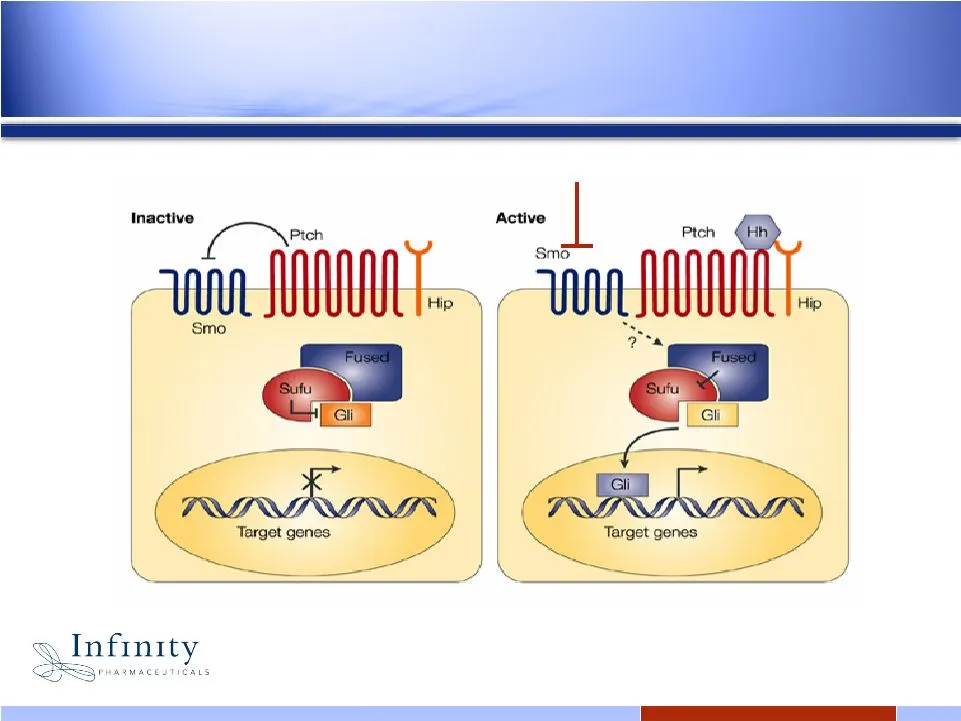
*Chen et al., G&D 16:2743 Cyclopamine The Hedgehog signaling pathway
Slide 26: Hedgehog pathway implicated in variety of solid tumors and heme. malignancies
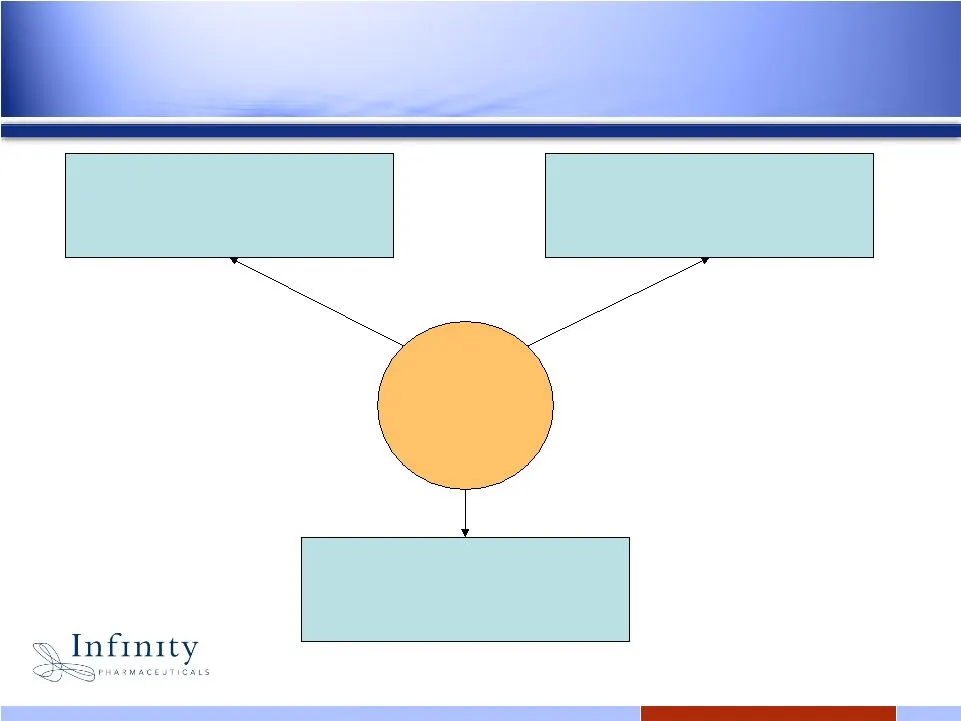
Hh in Cancer Genetic mutation medulloblastoma basal cell carcinoma Pathway activation pancreatic, gastric, prostate, glioma Tumor progenitor cells SCLC, glioblastoma, breast, multiple myeloma Hedgehog pathway implicated in variety of solid tumors and heme. malignancies
Slide 27: Infinity's Hedgehog inhibitor: IPI-926
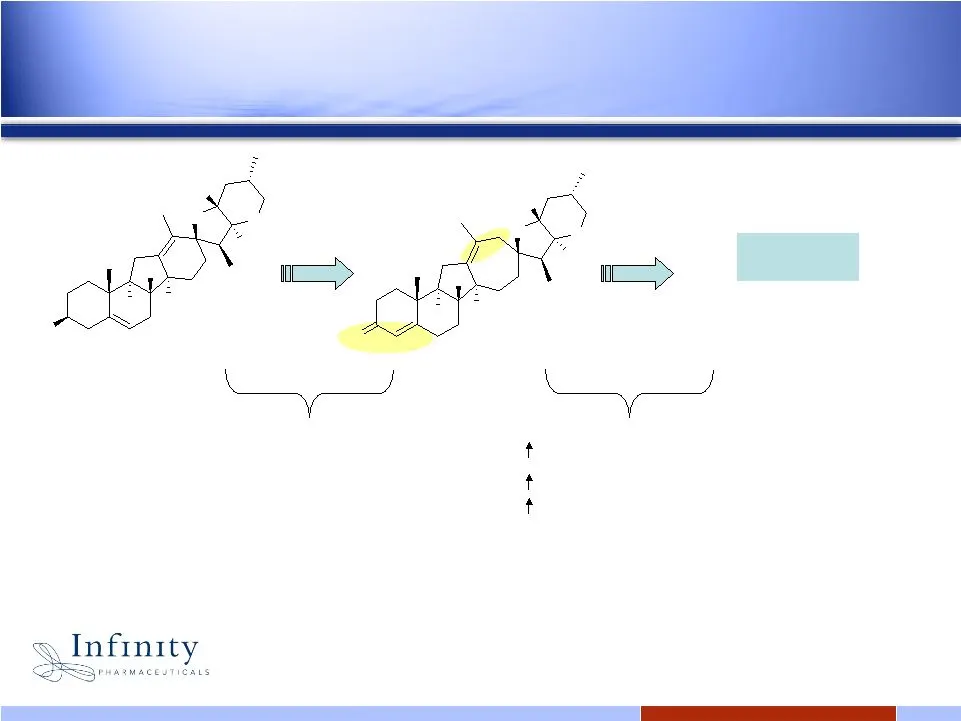
Infinity’s Hedgehog inhibitor: IPI-926 HO O NH H H H H H st generation nd generation Solubility Chemical stability Potency (15nM in cell based assay) Selectivity Metabolic stability IPI-926 Oral bioavailability Long half-life In vivo activity + cyclopamine O H H O NH H H H • Issued composition of ma
Slide 28: Daily oral IPI-926 shows dose dependent inhibition of tumor growth
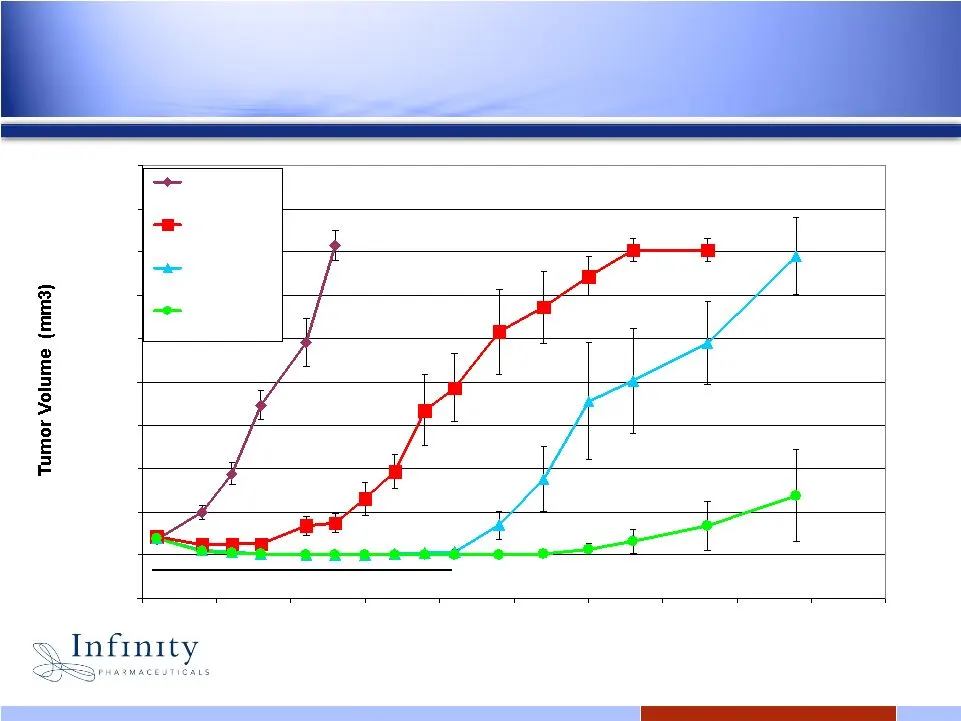
Daily oral administration of IPI-926 shows dose dependent inhibition of tumor growth -500.00 0.00 500.00 1000.00 1500.00 2000.00 2500.00 3000.00 3500.00 4000.00 4500.00 Days VEH--30% HPBCD in WFI IPI-926 @ 4mg/kg IPI-926 @ 10mg/kg IPI-926 @ 20mg/kg Treatment phase 4/7 fully regressed B837Tx tumor Pt
Slide 29: IPI-926 improves survival in orthotopic medulloblastoma model
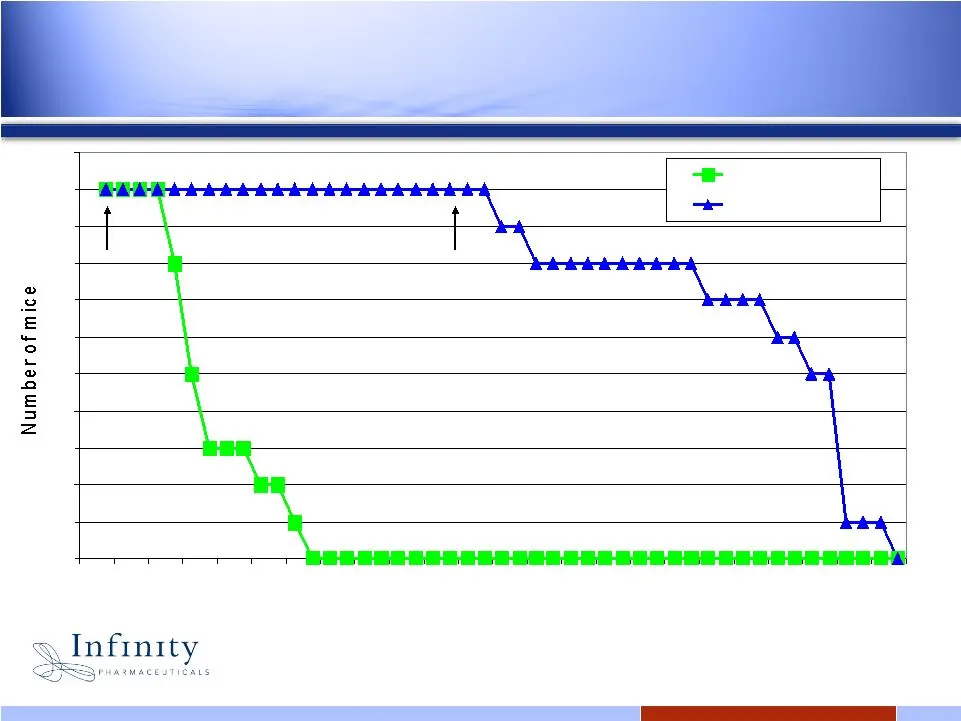
IPI-926 improves survival in orthotopic medulloblastoma model Days post implant Veh IPI-926 @ 40mg/kg Start of TX End of TX Mouse model, orthotopically implanted B837Tx tumor Pink et al., 2008 AACR
Slide 30: IPI-926 delays tumor recurrence post-chemo
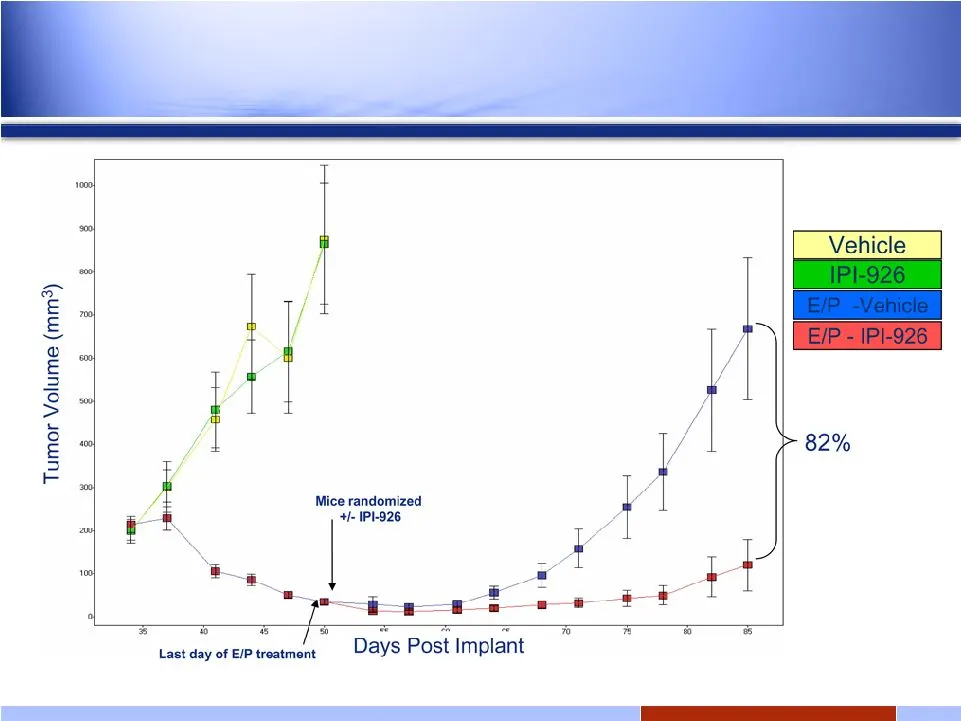
5 weeks total of IPI-926 follow-up treatment; 40 mg/kg, PO QD IPI-926 delays tumor recurrence post-chemo Traviglione et al., 2008 AACR

Slide 31: Infinity
« Infinit slnfinity_

Slide 32: Infinity Goals 2008
• Strong financial profile • Scientific excellence • Integrated Citizen-Ownership culture • Business and operational excellence Infinity Goals 2008 • Retaspimycin GIST Phase registration trial • Retaspimycin Phase trials for additional indications • IPI-493 Oral Hsp90 : Phase clinical study • IPI-92
Slide 33: Executing on our R&D and Business Strategy
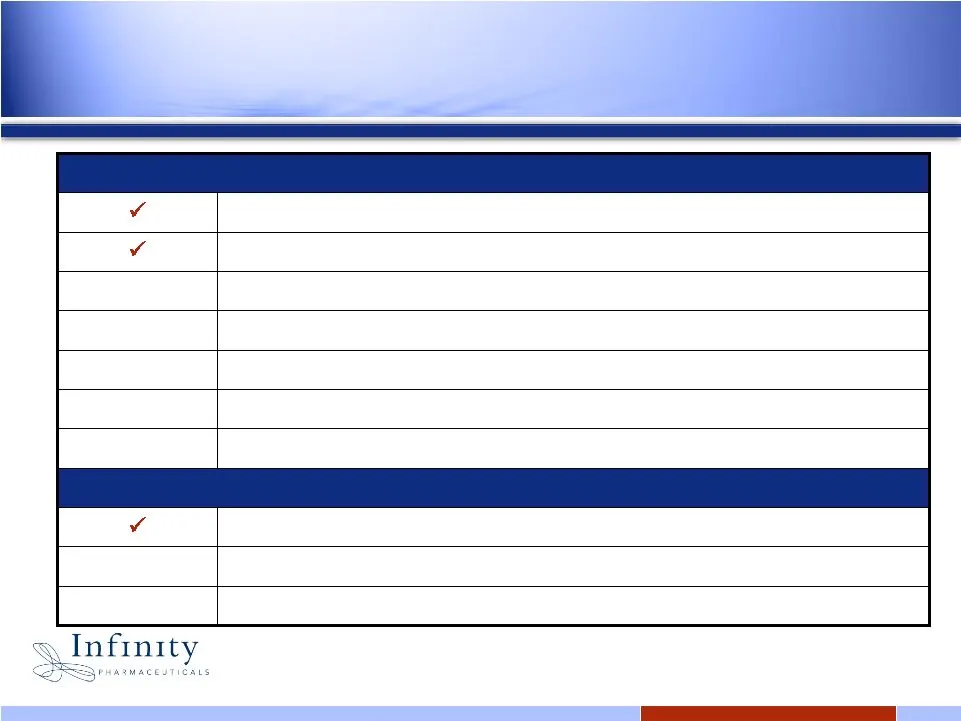
IPI-926: Hedgehog pathway inhibitor IPI-504 & IPI-493: Hsp90 inhibitors Executing on our R&D and Business Strategy Initiate IPI-493 Phase 1 clinical trial Mid-2008 Initiate Phase 1 clinical study 2H 2008 File IND 2H 2008 Present preclinical data (AACR) Present preliminary IPI-504 Phase 2 data in HRP

Slide 34: Strong balance sheet; well capitalized
Strong balance sheet; well capitalized • $105M cash and equivalents (3/31/08) • Burn rate well-controlled – 50% cost-sharing of Hsp90 program with MedImmune/AstraZeneca • Projected net cash burn: $35M - $45M • Cash to support current plan into 2010 – Sufficient capital to achieve key value creation

Slide 35: Infinity Leadership
Infinity Leadership Michael Curtis, Ph.D., VP Pharm. Devel. TKT, Syntonix, Genzyme, Bristol-Myers Squibb David Grayzel, M.D., VP Clin Dev. & Med. Affairs Dyax, Mass General Hospital John Keilty, Sr Dir Informatics Millennium , UMass Medical School Vito Palombella, Ph.D., VP Drug Discovery Syntonix,

Slide 36: Investment Thesis
INFI Investment Thesis • Sustainable pipeline of novel, small molecules for key targets – Hsp90 inhibitors : IPI - 504 i.v . and IPI - 493 p.o . – Hedgehog pathway inhibitor: IPI-926 • International Ph trial for IPI-504 to commence in 3Q08 under SPA – IPI-504 positioned as potential first - in - cla
Source: SEC EDGAR · 8-K filed Jun 9, 2008
More decks from Infinity Pharmaceuticals, Inc.
 Merger or Acquisition (June 2023)89 slides · Jun 20, 2023
 Merger or Acquisition (February 2023)39 slides · Feb 23, 2023
 Technical Presentation (July 2021)54 slides · Jul 27, 2021
 Technical Presentation (February 2021)53 slides · Feb 11, 2021
 SABCS 2020 Investor Event32 slides · Dec 9, 2020
 Corporate Update (January 2016)47 slides · Jan 11, 2016