Infinity Pharmaceuticals, Inc. · OTC:INFIQ
Infinity Pharmaceuticals — SABCS 2020 Investor Event
32 slides from Infinity Pharmaceuticals's conference presentation, Dec 9, 2020
Slide 1: Eganelisib First-in-Class PI3K-γ Inhibitor in Metastatic Triple-Negative Breast Cancer
Eganelisib First-in-Class PI3K-���� Inhibitor Targeting Immune Suppressive Myeloid Cells in Metastatic Triple-Negative Breast Cancer December 9, 2020
Slide 2: Forward-Looking Statements
2 Forward-Looking Statements This presentation contains forward-looking statements within the meaning of The Private Securities Litigation Reform Act of 1995. Such forward- looking statements include those regarding the company’s expectations about: the therapeutic potential of PI3K-gamma selective
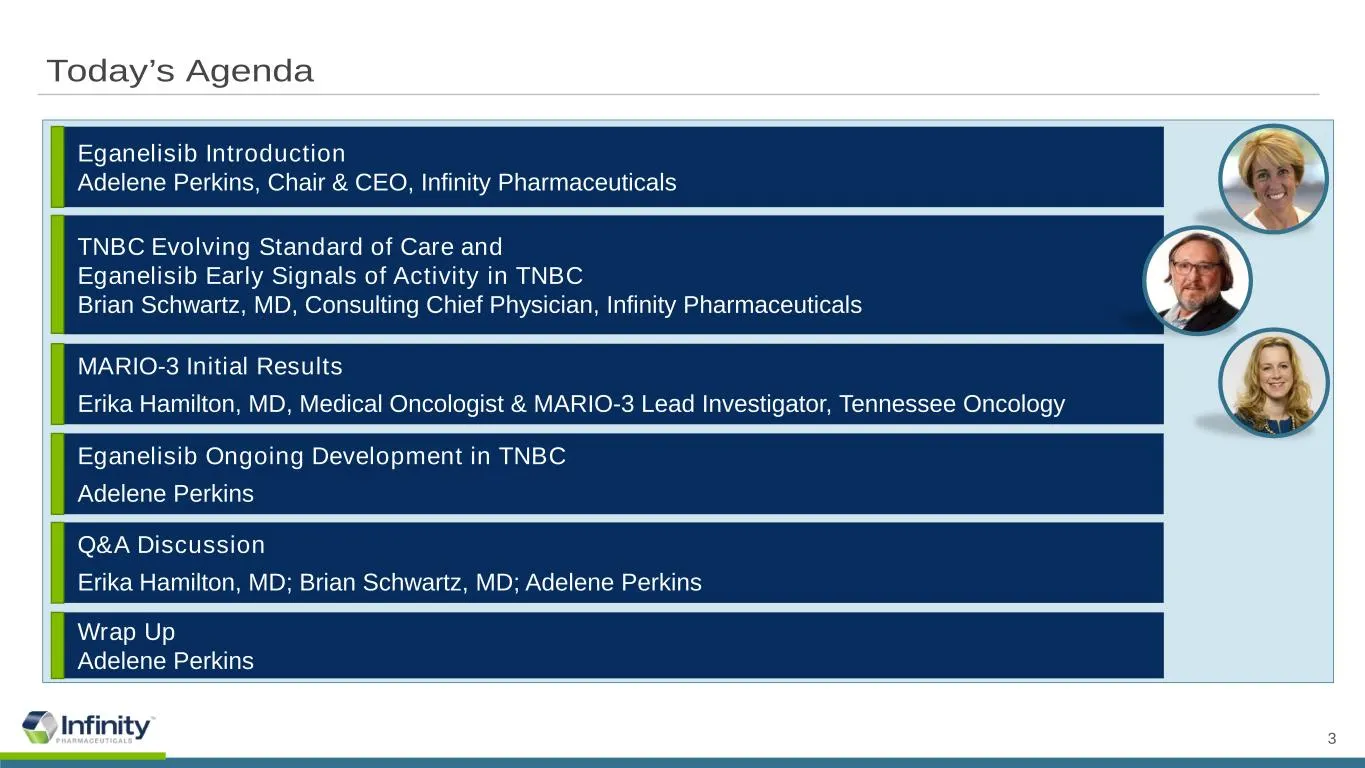
Slide 3: Today's Agenda
3 Today’s Agenda TNBC Evolving Standard of Care and Eganelisib Early Signals of Activity in TNBC Brian Schwartz, MD, Consulting Chief Physician, Infinity Pharmaceuticals Q&A Discussion Erika Hamilton, MD; Brian Schwartz, MD; Adelene Perkins Wrap Up Adelene Perkins Eganelisib Introduction Adelene Per
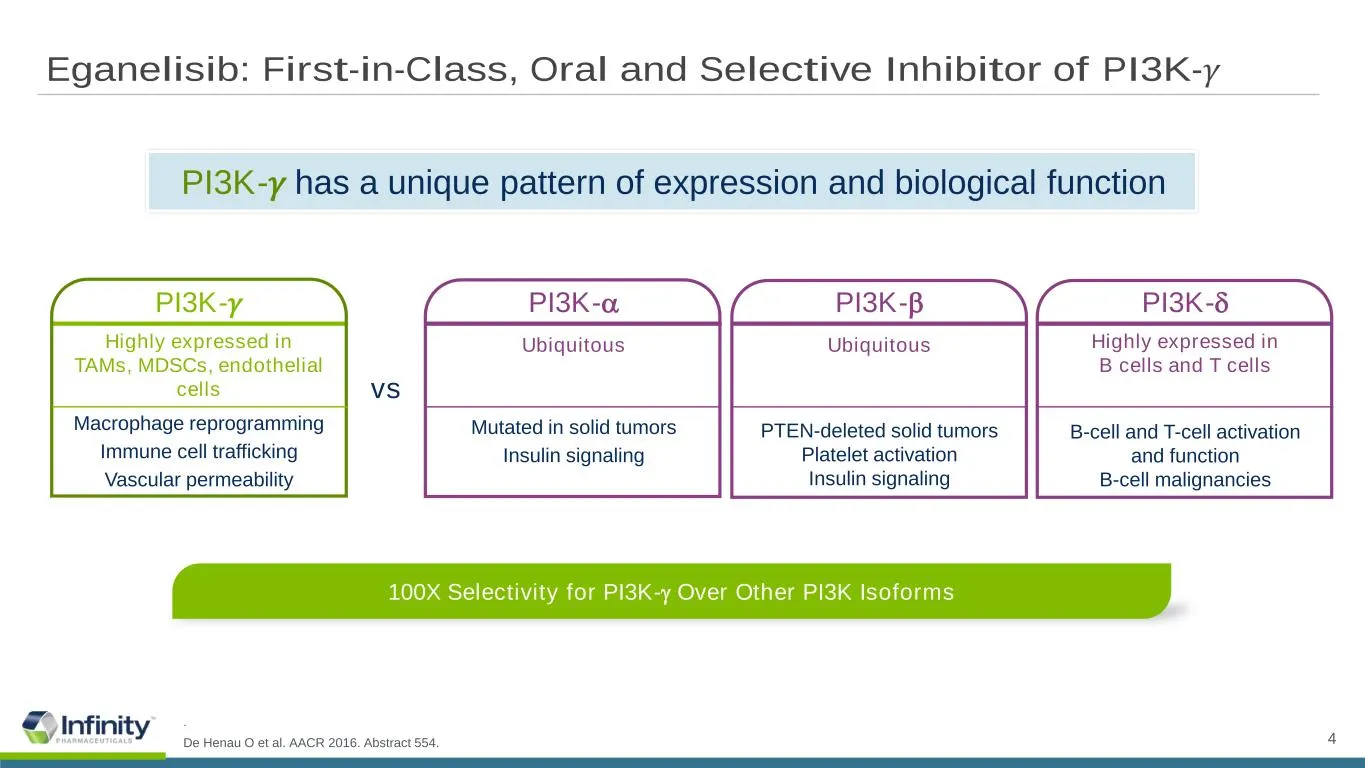
Slide 4: Eganelisib: First-in-Class, Oral and Selective Inhibitor of PI3K-γ
4 PI3K-���� Highly expressed in TAMs, MDSCs, endothelial cells Macrophage reprogramming Immune cell trafficking Vascular permeability PI3K-α Ubiquitous Mutated in solid tumors Insulin signaling Eganelisib: First-in-Class, Oral and Selective Inhibitor of PI3K-���� PI3K-β Ubiquitous PTEN-deleted solid
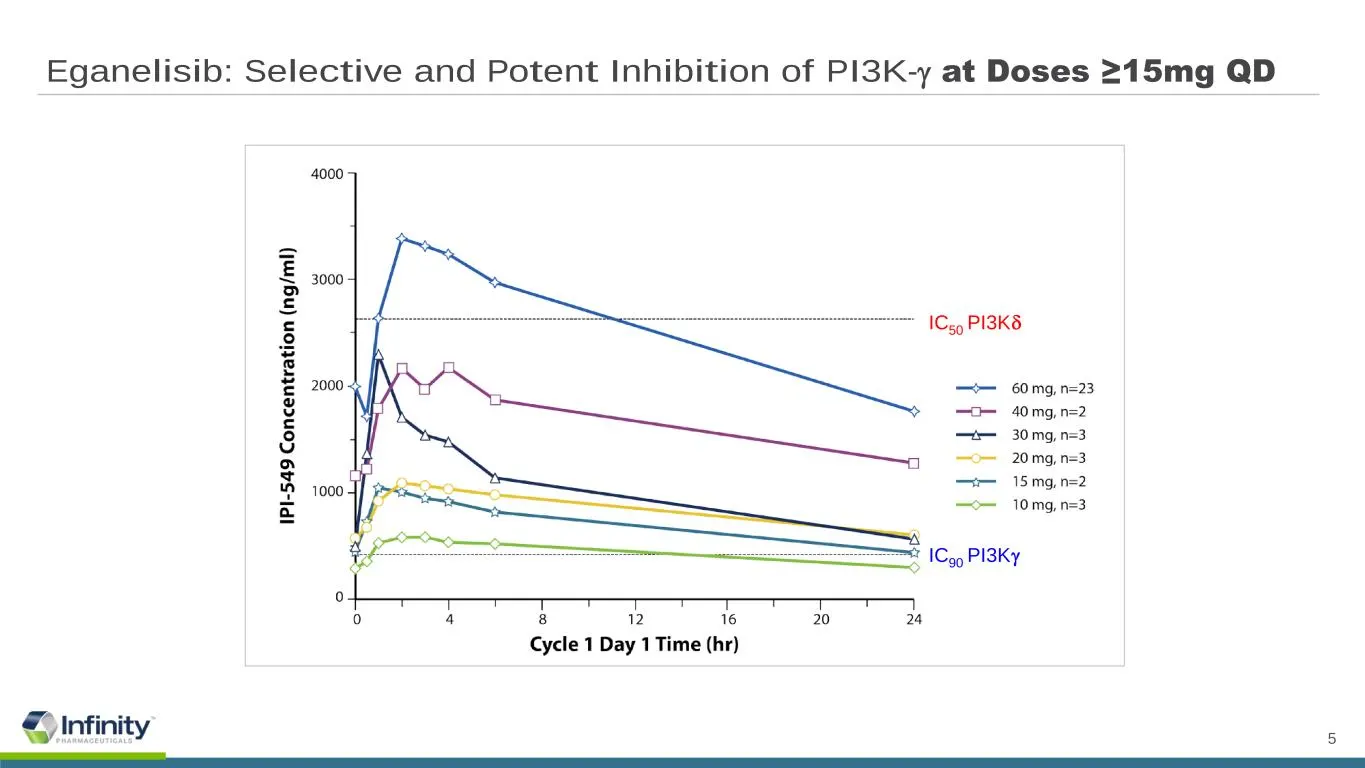
Slide 5: Selective and Potent Inhibition of PI3K-γ at Doses ≥15mg QD
5 Eganelisib: Selective and Potent Inhibition of PI3K-γ at Doses ≥15mg QD IC50 PI3Kδ IC90 PI3Kγ
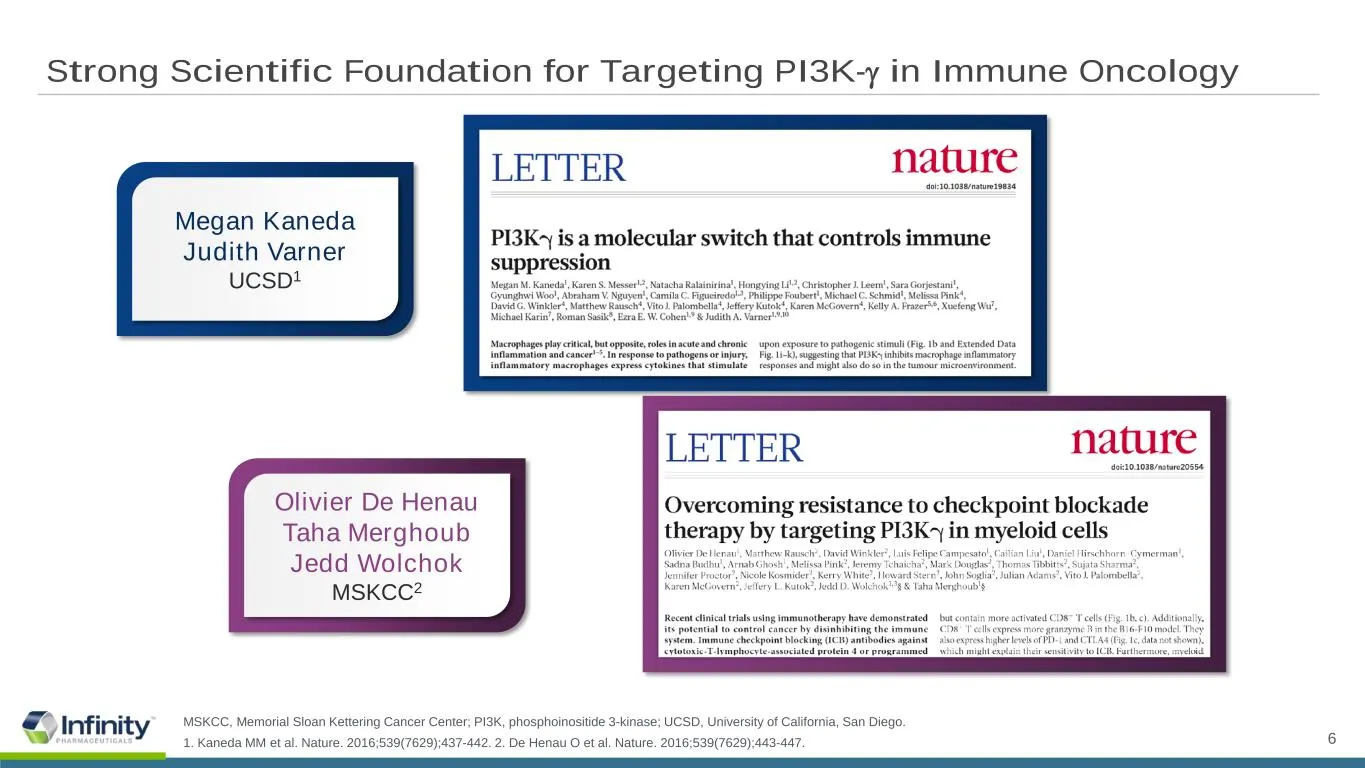
Slide 6: Strong Scientific Foundation for Targeting PI3K-γ in Immune Oncology
6 Strong Scientific Foundation for Targeting PI3K-γ in Immune Oncology Megan Kaneda Judith Varner UCSD1 Olivier De Henau Taha Merghoub Jedd Wolchok MSKCC2 MSKCC, Memorial Sloan Kettering Cancer Center; PI3K phosphoinositide 3-kinase UCSD, University of California, San Diego., ; 1. Kaneda MM et al. N
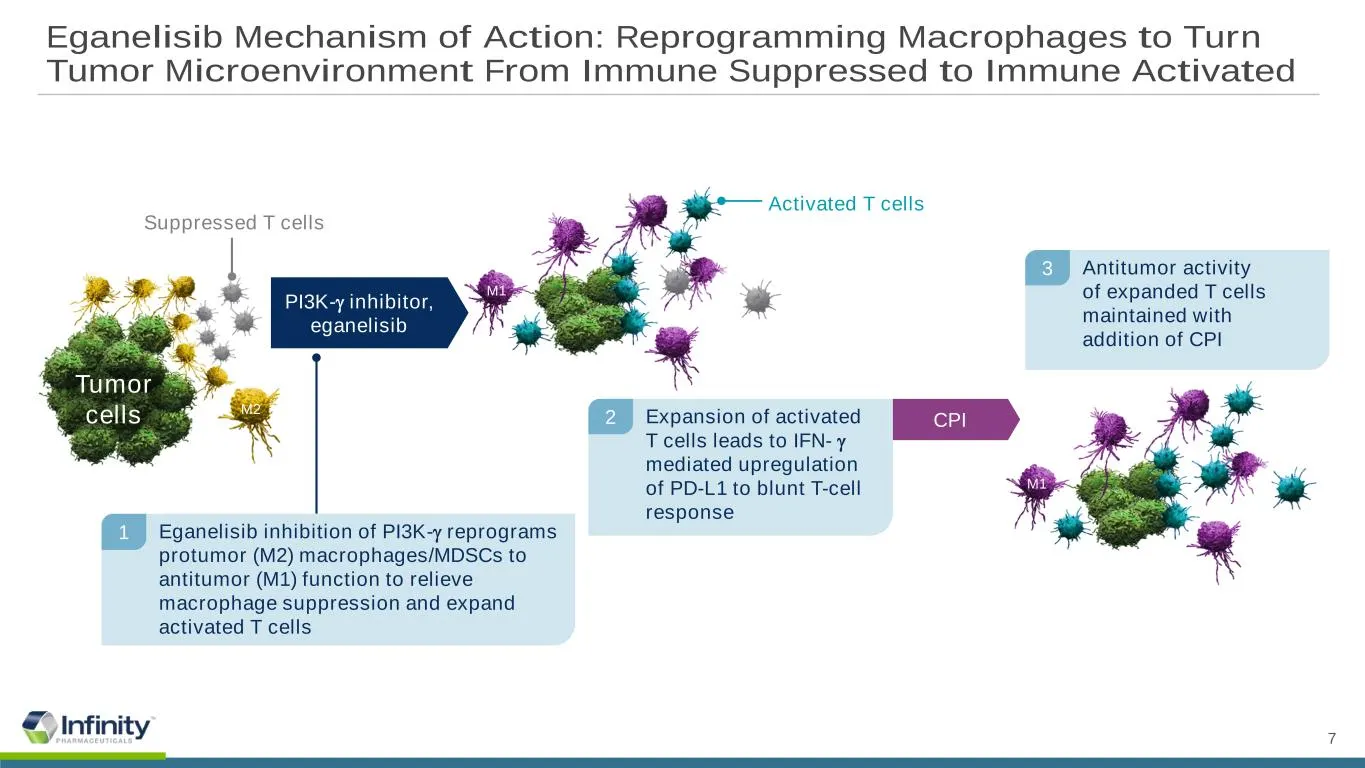
Slide 7: Eganelisib Mechanism of Action: Reprogramming Macrophages
7 Eganelisib Mechanism of Action: Reprogramming Macrophages to Turn Tumor Microenvironment From Immune Suppressed to Immune Activated Suppressed T cells Tumor cells M2 PI3K-γ inhibitor, eganelisib Activated T cells 1 Eganelisib inhibition of PI3K-γ reprograms protumor (M2) macrophages/MDSCs to antit
Slide 8: TNBC Evolving Standard of Care and Eganelisib Early Signals of Activity in TNBC
TNBC Evolving Standard of Care and Eganelisib Early Signals of Activity in TNBC
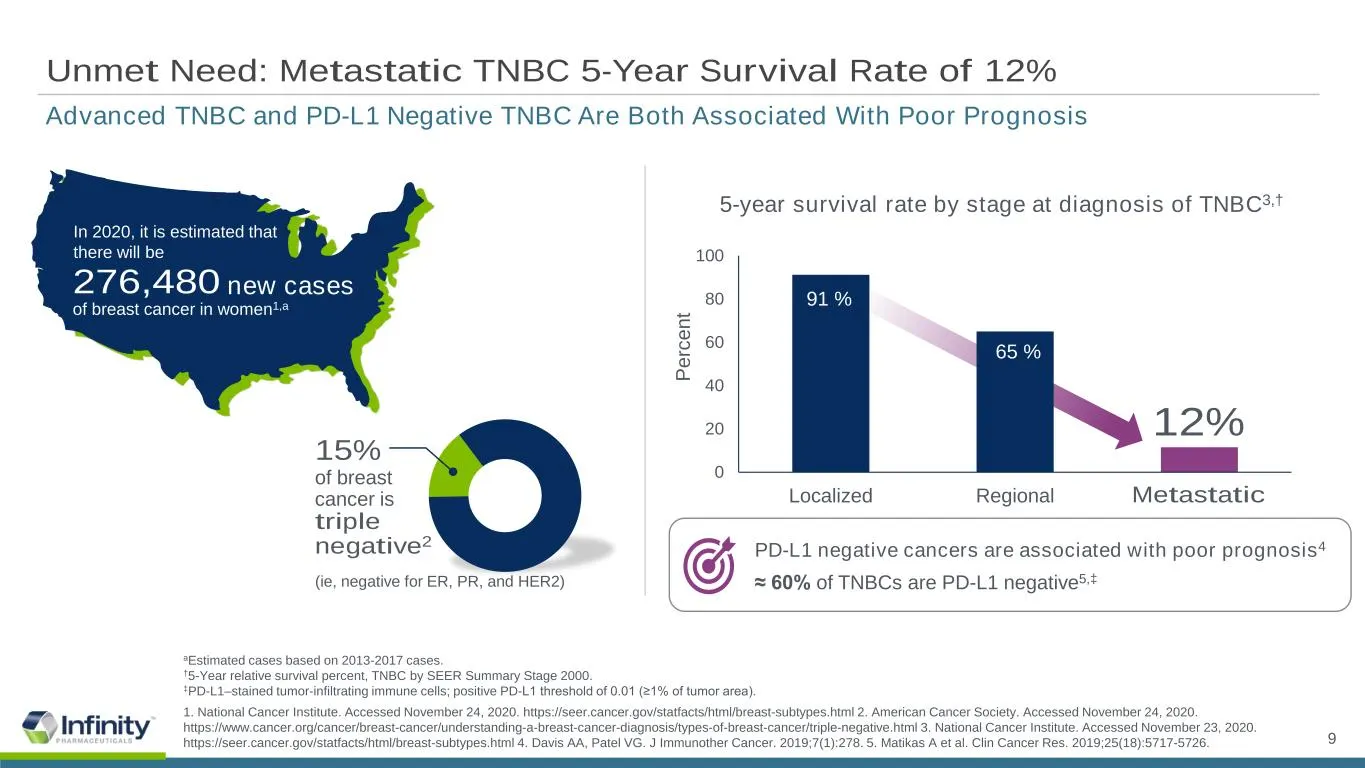
Slide 9: Unmet Need: Metastatic TNBC 5-Year Survival Rate of 12%
9 Unmet Need: Metastatic TNBC 5-Year Survival Rate of 12% Advanced TNBC and PD-L1 Negative TNBC Are Both Associated With Poor Prognosis (ie, negative for ER, PR, and HER2) 15% of breast cancer is triple negative2 PD-L1 negative cancers are associated with poor prognosis4 ≈ 60% of TNBCs are PD-L1 neg
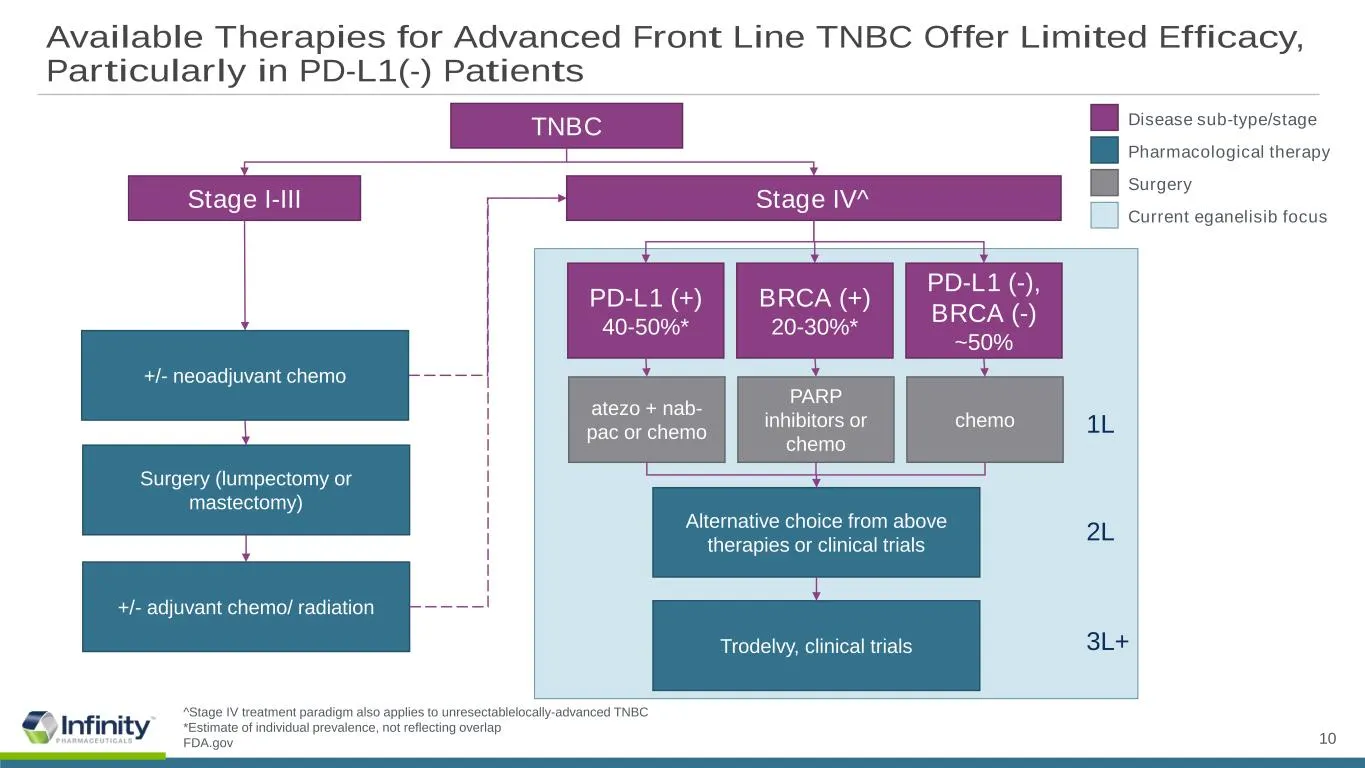
Slide 10: Available Therapies for Advanced Front Line TNBC Offer Limited Efficacy
10 Available Therapies for Advanced Front Line TNBC Offer Limited Efficacy, Particularly in PD-L1(-) Patients TNBC Stage I-III Stage IV^ +/- neoadjuvant chemo Surgery (lumpectomy or mastectomy) +/- adjuvant chemo/ radiation PD-L1 (+) 40-50%* BRCA (+) 20-30%* PD-L1 (-), BRCA (-) ~50% atezo + nab- pac
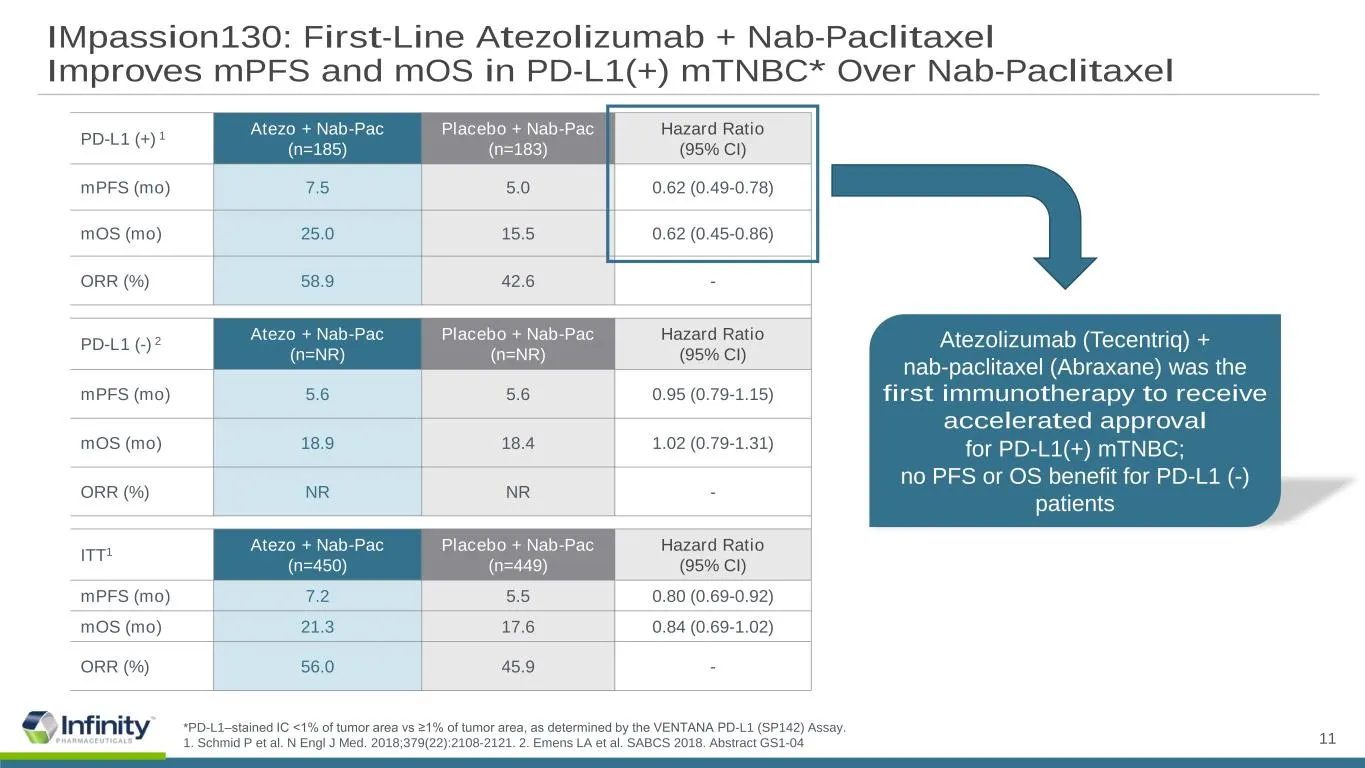
Slide 11: IMpassion130: Atezolizumab + Nab-Paclitaxel in mTNBC
11 IMpassion130: First-Line Atezolizumab + Nab-Paclitaxel Improves mPFS and mOS in PD-L1(+) mTNBC* Over Nab-Paclitaxel Atezolizumab (Tecentriq) + nab-paclitaxel (Abraxane) was the first immunotherapy to receive accelerated approval for PD-L1(+) mTNBC; no PFS or OS benefit for PD-L1 (-) patients PD-L
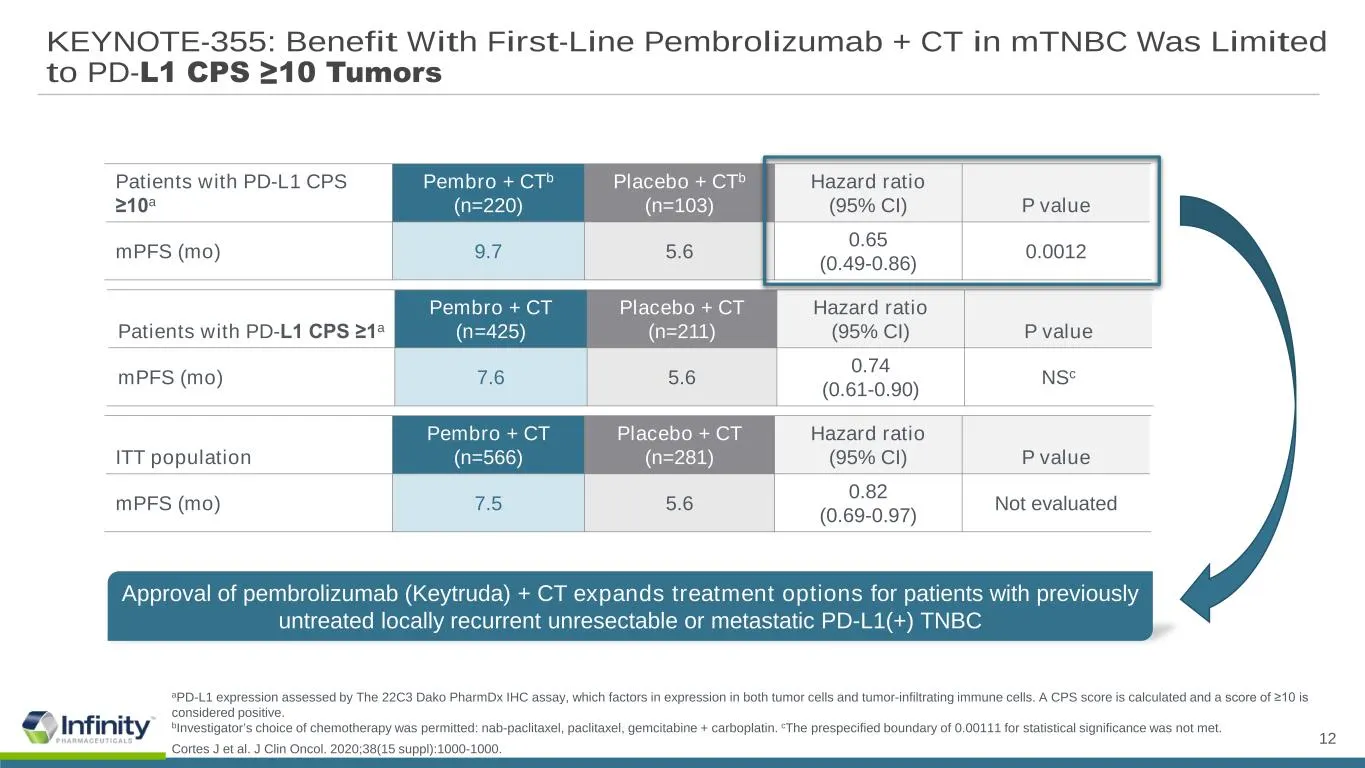
Slide 12: KEYNOTE-355: Pembrolizumab + CT in mTNBC
12 KEYNOTE-355: Benefit With First-Line Pembrolizumab + CT in mTNBC Was Limited to PD-L1 CPS ≥10 Tumors Patients with PD-L1 CPS ≥10a Pembro + CTb (n=220) Placebo + CTb (n=103) Hazard ratio (95% CI) P value mPFS (mo) 9.7 5.6 0.65(0.49-0.86) 0.0012 Patients with PD-L1 CPS ≥1a Pembro + CT (n=425) Place
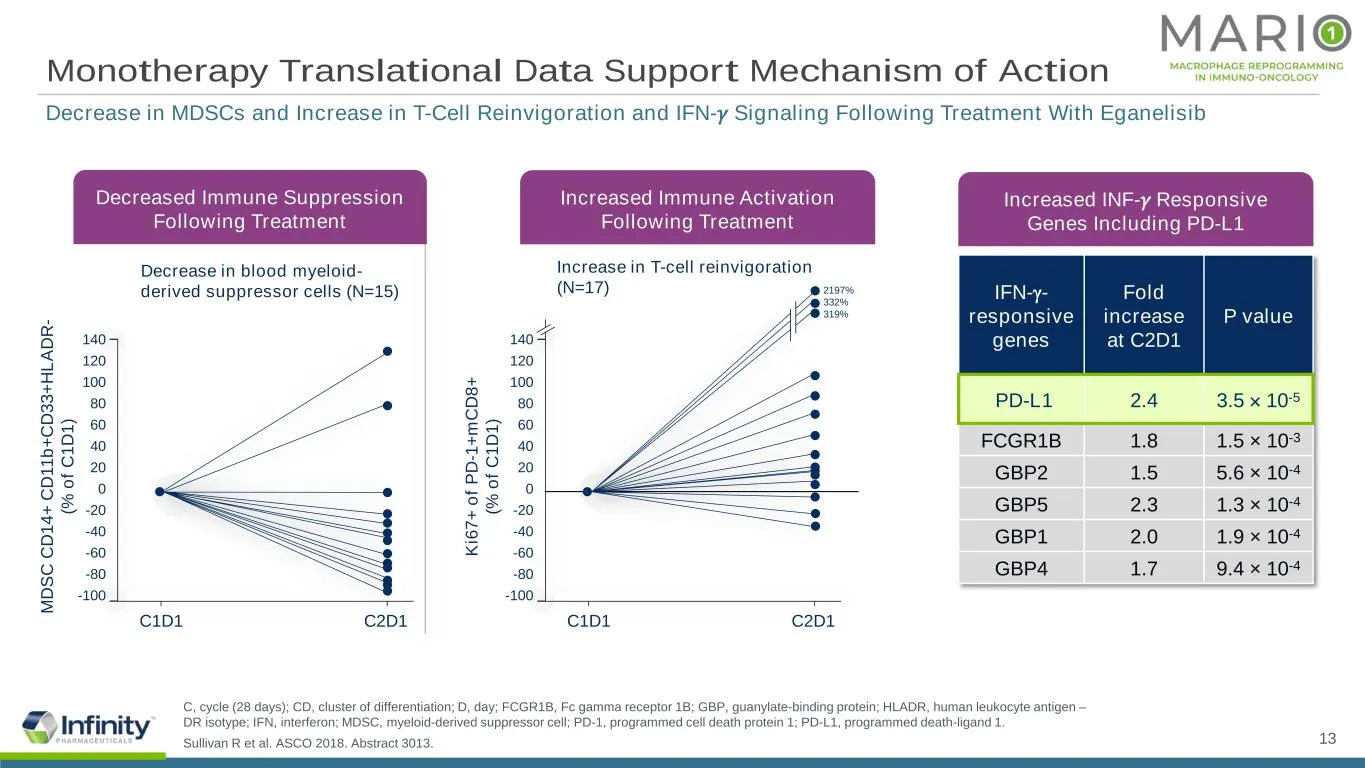
Slide 13: Monotherapy Translational Data Support Mechanism of Action
13 Monotherapy Translational Data Support Mechanism of Action Decrease in MDSCs and Increase in T-Cell Reinvigoration and IFN-���� Signaling Following Treatment With Eganelisib IFN-γ- responsive genes Fold increase at C2D1 P value PD-L1 2.4 3.5 × 10⁻⁵ FCGR1B 1.8 1.5 × 10⁻³ GBP2 1.5 5.6 × 10⁻⁴ GBP5 2
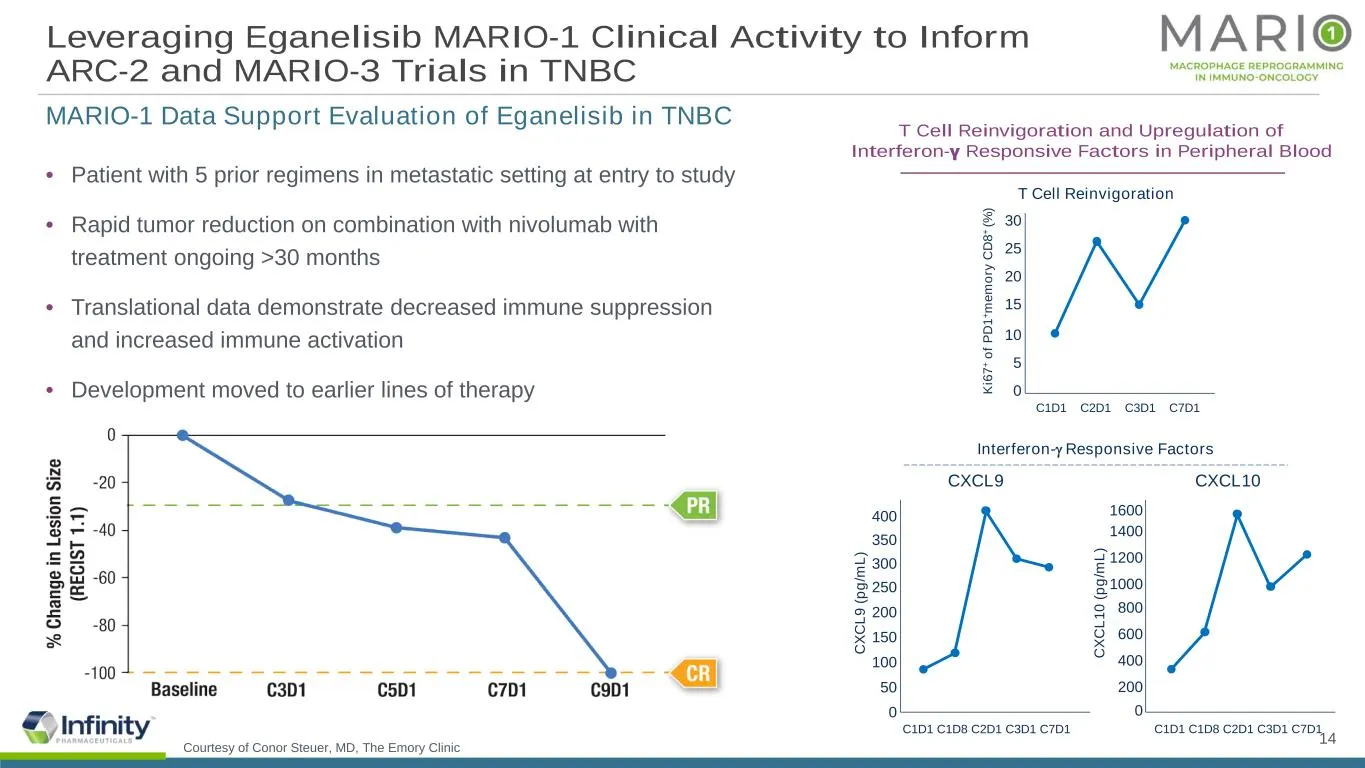
Slide 14: Leveraging MARIO-1 Clinical Activity to Inform ARC-2 and MARIO-3
14 400 350 300 250 200 150 100 50 0 Leveraging Eganelisib MARIO-1 Clinical Activity to Inform ARC-2 and MARIO-3 Trials in TNBC MARIO-1 Data Support Evaluation of Eganelisib in TNBC • Patient with 5 prior regimens in metastatic setting at entry to study • Rapid tumor reduction on combination with niv
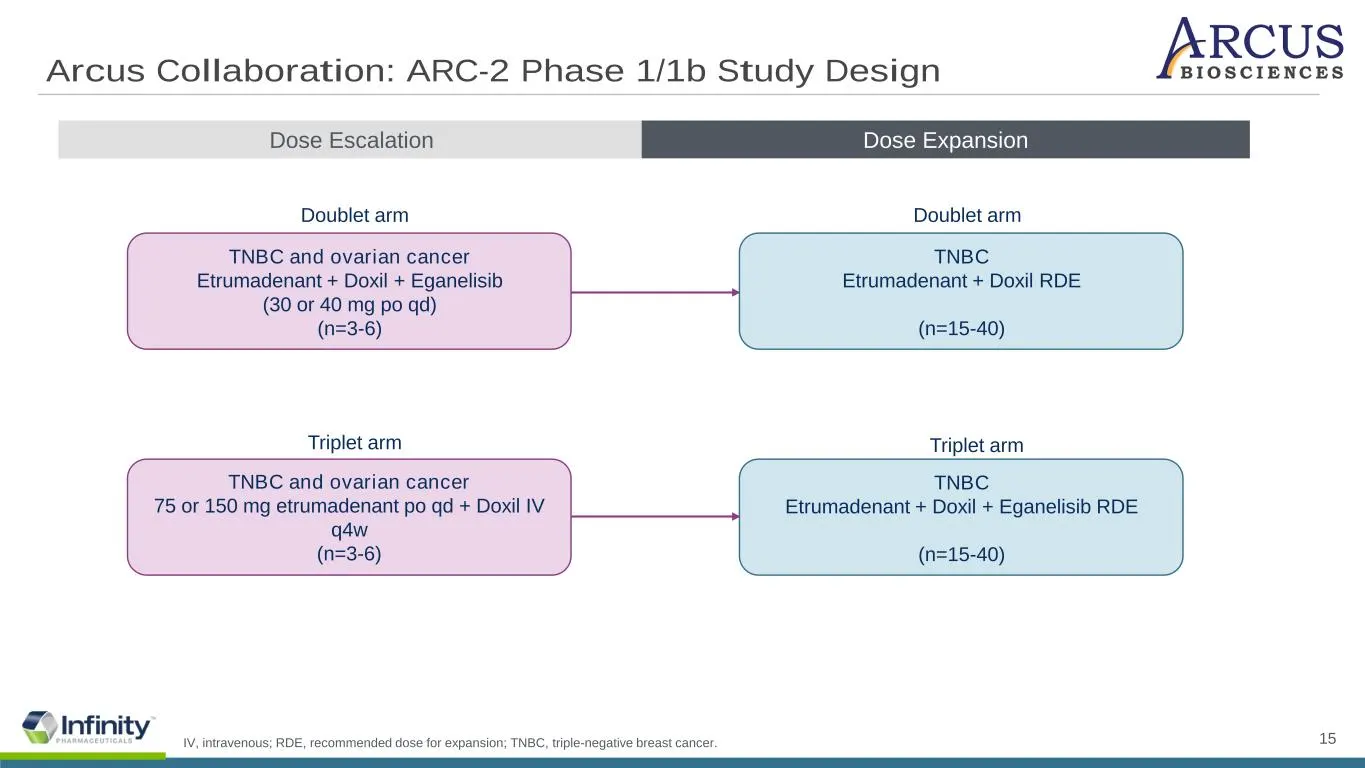
Slide 15: Arcus Collaboration: ARC-2 Phase 1/1b Study Design
15 TNBC Etrumadenant + Doxil + Eganelisib RDE (n=15-40) TNBC Etrumadenant + Doxil RDE (n=15-40) TNBC and ovarian cancer 75 or 150 mg etrumadenant po qd + Doxil IV q4w (n=3-6) TNBC and ovarian cancer Etrumadenant + Doxil + Eganelisib (30 or 40 mg po qd) (n=3-6) Arcus Collaboration: ARC-2 Phase 1/1b S
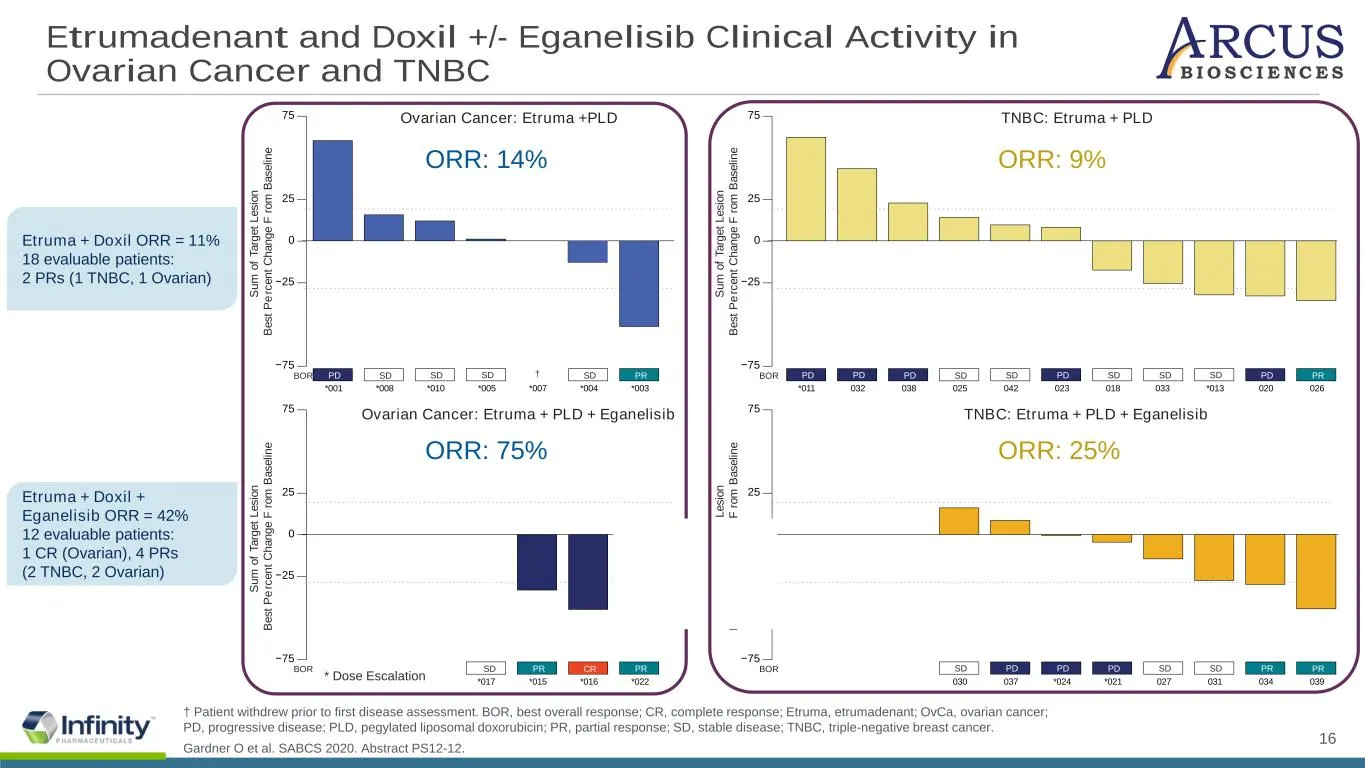
Slide 16: Etrumadenant and Doxil +/- Eganelisib Clinical Activity in Ovarian Cancer and TNBC
16 −75 −25 0 25 75 −75 −25 0 25 75 S um o f Ta rg et L es io n B es t P e rc en t C ha ng e F ro m B as el in e S um o f Ta rg et L es io n B es t P e rc en t C ha ng e F ro m B as el in e Ovarian Cancer: Etruma +PLD Ovarian Cancer: Etruma + PLD + Eganelisib −75 −25 0 25 75 −75 −25 0 25 75 S um o f
Slide 17: MARIO-3 Initial Results
MARIO-3 Initial Results
Slide 18: Exploring the Potential of Eganelisib to Improve on Standard of Care
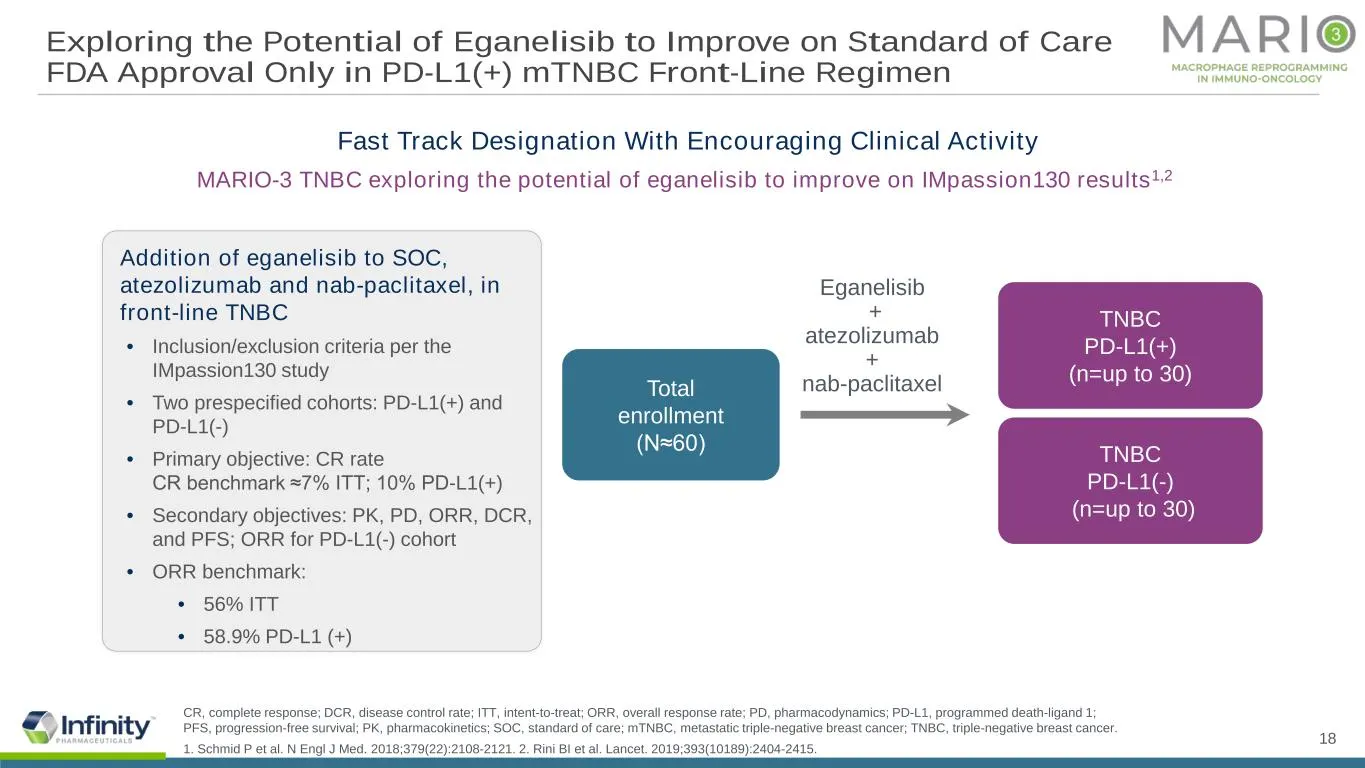
18 Exploring the Potential of Eganelisib to Improve on Standard of Care FDA Approval Only in PD-L1(+) mTNBC Front-Line Regimen MARIO-3 TNBC exploring the potential of eganelisib to improve on IMpassion130 results1,2 Total enrollment (N≈60) TNBC PD-L1(+) (n=up to 30) TNBC PD-L1(-) (n=up to 30) Eganel
Slide 19: Scientific Rationale for Adding Eganelisib to Atezolizumab and Nab-Paclitaxel
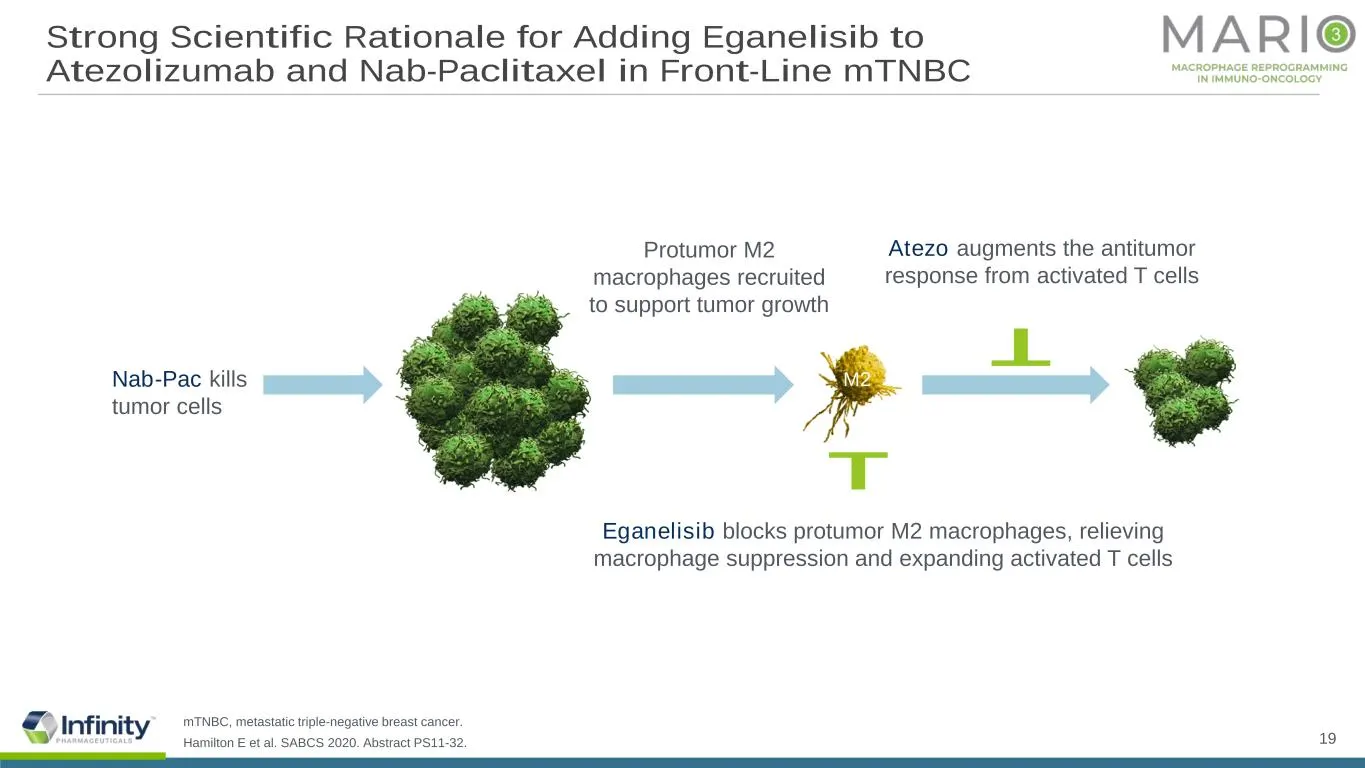
19 Strong Scientific Rationale for Adding Eganelisib to Atezolizumab and Nab-Paclitaxel in Front-Line mTNBC Nab-Pac kills tumor cells Protumor M2 macrophages recruited to support tumor growth Eganelisib blocks protumor M2 macrophages, relieving macrophage suppression and expanding activated T cells
Slide 20: Demographics & Baseline Characteristics for Evaluable Patients
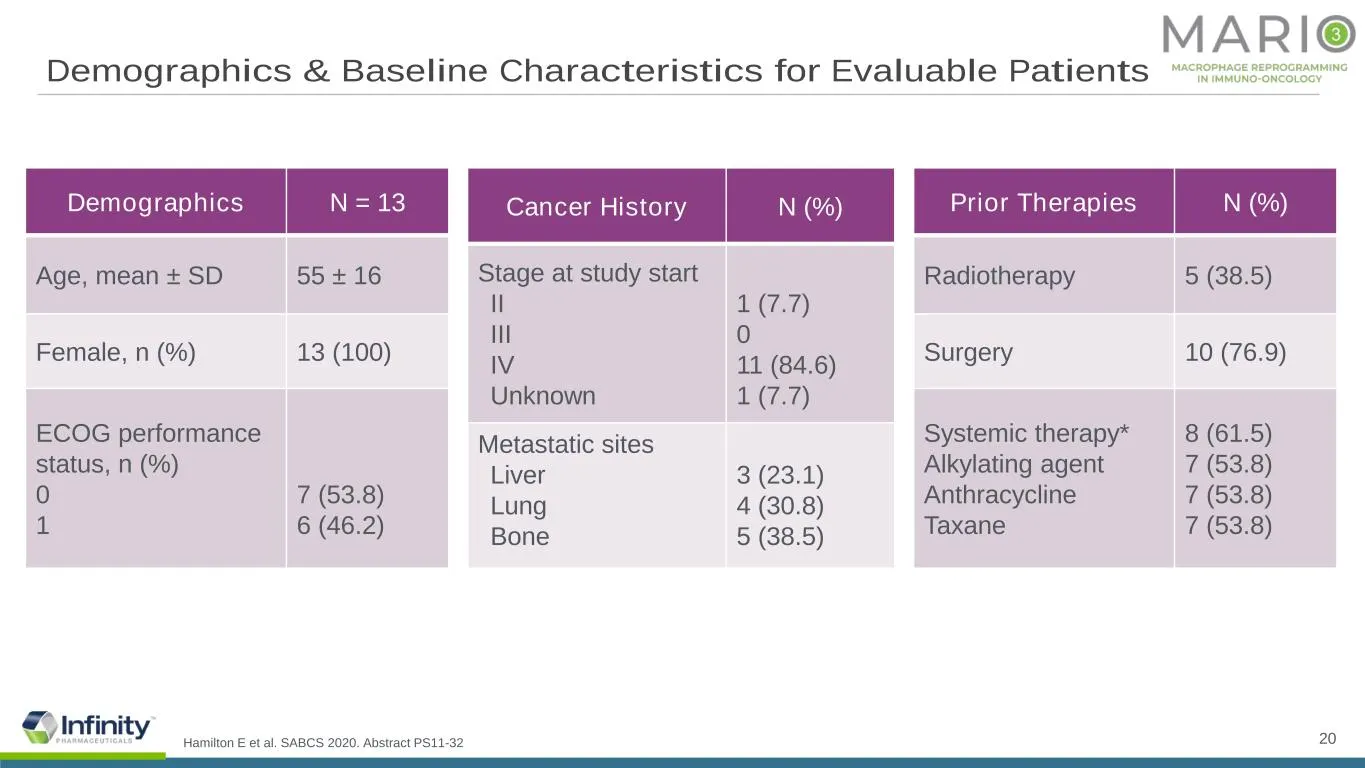
20 Demographics & Baseline Characteristics for Evaluable Patients Demographics N = 13 Age, mean ± SD 55 ± 16 Female, n (%) 13 (100) ECOG performance status, n (%) 0 1 7 (53.8) 6 (46.2) Cancer History N (%) Stage at study start II III IV Unknown 1 (7.7) 0 11 (84.6) 1 (7.7) Metastatic sites Liver Lung
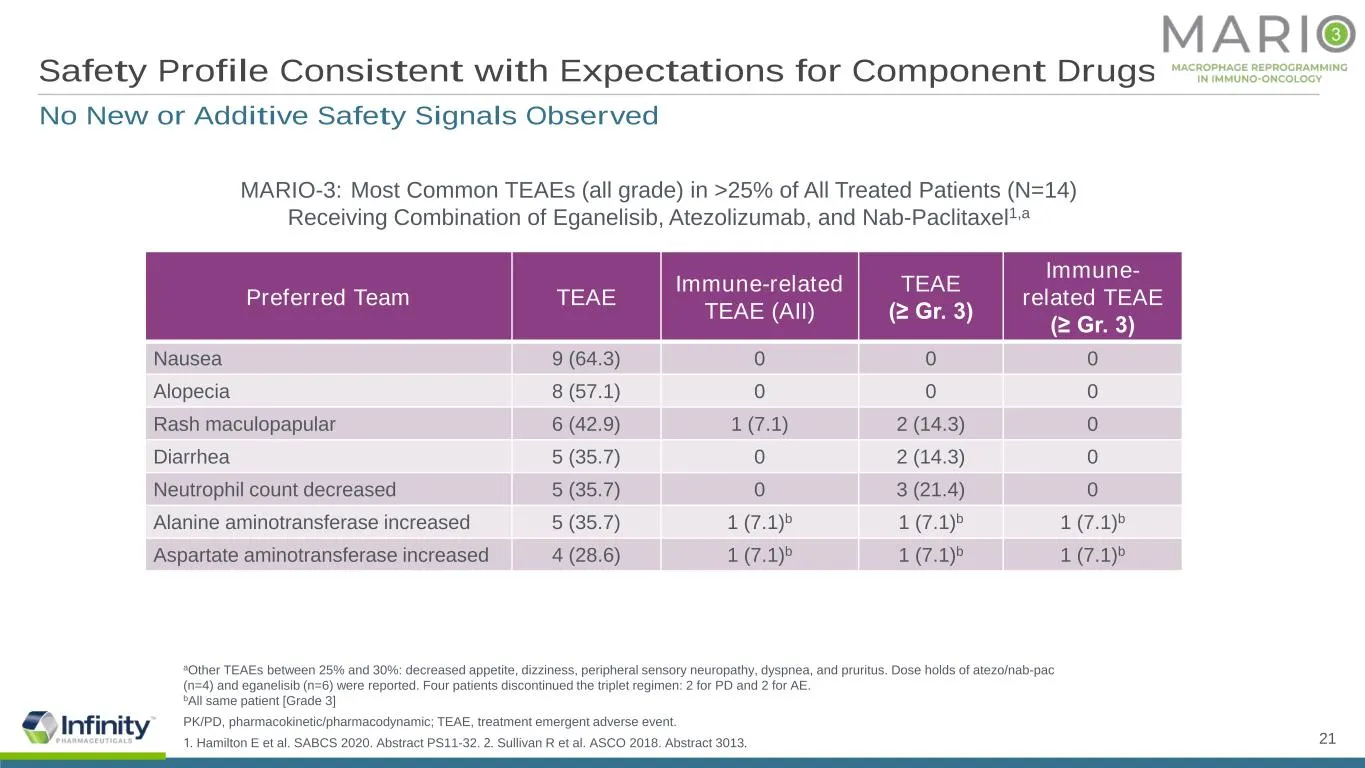
Slide 21: Safety Profile Consistent with Expectations for Component Drugs
21 Safety Profile Consistent with Expectations for Component Drugs No New or Additive Safety Signals Observed MARIO-3: Most Common TEAEs (all grade) in >25% of All Treated Patients (N=14) Receiving Combination of Eganelisib, Atezolizumab, and Nab-Paclitaxel1,a Preferred Team TEAE Immune-relatedTEAE
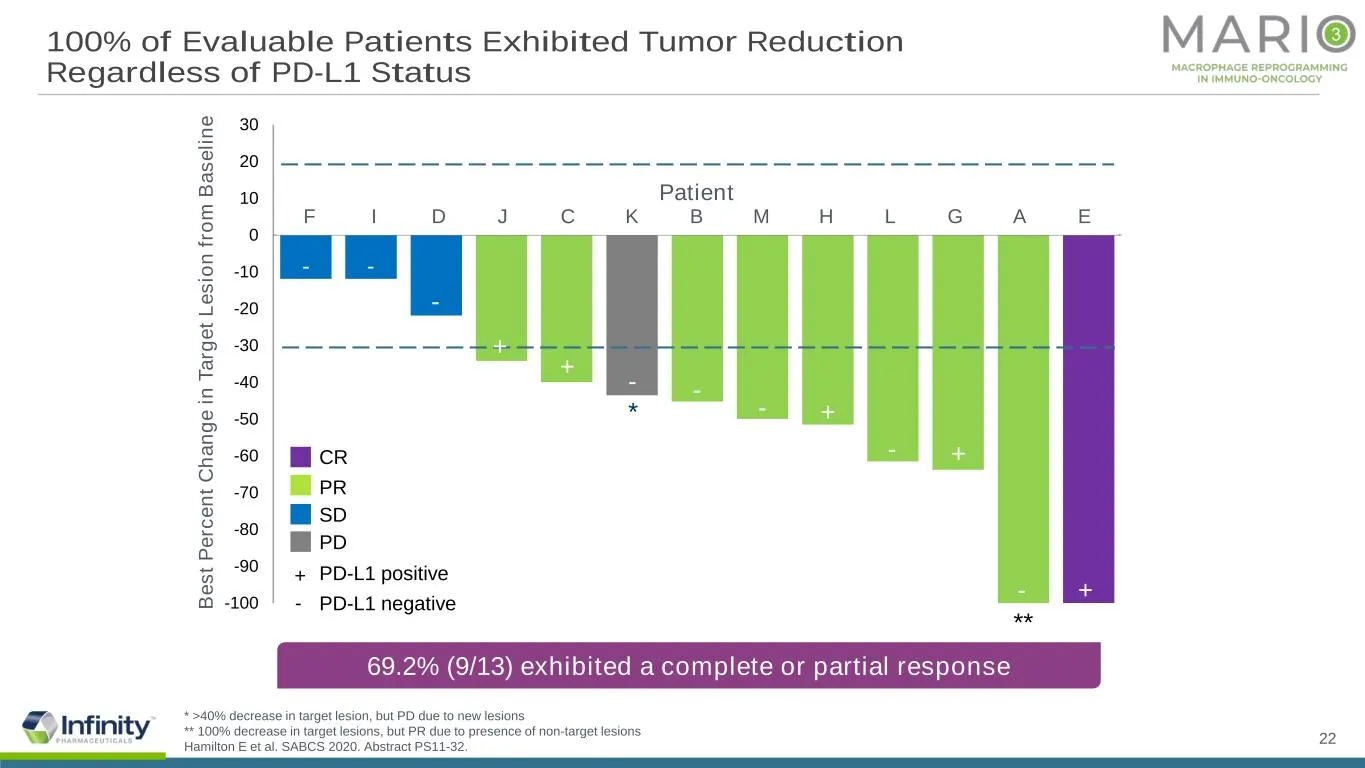
Slide 22: 100% of Evaluable Patients Exhibited Tumor Reduction Regardless of PD-L1 Status
22 -100 -90 -80 -70 -60 -50 -40 -30 -20 -10 0 10 20 30 * ** F I D J C K B M H L G A E B es t P er ce nt C ha ng e in T ar ge t L es io n fr om B as el in e Patient PR SD PD CR PD-L1 positive PD-L1 negative + - + + + + + - - - - - - - - 69.2% (9/13) exhibited a complete or partial response 100% of Ev
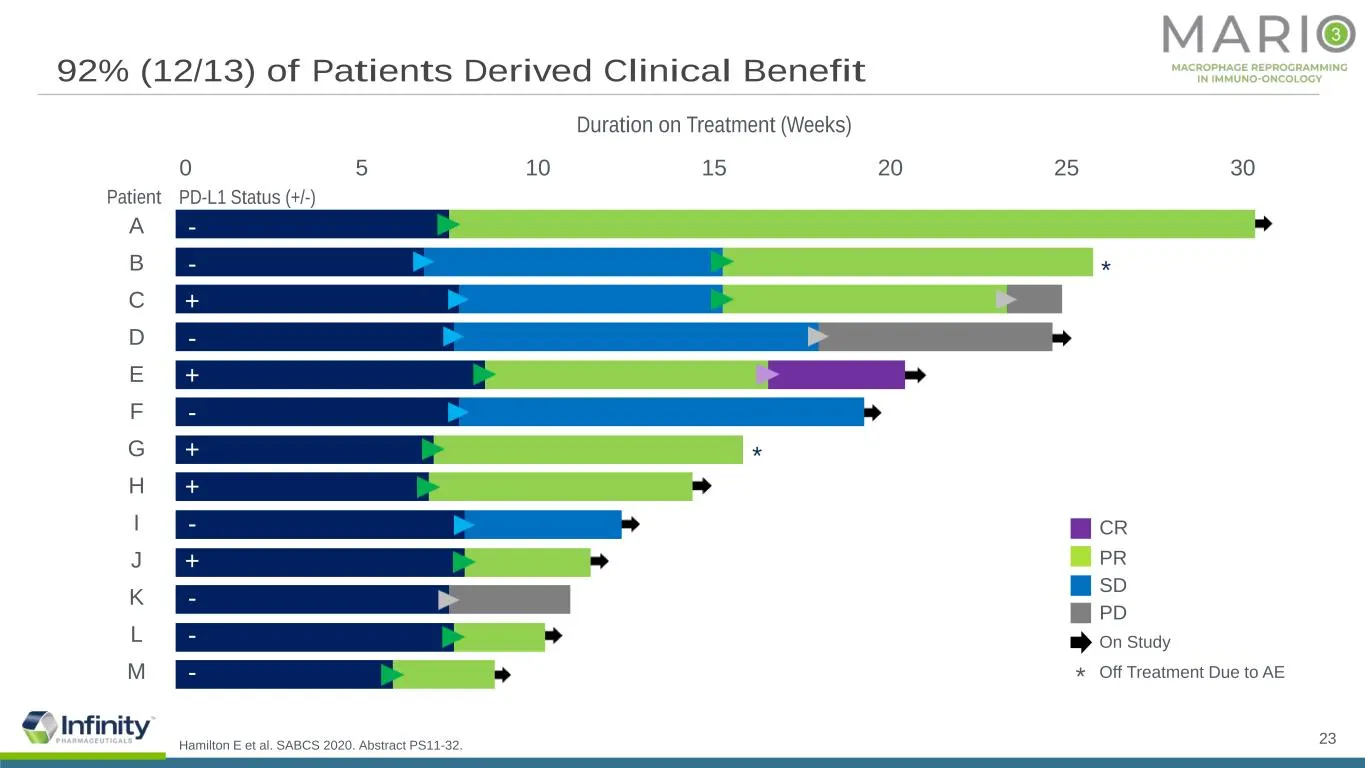
Slide 23: 92% of Patients Derived Clinical Benefit
23 92% (12/13) of Patients Derived Clinical Benefit * - - + - + - + + - + - - - A B C D E F G H I J K L M Patient PD-L1 Status (+/-) 0 5 10 15 20 25 30 Duration on Treatment (Weeks) * PR SD PD CR On Study Off Treatment Due to AE* Hamilton E et al. SABCS 2020. Abstract PS11-32.
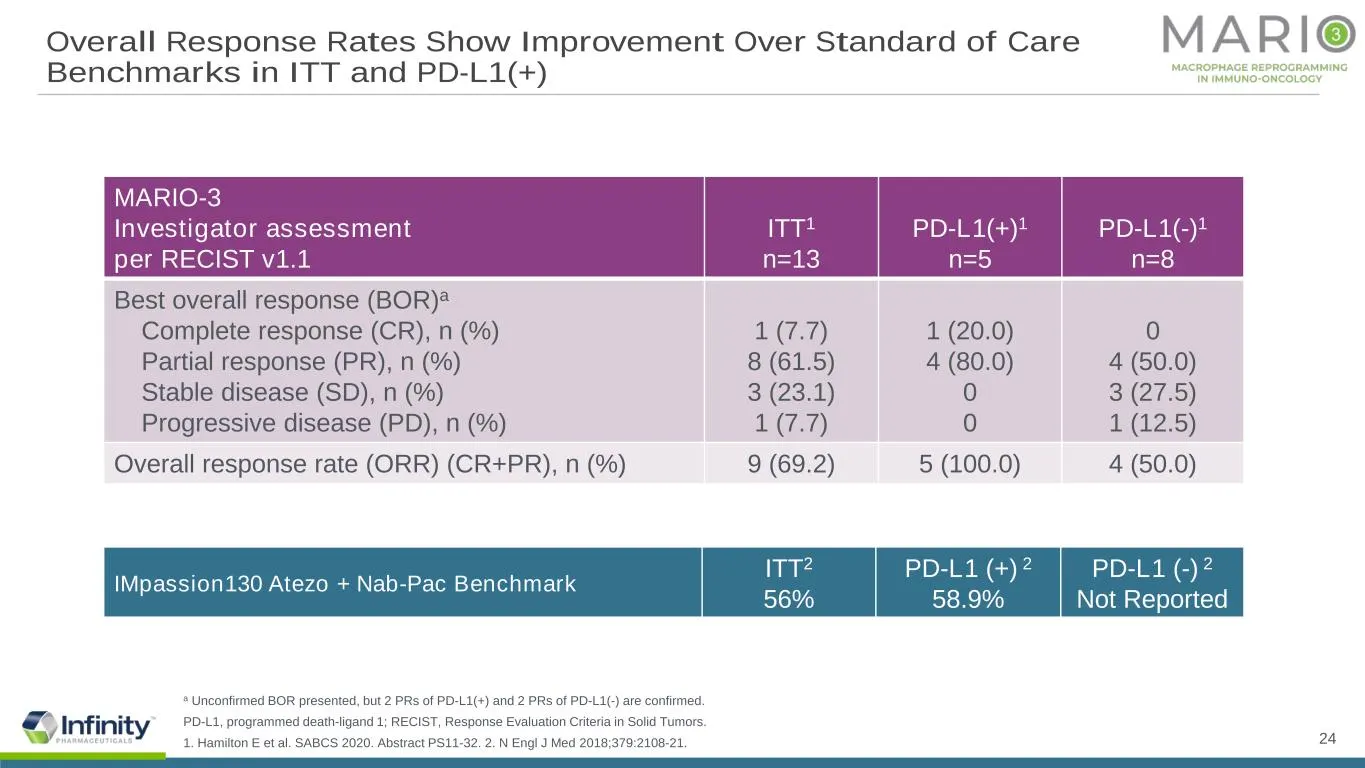
Slide 24: Overall Response Rates Show Improvement Over Standard of Care Benchmarks
24 Overall Response Rates Show Improvement Over Standard of Care Benchmarks in ITT and PD-L1(+) MARIO-3 Investigator assessment per RECIST v1.1 ITT1 n=13 PD-L1(+)1 n=5 PD-L1(-)1 n=8 Best overall response (BOR)a Complete response (CR), n (%) Partial response (PR), n (%) Stable disease (SD), n (%) Pro
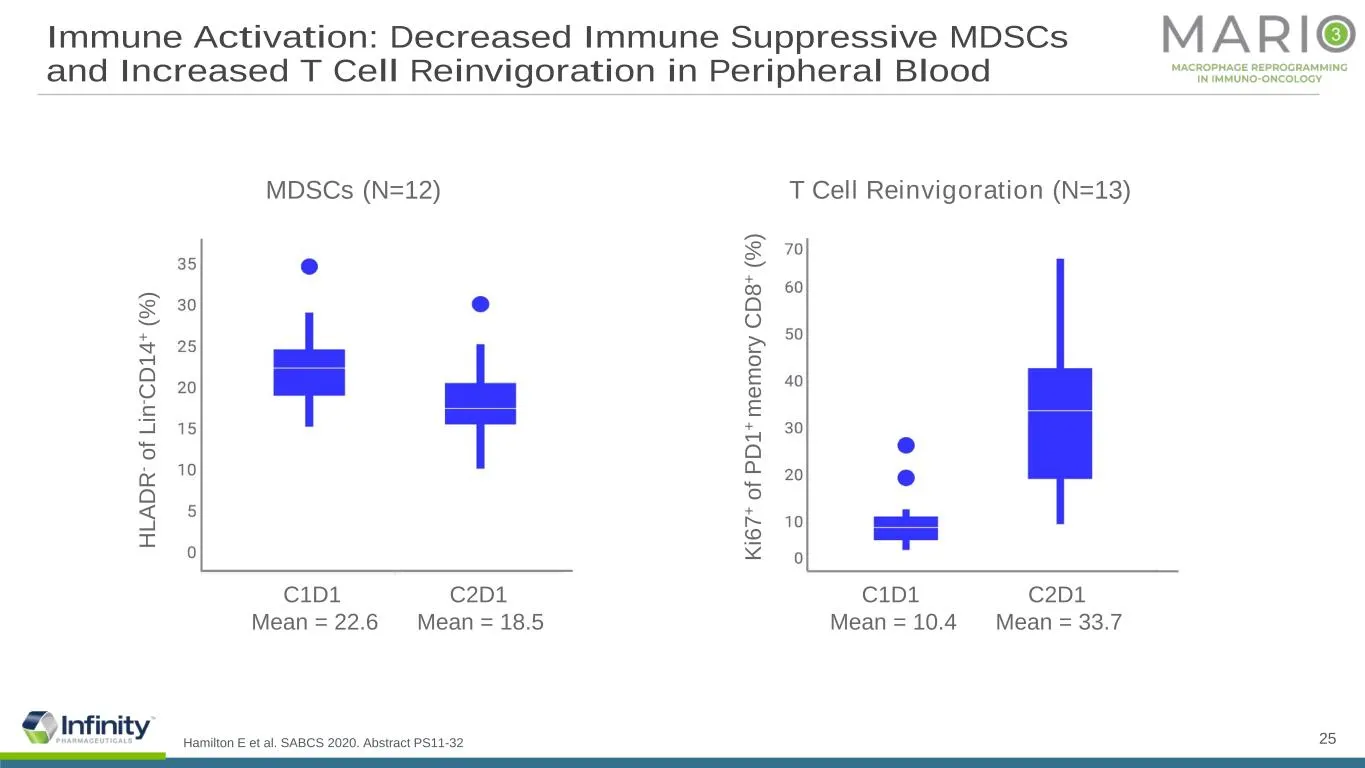
Slide 25: Immune Activation: Decreased MDSCs and Increased T Cell Reinvigoration
25 Immune Activation: Decreased Immune Suppressive MDSCs and Increased T Cell Reinvigoration in Peripheral Blood K i6 7+ of P D 1+ m em or y C D 8+ (% ) H LA D R - of L in - C D 14 + (% ) MDSCs (N=12) T Cell Reinvigoration (N=13) C1D1 C2D1 Mean = 22.6 Mean = 18.5 C1D1 C2D1 Mean = 10.4 Mean = 33.7 Ha
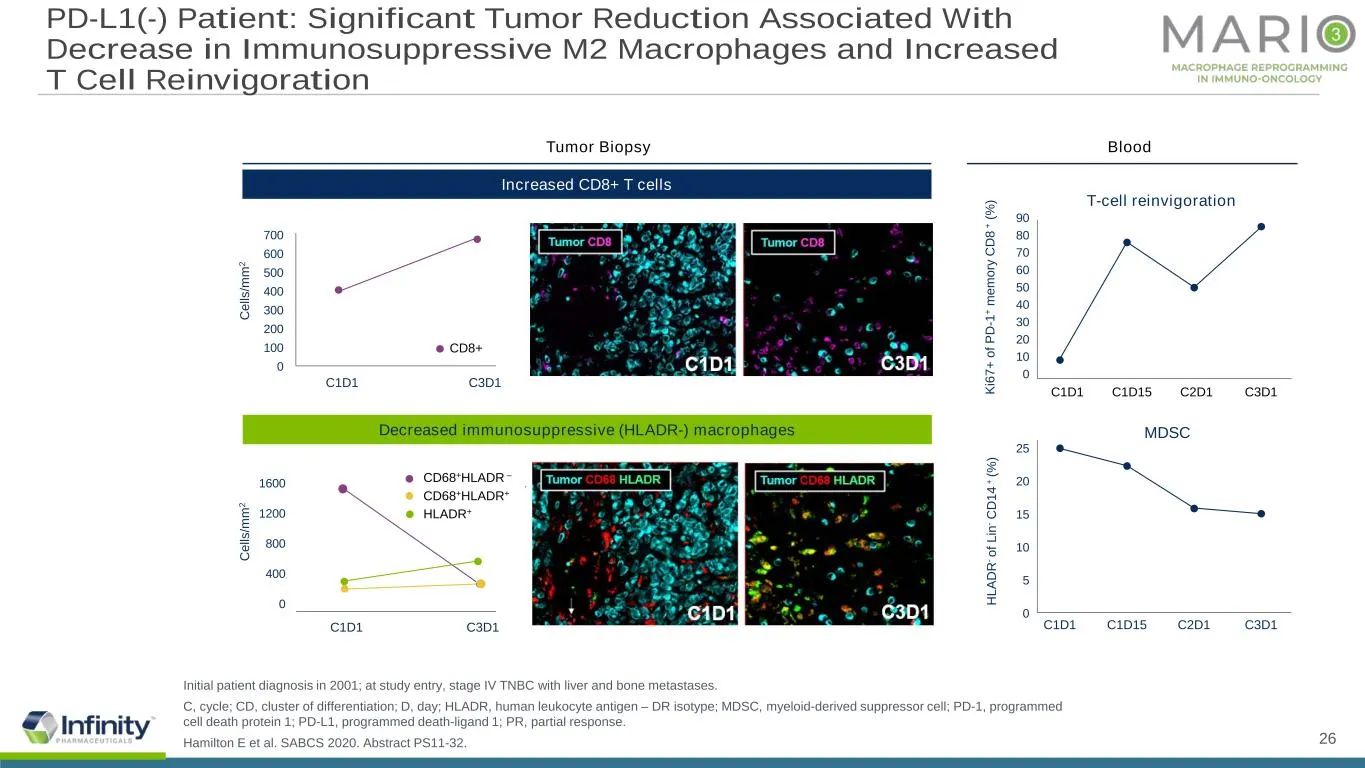
Slide 26: PD-L1(-) Patient: Significant Tumor Reduction With Decrease in M2 Macrophages
26 90 80 70 60 50 40 30 20 10 0 PD-L1(-) Patient: Significant Tumor Reduction Associated With Decrease in Immunosuppressive M2 Macrophages and Increased T Cell Reinvigoration 25 20 15 10 5 0 MDSC C1D1 C3D1C1D15 C2D1 H LA D R - o f L in - C D 14 + (% ) Blood T-cell reinvigoration K i6 7+ o f P D -1 +
Slide 27: Conclusions
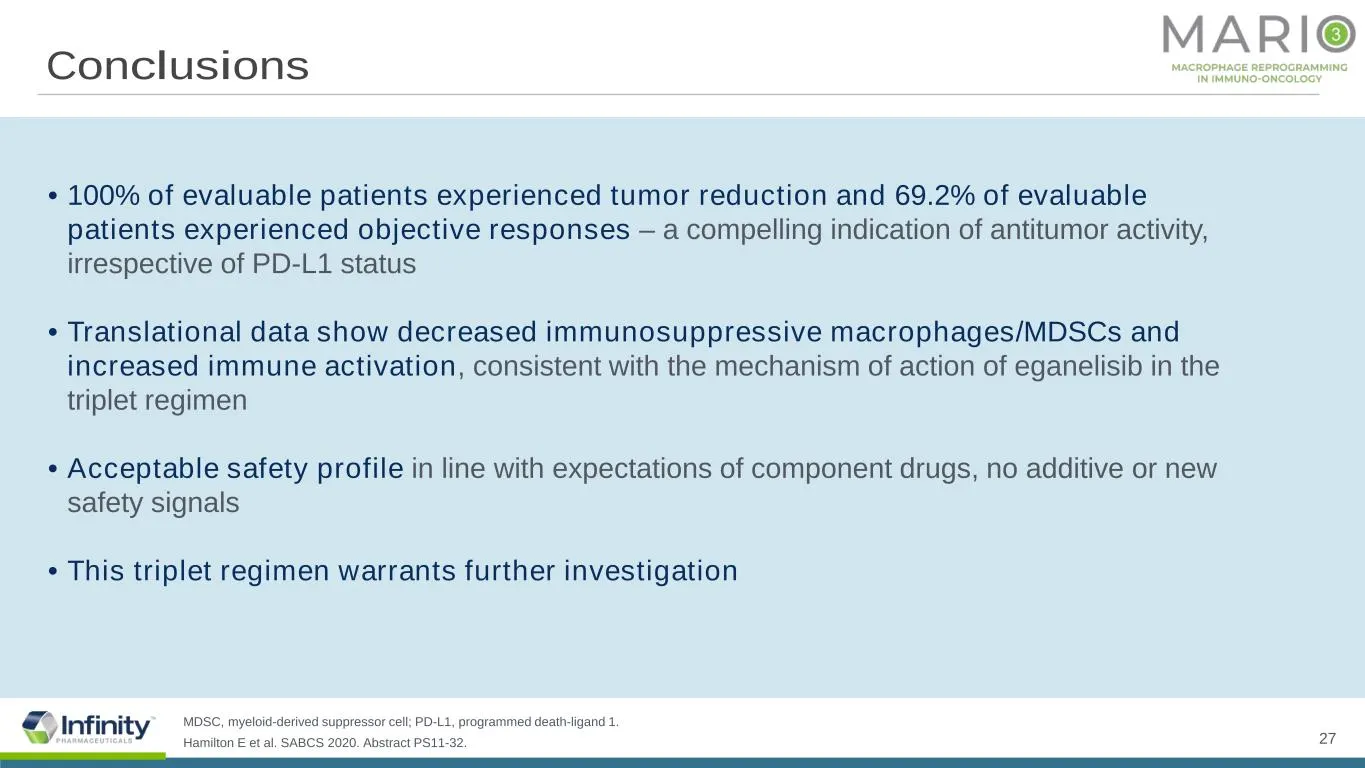
27 Conclusions • 100% of evaluable patients experienced tumor reduction and 69.2% of evaluable patients experienced objective responses – a compelling indication of antitumor activity, irrespective of PD-L1 status • Translational data show decreased immunosuppressive macrophages/MDSCs and increased
Slide 28: Eganelisib Ongoing Development in TNBC
Eganelisib Ongoing Development in TNBC
Slide 29: Eganelisib Ongoing Development in TNBC
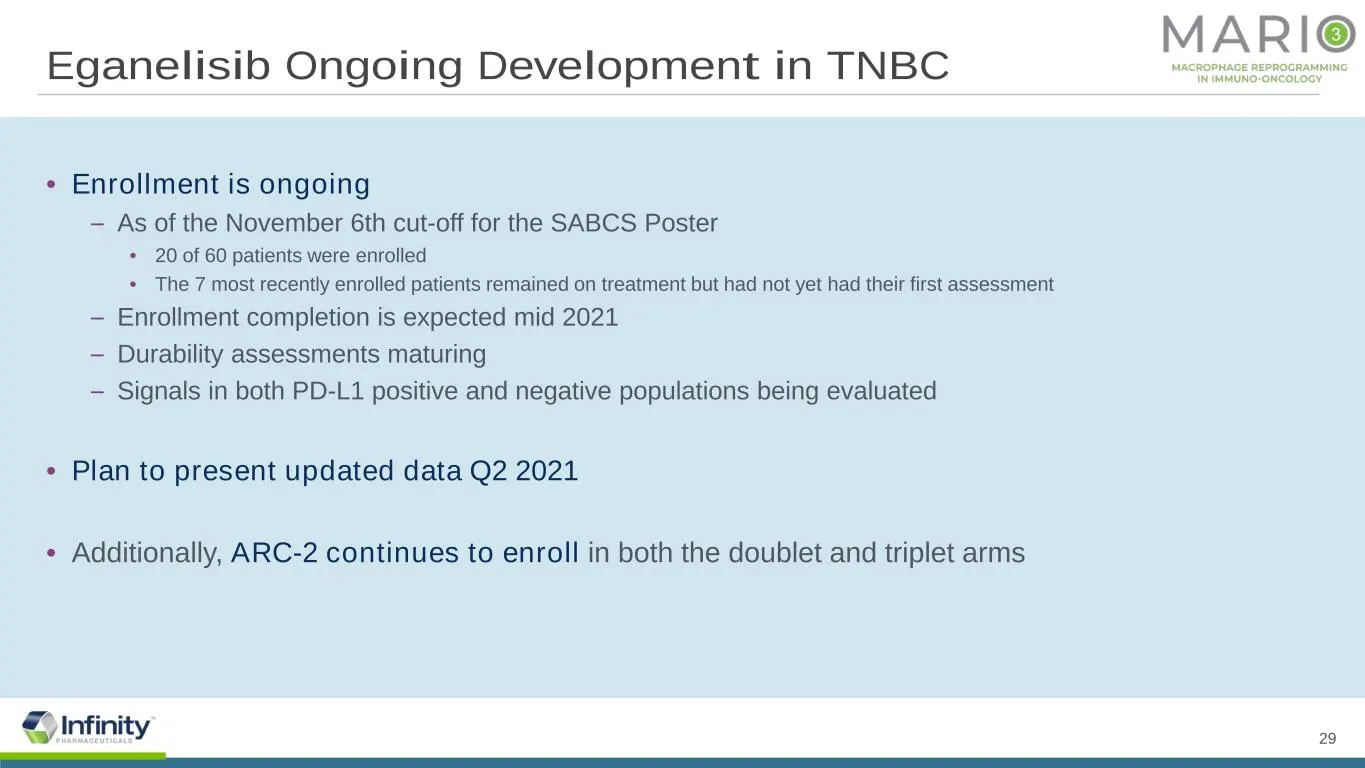
29 Eganelisib Ongoing Development in TNBC • Enrollment is ongoing – As of the November 6th cut-off for the SABCS Poster • 20 of 60 patients were enrolled • The 7 most recently enrolled patients remained on treatment but had not yet had their first assessment – Enrollment completion is expected mid 2
Slide 30: Summary: Significant Potential for Eganelisib in TNBC
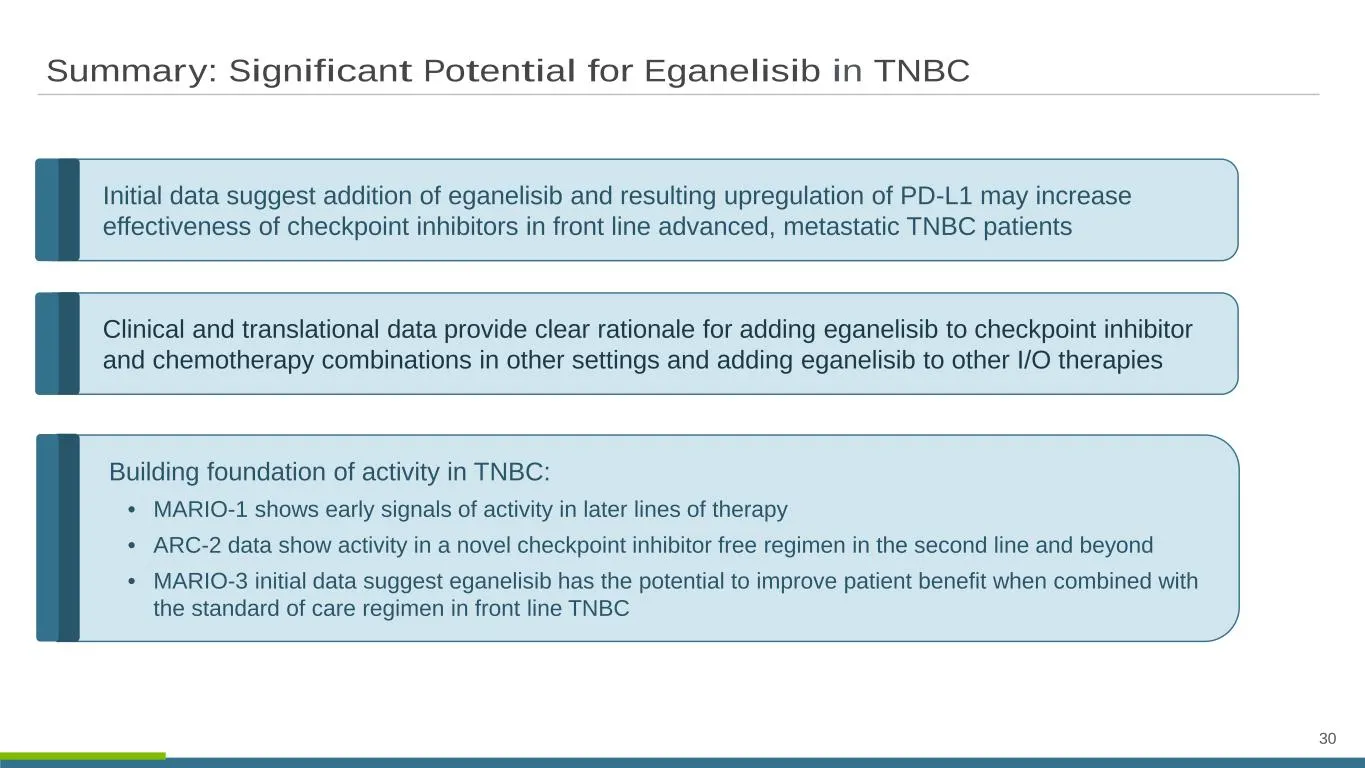
30 Initial data suggest addition of eganelisib and resulting upregulation of PD-L1 may increase effectiveness of checkpoint inhibitors in front line advanced, metastatic TNBC patients Summary: Significant Potential for Eganelisib in TNBC Clinical and translational data provide clear rationale for ad

Slide 31: Q & A Discussion
Q & A Discussion

Slide 32: Thank You
Thank You
Source: SEC EDGAR · 8-K filed Dec 9, 2020
More decks from Infinity Pharmaceuticals, Inc.
 Merger or Acquisition (June 2023)89 slides · Jun 20, 2023
 Merger or Acquisition (February 2023)39 slides · Feb 23, 2023
 Technical Presentation (July 2021)54 slides · Jul 27, 2021
 Technical Presentation (February 2021)53 slides · Feb 11, 2021
 Corporate Update (January 2016)47 slides · Jan 11, 2016
 Investor Presentation (May 2015)30 slides · May 7, 2015