Cellular Biomedicine Group Inc
Cellular Biomedicine — 2015 5th World Congress on Cancer Therapy
22 slides from Cellular Biomedicine's conference presentation, Sep 28, 2015
Slide 1: EGFR-targeting CAR-T Cells Immunotherapy for EGFR-Expressing Advanced Solid Tumors
ae Bat Bio-therapeutic The EGFR-targeting Chimeric Antigen Receptor-Modified T Cells Immunotherapy for Patients with EGFR-Expressing Advanced, Relapsed/Refractory Solid Tumors Kai-chao Feng’, Ye-lei Guo*, Han-ren Dai2*, Yao Wang?, Xiang Li’, Wei-dong Han? “Contributed equally. Correspondence to: Pro
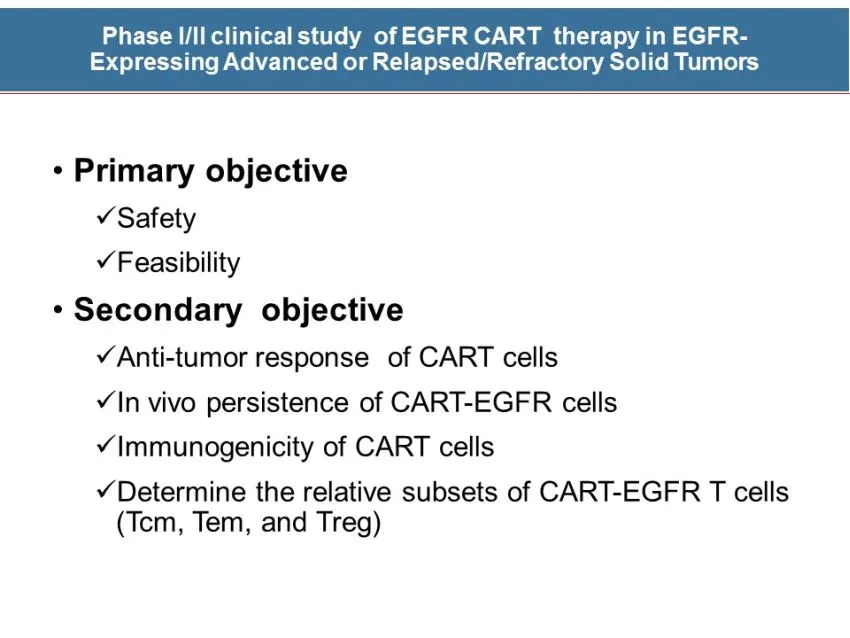
Slide 2: Phase I/II clinical study of EGFR CART therapy in EGFR-Expressing Solid Tumors
Phase I/II clinicalstudy of EGFR CART therapy in EGFR- Expressing Advanced or Relapsed/Refractory Solid Tumors * Primary objective v Safety v Feasibility * Secondary objective vAnti-tumor response of CART cells vIn vivo persistence of CART-EGFR cells v¥ Immunogenicity of CART cells v Determine the r
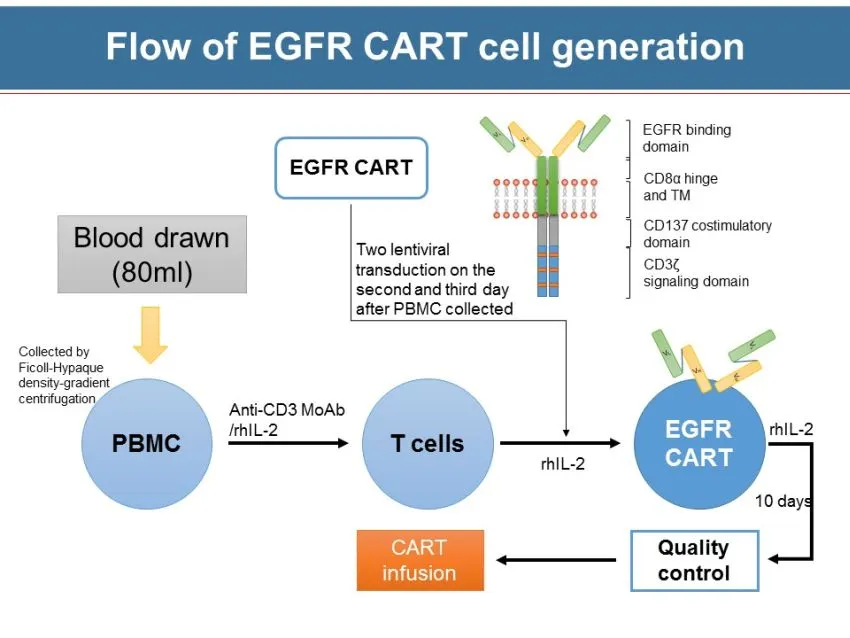
Slide 3: Flow of EGFR CART cell generation
Flow of EGFR CART cell generation NS EGER binding domain CDB8q hinge TTttgri? and TM J 0000) O06 | Blood drawn D137 costimulatory P Two lentiviral domain (80ml) transduction on the one é —— second and third day signaling domain after PBMC collected Collected by J Ficoll-Hypaque density-gradient aga
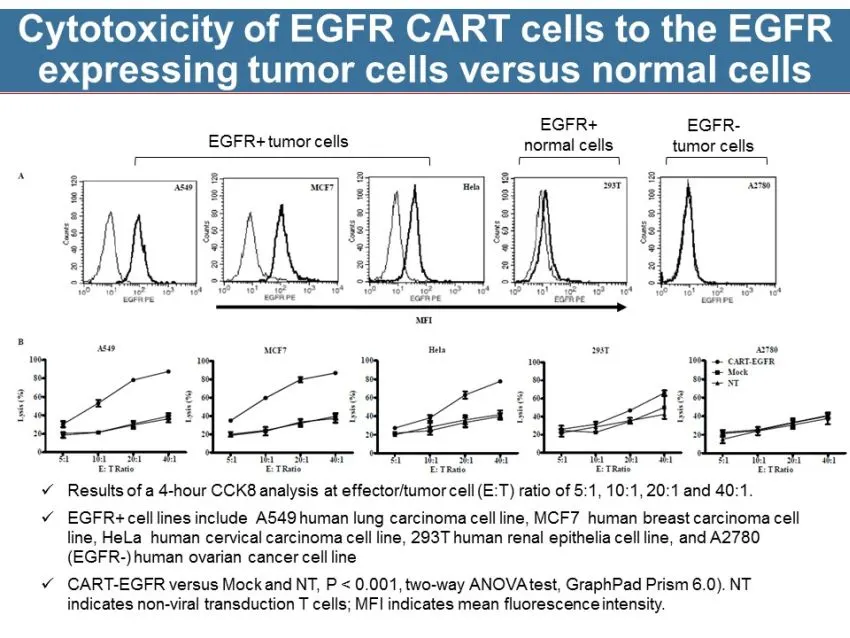
Slide 4: Cytotoxicity of EGFR CART cells to the EGFR expressing tumor cells versus normal cells
Cytotoxicity of EGFR CART cells to the EGFR expressing tumor cells versus normal cells EGFR+ EGFR. EGFR+ tumor cells normal cells tumor cells, f ' yor 1 2 #0) MCE z Hels 2 5 os ae A 8 2 2 2 is 8. 2 s is. i ke i ie kk s 8 8 2 8 Fear a ta aa a mi _ ae MrT Hele wT \ \ \ to > cance Pe : ; ha 4 rl+t "oat
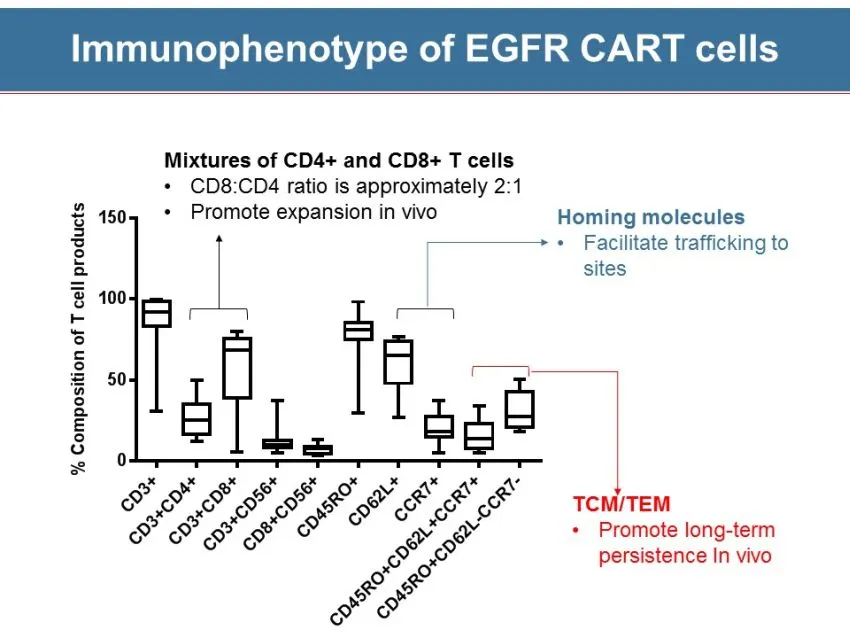
Slide 5: Immunophenotype of EGFR CART cells
Immunophenotype of EGFR CART cells Mixtures of CD4+ and CD8+ T cells + CD8:CD4 ratio is approximately 2:1 + Promote expansion in vivo Homing molecules > + Facilitate trafficking to | sites — = a Ss % Composition of T cell products a 3 > Ss S 2S rt ot oar wt aw FF S Ss vs OS ‘SS TenTem SSS SF S ye +
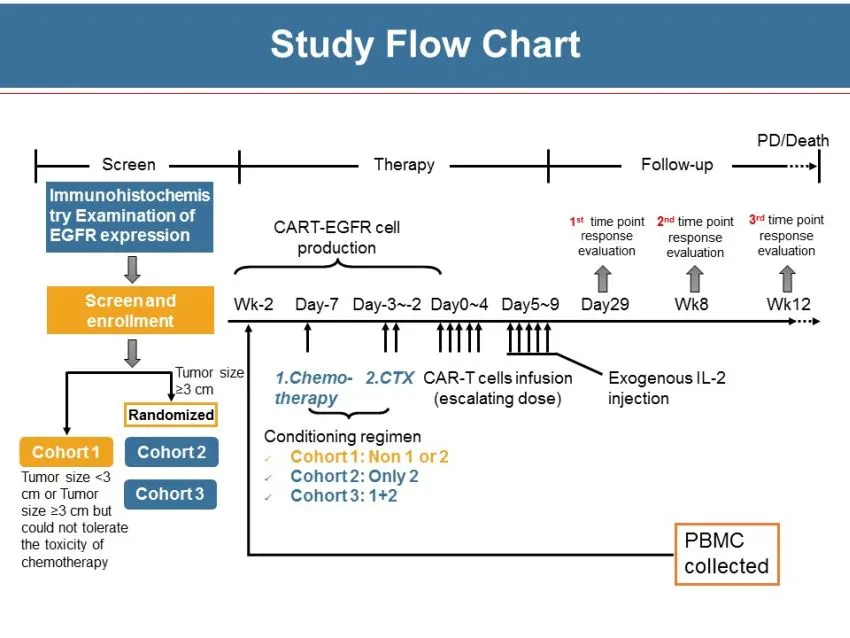
Slide 6: Study Flow Chart
Study Flow Chart Screen { Immunohistochemis try Examination of EGFR expression PD/Death } Therapy } Follow-up | 1 ti it 2° tir int 3" time point CART-EGFR cell Teens” "aapchus’” | veaporse production evaluation —_ evaluation evaluation Wk-2 Day-7 Day-3~-2 Day0~4 Day5~9 Day29 Wk8 wk12 Tumor size| sat
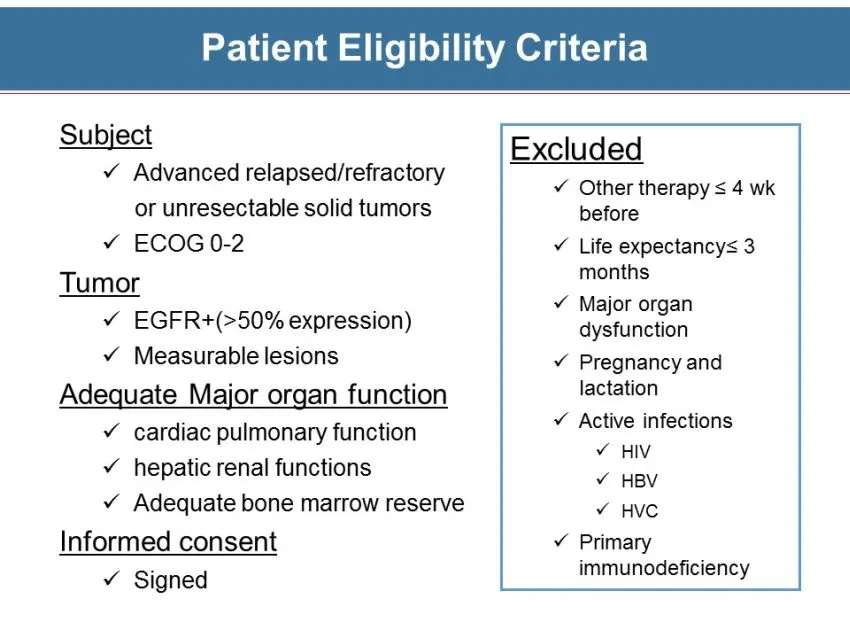
Slide 7: Patient Eligibility Criteria
Patient Eligibility Criteria Subject v Advanced relapsed/refractory or unresectable solid tumors vy ECOG 0-2 Tumor v EGFR+(>50% expression) vy Measurable lesions Adequate Major organ function v cardiac pulmonary function v hepatic renal functions v Adequate bone marrow reserve Informed consent v Sig
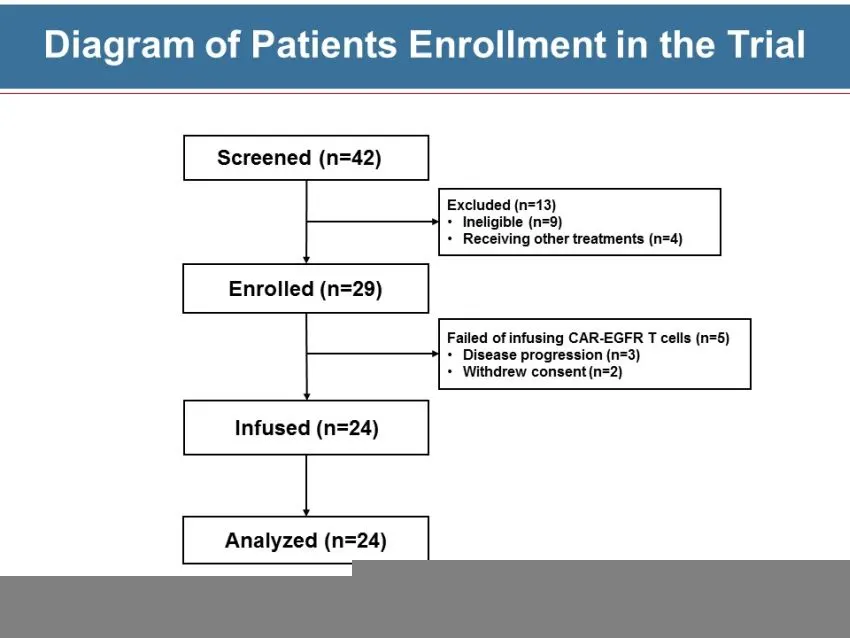
Slide 8: Diagram of Patients Enrollment in the Trial
Diagram of Patients Enrollment in the Trial Screened (n=42) Enrolled (n=29) Failed of infusing CAR-EGFR T cells (n=) | + Disease progression (n=3) + Withdrew consent (n=2) Infused (n=24) Excluded (n=13) + Ineligible (n=9) + Receiving other treatments (n=4) Analyzed (n=24)
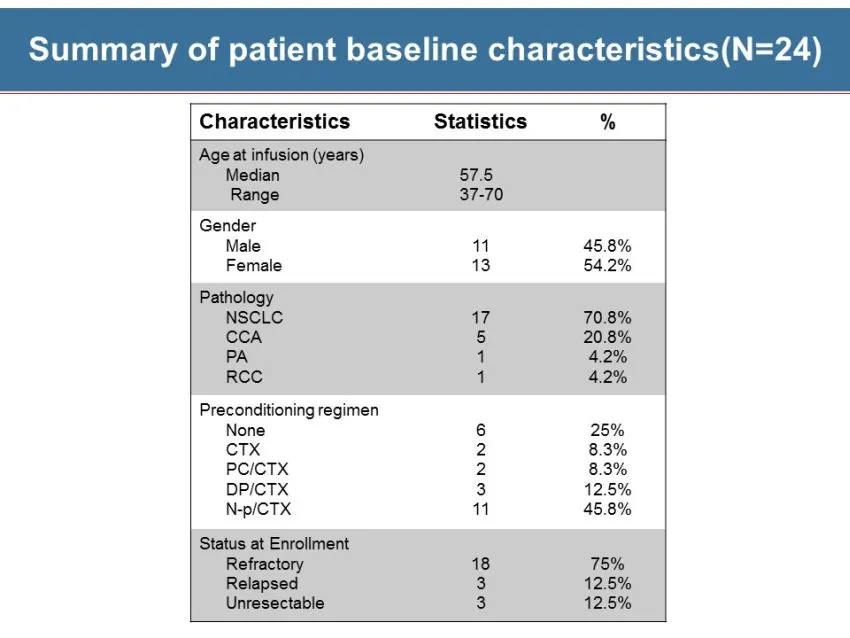
Slide 9: Summary of patient baseline characteristics (N=24)
Summary of patient baseline characteristics(N=24) Cc istics isti % Age at infusion (years) Median 57.5 Range 37-70 Gender Male 1 45.8% Female 13 54.2% Pathology NSCLC 17 70.8% CCA 5 20.8% PA 1 4.2% RCC 1 4.2% Preconditioning regimen None 6 25% CTX 2 8.3% PCICTX 2 8.3% DPICTX 3 12.5% N-piCTX 1 45.8%
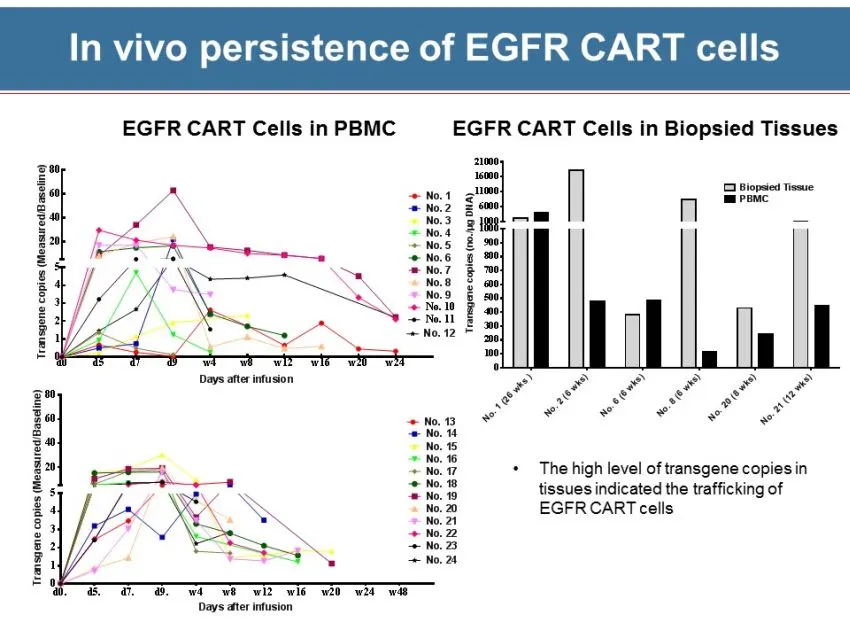
Slide 10: In vivo persistence of EGFR CART cells
In vivo persistence of EGFR CART cells EGFR CART Cells in PBMC EGFR CART Cells in Biopsied Tissues ‘0 an | or = | se) 2 - 2a} No.5 & 04 o AN hos ry Gy So TEE 1 . ; at 7. J teu fo Sor = 24 The high level of transgene copies in tissues indicated the trafficking of EGFR CART cells bbe meee ad 0. aa. Gs
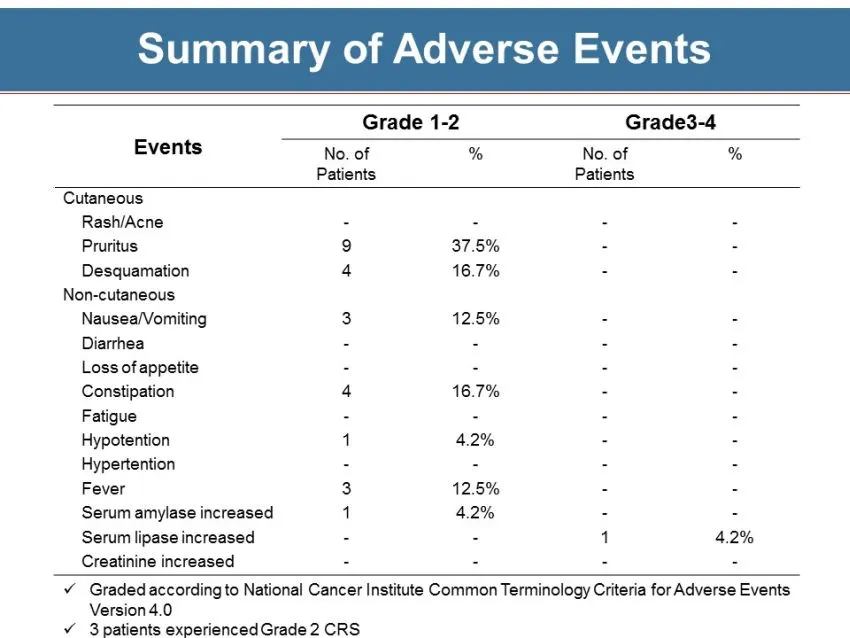
Slide 11: Summary of Adverse Events
Summary of Adverse Events Grade 1-2 Grade3-4 Events No. of % No. of % Patients Patients Cutaneous Rash/Acne - - - - Pruritus 9 37.5% - - Desquamation 4 16.7% - - Non-cutaneous Nausea/Vomiting 3 12.5% - - Diarrhea - - : - Loss of appetite S S : 5 Constipation 4 16.7% - - Fatigue = 2 - . Hypotention 4
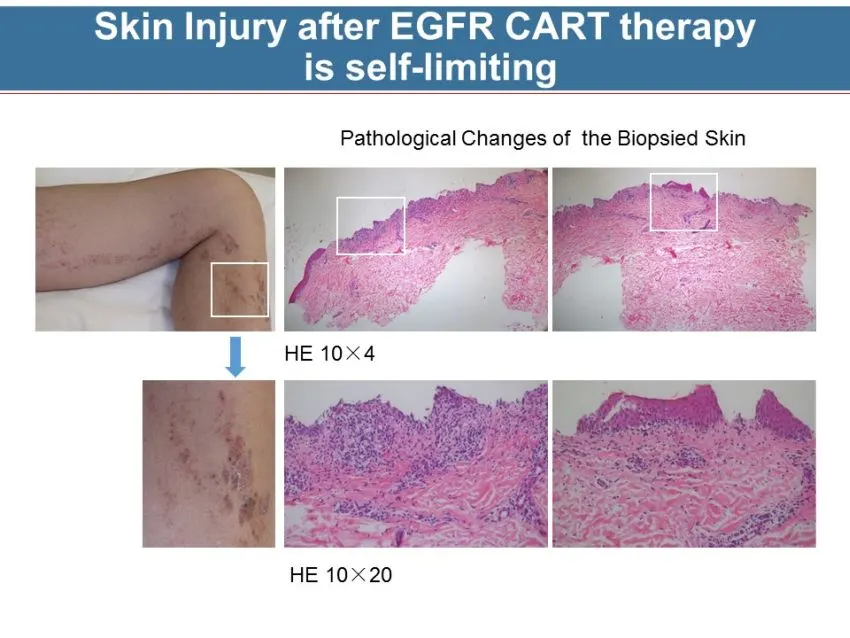
Slide 12: Skin Injury after EGFR CART therapy
Skin Injury after EGFR CART therapy is self-limiting Pathological Changes of the Biopsied Skin J HE 104 HE 1020
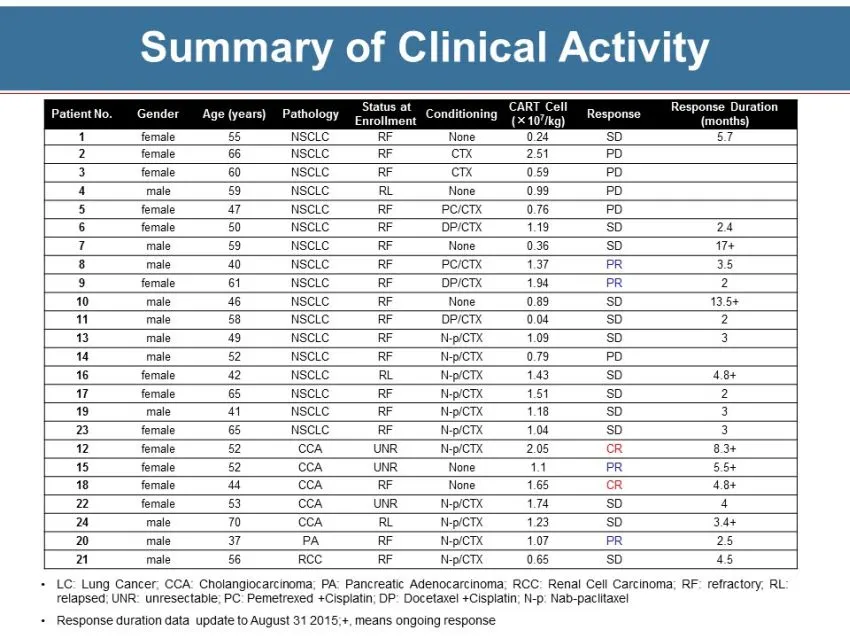
Slide 13: Summary of Clinical Activity
Summary of Clinical Activity 20 male Ea PA RF NepicTX 107 PR 25 a male 6 RCC RF NepicTx 065 So 45 + LC: Lung Cancer, CCA: RCC: Renal Cell Carcinoma, RF. refractory, RL: relapsed, UNR: unresectable, PC. Pemetrexed faspiatn "OP Doce! +Cisplatin; N-p: Nab-paciitaxe! . 1 2015+,
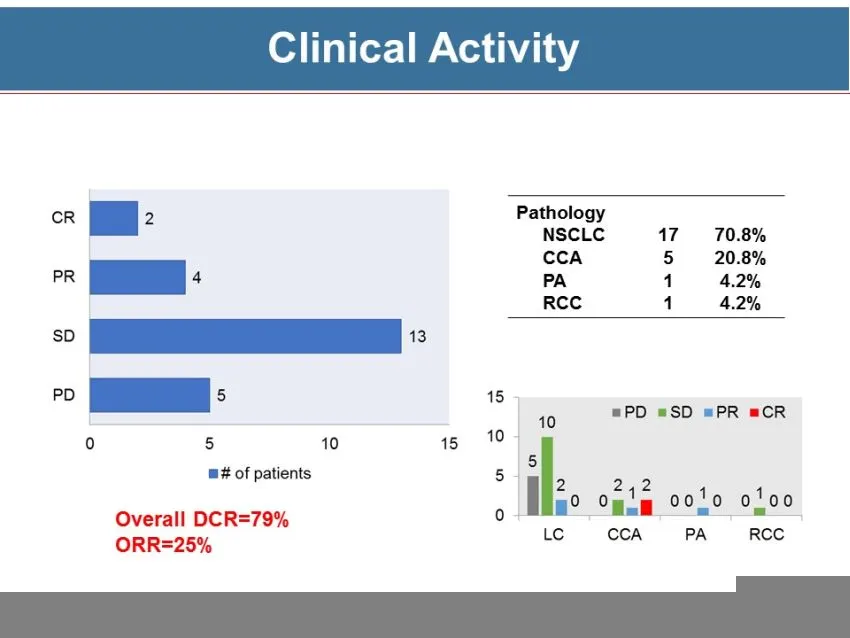
Slide 14: Clinical Activity
Clinical Activity Pathology NSCLC 17 70.8% CCA 5 20.8% PA 4. 42% RCC 1 42% 13 18 p =PD =SD =PR =CR 0 5 10 15 (10 1s# of patients 542 On Oe ee an n° Omi 0010 ot00 Overall DCR=79% ae earn ORR=25%
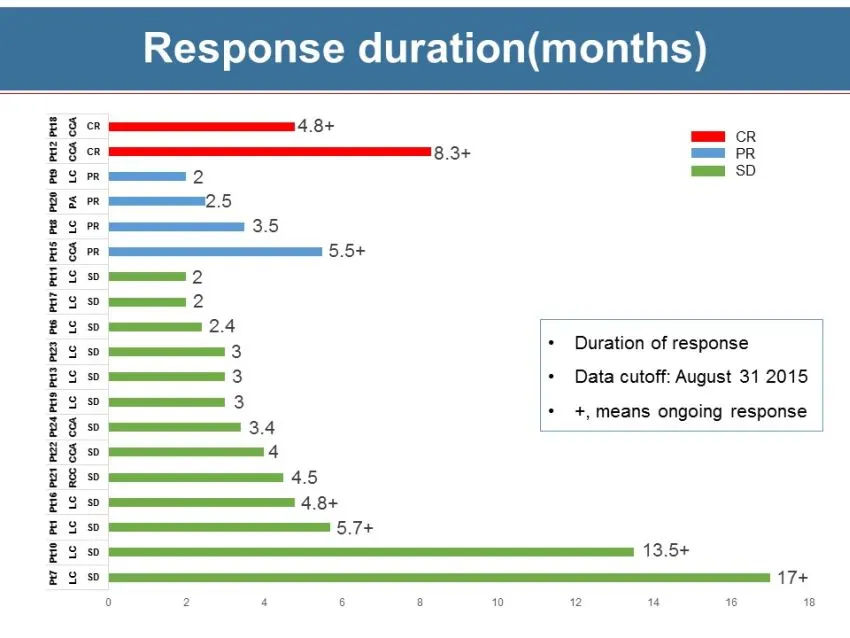
Slide 15: Duration of response
Per PeiO PEI Pete PI2t PAZ? Pr24 PIO PEI PLZ3 PIS PEIT PIT PEIS PtH PIZ0 PLO PHI2 PrIs + Duration of response + Data cutoff: August 31 2015 * +,means ongoing response
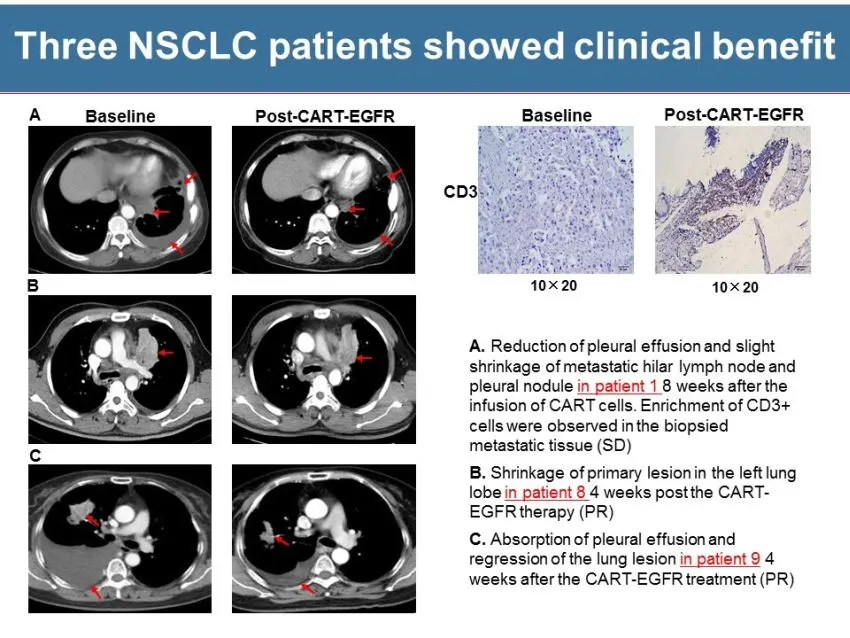
Slide 16: Baseline and Post-CART-EGFR imaging
Baseline Post-CART-EGFR 4 % - 10x20 1020 A. Reduction of pleural effusion and slight shrinkage of metastatic hilar lymph node and pleural nodule in patient 1 8 weeks after the infusion of CART cells. Enrichment of CD3+ cells were observed inthe biopsied metastatic tissue (SD) B. Shrinkage of primary
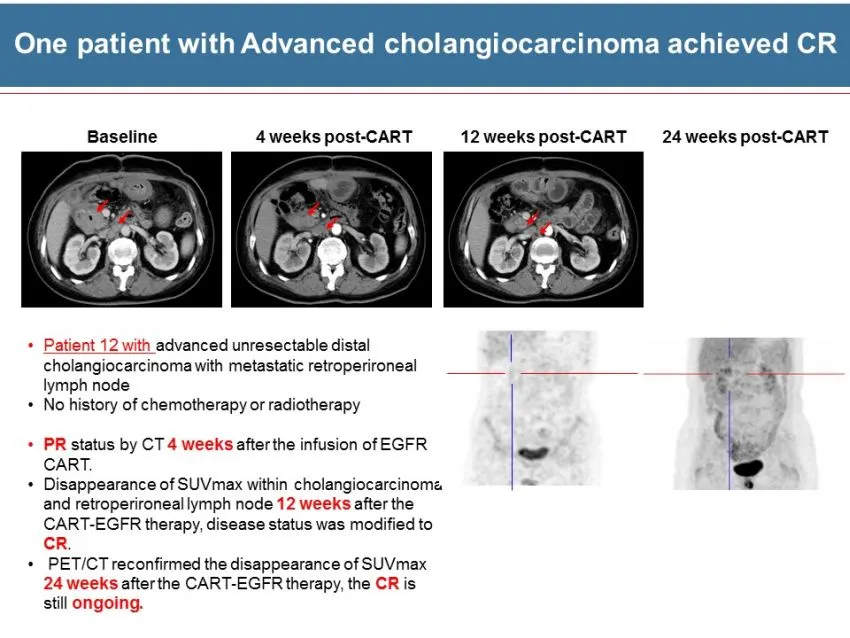
Slide 17: One patient with Advanced cholangiocarcinoma achieved CR
One patient with Advanced cholangiocarcinoma achieved CR Baseline 4 weeks post-CART 12 weeks post-CART 24 weeks post-CART nt 12 with advanced unresectable distal | ith metastatic lymph node + No history of chemotherapy or radiotherapy t status by CT 4 weeks after the infusion of EGFR ag ART, 8 j * D
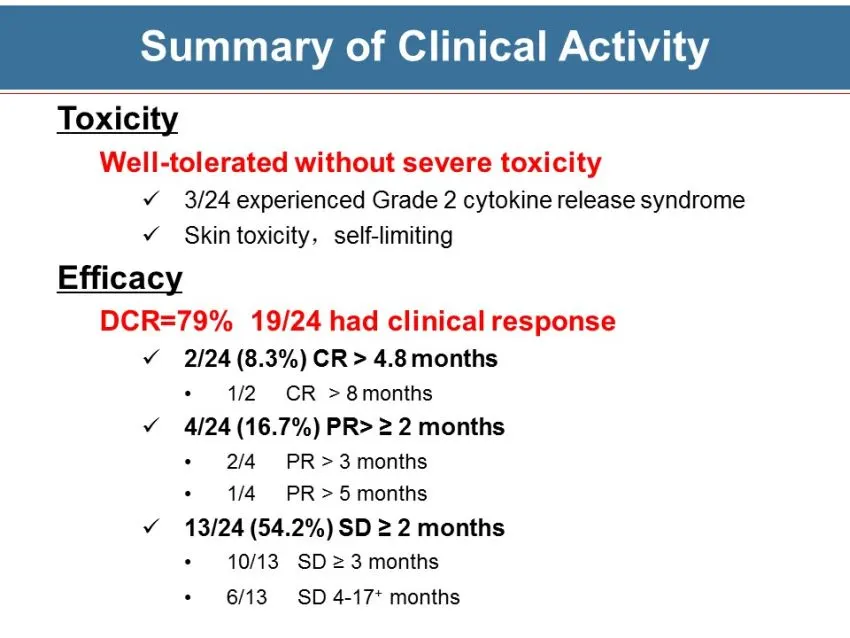
Slide 18: Summary of Clinical Activity
Summary of Clinical Activity Toxicity Well-tolerated without severe toxicity v 3/24 experienced Grade 2 cytokine release syndrome v_ Skin toxicity, self-limiting Efficacy DCR=79% 19/24 had clinical response v 2/24 (8.3%) CR > 4.8 months + 1/2. CR >8months v 4/24 (16.7%) PR> 2 2 months + 2/4 PR>3mont
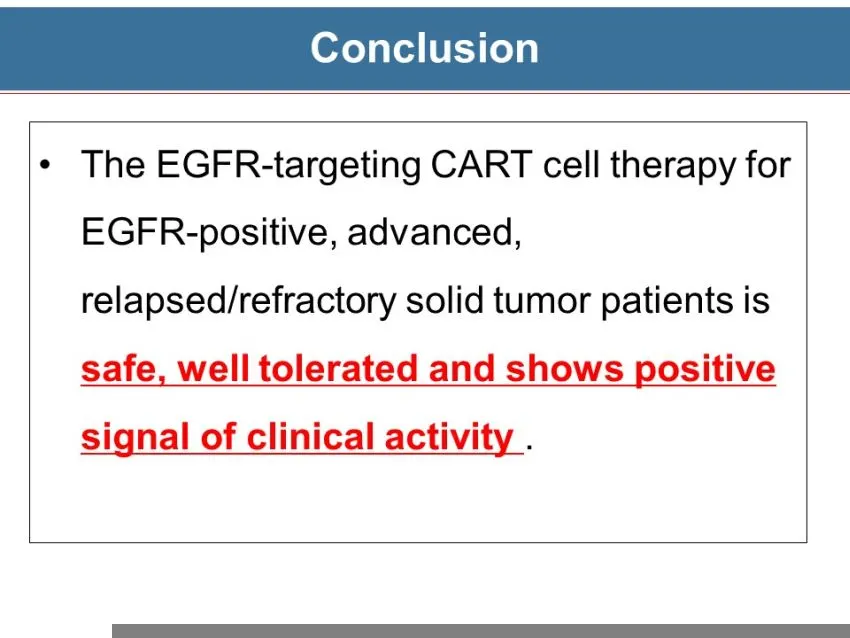
Slide 19: Conclusion
Conclusion * The EGFR-targeting CART cell therapy for EGFR-positive, advanced, relapsed/refractory solid tumor patients is safe, well tolerated and shows positive signal of clinical activity .
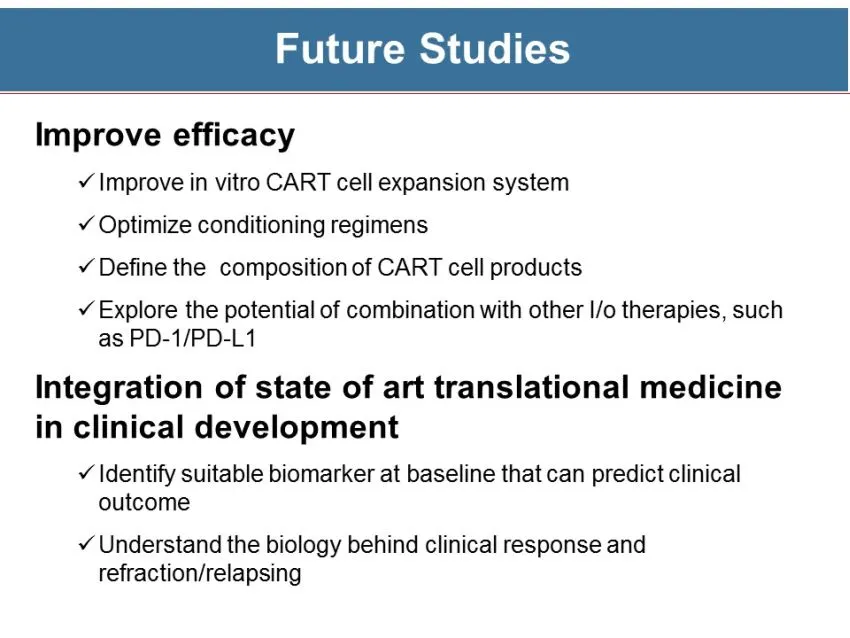
Slide 20: Future Studies
Future Studies Improve efficacy v Improve in vitro CART cell expansion system v Optimize conditioning regimens v Define the composition of CART cell products v Explore the potential of combination with other I/o therapies, such as PD-1/PD-L1 Integration of state of art translational medicine in clin
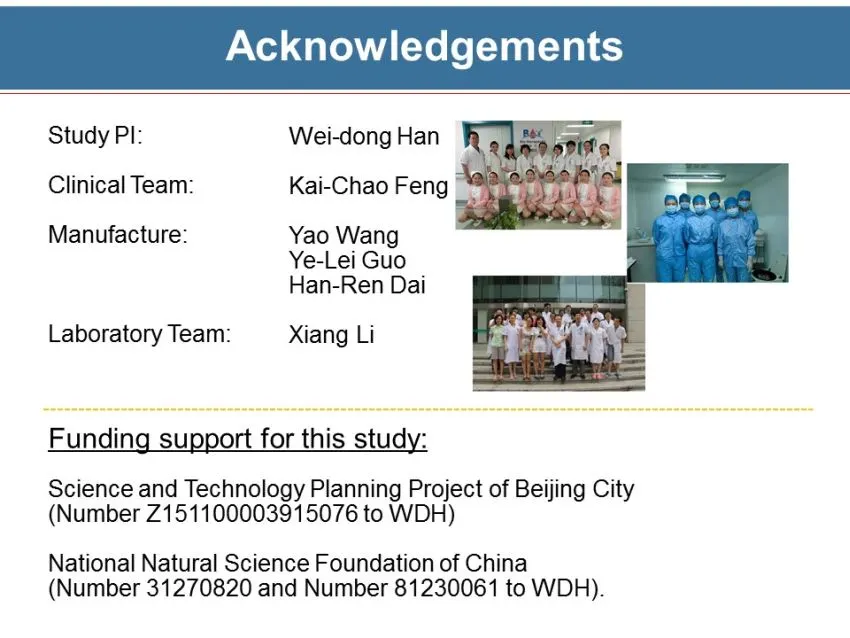
Slide 21: Acknowledgements
Acknowledgements Study PI: Wei-dong Han Clinical Team: Kai-Chao Feng Manufacture: Yao Wang Ye-Lei Guo Han-Ren Dai Laboratory Team: Xiang Li Funding support for this study: Science and Technology Planning Project of Beijing City (Number Z151100003915076 to WDH) National Natural Science Foundation of
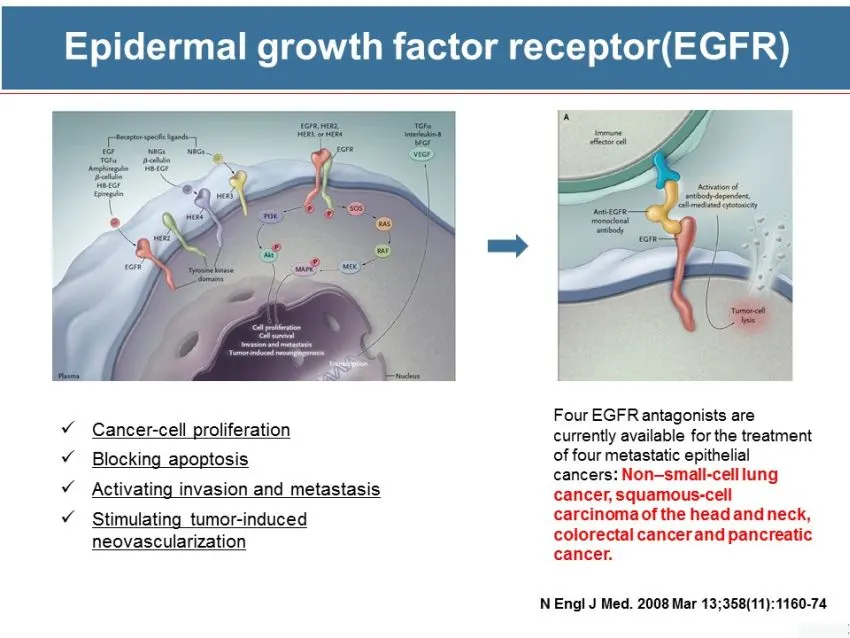
Slide 22: Epidermal growth factor receptor (EGFR)
Epidermal growth factor receptor(EGFR) Four EGFR antagonists are ¥ Cancer-cell proliferation currently available for the treatment Y Blocking apoptosis of four metastatic epithelial Y Activating invasion and metastasis v Stimulating tumor-induced neovascularization NEngl J Med. 2008 Mar 13;358(11):1
Source: SEC EDGAR · 8-K filed Sep 28, 2015
More decks from Cellular Biomedicine Group Inc
 American Society of Hematology (ASH) Annual Meeting 202011 slides · Dec 4, 2020
 Investor Presentation (August 2020)20 slides · Aug 28, 2020
 Corporate Update (July 2020)32 slides · Jul 13, 2020
 Technical Presentation (December 2019)15 slides · Dec 9, 2019
 CAR-TCR Summit, Boston 201932 slides · Sep 11, 2019
 SVB Leerink Conference (March 2019)11 slides · Mar 1, 2019