
ZURICH, May 18, 2026 /PRNewswire/ -- Chancen International has announced it has secured USD 29 million for its Future of Work Fund (the FWF). The FWF is a cutting-edge funding model that uses Income Share Agreements (ISAs) and will enable more than 15,000 young people to access quality education, offering an alternative to traditional debt-based student loans and reducing financing risks. This investment in the FWF includes a new commitment from the UBS Optimus Foundation and its developed and sponsored SDG Outcomes Fund, alongside a growing community of funders. The FWF's goal is to close at USD 33 million by the end of 2026.
"This funding milestone is a breakthrough for the youth in Africa," said Batya Blankers, CEO of Chancen International. "With visionary partners like the UBS Optimus Foundation, we're not just financing education – we're opening doors to dignified work, social mobility, and economic empowerment for thousands of young people."
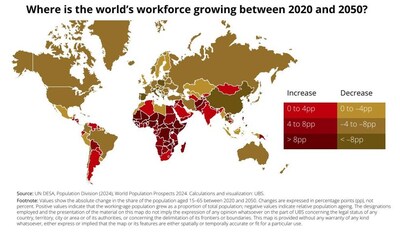
By 2050, over half of the world's working-age population will reside in Africa and South Asia, with Africa emerging as the youngest and fastest-growing region globally1. This demographic shift offers a historic opportunity for a "demographic dividend" – but only if quality education, jobs, and economic growth are provided. Currently, the reality is stark: every month, one million young people in Africa enter the labor market, yet only 25% secure formal employment2. This is fueled by a continent-wide annual education funding gap of USD 70 billion3, with less than 10%4 of students having the opportunity to enroll in higher education in key markets and communities. Without investment in quality education and job creation, the potential benefits and economic growth potential of this massive workforce may remain unrealized.
Tom Hall, CEO of the UBS Optimus Foundation, said: "By expanding access to quality education, thousands of young people can pursue higher education and build stronger futures. Through our investment in the Future of Work Fund, we are supporting impactful new pathways to education and employment with Income Share Agreements. Education and education equity are core principles for the UBS Optimus Foundation, which places addressing this gap at the center of its mission and portfolio."
How can Income Share Agreements improve access to education?
Unlike traditional student loans, Income Share Agreements (ISA) are not debt-based-loans. These ISA, which are financed by the Future of Work Fund, offer a proven alternative to traditional loans that unlocks life-changing access to education and skills development and future employment for low-income youth in Africa. They offer:
No upfront fees or collateral. Students can access education without needing a financial guarantor or taking on risk.
Income-adjusted contributions. If graduates earn less, they pay less – or nothing at all. There is no compounding interest or fixed monthly burden.
Repayment only when employed. Payments begin only once a graduate has secured a job and is earning above a set level.
A clear end point. Contributions are made only for a defined number of years, regardless of how much was paid, offering predictability and peace of mind.
Incentive alignment. When students succeed, the system succeeds. And if life doesn't go according to plan, the financial model flexes with them.
A typical Chancen student benefiting from the Future of Work Fund is a young person from a rural, low-income background, with a family living on less than USD 1.90 a day on average. With USD 2,900 in education costs covered upfront, these students can pursue higher education without the barrier of unaffordable payments. Within five years, graduates are expected to earn over USD 13,000, demonstrating the transformative impact of education.
Elyse's story brings this to life. Growing up in Rwanda, she dreamed of studying but couldn't afford it. Support from the Future of Work Fund allowed her to enroll in higher education without burdensome upfront costs or interest rates. Now an engineer, Elyse repays her course fees as a manageable share of her income. Her journey shows how this model opens doors for talented individuals, drives economic growth in their communities, allows meaningful returns for investors, and ultimately helps make industries in Africa more productive with highly skilled employees.
Learn more about the young people who have received this funding here.
How can scalability contribute to impact and return on investment?
To date, Chancen has funded over 9,000 students, and the Future of Work Fund will provide funding for a total of 15,000 young people – with the growing number of investors providing opportunities to help thousands more. By 2029, Chancen aims to expand access to tertiary education and skills training for 60,000 youth in Africa.
The UBS Optimus Foundation is one of the key FWF funders, providing a total of USD 4.6 million to date and an additional USD 10 million in new funding through the SDG Outcomes Fund, a fund it both developed and sponsors. The FWF cornerstone funding committed totaled USD 14 million from organizations including Ceniarth, the Tsao Family Office, Klett Gruppe, Financing Innovation Tool (FIT) managed by ADA, family offices and UBS Optimus Foundation.
About Chancen International
Chancen International is a nonprofit organization committed to creating fair, sustainable education finance pathways across Africa. Through innovative ISA models and cross-sector partnerships, Chancen empowers underserved students to pursue higher education and meaningful employment—unlocking economic opportunity and building brighter futures.
About UBS
UBS is a leading and truly global wealth manager and the leading universal bank in Switzerland. It also provides diversified asset management solutions and focused investment banking capabilities. UBS manages 6.9 trillion dollars of invested assets as per the first quarter 2026. UBS helps clients achieve their financial goals through personalized advice, solutions and products. Headquartered in Zurich, Switzerland, the firm is operating in more than 50 markets around the globe. UBS Group shares are listed on the SIX Swiss Exchange and the New York Stock Exchange (NYSE).
About UBS Optimus Foundation
The UBS Optimus Foundation is a global network of ten separately organized and regulated, tax-exempt charitable organizations, founded and managed by UBS. The foundation offers UBS clients a platform to use their wealth to drive positive social and environmental change. It makes financial contributions to implementing partner organizations for solutions that have the potential to be transformative, scalable, and sustainable. Between 2021 and 2025, the UBS Optimus Foundation received 1.6 billion USD in donations, surpassing its goal of 1 billion USD for the same period.
Footnotes
1 United Nations (2023): World Population Prospects 2022: Summary of Results. New York: United Nations, p. 5.
2 World Bank (2022, 2024): Africa's Pulse, Volume 30: Transforming Education for Inclusive Growth. Washington, DC: World Bank, p. 5; Demand-side Constraints to Youth Employment in Zambia: Evidence from the Third Enterprise Survey Follow-Up Round. Washington, DC: World Bank, p. 2.
3 UNESCO (2023): Policy Paper: Can countries afford their national SDG 4 benchmarks? Paris: UNESCO, p. 5.
4 UNESCO (2025): Campus Africa – What you need to know. Paris: UNESCO.
5 Values show the absolute change in the share of the population aged 15–65 between 1990 and 2020. Changes are expressed in percentage points (pp), not percent. Positive values indicate that the working‑age population grew as a proportion of total population; negative values indicate relative population ageing. AI was used to support the calculation.
6 The designations employed and the presentation of the material on this map do not imply the expression of any opinion whatsoever on the part of UBS concerning the legal status of any country, territory, city or area or of its authorities, or concerning the delimitation of its frontiers or boundaries. This map is provided without any warranty of any kind whatsoever, either express or implied that the map or its features are either spatially or temporally accurate or fit for a particular use.
Media Relations:
+44 7495 300 216

View original content to download multimedia:https://www.prnewswire.com/news-releases/ubs-optimus-foundation-and-co-funders-commit-usd-29-million-to-chancen-internationals-future-of-work-fund-scaling-student-financing-in-rwanda-kenya-and-south-africa-302773799.html