
Bexotegrast demonstrated statistically significant increase in FVC at 4, 8 and 12 weeks of treatment, outperforming lower dose groups
No bexotegrast-treated patients experienced disease progression as defined by FVCpp decline of greater than or equal to 10%
Bexotegrast was well tolerated over 12 weeks of treatment with no drug-related severe or serious adverse events
Company to host webcast and conference call tomorrow, Monday, January 23rd at 8:00 a.m. ET
SOUTH SAN FRANCISCO, Calif., Jan. 22, 2023 (GLOBE NEWSWIRE) -- Pliant Therapeutics, Inc. (Nasdaq: PLRX) today announced 12-week interim data from the 320 mg dose group of INTEGRIS-IPF, a multinational, randomized, double-blind, placebo-controlled Phase 2a clinical trial of bexotegrast (PLN-74809) in patients with idiopathic pulmonary fibrosis (IPF). The 320 mg group met its primary and secondary endpoints demonstrating that bexotegrast was well tolerated over a 12-week treatment period and displayed a favorable pharmacokinetic profile. The trial’s exploratory efficacy endpoints assessed changes in forced vital capacity (FVC), Quantitative Lung Fibrosis (QLF) imaging and biomarkers. Bexotegrast at 320 mg demonstrated a statistically significant mean increase in FVC from baseline at all timepoints, surpassing all lower dose cohorts, and showed a strong treatment effect on FVC percent predicted (FVCpp), QLF and profibrotic biomarkers versus placebo at 12 weeks.
The INTEGRIS-IPF Phase 2a trial is evaluating bexotegrast at once-daily doses of 40 mg, 80 mg, 160 mg, 320 mg or placebo for 12 weeks in 119 patients with IPF.
The 320 mg group enrolled 21 patients in the active arm and 8 patients in the placebo arm. Comparable to the lower dose groups, approximately 80% of all enrolled patients were on standard of care and were equally distributed between nintedanib and pirfenidone. The 320 mg group will continue until all patients have been treated for at least 24 weeks, with final data expected in the second quarter of 2023.
Bexotegrast 320 mg was Well Tolerated with No Drug-Related Severe or Serious Adverse Events
The primary endpoint of the INTEGRIS-IPF trial is the evaluation of the safety and tolerability of bexotegrast. The secondary endpoint is an assessment of its pharmacokinetics.
Bexotegrast was well tolerated at 320 mg over 12 weeks of treatment with no drug-related severe or serious adverse events (SAEs) reported. All drug-related adverse events were mild or moderate in severity.
Bexotegrast exhibited dose-proportional increases in plasma concentrations, consistent with prior studies.
Bexotegrast 320 mg Group Demonstrated Strong Treatment Effects on FVC, QLF and Profibrotic Biomarkers Versus Placebo over 12 Weeks
The exploratory efficacy endpoints of the INTEGRIS-IPF trial measured changes in FVC, high-resolution CT (HRCT)-based QLF, and profibrotic biomarkers over 12 weeks of treatment.
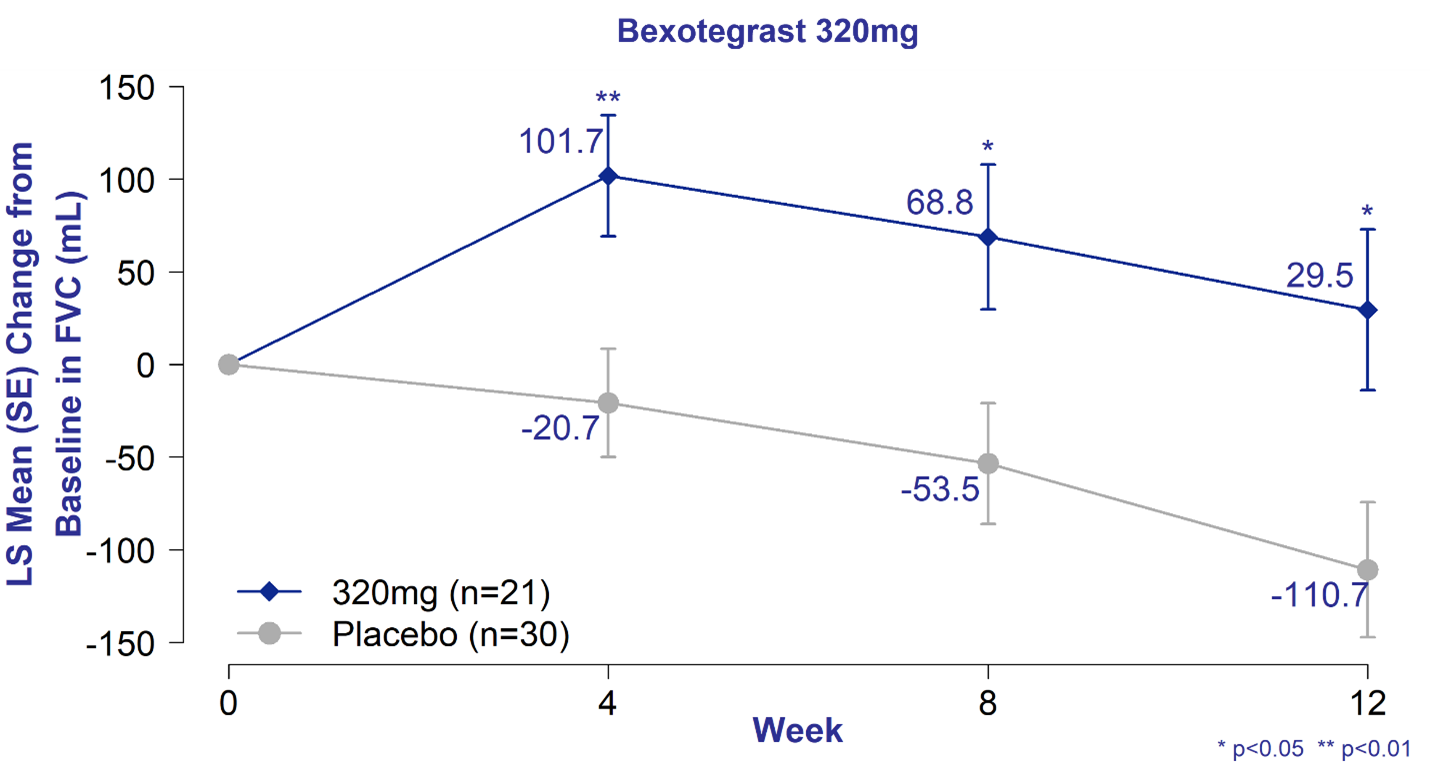
Figure 1. Change in FVC from Baseline of Bexotegrast 320 mg Over 12 Weeks in INTEGRIS-IPF; Mixed Model Repeat Measures Analysis – Modified Intent to Treat Population
A strong dose-dependent treatment effect was observed in the bexotegrast 320 mg dose group, with and without standard of care therapy. The bexotegrast 320 mg group demonstrated mean FVC increase of +29.5 mL relative to baseline at 12 weeks, versus a decline of 110.7 mL in the placebo group resulting in a 140 mL increase compared to placebo. Mean increases in FVC versus placebo reached statistical significance at all timepoints.
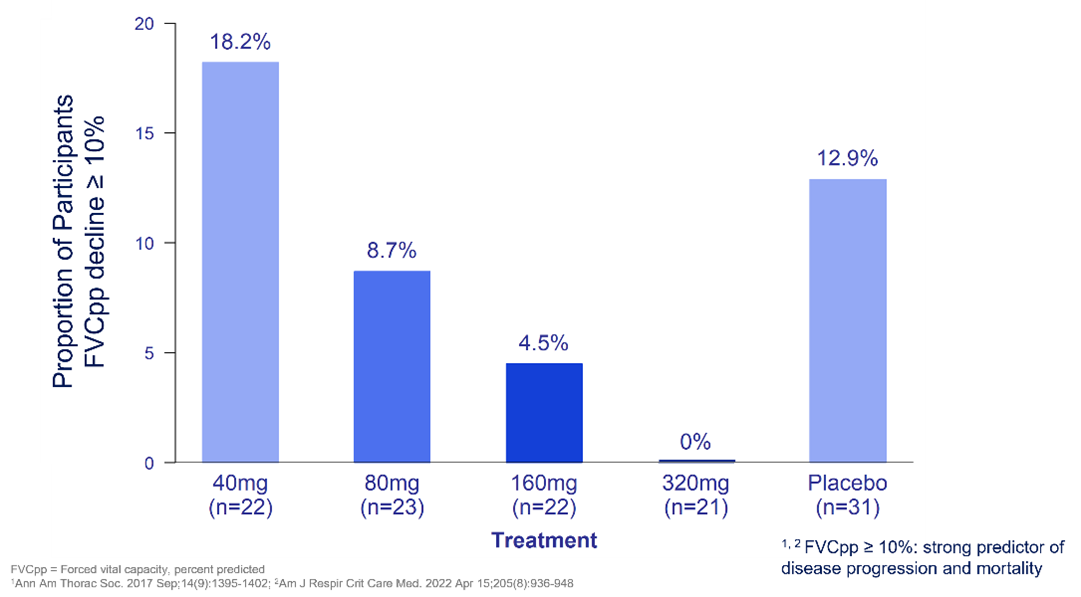
Figure 2. Proportion of Participants with FVCpp Decline ≥10% - Intent to Treat Population
A decline of ≥10% in FVCpp at 12 weeks has been associated with increased mortality in IPF patients over a two-year period.1,2 Over 12 weeks of treatment, no patients in the 320 mg group experienced ≥10% decline in FVCpp.
An increase in QLF score has been associated with worsening of pulmonary fibrosis.3 The mean percentage change in QLF at 12 weeks was 0.20% in the 320 mg group versus 1.46% in the placebo group.
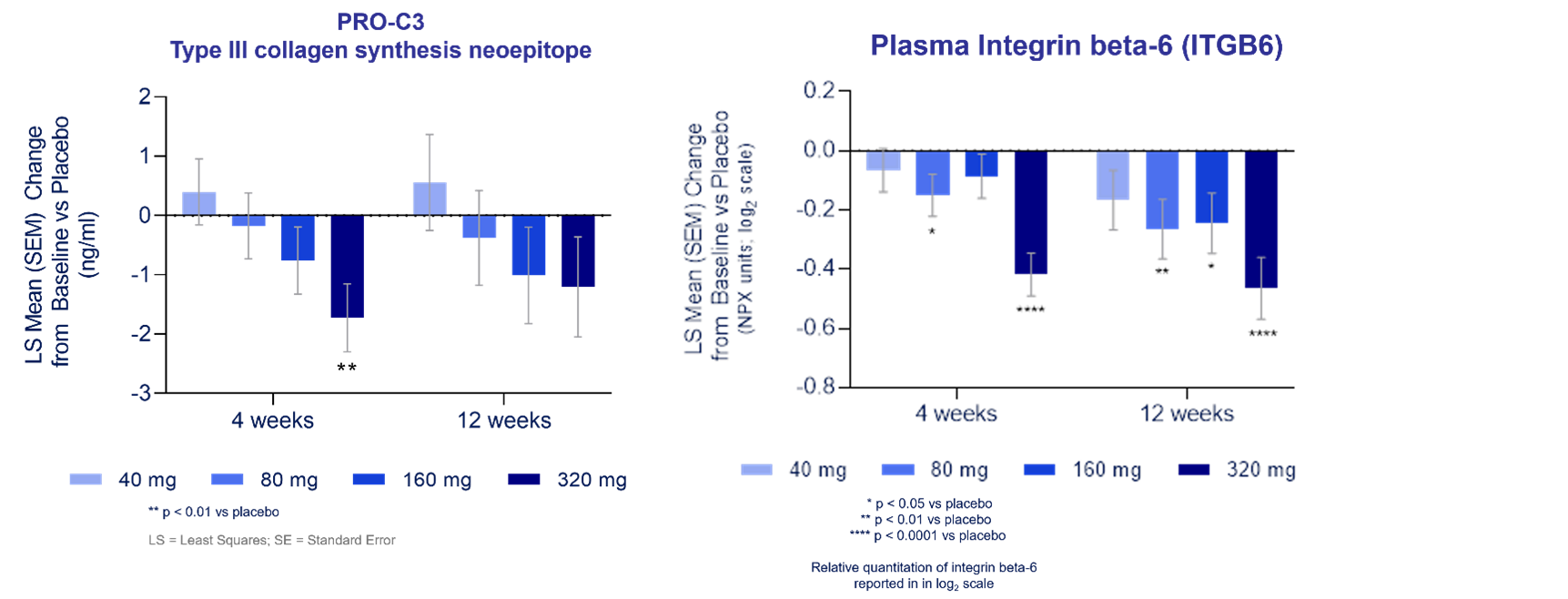
Figure 3. Circulating PRO-C3 and Integrin beta-6 Biomarker Levels–Change from Baseline at 4- and 12-Weeks vs Placebo
PRO-C3, a serum biomarker of type III collagen synthesis, is elevated in patients with IPF and associated with progressive disease.4 The 320 mg group demonstrated a reduction in PRO-C3 at both 4 (p