
Significant market opportunities for metalworking fluids exist due to advances in manufacturing technologies, precision machining of lightweight materials, and the rise of electric vehicles requiring advanced lubrication. Sustainability trends and regional dominance, particularly in North America, further drive growth.
Metalworking Fluids Market
Dublin, July 09, 2026 (GLOBE NEWSWIRE) -- The "Metalworking Fluids Market, Till 2035: Distribution by Type of Product, Application Area, End Use, Vertical, Geographical Regions and Leading Players: Industry Trends and Global Forecasts" has been added to ResearchAndMarkets.com's offering.
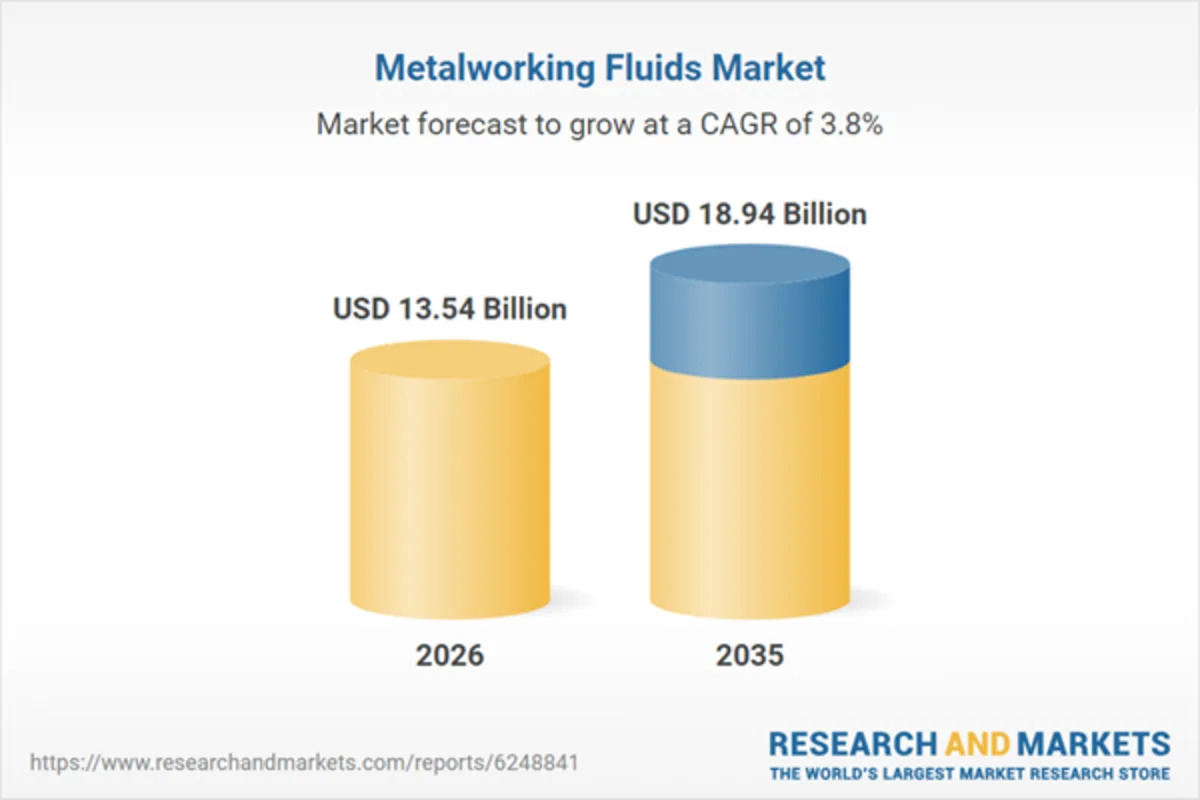
The global metalworking fluids market size is projected to grow from USD 13.54 billion in the current year to USD 18.94 billion by 2035, with a CAGR of 3.80% during the forecast period. Metalworking fluids are pivotal in extending equipment lifespan, enhancing surface finish, and boosting operational productivity. Widely used across industrial sectors such as drilling, metal fabrication, and milling, these fluids support the high-precision machining required for lightweight materials and electric vehicles.
The market's expansion is largely driven by advancements in manufacturing technologies and a shift toward precision engineering. As electric vehicles gain traction, the demand for sophisticated cooling and lubrication solutions increases, spurring further growth. In response, industry players are engaging in strategic collaborations to broaden their product offerings and expand market reach, which will likely enhance competitiveness and open new opportunities.
Strategic Insights for Senior Leaders
Key Drivers Propelling Growth
The automotive and heavy machinery sectors, alongside regulatory compliance, are key drivers of the metalworking fluids market. These fluids mitigate friction in heavy equipment, contributing to surface finishing and prolonged machine life. The accelerating production of electric vehicles and aerospace components boosts demand for precision-cutting operations, driving market expansion.
Industrial players emphasize productivity enhancements and minimizing downtime, prompting the adoption of advanced fluids offering superior corrosion protection and efficiency. Additionally, environmental and safety regulations regarding fluid toxicity are encouraging manufacturers to create sustainable formulations.
Competitive Landscape
The market is highly competitive, featuring multiple players focused on developing biodegradable fluids and recycling technologies to meet sustainability and regulatory demands. Strategic partnerships enhance product portfolios and technological capabilities. Continuous innovation remains crucial for competitiveness, driving companies to improve fluid formulations and associated technologies.