Automated transcript · Written by software from the replay's audio. It can mishear names and figures; the replay is the record.
24:15 Just moving on to our corporate profile slide, I mean, we currently don't have any significant shareholders, but 3% market cap of approximately 11 million, which when you think of the legacy assets that I just talked about and the Sonata asset that Claire talked about, seems pretty low. The directors all came in sort of 12 years into the life of this company. So we've been gradually building our stage, participating in the significant placings, we've bought shares in the market, we did a formal salary sacrifice program to get options to align ourselves with our shareholders' interests, and we even all exercised our warrants that we got in the last place.
25:03 These warrants have an accelerated provision and we realised that if we didn't exercise our warrants, we had a conflict of interest about when or when we couldn't exercise that. So we actually all put some cash into the company to clear that conflict of interest. So that's where we stand from a share ownership point of view. And I will turn it over to Tim, I think, to finish off the presentation. Thanks very much, Bob. So where are we as an exploration company? Well, we have a lot of legacy value, as Bob's pointed out, and we have assets primarily in the earlier end of the exploration cycle. Obviously, the Sonala license in Senegal with a number of different prospects on it at different stages, but again, at the resource development stage.
25:58 Then in Cameroon, with our maiden drill programme at Bibimi, again, identifying and drilling a new orogenic Gold system which previously had not been drilled. That first round of drilling very much dipping our toe in and showing to the market that there's opportunity in Cameroon. And then our early stage central license package where we effectively we did a grassroots targeting program, generative program over the last couple of years, targeted that area, put the license applications in and now we're busy doing the very first stage of that with the stream sampling program. So our focus is really on the early end of the cycle of the typical curve here, discovery and development of value in the, and an addition of value through the development of the resource that we find.
26:52 Where we go beyond that is as yet undetermined. We are always looking at other opportunities. We're always looking at our main focus is precious metals. We also have experience in base metals. So we keep an open mind as to where we can continue to develop the company. But right now, we've got a really significant opportunity in Cameroon, effectively as a first mover advantage, in an area that in a country that is really proactively trying to attract investment into the exploration mining space. We believe Cameroon sits around about 15 to 20 years behind Senegal, Mali, Burkina Faso in the development of the mining sector. And so we really are at the beginning of that curve, both literally and figuratively.
27:41 And we look forward to coming back to the market over the next 6 to 12 months with news of more success from our programs there in Cameroon. Senegal obviously have been progressed on our behalf by Irongold, very mature area, very well endowed but again additional resources identification of that initial resource statement possibly on one of those targets and then the opportunity for some of those assets to be perhaps satellite feed for things like the Baltimore Mine Development Project. So a lot of value tied up in the assets. We do obviously have some royalties, as Bob mentioned, in Turkey. And that really speaks to the back end of the curve here, construction into production.
28:29 And that's our Turkish partners are carrying those forward for us on our behalf. And we are just royalty holders on those assets now. So again, seeing some potential value in that second climb of the Lassonde curve. So we think we're pretty well positioned as a company, as an exploration company, to bring value to the shareholders across the board. Now we have quite a lot of upcoming news flow. Obviously, we've just announced the initial results from the Maiden drill programme in Bimimi. Results from the first 9 holes or 8 holes, as Claire said, one of the holes was abandoned. So out of those 8 holes, 5 of them intersected ground plus Gold down hole.
29:20 These are extending no mineralisation on surface vertically down to 100m. So a conclusive success we believe in the very early results. We'll have more news flow, more results coming out from the rest of that drilling on the other, on Bokashi Zone 1 and on the other 3 prospects over the space of Q2. In Senegal, obviously results coming through on the drilling at Farae and at Badina Barfe over Q3, pending the pace of work out of Iron Gold. And then other updates. Obviously, the central license package we're going to get in Cameroon, we'll get results drifting in through the second half of the year. But progress on the royalties, progress on the EIA submittals in Turkey, progress on those investments that we have in Djibouti and Egypt, opportunities of additional cash flow from phase payments and so on. Quite a lot of news flow between now and the end of this year and into 2022 as we have our work programmes planned out over the summer for the next phase of work in the dry season in Cameroon.
30:31 And with that, I will close off the presentation section of the meeting and hand over to John. Thanks, Tim. And thank you for summarizing the progress the company has made up to this point in time. I hope people can appreciate why the AGM is important for the company in providing the shareholder authorities that will allow us to continue this progress in the coming 12 months. For this meeting we've also requested questions from shareholders and I'll attempt to put those, well I won't attempt, I will put them to the to the team to answer them, while bearing in mind we're restricted by the disclosure rules of AIM. Where similar questions have been asked by multiple shareholders, I've tried to collate them into the following questions and I'll put them now to the team.
31:25 So the first question is, how is IAMgold's drilling campaign at Sonala progressing and when do you expect it to complete and results to be received for Farae and Medina Bafe? I think Claire you're probably best placed to answer that. Thanks John. Yeah so as discussed in the presentation the campaign for year 4 is progressing really well. The 609 metre diamond drilling at Farae we announced was completed last month. And in the last day or so, we've also been advised RC drilling programme has also been completed at Faray, and so we're on track for hopefully receiving those results within Q3.
32:13 We understand that the rig needs a couple of days maintenance and then it will be taken down to Medina Bafe. So we're expecting the work programmes to commence there very, very shortly, certainly by the end of this month. And again, we've got the diamond drilling and RC programmes to be completed there. I'm not entirely sure whether they'll get the full programme completed before the rains commence towards the middle of the end of next month. But either way, we're on track for reporting in Q3. Thanks, Claire. Second question, with the work Oriel have previously done, and I'm Gold's current program at FARAE, how far away from being able to calculate a JORC resource are we? I think Tim, you're probably best placed to answer that.
33:06 Thanks, John. Yeah. You know, there was quite a bit of drilling completed by Strathex in the past here. And when we came in as a new management team, obviously, by that stage, Irongold was already signed up and we're busy exploring on the license. And their initial focus, as Claire mentioned earlier, was down in the south at Medina Barfa in Cerrudia, close to Bota. So the FARA target was really left off the table for a couple of years, essentially. So it was frustrating that we couldn't progress that resource, the development of that resource. The recent drilling by IM Gold, in particular the diamond drilling, has been, although there are only 2 holes, 2 diamond holes, critically they've been confirming, testing and confirming previous drilling by Stratex.
34:03 So one of the holes has effectively been looking to confirm the core of the deposit and confirm the geological interpretation and the grades that we were getting returned before. And then the second diamond hole was a deeper hole, tapping into what was thought to be a plunge of the mineralized conduit. Results from those holes will certainly take us a good few steps towards being able to put a resource together. We're not sure until we see those results and importantly until we see the geology and the structure from those holes whether or not we have the confidence to take a step forward to announce a resource.
34:50 But we're pretty confident we're very, very close. The key thing here in resource work, the key thing is having confidence in geological continuity. So it's not as simple as saying, oh, the spacing of the holes is X metres apart or something like that. It's more a case of, do you have enough geological confidence that the continuity of your predicted resource is appropriate? You expect it to go in this direction at this angle and this plunge. Can you prove that by testing it with a hole or 2? So we're pretty comfortable that drilling those 2 new diving holes are going to give us some steps towards it. We would really like to be able to pull together a resource and get it into public domain and we will be obviously to the lengths that we are able, we'll be really pushing to do that.
35:44 I will highlight that we under the terms of the joint venture, we do not have the capacity or the ability to be able to drill our own holes on the Sonola licence whilst it's under the management of Iron Gold. So it's out of our hands if additional drilling is required, but we are working solidly on the structure and the geology and the interpretations to try to pull together at least an initial primary resource or potential resource, geological potential for that far-air target. Cheers Tim, actually next question leads on a bit from that and it's somebody's asking how is the relationship with Iron Gold after the underspend on funding from last year?
36:35 The relationship's good. The relationship has always been good. We know the team at Iron Gold. I have worked with a couple of them before. The underspend, I think there was a, or we think there was a misinterpretation by the market when that announcement went out. We had an obligation to announce that there had been an underspend. AMERULS stipulate that it was a notifiable event and we had an obligation to announce that. You know, Irongold came to us, told us that they'd made an underspend, requested our approval for them to carry that underspend forward into year 4. We took that opportunity to do a very brief financial due diligence on the programs to date, carried out by Bob, and satisfied ourselves that the underspend was appropriate and that carrying it forward was appropriate.
37:33 And so we were very happy to agree that that underspend from year 3 would be pushed over into year 4 and would increase the scale of the program in year 4. So the relationship with Irongold is very good. They do not do things necessarily, they're a mid-tier major mining company. We're a junior explorer. We do things differently. And the previous question about the resource at Farae probably is a good indication of that. It's more important and more significant to us to have that resource pulled together than it is to Iron Gold because they're a mining company already. It's insignificant to their share price or certainly insignificant compared to its significance to our share price. So they are managing, well managing an exploration program here and we're very happy to have them on board.
38:27 Would we do things differently ourselves? Quite possibly, But that's not the situation we find ourselves in. We came into this company, the deal was already signed, the agreement was there, and we're working with the constraints of that. I'm going to respect in that as well. I think we've got a good reputation. Thanks for that Tim. I think the next one's probably for you Bob, it's basically on the mechanics of the licenses. An investor's asking, can exploration licenses be split so that for example, could Iron Gold take the Dina Baffey prospect or the Faray prospect and could we retain 1 or other or sold elsewhere? Do you get what I'm...
39:12 Well, this is something that we have discussed internally because obviously I'm deeply interested in Medina Bafé and we see a lot of potential in Farae. The letter of the law, i.e. The Senegal Mining Code, does not give us a right to split a license. We just don't have that right to do it. However, the Senegalese government are incredibly pro-mining. Their countries benefited massively from their pro-mining stance and I think if that situation arose we'd probably be able to find a pragmatic way forward on it, but we don't have the certainty in that case. Okay, thanks for that Bob.
39:59 The next one, well I'll start it, but I'll throw out some others on the team, because I'm sure everybody's got an opinion here. And that's somebody has asked, do the team believe the cost of getting to a JORC resource would enhance shareholder value? The answer to that is yes. But to go into a little bit more detail, well, I think it's been answered a couple of times on that previous question. Tim quite elegantly laid out the difference for us and for a larger company like Irongold. And also I think in the presentation, if you look back at slide 17, the exploration curve, you can see exactly why, you know, moving up that curve to finding resources will have a an impact on our on our value for each and every project that we're looking at. And it's not only just about, at least I don't think it's just about adding resources, it's also about the other information that you garner as you move through these programs.
40:56 So things like, you know, the strength of the rock, how easy it is to crush, whether you can easily liberate the metals from the rock. All of those things that I think you add together as you move towards a feasibility study, each and every single one of those makes the, adds value to the project. And I think that, well, so again, quite simply, the answer is, of course, it does add value by moving towards the resources. But I'm sure everybody's got an opinion if anybody else wants to add to that. Yeah, I'll jump in, John. I mean, obviously, whoever asked the question was obviously thinking primarily of Farae and possibly even Medina Barfa. The Lausanne curve is a good proxy for where value comes in the project lifecycle.
41:49 And as I mentioned before, we are at the beginning of that and identification of a publication of a certified resource is a significant step and it will bring with it value. But it's not simply publishing a resource. As John has mentioned, there's a lot more to it than just ounces in the ground. It's ounces that are extractable, mineable, extractable, processable. There's a lot of other steps that are involved in identifying that value. But I think equally important is identification of geological potential, the step before publishing a resource. And This is often 1 where more technically sophisticated people start to scout around the companies because that's really the early step where you've got a company pre-resource publication, typically lower market cap, lower share price, on the cusp of new discoveries and then developing that discovery into a resource.
42:59 That's really a significant value inflection point for a company. If I take our recent focus in Cameroon, the last 3-years in Cameroon, we have a significant land holding position in central Cameroon, really significant, 3,500km2 of land with evidence of Gold mineralisation, occasional artisanal activity, all the right rock types, the right hosts, the right structures, the right alteration levels. Following a long trend from that display, from that structural display, which is where we believe there's a potential to concentrate gold. At the end of that or along that trend, we have Biberme and Wapusi where we have gold systems.
43:47 And those gold systems we identified first on surface, or rather my previous company, my predecessors at Reservoir Minerals identified. And we followed that up with extensive surface work to confirm that and now with drilling to confirm that, yes, these systems exist and they extend to depth, albeit shallow drilling to date. So that identification of geological potential, the identification of the opportunity to possibly create a resource is an additional value step before publishing a resource. And I think we have exposure to both of those value inflection points within Orial, with our assets in Cameroon and in Senegal. So, and obviously I'm looking to my, alluding to companies with lower market capital, low share price, you know, if you look at today's value in the company tied up in existing assets, there's obviously huge potential for growth, for value growth within Oriel.
44:51 Yeah thanks, I mean I think I might potentially add on to that actually, for anybody that wants to wants to see where you know what adding resources does and it's a little bit of a closeology, is just look at our neighbours in Senegal and you can easily see that where you get to a resource, you're rewarded in a higher share price. Share price. And that's, you know, that's not to say that there's, that the neighbours have different, you know, different mineralogy. They don't. They just have, you know, that extra little bit of drilling or close space drilling that allows them to, you know, to clear the hurdle that's laid out by JORC or indeed 43-101 systems.
45:38 Okay, so the next question is question 6. Are we still anticipating all of Bib and Me's results by the end of Q2 and do we plan to release them by target area? I think that's 1 for you, Claire. Yeah, thanks, John. As per the presentation, yes, at this stage, we are still anticipating to release the results by the end of this quarter. That's as per the lab guidance at the moment. Obviously, we can't predict what's going to happen, but that's the state of play at the moment. Regards to whether we release them prospect by prospect, Of course, today's results were all from the Cassie zone 1, and we'd still got some holes outstanding at that prospect. And then we've got 3 more prospects to report on.
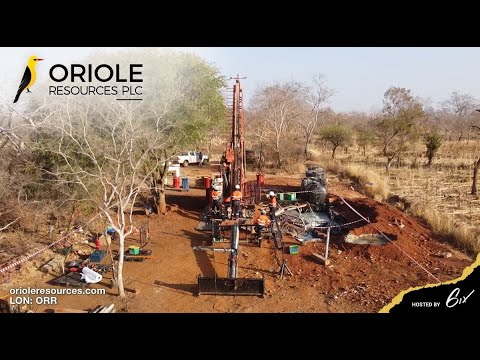
46:28 In terms of timing, they were they were completed one after the other, pretty much. And so you would expect results to come in that phase, but we reserve the flexibility to report on more than 1 prospect at a time. If it makes sense from the interpretations, I mean, ultimately we've got to have context to our press releases so that you can't just put out a bunch of results with no substance to it, because numbers are more or less meaningless if you don't see where they're coming from and how it feeds into the bigger picture. 1 point I didn't mention during the presentation was that we do actually have a cross-section and some additional information on our website, so I encourage you to go to the website and see how the project's developed during the multiple phases of exploration that we've completed and how that mineralization is stacking up in terms of a geological model thus far and obviously we'll be building on that as the rest of the results come through later this month hopefully.
47:30 Cheers Claire, thank you. On 1 just generally on results, Tim's probably for you actually, and the query is there was an expectation that results would come through early in Q2 rather than actually what occurred. Do you think expectations for results released have been managed appropriately? I think if you look back at all of our press releases, our R&Ss, all of our media communications with the shareholders and investors, we have been extremely consistent in what we've been saying. And I think if we say we are going to announce the results starting at the end of Q1 and through Q2, we announce the results starting at the end of Q1 and through Q2, we announced the results starting at the end of Q1 and through Q2. We're delivering exactly what we've been telling the investors.
48:31 If the investors believe that if we say Q2, we mean the first day of Q2, then obviously we would have said that. Q2 gives us a three-month window. That gives us the flexibility to capture delays due to shipping, delays due to customs, delays due to the uptick in sample throughput in the labs because of the expiration of our environment at the moment, delays due to electrical shortouts in Abidjan. There have been many impacts and we built into our estimates, we always build into our estimates, a real world scenario for reporting. We believe that our reporting has been extremely accurate. If I was to say our results for example, as we've said on this call, results for the extreme sediment sampling will be through the second half of the year, then you're not going to get all the results on the 1st of July because Claire's already told you that the sampling program is not finished by then, it's going to continue through.
49:37 So the second half of this year takes you right up to the end of December. So I would just, I would encourage the investors to look carefully at what we say, because we are very careful about what we say. We're very careful about timelines, and we really do try to stick to the timelines and give realistic timelines. I'm not gonna pull comparisons against other companies that promise and then have results hanging out 2 years later. I think our reputation stands on our record and our record has been incredibly accurate in delivery. So apologies if people misinterpret what we say, but please be aware of exactly what we say. If we say Q2, it's got 3 months in Q2 and we're still in it. So there's still time. Obviously, if we are ever likely to miss a deadline, we have a reporting obligation to notify the shareholders. So if we were to significantly impact, miss a deadline to the significance of impacting the share price, we would have the obligation to put a notification out to shareholders and I'm very thankful that we haven't had to do that.
50:55 But that's primarily down to the very good technical expertise and planning of our team to give realistic goals. Thanks for that Tim. We've got a question for you Tim and it's basically asking what will the next steps be in Cameroon and how will you balance the conflicting calls for exploration funding between drilling at Bibimi and early stage exploration in the central licenses? Okay well the next programs are obviously in the central licenses is a continuation of the current program, continuation of the stream sediment sampling program. The way that the steps that will go through will be return of the results, Completion of the stream sediment sampling program, return of the results, interrogation of those results and identification of potential target areas to carry out follow-up mapping, follow-up, potentially follow-up stream sediment sampling, mapping, rock chipping, and then possibly leading on to soil sampling.
52:07 The opportunity to do some geophysics in targeted areas. It's a large license package. We don't think it's going to add value to fly the entire package with geophysics right now. Let's rather first understand how many individual prospects we have on those licenses and then we can focus our spend specifically on them. So All of that work probably between now and let's say the end of the first half of next year, running into the second half of next year. So that's, it's a big program, But the good news is for the Central Cameroonian Licence package is that the majority of that work is quite cheap.
52:55 The main costs are field teams and the assay results, so the assay processing. So reasonably cheap programs to cover a lot of ground very quickly and to bring our focus into where we need to be. At Bibbamy, obviously we have about a third of the assay results back for the drilling, so we need to get the rest of those results back. Claire mentioned we've had a structural specialist working with our teams out in the field there to really understand the structural regimes controlling the mineralisation. A combination of working with the structural results, the geological mapping and downhole logging and the assay results, We're going to be kicking off that during June with our annual mid-year geological conference within the team, within the exploration team, sit down, go through all the results to date and really design the next steps at Bibbidi. Ideally, we have 4 prospects.
54:03 Ideally, the results of this first phase of drilling, which has been spread, as you remember, over 8km or more of strike length in 2 different zones. We'll be planning to follow up on some drilling in those areas, depending on where the best results come back, depending on what the structural information gives us. So we don't know whether we'll be drilling one of those prospects or 4 of those prospects. We don't know how many targets we're going to generate. Certainly, results to date are indicating to us that there are competing structural regimes. There's compression and extension. We're seeing micro evidence and macro evidence of that. Extensional regimes give us the opportunity for volumetric blows of fluid flow and therefore potentially Gold.
54:52 So we're pretty hopeful we will have some targets, but we don't know how many. So I realise that doesn't give us a definitive, well, we're going to drill x many metres over the next x many months for a certain price. But we'll be working on that planning over the summer, really so that at the beginning of the dry season we're in a place to say, okay, we're now going to drill these targets, this is how we're going to rank them, This is how we're going to rank them. This is how we're going to prioritise them. As for the funding of the 2 projects and the competing consideration on funding, Cameroon is our only exploration destination at the moment. We are free carried in Senegal. We're effectively free carried in Turkey because the team there is generating their own income by acting as consultants.
55:40 So all of the money we bring in and all the money we have in house is really focused in Cameroon. Now Bob's showing you on one of the slides several different routes to additional funding. We also still have money in the company. We raised money for specific for the Cameroon drill program at Bibbimi. And we are quite focused on ring fencing funds for specific programs to try to keep real transparency to the shareholders of where the money goes. So, we will look at the predictive programs coming out of the central license package, we'll look at the predicted programs coming out of out of Bimini, we'll also look at Wacoosie, which we visit as a step behind Bimini or potential targets there, and we will rank them and then allocate the funds you know as necessary appropriate to the to the value that those projects bring us.
56:40 Cheers Tim. Final question for you Bob and it's I know you've sort of covered some of it in the presentation, but in a little more detail on how is the asset realisation program coming along? Okay, thanks, John. Yeah, we did make some progress in this in 2020. I mean, it is on the agenda. It's something we work on. We have discussions with it with a couple of groups, do one-to-one, things like that. The issue is always, you know, finding a seller, sorry, finding a buyer who's willing to pay a price you're willing to accept. And we've got the main assets in that portfolio of stuff we could realize.
57:29 They're moving forward. And I think that's the important thing for everyone to remember. So Muradaya, you know, a year ago, we maybe would have looked to sell it and indeed did look to sell it. But the copper price has gone up 70%. They're now a year closer to EIA submission. A little bit of patience on our side will ultimately drive a much bigger realization. And the 2 East African assets have both seen progress in the last year in Djibouti and the last couple of months in Egypt. So there may well be opportunities that come along to sell them, and we will keep looking and talking to industry contacts. But the nice thing from our point of view is they're all moving forward and they're all becoming more valuable as we sit and work on Cameroon and Senegal.
58:24 Yeah, I think that's well put actually, Bob. So that really is all the questions that we have had submitted. So thank you to everybody that did submit a question and I hope that we've captured and answered the most pressing of those. To summarise, the resolutions presented at the AGM will give the company the authority to allot shares comprising of up to another 30% of the current share capital, either for the purpose of capital fundraise to regress our exploration efforts in Cameroon or for the purpose of an acquisition. We believe the early results from the Maiden Drill Programme at Bibbimi will justify further work, And we're also looking forward to results coming in from the stream sediment samples that we're taking across the Central Cameroon licensing package.
59:10 We'd ask that all shareholders support the resolutions by voting using the proxy form on the report section of our website. Thank you again to the team, thank you to all of our workers that have worked through quite challenging times, you know, not just here in the UK but across the world and if it's at all possible that the meeting goes ahead as an open meeting I look forward to seeing investors and press there. Thank you