Fractyl Health, Inc. · NASDAQ:GUTS
Fractyl Health — WCITD 2019
23 slides from Fractyl Health's conference presentation, April 2019
Slide 1: Endoscopic Duodenal Mucosal Resurfacing
Endoscopic Duodenal Mucosal Resurfacing Dr David Hopkins FRCP Director, Institute of Diabetes, Endocrinology and Obesity King’s Health Partners, London, U.K.
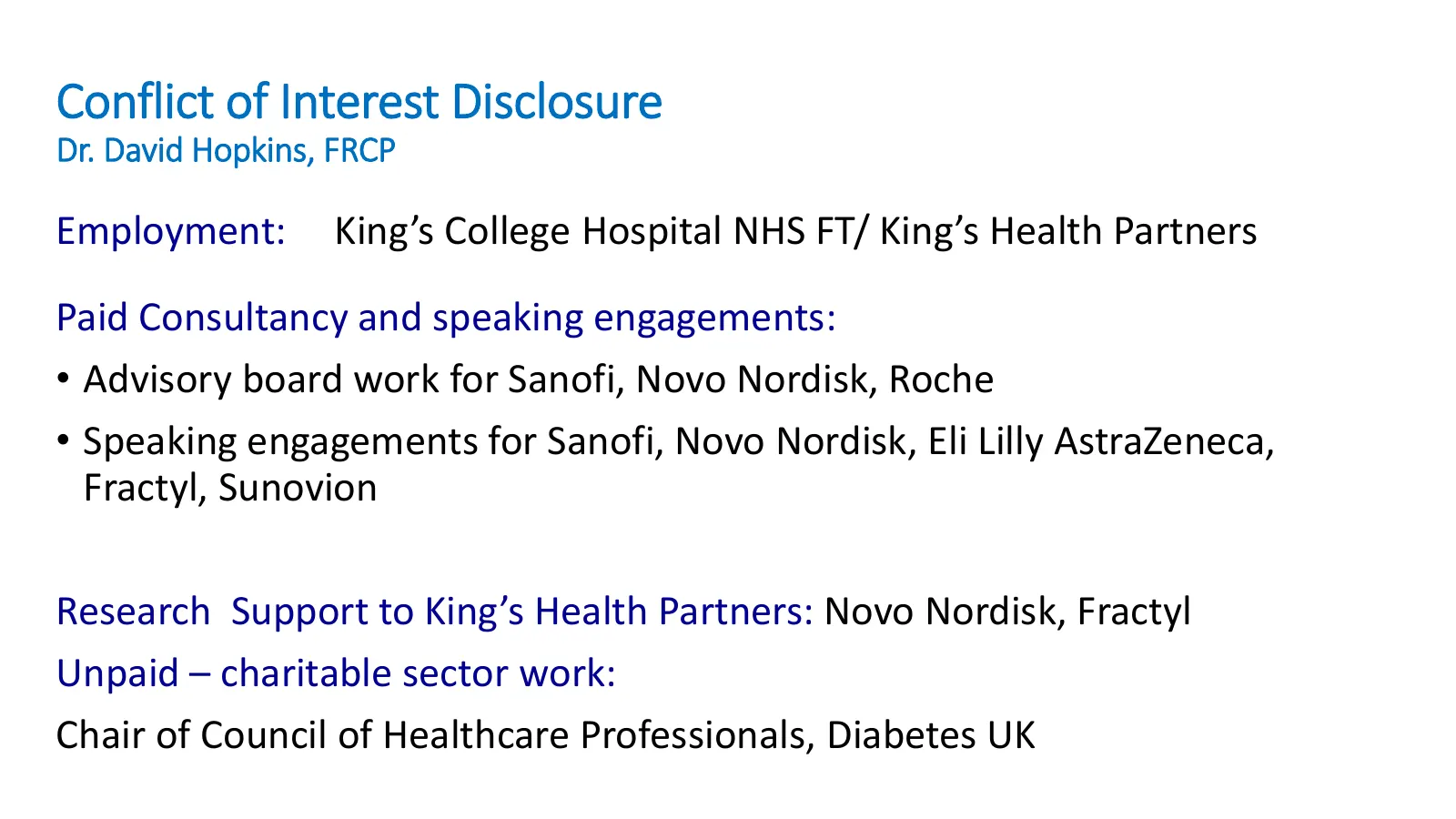
Slide 2: Conflict of Interest Disclosure
Conflict of Interest Disclosure Dr. David Hopkins, FRCP Employment: King’s College Hospital NHS FT/ King’s Health Partners Paid Consultancy and speaking engagements: • Advisory board work for Sanofi, Novo Nordisk, Roche • Speaking engagements for Sanofi, Novo Nordisk, Eli Lilly AstraZeneca, Fractyl,
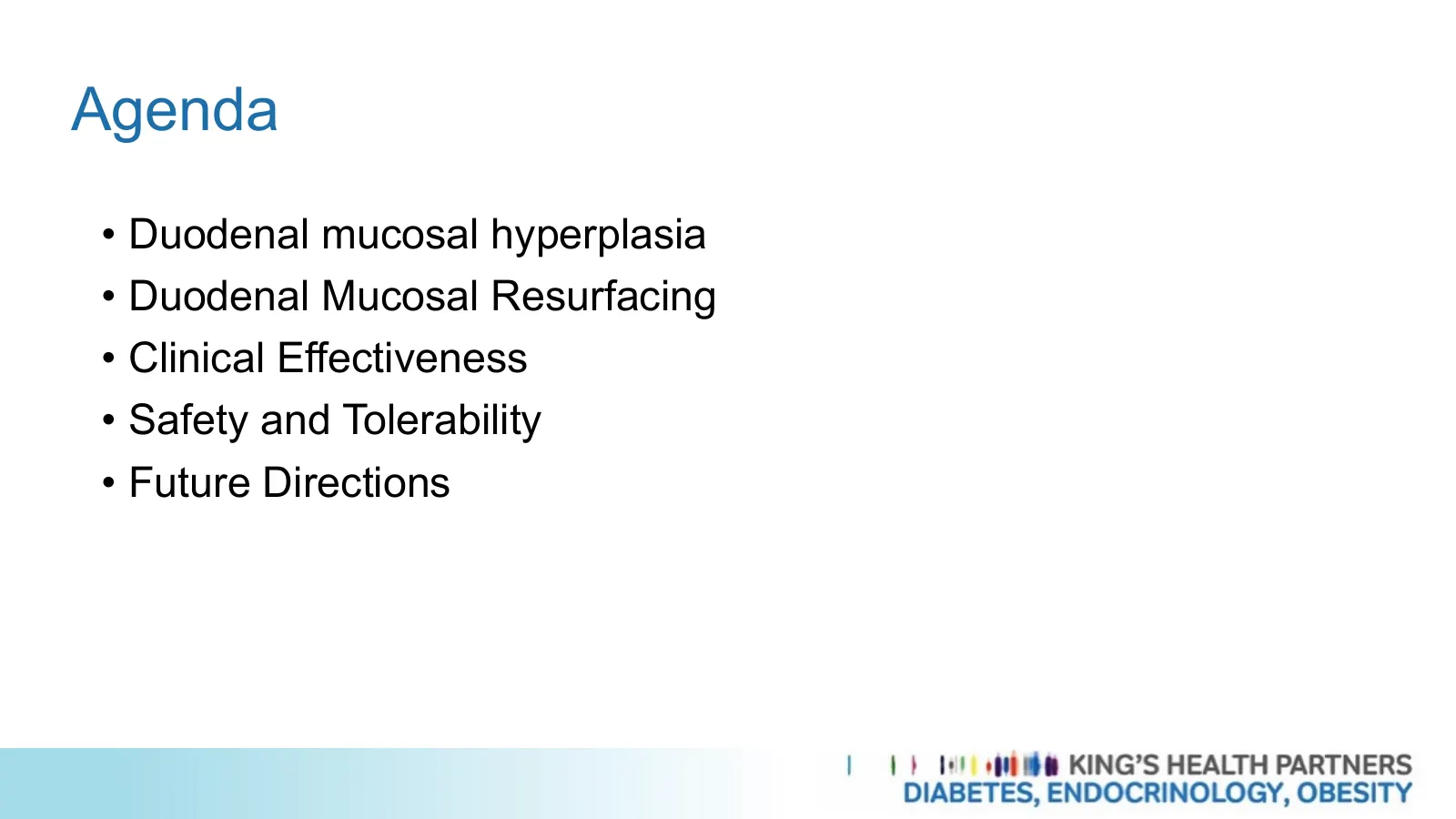
Slide 3: Agenda
Agenda • Duodenal mucosal hyperplasia • Duodenal Mucosal Resurfacing • Clinical Effectiveness • Safety and Tolerability • Future Directions
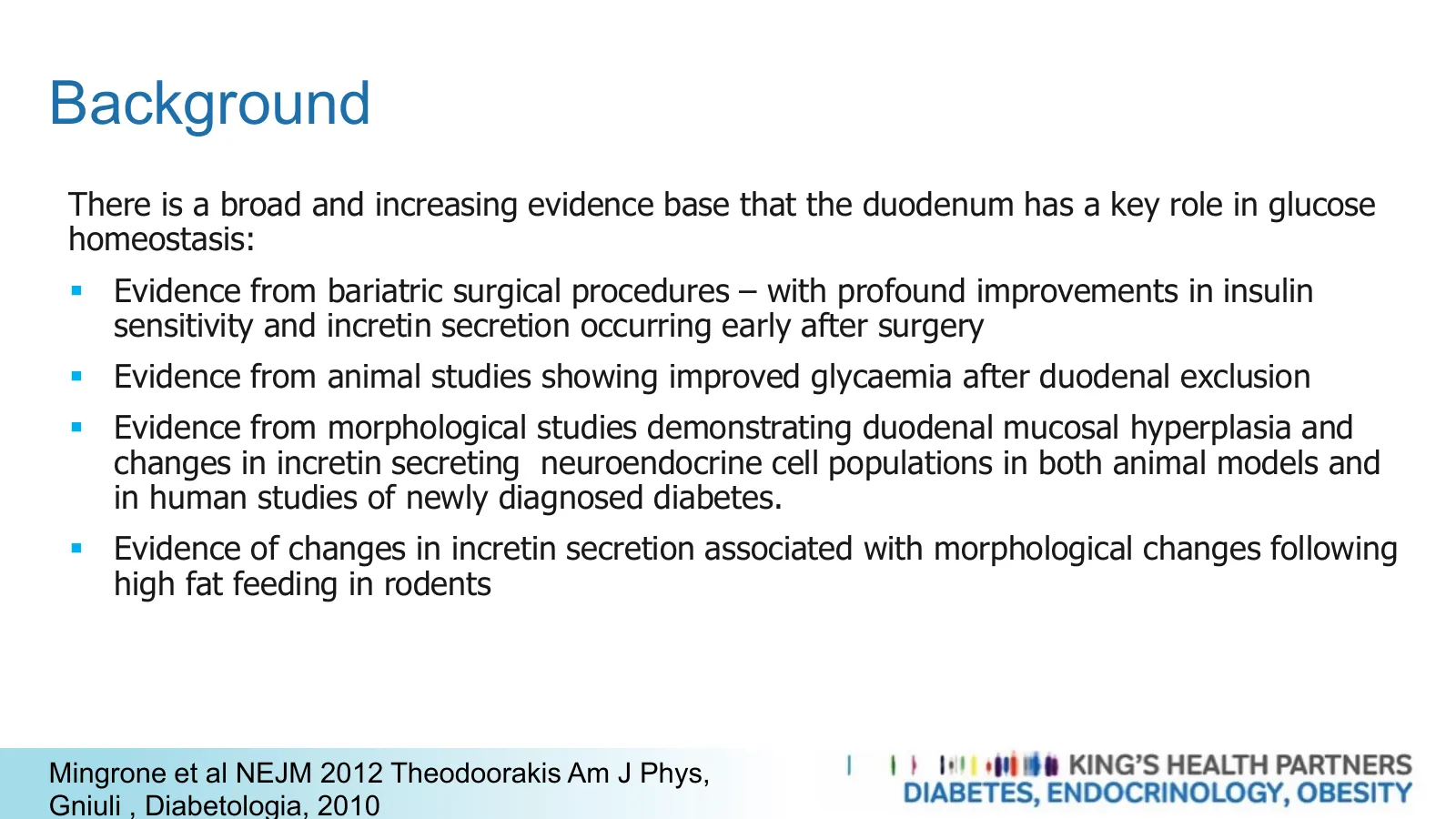
Slide 4: Background
Background There is a broad and increasing evidence base that the duodenum has a key role in glucose homeostasis: Evidence from bariatric surgical procedures – with profound improvements in insulin sensitivity and incretin secretion occurring early after surgery Evidence from animal studies show
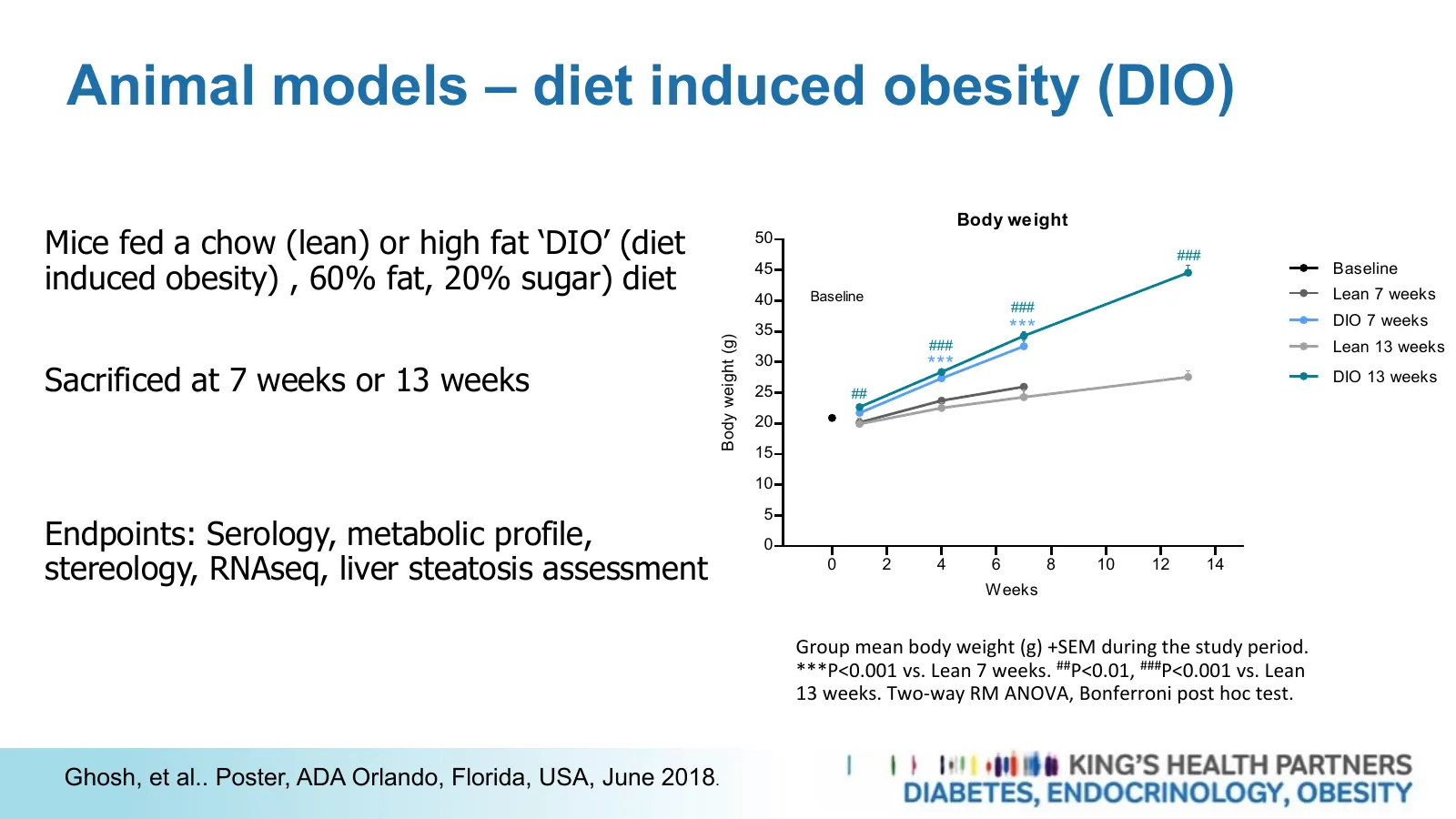
Slide 5: Animal models – diet induced obesity (DIO)
Animal models – diet induced obesity (DIO) Body weight Mice fed a chow (lean) or high fat ‘DIO’ (diet 50 ### 45 Baseline induced obesity) , 60% fat, 20% sugar) diet 40 Baseline Lean 7 weeks ### DIO 7 weeks 35 *** Body weight (g) ### Lean 13 weeks 30 *** Sacrificed at 7 weeks or 13 weeks 25 ## DIO 13
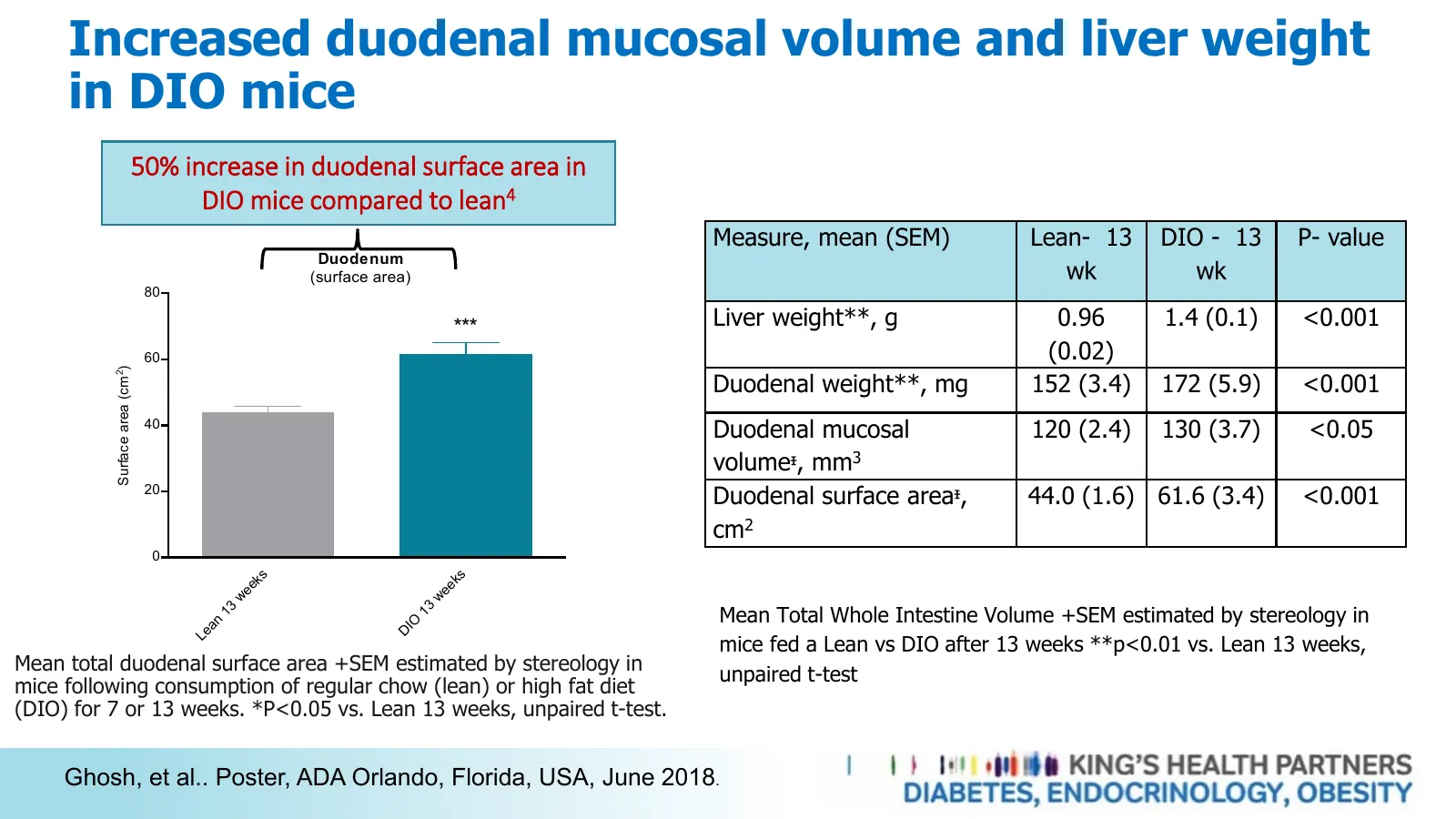
Slide 6: Increased duodenal mucosal volume and liver weight in DIO mice
Increased duodenal mucosal volume and liver weight in DIO mice 50% increase in duodenal surface area in DIO mice compared to lean4 Measure, mean (SEM) Lean- 13 DIO - 13 P- value Duodenum (surface area) wk wk 80 *** Liver weight**, g 0.96 1.4 (0.1) <0.001 60 (0.02) Surface area (cm 2) Duodenal weight
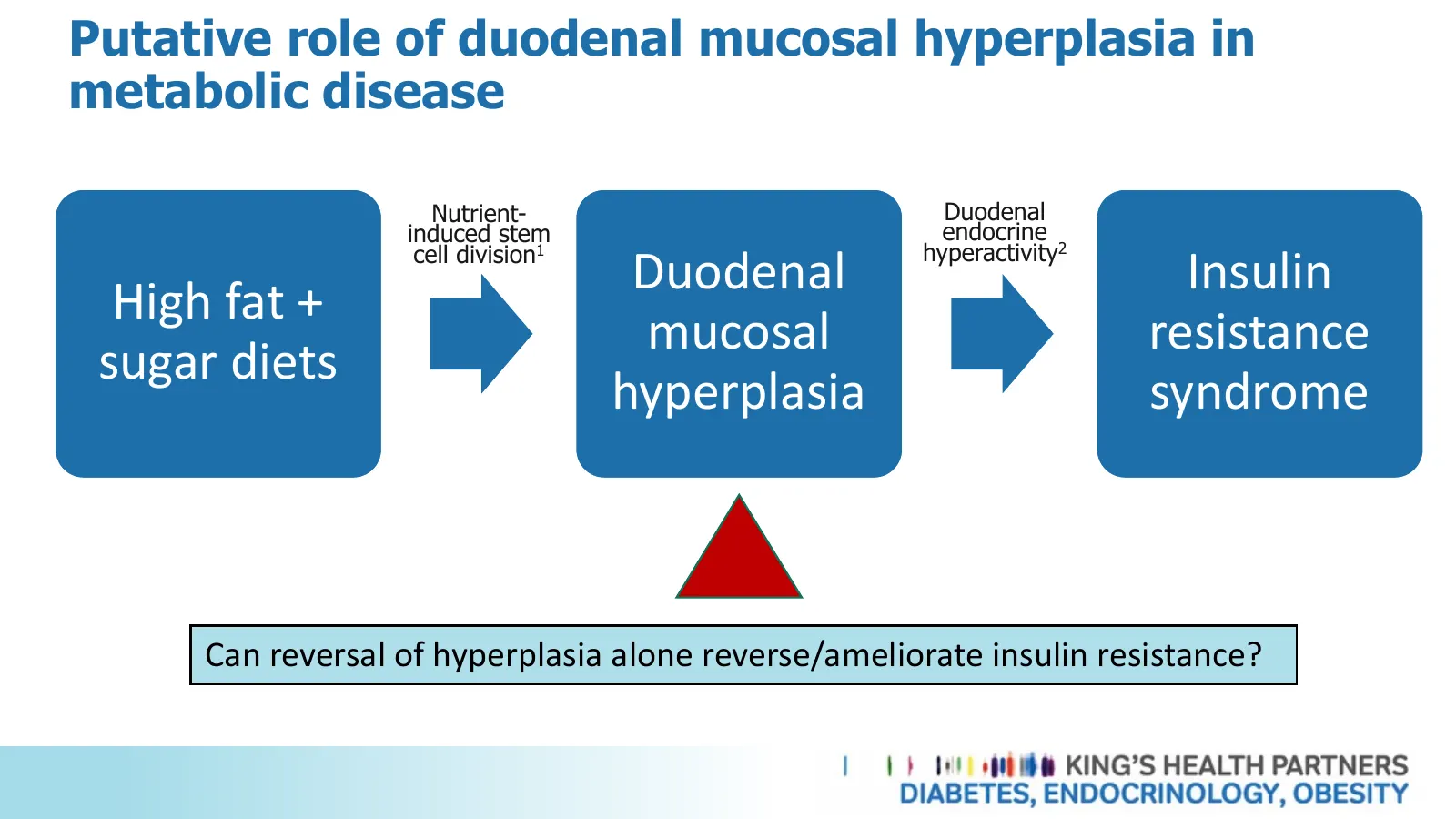
Slide 7: Putative role of duodenal mucosal hyperplasia in metabolic disease
Putative role of duodenal mucosal hyperplasia in metabolic disease Nutrient- Duodenal induced stem endocrine cell division1 hyperactivity2 Duodenal Insulin High fat + mucosal resistance sugar diets hyperplasia syndrome Can reversal of hyperplasia alone reverse/ameliorate insulin resistance? 1 O’Brie
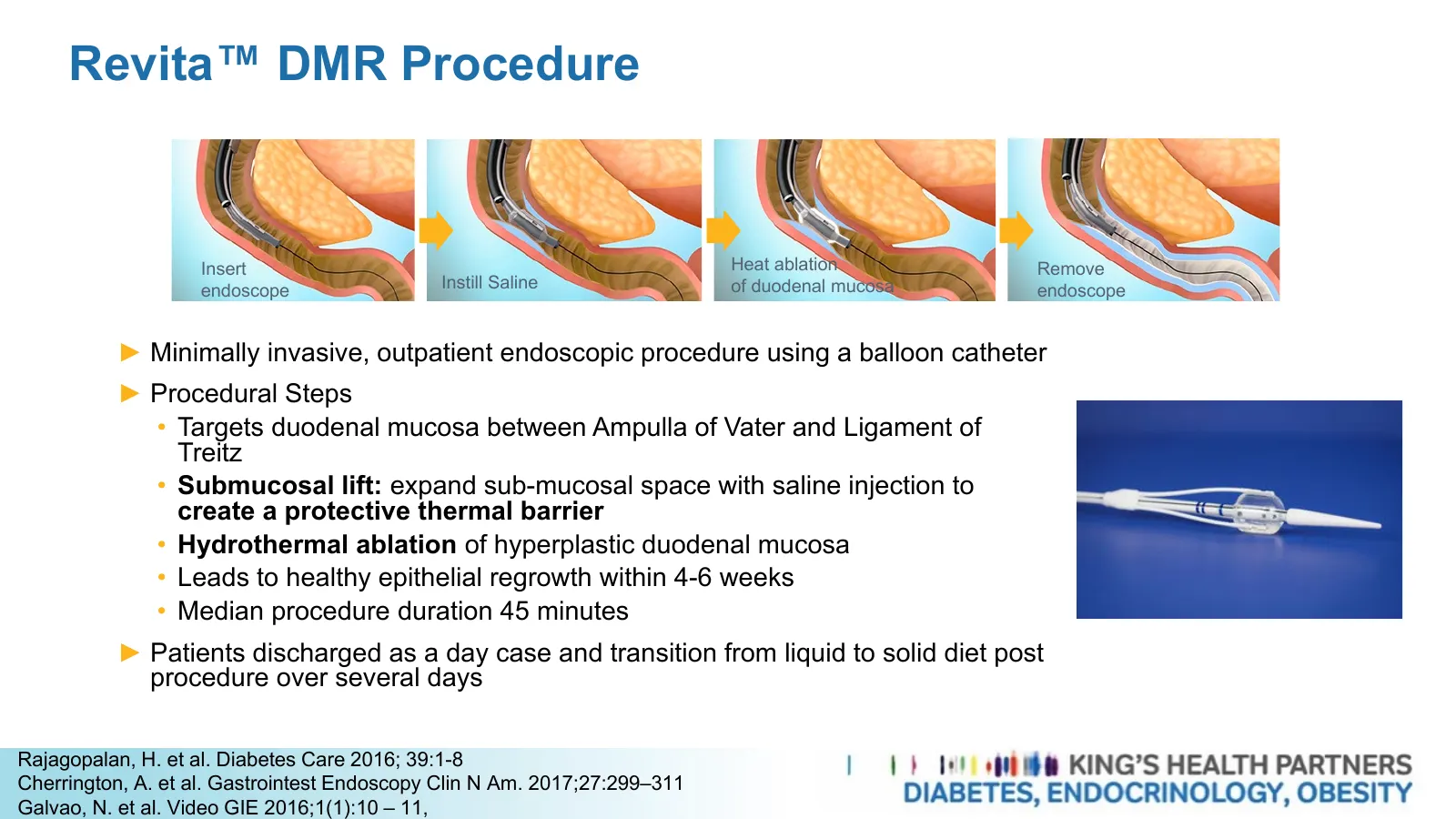
Slide 8: Revita DMR Procedure
Revita™ DMR Procedure Insert Heat ablation Remove endoscope Instill Saline of duodenal mucosa endoscope ► Minimally invasive, outpatient endoscopic procedure using a balloon catheter ► Procedural Steps • Targets duodenal mucosa between Ampulla of Vater and Ligament of Treitz • Submucosal lift: expan
Slide 9: First-in-Human Study
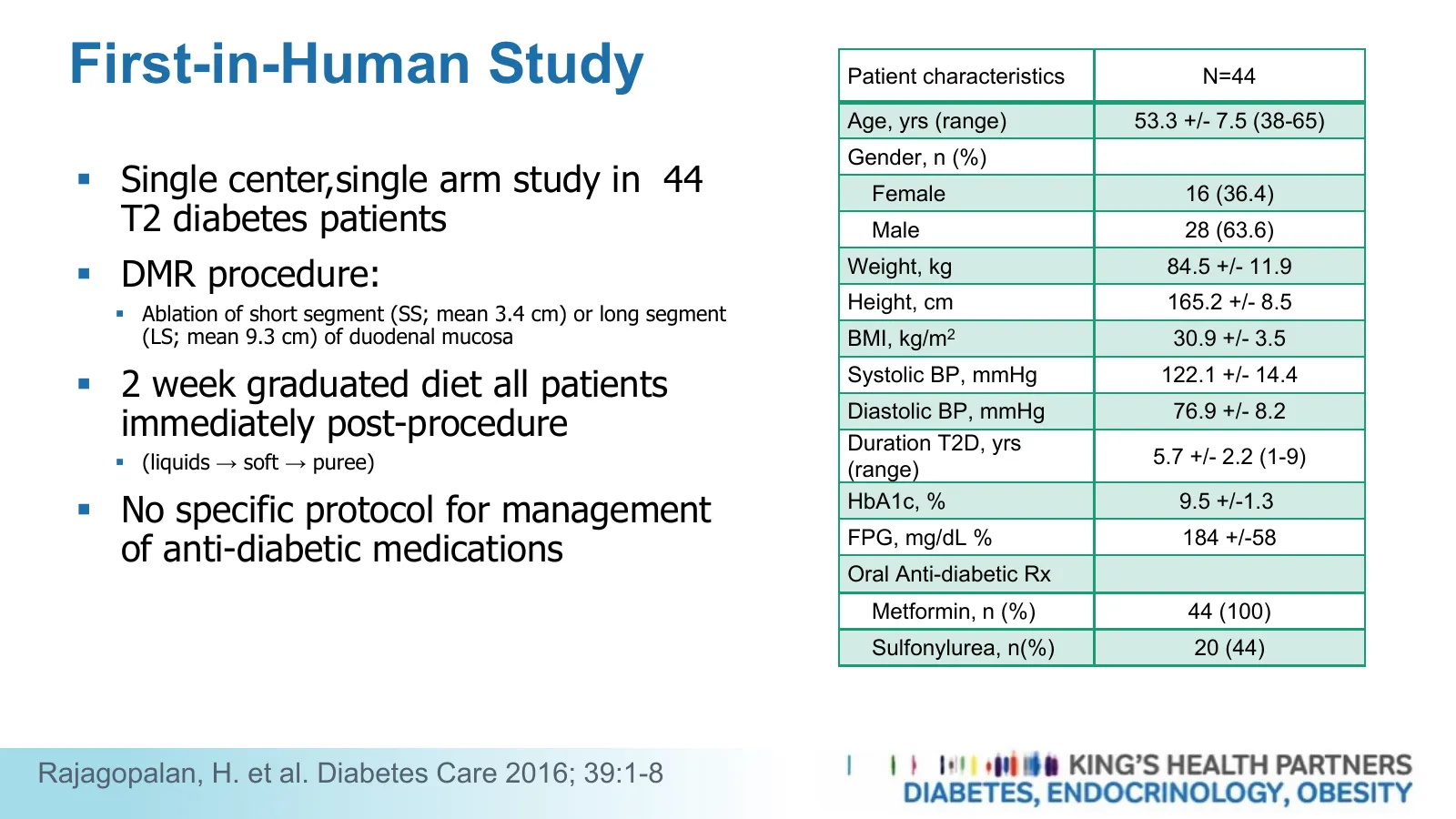
First-in-Human Study Patient characteristics N=44 Age, yrs (range) 53.3 +/- 7.5 (38-65) Gender, n (%) Single center,single arm study in 44 Female 16 (36.4) T2 diabetes patients Male 28 (63.6) DMR procedure: Weight, kg 84.5 +/- 11.9 Height, cm 165.2 +/- 8.5 Ablation of short segment (SS; mean 3
Slide 10: First-in-Human Study
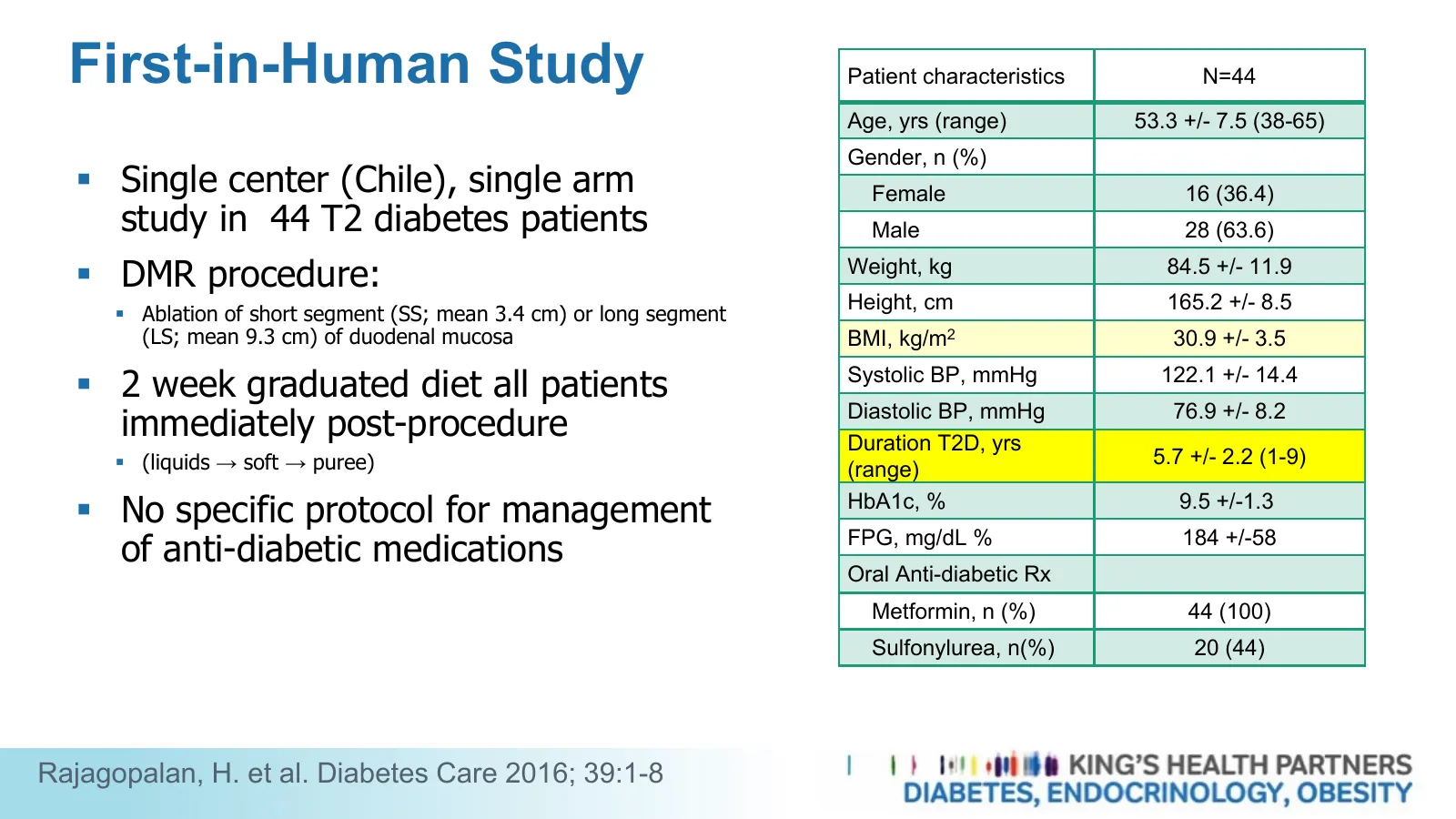
First-in-Human Study Patient characteristics N=44 Age, yrs (range) 53.3 +/- 7.5 (38-65) Gender, n (%) Single center (Chile), single arm Female 16 (36.4) study in 44 T2 diabetes patients Male 28 (63.6) DMR procedure: Weight, kg 84.5 +/- 11.9 Height, cm 165.2 +/- 8.5 Ablation of short segment (S
Slide 11: First-in-Human Study
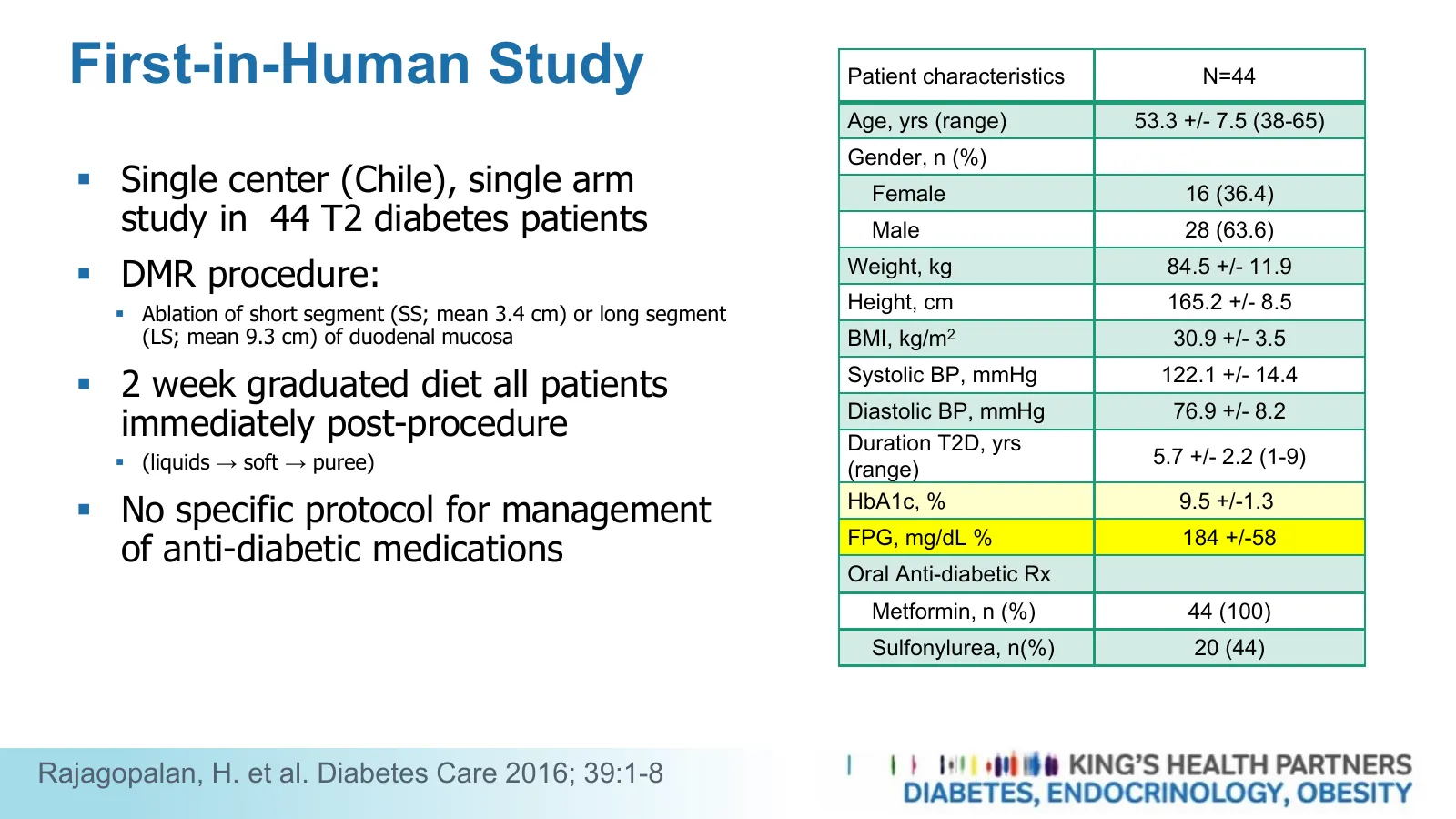
First-in-Human Study Patient characteristics N=44 Age, yrs (range) 53.3 +/- 7.5 (38-65) Gender, n (%) Single center (Chile), single arm Female 16 (36.4) study in 44 T2 diabetes patients Male 28 (63.6) DMR procedure: Weight, kg 84.5 +/- 11.9 Height, cm 165.2 +/- 8.5 Ablation of short segment (S
Slide 12: First-in-Human Study: Glucose control
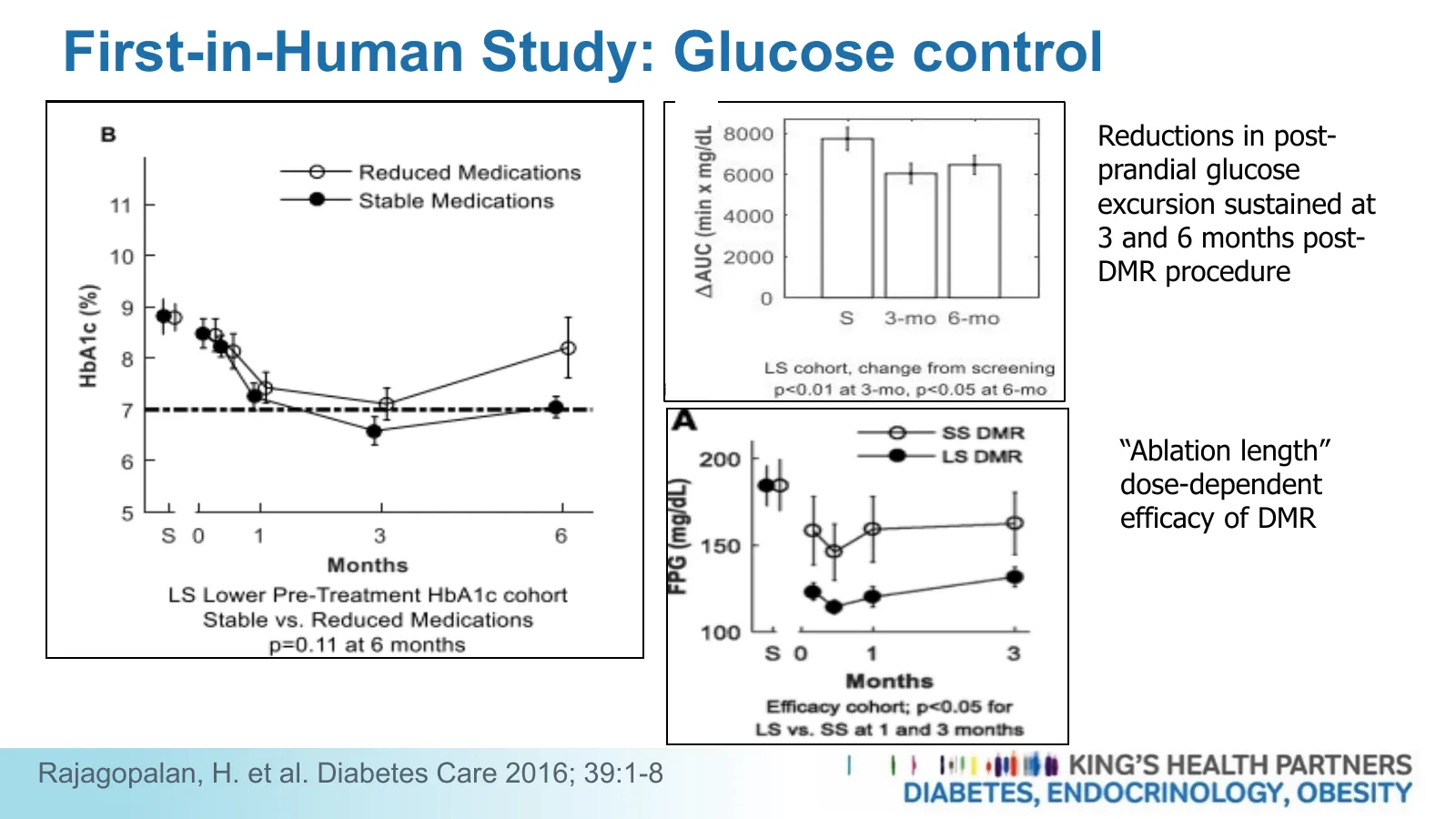
First-in-Human Study: Glucose control Reductions in post- prandial glucose excursion sustained at 3 and 6 months post- DMR procedure “Ablation length” dose-dependent efficacy of DMR Rajagopalan, H. et al. Diabetes Care 2016; 39:1-8
Slide 13: First-in-Human Study: Metabolomic changes
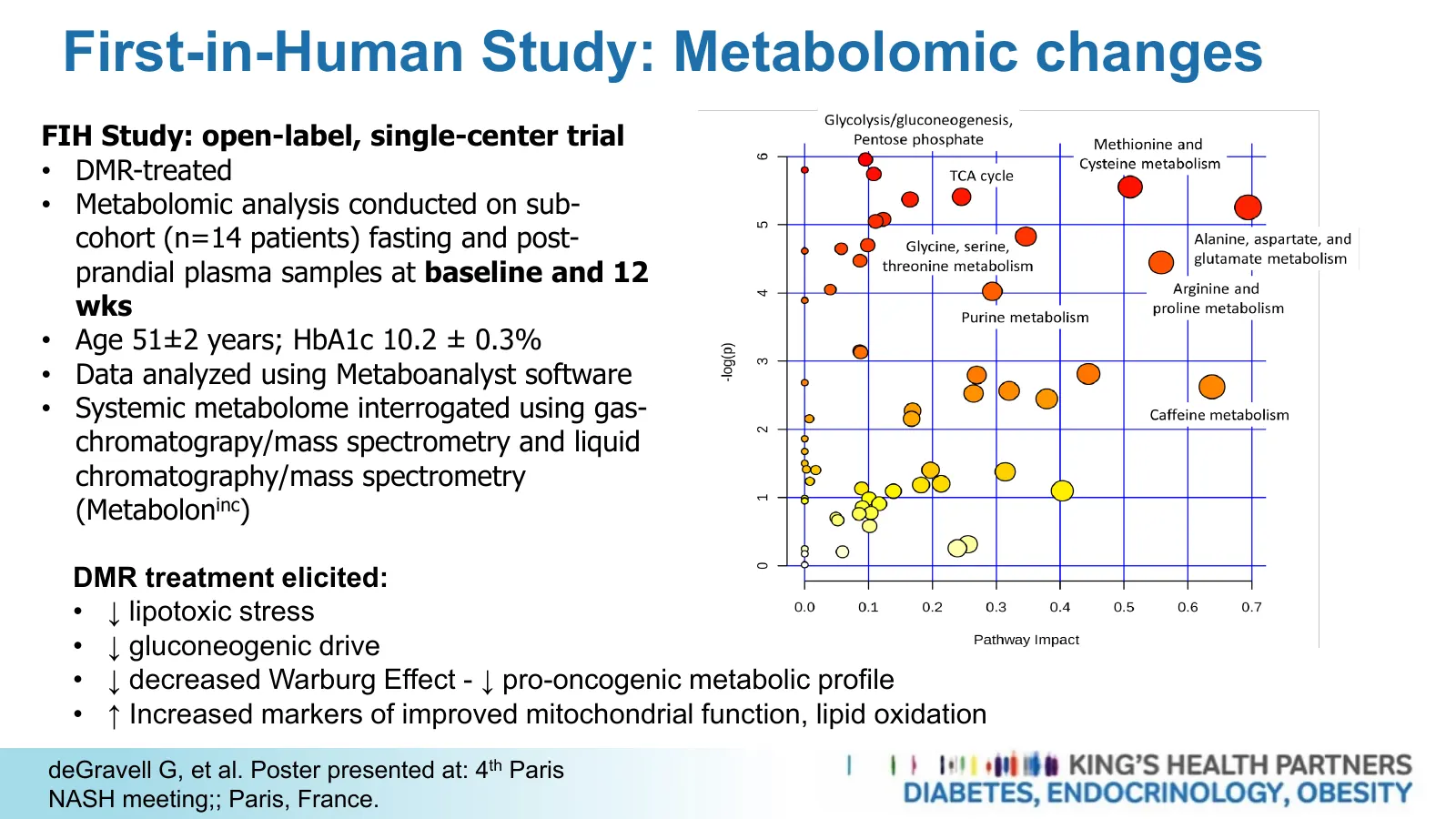
First-in-Human Study: Metabolomic changes FIH Study: open-label, single-center trial • DMR-treated • Metabolomic analysis conducted on sub- cohort (n=14 patients) fasting and post- prandial plasma samples at baseline and 12 wks • Age 51±2 years; HbA1c 10.2 ± 0.3% • Data analyzed using Metaboanalyst
Slide 14: Revita-1: First international multicenter study
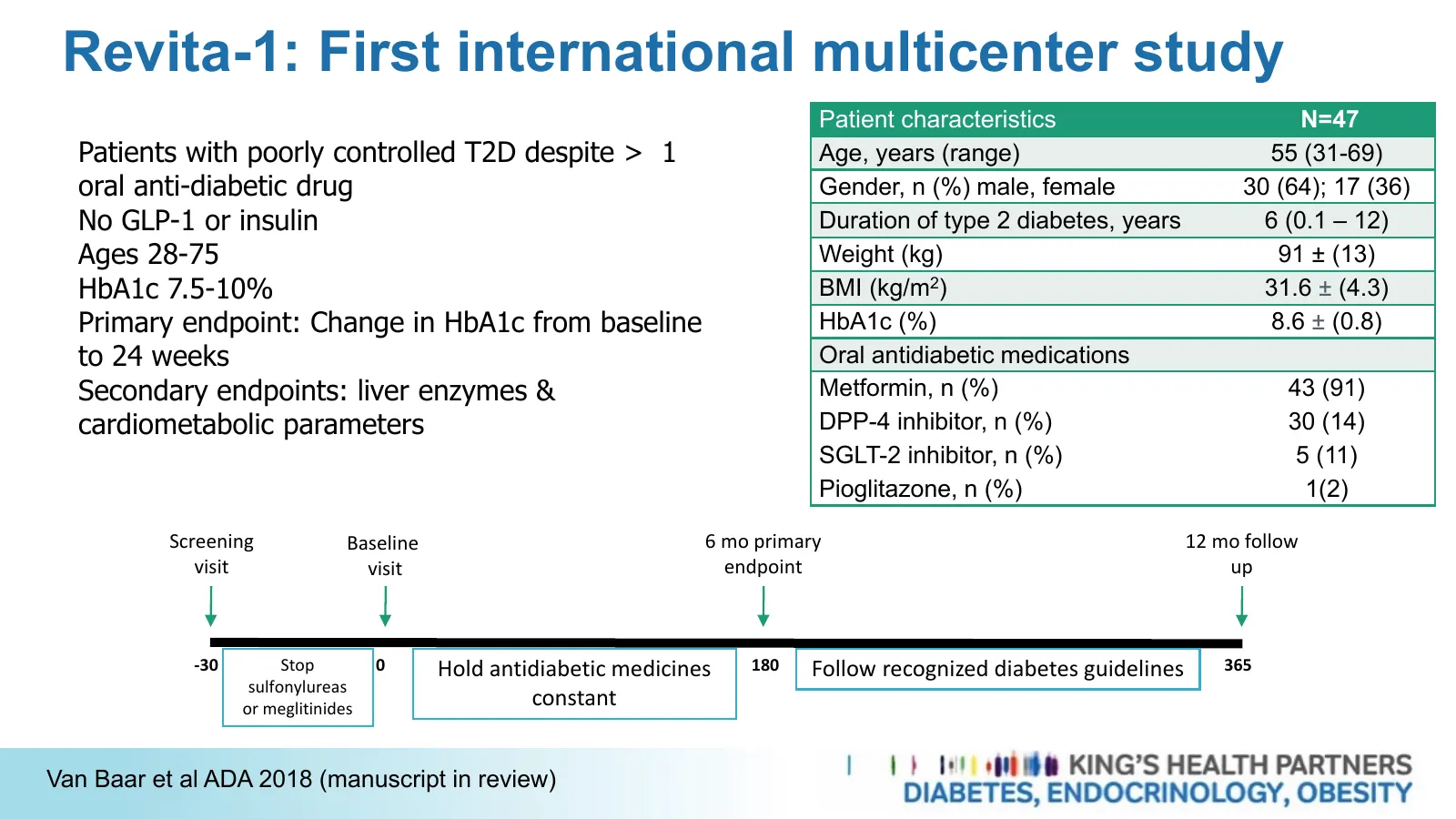
Revita-1: First international multicenter study Patient characteristics N=47 Patients with poorly controlled T2D despite > 1 Age, years (range) 55 (31-69) oral anti-diabetic drug Gender, n (%) male, female 30 (64); 17 (36) No GLP-1 or insulin Duration of type 2 diabetes, years 6 (0.1 – 12) Ages 28-7
Slide 15: Revita-1: Impact on HbA1c and insulin resistance
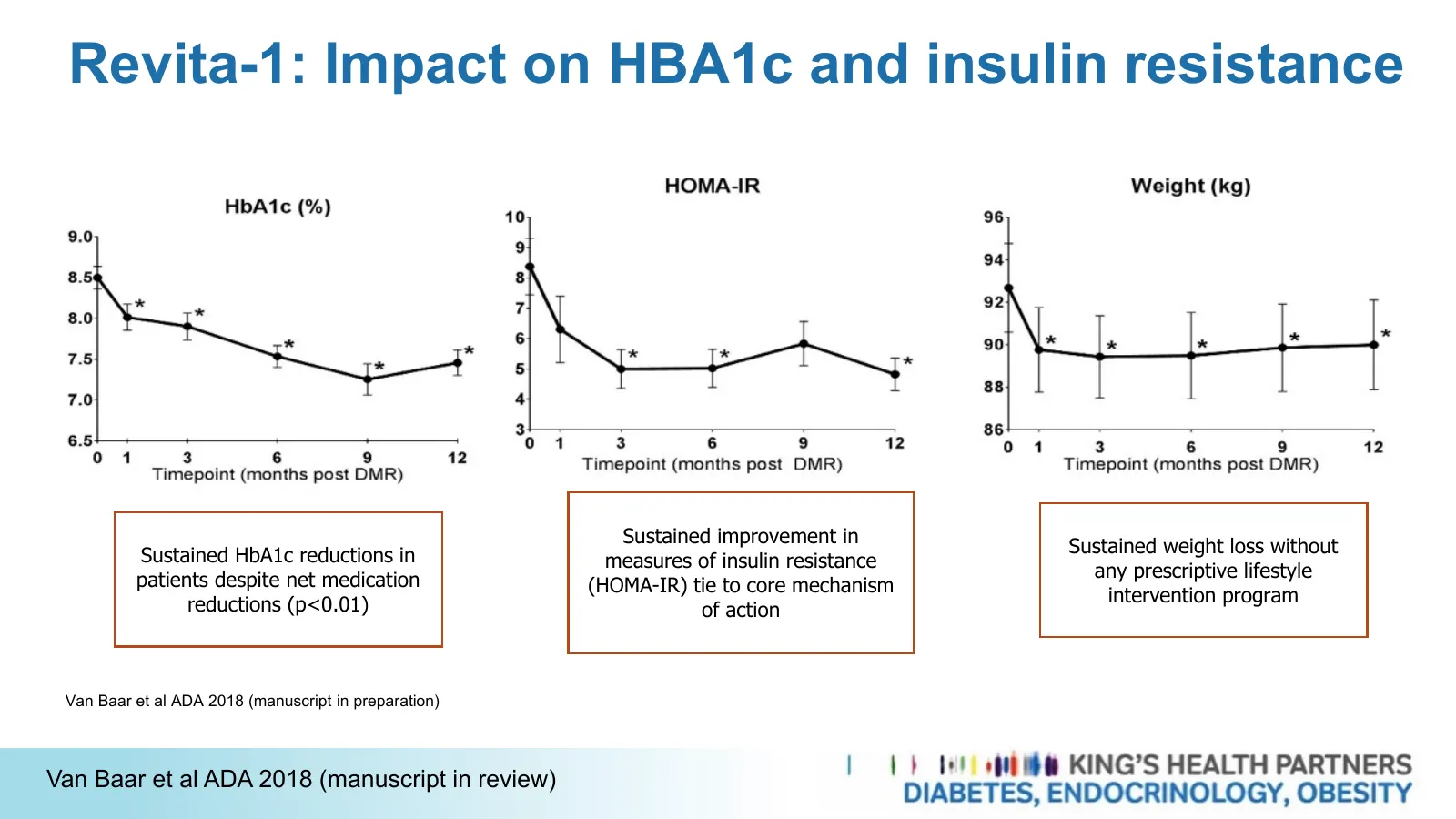
Revita-1: Impact on HBA1c and insulin resistance Sustained improvement in Sustained weight loss without Sustained HbA1c reductions in measures of insulin resistance patients despite net medication any prescriptive lifestyle (HOMA-IR) tie to core mechanism intervention program reductions (p<0.01) of
Slide 16: Revita-1: Impact on liver transaminases
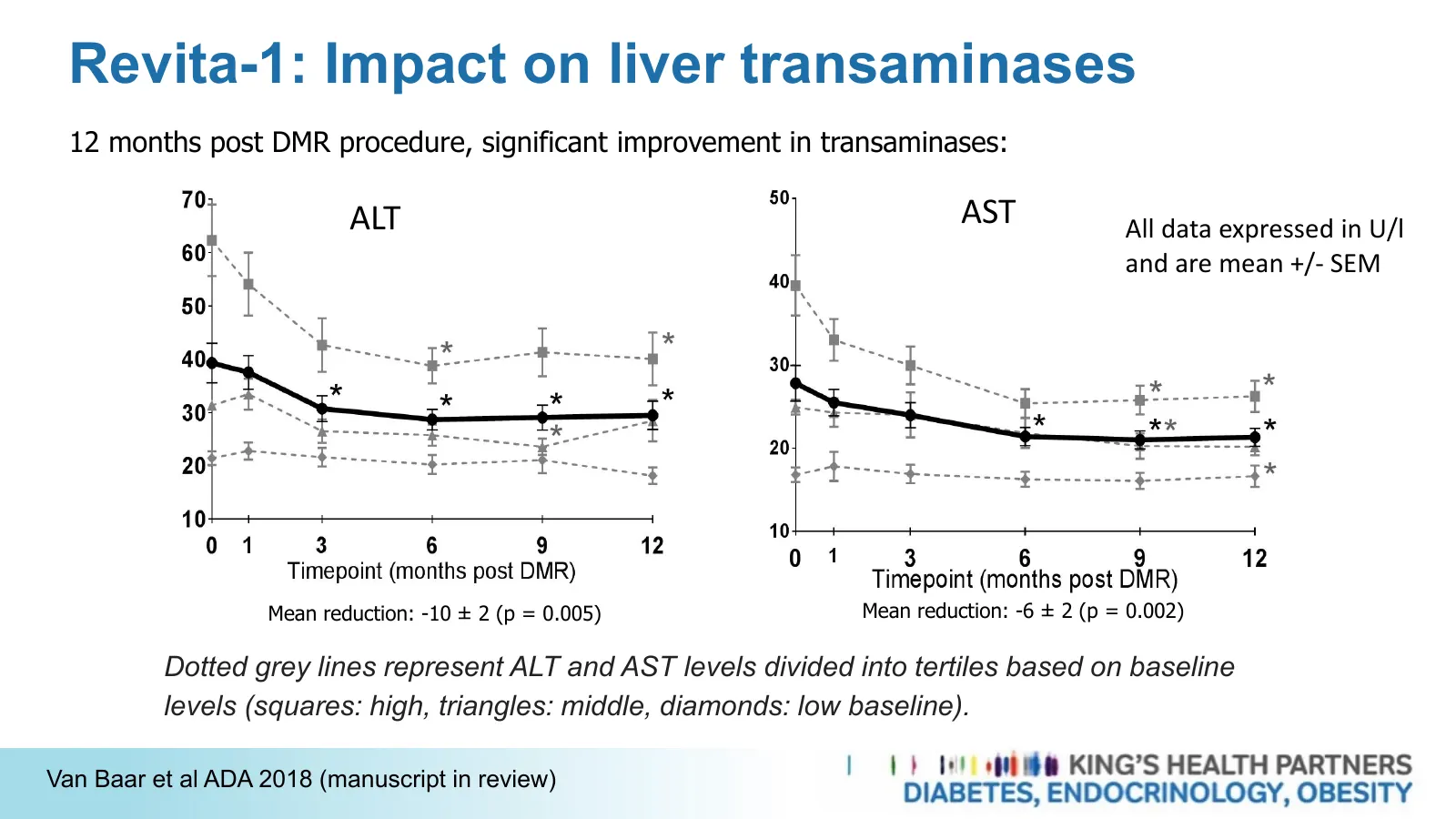
Revita-1: Impact on liver transaminases 12 months post DMR procedure, significant improvement in transaminases: ALT AST All data expressed in U/l and are mean +/- SEM Mean reduction: -10 ± 2 (p = 0.005) Mean reduction: -6 ± 2 (p = 0.002) Dotted grey lines represent ALT and AST levels divided into te
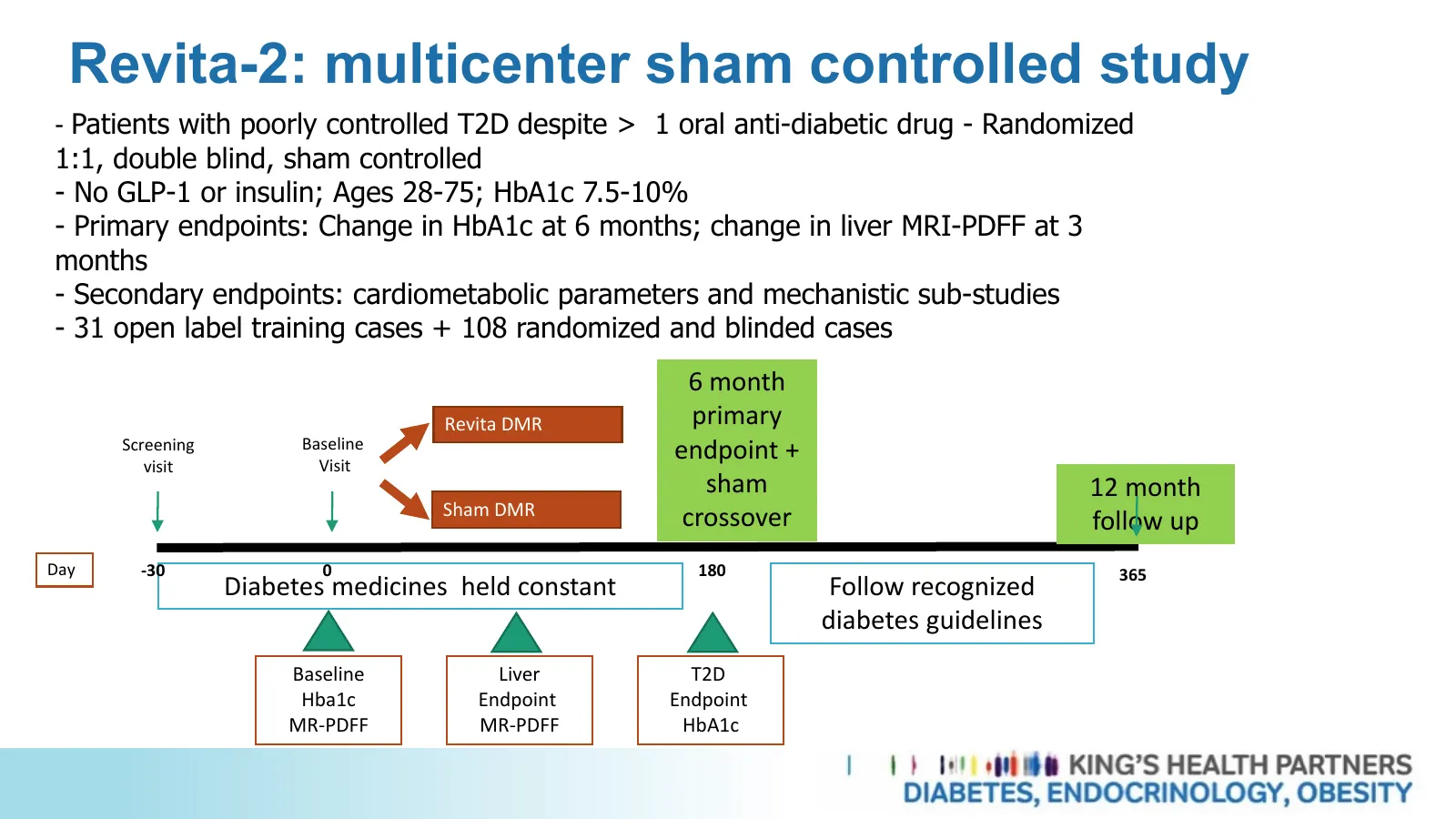
Slide 17: Revita-2: multicenter sham controlled study
Revita-2: multicenter sham controlled study - Patients with poorly controlled T2D despite > 1 oral anti-diabetic drug - Randomized 1:1, double blind, sham controlled - No GLP-1 or insulin; Ages 28-75; HbA1c 7.5-10% - Primary endpoints: Change in HbA1c at 6 months; change in liver MRI-PDFF at 3 month
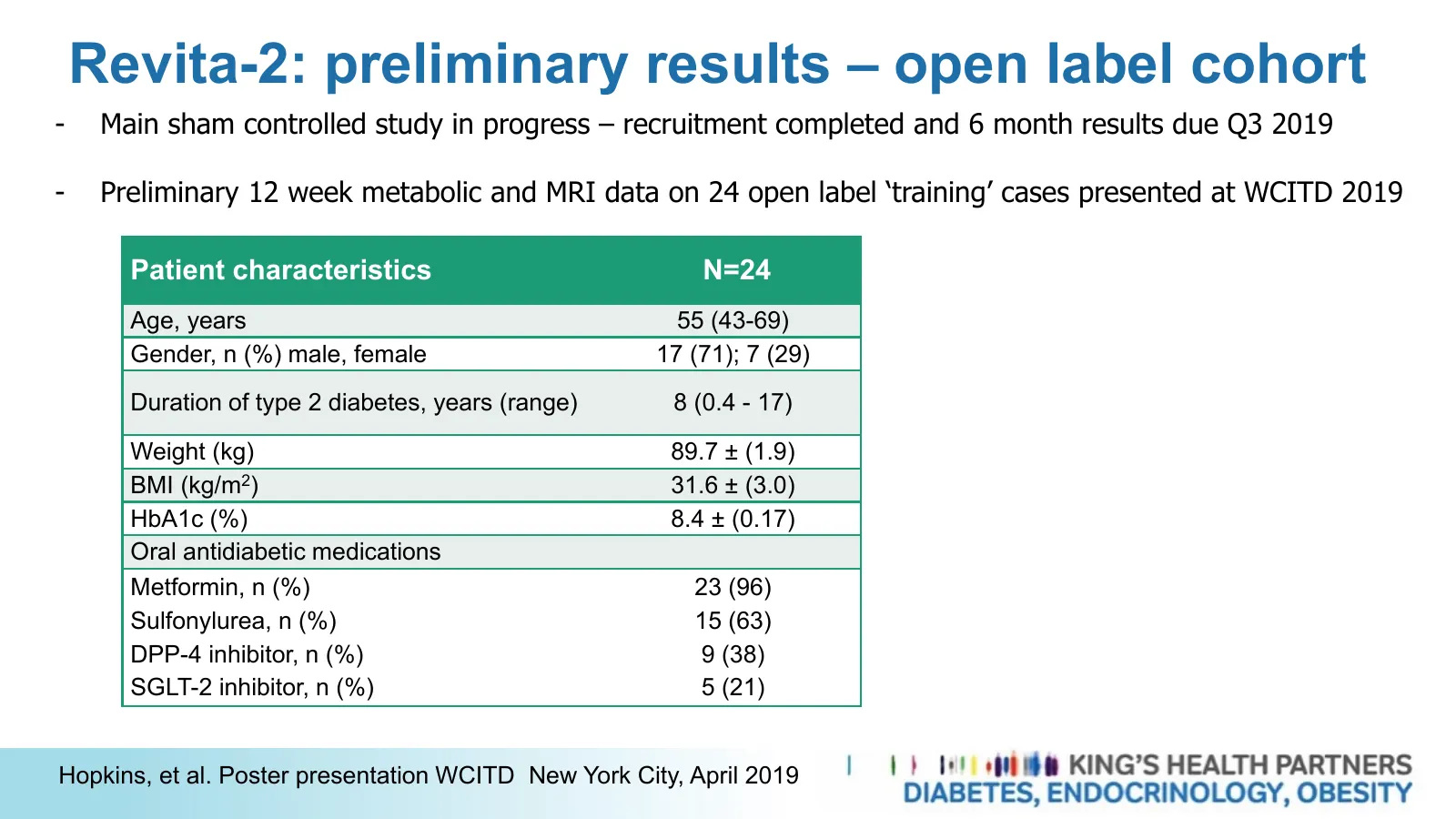
Slide 18: Revita-2: preliminary results – open label cohort
Revita-2: preliminary results – open label cohort - Main sham controlled study in progress – recruitment completed and 6 month results due Q3 2019 - Preliminary 12 week metabolic and MRI data on 24 open label ‘training’ cases presented at WCITD 2019 Patient characteristics N=24 Age, years 55 (43-69)
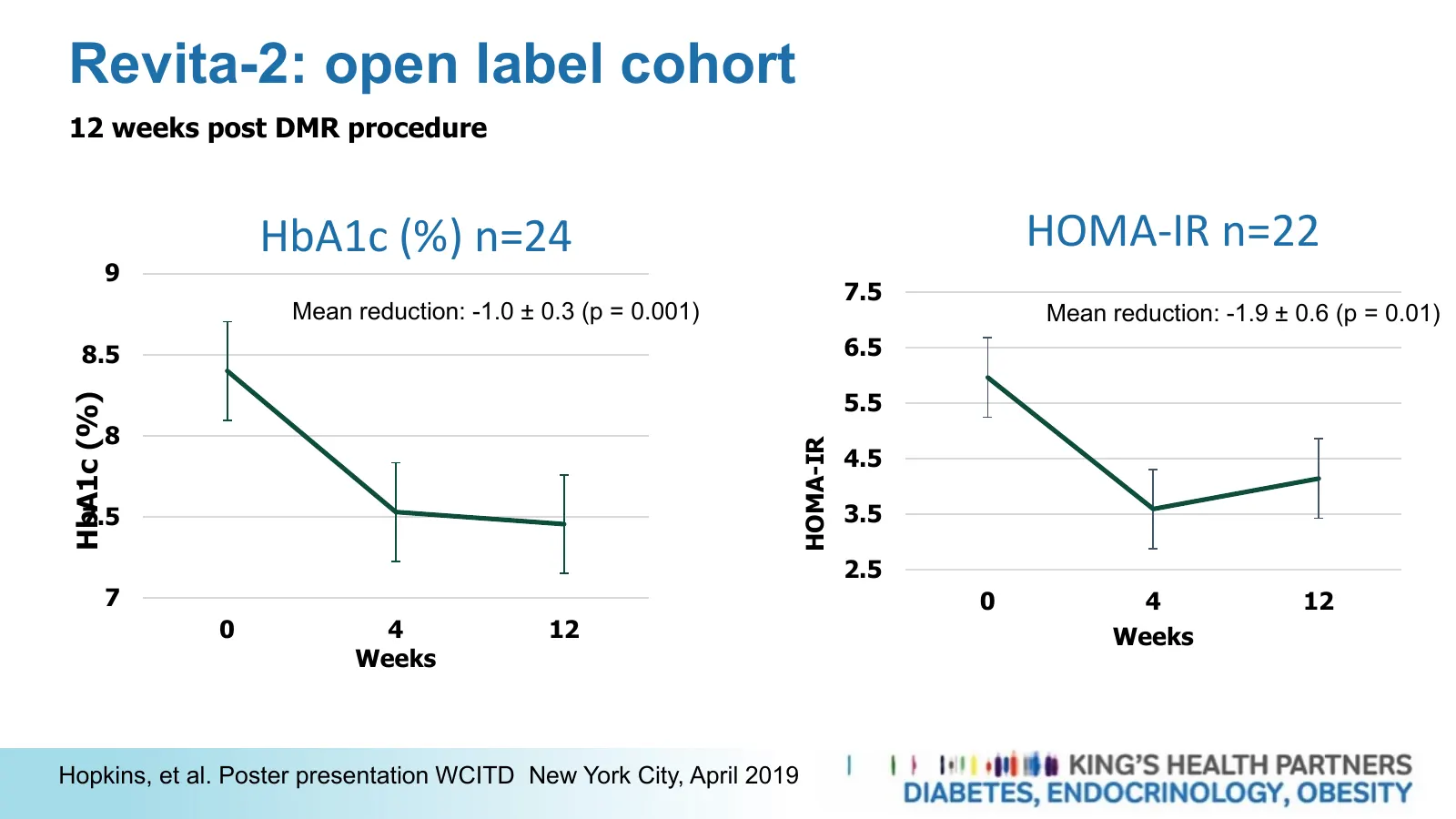
Slide 19: Revita-2: open label cohort HbA1c and HOMA-IR
Revita-2: open label cohort 12 weeks post DMR procedure HbA1c (%) n=24 HOMA-IR n=22 9 7.5 Mean reduction: -1.0 ± 0.3 (p = 0.001) Mean reduction: -1.9 ± 0.6 (p = 0.01) 8.5 6.5 HbA1c (%) 5.5 8 HOMA-IR 4.5 7.5 3.5 2.5 7 0 4 12 0 4 12 Weeks Weeks Hopkins, et al. Poster presentation WCITD New York City,
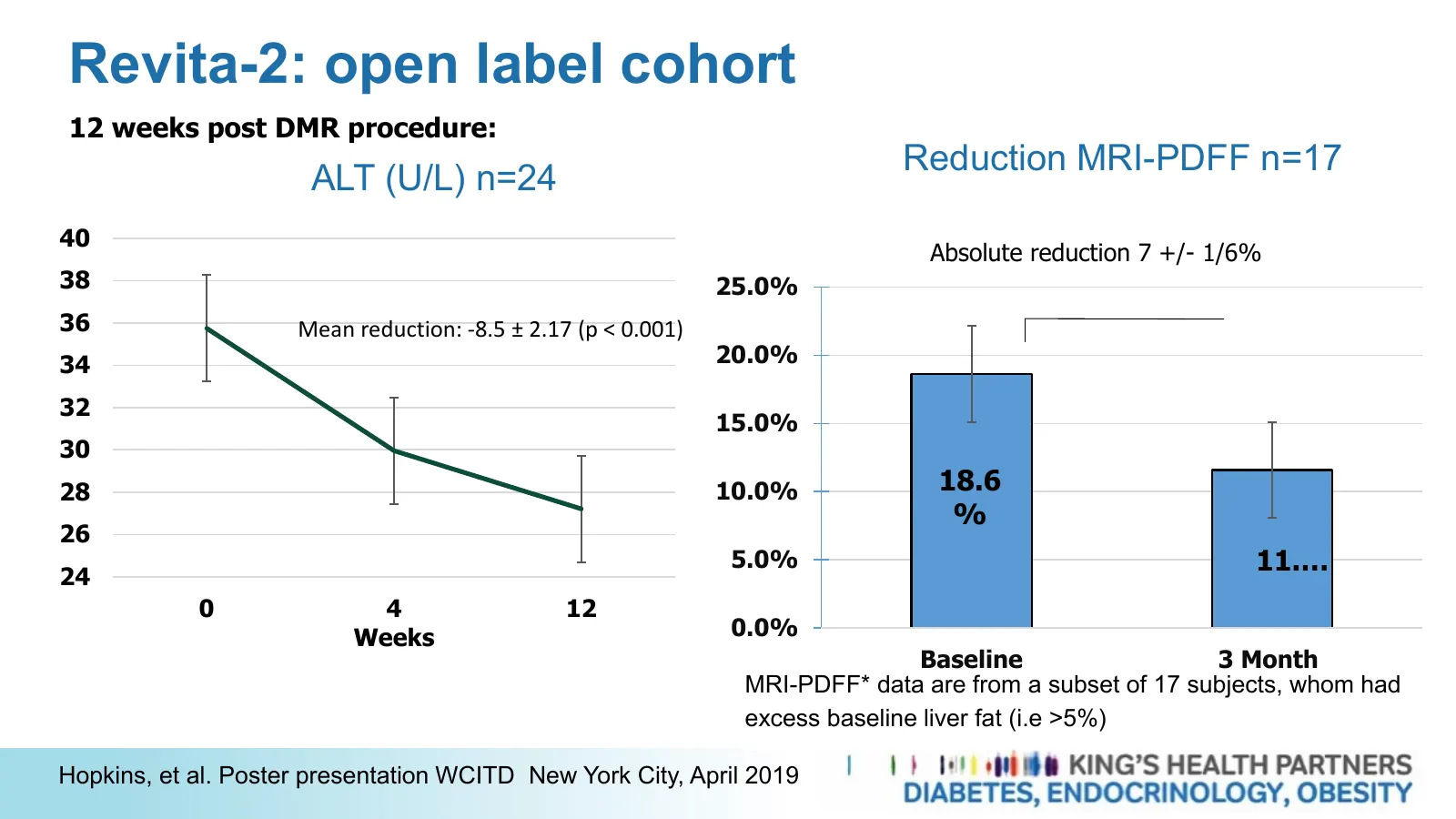
Slide 20: Revita-2: open label cohort ALT and MRI-PDFF
Revita-2: open label cohort 12 weeks post DMR procedure: Reduction MRI-PDFF n=17 ALT (U/L) n=24 40 Absolute reduction 7 +/- 1/6% 38 25.0% 36 Mean reduction: -8.5 ± 2.17 (p < 0.001) 34 20.0% 32 15.0% 30 28 10.0% 18.6 % 26 24 5.0% 11.… 0 4 12 Weeks 0.0% Baseline 3 Month MRI-PDFF* data are from a subse
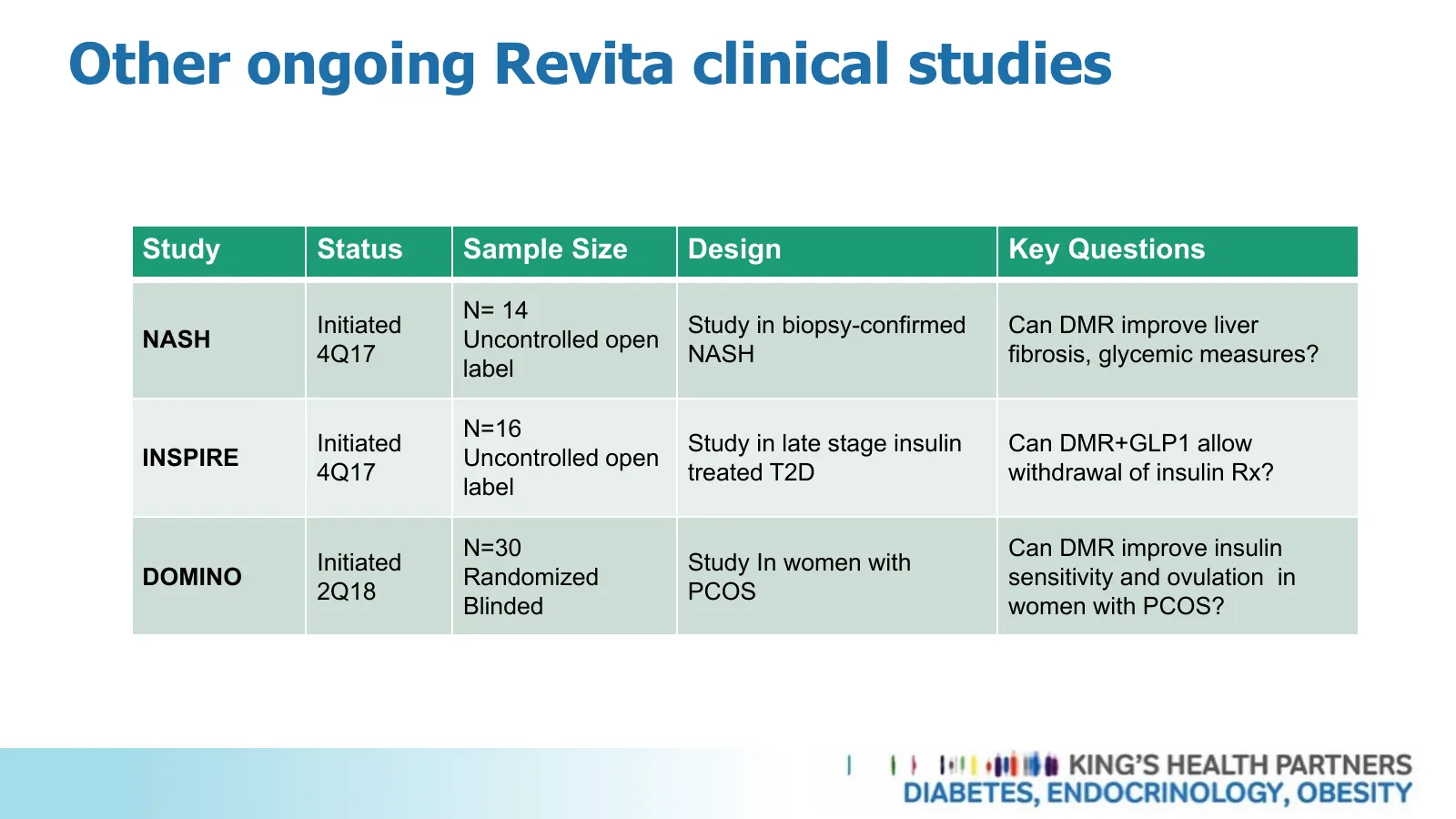
Slide 21: Other ongoing Revita clinical studies
Other ongoing Revita clinical studies Study Status Sample Size Design Key Questions N= 14 Initiated Study in biopsy-confirmed Can DMR improve liver NASH Uncontrolled open 4Q17 NASH fibrosis, glycemic measures? label N=16 Initiated Study in late stage insulin Can DMR+GLP1 allow INSPIRE Uncontrolled o
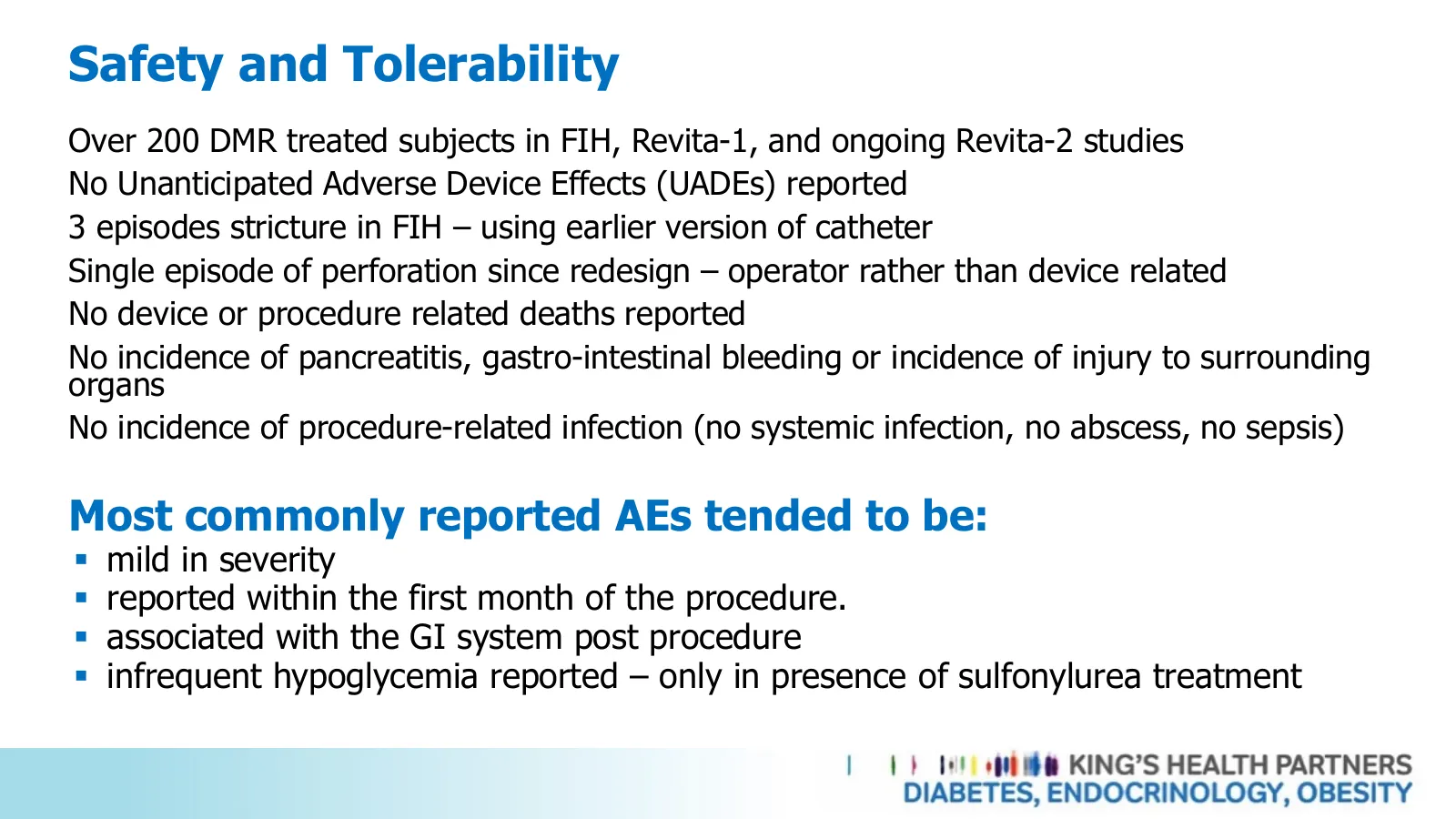
Slide 22: Safety and Tolerability
Safety and Tolerability Over 200 DMR treated subjects in FIH, Revita-1, and ongoing Revita-2 studies No Unanticipated Adverse Device Effects (UADEs) reported 3 episodes stricture in FIH – using earlier version of catheter Single episode of perforation since redesign – operator rather than device rel
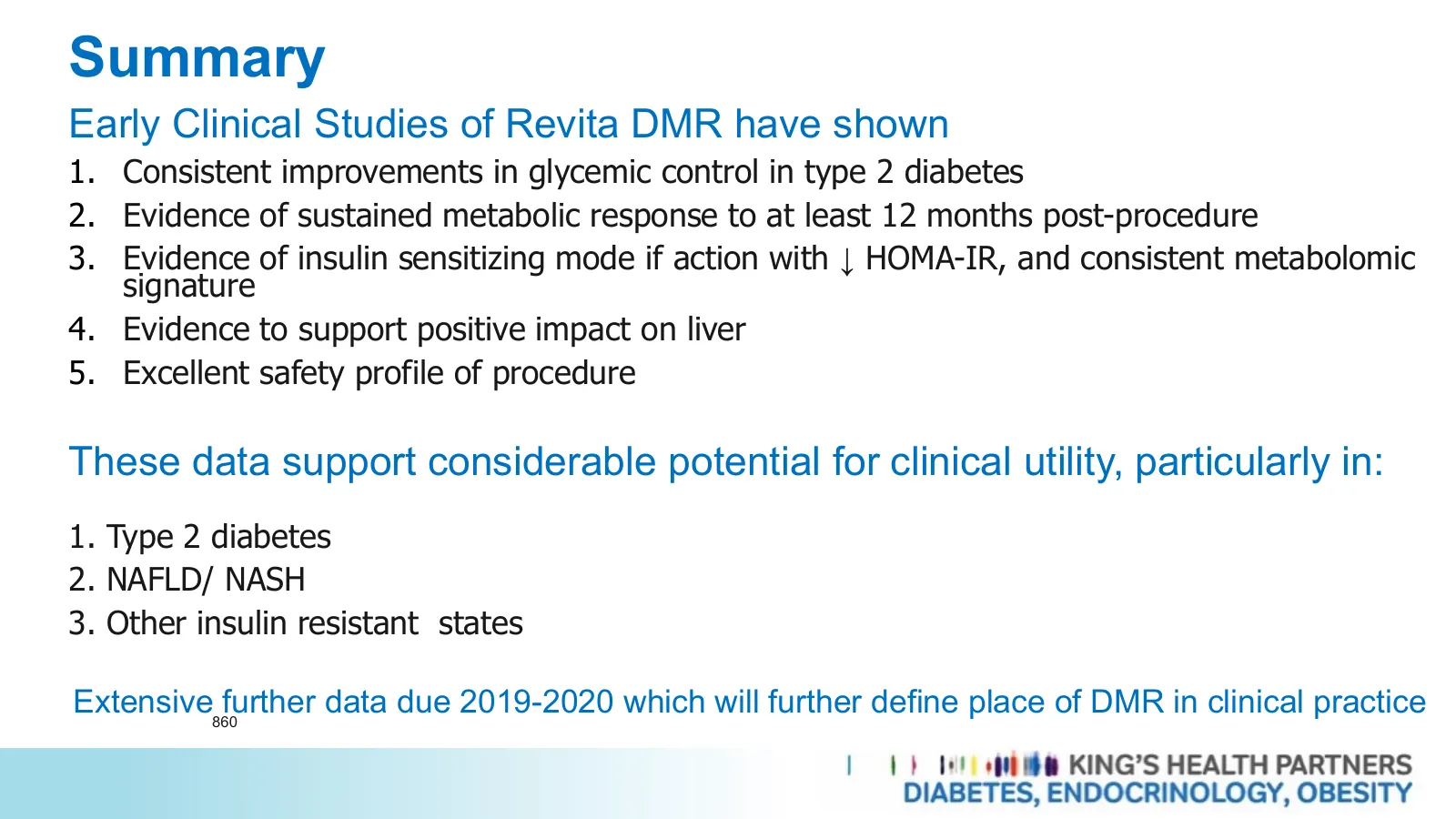
Slide 23: Summary
Summary Early Clinical Studies of Revita DMR have shown 1. Consistent improvements in glycemic control in type 2 diabetes 2. Evidence of sustained metabolic response to at least 12 months post-procedure 3. Evidence of insulin sensitizing mode if action with ↓ HOMA-IR, and consistent metabolomic sign
Source: company website
More decks from Fractyl Health, Inc.
 Technical Presentation (October 2026)29 slides · Oct 16, 2026
 Technical Presentation (July 2026)26 slides · Jul 15, 2026
 Technical Presentation (June 2026)18 slides · Jun 6, 2026
 Technical Presentation (May 2026)19 slides · May 2026
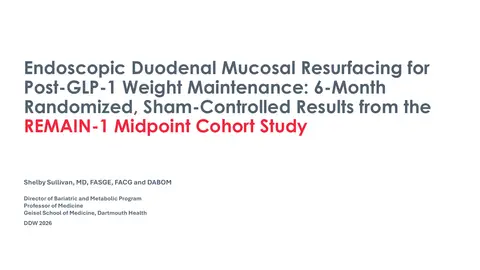 DDW 202618 slides · May 2026
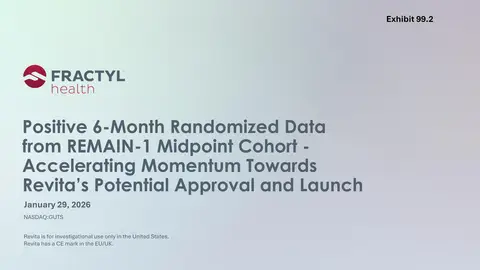 Corporate Update (January 2026)18 slides · Jan 29, 2026