Boston Scientific Corporation · NYSE:BSX
Boston Scientific — Technical Presentation (2022)
19 slides from Boston Scientific's technical presentation, May 3, 2022
Slide 1: The ATLAS trial: Avoid Transvenous Leads in Appropriate Subjects
The ATLAS trial: Avoid Transvenous Leads in Appropriate Subjects Heart Rhythm Society 2022 Late-Breaking Clinical Trials Session Population Health Research Institute is affiliated with 2022 Copyright © Boston Scientific Corporation or its affiliates. All rights reserved. CRM-1304802-AA | 1 the acade
Slide 2: Declarations of Interest: Jeff Healey
Declarations of Interest: Jeff Healey • Research grants and speaking fees • Medtronic, Abbott, Boston Scientific, BMS/Pfizer, Servier, Novartis • Consulting • Bayer, Boston Scientific 2022 Copyright © Boston Scientific Corporation or its affiliates. All rights reserved. CRM-1304802-AA | 2
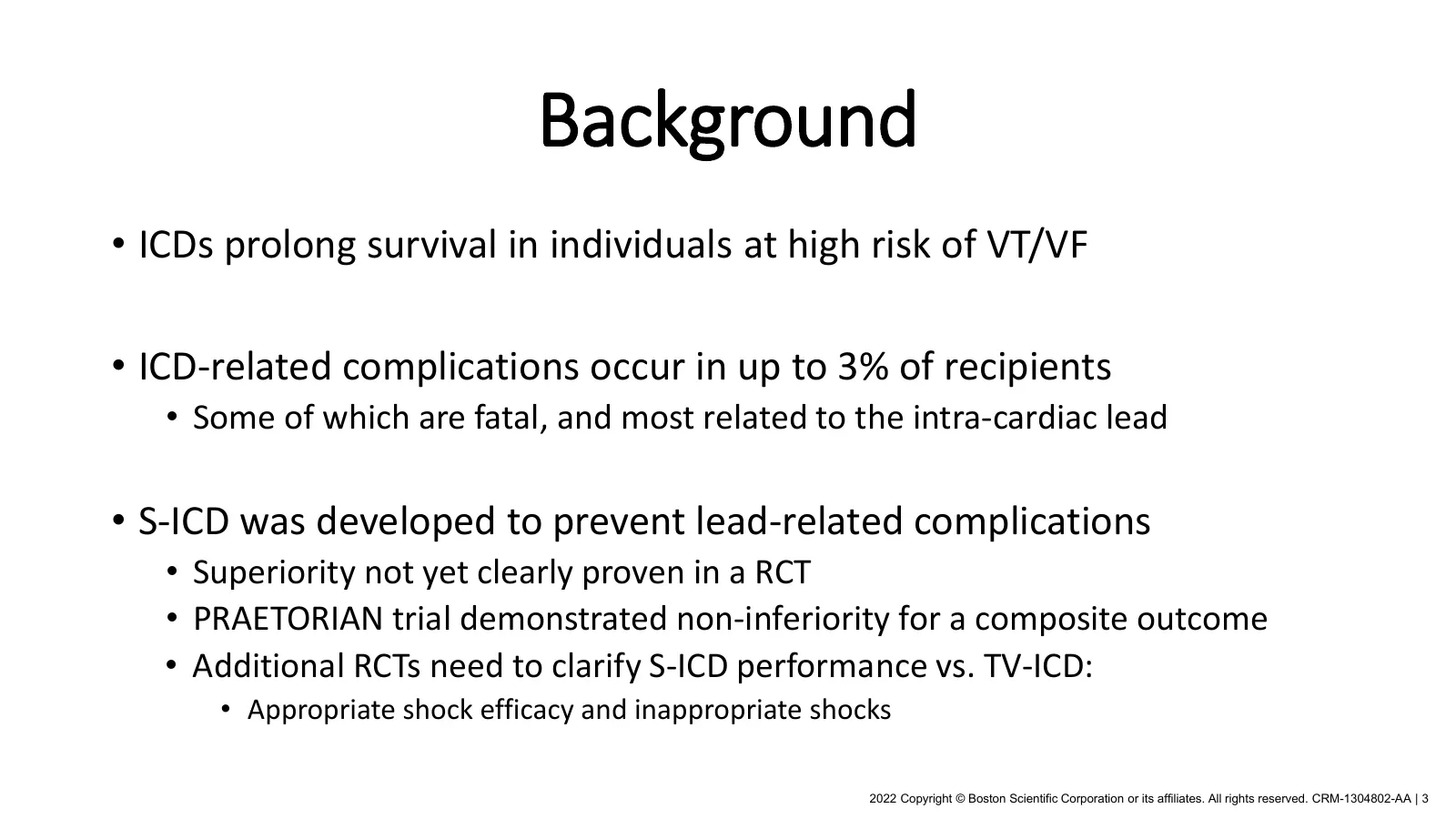
Slide 3: Background
Background • ICDs prolong survival in individuals at high risk of VT/VF • ICD-related complications occur in up to 3% of recipients • Some of which are fatal, and most related to the intra-cardiac lead • S-ICD was developed to prevent lead-related complications • Superiority not yet clearly proven i
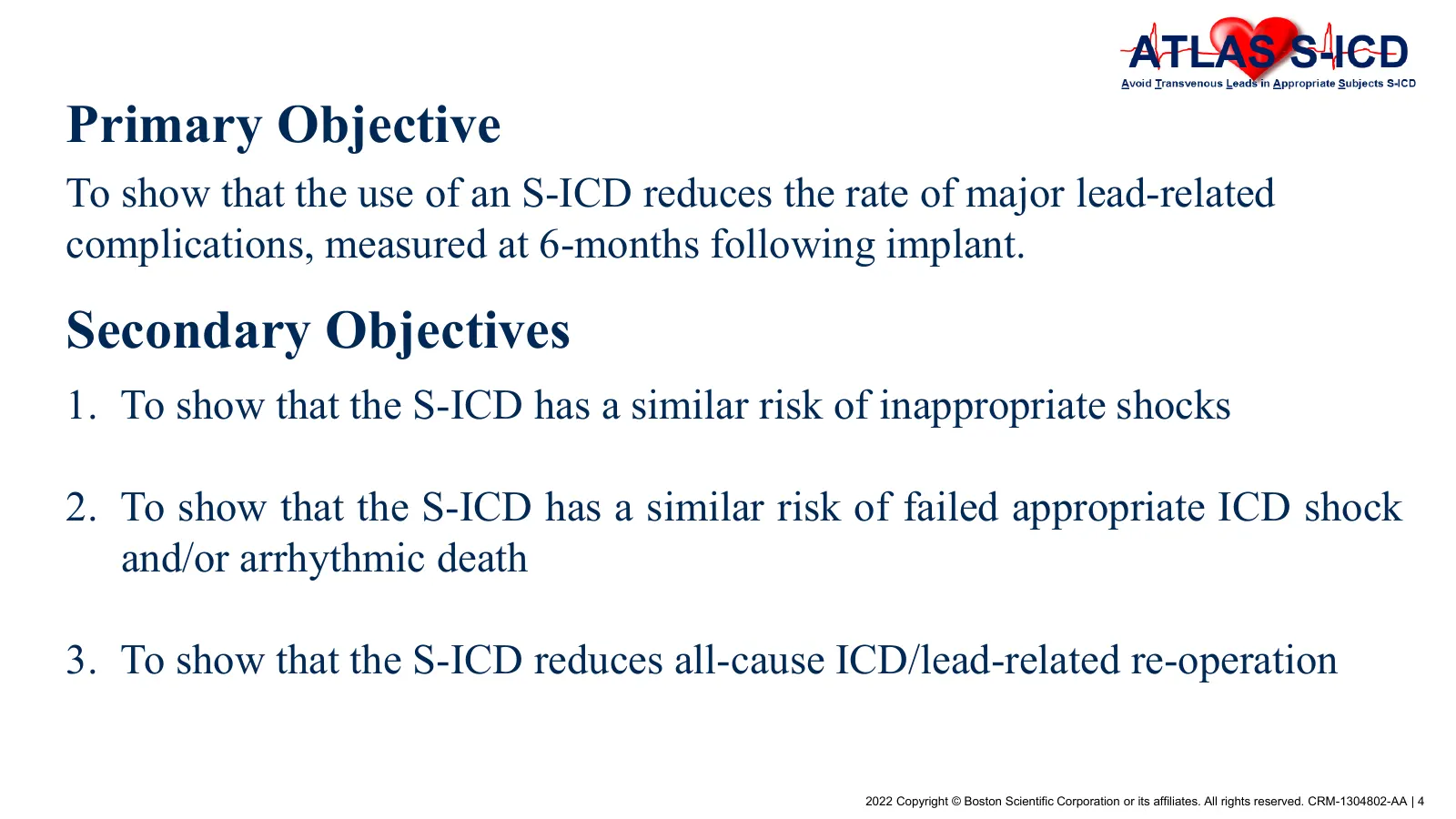
Slide 4: Primary and Secondary Objectives
Primary Objective To show that the use of an S-ICD reduces the rate of major lead-related complications, measured at 6-months following implant. Secondary Objectives 1. To show that the S-ICD has a similar risk of inappropriate shocks 2. To show that the S-ICD has a similar risk of failed appropriat
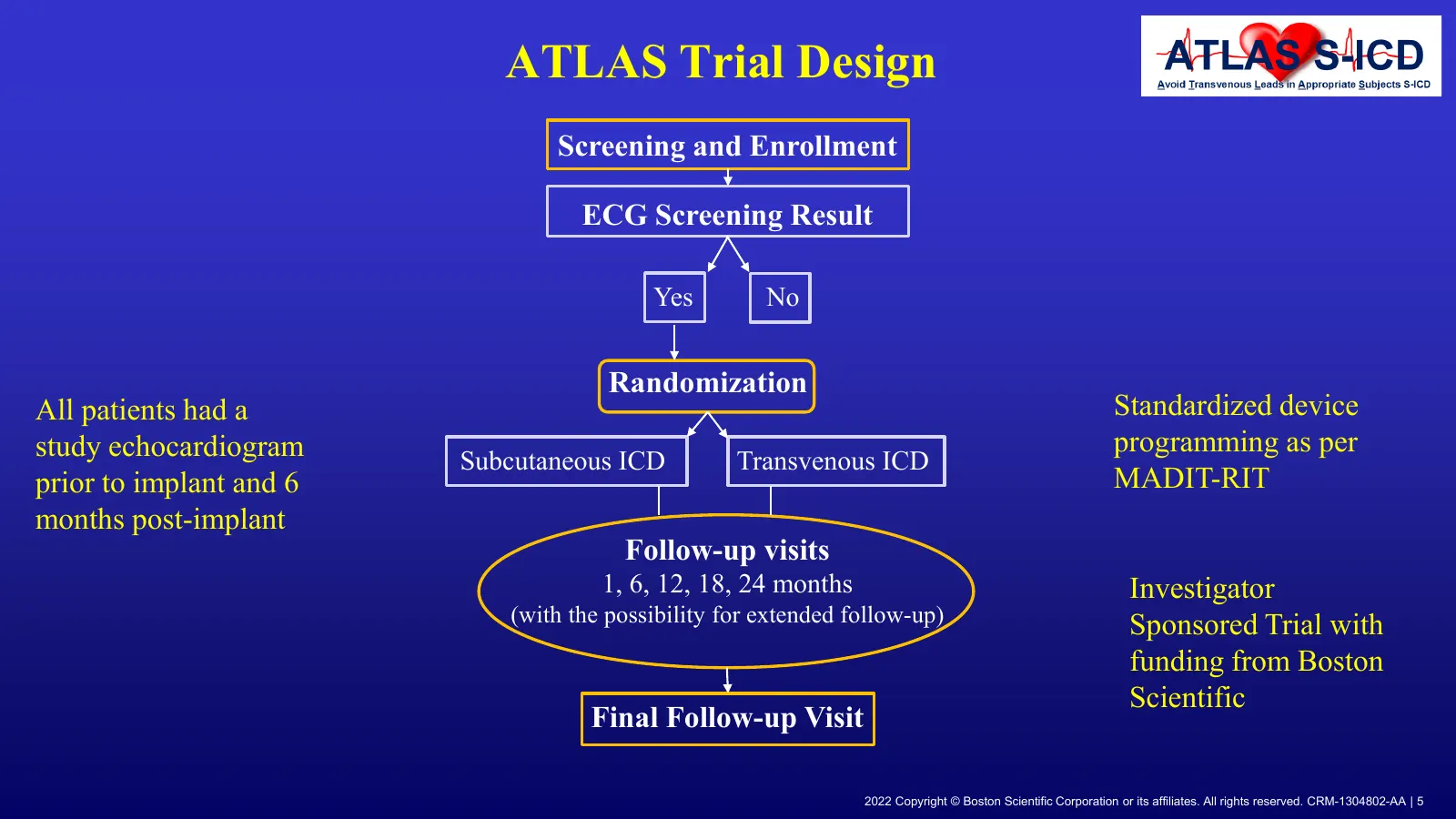
Slide 5: ATLAS Trial Design
ATLAS Trial Design Screening and Enrollment ECG Screening Result Yes No Randomization All patients had a Standardized device study echocardiogram programming as per Subcutaneous ICD Transvenous ICD prior to implant and 6 MADIT-RIT months post-implant Follow-up visits 1, 6, 12, 18, 24 months Investig
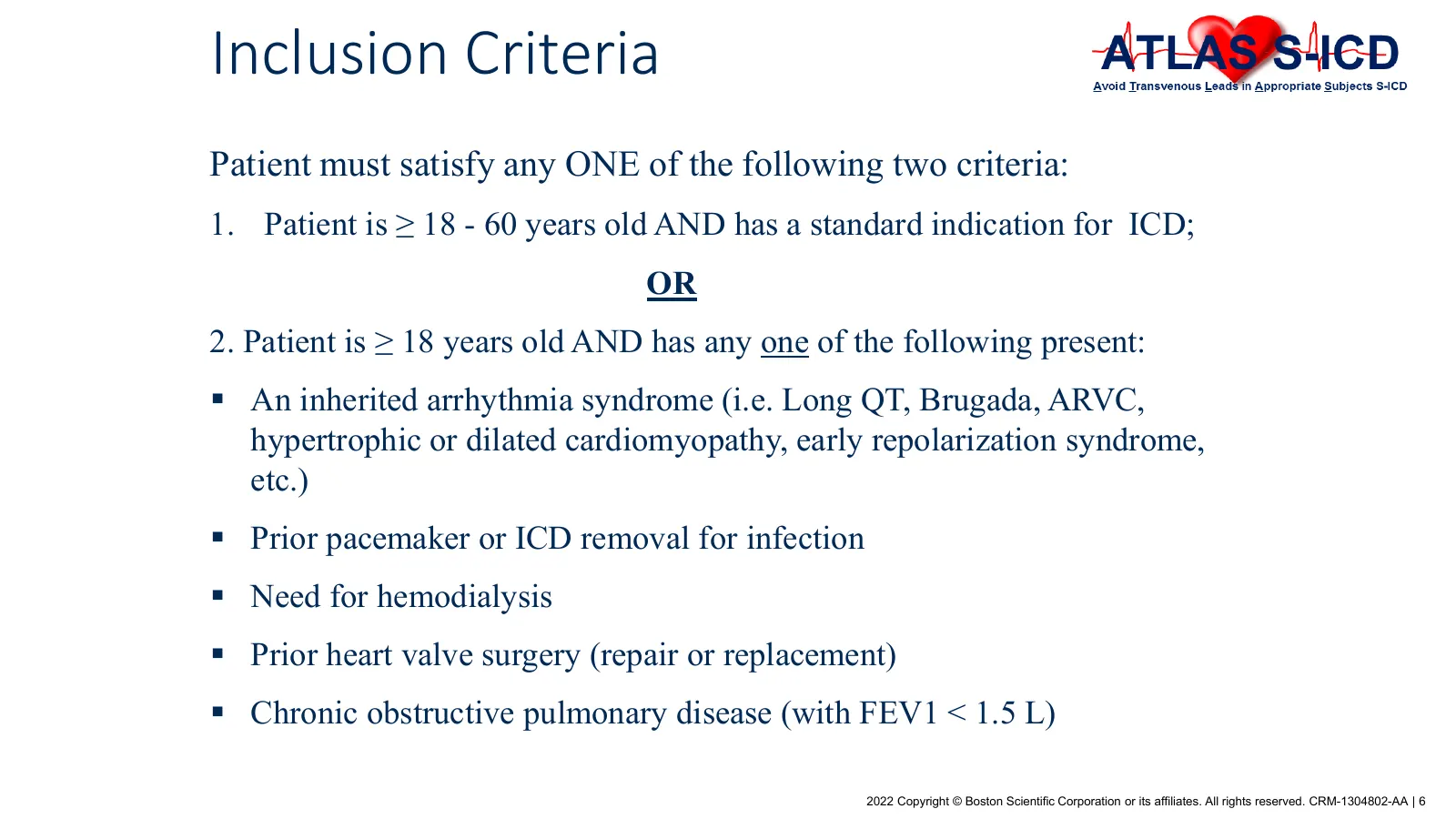
Slide 6: Inclusion Criteria
Inclusion Criteria Patient must satisfy any ONE of the following two criteria: 1. Patient is ≥ 18 - 60 years old AND has a standard indication for ICD; OR 2. Patient is ≥ 18 years old AND has any one of the following present: An inherited arrhythmia syndrome (i.e. Long QT, Brugada, ARVC, hypertrop
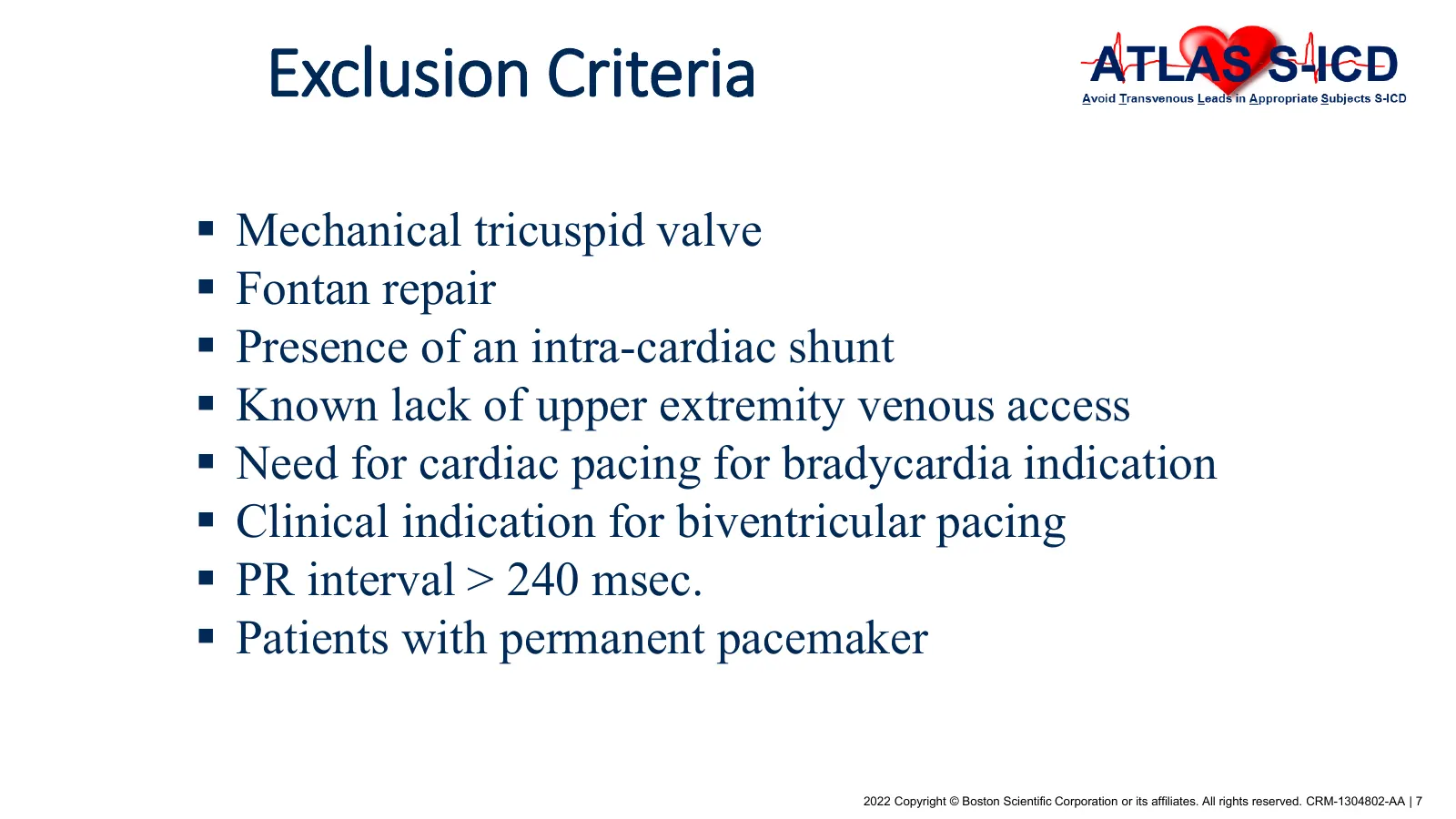
Slide 7: Exclusion Criteria
Exclusion Criteria Mechanical tricuspid valve Fontan repair Presence of an intra-cardiac shunt Known lack of upper extremity venous access Need for cardiac pacing for bradycardia indication Clinical indication for biventricular pacing PR interval > 240 msec. Patients with permanent p
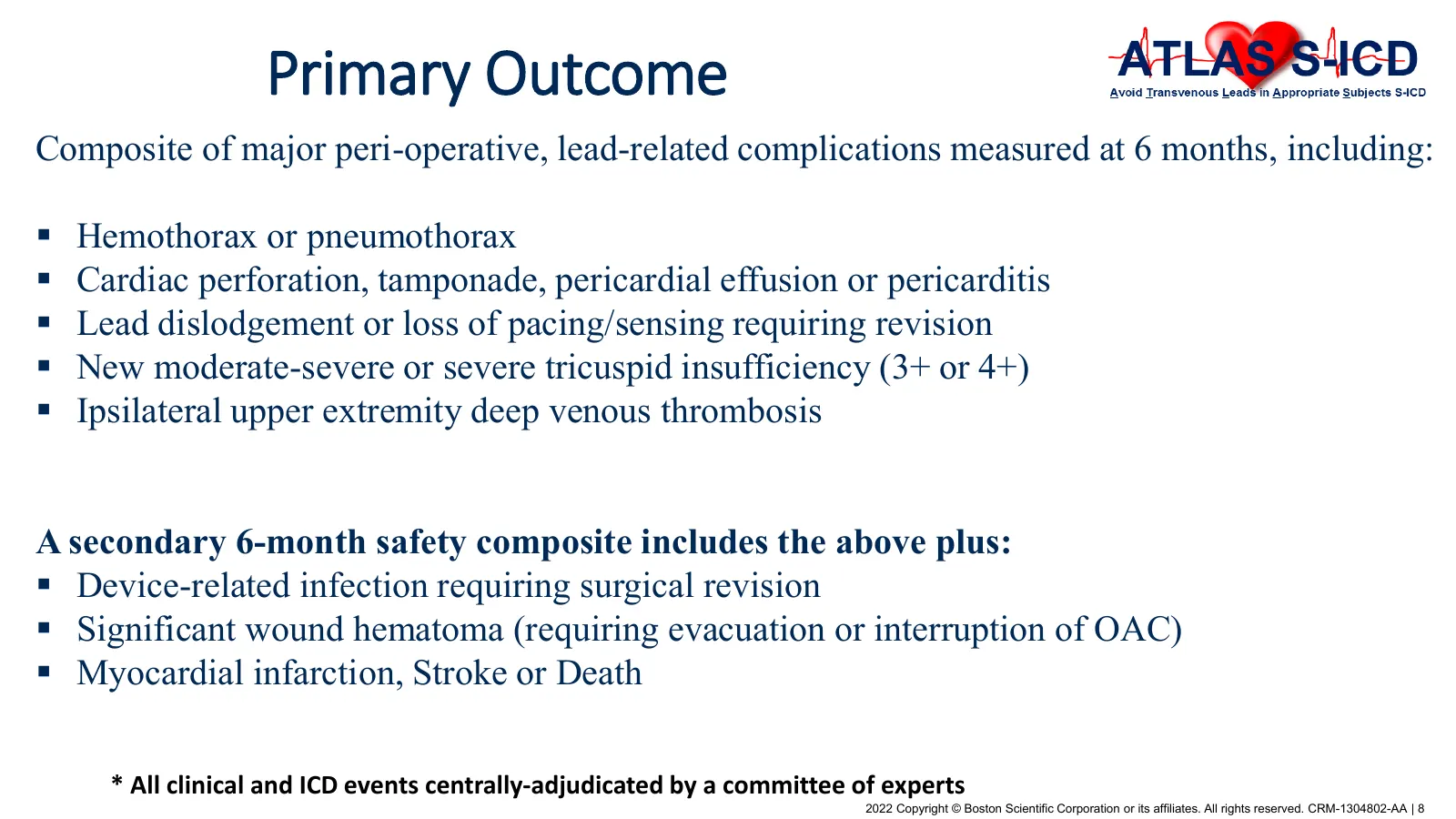
Slide 8: Primary Outcome
Primary Outcome Composite of major peri-operative, lead-related complications measured at 6 months, including: Hemothorax or pneumothorax Cardiac perforation, tamponade, pericardial effusion or pericarditis Lead dislodgement or loss of pacing/sensing requiring revision New moderate-severe or
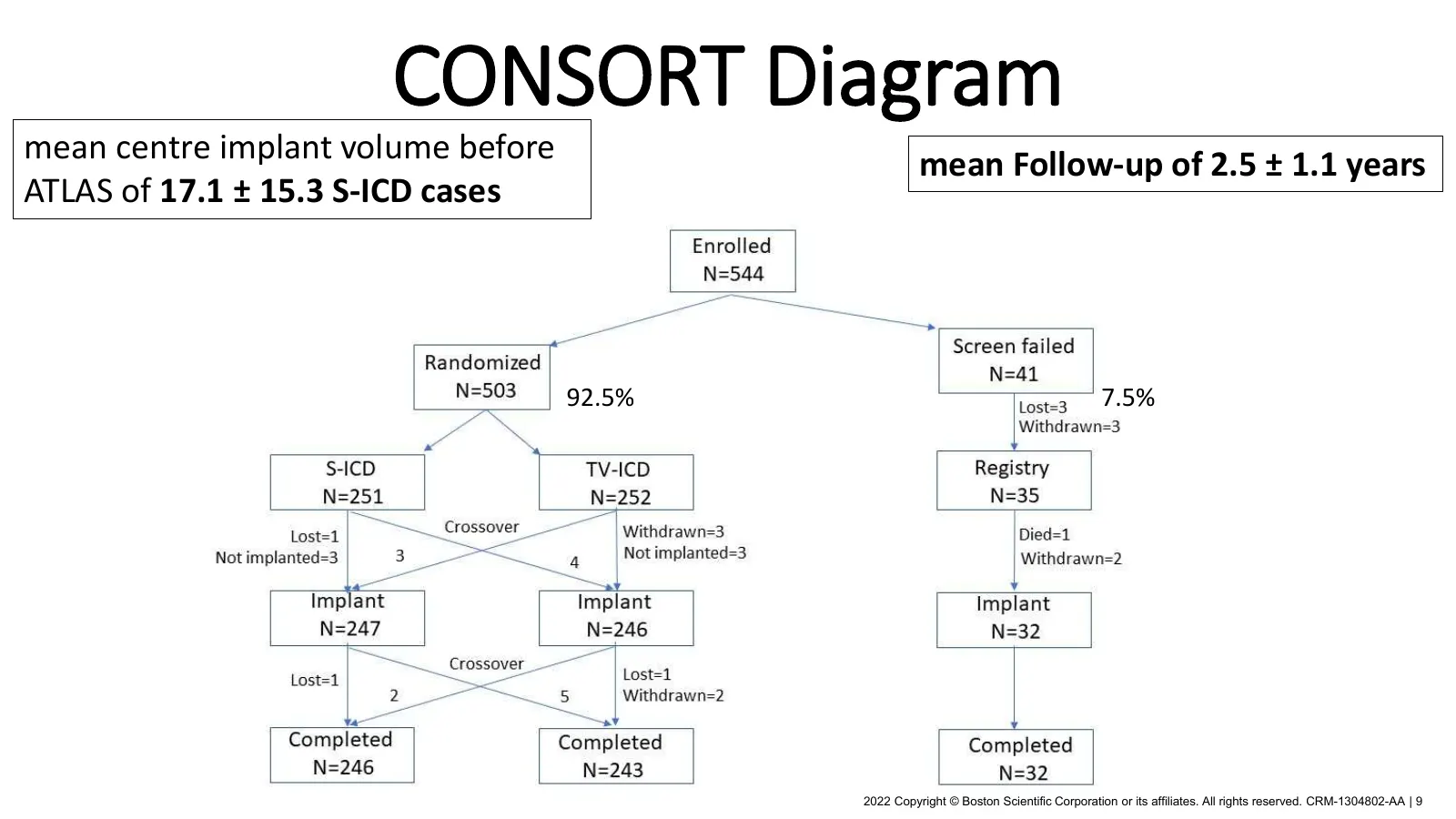
Slide 9: CONSORT Diagram
CONSORT Diagram mean centre implant volume before mean Follow-up of 2.5 ± 1.1 years ATLAS of 17.1 ± 15.3 S-ICD cases 92.5% 7.5% 2022 Copyright © Boston Scientific Corporation or its affiliates. All rights reserved. CRM-1304802-AA | 9
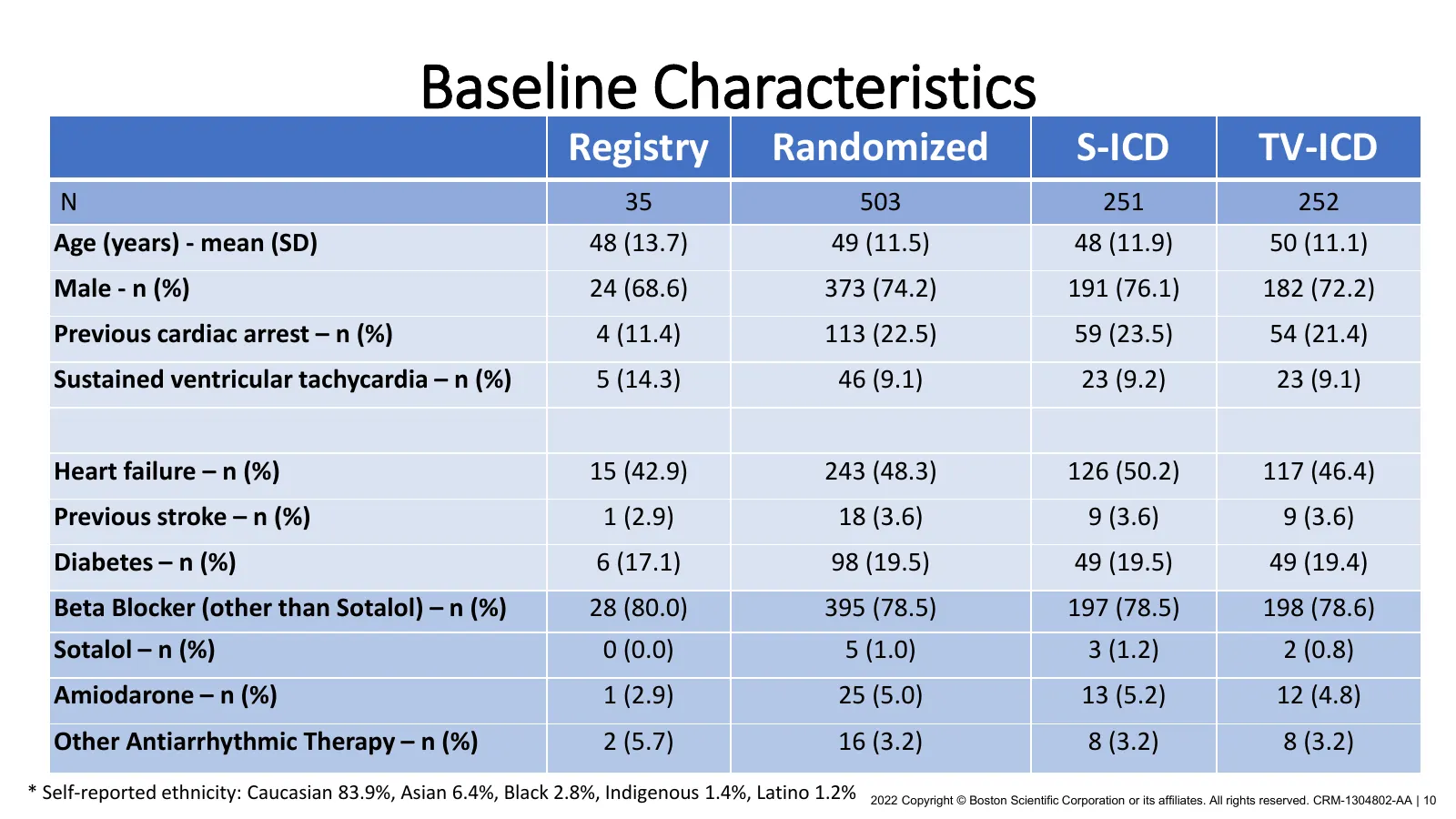
Slide 10: Baseline Characteristics
Baseline Characteristics Registry Randomized S-ICD TV-ICD N 35 503 251 252 Age (years) - mean (SD) 48 (13.7) 49 (11.5) 48 (11.9) 50 (11.1) Male - n (%) 24 (68.6) 373 (74.2) 191 (76.1) 182 (72.2) Previous cardiac arrest – n (%) 4 (11.4) 113 (22.5) 59 (23.5) 54 (21.4) Sustained ventricular tachycardia
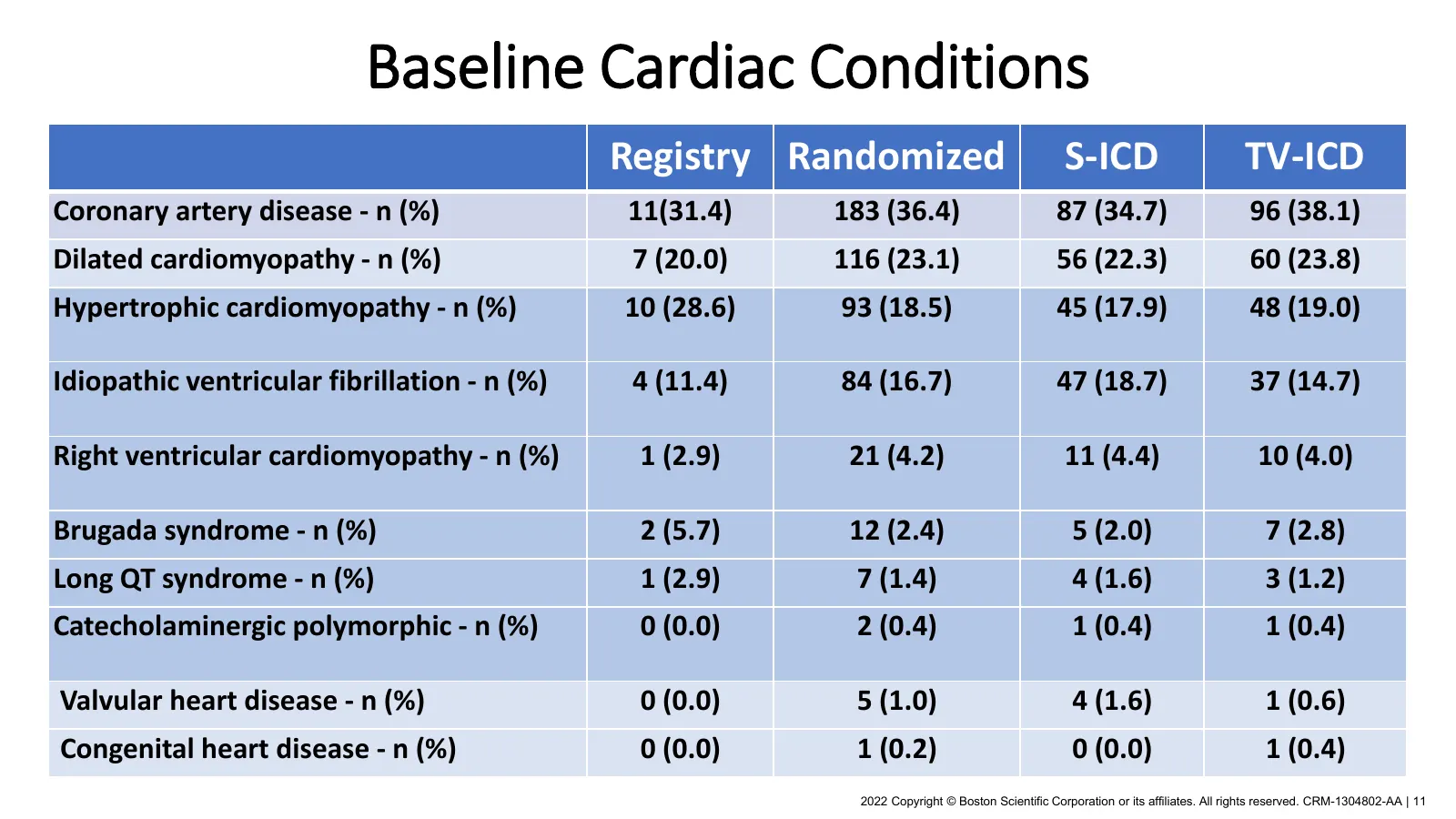
Slide 11: Baseline Cardiac Conditions
Baseline Cardiac Conditions Registry Randomized S-ICD TV-ICD Coronary artery disease - n (%) 11(31.4) 183 (36.4) 87 (34.7) 96 (38.1) Dilated cardiomyopathy - n (%) 7 (20.0) 116 (23.1) 56 (22.3) 60 (23.8) Hypertrophic cardiomyopathy - n (%) 10 (28.6) 93 (18.5) 45 (17.9) 48 (19.0) Idiopathic ventricul
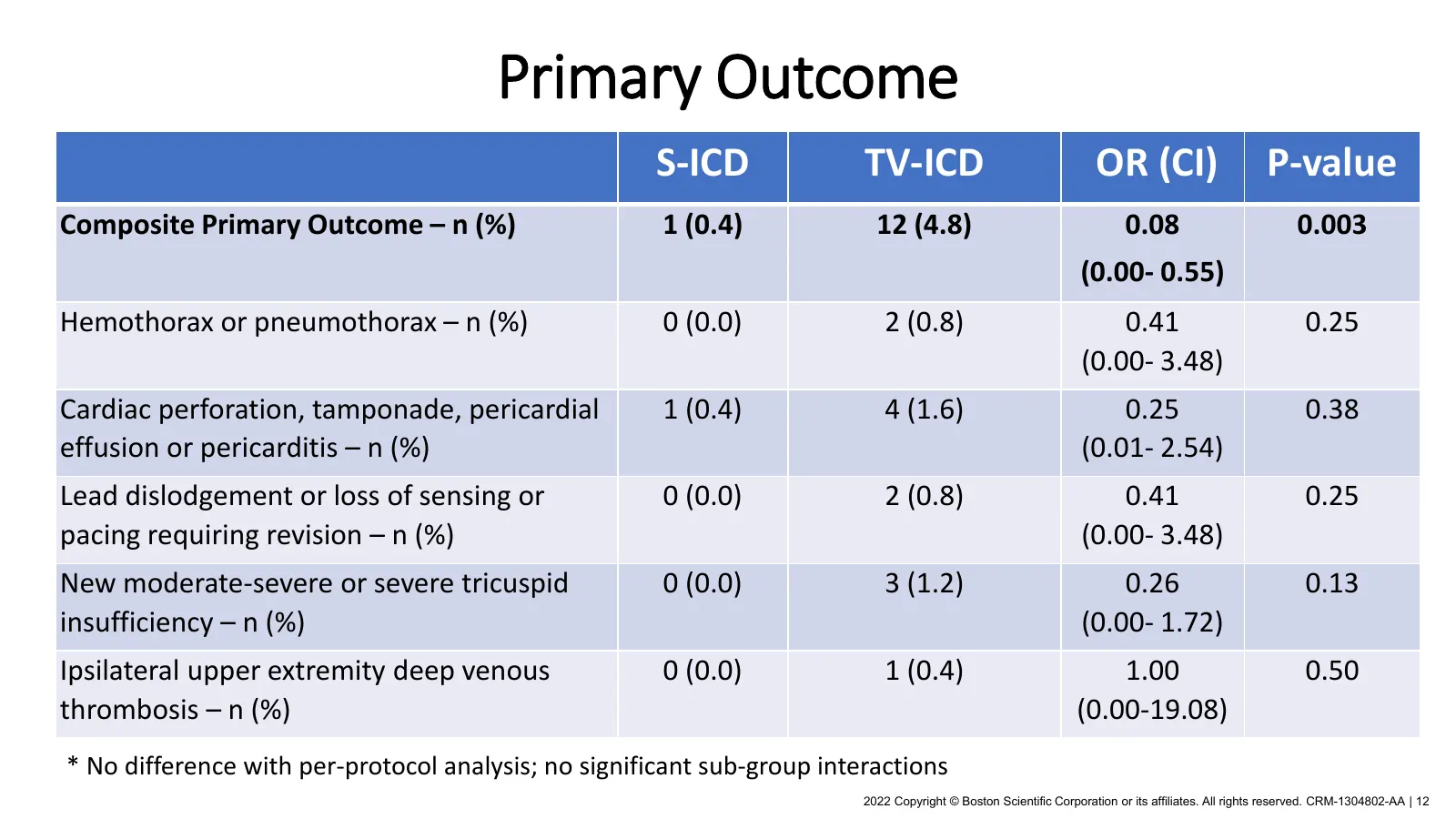
Slide 12: Primary Outcome
Primary Outcome S-ICD TV-ICD OR (CI) P-value Composite Primary Outcome – n (%) 1 (0.4) 12 (4.8) 0.08 0.003 (0.00- 0.55) Hemothorax or pneumothorax – n (%) 0 (0.0) 2 (0.8) 0.41 0.25 (0.00- 3.48) Cardiac perforation, tamponade, pericardial 1 (0.4) 4 (1.6) 0.25 0.38 effusion or pericarditis – n (%) (0.
Slide 13: Secondary Safety Outcome
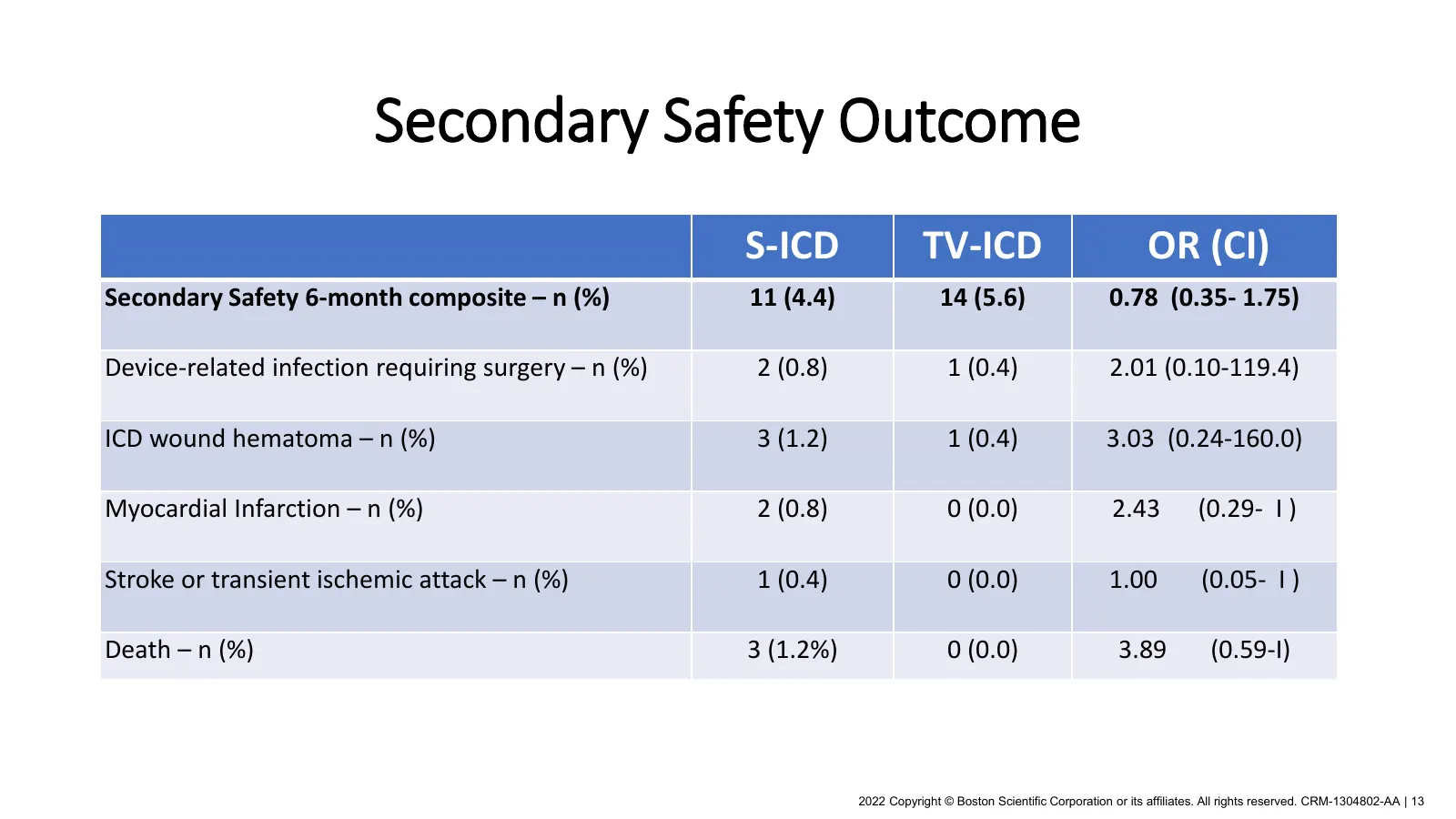
Secondary Safety Outcome S-ICD TV-ICD OR (CI) Secondary Safety 6-month composite – n (%) 11 (4.4) 14 (5.6) 0.78 (0.35- 1.75) Device-related infection requiring surgery – n (%) 2 (0.8) 1 (0.4) 2.01 (0.10-119.4) ICD wound hematoma – n (%) 3 (1.2) 1 (0.4) 3.03 (0.24-160.0) Myocardial Infarction – n (%)
Slide 14: Inappropriate Shocks
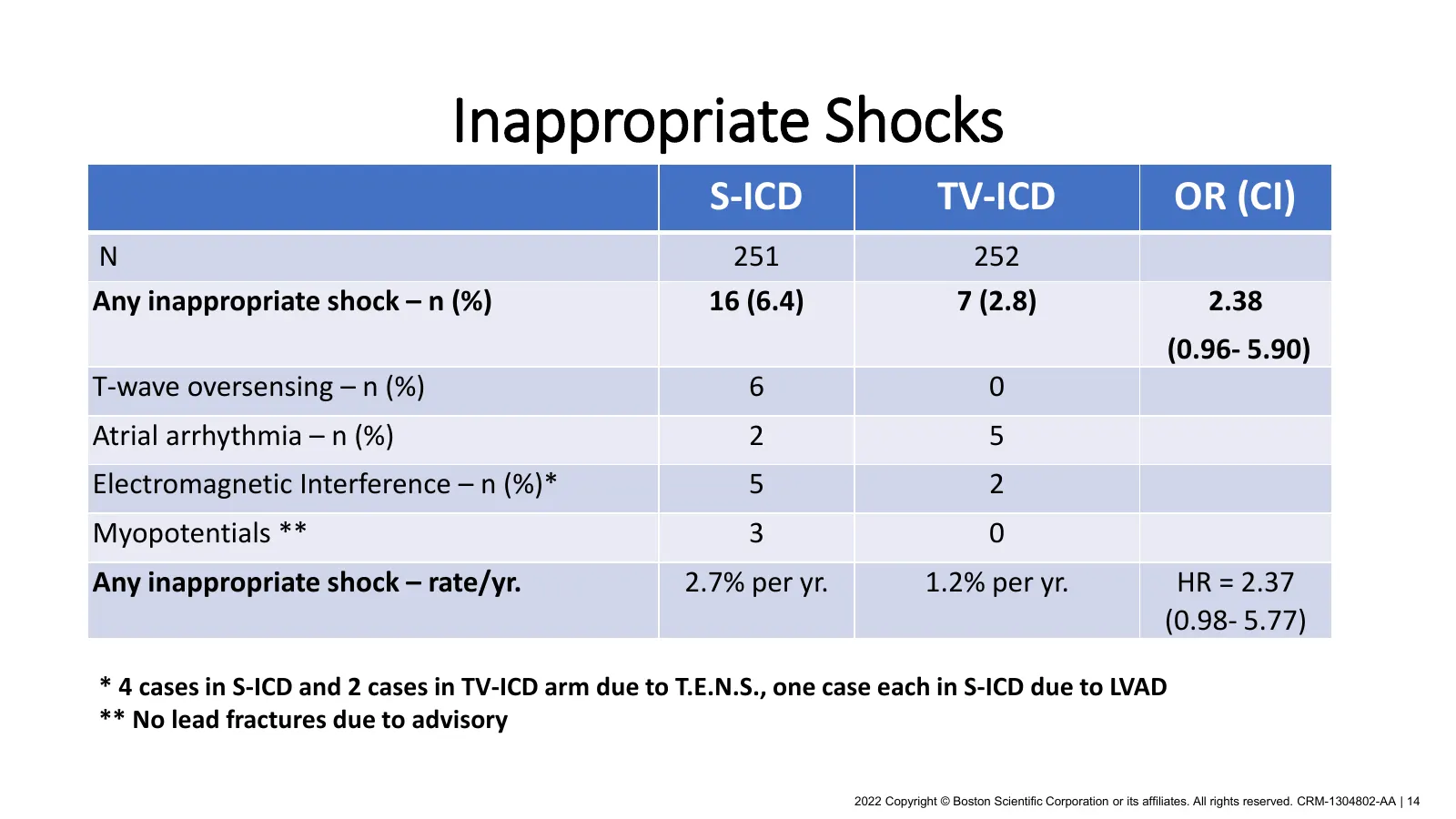
Inappropriate Shocks S-ICD TV-ICD OR (CI) N 251 252 Any inappropriate shock – n (%) 16 (6.4) 7 (2.8) 2.38 (0.96- 5.90) T-wave oversensing – n (%) 6 0 Atrial arrhythmia – n (%) 2 5 Electromagnetic Interference – n (%)* 5 2 Myopotentials ** 3 0 Any inappropriate shock – rate/yr. 2.7% per yr. 1.2% per
Slide 15: ICD Effectiveness
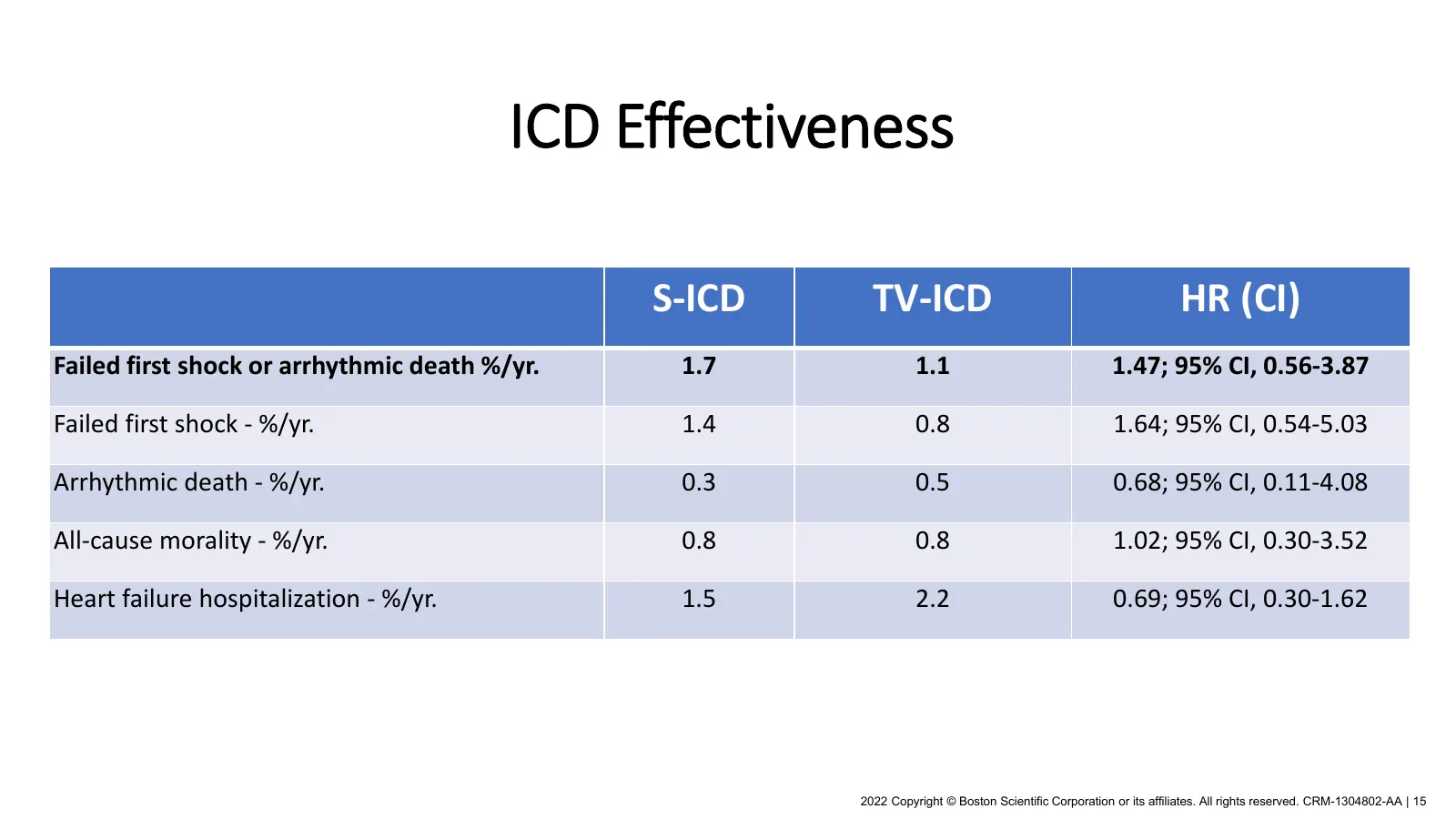
ICD Effectiveness S-ICD TV-ICD HR (CI) Failed first shock or arrhythmic death %/yr. 1.7 1.1 1.47; 95% CI, 0.56-3.87 Failed first shock - %/yr. 1.4 0.8 1.64; 95% CI, 0.54-5.03 Arrhythmic death - %/yr. 0.3 0.5 0.68; 95% CI, 0.11-4.08 All-cause morality - %/yr. 0.8 0.8 1.02; 95% CI, 0.30-3.52 Heart fai
Slide 16: All-Cause Re-Operation for ICD or Lead
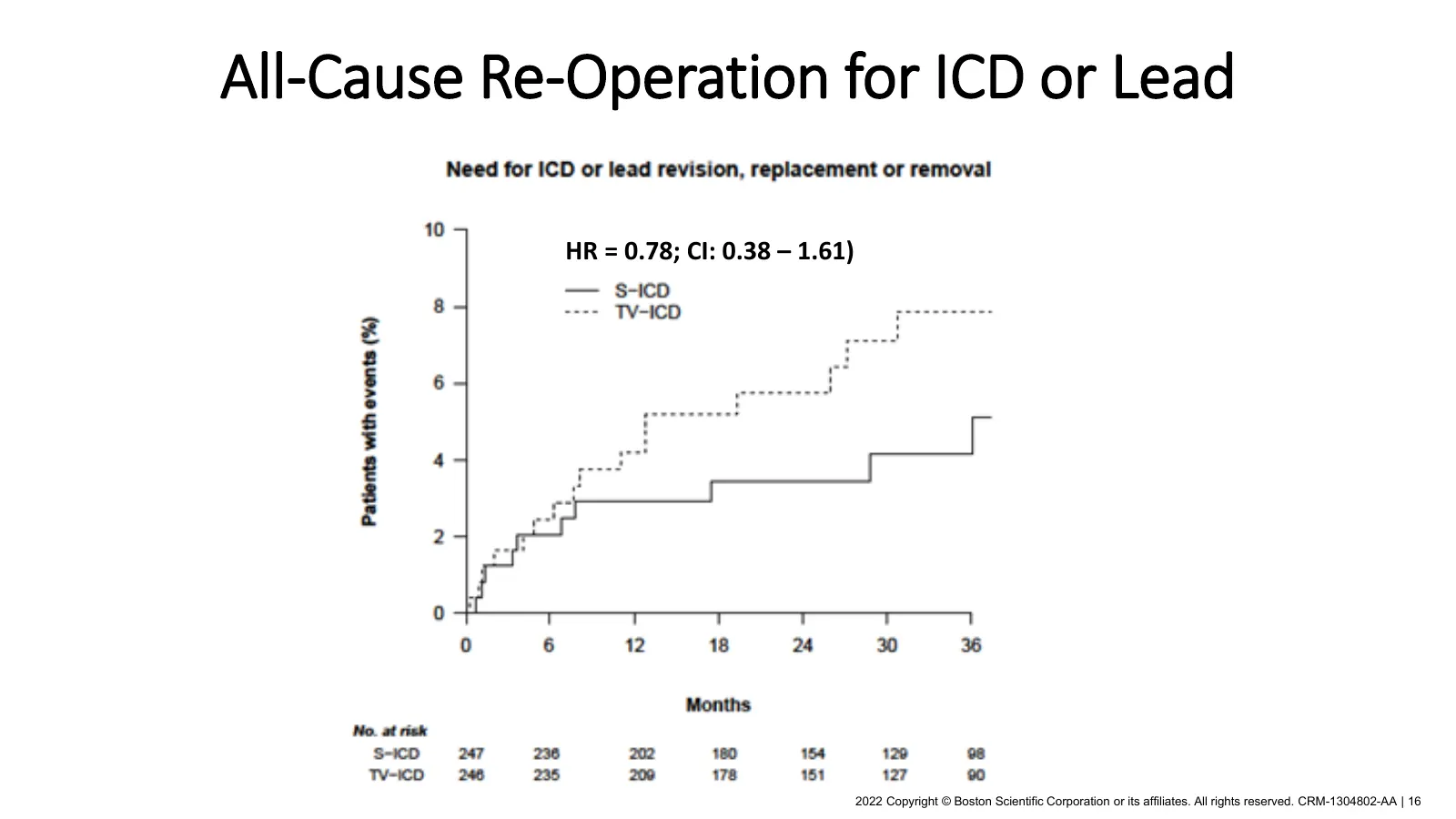
All-Cause Re-Operation for ICD or Lead HR = 0.78; CI: 0.38 – 1.61) 2022 Copyright © Boston Scientific Corporation or its affiliates. All rights reserved. CRM-1304802-AA | 16
Slide 17: Conclusions
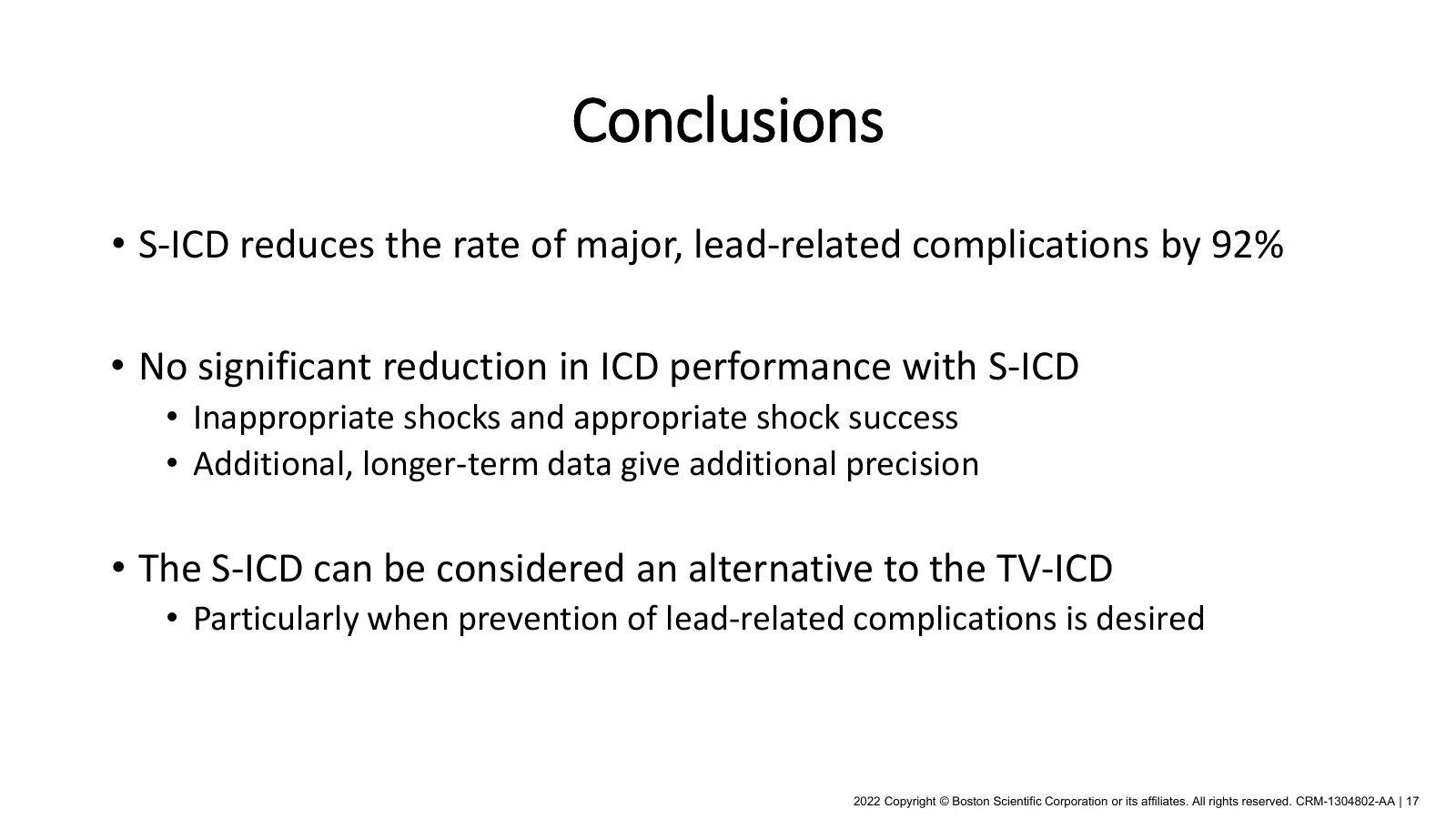
Conclusions • S-ICD reduces the rate of major, lead-related complications by 92% • No significant reduction in ICD performance with S-ICD • Inappropriate shocks and appropriate shock success • Additional, longer-term data give additional precision • The S-ICD can be considered an alternative to the
Slide 18: Many thanks to our collaborators!
Many thanks to our collaborators! • Executive Committee: Jeff S. Healey (Principal Investigator), Blandine Mondesert (co- Principal Investigator), Andrew D. Krahn (Steering Committee Chair, and Jamil Bashir. • Adjudication Committee: John Sapp (Chair), William F. McIntyre, Amir Janmohamed, Guy Amit,

Slide 19: CAUTION: The law restricts these devices to sale by or on the order of a physician
CAUTION: The law restricts these devices to sale by or on the order of a physician. Indications, contraindications, warnings, and instructions for use can be found in the product labelling supplied with each device or at www.IFU-BSCI.com. Products shown for INFORMATION purposes only and may not be a
Source: Internet Archive copy of bostonscientific.com
More decks from Boston Scientific Corporation
 Q3 2026 Earnings Presentation31 slides · Oct 28, 2026
 Q2 2026 Earnings Presentation29 slides · Jul 29, 2026
 Q1 2026 Earnings Presentation27 slides · Apr 22, 2026
 ACC 2026 Investor Update17 slides · Mar 28, 2026
 Q4 2025 Earnings Presentation36 slides · Feb 4, 2026
 Merger or Acquisition (January 2026)11 slides · Jan 15, 2026