Sagimet Biosciences Inc. - Series A · NASDAQ:SGMT
Sagimet Biosciences Inc. - Series A — Sagimet Biosciences — Technical Presentation (November 2014)
22 slides from Sagimet Biosciences Inc. - Series A's technical presentation, November 2014
Slide 1: Initial Report of a First-In-Human Study of the FASN Inhibitor TVB-2640
Initial Report of a First-In-Human Study of the First-In-Class Fatty Acid Synthase (FASN) Inhibitor, TVB-2640. J. Infante1, M. Patel2, D. Von Hoff3, S. Jones1, H. Burris1, A. Brenner4, C. Rubino5, W. McCulloch6, V. Zhukova- Harrill7, M. Parsey6 1Sarah Cannon Research Institute, Tennessee Oncology, T
Slide 2: Disclosure Slide
Disclosure Slide • Presenter: J. Infante – Disclosures: None 2
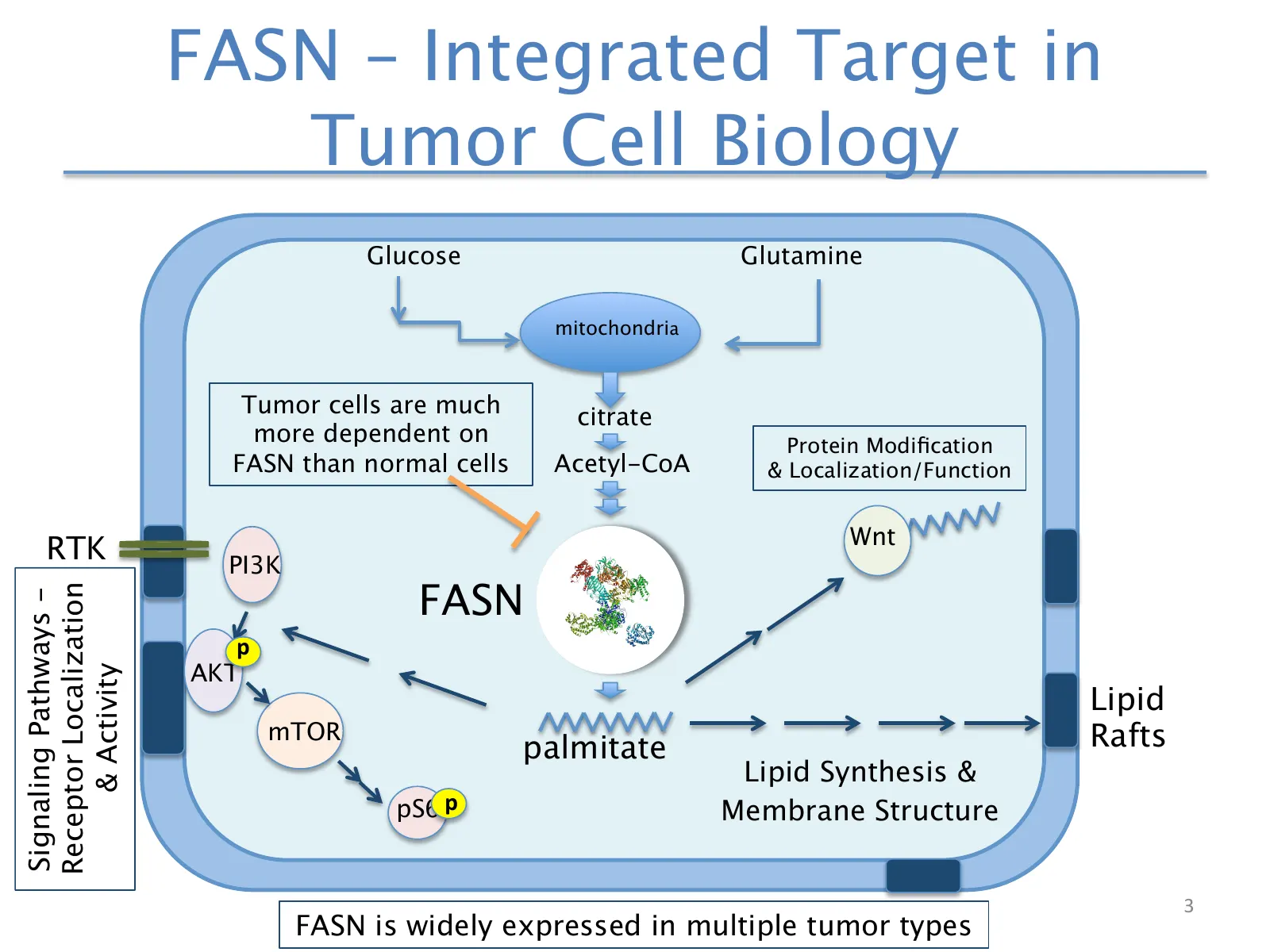
Slide 3: FASN – Integrated Target in Tumor Cell Biology
FASN – Integrated Target in Tumor Cell Biology Glucose Glutamine mitochondria Tumor cells are much citrate more dependent on Protein Modification FASN than normal cells Acetyl-CoA & Localization/Function Wnt RTK PI3K FASN Receptor Localization Signaling Pathways - p AKT & Activity Lipid mTOR palmita
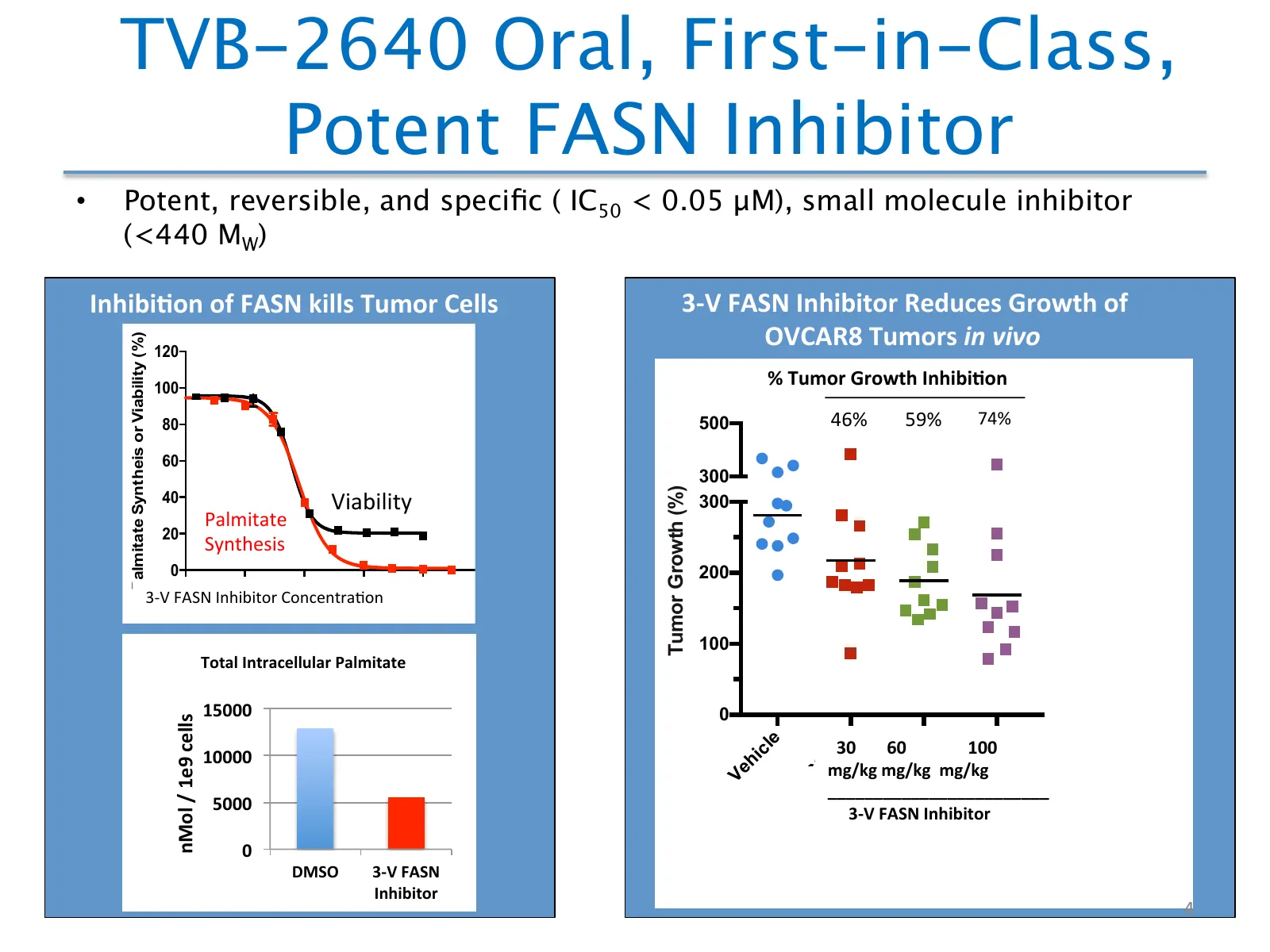
Slide 4: TVB-2640 Oral, First-in-Class, Potent FASN Inhibitor
TVB-2640 Oral, First-in-Class, Potent FASN Inhibitor • Potent, reversible, and specific ( IC50 < 0.05 μM), small molecule inhibitor (<440 MW) Inhibi(on of FASN kills Tumor Cells 3-‐V FASN Inhibitor Reduces Growth of OVCAR8 Tumors in vivo Palmitate Syntheis or Viability (%) 120 100 % Tumor Growth In
Slide 5: Objectives
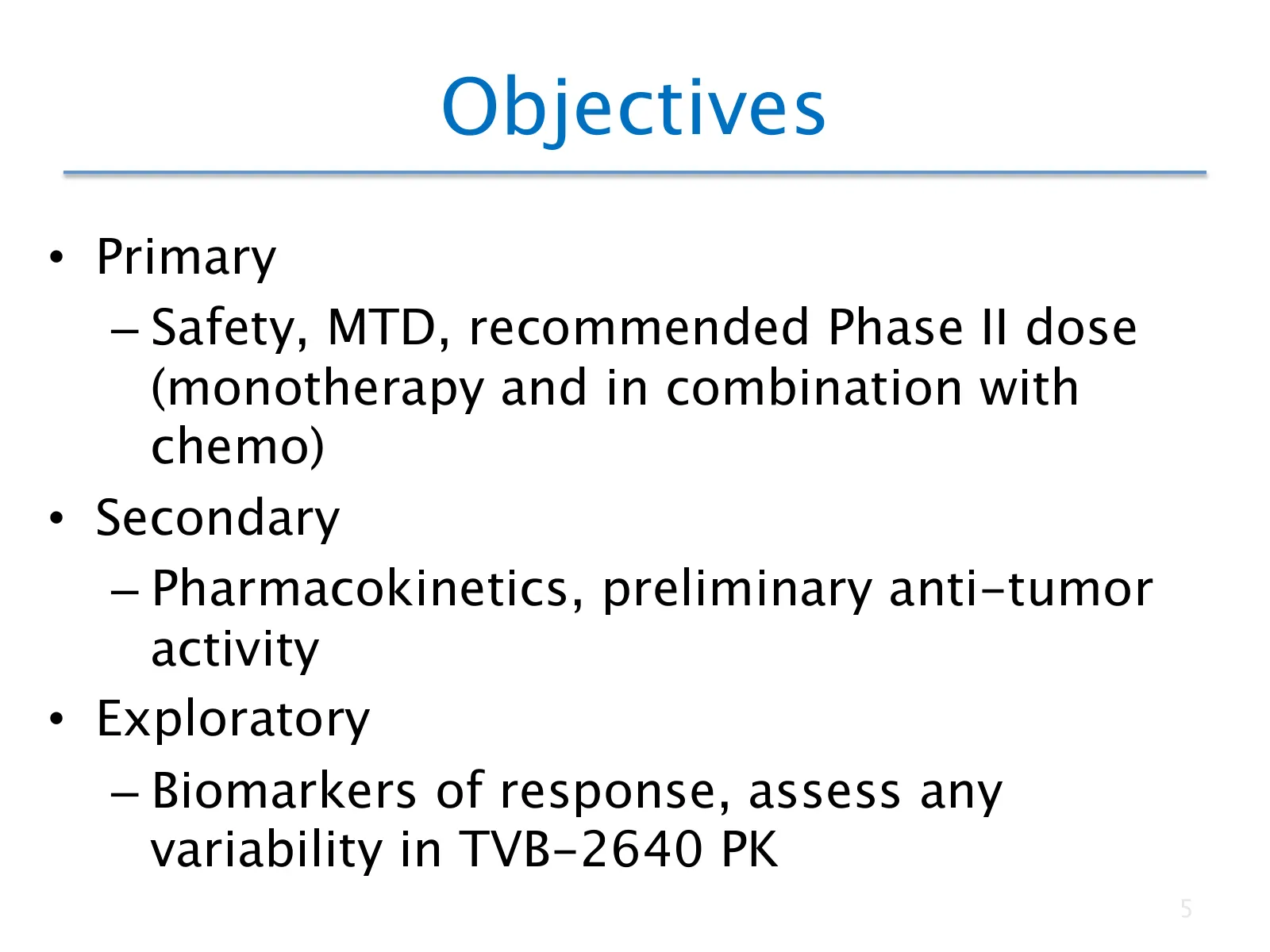
Objectives • Primary – Safety, MTD, recommended Phase II dose (monotherapy and in combination with chemo) • Secondary – Pharmacokinetics, preliminary anti-tumor activity • Exploratory – Biomarkers of response, assess any variability in TVB-2640 PK 5
Slide 6: Study Design
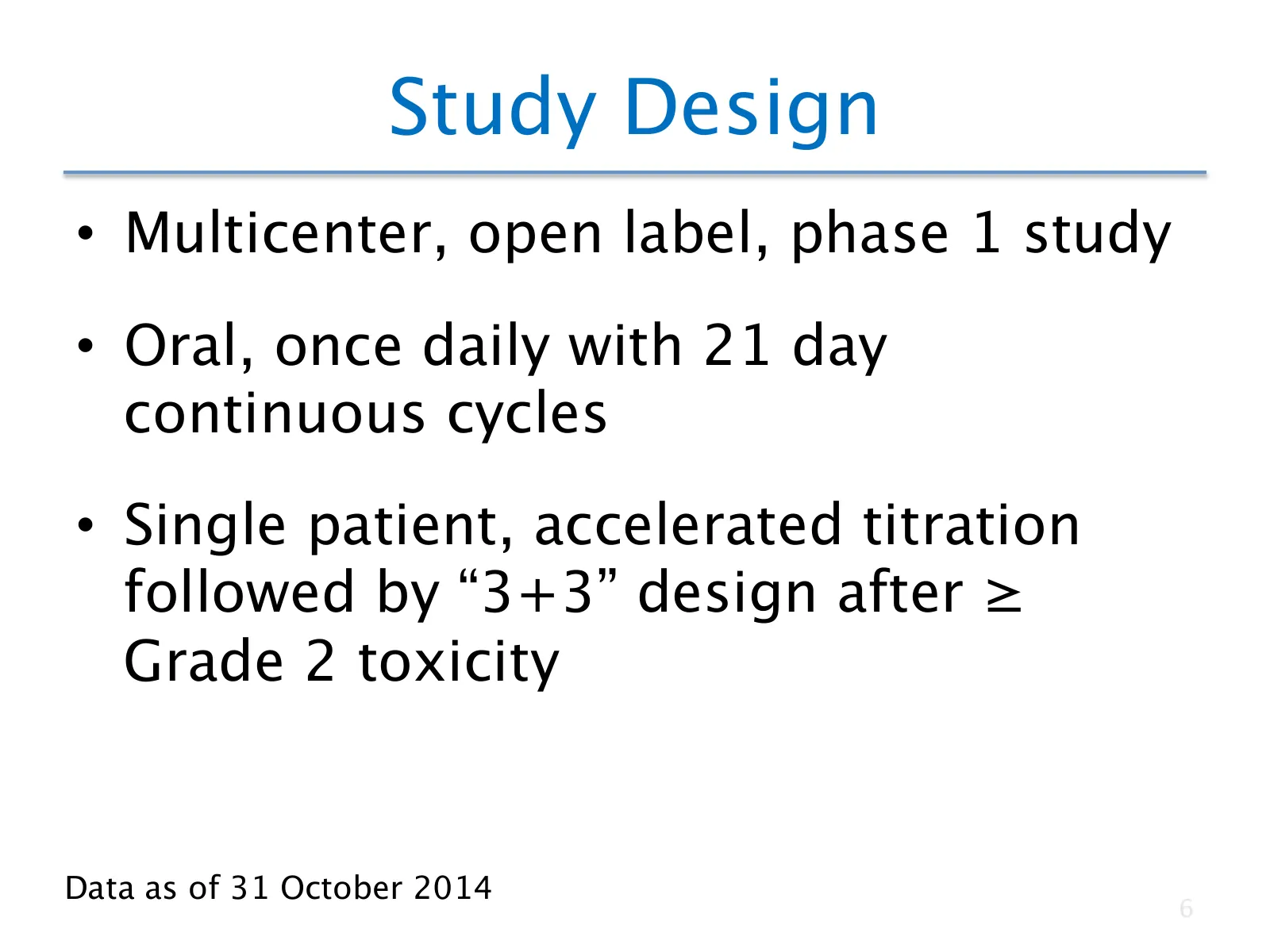
Study Design • Multicenter, open label, phase 1 study • Oral, once daily with 21 day continuous cycles • Single patient, accelerated titration followed by “3+3” design after ≥ Grade 2 toxicity Data as of 31 October 2014 6
Slide 7: Key Eligibility Criteria
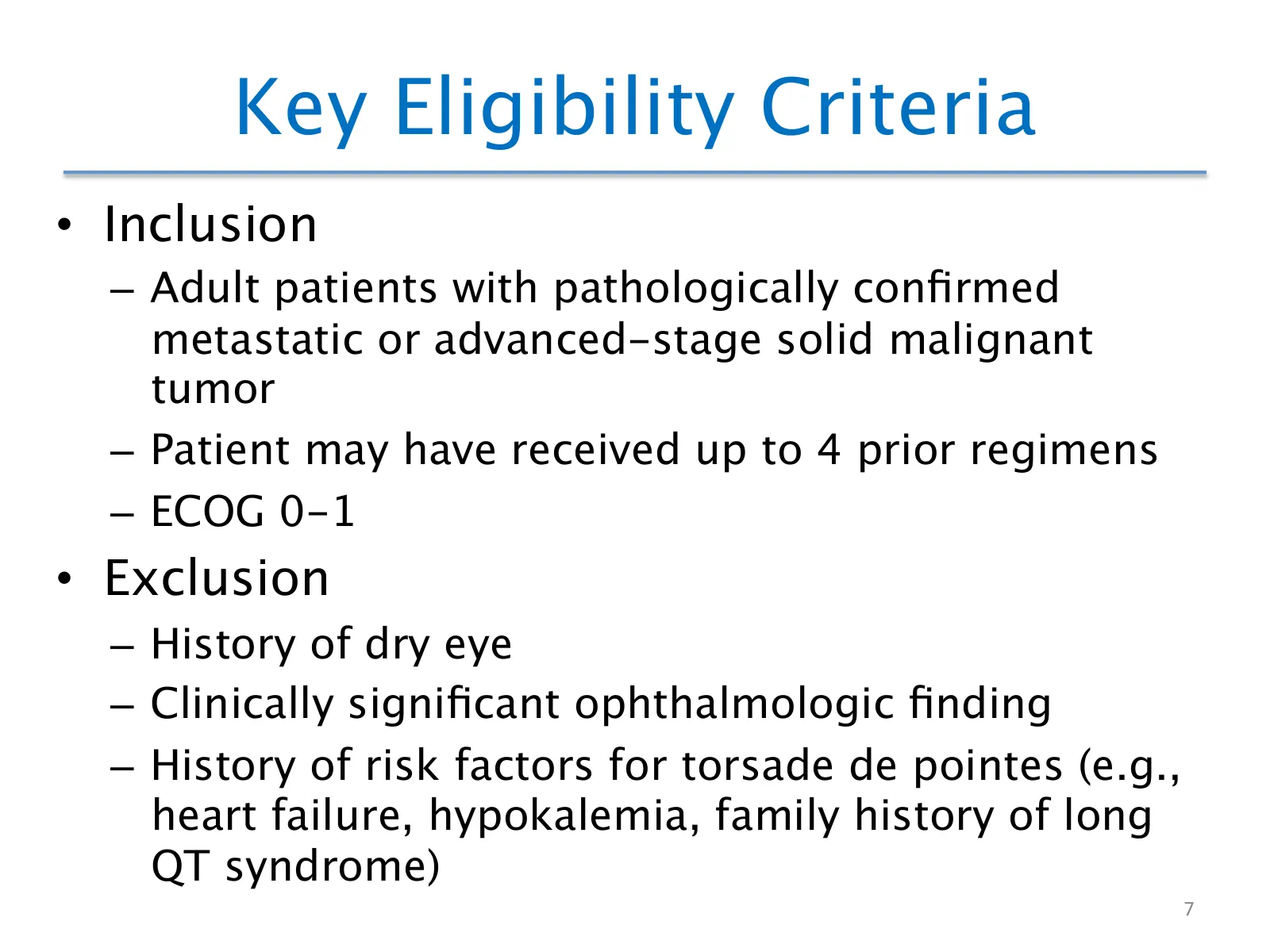
Key Eligibility Criteria • Inclusion – Adult patients with pathologically confirmed metastatic or advanced-stage solid malignant tumor – Patient may have received up to 4 prior regimens – ECOG 0-1 • Exclusion – History of dry eye – Clinically significant ophthalmologic finding – History of risk fact
Slide 8: Baseline Characteristics
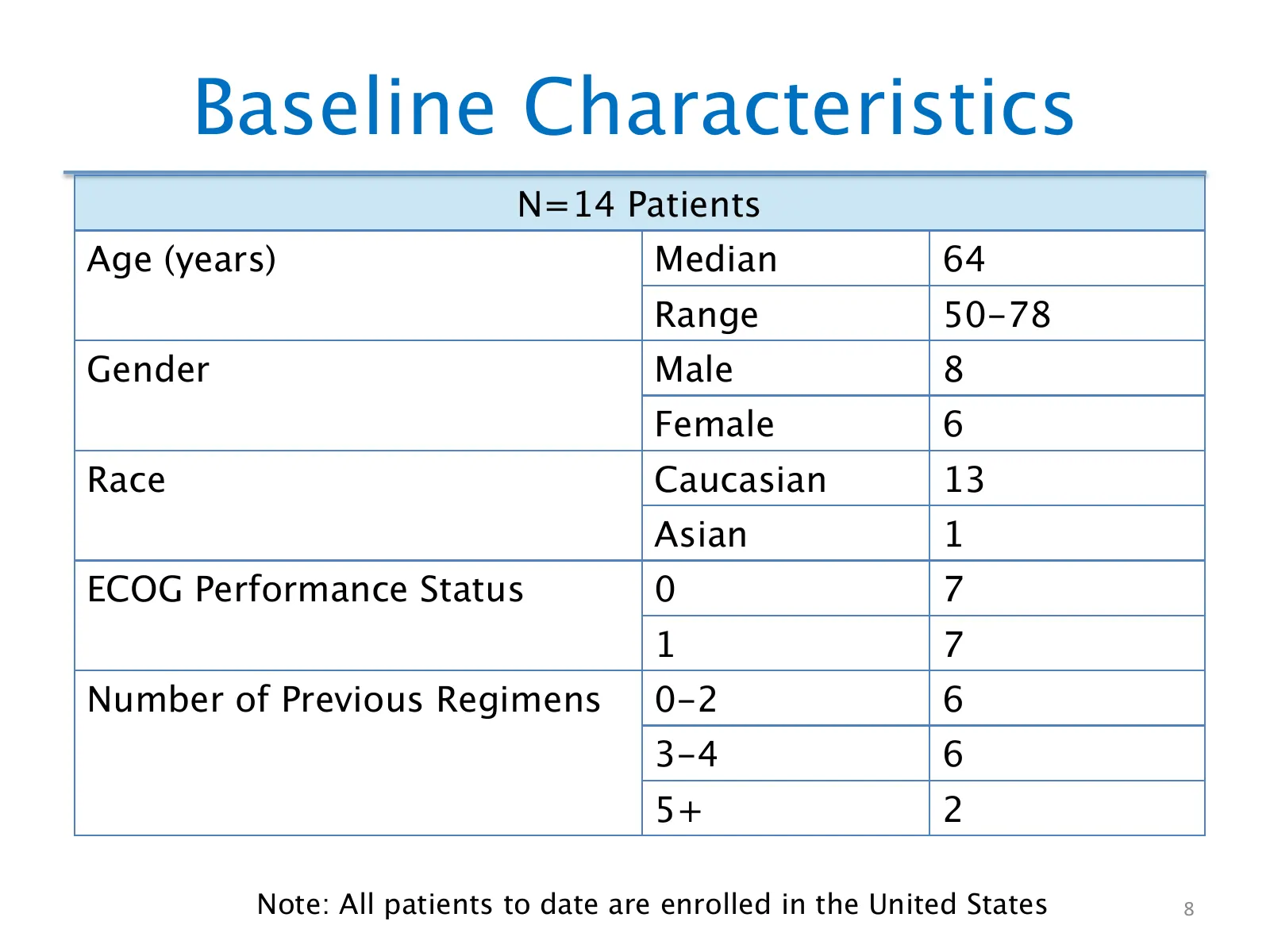
Baseline Characteristics N=14 Patients Age (years) Median 64 Range 50-78 Gender Male 8 Female 6 Race Caucasian 13 Asian 1 ECOG Performance Status 0 7 1 7 Number of Previous Regimens 0-2 6 3-4 6 5+ 2 Note: All patients to date are enrolled in the United States 8
Slide 9: Monotherapy Dose Escalation
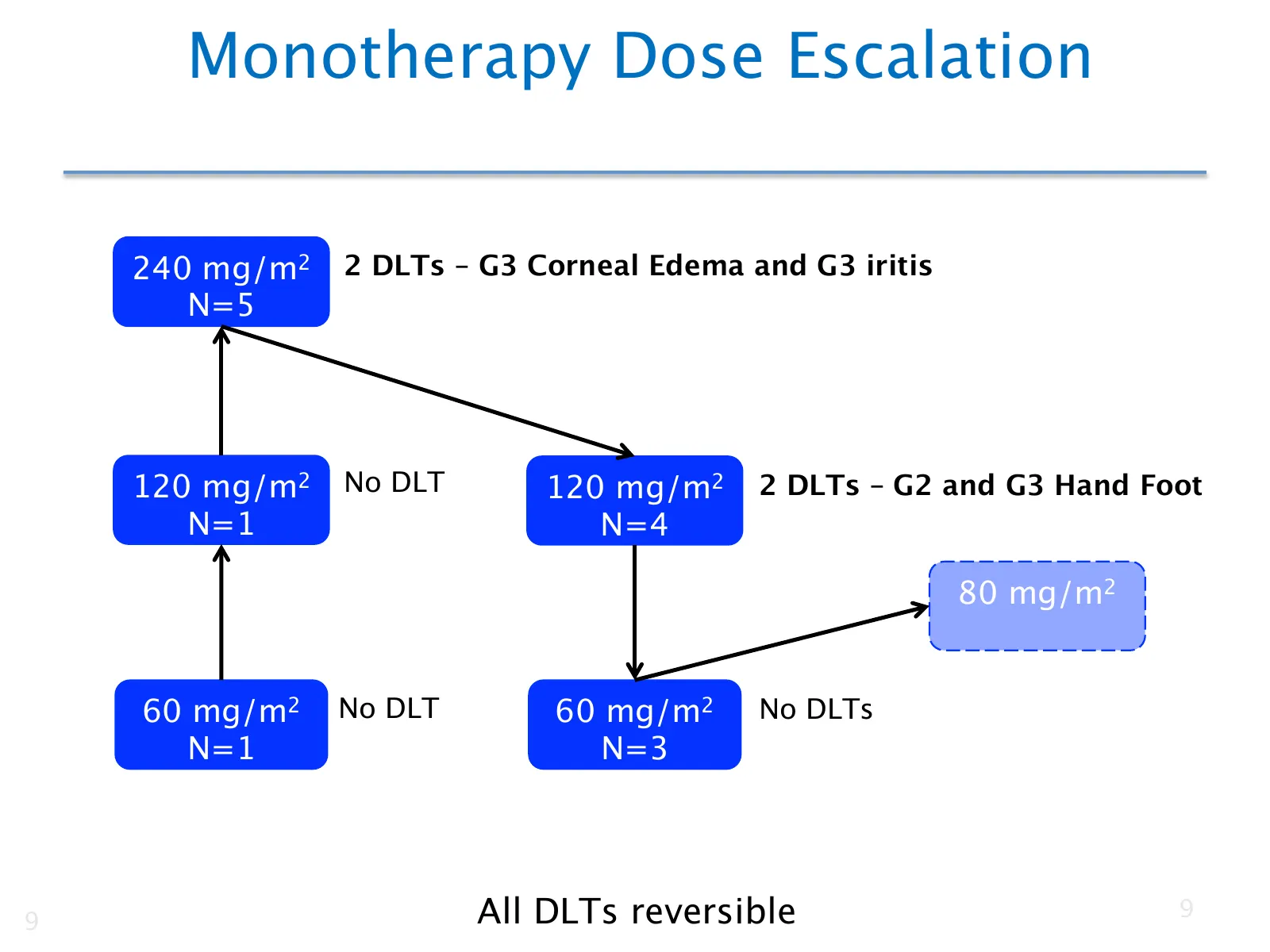
Monotherapy Dose Escalation 240 mg/m2 2 DLTs – G3 Corneal Edema and G3 iritis N=5 120 mg/m2 No DLT 120 mg/m2 2 DLTs – G2 and G3 Hand Foot N=1 N=4 80 mg/m2 60 mg/m2 No DLT 60 mg/m2 No DLTs N=1 N=3 9 All DLTs reversible 9
Slide 10: Time On Study
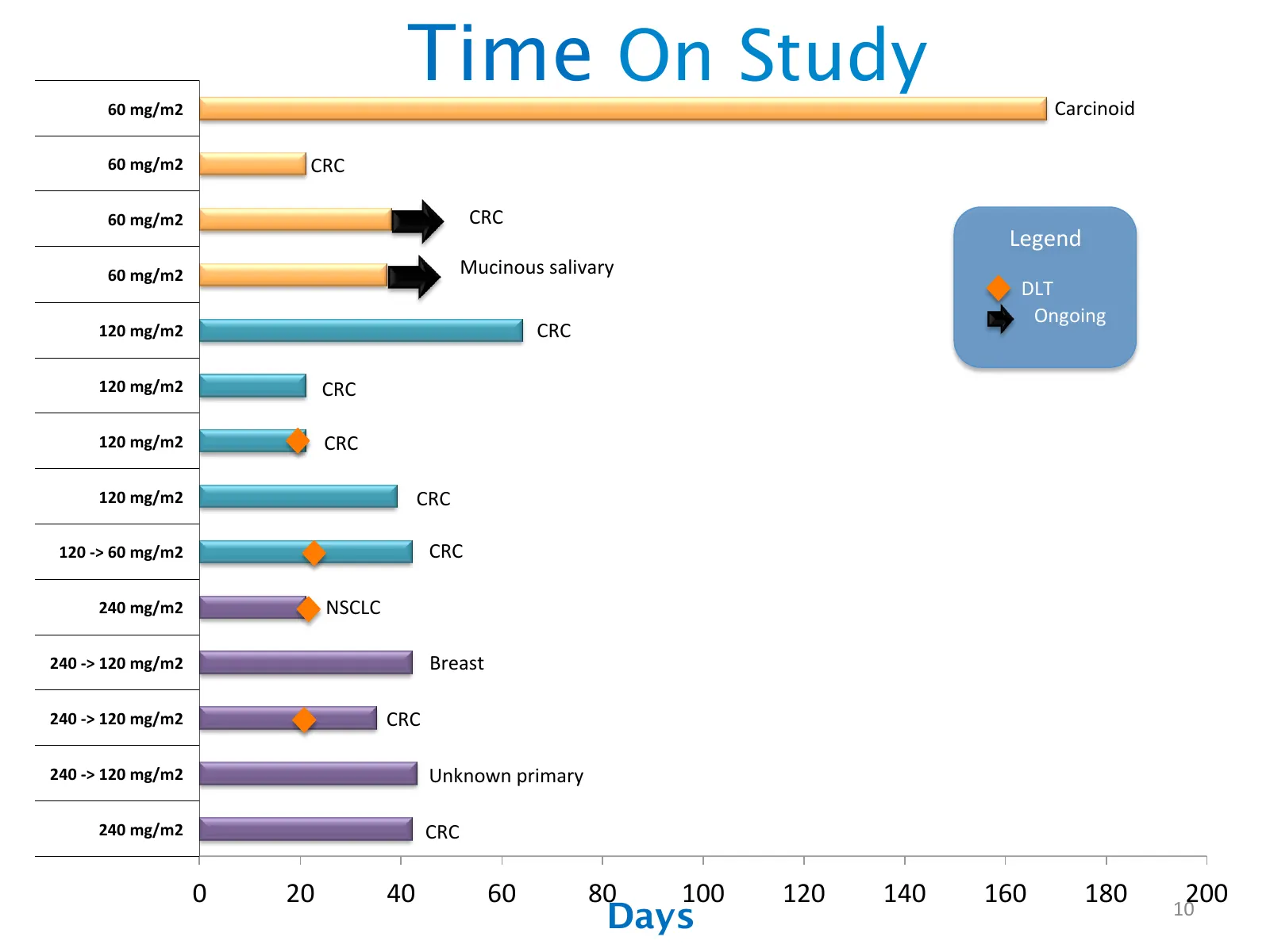
Time On Study 001 60 mg/m2 Carcinoid 013 60 mg/m2 CRC 014 60 mg/m2 CRC Legend Mucinous salivary 015 60 mg/m2 DLT Ongoing 002 120 mg/m2 CRC 008 120 mg/m2 CRC 009 120 mg/m2 CRC 010 120 mg/m2 CRC 011 120 -‐> 60 mg/m2 CRC 003 240 mg/m2 NSCLC 004 240 -‐> 120 mg/m2 Breast 005 240 -‐> 120 mg/m2 CRC 006
Slide 11: Related AEs = Gr 1/2
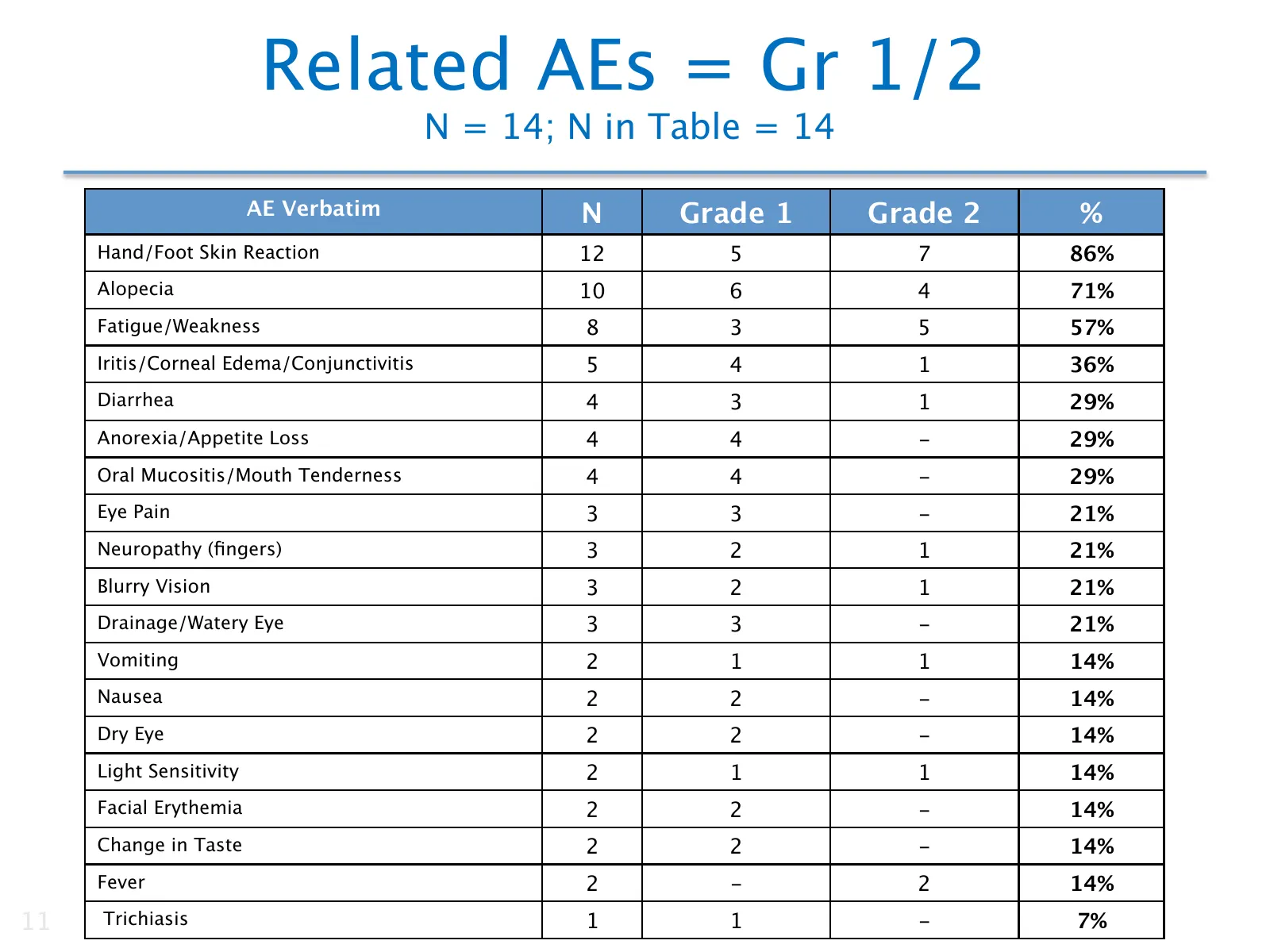
Related AEs = Gr 1/2 N = 14; N in Table = 14 AE Verbatim N Grade 1 Grade 2 % Hand/Foot Skin Reaction 12 5 7 86% Alopecia 10 6 4 71% Fatigue/Weakness 8 3 5 57% Iritis/Corneal Edema/Conjunctivitis 5 4 1 36% Diarrhea 4 3 1 29% Anorexia/Appetite Loss 4 4 - 29% Oral Mucositis/Mouth Tenderness 4 4 - 29% E
Slide 12: AE: Skin
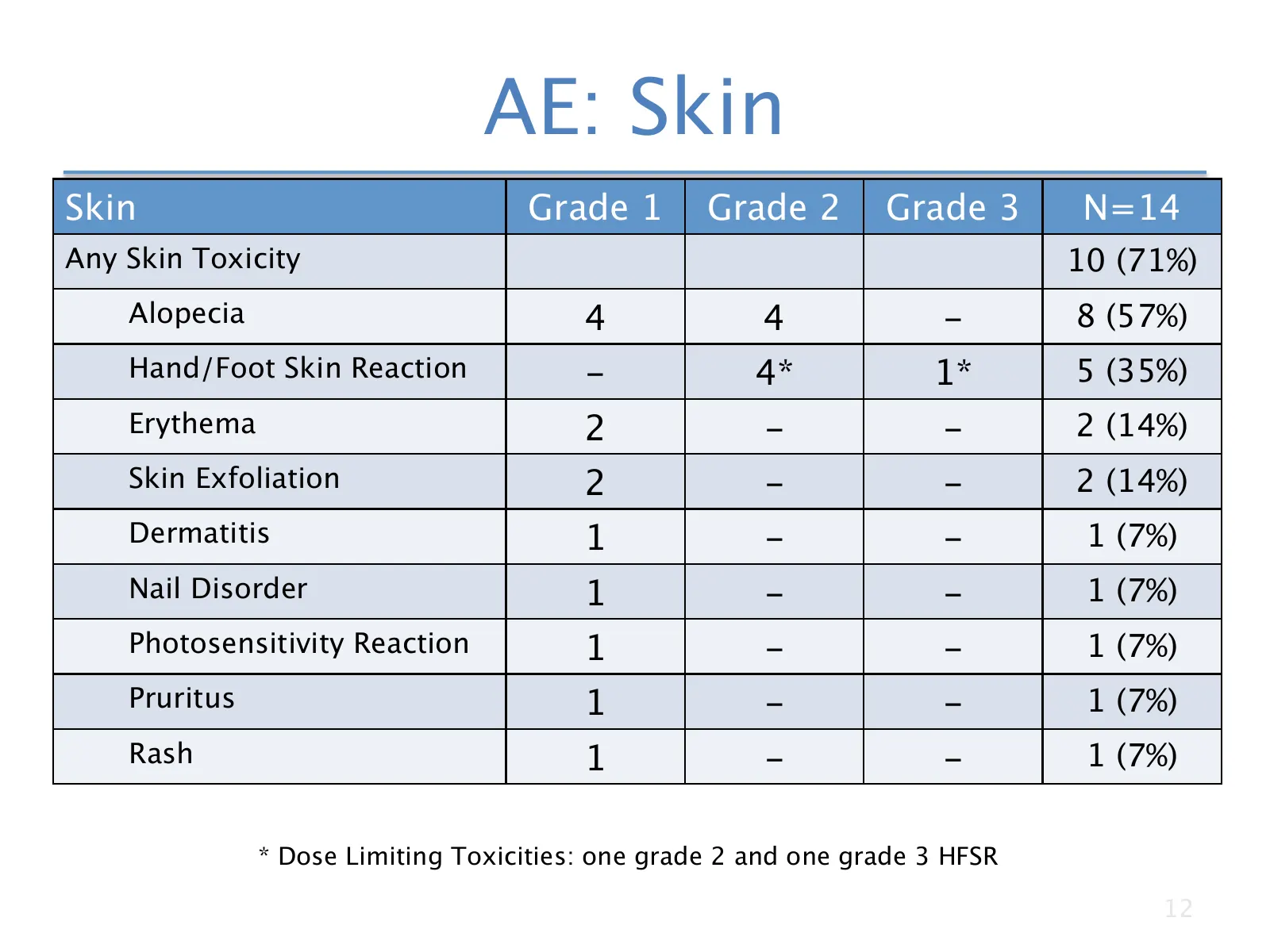
AE: Skin Skin Grade 1 Grade 2 Grade 3 N=14 Any Skin Toxicity 10 (71%) Alopecia 4 4 - 8 (57%) Hand/Foot Skin Reaction - 4* 1* 5 (35%) Erythema 2 - - 2 (14%) Skin Exfoliation 2 - - 2 (14%) Dermatitis 1 - - 1 (7%) Nail Disorder 1 - - 1 (7%) Photosensitivity Reaction 1 - - 1 (7%) Pruritus 1 - - 1 (7%) R
Slide 13: AE: Skin
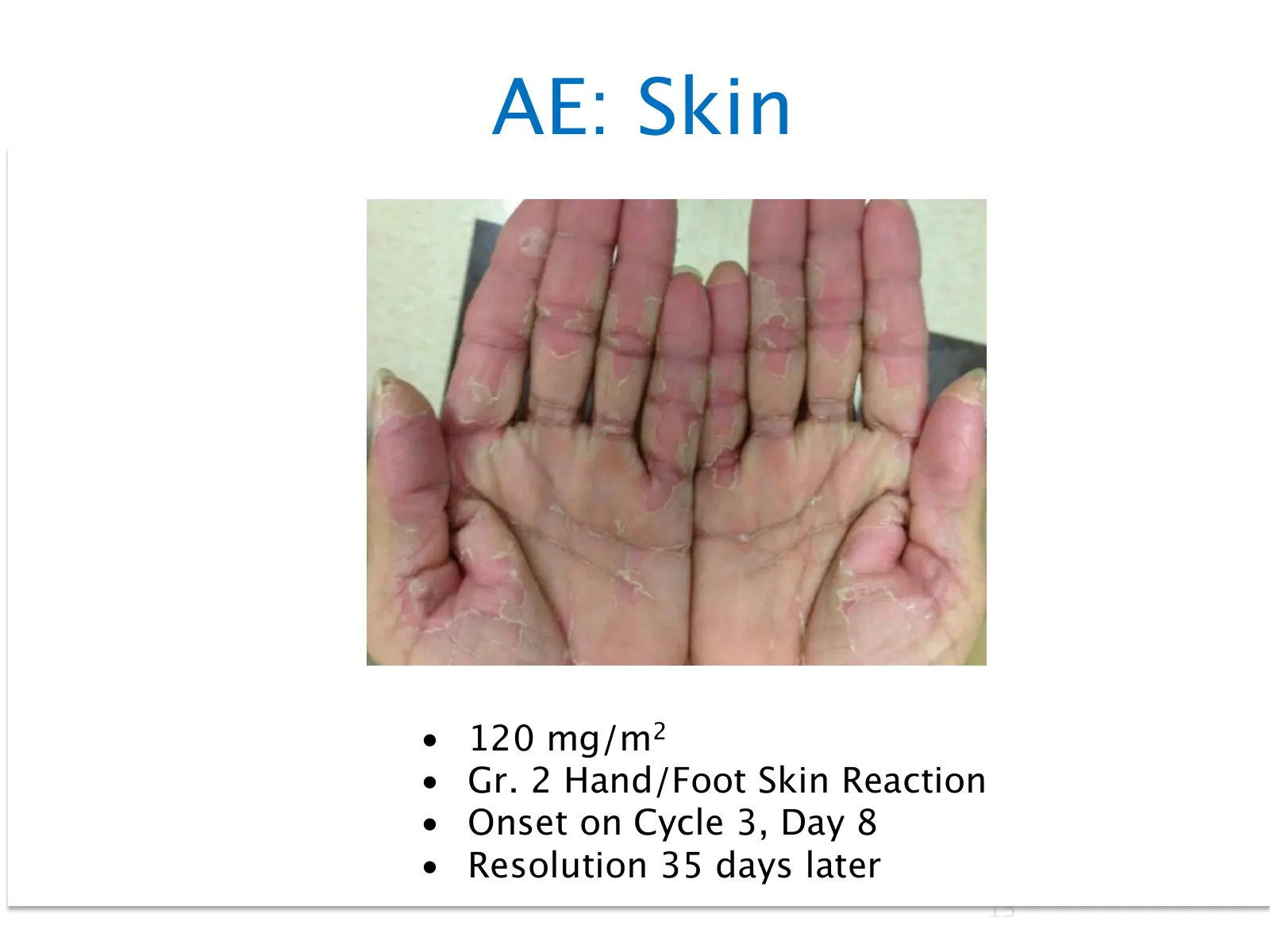
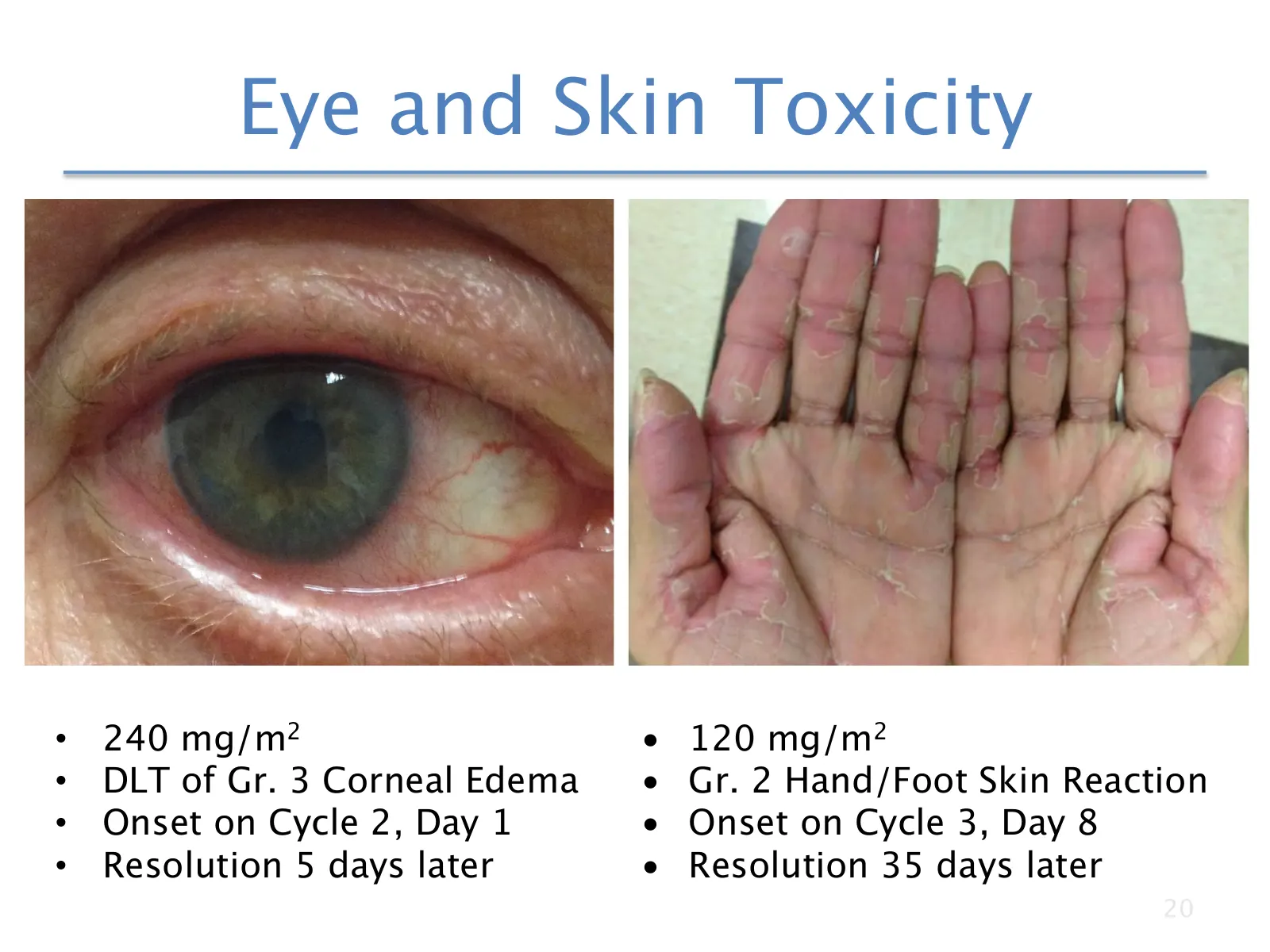
AE: Skin • 120 mg/m2 • Gr. 2 Hand/Foot Skin Reaction • Onset on Cycle 3, Day 8 * Dose Limiting Toxicities: one • grade 2 and one 35 Resolution grade 3 HFSR days later 13
Slide 14: AE: Ocular
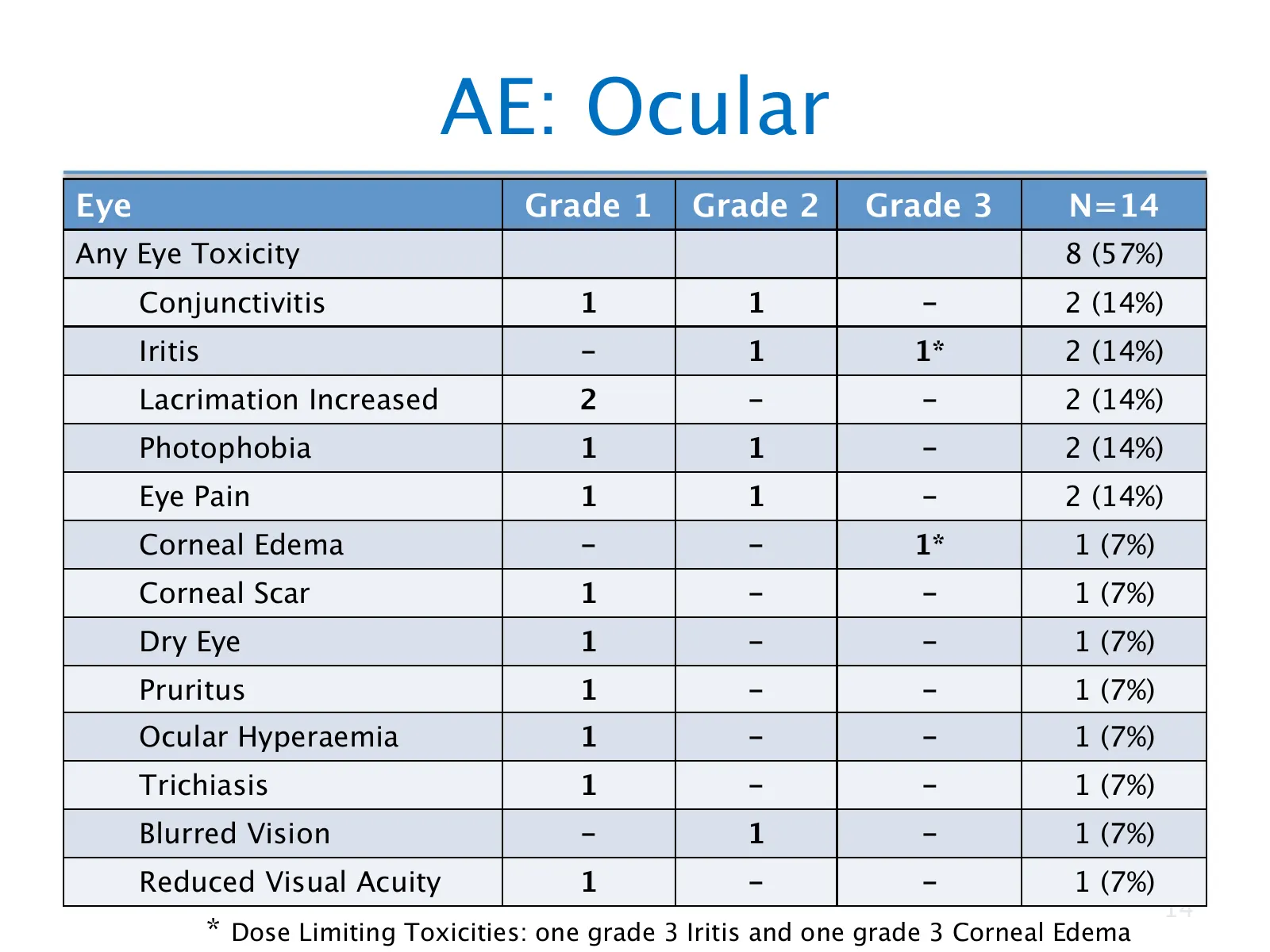
AE: Ocular Eye Grade 1 Grade 2 Grade 3 N=14 Any Eye Toxicity 8 (57%) Conjunctivitis 1 1 - 2 (14%) Iritis - 1 1* 2 (14%) Lacrimation Increased 2 - - 2 (14%) Photophobia 1 1 - 2 (14%) Eye Pain 1 1 - 2 (14%) Corneal Edema - - 1* 1 (7%) Corneal Scar 1 - - 1 (7%) Dry Eye 1 - - 1 (7%) Pruritus 1 - - 1 (7%
Slide 15: AE: Ocular
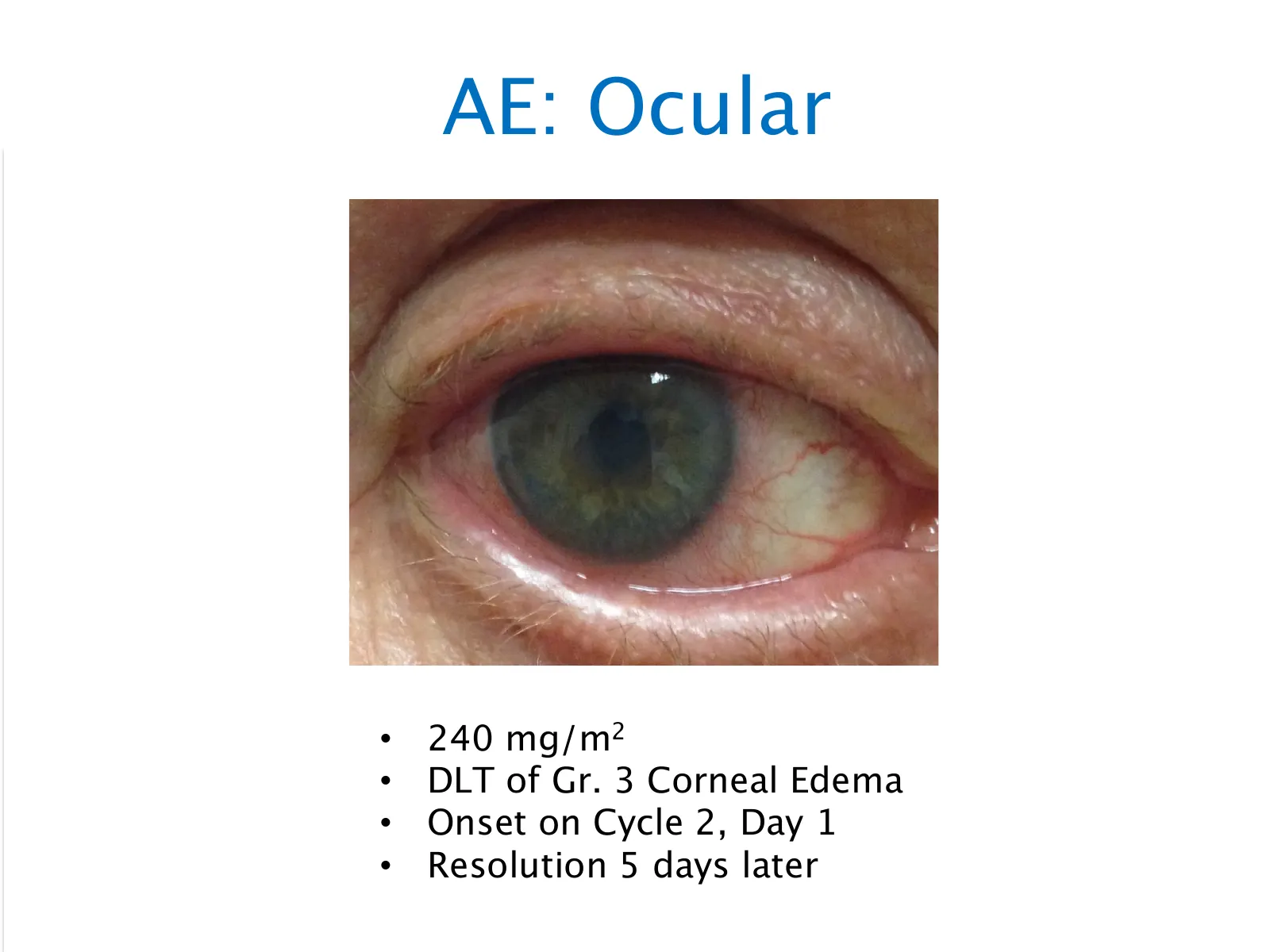
AE: Ocular • 240 mg/m2 • DLT of Gr. 3 Corneal Edema • Onset on Cycle 2, Day 1 • Resolution 5 days later 15 * Dose Limiting Toxicities: one grade 3 Iritis and one grade 3 Corneal Edema
Slide 16: TVB-2640 Plasma Levels
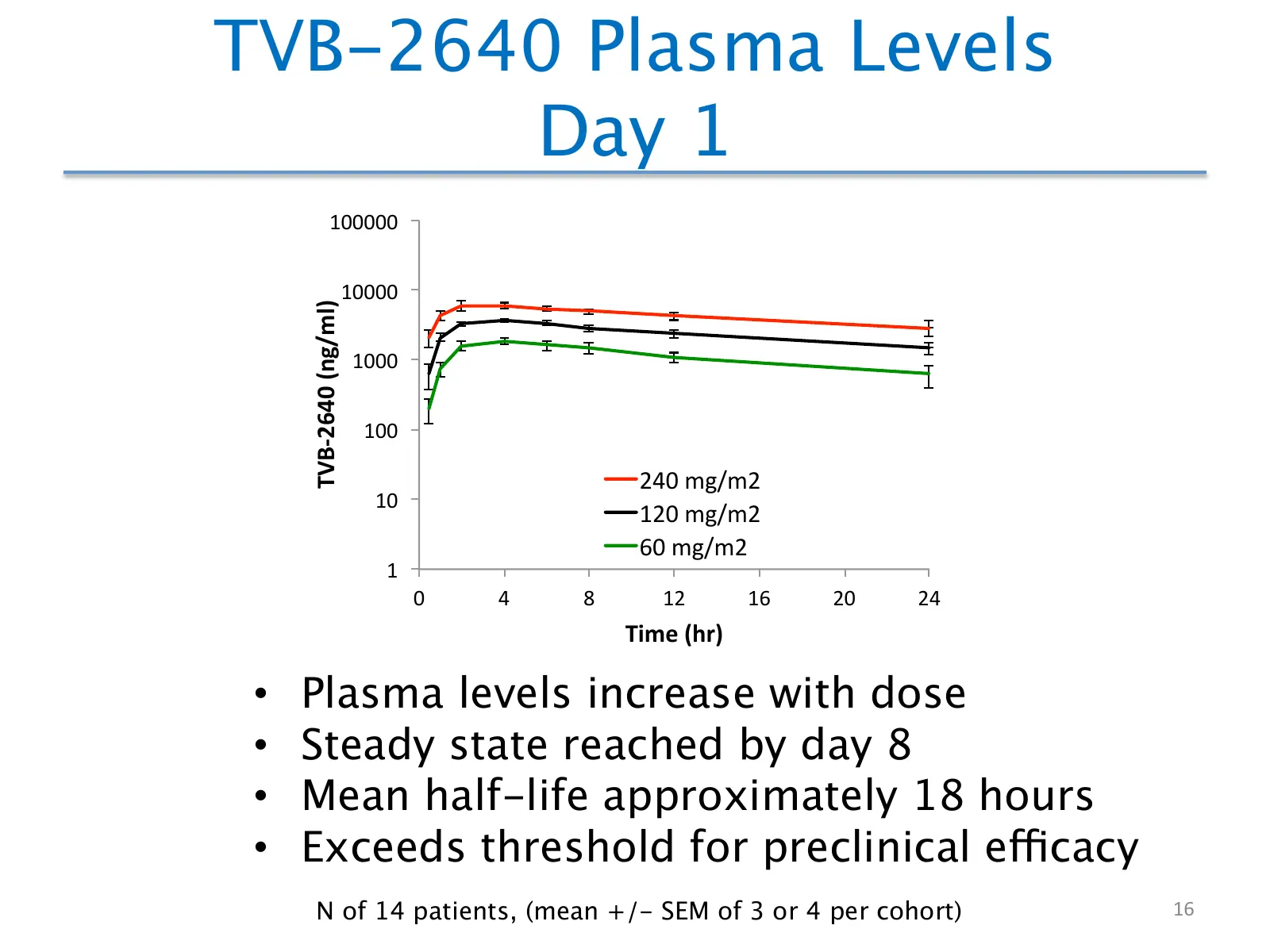
TVB-2640 Plasma Levels Day 1 100000" 10000" TVB$2640)(ng/ml)) 1000" 100" 240"mg/m2" 10" 120"mg/m2" 60"mg/m2" 1" 0" 4" 8" 12" 16" 20" 24" Time)(hr)) • Plasma levels increase with dose • Steady state reached by day 8 • Mean half-life approximately 18 hours • Exceeds threshold for preclinical efficacy
Slide 17: Conclusions
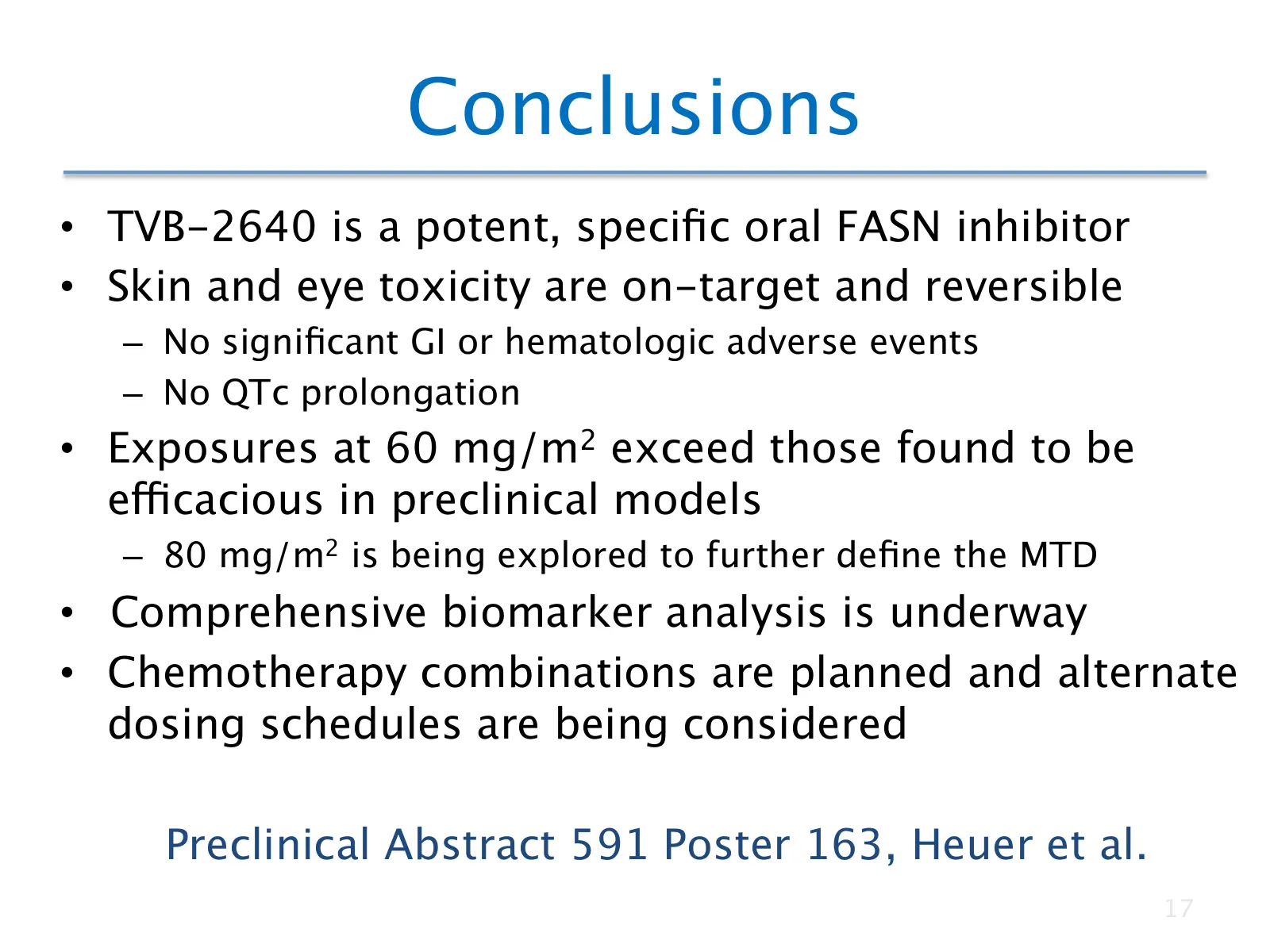
Conclusions • TVB-2640 is a potent, specific oral FASN inhibitor • Skin and eye toxicity are on-target and reversible – No significant GI or hematologic adverse events – No QTc prolongation • Exposures at 60 mg/m2 exceed those found to be efficacious in preclinical models – 80 mg/m2 is being explore
Slide 18: Thank You to the Patients and Their Families
TVB-2640 Oral, First-in-Class, Potent FASN Inhibitor Thank You to the Patients and Their Families Jeffrey R. Infante MD Sarah Cannon Research Institute Nashville TN jinfante@tnonc.com 18
Slide 19: AEs ≥Gr 3 (excluding DLTs)
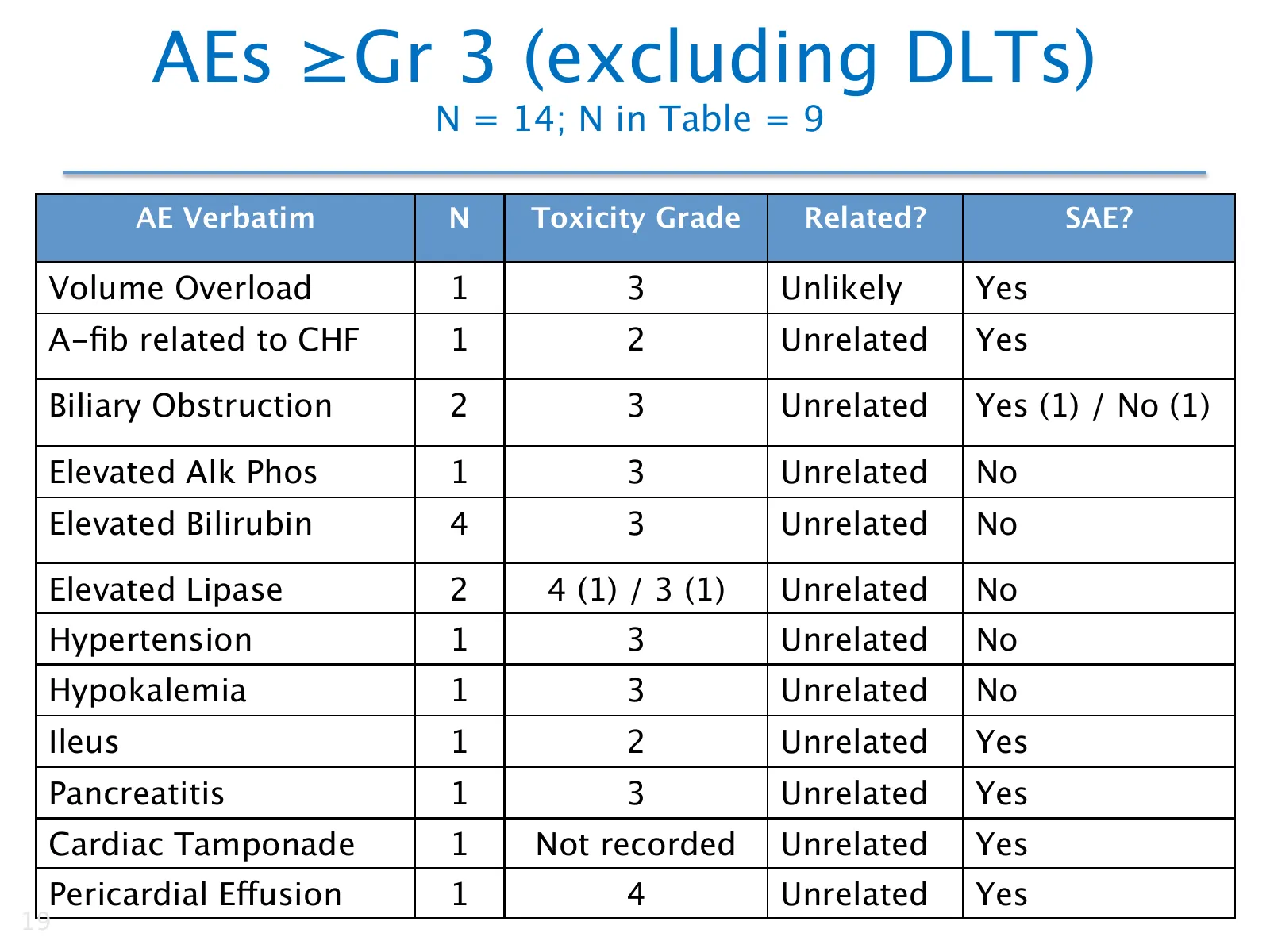
AEs ≥Gr 3 (excluding DLTs) N = 14; N in Table = 9 AE Verbatim N Toxicity Grade Related? SAE? Volume Overload 1 3 Unlikely Yes A-fib related to CHF 1 2 Unrelated Yes Biliary Obstruction 2 3 Unrelated Yes (1) / No (1) Elevated Alk Phos 1 3 Unrelated No Elevated Bilirubin 4 3 Unrelated No Elevated Lipa
Slide 20: Eye and Skin Toxicity
Eye and Skin Toxicity • 240 mg/m2 • 120 mg/m2 • DLT of Gr. 3 Corneal Edema • Gr. 2 Hand/Foot Skin Reaction • Onset on Cycle 2, Day 1 • Onset on Cycle 3, Day 8 • Resolution 5 days later • Resolution 35 days later 20
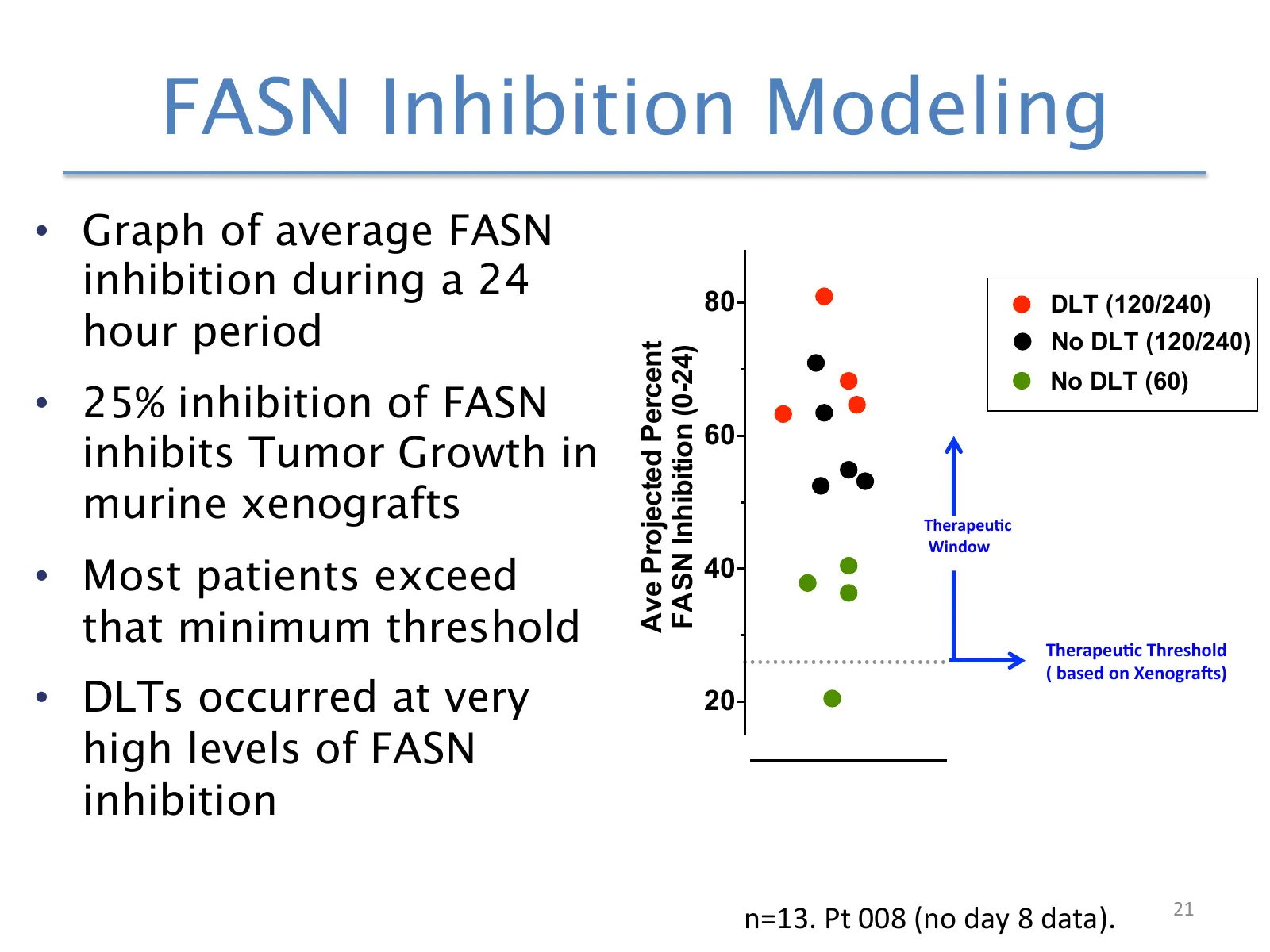
Slide 21: FASN Inhibition Modeling
FASN Inhibition Modeling • Graph of average FASN inhibition during a 24 80 DLT (120/240) hour period No DLT (120/240) Ave Projected Percent FASN Inhibition (0-24) No DLT (60) • 25% inhibition of FASN 60 inhibits Tumor Growth in murine xenografts Therapeu(c Window • Most patients exceed 40 that minim
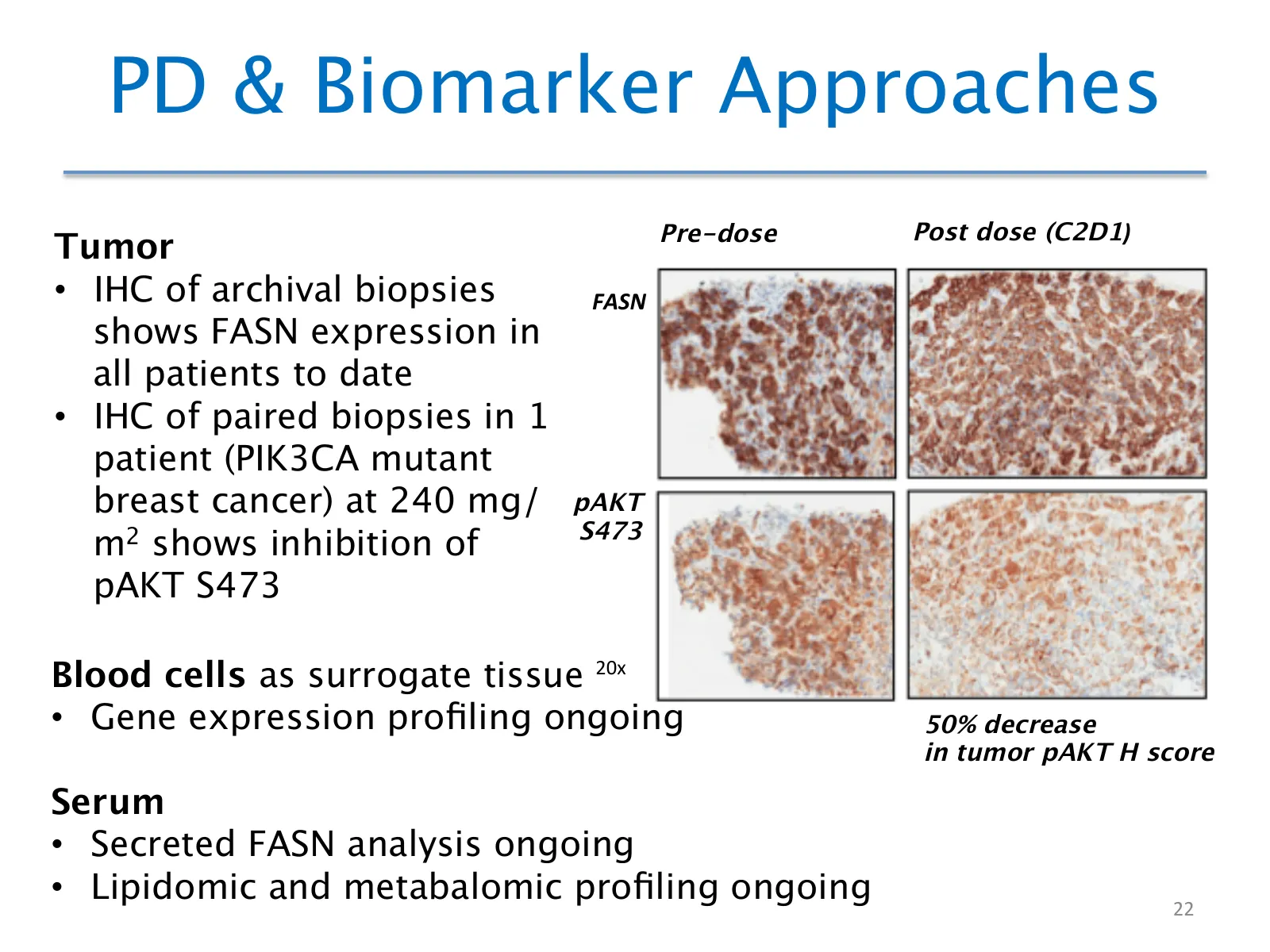
Slide 22: PD & Biomarker Approaches
PD & Biomarker Approaches Pre-dose Post dose (C2D1) Tumor • IHC of archival biopsies FASN shows FASN expression in all patients to date • IHC of paired biopsies in 1 patient (PIK3CA mutant breast cancer) at 240 mg/ pAKT S473 m2 shows inhibition of pAKT S473 Blood cells as surrogate tissue 20x • Gene
Source: company website
More decks from Sagimet Biosciences Inc. - Series A
 Investor Presentation (November 2026)33 slides · Nov 12, 2026
 Investor Presentation (October 2026)31 slides · Oct 22, 2026
 Investor Presentation (September 2026)30 slides · September 2026
 Corporate Update (August 2026)22 slides · Aug 11, 2026
 Investor Presentation (July 2026)22 slides · Jul 21, 2026
 Corporate Update (April 2026)22 slides · Apr 30, 2026