Uniphar PLC · EURONEXT:UPR
Uniphar — Technical Presentation (October 2017)
15 slides from Uniphar's technical presentation, October 2017
Slide 1: ProVen: Probiotics
Webinar 11 ProVen: Probiotics
Slide 2: Probiotic History
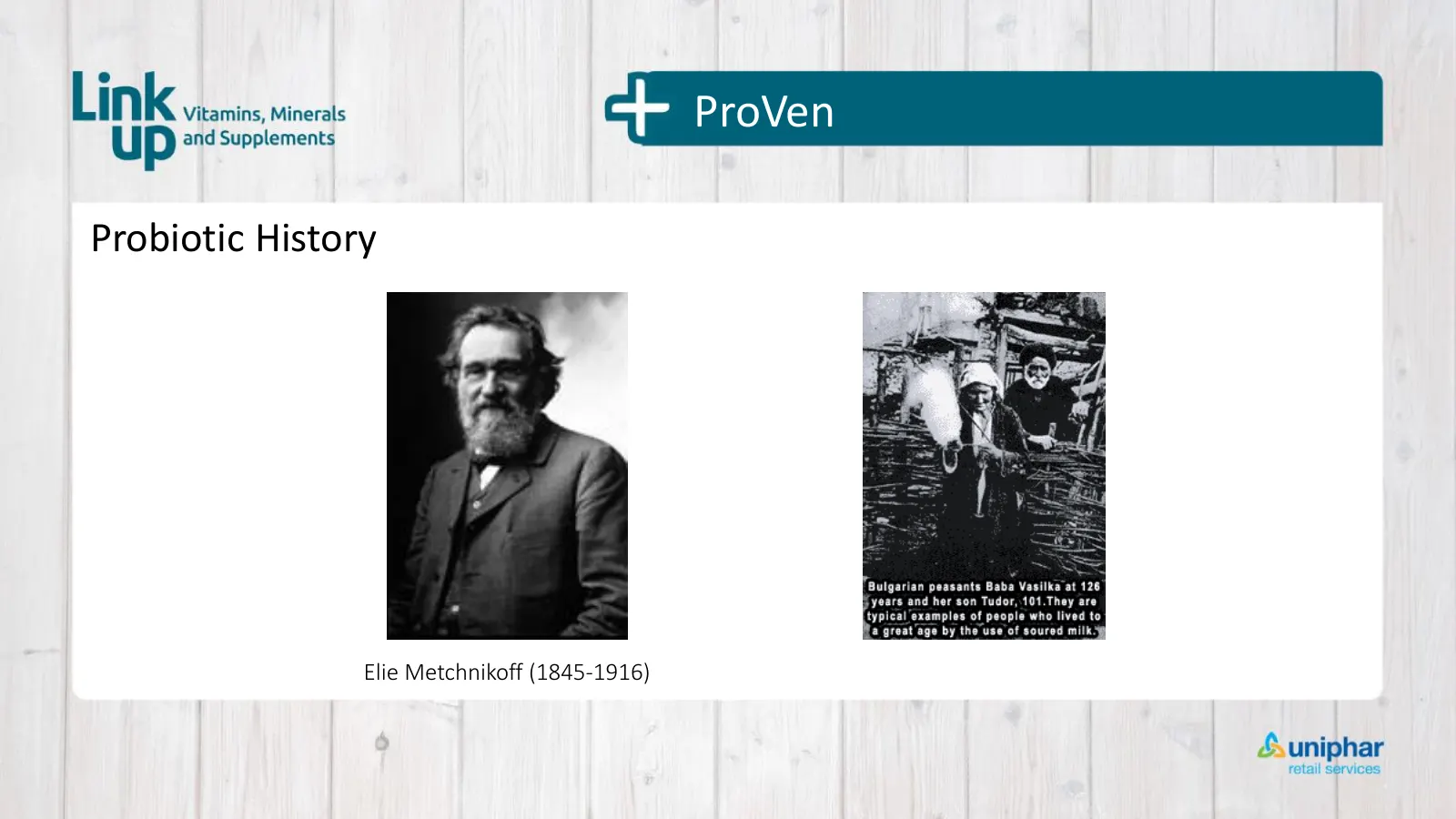
ProVen Probiotic History Elie Metchnikoff (1845-1916)
Slide 3: The Lab4 Consortium
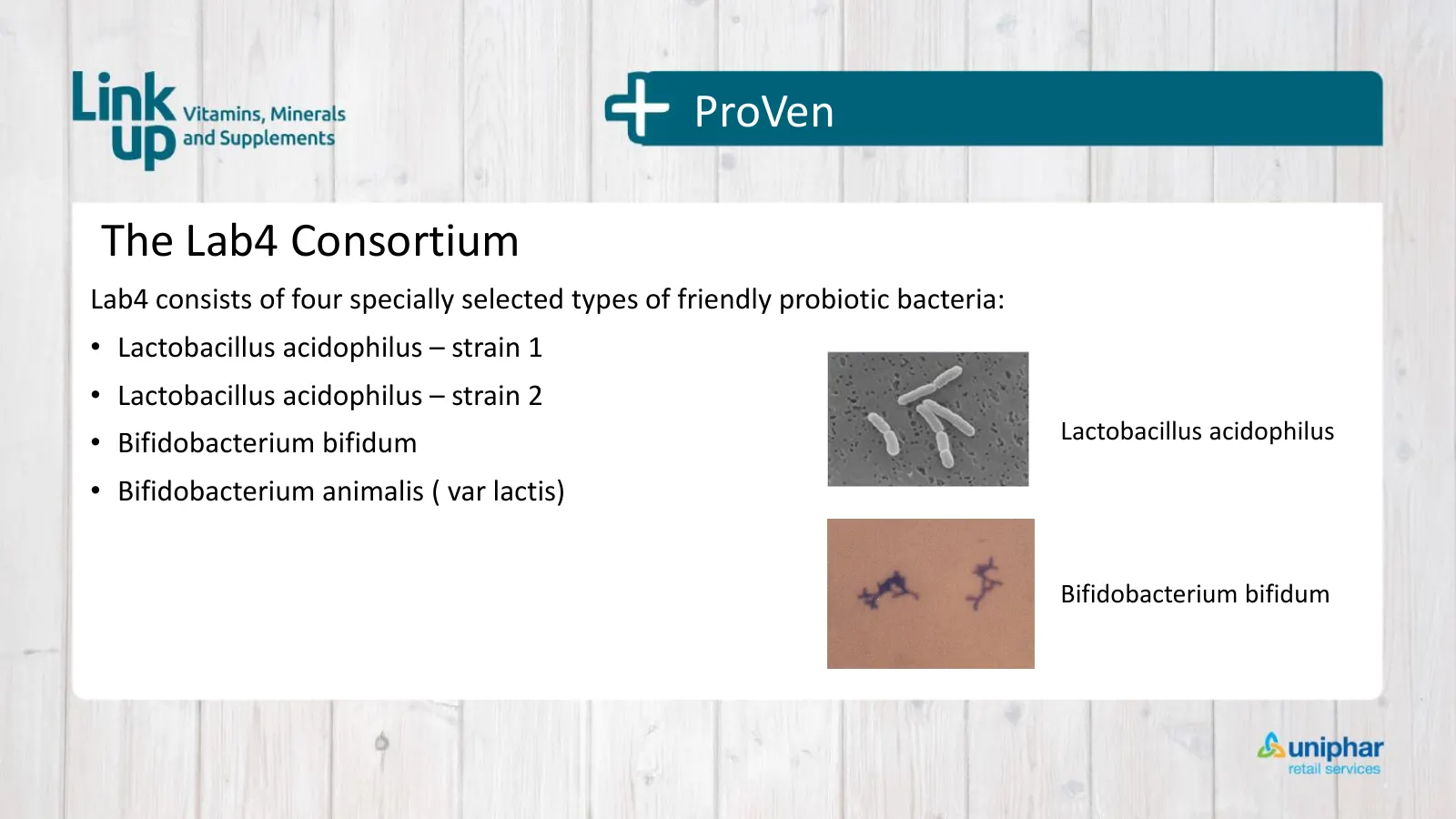
ProVen The Lab4 Consortium Lab4 consists of four specially selected types of friendly probiotic bacteria: • Lactobacillus acidophilus – strain 1 • Lactobacillus acidophilus – strain 2 • Bifidobacterium bifidum Lactobacillus acidophilus • Bifidobacterium animalis ( var lactis) Bifidobacterium bifidum
Slide 4: Antibiotics and Associated Diarrhoea
ProVen Antibiotics and Associated Diarrhoea • AAD – common adverse event with global prevalence of AAD ranges from 3.2% to 29% • Among all AAD cases, 10-20% are associated with CDAD • There are about 2000 new cases of CDAD in Ireland annually. • Recurrence of CDAD occurs in approx. 30% of patients w
Slide 5: A Review of Human Clinical Trials Performed with ProVen Probiotics Over the Last 12 Years
ProVen A Review of Human Clinical Trials Performed with ProVen Probiotics Over the Last 12 Years
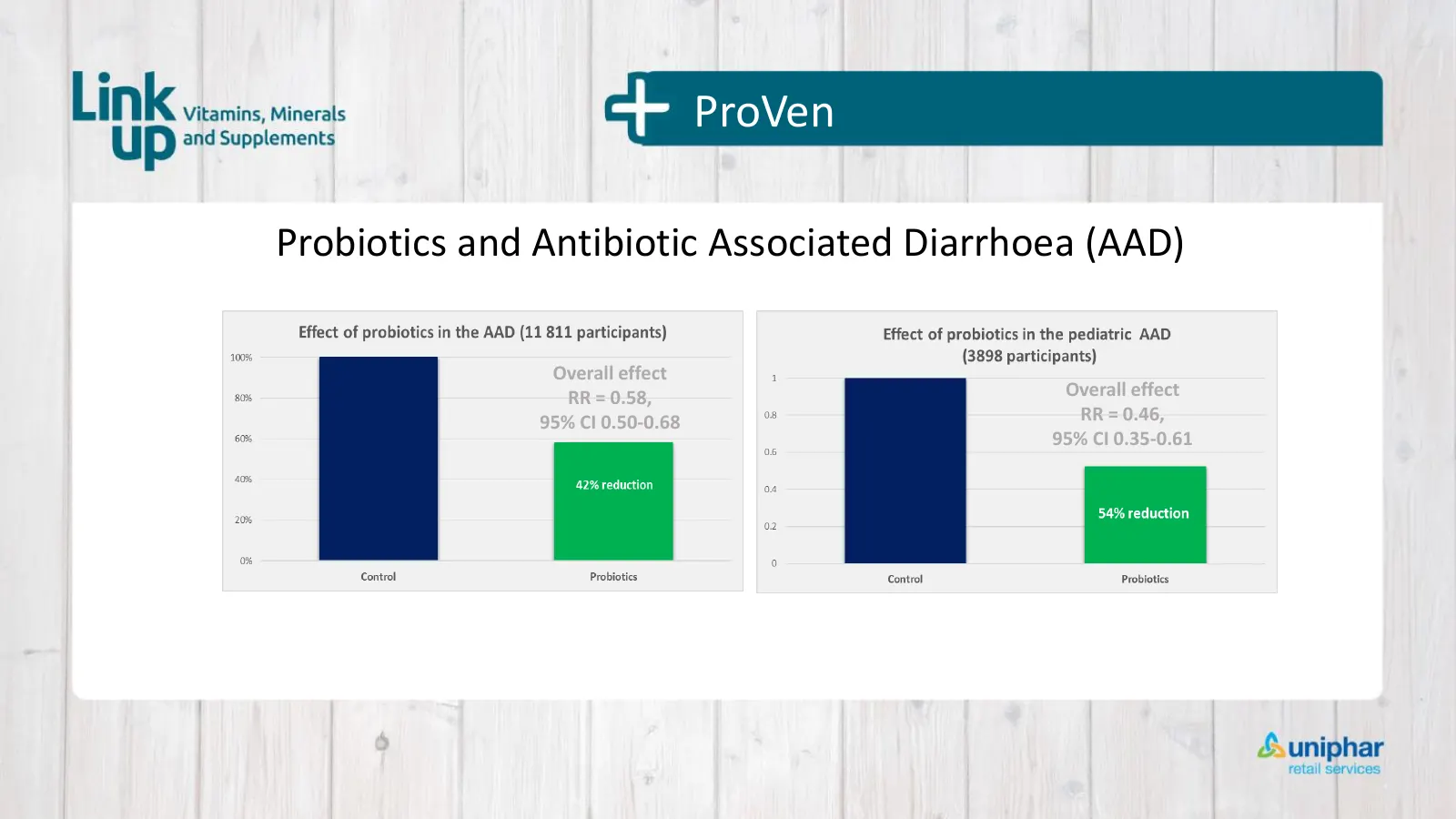
Slide 6: Probiotics and Antibiotic Associated Diarrhoea (AAD)
ProVen Probiotics and Antibiotic Associated Diarrhoea (AAD) Overall effect RR = 0.58, Overall effect 95% CI 0.50-0.68 RR = 0.46, 95% CI 0.35-0.61
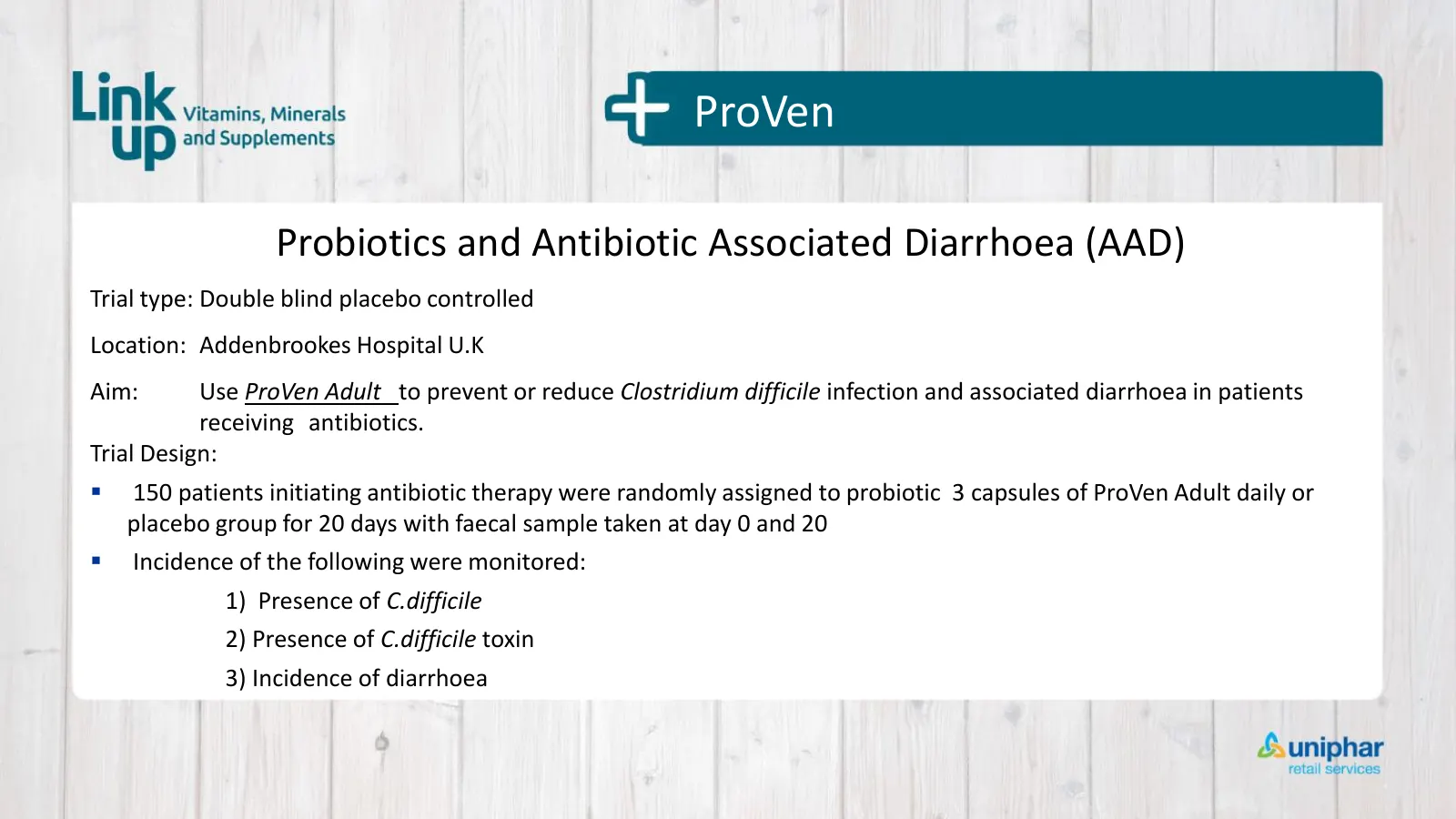
Slide 7: Probiotics and Antibiotic Associated Diarrhoea (AAD)
ProVen Probiotics and Antibiotic Associated Diarrhoea (AAD) Trial type: Double blind placebo controlled Location: Addenbrookes Hospital U.K Aim: Use ProVen Adult to prevent or reduce Clostridium difficile infection and associated diarrhoea in patients receiving antibiotics. Trial Design: 150 patie
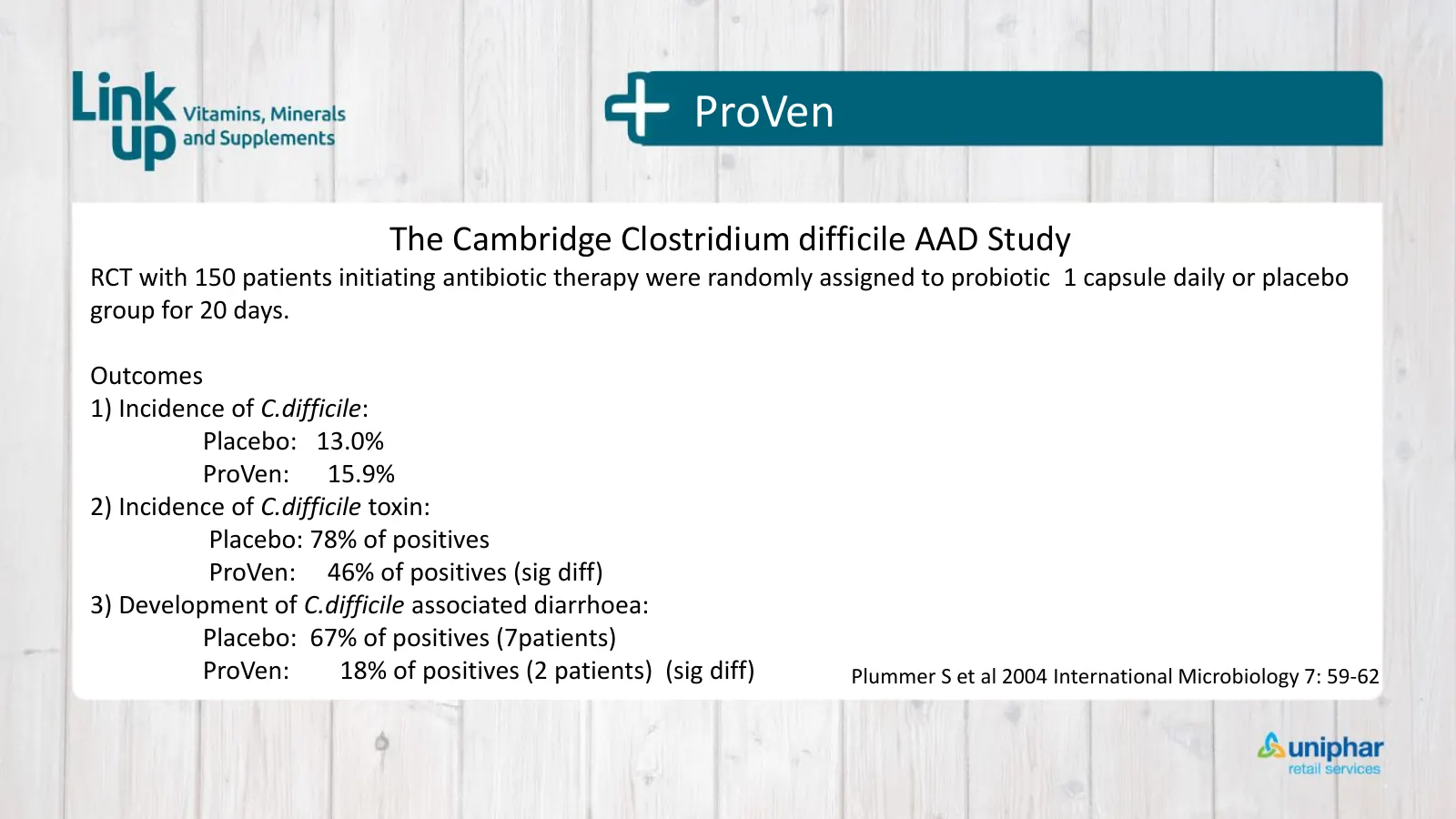
Slide 8: The Cambridge Clostridium difficile AAD Study
ProVen The Cambridge Clostridium difficile AAD Study RCT with 150 patients initiating antibiotic therapy were randomly assigned to probiotic 1 capsule daily or placebo group for 20 days. Outcomes 1) Incidence of C.difficile: Placebo: 13.0% ProVen: 15.9% 2) Incidence of C.difficile toxin: Placebo: 78
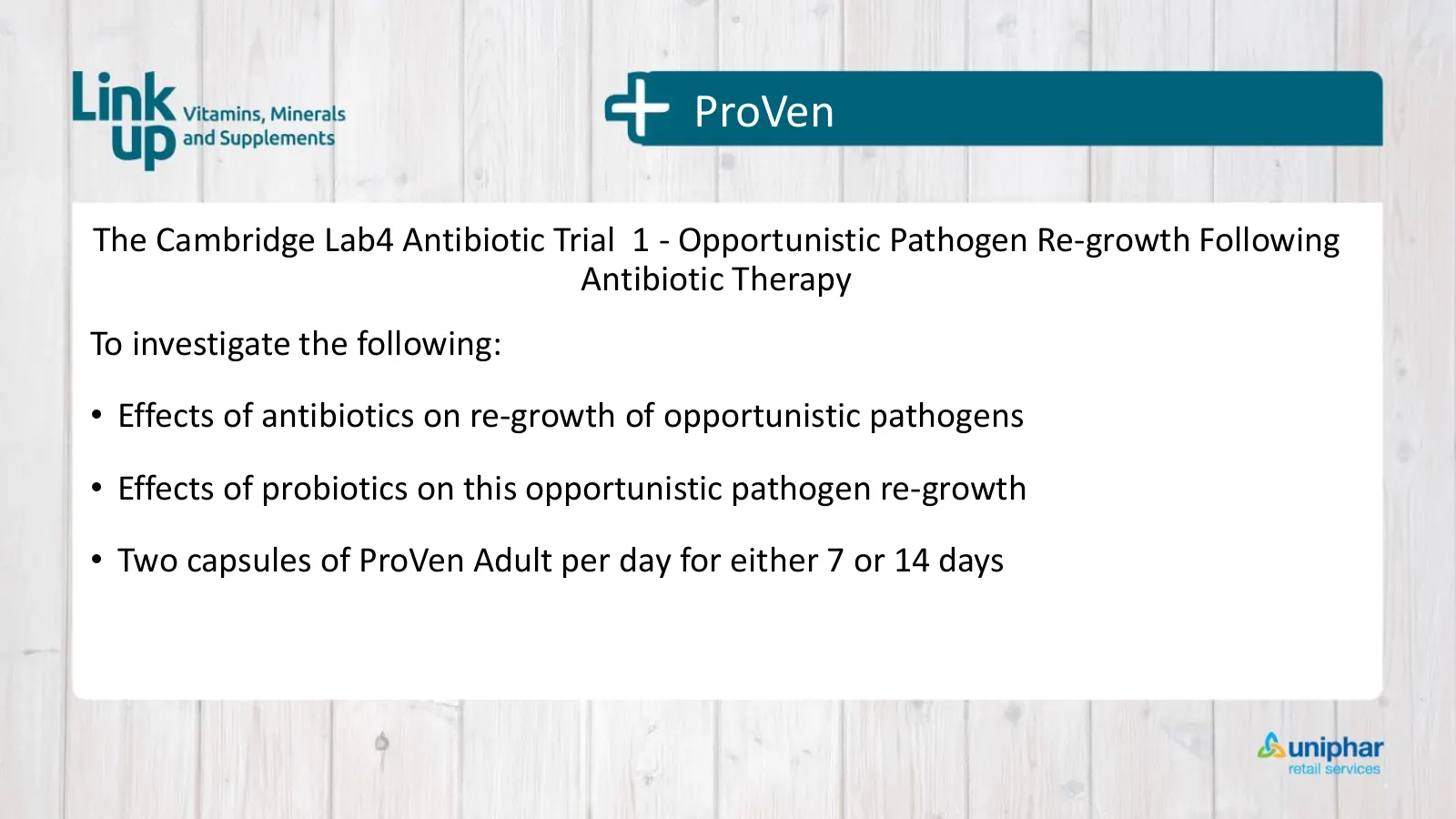
Slide 9: The Cambridge Lab4 Antibiotic Trial - Opportunistic Pathogen Re-growth
ProVen The Cambridge Lab4 Antibiotic Trial 1 - Opportunistic Pathogen Re-growth Following Antibiotic Therapy To investigate the following: • Effects of antibiotics on re-growth of opportunistic pathogens • Effects of probiotics on this opportunistic pathogen re-growth • Two capsules of ProVen Adult
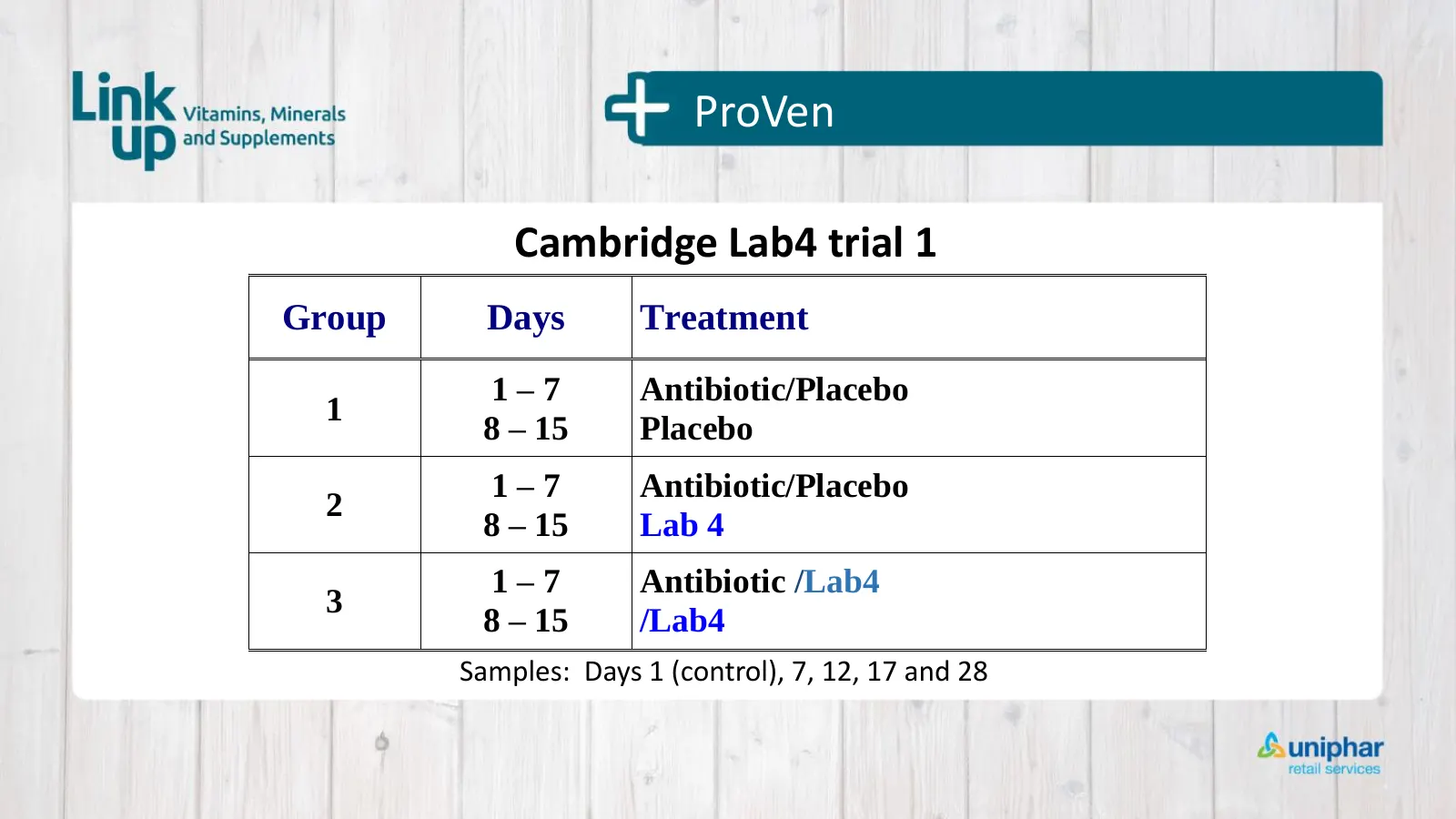
Slide 10: Cambridge Lab4 trial
ProVen Cambridge Lab4 trial 1 Group Days Treatment 1–7 Antibiotic/Placebo 1 8 – 15 Placebo 1–7 Antibiotic/Placebo 2 8 – 15 Lab 4 1–7 Antibiotic /Lab4 3 8 – 15 /Lab4 Samples: Days 1 (control), 7, 12, 17 and 28
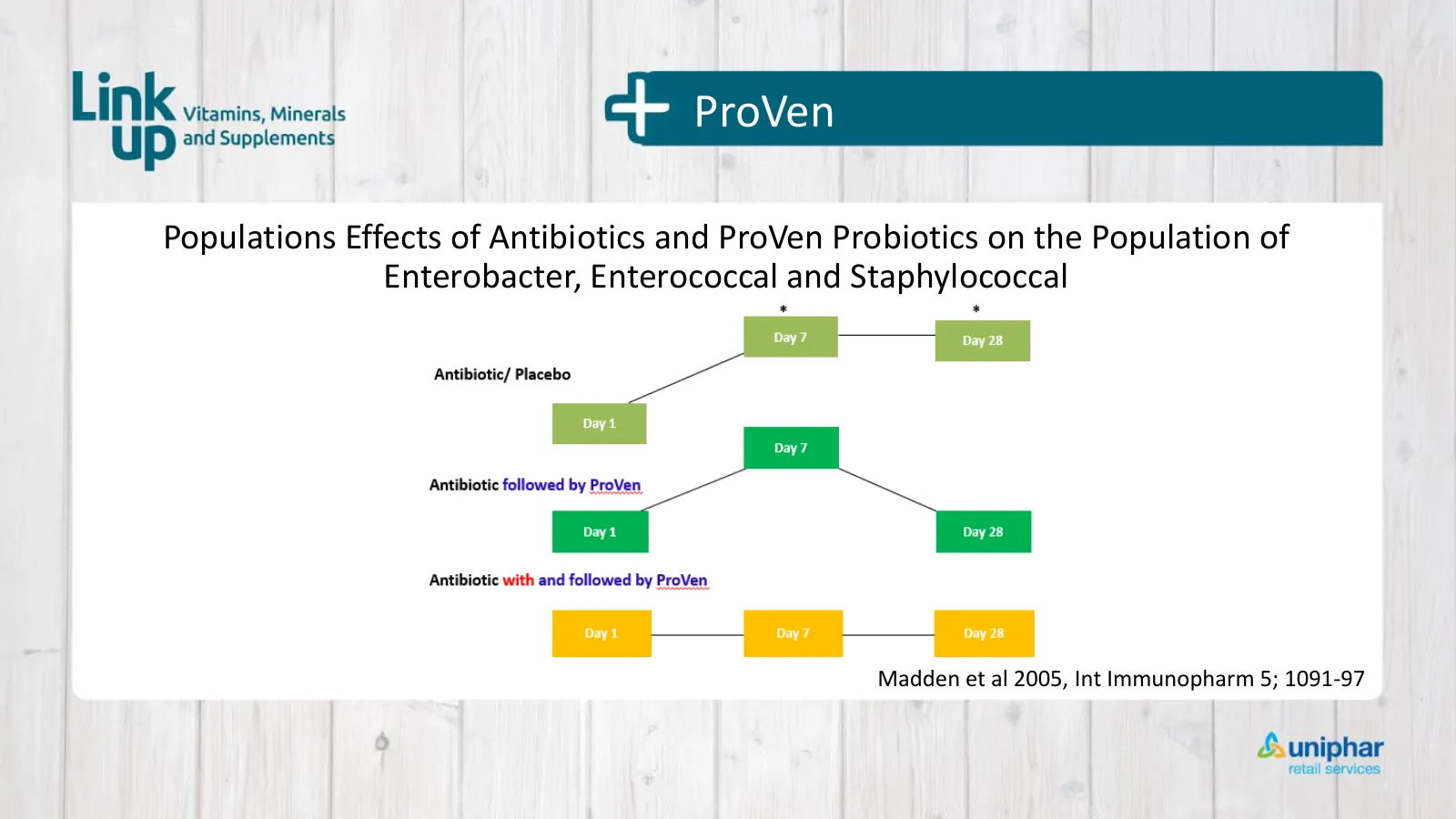
Slide 11: Effects of Antibiotics and ProVen on Enterobacter, Enterococcal and Staphylococcal Populations
ProVen Populations Effects of Antibiotics and ProVen Probiotics on the Population of Enterobacter, Enterococcal and Staphylococcal Madden et al 2005, Int Immunopharm 5; 1091-97
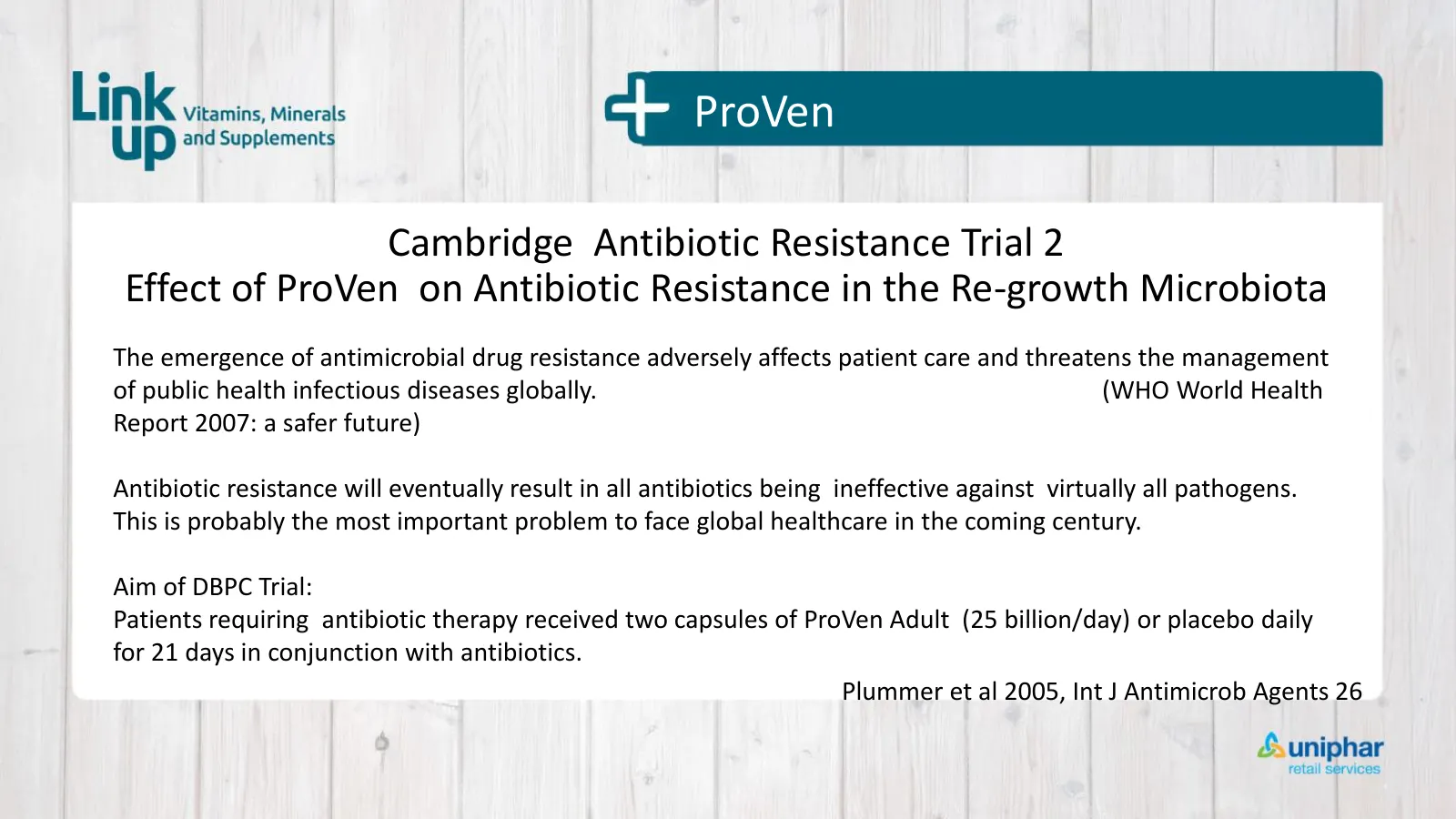
Slide 12: Cambridge Antibiotic Resistance Trial
ProVen Cambridge Antibiotic Resistance Trial 2 Effect of ProVen on Antibiotic Resistance in the Re-growth Microbiota The emergence of antimicrobial drug resistance adversely affects patient care and threatens the management of public health infectious diseases globally. (WHO World Health Report 2007
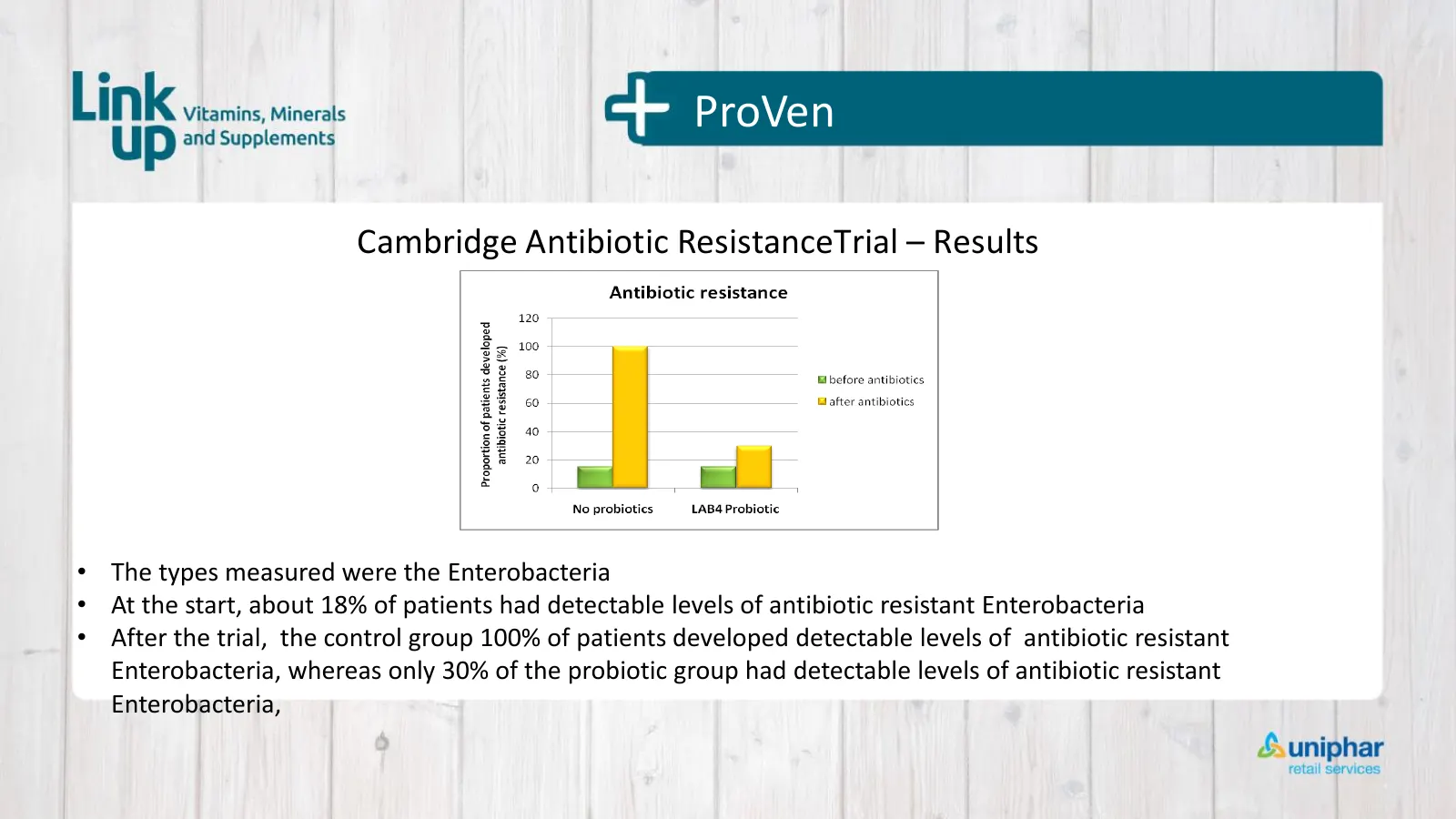
Slide 13: Cambridge Antibiotic Resistance Trial – Results
ProVen Cambridge Antibiotic ResistanceTrial – Results • The types measured were the Enterobacteria • At the start, about 18% of patients had detectable levels of antibiotic resistant Enterobacteria • After the trial, the control group 100% of patients developed detectable levels of antibiotic resist
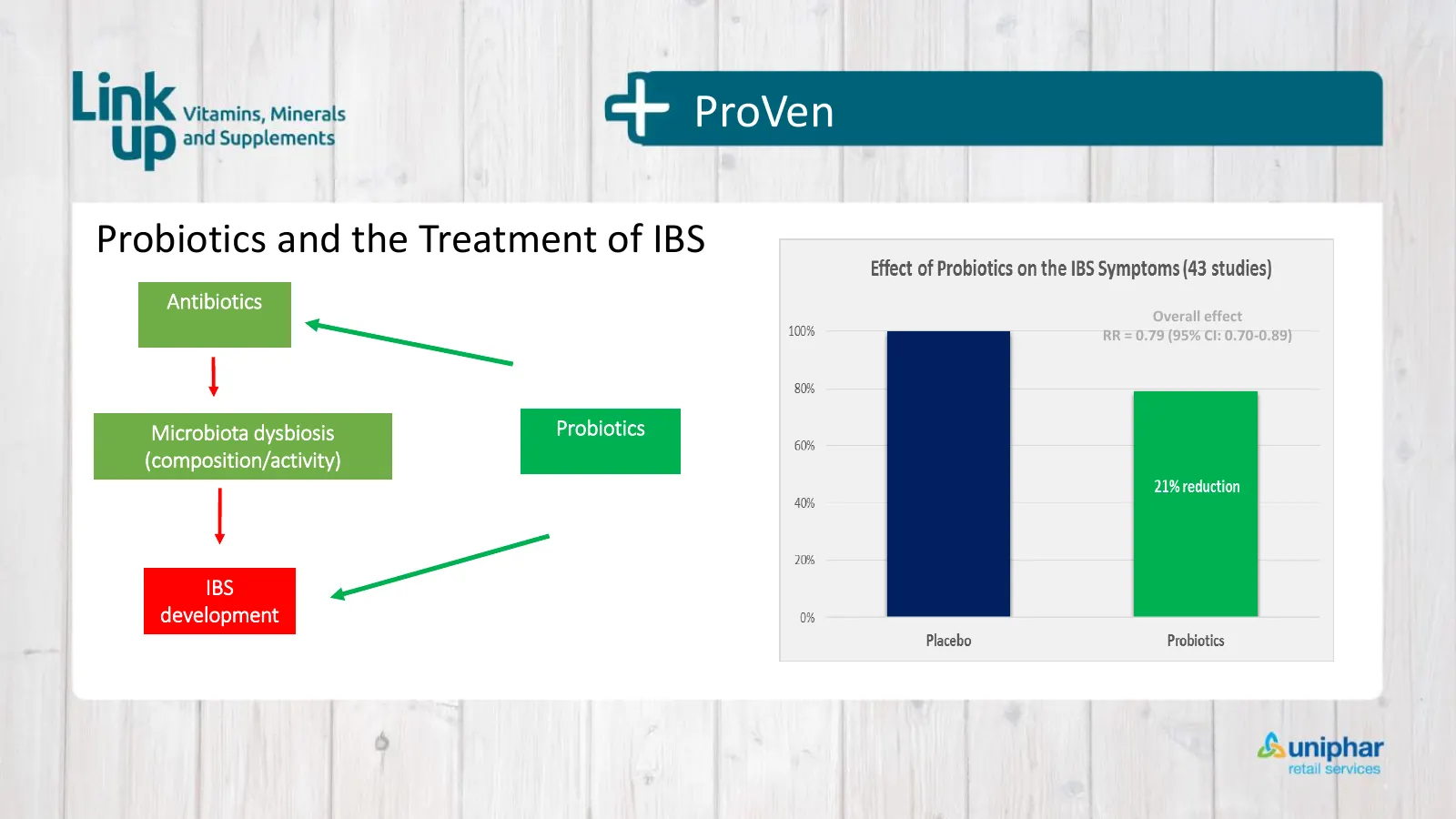
Slide 14: Probiotics and the Treatment of IBS
ProVen Probiotics and the Treatment of IBS Antibiotics Overall effect RR = 0.79 (95% CI: 0.70-0.89) Microbiota dysbiosis Probiotics (composition/activity) IBS development
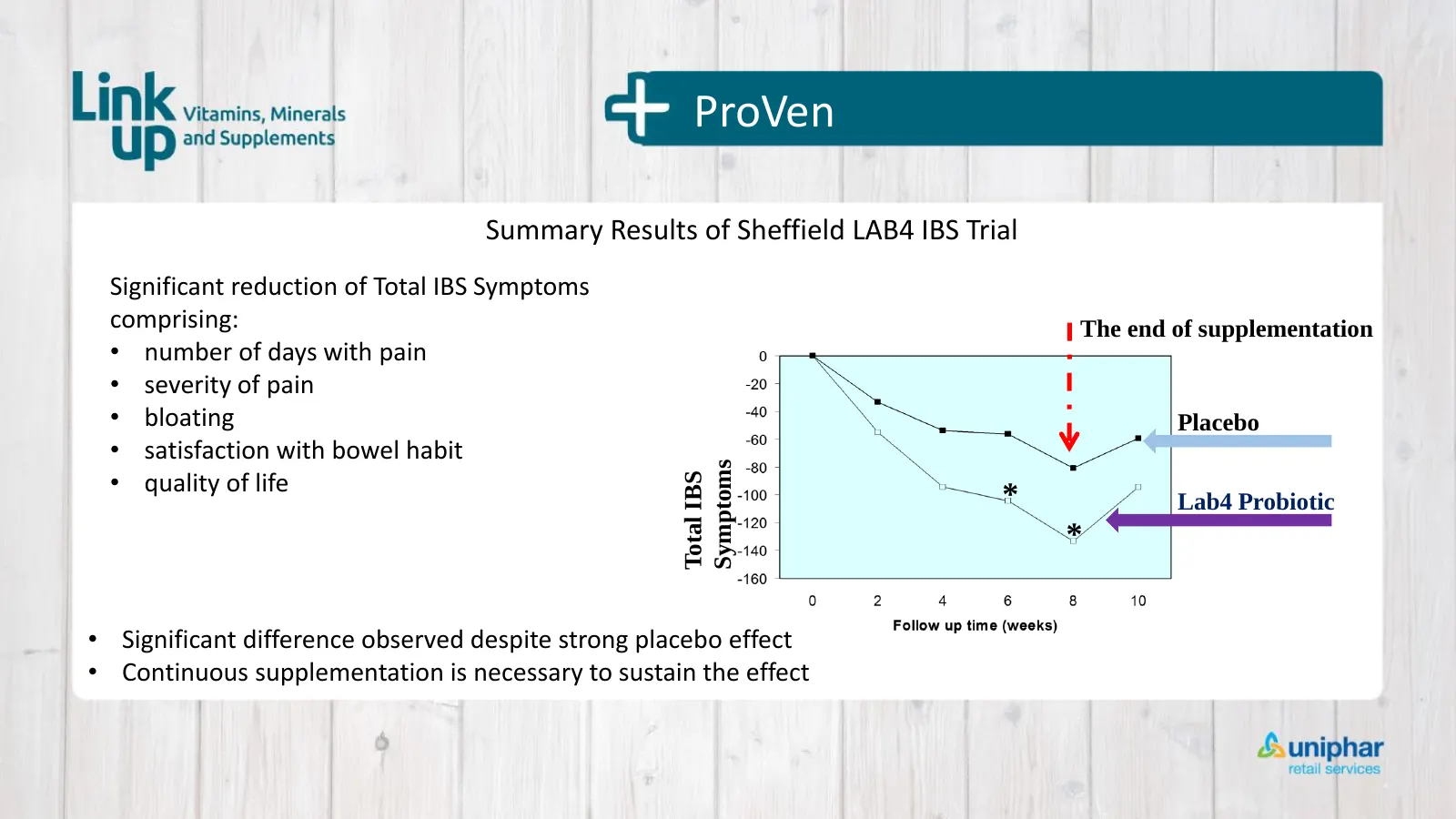
Slide 15: Summary Results of Sheffield LAB4 IBS Trial
ProVen Summary Results of Sheffield LAB4 IBS Trial Significant reduction of Total IBS Symptoms comprising: The end of supplementation • number of days with pain • severity of pain • bloating Placebo • satisfaction with bowel habit Symptoms • quality of life Total IBS * Lab4 Probiotic * • Significant
Source: Internet Archive copy of uniphar.ie
More decks from Uniphar PLC
 H1 2026 Earnings Presentation39 slides · Sep 8, 2026
 FY2025 Earnings Presentation39 slides · Feb 24, 2026
 FY2024 Earnings Presentation38 slides · Feb 25, 2025
 H1 2024 Earnings Presentation37 slides · Sep 3, 2024
 FY2023 Earnings Presentation39 slides · Feb 27, 2024
 H1 2023 Earnings Presentation41 slides · Sep 14, 2023