MBX Biosciences, Inc. · NASDAQ:MBX
MBX Biosciences — Technical Presentation
10 slides from MBX Biosciences's technical presentation
Slide 1: Efficacy and Safety of Once-Weekly Canvuparatide in Patients With Hypoparathyroidism: Results From Avail
Efficacy and Safety of Once-Weekly Canvuparatide in Patients With Hypoparathyroidism: Results From Avail, a Phase 2, Double-Blind, Placebo-Controlled, Randomized Clinical Trial Mishaela R Rubin, MD1; Lisa G Abbott, MD2,3; Richard D DiMarchi, PhD4; Daniel Katselnik, MD5; Salomon Azoulay, MD6; Andreas
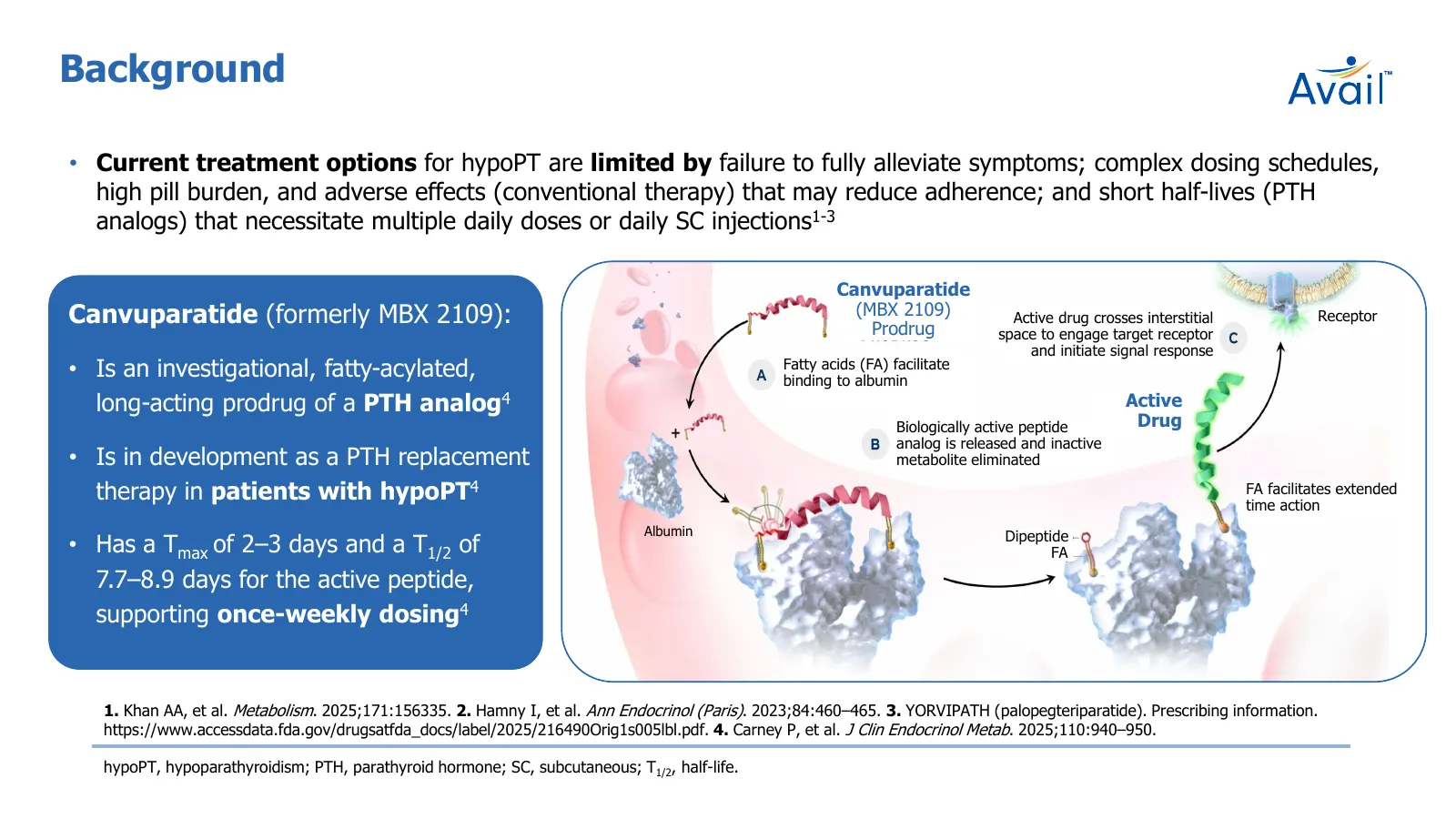
Slide 2: Background
Background • Current treatment options for hypoPT are limited by failure to fully alleviate symptoms; complex dosing schedules, high pill burden, and adverse effects (conventional therapy) that may reduce adherence; and short half-lives (PTH analogs) that necessitate multiple daily doses or daily SC
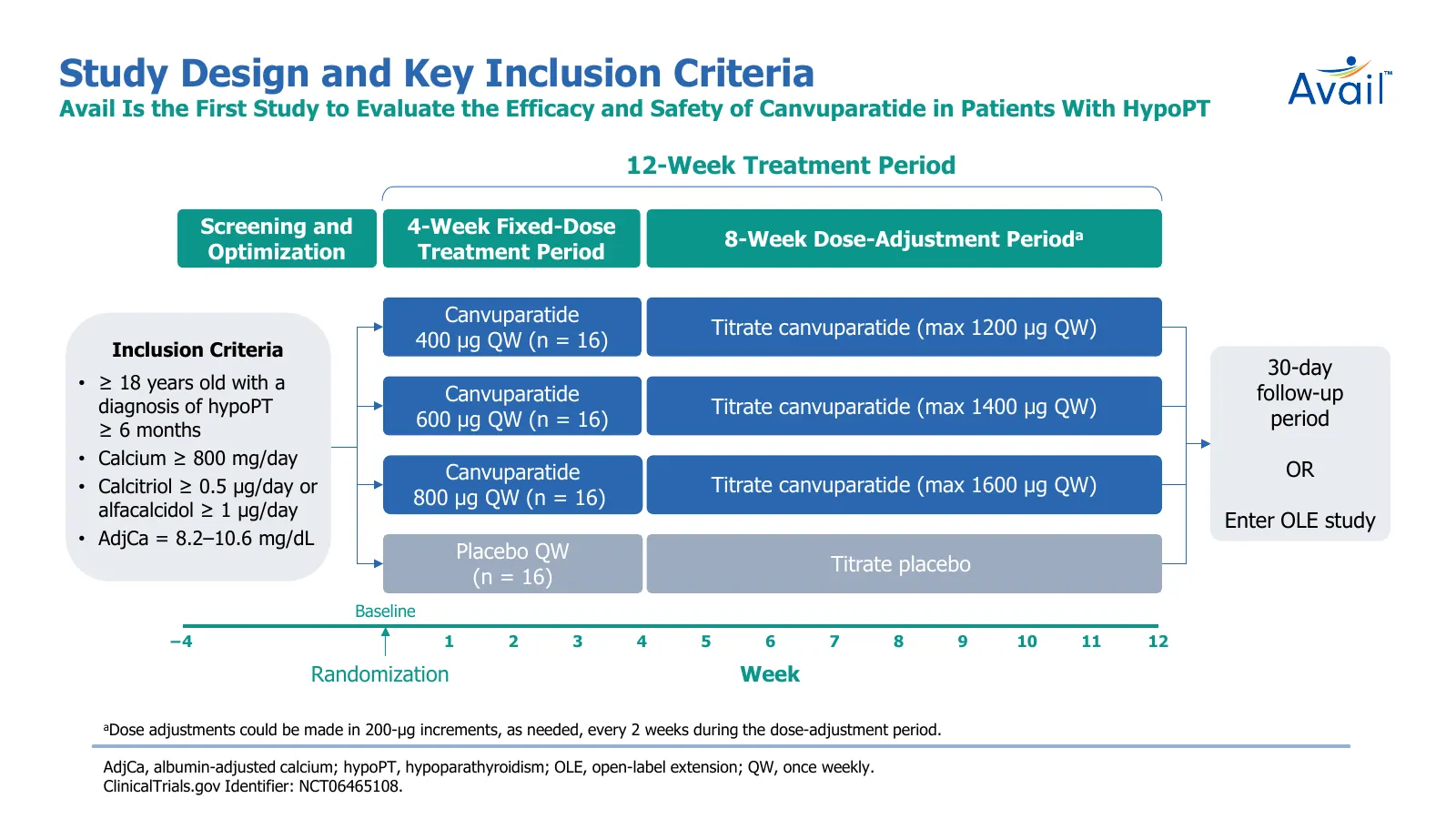
Slide 3: Study Design and Key Inclusion Criteria
Study Design and Key Inclusion Criteria Avail Is the First Study to Evaluate the Efficacy and Safety of Canvuparatide in Patients With HypoPT 12-Week Treatment Period Screening and 4-Week Fixed-Dose 8-Week Dose-Adjustment Perioda Optimization Treatment Period Canvuparatide Titrate canvuparatide (max
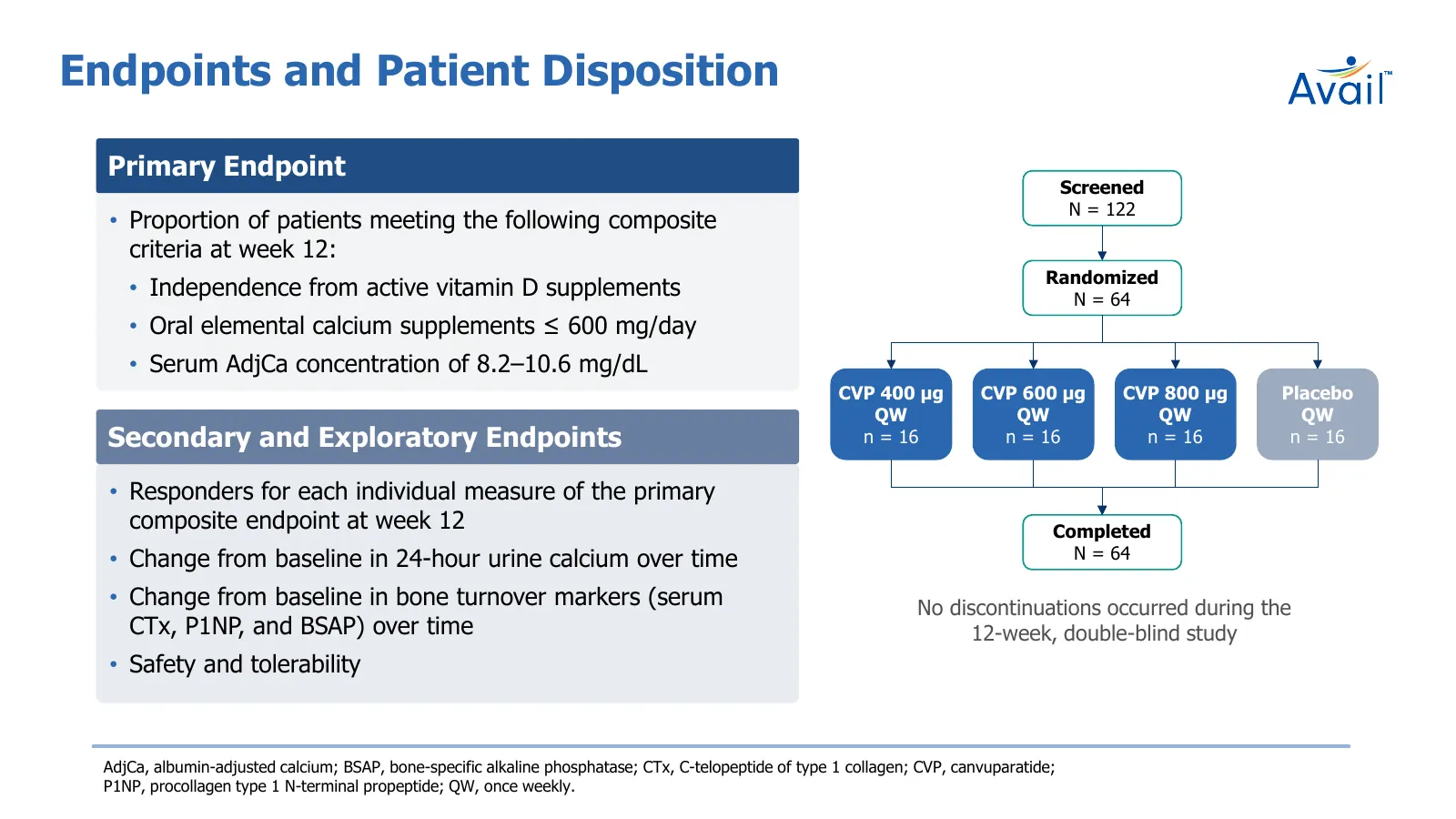
Slide 4: Endpoints and Patient Disposition
Endpoints and Patient Disposition Primary Endpoint Screened N = 122 • Proportion of patients meeting the following composite criteria at week 12: Randomized • Independence from active vitamin D supplements N = 64 • Oral elemental calcium supplements ≤ 600 mg/day • Serum AdjCa concentration of 8.2–10
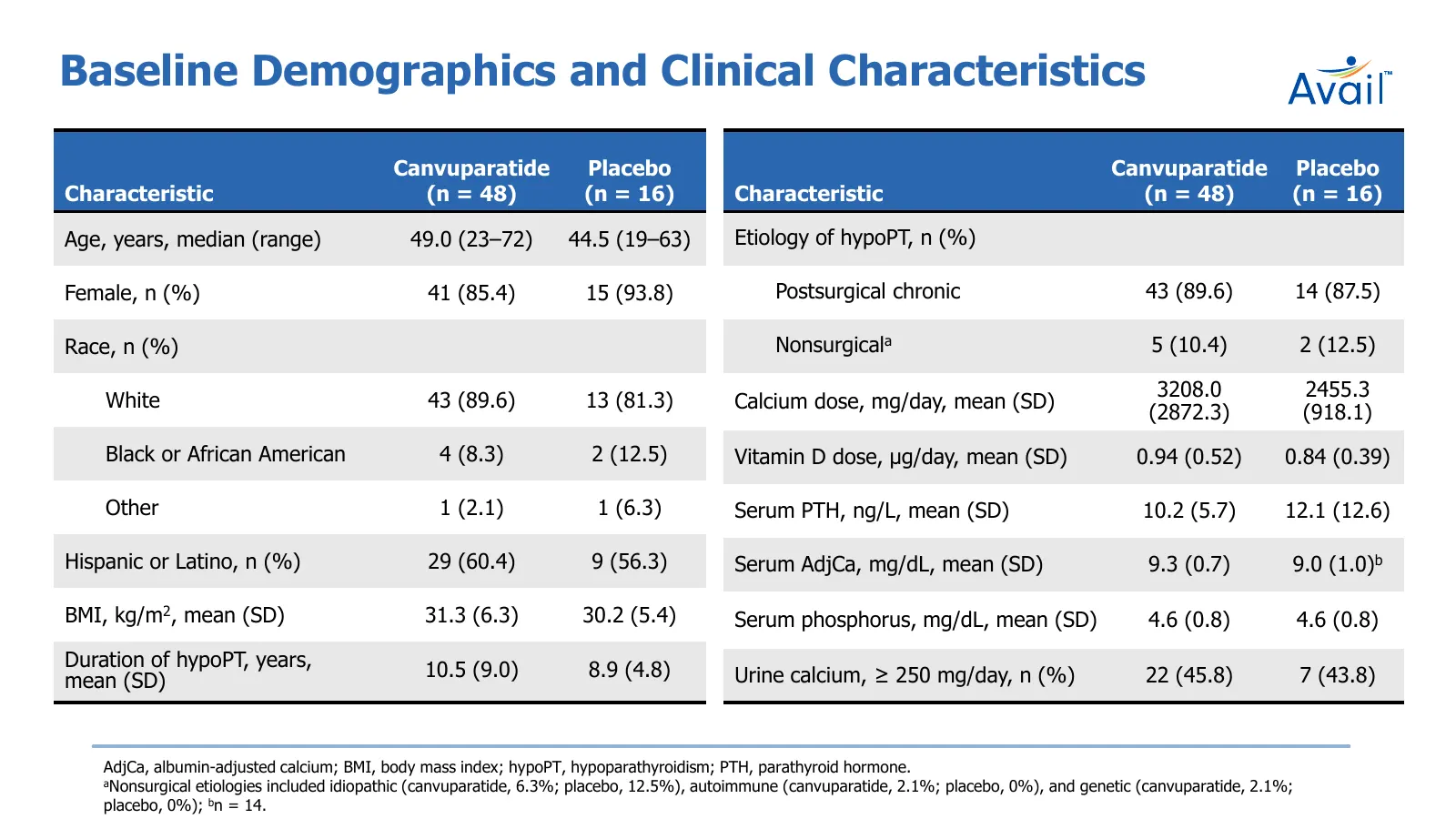
Slide 5: Baseline Demographics and Clinical Characteristics
Baseline Demographics and Clinical Characteristics Canvuparatide Placebo Canvuparatide Placebo Characteristic (n = 48) (n = 16) Characteristic (n = 48) (n = 16) Age, years, median (range) 49.0 (23–72) 44.5 (19–63) Etiology of hypoPT, n (%) Female, n (%) 41 (85.4) 15 (93.8) Postsurgical chronic 43 (8
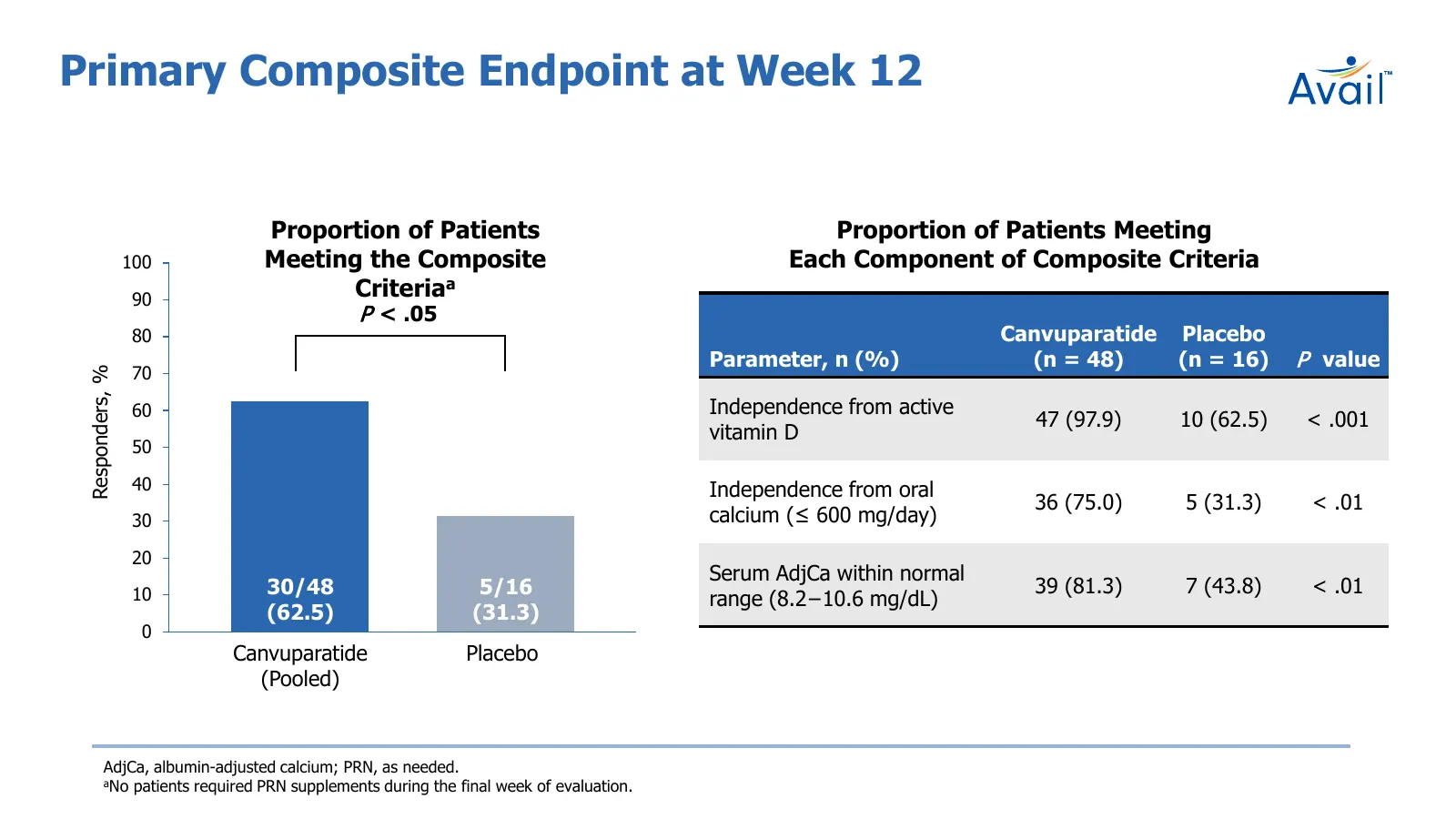
Slide 6: Primary Composite Endpoint at Week 12
Primary Composite Endpoint at Week 12 Proportion of Patients Proportion of Patients Meeting 100 Meeting the Composite Each Component of Composite Criteria 90 Criteriaa P < .05 80 Canvuparatide Placebo Parameter, n (%) (n = 48) (n = 16) P value 70 Responders, % 60 Independence from active 47 (97.9) 1
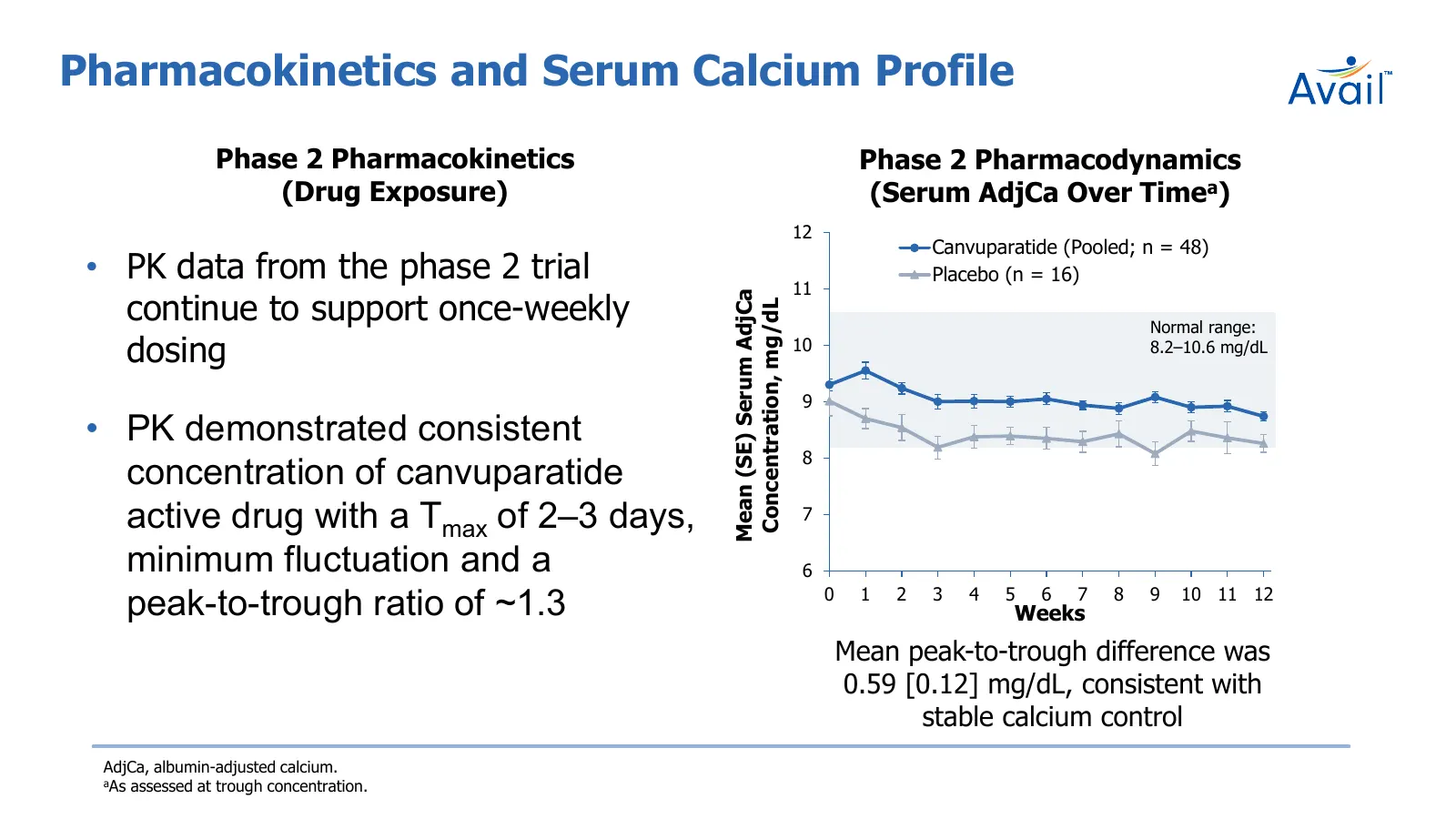
Slide 7: Pharmacokinetics and Serum Calcium Profile
Pharmacokinetics and Serum Calcium Profile Phase 2 Pharmacokinetics Phase 2 Pharmacodynamics (Drug Exposure) (Serum AdjCa Over Timea) 12 Canvuparatide (Pooled; n = 48) • PK data from the phase 2 trial 11 Placebo (n = 16) continue to support once-weekly Mean (SE) Serum AdjCa Concentration, mg/dL Norm
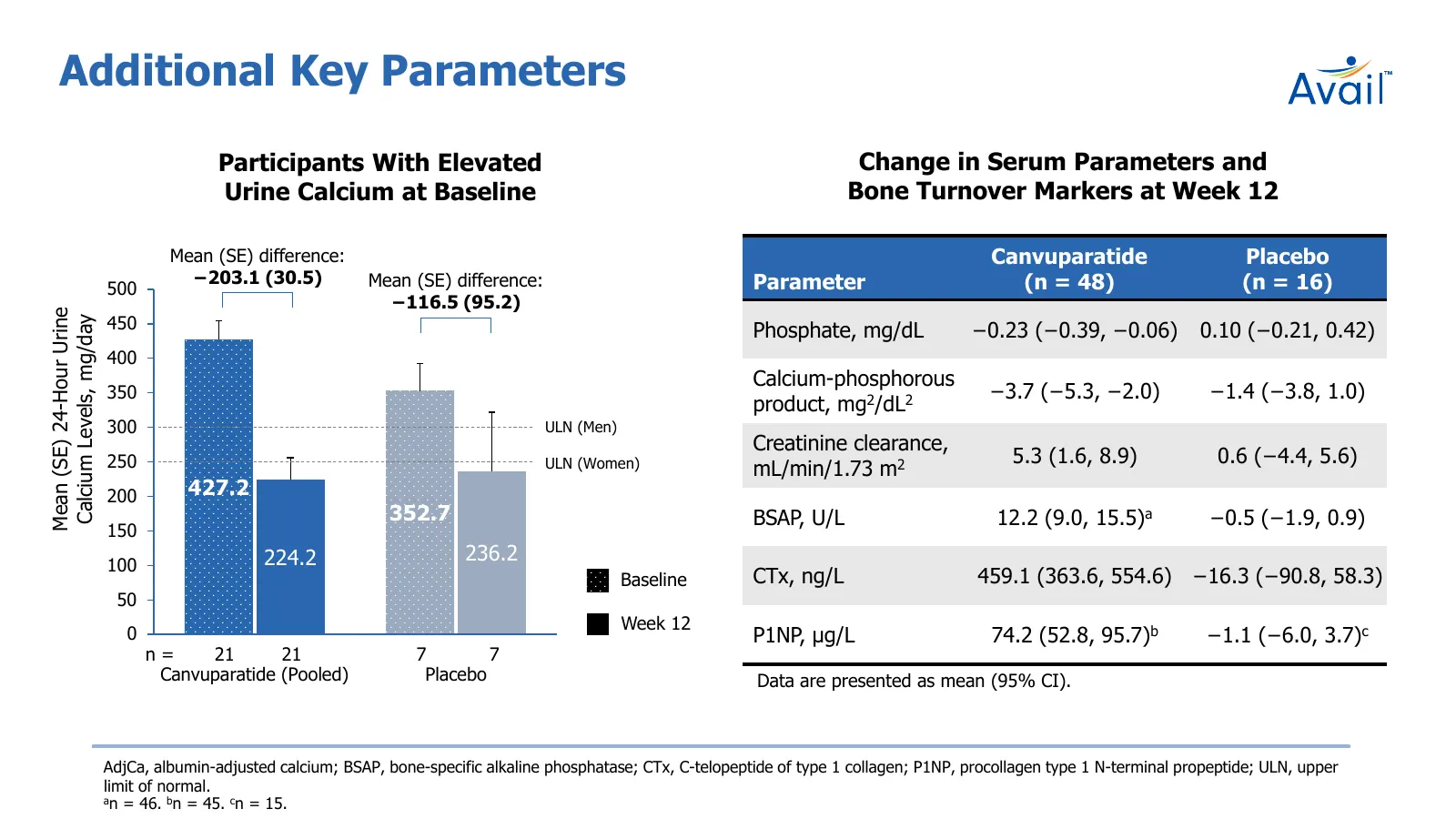
Slide 8: Additional Key Parameters
Additional Key Parameters Participants With Elevated Change in Serum Parameters and Urine Calcium at Baseline Bone Turnover Markers at Week 12 Mean (SE) difference: Canvuparatide Placebo −203.1 (30.5) Mean (SE) difference: Parameter (n = 48) (n = 16) 500 −116.5 (95.2) Mean (SE) 24-Hour Urine 450 Cal
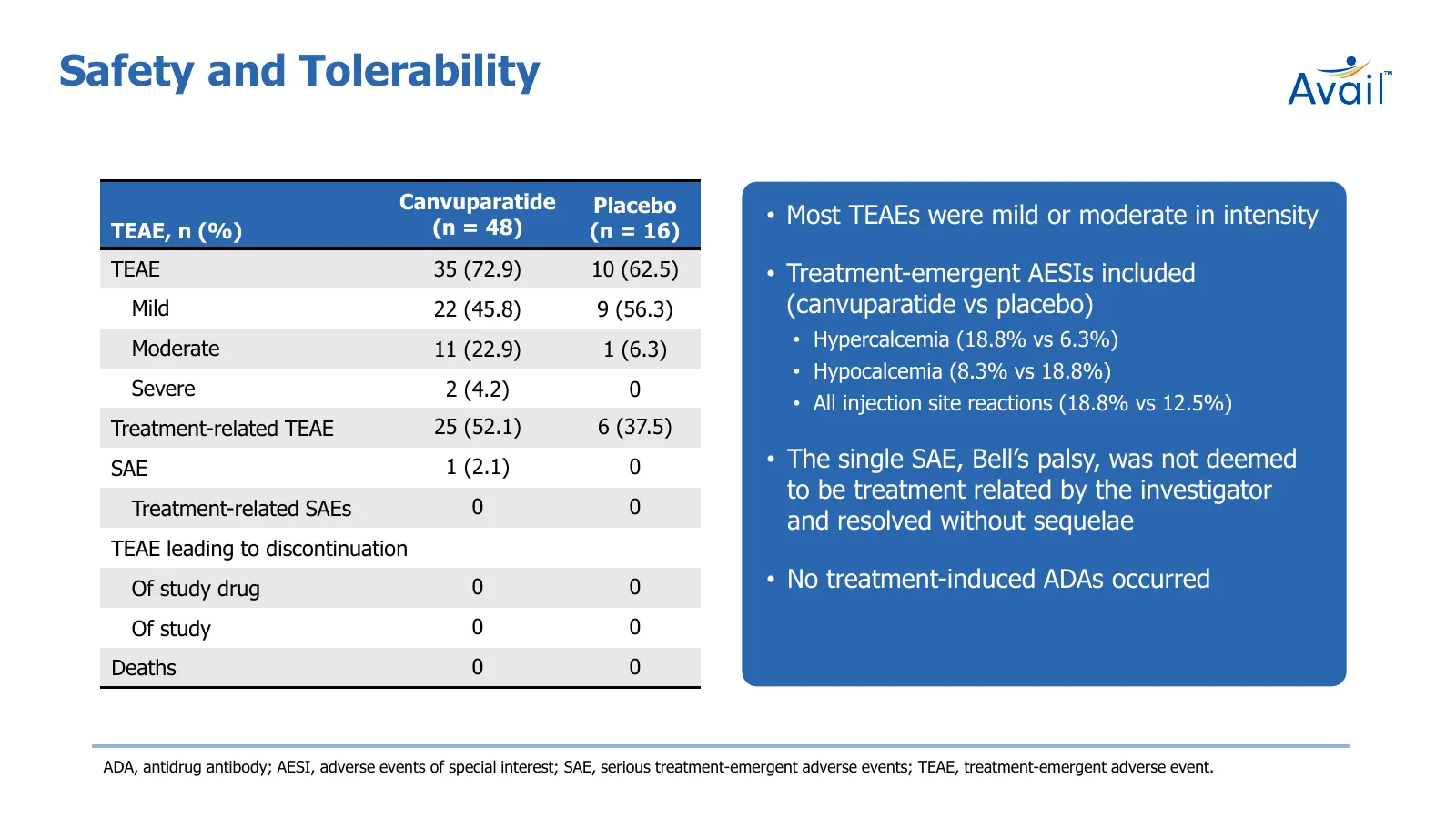
Slide 9: Safety and Tolerability
Safety and Tolerability Canvuparatide Placebo (n = 48) • Most TEAEs were mild or moderate in intensity TEAE, n (%) (n = 16) TEAE 35 (72.9) 10 (62.5) • Treatment-emergent AESIs included Mild 22 (45.8) 9 (56.3) (canvuparatide vs placebo) Moderate 11 (22.9) 1 (6.3) • Hypercalcemia (18.8% vs 6.3%) • Hyp
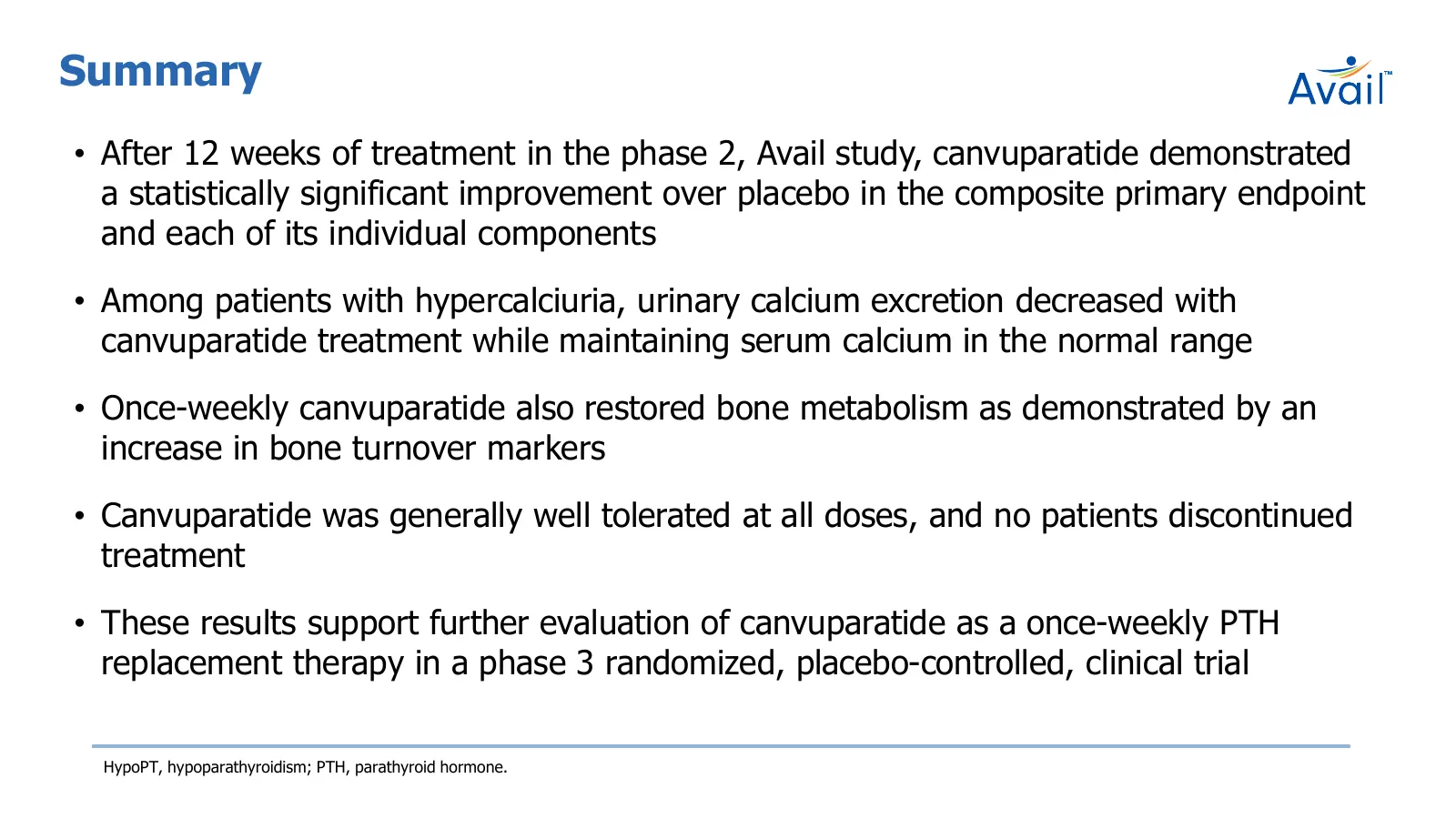
Slide 10: Summary
Summary • After 12 weeks of treatment in the phase 2, Avail study, canvuparatide demonstrated a statistically significant improvement over placebo in the composite primary endpoint and each of its individual components • Among patients with hypercalciuria, urinary calcium excretion decreased with ca
Source: company website
More decks from MBX Biosciences, Inc.
 Investor Presentation (November 2026)26 slides · Nov 9, 2026
 Investor Presentation (August 2026)26 slides · Aug 6, 2026
 ENDO 202637 slides · Jun 12, 2026
 Investor Day (May 2026)38 slides · May 11, 2026
 Technical Presentation (September 2025)29 slides · Sep 22, 2025
 Investor Presentation (June 2025)37 slides · Jun 9, 2025