Ancestry.com — Corporate Update (July 2012)
9 slides from Ancestry.com's corporate update, Jul 25, 2012
Slide 1: Product Introduction · July 2012
1 Product Introduction · July 2012
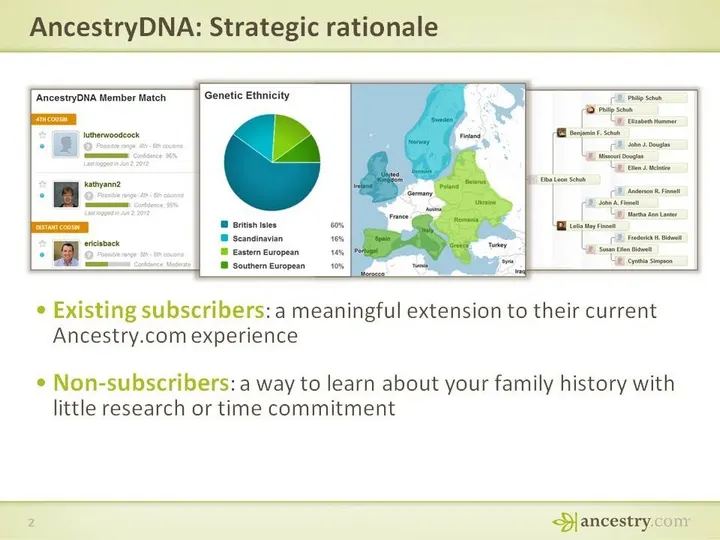
Slide 2: AncestryDNA: Strategic rationale
AncestryDNA: Strategic rational Existing subscribers: a meaningful extension to their current Ancestry.com experience Non-subscribers: a way to learn about your family history with little research or time commitment 2
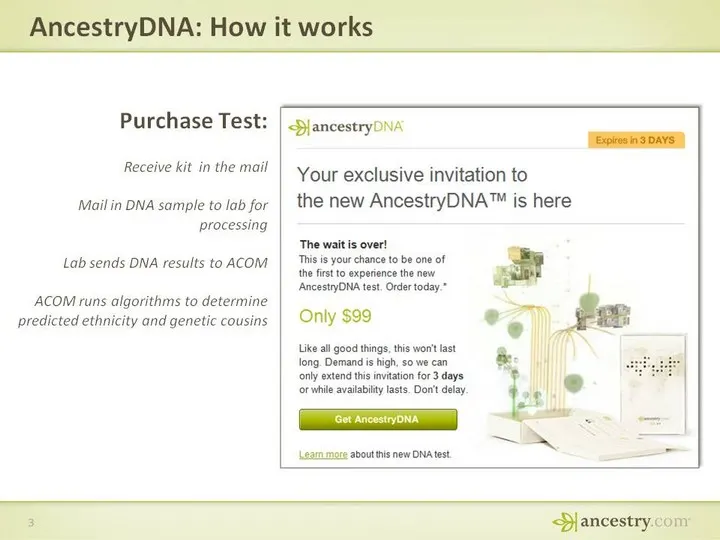
Slide 3: AncestryDNA: How it works
AncestryDNA: How it works 3 Purchase Test: Receive kit in the mail Mail in DNA sample to lab for processing Lab sends DNA results to ACOM ACOM runs algorithms to determine predicted ethnicity and genetic cousins
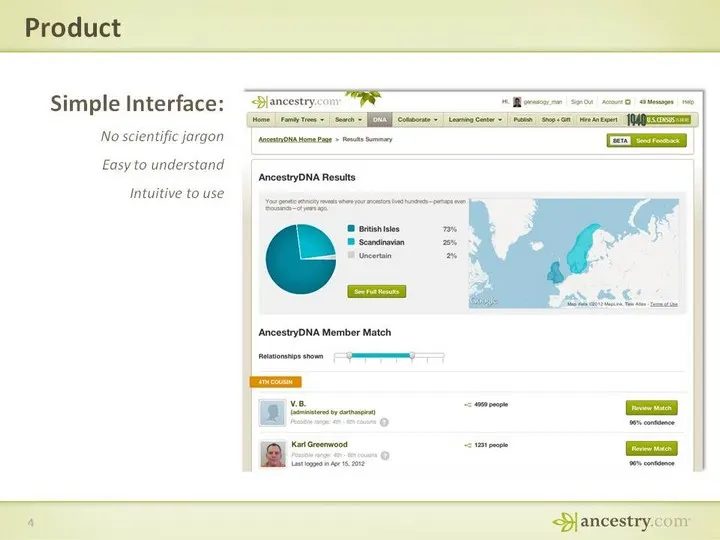
Slide 4: Product: Simple Interface
4 Product Simple Interface: No scientific jargon Easy to understand Intuitive to use
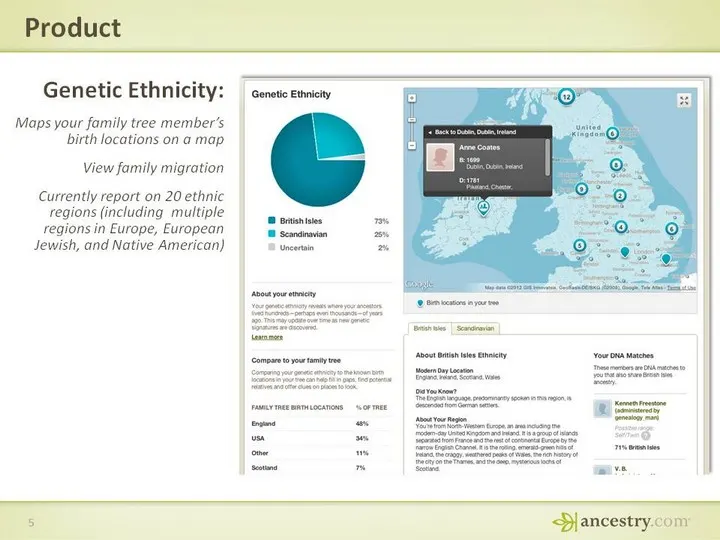
Slide 5: Genetic Ethnicity
5 Genetic Ethnicity: Maps your family tree member's birth locations on a map View family migration Currently report on 20 ethnic regions (including multiple regions in Europe, European Jewish, and Native American) Product
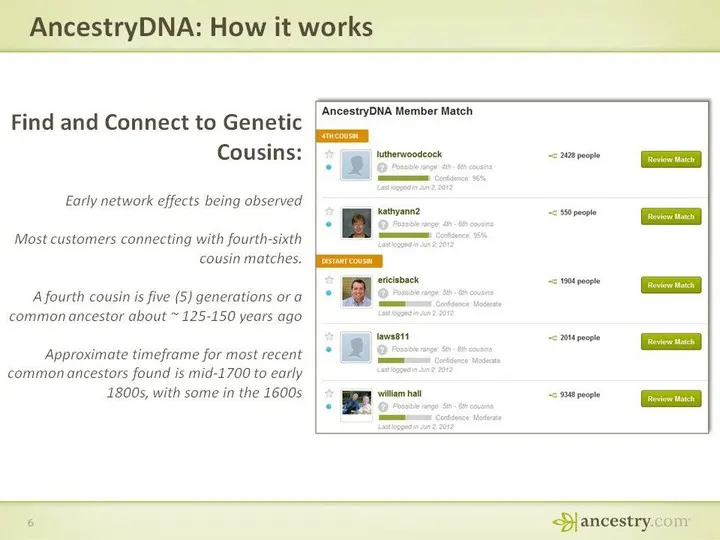
Slide 6: Find and Connect to Genetic Cousins
AncestryDNA: How it works 6 Find and Connect to Genetic Cousins: Early network effects being observed Most customers connecting with fourth-sixth cousin matches. A fourth cousin is five (5) generations or a common ancestor about ~ 125-150 years ago Approximate timeframe for most recent common ancest
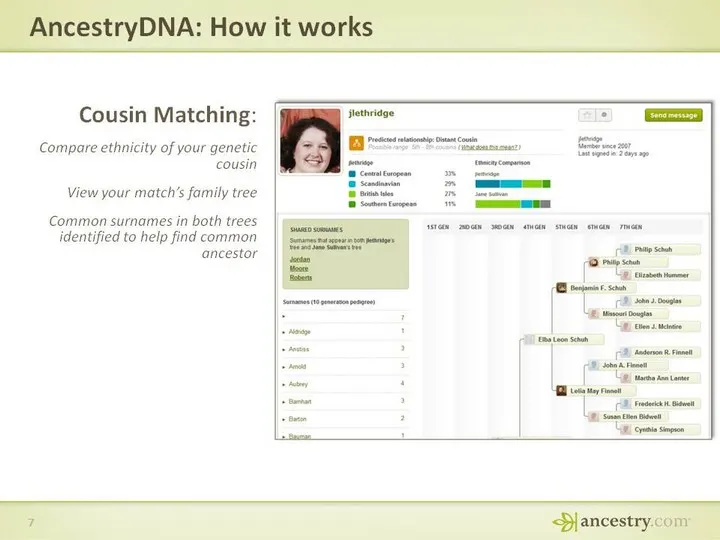
Slide 7: Cousin Matching
AncestryDNA: How it works 7 Cousin Matching: Compare ethnicity of your genetic cousin View your match's family tree Common surnames in both trees identified to help find common ancestor
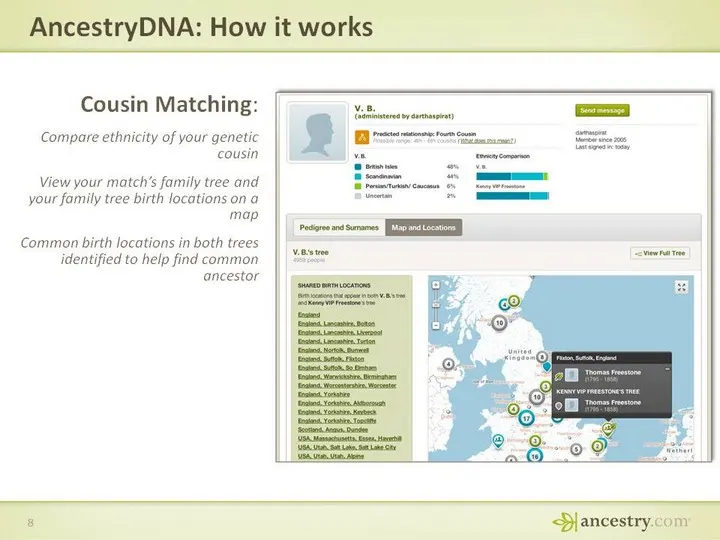
Slide 8: Cousin Matching
AncestryDNA: How it works 8 Cousin Matching: Compare ethnicity of your genetic cousin View your match's family tree and your family tree birth locations on a map Common birth locations in both trees identified to help find common ancestor
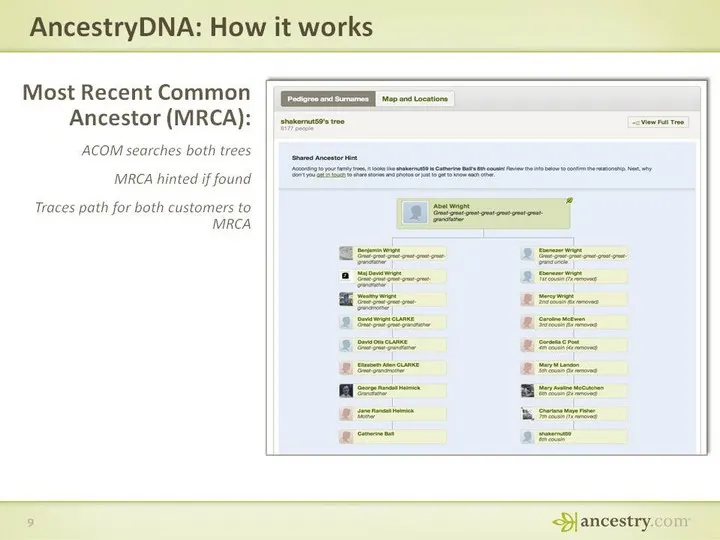
Slide 9: Most Recent Common Ancestor (MRCA)
AncestryDNA: How it works 9 Most Recent Common Ancestor (MRCA): ACOM searches both trees MRCA hinted if found Traces path for both customers to MRCA
Source: SEC EDGAR · 8-K filed Jul 25, 2012
More decks from Ancestry.com Inc
 Corporate Update (February 2015)21 slides · Feb 24, 2015
 Q2 2012 Earnings Presentation13 slides · Jul 25, 2012
 Q1 2012 Earnings Presentation13 slides · Apr 25, 2012
 Q4 2011 Earnings Presentation13 slides · Feb 15, 2012
 Q3 2011 Earnings Presentation13 slides · Oct 26, 2011
 Q2 2011 Earnings Presentation13 slides · Jul 28, 2011