Ardelyx, Inc. · NASDAQ:ARDX
Ardelyx — Technical Presentation (2015)
19 slides from Ardelyx's technical presentation, 2015
Slide 1: Efficacy and safety of tenapanor in patients with IBS-C: a phase 2b trial
Efficacy and safety of tenapanor in patients with constipation- predominant irritable bowel syndrome: a 12-week, double-blind, placebo- controlled, randomized phase 2b trial William D Chey,1 Anthony J Lembo,2 James A Phillips,3 David P Rosenbaum4 1Division of Gastroenterology, Department of Medicine
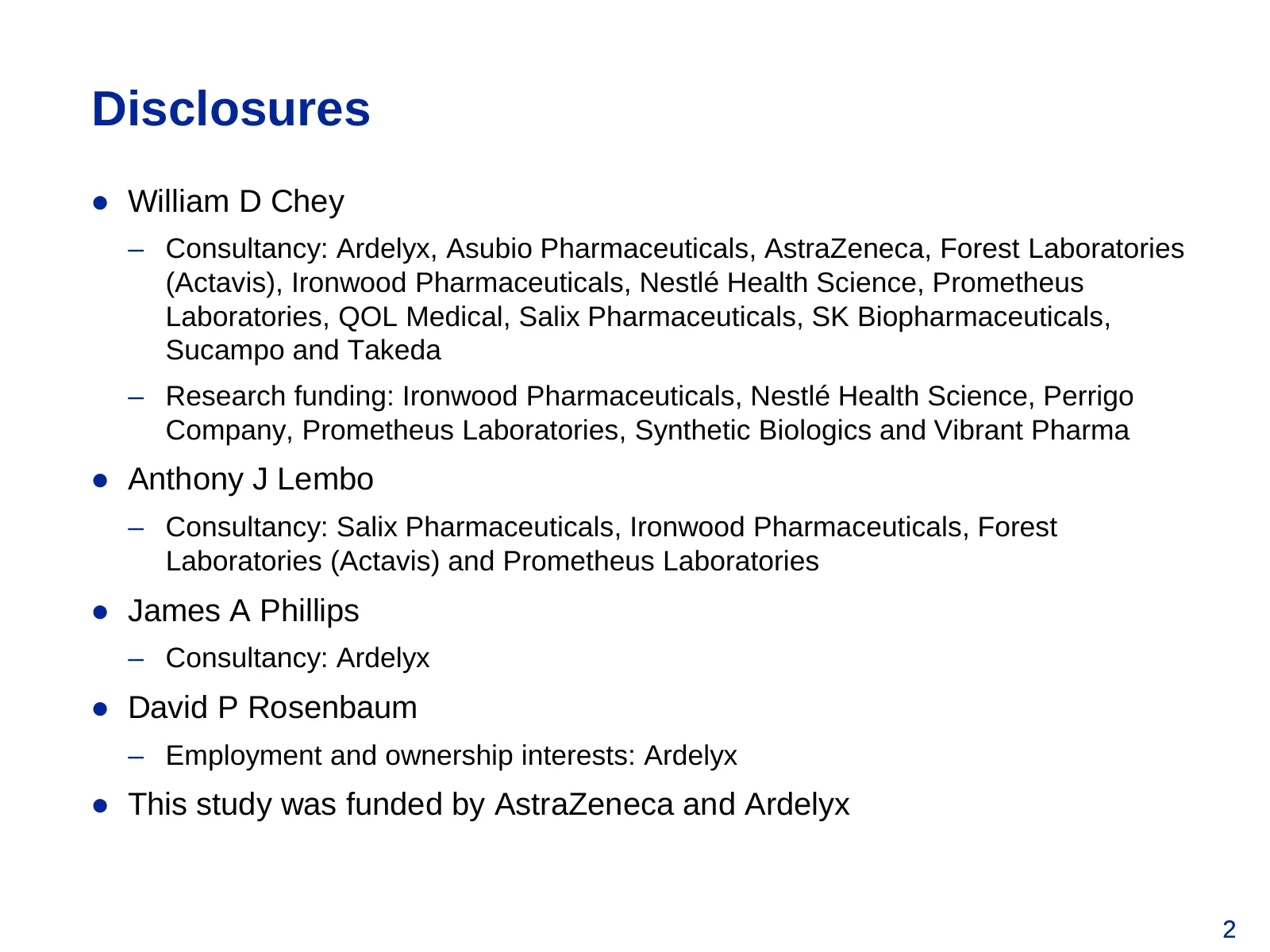
Slide 2: Disclosures
Disclosures ● William D Chey – Consultancy: Ardelyx, Asubio Pharmaceuticals, AstraZeneca, Forest Laboratories (Actavis), Ironwood Pharmaceuticals, Nestlé Health Science, Prometheus Laboratories, QOL Medical, Salix Pharmaceuticals, SK Biopharmaceuticals, Sucampo and Takeda – Research funding: Ironwoo
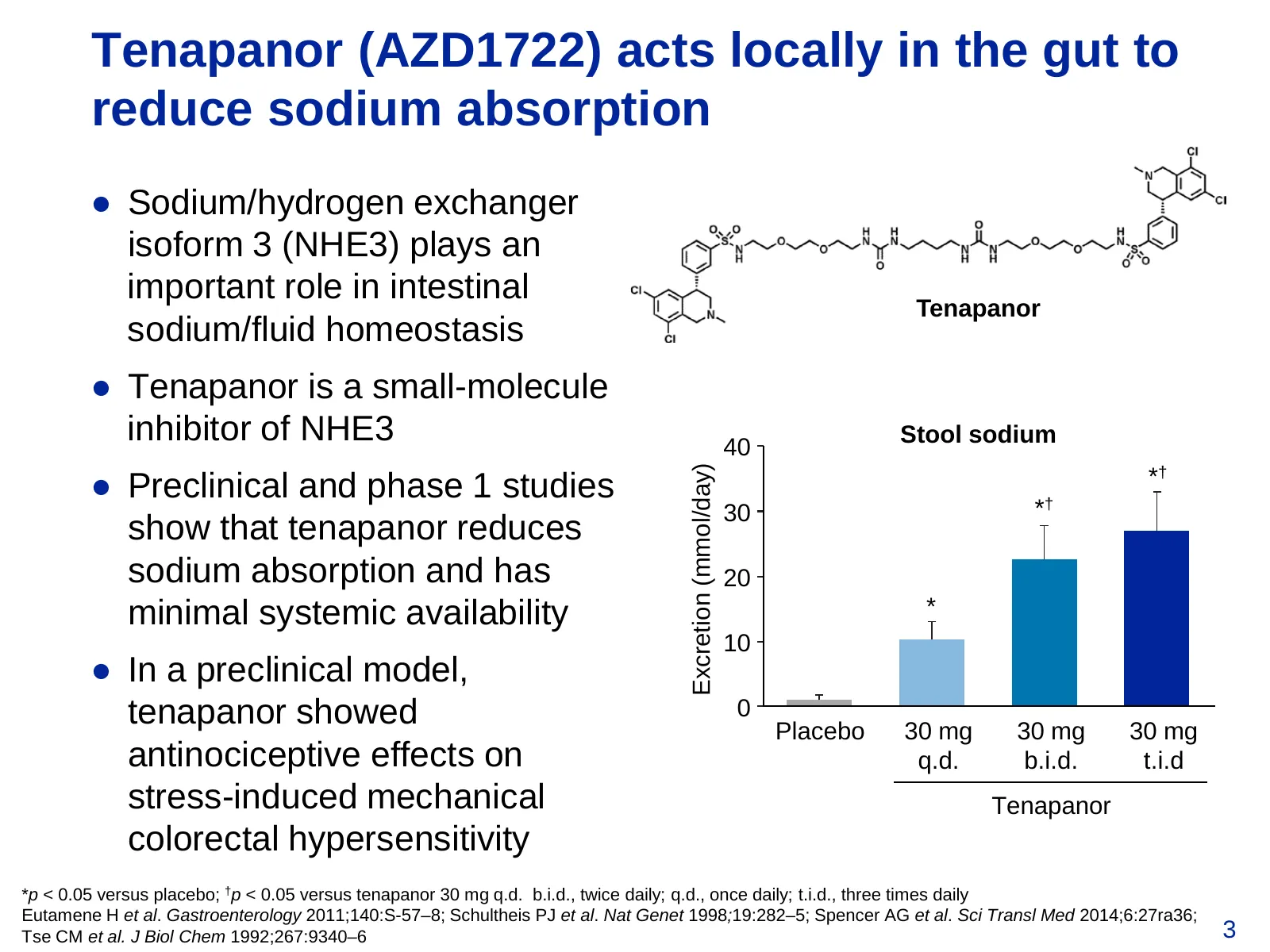
Slide 3: Tenapanor acts locally in the gut to reduce sodium absorption
Tenapanor (AZD1722) acts locally in the gut to reduce sodium absorption ● Sodium/hydrogen exchanger isoform 3 (NHE3) plays an important role in intestinal Tenapanor sodium/fluid homeostasis ● Tenapanor is a small-molecule inhibitor of NHE3 40 Stool sodium ● Preclinical and phase 1 studies Excretion
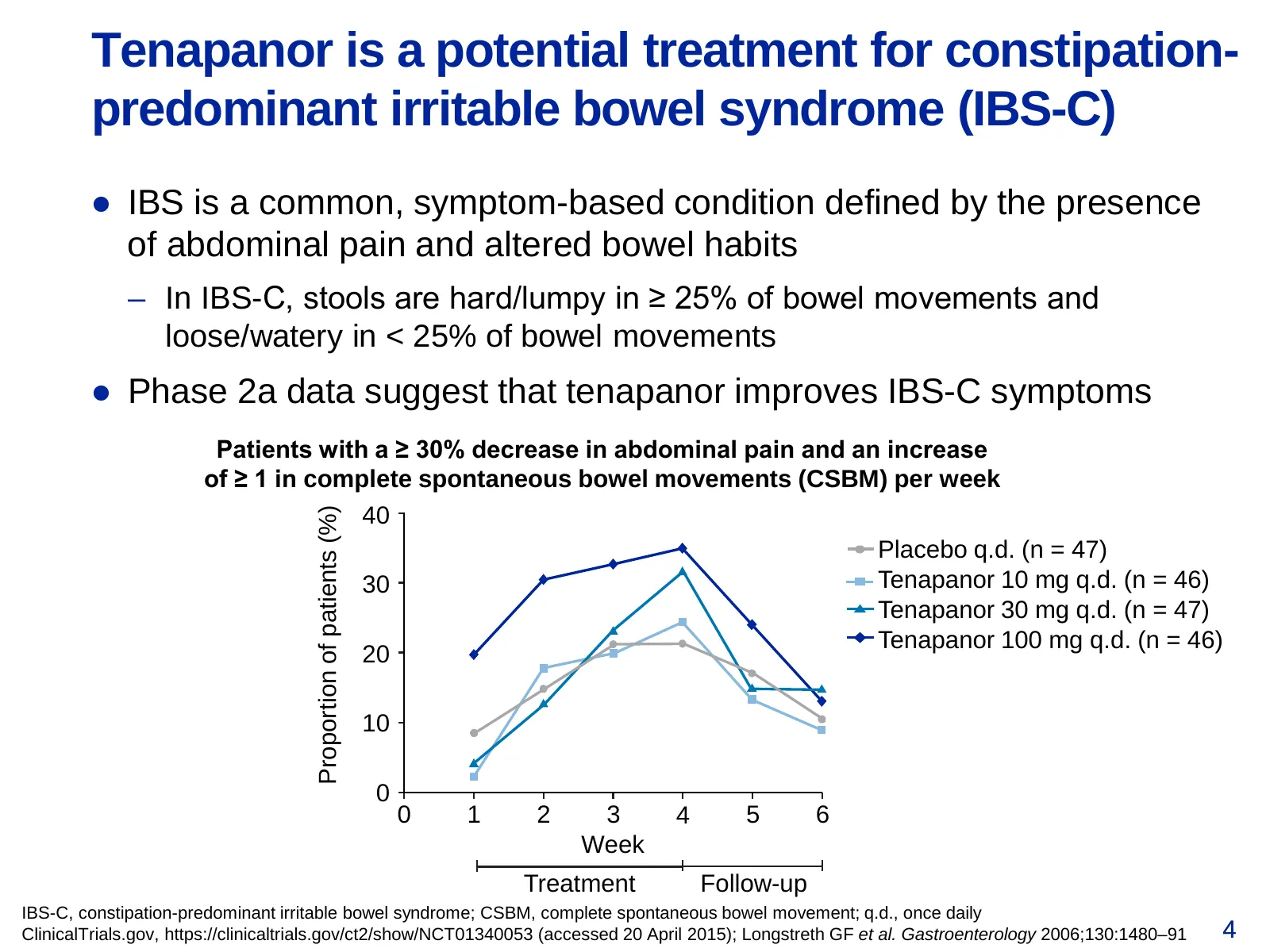
Slide 4: Tenapanor is a potential treatment for constipation-predominant IBS (IBS-C)
Tenapanor is a potential treatment for constipation- predominant irritable bowel syndrome (IBS-C) ● IBS is a common, symptom-based condition defined by the presence of abdominal pain and altered bowel habits – In IBS-C, stools are hard/lumpy in ≥ 25% of bowel movements and loose/watery in < 25% of b
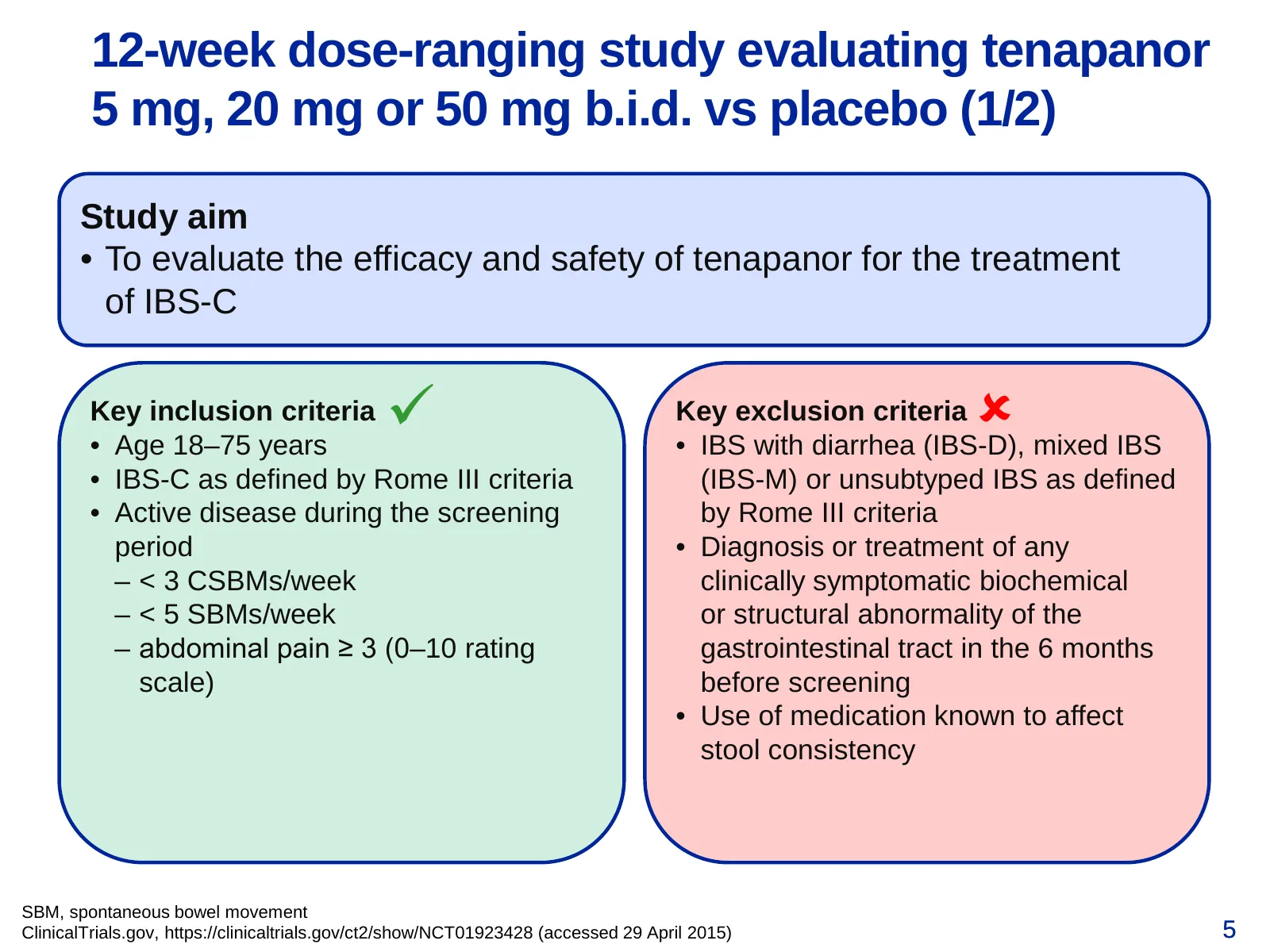
Slide 5: 12-week dose-ranging study of tenapanor vs placebo (1/2)
12-week dose-ranging study evaluating tenapanor 5 mg, 20 mg or 50 mg b.i.d. vs placebo (1/2) Study aim • To evaluate the efficacy and safety of tenapanor for the treatment of IBS-C Key inclusion criteria • Age 18–75 years Key exclusion criteria • IBS with diarrhea (IBS-D), mixed IBS • IBS-C as d
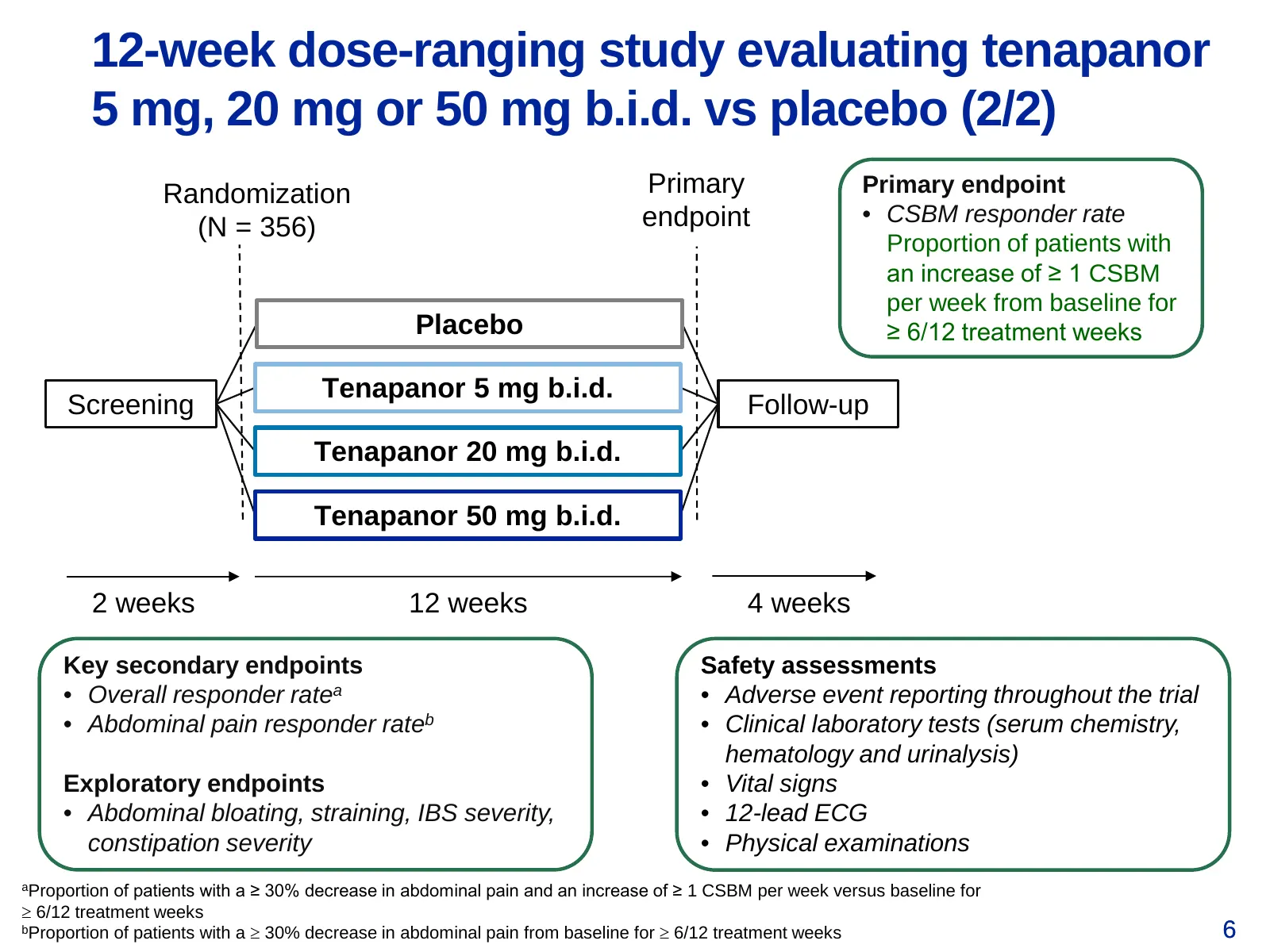
Slide 6: 12-week dose-ranging study of tenapanor vs placebo (2/2)
12-week dose-ranging study evaluating tenapanor 5 mg, 20 mg or 50 mg b.i.d. vs placebo (2/2) Randomization Primary Primary endpoint endpoint • CSBM responder rate (N = 356) Proportion of patients with an increase of ≥ 1 CSBM per week from baseline for Placebo ≥ 6/12 treatment weeks Tenapanor 5 mg b.
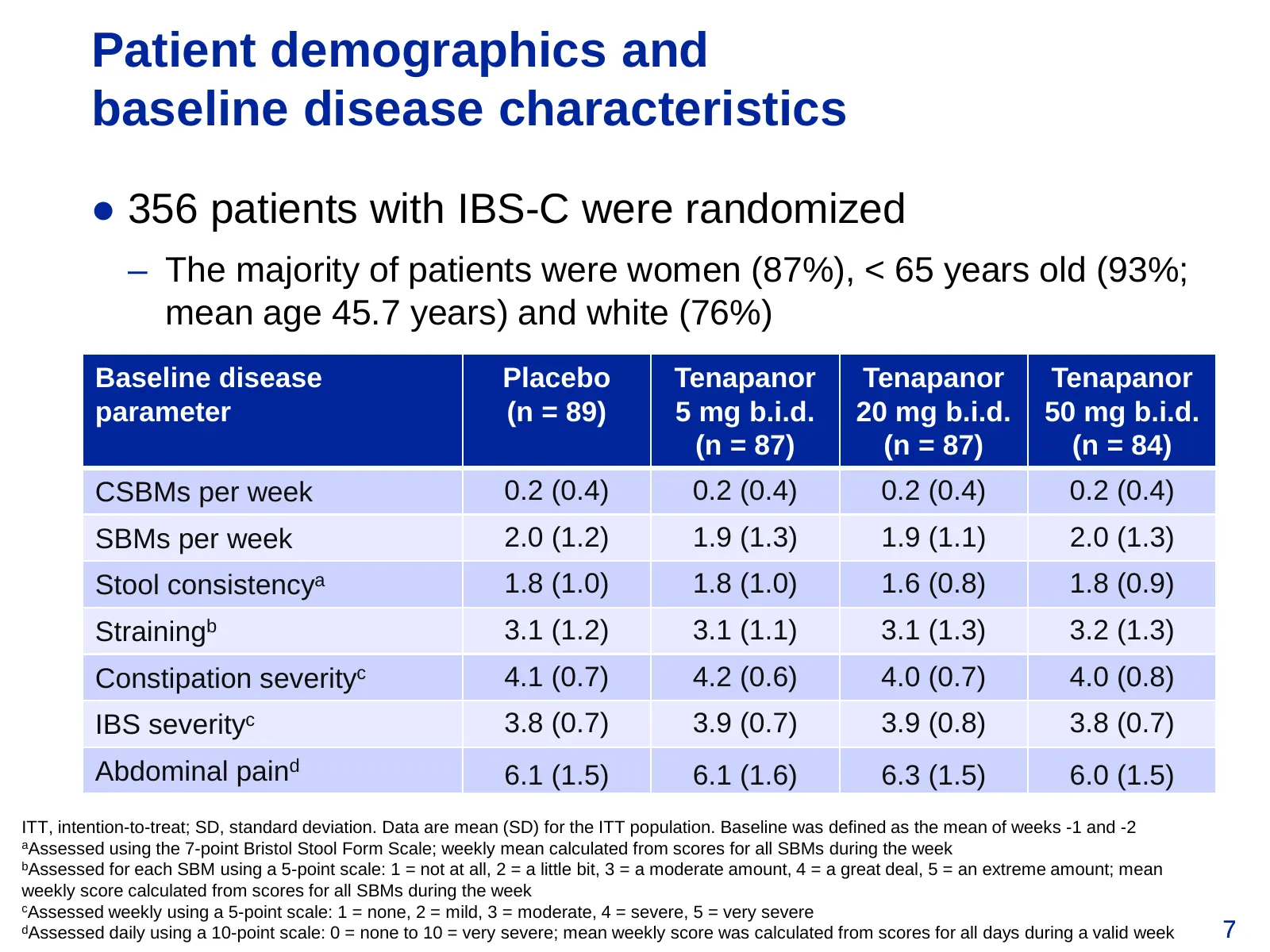
Slide 7: Patient demographics and baseline disease characteristics
Patient demographics and baseline disease characteristics ● 356 patients with IBS-C were randomized – The majority of patients were women (87%), < 65 years old (93%; mean age 45.7 years) and white (76%) Baseline disease Placebo Tenapanor Tenapanor Tenapanor parameter (n = 89) 5 mg b.i.d. 20 mg b.i.d
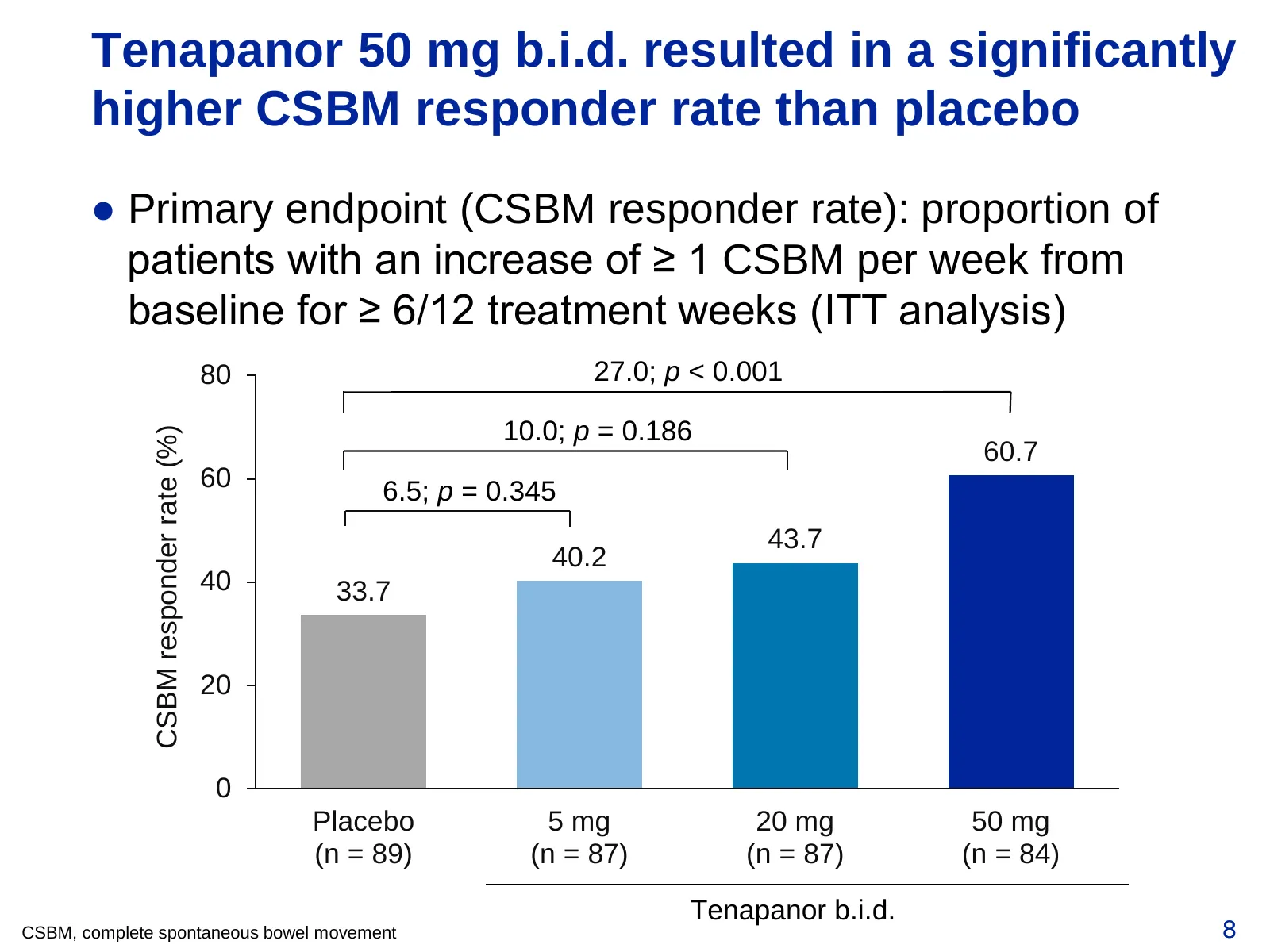
Slide 8: Tenapanor resulted in significantly higher CSBM responder rate than placebo
Tenapanor 50 mg b.i.d. resulted in a significantly higher CSBM responder rate than placebo ● Primary endpoint (CSBM responder rate): proportion of patients with an increase of ≥ 1 CSBM per week from baseline for ≥ 6/12 treatment weeks (ITT analysis) 80 27.0; p < 0.001 10.0; p = 0.186 CSBM responder
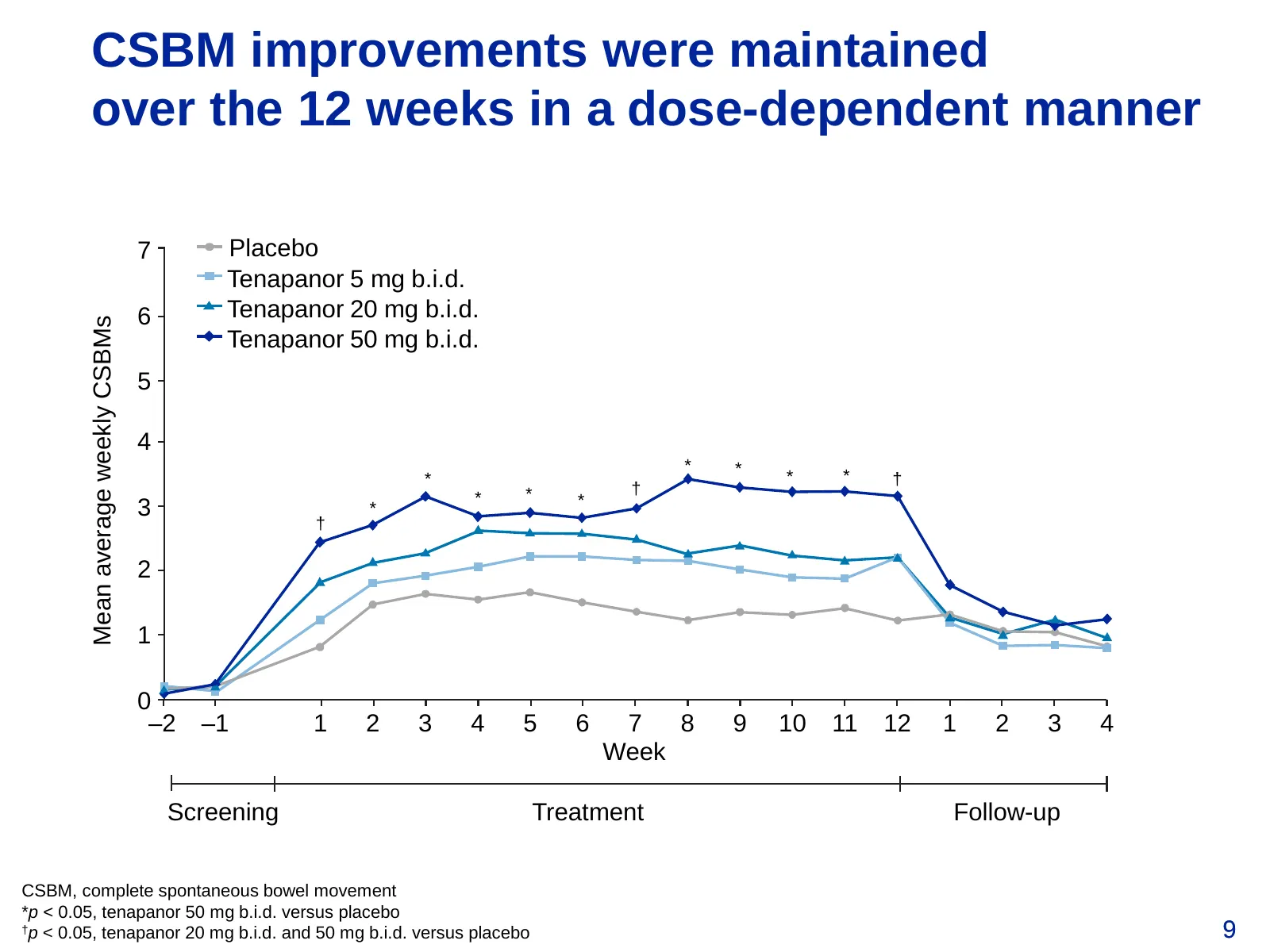
Slide 9: CSBM improvements were maintained over the weeks in a dose-dependent manner
CSBM improvements were maintained over the 12 weeks in a dose-dependent manner 7 Placebo Tenapanor 5 mg b.i.d. 6 Tenapanor 20 mg b.i.d. Mean average weekly CSBMs Tenapanor 50 mg b.i.d. 5 4 * * * * * † * † * * 3 * † 2 1 0 –2 –1 1 2 3 4 5 6 7 8 9 10 11 12 1 2 3 4 Week Screening Treatment Follow-up CSB
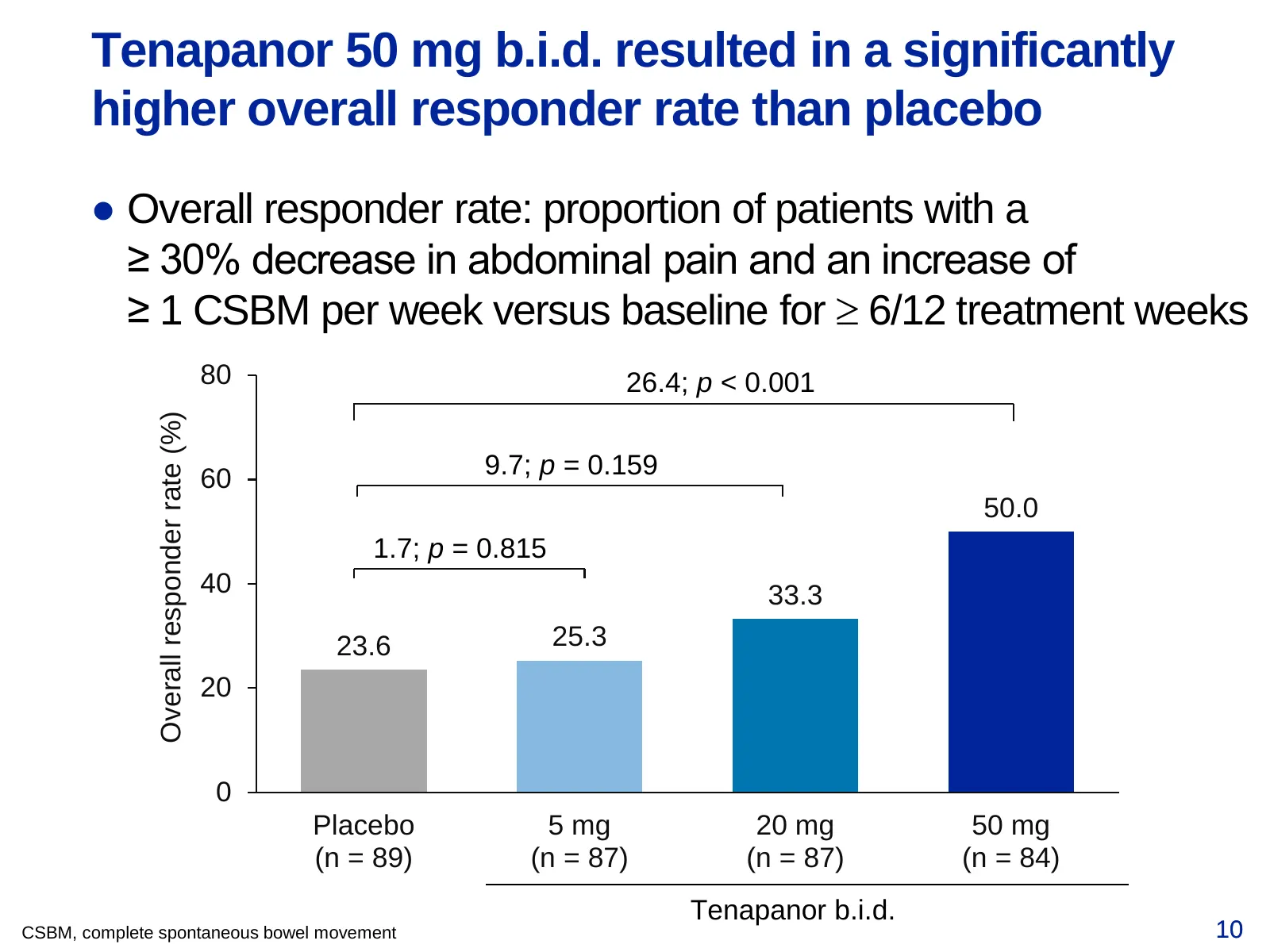
Slide 10: Tenapanor resulted in significantly higher overall responder rate than placebo
Tenapanor 50 mg b.i.d. resulted in a significantly higher overall responder rate than placebo ● Overall responder rate: proportion of patients with a ≥ 30% decrease in abdominal pain and an increase of ≥ 1 CSBM per week versus baseline for ≥ 6/12 treatment weeks 80 26.4; p < 0.001 Overall responder
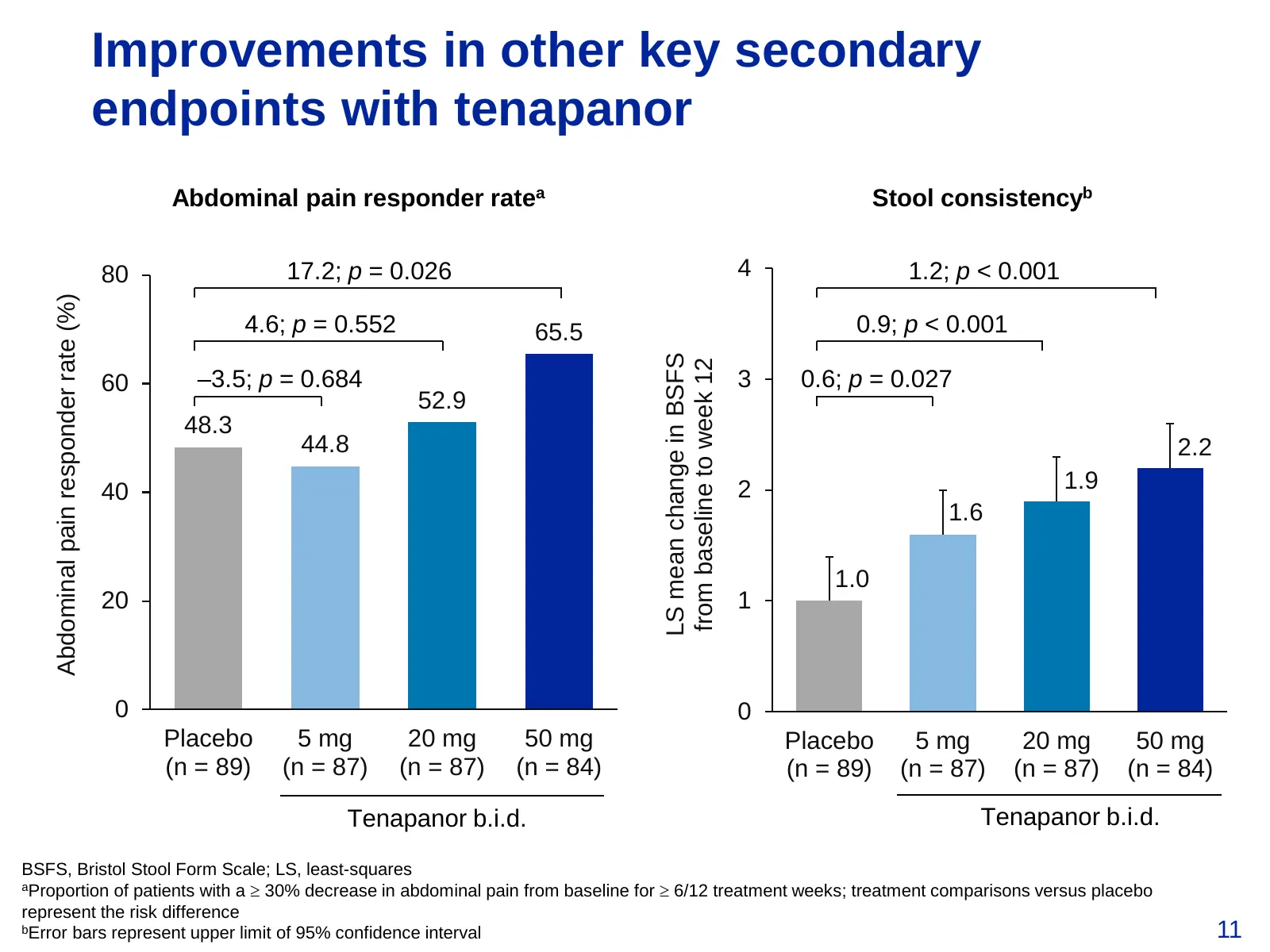
Slide 11: Improvements in other key secondary endpoints with tenapanor
Improvements in other key secondary endpoints with tenapanor Abdominal pain responder ratea Stool consistencyb 80 17.2; p = 0.026 4 1.2; p < 0.001 Abdominal pain responder rate (%) 4.6; p = 0.552 65.5 0.9; p < 0.001 LS mean change in BSFS from baseline to week 12 60 –3.5; p = 0.684 3 0.6; p = 0.027
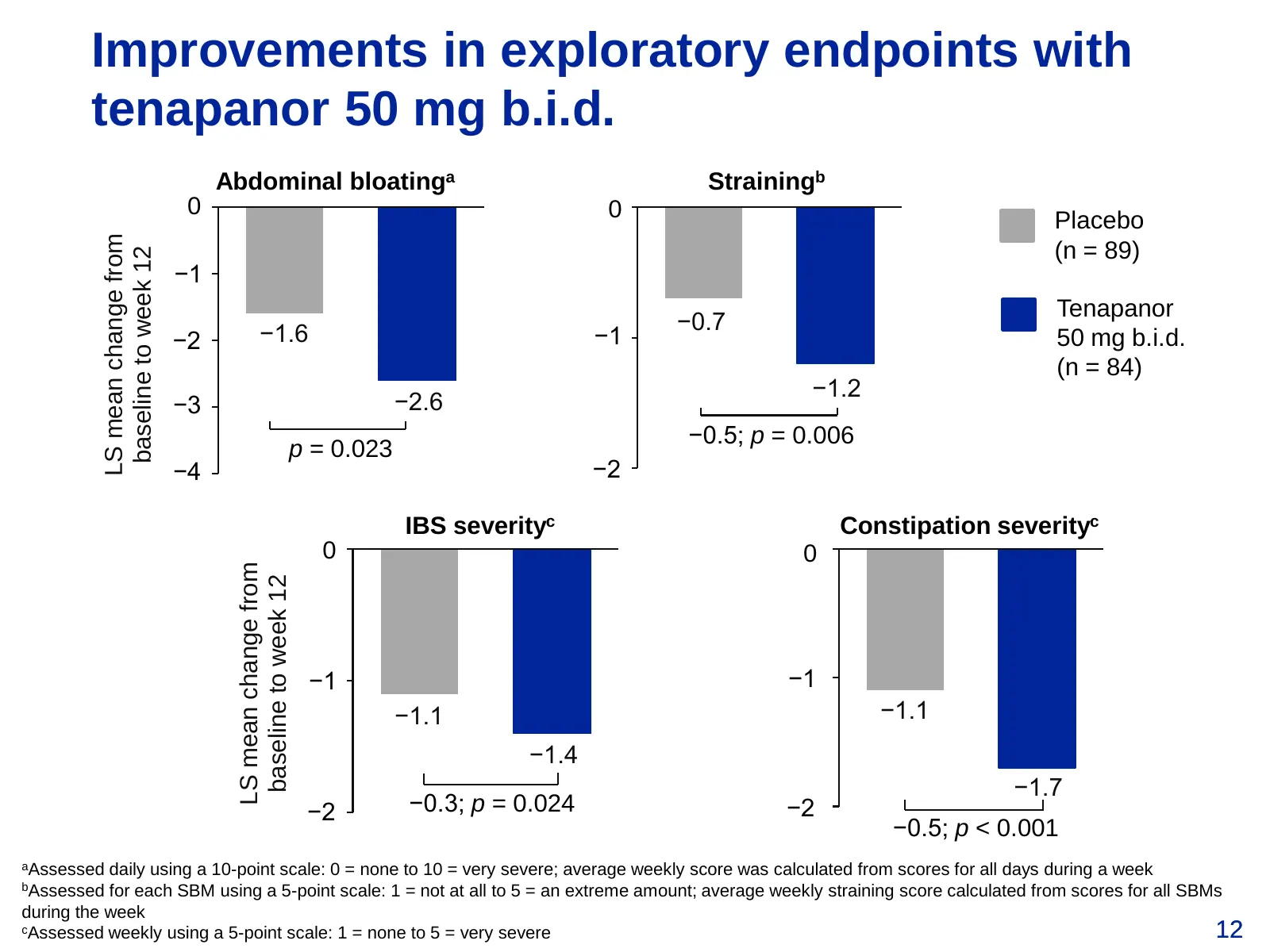
Slide 12: Improvements in exploratory endpoints with tenapanor
Improvements in exploratory endpoints with tenapanor 50 mg b.i.d. Abdominal bloatinga Strainingb 0 0 Placebo LS mean change from (n = 89) baseline to week 12 −1 Tenapanor −1.6 −0.7 −2 −1 50 mg b.i.d. (n = 84) −1.2 −3 −2.6 −0.5; p = 0.006 p = 0.023 −4 −2 IBS severityc Constipation severityc 0 0 LS me
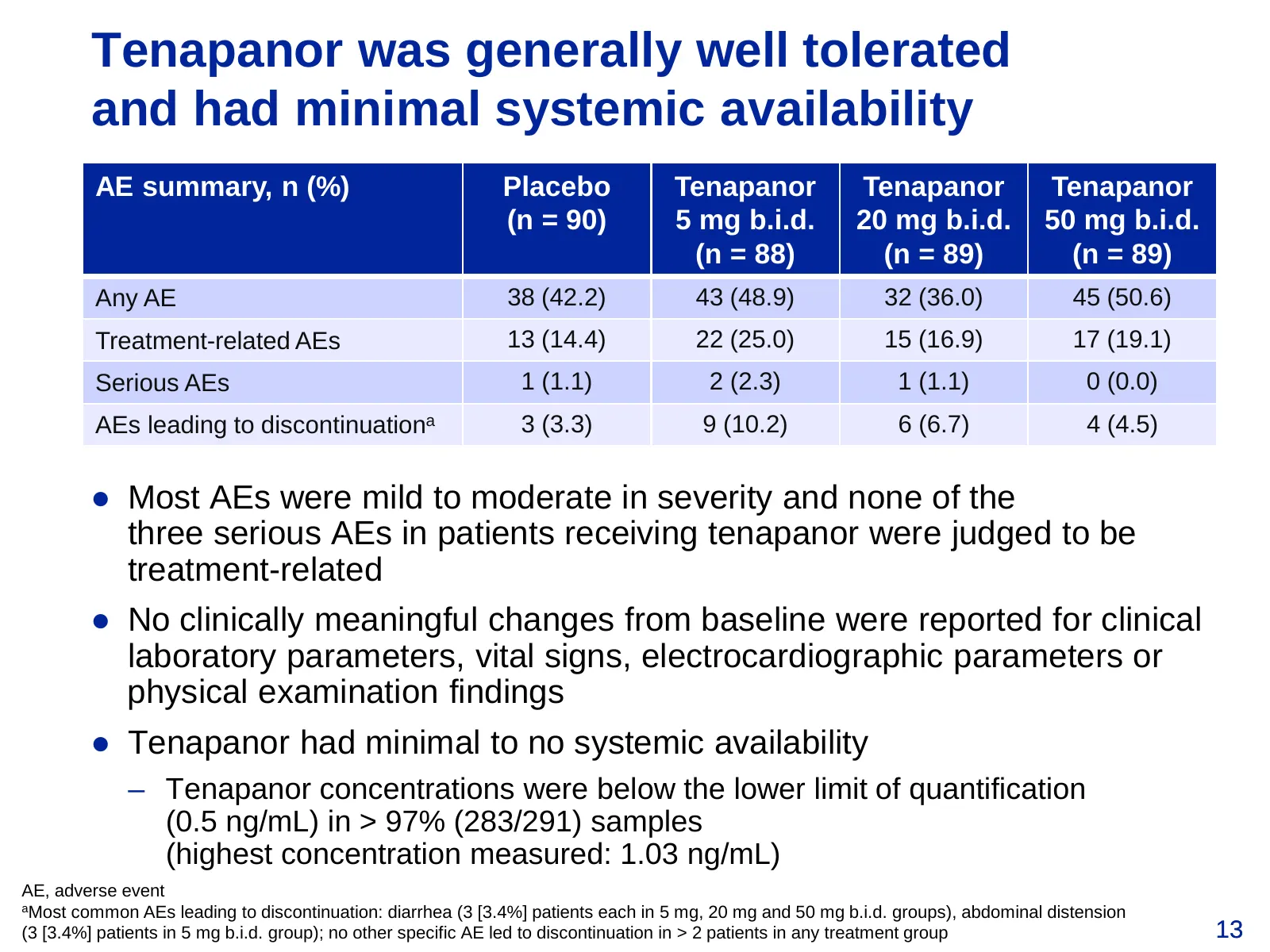
Slide 13: Tenapanor was generally well tolerated and had minimal systemic availability
Tenapanor was generally well tolerated and had minimal systemic availability AE summary, n (%) Placebo Tenapanor Tenapanor Tenapanor (n = 90) 5 mg b.i.d. 20 mg b.i.d. 50 mg b.i.d. (n = 88) (n = 89) (n = 89) Any AE 38 (42.2) 43 (48.9) 32 (36.0) 45 (50.6) Treatment-related AEs 13 (14.4) 22 (25.0) 15 (
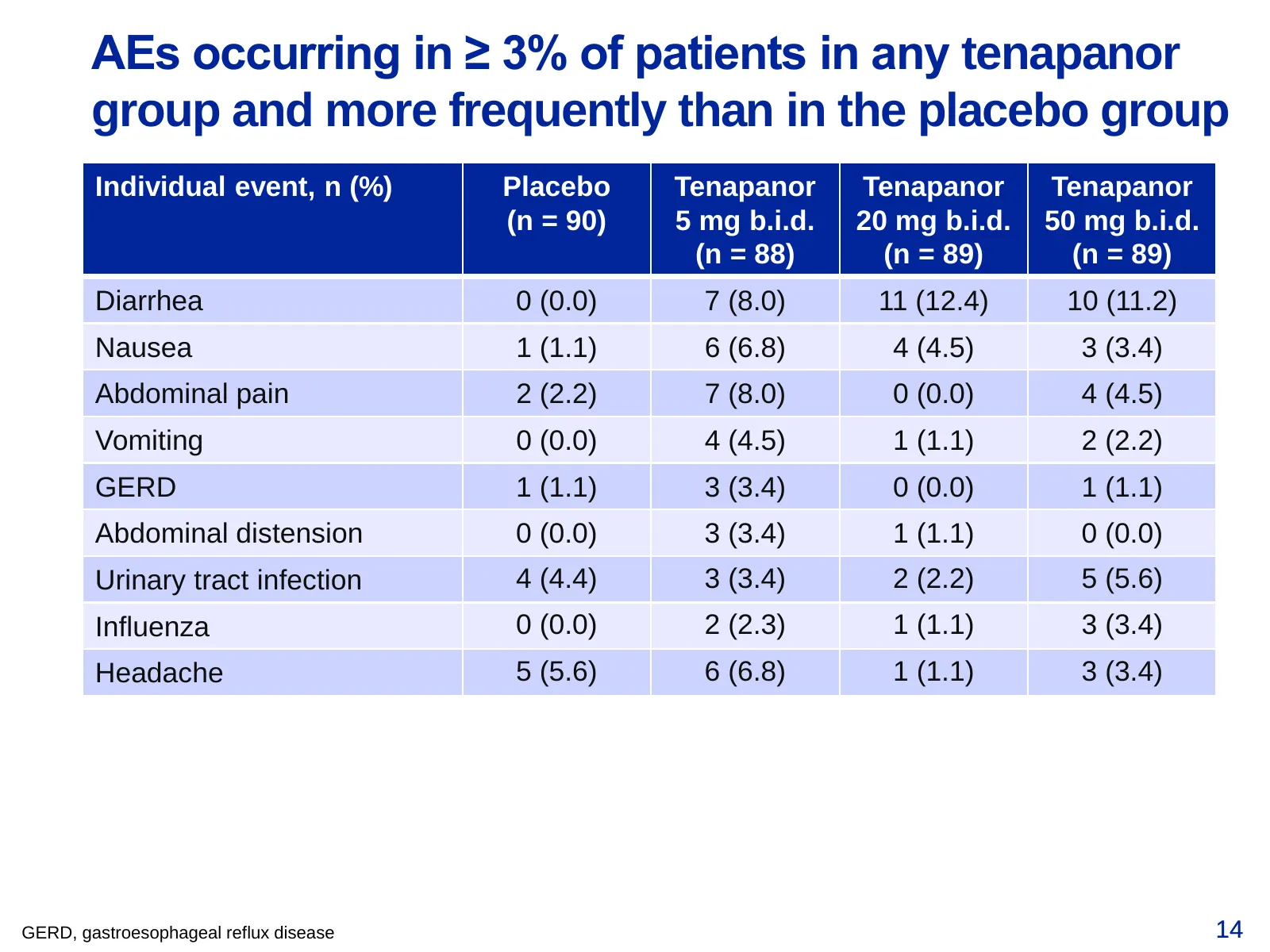
Slide 14: AEs occurring in ≥3% of patients in any tenapanor group
AEs occurring in ≥ 3% of patients in any tenapanor group and more frequently than in the placebo group Individual event, n (%) Placebo Tenapanor Tenapanor Tenapanor (n = 90) 5 mg b.i.d. 20 mg b.i.d. 50 mg b.i.d. (n = 88) (n = 89) (n = 89) Diarrhea 0 (0.0) 7 (8.0) 11 (12.4) 10 (11.2) Nausea 1 (1.1) 6
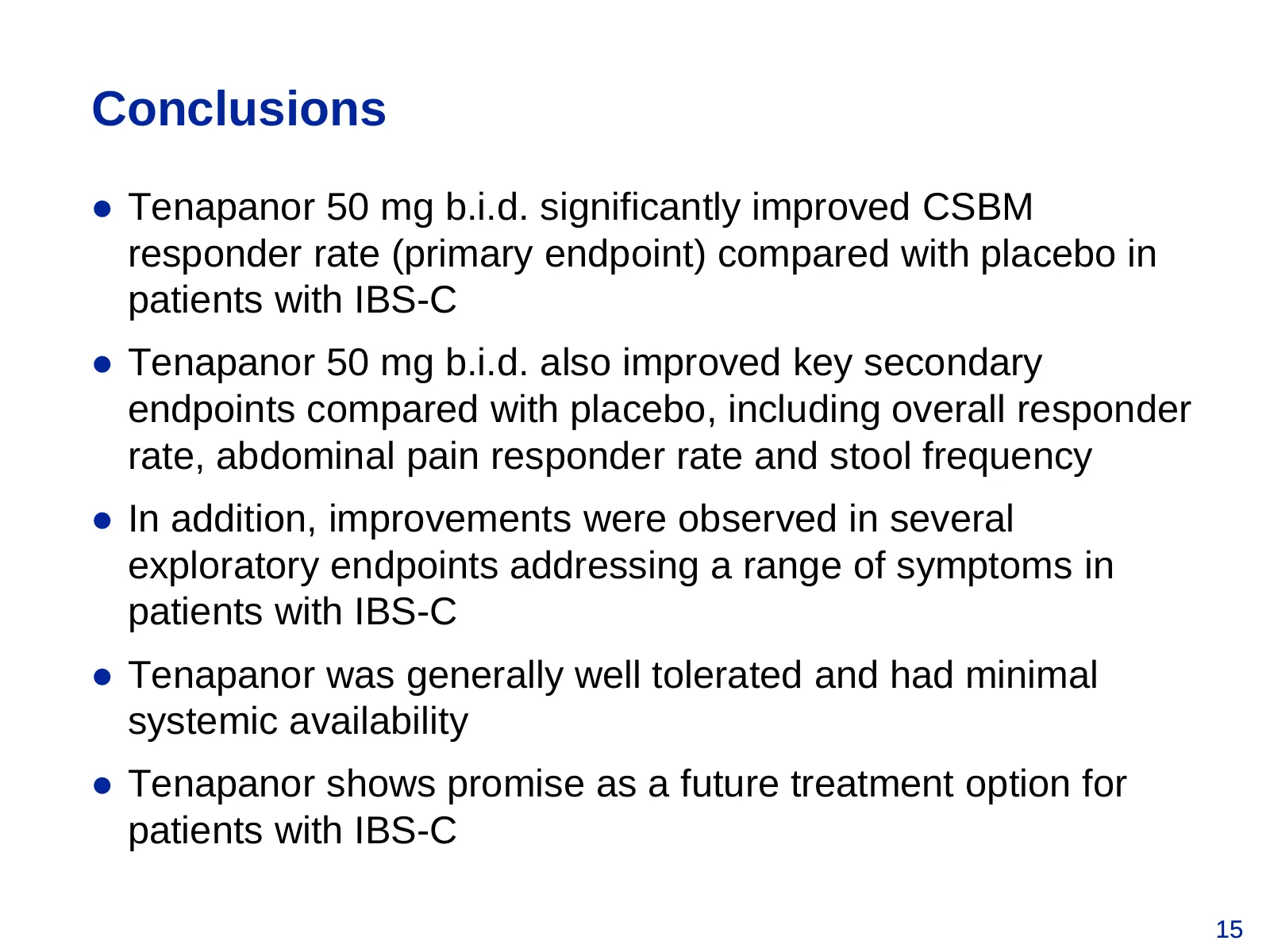
Slide 15: Conclusions
Conclusions ● Tenapanor 50 mg b.i.d. significantly improved CSBM responder rate (primary endpoint) compared with placebo in patients with IBS-C ● Tenapanor 50 mg b.i.d. also improved key secondary endpoints compared with placebo, including overall responder rate, abdominal pain responder rate and st
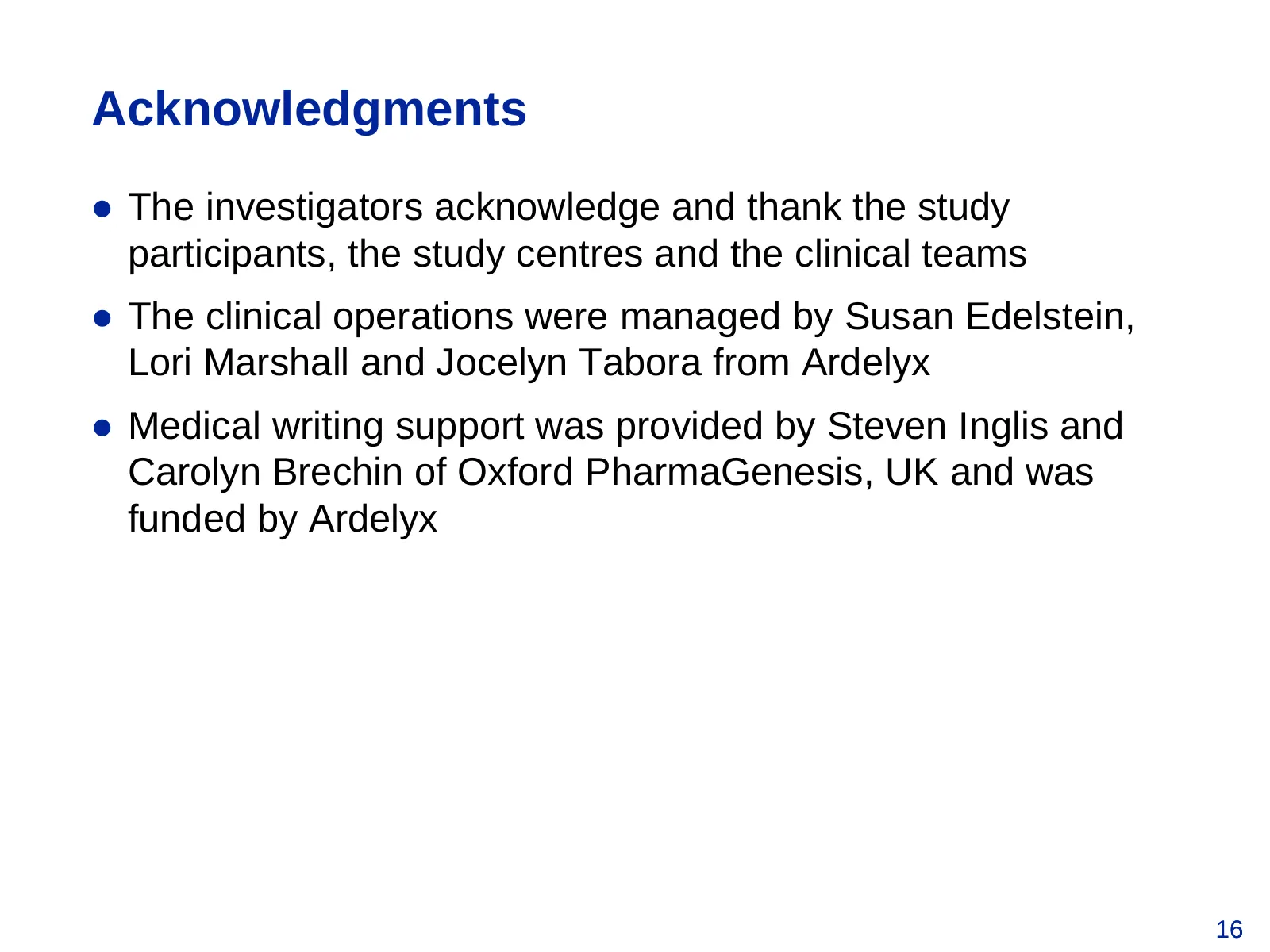
Slide 16: Acknowledgments
Acknowledgments ● The investigators acknowledge and thank the study participants, the study centres and the clinical teams ● The clinical operations were managed by Susan Edelstein, Lori Marshall and Jocelyn Tabora from Ardelyx ● Medical writing support was provided by Steven Inglis and Carolyn Brec

Slide 17: Back-up slides
Back-up slides
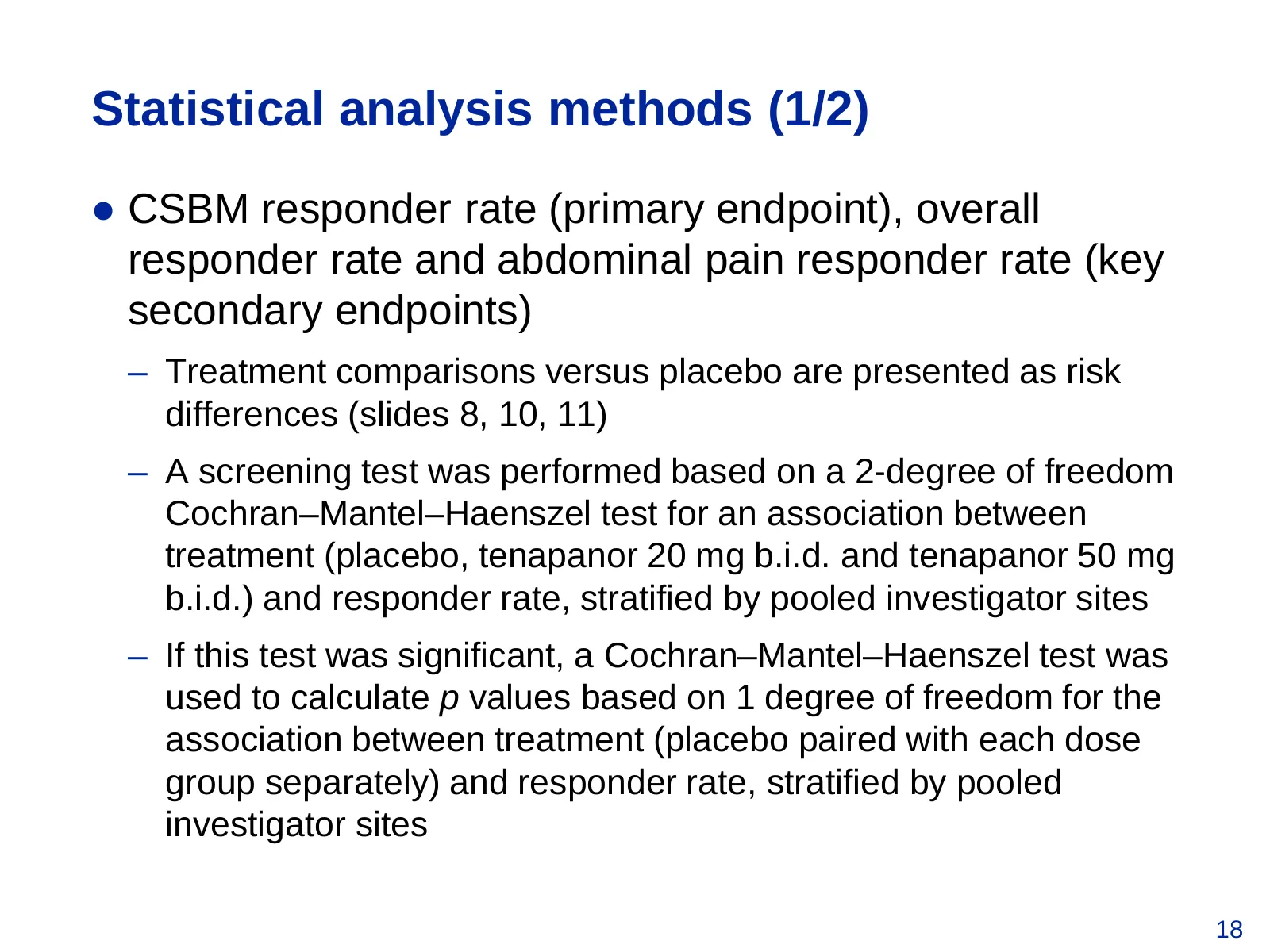
Slide 18: Statistical analysis methods (1/2)
Statistical analysis methods (1/2) ● CSBM responder rate (primary endpoint), overall responder rate and abdominal pain responder rate (key secondary endpoints) – Treatment comparisons versus placebo are presented as risk differences (slides 8, 10, 11) – A screening test was performed based on a 2-de
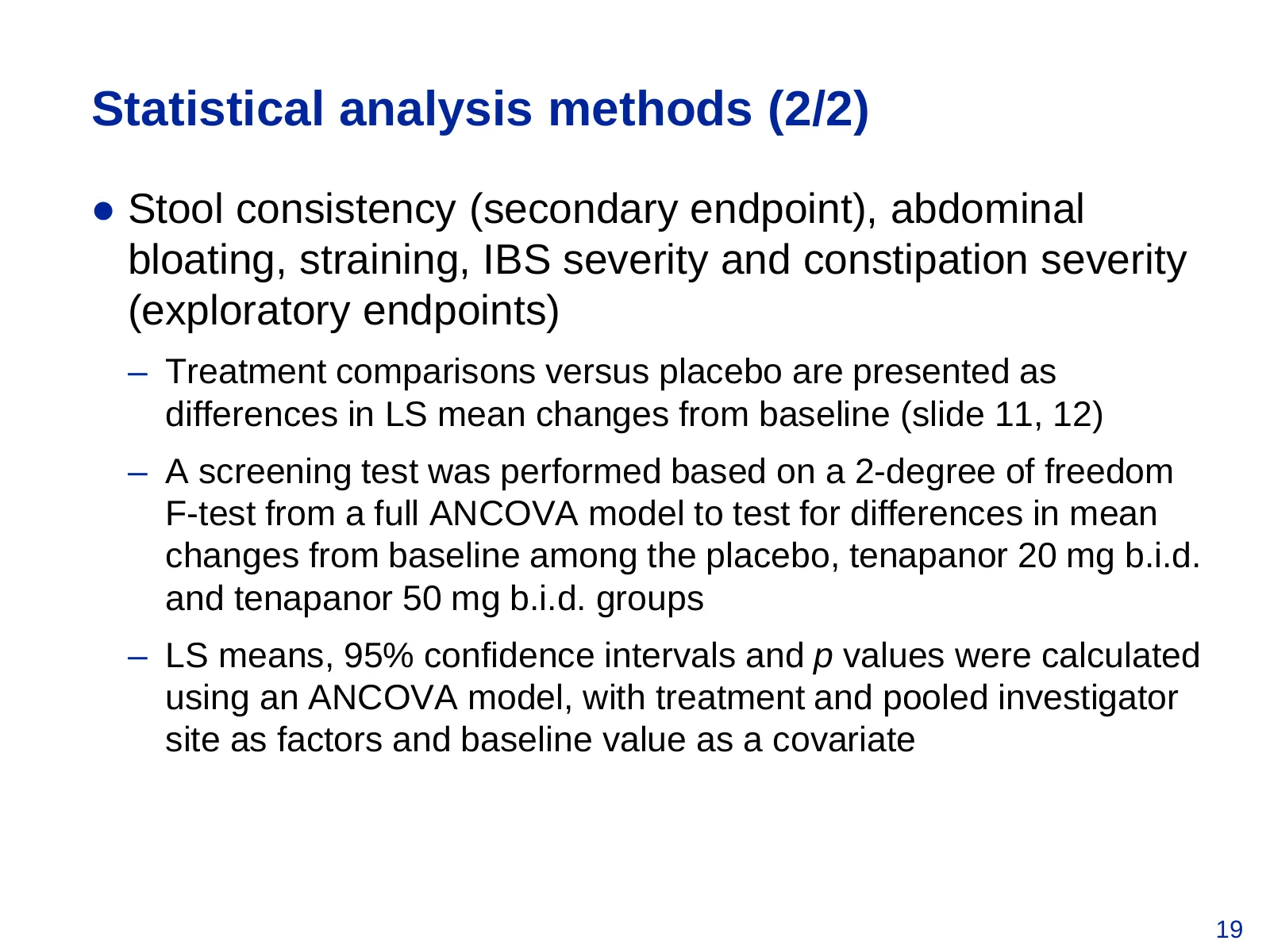
Slide 19: Statistical analysis methods (2/2)
Statistical analysis methods (2/2) ● Stool consistency (secondary endpoint), abdominal bloating, straining, IBS severity and constipation severity (exploratory endpoints) – Treatment comparisons versus placebo are presented as differences in LS mean changes from baseline (slide 11, 12) – A screening
Source: Internet Archive copy of ardelyx.com
More decks from Ardelyx, Inc.
 Q3 2026 Earnings Presentation15 slides · Nov 3, 2026
 Q2 2026 Earnings Presentation18 slides · Aug 6, 2026
 Investor Presentation (August 2026)30 slides · August 2026
 Q1 2026 Earnings Presentation23 slides · Apr 30, 2026
 Q4 2025 Earnings Presentation27 slides · Feb 19, 2026
 Q2 2025 Earnings Presentation22 slides · Aug 4, 2025