Uniphar PLC · EURONEXT:UPR
Uniphar — Technical Presentation (October 2017)
18 slides from Uniphar's technical presentation, October 2017
Slide 1: ProVen: Microbiota
Webinar 9 – Part 1 ProVen: Microbiota

Slide 2: ProVen
ProVen
Slide 3: ProVen
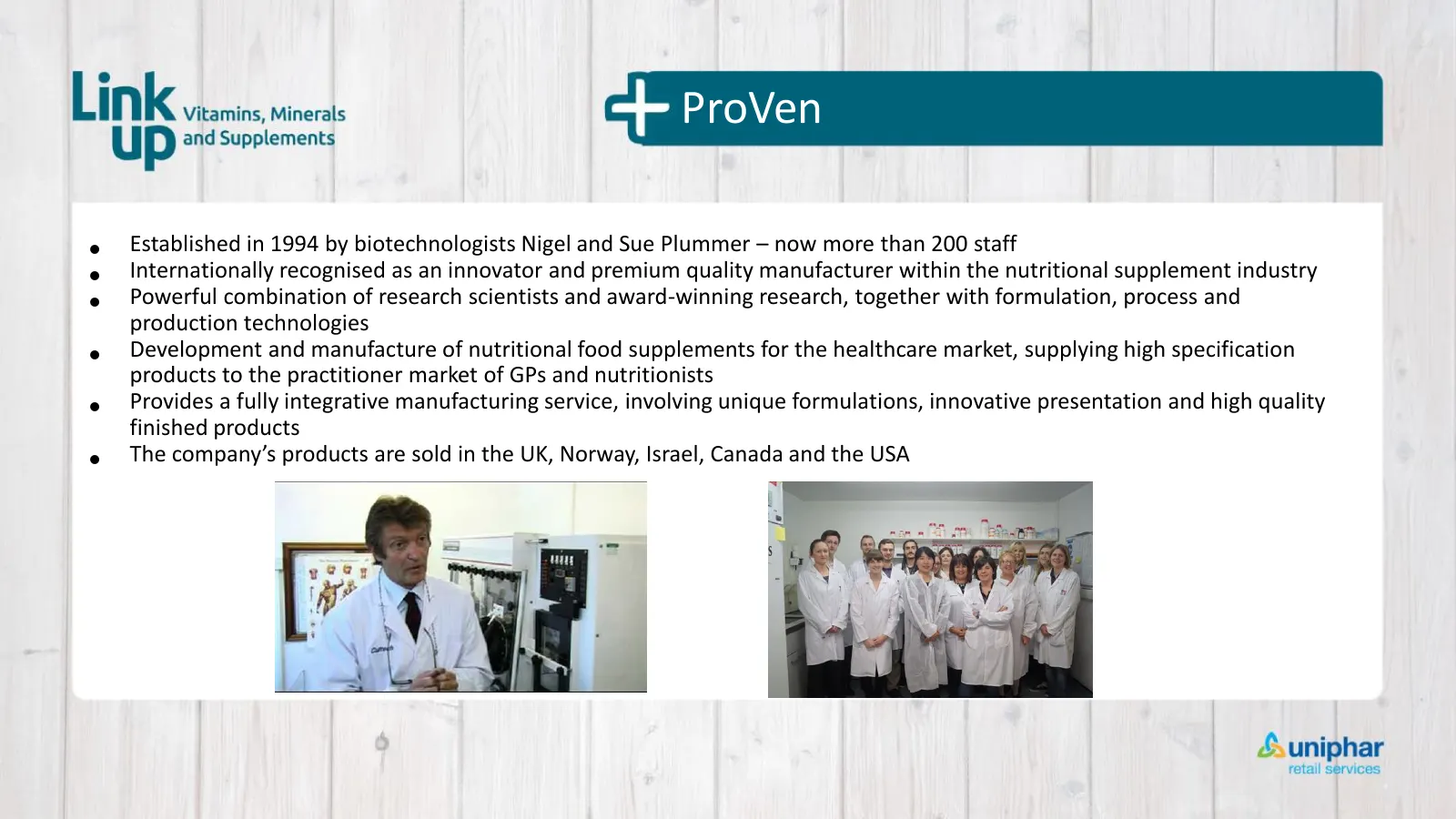
ProVen • Established in 1994 by biotechnologists Nigel and Sue Plummer – now more than 200 staff • Internationally recognised as an innovator and premium quality manufacturer within the nutritional supplement industry • Powerful combination of research scientists and award-winning research, together
Slide 4: ProVen • VEGA
ProVen • VEGA and ProVen Probiotics are the brands owned by Cultech • VEGA established more than 20 years ago • ProVen Probiotics around 15 years old • Access to a large team of scientists and researchers • Constant innovation, research and development • Recently published papers on Lab4 with vitami
Slide 5: We have already made a difference to some premier brands worldwide
ProVen We have already made a difference to some premier brands worldwide • Provides GNC with entire own label probiotic range • Provides Boots with entire ‘own label’ probiotic range • Supplies Holland and Barrett with their entire own brand • Supplies Blackmores/Bioceuticals – the largest suppleme

Slide 6: Probiotic Consortium
ProVen All Cultech ‘Own Label’ and the ProVen Brand contain the Probiotic Consortium
Slide 7: To Understand Probiotics – We Need To Understand Our Microbiota
ProVen To Understand Probiotics – We Need To Have An Understanding of Our Microbiota ( Microbiome)
Slide 8: So what is our microbiota?
ProVen Our amazing microbiota – a constant companion and friend throughout our lives, without which, we would become ill and probably die within 5 years of birth! So what is our microbiota?
Slide 9: Facts & Figures
ProVen Facts & Figures • 100,000 billion viable microbes in the intestine with 2000 species and 7000 strains! • 1,000 billion viable microbes on skin
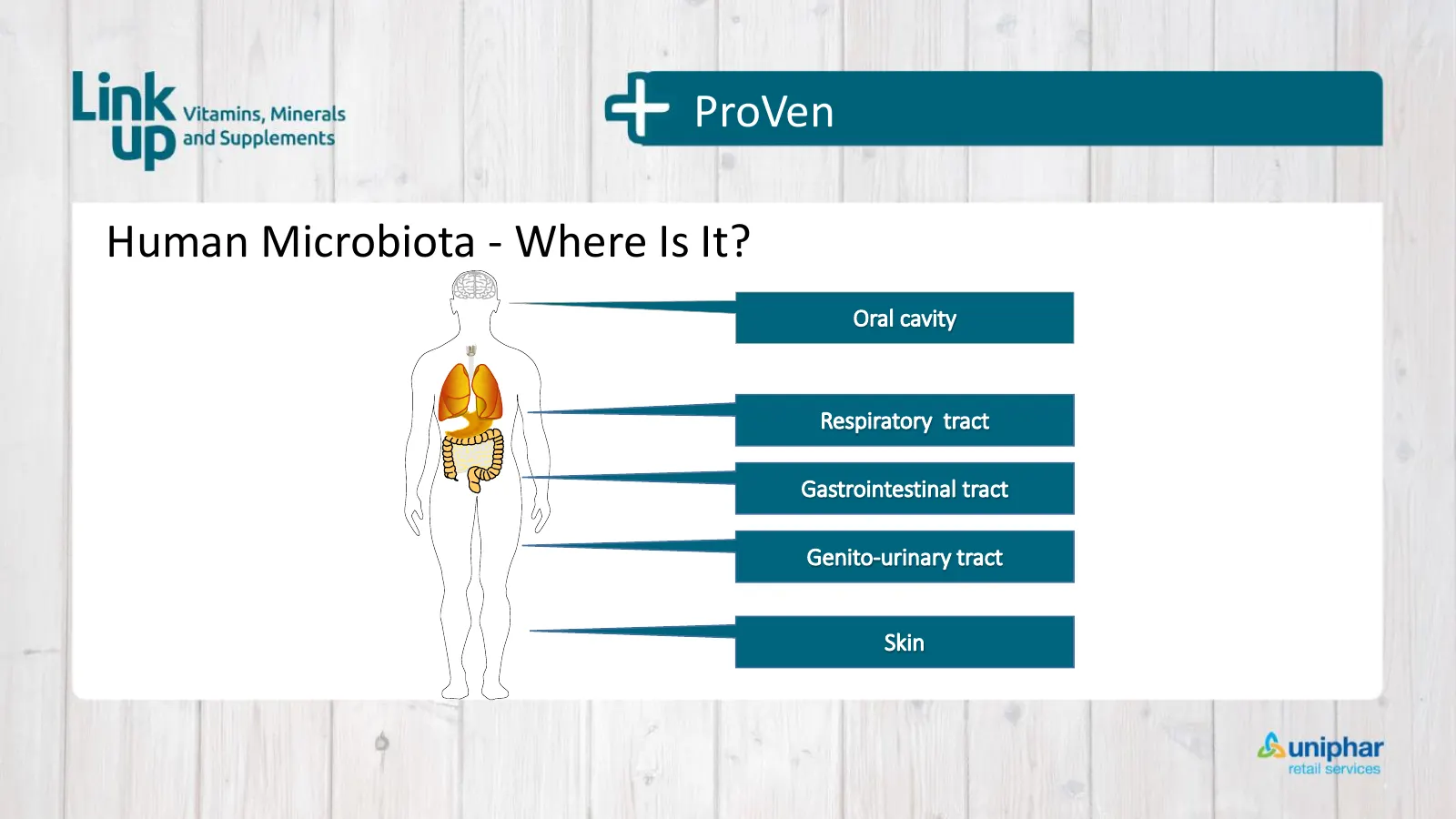
Slide 10: Human Microbiota - Where Is It?
ProVen Human Microbiota - Where Is It?
Slide 11: Interesting?
ProVen Interesting? • Intestinal microbiota weighs about 1.5kgs • Approximately 50% of faecal mass is bacterial biomass • Microbiota produces about 2 litres of ‘gas’ per day • Acquisition of resistance to antibiotics occurs in the intestine
Slide 12: The Normal Human Microbiota: The First Colonisation
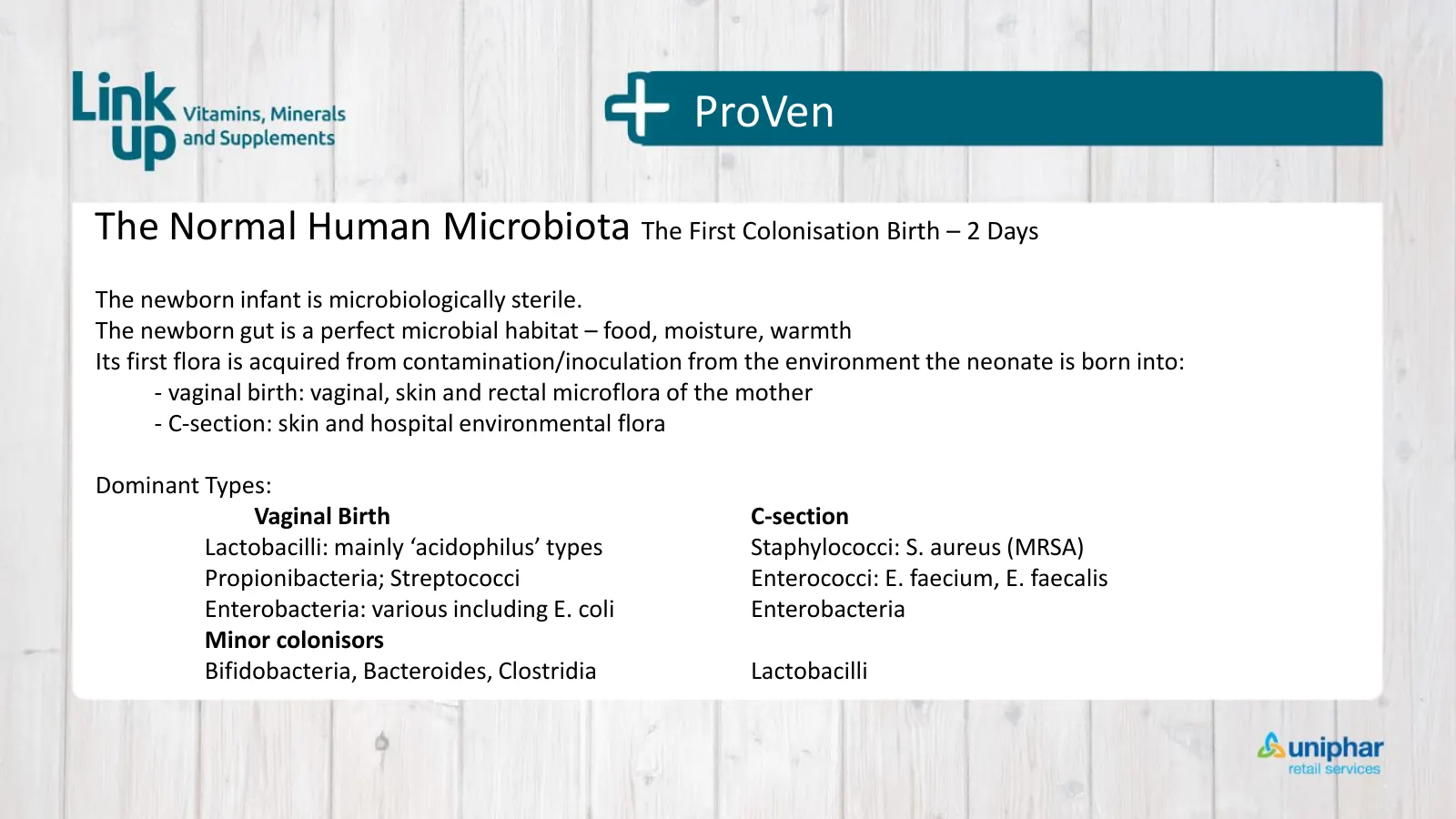
ProVen The Normal Human Microbiota The First Colonisation Birth – 2 Days The newborn infant is microbiologically sterile. The newborn gut is a perfect microbial habitat – food, moisture, warmth Its first flora is acquired from contamination/inoculation from the environment the neonate is born into:
Slide 13: The Normal Human Microbiota – Infant to Adult
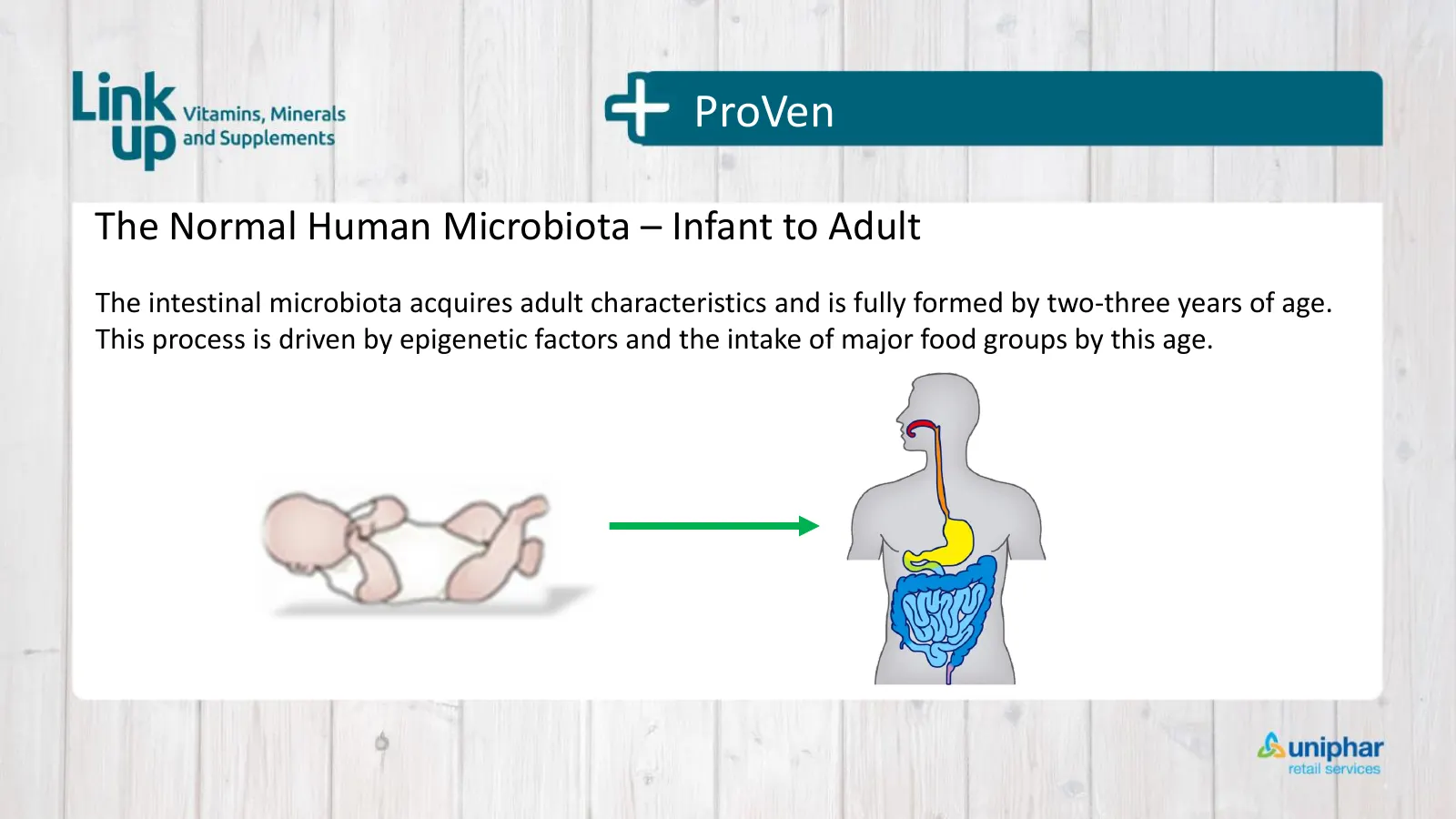
ProVen The Normal Human Microbiota – Infant to Adult The intestinal microbiota acquires adult characteristics and is fully formed by two-three years of age. This process is driven by epigenetic factors and the intake of major food groups by this age.
Slide 14: Typical Microbiota of the Adult Gastrointestinal Tract
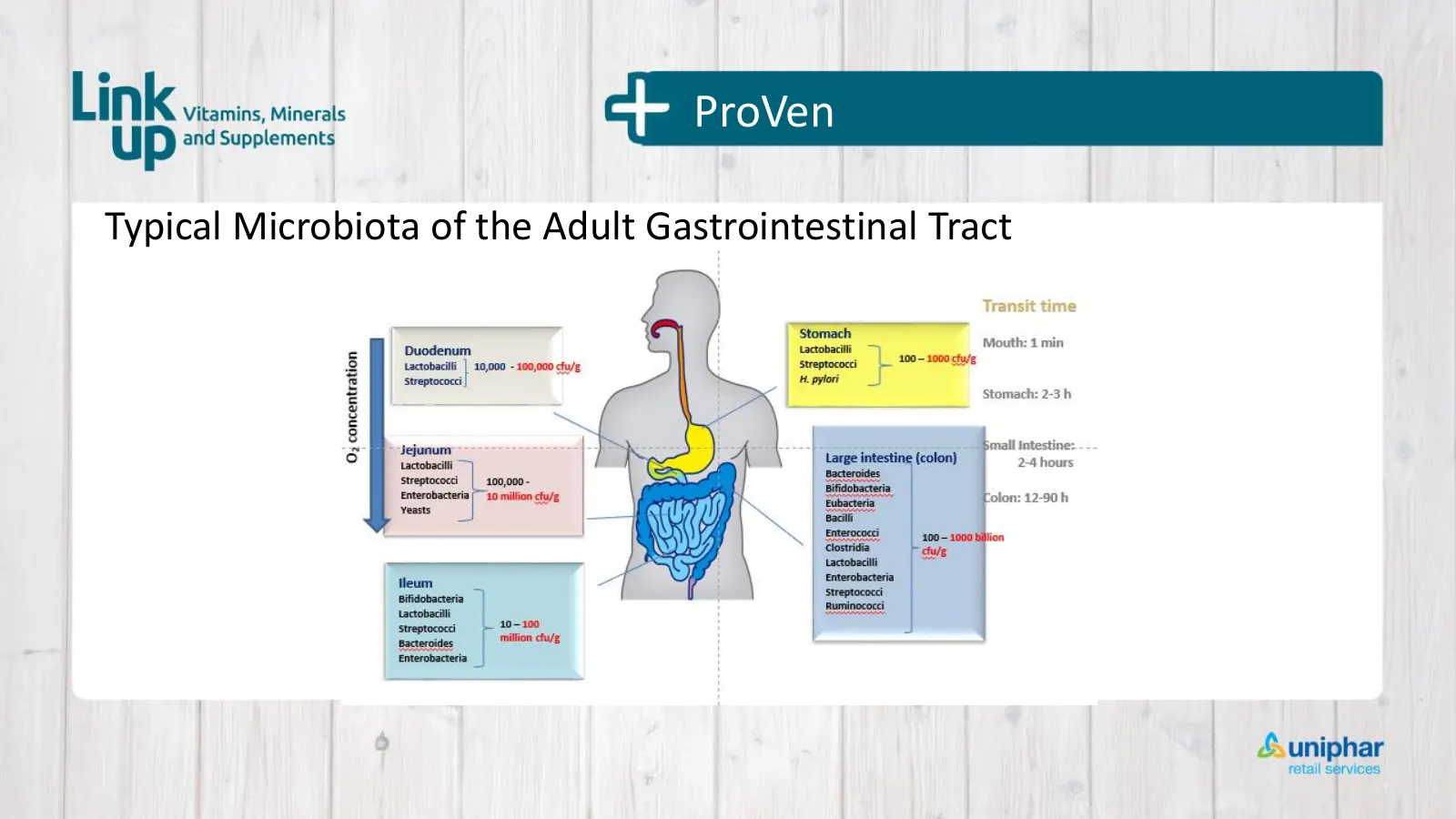
ProVen Typical Microbiota of the Adult Gastrointestinal Tract
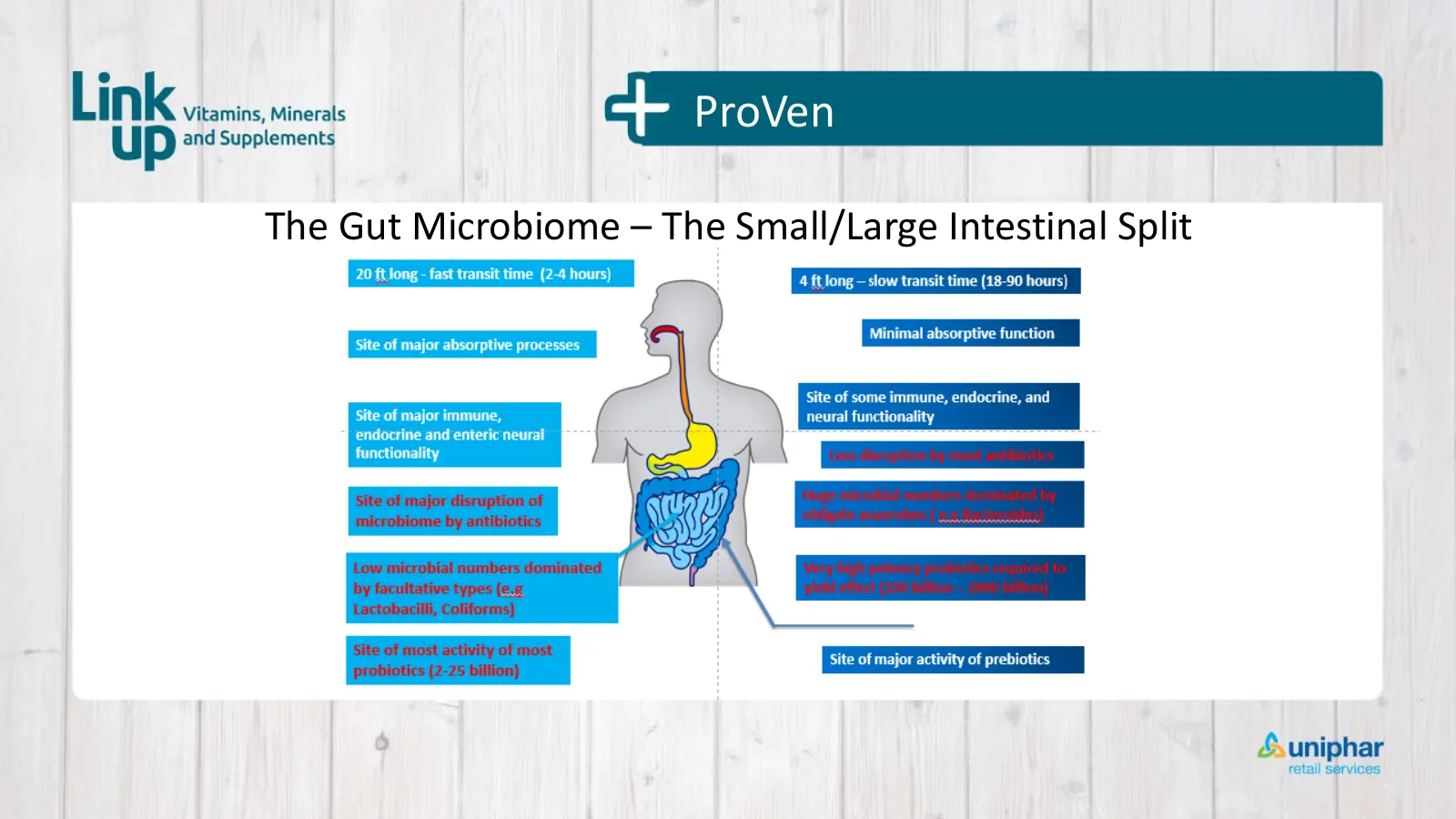
Slide 15: The Gut Microbiome – The Small/Large Intestinal Split
ProVen The Gut Microbiome – The Small/Large Intestinal Split
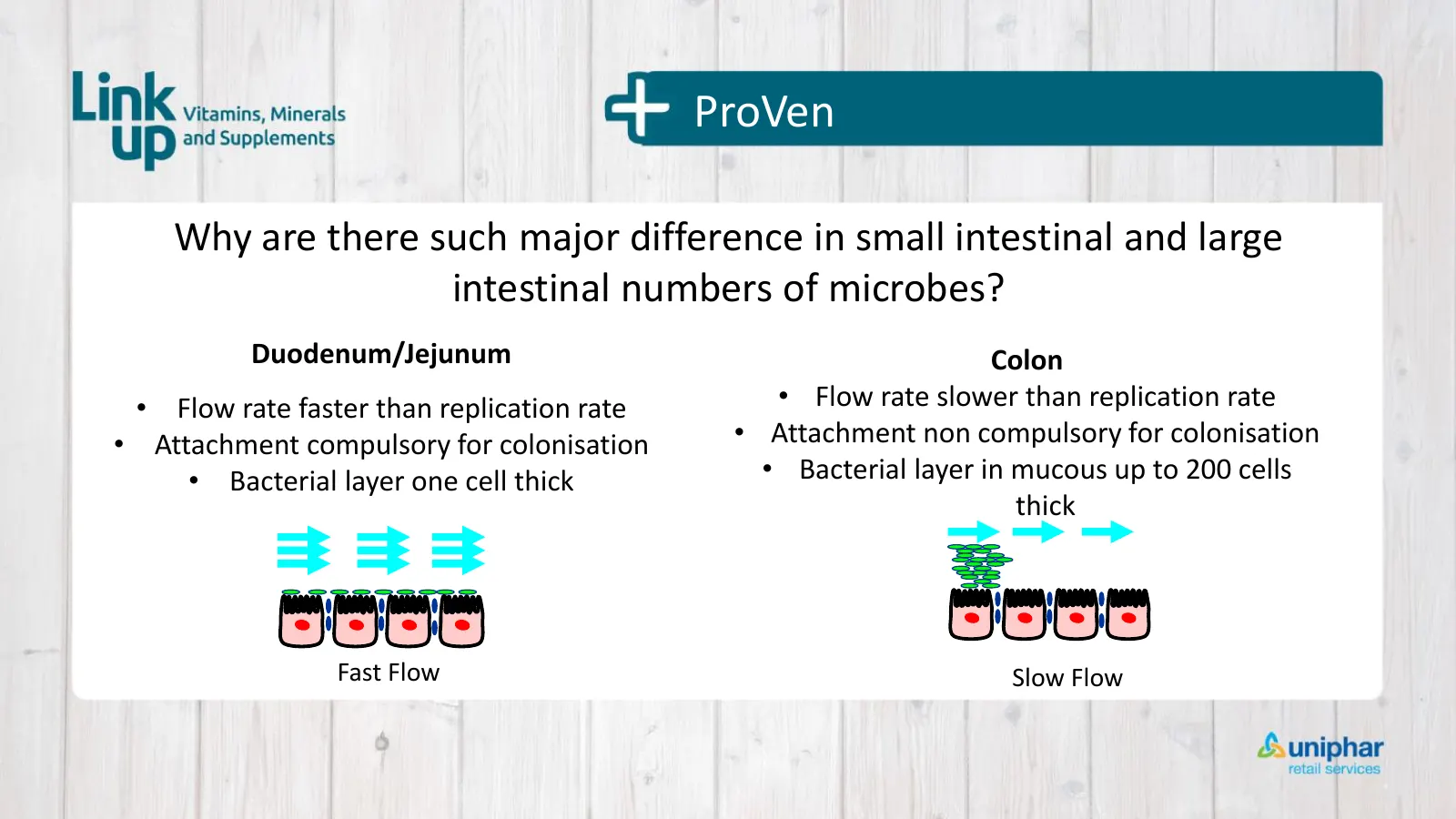
Slide 16: Why are there such major differences in small and large intestinal microbes?
ProVen Why are there such major difference in small intestinal and large intestinal numbers of microbes? Duodenum/Jejunum Colon • Flow rate faster than replication rate • Flow rate slower than replication rate • Attachment compulsory for colonisation • Attachment non compulsory for colonisation • Ba
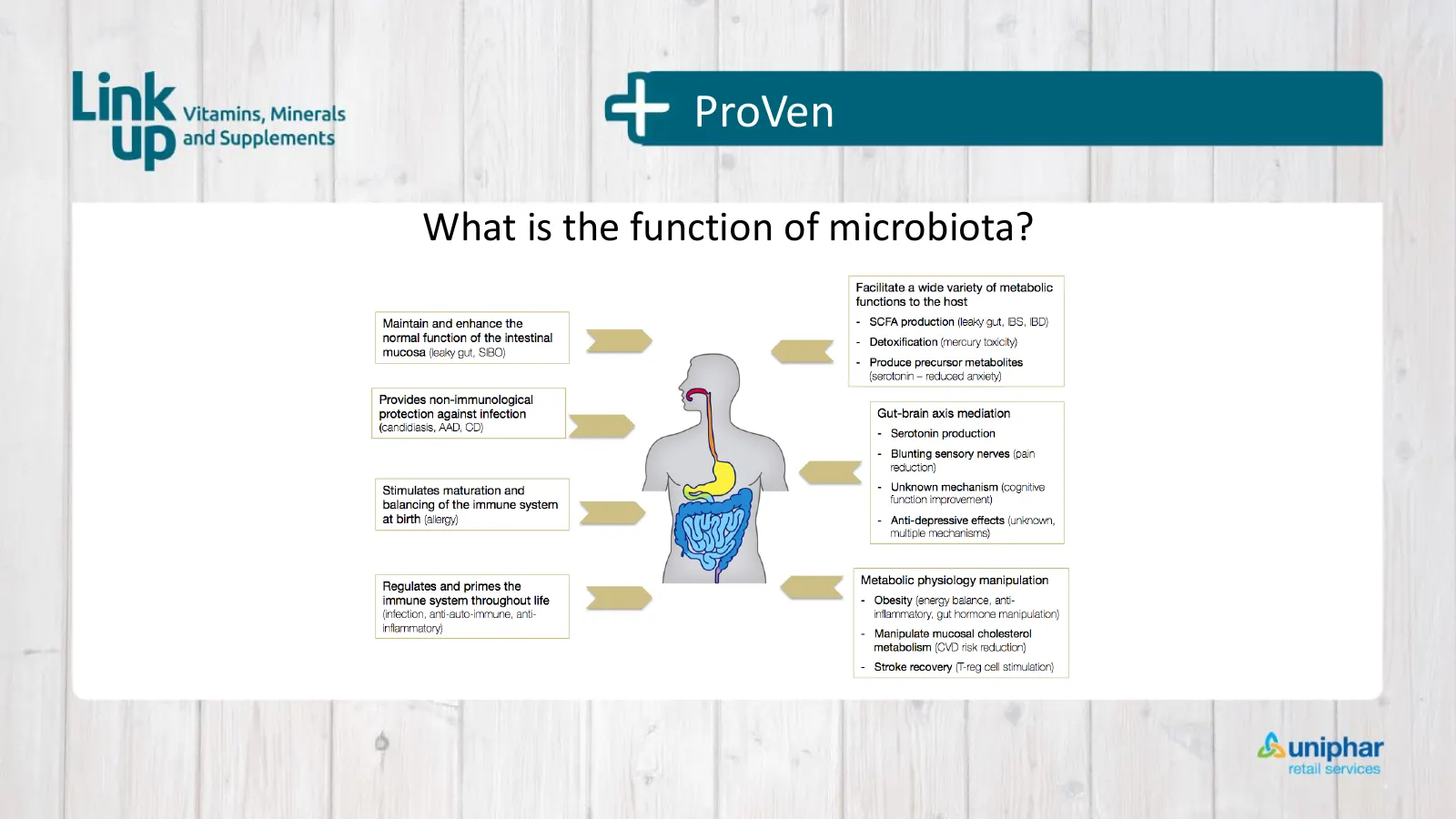
Slide 17: What is the function of microbiota?
ProVen What is the function of microbiota?
Slide 18: Manipulation/Disruption Of Human Microbiota
ProVen Manipulation/Disruption Of Human Microbiota • ANTIBIOTICS • PROBIOTICS • PREBIOTICS • FMT
Source: Internet Archive copy of uniphar.ie
More decks from Uniphar PLC
 H1 2026 Earnings Presentation39 slides · Sep 8, 2026
 FY2025 Earnings Presentation39 slides · Feb 24, 2026
 FY2024 Earnings Presentation38 slides · Feb 25, 2025
 H1 2024 Earnings Presentation37 slides · Sep 3, 2024
 FY2023 Earnings Presentation39 slides · Feb 27, 2024
 H1 2023 Earnings Presentation41 slides · Sep 14, 2023