Rezolute, Inc. · NASDAQ:RZLT
Rezolute — Investor Presentation (November 2026)
35 slides from Rezolute's investor presentation, Nov 24, 2026
Slide 1: A Late-stage Ultra-rare Disease Company Treating Refractory Hypoglycemia
A Late-stage Ultra-rare Disease Company Treating Refractory Hypoglycemia Corporate Presentation
Slide 2: Forward Looking Statements
Forward Looking Statements 2 This presentation, like many written and oral communications presented by Rezolute and our authorized officers, may contain certain forward-looking statements regarding our prospective performance and strategies within the meaning of Section 27A of the Securities Act and
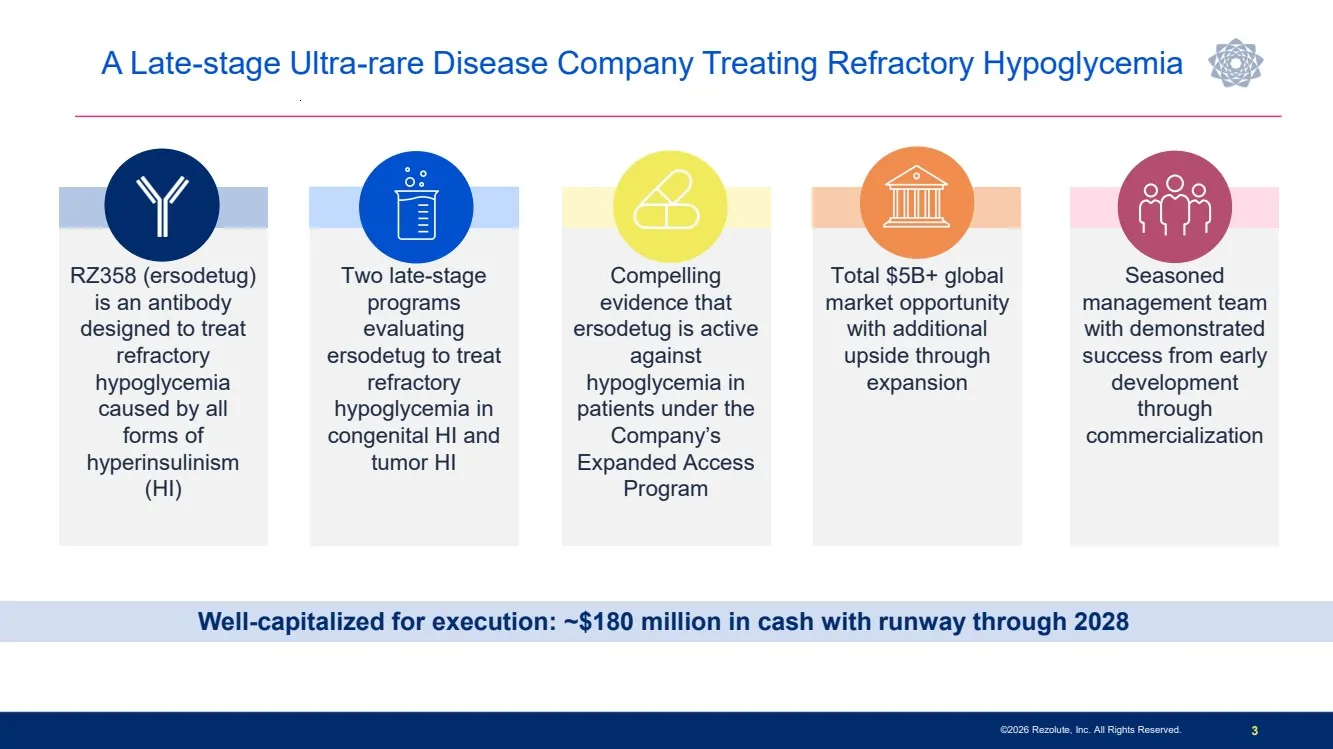
Slide 3: A Late-stage Ultra-rare Disease Company Treating Refractory Hypoglycemia
A Late-stage Ultra-rare Disease Company Treating Refractory Hypoglycemia 3 Well-capitalized for execution: ~$180 million in cash with runway through 2028 Seasoned management team with demonstrated success from early development through commercialization Total $5B+ global market opportunity with addi
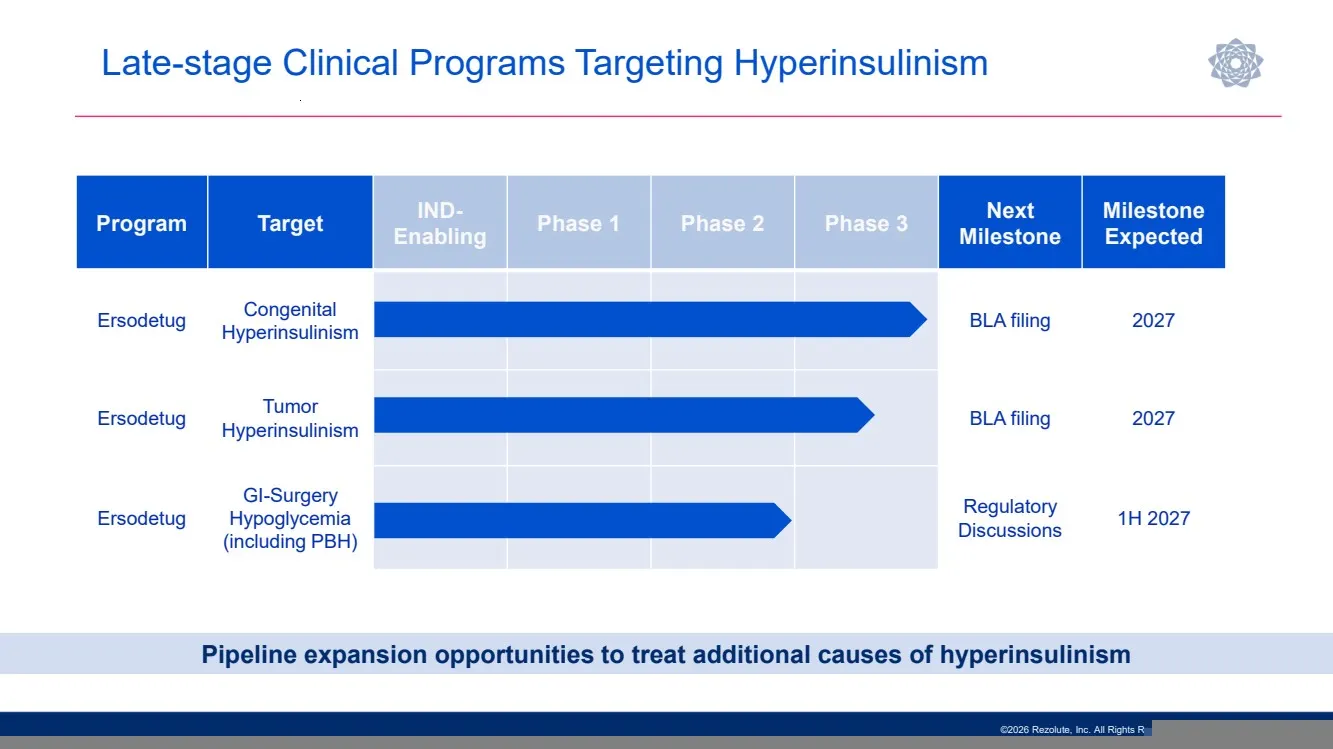
Slide 4: Late-stage Clinical Programs Targeting Hyperinsulinism
Late-stage Clinical Programs Targeting Hyperinsulinism 4 Program Target IND-Enabling Phase 1 Phase 2 Phase 3 Next Milestone Milestone Expected Ersodetug Congenital Hyperinsulinism BLA filing 2027 Ersodetug Tumor Hyperinsulinism BLA filing 2027 Ersodetug GI-Surgery Hypoglycemia (including PBH) Regula
Slide 5: Ersodetug Treatment for Hyperinsulinism (HI)
Ersodetug Treatment for Hyperinsulinism (HI)
Slide 6: Refractory Hypoglycemia as a Result of HI
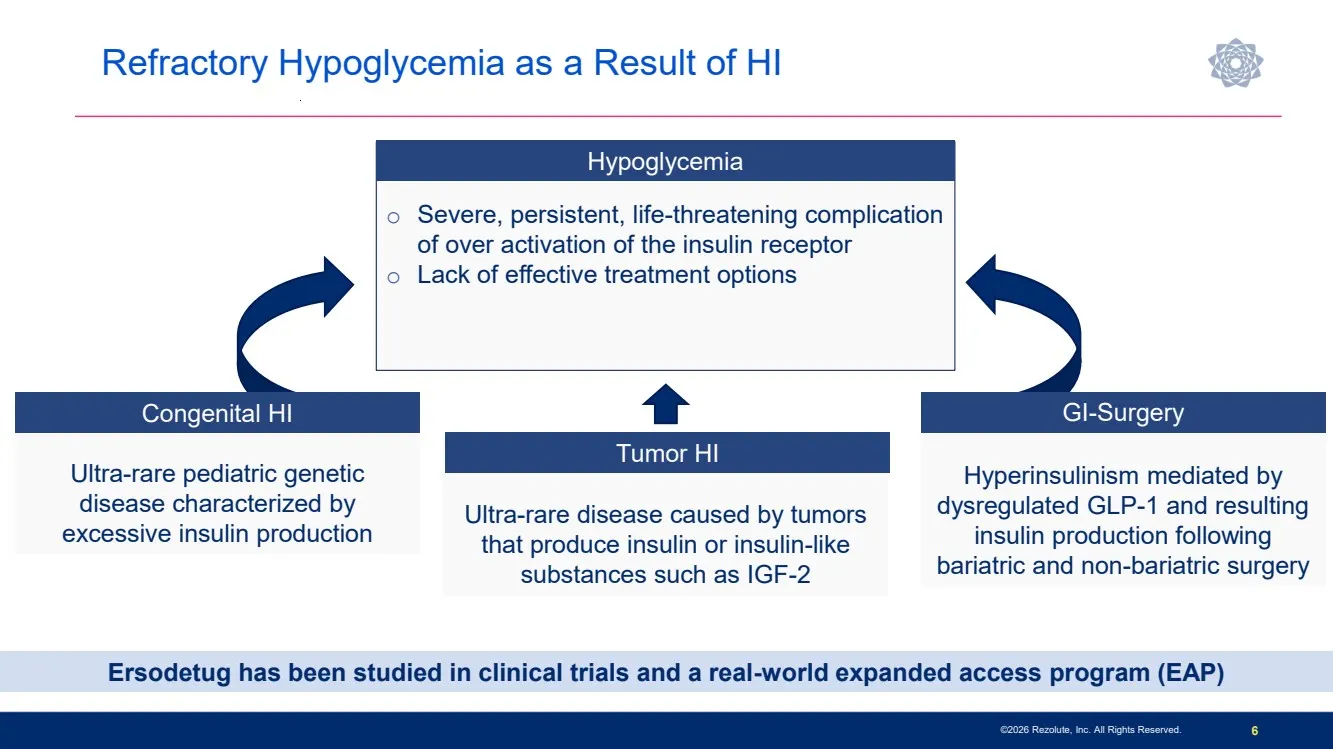
Refractory Hypoglycemia as a Result of HI 6 Ultra-rare disease caused by tumors that produce insulin or insulin-like substances such as IGF-2 Ultra-rare pediatric genetic disease characterized by excessive insulin production Congenital HI Tumor HI Ersodetug has been studied in clinical trials and a
Slide 7: Downstream MOA at Insulin Receptor Addresses any Form of HI
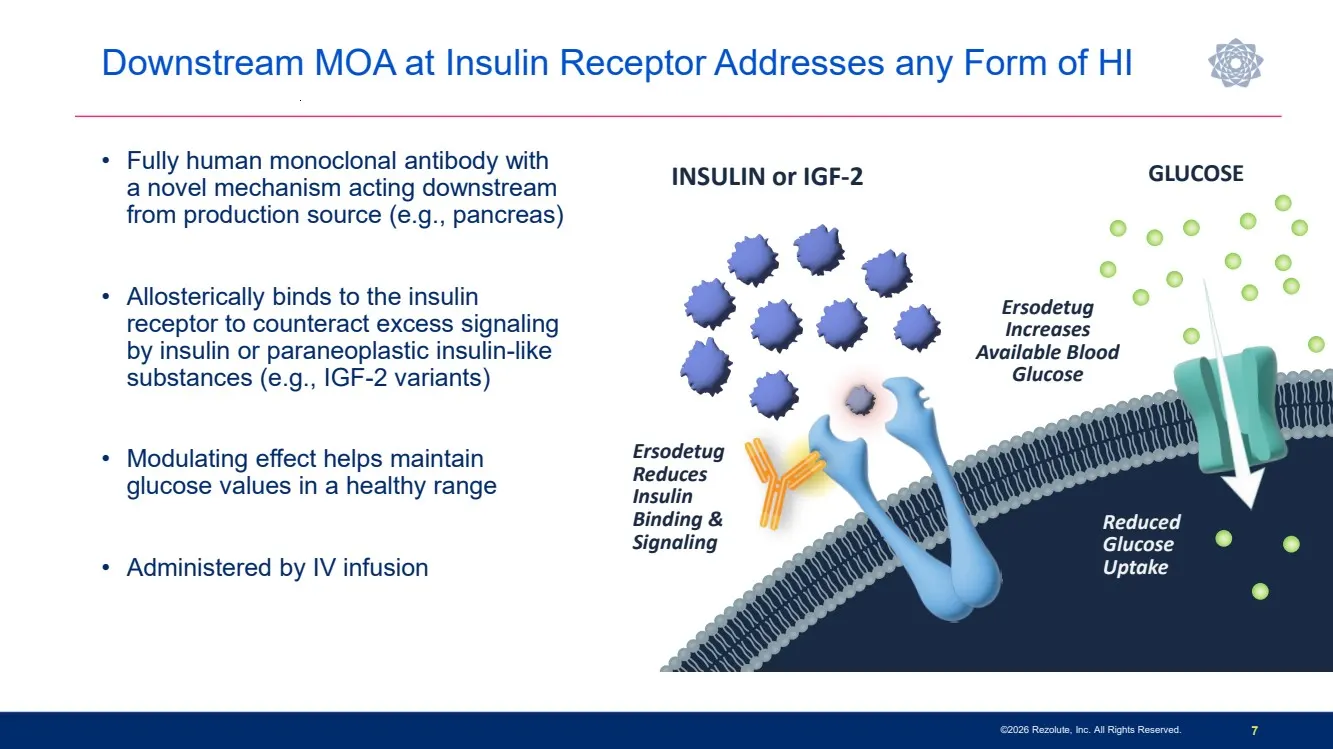
Downstream MOA at Insulin Receptor Addresses any Form of HI 7 INSULIN or IGF-2 GLUCOSE Ersodetug Reduces Insulin Binding & Signaling Ersodetug Increases Available Blood Glucose Reduced Glucose Uptake • Fully human monoclonal antibody with a novel mechanism acting downstream from production source (e

Slide 8: Congenital HI
Congenital HI
Slide 9: Disease Pathophysiology, Incidence, and Clinical Features
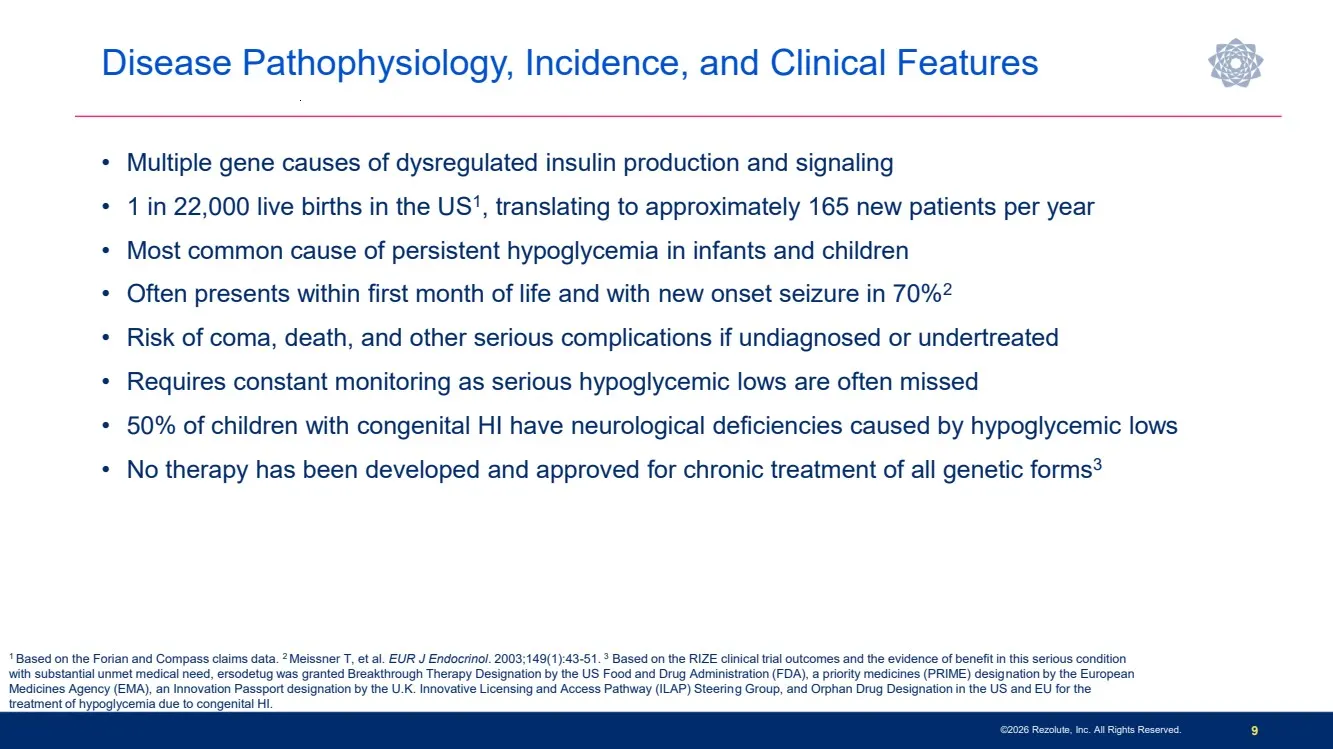
Disease Pathophysiology, Incidence, and Clinical Features 9 • Multiple gene causes of dysregulated insulin production and signaling • 1 in 22,000 live births in the US1 , translating to approximately 165 new patients per year • Most common cause of persistent hypoglycemia in infants and children •
Slide 10: High Unmet Medical Need with Current Standard of Care
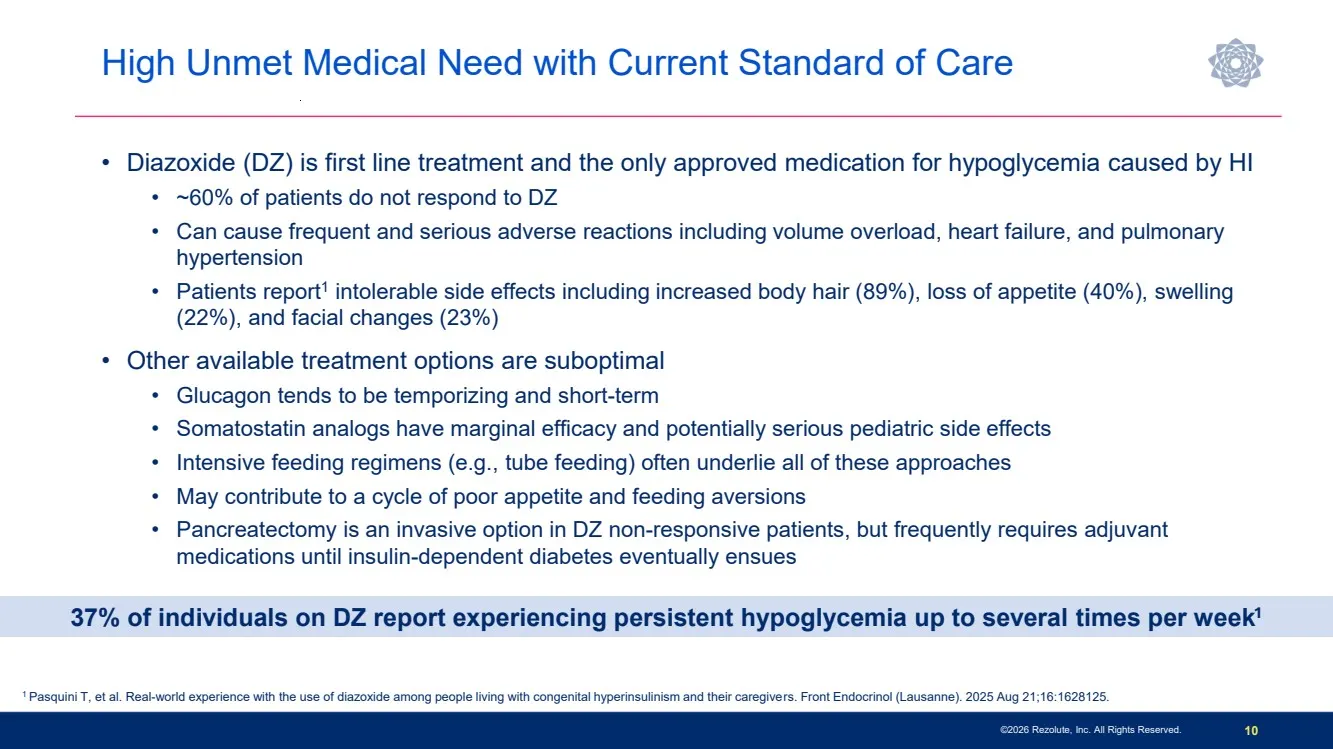
High Unmet Medical Need with Current Standard of Care 10 • Diazoxide (DZ) is first line treatment and the only approved medication for hypoglycemia caused by HI • ~60% of patients do not respond to DZ • Can cause frequent and serious adverse reactions including volume overload, heart failure, and
Slide 11: Phase 3 sunRIZE Study Highlights
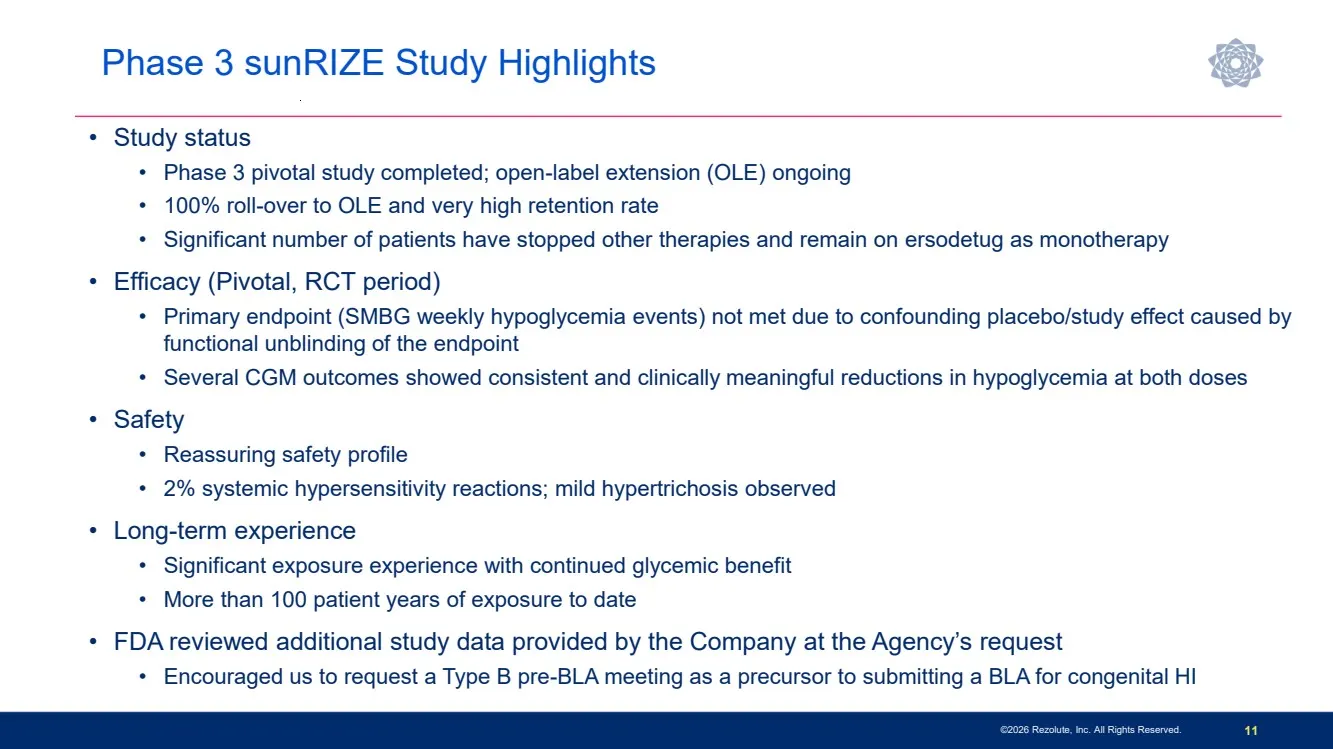
Phase 3 sunRIZE Study Highlights 11 • Study status • Phase 3 pivotal study completed; open-label extension (OLE) ongoing • 100% roll-over to OLE and very high retention rate • Significant number of patients have stopped other therapies and remain on ersodetug as monotherapy • Efficacy (Pivotal, RCT
Slide 12: sunRIZE PK Showed Therapeutic and Age-Comparable Concentrations
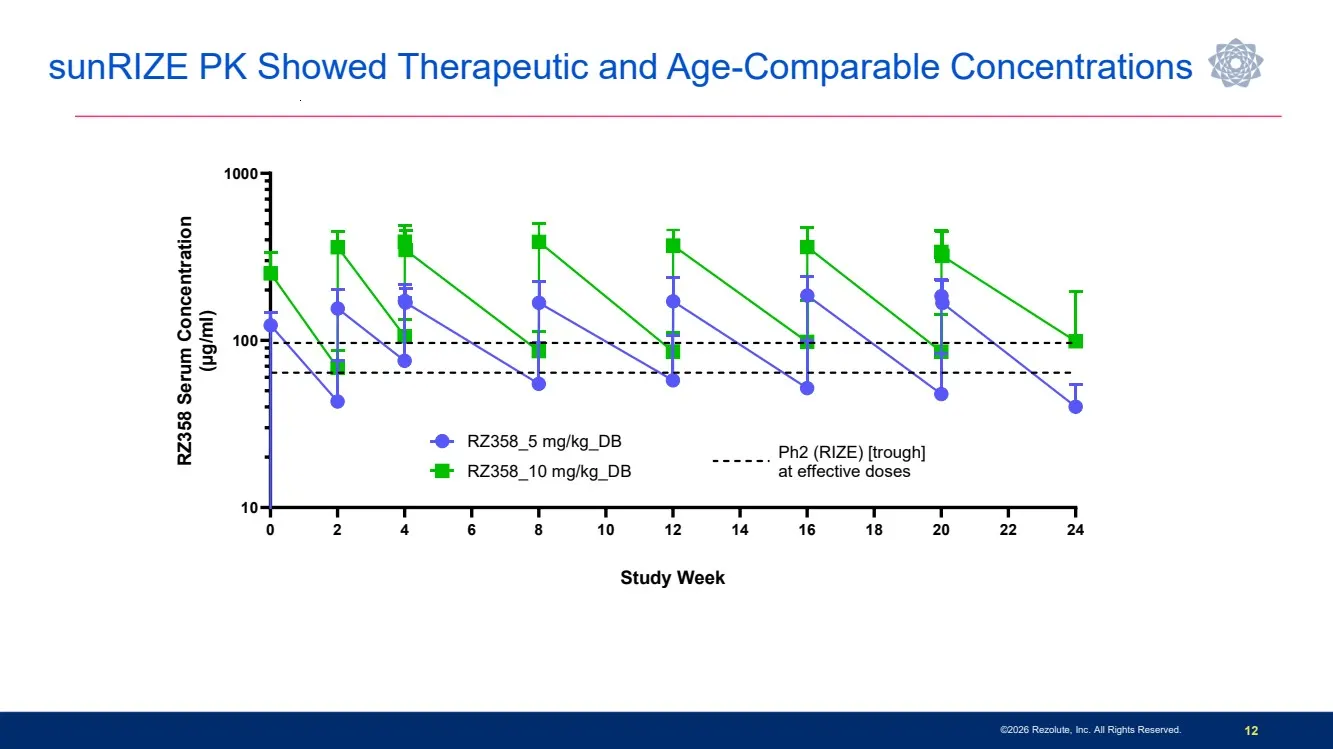
sunRIZE PK Showed Therapeutic and Age-Comparable Concentrations 12 0 2 4 6 8 10 12 14 16 18 20 22 24 10 100 1000 Study Week RZ358 Serum Concentration (μg/ml) RZ358_10 mg/kg_DB RZ358_5 mg/kg_DB Ph2 (RIZE) [trough] at effective doses ©2026 Rezolute, Inc. All Rights Reserved.
Slide 13: Decrease in Cleared Insulin Indicates Drug Activity at Insulin Receptor Target
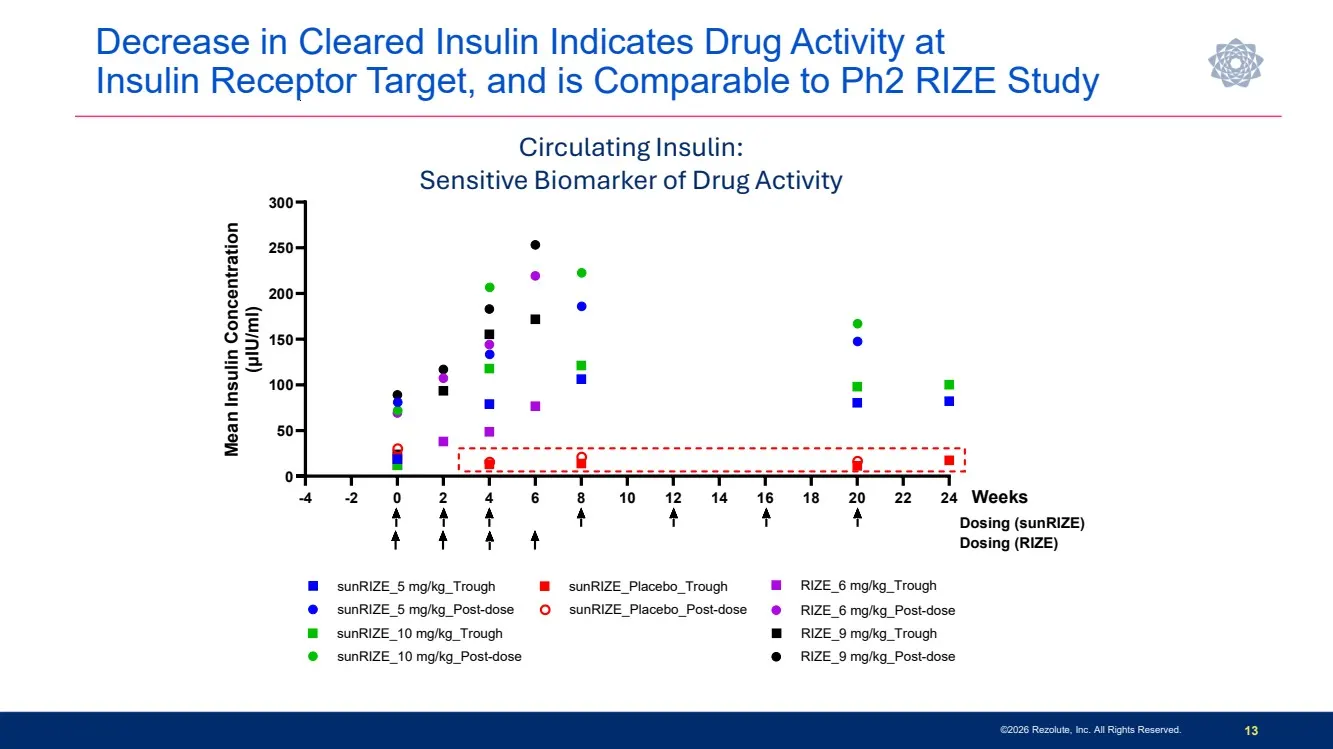
Decrease in Cleared Insulin Indicates Drug Activity at Insulin Receptor Target, and is Comparable to Ph2 RIZE Study 13 Circulating Insulin: Sensitive Biomarker of Drug Activity -4 -2 0 2 4 6 8 10 12 14 16 18 20 22 24 0 50 100 150 200 250 300 Mean Insulin Concentration (μIU/ml) Weeks sunRIZE_5 mg/kg_
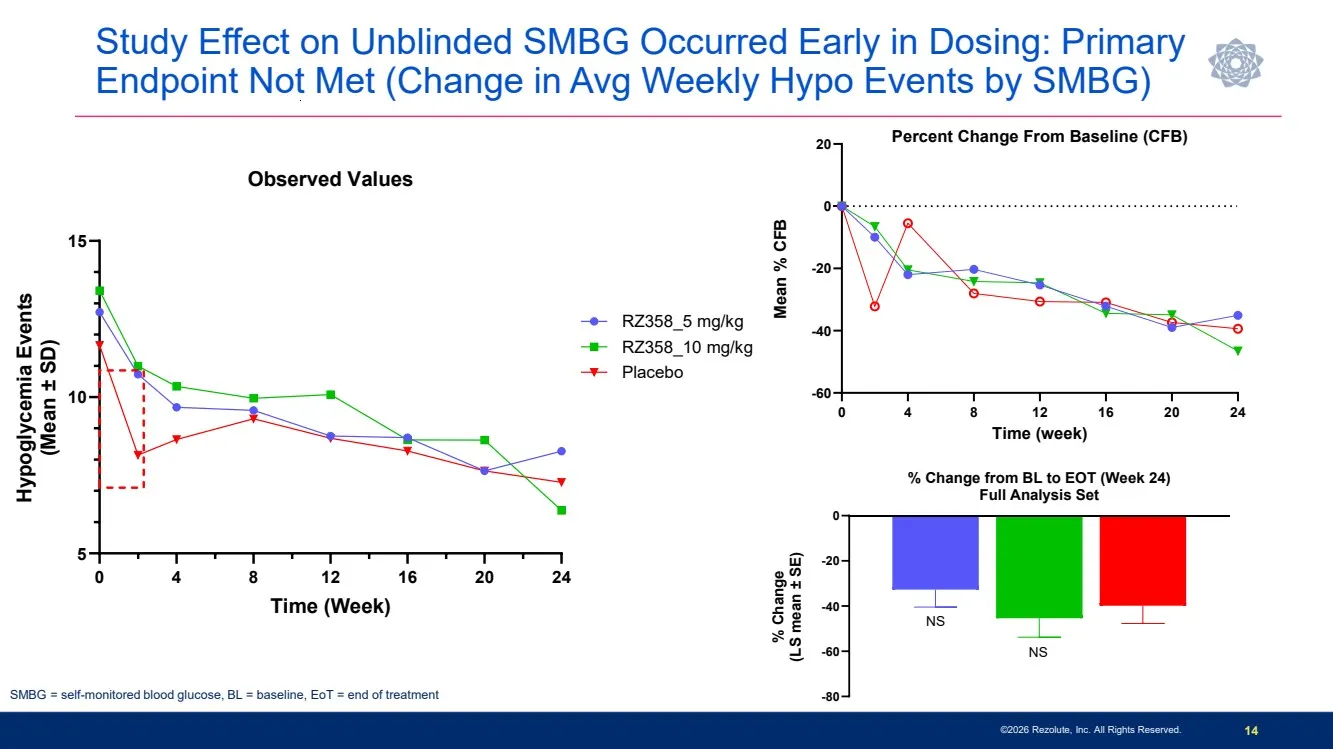
Slide 14: Study Effect on Unblinded SMBG Occurred Early: Primary Endpoint Not Met
-80 -60 -40 -20 0 % Change from BL to EOT (Week 24) Full Analysis Set % Change (LS mean ± SE) NS NS 0 4 8 12 16 20 24 5 10 15 Observed Values Time (Week) Hypoglycemia Events (Mean ± SD) RZ358_5 mg/kg RZ358_10 mg/kg Placebo 0 4 8 12 16 20 24 -60 -40 -20 0 20 Percent Change From Baseline (CFB) Time (w
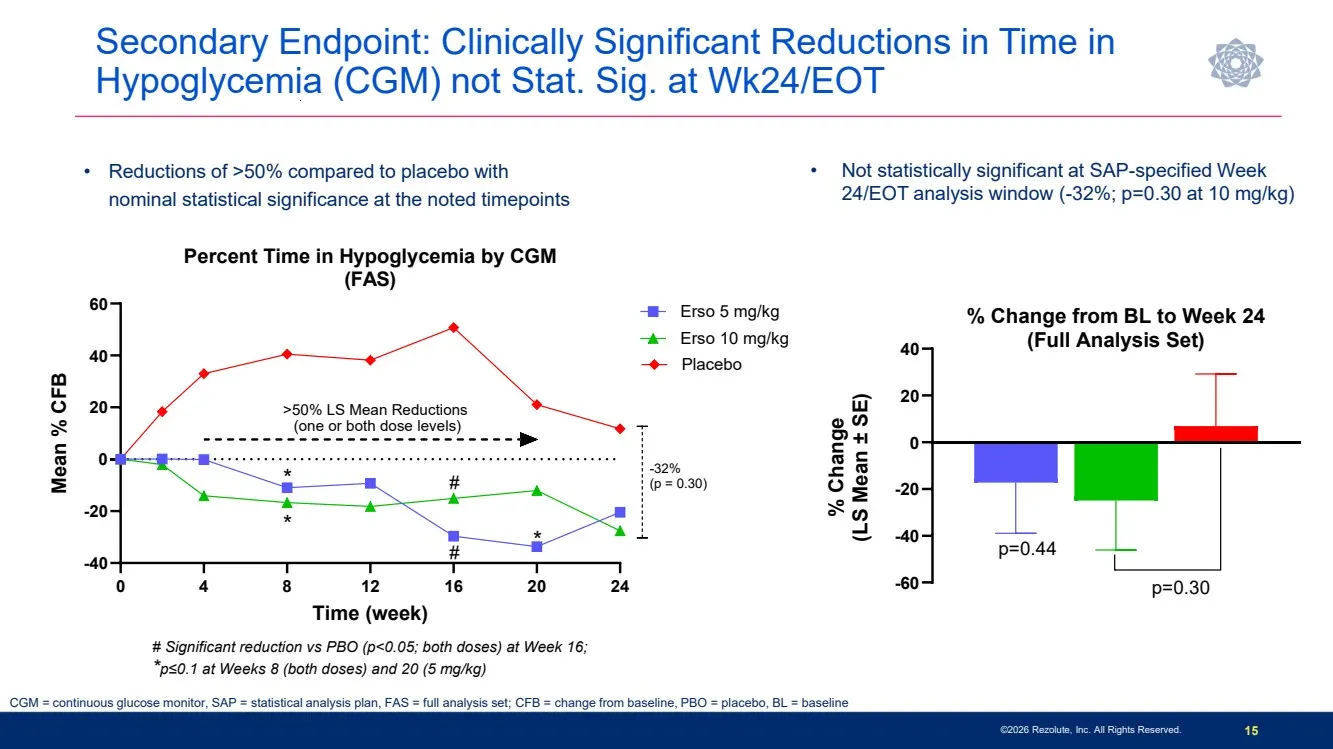
Slide 15: Secondary Endpoint: Time in Hypoglycemia (CGM) Not Stat. Sig. at Wk24/EOT
-60 -40 -20 0 20 40 % Change from BL to Week 24 (Full Analysis Set) % Change (LS Mean ± SE) p=0.44 0 4 8 12 16 20 24 p=0.30 -40 -20 0 20 40 60 Percent Time in Hypoglycemia by CGM (FAS) Time (week) Mean % CFB # Significant reduction vs PBO (p<0.05; both doses) at Week 16; *p≤0.1 at Weeks 8 (both dose
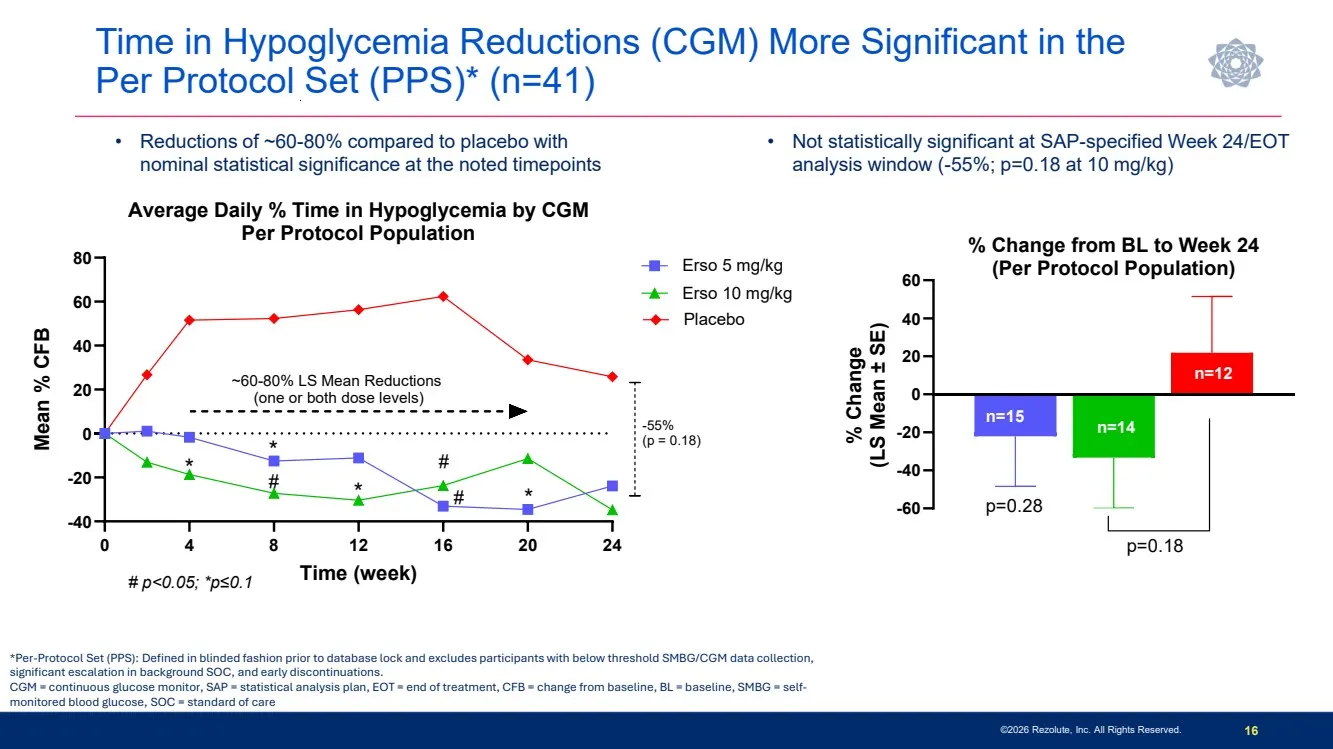
Slide 16: Time in Hypoglycemia by CGM, Per Protocol Population
• Reductions of ~60-80% compared to placebo with nominal statistical significance at the noted timepoints 16 0 4 8 12 16 20 24 -40 -20 0 20 40 60 80 Average Daily % Time in Hypoglycemia by CGM Per Protocol Population Time (week) Mean % CFB # p<0.05; *p≤0.1 # # * * Erso 5 mg/kg Erso 10 mg/kg Placebo
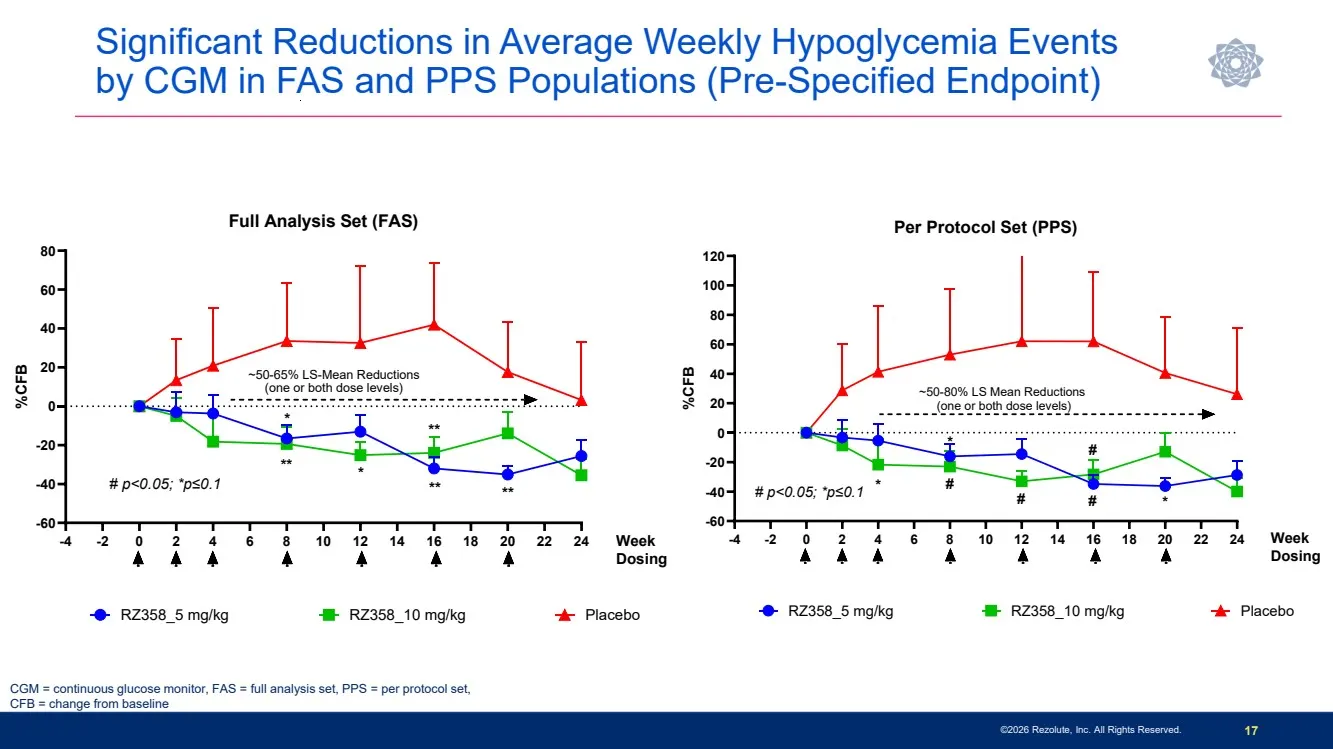
Slide 17: Significant Reductions in Weekly Hypoglycemia Events by CGM in FAS and PPS
-4 -2 0 2 4 6 8 10 12 14 16 18 20 22 24 -60 -40 -20 0 20 40 60 80 Full Analysis Set (FAS) %CFB RZ358_5 mg/kg RZ358_10 mg/kg Placebo Dosing Week ~50-65% LS-Mean Reductions (one or both dose levels) ** ** ** * * ** # p<0.05; *p≤0.1 -4 -2 0 2 4 6 8 10 12 14 16 18 20 22 24 -60 -40 -20 0 20 40 60 80 100
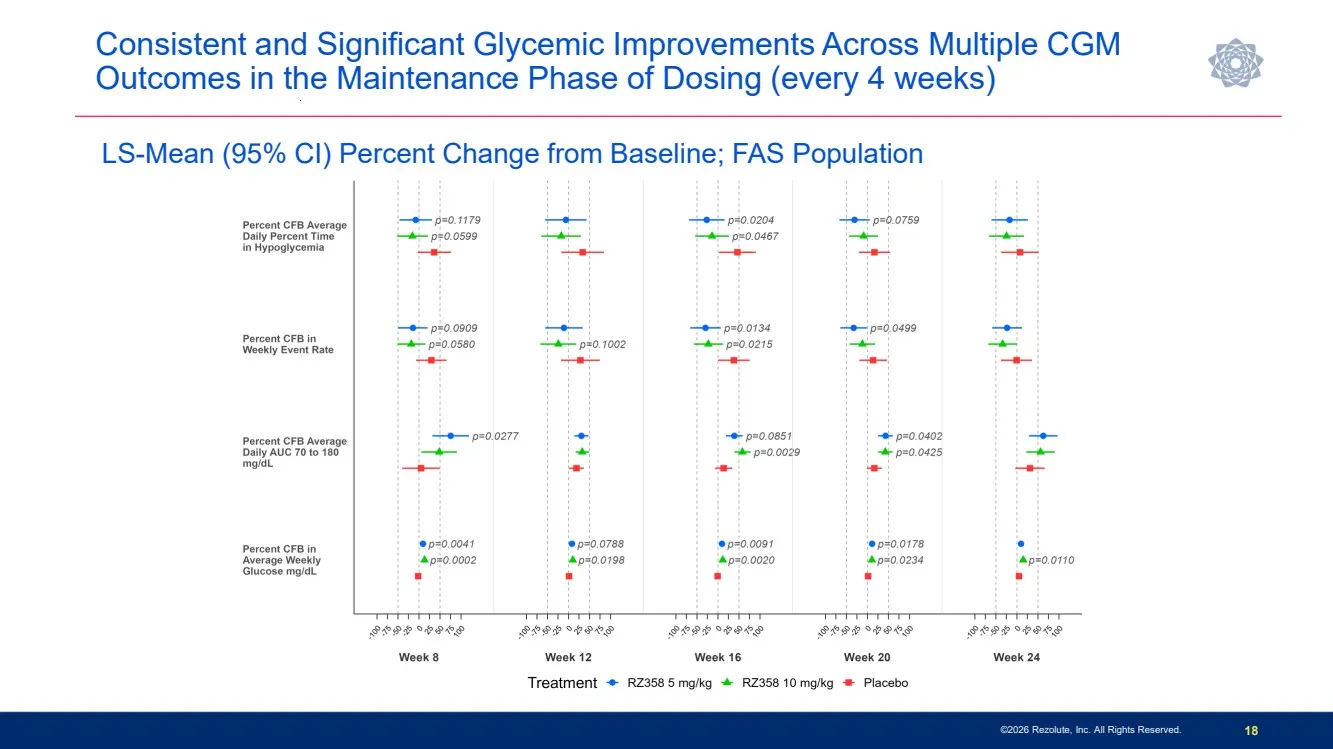
Slide 18: Consistent and Significant Glycemic Improvements Across Multiple CGM Outcomes
18 Consistent and Significant Glycemic Improvements Across Multiple CGM Outcomes in the Maintenance Phase of Dosing (every 4 weeks) LS-Mean (95% CI) Percent Change from Baseline; FAS Population ©2026 Rezolute, Inc. All Rights Reserved.
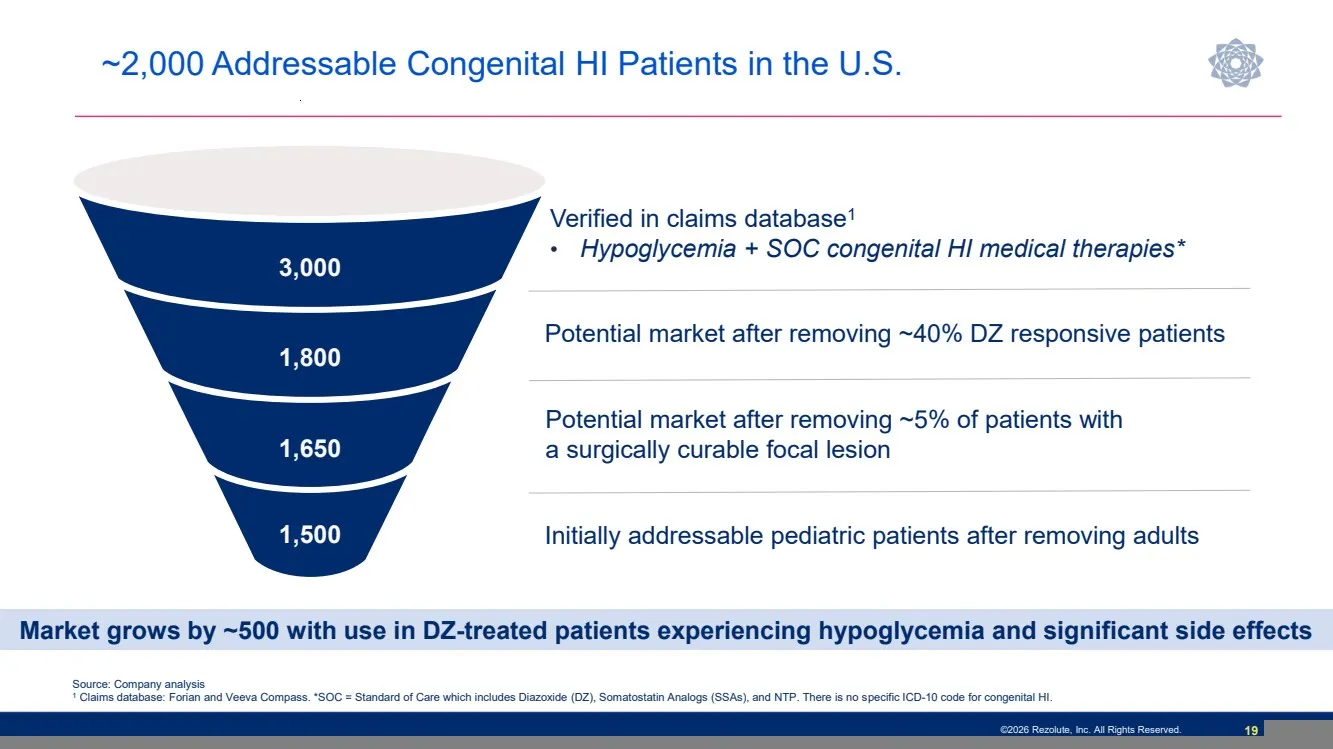
Slide 19: Addressable Congenital HI Patients in the U.S.
19 Verified in claims database1 • Hypoglycemia + SOC congenital HI medical therapies* Source: Company analysis 1 Claims database: Forian and Veeva Compass. *SOC = Standard of Care which includes Diazoxide (DZ), Somatostatin Analogs (SSAs), and NTP. There is no specific ICD-10 code for congenital HI.
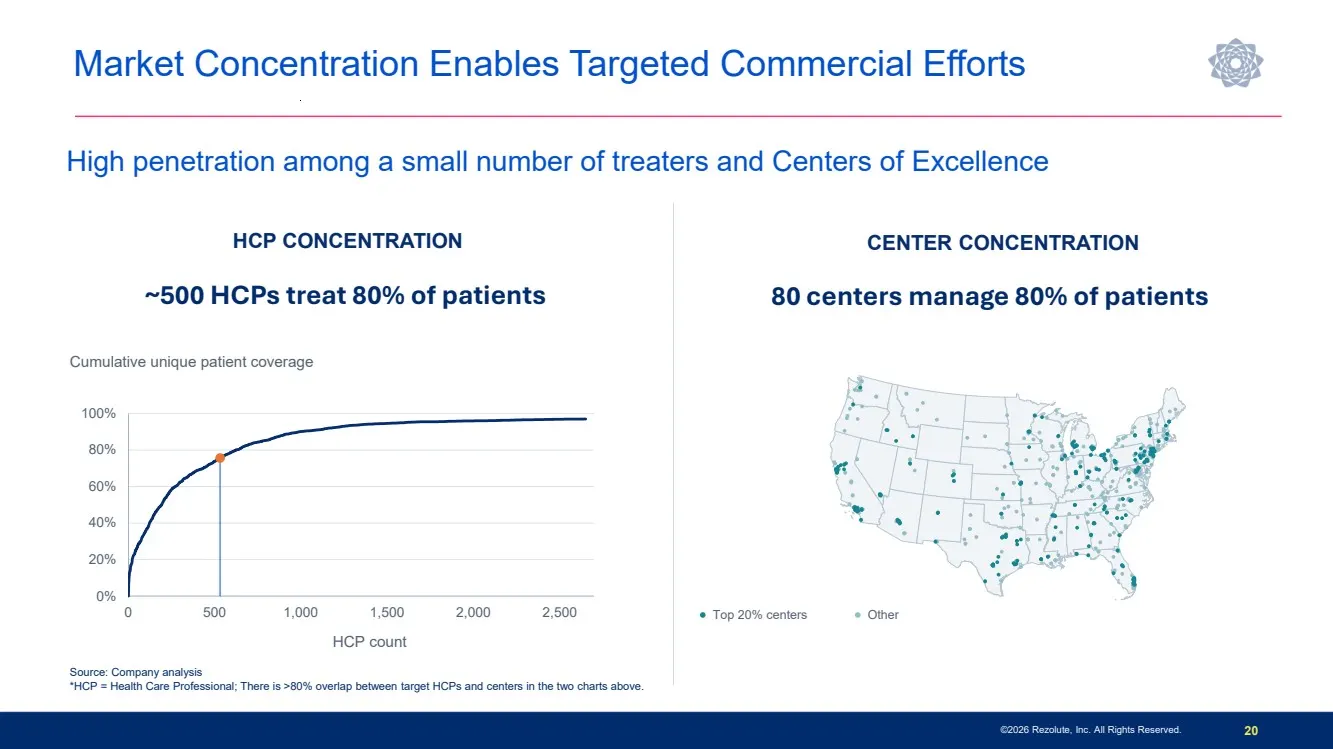
Slide 20: Market Concentration Enables Targeted Commercial Efforts
©2026 Rezolute, Inc. All Rights Reserved. 20 Market Concentration Enables Targeted Commercial Efforts High penetration among a small number of treaters and Centers of Excellence HCP CONCENTRATION 0% 20% 40% 60% 80% 100% 0 500 1,000 1,500 2,000 2,500 HCP count Top 20% centers Other ~500 HCPs treat 80

Slide 21: Tumor HI
Tumor HI
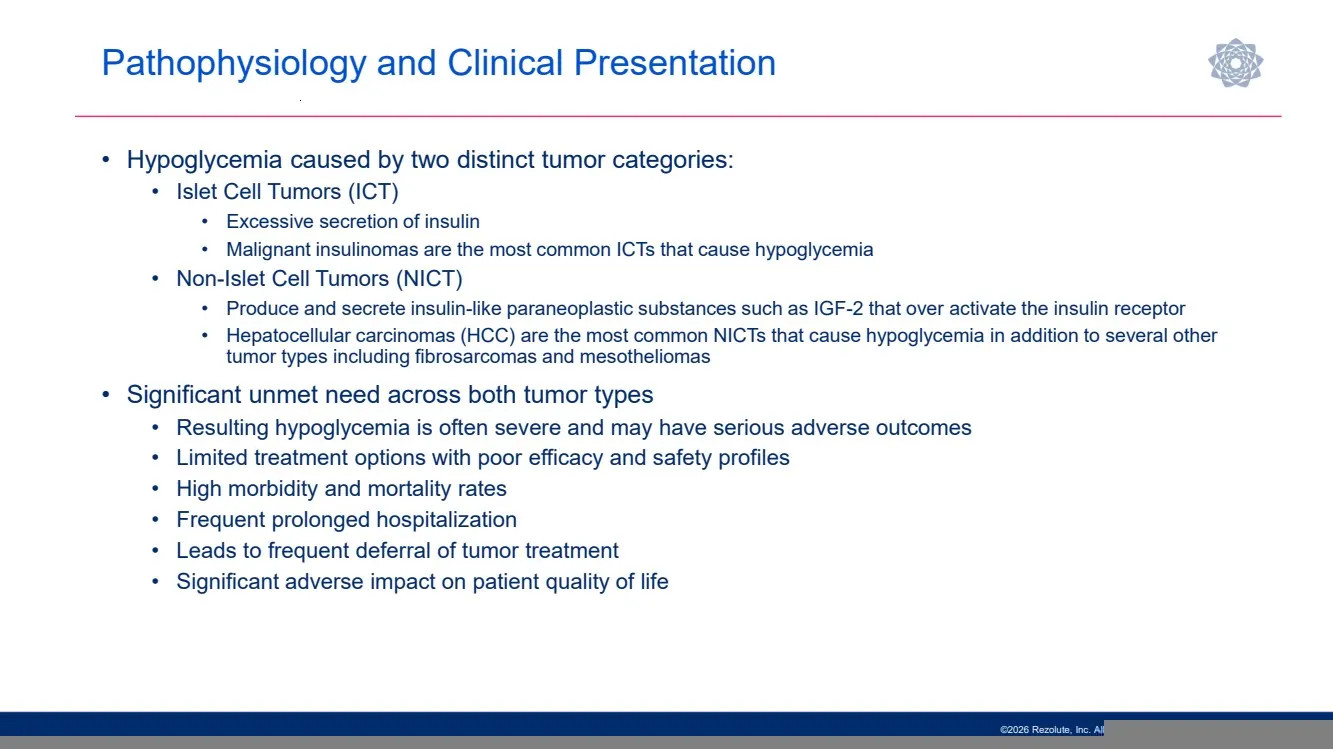
Slide 22: Pathophysiology and Clinical Presentation
Pathophysiology and Clinical Presentation 22 • Hypoglycemia caused by two distinct tumor categories: • Islet Cell Tumors (ICT) • Excessive secretion of insulin • Malignant insulinomas are the most common ICTs that cause hypoglycemia • Non-Islet Cell Tumors (NICT) • Produce and secrete insulin-like
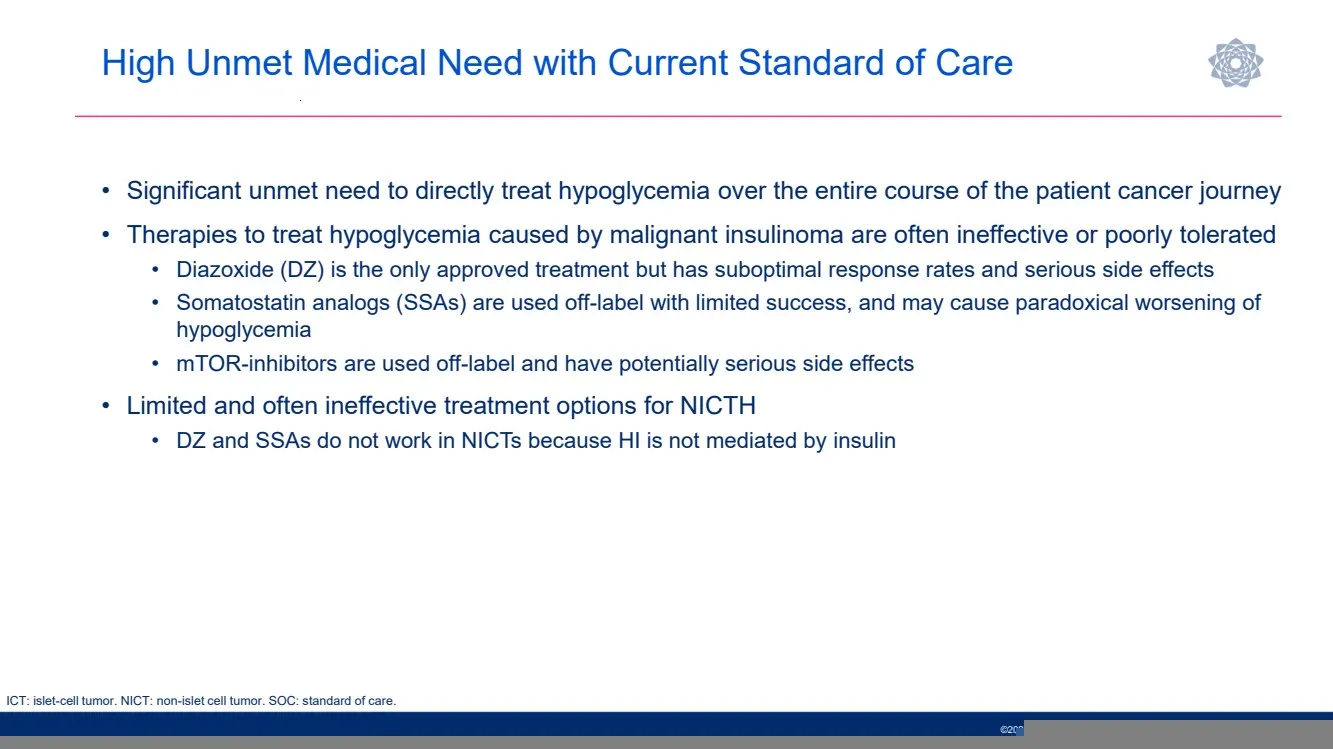
Slide 23: High Unmet Medical Need with Current Standard of Care
High Unmet Medical Need with Current Standard of Care 23 • Significant unmet need to directly treat hypoglycemia over the entire course of the patient cancer journey • Therapies to treat hypoglycemia caused by malignant insulinoma are often ineffective or poorly tolerated • Diazoxide (DZ) is the onl
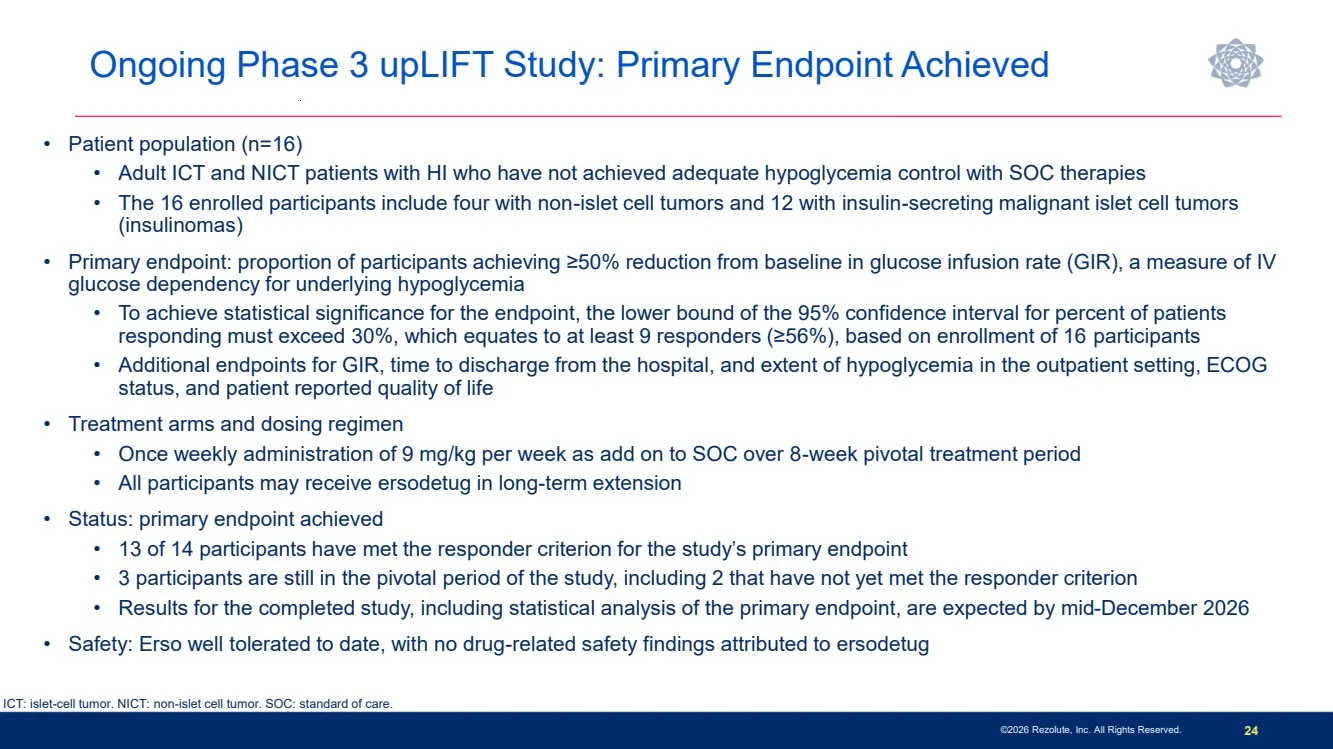
Slide 24: Ongoing Phase 3 upLIFT Study: Primary Endpoint Achieved
Ongoing Phase 3 upLIFT Study: Primary Endpoint Achieved 24 ICT: islet-cell tumor. NICT: non-islet cell tumor. SOC: standard of care. ©2026 Rezolute, Inc. All Rights Reserved. • Patient population (n=16) • Adult ICT and NICT patients with HI who have not achieved adequate hypoglycemia control with
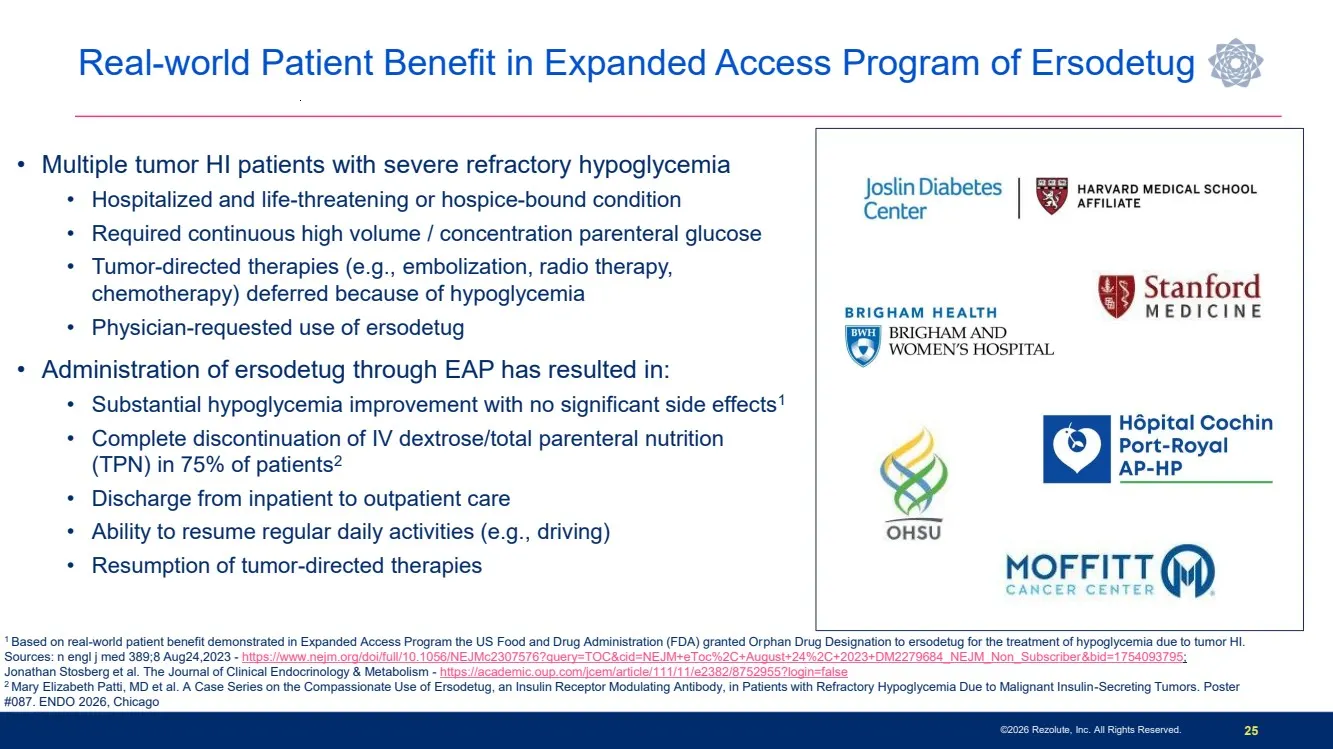
Slide 25: Real-world Patient Benefit in Expanded Access Program of Ersodetug
Real-world Patient Benefit in Expanded Access Program of Ersodetug 25 • Multiple tumor HI patients with severe refractory hypoglycemia • Hospitalized and life-threatening or hospice-bound condition • Required continuous high volume / concentration parenteral glucose • Tumor-directed therapies (e
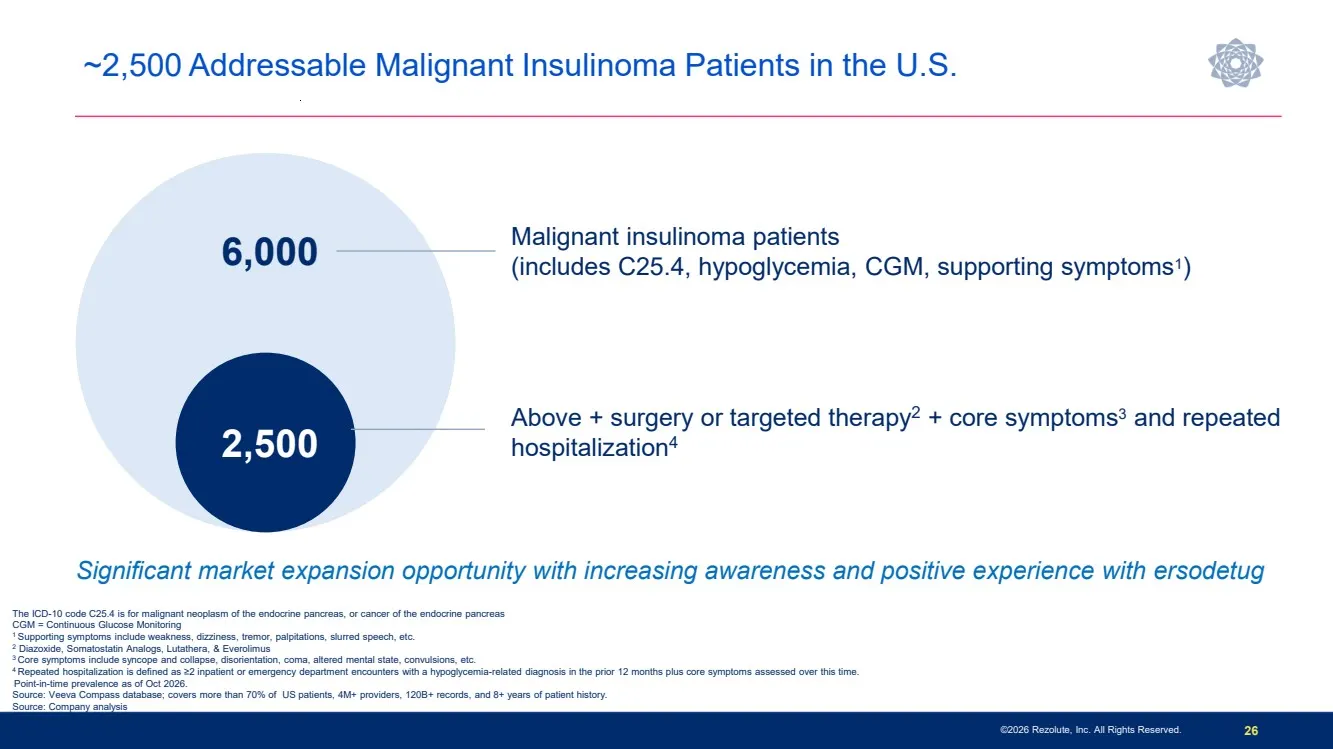
Slide 26: Malignant Insulinoma Patients Claims Analysis
©2026 Rezolute, Inc. All Rights Reserved. 26 Malignant insulinoma patients (includes C25.4, hypoglycemia, CGM, supporting symptoms1 ) Above + surgery or targeted therapy2 + core symptoms3 and repeated hospitalization4 The ICD-10 code C25.4 is for malignant neoplasm of the endocrine pancreas, or canc
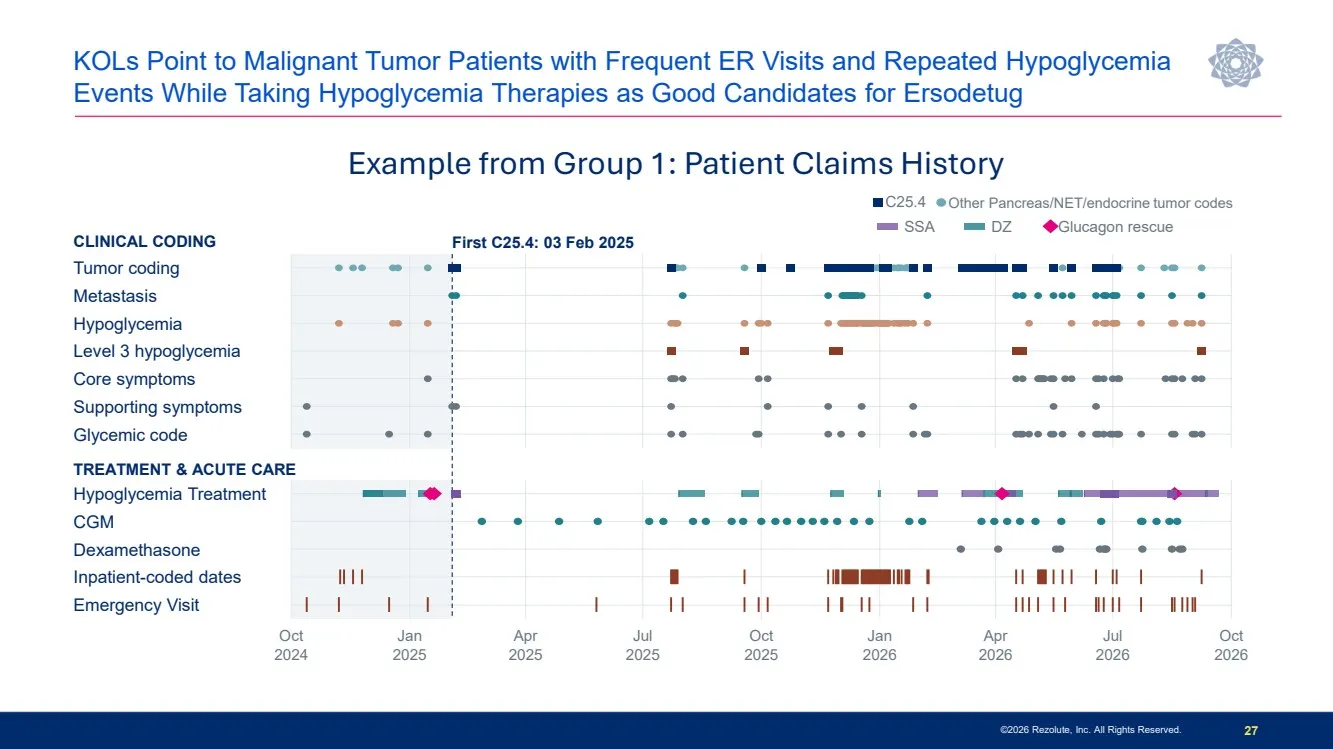
Slide 27: KOLs Point to Malignant Tumor Patients with Frequent ER Visits
©2026 Rezolute, Inc. All Rights Reserved. 27 KOLs Point to Malignant Tumor Patients with Frequent ER Visits and Repeated Hypoglycemia Events While Taking Hypoglycemia Therapies as Good Candidates for Ersodetug C25.4 Other Pancreas/NET/endocrine tumor codes CLINICAL CODING TREATMENT & ACUTE CARE SSA
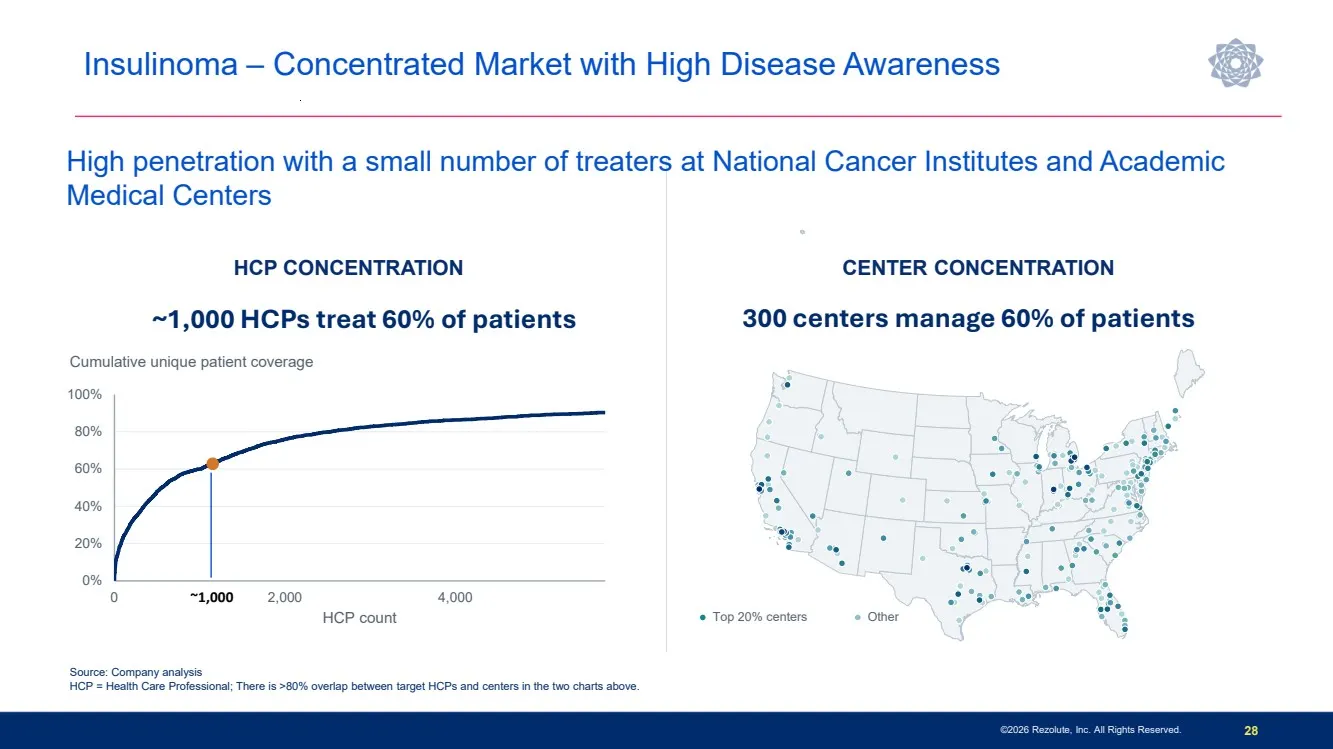
Slide 28: Insulinoma – Concentrated Market with High Disease Awareness
28 Insulinoma – Concentrated Market with High Disease Awareness Cumulative unique patient coverage 0% 20% 40% 60% 80% 100% 0 2,000 4,000 HCP count Source: Company analysis HCP = Health Care Professional; There is >80% overlap between target HCPs and centers in the two charts above. ~1,000 HCP CONCEN
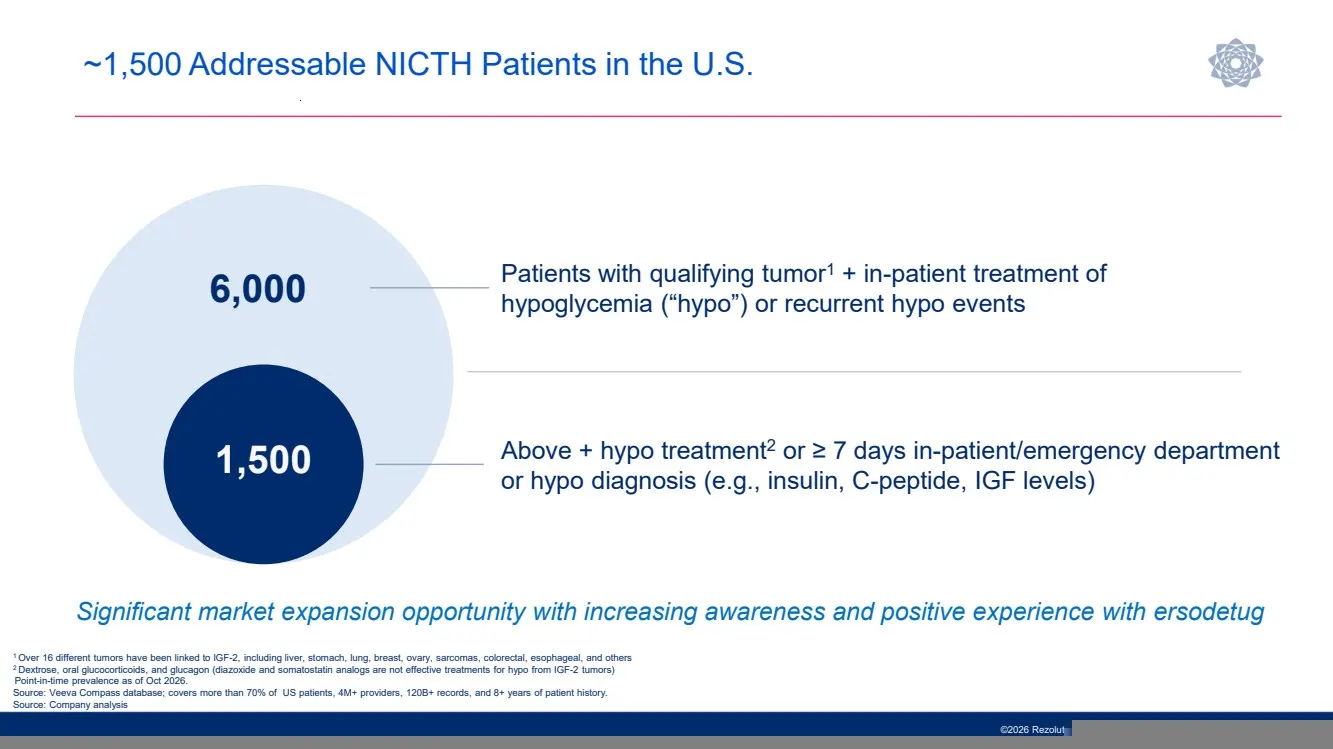
Slide 29: Addressable NICTH Patients in the U.S.
29 Patients with qualifying tumor1 + in-patient treatment of hypoglycemia (“hypo”) or recurrent hypo events Above + hypo treatment2 or ≥ 7 days in-patient/emergency department or hypo diagnosis (e.g., insulin, C-peptide, IGF levels) ~1,500 Addressable NICTH Patients in the U.S. 6,000 1,500 1 Over 16
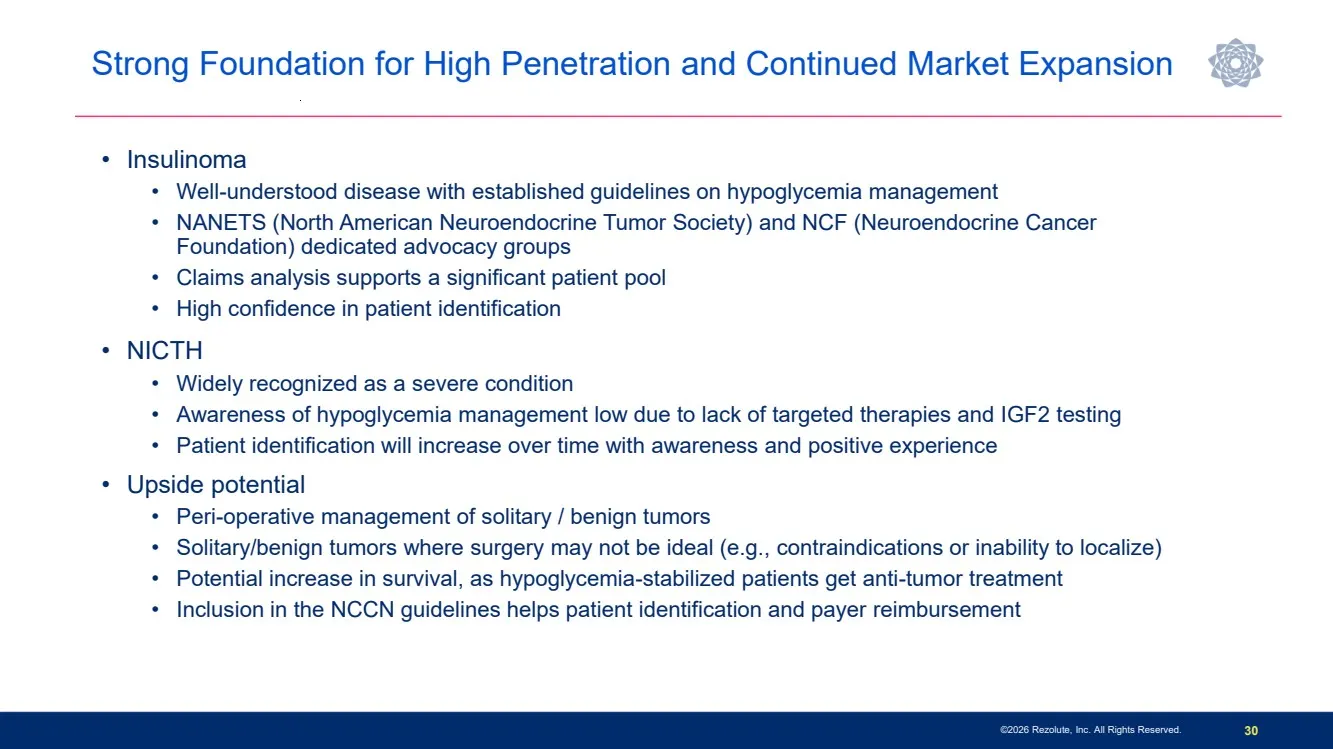
Slide 30: Strong Foundation for High Penetration and Continued Market Expansion
Strong Foundation for High Penetration and Continued Market Expansion • Insulinoma • Well-understood disease with established guidelines on hypoglycemia management • NANETS (North American Neuroendocrine Tumor Society) and NCF (Neuroendocrine Cancer Foundation) dedicated advocacy groups • Claims ana
Slide 31: Combined Commercial Opportunity in Congenital and Tumor HI Indications
Combined Commercial Opportunity in Congenital and Tumor HI Indications
Slide 32: Payer Research Supports Ultra-Rare Disease Pricing for Tumor HI
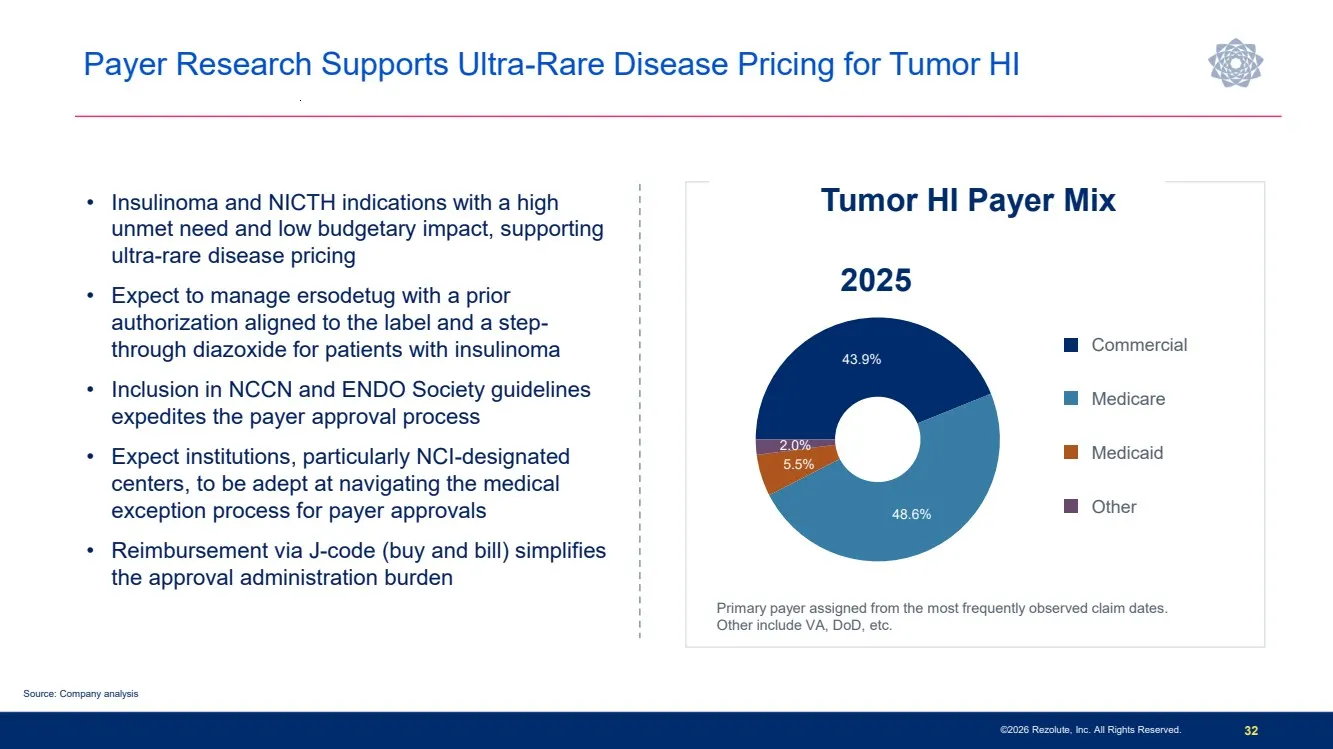
©2026 Rezolute, Inc. All Rights Reserved. 32 Payer Research Supports Ultra-Rare Disease Pricing for Tumor HI • Insulinoma and NICTH indications with a high unmet need and low budgetary impact, supporting ultra-rare disease pricing • Expect to manage ersodetug with a prior authorization aligned to th
Slide 33: Addressable Patients, Dosing Regimen and Pricing Enable Opportunity Exceeding $5 Billion
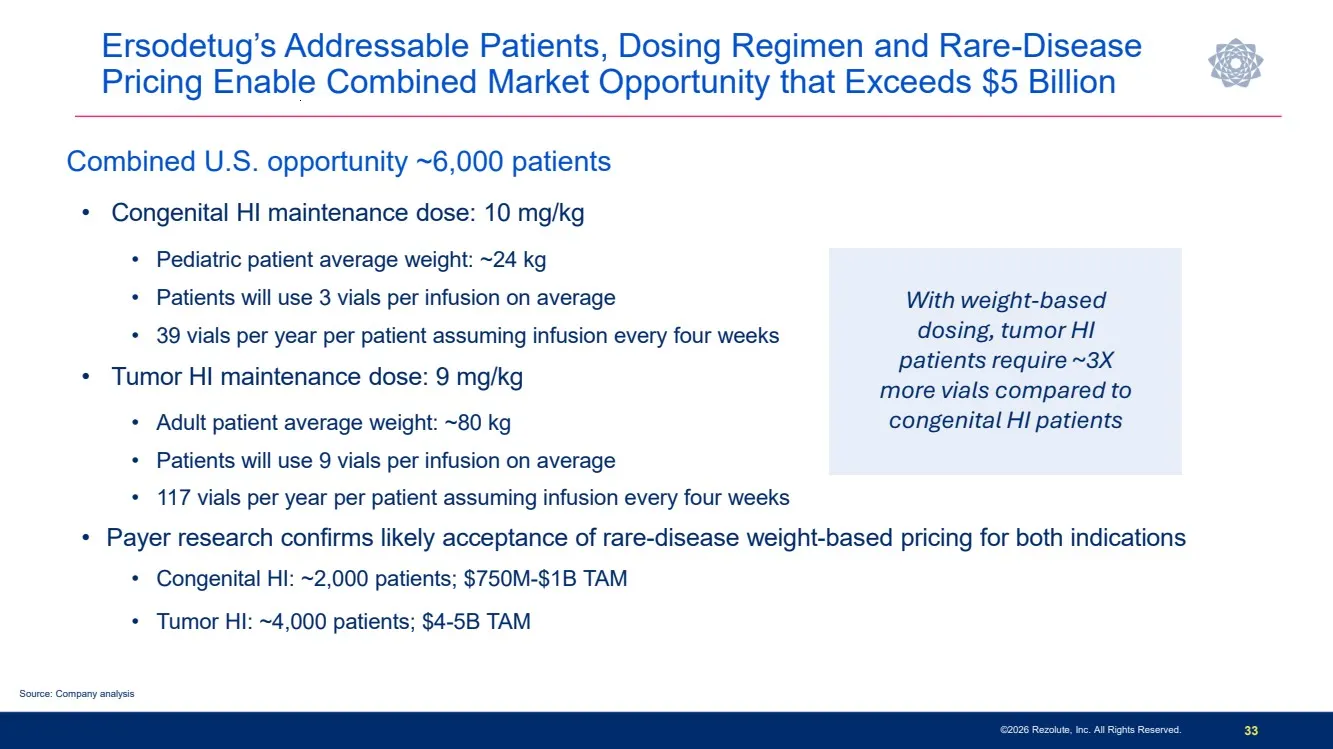
33 • Congenital HI maintenance dose: 10 mg/kg • Pediatric patient average weight: ~24 kg • Patients will use 3 vials per infusion on average • 39 vials per year per patient assuming infusion every four weeks • Tumor HI maintenance dose: 9 mg/kg • Adult patient average weight: ~80 kg • Patients will
Slide 34: An Ultra-rare Disease Company Treating Refractory Hypoglycemia
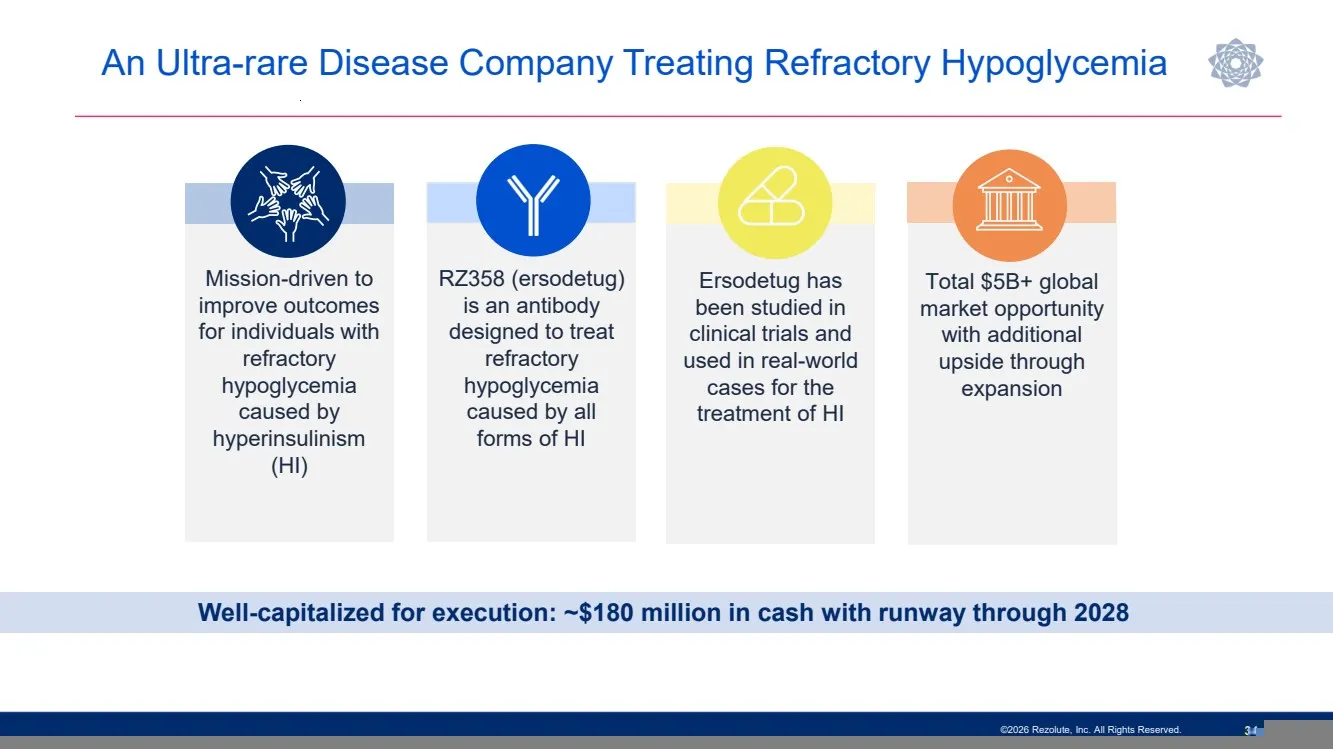
An Ultra-rare Disease Company Treating Refractory Hypoglycemia 34 Well-capitalized for execution: ~$180 million in cash with runway through 2028 Total $5B+ global market opportunity with additional upside through expansion RZ358 (ersodetug) is an antibody designed to treat refractory hypoglycemia ca

Slide 35: Rezolutebio.com
€ Rezolutebio.com
Source: SEC EDGAR · 8-K filed Nov 24, 2026
More decks from Rezolute, Inc.
 Investor Presentation (November 2026)35 slides · November 2026
 Investor Presentation (October 2026)34 slides · October 2026
 Investor Presentation (August 2026)31 slides · August 2026
 Investor Presentation (June 2026)31 slides · June 2026
 Investor Presentation (May 2026)38 slides · May 2026
 Investor Presentation (March 2026)35 slides · March 2026