Omni Bio Pharmaceutical — Investor Presentation (February 2011)
34 slides from Omni Bio Pharmaceutical's investor presentation, Feb 28, 2011
Slide 1: Omni Bio Pharmaceutical Investor Presentation
February 28, 2011OTCBB: OMBP Omni Bio Pharmaceutical Investor Presentation
Slide 2: Forward-Looking Statements
Forward-Looking Statements Except for the historical information contained herein, the matters discussed in this presentation are forward-looking statements. The forward-looking statements in this presentation are based on information available to us as of the date any such statements are made and w
Slide 3: Omni Overview
Omni Overview Omni's core strategy is based on licensing issued (3) and pending patent applications (24) that cover new uses for an existing FDA-approved drug, Alpha-1 Antitrypsin (AAT).Existing FDA approval for treatment of emphysema means that there are limited safety issues and a potentially redu
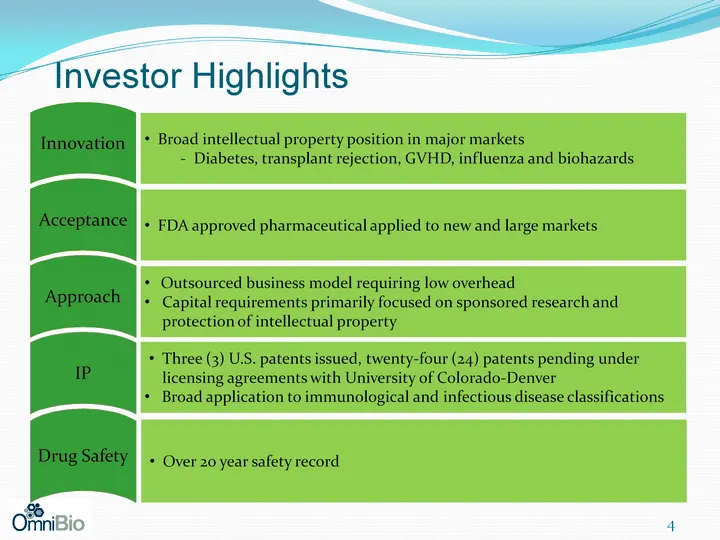
Slide 4: Investor Highlights
Investor Highlights IP Approach Acceptance Innovation Broad intellectual property position in major markets- Diabetes, transplant rejection, GVHD, influenza and biohazards FDA approved pharmaceutical applied to new and large markets Outsourced business model requiring low overheadCapital requirement
Slide 5: The Opportunity
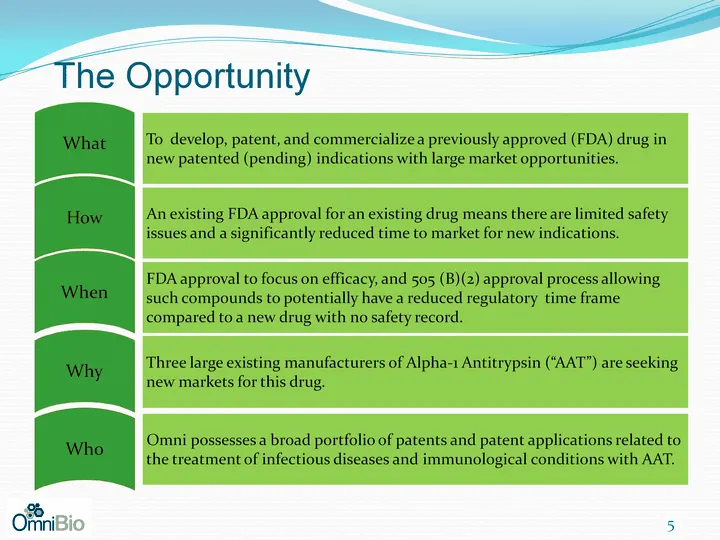
The Opportunity When How What To develop, patent, and commercialize a previously approved (FDA) drug in new patented (pending) indications with large market opportunities. An existing FDA approval for an existing drug means there are limited safety issues and a significantly reduced time to market f
Slide 6: Alpha-1-Antitrypsin (AAT) Core Technology
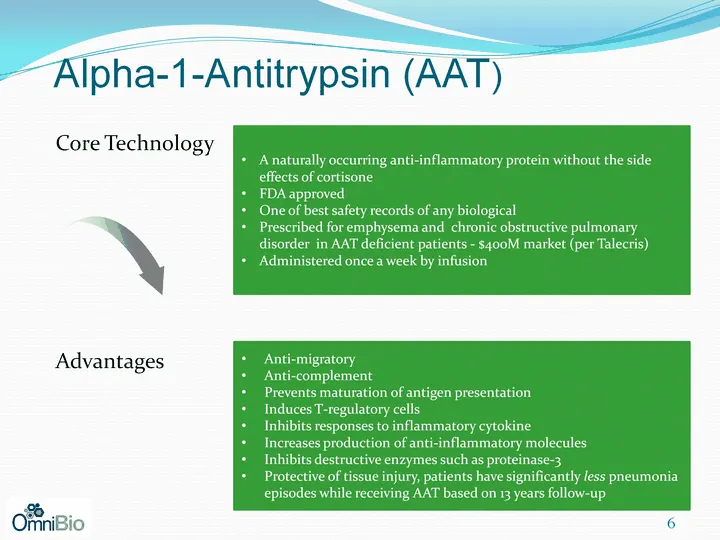
Alpha-1-Antitrypsin (AAT) Core Technology Anti-migratoryAnti-complementPrevents maturation of antigen presentationInduces T-regulatory cellsInhibits responses to inflammatory cytokineIncreases production of anti-inflammatory moleculesInhibits destructive enzymes such as proteinase-3Protective of tis
Slide 7: Target Populations
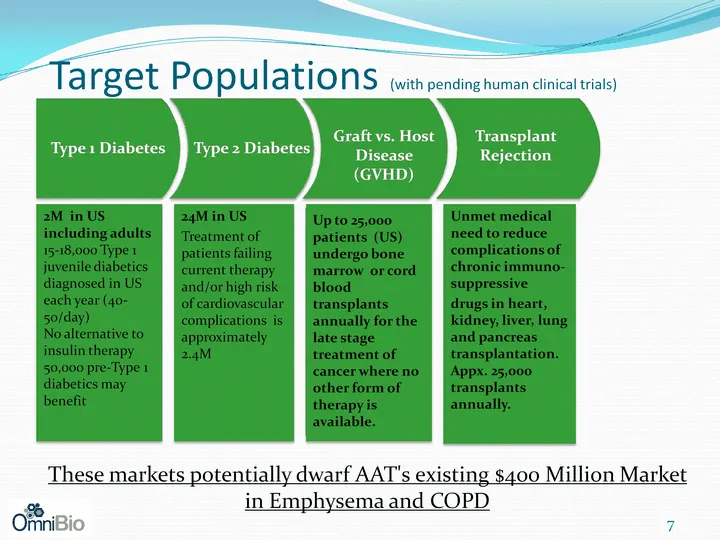
2M in US including adults 15-18,000 Type 1 juvenile diabetics diagnosed in US each year (40- 50/day)No alternative to insulin therapy 50,000 pre-Type 1 diabetics may benefit 24M in USTreatment of patients failing current therapy and/or high risk of cardiovascular complications is approximately 2.4M
Slide 8: IP Portfolio
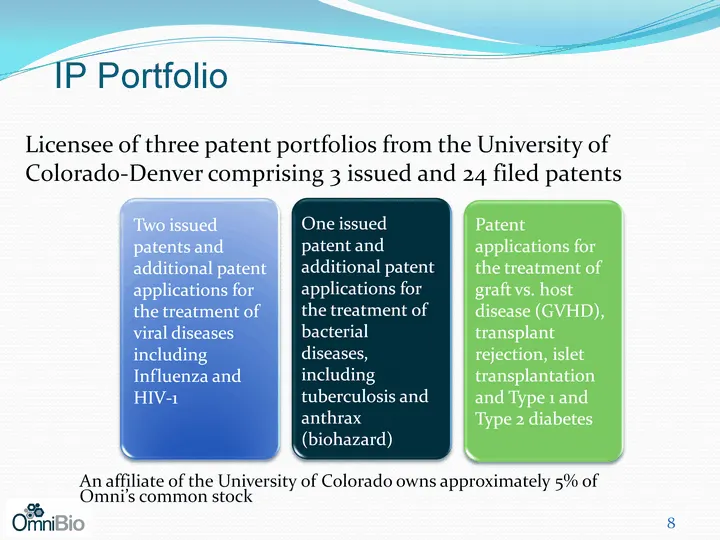
IP Portfolio Licensee of three patent portfolios from the University of Colorado-Denver comprising 3 issued and 24 filed patents Two issued patents and additional patent applications for the treatment of viral diseases including Influenza and HIV-1 Patent applications for the treatment of graft vs.
Slide 9: Research & Development Pipeline
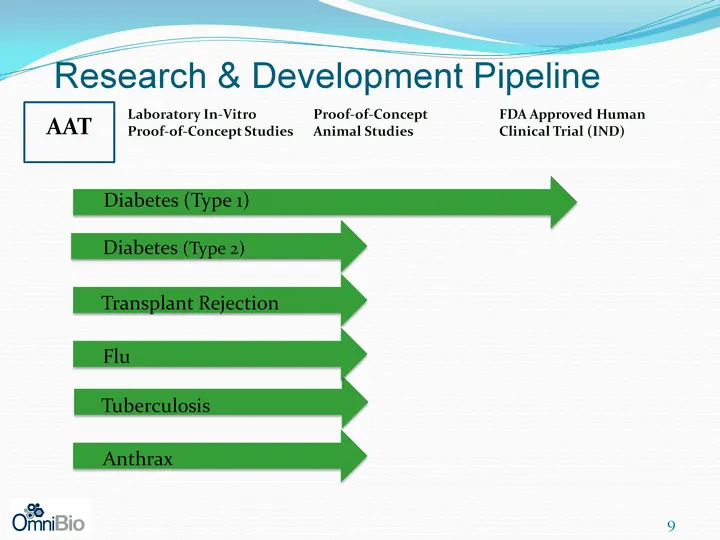
Research & Development Pipeline Diabetes (Type 1) Transplant Rejection Flu Tuberculosis Anthrax AAT Laboratory In-VitroProof-of-Concept Studies Proof-of-ConceptAnimal Studies FDA Approved Human Clinical Trial (IND) Diabetes (Type 2) 9
Slide 10: FDA Approved Human Clinical Trial in T1 Diabetes
FDA Approved Human Clinical Trial in T1 Diabetes Objective: Preventing the destruction of insulin-producing islet (beta) cells, the cause of Type 1 diabetesInitial patients have been infused in Phase 1/2 human clinical trial of AAT in recently diagnosed Type 1 diabeticsBarbara Davis Center for Child
Slide 11: Type 1 Diabetes Market Opportunity
Type 1 Diabetes Market Opportunity $700,000,000 yearly recurring market opportunity for newly diagnosed type 1 diabetes patients (30,000 recently diagnosed type 1 patients at $25,000 per treatment (US only))Potential royalty agreement with an existing manufacturer of AAT with expectations of 15-30%
Slide 12: AAT Prolongs Islet Allograft Survival
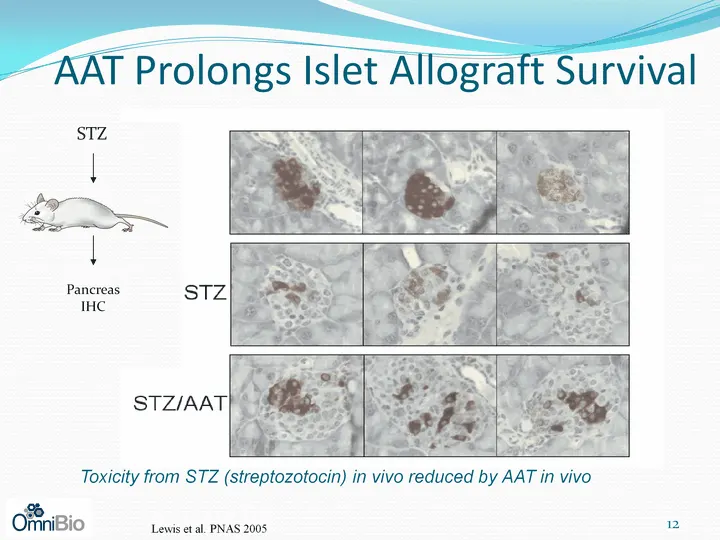
Lewis et al. PNAS 2005 STZ PancreasIHC AAT Prolongs Islet Allograft Survival Toxicity from STZ (streptozotocin) in vivo reduced by AAT in vivo 12
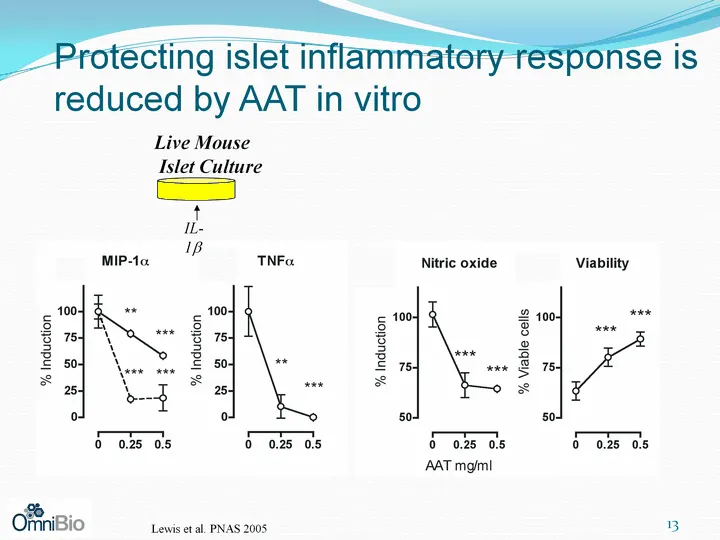
Slide 13: Protecting islet inflammatory response is reduced by AAT in vitro
Protecting islet inflammatory response is reduced by AAT in vitro 13 Lewis et al. PNAS 2005 Live Mouse Islet Culture IL- 1??
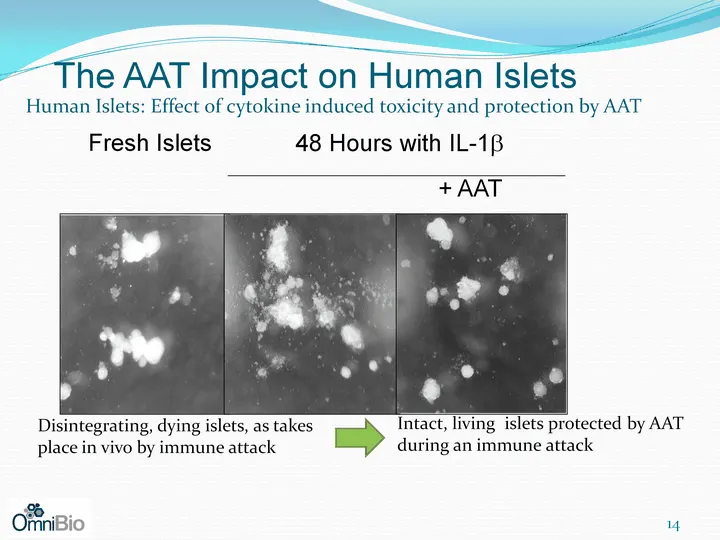
Slide 14: The AAT Impact on Human Islets
The AAT Impact on Human Islets Fresh Islets Human Islets: Effect of cytokine induced toxicity and protection by AAT Disintegrating, dying islets, as takes place in vivo by immune attack Intact, living islets protected by AATduring an immune attack + AAT 48 Hours with IL-1? 14
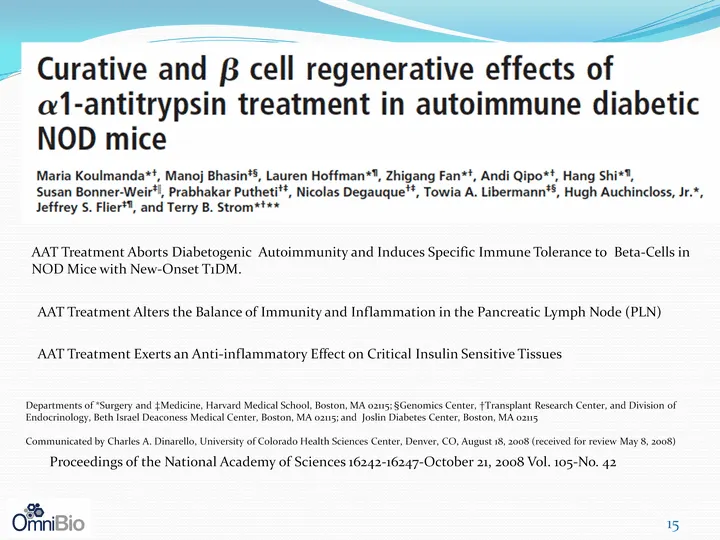
Slide 15: AAT Treatment Aborts Diabetogenic Autoimmunity in NOD Mice
Proceedings of the National Academy of Sciences 16242-16247-October 21, 2008 Vol. 105-No. 42 Departments of *Surgery and ‡Medicine, Harvard Medical School, Boston, MA 02115; §Genomics Center, †Transplant Research Center, and Division of Endocrinology, Beth Israel Deaconess Medical Center, Boston, MA
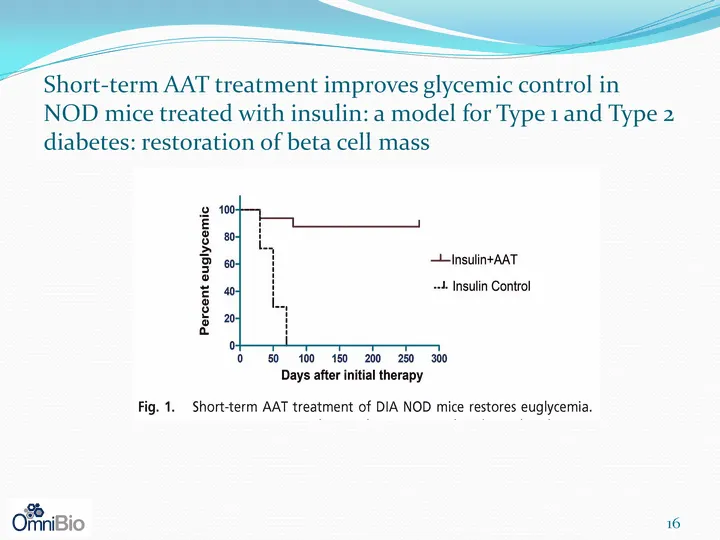
Slide 16: Short-term AAT treatment improves glycemic control in NOD mice
Short-term AAT treatment improves glycemic control inNOD mice treated with insulin: a model for Type 1 and Type 2 diabetes: restoration of beta cell mass 16
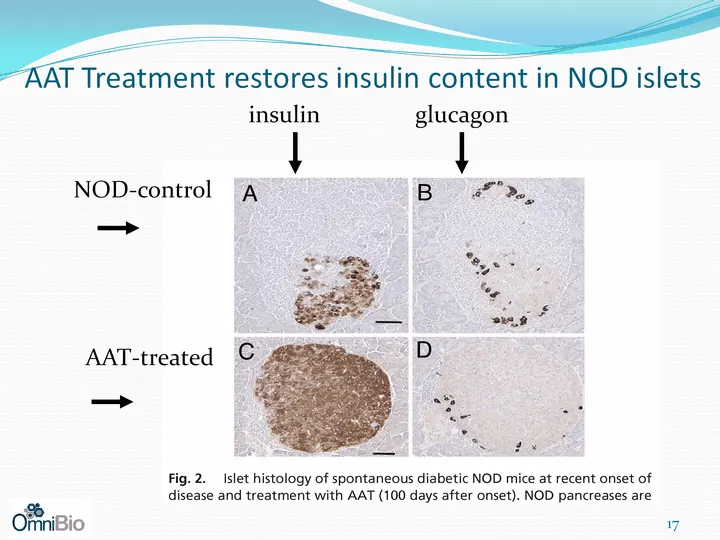
Slide 17: AAT Treatment restores insulin content in NOD islets
AAT Treatment restores insulin content in NOD islets NOD-control AAT-treated glucagon insulin 17
Slide 18: Type 2 Diabetes Paper
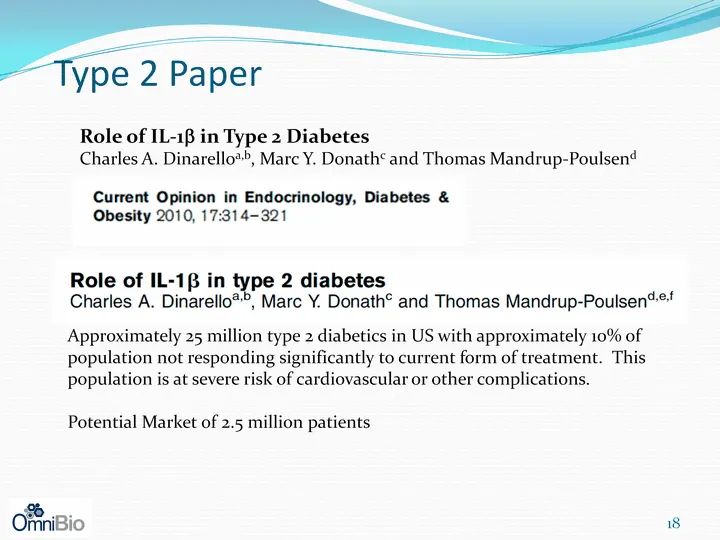
Approximately 25 million type 2 diabetics in US with approximately 10% of population not responding significantly to current form of treatment. This population is at severe risk of cardiovascular or other complications.Potential Market of 2.5 million patients Type 2 Paper 18 Role of IL-1b in Type 2
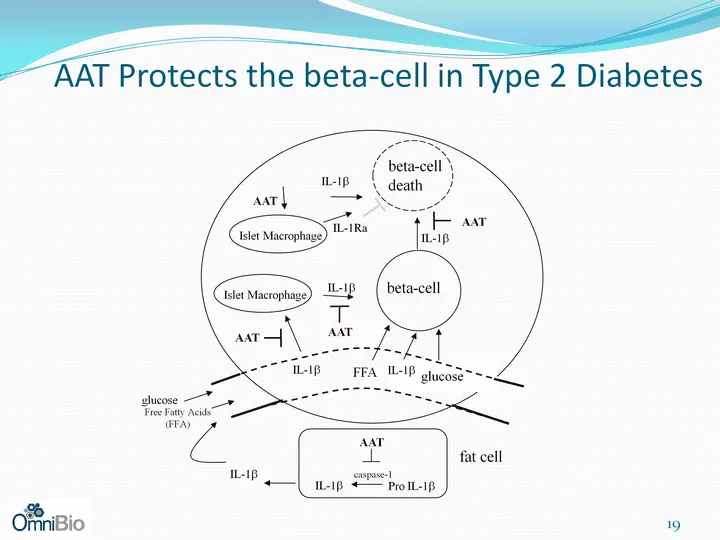
Slide 19: AAT Protects the beta-cell in Type 2 Diabetes
glucose beta-cell FFA fat cell IL-1b beta-celldeath Islet Macrophage IL-1b IL-1Ra Pro IL-1b IL-1b caspase-1 AAT glucose Free Fatty Acids(FFA) AAT AAT IL-1b AAT Islet Macrophage AAT IL-1b IL-1b IL-1b AAT Protects the beta-cell in Type 2 Diabetes 19
Slide 20: Late Stage Type 1 and Type 2 Diabetes Trials
Late Stage Type 1 and Type 2 20 Stage Type 1 diabetes trial in late onset diabetics and Type 2 diabetes trial in patients at severe risk of cardiovascular complicationsDr. Marc DonathProfessor of Endocrinology, diabetes and metabolismUniversity of Basel Hospital, Basel, Switzerland2008 Novartis Priz
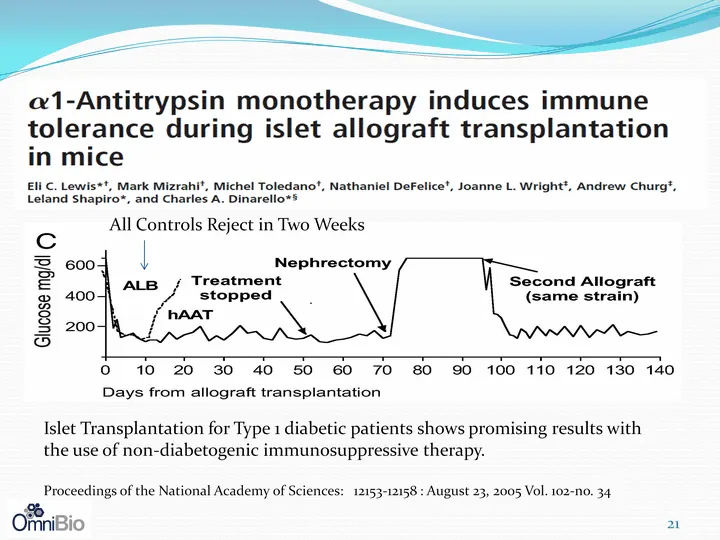
Slide 21: Islet Transplantation for Type 1 diabetic patients
Islet Transplantation for Type 1 diabetic patients shows promising results with the use of non-diabetogenic immunosuppressive therapy.Proceedings of the National Academy of Sciences: 12153-12158 : August 23, 2005 Vol. 102-no. 34 All Controls Reject in Two Weeks 21
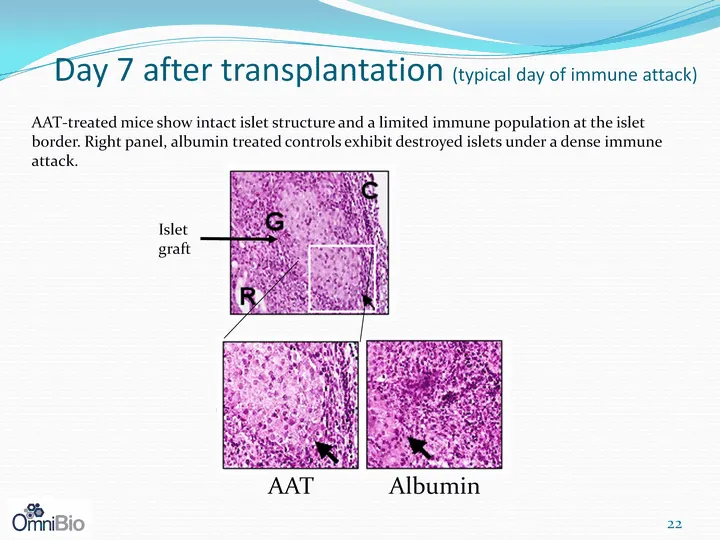
Slide 22: AAT-treated mice show intact islet structure
Day 7 after transplantation (typical day of immune attack) AAT Albumin AAT-treated mice show intact islet structure and a limited immune population at the islet border. Right panel, albumin treated controls exhibit destroyed islets under a dense immune attack. Islet graft 22
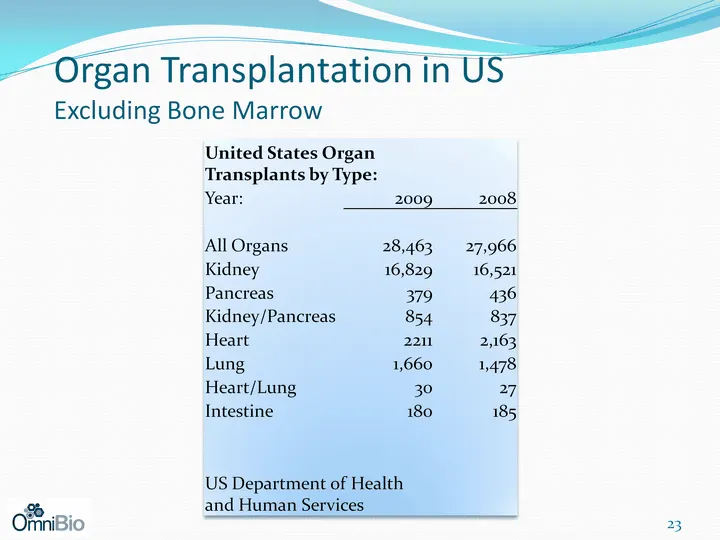
Slide 23: Organ Transplantation in US Excluding Bone Marrow
Organ Transplantation in US Excluding Bone Marrow 23 United States Organ Transplants by Type: United States Organ Transplants by Type: Year: 2009 2008 All Organs 28,463 27,966 Kidney 16,829 16,521 Pancreas 379 436 Kidney/Pancreas 854 837 Heart 2211 2,163 Lung 1,660 1,478 Heart/Lung 30 27 Intestine 1
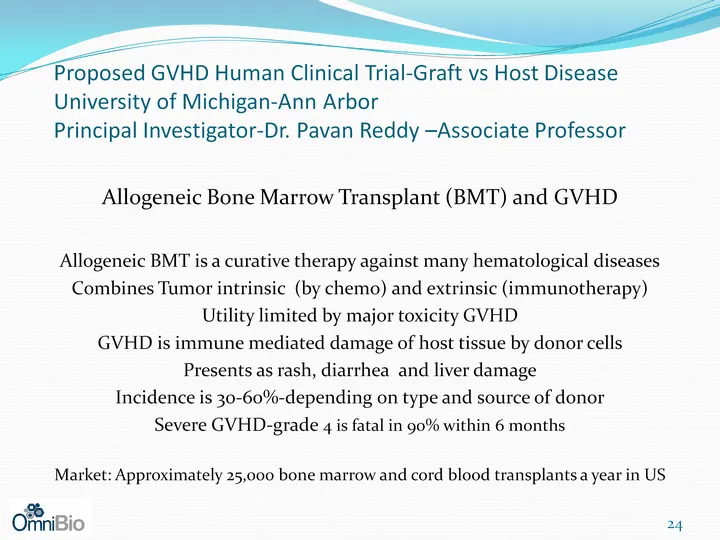
Slide 24: Allogeneic Bone Marrow Transplant (BMT) and GVHD
Allogeneic Bone Marrow Transplant (BMT) and GVHDAllogeneic BMT is a curative therapy against many hematological diseasesCombines Tumor intrinsic (by chemo) and extrinsic (immunotherapy)Utility limited by major toxicity GVHDGVHD is immune mediated damage of host tissue by donor cellsPresents as rash,
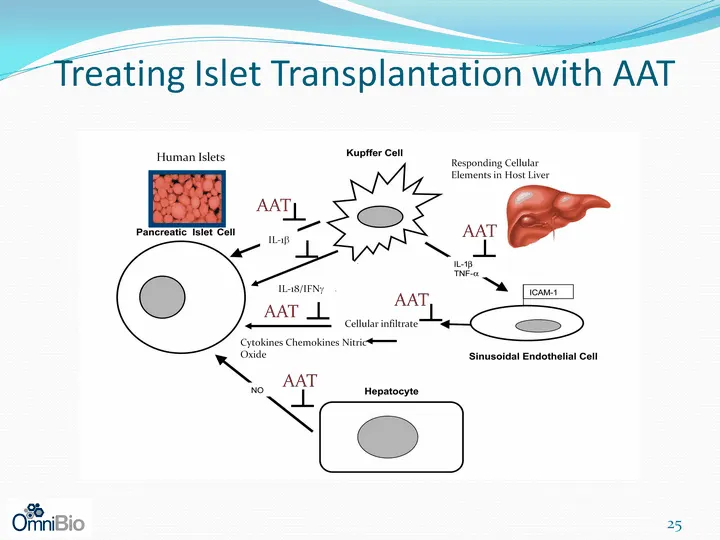
Slide 25: Treating Islet Transplantation with AAT
IL-18/IFN? Cellular infiltrate AAT AAT AAT AAT AAT Responding Cellular Elements in Host Liver Human Islets Cytokines Chemokines Nitric Oxide IL-1b Treating Islet Transplantation with AAT 25
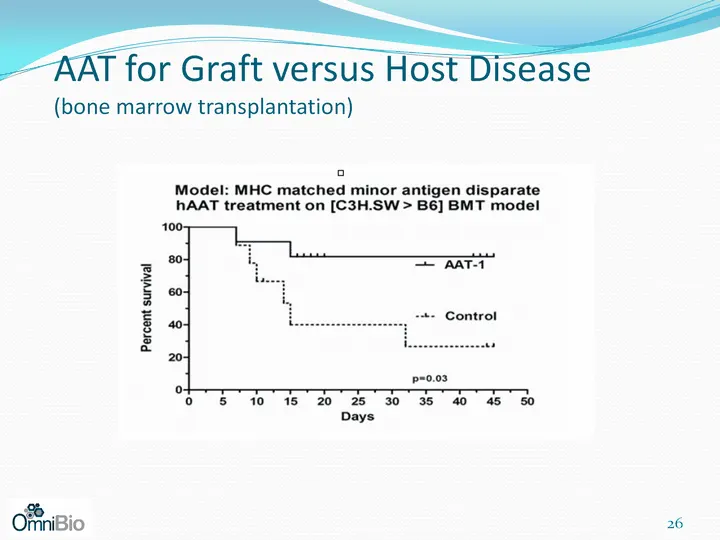
Slide 26: AAT for Graft versus Host Disease
AAT for Graft versus Host Disease (bone marrow transplantation) 26
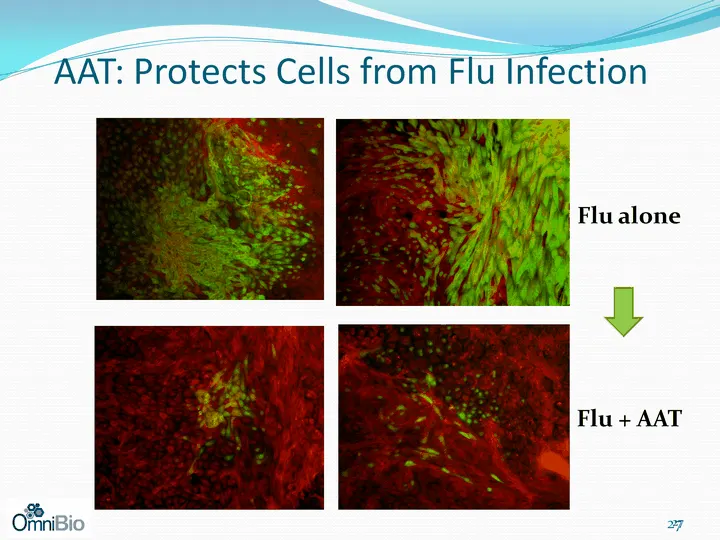
Slide 27: AAT: Protects Cells from Flu Infection
Flu alone Flu + AAT 27 AAT: Protects Cells from Flu Infection 27
Slide 28: Targeted 2011 Milestones
Targeted 2011 Milestones: Complete Patient Infusion of first 15 Patients (Q2) First Type 1 Diabetes Patient Data Disclosure (end of Q2/early Q3) Potential commitment for additional drug supply from major supplier (Q2/Q3) Expansion of licensing agreements and IP (Q2/Q3) Initiate Expansion of Type 1 C
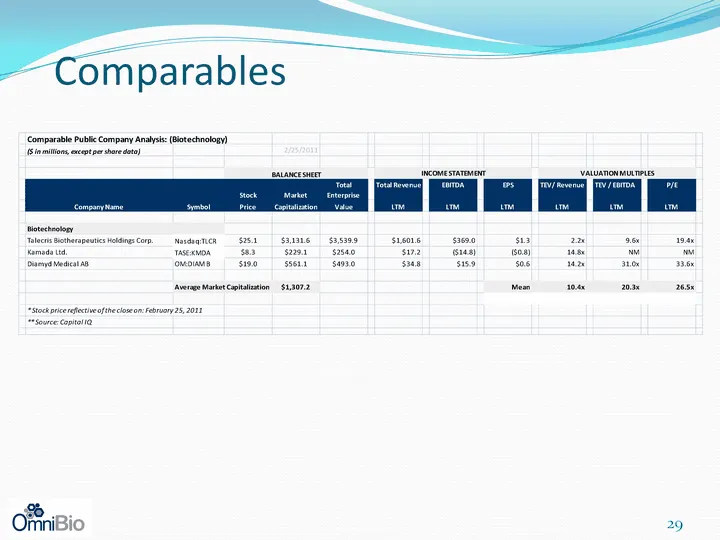
Slide 29: Omni Bio
ch a vw we OPniBio
Slide 30: Balance Sheet
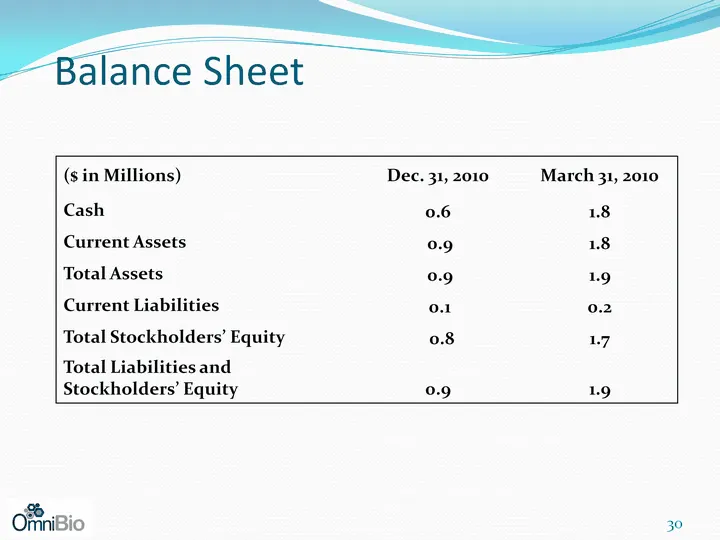
($ in Millions) Dec. 31, 2010 March 31, 2010 Cash 0.6 1.8 Current Assets 0.9 1.8 Total Assets 0.9 1.9 Current Liabilities 0.1 0.2 Total Stockholders' Equity 0.8 1.7 Total Liabilities and Stockholders' Equity 0.9 1.9 Balance Sheet 30
Slide 31: About Omni Bio
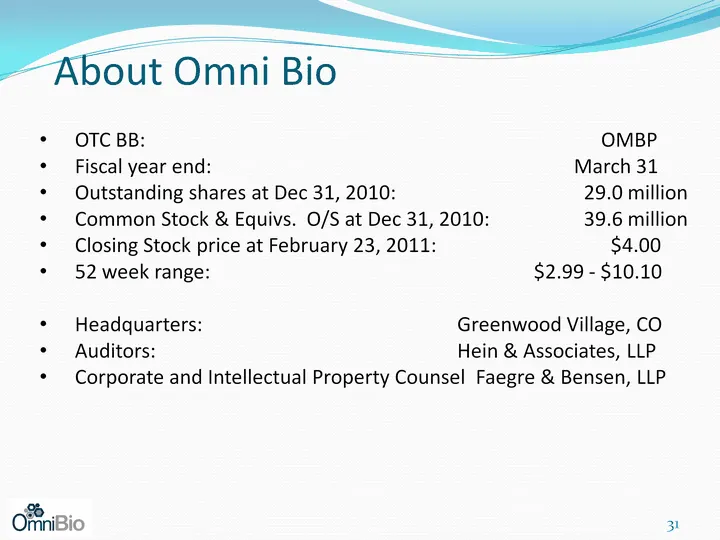
OTC BB: OMBPFiscal year end: March 31Outstanding shares at Dec 31, 2010: 29.0 millionCommon Stock & Equivs. O/S at Dec 31, 2010: 39.6 millionClosing Stock price at February 23, 2011: $4.0052 week range: $2.99 - $10.10Headquarters: Greenwood Village, COAuditors: Hein & Associates, LLPCorporate and In
Slide 32: Our Team
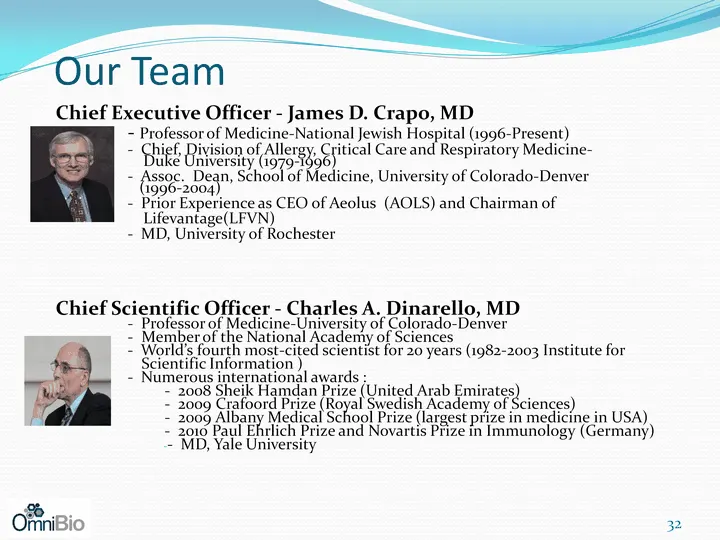
Our Team 32 Chief Executive Officer - James D. Crapo, MD - Professor of Medicine-National Jewish Hospital (1996-Present) - Chief, Division of Allergy, Critical Care and Respiratory Medicine- Duke University (1979-1996) - Assoc. Dean, School of Medicine, University of Colorado-Denver (1996-2004)-- -
Slide 33: Our Team (continued)
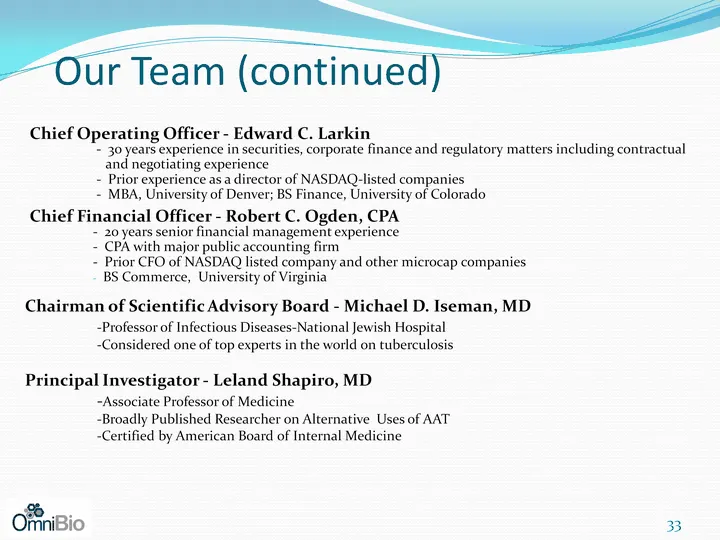
Our Team (continued) Chief Operating Officer - Edward C. Larkin- 30 years experience in securities, corporate finance and regulatory matters including contractual and negotiating experience- Prior experience as a director of NASDAQ-listed companies- MBA, University of Denver; BS Finance, University
Slide 34: Omni Investment Opportunity
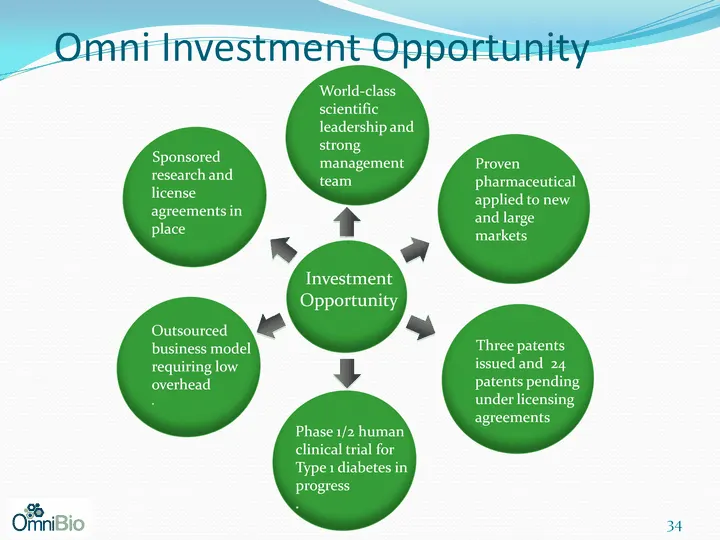
Investment Opportunity World-class scientific leadership and strong management team Proven pharmaceutical applied to new and large markets Phase 1/2 human clinical trial for Type 1 diabetes in progress. Three patents issued and 24 patents pending under licensing agreements Sponsored research and lic
Source: SEC EDGAR · 8-K filed Feb 28, 2011
More decks from Omni Bio Pharmaceutical Inc
 Investor Presentation (September 2014)27 slides · Sep 11, 2014
 Investor Presentation (June 2014)26 slides · Jun 3, 2014
 Investor Presentation (September 2013)24 slides · Sep 9, 2013
 Investor Presentation (July 2013)27 slides · Jul 2, 2013
 Investor Presentation (February 2013)20 slides · Feb 12, 2013
 Investor Presentation (March 2012)25 slides · Mar 20, 2012