INmune Bio Inc. · NASDAQ:INMB
INmune Bio — Investor Presentation (June 2024)
55 slides from INmune Bio's investor presentation, June 2024
Slide 1: Harnessing the Power of the Innate Immune System
HARNESSING THE POWER OF THE INNATE IMMUNE SYSTEM Inflammation & Immunology Platforms: XPro and INKmune To: Repair Innate Immune Dysfunction to Treat Disease INMB Investor Presentation June 2024 Nasdaq
Slide 2: Forward Looking Statements
FORWARD LOOKING STATEMENTS This presentation contains “forward-looking statements” Forward-looking statements reflect our current view about future events. When used in this presentation, the words “anticipate,” “believe,” “estimate,” “expect,” “future,” “intend,” “plan,” or the negative of these te
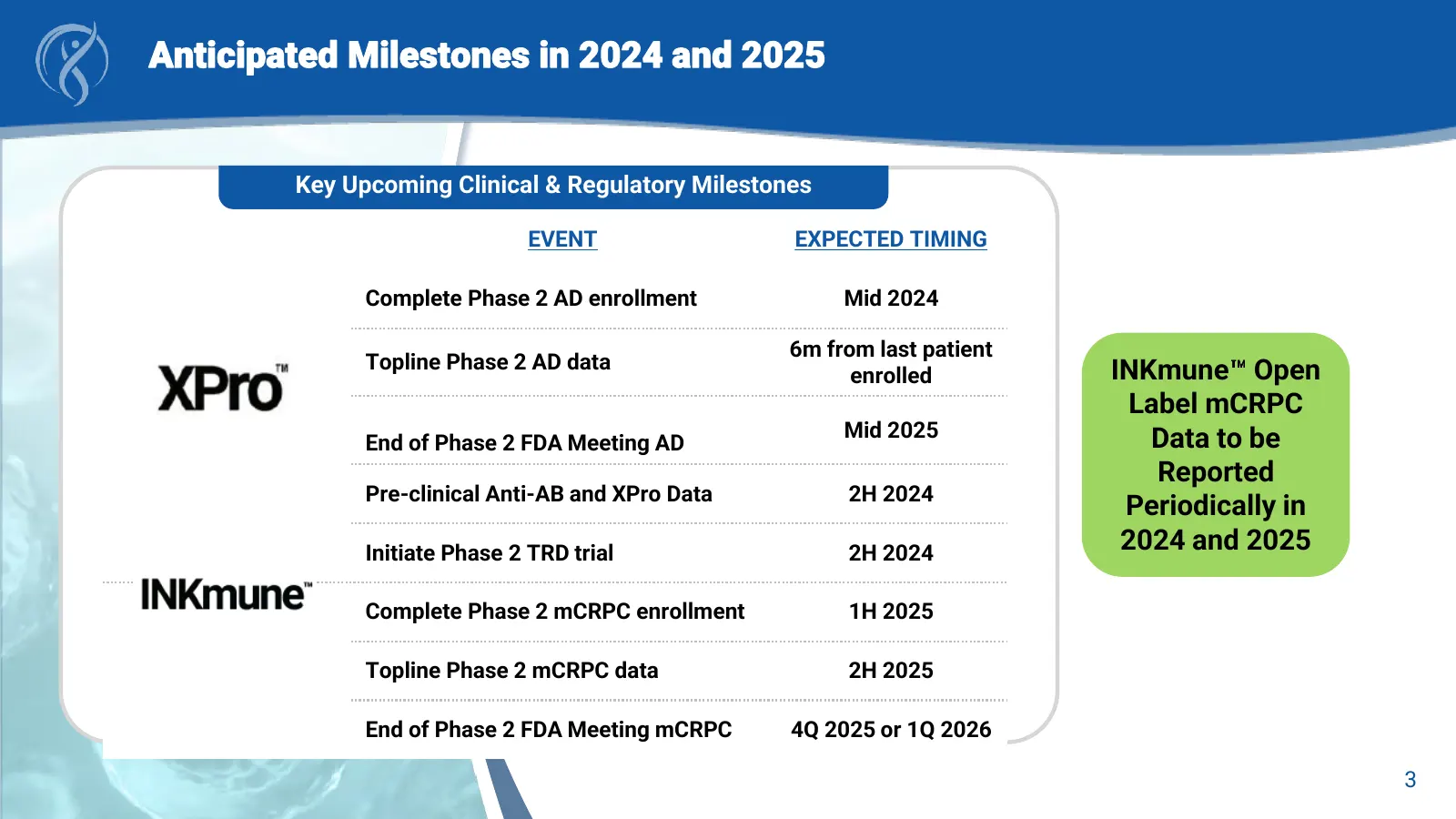
Slide 3: Anticipated Milestones in 2024 and 2025
Anticipated Milestones in 2024 and 2025 Key Upcoming Clinical & Regulatory Milestones EVENT EXPECTED TIMING Complete Phase 2 AD enrollment Mid 2024 6m from last patient Topline Phase 2 AD data INKmune Open enrolled a Label mCRPC Mid 2025 Data to be End of Phase 2 FDA Meeting AD Reported Pre-clinical
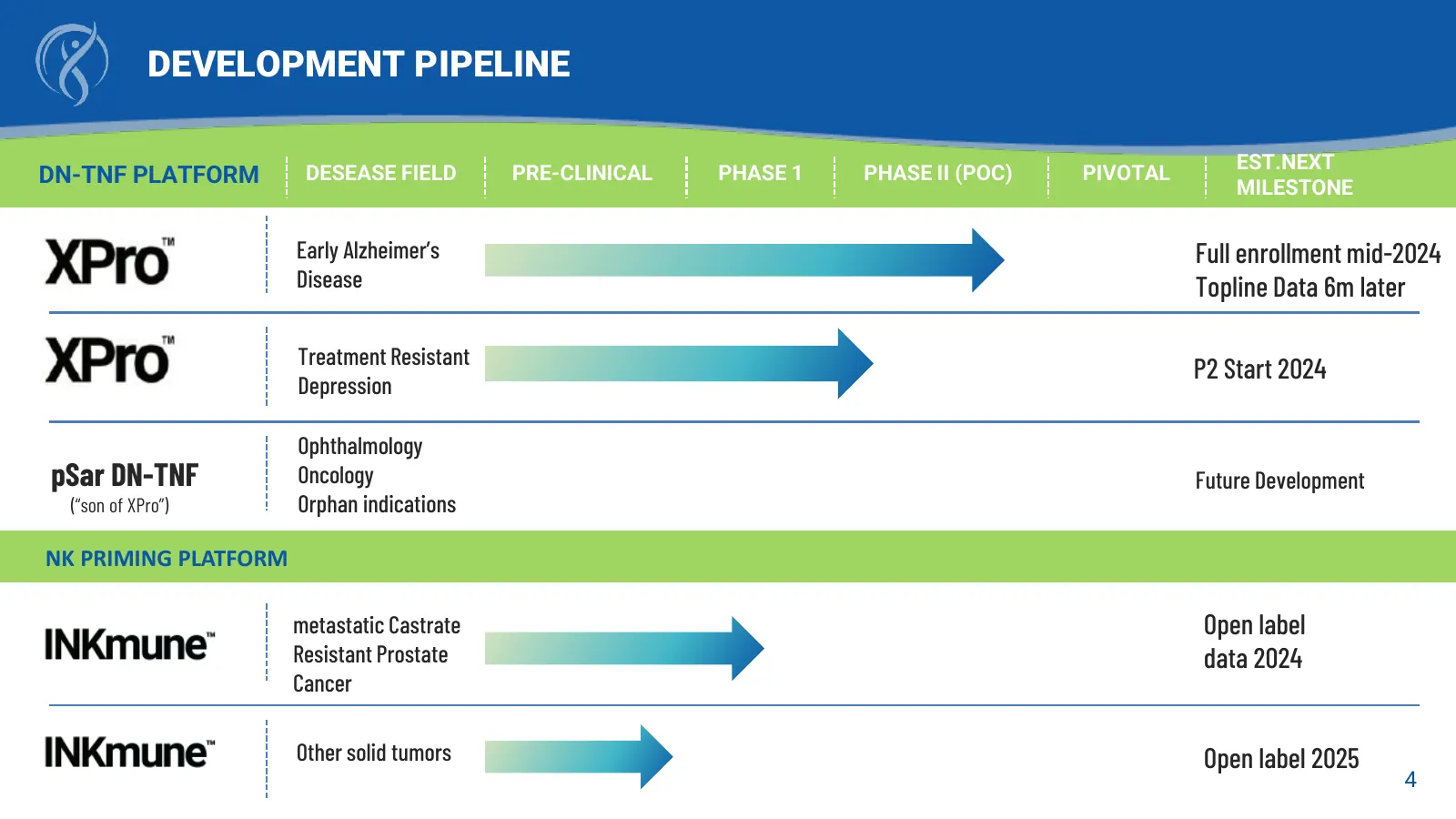
Slide 4: Development Pipeline
DEVELOPMENT PIPELINE DESEASE FIELD PRE-CLINICAL PHASE 1 PHASE II (POC) PIVOTAL EST.NEXT DN-TNF PLATFORM MILESTONE Early Alzheimer’s Full enrollment mid-2024 Disease Topline Data 6m later Treatment Resistant P2 Start 2024 Depression Ophthalmology pSar DN-TNF Oncology Future Development (“son of XPro”
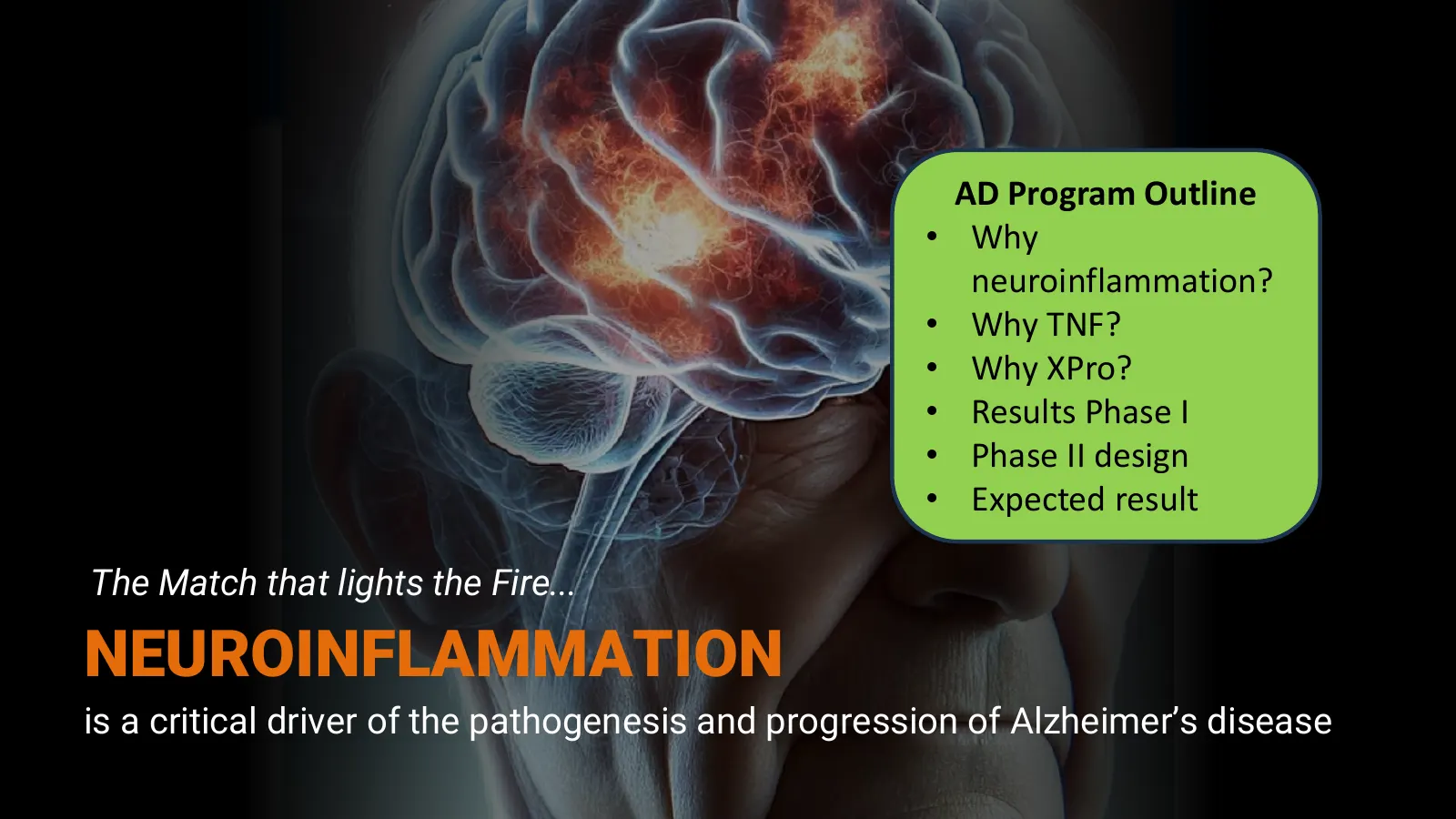
Slide 5: Neuroinflammation: AD Program Outline
AD Program Outline • Why neuroinflammation? • Why TNF? • Why XPro? • Results Phase I • Phase II design • Expected result The Match that lights the Fire... NEUROINFLAMMATION is a critical driver of the pathogenesis and progression of Alzheimer’s disease 5
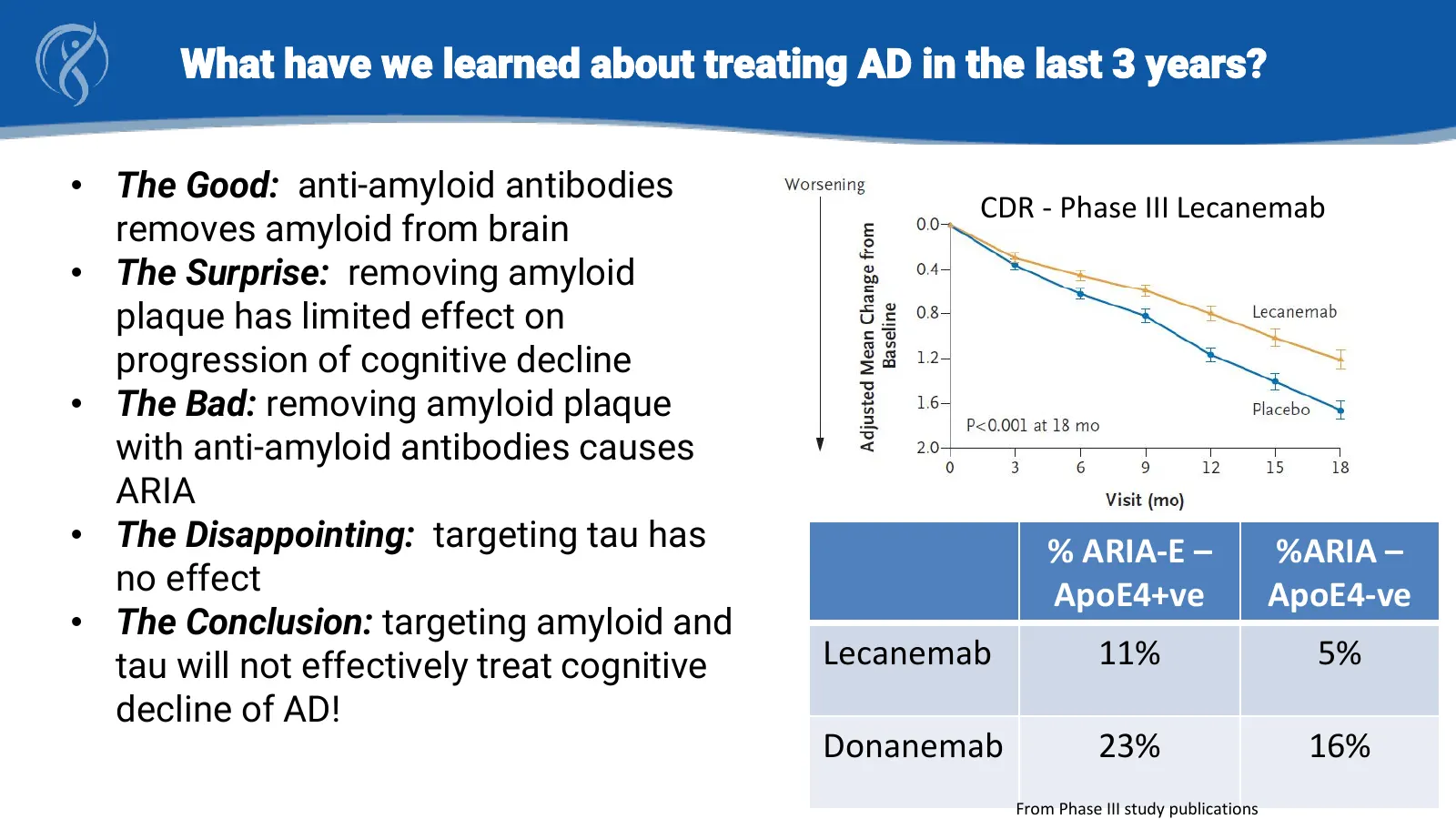
Slide 6: What have we learned about treating AD in the last 3 years?
What have we learned about treating AD in the last 3 years? • The Good: anti-amyloid antibodies CDR - Phase III Lecanemab removes amyloid from brain • The Surprise: removing amyloid plaque has limited effect on progression of cognitive decline • The Bad: removing amyloid plaque with anti-amyloid ant
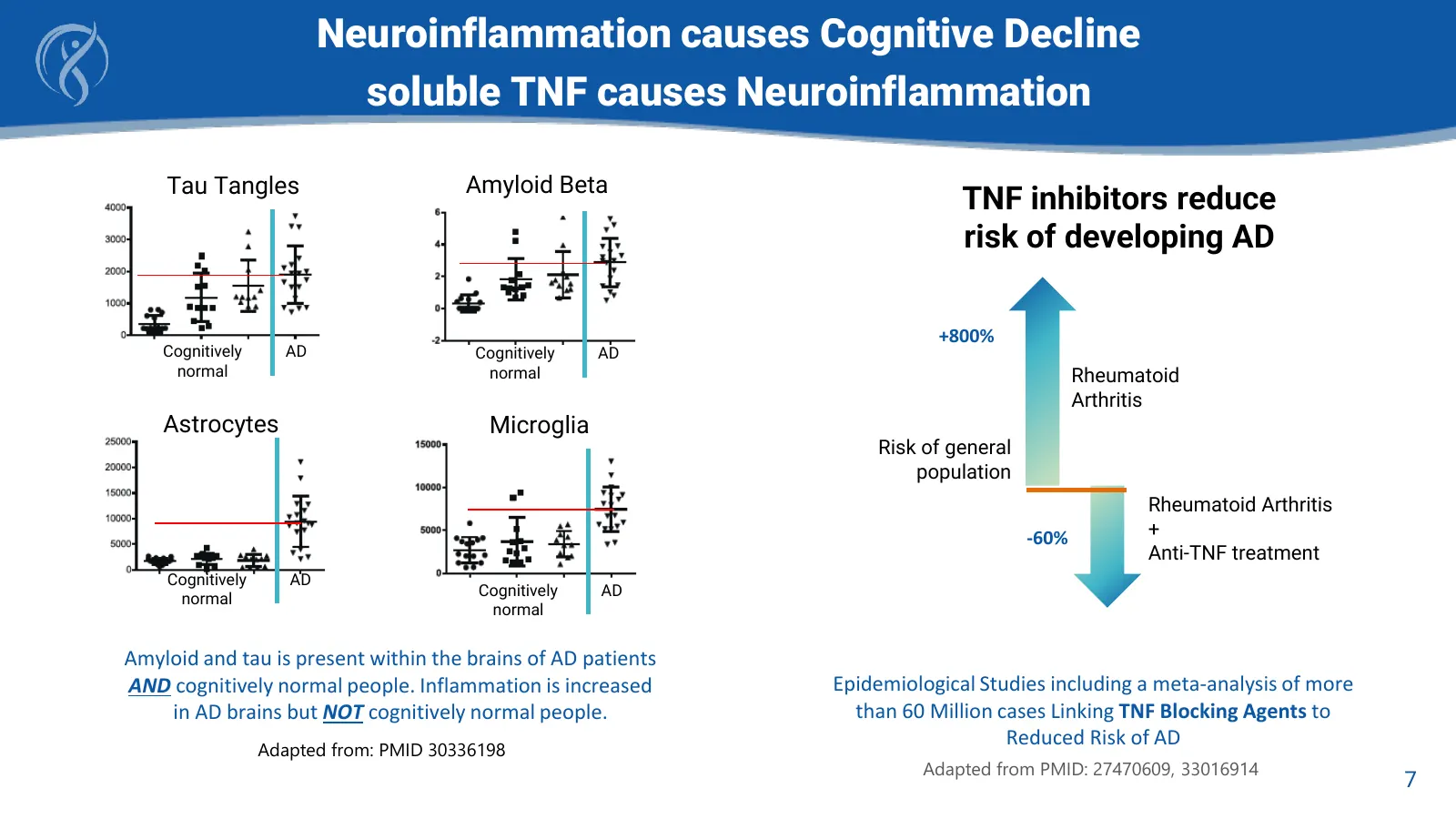
Slide 7: Neuroinflammation causes Cognitive Decline; soluble TNF causes Neuroinflammation
Neuroinflammation causes Cognitive Decline soluble TNF causes Neuroinflammation Tau Tangles Amyloid Beta TNF inhibitors reduce risk of developing AD +800% Cognitively AD Cognitively AD normal normal Rheumatoid Arthritis Astrocytes Microglia Risk of general population Rheumatoid Arthritis -60% + Anti
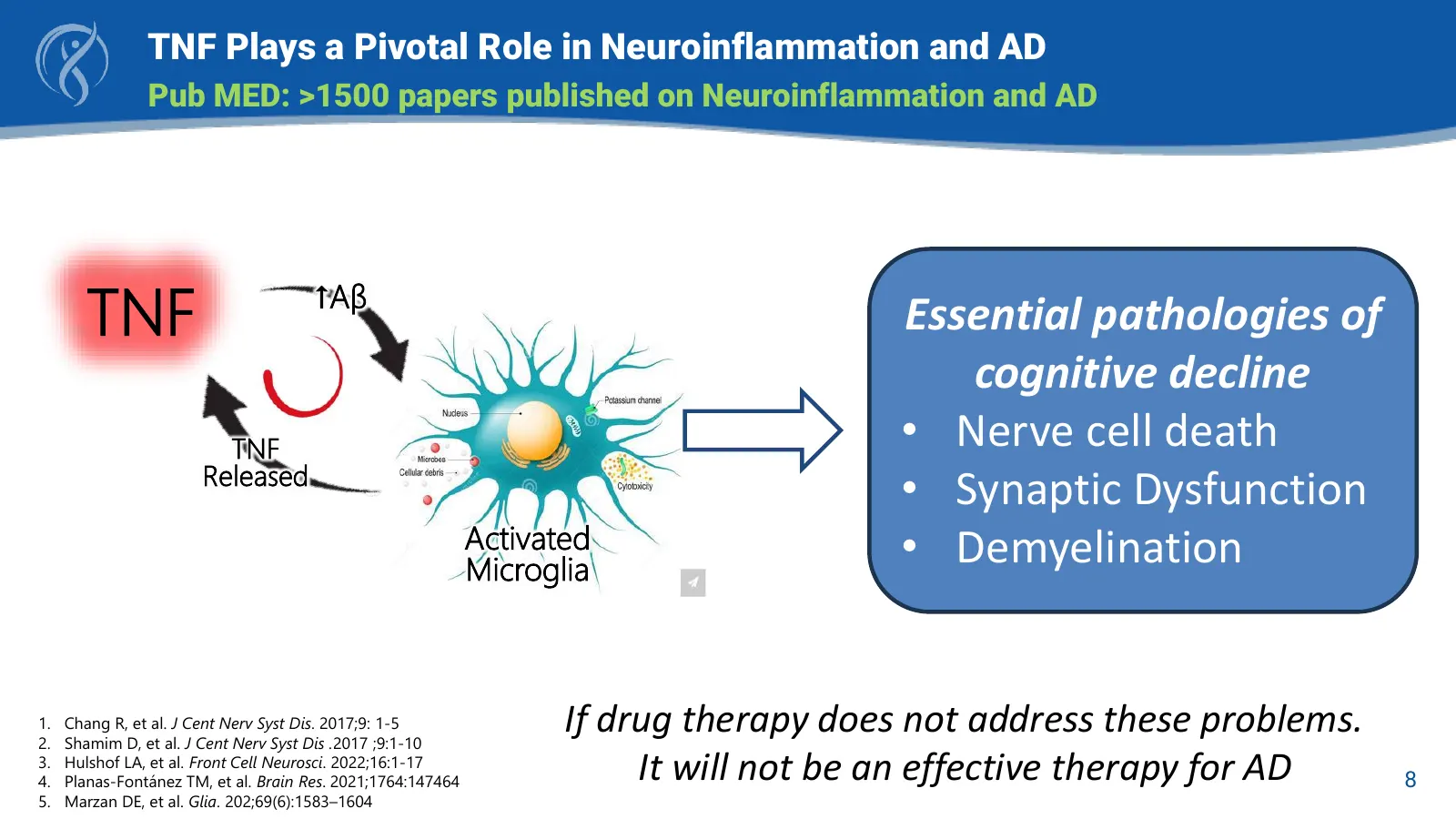
Slide 8: TNF Plays a Pivotal Role in Neuroinflammation and AD
TNF Plays a Pivotal Role in Neuroinflammation and AD Pub MED: >1500 papers published on Neuroinflammation and AD TNF ↑Aβ Essential pathologies of cognitive decline TNF • Nerve cell death Released • Synaptic Dysfunction Activated • Demyelination Microglia 1. 2. Chang R, et al. J Cent Nerv Syst Dis. 2
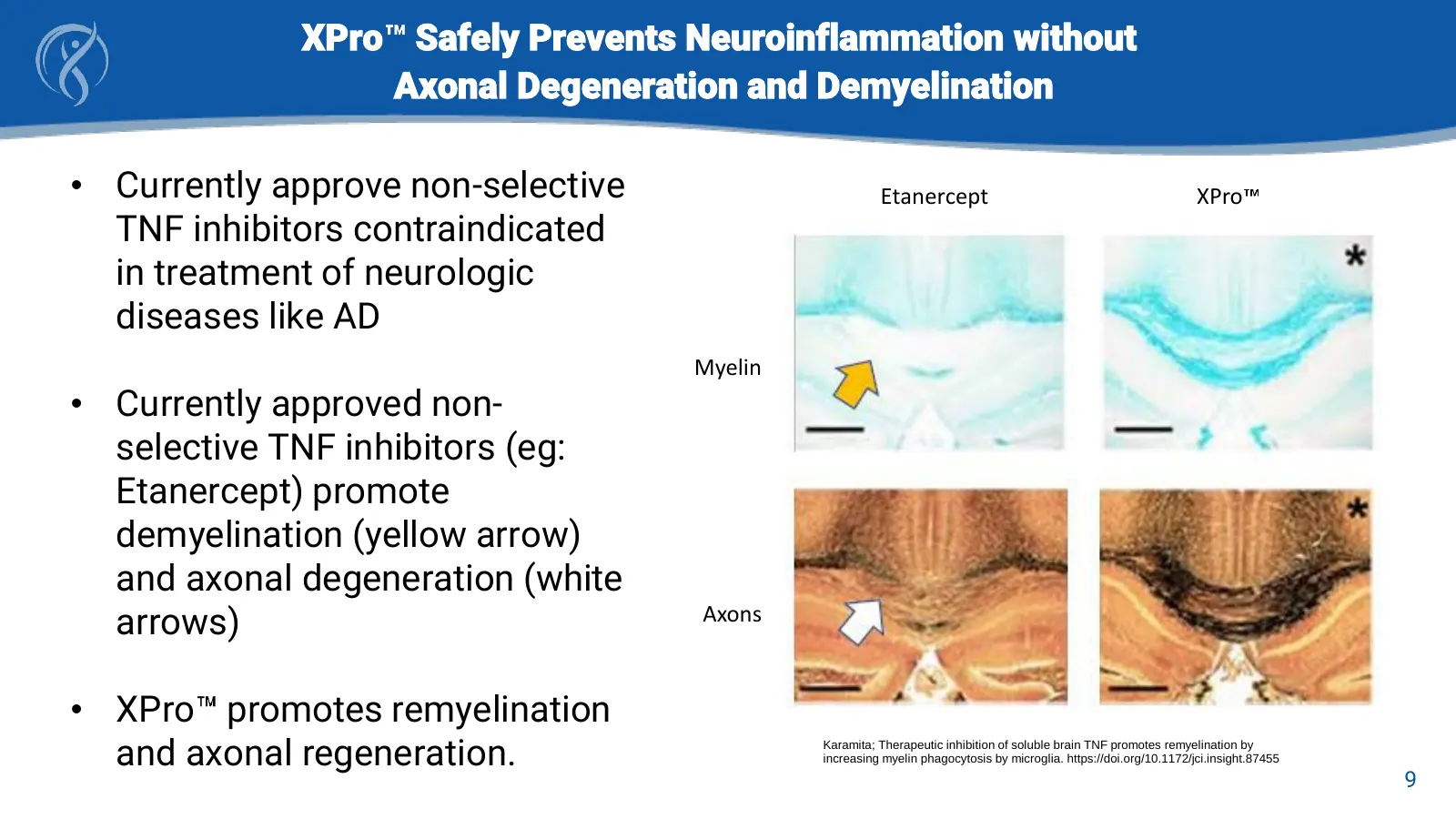
Slide 9: XPro Safely Prevents Neuroinflammation without Axonal Degeneration and Demyelination
XPro Safely Prevents Neuroinflammation without Axonal Degeneration and Demyelination • Currently approve non-selective Etanercept XPro TNF inhibitors contraindicated in treatment of neurologic diseases like AD Myelin • Currently approved non- selective TNF inhibitors (eg: Etanercept) promote demyeli
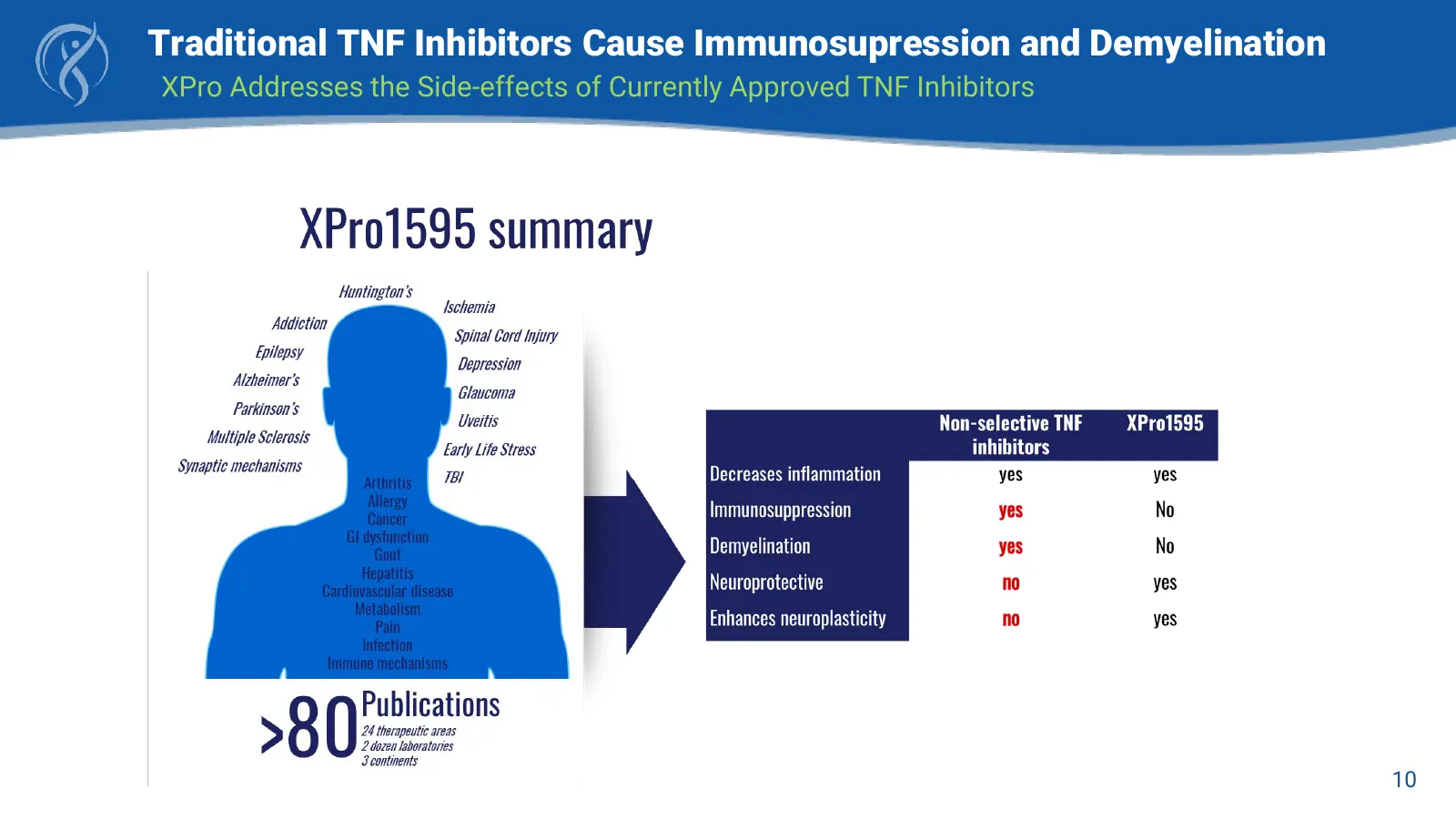
Slide 10: Traditional TNF Inhibitors Cause Immunosuppression and Demyelination
Traditional TNF Inhibitors Cause Immunosupression and Demyelination XPro Addresses the Side-effects of Currently Approved TNF Inhibitors 10
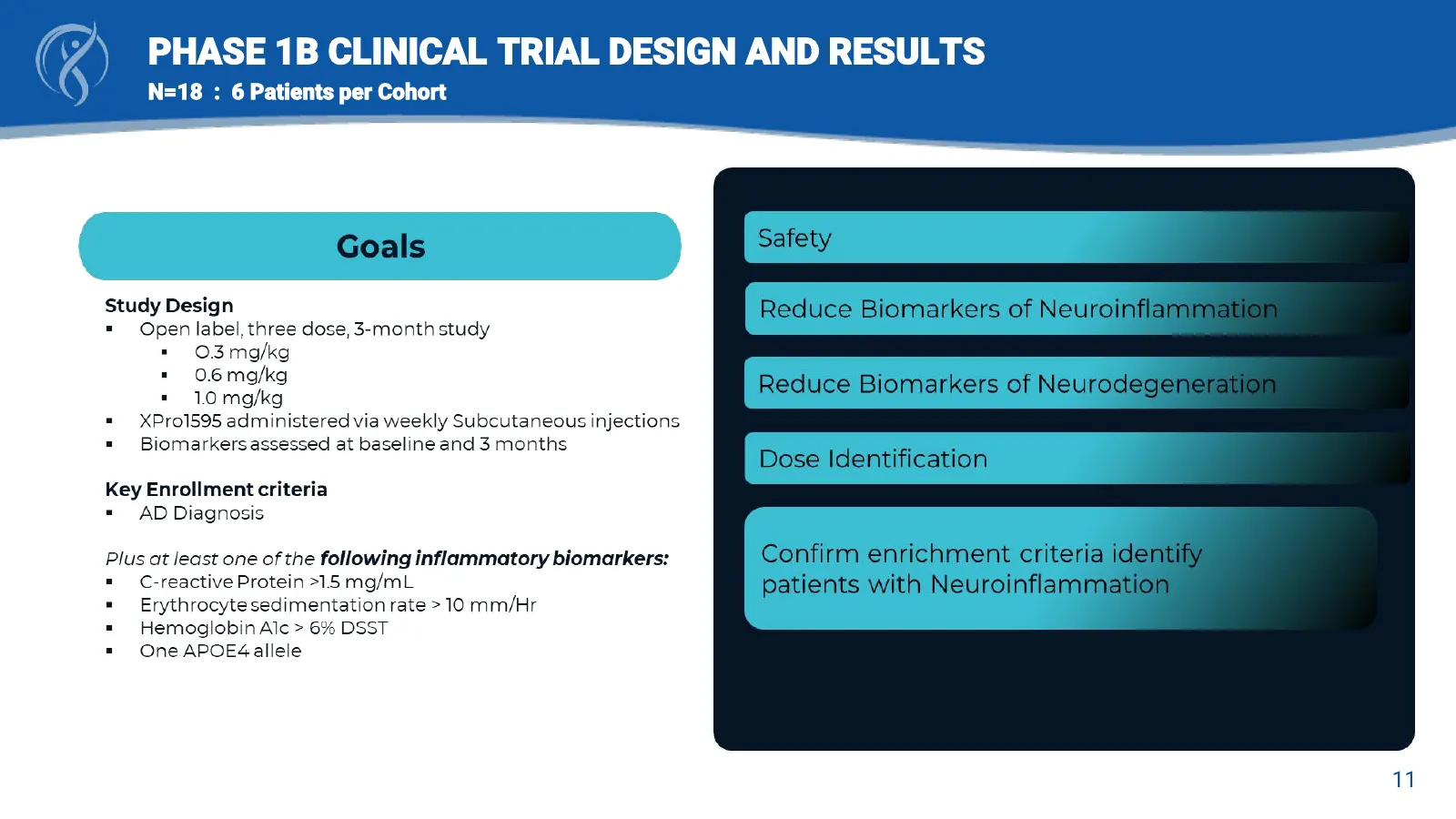
Slide 11: Phase 1b Clinical Trial Design and Results
PHASE 1B CLINICAL TRIAL DESIGN AND RESULTS N=18 : 6 Patients per Cohort 11
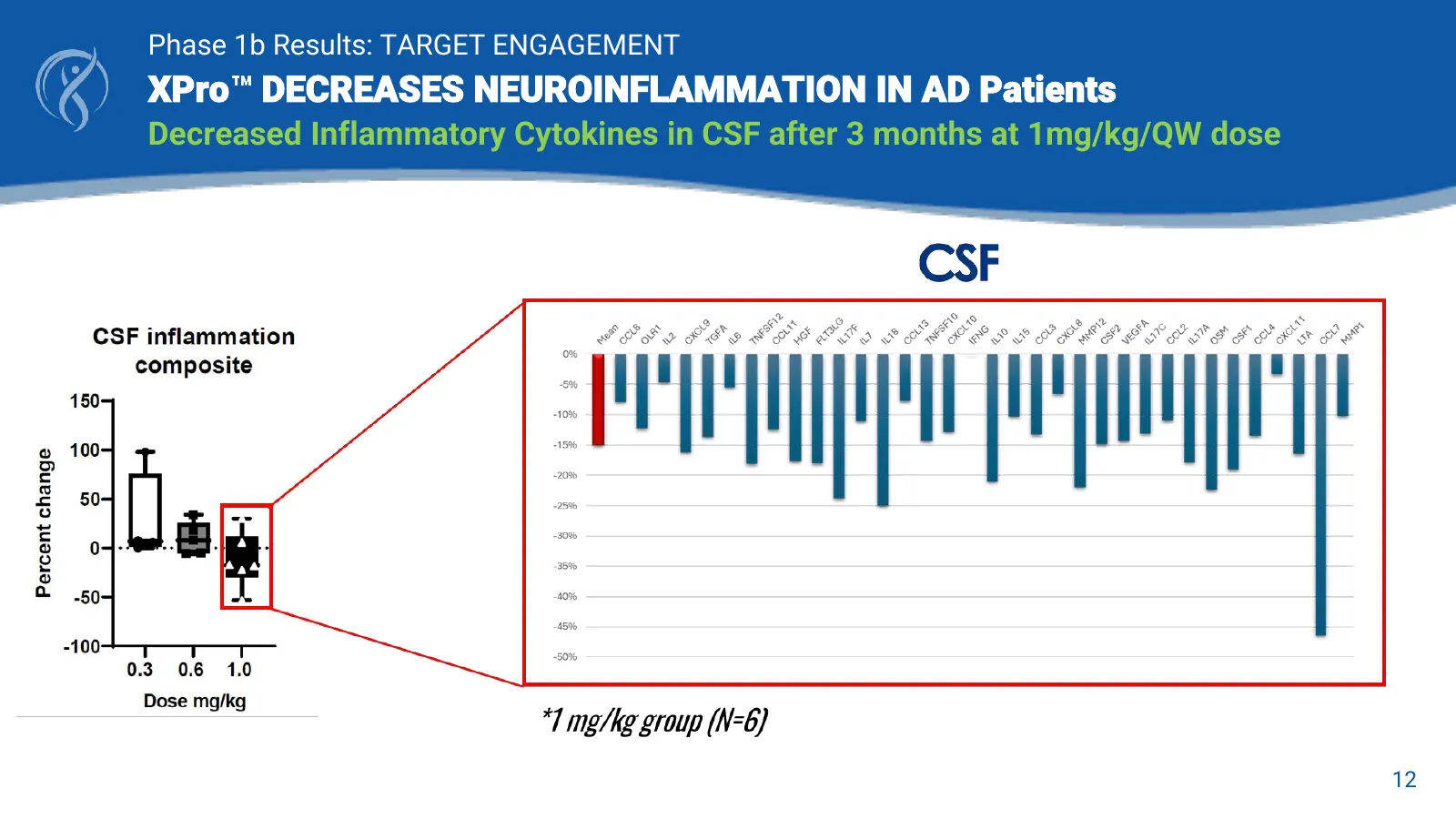
Slide 12: XPro Decreases Neuroinflammation in AD Patients
Phase 1b Results: TARGET ENGAGEMENT XPro DECREASES NEUROINFLAMMATION IN AD Patients Decreased Inflammatory Cytokines in CSF after 3 months at 1mg/kg/QW dose 12
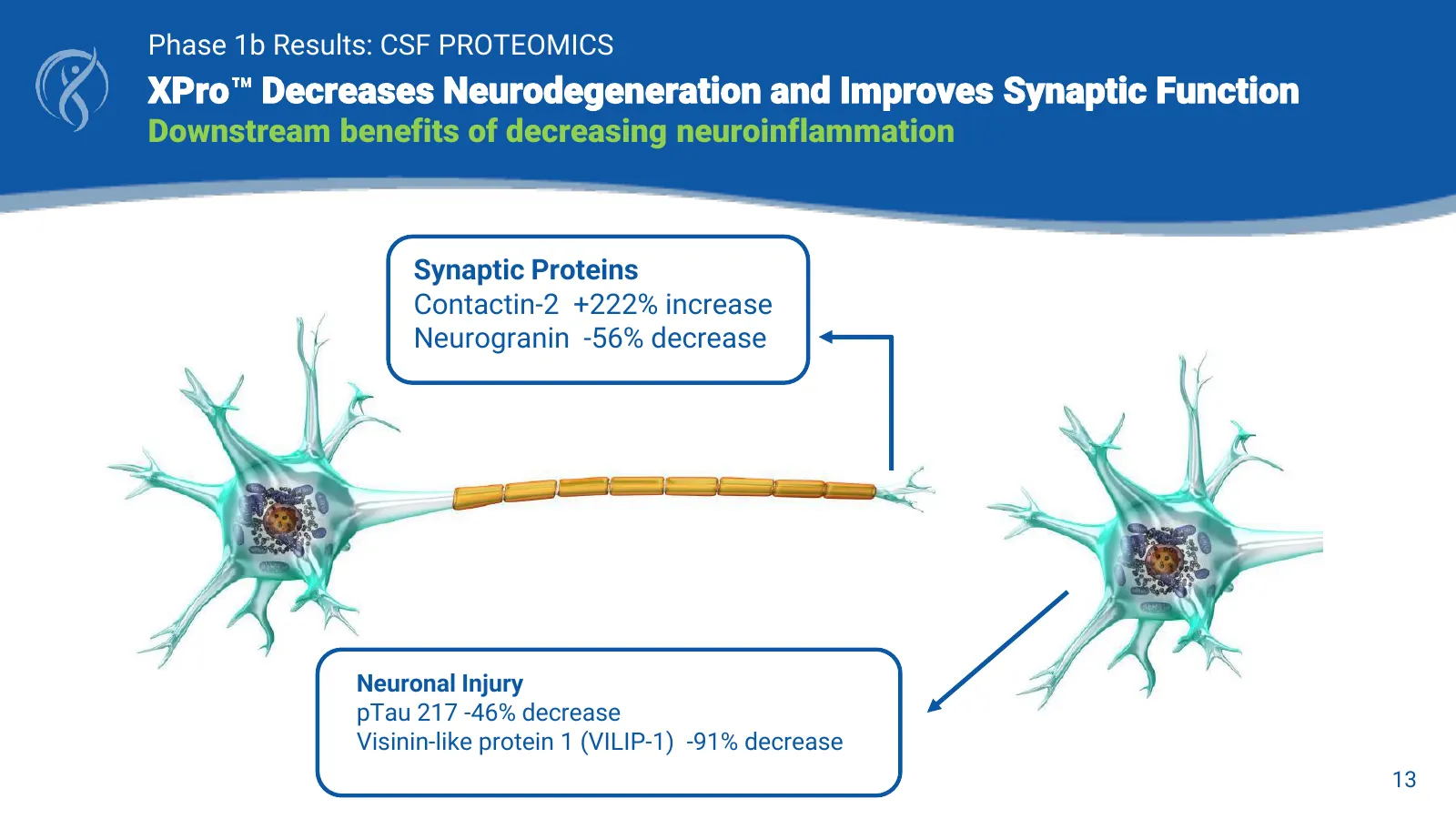
Slide 13: XPro Decreases Neurodegeneration and Improves Synaptic Function
Phase 1b Results: CSF PROTEOMICS XPro Decreases Neurodegeneration and Improves Synaptic Function Downstream benefits of decreasing neuroinflammation Synaptic Proteins Contactin-2 +222% increase Neurogranin -56% decrease Neuronal Injury pTau 217 -46% decrease Visinin-like protein 1 (VILIP-1) -91% dec
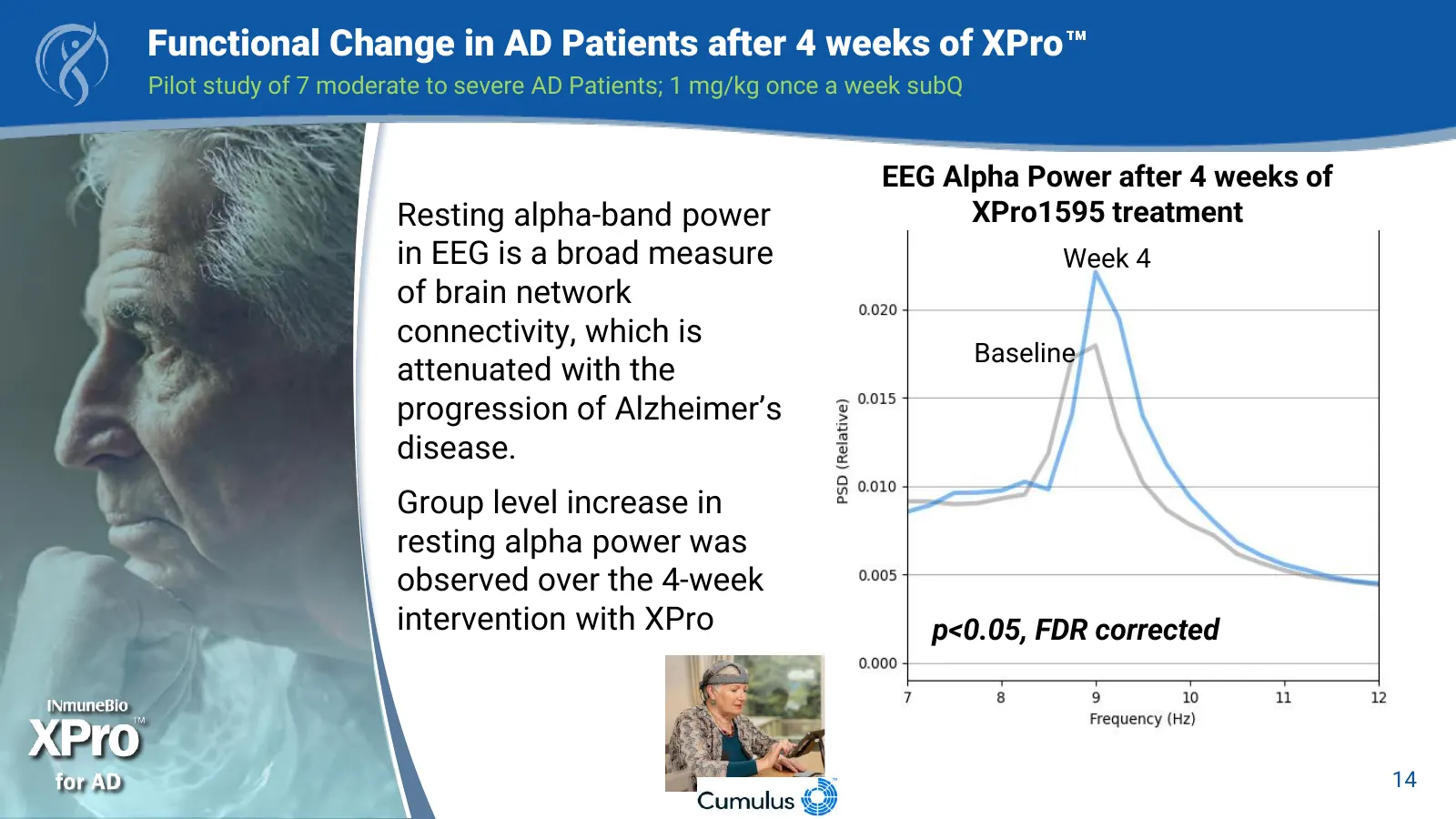
Slide 14: Functional Change in AD Patients after 4 weeks of XPro
Functional Change in AD Patients after 4 weeks of XPro Pilot study of 7 moderate to severe AD Patients; 1 mg/kg once a week subQ EEG Alpha Power after 4 weeks of Resting alpha-band power XPro1595 treatment in EEG is a broad measure Week 4 of brain network connectivity, which is Baseline attenuated w
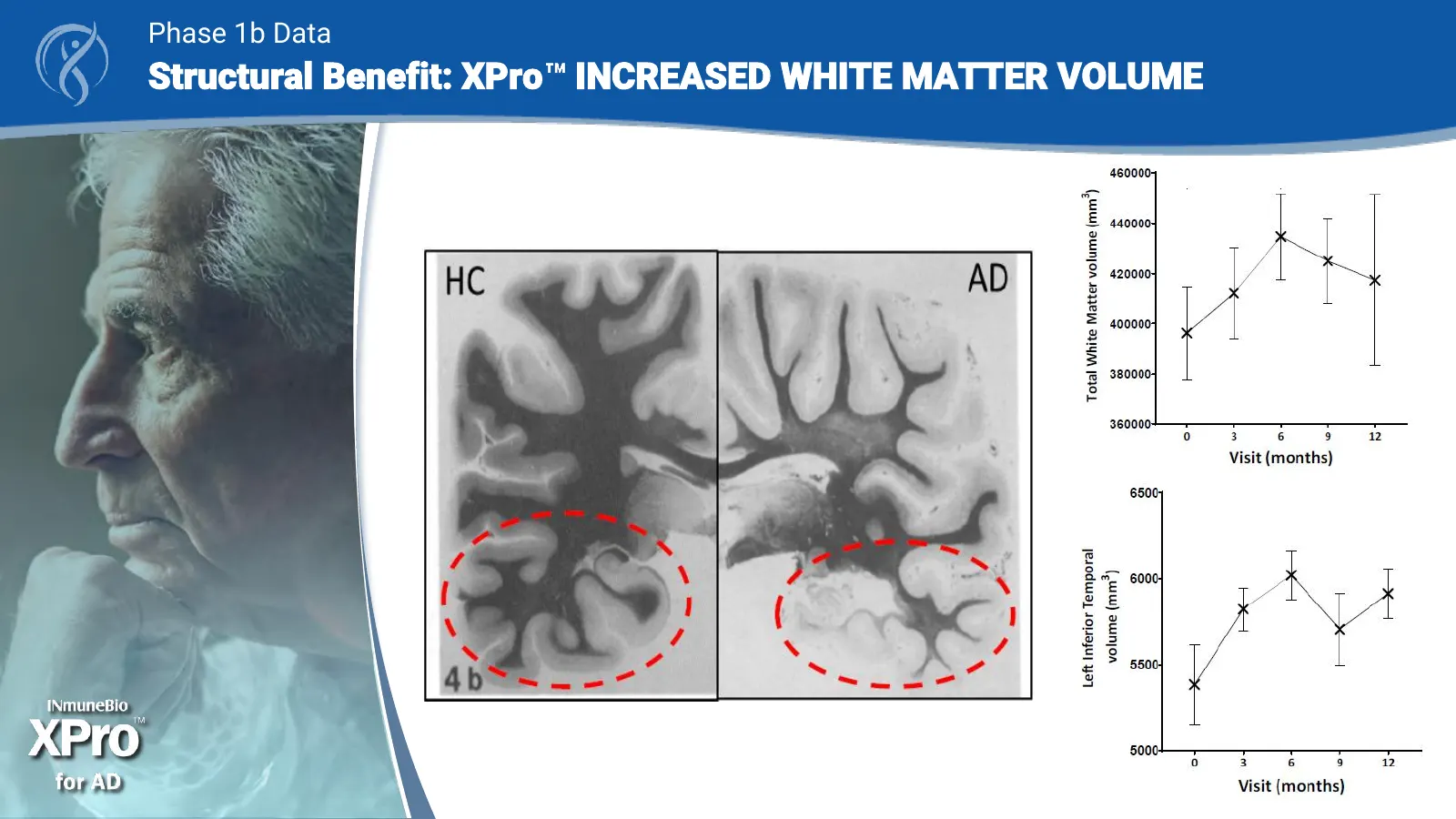
Slide 15: Structural Benefit: XPro Increased White Matter Volume
Phase 1b Data Structural Benefit: XPro INCREASED WHITE MATTER VOLUME a 15
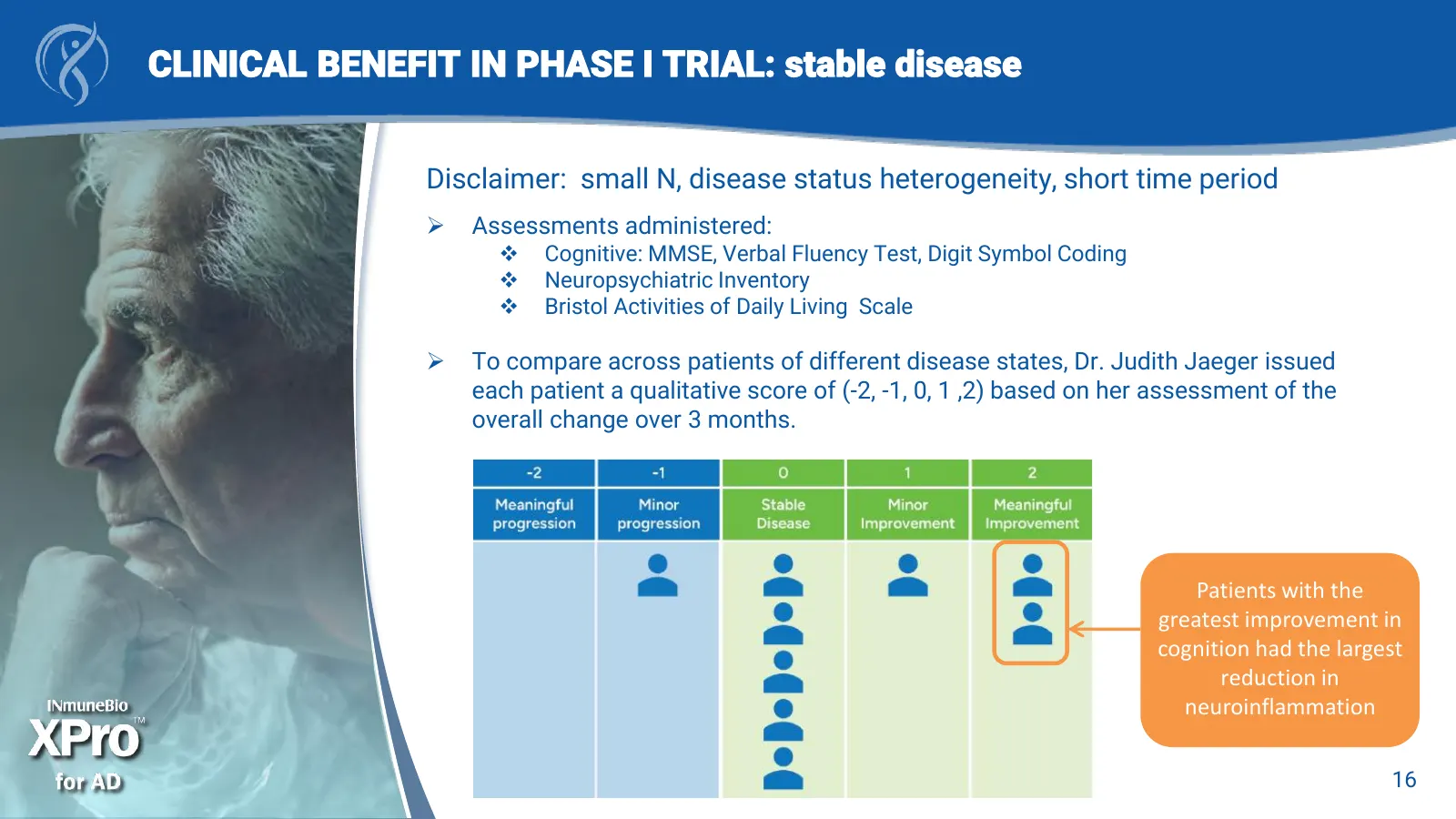
Slide 16: Clinical Benefit in Phase I Trial: Stable Disease
CLINICAL BENEFIT IN PHASE I TRIAL: stable disease Disclaimer: small N, disease status heterogeneity, short time period ➢ Assessments administered: ❖ Cognitive: MMSE, Verbal Fluency Test, Digit Symbol Coding ❖ Neuropsychiatric Inventory ❖ Bristol Activities of Daily Living Scale ➢ To compare across p
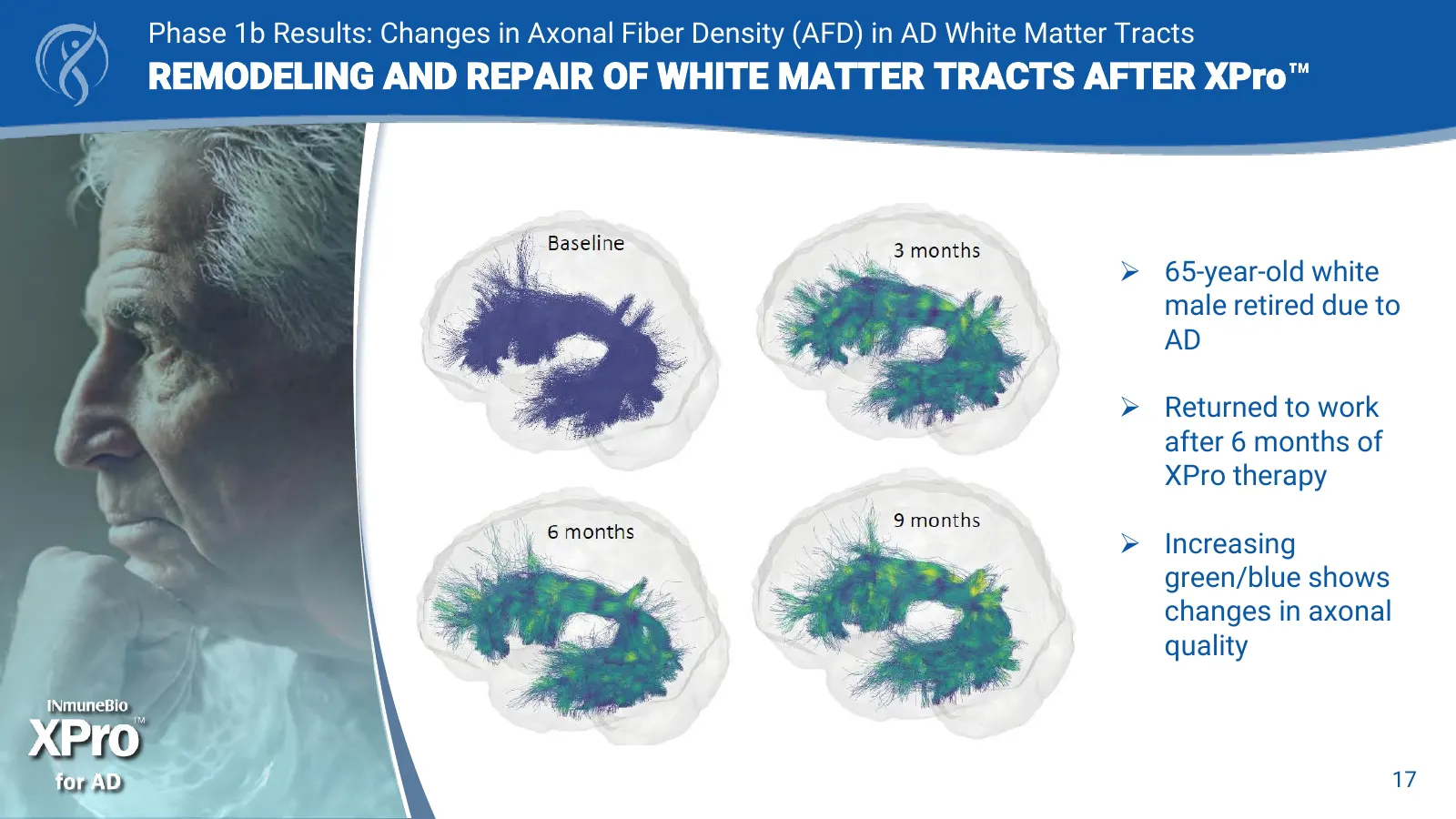
Slide 17: Remodeling and Repair of White Matter Tracts after XPro
Phase 1b Results: Changes in Axonal Fiber Density (AFD) in AD White Matter Tracts REMODELING AND REPAIR OF WHITE MATTER TRACTS AFTER XPro ➢ 65-year-old white male retired due to AD a ➢ Returned to work after 6 months of XPro therapy ➢ Increasing green/blue shows changes in axonal quality 17
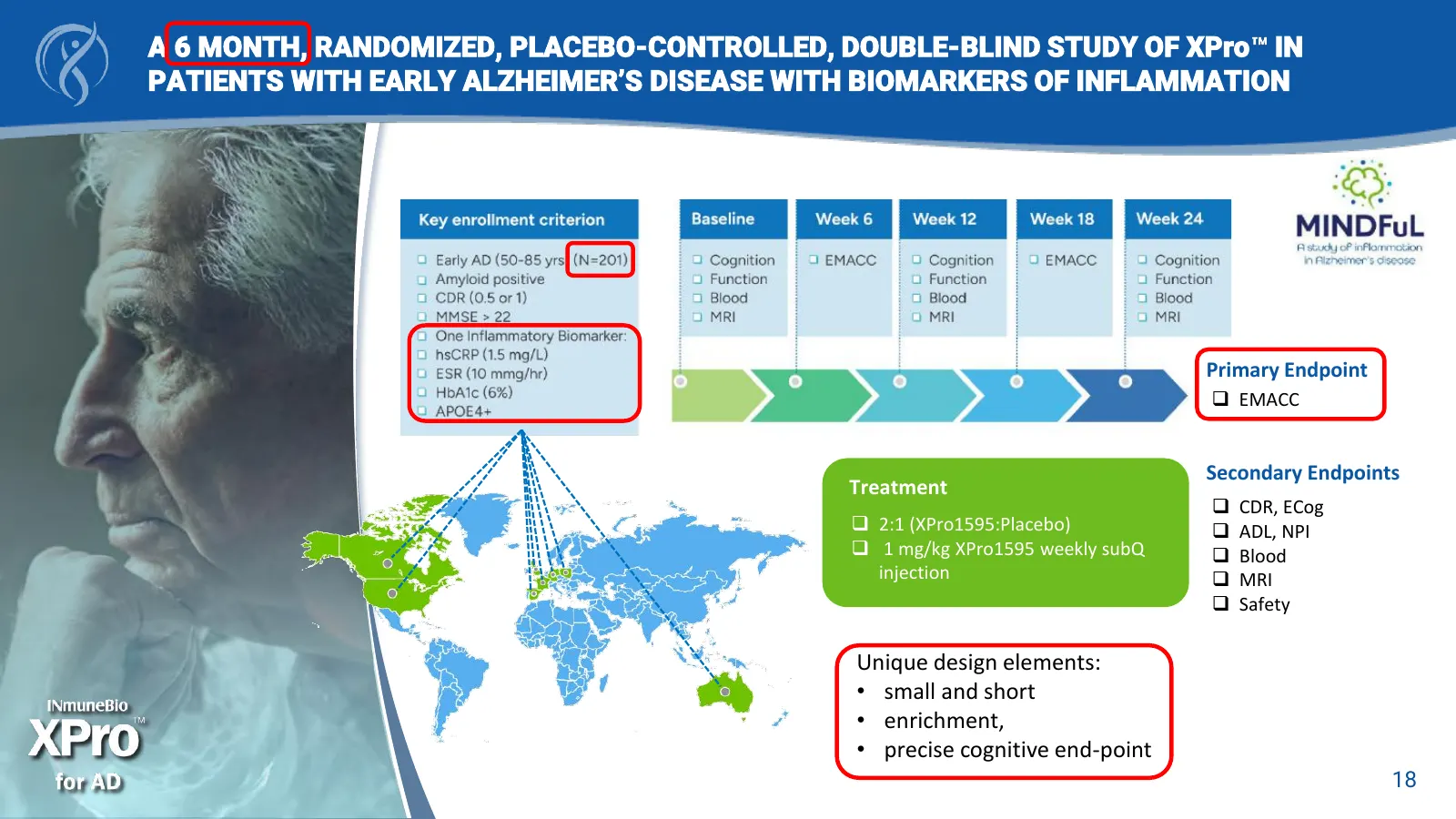
Slide 18: Randomized Placebo-Controlled Study of XPro in Early Alzheimer's Disease
A 6 MONTH, RANDOMIZED, PLACEBO-CONTROLLED, DOUBLE-BLIND STUDY OF XPro IN PATIENTS WITH EARLY ALZHEIMER’S DISEASE WITH BIOMARKERS OF INFLAMMATION Primary Endpoint ❑ EMACC a Secondary Endpoints Treatment ❑ CDR, ECog ❑ 2:1 (XPro1595:Placebo) ❑ ADL, NPI ❑ 1 mg/kg XPro1595 weekly subQ ❑ Blood injection ❑
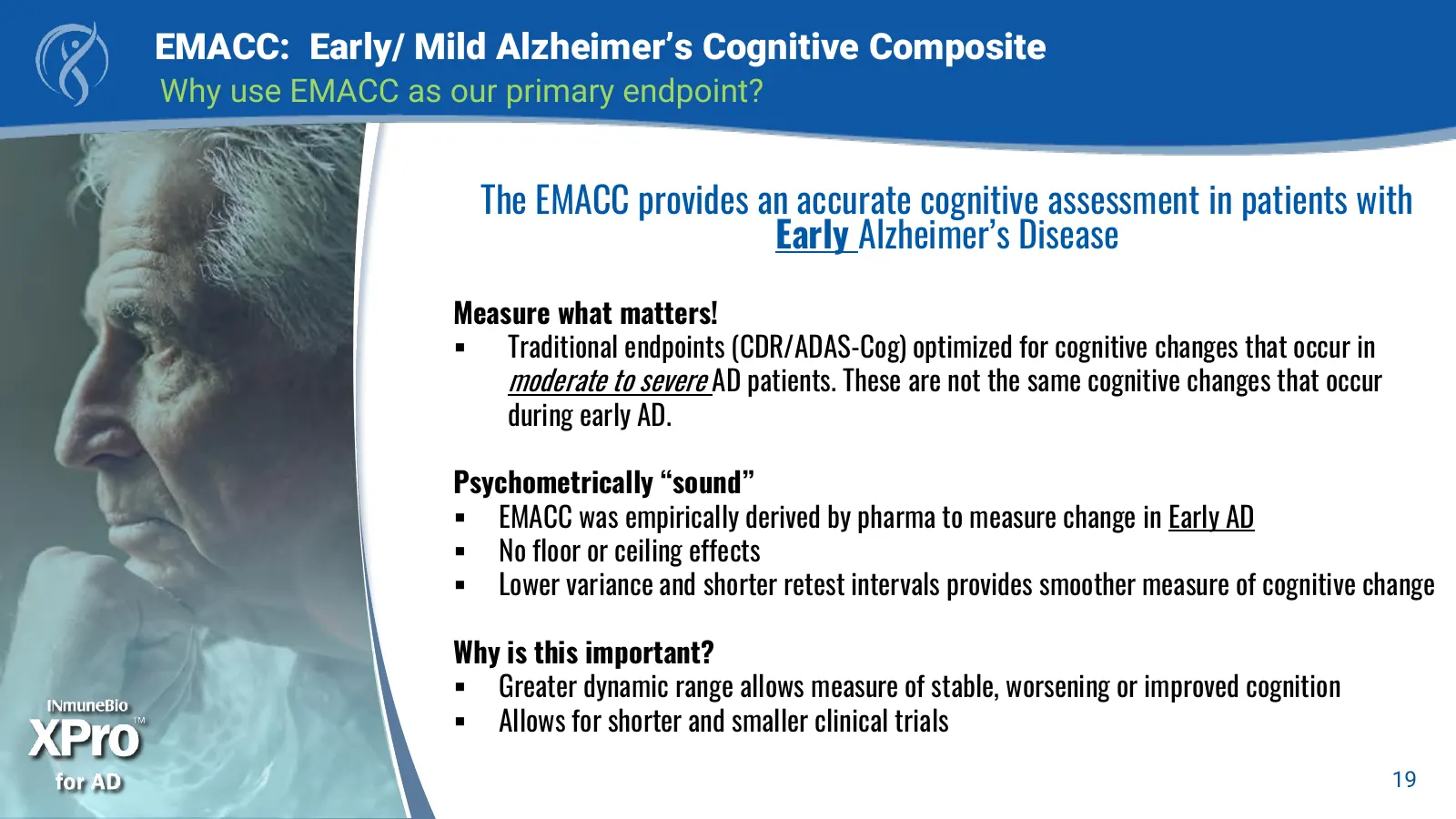
Slide 19: EMACC Provides an Accurate Cognitive Assessment in Early AD
EMACC: Early/ Mild Alzheimer’s Cognitive Composite Why use EMACC as our primary endpoint? The EMACC provides an accurate cognitive assessment in patients with Early Alzheimer’s Disease Measure what matters! ▪ Traditional endpoints (CDR/ADAS-Cog) optimized for cognitive changes that occur in moderate
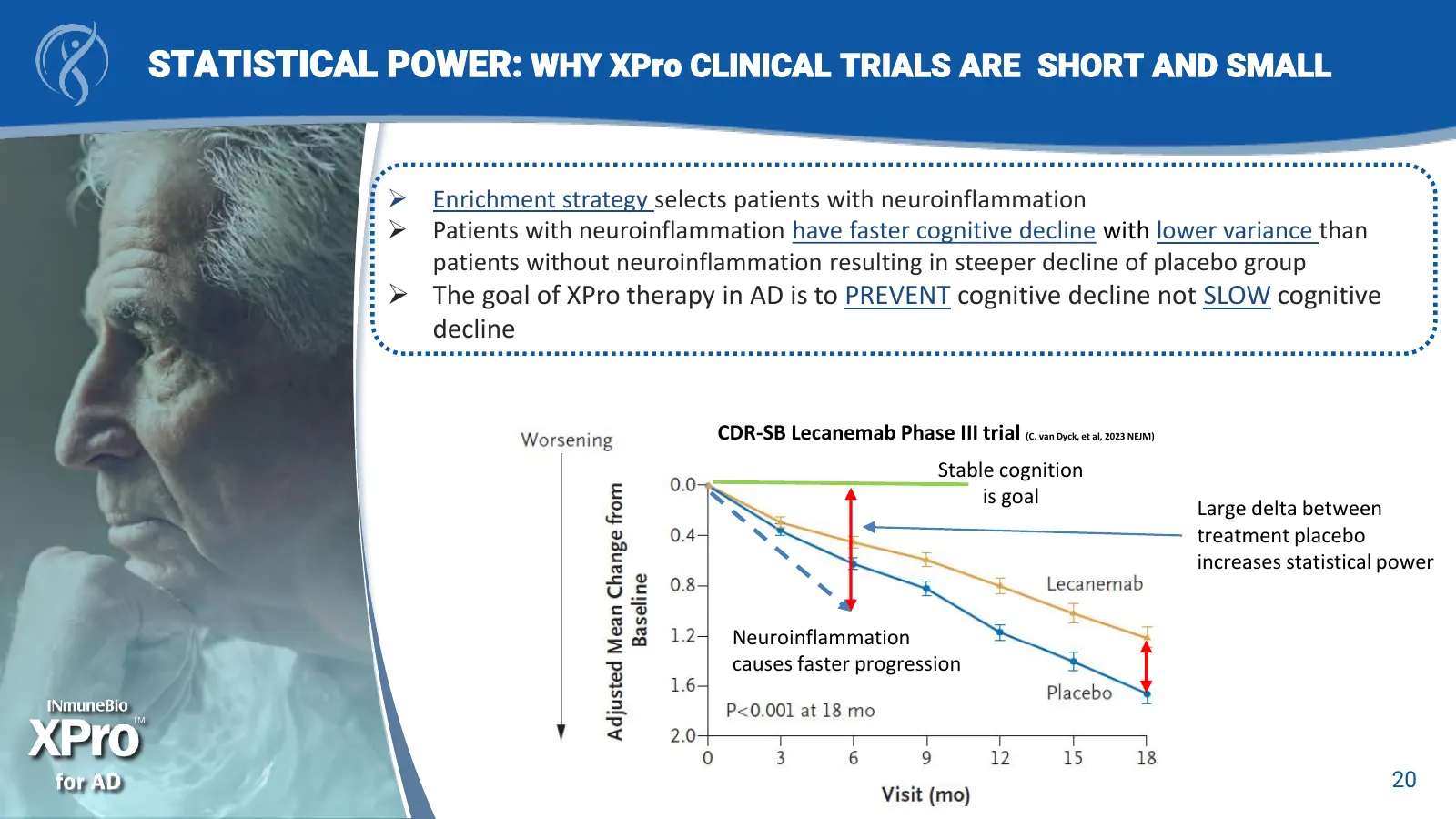
Slide 20: Statistical Power: Why XPro Clinical Trials Are Short and Small
STATISTICAL POWER: WHY XPro CLINICAL TRIALS ARE SHORT AND SMALL ➢ Enrichment strategy selects patients with neuroinflammation ➢ Patients with neuroinflammation have faster cognitive decline with lower variance than patients without neuroinflammation resulting in steeper decline of placebo group ➢ Th
Slide 21: Summary: Phase 2 XPro for AD
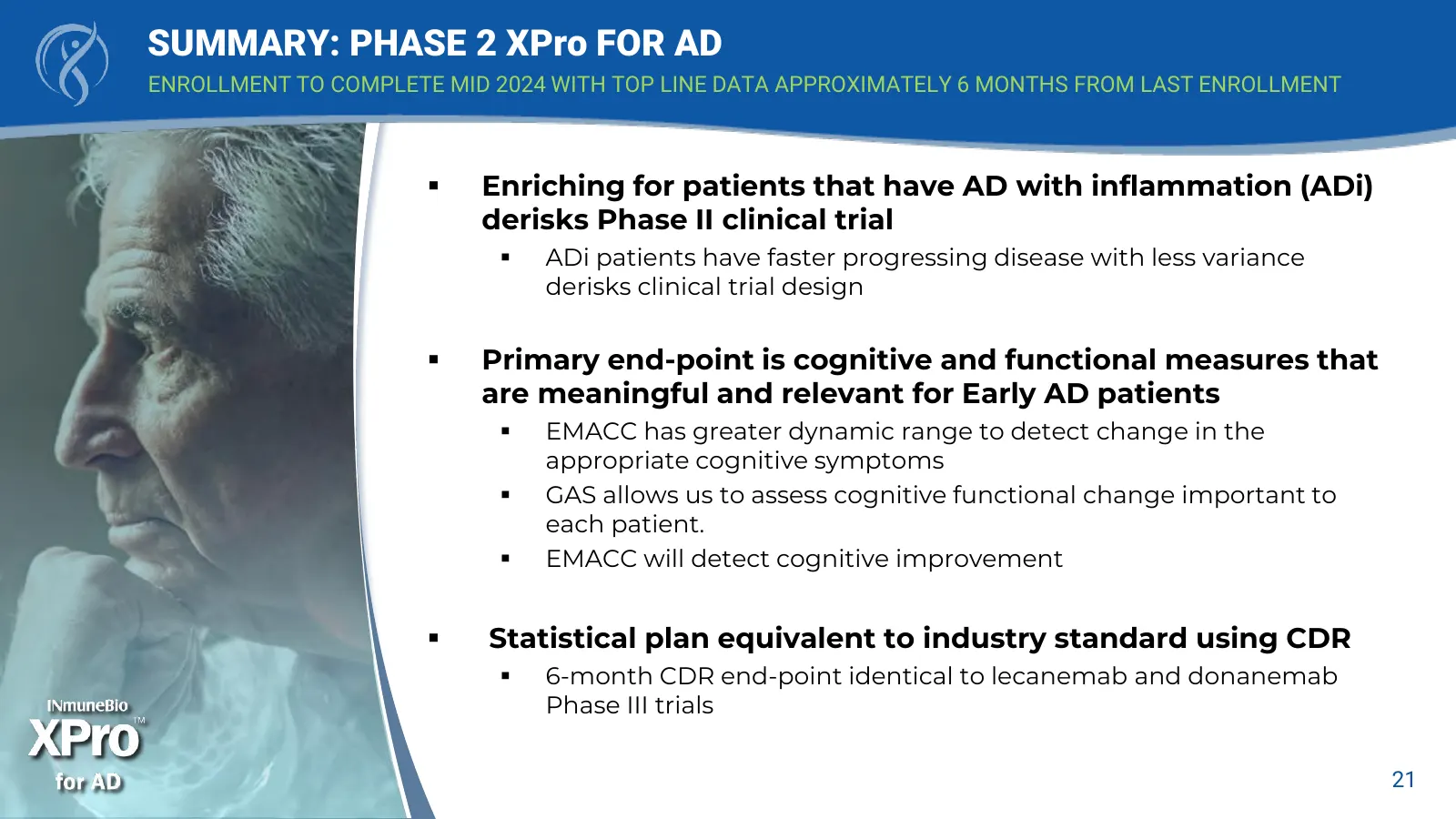
SUMMARY: PHASE 2 XPro FOR AD ENROLLMENT TO COMPLETE MID 2024 WITH TOP LINE DATA APPROXIMATELY 6 MONTHS FROM LAST ENROLLMENT ▪ Enriching for patients that have AD with inflammation (ADi) derisks Phase II clinical trial ▪ ADi patients have faster progressing disease with less variance derisks clinical
Slide 22: XPro: A TNF Inhibitor Designed to Treat Neurologic Disease
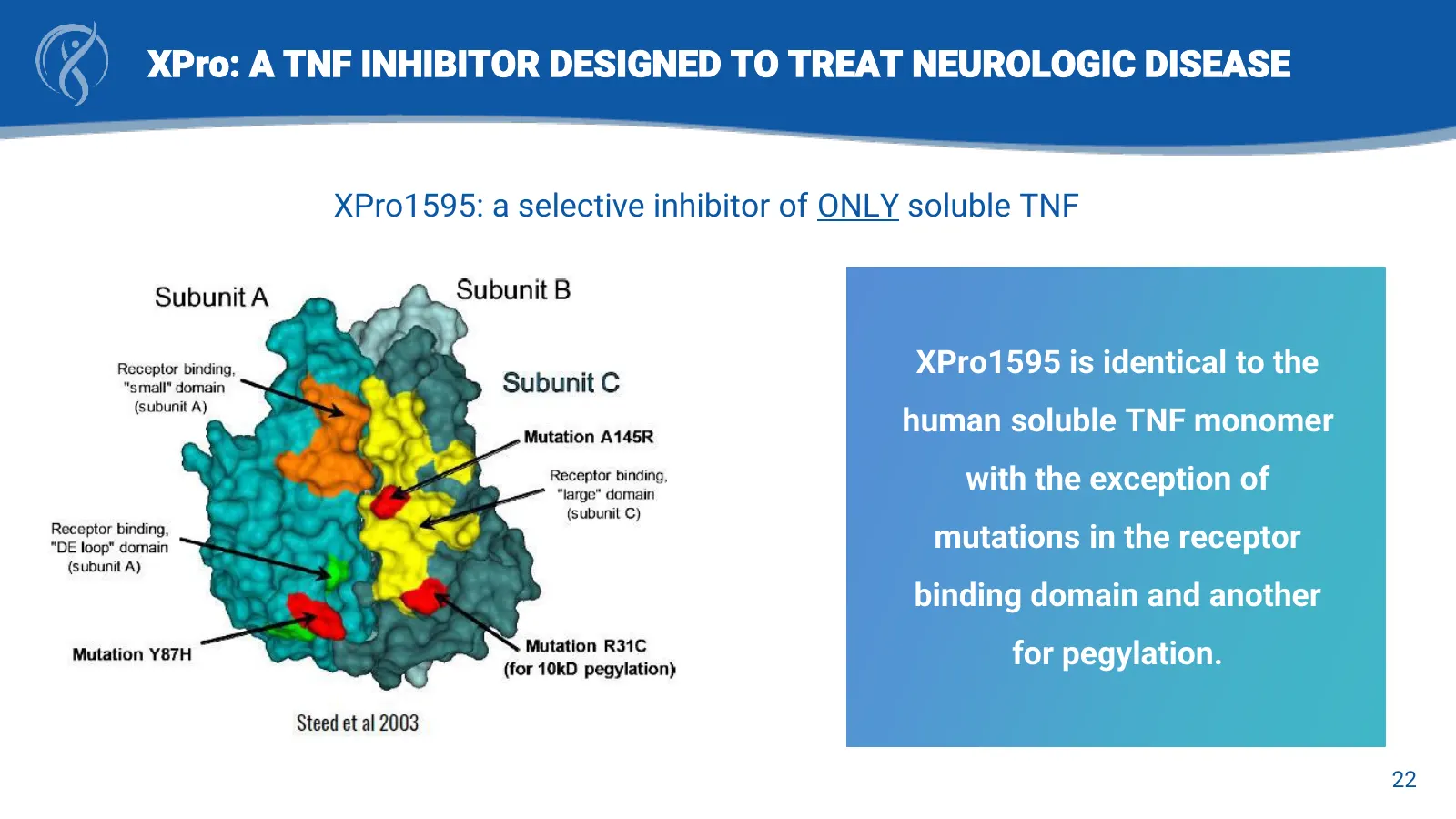
XPro: A TNF INHIBITOR DESIGNED TO TREAT NEUROLOGIC DISEASE XPro1595: a selective inhibitor of ONLY soluble TNF XPro1595 is identical to the human soluble TNF monomer with the exception of mutations in the receptor binding domain and another for pegylation. 22
Slide 23: TNF Biology Is Complicated: Two Cytokines with Opposite Effects
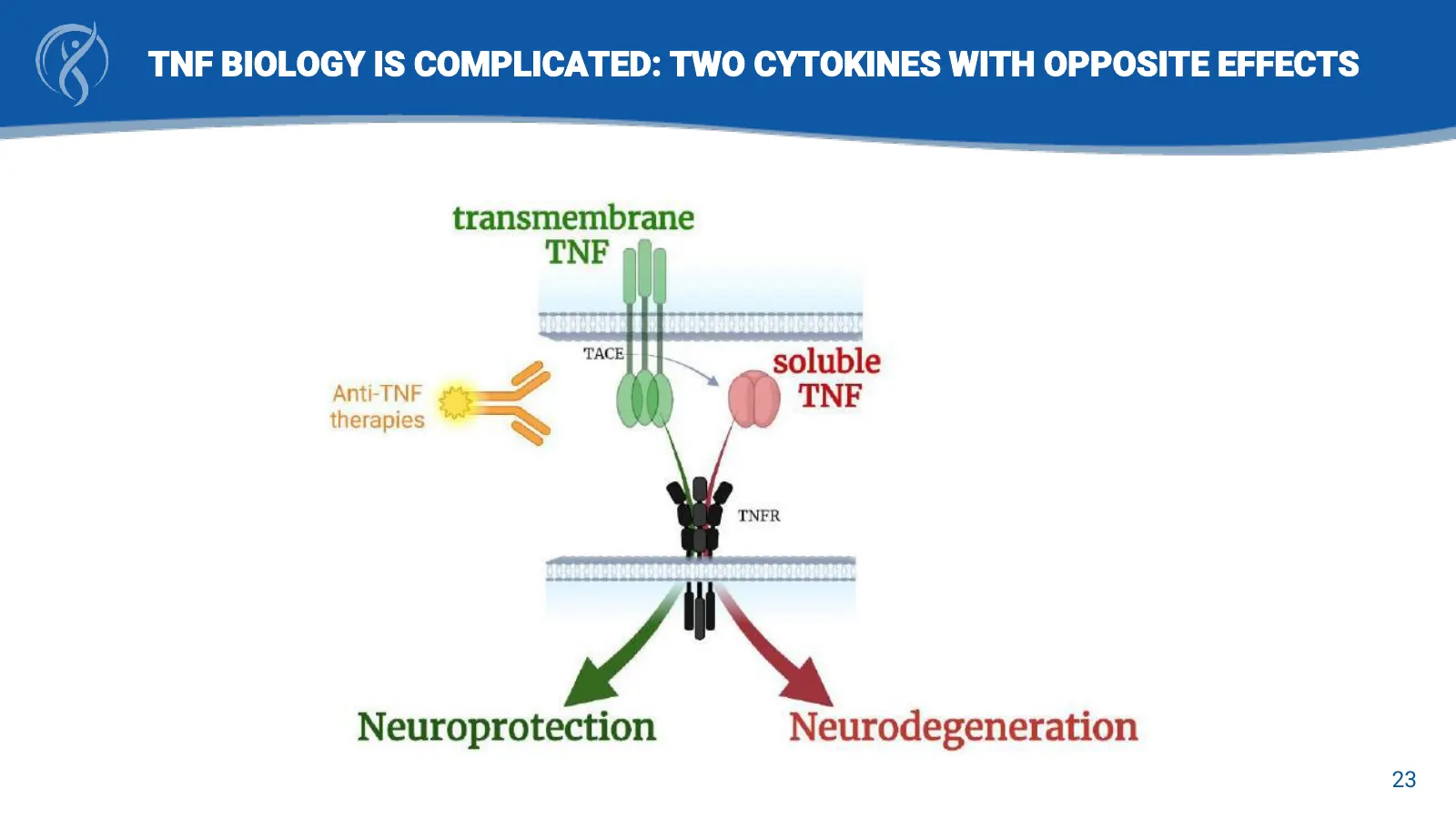
TNF BIOLOGY IS COMPLICATED: TWO CYTOKINES WITH OPPOSITE EFFECTS 23
Slide 24: XPro Is Very Different from Currently Approved TNF Drugs
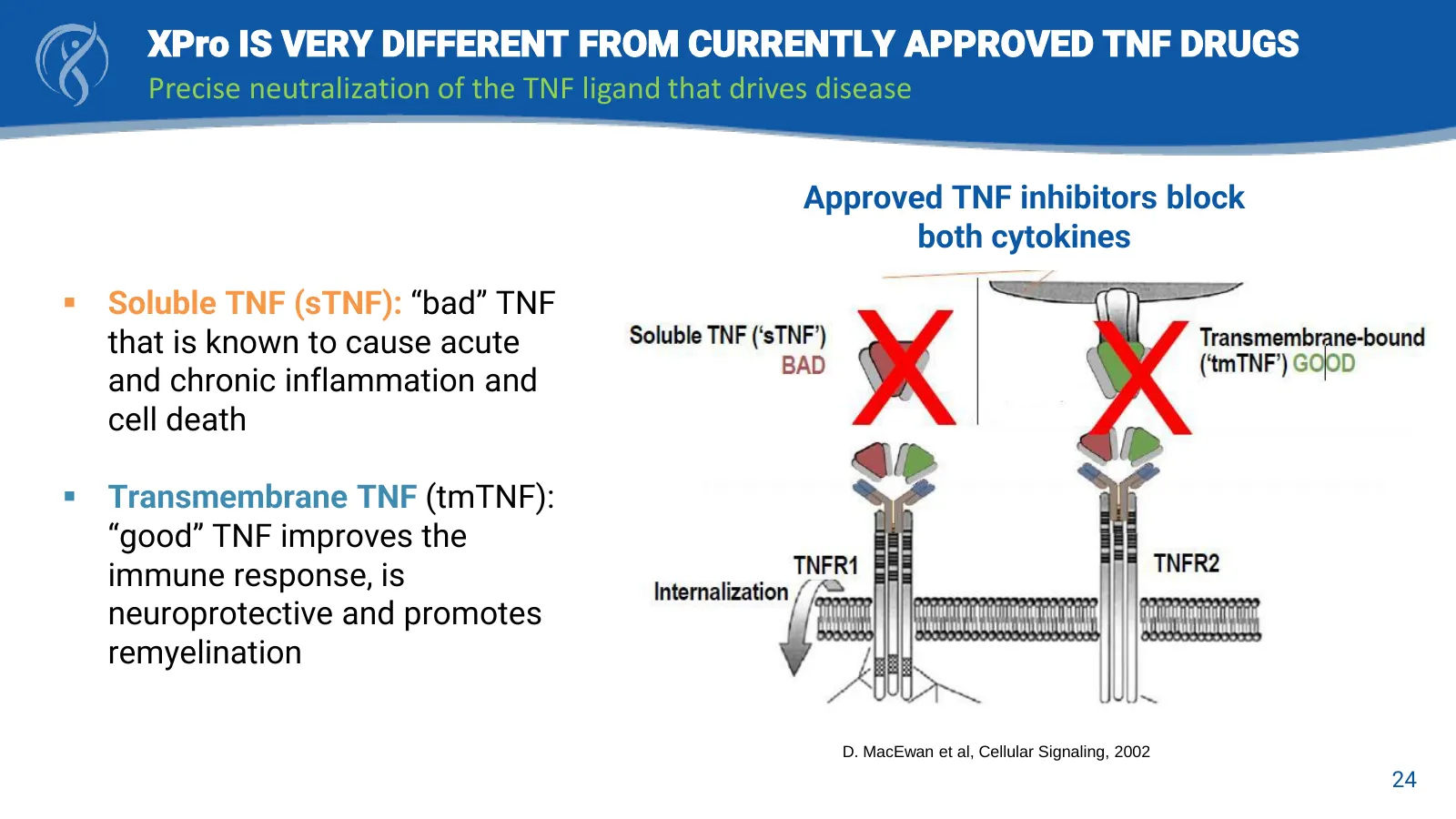
XPro IS VERY DIFFERENT FROM CURRENTLY APPROVED TNF DRUGS Precise neutralization of the TNF ligand that drives disease Approved TNF inhibitors block both cytokines ▪ Soluble TNF (sTNF): “bad” TNF that is known to cause acute and chronic inflammation and cell death ▪ Transmembrane TNF (tmTNF): “good”
Slide 25: XPro Is Very Different from Currently Available Drugs
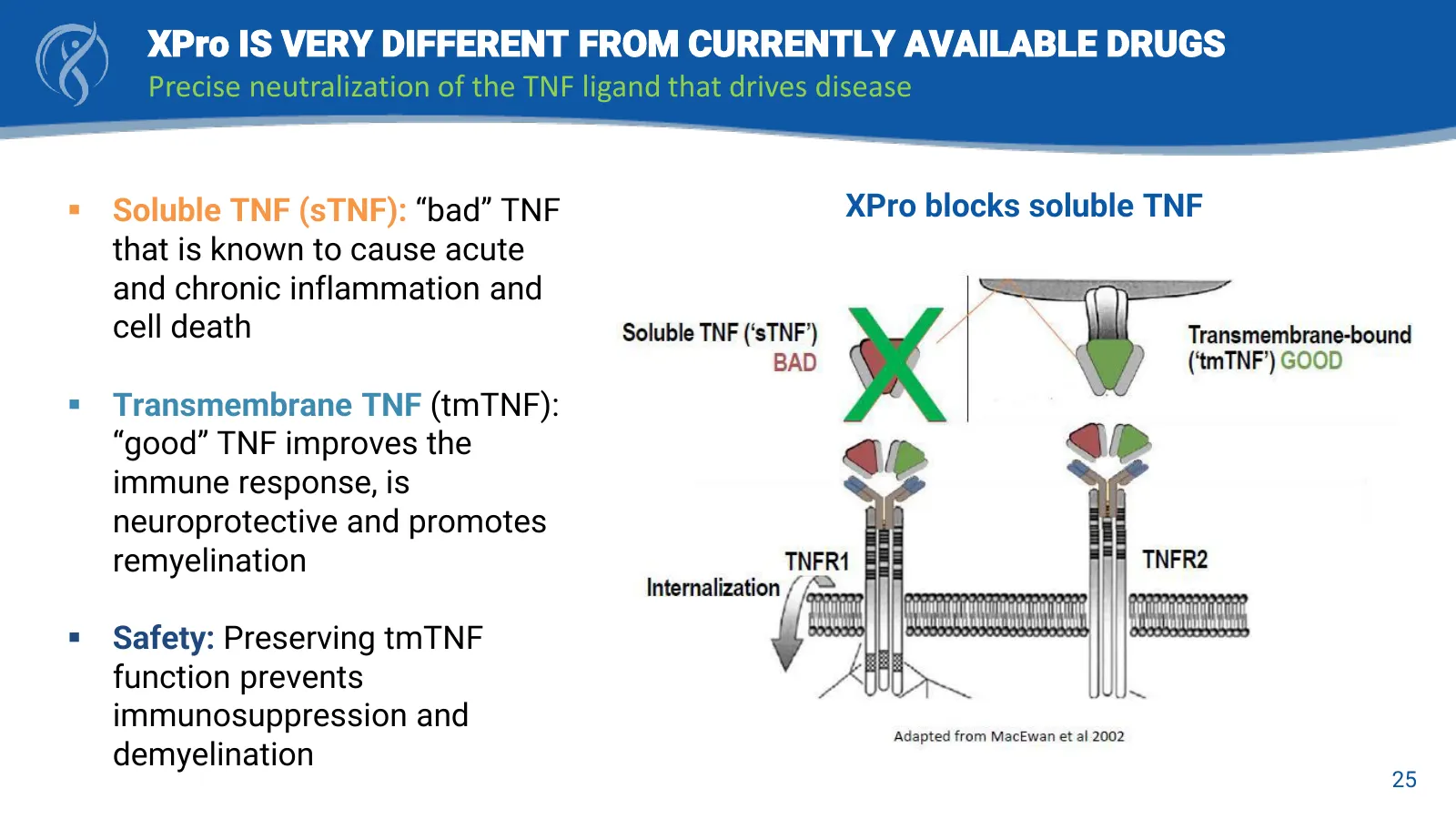
XPro IS VERY DIFFERENT FROM CURRENTLY AVAILABLE DRUGS Precise neutralization of the TNF ligand that drives disease ▪ Soluble TNF (sTNF): “bad” TNF XPro blocks soluble TNF that is known to cause acute and chronic inflammation and cell death ▪ Transmembrane TNF (tmTNF): “good” TNF improves the immune
Slide 26: XPro Unique Mechanism of Action
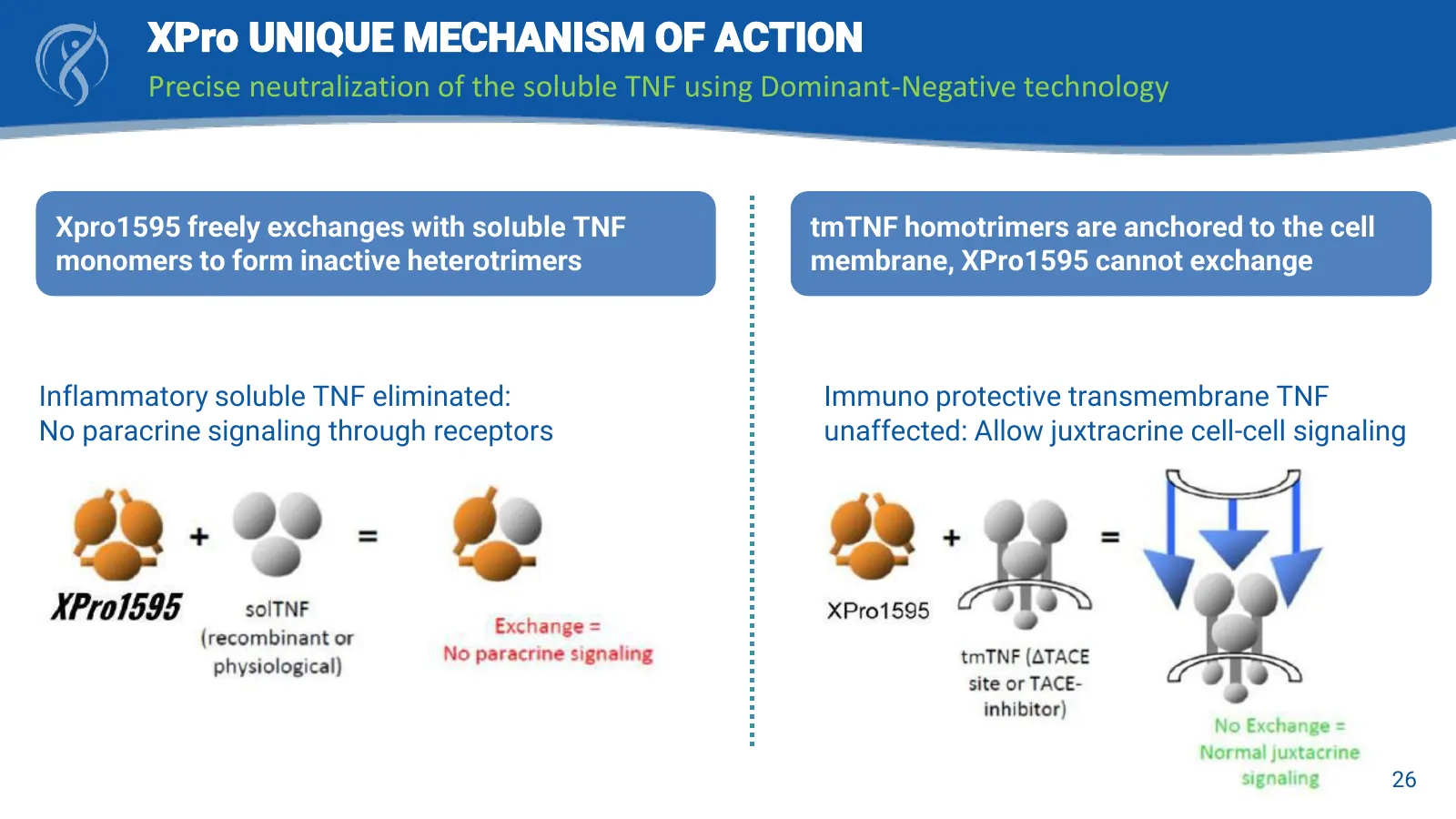
XPro UNIQUE MECHANISM OF ACTION Precise neutralization of the soluble TNF using Dominant-Negative technology Xpro1595 freely exchanges with soIuble TNF tmTNF homotrimers are anchored to the cell monomers to form inactive heterotrimers membrane, XPro1595 cannot exchange Inflammatory soluble TNF elimi
Slide 27: Off-the-Shelf NK Therapy Converts Resting NK Cells into Memory-Like NK Cells
Off-the-Shelf NK Therapy Converts Patient’s Resting NK cells into Cancer Killing memory like NK cells 27
Slide 28: INKmune NK Cell Priming Program in Cancer
INKMUNE NK CELL PRIMING PROGRAM IN CANCER ➢ Novel technology with strong patent protection ➢ Off-the-shelf program with scalable a manufacturing ➢ Focus on solid tumors ➢ Timeline: o Select patient level data 2H24 o Phase II data 2H25 28
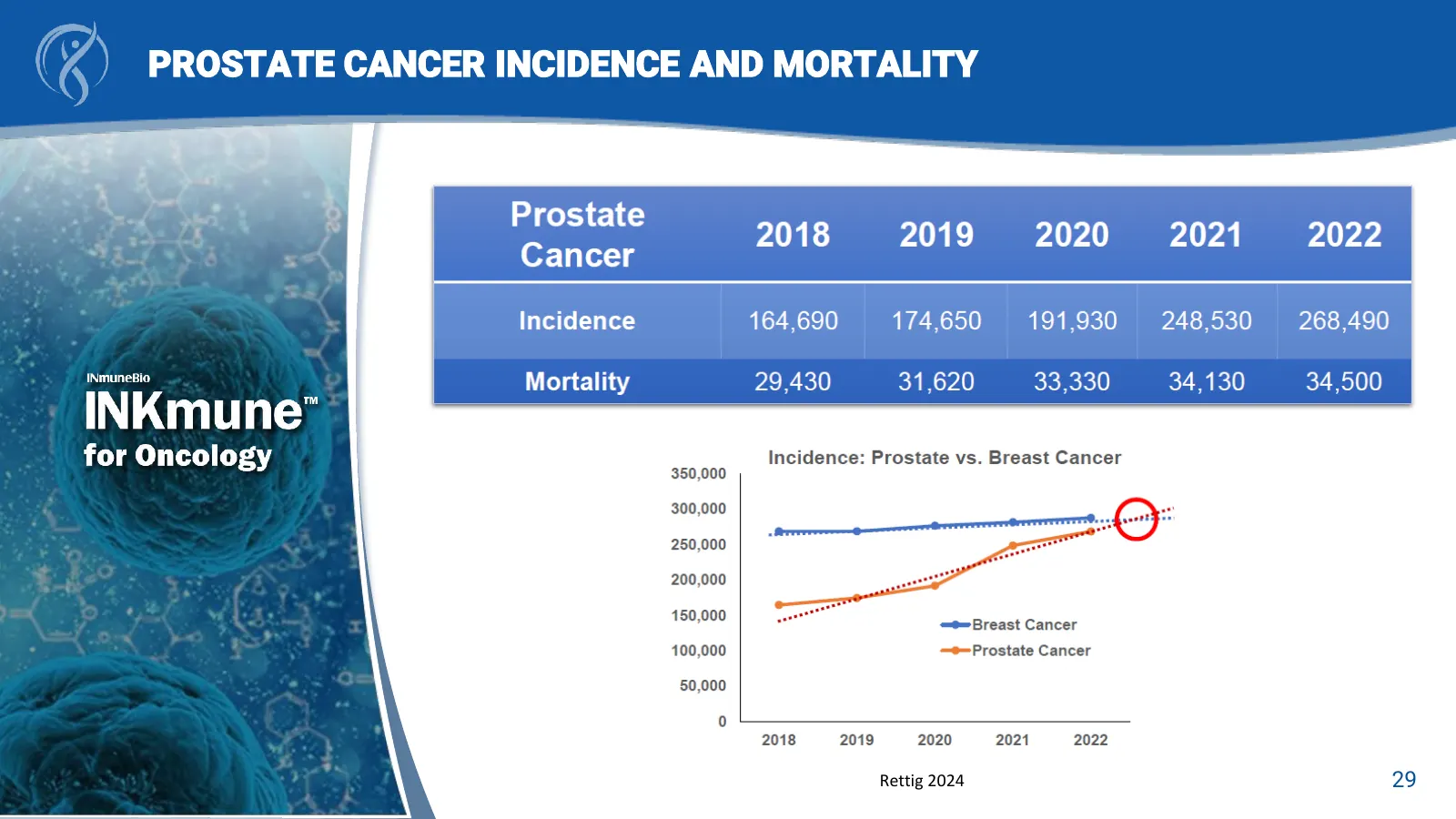
Slide 29: Prostate Cancer Incidence and Mortality
PROSTATE CANCER INCIDENCE AND MORTALITY a Rettig 2024 29
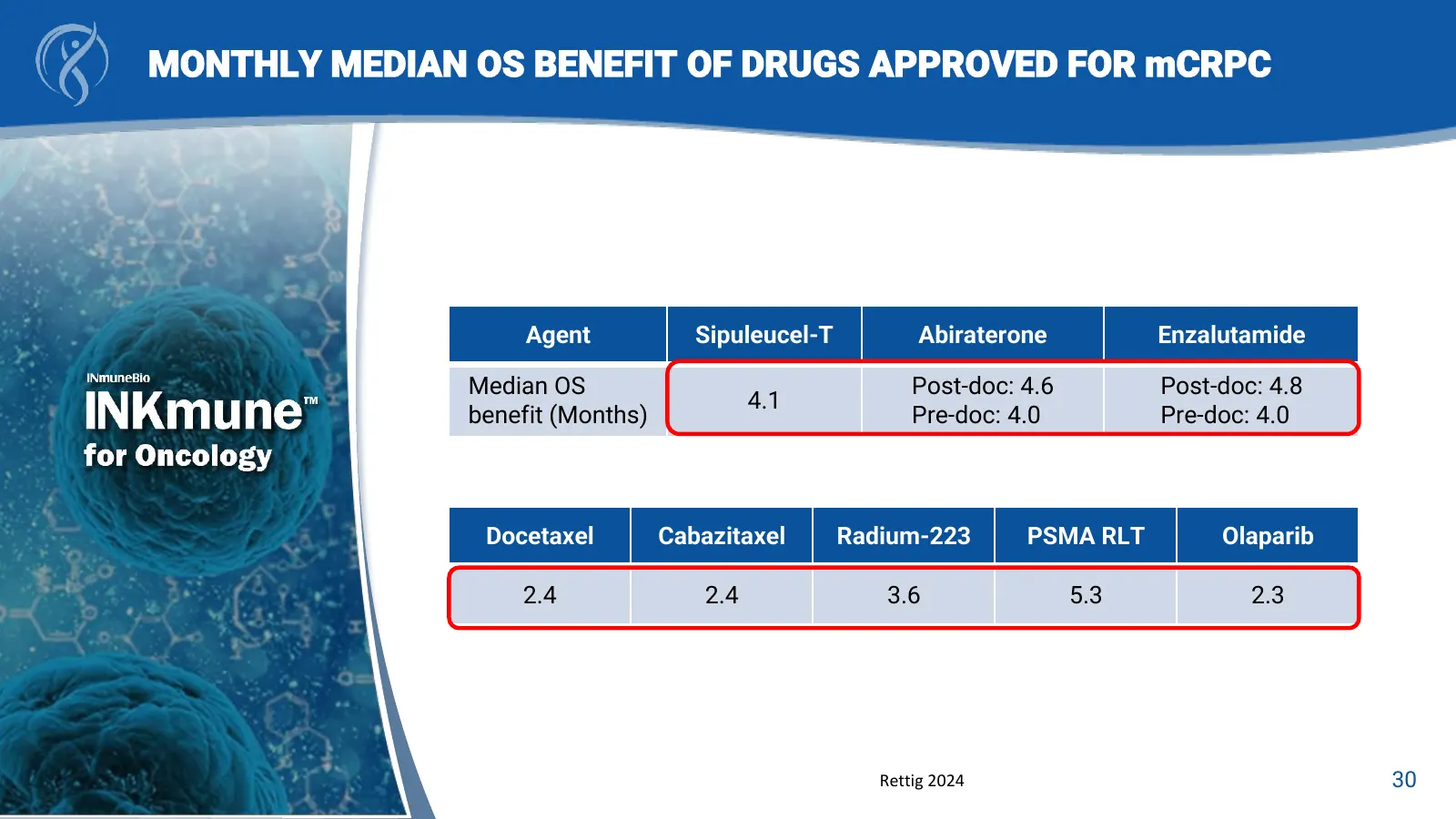
Slide 30: Monthly Median OS Benefit of Drugs Approved for mCRPC
MONTHLY MEDIAN OS BENEFIT OF DRUGS APPROVED FOR mCRPC Agent Sipuleucel-T Abiraterone Enzalutamide Median OS Post-doc: 4.6 Post-doc: 4.8 a benefit (Months) 4.1 Pre-doc: 4.0 Pre-doc: 4.0 Docetaxel Cabazitaxel Radium-223 PSMA RLT Olaparib 2.4 2.4 3.6 5.3 2.3 Rettig 2024 30
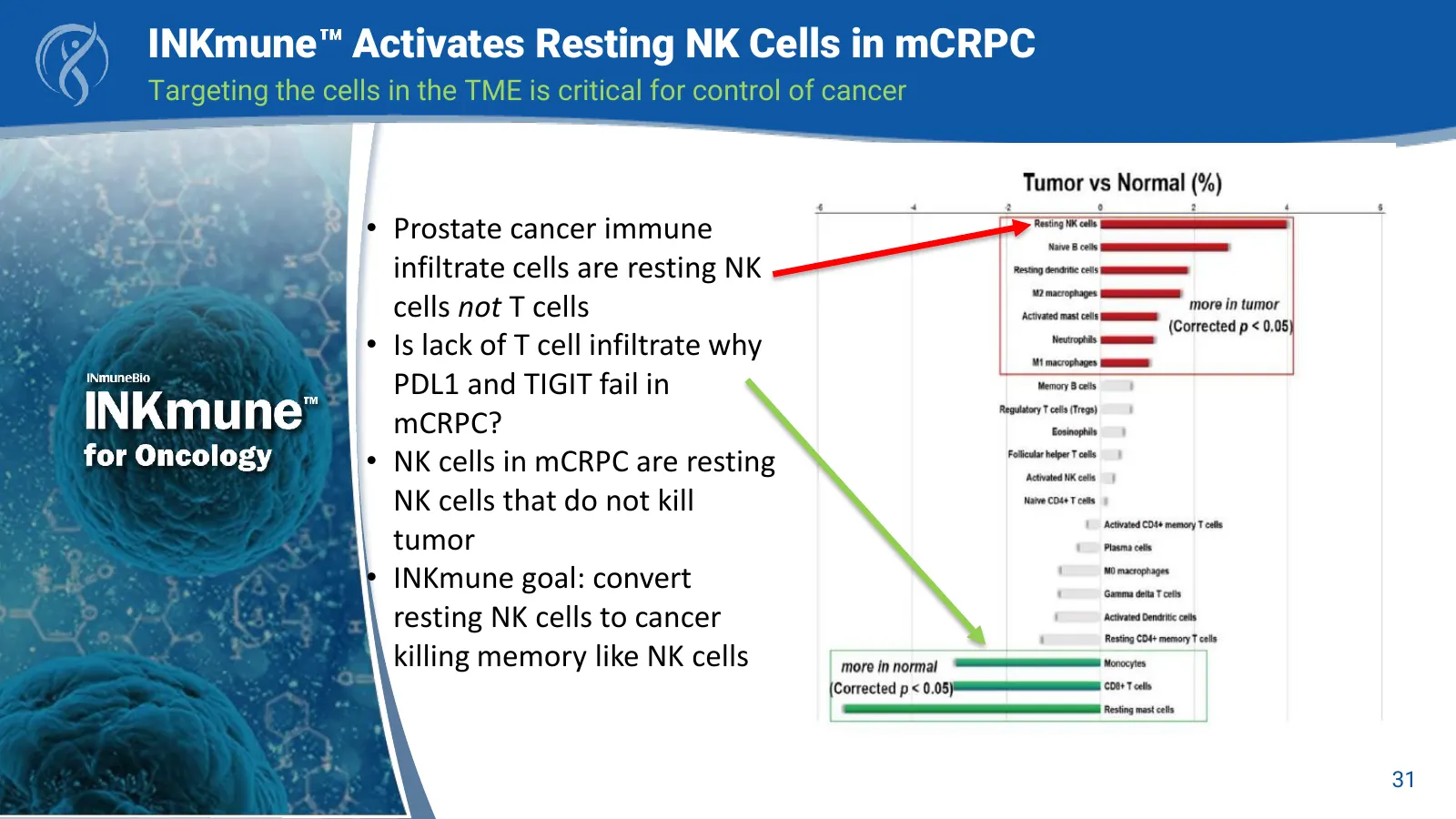
Slide 31: INKmune Activates Resting NK Cells in mCRPC
INKmune Activates Resting NK Cells in mCRPC Targeting the cells in the TME is critical for control of cancer • Prostate cancer immune infiltrate cells are resting NK cells not T cells • Is lack of T cell infiltrate why a PDL1 and TIGIT fail in mCRPC? • NK cells in mCRPC are resting NK cells that do
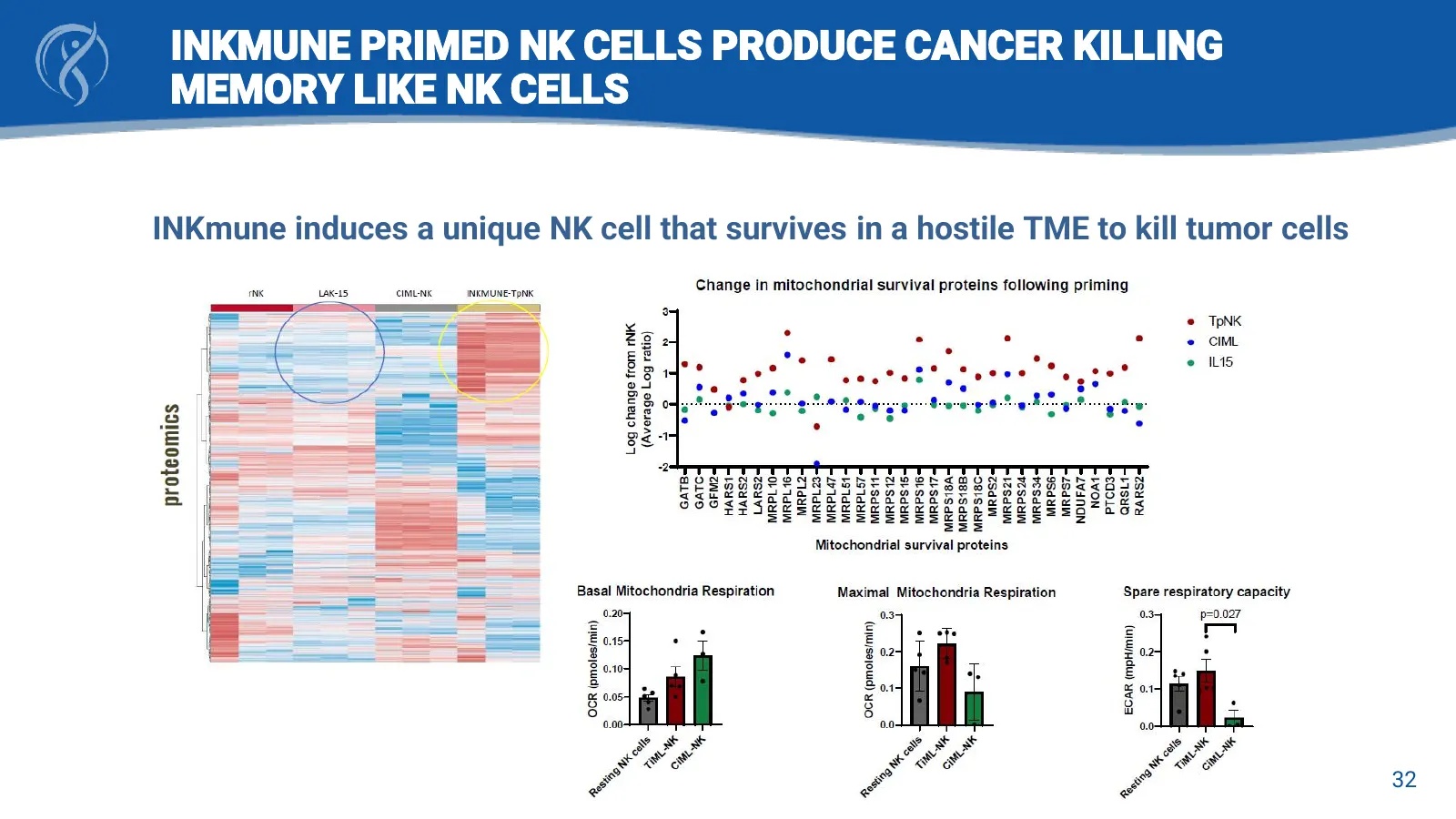
Slide 32: INKmune Primed NK Cells Produce Cancer Killing Memory-Like NK Cells
INKMUNE PRIMED NK CELLS PRODUCE CANCER KILLING MEMORY LIKE NK CELLS INKmune induces a unique NK cell that survives in a hostile TME to kill tumor cells 32
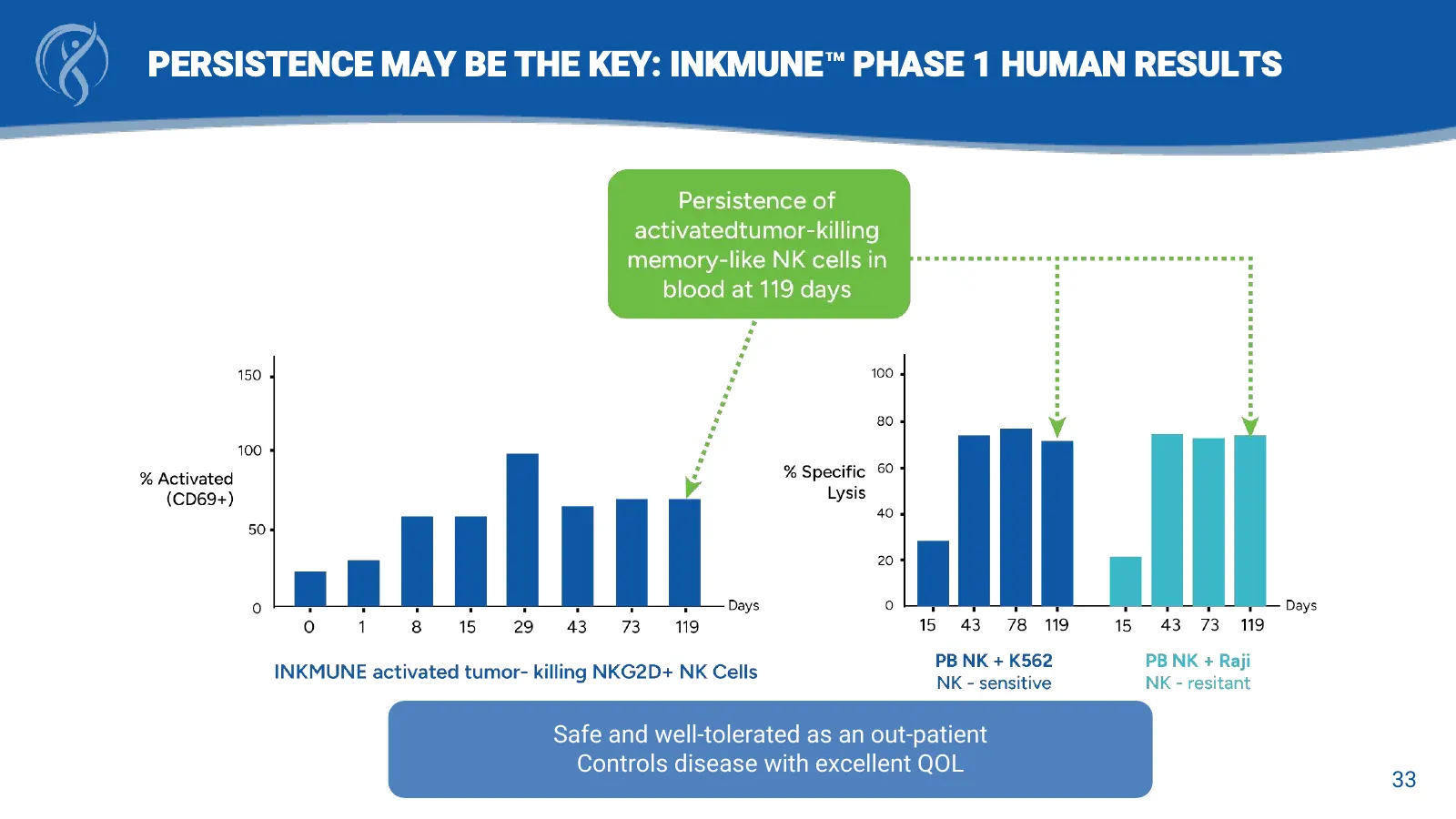
Slide 33: Persistence May Be the Key: INKmune Phase 1 Human Results
PERSISTENCE MAY BE THE KEY: INKMUNE PHASE 1 HUMAN RESULTS Safe and well-tolerated as an out-patient Controls disease with excellent QOL 33
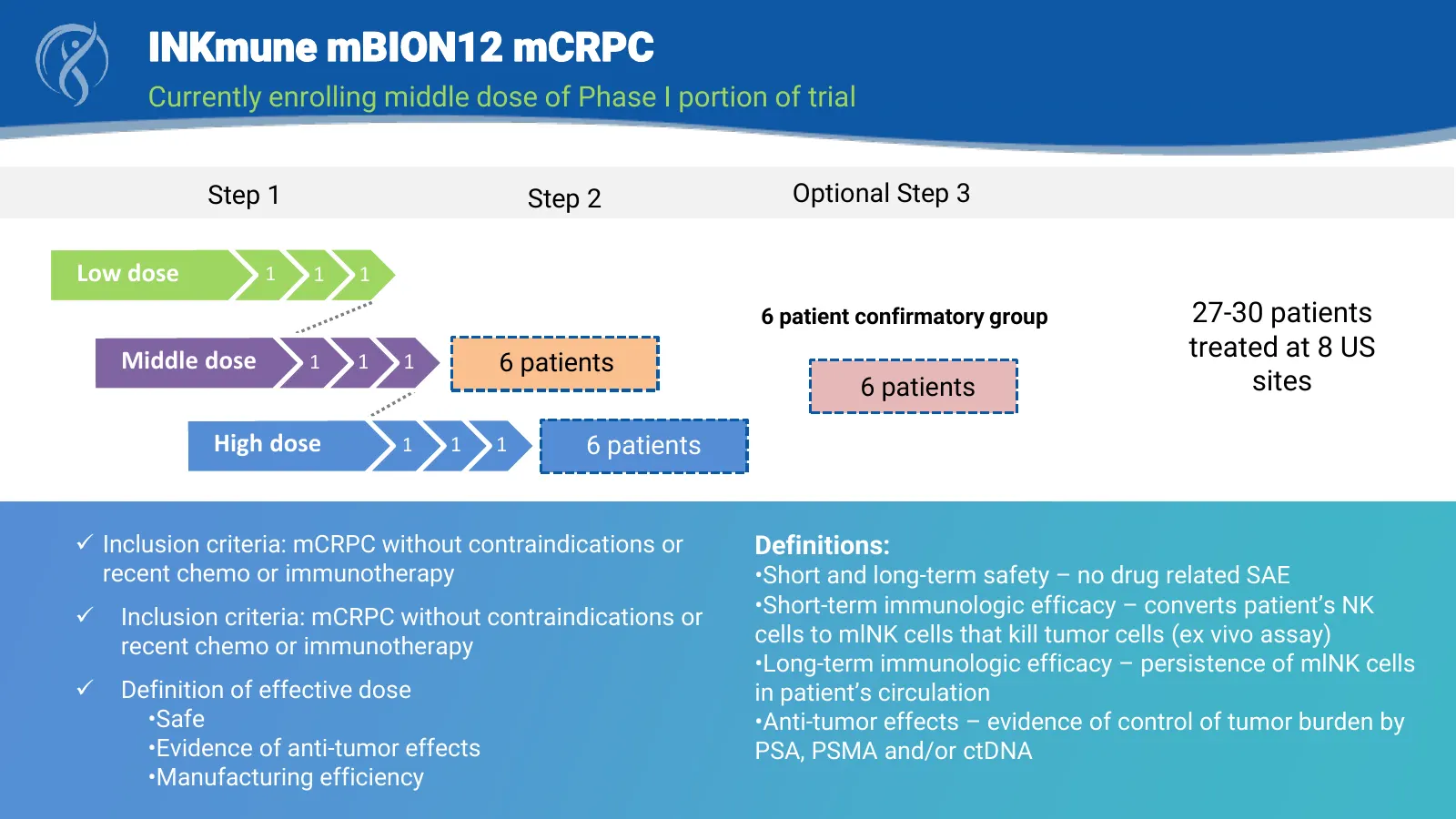
Slide 34: INKmune mBION12 mCRPC Trial
INKmune mBION12 mCRPC Currently enrolling Short middle dose term safety of Phase Immunologic I portion efficacy / of trial long term safety Immunologic efficacy Anti tumor effects Step 1 Step 2 Optional Step 3 Low dose 1 1 1 6 patient confirmatory group 27-30 patients treated at 8 US Middle dose 1 1
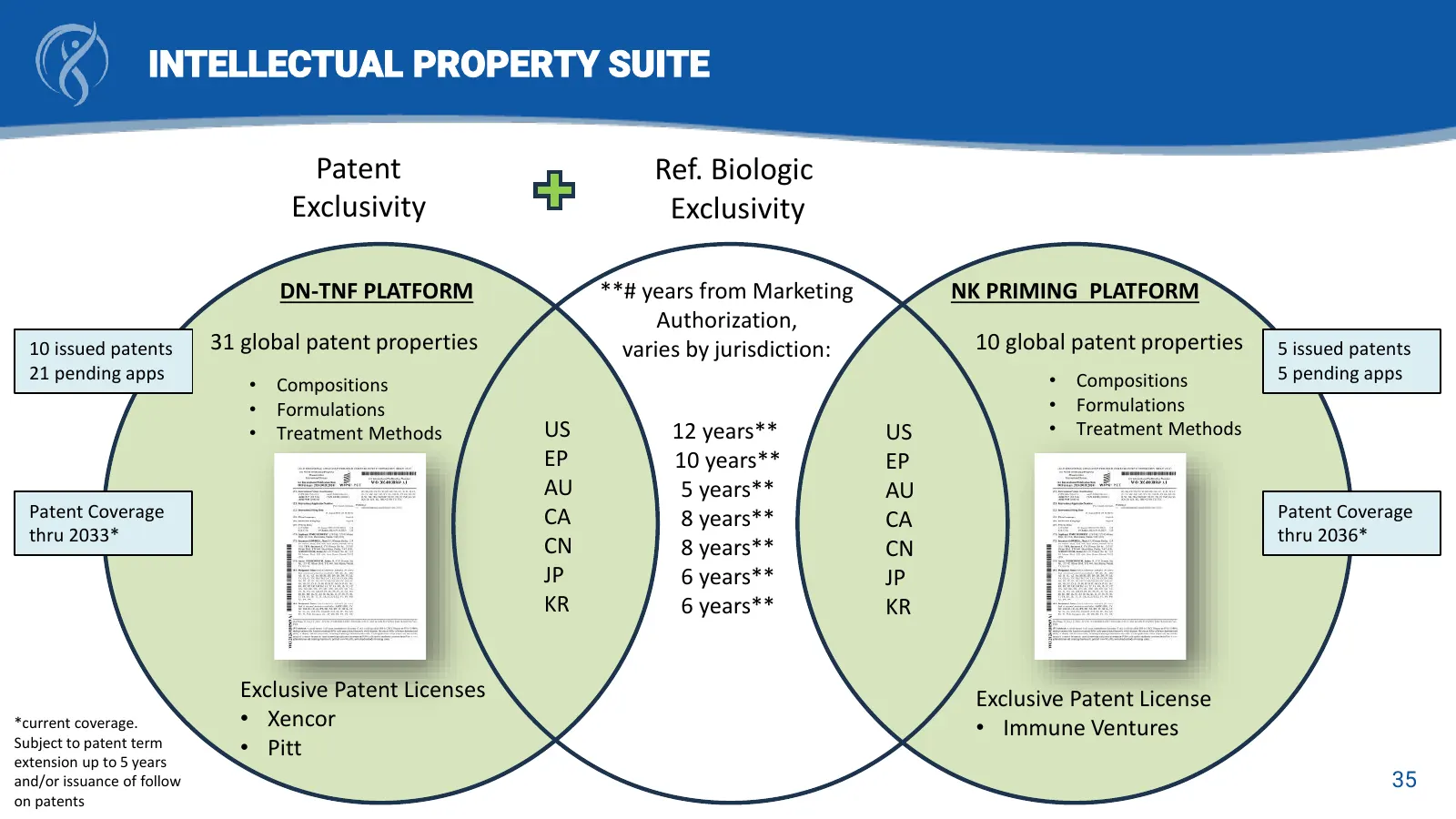
Slide 35: Intellectual Property Suite
INTELLECTUAL PROPERTY SUITE Patent Ref. Biologic Exclusivity Exclusivity DN-TNF PLATFORM **# years from Marketing NK PRIMING PLATFORM Authorization, 10 issued patents 31 global patent properties varies by jurisdiction: 10 global patent properties 5 issued patents 21 pending apps • Compositions 5 pen
Slide 36: Appendix
Appendix
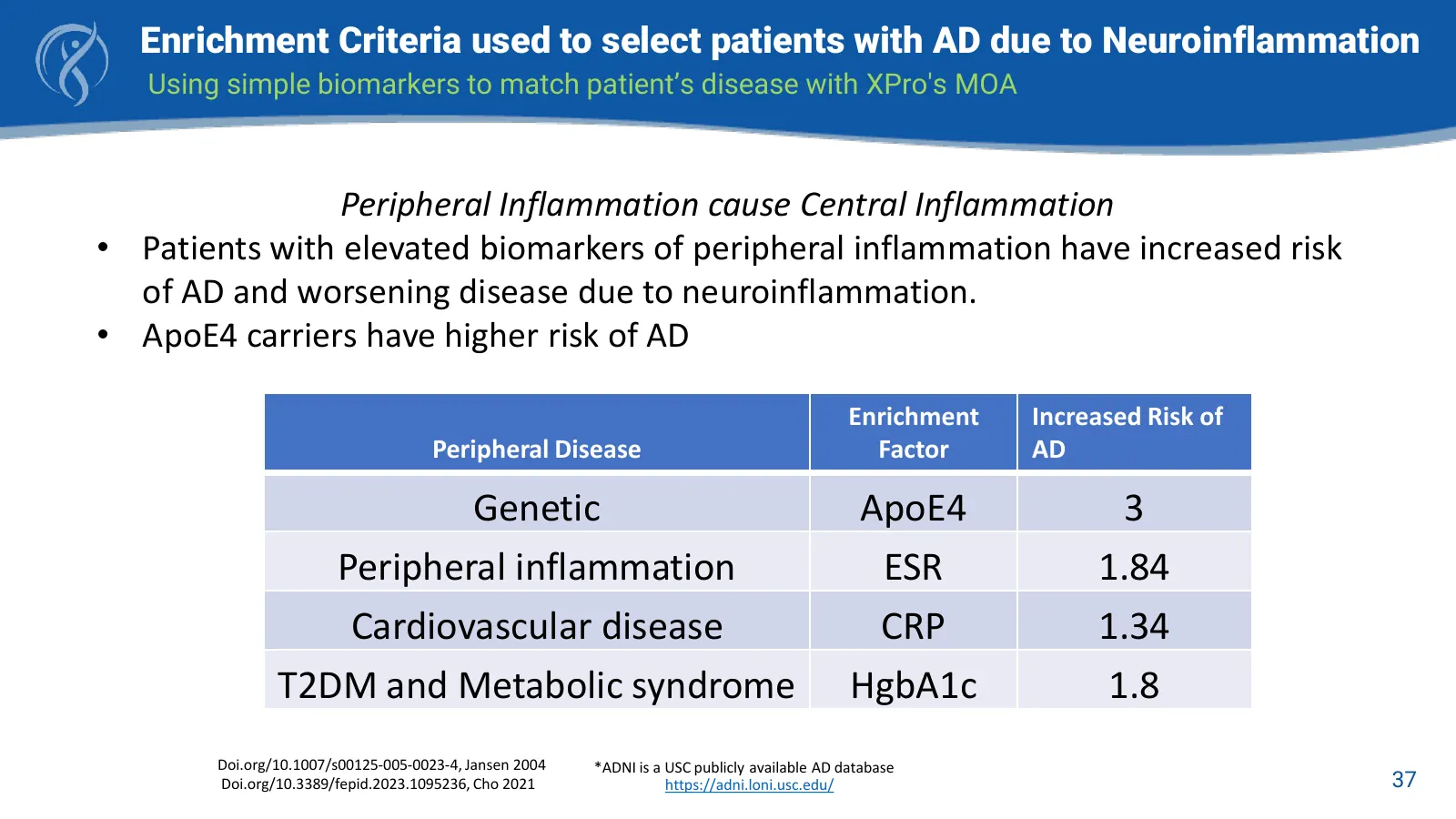
Slide 37: Enrichment Criteria used to select patients with AD due to Neuroinflammation
Enrichment Criteria used to select patients with AD due to Neuroinflammation Using simple biomarkers to match patient’s disease with XPro's MOA Peripheral Inflammation cause Central Inflammation • Patients with elevated biomarkers of peripheral inflammation have increased risk of AD and worsening di
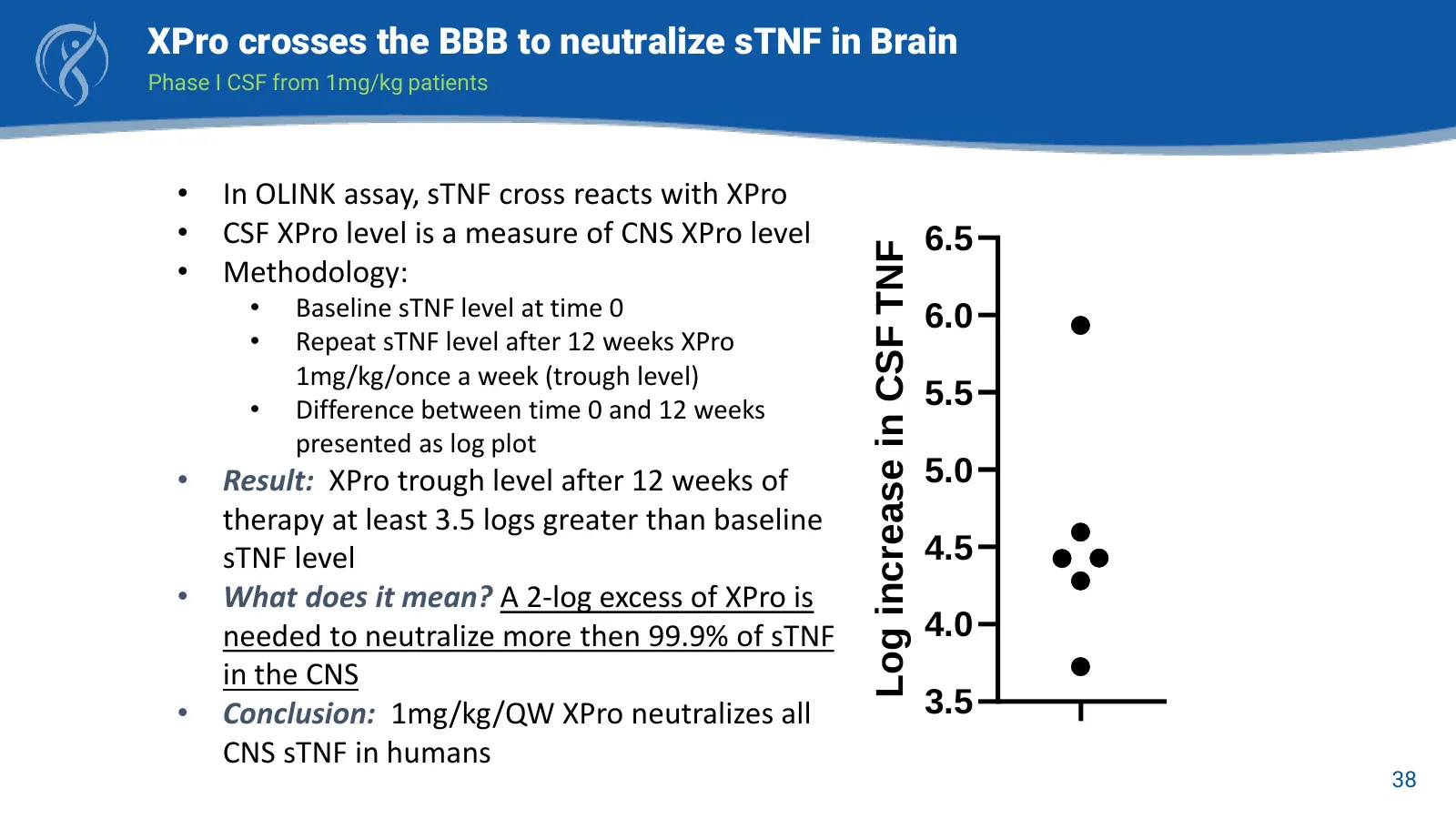
Slide 38: XPro Crosses the BBB to Neutralize sTNF in Brain
XPro crosses the BBB to neutralize sTNF in Brain Phase I CSF from 1mg/kg patients • In OLINK assay, sTNF cross reacts with XPro • CSF XPro level is a measure of CNS XPro level 6.5 Log increase in CSF TNF • Methodology: • Baseline sTNF level at time 0 6.0 • Repeat sTNF level after 12 weeks XPro 1mg/k
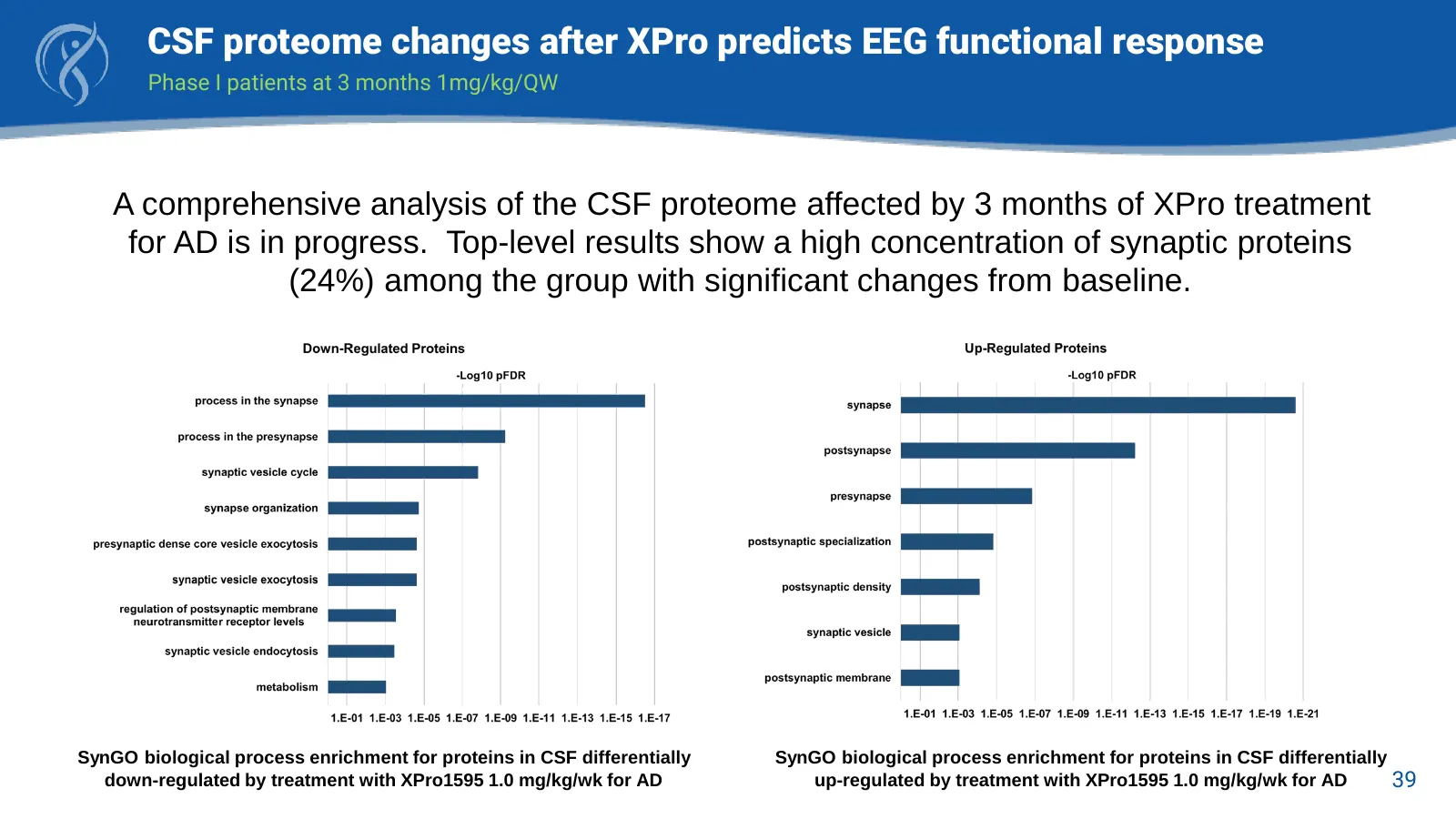
Slide 39: CSF Proteome Changes after XPro Predict EEG Functional Response
CSF proteome changes after XPro predicts EEG functional response Phase I patients at 3 months 1mg/kg/QW A comprehensive analysis of the CSF proteome affected by 3 months of XPro treatment for AD is in progress. Top-level results show a high concentration of synaptic proteins (24%) among the group wi
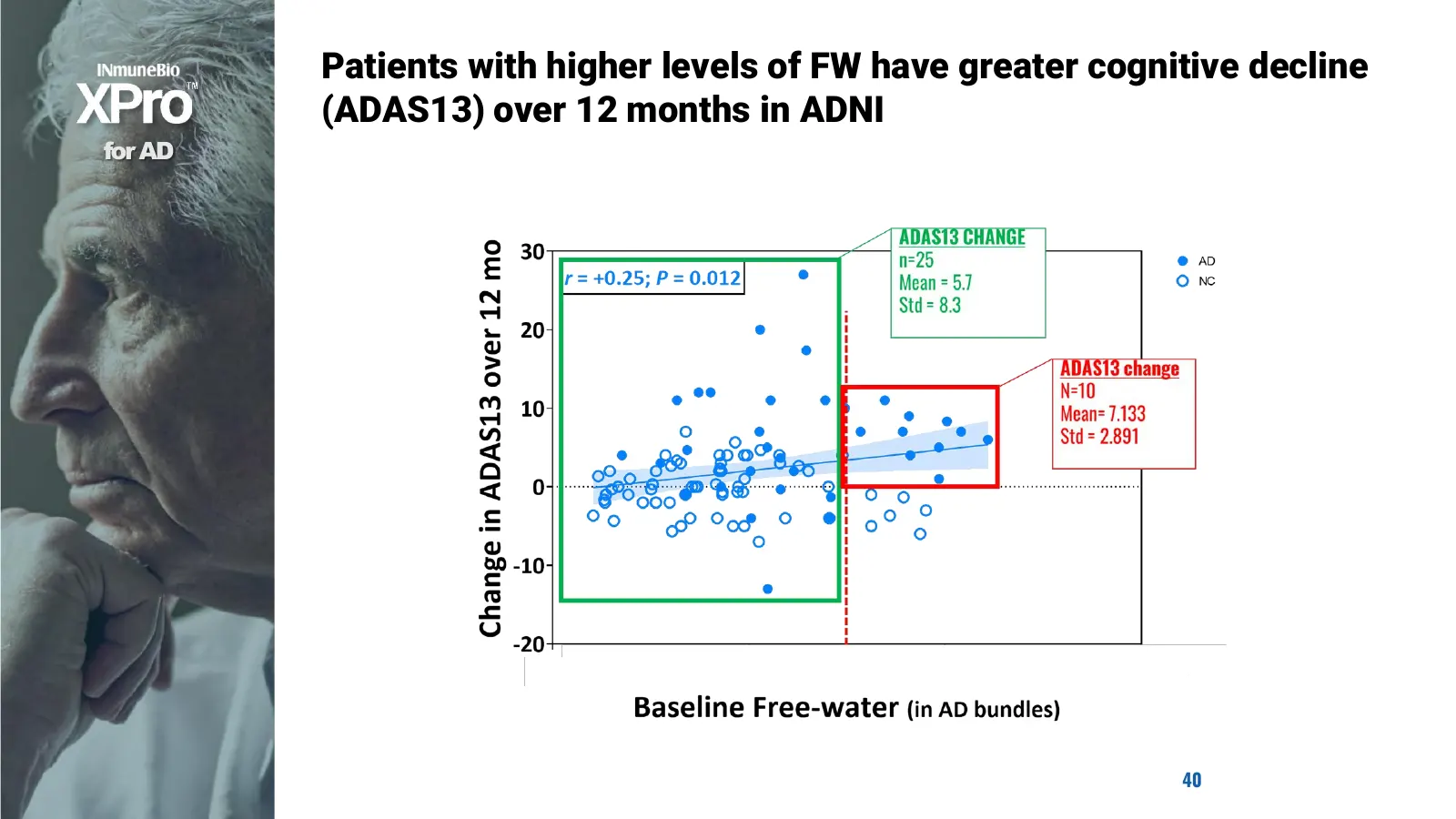
Slide 40: Patients with Higher Levels of FW Have Greater Cognitive Decline
Patients with higher levels of FW have greater cognitive decline (ADAS13) over 12 months in ADNI for AD 40
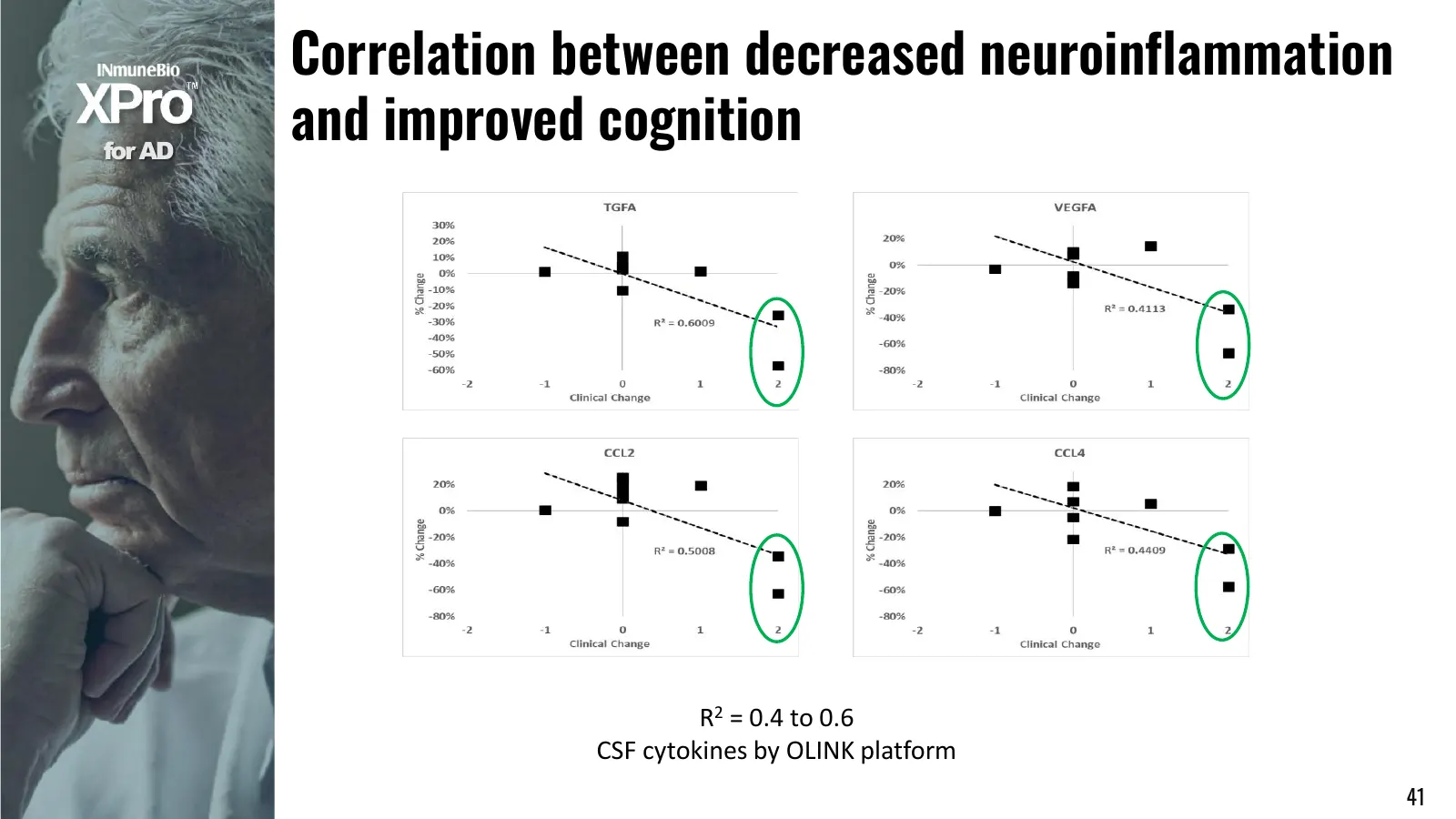
Slide 41: Correlation between Decreased Neuroinflammation and Improved Cognition
Correlation between decreased neuroinflammation for AD and improved cognition R2 = 0.4 to 0.6 CSF cytokines by OLINK platform INMB AD Non-confidential 1.5.22 41
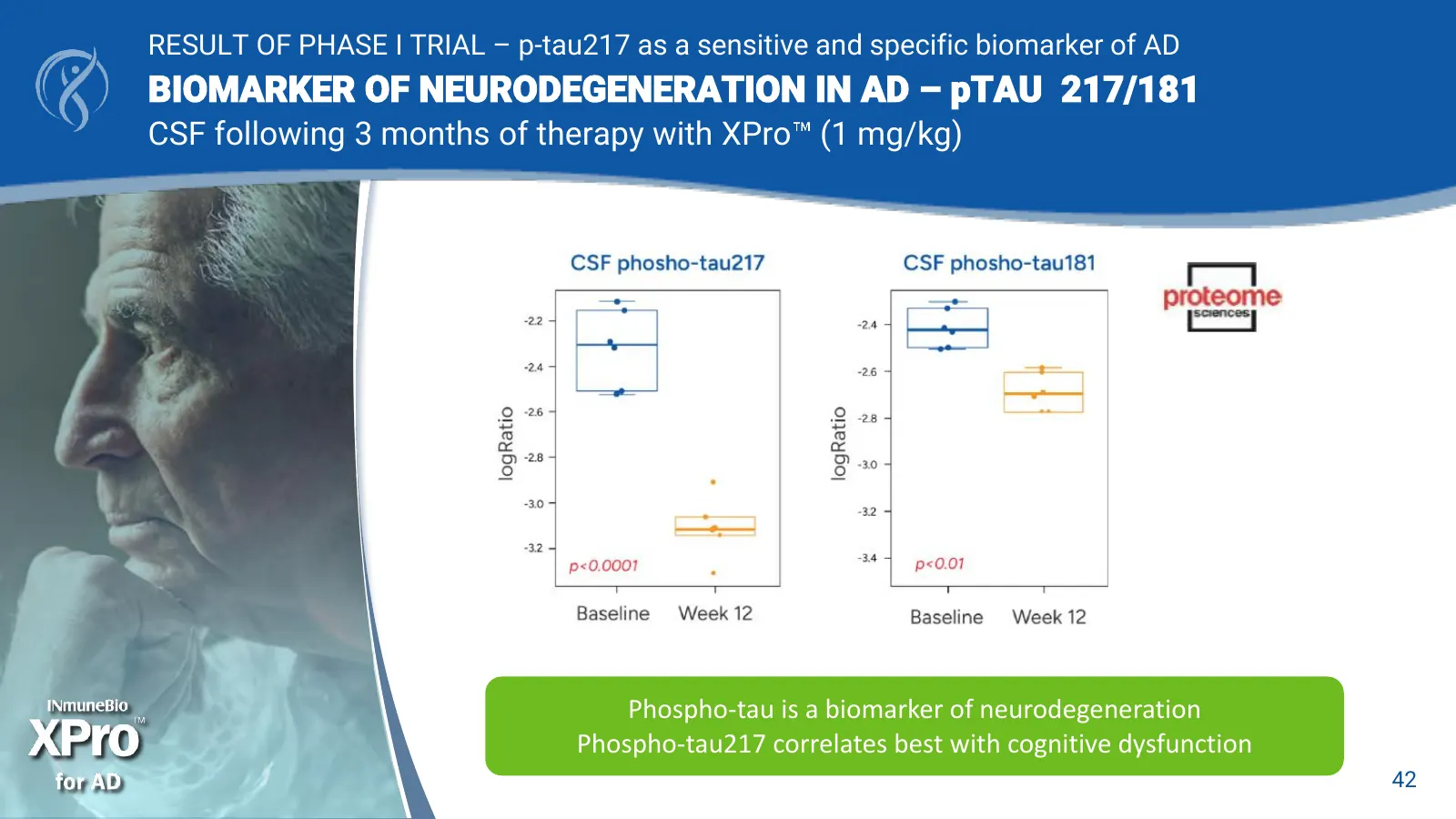
Slide 42: Biomarker of Neurodegeneration in AD: pTAU 217/181
RESULT OF PHASE I TRIAL – p-tau217 as a sensitive and specific biomarker of AD BIOMARKER OF NEURODEGENERATION IN AD – pTAU 217/181 CSF following 3 months of therapy with XPro (1 mg/kg) a Phospho-tau is a biomarker of neurodegeneration Phospho-tau217 correlates best with cognitive dysfunction 42
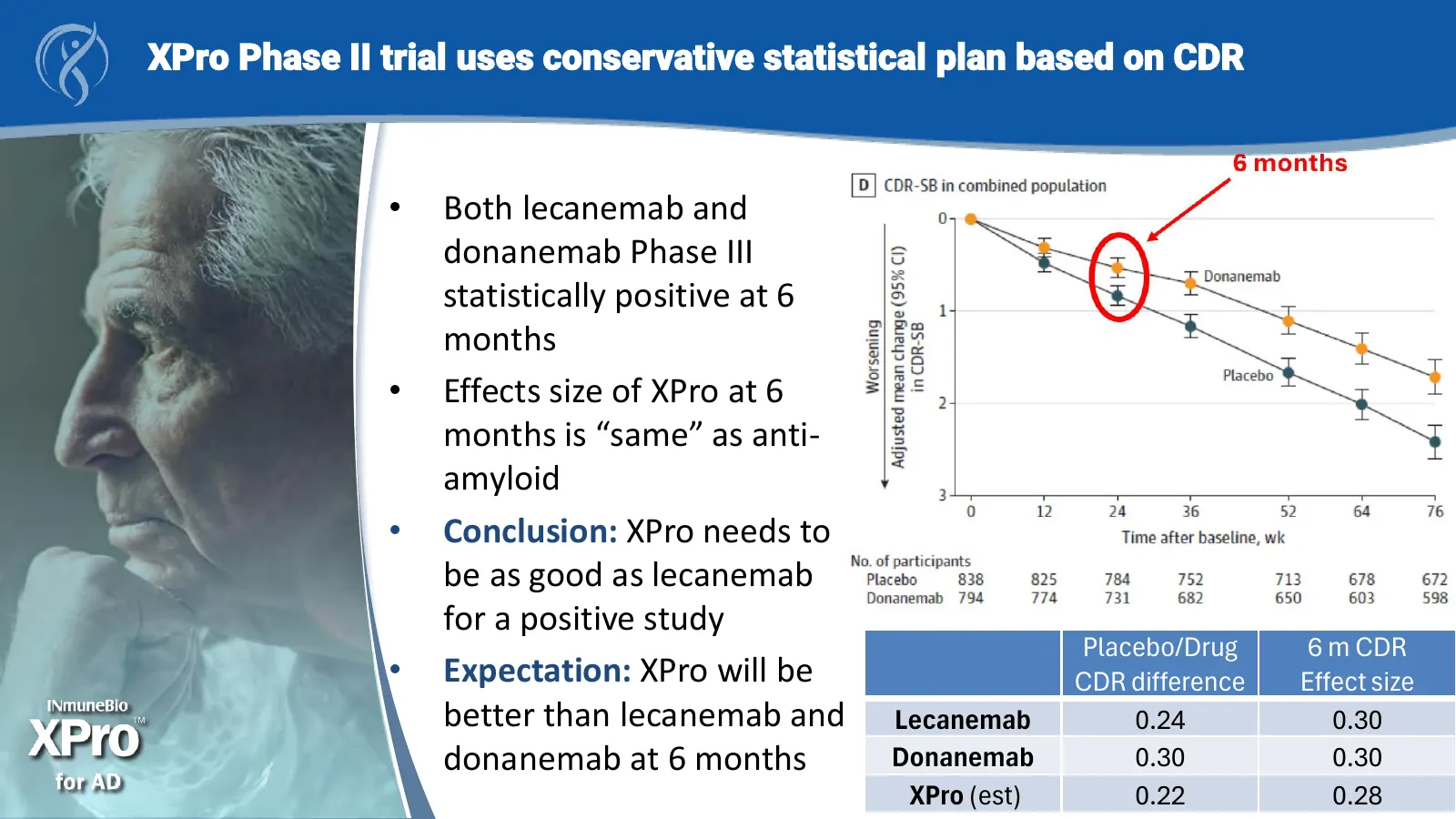
Slide 43: XPro Phase II Trial Uses Conservative Statistical Plan Based on CDR
XPro Phase II trial uses conservative statistical plan based on CDR • Both lecanemab and donanemab Phase III statistically positive at 6 months • Effects size of XPro at 6 a months is “same” as anti- amyloid • Conclusion: XPro needs to be as good as lecanemab for a positive study Placebo/Drug 6 m CD
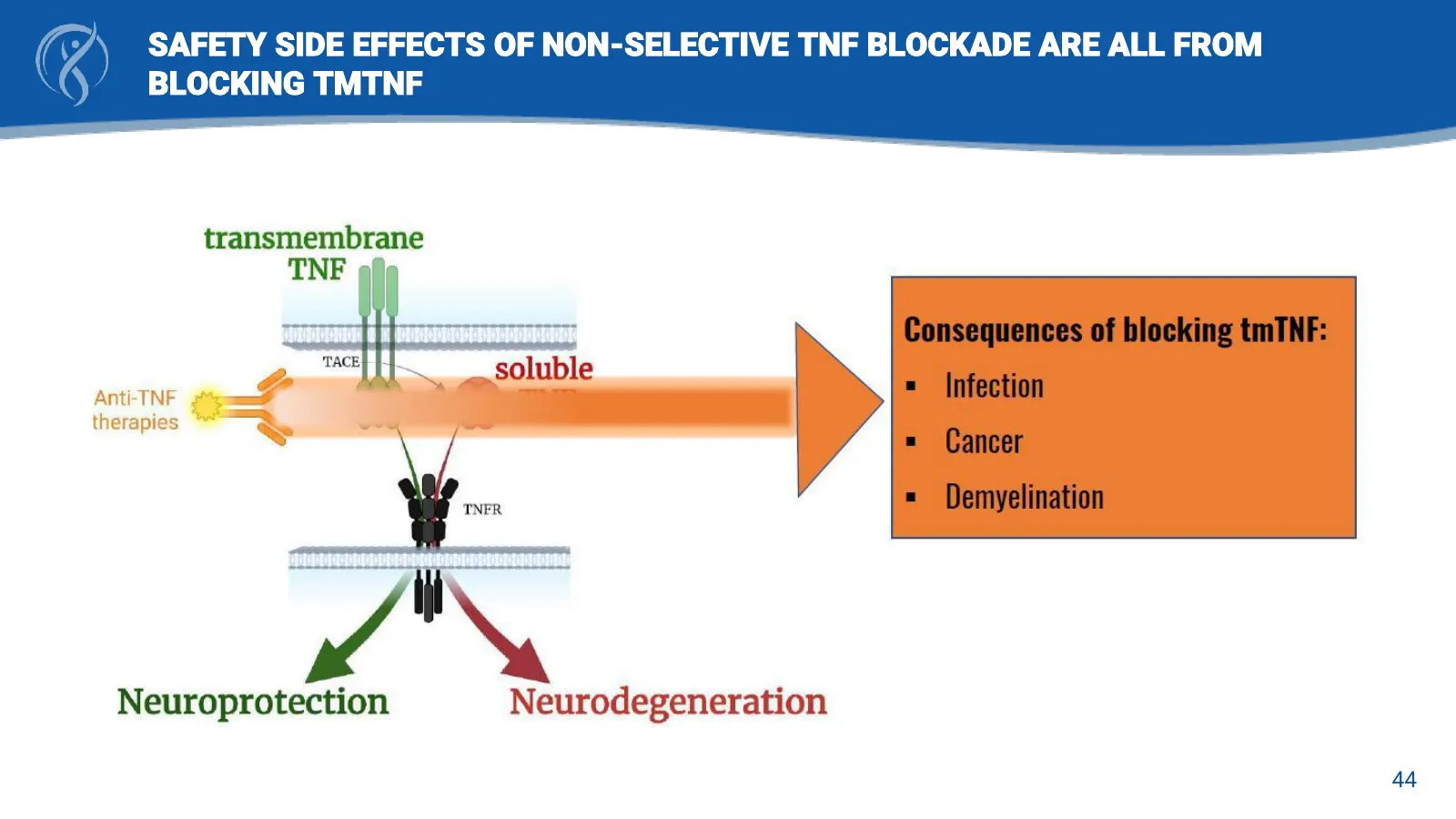
Slide 44: Safety Side Effects of Non-Selective TNF Blockade Are from Blocking tmTNF
SAFETY SIDE EFFECTS OF NON-SELECTIVE TNF BLOCKADE ARE ALL FROM BLOCKING TMTNF 44
Slide 45: XPro Attenuates AD-like Pathology and Restores Normal Function in Animal Models
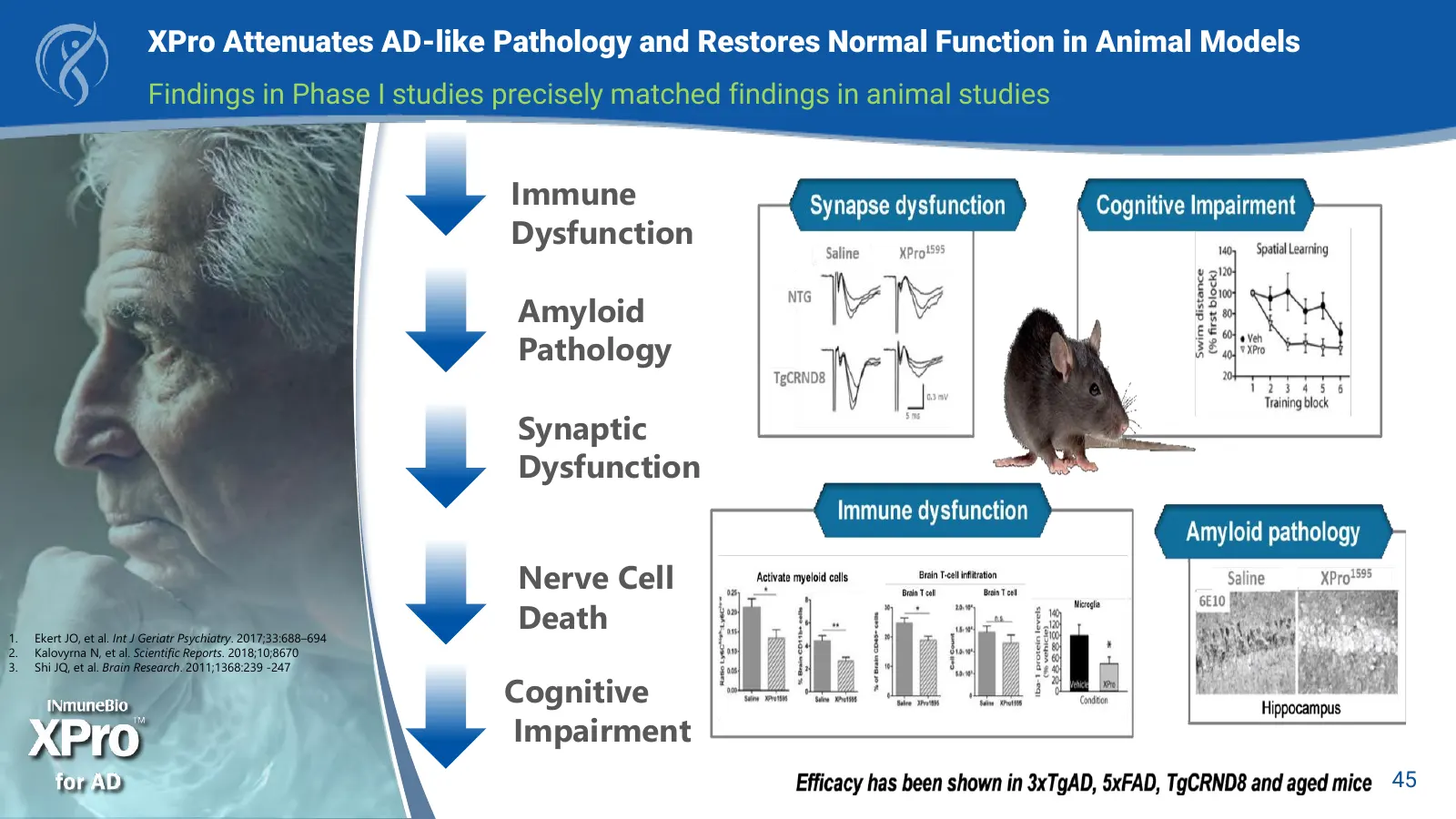
XPro Attenuates AD-like Pathology and Restores Normal Function in Animal Models Findings in Phase I studies precisely matched findings in animal studies Immune Dysfunction Amyloid Pathology a Synaptic Dysfunction Nerve Cell 1. Ekert JO, et al. Int J Geriatr Psychiatry. 2017;33:688–694 Death 2. Kalov
Slide 46: Large Genetic Profile Study of AD Patients Shows Association with Immune Dysfunction
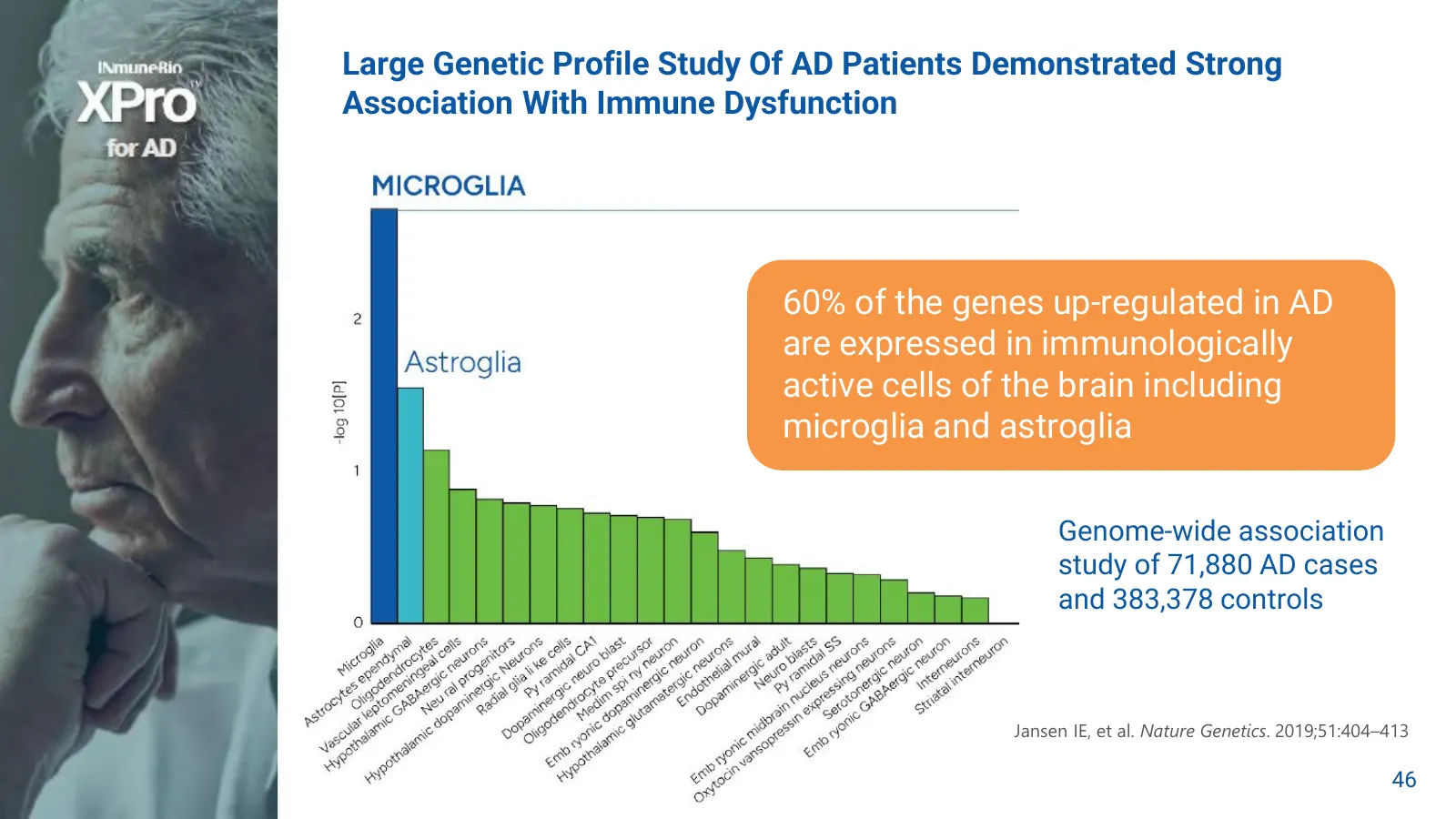
Large Genetic Profile Study Of AD Patients Demonstrated Strong Association With Immune Dysfunction 60% of the genes up-regulated in AD are expressed in immunologically active cells of the brain including microglia and astroglia Genome-wide association study of 71,880 AD cases and 383,378 controls Ja
Slide 47: TNF Increases Early in Life Contributing to Inflammaging
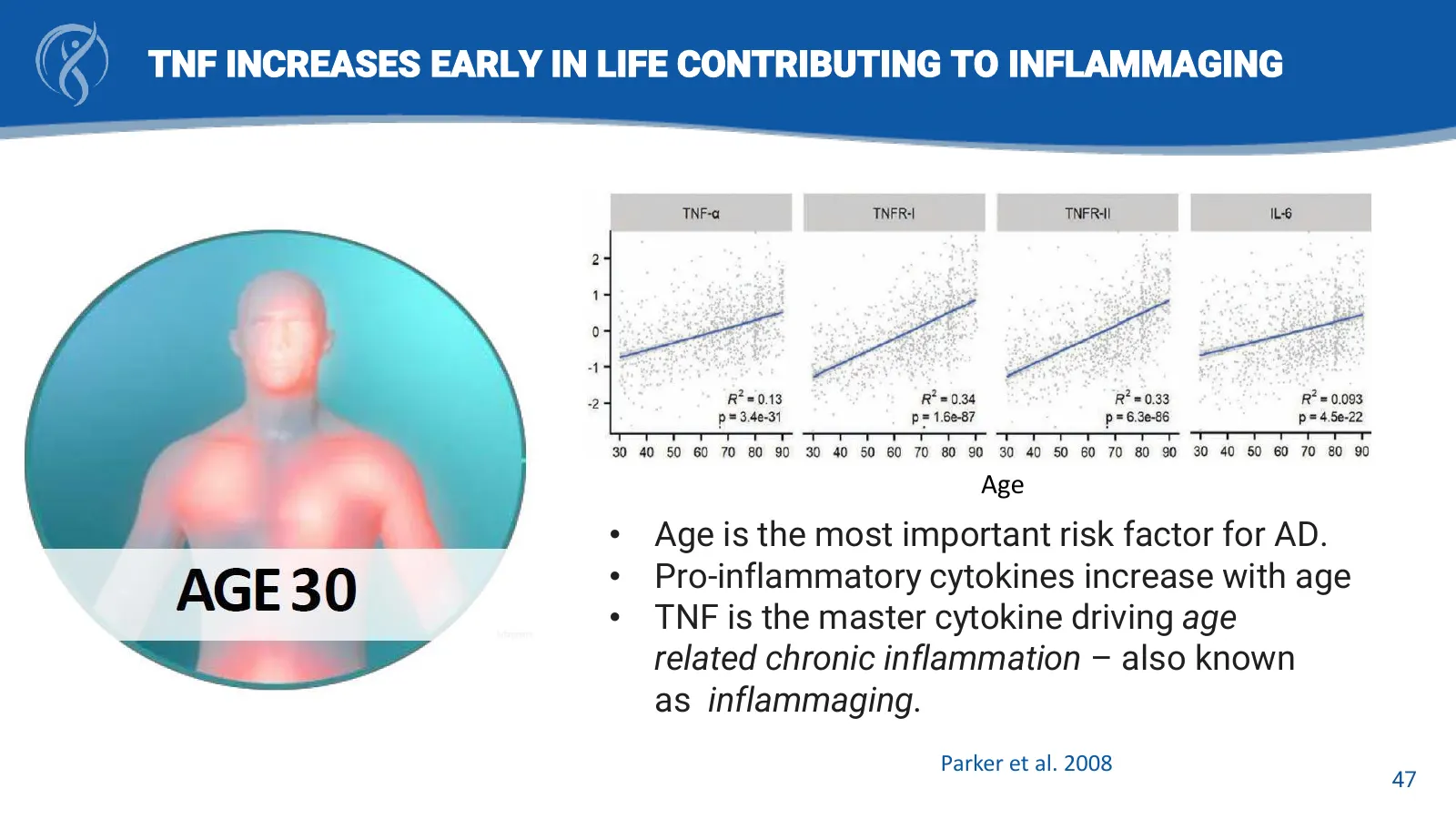
TNF INCREASES EARLY IN LIFE CONTRIBUTING TO INFLAMMAGING Biomarker Concentrations by Age Age • Age is the most important risk factor for AD. • Pro-inflammatory cytokines increase with age • TNF is the master cytokine driving age related chronic inflammation – also known as inflammaging. Parker et al
Slide 48: Decades of Data Connects TNF and Neuroinflammation with AD
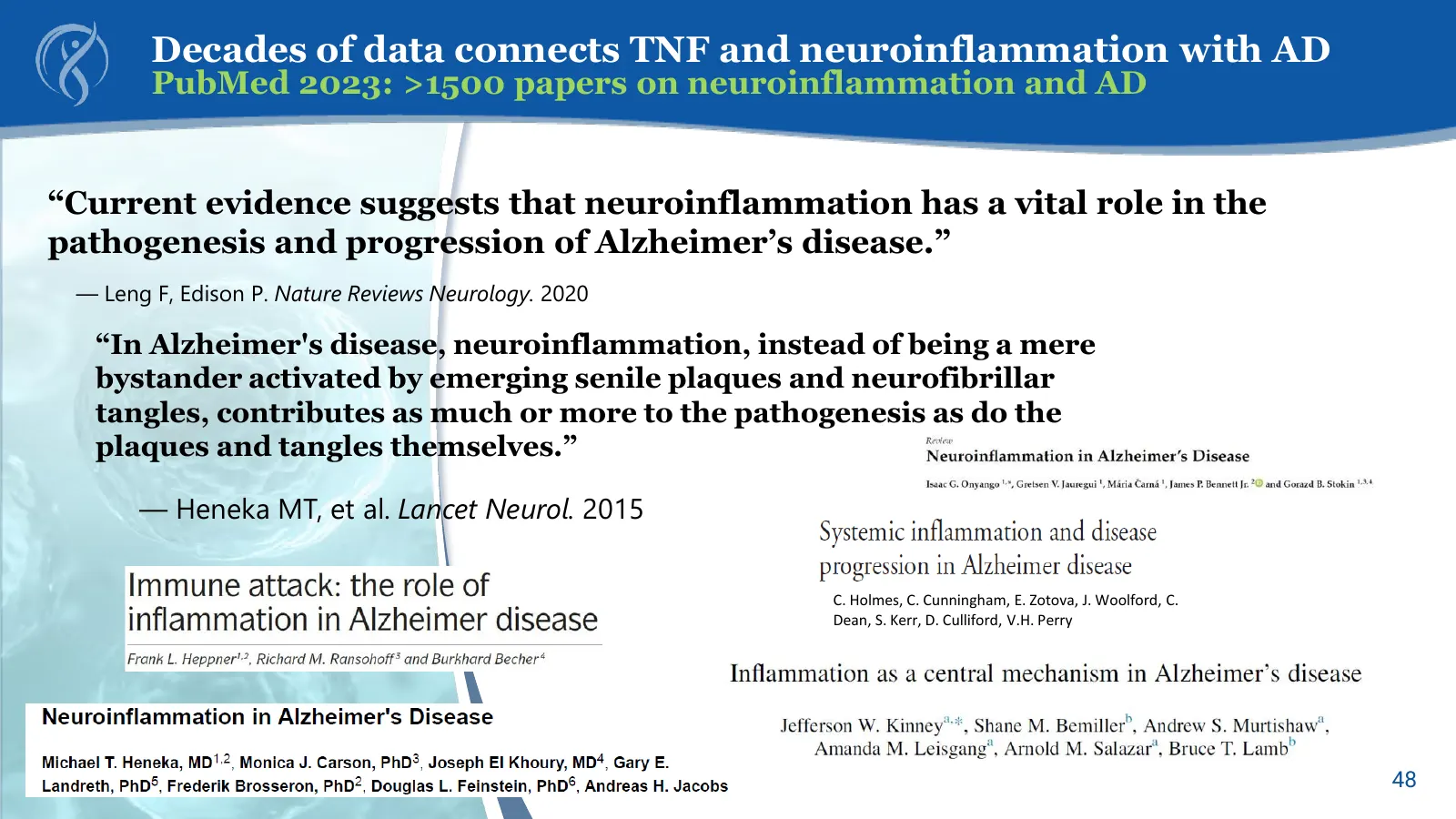
Decades of data connects TNF and neuroinflammation with AD PubMed 2023: >1500 papers on neuroinflammation and AD “Current evidence suggests that neuroinflammation has a vital role in the pathogenesis and progression of Alzheimer’s disease.” — Leng F, Edison P. Nature Reviews Neurology. 2020 “In Alzh
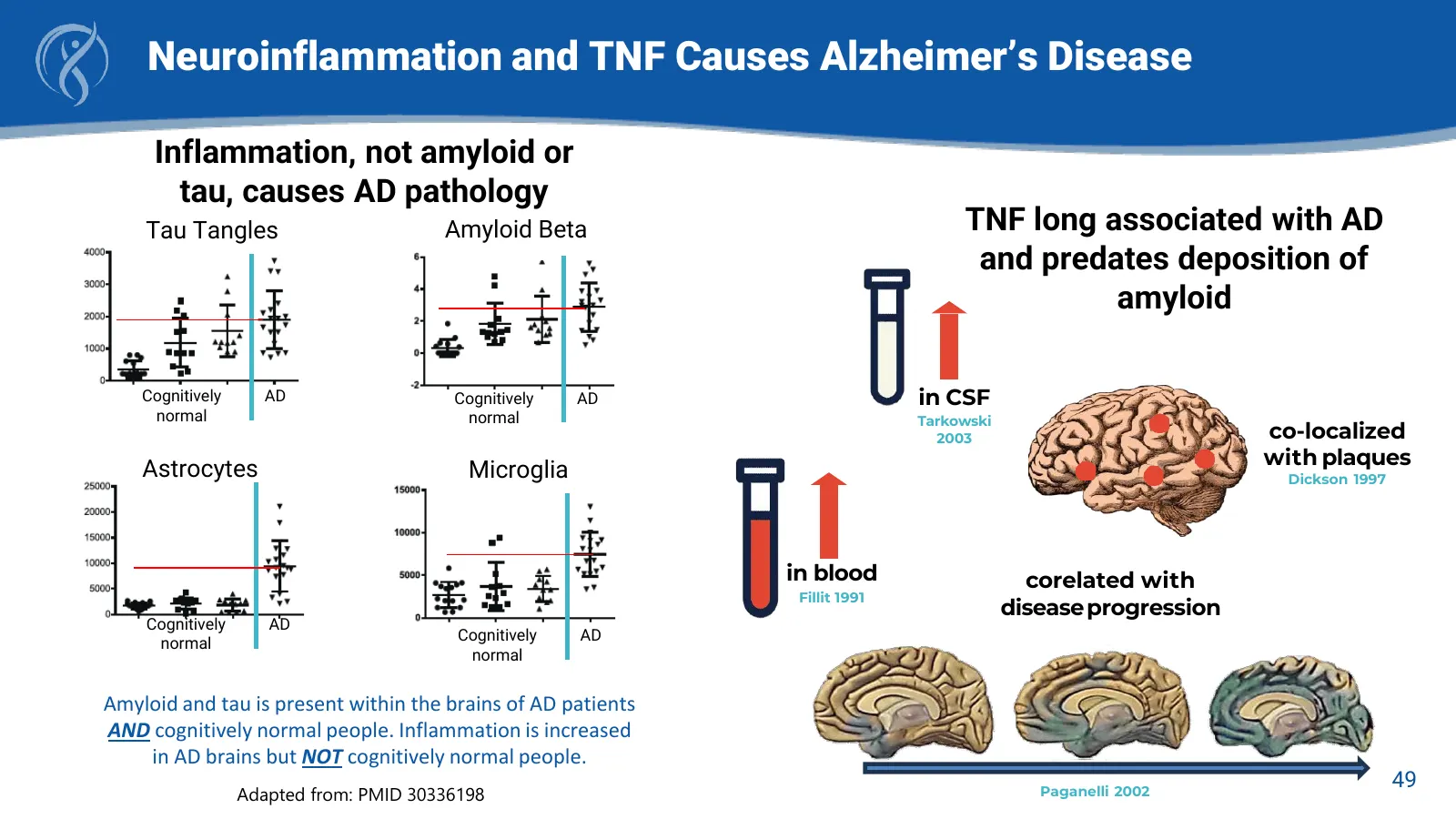
Slide 49: Neuroinflammation and TNF Causes Alzheimer's Disease
Neuroinflammation and TNF Causes Alzheimer’s Disease Inflammation, not amyloid or tau, causes AD pathology Tau Tangles Amyloid Beta TNF long associated with AD and predates deposition of 2 amyloid Cognitively normal AD Cognitively normal AD 3 in CSF Tarkowski 2003 co-localized with plaques Astrocyte
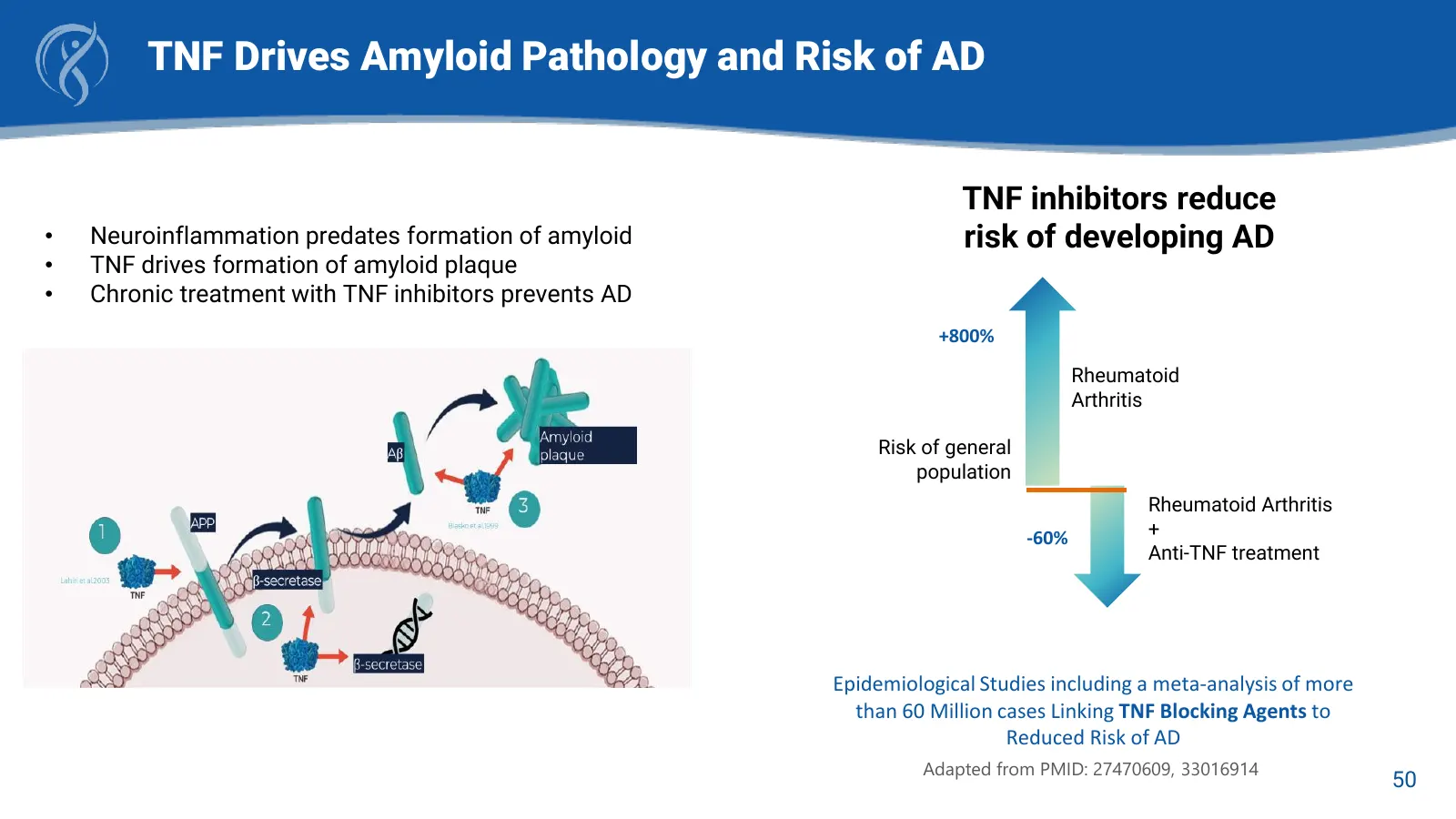
Slide 50: TNF Drives Amyloid Pathology and Risk of AD
TNF Drives Amyloid Pathology and Risk of AD TNF inhibitors reduce • Neuroinflammation predates formation of amyloid risk of developing AD • TNF drives formation of amyloid plaque • Chronic treatment with TNF inhibitors prevents AD +800% Rheumatoid Arthritis Risk of general population Rheumatoid Arth
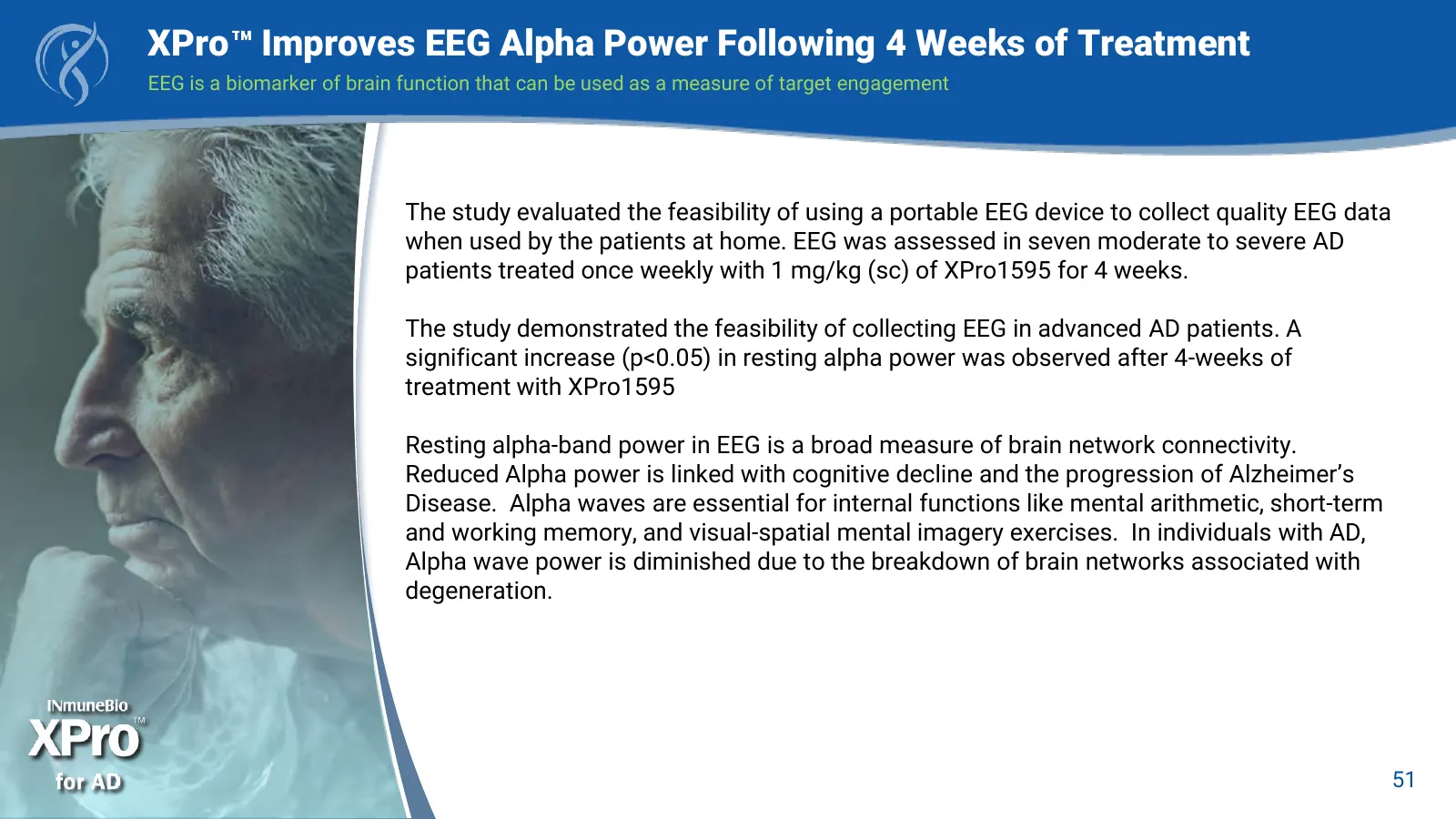
Slide 51: XPro Improves EEG Alpha Power Following 4 Weeks of Treatment
XPro Improves EEG Alpha Power Following 4 Weeks of Treatment EEG is a biomarker of brain function that can be used as a measure of target engagement The study evaluated the feasibility of using a portable EEG device to collect quality EEG data when used by the patients at home. EEG was assessed in s
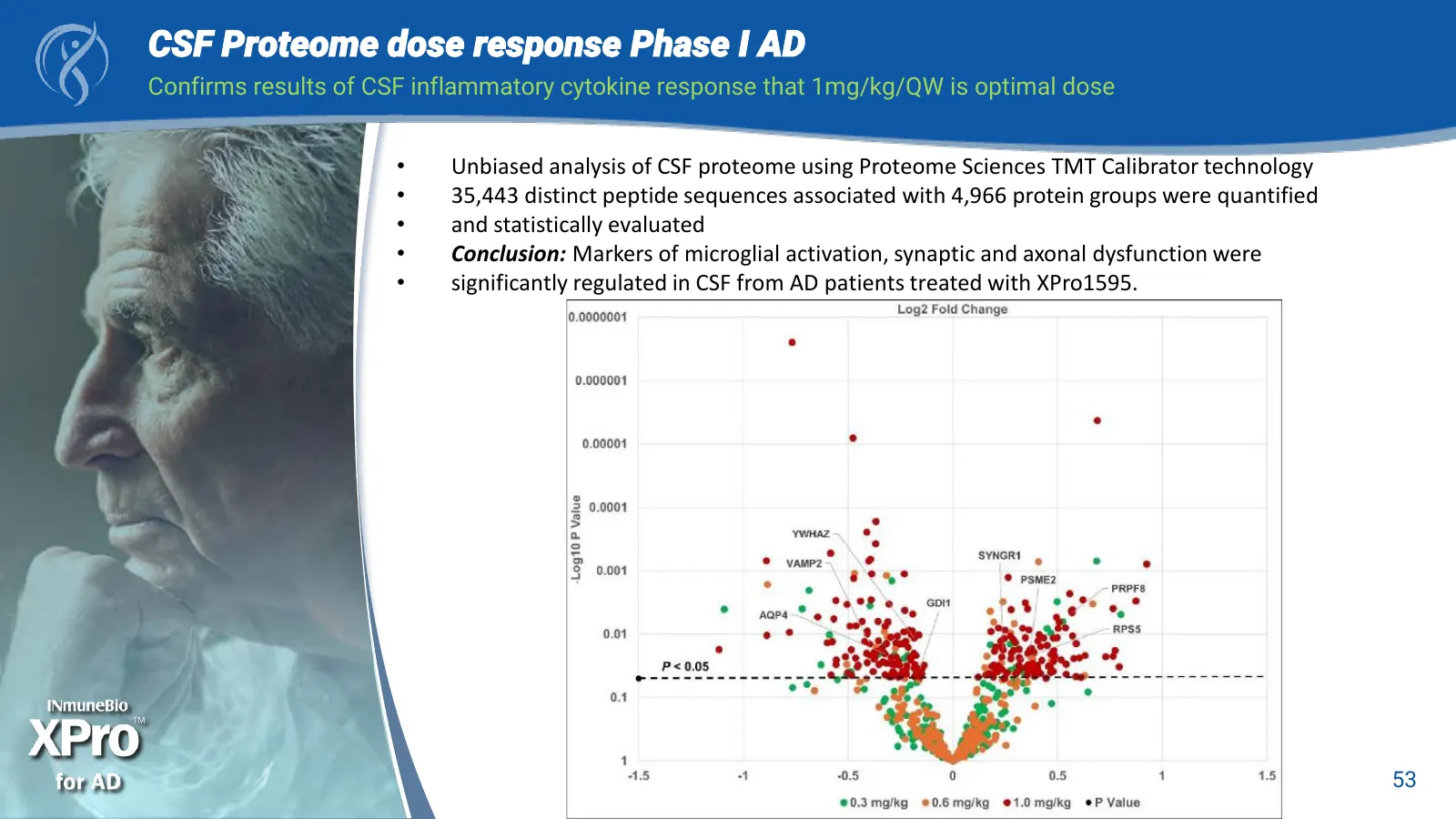
Slide 52: CSF Proteome Dose Response Phase I AD
CSF Proteome dose response Phase I AD Confirms results of CSF inflammatory cytokine response that 1mg/kg/QW is optimal dose • Unbiased analysis of CSF proteome using Proteome Sciences TMT Calibrator technology • 35,443 distinct peptide sequences associated with 4,966 protein groups were quantified •
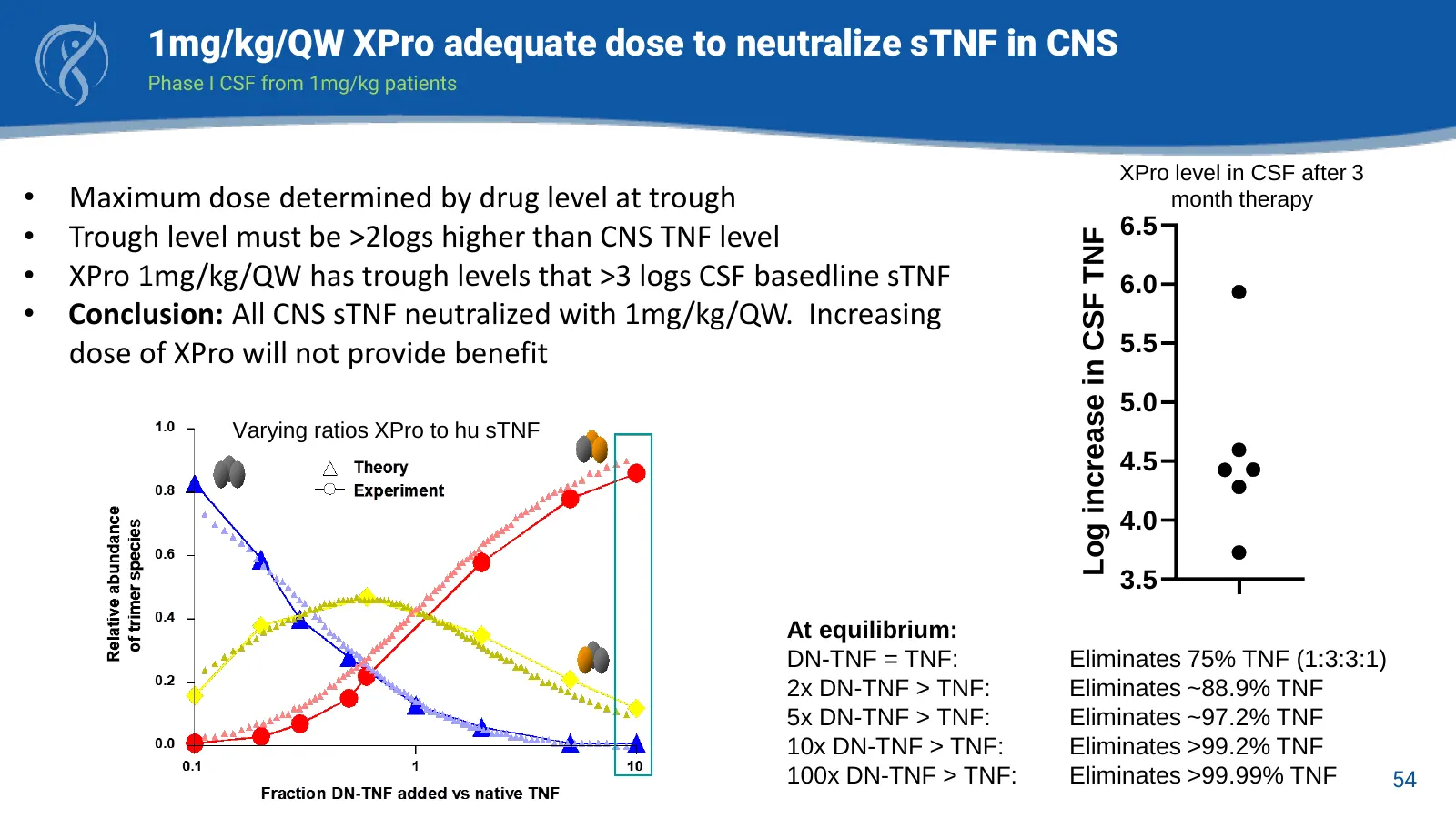
Slide 53: 1mg/kg/QW XPro Adequate Dose to Neutralize sTNF in CNS
1mg/kg/QW XPro adequate dose to neutralize sTNF in CNS Phase I CSF from 1mg/kg patients XPro level in CSF after 3 • Maximum dose determined by drug level at trough month therapy • Trough level must be >2logs higher than CNS TNF level 6.5 Log increase in CSF TNF • XPro 1mg/kg/QW has trough levels tha
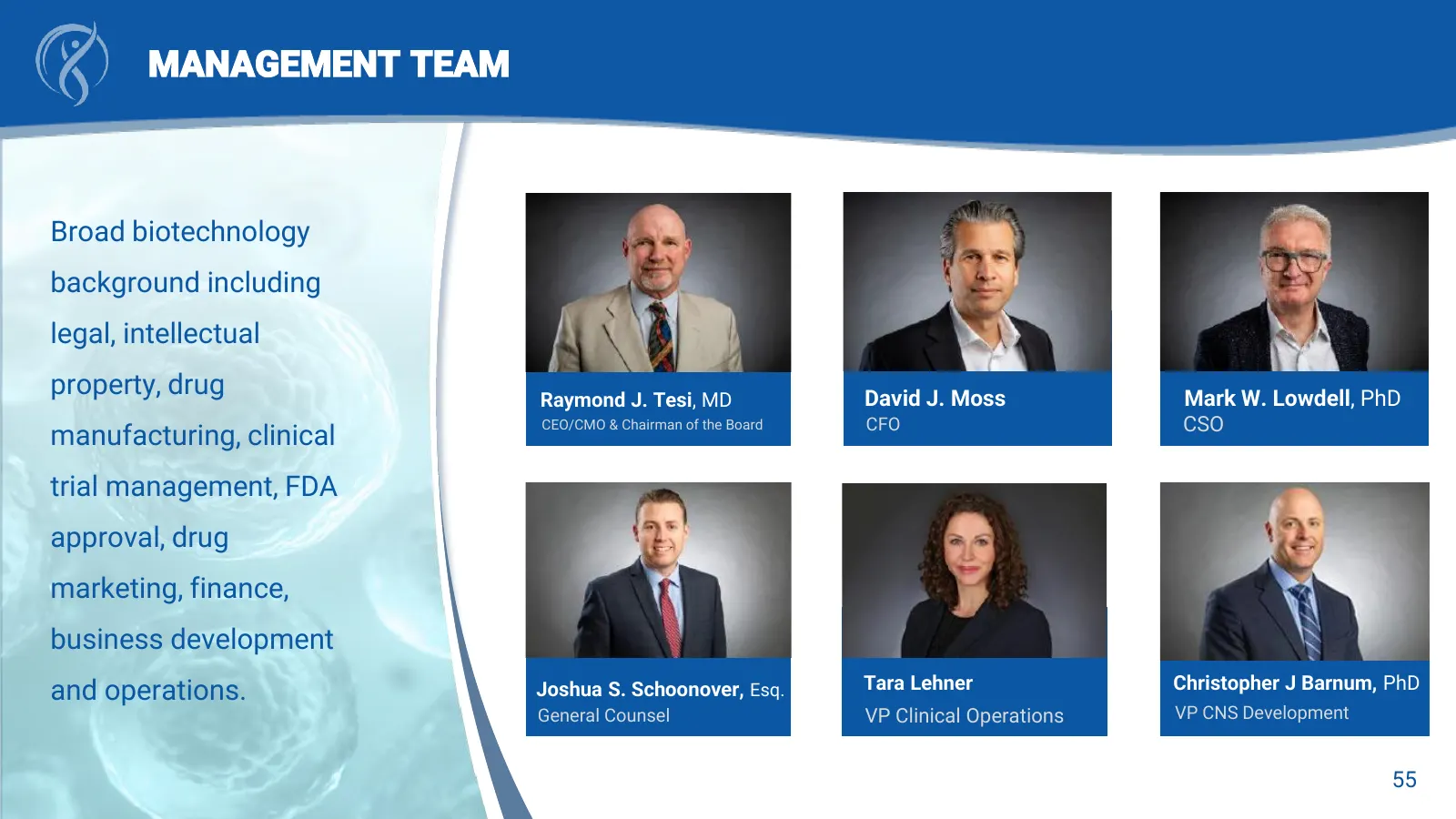
Slide 54: Management Team
MANAGEMENT TEAM Broad biotechnology background including legal, intellectual property, drug Raymond J. Tesi, MD David J. Moss Mark W. Lowdell, PhD a CEO/CMO & Chairman of the Board CFO CSO manufacturing, clinical trial management, FDA approval, drug marketing, finance, business development and opera
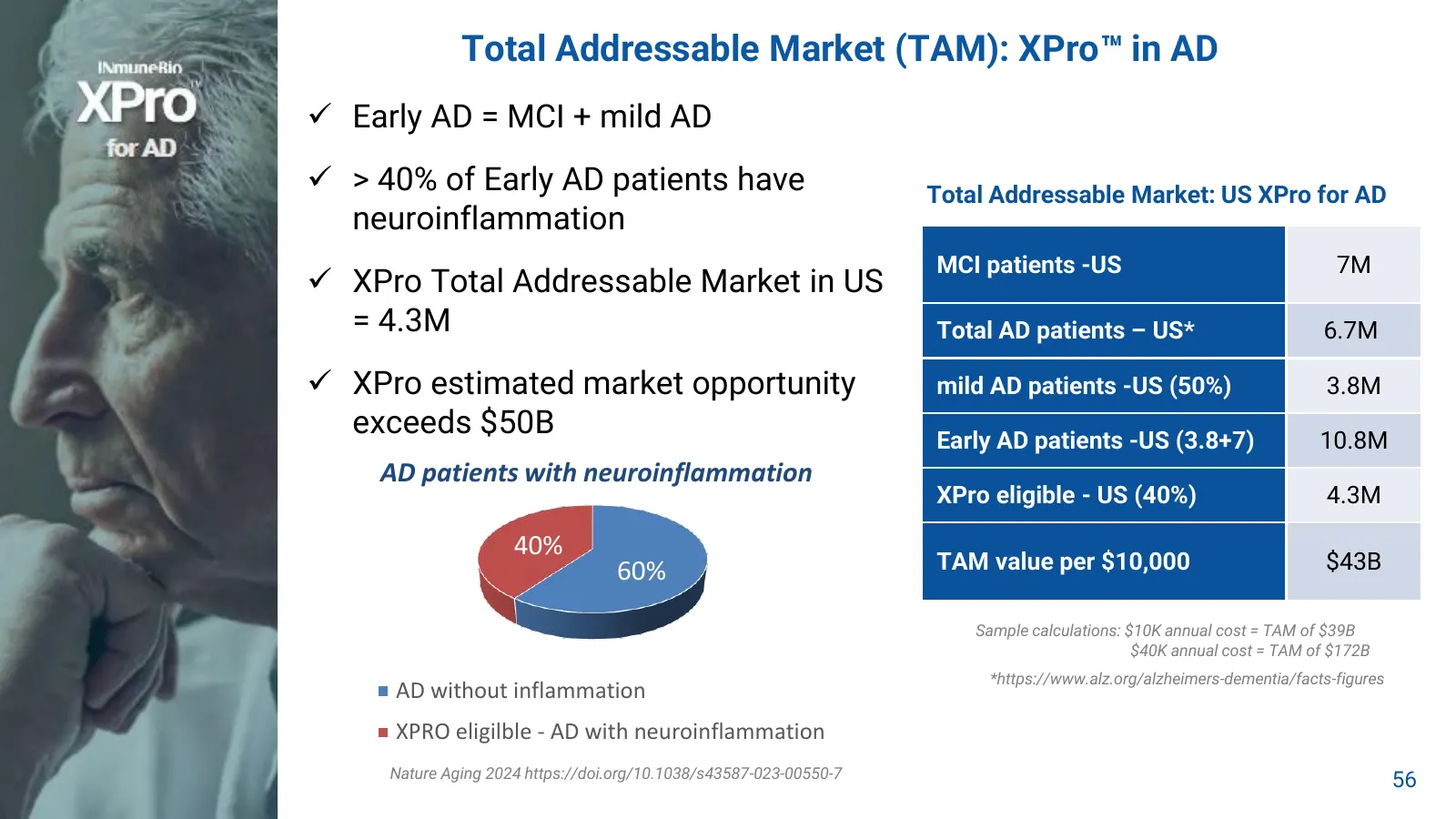
Slide 55: Total Addressable Market (TAM): XPro in AD
Total Addressable Market (TAM): XPro in AD ✓ Early AD = MCI + mild AD ✓ > 40% of Early AD patients have Total Addressable Market: US XPro for AD neuroinflammation MCI patients -US 7M ✓ XPro Total Addressable Market in US = 4.3M Total AD patients – US* 6.7M ✓ XPro estimated market opportunity mild AD
Source: Internet Archive copy of inmunebio.com
More decks from INmune Bio Inc.
 Investor Presentation (October 2026)53 slides · Oct 21, 2026
 Investor Presentation (July 2026)59 slides · July 2026
 Q4 2025 Earnings Presentation41 slides · Mar 30, 2026
 Investor Presentation (March 2026)58 slides · March 2026
 Investor Presentation (February 2026)57 slides · Feb 27, 2026
 Investor Presentation (November 2025)32 slides · Nov 10, 2025