Intertek Group plc · LSE:ITRK
Intertek — Technical Presentation (July 2011)
16 slides from Intertek's technical presentation, Jul 13, 2011
Slide 1: Characterisation of Biopolymers used in Healthcare Products
Characterisation of Biopolymers used in Healthcare Products Dr Lorna Kettle Intertek Analytical Sciences Group lorna.kettle@intertek.com July 13th 2011 The Use of Biopolymers in the Health Sector 1 www.intertek.com
Slide 2: Content
Content Introduction Applications Challenges for characterisation & Technology Case Studies Chitosan Collagen PEGs & PEGylated proteins Polymeric Antibacterial Active for wound care Acrylate based bone cement 2 www.intertek.com
Slide 3: Introduction
Introduction Biopolymers are used in a wide range of applications: Drug delivery / drug formulation Cosmetics and personal care products Medical device such as Tissue scaffolds, Wound care, Bone putties, Dental cements Their Functional properties are many fold: Incorporate actives such as antibiotic
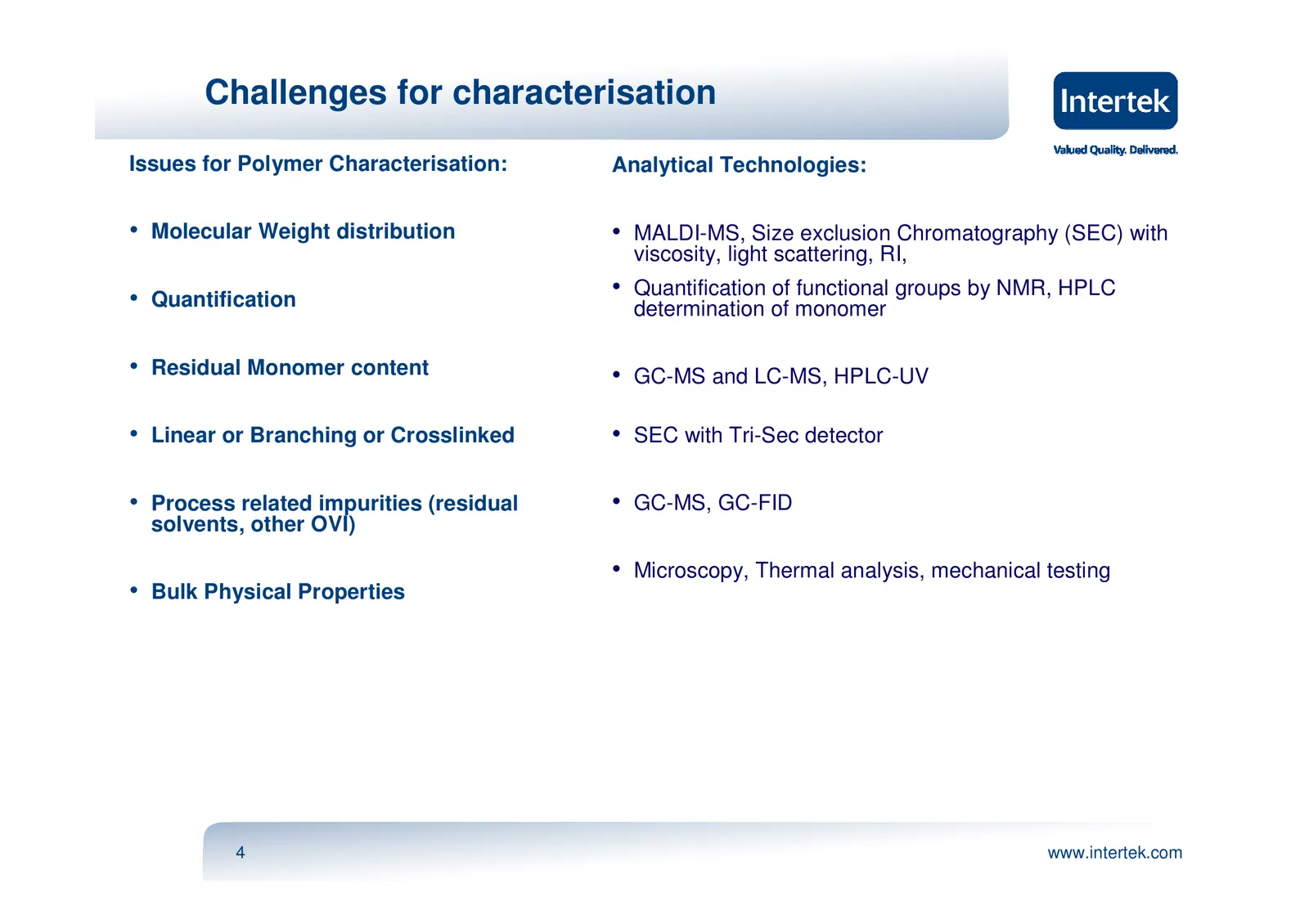
Slide 4: Challenges for characterisation
Challenges for characterisation Issues for Polymer Characterisation: Analytical Technologies: • Molecular Weight distribution • MALDI-MS, Size exclusion Chromatography (SEC) with viscosity, light scattering, RI, • Quantification • Quantification of functional groups by NMR, HPLC determination of mon
Slide 5: Case Studies: Chitosan
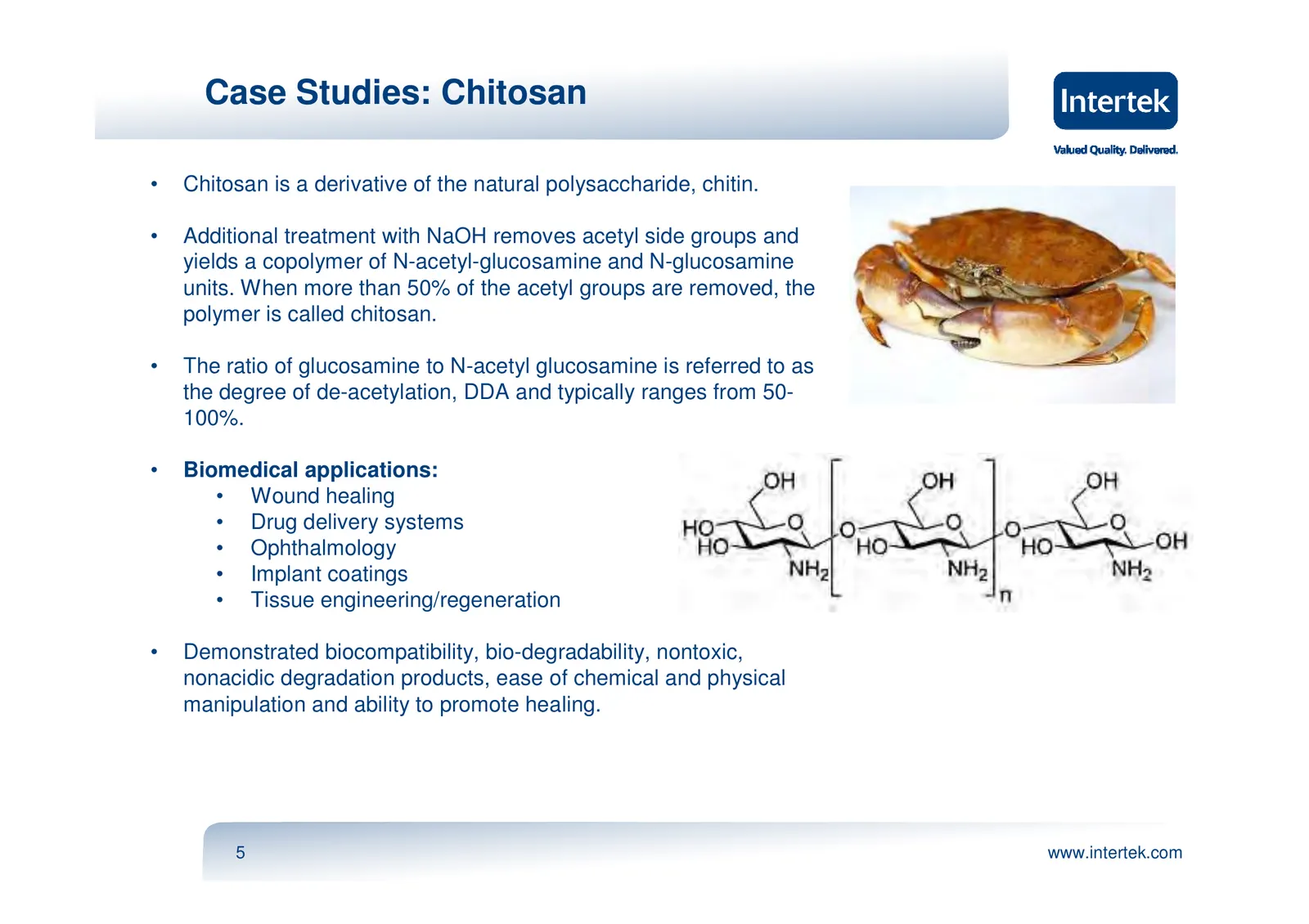
Case Studies: Chitosan • Chitosan is a derivative of the natural polysaccharide, chitin. • Additional treatment with NaOH removes acetyl side groups and yields a copolymer of N-acetyl-glucosamine and N-glucosamine units. When more than 50% of the acetyl groups are removed, the polymer is called chit
Slide 6: Chitosan molecular weight distribution analysis
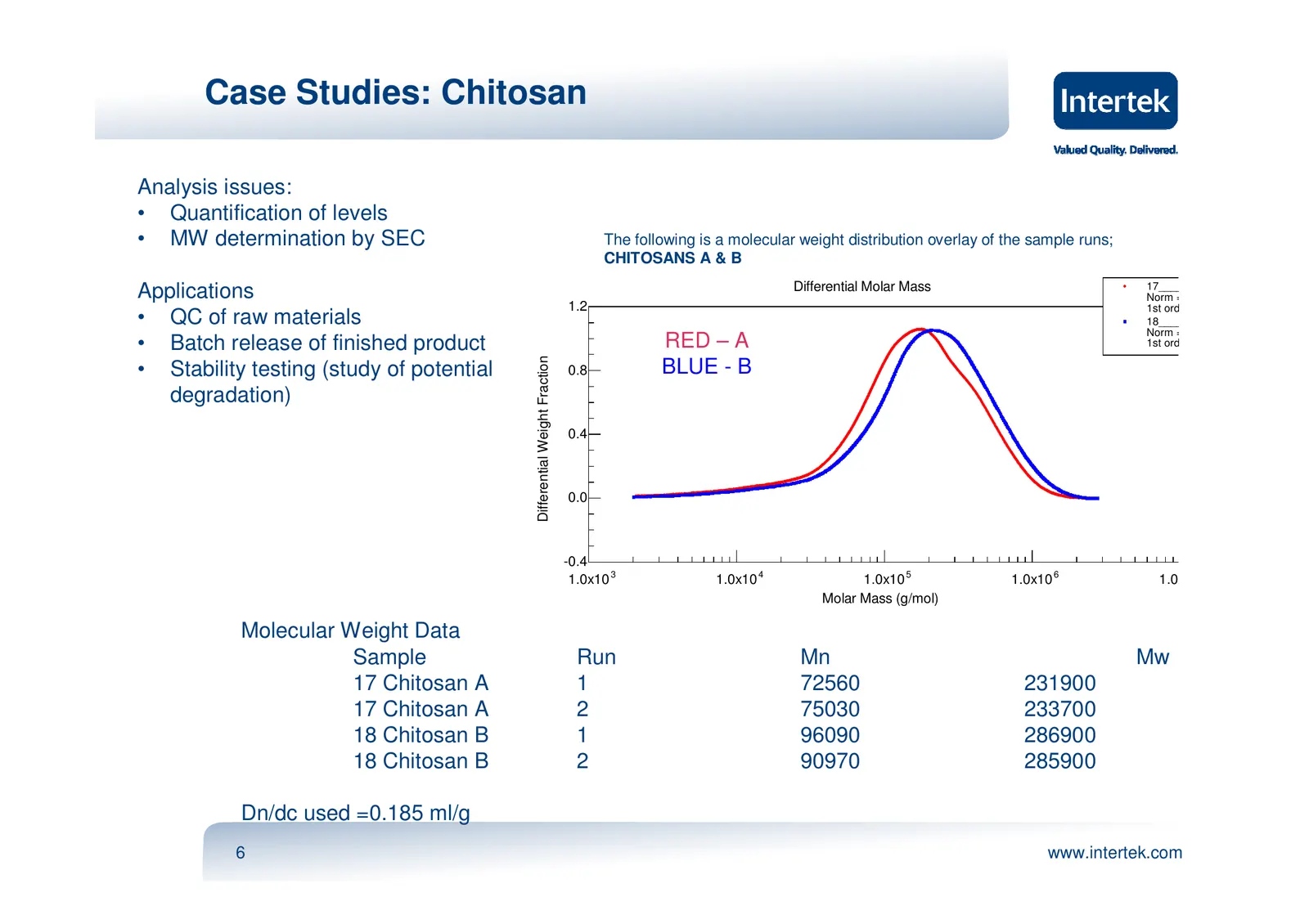
Case Studies: Chitosan Analysis issues: • Quantification of levels • MW determination by SEC The following is a molecular weight distribution overlay of the sample runs; CHITOSANS A & B Differential Molar Mass Applications 17____02 Norm = Log 1.2 1st order • QC of raw materials 18____02 Norm = Log •
Slide 7: Case Studies: Collagen
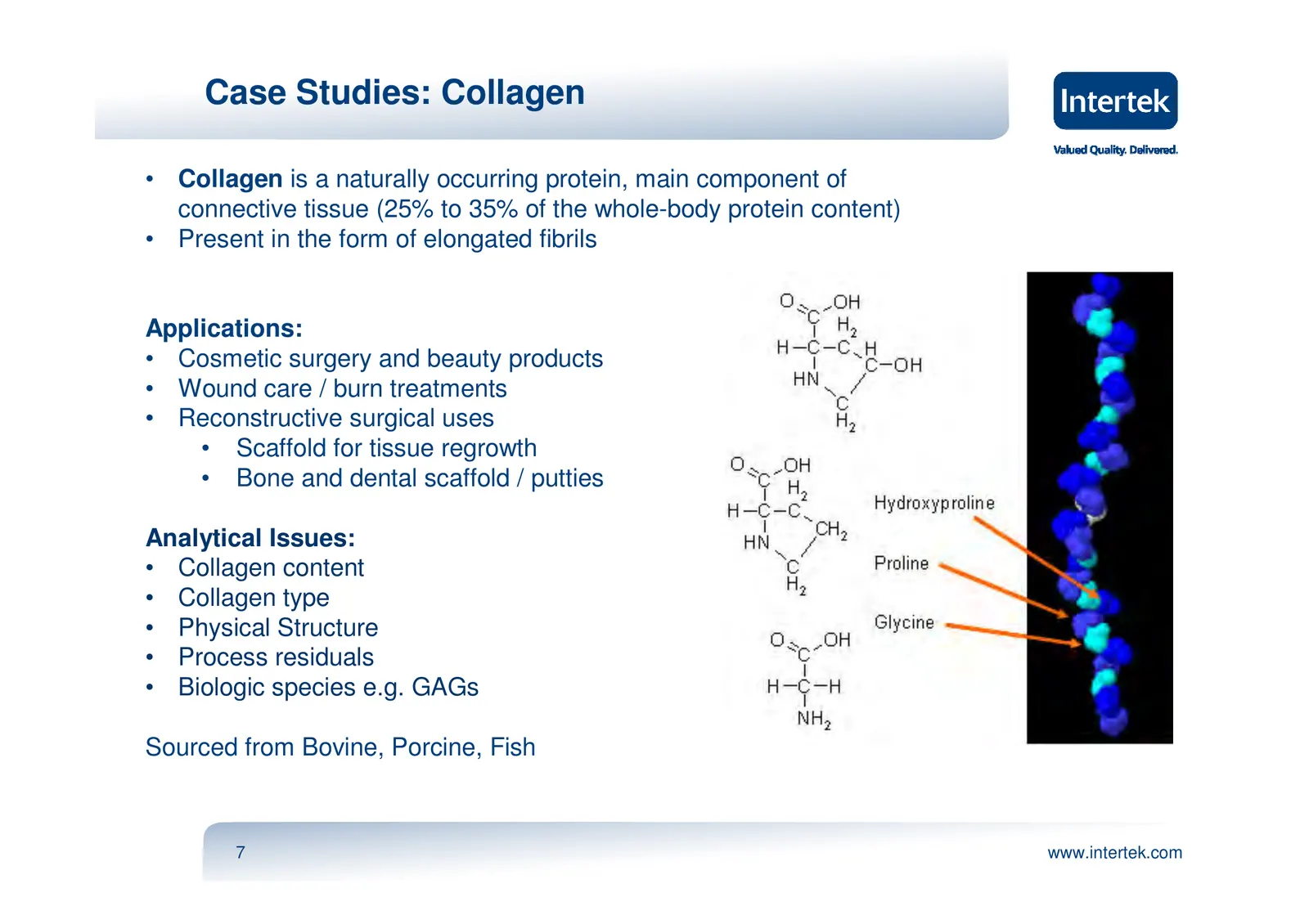
Case Studies: Collagen • Collagen is a naturally occurring protein, main component of connective tissue (25% to 35% of the whole-body protein content) • Present in the form of elongated fibrils Applications: • Cosmetic surgery and beauty products • Wound care / burn treatments • Reconstructive surgi
Slide 8: Collagen content via hydroxyproline by HPLC
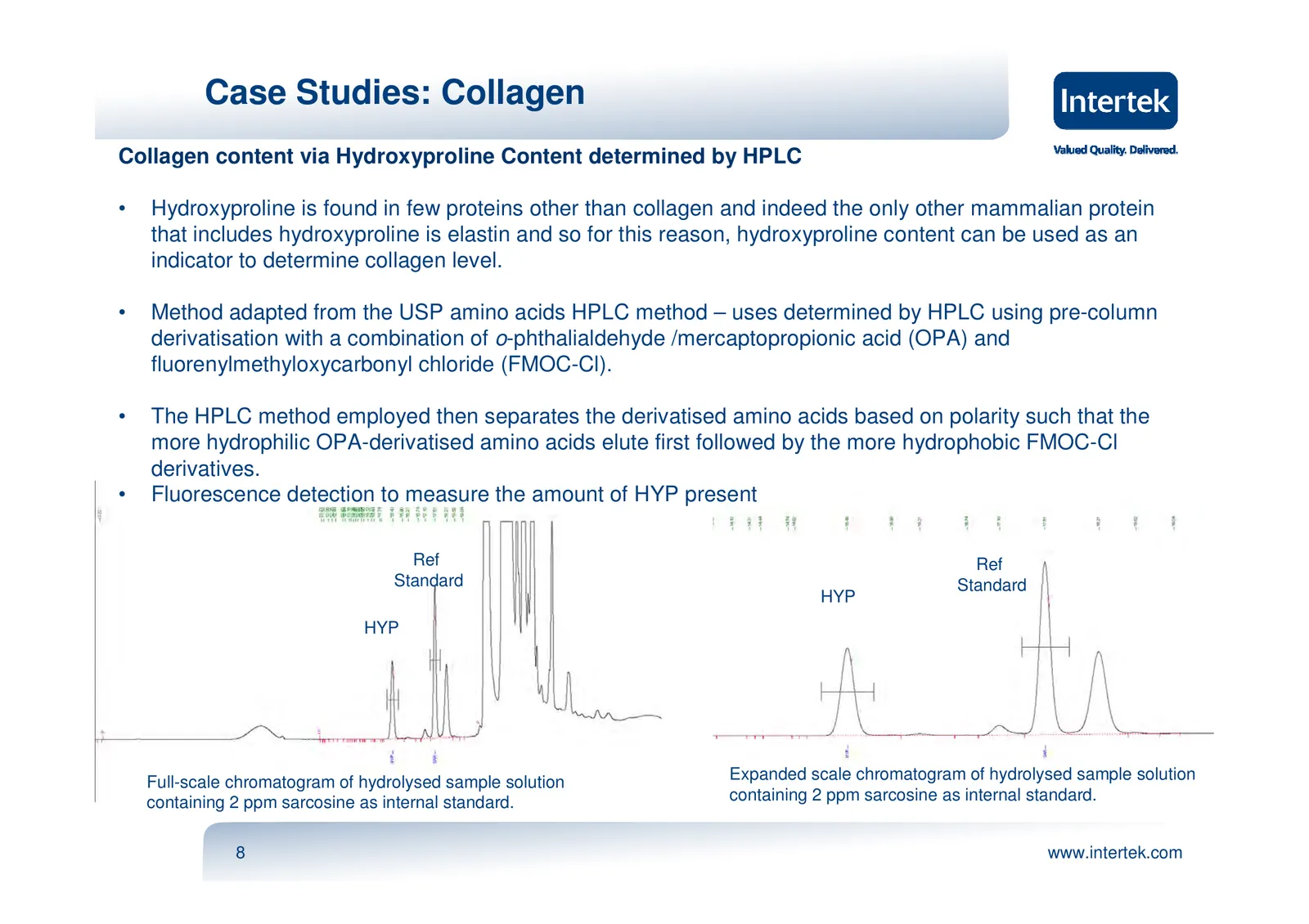
Case Studies: Collagen Collagen content via Hydroxyproline Content determined by HPLC • Hydroxyproline is found in few proteins other than collagen and indeed the only other mammalian protein that includes hydroxyproline is elastin and so for this reason, hydroxyproline content can be used as an ind
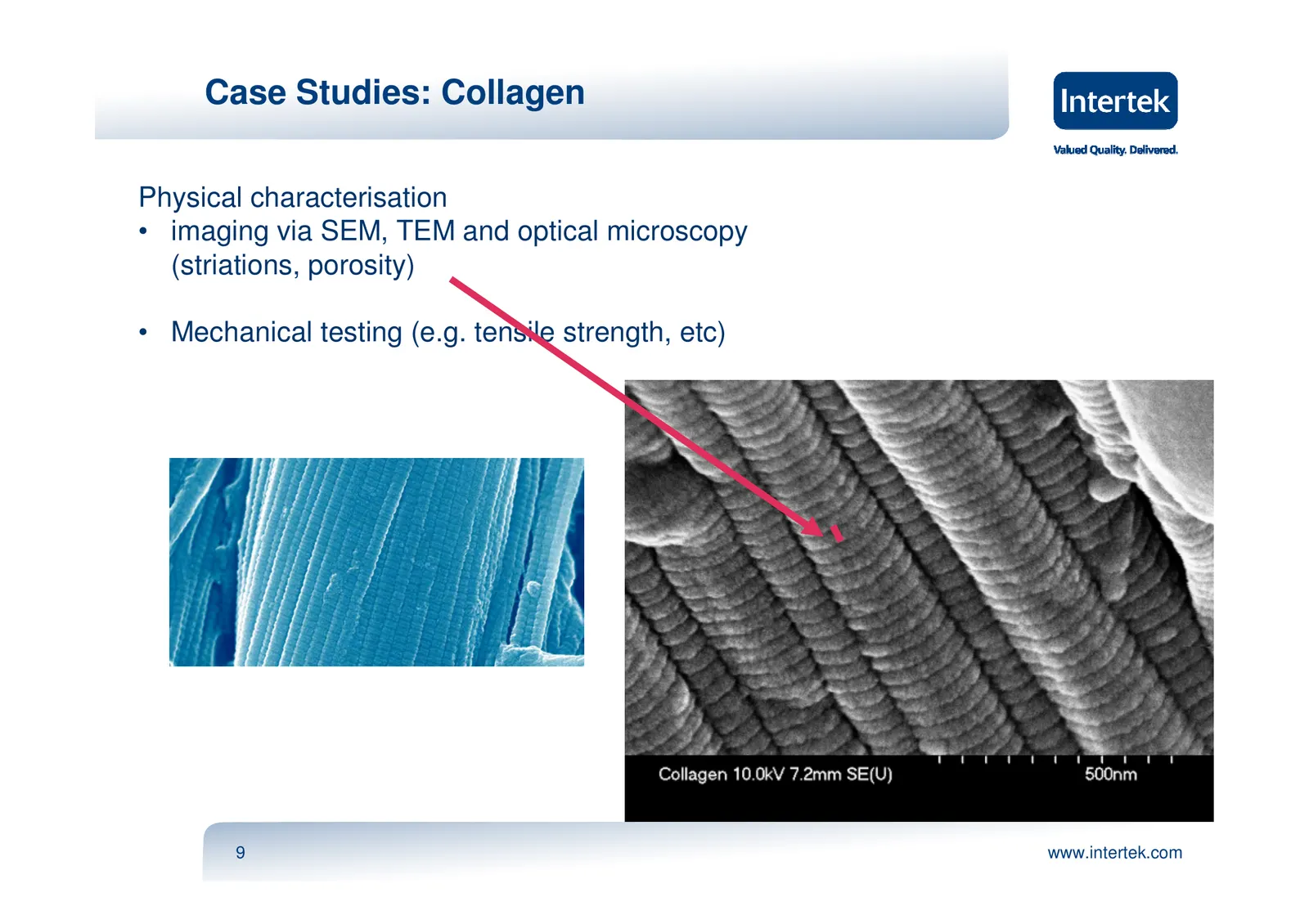
Slide 9: Collagen: Physical characterisation
Case Studies: Collagen Physical characterisation • imaging via SEM, TEM and optical microscopy (striations, porosity) • Mechanical testing (e.g. tensile strength, etc) 9 www.intertek.com
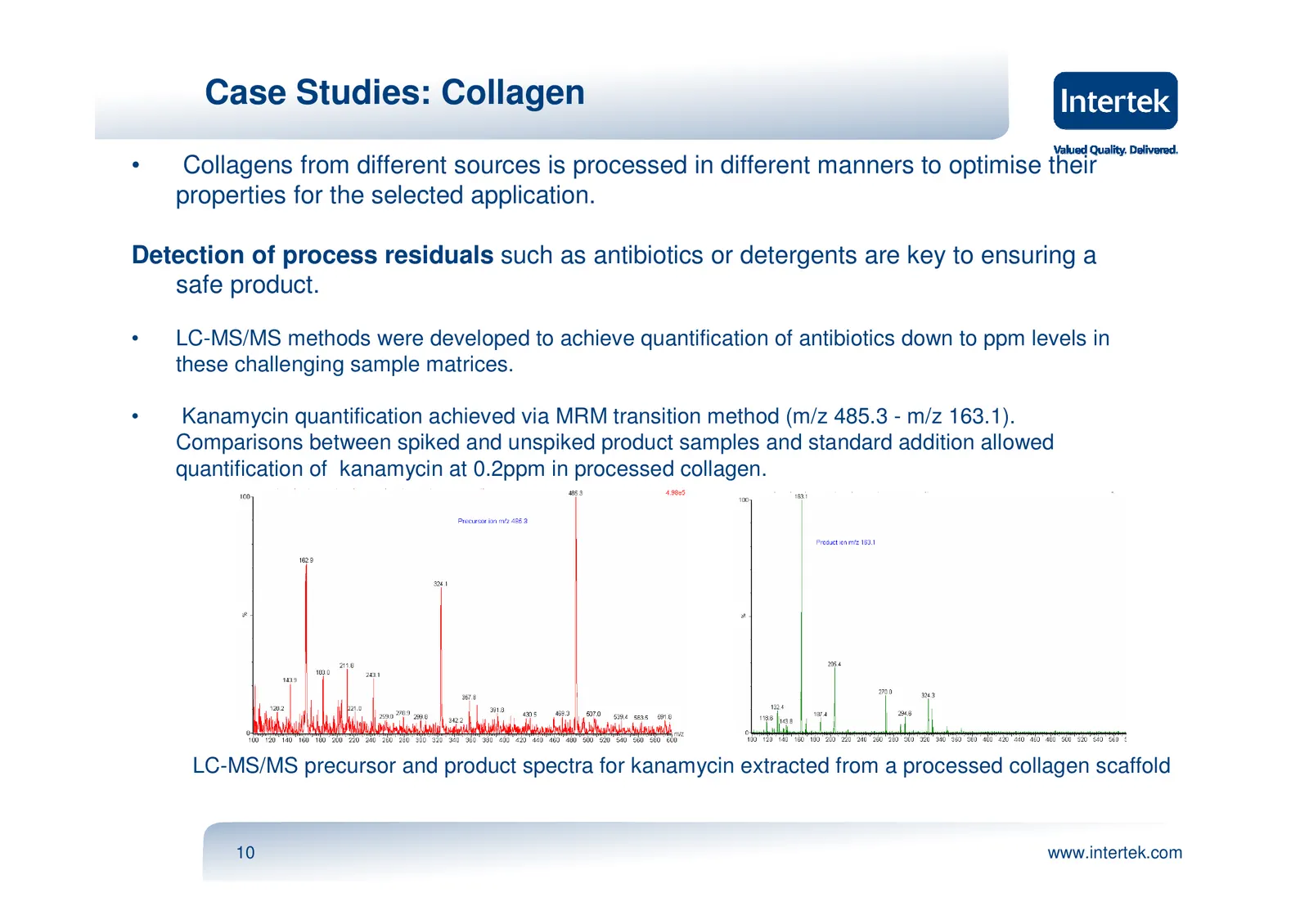
Slide 10: Collagen: Detection of process residuals
Case Studies: Collagen • Collagens from different sources is processed in different manners to optimise their properties for the selected application. Detection of process residuals such as antibiotics or detergents are key to ensuring a safe product. • LC-MS/MS methods were developed to achieve qua
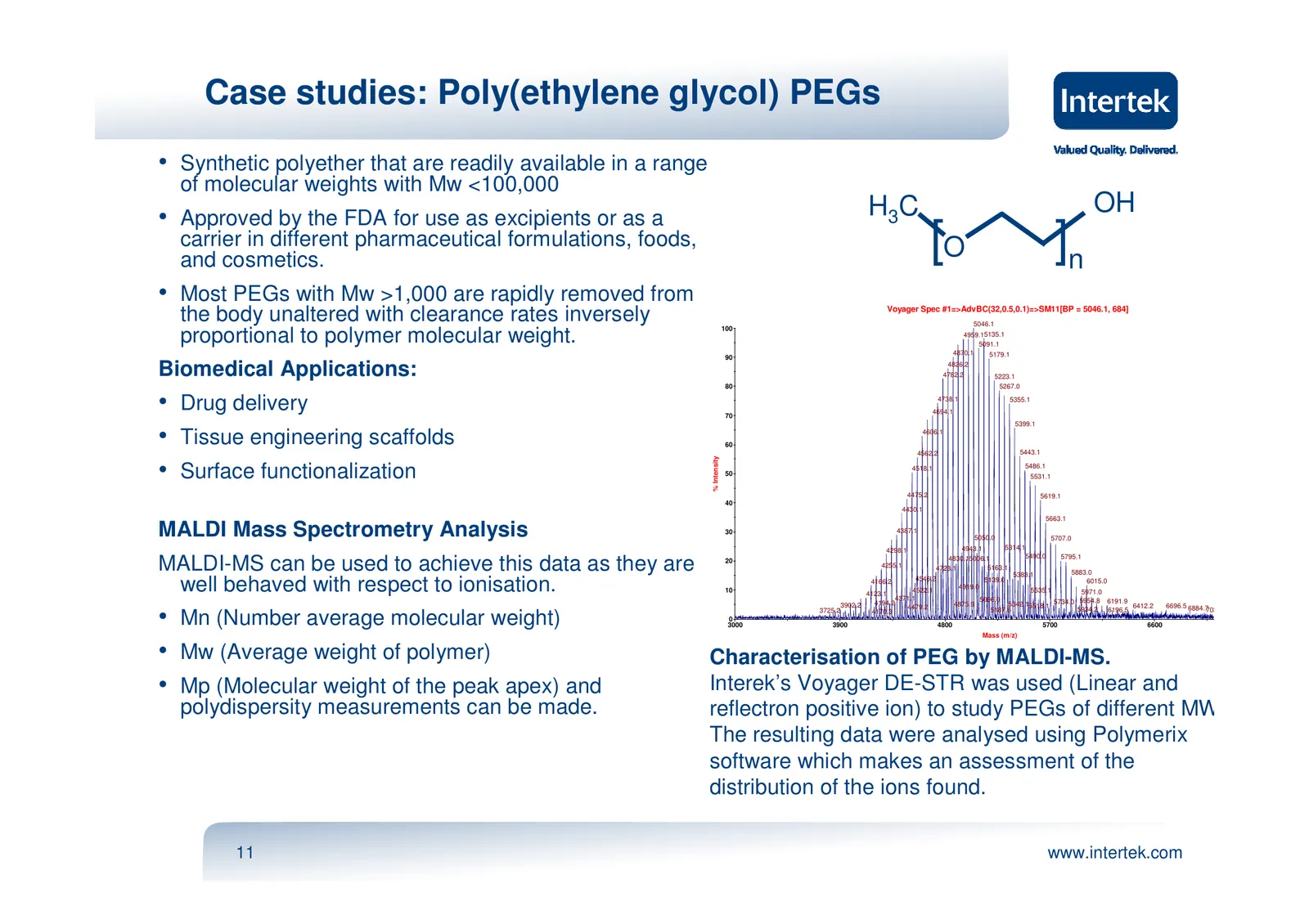
Slide 11: Case studies: Poly(ethylene glycol) PEGs
Case studies: Poly(ethylene glycol) PEGs • Synthetic polyether that are readily available in a range of molecular weights with Mw <100,000 • Approved by the FDA for use as excipients or as a H3C OH carrier in different pharmaceutical formulations, foods, and cosmetics. [O ]n • Most PEGs with Mw >1,0
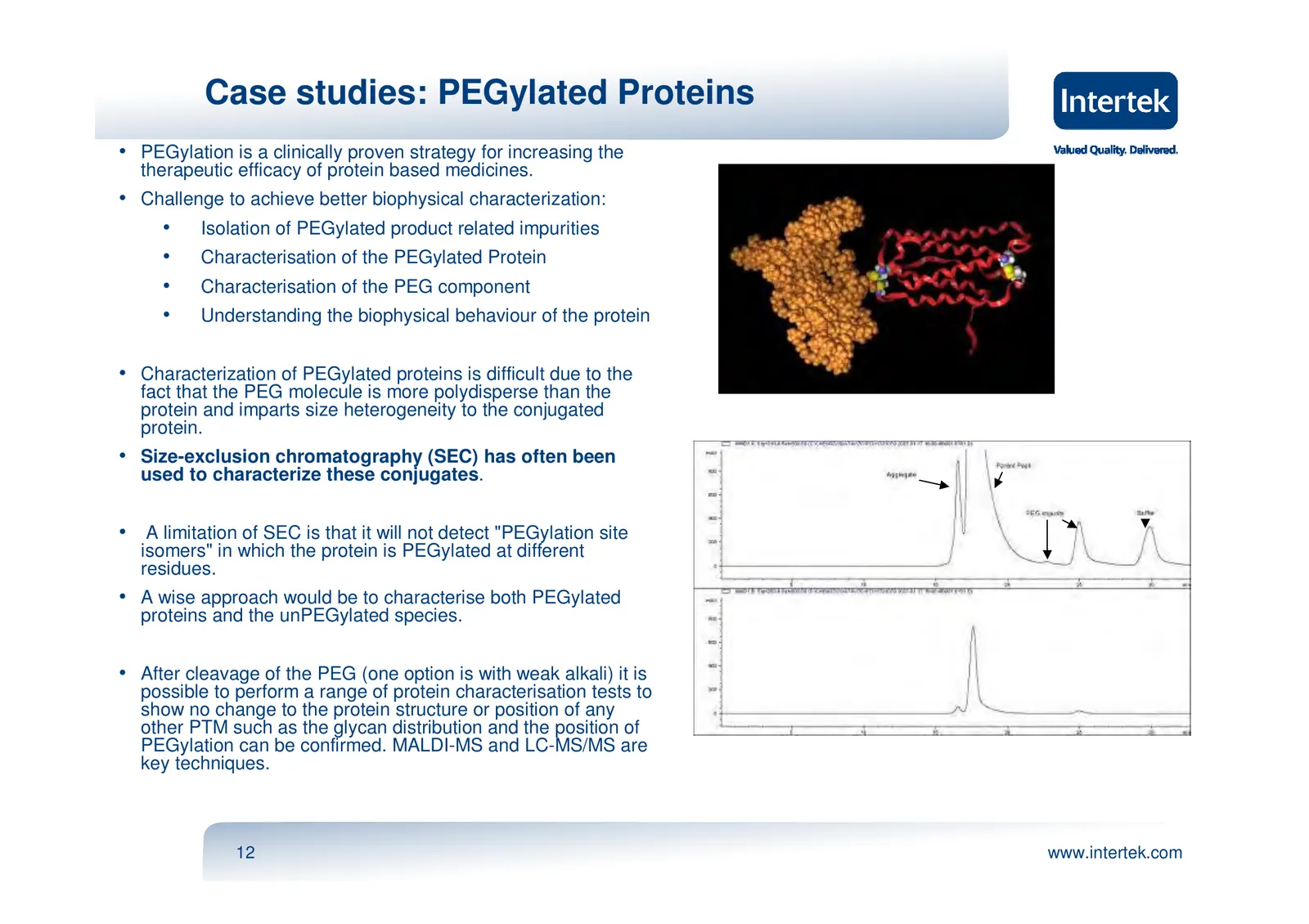
Slide 12: Case studies: PEGylated Proteins
Case studies: PEGylated Proteins • PEGylation is a clinically proven strategy for increasing the therapeutic efficacy of protein based medicines. • Challenge to achieve better biophysical characterization: • Isolation of PEGylated product related impurities • Characterisation of the PEGylated Protei
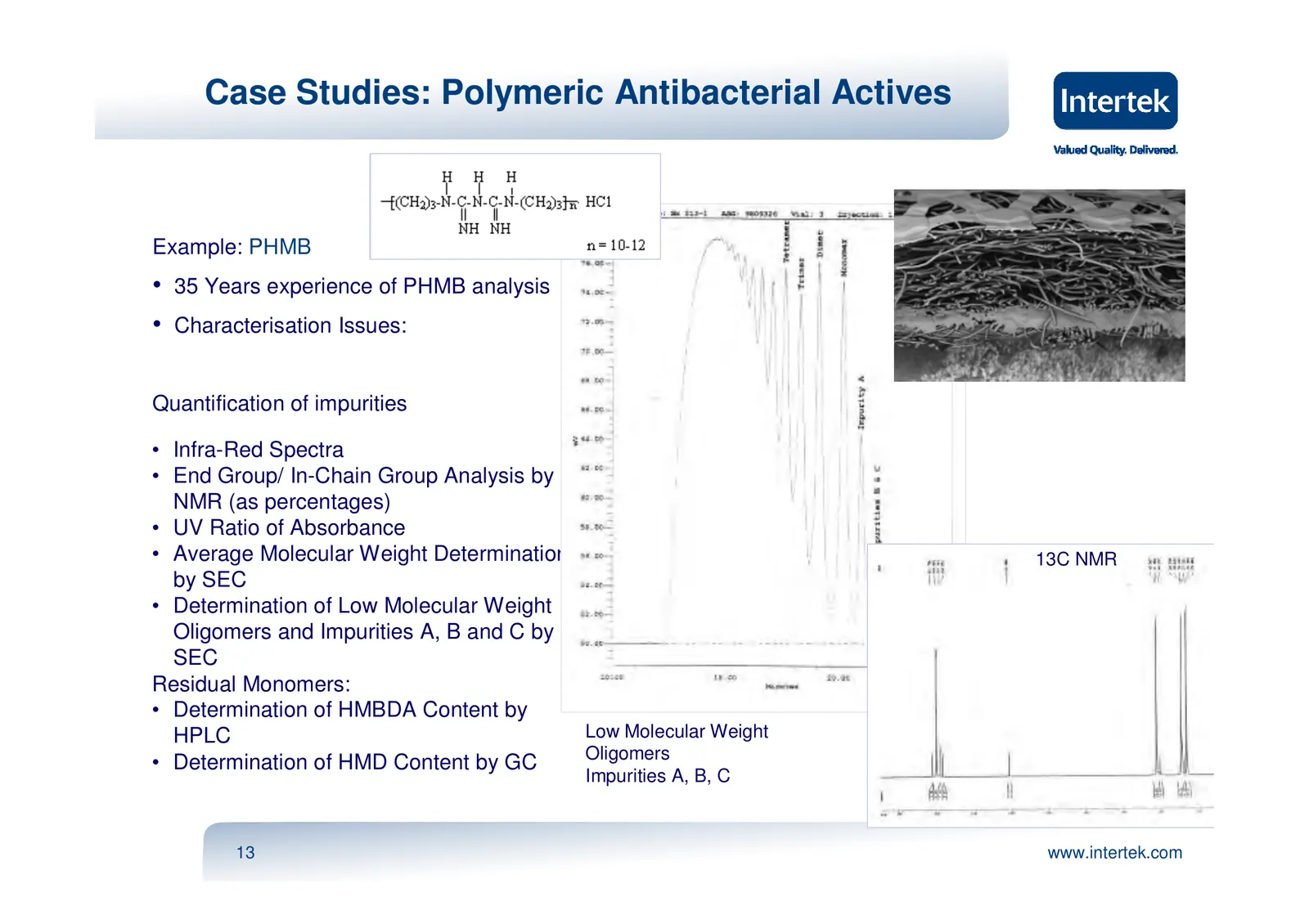
Slide 13: Case Studies: Polymeric Antibacterial Actives
Case Studies: Polymeric Antibacterial Actives Example: PHMB • 35 Years experience of PHMB analysis • Characterisation Issues: Quantification of impurities • Infra-Red Spectra • End Group/ In-Chain Group Analysis by NMR (as percentages) • UV Ratio of Absorbance • Average Molecular Weight Determinatio
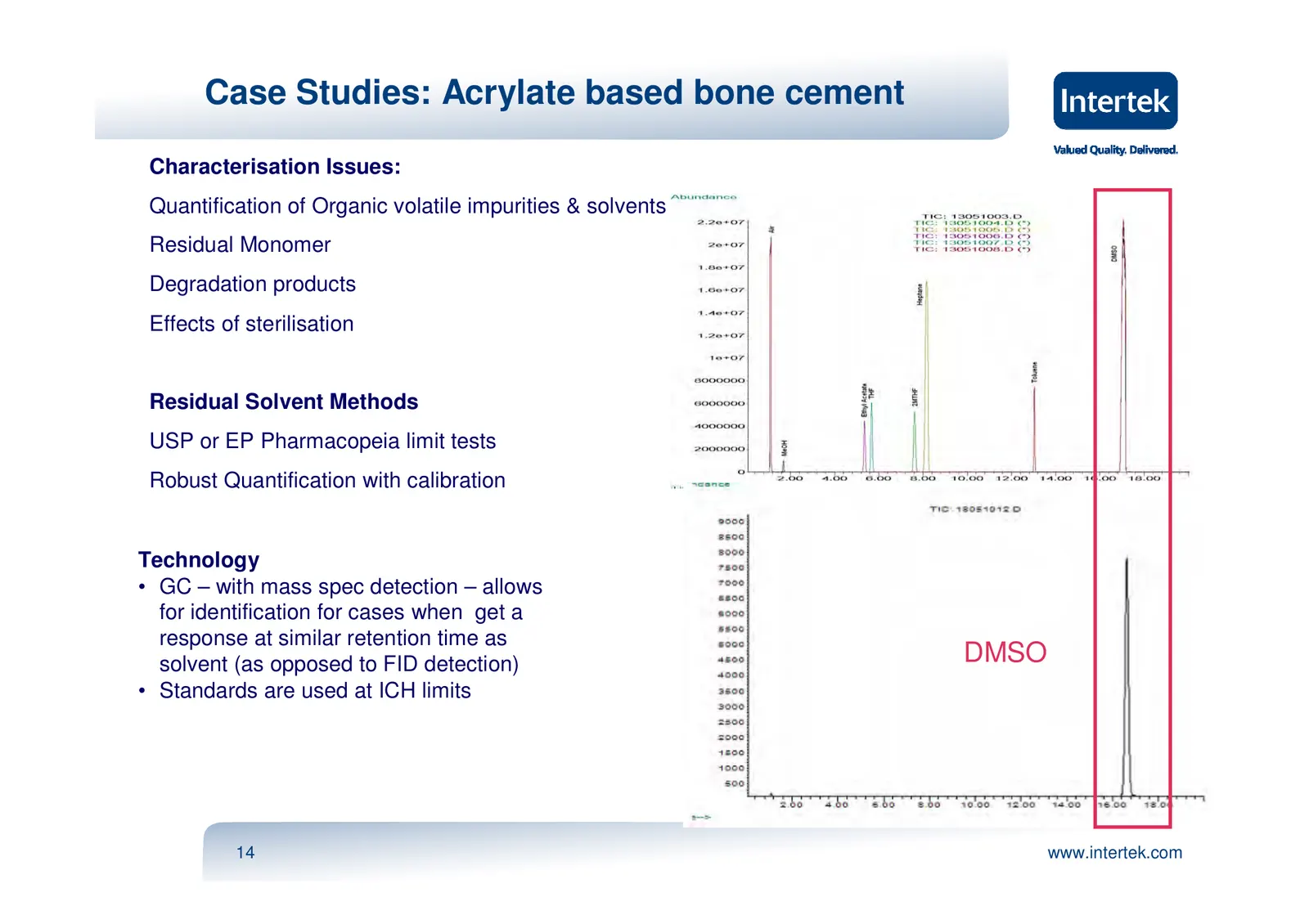
Slide 14: Case Studies: Acrylate based bone cement
Case Studies: Acrylate based bone cement Characterisation Issues: Quantification of Organic volatile impurities & solvents Residual Monomer Degradation products Effects of sterilisation Residual Solvent Methods USP or EP Pharmacopeia limit tests Robust Quantification with calibration Technology • GC
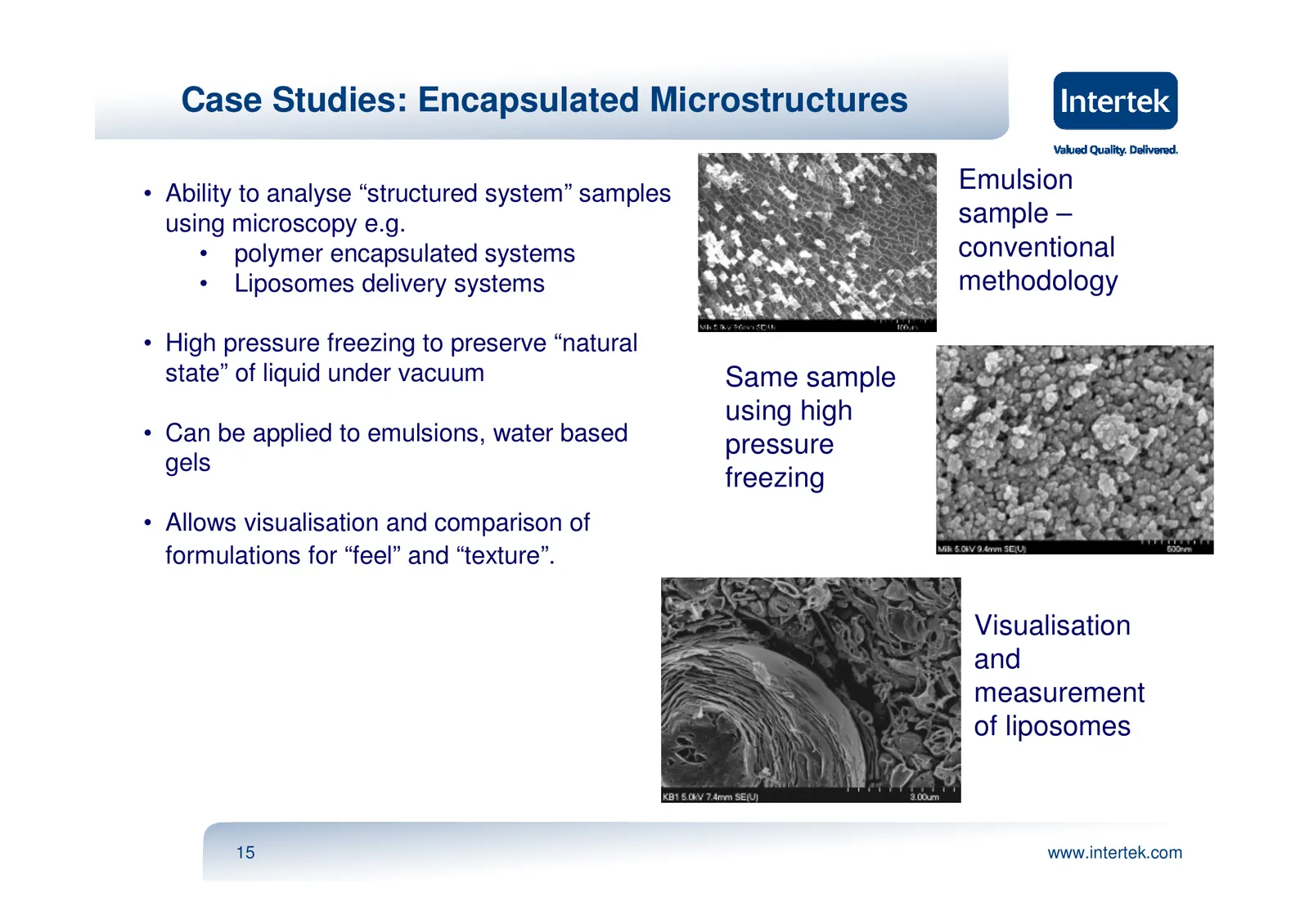
Slide 15: Case Studies: Encapsulated Microstructures
Case Studies: Encapsulated Microstructures • Ability to analyse “structured system” samples Emulsion using microscopy e.g. sample – • polymer encapsulated systems conventional • Liposomes delivery systems methodology • High pressure freezing to preserve “natural state” of liquid under vacuum Same sa
Slide 16: Conclusion
Conclusion • Biopolymers present challenges to characterisation • A wide range of technology is required to characterise the different aspects of these polymers • Regulatory compliance must be a priority if developing these biopolymers for healthcare applications (is GLP / GMP required?) Thank you f
Source: Internet Archive copy of intertek.com
More decks from Intertek Group plc
 FY2025 Earnings Presentation44 slides · Mar 3, 2026
 FY2024 Earnings Presentation46 slides · Mar 4, 2025
 H1 2025 Earnings Presentation42 slides · Mar 4, 2025
 FY2024 Earnings Presentation46 slides · Nov 26, 2024
 H1 2024 Earnings Presentation43 slides · Aug 2, 2024
 FY2023 Earnings Presentation44 slides · Nov 23, 2023