Minerva Neurosciences, Inc · NASDAQ:NERV
Minerva Neurosciences — Technical Presentation (November 2026)
56 slides from Minerva Neurosciences's technical presentation, Nov 12, 2026

Slide 1: From Unmet Need to Reality
From Unmet Need to Reality Roluperidone is potentially the first treatment for negative symptoms of schizophrenia KOL Event I November 12, 2026
Slide 2: Forward-Looking Statement
Forward-Looking Statement This presentation contains forward-looking statements which are subject to the safe harbor provisions of the Private Securities Litigation Reform Act of 1995, as amended. Forward-looking statements are statements that are not historical facts, reflect management’s expectati

Slide 3: Welcome to Today's Presentation: Introductions
Welcome to Today’s Presentation: Introductions Gregory Strauss, PhD Franklin Professor of Psychology Department of Psychology, University of Georgia Brian Kirkpatrick, MD, MSPH Peters Professor of Psychiatry University of Arkansas for Medical Sciences (UAMS) Christoph Correll, MD Clinical Professor

Slide 4: Agenda
Introduction | Roluperidone clinical data | C19 Study update Remy Luthringer, PhD Improving primary negative symptoms - the holy grail of schizophrenia treatment Gregory Strauss, PhD Primary negative symptoms in the clinic Brian Kirkpatrick, MD, MSPH Agenda New analyses strengthening uniqueness of r

Slide 5: Introduction | Roluperidone clinical data | C19 Study update
Introduction | Roluperidone clinical data | C19 Study update Remy Luthringer, PhD Executive Chairman & Chief Executive Officer Minerva Neurosciences, Inc. 5
Slide 6: The Central Role of Negative Symptoms of Schizophrenia
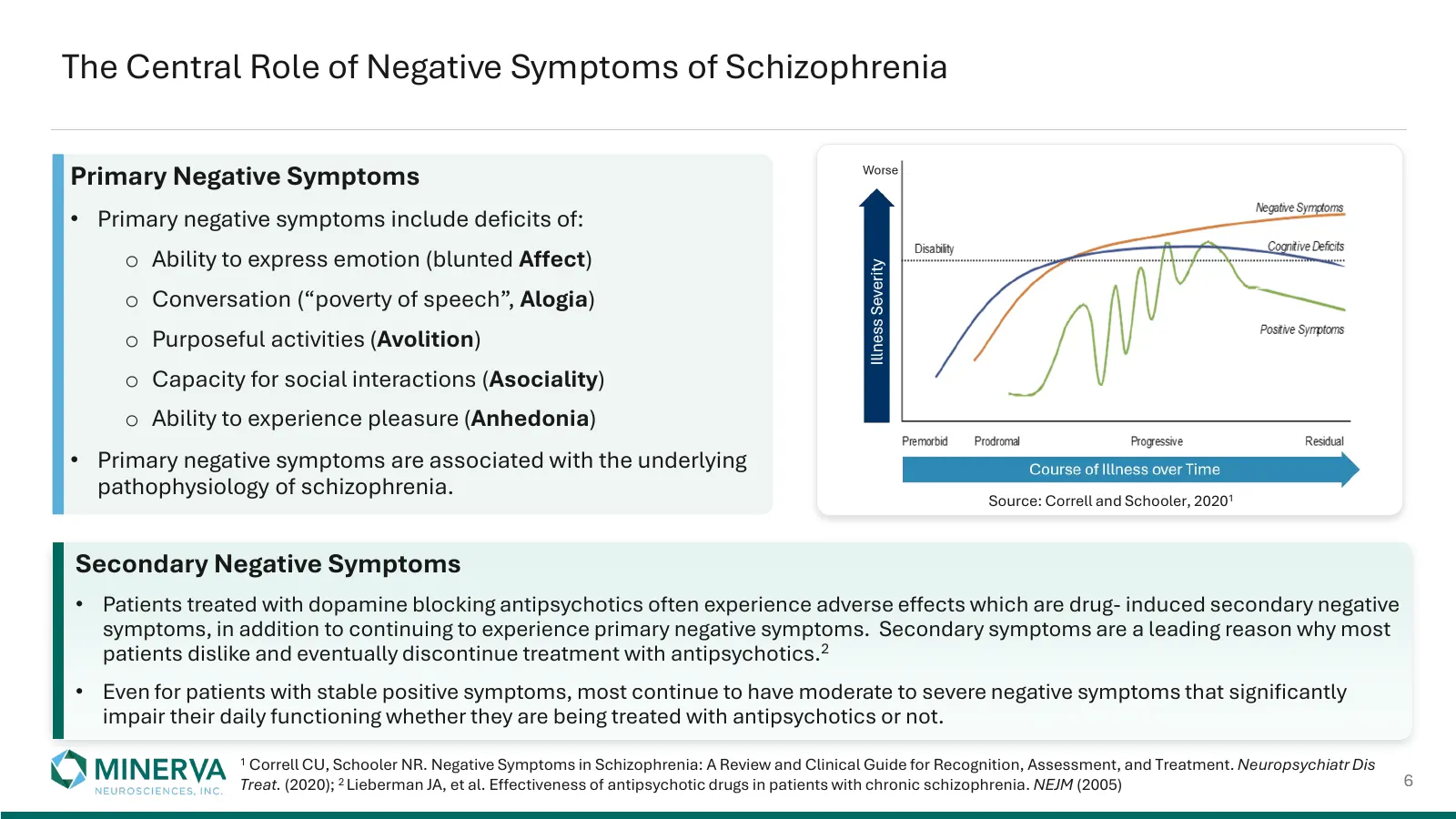
The Central Role of Negative Symptoms of Schizophrenia Primary Negative Symptoms • Primary negative symptoms include deficits of: o Ability to express emotion (blunted Affect) o Conversation (“poverty of speech”, Alogia) o Purposeful activities (Avolition) o Capacity for social interactions (Asocial
Slide 7: Negative symptoms are the primary drivers of disability in schizophrenia
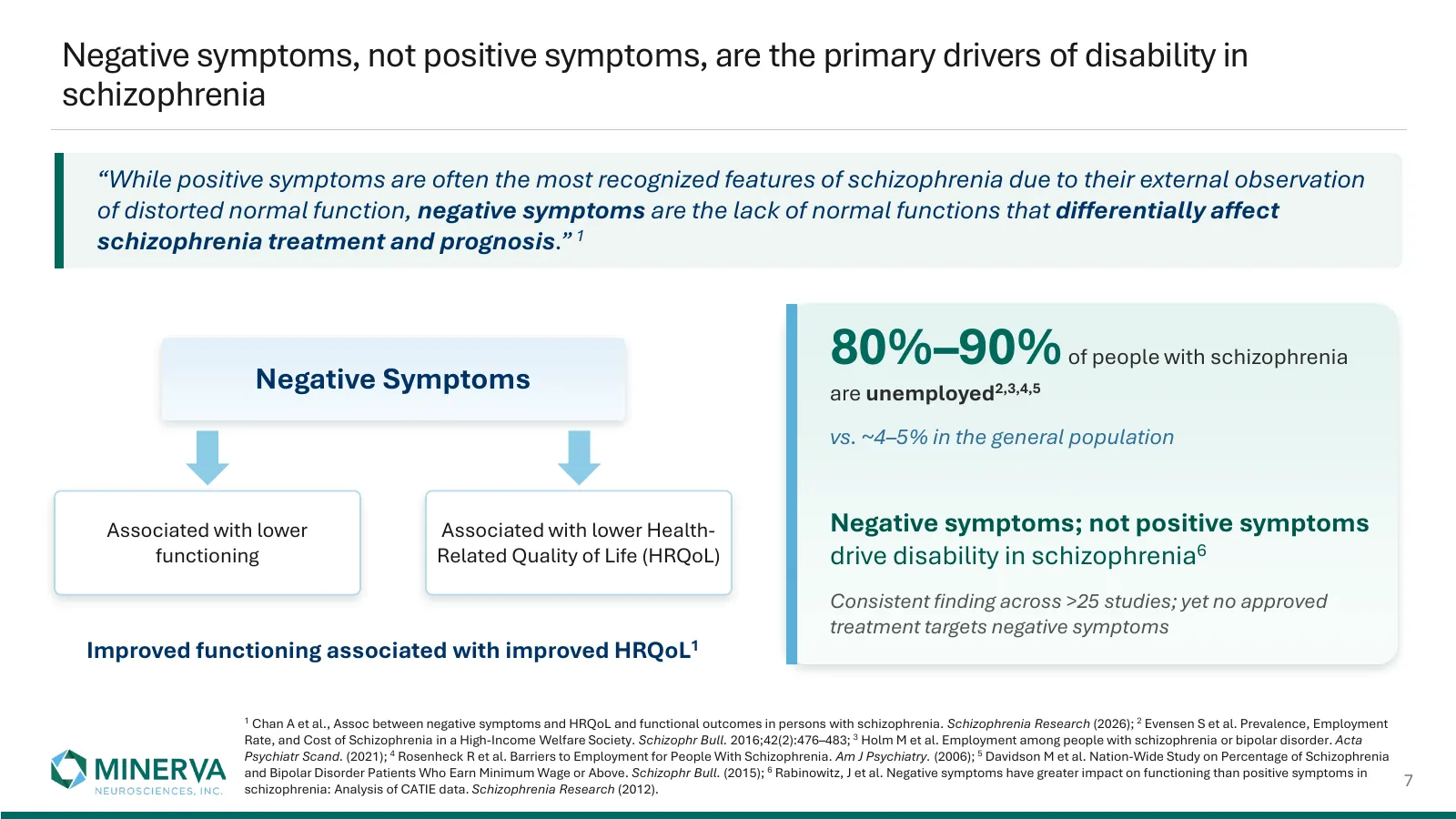
Negative symptoms, not positive symptoms, are the primary drivers of disability in schizophrenia “While positive symptoms are often the most recognized features of schizophrenia due to their external observation of distorted normal function, negative symptoms are the lack of normal functions that di
Slide 8: Roluperidone: designed to avoid detrimental side effects of antipsychotics
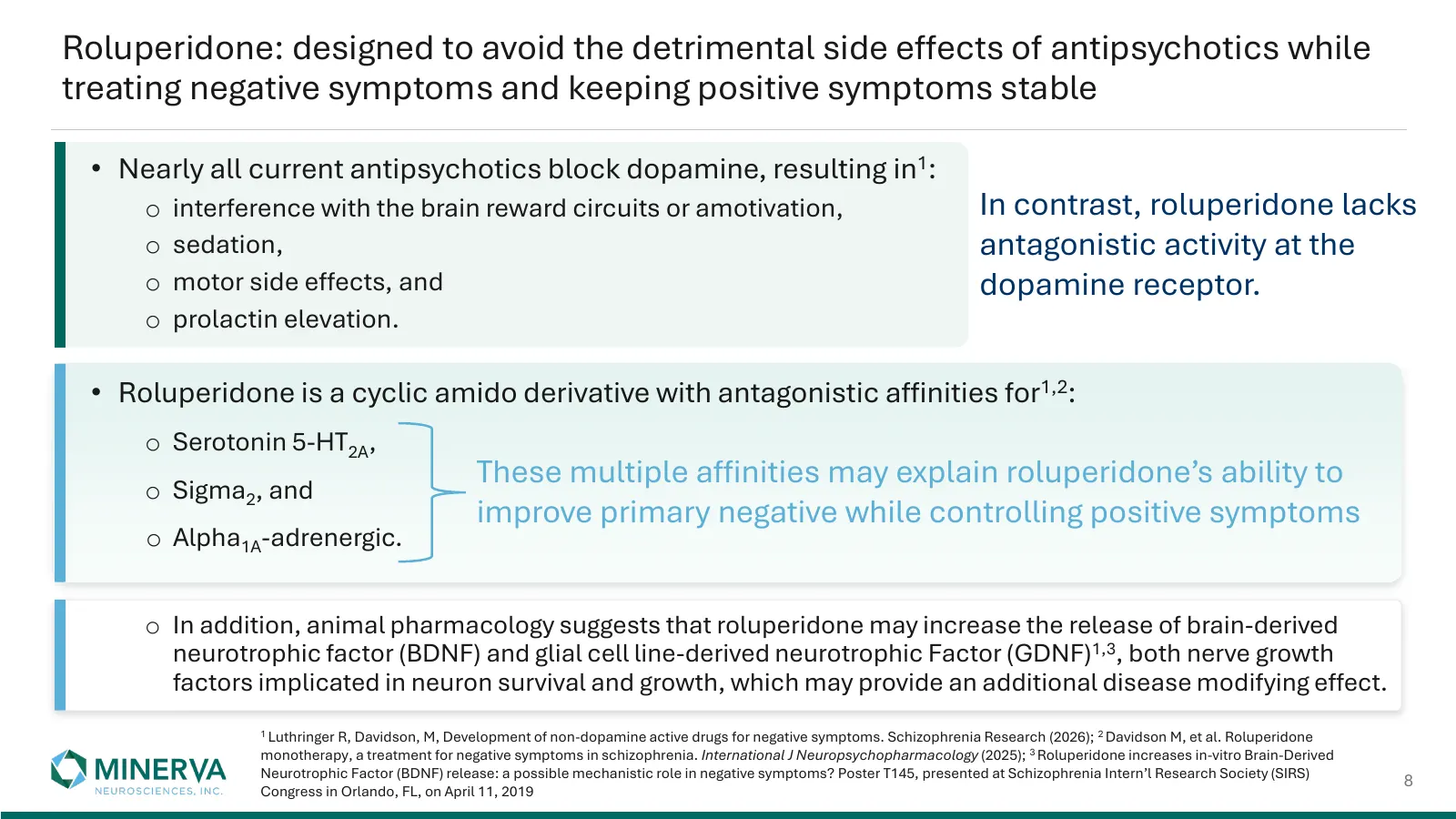
Roluperidone: designed to avoid the detrimental side effects of antipsychotics while treating negative symptoms and keeping positive symptoms stable • Nearly all current antipsychotics block dopamine, resulting in1: o interference with the brain reward circuits or amotivation, In contrast, roluperid
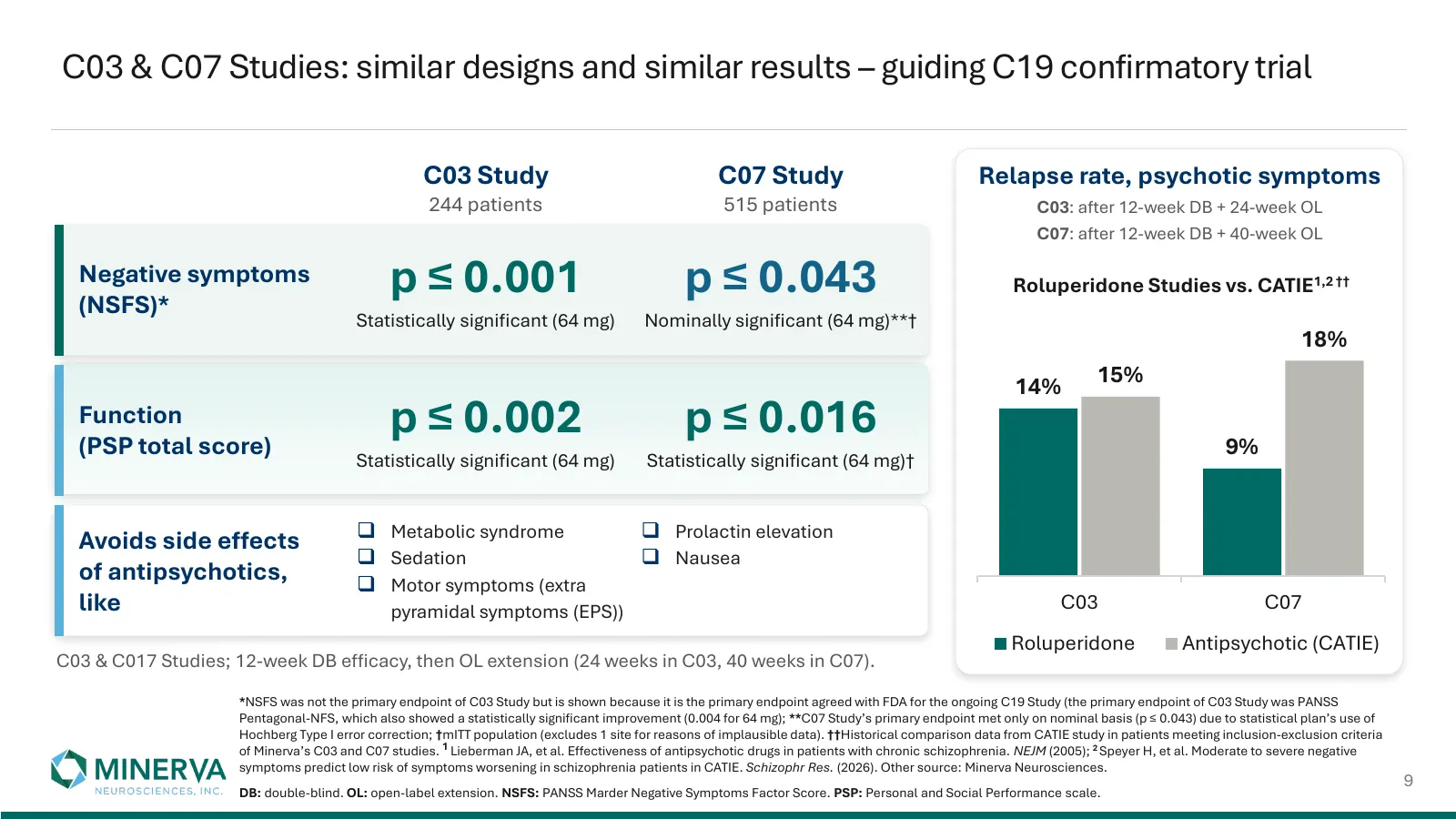
Slide 9: C03 & C07 Studies: similar designs and similar results
C03 & C07 Studies: similar designs and similar results – guiding C19 confirmatory trial C03 Study C07 Study Relapse rate, psychotic symptoms 244 patients 515 patients C03: after 12-week DB + 24-week OL C07: after 12-week DB + 40-week OL Negative symptoms (NSFS)* p ≤ 0.001 p ≤ 0.043 Roluperidone Stud
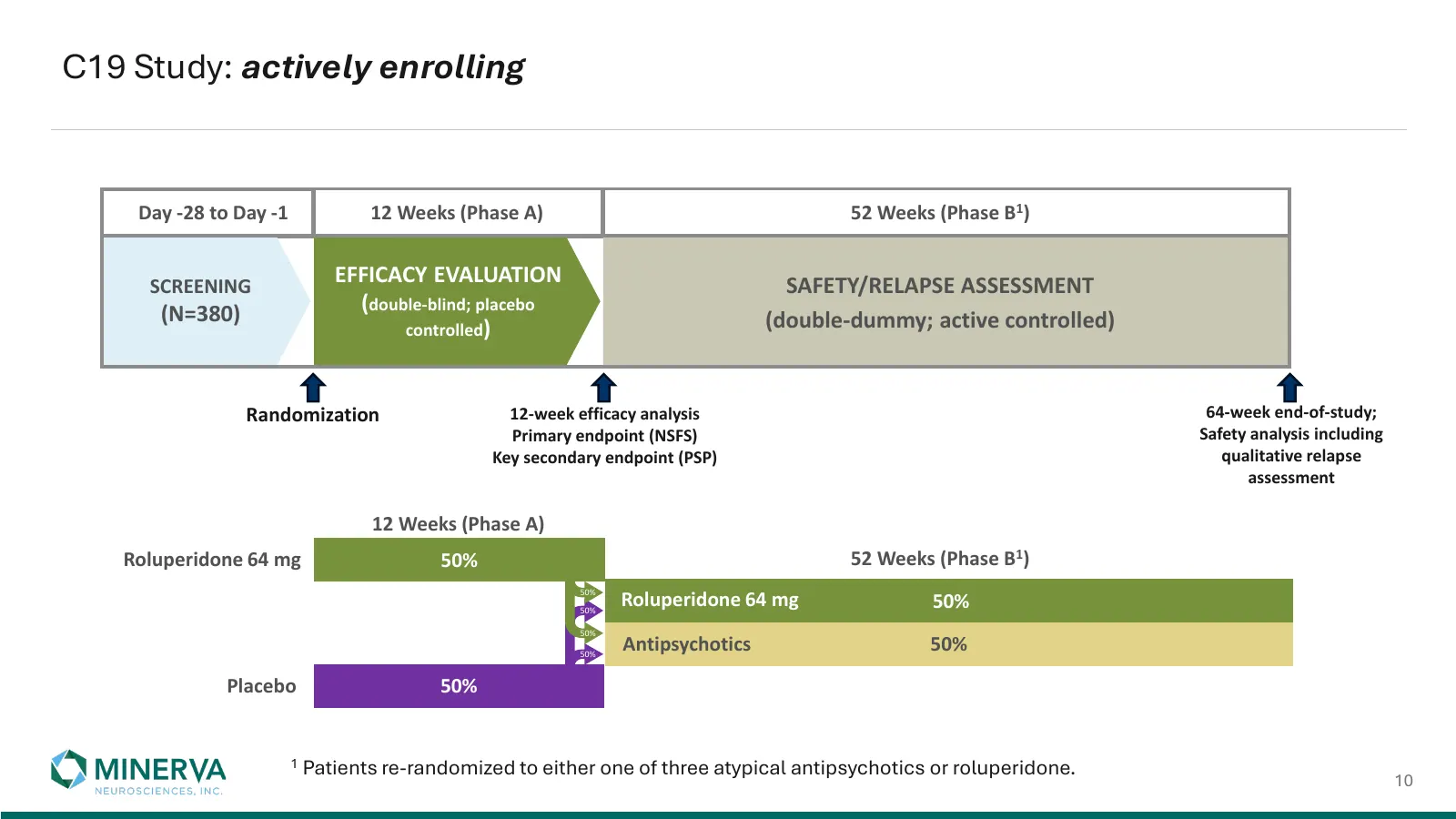
Slide 10: C19 Study: actively enrolling
C19 Study: actively enrolling Day -28 to Day -1 12 Weeks (Phase A) 52 Weeks (Phase B1) SCREENING EFFICACY EVALUATION SAFETY/RELAPSE ASSESSMENT (N=380) (double-blind; placebo controlled) (double-dummy; active controlled) Randomization 12-week efficacy analysis 64-week end-of-study; Primary endpoint (
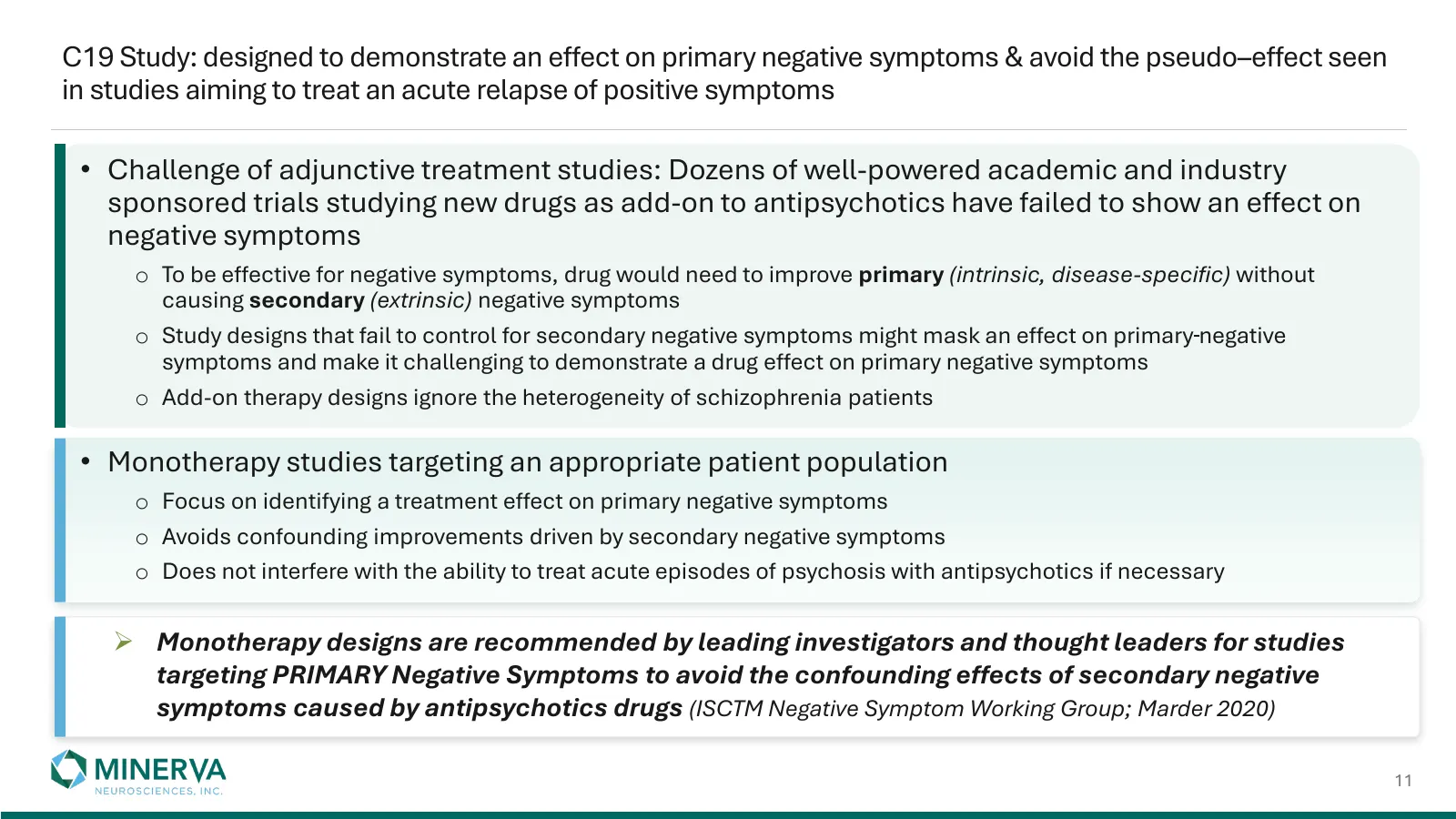
Slide 11: C19 Study: designed to demonstrate effect on primary negative symptoms
C19 Study: designed to demonstrate an effect on primary negative symptoms & avoid the pseudo–effect seen in studies aiming to treat an acute relapse of positive symptoms • Challenge of adjunctive treatment studies: Dozens of well-powered academic and industry sponsored trials studying new drugs as a
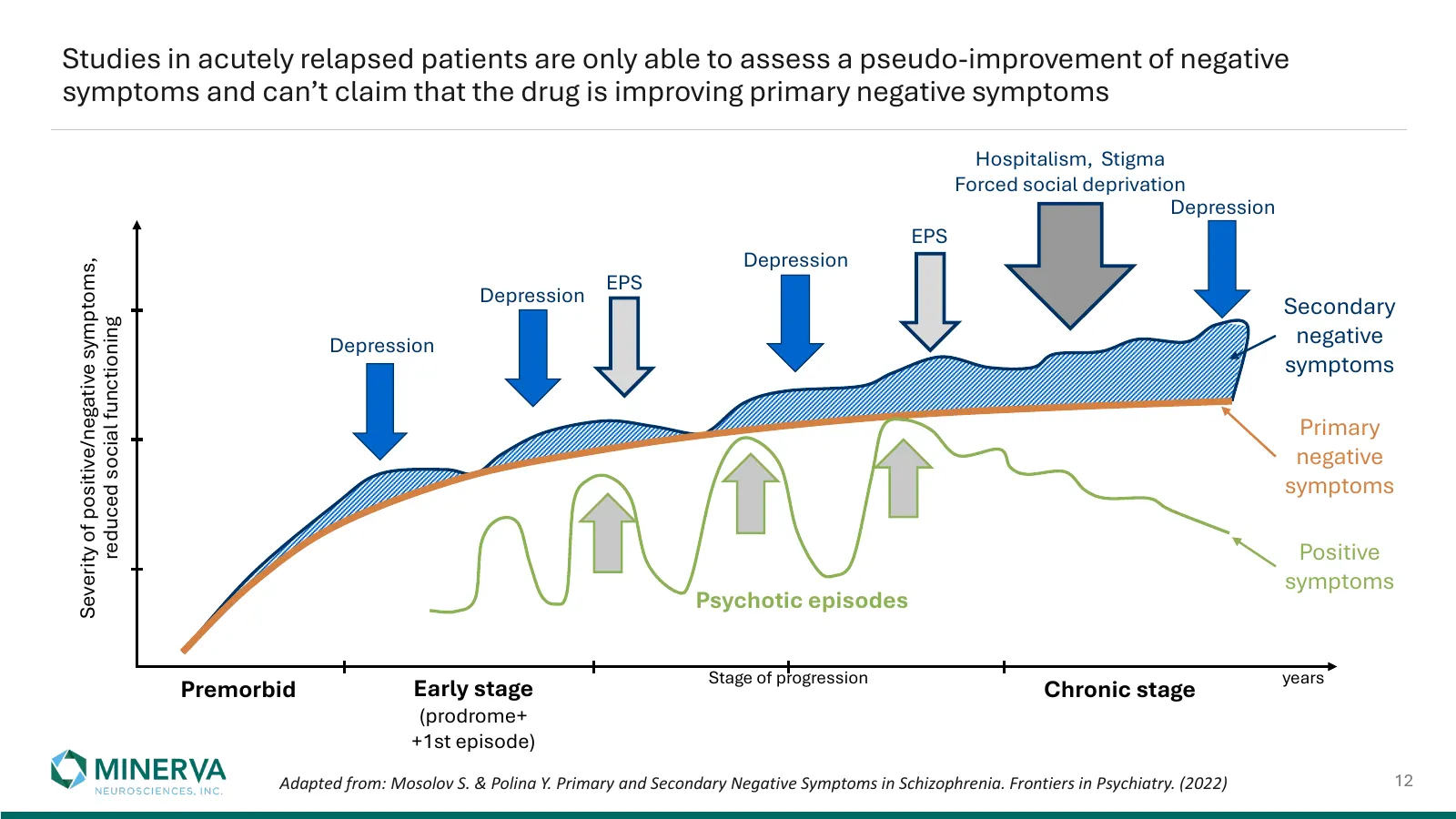
Slide 12: Acutely relapsed studies only assess pseudo-improvement of negative symptoms
Studies in acutely relapsed patients are only able to assess a pseudo-improvement of negative symptoms and can’t claim that the drug is improving primary negative symptoms Hospitalism, Stigma Forced social deprivation Depression EPS Depression Severity of positive/negative symptoms, EPS Depression S

Slide 13: Improving primary negative symptoms - the holy grail of schizophrenia treatment
Improving primary negative symptoms - the holy grail of schizophrenia treatment Gregory Strauss, PhD Franklin Professor of Psychology Department of Psychology, University of Georgia 13
Slide 14: Negative Symptoms are Heterogeneous
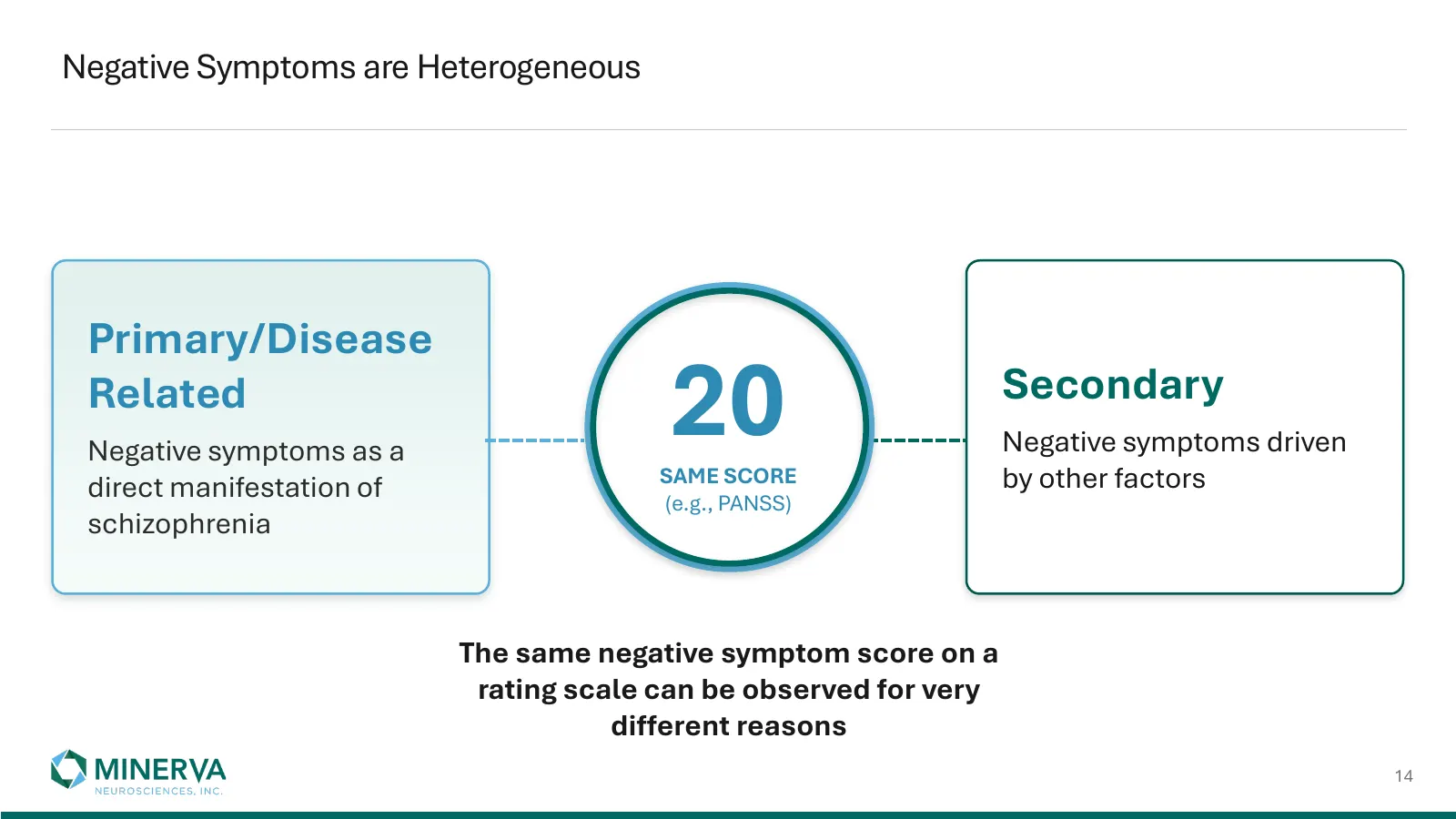
Negative Symptoms are Heterogeneous Primary/Disease Related Negative symptoms as a 20 SAME SCORE Secondary Negative symptoms driven by other factors direct manifestation of (e.g., PANSS) schizophrenia The same negative symptom score on a rating scale can be observed for very different reasons 14
Slide 15: Secondary negative symptoms are driven by factors other than the illness
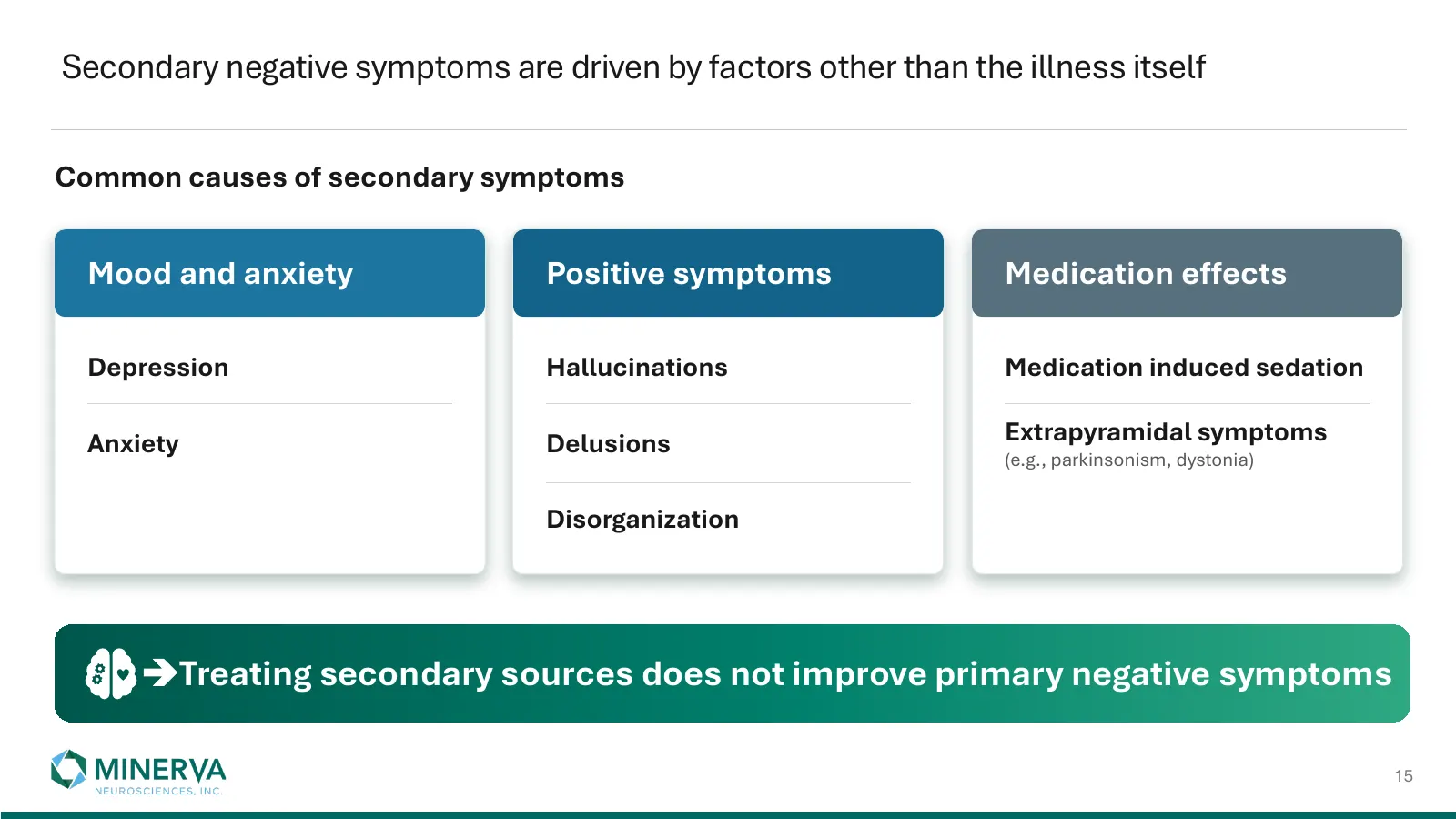
Secondary negative symptoms are driven by factors other than the illness itself Common causes of secondary symptoms Mood and anxiety Positive symptoms Medication effects Depression Hallucinations Medication induced sedation Anxiety Delusions Extrapyramidal symptoms (e.g., parkinsonism, dystonia) Dis
Slide 16: Treatment of primary negative symptoms is the holy grail
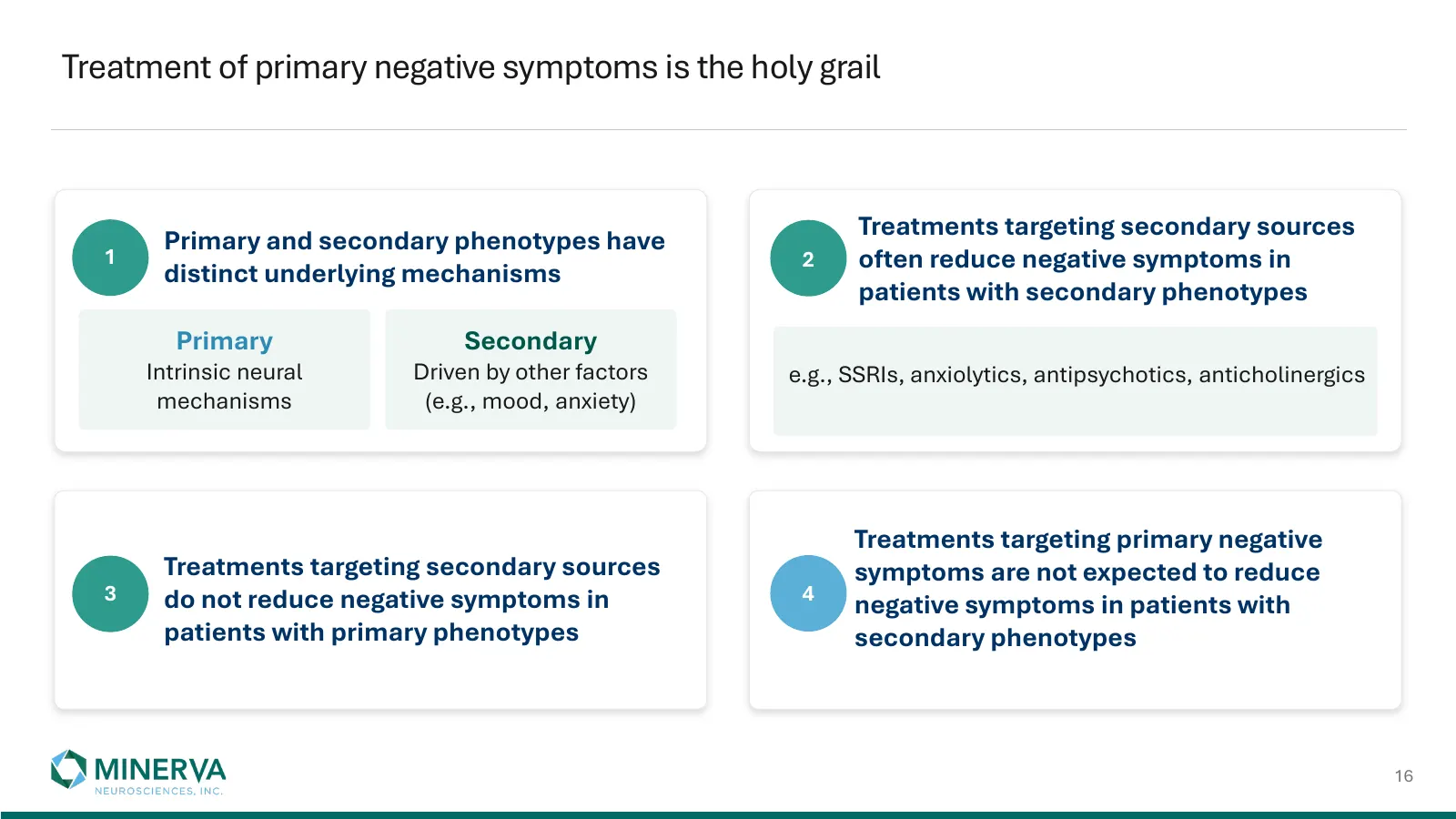
Treatment of primary negative symptoms is the holy grail Treatments targeting secondary sources Primary and secondary phenotypes have 1 2 often reduce negative symptoms in distinct underlying mechanisms patients with secondary phenotypes Primary Secondary Intrinsic neural Driven by other factors e.g
Slide 17: C03 and C07 Studies demonstrate roluperidone improves primary negative symptoms
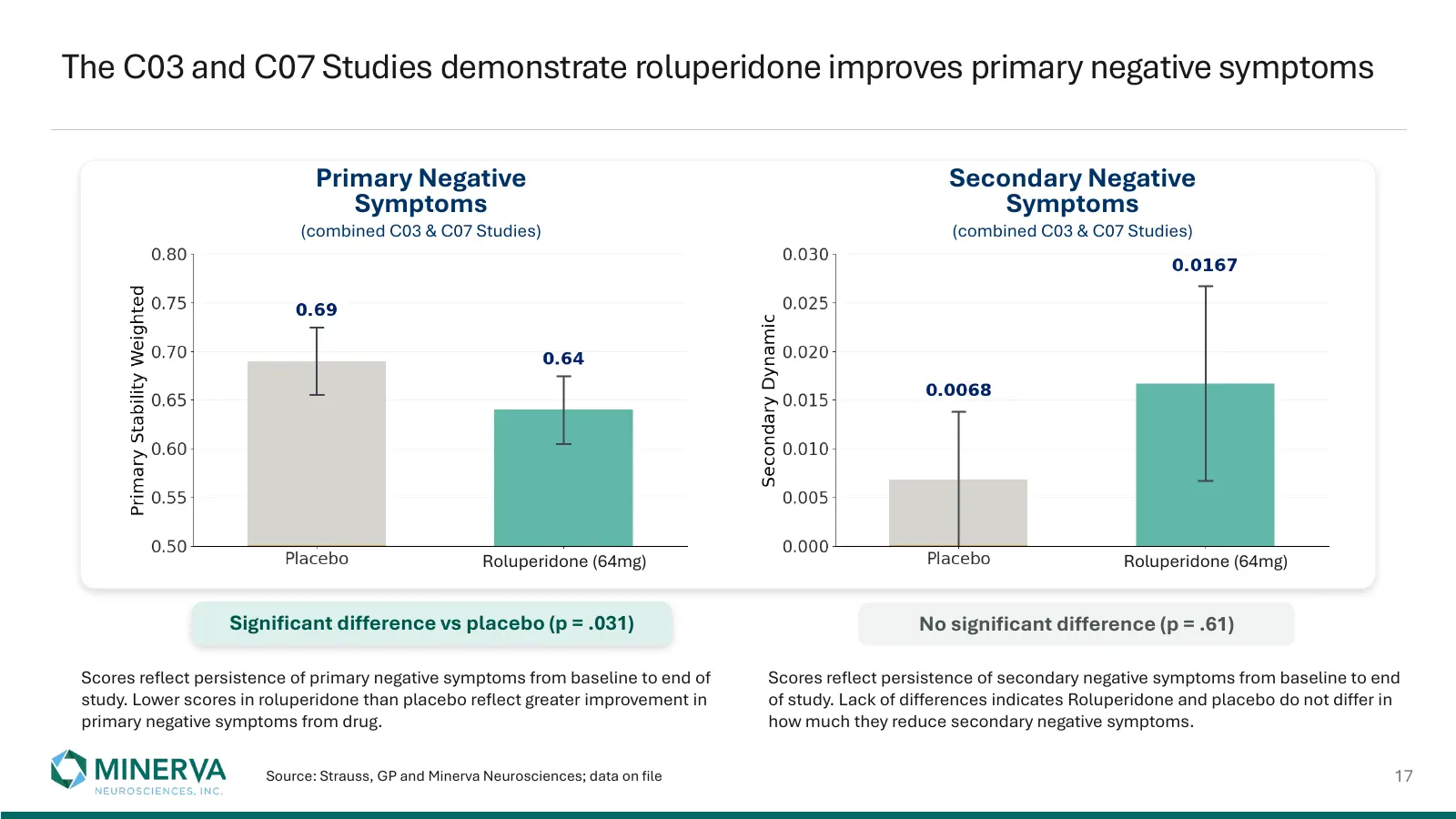
The C03 and C07 Studies demonstrate roluperidone improves primary negative symptoms Primary Negative Secondary Negative Symptoms Symptoms (combined C03 & C07 Studies) (combined C03 & C07 Studies) Roluperidone (64mg) Roluperidone (64mg) Significant difference vs placebo (p = .031) No significant diff
Slide 18: Avolition – the key domain driver for improving negative symptoms
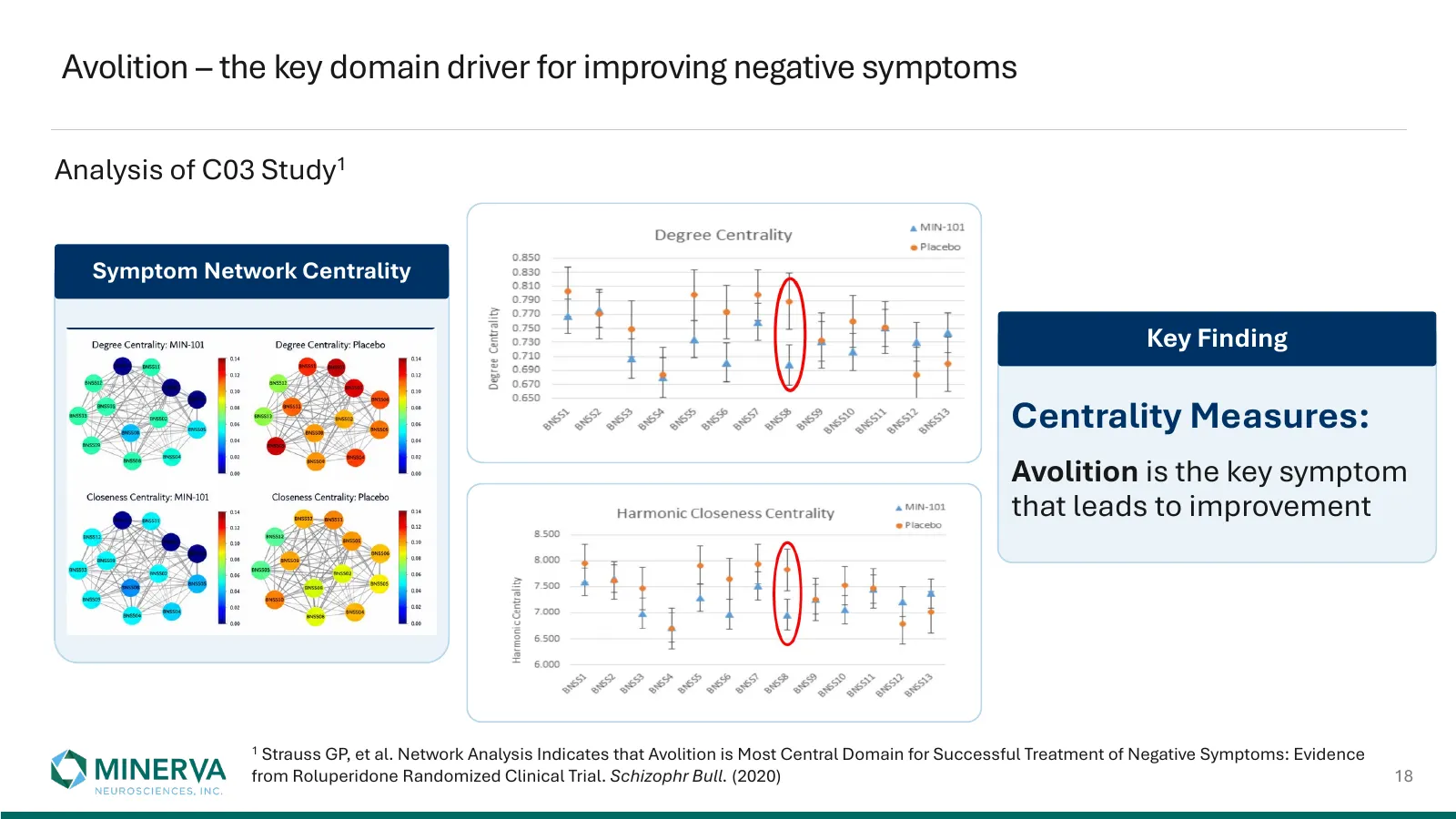
Avolition – the key domain driver for improving negative symptoms Analysis of C03 Study1 Symptom Network Centrality Key Finding Centrality Measures: Avolition is the key symptom that leads to improvement 1 Strauss GP, et al. Network Analysis Indicates that Avolition is Most Central Domain for Succes
Slide 19: Avolition – the key domain for treatment (REPLICATED)
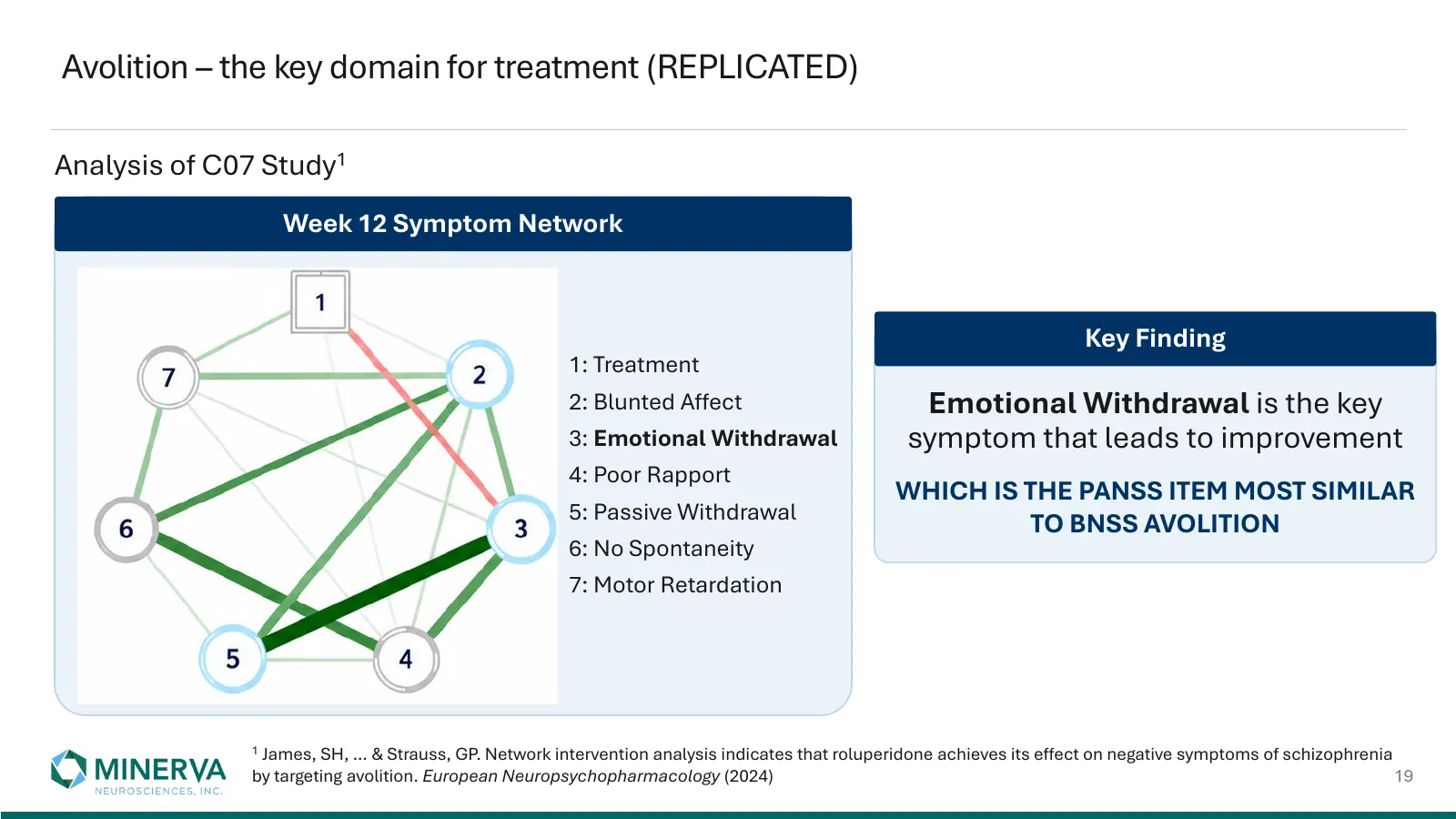
Avolition – the key domain for treatment (REPLICATED) Analysis of C07 Study1 Week 12 Symptom Network Key Finding 1: Treatment 2: Blunted Affect Emotional Withdrawal is the key 3: Emotional Withdrawal symptom that leads to improvement 4: Poor Rapport WHICH IS THE PANSS ITEM MOST SIMILAR 5: Passive Wi
Slide 20: Why Does this Matter? Functional Outcome Improves
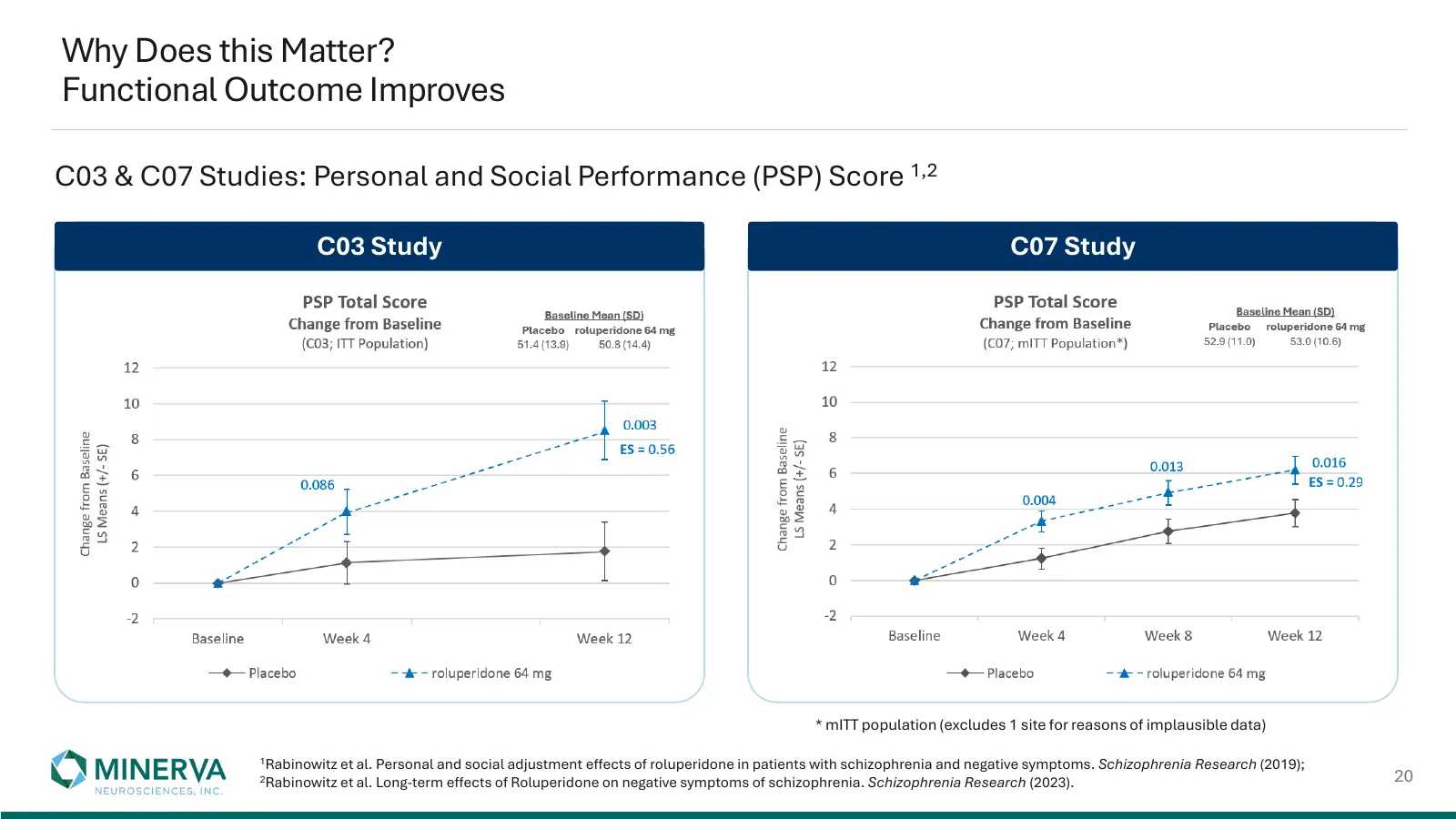
Why Does this Matter? Functional Outcome Improves C03 & C07 Studies: Personal and Social Performance (PSP) Score 1,2 C03 Study C07 Study * mITT population (excludes 1 site for reasons of implausible data) 1Rabinowitz et al. Personal and social adjustment effects of roluperidone in patients with schi
Slide 21: Targeting avolition improves entire constellation of negative symptoms
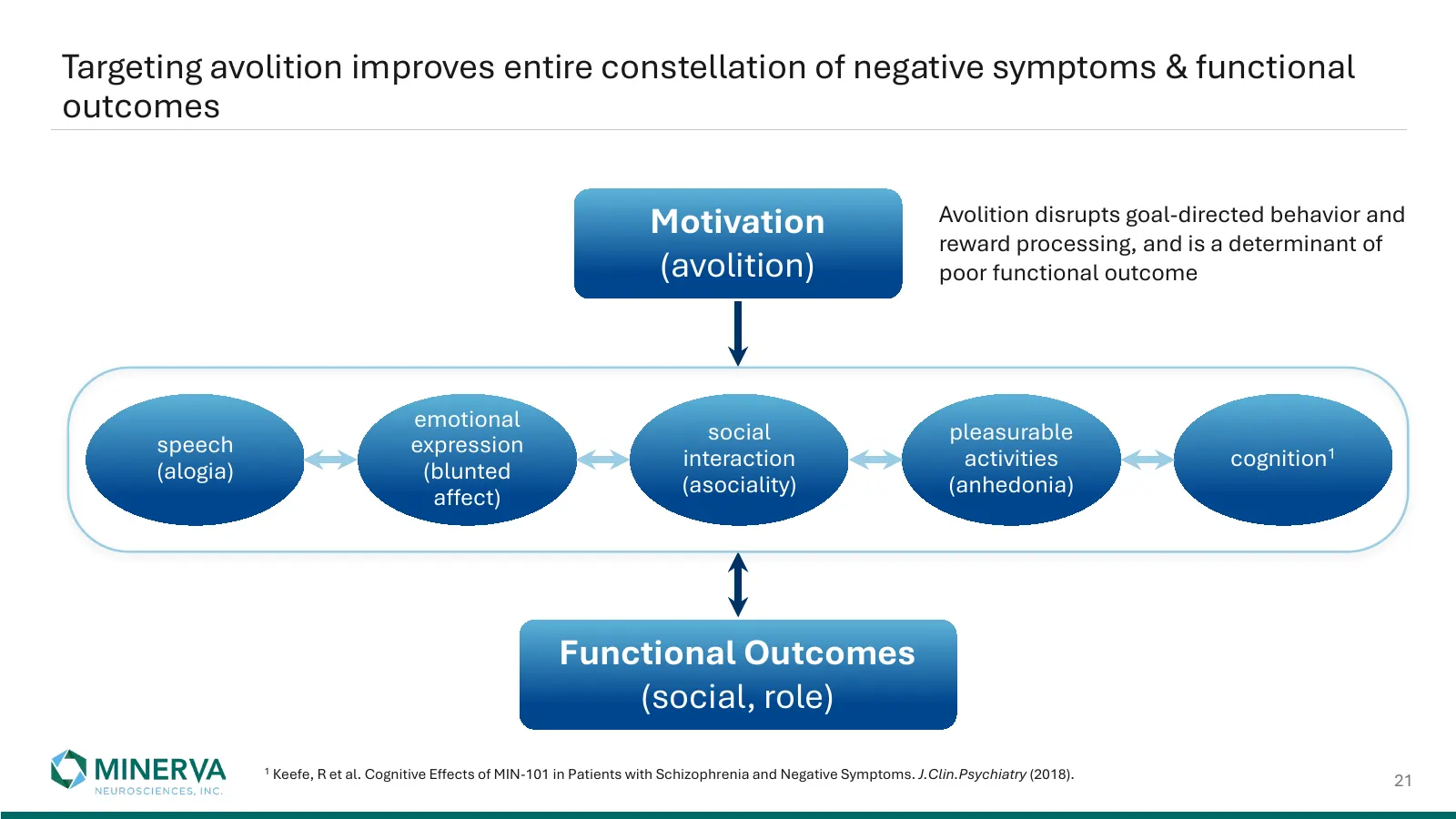
Targeting avolition improves entire constellation of negative symptoms & functional outcomes Motivation Avolition disrupts goal-directed behavior and reward processing, and is a determinant of (avolition) poor functional outcome emotional social pleasurable speech expression interaction activities c

Slide 22: Primary negative symptoms in the clinic
Primary negative symptoms in the clinic Brian Kirkpatrick, MD, MSPH Peters Professor of Psychiatry University of Arkansas for Medical Sciences 22
Slide 23: Clinical issues for patients with primary negative symptoms
Clinical issues for patients with primary negative symptoms • Who are these patients? • Is monotherapy safe (or even beneficial for some patients)? • What are the consequences of treating negative symptoms? 23
Slide 24: A distinctive group of patients
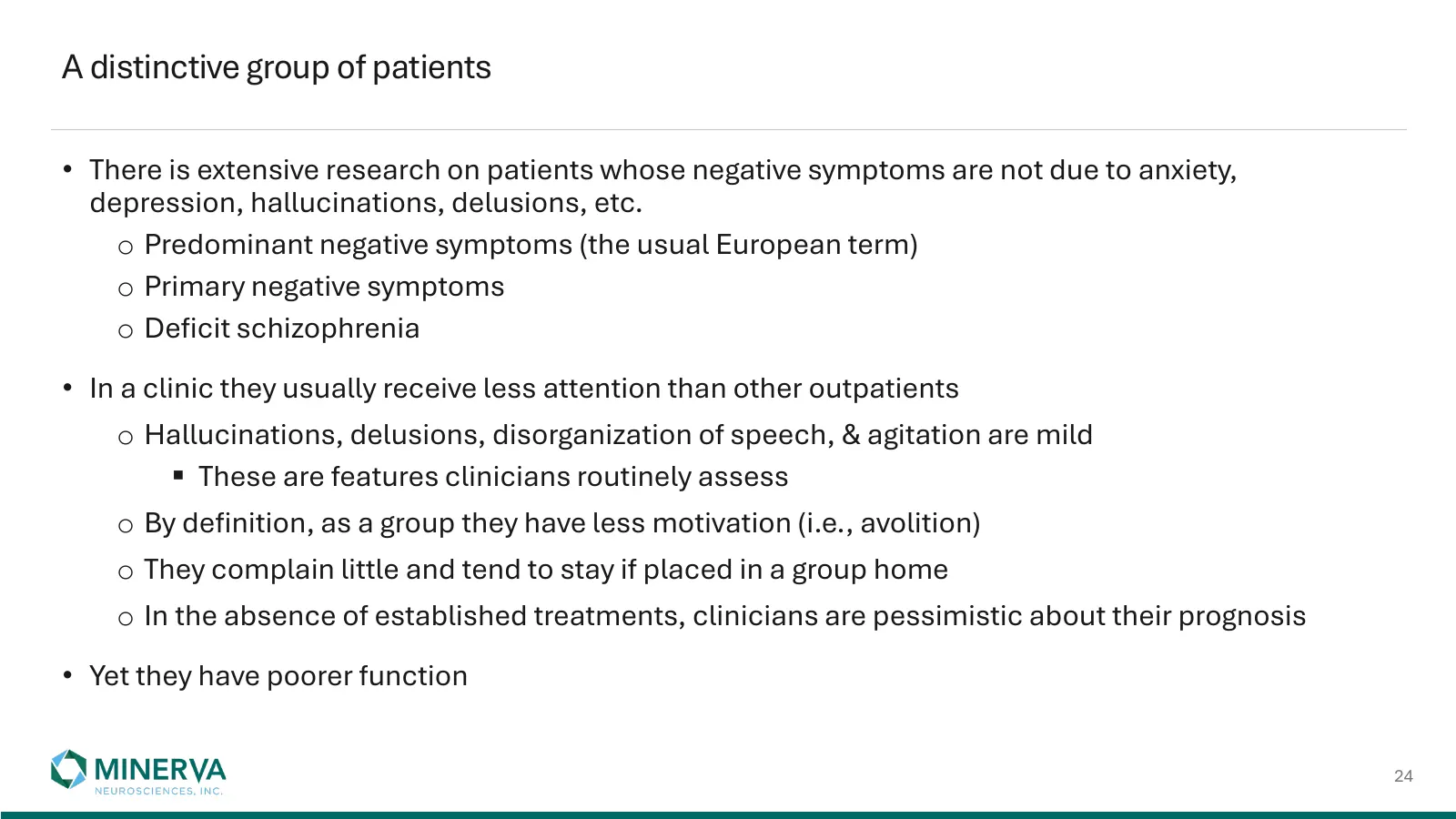
A distinctive group of patients • There is extensive research on patients whose negative symptoms are not due to anxiety, depression, hallucinations, delusions, etc. o Predominant negative symptoms (the usual European term) o Primary negative symptoms o Deficit schizophrenia • In a clinic they usual
Slide 25: Primary symptoms explain variance in function: 5-year longitudinal study
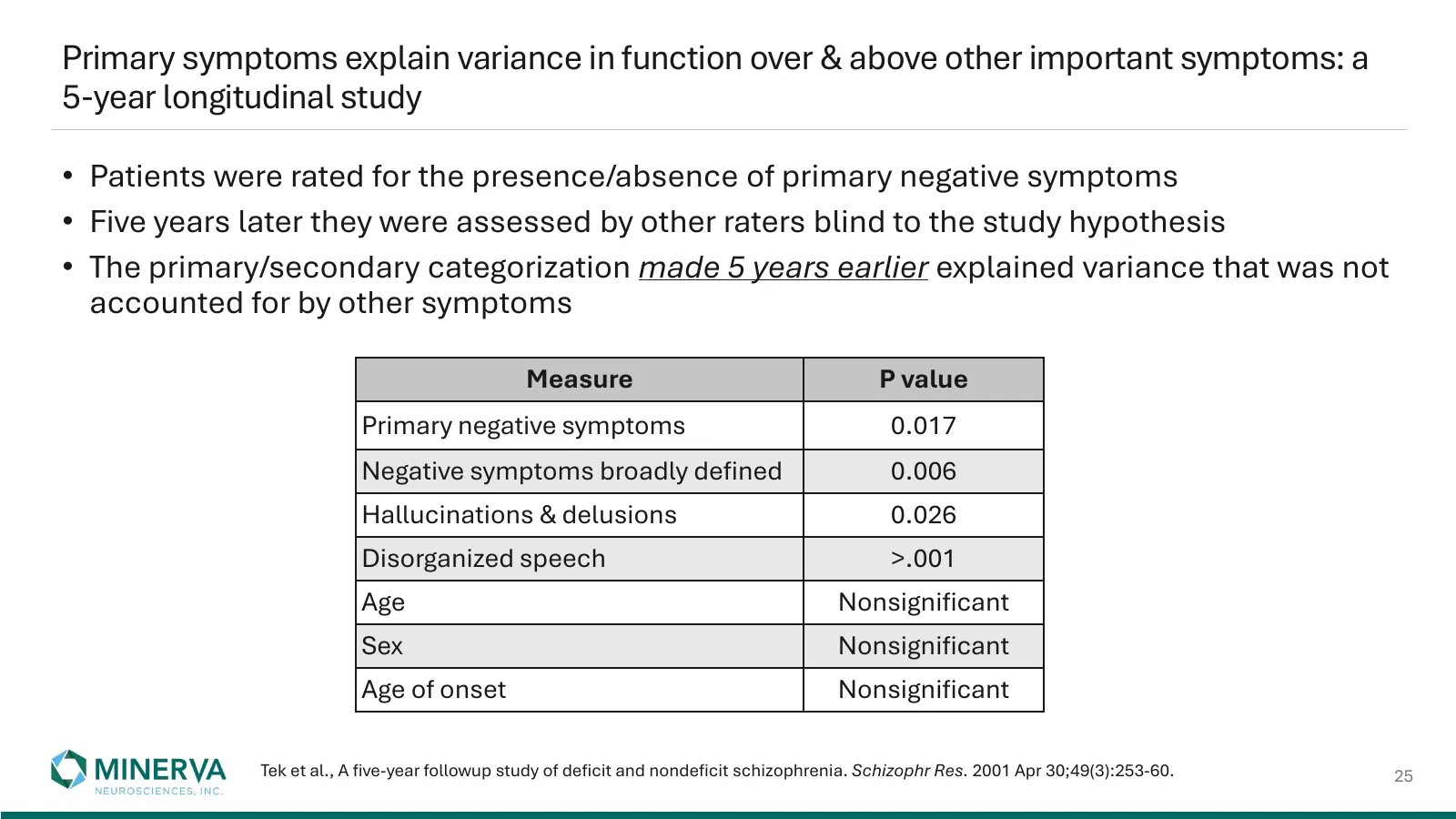
Primary symptoms explain variance in function over & above other important symptoms: a 5-year longitudinal study • Patients were rated for the presence/absence of primary negative symptoms • Five years later they were assessed by other raters blind to the study hypothesis • The primary/secondary cat
Slide 26: Monotherapy
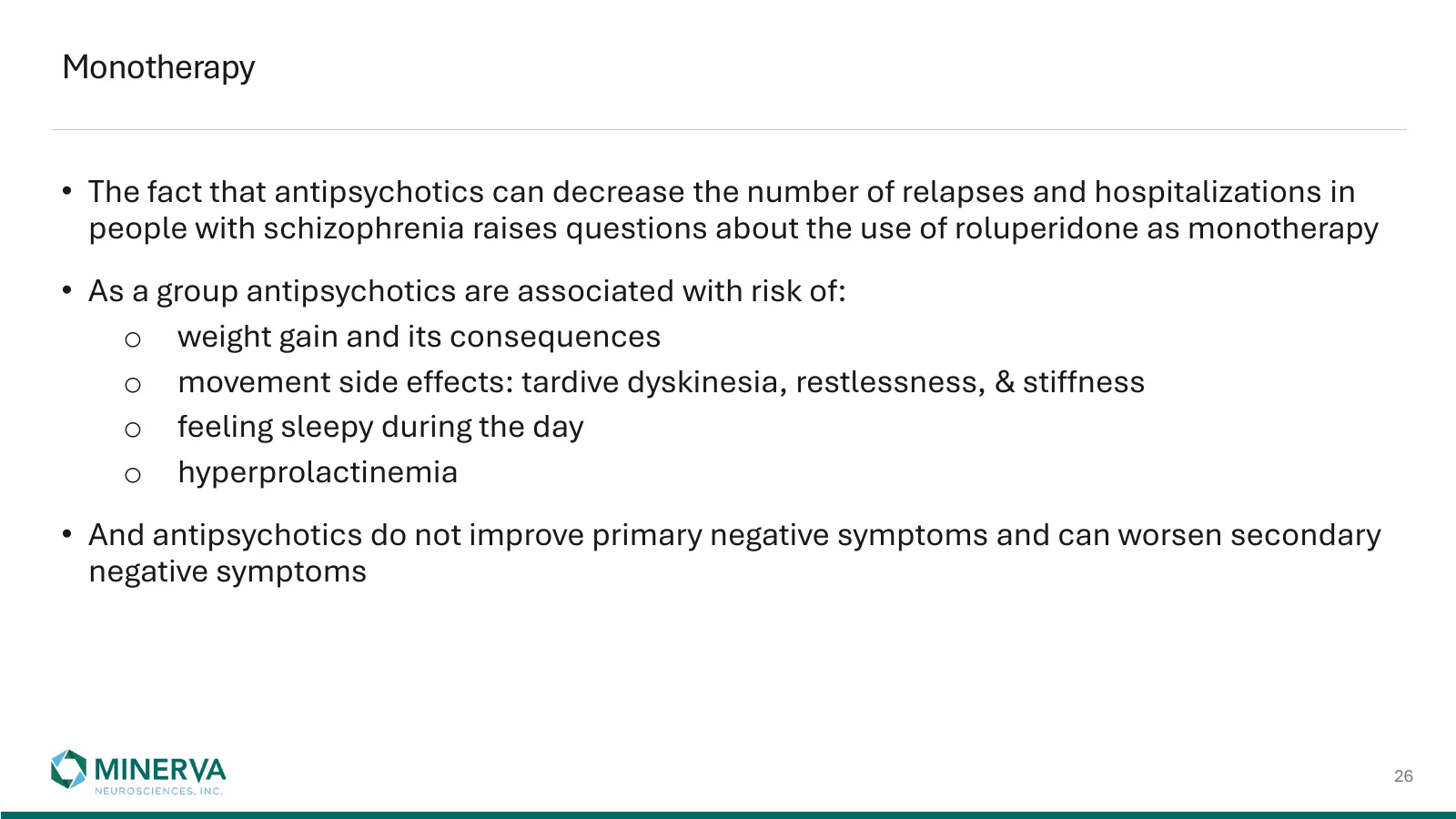
Monotherapy • The fact that antipsychotics can decrease the number of relapses and hospitalizations in people with schizophrenia raises questions about the use of roluperidone as monotherapy • As a group antipsychotics are associated with risk of: o weight gain and its consequences o movement side e
Slide 27: Patients who stop taking an antipsychotic have been studied for many years
Patients who stop taking an antipsychotic have been studied for many years • They have more relapses but serious consequences are rare • Some patients will only take antipsychotics when they have increased symptoms • Patients often have an increase in symptoms such as depression or anxiety before th
Slide 28: Patients meeting Minerva entry criteria have a low risk of relapse
Patients meeting Minerva entry criteria have a low risk of relapse, independently of treatment • The evidence: o the CATIE study, and Minerva’s C03 & C07 studies o data from a meta-analysis of relapse rates for patients in studies of antipsychotic discontinuation o what is known about baseline sympt
Slide 29: Relapse in CATIE Study: patients who did/did not meet Minerva entry criteria
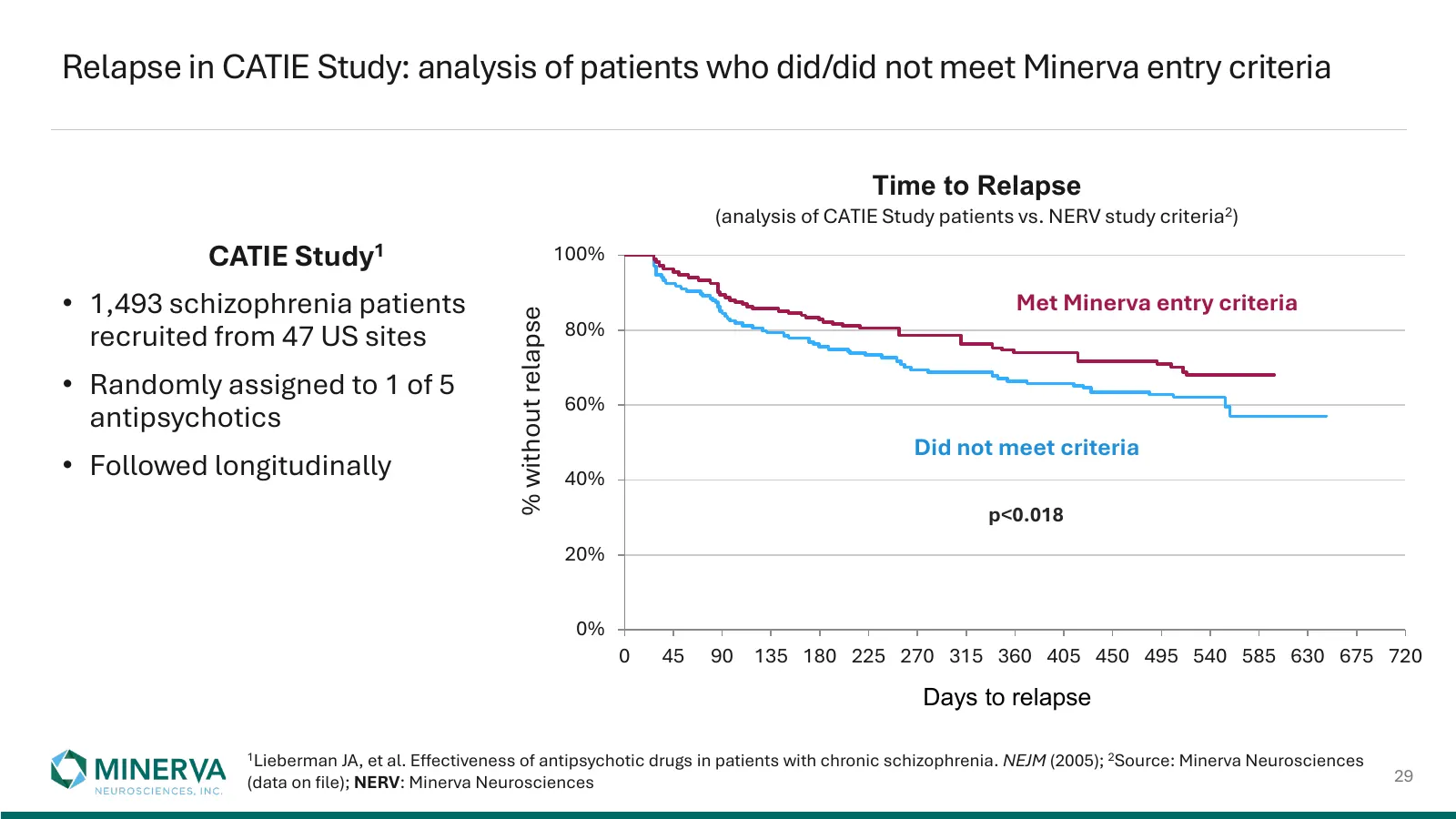
Relapse in CATIE Study: analysis of patients who did/did not meet Minerva entry criteria Time to Relapse (analysis of CATIE Study patients vs. NERV study criteria2) CATIE Study1 100% • 1,493 schizophrenia patients Met Minerva entry criteria % without relapse recruited from 47 US sites 80% • Randomly
Slide 30: Relapse in patients meeting Minerva entry criteria vs meta-analysis
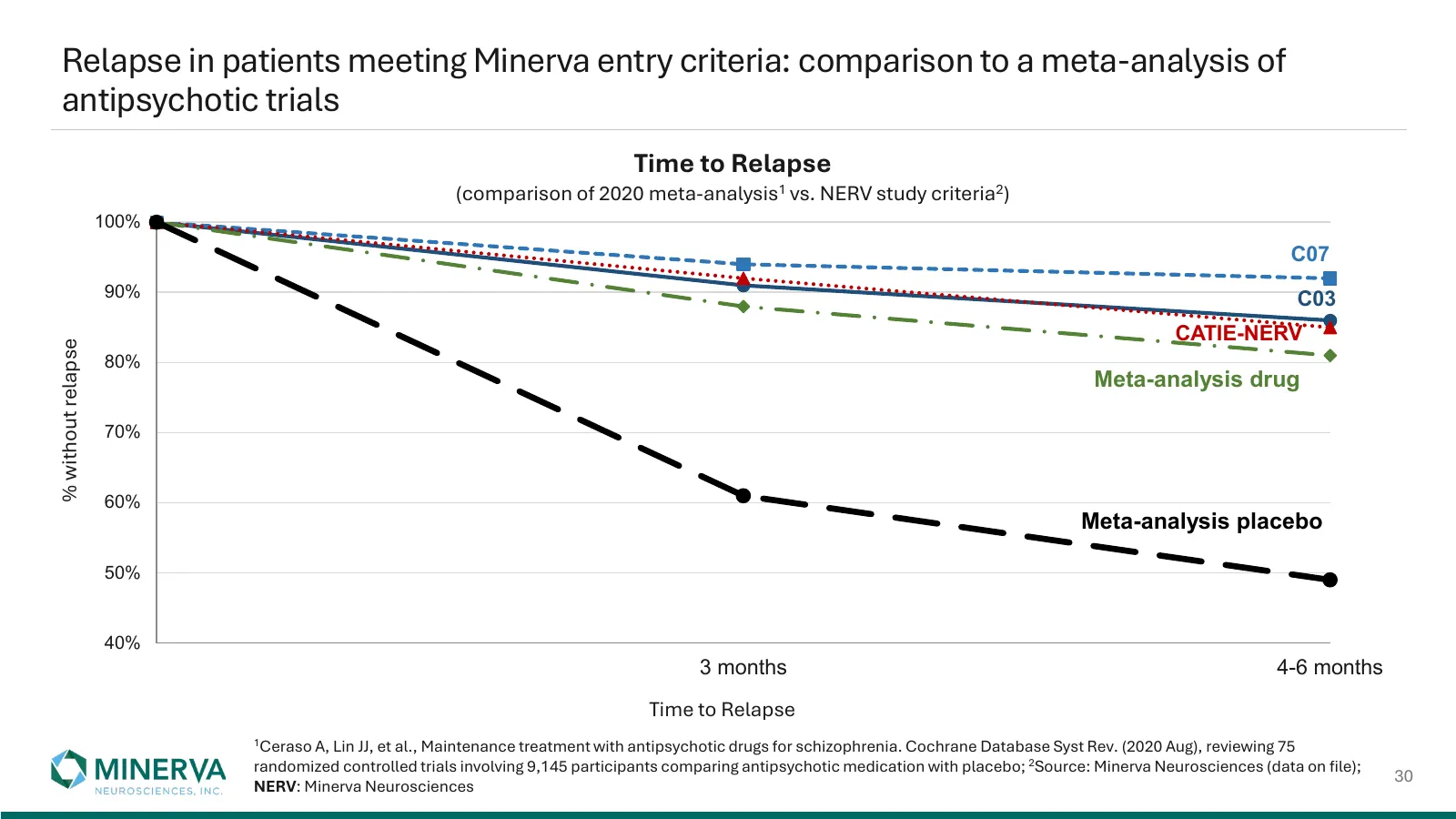
Relapse in patients meeting Minerva entry criteria: comparison to a meta-analysis of antipsychotic trials Time to Relapse (comparison of 2020 meta-analysis1 vs. NERV study criteria2) 100% C07 90% C03 CATIE-NERV % without relapse 80% Meta-analysis drug 70% 60% Meta-analysis placebo 50% 40% 3 months 4
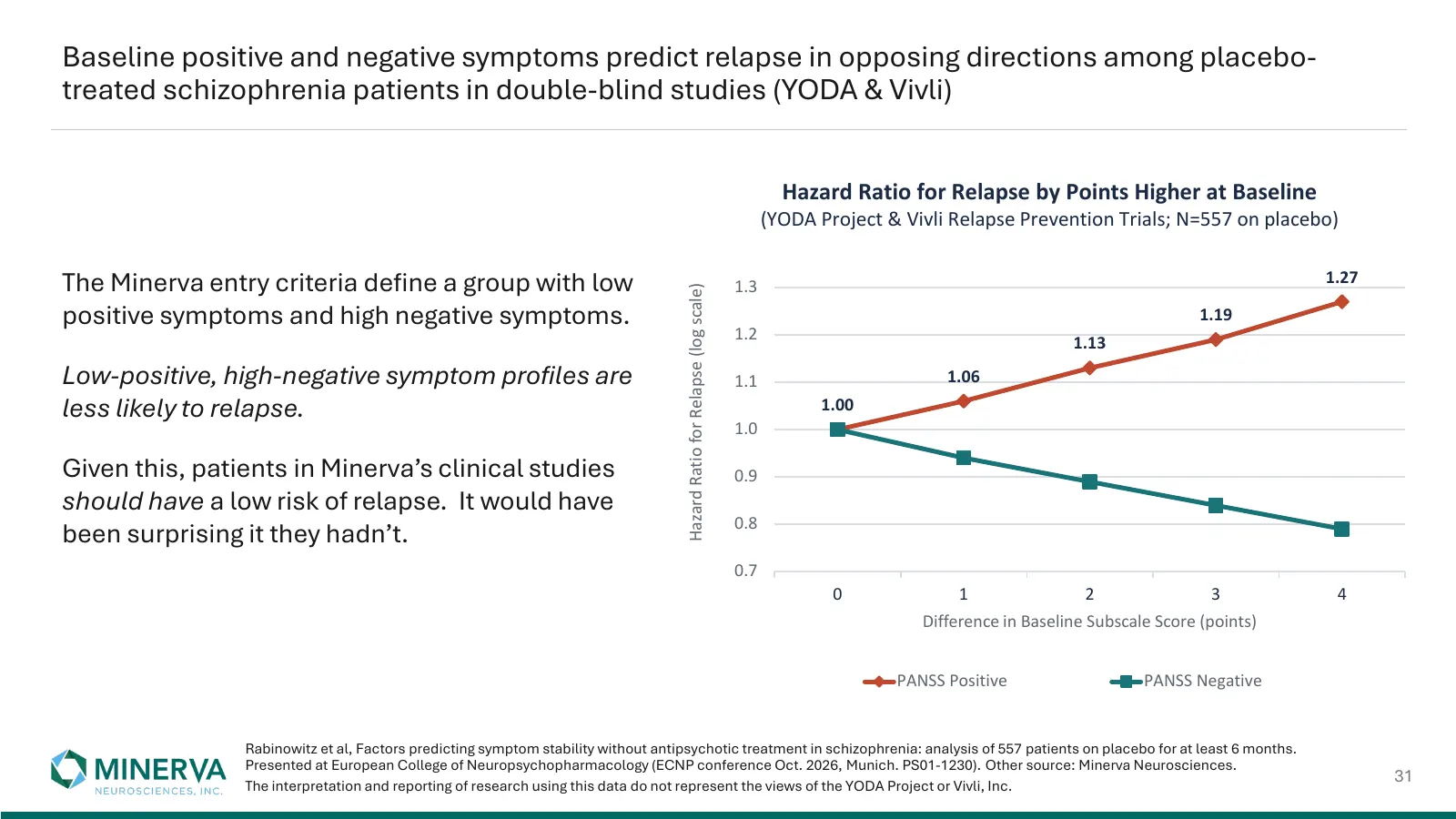
Slide 31: Baseline symptoms predict relapse in opposing directions
Baseline positive and negative symptoms predict relapse in opposing directions among placebo- treated schizophrenia patients in double-blind studies (YODA & Vivli) Hazard Ratio for Relapse by Points Higher at Baseline (YODA Project & Vivli Relapse Prevention Trials; N=557 on placebo) The Minerva ent
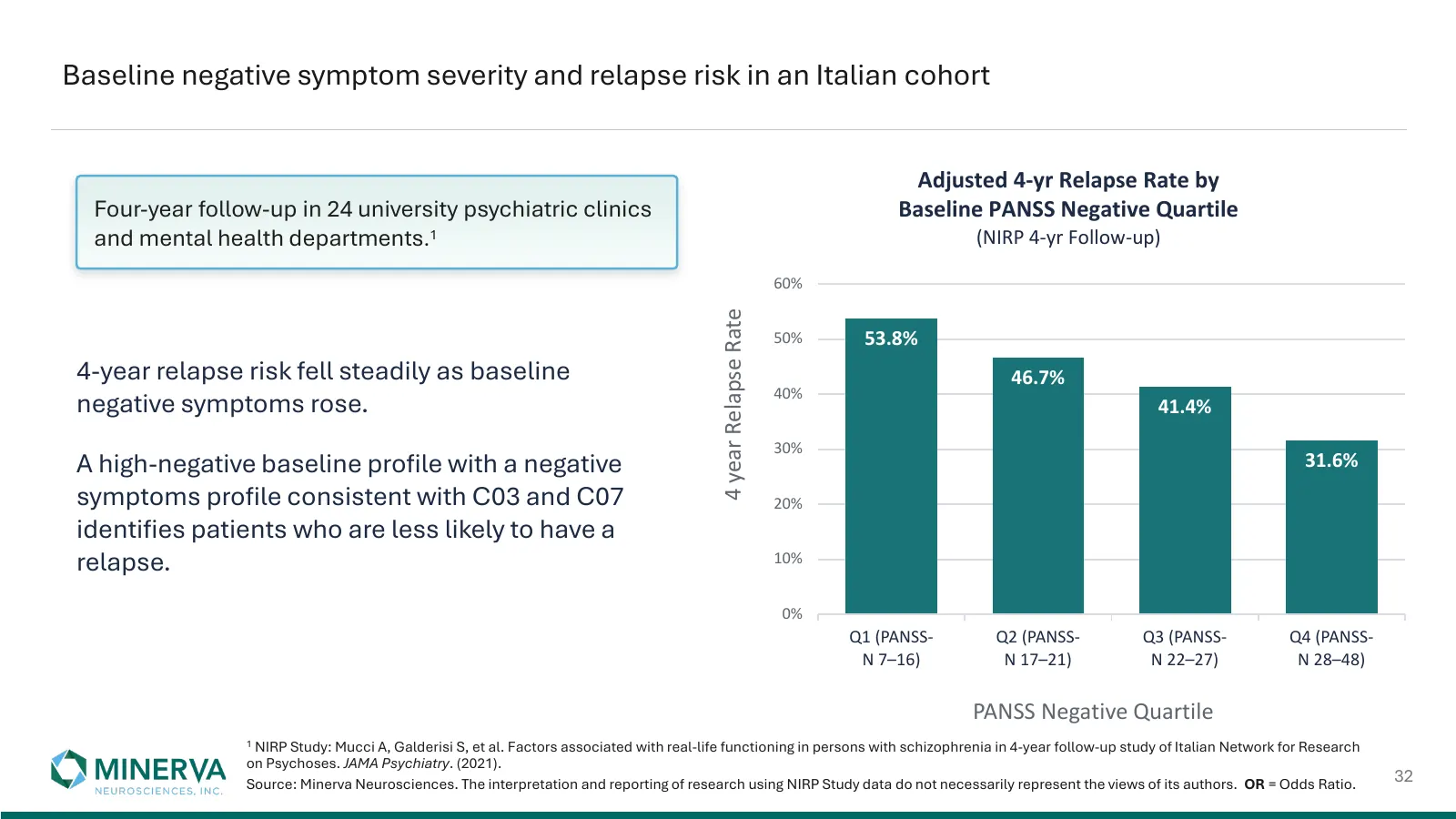
Slide 32: Baseline negative symptom severity and relapse risk in an Italian cohort
Baseline negative symptom severity and relapse risk in an Italian cohort Adjusted 4-yr Relapse Rate by Four-year follow-up in 24 university psychiatric clinics Baseline PANSS Negative Quartile and mental health departments.1 (NIRP 4-yr Follow-up) 60% 4 year Relapse Rate 50% 53.8% 4-year relapse risk
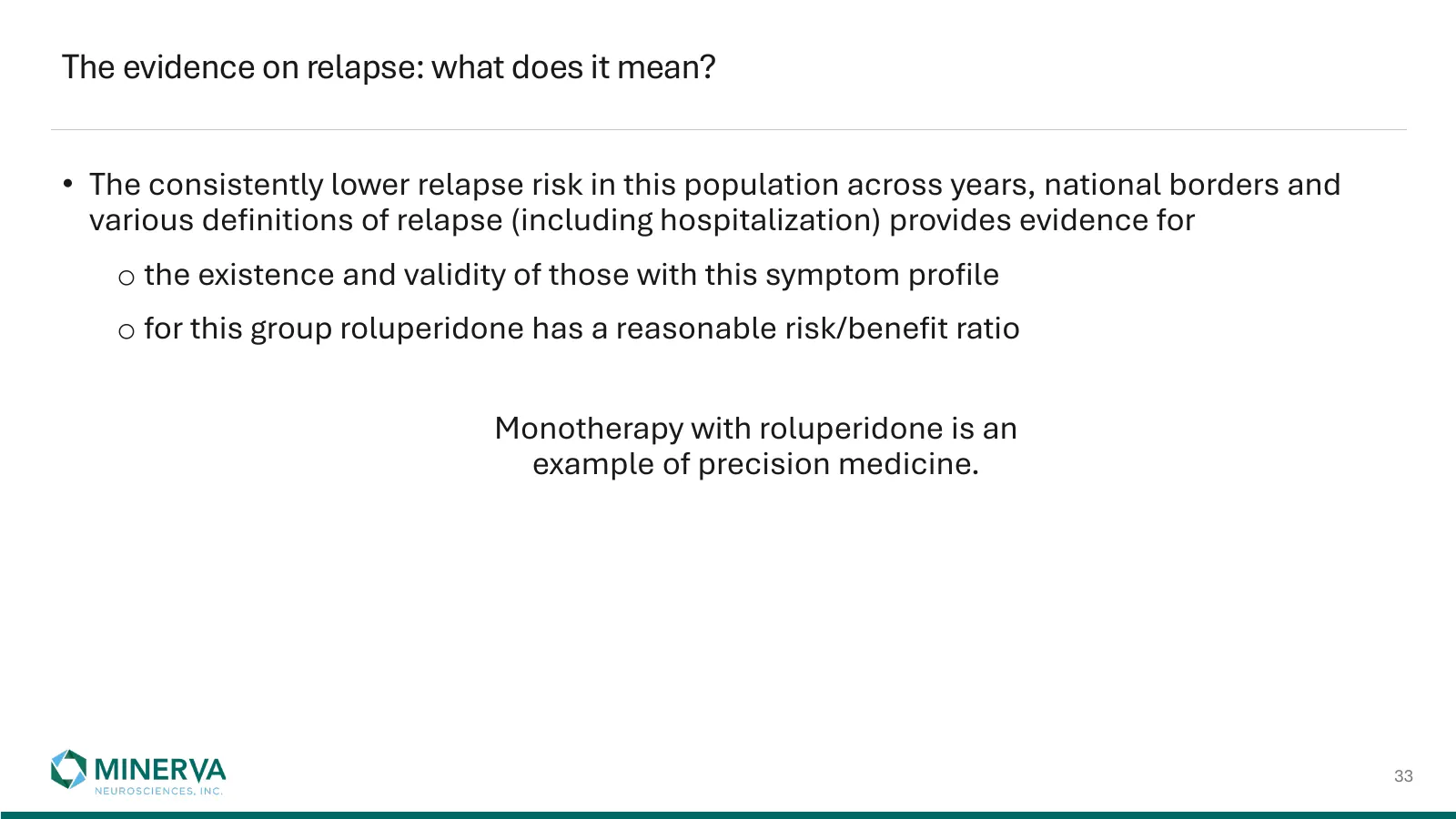
Slide 33: The evidence on relapse: what does it mean?
The evidence on relapse: what does it mean? • The consistently lower relapse risk in this population across years, national borders and various definitions of relapse (including hospitalization) provides evidence for o the existence and validity of those with this symptom profile o for this group ro
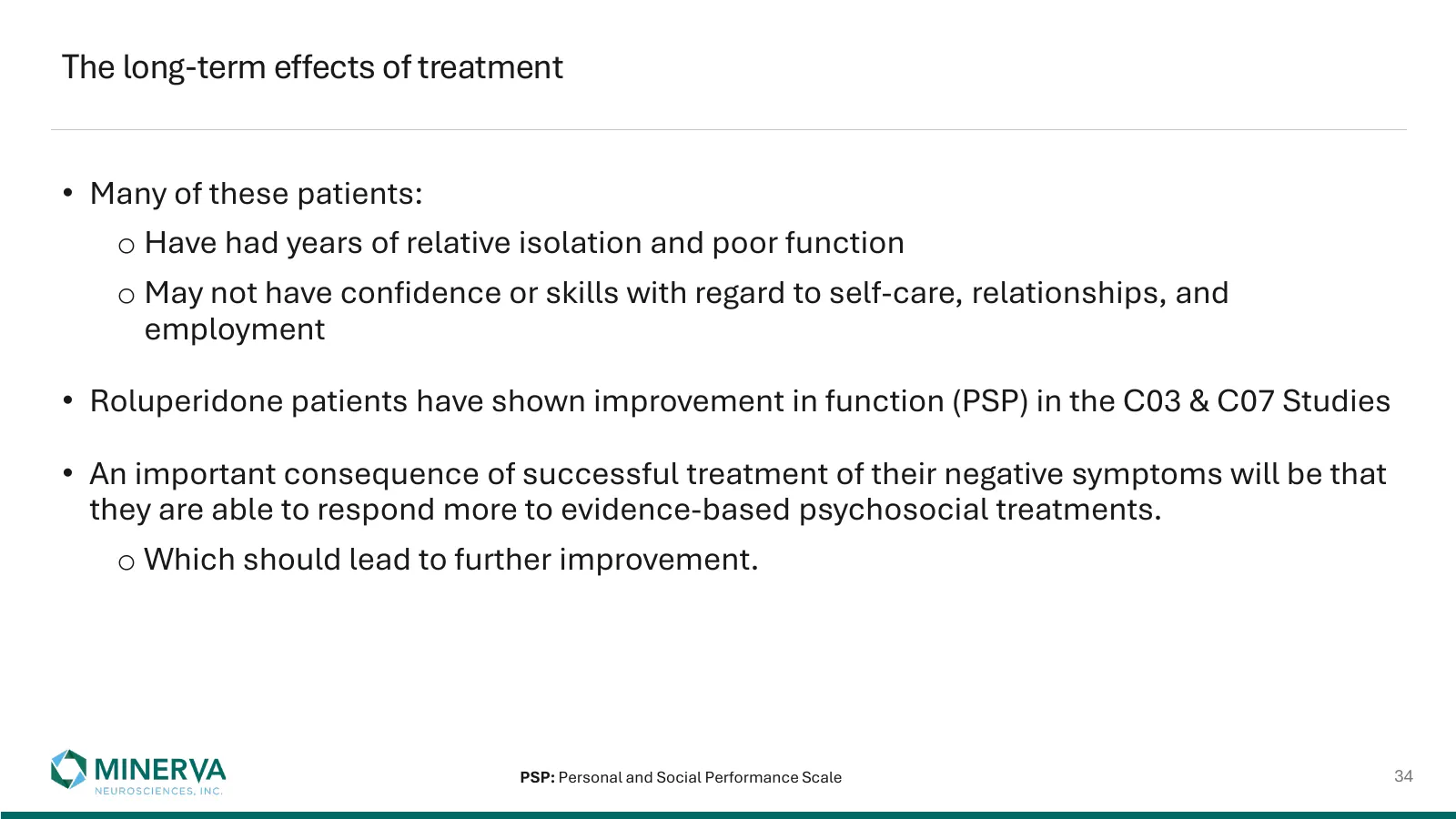
Slide 34: The long-term effects of treatment
The long-term effects of treatment • Many of these patients: o Have had years of relative isolation and poor function o May not have confidence or skills with regard to self-care, relationships, and employment • Roluperidone patients have shown improvement in function (PSP) in the C03 & C07 Studies

Slide 35: New analyses strengthening uniqueness of roluperidone
New analyses strengthening uniqueness of roluperidone in treating negative symptoms Remy Luthringer, PhD Executive Chairman & Chief Executive Officer Minerva Neurosciences, Inc. 35

Slide 36: New Analyses
Bayesian Methodology Applied to C03 & C07 Studies NEW ANALYSES Global Statistical Test (GST) Responder Analysis Across Endpoints 36
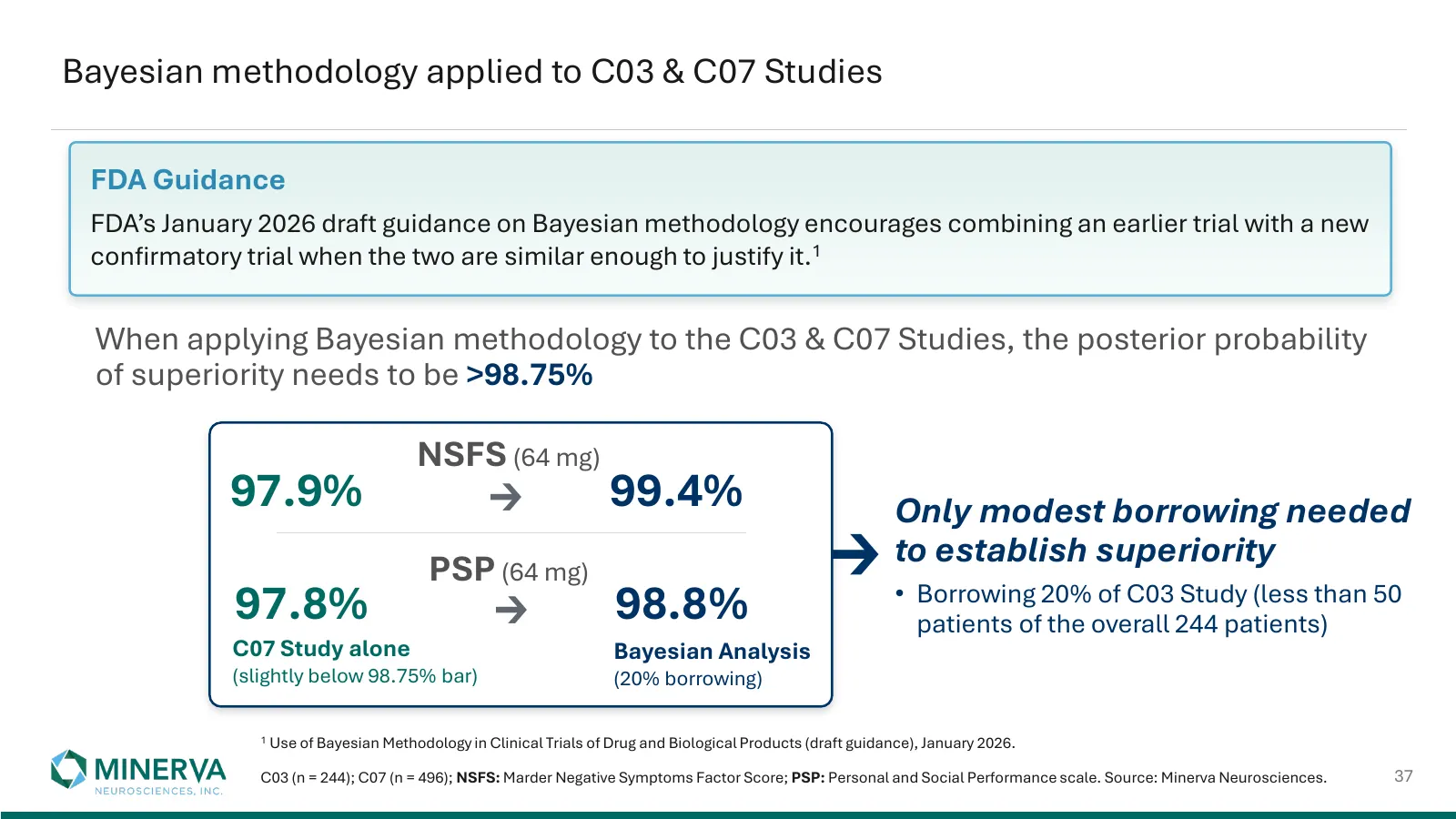
Slide 37: Bayesian methodology applied to C03 & C07 Studies
Bayesian methodology applied to C03 & C07 Studies FDA Guidance FDA’s January 2026 draft guidance on Bayesian methodology encourages combining an earlier trial with a new confirmatory trial when the two are similar enough to justify it.1 When applying Bayesian methodology to the C03 & C07 Studies, th
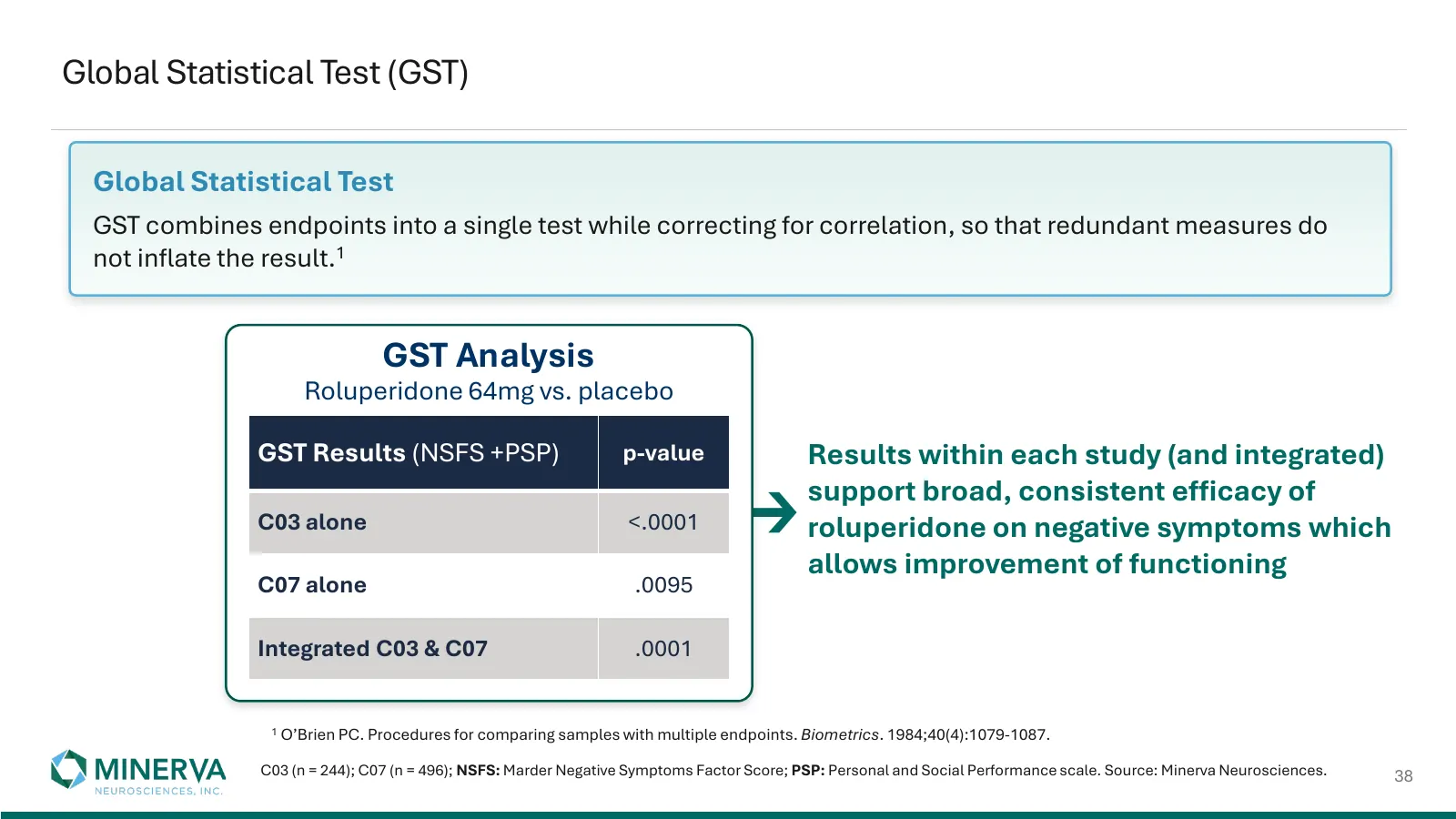
Slide 38: Global Statistical Test (GST)
Global Statistical Test (GST) Global Statistical Test GST combines endpoints into a single test while correcting for correlation, so that redundant measures do not inflate the result.1 GST Analysis Roluperidone 64mg vs. placebo GST Results (NSFS +PSP) p-value Results within each study (and integrate
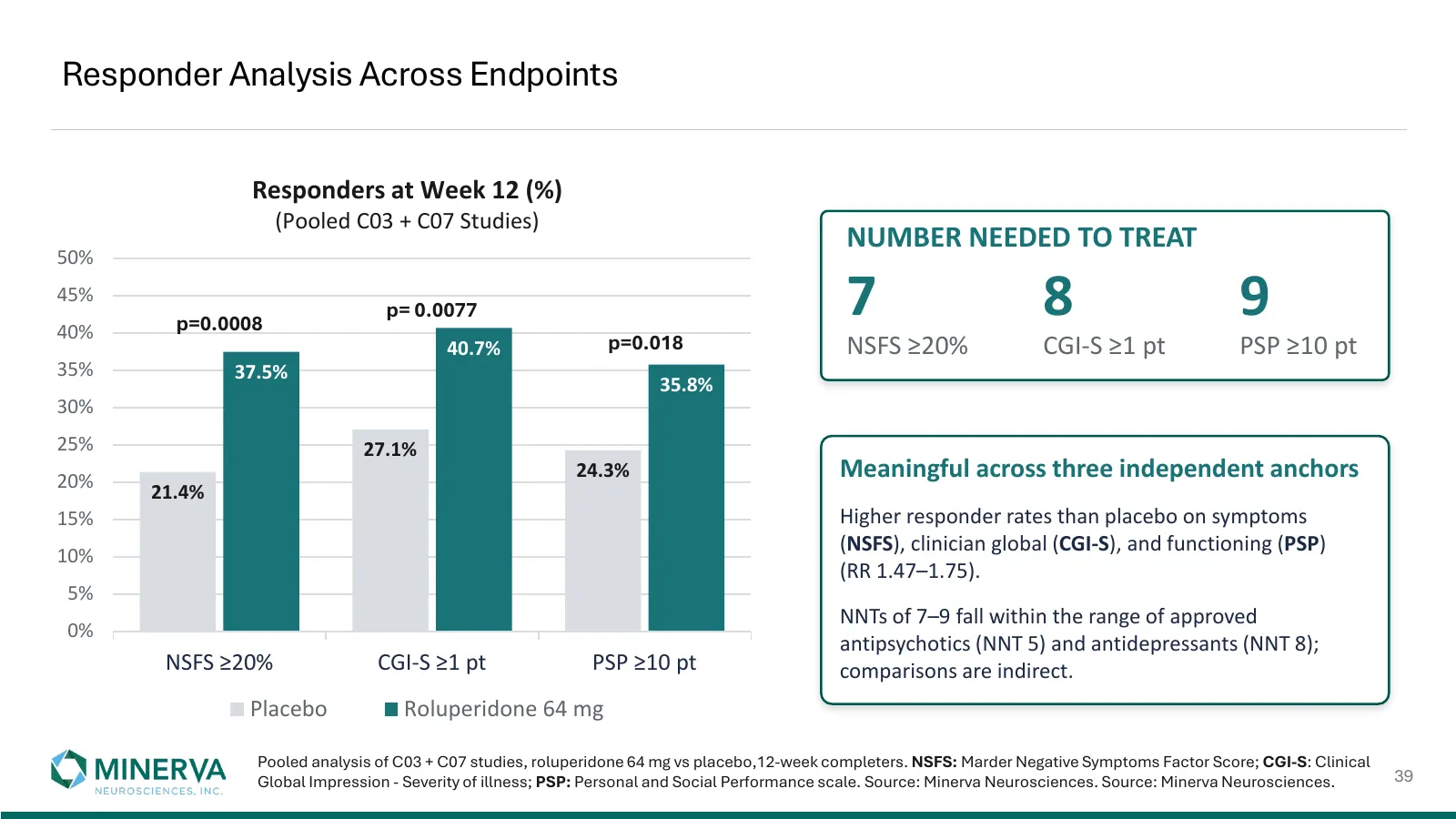
Slide 39: Responder Analysis Across Endpoints
Responder Analysis Across Endpoints Responders at Week 12 (%) (Pooled C03 + C07 Studies) NUMBER NEEDED TO TREAT 50% 45% 40% p=0.0008 p= 0.0077 7 8 9 40.7% p=0.018 NSFS ≥20% CGI-S ≥1 pt PSP ≥10 pt 35% 37.5% 35.8% 30% 25% 27.1% 20% 24.3% Meaningful across three independent anchors 21.4% 15% Higher res
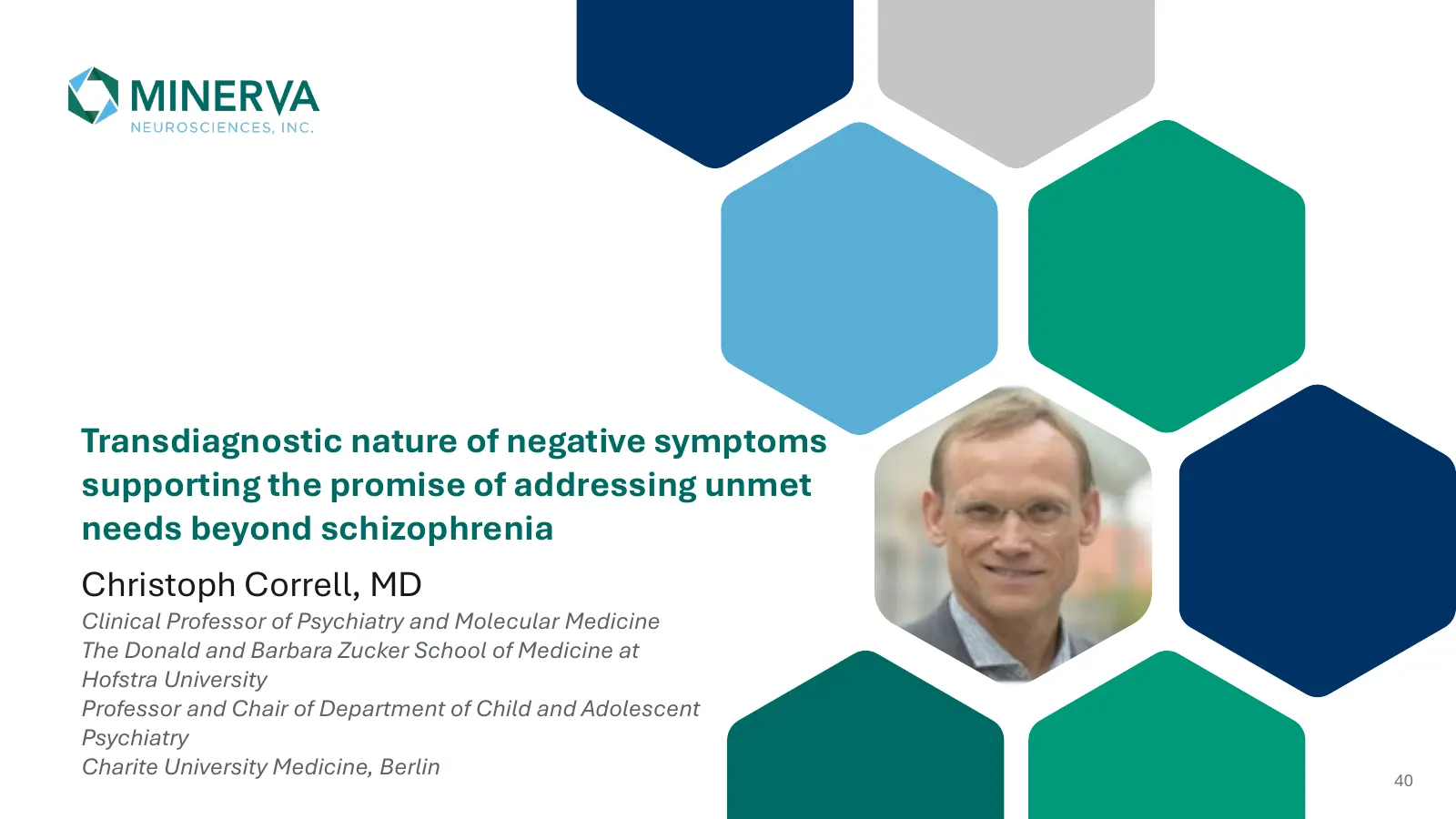
Slide 40: Transdiagnostic nature of negative symptoms
Transdiagnostic nature of negative symptoms supporting the promise of addressing unmet needs beyond schizophrenia Christoph Correll, MD Clinical Professor of Psychiatry and Molecular Medicine The Donald and Barbara Zucker School of Medicine at Hofstra University Professor and Chair of Department of
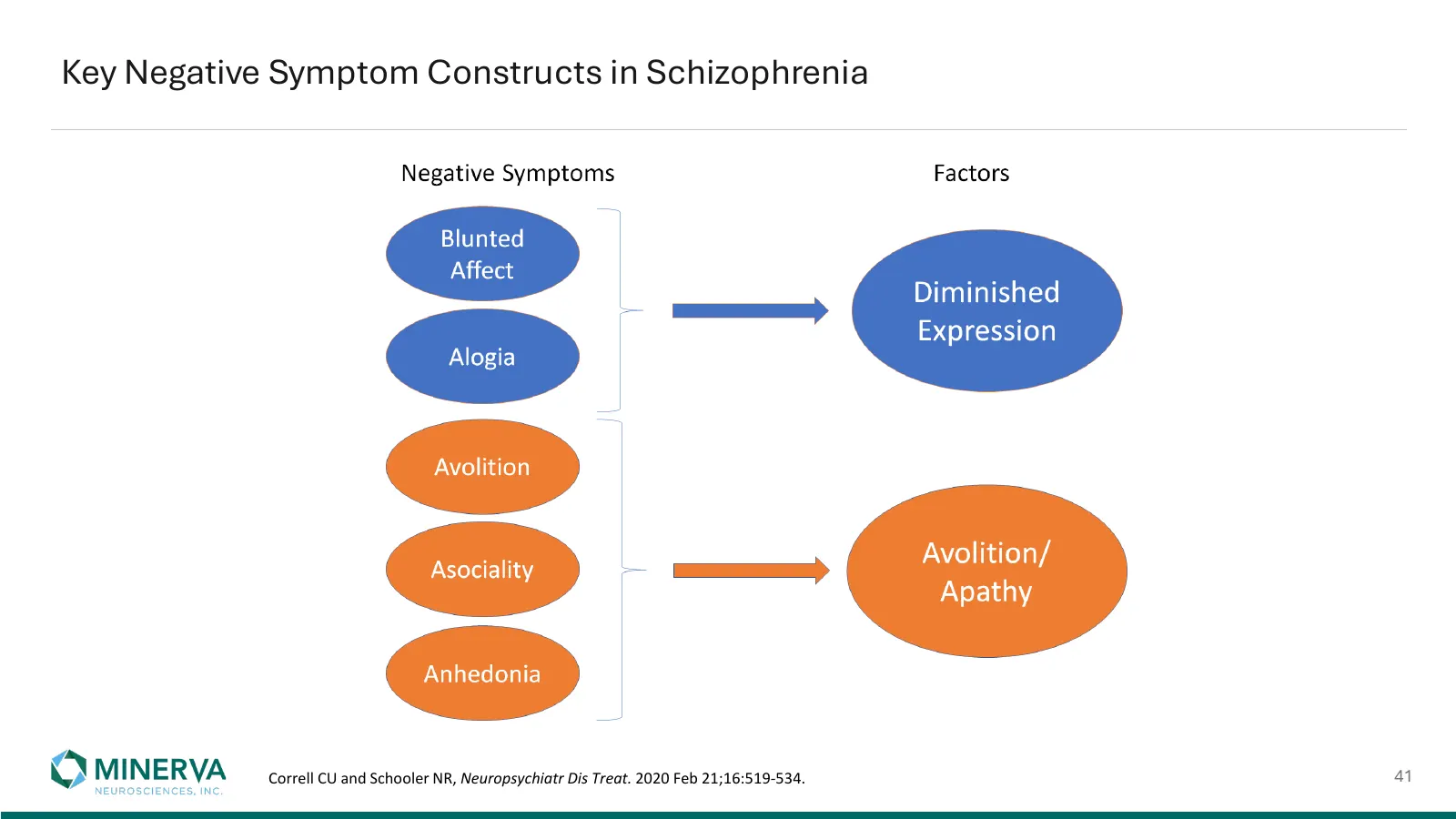
Slide 41: Key Negative Symptom Constructs in Schizophrenia
Key Negative Symptom Constructs in Schizophrenia Correll CU and Schooler NR, Neuropsychiatr Dis Treat. 2020 Feb 21;16:519-534. 41
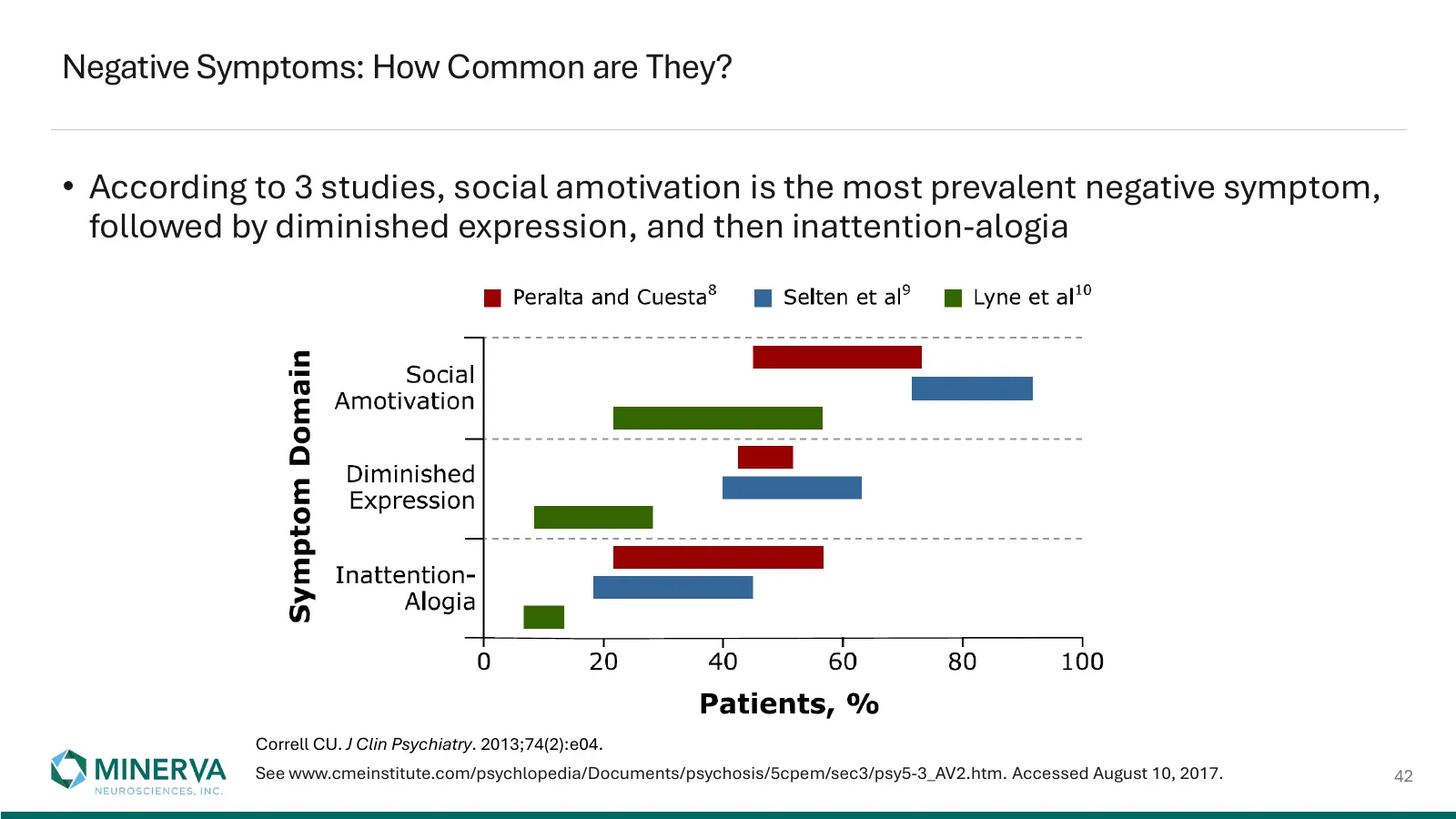
Slide 42: Negative Symptoms: How Common are They?
Negative Symptoms: How Common are They? • According to 3 studies, social amotivation is the most prevalent negative symptom, followed by diminished expression, and then inattention-alogia Correll CU. J Clin Psychiatry. 2013;74(2):e04. See www.cmeinstitute.com/psychlopedia/Documents/psychosis/5cpem/s
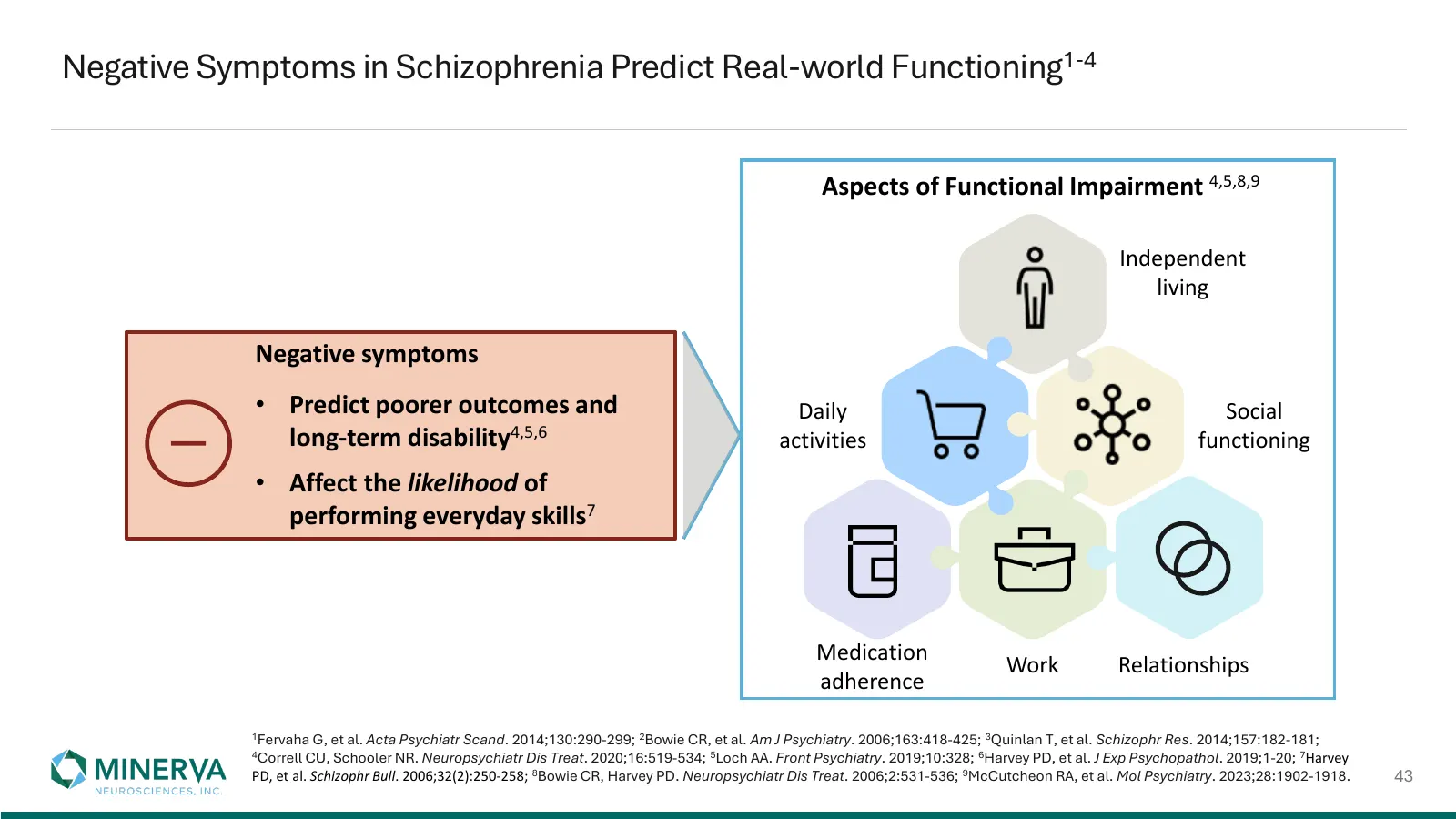
Slide 43: Negative Symptoms in Schizophrenia Predict Real-world Functioning
Negative Symptoms in Schizophrenia Predict Real-world Functioning1-4 Aspects of Functional Impairment 4,5,8,9 Independent living Negative symptoms • Predict poorer outcomes and Daily Social long-term disability4,5,6 activities functioning • Affect the likelihood of performing everyday skills7 Medica
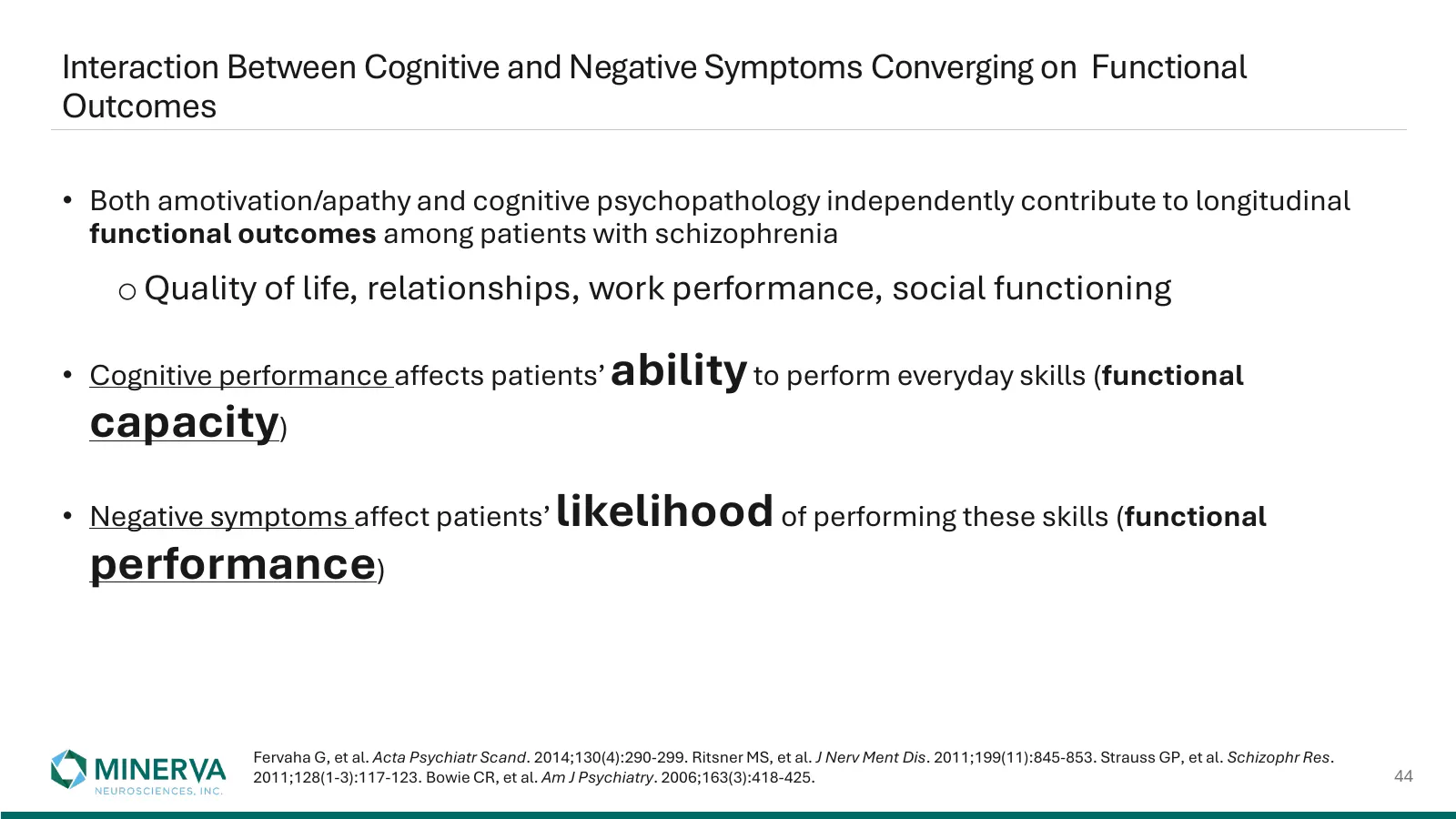
Slide 44: Interaction Between Cognitive and Negative Symptoms
Interaction Between Cognitive and Negative Symptoms Converging on Functional Outcomes • Both amotivation/apathy and cognitive psychopathology independently contribute to longitudinal functional outcomes among patients with schizophrenia o Quality of life, relationships, work performance, social func
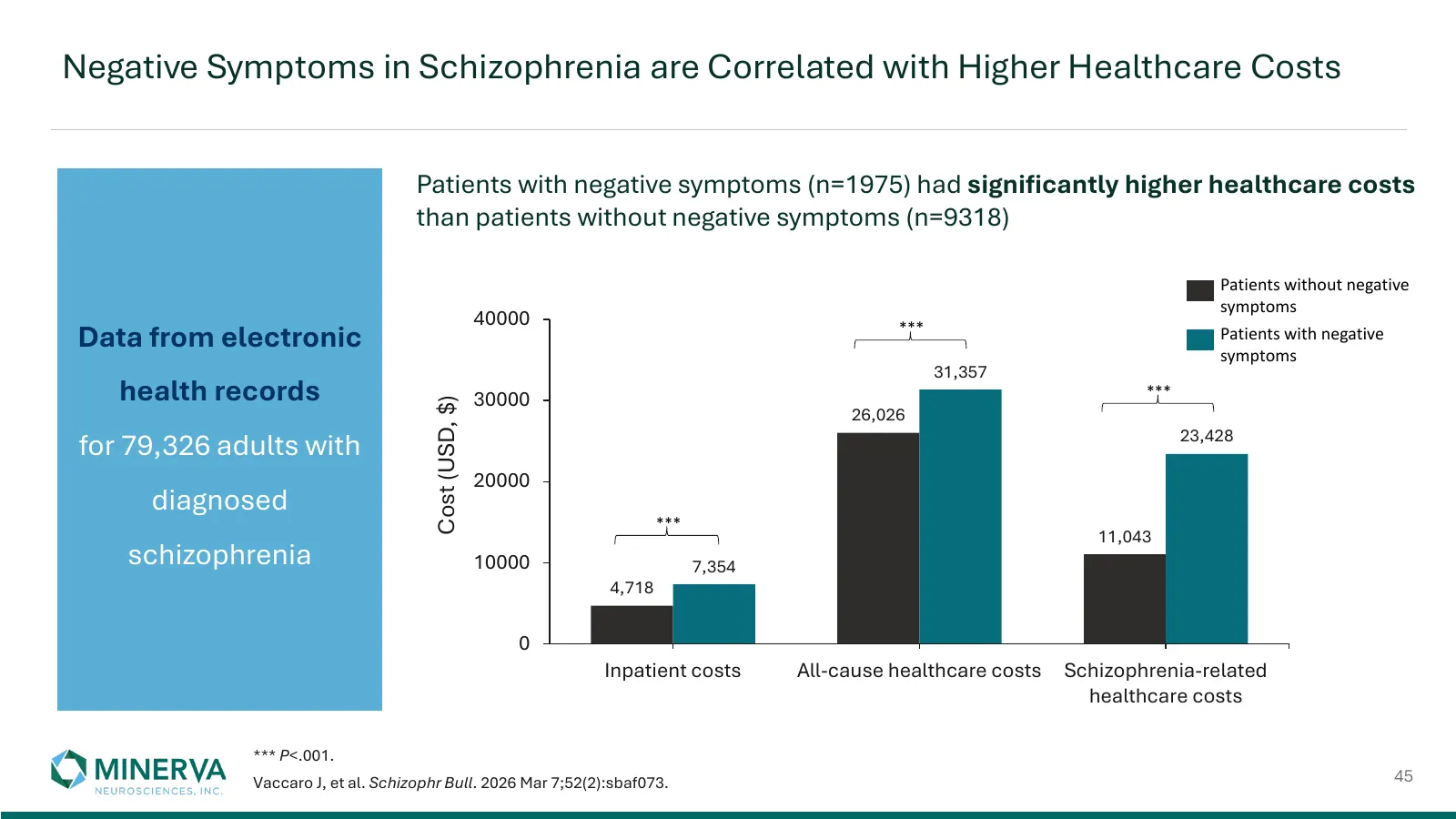
Slide 45: Negative Symptoms Correlated with Higher Healthcare Costs
Negative Symptoms in Schizophrenia are Correlated with Higher Healthcare Costs Patients with negative symptoms (n=1975) had significantly higher healthcare costs than patients without negative symptoms (n=9318) Patients without negative symptoms 40000 Data from electronic *** Patients with negative
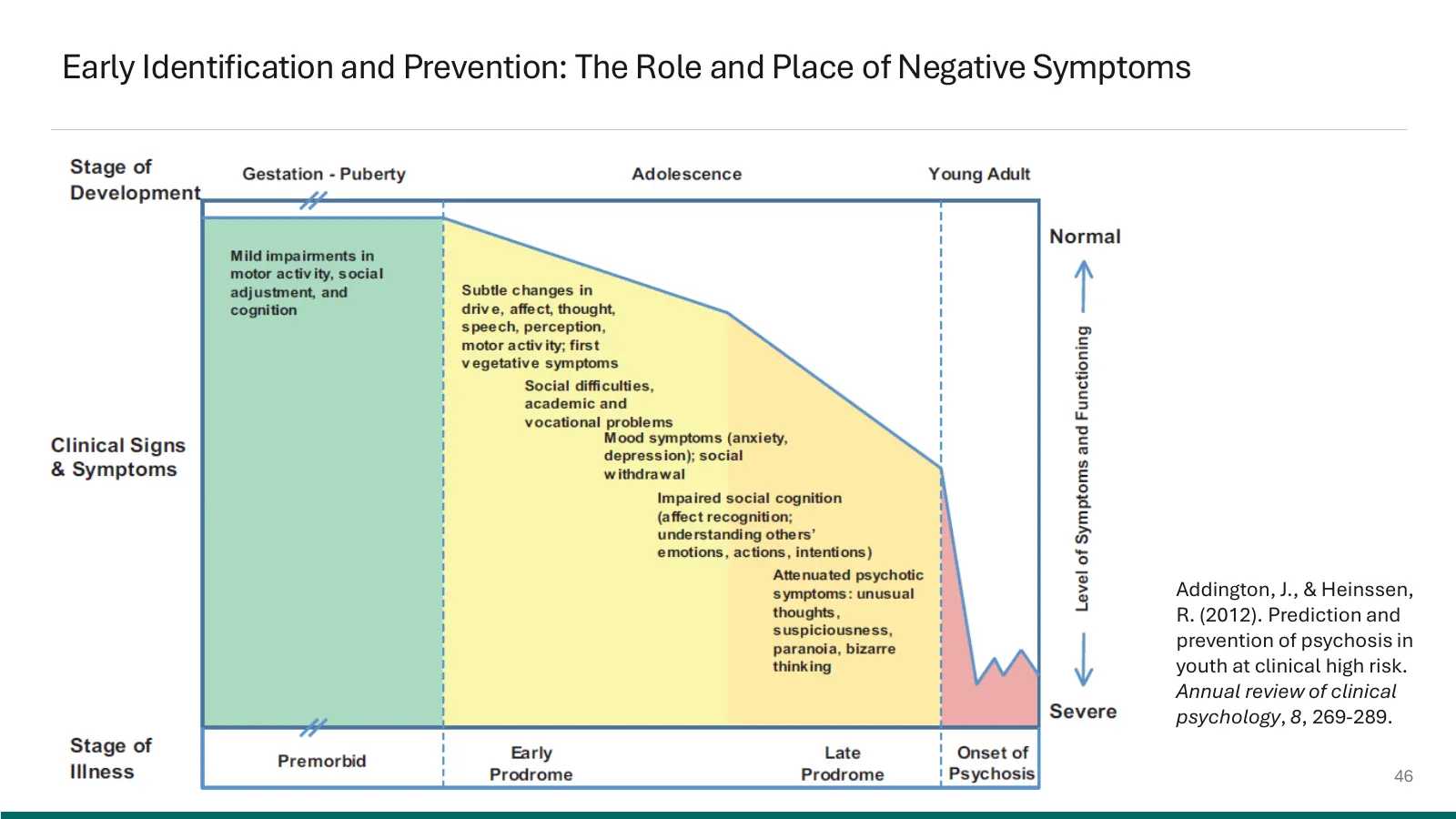
Slide 46: Early Identification and Prevention: Role of Negative Symptoms
Early Identification and Prevention: The Role and Place of Negative Symptoms Addington, J., & Heinssen, R. (2012). Prediction and prevention of psychosis in youth at clinical high risk. Annual review of clinical psychology, 8, 269-289. 46
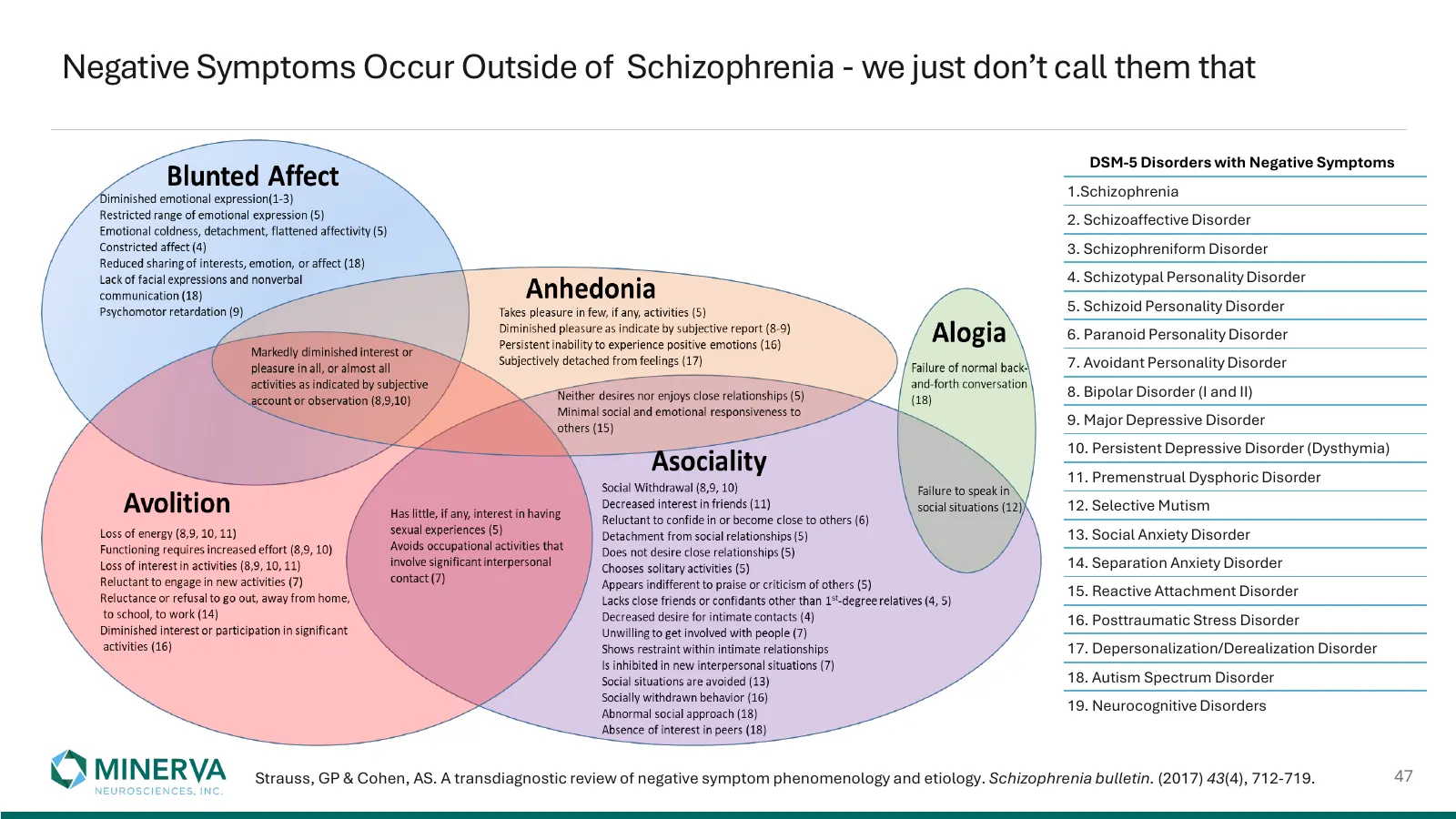
Slide 47: Negative Symptoms Occur Outside of Schizophrenia
Negative Symptoms Occur Outside of Schizophrenia - we just don’t call them that DSM-5 Disorders with Negative Symptoms 1.Schizophrenia 2. Schizoaffective Disorder 3. Schizophreniform Disorder 4. Schizotypal Personality Disorder 5. Schizoid Personality Disorder 6. Paranoid Personality Disorder 7. Avo
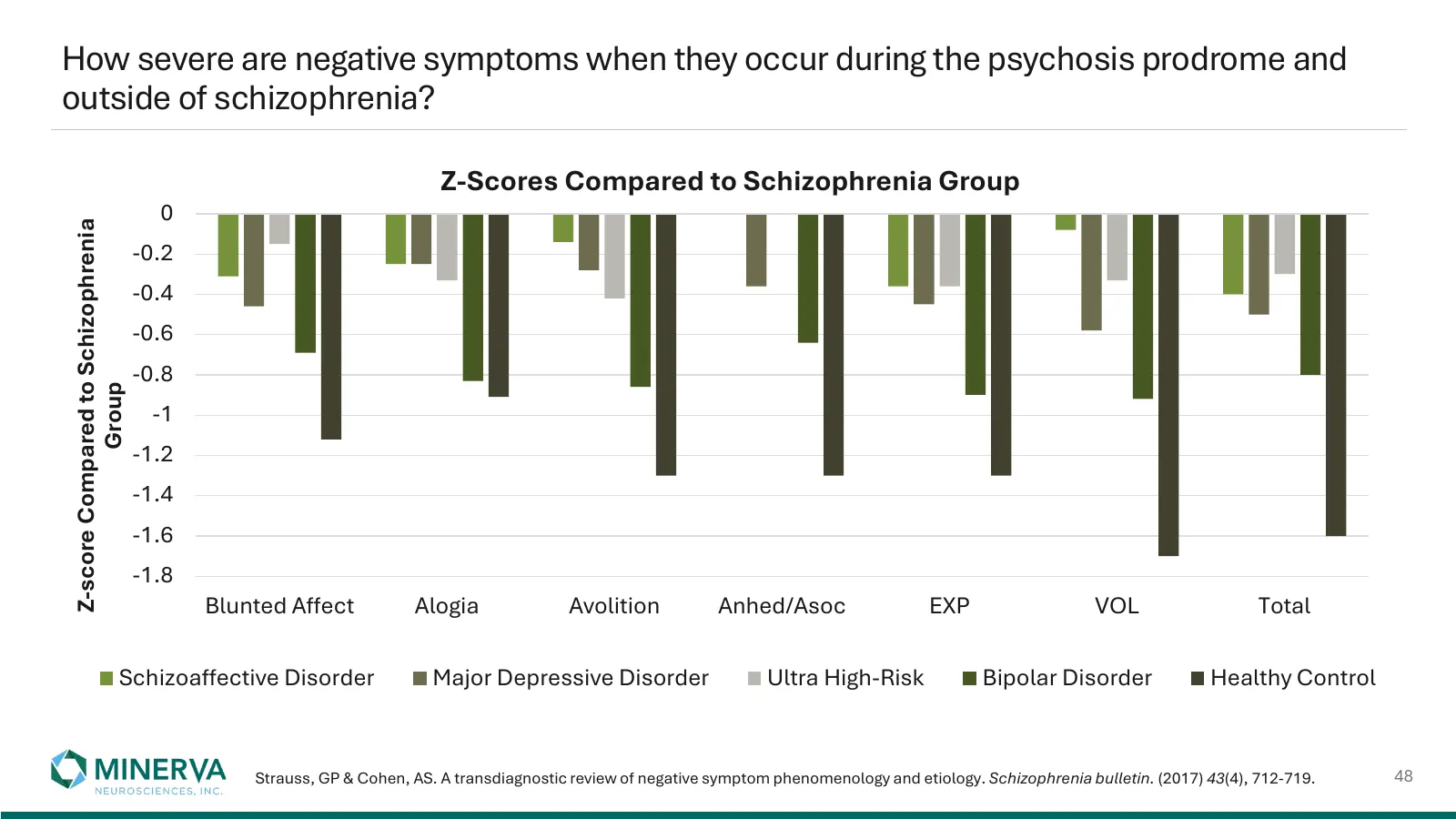
Slide 48: Negative symptom severity outside schizophrenia: vs schizophrenia group
How severe are negative symptoms when they occur during the psychosis prodrome and outside of schizophrenia? Z-Scores Compared to Schizophrenia Group 0 Z-score Compared to Schizophrenia -0.2 -0.4 -0.6 -0.8 Group -1 -1.2 -1.4 -1.6 -1.8 Blunted Affect Alogia Avolition Anhed/Asoc EXP VOL Total Schizoaf
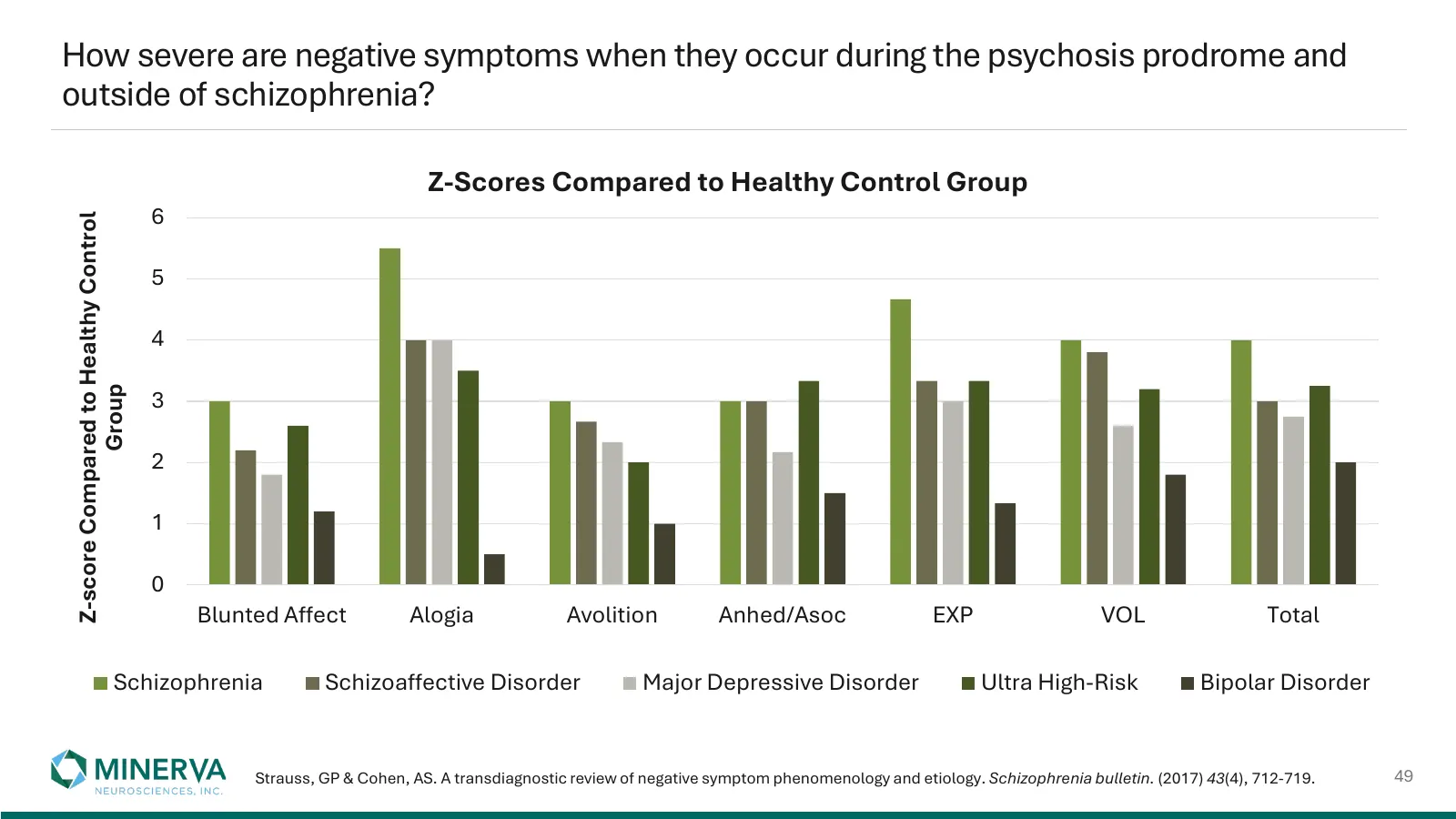
Slide 49: Negative symptom severity outside schizophrenia: vs healthy control
How severe are negative symptoms when they occur during the psychosis prodrome and outside of schizophrenia? Z-Scores Compared to Healthy Control Group 6 Z-score Compared to Healthy Control 5 4 3 Group 2 1 0 Blunted Affect Alogia Avolition Anhed/Asoc EXP VOL Total Schizophrenia Schizoaffective Disor
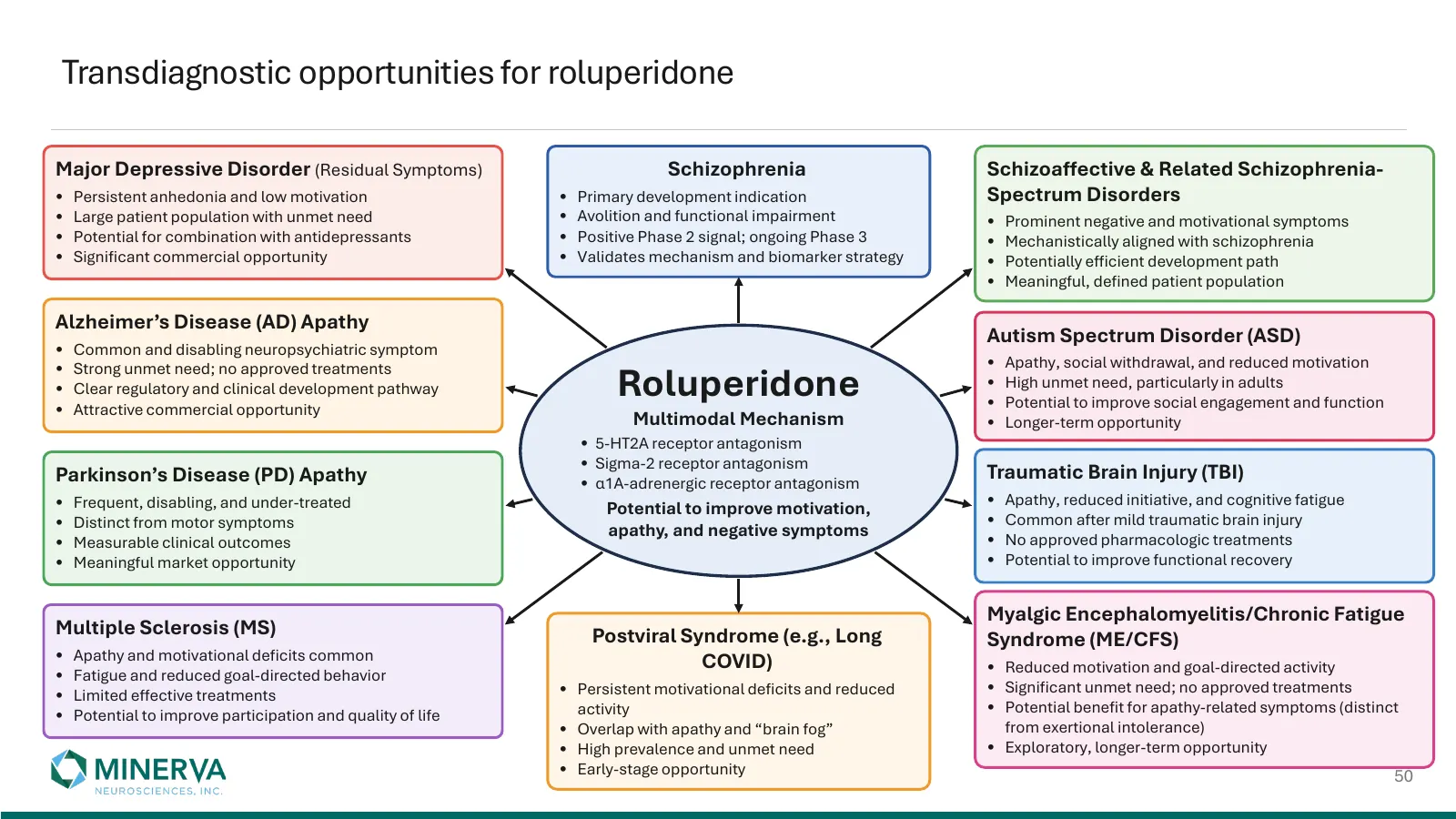
Slide 50: Transdiagnostic opportunities for roluperidone
Transdiagnostic opportunities for roluperidone Major Depressive Disorder (Residual Symptoms) Schizophrenia Schizoaffective & Related Schizophrenia- • Persistent anhedonia and low motivation • Primary development indication Spectrum Disorders • Large patient population with unmet need • Avolition and

Slide 51: Market Opportunity
Market Opportunity Remy Luthringer, PhD Executive Chairman & Chief Executive Officer Minerva Neurosciences, Inc. 51
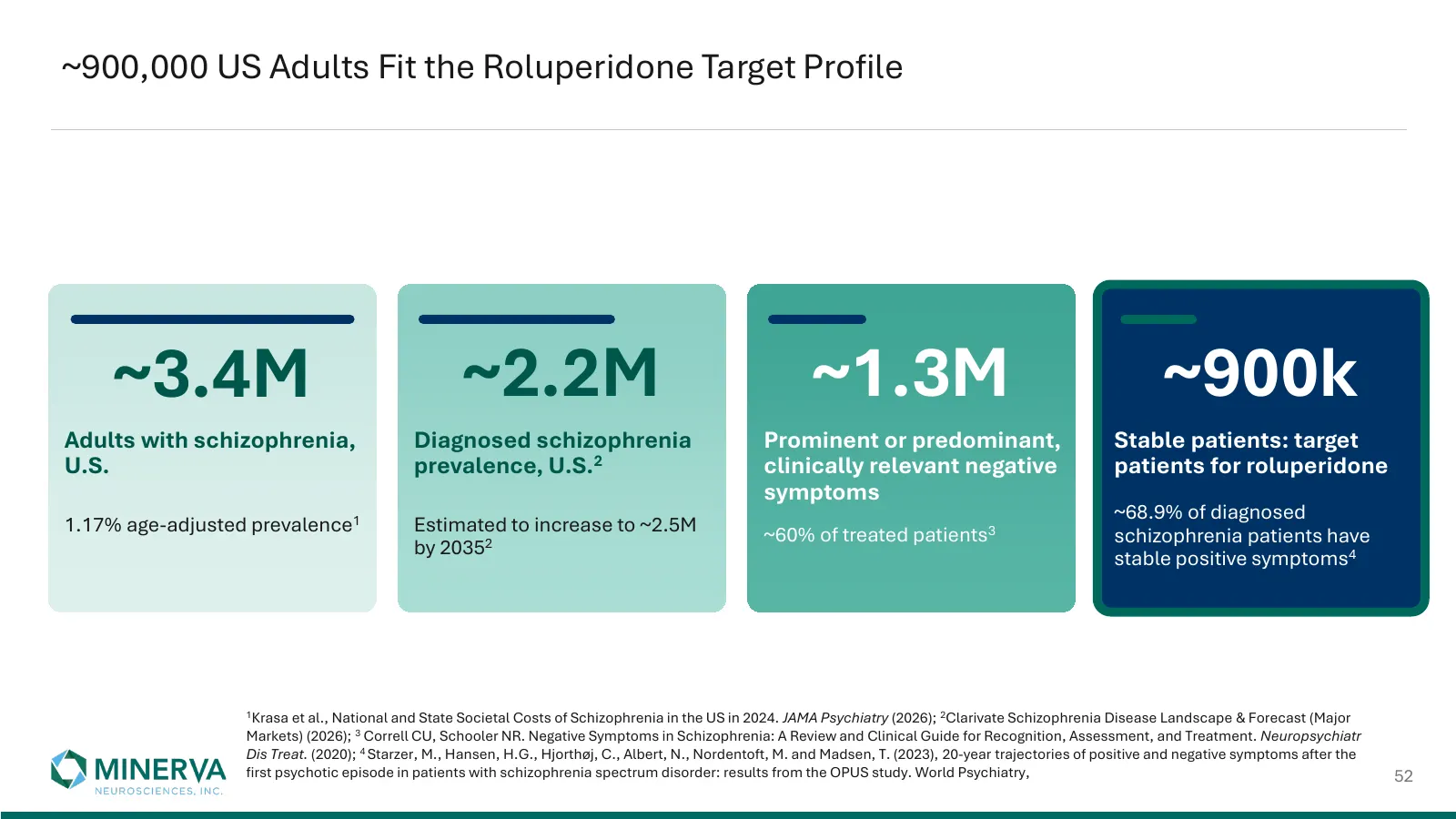
Slide 52: ~900,000 US Adults Fit the Roluperidone Target Profile
~900,000 US Adults Fit the Roluperidone Target Profile ~3.4M ~2.2M ~1.3M ~900k Adults with schizophrenia, Diagnosed schizophrenia Prominent or predominant, Stable patients: target U.S. prevalence, U.S.2 clinically relevant negative patients for roluperidone symptoms ~68.9% of diagnosed 1.17% age-adj
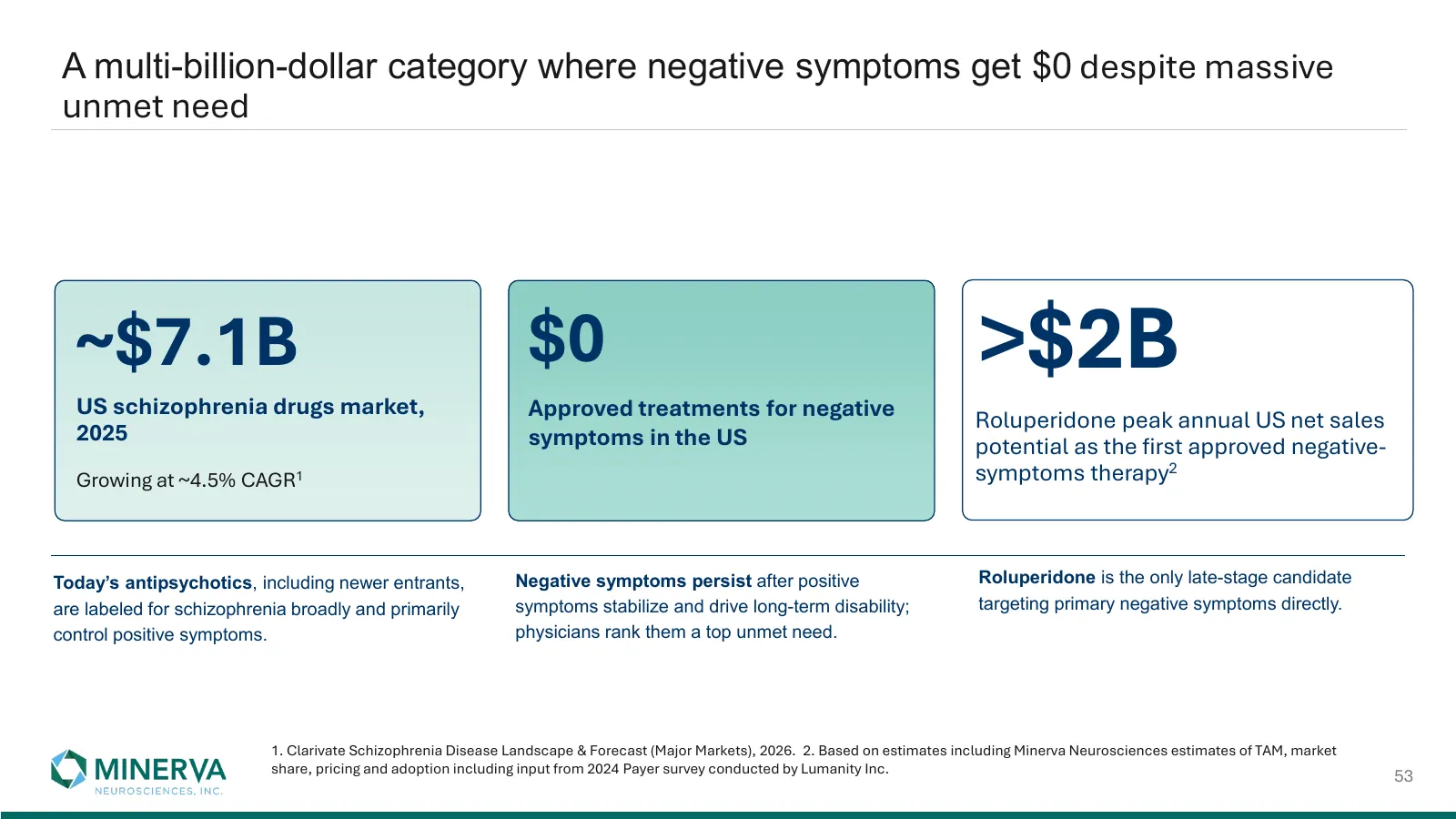
Slide 53: A multi-billion-dollar category where negative symptoms get $0
A multi-billion-dollar category where negative symptoms get $0 despite massive unmet need ~$7.1B $0 >$2B US schizophrenia drugs market, Approved treatments for negative Roluperidone peak annual US net sales 2025 symptoms in the US potential as the first approved negative- Growing at ~4.5% CAGR1 symp
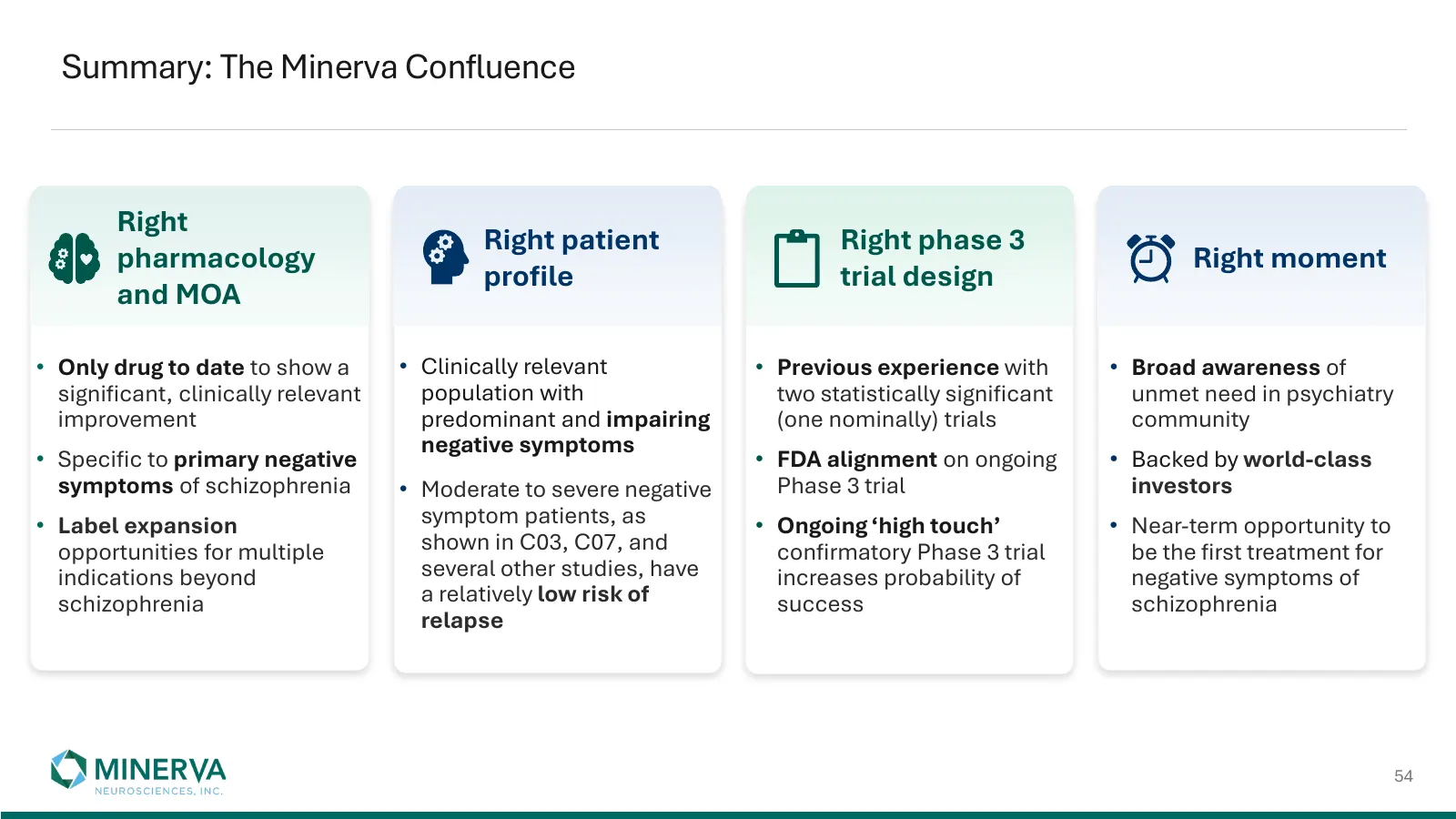
Slide 54: Summary: The Minerva Confluence
Summary: The Minerva Confluence Right Right patient Right phase 3 pharmacology Right moment profile trial design and MOA • Only drug to date to show a • Clinically relevant • Previous experience with • Broad awareness of significant, clinically relevant population with two statistically significant

Slide 55: Q&A
Q&A A new approach to treating the unmet needs of schizophrenia patients 55

Slide 56: Roluperidone for negative symptoms of schizophrenia
Roluperidone for negative symptoms of schizophrenia Clinical data that matters 56
Source: company website
More decks from Minerva Neurosciences, Inc
 Investor Presentation (November 2026)22 slides · Nov 16, 2026
 Investor Presentation (September 2026)19 slides · Sep 7, 2026
 Investor Presentation (June 2026)19 slides · Jun 2, 2026
 Q3 2025 Earnings Presentation15 slides · Nov 6, 2025
 Corporate Update (April 2022)17 slides · Apr 13, 2022
 Investor Presentation (January 2022)27 slides · Jan 5, 2022