Mercer Short Duration Fixed Income Fund Class Y-3 · NASDAQ:MSDYX
Mercer Short Duration Fixed Income Fund Class Y-3 — Mercer — NatCon26 (National Council for Mental Wellbeing) (2026)
22 slides from Mercer Short Duration Fixed Income Fund Class Y-3's conference presentation, May 1, 2026

Slide 1: National Council for Mental Wellbeing
from NATIONAL COUNCIL FOR MENTAL WELLBEING
Slide 2: From Demonstration to Enduring Impact: New Jersey's CCBHC State Plan
From Demonstration to Enduring Impact: New Jersey's CCBHC State Plan NatCon26 Toby Ramsdell, CPA, MHM, Associate Consultant, Mercer Greg Lovell, Assistant CFO, DMAHS with support from: Vicki Fresolone, Chief of Integrated Care, DMHAS Dr. Robert Eilers, Medical Director, DMHAS Jon Villasurda, Senior
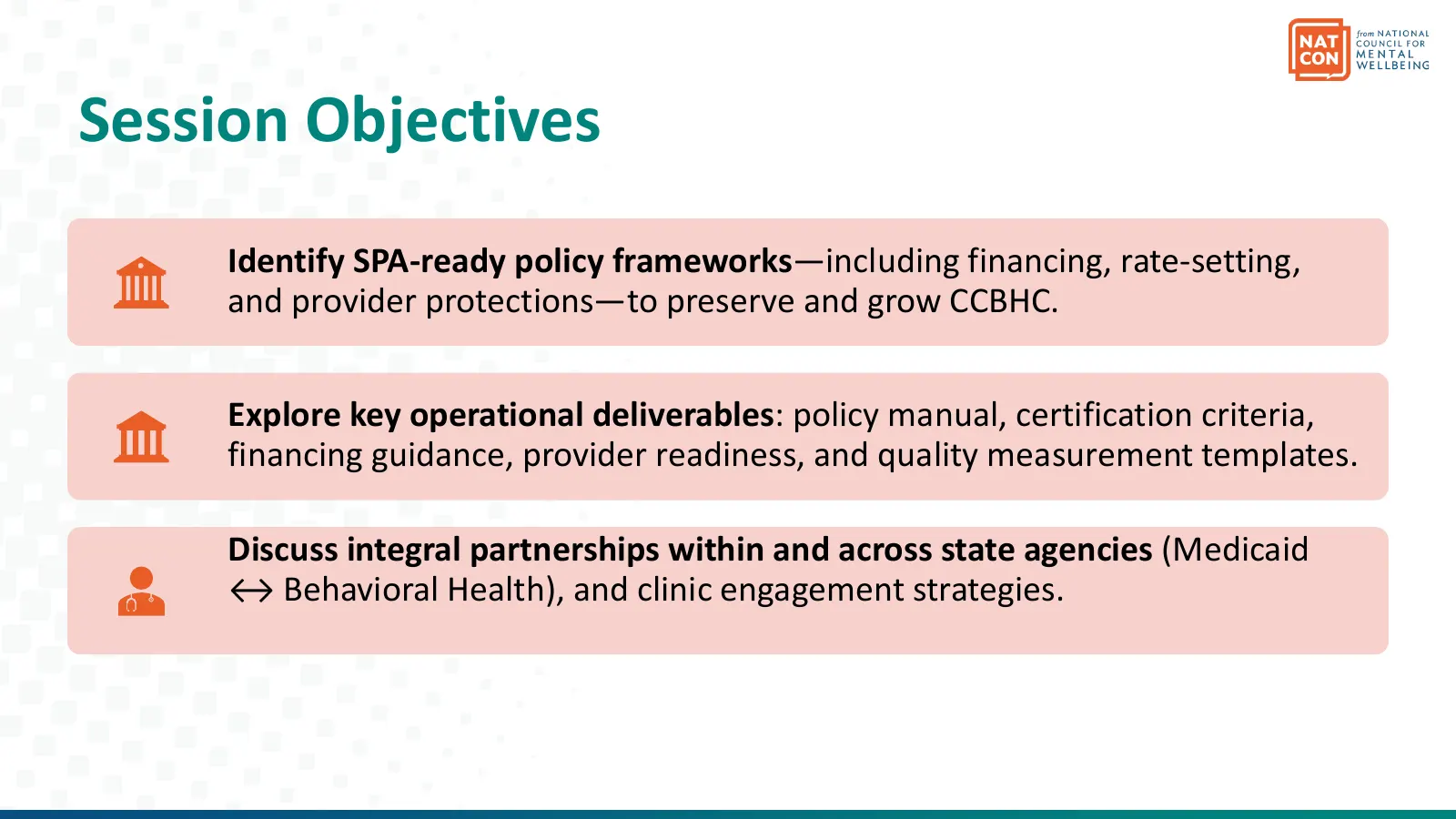
Slide 3: Session Objectives
Session Objectives Identify SPA-ready policy frameworks—including financing, rate-setting, and provider protections—to preserve and grow CCBHC. Explore key operational deliverables: policy manual, certification criteria, financing guidance, provider readiness, and quality measurement templates. Disc
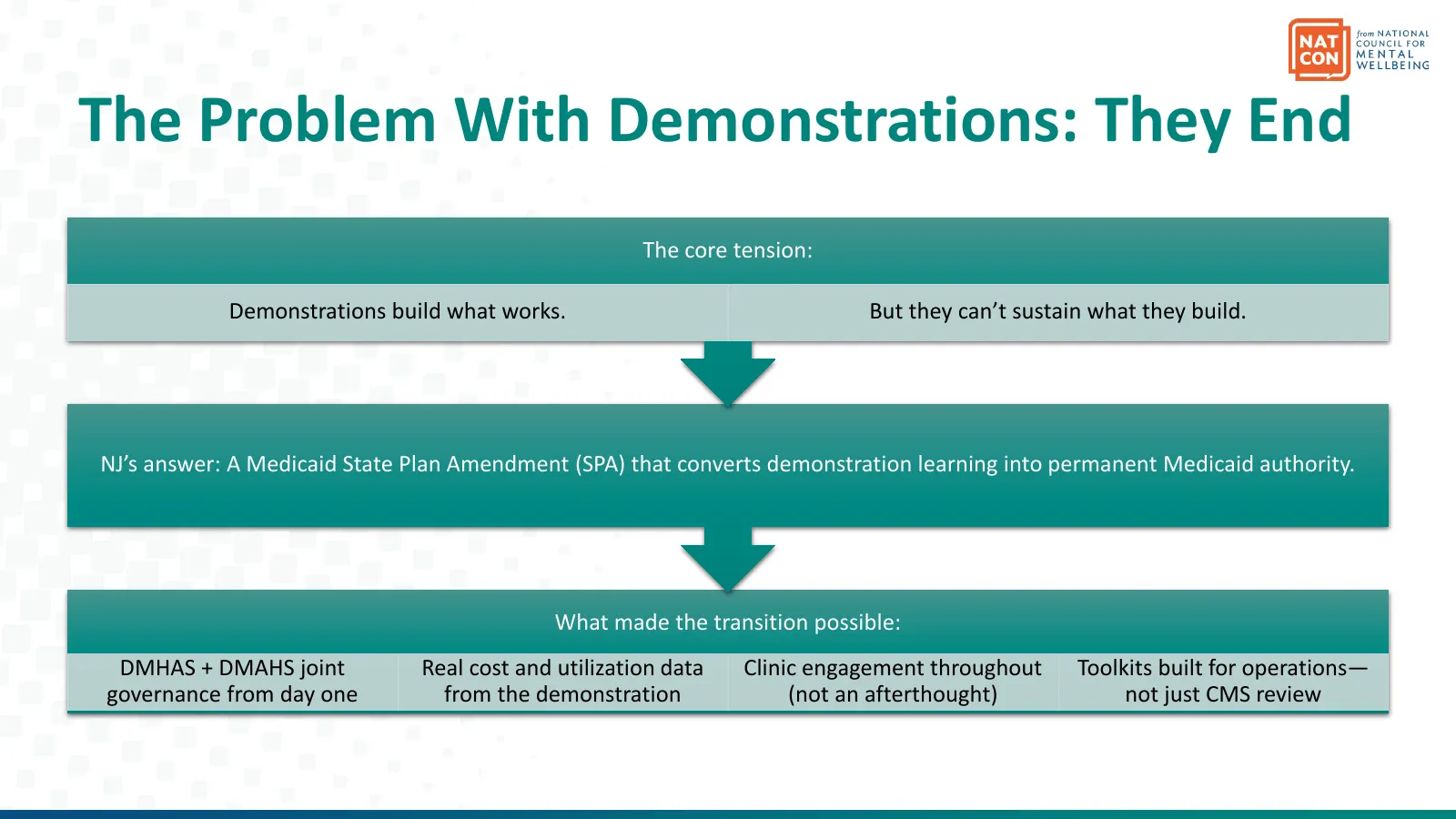
Slide 4: The Problem With Demonstrations: They End
The Problem With Demonstrations: They End The core tension: Demonstrations build what works. But they can’t sustain what they build. NJ’s answer: A Medicaid State Plan Amendment (SPA) that converts demonstration learning into permanent Medicaid authority. What made the transition possible: DMHAS + D
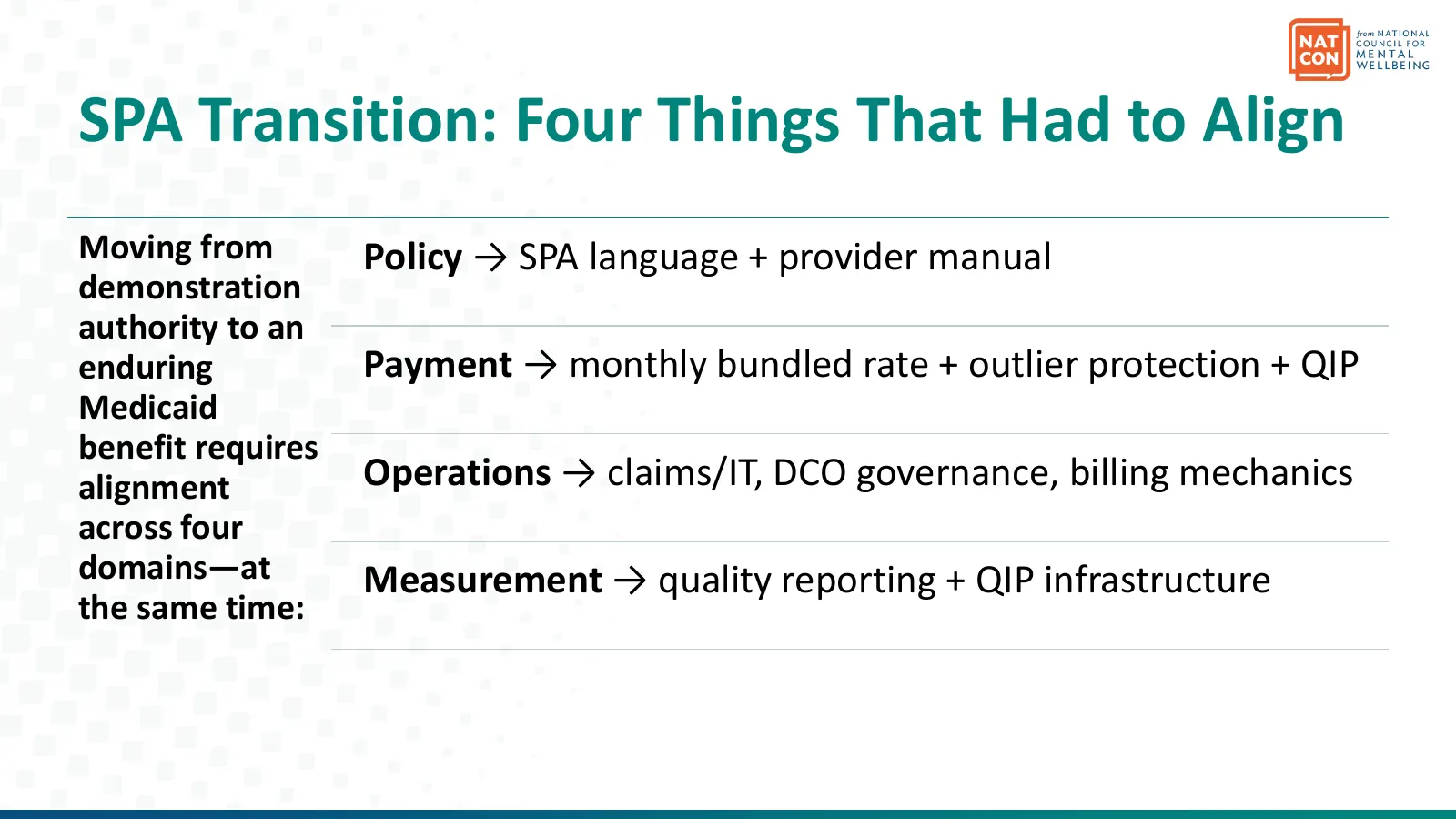
Slide 5: SPA Transition: Four Things That Had to Align
SPA Transition: Four Things That Had to Align Moving from Policy → SPA language + provider manual demonstration authority to an enduring Payment → monthly bundled rate + outlier protection + QIP Medicaid benefit requires alignment Operations → claims/IT, DCO governance, billing mechanics across four
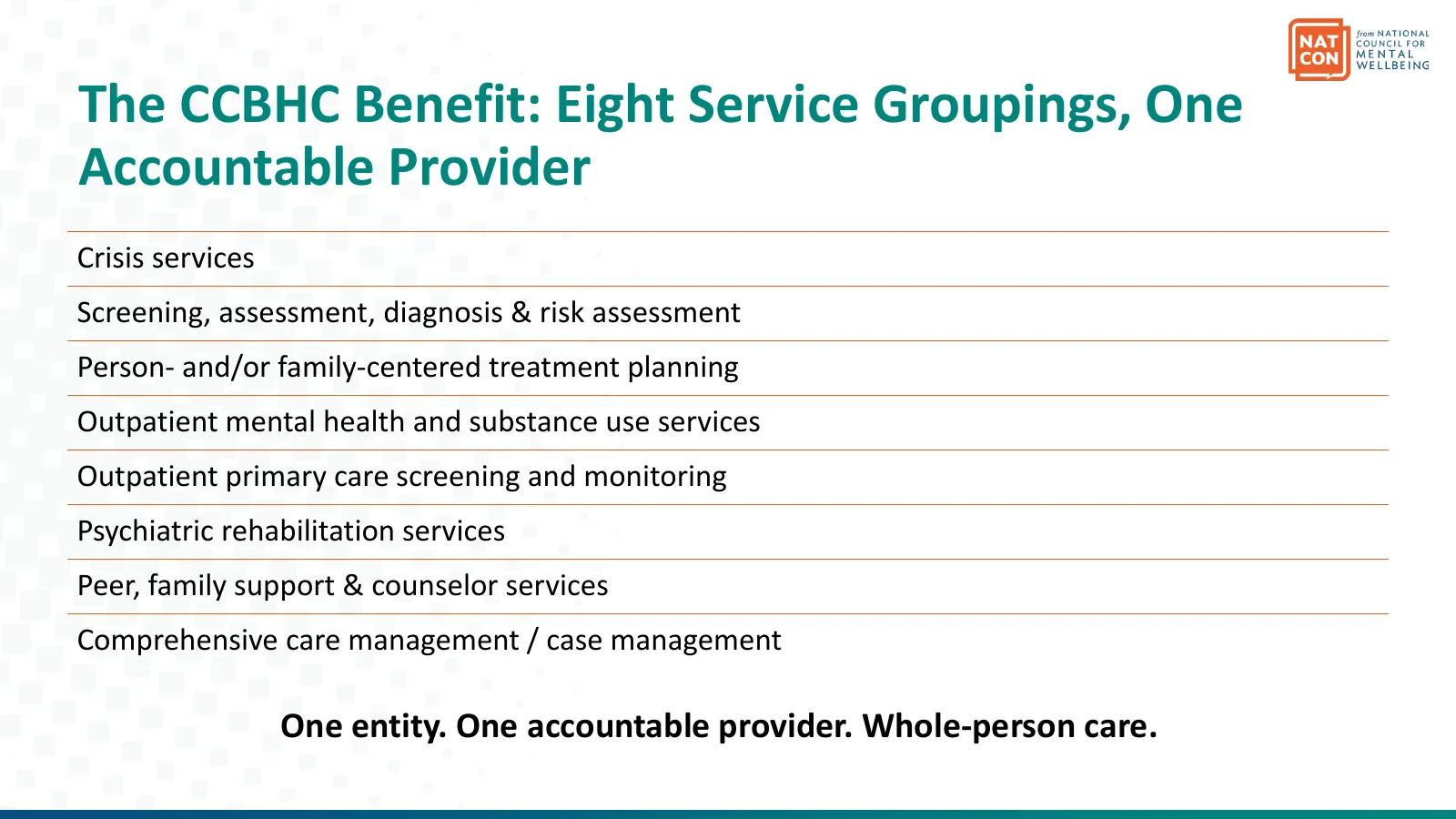
Slide 6: The CCBHC Benefit: Eight Service Groupings, One Accountable Provider
The CCBHC Benefit: Eight Service Groupings, One Accountable Provider Crisis services Screening, assessment, diagnosis & risk assessment Person- and/or family-centered treatment planning Outpatient mental health and substance use services Outpatient primary care screening and monitoring Psychiatric r
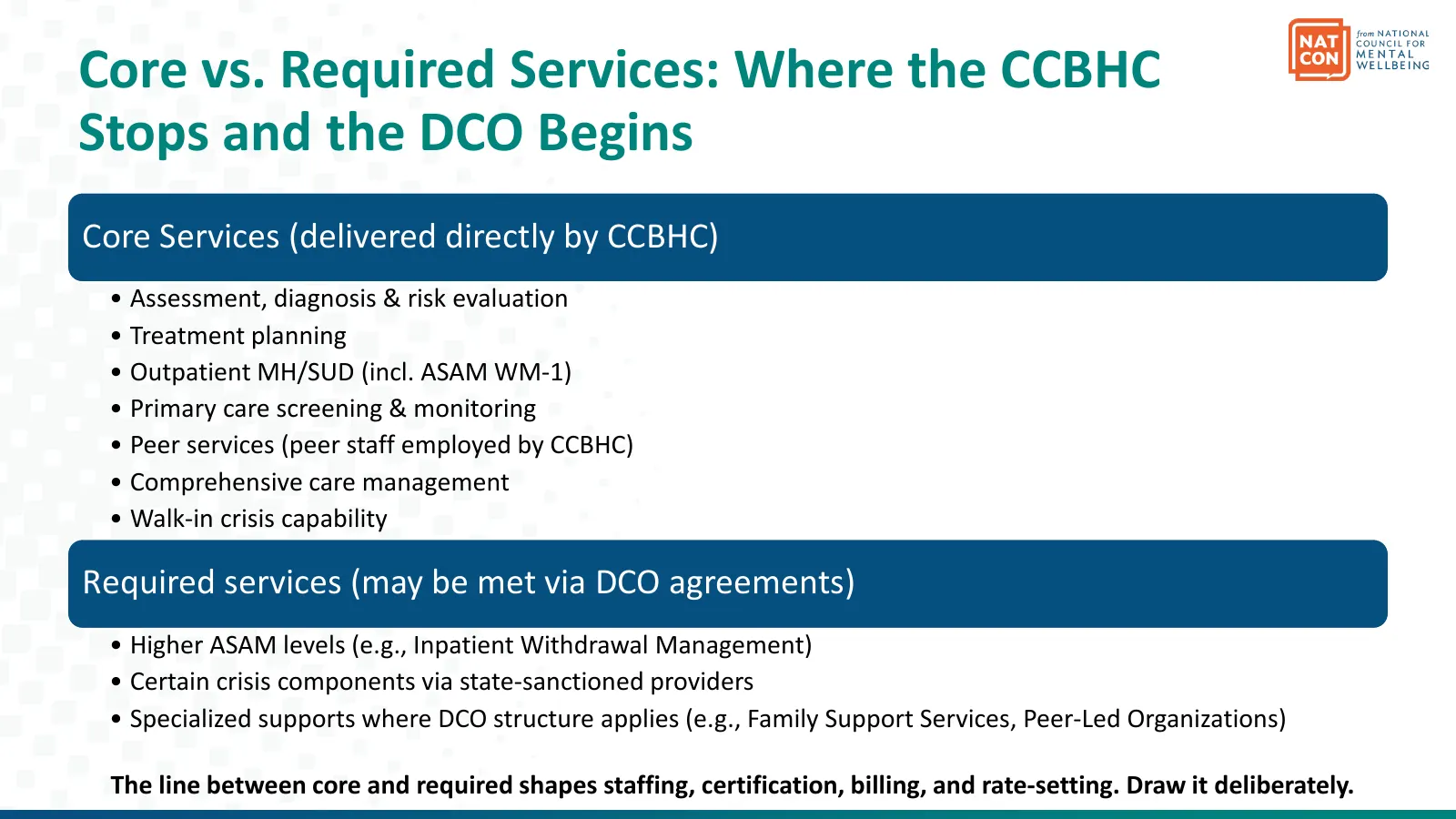
Slide 7: Core vs. Required Services: Where the CCBHC Stops and the DCO Begins
Core vs. Required Services: Where the CCBHC Stops and the DCO Begins Core Services (delivered directly by CCBHC) • Assessment, diagnosis & risk evaluation • Treatment planning • Outpatient MH/SUD (incl. ASAM WM-1) • Primary care screening & monitoring • Peer services (peer staff employed by CCBHC) •
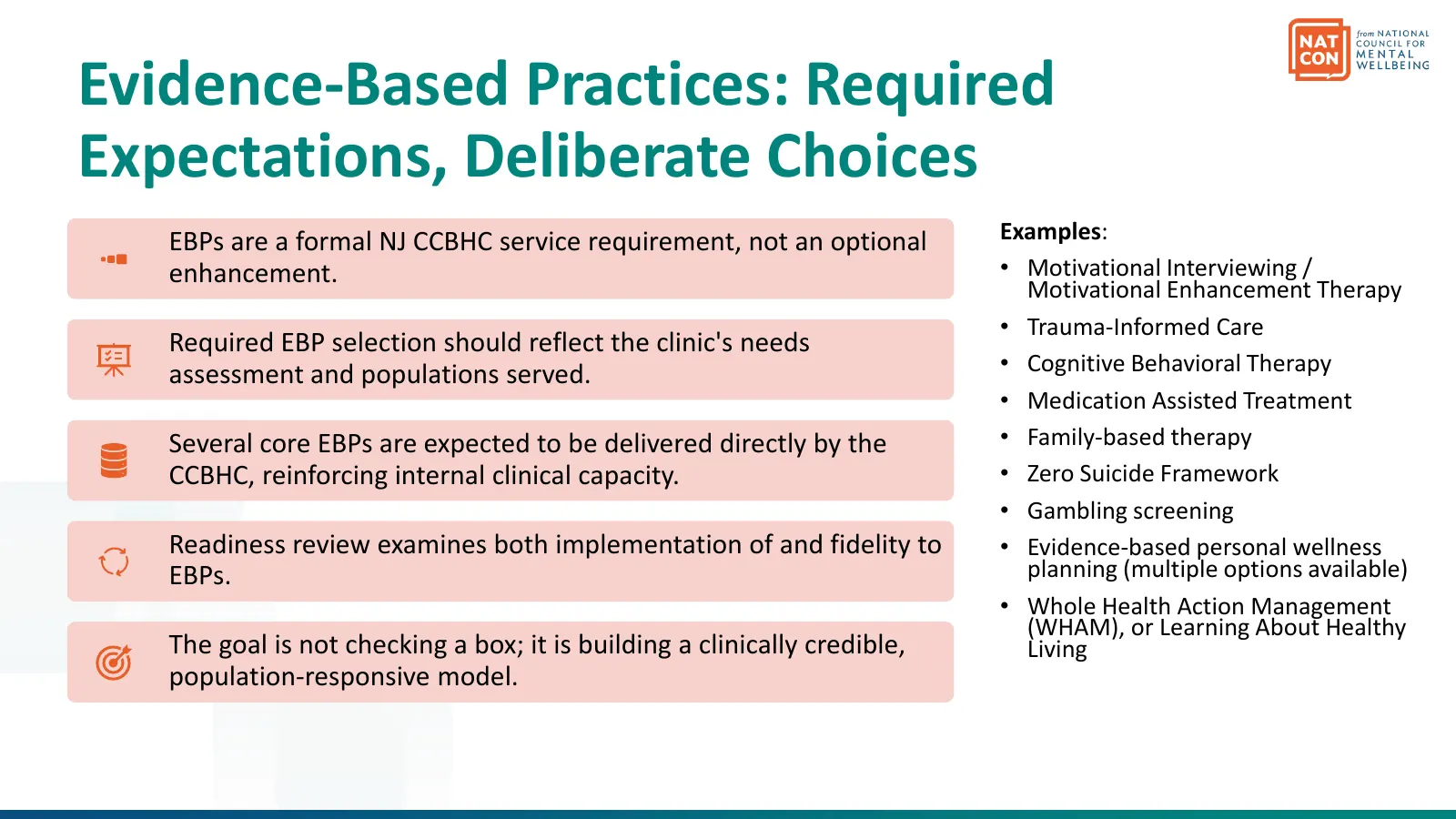
Slide 8: Evidence-Based Practices: Required Expectations, Deliberate Choices
Evidence-Based Practices: Required Expectations, Deliberate Choices EBPs are a formal NJ CCBHC service requirement, not an optional Examples: enhancement. • Motivational Interviewing / Motivational Enhancement Therapy • Trauma-Informed Care Required EBP selection should reflect the clinic's needs as
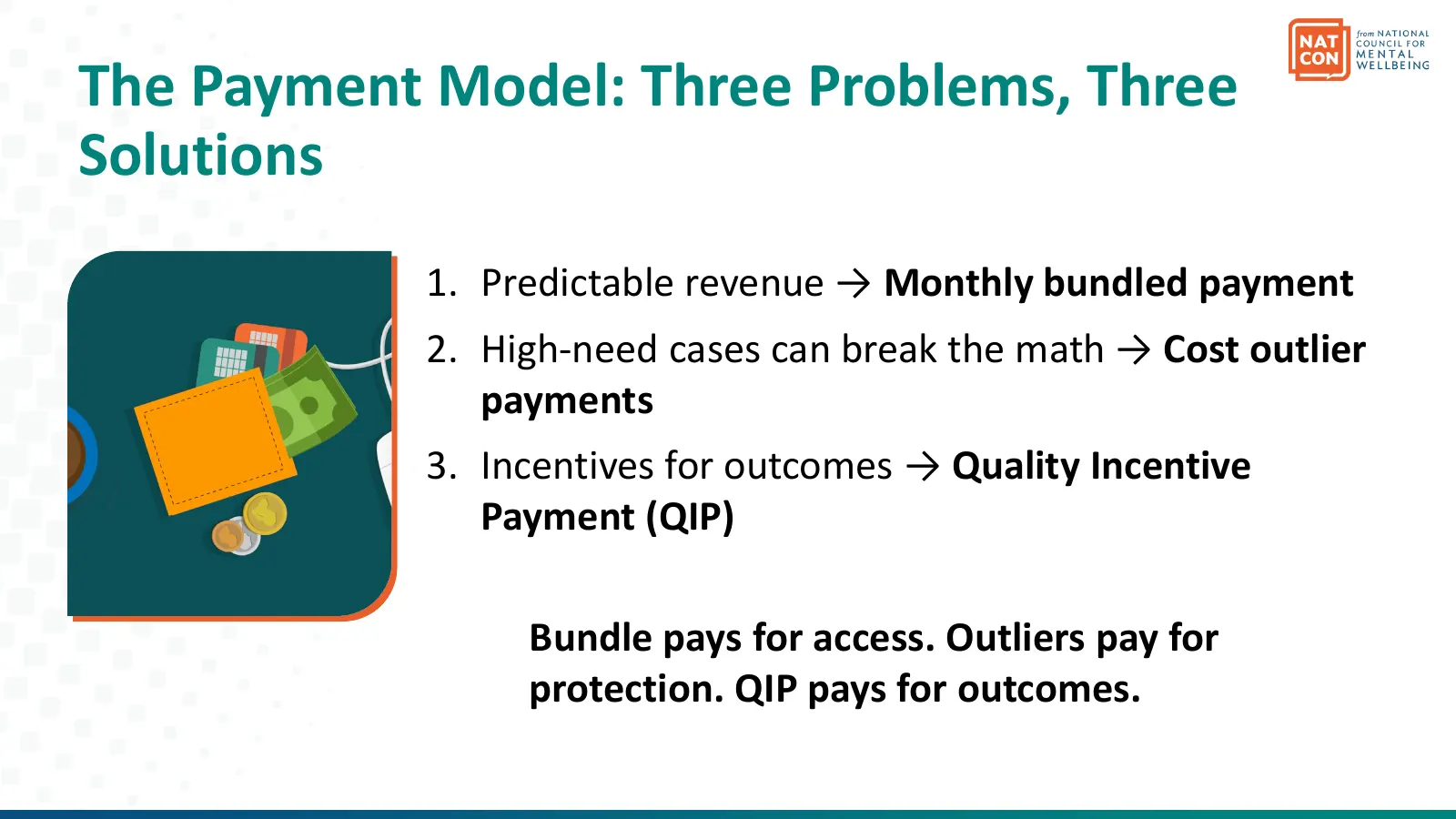
Slide 9: The Payment Model: Three Problems, Three Solutions
The Payment Model: Three Problems, Three Solutions 1. Predictable revenue → Monthly bundled payment 2. High-need cases can break the math → Cost outlier payments 3. Incentives for outcomes → Quality Incentive Payment (QIP) Bundle pays for access. Outliers pay for protection. QIP pays for outcomes.
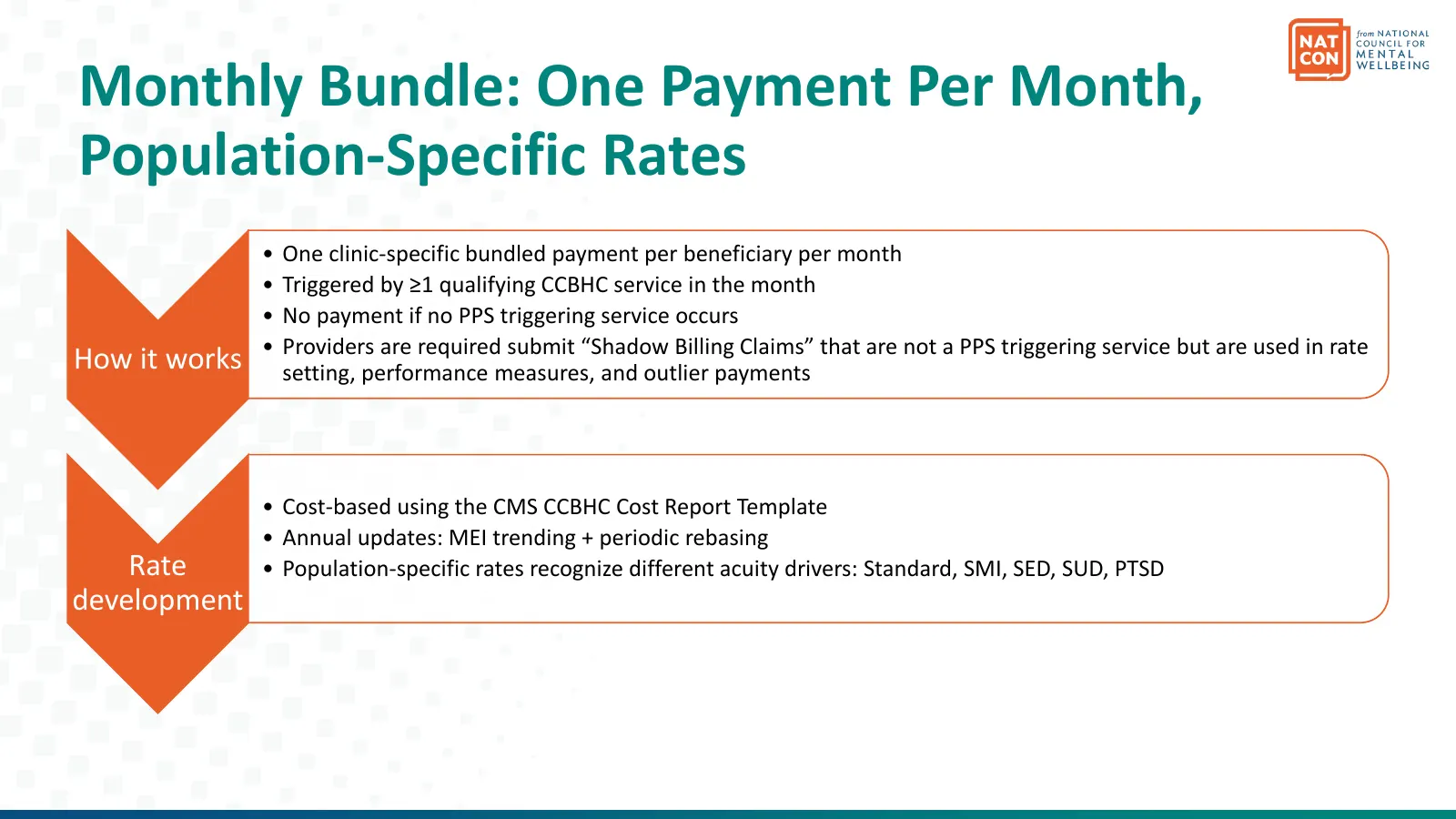
Slide 10: Monthly Bundle: One Payment Per Month, Population-Specific Rates
Monthly Bundle: One Payment Per Month, Population-Specific Rates • One clinic-specific bundled payment per beneficiary per month • Triggered by ≥1 qualifying CCBHC service in the month • No payment if no PPS triggering service occurs • Providers are required submit “Shadow Billing Claims” that are n
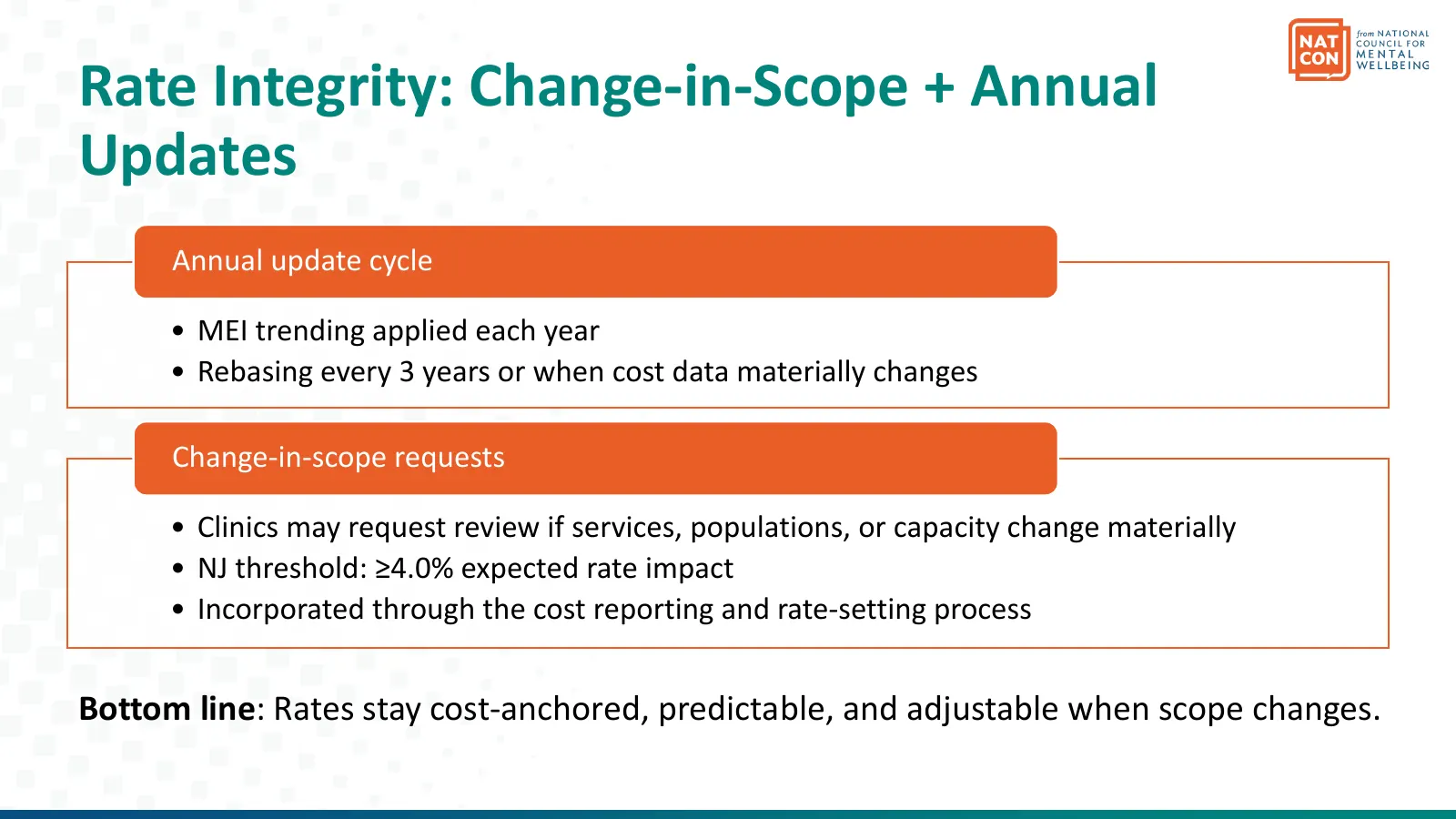
Slide 11: Rate Integrity: Change-in-Scope + Annual Updates
Rate Integrity: Change-in-Scope + Annual Updates Annual update cycle • MEI trending applied each year • Rebasing every 3 years or when cost data materially changes Change-in-scope requests • Clinics may request review if services, populations, or capacity change materially • NJ threshold: ≥4.0% expe
Slide 12: Cost Outliers: The Safety Net Under the Bundle
Cost Outliers: The Safety Net Under the Bundle • Purpose: protect access for beneficiaries with rare, extremely high-cost months • How outlier payments work • Estimate monthly cost: cost-to-charge ratio × covered charges • Compare to population-specific threshold (high percentile) • If cost exceeds
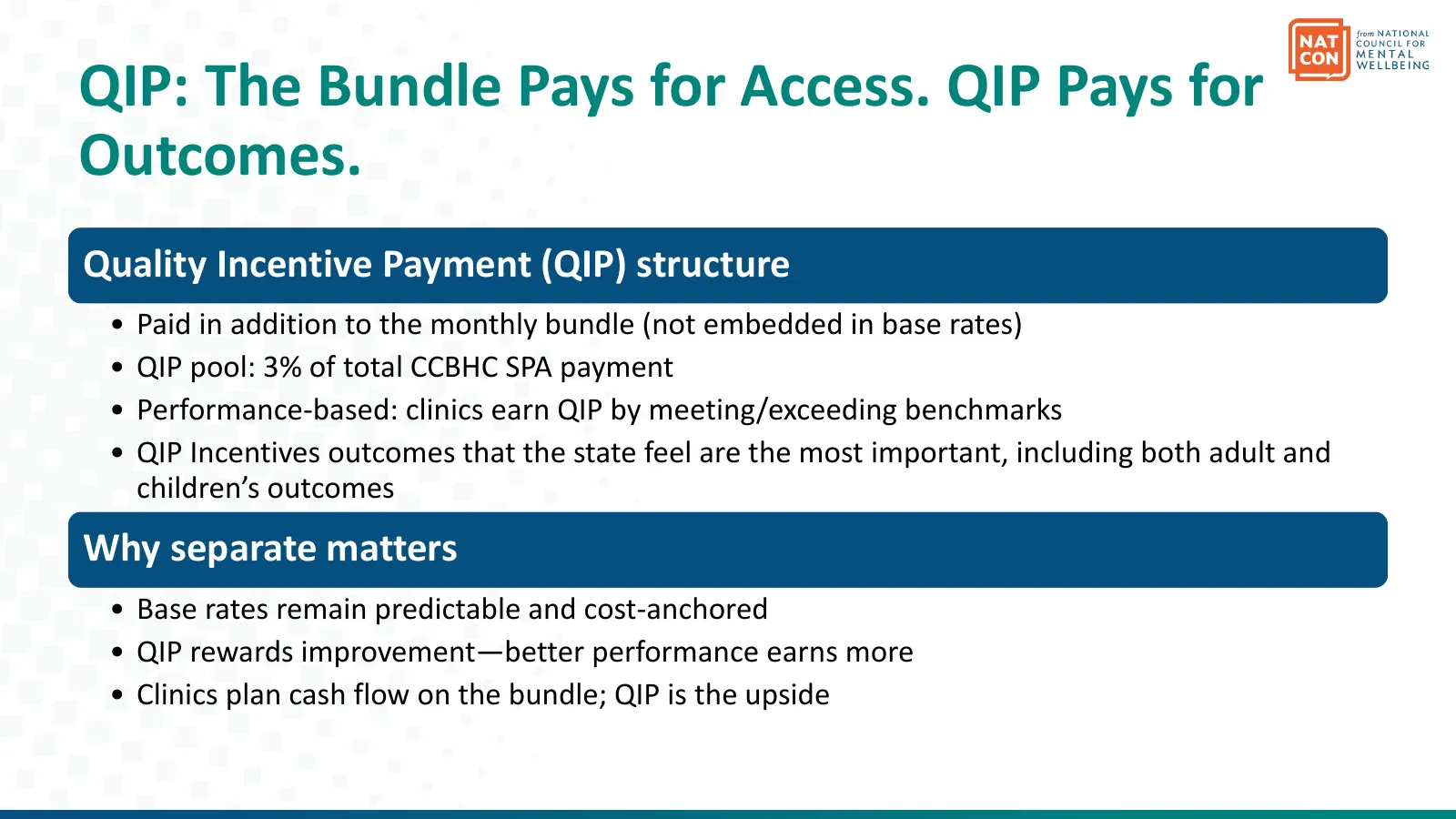
Slide 13: QIP: The Bundle Pays for Access. QIP Pays for Outcomes.
QIP: The Bundle Pays for Access. QIP Pays for Outcomes. Quality Incentive Payment (QIP) structure • Paid in addition to the monthly bundle (not embedded in base rates) • QIP pool: 3% of total CCBHC SPA payment • Performance-based: clinics earn QIP by meeting/exceeding benchmarks • QIP Incentives out
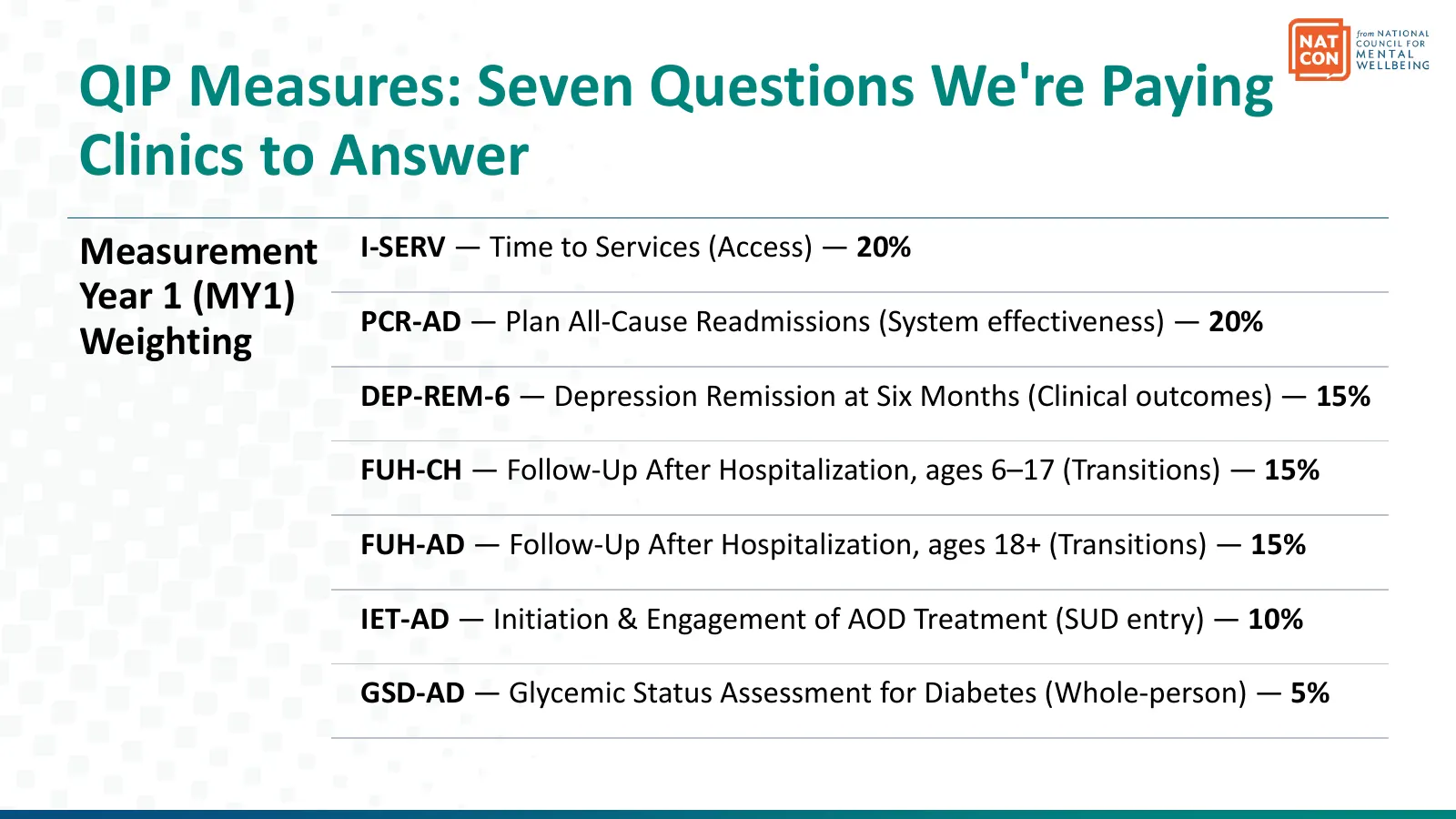
Slide 14: QIP Measures: Seven Questions We're Paying Clinics to Answer
QIP Measures: Seven Questions We're Paying Clinics to Answer Measurement I-SERV — Time to Services (Access) — 20% Year 1 (MY1) PCR-AD — Plan All-Cause Readmissions (System effectiveness) — 20% Weighting DEP-REM-6 — Depression Remission at Six Months (Clinical outcomes) — 15% FUH-CH — Follow-Up After
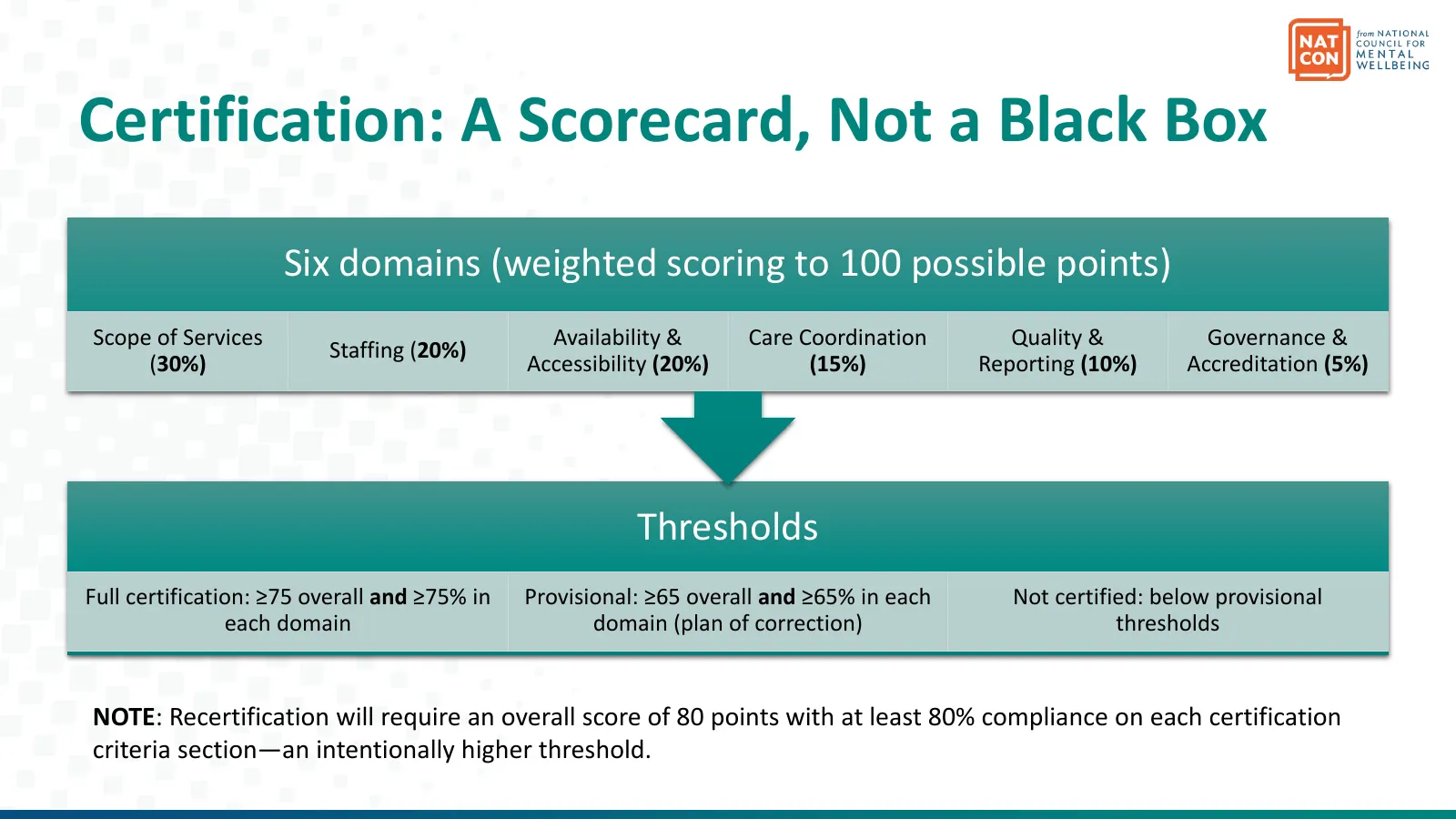
Slide 15: Certification: A Scorecard, Not a Black Box
Certification: A Scorecard, Not a Black Box Six domains (weighted scoring to 100 possible points) Scope of Services Availability & Care Coordination Quality & Governance & Staffing (20%) (30%) Accessibility (20%) (15%) Reporting (10%) Accreditation (5%) Thresholds Full certification: ≥75 overall and
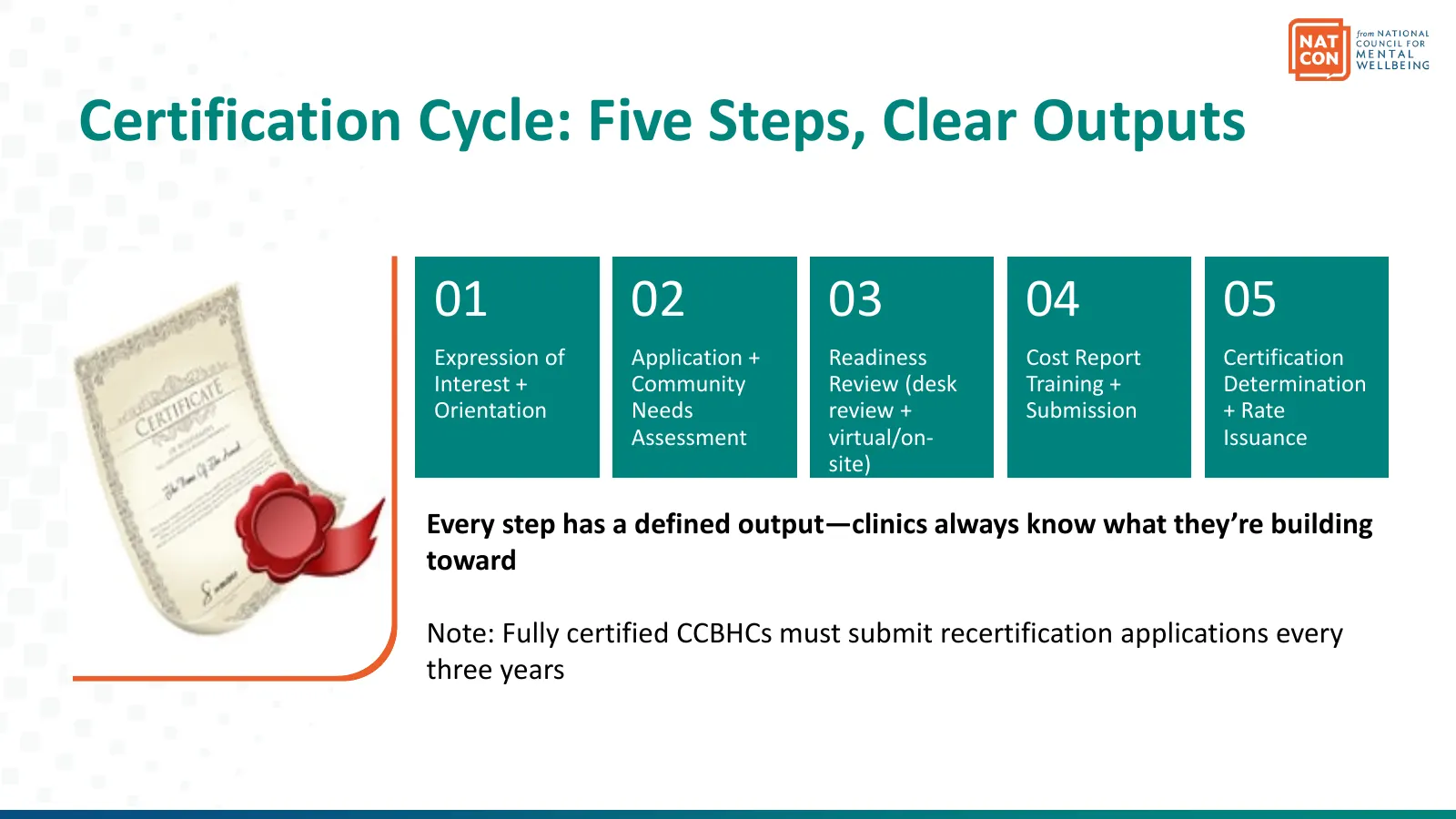
Slide 16: Certification Cycle: Five Steps, Clear Outputs
Certification Cycle: Five Steps, Clear Outputs 01 02 03 04 05 Expression of Application + Readiness Cost Report Certification Interest + Community Review (desk Training + Determination Orientation Needs review + Submission + Rate Assessment virtual/on- Issuance site) Every step has a defined output—
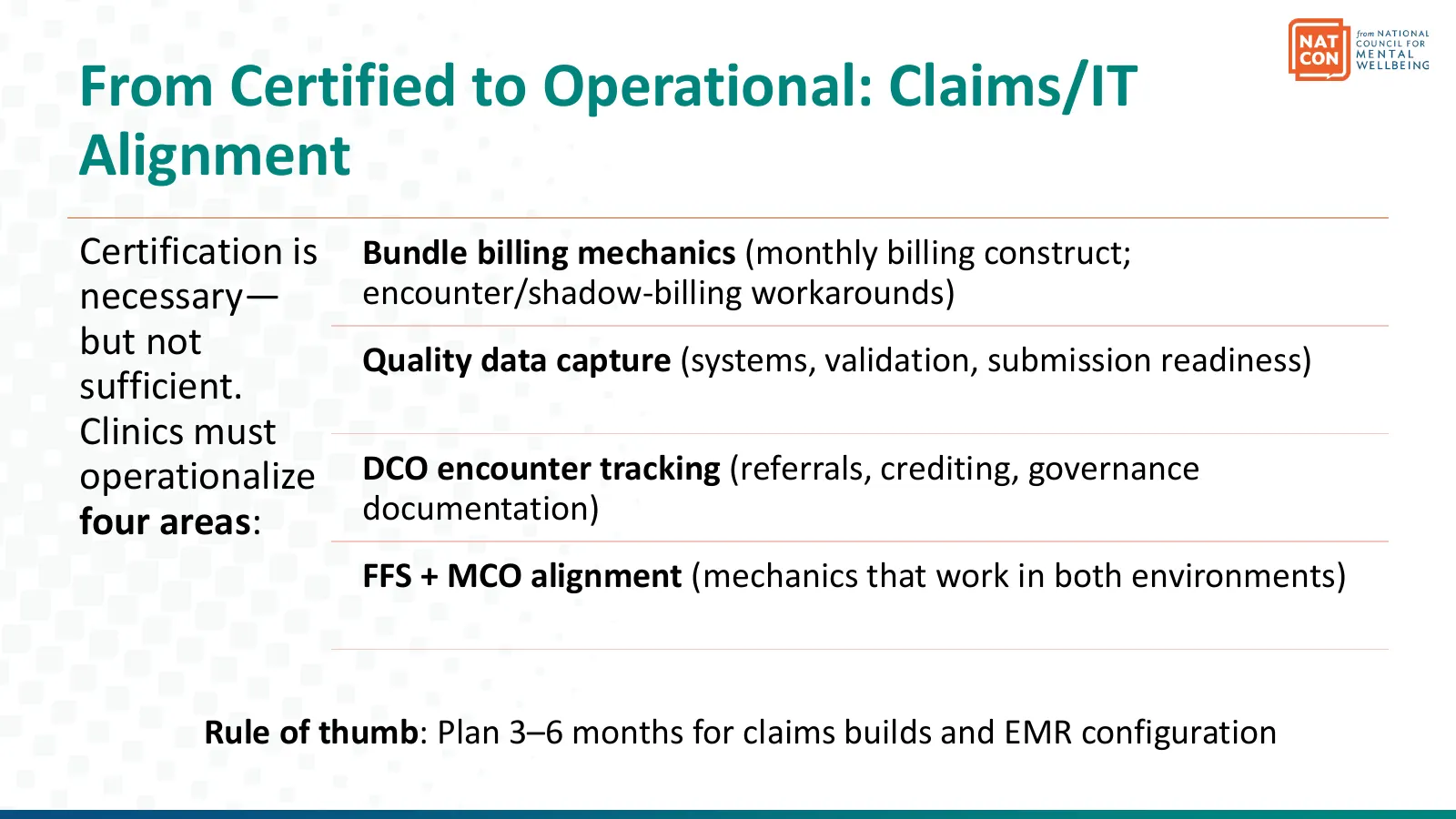
Slide 17: From Certified to Operational: Claims/IT Alignment
From Certified to Operational: Claims/IT Alignment Certification is Bundle billing mechanics (monthly billing construct; necessary— encounter/shadow-billing workarounds) but not Quality data capture (systems, validation, submission readiness) sufficient. Clinics must operationalize DCO encounter tra
Slide 18: From Certified to Operational: Data Collection and Reporting Guidance
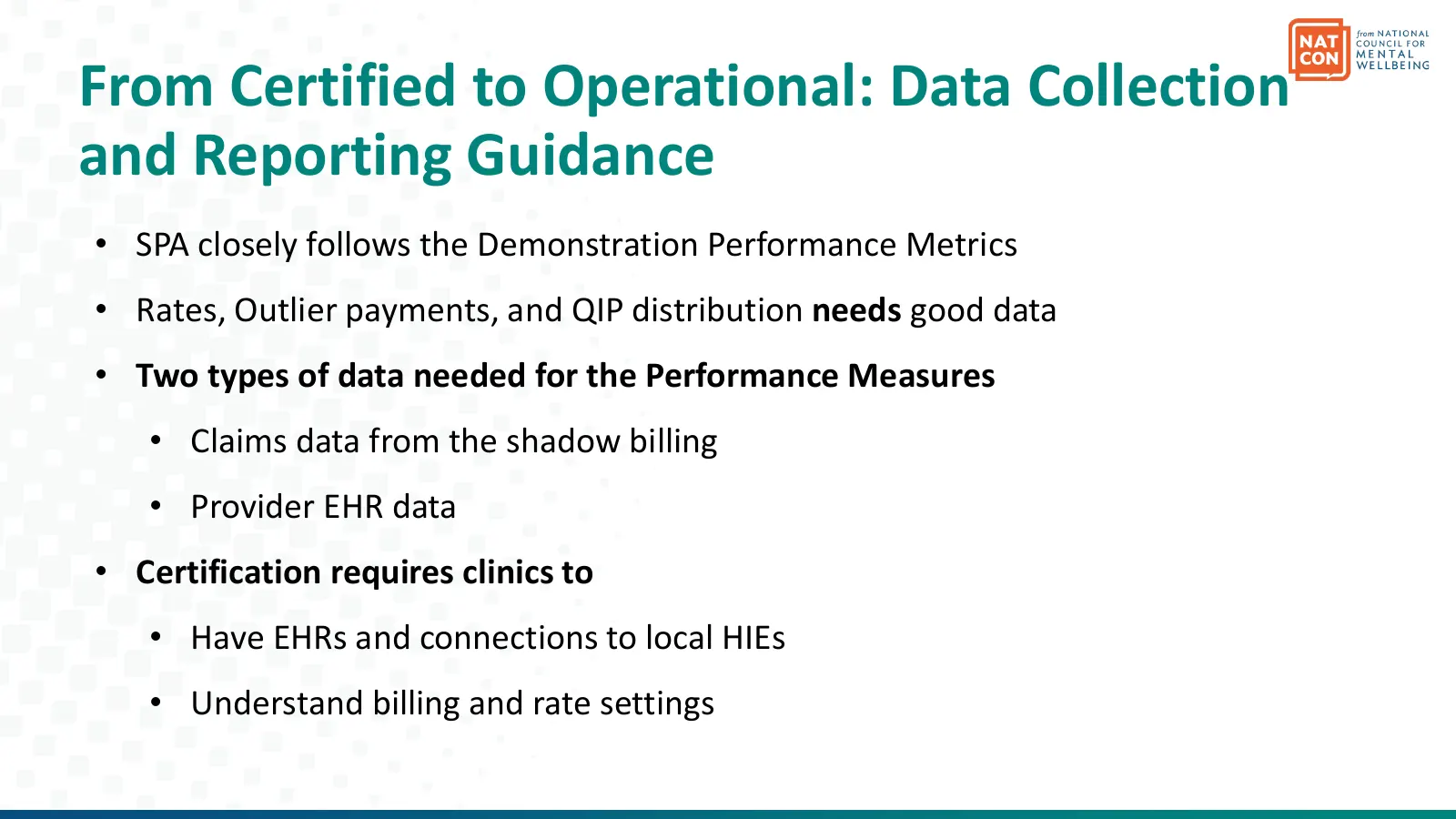
From Certified to Operational: Data Collection and Reporting Guidance • SPA closely follows the Demonstration Performance Metrics • Rates, Outlier payments, and QIP distribution needs good data • Two types of data needed for the Performance Measures • Claims data from the shadow billing • Provider E
Slide 19: Five Things That Made This Work — And Five Things You Can Replicate
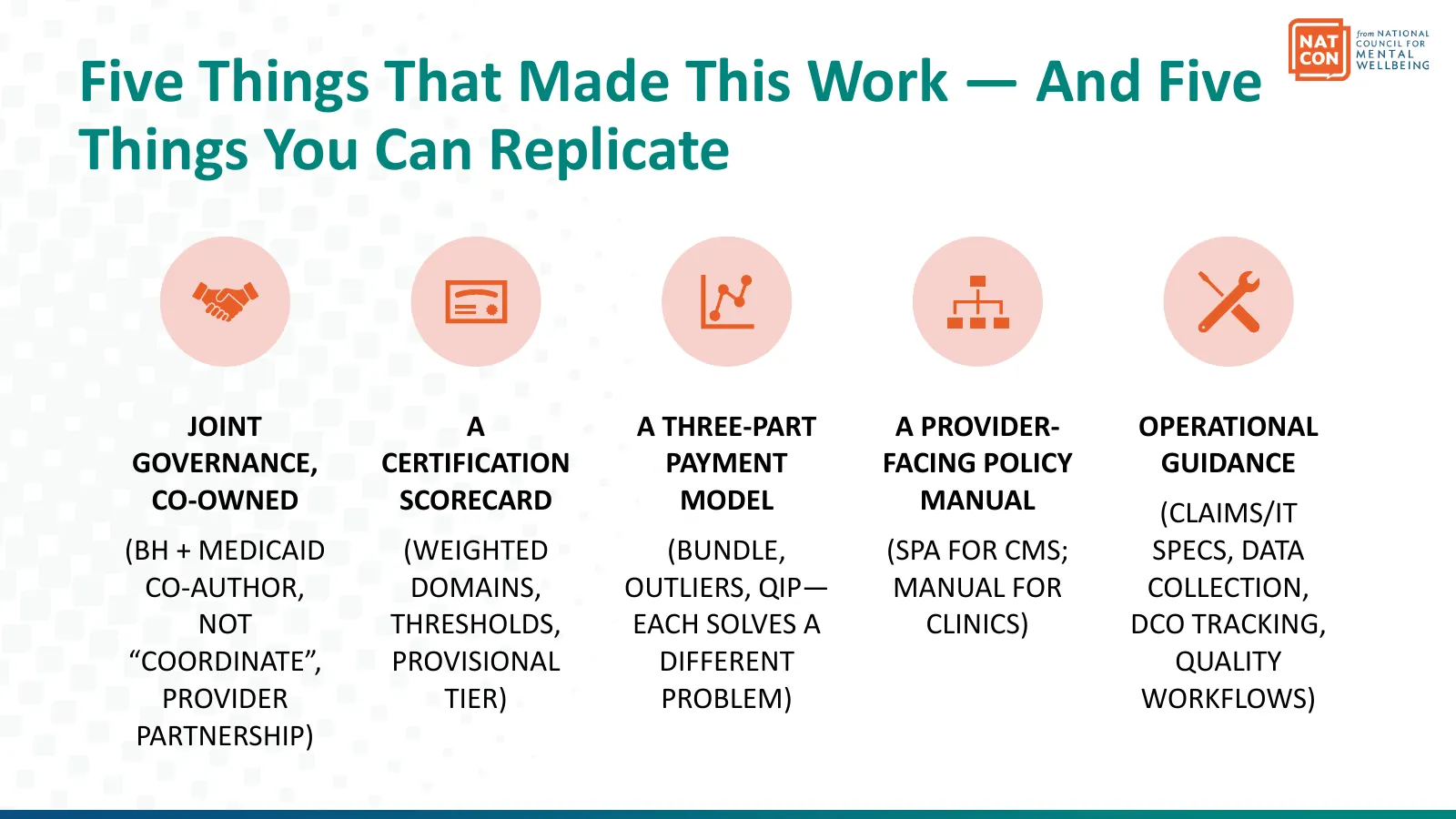
Five Things That Made This Work — And Five Things You Can Replicate JOINT A A THREE-PART A PROVIDER- OPERATIONAL GOVERNANCE, CERTIFICATION PAYMENT FACING POLICY GUIDANCE CO-OWNED SCORECARD MODEL MANUAL (CLAIMS/IT (BH + MEDICAID (WEIGHTED (BUNDLE, (SPA FOR CMS; SPECS, DATA CO-AUTHOR, DOMAINS, OUTLIER
Slide 20: State Self-Assessment: Where Does Your State Stand?
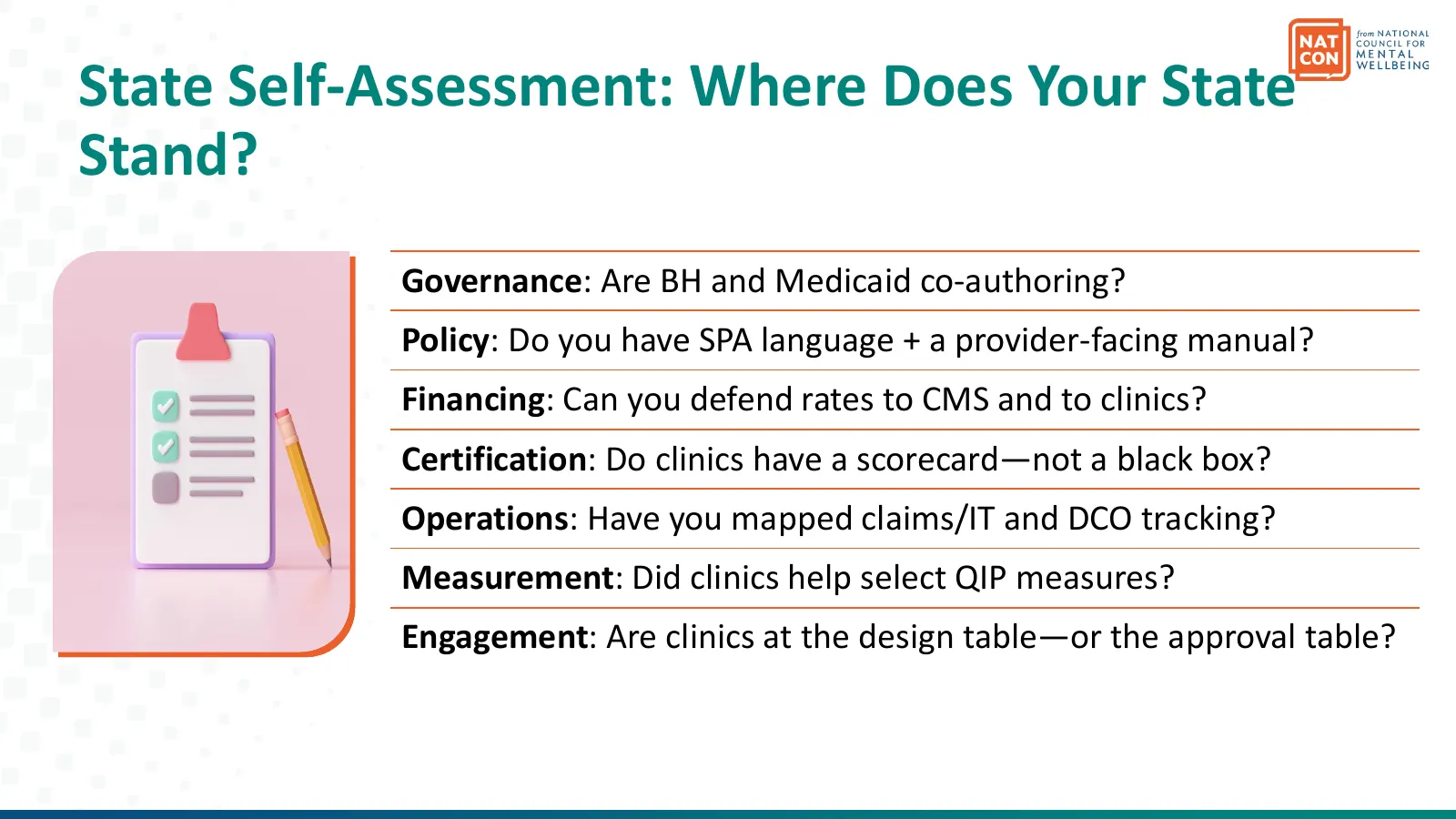
State Self-Assessment: Where Does Your State Stand? Governance: Are BH and Medicaid co-authoring? Policy: Do you have SPA language + a provider-facing manual? Financing: Can you defend rates to CMS and to clinics? Certification: Do clinics have a scorecard—not a black box? Operations: Have you mappe
Slide 21: Implementation Checklist
Implementation Checklist Policy ☐ Define service array and DCO approach ☐ Codify in SPA language + provider-facing policy manual Financing ☐ Cost-based bundled rate methodology + cost reporting cadence ☐ Annual update mechanism (MEI trending + rebasing) ☐ Outlier methodology with population-specific

Slide 22: Thank You – Questions Welcome!
Thank You – Questions Welcome! Nothing to disclose
Source: company website
More decks from Mercer Short Duration Fixed Income Fund Class Y-3
 Mercer Core Fixed Income Fund — Debt Investor Presentation (September 2026)30 slides · Sep 30, 2026
 Debt Investor Presentation (September 2026)29 slides · Sep 30, 2026
 Mercer Core Fixed Income Fund — Investor Presentation (June 2026)31 slides · Jun 30, 2026
 Debt Investor Presentation (June 2026)30 slides · Jun 30, 2026
 Mercer US Small/Mid Cap Equity Fund — Investor Presentation (June 2026)29 slides · Jun 30, 2026
 Mercer — Fact Sheet (2026)1 slide · Jun 15, 2026
All 135 Mercer Short Duration Fixed Income Fund Class Y-3 decks