Provectus Biopharmaceuticals, Inc. · OTC:PVCT
Provectus Biopharmaceuticals — Investor Presentation (2016)
24 slides from Provectus Biopharmaceuticals's investor presentation, 2016
Slide 1: Rose Bengal: Small Molecule Ablative Immunotherapy
Provectus Biopharmaceuticals: When Patients Win, We All Win® Rose Bengal Small Molecule Ablative Immunotherapy A first-in-class halogenated xanthene with unique therapeutic properties for fighting cancer and inflammatory dermatoses 1
Slide 2: Forward-Looking Statements
Forward-Looking Statements This presentation contains "forward-looking statements" as defined under U.S. federal securities laws. These statements reflect management’s current knowledge, assumptions, beliefs, estimates, and expectations and express management’s current views of future performance, r
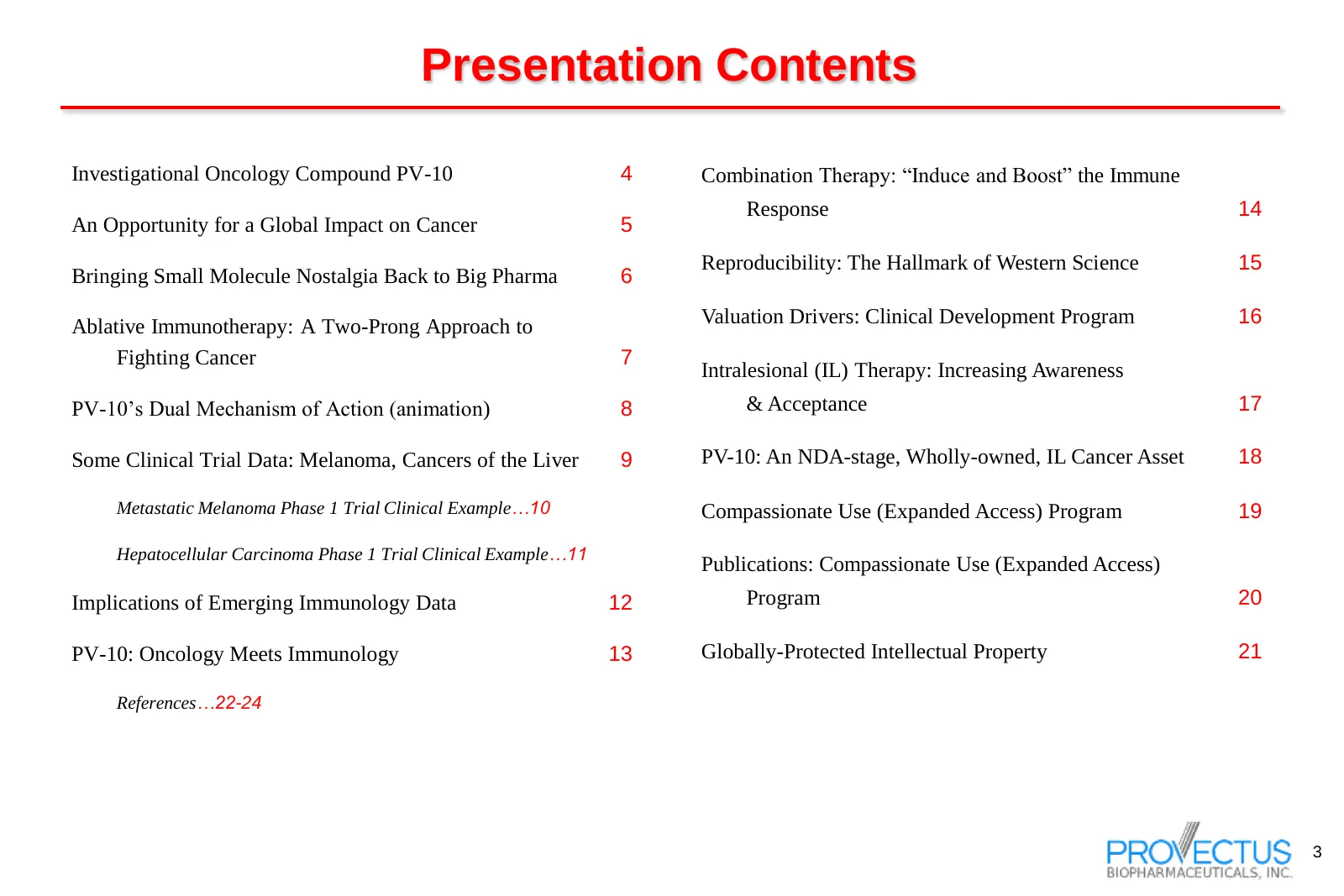
Slide 3: Presentation Contents
Presentation Contents Investigational Oncology Compound PV-10 4 Combination Therapy: “Induce and Boost” the Immune Response 14 An Opportunity for a Global Impact on Cancer 5 Reproducibility: The Hallmark of Western Science 15 Bringing Small Molecule Nostalgia Back to Big Pharma 6 Ablative Immunother
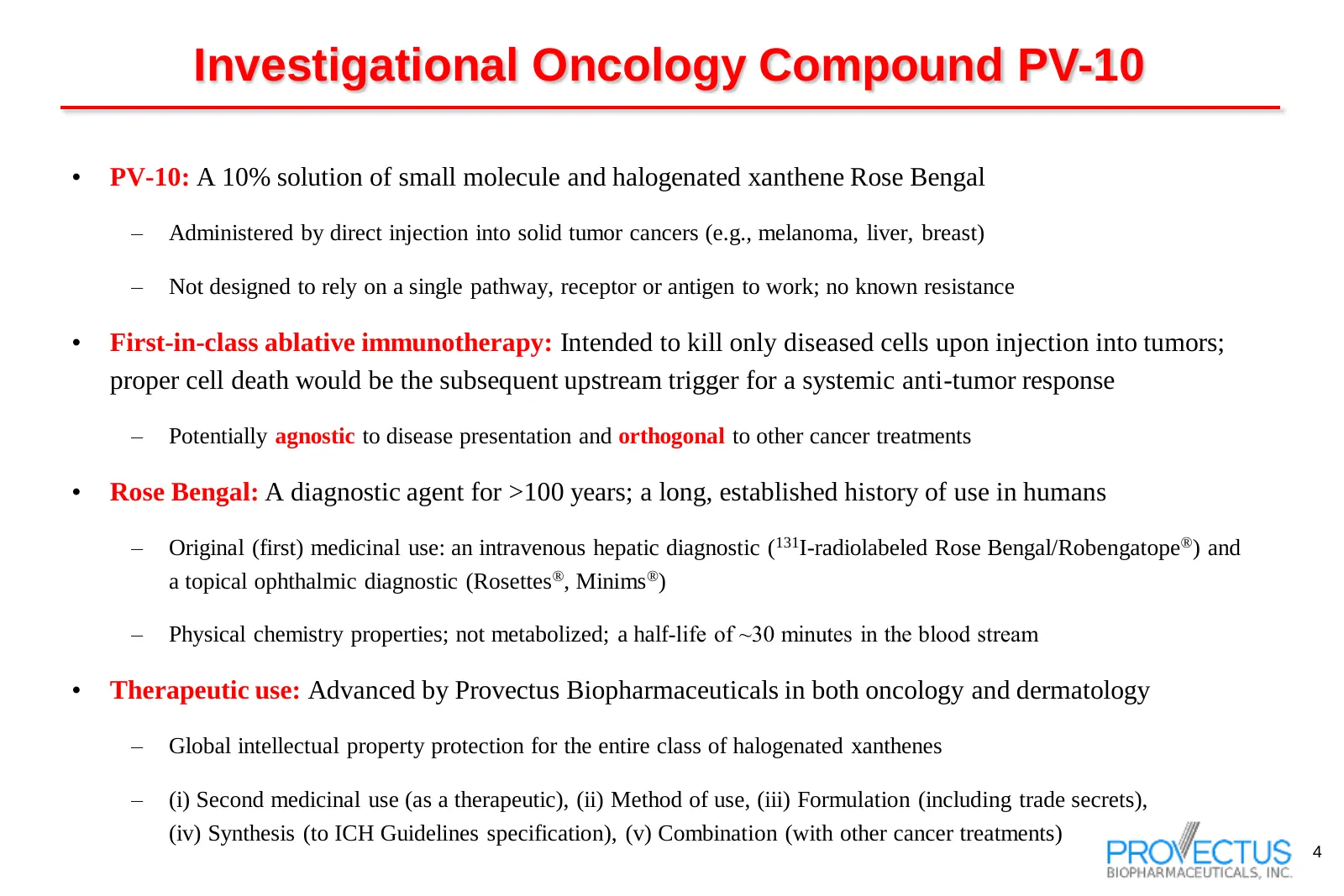
Slide 4: Investigational Oncology Compound PV-10
Investigational Oncology Compound PV-10 • PV-10: A 10% solution of small molecule and halogenated xanthene Rose Bengal – Administered by direct injection into solid tumor cancers (e.g., melanoma, liver, breast) – Not designed to rely on a single pathway, receptor or antigen to work; no known resista
Slide 5: An Opportunity for a Global Impact on Cancer
An Opportunity for a Global Impact on Cancer • Potentially viable for multiple • Designed for ease of cancer indications physician/provider use and/or re- use • Potentially agnostic to disease presentation • Designed to be supportive of patient compliance • Intended to be synergistic in combination
Slide 6: Bringing Small Molecule Nostalgia Back to Big Pharma
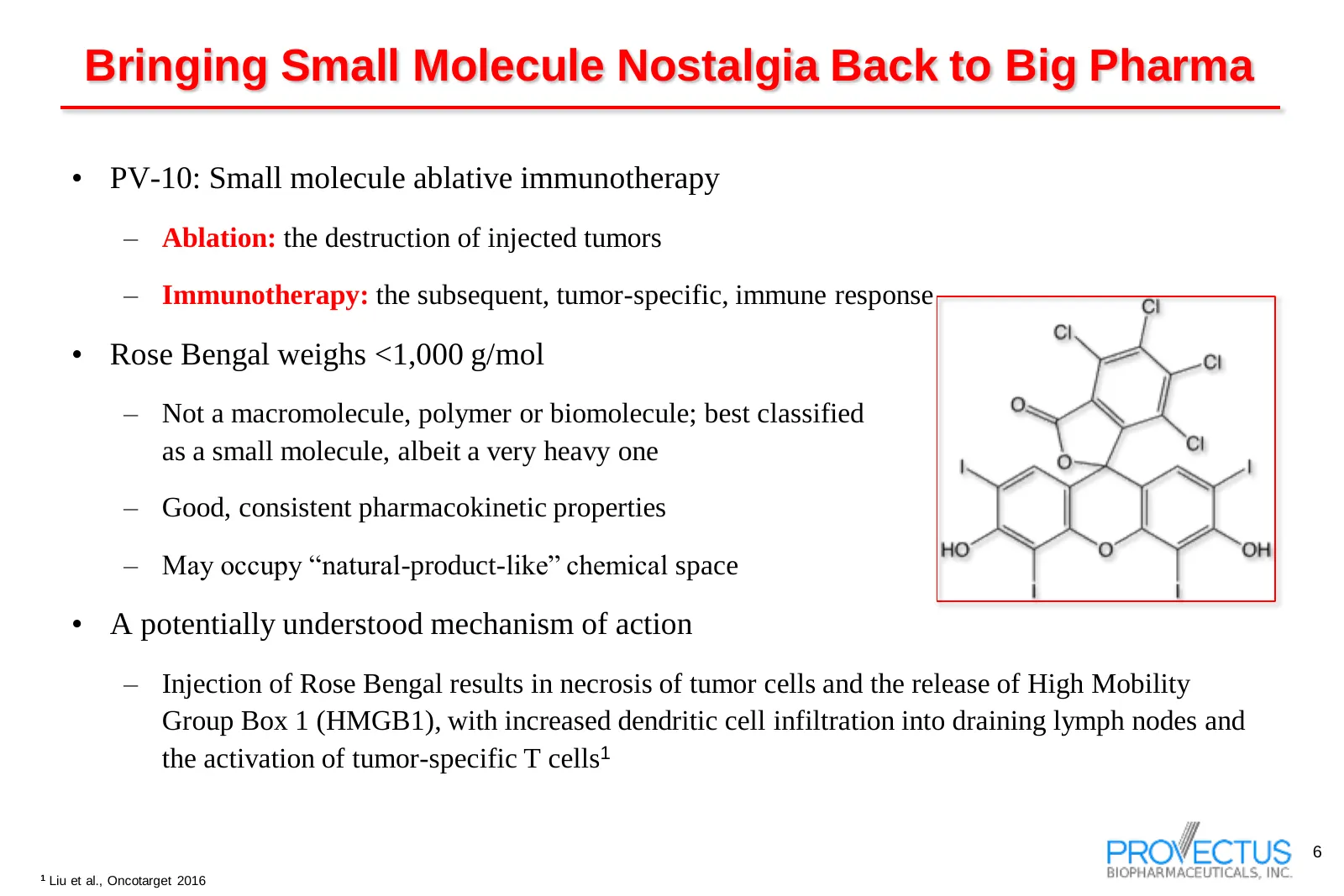
Bringing Small Molecule Nostalgia Back to Big Pharma • PV-10: Small molecule ablative immunotherapy – Ablation: the destruction of injected tumors – Immunotherapy: the subsequent, tumor-specific, immune response • Rose Bengal weighs <1,000 g/mol – Not a macromolecule, polymer or biomolecule; best cl
Slide 7: Ablative Immunotherapy: A Two-Prong Approach to Fighting Cancer
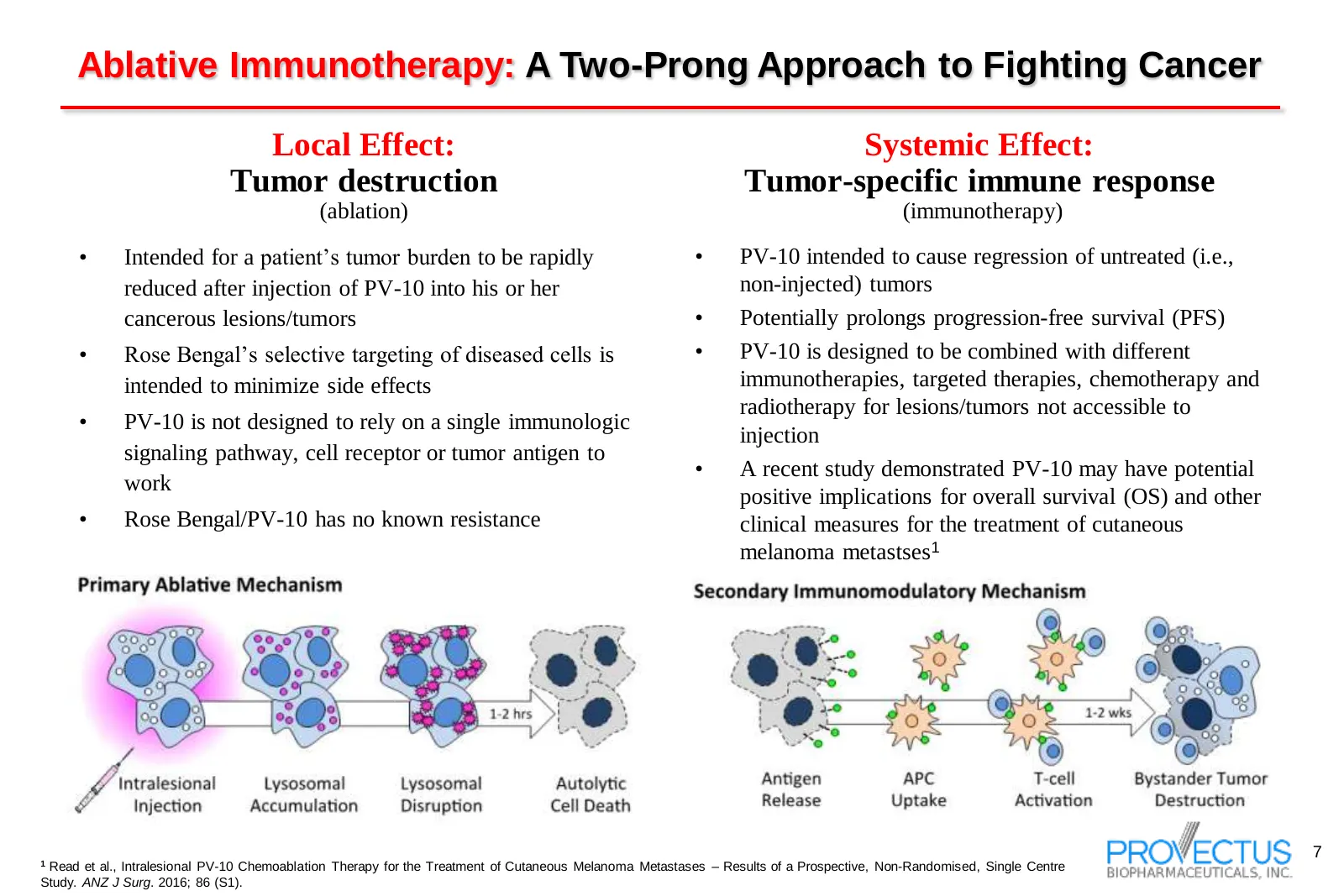
Ablative Immunotherapy: A Two-Prong Approach to Fighting Cancer Local Effect: Systemic Effect: Tumor destruction Tumor-specific immune response (ablation) (immunotherapy) • Intended for a patient’s tumor burden to be rapidly • PV-10 intended to cause regression of untreated (i.e., reduced after inje
Slide 8: PV-10's Dual Mechanism of Action
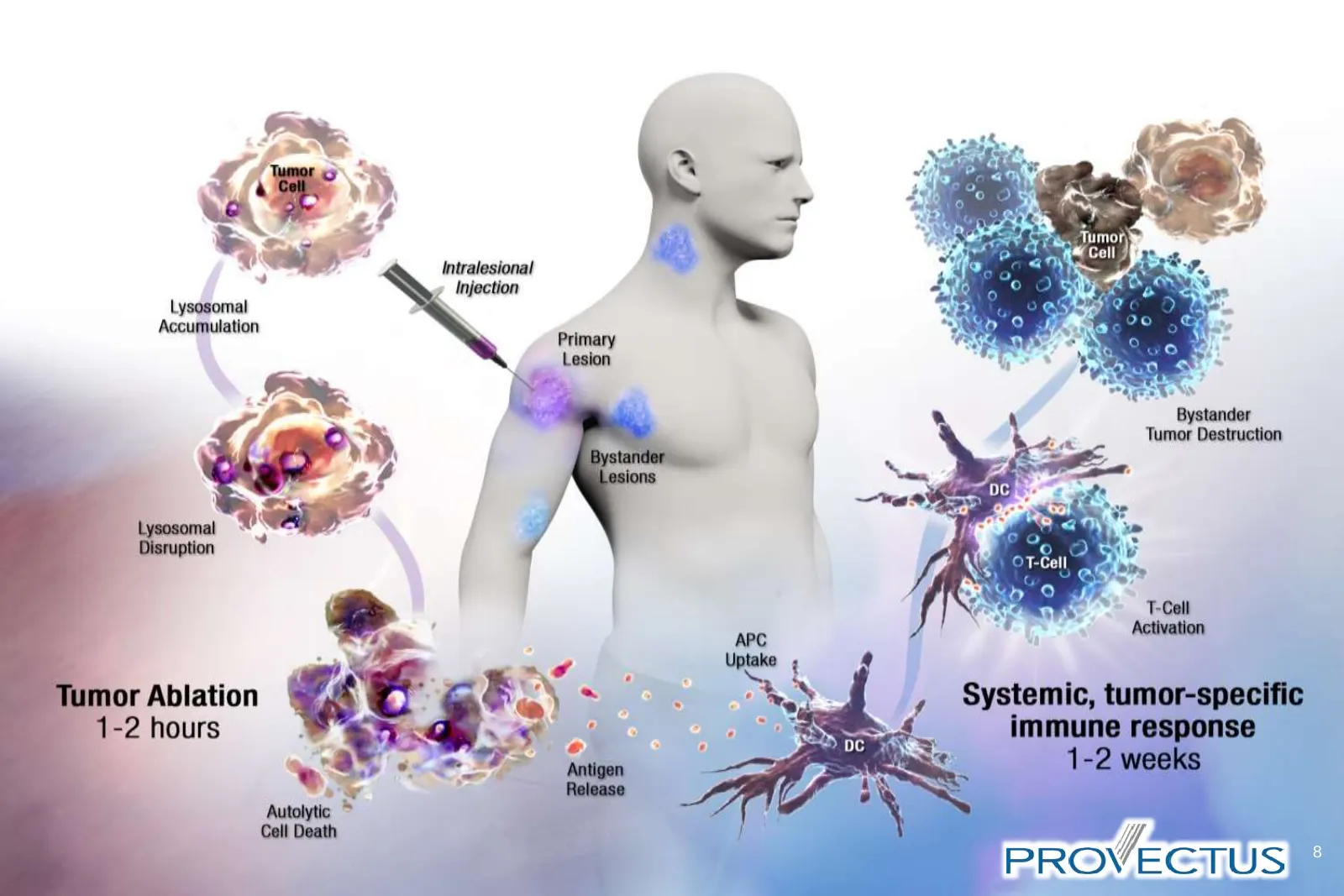
PV-10’s Dual Mechanism of Action 8 APC, antigen presenting cell; DC, dendritic cell. 8
Slide 9: Some Clinical Trial Data: Melanoma, Cancers of the Liver
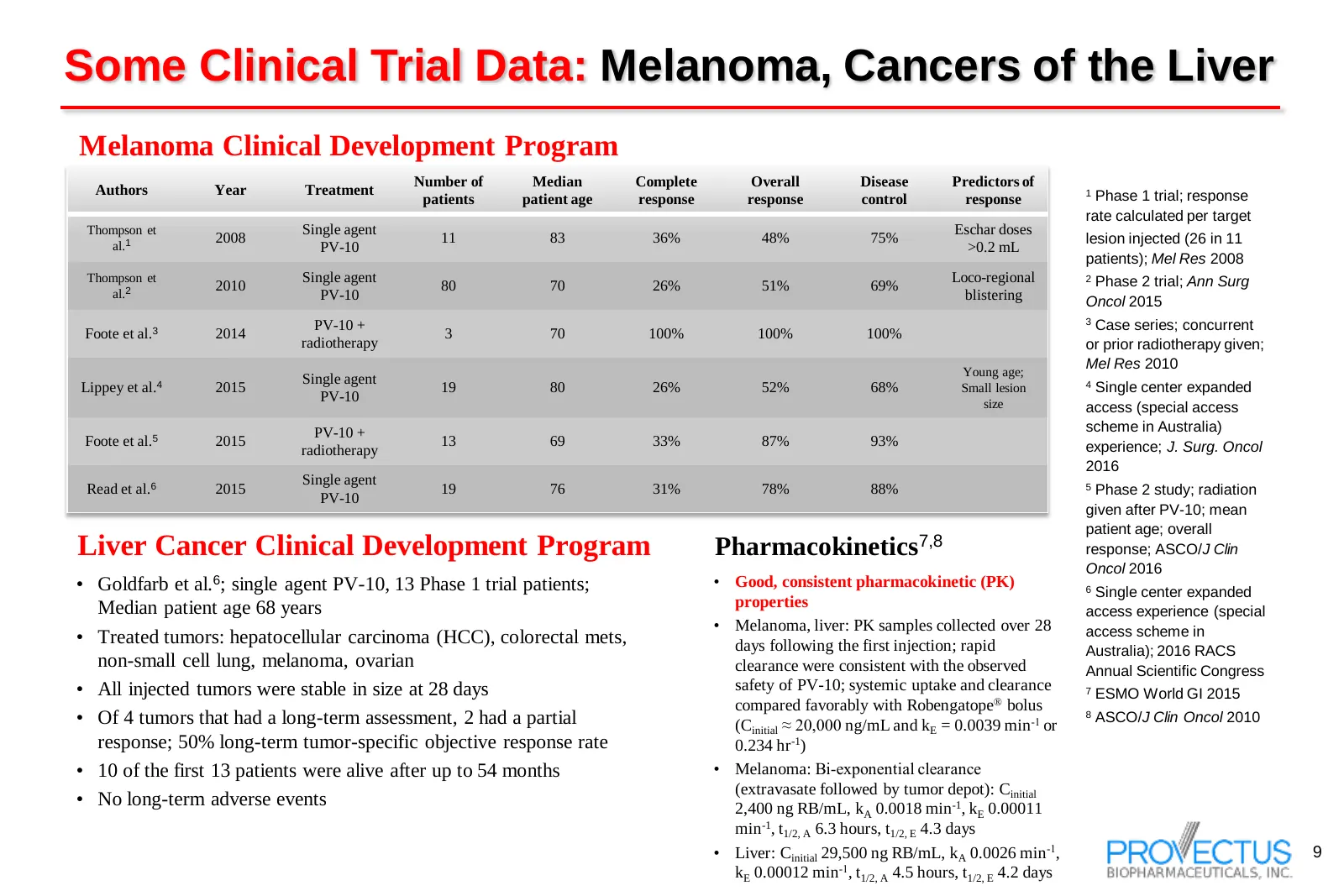
Some Clinical Trial Data: Melanoma, Cancers of the Liver Melanoma Clinical Development Program Number of Median Complete Overall Disease Predictors of Authors Year Treatment 1 Phase 1 trial; response patients patient age response response control response rate calculated per target Thompson et Singl
Slide 10: Metastatic Melanoma Phase 1 Trial Clinical Example
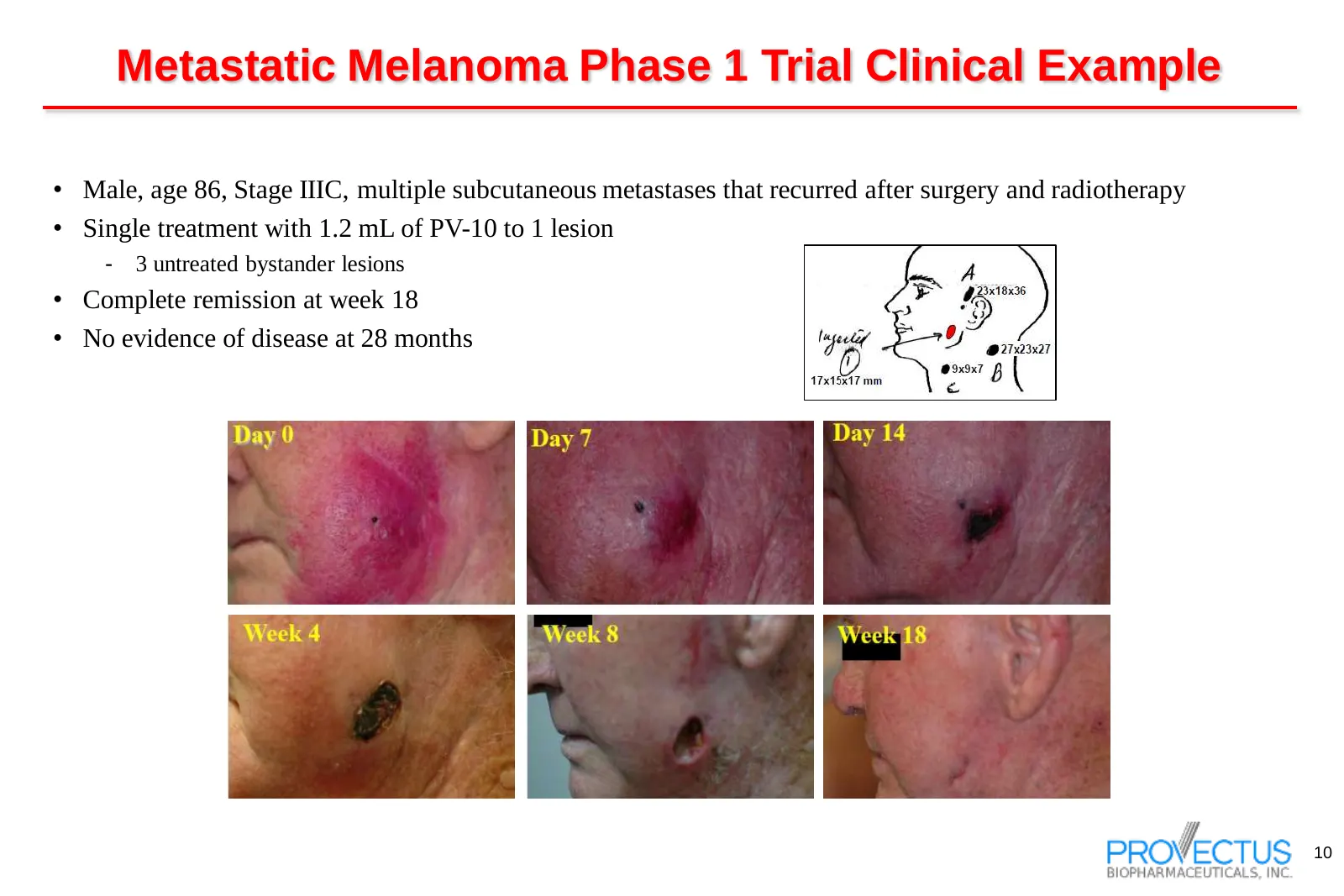
Metastatic Melanoma Phase 1 Trial Clinical Example • Male, age 86, Stage IIIC, multiple subcutaneous metastases that recurred after surgery and radiotherapy • Single treatment with 1.2 mL of PV-10 to 1 lesion - 3 untreated bystander lesions • Complete remission at week 18 • No evidence of disease at
Slide 11: Hepatocellular Carcinoma Phase 1 Trial Clinical Example
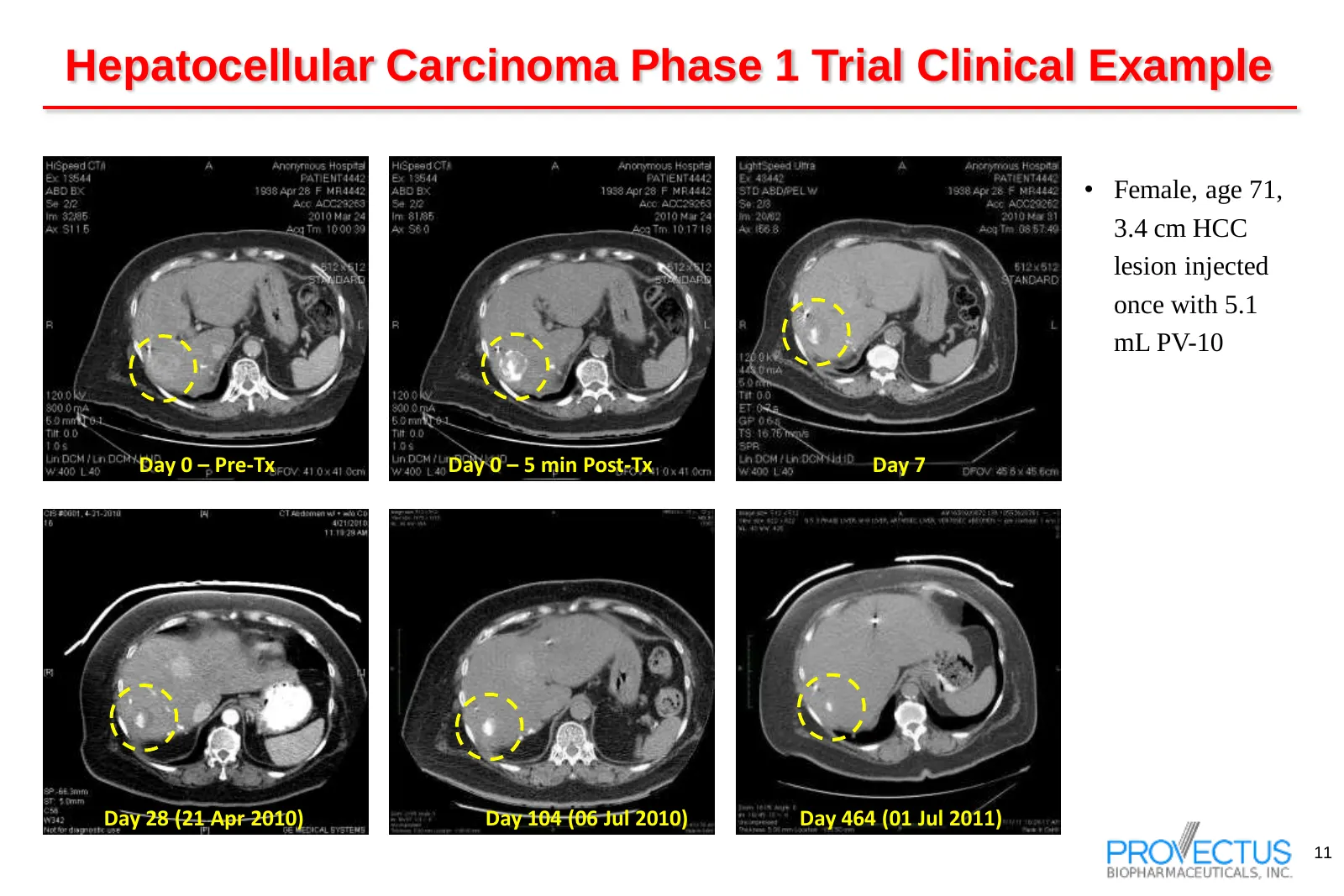
Hepatocellular Carcinoma Phase 1 Trial Clinical Example • Female, age 71, 3.4 cm HCC lesion injected once with 5.1 mL PV-10 Day 0 – Pre-Tx Day 0 – 5 min Post-Tx Day 7 Day 28 (21 Apr 2010) Day 104 (06 Jul 2010) Day 464 (01 Jul 2011) 11
Slide 12: Implications of Emerging Immunology Data
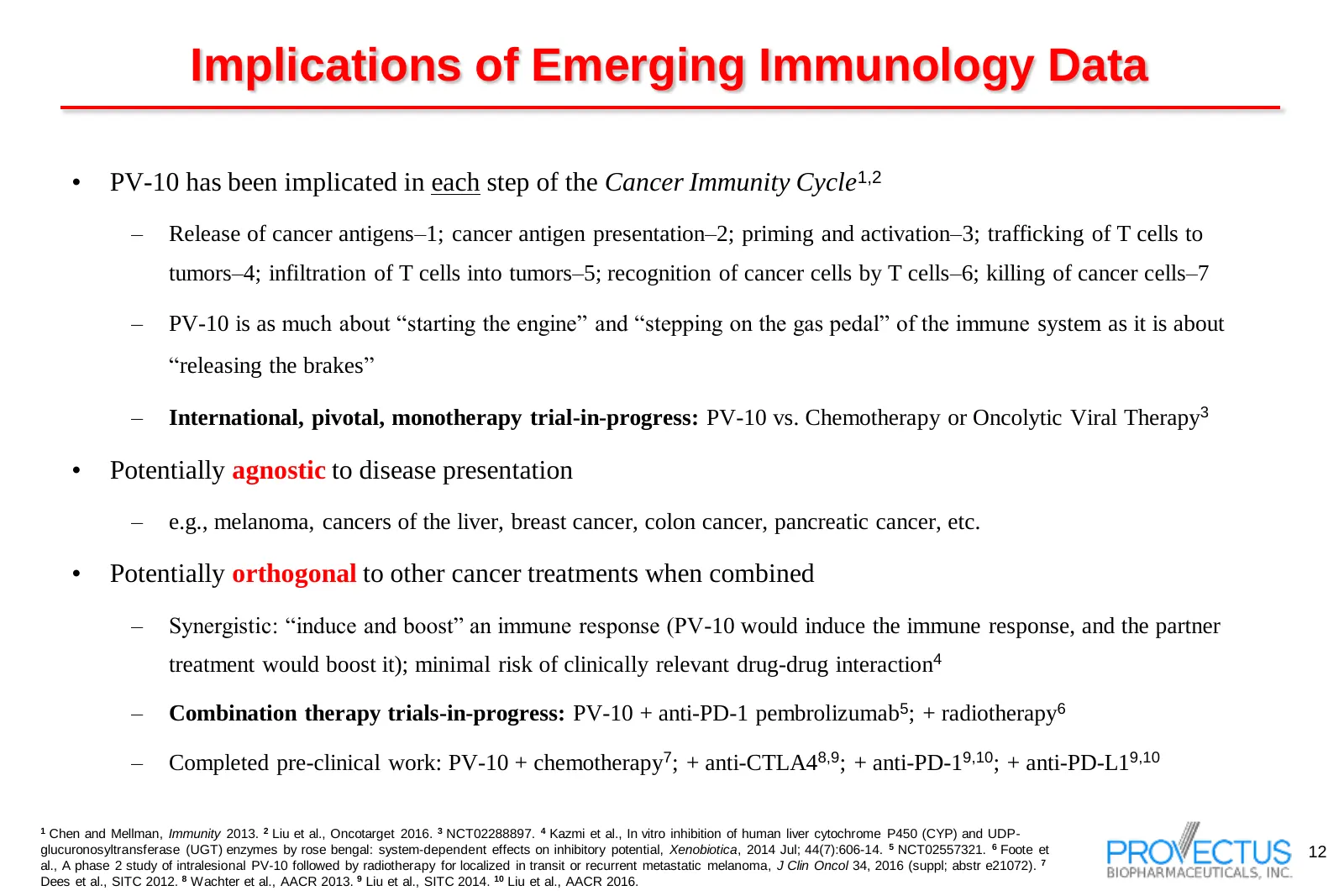
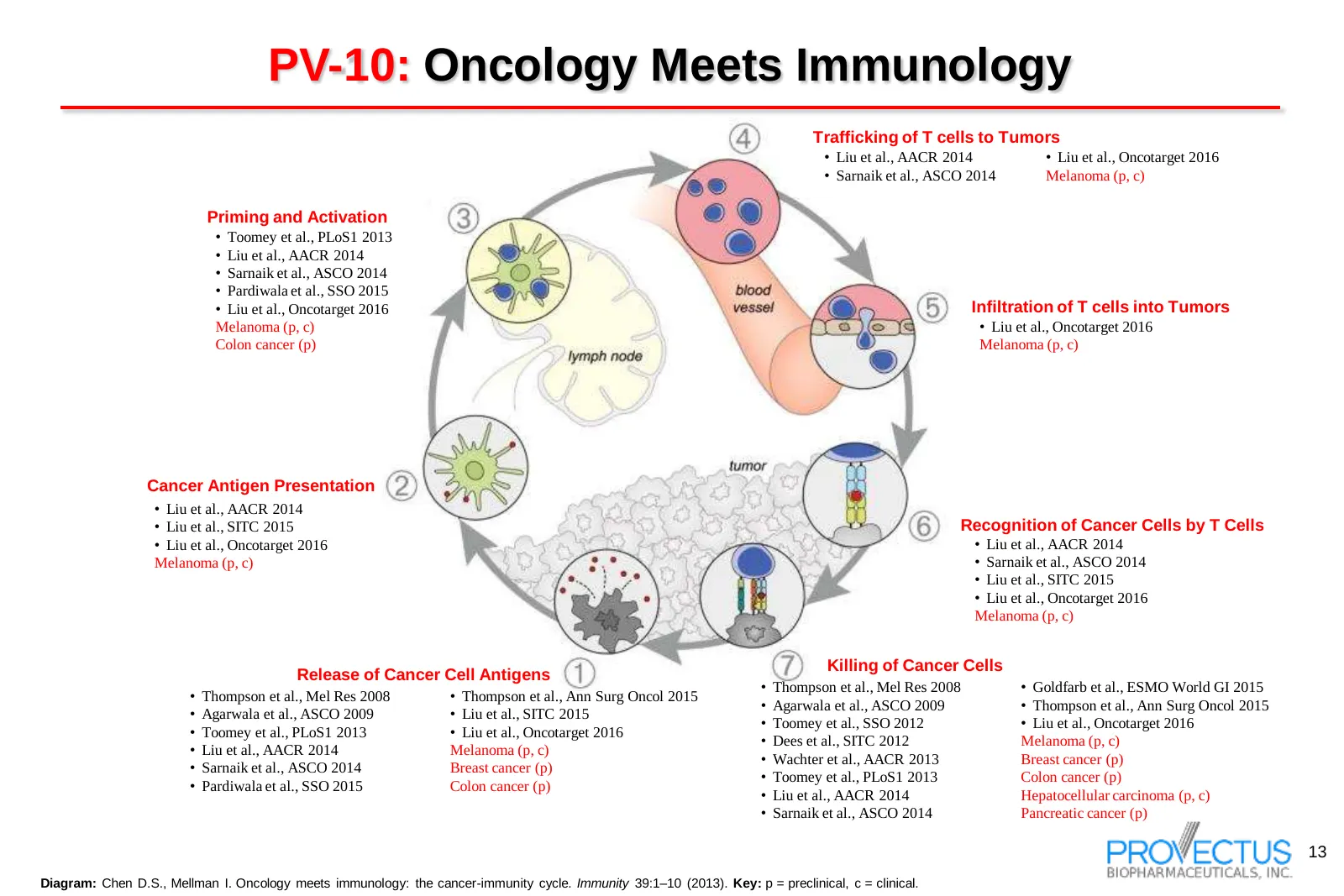
Implications of Emerging Immunology Data • PV-10 has been implicated in each step of the Cancer Immunity Cycle1,2 – Release of cancer antigens–1; cancer antigen presentation–2; priming and activation–3; trafficking of T cells to tumors–4; infiltration of T cells into tumors–5; recognition of cancer
Slide 13: PV-10: Oncology Meets Immunology
PV-10: Oncology Meets Immunology Trafficking of T cells to Tumors • Liu et al., AACR 2014 • Liu et al., Oncotarget 2016 • Sarnaik et al., ASCO 2014 Melanoma (p, c) Priming and Activation • Toomey et al., PLoS1 2013 • Liu et al., AACR 2014 • Sarnaik et al., ASCO 2014 • Pardiwala et al., SSO 2015 • Li
Slide 14: Combination Therapy: 'Induce and Boost' the Immune Response
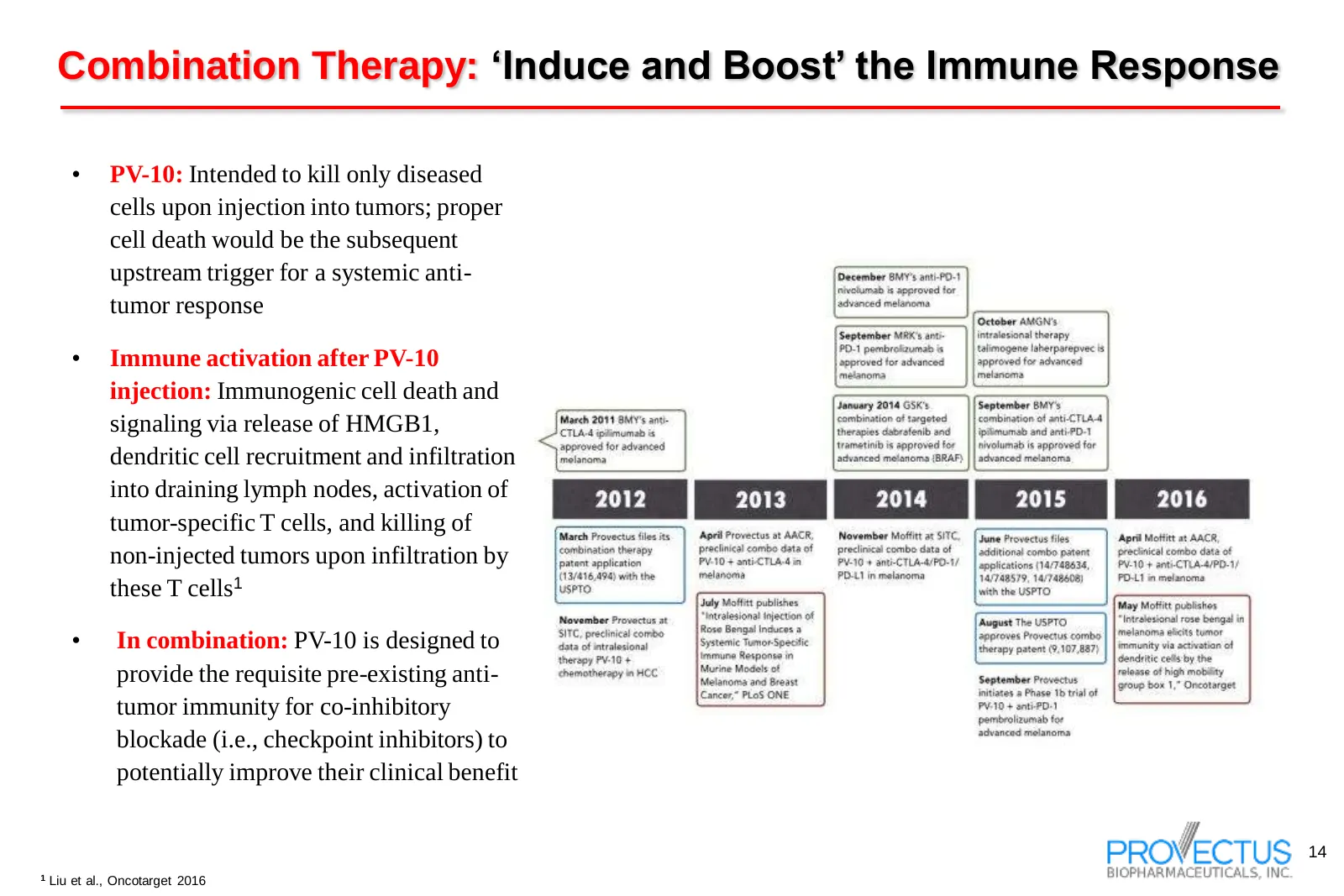
Combination Therapy: ‘Induce and Boost’ the Immune Response • PV-10: Intended to kill only diseased cells upon injection into tumors; proper cell death would be the subsequent upstream trigger for a systemic anti- tumor response • Immune activation after PV-10 injection: Immunogenic cell death and s
Slide 15: Reproducibility: The Hallmark of Western Science
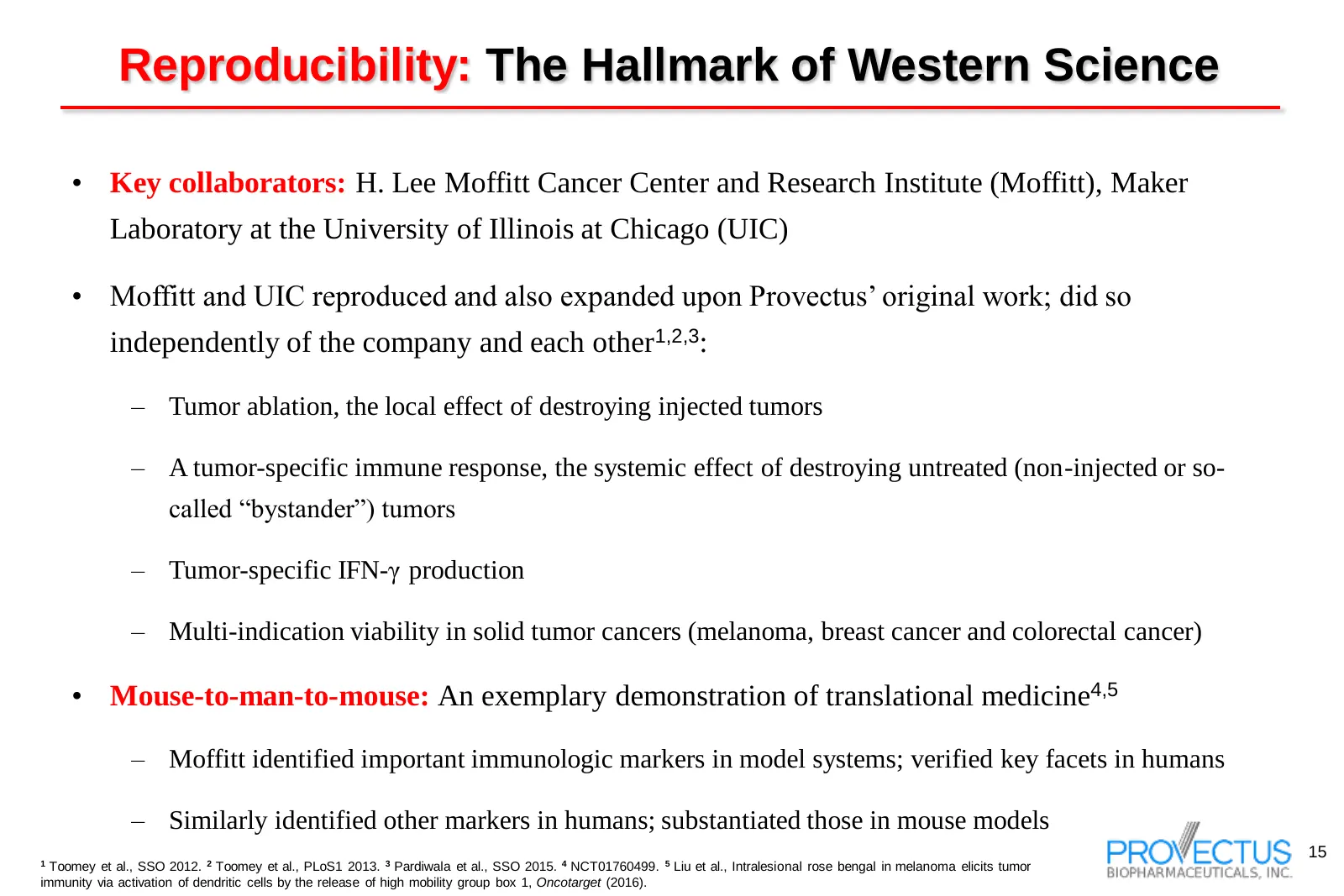
Reproducibility: The Hallmark of Western Science • Key collaborators: H. Lee Moffitt Cancer Center and Research Institute (Moffitt), Maker Laboratory at the University of Illinois at Chicago (UIC) • Moffitt and UIC reproduced and also expanded upon Provectus’ original work; did so independently of t
Slide 16: Valuation Drivers: Clinical Development Program
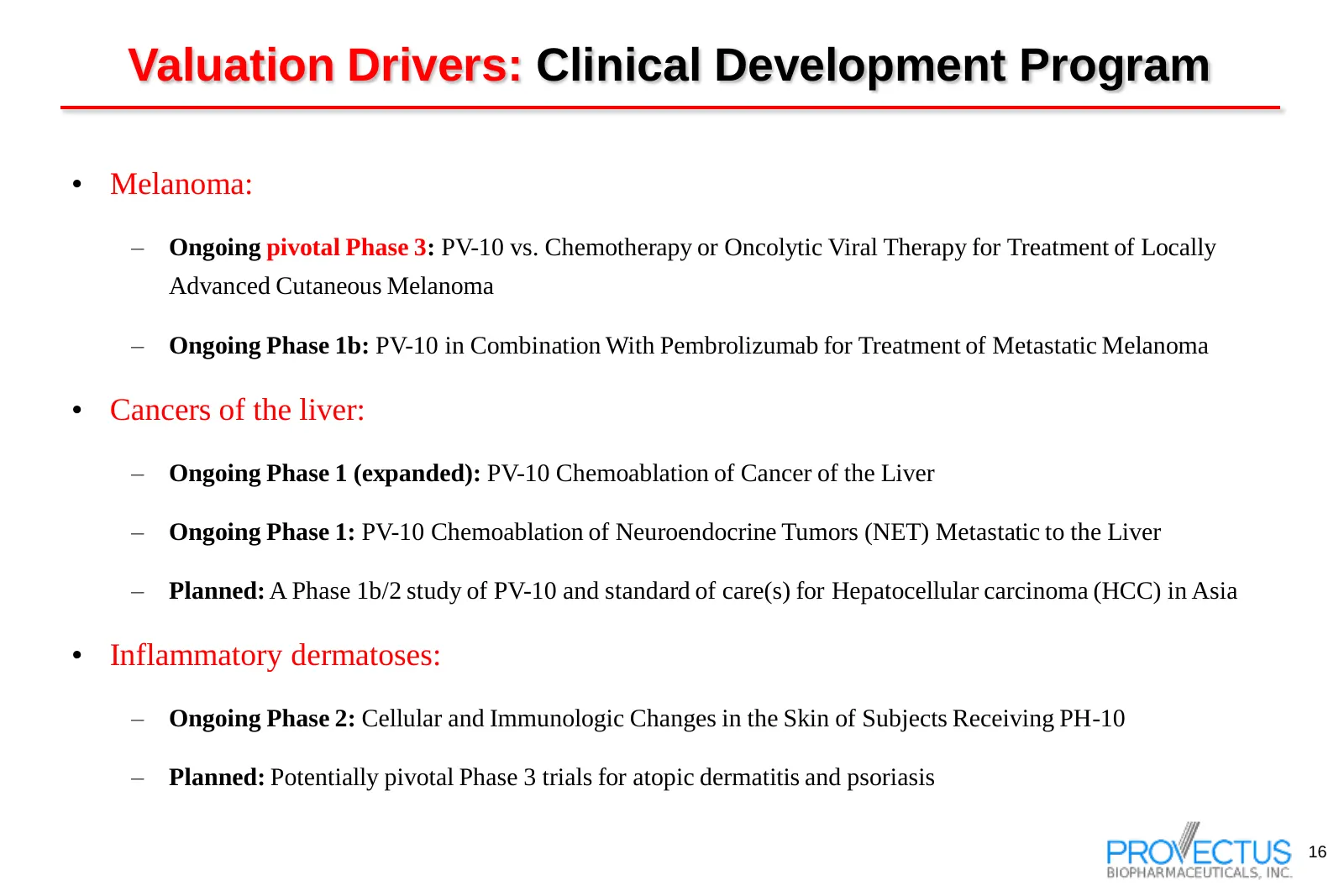
Valuation Drivers: Clinical Development Program • Melanoma: – Ongoing pivotal Phase 3: PV-10 vs. Chemotherapy or Oncolytic Viral Therapy for Treatment of Locally Advanced Cutaneous Melanoma – Ongoing Phase 1b: PV-10 in Combination With Pembrolizumab for Treatment of Metastatic Melanoma • Cancers of
Slide 17: Intralesional (IL) Therapy: Increasing Awareness & Acceptance
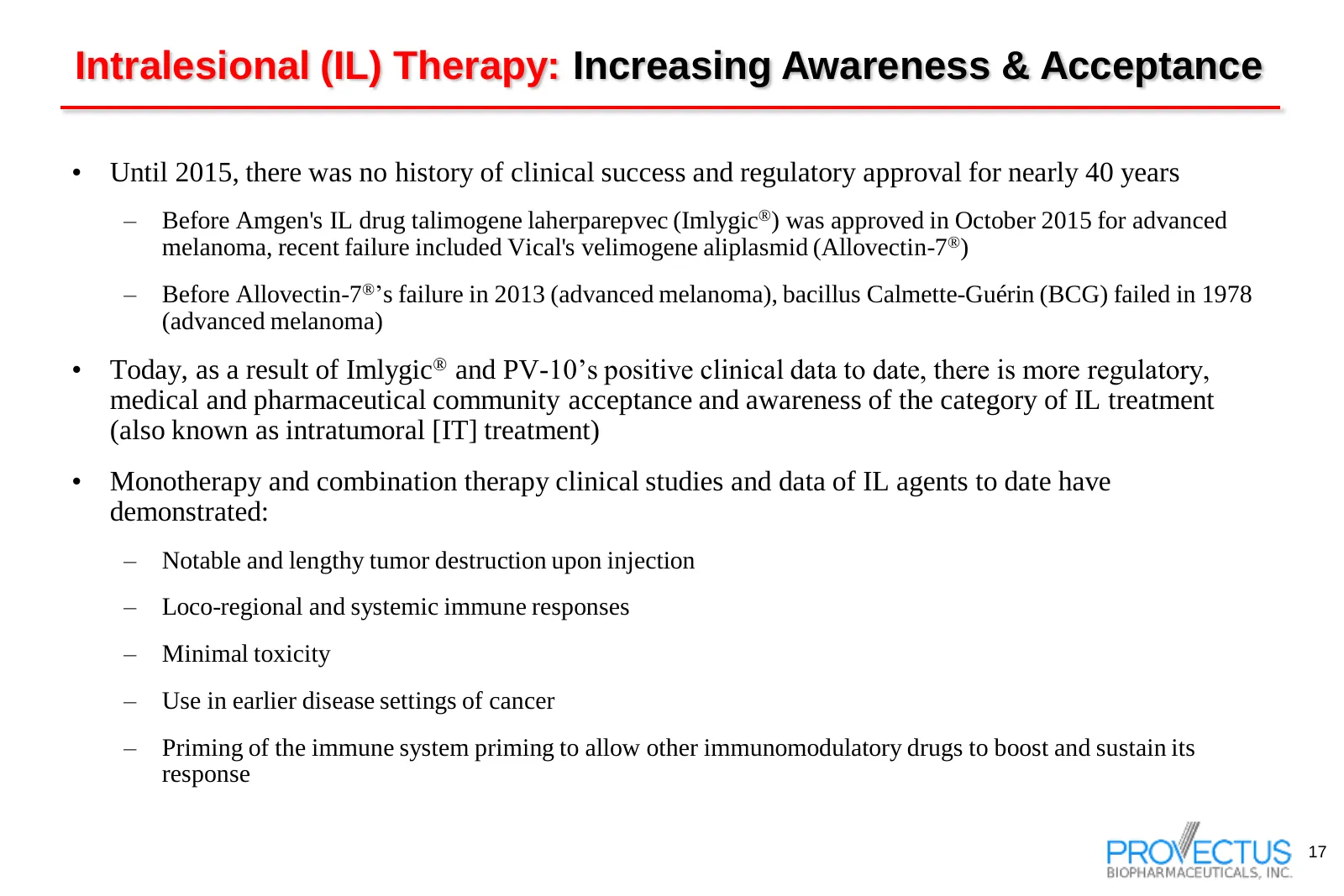
Intralesional (IL) Therapy: Increasing Awareness & Acceptance • Until 2015, there was no history of clinical success and regulatory approval for nearly 40 years – Before Amgen's IL drug talimogene laherparepvec (Imlygic®) was approved in October 2015 for advanced melanoma, recent failure included Vi
Slide 18: PV-10: An NDA-stage, Wholly-owned, IL Cancer Asset
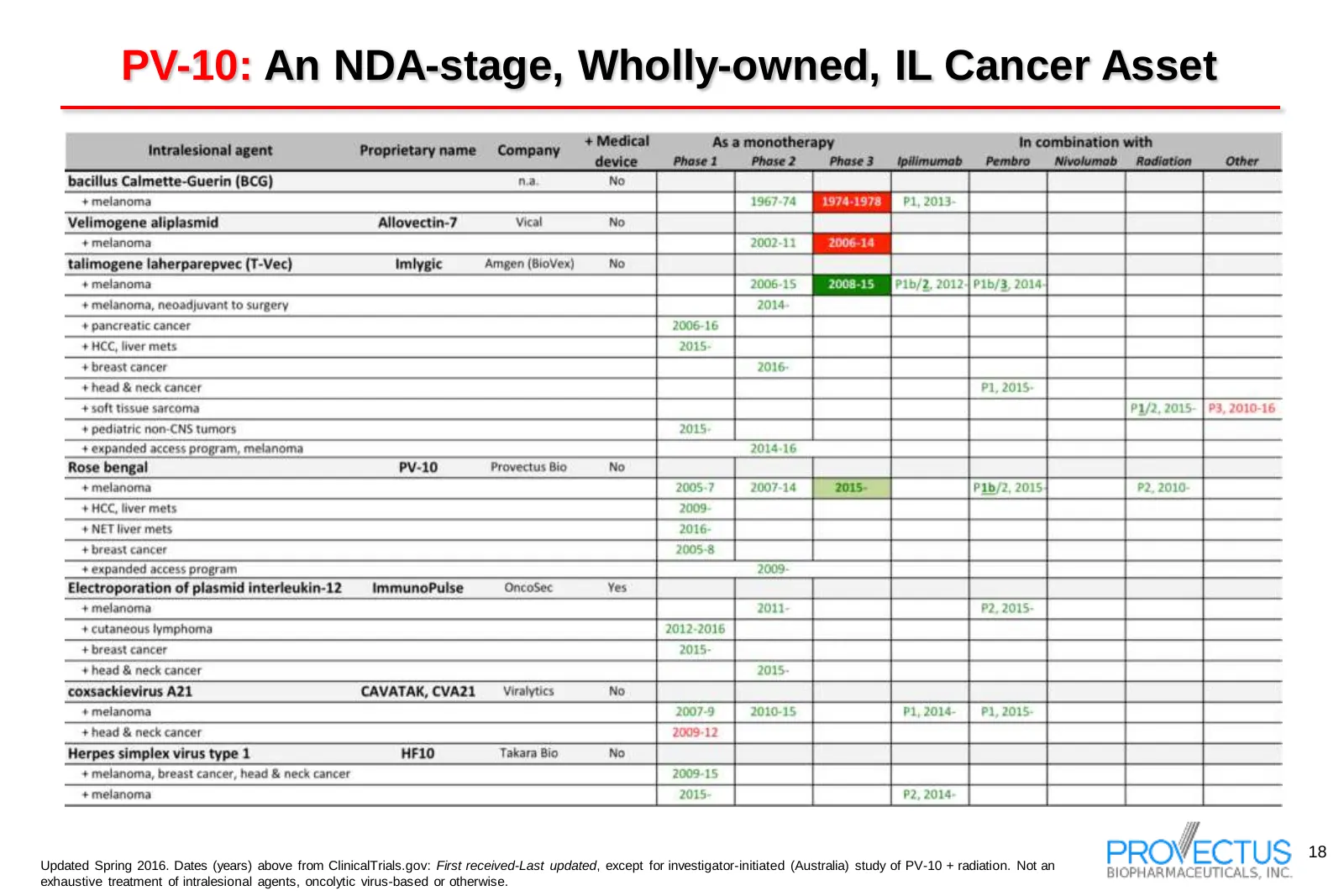
PV-10: An NDA-stage, Wholly-owned, IL Cancer Asset 18 Updated Spring 2016. Dates (years) above from ClinicalTrials.gov: First received-Last updated, except for investigator-initiated (Australia) study of PV-10 + radiation. Not an exhaustive treatment of intralesional agents, oncolytic virus-based or
Slide 19: Compassionate Use (Expanded Access) Program
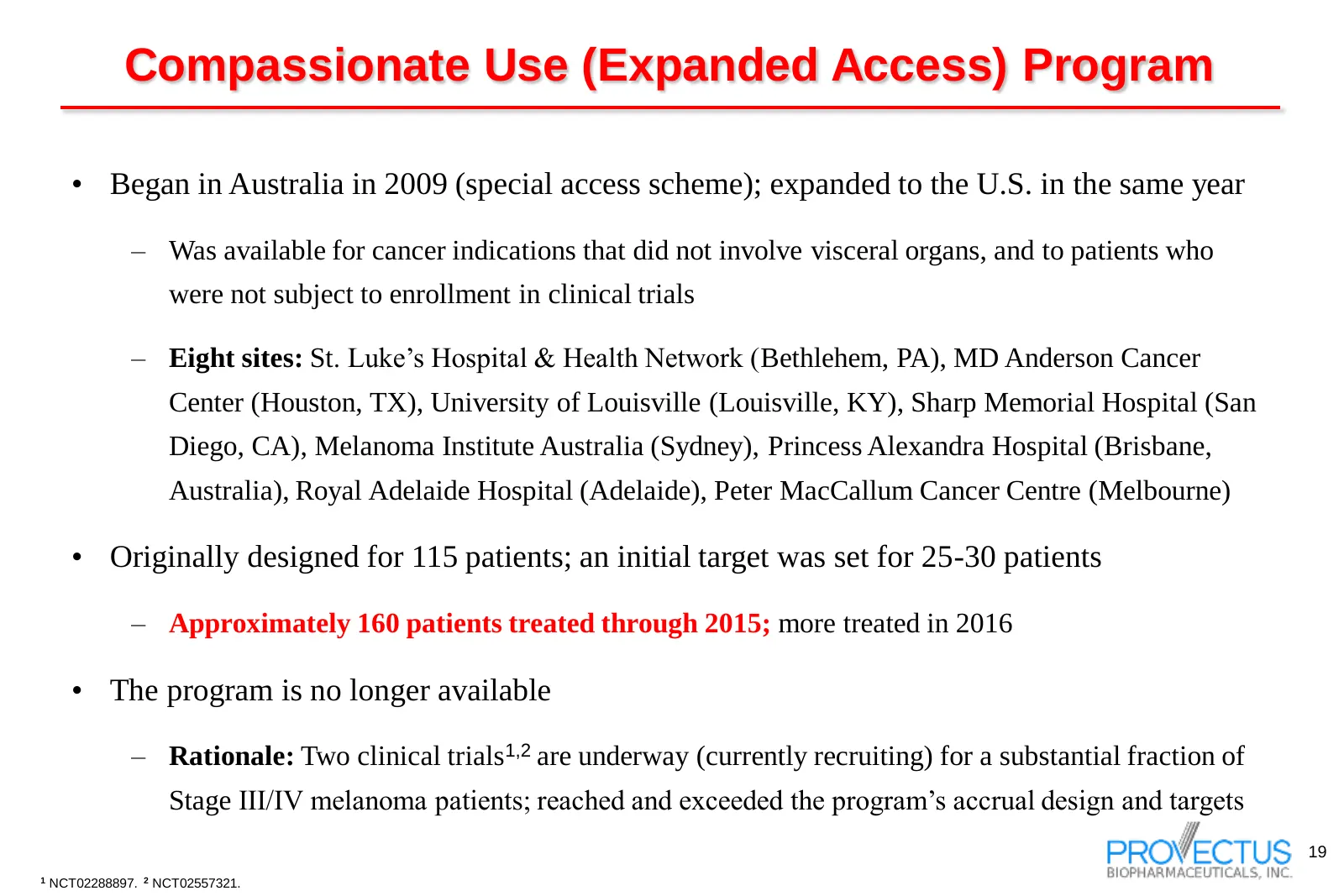
Compassionate Use (Expanded Access) Program • Began in Australia in 2009 (special access scheme); expanded to the U.S. in the same year – Was available for cancer indications that did not involve visceral organs, and to patients who were not subject to enrollment in clinical trials – Eight sites: St
Slide 20: Clinical Data: Compassionate Use (Expanded Access) Program
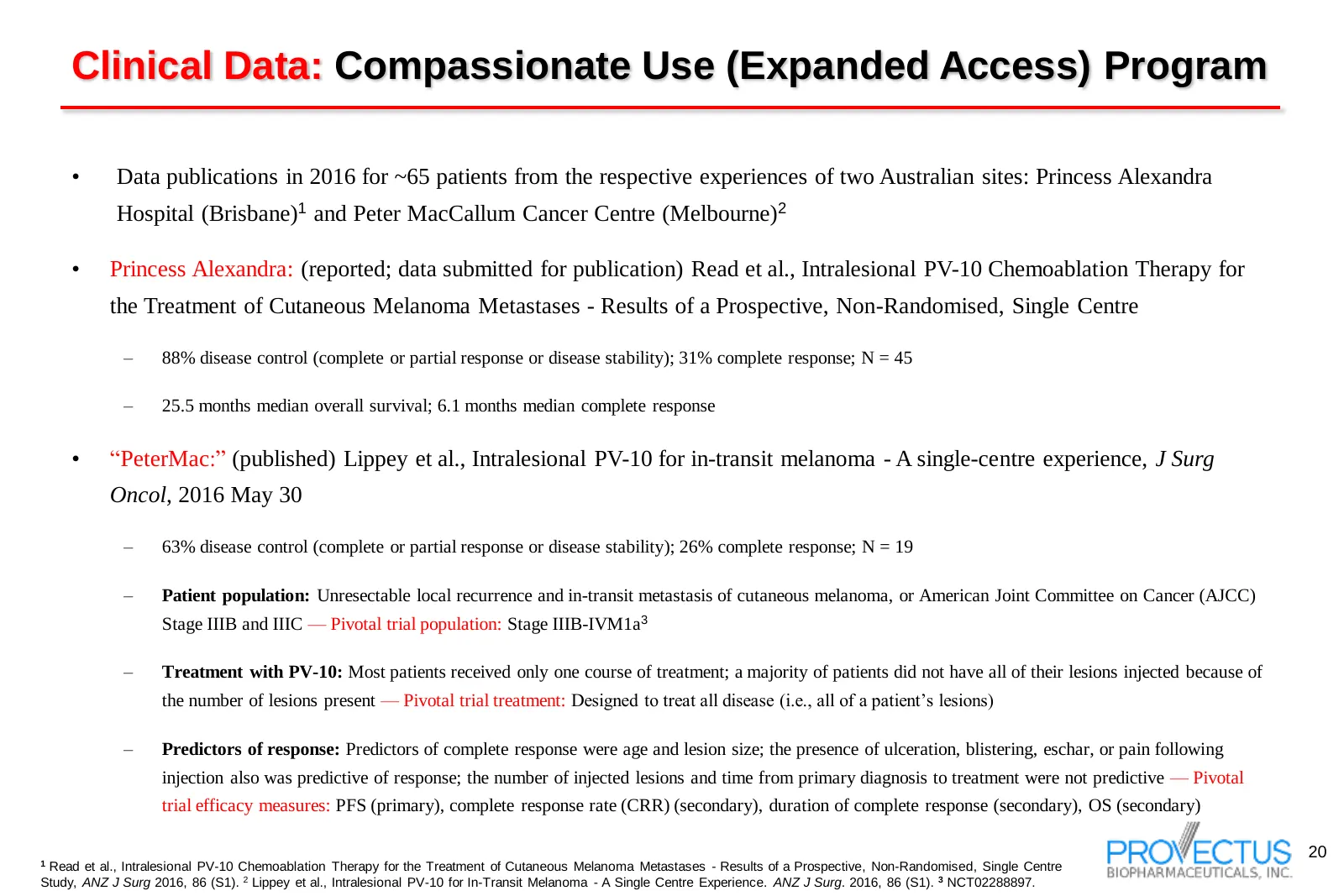
Clinical Data: Compassionate Use (Expanded Access) Program • Data publications in 2016 for ~65 patients from the respective experiences of two Australian sites: Princess Alexandra Hospital (Brisbane)1 and Peter MacCallum Cancer Centre (Melbourne)2 • Princess Alexandra: (reported; data submitted for
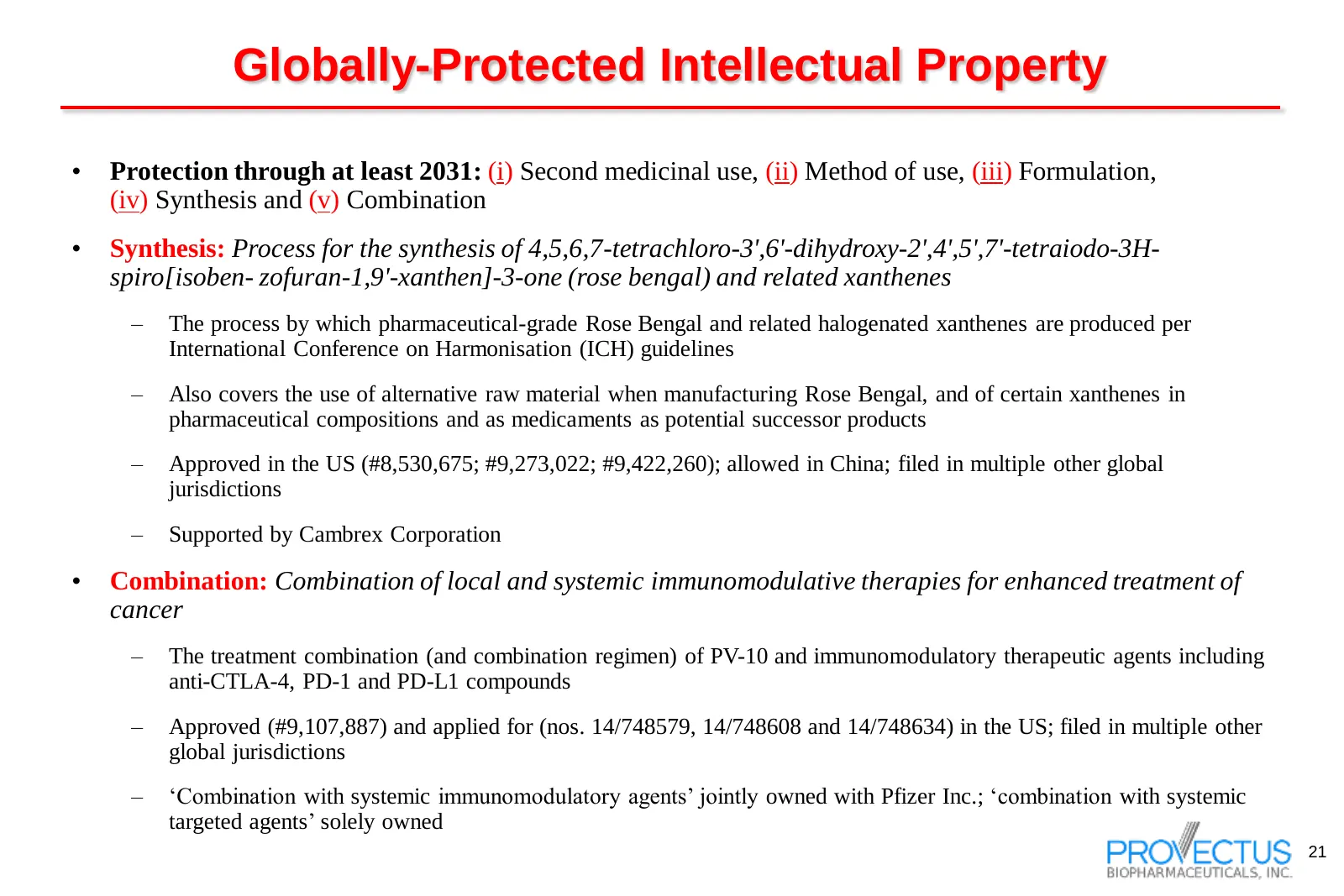
Slide 21: Globally-Protected Intellectual Property
Globally-Protected Intellectual Property • Protection through at least 2031: (i) Second medicinal use, (ii) Method of use, (iii) Formulation, (iv) Synthesis and (v) Combination • Synthesis: Process for the synthesis of 4,5,6,7-tetrachloro-3',6'-dihydroxy-2',4',5',7'-tetraiodo-3H- spiro[isoben- zofur
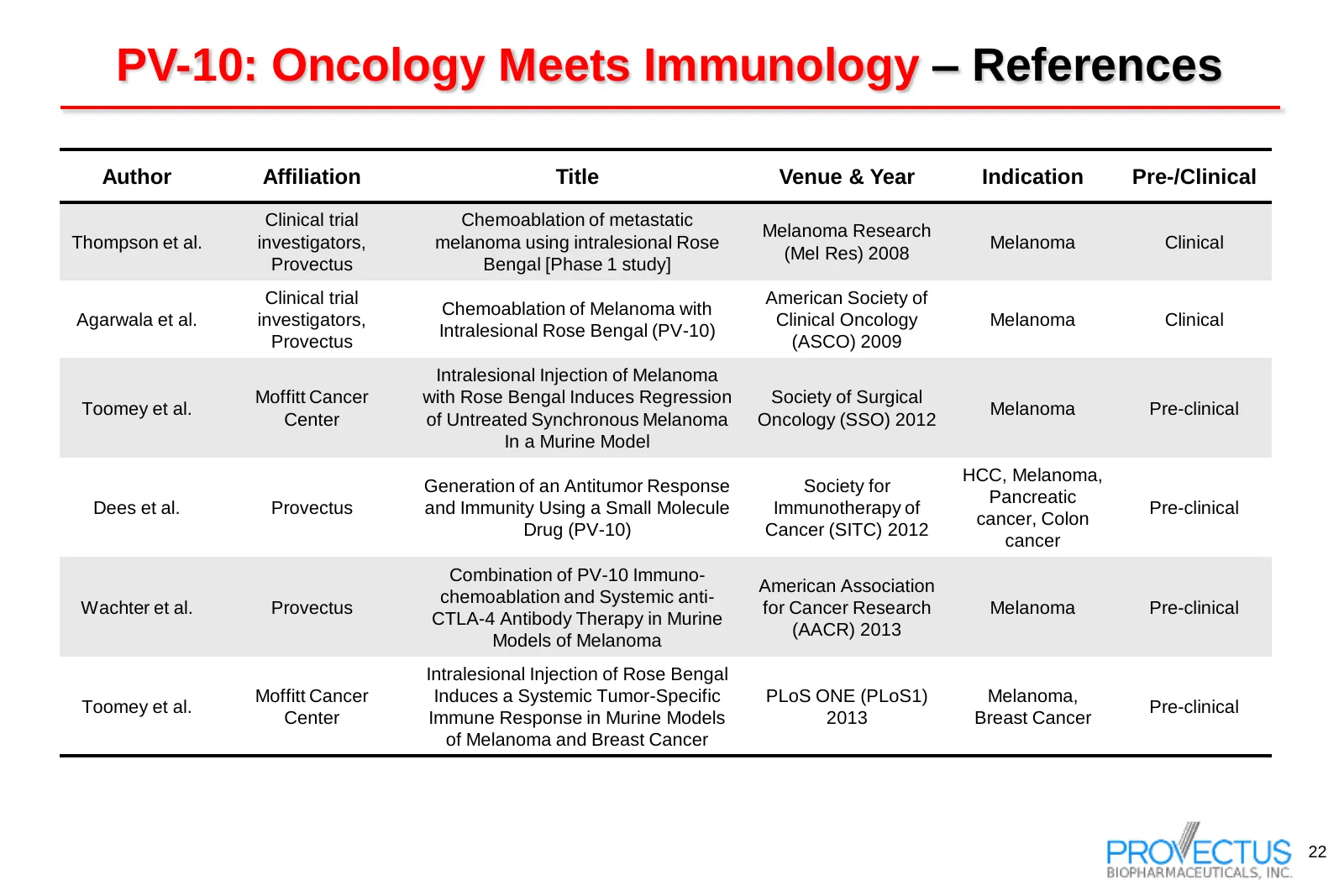
Slide 22: PV-10: Oncology Meets Immunology – References
PV-10: Oncology Meets Immunology – References Author Affiliation Title Venue & Year Indication Pre-/Clinical Clinical trial Chemoablation of metastatic Melanoma Research Thompson et al. investigators, melanoma using intralesional Rose Melanoma Clinical (Mel Res) 2008 Provectus Bengal [Phase 1 study]
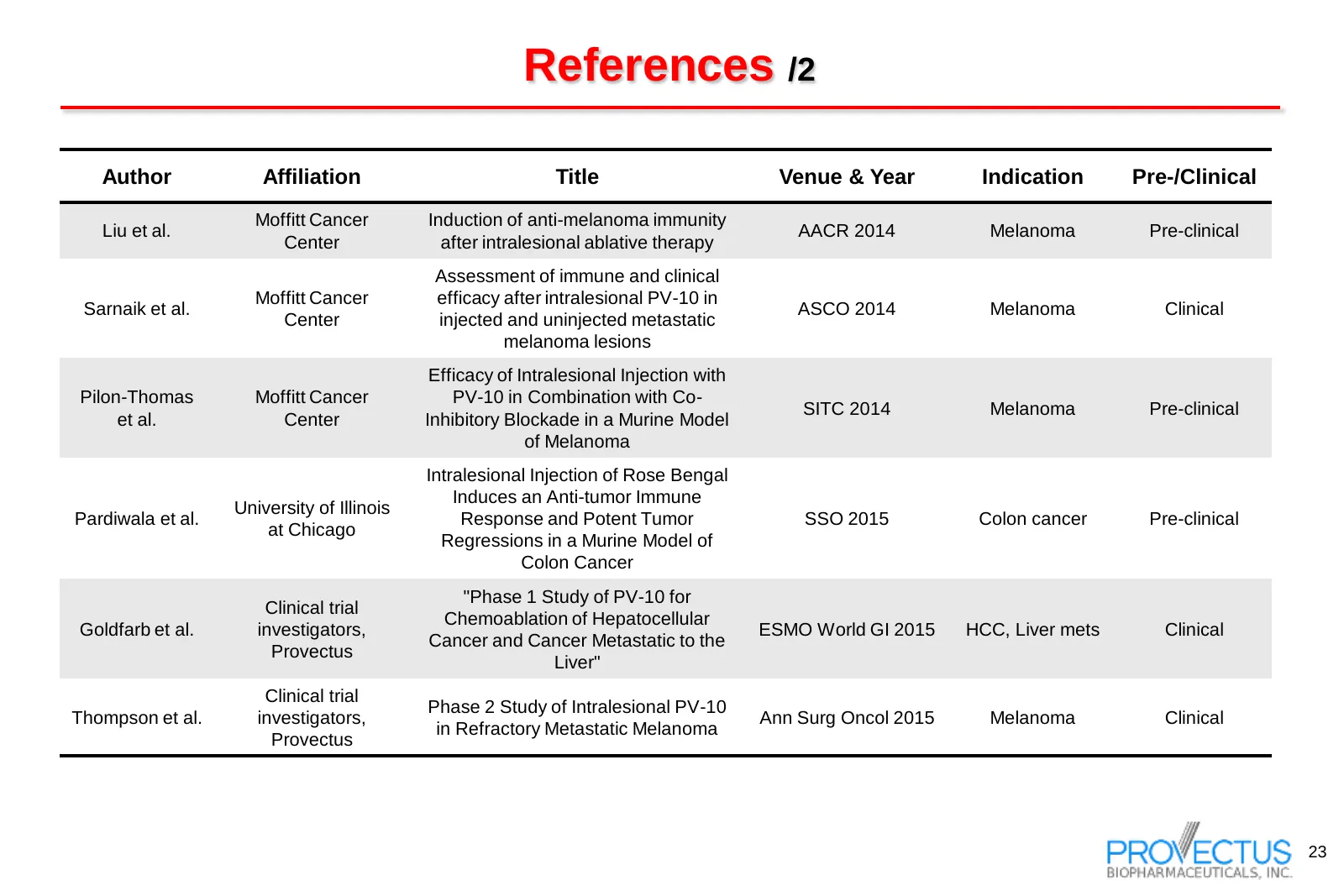
Slide 23: References /2
References /2 Author Affiliation Title Venue & Year Indication Pre-/Clinical Moffitt Cancer Induction of anti-melanoma immunity Liu et al. AACR 2014 Melanoma Pre-clinical Center after intralesional ablative therapy Assessment of immune and clinical Moffitt Cancer efficacy after intralesional PV-10 i
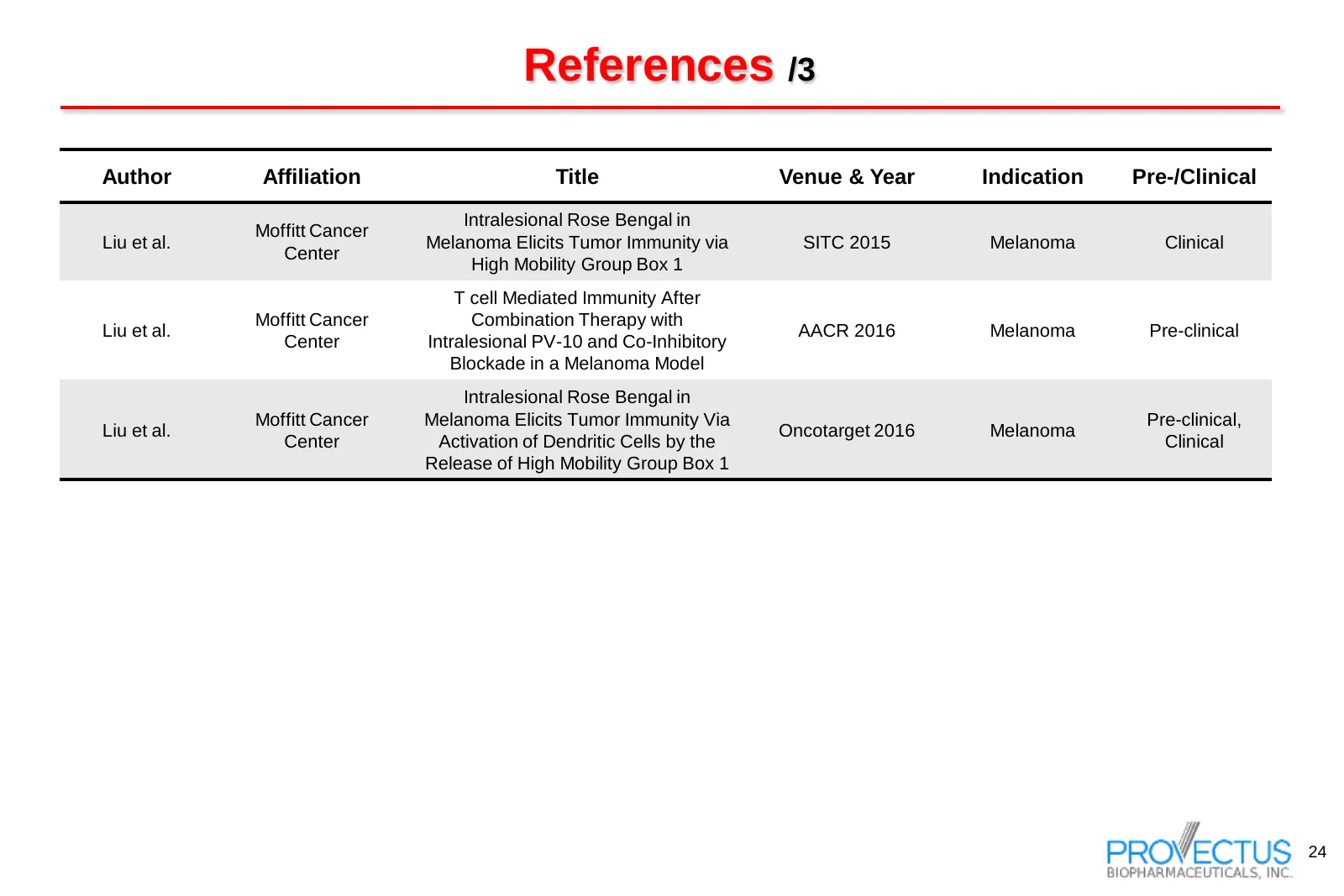
Slide 24: References /3
References /3 Author Affiliation Title Venue & Year Indication Pre-/Clinical Intralesional Rose Bengal in Moffitt Cancer Liu et al. Melanoma Elicits Tumor Immunity via SITC 2015 Melanoma Clinical Center High Mobility Group Box 1 T cell Mediated Immunity After Moffitt Cancer Combination Therapy with
Source: Internet Archive copy of provectusbio.com
More decks from Provectus Biopharmaceuticals, Inc.
 Shareholder Meeting (June 2026)24 slides · Jun 18, 2026
 Investor Presentation (2026)19 slides · Jan 19, 2026
 Shareholder Meeting (June 2025)19 slides · Jun 18, 2025
 Corporate Update (November 2024)19 slides · Nov 14, 2024
 Shareholder Meeting (June 2024)23 slides · Jun 20, 2024
 Investor Presentation (May 2024)16 slides · May 15, 2024