Anavex Life Sciences Corp. · NASDAQ:AVXL
Anavex Life Sciences — Investor Presentation (June 2017)
51 slides from Anavex Life Sciences's investor presentation, June 2017

Slide 1: Corporate Presentation
Nasdaq: AVXL Corporate Presentation Christopher U Missling, PhD President & CEO June 2017
Slide 2: Safe Harbor
SAFE HARBOR This presentation contains forward-looking statements made within the meaning of the Private Securities Litigation Reform Act of 1995 by AnavexTM Life Sciences Corp. and its representatives. These statements can be identified by introductory words such as “expects,” “plans,” “intends,” “
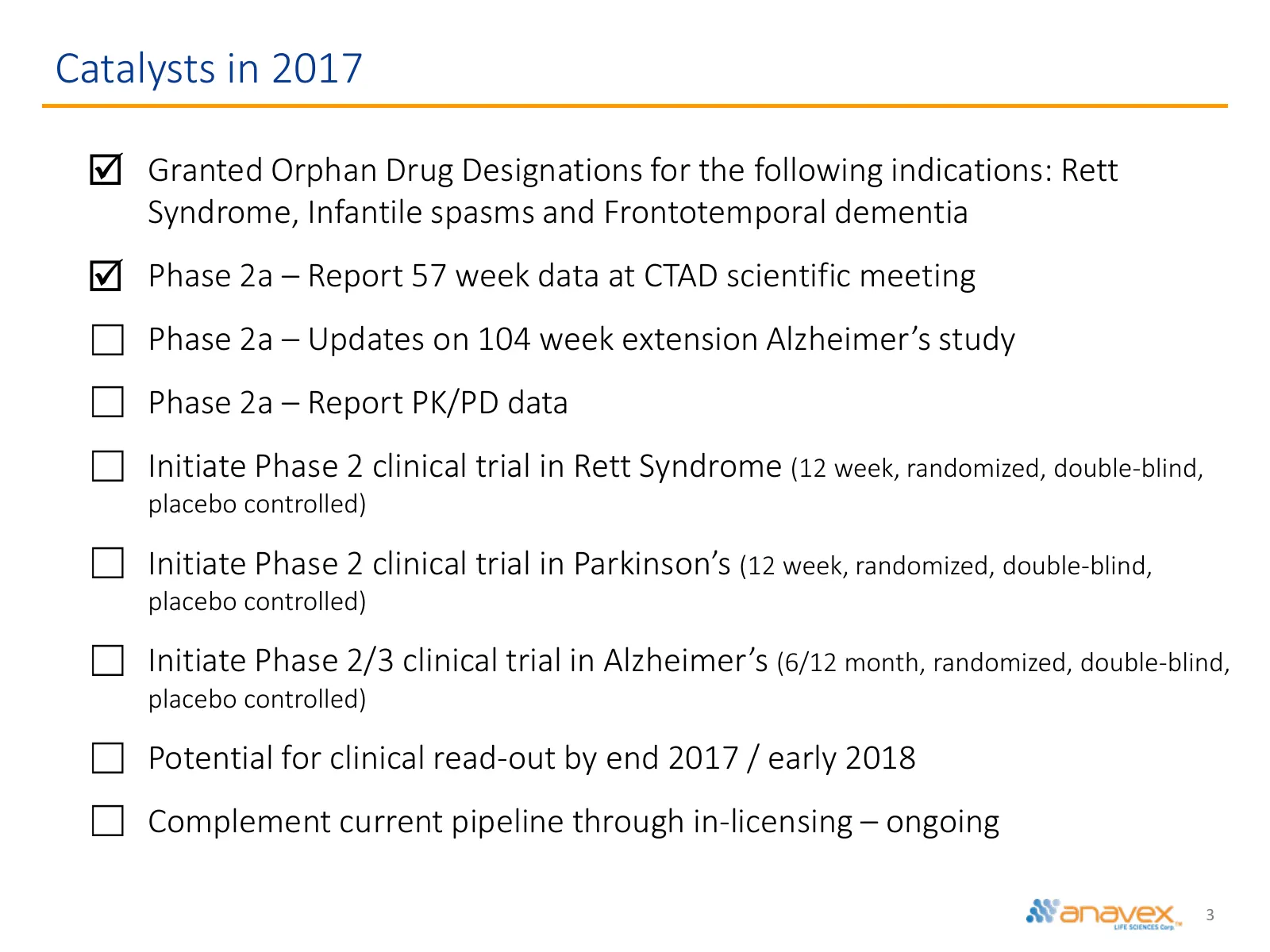
Slide 3: Catalysts in 2017
Catalysts in 2017 Granted Orphan Drug Designations for the following indications: Rett Syndrome, Infantile spasms and Frontotemporal dementia Phase 2a – Report 57 week data at CTAD scientific meeting ☐ Phase 2a – Updates on 104 week extension Alzheimer’s study ☐ Phase 2a – Report PK/PD data ☐ In
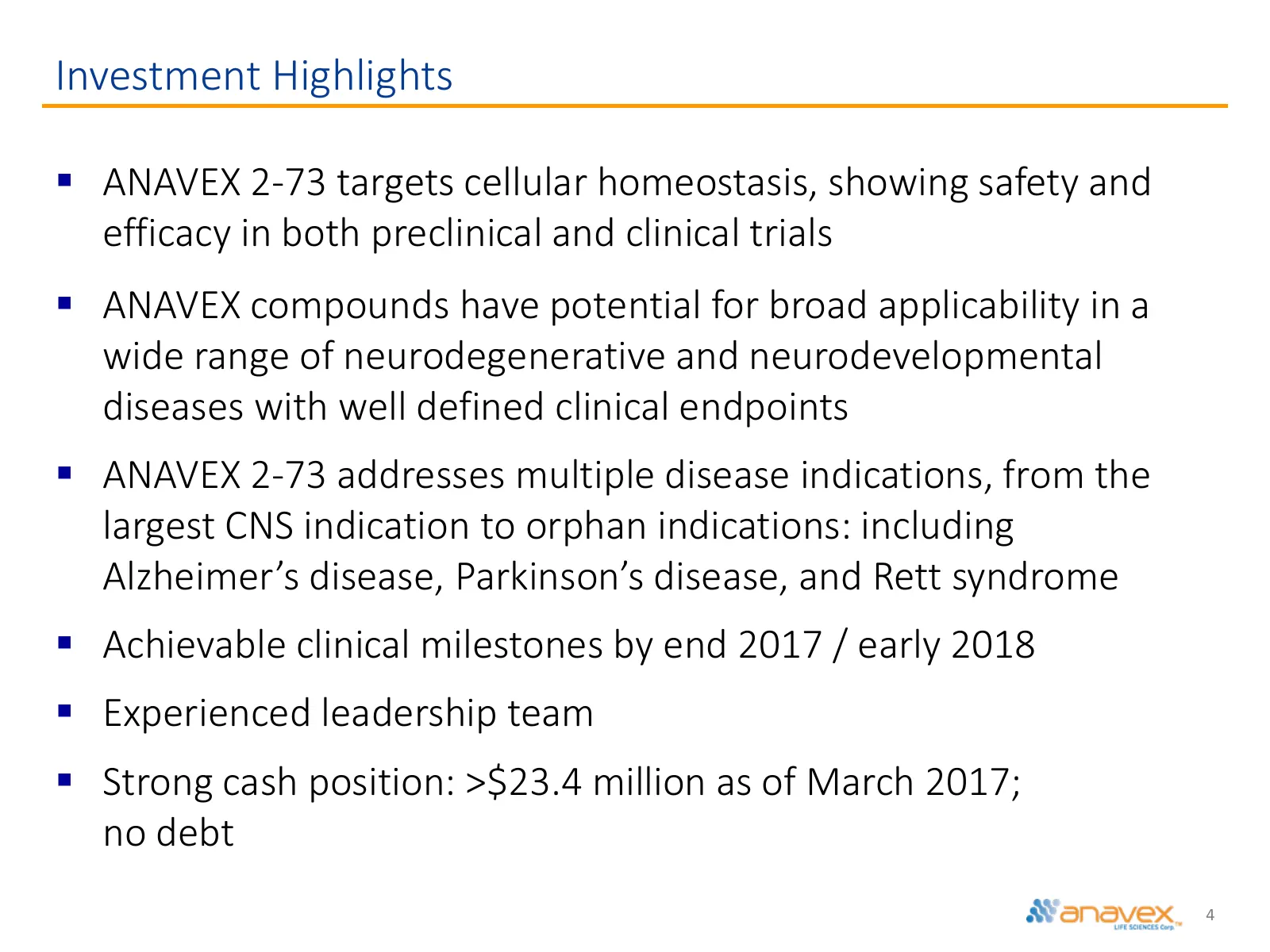
Slide 4: Investment Highlights
Investment Highlights ▪ ANAVEX 2-73 targets cellular homeostasis, showing safety and efficacy in both preclinical and clinical trials ▪ ANAVEX compounds have potential for broad applicability in a wide range of neurodegenerative and neurodevelopmental diseases with well defined clinical endpoints ▪
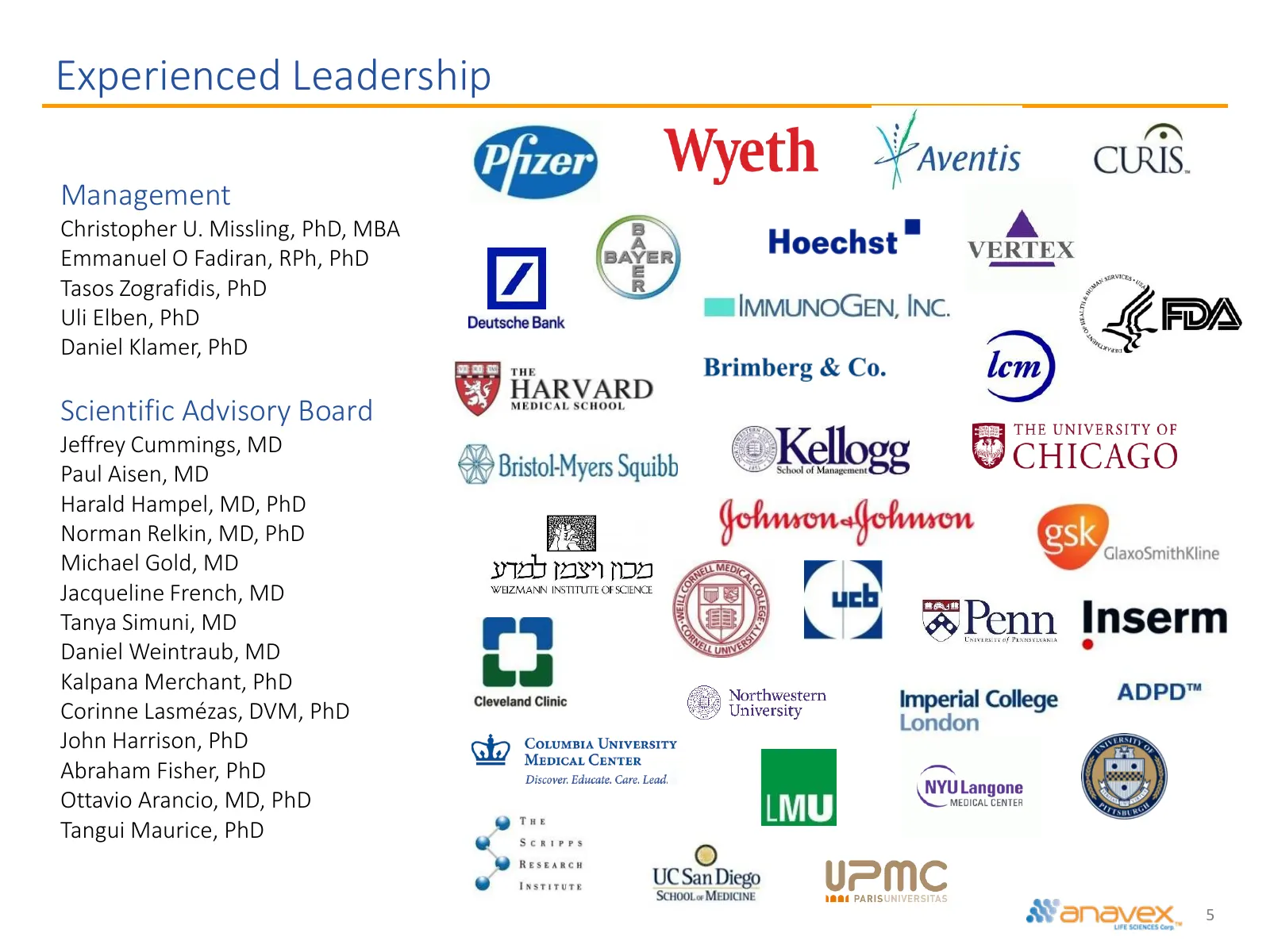
Slide 5: Experienced Leadership
Experienced Leadership Management Christopher U. Missling, PhD, MBA Emmanuel O Fadiran, RPh, PhD Tasos Zografidis, PhD Uli Elben, PhD Daniel Klamer, PhD Scientific Advisory Board Jeffrey Cummings, MD Paul Aisen, MD Harald Hampel, MD, PhD Norman Relkin, MD, PhD Michael Gold, MD Jacqueline French, MD
Slide 6: Our Mission
OUR MISSION Developing Effective Targeted Therapies for the Treatment of Neurodevelopmental and Neurodegenerative Diseases under the Precision Medicine Paradigm Wenevex
Slide 7: Clinical Targets: Restoring Homeostasis
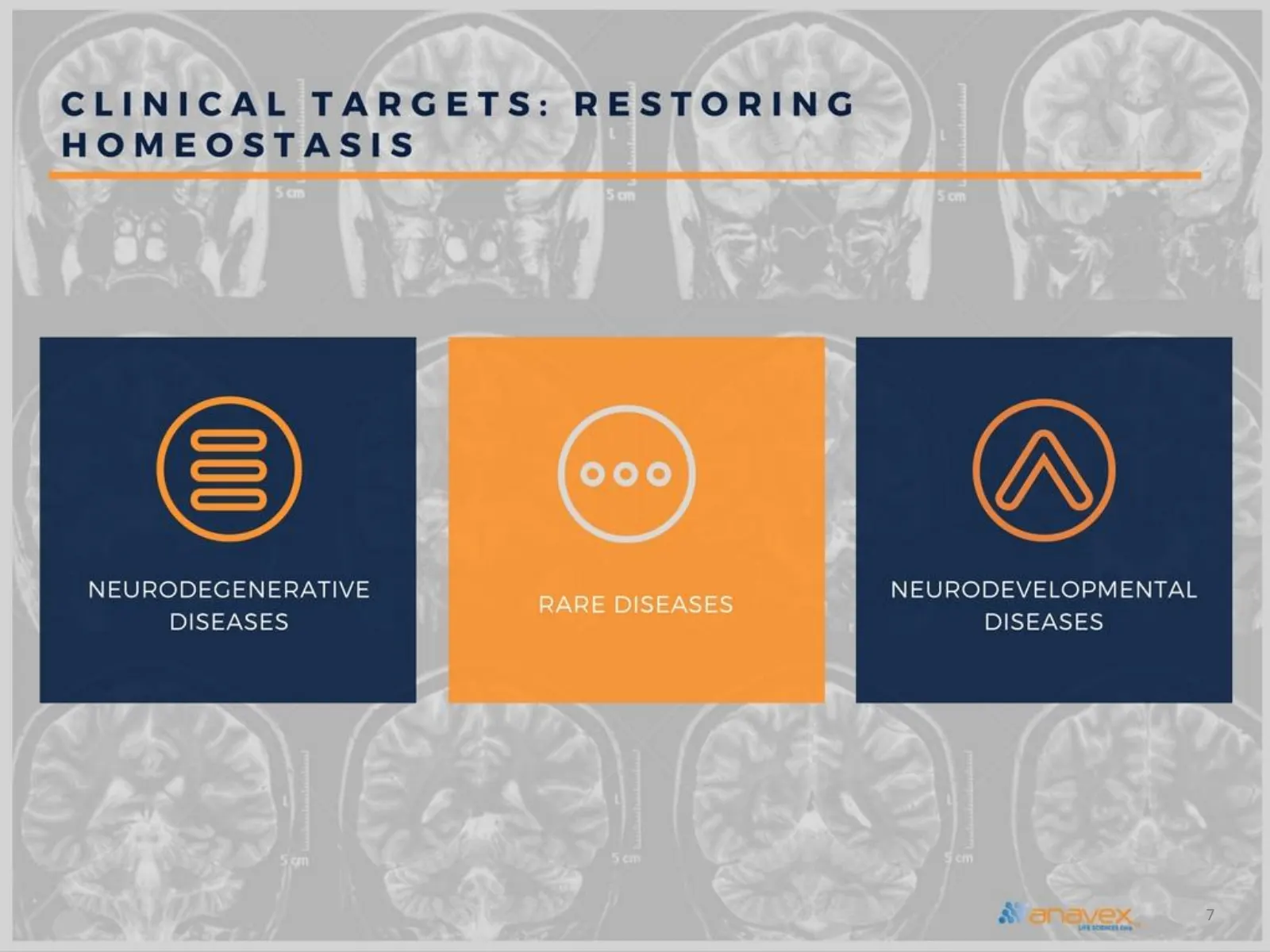
CLINICAL TARGETS: RESTORING HOMEOSTASIS NEURODEGENERATIVE DISEASES NEURODEVELOPMENTAL DISEASES s
Slide 8: Clinical Targets: Restoring Homeostasis
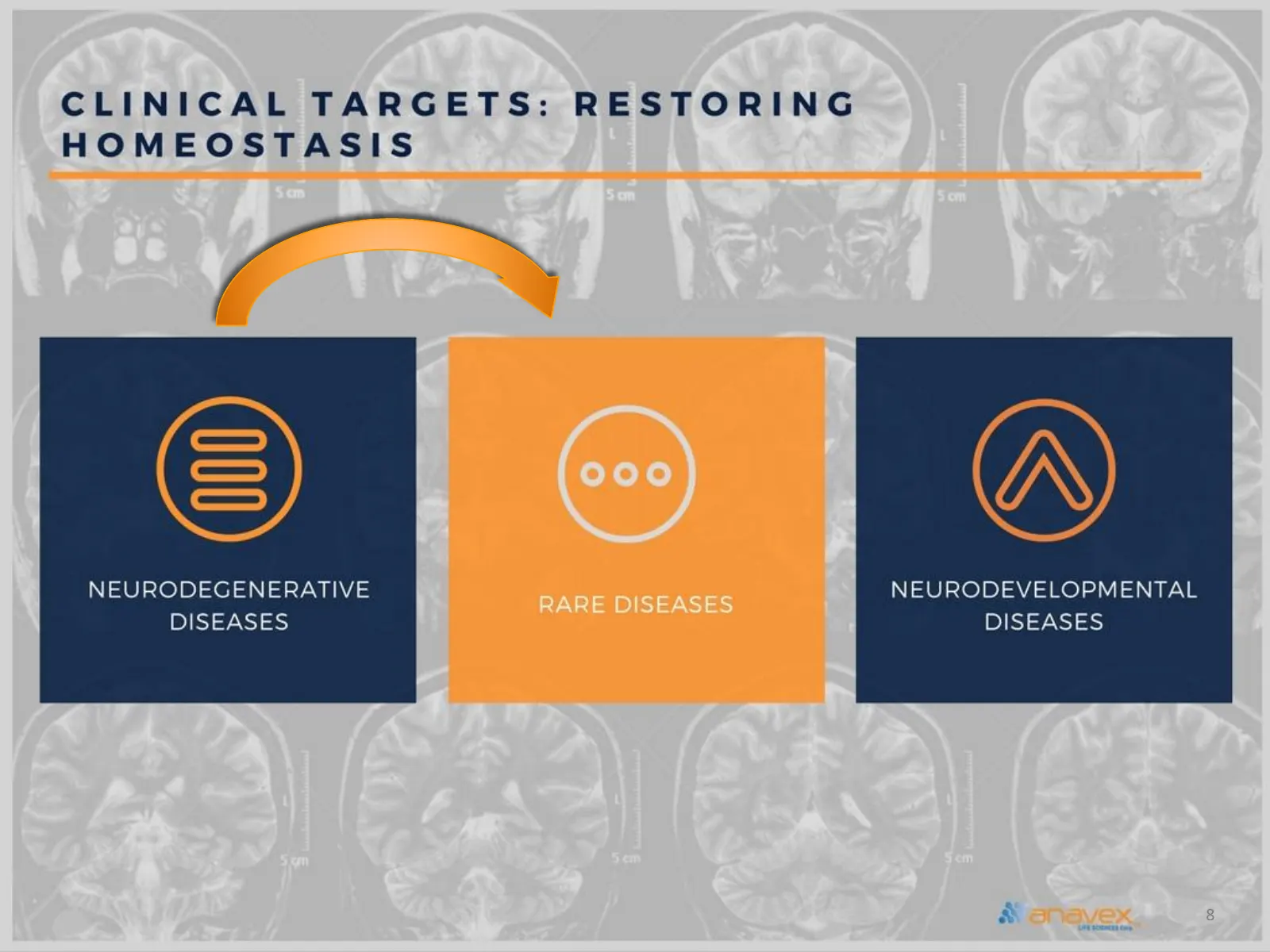
CLINICAL TARGETS: RESTORING HOMEOSTASIS NEURODEGENERATIVE DISEASES NEURODEVELOPMENTAL DISEASES s
Slide 9: Clinical Targets: Restoring Homeostasis
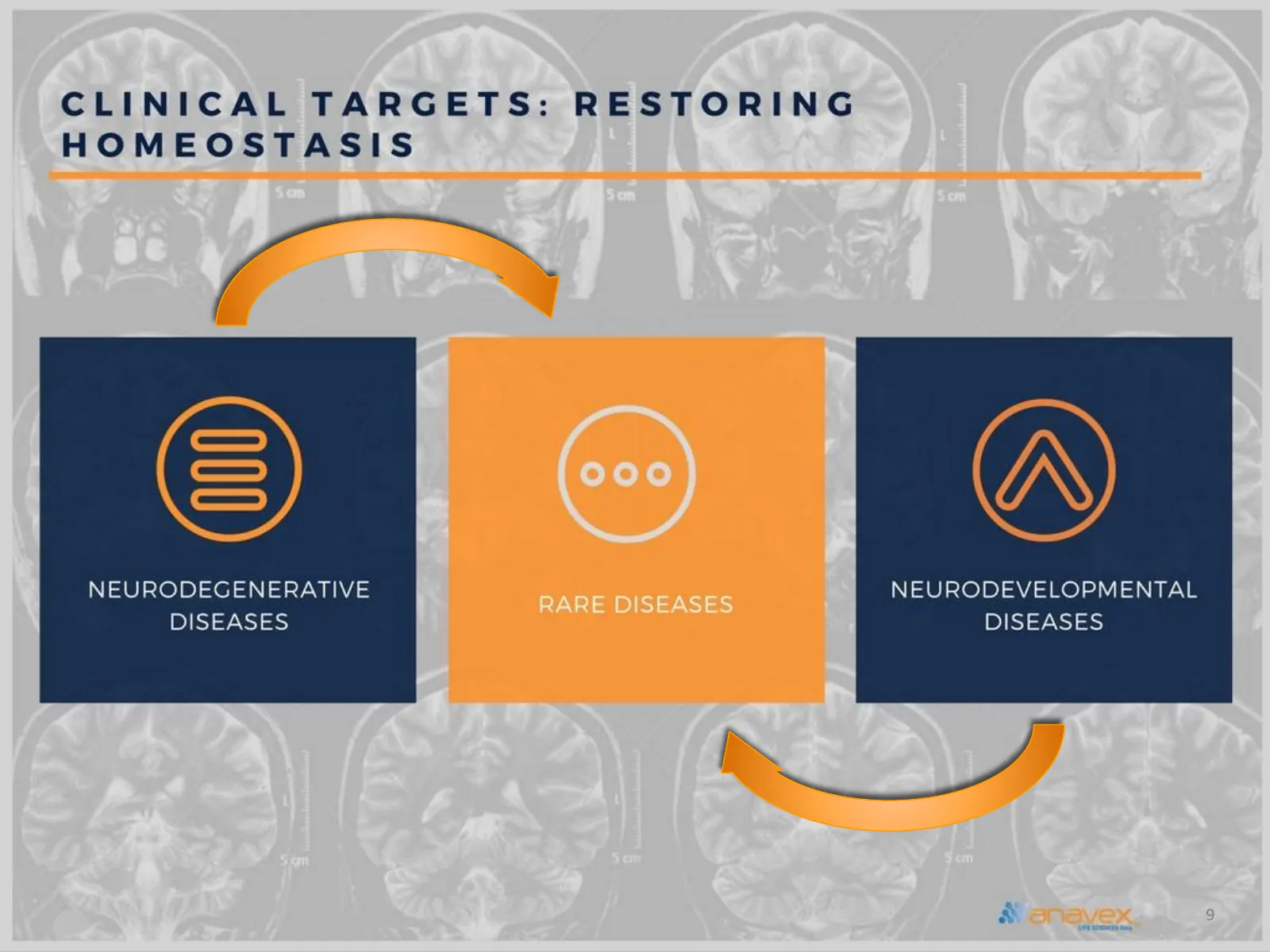
CLINICAL TARGETS: RESTORING HOMEOSTASIS NEURODEGENERATIVE NEURODEVELOPMENTAL DISEASES DISEASES %
Slide 10: Neurodegenerative Diseases
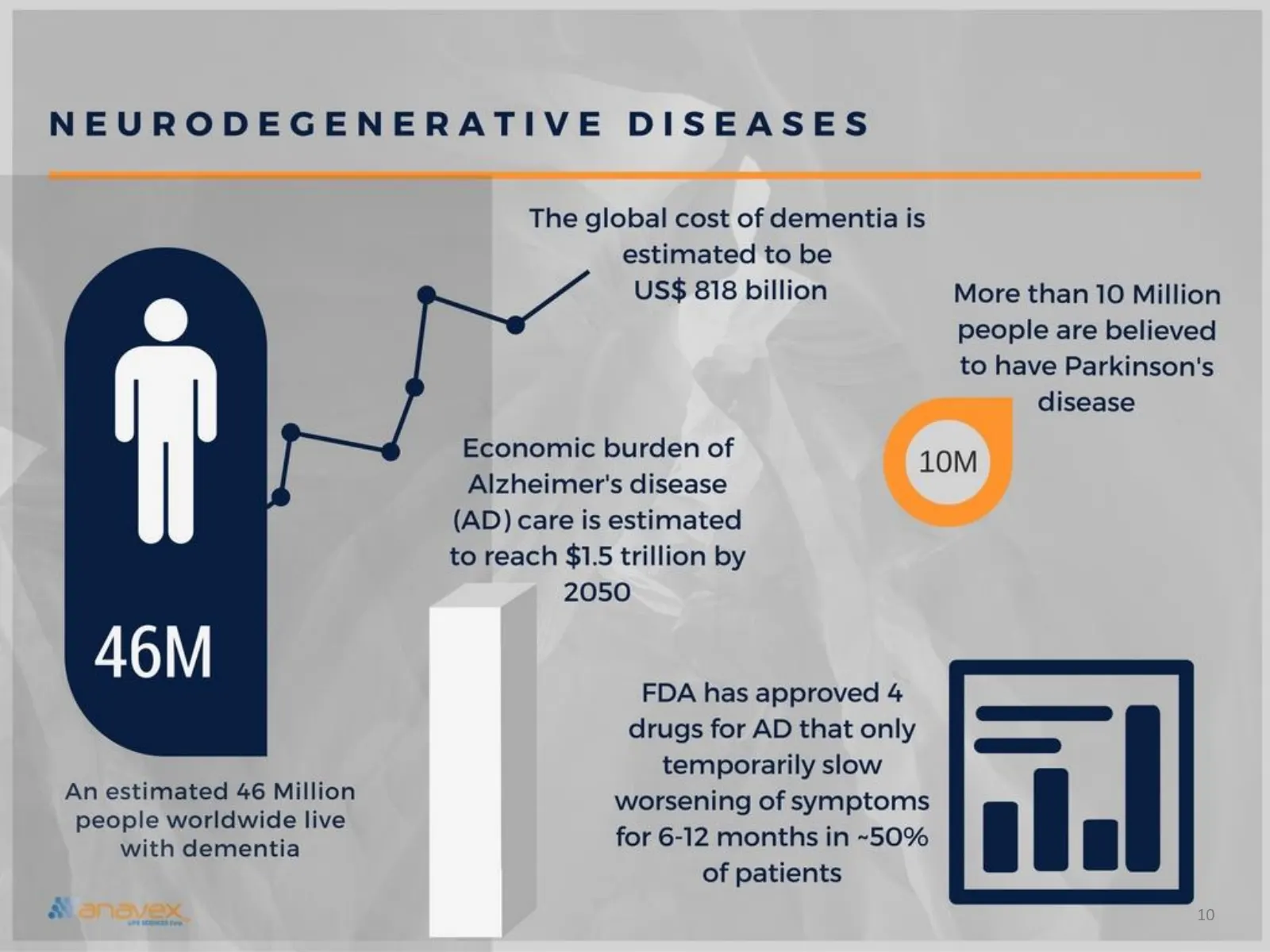
NEURODEGENERATIVE DISEASES The global cost of dementia is estimated to be US$ 818 billion More than 10 Million people are believed to have Parkinson's disease Economic burden of Alzheimer's disease (AD) care is estimated to reach $1.5 trillion by 2050 FDA has approved 4 drugs for AD that only tempor
Slide 11: Sources
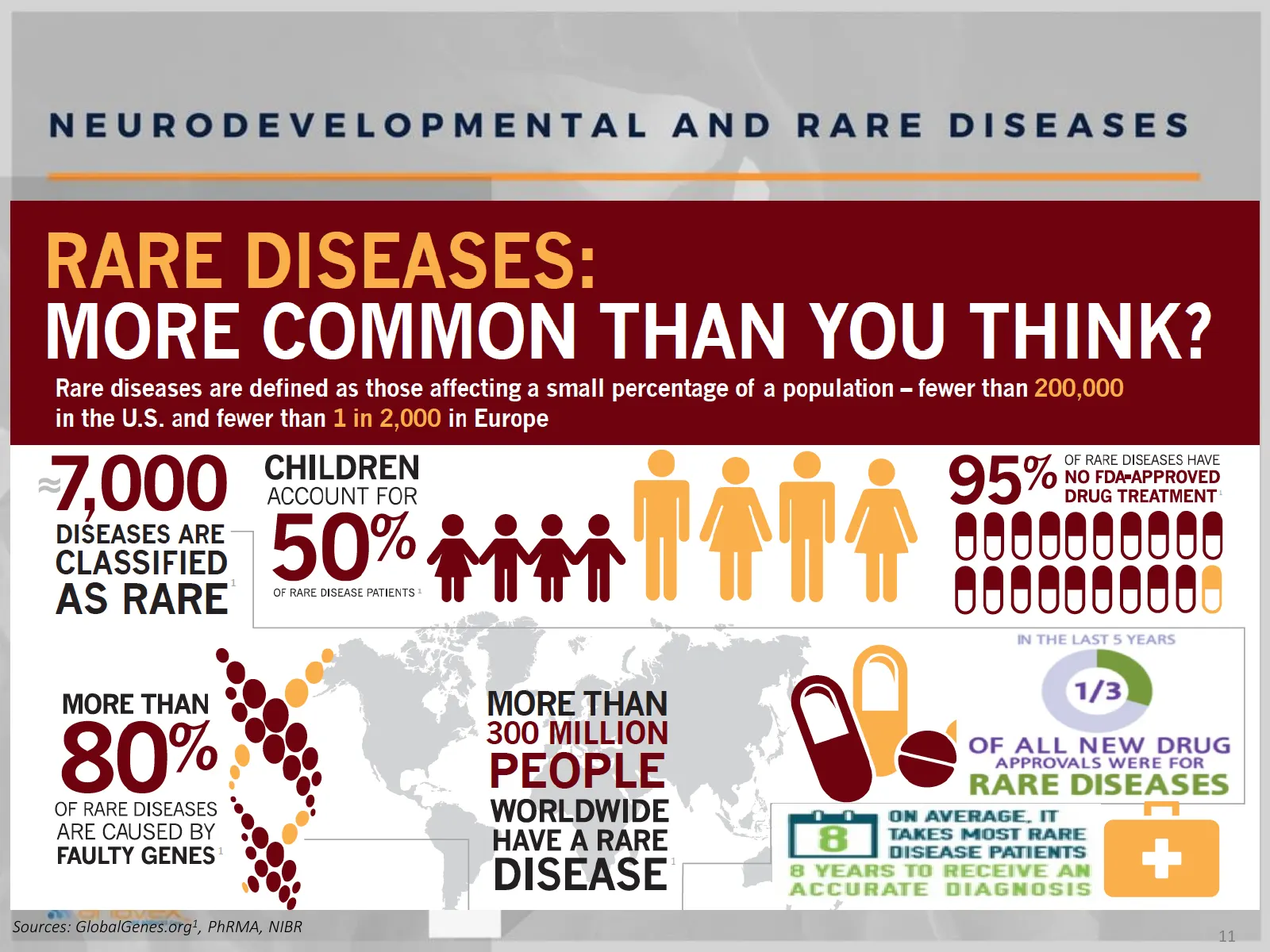
11 Sources: GlobalGenes.org1, PhRMA, NIBR 11
Slide 12: 12
12
Slide 13: Confirmed Effects of Sigma-1 Receptor Activation
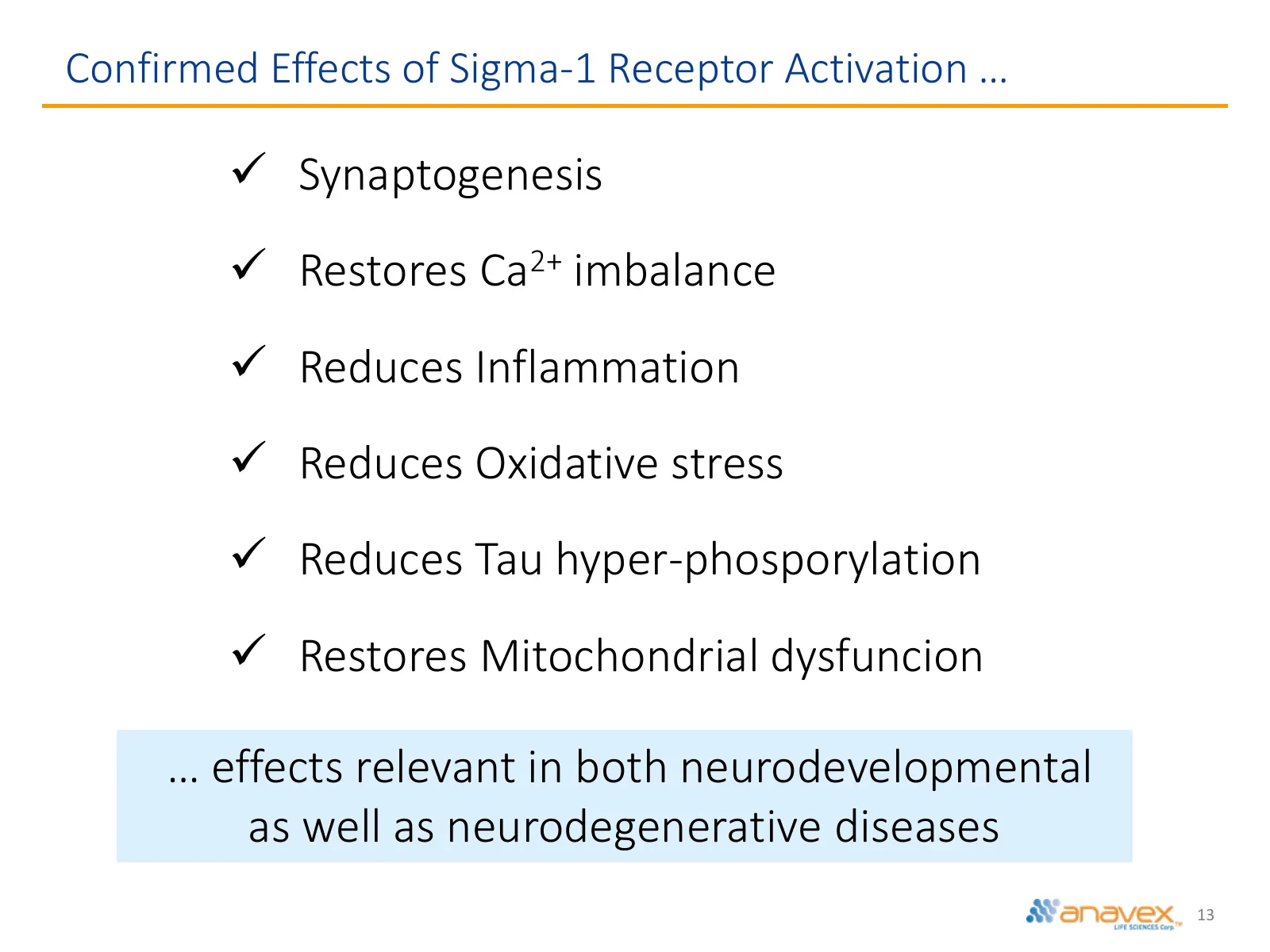
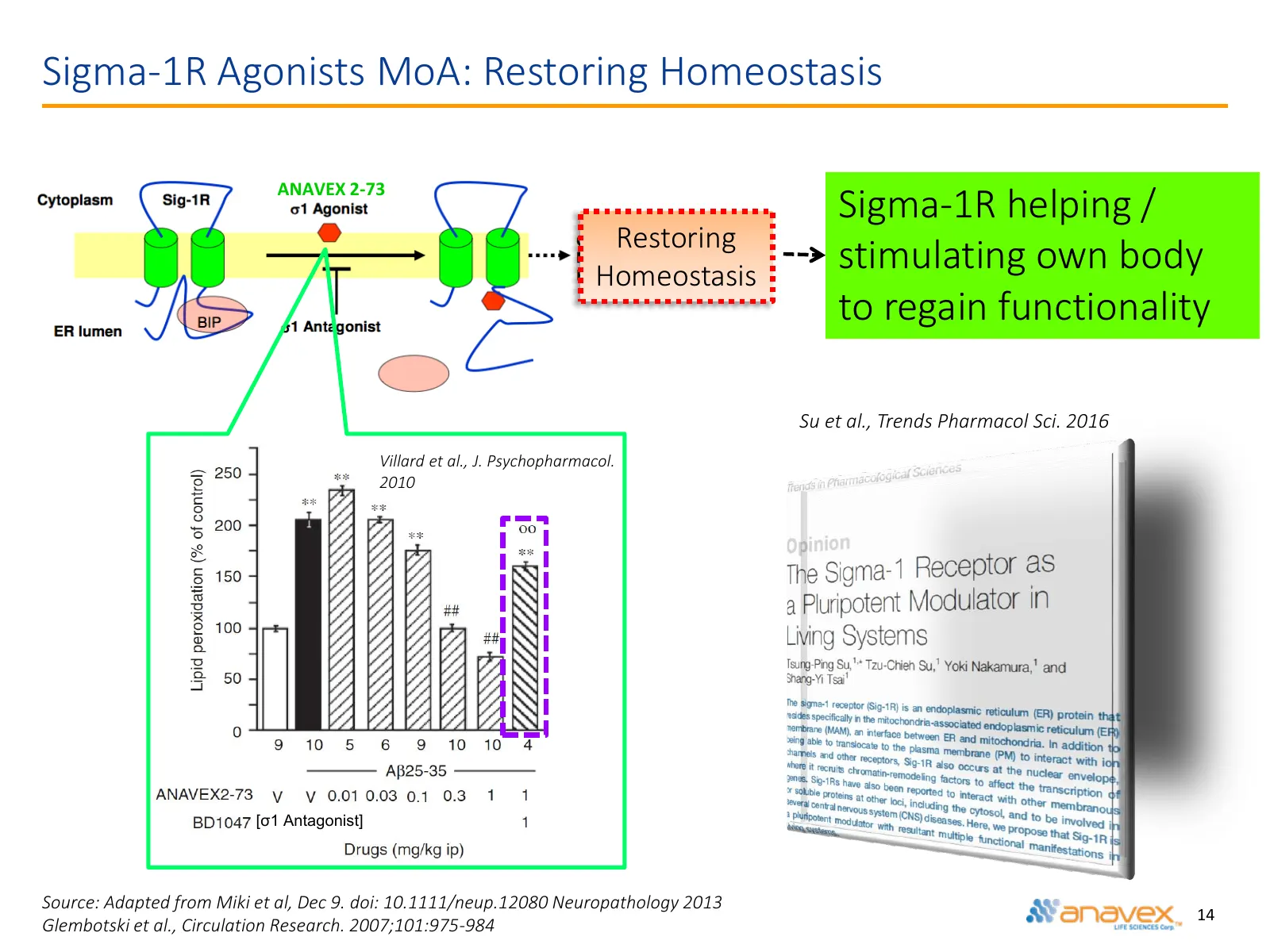
Confirmed Effects of Sigma-1 Receptor Activation … ✓ Synaptogenesis ✓ Restores Ca2+ imbalance ✓ Reduces Inflammation ✓ Reduces Oxidative stress ✓ Reduces Tau hyper-phosporylation ✓ Restores Mitochondrial dysfuncion … effects relevant in both neurodevelopmental as well as neurodegenerative diseases 1
Slide 14: Sigma-1R Agonists MoA: Restoring Homeostasis
Sigma-1R Agonists MoA: Restoring Homeostasis ANAVEX 2-73 Sigma-1R helping / Restoring Homeostasis stimulating own body to regain functionality Su et al., Trends Pharmacol Sci. 2016 Villard et al., J. Psychopharmacol. 2010 [σ1 Antagonist] Source: Adapted from Miki et al, Dec 9. doi: 10.1111/neup.1208
Slide 15: BDNF Val66Met Polymorphism in Neurodevelopmental and Neurodegenerative Disorders
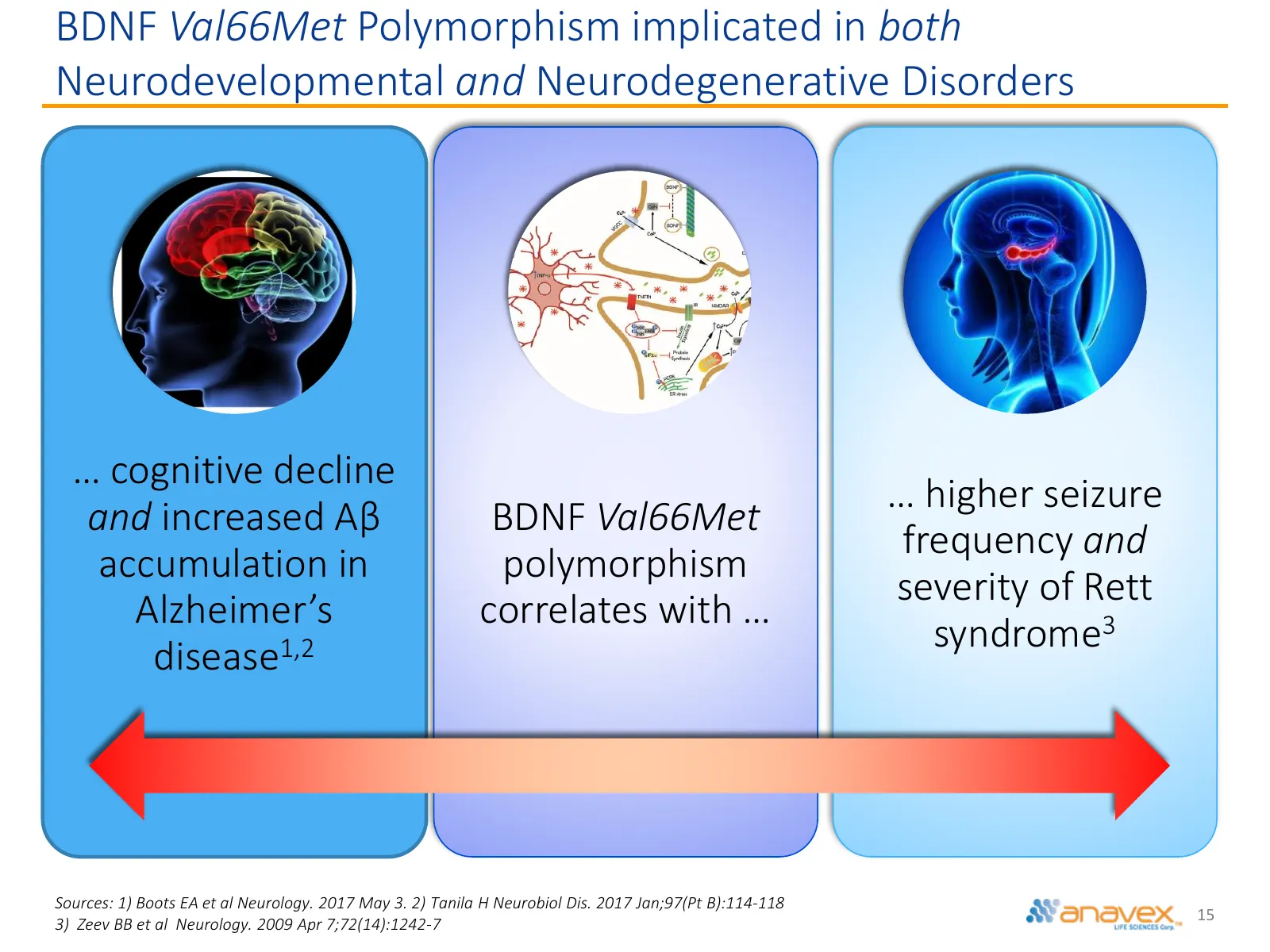
BDNF Val66Met Polymorphism implicated in both Neurodevelopmental and Neurodegenerative Disorders … cognitive decline … higher seizure and increased Aβ BDNF Val66Met frequency and accumulation in polymorphism severity of Rett Alzheimer’s correlates with … syndrome3 disease1,2 Sources: 1) Boots EA et
Slide 16: ANAVEX 2-73 Normalizes BDNF Expression in the Hippocampus
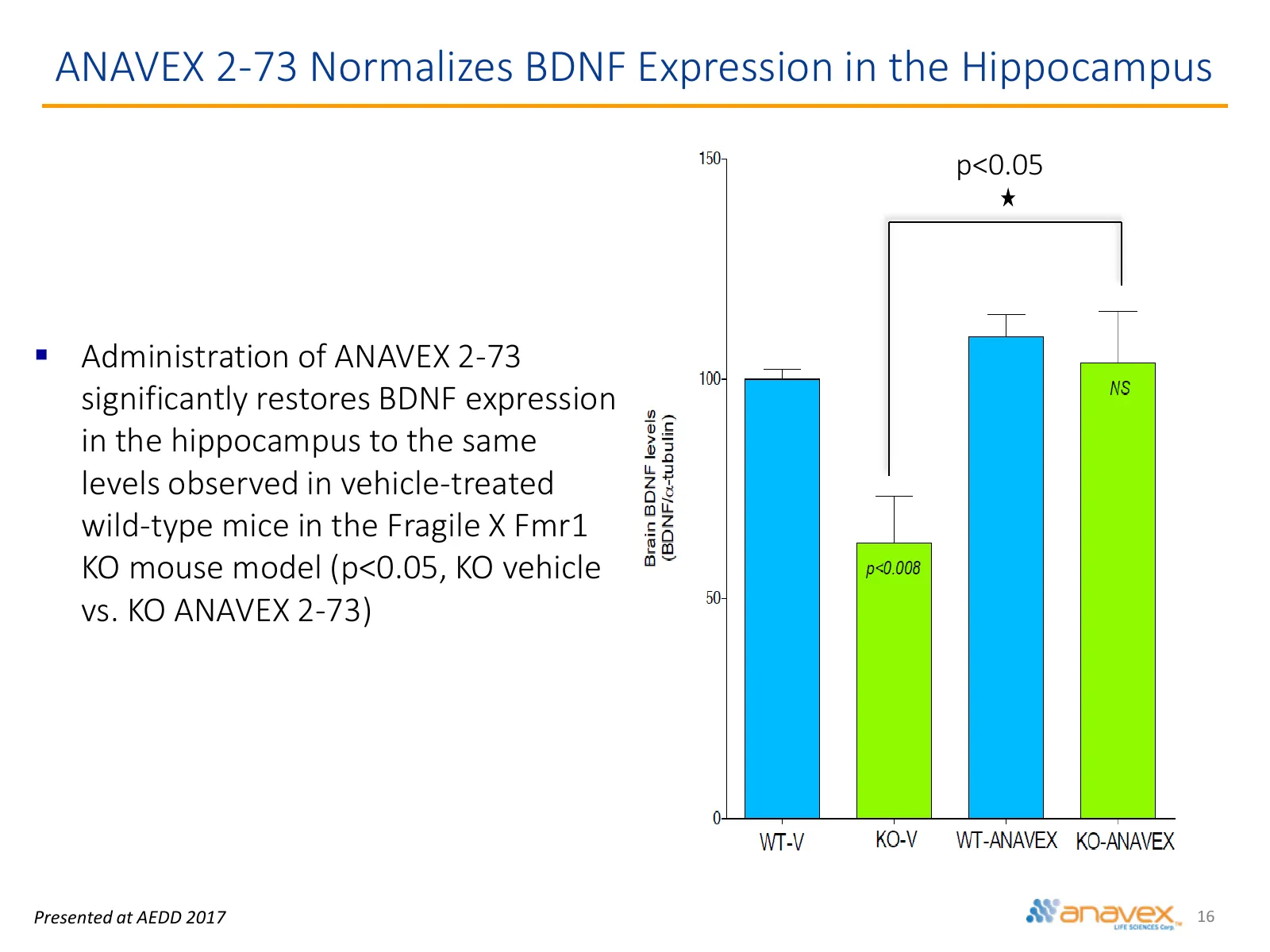
ANAVEX 2-73 Normalizes BDNF Expression in the Hippocampus p<0.05 ▪ Administration of ANAVEX 2-73 significantly restores BDNF expression in the hippocampus to the same levels observed in vehicle-treated wild-type mice in the Fragile X Fmr1 KO mouse model (p<0.05, KO vehicle vs. KO ANAVEX 2-73) Presen
Slide 17: ANAVEX 2-73: Dose-Dependent Anti-Seizure Effects
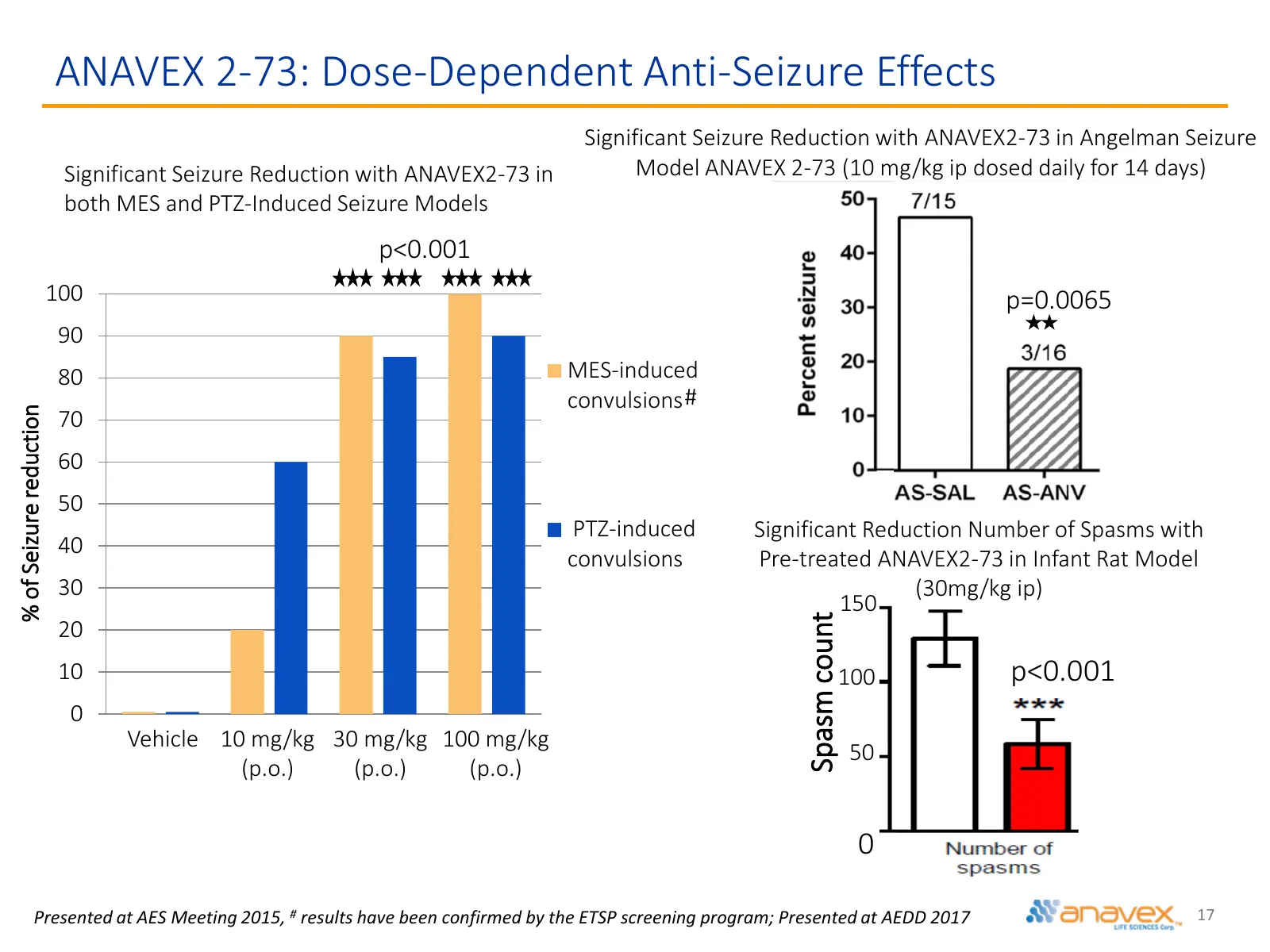
ANAVEX 2-73: Dose-Dependent Anti-Seizure Effects Significant Seizure Reduction with ANAVEX2-73 in Angelman Seizure Significant Seizure Reduction with ANAVEX2-73 in Model ANAVEX 2-73 (10 mg/kg ip dosed daily for 14 days) both MES and PTZ-Induced Seizure Models p<0.001 100 p=0.0065 90 80 MES-induced c
Slide 18: ANAVEX 2-73 Shown Safe in Phase 2a Alzheimer's Trial
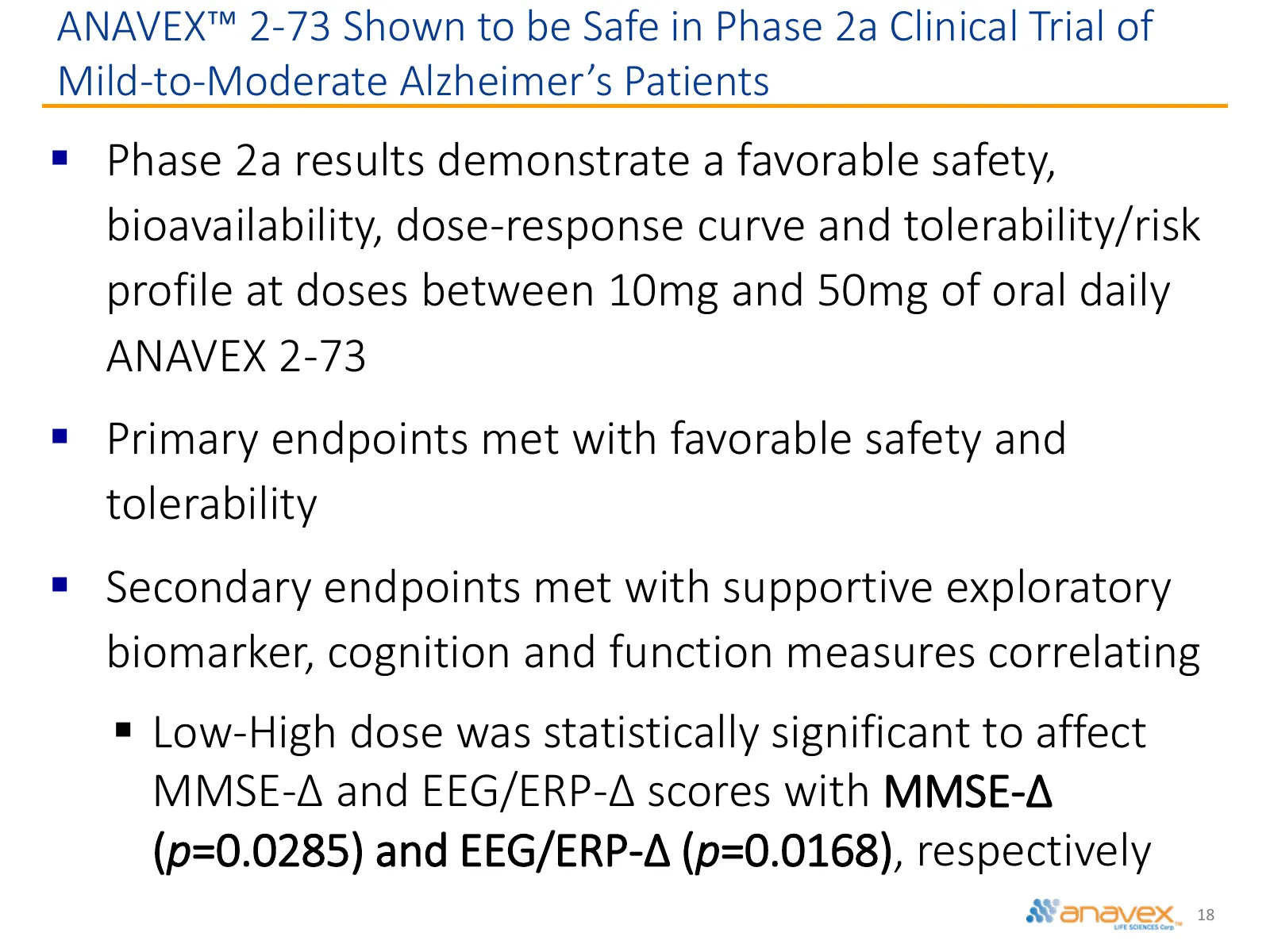
ANAVEX™ 2-73 Shown to be Safe in Phase 2a Clinical Trial of Mild-to-Moderate Alzheimer’s Patients ▪ Phase 2a results demonstrate a favorable safety, bioavailability, dose-response curve and tolerability/risk profile at doses between 10mg and 50mg of oral daily ANAVEX 2-73 ▪ Primary endpoints met wit
Slide 19: Stepwise Strategy to Address Major Unmet CNS Indications
Stepwise Strategy to Address Major Unmet CNS Indications ✓ Valuable feature of Sigma-1R agonists are their favorable safety profiles, particularly in humans due to the modulatory action of Sigma-1R ✓ Selectively only under pathological conditions while sparing normal physiological activity, thus lim
Slide 20: ANAVEX 2-73 Targeted Indications
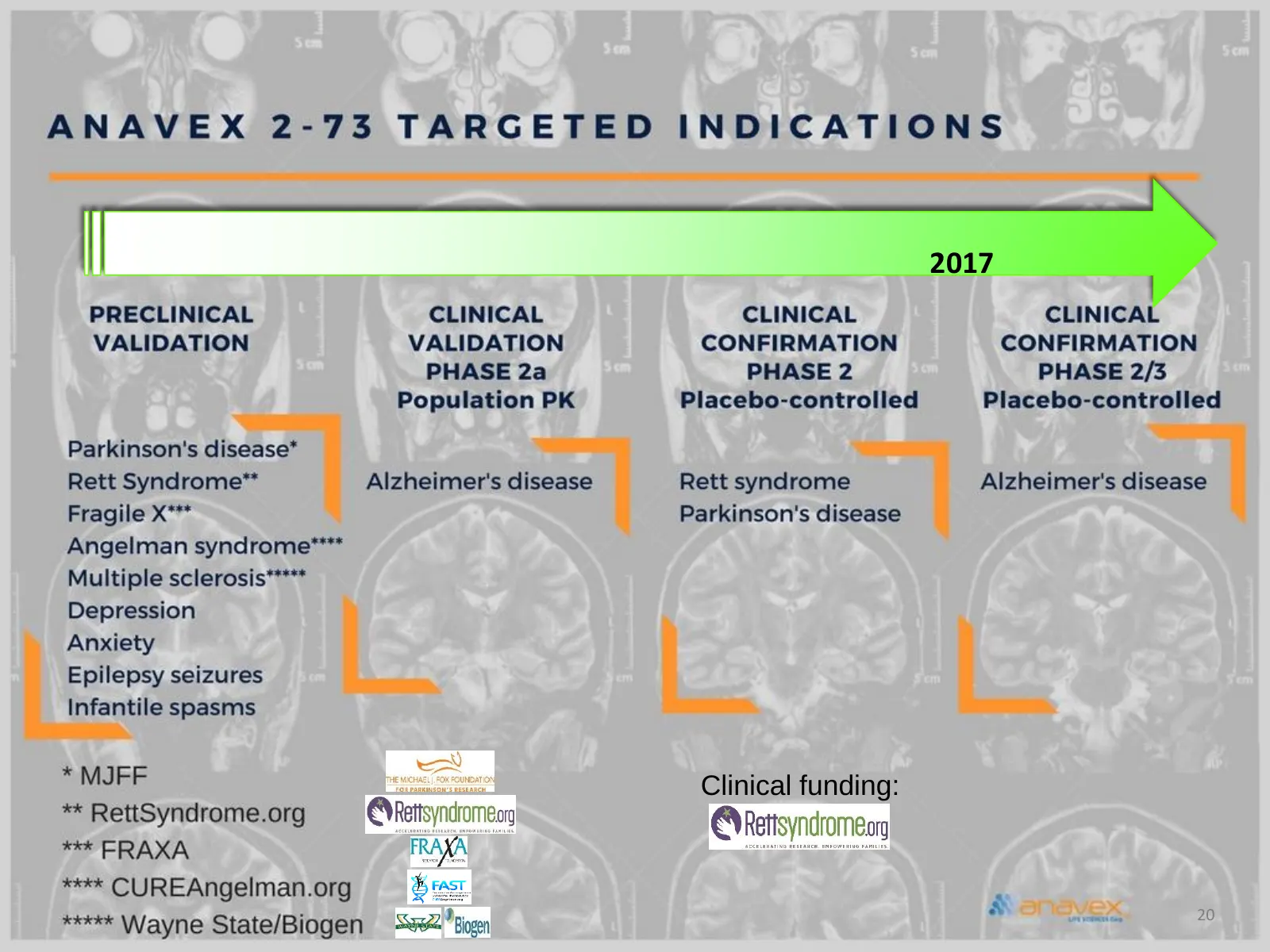
ANAVEX 2-73 TARGETED INDICATIONS PRECLINICAL CLINICAL CLINICAL CLINICA VALIDATION VALIDATION CONFIRMATION CONFIRMATION PHASE 2a PHASE 2 PHASE 2/3 Population PK Placebo-controlled Placebo-controlled Parkinson's disease* Rett Syndrome*™* Alzheimer's disease Rett syndrome Alzheimer's disease Fragile X*
Slide 21: Neurodegenerative and Neurodevelopmental Disease Pipeline
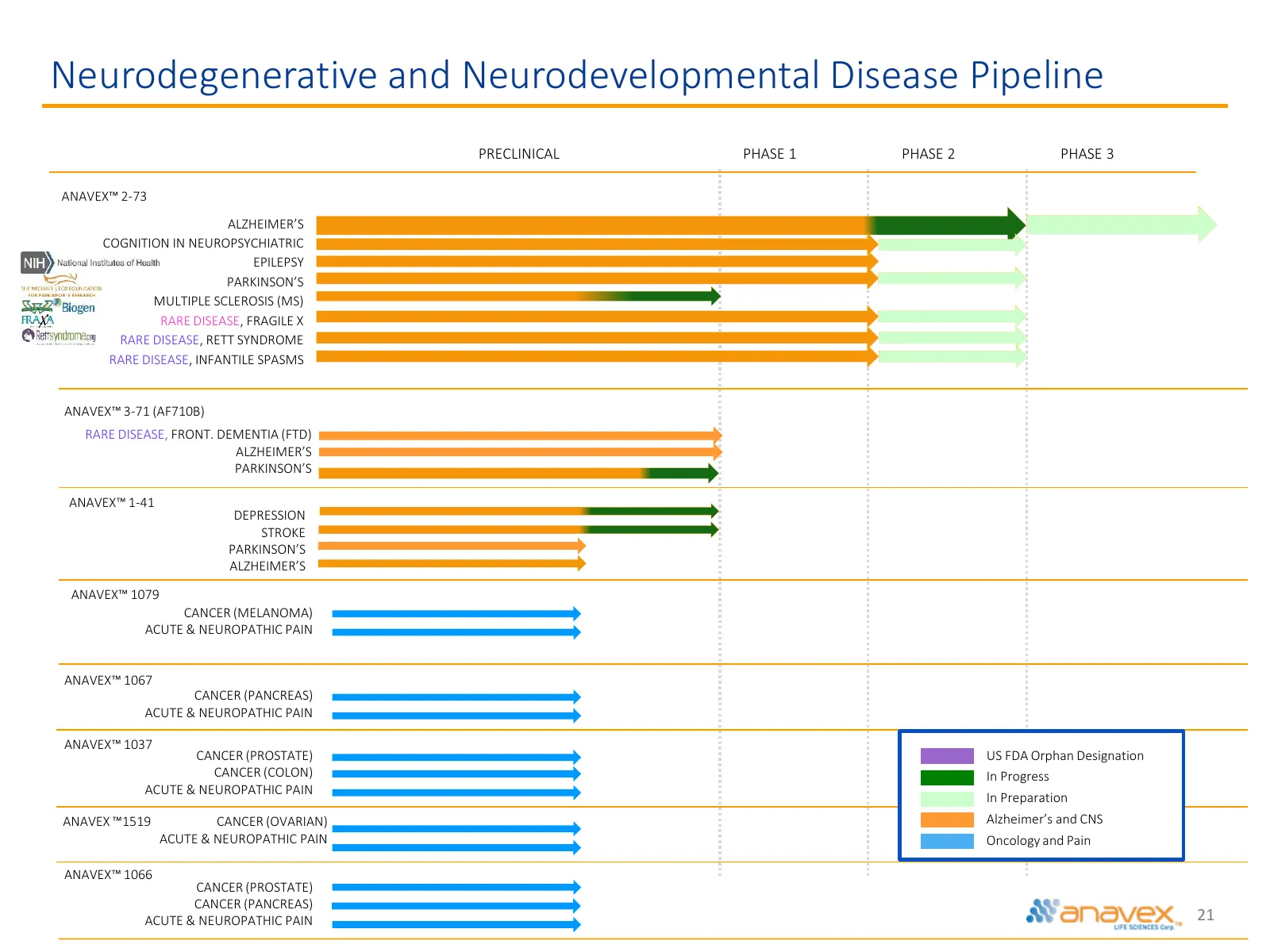
Neurodegenerative and Neurodevelopmental Disease Pipeline PRECLINICAL PHASE 1 PHASE 2 PHASE 3 ANAVEX™ 2-73 ALZHEIMER’S COGNITION IN NEUROPSYCHIATRIC EPILEPSY PARKINSON’S MULTIPLE SCLEROSIS (MS) RARE DISEASE, FRAGILE X RARE DISEASE, RETT SYNDROME RARE DISEASE, INFANTILE SPASMS ANAVEX™ 3-71 (AF710B) R
Slide 22: ANAVEX 2-73 Rational Clinical Trial Execution Plan
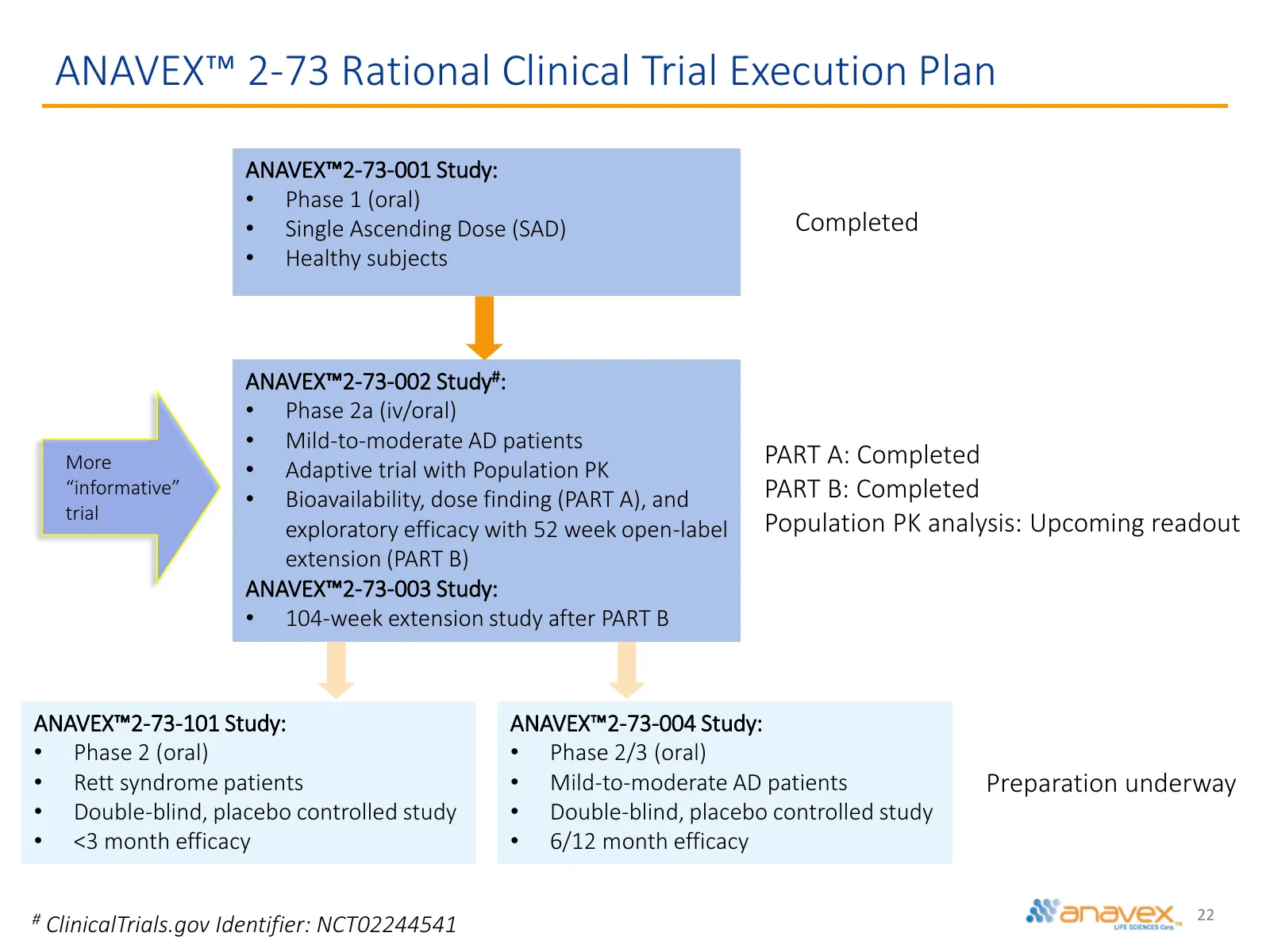
ANAVEX™ 2-73 Rational Clinical Trial Execution Plan ANAVEX™2-73-001 Study: • Phase 1 (oral) • Single Ascending Dose (SAD) Completed • Healthy subjects ANAVEX™2-73-002 Study#: • Phase 2a (iv/oral) • Mild-to-moderate AD patients More • Adaptive trial with Population PK PART A: Completed “informative”
Slide 23: 57 Week Trial: Part A and Part B Assessments
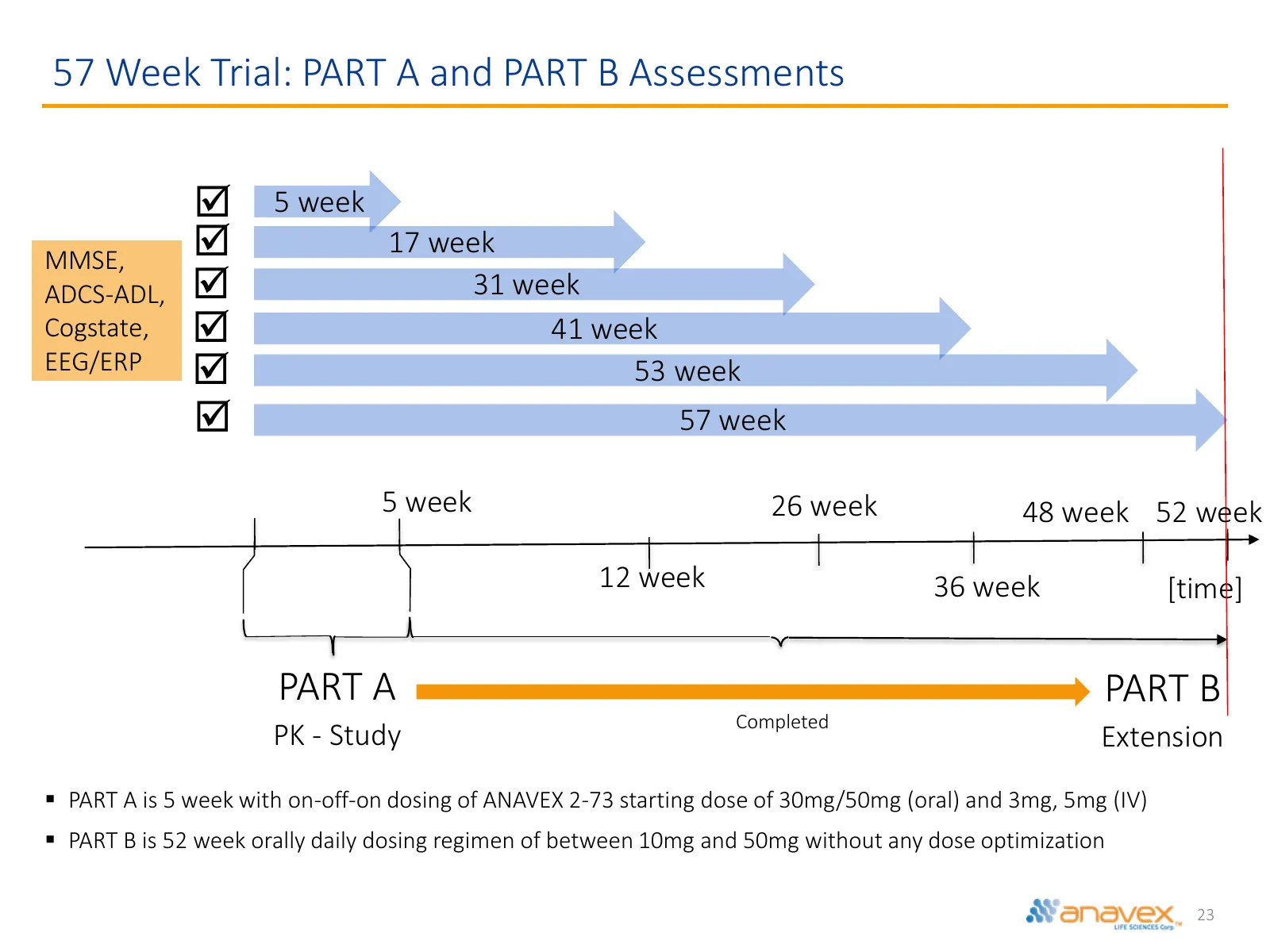
57 Week Trial: PART A and PART B Assessments 5 week MMSE, 17 week ADCS-ADL, 31 week Cogstate, 41 week EEG/ERP 53 week 57 week 5 week 26 week 48 week 52 week 12 week 36 week [time] PART A PART B Completed PK - Study Extension ▪ PART A is 5 week with on-off-on dosing of ANAVEX 2-73 startin
Slide 24: 57 Week Safety Profile of ANAVEX 2-73 Phase 2a
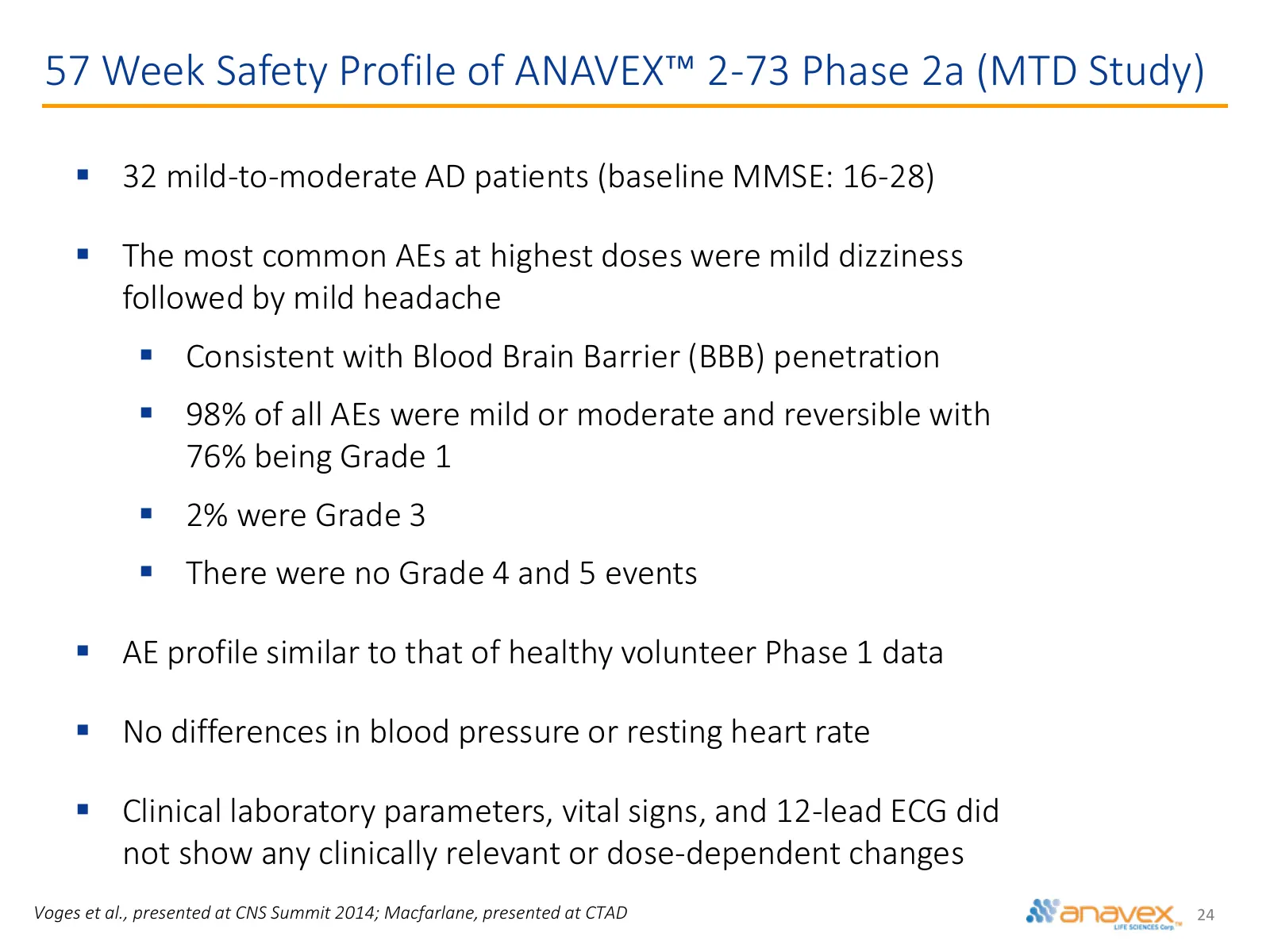
57 Week Safety Profile of ANAVEX™ 2-73 Phase 2a (MTD Study) ▪ 32 mild-to-moderate AD patients (baseline MMSE: 16-28) ▪ The most common AEs at highest doses were mild dizziness followed by mild headache ▪ Consistent with Blood Brain Barrier (BBB) penetration ▪ 98% of all AEs were mild or moderate and
Slide 25: Supportive Exploratory Biomarker, Cognition and Function Measures
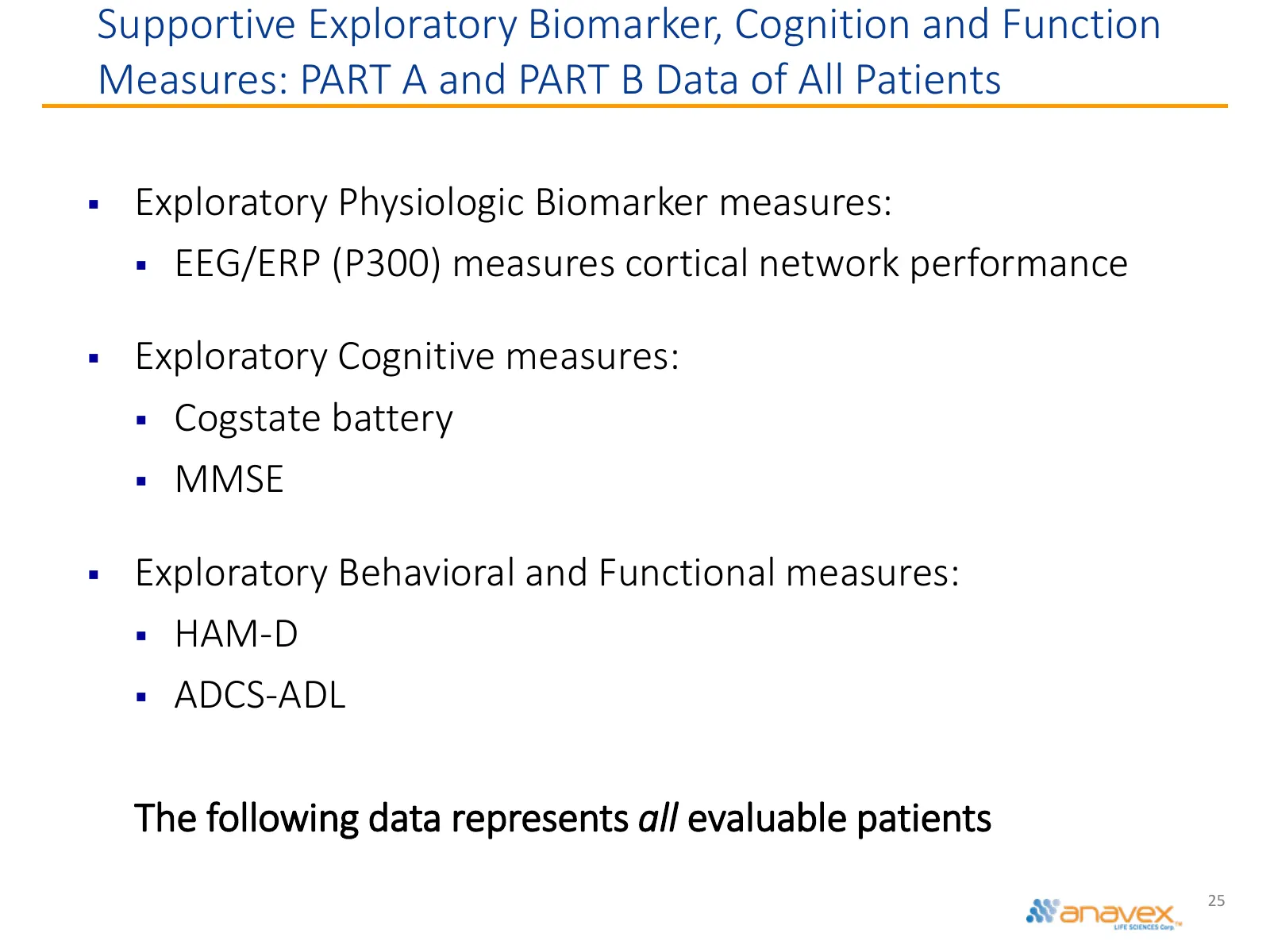
Supportive Exploratory Biomarker, Cognition and Function Measures: PART A and PART B Data of All Patients ▪ Exploratory Physiologic Biomarker measures: ▪ EEG/ERP (P300) measures cortical network performance ▪ Exploratory Cognitive measures: ▪ Cogstate battery ▪ MMSE ▪ Exploratory Behavioral and Func
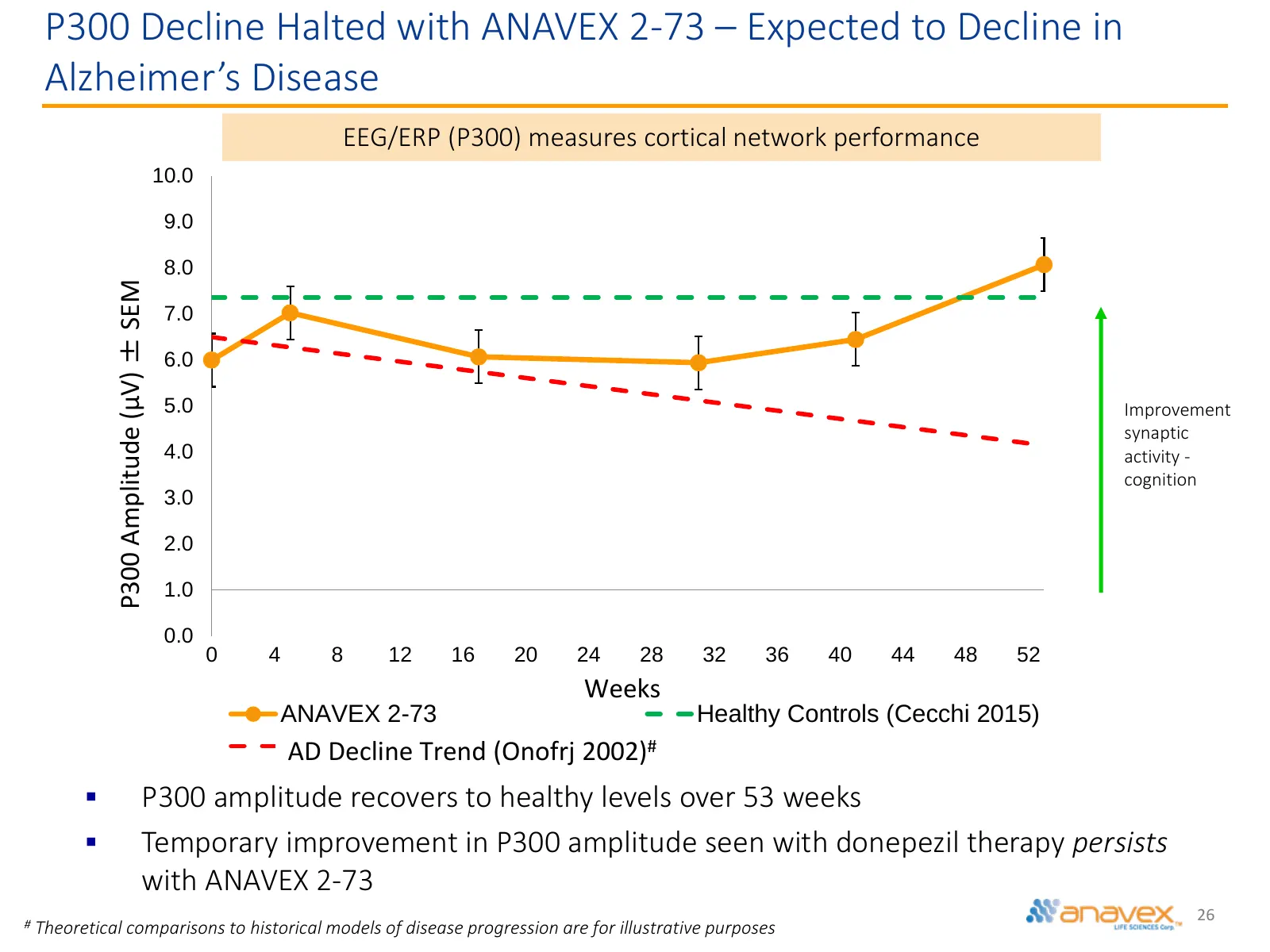
Slide 26: P300 Decline Halted with ANAVEX 2-73
P300 Decline Halted with ANAVEX 2-73 – Expected to Decline in Alzheimer’s Disease EEG/ERP (P300) measures cortical network performance 10.0 9.0 8.0 P300 Amplitude (µV) ± SEM 7.0 6.0 5.0 Improvement synaptic 4.0 activity - cognition 3.0 2.0 1.0 0.0 0 4 8 12 16 20 24 28 32 36 40 44 48 52 Weeks ANAVEX
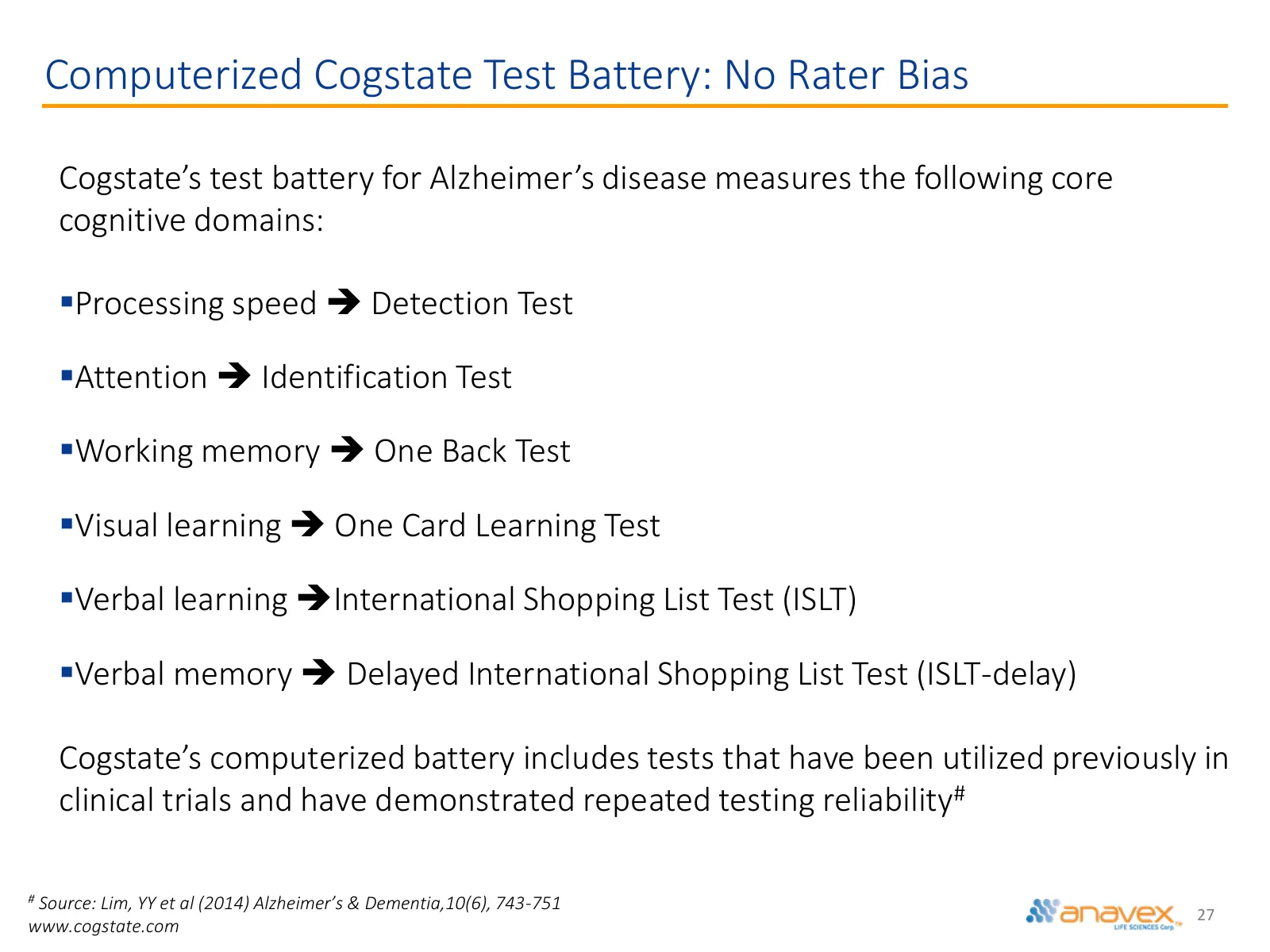
Slide 27: Computerized Cogstate Test Battery: No Rater Bias
Computerized Cogstate Test Battery: No Rater Bias Cogstate’s test battery for Alzheimer’s disease measures the following core cognitive domains: ▪Processing speed Detection Test ▪Attention Identification Test ▪Working memory One Back Test ▪Visual learning One Card Learning Test ▪Verbal learn
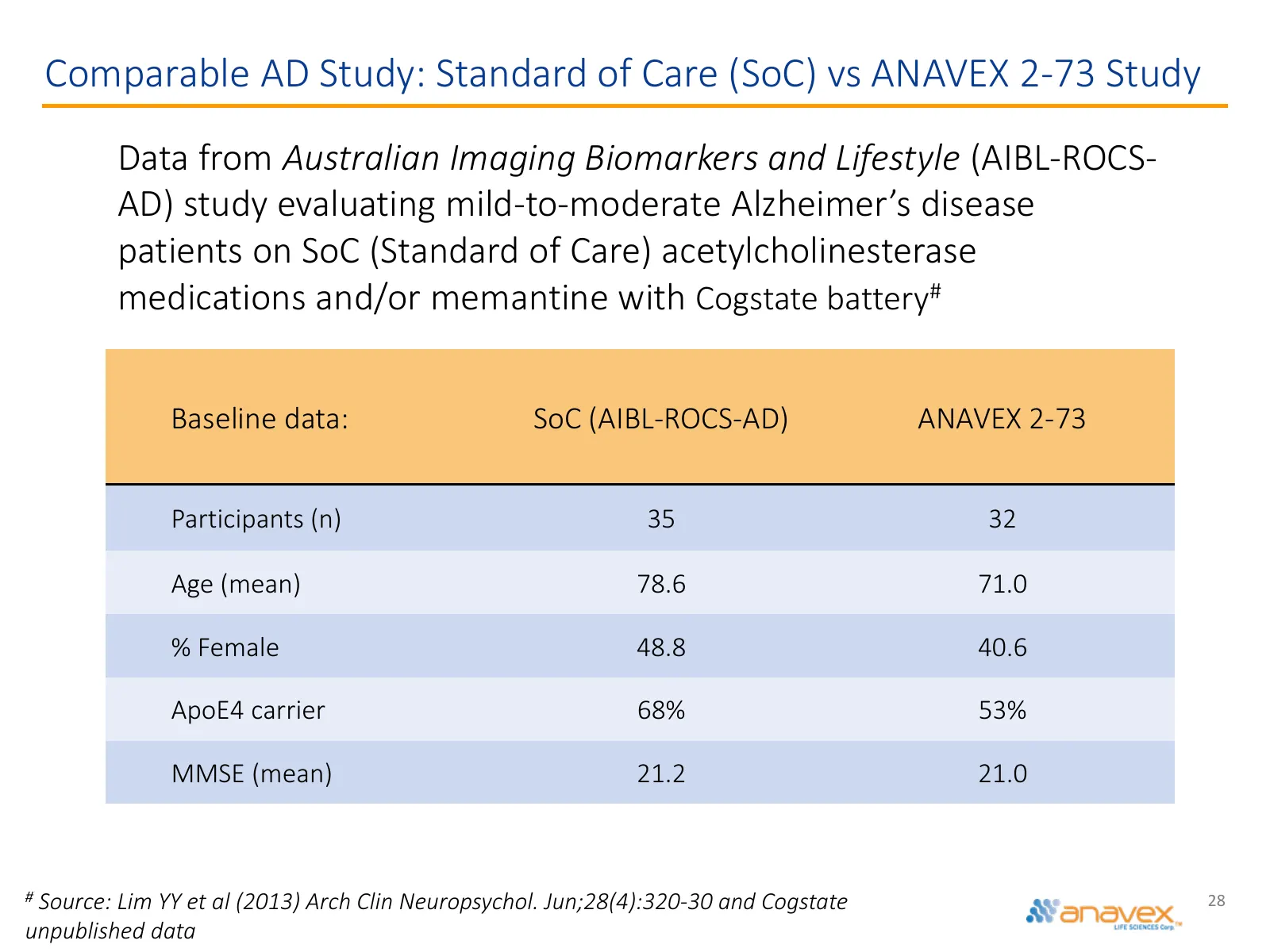
Slide 28: Comparable AD Study: Standard of Care vs ANAVEX 2-73
Comparable AD Study: Standard of Care (SoC) vs ANAVEX 2-73 Study Data from Australian Imaging Biomarkers and Lifestyle (AIBL-ROCS- AD) study evaluating mild-to-moderate Alzheimer’s disease patients on SoC (Standard of Care) acetylcholinesterase medications and/or memantine with Cogstate battery# Bas
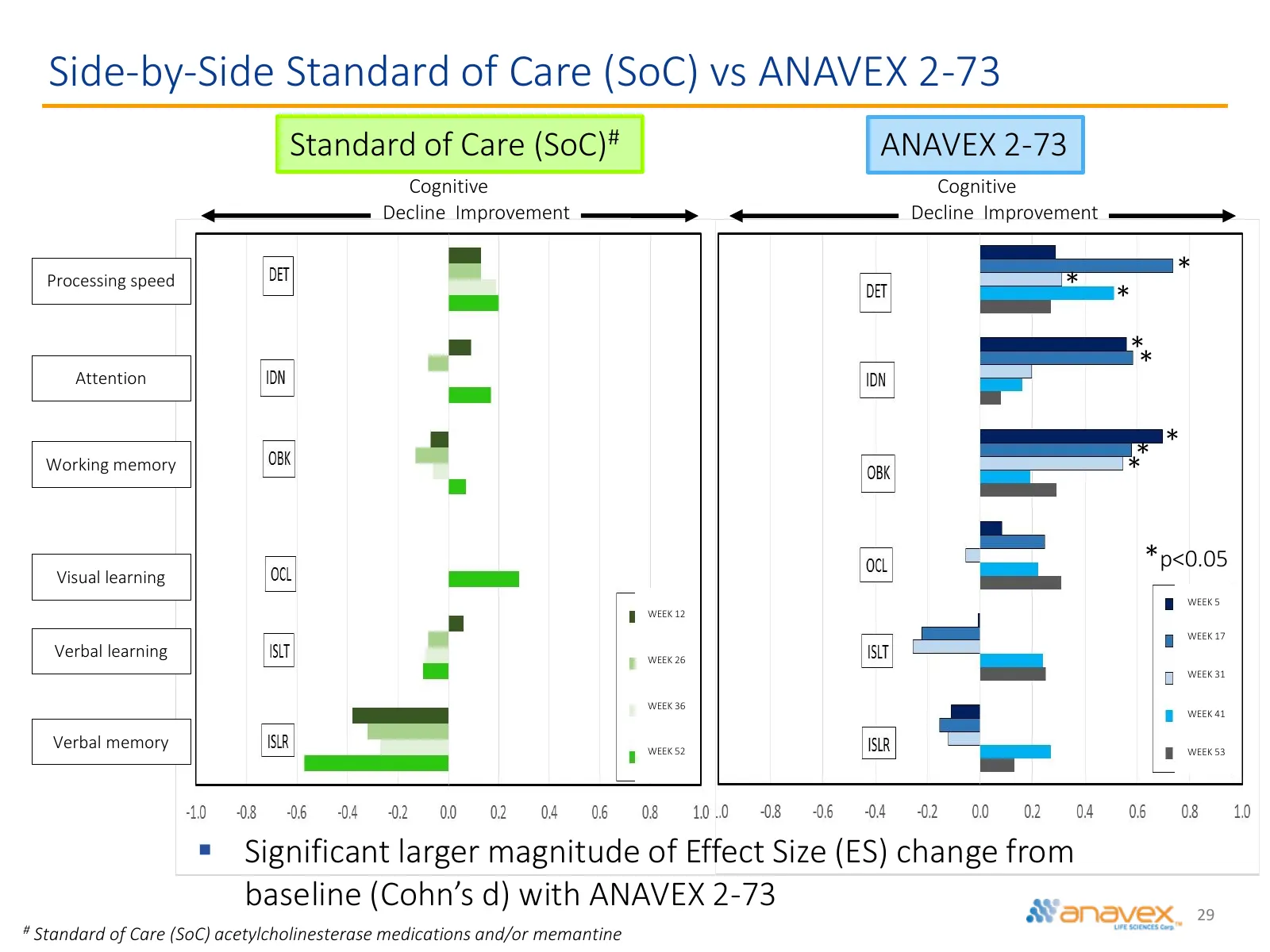
Slide 29: Side-by-Side Standard of Care vs ANAVEX 2-73
Side-by-Side Standard of Care (SoC) vs ANAVEX 2-73 Standard of Care (SoC)# ANAVEX 2-73 Cognitive Cognitive Decline Improvement Decline Improvement Processing speed * * * ** Attention * * Working memory * *p<0.05 Visual learning WEEK 5 WEEK 12 WEEK 17 Verbal learning WEEK 26 WEEK 31 WEEK 36 WEEK 41 V
Slide 30: Longitudinal Cognition MMSE and Function ADCS-ADL
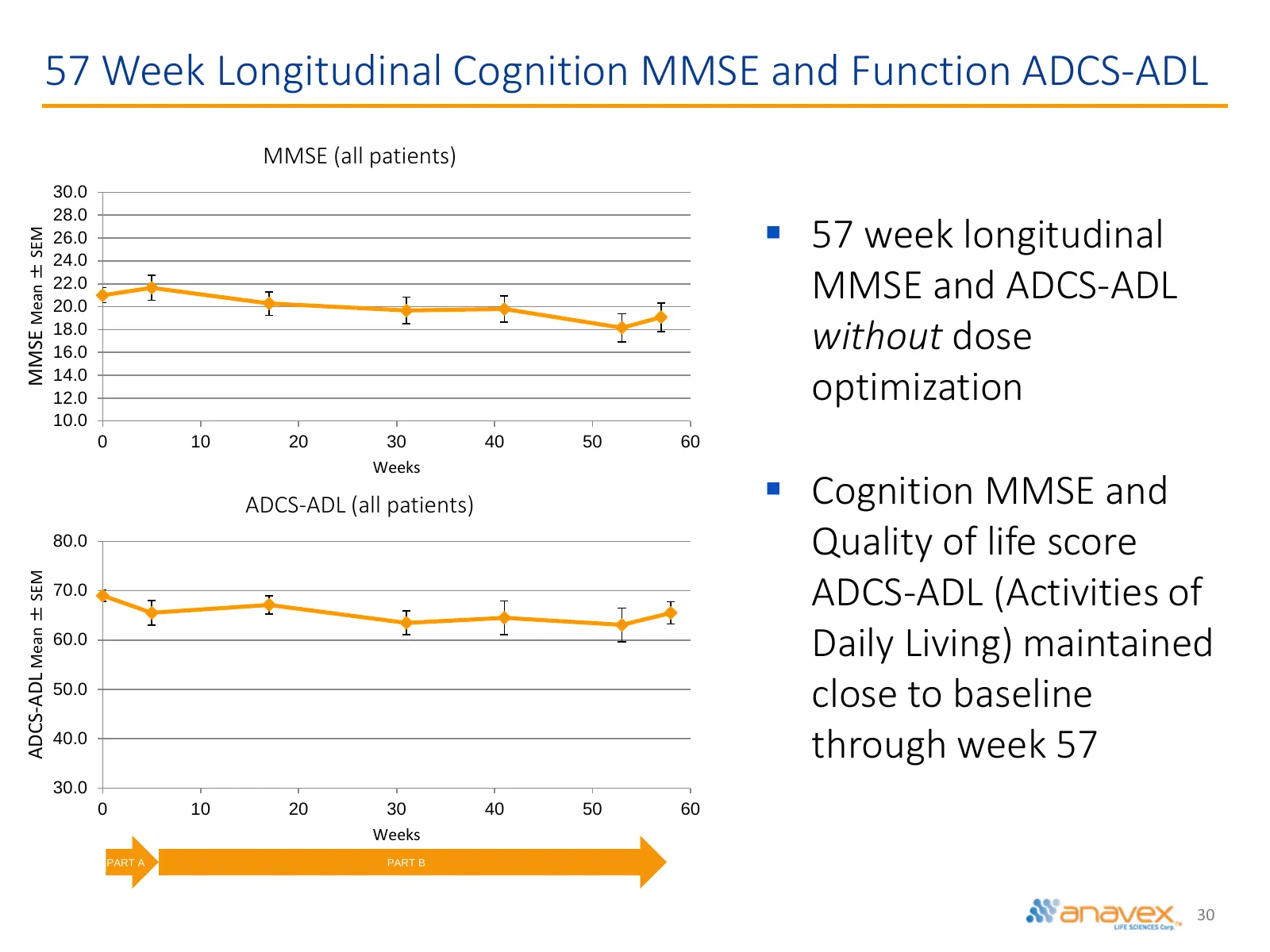
57 Week Longitudinal Cognition MMSE and Function ADCS-ADL MMSE (all patients) 30.0 28.0 ▪ 57 week longitudinal MMSE Mean ± SEM 26.0 24.0 22.0 20.0 MMSE and ADCS-ADL 18.0 16.0 without dose 14.0 12.0 optimization 10.0 0 10 20 30 40 50 60 Weeks ADCS-ADL (all patients) ▪ Cognition MMSE and 80.0 Quality
Slide 31: MMSE and ADCS-ADL Significantly Different to SoC AD
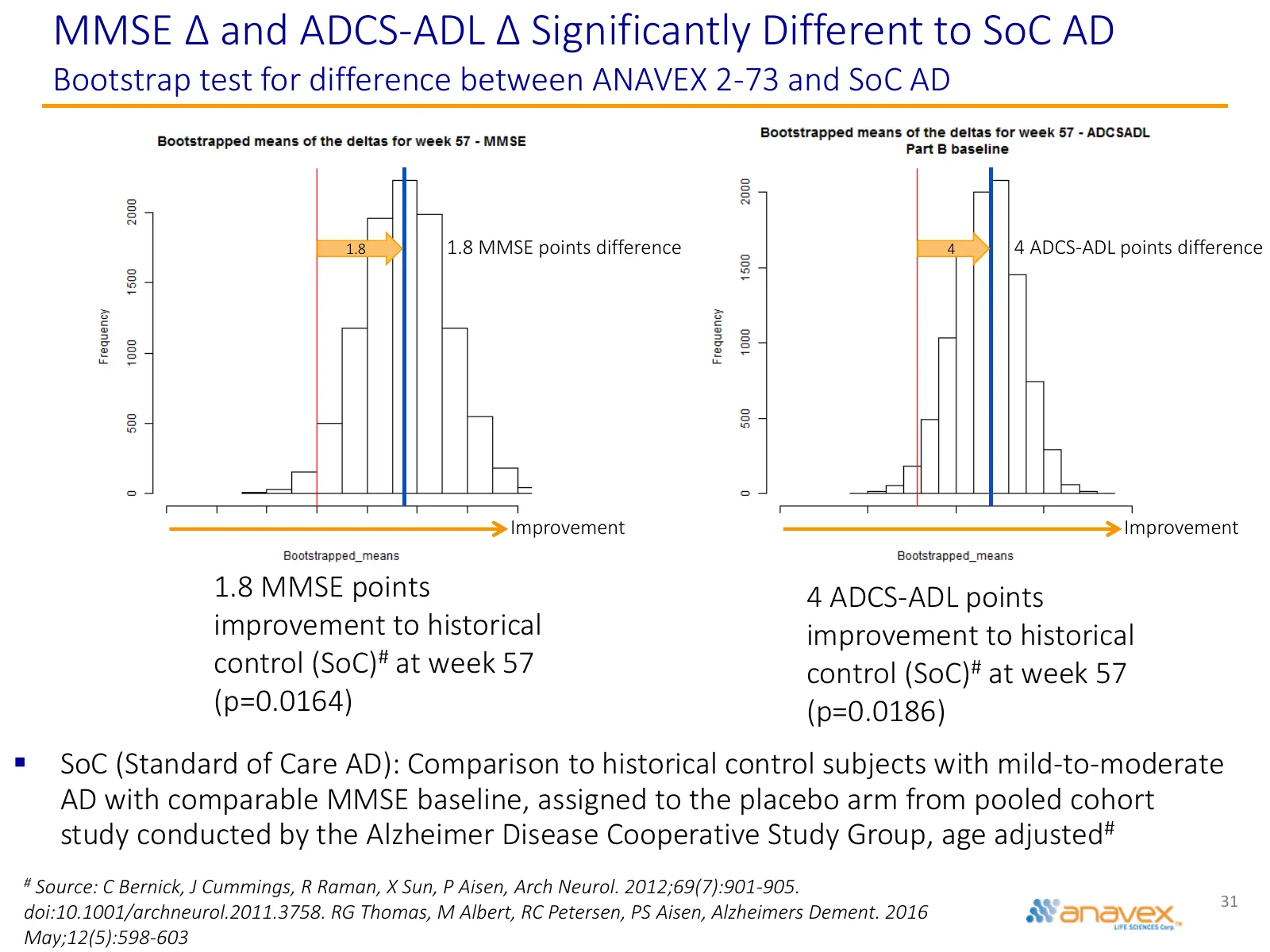
MMSE Δ and ADCS-ADL Δ Significantly Different to SoC AD Bootstrap test for difference between ANAVEX 2-73 and SoC AD 1.8 1.8 MMSE points difference 4 4 ADCS-ADL points difference Improvement Improvement 1.8 MMSE points 4 ADCS-ADL points improvement to historical improvement to historical control (So
Slide 32: Examples of Continued Improvements and Reported Events
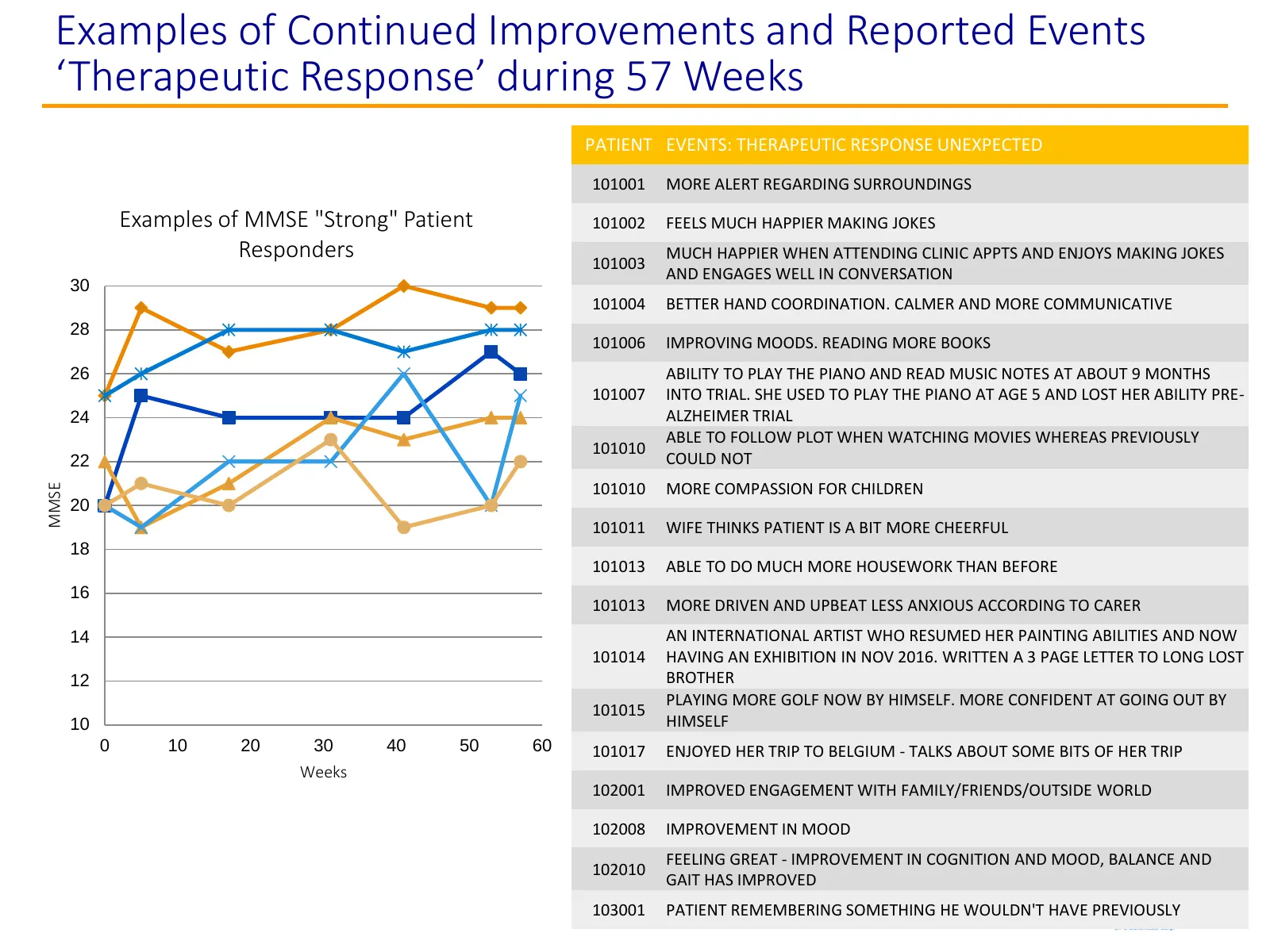
Examples of Continued Improvements and Reported Events ‘Therapeutic Response’ during 57 Weeks PATIENT EVENTS: THERAPEUTIC RESPONSE UNEXPECTED 101001 MORE ALERT REGARDING SURROUNDINGS Examples of MMSE "Strong" Patient 101002 FEELS MUCH HAPPIER MAKING JOKES Responders 101003 MUCH HAPPIER WHEN ATTENDIN
Slide 33: HAM-D: Reduction of Insomnia, Anxiety and other Symptoms
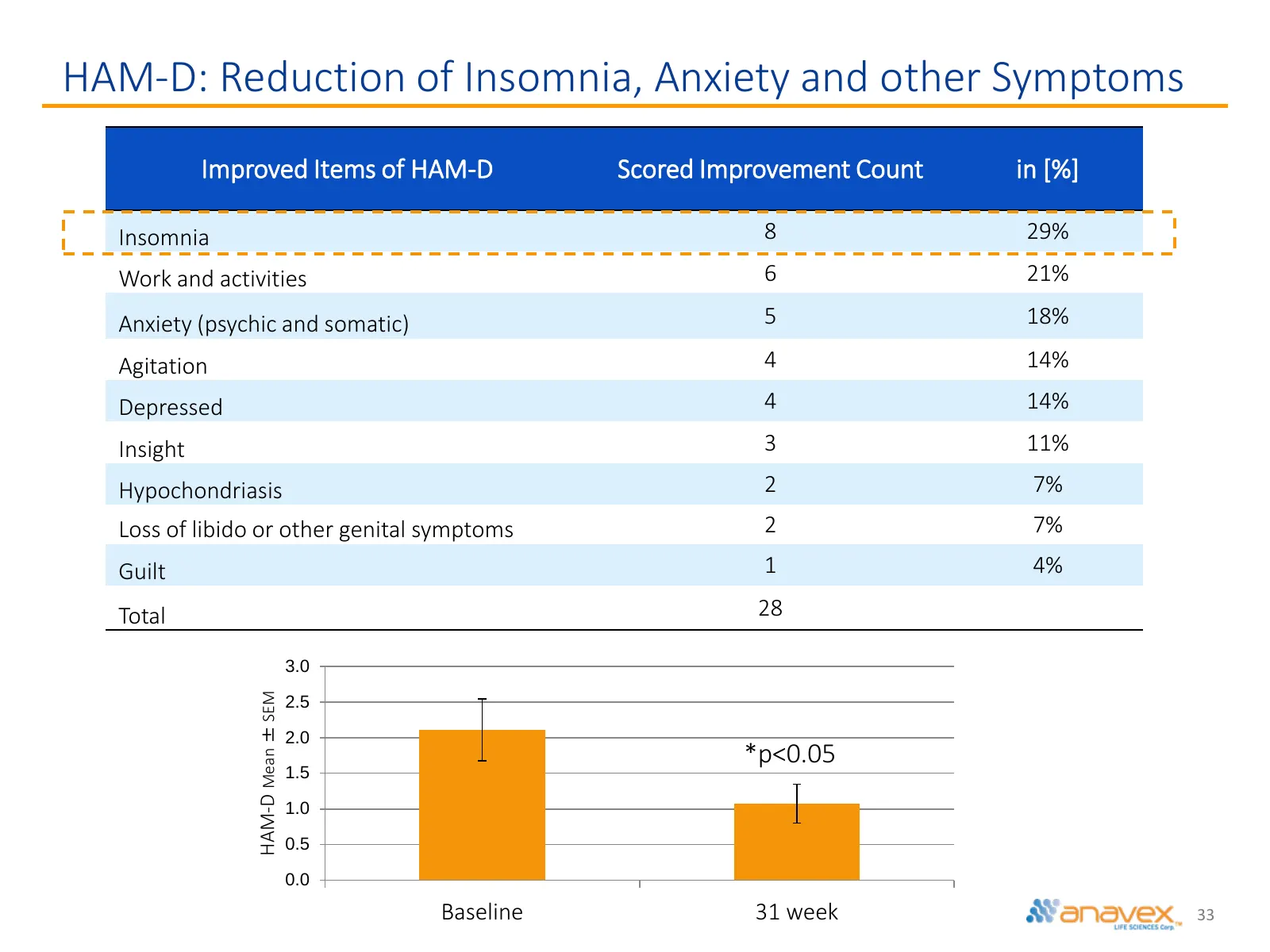
HAM-D: Reduction of Insomnia, Anxiety and other Symptoms Improved Items of HAM-D Scored Improvement Count in [%] Insomnia 8 29% Work and activities 6 21% Anxiety (psychic and somatic) 5 18% Agitation 4 14% Depressed 4 14% Insight 3 11% Hypochondriasis 2 7% Loss of libido or other genital symptoms 2
Slide 34: Robust Correlation of Cognition, Function and Behavior Response
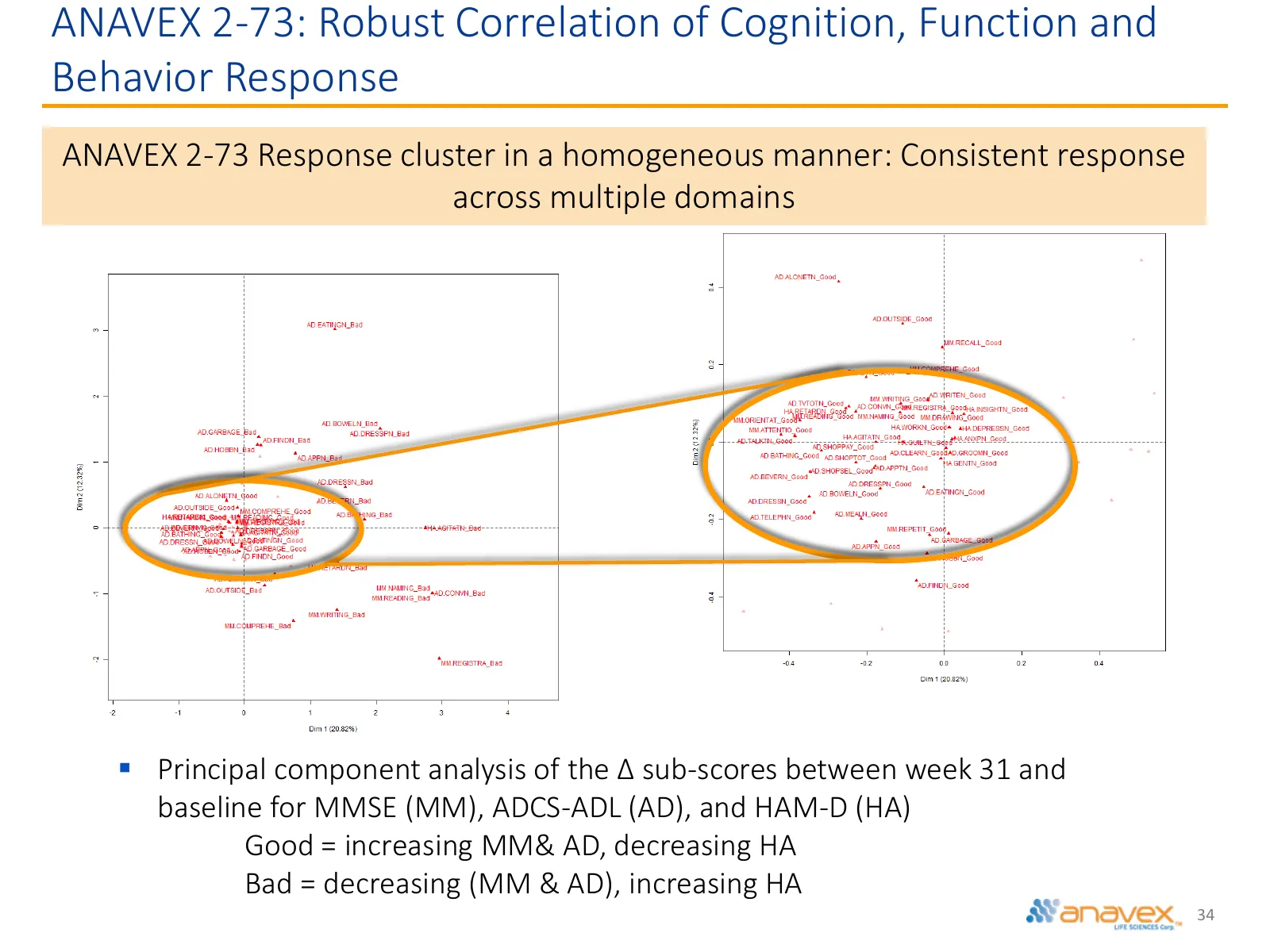
ANAVEX 2-73: Robust Correlation of Cognition, Function and Behavior Response ANAVEX 2-73 Response cluster in a homogeneous manner: Consistent response across multiple domains ▪ Principal component analysis of the Δ sub-scores between week 31 and baseline for MMSE (MM), ADCS-ADL (AD), and HAM-D (HA)
Slide 35: ANAVEX 2-73 Rescues Synaptic Networks
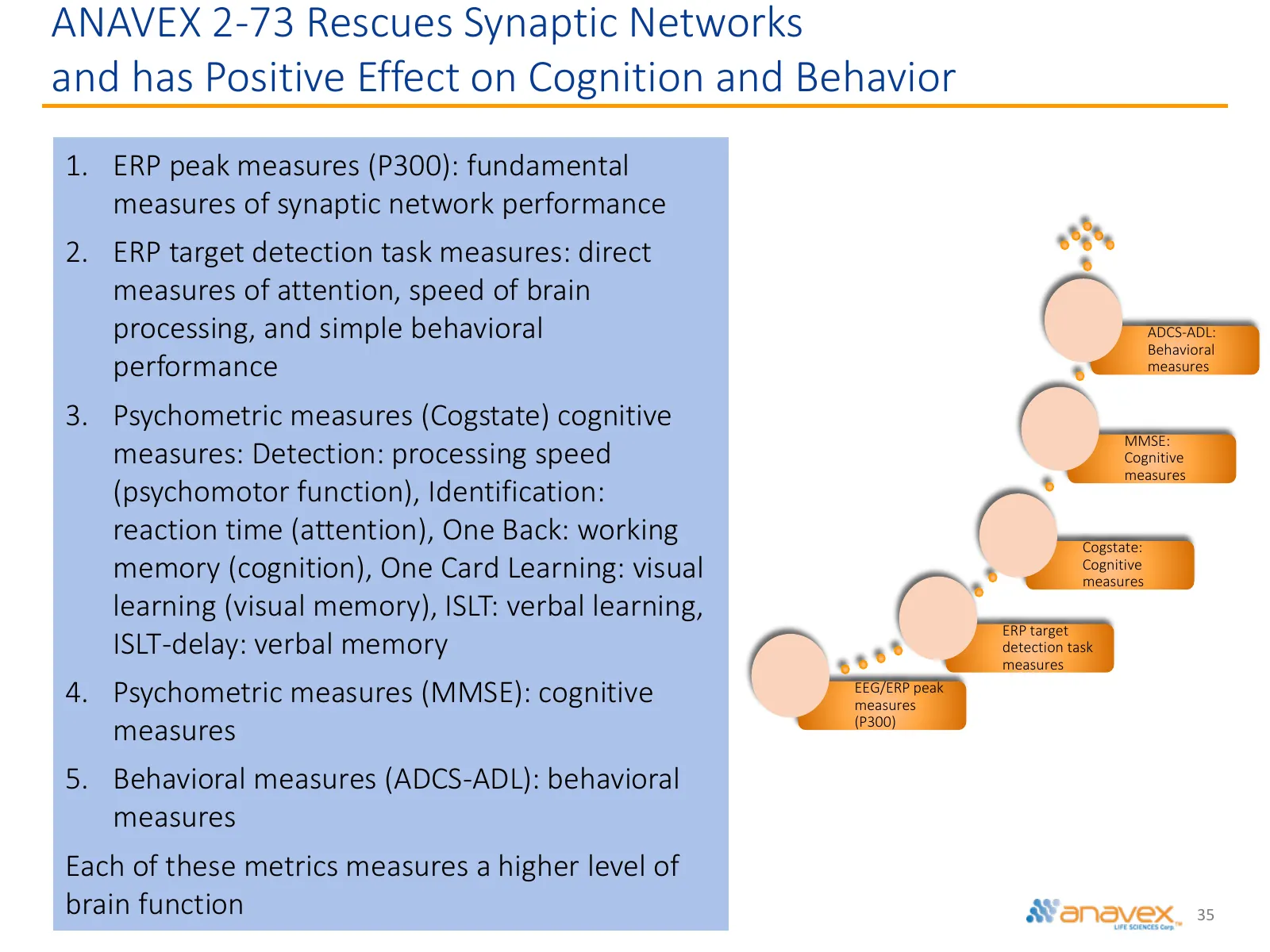
ANAVEX 2-73 Rescues Synaptic Networks and has Positive Effect on Cognition and Behavior 1. ERP peak measures (P300): fundamental measures of synaptic network performance 2. ERP target detection task measures: direct measures of attention, speed of brain processing, and simple behavioral ADCS-ADL: Be
Slide 36: Phase 2a Patient Characterization to Identify Phase 2/3 Parameters
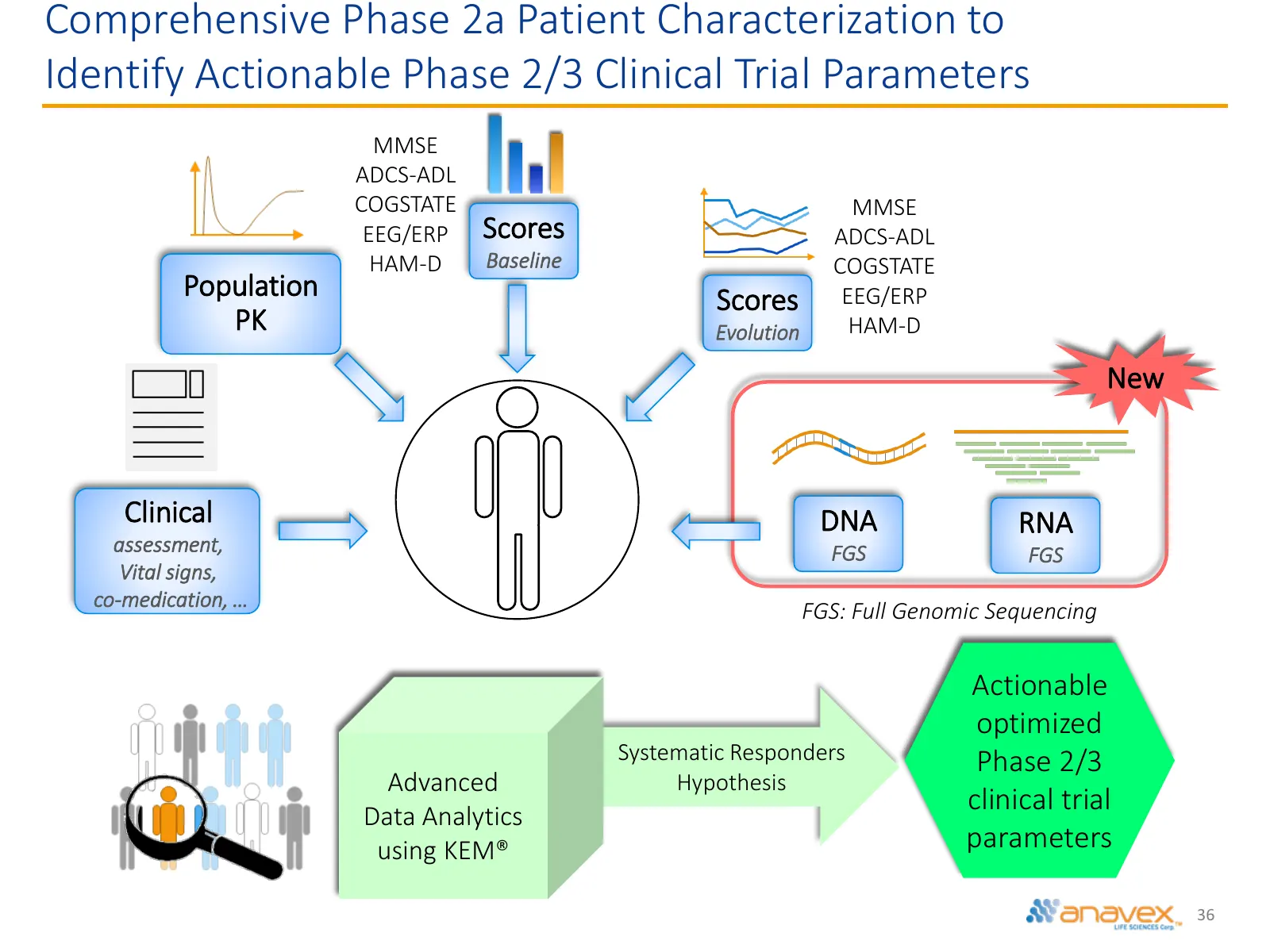
Comprehensive Phase 2a Patient Characterization to Identify Actionable Phase 2/3 Clinical Trial Parameters MMSE ADCS-ADL COGSTATE MMSE EEG/ERP Scores ADCS-ADL HAM-D Baseline COGSTATE Population Scores EEG/ERP PK Evolution HAM-D New Clinical DNA RNA assessment, FGS FGS Vital signs, co-medication, … F
Slide 37: ANAVEX 2-73 Targeted Indications
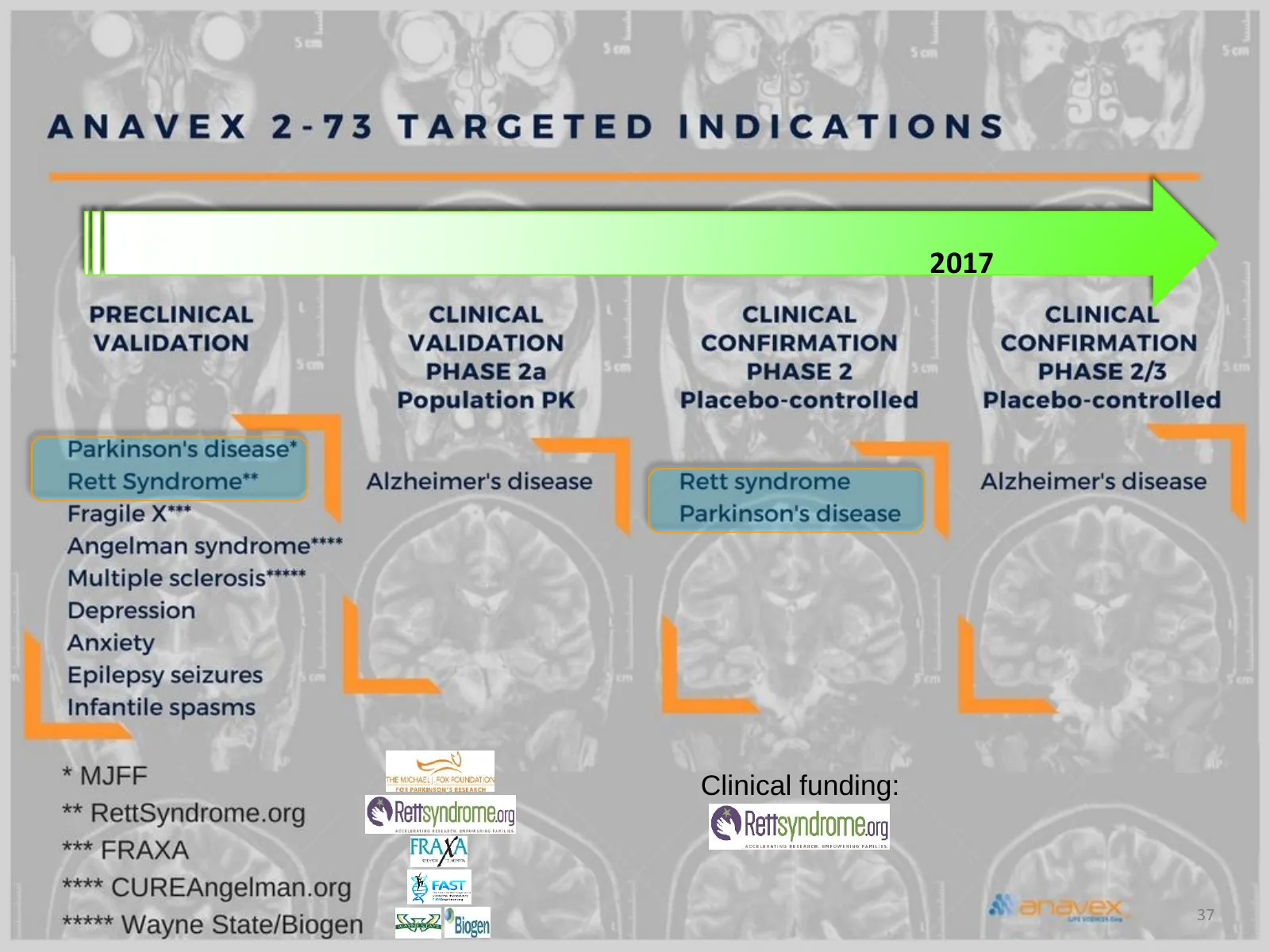
ANAVEX 2-73 TARGETED INDICATIONS PRECLINICAL CLINICAL CLINICAL CLINICA VALIDATION VALIDATION CONFIRMATION CONFIRMATION PHASE 2a PHASE 2 PHASE 2/3 Population PK Placebo-controlled Placebo-controlled Alzheimer's disease Alzheimer's disease Fragile X** Angelman syndrome**** Multiple sclerosis***** Depr
Slide 38: Positive Preclinical Data in Parkinson's Disease
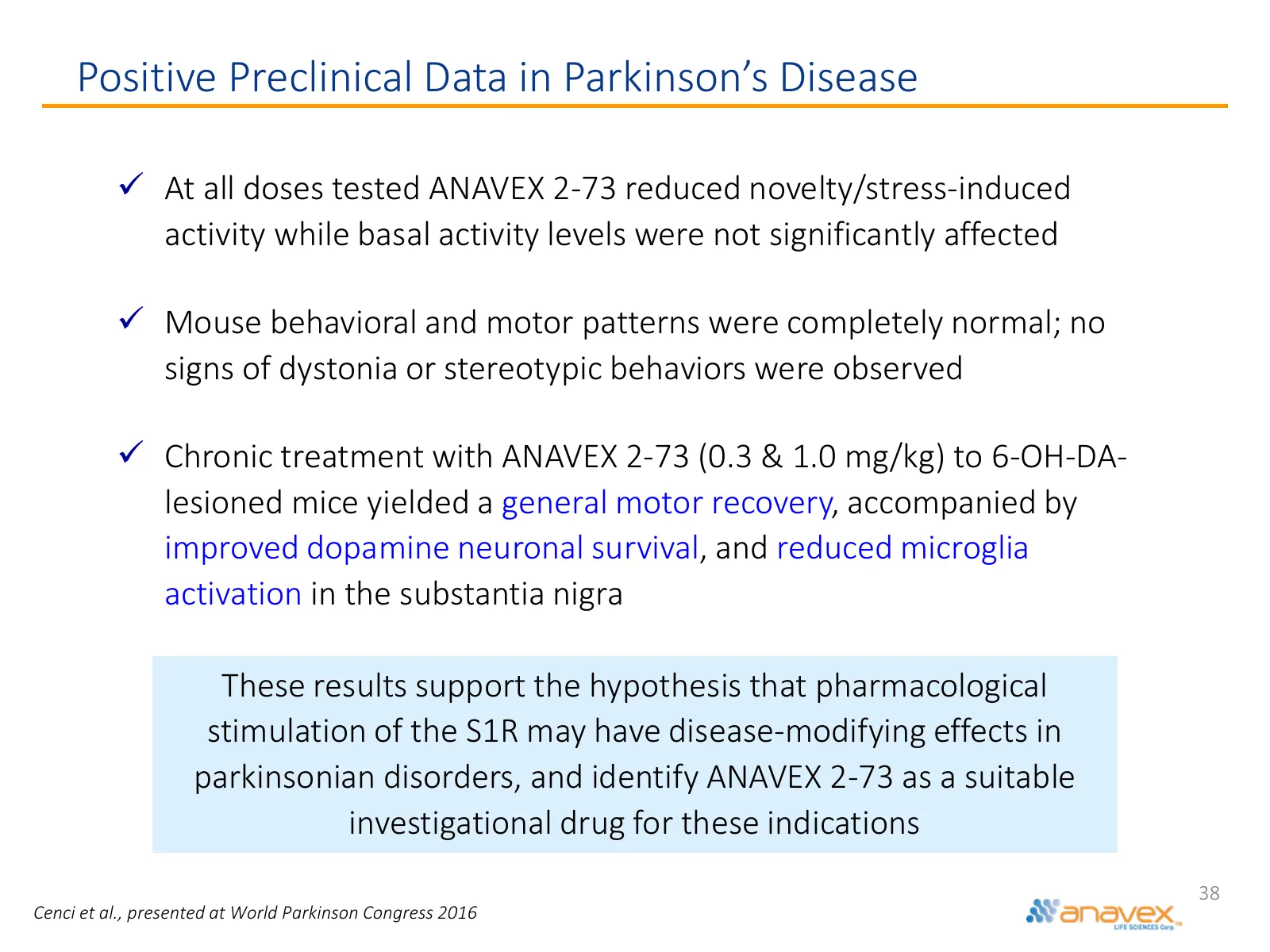
Positive Preclinical Data in Parkinson’s Disease ✓ At all doses tested ANAVEX 2-73 reduced novelty/stress-induced activity while basal activity levels were not significantly affected ✓ Mouse behavioral and motor patterns were completely normal; no signs of dystonia or stereotypic behaviors were obse
Slide 39: Positive Preclinical Data in Rare Disease: Rett Syndrome
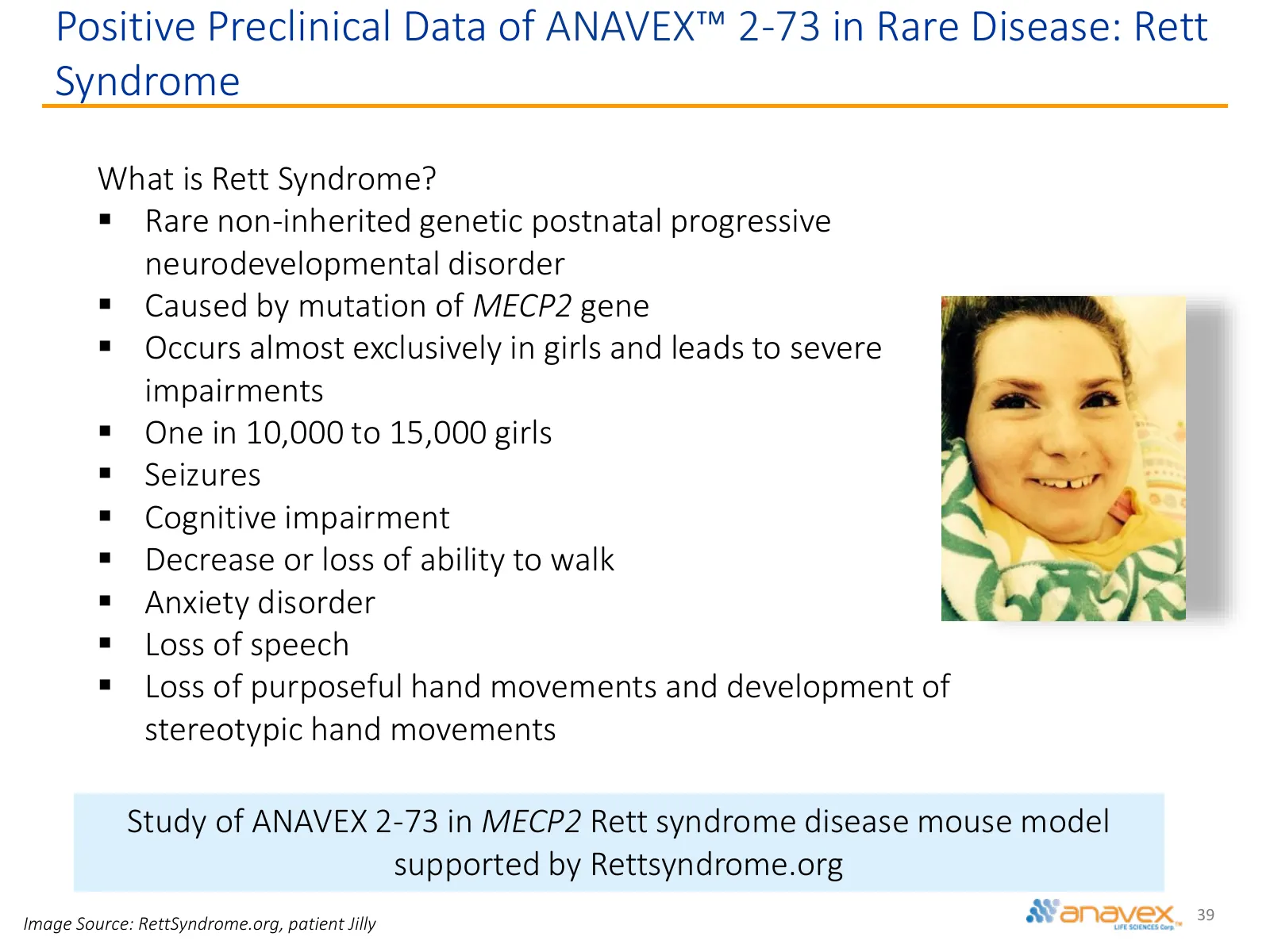
Positive Preclinical Data of ANAVEX™ 2-73 in Rare Disease: Rett Syndrome What is Rett Syndrome? ▪ Rare non-inherited genetic postnatal progressive neurodevelopmental disorder ▪ Caused by mutation of MECP2 gene ▪ Occurs almost exclusively in girls and leads to severe impairments ▪ One in 10,000 to 15
Slide 40: Clasping as a Movement Impairment
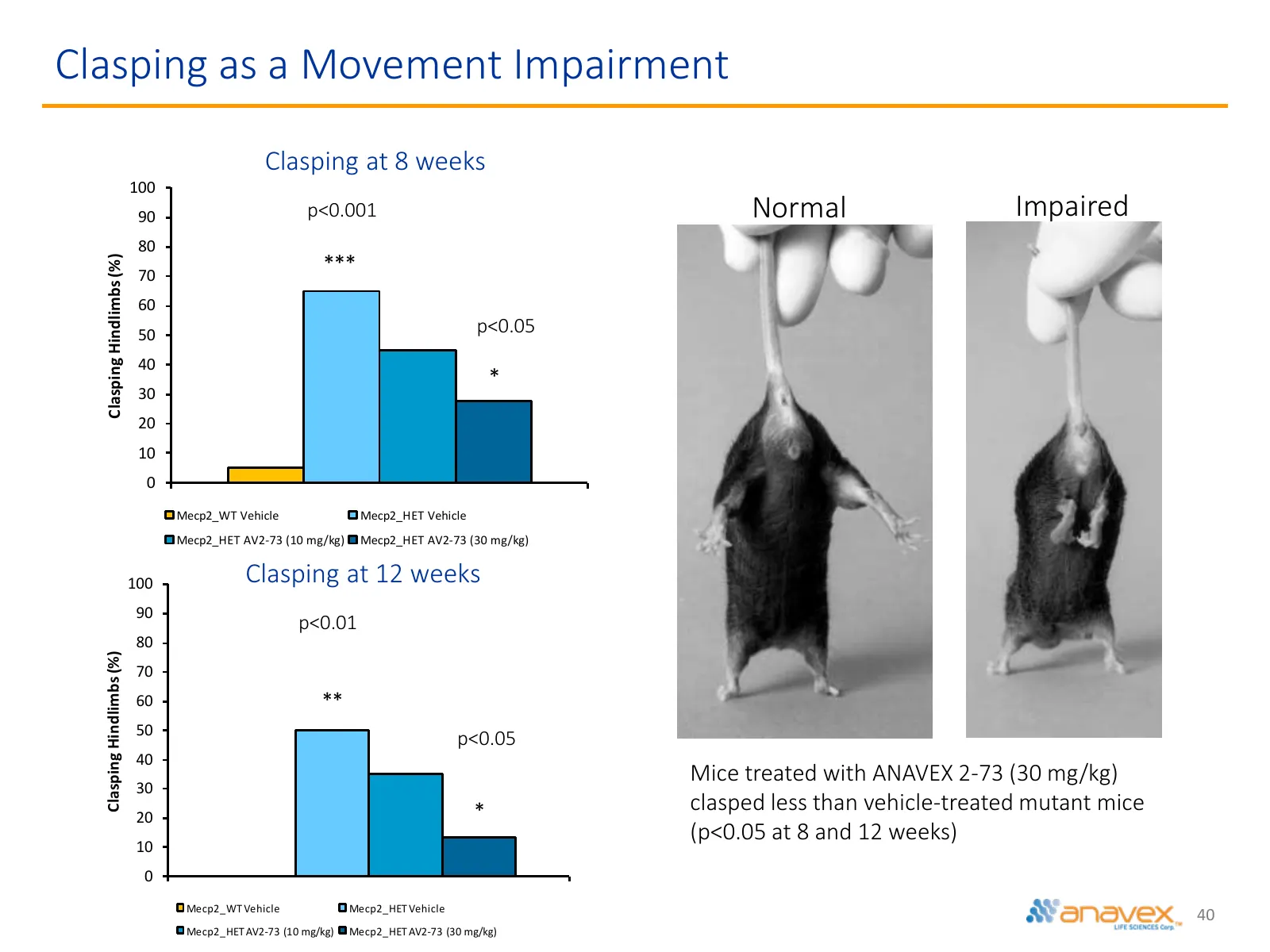
Clasping as a Movement Impairment Clasping at 8 weeks 100 90 p<0.001 Normal Impaired 80 *** Clasping Hindlimbs (%) 70 60 50 p<0.05 40 * 30 20 10 0 Mecp2_WT Vehicle Mecp2_HET Vehicle Mecp2_HET AV2-73 (10 mg/kg) Mecp2_HET AV2-73 (30 mg/kg) 100 Clasping at 12 weeks 90 p<0.01 80 Clasping Hindlimbs (%) 7
Slide 41: Multiple Movement Impairments Demonstrate Significant Improvement
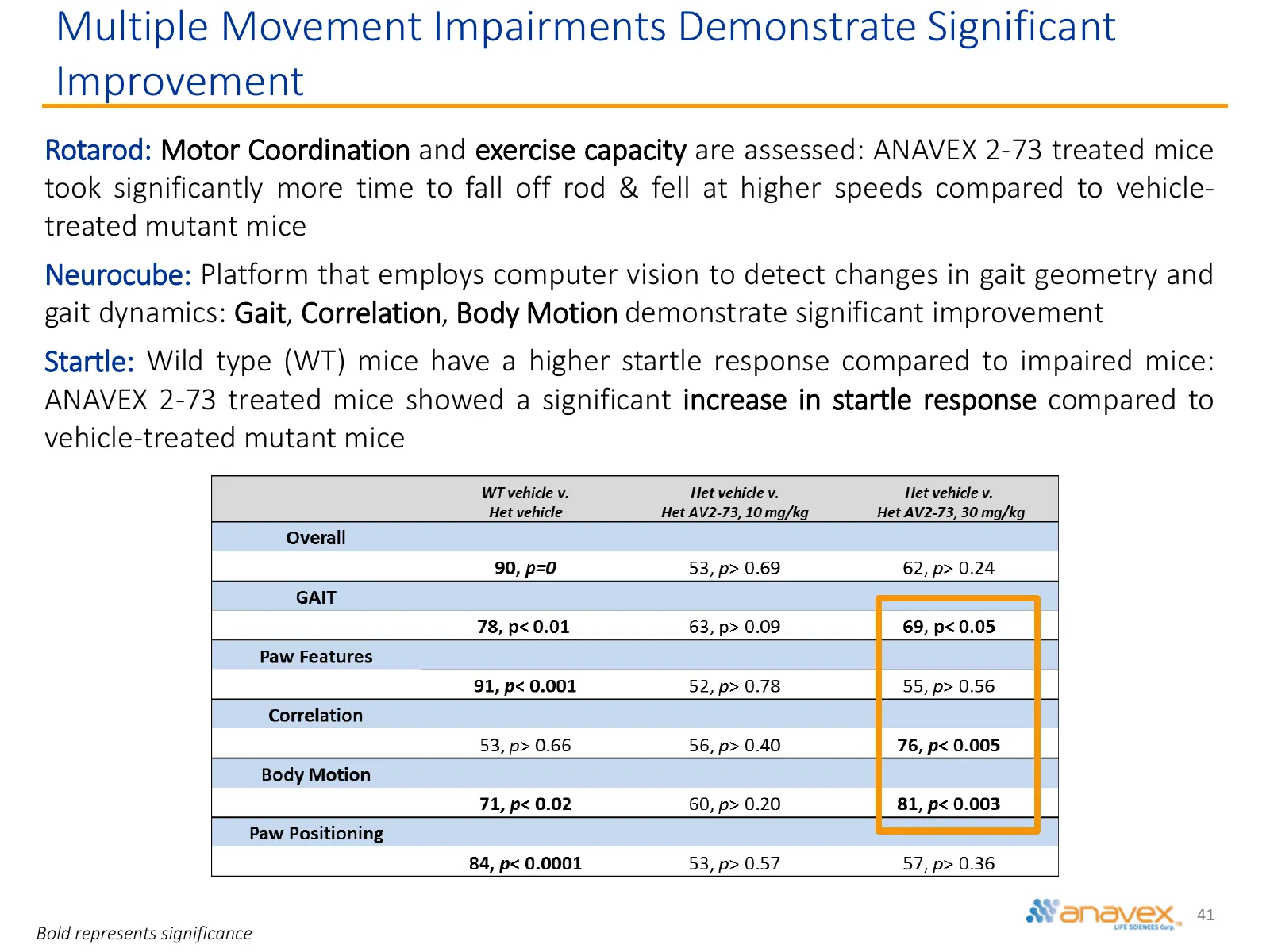
Multiple Movement Impairments Demonstrate Significant Improvement Rotarod: Motor Coordination and exercise capacity are assessed: ANAVEX 2-73 treated mice took significantly more time to fall off rod & fell at higher speeds compared to vehicle- treated mutant mice Neurocube: Platform that employs co
Slide 42: Convergent Data Supports ANAVEX 2-73 in Neurodevelopmental Disorders
Convergent Data Supports ANAVEX™ 2-73 in Neurodevelopmental Disorders ▪ Administration of ANAVEX 2-73 results in both significant and dose related improvements in an array of movement paradigms in the MECP2 HET Rett syndrome disease model ▪ These measure different aspects of muscular coordination, b
Slide 43: Financial Summary
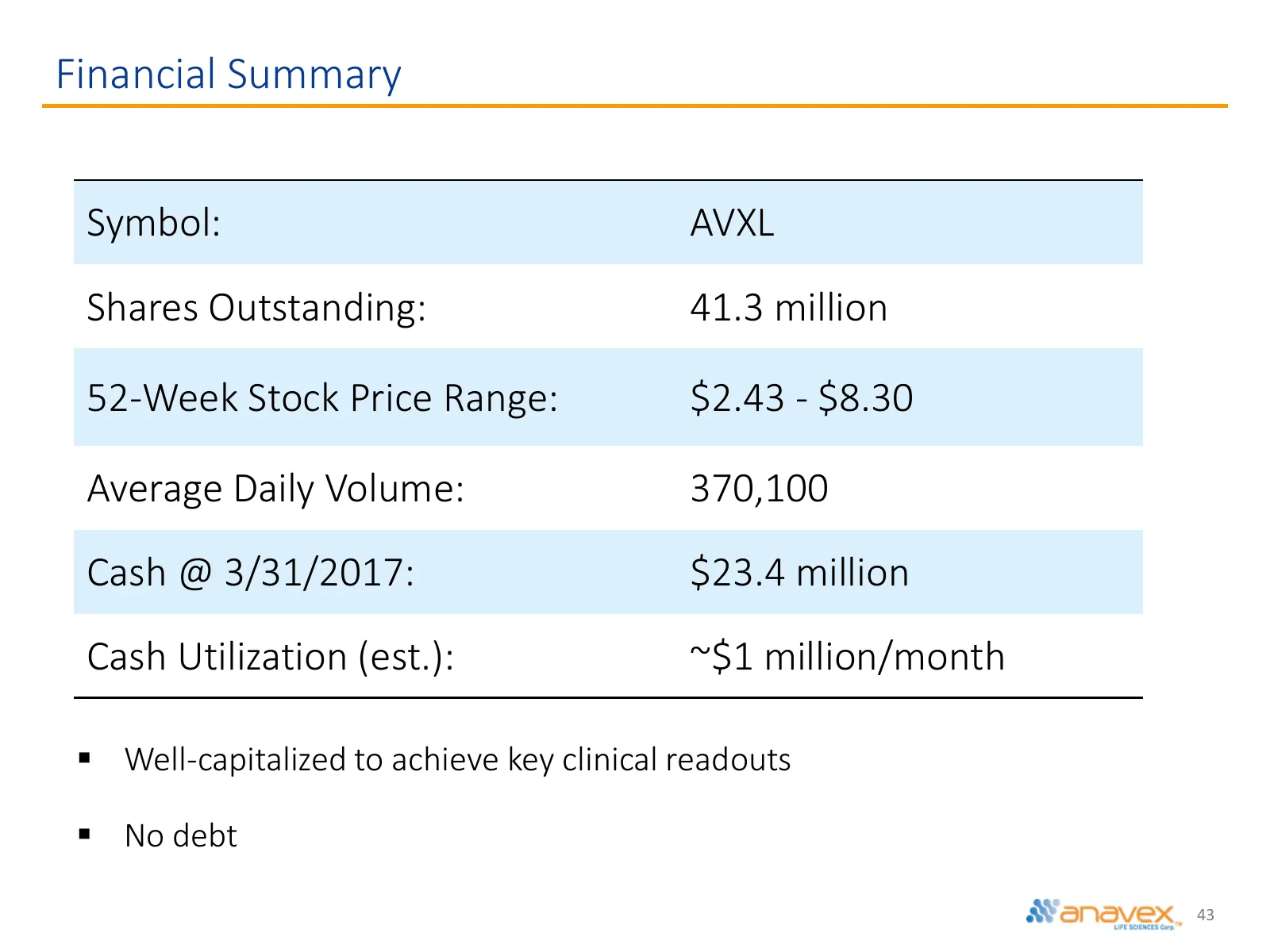
Financial Summary Symbol: AVXL Shares Outstanding: 41.3 million 52-Week Stock Price Range: $2.43 - $8.30 Average Daily Volume: 370,100 Cash @ 3/31/2017: $23.4 million Cash Utilization (est.): ~$1 million/month ▪ Well-capitalized to achieve key clinical readouts ▪ No debt 43
Slide 44: Catalysts in 2017
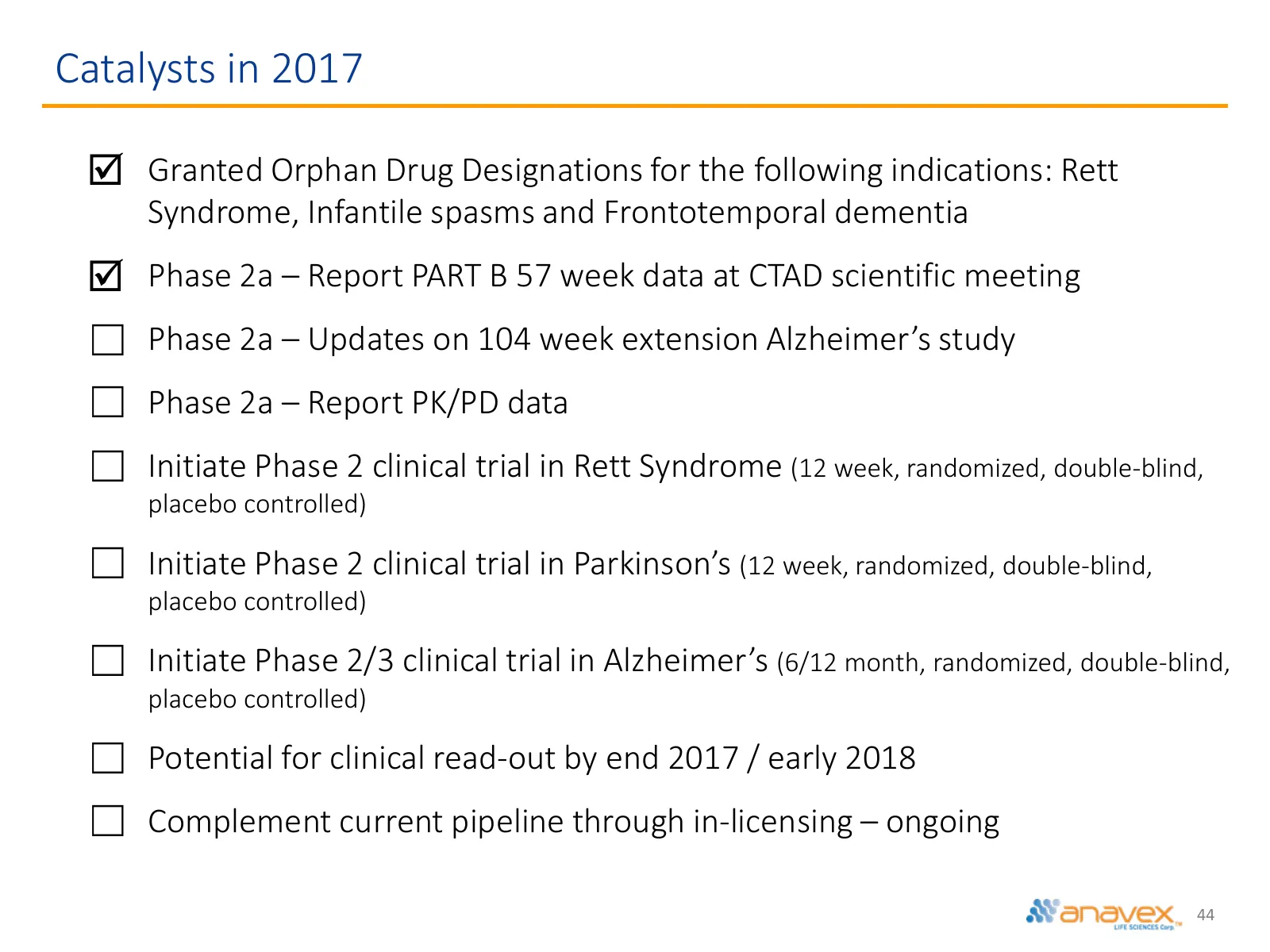
Catalysts in 2017 Granted Orphan Drug Designations for the following indications: Rett Syndrome, Infantile spasms and Frontotemporal dementia Phase 2a – Report PART B 57 week data at CTAD scientific meeting ☐ Phase 2a – Updates on 104 week extension Alzheimer’s study ☐ Phase 2a – Report PK/PD da

Slide 45: Contact Us
Contact Us Corporate Office: Shareholder & Media Relations: Anavex™ Life Sciences Corp. Toll-free: 1-866-505-2895 51 West 52nd Street, 7th floor Outside North America: New York, NY 10019 + 1 (917) 733-9297 (212) 332 4449 Email: ir@anavex.com www.anavex.com NASDAQ: AVXL ANAVEX is a trademark of Anave

Slide 46: Back Up Slides
Back Up Slides Wanevex. +
Slide 47: Phase 2a Study Design
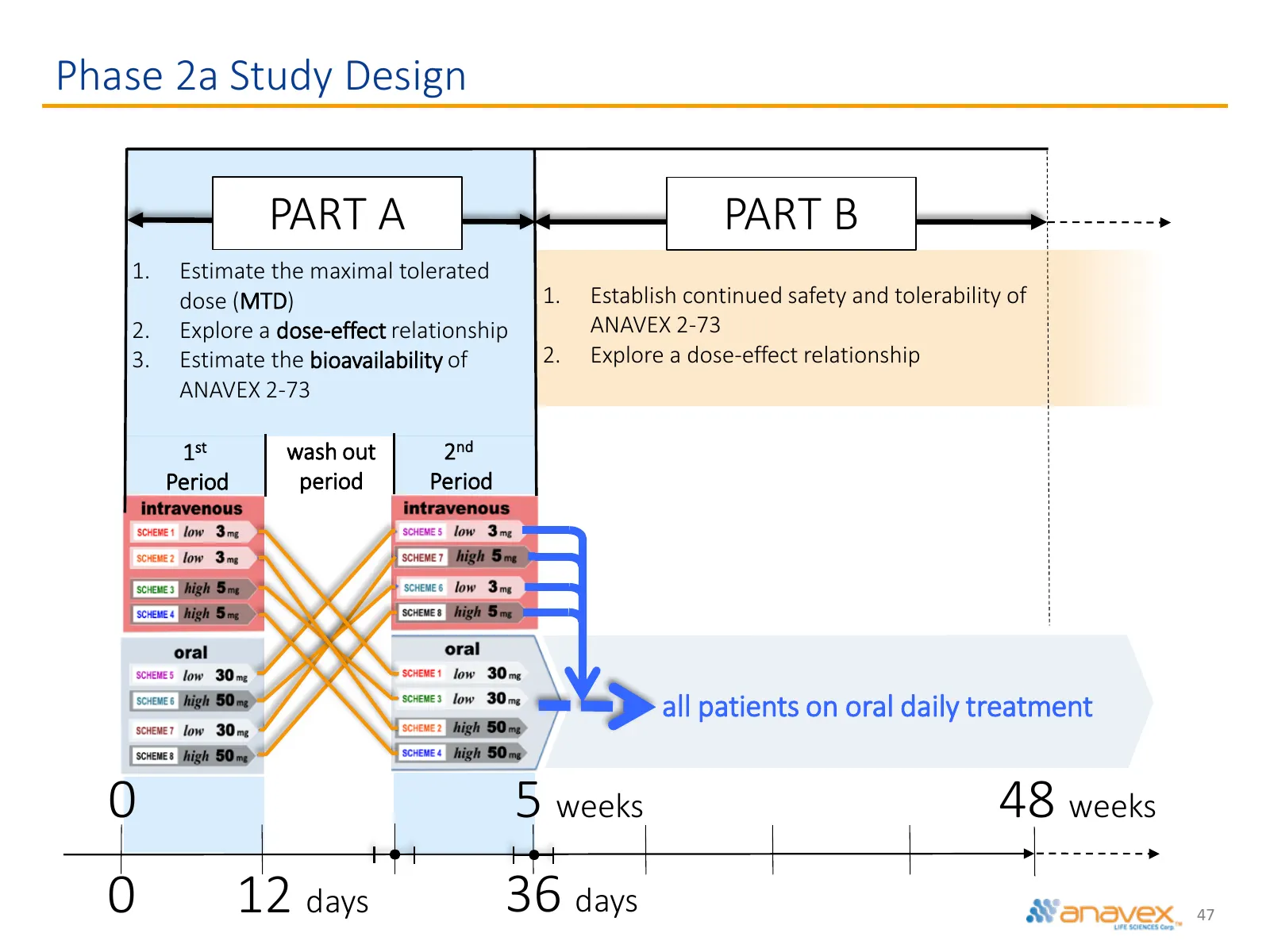
Phase 2a Study Design PART A PART B 1. Estimate the maximal tolerated dose (MTD) 1. Establish continued safety and tolerability of 2. Explore a dose-effect relationship ANAVEX 2-73 3. Estimate the bioavailability of 2. Explore a dose-effect relationship ANAVEX 2-73 1st wash out 2nd Period period Per
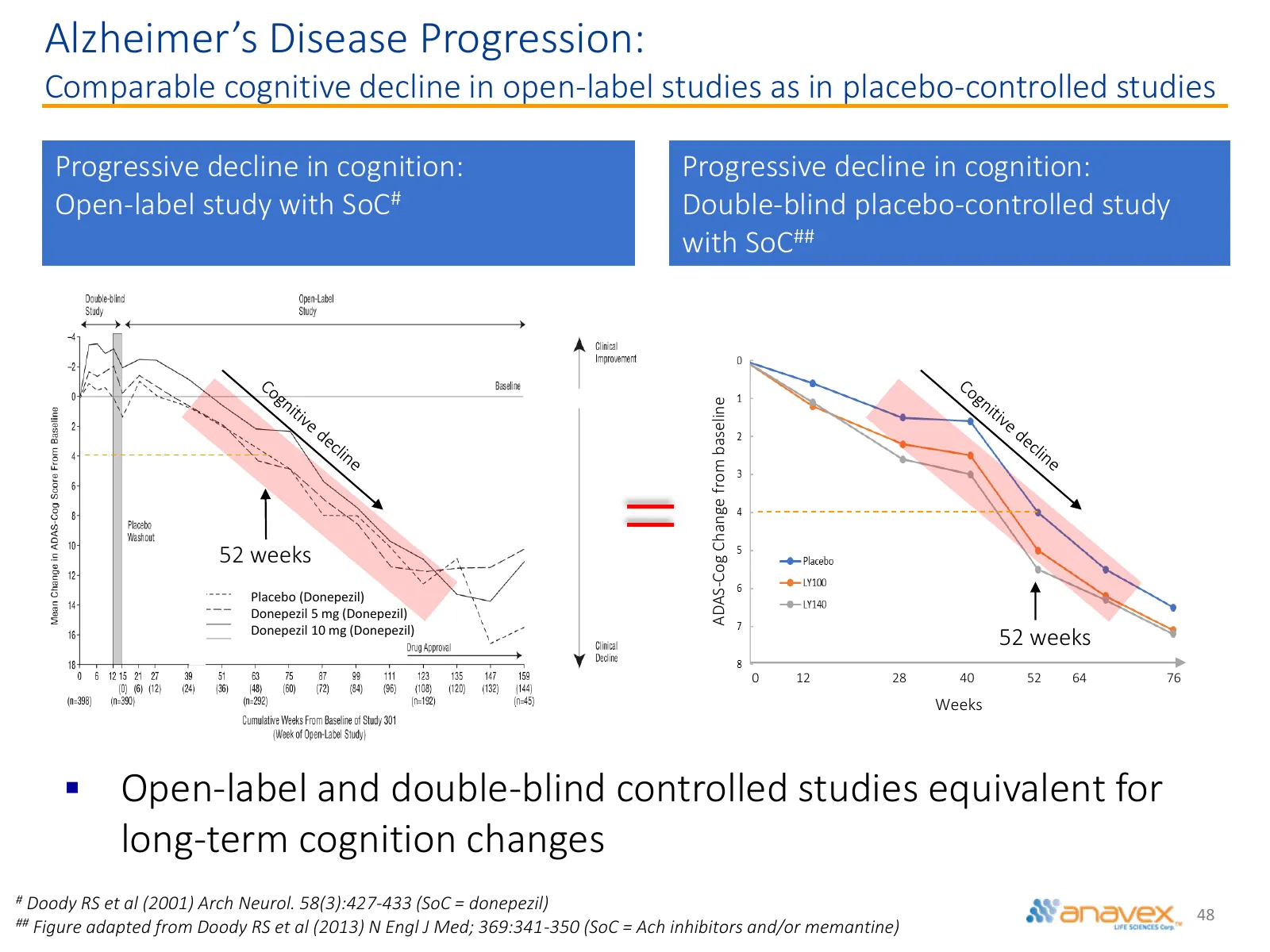
Slide 48: Alzheimer's Disease Progression: Open-label vs Placebo-controlled Studies
Alzheimer’s Disease Progression: Comparable cognitive decline in open-label studies as in placebo-controlled studies Progressive decline in cognition: Progressive decline in cognition: Open-label study with SoC# Double-blind placebo-controlled study with SoC## ADAS-Cog Change from baseline 52 weeks
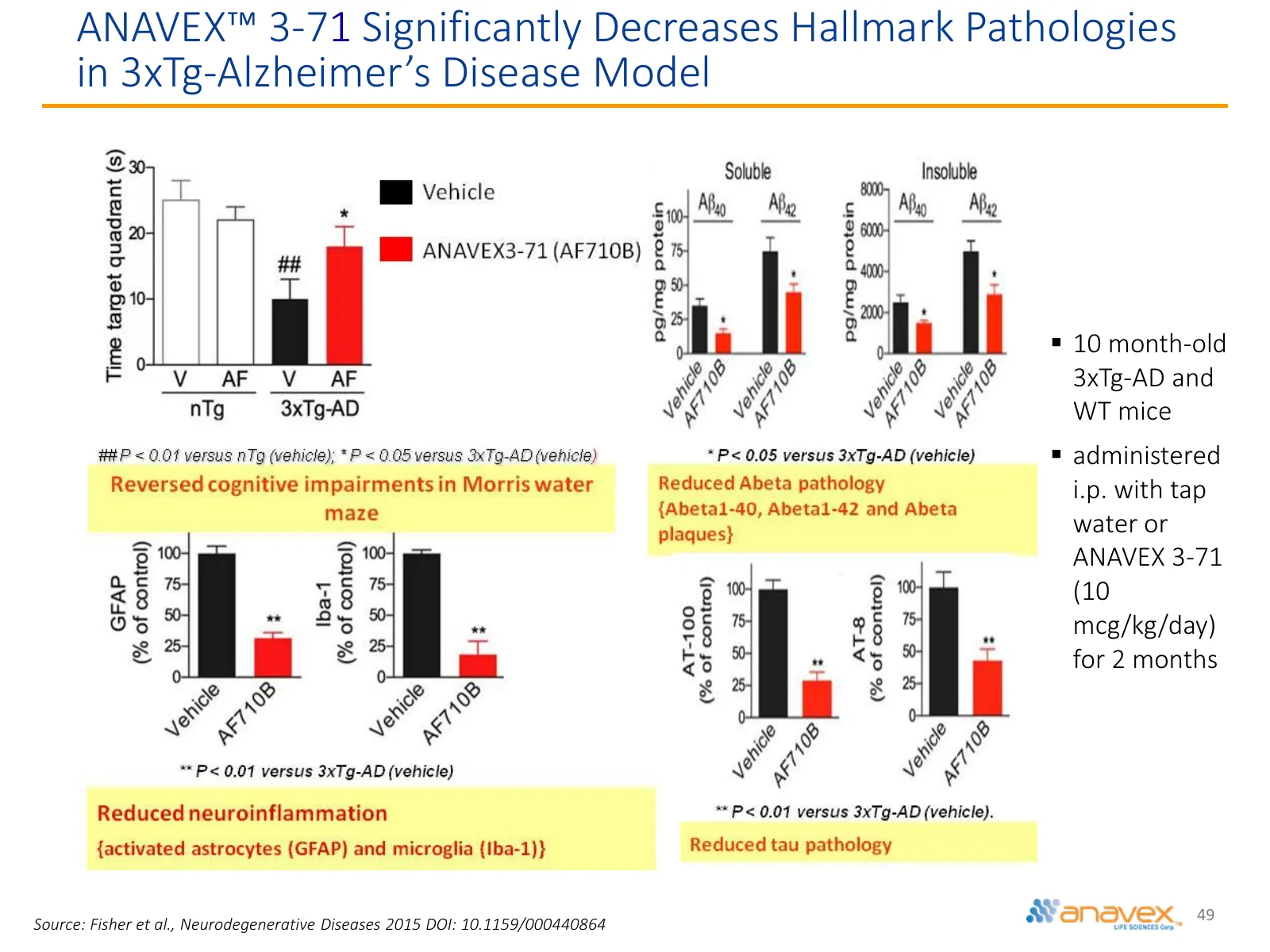
Slide 49: ANAVEX 3-71 Decreases Hallmark Pathologies in 3xTg-AD Model
ANAVEX™ 3-71 Significantly Decreases Hallmark Pathologies in 3xTg-Alzheimer’s Disease Model ▪ 10 month-old 3xTg-AD and WT mice ▪ administered i.p. with tap water or ANAVEX 3-71 (10 mcg/kg/day) for 2 months 49 Source: Fisher et al., Neurodegenerative Diseases 2015 DOI: 10.1159/000440864
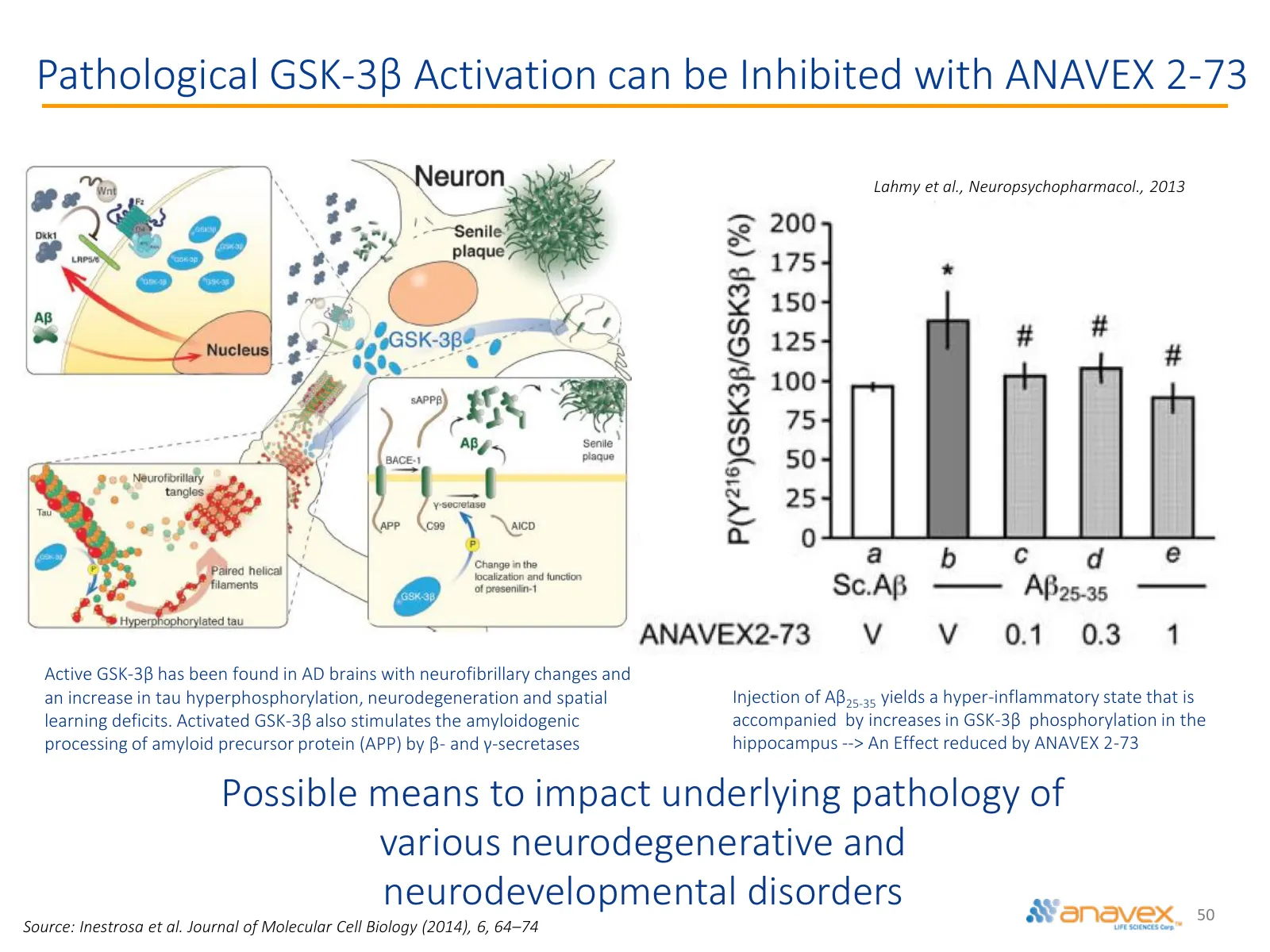
Slide 50: Pathological GSK-3β Activation can be Inhibited with ANAVEX 2-73
Pathological GSK-3β Activation can be Inhibited with ANAVEX 2-73 Lahmy et al., Neuropsychopharmacol., 2013 Active GSK-3β has been found in AD brains with neurofibrillary changes and an increase in tau hyperphosphorylation, neurodegeneration and spatial Injection of Aβ25-35 yields a hyper-inflammator
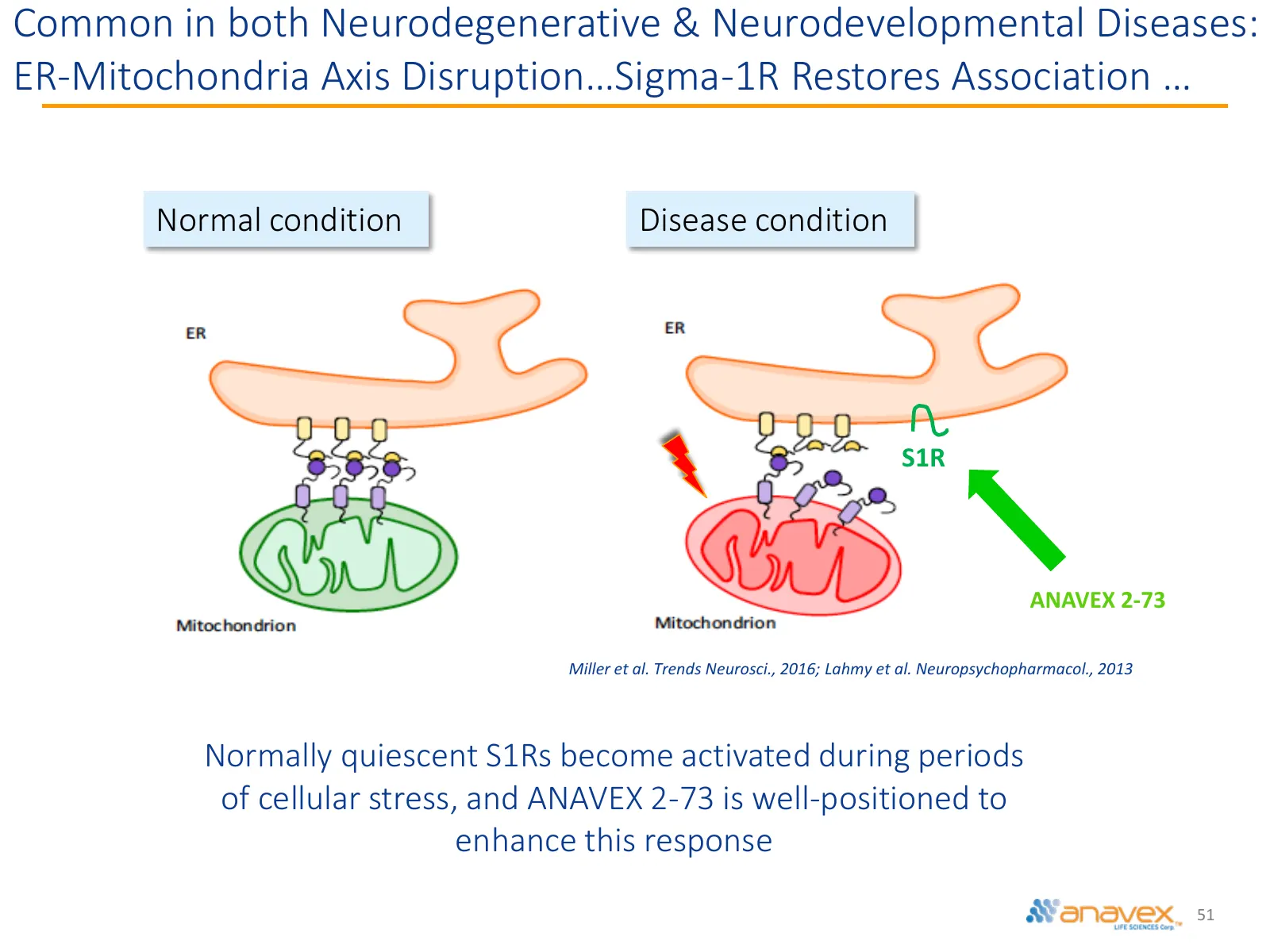
Slide 51: ER-Mitochondria Axis Disruption: Sigma-1R Restores Association
Common in both Neurodegenerative & Neurodevelopmental Diseases: ER-Mitochondria Axis Disruption…Sigma-1R Restores Association … Normal condition Disease condition S1R ANAVEX 2-73 Miller et al. Trends Neurosci., 2016; Lahmy et al. Neuropsychopharmacol., 2013 Normally quiescent S1Rs become activated d
Source: Internet Archive copy of anavex.com
More decks from Anavex Life Sciences Corp.
 Proxy Contest (September 2026)25 slides · September 2026
 AD/PD 2026, Copenhagen27 slides · Mar 21, 2026
 Investor Presentation (February 2026)37 slides · February 2026
 Investor Presentation (January 2026)37 slides · January 2026
 Technical Presentation (February 2022)24 slides · Feb 2, 2022
 Investor Presentation (September 2021)43 slides · Sep 13, 2021