Receptos — Jefferies 2013 Global Healthcare Conference
25 slides from Receptos's conference presentation, Jun 5, 2013
Slide 1: Jefferies 2013 Global Healthcare Conference
Jefferies 2013 Global Healthcare Conference Faheem Hasnain President and Chief Executive Officer June 5, 2013
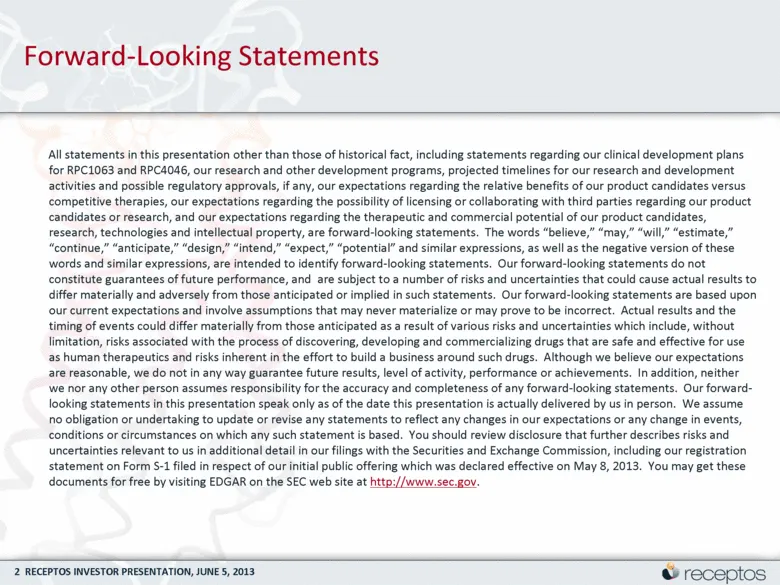
Slide 2: Forward-Looking Statements
Forward-Looking Statements All statements in this presentation other than those of historical fact, including statements regarding our clinical development plans for RPC1063 and RPC4046, our research and other development programs, projected timelines for our research and development activities and
Slide 3: Experienced Executive Team with History of Success
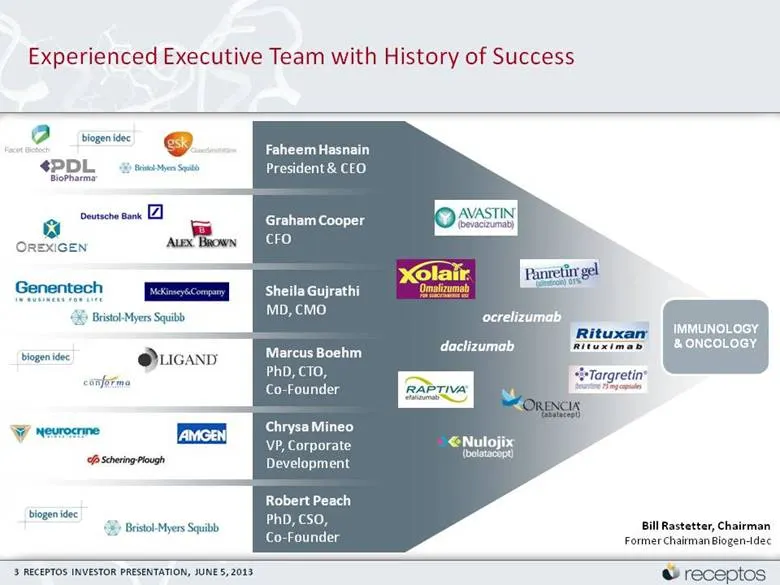
% Experienced Executive Team with History of Success Faheem Hasnain President & CEO Sheila Gujrathi MD, CMO Robert Peach PhD, CSO, Co-Founder Chrysa Mineo VP, Corporate Development Graham Cooper CFO daclizumab ocrelizumab IMMUNOLOGY & ONCOLOGY Marcus Boehm PhD, CTO, Co-Founder Bill Rastetter, Chairm
Slide 4: Receptos Key Investment Highlights
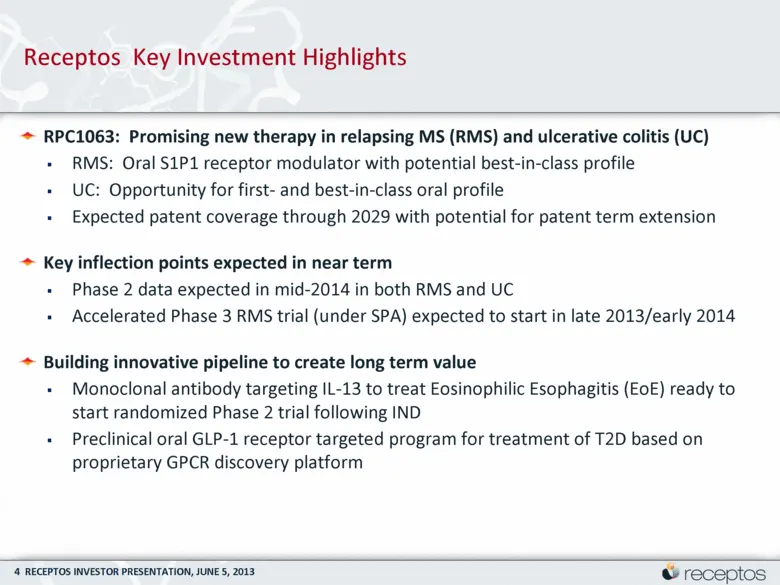
RPC1063: Promising new therapy in relapsing MS (RMS) and ulcerative colitis (UC) RMS: Oral S1P1 receptor modulator with potential best-in-class profile UC: Opportunity for first- and best-in-class oral profile Expected patent coverage through 2029 with potential for patent term extension Key inflect
Slide 5: Receptos is Developing Potentially High-Value, Differentiated Assets
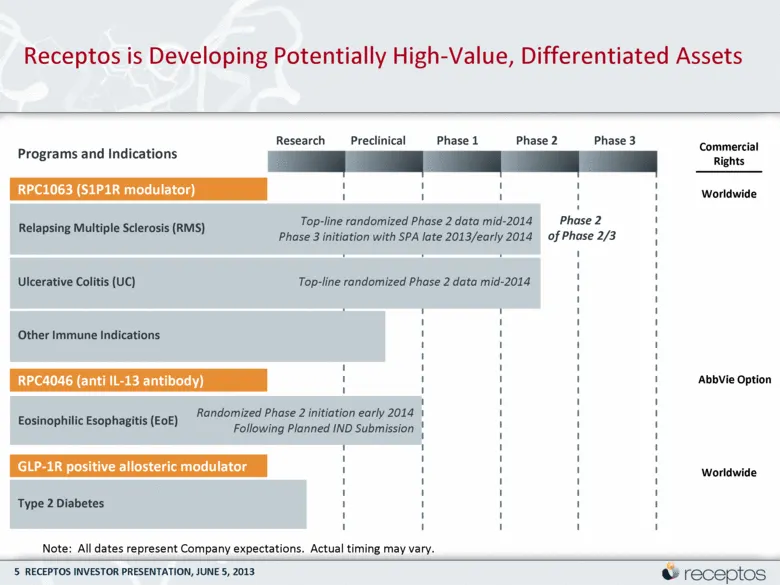
Receptos is Developing Potentially High-Value, Differentiated Assets Note: All dates represent Company expectations. Actual timing may vary. Programs and Indications Relapsing Multiple Sclerosis (RMS) Randomized Phase 2 initiation early 2014 Following Planned IND Submission Top-line randomized Phase
Slide 6: RPC1063 Program RMS Indication
RPC1063 Program RMS Indication
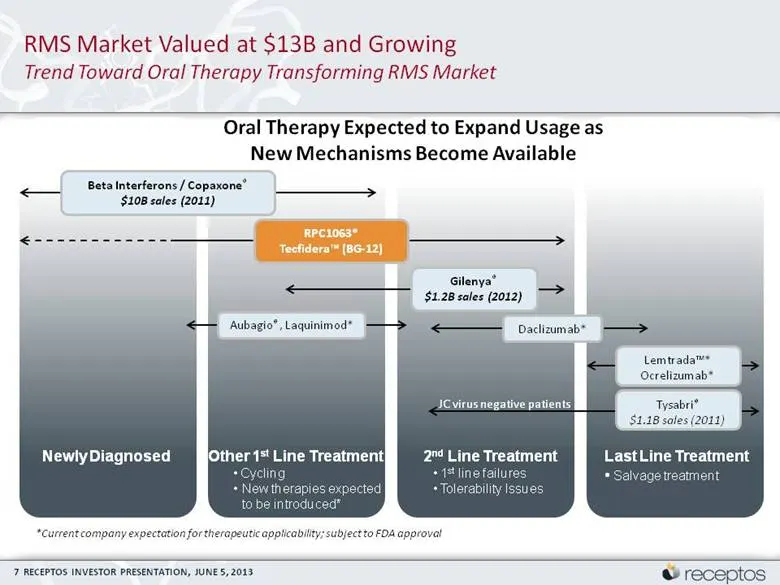
Slide 7: Oral Therapy Expected to Expand Usage as New Mechanisms Become Available
Oral Therapy Expected to Expand Usage as New Mechanisms Become Available RMS Market Valued at $13B and Growing Trend Toward Oral Therapy Transforming RMS Market *Current company expectation for therapeutic applicability; subject to FDA approval Newly Diagnosed Other 1st Line Treatment Cycling New th
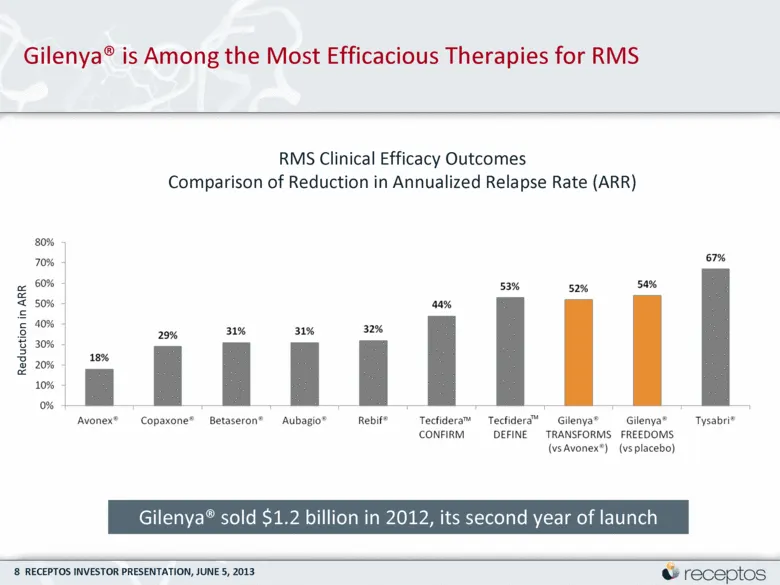
Slide 8: Gilenya is Among the Most Efficacious Therapies for RMS
Gilenya® is Among the Most Efficacious Therapies for RMS Reduction in ARR RMS Clinical Efficacy Outcomes Comparison of Reduction in Annualized Relapse Rate (ARR) TM TM Gilenya® sold $1.2 billion in 2012, its second year of launch
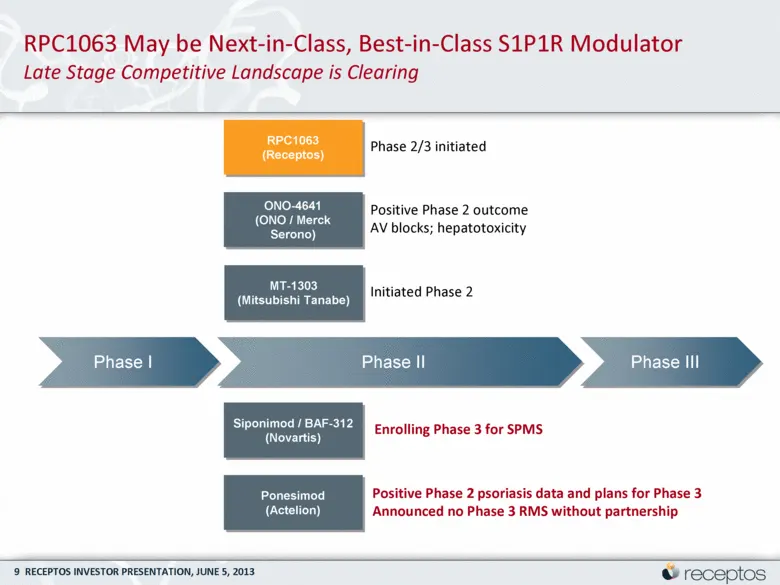
Slide 9: Late Stage Competitive Landscape is Clearing
Phase I Phase II Phase III ONO-4641 (ONO / Merck Serono) Positive Phase 2 outcome AV blocks; hepatotoxicity Siponimod / BAF-312 (Novartis) Enrolling Phase 3 for SPMS RPC1063 (Receptos) Phase 2/3 initiated MT-1303 (Mitsubishi Tanabe) Initiated Phase 2 Ponesimod (Actelion) Positive Phase 2 psoriasis d
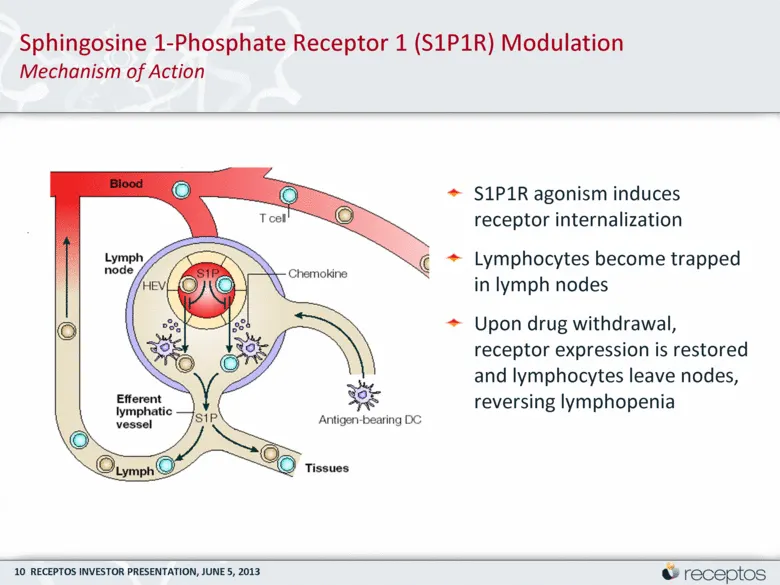
Slide 10: Sphingosine 1-Phosphate Receptor 1 (S1P1R) Modulation Mechanism of Action
S1P1R agonism induces receptor internalization Lymphocytes become trapped in lymph nodes Upon drug withdrawal, receptor expression is restored and lymphocytes leave nodes, reversing lymphopenia Sphingosine 1-Phosphate Receptor 1 (S1P1R) Modulation Mechanism of Action
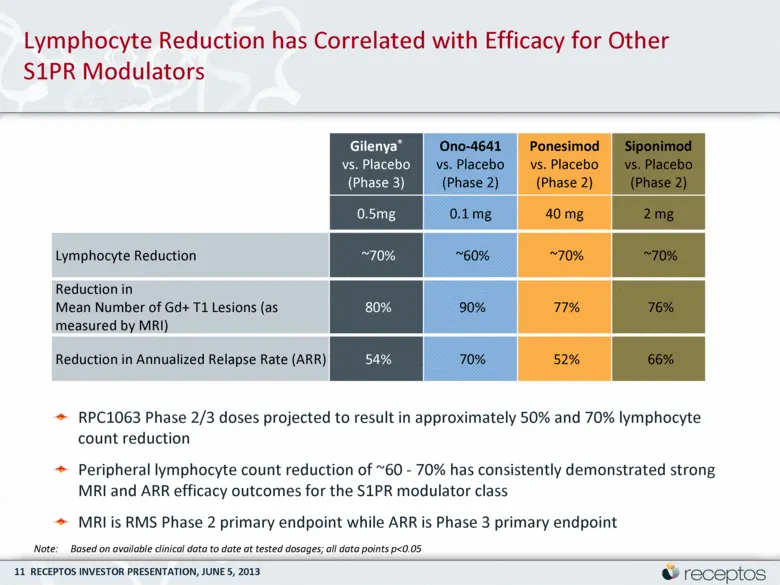
Slide 11: Lymphocyte Reduction has Correlated with Efficacy for Other S1PR Modulators
Lymphocyte Reduction has Correlated with Efficacy for Other S1PR Modulators Gilenya® vs. Placebo (Phase 3) Ono-4641 vs. Placebo (Phase 2) Ponesimod vs. Placebo (Phase 2) Siponimod vs. Placebo (Phase 2) 0.5mg 0.1 mg 40 mg 2 mg Lymphocyte Reduction ~70% ~60% ~70% ~70% Reduction in Mean Number of Gd+ T
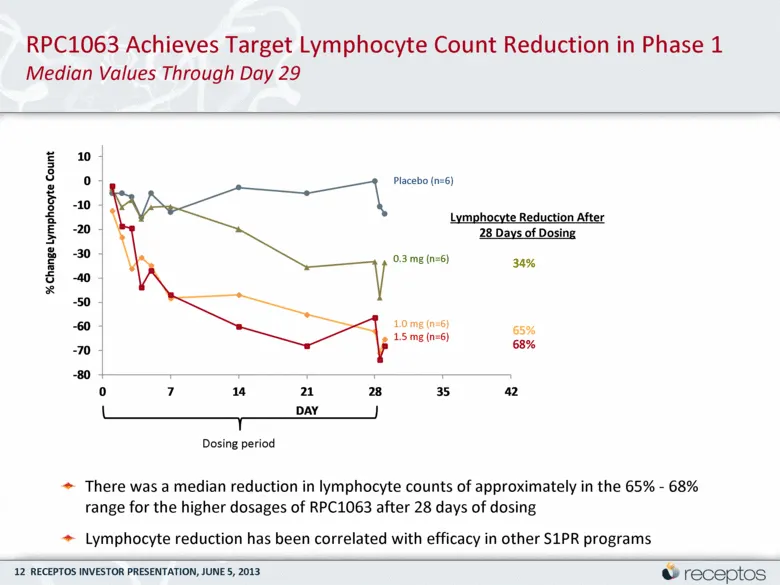
Slide 12: RPC1063 Achieves Target Lymphocyte Count Reduction in Phase 1
RPC1063 Achieves Target Lymphocyte Count Reduction in Phase 1 Median Values Through Day 29 Dosing period There was a median reduction in lymphocyte counts of approximately in the 65% - 68% range for the higher dosages of RPC1063 after 28 days of dosing Lymphocyte reduction has been correlated with e
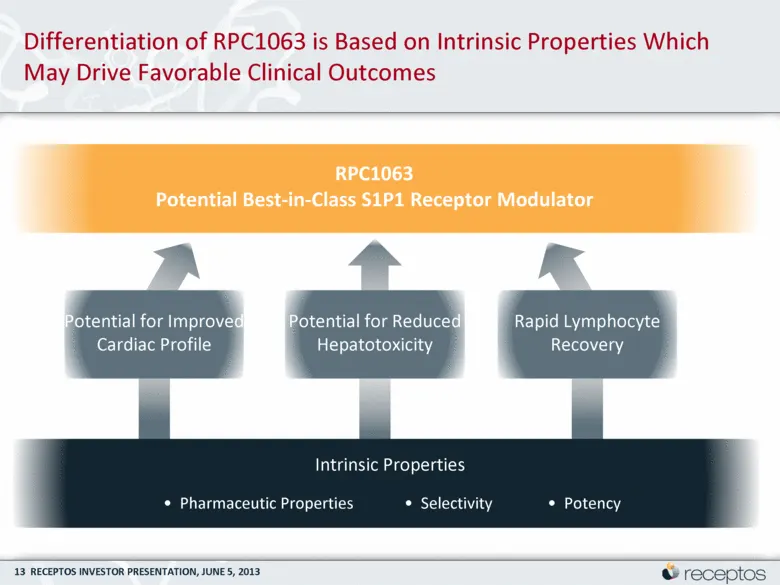
Slide 13: Differentiation of RPC1063 is Based on Intrinsic Properties
Differentiation of RPC1063 is Based on Intrinsic Properties Which May Drive Favorable Clinical Outcomes Intrinsic Properties • Pharmaceutic Properties • Selectivity • Potency RPC1063 Potential Best-in-Class S1P1 Receptor Modulator Potential for Improved Cardiac Profile Rapid Lymphocyte Recovery Pote
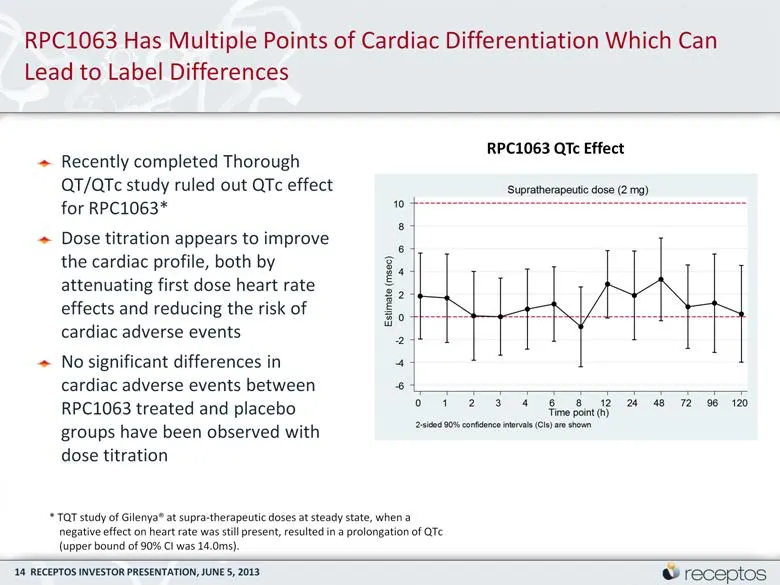
Slide 14: RPC1063 Has Multiple Points of Cardiac Differentiation
RPC1063 Has Multiple Points of Cardiac Differentiation Which Can Lead to Label Differences Recently completed Thorough QT/QTc study ruled out QTc effect for RPC1063* Dose titration appears to improve the cardiac profile, both by attenuating first dose heart rate effects and reducing the risk of card
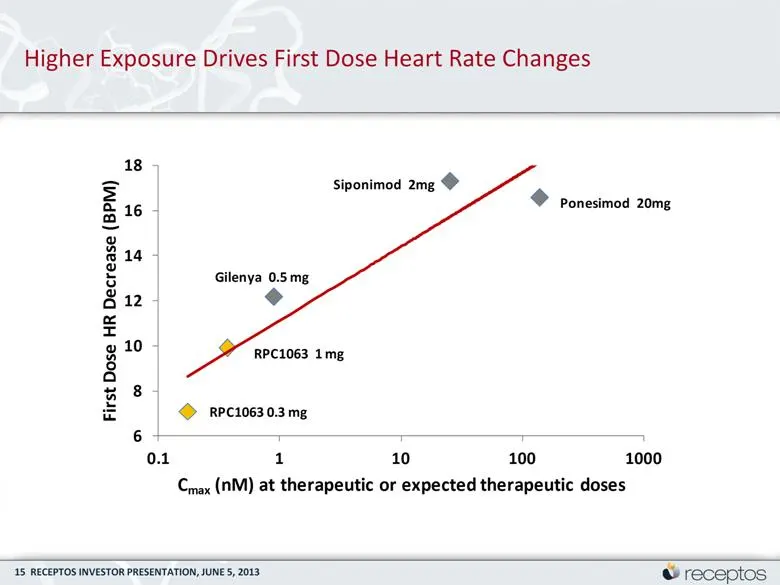
Slide 15: Higher Exposure Drives First Dose Heart Rate Changes
Higher Exposure Drives First Dose Heart Rate Changes RECEPTOS INVESTOR PRESENTATION, JUNE 5, 2013 14 Cmax(nM) at therapeutic or expected therapeutic dosesRPC1063 First Dose HR Decrease (BPM) 15
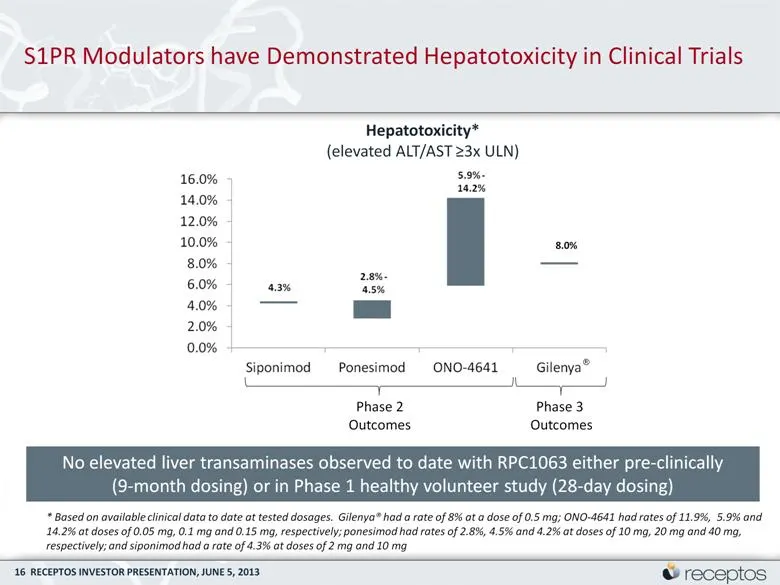
Slide 16: S1PR Modulators have Demonstrated Hepatotoxicity in Clinical Trials
S1PR Modulators have Demonstrated Hepatotoxicity in Clinical Trials Hepatotoxicity* (elevated ALT/AST >3x ULN) No elevated liver transaminases observed to date with RPC1063 either pre-clinically (9-month dosing) or in Phase 1 healthy volunteer study (28-day dosing) Phase 2 Outcomes Phase 3 Outcomes
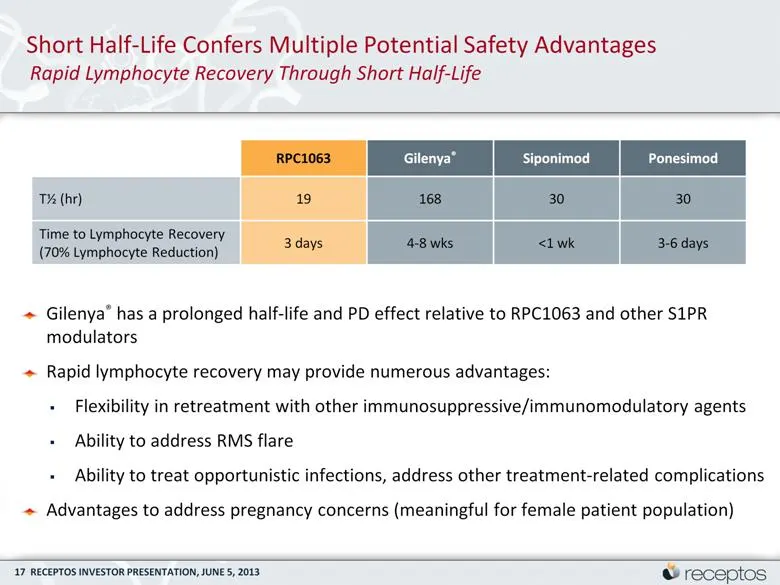
Slide 17: Short Half-Life Confers Multiple Potential Safety Advantages
Short Half-Life Confers Multiple Potential Safety Advantages Rapid Lymphocyte Recovery Through Short Half-Life Gilenya® has a prolonged half-life and PD effect relative to RPC1063 and other S1PR modulators Rapid lymphocyte recovery may provide numerous advantages: Flexibility in retreatment with oth
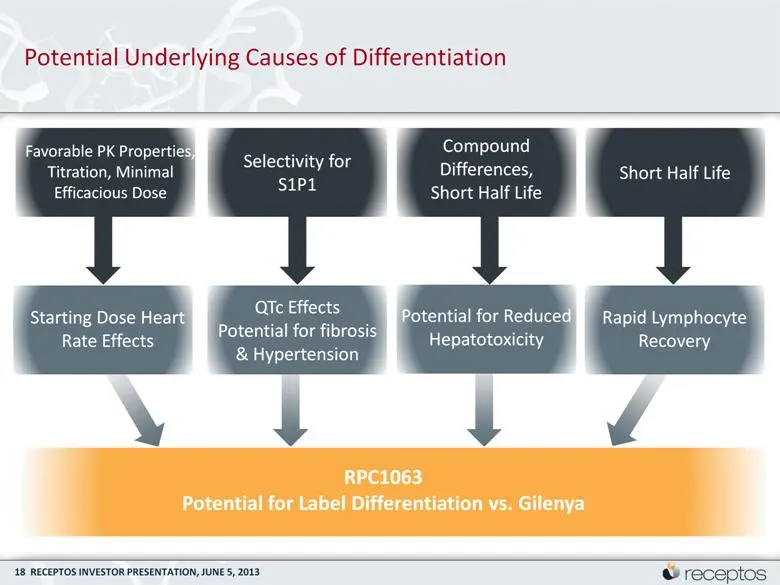
Slide 18: Potential Underlying Causes of Differentiation
Potential Underlying Causes of Differentiation RPC1063 Potential for Label Differentiation vs. Gilenya Rapid Lymphocyte Recovery Short Half Life Starting Dose Heart Rate Effects Favorable PK Properties, Titration, Minimal Efficacious Dose Selectivity for S1P1 Potential for Reduced Hepatotoxicity Com
Slide 19: RADIANCE Randomized Phase 2/3 Study in RMS
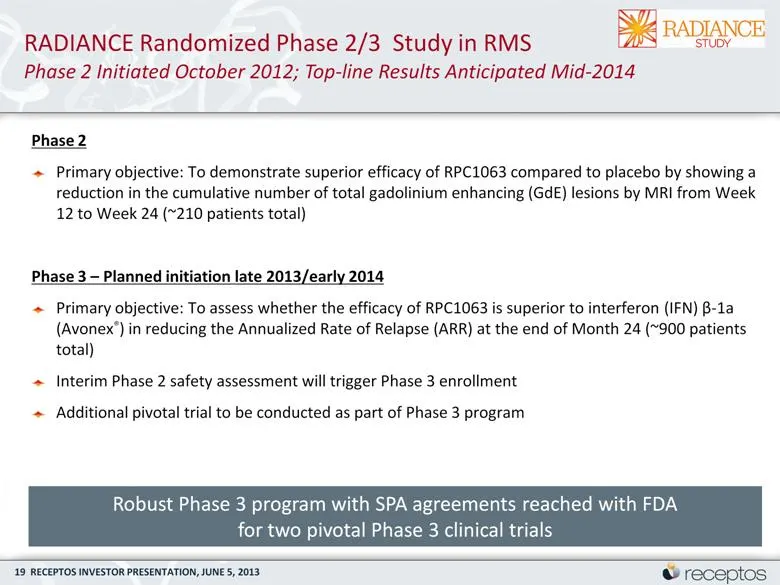
RADIANCE Randomized Phase 2/3 Study in RMS Phase 2 Initiated October 2012; Top-line Results Anticipated Mid-2014 Phase 2 Primary objective: To demonstrate superior efficacy of RPC1063 compared to placebo by showing a reduction in the cumulative number of total gadolinium enhancing (GdE) lesions by M
Slide 20: RPC1063 Program IBD Indication
RPC1063 Program IBD Indication
Slide 21: Rationale for RPC1063 in Inflammatory Bowel Disease
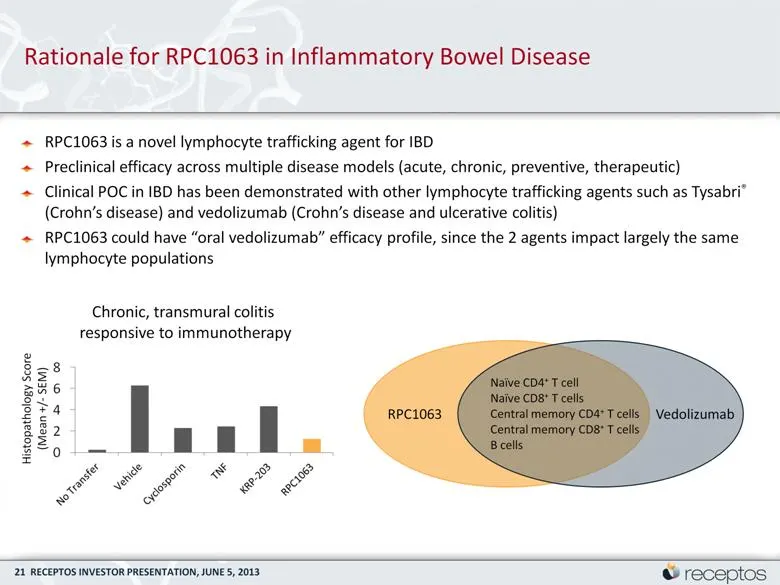
Rationale for RPC1063 in Inflammatory Bowel Disease RPC1063 is a novel lymphocyte trafficking agent for IBD Preclinical efficacy across multiple disease models (acute, chronic, preventive, therapeutic) Clinical POC in IBD has been demonstrated with other lymphocyte trafficking agents such as Tysabri
Slide 22: TOUCHSTONE Randomized Phase 2 Study in Ulcerative Colitis
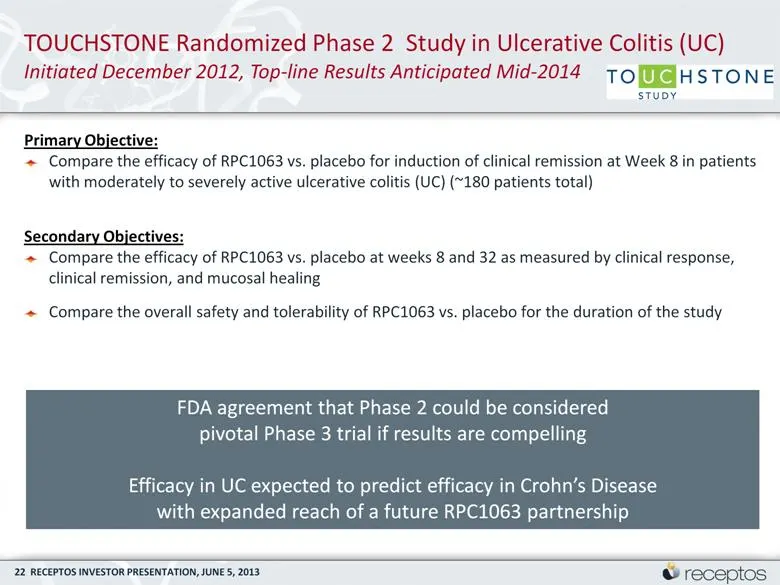
TOUCHSTONE Randomized Phase 2 Study in Ulcerative Colitis (UC) Initiated December 2012, Top-line Results Anticipated Mid-2014 Primary Objective: Compare the efficacy of RPC1063 vs. placebo for induction of clinical remission at Week 8 in patients with moderately to severely active ulcerative colitis
Slide 23: RPC4046 Program Eosinophilic Esophagitis
RPC4046 Program Eosinophilic Esophagitis
Slide 24: Eosinophilic Esophagitis (EoE) is an Orphan Disease with Significant Unmet Need
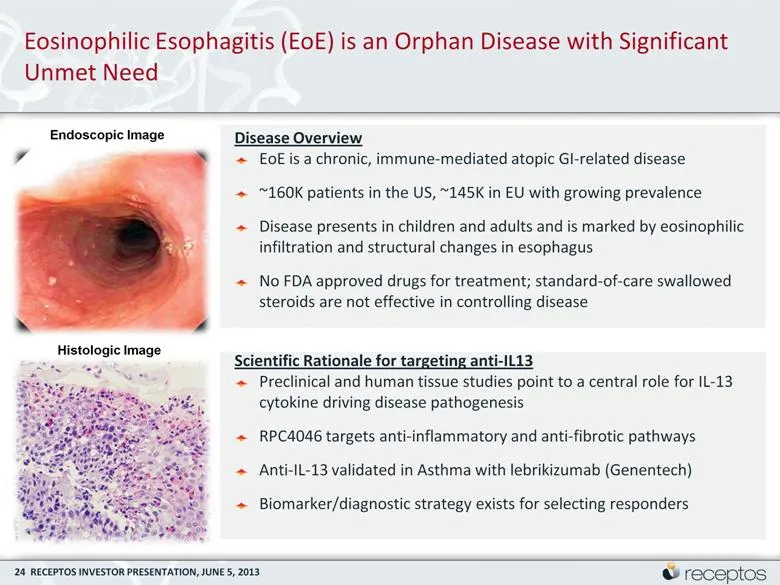
Endoscopic Image Histologic Image Eosinophilic Esophagitis (EoE) is an Orphan Disease with Significant Unmet Need Disease Overview EoE is a chronic, immune-mediated atopic GI-related disease ~160K patients in the US, ~145K in EU with growing prevalence Disease presents in children and adults and is
Slide 25: Significant Potential Milestones Through 2015
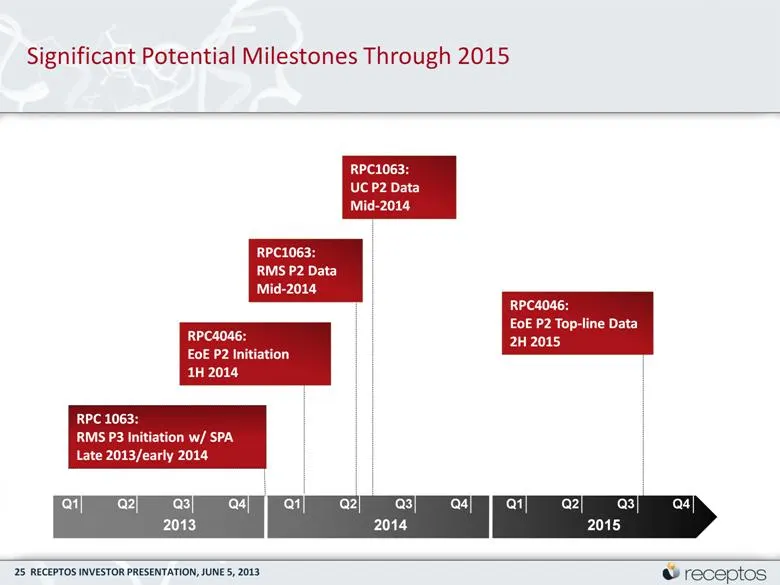
2014 2013 Significant Potential Milestones Through 2015 Q1 Q2 Q3 Q4 Q1 Q3 Q4 Q1 Q2 Q3 Q4 2015 Q2 RPC 1063: RMS P3 Initiation w/ SPA Late 2013/early 2014 RPC4046: EoE P2 Initiation 1H 2014 RPC1063: RMS P2 Data Mid-2014 RPC1063: UC P2 Data Mid-2014 RPC4046: EoE P2 Top-line Data 2H 2015
Source: SEC EDGAR · 8-K filed Jun 5, 2013