Acurx Pharmaceuticals, Inc. · NASDAQ:ACXP
Acurx Pharmaceuticals — Peggy Lillis Foundation Inaugural CDI Scientific Symposium 2024
19 slides from Acurx Pharmaceuticals's conference presentation, November 2024
Slide 1: Microbiome Results from the Phase 2 Study of Ibezapolstat vs Vancomycin for CDI
Microbiome Results from the phase 2, randomized, double- blind study of ibezapolstat compared with vancomycin for the treatment of Clostridioides difficile infection. Kevin W. Garey, M Jahangir Alam, Khurshida Begum, Jacob McPherson, Taryn A. Eubank, Jinhee Jo, Michael H. Silverman for the Ibezapols
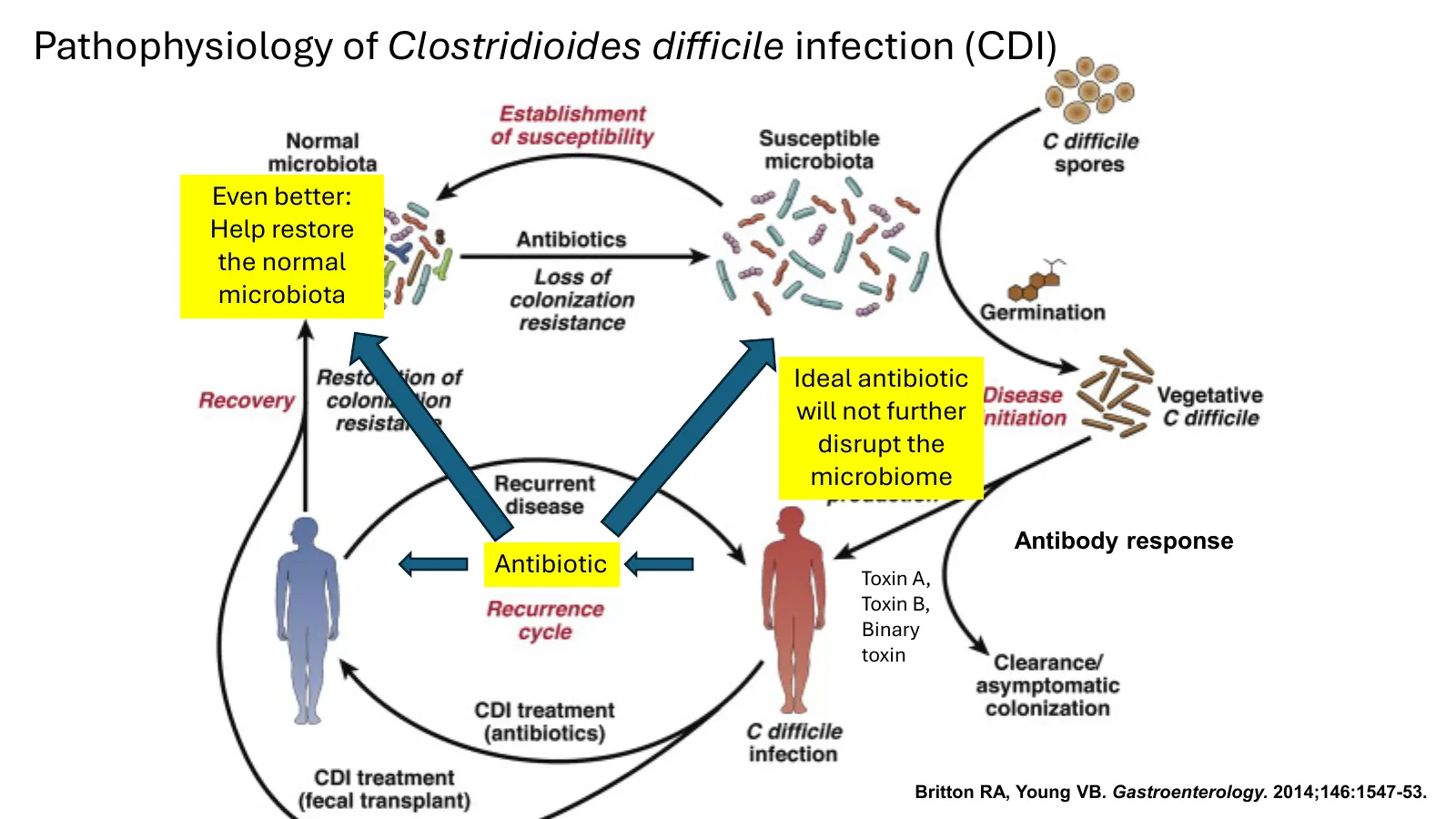
Slide 2: Pathophysiology of Clostridioides difficile infection (CDI)
Pathophysiology of Clostridioides difficile infection (CDI) Even better: Help restore the normal microbiota Ideal antibiotic will not further disrupt the microbiome Antibody response Antibiotic Toxin A, Toxin B, Binary toxin Britton RA, Young VB. Gastroenterology. 2014;146:1547-53.

Slide 3: What is it about a normal microbiota that restores colonization resistance?
What is it about a normal microbiota that restores colonization resistance? Britton RA, Young VB. Gastroenterology. 2014;146:1547-53.
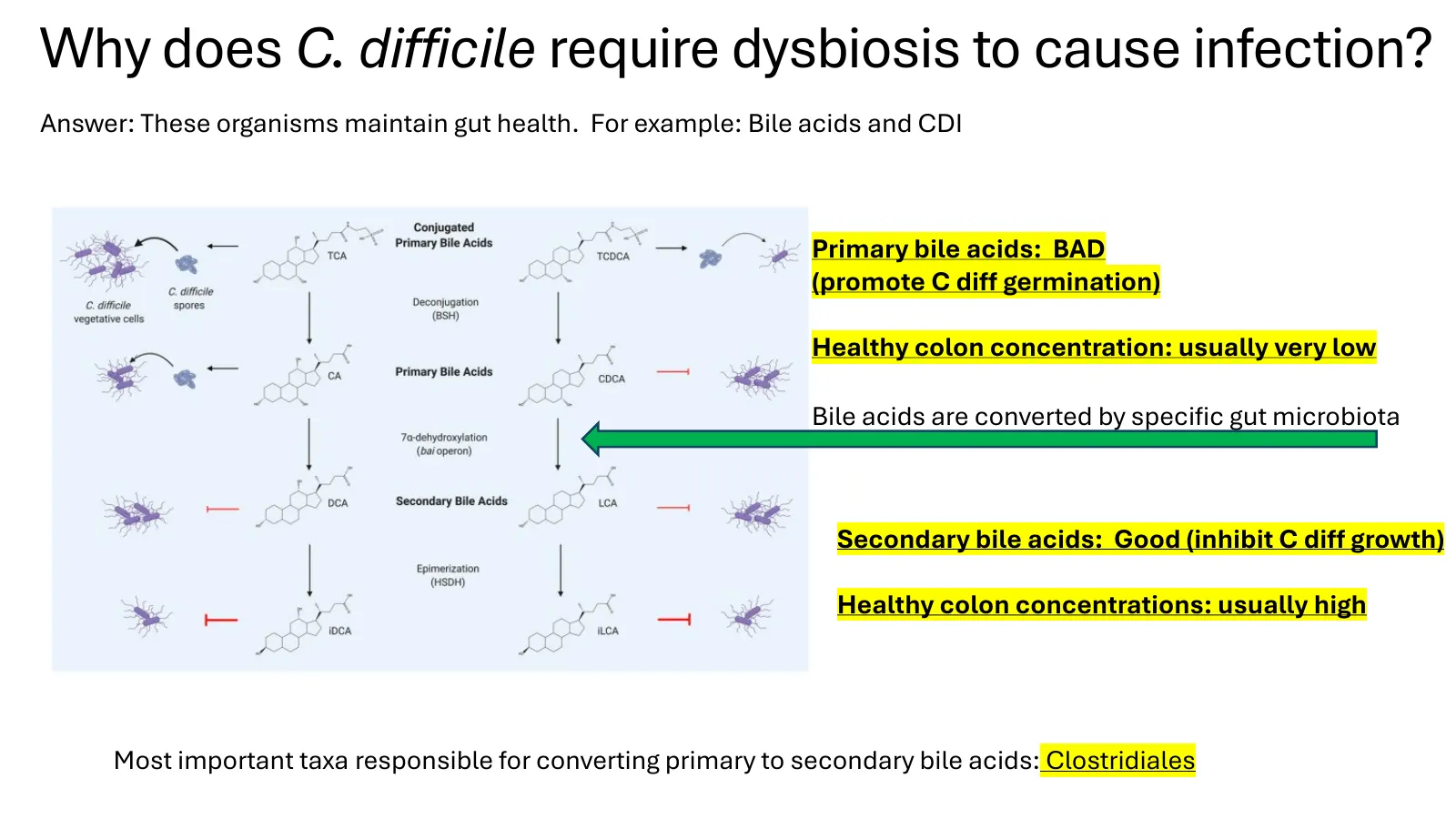
Slide 4: Why does C. difficile require dysbiosis to cause infection?
Why does C. difficile require dysbiosis to cause infection? Answer: These organisms maintain gut health. For example: Bile acids and CDI Primary bile acids: BAD (promote C diff germination) Healthy colon concentration: usually very low Bile acids are converted by specific gut microbiota Secondary bi
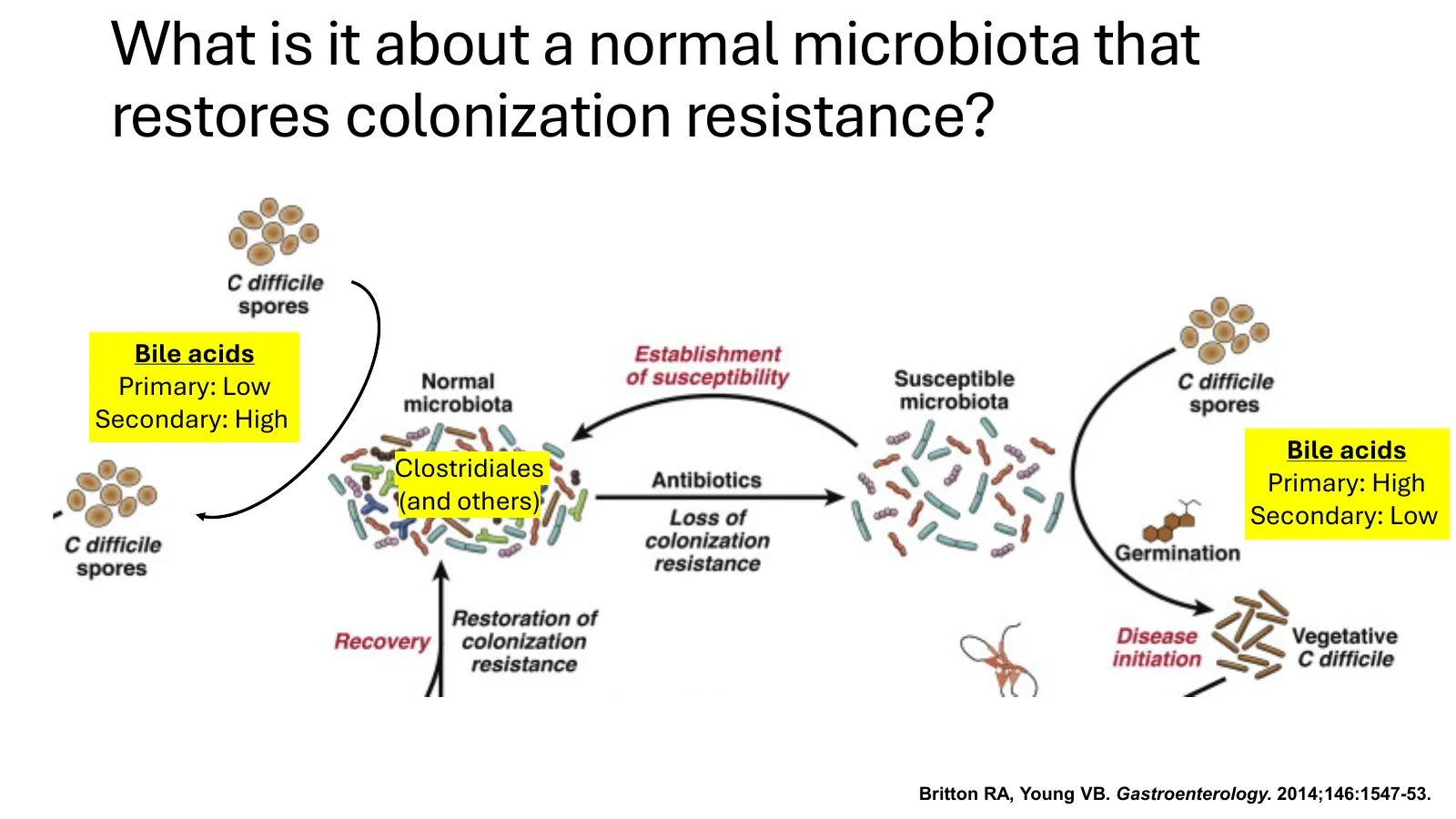
Slide 5: What is it about a normal microbiota that restores colonization resistance?
What is it about a normal microbiota that restores colonization resistance? Bile acids Primary: Low Secondary: High Bile acids Clostridiales Primary: High (and others) Secondary: Low Britton RA, Young VB. Gastroenterology. 2014;146:1547-53.
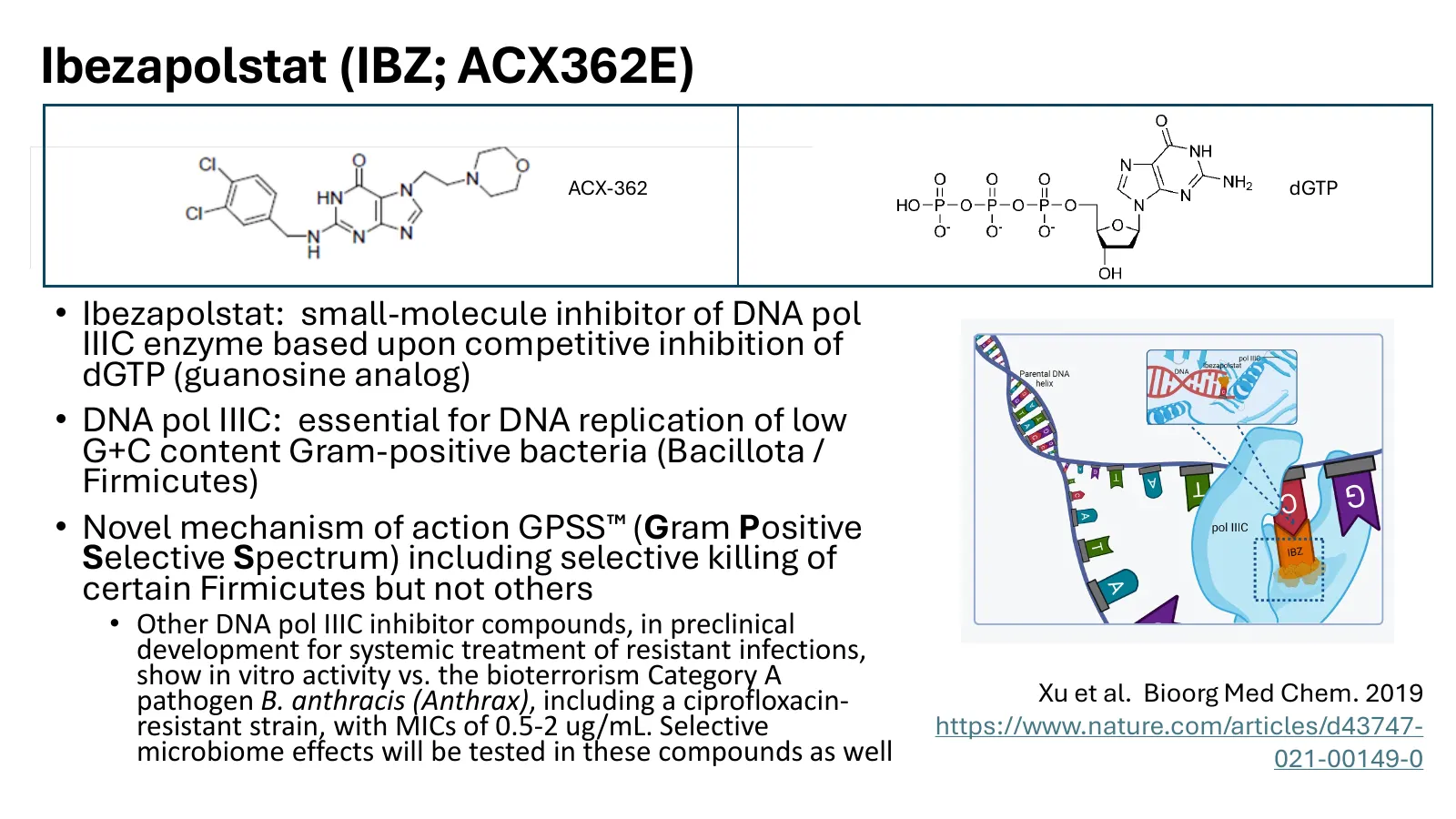
Slide 6: Ibezapolstat (IBZ; ACX362E)
Ibezapolstat (IBZ; ACX362E) ACX-362 dGTP • Ibezapolstat: small-molecule inhibitor of DNA pol IIIC enzyme based upon competitive inhibition of dGTP (guanosine analog) • DNA pol IIIC: essential for DNA replication of low G+C content Gram-positive bacteria (Bacillota / Firmicutes) • Novel mechanism of
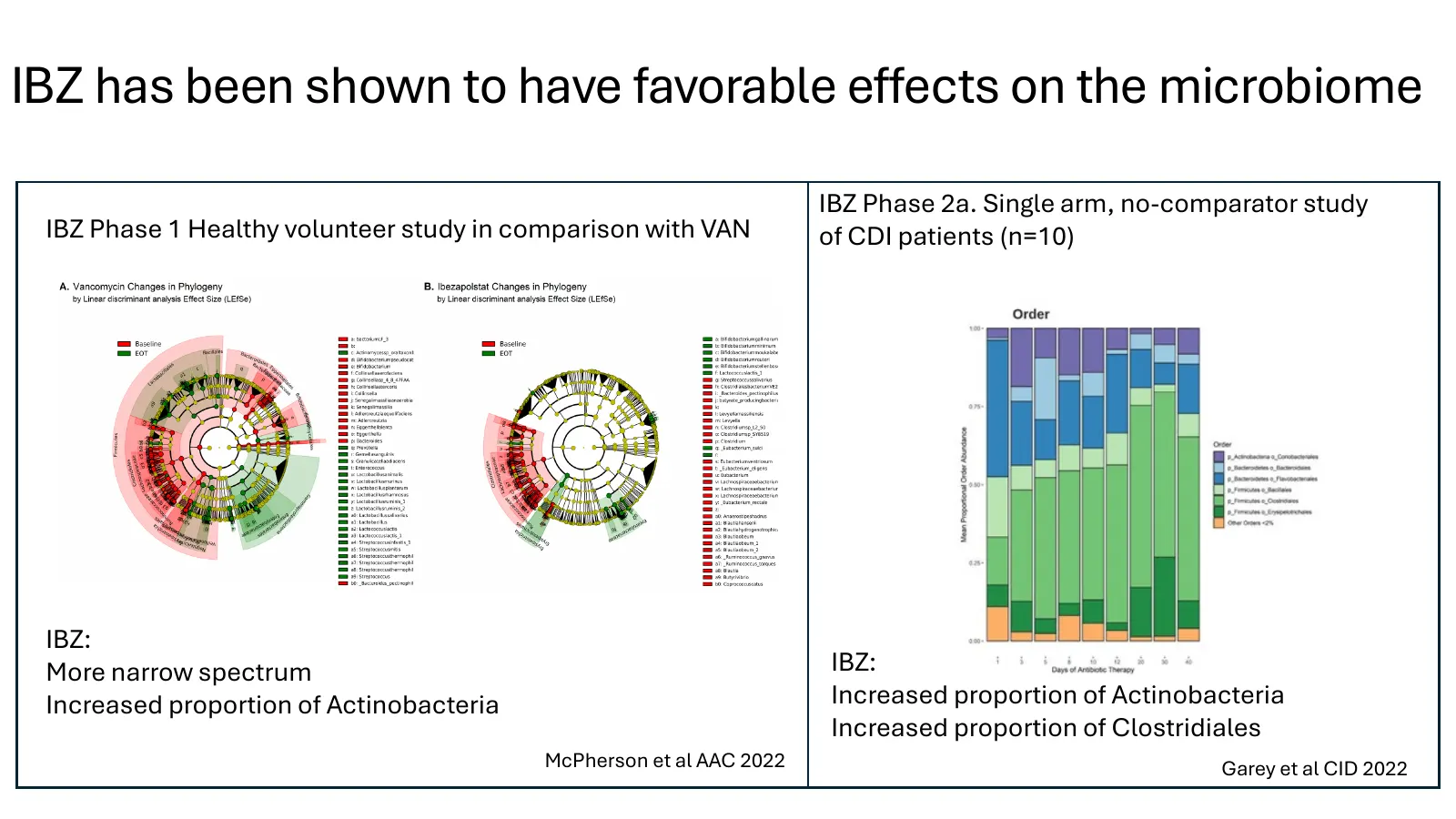
Slide 7: IBZ has been shown to have favorable effects on the microbiome
IBZ has been shown to have favorable effects on the microbiome IBZ Phase 2a. Single arm, no-comparator study IBZ Phase 1 Healthy volunteer study in comparison with VAN of CDI patients (n=10) IBZ: More narrow spectrum IBZ: Increased proportion of Actinobacteria Increased proportion of Actinobacteria
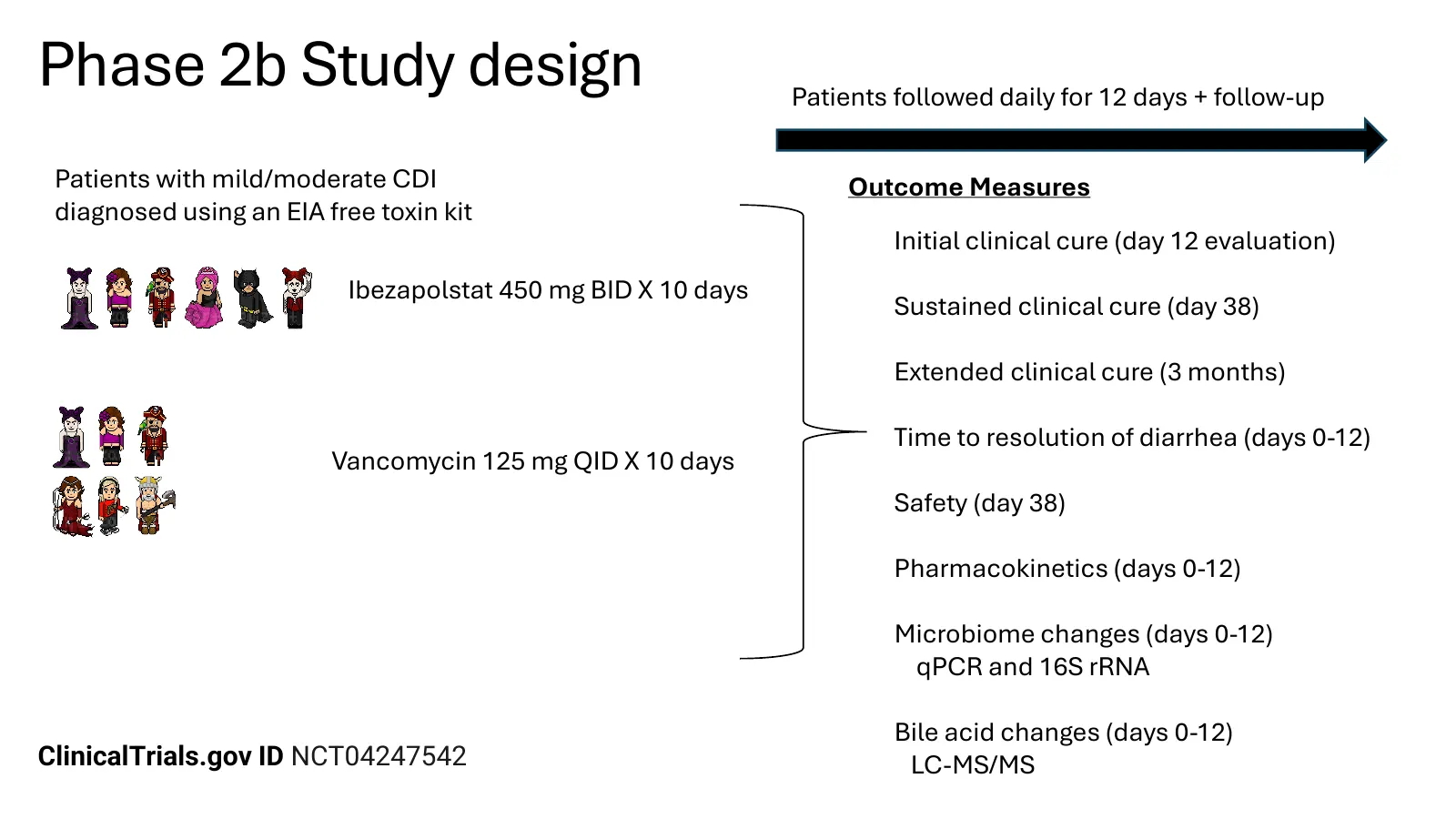
Slide 8: Phase 2b Study design
Phase 2b Study design Patients followed daily for 12 days + follow-up Patients with mild/moderate CDI Outcome Measures diagnosed using an EIA free toxin kit Initial clinical cure (day 12 evaluation) Ibezapolstat 450 mg BID X 10 days Sustained clinical cure (day 38) Extended clinical cure (3 months)
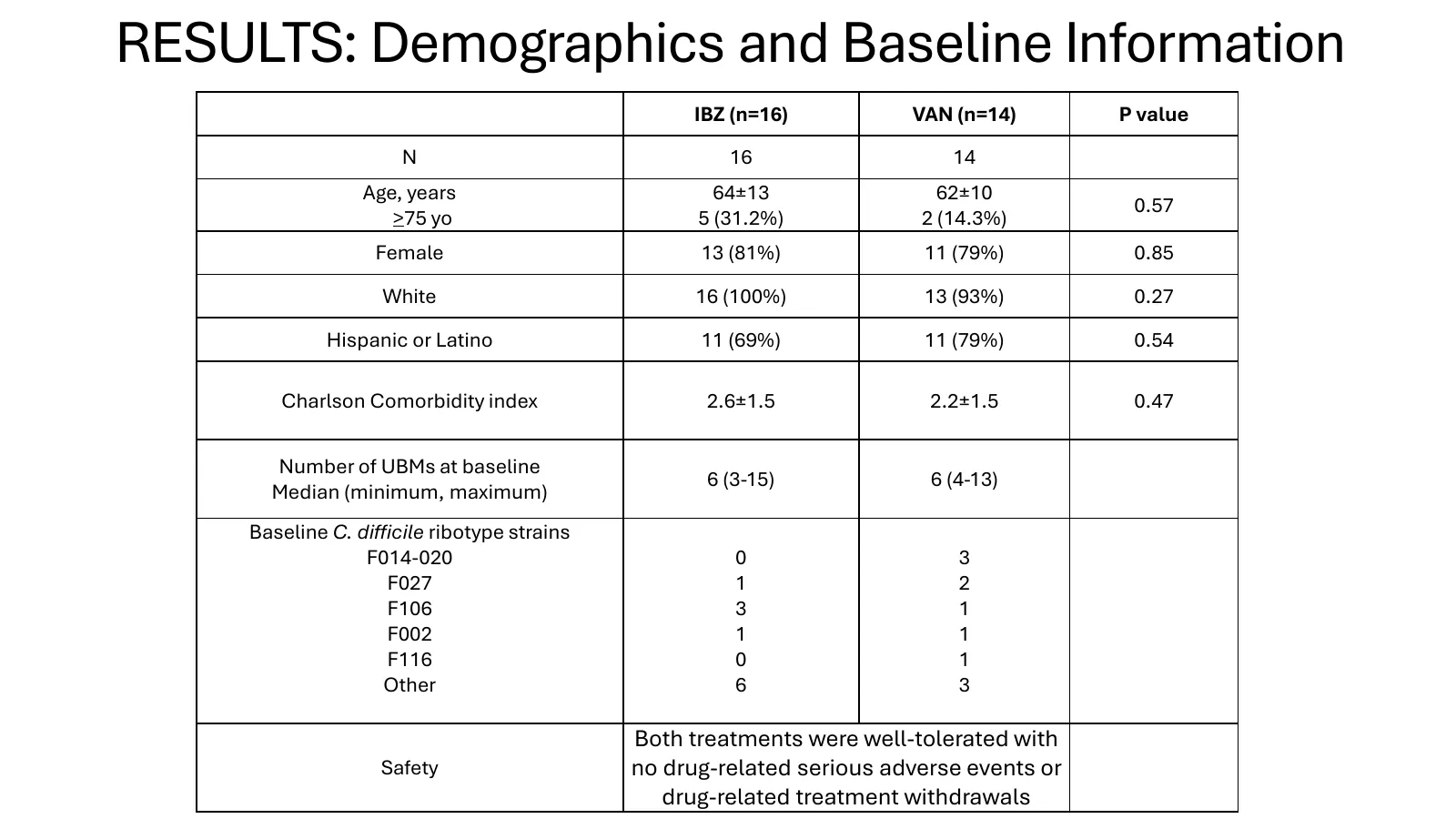
Slide 9: RESULTS: Demographics and Baseline Information
RESULTS: Demographics and Baseline Information IBZ (n=16) VAN (n=14) P value N 16 14 Age, years 64±13 62±10 0.57 >75 yo 5 (31.2%) 2 (14.3%) Female 13 (81%) 11 (79%) 0.85 White 16 (100%) 13 (93%) 0.27 Hispanic or Latino 11 (69%) 11 (79%) 0.54 Charlson Comorbidity index 2.6±1.5 2.2±1.5 0.47 Number of
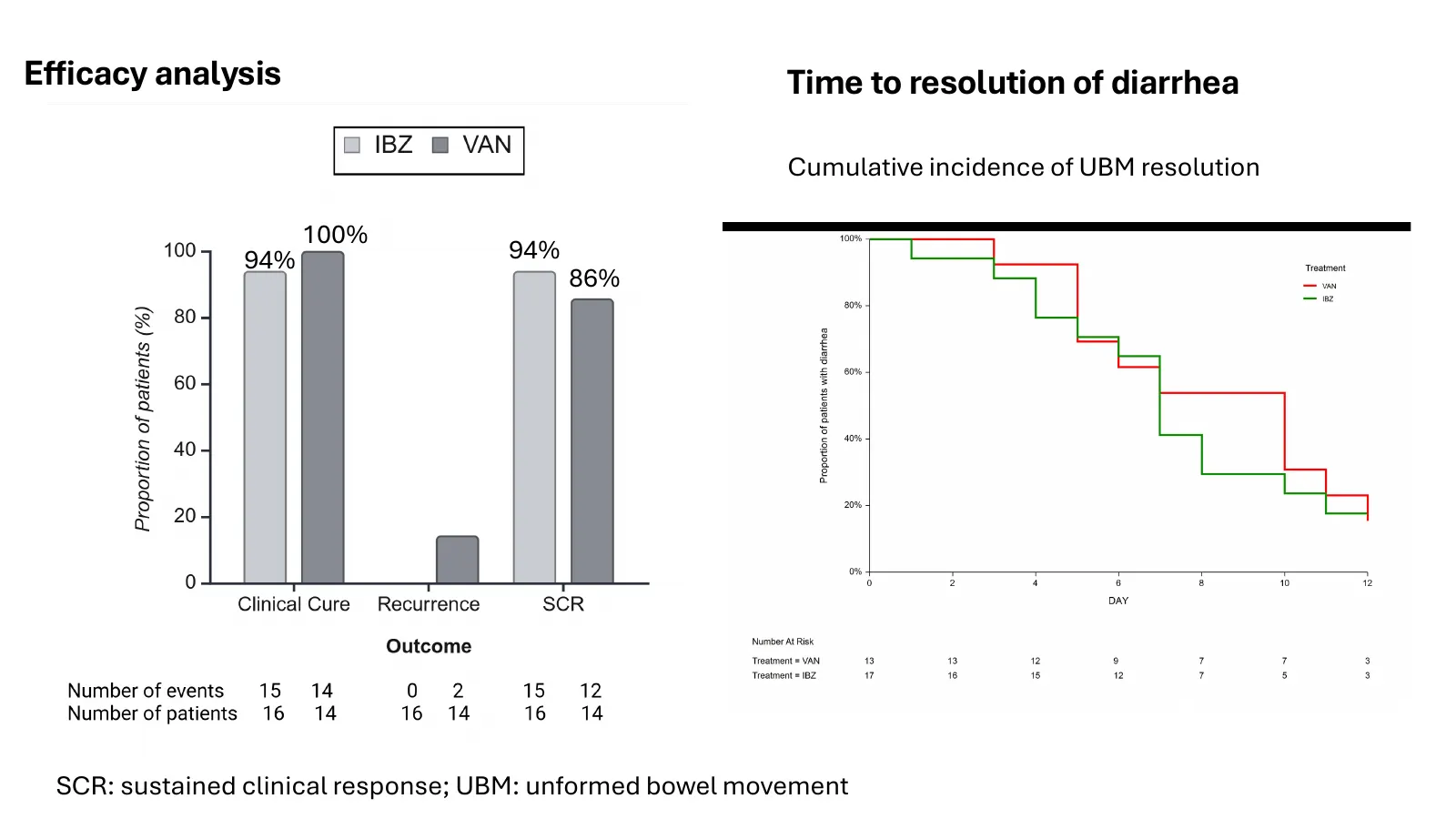
Slide 10: Efficacy analysis Time to resolution of diarrhea
Efficacy analysis Time to resolution of diarrhea Cumulative incidence of UBM resolution 100% 94% 94% 86% SCR: sustained clinical response; UBM: unformed bowel movement
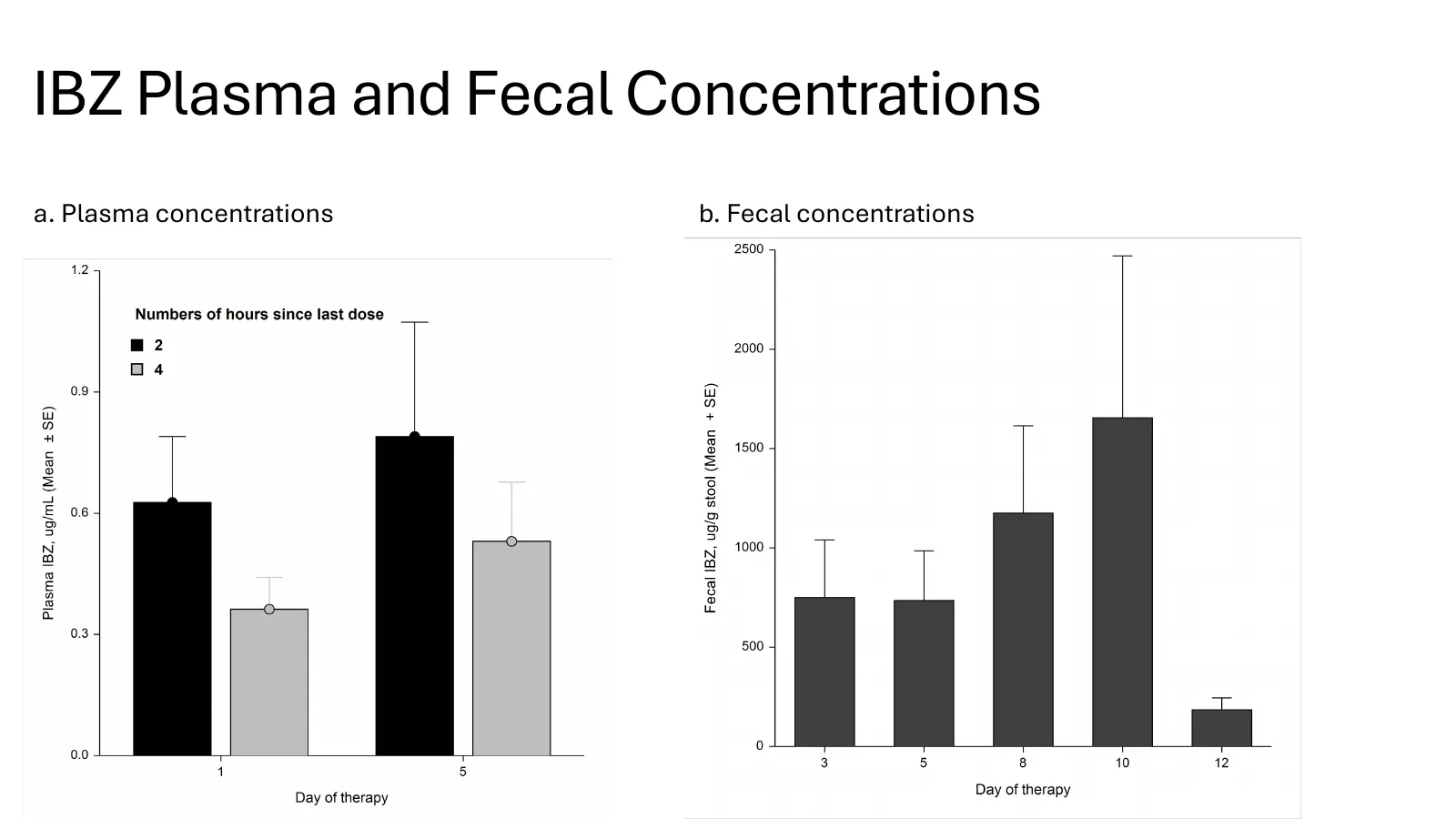
Slide 11: IBZ Plasma and Fecal Concentrations
IBZ Plasma and Fecal Concentrations a. Plasma concentrations b. Fecal concentrations
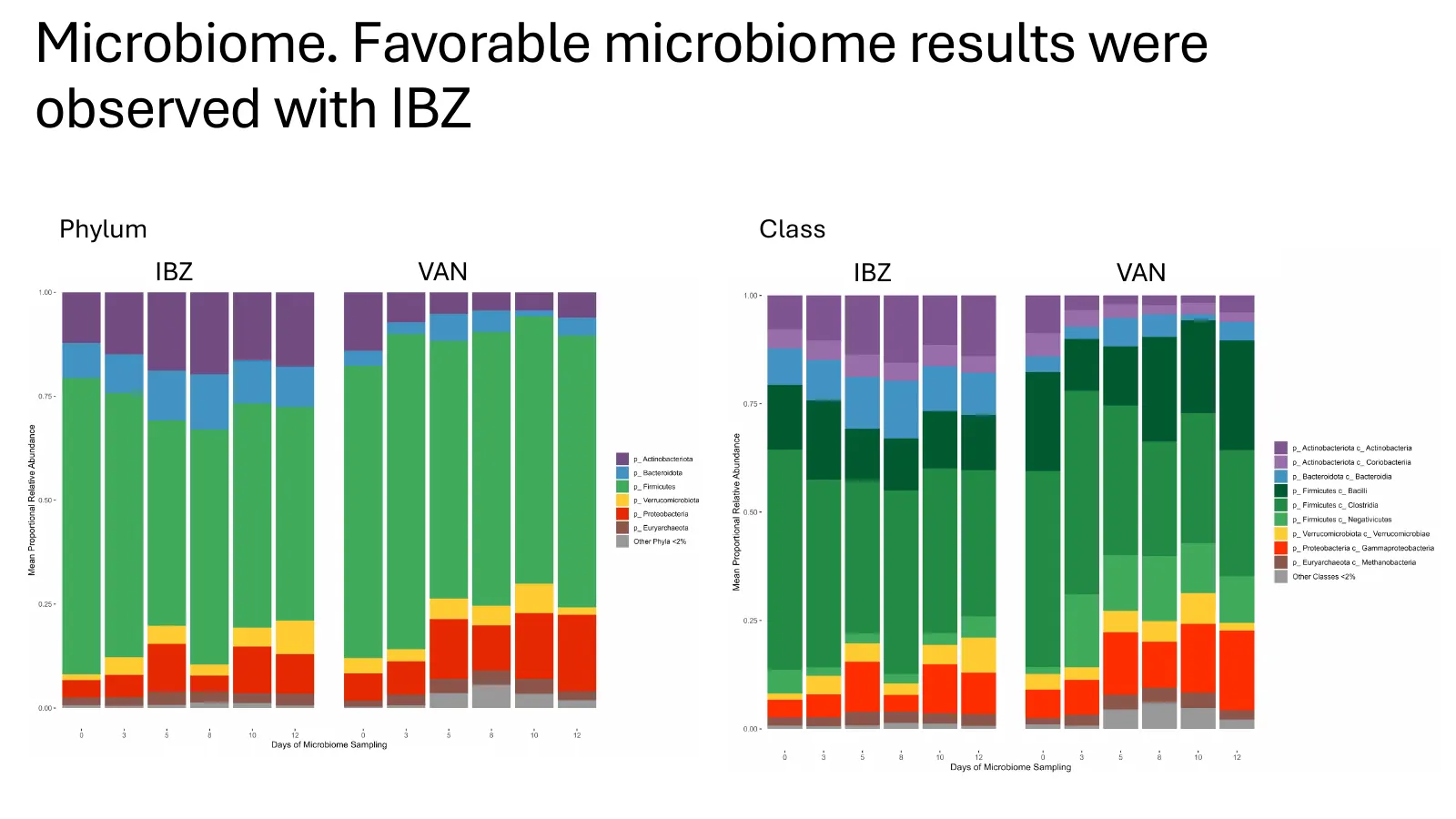
Slide 12: Microbiome. Favorable microbiome results were observed with IBZ
Microbiome. Favorable microbiome results were observed with IBZ Phylum Class IBZ VAN IBZ VAN
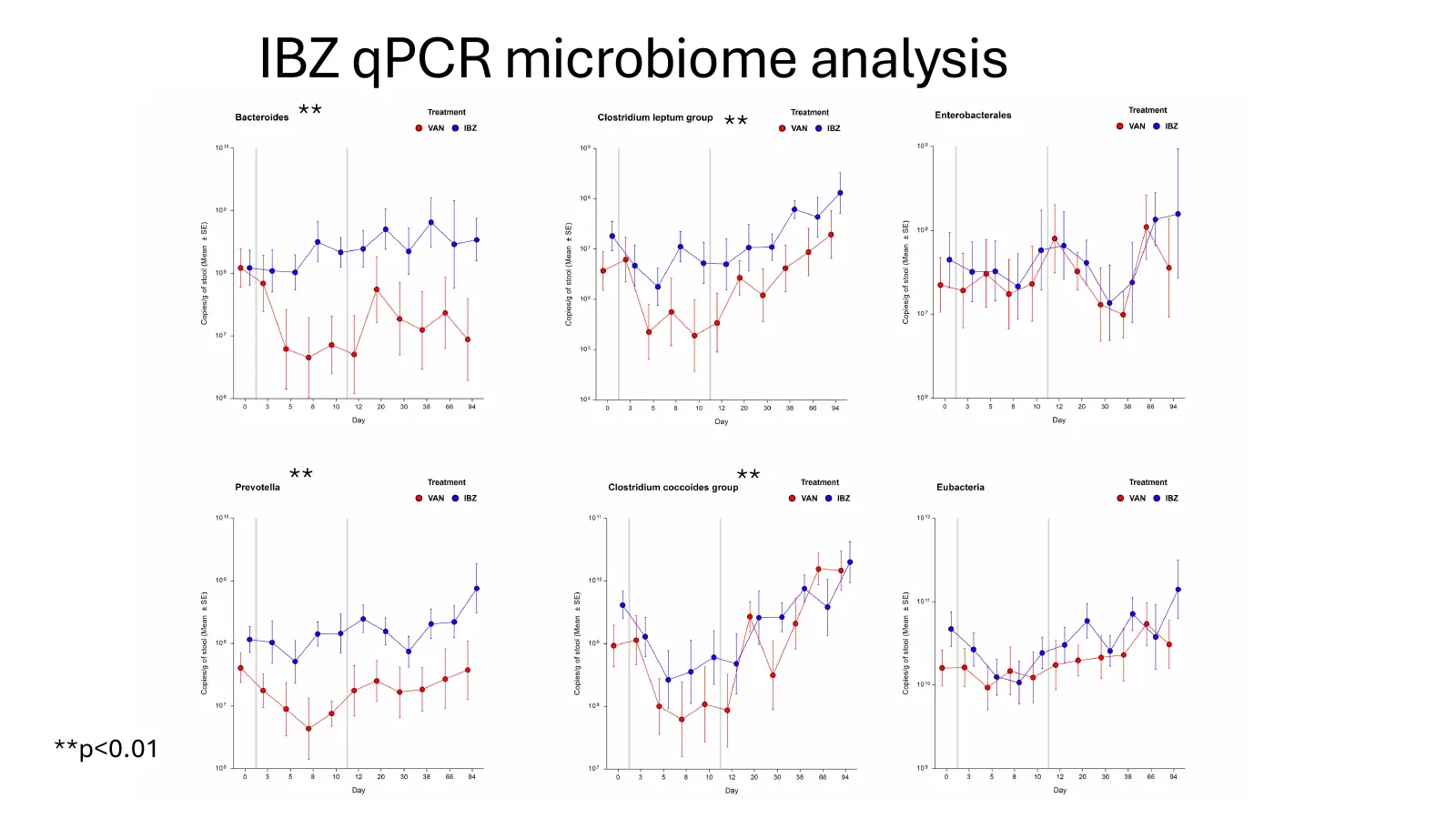
Slide 13: IBZ qPCR microbiome analysis
IBZ qPCR microbiome analysis ** ** ** ** **p<0.01
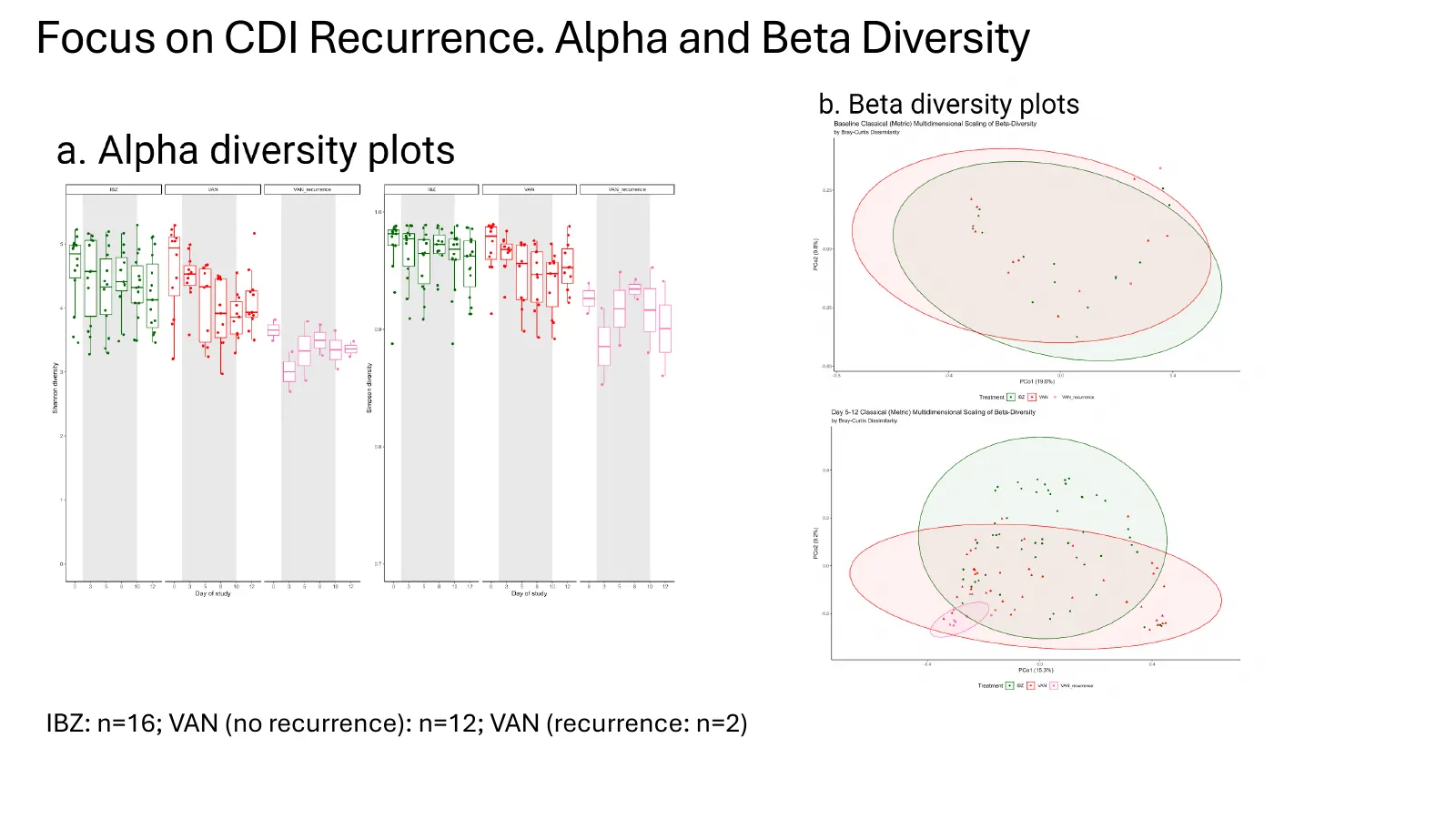
Slide 14: Focus on CDI Recurrence. Alpha and Beta Diversity
Focus on CDI Recurrence. Alpha and Beta Diversity IBZ: n=16; VAN (no recurrence): n=12; VAN (recurrence: n=2)
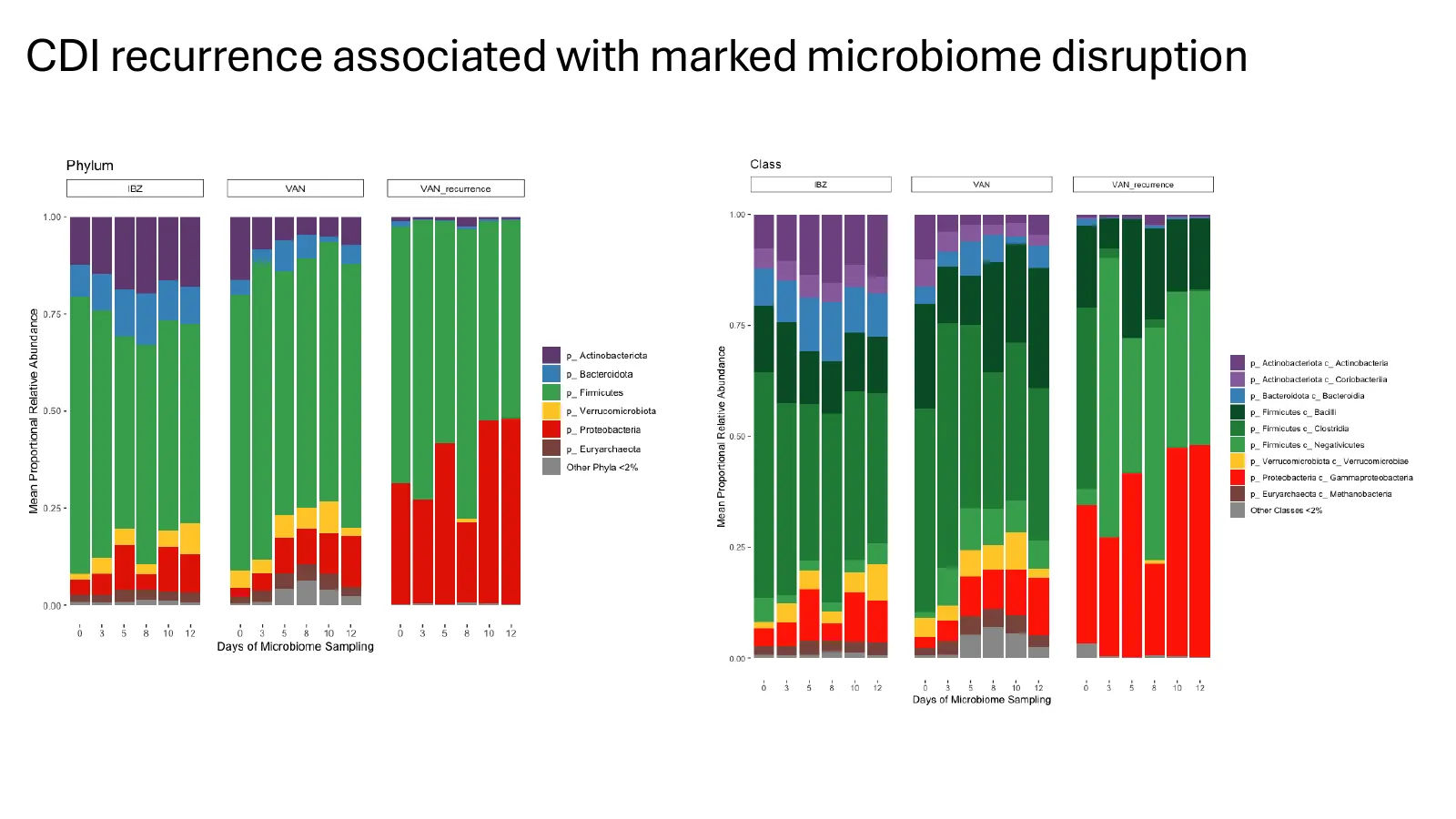
Slide 15: CDI recurrence associated with marked microbiome disruption
CDI recurrence associated with marked microbiome disruption
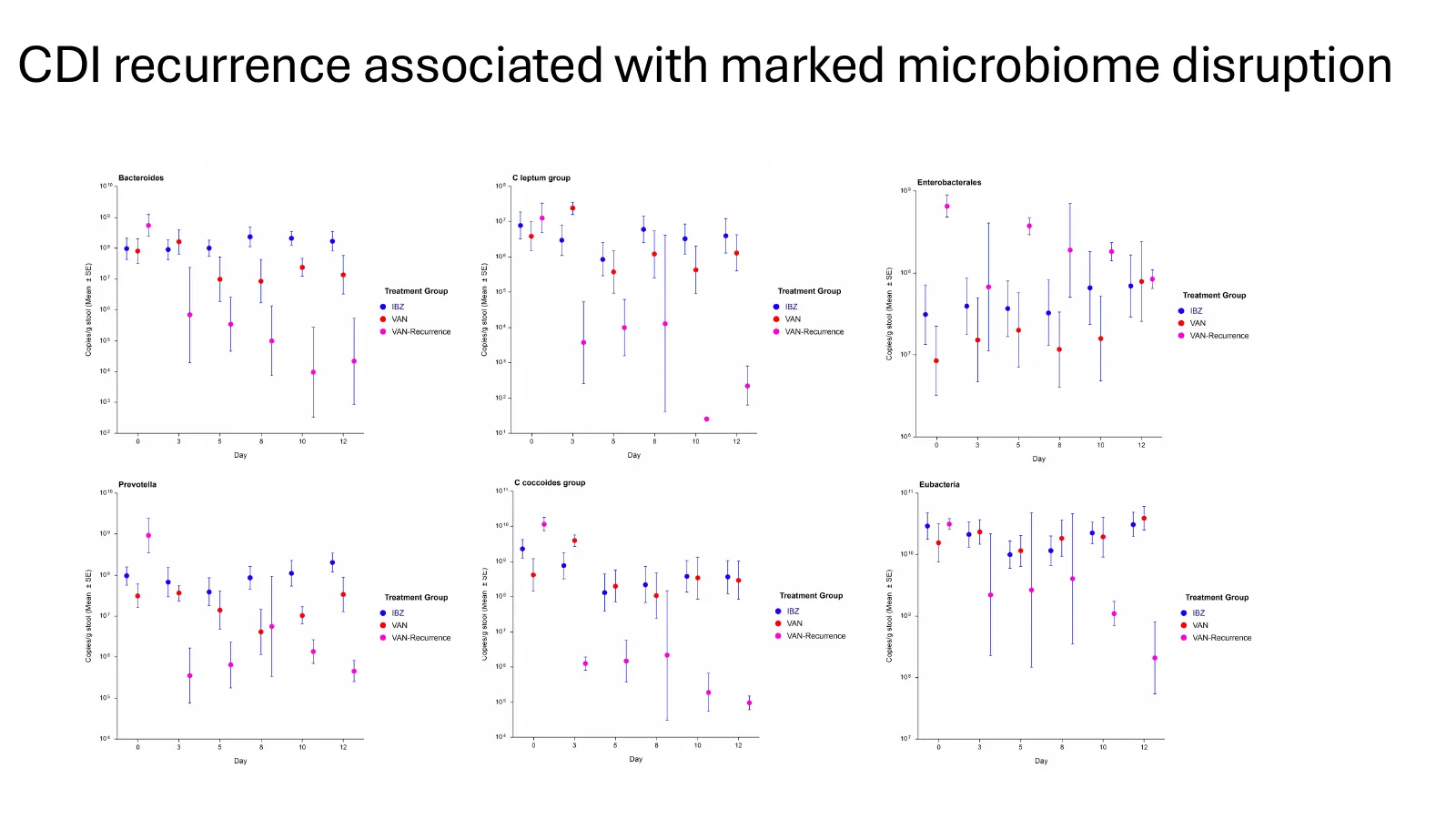
Slide 16: CDI recurrence associated with marked microbiome disruption
CDI recurrence associated with marked microbiome disruption
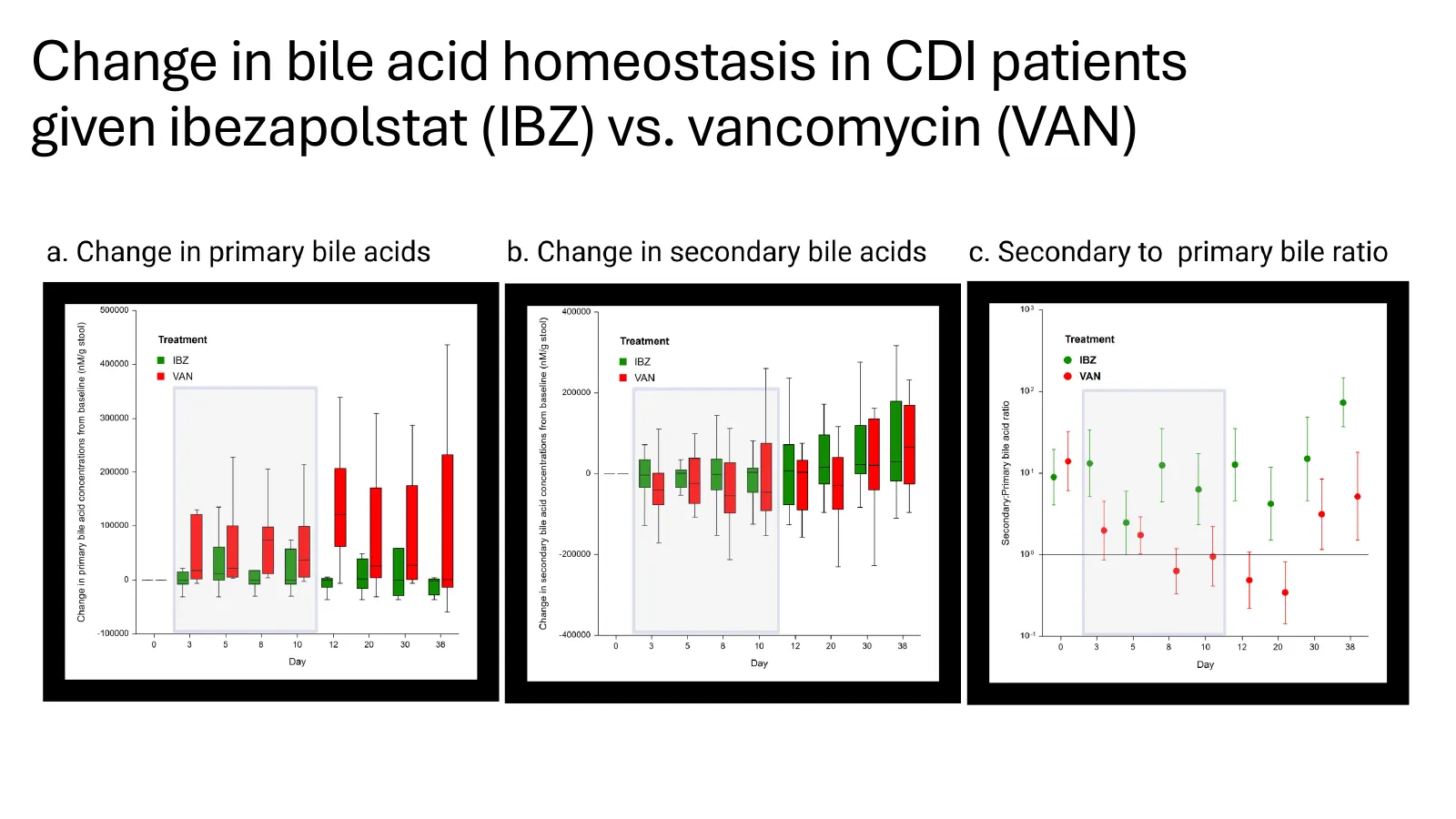
Slide 17: Change in bile acid homeostasis in CDI patients given IBZ vs. VAN
Change in bile acid homeostasis in CDI patients given ibezapolstat (IBZ) vs. vancomycin (VAN)
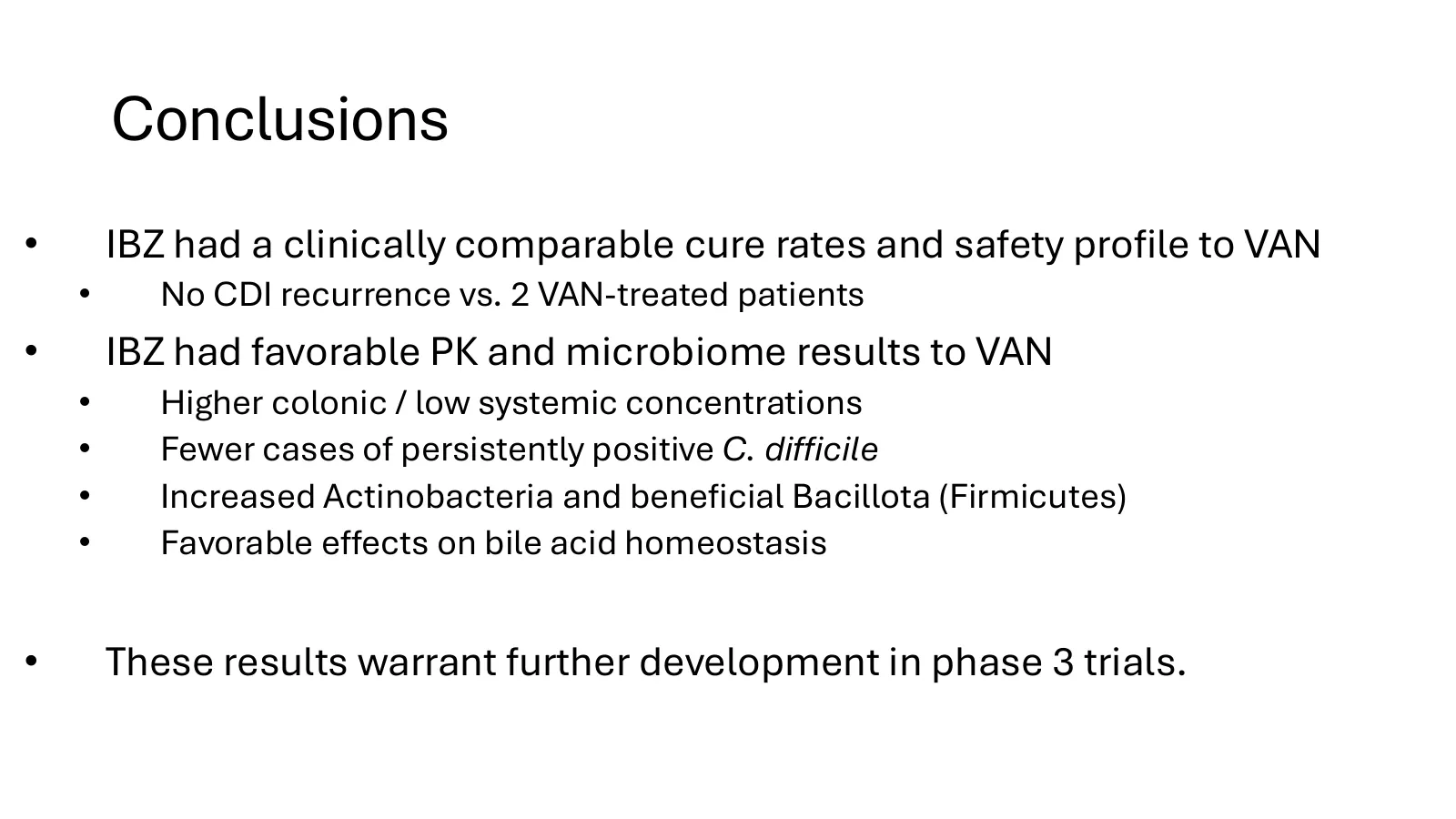
Slide 18: Conclusions
Conclusions • IBZ had a clinically comparable cure rates and safety profile to VAN • No CDI recurrence vs. 2 VAN-treated patients • IBZ had favorable PK and microbiome results to VAN • Higher colonic / low systemic concentrations • Fewer cases of persistently positive C. difficile • Increased Actino
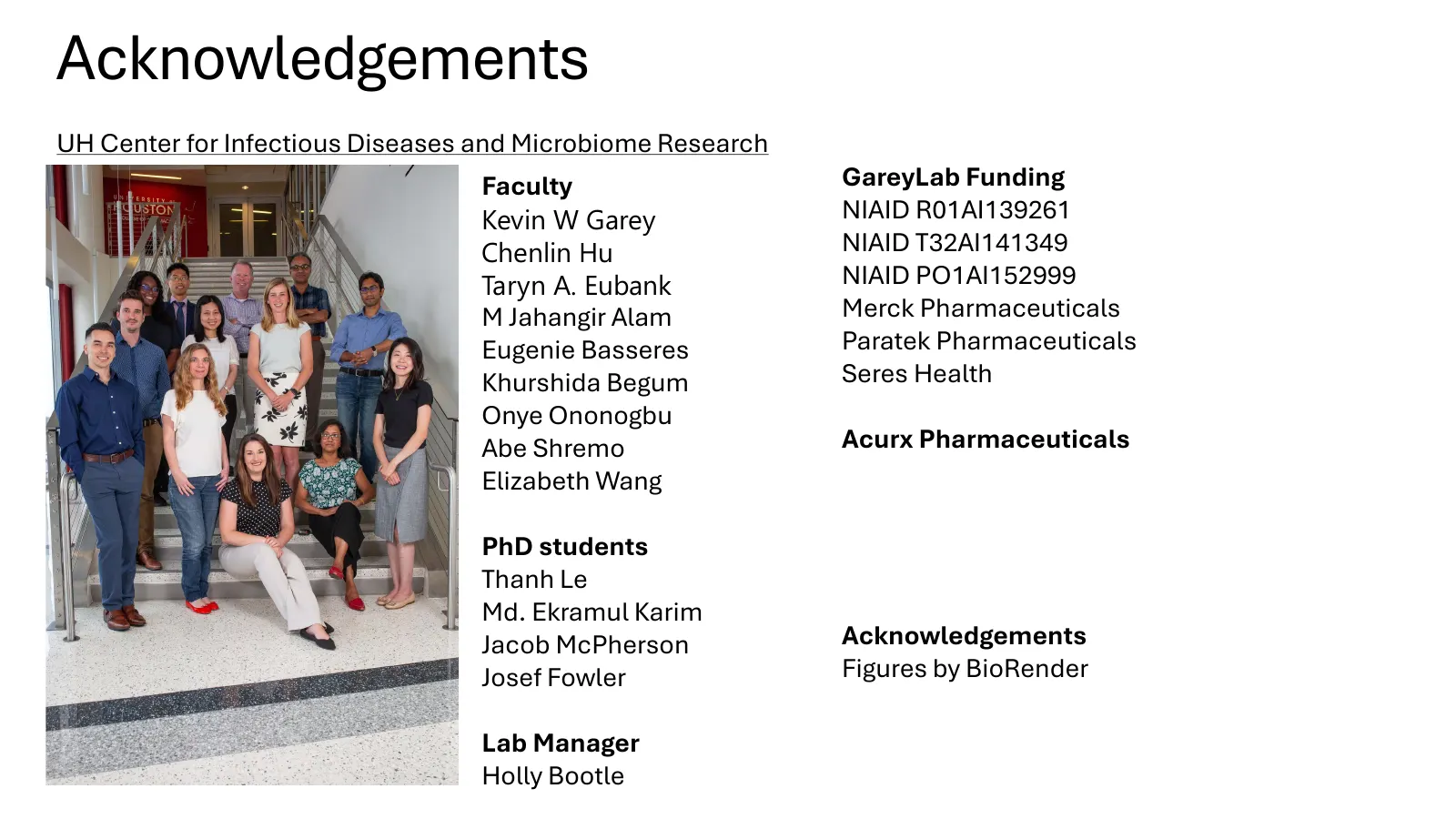
Slide 19: Acknowledgements
Acknowledgements UH Center for Infectious Diseases and Microbiome Research Faculty GareyLab Funding Kevin W Garey NIAID R01AI139261 Chenlin Hu NIAID T32AI141349 Taryn A. Eubank NIAID PO1AI152999 M Jahangir Alam Merck Pharmaceuticals Eugenie Basseres Paratek Pharmaceuticals Khurshida Begum Seres Heal
Source: company website
More decks from Acurx Pharmaceuticals, Inc.
 IDWeek 202510 slides · Oct 20, 2025
 Investor Presentation (September 2025)23 slides · September 2025
 Technical Presentation (June 2025)10 slides · Jun 5, 2025
 8th International Clostridioides difficile Symposium (ICDS) 202415 slides · Sep 17, 2024
 Technical Presentation (September 2024)16 slides · September 2024
 Anaerobe 202419 slides · July 2024