Cadence Pharmaceuticals — Investor Day (December 2012)
91 slides from Cadence Pharmaceuticals's investor day presentation, Dec 6, 2012

Slide 1: Cadence Pharmaceuticals Analyst and Investor Day
Cadence Pharmaceuticals Analyst and Investor Day Millennium Broadway Hotel New York City © 2012 Cadence Pharmaceuticals, Inc. All rights reserved. Improving the lives of hospitalized patients December 6, 2012 Exhibit 99.1

Slide 2: Caution on forward-looking statements
Caution on forward-looking statements CADENCE ® , OFIRMEV ® and the Cadence and OFIRMEV logos are trademarks of Cadence Pharmaceuticals, Inc. © 2012 Cadence Pharmaceuticals, Inc. All rights reserved. This presentation includes forward-looking statements, which are based on our current beliefs and ex

Slide 3: Agenda
Agenda Introductory Remarks Theodore R. Schroeder, President & CEO Cadence Pharmaceuticals OFIRMEV: Driving Sustainable Growth Scott A. Byrd, Senior Vice President, Chief Commercial Officer Cadence Pharmaceuticals Clinical Experience with OFIRMEV David Cziperle, M.D. Clinical Assistant Professor of
Slide 4: OFIRMEV product overview
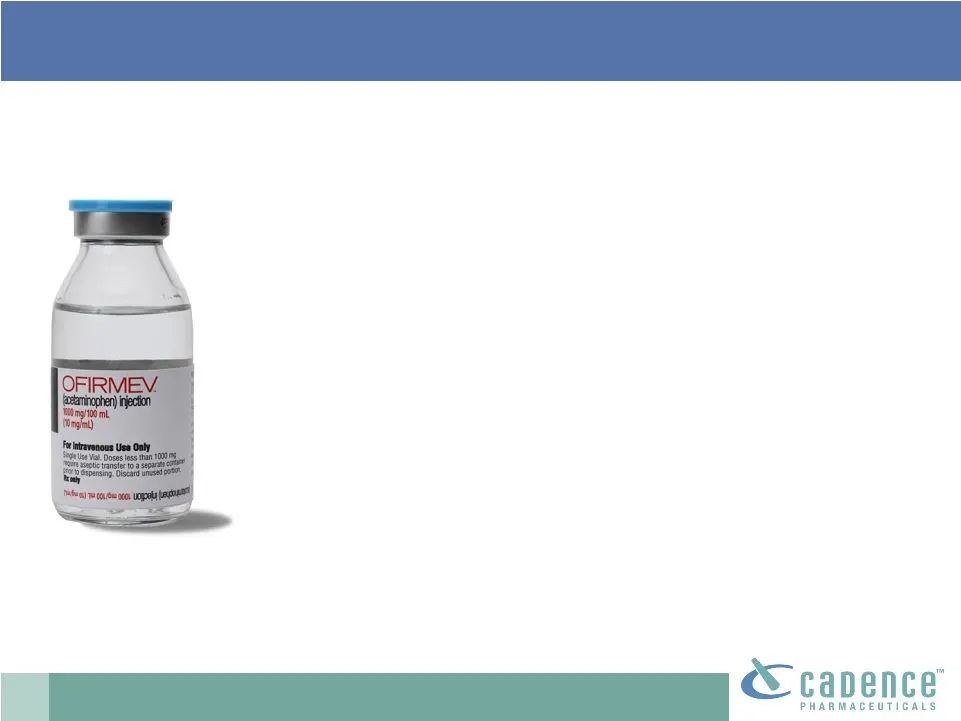
OFIRMEV ® product overview OFIRMEV ® (acetaminophen) injection A non-NSAID, non-opioid IV antipyretic / analgesic agent Approved by FDA on November 2, 2010 Approved for: – Mild to moderate pain – Moderate to severe pain with adjunctive opioid analgesics – Fever – Approved for use in adults and child

Slide 5: OFIRMEV safety information
OFIRMEV ® OFIRMEV is contraindicated in patients with severe hepatic impairment, severe active liver disease or with known hypersensitivity to acetaminophen or to any of the excipients in the formulation. Acetaminophen should be used with caution in patients with the following conditions: hepatic im

Slide 6: OFIRMEV: Driving Sustainable Growth
OFIRMEV: Driving Sustainable Growth Scott A. Byrd Senior Vice President, Chief Commercial Officer Cadence Pharmaceuticals
Slide 7: Launch, Growth, Expansion: building blocks
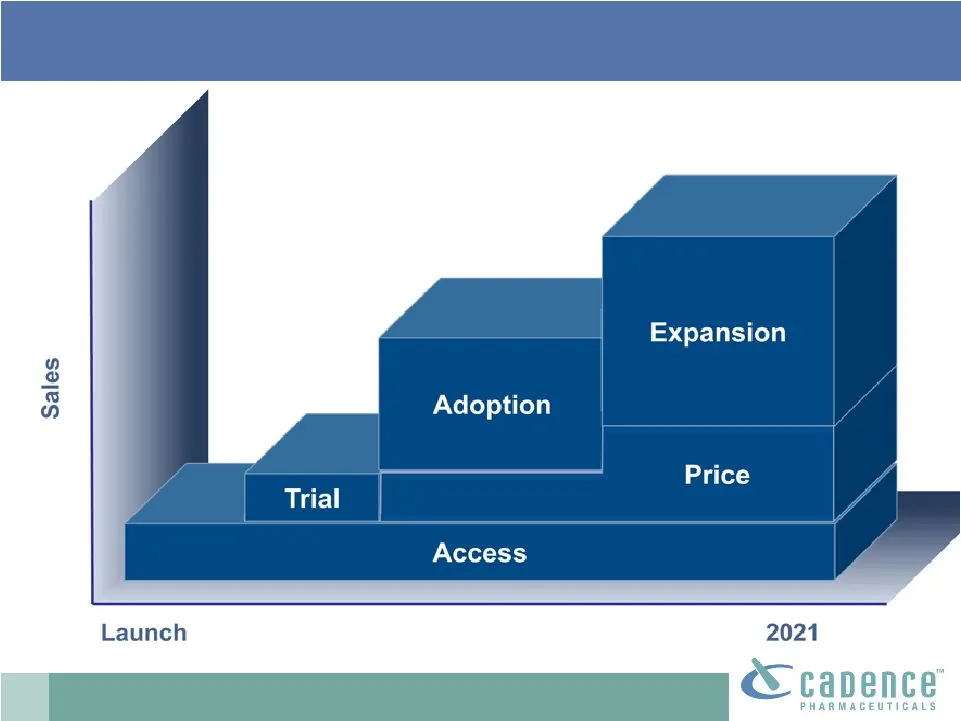
Launch, Growth, Expansion: building blocks
Slide 8: Launch, Growth, Expansion
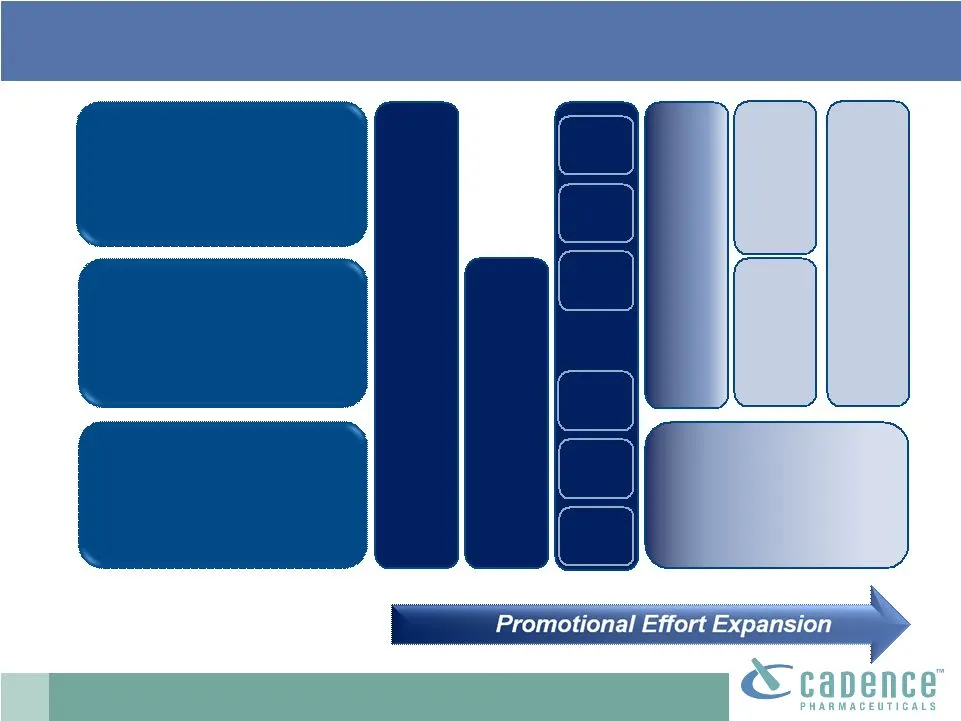
Stage III Increase Doses Per Patient Stage II Broaden Physician Utilization Stage I Create Access Launch, Growth, Expansion: RPh ASA Surg Gen Card Neuro Ortho Ob/ Gyn Other promotional effort ED Onco (Acute Pain) Quality/ Administration Burn/ Trauma ICUs
Slide 9: Launch Performance: rapid formulary penetration
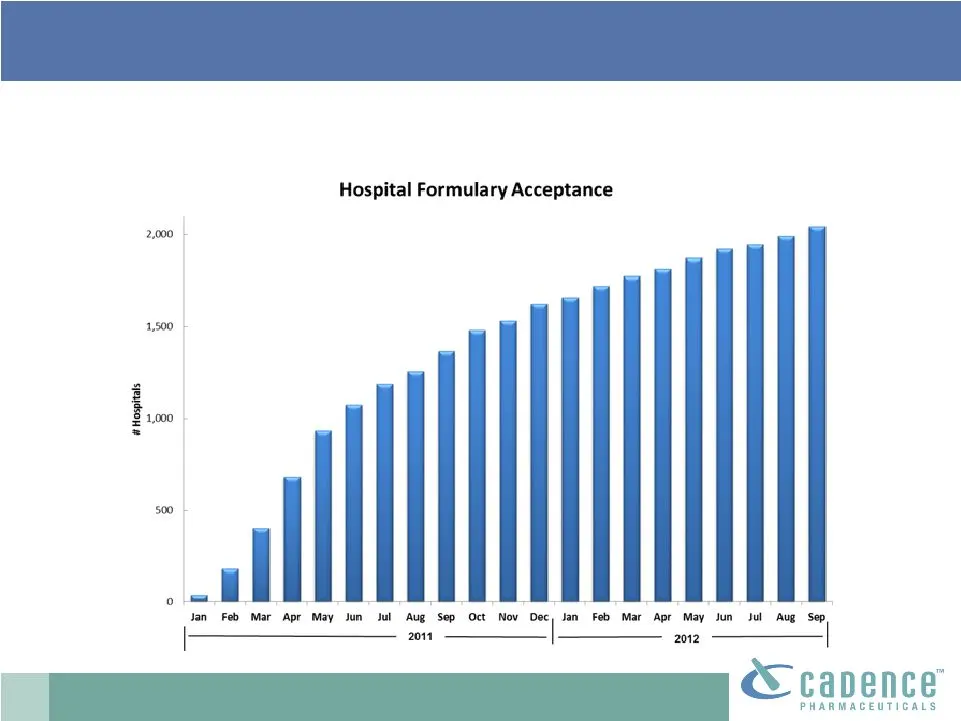
Launch Performance: Hospitals continue to add OFIRMEV to formulary – Formulary adoption exceeded company projections – Over 400 hospitals added OFIRMEV in 2012, for a total of over 2,000 formulary approvals through Sep 2012 rapid formulary penetration Source: Cadence Internal Data
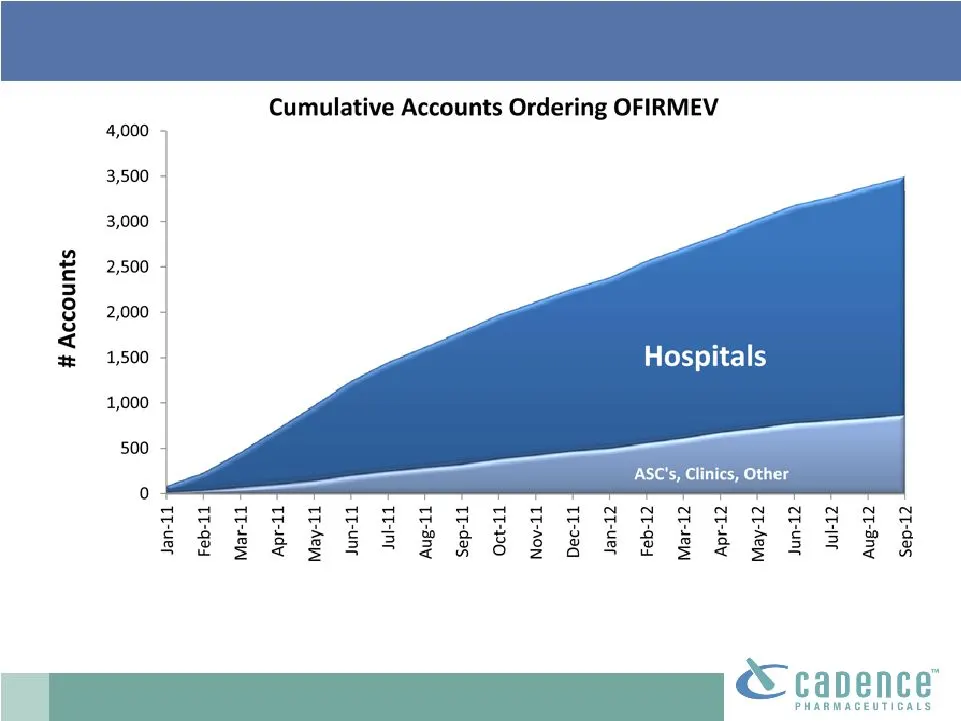
Slide 10: Launch Performance: significant growth in new customers
Launch Performance: Significant and continuous growth in new customers significant growth in new customers Source: Source Healthcare Analytics, Source® PHAST Institution , Oct 23, 2012. • 10% growth in unique accounts ordering OFIRMEV in Q3 vs. Q2 • Growth driven by hospital adoption
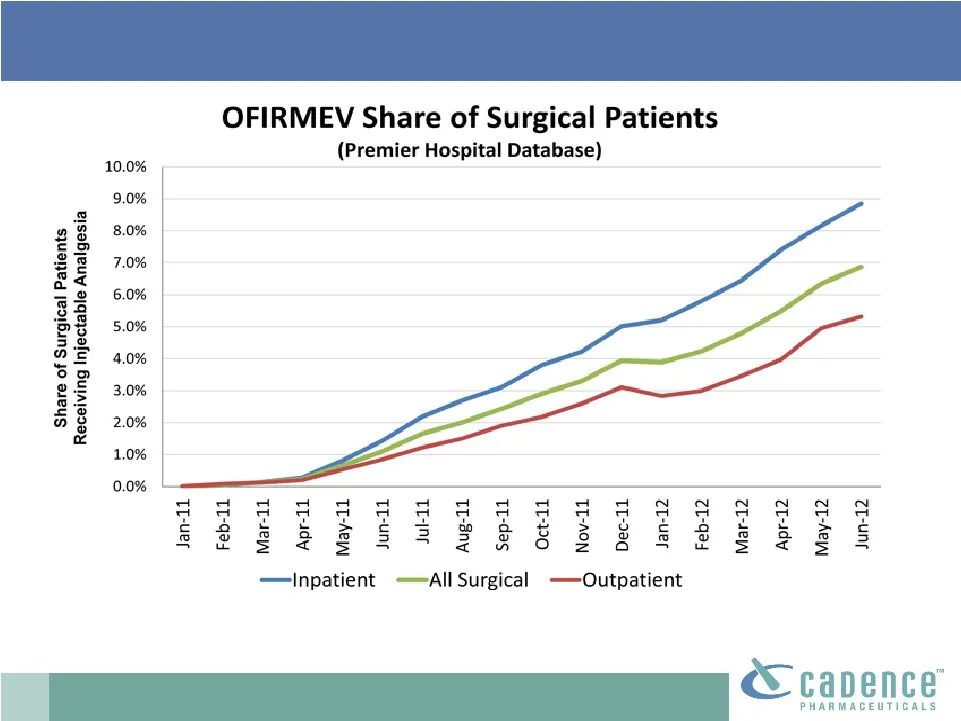
Slide 11: Launch Performance: rapid penetration of perioperative pain management
Launch Performance: rapid penetration of perioperative pain management Source: Premier Hospital Database, report provided by Premier Research Services Nov. 9, 2012 Analysis of patient discharge data Sample includes over 400 hospitals representing approximately 4.5M surgical patient discharges/year
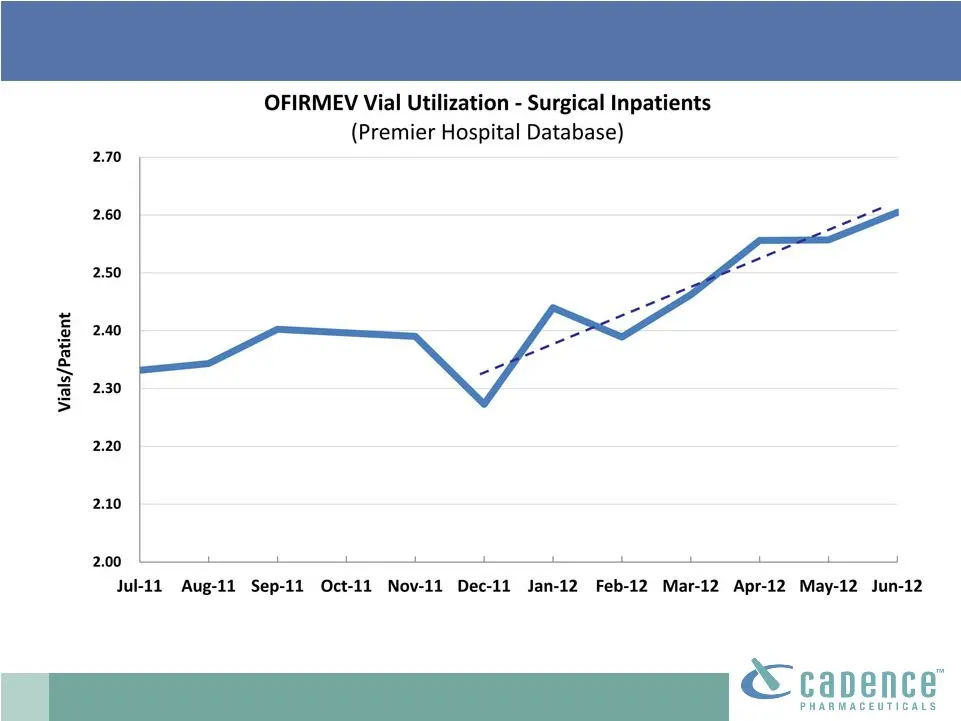
Slide 12: Launch Performance: increasing utilization per patient
Launch Performance: increasing utilization per patient Source: Premier Hospital Database, report provided by Premier Research Services Nov. 9, 2012 Analysis of patient discharge data Sample includes over 400 hospitals representing approximately 4.5M surgical patient discharges/year
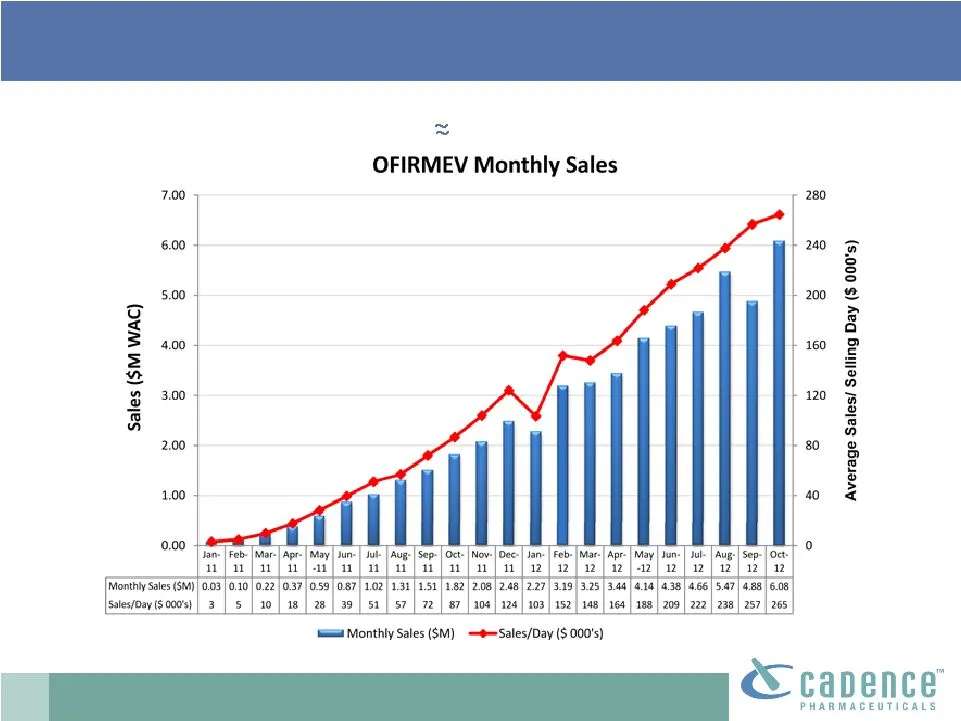
Slide 13: Launch Performance: OFIRMEV sales continue to accelerate
Launch Performance: OFIRMEV sales continue to accelerate • Annualized October ‘12 sales $73M significant sales growth through Oct 2012 Source: Source Healthcare Analytics, Source® PHAST Institution , Nov 21, 2012.
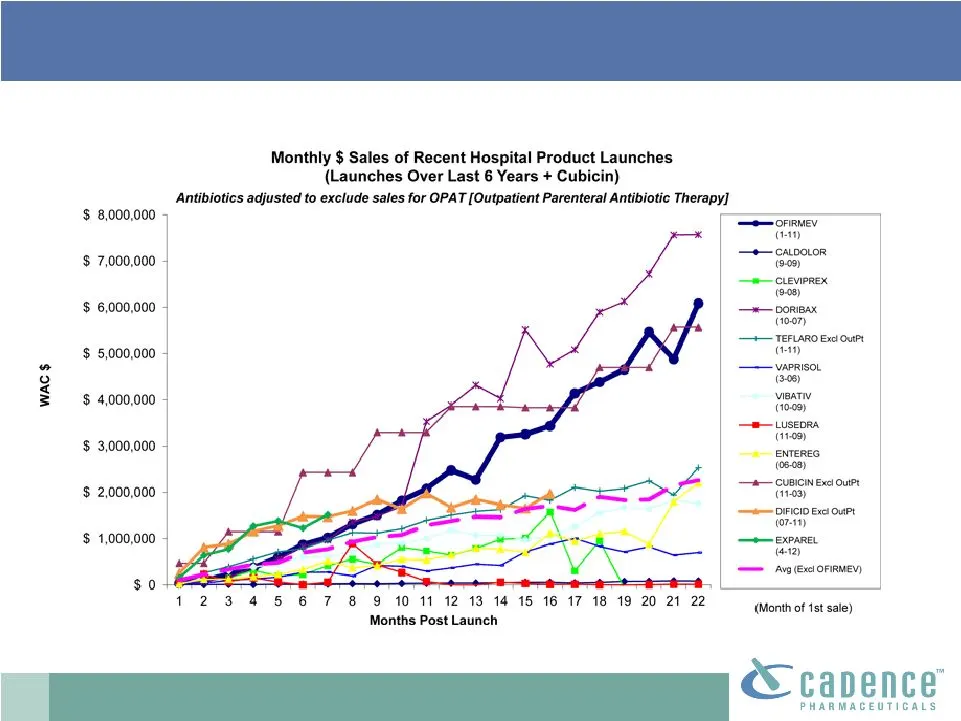
Slide 14: Top-tier revenue growth during first years of launch
Launch Performance: top-tier revenue growth during first 2 years of launch Source: Source Healthcare Analytics, Source® PHAST Institution. Cubist Pharmaceuticals, Inc. Form 10-Q reports. Based on Cadence comparison to other selected product launches in hospital market over period Mar 2006 – Oct 2012
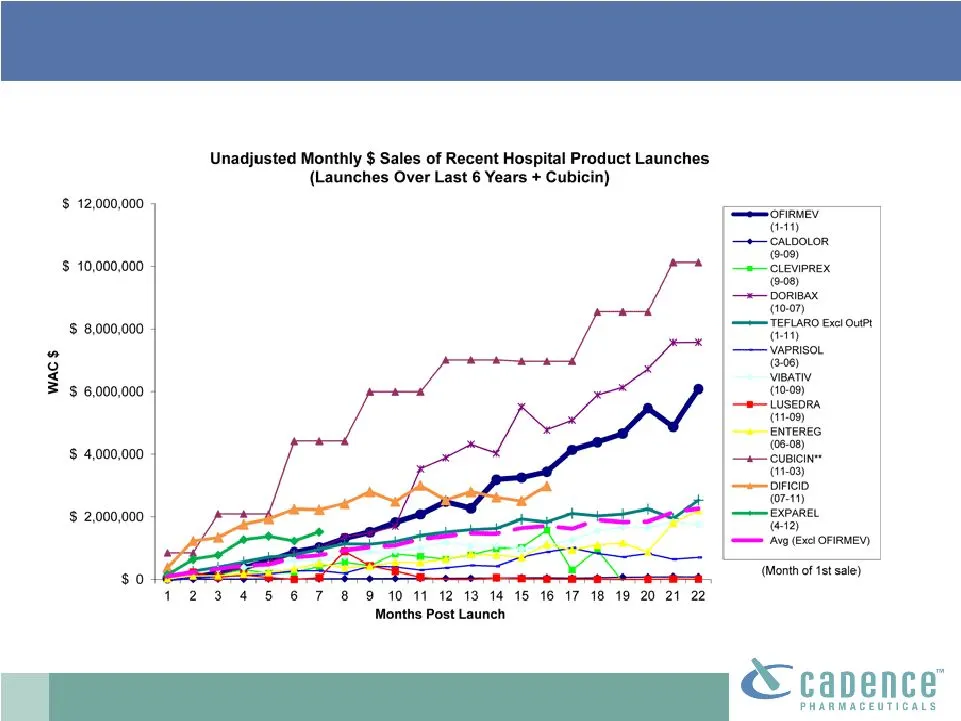
Slide 15: Top-tier revenue growth during first years of launch
Launch Performance: top-tier revenue growth during first 2 years of launch Source: Source Healthcare Analytics, Source® PHAST Institution. Cubist Pharmaceuticals, Inc. Form 10Q reports. Based on Cadence comparison to other selected product launches in hospital market over period Mar 2006 – Oct 2012.

Slide 16: Achieving Sustainable Growth: market dynamics
Achieving Sustainable Growth: market dynamics *Awareness, Trial, Usage (ATU) study conducted by GfK Healthcare, May 2012 (n=180 surgeons and anesthesiologists) Headwinds – Hospital silo management – Hospital budget pressures Tailwinds – CMS and Joint Commission focus on quality of pain management •

Slide 17: Achieving Sustainable Growth: commercial strategy
Achieving Sustainable Growth: commercial strategy Broaden and deepen post-op pain utilization – Increase penetration of surgeon user base – Continue to improve ease of use (stocking at point of care, standing orders, etc.) – Increase initiatives with front line caregivers– nurses and physician assis
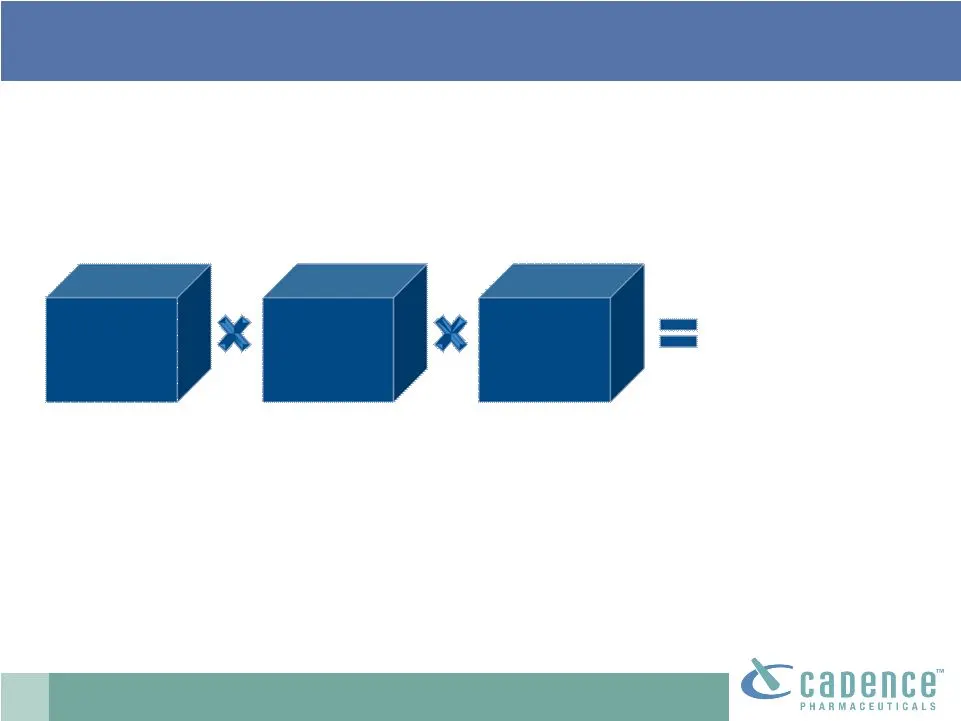
Slide 18: Long Term Growth Opportunity: three key drivers
Long Term Growth Opportunity: Share of Patients Doses per Patient Price three key drivers Significant and sustainable future growth
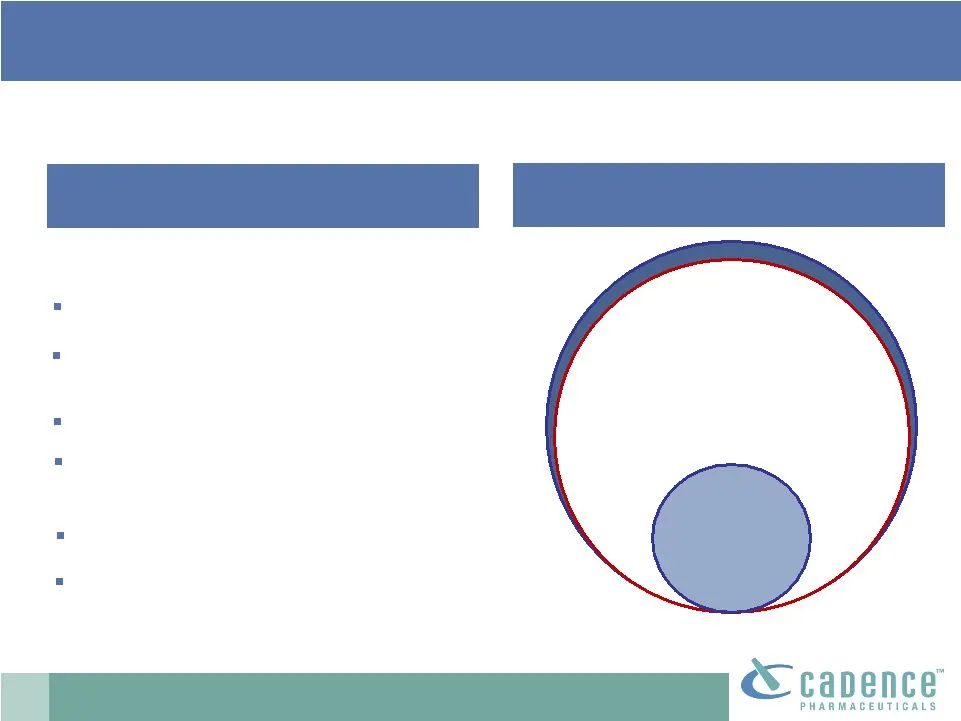
Slide 19: Ketorolac as a case study
Perioperative Pain Population Long Term Opportunity: Limitations of NSAIDs NSAID Treated Population Perioperative Pain Population ketorolac as a case study Benchmarking potential future use of OFIRMEV against ketorolac utilization OFIRMEV Eligible Population Contraindications/ Boxed Warnings: Patien
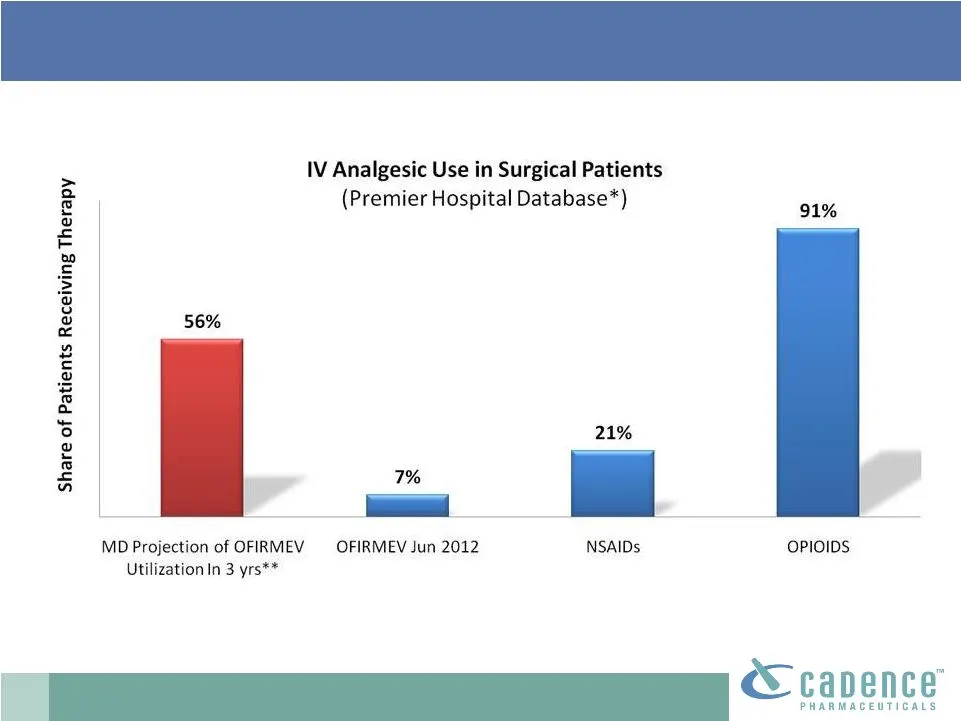
Slide 20: Long Term Opportunity: share of patients
Long Term Opportunity: share of patients Physicians project OFIRMEV to be much more broadly utilized than NSAIDs Sources: * Premier Hospital Database, report provided by Premier Research Services Nov 9, 2012 **Awareness, Trial, Usage (ATU) study conducted by GfK Healthcare, May 2012 (n=180 surgeons
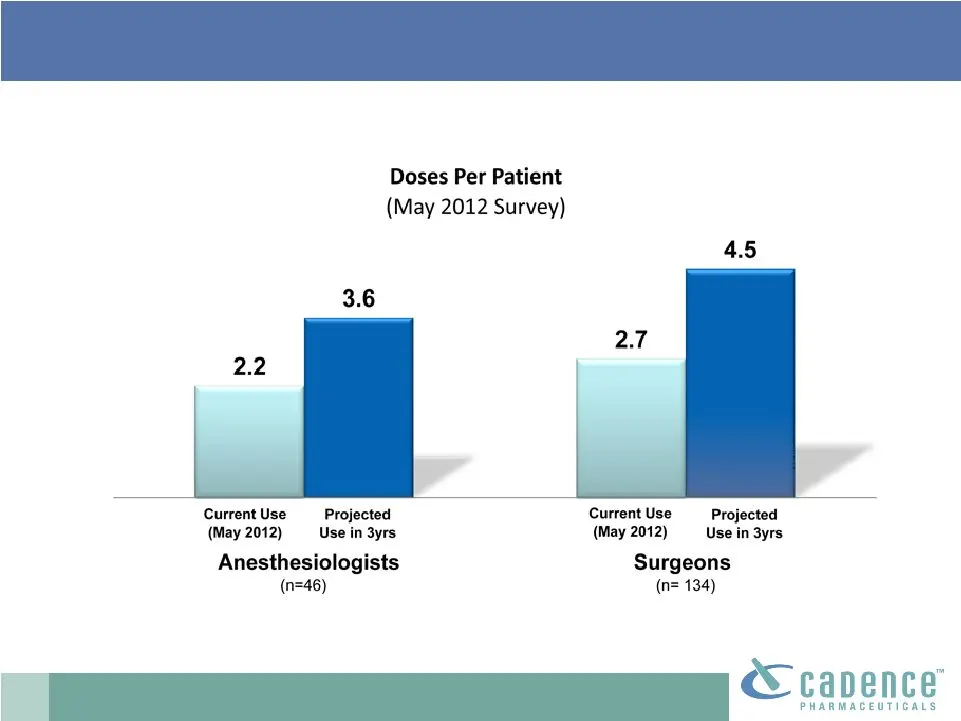
Slide 21: Long Term Opportunity: doses per patient
Long Term Opportunity: doses per patient Physicians project significant increases in doses per patient Source: Awareness, Trial, Usage Study conducted by GfK Healthcare, May 2012 Question 1: When you use OFIRMEV, how many vials are you using per one typical surgical procedure? Question 2: How many v
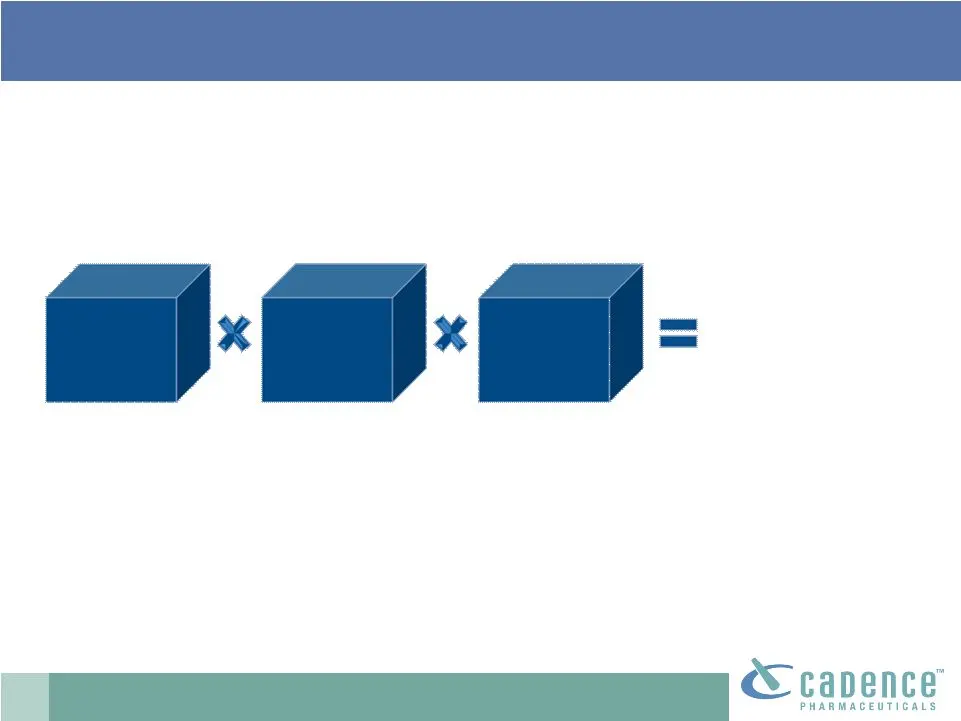
Slide 22: Long Term Growth Opportunity: three key drivers
Long Term Growth Opportunity: Share of Patients Doses per Patient Price three key drivers Significant and sustainable future growth

Slide 23: David J. Cziperle, M.D., FACS
David J. Cziperle, M.D., FACS American Board of Surgery American Board of Thoracic Surgery

Slide 24: Thoracic and Cardiovascular Surgeons
31 Thoracic and Cardiovascular Surgeons 3 Vascular Surgeons 3500 annual Cardiac Procedures 4000 annual Thoracic/Vascular Procedures

Slide 25: Hospitals
22 Hospitals 21 Community Based Hospitals 1 University Based Hospital Practice Area Encompasses 3 States and a 250 Mile Geographic Radius Multiple Healthcare Systems

Slide 26: Late 2010 contact about intravenous acetaminophen
Late 2010 I was contacted by a senior pharmaceutical representative regarding a new product “Intravenous Acetaminophen” Initial contact was approximately 5 minutes Subsequent contact was approximately 90 minutes

Slide 27: My Initial Response
My Initial Response What’s the big deal….acetaminophen has been around since the 1950s? Why hasn’t an intravenous product been available? Does it really work? Is it safe? Why should I use it instead of the traditional oral and rectal acetaminophen products? How much does it cost?

Slide 28: What I Subsequently Learned
What I Subsequently Learned OFIRMEV is the only drug of its kind. A new class of Non-Opioid, Non- NSAID intravenous analgesic. Approved for use in adults and children greater than 2 years of age. Also utilized to treat fever. Used in Europe as PERFALGAN since 2002 Over 400 million doses utilized in

Slide 29: Early 2011
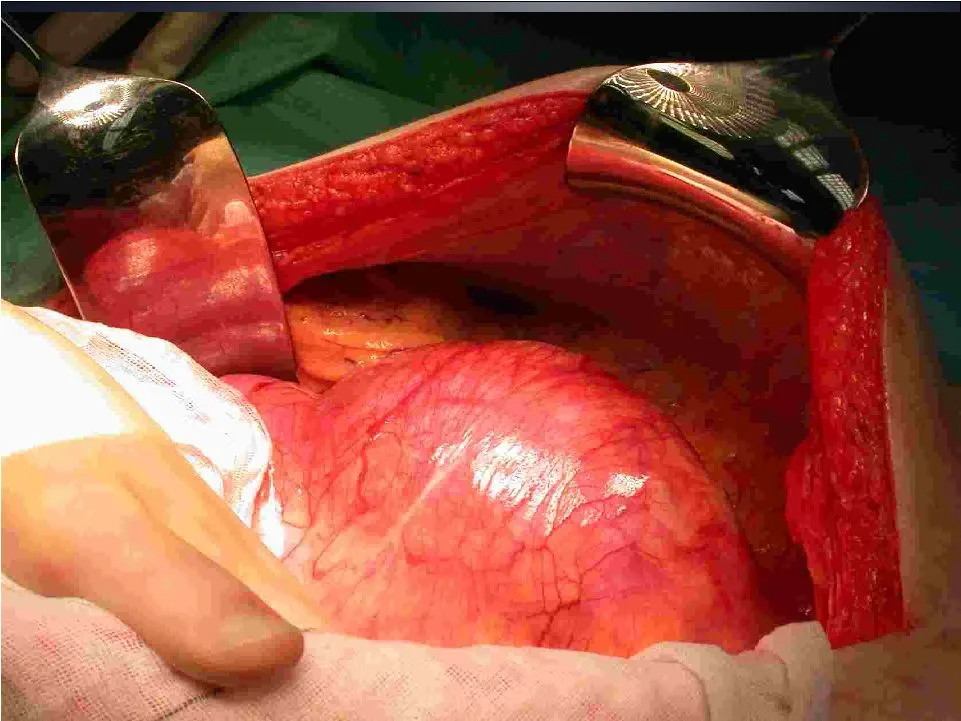
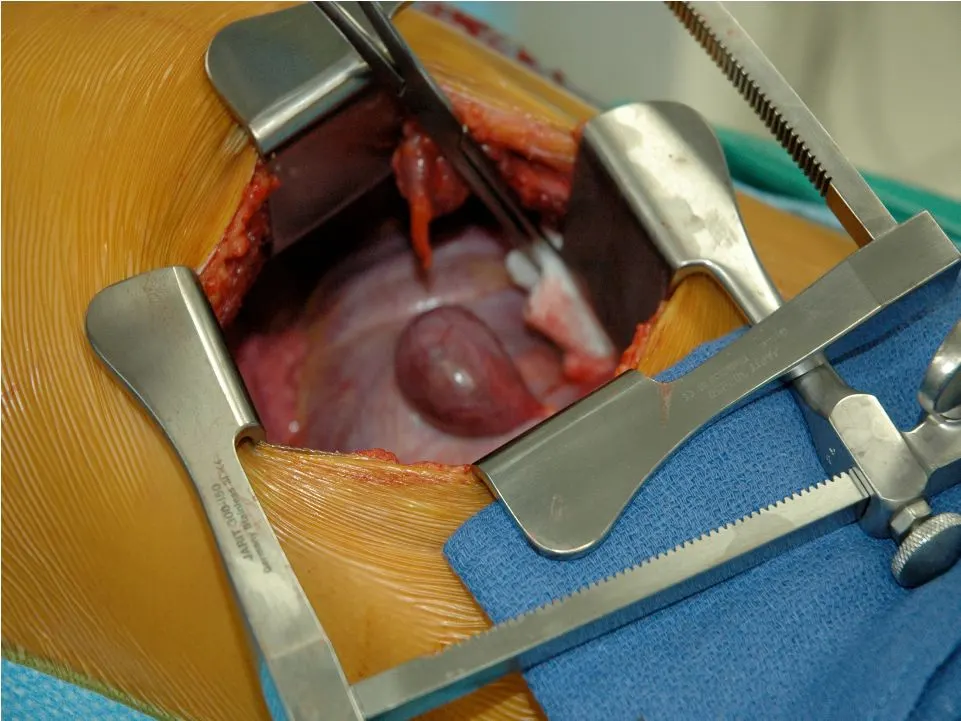
Early 2011 November 2010 presentation to Cadence Pharmaceutical management team regarding daily clinical practice of a Thoracic and Cardiovascular Surgeon Opened a dialogue about potential OFIRMEV utilization in patients undergoing Thoracic and Cardiovascular Surgical Procedures
Slide 30
Slide 31

Slide 32: Traditional Analgesic Experience
Traditional Analgesic Experience Pain ….The Fifth Vital Sign Patients who experience severe pain have a prolonged recovery time and an increased risk of complications Utilize narcotics/opioids for pain treatment Narcotic related side effects are to be expected

Slide 33: Traditional Pain Treatment Paradigm
Traditional Pain Treatment Paradigm Mild Pain……………Administer Narcotics/Opioids Moderate Pain…….Administer More Narcotics/Opioids Severe Pain…………Administer increasing doses of Narcotics/Opioids. Consider sustained release products/Epidural/PCA

Slide 34: 2004 ASA Task Force
2004 ASA Task Force Recommended a multi-modality pain management strategy Slow to gain traction as Traditional Pain Management Paradigm was well entrenched Surgeons continued to rely on narcotics/opioids as the foundation of pain management Surgeons began to embrace pain pumps/local nerve blocks/NSA

Slide 35: 2012 Pain Treatment Paradigm
2012 Pain Treatment Paradigm Mild Pain……………Administer Non-Narcotic/Non-Opioid (OFIRMEV) Moderate Pain…….Administer Non-Narcotic/Non-Opioid (OFIRMEV) Consider other Non-Narcotic/Non-Opioid agents and techniques Severe Pain…………Administer Narcotic/Opioids as an adjunct to a foundation of Non-Narcotic/N

Slide 36: OFIRMEV…A New Product
OFIRMEV…A New Product

Slide 37: Before Utilizing the First Dose
Before Utilizing the First Dose Physician exposure to the OFIRMEV clinical studies. Outstanding improvement in patient satisfaction scores coupled with decreased narcotic consumption in multiple studies across multiple surgical specialties Well Established Safety Profile World-Wide Experience Low Co

Slide 38: Hospital Formulary Process
Hospital Formulary Process A Formal Process Can be complicated with many potential pitfalls Potential Restrictions to Utilization….Surgeons/Anesthesiologists/NPO status/Not Automatic Renewal Committee Members…...Physicians/Pharmacists/Administrators IF YOU CANNOT PASS THE FORMULARY PROCESS…..THE PRO

Slide 39: Post-Formulary Approval: The Initial Physician Experience
Post-Formulary Approval The Initial Physician Experience Is OFIRMEV Effective? Ease of Administration Positive Patient Feedback Positive Nursing Feedback Any Adverse Effects?

Slide 40: Post-Formulary Approval: Initial Pharmacy Experience
Post-Formulary Approval Initial Pharmacy Experience Is there Physician interest in OFIRMEV? Is OFIRMEV being utilized responsibly? Impact of OFIRMEV on Pharmacy budget Ordering/Storage/Distribution Issues Is OFIRMEV placed at point of use or is it hidden in the basement? Institution Trial Impact Stu

Slide 41: Navigating Through Pharmacy Issues
Navigating Through Pharmacy Issues Physician-Patient care relationship is paramount Physicians must use OFIRMEV responsibly Physician as educator of Pharmacists/Administrators/Nursing Staff/Medical Staff Persistence

Slide 42: December 2012 OFIRMEV Personal Experience
December 2012 OFIRMEV Personal Experience Approaching 18-24 months of clinical experience Utilized in every patient unless contraindicated Initial dose administered in the operating room Duration of Use 24-48 hours (4-8 doses per patient) Part of Standing Orders No adverse effects noted to date Good

Slide 43: December 2012 OFIRMEV Personal Experience
December 2012 OFIRMEV Personal Experience Many patients no longer receive narcotics/opioids Selected patients bypass the PACU Generally, Decreased Length of Stay Overall Decreased use of Pain Pumps/Epidurals/PCAs EMR/CPOE Best Practice Guidelines OFIRMEV has been added to Orthopedic/Bariatric/Genera
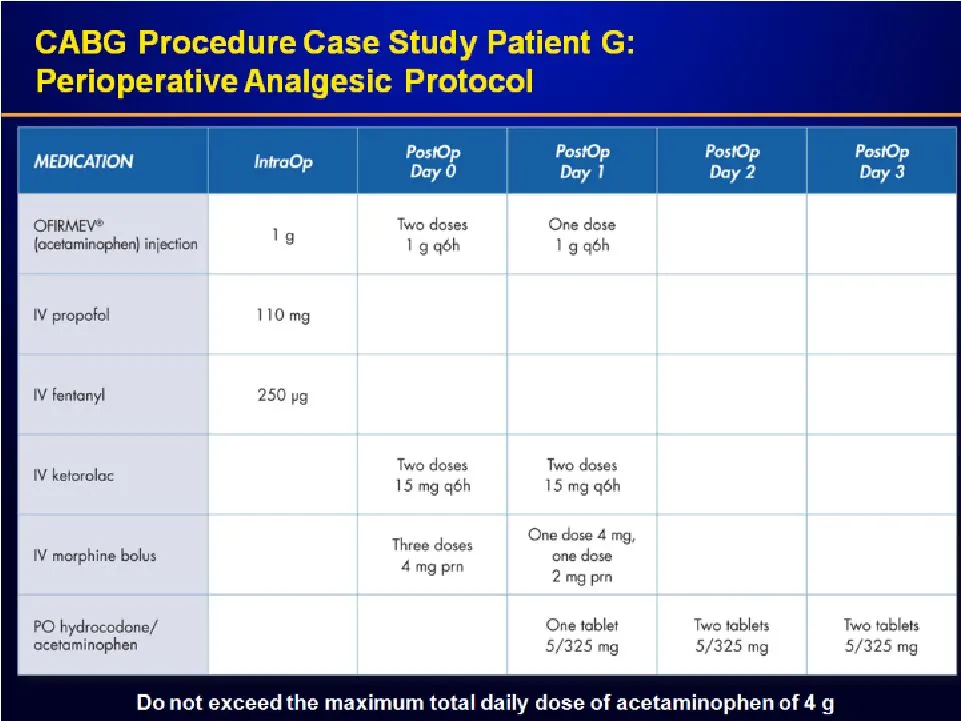
Slide 44: CABG Procedure Case Study Patient G: Analgesic Protocol
CABG Procedure Case Study Patient G: Perioperative Analgesic Protocol MEDICATION OFIRMEV® I One dose {ocetaminophen) injection : ‘ 1g qéh IV propofol IV fentanyl Two doses: Two doses IV ketorolac 15mg q¢h 15 edqah reese One dose 4 IV morphine bolus Pena one dose 4mg pm Jase PO hydrocodone/ One table
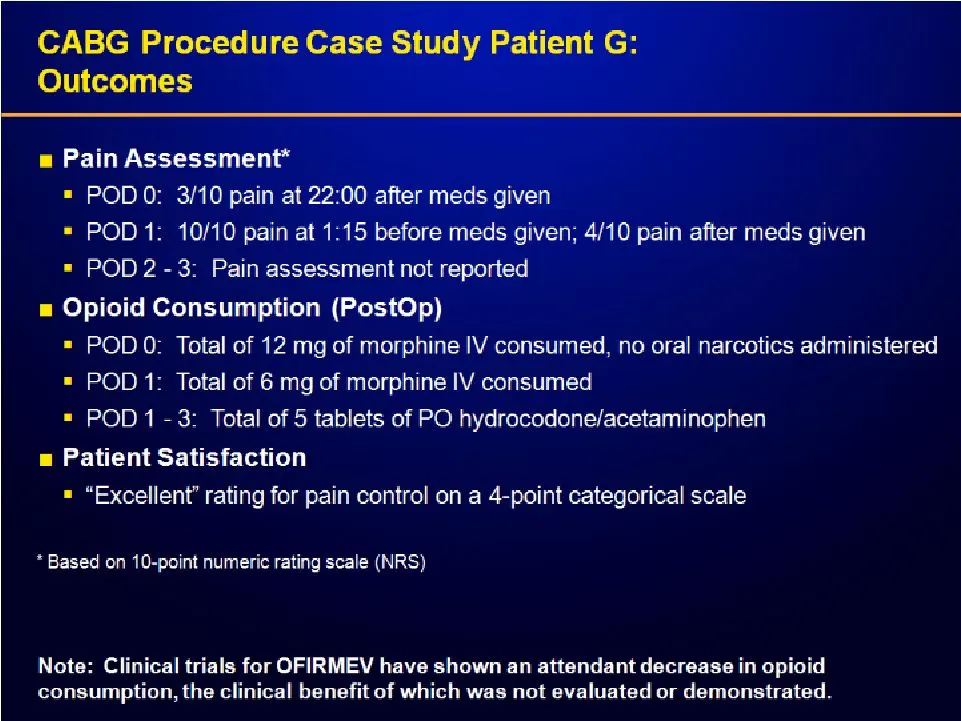
Slide 45: CABG Procedure Case Study Patient G: Outcomes
CABG Procedure Case Study Patient G: Outcomes = Pain Assessment* = POD O: 3/10 pain at 22:00 after meds given = POD 1: 10/10 pain at 1:15 before meds given; 4/10 pain after meds given = POD 2-3: Pain assessment not reported = Opioid Consumption (PostOp) = POD 0: Total of 12 mg of morphine IV consume
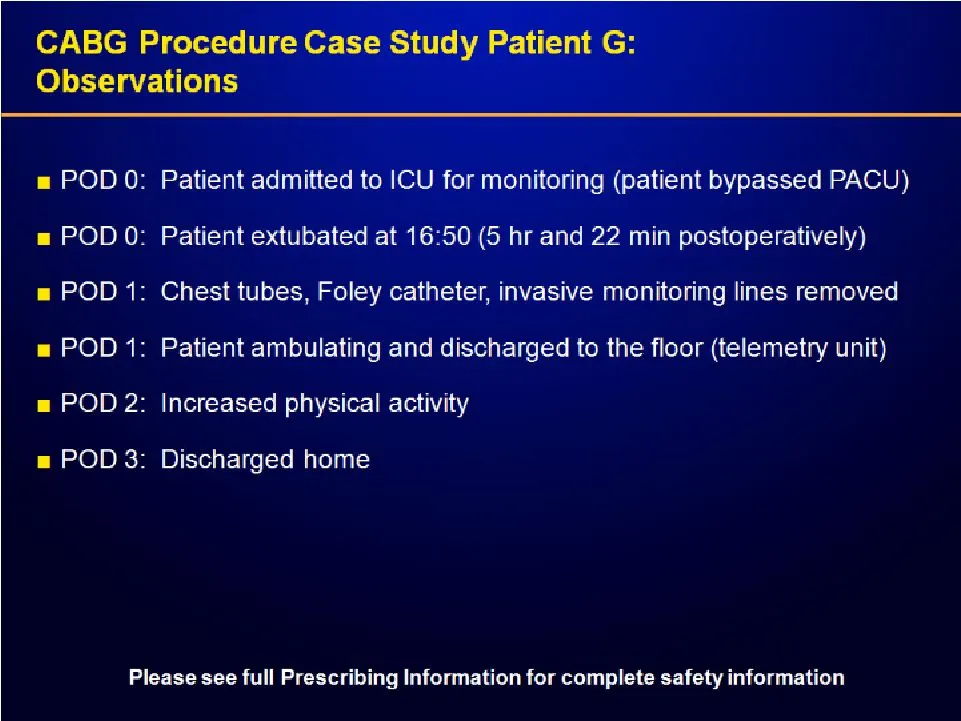
Slide 46: CABG Procedure Case Study Patient G: Observations
CABG Procedure Case Study Patient G: Observations = POD 0: Patient admitted to ICU for monitoring (patient bypassed PACU) = POD 0: Patient extubated at 16:50 (5 hr and 22 min postoperatively) = POD 1: Chest tubes, Foley catheter, invasive monitoring lines removed = POD 1: Patient ambulating and disc

Slide 47: The Future…Beyond 2012
The Future…Beyond 2012 Impact of August 2012 Joint Commission Sentinel Event Alert Regarding Safe Use of Opioids in Hospitals HCAHPS……….Hospital Consumer Assessment of Healthcare Providers and Systems Affordable Care Act of 2010……..Hospital Reimbursements Based on HCAHPS Scores Physician Reimburseme

Slide 48

Slide 49: Next Steps
NEXT STEPS Physician Education regarding multimodal pain management strategy and utilization of OFIRMEV to decrease narcotic/opioid consumption Hospital CEO/CFO/administration education regarding Budget Impact Model utilizing multimodal pain management to achieve narcotic/opioid reduction and reduce

Slide 50: Next Steps
NEXT STEPS Hospital CEO/CFO acceptance of increased Pharmacy costs due to OFIRMEV utilization in order to achieve potential cost reduction benefit to the institution from better patient satisfaction scores and decreased narcotic/opioid utilization Incorporation of OFIRMEV in best practice pattern su

Slide 51: Multimodal Pain Management: Potential to Improve Cost and Quality of Care
Multimodal Pain Management: Potential to Improve the Cost and Quality of Care Dr. Robert Ang, MD MBA Vice President, Medical Affairs Cadence Pharmaceuticals
Slide 52: Opioids: frequent adverse events
Opioids: Type of Opioid- Related Adverse Event Incidence Following: PCA Opioids IM or IV Bolus Opioids frequent adverse events Gastrointestinal 37.1% 28.2% Central nervous system 33.9% 75.9% Pruritus 14.7% 13.9% Urinary retention 16.4% 4.1% Respiratory depression 1.8% 2.4% Source: Oderda G. Pharmaco
Slide 53: Opioids: considerable costs of related adverse events
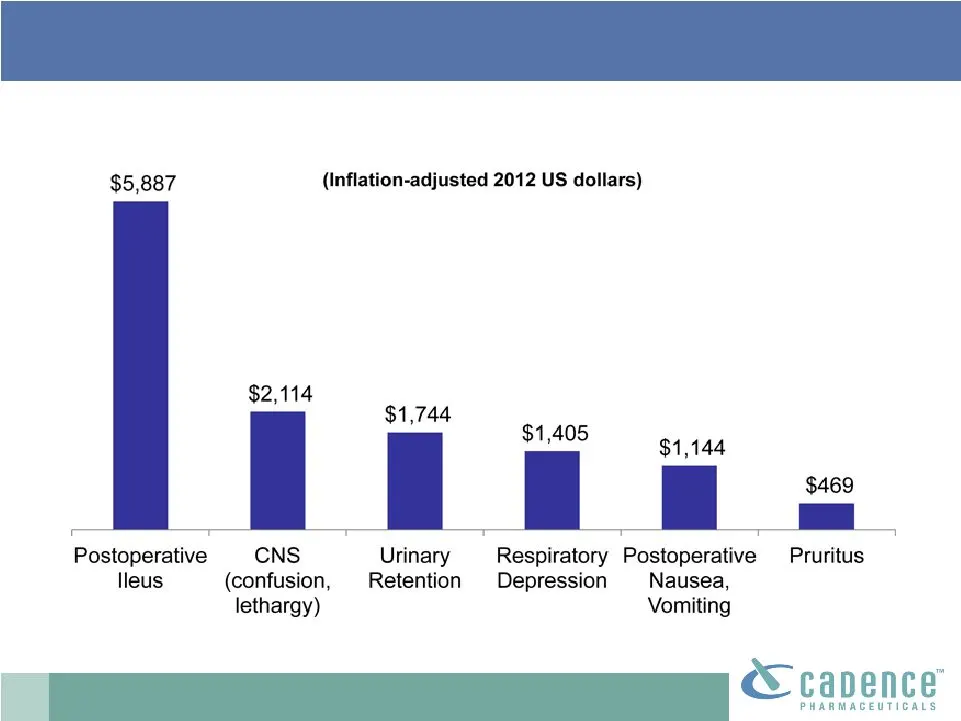
Opioids: considerable costs of related adverse events Estimated Per-Patient Cost Increase by Opioid-Related Adverse Event Type Ileus data from Simons R, et al. Reg Anesth Pain Med 2009; PS3:17; all other data from Oderda GM, et al. J Pain Symptom Manage 2003 Mar;25(3):276-83. Inflation adjustment us
Slide 54: Avoidance of Opioid-Related Adverse Events May Reduce Hospital Costs
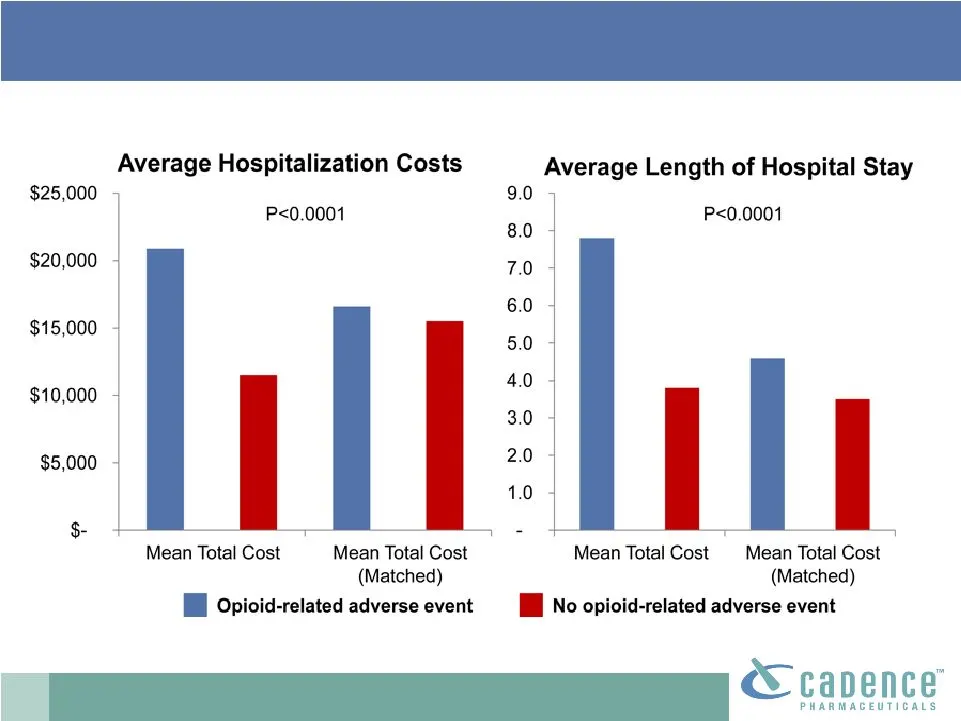
Avoidance of Opioid-Related Adverse Events May Reduce Hospital Costs Retrospective analysis of >180,000 surgical inpatients utilizing the Premier Research Database, patients undergoing open/lap colectomy, lap cholecystectomy, hysterectomy and total hip replacement Case matching used +/- 3 years of a
Slide 55: The Joint Commission Sentinel Event Alert
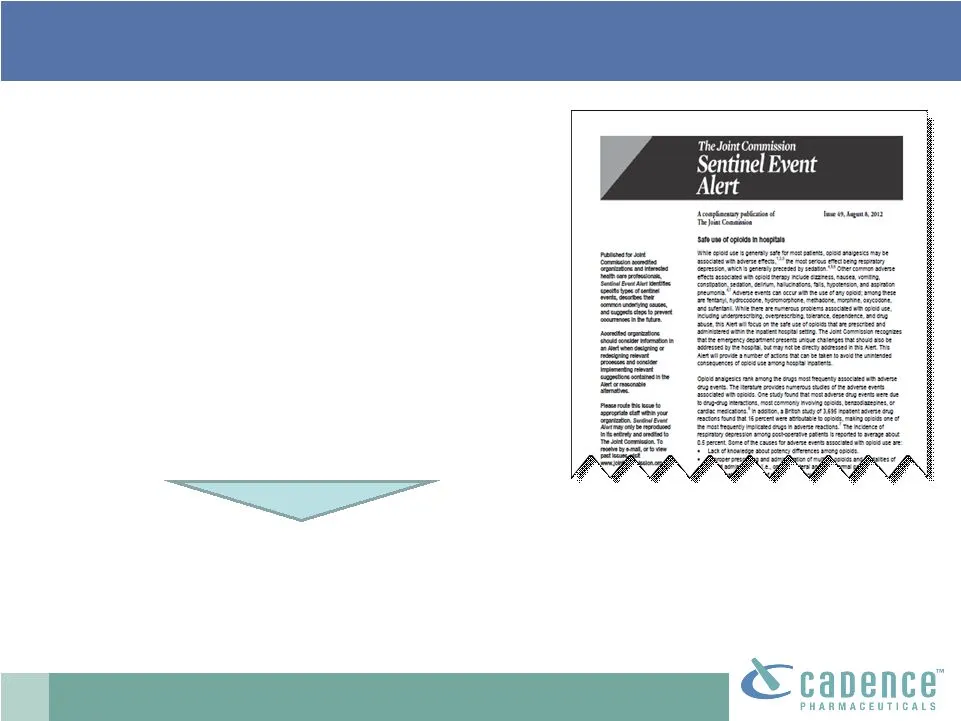
The Joint Commission Sentinel Event Alert Source: The Joint Commission Sentinel Event Alert. Safe use of opioids in hospitals. Issue 49; August 8, 2012. • What is a Sentinel Event? – Definition: an unexpected occurrence involving death or serious physical or psychological injury, or the risk thereof
Slide 56: Inpatient Budget Impact Model
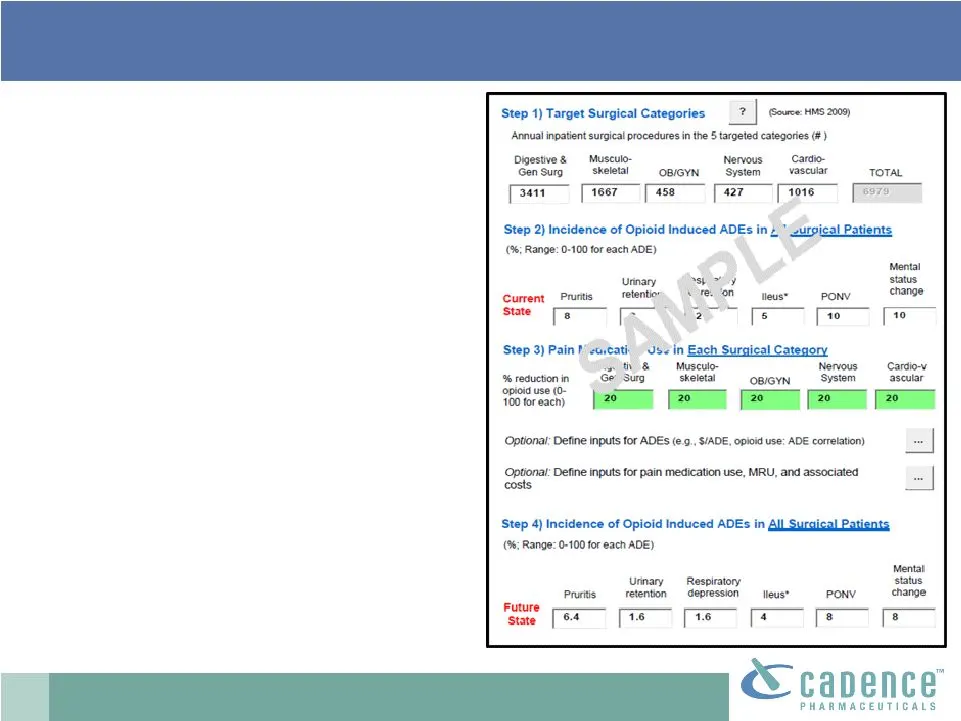
Inpatient Budget Impact Model Use: Proprietary, unbranded disease-state awareness tool for population-based decision makers only Data Inputs: • Prepopulated (though customizable): o surgical procedure volume; o opioid-related adverse event incidence rates (e.g. PONV, ileus, respiratory depression);
Slide 57: Inpatient Budget Impact Model: Outputs
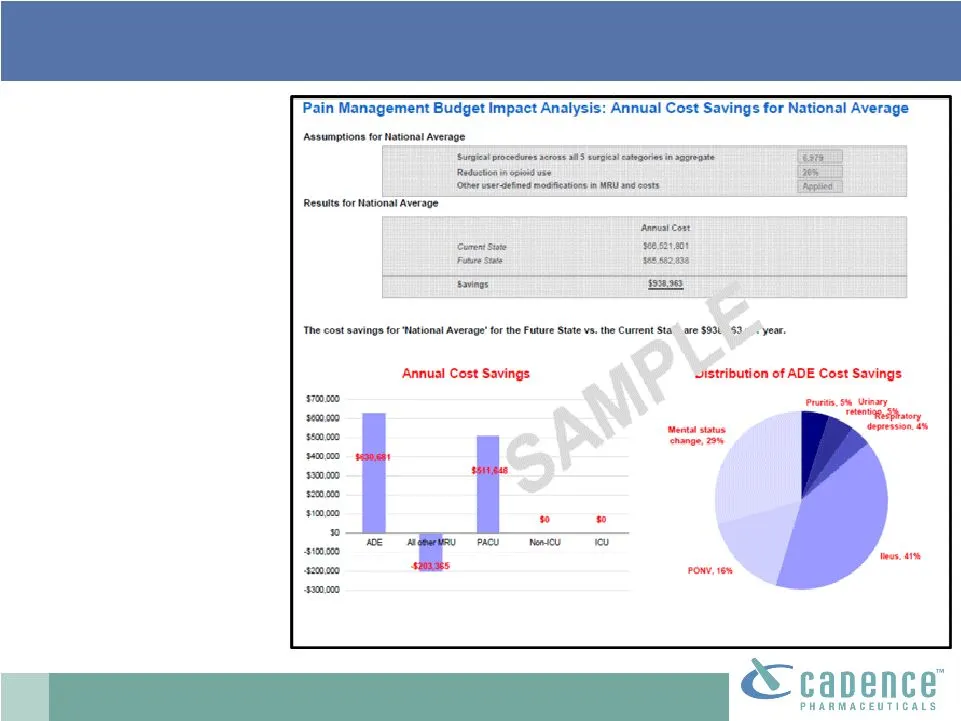
Inpatient Budget Impact Model: Outputs Model Outputs: The model illustrates the estimated budget impact in several ways, providing users with both high-level and department-specific summaries. Potential overall savings are displayed as: - annual cost savings, - cost savings per stay, or - cost savin
Slide 58: IV Acetaminophen and Opioid Consumption
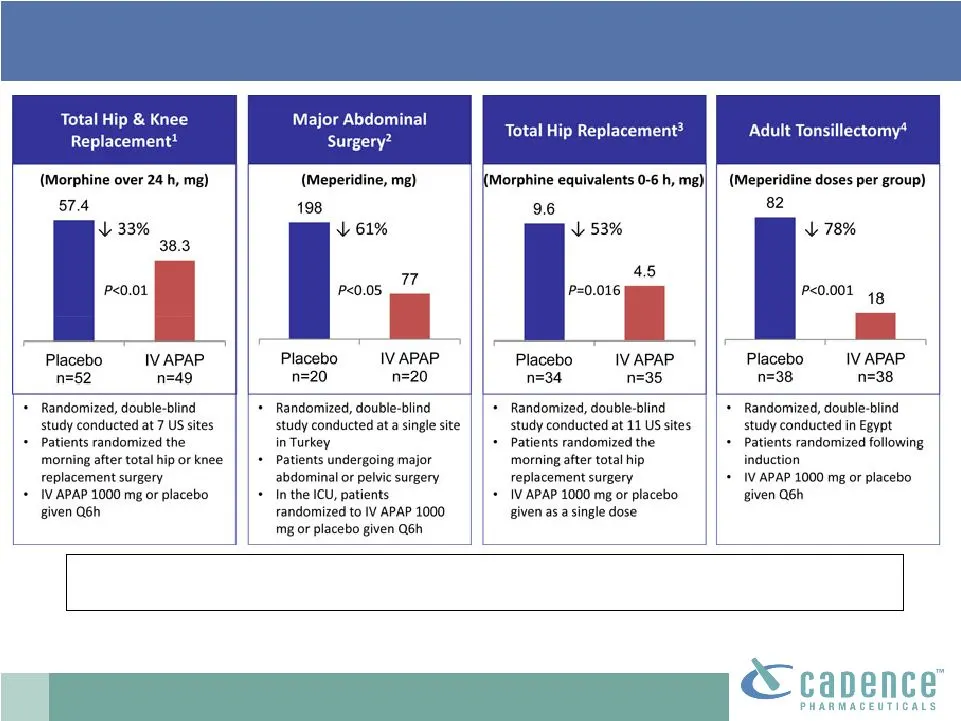
IV Acetaminophen and Opioid Consumption Note: Opioid consumption reduction is highly dependent on clinical trial design, and the clinical consequence of any amount of opioid consumption reduction may not have been evaluated or demonstrated in a given trial. Sources: 1. Sinatra et al., Anesthesiology

Slide 59: IV Acetaminophen – A Hospital Pharmacy Perspective
JOHN MARSHALL, PHARMD, BCPS CLINICAL COORDINATOR – CRITICAL CARE BETH ISRAEL DEACONESS MEDICAL CENTER ADJUNCT ASSOCIATE PROFESSOR OF CLINICAL PHARMACY MASSACHUSETTS COLLEGE OF PHARMACY AND HEALTH SCIENCES BOSTON MA IV Acetaminophen – A Hospital Pharmacy Perspective
Slide 60: Value = Quality & Cost
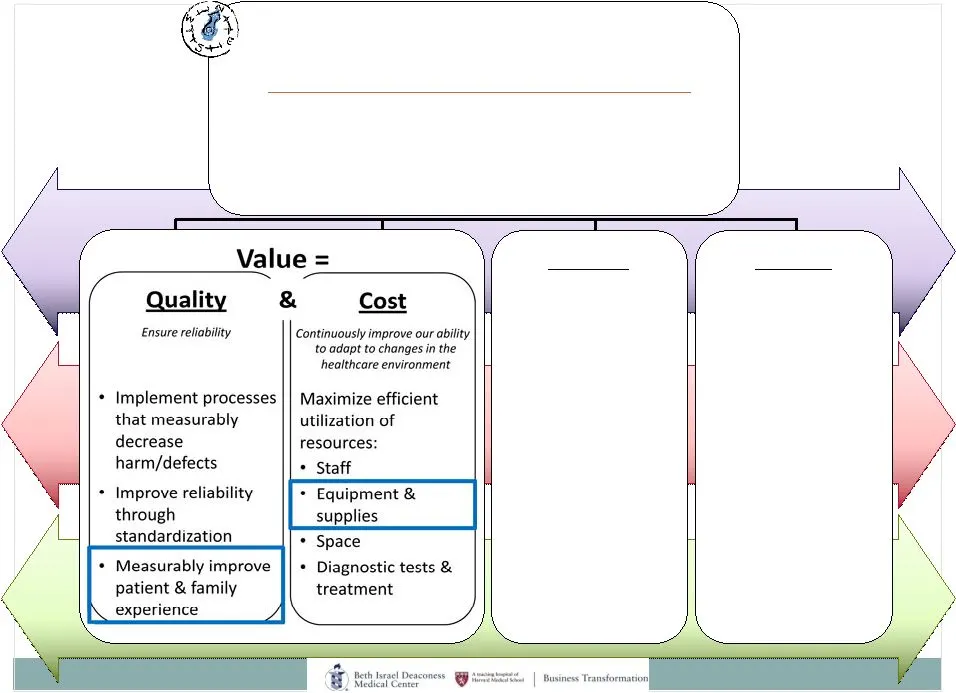
eee EEE —___————eo—Ee Value = Quality & Cost \| \ Ensure reliability Continuously improve our ability to adapt to changes in the healthcare environment | H Maximize efficient utilization of resources: , * Staff supplies * Space Measurably improve || + Diagnostic tests & patient & family treatment ex

Slide 61: Value = Quality & Cost
—EEE~_~>SSSSSS=— SS SSS SSS Value = Quality & Cost ) aon Ensure refiobitite | ee ee

Slide 62: Value = Quality & Cost
—EEE~_~>SSSSSS=— SS SSS SSS Value = Quality & Cost ) aon Ensure refiobitite | ee ee

Slide 63: to adapt to changes in the
to adapt to changes in the healthcare environment * Implement processes that measurably decrease harm/defects Maximize efficient utilization of resources: * Staff + Equipment & + Improve reliability

Slide 64: to adapt to changes in the
to adapt to changes in the healthcare environment * Implement processes that measurably decrease harm/defects Maximize efficient utilization of resources: * Staff + Equipment & + Improve reliability

Slide 65: standardization
Sa standardization * Space + Measurably improve || * Diagnostic tests & patient & family treatment \. experience | Business Traneformation|

Slide 66: BIDMC Fiscal Year 2013 Operating Plan
Improve the Health & Well-Being Of Patients, Families, Employees & Physicians Through Innovative Clinical Care, Education, & Research System Advance as a system of care Clinical Care Education Research People Engage and develop our people every day Fiscal Year 2013 BIDMC Operating Plan True North Gr
Slide 67: For new drugs, it can be easy for pharmacy decision makers to think like this
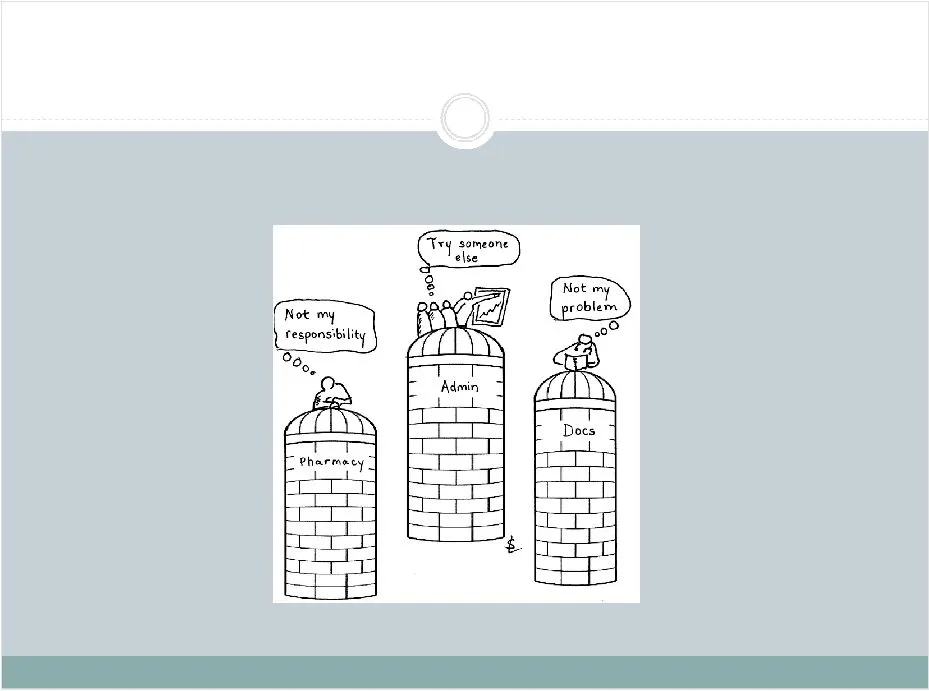
For new drugs, it can be easy for pharmacy decision makers to think like this…
Slide 68: BIDMC Pharmacy Silo Mentality
BIDMC Pharmacy Silo Mentality BIDMC Pharmacy Silo Mentality Thinks: “Am I improving patient care?” “The best care is always the cheapest care” Thinks: “Am I improving drug use?” “I need to keep my drug budget as small as possible” What makes BIDMC different?
Slide 69: The anatomy of a drug's approval and subsequent use at a hospital
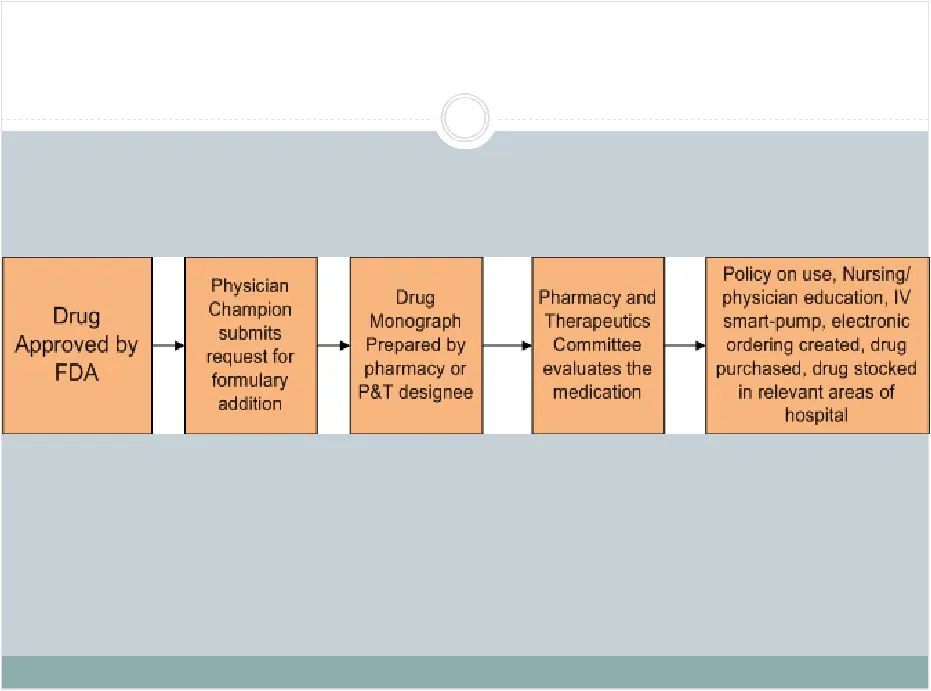
The anatomy of a drug’s approval and subsequent use at a hospital
Slide 70: Pharmacokinetics
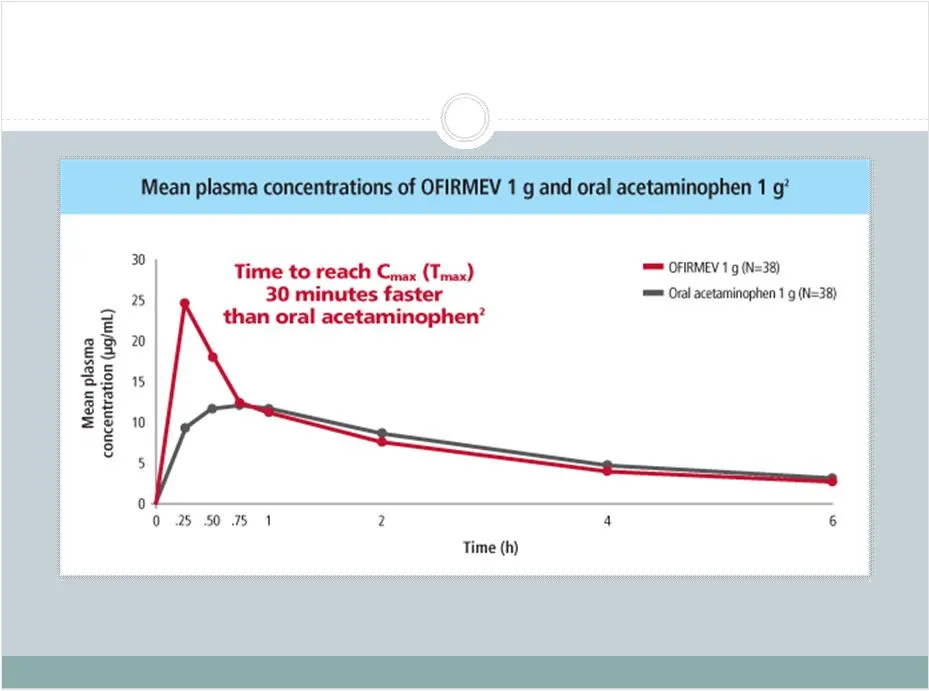
Pharmacokinetics Reaches 70% higher concentration (Cmax) than oral acetaminophen in first 15 minutes, but overall AUC after 1 dose was the same. Product information Cadence Pharmaceuticals, ofirmev.com
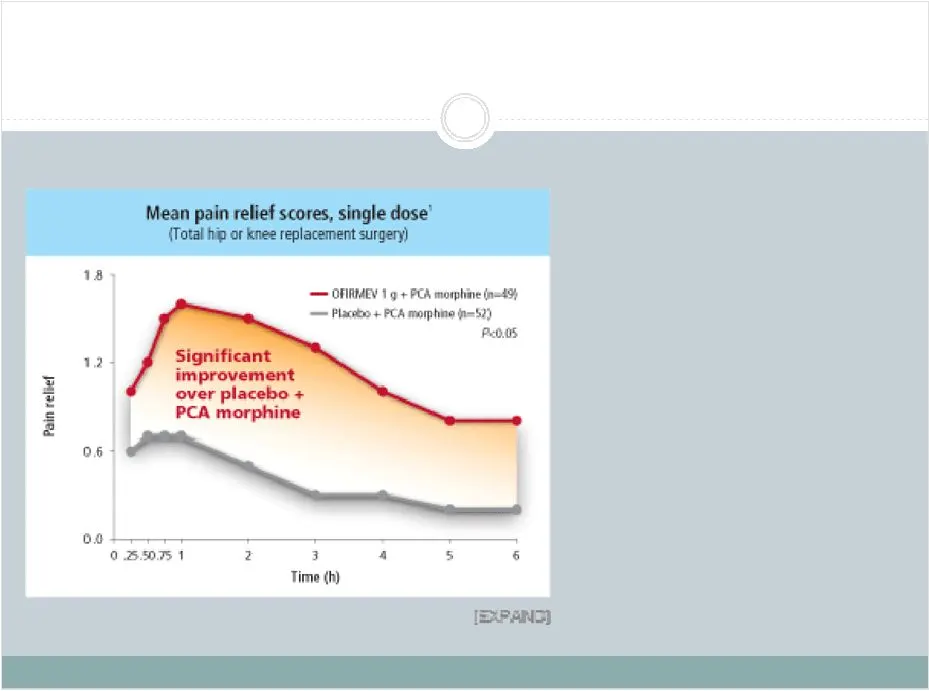
Slide 71: Better pain control
Better pain control Better pain relief with IV acetaminophen compared to placebo (under standard of care) Sinatra et al. Anesthesiology. 2005;102:822-831.
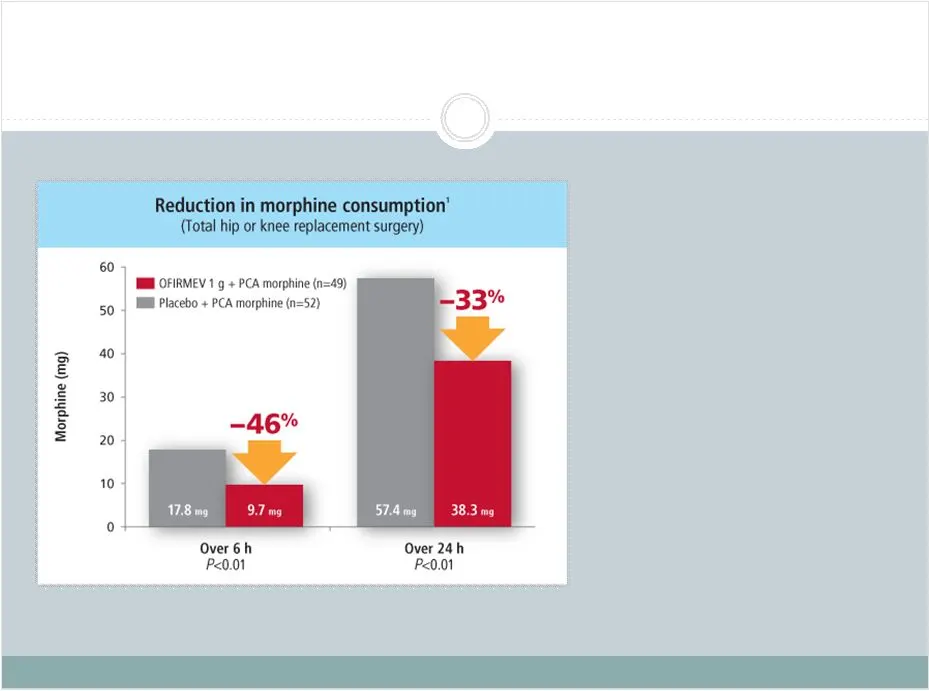
Slide 72: Opioid Reduction Effect
Opioid Reduction Effect Less opioids required when IV acetaminophen is used compared to placebo (under standard of care) Sinatra et al. Anesthesiology. 2005;102:822-831.

Slide 73: Opioid reduction
Opioid reduction This is an extremely attractive possibility with IV acetaminophen Sentinel Event Alert (Joint Commission) Goal to reduce opioid side effects Post operative nausea/vomiting Postoperative ileus Delirium/Over-sedation

Slide 74: Why did BIDMC add OFIRMEV to formulary?
Why did BIDMC add OFIRMEV to formulary? IV acetaminophen was brought forth by critical care physicians There remains an unmet need in optimizing pain control in the hospital setting The American Society of Anesthesiologists recommends a multi-modal approach to pain management It was thought that bei

Slide 75: IV acetaminophen approval
IV acetaminophen approval IV acetaminophen was approved for use in patients who are unable to tolerate oral routes of acetaminophen No formal (IT) restrictions were placed on the ordering or duration of therapy
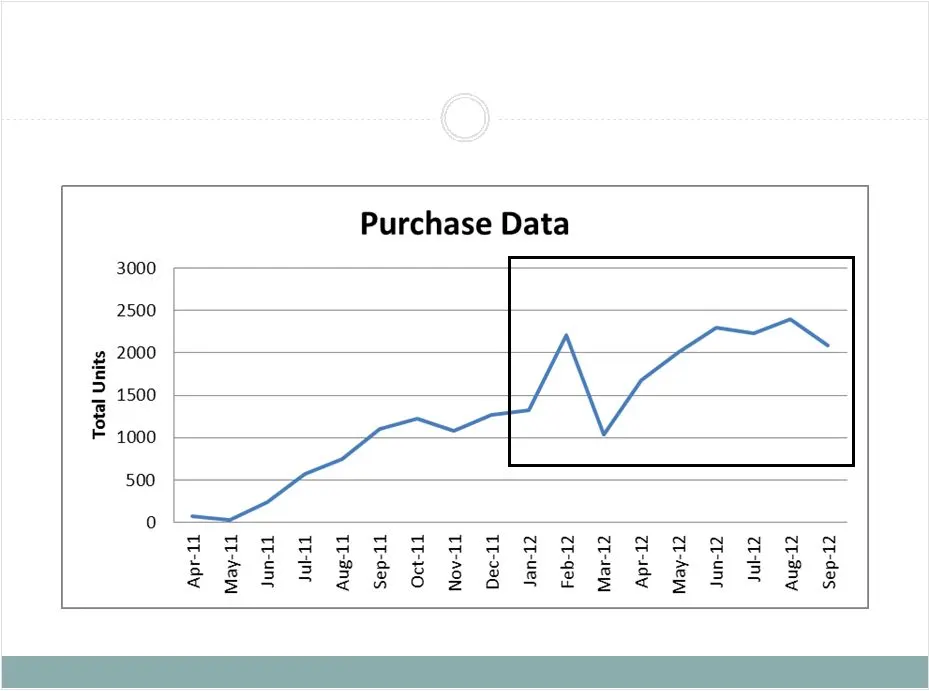
Slide 76: Purchase Data
Purchase Data 3000 2500 ‘SuUN [EI0L 71-das z1-8ny zine zr-unp z-Ae t-dy wrew 21-44 zr-uer T1-290 TT-AON TT-PO Tr-das Tr-8ny Tne Tr-unp Tr-Aew Tidy

Slide 77: Overall use – PACU vs. Inpatient
Overall use – PACU vs. Inpatient 48% of utilization is for patients admitted to the general ward/ICU 52% of utilization is in the Post Anesthesia Care Unit (PACU)

Slide 78: Inpatient use
Inpatient use

Slide 79: Inpatient use - analgesia
Inpatient use - analgesia Average age of patients: 60 Average number of doses per patient: 6 84% also receiving opioids Utilization as a multi-modal agent 24% also receiving NSAIDs (ibuprofen, ketorolac)
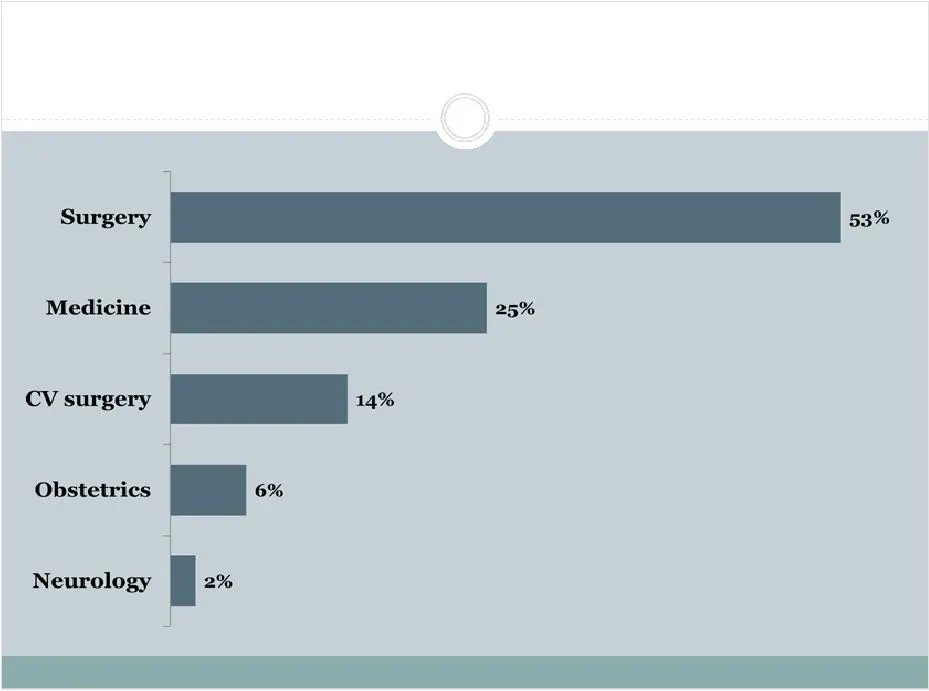
Slide 80: Most common settings for inpatient use
Most common settings for inpatient use
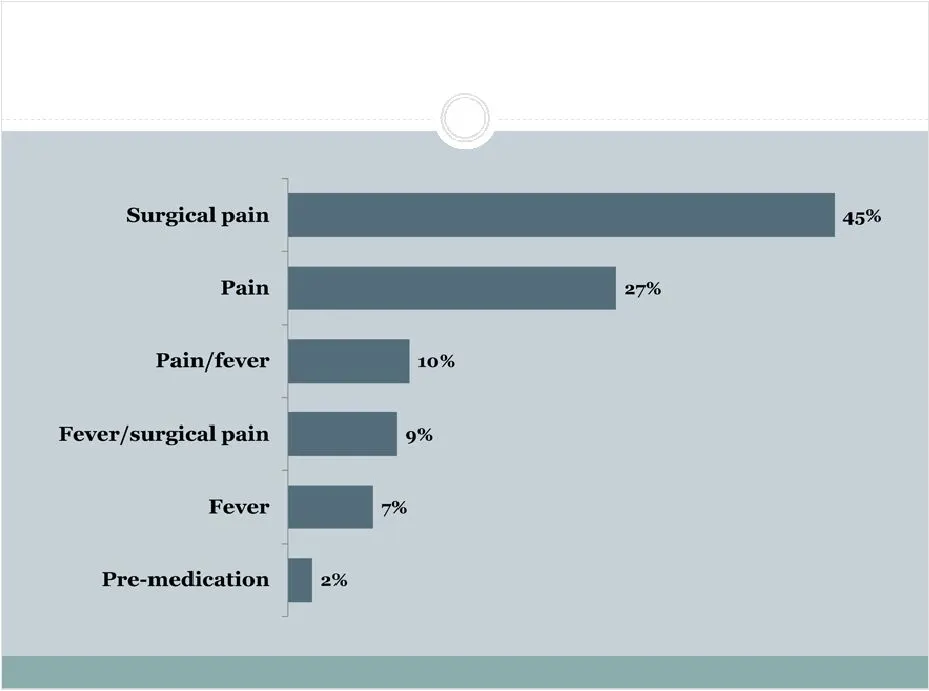
Slide 81: Most common indications for inpatient use
Most common indications for inpatient use
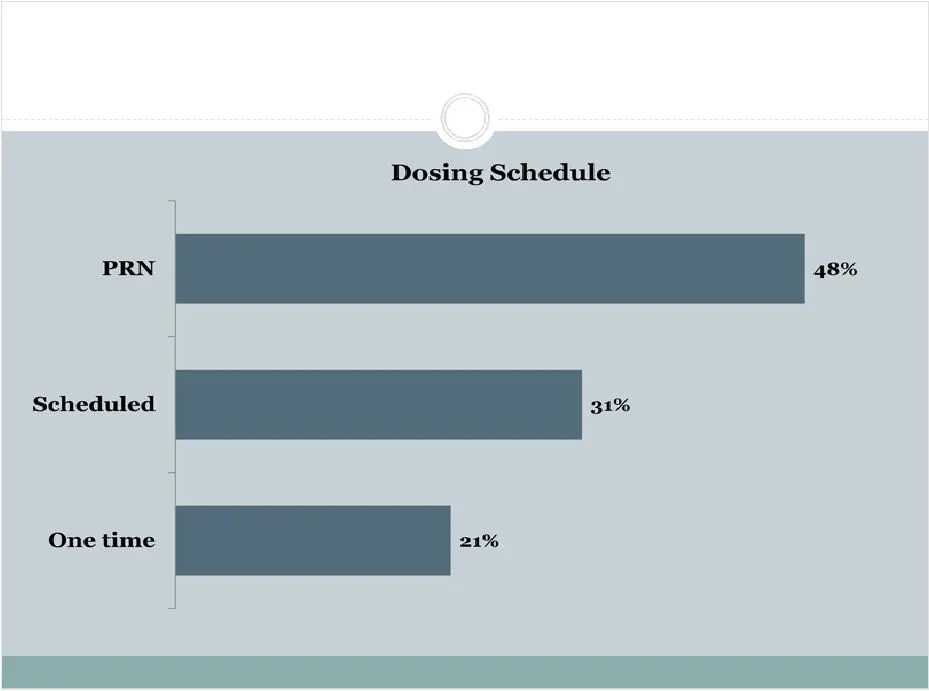
Slide 82: Dosing Schedule
Dosing Schedule Scheduled CT one “i aa ss ia

Slide 83: PACU Utilization
PACU Utilization

Slide 84: PACU
PACU PACU practice is highly nurse-driven Many orders for pain medications are written, and it is left to the nurse to determine which agents are utilized, and in what order.
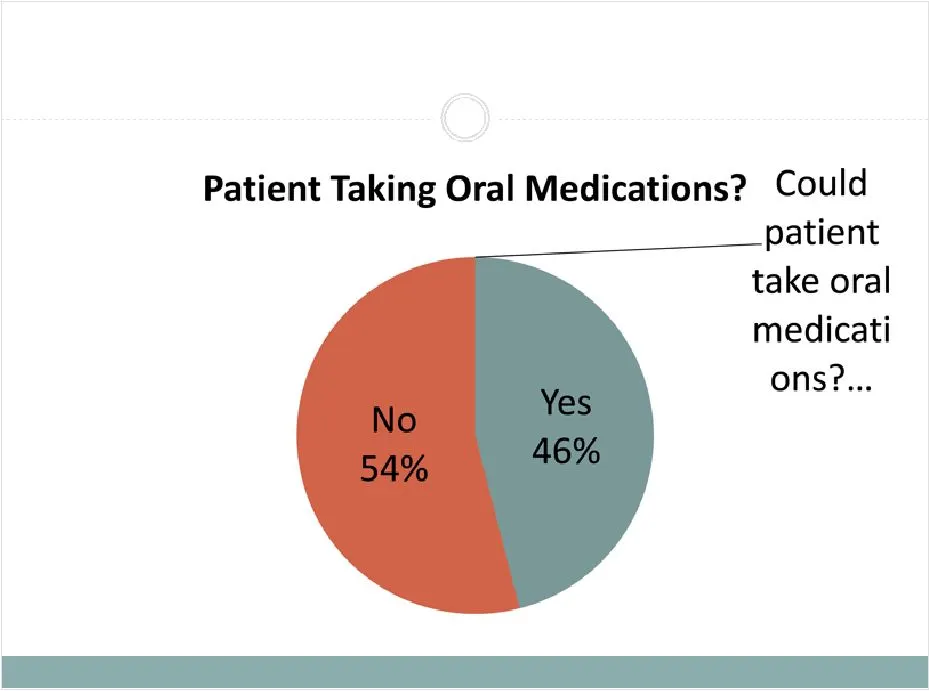
Slide 85: PACU pain control and IV acetaminophen
PACU pain control and IV acetaminophen
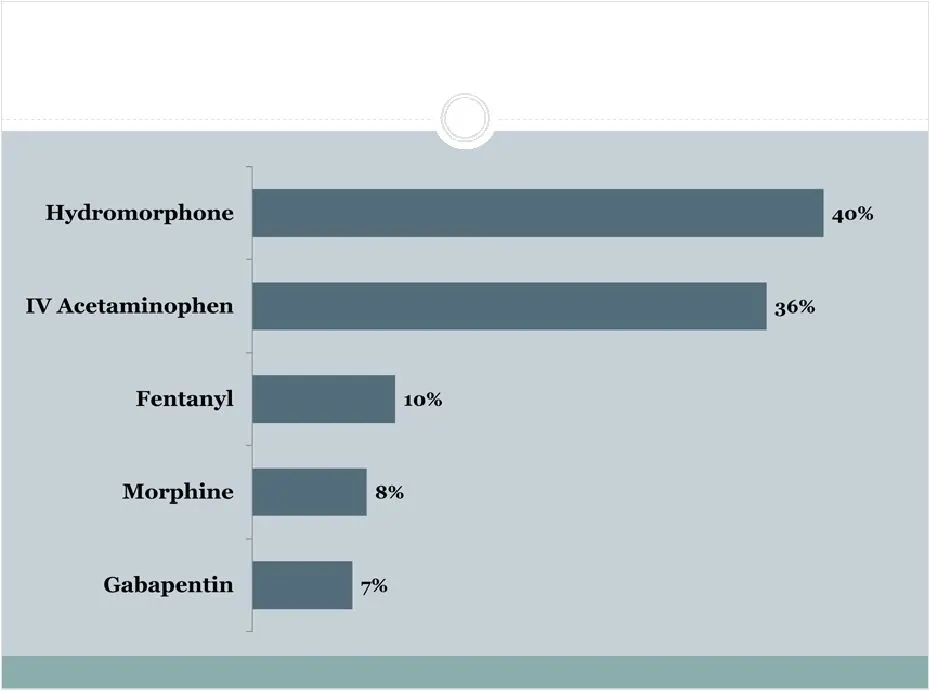
Slide 86: First line for PACU pain control
First line for PACU pain control

Slide 87: Where IV acetaminophen fits especially well
Where IV acetaminophen fits especially well Patients who are at-risk for opioid-induced side effects Elderly Obese Dementia Concomitant administration of other sedatives Patients who have a history of experiencing opioid adverse effects Post-operative nausea and vomiting Opioid-induced delirium

Slide 88: Additional considerations potentially affecting IV acetaminophen utilization
Additional considerations potentially affecting IV acetaminophen utilization Improving patient satisfaction Reimbursement Competition Patient safety Reducing preventable harm = Cost savings

Slide 89: What's next?
What’s next? Reducing needless variability in care for patients experiencing pain across the medical center Using evidence-based data to create better pain control algorithms Measuring clinical benefit from reduced opioid utilization Side effects Patient satisfaction

Slide 90: Closing Remarks
Closing Remarks Theodore R. Schroeder President and Chief Executive Officer Cadence Pharmaceuticals

Slide 91: Par IV litigation update: settlement with Perrigo
Par IV litigation update: settlement with Perrigo announced Nov. 28, 2012 Lawsuit against Perrigo / Paddock to be dismissed with prejudice Exclusive right of first refusal granted to Perrigo to negotiate an authorized generic agreement with Cadence for the U.S. Non-exclusive right granted to Perrigo
Source: SEC EDGAR · 8-K filed Dec 6, 2012
More decks from Cadence Pharmaceuticals Inc
 Investor Presentation (December 2013)27 slides · Dec 16, 2013
 Investor Presentation (February 2012)30 slides · Feb 14, 2012
 Investor Presentation (January 2012)29 slides · Jan 9, 2012
 Investor Presentation (September 2011)22 slides · Sep 28, 2011
 Investor Presentation (September 2011)27 slides · Sep 7, 2011
 Investor Presentation (July 2011)27 slides · Jul 8, 2011