Modelon AB · OMXSTO:MODEL
Modelon AB — Technical Presentation (2021)
37 slides from Modelon AB's technical presentation, 2021

Slide 1: Jet Propulsion Library Overview
JET PROPULSION LIBRARY Overview

Slide 2: Agenda
AGENDA ❑ About Jet Propulsion Library ❑ Key Benefits ❑ Key Capabilities ❑ Key Applications ❑ Library Contents ❑ Latest Release ©2021 Modelon 2
Slide 3: About Jet Propulsion Library
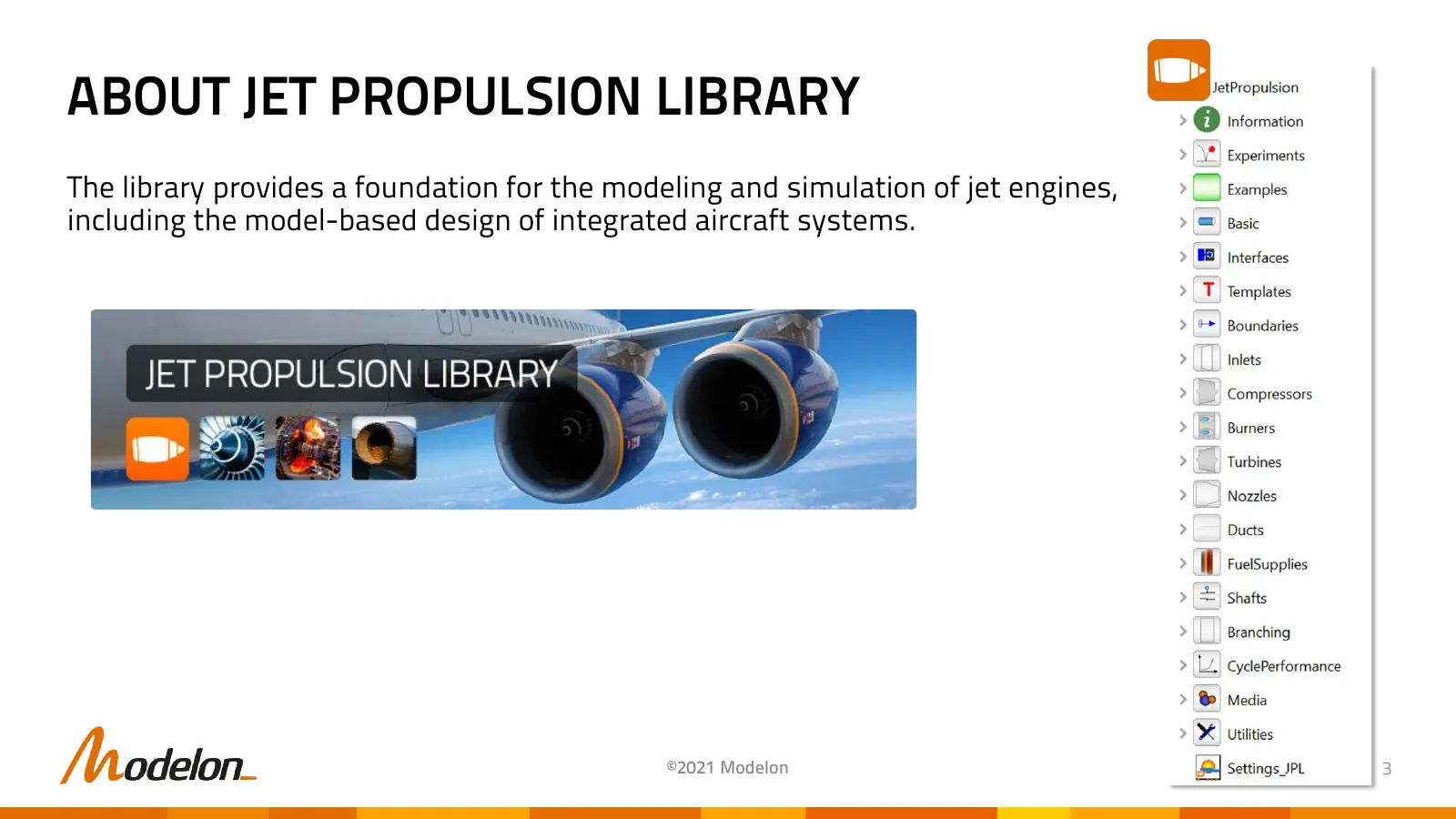
ABOUT JET PROPULSION LIBRARY The library provides a foundation for the modeling and simulation of jet engines, including the model-based design of integrated aircraft systems. ©2021 Modelon 3

Slide 4: Key Benefits
KEY BENEFITS ©2021 Modelon 4
Slide 5: Key Benefits
KEY BENEFITS • Extensive library of pre-defined sub-systems and thermodynamic cycles • Steady-state (on-design) and dynamic (off-design) capabilities within the same model • Physics-based Solving (PbS) technology enhancing the steady-state simulations • Same naming convention as NPSS • Detailed volu

Slide 6: Key Capabilities
KEY CAPABILITIES ©2021 Modelon 6
Slide 7: Key Capabilities: Library capabilities
KEY CAPABILITIES Library capabilities • Extensive library of pre-defined sub-systems and thermodynamic cycles • Turbo jet • Turbo fan • Turbo prop, turbo shaft • With and without free power turbine • On-design and off-design performance can be studied as well as steady-state and transient behavior b
Slide 8: Key Capabilities: Model Architecture
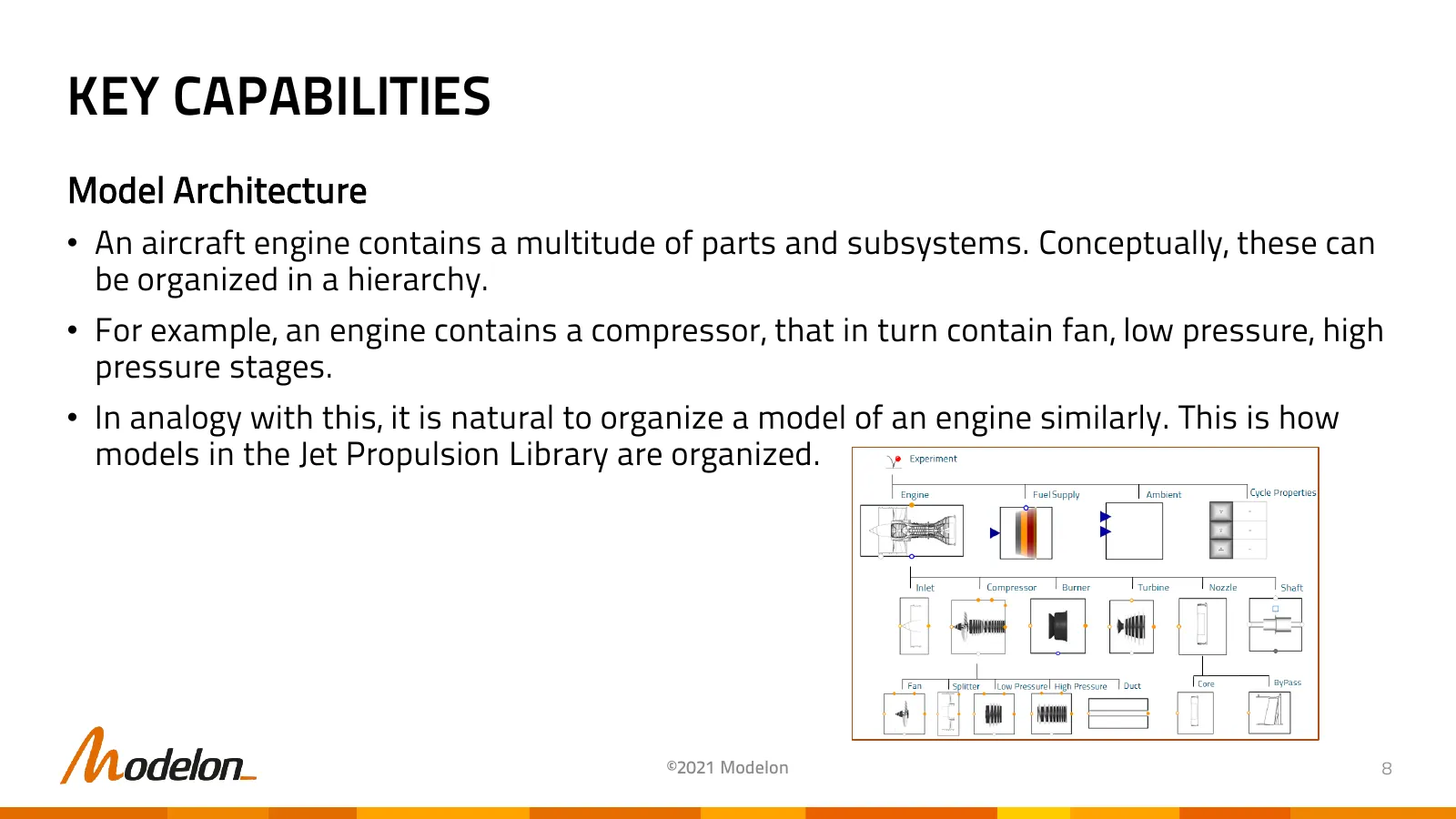
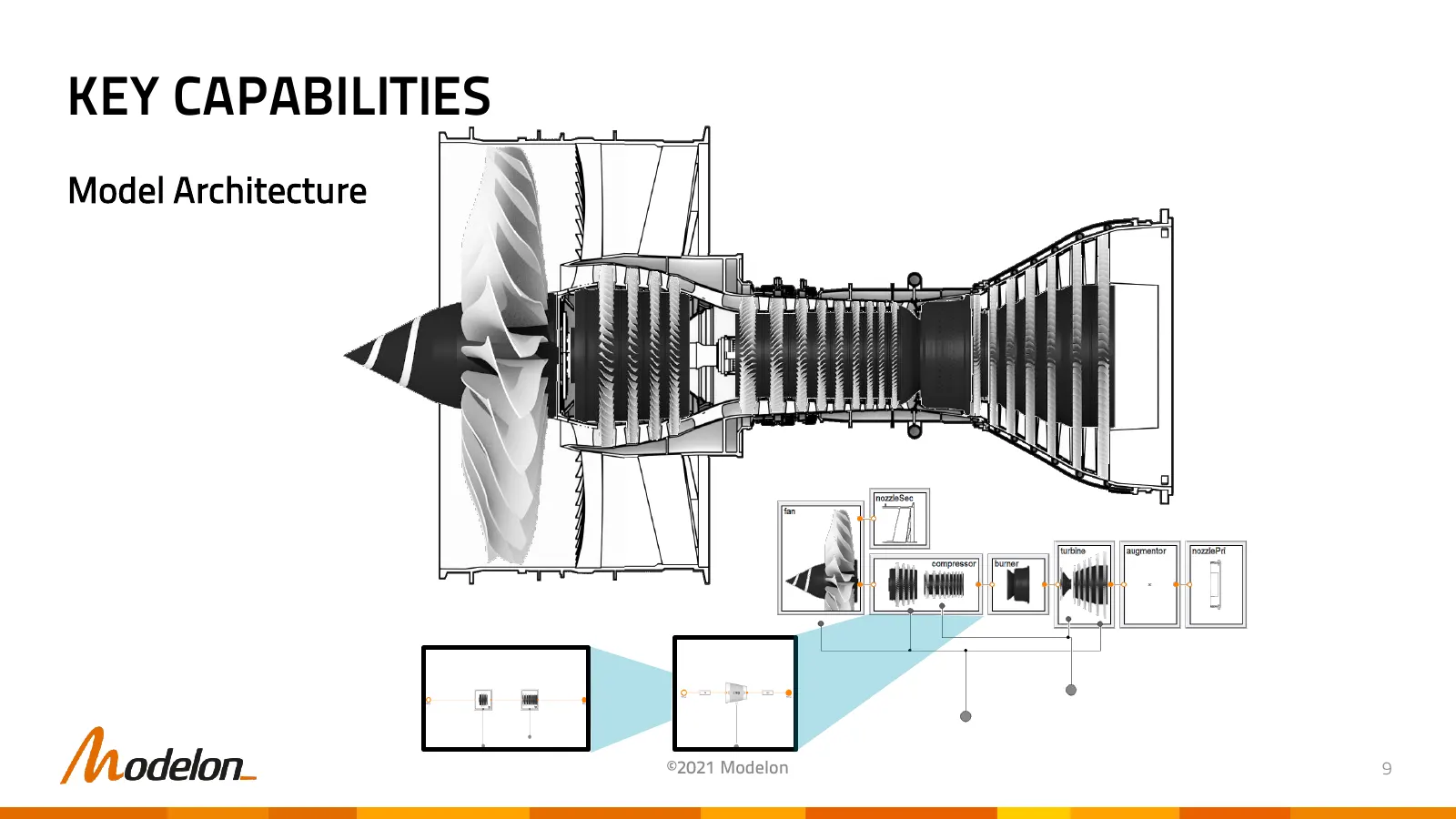
KEY CAPABILITIES Model Architecture • An aircraft engine contains a multitude of parts and subsystems. Conceptually, these can be organized in a hierarchy. • For example, an engine contains a compressor, that in turn contain fan, low pressure, high pressure stages. • In analogy with this, it is natu
Slide 9: Key Capabilities: Model Architecture
KEY CAPABILITIES Model Architecture ©2021 Modelon 9
Slide 10: Key Capabilities: Simulation modes
KEY CAPABILITIES Simulation modes • On-design • The user wants to compute the system (sizing) given intended operating conditions and performance • Always steady state • Off-design • The user wants to compute the performance given system (sizing) and operating conditions • Either steady state or dyn
Slide 11: Key Capabilities: Simulation modes examples
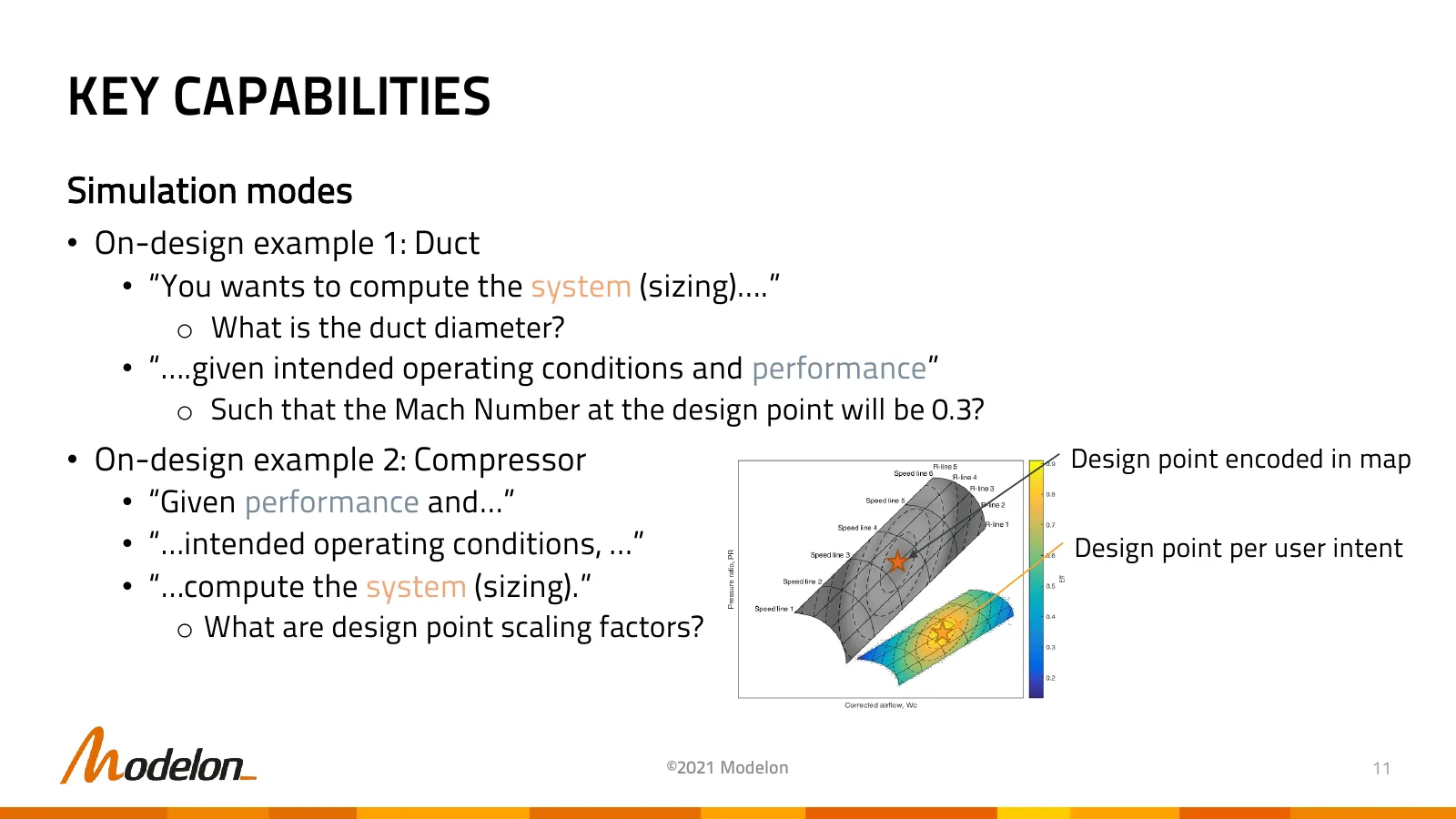
KEY CAPABILITIES Simulation modes • On-design example 1: Duct • “You wants to compute the system (sizing)….” o What is the duct diameter? • “….given intended operating conditions and performance” o Such that the Mach Number at the design point will be 0.3? • On-design example 2: Compressor Design po
Slide 12: Fully rigorous thermodynamic properties
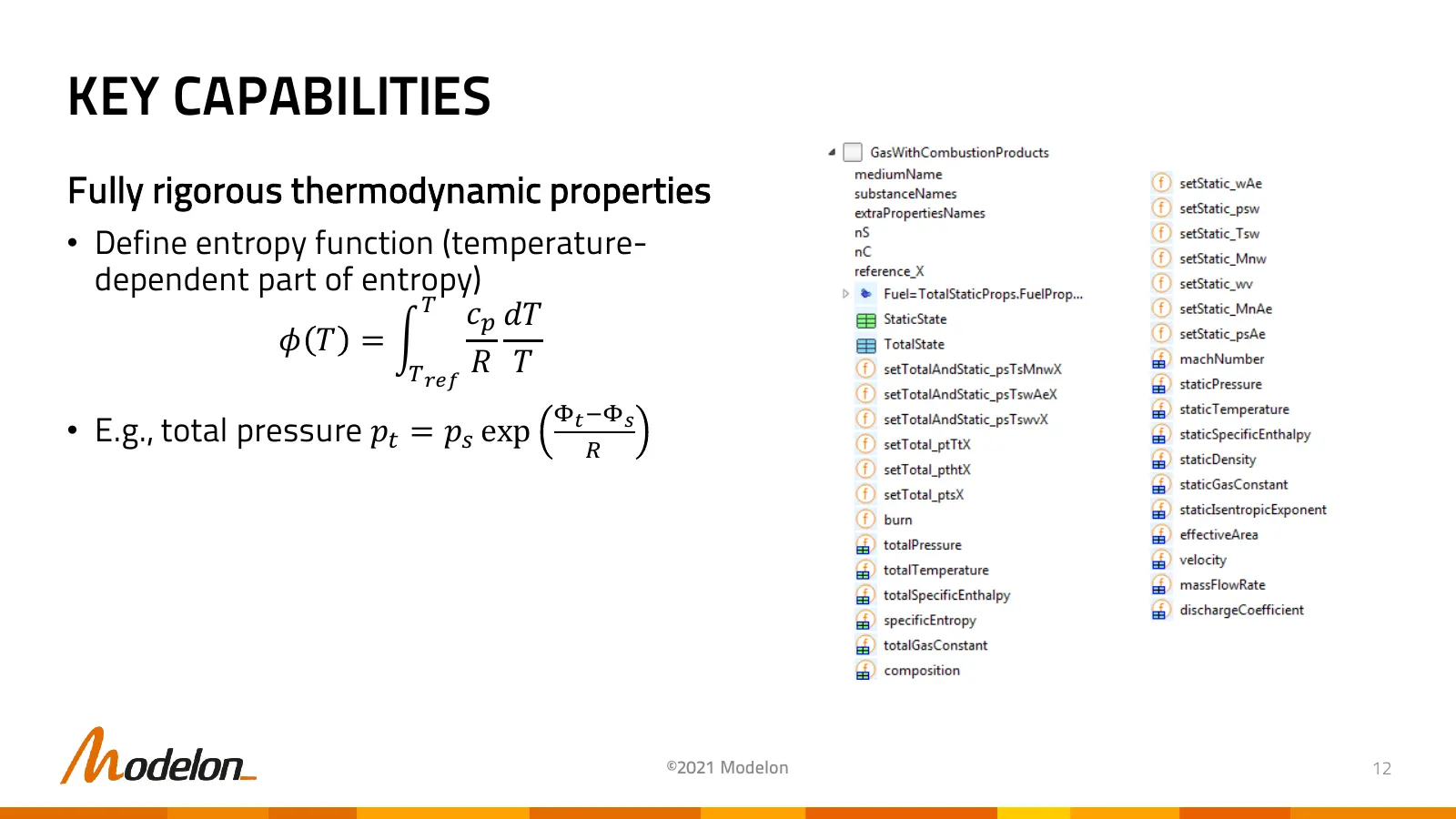
KEY CAPABILITIES Fully rigorous thermodynamic properties • Define entropy function (temperature- dependent part of entropy) 𝑇 𝑐 𝑝 𝑑𝑇 𝜙 𝑇 =න 𝑇𝑟𝑒𝑓 𝑅 𝑇 Φ𝑡 −Φ𝑠 • E.g., total pressure 𝑝𝑡 = 𝑝𝑠 exp 𝑅 ©2021 Modelon 12

Slide 13: Key Applications
KEY APPLICATIONS ©2021 Modelon 13
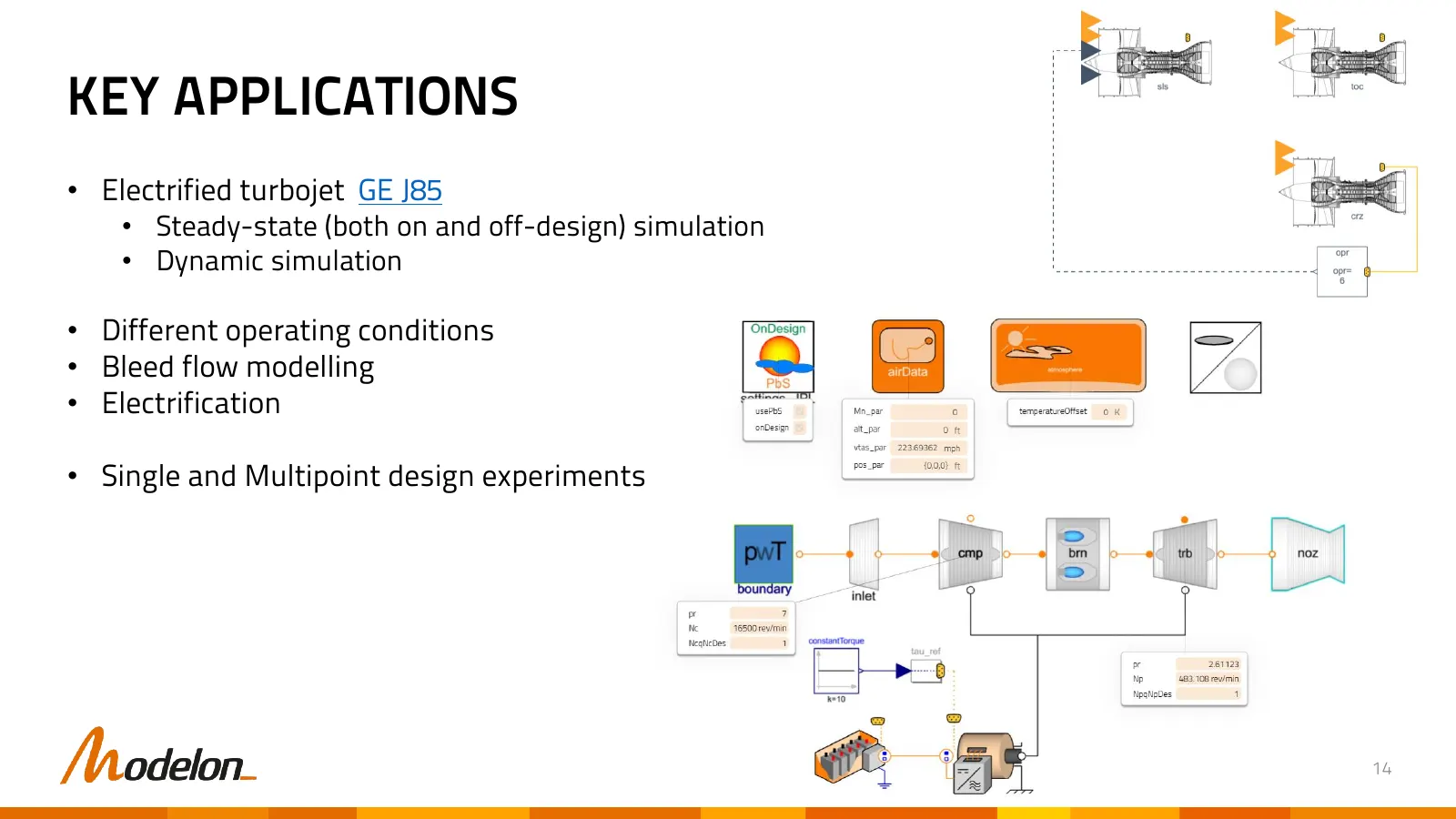
Slide 14: Key Applications: Electrified turbojet GE J85
KEY APPLICATIONS • Electrified turbojet GE J85 • Steady-state (both on and off-design) simulation • Dynamic simulation • Different operating conditions • Bleed flow modelling • Electrification • Single and Multipoint design experiments ©2021 Modelon 14
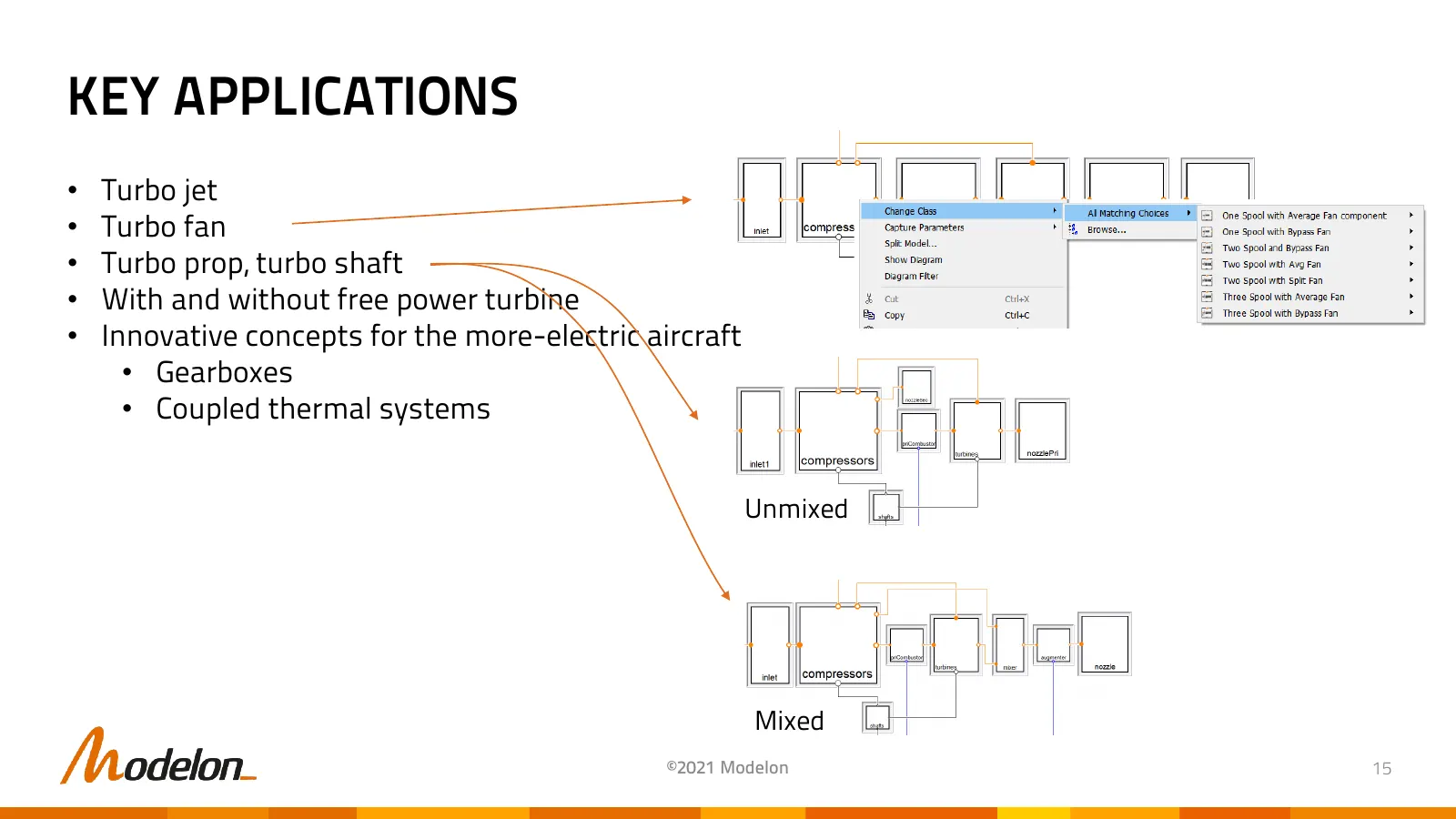
Slide 15: Key Applications: Engine types and concepts
KEY APPLICATIONS • Turbo jet • Turbo fan • Turbo prop, turbo shaft • With and without free power turbine • Innovative concepts for the more-electric aircraft • Gearboxes • Coupled thermal systems Unmixed Mixed ©2021 Modelon 15
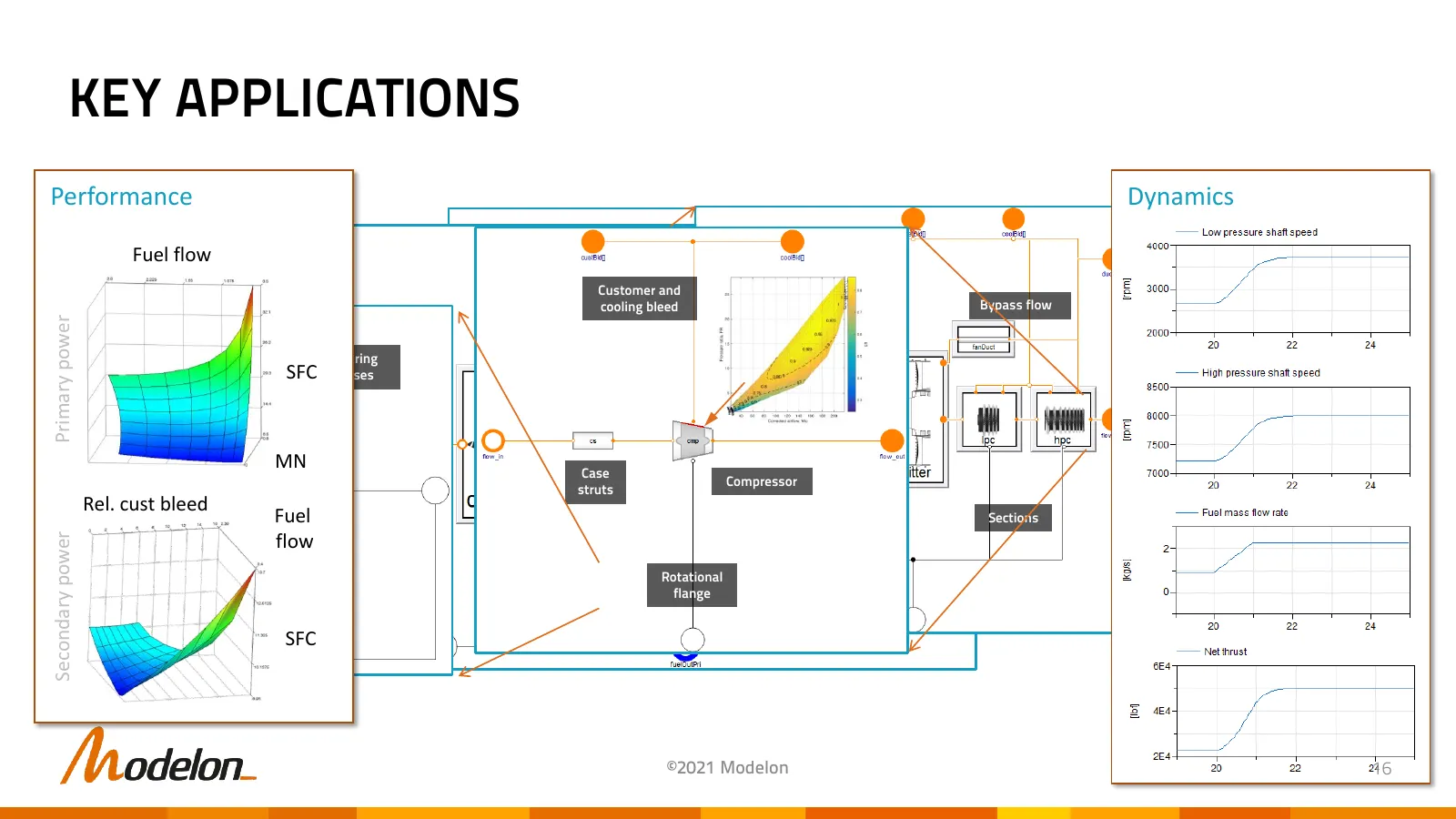
Slide 16: Key Applications: Performance and dynamics
KEY APPLICATIONS Performance Dynamics Fuel flow Customer and cooling bleed Bypass flow Primary power Bearing Bypass flow Fan gear SFC losses MN Case Compressor struts Rel. cust bleed Core flow Fuel Sections Secondary power flow Average fan Rotational flange Vectorized flanges SFC ©2021 Modelon 16
Slide 17: Flight Envelope study
KEY APPLICATIONS Flight Envelope study • The best way to study the performance of a gas turbine engine is to run it through the combinations of altitudes and Mach numbers at which it is expected to operate. • The operational domain of an engine as combinations of Mach number and altitude is known as
Slide 18: Flight Envelope study: grid data points
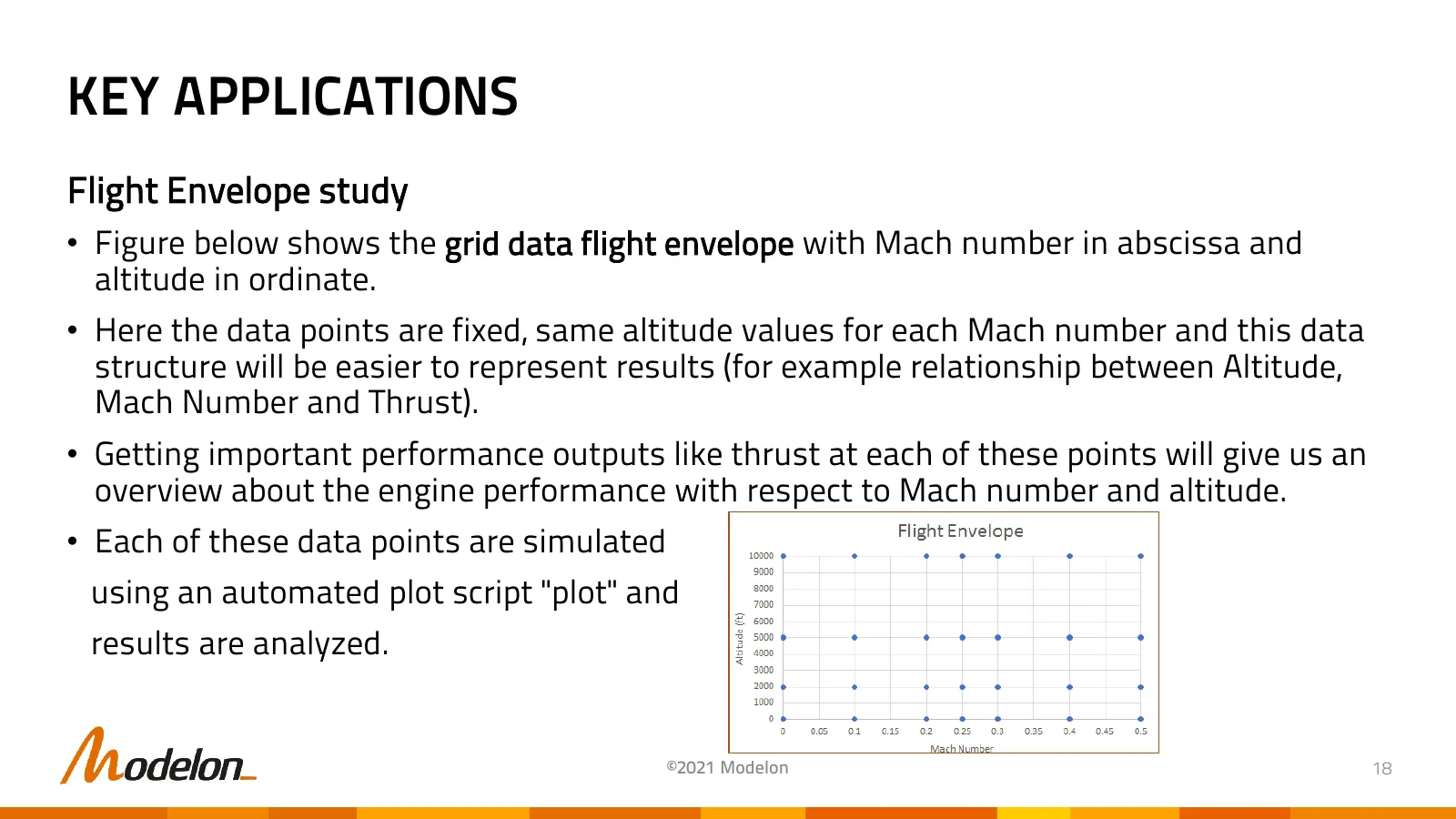
KEY APPLICATIONS Flight Envelope study • Figure below shows the grid data flight envelope with Mach number in abscissa and altitude in ordinate. • Here the data points are fixed, same altitude values for each Mach number and this data structure will be easier to represent results (for example relati
Slide 19: Flight Envelope study: scattered data points
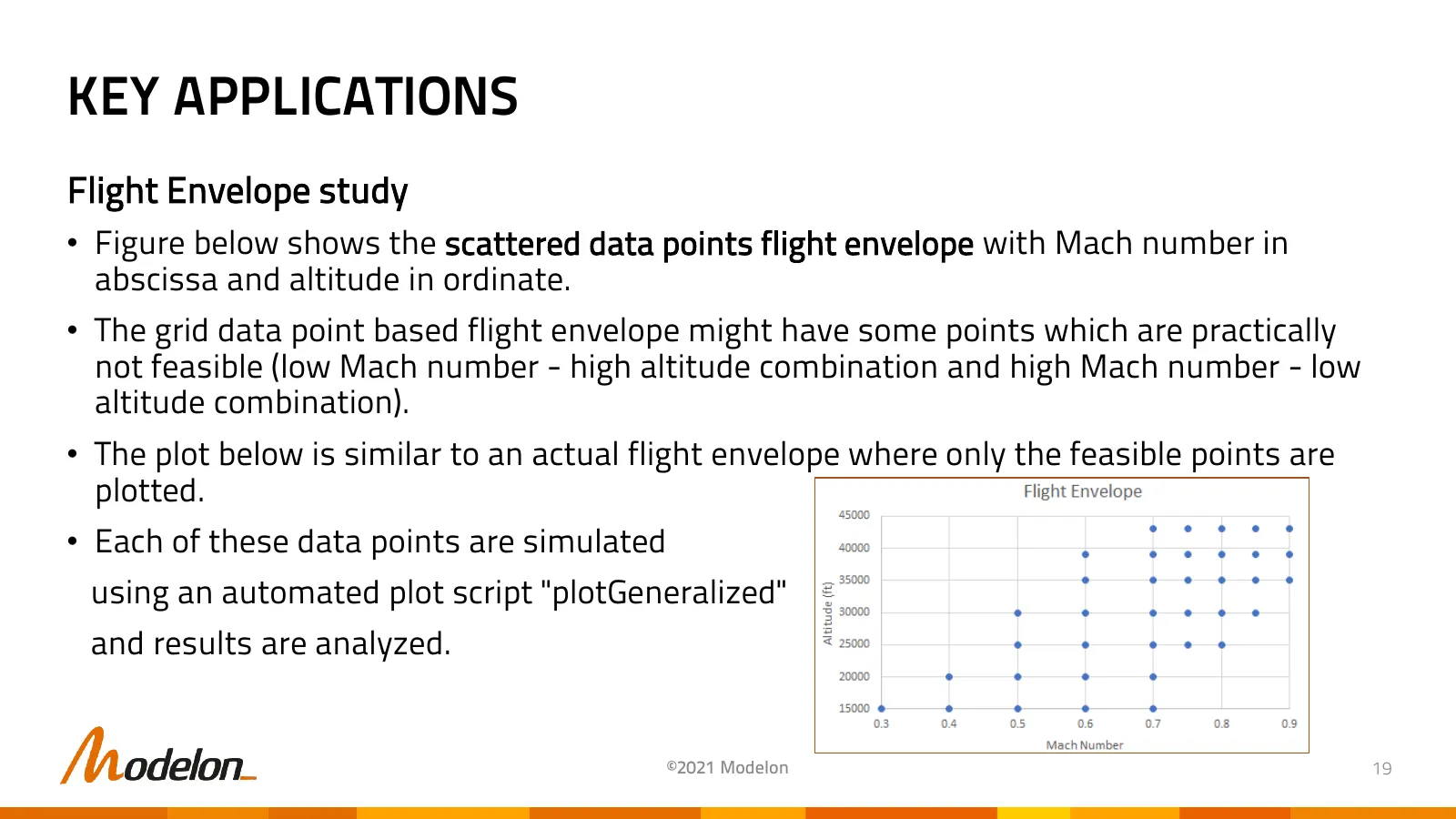
KEY APPLICATIONS Flight Envelope study • Figure below shows the scattered data points flight envelope with Mach number in abscissa and altitude in ordinate. • The grid data point based flight envelope might have some points which are practically not feasible (low Mach number - high altitude combinat
Slide 20: Example: JT9D
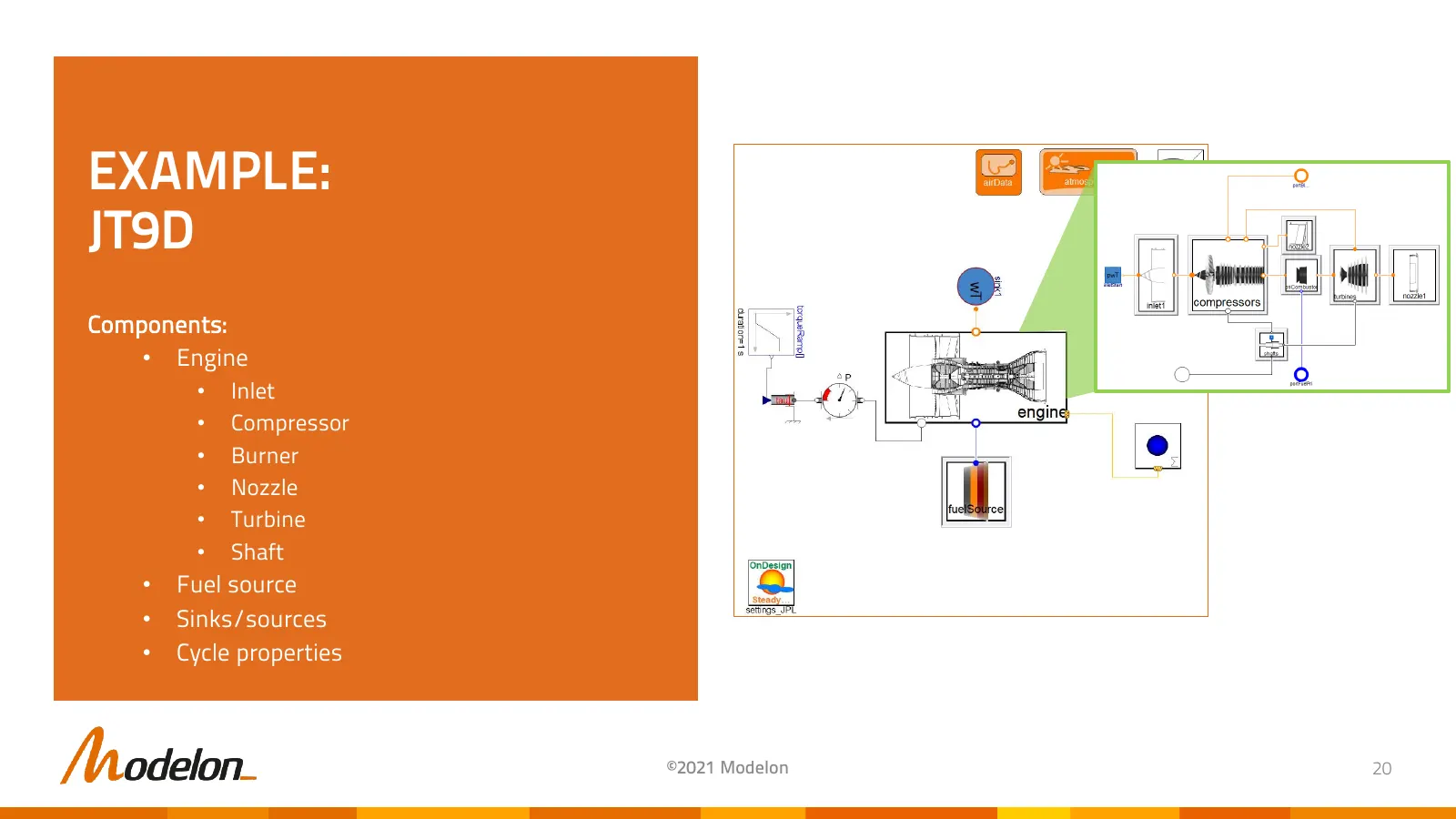
EXAMPLE: JT9D Components: • Engine • Inlet • Compressor • Burner • Nozzle • Turbine • Shaft • Fuel source • Sinks/sources • Cycle properties ©2021 Modelon 20
Slide 21: Example: Geared Turbofan
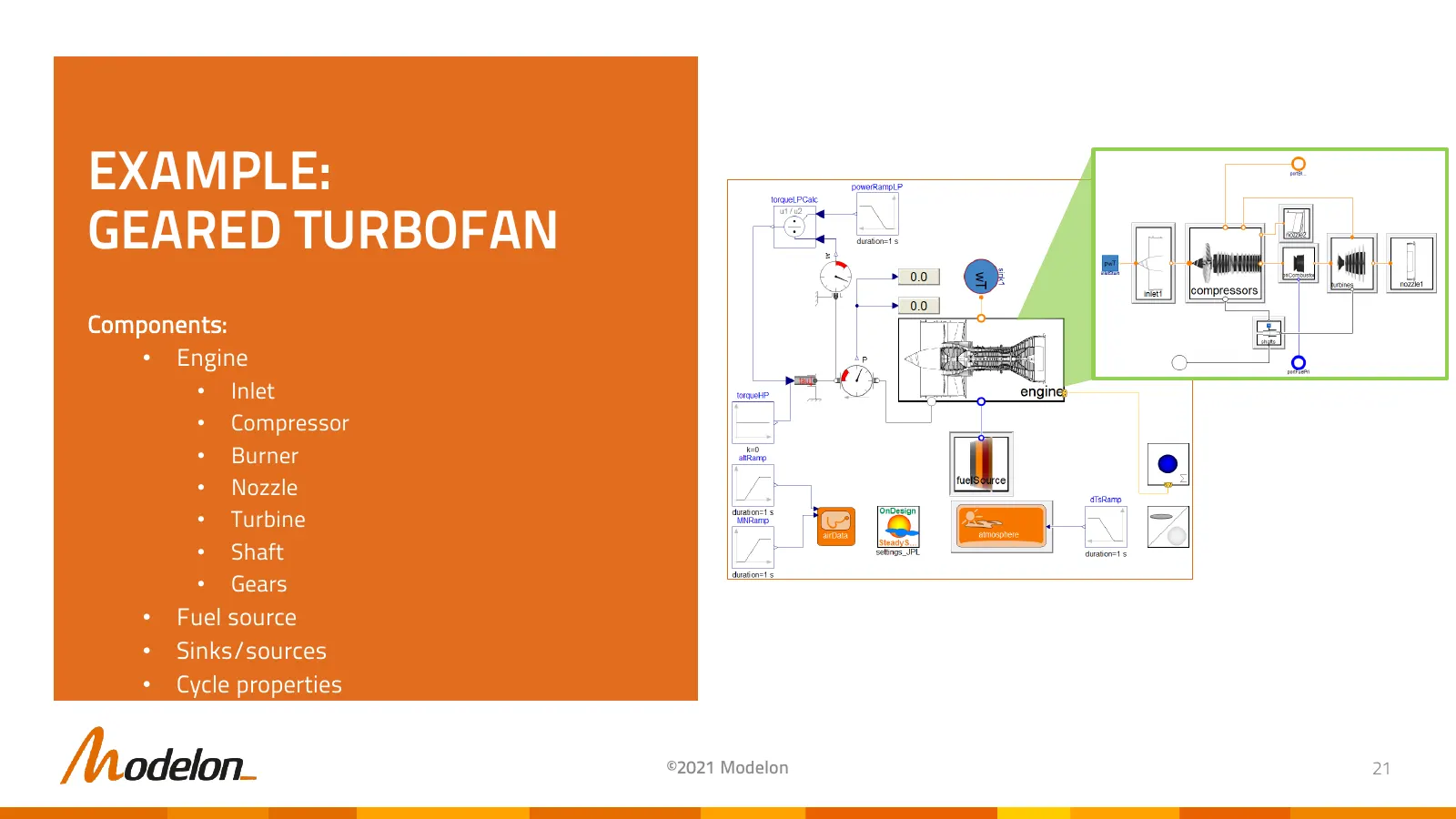
EXAMPLE: GEARED TURBOFAN Components: • Engine • Inlet • Compressor • Burner • Nozzle • Turbine • Shaft • Gears • Fuel source • Sinks/sources • Cycle properties ©2021 Modelon 21
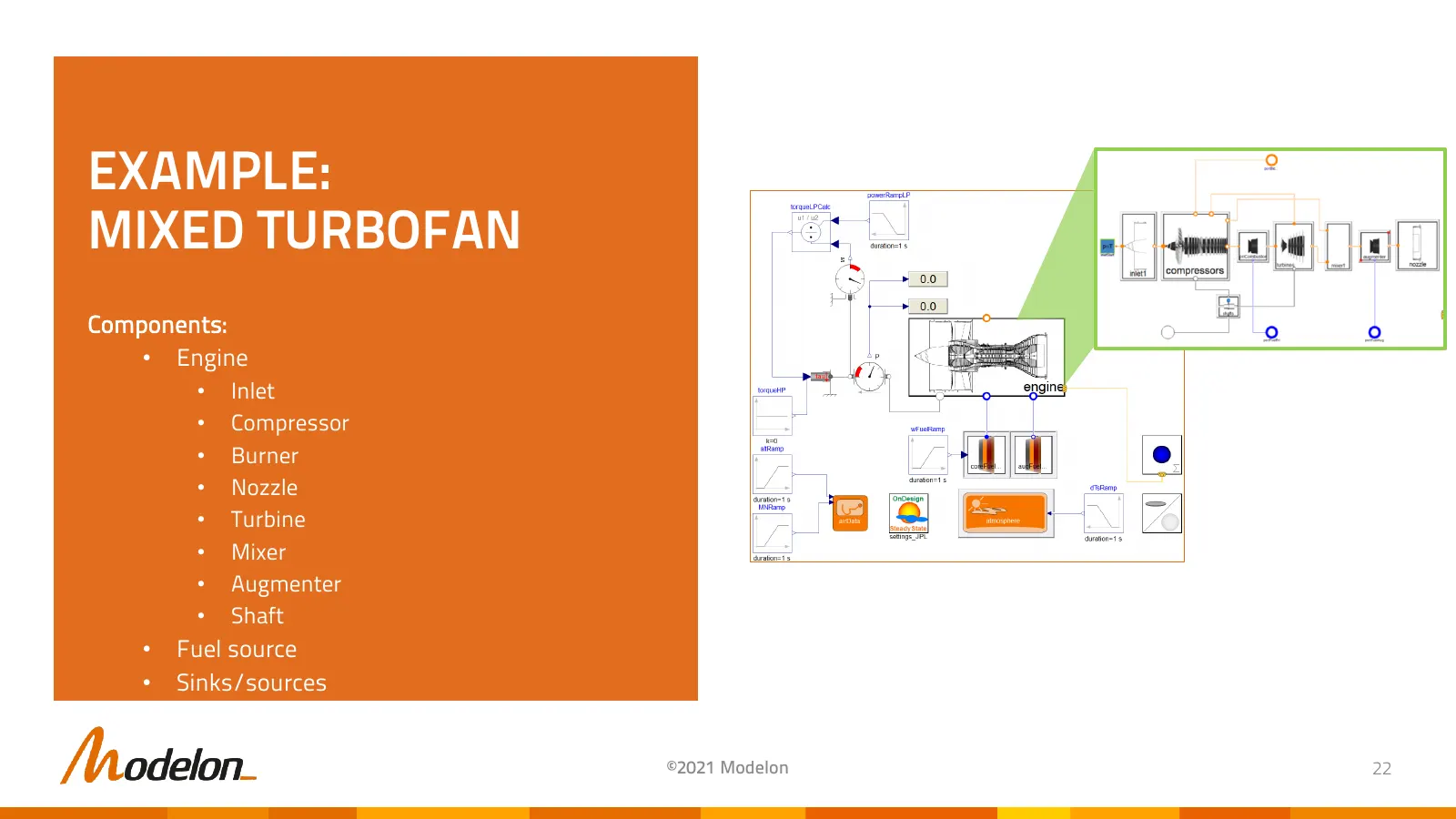
Slide 22: Example: Mixed Turbofan
EXAMPLE: MIXED TURBOFAN Components: • Engine • Inlet • Compressor • Burner • Nozzle • Turbine • Mixer • Augmenter • Shaft • Fuel source • Sinks/sources • Cycle properties ©2021 Modelon 22

Slide 23: Library Contents
LIBRARY CONTENTS ©2021 Modelon 23
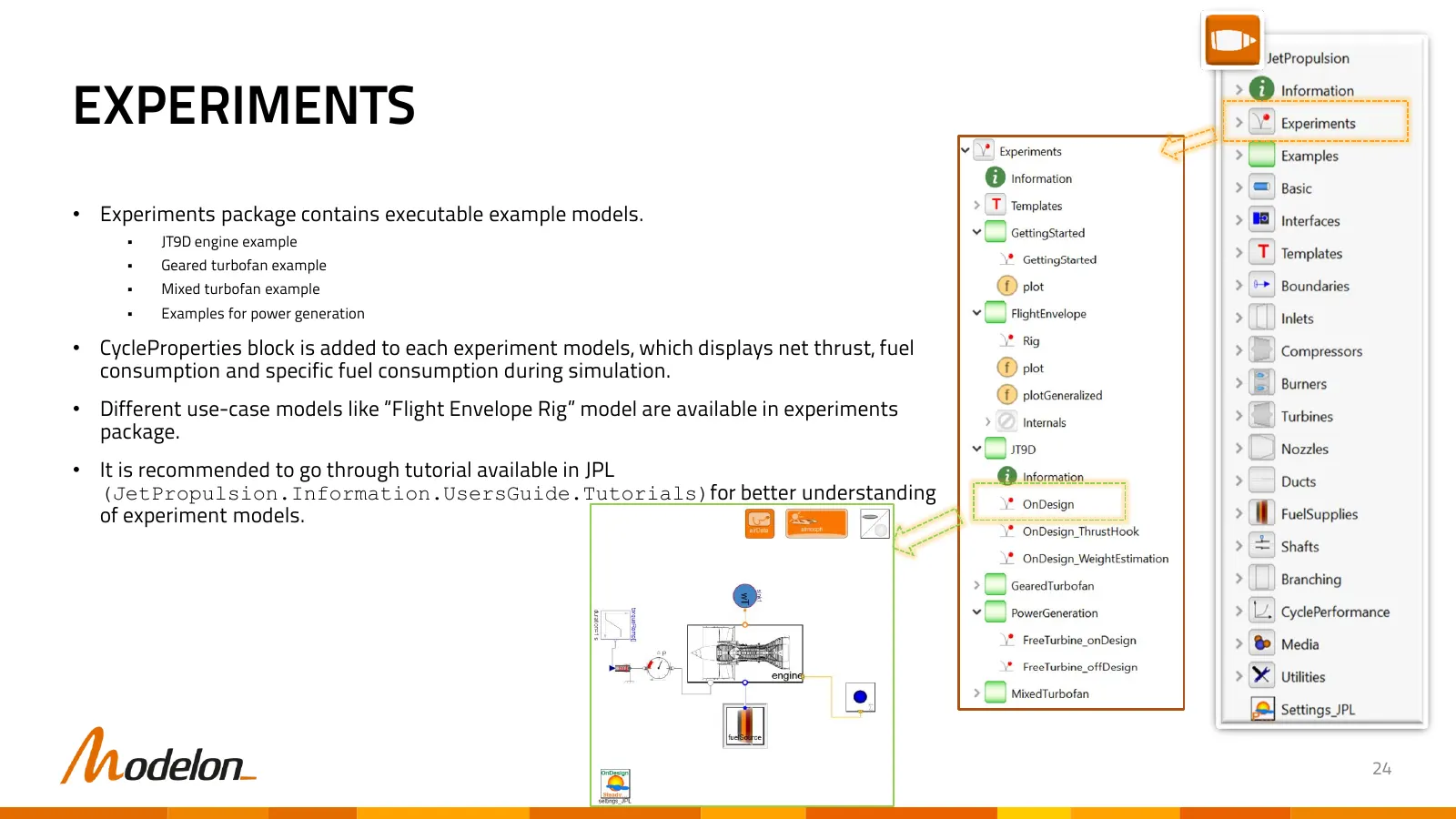
Slide 24: Experiments
EXPERIMENTS • Experiments package contains executable example models. ▪ JT9D engine example ▪ Geared turbofan example ▪ Mixed turbofan example ▪ Examples for power generation • CycleProperties block is added to each experiment models, which displays net thrust, fuel consumption and specific fuel con
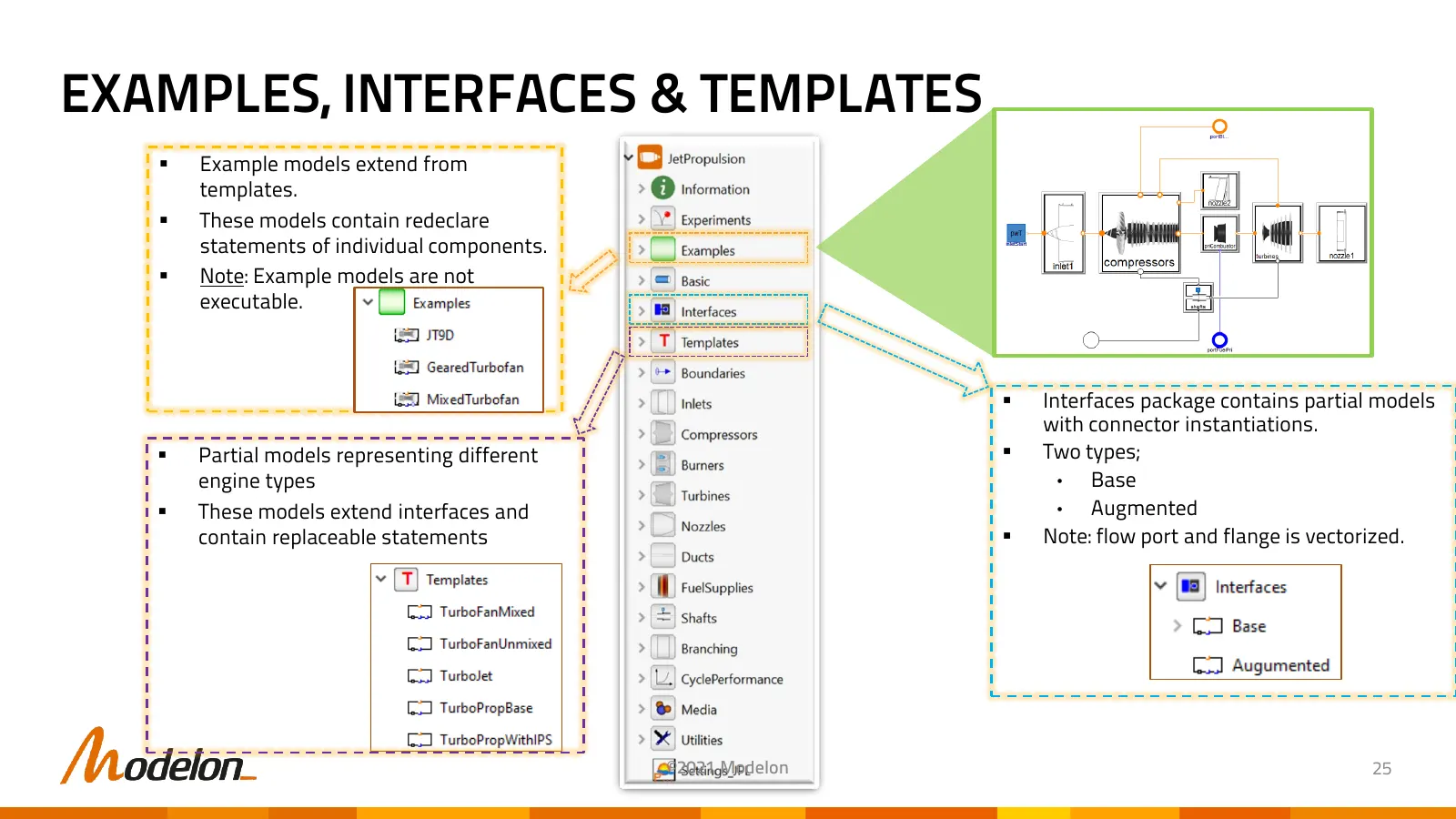
Slide 25: Examples, Interfaces & Templates
EXAMPLES, INTERFACES & TEMPLATES ▪ Example models extend from templates. ▪ These models contain redeclare statements of individual components. ▪ Note: Example models are not executable. ▪ Interfaces package contains partial models with connector instantiations. ▪ Partial models representing differen
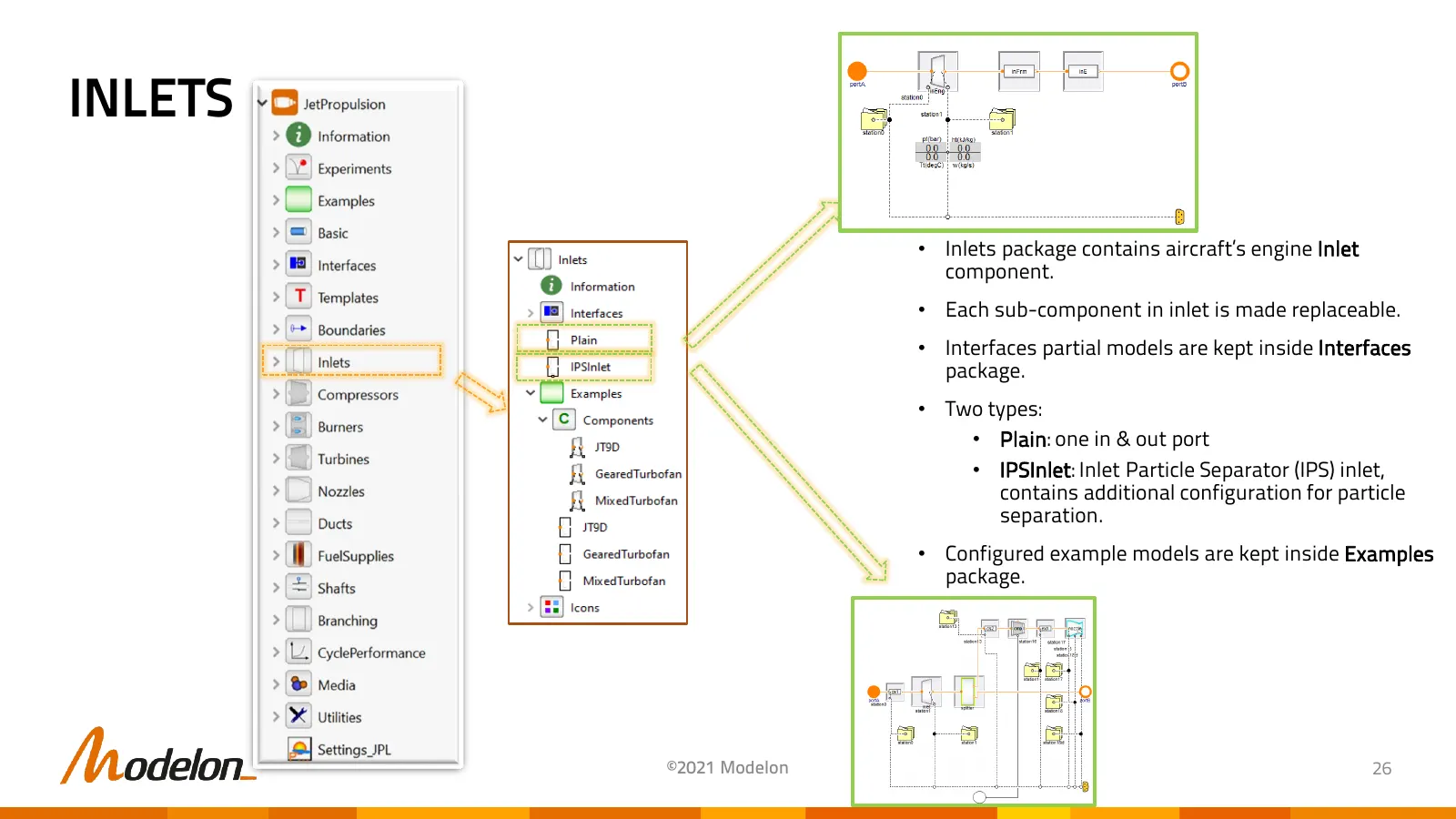
Slide 26: Inlets
INLETS • Inlets package contains aircraft’s engine Inlet component. • Each sub-component in inlet is made replaceable. • Interfaces partial models are kept inside Interfaces package. • Two types: • Plain: one in & out port • IPSInlet: Inlet Particle Separator (IPS) inlet, contains additional configu
Slide 27: Compressors
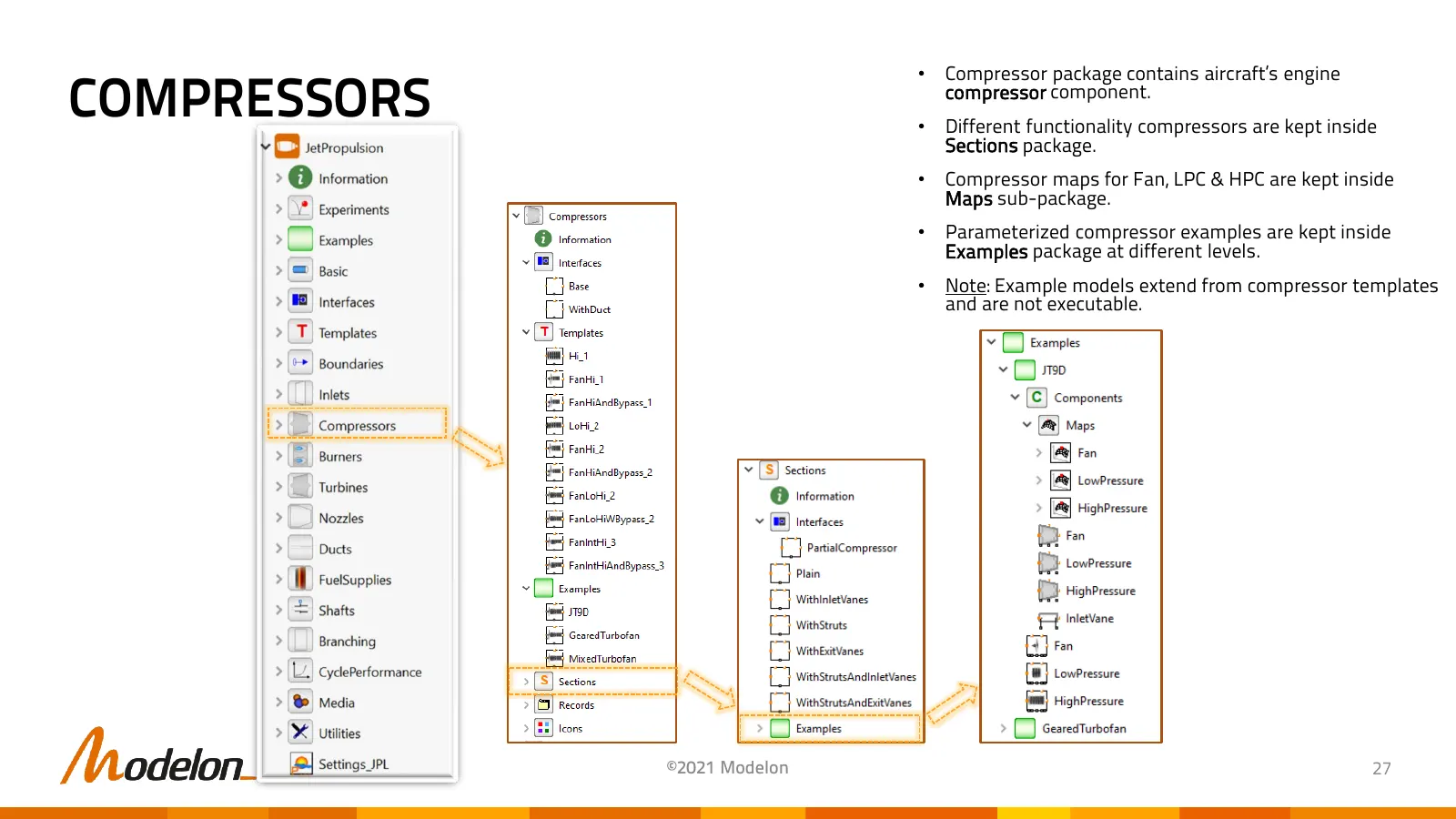
• Compressor package contains aircraft’s engine COMPRESSORS • compressor component. Different functionality compressors are kept inside Sections package. • Compressor maps for Fan, LPC & HPC are kept inside Maps sub-package. • Parameterized compressor examples are kept inside Examples package at dif
Slide 28: Turbines
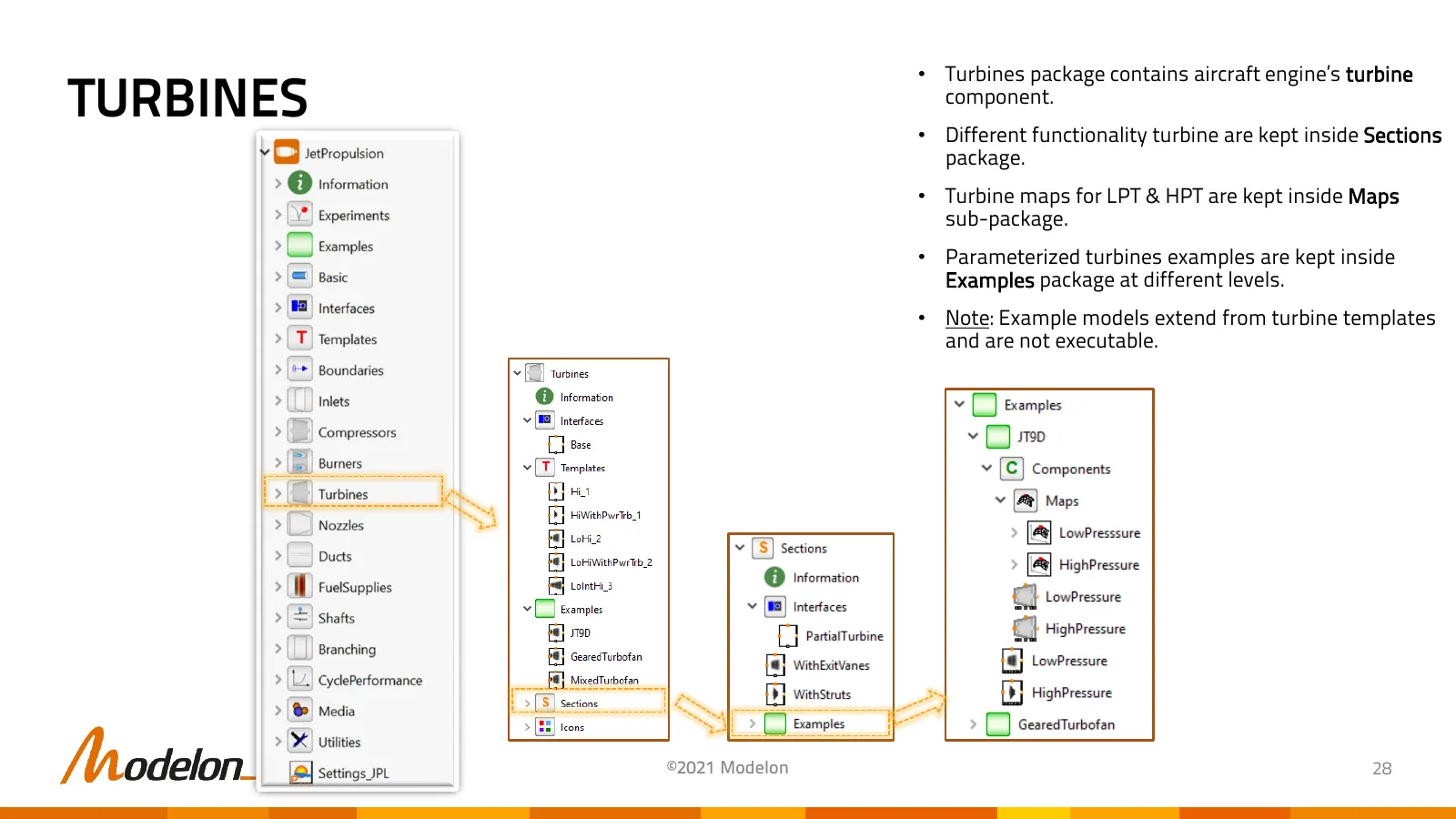
• Turbines package contains aircraft engine’s turbine TURBINES component. • Different functionality turbine are kept inside Sections package. • Turbine maps for LPT & HPT are kept inside Maps sub-package. • Parameterized turbines examples are kept inside Examples package at different levels. • Note:
Slide 29: Burners & Nozzles
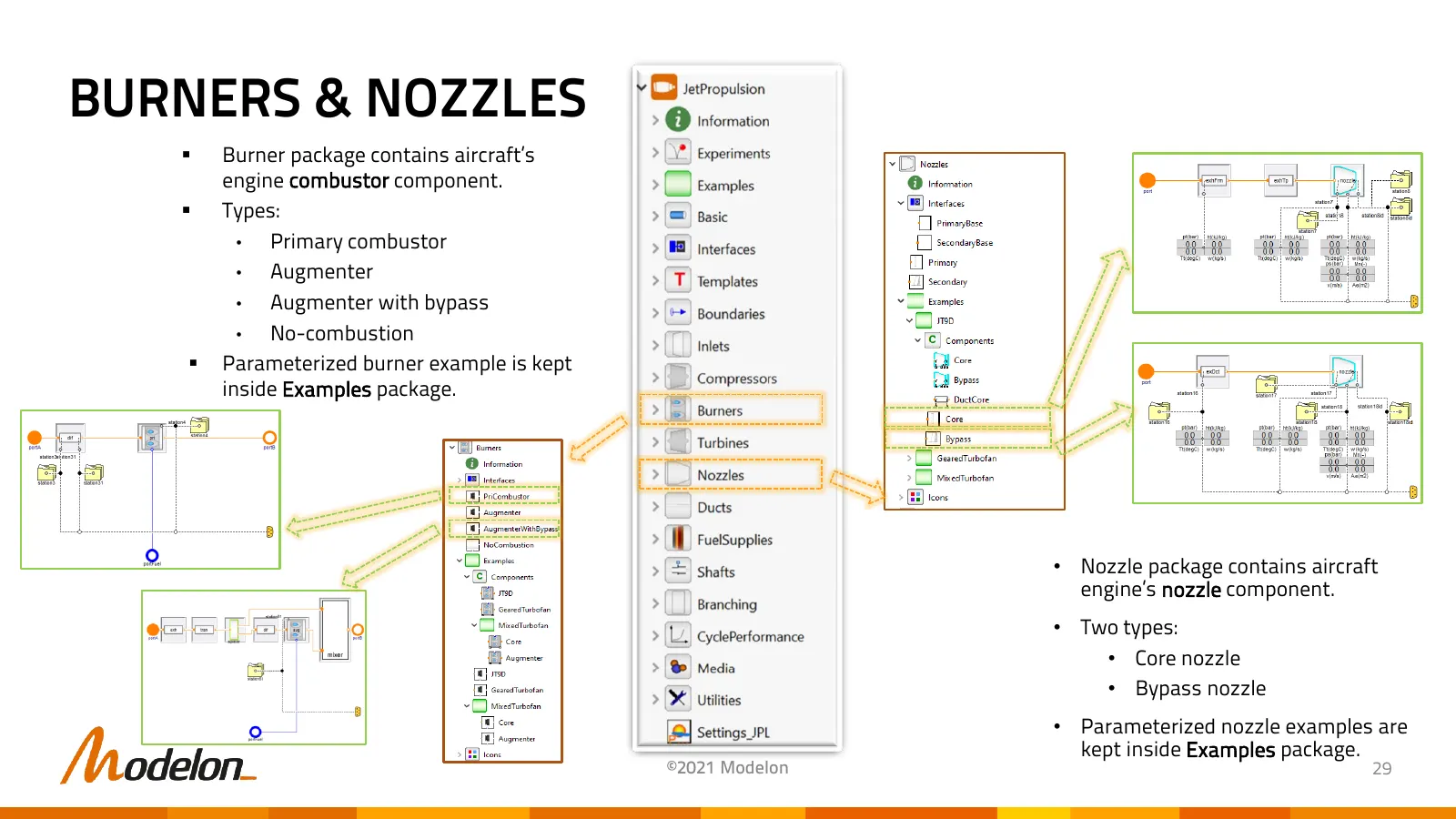
BURNERS & NOZZLES ▪ Burner package contains aircraft’s engine combustor component. ▪ Types: • Primary combustor • Augmenter • Augmenter with bypass • No-combustion ▪ Parameterized burner example is kept inside Examples package. • Nozzle package contains aircraft engine’s nozzle component. • Two type
Slide 30: Ducts & FuelSupplies
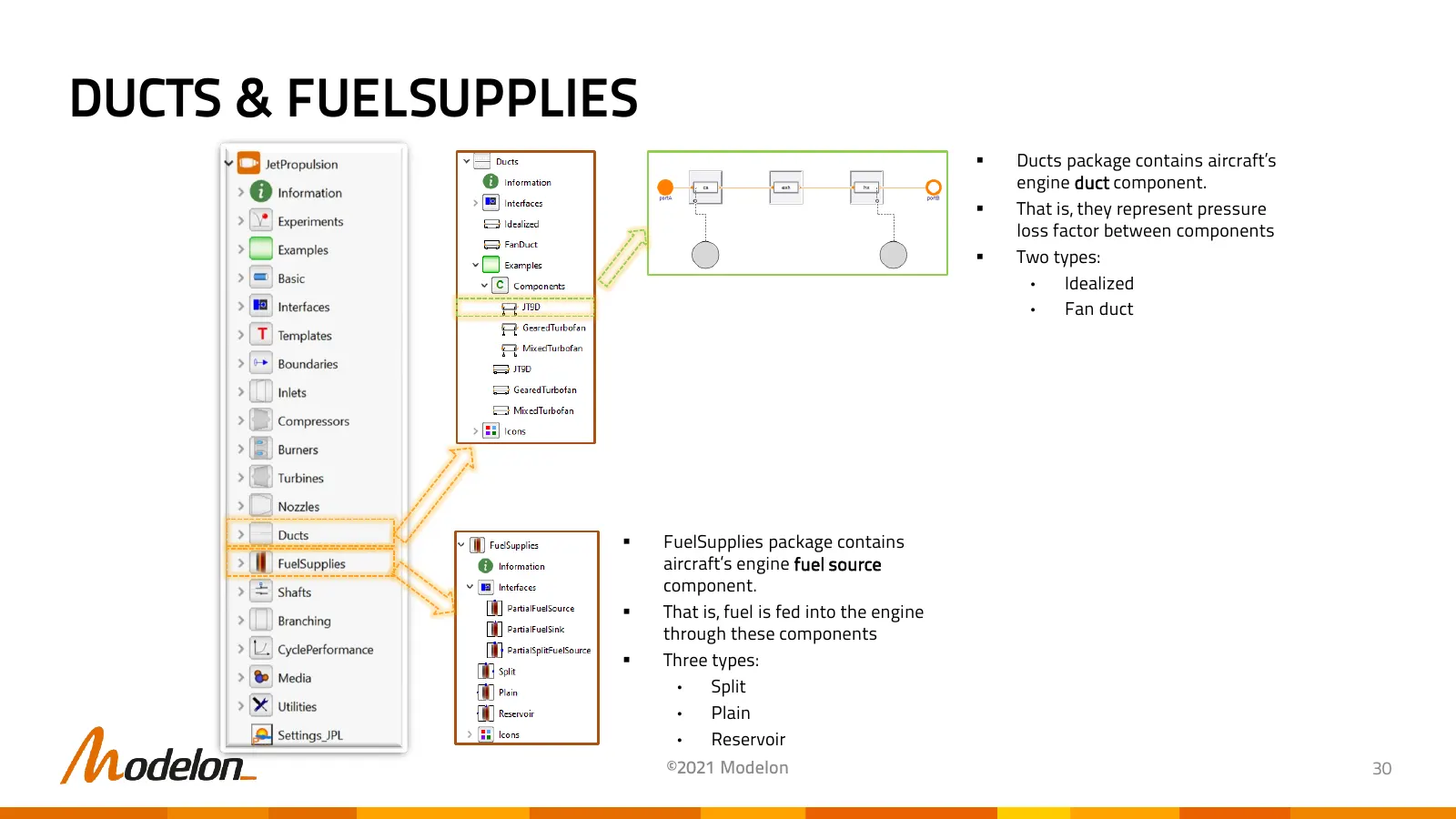
DUCTS & FUELSUPPLIES ▪ Ducts package contains aircraft’s engine duct component. ▪ That is, they represent pressure loss factor between components ▪ Two types: • Idealized • Fan duct ▪ FuelSupplies package contains aircraft’s engine fuel source component. ▪ That is, fuel is fed into the engine throug
Slide 31: Shafts & Branching
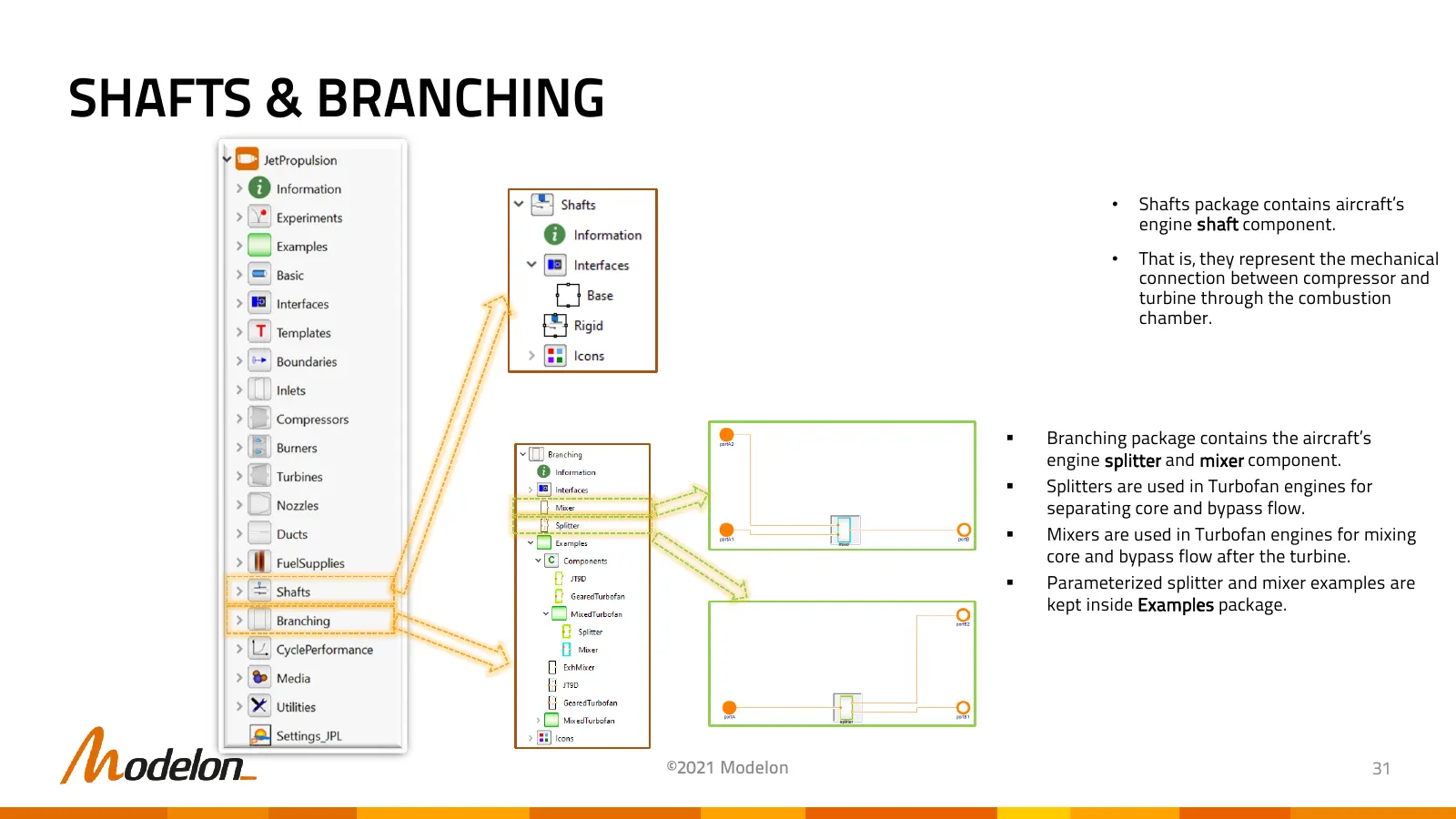
SHAFTS & BRANCHING • Shafts package contains aircraft’s engine shaft component. • That is, they represent the mechanical connection between compressor and turbine through the combustion chamber. ▪ Branching package contains the aircraft’s engine splitter and mixer component. ▪ Splitters are used in
Slide 32: Basic
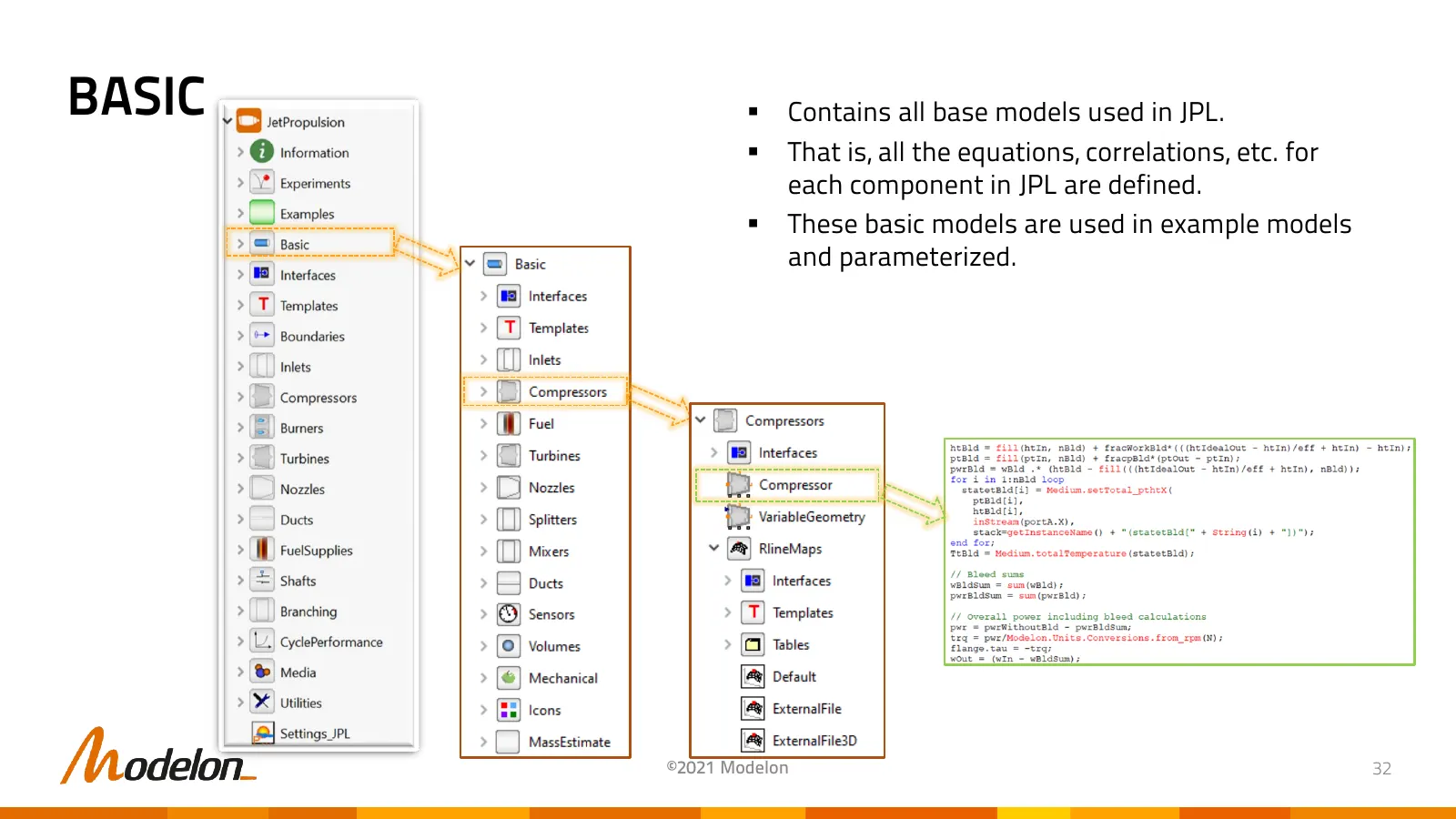
BASIC ▪ Contains all base models used in JPL. ▪ That is, all the equations, correlations, etc. for each component in JPL are defined. ▪ These basic models are used in example models and parameterized. ©2021 Modelon 32

Slide 33: Modelon Compatibility
MODELON COMPATIBILITY ©2021 Modelon 33
Slide 34: Recommended Modelon Library Compatibility
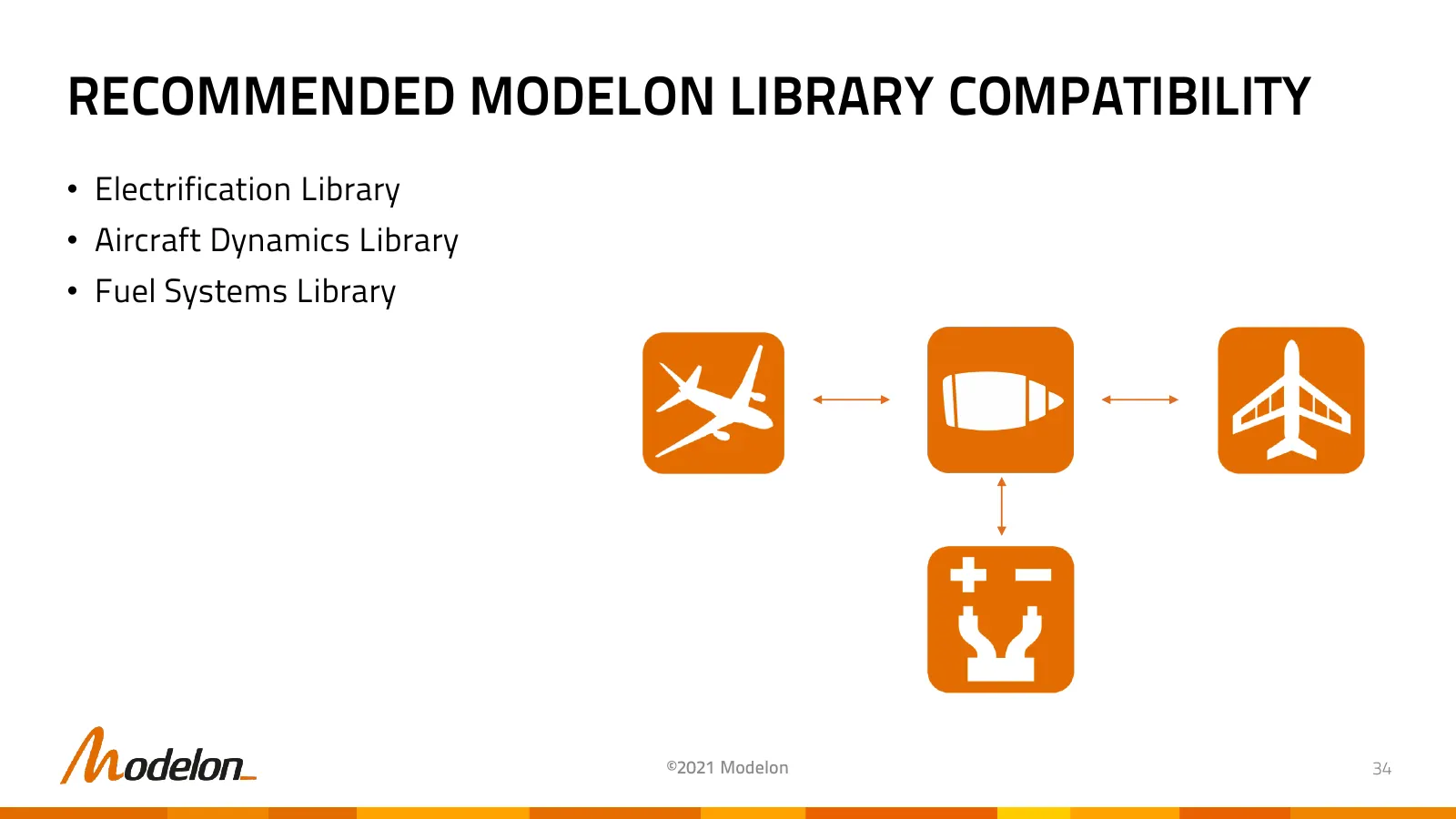
RECOMMENDED MODELON LIBRARY COMPATIBILITY • Electrification Library • Aircraft Dynamics Library • Fuel Systems Library ©2021 Modelon 34

Slide 35: Latest Release
LATEST RELEASE ©2021 Modelon 35
Slide 36: Release 2021.2 Enhancements
RELEASE:2021.2 Enhancements • Replaced old environment models in BasicAmbient with a package of new environment models from Modelon base library, including separate models for atmosphere and individual vehicles • The U.S. Standard Atmosphere 1962 version has been upgraded to 1976 version • The new a
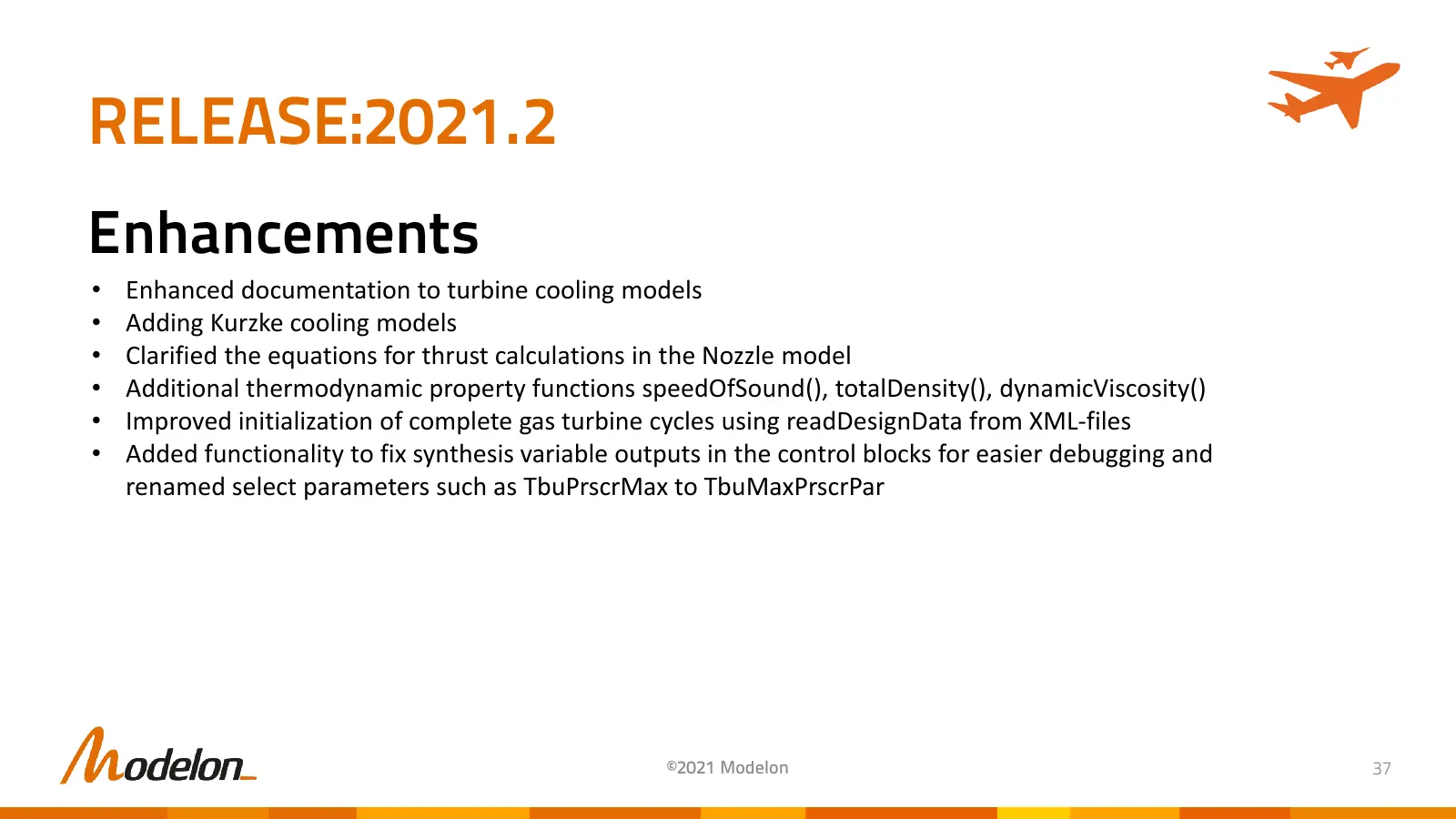
Slide 37: Release 2021.2 Enhancements
RELEASE:2021.2 Enhancements • Enhanced documentation to turbine cooling models • Adding Kurzke cooling models • Clarified the equations for thrust calculations in the Nozzle model • Additional thermodynamic property functions speedOfSound(), totalDensity(), dynamicViscosity() • Improved initializati
Source: Internet Archive copy of modelon.com
More decks from Modelon AB
 Technical Presentation (October 2022)39 slides · Oct 20, 2022
 Technical Presentation (October 2022)41 slides · Oct 20, 2022
 Technical Presentation (2022)15 slides · 2022
 Technical Presentation (July 2021)22 slides · July 2021
 Technical Presentation (July 2021)35 slides · July 2021
 Technical Presentation (2021)29 slides · 2021