Adaptimmune Therapeutics PLC · OTC:ADAPY
Adaptimmune Therapeutics — Jefferies Autumn Global Healthcare Conference 2015
42 slides from Adaptimmune Therapeutics's conference presentation, Nov 18, 2015
Slide 1: Disclaimer
Disclaimer This presentation contains “forward-looking statements,” as that term is defined under the Private Securities Litigation Reform Act of 1995 (PSLRA), which statements may be identified by words such as “believe,” “may”, “will,” “estimate,” “continue,” “anticipate,” “intend,” “expect” and o
Slide 2: Investment Highlights
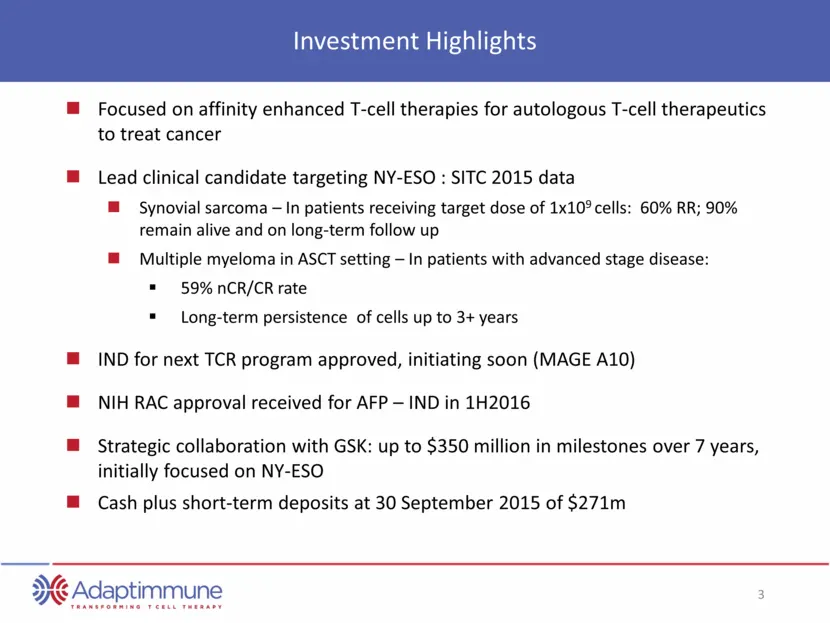
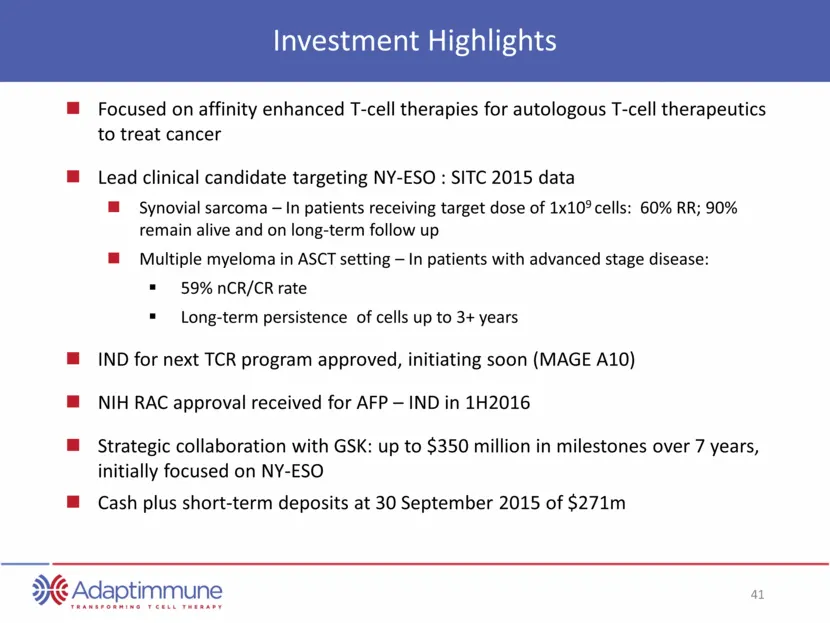
Investment Highlights Focused on affinity enhanced T-cell therapies for autologous T-cell therapeutics to treat cancer Lead clinical candidate targeting NY-ESO : SITC 2015 data Synovial sarcoma – In patients receiving target dose of 1x10⁹ cells: 60% RR; 90% remain alive and on long-term follow up Mu
Slide 3: TCR Platform built up over 16 years
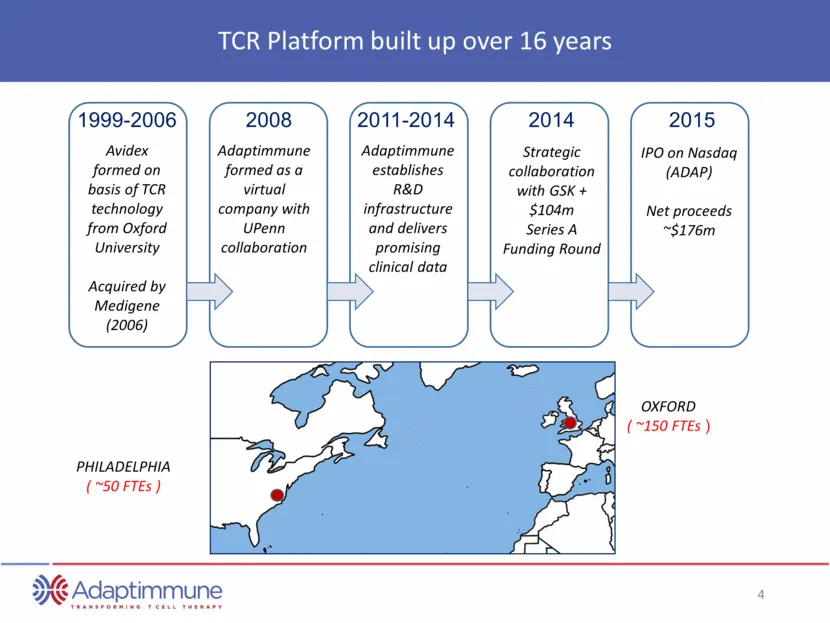
TCR Platform built up over 16 years 1999-2006 Avidex formed on basis of TCR technology from Oxford University Acquired by Medigene (2006) 2008 Adaptimmune formed as a virtual company with UPenn collaboration 2011-2014 Adaptimmune establishes R&D infrastructure and delivers promising clinical data 20
Slide 4: Experienced Management Team and Board
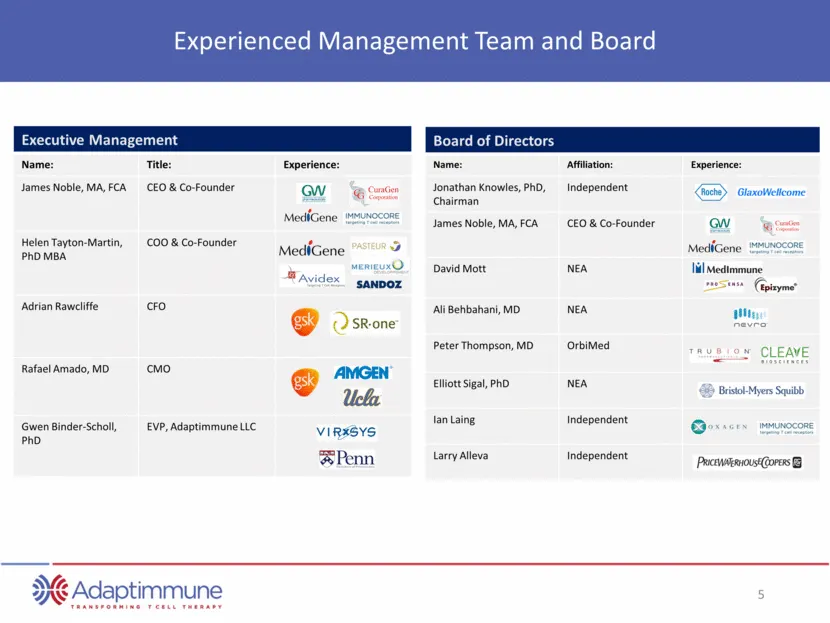
Experienced Management Team and Board Executive Management Name: Title: Experience: James Noble, MA, FCA CEO & Co-Founder Helen Tayton-Martin, PhD MBA COO & Co-Founder Adrian Rawcliffe CFO Rafael Amado, MD CMO Gwen Binder-Scholl, PhD EVP, Adaptimmune LLC Board of Directors Name: Affiliation: Experie
Slide 5: TCRs recognize intracellular cancer antigens
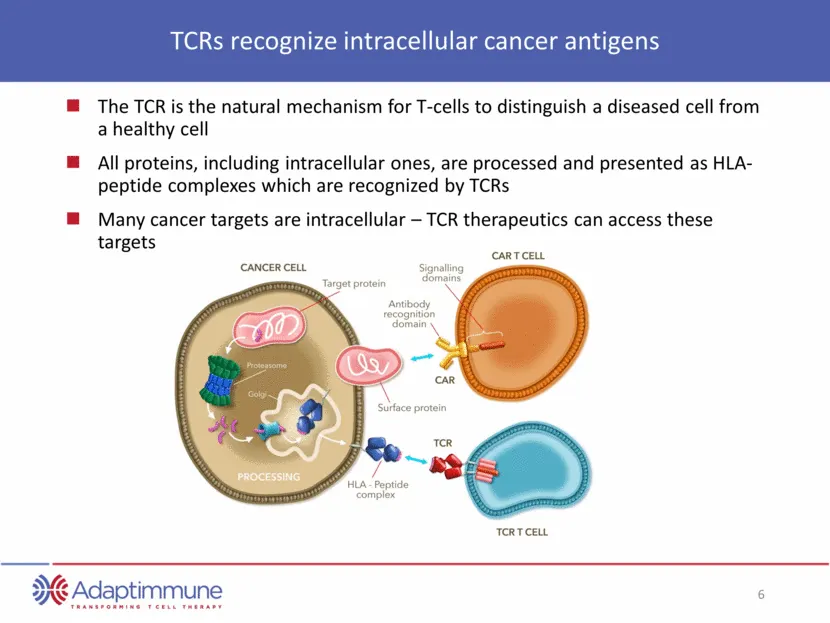
TCRs recognize intracellular cancer antigens The TCR is the natural mechanism for T-cells to distinguish a diseased cell from a healthy cell All proteins, including intracellular ones, are processed and presented as HLA-peptide complexes which are recognized by TCRs Many cancer targets are intracell
Slide 6: ADAP Pipeline: Next Steps with NY-ESO
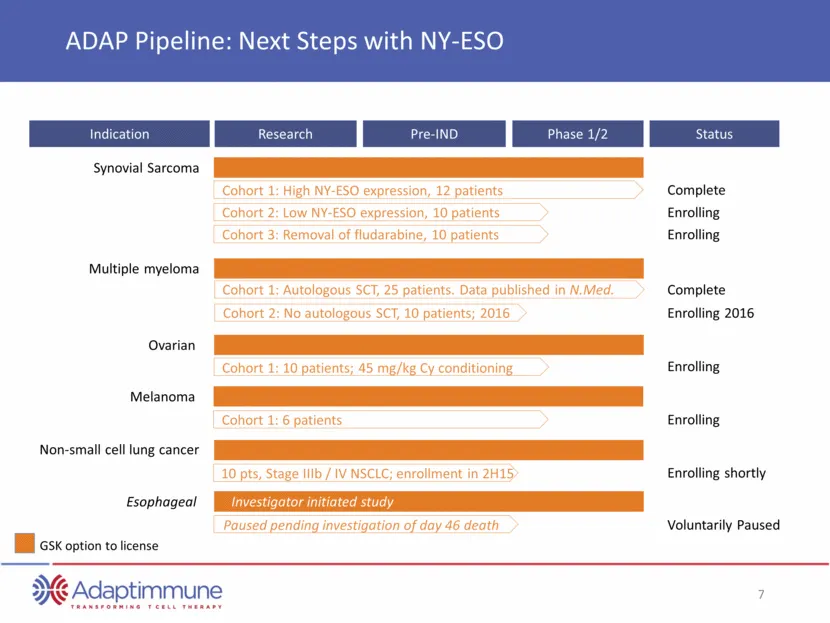
Indication Research Pre-IND Phase 1/2 GSK option to license ADAP Pipeline: Next Steps with NY-ESO Cohort 1: High NY-ESO expression, 12 patients Esophageal Synovial Sarcoma Cohort 2: Low NY-ESO expression, 10 patients Cohort 3: Removal of fludarabine, 10 patients Cohort 1: Autologous SCT, 25 patients
Slide 7: ADAP Pipeline: Next Steps, Wholly-owned Targets
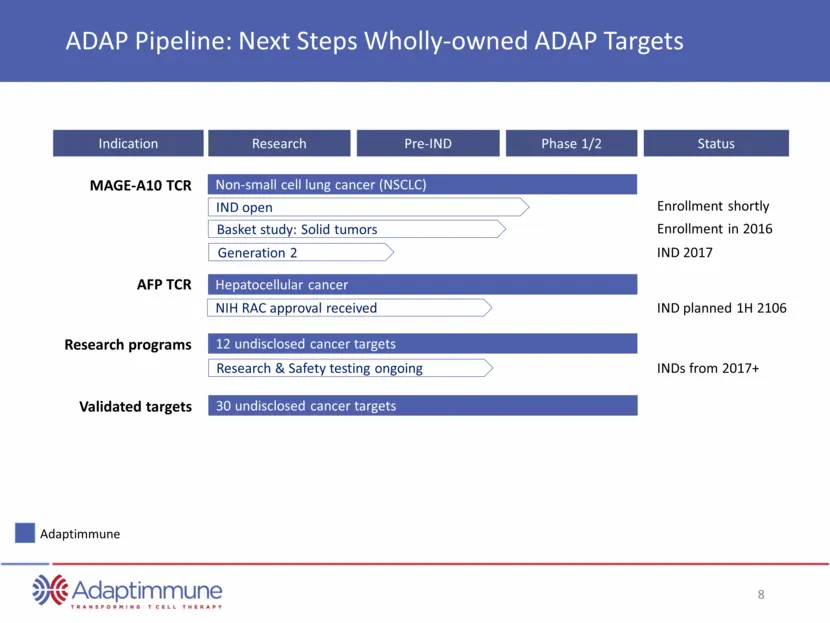
MAGE-A10 TCR Indication Research Pre-IND Phase 1/2 ADAP Pipeline: Next Steps Wholly-owned ADAP Targets IND open Non-small cell lung cancer (NSCLC) Basket study: Solid tumors NIH RAC approval received Hepatocellular cancer Synovial Sarcoma 12 undisclosed cancer targets AFP TCR Research programs Adapt
Slide 8: Platform and Differentiation
Platform and Differentiation
Slide 9: Finding the Right Targets
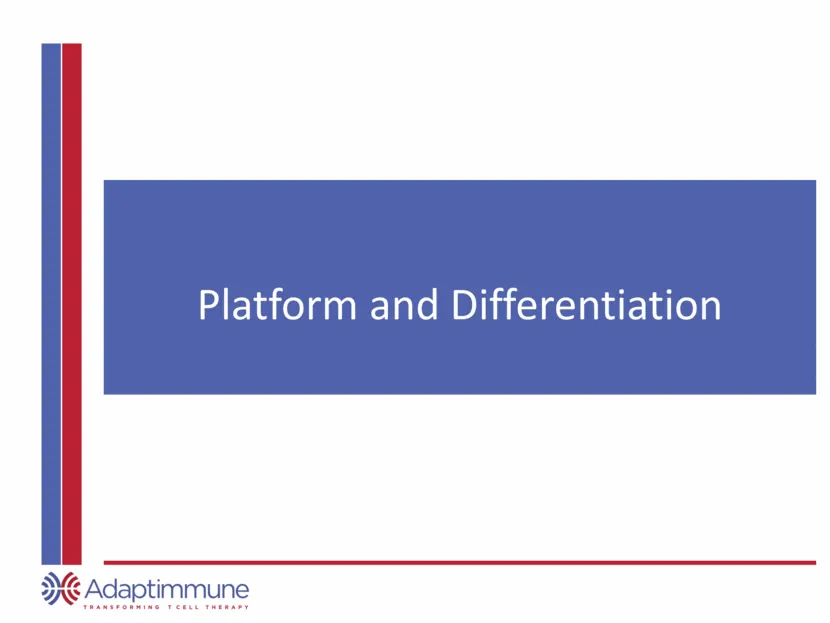
Finding the Right Targets Tumour cell Only low risk targets selected for TCR programs Over thirty validated targets and growing Engineered TCRs Safety Testing Robust Manufacturing Validated Targets Mass spectrometry Confirms surface expression and expression on tumor cells (i.e. not normal tissue) I
Slide 10: NY-ESO expression in Normal Tissues
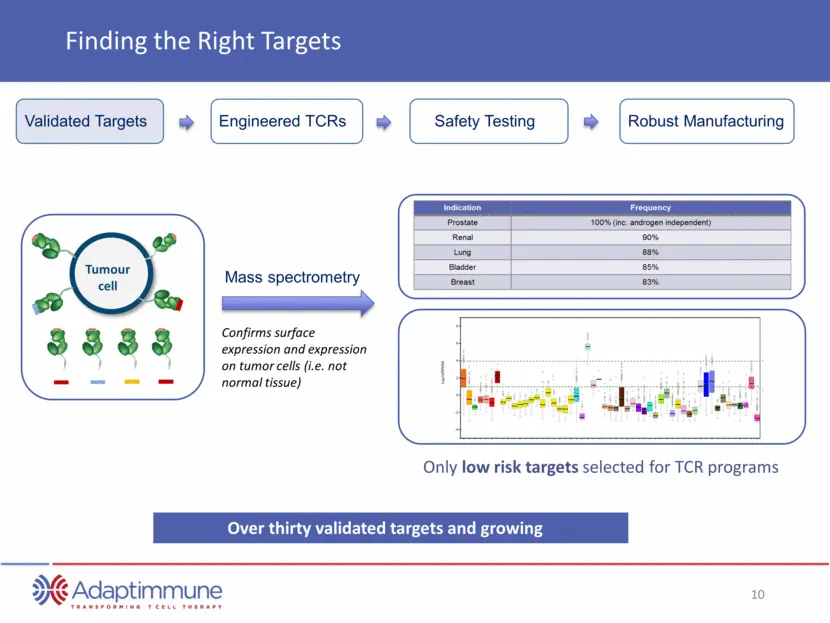
NY-ESO 1 expression in Normal Tissues Expression is low/absent in most adult non-reproductive tissues Minimum NYESO1-TCR Activity Threshold* Normal Tissue Threshold** * = Level of expression of antigen required to be recognized by that specific TCR ** = Highest level of expression of antigen in non-
Slide 11: MAGE-A10 expression in Normal Tissues
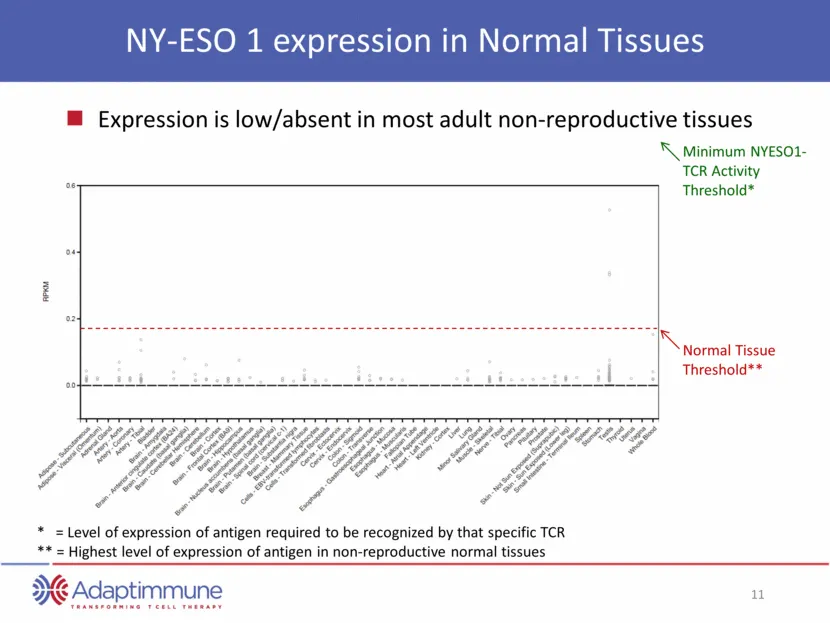
MAGE-A10 expression in Normal Tissues Expression is low/absent in most adult non-reproductive tissues Normal Tissue Threshold** Minimum MAGEA10-TCR Activity Threshold* * = Level of expression of antigen required to be recognized by that specific TCR ** = Highest level of expression of antigen in non
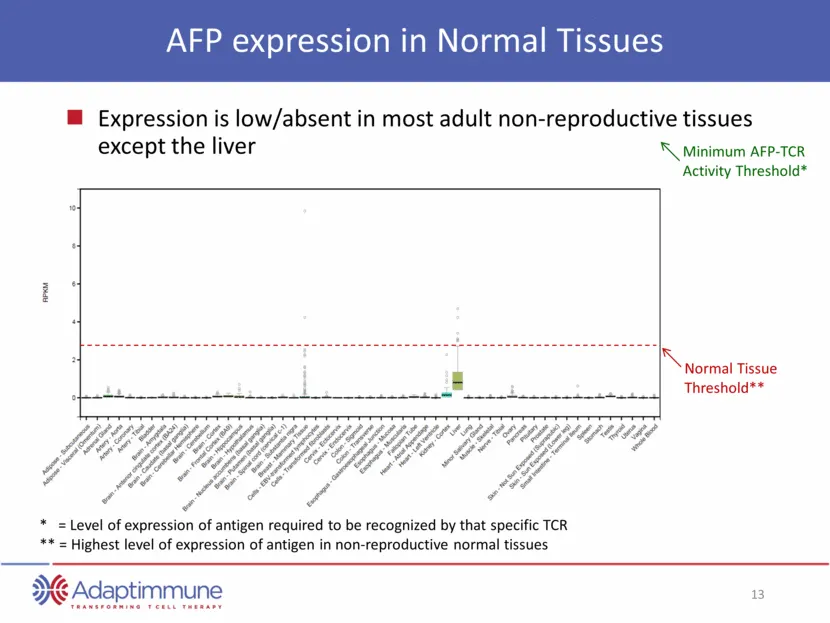
Slide 12: AFP expression in Normal Tissues
AFP expression in Normal Tissues Expression is low/absent in most adult non-reproductive tissues except the liver Minimum AFP-TCR Activity Threshold* Normal Tissue Threshold** * = Level of expression of antigen required to be recognized by that specific TCR ** = Highest level of expression of antige
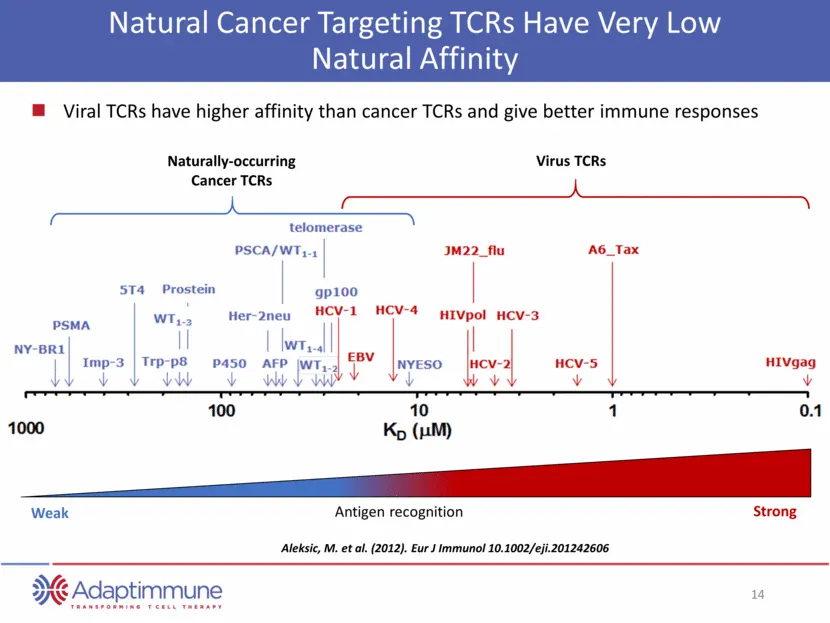
Slide 13: Natural Cancer Targeting TCRs Have Very Low Natural Affinity
Natural Cancer Targeting TCRs Have Very Low Natural Affinity Aleksic, M. et al. (2012). Eur J Immunol 10.1002/eji.201242606 Strong Weak Antigen recognition Virus TCRs Naturally-occurring Cancer TCRs Viral TCRs have higher affinity than cancer TCRs and give better immune responses
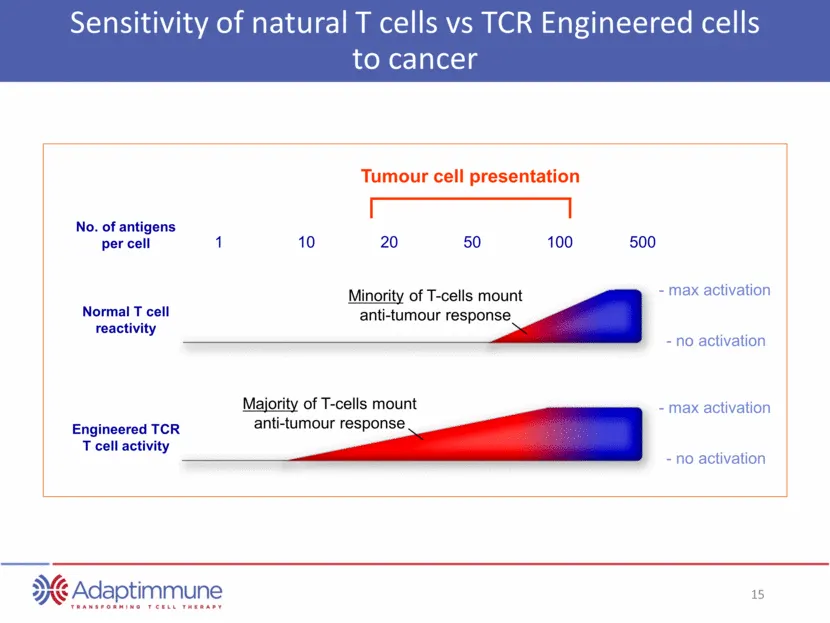
Slide 14: Sensitivity of natural T cells vs TCR Engineered cells to cancer
Sensitivity of natural T cells vs TCR Engineered cells to cancer Engineered TCR T cell activity Normal T cell reactivity No. of antigens per cell 1 10 20 50 100 500 - max activation - no activation - max activation - no activation Minority of T-cells mount anti-tumour response Majority of T-cells mo
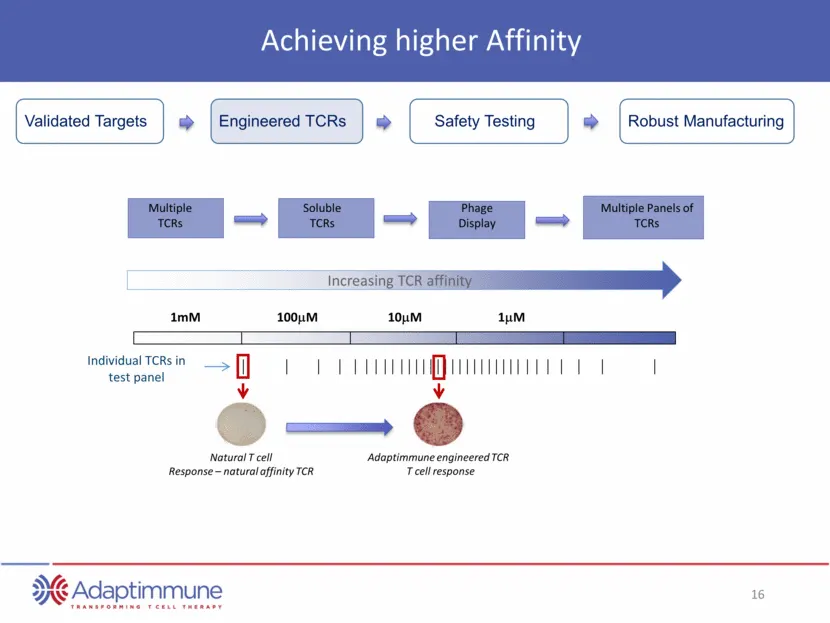
Slide 15: Achieving higher Affinity
Achieving higher Affinity Safety Testing Robust Manufacturing Validated Targets Engineered TCRs 1mM 100mM 10mM 1mM Individual TCRs in test panel Natural T cell Response – natural affinity TCR Adaptimmune engineered TCR T cell response Increasing TCR affinity Soluble TCRs Phage Display Multiple Panel
Slide 16: Proprietary platform enables engineering for maximum potency and specificity
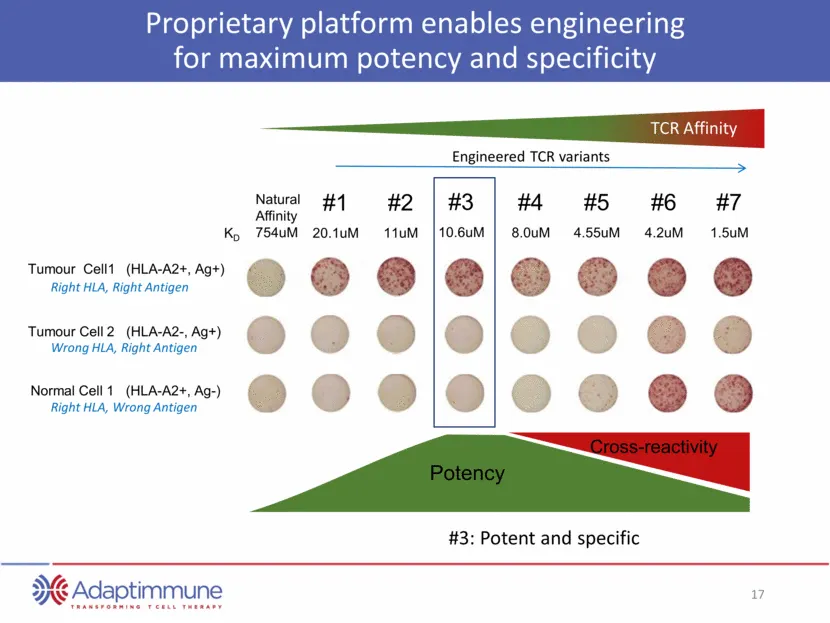
Proprietary platform enables engineering for maximum potency and specificity #1 20.1uM #2 11uM #3 10.6uM #4 8.0uM #5 4.55uM #6 4.2uM #7 1.5uM Natural Affinity 754uM Engineered TCR variants KD Tumour Cell1 (HLA-A2+, Ag+) Tumour Cell 2 (HLA-A2-, Ag+) Normal Cell 1 (HLA-A2+, Ag-) Right HLA, Right Antig
Slide 17: Proprietary platform enables engineering for potency and specificity
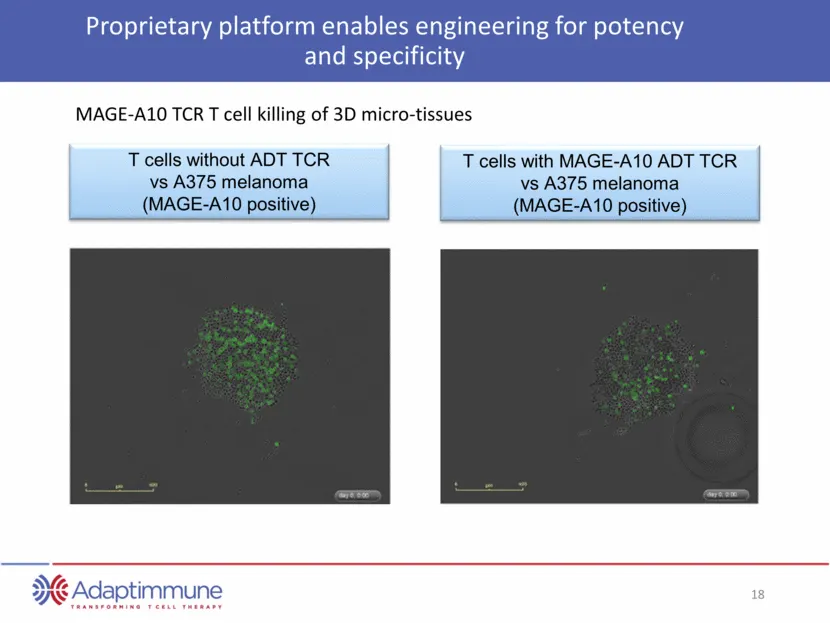
Proprietary platform enables engineering for potency and specificity T cells without ADT TCR vs A375 melanoma (MAGE-A10 positive) T cells with MAGE-A10 ADT TCR vs A375 melanoma (MAGE-A10 positive) MAGE-A10 TCR T cell killing of 3D micro-tissues
Slide 18: Proprietary Safety Testing: 3D primary cultures and iCells
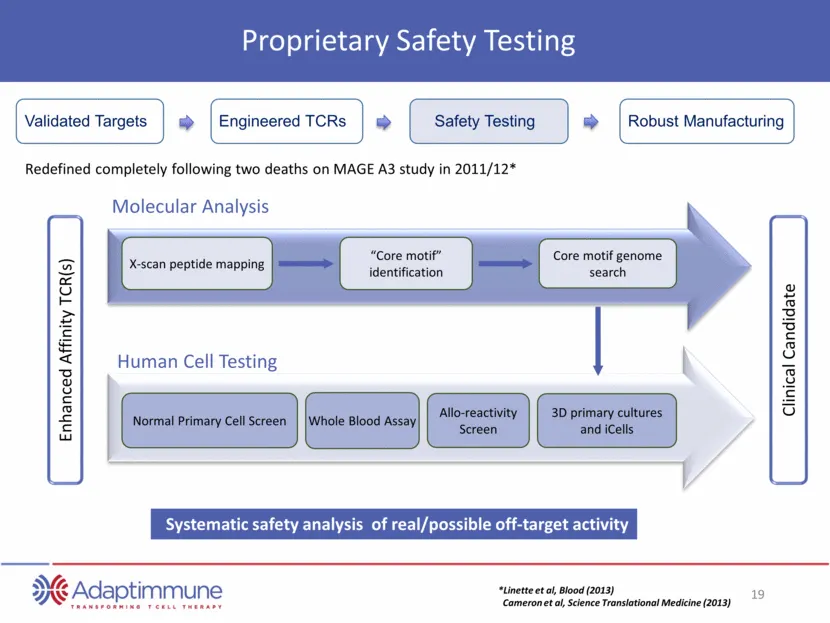
3D primary cultures and iCells Normal Primary Cell Screen Molecular Analysis Human Cell Testing Whole Blood Assay Allo-reactivity Screen “Core motif” identification Core motif genome search X-scan peptide mapping Redefined completely following two deaths on MAGE A3 study in 2011/12* *Linette et al,
Slide 19: Alanine Scanning – Molecular Recognition - MAGE-A3
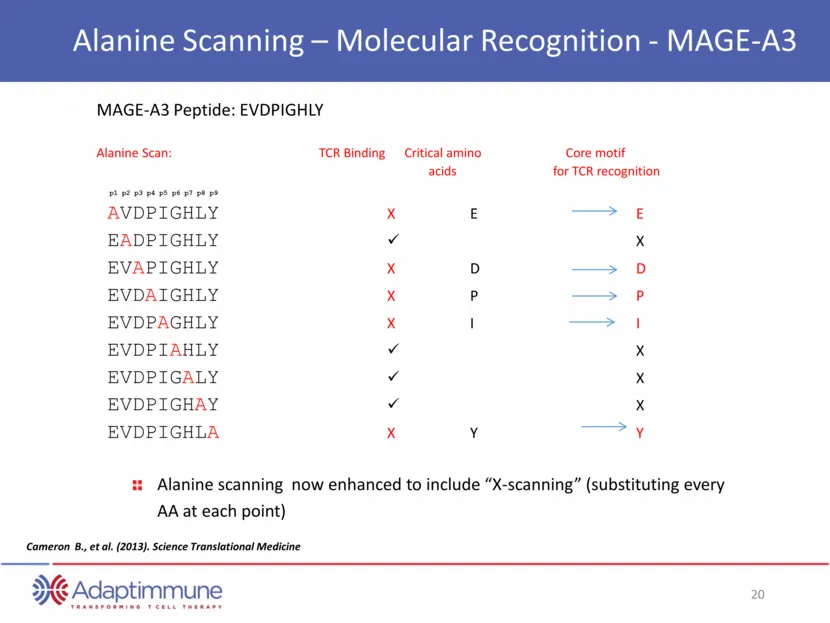
Alanine Scanning – Molecular Recognition - MAGE-A3 MAGE-A3 Peptide: EVDPIGHLY Alanine Scan: TCR Binding Critical amino Core motif acids for TCR recognition AVDPIGHLY X E E EADPIGHLY X EVAPIGHLY X D D EVDAIGHLY X P P EVDPAGHLY X I I EVDPIAHLY X EVDPIGALY X EVDPIGHAY X EVDPIGHLA X Y Y p1 p2 p3 p4 p5 p
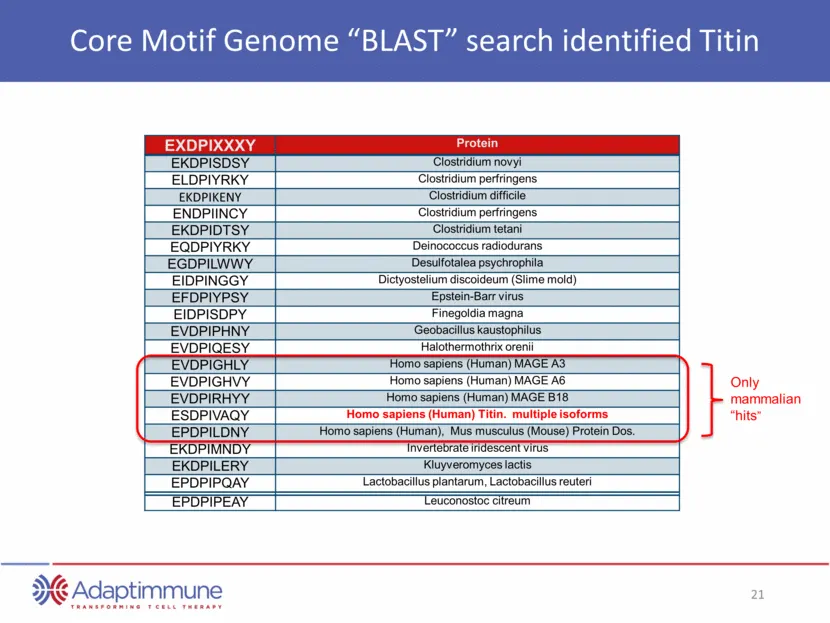
Slide 20: Core Motif Genome BLAST search identified Titin
Core Motif Genome “BLAST” search identified Titin EXDPIXXXY Protein EKDPISDSY Clostridium novyi ELDPIYRKY Clostridium perfringens EKDPIKENY Clostridium difficile ENDPIINCY Clostridium perfringens EKDPIDTSY Clostridium tetani EQDPIYRKY Deinococcus radiodurans EGDPILWWY Desulfotalea psychrophila EIDPI
Slide 21: Proprietary Process for Manufacturing
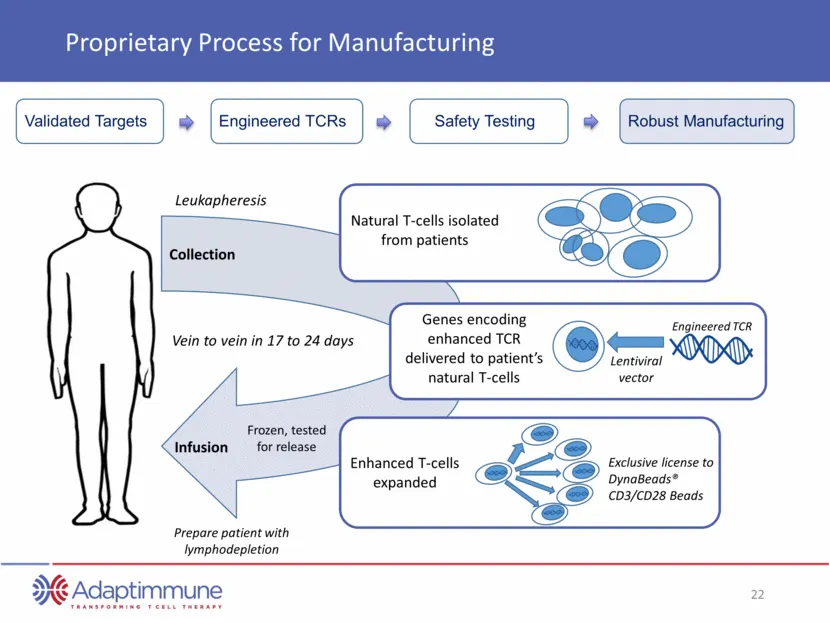
Proprietary Process for Manufacturing Leukapheresis Prepare patient with lymphodepletion Collection Infusion Natural T-cells isolated from patients Genes encoding enhanced TCR delivered to patient’s natural T-cells Lentiviral vector Enhanced T-cells expanded Exclusive license to DynaBeads® CD3/CD28
Slide 22: Proprietary Process for Manufacturing
Proprietary Process for Manufacturing Validated Targets | sp | Engineered TCRs | > | Safety Testing |» | Robust Manufacturing Leukapheresis Natural T-cells isolated from patients Genes encoding Engineered TCR enhanced TCR — delivered to patient's © Erne: ODO natural T-cells Vein to vein in 17 to 24
Slide 23: ADAP Phase I/II Study in Synovial Sarcoma
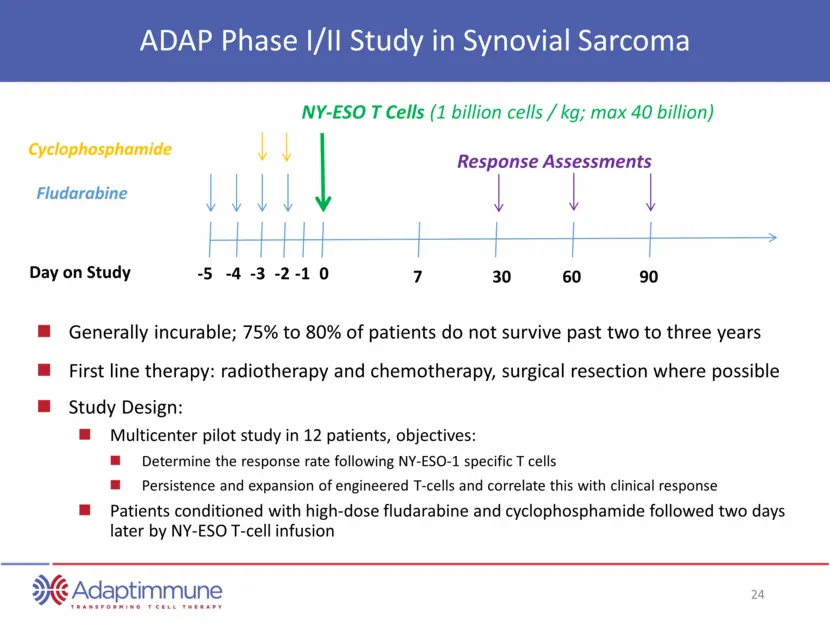
ADAP Phase I/II Study in Synovial Sarcoma Generally incurable; 75% to 80% of patients do not survive past two to three years First line therapy: radiotherapy and chemotherapy, surgical resection where possible Study Design: Multicenter pilot study in 12 patients, objectives: Determine the response r
Slide 24: Synovial Sarcoma: Encouraging Response Rate, Tolerability and Persistence
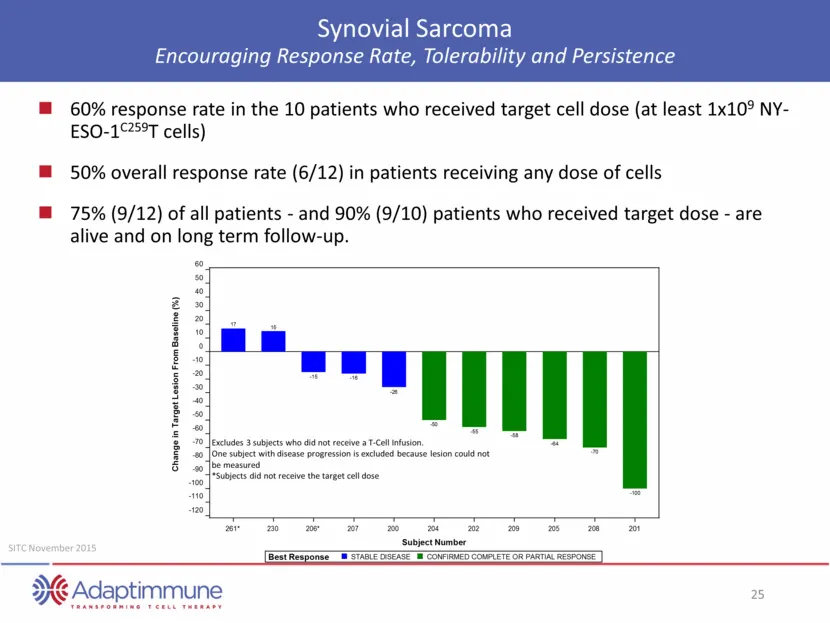
Synovial Sarcoma Encouraging Response Rate, Tolerability and Persistence 60% response rate in the 10 patients who received target cell dose (at least 1x10⁹ NY-ESO-1C259T cells) 50% overall response rate (6/12) in patients receiving any dose of cells 75% (9/12) of all patients - and 90% (9/10) patien
Slide 25: Synovial Sarcoma: Encouraging Response Rate, Tolerability and Persistence
Synovial Sarcoma Encouraging Response Rate, Tolerability and Persistence Generally well tolerated; indicative of a favorable risk:benefit profile The majority of adverse events occur within the first 2 weeks following cell infusion and resolve within 30 days. Evidence of pseudo-progression and gradu
Slide 26: Radiographic Pseudoprogression and Response of Lung Metastases
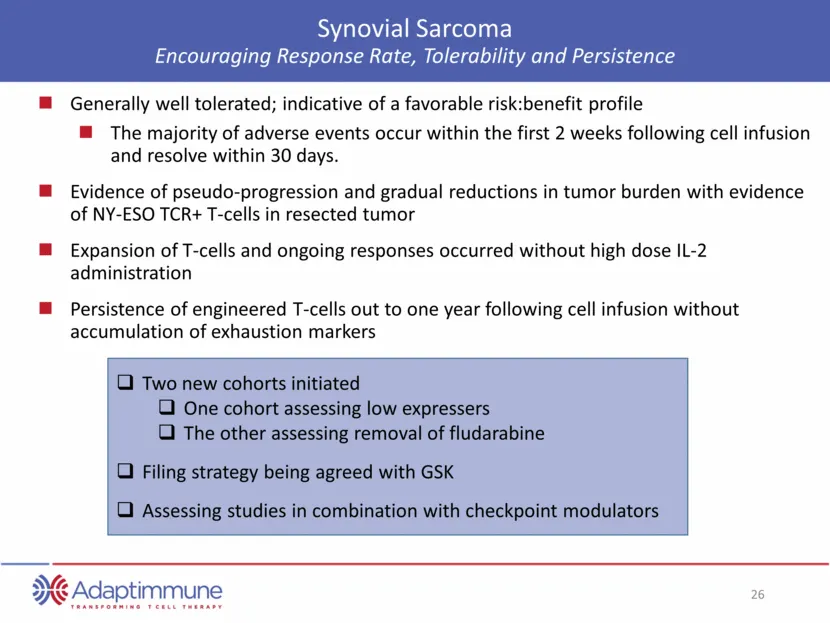
ADAP Phase I/II Study in Synovial Sarcoma Radiographic Pseudoprogression and Response of Lung Metastases Baseline: Bilateral Miliary Metastatic disease Day +2: Pseudoprogression due to Immune Infilration Day +101: Complete Response Patient 201 NY-ESO C-Reactive Protein AACR April 2015
Slide 27: Partial Response Followed by Tumor Resection in Sarcoma
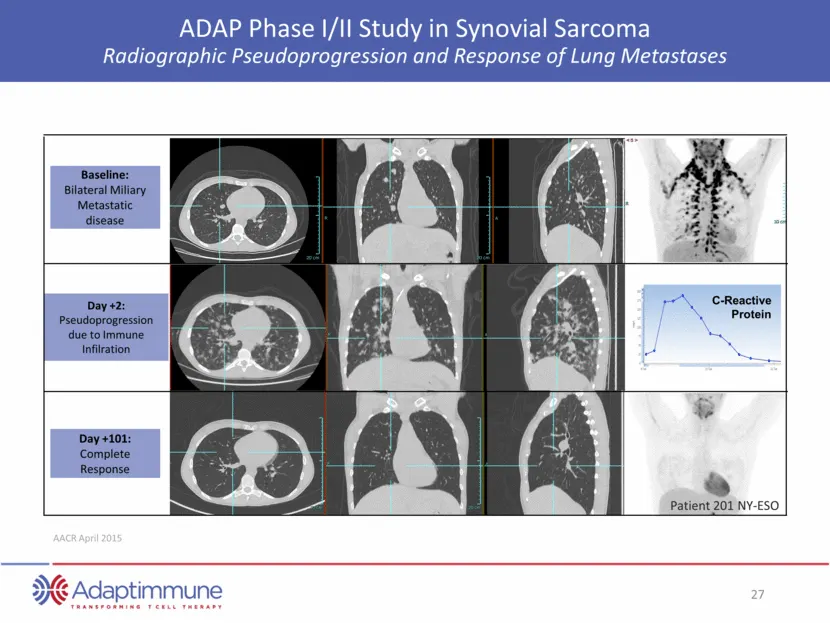
NY-ESO TCR T cells administered ADAP Phase I/II Study in Synovial Sarcoma Partial Response Followed by Tumor Resection in Sarcoma One month post NY-ESO TCR T cells Two months post NY-ESO T cells Source: Merchant, CTOS, 2014 ~ 70% reduction in lesion size at 2 months after administration of NY-ESO T-
Slide 28: NY-ESO TCR T cells administered
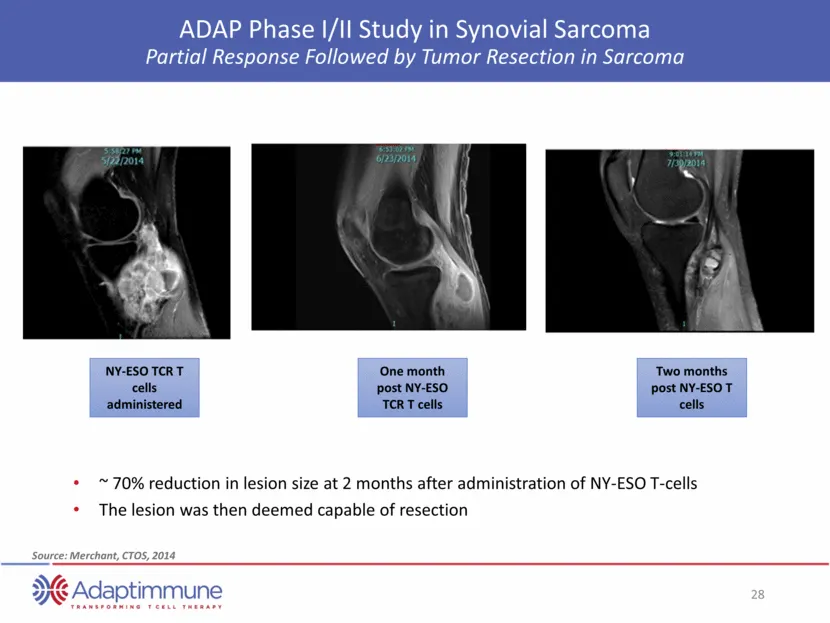
NY-ESO TCR T ‘One month ‘Two months cells post NY-ESO post NY-ESO T administered TCR T cells cells * ~ 70% reduction in lesion size at 2 months after administration of NY-ESO T-cells * The lesion was then deemed capable of resection
Slide 29: ADAP Phase I/II Study in Multiple Myeloma Study Design
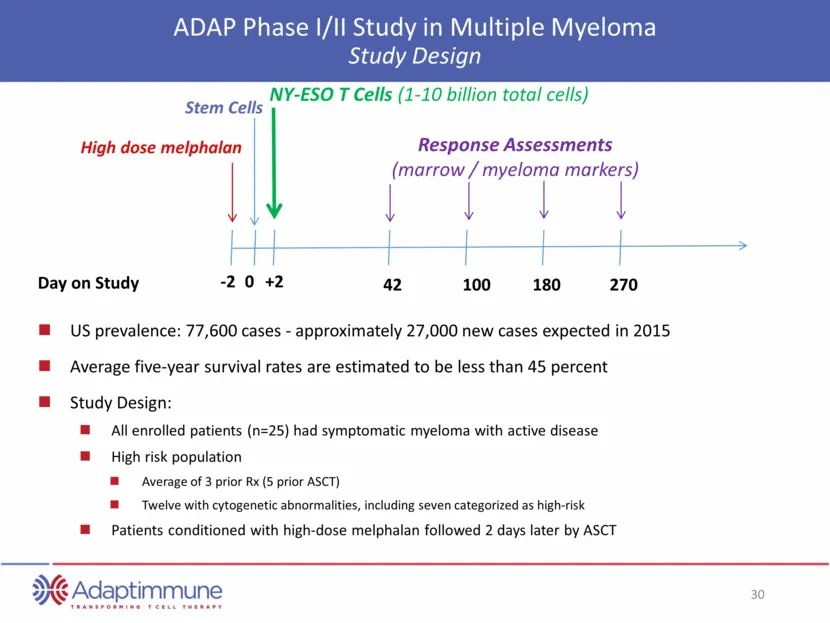
ADAP Phase I/II Study in Multiple Myeloma Study Design US prevalence: 77,600 cases - approximately 27,000 new cases expected in 2015 Average five-year survival rates are estimated to be less than 45 percent Study Design: All enrolled patients (n=25) had symptomatic myeloma with active disease High r
Slide 30: Multiple Myeloma: Compelling Response Rate Compared to Published Literature
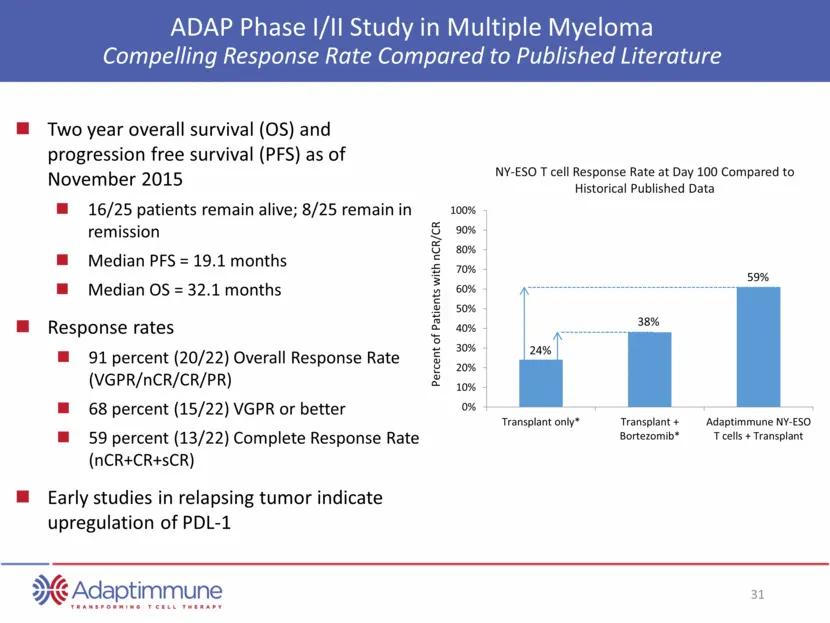
ADAP Phase I/II Study in Multiple Myeloma Compelling Response Rate Compared to Published Literature Two year overall survival (OS) and progression free survival (PFS) as of November 2015 16/25 patients remain alive; 8/25 remain in remission Median PFS = 19.1 months Median OS = 32.1 months Response r
Slide 31: Multiple Myeloma: Encouraging Tolerability and Persistence
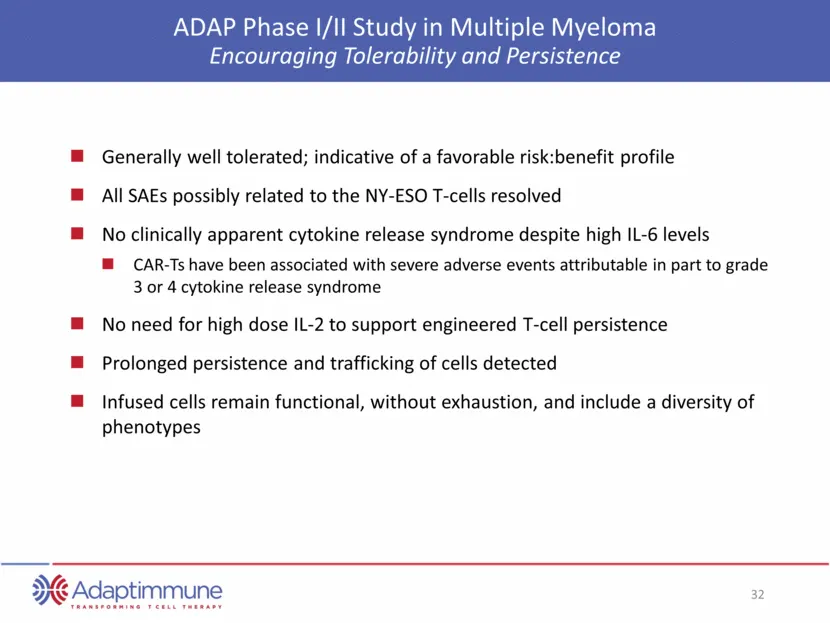
ADAP Phase I/II Study in Multiple Myeloma Encouraging Tolerability and Persistence Generally well tolerated; indicative of a favorable risk:benefit profile All SAEs possibly related to the NY-ESO T-cells resolved No clinically apparent cytokine release syndrome despite high IL-6 levels CAR-Ts have b
Slide 32: MAGE-A10 Proprietary target
MAGE-A10 Proprietary target
Slide 33: MAGE-A10 – A multi-cancer target
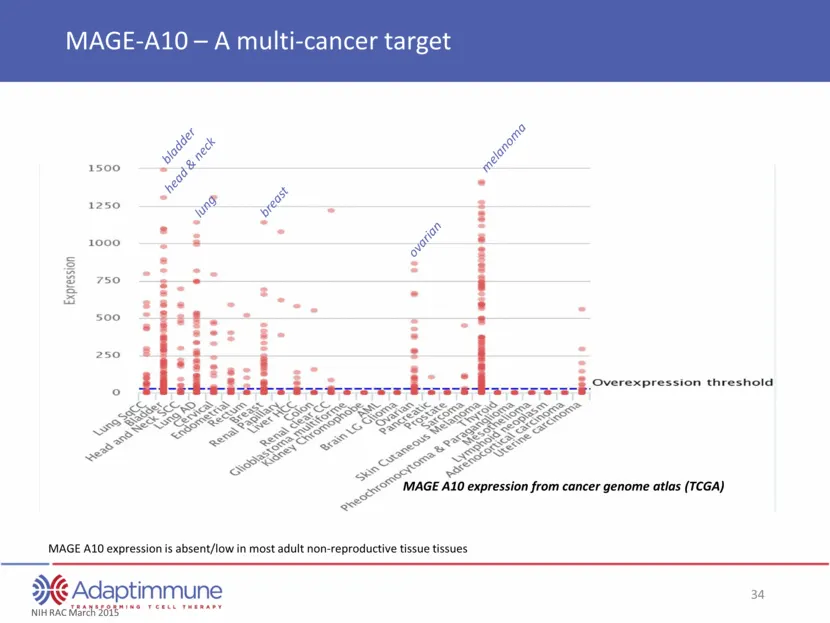
MAGE A10 expression from cancer genome atlas (TCGA) breast bladder lung head & neck melanoma ovarian NIH RAC March 2015 MAGE-A10 – A multi-cancer target MAGE A10 expression is absent/low in most adult non-reproductive tissue tissues
Slide 34: IND for MAGE-A10 TCR therapeutic filed
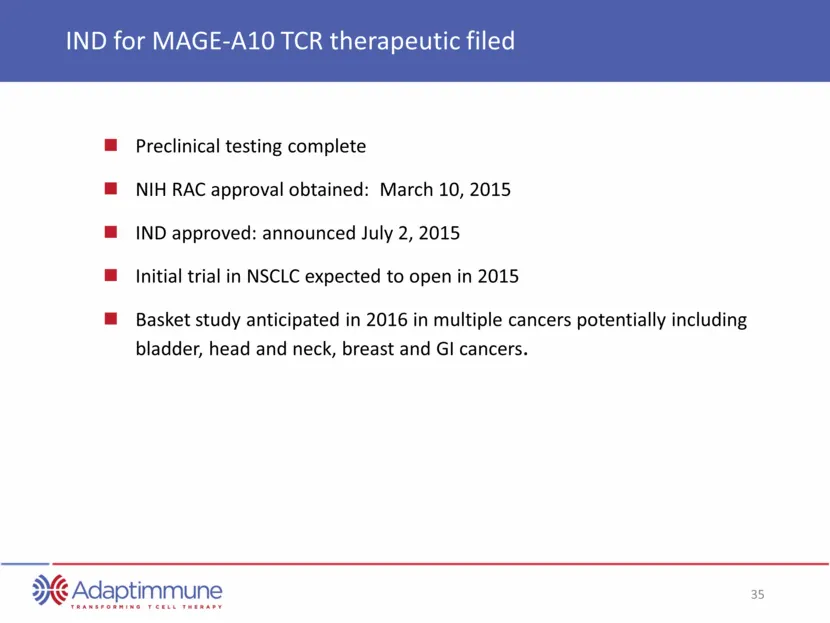
IND for MAGE-A10 TCR therapeutic filed Preclinical testing complete NIH RAC approval obtained: March 10, 2015 IND approved: announced July 2, 2015 Initial trial in NSCLC expected to open in 2015 Basket study anticipated in 2016 in multiple cancers potentially including bladder, head and neck, breast
Slide 35: ADAP Pipeline: Next Steps, Wholly-owned Targets
MAGE-A10 TCR Indication Research Pre-IND Phase 1/2 ADAP Pipeline: Next Steps Wholly-owned ADAP Targets IND open Non-small cell lung cancer (NSCLC) Basket study: Solid tumors NIH RAC approval received Hepatocellular cancer Synovial Sarcoma 12 undisclosed cancer targets AFP TCR Research programs Adapt
Slide 36: ADAP Pipeline: Next Steps, Wholly-owned Targets
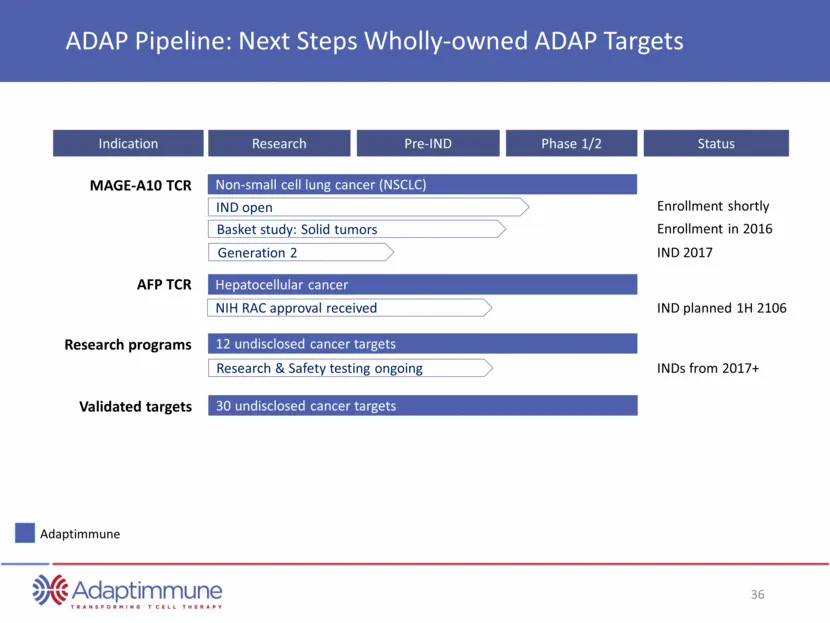
ADAP Pipeline: Next Steps Wholly-owned ADAP Targets Nae SUR Ce Me Non-small cell lung cancer (NSCLC) IND open Enrollment shortly Basket study: Solid tumors > Enrollment in 2016 Generation 2 L IND 2017 GRC ME Hepatocellular cancer NIH RAC approval received IND planned 1H 2106 Research programs Resear
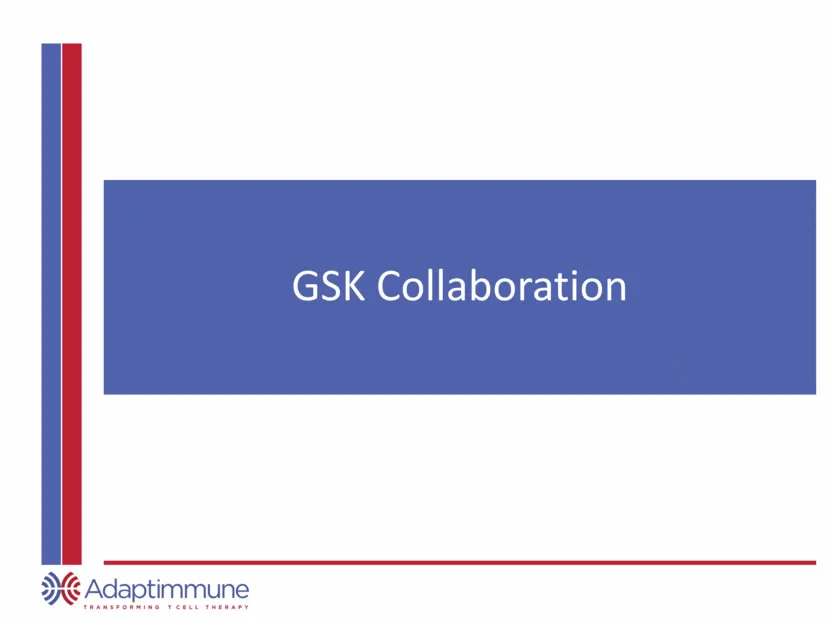
Slide 37: The GSK Strategic Collaboration
The GSK Strategic Collaboration Announced June 2014: Up-front payment £25 million GSK has option to license NY-ESO at end of Phase 1/2 studies Adaptimmune conducts all clinical and non-clinical development work Enables Adaptimmune to optimize regulatory, vector, cell processing, analytical, automati
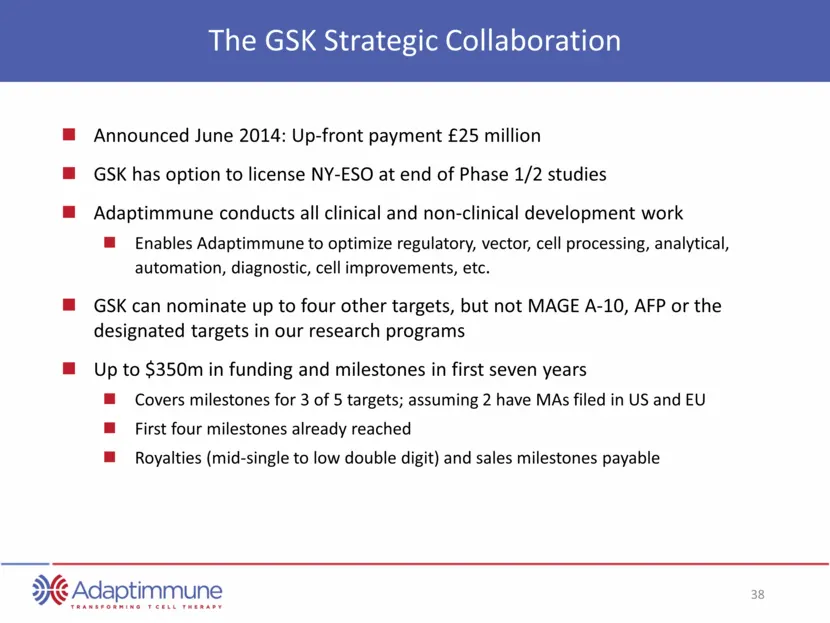
Slide 38: Large un-partnered pipeline with ability to target almost all major tumors
Large un-partnered pipeline with ability to target almost all major tumors Adaptimmune GSK 20+ Additional validated targets Twelve new targets selected for development Not yet nominated; programs with work ongoing are excluded Pool of 3: ADAP keeps 2 NY-ESO MAGE-A10 AFP 30+ validated therapeutic tar
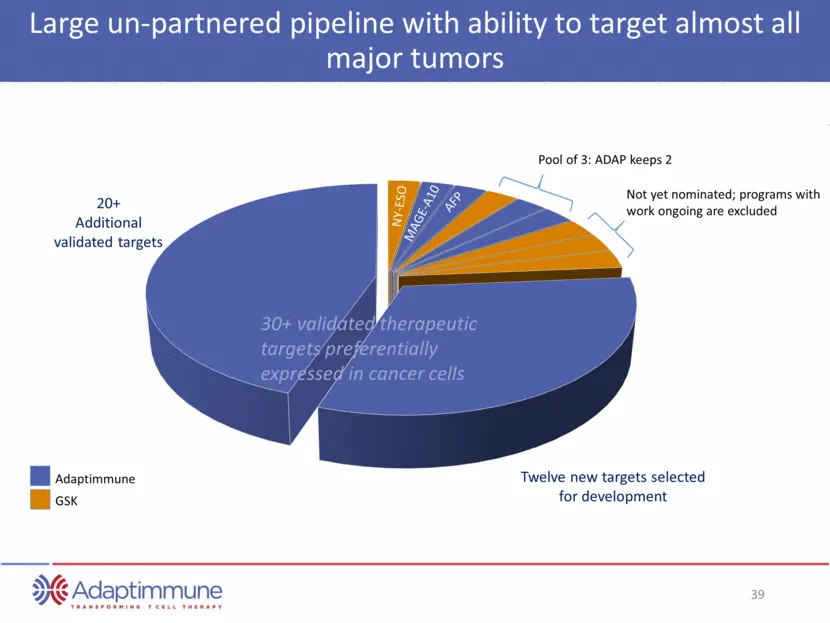
Slide 39: Key 2015/2016 Milestones YTD and Anticipated
Key 2015/2016 Milestones YTD and Anticipated Q1 2015 Additions to Adaptimmune senior leadership team April 2015 AACR presented full cohort data for NY-ESO in Sarcoma and MM May 2015 IPO raises $176m net proceeds Q2 2015 Filing and acceptance of IND for Phase 1/2 studies for MAGE A-10 Q3 2015 Publica
Slide 40: Investment Highlights
Investment Highlights Focused on affinity enhanced T-cell therapies for autologous T-cell therapeutics to treat cancer Lead clinical candidate targeting NY-ESO : SITC 2015 data Synovial sarcoma – In patients receiving target dose of 1x10⁹ cells: 60% RR; 90% remain alive and on long-term follow up Mu
Slide 41: Adaptimmune Engineered TCR T cell therapy
Adaptimmune Engineered TCR T cell therapy Jefferies Autumn Global Healthcare Conference 18th November 2015
Slide 42: Adaptimmune
Adaptimmune Engineered TCR T cell therapy Jefferies Autumn Global Healthcare Conference 18th November 2015 BY Adaptimmune
Source: SEC EDGAR · 6-K filed Nov 18, 2015
More decks from Adaptimmune Therapeutics PLC
 Corporate Update (May 2019)40 slides · May 6, 2019
 Technical Presentation (June 2017)13 slides · Jun 6, 2017
 Investor Presentation (April 2017)32 slides · Apr 10, 2017
 Investor Presentation (March 2017)31 slides · Mar 14, 2017
 J.P. Morgan Healthcare Conference 201740 slides · Jan 9, 2017
 Investor Presentation (December 2015)30 slides · Dec 15, 2015