Active Biotech AB · OMXSTO:ACTI
Active Biotech AB — Investor Day (November 2020)
14 slides from Active Biotech AB's investor day presentation, Nov 24, 2020
Slide 1: A Phase 1 Study of Tasquinimod in Patients with Relapsed or Refractory Multiple Myeloma
A Phase 1 Study of Tasquinimod in Patients with Relapsed or Refractory Multiple Myeloma Dan T. Vogl, MD MSCE Associate Professor of Medicine Director, Clinical Research Unit Abramson Cancer Center Perelman School of Medicine University of Pennsylvania Active Biotech Capital Markets Day — November 24
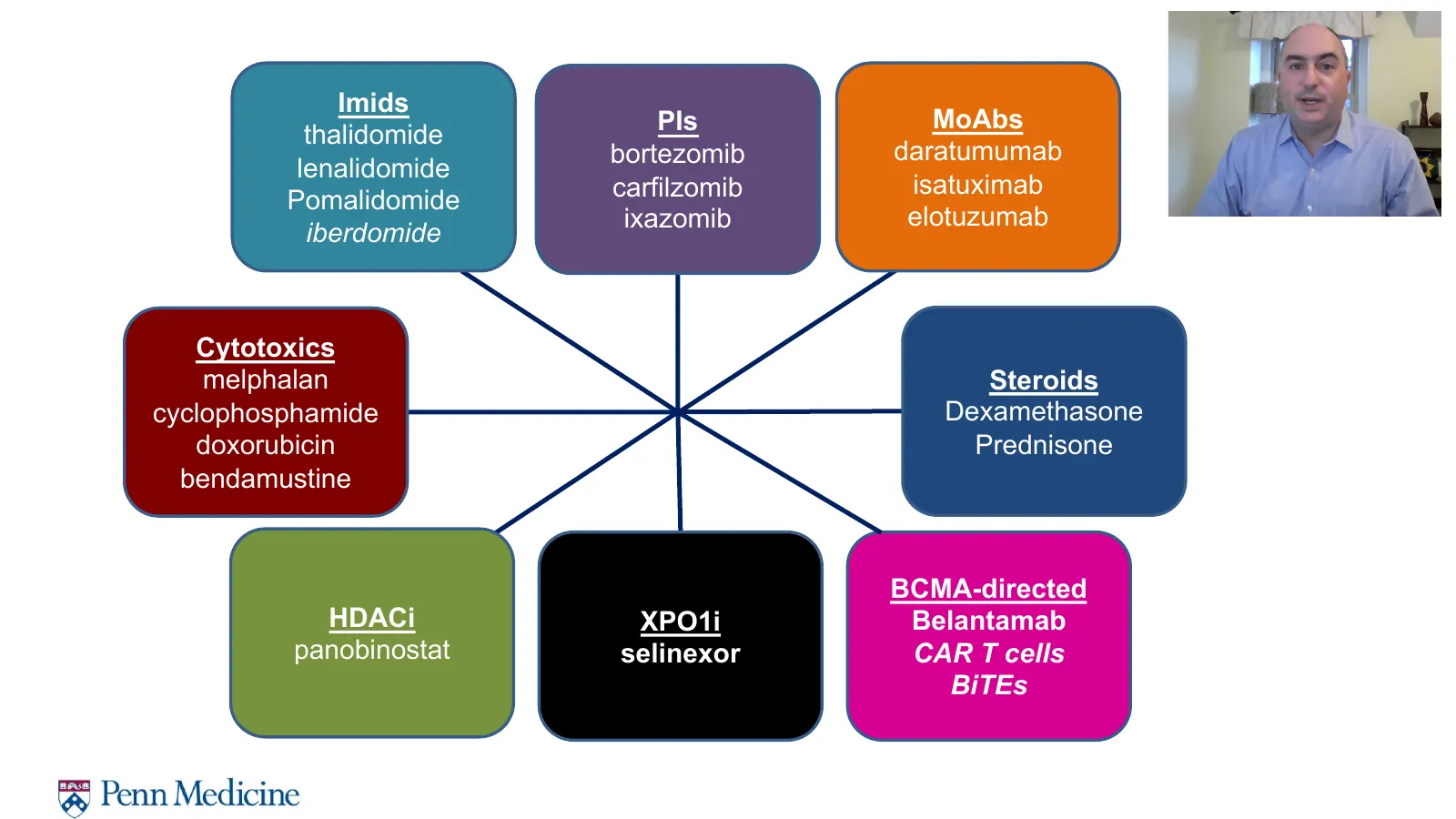
Slide 2: Myeloma drug classes
Imids PIs MoAbs thalidomide bortezomib daratumumab lenalidomide carfilzomib isatuximab Pomalidomide ixazomib elotuzumab iberdomide Cytotoxics melphalan Steroids cyclophosphamide Dexamethasone doxorubicin Prednisone bendamustine BCMA-directed HDACi XPO1i Belantamab panobinostat selinexor CAR T cells
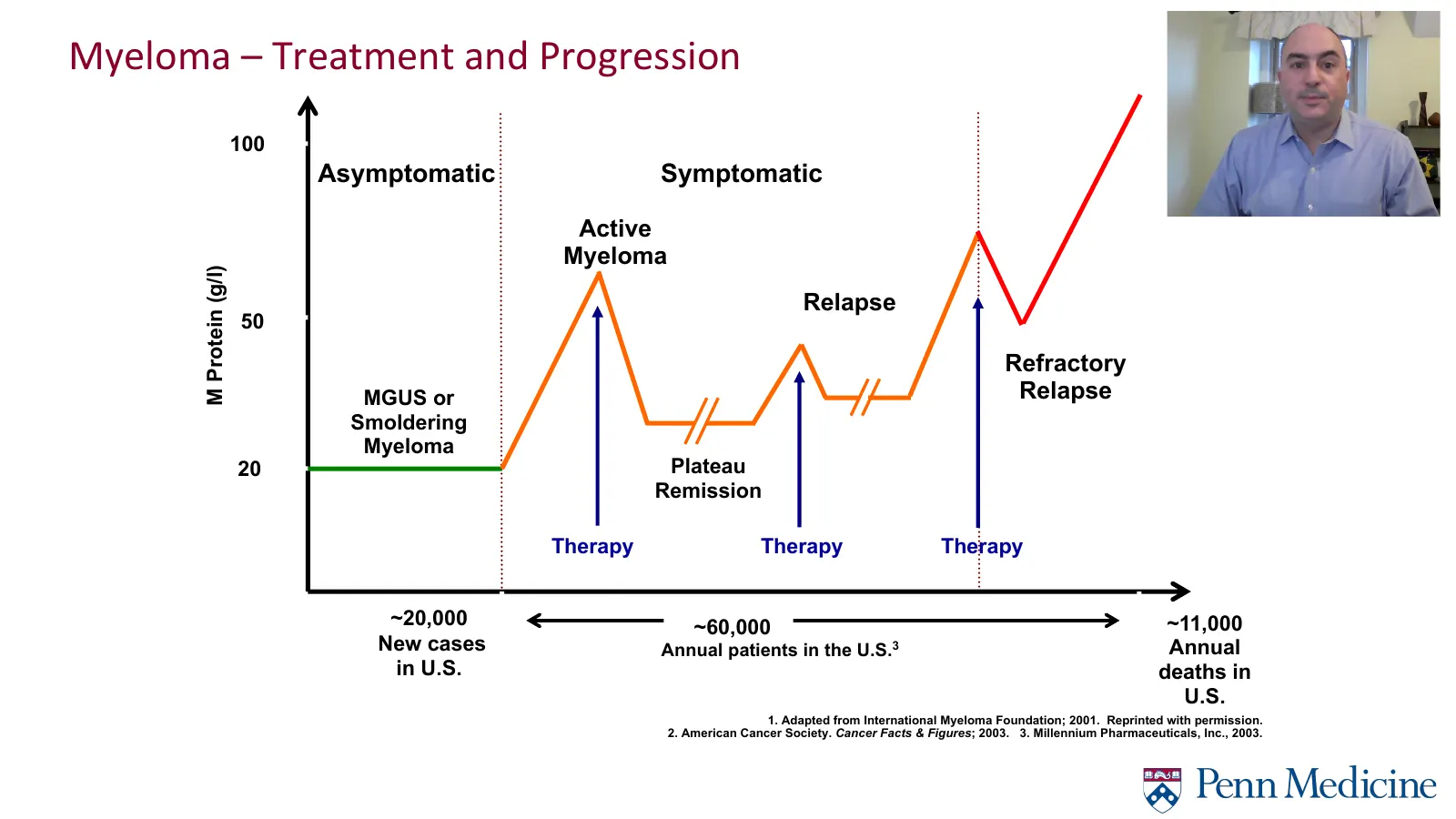
Slide 3: Myeloma – Treatment and Progression
Myeloma – Treatment and Progression 100 Asymptomatic Symptomatic Active Myeloma M Protein (g/l) Relapse 50 Refractory MGUS or Relapse Smoldering Myeloma 20 Plateau Remission Therapy Therapy Therapy ~20,000 ~60,000 ~11,000 New cases Annual patients in the U.S.3 Annual in U.S. deaths in U.S. 1. Adapte
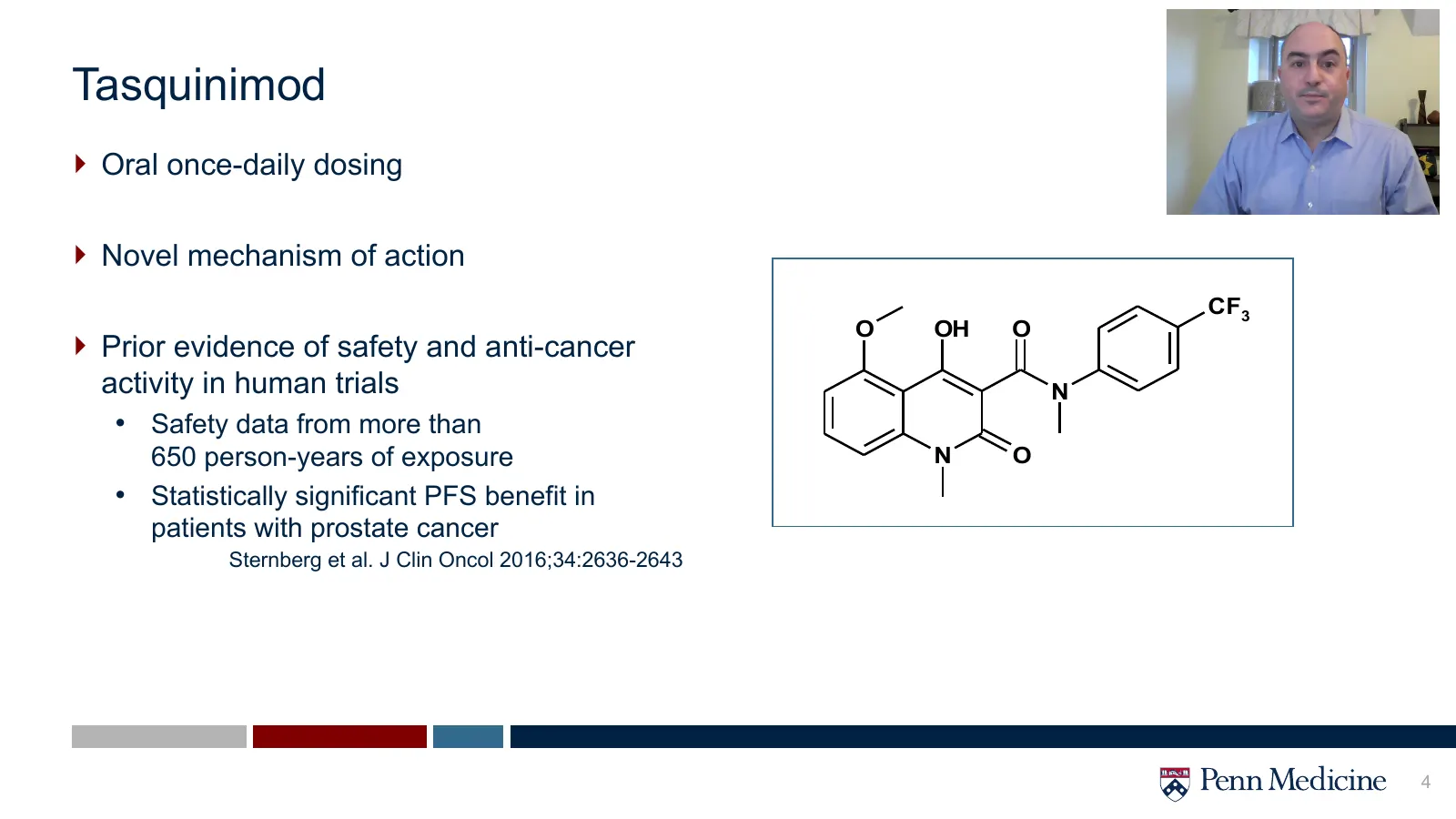
Slide 4: Tasquinimod
Tasquinimod ‣ Oral once-daily dosing ‣ Novel mechanism of action CF3 O OH O ‣ Prior evidence of safety and anti-cancer activity in human trials N • Safety data from more than 650 person-years of exposure N O • Statistically significant PFS benefit in patients with prostate cancer Sternberg et al. J
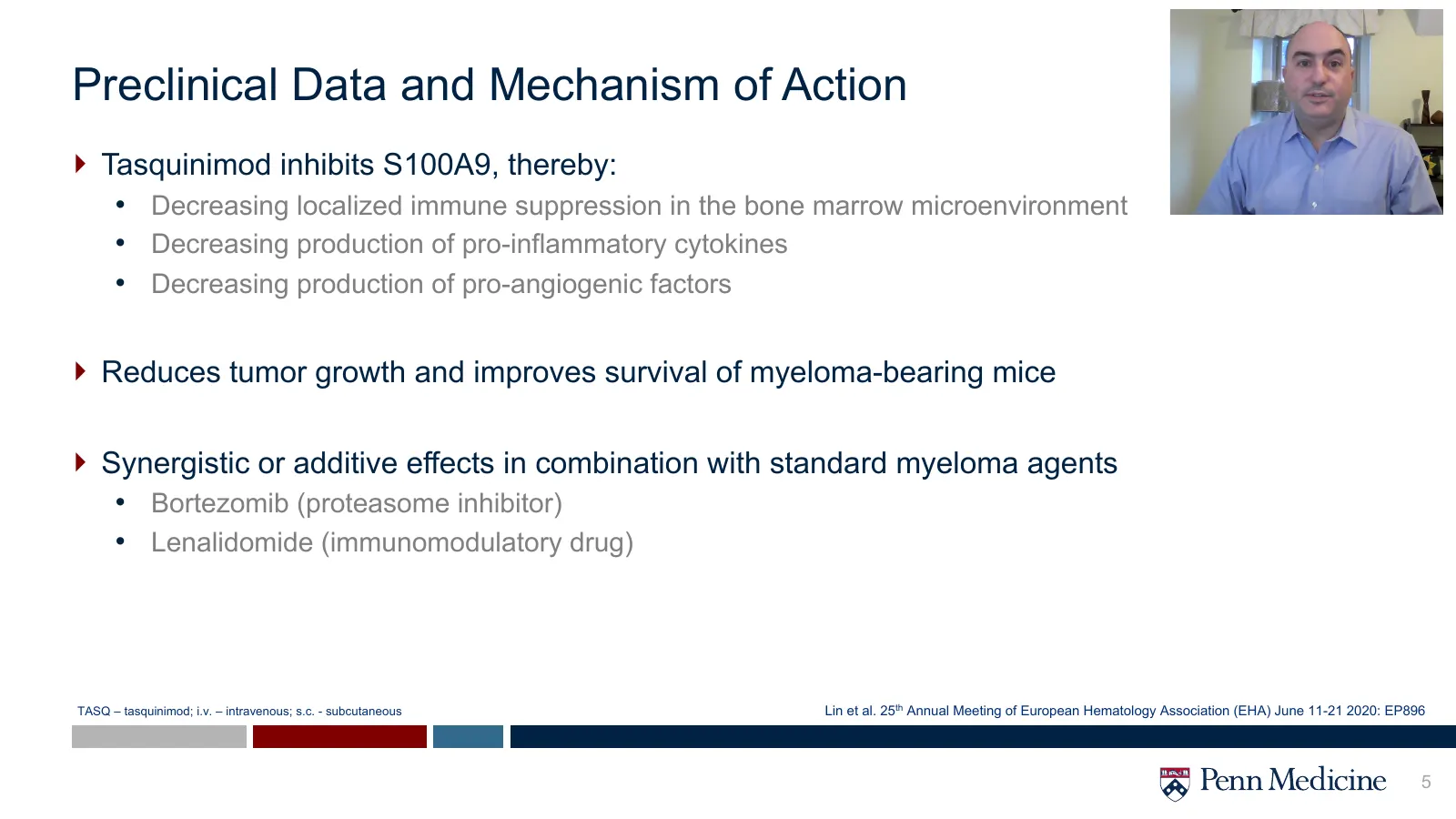
Slide 5: Preclinical Data and Mechanism of Action
Preclinical Data and Mechanism of Action ‣ Tasquinimod inhibits S100A9, thereby: • Decreasing localized immune suppression in the bone marrow microenvironment • Decreasing production of pro-inflammatory cytokines • Decreasing production of pro-angiogenic factors ‣ Reduces tumor growth and improves s
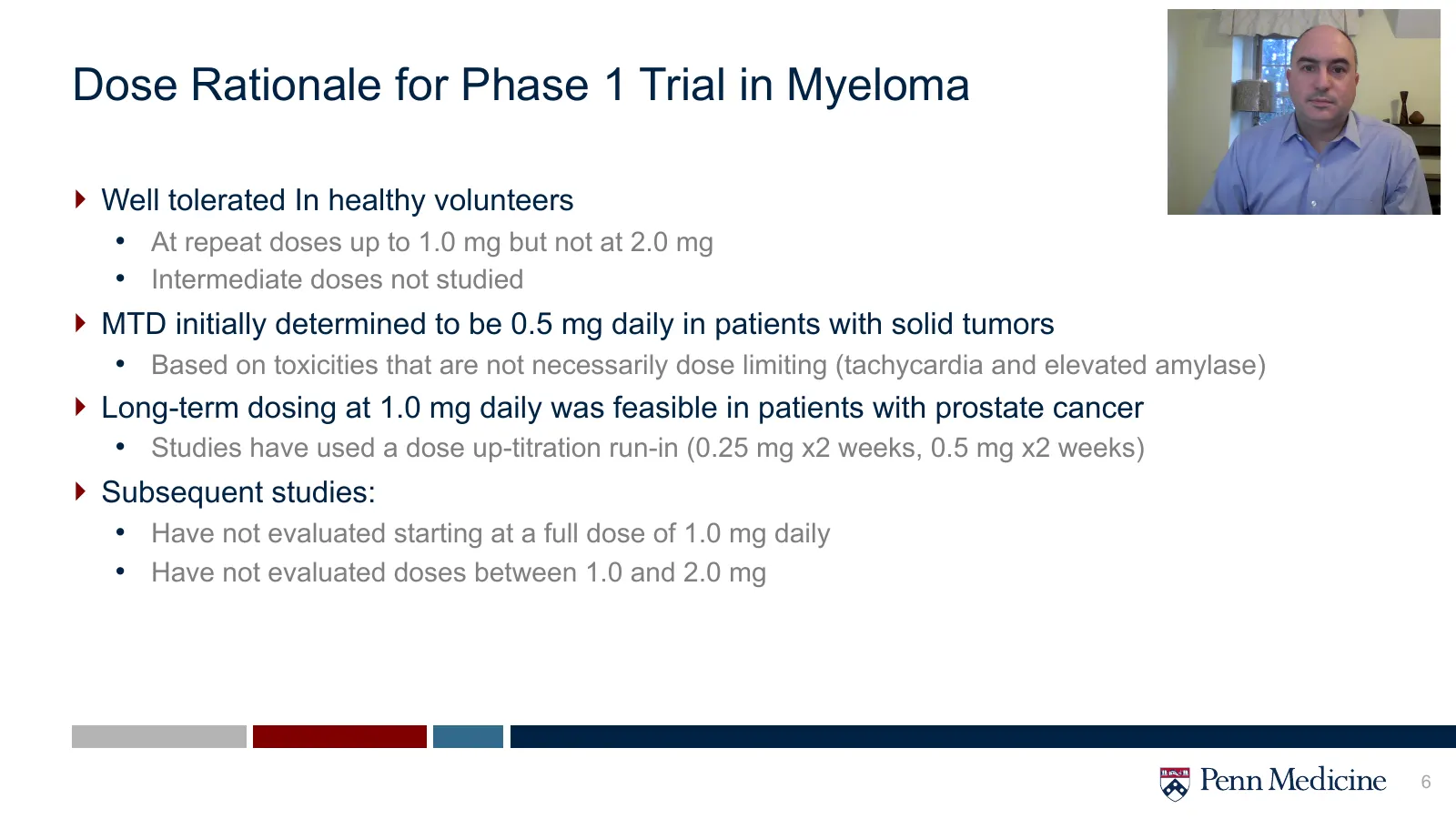
Slide 6: Dose Rationale for Phase 1 Trial in Myeloma
Dose Rationale for Phase 1 Trial in Myeloma ‣ Well tolerated In healthy volunteers • At repeat doses up to 1.0 mg but not at 2.0 mg • Intermediate doses not studied ‣ MTD initially determined to be 0.5 mg daily in patients with solid tumors • Based on toxicities that are not necessarily dose limitin
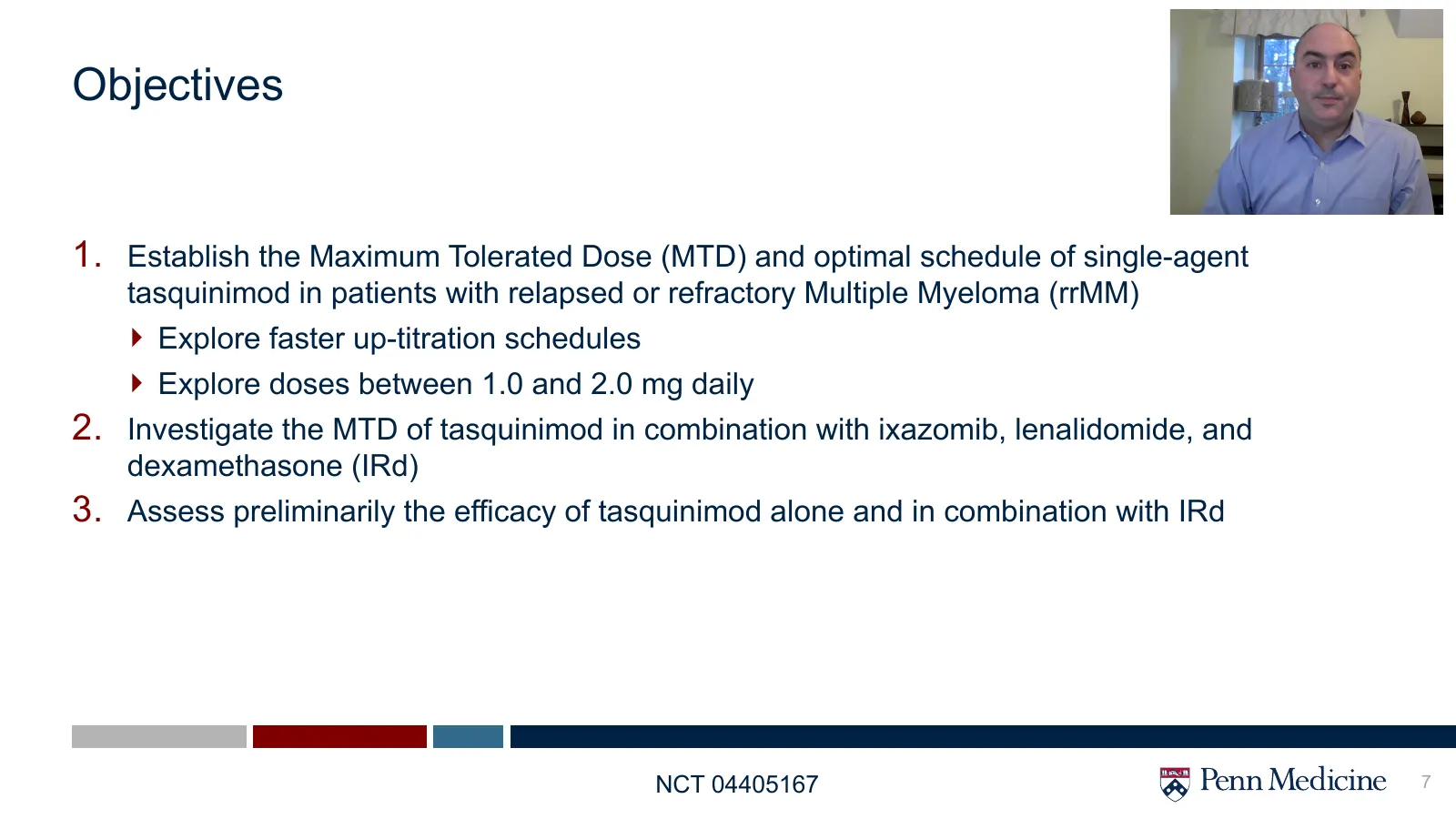
Slide 7: Objectives
Objectives 1. Establish the Maximum Tolerated Dose (MTD) and optimal schedule of single-agent tasquinimod in patients with relapsed or refractory Multiple Myeloma (rrMM) ‣ Explore faster up-titration schedules ‣ Explore doses between 1.0 and 2.0 mg daily 2. Investigate the MTD of tasquinimod in comb
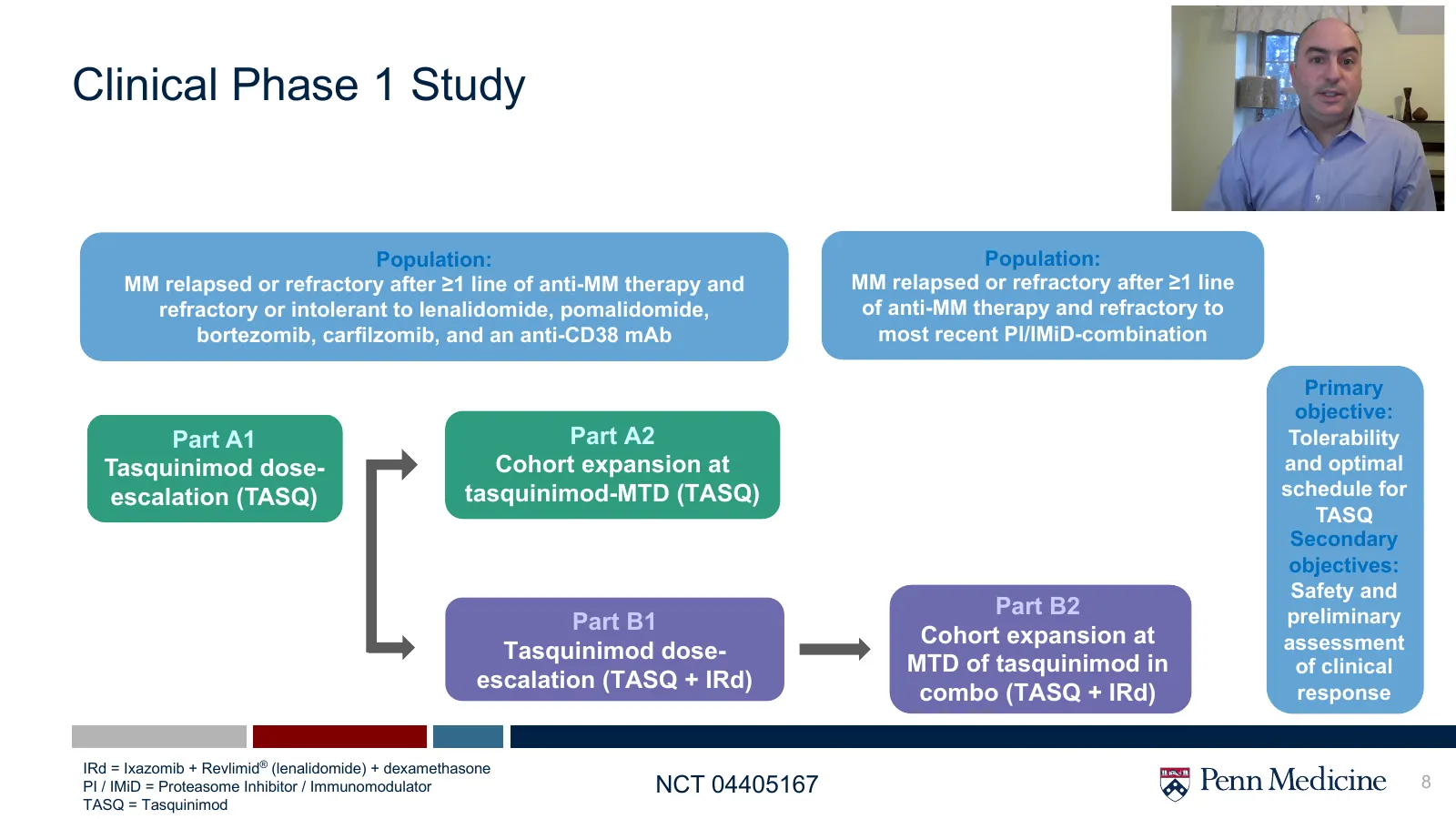
Slide 8: Clinical Phase 1 Study
Clinical Phase 1 Study Population: Population: MM relapsed or refractory after ≥1 line of anti-MM therapy and MM relapsed or refractory after ≥1 line refractory or intolerant to lenalidomide, pomalidomide, of anti-MM therapy and refractory to bortezomib, carfilzomib, and an anti-CD38 mAb most recent
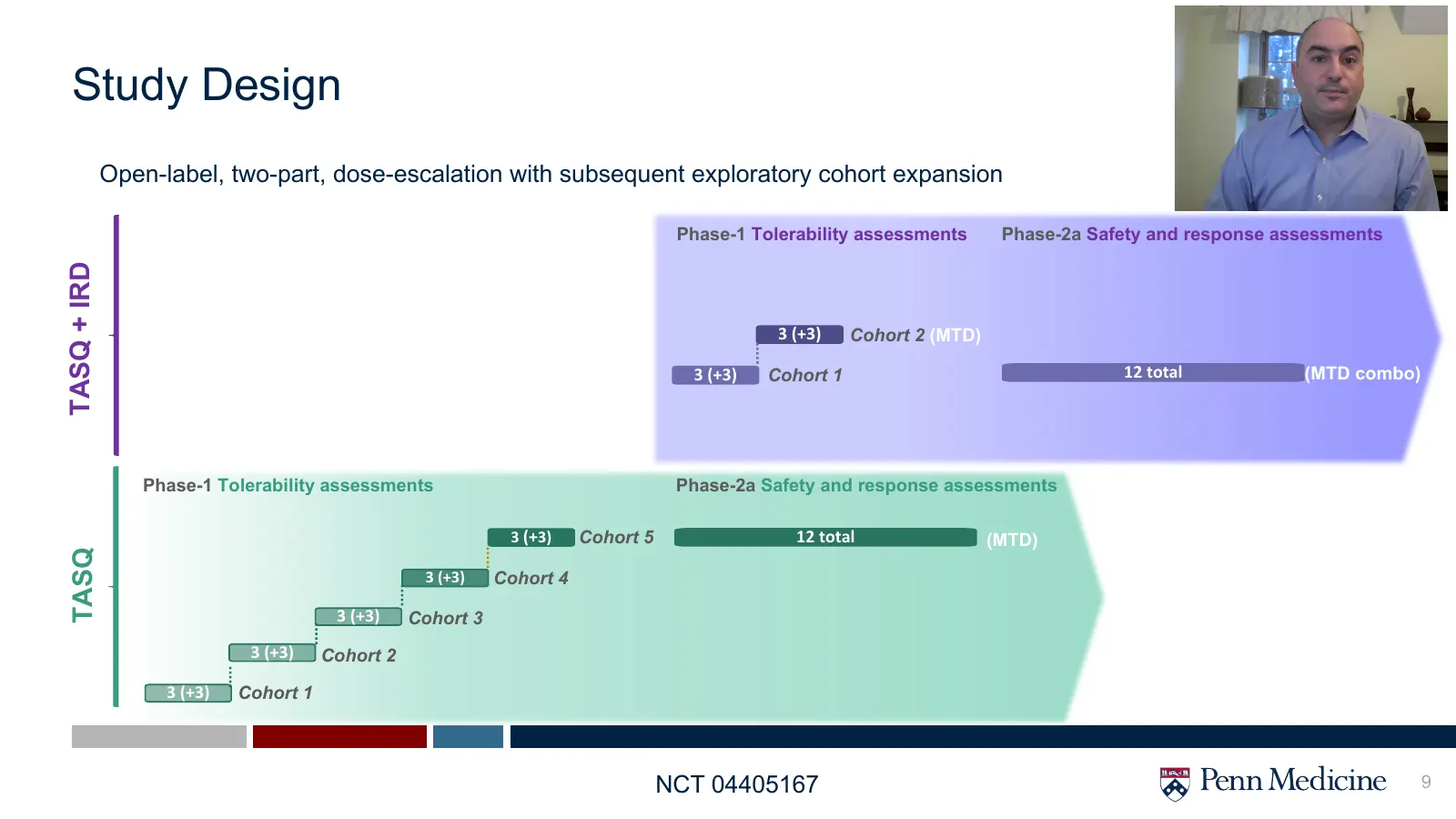
Slide 9: Study Design
Study Design Open-label, two-part, dose-escalation with subsequent exploratory cohort expansion Phase-1 Tolerability assessments Phase-2a Safety and response assessments TASQ + IRD 3 (+3) Cohort 2 (MTD) 3 (+3) Cohort 1 12 total (MTD combo) Phase-1 Tolerability assessments Phase-2a Safety and respons
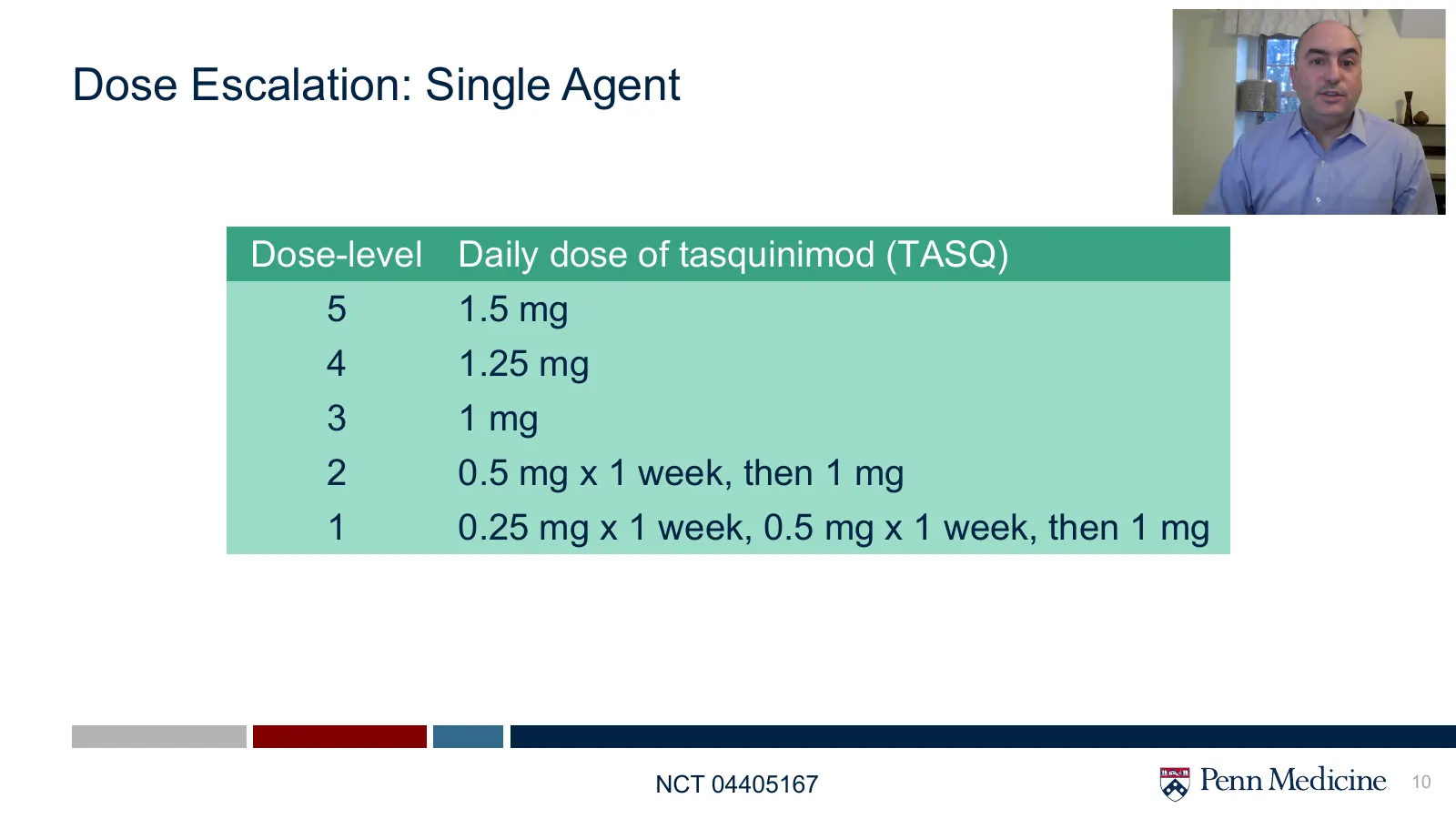
Slide 10: Dose Escalation: Single Agent
Dose Escalation: Single Agent Dose-level Daily dose of tasquinimod (TASQ) 5 1.5 mg 4 1.25 mg 3 1 mg 2 0.5 mg x 1 week, then 1 mg 1 0.25 mg x 1 week, 0.5 mg x 1 week, then 1 mg NCT 04405167 10
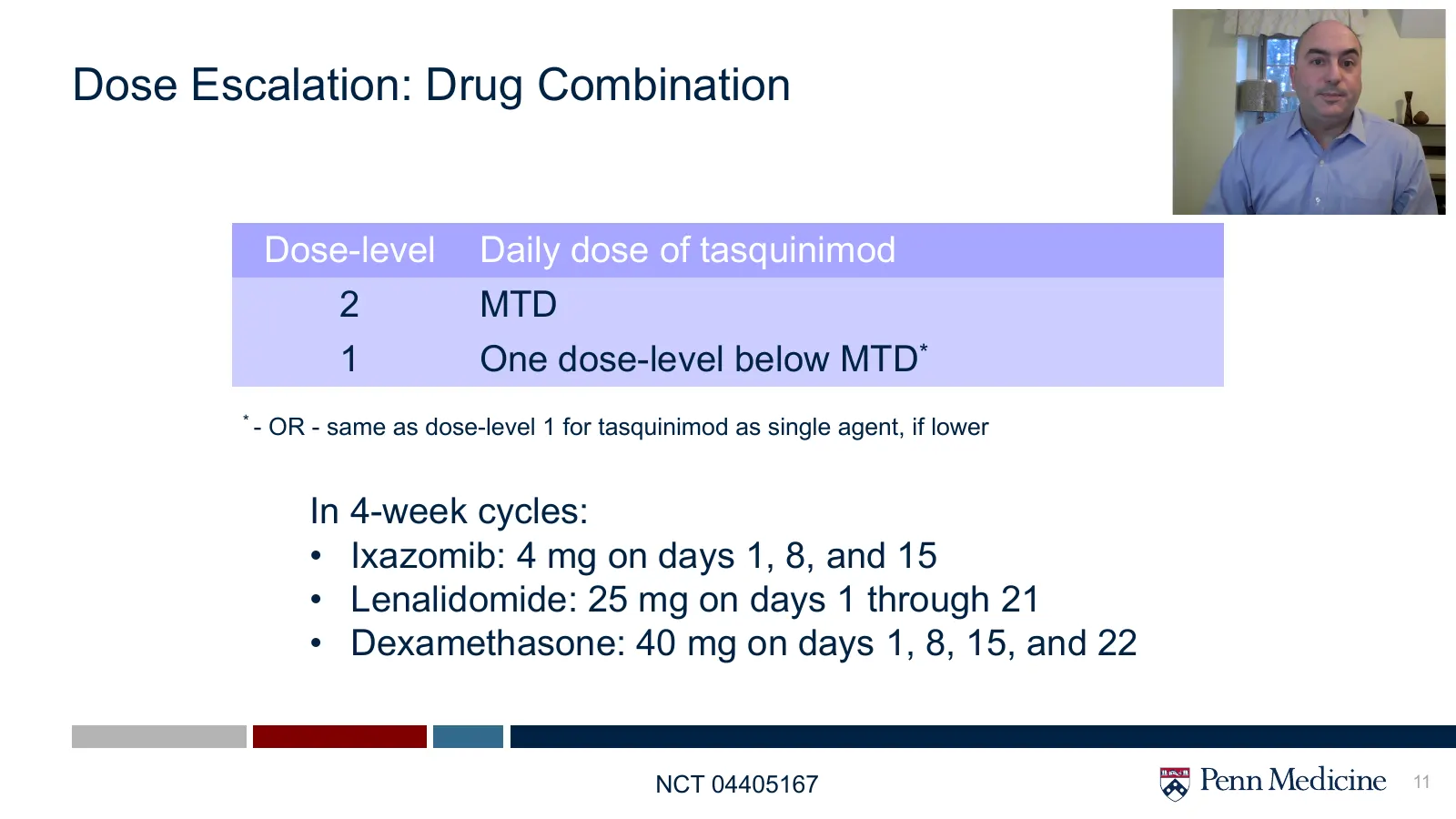
Slide 11: Dose Escalation: Drug Combination
Dose Escalation: Drug Combination Dose-level Daily dose of tasquinimod 2 MTD 1 One dose-level below MTD* * - OR - same as dose-level 1 for tasquinimod as single agent, if lower In 4-week cycles: • Ixazomib: 4 mg on days 1, 8, and 15 • Lenalidomide: 25 mg on days 1 through 21 • Dexamethasone: 40 mg o
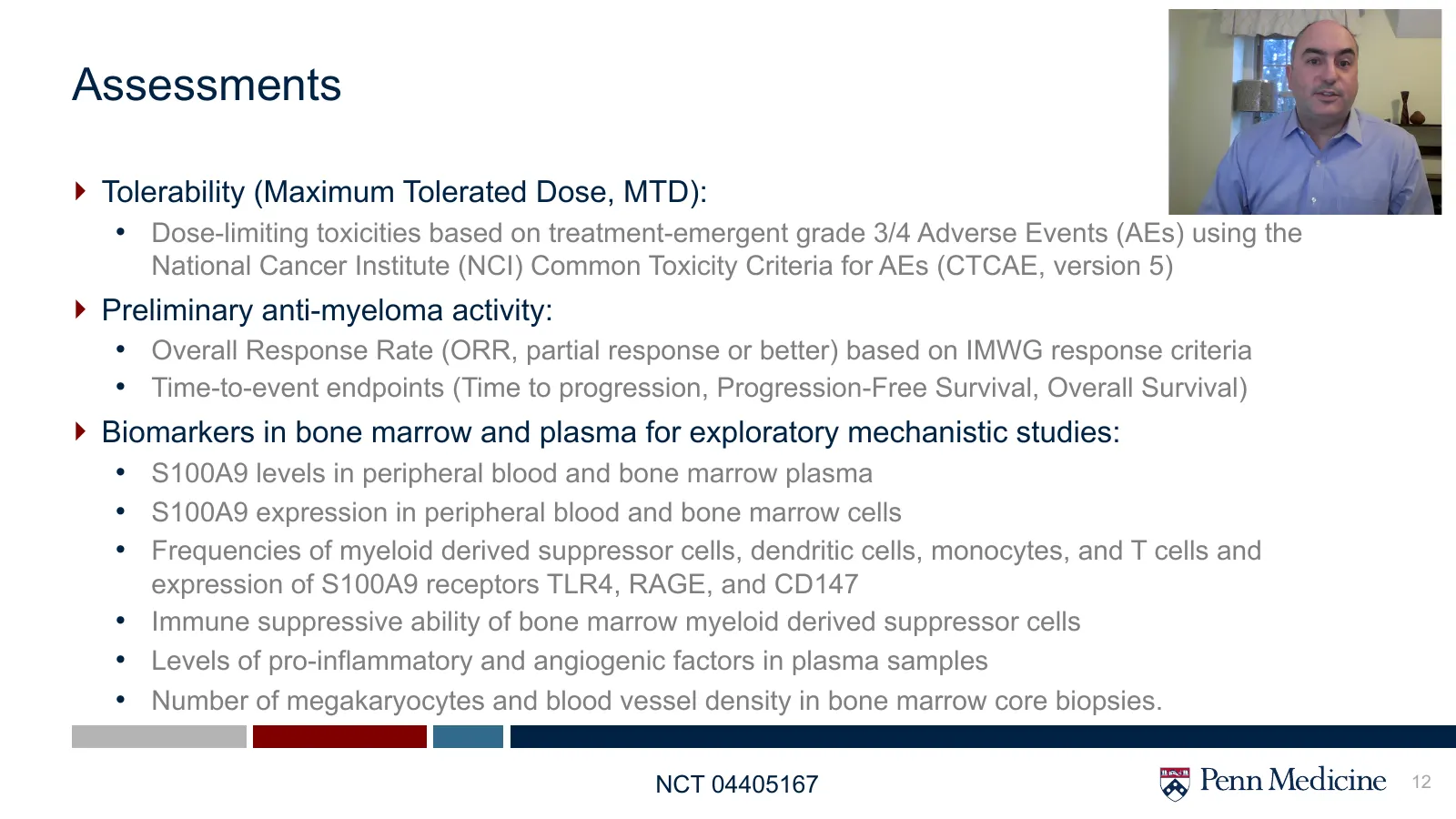
Slide 12: Assessments
Assessments ‣ Tolerability (Maximum Tolerated Dose, MTD): • Dose-limiting toxicities based on treatment-emergent grade 3/4 Adverse Events (AEs) using the National Cancer Institute (NCI) Common Toxicity Criteria for AEs (CTCAE, version 5) ‣ Preliminary anti-myeloma activity: • Overall Response Rate (
Slide 13: Acknowledgments
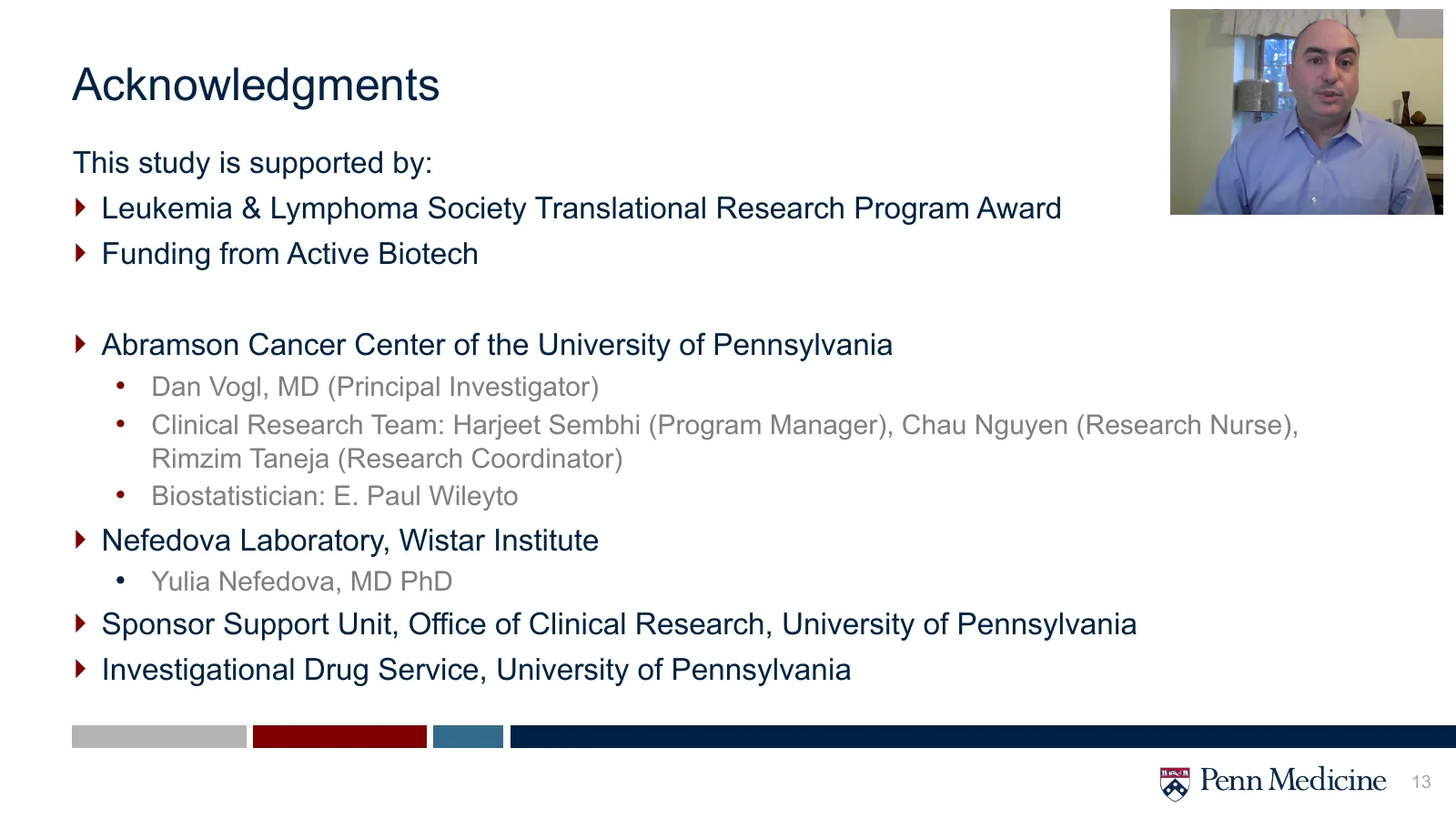
Acknowledgments This study is supported by: ‣ Leukemia & Lymphoma Society Translational Research Program Award ‣ Funding from Active Biotech ‣ Abramson Cancer Center of the University of Pennsylvania • Dan Vogl, MD (Principal Investigator) • Clinical Research Team: Harjeet Sembhi (Program Manager),
Slide 14: Penn Medicine
eS Penn Medicine
Source: Internet Archive copy of activebiotech.com
More decks from Active Biotech AB
 Investor Presentation (November 2026)23 slides · Nov 5, 2026
 Investor Presentation (August 2026)25 slides · Aug 31, 2026
 Investor Presentation (July 2026)25 slides · July 2026
 Investor Presentation (April 2026)25 slides · April 2026
 Investor Presentation (November 2025)30 slides · Nov 4, 2025
 Investor Presentation (March 2024)29 slides · March 2024