Ocera Therapeutics — 37th Annual Cowen Healthcare Conference 2017
31 slides from Ocera Therapeutics's conference presentation, Mar 8, 2017
Slide 1: 37th Annual Cowen Healthcare Conference
NASDAQ: OCRX M A R C H 2 0 1 7 37th Annual Cowen Healthcare Conference The Boston Marriott Copley Place March 6-8, 2017 A Liver Disease Medicines Company
Slide 2: Forward-Looking Statements
2 Forward-Looking Statements Certain statements in this presentation constitute “forward-looking statements” within the meaning of the Securities Act of 1933, as amended (the “Securities Act”), and Securities Exchange Act of 1934, as amended (“Exchange Act”), including, without limitation, all state
Slide 3: Addressing a Serious Unmet Need
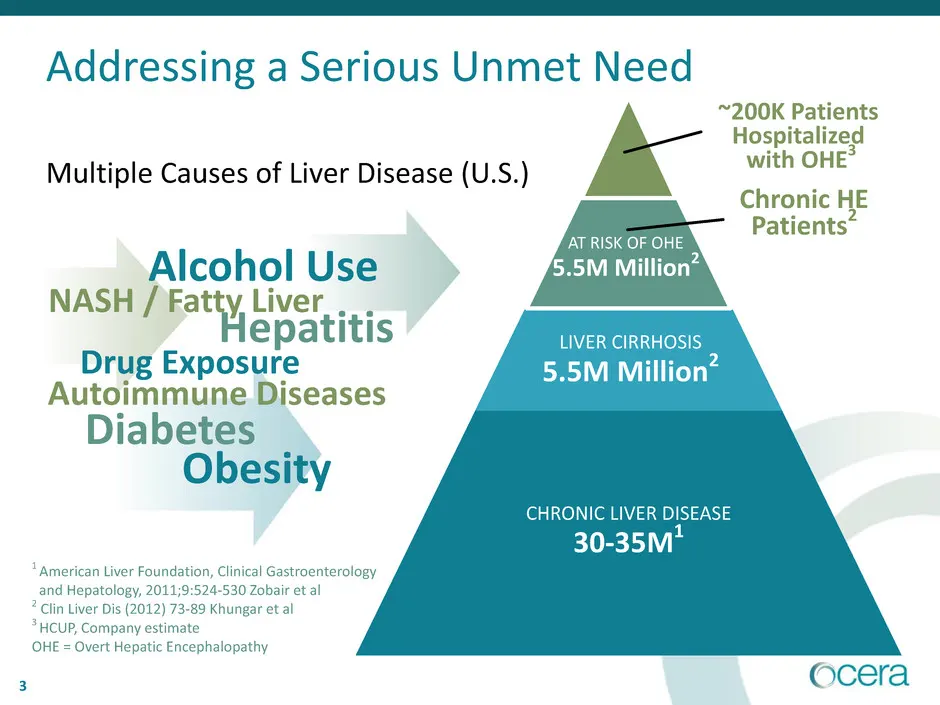
3 Addressing a Serious Unmet Need Alcohol Use NASH / Fatty Liver Hepatitis Drug Exposure Autoimmune Diseases Diabetes Obesity Multiple Causes of Liver Disease (U.S.) CHRONIC LIVER DISEASE 30-35M1 LIVER CIRRHOSIS 5.5M Million2 ~200K Patients Hospitalized with OHE3 1 American Liver Foundation, Clinica
Slide 4: Hepatic Encephalopathy: Neurocognitive Disorder in Serious Liver Disease
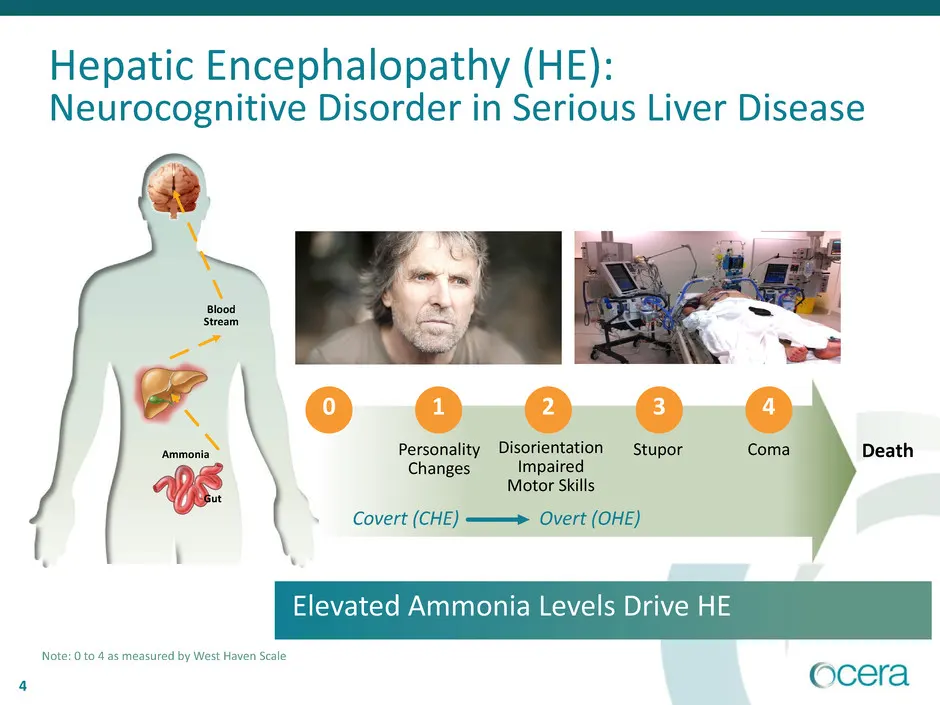
4 Disorientation Impaired Motor Skills Personality Changes Stupor Coma Death 0 1 2 3 4 Hepatic Encephalopathy (HE): Neurocognitive Disorder in Serious Liver Disease Blood Stream Ammonia Gut Note: 0 to 4 as measured by West Haven Scale Covert (CHE) Overt (OHE) Elevated Ammonia Levels Drive HE
Slide 5: HE: Large and Growing Healthcare Burden
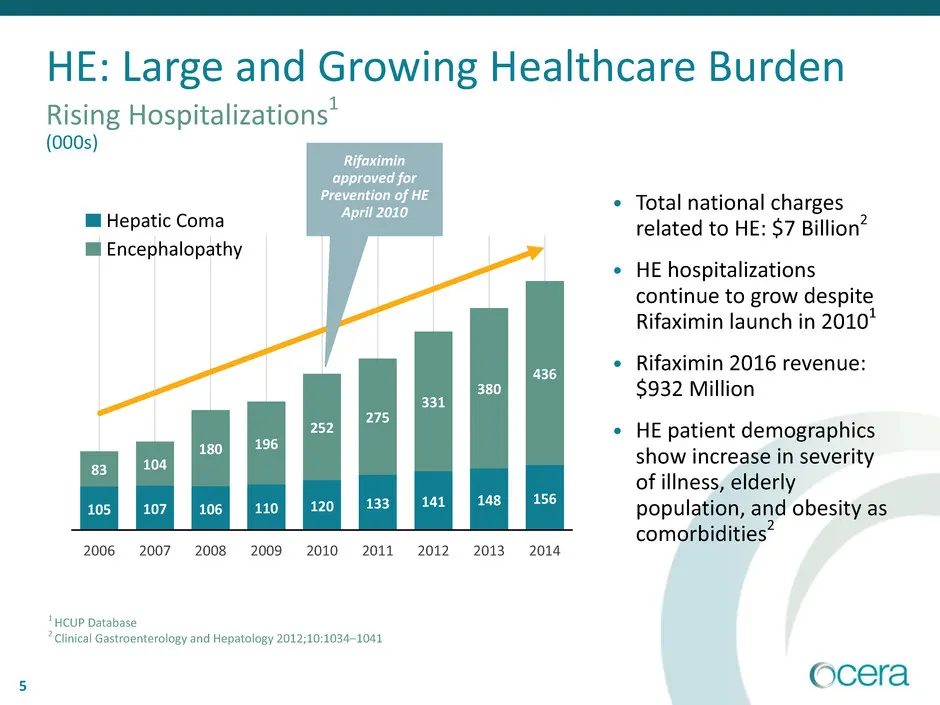
5 1 HCUP Database 2 Clinical Gastroenterology and Hepatology 2012;10:1034–1041 HE: Large and Growing Healthcare Burden Rising Hospitalizations1 (000s) • Total national charges related to HE: $7 Billion2 • HE hospitalizations continue to grow despite Rifaximin launch in 20101 • Rifaximin 2016 revenue
Slide 6: OCR-002 is the ONLY Direct IV and Oral Ammonia Scavenger in Development for HE
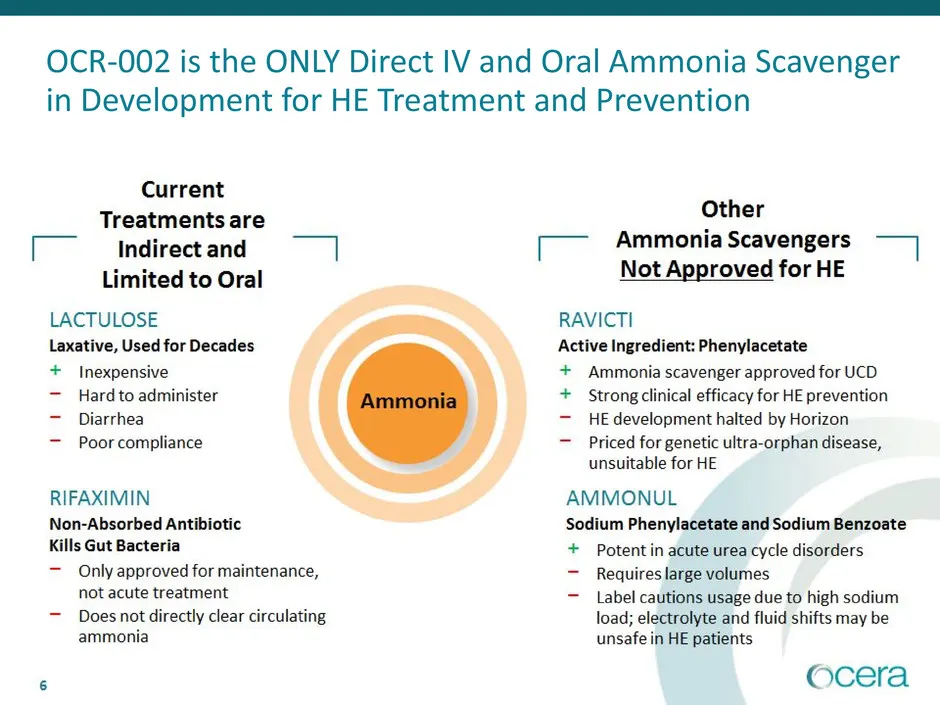
6 OCR-002 is the ONLY Direct IV and Oral Ammonia Scavenger in Development for HE Treatment and Prevention
Slide 7: Significant Commercial Opportunity for IV and Oral OCR-002
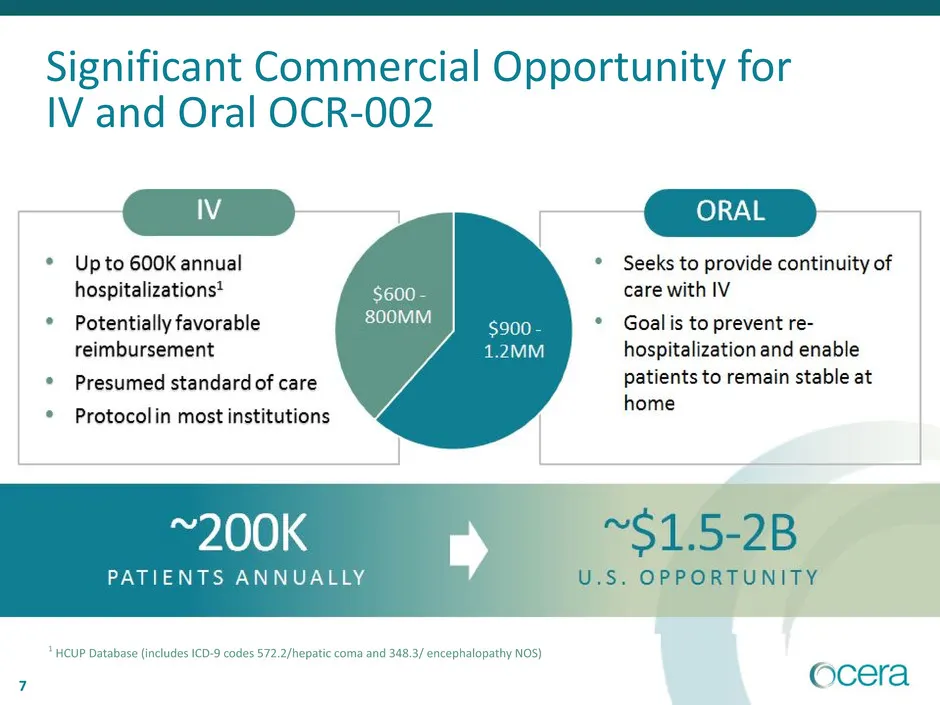
7 Significant Commercial Opportunity for IV and Oral OCR-002 1 HCUP Database (includes ICD-9 codes 572.2/hepatic coma and 348.3/ encephalopathy NOS)
Slide 8: Valuable Commercial Estate
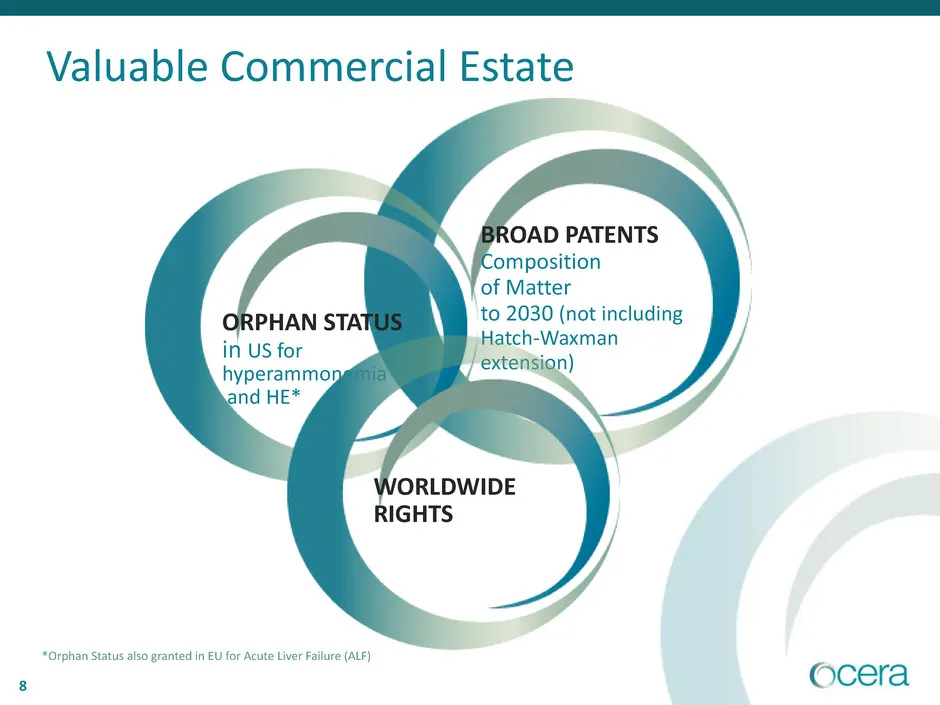
8 Valuable Commercial Estate BROAD PATENTS Composition of Matter to 2030 (not including Hatch-Waxman extension) ORPHAN STATUS in US for hyperammonemia and HE* WORLDWIDE RIGHTS *Orphan Status also granted in EU for Acute Liver Failure (ALF)
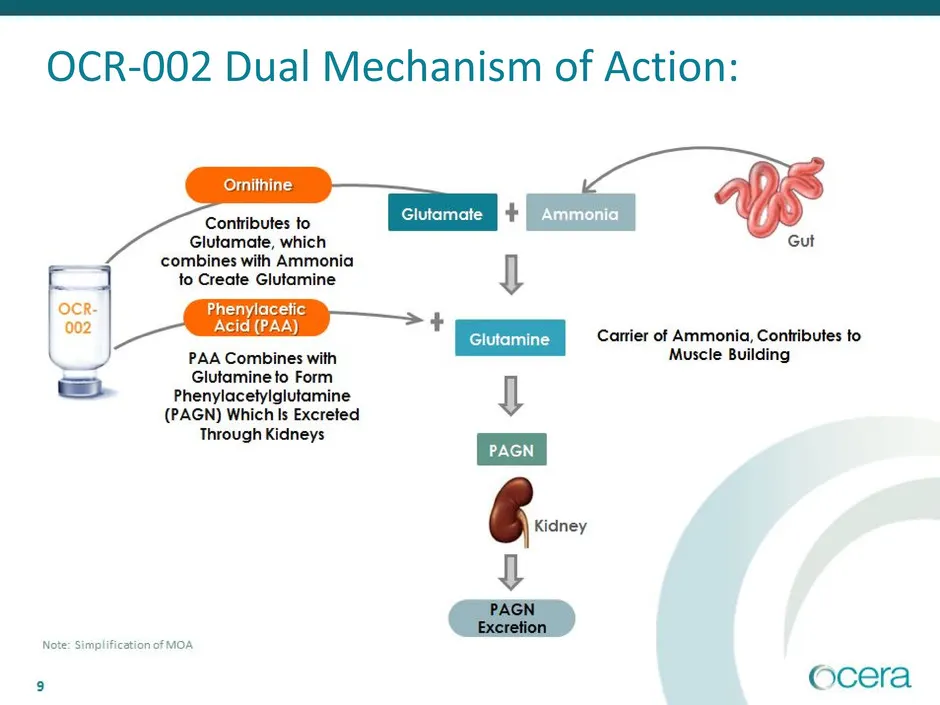
Slide 9: OCR-002 Dual Mechanism of Action
9 OCR-002 Dual Mechanism of Action: Note: Simplification of MOA
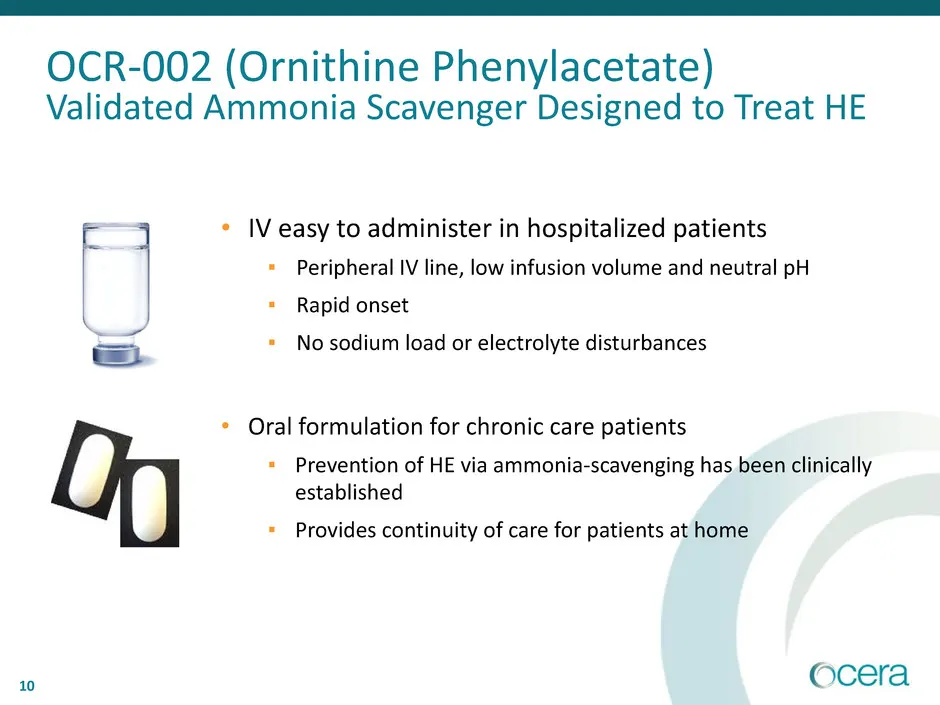
Slide 10: OCR-002 (Ornithine Phenylacetate) Validated Ammonia Scavenger Designed to Treat HE
10 OCR-002 (Ornithine Phenylacetate) Validated Ammonia Scavenger Designed to Treat HE • IV easy to administer in hospitalized patients ▪ Peripheral IV line, low infusion volume and neutral pH ▪ Rapid onset ▪ No sodium load or electrolyte disturbances • Oral formulation for chronic care patients ▪ Pr
Slide 11: STOP-HE Phase 2b Study
STOP-HE Phase 2b Study OCR-002 IV for Overt HE
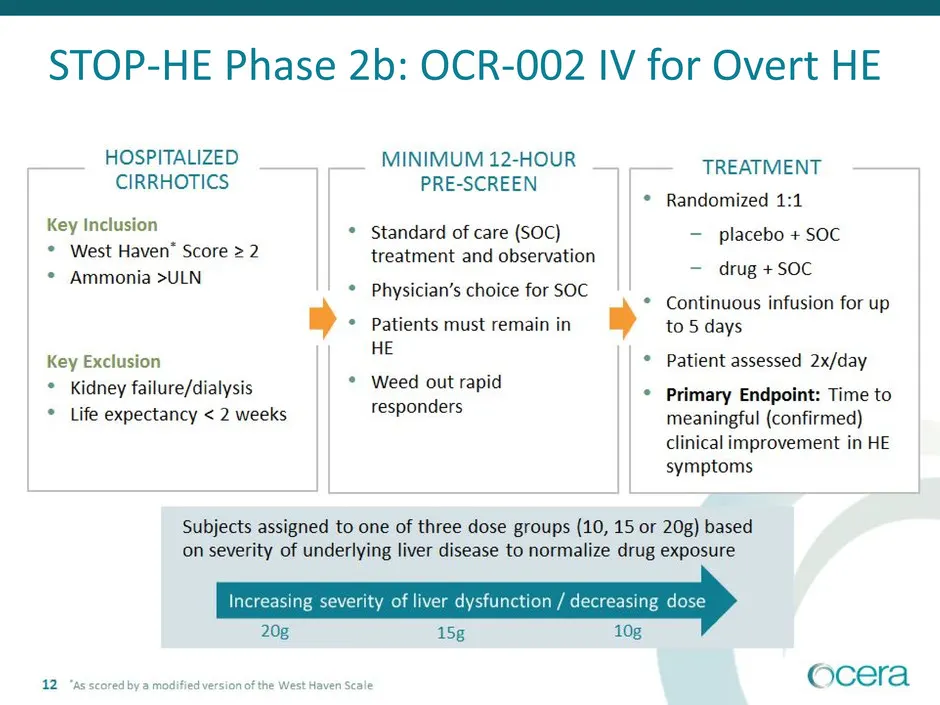
Slide 12: STOP-HE Phase 2b: OCR-002 IV for Overt HE
12 STOP-HE Phase 2b: OCR-002 IV for Overt HE *As scored by a modified version of the West Haven Scale 20g 15g 10g
Slide 13: Study Endpoints and Meaningful Clinical Improvement
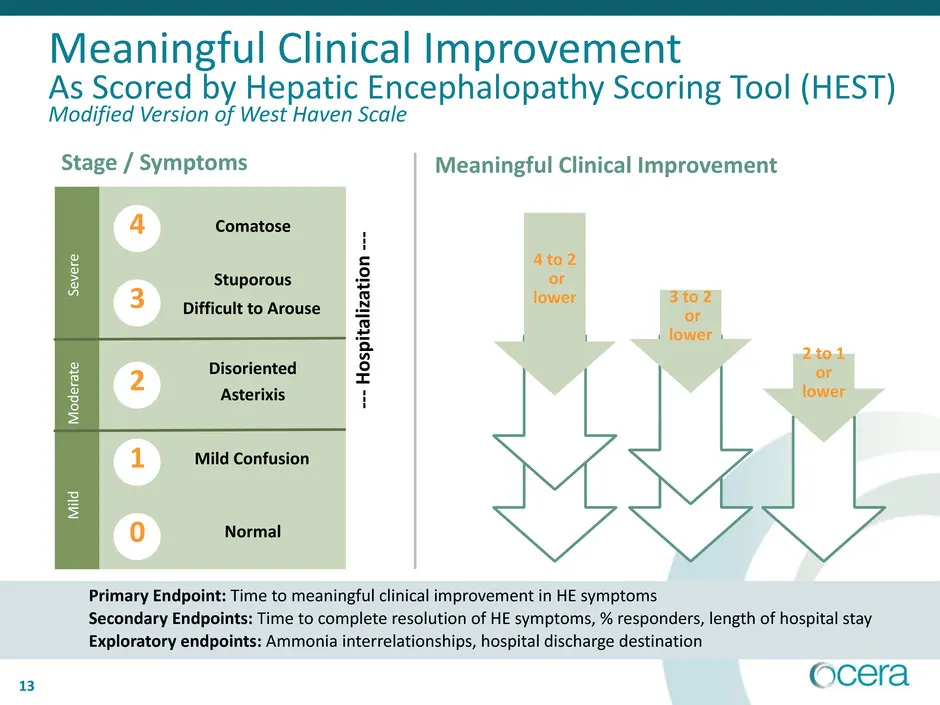
13 Primary Endpoint: Time to meaningful clinical improvement in HE symptoms Secondary Endpoints: Time to complete resolution of HE symptoms, % responders, length of hospital stay Exploratory endpoints: Ammonia interrelationships, hospital discharge destination Meaningful Clinical Improvement As Scor
Slide 14: STOP-HE Top-line Data Overview
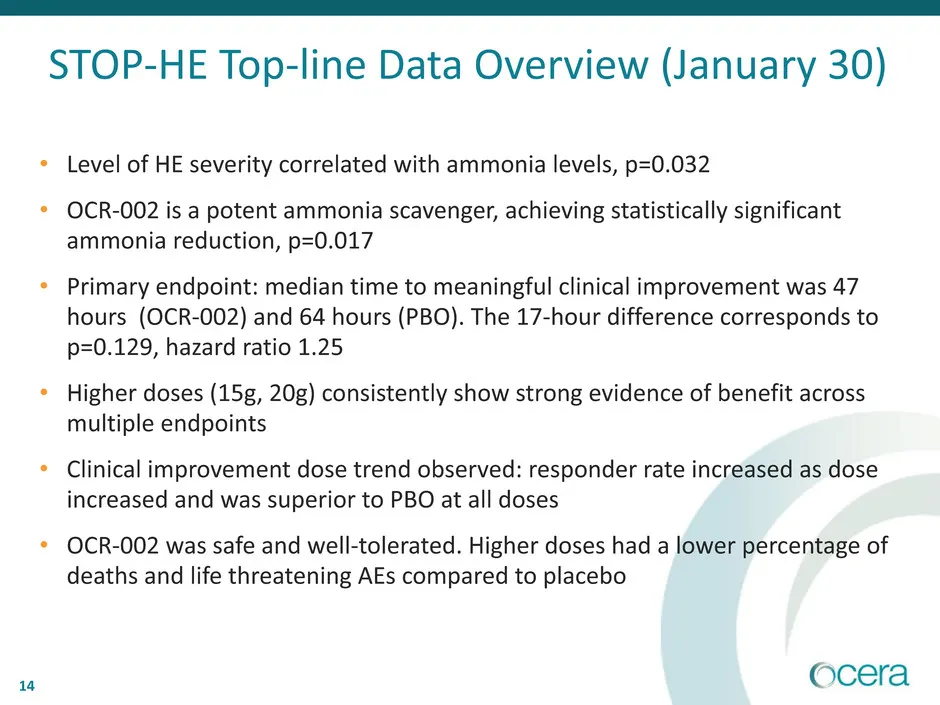
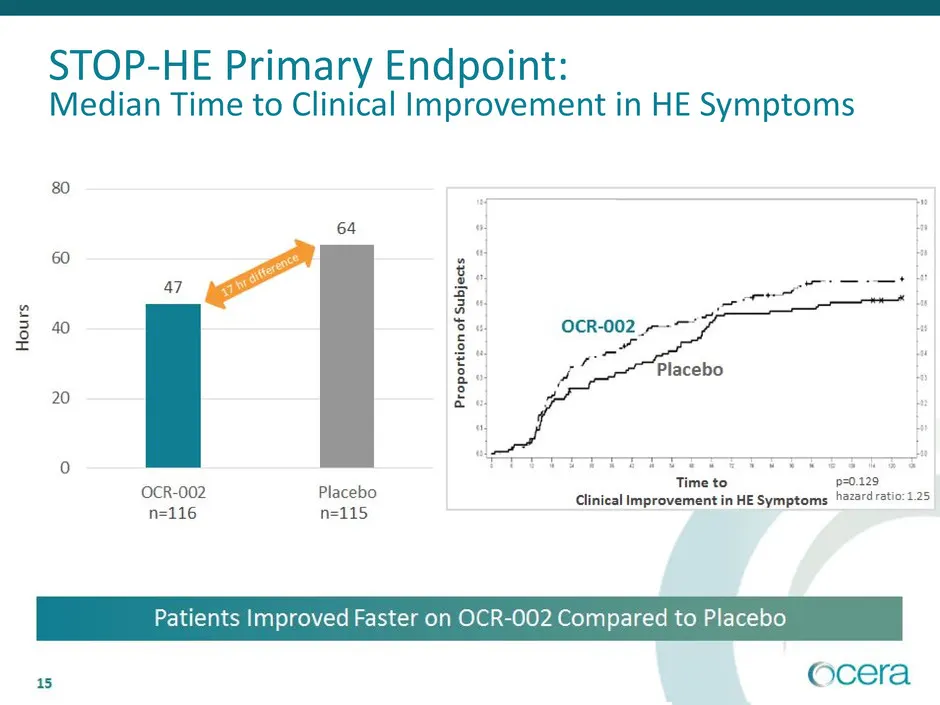
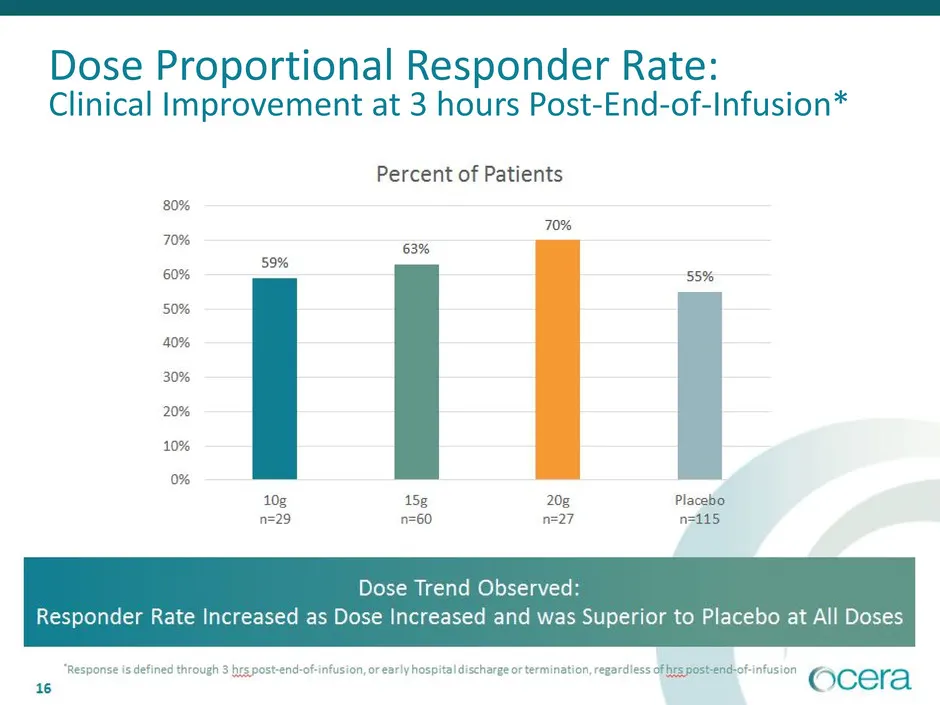
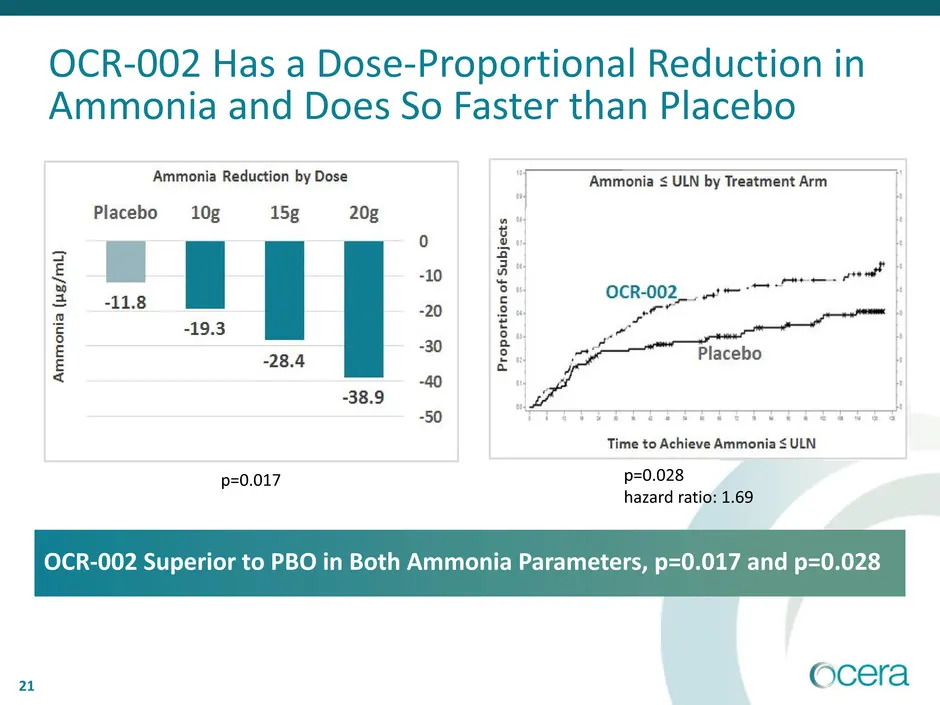
14 • Level of HE severity correlated with ammonia levels, p=0.032 • OCR-002 is a potent ammonia scavenger, achieving statistically significant ammonia reduction, p=0.017 • Primary endpoint: median time to meaningful clinical improvement was 47 hours (OCR-002) and 64 hours (PBO). The 17-hour differen
Slide 15: STOP-HE Primary Endpoint: Median Time to Clinical Improvement
15 STOP-HE Primary Endpoint: Median Time to Clinical Improvement in HE Symptoms
Slide 16: Dose Proportional Responder Rate
16 Dose Proportional Responder Rate: Clinical Improvement at 3 hours Post-End-of-Infusion*
Slide 17: OCR-002 is Safe and Well-Tolerated
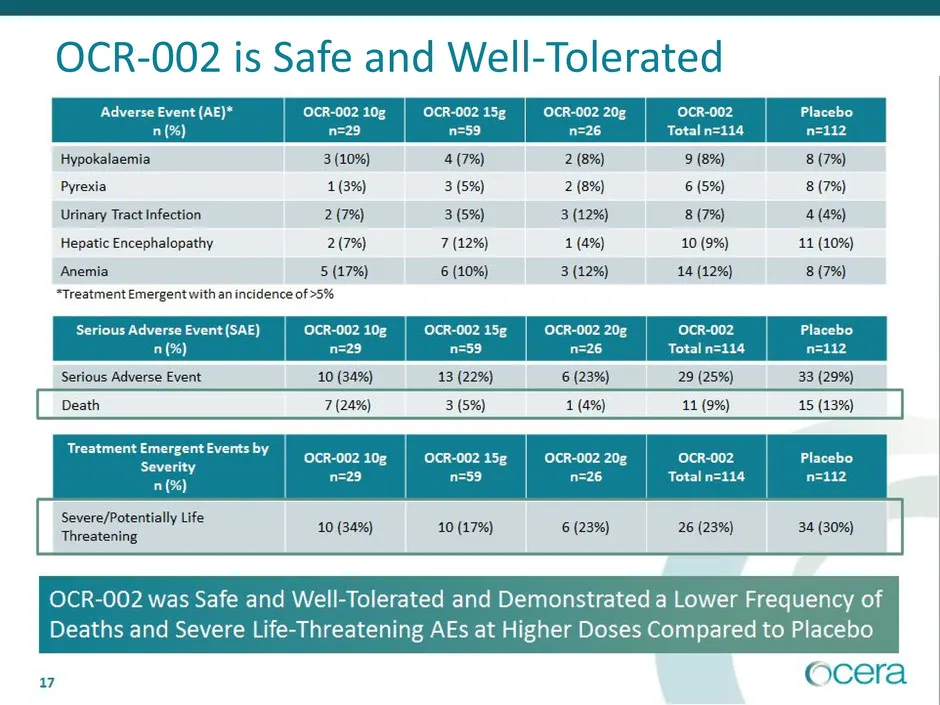
17 OCR-002 is Safe and Well-Tolerated
Slide 18: STOP-HE Phase 2b Study Subsequent Analysis
STOP-HE Phase 2b Study Subsequent Analysis
Slide 19: Summary of Subsequent Analyses
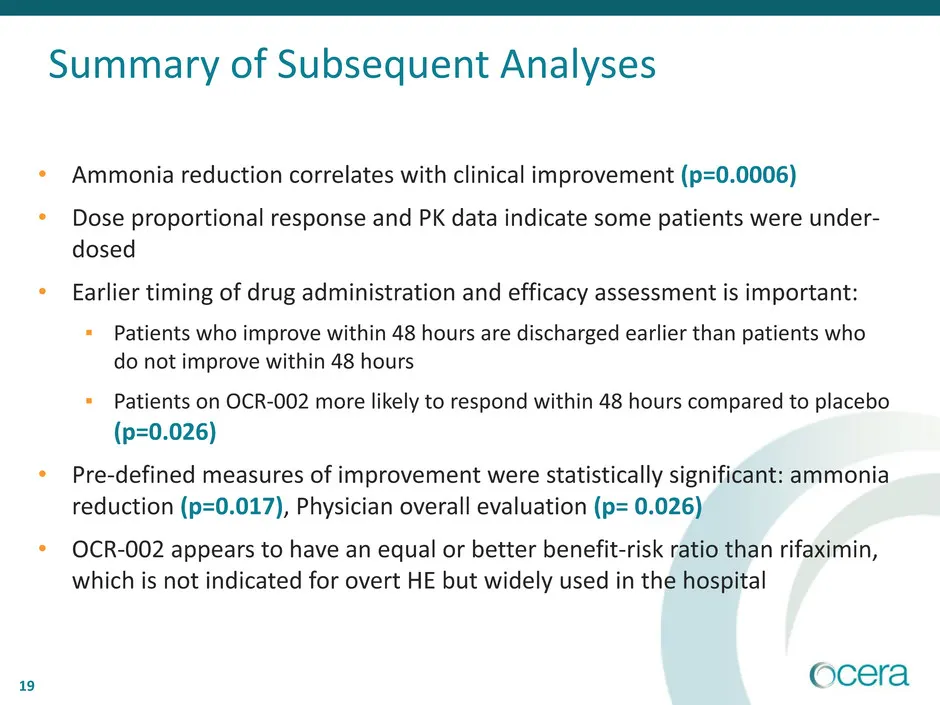
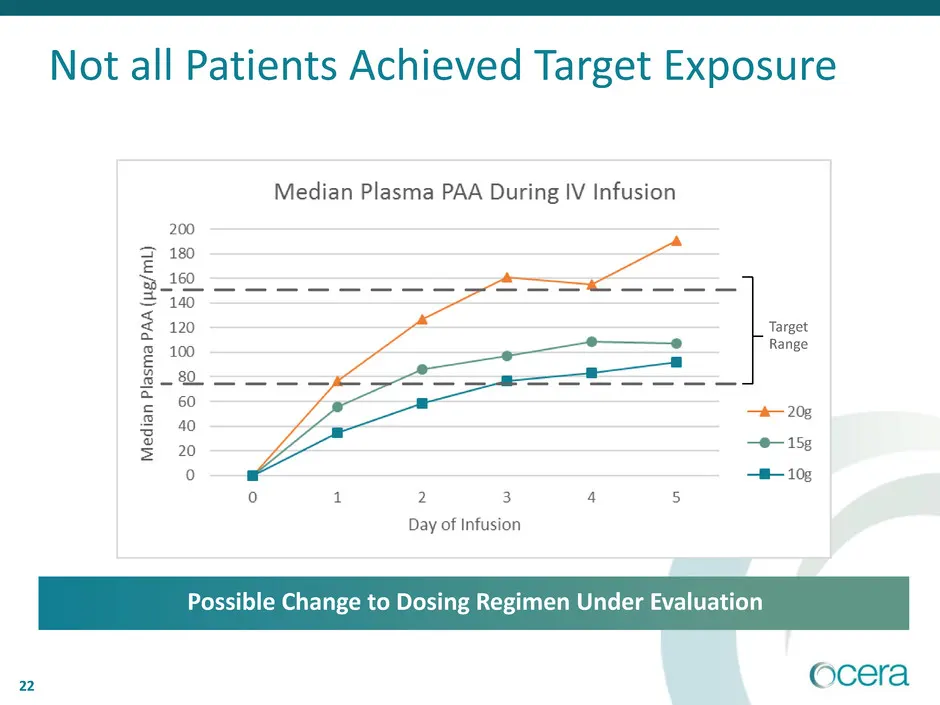
19 Summary of Subsequent Analyses • Ammonia reduction correlates with clinical improvement (p=0.0006) • Dose proportional response and PK data indicate some patients were under- dosed • Earlier timing of drug administration and efficacy assessment is important: ▪ Patients who improve within 48 hours
Slide 20: Ammonia Reduction Correlates with Clinical Improvement
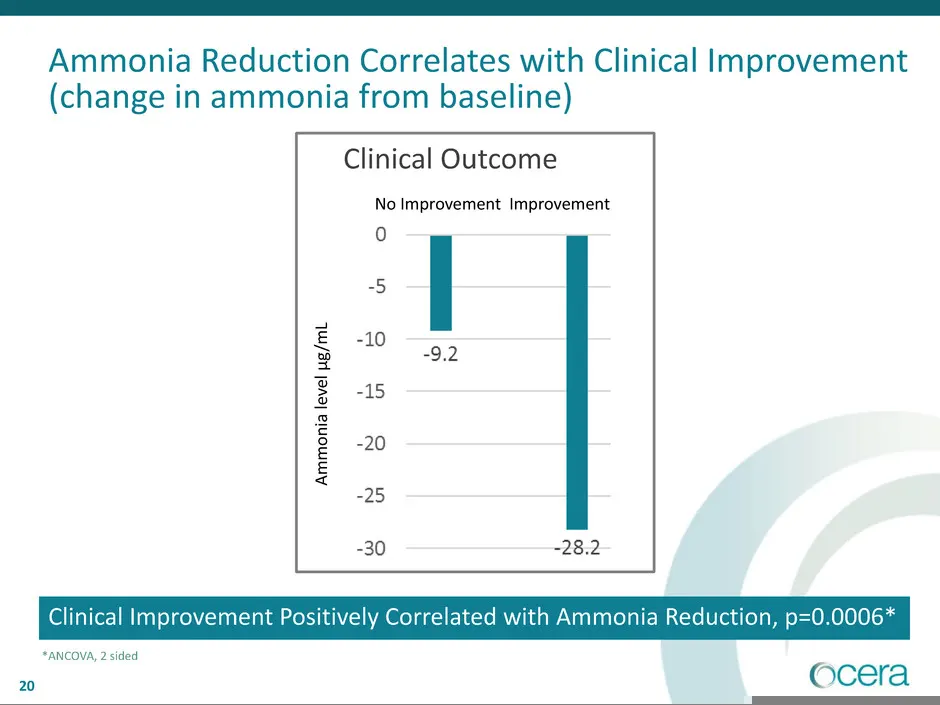
20 Ammonia Reduction Correlates with Clinical Improvement (change in ammonia from baseline) Clinical Improvement Positively Correlated with Ammonia Reduction, p=0.0006* *ANCOVA, 2 sided Ammonia l ev el µ g/m L Clinical Outcome No Improvement Improvement
Slide 21: OCR-002 Has a Dose-Proportional Reduction in Ammonia
21 OCR-002 Has a Dose-Proportional Reduction in Ammonia and Does So Faster than Placebo p=0.028 hazard ratio: 1.69 p=0.017 OCR-002 Superior to PBO in Both Ammonia Parameters, p=0.017 and p=0.028
Slide 22: Not all Patients Achieved Target Exposure
22 Not all Patients Achieved Target Exposure Target Range Possible Change to Dosing Regimen Under Evaluation
Slide 23: Timing of Outcome Measurement: Better than PBO at 48 Hours
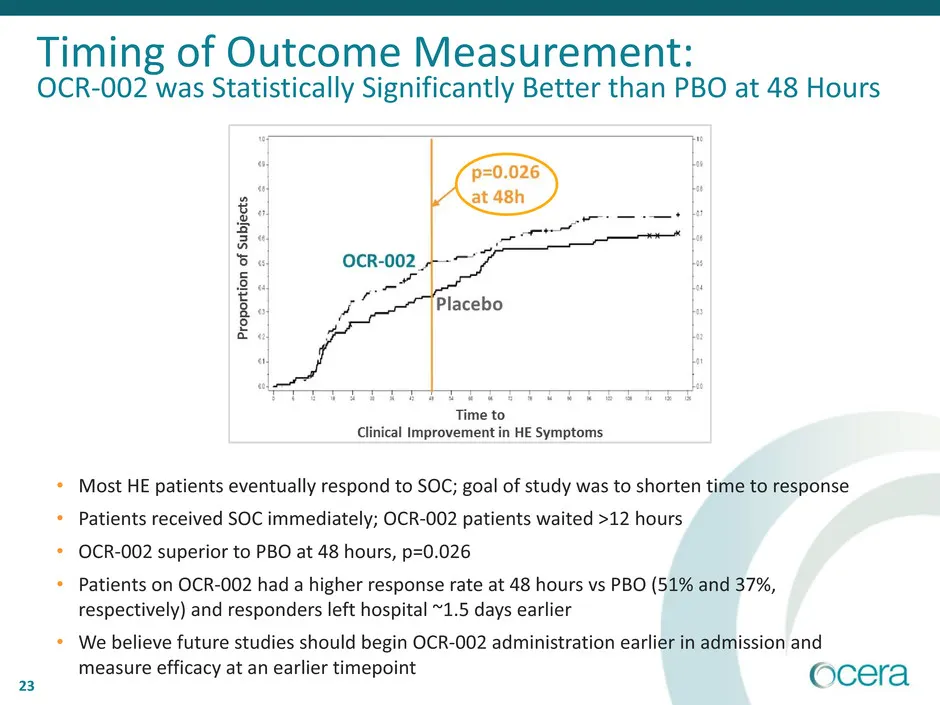
23 Timing of Outcome Measurement: OCR-002 was Statistically Significantly Better than PBO at 48 Hours • Most HE patients eventually respond to SOC; goal of study was to shorten time to response • Patients received SOC immediately; OCR-002 patients waited >12 hours • OCR-002 superior to PBO at 48 hou
Slide 24: Other Predefined Endpoints Reached Statistical Significance
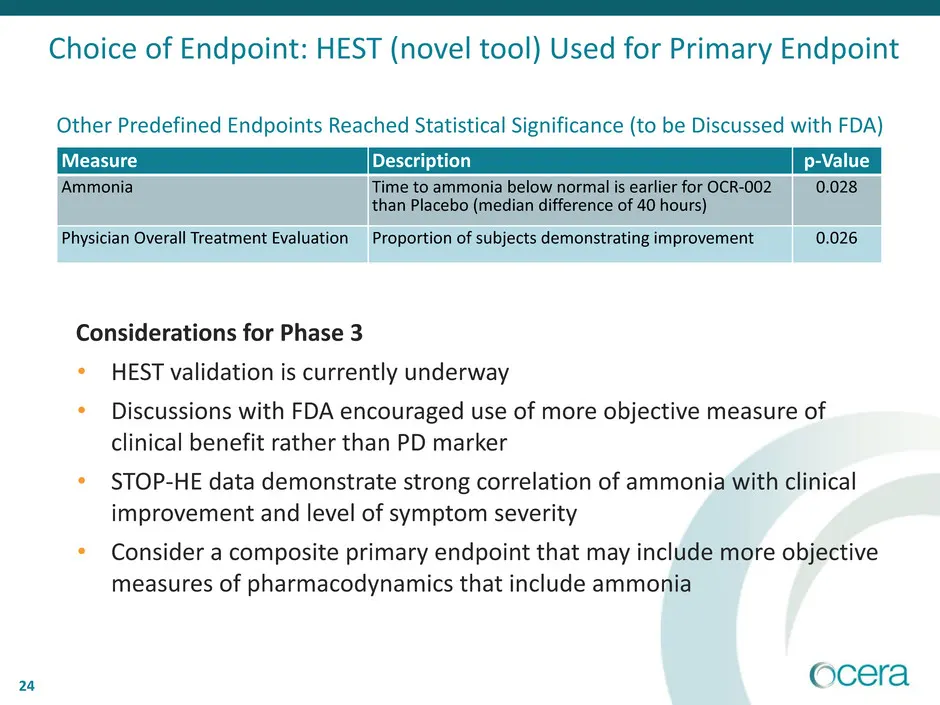
24 Measure Description p-Value Ammonia Time to ammonia below normal is earlier for OCR-002 than Placebo (median difference of 40 hours) 0.028 Physician Overall Treatment Evaluation Proportion of subjects demonstrating improvement 0.026 Choice of Endpoint: HEST (novel tool) Used for Primary Endpoint
Slide 25: Role of Rifaximin was Explored
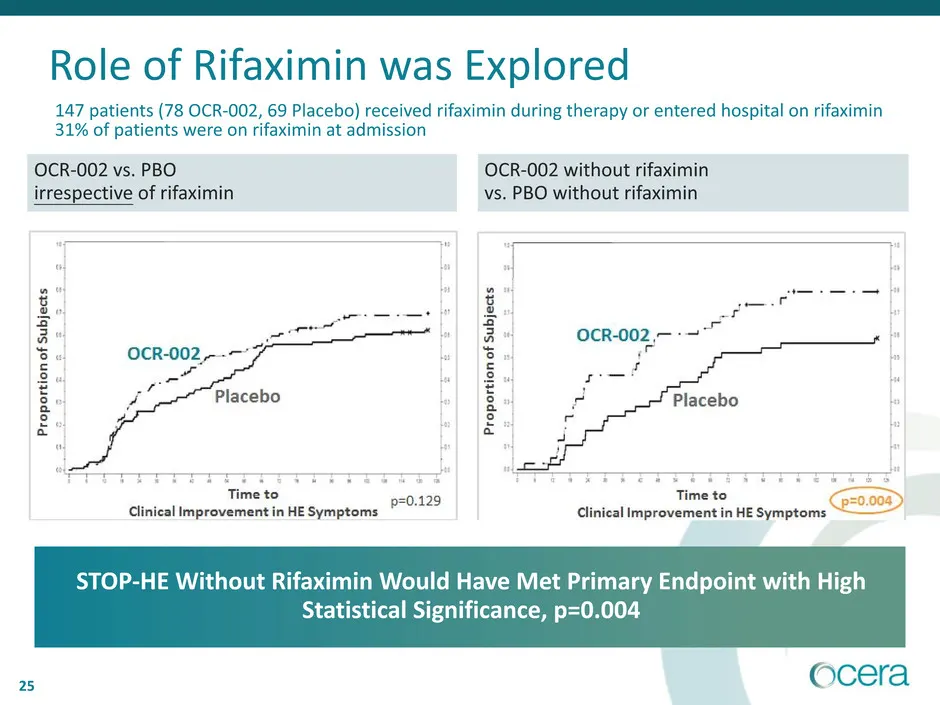
25 Role of Rifaximin was Explored OCR-002 without rifaximin vs. PBO without rifaximin OCR-002 vs. PBO irrespective of rifaximin 147 patients (78 OCR-002, 69 Placebo) received rifaximin during therapy or entered hospital on rifaximin 31% of patients were on rifaximin at admission STOP-HE Without Rifa
Slide 26: OCR-002 vs. Rifaximin Shows Positive Drug Effect for Acute Care
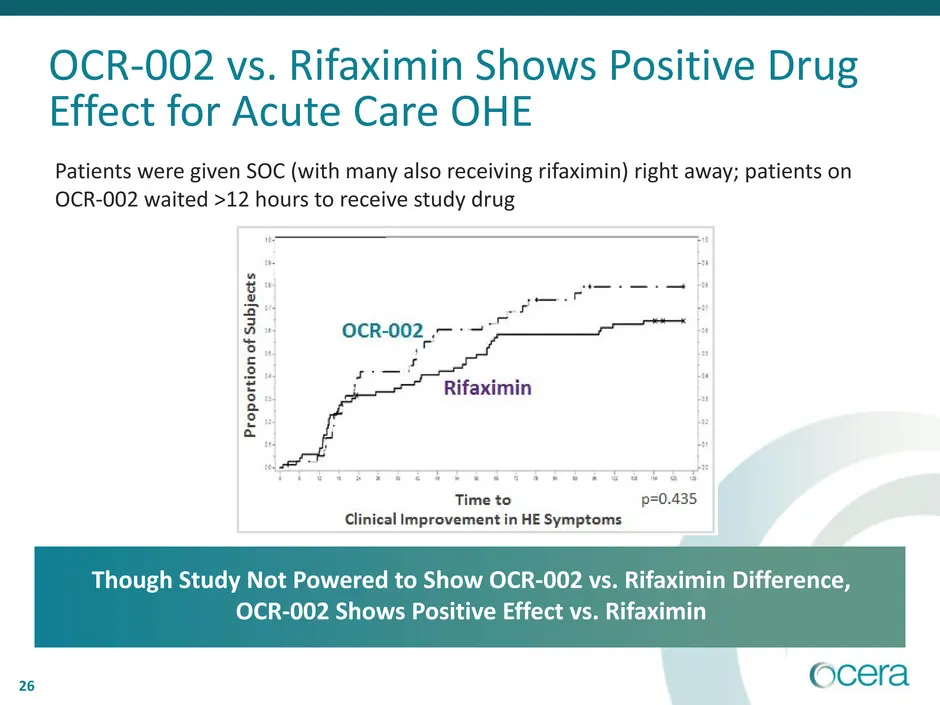
26 OCR-002 vs. Rifaximin Shows Positive Drug Effect for Acute Care OHE Patients were given SOC (with many also receiving rifaximin) right away; patients on OCR-002 waited >12 hours to receive study drug Though Study Not Powered to Show OCR-002 vs. Rifaximin Difference, OCR-002 Shows Positive Effect
Slide 27: OCR-002 May Be More Appropriate than Rifaximin in Acute Overt HE
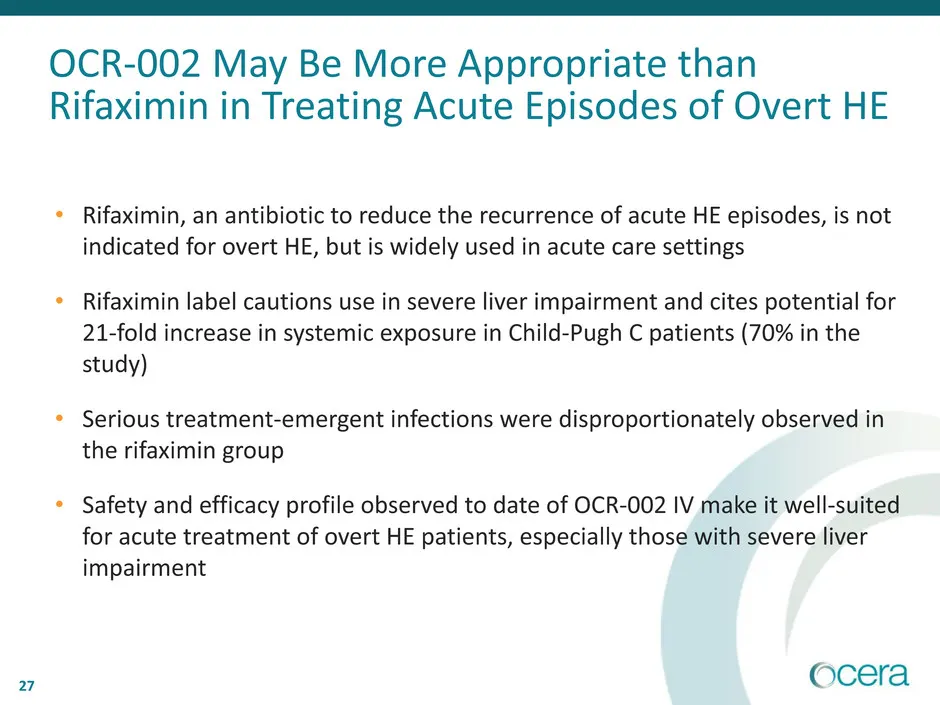
27 OCR-002 May Be More Appropriate than Rifaximin in Treating Acute Episodes of Overt HE • Rifaximin, an antibiotic to reduce the recurrence of acute HE episodes, is not indicated for overt HE, but is widely used in acute care settings • Rifaximin label cautions use in severe liver impairment and ci
Slide 28: Clinical Effects: Addressing Ammonia Toxicity Syndrome
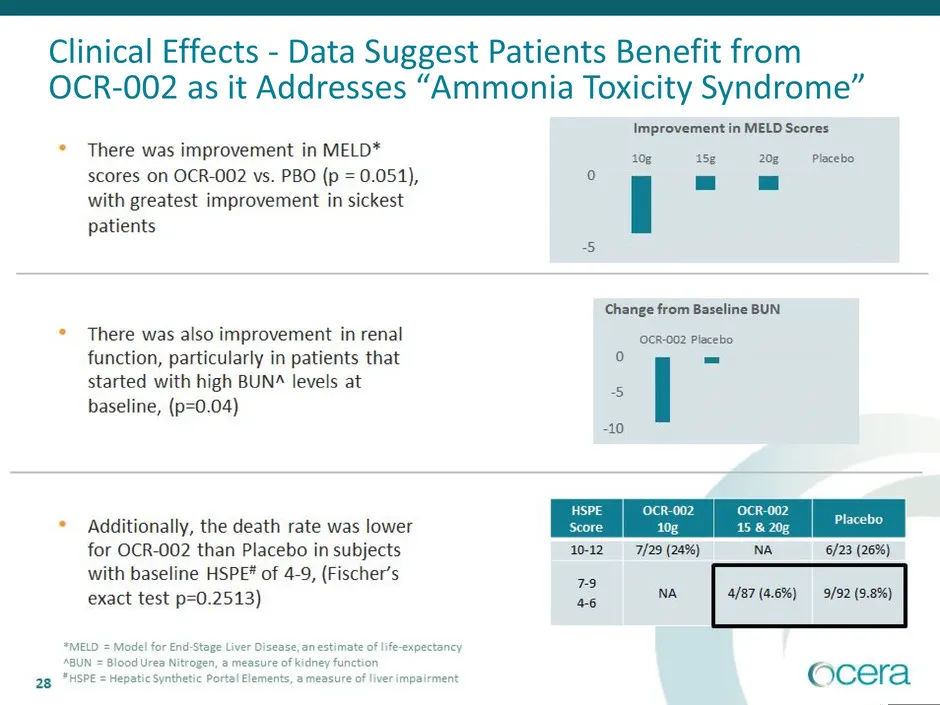
28 Clinical Effects - Data Suggest Patients Benefit from OCR-002 as it Addresses “Ammonia Toxicity Syndrome” *MELD = Model for End-Stage Liver Disease, an estimate of life-expectancy ^BUN = Blood Urea Nitrogen, a measure of kidney function # HSPE = Hepatic Synthetic Portal Elements, a measure of liv
Slide 29: Data Suggest OCR-002 has Potential Broad Application
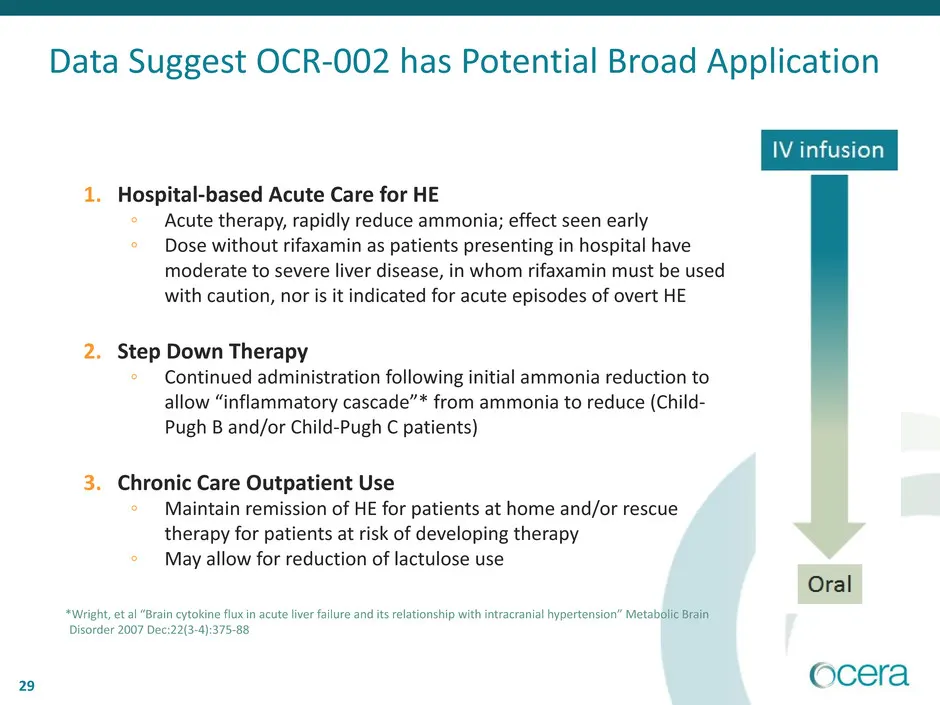
29 Data Suggest OCR-002 has Potential Broad Application 1. Hospital-based Acute Care for HE ◦ Acute therapy, rapidly reduce ammonia; effect seen early ◦ Dose without rifaxamin as patients presenting in hospital have moderate to severe liver disease, in whom rifaxamin must be used with caution, nor i
Slide 30: Wealth of Data Supports Promise of OCR-002
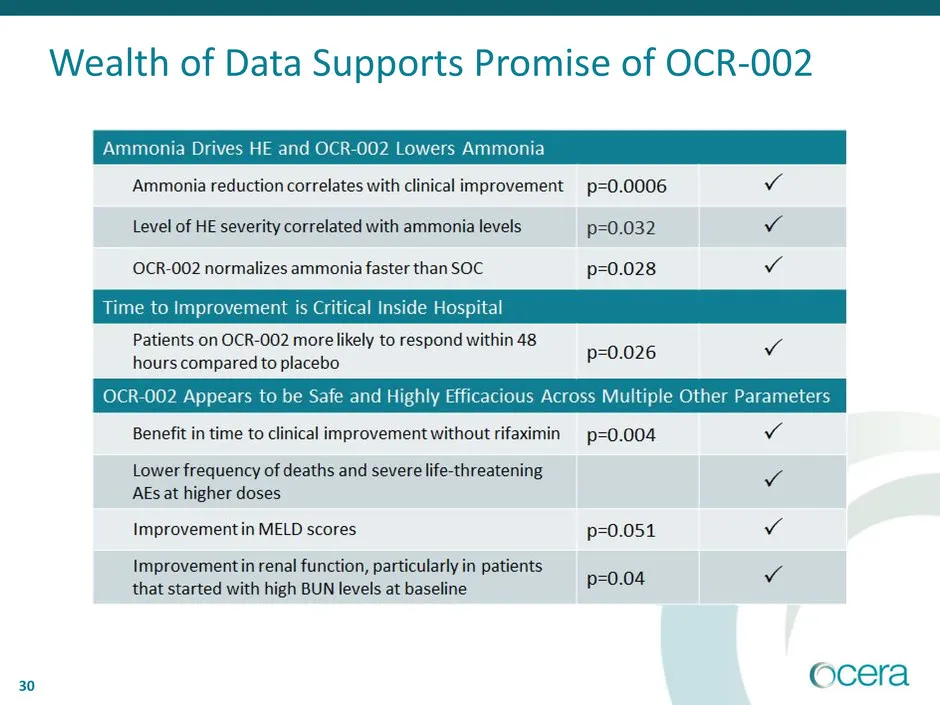
30 Wealth of Data Supports Promise of OCR-002
Slide 31: Next Steps
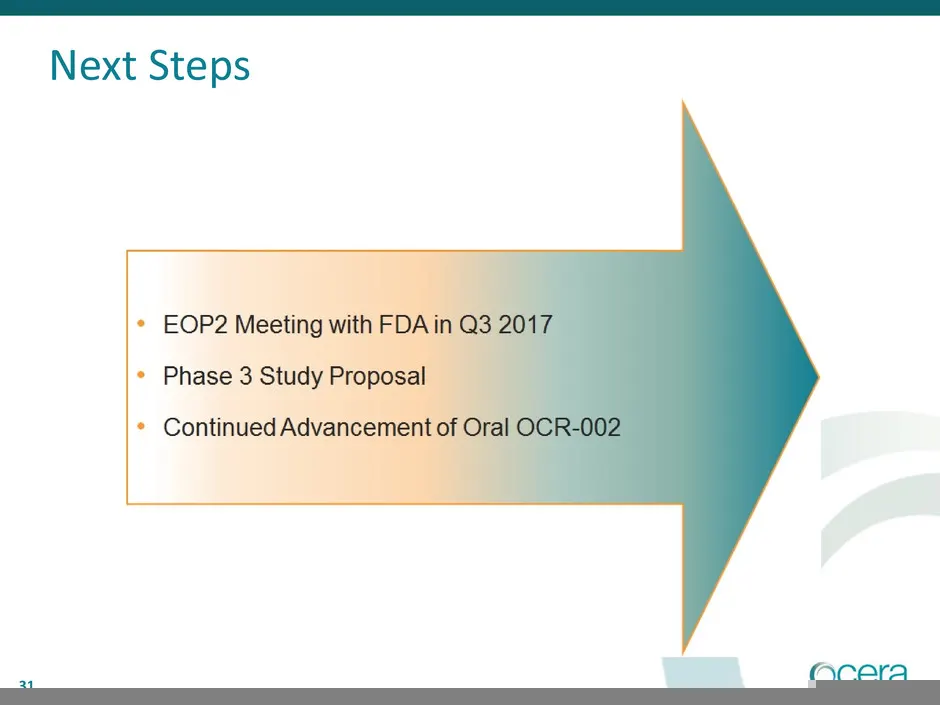
SS: 0 !!:2:.:. han !:.0== Next Steps ° EOP2 Meeting with FDA in Q3 2017 * Phase 3 Study Proposal * Continued Advancement of Oral
Source: SEC EDGAR · 8-K filed Mar 8, 2017