Celyad Oncology SA · EURONEXT:CYAD
Celyad Oncology SA — William Blair Growth Stock Conference 2021
51 slides from Celyad Oncology SA's conference presentation, Jul 20, 2021

Slide 1: Research and Development Day Virtual Webinar
Research and Development Day Virtual Webinar William Blair Growth Stock Conference July 20, 2021
Slide 2: Forward Looking Statements
Forward Looking Statements This presentation may contain forward-looking statements, within the meaning of applicable securities laws, including the Private Securities Litigation Reform Act of 1995. Forward-looking statements include statements about our expectations and next steps for our armored C
Slide 3: Today's Agenda
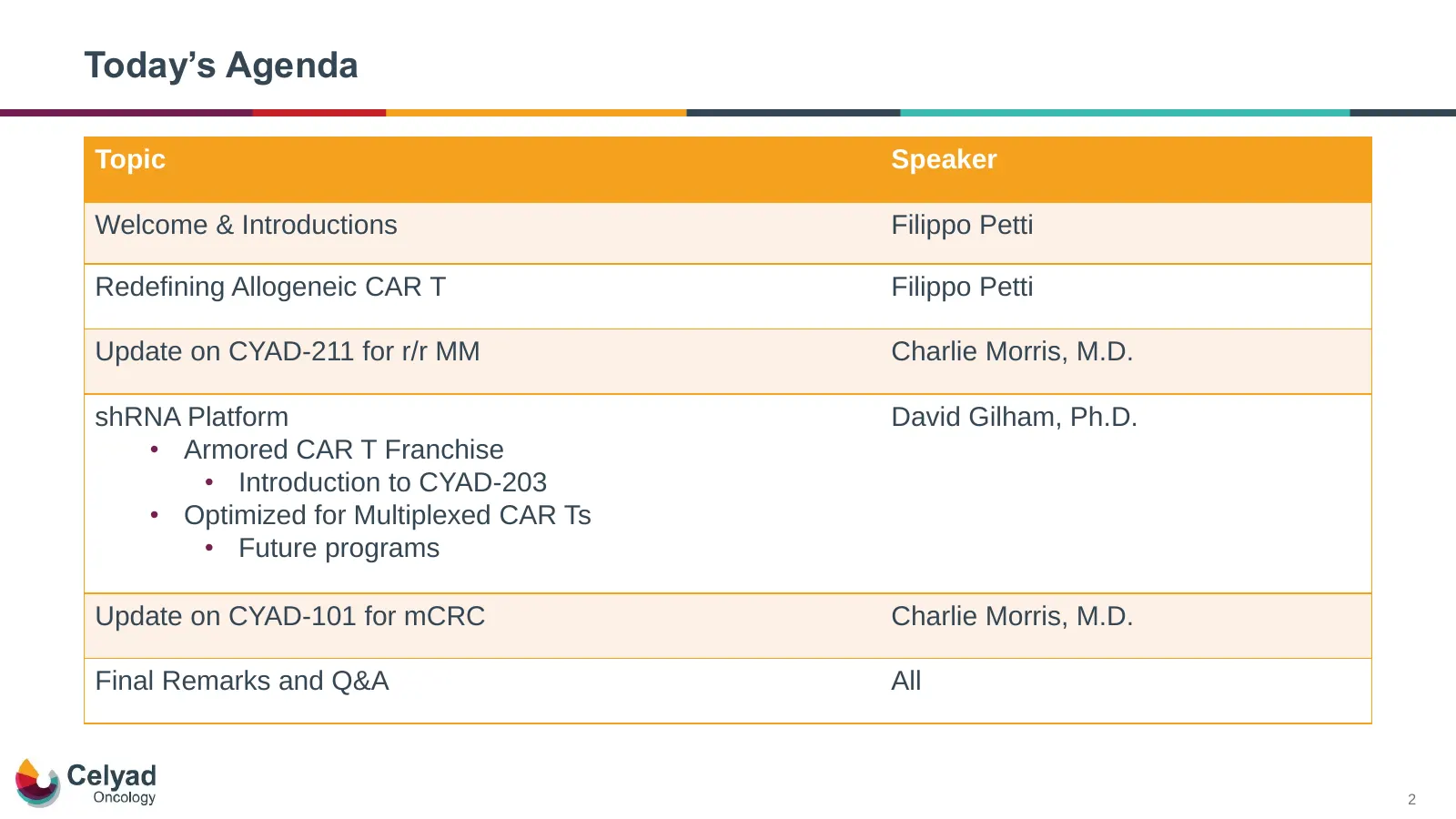
Today’s Agenda Topic Speaker Welcome & Introductions Filippo Petti Redefining Allogeneic CAR T Filippo Petti Update on CYAD-211 for r/r MM Charlie Morris, M.D. shRNA Platform David Gilham, Ph.D. • Armored CAR T Franchise • Introduction to CYAD-203 • Optimized for Multiplexed CAR Ts • Future programs
Slide 4: Redefining Allogeneic CAR T
elyad Oncology Redefining Allogeneic CAR T
Slide 5: Evolution of CAR T Landscape Towards Off-the-Shelf Approaches
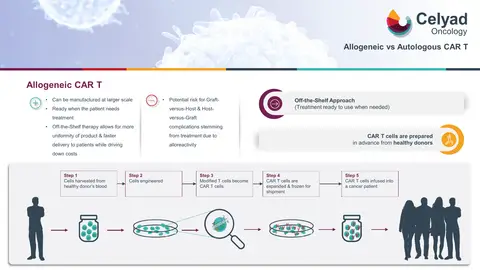
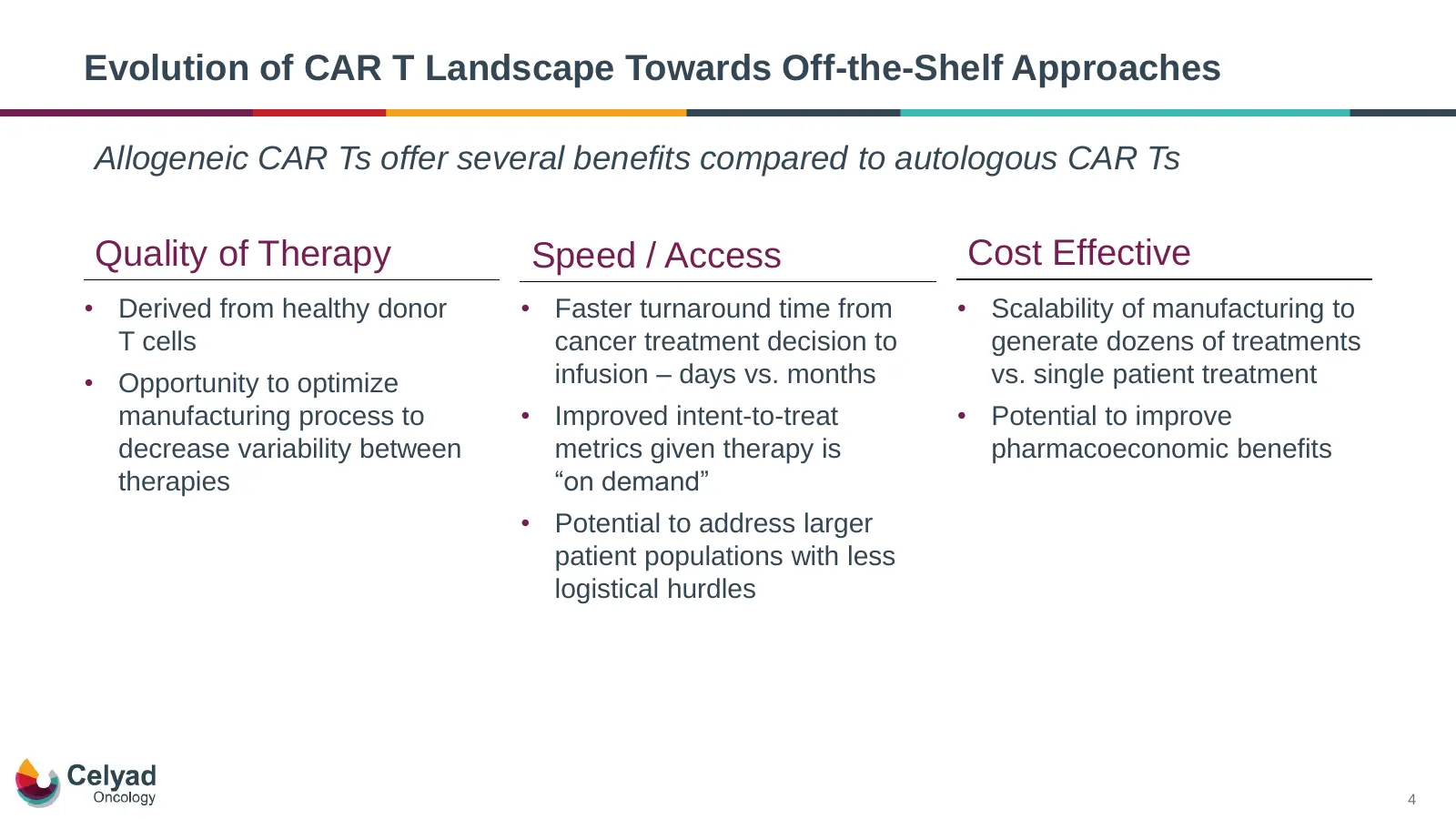
Evolution of CAR T Landscape Towards Off-the-Shelf Approaches Allogeneic CAR Ts offer several benefits compared to autologous CAR Ts Quality of Therapy Speed / Access Cost Effective • Derived from healthy donor • Faster turnaround time from • Scalability of manufacturing to T cells cancer treatment
Slide 6: Expected Real-World Benefits of Our Approach to Allogeneic CAR T
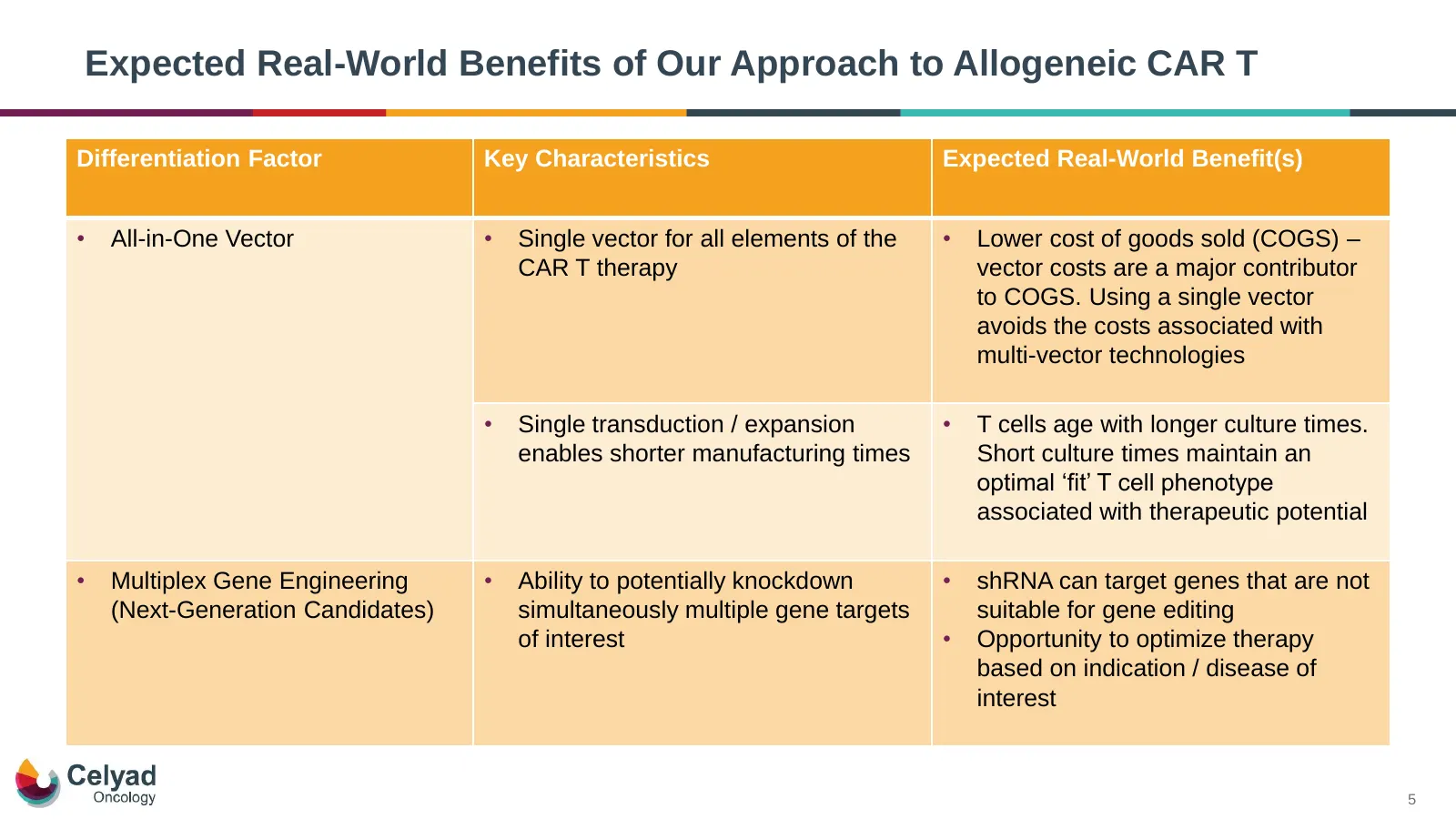
Expected Real-World Benefits of Our Approach to Allogeneic CAR T Differentiation Factor Key Characteristics Expected Real-World Benefit(s) • All-in-One Vector • Single vector for all elements of the • Lower cost of goods sold (COGS) – CAR T therapy vector costs are a major contributor to COGS. Using
Slide 7: Update on CYAD-211 for r/r MM
\ ‘ ~ \ =\ = elyad Oncology Update on CYAD-211 for r/r MM
Slide 8: CYAD-211 – shRNA-based Allogeneic CAR T Candidate for r/r MM
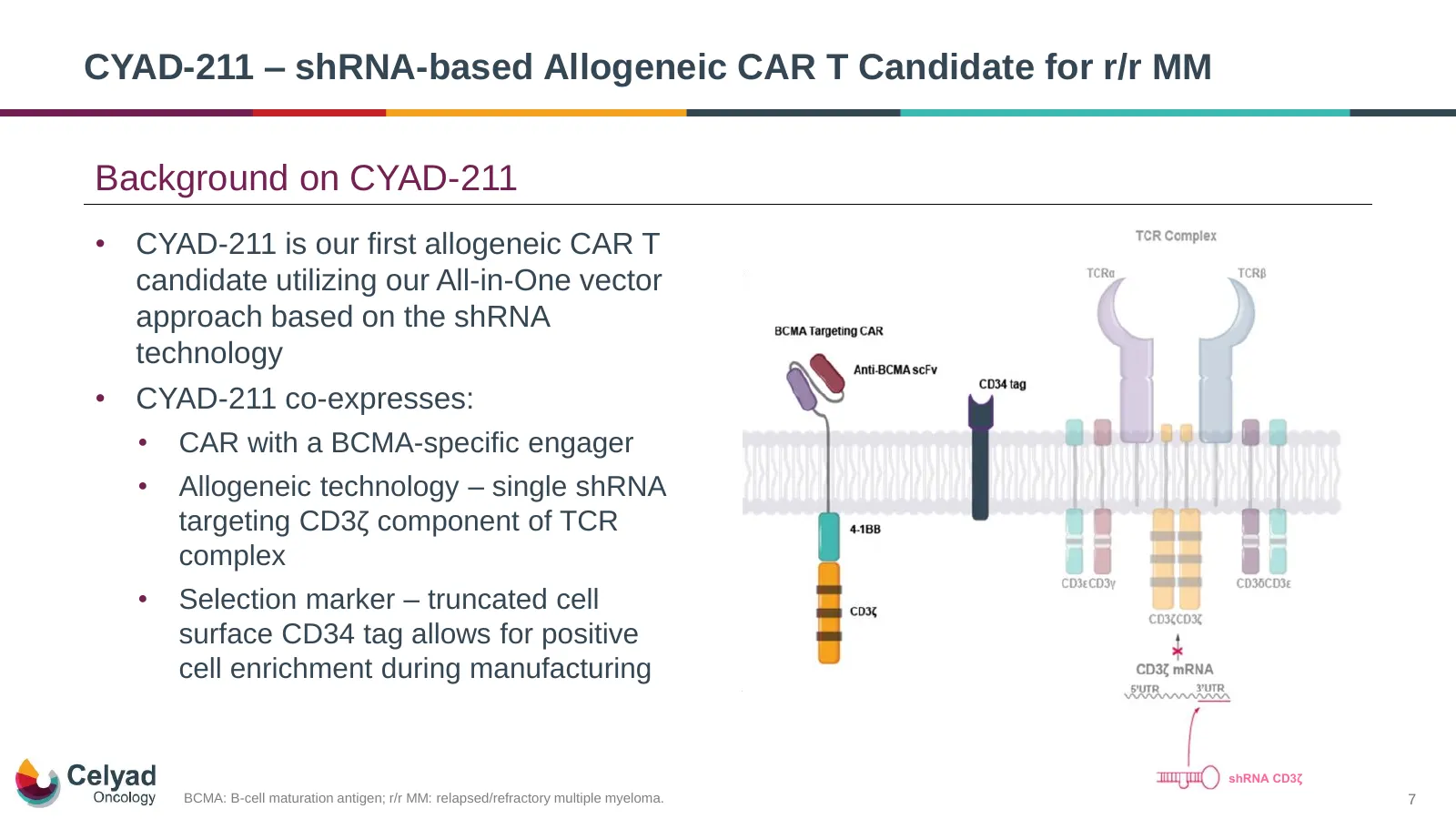
CYAD-211 – shRNA-based Allogeneic CAR T Candidate for r/r MM Background on CYAD-211 • CYAD-211 is our first allogeneic CAR T candidate utilizing our All-in-One vector approach based on the shRNA technology • CYAD-211 co-expresses: • CAR with a BCMA-specific engager • Allogeneic technology – single s
Slide 9: shRNA as a Novel Allogeneic Technology for CAR T
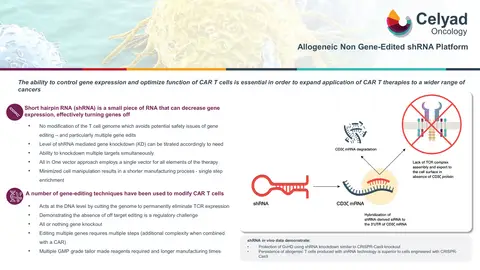
shRNA as a Novel Allogeneic Technology for CAR T Keys to establishing technology proof-of-concept ❑ No evidence of GvHD ❑ Cell kinetics ❑ Initial clinical activity 8
Slide 10: CYAD-211 – IMMUNICY-1 Phase 1 Trial
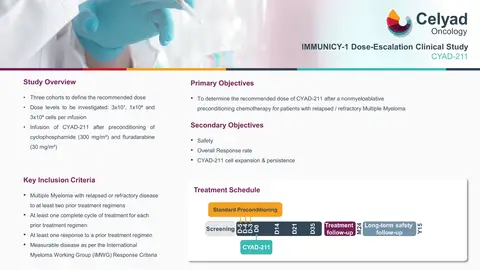
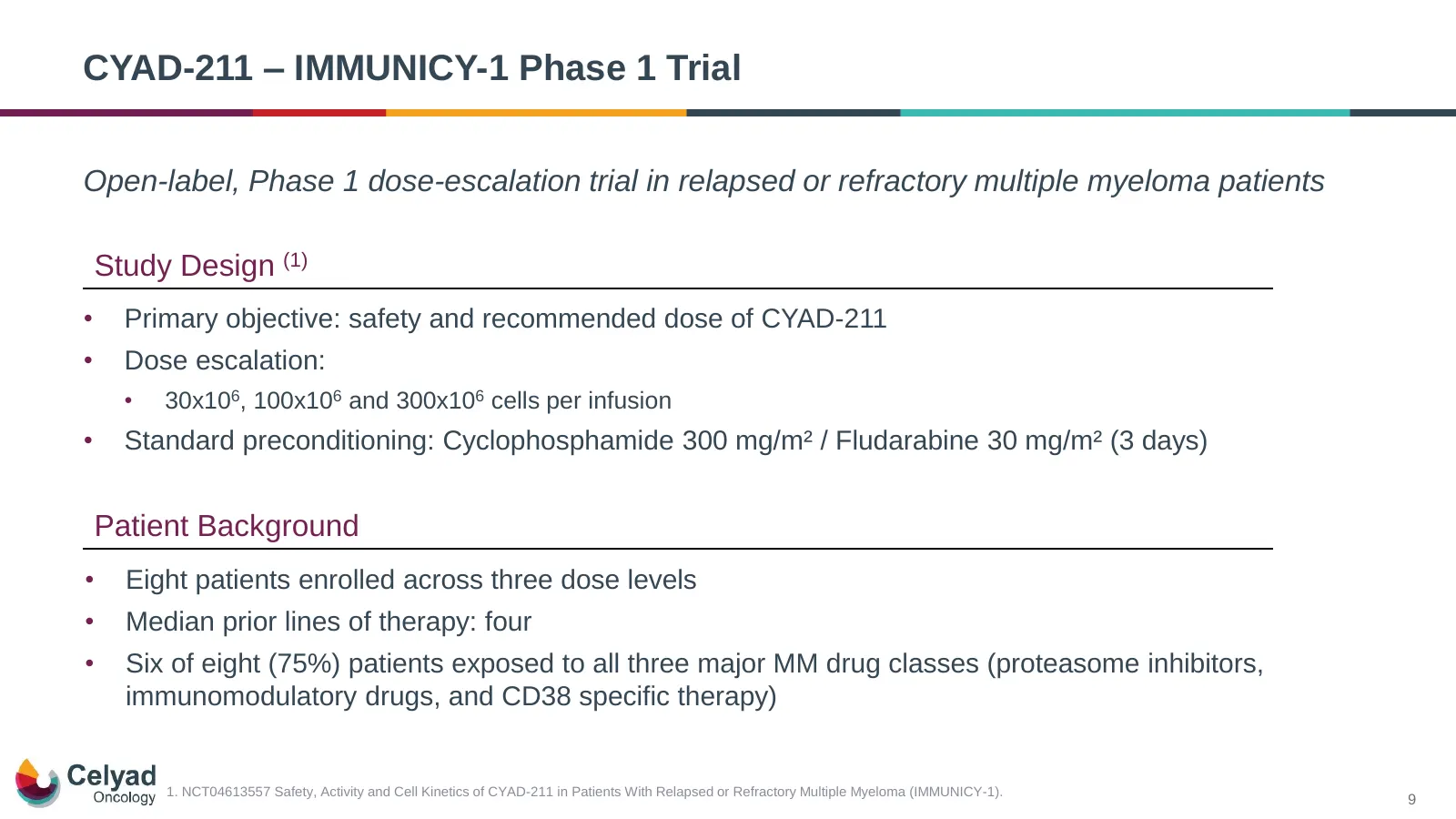
CYAD-211 – IMMUNICY-1 Phase 1 Trial Open-label, Phase 1 dose-escalation trial in relapsed or refractory multiple myeloma patients Study Design (1) • Primary objective: safety and recommended dose of CYAD-211 • Dose escalation: • 30x106, 100x106 and 300x106 cells per infusion • Standard preconditioni
Slide 11: CYAD-211 – Summary of Initial Clinical Data – EHA June 2021
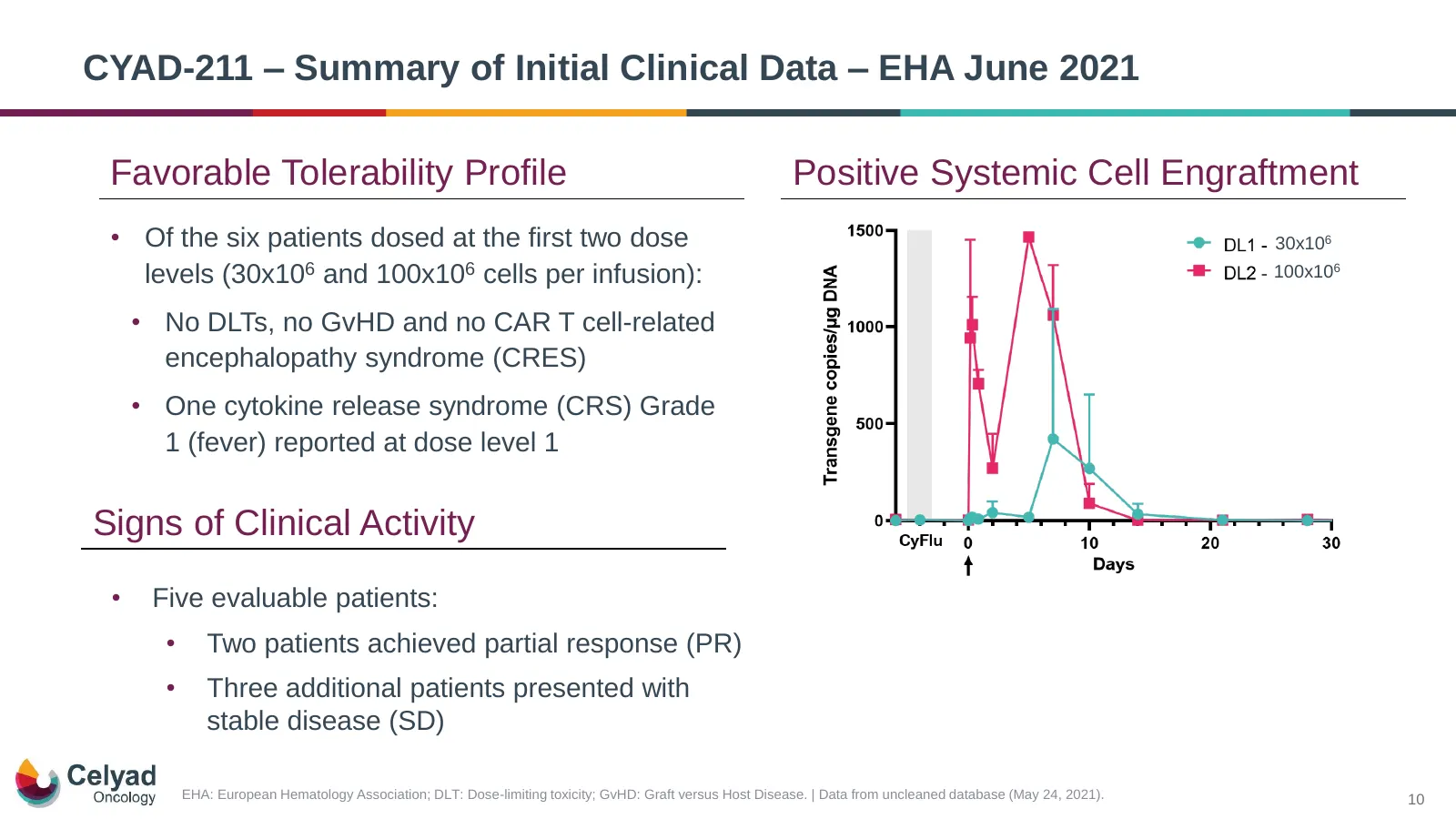
CYAD-211 – Summary of Initial Clinical Data – EHA June 2021 Favorable Tolerability Profile Positive Systemic Cell Engraftment • Of the six patients dosed at the first two dose 30x106 levels (30x106 and 100x106 cells per infusion): 100x106 • No DLTs, no GvHD and no CAR T cell-related encephalopathy s
Slide 12: CYAD-211 Case Study – Response in Individual Lesions in Patient 5
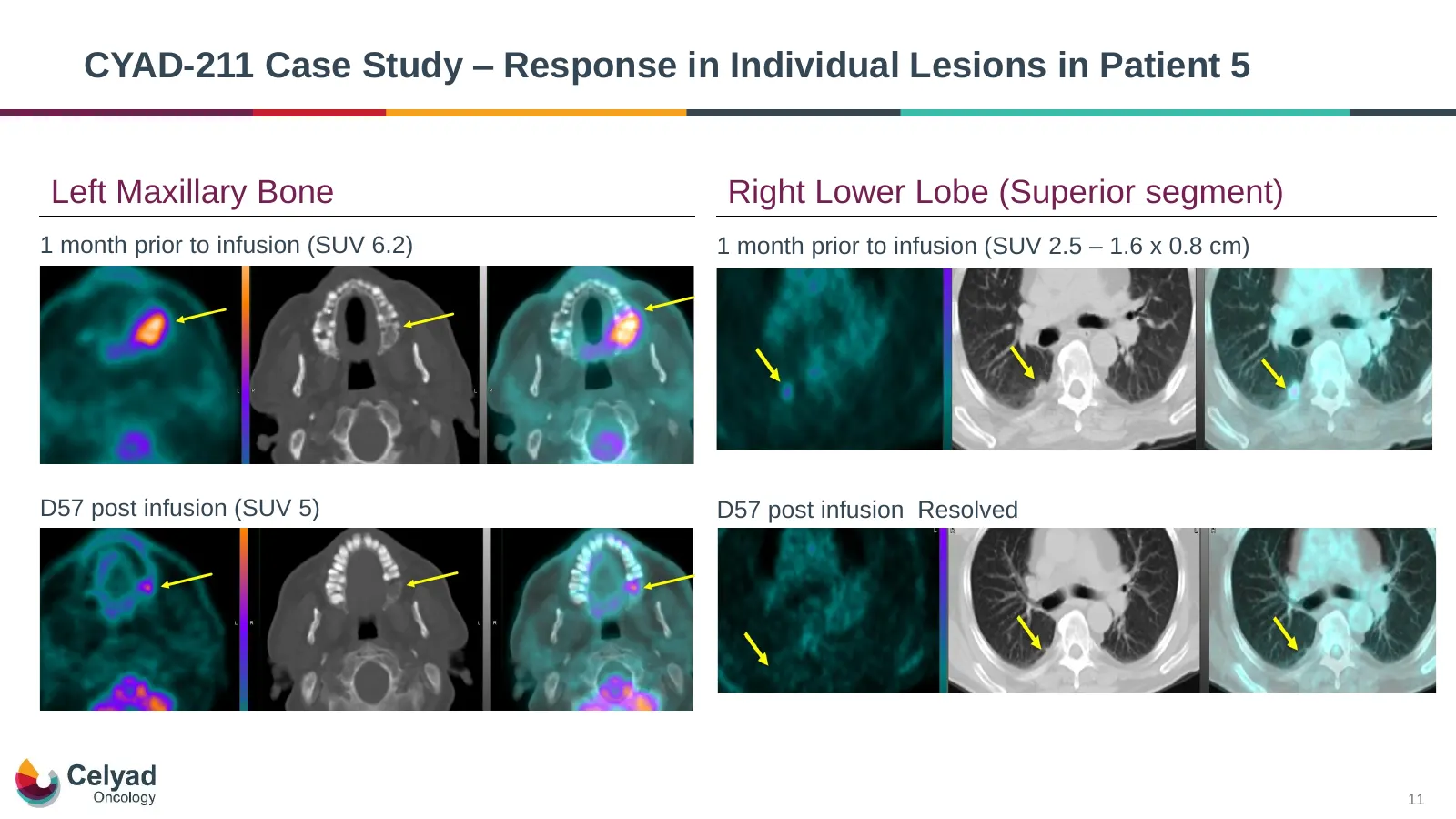
CYAD-211 Case Study – Response in Individual Lesions in Patient 5 Left Maxillary Bone Right Lower Lobe (Superior segment) 1 month prior to infusion (SUV 6.2) 1 month prior to infusion (SUV 2.5 – 1.6 x 0.8 cm) D57 post infusion (SUV 5) D57 post infusion Resolved 11
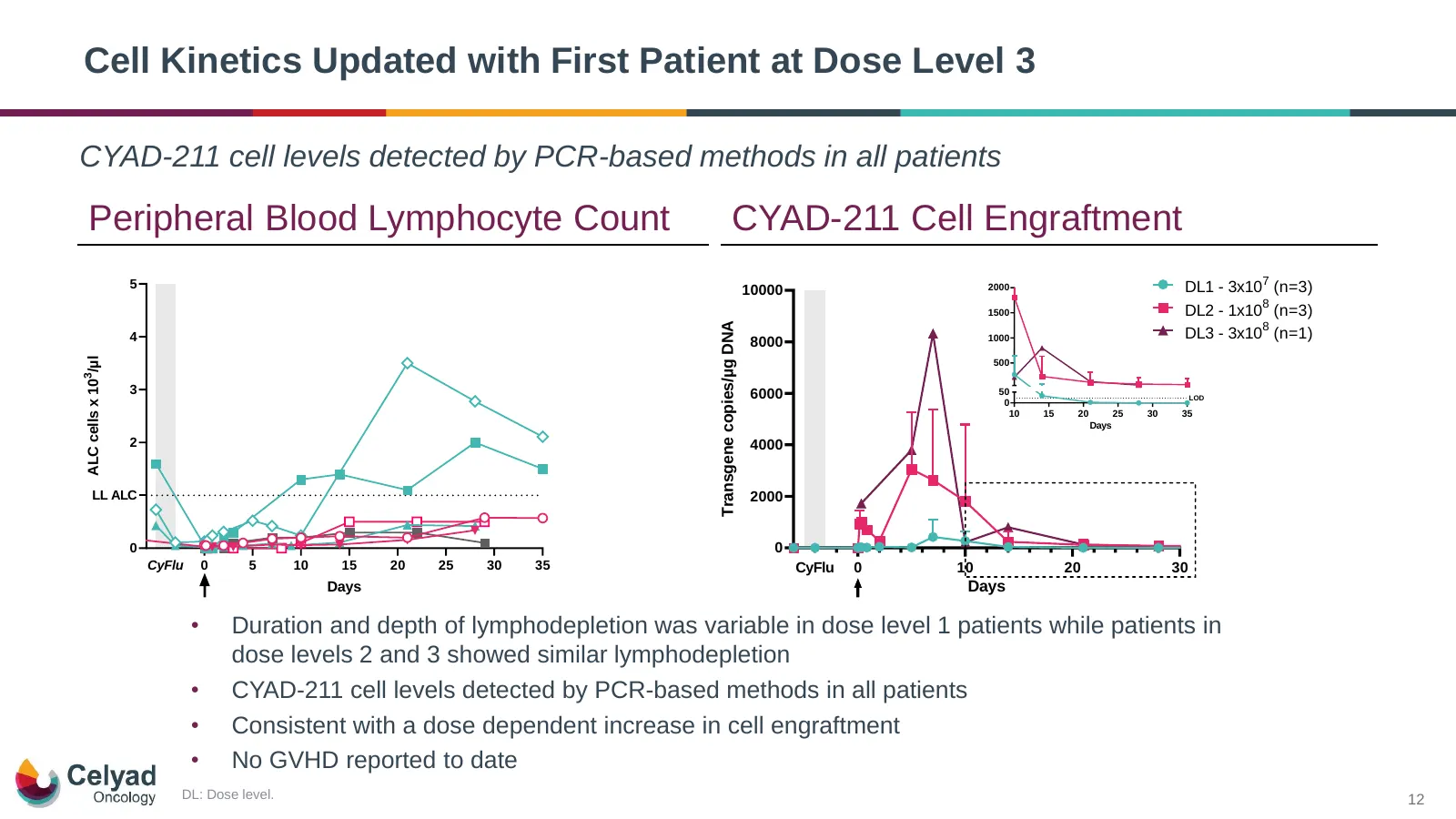
Slide 13: Cell Kinetics Updated with First Patient at Dose Level 3
Cell Kinetics Updated with First Patient at Dose Level 3 CYAD-211 cell levels detected by PCR-based methods in all patients Peripheral Blood Lymphocyte Count CYAD-211 Cell Engraftment 5 Patient #01 10000 2000 DL1 - 3x10⁷ (n=3) Patient #02 DL1 1500 DL2 - 1x10⁸ (n=3) Transgene copies/µg DNA 4 Patient
Slide 14: shRNA as a Novel Allogeneic Technology for CAR T
shRNA as a Novel Allogeneic Technology for CAR T Keys to establishing technology proof-of-concept ✓ ❑ No evidence of GvHD ✓ ❑ Cell kinetics ✓ ❑ Initial clinical activity 13
Slide 15: Next Steps for CYAD-211 IMMUNICY-1 Trial
Next Steps for CYAD-211 IMMUNICY-1 Trial • Enrollment ongoing in dose level 3 (300x106 cells per infusion) • Plan to explore higher dose preconditioning regimens after dose level 3 • Additional data from the dose escalation trial expected during second half 2021 14
Slide 16: shRNA Platform – Armored CAR T Franchise
shRNA Platform – Armored CAR T Franchise
Slide 17: Armored CAR Ts to Target the Tumor Microenvironment
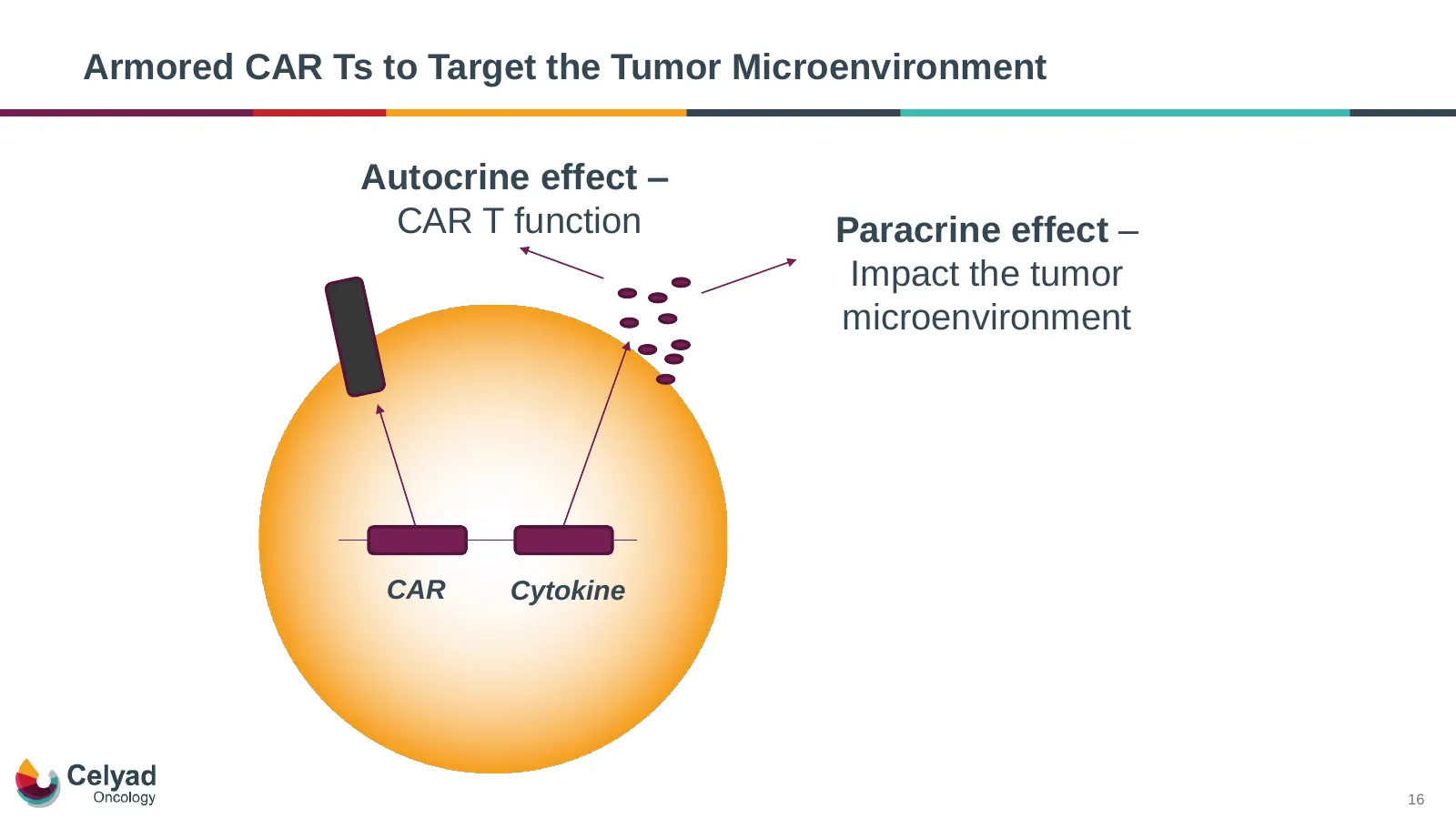
Armored CAR Ts to Target the Tumor Microenvironment Autocrine effect – CAR T function Paracrine effect – Impact the tumor microenvironment CAR Cytokine 16
Slide 18: Armored CARs Using Interleukin-18 (IL-18)
Armored CARs Using Interleuken-18 (IL-18) 17
Slide 19: Expected Mechanism of Action – IL-18 Influence on CAR T Cells
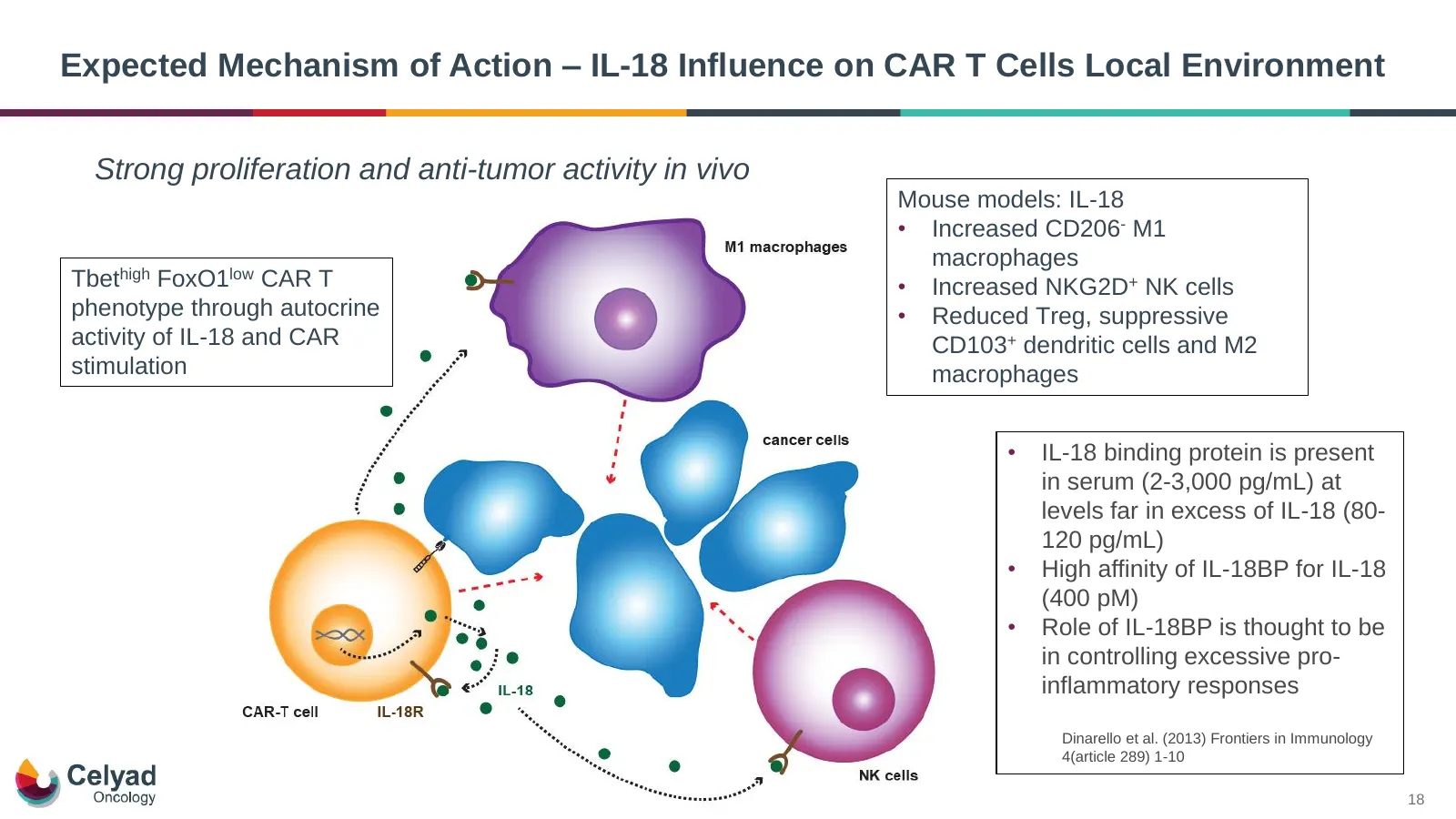
Expected Mechanism of Action – IL-18 Influence on CAR T Cells Local Environment Strong proliferation and anti-tumor activity in vivo Mouse models: IL-18 • Increased CD206- M1 macrophages Tbethigh FoxO1low CAR T • Increased NKG2D+ NK cells phenotype through autocrine • Reduced Treg, suppressive activ
Slide 20: CYAD-203 – Armored NKG2D Receptor Allogeneic CAR T for Solid Tumors
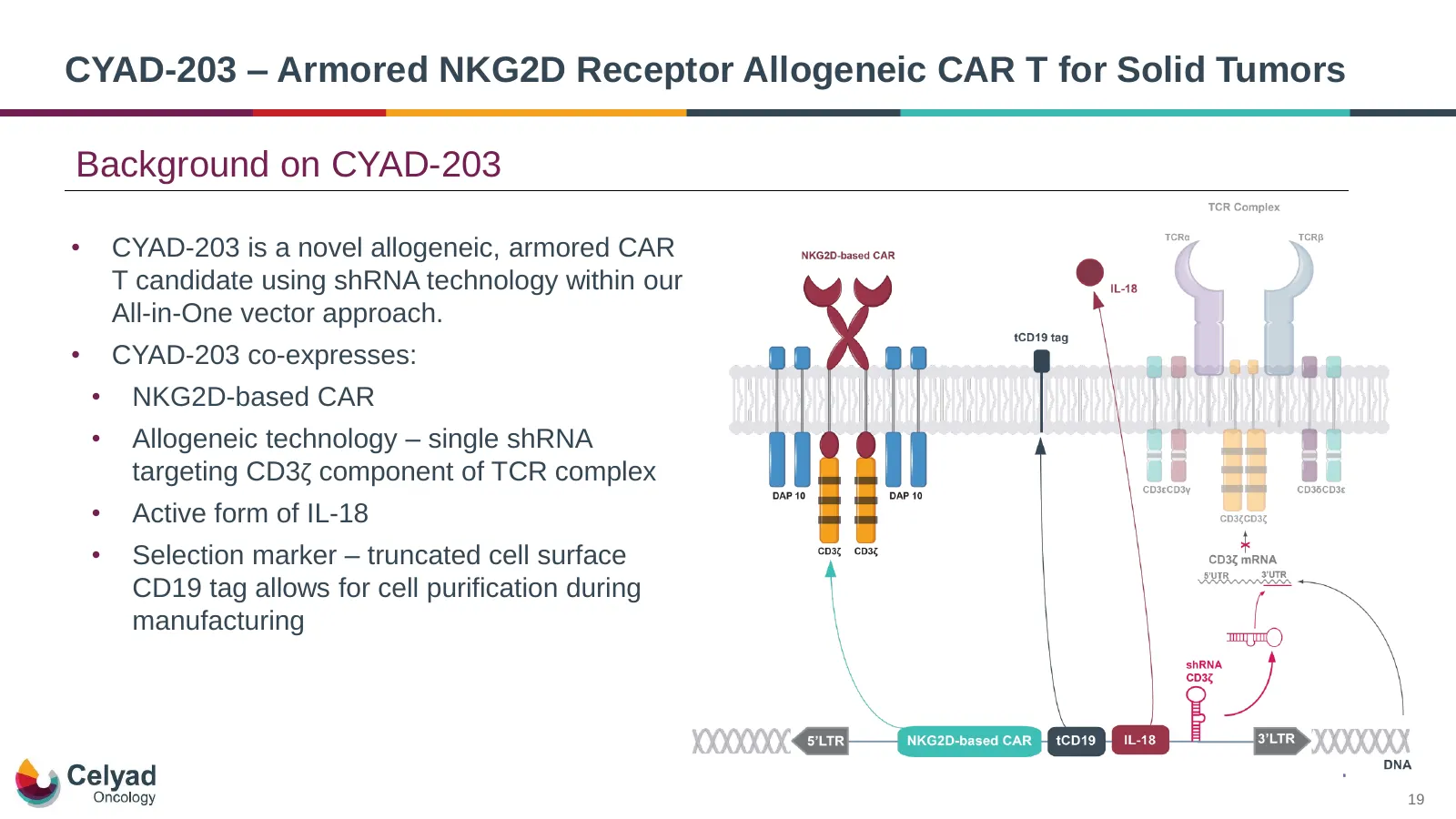
CYAD-203 – Armored NKG2D Receptor Allogeneic CAR T for Solid Tumors Background on CYAD-203 • CYAD-203 is a novel allogeneic, armored CAR T candidate using shRNA technology within our All-in-One vector approach. • CYAD-203 co-expresses: • NKG2D-based CAR • Allogeneic technology – single shRNA targeti
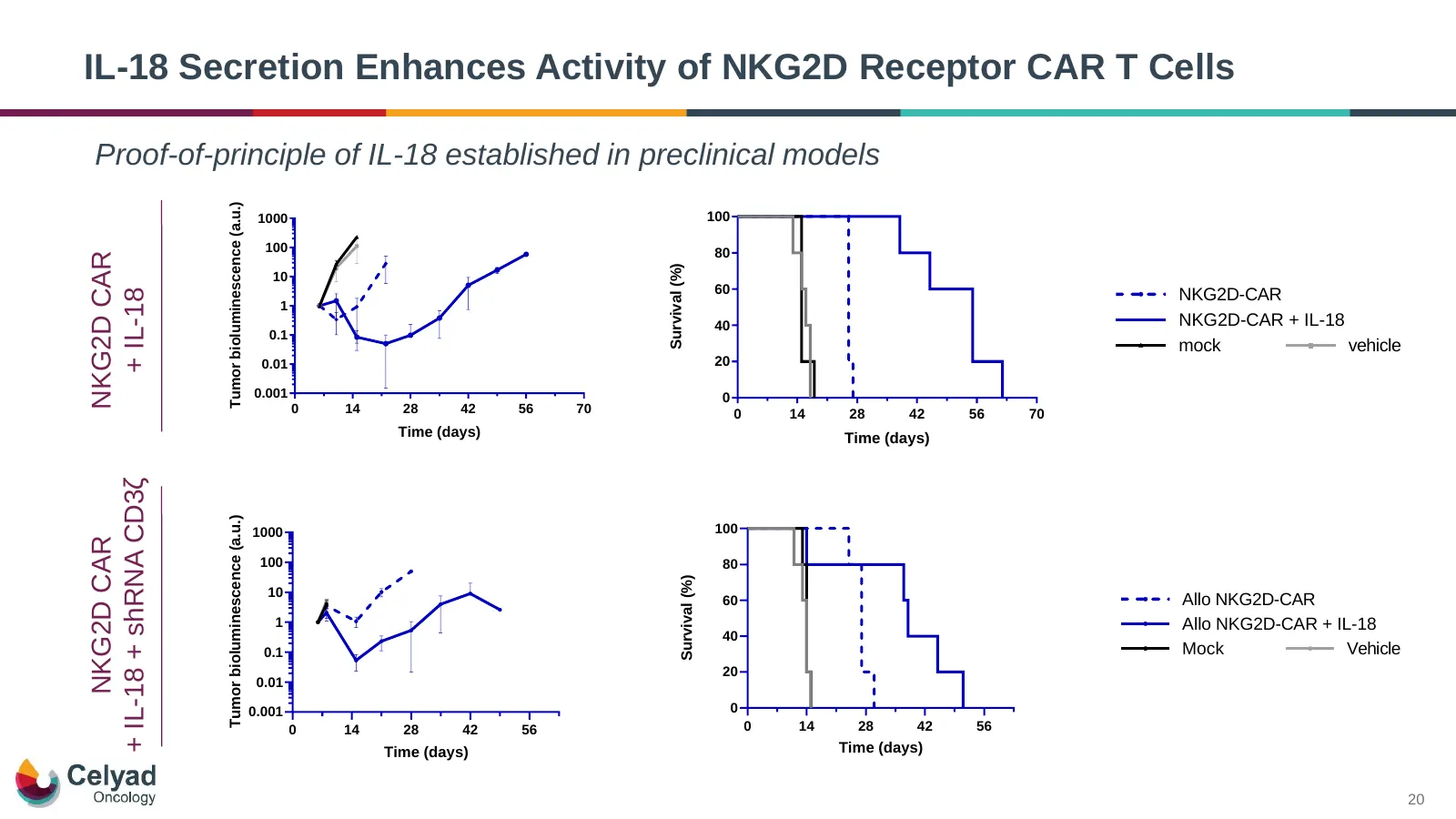
Slide 21: IL-18 Secretion Enhances Activity of NKG2D Receptor CAR T Cells
IL-18 Secretion Enhances Activity of NKG2D Receptor CAR T Cells NKG2D-CAR Proof-of-principleNKG2D-CAR of IL-18 established in preclinical models + IL-18 mock vehicle Tumor bioluminescence (a.u.) 1000 100 100 80 NKG2D CAR Survival (%) 10 60 + IL-18 NKG2D-CAR 1 40 NKG2D-CAR + IL-18 0.1 mock vehicle 0.
Slide 22: Next Steps for Armored CAR T Franchise
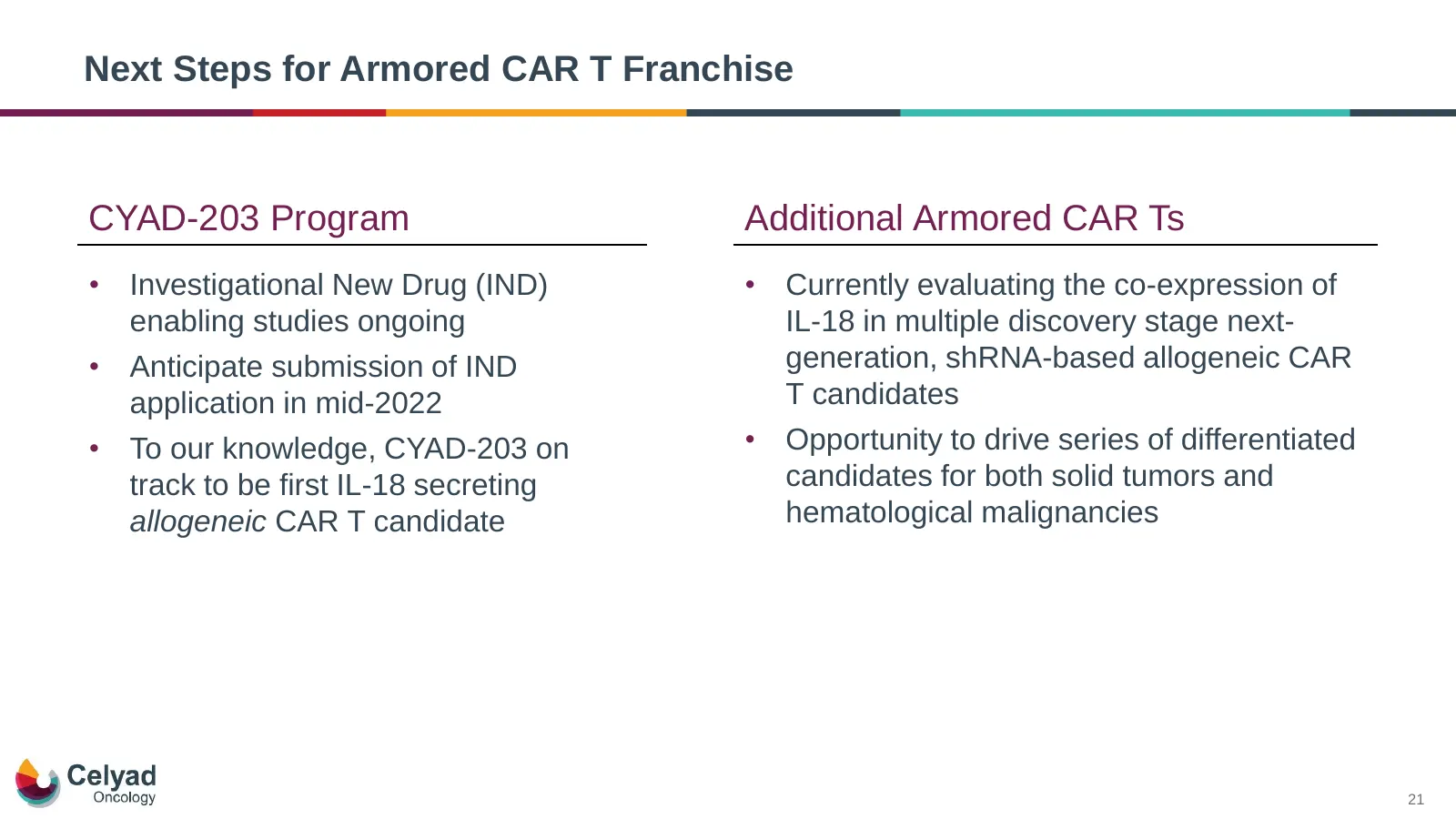
Next Steps for Armored CAR T Franchise CYAD-203 Program Additional Armored CAR Ts • Investigational New Drug (IND) • Currently evaluating the co-expression of enabling studies ongoing IL-18 in multiple discovery stage next- • Anticipate submission of IND generation, shRNA-based allogeneic CAR applic
Slide 23: shRNA Platform – Optimized for Multiplexed CAR Ts
shRNA Platform – Optimized for Multiplexed CAR Ts
Slide 24: Evolution of shRNA Technology for Next-Generation Allogeneic CAR T
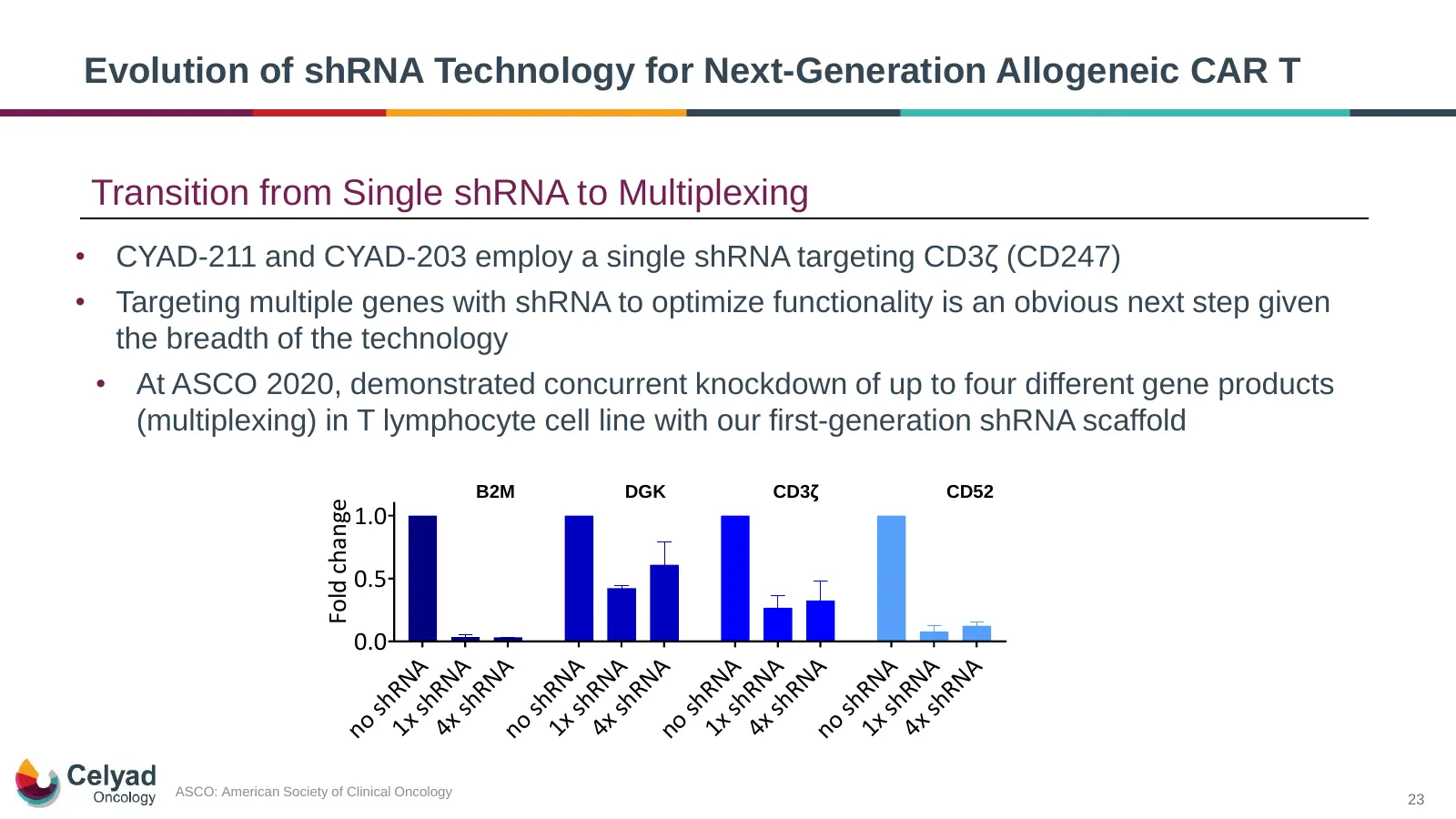
Evolution of shRNA Technology for Next-Generation Allogeneic CAR T Transition from Single shRNA to Multiplexing • CYAD-211 and CYAD-203 employ a single shRNA targeting CD3ζ (CD247) • Targeting multiple genes with shRNA to optimize functionality is an obvious next step given the breadth of the techno
Slide 25: Ongoing shRNA Multiplex Research Focused on Key Targets
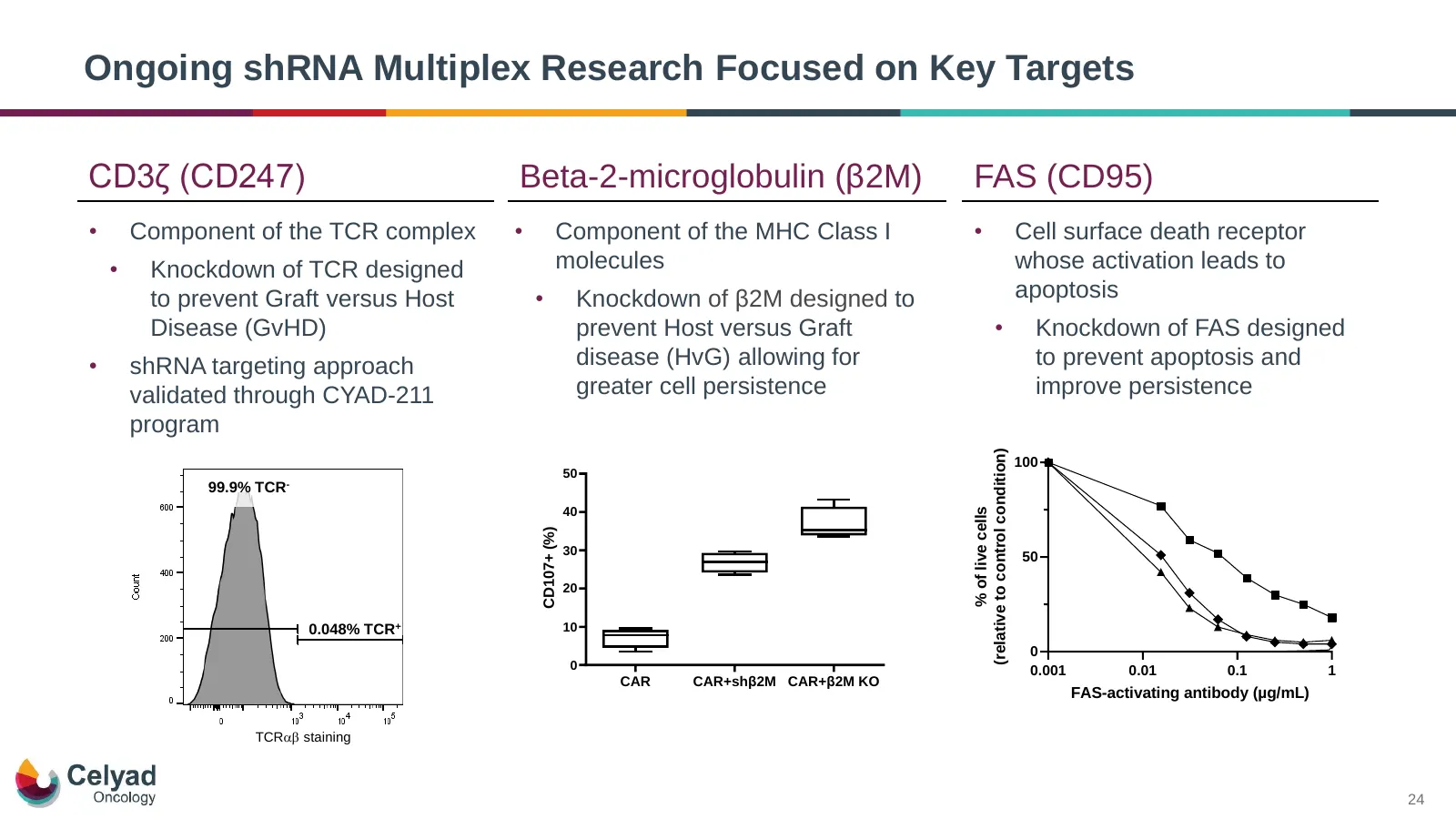
Ongoing shRNA Multiplex Research Focused on Key Targets CD3ζ (CD247) Beta-2-microglobulin (β2M) FAS (CD95) • Component of the TCR complex • Component of the MHC Class I • Cell surface death receptor • Knockdown of TCR designed molecules whose activation leads to to prevent Graft versus Host • Knockd
Slide 26: Multiplexing with First Generation shRNA Scaffold
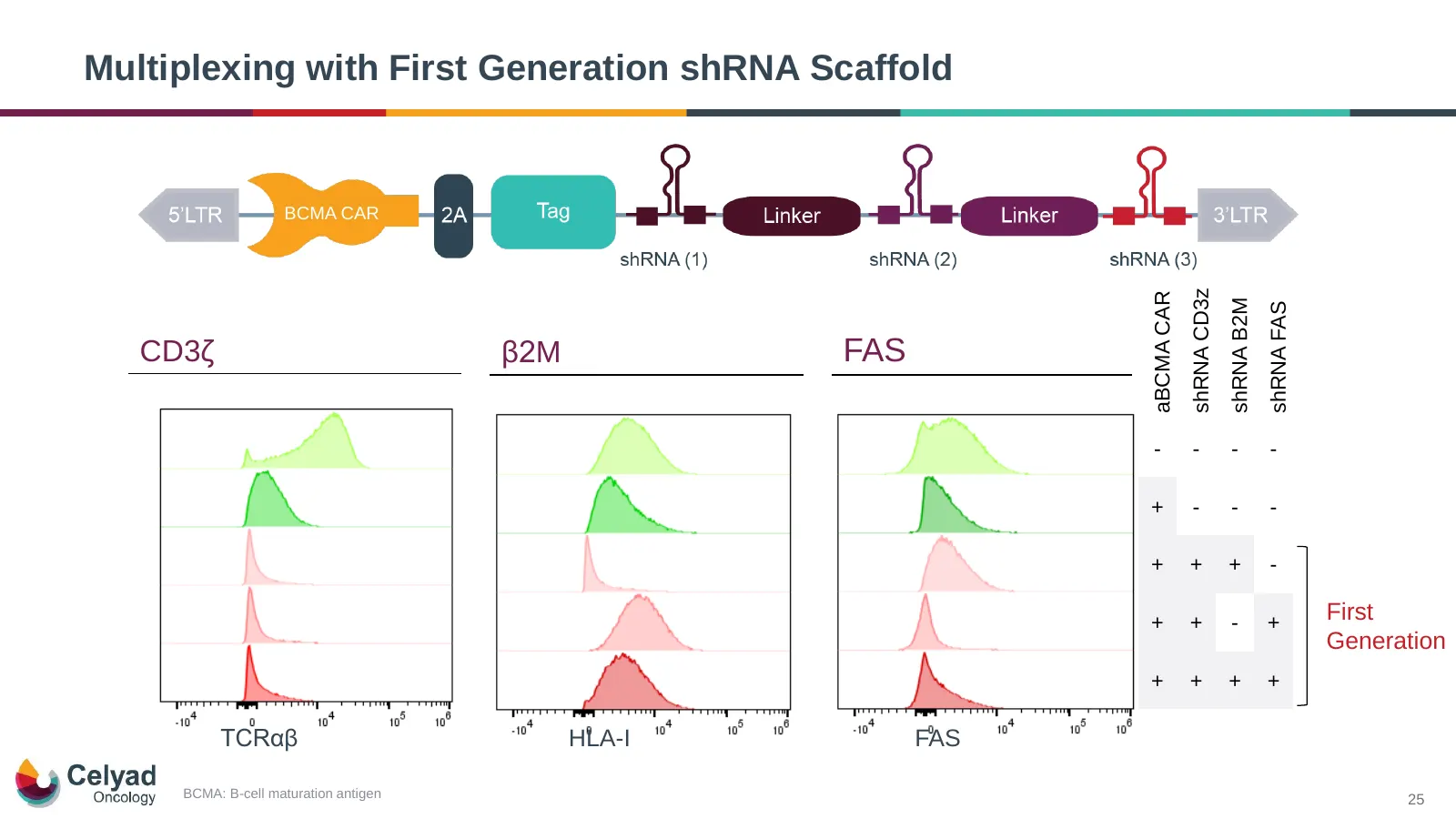
Multiplexing with First Generation shRNA Scaffold BCMA CAR shRNA CD3z aBCMA CAR shRNA B2M shRNA FAS CD3ζ β2M FAS - - - - + - - - + + + - + + - + First Generation + + + + TCRαβ HLA-I FAS BCMA: B-cell maturation antigen 25
Slide 27: First Generation shRNA Scaffold – Transduction Efficiency
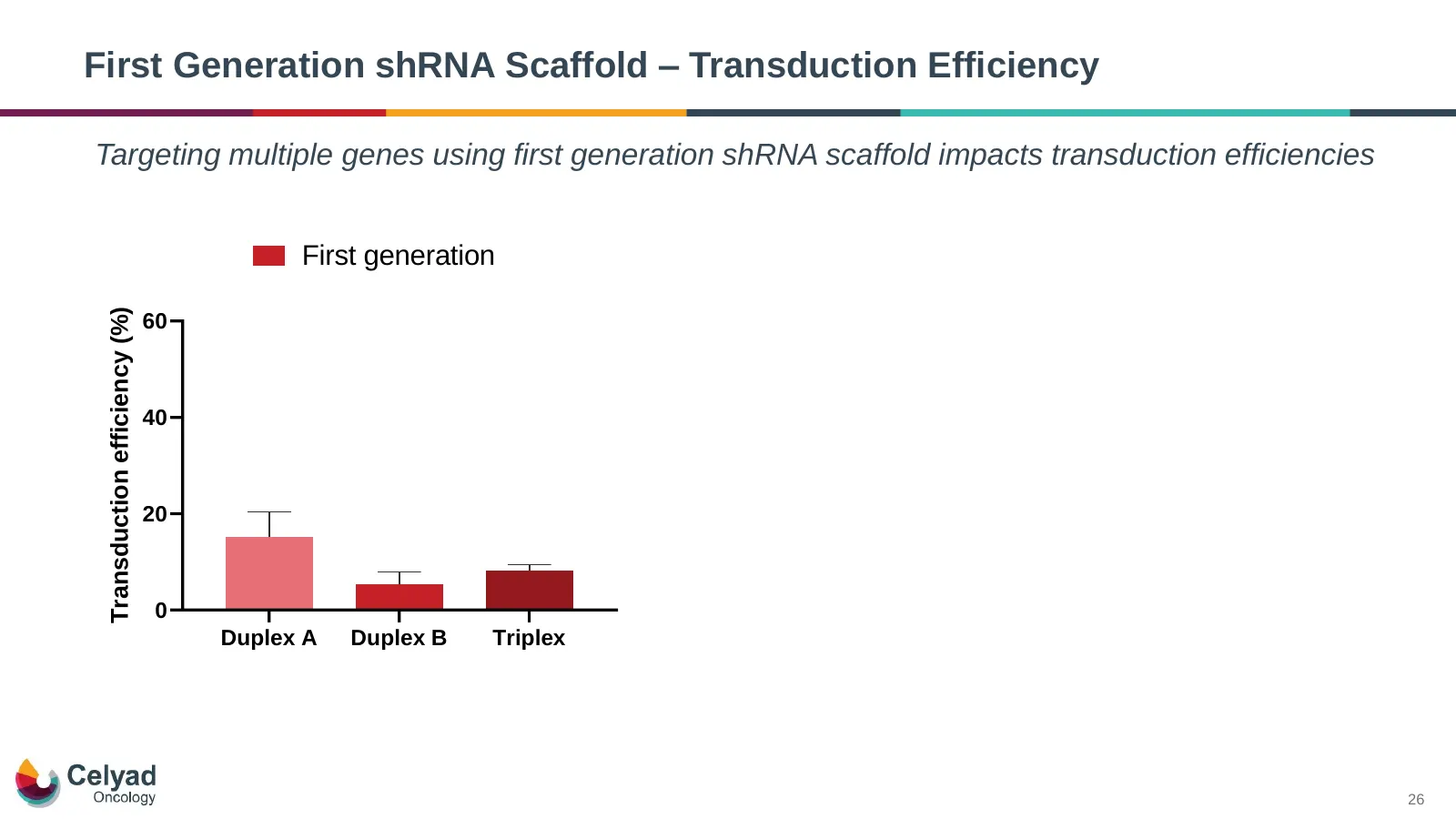
First Generation shRNA Scaffold – Transduction Efficiency Targeting multiple genes using first generation shRNA scaffold impacts transduction efficiencies First generation Transduction efficiency (%) 60 40 20 0 Duplex A Duplex B Triplex 26
Slide 28: Multiplexing with Novel Second Generation shRNA Scaffold
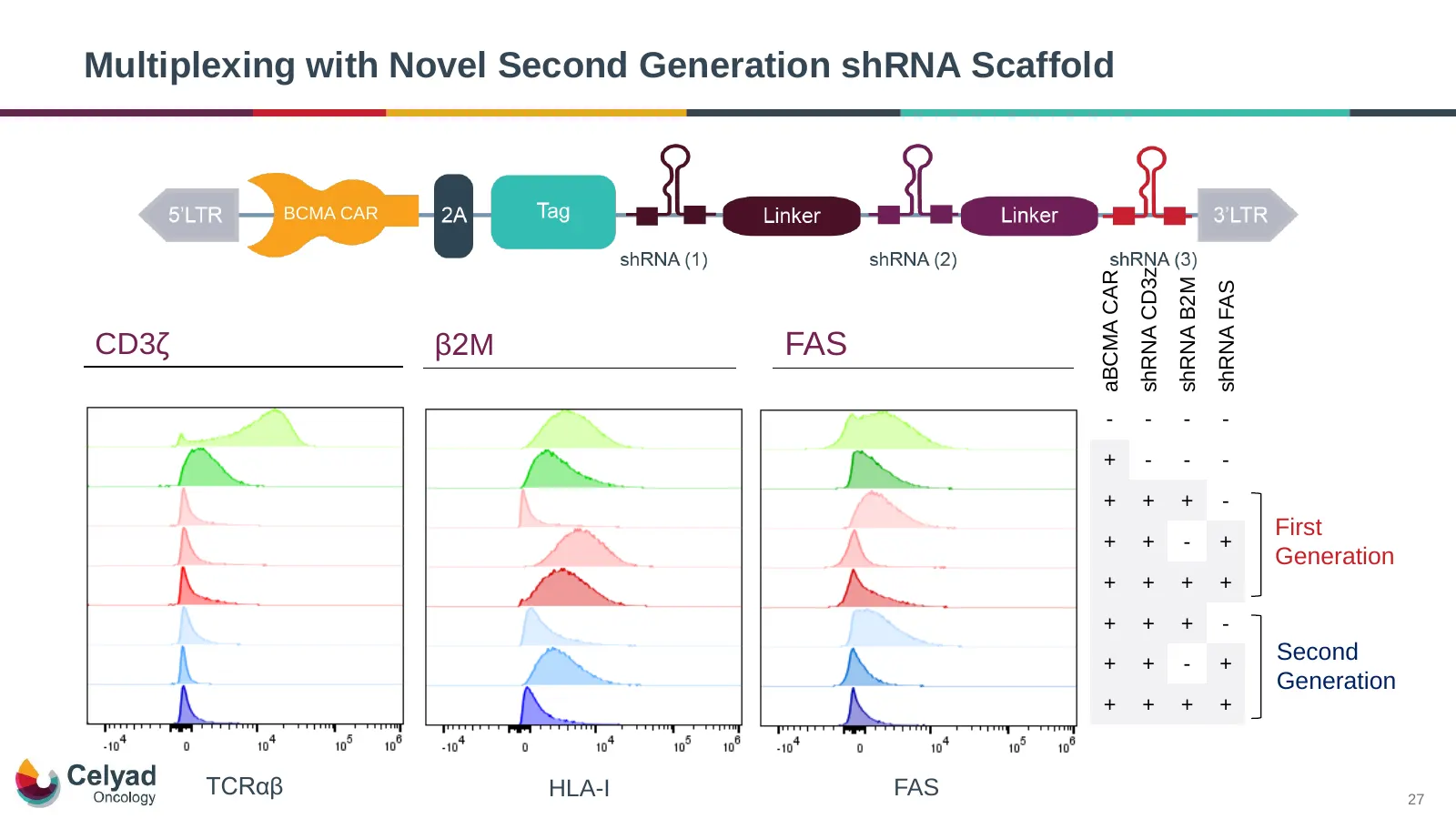
Multiplexing with Novel Second Generation shRNA Scaffold BCMA CAR shRNA CD3z aBCMA CAR shRNA B2M shRNA FAS CD3ζ β2M FAS - - - - + - - - + + + - First + + - + Generation + + + + + + + - + + - + Second Generation + + + + TCRαβ HLA-I FAS 27
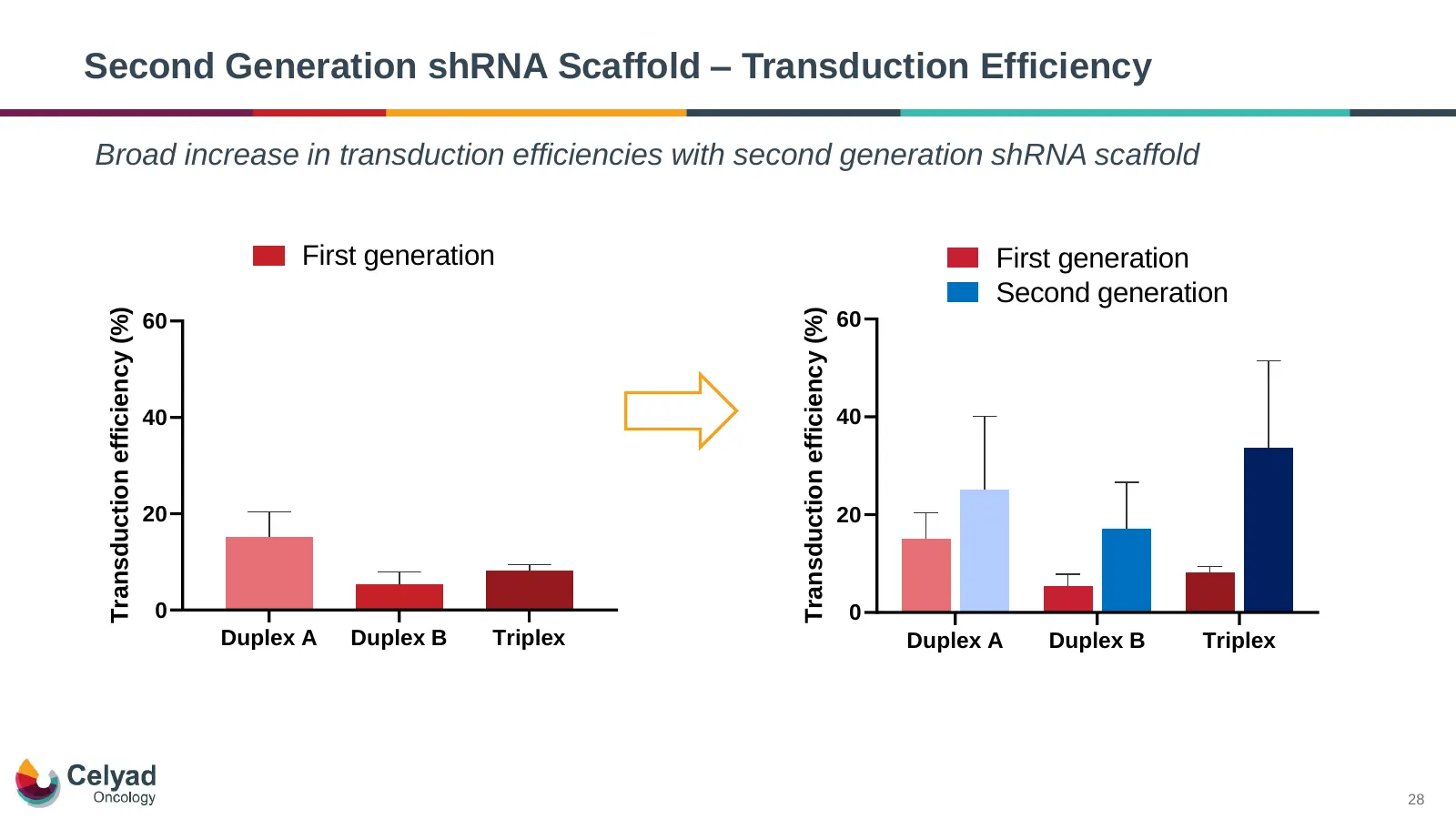
Slide 29: Second Generation shRNA Scaffold – Transduction Efficiency
Second Generation shRNA Scaffold – Transduction Efficiency Broad increase in transduction efficiencies with second generation shRNA scaffold First generation First generation Second generation Transduction efficiency (%) Transduction efficiency (%) 60 60 40 40 20 20 0 0 Duplex A Duplex B Triplex Dup
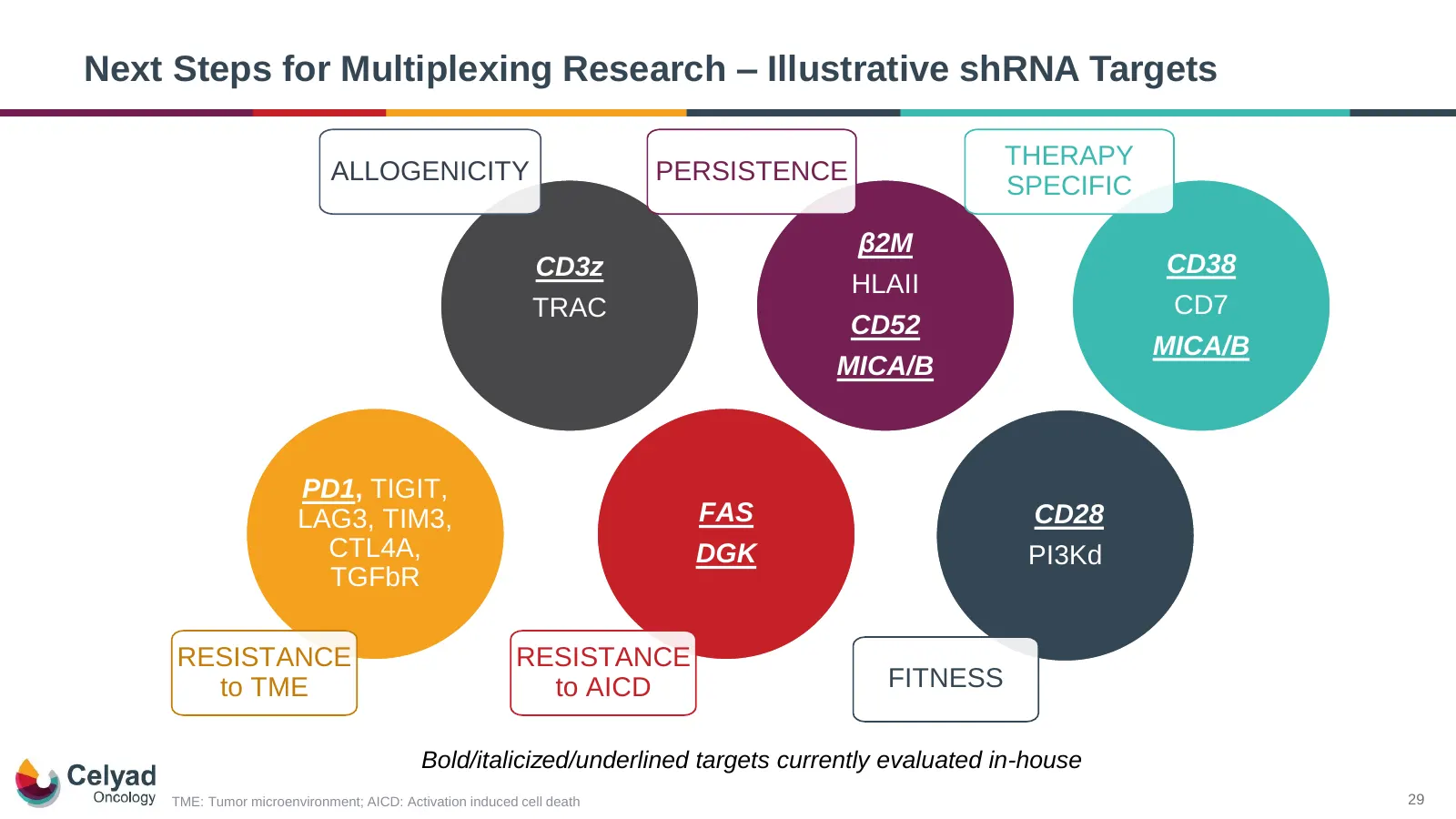
Slide 30: Next Steps for Multiplexing Research – Illustrative shRNA Targets
Next Steps for Multiplexing Research – Illustrative shRNA Targets THERAPY ALLOGENICITY PERSISTENCE SPECIFIC β2M CD3z CD38 HLAII TRAC CD7 CD52 MICA/B MICA/B PD1, TIGIT, LAG3, TIM3, FAS CD28 CTL4A, DGK PI3Kd TGFbR RESISTANCE RESISTANCE to TME to AICD FITNESS Bold/italicized/underlined targets currentl
Slide 31: shRNA Platform – Future Programs
shRNA Platform – Future Programs
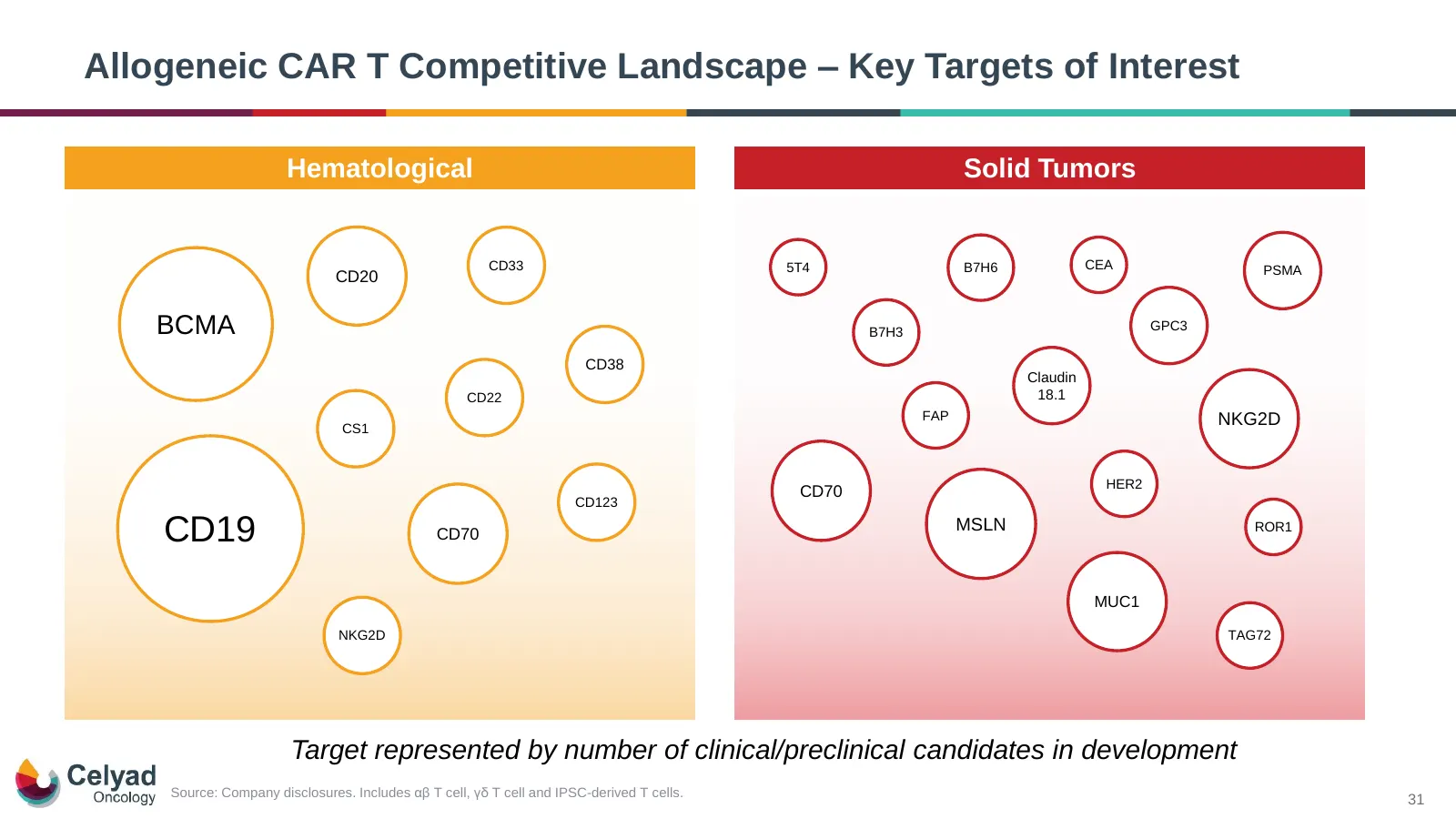
Slide 32: Allogeneic CAR T Competitive Landscape – Key Targets of Interest
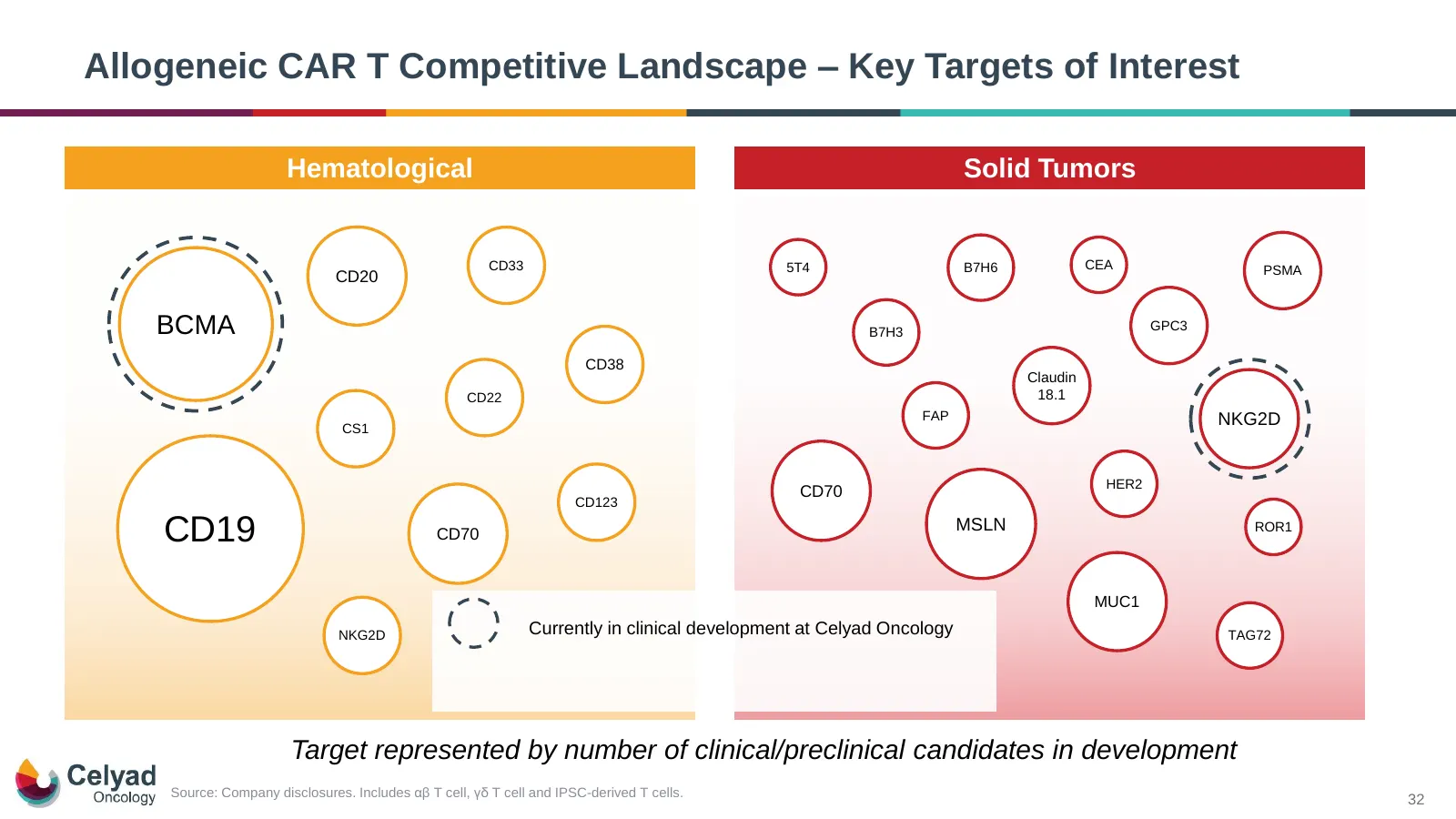
Allogeneic CAR T Competitive Landscape – Key Targets of Interest Hematological Solid Tumors CD33 5T4 B7H6 CEA PSMA CD20 BCMA B7H3 GPC3 CD38 Claudin CD22 18.1 FAP NKG2D CS1 HER2 CD70 CD123 CD19 CD70 MSLN ROR1 MUC1 NKG2D TAG72 Target represented by number of clinical/preclinical candidates in developm
Slide 33: Allogeneic CAR T Competitive Landscape – Key Targets of Interest
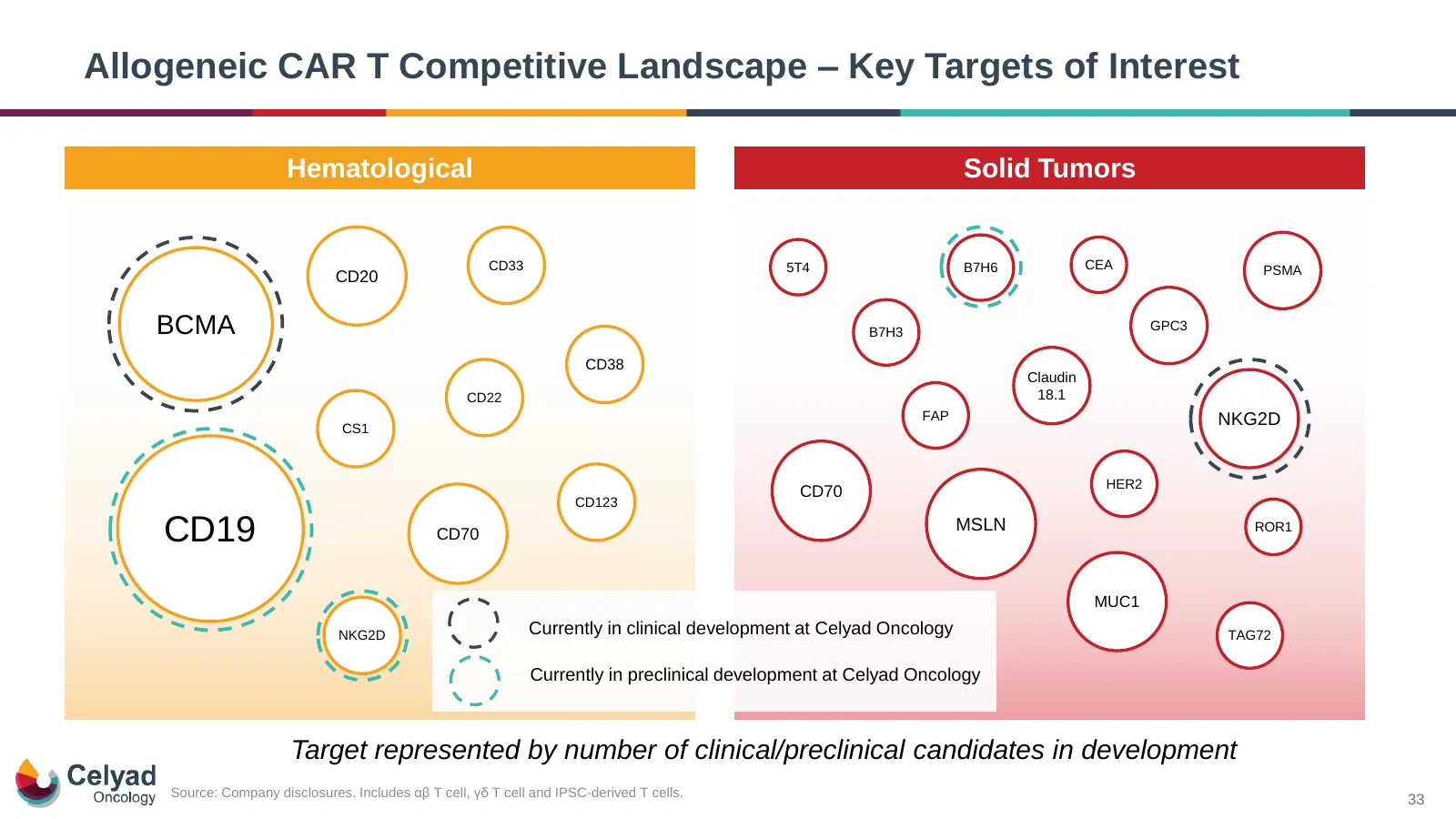
Allogeneic CAR T Competitive Landscape – Key Targets of Interest Hematological Solid Tumors CD33 5T4 B7H6 CEA PSMA CD20 BCMA B7H3 GPC3 CD38 Claudin CD22 18.1 FAP NKG2D CS1 HER2 CD70 CD123 CD19 CD70 MSLN ROR1 MUC1 NKG2D Currently in clinical development at Celyad Oncology TAG72 Target represented by
Slide 34: Allogeneic CAR T Competitive Landscape – Key Targets of Interest
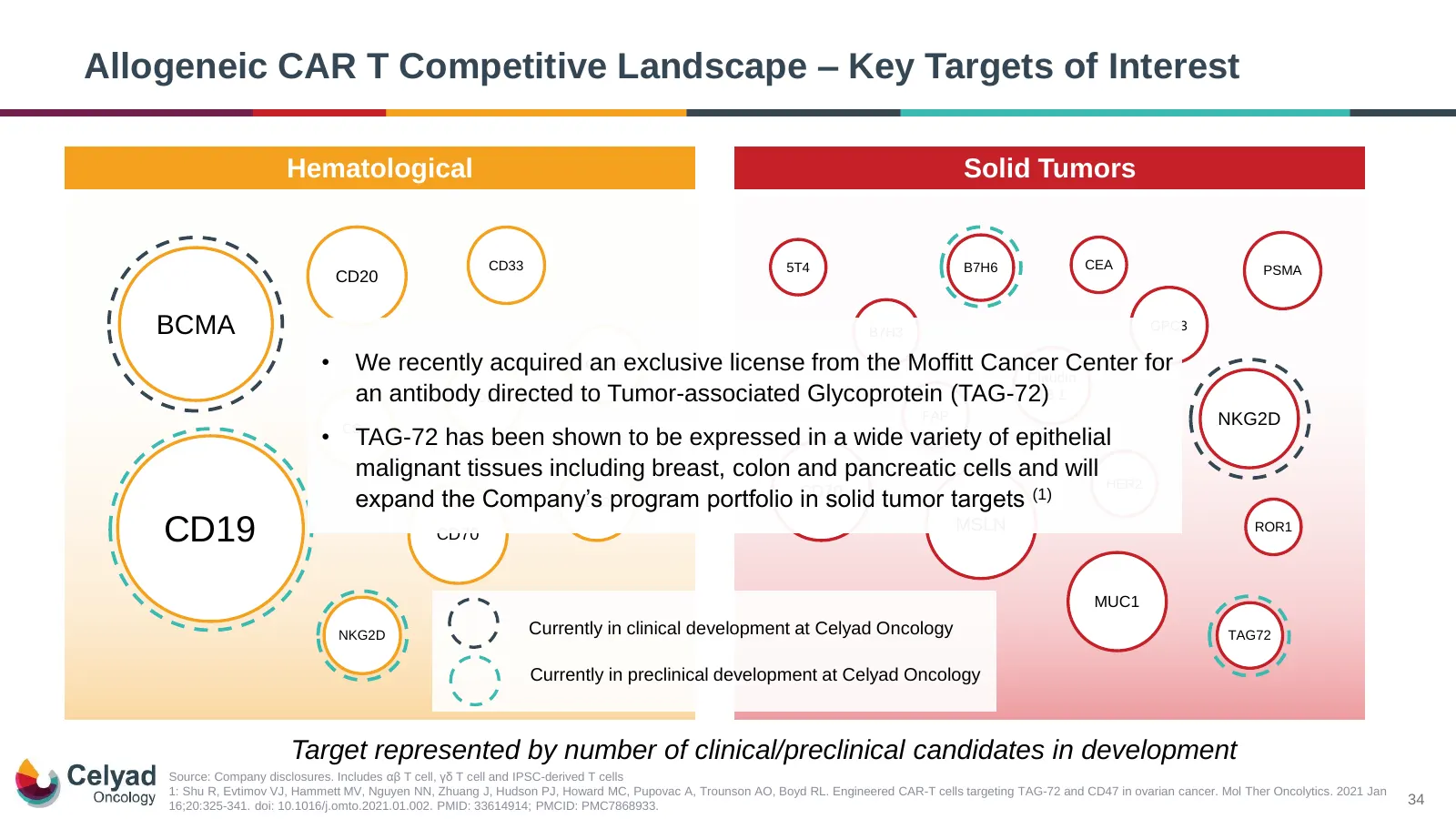
Allogeneic CAR T Competitive Landscape – Key Targets of Interest Hematological Solid Tumors CD33 5T4 B7H6 CEA PSMA CD20 BCMA B7H3 GPC3 CD38 Claudin CD22 18.1 FAP NKG2D CS1 HER2 CD70 CD123 CD19 CD70 MSLN ROR1 MUC1 NKG2D Currently in clinical development at Celyad Oncology TAG72 Currently in preclinic
Slide 35: Allogeneic CAR T Competitive Landscape – Key Targets of Interest
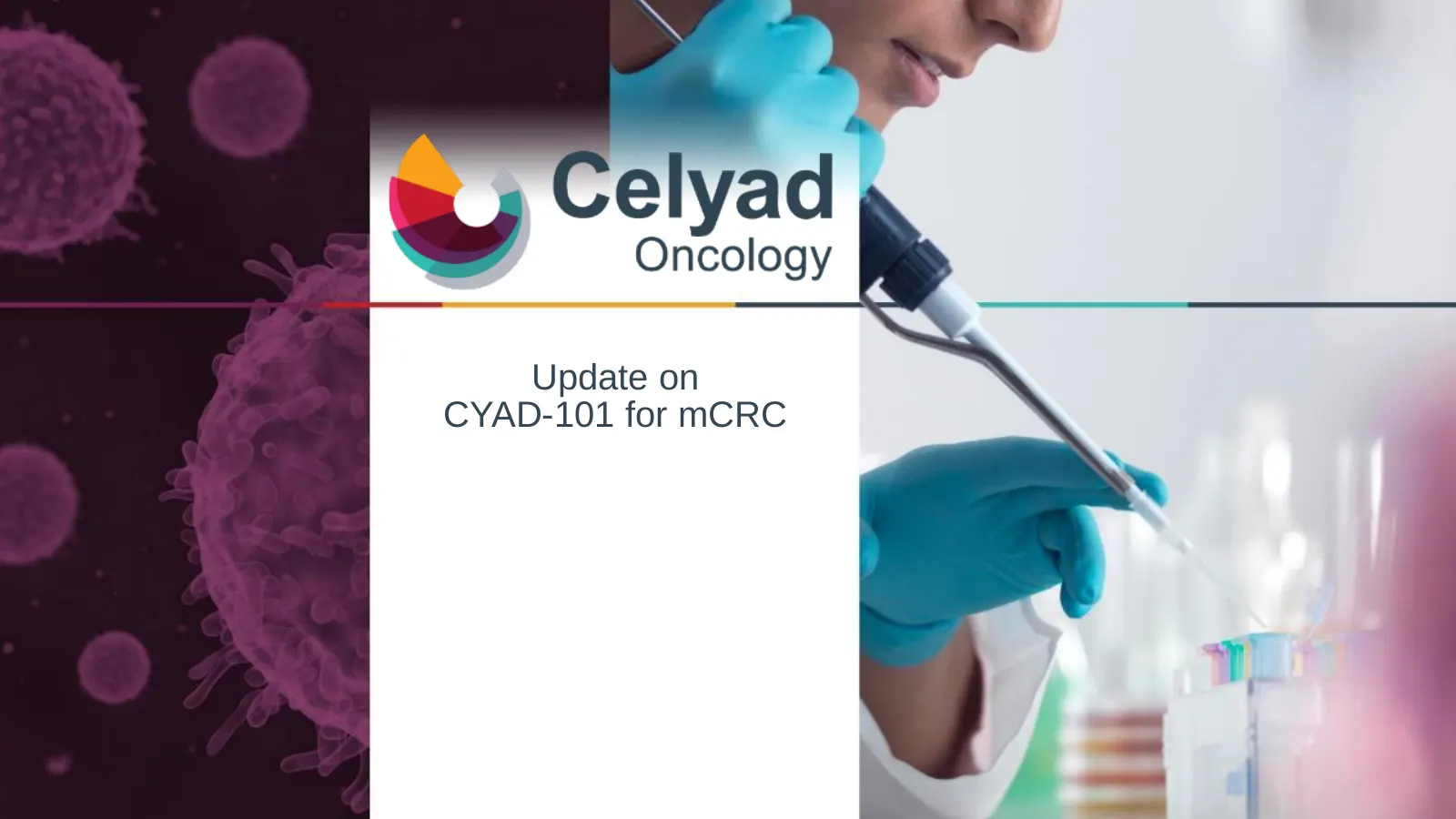
Allogeneic CAR T Competitive Landscape – Key Targets of Interest Hematological Solid Tumors CD33 5T4 B7H6 CEA PSMA CD20 BCMA B7H3 GPC3 • We recently acquired CD38 an exclusive license from the Moffitt Cancer Center for Claudin an antibody directed to Tumor-associated Glycoprotein (TAG-72)18.1 CD22 F
Slide 36: Update on CYAD-101 for mCRC
Update on CYAD-101 for mCRC
Slide 37: CYAD-101 – Leading Allogeneic CAR T Candidate for mCRC
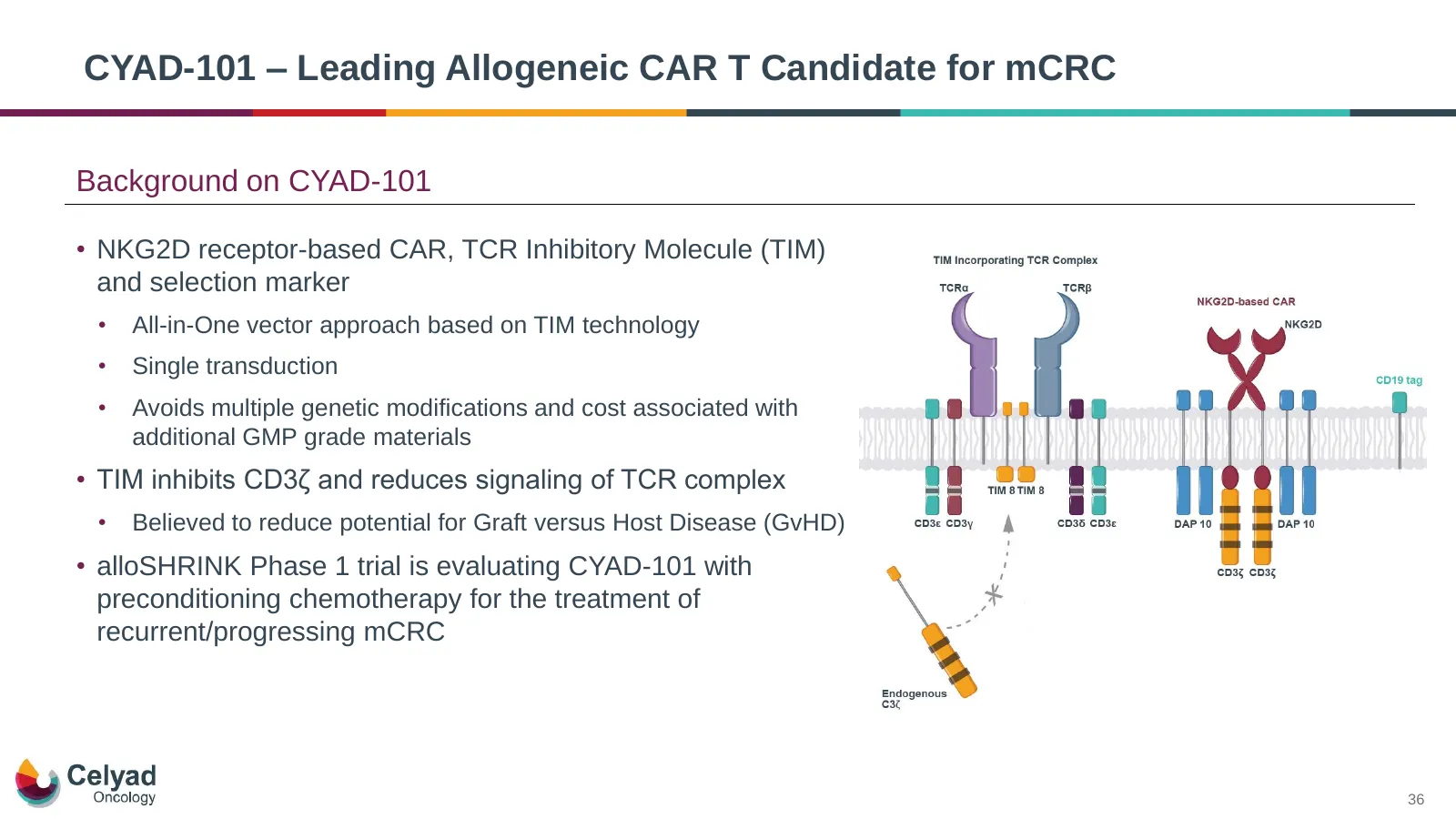
CYAD-101 – Leading Allogeneic CAR T Candidate for mCRC Background on CYAD-101 • NKG2D receptor-based CAR, TCR Inhibitory Molecule (TIM) and selection marker • All-in-One vector approach based on TIM technology • Single transduction • Avoids multiple genetic modifications and cost associated with add
Slide 38: CYAD-101 – alloSHRINK Phase 1 Trial
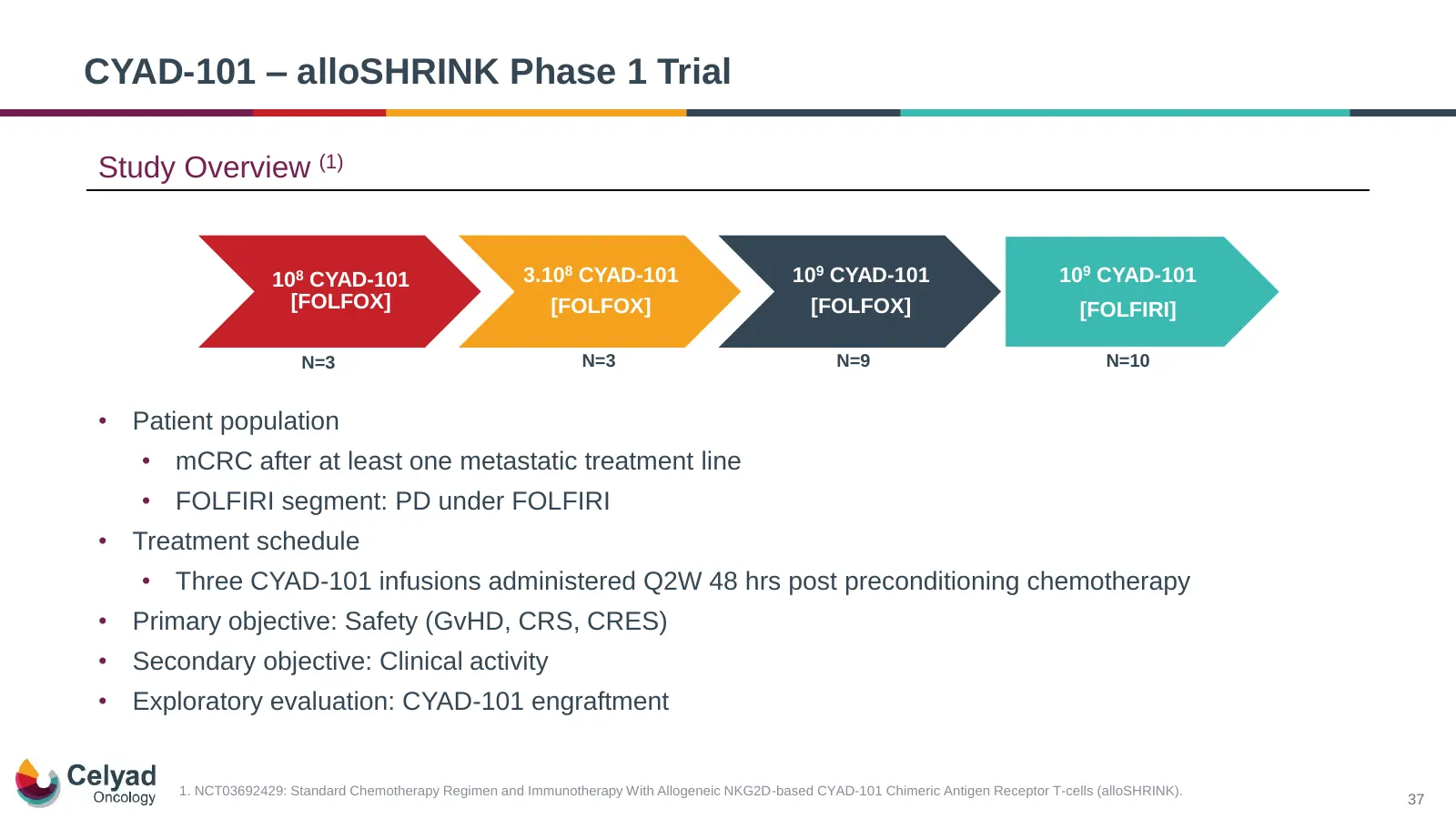
CYAD-101 – alloSHRINK Phase 1 Trial Study Overview (1) 108 CYAD-101 3.108 CYAD-101 109 CYAD-101 109 CYAD-101 [FOLFOX] [FOLFOX] [FOLFOX] [FOLFIRI] N=3 N=3 N=9 N=10 • Patient population • mCRC after at least one metastatic treatment line • FOLFIRI segment: PD under FOLFIRI • Treatment schedule • Three
Slide 39: alloSHRINK – CYAD-101 Following FOLFOX Showed Encouraging ORR
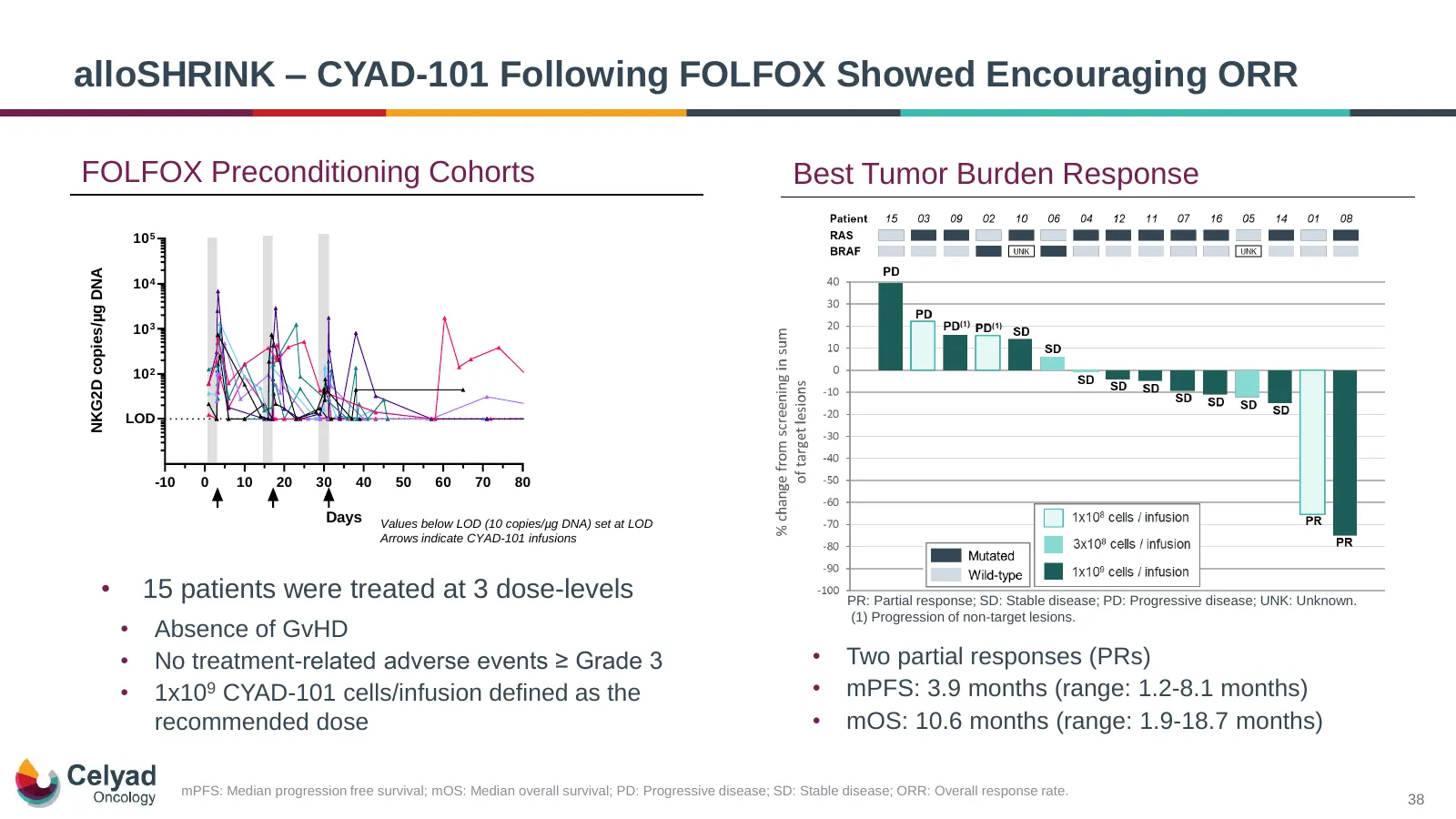
alloSHRINK – CYAD-101 Following FOLFOX Showed Encouraging ORR FOLFOX Preconditioning Cohorts Best Tumor Burden Response 9 ALLOSHRINK 1x10 cells/inf. 10 5 105-009 NKG2D copies/µg DNA 108-008 10 4 105-007 10 3 108-011 103-010 10 2 105-012 108-014 LOD 105-015 105-016 -10 0 10 20 30 40 50 60 70 80 Days
Slide 40: Case Study – alloSHRINK Patient 01 (Partial Response, Dose Level 1)
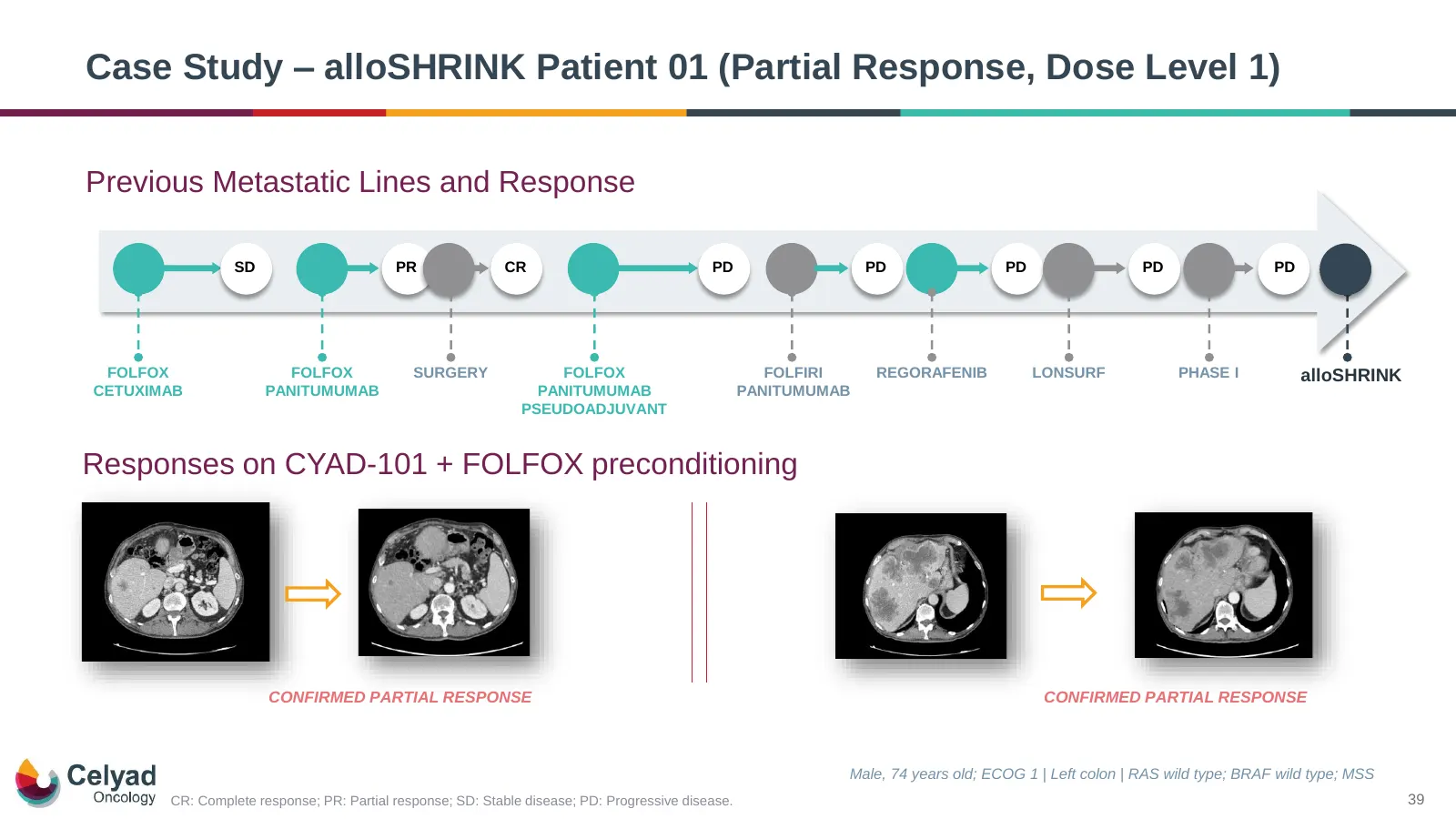
Case Study – alloSHRINK Patient 01 (Partial Response, Dose Level 1) Previous Metastatic Lines and Response SD PR CR PD PD PD PD PD FOLFOX FOLFOX SURGERY FOLFOX FOLFIRI REGORAFENIB LONSURF PHASE I alloSHRINK CETUXIMAB PANITUMUMAB PANITUMUMAB PANITUMUMAB PSEUDOADJUVANT Responses on CYAD-101 + FOLFOX p
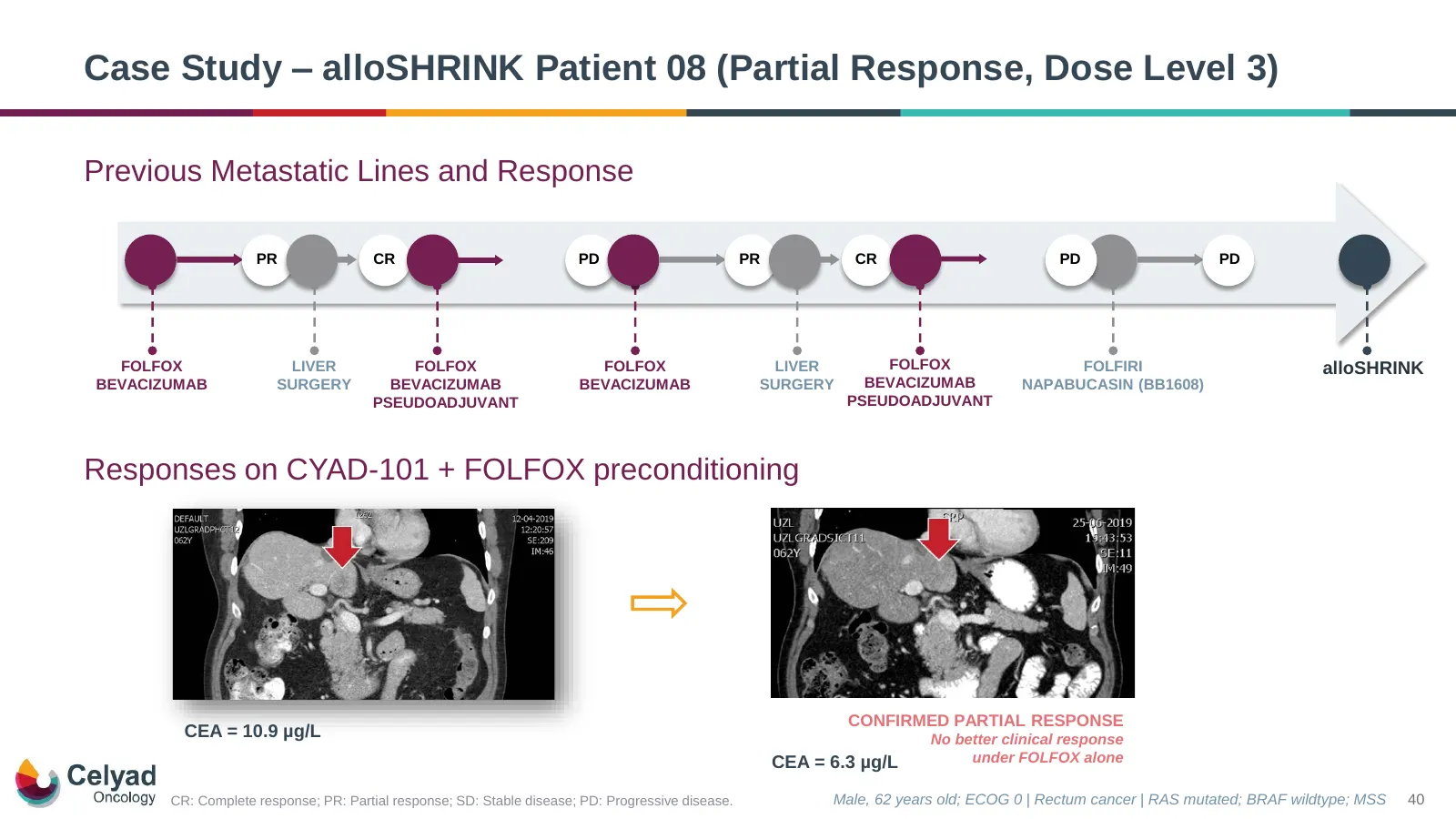
Slide 41: Case Study – alloSHRINK Patient 08 (Partial Response, Dose Level 3)
Case Study – alloSHRINK Patient 08 (Partial Response, Dose Level 3) Previous Metastatic Lines and Response PR CR PD PR CR PD PD FOLFOX LIVER FOLFOX FOLFOX LIVER FOLFOX FOLFIRI alloSHRINK BEVACIZUMAB SURGERY BEVACIZUMAB BEVACIZUMAB SURGERY BEVACIZUMAB NAPABUCASIN (BB1608) PSEUDOADJUVANT PSEUDOADJUVAN
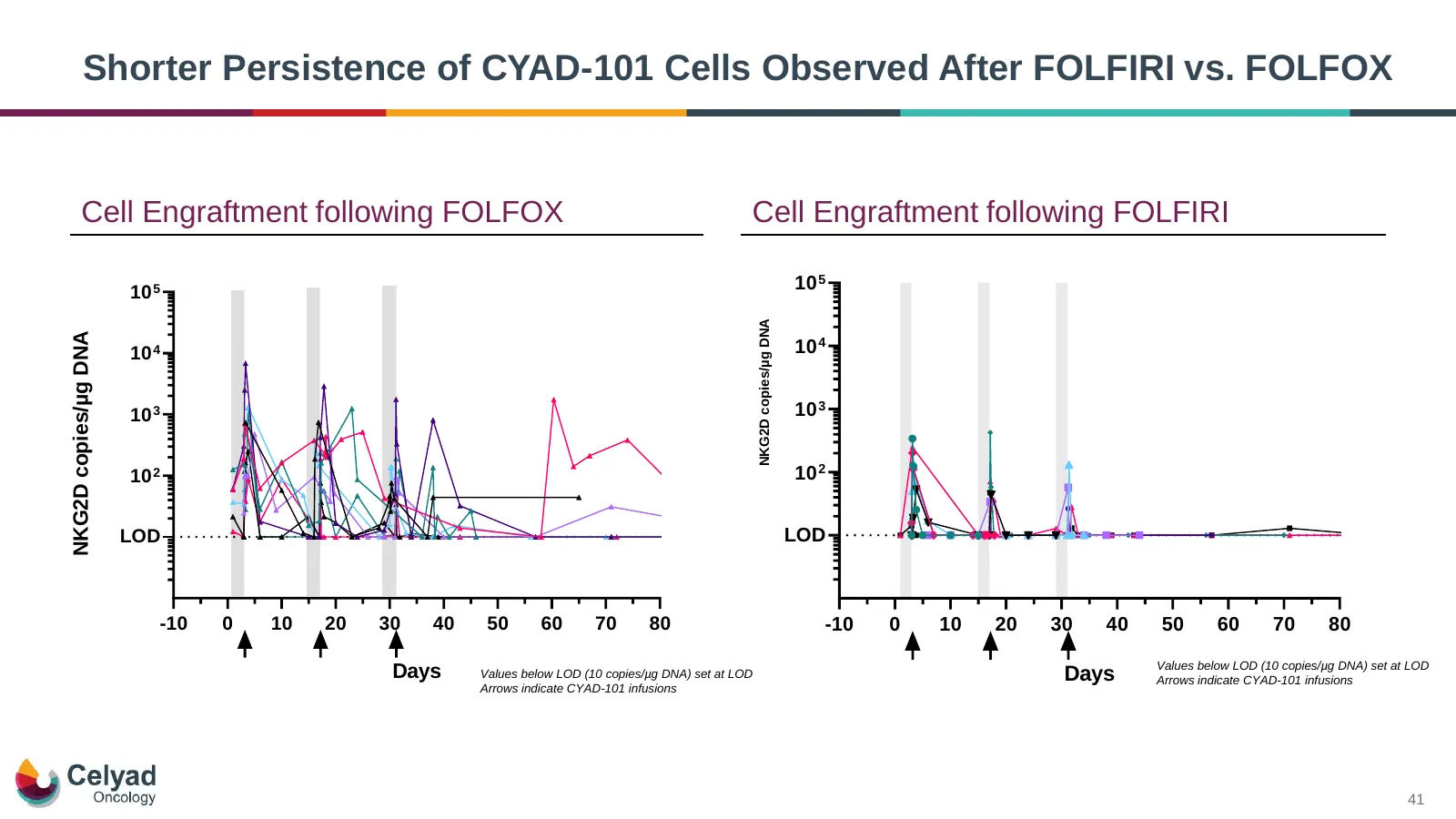
Slide 42: Shorter Persistence of CYAD-101 Cells Observed After FOLFIRI vs. FOLFOX
Shorter Persistence of CYAD-101 Cells Observed After FOLFIRI vs. FOLFOX Cell Engraftment following FOLFOX Cell Engraftment following FOLFIRI 9 ALLOSHRINK 1x10⁹ cells/inf. ALLOSHRINK extension 1x10 cells/inf. 10 5 10 5 105-009 10 NKG2D copies/µg DNA NKG2D copies/µg DNA 10 NKG2D copies/µg DNA 108-008
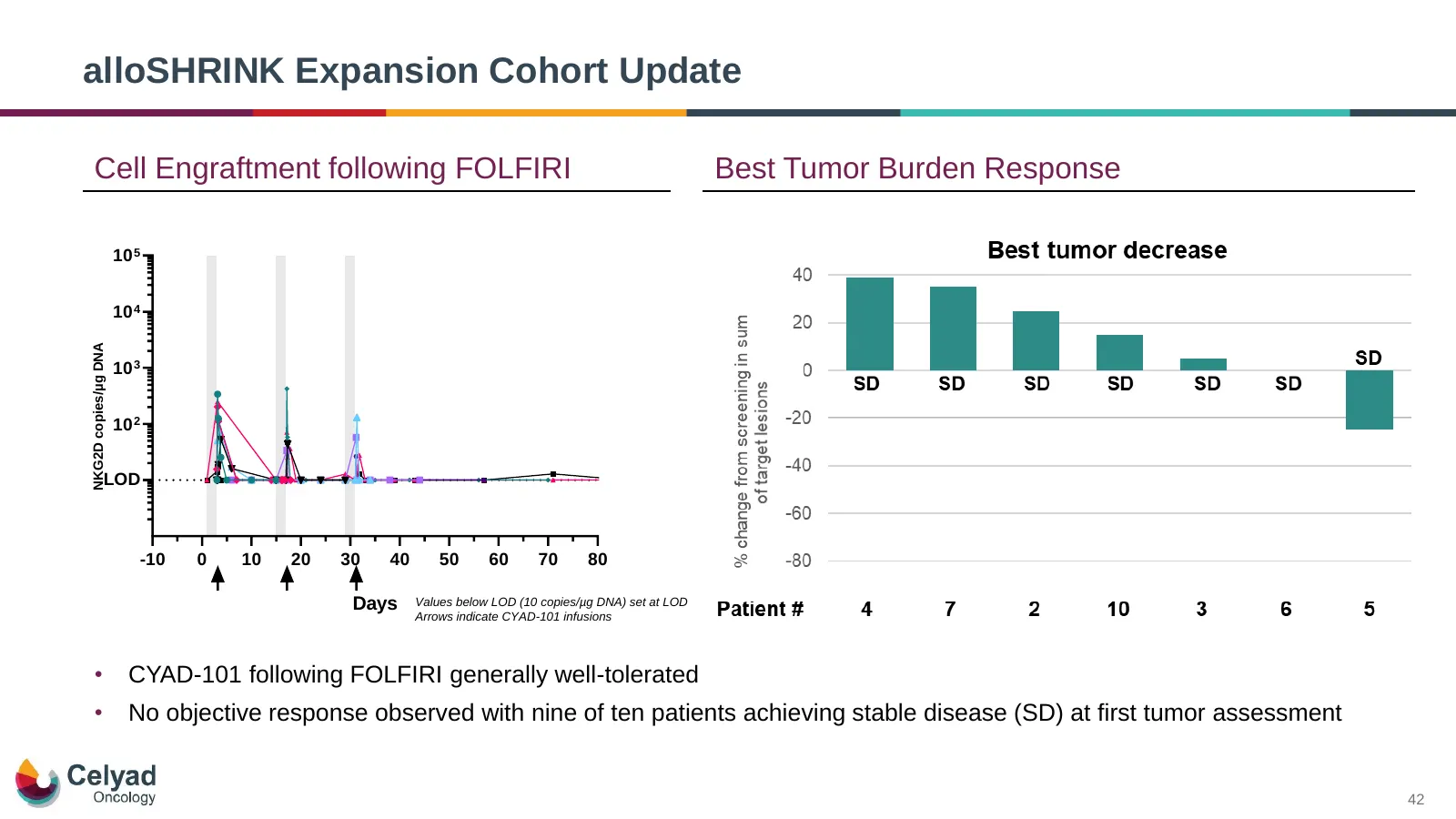
Slide 43: alloSHRINK Expansion Cohort Update
alloSHRINK Expansion Cohort Update Cell Engraftment following FOLFIRI Best Tumor Burden Response ALLOSHRINK extension 1x10⁹ cells/inf. 10 5 108-027 NKG2D copies/µg DNA 108-026 10 4 105-025 NKG2D copies/µg DNA 10 3 105-024 105-022 10 2 105-021 108-020 LOD 108-019 108-018 -10 0 10 20 30 40 50 60 70 80
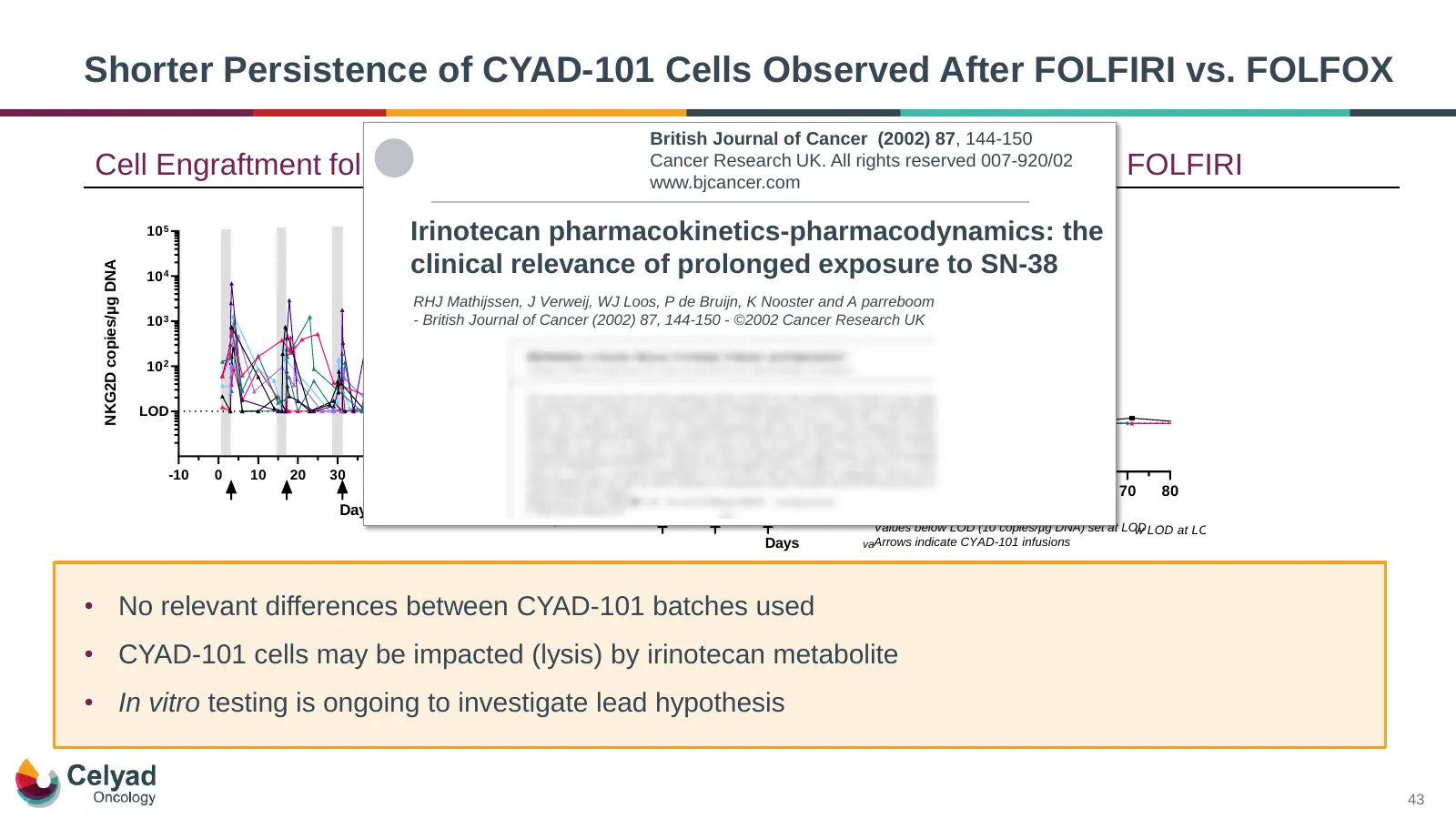
Slide 44: Shorter Persistence of CYAD-101 Cells Observed After FOLFIRI vs. FOLFOX
Shorter Persistence of CYAD-101 Cells Observed After FOLFIRI vs. FOLFOX British Journal of Cancer (2002) 87, 144-150 Cell Engraftment following FOLFOX Cell Engraftment following FOLFIRI Cancer Research UK. All rights reserved 007-920/02 www.bjcancer.com 9 ALLOSHRINK 1x10⁹ cells/inf. ALLOSHRINK exten
Slide 45: KEYNOTE-B79 Trial – CYAD-101 with KEYTRUDA in Refractory mCRC
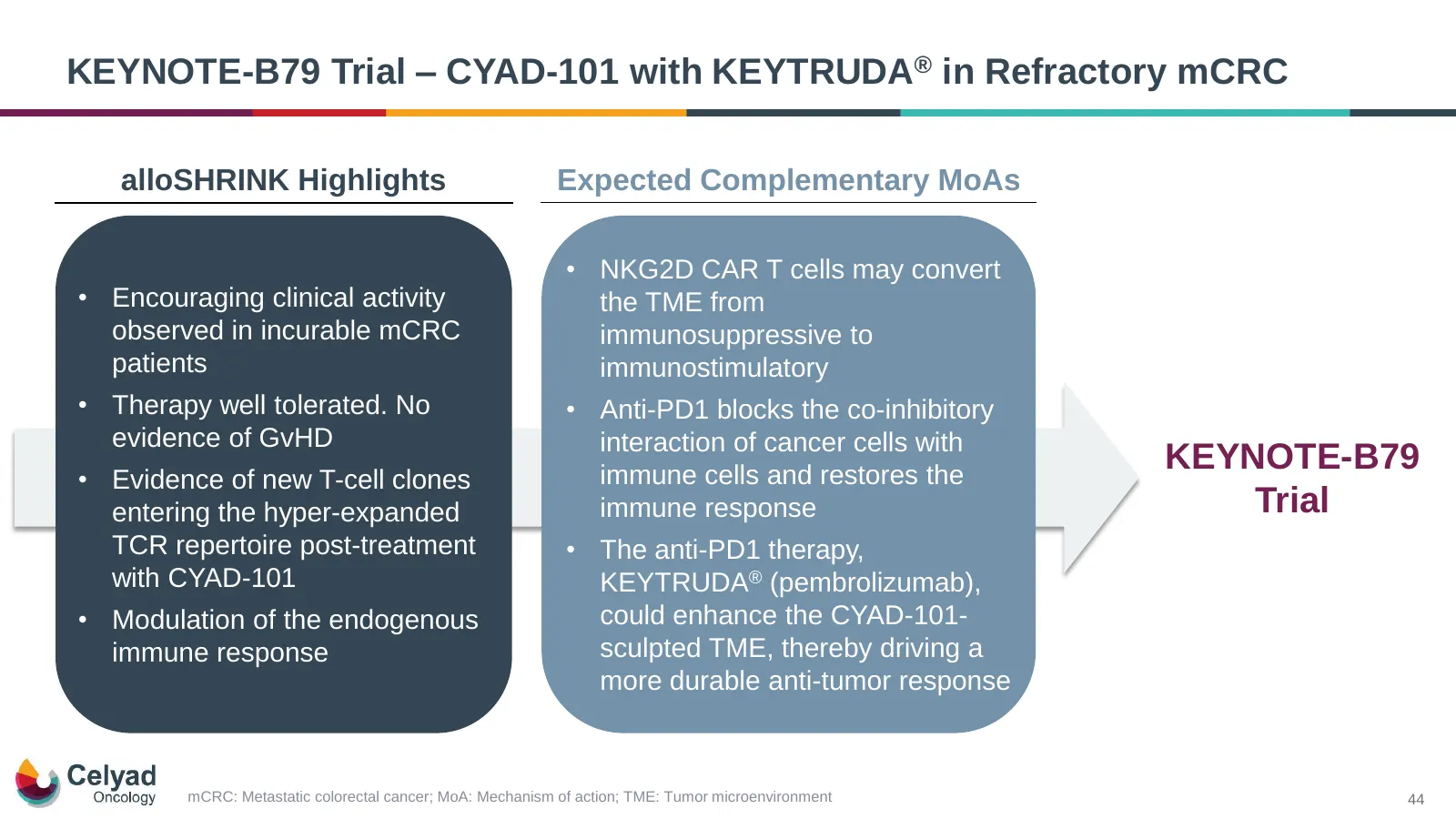
KEYNOTE-B79 Trial – CYAD-101 with KEYTRUDA® in Refractory mCRC alloSHRINK Highlights Expected Complementary MoAs • NKG2D CAR T cells may convert • Encouraging clinical activity the TME from observed in incurable mCRC immunosuppressive to patients immunostimulatory • Therapy well tolerated. No • Anti
Slide 46: KEYNOTE-B79 Phase 1b Trial Design
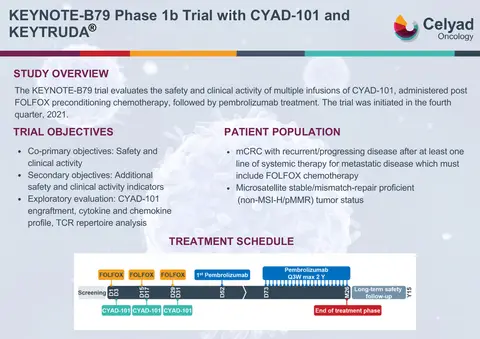
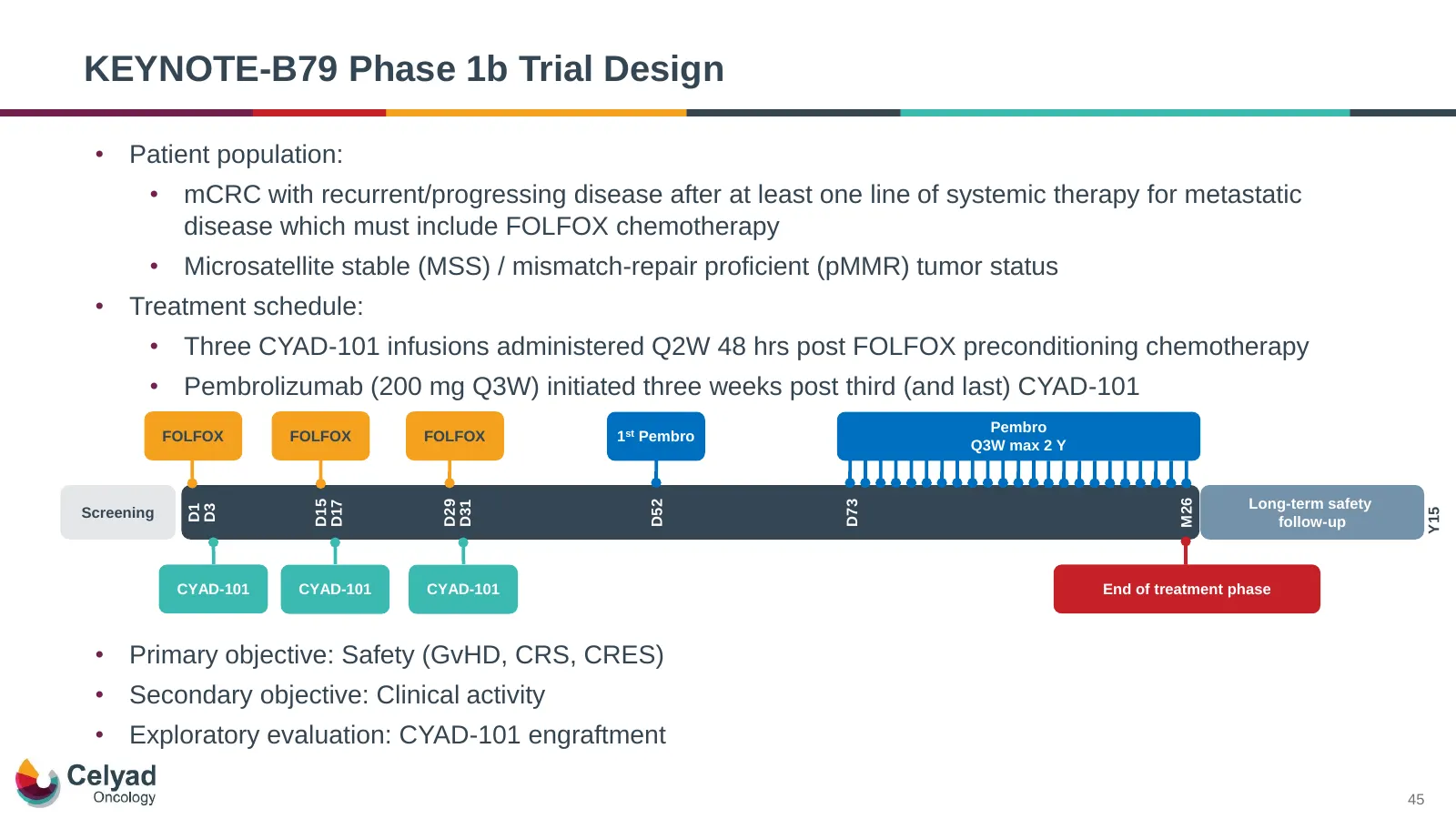
KEYNOTE-B79 Phase 1b Trial Design • Patient population: • mCRC with recurrent/progressing disease after at least one line of systemic therapy for metastatic disease which must include FOLFOX chemotherapy • Microsatellite stable (MSS) / mismatch-repair proficient (pMMR) tumor status • Treatment sched
Slide 47: Next Steps for CYAD-101 Program
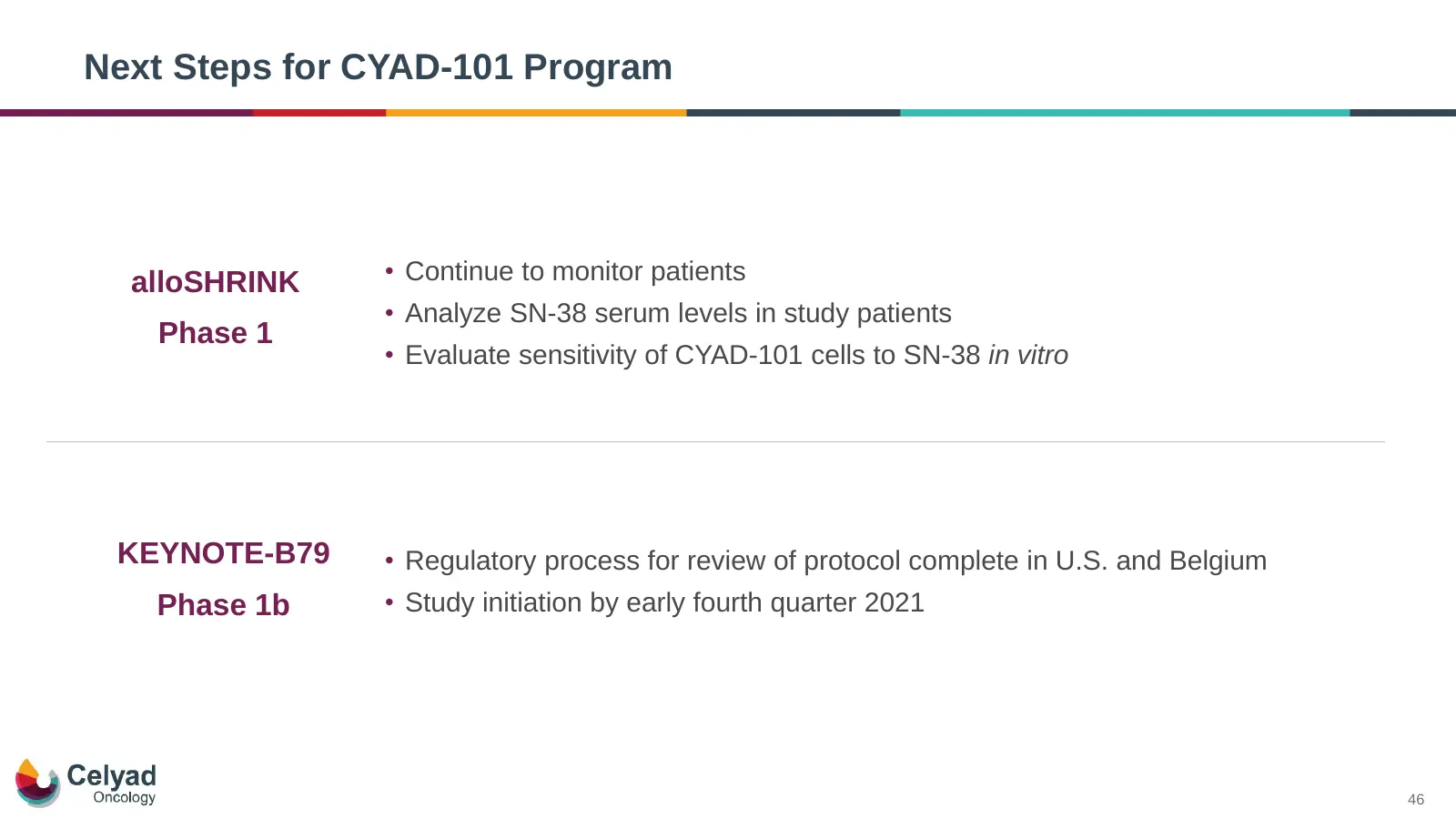
Next Steps for CYAD-101 Program alloSHRINK • Continue to monitor patients • Analyze SN-38 serum levels in study patients Phase 1 • Evaluate sensitivity of CYAD-101 cells to SN-38 in vitro KEYNOTE-B79 • Regulatory process for review of protocol complete in U.S. and Belgium Phase 1b • Study initiation
Slide 48: Final Remarks and Q&A
Final Remarks and Q&A Company proprietary material – do not copy or distribute
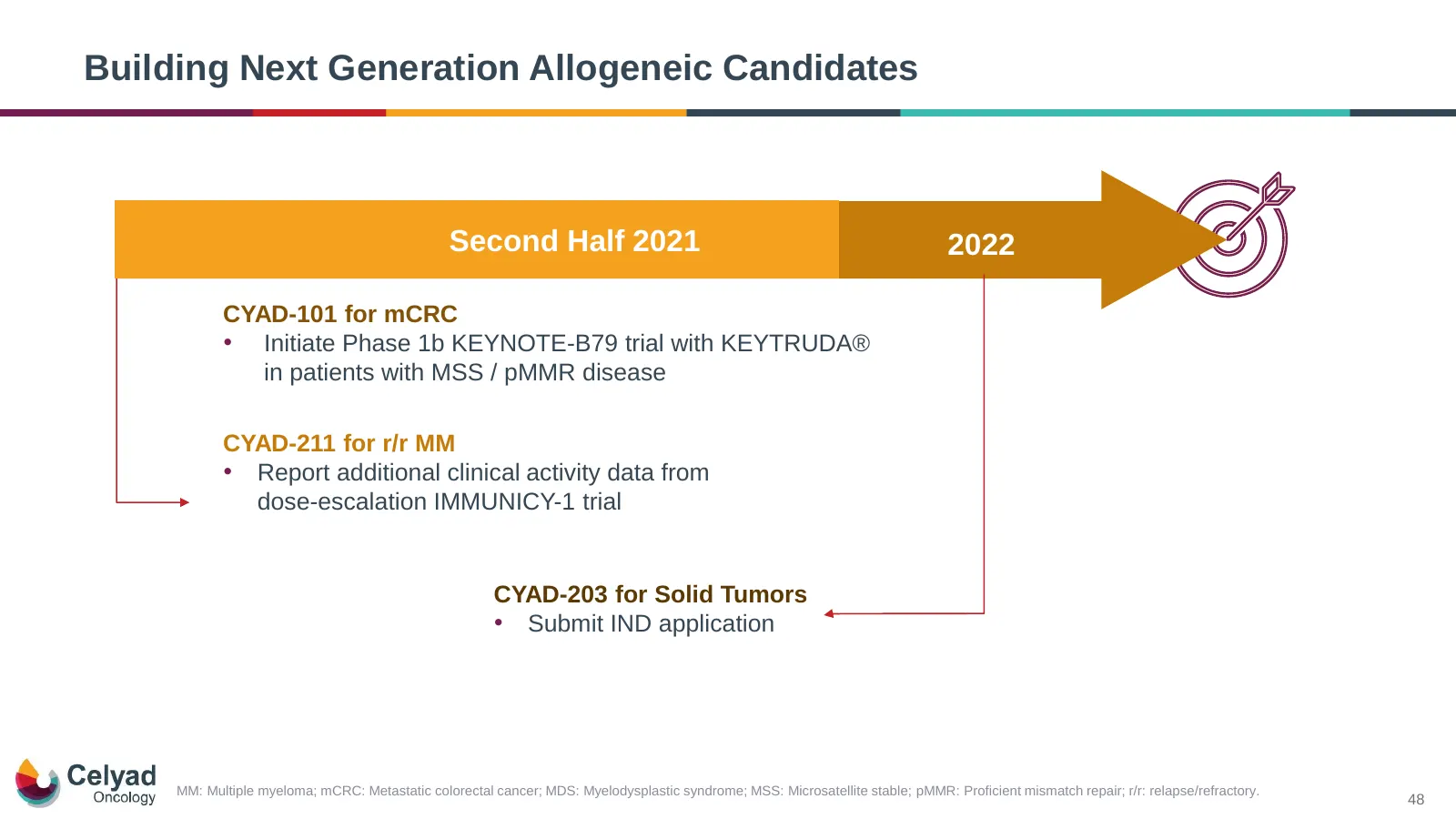
Slide 49: Building Next Generation Allogeneic Candidates
Building Next Generation Allogeneic Candidates Second Half 2021 2022 CYAD-101 for mCRC • Initiate Phase 1b KEYNOTE-B79 trial with KEYTRUDA® in patients with MSS / pMMR disease CYAD-211 for r/r MM • Report additional clinical activity data from dose-escalation IMMUNICY-1 trial CYAD-203 for Solid Tumo
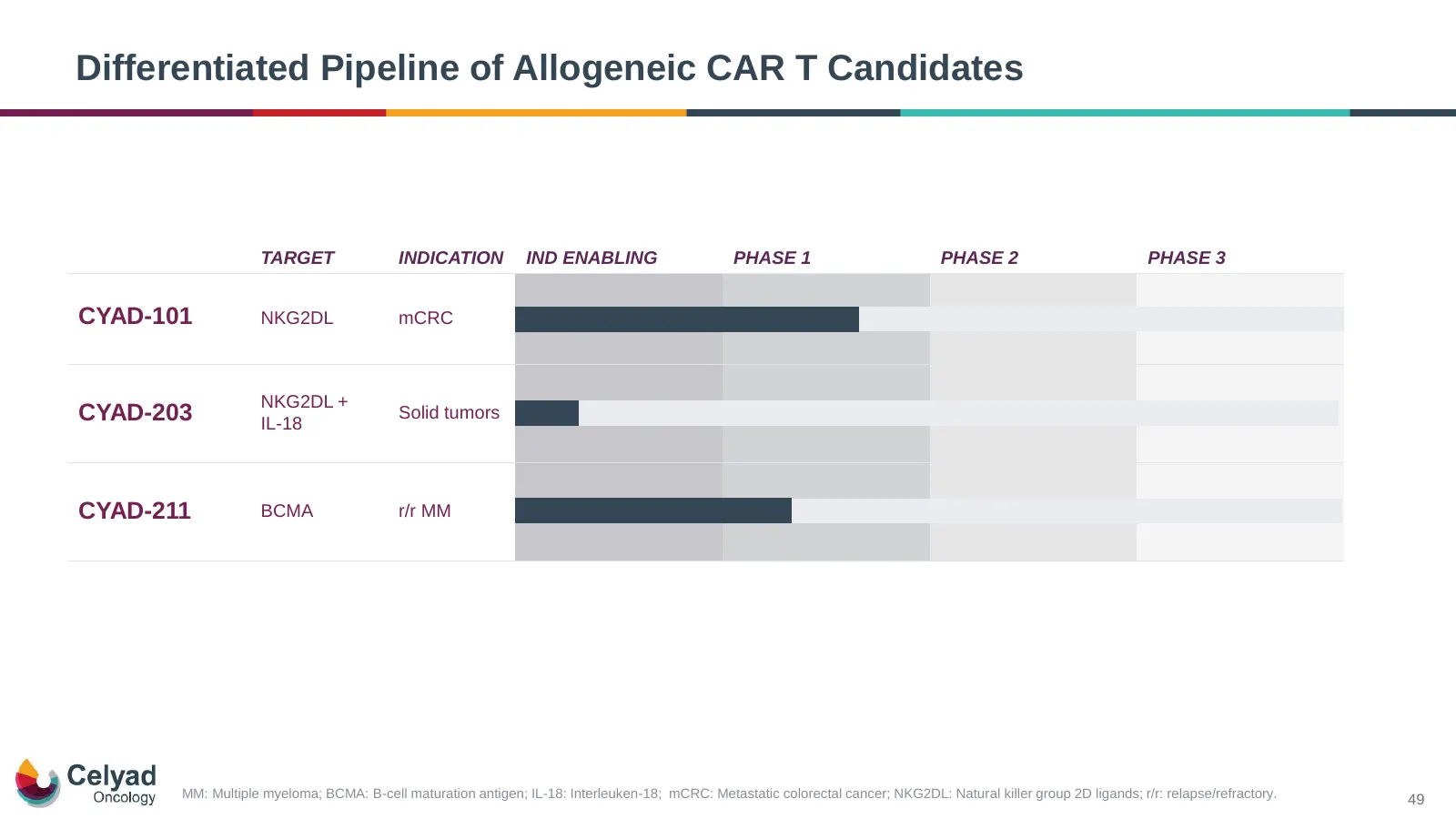
Slide 50: Differentiated Pipeline of Allogeneic CAR T Candidates
Differentiated Pipeline of Allogeneic CAR T Candidates TARGET INDICATION IND ENABLING PHASE 1 PHASE 2 PHASE 3 CYAD-101 NKG2DL mCRC NKG2DL + CYAD-203 IL-18 Solid tumors CYAD-211 BCMA r/r MM MM: Multiple myeloma; BCMA: B-cell maturation antigen; IL-18: Interleuken-18; mCRC: Metastatic colorectal cance

Slide 51: Research and Development Day Virtual Webinar
Research and Development Day Virtual Webinar William Blair Growth Stock Conference July 20, 2021
Source: Internet Archive copy of celyad.com