Anavex Life Sciences Corp. · NASDAQ:AVXL
Anavex Life Sciences — Investor Presentation (May 2018)
61 slides from Anavex Life Sciences's investor presentation, May 2018
Slide 1: May 2018 Corporate Presentation
May 2018 Corporate Presenta2on Christopher U Missling, PhD President & CEO Nasdaq: AVXL
Slide 2: Safe Harbor
Safe Harbor This presenta2on contains forward-looking statements made within the meaning of the Private Securi2es Li2ga2on Reform Act of 1995 by Anavex® Life Sciences Corp. and its representa2ves. These statements can be iden2fied by introductory words such as “expects,” “plans,” “intends,” “believes
Slide 3: Novel Target, New Approach to Treating CNS
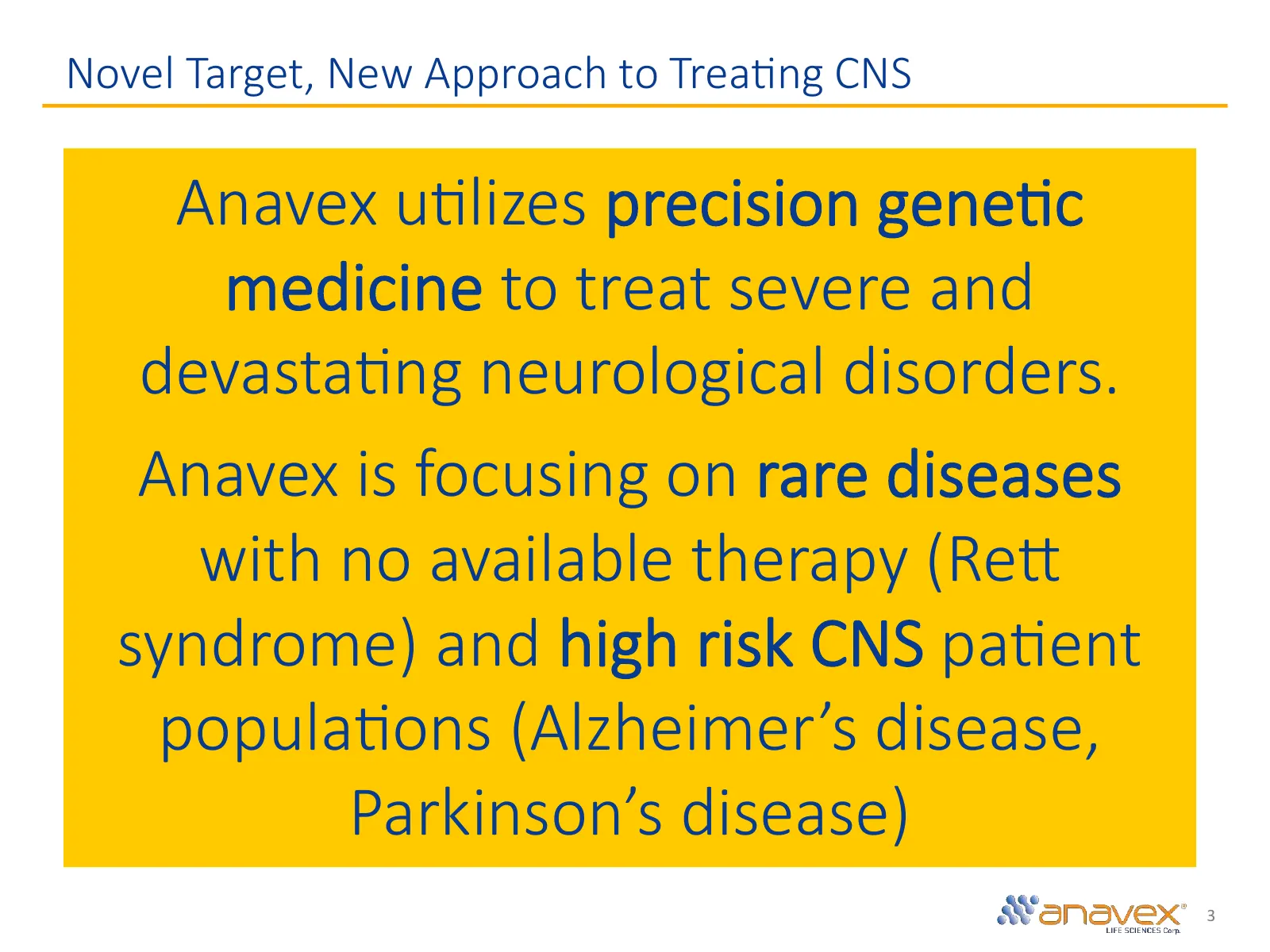
Novel Target, New Approach to Trea2ng CNS Anavex u2lizes precision gene2c medicine to treat severe and devasta2ng neurological disorders. Anavex is focusing on rare diseases with no available therapy (Re] syndrome) and high risk CNS pa2ent popula2ons (Alzheimer’s disease, Parkinson’s disease) 3
Slide 4: Summary
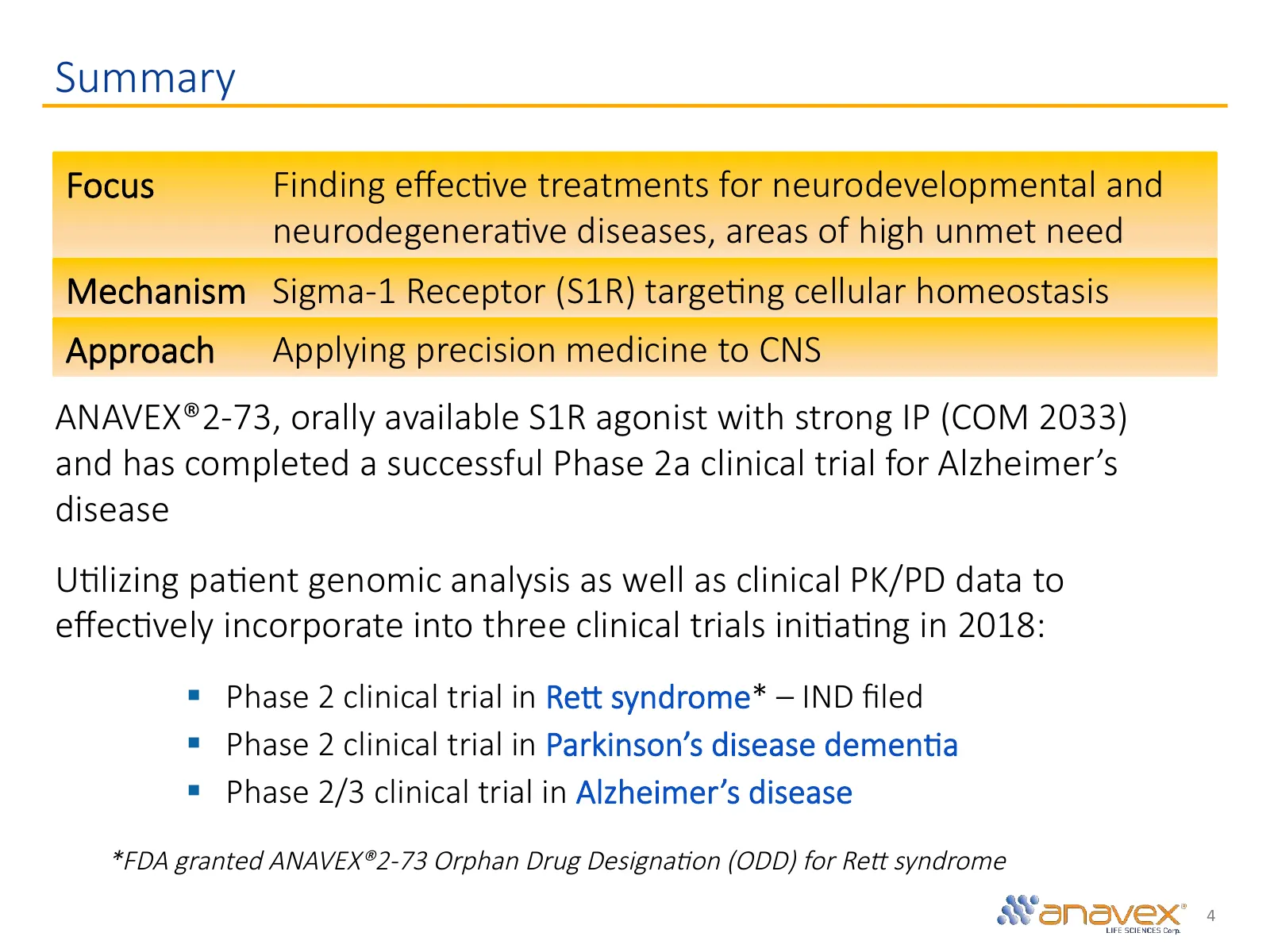
Summary Focus Finding effec2ve treatments for neurodevelopmental and neurodegenera2ve diseases, areas of high unmet need Mechanism Sigma-1 Receptor (S1R) targe2ng cellular homeostasis Approach Applying precision medicine to CNS ANAVEX®2-73, orally available S1R agonist with strong IP (COM 2033) and h
Slide 5: Identification of Gene Signature from ANAVEX 2-73 Patients
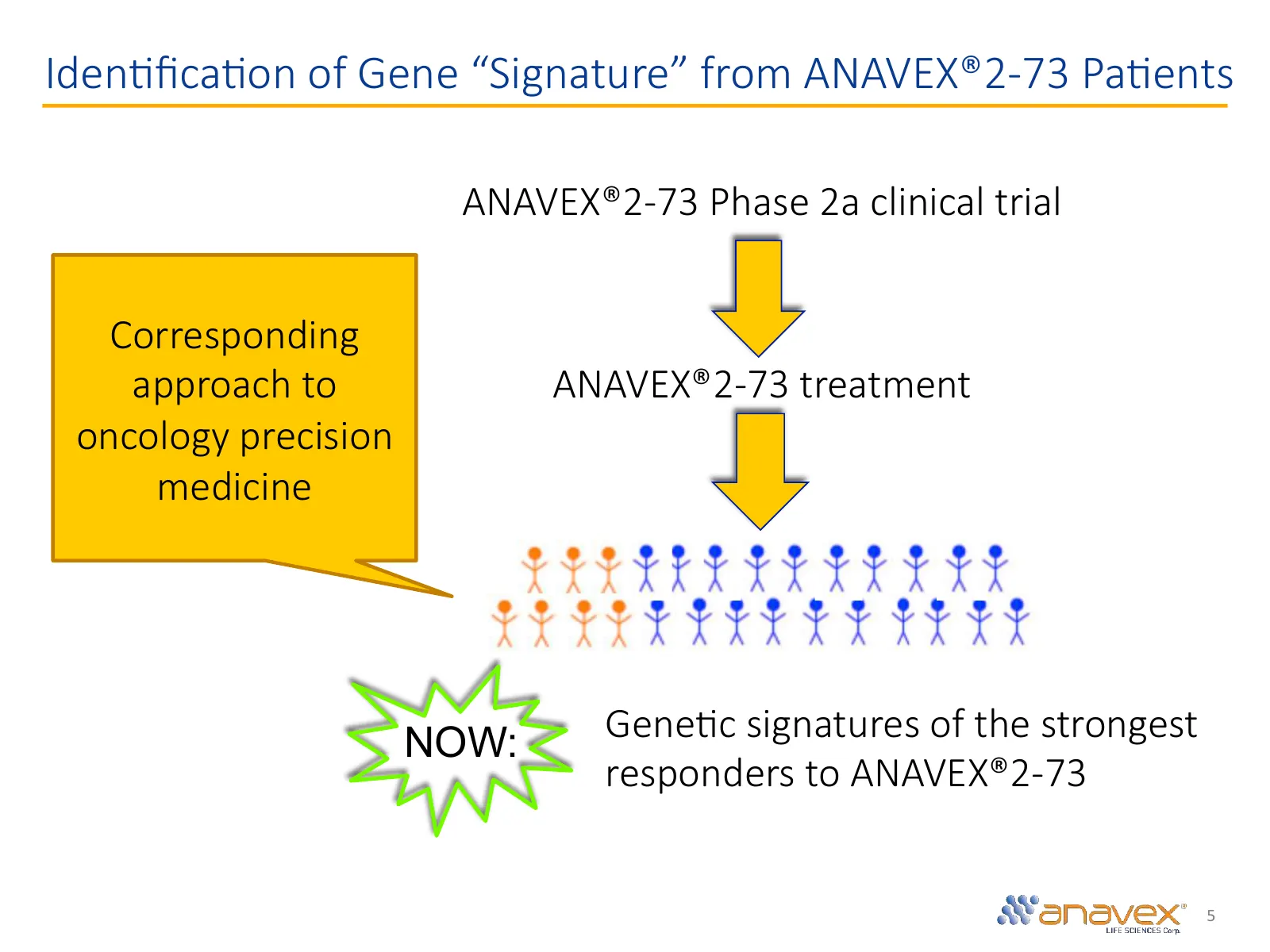
Iden2fica2on of Gene “Signature” from ANAVEX®2-73 Pa2ents ANAVEX®2-73 Phase 2a clinical trial Corresponding approach to ANAVEX®2-73 treatment oncology precision medicine NOW: Gene2c signatures of the strongest responders to ANAVEX®2-73 5
Slide 6: Portfolio of Compounds Varying in Sigma-1 Receptor Binding Activities
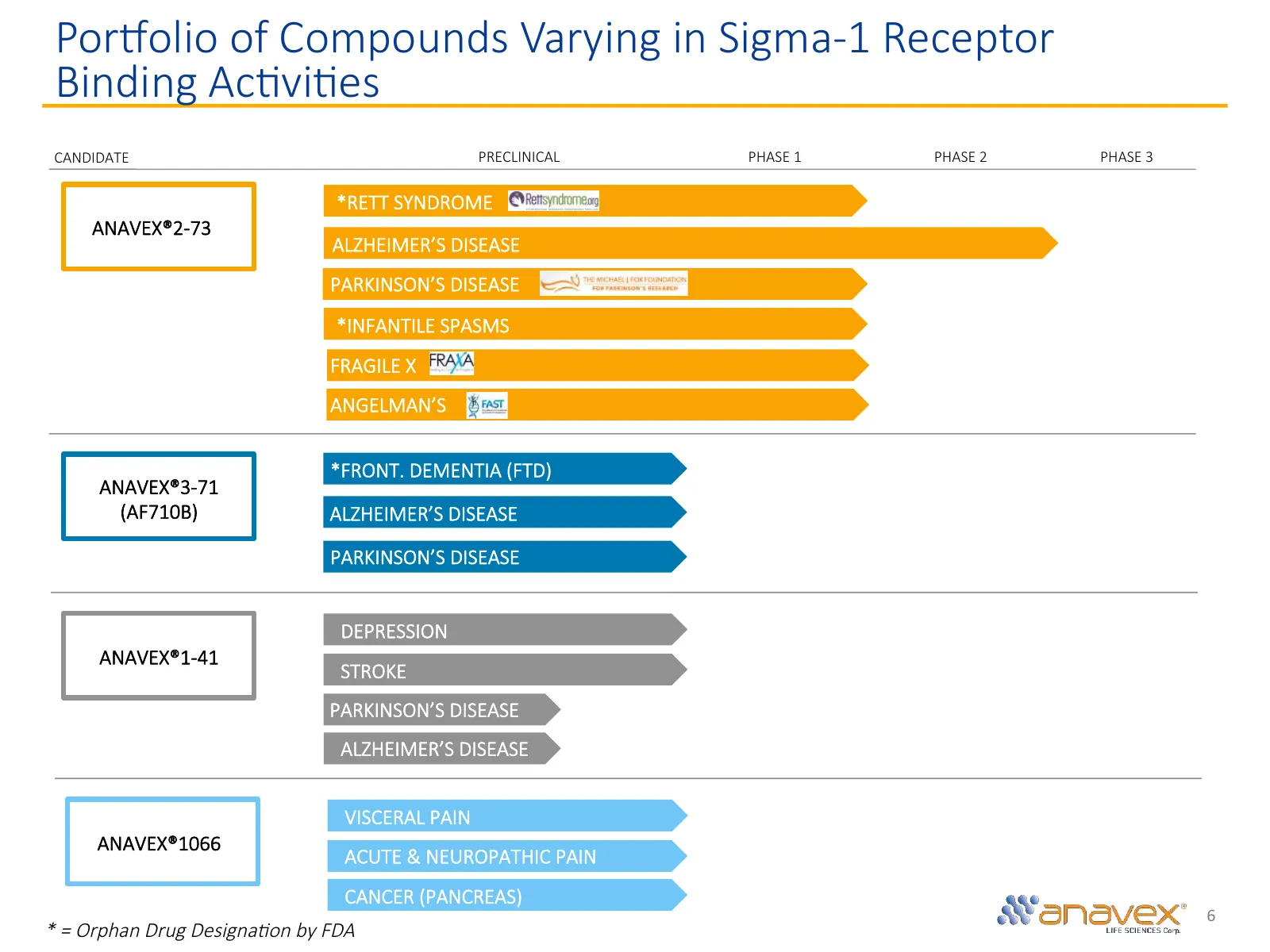
Pornolio of Compounds Varying in Sigma-1 Receptor Binding Ac2vi2es CANDIDATE PRECLINICAL PHASE 1 PHASE 2 PHASE 3 *RETT SYNDROME ANAVEX®2-73 ALZHEIMER’S DISEASE PARKINSON’S DISEASE *INFANTILE SPASMS FRAGILE X ANGELMAN’S *FRONT. DEMENTIA (FTD) ANAVEX®3-71 (AF710B) ALZHEIMER’S DISEASE PARKINSON’S DISEA
Slide 7: ANAVEX 2-73 is a S1R Agonist and Activates the Sigma-1 Receptor
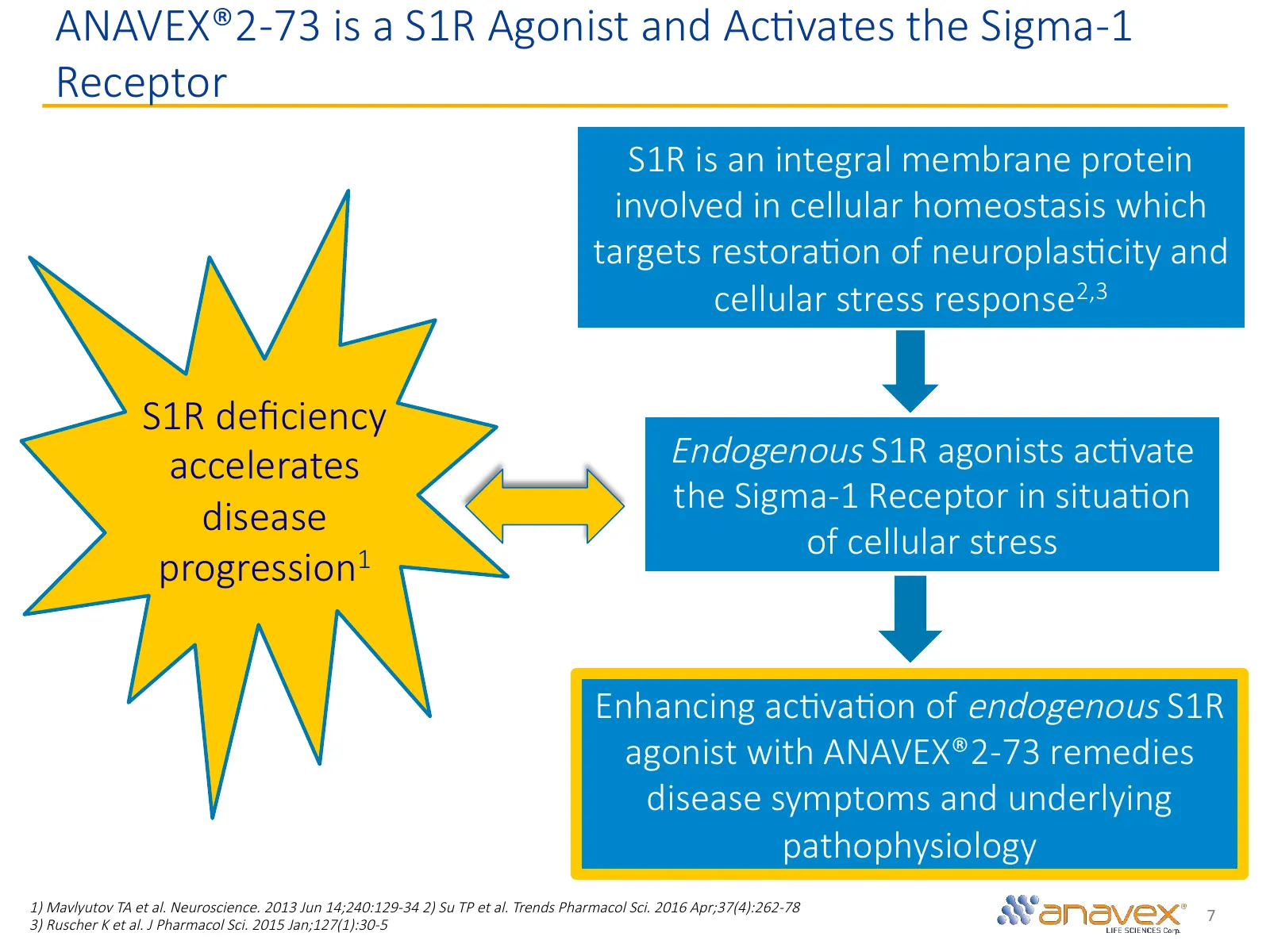
ANAVEX®2-73 is a S1R Agonist and Ac2vates the Sigma-1 Receptor S1R is an integral membrane protein involved in cellular homeostasis which targets restora2on of neuroplas2city and cellular stress response2,3 S1R deficiency accelerates Endogenous S1R agonists ac2vate the Sigma-1 Receptor in situa2on di
Slide 8: Sigma-1R Agonists MoA: Restoring Homeostasis
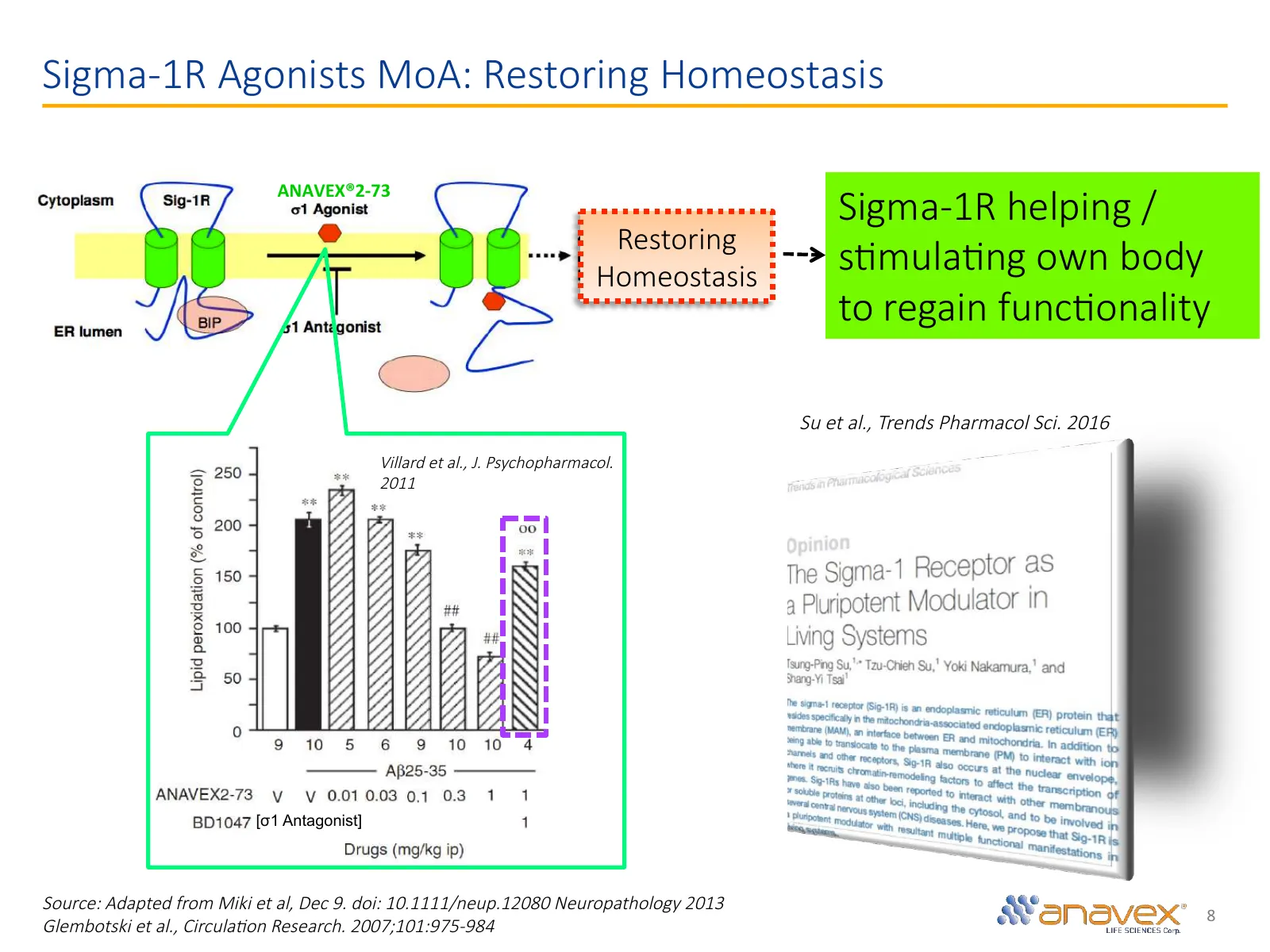
Sigma-1R Agonists MoA: Restoring Homeostasis ANAVEX®2-73 Sigma-1R helping / Restoring Homeostasis s2mula2ng own body to regain func2onality Su et al., Trends Pharmacol Sci. 2016 Villard et al., J. Psychopharmacol. 2011 [σ1 Antagonist] Source: Adapted from Miki et al, Dec 9. doi: 10.1111/neup.12080 N
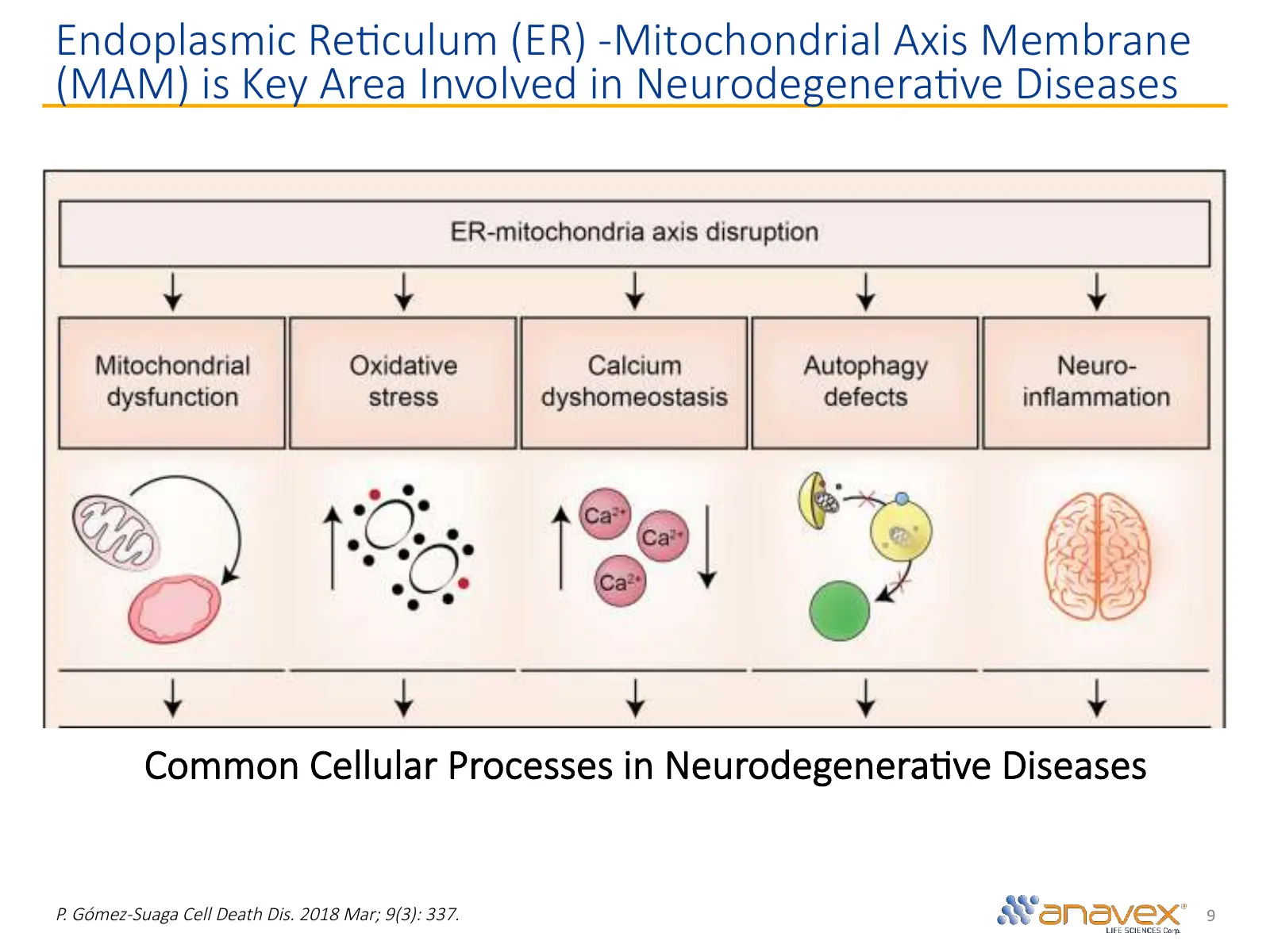
Slide 9: ER-Mitochondrial Axis Membrane (MAM) in Neurodegenerative Diseases
Endoplasmic Re2culum (ER) -Mitochondrial Axis Membrane (MAM) is Key Area Involved in Neurodegenera2ve Diseases Common Cellular Processes in Neurodegenera2ve Diseases P. Gómez-Suaga Cell Death Dis. 2018 Mar; 9(3): 337. 9
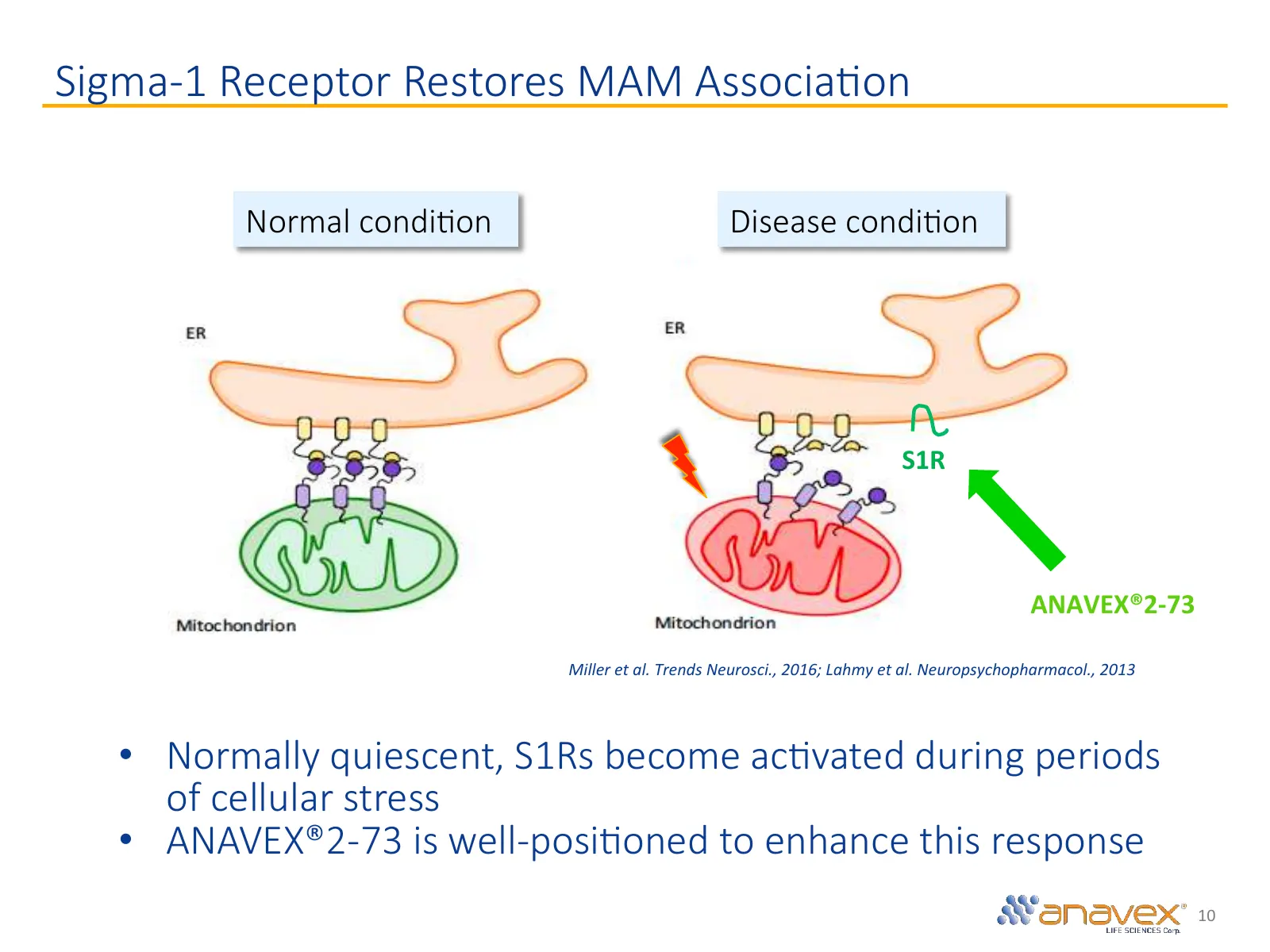
Slide 10: Sigma-1 Receptor Restores MAM Association
Sigma-1 Receptor Restores MAM Associa2on Normal condi2on Disease condi2on S1R ANAVEX®2-73 Miller et al. Trends Neurosci., 2016; Lahmy et al. Neuropsychopharmacol., 2013 • Normally quiescent, S1Rs become ac2vated during periods of cellular stress • ANAVEX®2-73 is well-posi2oned to enhance this respon
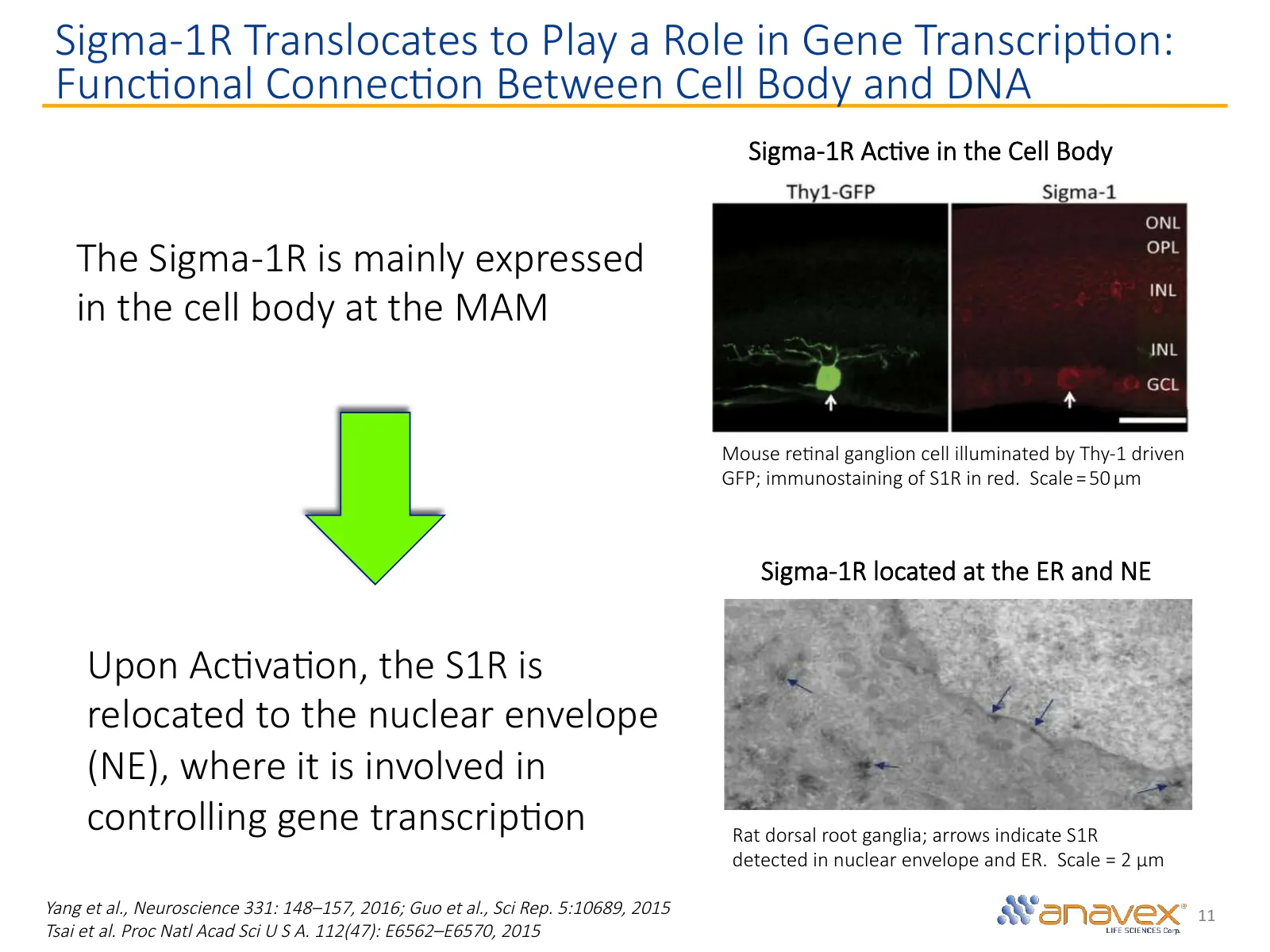
Slide 11: Sigma-1R Translocates to Play a Role in Gene Transcription
Sigma-1R Translocates to Play a Role in Gene Transcrip2on: Func2onal Connec2on Between Cell Body and DNA Sigma-1R Ac2ve in the Cell Body The Sigma-1R is mainly expressed in the cell body at the MAM Mouse re2nal ganglion cell illuminated by Thy-1 driven GFP; immunostaining of S1R in red. Scale = 50 μ
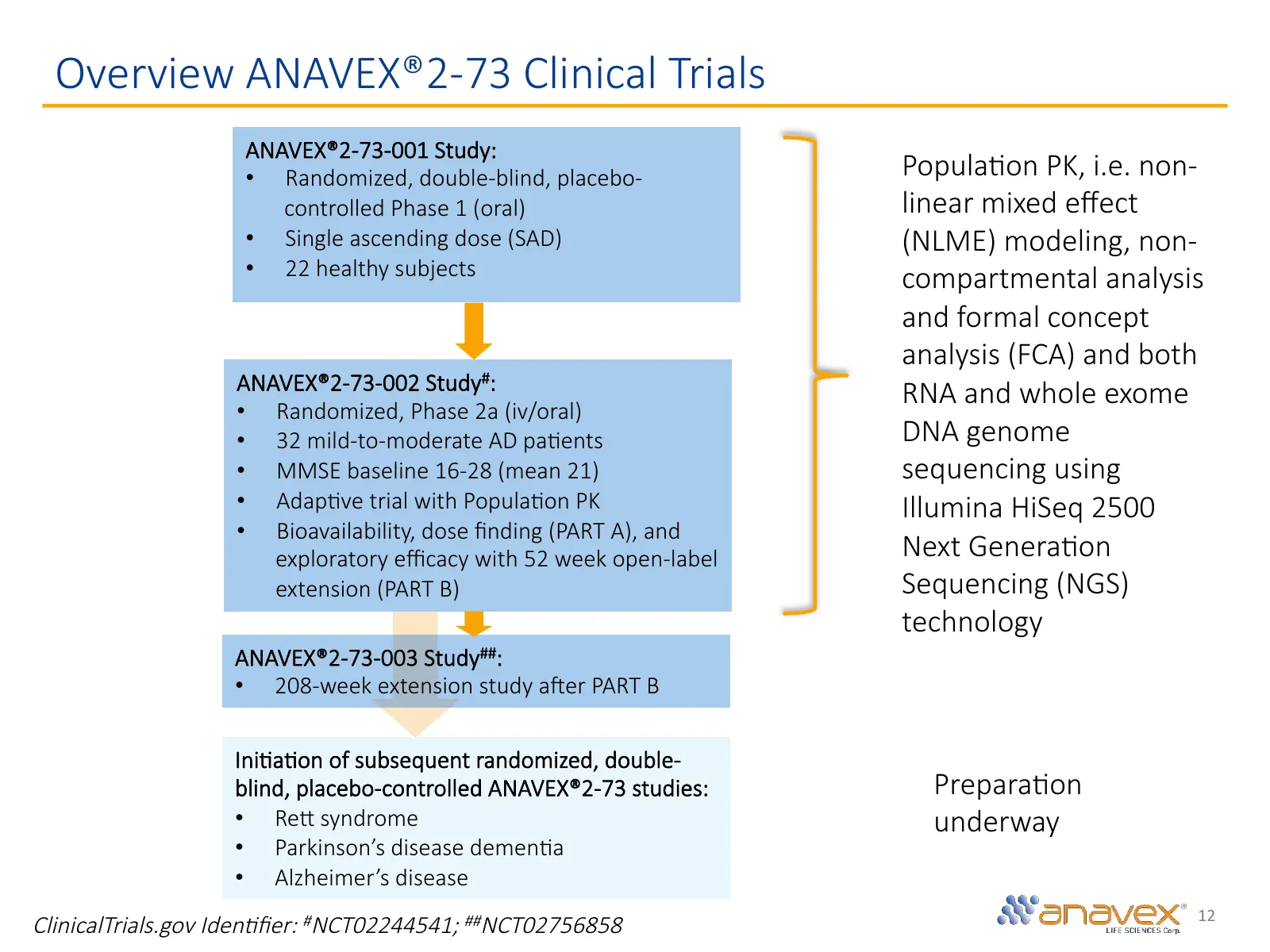
Slide 12: Overview ANAVEX 2-73 Clinical Trials
Overview ANAVEX®2-73 Clinical Trials ANAVEX®2-73-001 Study: • Randomized, double-blind, placebo- Popula2on PK, i.e. non- controlled Phase 1 (oral) linear mixed effect • Single ascending dose (SAD) (NLME) modeling, non- • 22 healthy subjects compartmental analysis and formal concept analysis (FCA) and
Slide 13: Using Precision Medicine to Increase Clinical Trial Success Rate
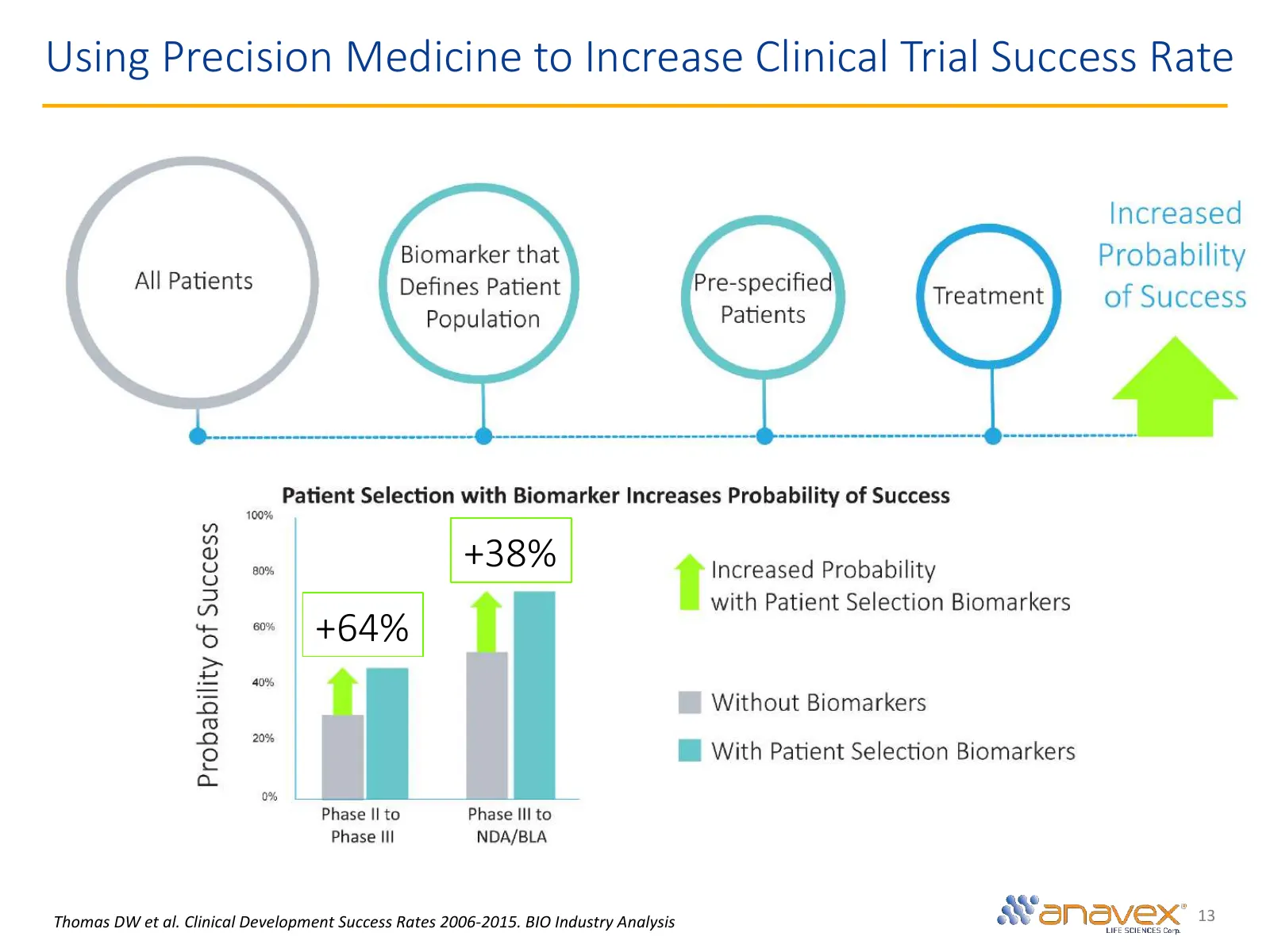
Using Precision Medicine to Increase Clinical Trial Success Rate +38% +64% Thomas DW et al. Clinical Development Success Rates 2006-2015. BIO Industry Analysis 13
Slide 14: Rett Syndrome: A Devastating Monogenic Disorder
Re] Syndrome (RTT): A Devasta2ng Monogenic Disorder Rare gene2c postnatal progressive neurodevelopmental disorder § Re] syndrome (RTT) is caused by spontaneous (de novo) muta2on in the MECP2 gene located on the X chromosome § For males the gene muta2on is lethal since males have only one X chromosom
Slide 15: MECP2 is Mutated in Rett Syndrome Leading to Loss of Neuronal Function
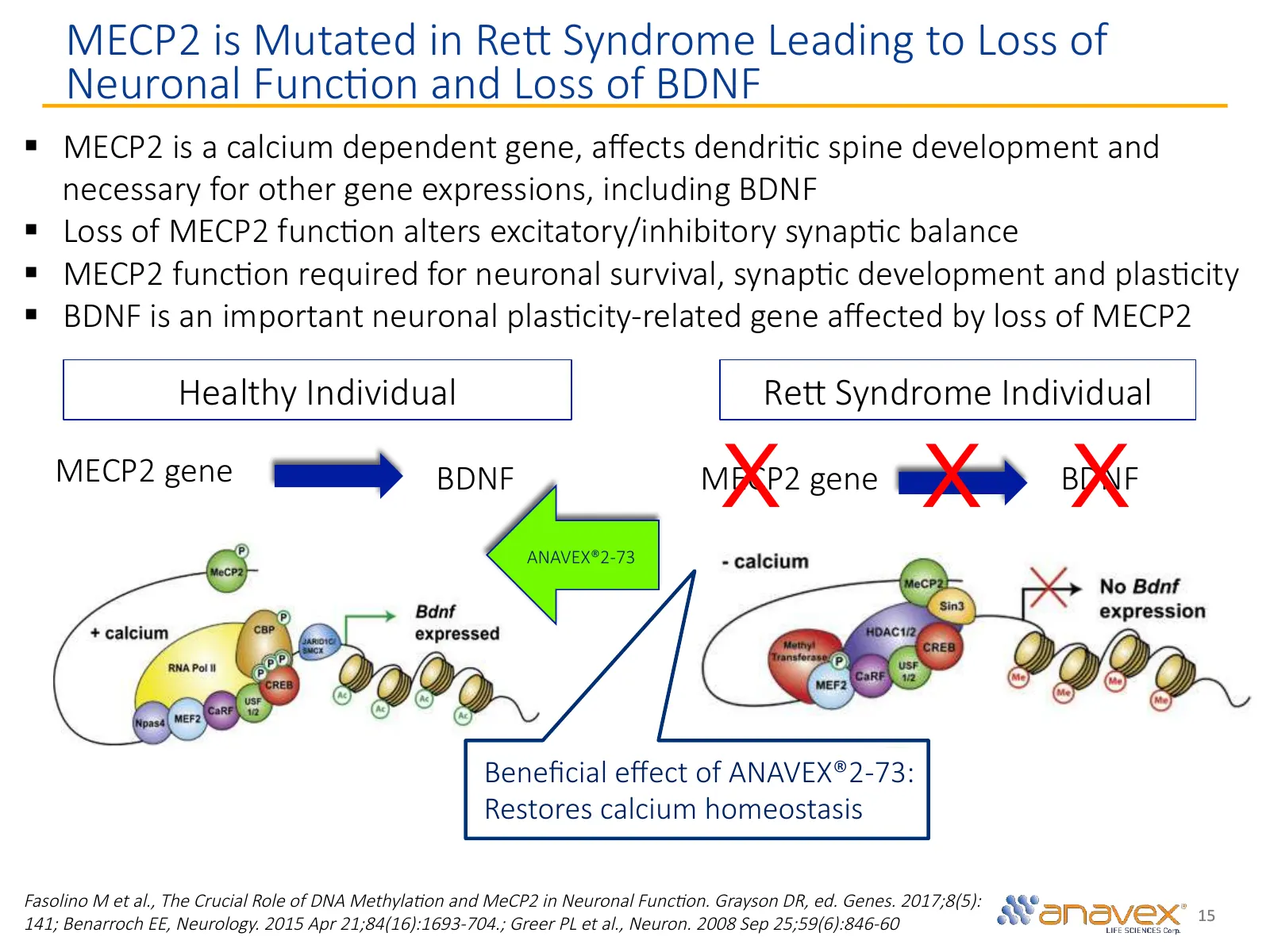
MECP2 is Mutated in Re] Syndrome Leading to Loss of Neuronal Func2on and Loss of BDNF § MECP2 is a calcium dependent gene, affects dendri2c spine development and necessary for other gene expressions, including BDNF § Loss of MECP2 func2on alters excitatory/inhibitory synap2c balance § MECP2 func2on r
Slide 16: ANAVEX 2-73 Regulates Gene Expression and Restores BDNF Levels
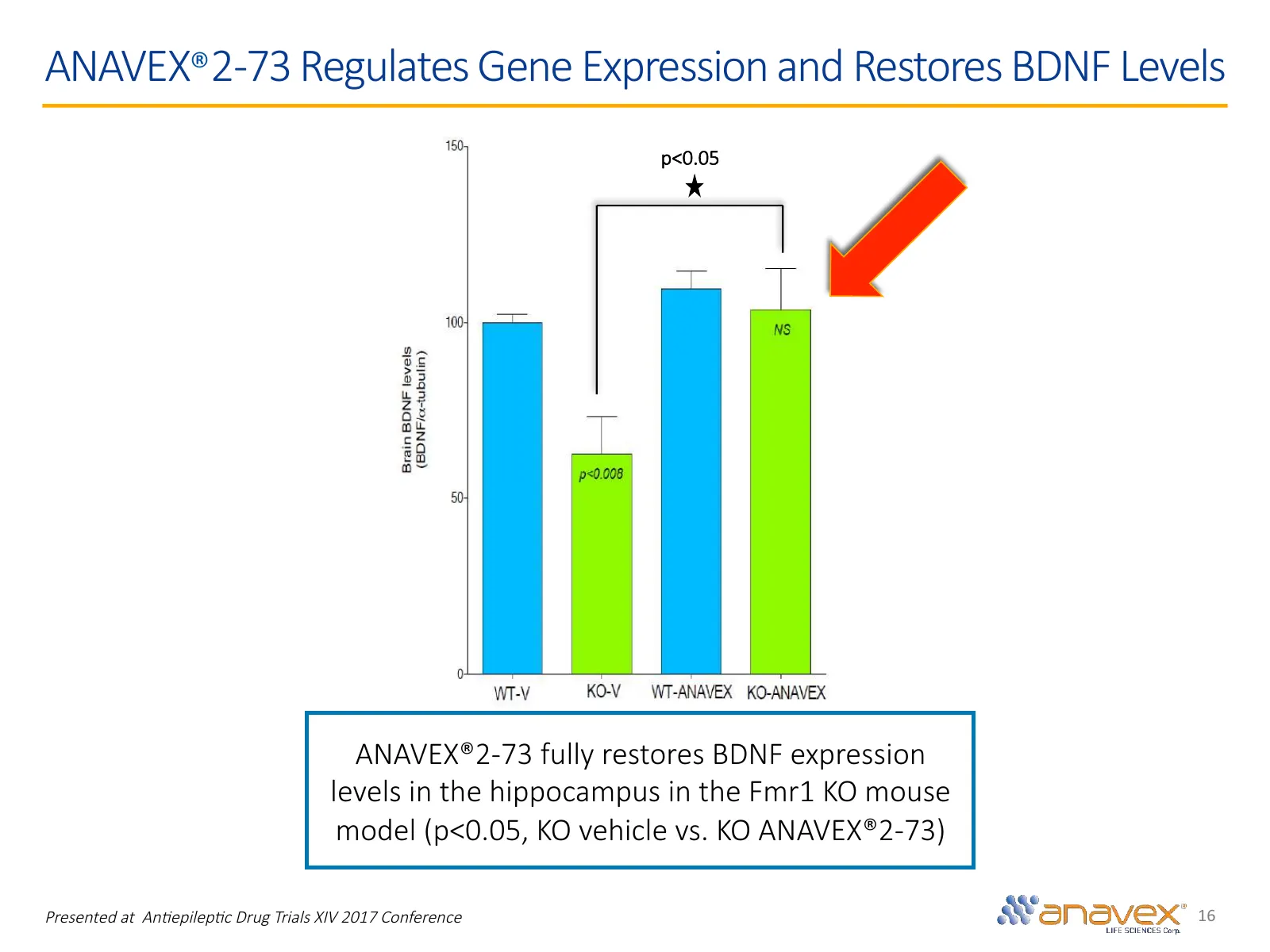
ANAVEX®2-73 Regulates Gene Expression and Restores BDNF Levels p<0.05 ANAVEX®2-73 fully restores BDNF expression levels in the hippocampus in the Fmr1 KO mouse model (p<0.05, KO vehicle vs. KO ANAVEX®2-73) Presented at An<epilep<c Drug Trials XIV 2017 Conference 16
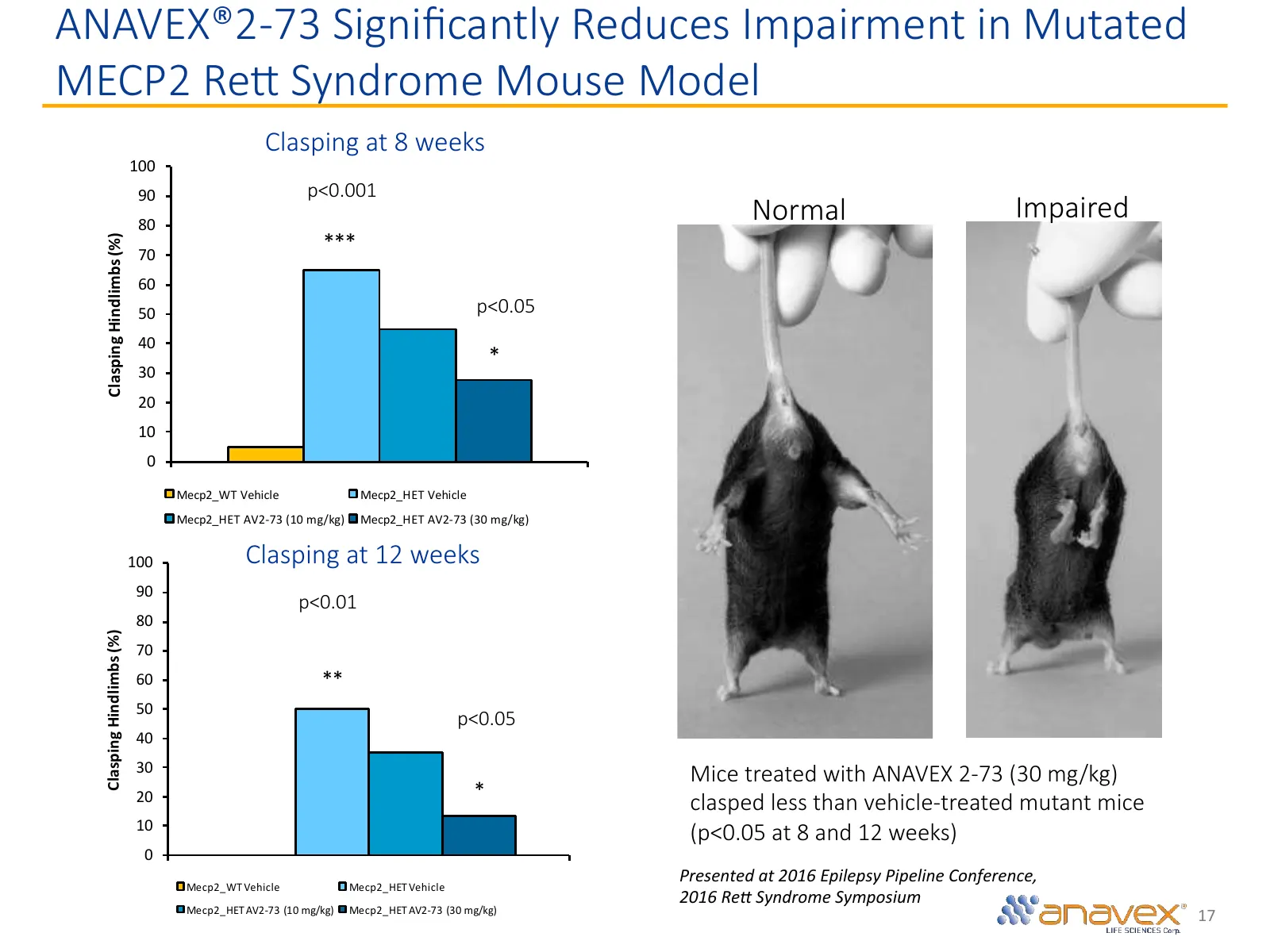
Slide 17: ANAVEX 2-73 Significantly Reduces Impairment in Mutated MECP2 Mouse Model
ANAVEX®2-73 Significantly Reduces Impairment in Mutated MECP2 Re] Syndrome Mouse Model Clasping at 8 weeks 100 90 p<0.001 80 Normal Impaired *** Clasping Hindlimbs (%) 70 60 50 p<0.05 40 * 30 20 10 0 Mecp2_WT Vehicle Mecp2_HET Vehicle Mecp2_HET AV2-73 (10 mg/kg) Mecp2_HET AV2-73 (30 mg/kg) 100 Claspi
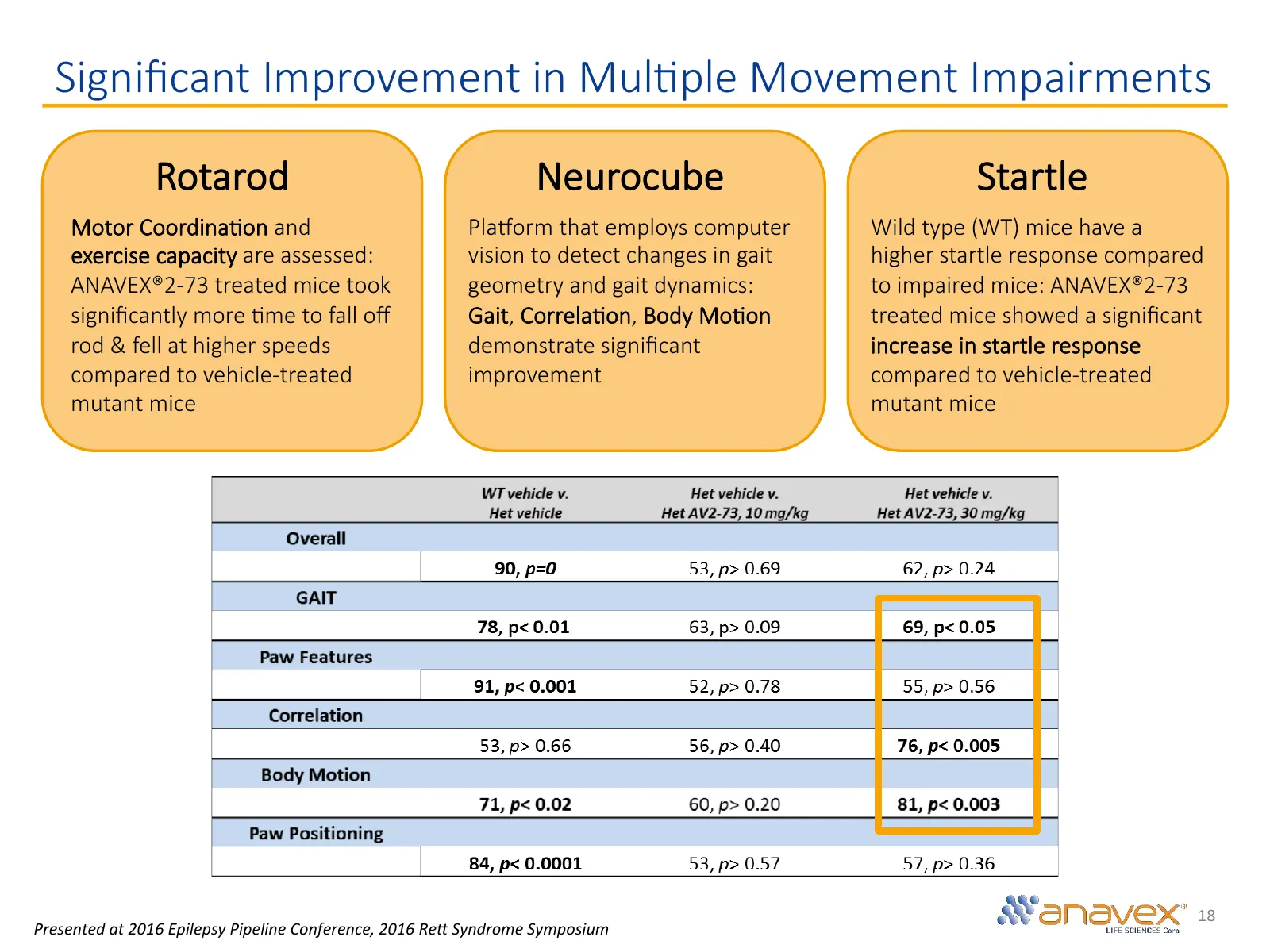
Slide 18: Significant Improvement in Multiple Movement Impairments
Significant Improvement in Mul2ple Movement Impairments Rotarod Neurocube Startle Motor Coordina2on and Planorm that employs computer Wild type (WT) mice have a exercise capacity are assessed: vision to detect changes in gait higher startle response compared ANAVEX®2-73 treated mice took geometry and
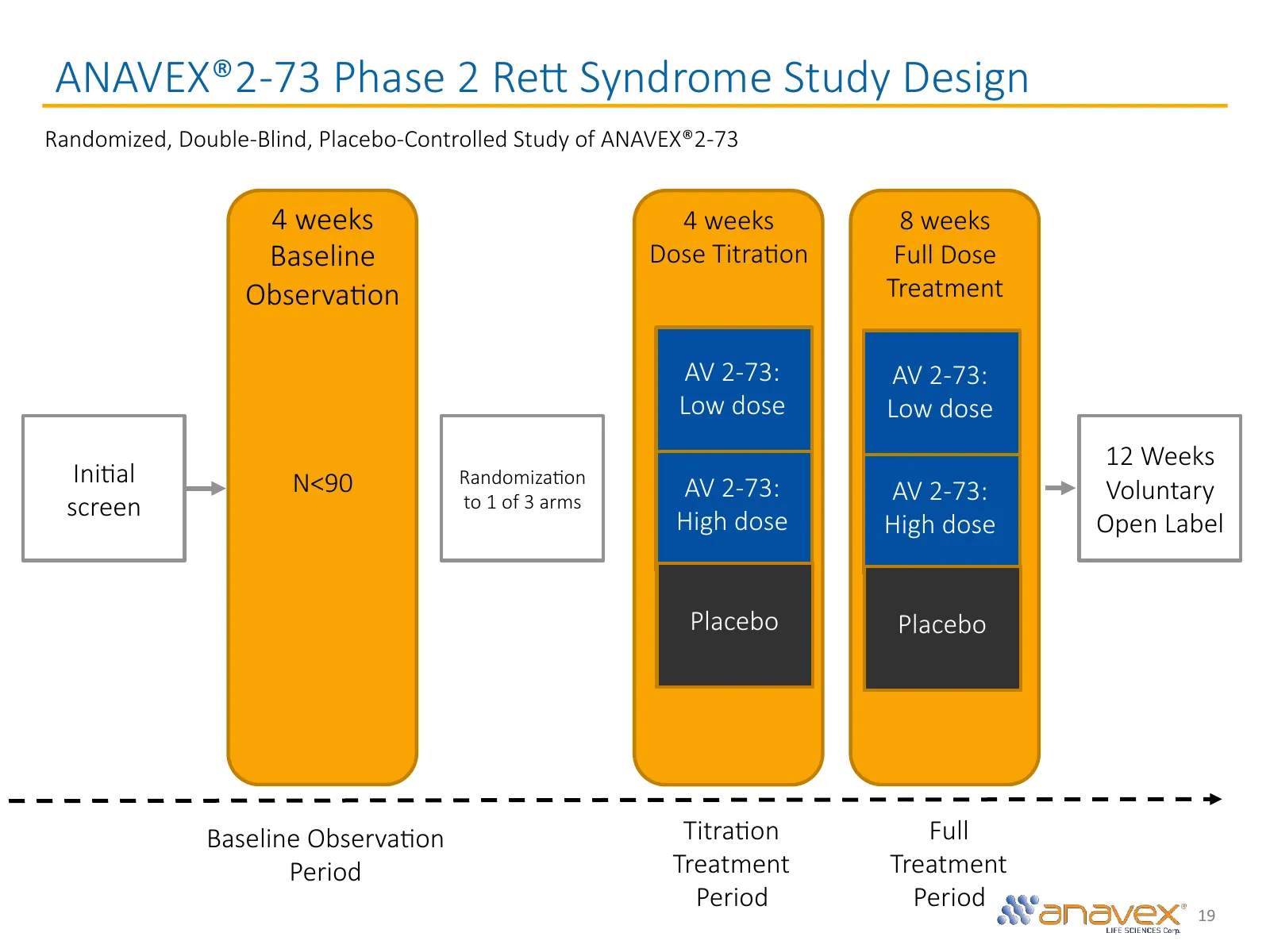
Slide 19: ANAVEX 2-73 Phase 2 Rett Syndrome Study Design
ANAVEX®2-73 Phase 2 Re] Syndrome Study Design Randomized, Double-Blind, Placebo-Controlled Study of ANAVEX®2-73 4 weeks 4 weeks 8 weeks Baseline Dose Titra2on Full Dose Observa2on Treatment AV 2-73: AV 2-73: Low dose Low dose 12 Weeks Ini2al N<90 Randomiza2on to 1 of 3 arms AV 2-73: AV 2-73: Volunta
Slide 20: Parkinson's Disease Dementia: A Devastating Dementia Disorder
Parkinson’s Disease Demen2a (PDD): A Devasta2ng Demen2a Disorder Parkinson’s disease demen2a: Demen2a occurs a year or more awer the onset of motor symptoms § Parkinson's disease is a fairly common neurological disorder in older adults, es2mated to affect nearly 2 percent of those older than age 65 §
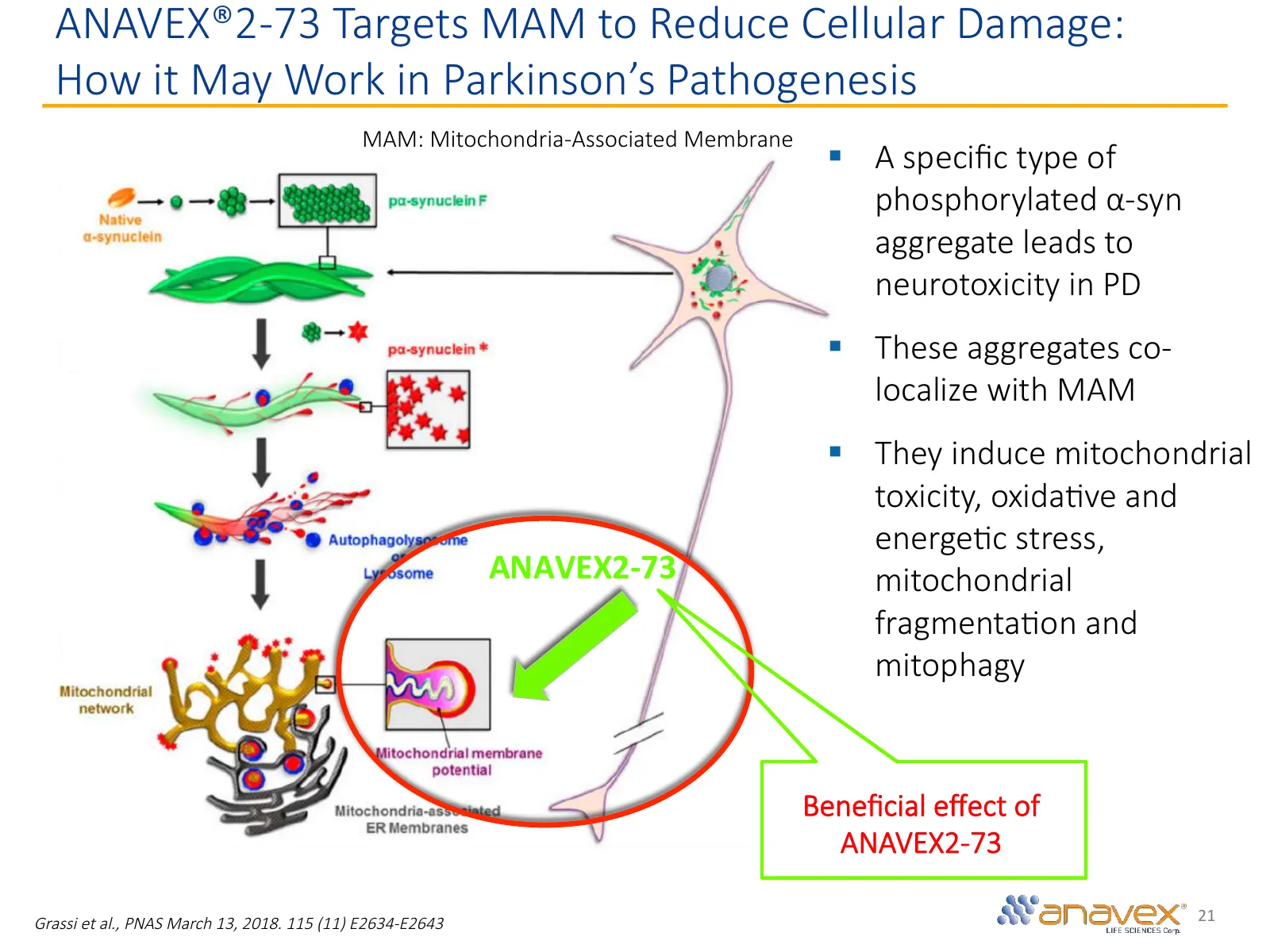
Slide 21: ANAVEX 2-73 Targets MAM in Parkinson's Pathogenesis
ANAVEX®2-73 Targets MAM to Reduce Cellular Damage: How it May Work in Parkinson’s Pathogenesis MAM: Mitochondria-Associated Membrane § A specific type of phosphorylated α-syn aggregate leads to neurotoxicity in PD § These aggregates co- localize with MAM § They induce mitochondrial toxicity, oxida2ve
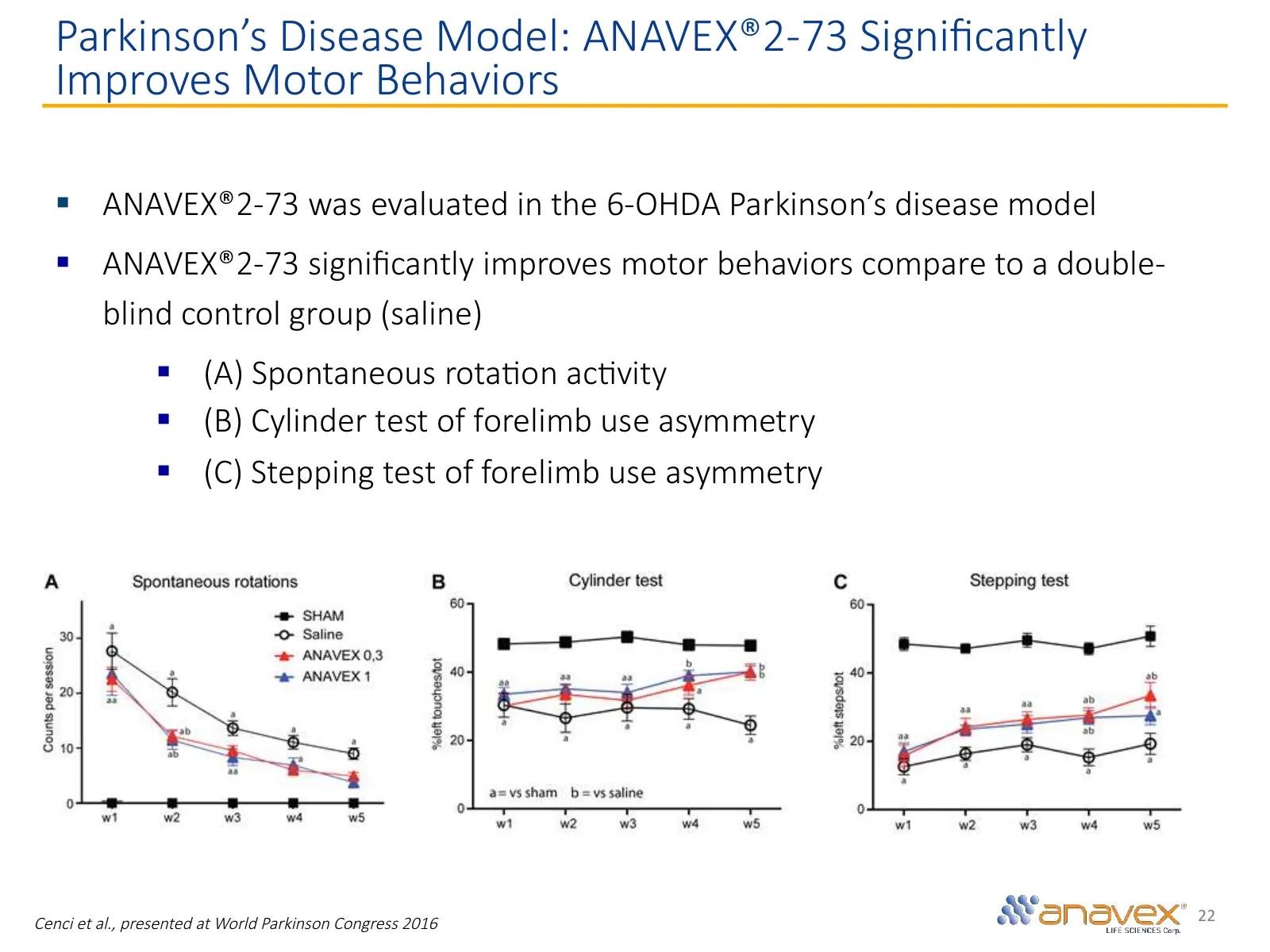
Slide 22: Parkinson's Disease Model: ANAVEX 2-73 Improves Motor Behaviors
Parkinson’s Disease Model: ANAVEX®2-73 Significantly Improves Motor Behaviors § ANAVEX®2-73 was evaluated in the 6-OHDA Parkinson’s disease model § ANAVEX®2-73 significantly improves motor behaviors compare to a double- blind control group (saline) § (A) Spontaneous rota2on ac2vity § (B) Cylinder test
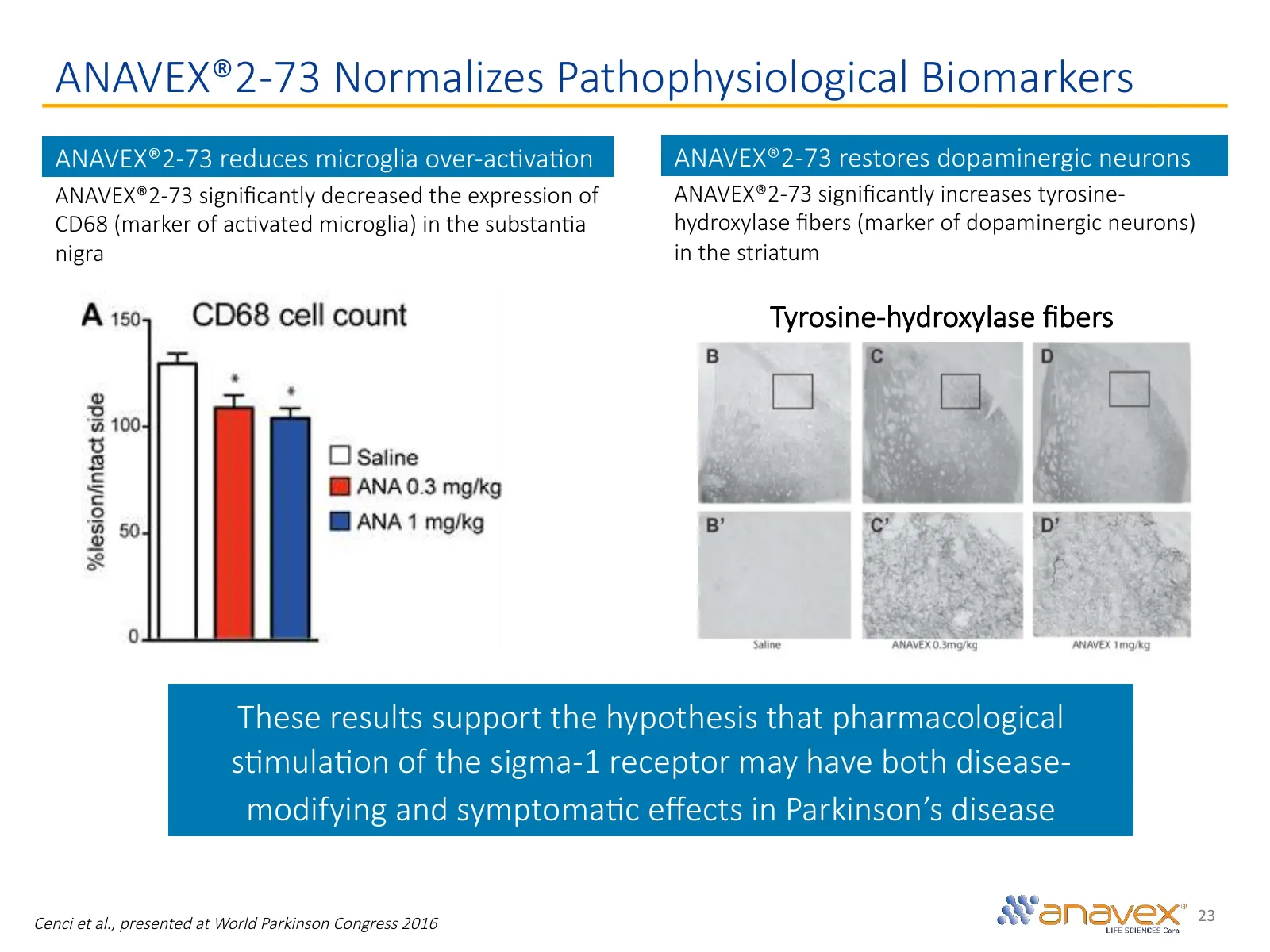
Slide 23: ANAVEX 2-73 Normalizes Pathophysiological Biomarkers
ANAVEX®2-73 Normalizes Pathophysiological Biomarkers ANAVEX®2-73 reduces microglia over-ac2va2on ANAVEX®2-73 restores dopaminergic neurons ANAVEX®2-73 significantly decreased the expression of ANAVEX®2-73 significantly increases tyrosine- CD68 (marker of ac2vated microglia) in the substan2a hydroxylas
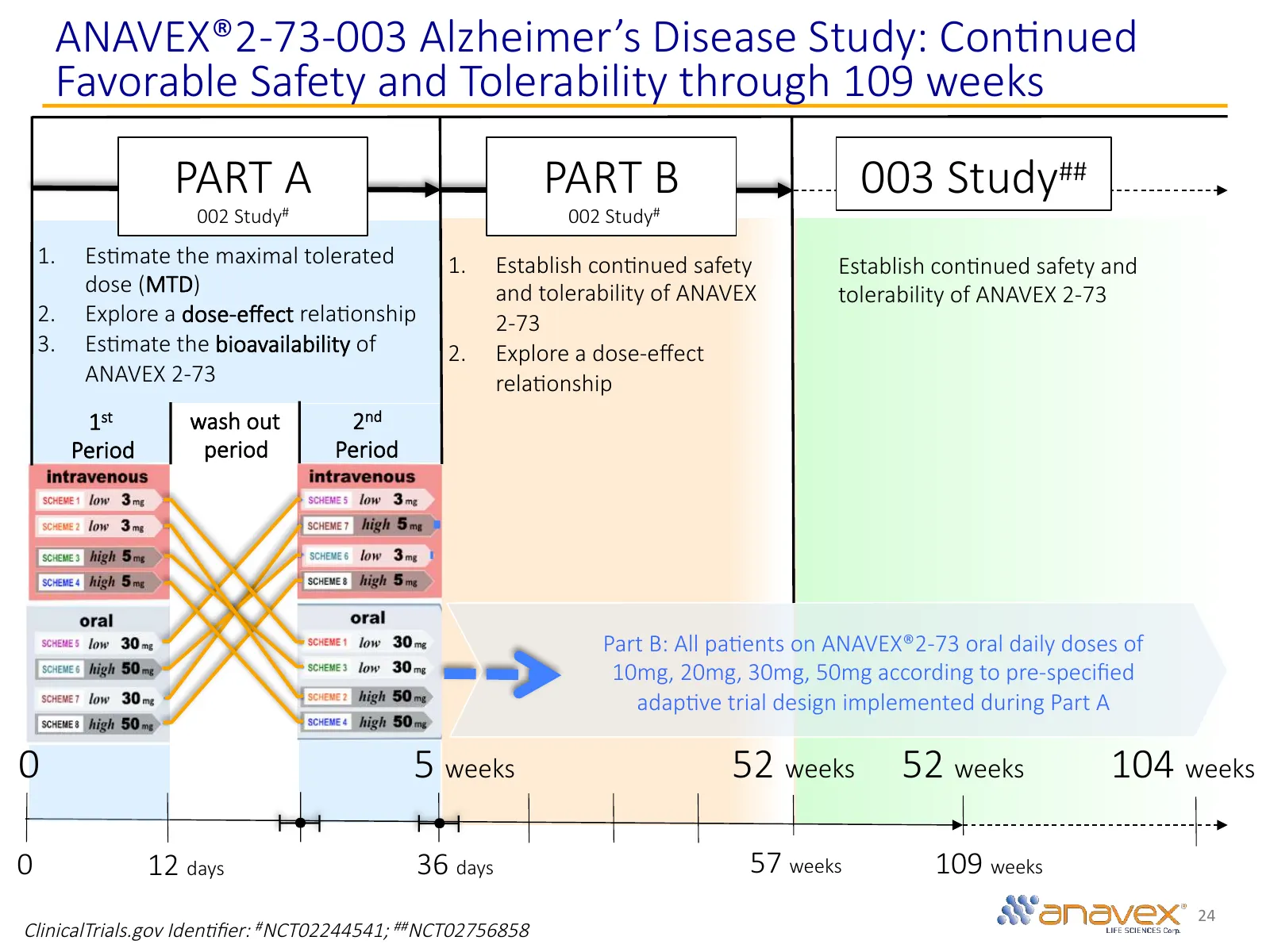
Slide 24: ANAVEX 2-73-003 Alzheimer's Study: Safety and Tolerability through 109 weeks
ANAVEX®2-73-003 Alzheimer’s Disease Study: Con2nued Favorable Safety and Tolerability through 109 weeks PART A PART B 003 Study## 002 Study# 002 Study# 1. Es2mate the maximal tolerated 1. Establish con2nued safety Establish con2nued safety and dose (MTD) and tolerability of ANAVEX tolerability of AN
Slide 25: Primary and Secondary Endpoints Met in Phase 2a Alzheimer's Trial
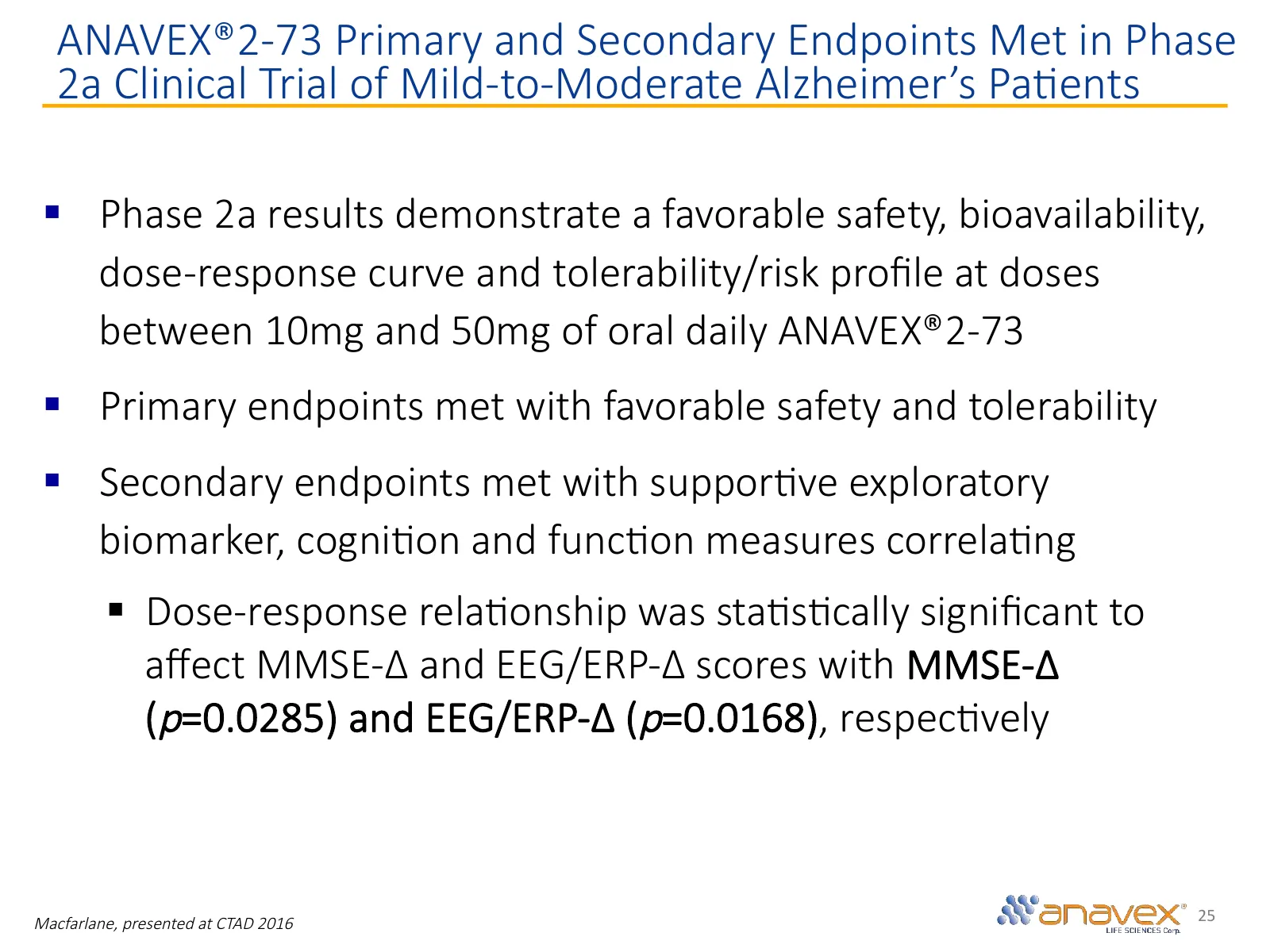
ANAVEX®2-73 Primary and Secondary Endpoints Met in Phase 2a Clinical Trial of Mild-to-Moderate Alzheimer’s Pa2ents § Phase 2a results demonstrate a favorable safety, bioavailability, dose-response curve and tolerability/risk profile at doses between 10mg and 50mg of oral daily ANAVEX®2-73 § Primary e
Slide 26: ANAVEX 2-73 Primary Endpoint Safety Data
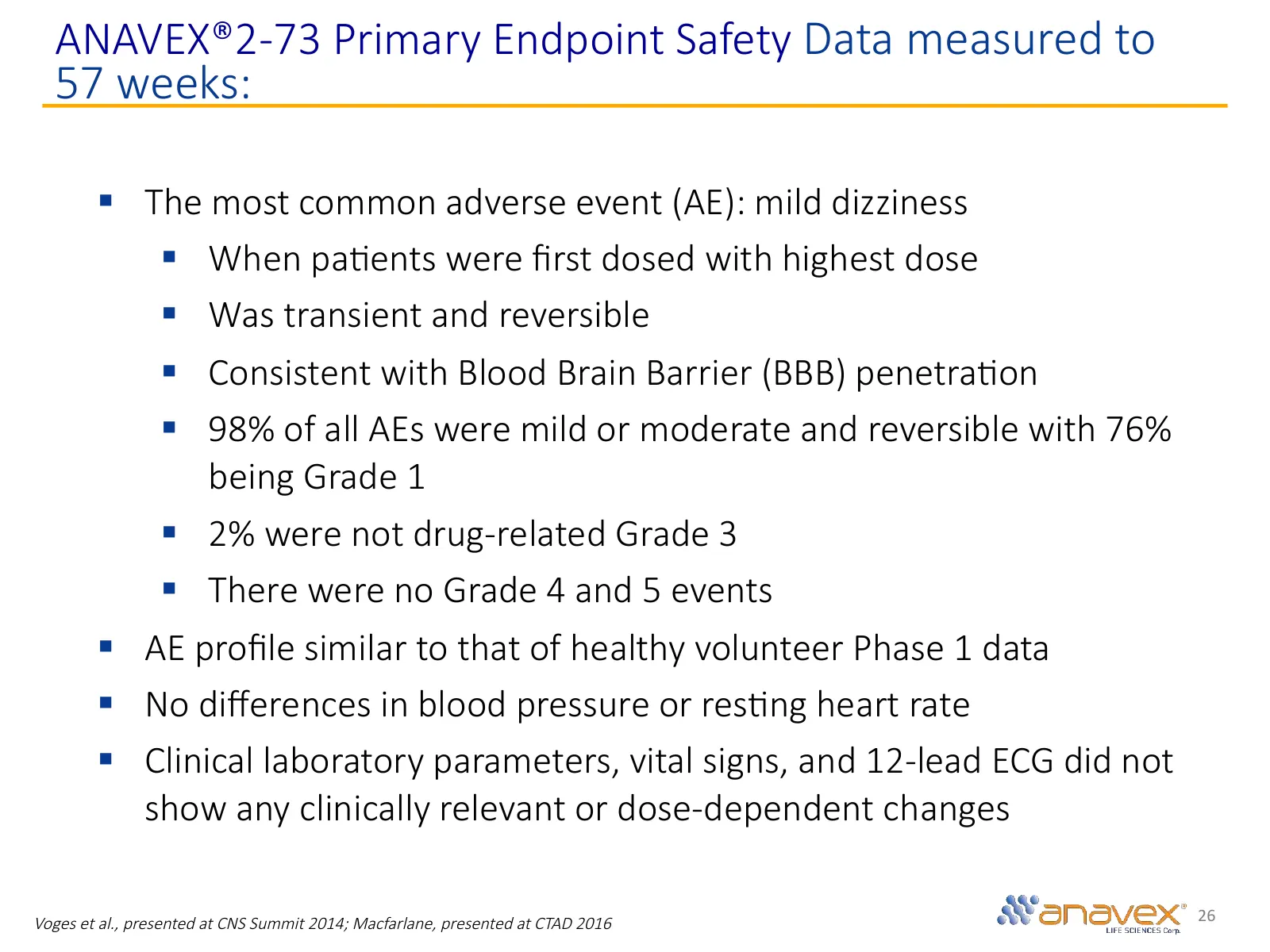
ANAVEX®2-73 Primary Endpoint Safety Data measured to 57 weeks: § The most common adverse event (AE): mild dizziness § When pa2ents were first dosed with highest dose § Was transient and reversible § Consistent with Blood Brain Barrier (BBB) penetra2on § 98% of all AEs were mild or moderate and revers
Slide 27: Secondary Endpoints: Consistent Improved Response
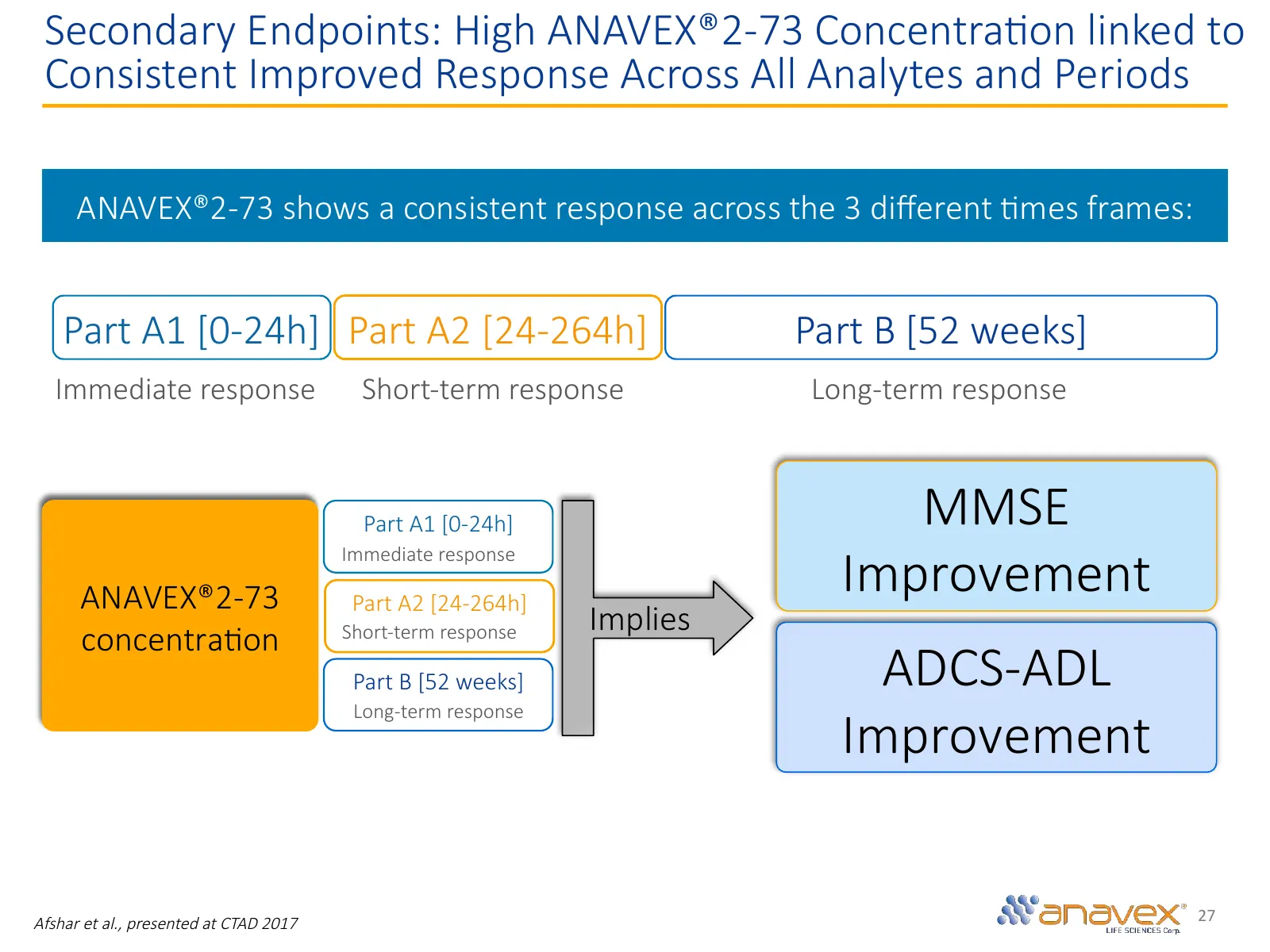
Secondary Endpoints: High ANAVEX®2-73 Concentra2on linked to Consistent Improved Response Across All Analytes and Periods ANAVEX®2-73 shows a consistent response across the 3 different 2mes frames: Part A1 [0-24h] Part A2 [24-264h] Part B [52 weeks] Immediate response Short-term response Long-term re
Slide 28: Robust Dose(Concentration)/Response Effect of ANAVEX 2-73
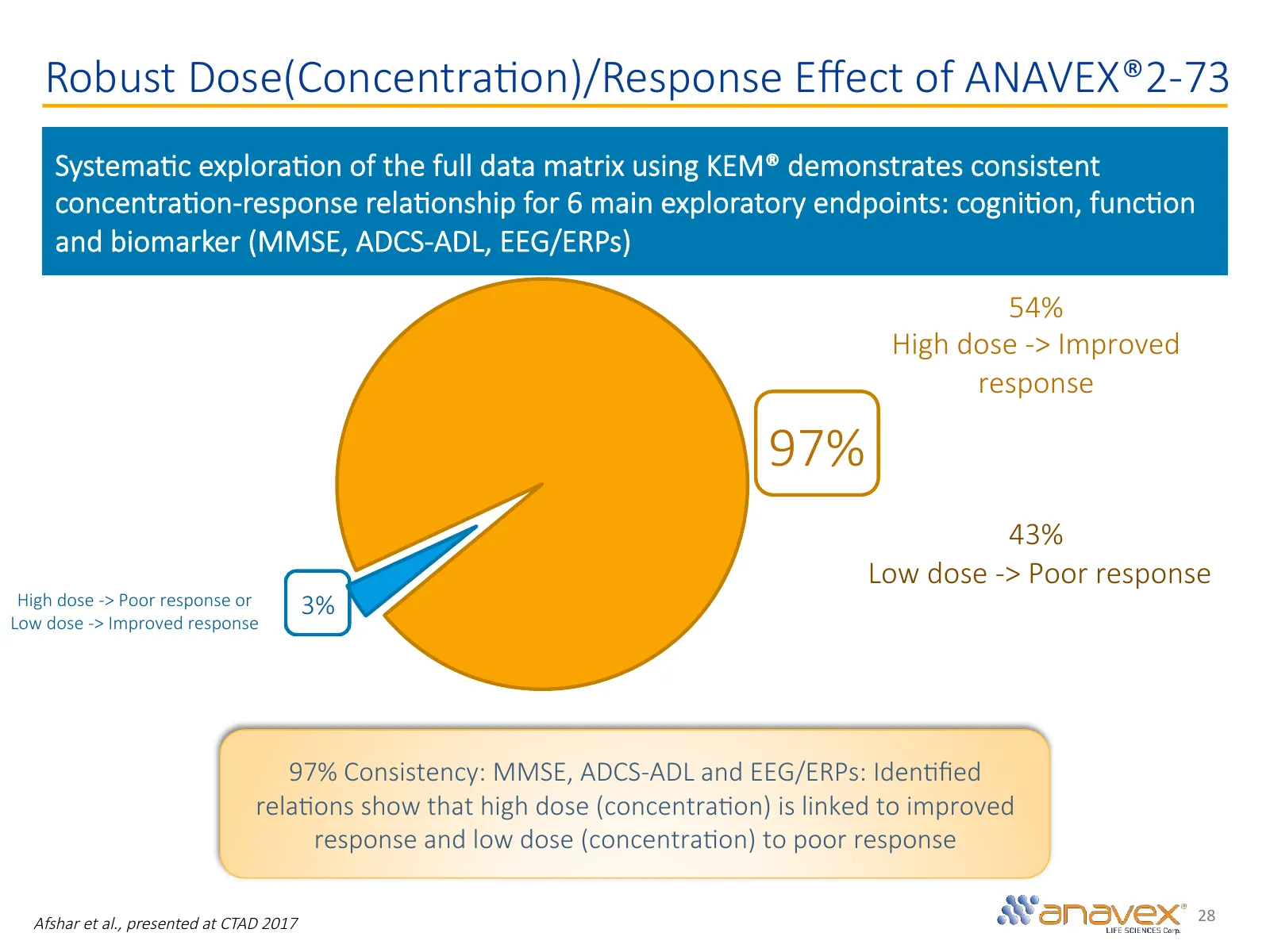
Robust Dose(Concentra2on)/Response Effect of ANAVEX®2-73 Systema2c explora2on of the full data matrix using KEM® demonstrates consistent concentra2on-response rela2onship for 6 main exploratory endpoints: cogni2on, func2on and biomarker (MMSE, ADCS-ADL, EEG/ERPs) 54% High dose -> Improved response 97
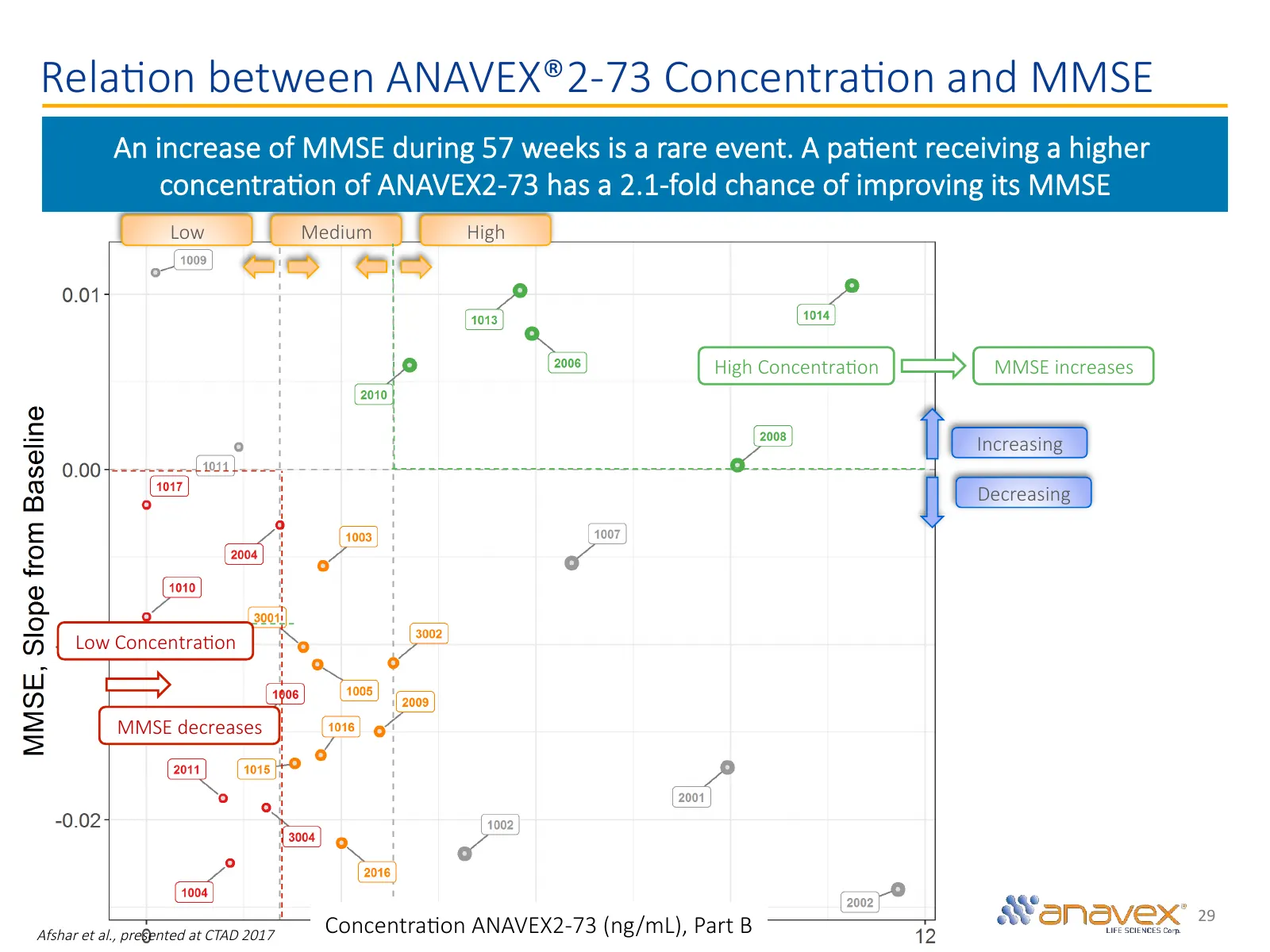
Slide 29: Relation between ANAVEX 2-73 Concentration and MMSE
Rela2on between ANAVEX®2-73 Concentra2on and MMSE An increase of MMSE during 57 weeks is a rare event. A pa2ent receiving a higher concentra2on of ANAVEX2-73 has a 2.1-fold chance of improving its MMSE Low Medium High High Concentra2on MMSE increases Increasing Decreasing Low Concentra2on MMSE decre
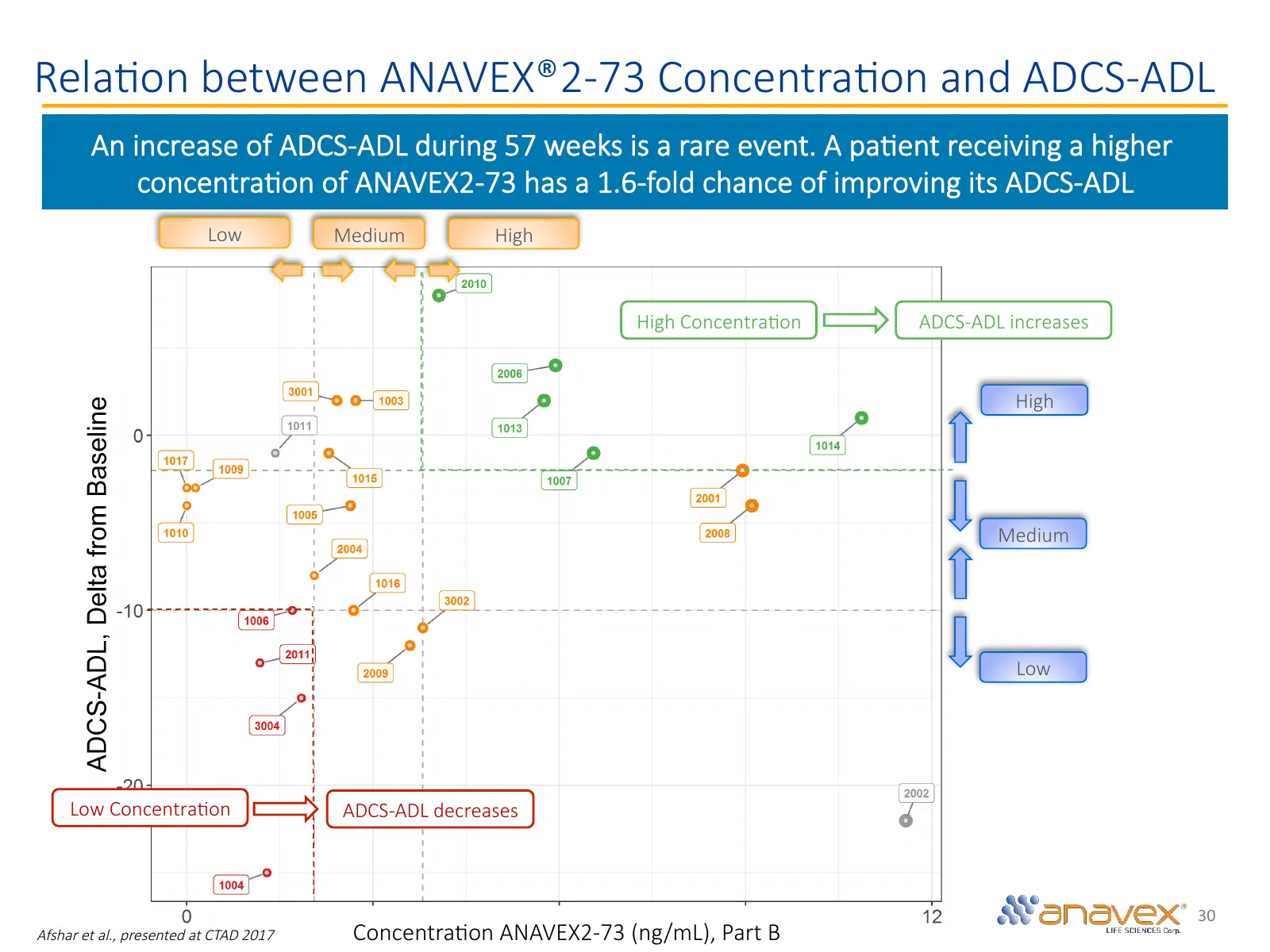
Slide 30: Relation between ANAVEX 2-73 Concentration and ADCS-ADL
Rela2on between ANAVEX®2-73 Concentra2on and ADCS-ADL An increase of ADCS-ADL during 57 weeks is a rare event. A pa2ent receiving a higher concentra2on of ANAVEX2-73 has a 1.6-fold chance of improving its ADCS-ADL Low Medium High High Concentra2on ADCS-ADL increases High Medium Low Low Concentra2on
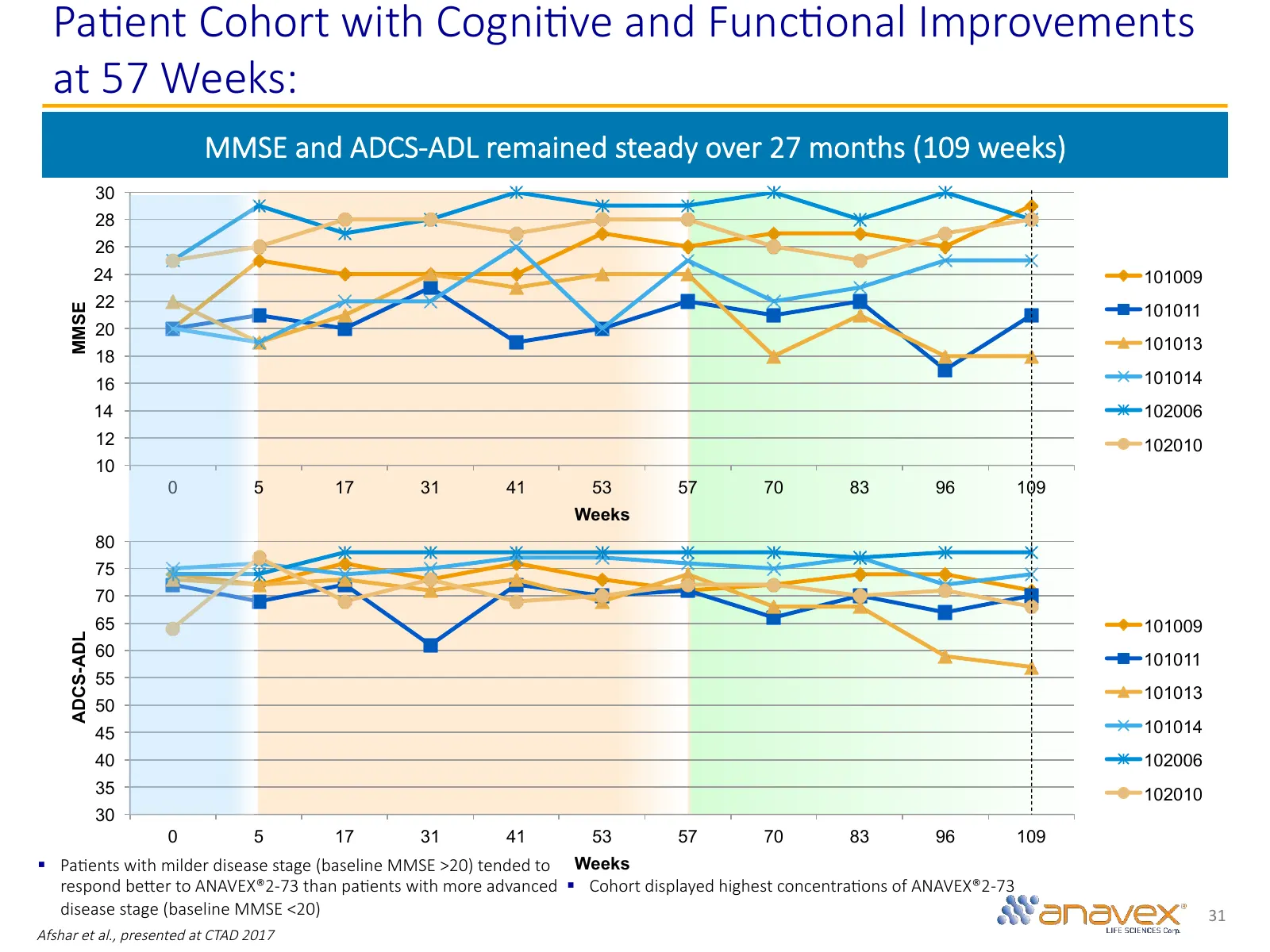
Slide 31: Patient Cohort with Cognitive and Functional Improvements
Pa2ent Cohort with Cogni2ve and Func2onal Improvements at 57 Weeks: RetainedMMSE Response at 109 and ADCS-ADL Weeks remained steady over 27 months (109 weeks) 30 28 26 24 101009 22 101011 MMSE 20 101013 18 16 101014 14 102006 12 102010 10 0 5 17 31 41 53 57 70 83 96 109 Weeks 80 75 70 65 101009 ADCS
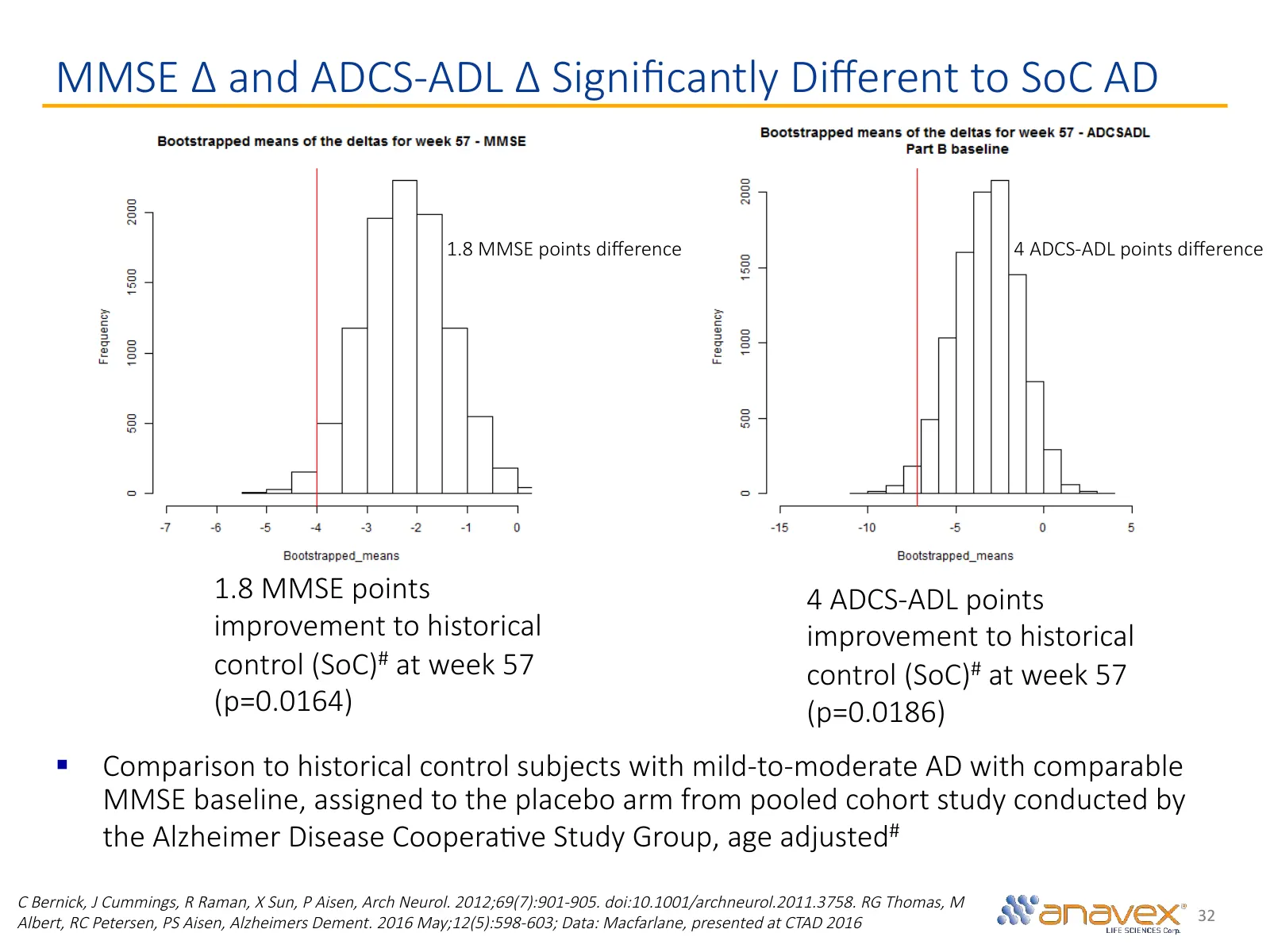
Slide 32: MMSE and ADCS-ADL Significantly Different to SoC AD
MMSE Δ and ADCS-ADL Δ Significantly Different to SoC AD 1.8 MMSE points difference 4 ADCS-ADL points difference 1.8 MMSE points 4 ADCS-ADL points improvement to historical improvement to historical control (SoC)# at week 57 control (SoC)# at week 57 (p=0.0164) (p=0.0186) § Comparison to historical contr
Slide 33: Summary
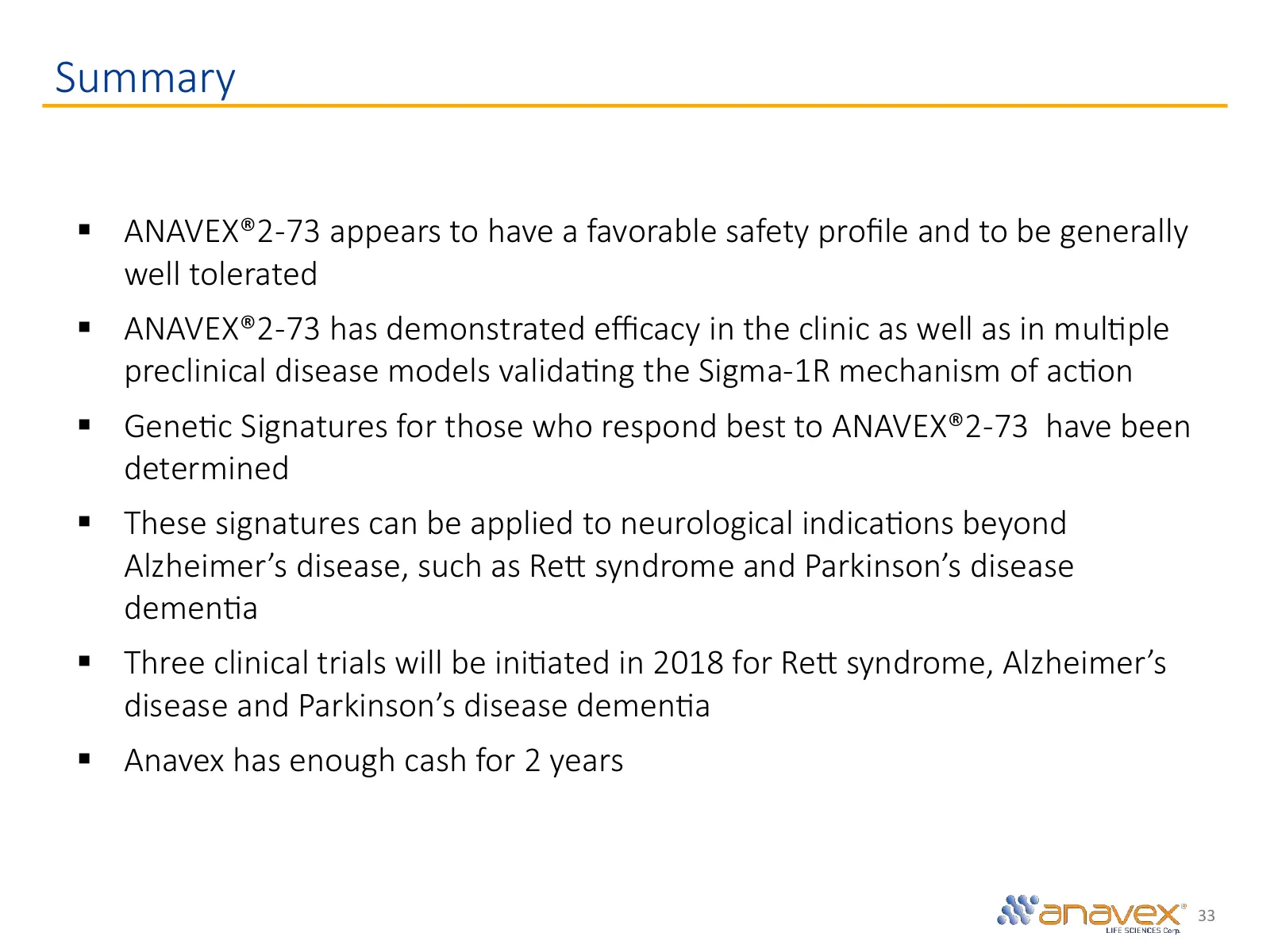
Summary § ANAVEX®2-73 appears to have a favorable safety profile and to be generally well tolerated § ANAVEX®2-73 has demonstrated efficacy in the clinic as well as in mul2ple preclinical disease models valida2ng the Sigma-1R mechanism of ac2on § Gene2c Signatures for those who respond best to ANAVEX®2
Slide 34: Financial Position and Near Term Catalysts
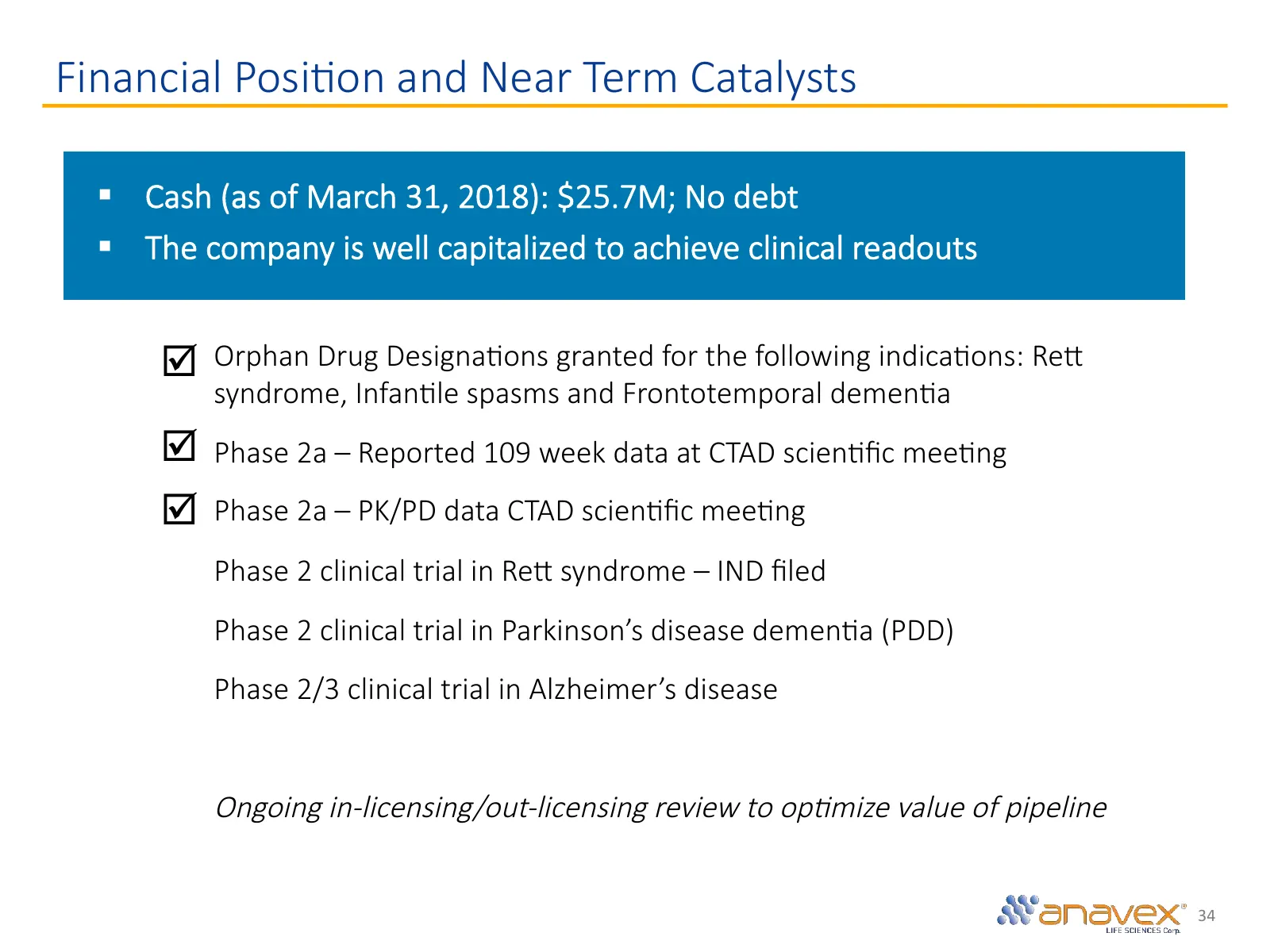
Financial Posi2on and Near Term Catalysts § Cash (as of March 31, 2018): $25.7M; No debt § The company is well capitalized to achieve clinical readouts þ Orphan Drug Designa2ons granted for the following indica2ons: Re] syndrome, Infan2le spasms and Frontotemporal demen2a þ Phase 2a – Reported 109 w
Slide 35: Anavex Life Sciences Expertise
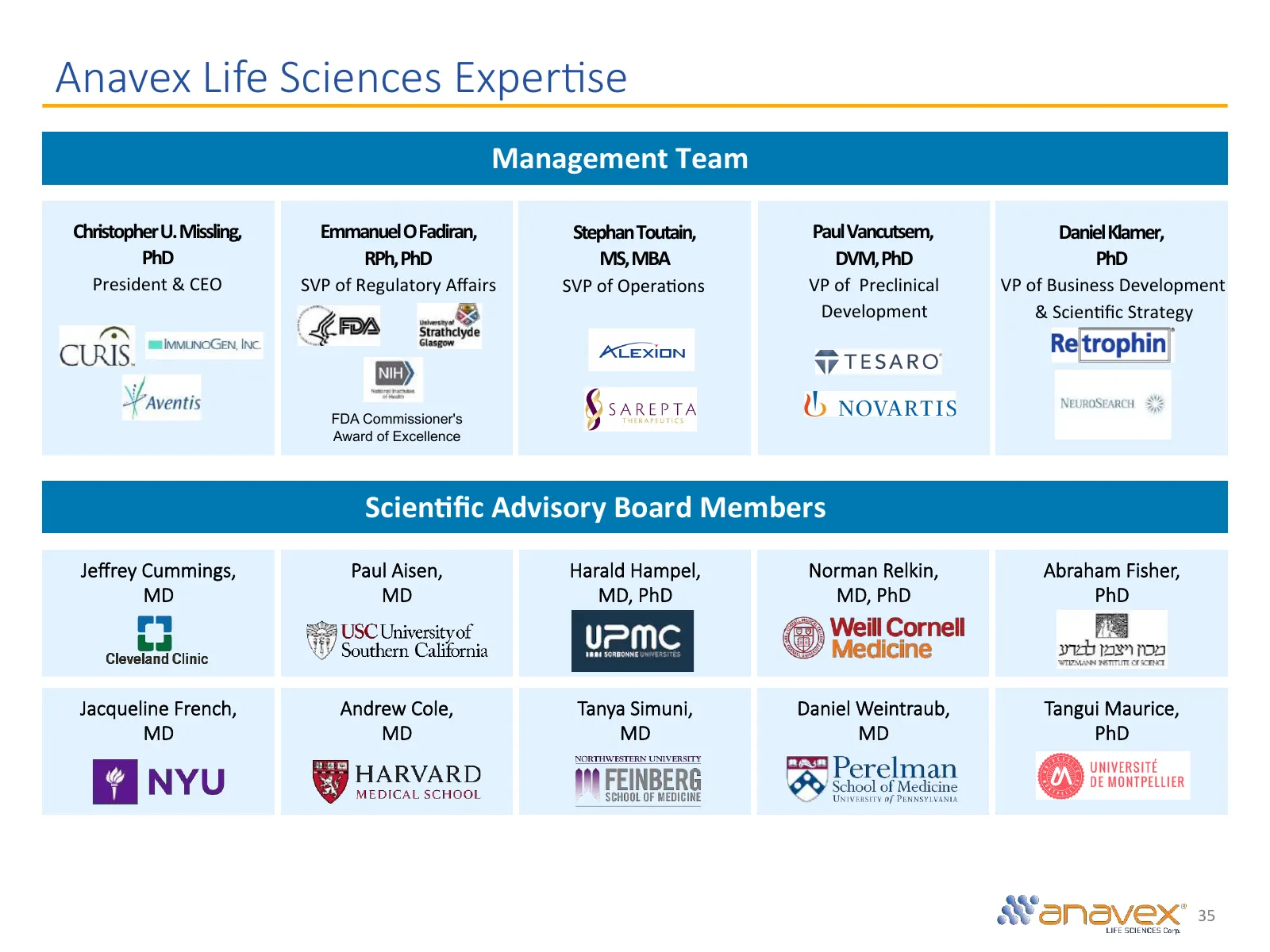
Anavex Life Sciences Exper2se Management Team Christopher U. Missling, Emmanuel O Fadiran, Stephan Toutain, Paul Vancutsem, Daniel Klamer, PhD RPh, PhD MS, MBA DVM, PhD PhD President & CEO SVP of Regulatory Affairs SVP of OperaIons VP of Preclinical VP of Business Development Development & ScienIfic S

Slide 36: Contact Us
Contact Us Corporate Office: Shareholder & Media Rela2ons: Anavex™ Life Sciences Corp. Solebury Trout 51 West 52nd Street, 7th floor mpurcell@soleburytrout.com New York, NY 10019 www.anavex.com 1-844-689-3939 NASDAQ: AVXL ANAVEX is a trademark of Anavex Life Sciences Corp. 36

Slide 37: Back Up Slides
Back Up Slides NWanavex »
Slide 38: Comprehensive Phase 2a Patient Characterization
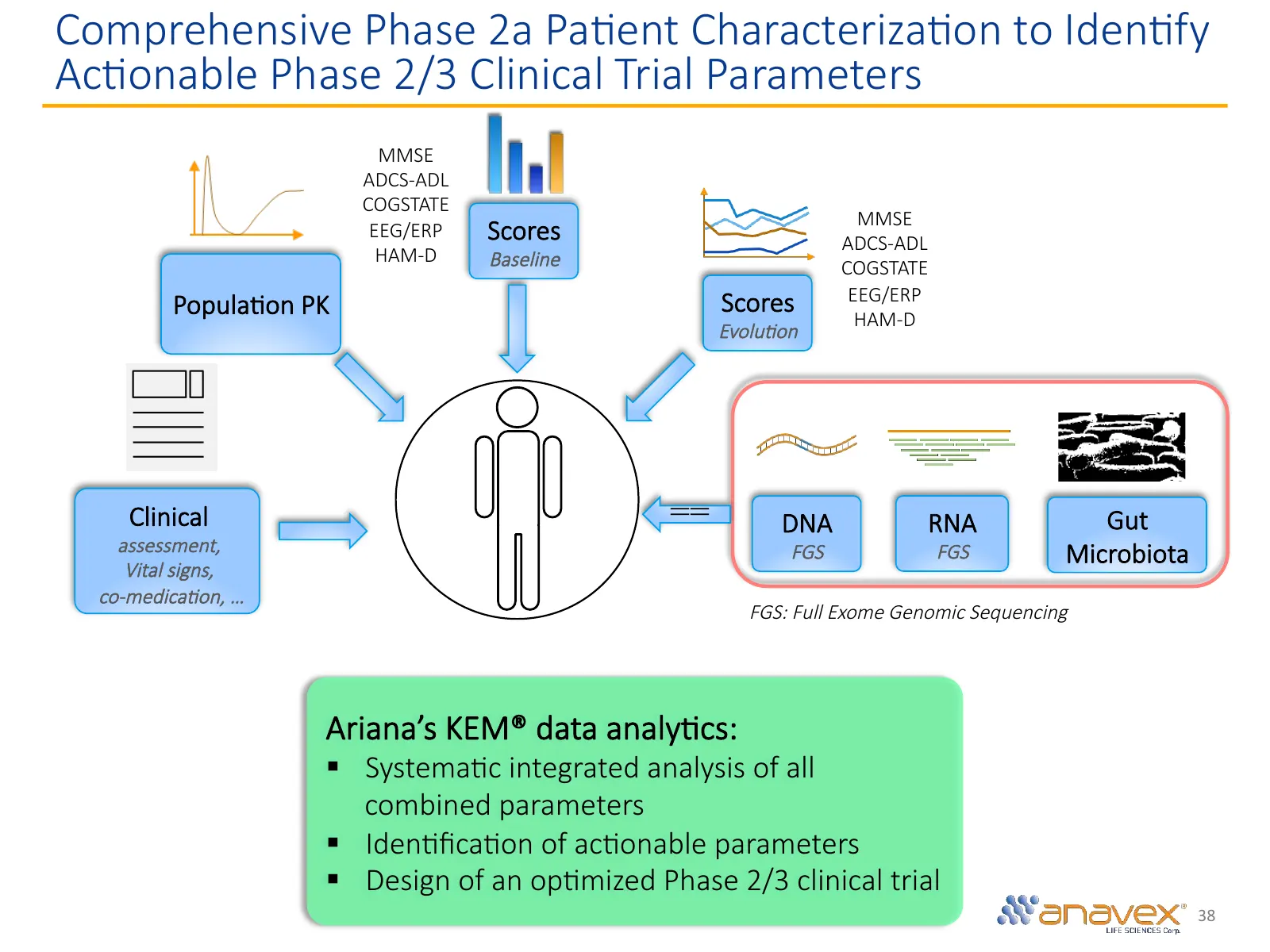
Comprehensive Phase 2a Pa2ent Characteriza2on to Iden2fy Ac2onable Phase 2/3 Clinical Trial Parameters MMSE ADCS-ADL COGSTATE MMSE EEG/ERP Scores ADCS-ADL HAM-D Baseline COGSTATE Scores EEG/ERP Popula2on PK HAM-D Evolu<on == Clinical DNA RNA Gut assessment, FGS FGS Microbiota Vital signs, co-medica<
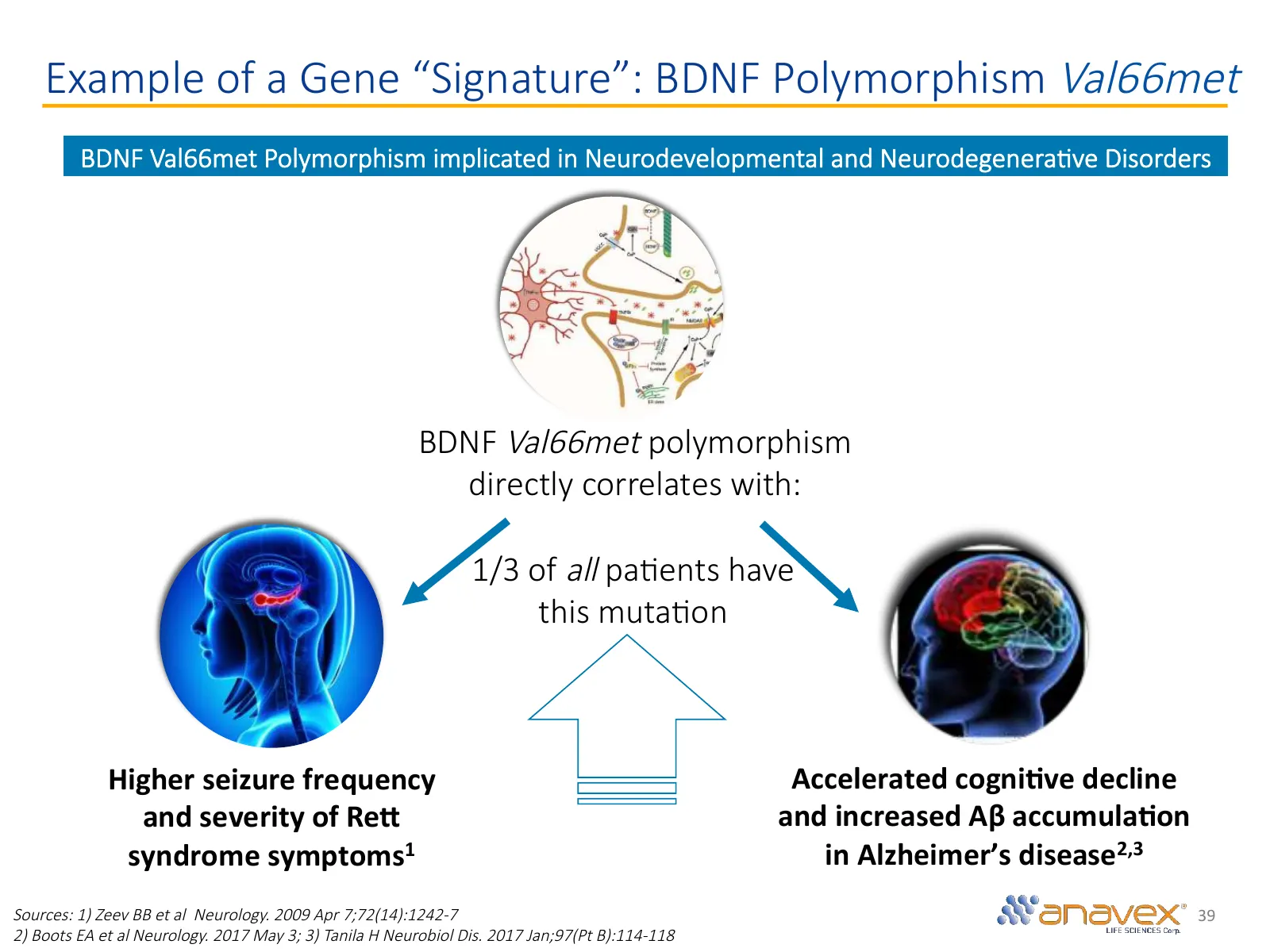
Slide 39: Example of a Gene Signature: BDNF Polymorphism Val66met
Example of a Gene “Signature”: BDNF Polymorphism Val66met BDNF Val66met Polymorphism implicated in Neurodevelopmental and Neurodegenera2ve Disorders BDNF Val66met polymorphism directly correlates with: 1/3 of all pa2ents have this muta2on Higher seizure frequency Accelerated cogniIve decline and sev
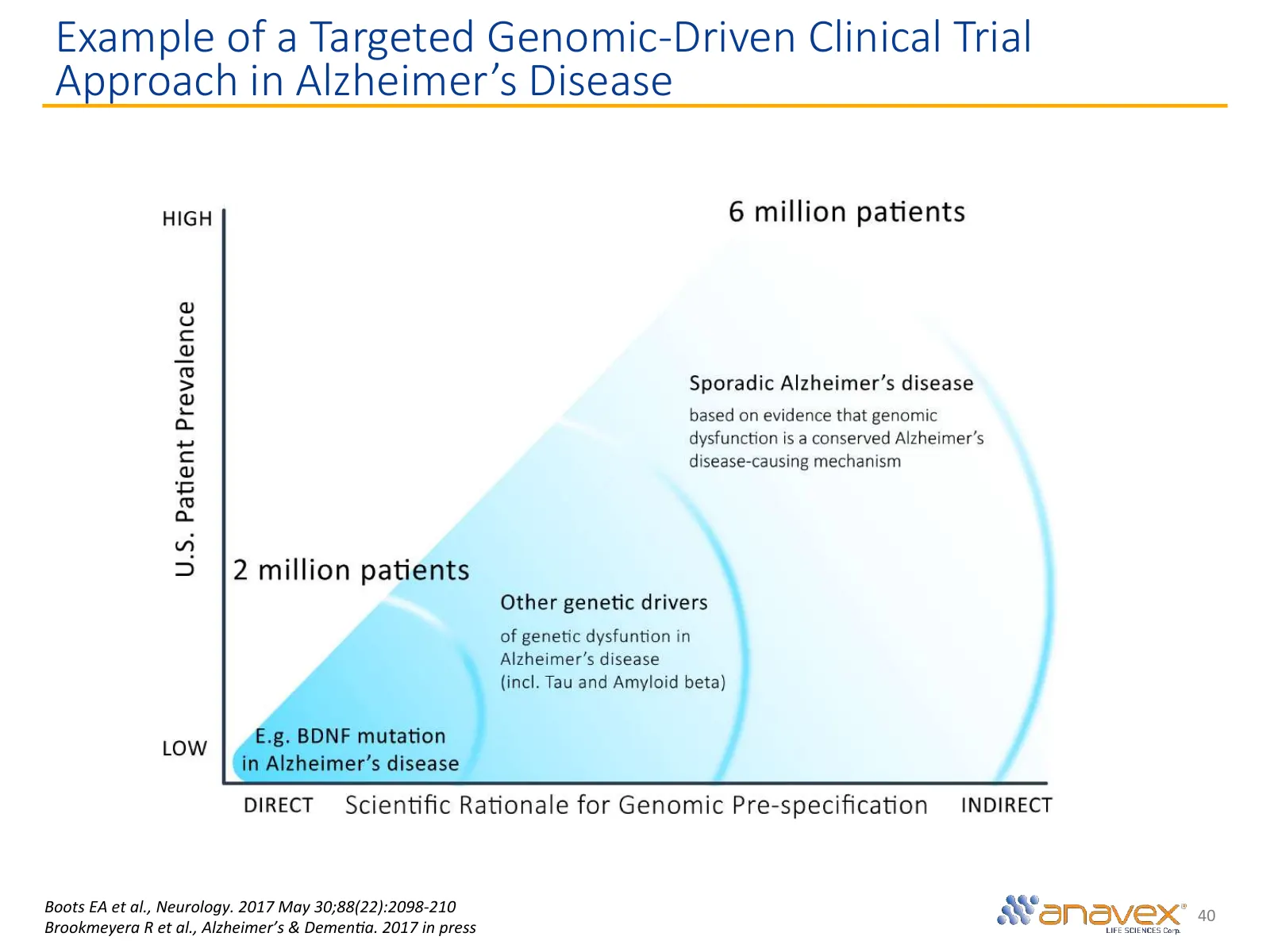
Slide 40: Targeted Genomic-Driven Clinical Trial Approach in Alzheimer's Disease
Example of a Targeted Genomic-Driven Clinical Trial Approach in Alzheimer’s Disease Boots EA et al., Neurology. 2017 May 30;88(22):2098-210 40 Brookmeyera R et al., Alzheimer’s & DemenYa. 2017 in press
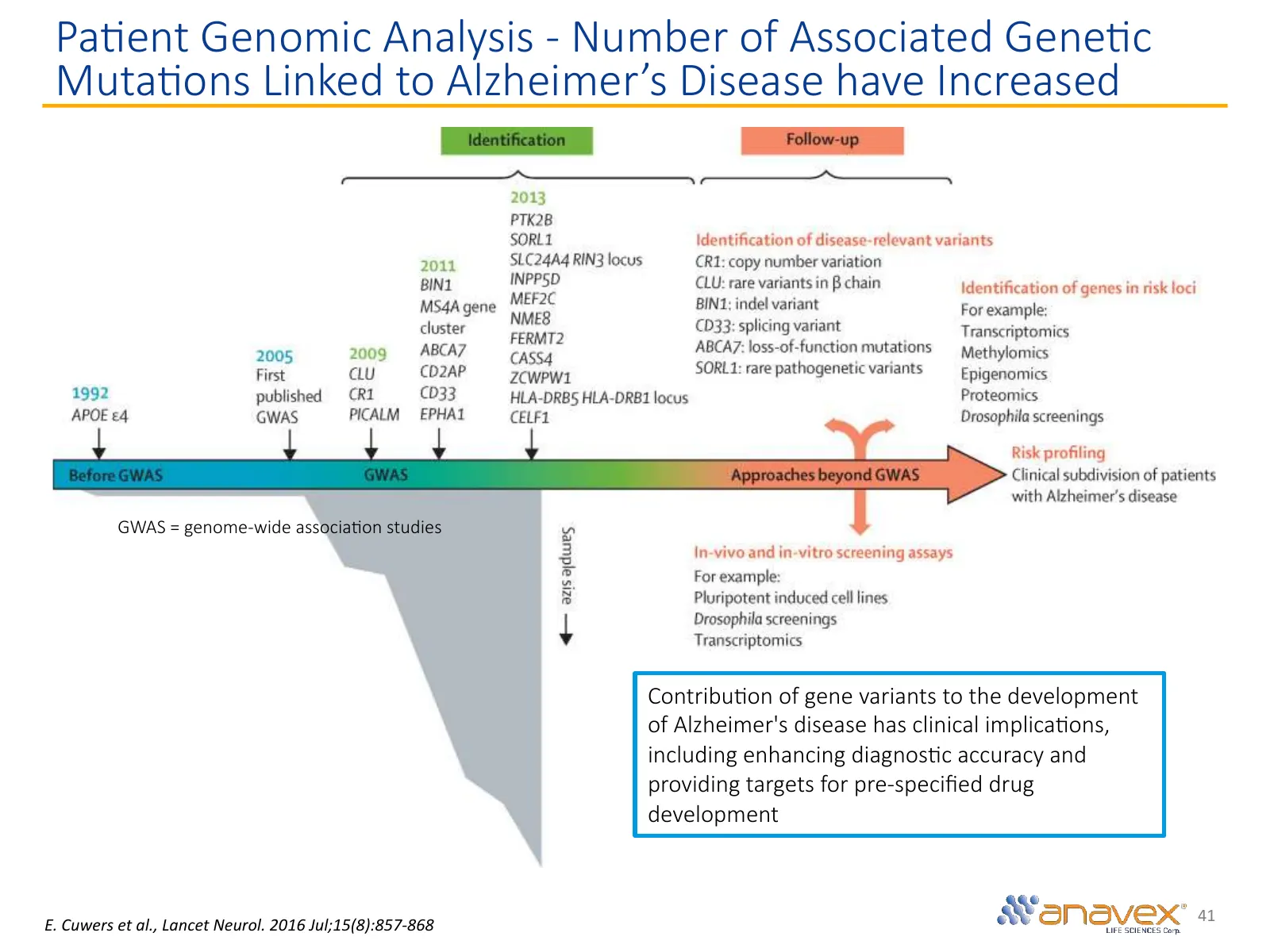
Slide 41: Patient Genomic Analysis: Genetic Mutations Linked to Alzheimer's
Pa2ent Genomic Analysis - Number of Associated Gene2c Muta2ons Linked to Alzheimer’s Disease have Increased GWAS = genome-wide associa2on studies Contribu2on of gene variants to the development of Alzheimer's disease has clinical implica2ons, including enhancing diagnos2c accuracy and providing targ
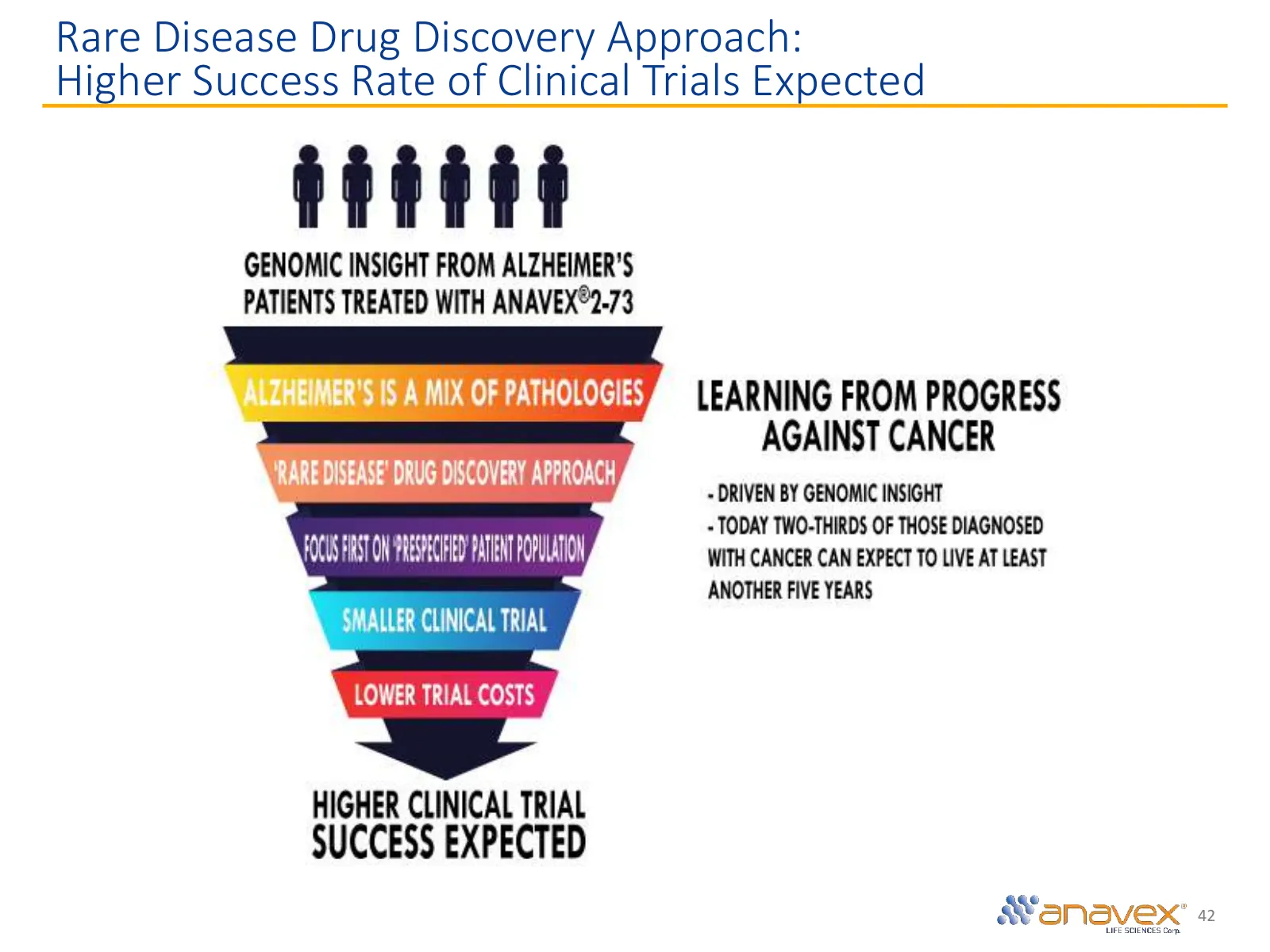
Slide 42: Rare Disease Drug Discovery Approach
Rare Disease Drug Discovery Approach: Higher Success Rate of Clinical Trials Expected 42
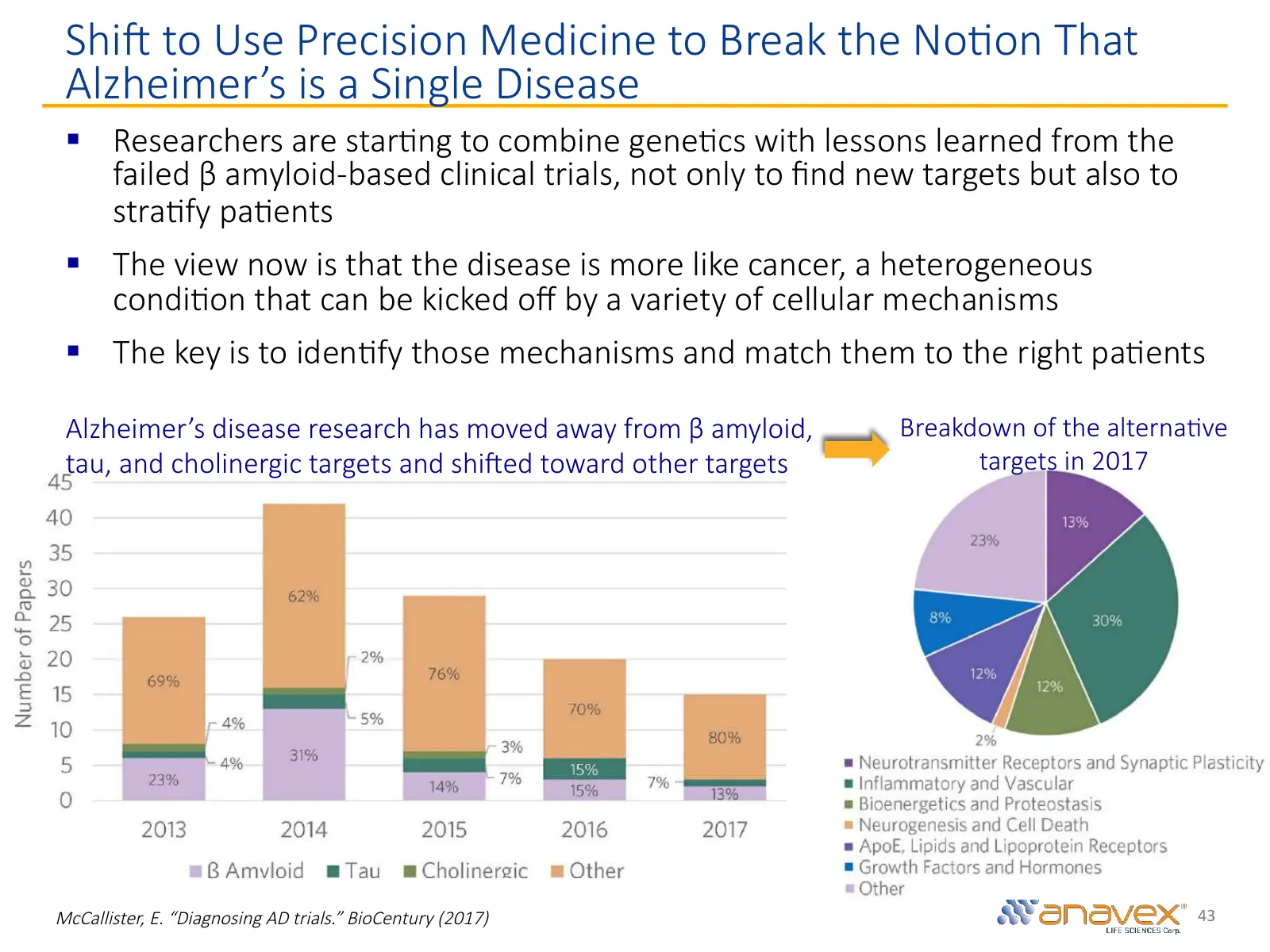
Slide 43: Shift to Use Precision Medicine in Alzheimer's
Shiw to Use Precision Medicine to Break the No2on That Alzheimer’s is a Single Disease § Researchers are star2ng to combine gene2cs with lessons learned from the failed β amyloid-based clinical trials, not only to find new targets but also to stra2fy pa2ents § The view now is that the disease is more
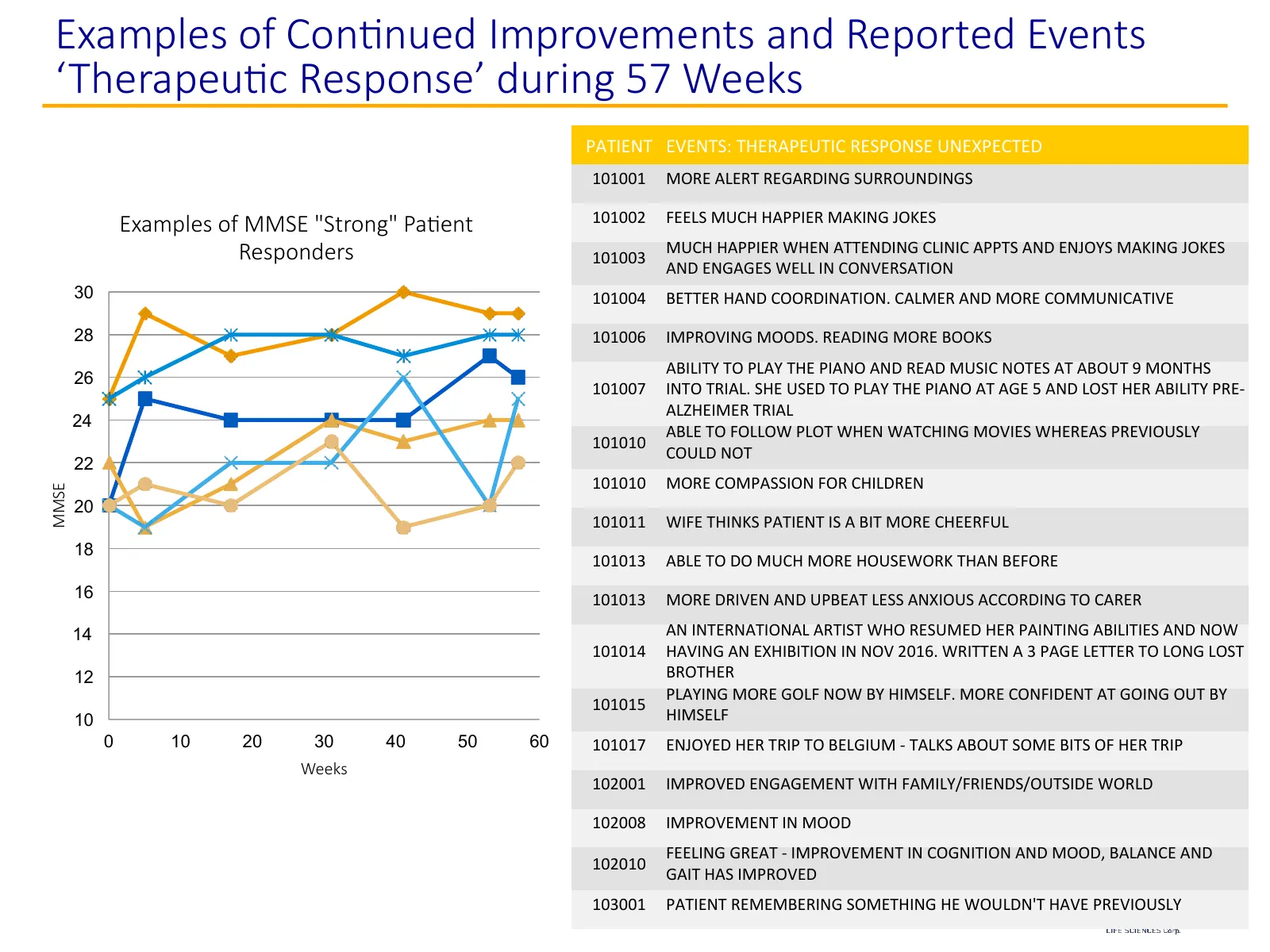
Slide 44: Examples of Continued Improvements and Reported Events
Examples of Con2nued Improvements and Reported Events ‘Therapeu2c Response’ during 57 Weeks PATIENT EVENTS: THERAPEUTIC RESPONSE UNEXPECTED 101001 MORE ALERT REGARDING SURROUNDINGS 101002 FEELS MUCH HAPPIER MAKING JOKES Examples of MMSE "Strong" Pa2ent Responders MUCH HAPPIER WHEN ATTENDING CLINIC A
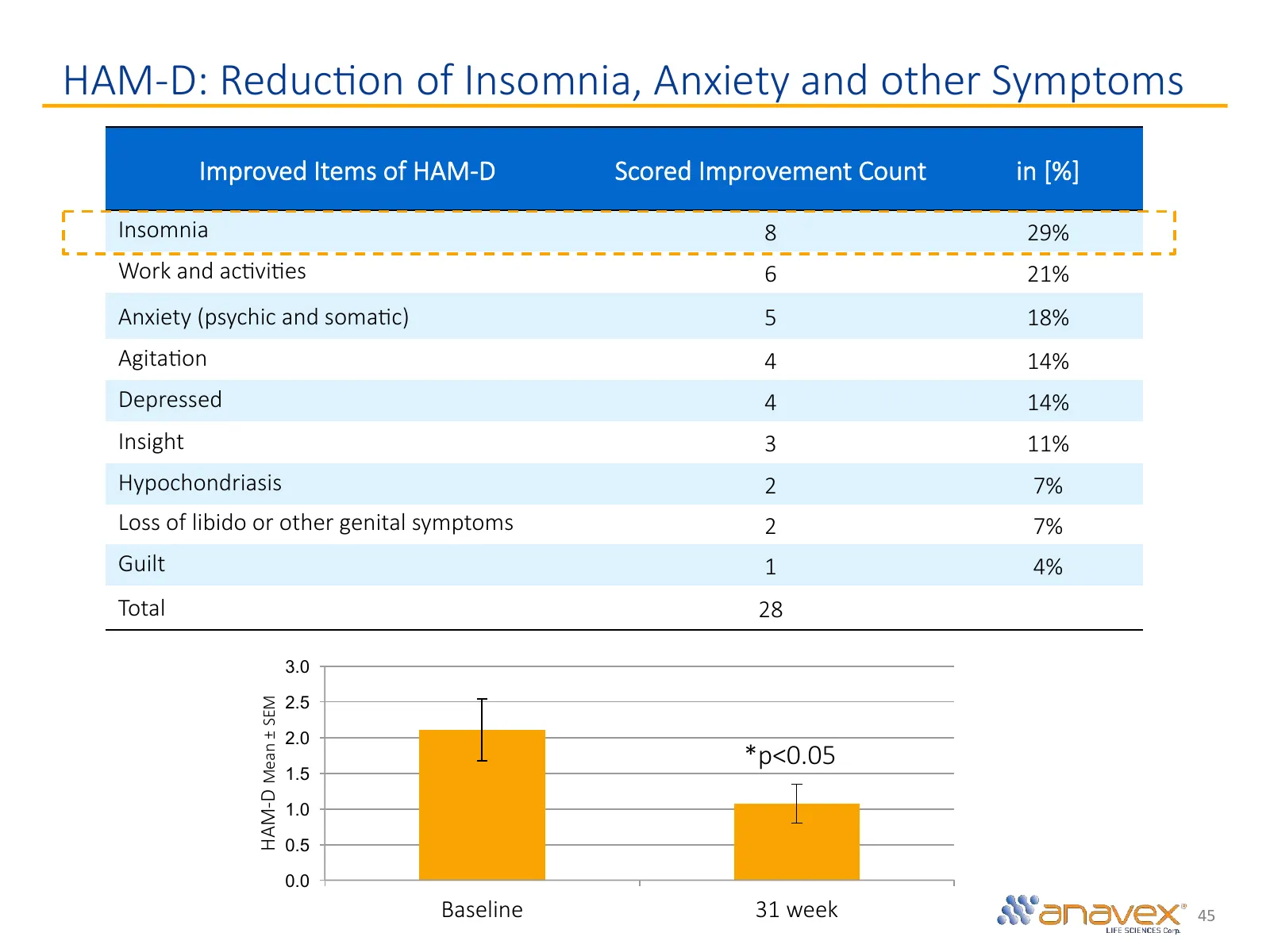
Slide 45: HAM-D: Reduction of Insomnia, Anxiety and other Symptoms
HAM-D: Reduc2on of Insomnia, Anxiety and other Symptoms Improved Items of HAM-D Scored Improvement Count in [%] Insomnia 8 29% Work and ac2vi2es 6 21% Anxiety (psychic and soma2c) 5 18% Agita2on 4 14% Depressed 4 14% Insight 3 11% Hypochondriasis 2 7% Loss of libido or other genital symptoms 2 7% Gu
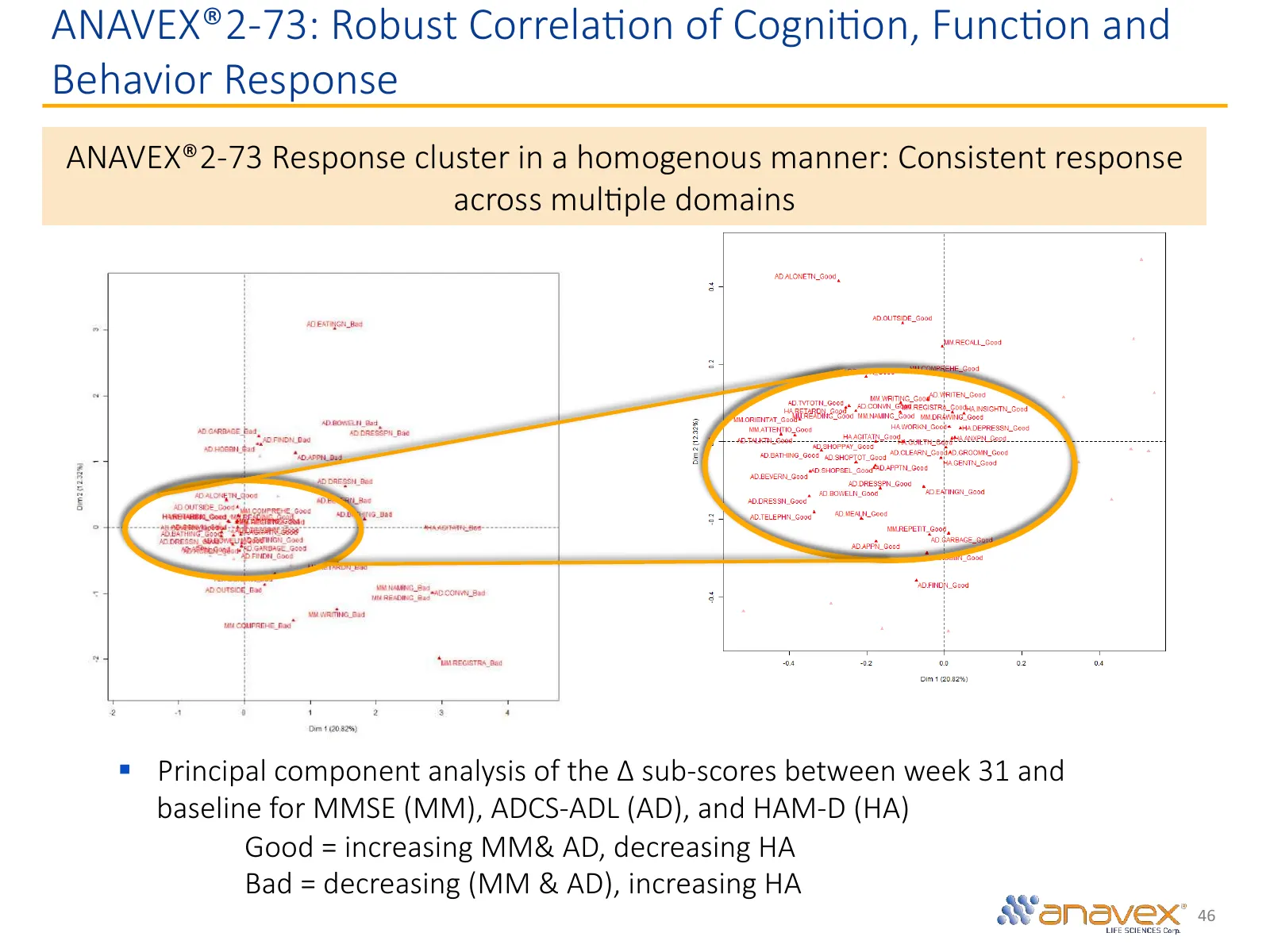
Slide 46: Robust Correlation of Cognition, Function and Behavior Response
ANAVEX®2-73: Robust Correla2on of Cogni2on, Func2on and Behavior Response ANAVEX®2-73 Response cluster in a homogenous manner: Consistent response across mul2ple domains § Principal component analysis of the Δ sub-scores between week 31 and baseline for MMSE (MM), ADCS-ADL (AD), and HAM-D (HA) Good
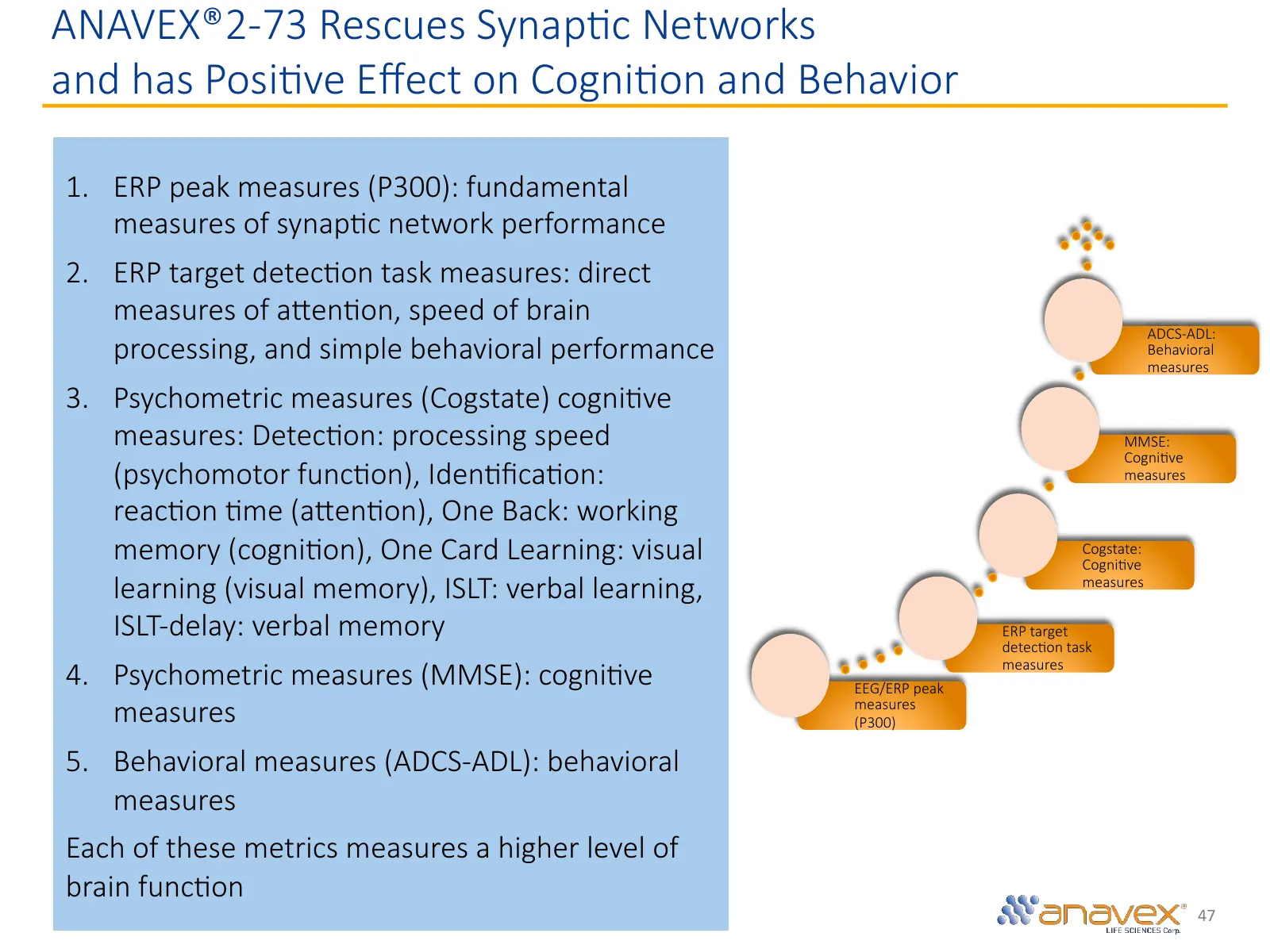
Slide 47: ANAVEX 2-73 Rescues Synaptic Networks
ANAVEX®2-73 Rescues Synap2c Networks and has Posi2ve Effect on Cogni2on and Behavior 1. ERP peak measures (P300): fundamental measures of synap2c network performance 2. ERP target detec2on task measures: direct measures of a]en2on, speed of brain ADCS-ADL: processing, and simple behavioral performanc
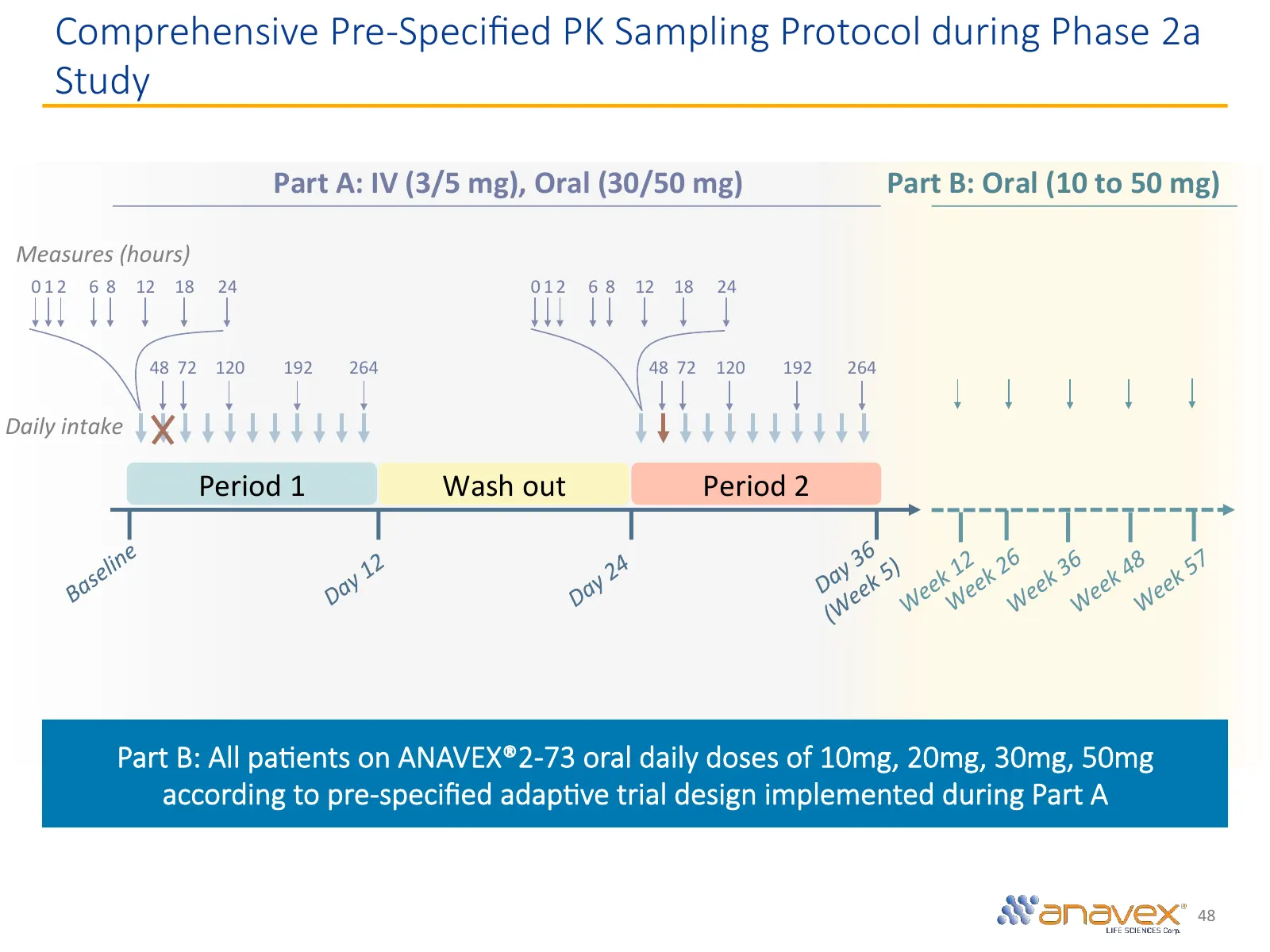
Slide 48: Pre-Specified PK Sampling Protocol during Phase 2a
Comprehensive Pre-Specified PK Sampling Protocol during Phase 2a Study Part A: IV (3/5 mg), Oral (30/50 mg) Part B: Oral (10 to 50 mg) Measures (hours) 012 68 12 18 24 012 68 12 18 24 48 72 120 192 264 48 72 120 192 264 Daily intake Period 1 Wash out Period 2 Part B: All pa2ents on ANAVEX®2-73 oral d
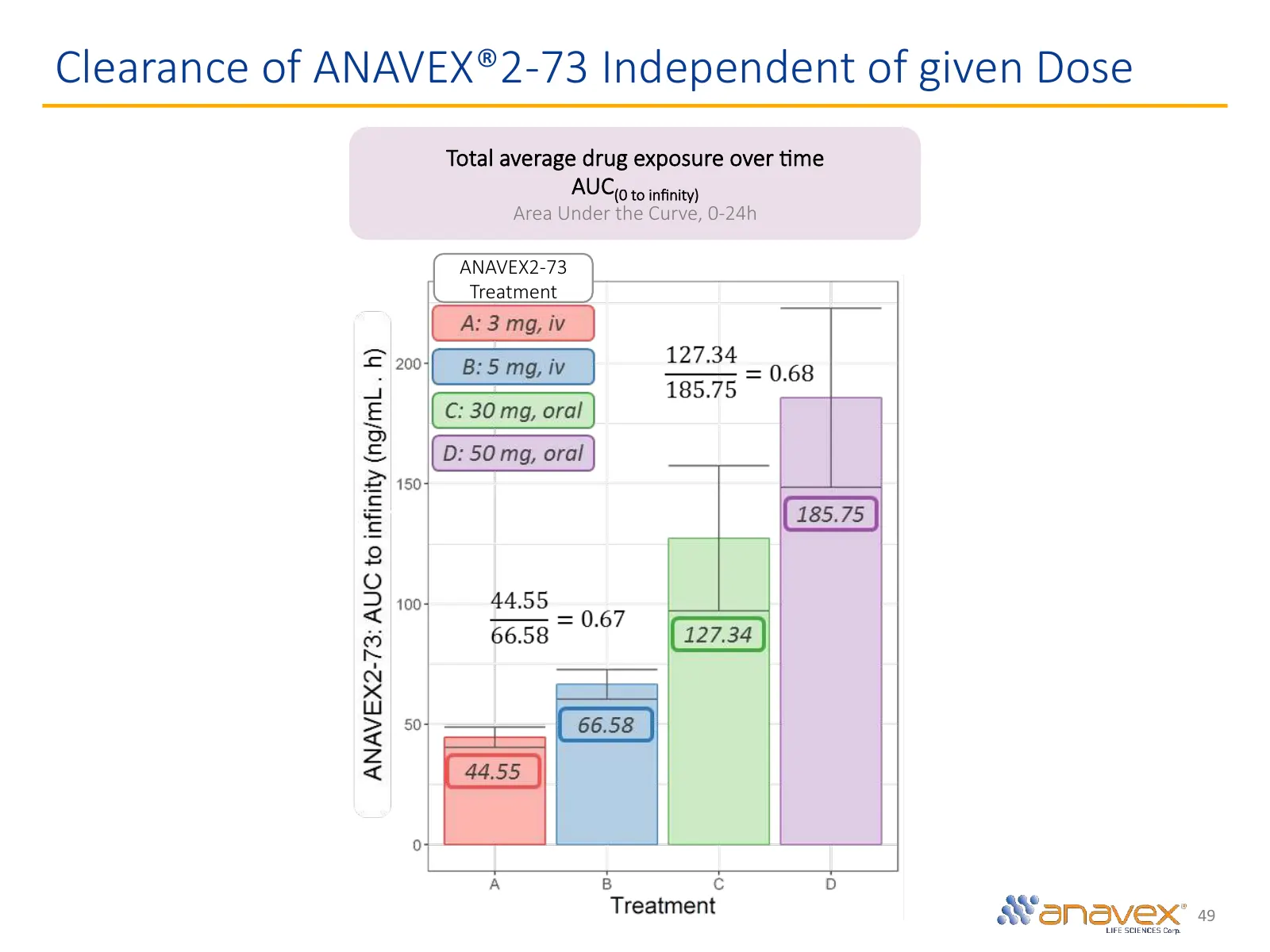
Slide 49: Clearance of ANAVEX 2-73 Independent of given Dose
Clearance of ANAVEX®2-73 Independent of given Dose Total average drug exposure over 2me AUC(0 to infinity) Area Under the Curve, 0-24h ANAVEX2-73 Treatment 49
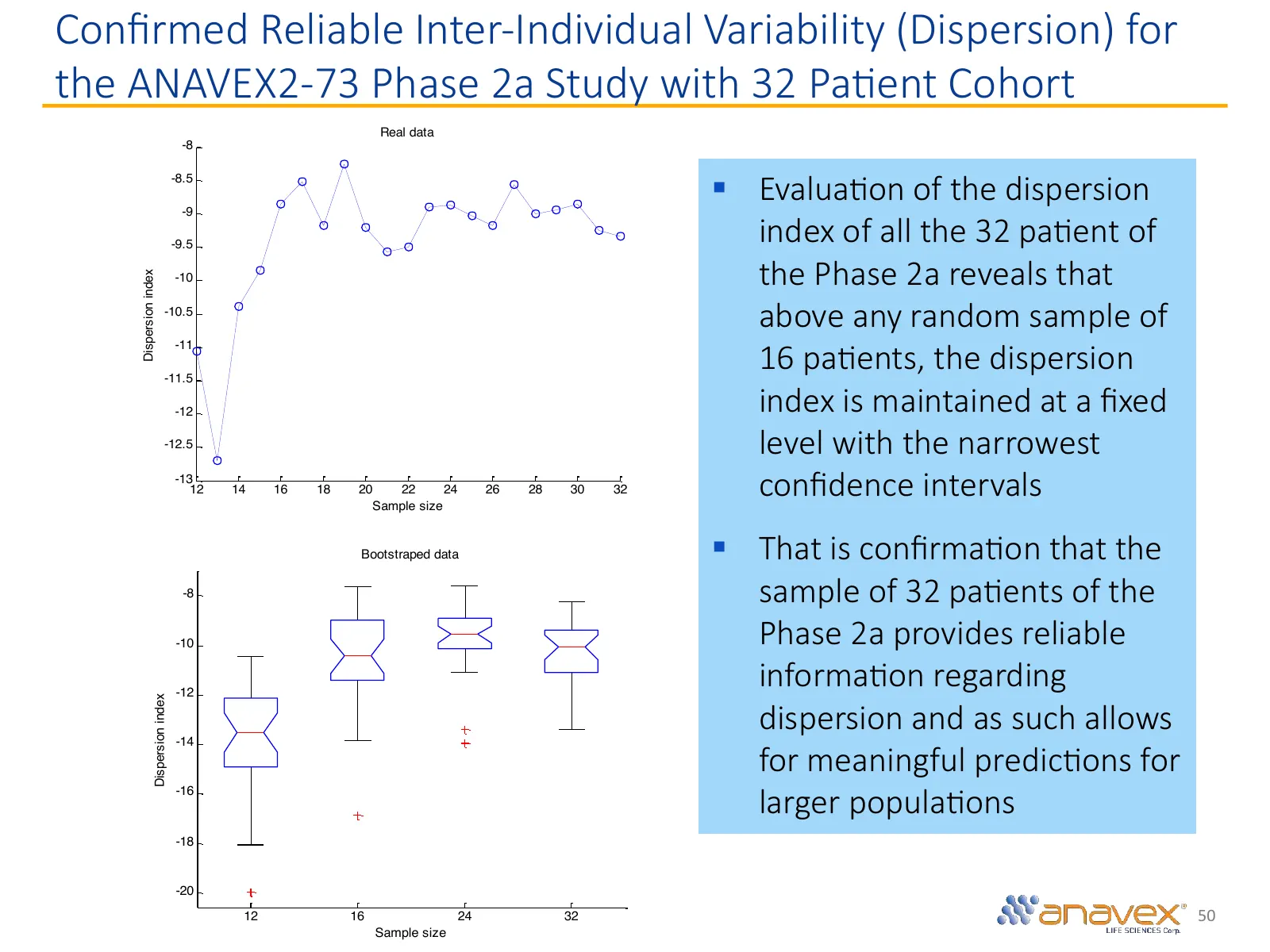
Slide 50: Reliable Inter-Individual Variability for Phase 2a Study
Confirmed Reliable Inter-Individual Variability (Dispersion) for the ANAVEX2-73 Phase 2a Study with 32 Pa2ent Cohort Real data -8 -8.5 -9 § Evalua2on of the dispersion -9.5 index of all the 32 pa2ent of the Phase 2a reveals that Dispersion index -10 -10.5 above any random sample of -11 -11.5 16 pa2en
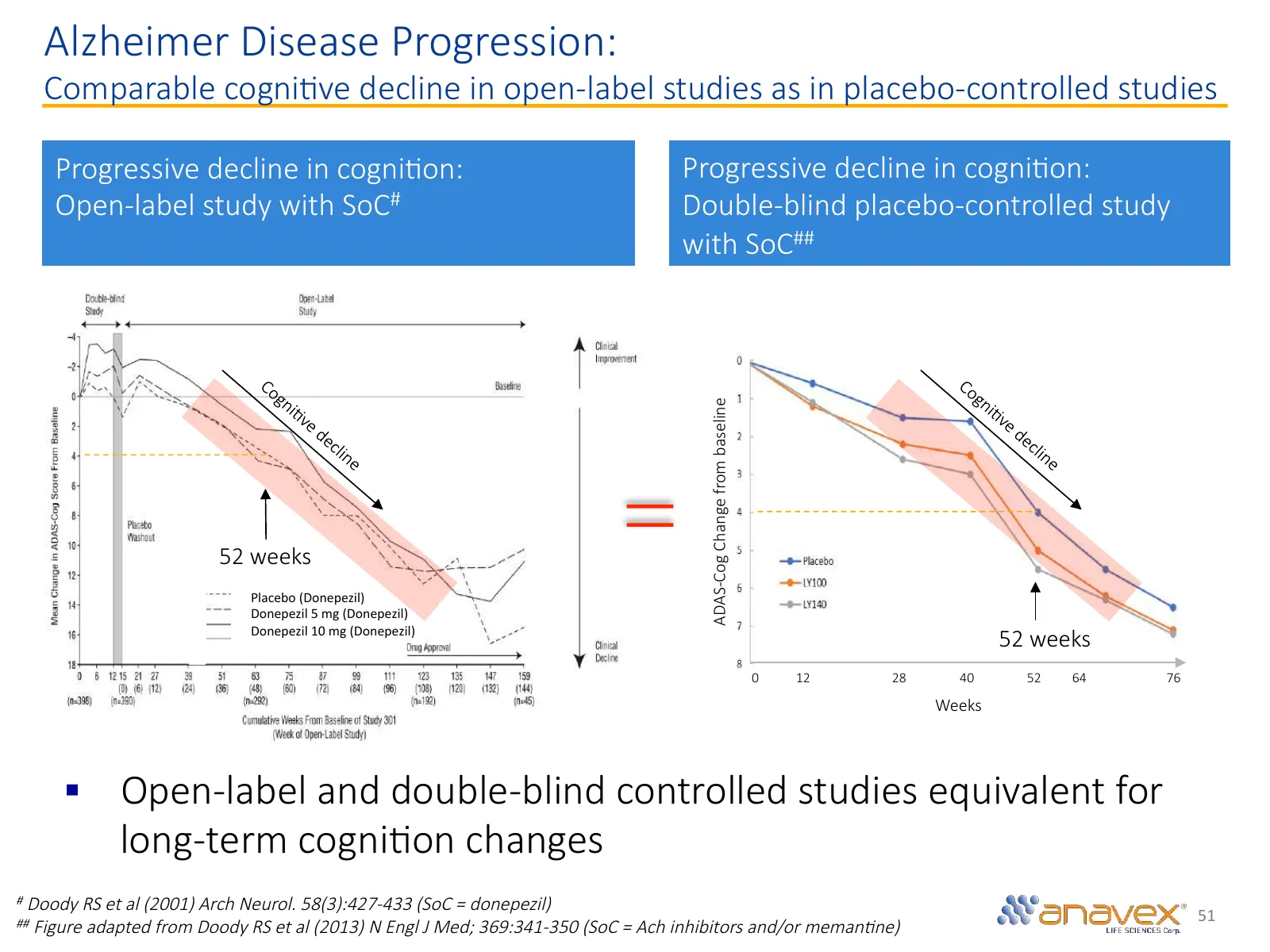
Slide 51: Alzheimer Disease Progression: Open-label vs Placebo-controlled
Alzheimer Disease Progression: Comparable cogni2ve decline in open-label studies as in placebo-controlled studies Progressive decline in cogni2on: Progressive decline in cogni2on: Open-label study with SoC# Double-blind placebo-controlled study with SoC## ADAS-Cog Change from baseline 52 weeks Place
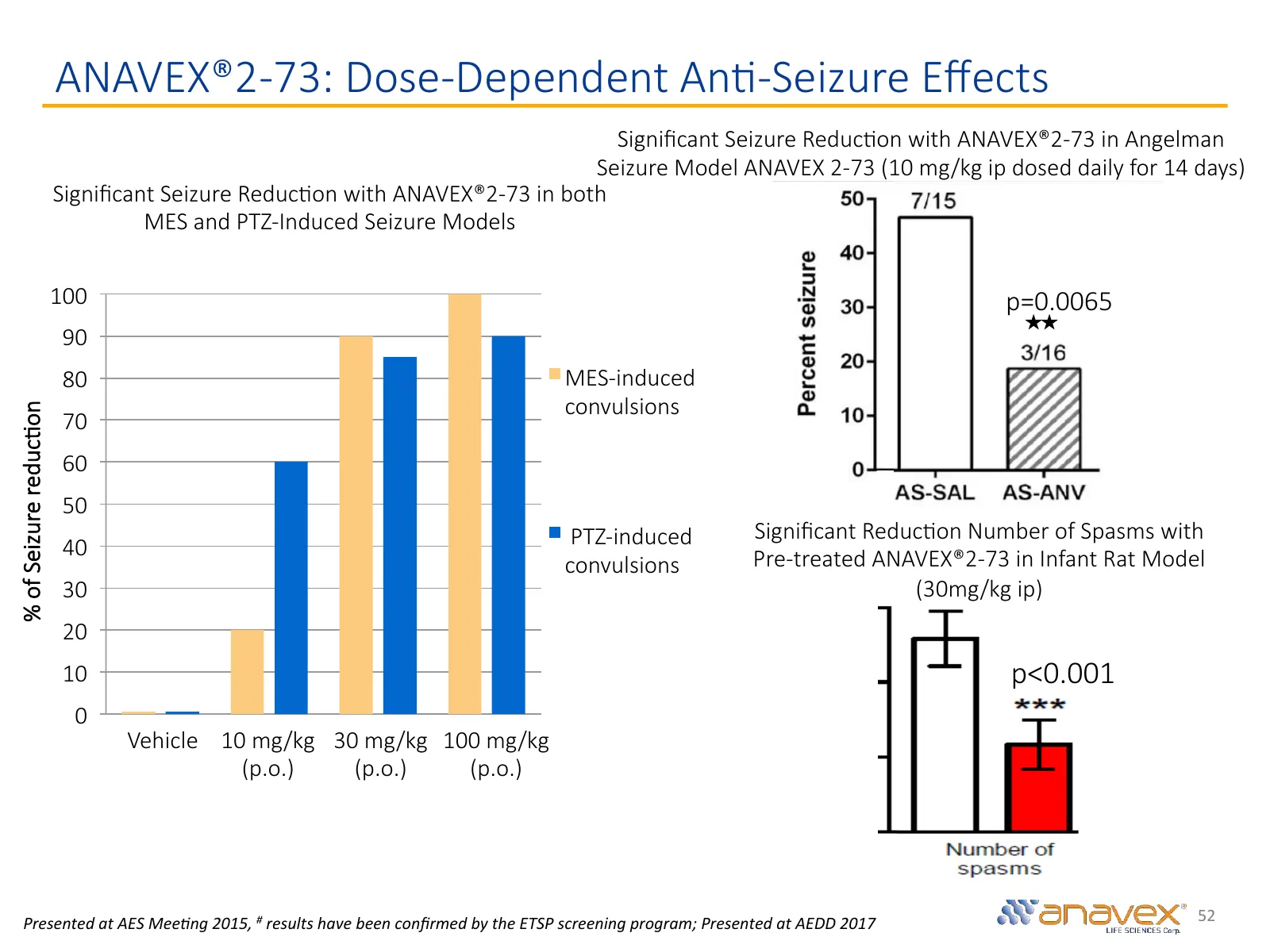
Slide 52: ANAVEX 2-73: Dose-Dependent Anti-Seizure Effects
ANAVEX®2-73: Dose-Dependent An2-Seizure Effects Significant Seizure Reduc2on with ANAVEX®2-73 in Angelman Seizure Model ANAVEX 2-73 (10 mg/kg ip dosed daily for 14 days) Significant Seizure Reduc2on with ANAVEX®2-73 in both MES and PTZ-Induced Seizure Models 100 p=0.0065 90 80 MES-induced convulsions %
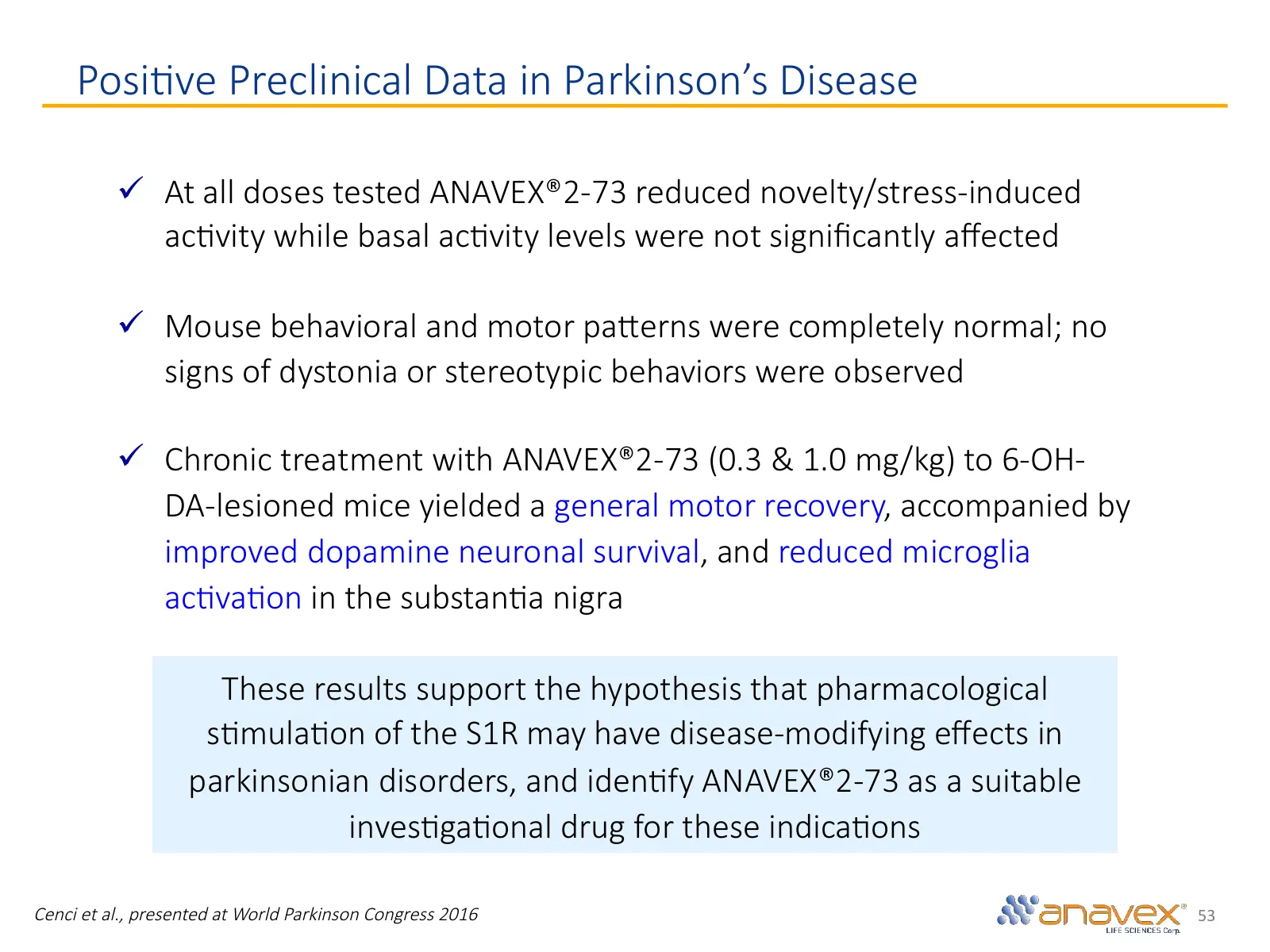
Slide 53: Positive Preclinical Data in Parkinson's Disease
Posi2ve Preclinical Data in Parkinson’s Disease ü At all doses tested ANAVEX®2-73 reduced novelty/stress-induced ac2vity while basal ac2vity levels were not significantly affected ü Mouse behavioral and motor pa]erns were completely normal; no signs of dystonia or stereotypic behaviors were observed ü
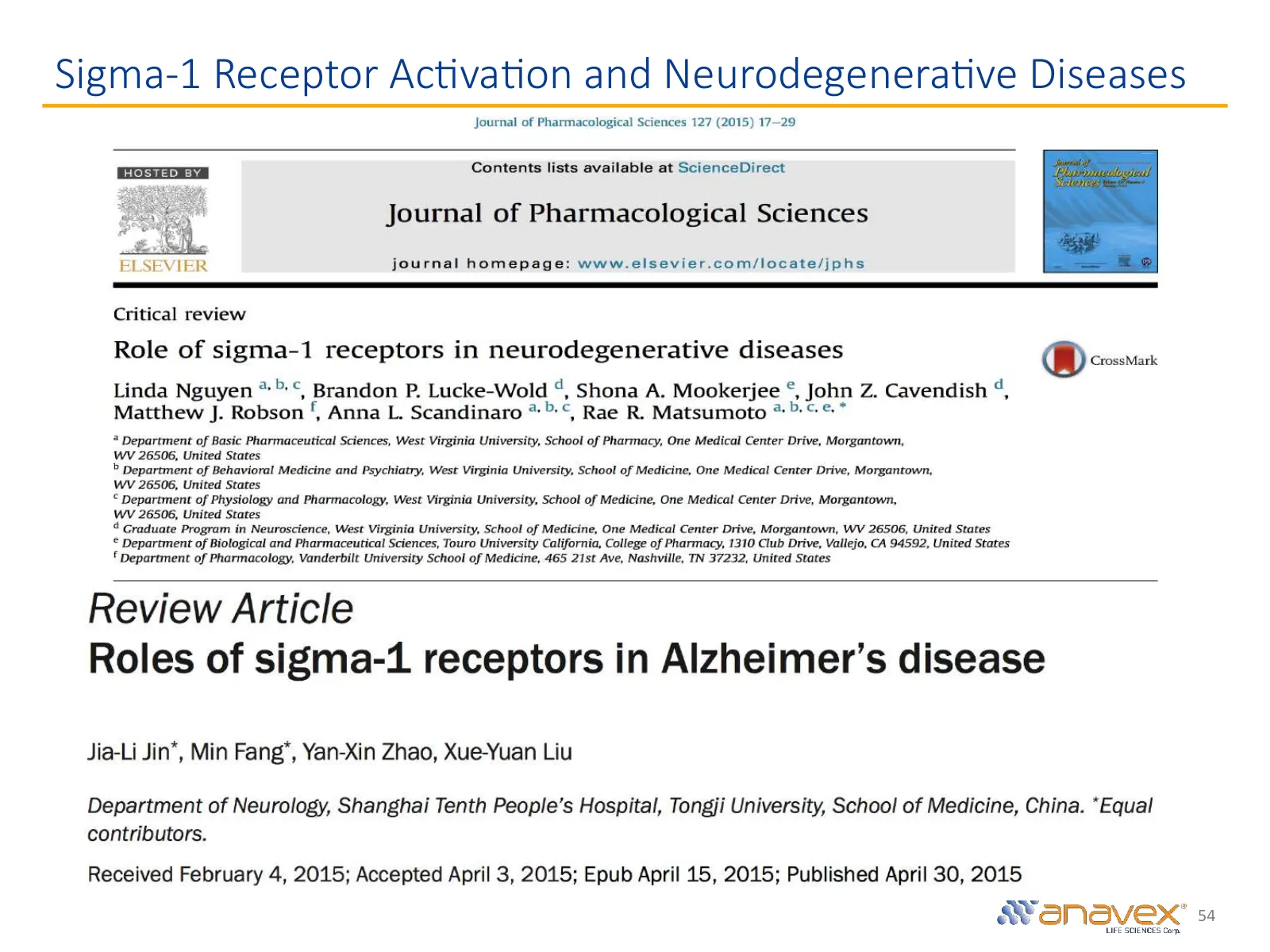
Slide 54: Sigma-1 Receptor Activation and Neurodegenerative Diseases
Sigma-1 Receptor Ac2va2on and Neurodegenera2ve Diseases 54
Slide 55: Novel Target: Sigma-1 Receptor
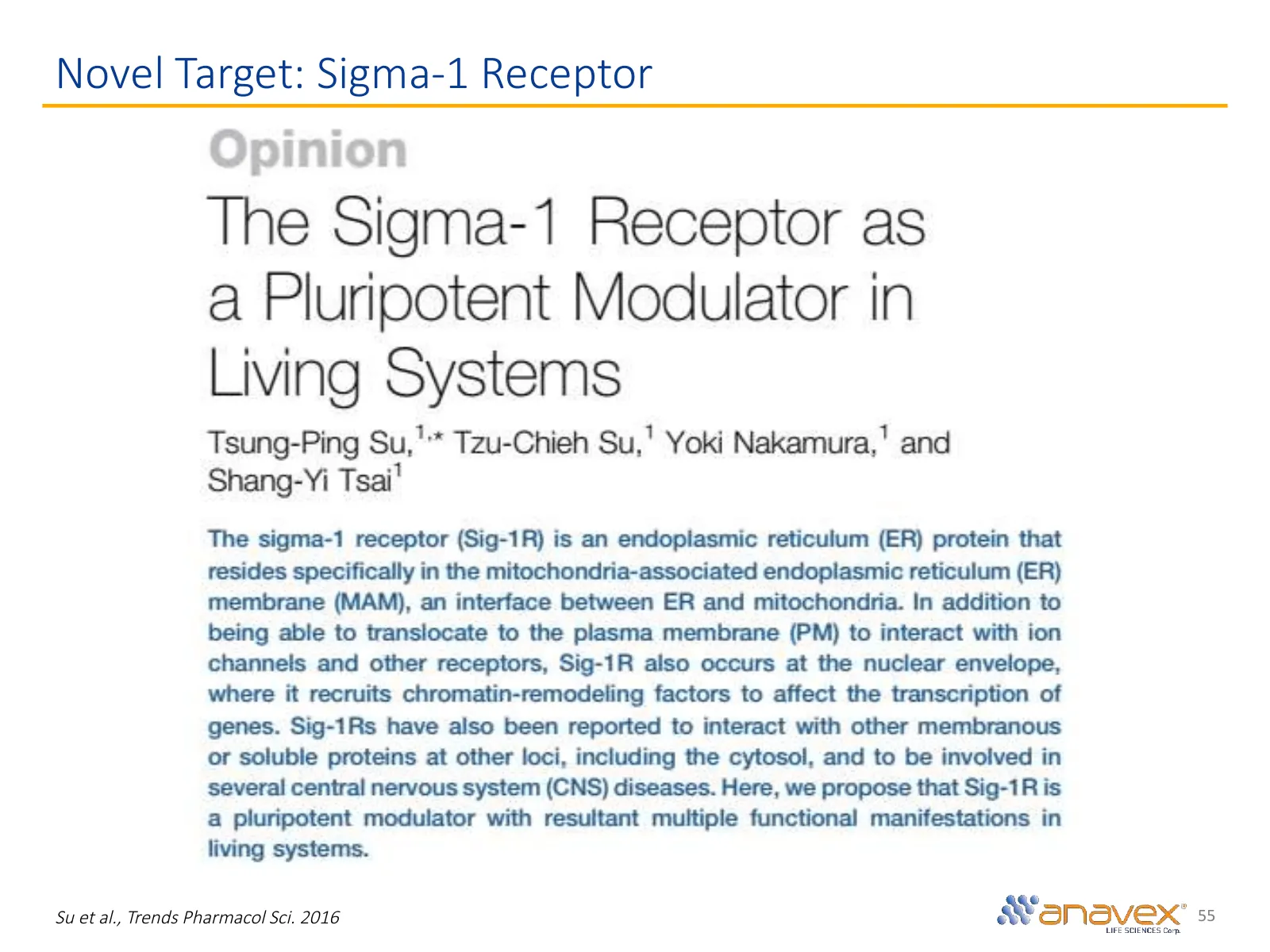
Novel Target: Sigma-1 Receptor Su et al., Trends Pharmacol Sci. 2016 55
Slide 56: Confirmed Effects of Sigma-1 Receptor Activation
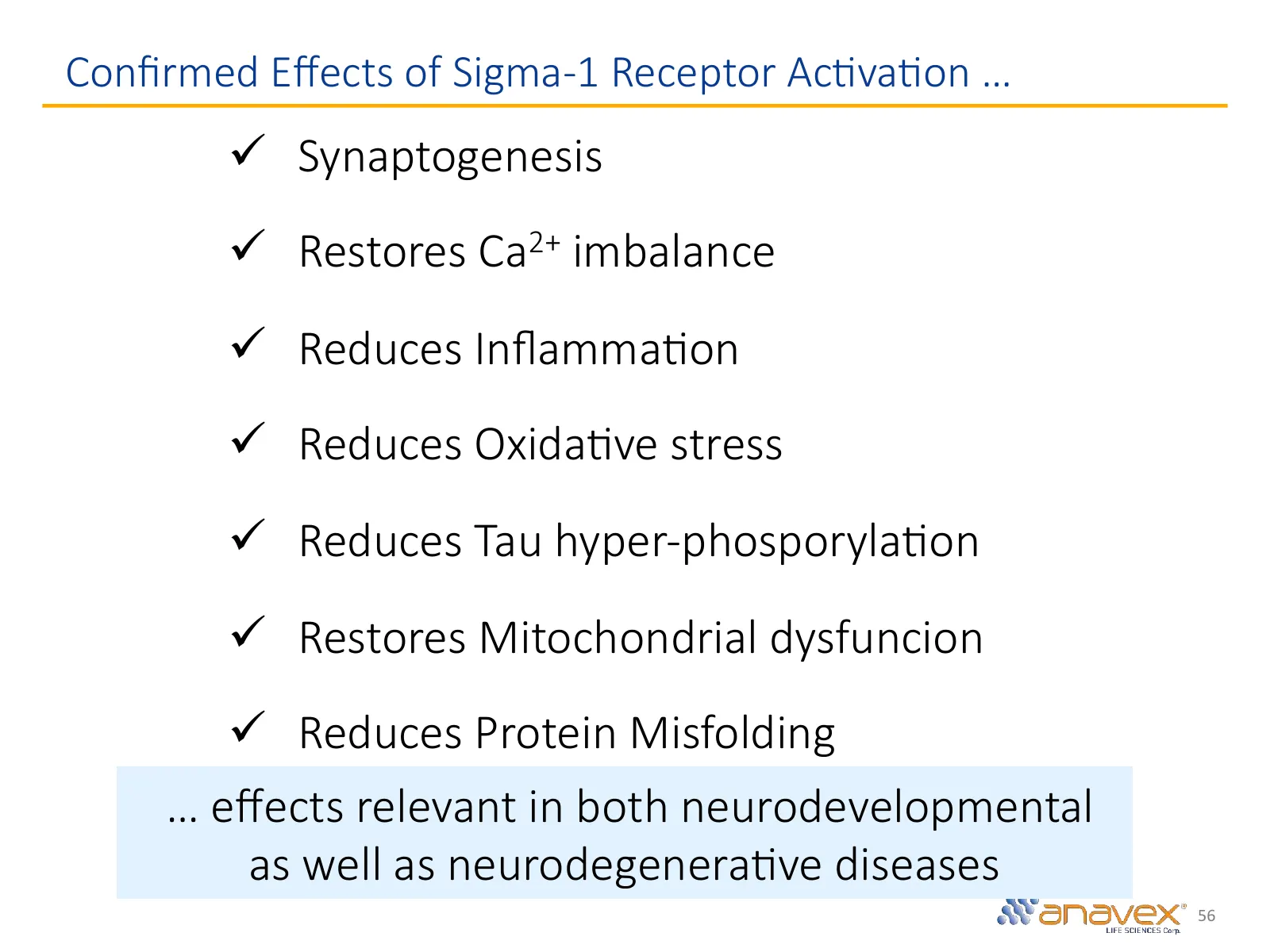
Confirmed Effects of Sigma-1 Receptor Ac2va2on … ü Synaptogenesis ü Restores Ca2+ imbalance ü Reduces Inflamma2on ü Reduces Oxida2ve stress ü Reduces Tau hyper-phosporyla2on ü Restores Mitochondrial dysfuncion ü Reduces Protein Misfolding … effects relevant in both neurodevelopmental as well as neurodeg
Slide 57: ANAVEX 3-71 Decreases Hallmark Pathologies in Alzheimer's Model
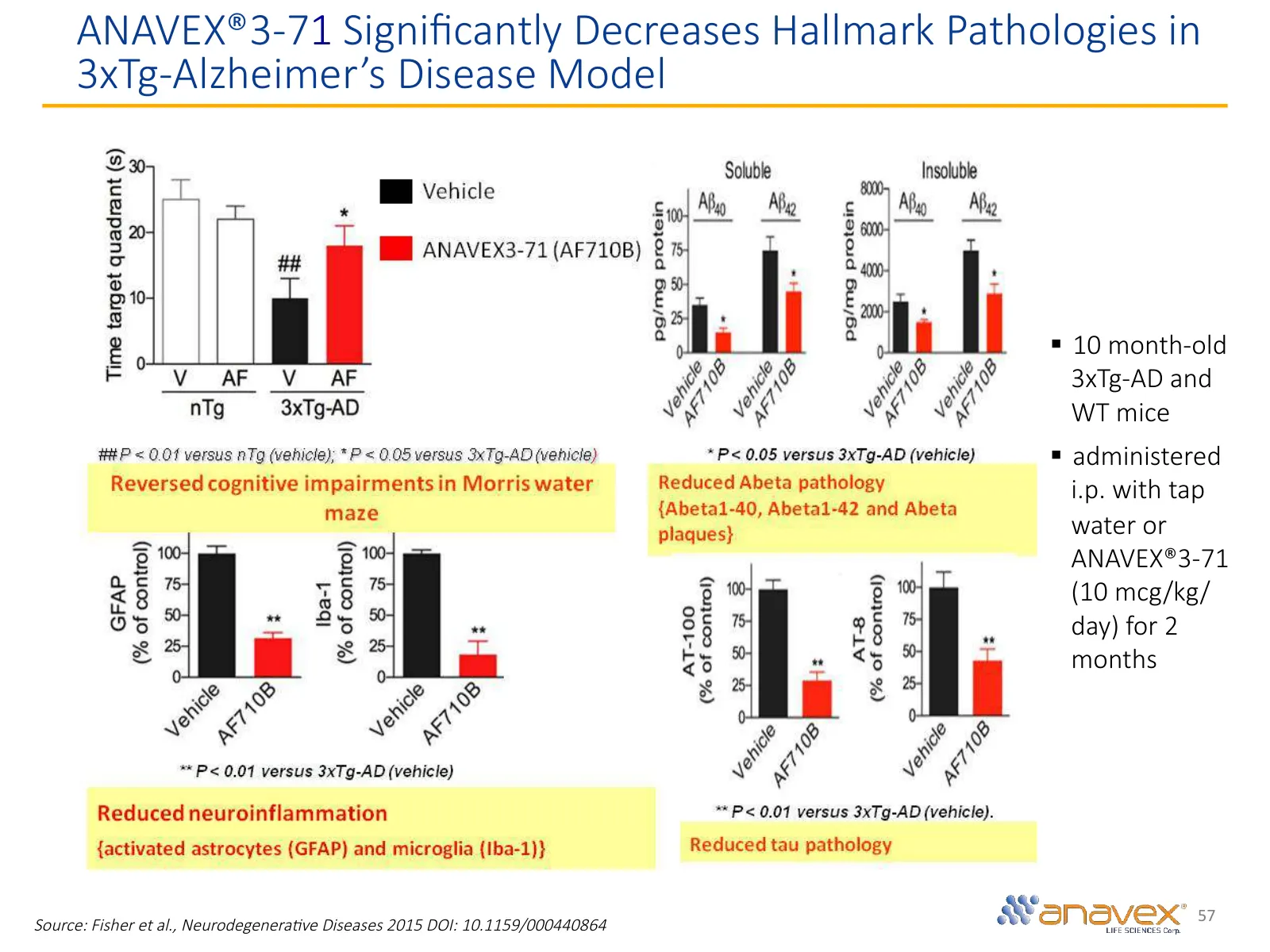
ANAVEX®3-71 Significantly Decreases Hallmark Pathologies in 3xTg-Alzheimer’s Disease Model § 10 month-old 3xTg-AD and WT mice § administered i.p. with tap water or ANAVEX®3-71 (10 mcg/kg/ day) for 2 months 57 Source: Fisher et al., Neurodegenera<ve Diseases 2015 DOI: 10.1159/000440864
Slide 58: Sigma-1 Receptor's Role in Regulating Gene Transcription
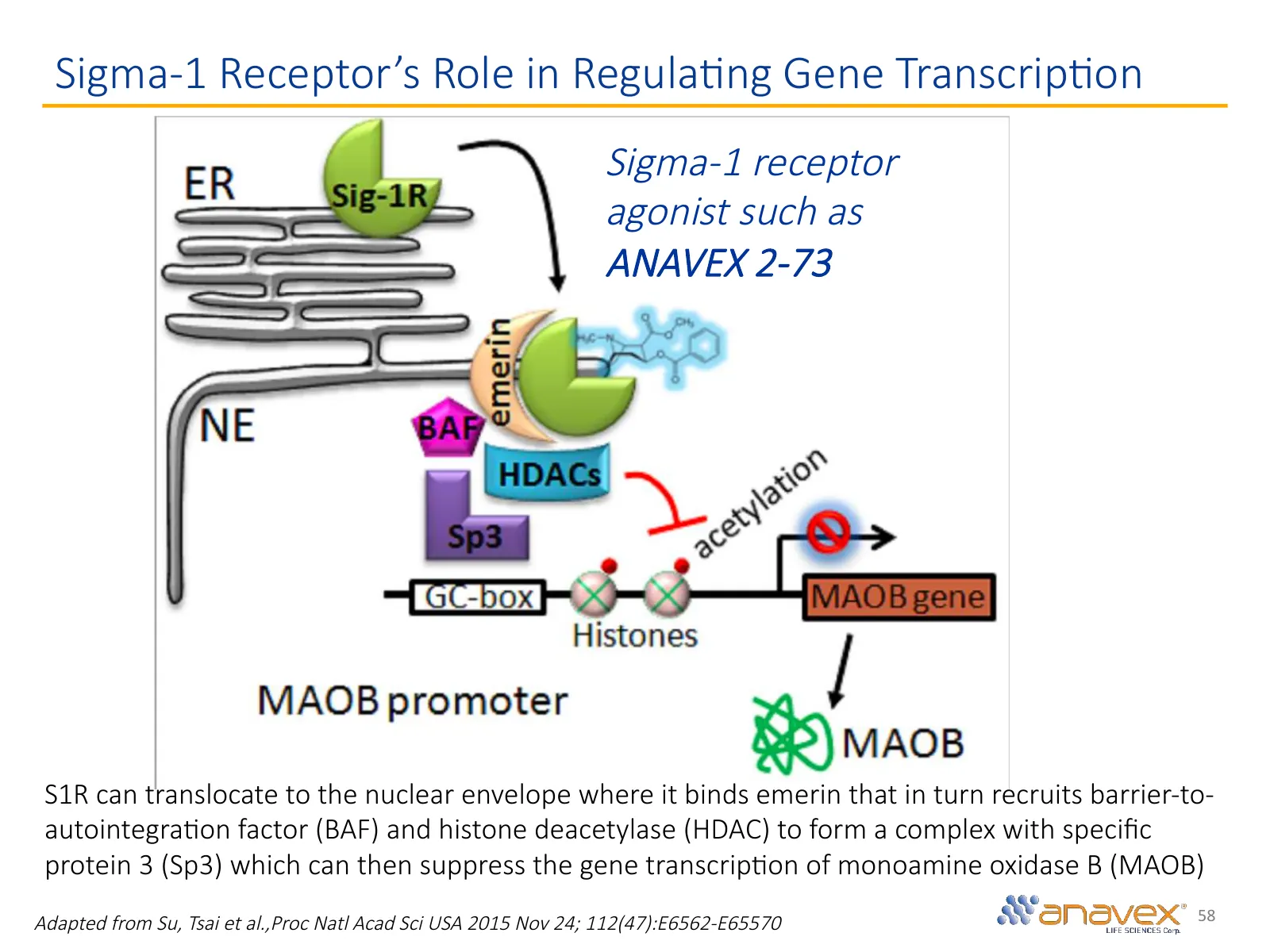
Sigma-1 Receptor’s Role in Regula2ng Gene Transcrip2on Sigma-1 receptor agonist such as ANAVEX 2-73 S1R can translocate to the nuclear envelope where it binds emerin that in turn recruits barrier-to- autointegra2on factor (BAF) and histone deacetylase (HDAC) to form a complex with specific protein 3
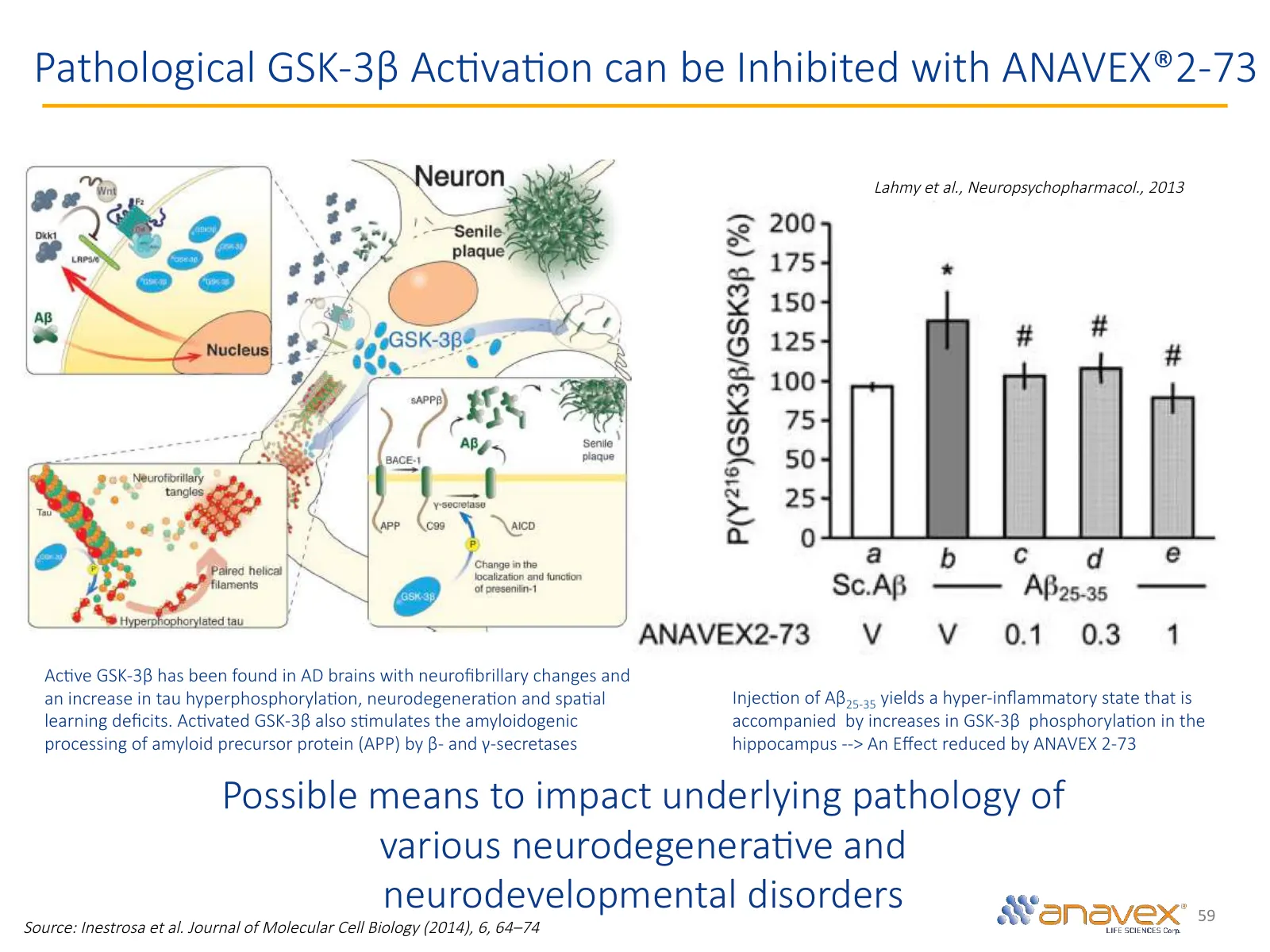
Slide 59: Pathological GSK-3β Activation can be Inhibited with ANAVEX 2-73
Pathological GSK-3β Ac2va2on can be Inhibited with ANAVEX®2-73 Lahmy et al., Neuropsychopharmacol., 2013 Ac2ve GSK-3β has been found in AD brains with neurofibrillary changes and an increase in tau hyperphosphoryla2on, neurodegenera2on and spa2al Injec2on of Aβ25-35 yields a hyper-inflammatory state t
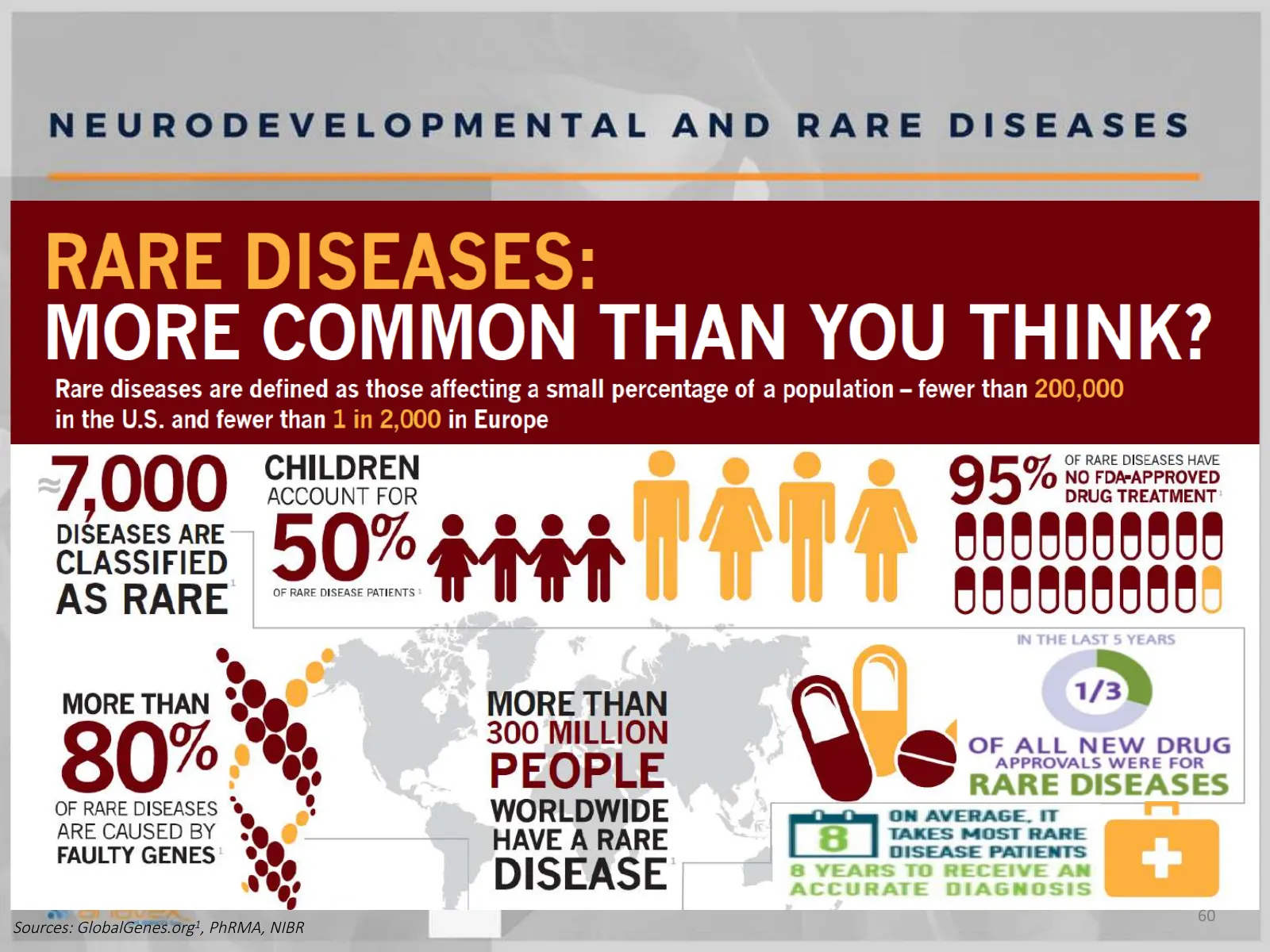
Slide 60: Sources: GlobalGenes.org, PhRMA, NIBR
Sources: GlobalGenes.org1, PhRMA, NIBR 6060
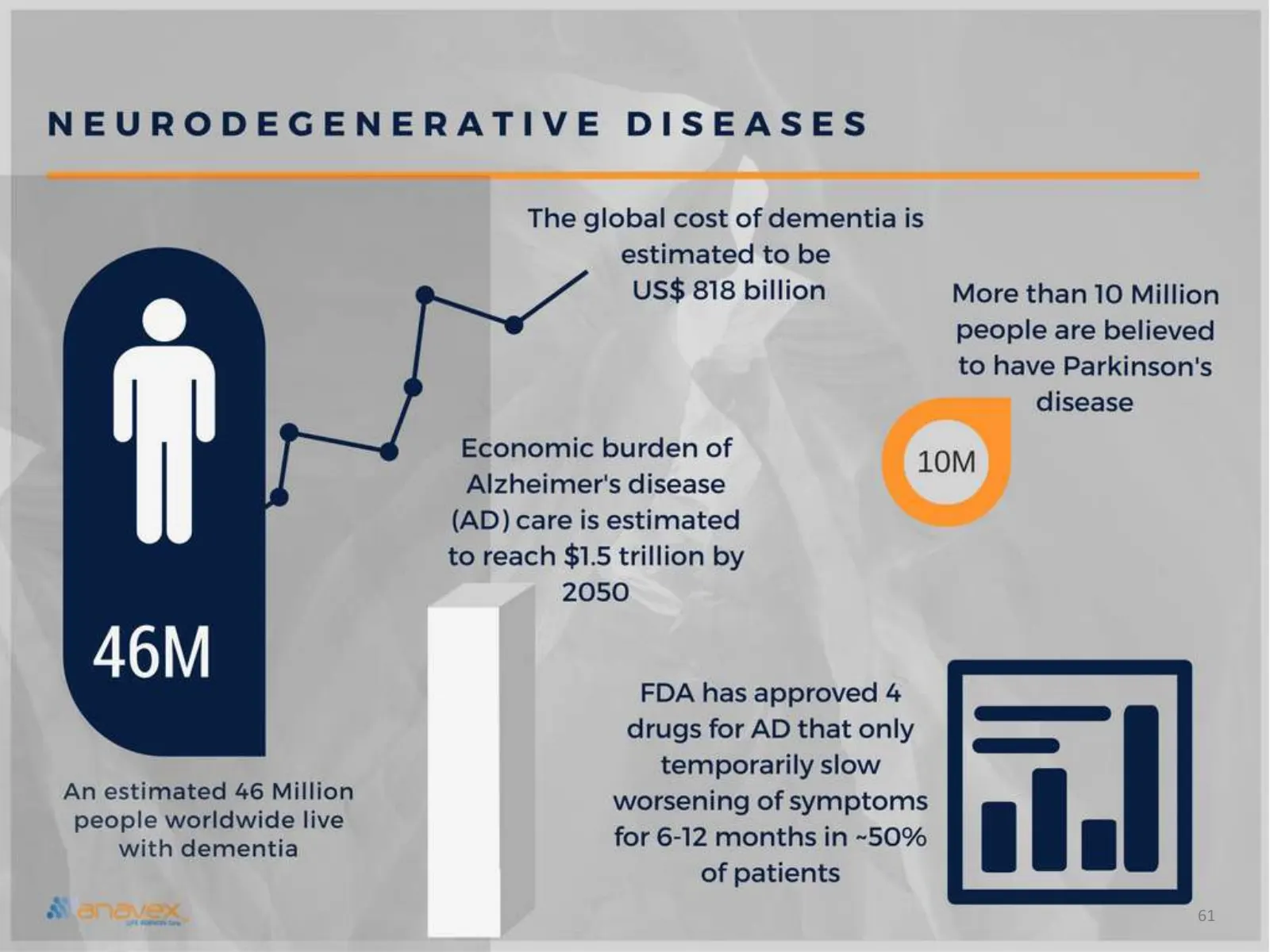
Slide 61: Neurodegenerative Diseases
NEURODEGENERATIVE DISEASES The global cost of dementia is estimated to be US$ 818 billion More than 10 Million people are believed to have Parkinson's disease Economic burden of Alzheimer's disease (AD) care is estimated to reach $1.5 trillion by 2050 FDA has approved 4 drugs for AD that only tempor
Source: Internet Archive copy of anavex.com
More decks from Anavex Life Sciences Corp.
 Proxy Contest (September 2026)25 slides · September 2026
 AD/PD 2026, Copenhagen27 slides · Mar 21, 2026
 Investor Presentation (February 2026)37 slides · February 2026
 Investor Presentation (January 2026)37 slides · January 2026
 Technical Presentation (February 2022)24 slides · Feb 2, 2022
 Investor Presentation (September 2021)43 slides · Sep 13, 2021