Belite Bio, Inc. · NASDAQ:BLTE
Belite Bio — Technical Presentation
23 slides from Belite Bio's technical presentation
Slide 1: Topline Results from a 2-year Phase 3 Study of Oral Tinlarebant in Stargardt Disease
Topline Results from a 2-year Phase 3 Study of Oral Tinlarebant in Adolescent Patients with Stargardt Disease Nathan L. Mata, PhD Chief Scientific Officer, Belite Bio, Inc. BELITE BIO / 1
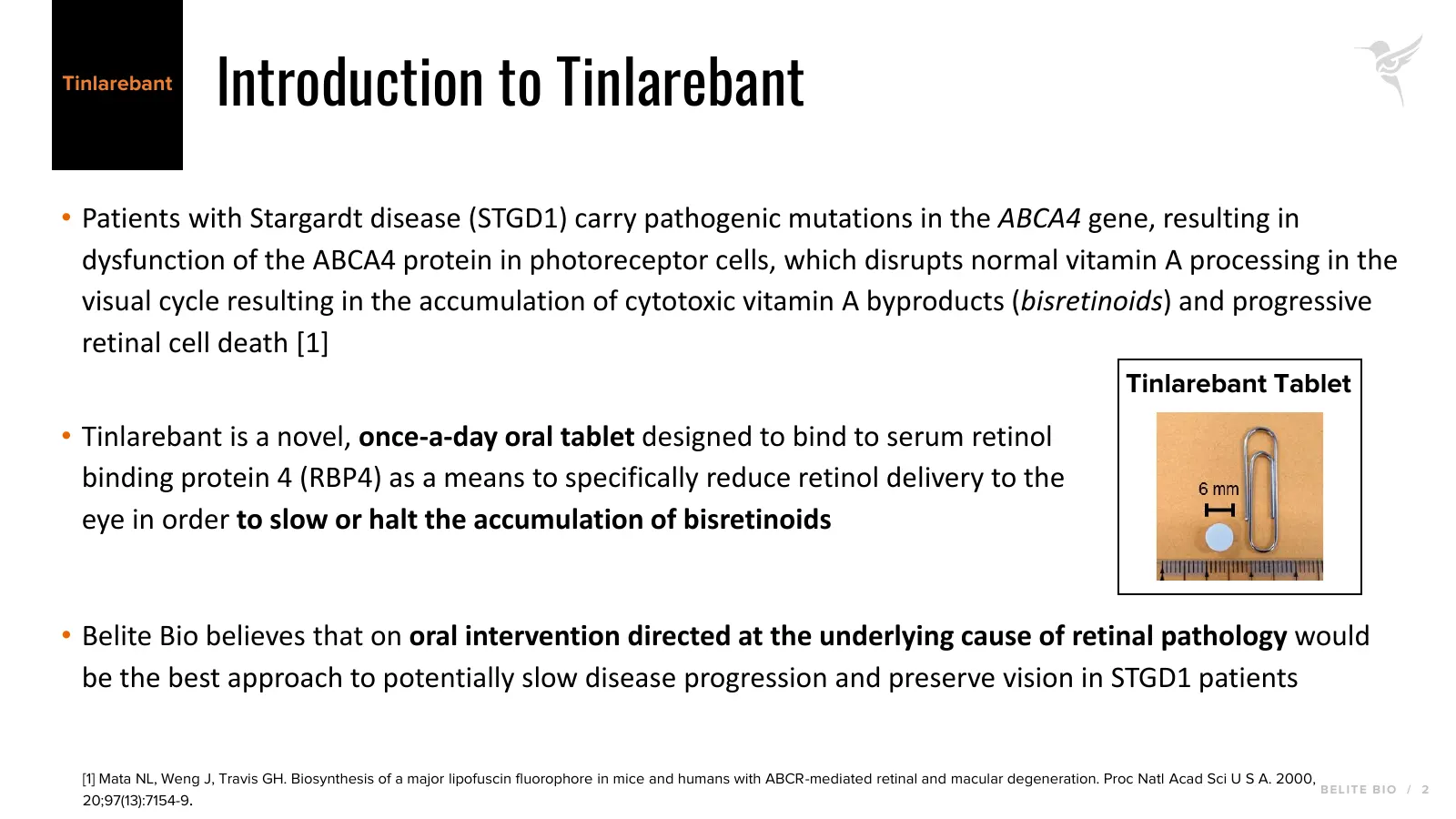
Slide 2: Introduction to Tinlarebant
Tinlarebant (LBS-008) Introduction to Tinlarebant • Patients with Stargardt disease (STGD1) carry pathogenic mutations in the ABCA4 gene, resulting in dysfunction of the ABCA4 protein in photoreceptor cells, which disrupts normal vitamin A processing in the visual cycle resulting in the accumulation
Slide 3: Tinlarebant Mechanism of Action
Tinlarebant Mechanism of Action BELITE BIO / 3
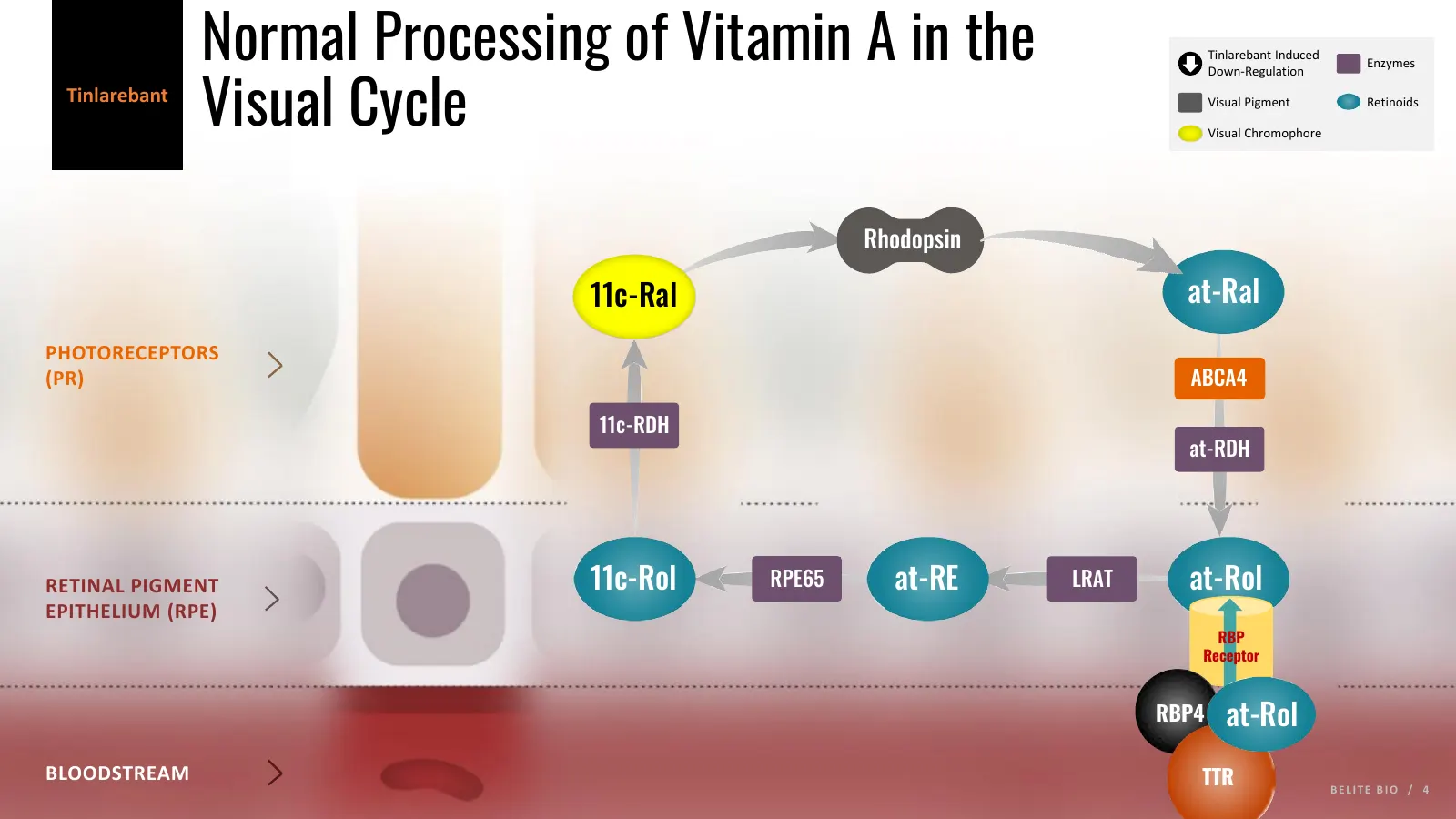
Slide 4: Normal Processing of Vitamin A in the Visual Cycle
Normal Processing of Vitamin A in the Tinlarebant Induced Visual Cycle Enzymes Down-Regulation Tinlarebant Visual Pigment Retinoids Visual Chromophore Rhodopsin 11c-Ral at-Ral PHOTORECEPTORS (PR) ABCA4 11c-RDH at-RDH RETINAL PIGMENT 11c-Rol RPE65 at-RE LRAT at-Rol EPITHELIUM (RPE) RBP Receptor RBP4
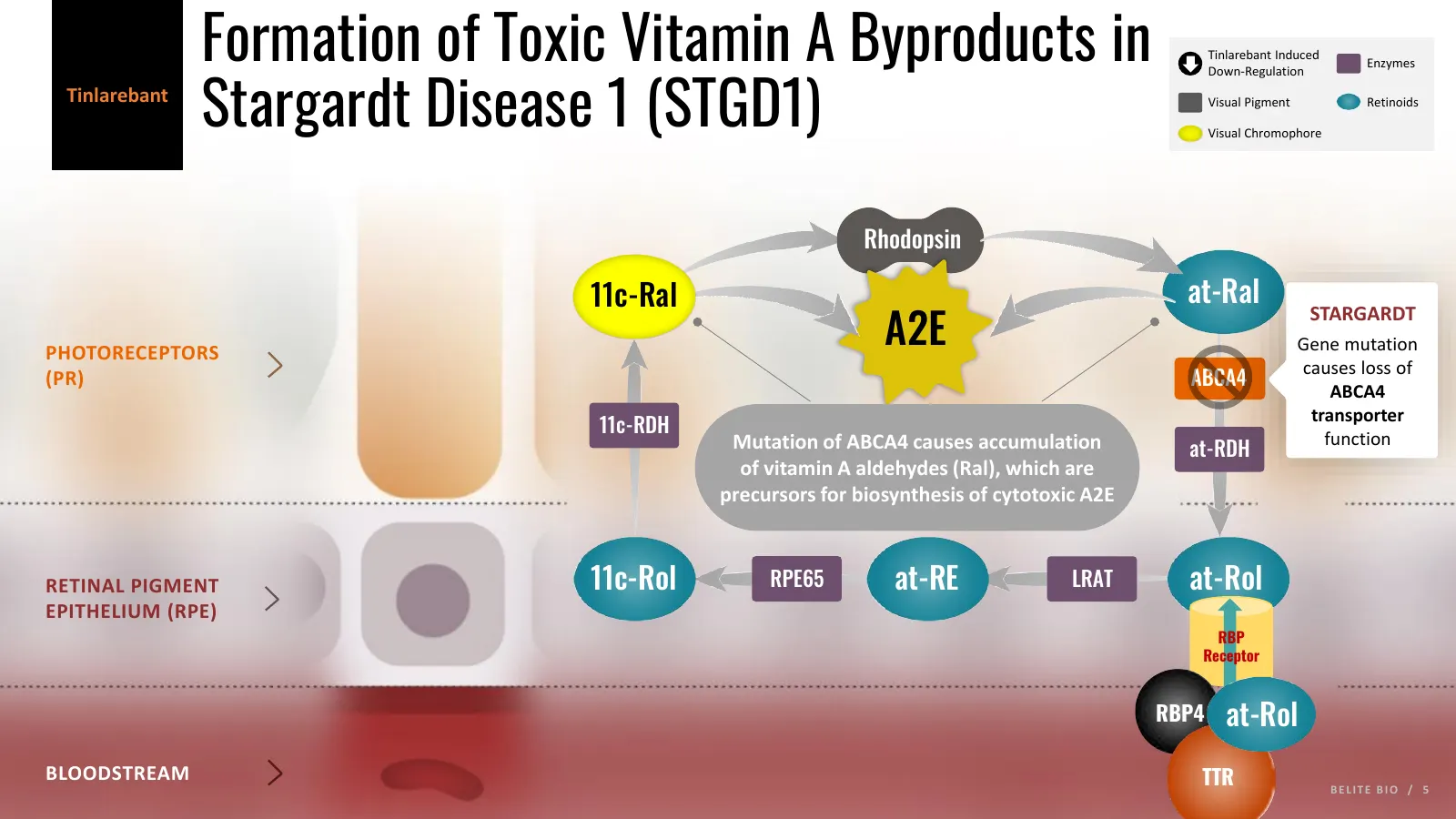
Slide 5: Formation of Toxic Vitamin A Byproducts in Stargardt Disease 1 (STGD1)
Formation of Toxic Vitamin A Byproducts in Tinlarebant Induced Stargardt Disease 1 (STGD1) Enzymes Down-Regulation Tinlarebant Visual Pigment Retinoids Visual Chromophore Rhodopsin 11c-Ral at-Ral A2E STARGARDT PHOTORECEPTORS Gene mutation causes loss of (PR) ABCA4 ABCA4 transporter 11c-RDH function
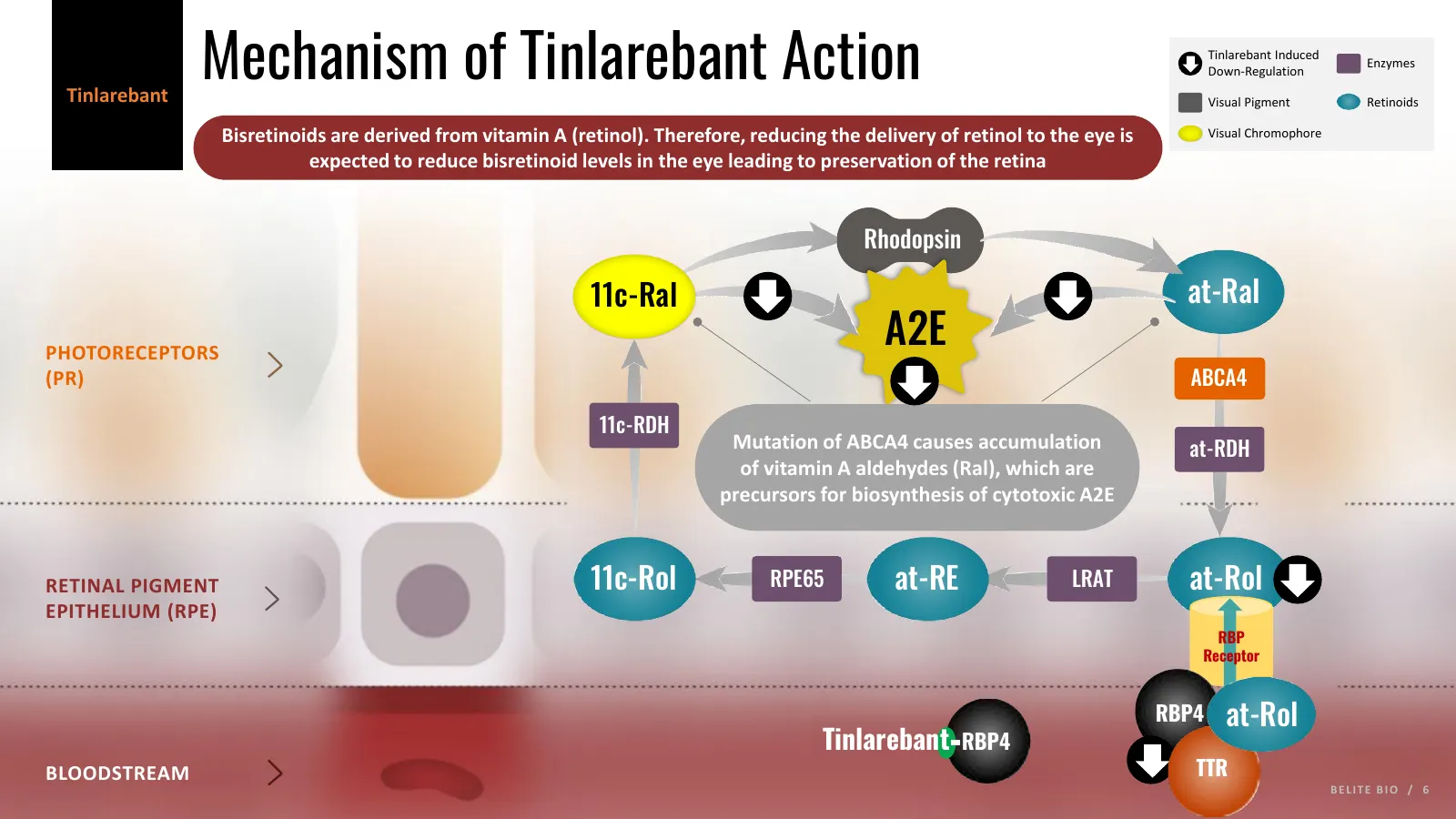
Slide 6: Mechanism of Tinlarebant Action
Tinlarebant Mechanism of Tinlarebant Action Tinlarebant Induced Down-Regulation Visual Pigment Enzymes Retinoids Bisretinoids are derived from vitamin A (retinol). Therefore, reducing the delivery of retinol to the eye is Visual Chromophore expected to reduce bisretinoid levels in the eye leading to

Slide 7: DRAGON Phase 3 Clinical Trial in Stargardt Disease
DRAGON Phase 3 Clinical Trial in Stargardt Disease BELITE BIO / 7
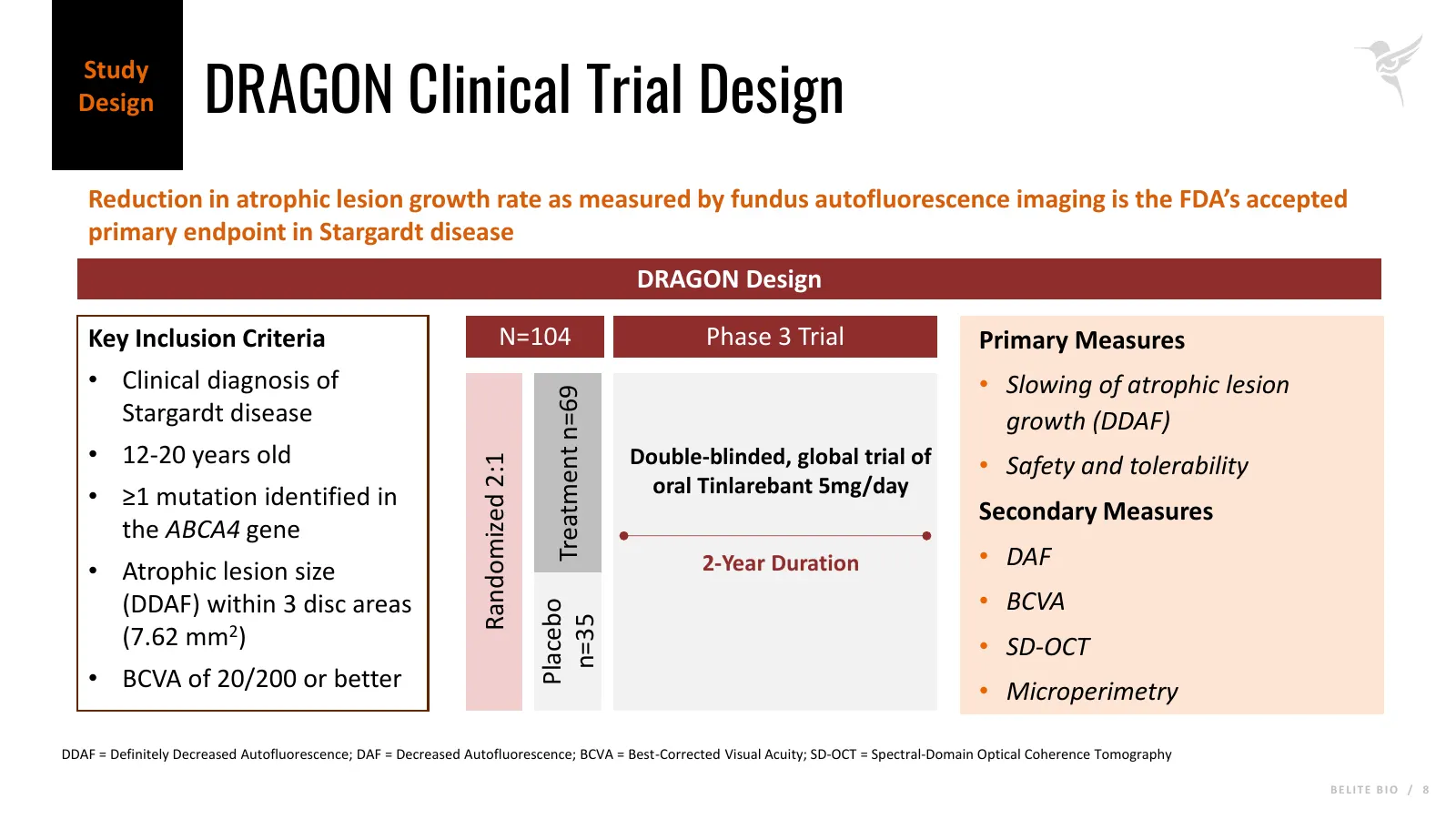
Slide 8: DRAGON Clinical Trial Design
DRAGON Clinical Trial Design Study Design Reduction in atrophic lesion growth rate as measured by fundus autofluorescence imaging is the FDA’s accepted primary endpoint in Stargardt disease DRAGON Design Key Inclusion Criteria N=104 Phase 3 Trial Primary Measures • Clinical diagnosis of • Slowing of
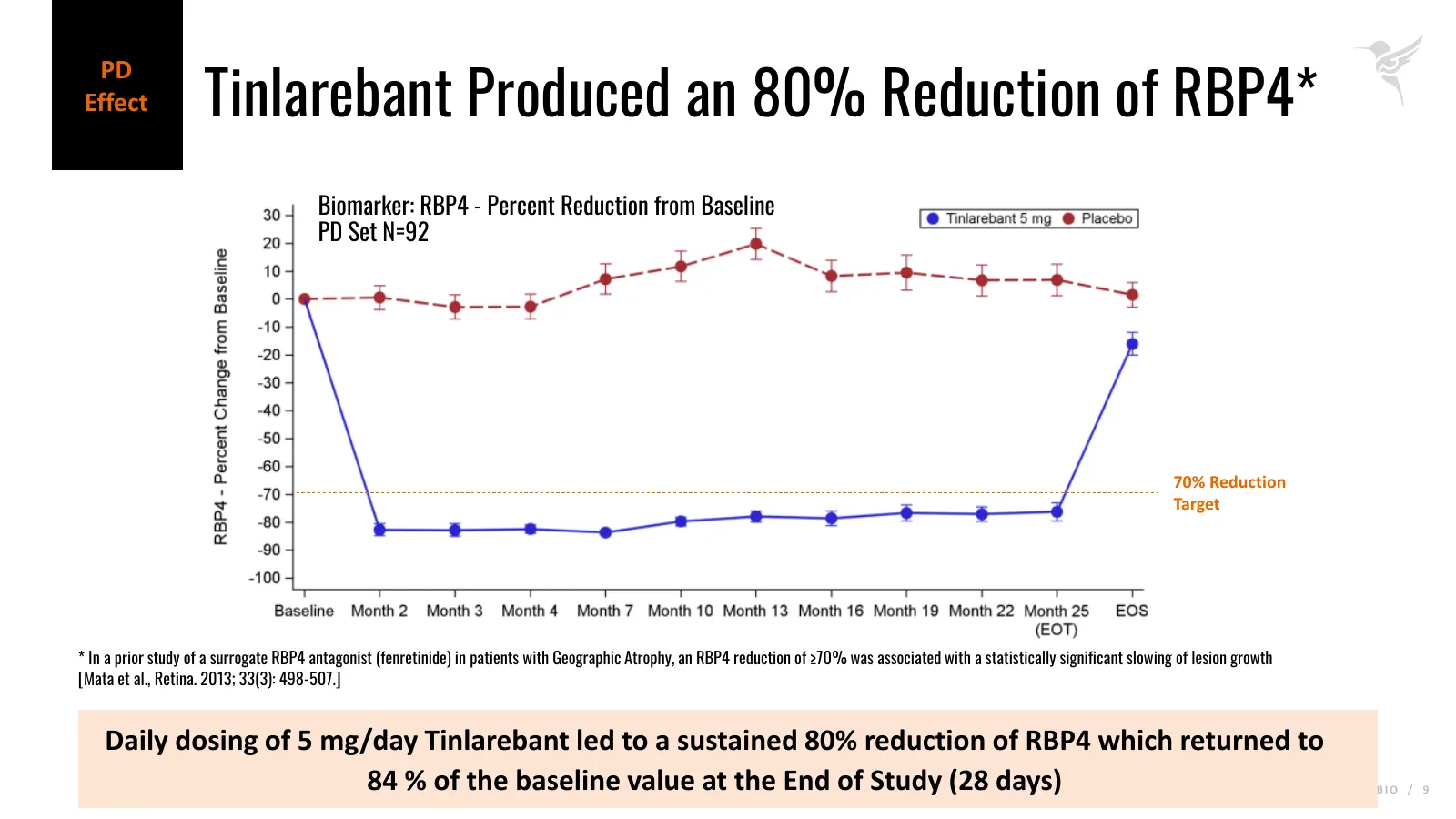
Slide 9: Tinlarebant Produced an 80% Reduction of RBP4
Tinlarebant Produced an 80% Reduction of RBP4* PD Effect Biomarker: RBP4 - Percent Reduction from Baseline PD Set N=92 70% Reduction Target * In a prior study of a surrogate RBP4 antagonist (fenretinide) in patients with Geographic Atrophy, an RBP4 reduction of ≥70% was associated with a statistical
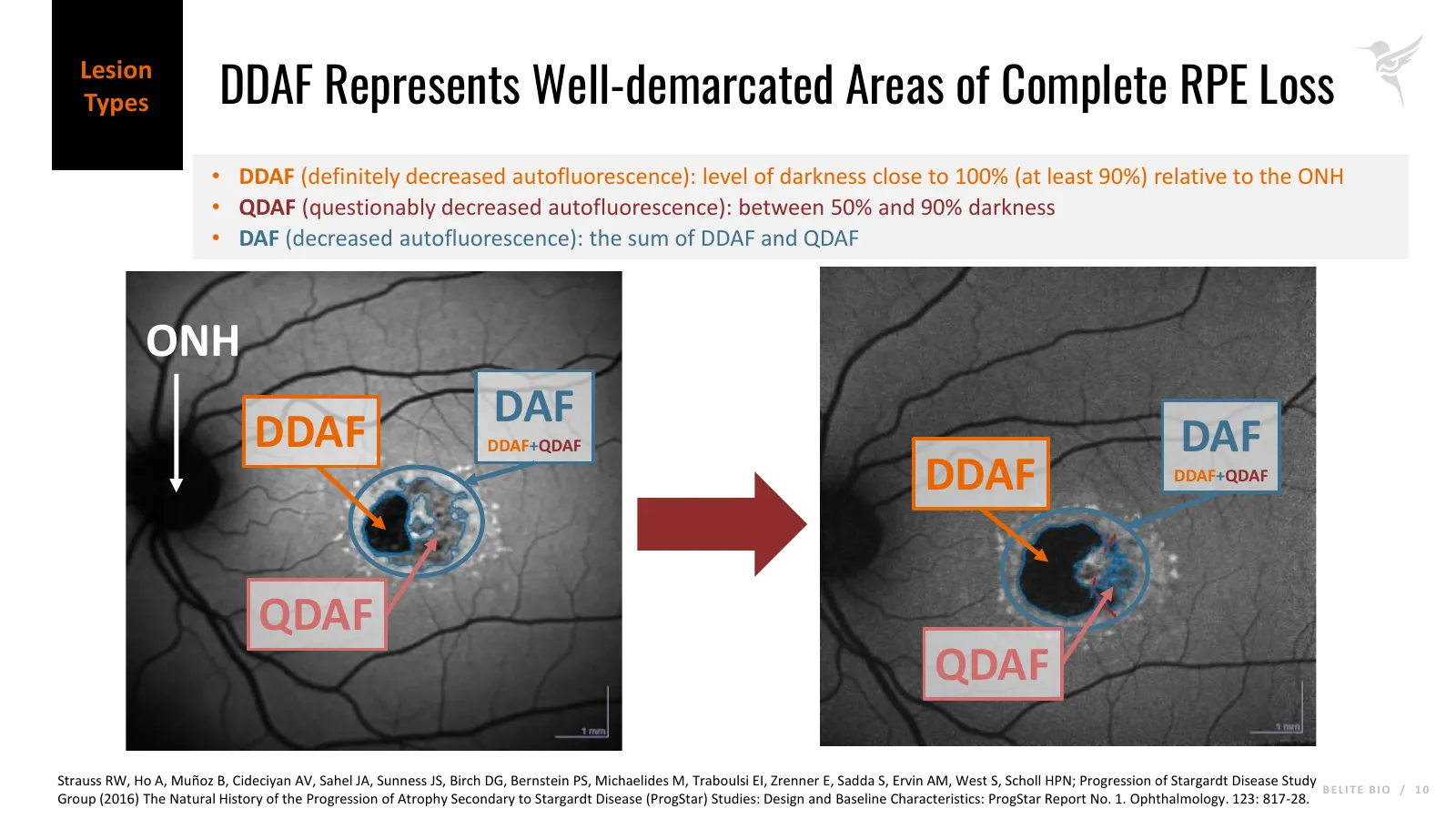
Slide 10: DDAF Represents Well-demarcated Areas of Complete RPE Loss
DDAF Represents Well-demarcated Areas of Complete RPE Loss Lesion Types • DDAF (definitely decreased autofluorescence): level of darkness close to 100% (at least 90%) relative to the ONH • QDAF (questionably decreased autofluorescence): between 50% and 90% darkness • DAF (decreased autofluorescence)
Slide 11: Primary Endpoint: DDAF Change in the Study Eye
Primary Endpoint: DDAF Change in the Study Eye Efficacy Results • Annualized rate of lesion growth in the aggregate area of atrophy (DDAF) from baseline as assessed by fundus autofluorescence imaging through Month 25. • Data is shown for the modified full analysis set (mFAS) which consists of all su
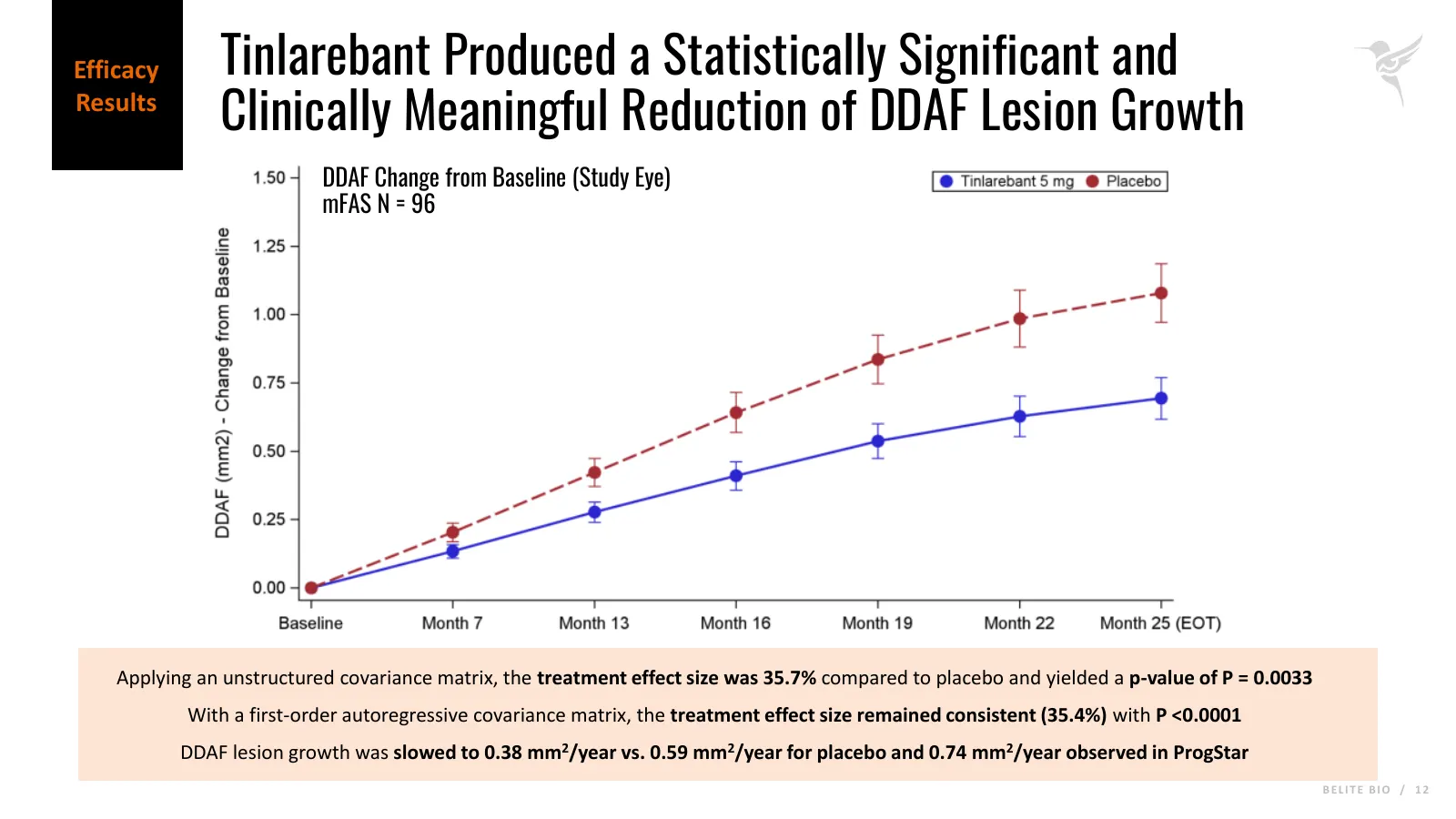
Slide 12: Statistically Significant and Clinically Meaningful Reduction of DDAF Lesion Growth
Efficacy Tinlarebant Produced a Statistically Significant and Results Clinically Meaningful Reduction of DDAF Lesion Growth DDAF Change from Baseline (Study Eye) mFAS N = 96 Applying an unstructured covariance matrix, the treatment effect size was 35.7% compared to placebo and yielded a p-value of P
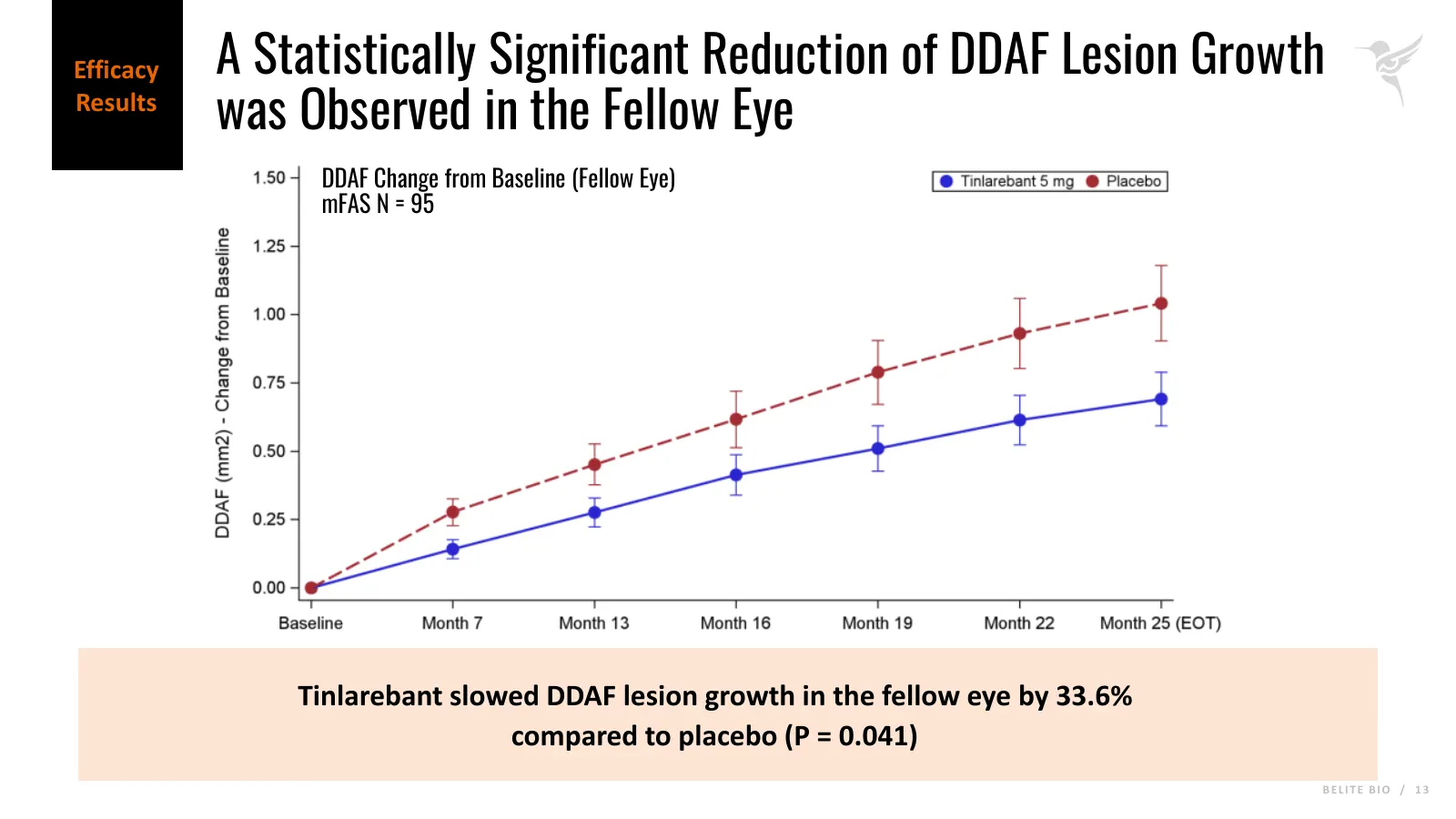
Slide 13: Reduction of DDAF Lesion Growth Observed in the Fellow Eye
Efficacy A Statistically Significant Reduction of DDAF Lesion Growth Results was Observed in the Fellow Eye DDAF Change from Baseline (Fellow Eye) mFAS N = 95 Tinlarebant slowed DDAF lesion growth in the fellow eye by 33.6% compared to placebo (P = 0.041) BELITE BIO / 13
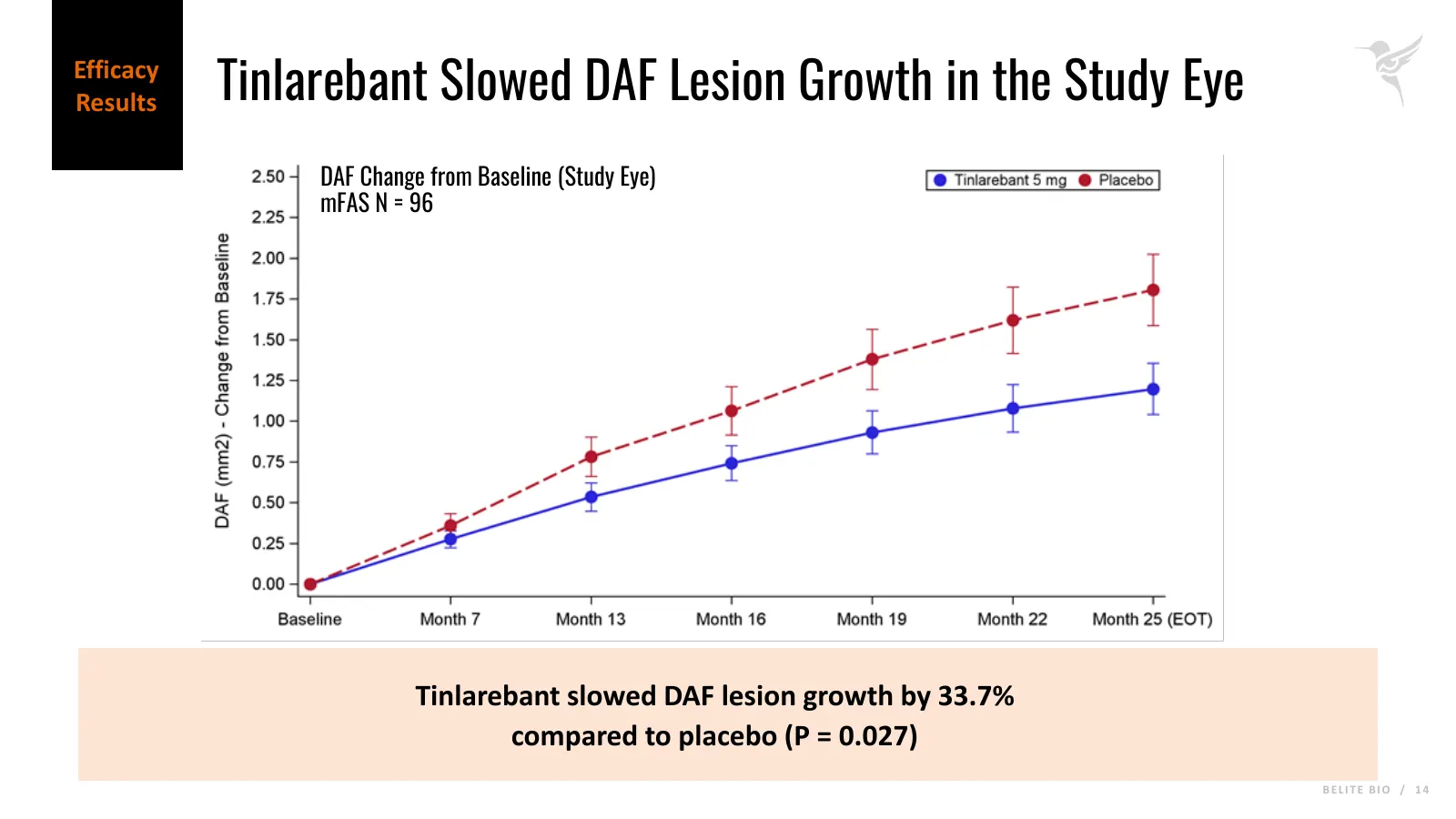
Slide 14: Tinlarebant Slowed DAF Lesion Growth in the Study Eye
Efficacy Results Tinlarebant Slowed DAF Lesion Growth in the Study Eye DAF Change from Baseline (Study Eye) mFAS N = 96 Tinlarebant slowed DAF lesion growth by 33.7% compared to placebo (P = 0.027) BELITE BIO / 14
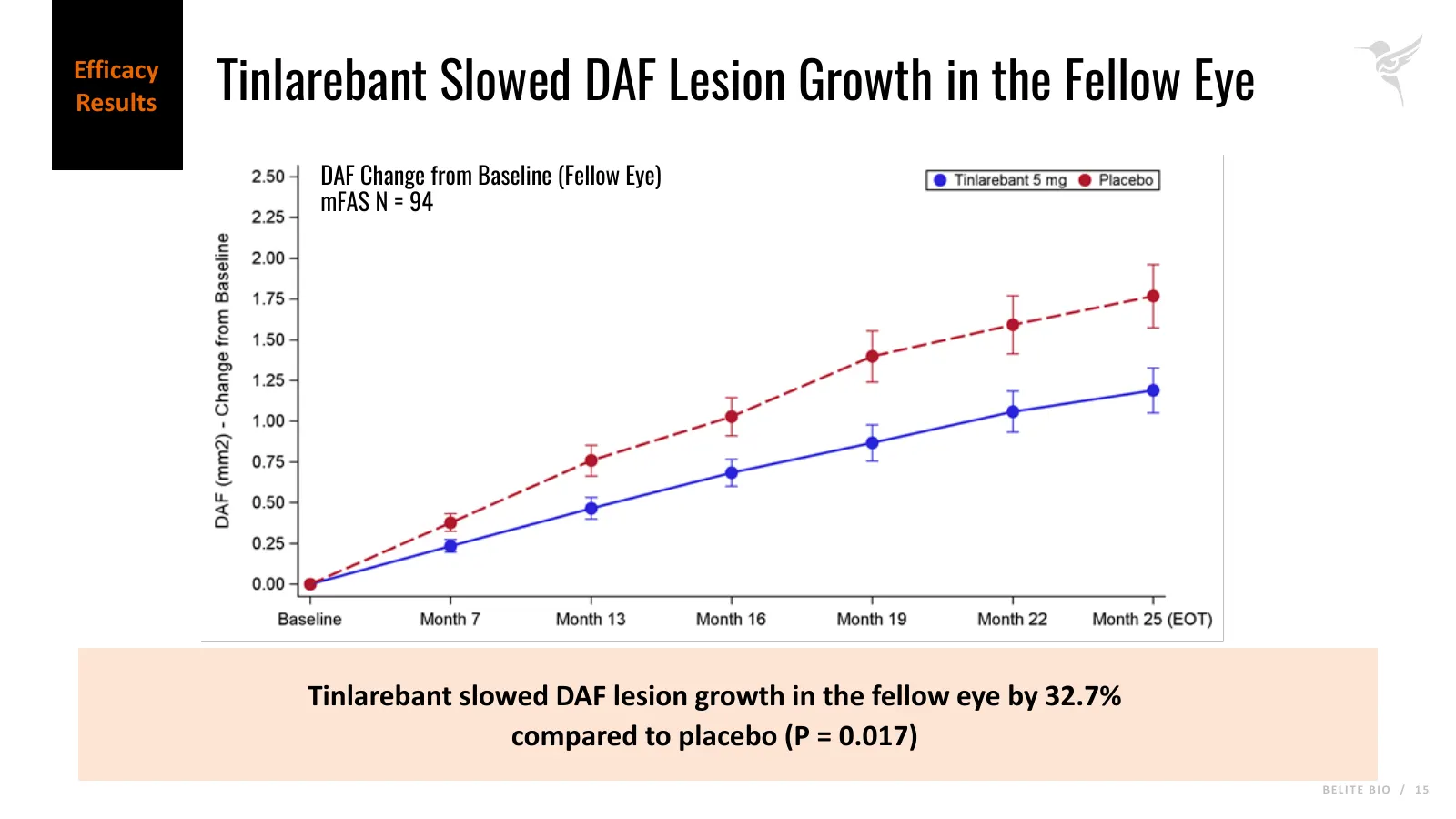
Slide 15: Tinlarebant Slowed DAF Lesion Growth in the Fellow Eye
Efficacy Results Tinlarebant Slowed DAF Lesion Growth in the Fellow Eye DAF Change from Baseline (Fellow Eye) mFAS N = 94 Tinlarebant slowed DAF lesion growth in the fellow eye by 32.7% compared to placebo (P = 0.017) BELITE BIO / 15
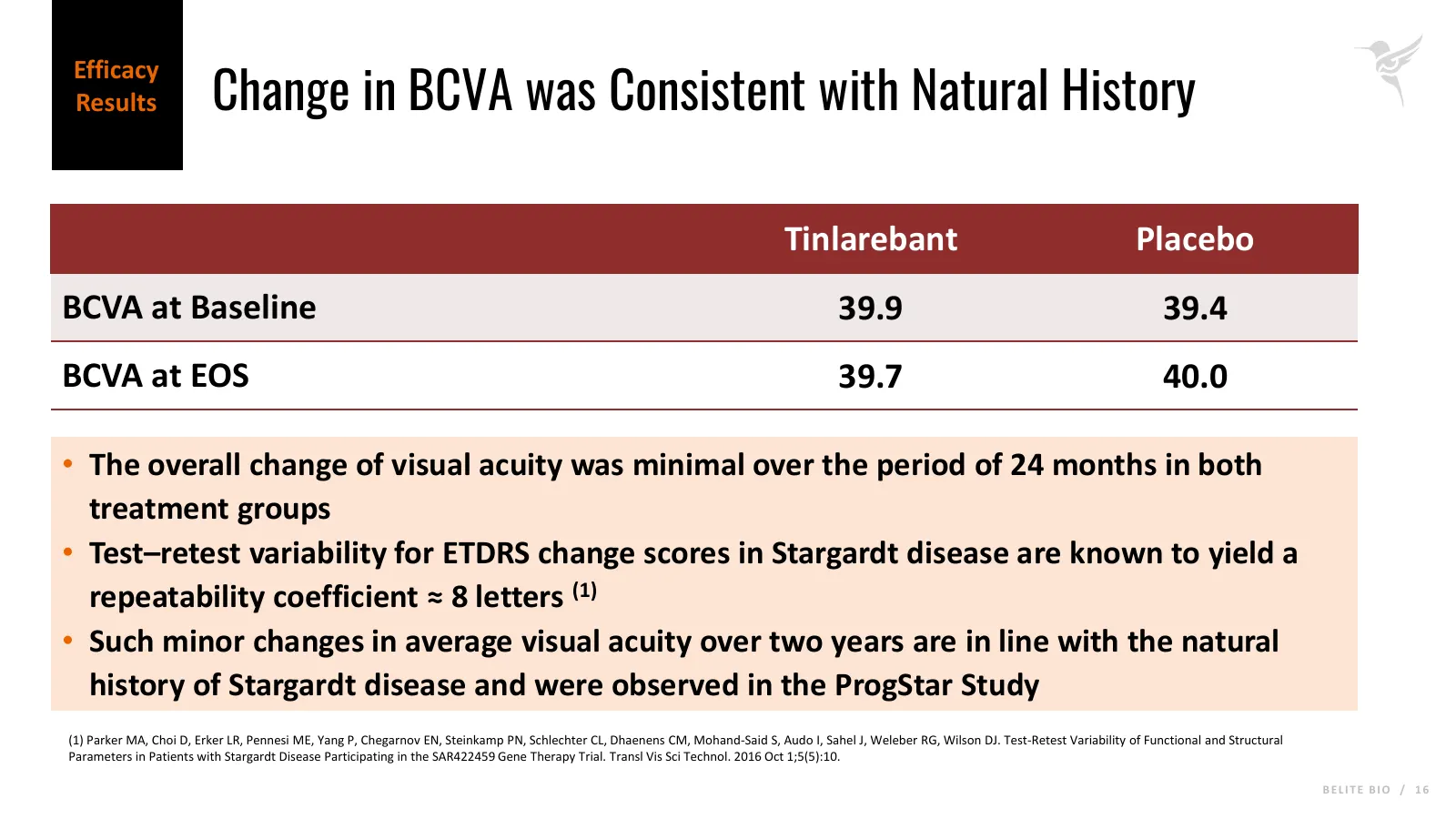
Slide 16: Change in BCVA was Consistent with Natural History
Change in BCVA was Consistent with Natural History Efficacy Results Tinlarebant Placebo BCVA at Baseline 39.9 39.4 BCVA at EOS 39.7 40.0 • The overall change of visual acuity was minimal over the period of 24 months in both treatment groups • Test–retest variability for ETDRS change scores in Starga
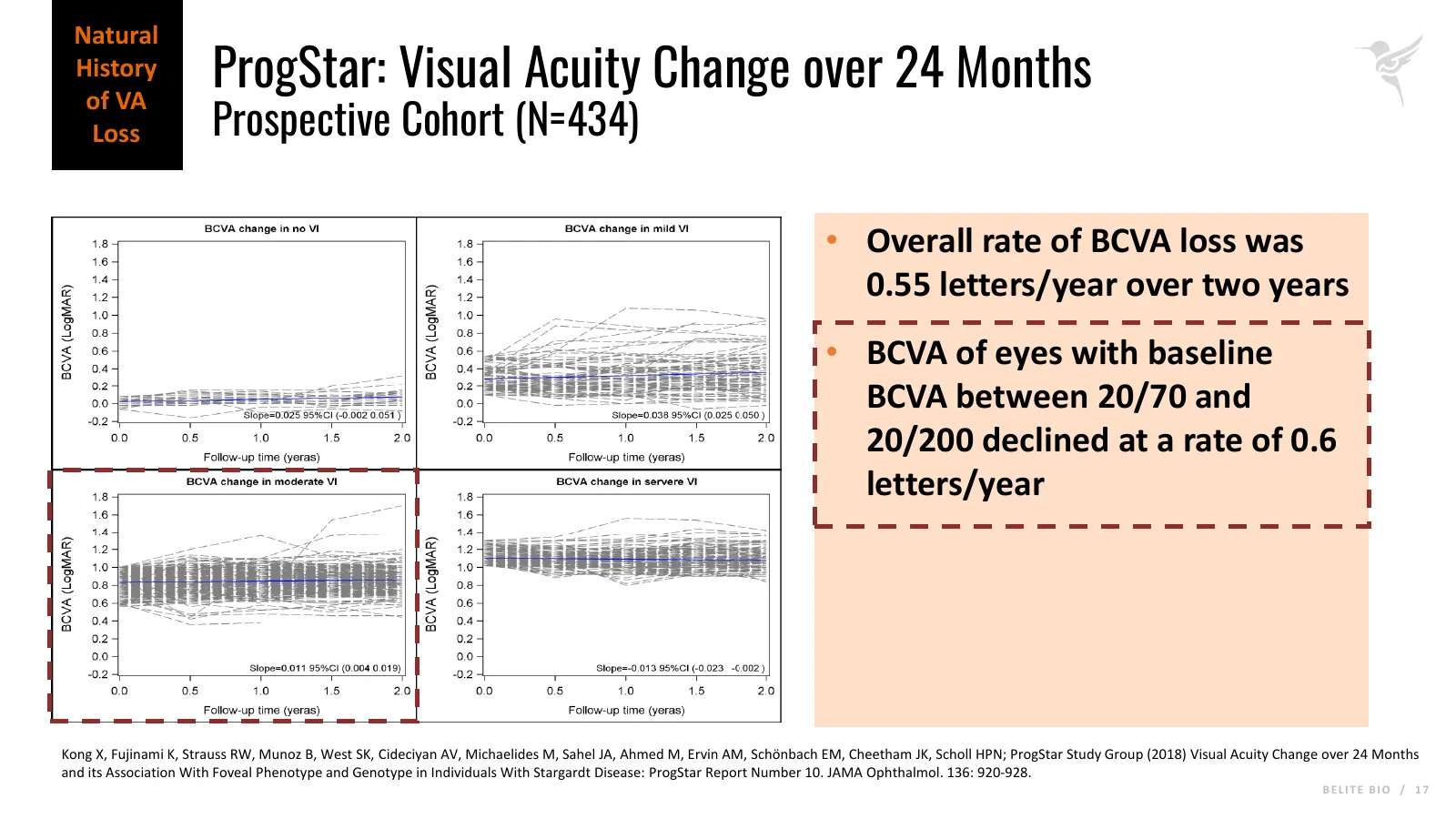
Slide 17: ProgStar: Visual Acuity Change over 24 Months
Natural History ProgStar: Visual Acuity Change over 24 Months Prospective Cohort (N=434) of VA Loss • Overall rate of BCVA loss was 0.55 letters/year over two years • BCVA of eyes with baseline BCVA between 20/70 and 20/200 declined at a rate of 0.6 letters/year Kong X, Fujinami K, Strauss RW, Munoz

Slide 18: Safety Results
Safety Results BELITE BIO / 18
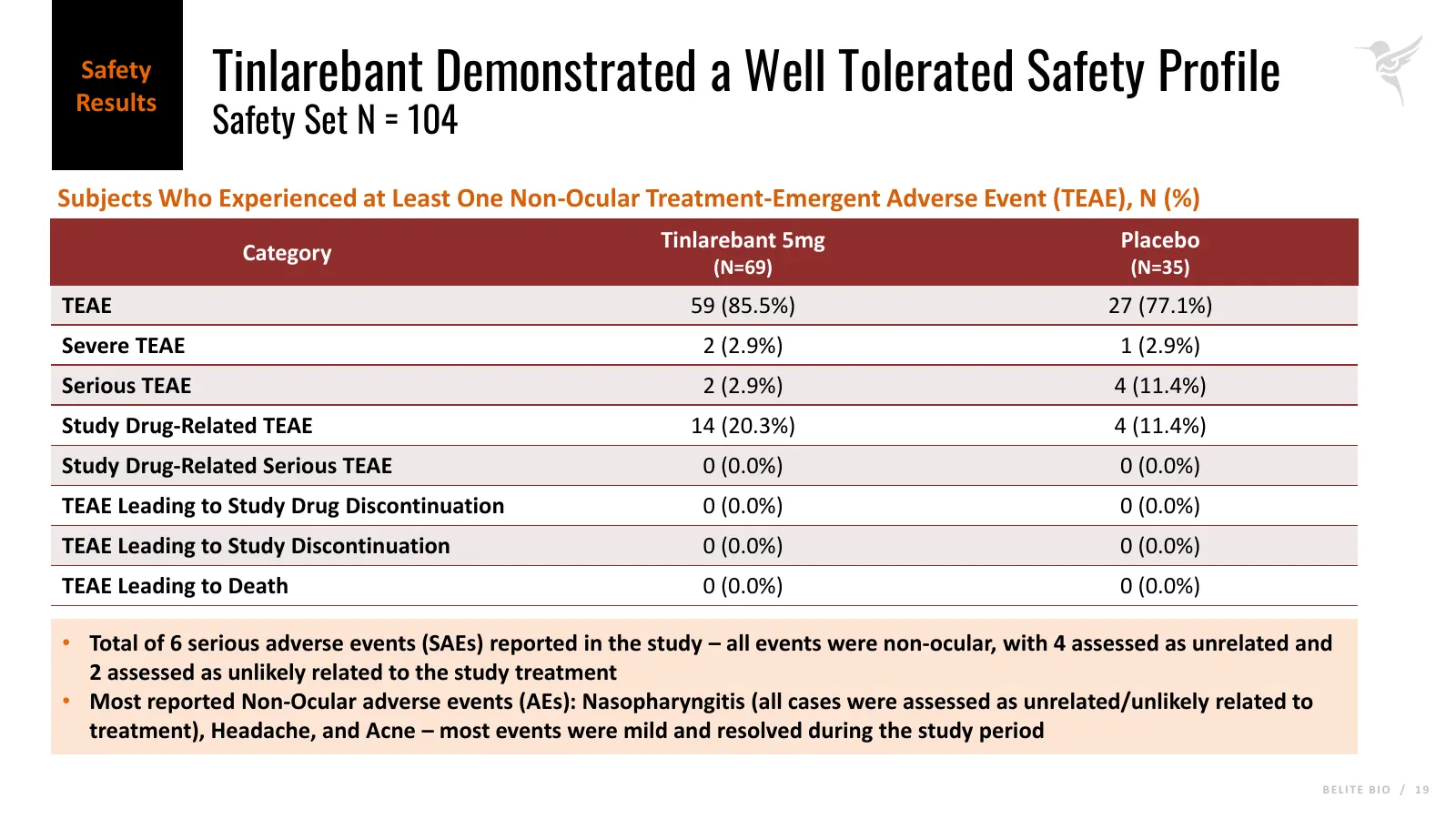
Slide 19: Tinlarebant Demonstrated a Well Tolerated Safety Profile
Safety Tinlarebant Demonstrated a Well Tolerated Safety Profile Safety Set N = 104 Results Subjects Who Experienced at Least One Non-Ocular Treatment-Emergent Adverse Event (TEAE), N (%) Tinlarebant 5mg Placebo Category (N=69) (N=35) TEAE 59 (85.5%) 27 (77.1%) Severe TEAE 2 (2.9%) 1 (2.9%) Serious T
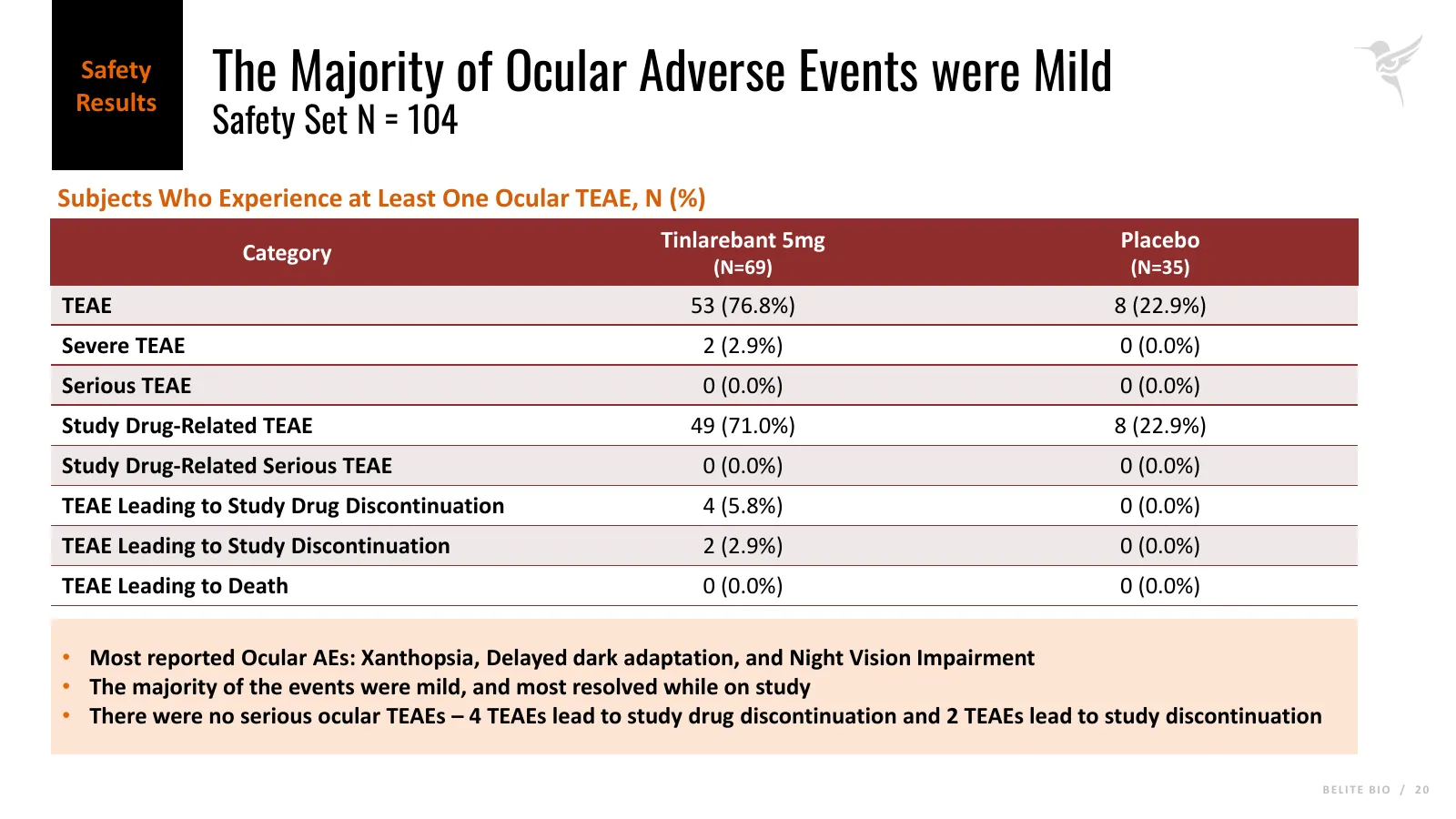
Slide 20: The Majority of Ocular Adverse Events were Mild
Safety The Majority of Ocular Adverse Events were Mild Safety Set N = 104 Results Subjects Who Experience at Least One Ocular TEAE, N (%) Tinlarebant 5mg Placebo Category (N=69) (N=35) TEAE 53 (76.8%) 8 (22.9%) Severe TEAE 2 (2.9%) 0 (0.0%) Serious TEAE 0 (0.0%) 0 (0.0%) Study Drug-Related TEAE 49 (

Slide 21: Summary
Summary BELITE BIO / 21
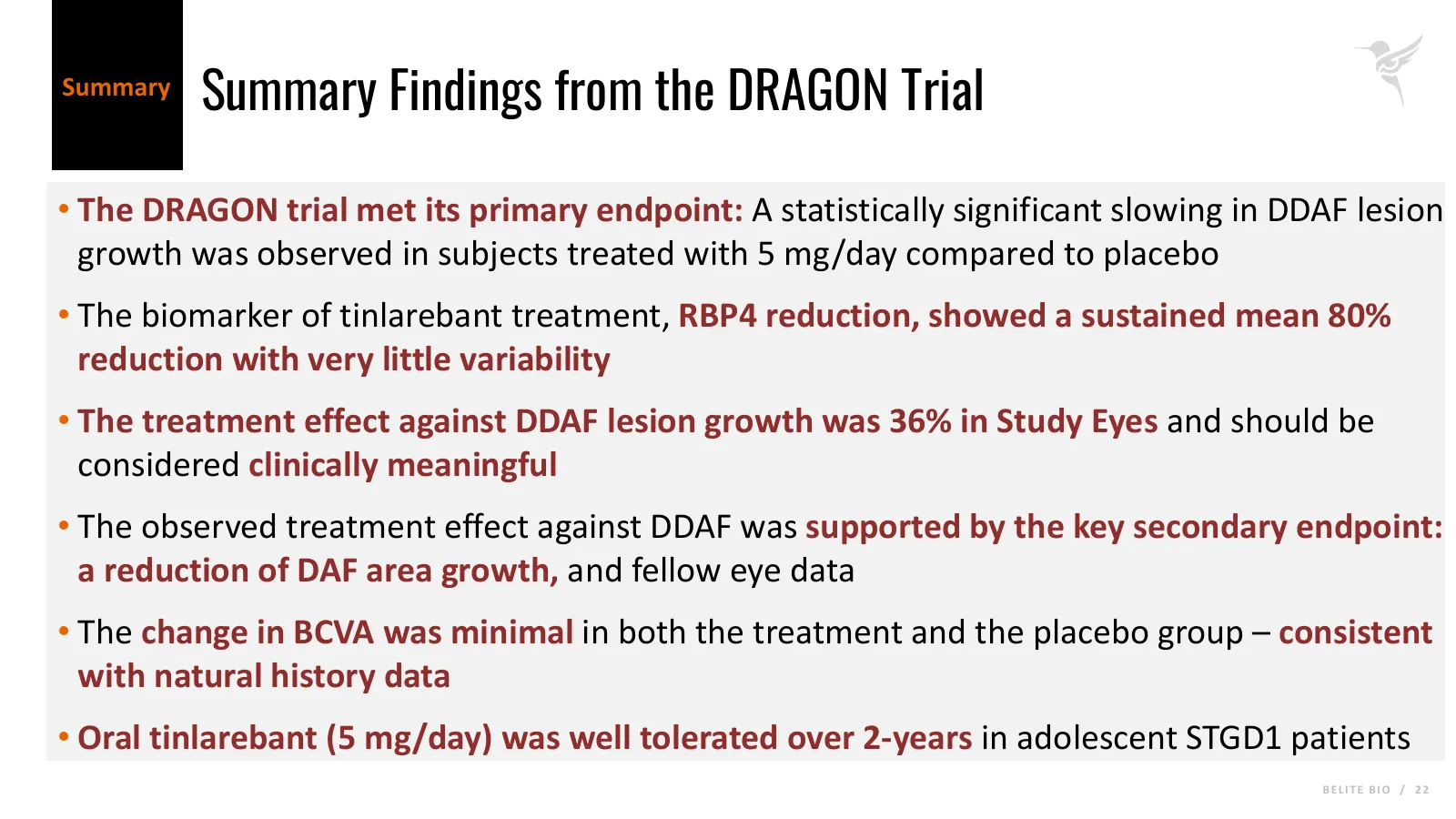
Slide 22: Summary Findings from the DRAGON Trial
Summary Summary Findings from the DRAGON Trial • The DRAGON trial met its primary endpoint: A statistically significant slowing in DDAF lesion growth was observed in subjects treated with 5 mg/day compared to placebo • The biomarker of tinlarebant treatment, RBP4 reduction, showed a sustained mean 8

Slide 23: Thank You
Thank You For more info please visit: www.belitebio.com
Source: company website
More decks from Belite Bio, Inc.
 Q1 2026 Earnings Presentation7 slides · May 20, 2026
 Q4 2025 Earnings Presentation8 slides · Mar 2, 2026
 Technical Presentation (December 2025)30 slides · Dec 1, 2025
 Q3 2025 Earnings Presentation7 slides · Nov 10, 2025
 Q2 2025 Earnings Presentation7 slides · Aug 11, 2025
 Q1 2025 Earnings Presentation26 slides · May 14, 2025