Nektar Therapeutics · NASDAQ:NKTR
Nektar Therapeutics — ASCO 2018
22 slides from Nektar Therapeutics's conference presentation, Jun 2, 2018
Slide 1: NKTR-214 plus nivolumab in advanced solid tumors: Preliminary phase 1/2 results of PIVOT
NKTR-214 (CD-122-biased agonist) plus nivolumab in patients with advanced solid tumors: Preliminary phase 1/2 results of PIVOT ClinicalTrials.gov Identifier: NCT02983045 Adi Diab1, Michael Hurwitz2, Daniel Cho3, Vali Papadimitrakopoulou1, Brendan Curti4, Scott Tykodi5, Igor Puzanov6, Nuhad K. Ibrahi
Slide 2: Presenter Disclosure Information
Presenter Disclosure Information Dr. Adi Diab, The University of Texas MD Anderson Cancer Center The following relationships exist related to this presentation: Research funding (institution): Nektar Therapeutics, Bristol-Myers Squibb, Idera Pharmaceuticals, Apexigen Adi Diab, M.D. 2
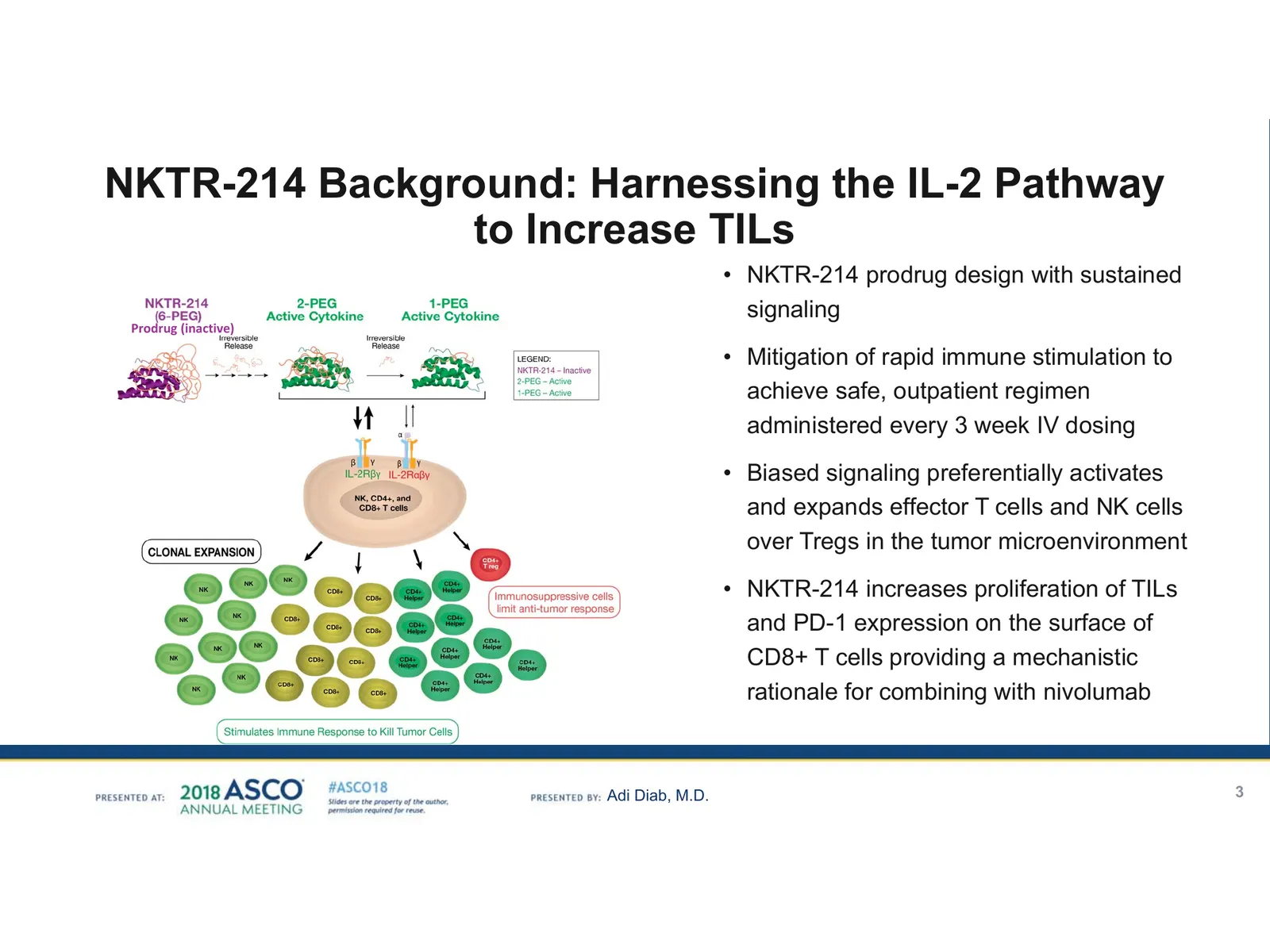
Slide 3: NKTR-214 Background: Harnessing the IL-2 Pathway to Increase TILs
NKTR-214 Background: Harnessing the IL-2 Pathway to Increase TILs • NKTR-214 prodrug design with sustained signaling Prodrug (inactive) • Mitigation of rapid immune stimulation to achieve safe, outpatient regimen administered every 3 week IV dosing • Biased signaling preferentially activates and exp
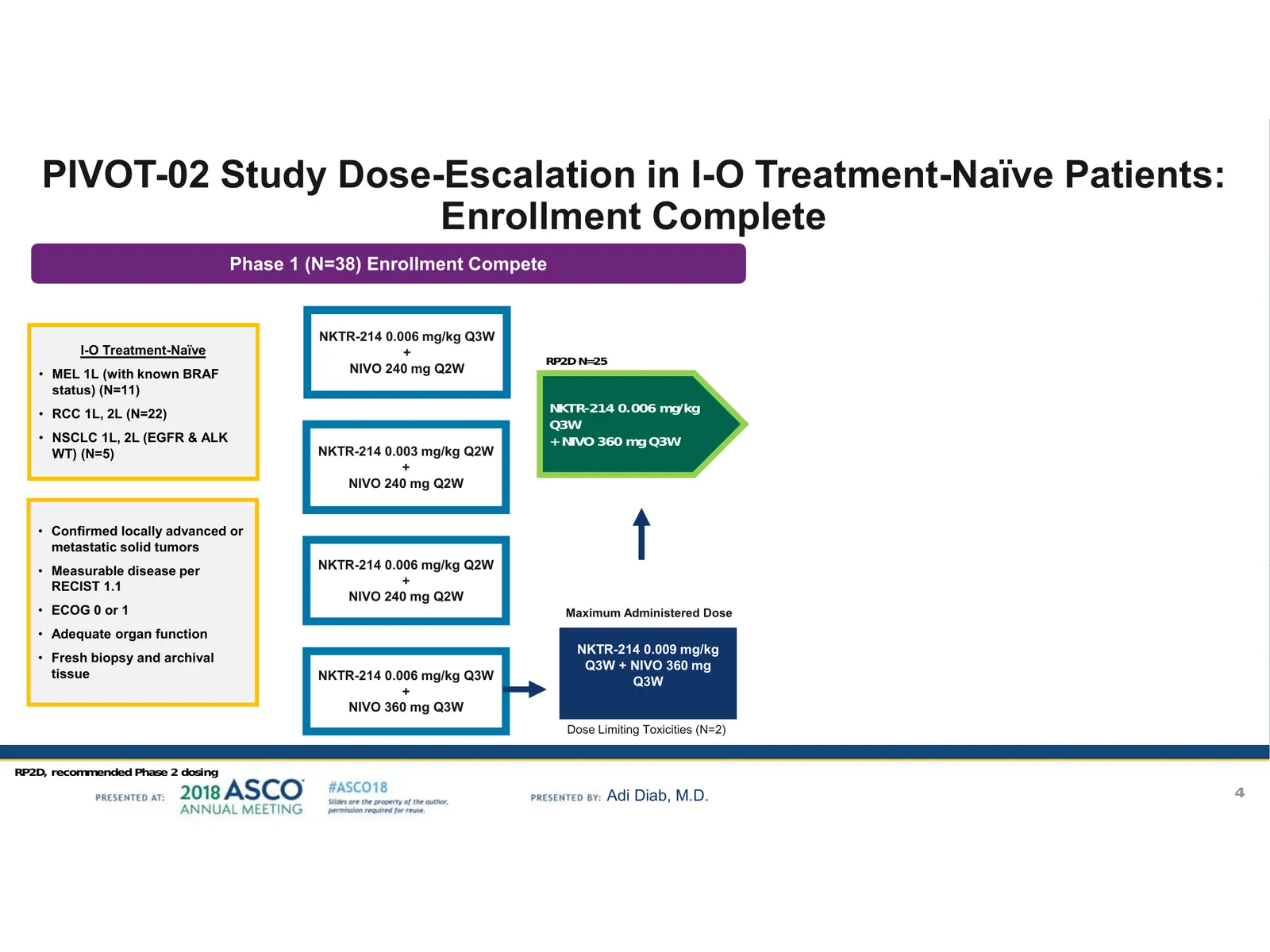
Slide 4: PIVOT-02 Study Dose-Escalation in I-O Treatment-Naïve Patients: Enrollment Complete
PIVOT-02 Study Dose-Escalation in I-O Treatment-Naïve Patients: Enrollment Complete Phase 1 (N=38) Enrollment Compete NKTR-214 0.006 mg/kg Q3W I-O Treatment-Naïve + RP2D N=25 • MEL 1L (with known BRAF NIVO 240 mg Q2W status) (N=11) • RCC 1L, 2L (N=22) NKTR-214 0.006 mg/kg Q3W • NSCLC 1L, 2L (EGFR &
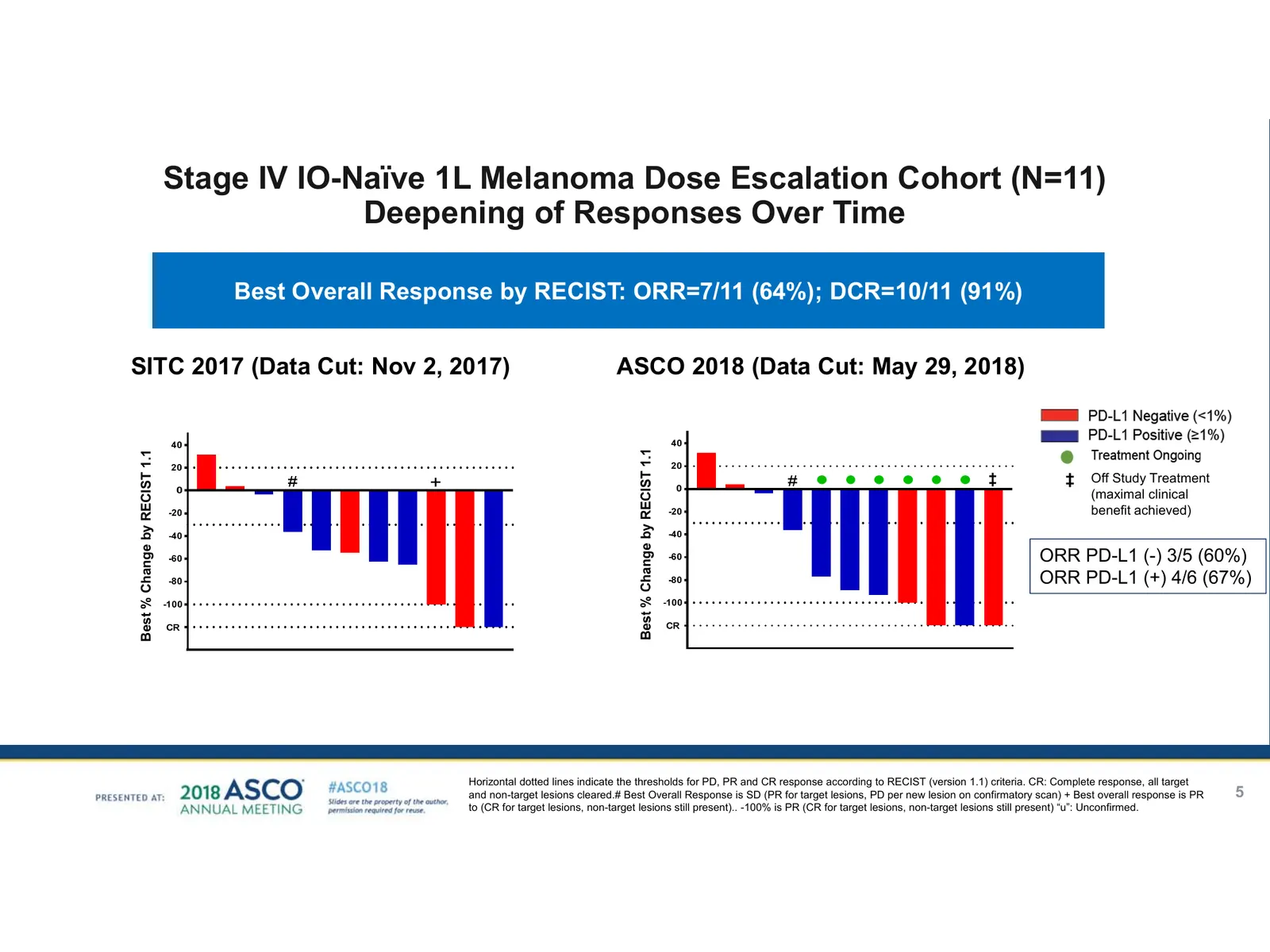
Slide 5: Best % Change by RECIST 1.1: 1L Melanoma Dose Escalation Cohort
Stage IV IO-Naïve 1L Melanoma Dose Escalation Cohort (N=11) Deepening of Responses Over Time Best Overall Response by RECIST: ORR=7/11 (64%); DCR=10/11 (91%) SITC 2017 (Data Cut: Nov 2, 2017) ASCO 2018 (Data Cut: May 29, 2018) Best % Change by RECIST 1.1 ‡ ‡ Off Study Treatment (maximal clinical ben
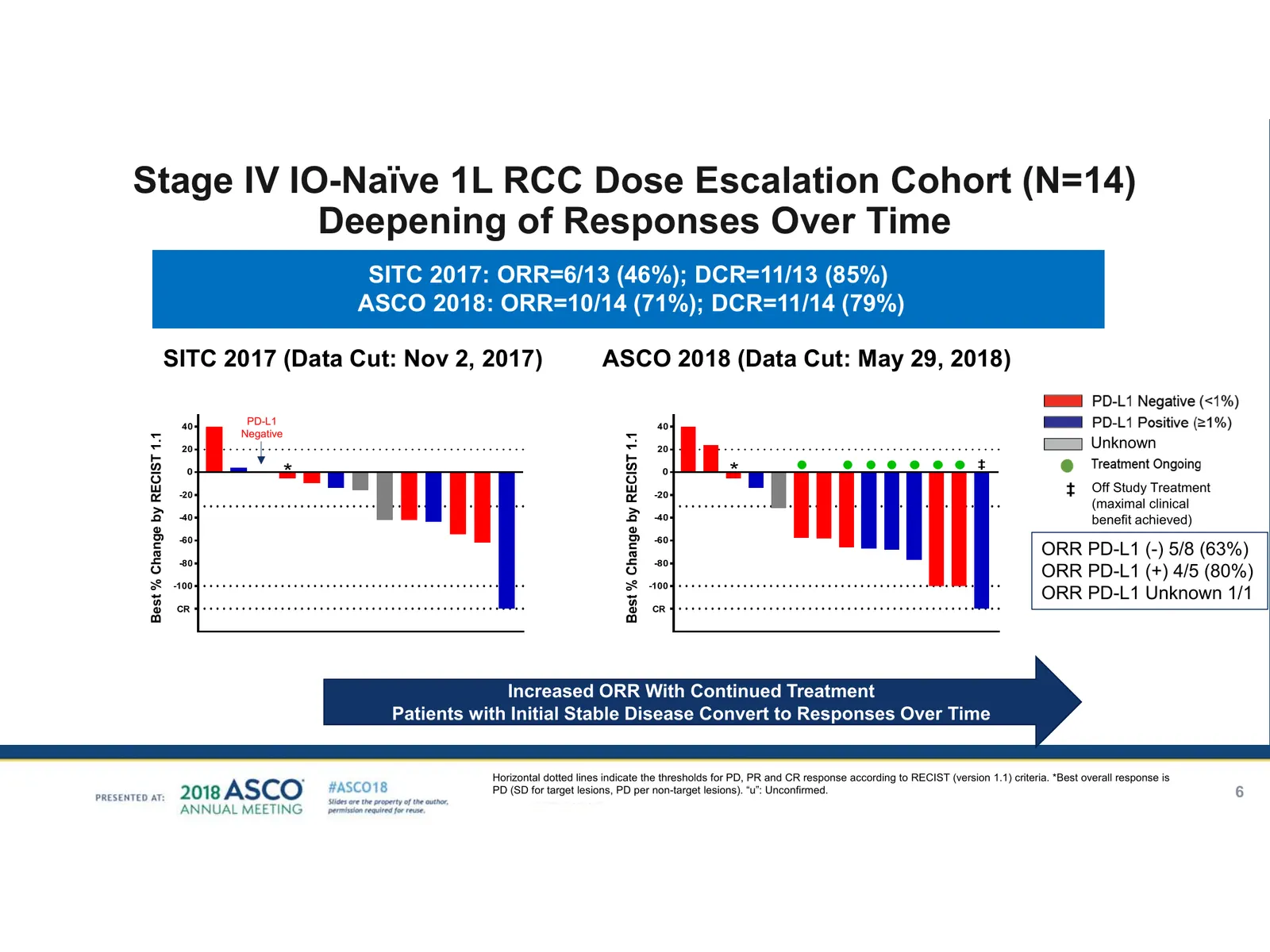
Slide 6: Best % Change by RECIST 1.1: 1L RCC Dose Escalation Cohort
Stage IV IO-Naïve 1L RCC Dose Escalation Cohort (N=14) Deepening of Responses Over Time SITC 2017: ORR=6/13 (46%); DCR=11/13 (85%) ASCO 2018: ORR=10/14 (71%); DCR=11/14 (79%) SITC 2017 (Data Cut: Nov 2, 2017) ASCO 2018 (Data Cut: May 29, 2018) PD-L1 Negative Best % Change by RECIST 1.1 Unknown ‡ ‡ O
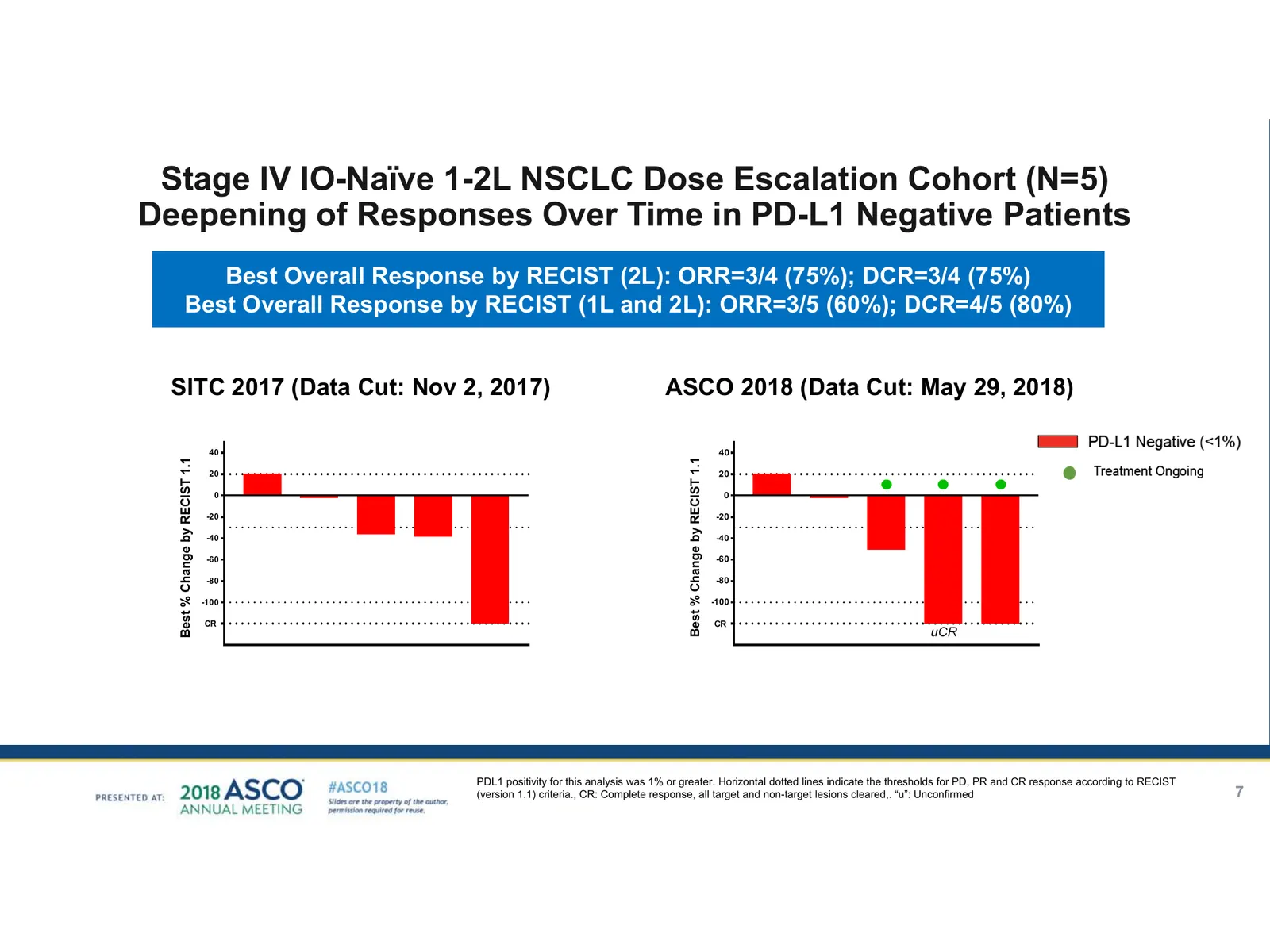
Slide 7: Best % Change by RECIST 1.1: 1-2L NSCLC Dose Escalation Cohort
Stage IV IO-Naïve 1-2L NSCLC Dose Escalation Cohort (N=5) Deepening of Responses Over Time in PD-L1 Negative Patients Best Overall Response by RECIST (2L): ORR=3/4 (75%); DCR=3/4 (75%) Best Overall Response by RECIST (1L and 2L): ORR=3/5 (60%); DCR=4/5 (80%) SITC 2017 (Data Cut: Nov 2, 2017) ASCO 20
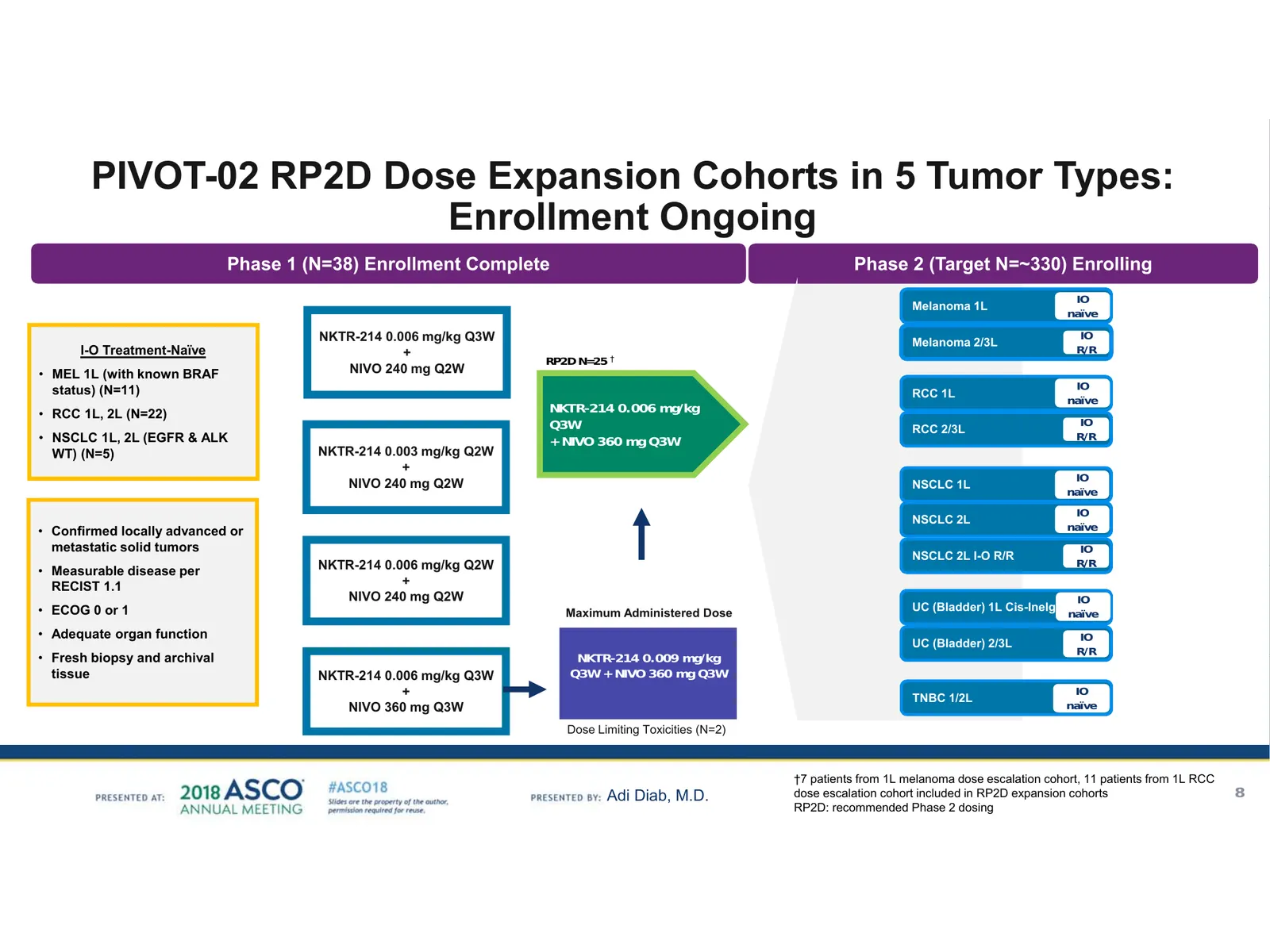
Slide 8: PIVOT-02 RP2D Dose Expansion Cohorts: Enrollment Ongoing
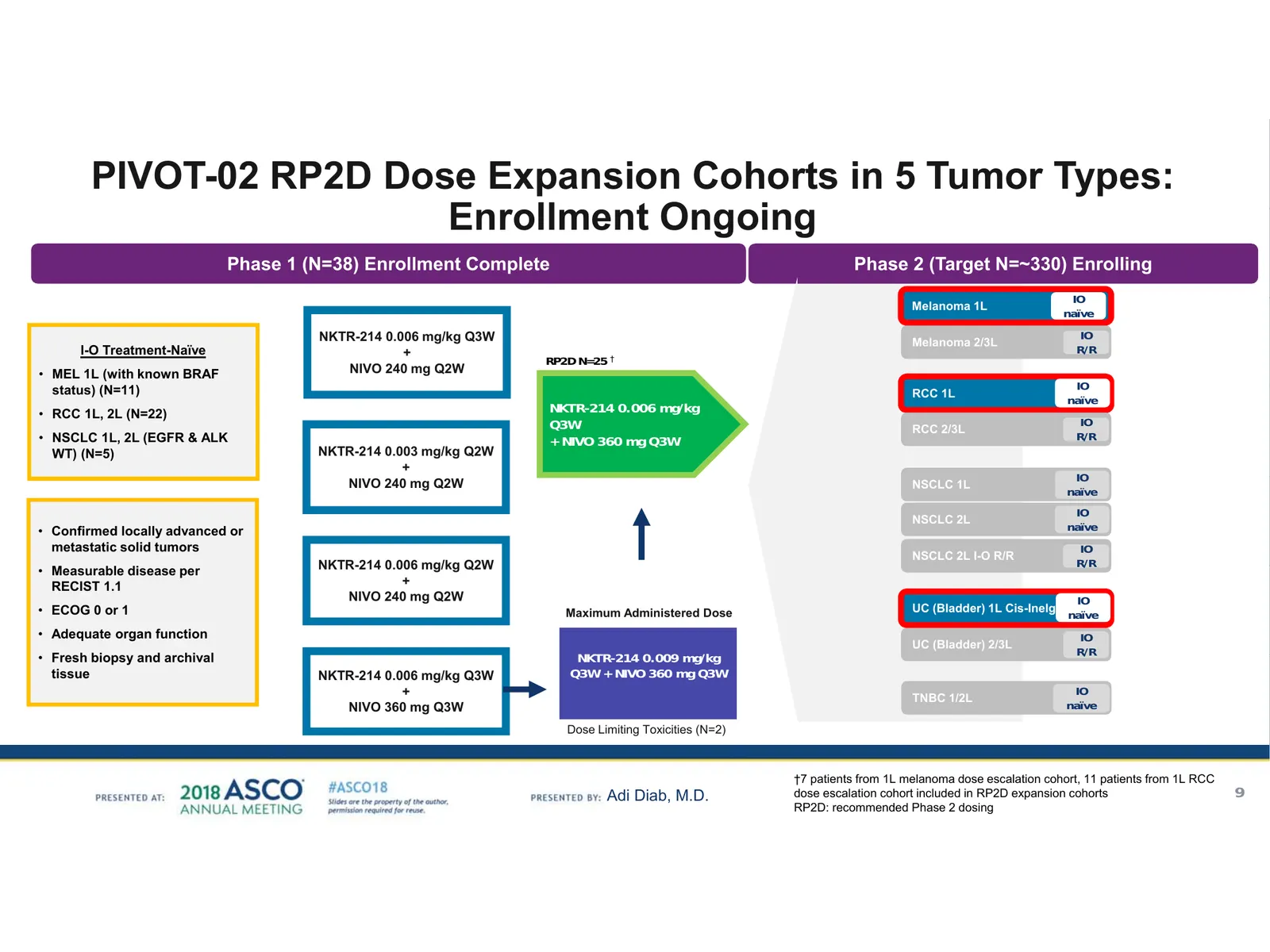
PIVOT-02 RP2D Dose Expansion Cohorts in 5 Tumor Types: Enrollment Ongoing Phase 1 (N=38) Enrollment Complete Phase 2 (Target N=~330) Enrolling IO Melanoma 1L naïve NKTR-214 0.006 mg/kg Q3W IO Melanoma 2/3L I-O Treatment-Naïve + R/R RP2D N=25 † • MEL 1L (with known BRAF NIVO 240 mg Q2W status) (N=11)
Slide 9: PIVOT-02 RP2D Dose Expansion Cohorts: Enrollment Ongoing
PIVOT-02 RP2D Dose Expansion Cohorts in 5 Tumor Types: Enrollment Ongoing Phase 1 (N=38) Enrollment Complete Phase 2 (Target N=~330) Enrolling IO Melanoma 1L naïve NKTR-214 0.006 mg/kg Q3W IO Melanoma 2/3L I-O Treatment-Naïve + R/R RP2D N=25 † • MEL 1L (with known BRAF NIVO 240 mg Q2W status) (N=11)
Slide 10: PIVOT-02 Fleming Two Stage Design
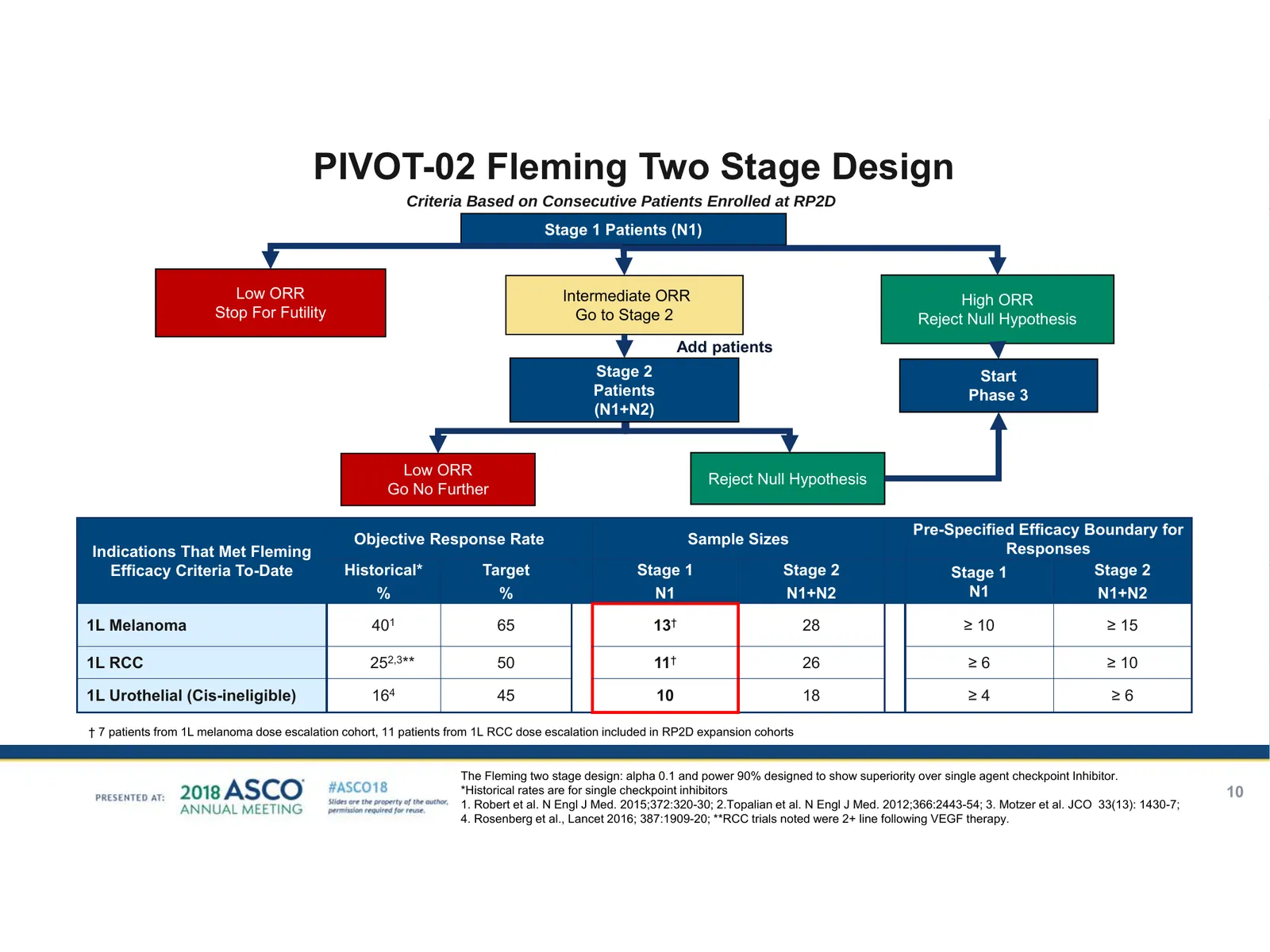
PIVOT-02 Fleming Two Stage Design Criteria Based on Consecutive Patients Enrolled at RP2D Stage 1 Patients (N1) Low ORR Intermediate ORR High ORR Stop For Futility Go to Stage 2 Reject Null Hypothesis Add patients Stage 2 Start Patients Phase 3 (N1+N2) Low ORR Reject Null Hypothesis Go No Further Pr
Slide 11: Enrollment to I-O Naïve Cohorts That Met Fleming Efficacy Criteria
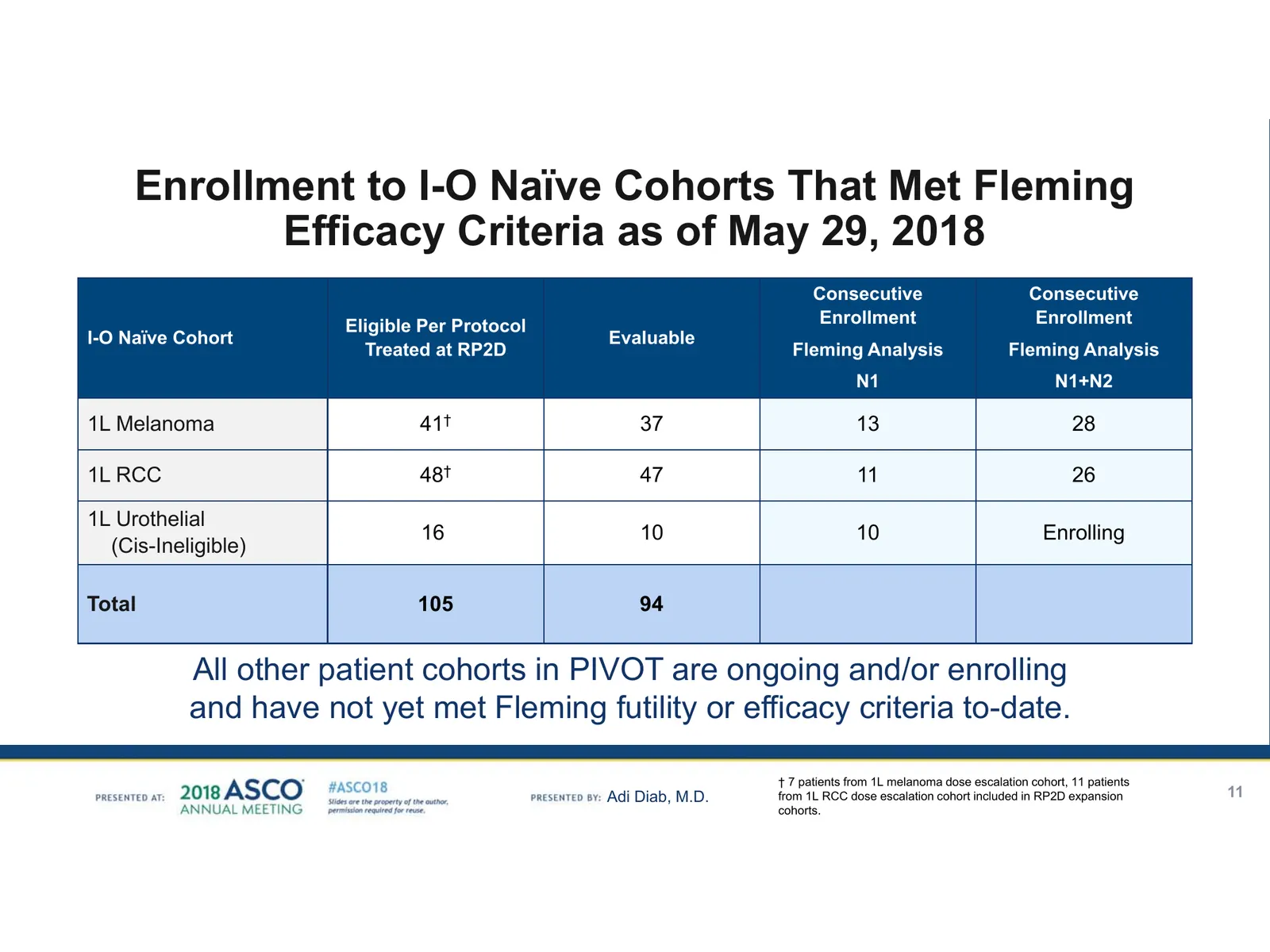
Enrollment to I-O Naïve Cohorts That Met Fleming Efficacy Criteria as of May 29, 2018 Consecutive Consecutive Eligible Per Protocol Enrollment Enrollment I-O Naïve Cohort Evaluable Treated at RP2D Fleming Analysis Fleming Analysis N1 N1+N2 1L Melanoma 41† 37 13 28 1L RCC 48† 47 11 26 1L Urothelial 1
Slide 12: Patient Demographics and Disease Characteristics
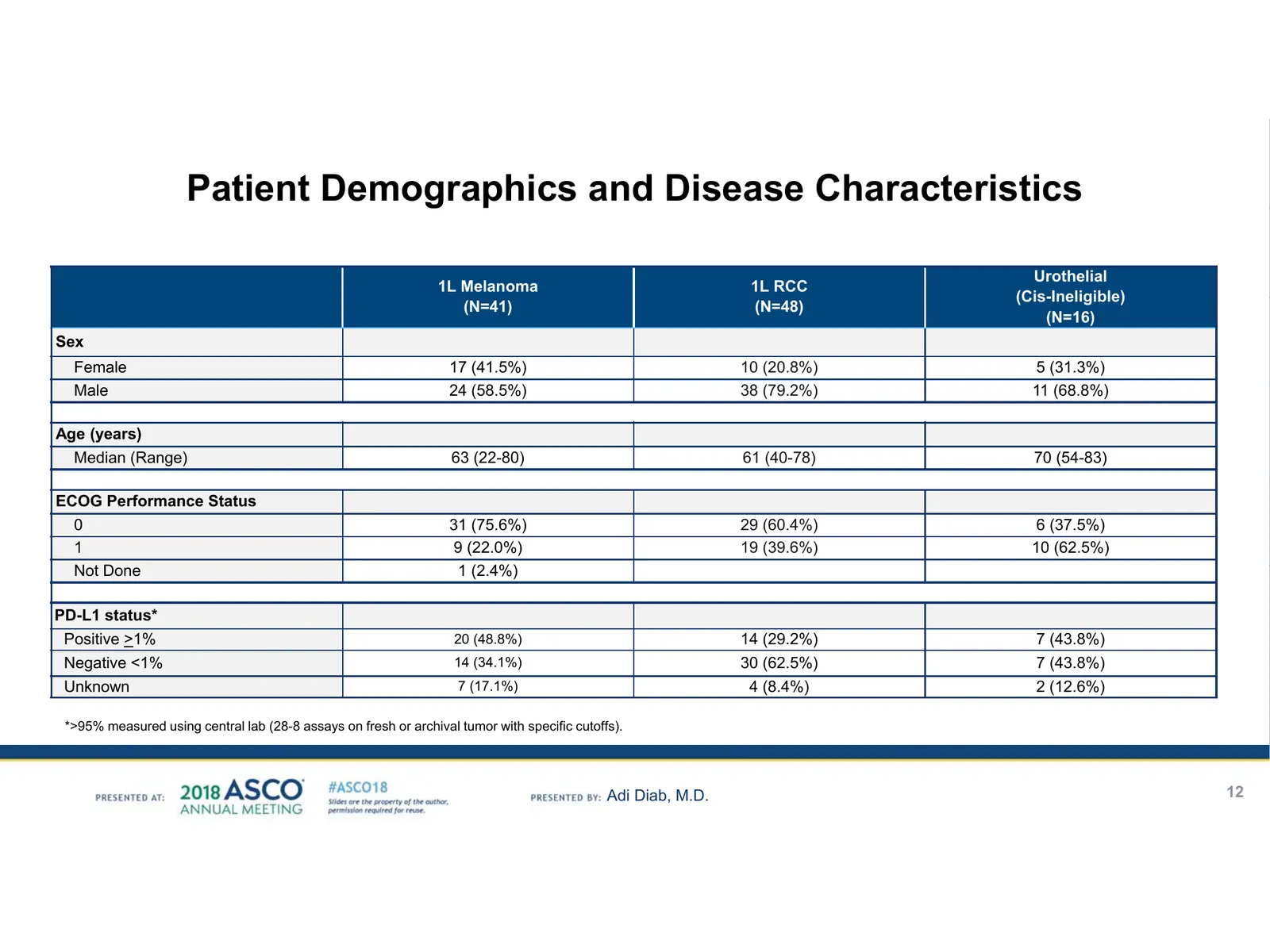
Patient Demographics and Disease Characteristics Urothelial 1L Melanoma 1L RCC (Cis-Ineligible) (N=41) (N=48) (N=16) Sex Female 17 (41.5%) 10 (20.8%) 5 (31.3%) Male 24 (58.5%) 38 (79.2%) 11 (68.8%) Age (years) Median (Range) 63 (22-80) 61 (40-78) 70 (54-83) ECOG Performance Status 0 31 (75.6%) 29 (6
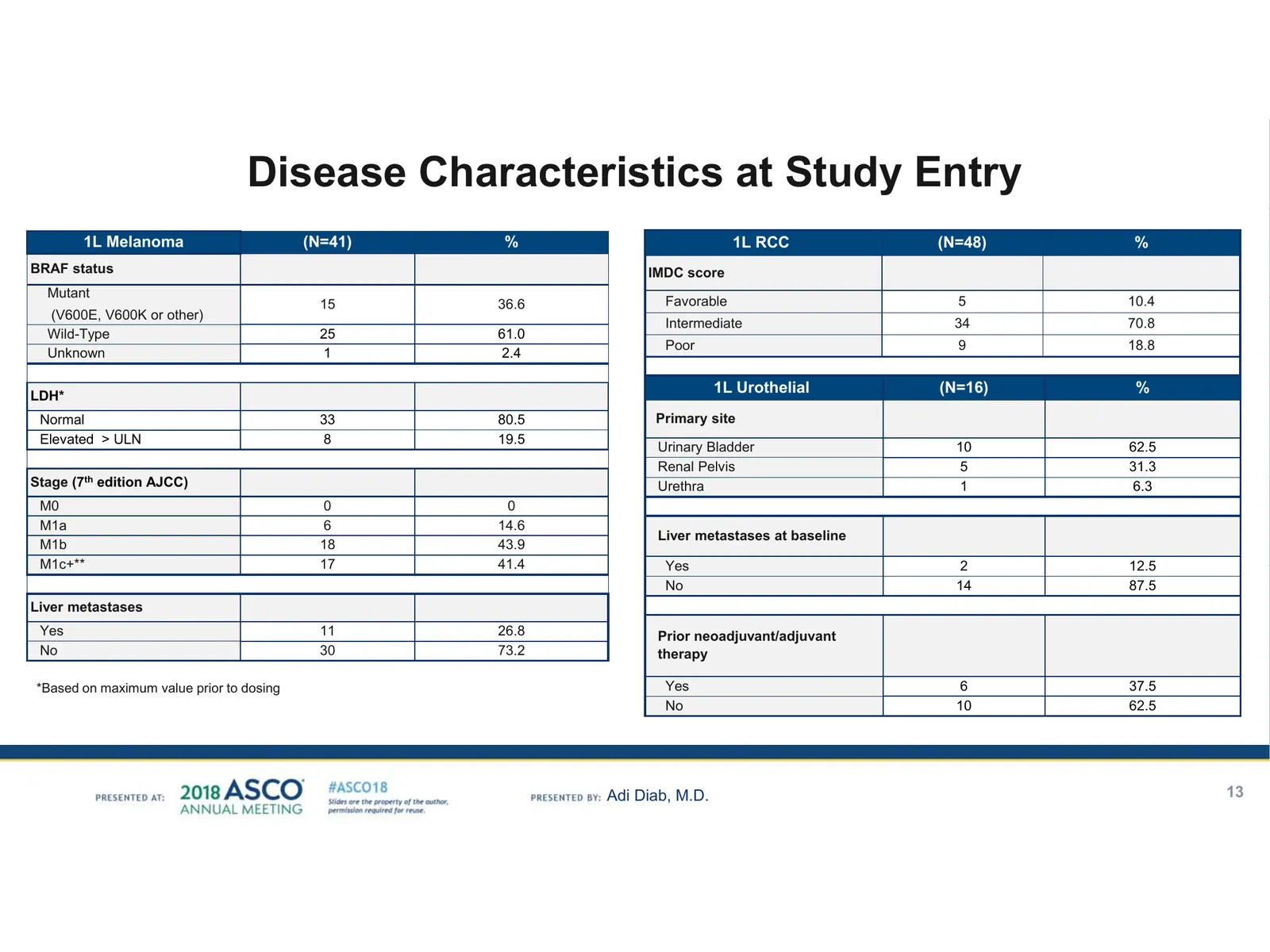
Slide 13: Disease Characteristics at Study Entry
Disease Characteristics at Study Entry 1L Melanoma (N=41) % 1L RCC (N=48) % BRAF status IMDC score Mutant 15 36.6 Favorable 5 10.4 (V600E, V600K or other) Intermediate 34 70.8 Wild-Type 25 61.0 Poor 9 18.8 Unknown 1 2.4 1L Urothelial (N=16) % LDH* Normal 33 80.5 Primary site Elevated > ULN 8 19.5 Ur
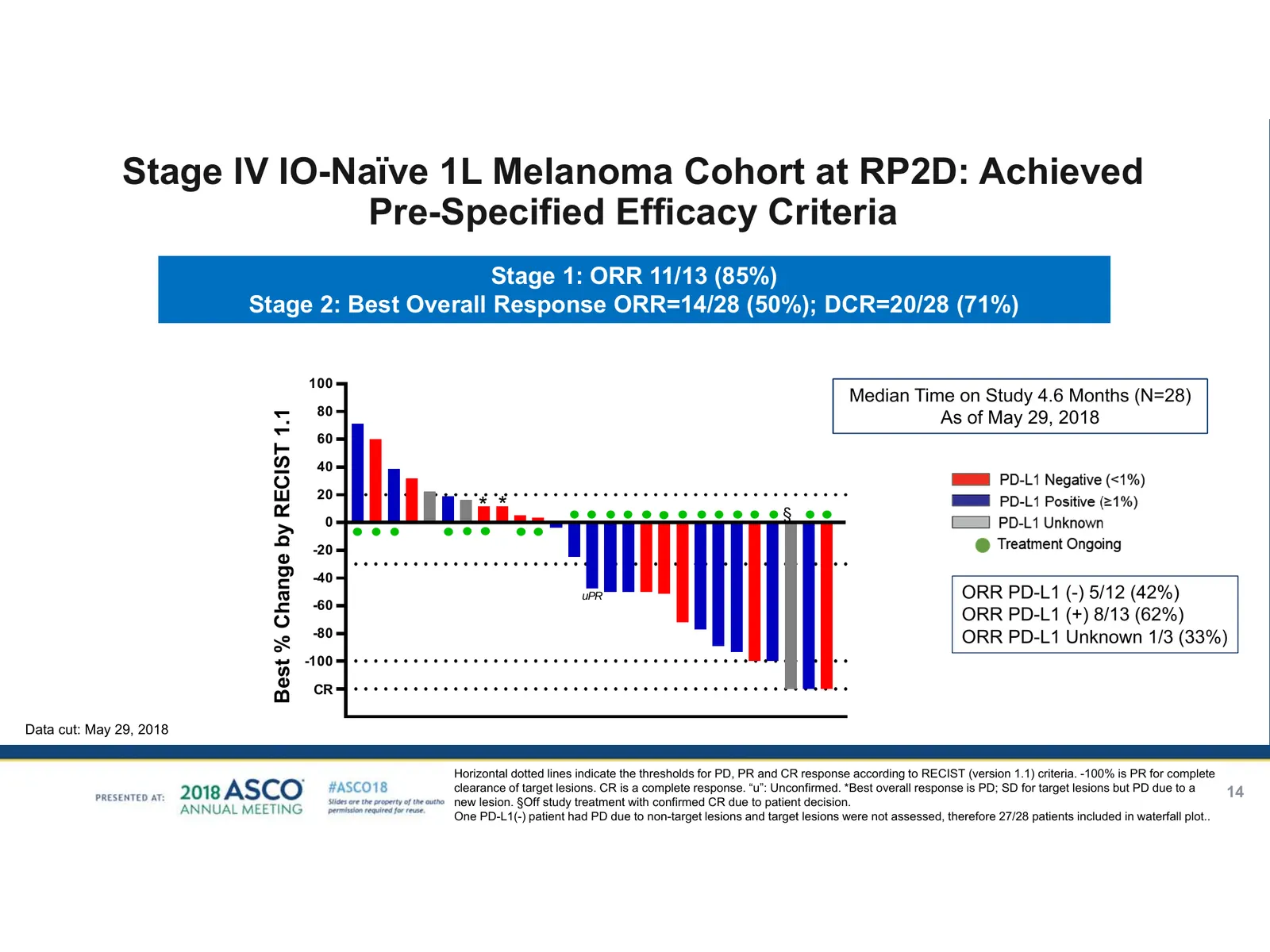
Slide 14: 1L Melanoma Cohort at RP2D Achieved Pre-Specified Efficacy Criteria
Stage IV IO-Naïve 1L Melanoma Cohort at RP2D: Achieved Pre-Specified Efficacy Criteria Stage 1: ORR 11/13 (85%) Stage 2: Best Overall Response ORR=14/28 (50%); DCR=20/28 (71%) 100 Median Time on Study 4.6 Months (N=28) 80 As of May 29, 2018 Best % Change by RECIST 1.1 60 40 20 * * § 0 -20 -40 uPR OR
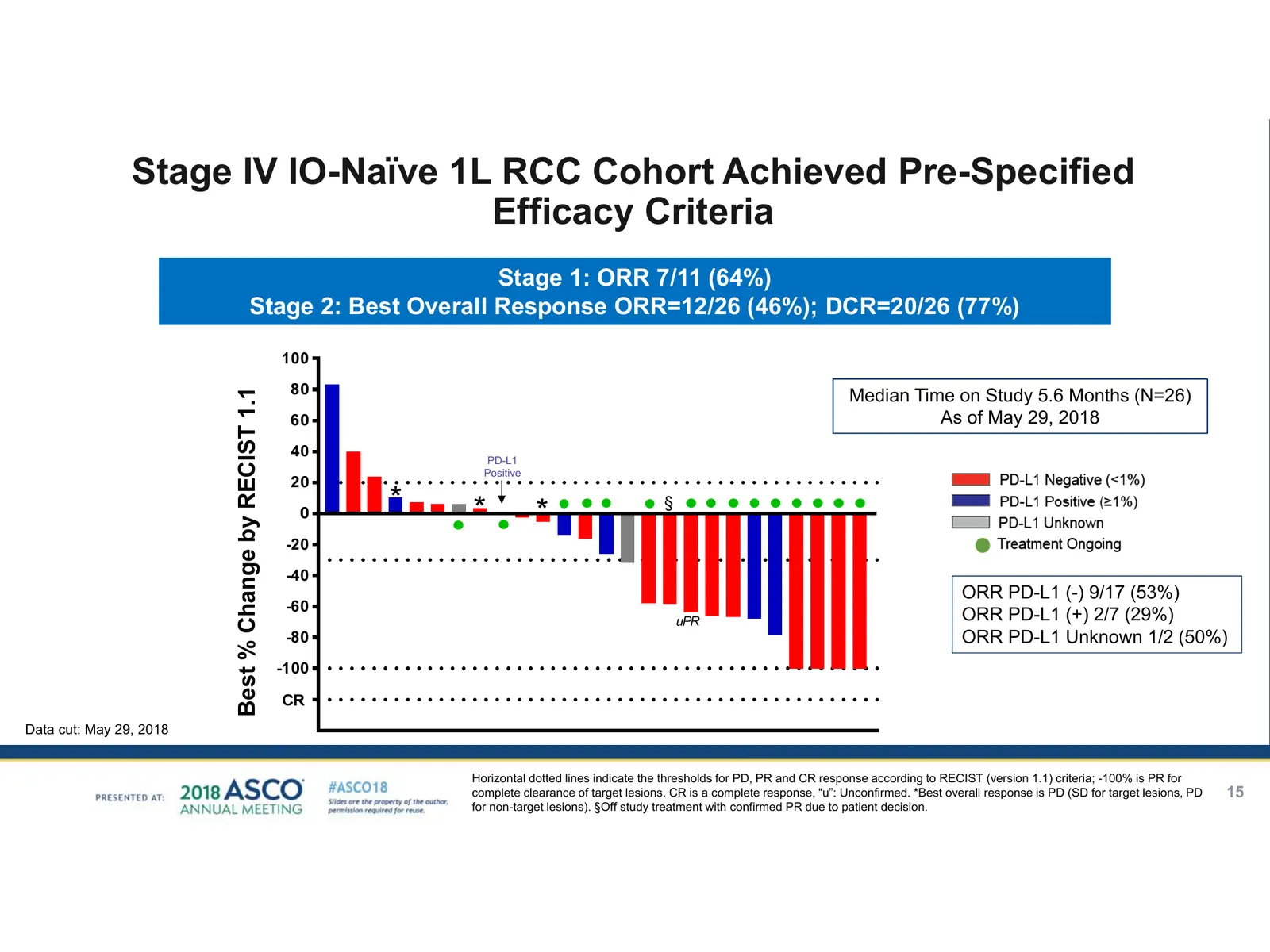
Slide 15: 1L RCC Cohort Achieved Pre-Specified Efficacy Criteria
Stage IV IO-Naïve 1L RCC Cohort Achieved Pre-Specified Efficacy Criteria Stage 1: ORR 7/11 (64%) Stage 2: Best Overall Response ORR=12/26 (46%); DCR=20/26 (77%) Median Time on Study 5.6 Months (N=26) Best % Change by RECIST 1.1 As of May 29, 2018 PD-L1 Positive § ORR PD-L1 (-) 9/17 (53%) ORR PD-L1 (
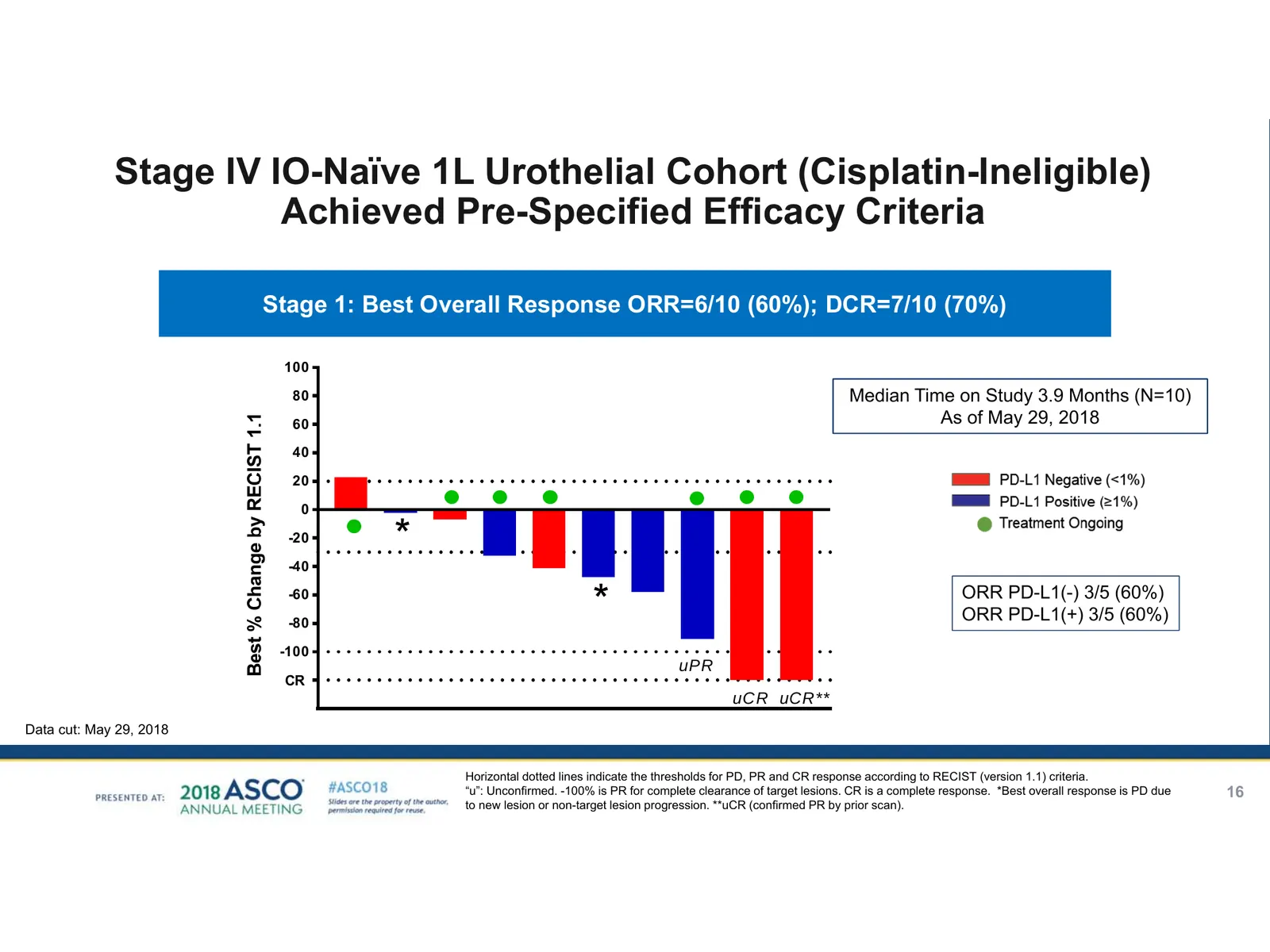
Slide 16: 1L Urothelial Cohort (Cisplatin-Ineligible) Achieved Pre-Specified Efficacy Criteria
Stage IV IO-Naïve 1L Urothelial Cohort (Cisplatin-Ineligible) Achieved Pre-Specified Efficacy Criteria Stage 1: Best Overall Response ORR=6/10 (60%); DCR=7/10 (70%) 100 80 Median Time on Study 3.9 Months (N=10) 60 As of May 29, 2018 40 20 0 -20 -40 -60 ORR PD-L1(-) 3/5 (60%) -80 ORR PD-L1(+) 3/5 (60
Slide 17: Treatment-Related Adverse Events (AEs) at RP2D
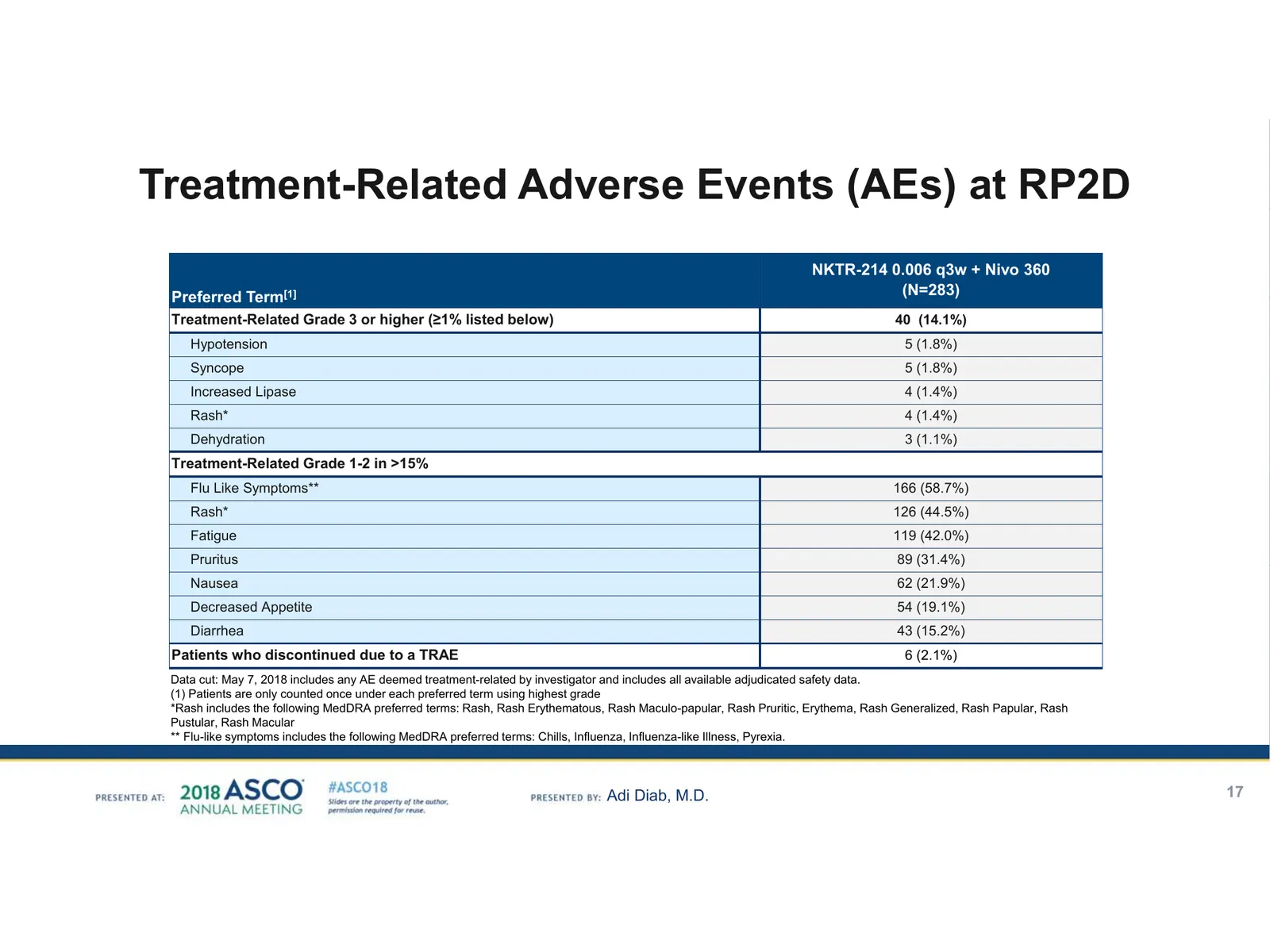
Treatment-Related Adverse Events (AEs) at RP2D NKTR-214 0.006 q3w + Nivo 360 Preferred Term[1] (N=283) Treatment-Related Grade 3 or higher (≥1% listed below) 40 (14.1%) Hypotension 5 (1.8%) Syncope 5 (1.8%) Increased Lipase 4 (1.4%) Rash* 4 (1.4%) Dehydration 3 (1.1%) Treatment-Related Grade 1-2 in
Slide 18: Immune-Mediated Grade ≥3 AEs at RP2D
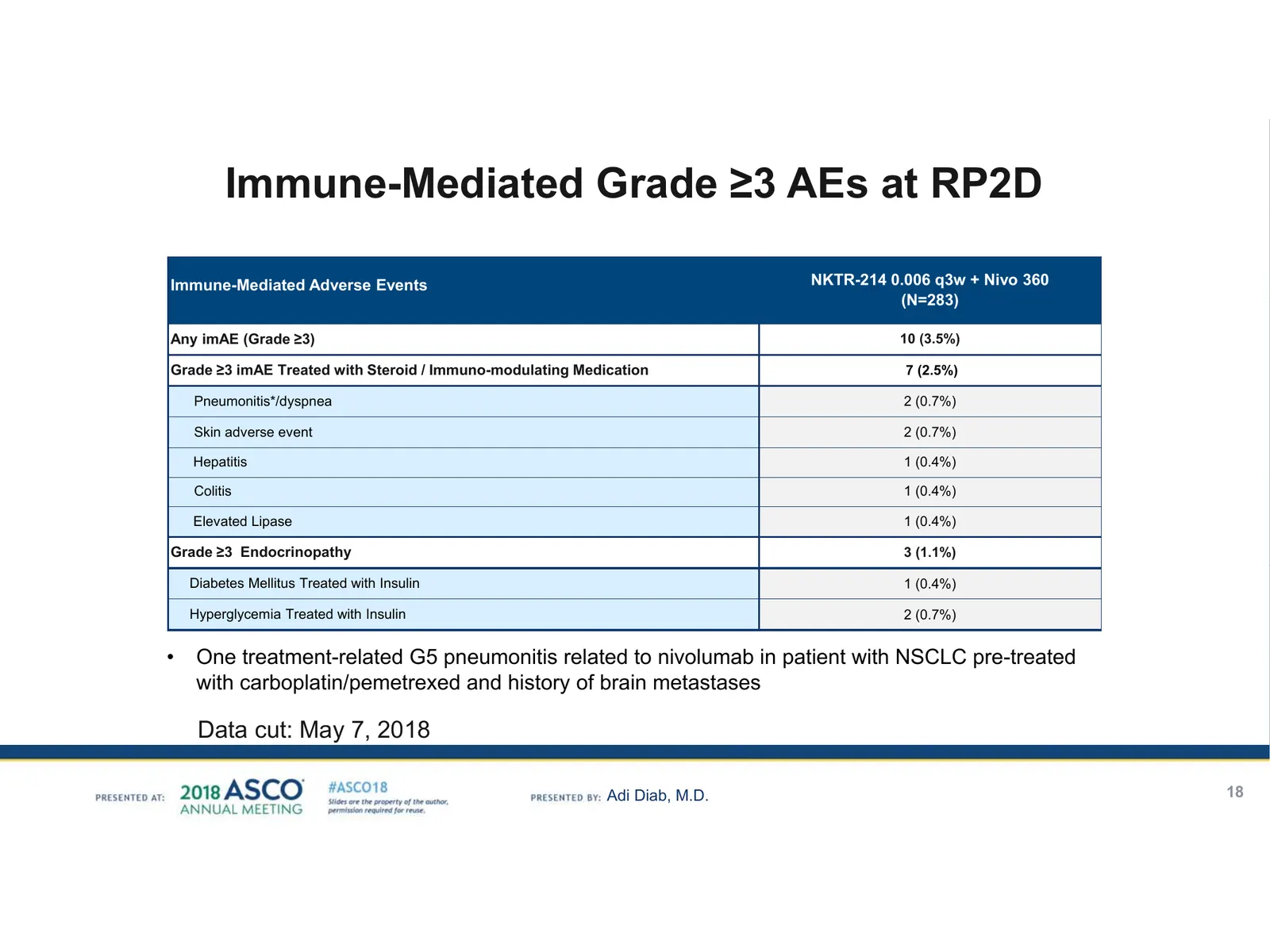
Immune-Mediated Grade ≥3 AEs at RP2D Immune-Mediated Adverse Events NKTR-214 0.006 q3w + Nivo 360 (N=283) Any imAE (Grade ≥3) 10 (3.5%) Grade ≥3 imAE Treated with Steroid / Immuno-modulating Medication 7 (2.5%) Pneumonitis*/dyspnea 2 (0.7%) Skin adverse event 2 (0.7%) Hepatitis 1 (0.4%) Colitis 1 (0
Slide 19: NKTR-214 + Nivolumab Increased Lymphocyte Proliferation in Blood and CD8 T Cells in Tumor
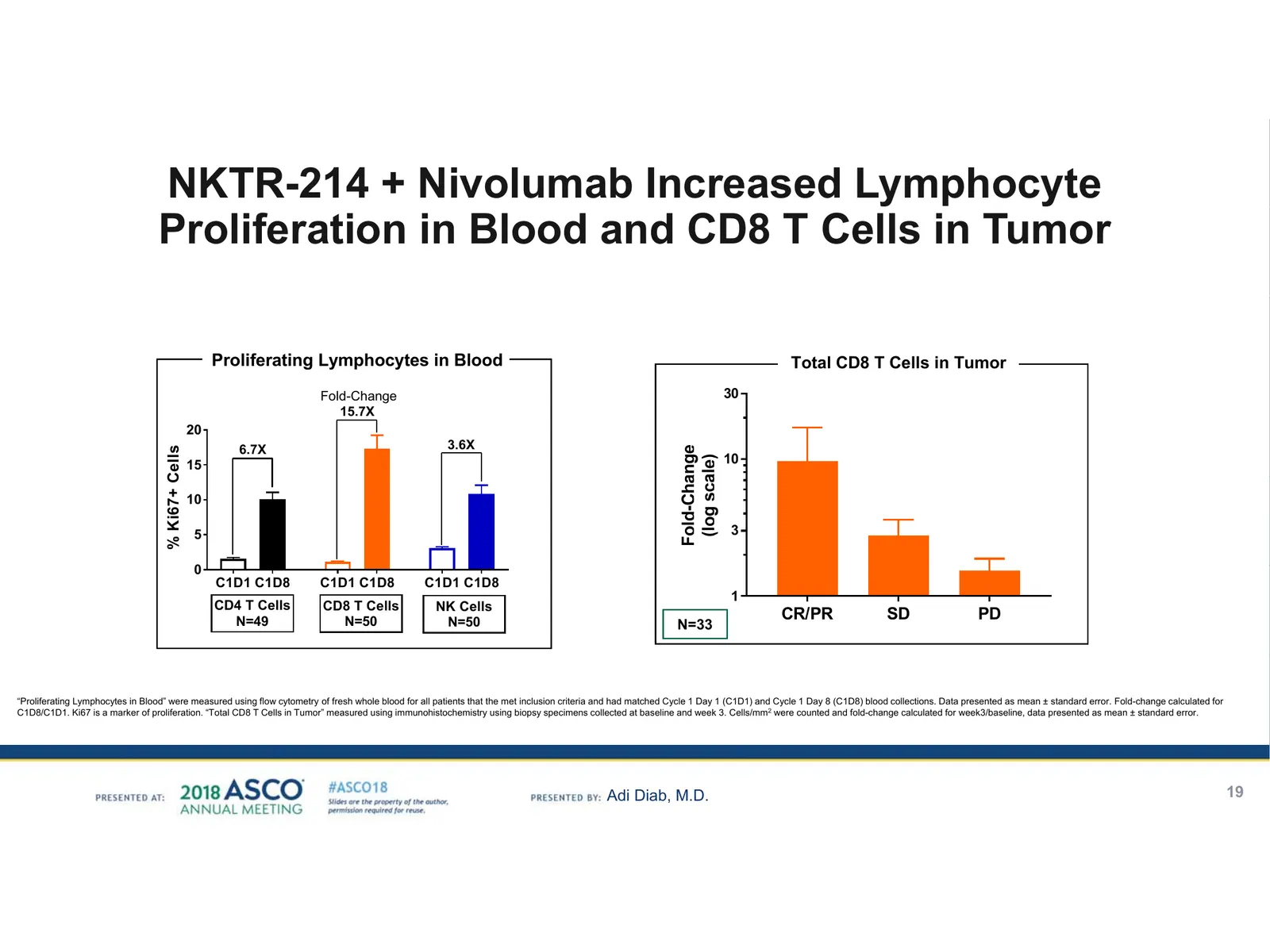
NKTR-214 + Nivolumab Increased Lymphocyte Proliferation in Blood and CD8 T Cells in Tumor Proliferating Lymphocytes in Blood Total CD8 T Cells in Tumor Fold-Change 30 15.7X 20 6.7X 3.6X % Ki67+ Cells 15 10 10 5 3 0 C1D1 C1D8 C1D1 C1D8 C1D1 C1D8 1 CD4 T Cells CD8 T Cells NK Cells N=49 N=50 N=50 CR/PR
Slide 20: Conversion of PD-L1(-) to PD-L1(+) in Tumor Biopsies Associated with Clinical Benefit
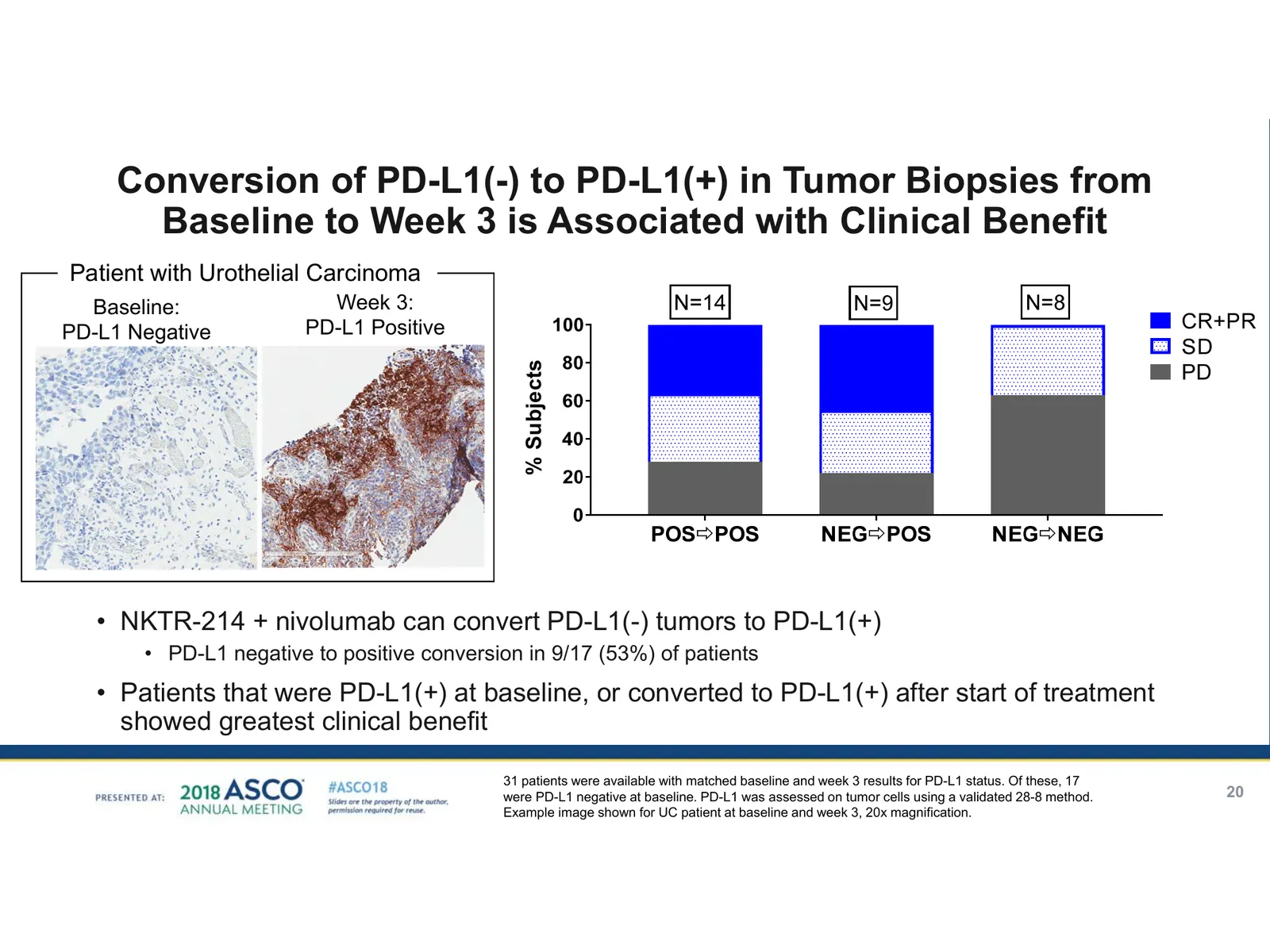
Conversion of PD-L1(-) to PD-L1(+) in Tumor Biopsies from Baseline to Week 3 is Associated with Clinical Benefit Patient with Urothelial Carcinoma Baseline: Week 3: PD-L1 Negative PD-L1 Positive % Subjects • NKTR-214 + nivolumab can convert PD-L1(-) tumors to PD-L1(+) • PD-L1 negative to positive co
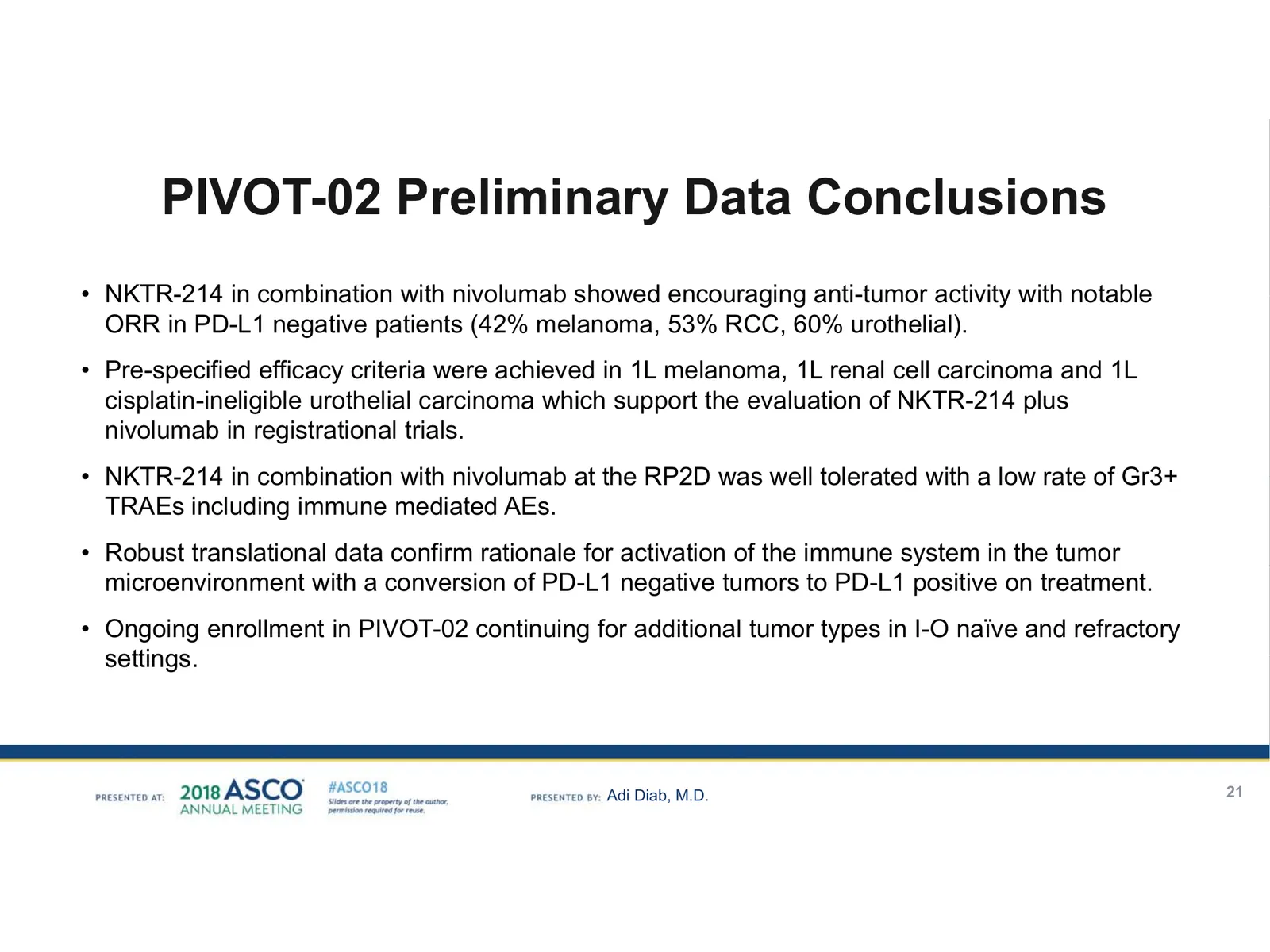
Slide 21: PIVOT-02 Preliminary Data Conclusions
PIVOT-02 Preliminary Data Conclusions • NKTR-214 in combination with nivolumab showed encouraging anti-tumor activity with notable ORR in PD-L1 negative patients (42% melanoma, 53% RCC, 60% urothelial). • Pre-specified efficacy criteria were achieved in 1L melanoma, 1L renal cell carcinoma and 1L ci
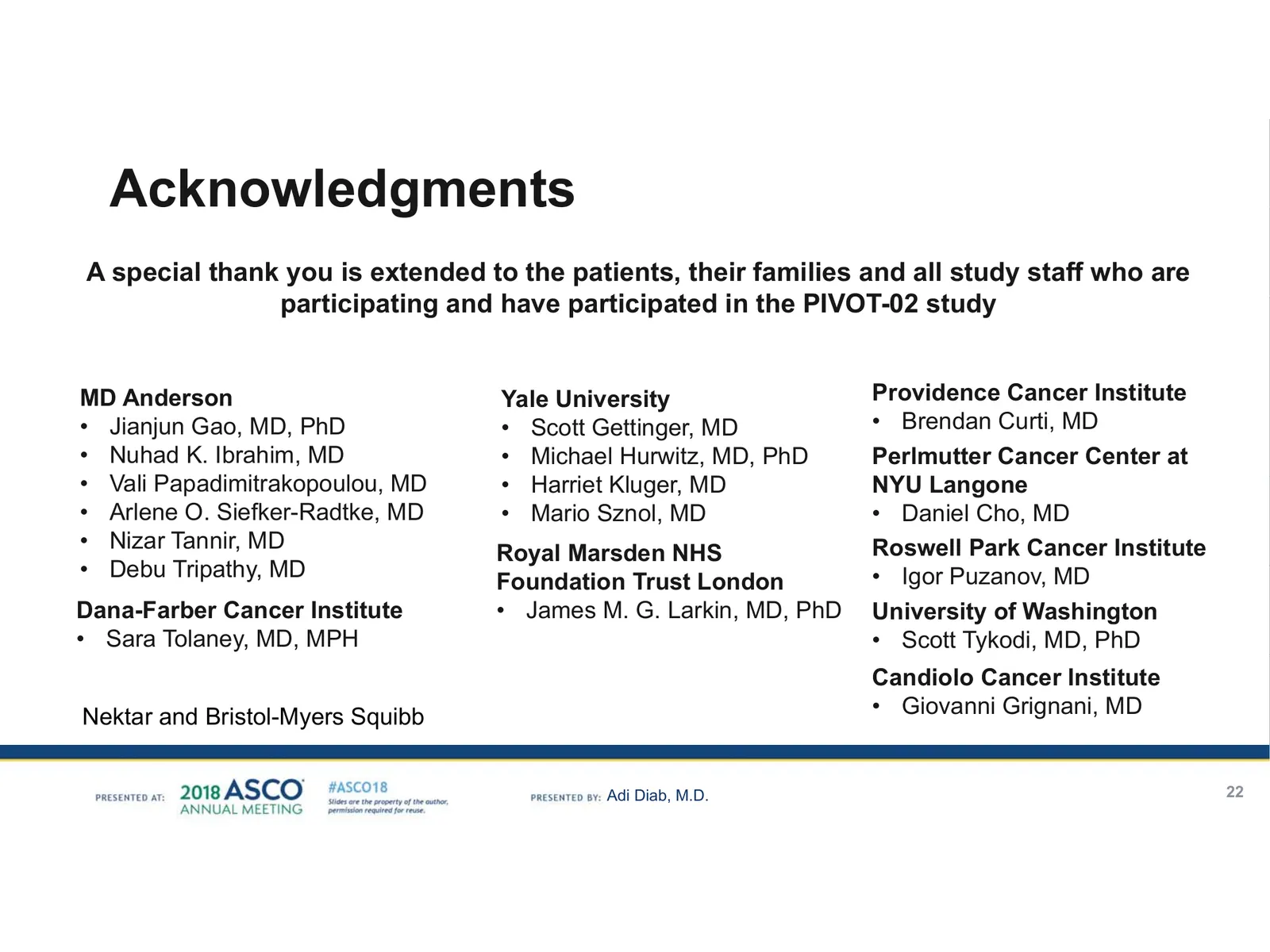
Slide 22: Acknowledgments
Acknowledgments A special thank you is extended to the patients, their families and all study staff who are participating and have participated in the PIVOT-02 study MD Anderson Yale University Providence Cancer Institute • Jianjun Gao, MD, PhD • Scott Gettinger, MD • Brendan Curti, MD • Nuhad K. Ib
Source: Internet Archive copy of nektar.com
More decks from Nektar Therapeutics
 EADV Analyst and Investor Event 202638 slides · Oct 1, 2026
 Investor Presentation (September 2026)70 slides · September 2026
 Investor Presentation (April 2026)36 slides · Apr 20, 2026
 Technical Presentation (February 2026)37 slides · Feb 10, 2026
 Technical Presentation (December 2025)38 slides · Dec 16, 2025
 ACAAI Annual Scientific Meeting 202515 slides · Nov 8, 2025