Vistagen Therapeutics, Inc. · NASDAQ:VTGN
Vistagen Therapeutics — Investor Presentation (November 2026)
62 slides from Vistagen Therapeutics's investor presentation, Nov 25, 2026
Slide 1: Harnessing the therapeutic power of brain regulation with nose-to-brain neurocircuitry
1 Nasdaq: VTGN Harnessing the therapeutic power and potential of brain regulation with nose-to-brain neurocircuitry December 2026
Slide 2: Forward-looking Statements
2 Forward-looking Statements This presentation contains certain forward-looking statements within the meaning of the Private Securities Litigation Reform Act of 1995 that are within the meaning of federal securities laws. These forward-looking statements involve known and unknown risks that are diff
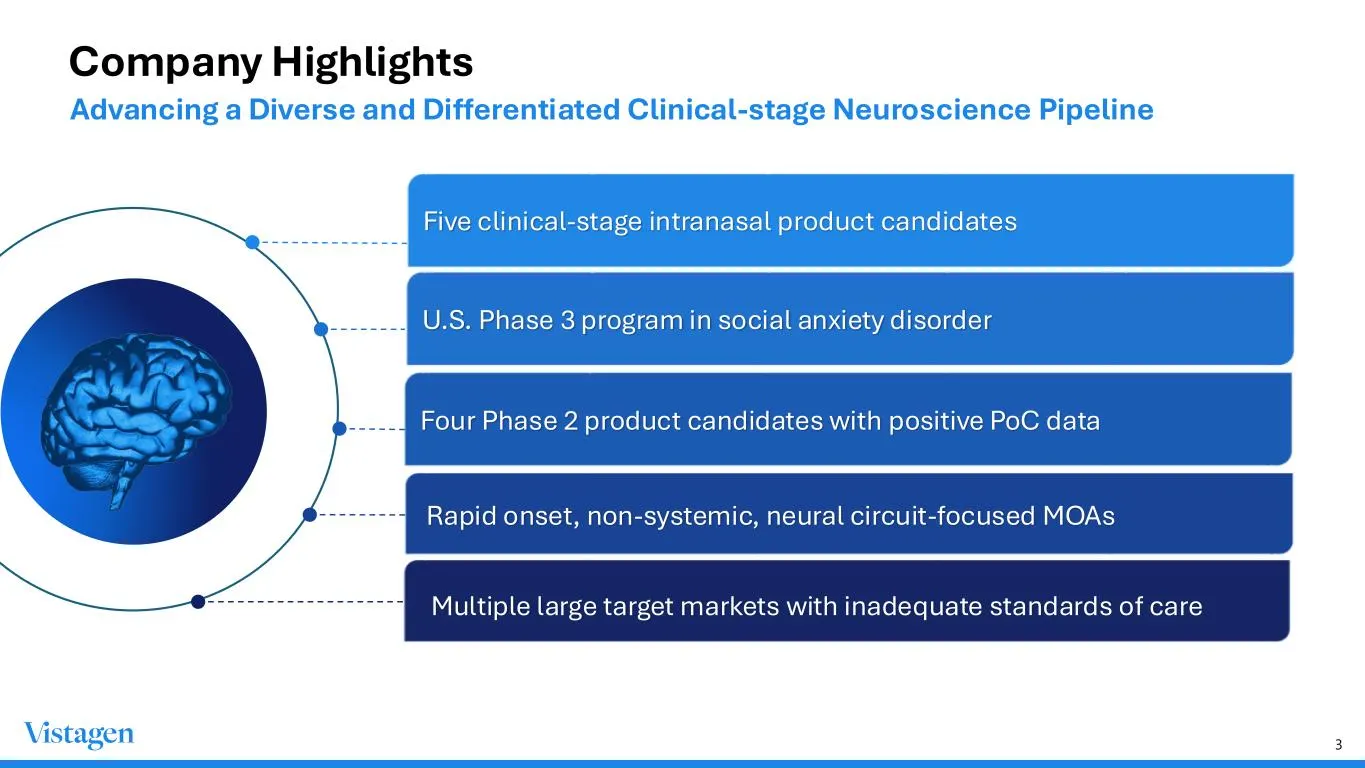
Slide 3: Company Highlights
3 Company Highlights Four Phase 2 product candidates with positive PoC data Five clinical-stage intranasal product candidates U.S. Phase 3 program in social anxiety disorder Advancing a Diverse and Differentiated Clinical-stage Neuroscience Pipeline Multiple large target markets with inadequate stan
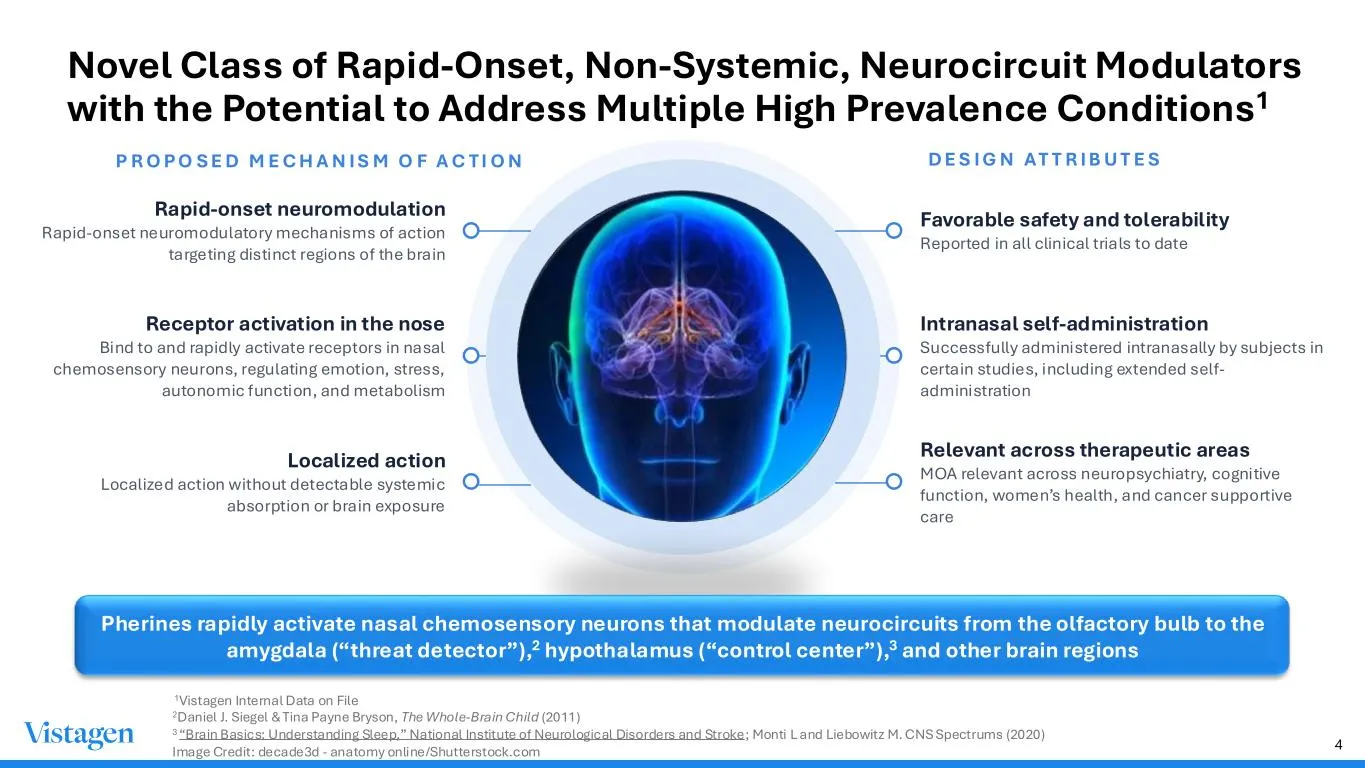
Slide 4: Novel Class of Rapid-Onset, Non-Systemic, Neurocircuit Modulators
4 Novel Class of Rapid-Onset, Non-Systemic, Neurocircuit Modulators with the Potential to Address Multiple High Prevalence Conditions1 1Vistagen Internal Data on File 2Daniel J. Siegel & Tina Payne Bryson, The Whole-Brain Child (2011) 3 “Brain Basics: Understanding Sleep,” National Institute of Neur
Slide 5: Lead Clinical-Stage Product Candidates
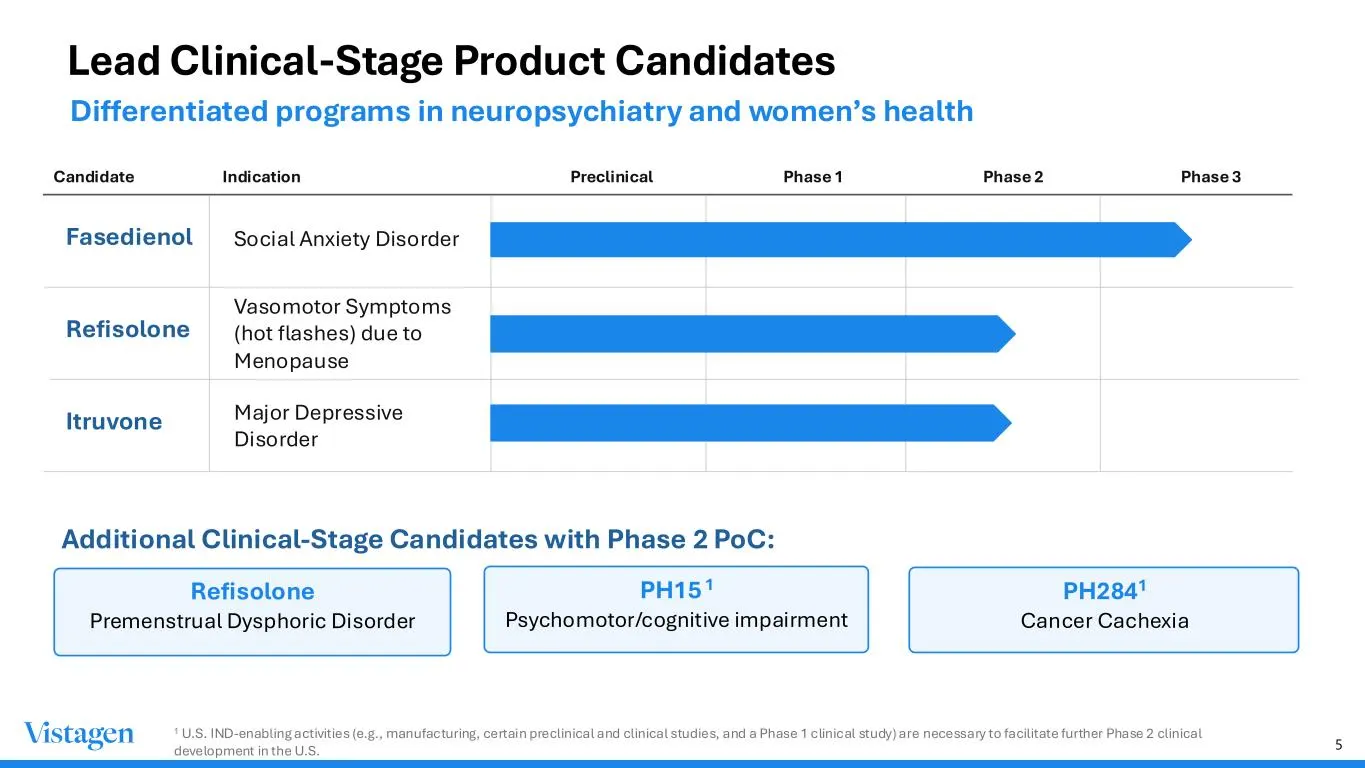
5 Lead Clinical-Stage Product Candidates Differentiated programs in neuropsychiatry and women’s health Candidate Indication Preclinical Phase 1 Phase 2 Phase 3 Fasedienol Social Anxiety Disorder Itruvone Major Depressive Disorder Refisolone Vasomotor Symptoms (hot flashes) due to Menopause Additiona
Slide 6: Fasedienol: Extensive clinical dataset, focused Phase 3 strategy
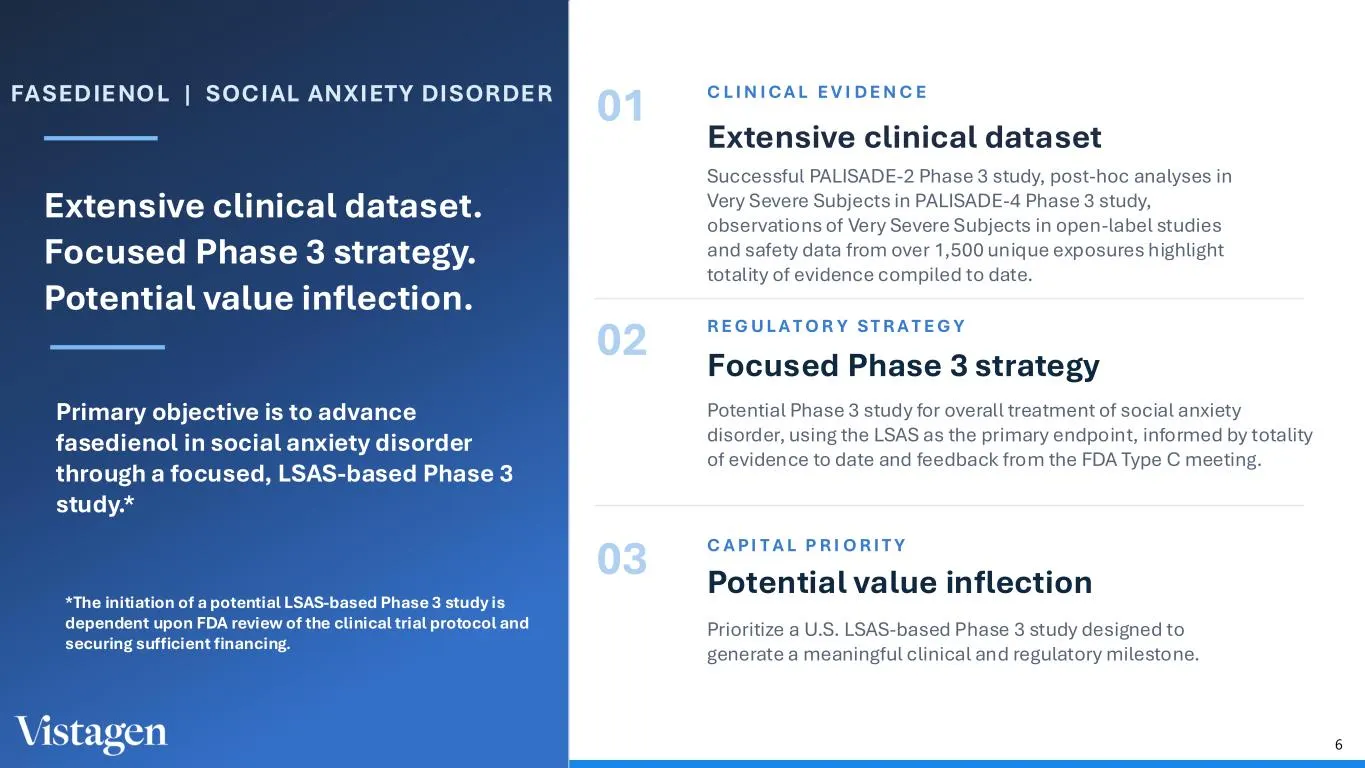
6 Extensive clinical dataset. Focused Phase 3 strategy. Potential value inflection. Primary objective is to advance fasedienol in social anxiety disorder through a focused, LSAS-based Phase 3 study.* *The initiation of a potential LSAS-based Phase 3 study is dependent upon FDA review of the clinical
Slide 7: Refisolone: Differentiated asset, flexible development plan
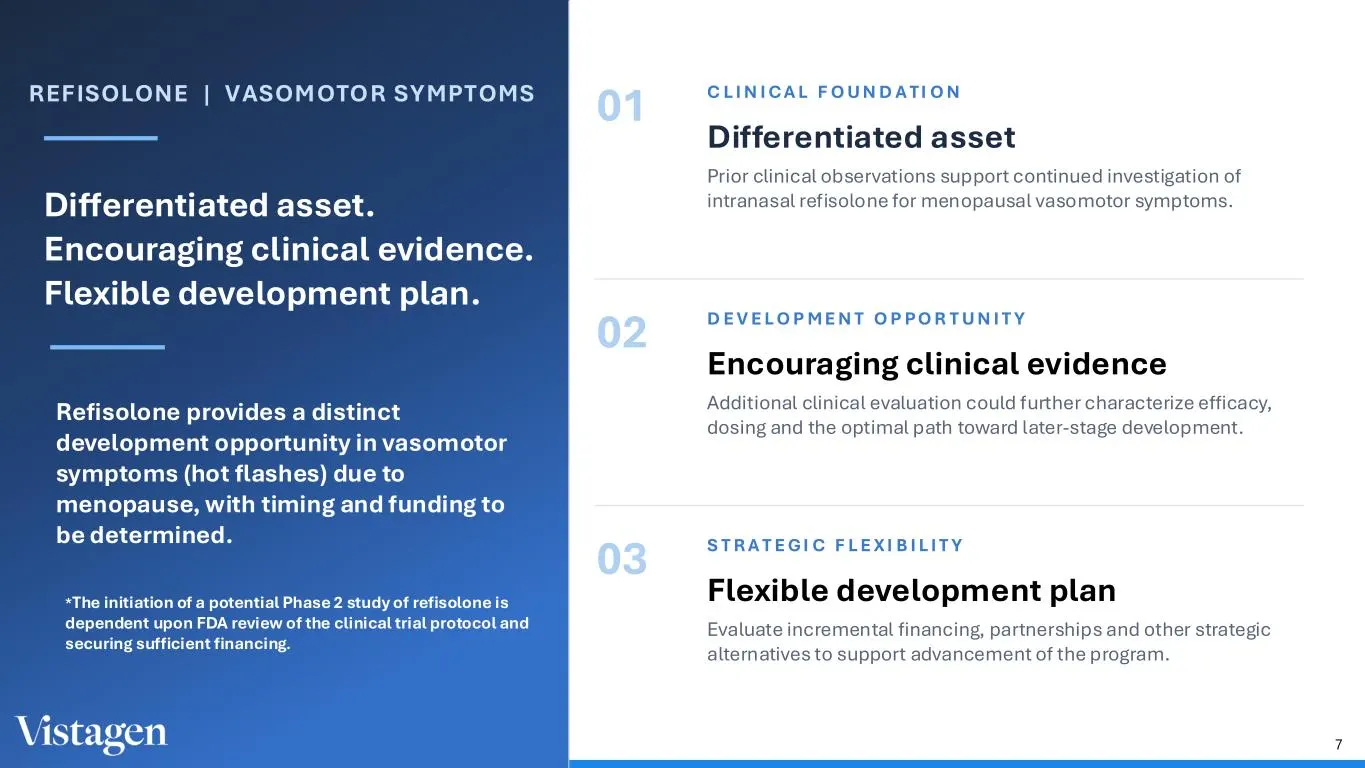
7 Differentiated asset. Encouraging clinical evidence. Flexible development plan. Refisolone provides a distinct development opportunity in vasomotor symptoms (hot flashes) due to menopause, with timing and funding to be determined. *The initiation of a potential Phase 2 study of refisolone is depen
Slide 8: Potential Clinical Development Roadmap
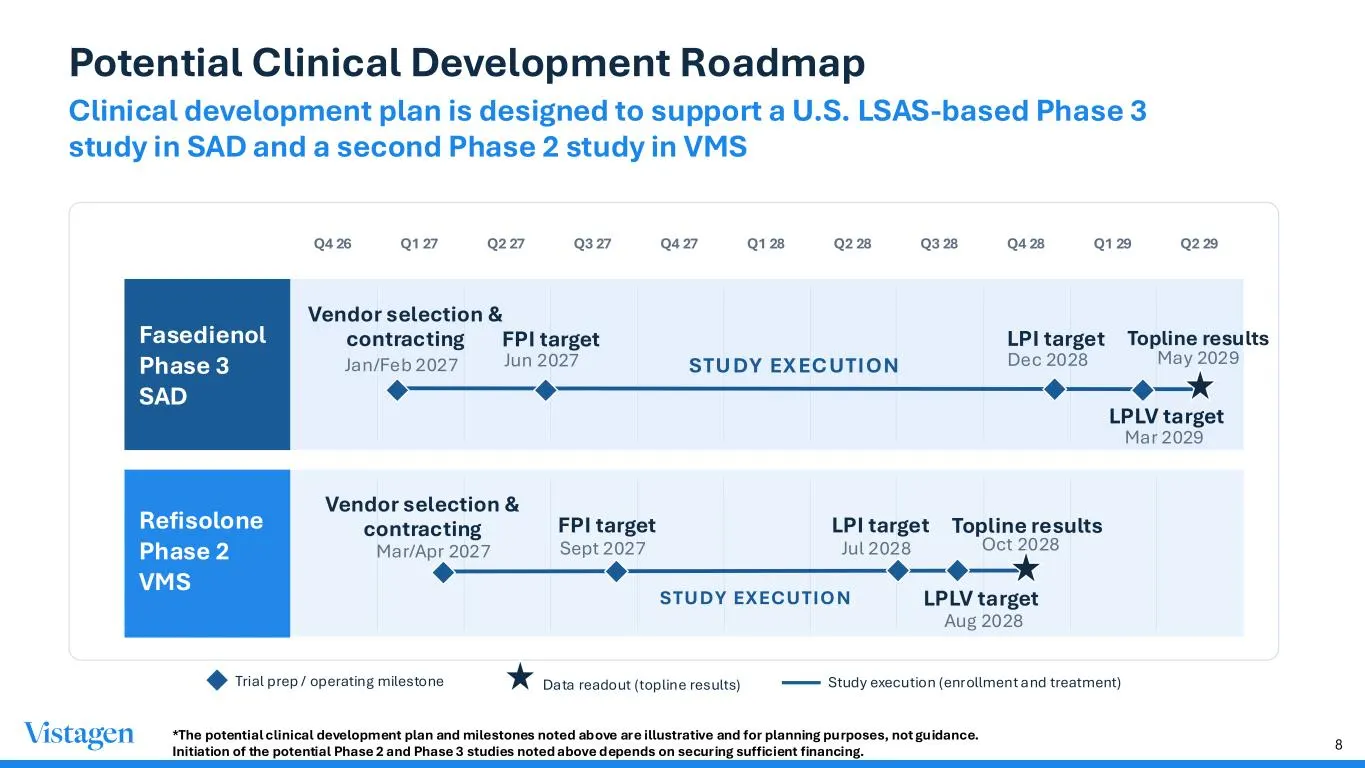
8 Potential Clinical Development Roadmap Clinical development plan is designed to support a U.S. LSAS-based Phase 3 study in SAD and a second Phase 2 study in VMS Fasedienol Phase 3 SAD Refisolone Phase 2 VMS Vendor selection & contracting Jan/Feb 2027 FPI target Jun 2027 STU DY EX EC UTION Topline
Slide 9: Potential Fasedienol U.S. LSAS-based Phase 3 Study
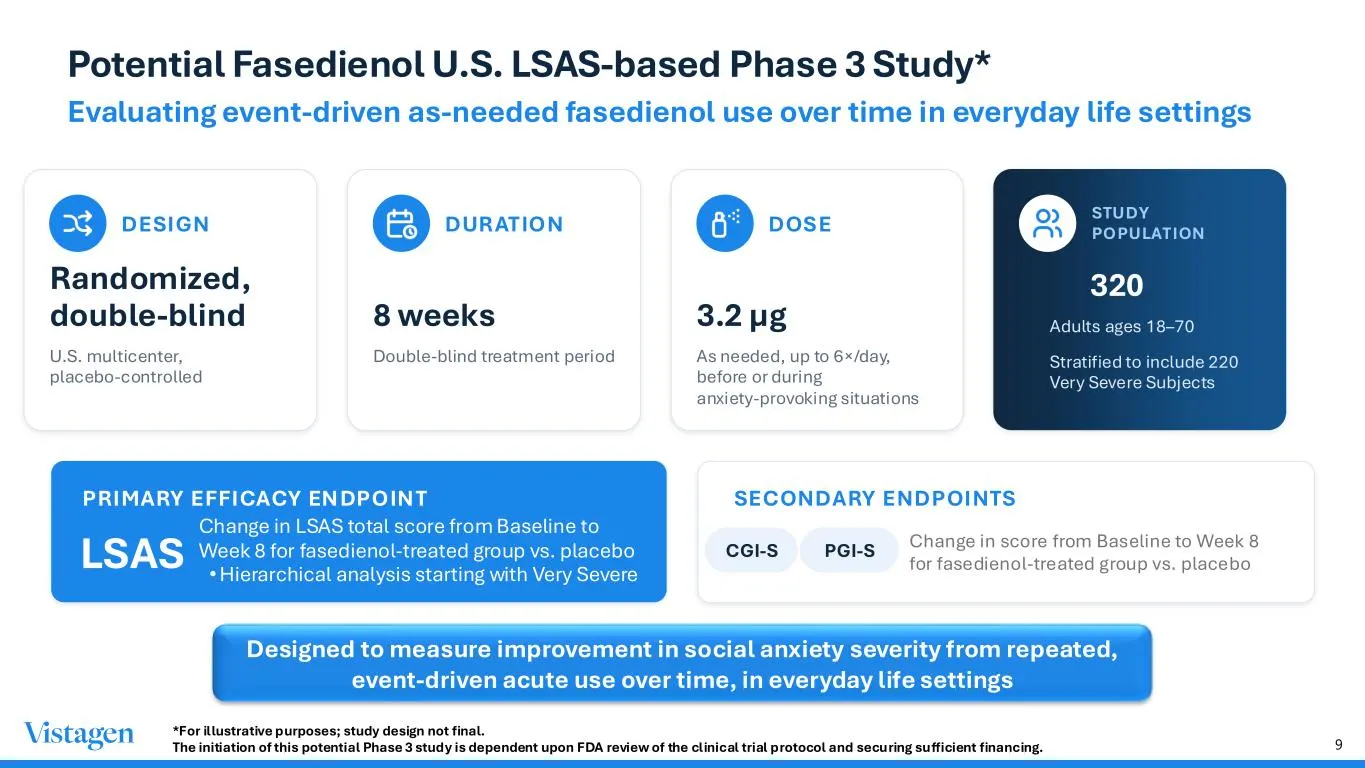
9 Potential Fasedienol U.S. LSAS-based Phase 3 Study* Evaluating event-driven as-needed fasedienol use over time in everyday life settings DESIGN Randomized, double-blind U.S. multicenter, placebo-controlled DURATION 8 weeks Double-blind treatment period DOSE 3.2 µg As needed, up to 6×/day, before o
Slide 10: Potential Refisolone U.S. Phase 2 Study
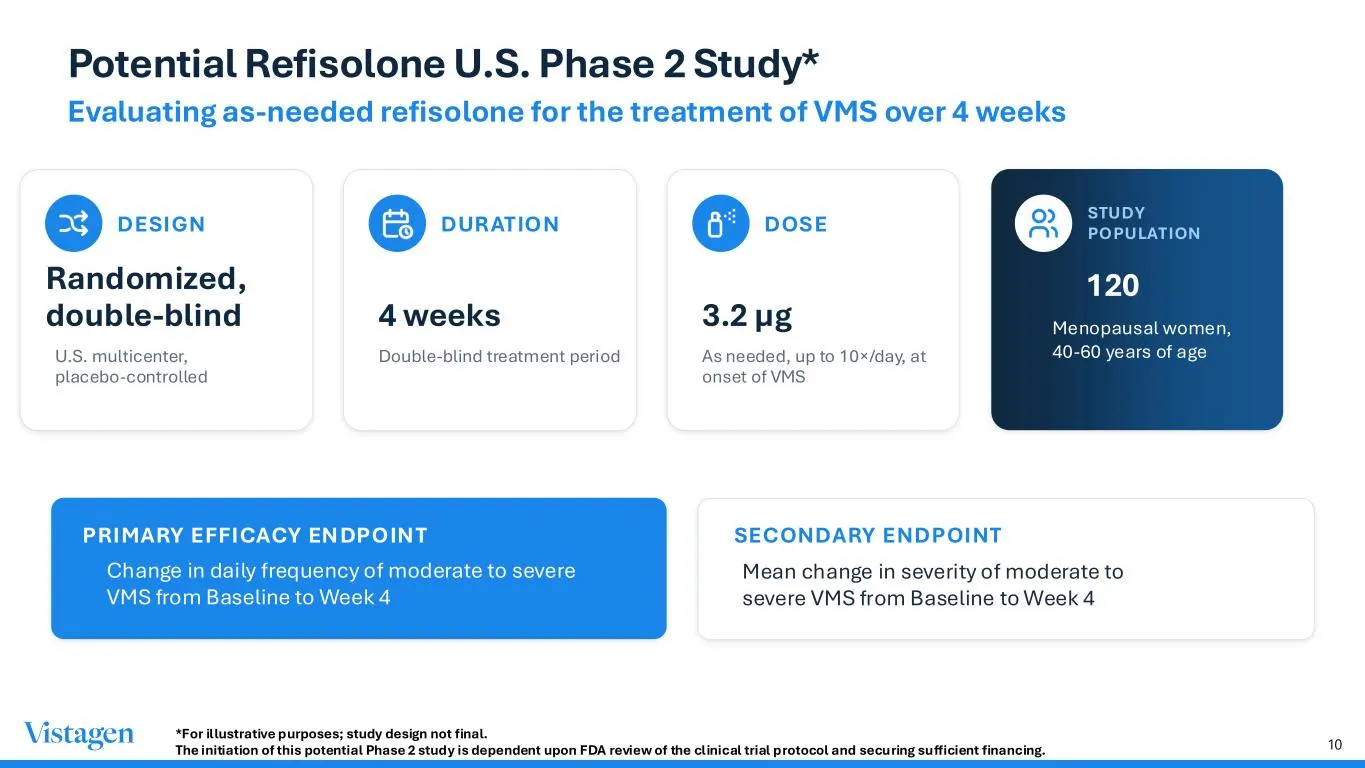
10 Potential Refisolone U.S. Phase 2 Study* Evaluating as-needed refisolone for the treatment of VMS over 4 weeks DESIGN Randomized, double-blind U.S. multicenter, placebo-controlled DURATION 4 weeks Double-blind treatment period DOSE 3.2 µg As needed, up to 10×/day, at onset of VMS STUDY POPULATION
Slide 11: Social Anxiety Disorder: Fasedienol
11 Social Anxiety Disorder Fasedienol
Slide 12: Social anxiety disorder symptoms and real-life impact
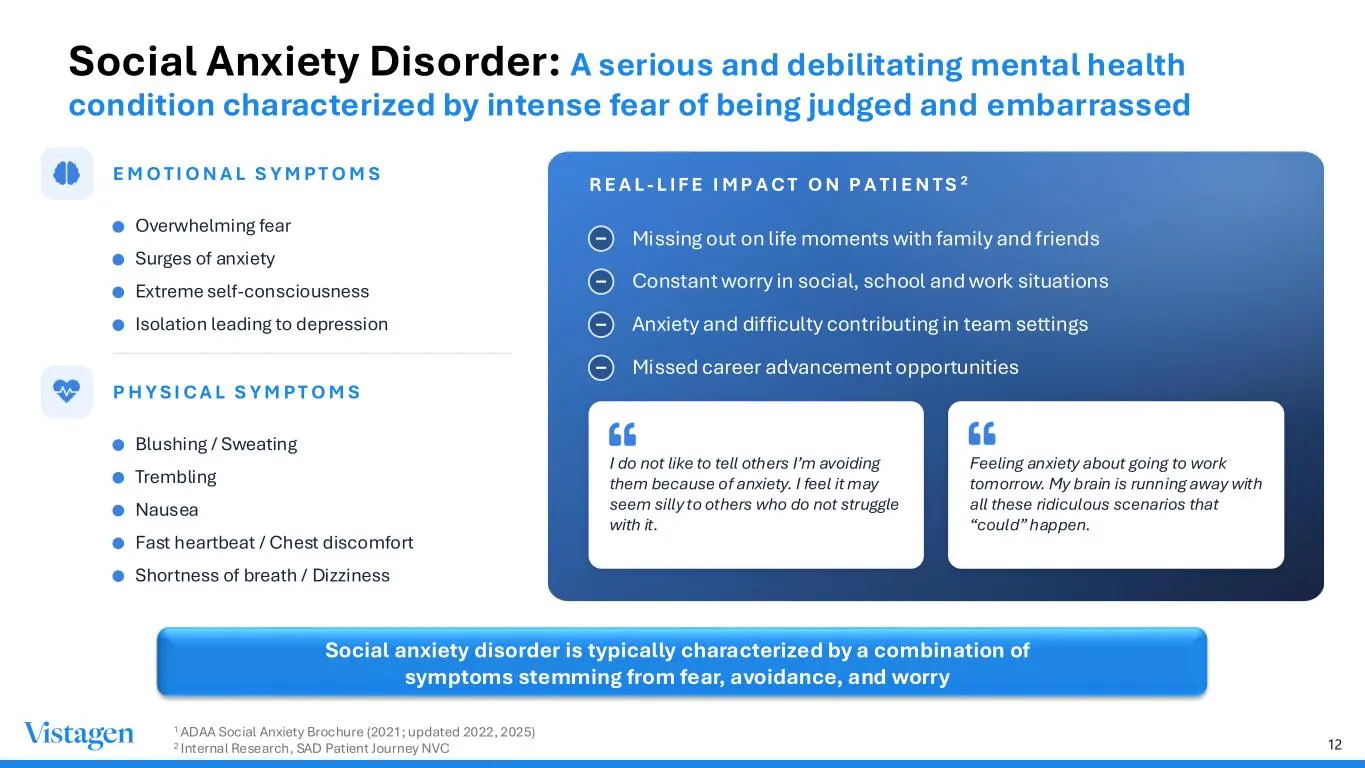
12 E M O T I O N A L S Y M P T O M S Overwhelming fear Surges of anxiety Extreme self-consciousness Isolation leading to depression P H Y S I C A L S Y M P T O M S Blushing / Sweating Trembling Nausea Fast heartbeat / Chest discomfort Shortness of breath / Dizziness R E A L - L I F E I M P A C T O N
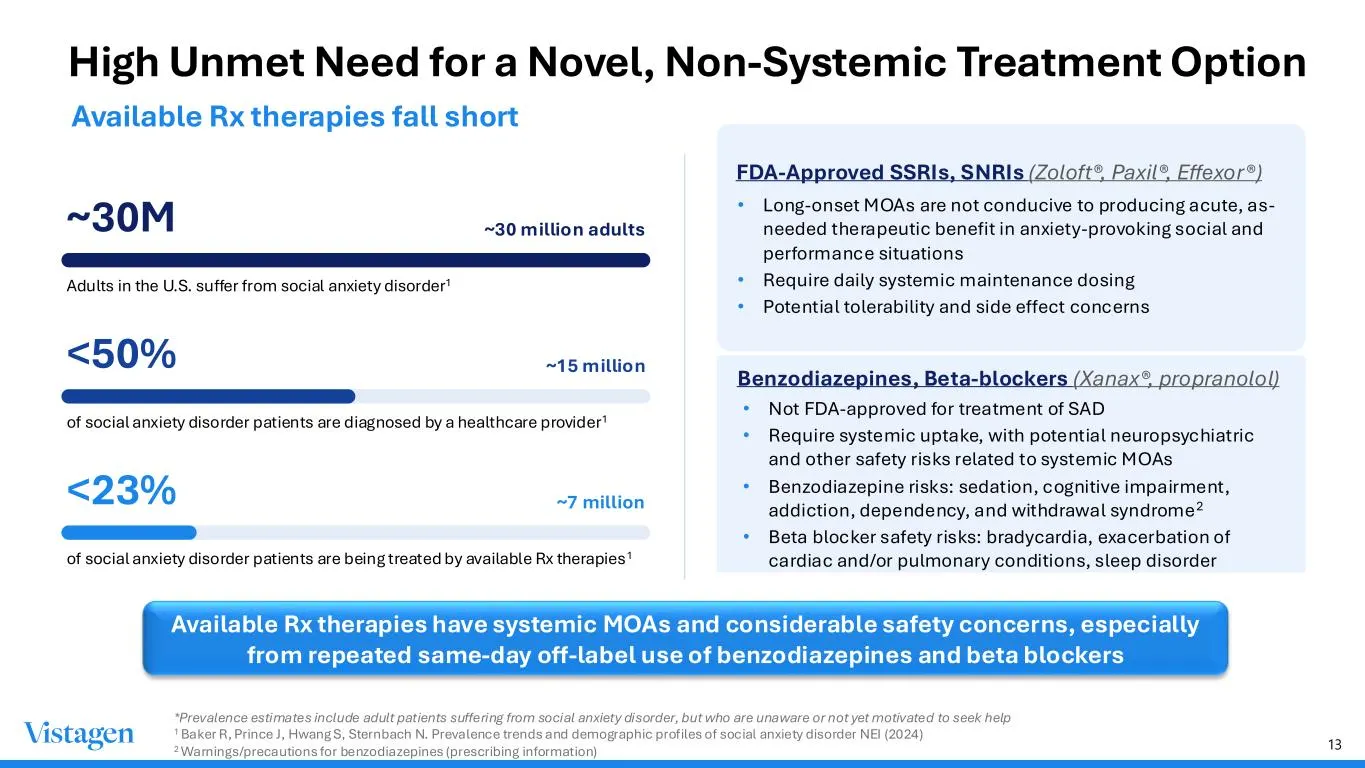
Slide 13: High Unmet Need for a Novel, Non-Systemic Treatment Option
13 High Unmet Need for a Novel, Non-Systemic Treatment Option ~30M ~30 million adults Adults in the U.S. suffer from social anxiety disorder1 <50% ~15 million of social anxiety disorder patients are diagnosed by a healthcare provider1 <23% ~7 million of social anxiety disorder patients are being tre
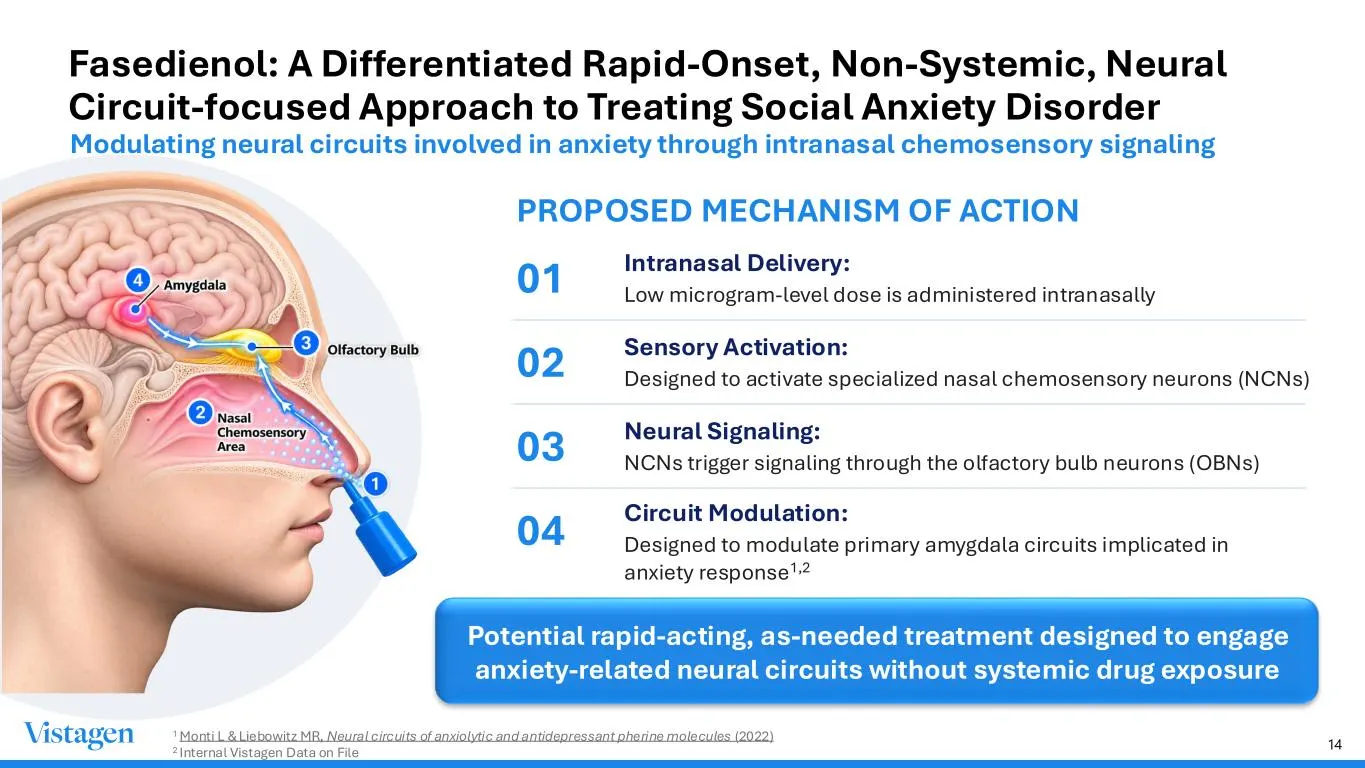
Slide 14: Fasedienol: Rapid-Onset, Non-Systemic, Neural Circuit-focused Approach
14 Fasedienol: A Differentiated Rapid-Onset, Non-Systemic, Neural Circuit-focused Approach to Treating Social Anxiety Disorder Modulating neural circuits involved in anxiety through intranasal chemosensory signaling PROPOSED MECHANISM OF ACTION 01 Intranasal Delivery: Low microgram-level dose is adm
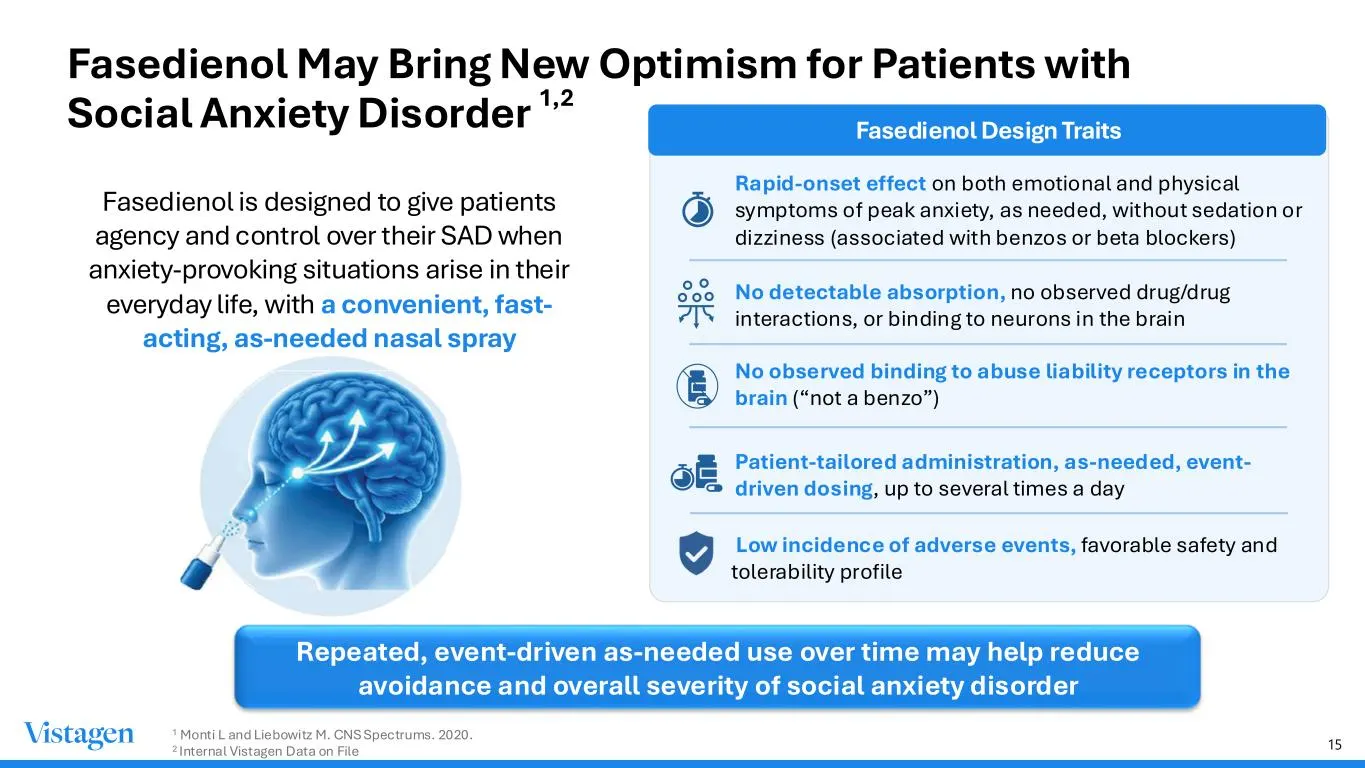
Slide 15: Fasedienol May Bring New Optimism for Patients with SAD
15 Fasedienol May Bring New Optimism for Patients with Social Anxiety Disorder Fasedienol is designed to give patients agency and control over their SAD when anxiety-provoking situations arise in their everyday life, with a convenient, fast- acting, as-needed nasal spray Fasedienol Design Traits Rap
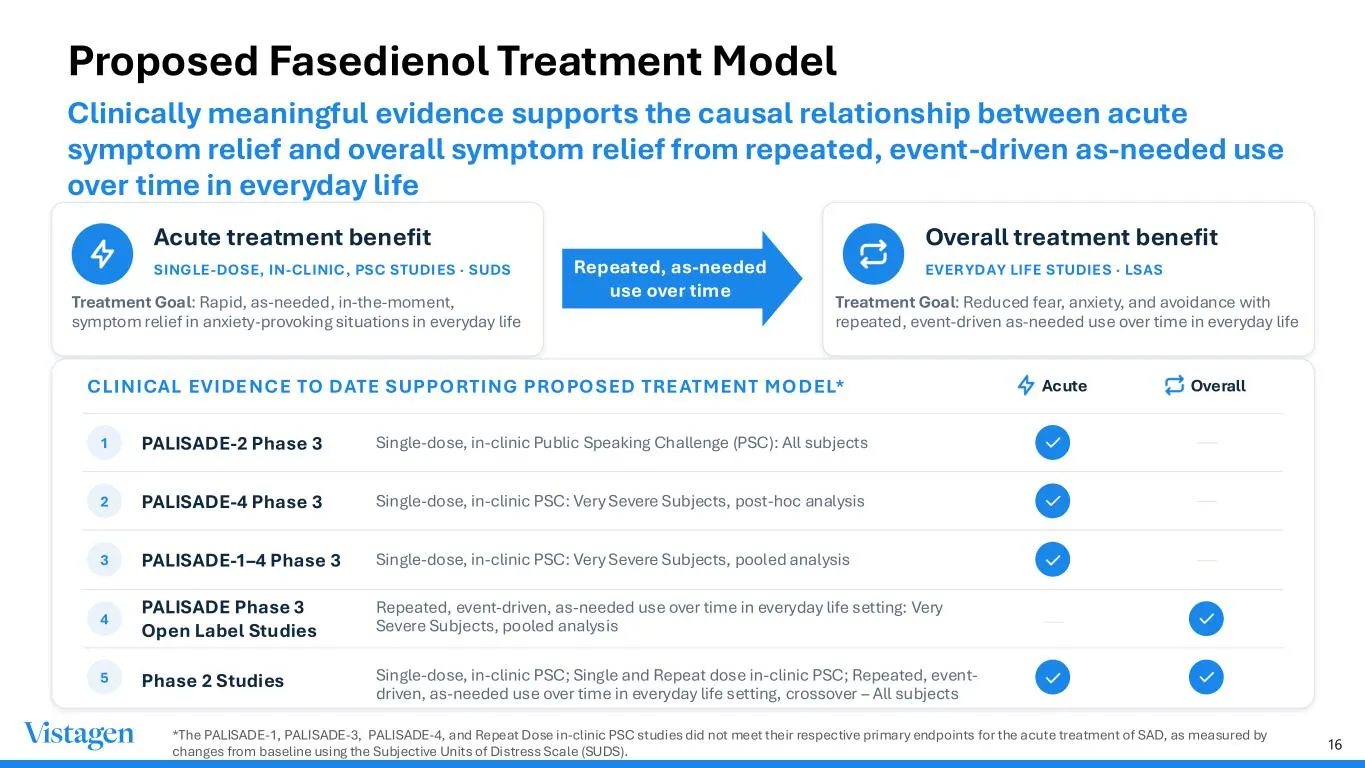
Slide 16: Proposed Fasedienol Treatment Model
16 Proposed Fasedienol Treatment Model Clinically meaningful evidence supports the causal relationship between acute symptom relief and overall symptom relief from repeated, event-driven as-needed use over time in everyday life Acute treatment benefit SINGLE-DOSE, IN-CLINIC, PSC STUDI ES · SUDS Trea

Slide 17: Fasedienol: Acute Treatment (SUDS)
17 Single event, Public Speaking Challenge in a clinical setting Subjective Units of Distress Scale (SUDS) Fasedienol: Acute Treatment
Slide 18: Subjective Units of Distress Scale (SUDS)
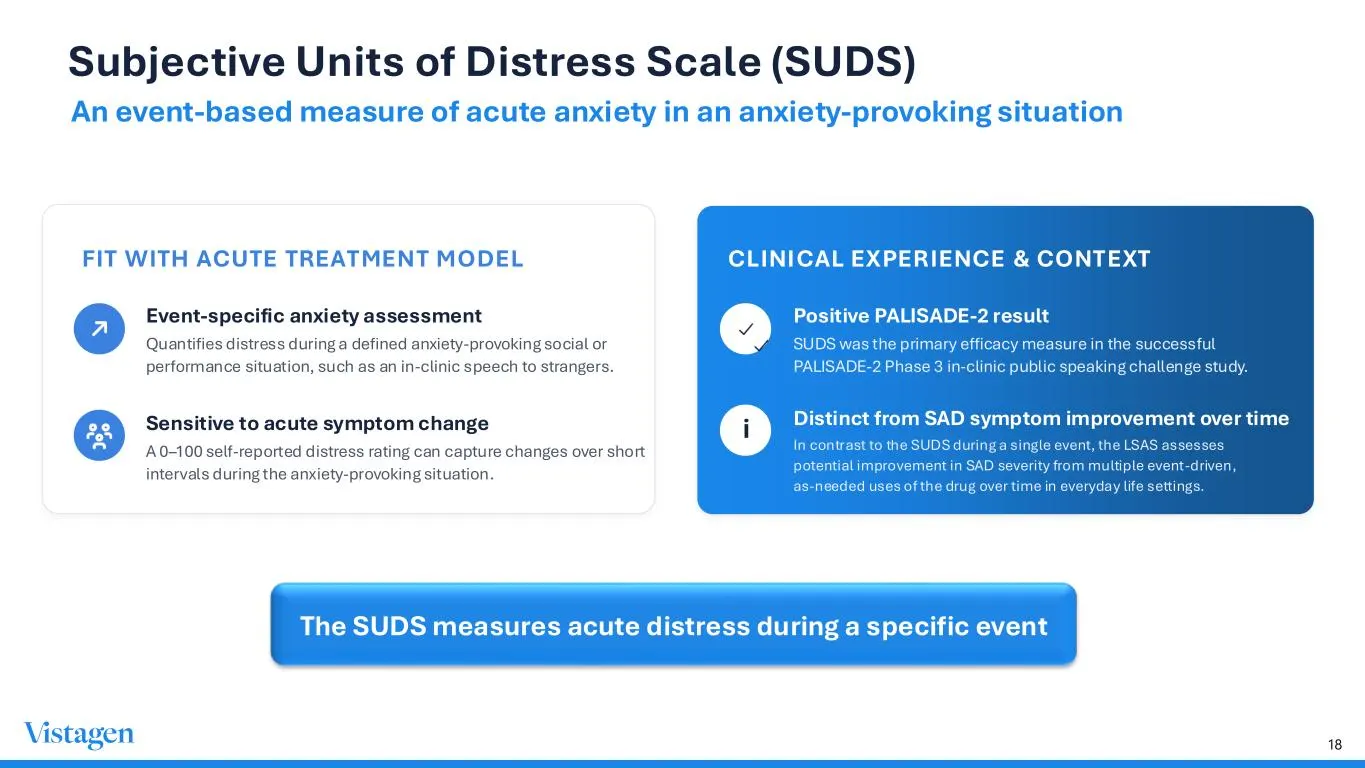
18 Subjective Units of Distress Scale (SUDS) An event-based measure of acute anxiety in an anxiety-provoking situation FIT WITH ACUTE TREATMENT MODEL Event-specific anxiety assessment Quantifies distress during a defined anxiety-provoking social or performance situation, such as an in-clinic speech
Slide 19: PALISADE-2 Phase 3 Trial: Positive Primary Efficacy
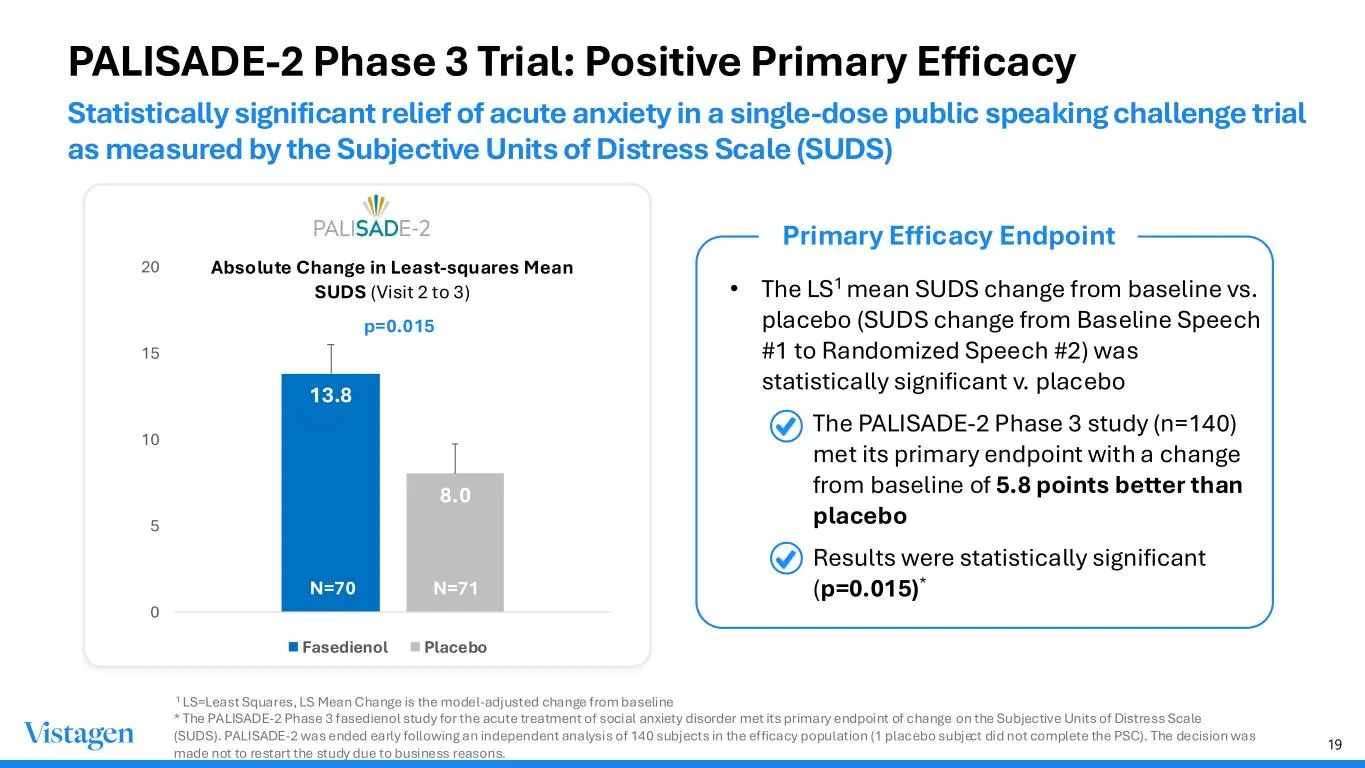
19 PALISADE-2 Phase 3 Trial: Positive Primary Efficacy 13.8 8.0 0 5 10 15 20 (p=0.015) Absolute Change in Least-squares Mean SUDS (Visit 2 to 3) Fasedienol Placebo • The LS1 mean SUDS change from baseline vs. placebo (SUDS change from Baseline Speech #1 to Randomized Speech #2) was statistically sig
Slide 20: PALISADE-2: Positive Secondary & Exploratory Endpoints
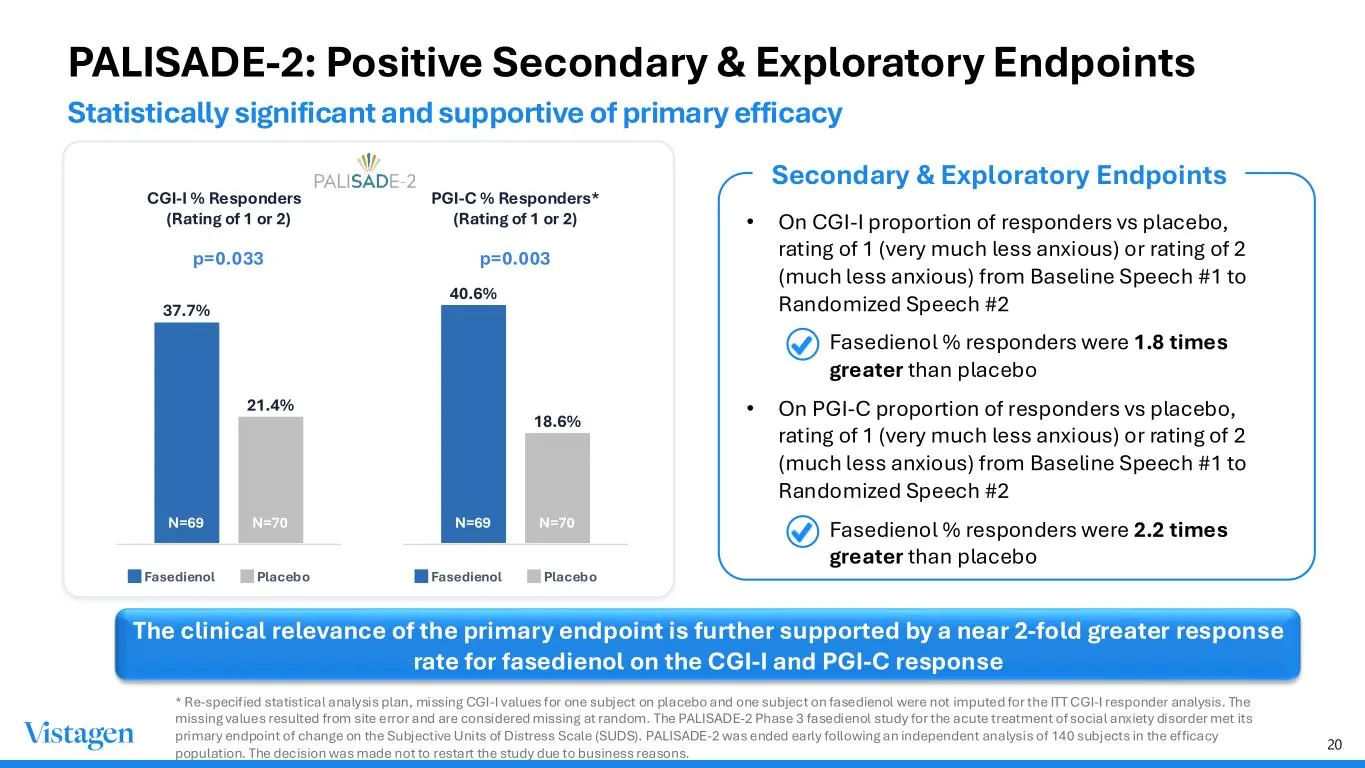
20 PALISADE-2: Positive Secondary & Exploratory Endpoints Statistically significant and supportive of primary efficacy • On CGI-I proportion of responders vs placebo, rating of 1 (very much less anxious) or rating of 2 (much less anxious) from Baseline Speech #1 to Randomized Speech #2 • Fasedienol
Slide 21: PALISADE-4 Post-Hoc Analysis: Very Severe Subjects
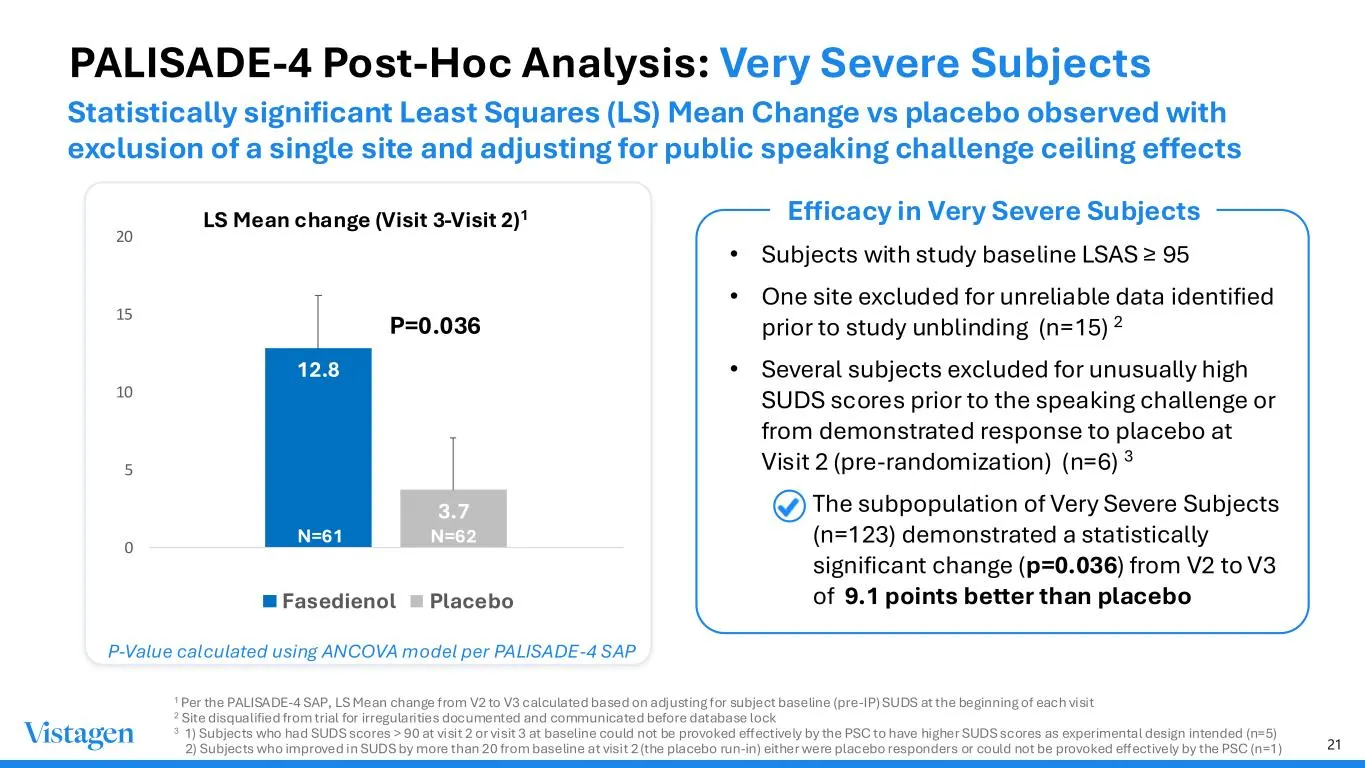
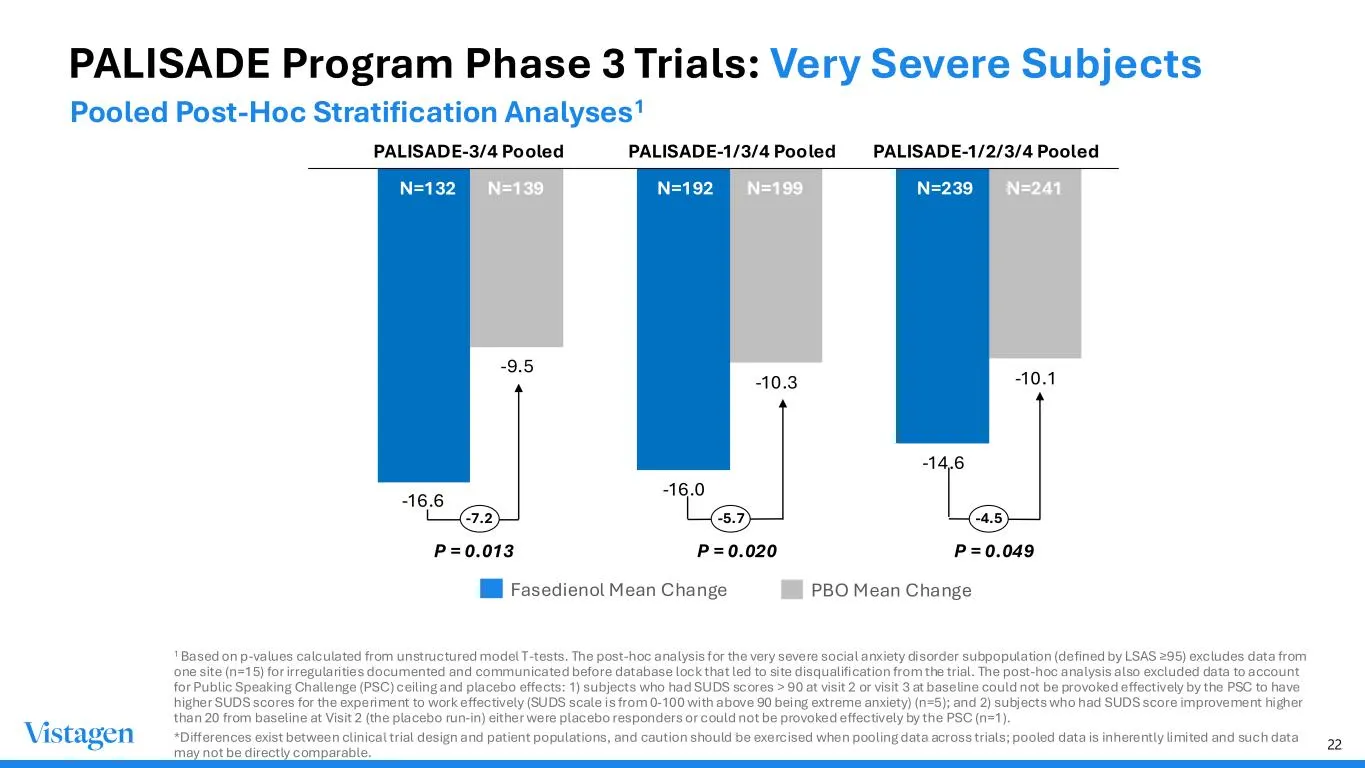
21 PALISADE-4 Post-Hoc Analysis: Very Severe Subjects V • Subjects with study baseline LSAS ≥ 95 • One site excluded for unreliable data identified prior to study unblinding (n=15) 2 • Several subjects excluded for unusually high SUDS scores prior to the speaking challenge or from demonstrated respo
Slide 22: PALISADE Program Phase 3 Trials: Very Severe Subjects
22 PALISADE Program Phase 3 Trials: Very Severe Subjects N=7 0 N=7 1-16.6 -16.0 -14.6 -9.5 -10.3 -10.1 PALISADE-1/3/4 PooledPALISADE-3/4 Pooled Fasedienol Mean Change PBO Mean Change -4.5 PALISADE-1/2/3/4 Pooled N=7 0 -5.7 N=132 N=139 N=192 N=199 N=239 N=241 P = 0.020 P = 0.049 -7.2 P = 0.013 1 Base
Slide 23: Fasedienol: Overall Treatment (LSAS)
23 Multiple events, as-needed use over time in everyday life settings Liebowitz Social Anxiety Scale (LSAS) Fasedienol: Overall Treatment
Slide 24: Liebowitz Social Anxiety Scale (LSAS)
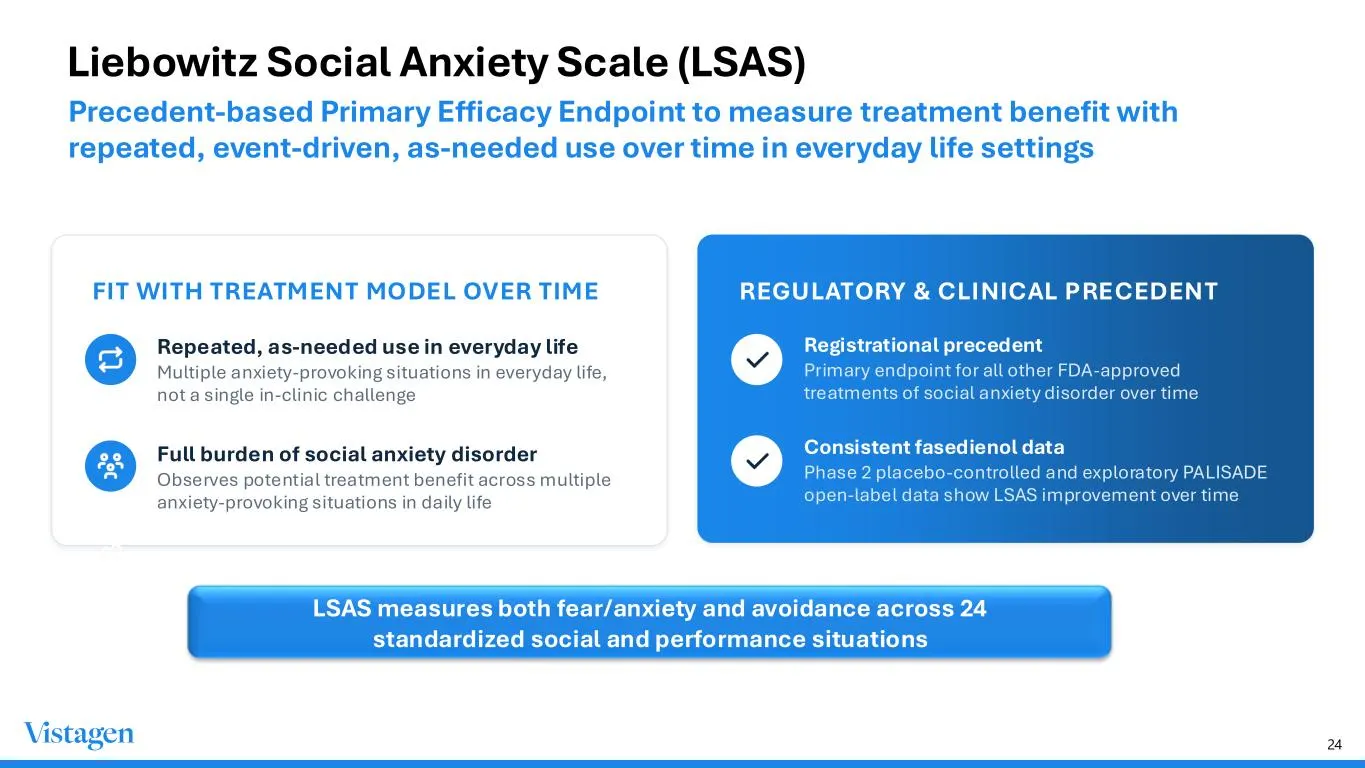
24 Liebowitz Social Anxiety Scale (LSAS) Precedent-based Primary Efficacy Endpoint to measure treatment benefit with repeated, event-driven, as-needed use over time in everyday life settings FIT WITH TREATMENT MODEL OVER TIME Repeated, as-needed use in everyday life Multiple anxiety-provoking situat
Slide 25: LSAS Severity Bands
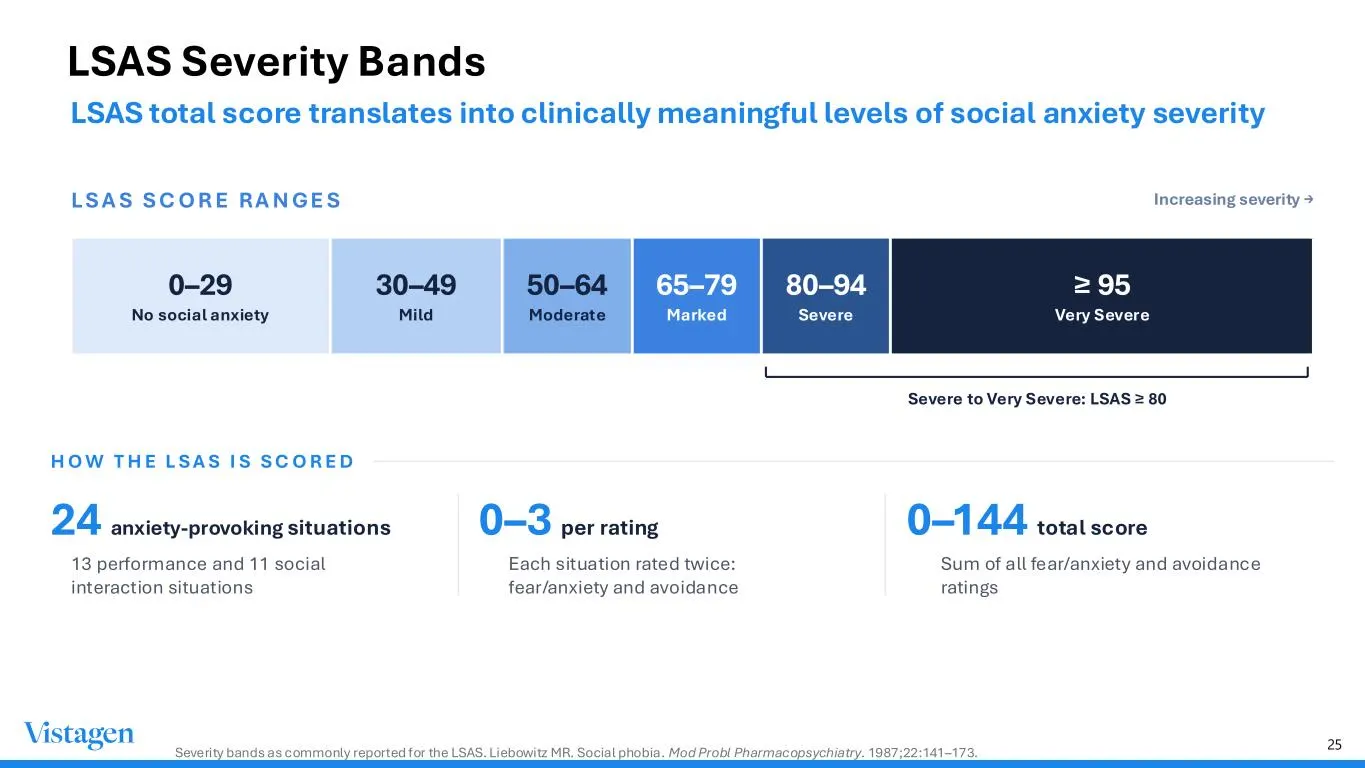
25 LSAS Severity Bands LSAS total score translates into clinically meaningful levels of social anxiety severity L S A S S C O R E RA N GE S Increasing severity → 0–29 No social anxiety 30–49 Mild 50–64 Moderate 65–79 Marked 80–94 Severe ≥ 95 Very Severe Severe to Very Severe: LSAS ≥ 80 H O W T H E L
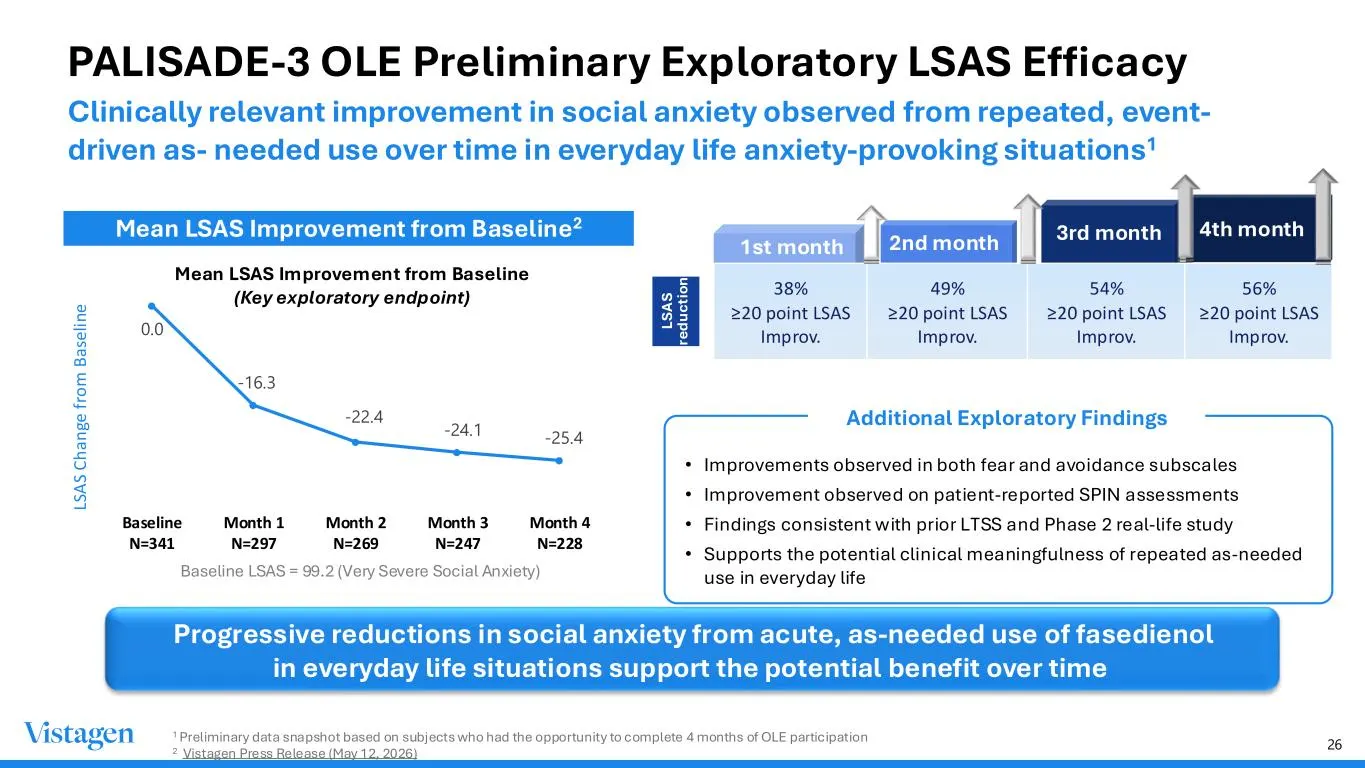
Slide 26: PALISADE-3 OLE Preliminary Exploratory LSAS Efficacy
26 PALISADE-3 OLE Preliminary Exploratory LSAS Efficacy Clinically relevant improvement in social anxiety observed from repeated, event- driven as- needed use over time in everyday life anxiety-provoking situations1 Mean LSAS Improvement from Baseline2 Baseline LSAS = 99.2 (Very Severe Social Anxiet
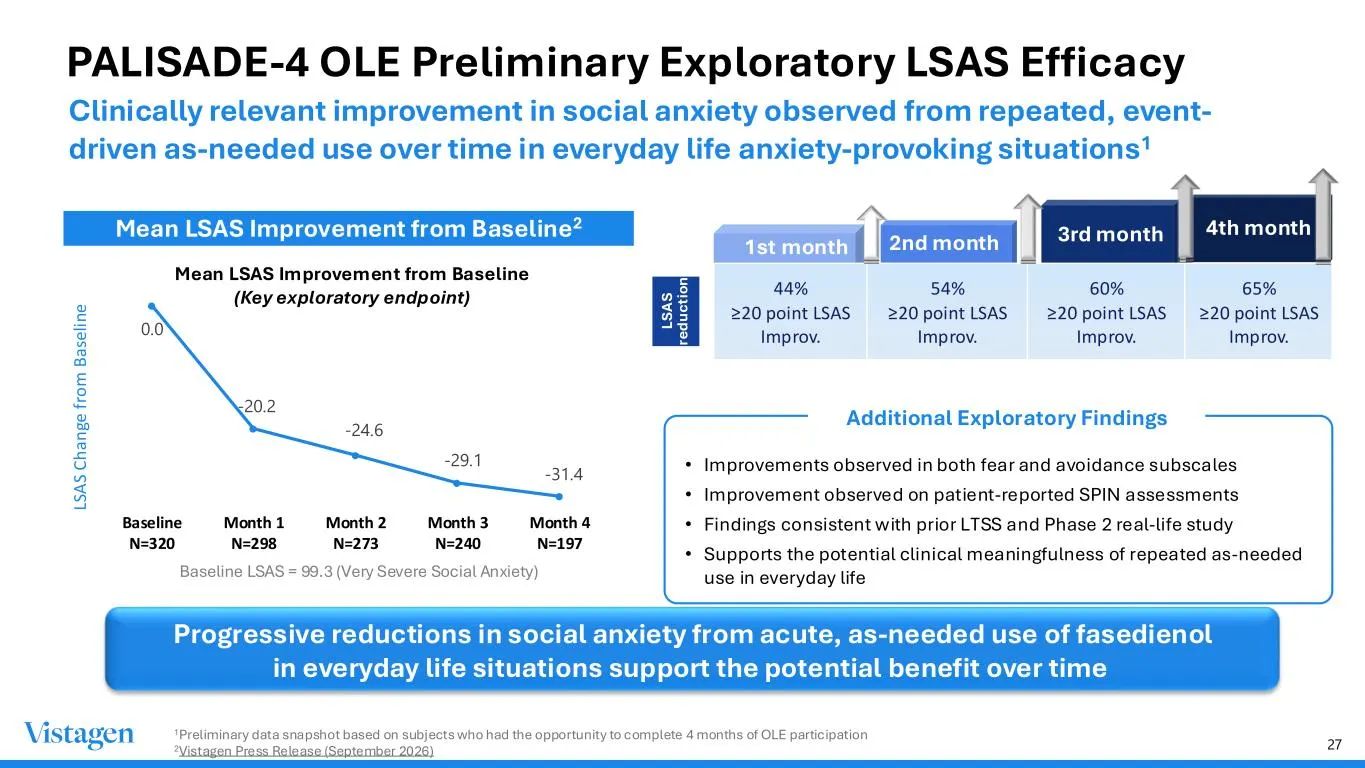
Slide 27: PALISADE-4 OLE Preliminary Exploratory LSAS Efficacy
27 PALISADE-4 OLE Preliminary Exploratory LSAS Efficacy Clinically relevant improvement in social anxiety observed from repeated, event- driven as-needed use over time in everyday life anxiety-provoking situations1 Mean LSAS Improvement from Baseline2 Baseline LSAS = 99.3 (Very Severe Social Anxiety
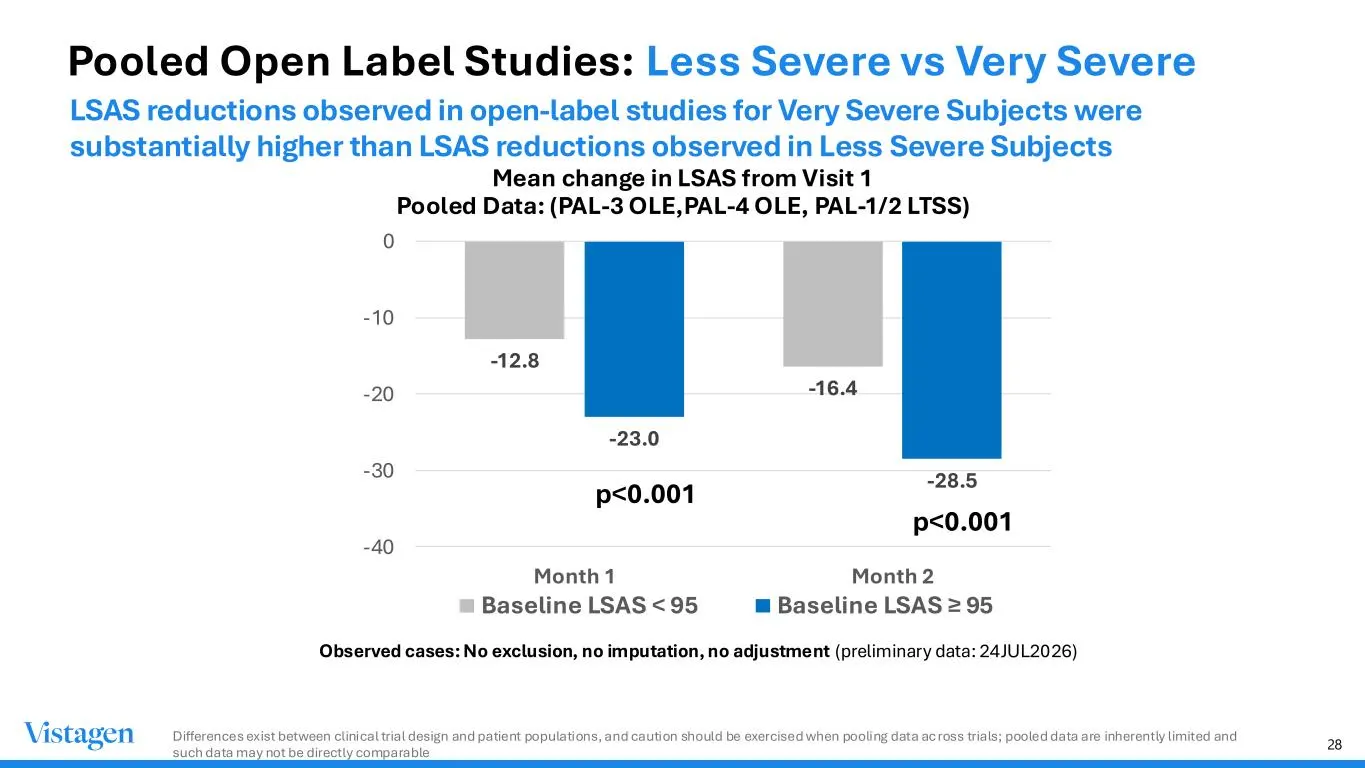
Slide 28: Pooled Open Label Studies: Less Severe vs Very Severe
28 Mean change in LSAS from Visit 1 Pooled Data: (PAL-3 OLE,PAL-4 OLE, PAL-1/2 LTSS) Pooled Open Label Studies: Less Severe vs Very Severe LSAS reductions observed in open-label studies for Very Severe Subjects were substantially higher than LSAS reductions observed in Less Severe Subjects Observed
Slide 29: Safety Results Overview: Fasedienol
29 Safety Results Overview Fasedienol
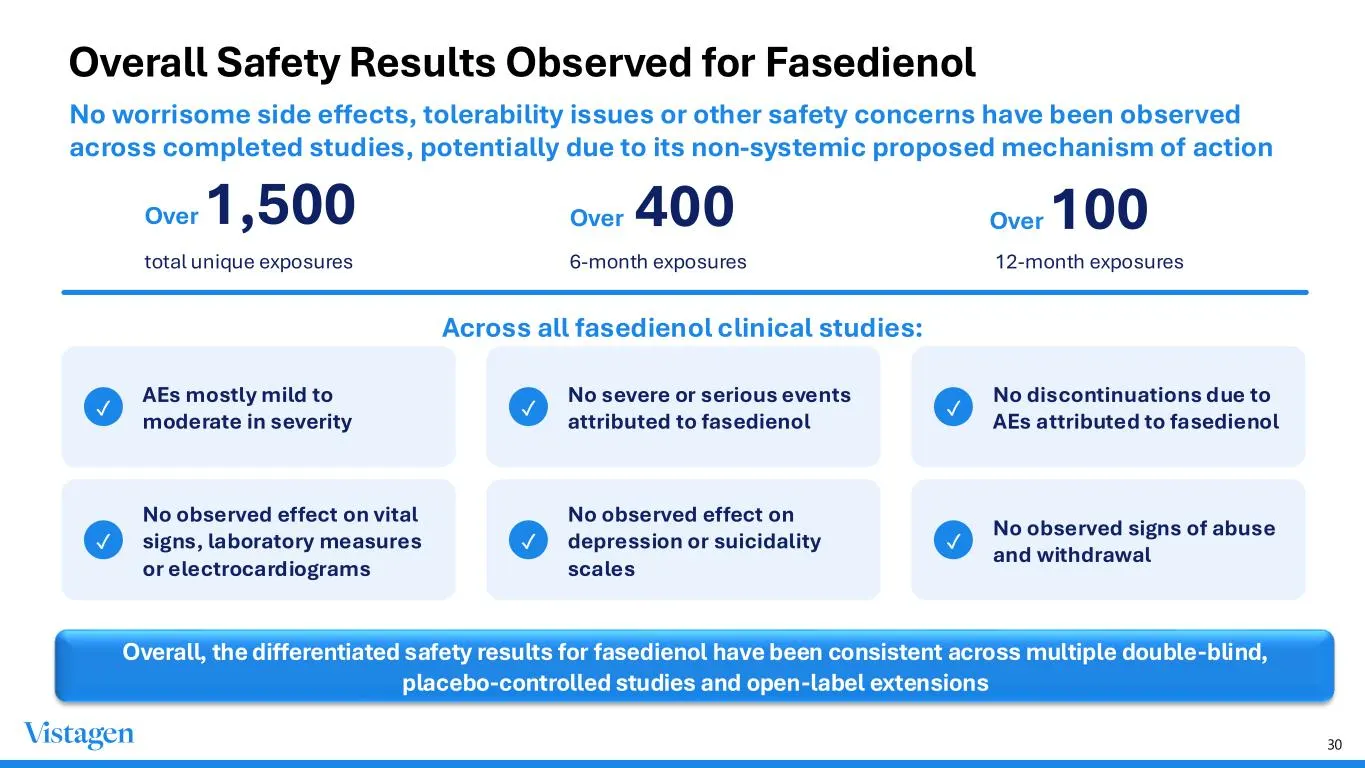
Slide 30: Overall Safety Results Observed for Fasedienol
30 Overall Safety Results Observed for Fasedienol No worrisome side effects, tolerability issues or other safety concerns have been observed across completed studies, potentially due to its non-systemic proposed mechanism of action Over 1,500 total unique exposures 6-month exposures Over 100 12-mont
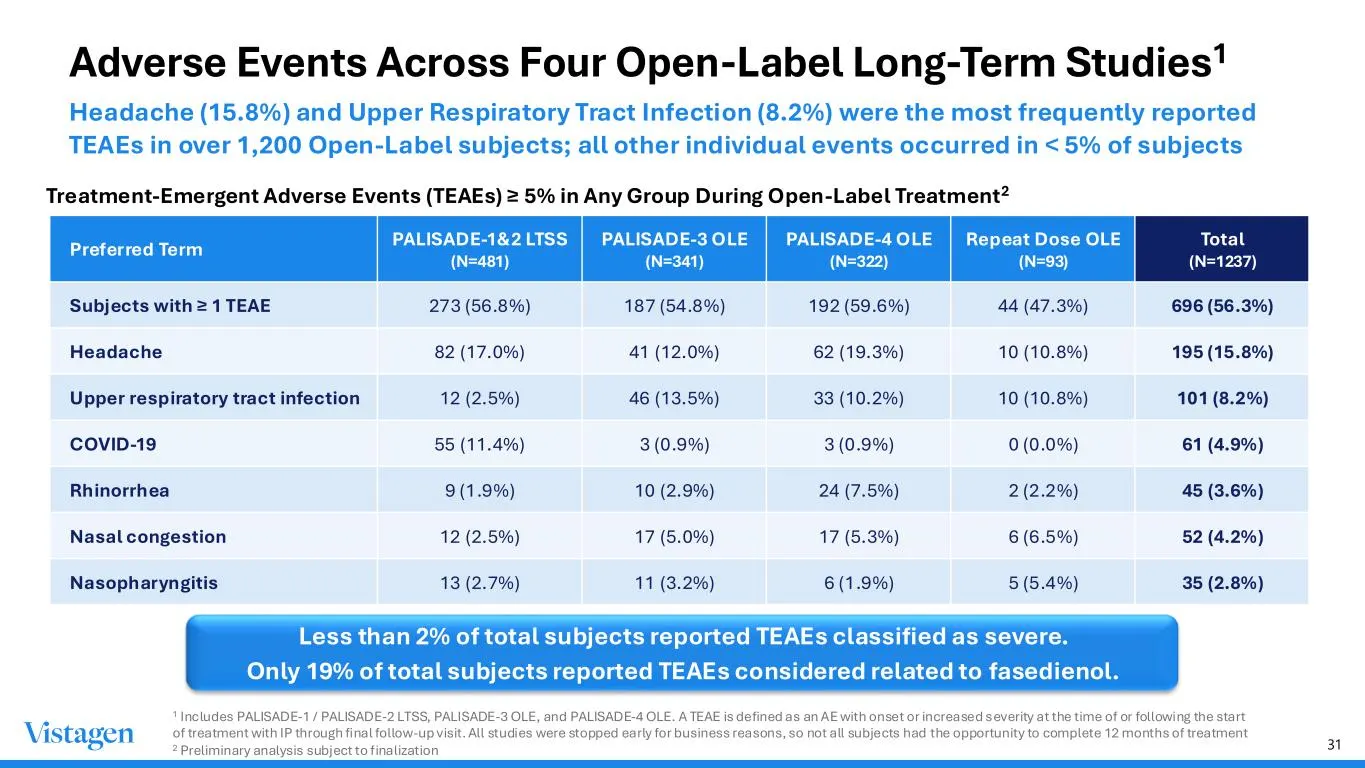
Slide 31: Adverse Events Across Four Open-Label Long-Term Studies
31 Adverse Events Across Four Open-Label Long-Term Studies1 Preferred Term PALISADE-1&2 LTSS (N=481) PALISADE-3 OLE (N=341) PALISADE-4 OLE (N=322) Repeat Dose OLE (N=93) Total (N=1237) Subjects with ≥ 1 TEAE 273 (56.8%) 187 (54.8%) 192 (59.6%) 44 (47.3%) 696 (56.3%) Headache 82 (17.0%) 41 (12.0%) 62
Slide 32: Potential U.S. LSAS-based Phase 3 Study: FAS Forward
32 Potential U.S. LSAS-based Phase 3 Study FAS Forward
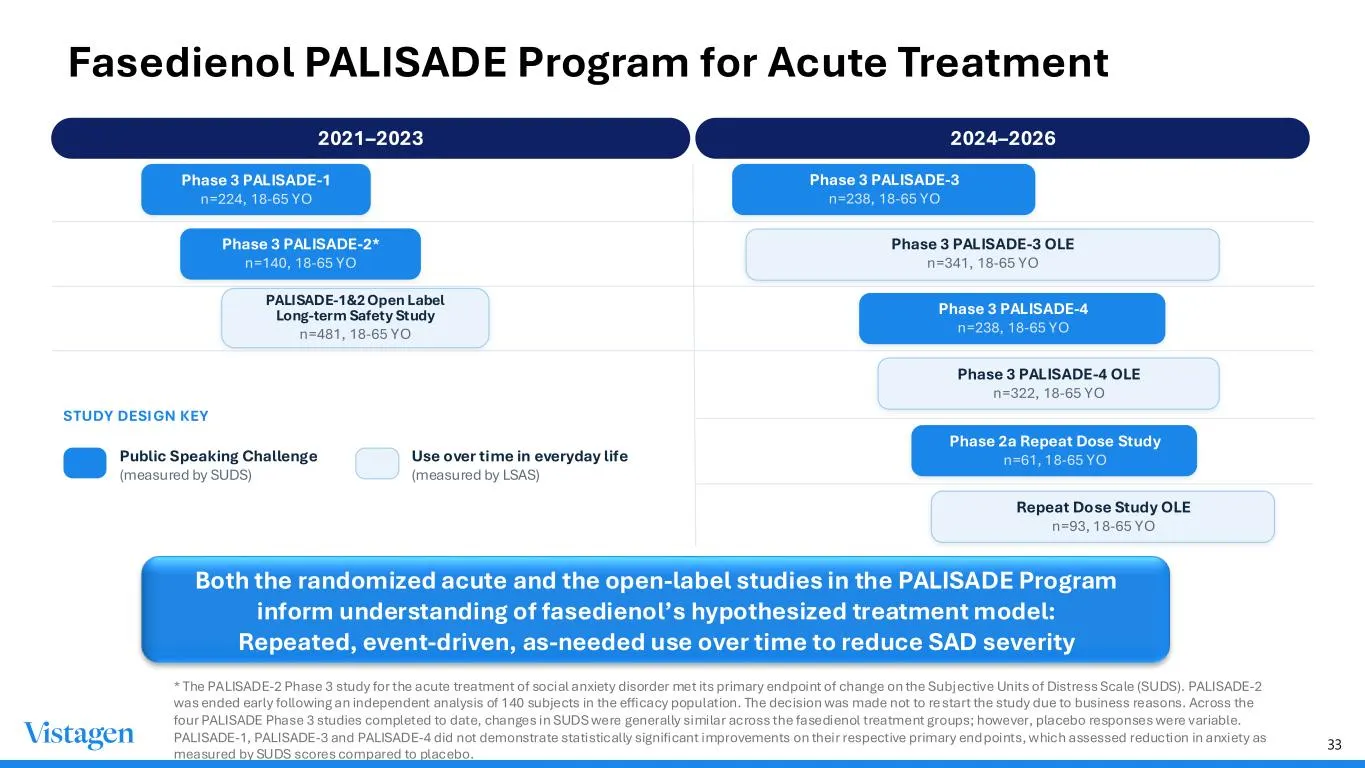
Slide 33: Fasedienol Clinical Studies 2021–2026
33 2021–2023 2024–2026 Phase 3 PALISADE-1 n=224, 18-65 YO Phase 3 PALISADE-2* n=140, 18-65 YO PALISADE-1&2 Open Label Long-term Safety Study n=481, 18-65 YO Phase 3 PALISADE-3 n=238, 18-65 YO Phase 3 PALISADE-3 OLE n=341, 18-65 YO Phase 3 PALISADE-4 n=238, 18-65 YO Phase 3 PALISADE-4 OLE n=322, 18-6
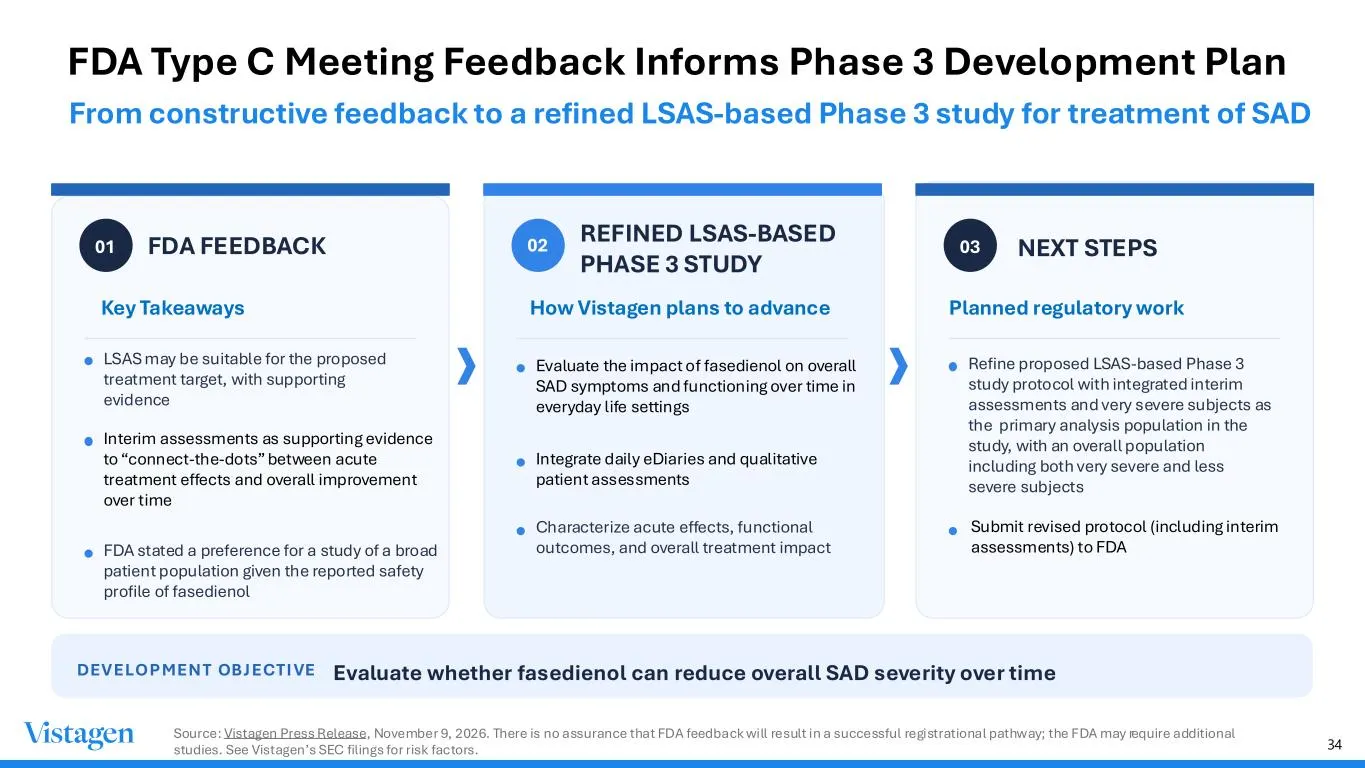
Slide 34: FDA Type C Meeting Feedback Informs Phase 3 Development Plan
34 FDA Type C Meeting Feedback Informs Phase 3 Development Plan From constructive feedback to a refined LSAS-based Phase 3 study for treatment of SAD 01 FDA FEEDBACK Key Takeaways LSAS may be suitable for the proposed treatment target, with supporting evidence Interim assessments as supporting evide
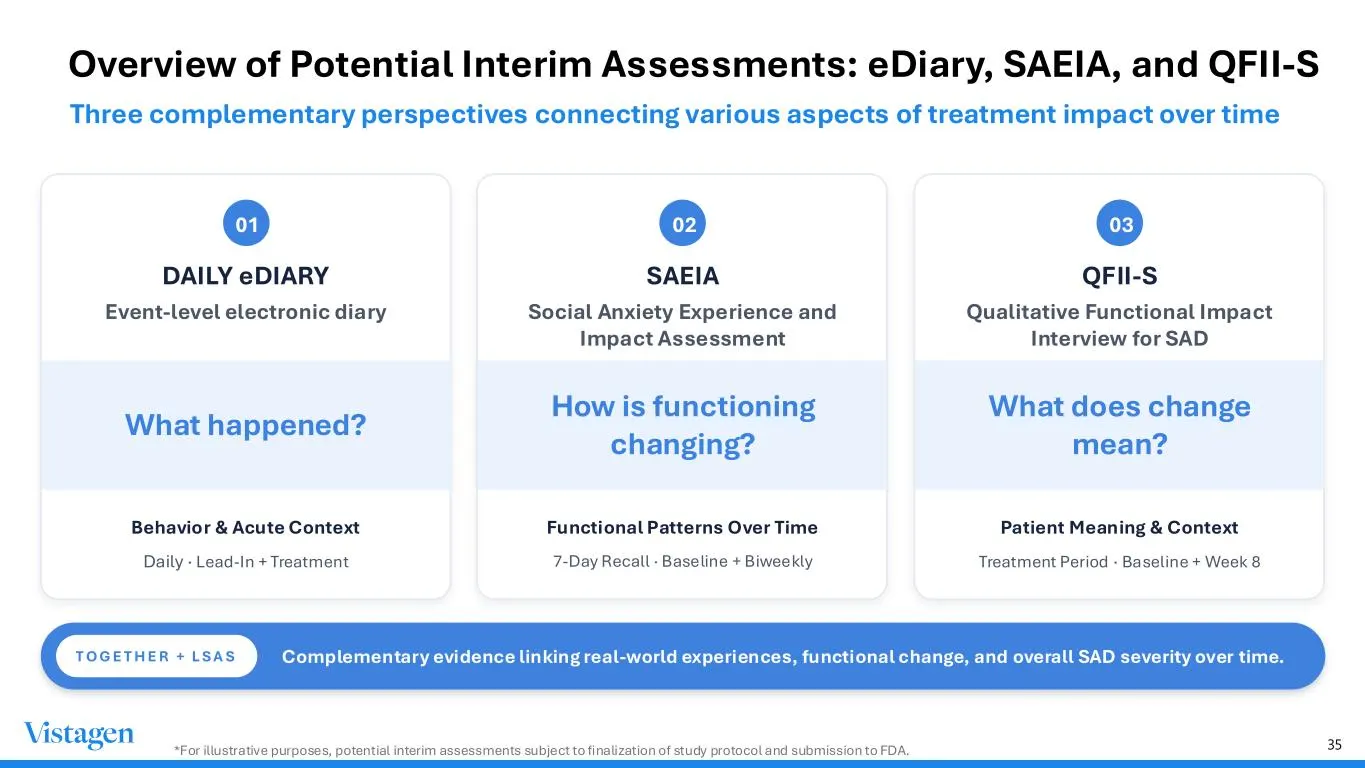
Slide 35: Overview of Potential Interim Assessments: eDiary, SAEIA, QFII-S
35 Overview of Potential Interim Assessments: eDiary, SAEIA, and QFII-S Three complementary perspectives connecting various aspects of treatment impact over time 01 DAILY eDIARY Event-level electronic diary What happened? Behavior & Acute Context Daily · Lead-In + Treatment 02 SAEIA Social Anxiety E
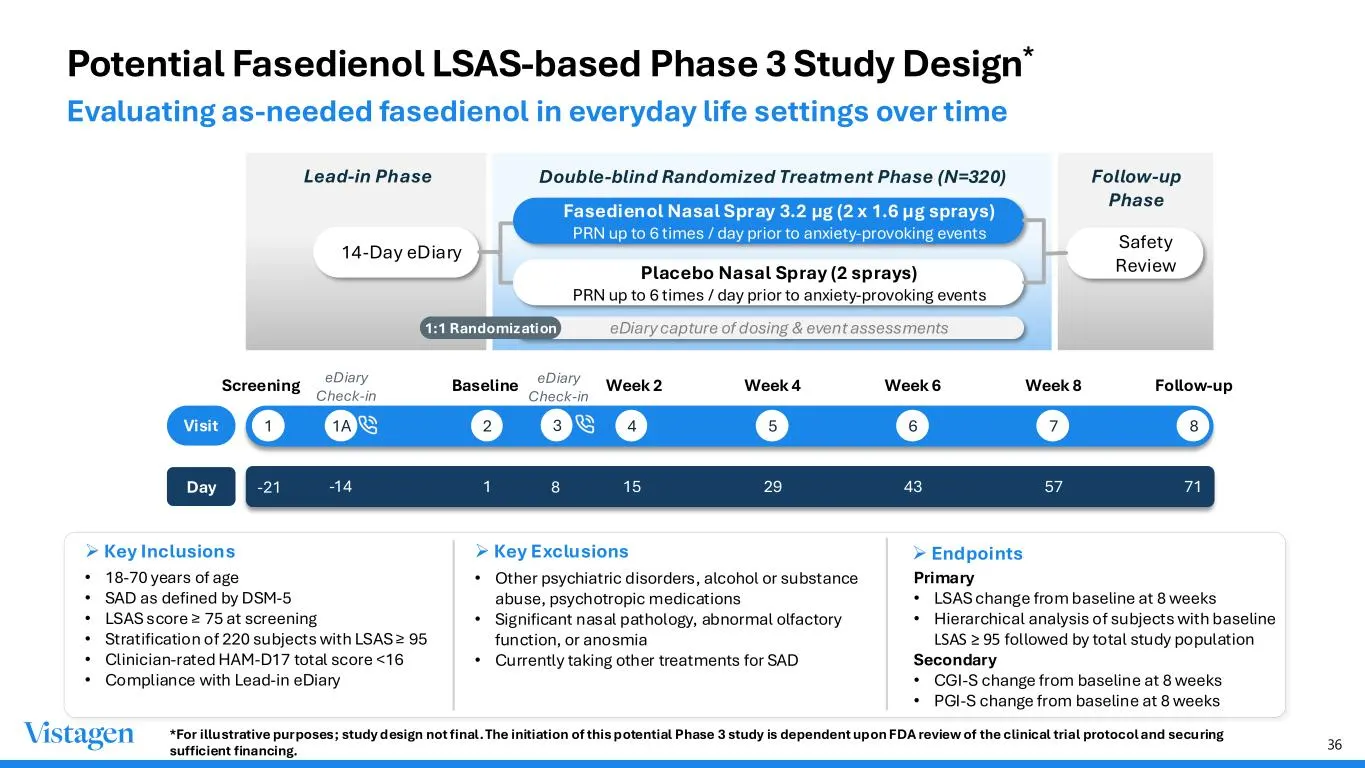
Slide 36: Potential Fasedienol LSAS-based Phase 3 Study Design
36 Potential Fasedienol LSAS-based Phase 3 Study Design* Evaluating as-needed fasedienol in everyday life settings over time *For illustrative purposes; study design not final.The initiation of this potential Phase 3 study is dependent upon FDA review of the clinical trial protocol and securing suff
Slide 37: Vasomotor Symptoms due to Menopause: Refisolone
37 Vasomotor Symptoms (Hot Flashes) due to Menopause Refisolone
Slide 38: Significant Portion of Menopausal Women Experience Vasomotor Symptoms
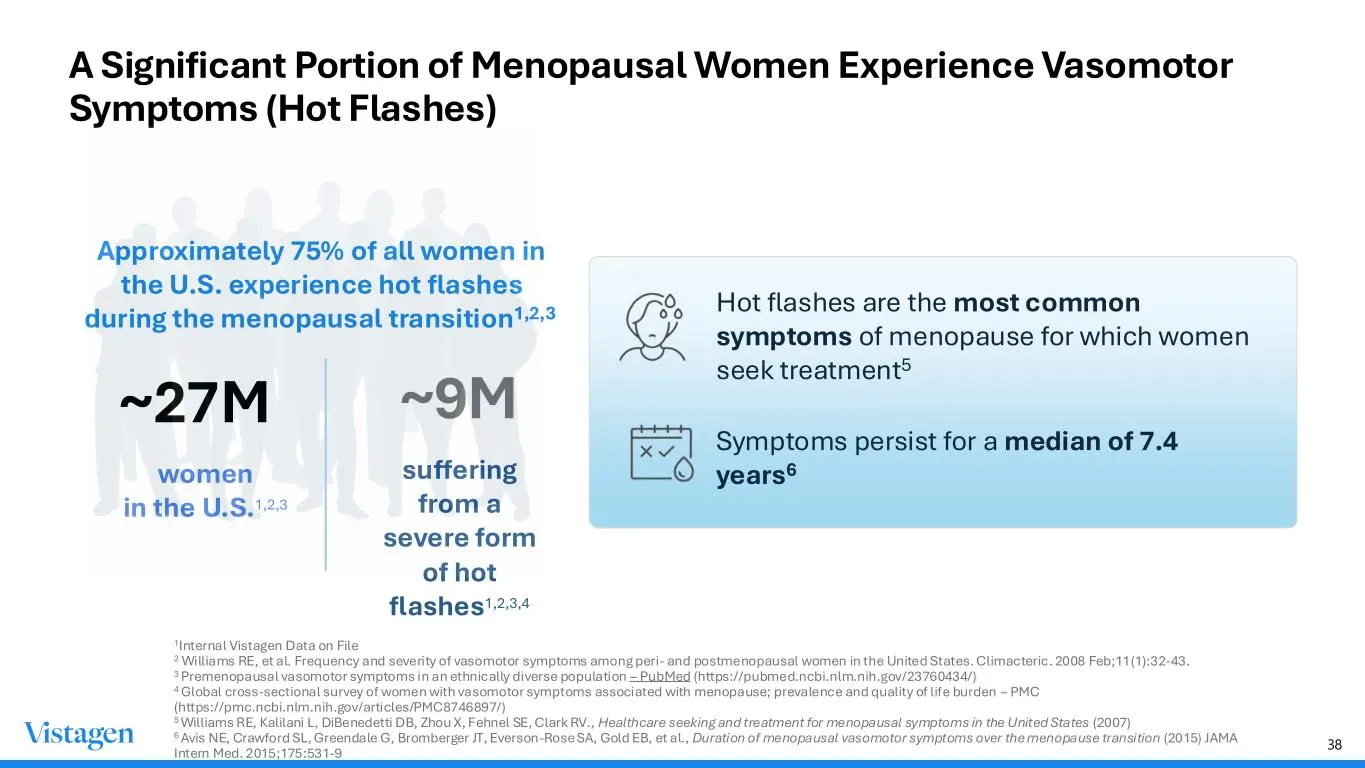
38 A Significant Portion of Menopausal Women Experience Vasomotor Symptoms (Hot Flashes) ~27M women in the U.S.1,2,3 ~9M suffering from a severe form of hot flashes1,2,3,4 Symptoms persist for a median of 7.4 years6 Hot flashes are the most common symptoms of menopause for which women seek treatment
Slide 39: Refisolone: On-demand, non-hormonal, non-systemic candidate for VMS
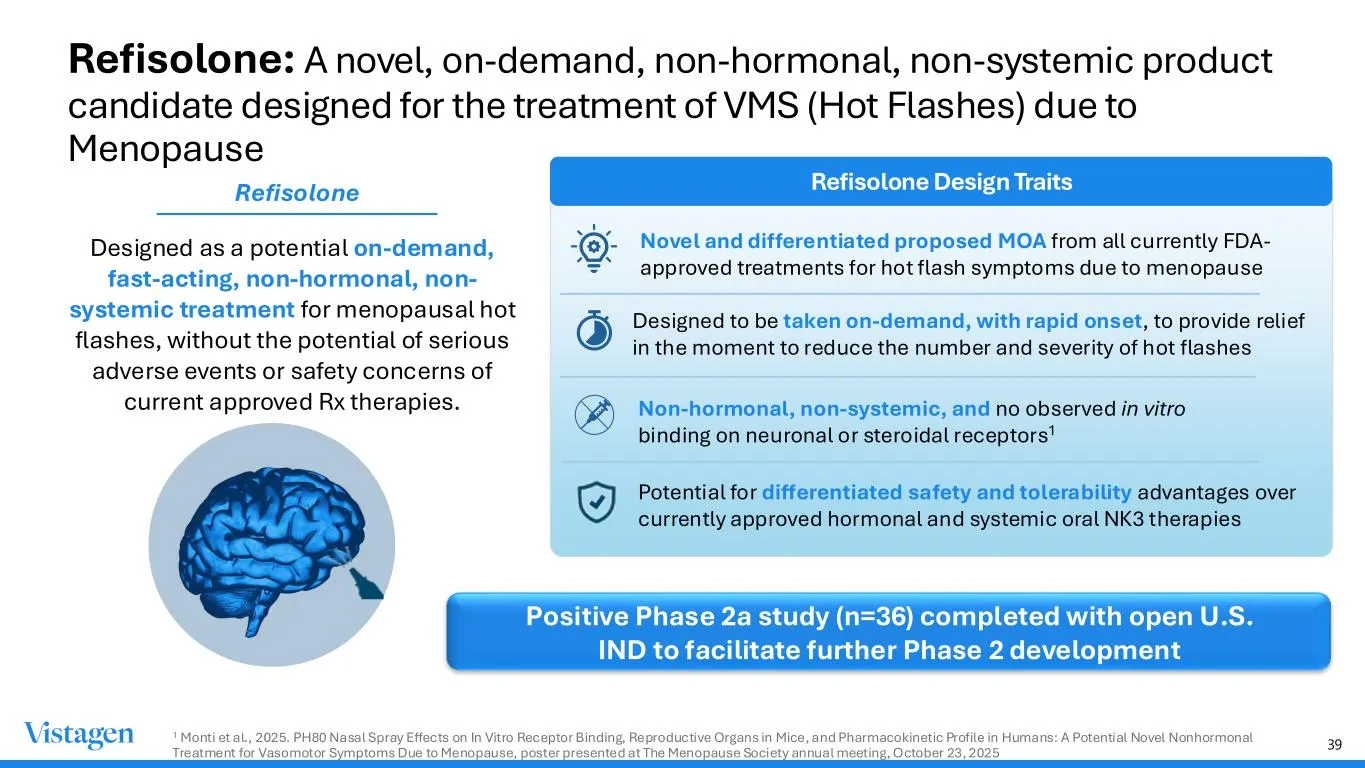
39 Refisolone: A novel, on-demand, non-hormonal, non-systemic product candidate designed for the treatment of VMS (Hot Flashes) due to Menopause Designed as a potential on-demand, fast-acting, non-hormonal, non- systemic treatment for menopausal hot flashes, without the potential of serious adverse
Slide 40: Positive Refisolone Exploratory Phase 2a Study Results (Mexico)
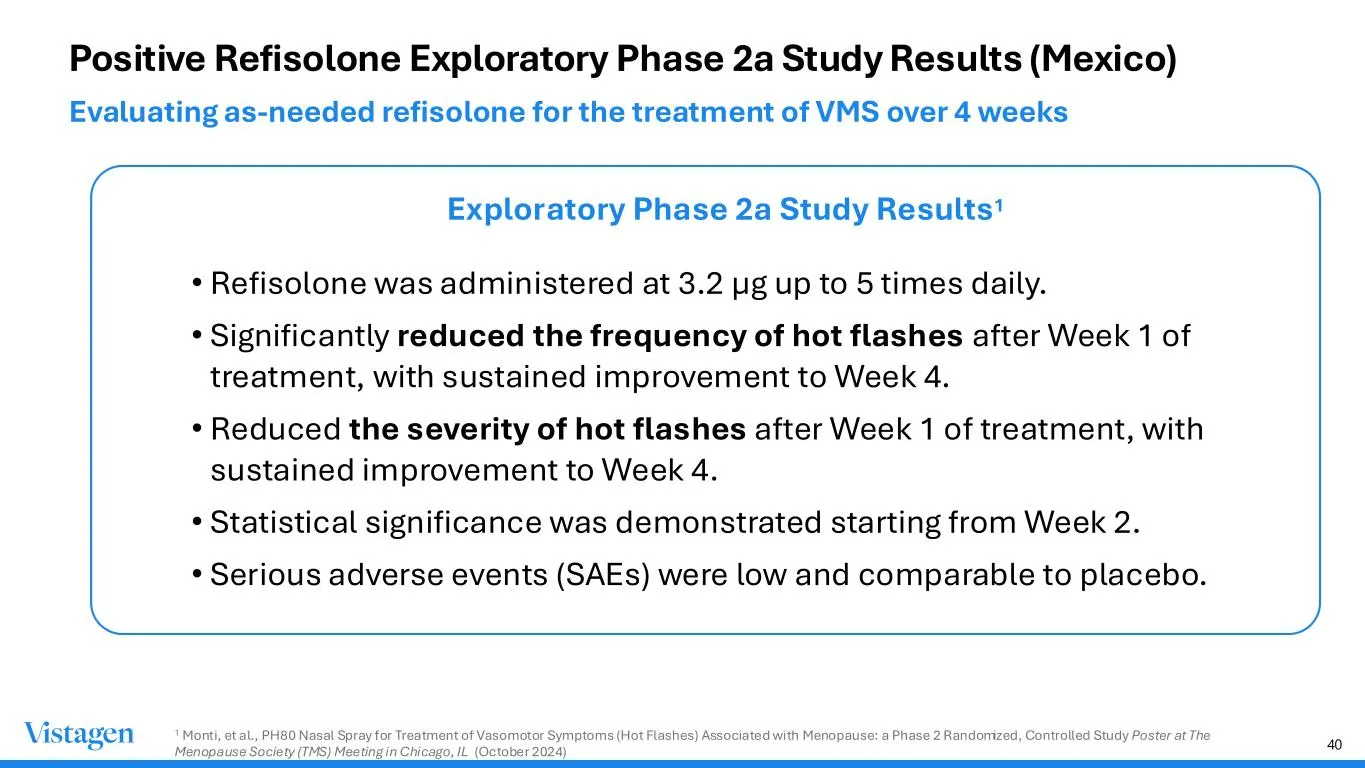
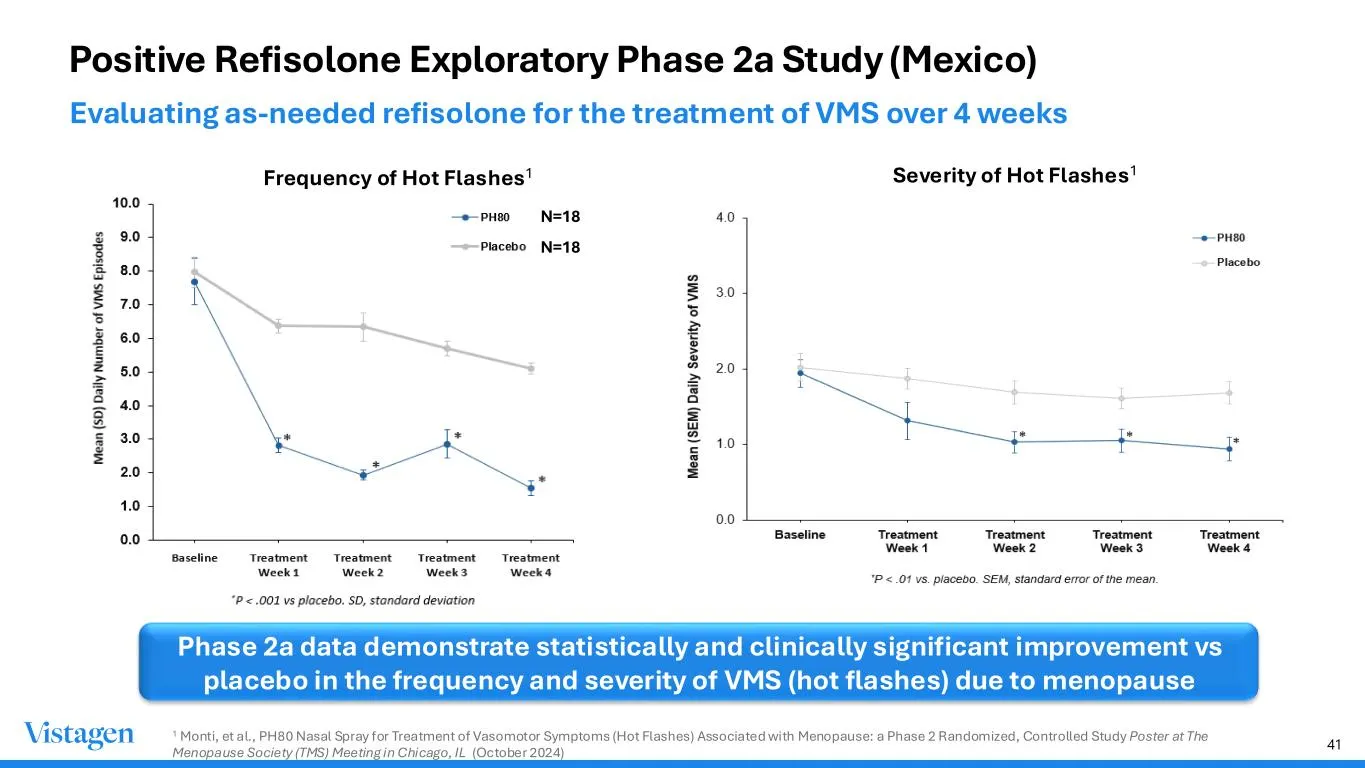
40 Positive Refisolone Exploratory Phase 2a Study Results (Mexico) Exploratory Phase 2a Study Results1 • Refisolone was administered at 3.2 µg up to 5 times daily. • Significantly reduced the frequency of hot flashes after Week 1 of treatment, with sustained improvement to Week 4. • Reduced the seve
Slide 41: Refisolone Phase 2a: Frequency and Severity of Hot Flashes
41 Positive Refisolone Exploratory Phase 2a Study (Mexico) Frequency of Hot Flashes1 Severity of Hot Flashes1 1 Monti, et al., PH80 Nasal Spray for Treatment of Vasomotor Symptoms (Hot Flashes) Associated with Menopause: a Phase 2 Randomized, Controlled Study Poster at The Menopause Society (TMS) Me
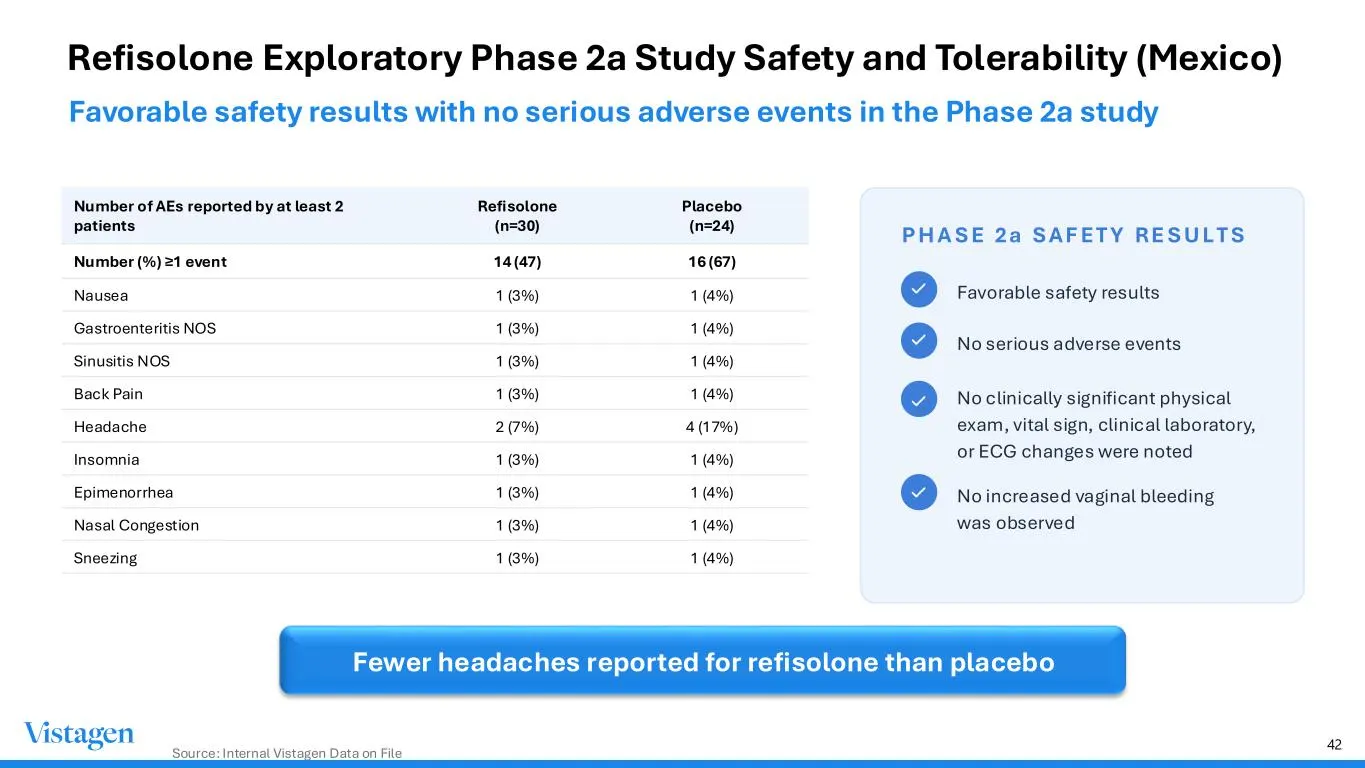
Slide 42: Refisolone Phase 2a Safety and Tolerability
42 Refisolone Exploratory Phase 2a Study Safety and Tolerability (Mexico) Favorable safety results with no serious adverse events in the Phase 2a study Number of AEs reported by at least 2 patients Refisolone (n=30) Placebo (n=24) Number (%) ≥1 event 14 (47) 16 (67) Nausea 1 (3%) 1 (4%) Gastroenteri
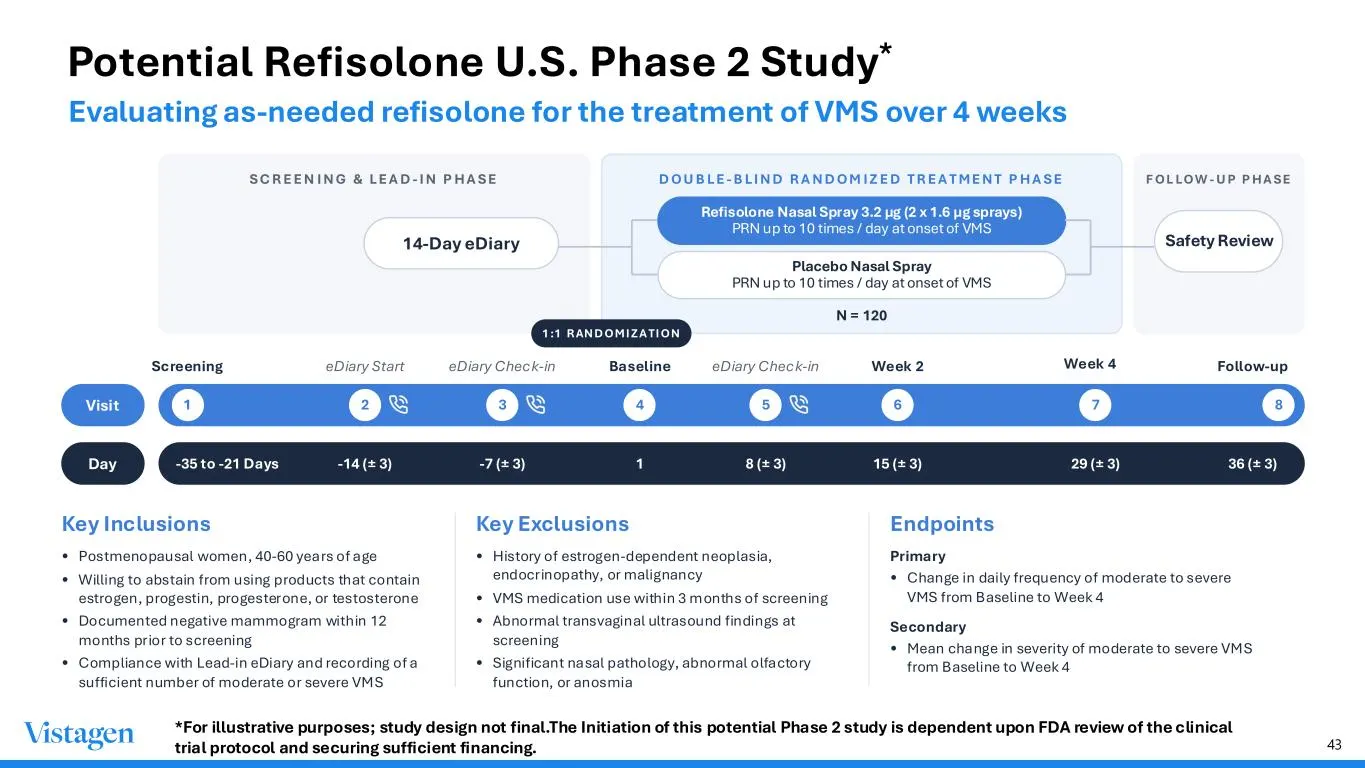
Slide 43: Potential Refisolone U.S. Phase 2 Study
43 Potential Refisolone U.S. Phase 2 Study* Evaluating as-needed refisolone for the treatment of VMS over 4 weeks S C R E E N I N G & L E A D - I N P H A S E D O U B L E - B L I N D R A N D O M I Z E D T R E A T M E N T P H A S E F O L LO W - U P P H A SE 14-Day eDiary Refisolone Nasal Spray 3.2 µg
Slide 44: Refisolone: Premenstrual Dysphoric Disorder (PMDD)
44 Refisolone Premenstrual Dysphoric Disorder (PMDD)
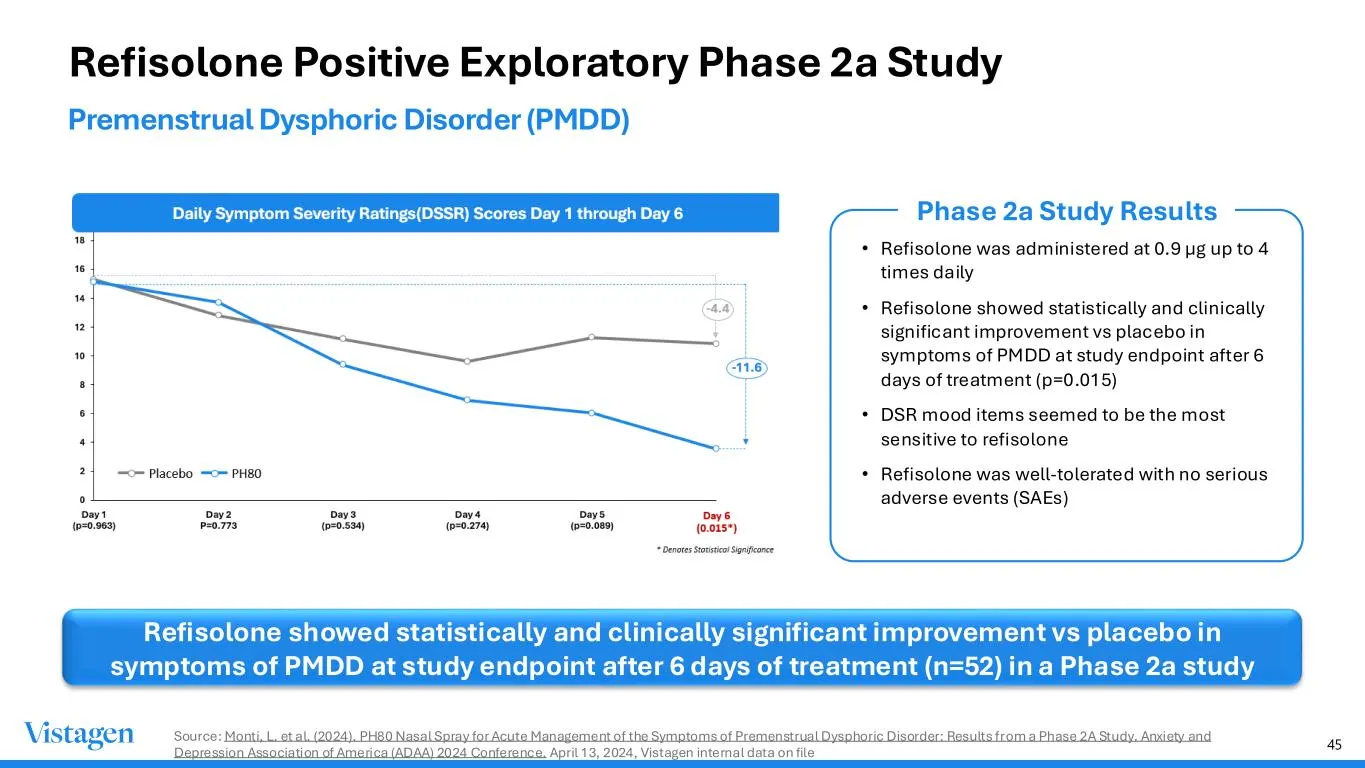
Slide 45: Refisolone Positive Exploratory Phase 2a Study in PMDD
45 Refisolone Positive Exploratory Phase 2a Study Premenstrual Dysphoric Disorder (PMDD) Refisolone showed statistically and clinically significant improvement vs placebo in symptoms of PMDD at study endpoint after 6 days of treatment (n=52) in a Phase 2a study Phase 2a Study Results • Refisolone wa

Slide 46: Major Depressive Disorder: Itruvone
46 Major Depressive Disorder Itruvone
Slide 47: Major Depressive Disorder Market is Large and Underserved
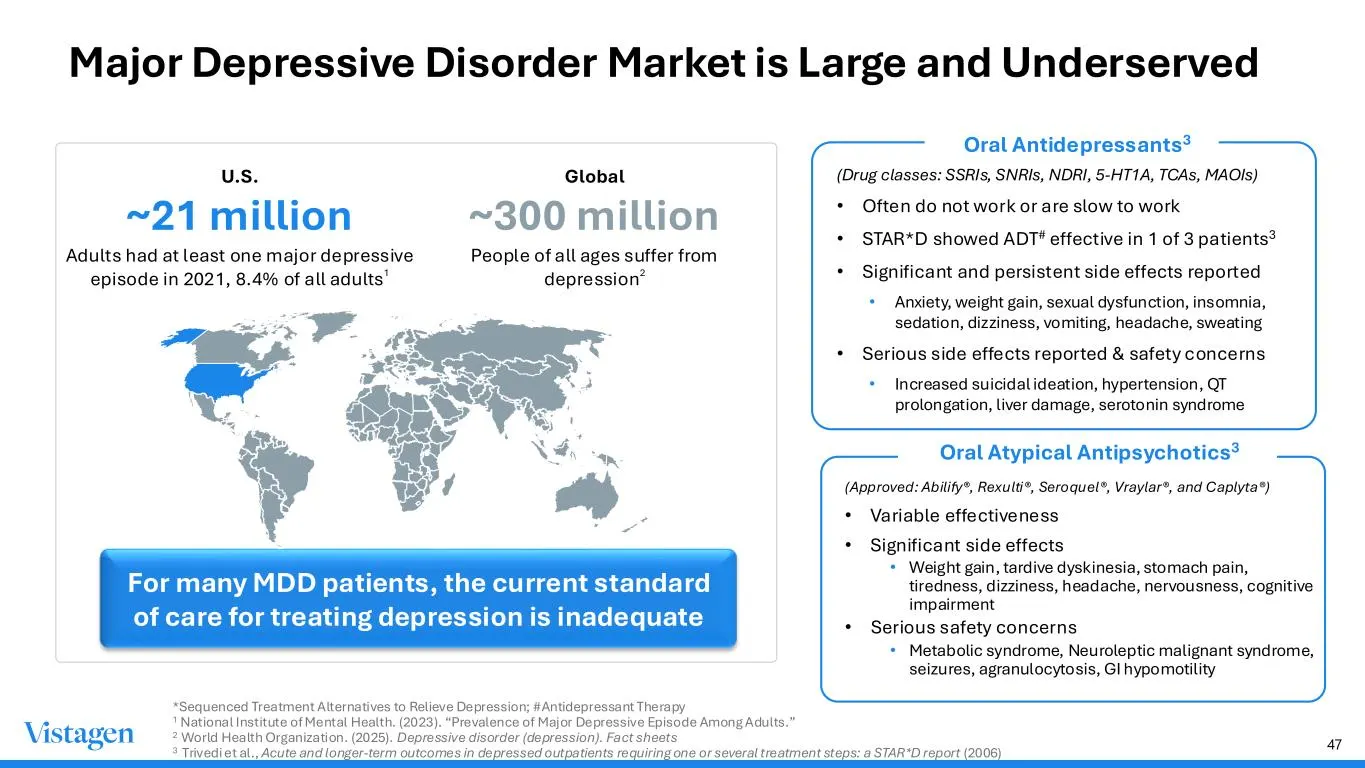
47 Major Depressive Disorder Market is Large and Underserved (Drug classes: SSRIs, SNRIs, NDRI, 5-HT1A, TCAs, MAOIs) • Often do not work or are slow to work • STAR*D showed ADT# effective in 1 of 3 patients3 • Significant and persistent side effects reported • Anxiety, weight gain, sexual dysfunctio
Slide 48: Itruvone: Novel, Non-Systemic Candidate for MDD
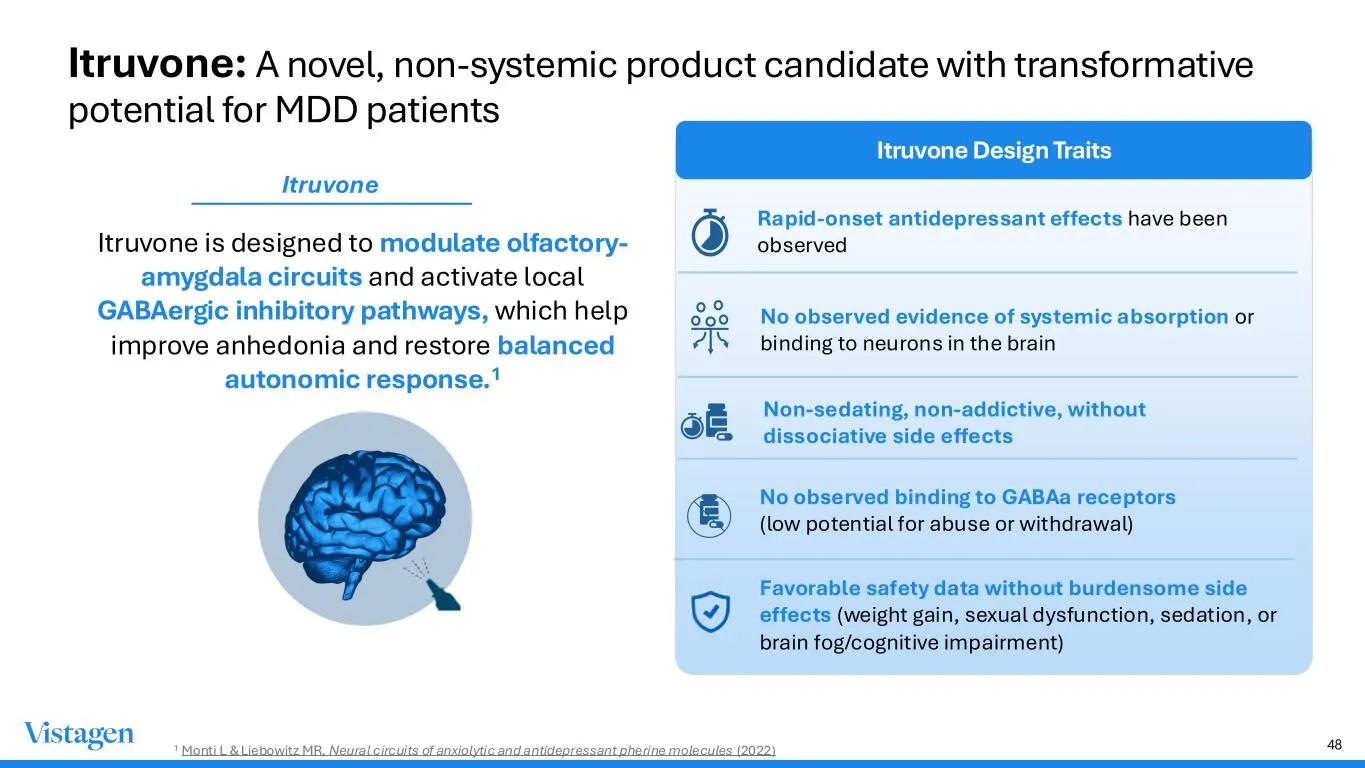
48 Itruvone is designed to modulate olfactory- amygdala circuits and activate local GABAergic inhibitory pathways, which help improve anhedonia and restore balanced autonomic response.1 Itruvone Design Traits Rapid-onset antidepressant effects have been observed No observed evidence of systemic abso
Slide 49: Itruvone Positive Exploratory Phase 2a MDD Study (Mexico)
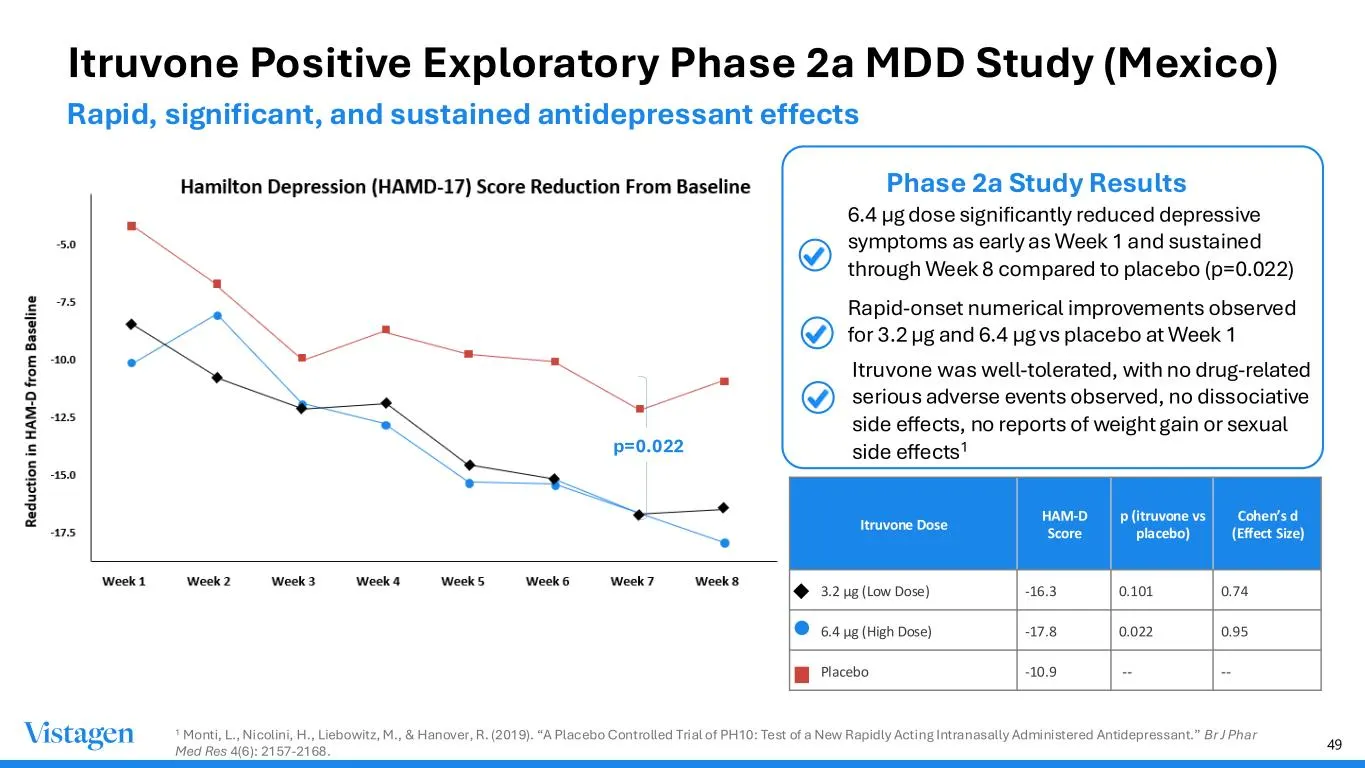
49 Itruvone Positive Exploratory Phase 2a MDD Study (Mexico) • 6.4 µg dose significantly reduced depressive symptoms as early as Week 1 and sustained through Week 8 compared to placebo (p=0.022) • Rapid-onset numerical improvements observed for 3.2 µg and 6.4 µg vs placebo at Week 1 Phase 2a Study R
Slide 50: Potential Itruvone Phase 2 Study (U.S.)
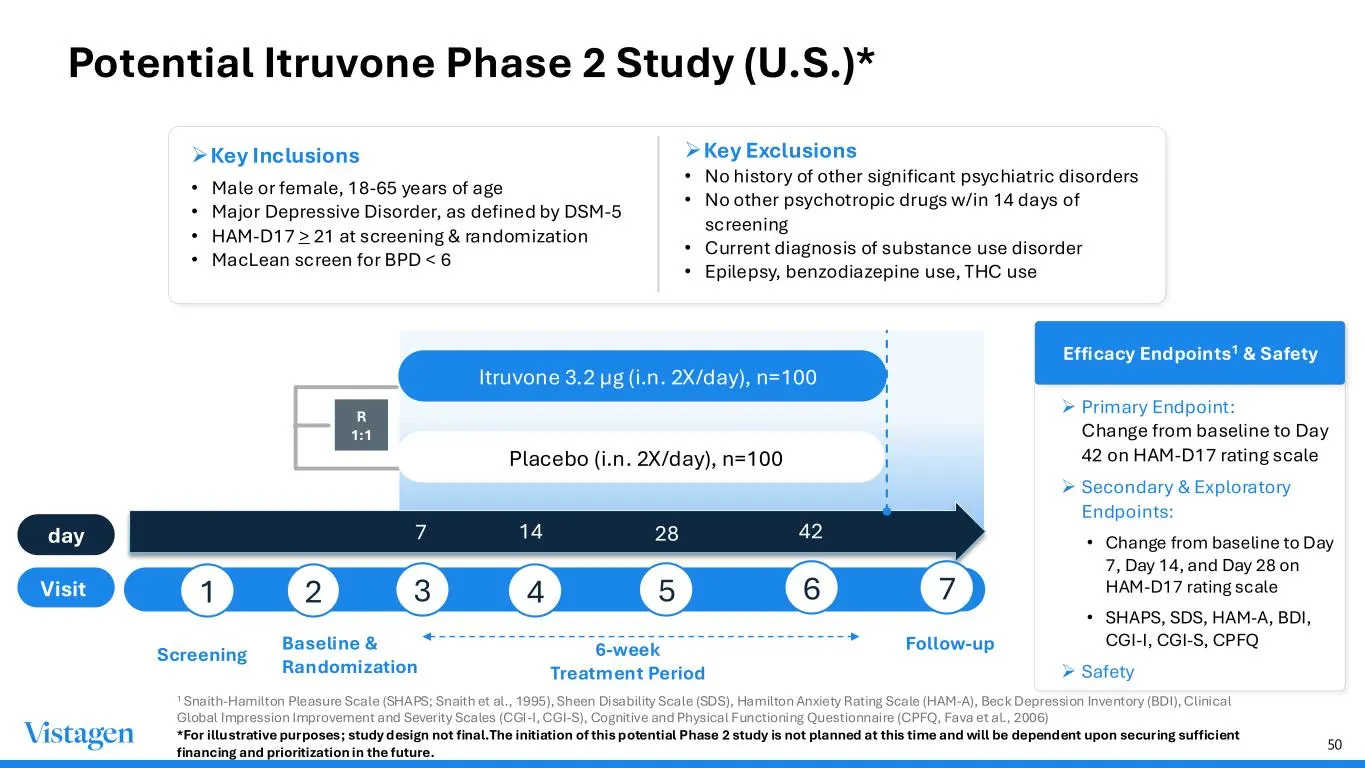
50 6-week Treatment Period Potential Itruvone Phase 2 Study (U.S.)* ➢Key Inclusions • Male or female, 18-65 years of age • Major Depressive Disorder, as defined by DSM-5 • HAM-D17 > 21 at screening & randomization • MacLean screen for BPD < 6 ➢Key Exclusions • No history of other significant psychia
Slide 51: Psychomotor / Cognitive Impairment due to Mental Fatigue: PH15
51 Psychomotor / Cognitive Impairment due to Mental Fatigue PH15
Slide 52: PH15: Fast-acting, non-systemic candidate for mental fatigue impairment
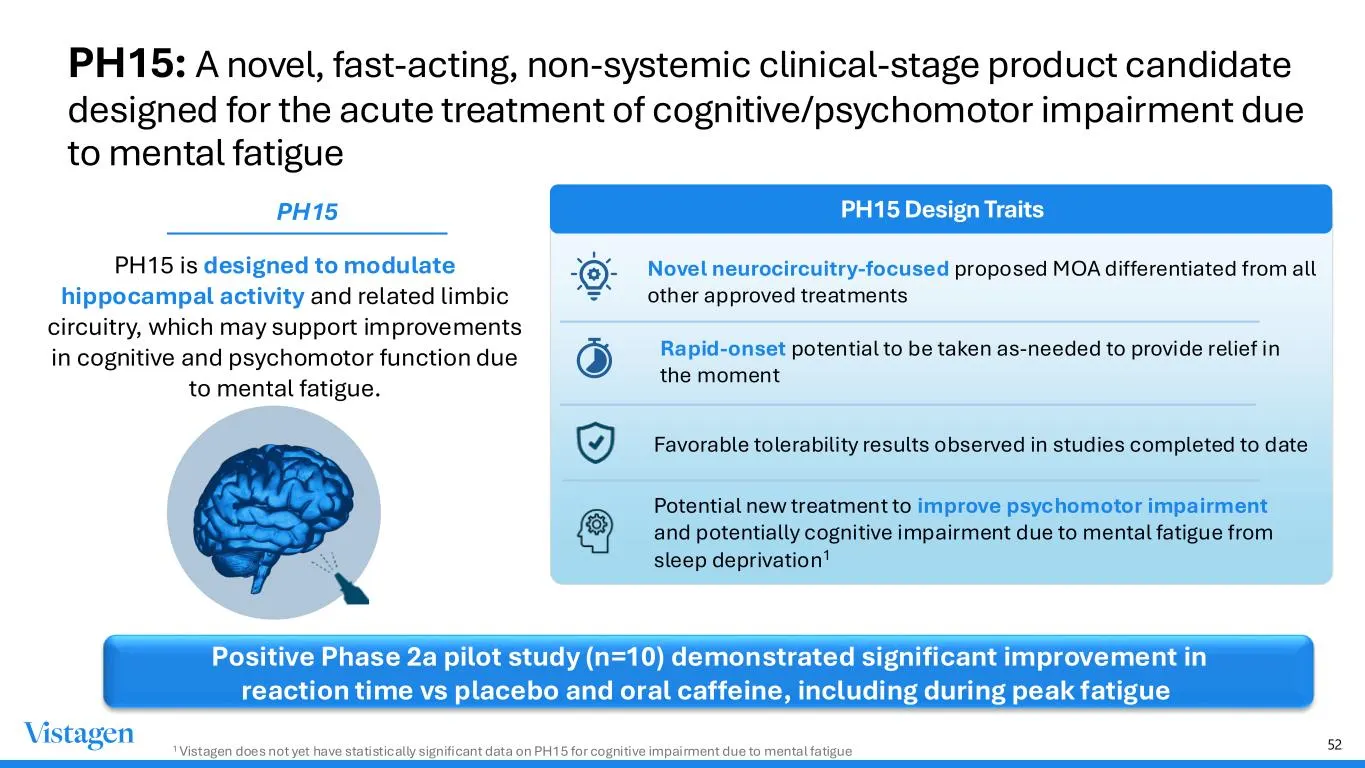
52 PH15: A novel, fast-acting, non-systemic clinical-stage product candidate designed for the acute treatment of cognitive/psychomotor impairment due to mental fatigue PH15 is designed to modulate hippocampal activity and related limbic circuitry, which may support improvements in cognitive and psyc
Slide 53: Cancer Cachexia (Cancer Supportive Care): PH284
53 Cancer Cachexia (Cancer Supportive Care) PH284
Slide 54: PH284: Non-systemic candidate for cancer cachexia
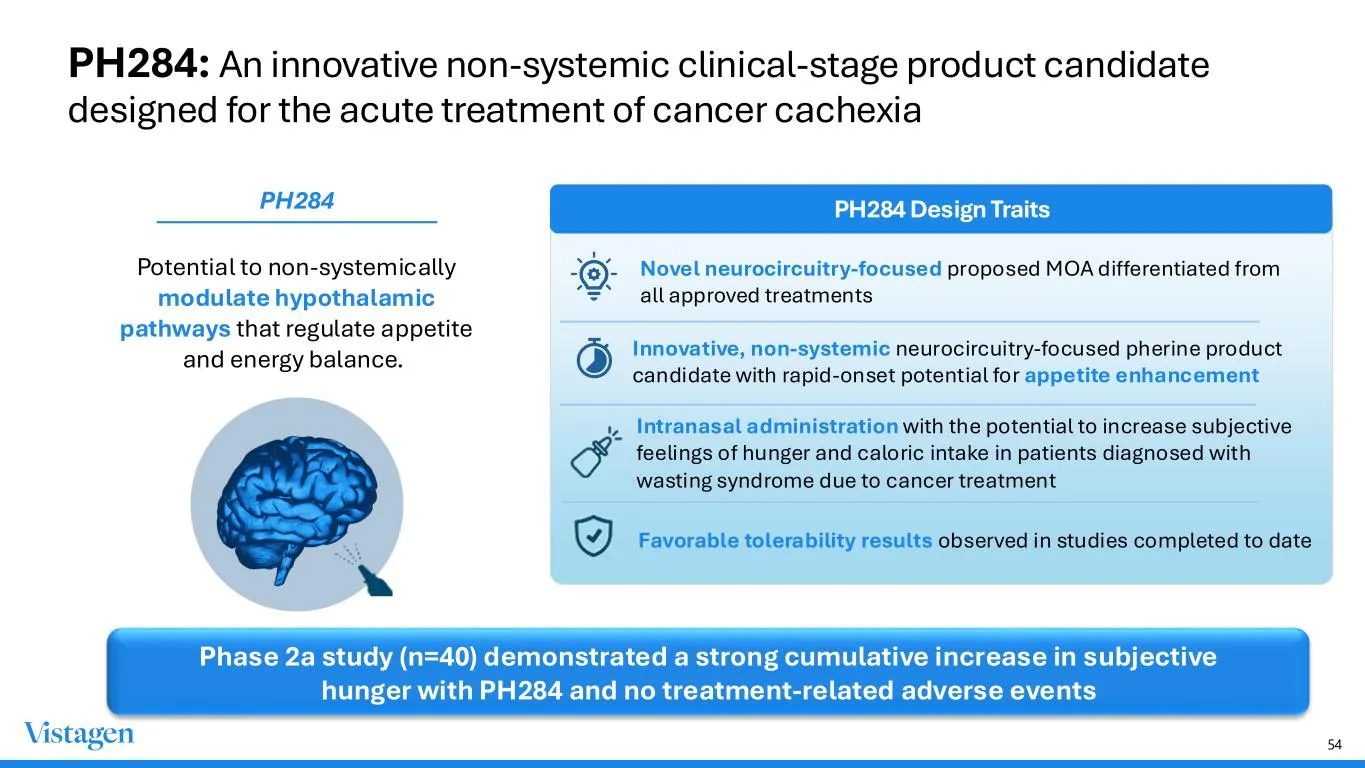
54 PH284: An innovative non-systemic clinical-stage product candidate designed for the acute treatment of cancer cachexia Potential to non-systemically modulate hypothalamic pathways that regulate appetite and energy balance. PH284 Design Traits Novel neurocircuitry-focused proposed MOA differentiat
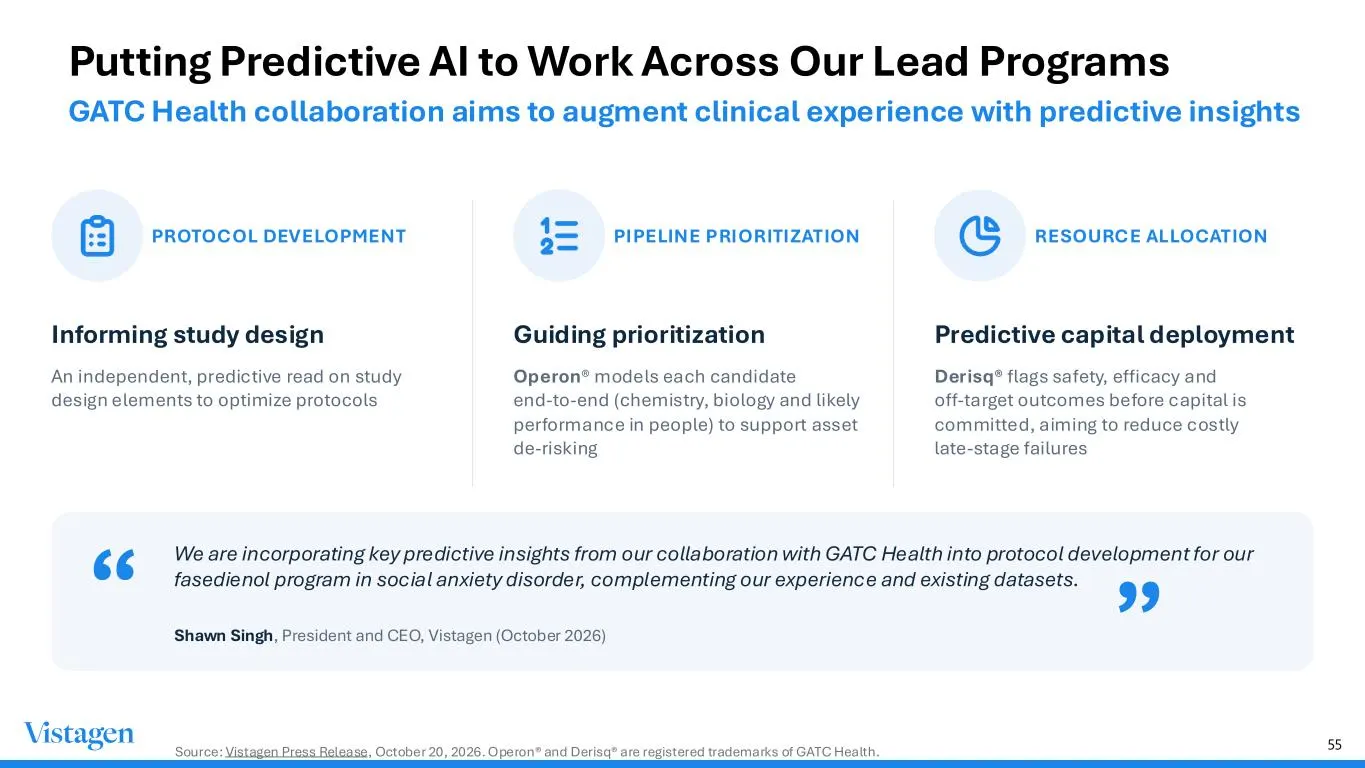
Slide 55: Putting Predictive AI to Work Across Our Lead Programs
55 Putting Predictive AI to Work Across Our Lead Programs GATC Health collaboration aims to augment clinical experience with predictive insights PROTOCOL DEVELOPMENT Informing study design An independent, predictive read on study design elements to optimize protocols PIPELINE PRIORITIZATION Guiding
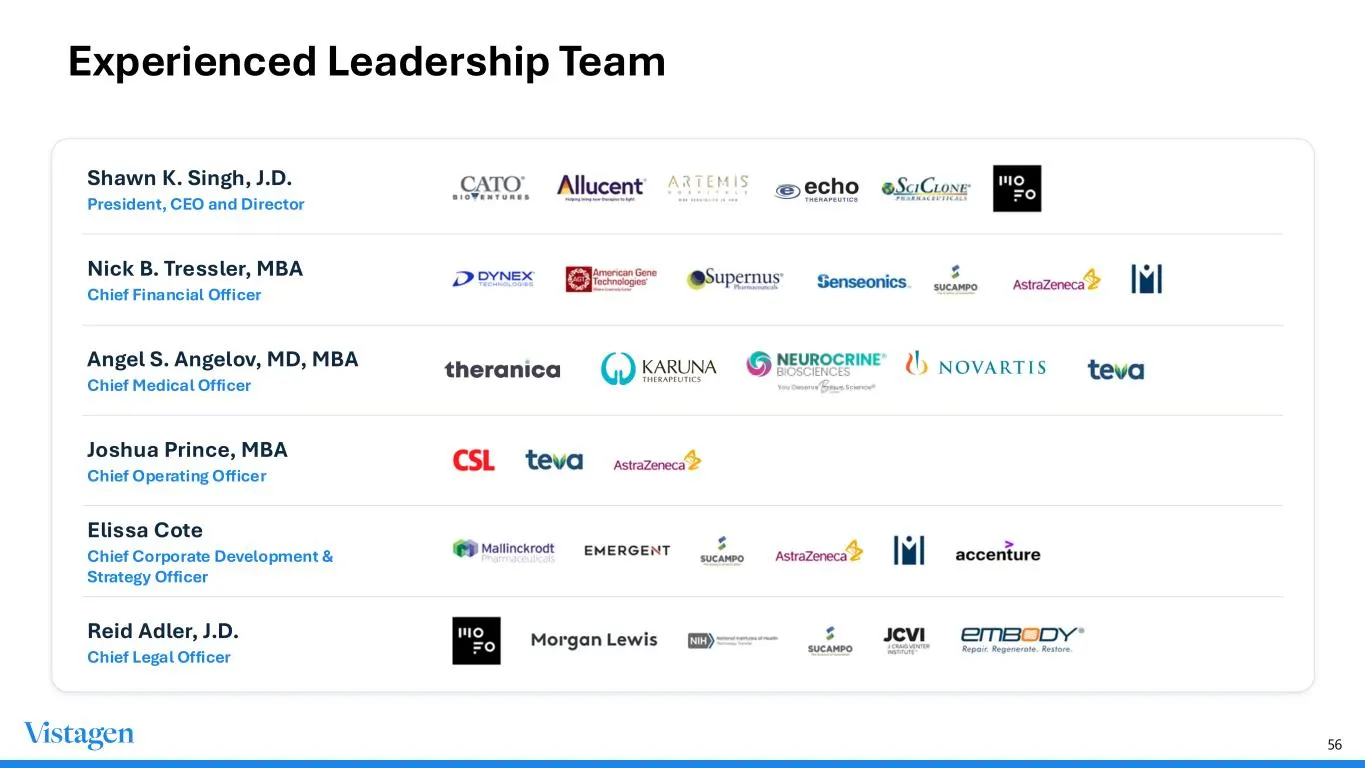
Slide 56: Experienced Leadership Team
56 Experienced Leadership Team Shawn K. Singh, J.D. President, CEO and Director Nick B. Tressler, MBA Chief Financial Officer Angel S. Angelov, MD, MBA Chief Medical Officer Joshua Prince, MBA Chief Operating Officer Elissa Cote Chief Corporate Development & Strategy Officer Reid Adler, J.D. Chief L
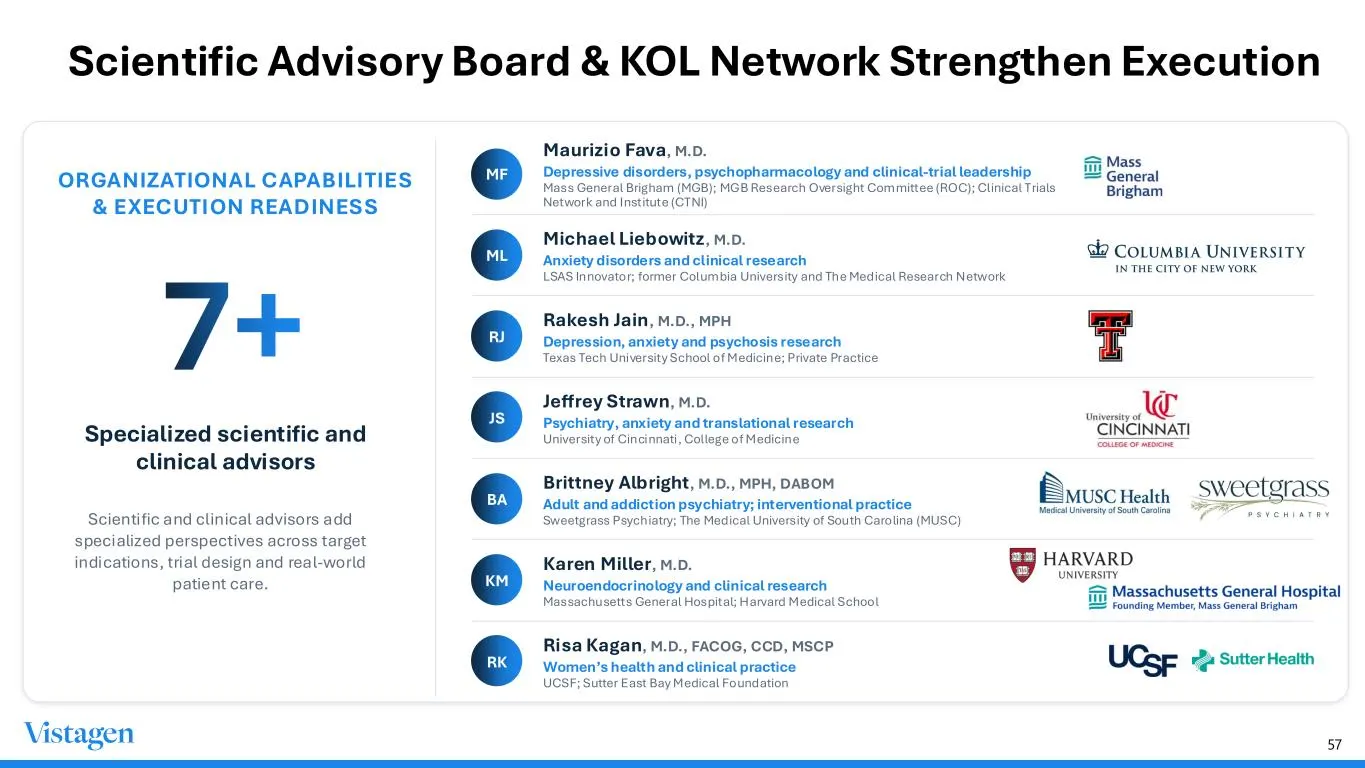
Slide 57: Scientific Advisory Board & KOL Network Strengthen Execution
57 Scientific Advisory Board & KOL Network Strengthen Execution ORGANIZATIONAL CAPABILITIES & EXECUTION READINESS 7+ Specialized scientific and clinical advisors Scientific and clinical advisors add specialized perspectives across target indications, trial design and real-world patient care. MF Maur
Slide 58: Thank You
58 Nasdaq: VTGN Thank You Harnessing the therapeutic power and potential of brain regulation with nose-to-brain neurocircuitry CONFIDENTIAL

Slide 59: Appendix
59 Appendix
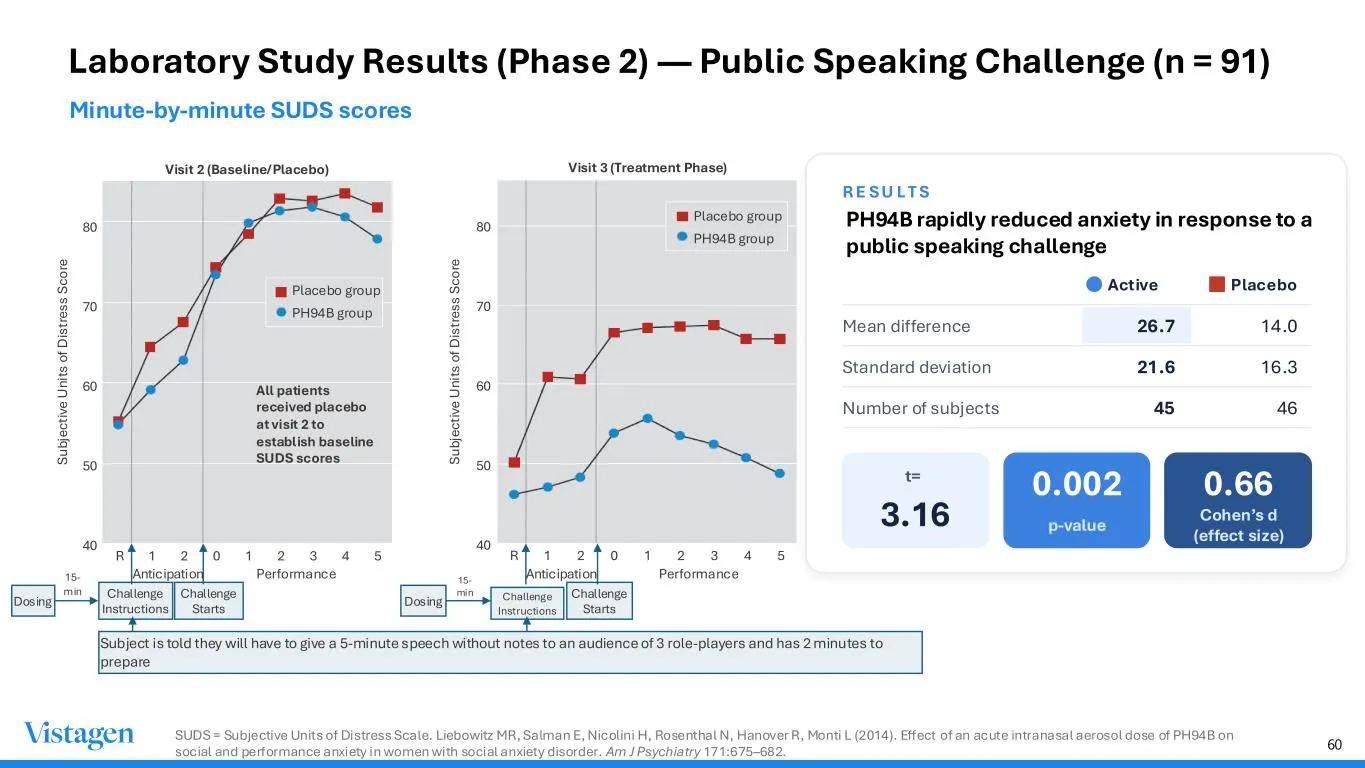
Slide 60: Laboratory Study Results (Phase 2): Public Speaking Challenge
60 Laboratory Study Results (Phase 2) — Public Speaking Challenge (n = 91) R E S U L T S PH94B rapidly reduced anxiety in response to a public speaking challenge Active Placebo Mean difference 26.7 14.0 Standard deviation 21.6 16.3 Number of subjects 45 46 3.16 t= 0.002 p-value 0.66 Cohen’s d (effec
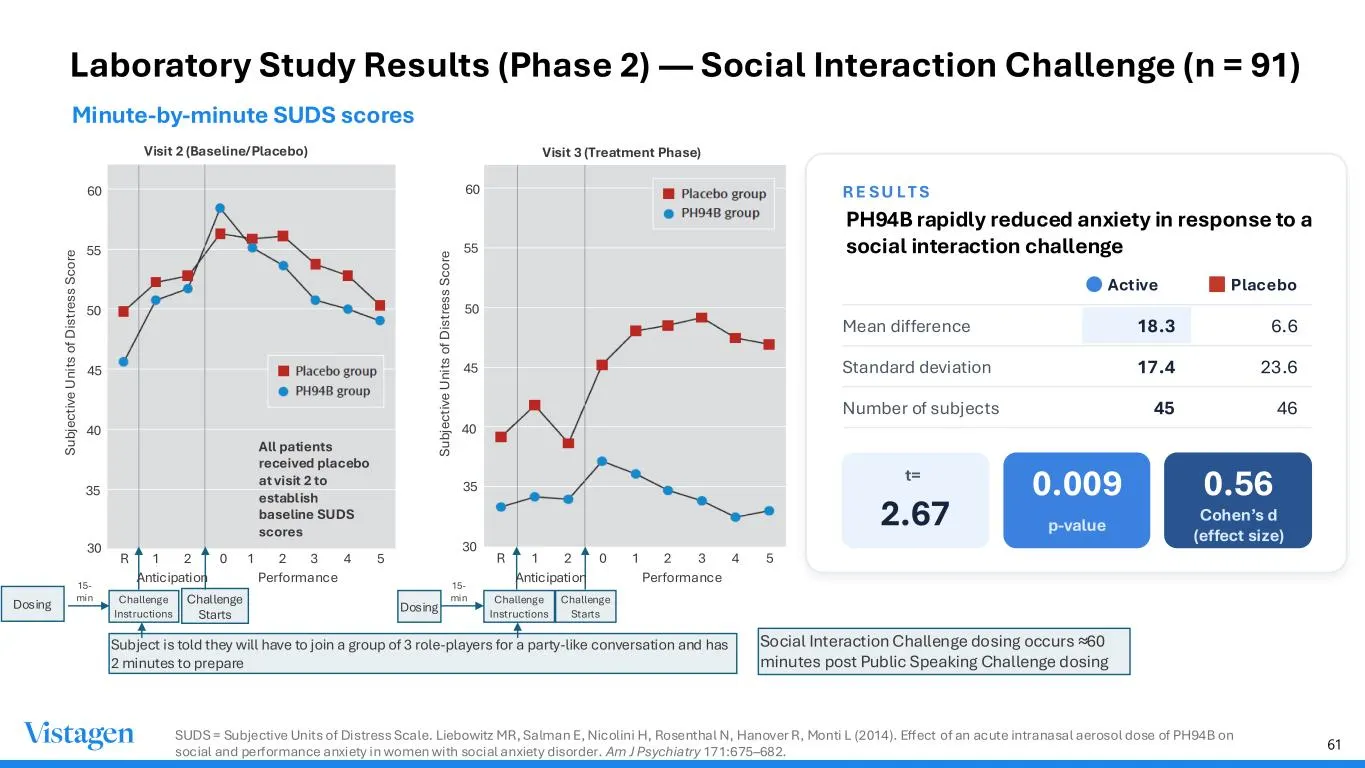
Slide 61: Laboratory Study Results (Phase 2): Social Interaction Challenge
61 Laboratory Study Results (Phase 2) — Social Interaction Challenge (n = 91) R E S U L T S PH94B rapidly reduced anxiety in response to a social interaction challenge Active Placebo Mean difference 18.3 6.6 Standard deviation 17.4 23.6 Number of subjects 45 46 2.67 t= 0.009 p-value 0.56 Cohen’s d (
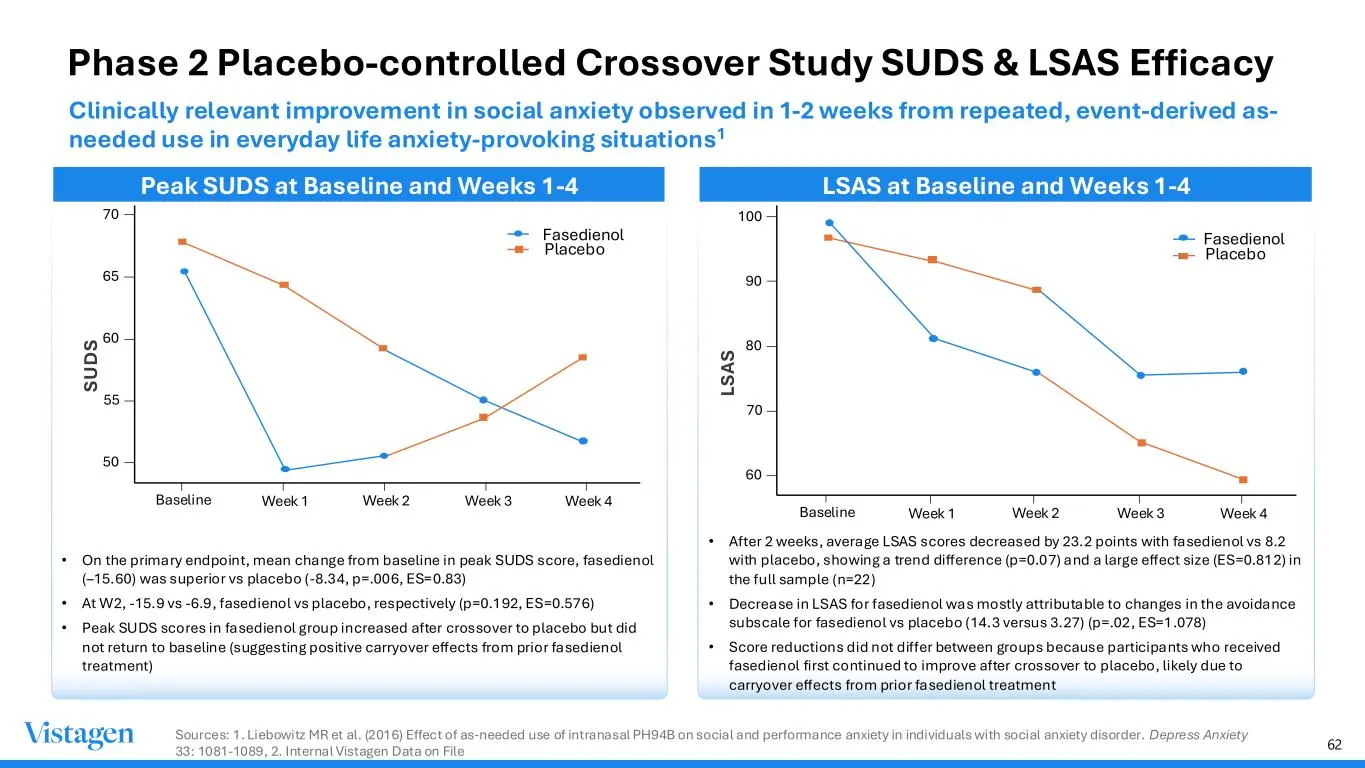
Slide 62: Fasedienol Phase 2 crossover study results
62 • On the primary endpoint, mean change from baseline in peak SUDS score, fasedienol (–15.60) was superior vs placebo (-8.34, p=.006, ES=0.83) • At W2, -15.9 vs -6.9, fasedienol vs placebo, respectively (p=0.192, ES=0.576) • Peak SUDS scores in fasedienol group increased after crossover to placebo
Source: SEC EDGAR · 8-K filed Nov 25, 2026
More decks from Vistagen Therapeutics, Inc.
 Investor Presentation (September 2026)49 slides · September 2026
 Technical Presentation (June 2026)8 slides · Jun 30, 2026
 Investor Presentation (March 2026)47 slides · Mar 16, 2026
 Investor Presentation (January 2026)45 slides · Jan 9, 2026
 Investor Presentation (August 2025)59 slides · Aug 7, 2025
 Investor Presentation (June 2025)59 slides · Jun 2, 2025