Apollo Minerals Limited · ASX:AON
Apollo Minerals — Investor Presentation (July 2014)
23 slides from Apollo Minerals's investor presentation, July 2014
Slide 1: Investor Presentation
INVESTOR PRESENTATION On the search for Australia’s next major discovery July 2014
Slide 2: Company overview
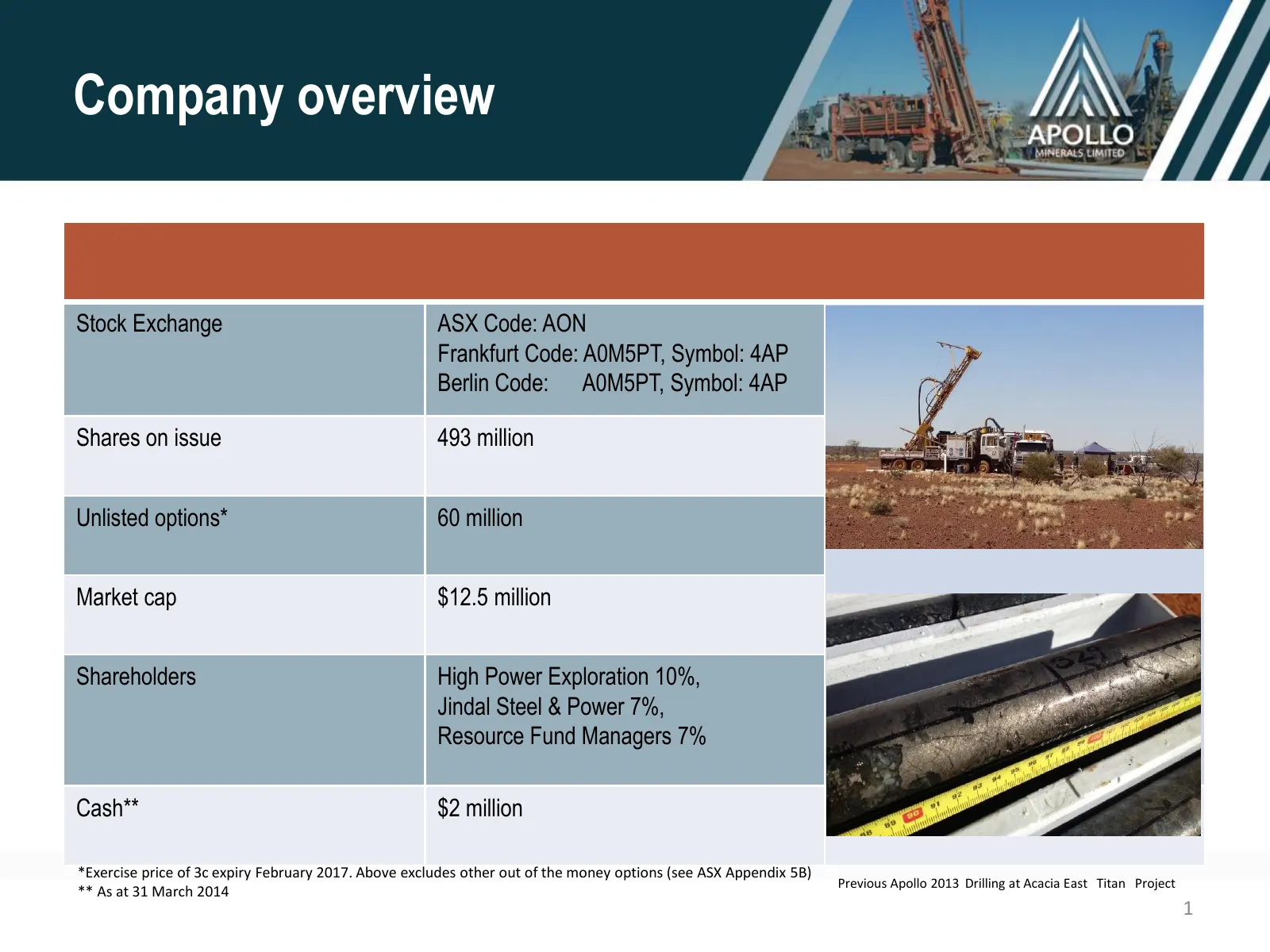
Company overview Stock Exchange ASX Code: AON Insert Picture Frankfurt Code: A0M5PT, Symbol: 4AP Berlin Code: A0M5PT, Symbol: 4AP A: Drill Rig B: Core From Acacia East (massive Shares on issue 493 million sulphides) Unlisted options* 60 million Market cap $12.5 million Shareholders High Power Explor
Slide 3: Exploration team
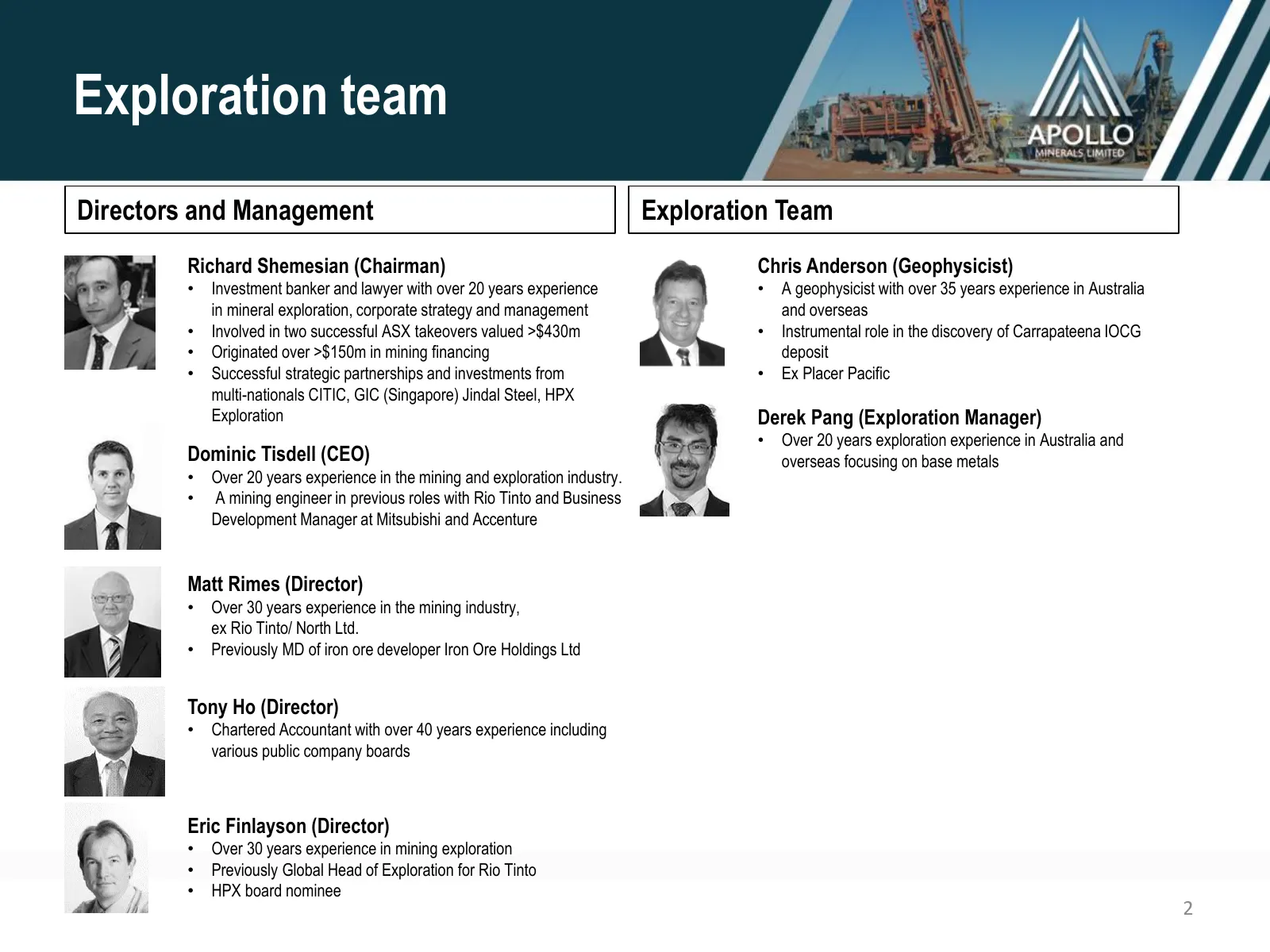
Exploration team Directors and Management Exploration Team Richard Shemesian (Chairman) Chris Anderson (Geophysicist) • Investment banker and lawyer with over 20 years experience • A geophysicist with over 35 years experience in Australia in mineral exploration, corporate strategy and management and
Slide 4: Targeting world-class copper gold deposits in SA
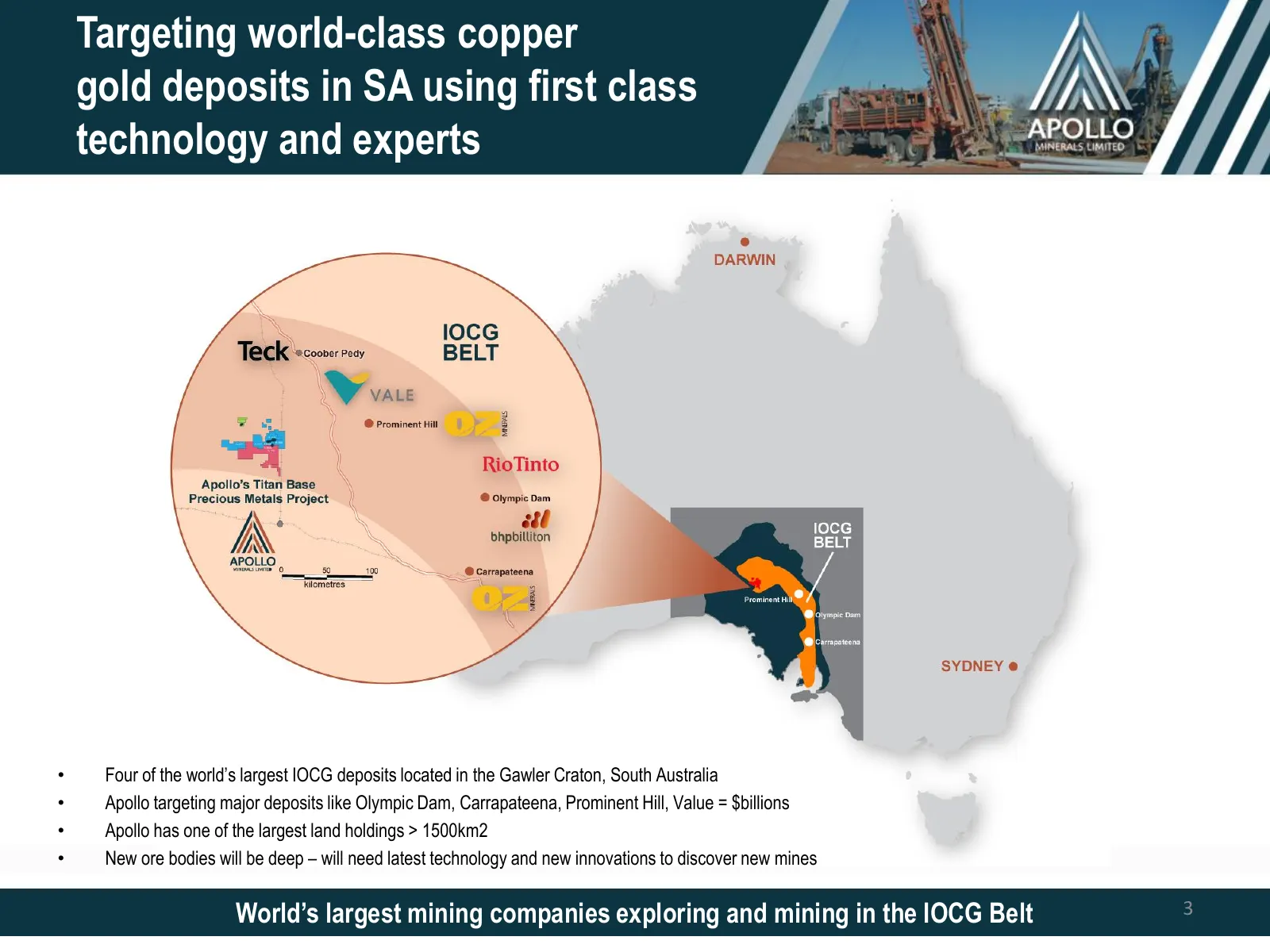
Targeting world-class copper gold deposits in SA using first class technology and experts • Four of the world’s largest IOCG deposits located in the Gawler Craton, South Australia • Apollo targeting major deposits like Olympic Dam, Carrapateena, Prominent Hill, Value = $billions • Apollo has one of
Slide 5: Copper and Gold Demand
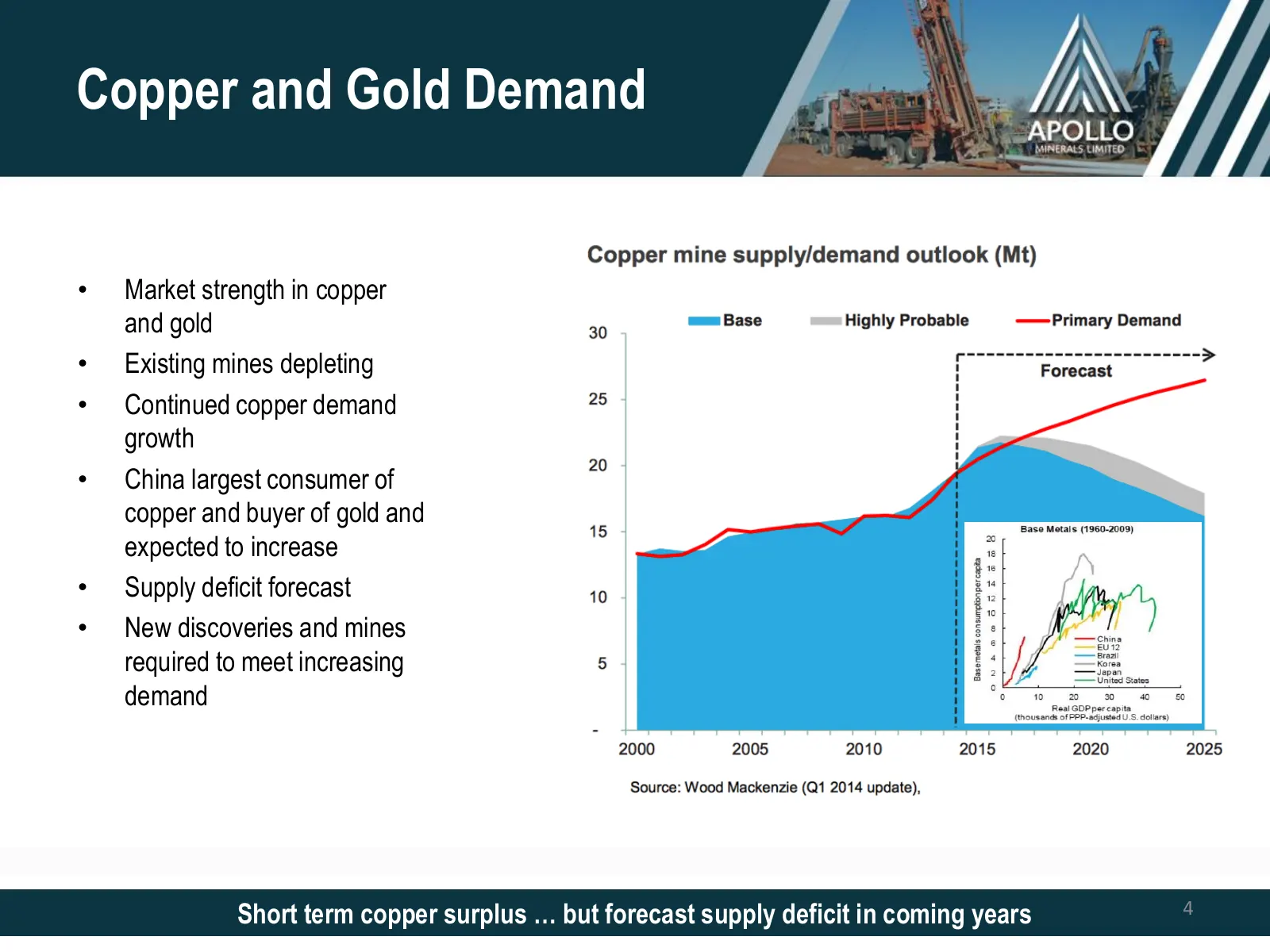
Copper and Gold Demand • Market strength in copper and gold • Existing mines depleting • Continued copper demand growth • China largest consumer of copper and buyer of gold and expected to increase • Supply deficit forecast • New discoveries and mines required to meet increasing demand Short term co
Slide 6: New technology making discoveries
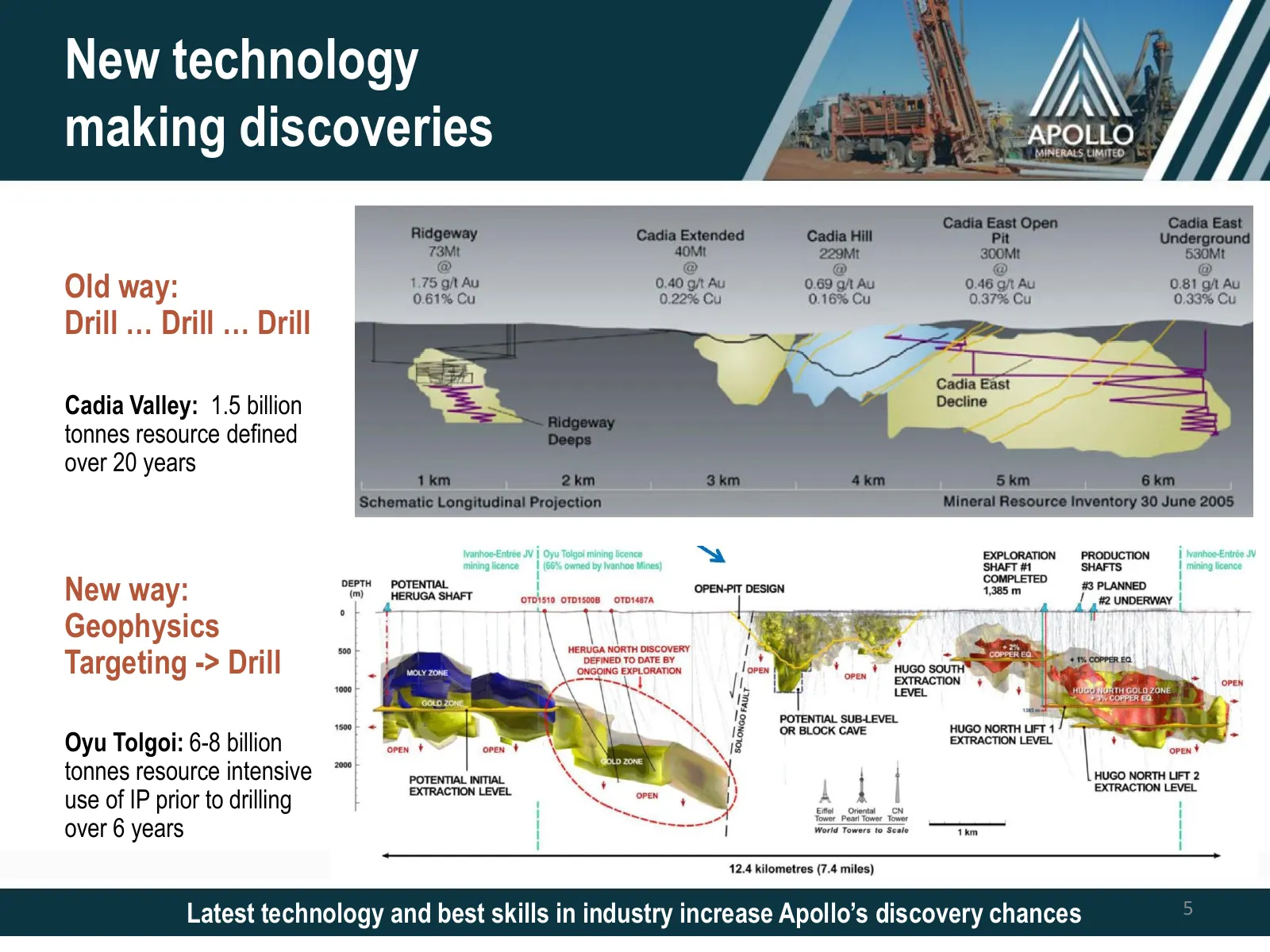
New technology making discoveries Old way: Drill … Drill … Drill Cadia Valley: 1.5 billion tonnes resource defined over 20 years New way: Geophysics Targeting -> Drill Oyu Tolgoi: 6-8 billion tonnes resource intensive use of IP prior to drilling over 6 years Latest technology and best skills in indu
Slide 7: SA IOCG Features
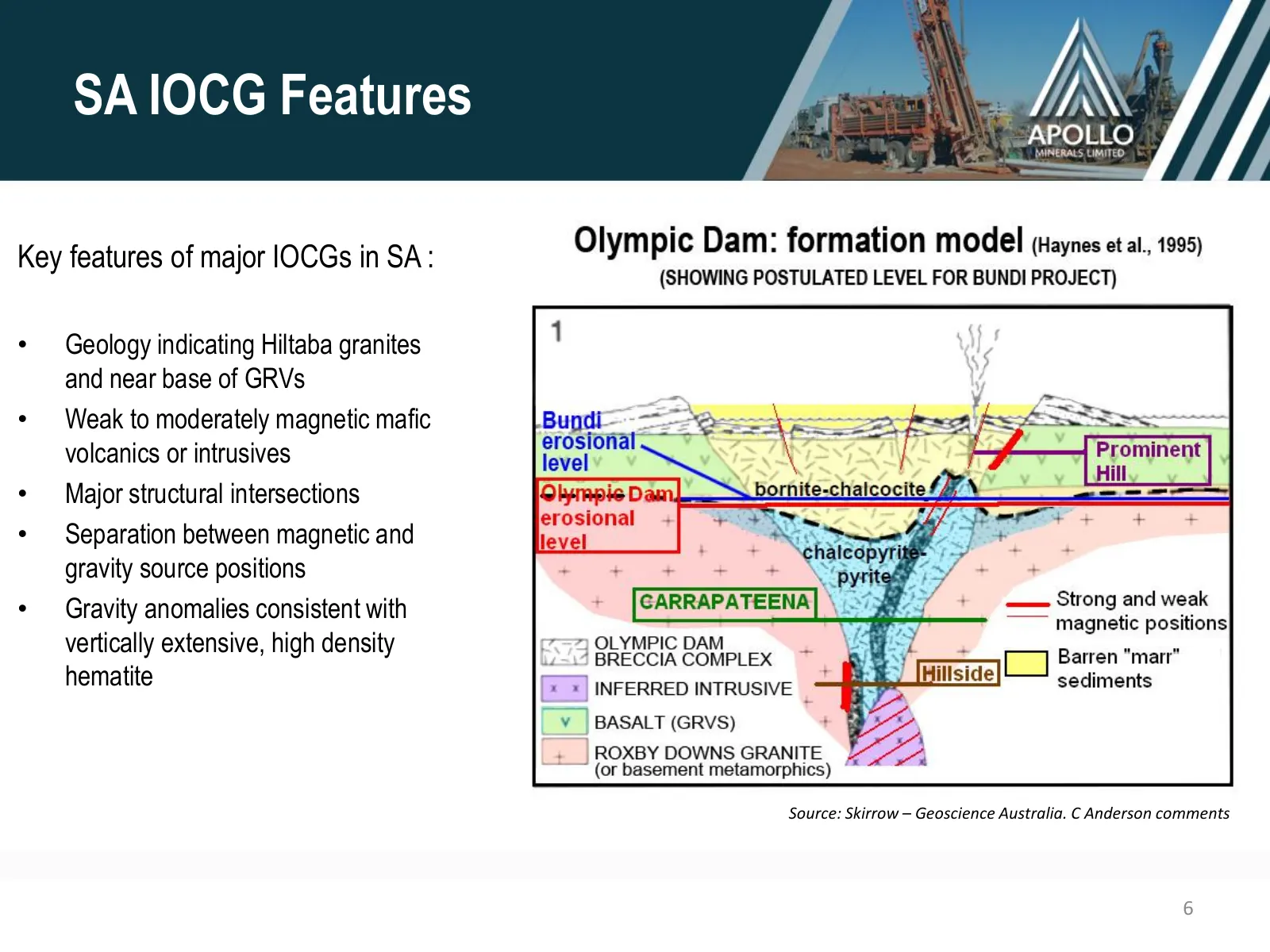
SA IOCG Features Key features of major IOCGs in SA : • Geology indicating Hiltaba granites and near base of GRVs • Weak to moderately magnetic mafic volcanics or intrusives • Major structural intersections • Separation between magnetic and gravity source positions • Gravity anomalies consistent with
Slide 8: How Carrapateena was discovered
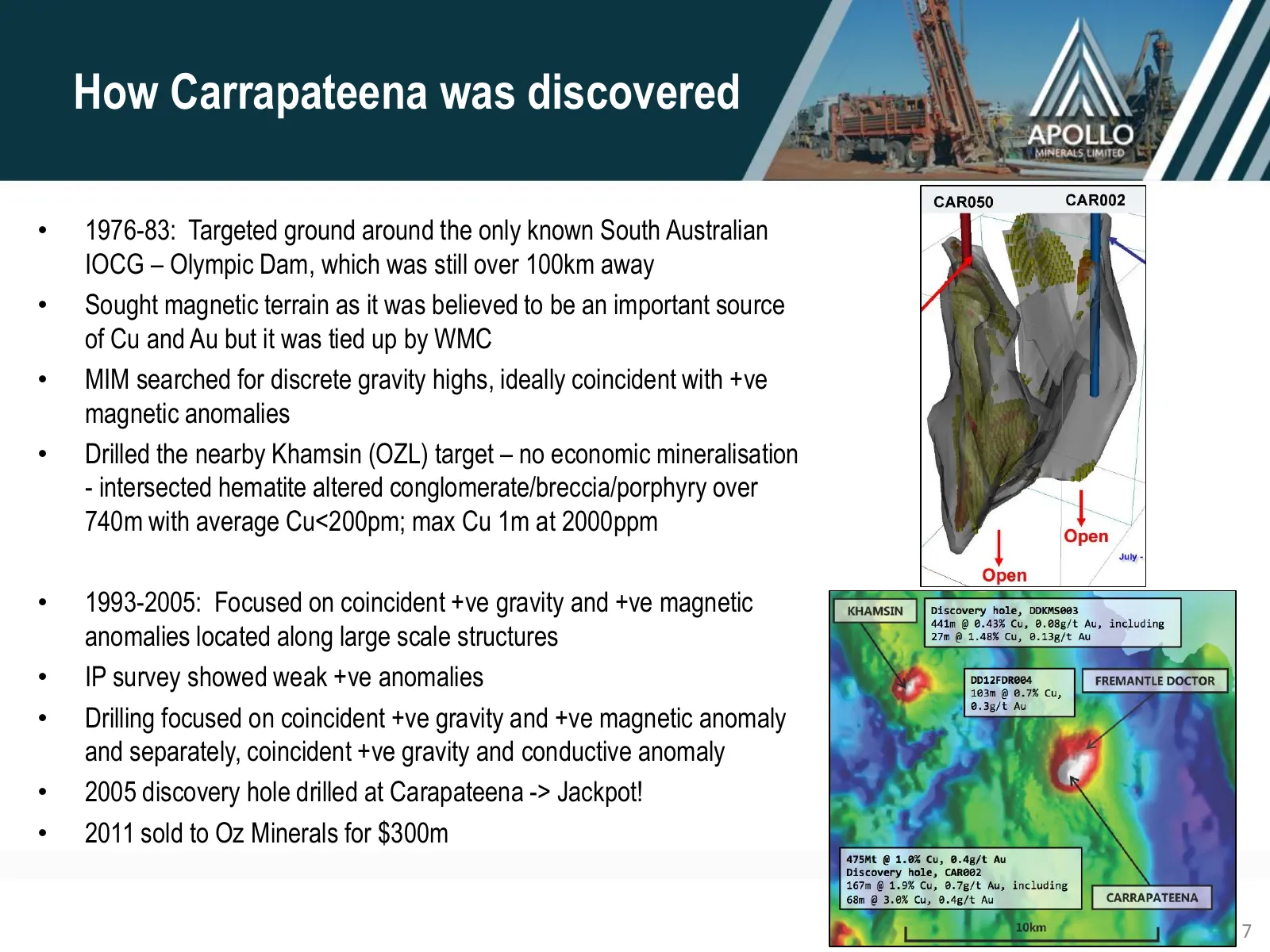
How Carrapateena was discovered • 1976-83: Targeted ground around the only known South Australian IOCG – Olympic Dam, which was still over 100km away • Sought magnetic terrain as it was believed to be an important source of Cu and Au but it was tied up by WMC • MIM searched for discrete gravity high
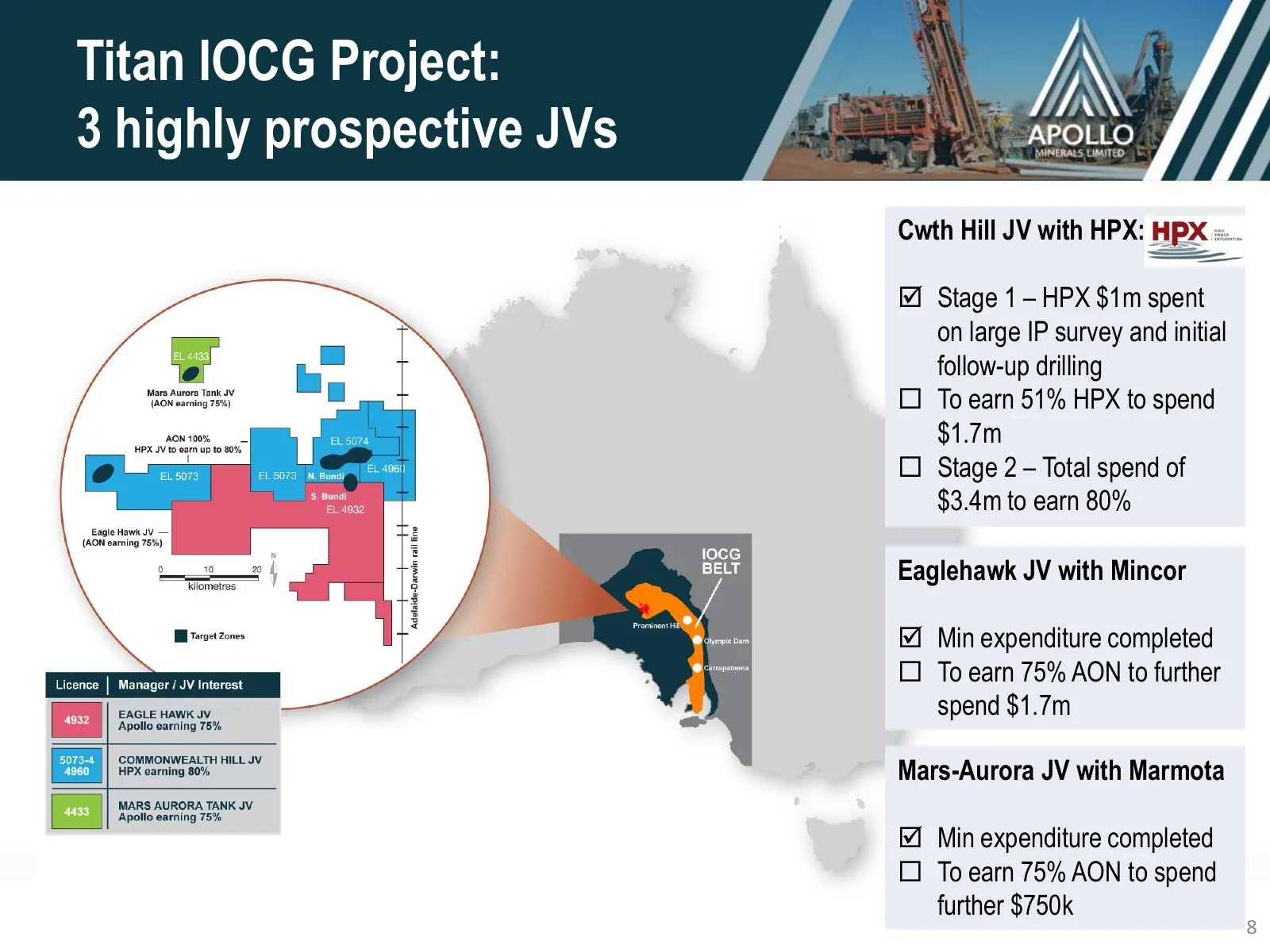
Slide 9: Titan IOCG Project: 3 highly prospective JVs
Titan IOCG Project: 3 highly prospective JVs Cwth Hill JV with HPX: Stage 1 – HPX $1m spent on large IP survey and initial follow-up drilling To earn 51% HPX to spend $1.7m Stage 2 – Total spend of $3.4m to earn 80% Eaglehawk JV with Mincor Min expenditure completed To earn 75% AON to furt
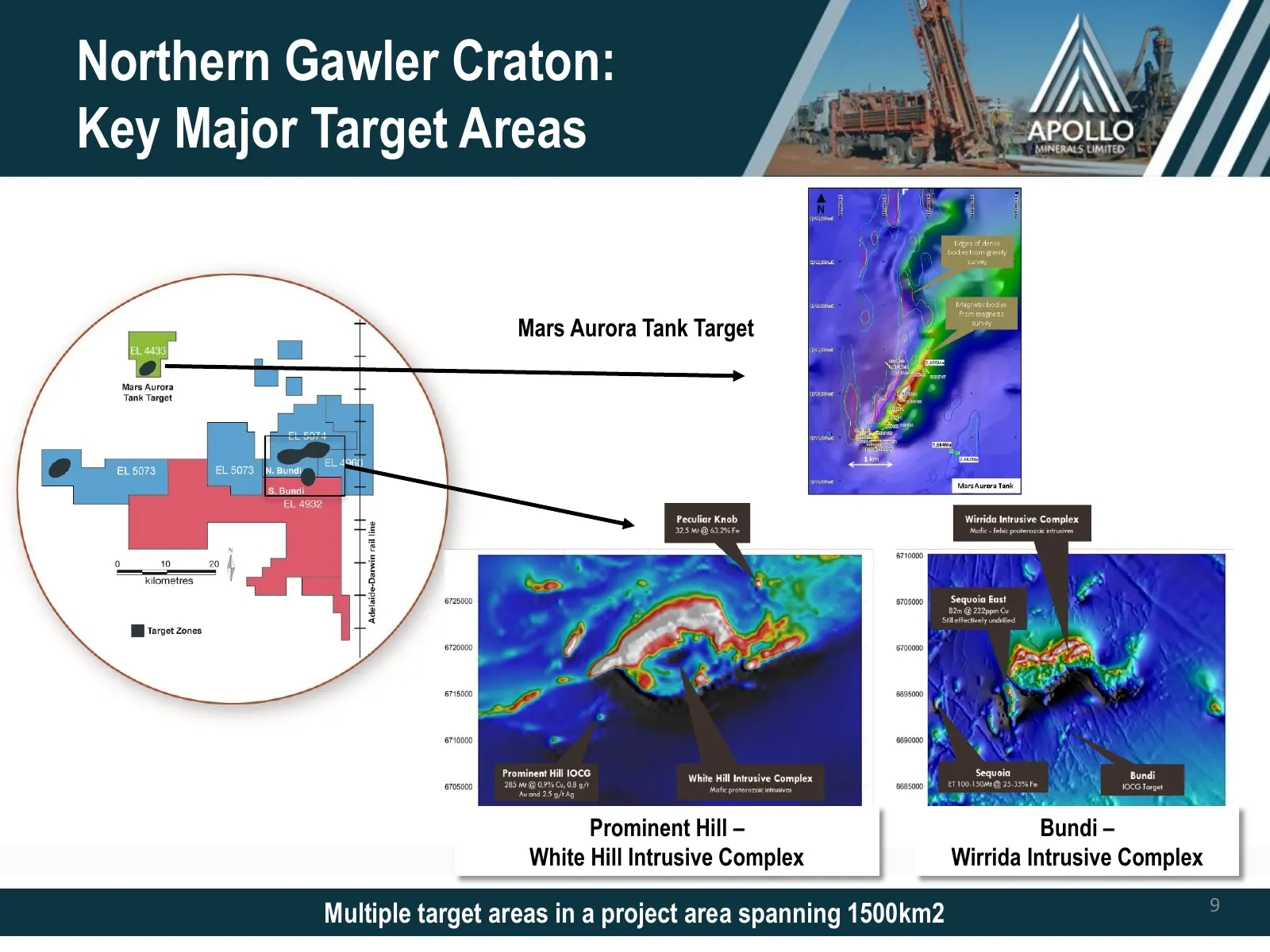
Slide 10: Northern Gawler Craton: Key Major Target Areas
Northern Gawler Craton: Key Major Target Areas Mars Aurora Tank Target Wirrida / Bundi Prospects Prominent Hill – Bundi – White Hill Intrusive Complex Wirrida Intrusive Complex Multiple target areas in a project area spanning 1500km2 11 9
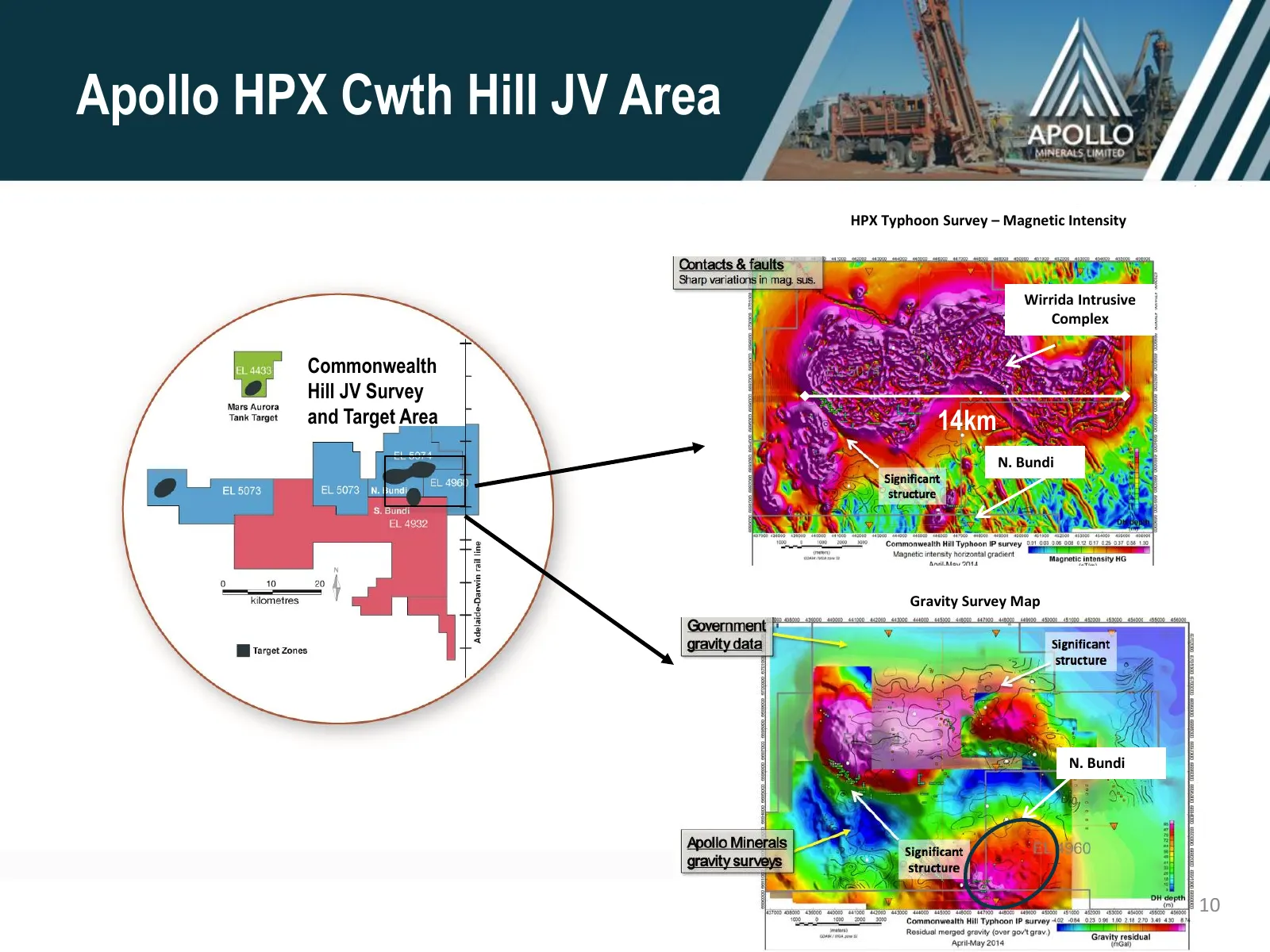
Slide 11: Apollo HPX Cwth Hill JV Area
Apollo HPX Cwth Hill JV Area HPX Typhoon Survey – Magnetic Intensity Wirrida Intrusive Complex Commonwealth Hill JV Survey and Target Area 14km N. Bundi Gravity Survey Map N. Bundi 10
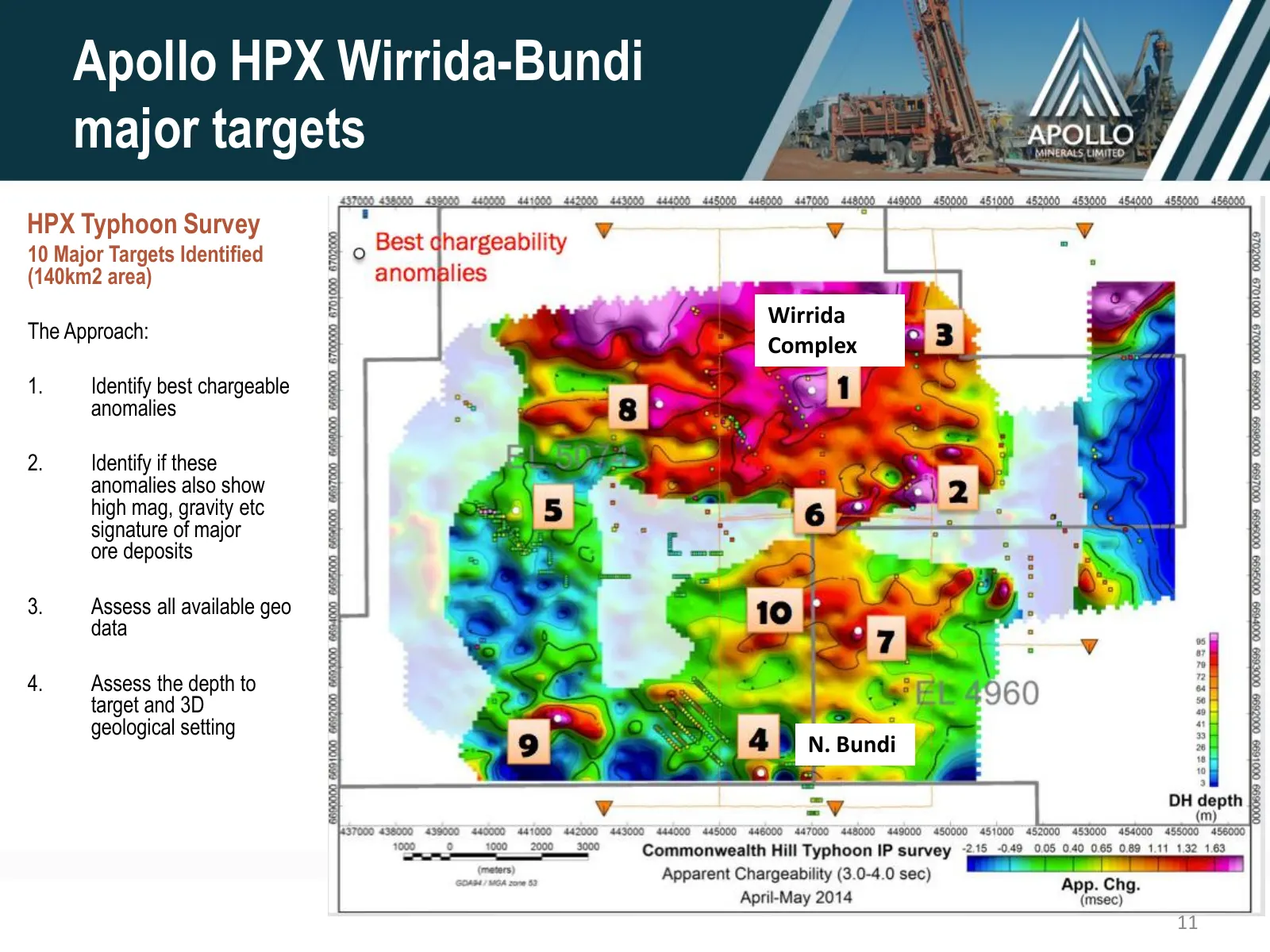
Slide 12: Apollo HPX Wirrida-Bundi major targets
Apollo HPX Wirrida-Bundi major targets HPX Typhoon Survey 10 Major Targets Identified (140km2 area) Wirrida The Approach: Complex 1. Identify best chargeable anomalies 2. Identify if these anomalies also show high mag, gravity etc signature of major ore deposits 3. Assess all available geo data 4. A
Slide 13: Apollo HPX Wirrida-Bundi major targets
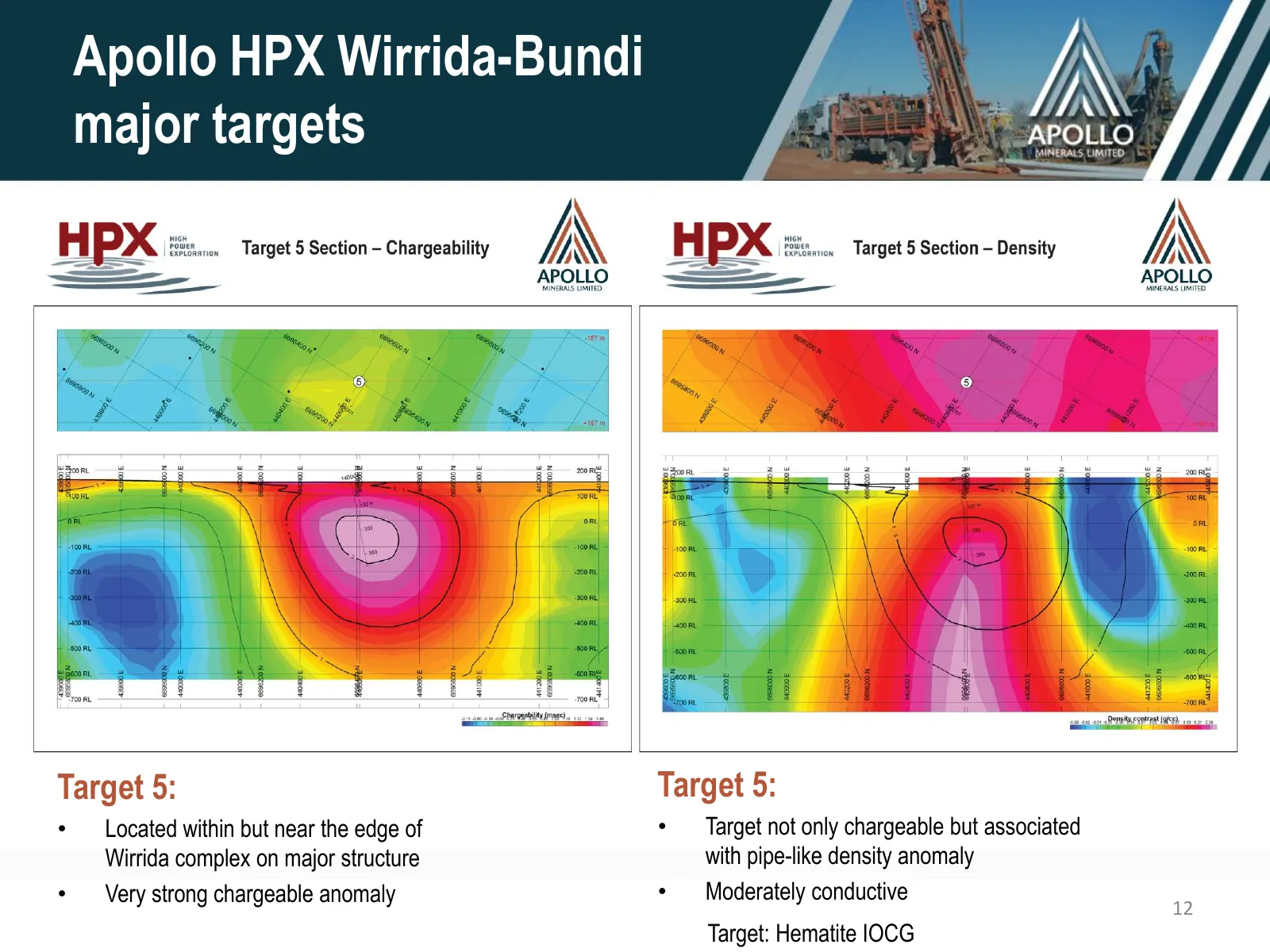
Apollo HPX Wirrida-Bundi major targets Target 5: Target 5: • Located within but near the edge of • Target not only chargeable but associated Wirrida complex on major structure with pipe-like density anomaly • Very strong chargeable anomaly • Moderately conductive 12 Target: Hematite IOCG
Slide 14: Bundi IOCG Prospect
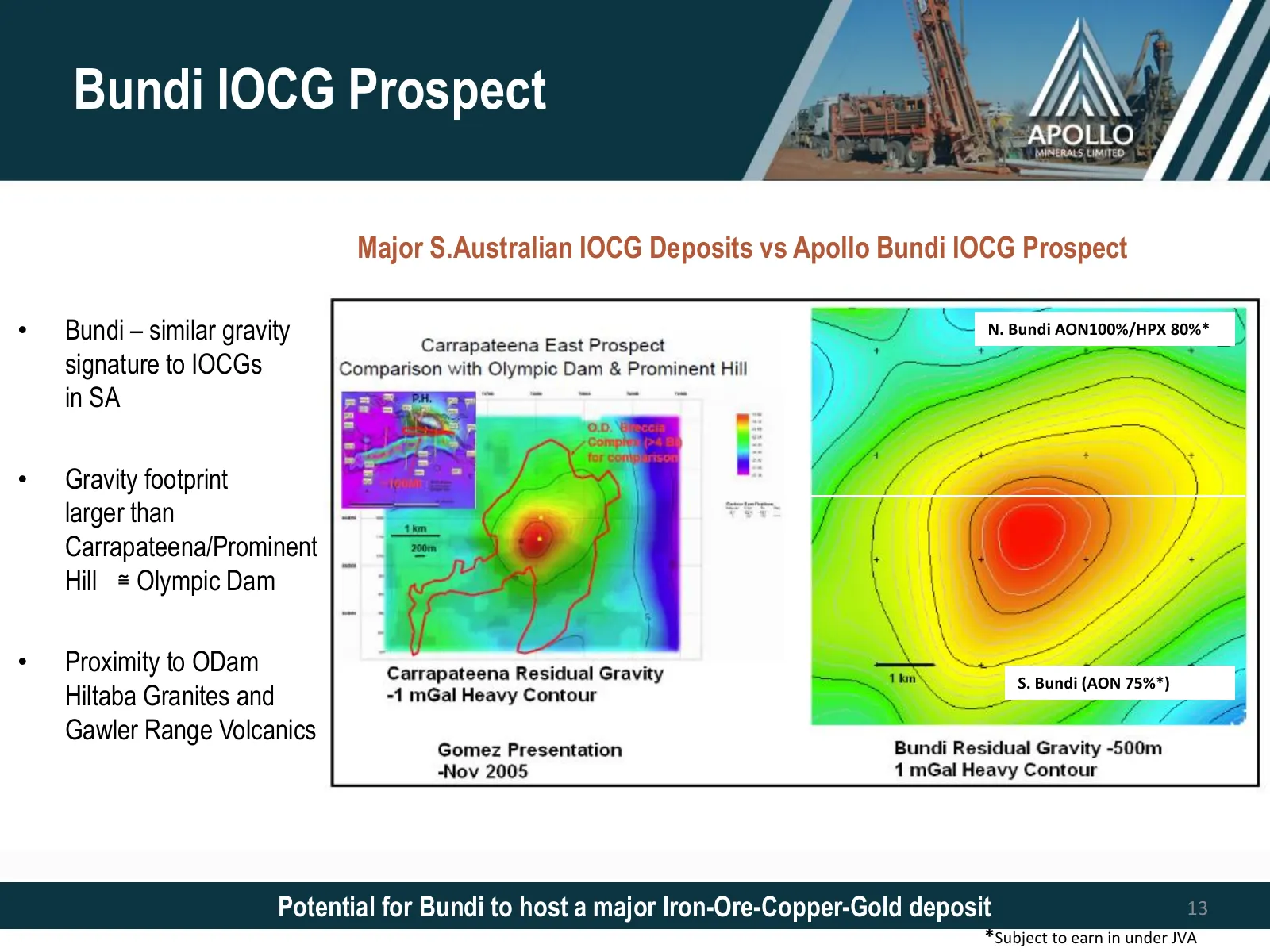
Bundi IOCG Prospect Major S.Australian IOCG Deposits vs Apollo Bundi IOCG Prospect • Bundi – similar gravity N. Bundi AON100%/HPX 80%* signature to IOCGs in SA • Gravity footprint larger than Carrapateena/Prominent Hill ≅ Olympic Dam • Proximity to ODam S. Bundi (AON 75%*) Hiltaba Granites and Gawle
Slide 15: Bundi IOCG Prospect
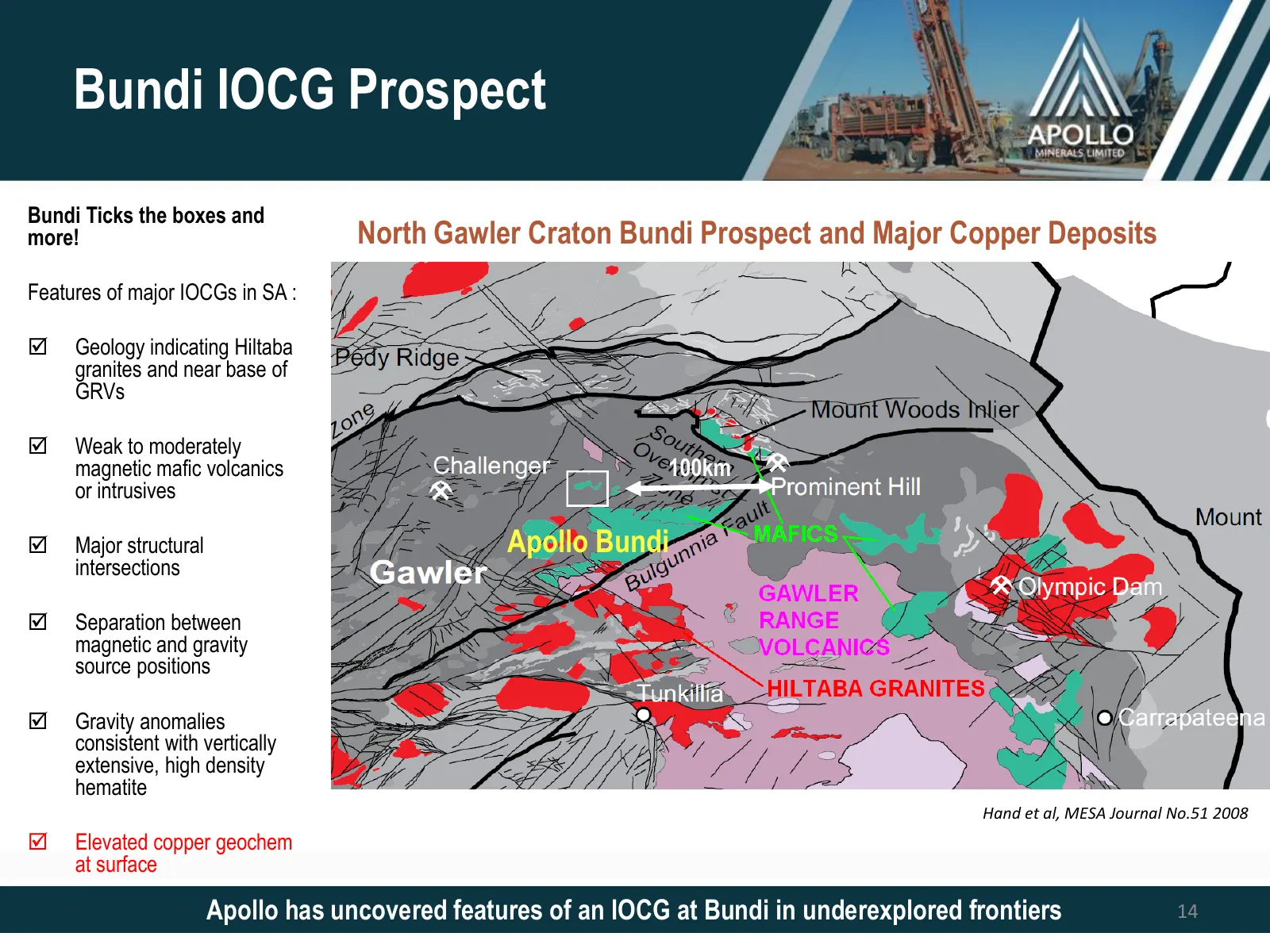
Bundi IOCG Prospect Bundi Ticks the boxes and more! North Gawler Craton Bundi Prospect and Major Copper Deposits Features of major IOCGs in SA : Geology indicating Hiltaba granites and near base of GRVs Weak to moderately magnetic mafic volcanics 100km or intrusives Major structural Apollo Bun
Slide 16: Bundi Prospect v Olympic Dam
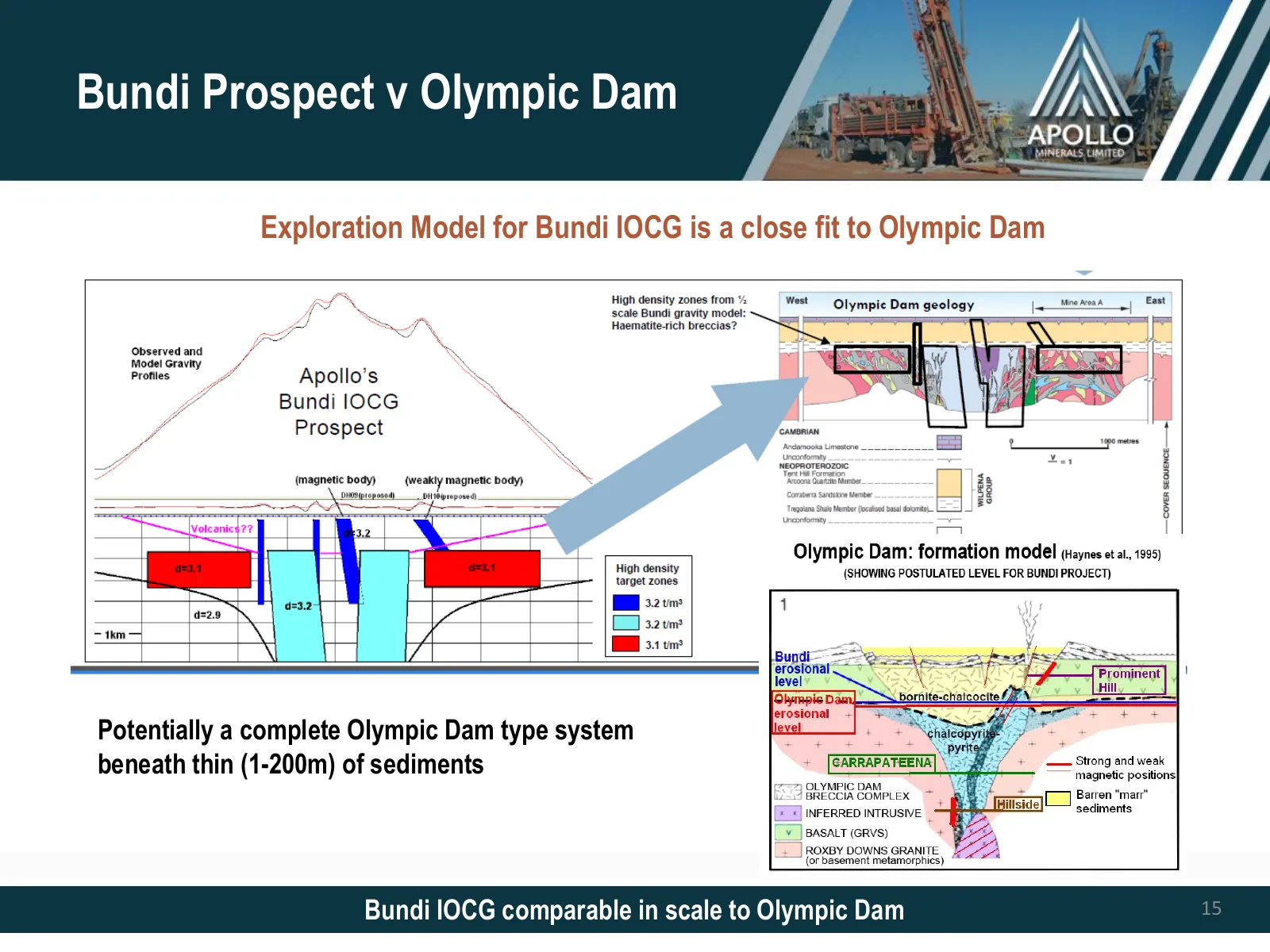
Bundi Prospect v Olympic Dam Exploration Model for Bundi IOCG is a close fit to Olympic Dam Potentially a complete Olympic Dam type system beneath thin (1-200m) of sediments Bundi IOCG comparable in scale to Olympic Dam 15
Slide 17: Mars Aurora Tank IOCG Target
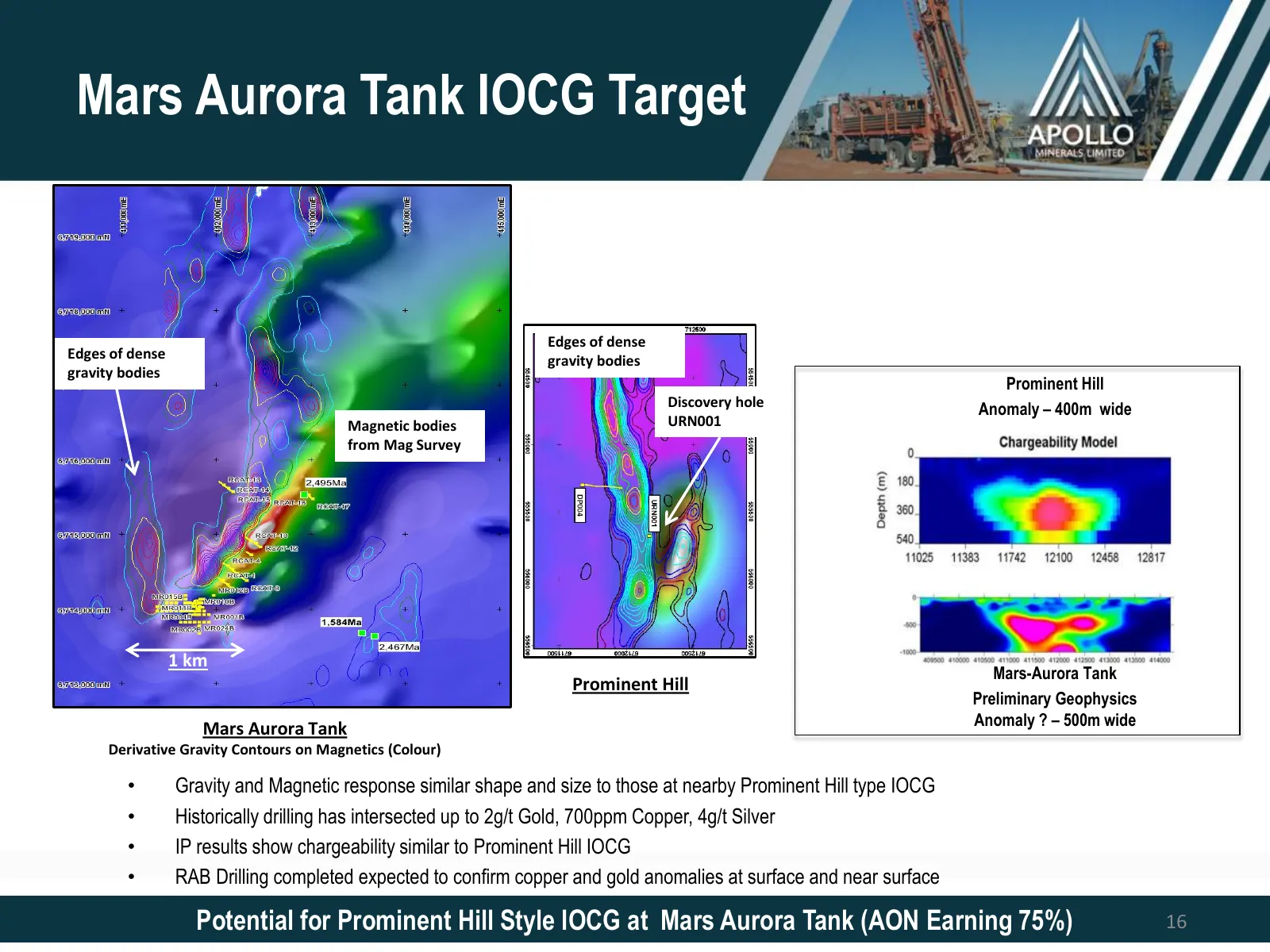
Mars Aurora Tank IOCG Target Edges of dense Edges of dense gravity bodies gravity bodies Prominent Hill Discovery hole Anomaly – 400m wide Magnetic bodies URN001 from Mag Survey 1 km Mars-Aurora Tank Prominent Hill Preliminary Geophysics Mars Aurora Tank Anomaly ? – 500m wide Derivative Gravity Cont
Slide 18: Northern Gawler Craton: Exploration for major IOCG
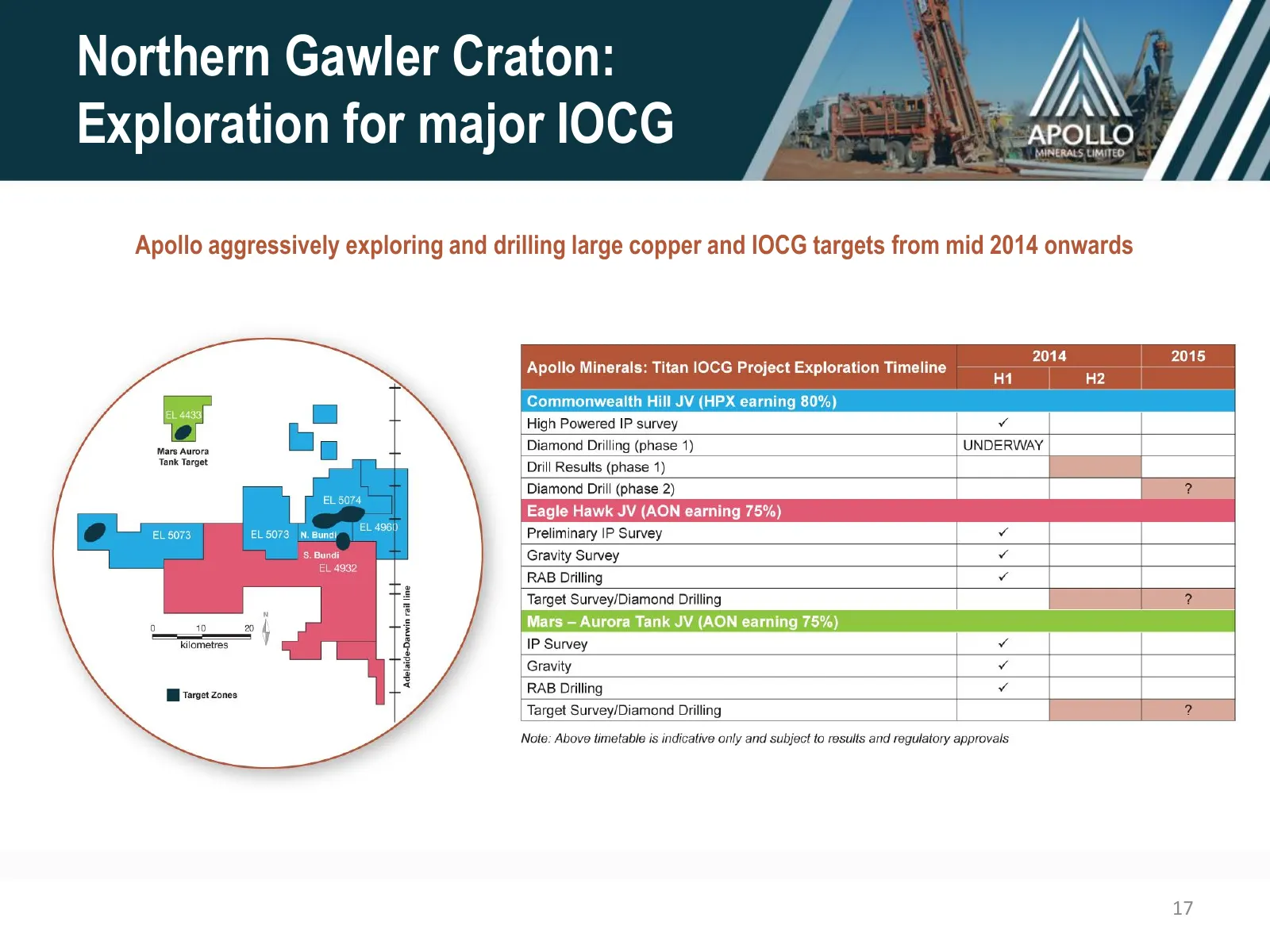
Northern Gawler Craton: Exploration for major IOCG Apollo aggressively exploring and drilling large copper and IOCG targets from mid 2014 onwards 17
Slide 19: Gawler Craton IOCG: The opportunity
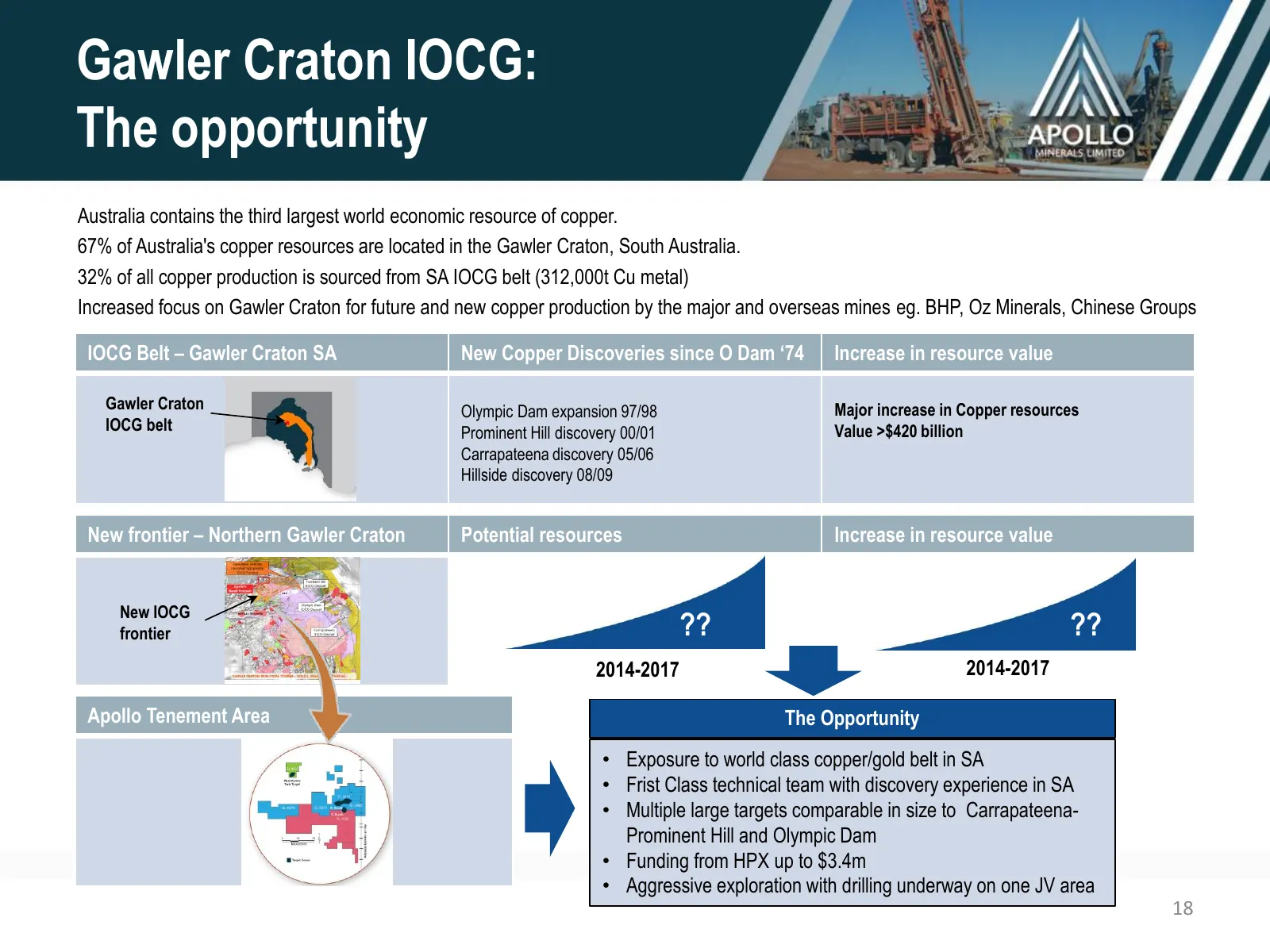
Gawler Craton IOCG: The opportunity Australia contains the third largest world economic resource of copper. 67% of Australia's copper resources are located in the Gawler Craton, South Australia. 32% of all copper production is sourced from SA IOCG belt (312,000t Cu metal) Increased focus on Gawler C
Slide 20: Disclaimer
Disclaimer ?? COMPETENT PERSON DECLARATION The information in this Report that relates to Exploration Targets/Exploration Results is based on information compiled by Mr Derek Pang who is a member of the Australasian Institute of Mining and Metallurgy. Derek is a full time employee of Apollo Minerals
Slide 21: Follow Apollo Minerals on Twitter
Follow Apollo Minerals on Twitter: @ApolloMinerals
Slide 22: Appendix: What is an IOCG?
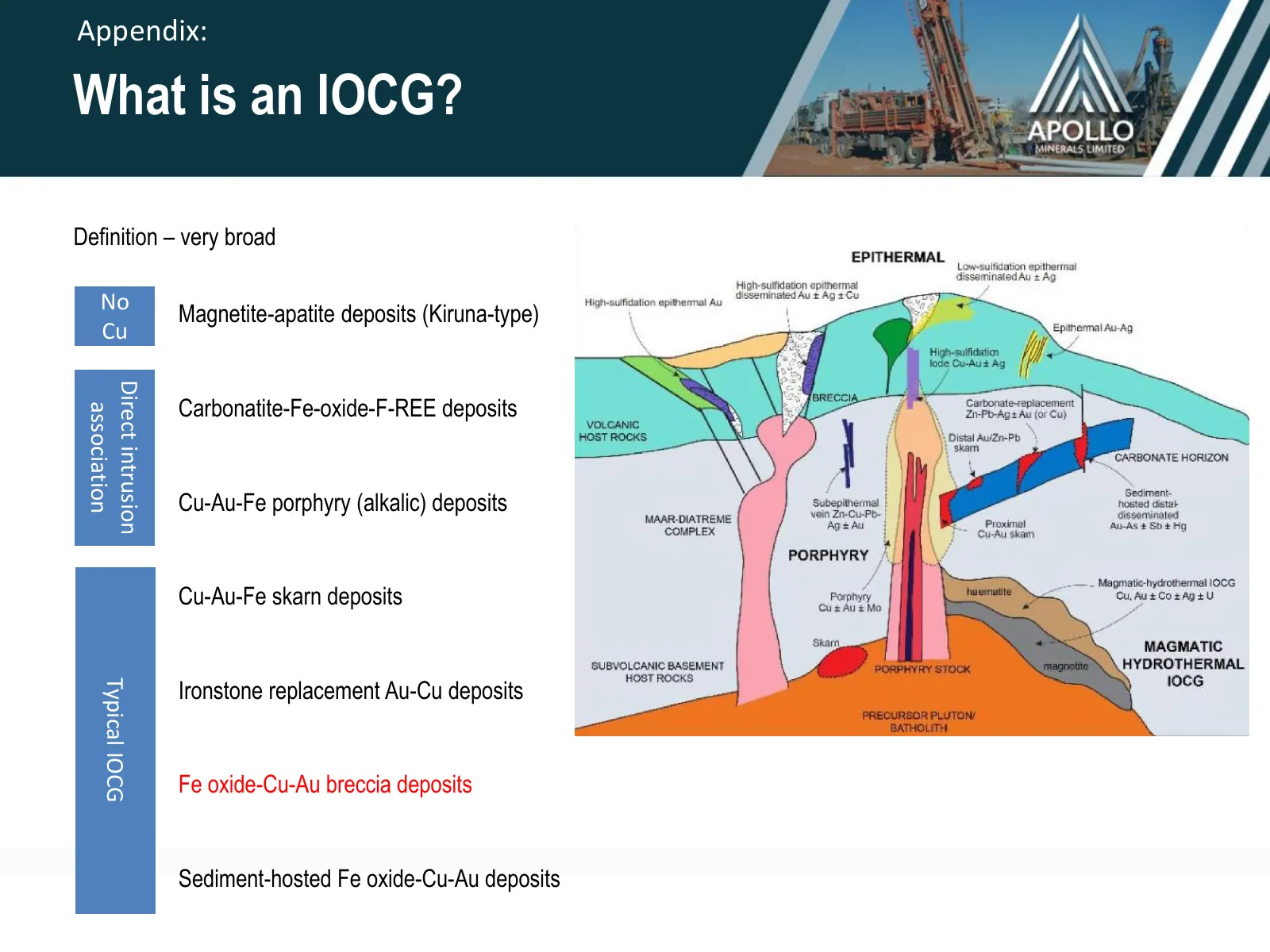
Appendix: What is an IOCG? Definition – very broad No Magnetite-apatite deposits (Kiruna-type) Cu Direct intrusion Carbonatite-Fe-oxide-F-REE deposits association Cu-Au-Fe porphyry (alkalic) deposits Cu-Au-Fe skarn deposits Ironstone replacement Au-Cu deposits Typical IOCG Fe oxide-Cu-Au breccia dep
Slide 23: Appendix: Modern best practice targeting
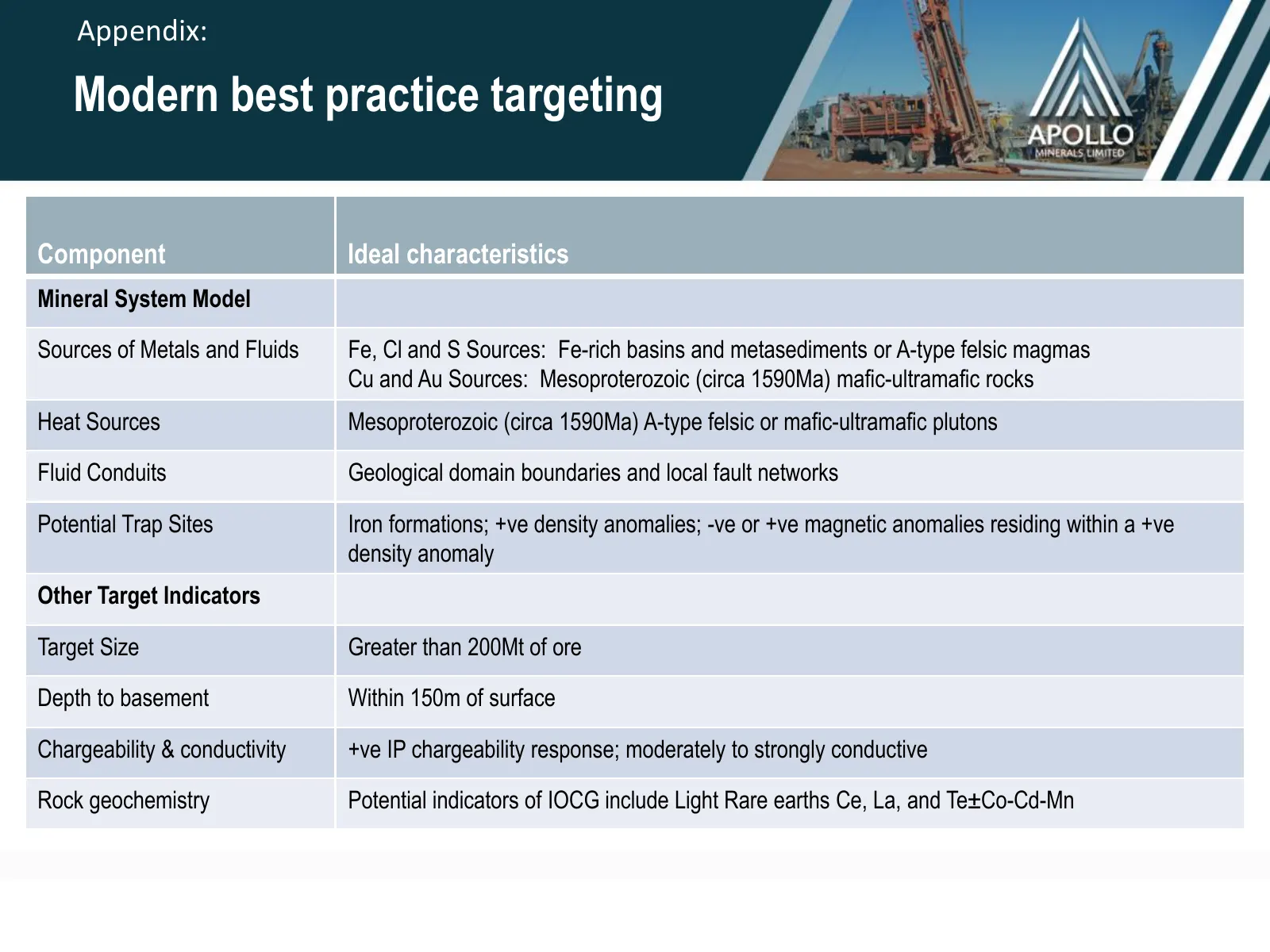
Appendix: Modern best practice targeting Component Ideal characteristics Mineral System Model Sources of Metals and Fluids Fe, Cl and S Sources: Fe-rich basins and metasediments or A-type felsic magmas Cu and Au Sources: Mesoproterozoic (circa 1590Ma) mafic-ultramafic rocks Heat Sources Mesoproteroz
Source: Internet Archive copy of apollominerals.com.au
More decks from Apollo Minerals Limited
 International Mining and Resources Conference, Sydney 202624 slides · Oct 29, 2026
 Tribeca Future Facing Symposium 202624 slides · Aug 26, 2026
 Investor Presentation (May 2026)22 slides · May 2026
 Investor Presentation (February 2026)21 slides · Feb 25, 2026
 Investor Presentation (February 2026)20 slides · Feb 23, 2026
 Investor Presentation (February 2025)17 slides · Feb 3, 2025