Palatin Technologies, Inc. · AMEX:PTN
Palatin Technologies — Investor Presentation (November 2026)
44 slides from Palatin Technologies's investor presentation, November 2026
Slide 1: Palatin Technologies Corporate Presentation November 2026
Palatin Technologies, Inc. Nasdaq: PTN CORPORATE PRESENTATION November 2026 Carl Spana, Ph.D. Stephen T. Wills, CPA/MST President & CEO CFO / COO
Slide 2: Forward Looking Statements
Forward Looking Statements The statements in this presentation that relate to future plans, events or performance are forward-looking statements, which are made pursuant to the safe harbor provisions of Section 27A of the Securities Act of 1933, as amended. Such forward-looking statements involve si
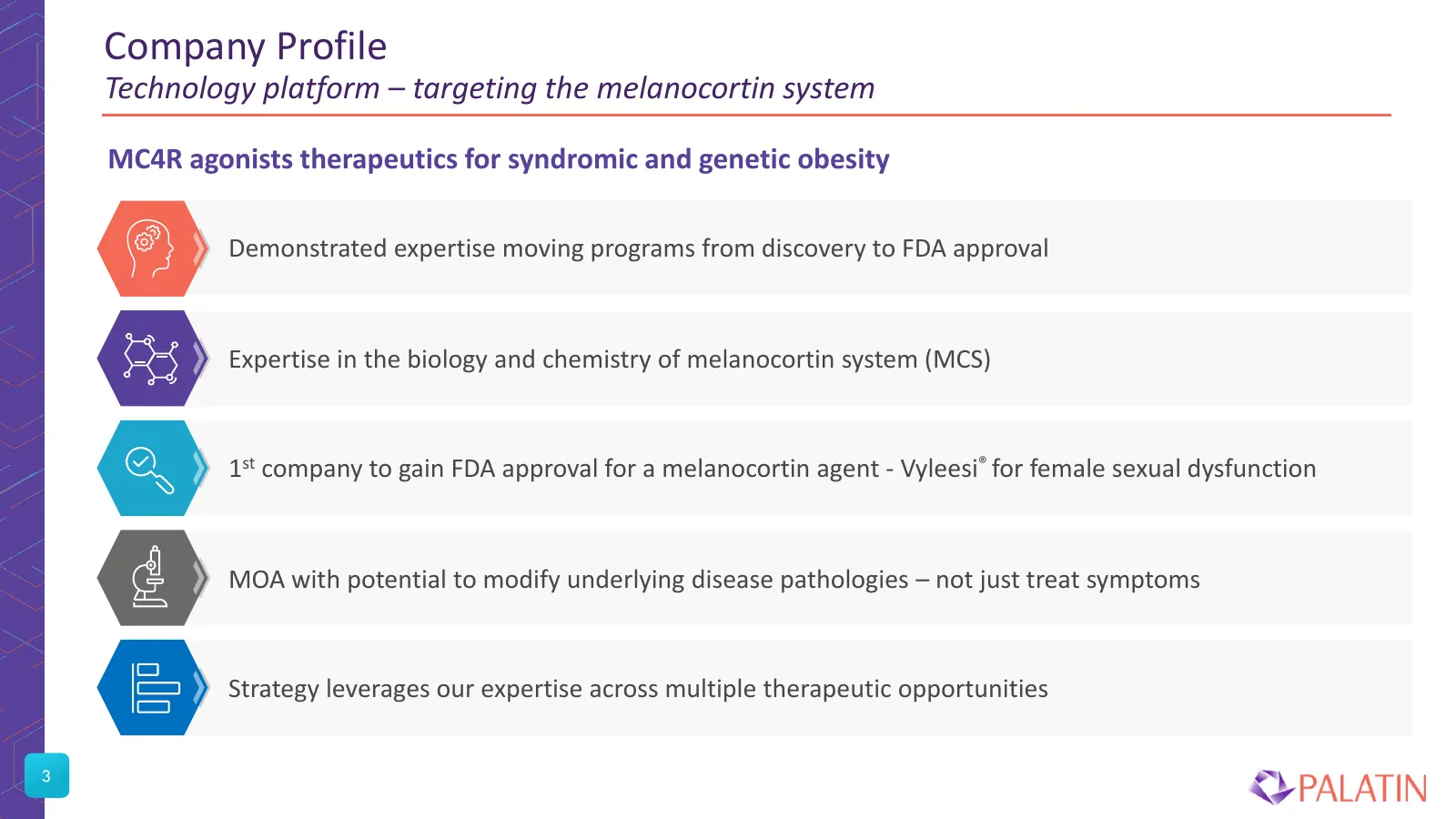
Slide 3: Company Profile
Company Profile Technology platform – targeting the melanocortin system MC4R agonists therapeutics for syndromic and genetic obesity Demonstrated expertise moving programs from discovery to FDA approval Expertise in the biology and chemistry of melanocortin system (MCS) 1st company to gain FDA appro
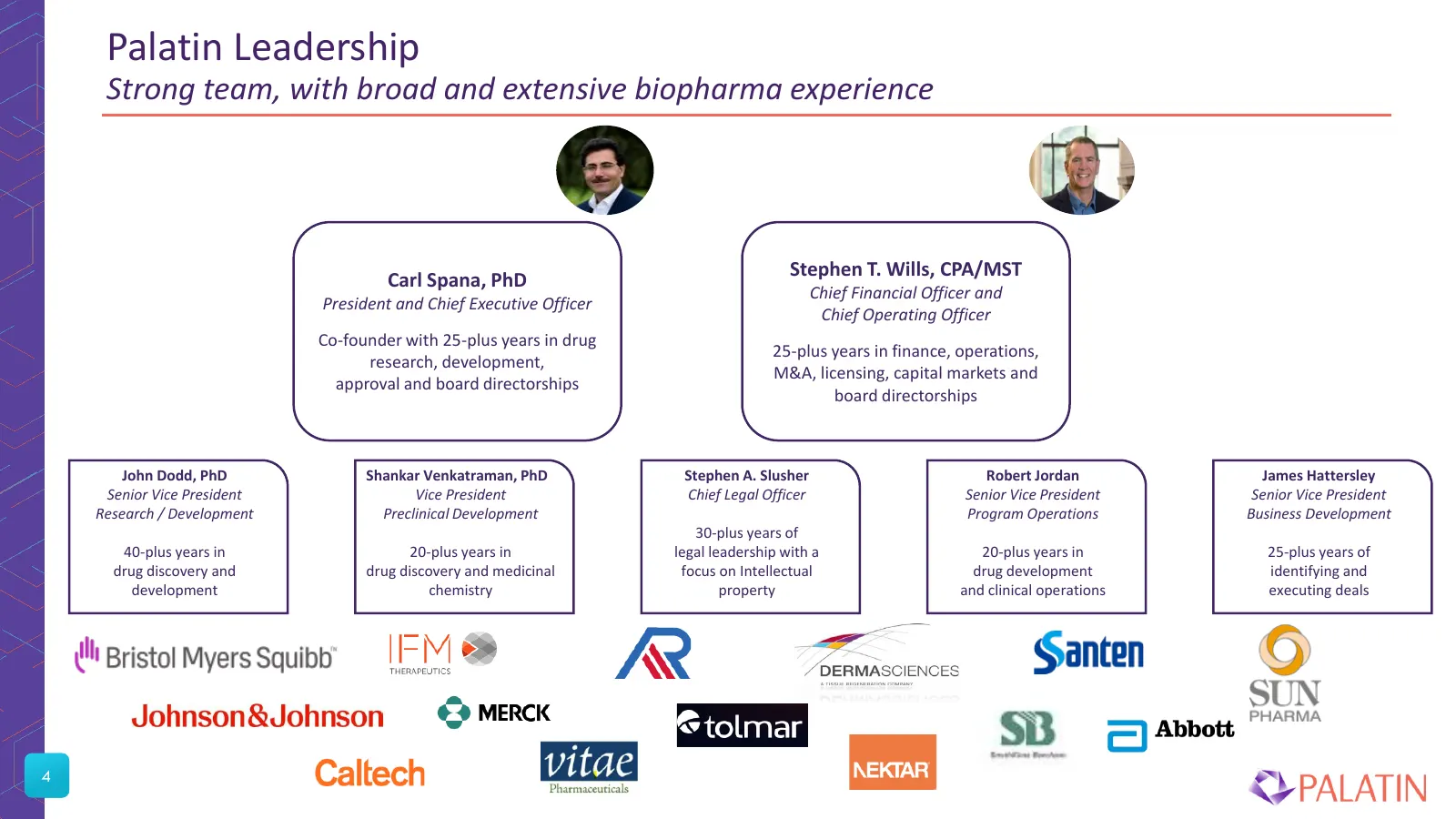
Slide 4: Palatin Leadership
Palatin Leadership Strong team, with broad and extensive biopharma experience Stephen T. Wills, CPA/MST Carl Spana, PhD Chief Financial Officer and President and Chief Executive Officer Chief Operating Officer Co-founder with 25-plus years in drug 25-plus years in finance, operations, research, deve
Slide 5: Development Programs
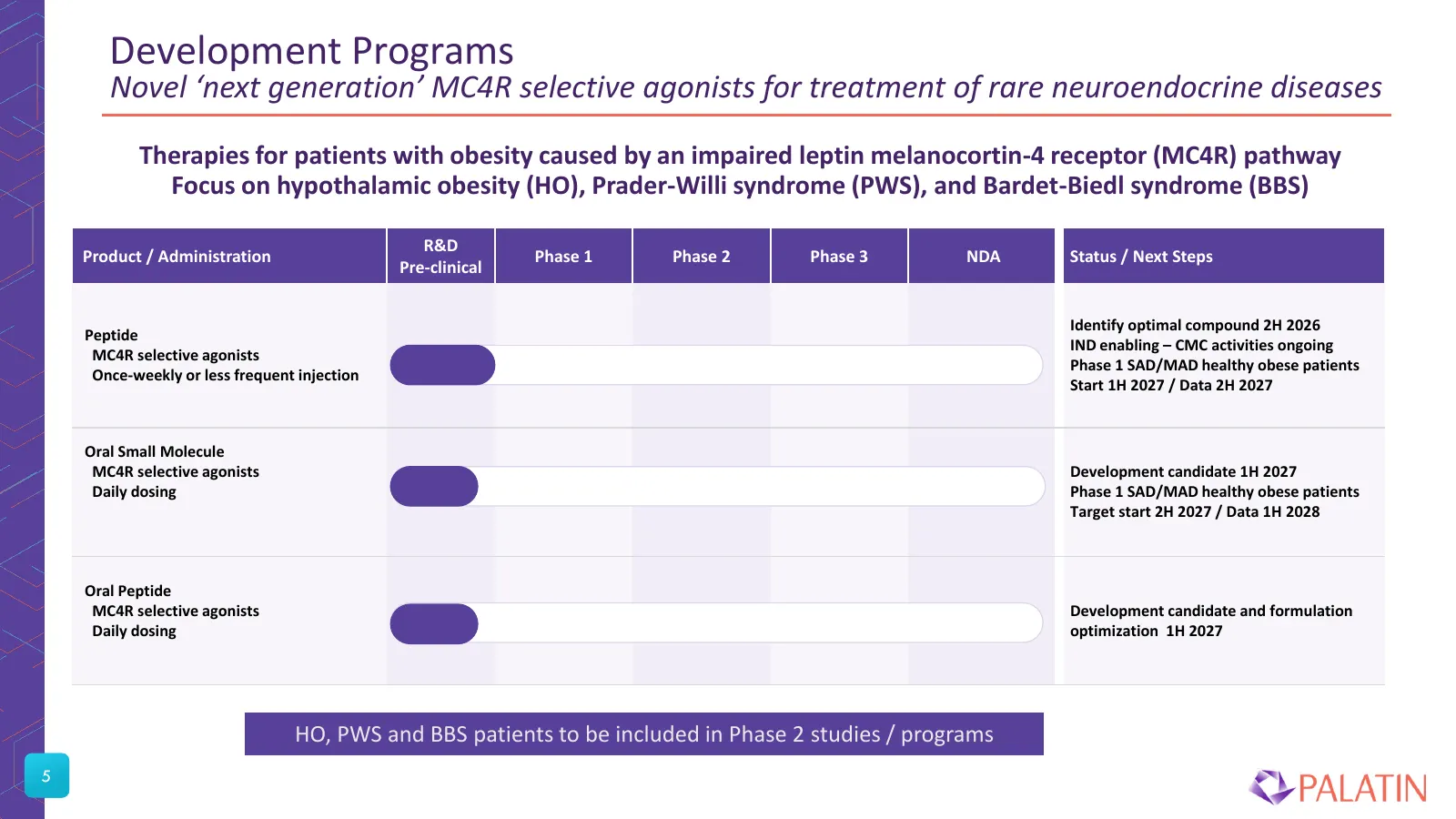
Development Programs Novel ‘next generation’ MC4R selective agonists for treatment of rare neuroendocrine diseases Therapies for patients with obesity caused by an impaired leptin melanocortin-4 receptor (MC4R) pathway Focus on hypothalamic obesity (HO), Prader-Willi syndrome (PWS), and Bardet-Biedl
Slide 6: Rare MC4R Pathway Diseases - Prevalence
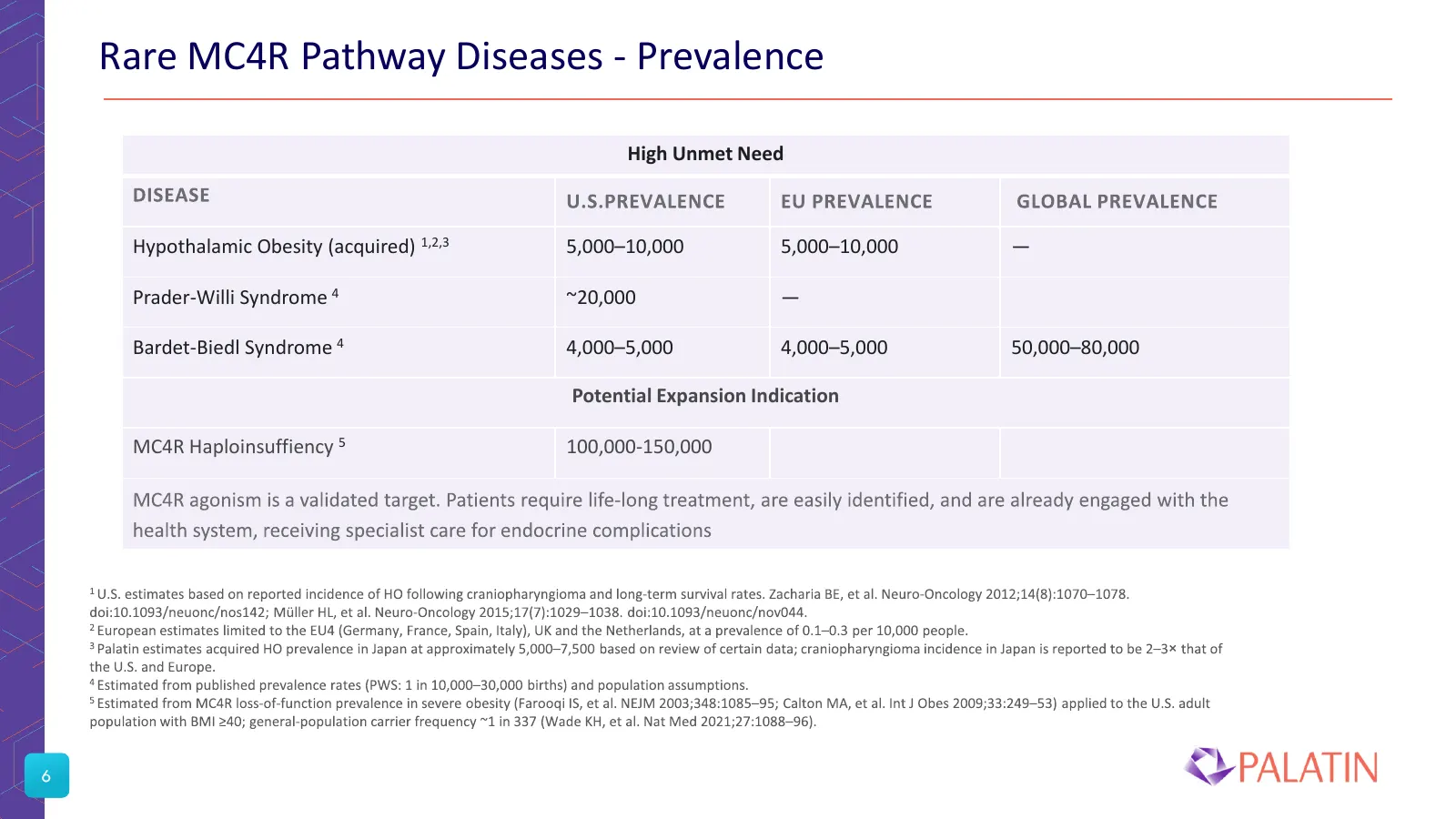
Rare MC4R Pathway Diseases - Prevalence High Unmet Need Hypothalamic Obesity (acquired) 1,2,3 5,000–10,000 5,000–10,000 — Prader-Willi Syndrome 4 ~20,000 — Bardet-Biedl Syndrome 4 4,000–5,000 4,000–5,000 50,000–80,000 Potential Expansion Indication MC4R Haploinsuffiency 5 100,000-150,000 6
Slide 7: MC4R Obesity Programs
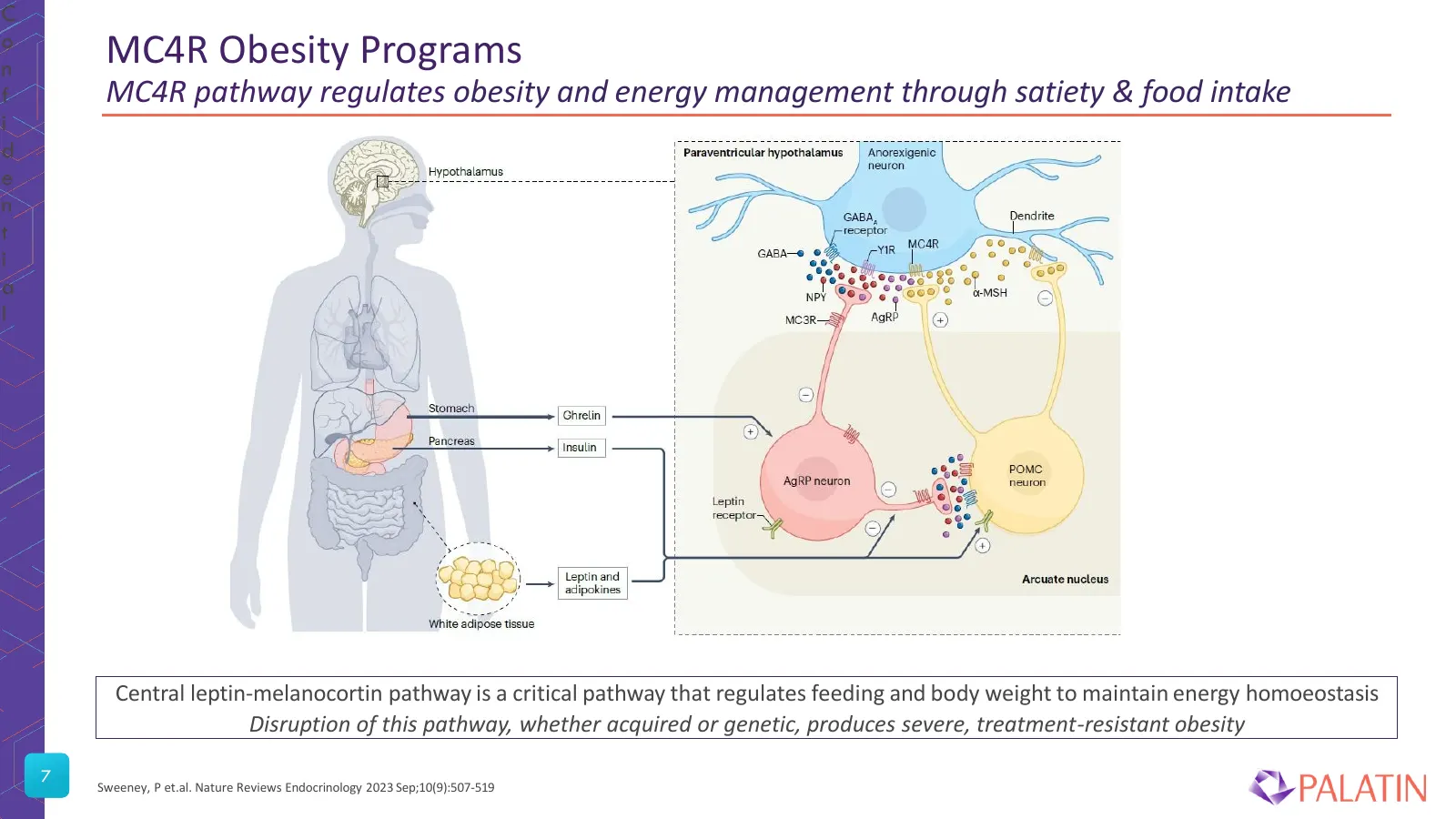
C o n MC4R Obesity Programs f MC4R pathway regulates obesity and energy management through satiety & food intake i d e n t i a l Central leptin-melanocortin pathway is a critical pathway that regulates feeding and body weight to maintain energy homoeostasis Disruption of this pathway, whether acquir
Slide 8: Multiple Approaches for Development of Next-Generation MC4R Agonists
Multiple Approaches for Development of Next–Generation MC4R Agonists • Peptides - Once Weekly (or less frequent) Dosing o PL1000 Series / Non-Lipidated (Classic Cyclic Peptides) o PL2000 Series / Lipidated o Oral Peptides • Oral small molecule Multiple Shots on Goal
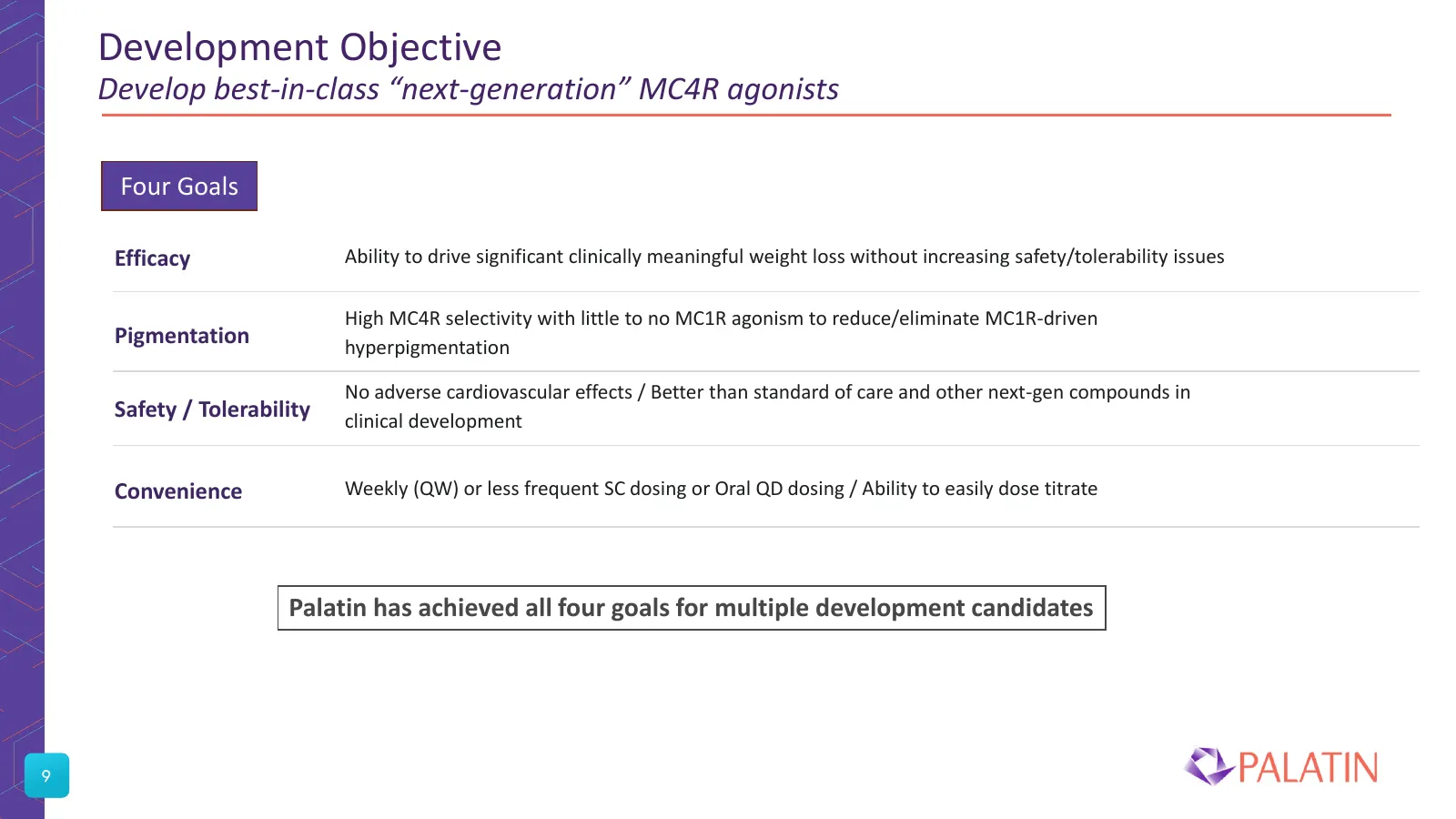
Slide 9: Development Objective
Development Objective Develop best-in-class “next-generation” MC4R agonists Four Goals Efficacy Ability to drive significant clinically meaningful weight loss without increasing safety/tolerability issues High MC4R selectivity with little to no MC1R agonism to reduce/eliminate MC1R-driven Pigmentati
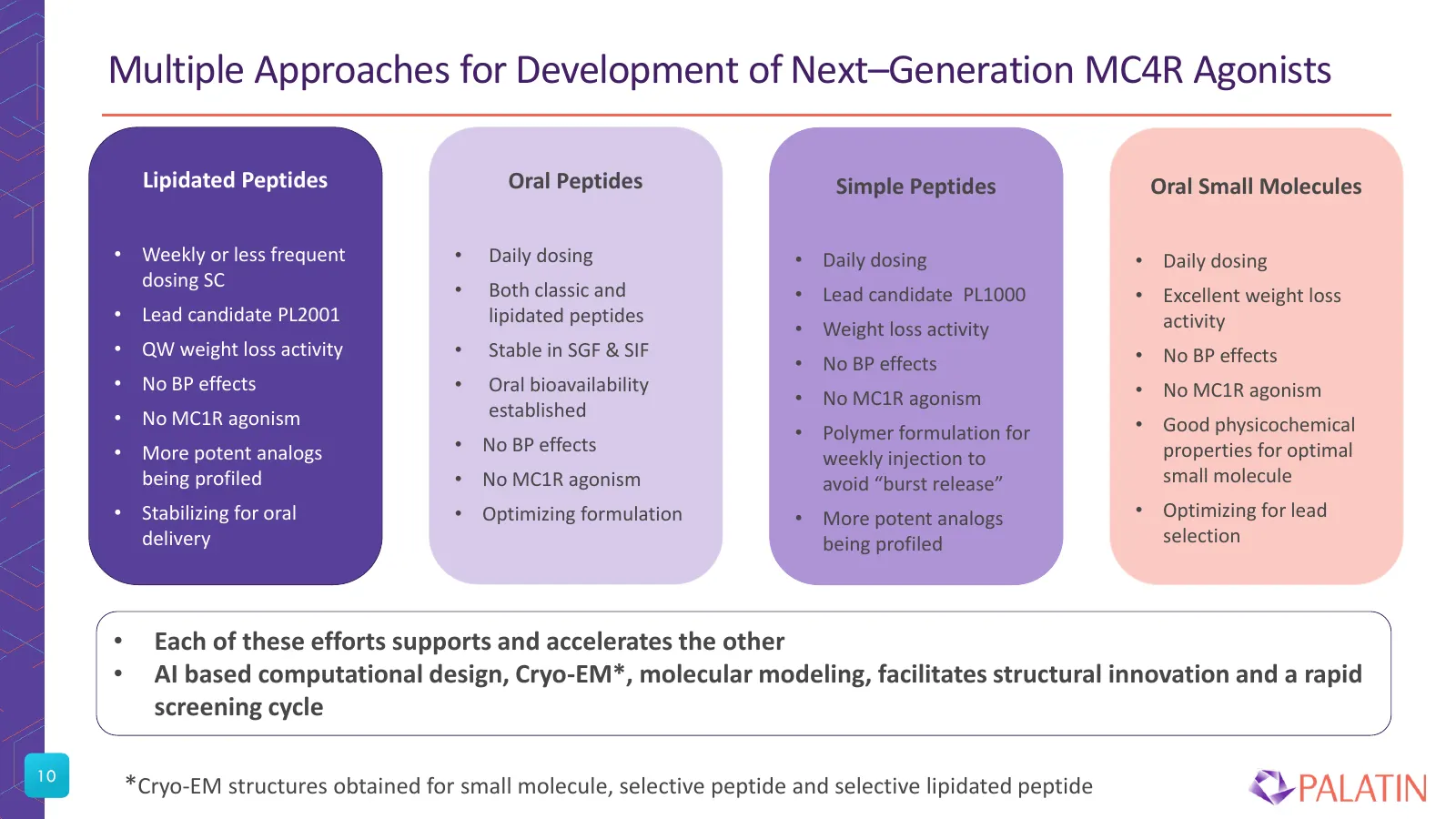
Slide 10: Multiple Approaches for Development of Next-Generation MC4R Agonists
Multiple Approaches for Development of Next–Generation MC4R Agonists Lipidated Peptides Oral Peptides Simple Peptides Oral Small Molecules • Weekly or less frequent • Daily dosing • Daily dosing • Daily dosing dosing SC • Both classic and • Lead candidate PL1000 • Excellent weight loss • Lead candid
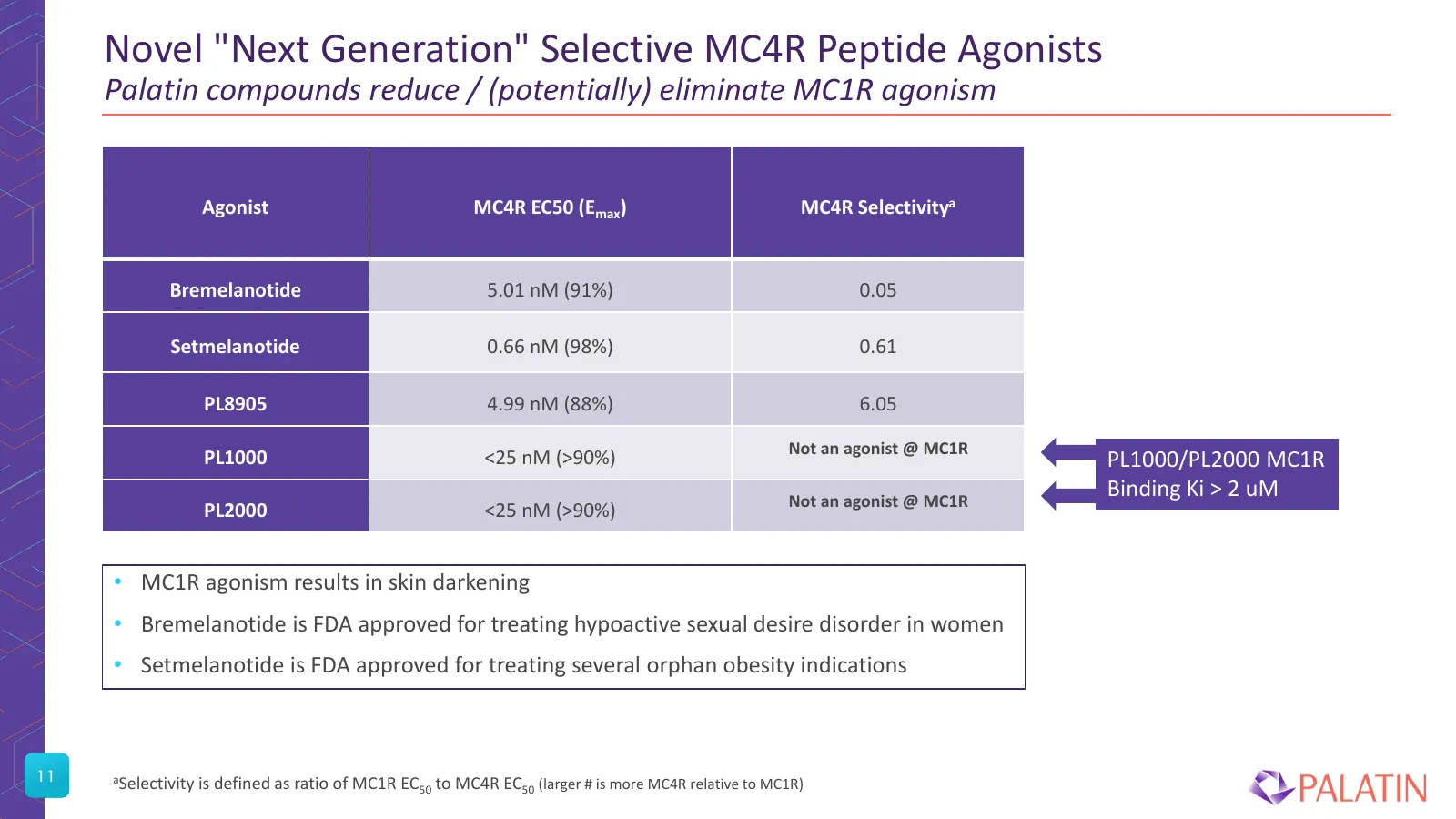
Slide 11: Novel Next Generation Selective MC4R Peptide Agonists
Novel "Next Generation" Selective MC4R Peptide Agonists Palatin compounds reduce / (potentially) eliminate MC1R agonism Agonist MC4R EC50 (Emax) MC4R Selectivitya Bremelanotide 5.01 nM (91%) 0.05 Setmelanotide 0.66 nM (98%) 0.61 PL8905 4.99 nM (88%) 6.05 Not an agonist @ MC1R PL1000 <25 nM (>90%) PL
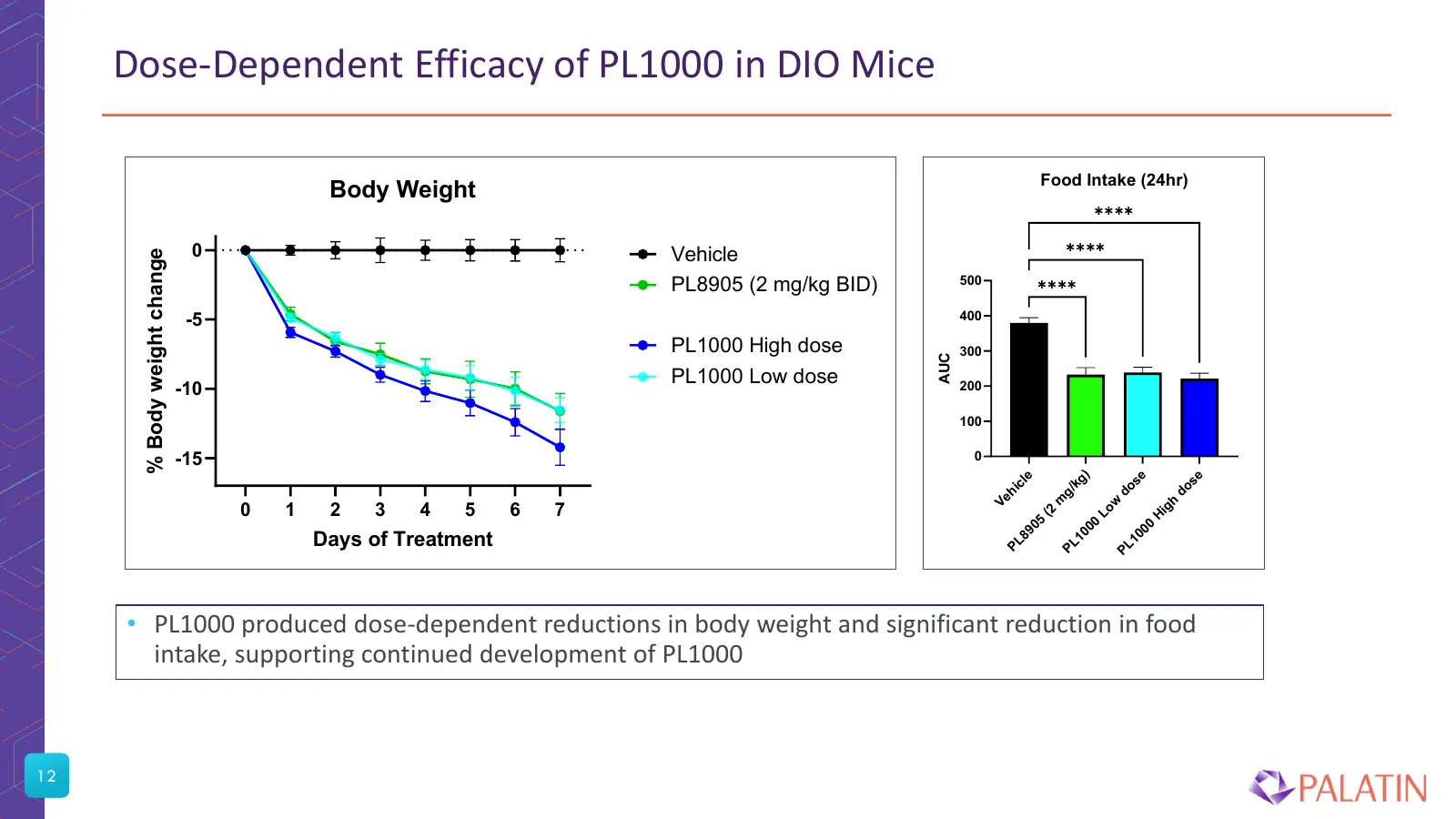
Slide 12: Dose-Dependent Efficacy of PL1000 in DIO Mice
Dose-Dependent Efficacy of PL1000 in DIO Mice Food Intake (24hr) Body Weight ✱✱✱✱ 0 ✱✱✱✱ Vehicle % Body weight change PL8905 (2 mg/kg BID) 500 ✱✱✱✱ -5 400 PL1000 High dose 300 AUC PL1000 Low dose -10 200 100 -15 0 ) e se se kg cl do do hi g/ Ve m 0 1 2 3 4 5 6 7 w h ig Lo (2 H 05 00 00 Days of Treat
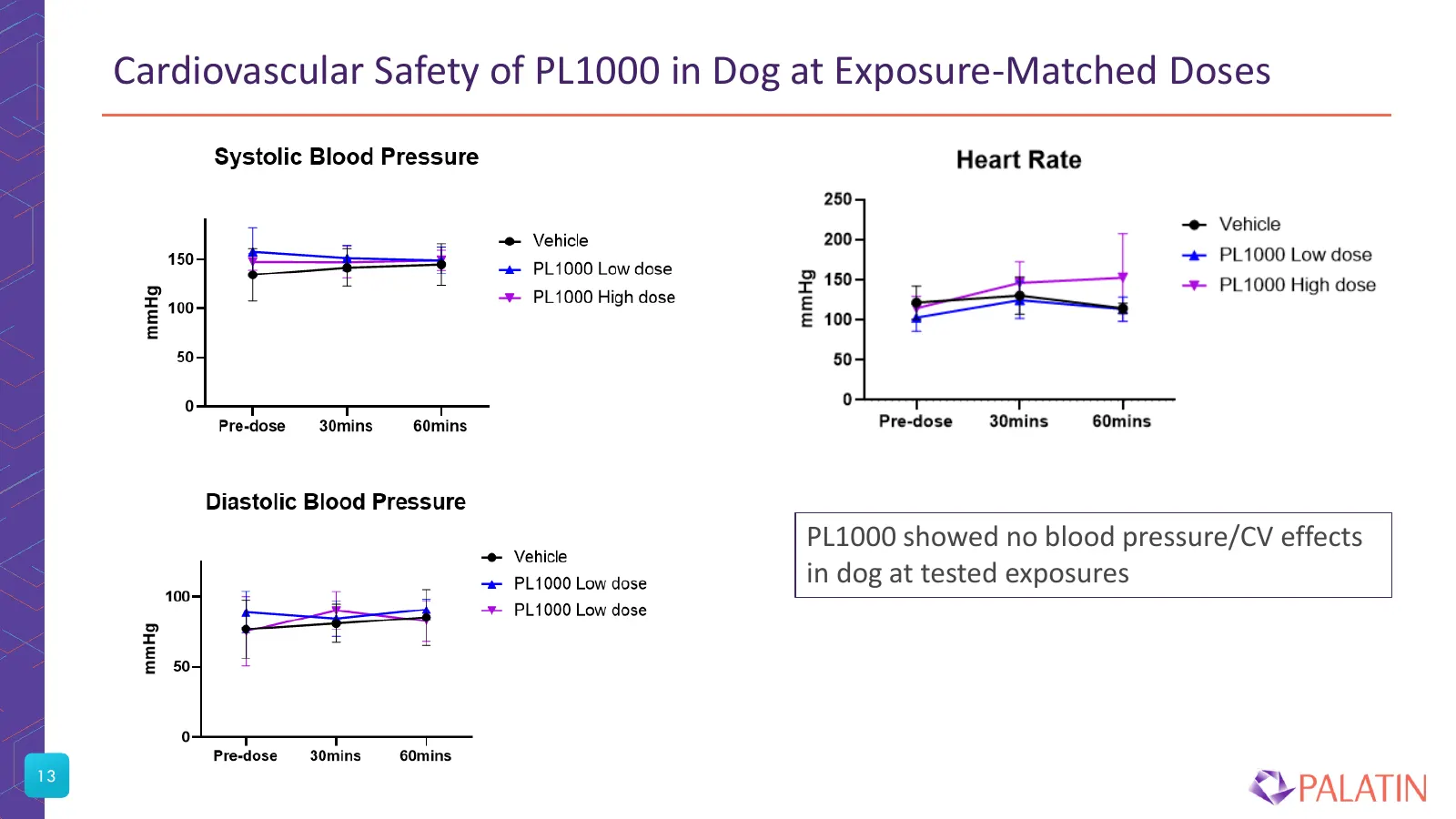
Slide 13: Cardiovascular Safety of PL1000 in Dog at Exposure-Matched Doses
Cardiovascular Safety of PL1000 in Dog at Exposure-Matched Doses PL1000 showed no blood pressure/CV effects in dog at tested exposures 13
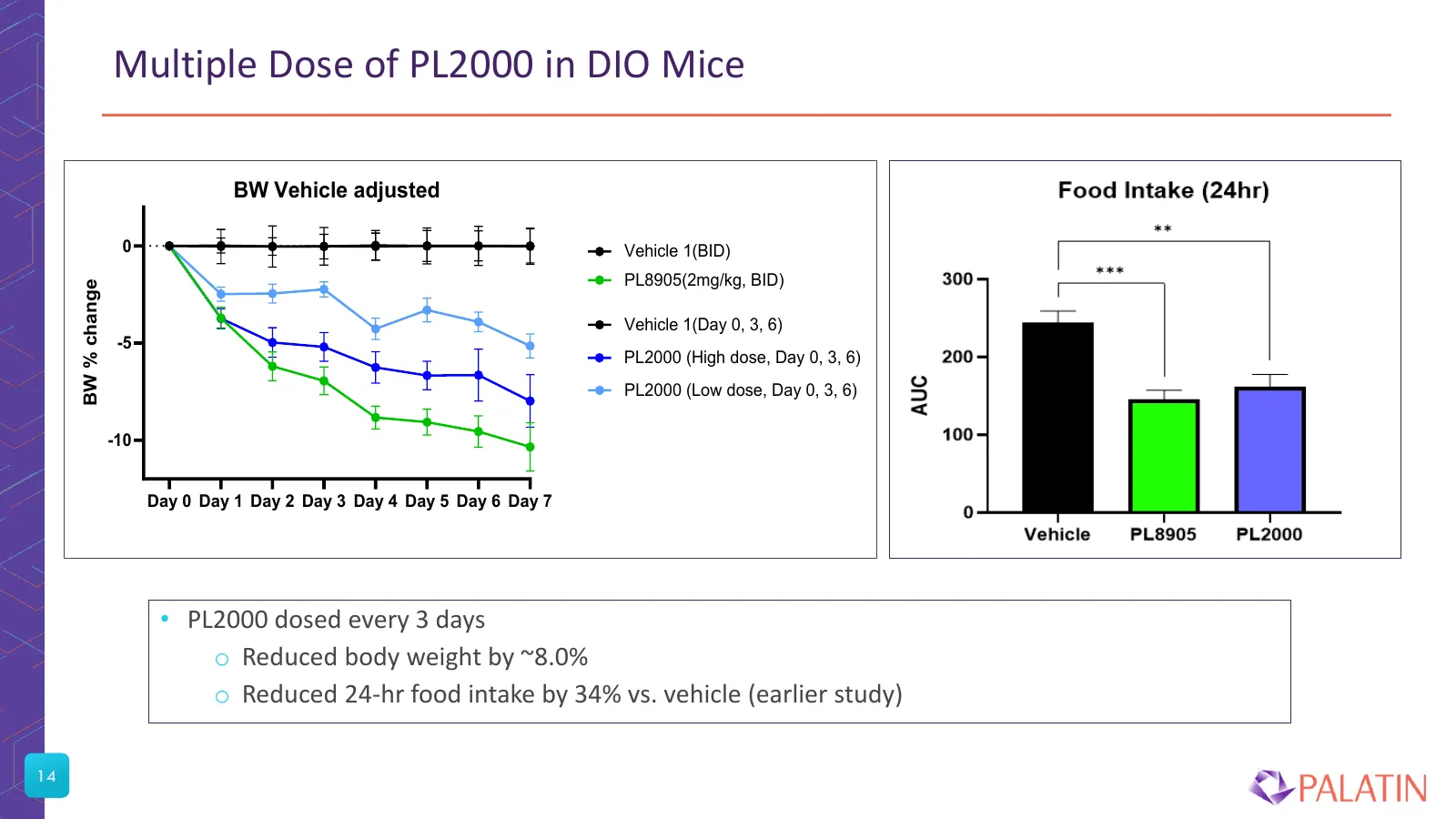
Slide 14: Multiple Dose of PL2000 in DIO Mice
Multiple Dose of PL2000 in DIO Mice BW Vehicle adjusted 0 Vehicle 1(BID) PL8905(2mg/kg, BID) BW % change Vehicle 1(Day 0, 3, 6) -5 PL2000 (High dose, Day 0, 3, 6) PL2000 (Low dose, Day 0, 3, 6) -10 Day 0 Day 1 Day 2 Day 3 Day 4 Day 5 Day 6 Day 7 • PL2000 dosed every 3 days o Reduced body weight by ~
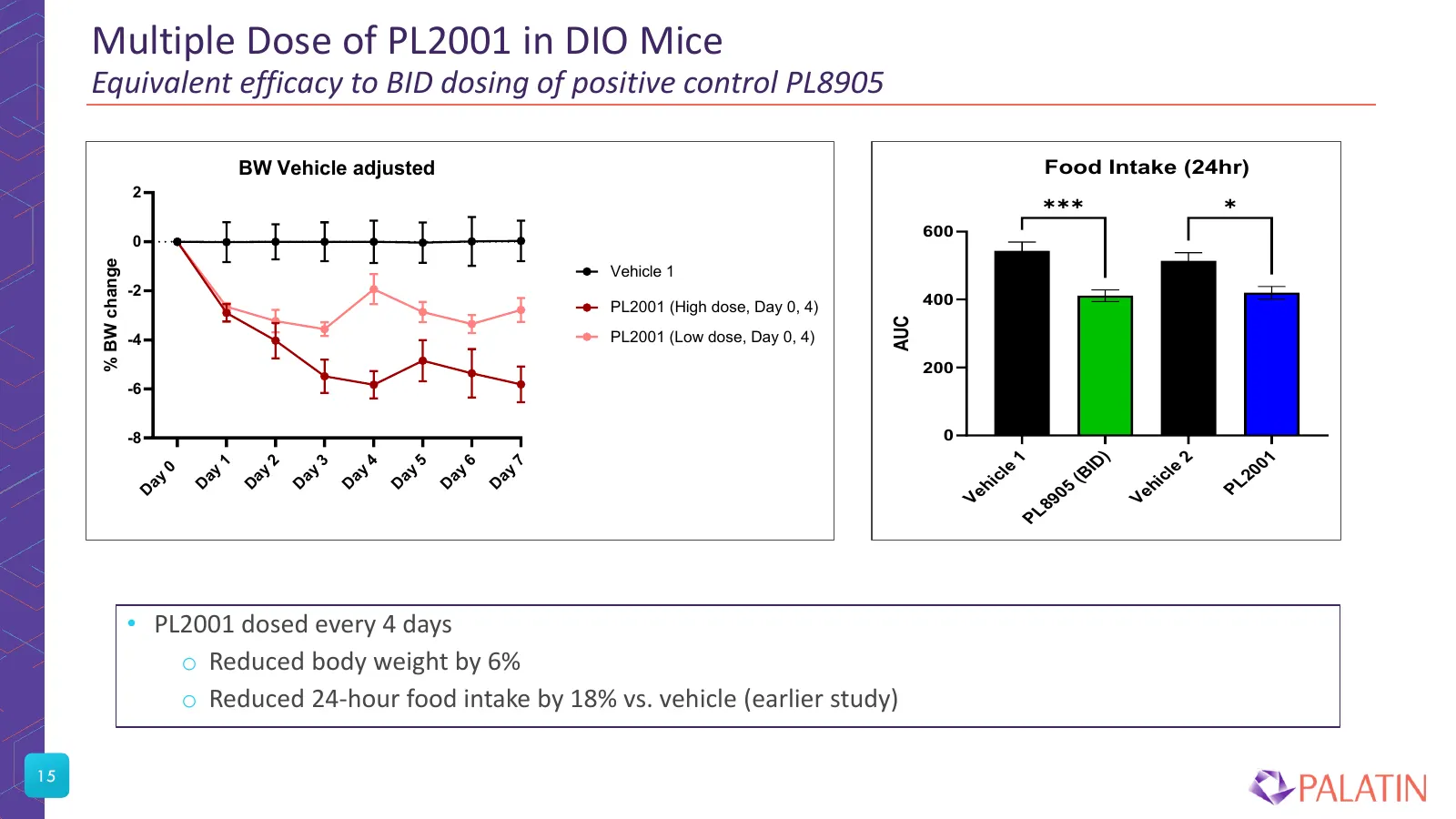
Slide 15: Multiple Dose of PL2001 in DIO Mice
Multiple Dose of PL2001 in DIO Mice Equivalent efficacy to BID dosing of positive control PL8905 BW Vehicle adjusted Food Intake (24hr) 2 ✱✱✱ ✱ 600 0 % BW change Vehicle 1 -2 400 PL2001 (High dose, Day 0, 4) AUC -4 PL2001 (Low dose, Day 0, 4) 200 -6 -8 0 ) 1 1 2 1 2 3 4 5 6 7 ID 00 le le 0 ay ay ay
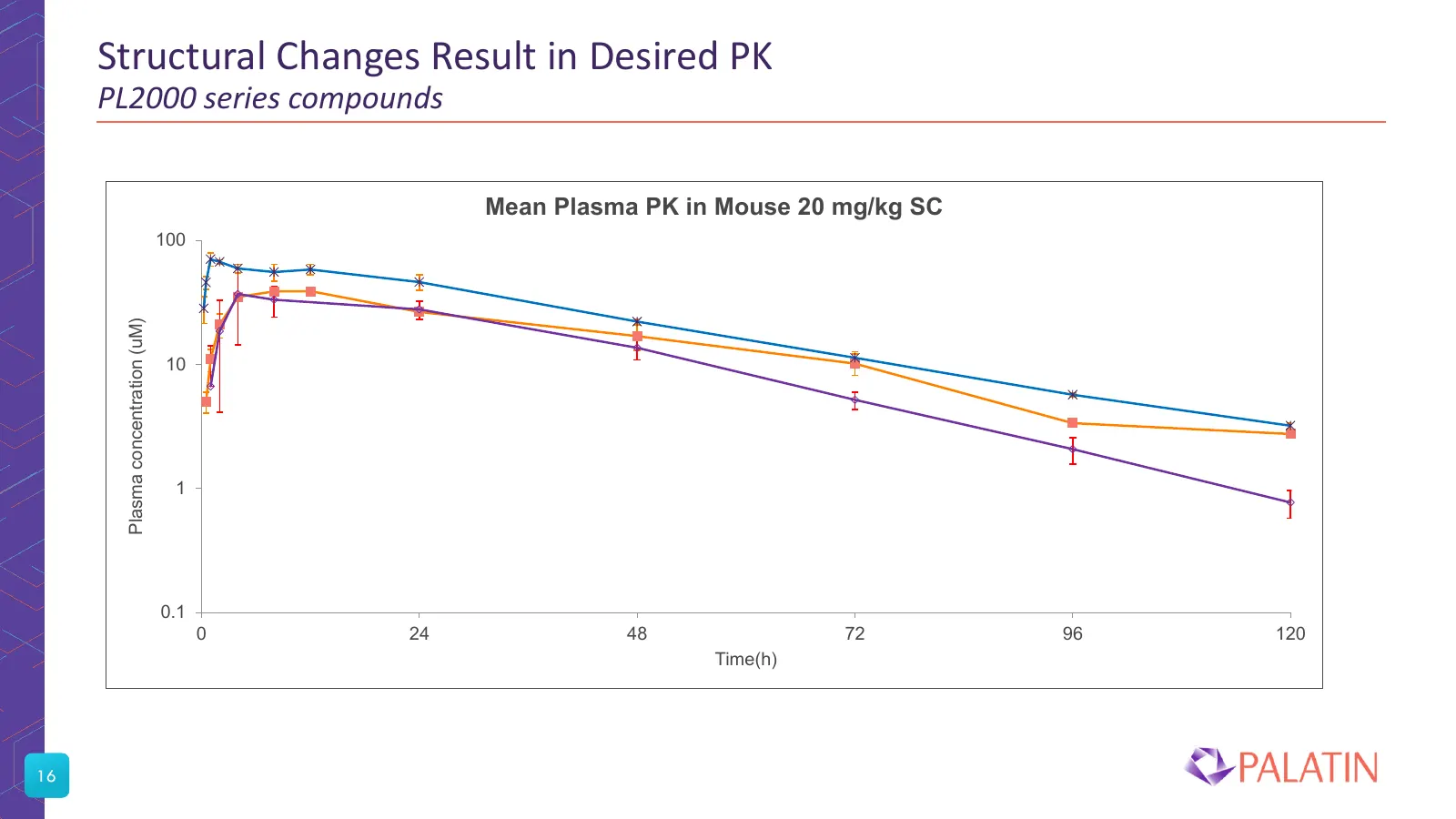
Slide 16: Structural Changes Result in Desired PK
Structural Changes Result in Desired PK PL2000 series compounds Mean Plasma PK in Mouse 20 mg/kg SC 100 Plasma concentration (uM) 10 1 0.1 0 24 48 72 96 120 Time(h) 16
Slide 17: Novel Next Generation MC4R Selective Peptide Agonists
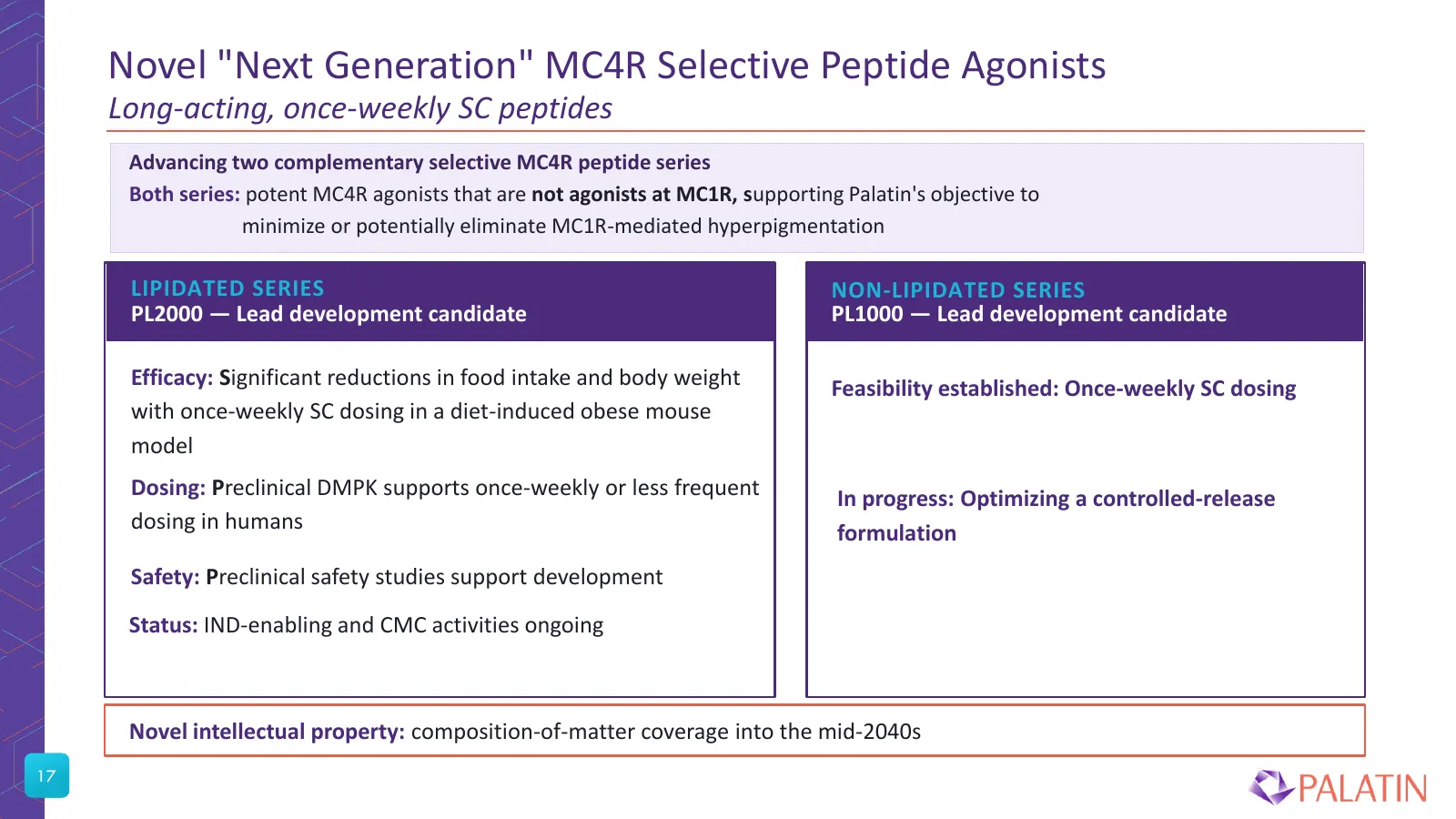
Novel "Next Generation" MC4R Selective Peptide Agonists Long-acting, once-weekly SC peptides Advancing two complementary selective MC4R peptide series Both series: potent MC4R agonists that are not agonists at MC1R, supporting Palatin's objective to minimize or potentially eliminate MC1R-mediated hy
Slide 18: Melanocortin-4 Receptor (MC4R) Obesity Programs
Melanocortin-4 Receptor (MC4R) Obesity Programs • Novel “Next Generation” MC4R Selective Agonists o Oral Small Molecules – Daily Dosing
Slide 19: Development Objective
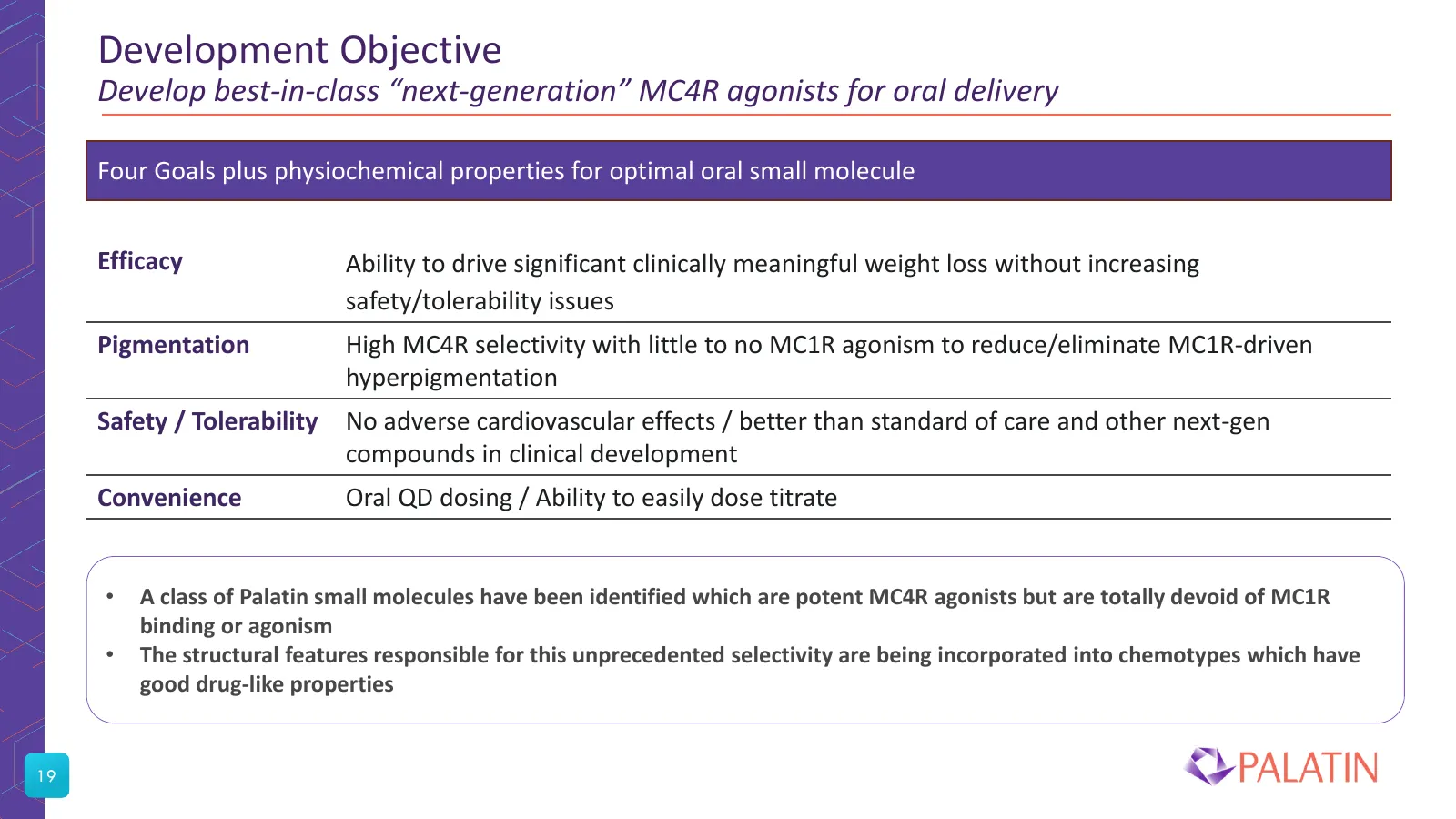
Development Objective Develop best-in-class “next-generation” MC4R agonists for oral delivery Four Goals plus physiochemical properties for optimal oral small molecule Efficacy Ability to drive significant clinically meaningful weight loss without increasing safety/tolerability issues Pigmentation H
Slide 20: MC4R Selective Oral Small Molecule Program
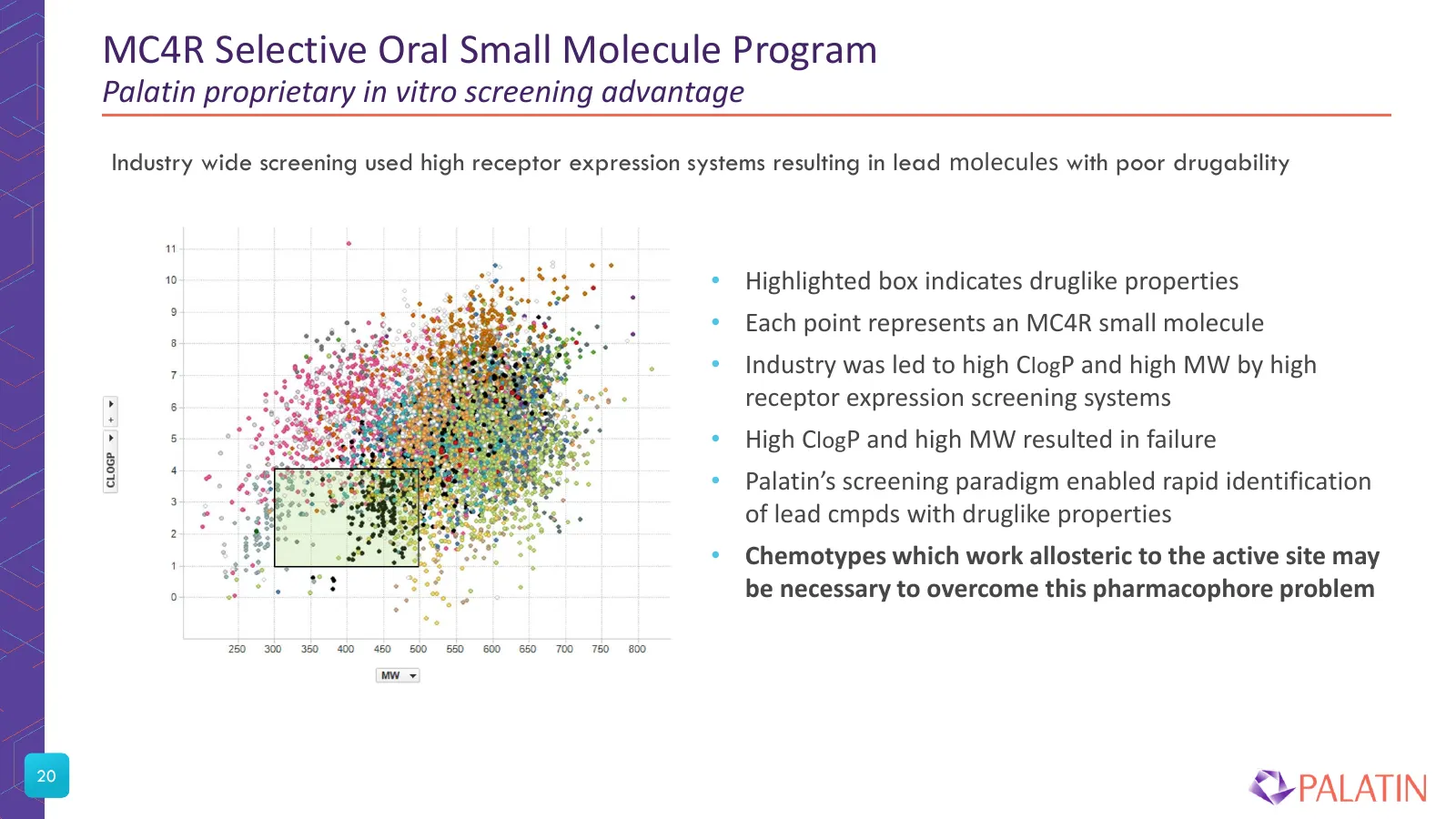
MC4R Selective Oral Small Molecule Program Palatin proprietary in vitro screening advantage Industry wide screening used high receptor expression systems resulting in lead molecules with poor drugability • Highlighted box indicates druglike properties • Each point represents an MC4R small molecule •
Slide 21: Small Molecule Program
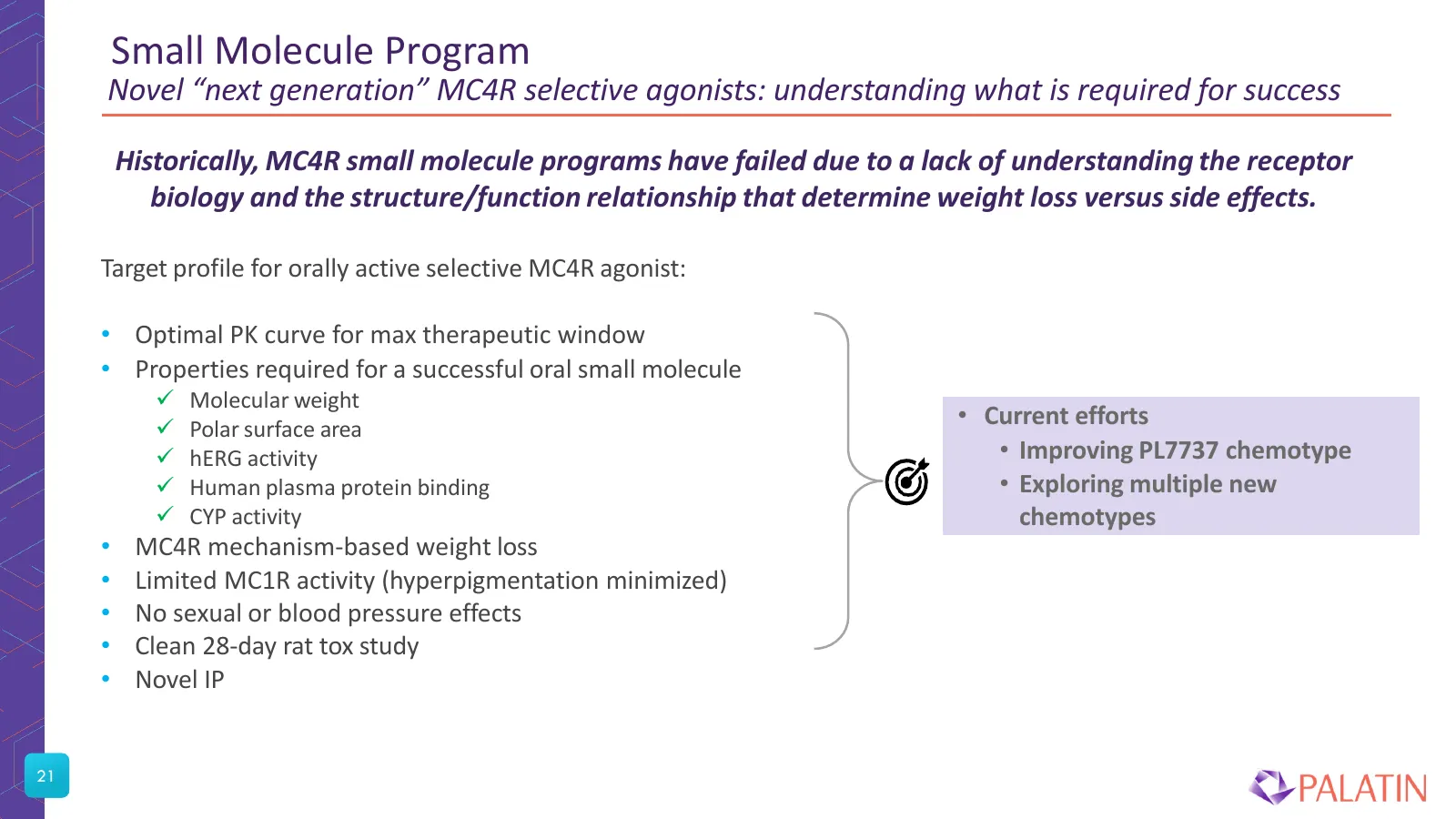
Small Molecule Program Novel “next generation” MC4R selective agonists: understanding what is required for success Historically, MC4R small molecule programs have failed due to a lack of understanding the receptor biology and the structure/function relationship that determine weight loss versus side
Slide 22: Additional Small-Molecule Chemotypes
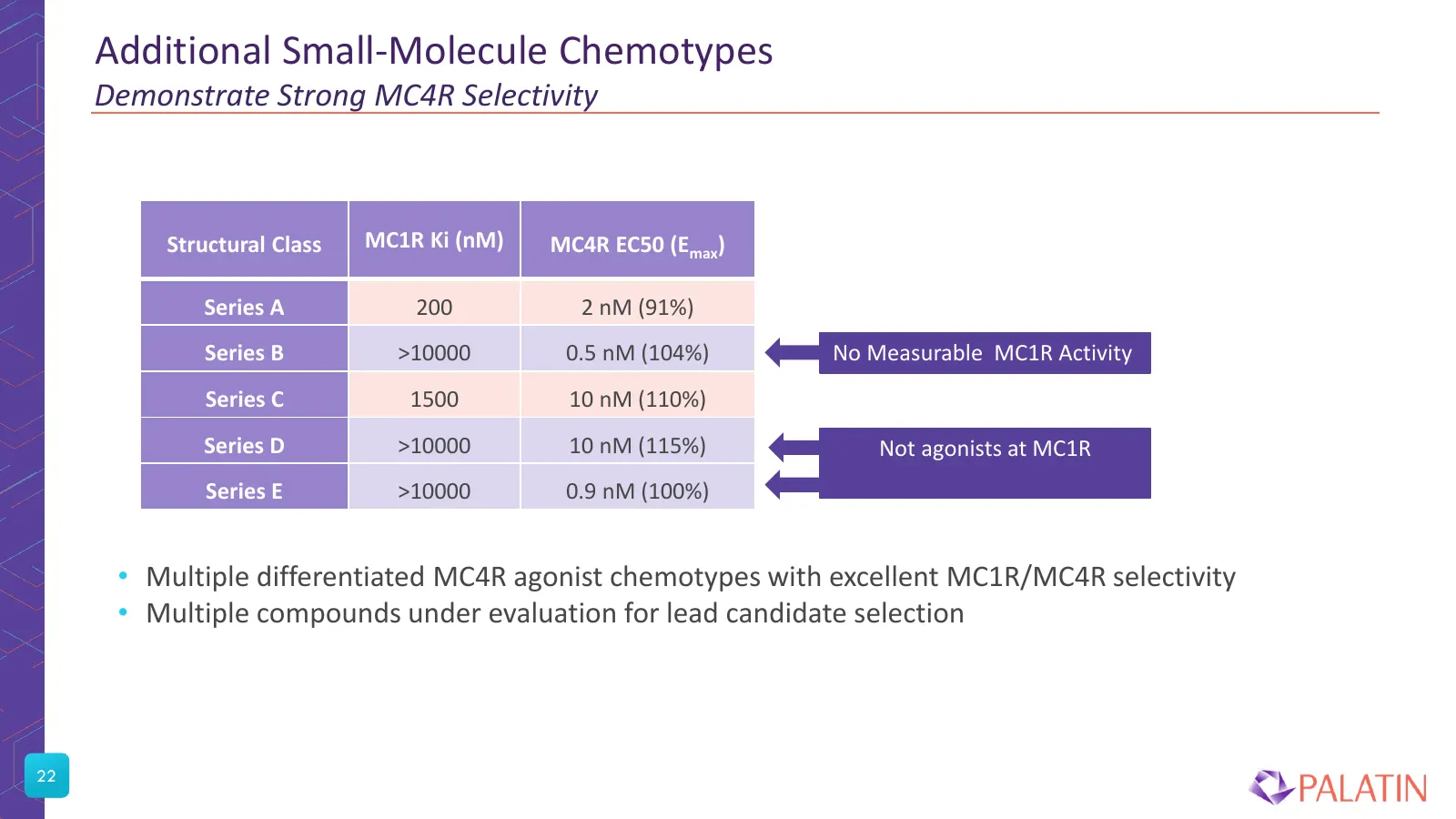
Additional Small-Molecule Chemotypes Demonstrate Strong MC4R Selectivity Structural Class MC1R Ki (nM) MC4R EC50 (Emax) Series A 200 2 nM (91%) Series B >10000 0.5 nM (104%) No Measurable MC1R Activity Series C 1500 10 nM (110%) Series D >10000 10 nM (115%) Not agonists at MC1R Series E >10000 0.9 n
Slide 23: Next Generation MC4R Selective Oral Small Molecule Agonists
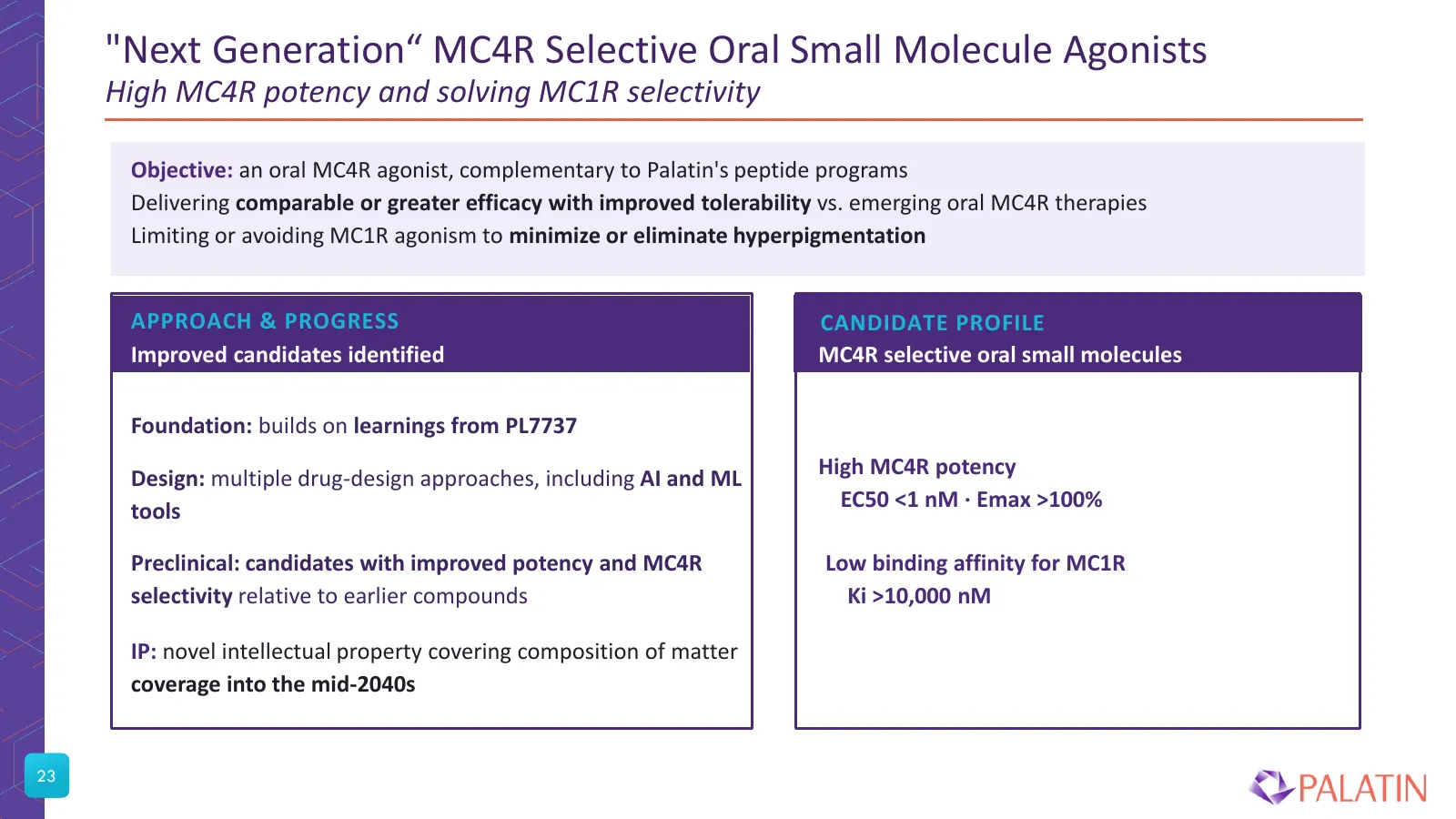
"Next Generation“ MC4R Selective Oral Small Molecule Agonists High MC4R potency and solving MC1R selectivity Objective: an oral MC4R agonist, complementary to Palatin's peptide programs Delivering comparable or greater efficacy with improved tolerability vs. emerging oral MC4R therapies Limiting or
Slide 24: MC4R Obesity Programs Next Steps and Development Timeline
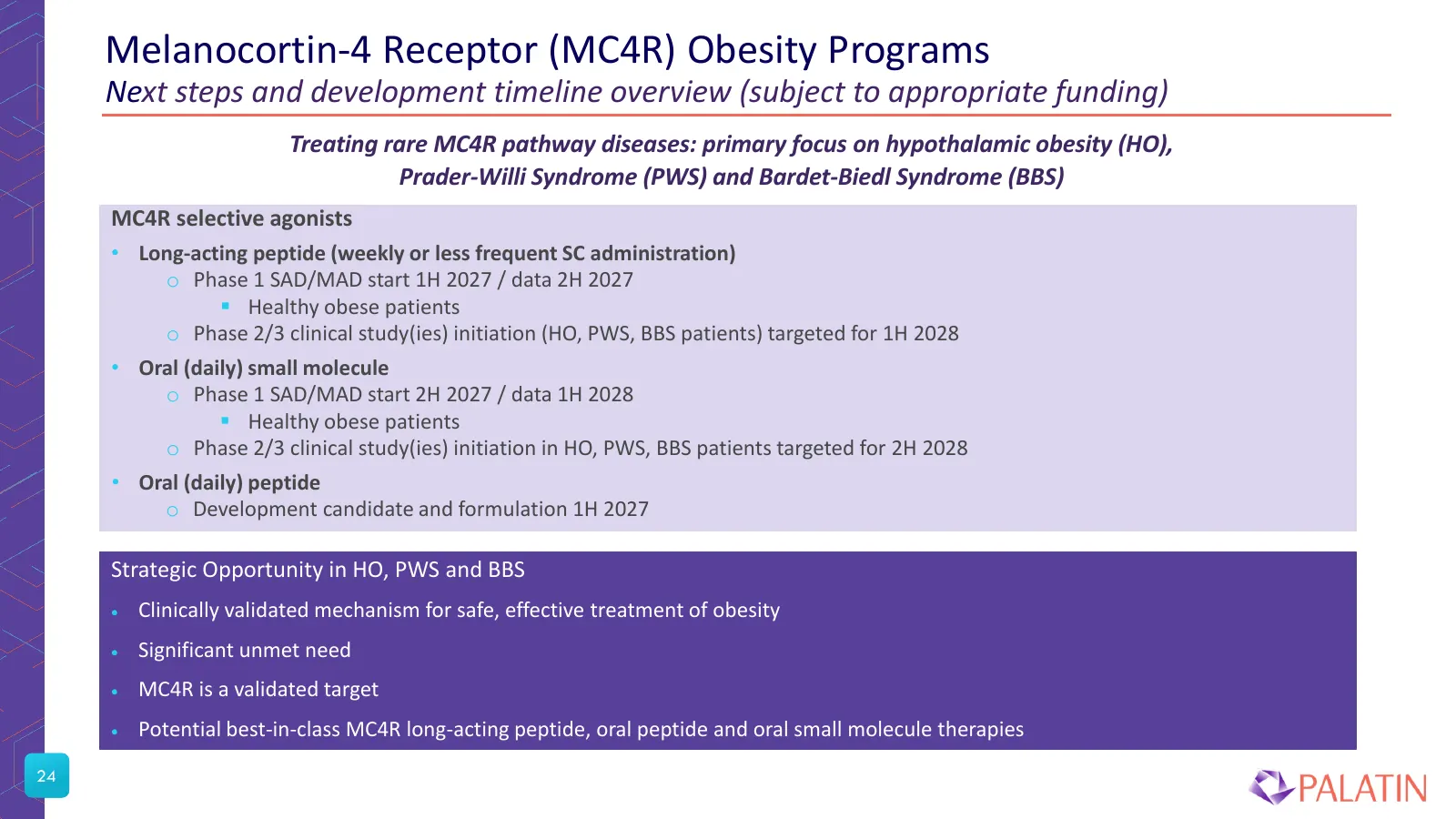
Melanocortin-4 Receptor (MC4R) Obesity Programs Next steps and development timeline overview (subject to appropriate funding) Treating rare MC4R pathway diseases: primary focus on hypothalamic obesity (HO), Prader-Willi Syndrome (PWS) and Bardet-Biedl Syndrome (BBS) MC4R selective agonists • Long-ac
Slide 25: Therapies for Rare Obesity Disorders Driven by Impaired MC4R Pathway Signaling
Therapies for the Treatment of Rare Obesity Disorders Driven by Impaired MC4R Pathway Signaling • Hypothalamic Obesity (HO) • Prader-Willi Syndrome (PWS) • Bardet-Biedl Syndrome (BBS) • MC4R Haploinsufficiency (MC4R HI)
Slide 26: Hypothalamic Obesity (HO)
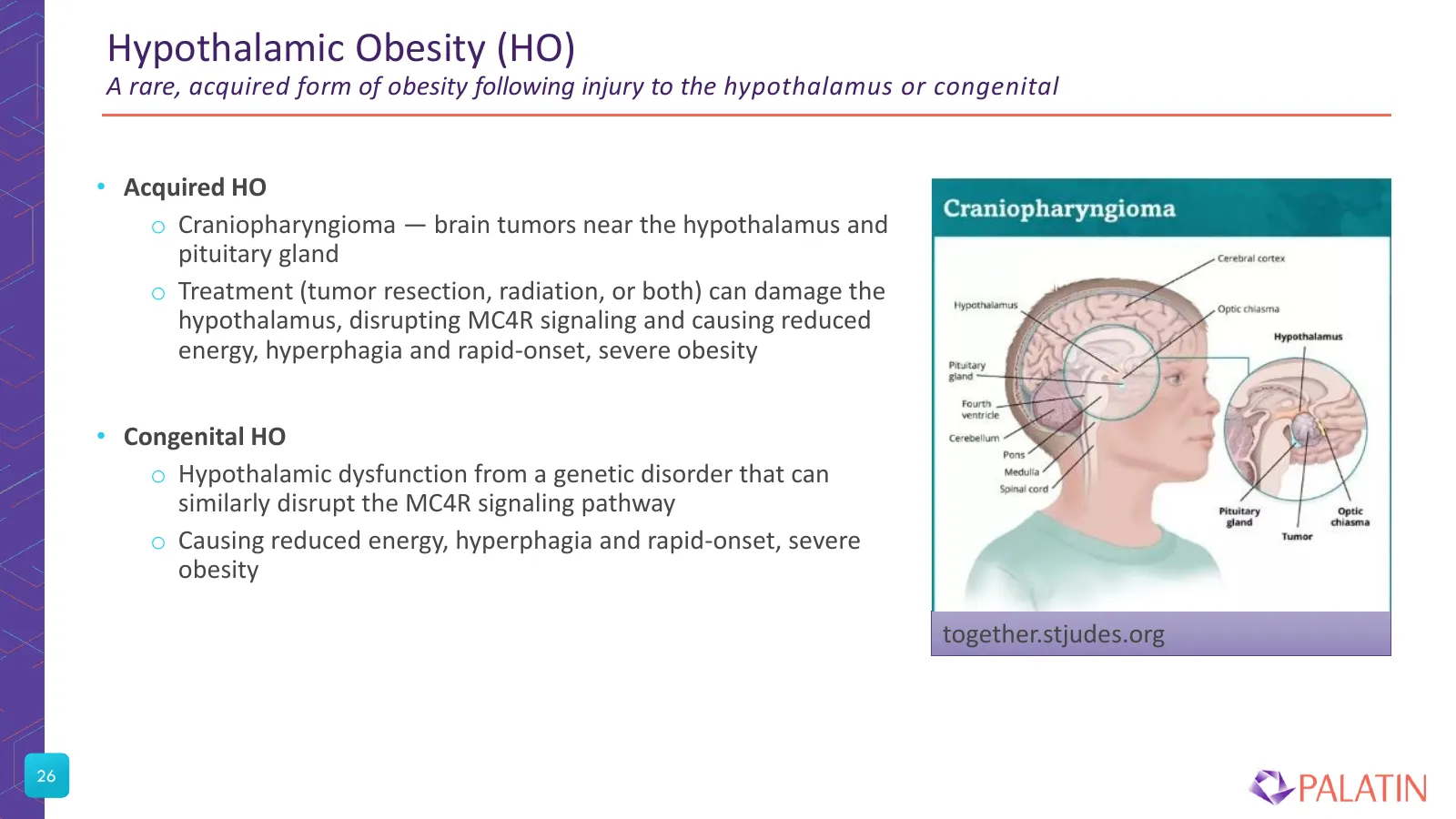
Hypothalamic Obesity (HO) A rare, acquired form of obesity following injury to the hypothalamus or congenital • Acquired HO o Craniopharyngioma — brain tumors near the hypothalamus and pituitary gland o Treatment (tumor resection, radiation, or both) can damage the hypothalamus, disrupting MC4R sign
Slide 27: Prader-Willi Syndrome (PWS)
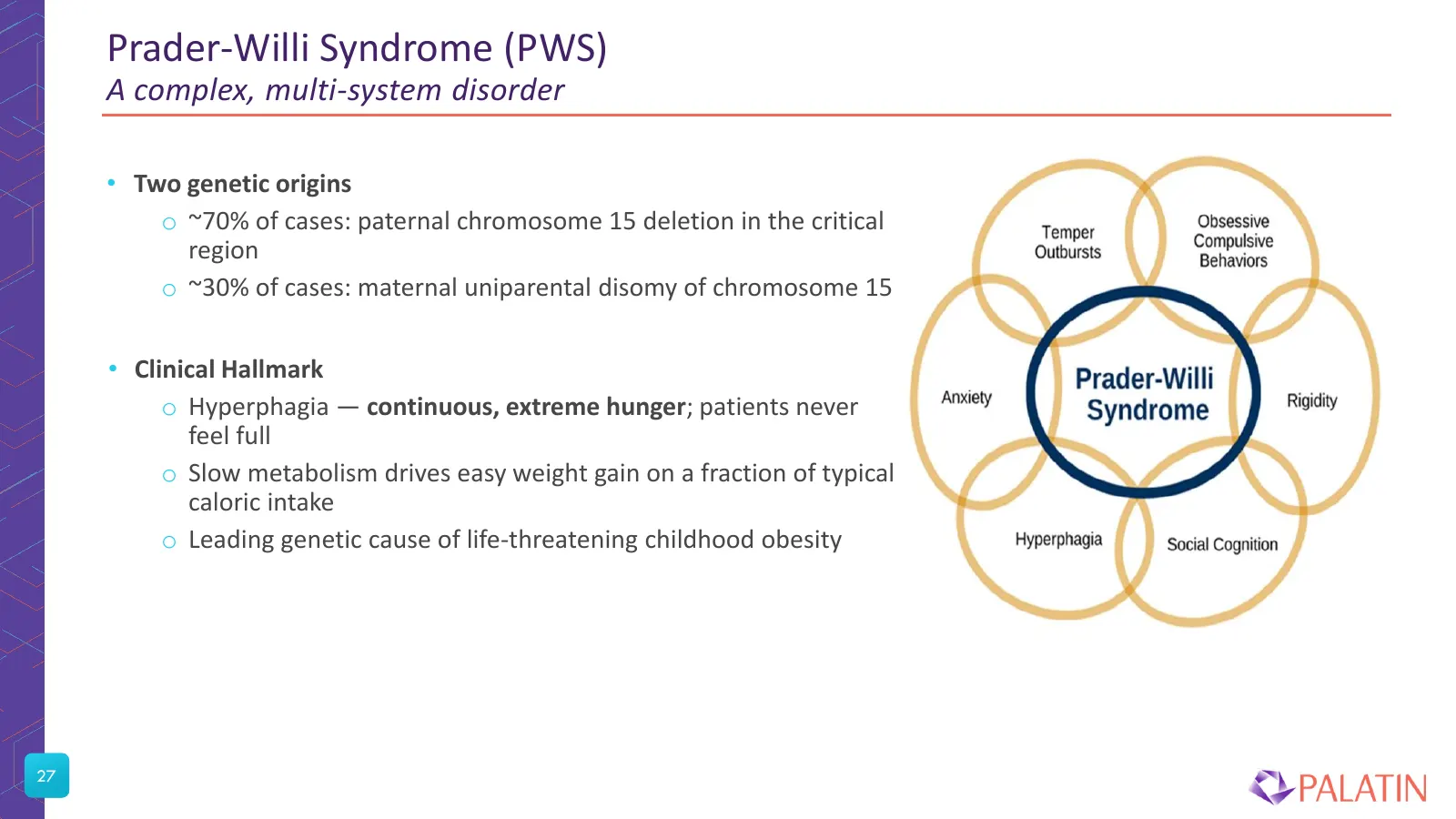
Prader-Willi Syndrome (PWS) A complex, multi-system disorder • Two genetic origins o ~70% of cases: paternal chromosome 15 deletion in the critical region o ~30% of cases: maternal uniparental disomy of chromosome 15 • Clinical Hallmark o Hyperphagia — continuous, extreme hunger; patients never feel
Slide 28: Bardet-Biedl Syndrome (BBS)
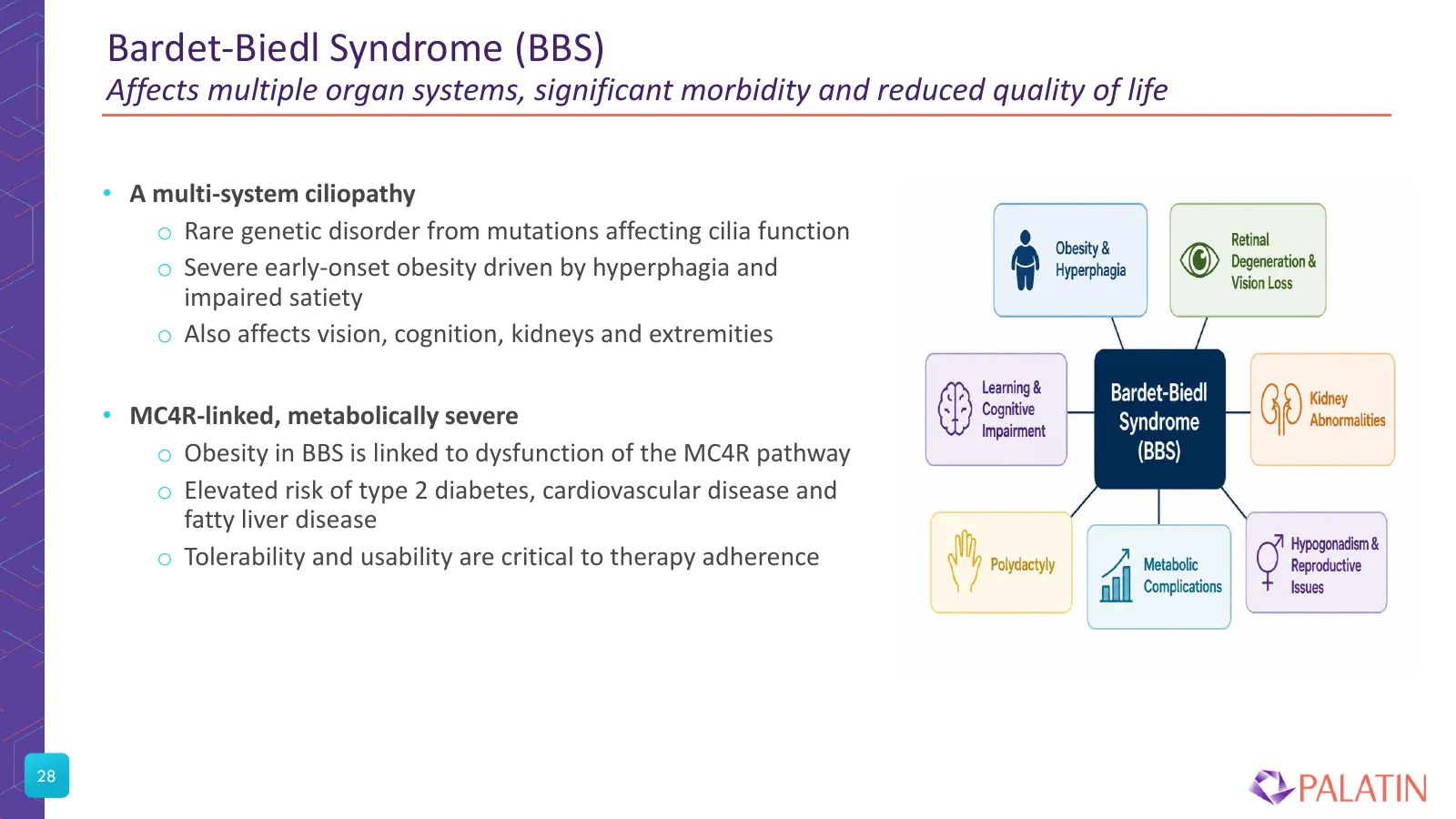
Bardet-Biedl Syndrome (BBS) Affects multiple organ systems, significant morbidity and reduced quality of life • A multi-system ciliopathy o Rare genetic disorder from mutations affecting cilia function o Severe early-onset obesity driven by hyperphagia and impaired satiety o Also affects vision, cog
Slide 29: MC4R Haploinsufficiency (MC4R HI)
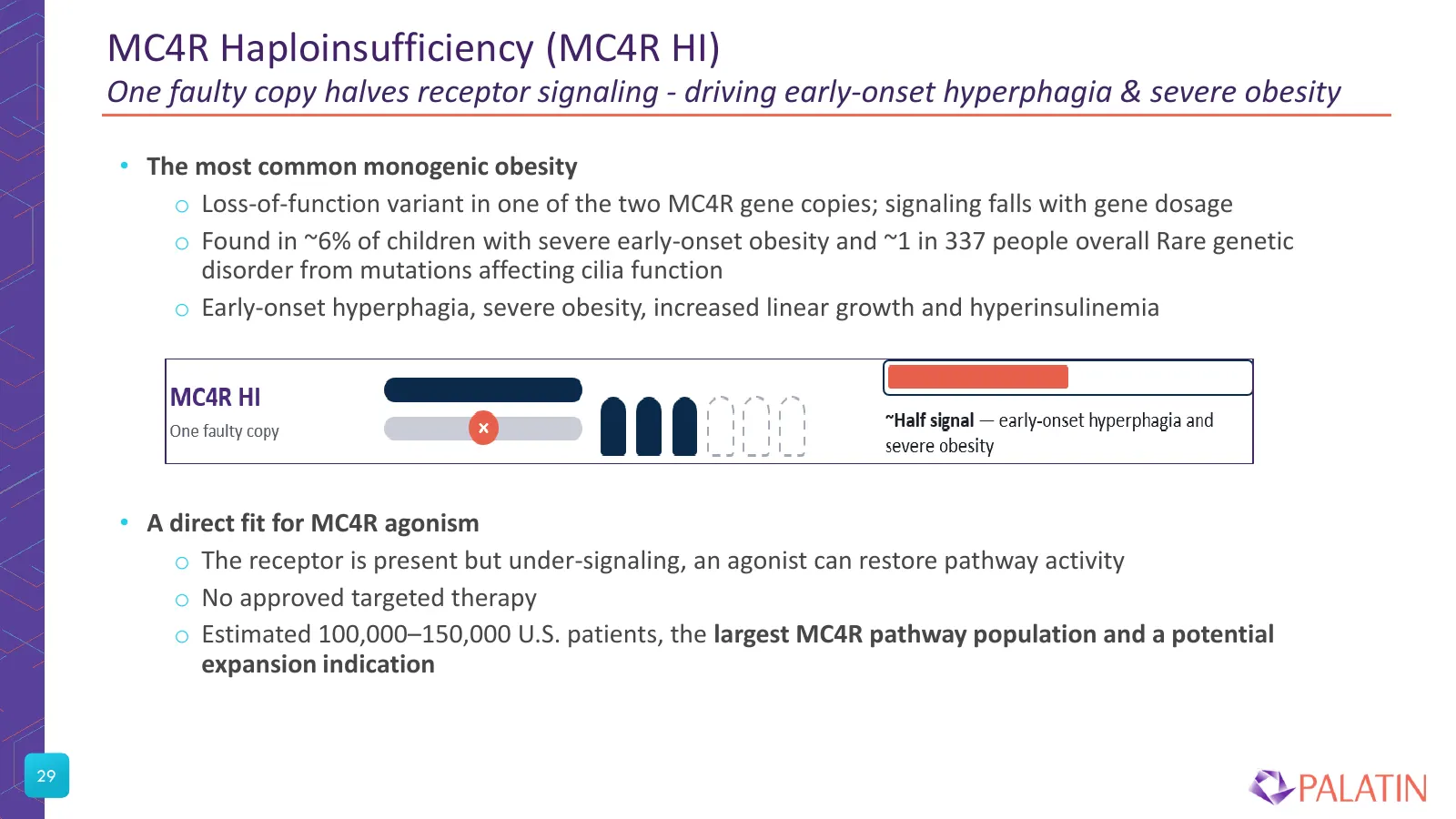
MC4R Haploinsufficiency (MC4R HI) One faulty copy halves receptor signaling - driving early-onset hyperphagia & severe obesity • The most common monogenic obesity o Loss-of-function variant in one of the two MC4R gene copies; signaling falls with gene dosage o Found in ~6% of children with severe ea
Slide 30: MC4R Agonist Plus GLP-1/GIP For Generalized Obesity Management
MC4R Agonist Plus GLP-1/GIP For Generalized Obesity Management • Bremelanotide MC4R agonist Phase 1b clinical weight loss study in general obese subjects • Co-administration of Bremelanotide MC4R & Tirzepatide (GLP-1/GIP) o Bremelanotide (BMT) MC4R Agonist ✓ FDA Approved (Vyleesi® for Female HSDD)
Slide 31: MC4R Agonist Generalized Obesity Management
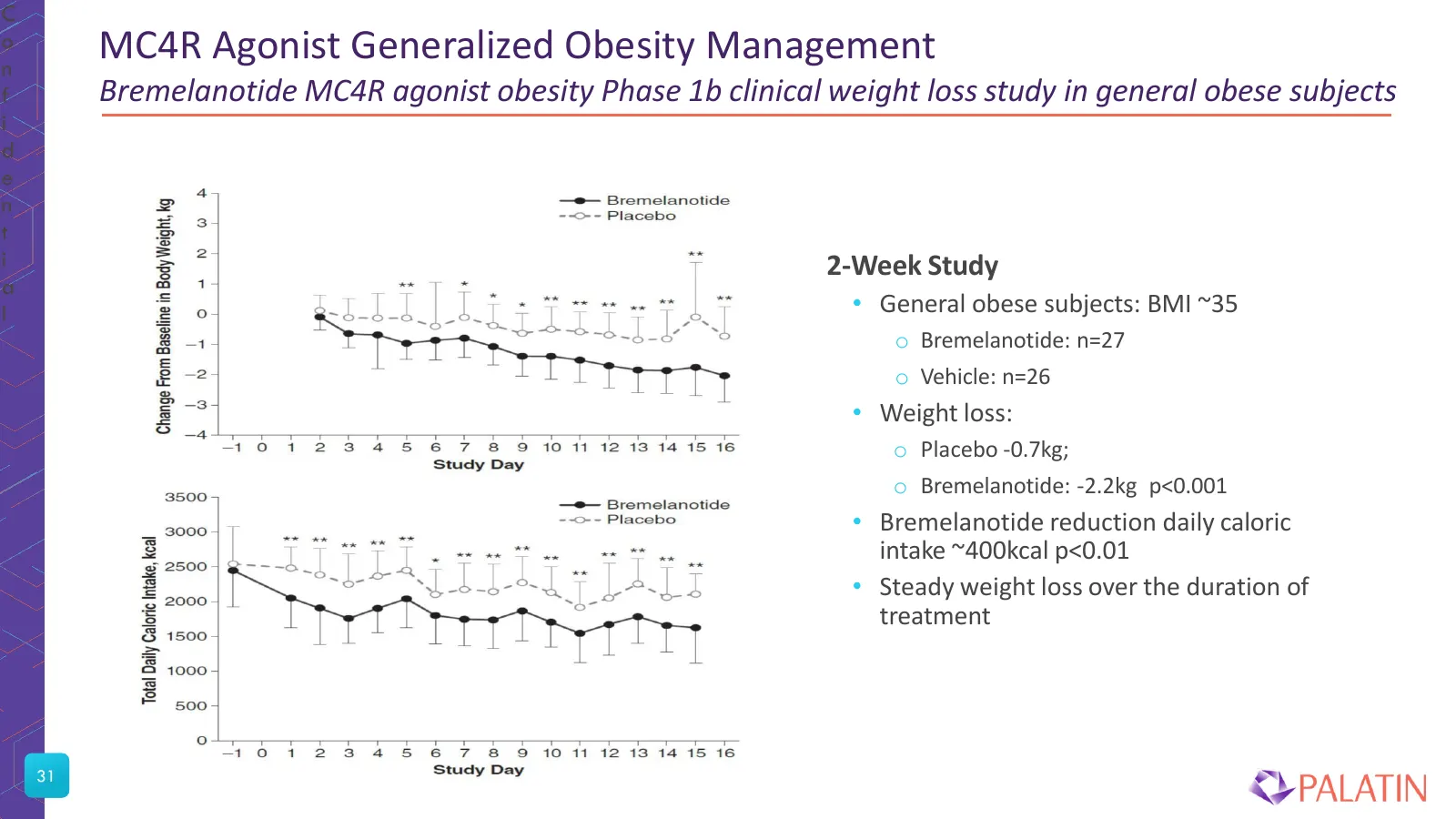
C o n MC4R Agonist Generalized Obesity Management f Bremelanotide MC4R agonist obesity Phase 1b clinical weight loss study in general obese subjects i d e n t i 2-Week Study a l • General obese subjects: BMI ~35 o Bremelanotide: n=27 o Vehicle: n=26 • Weight loss: o Placebo -0.7kg; o Bremelanotide:
Slide 32: MC4R Agonist Generalized Obesity Management
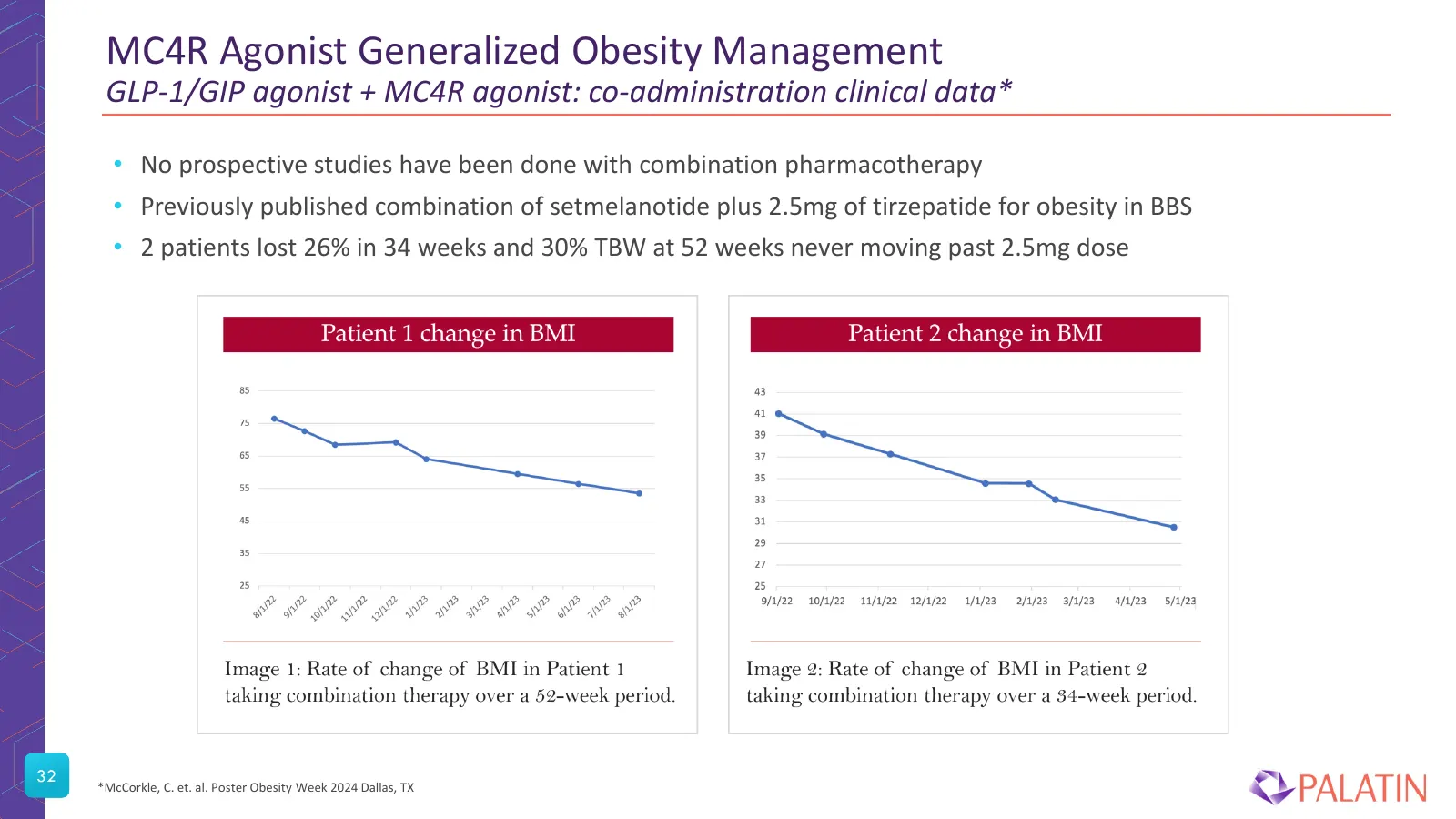
MC4R Agonist Generalized Obesity Management GLP-1/GIP agonist + MC4R agonist: co-administration clinical data* • No prospective studies have been done with combination pharmacotherapy • Previously published combination of setmelanotide plus 2.5mg of tirzepatide for obesity in BBS • 2 patients lost 2
Slide 33: MC4R Agonist Generalized Obesity Management
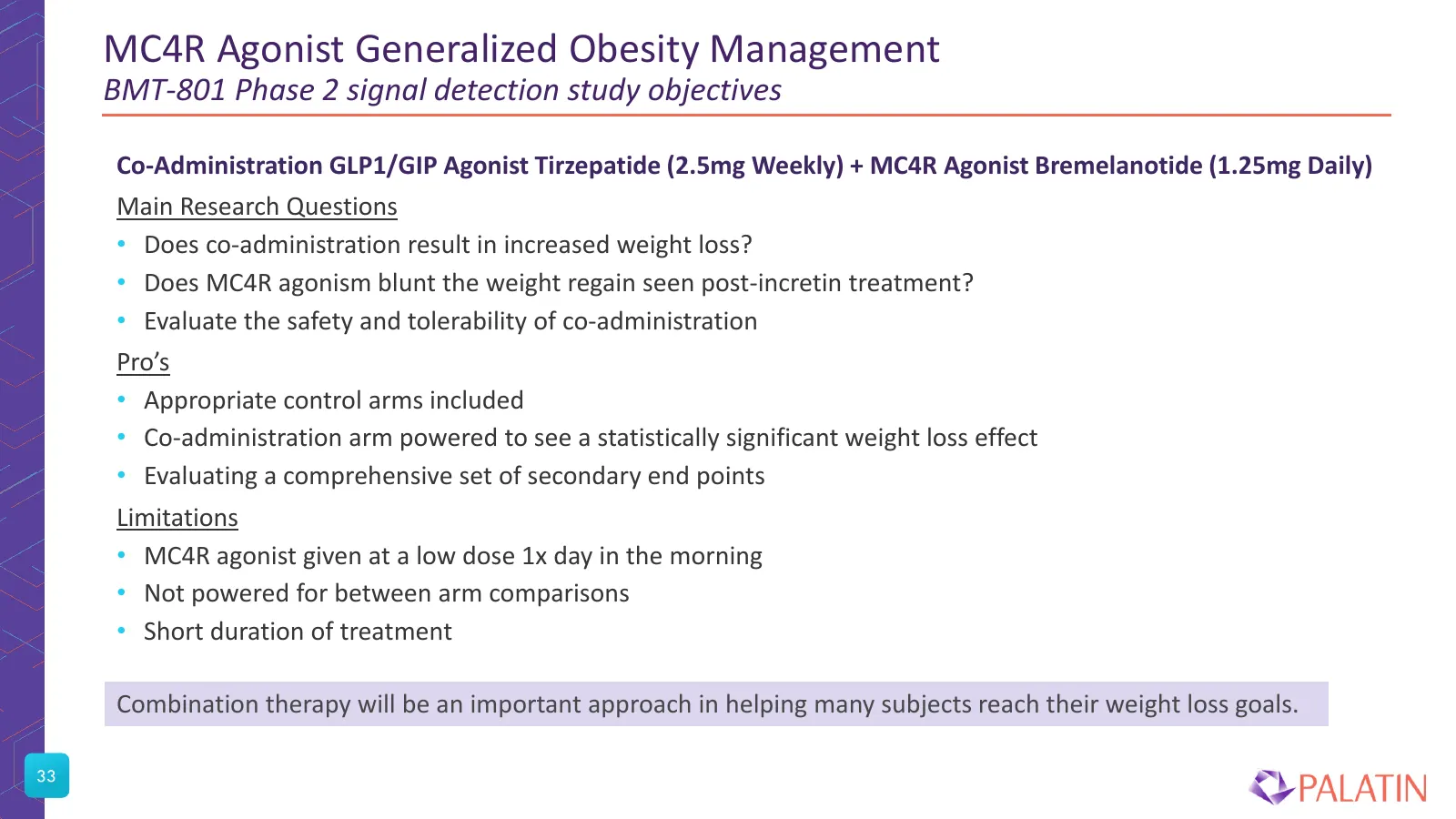
MC4R Agonist Generalized Obesity Management BMT-801 Phase 2 signal detection study objectives Co-Administration GLP1/GIP Agonist Tirzepatide (2.5mg Weekly) + MC4R Agonist Bremelanotide (1.25mg Daily) Main Research Questions • Does co-administration result in increased weight loss? • Does MC4R agonis
Slide 34: MC4R Agonist Generalized Obesity Management
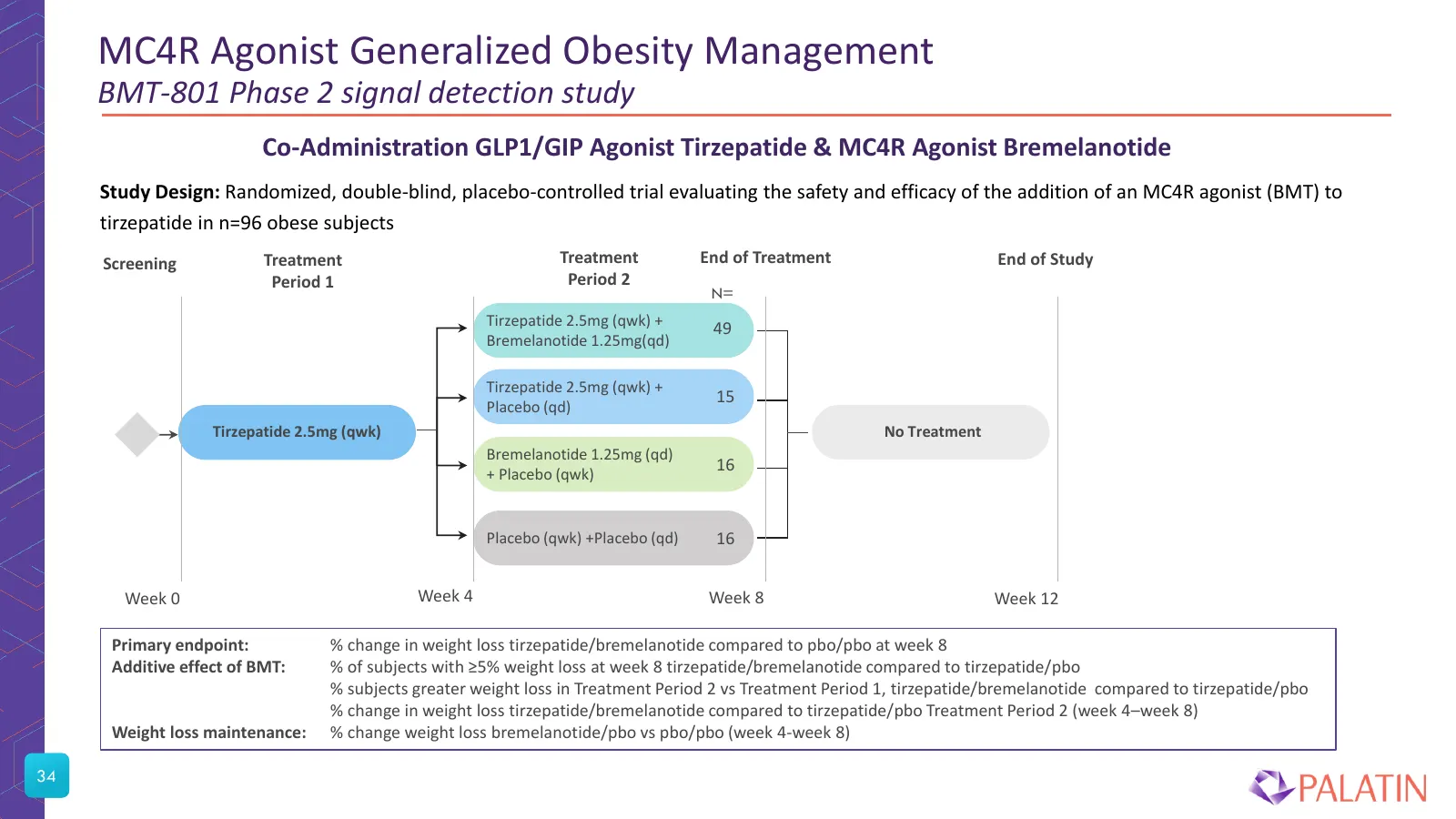
MC4R Agonist Generalized Obesity Management BMT-801 Phase 2 signal detection study Co-Administration GLP1/GIP Agonist Tirzepatide & MC4R Agonist Bremelanotide Study Design: Randomized, double-blind, placebo-controlled trial evaluating the safety and efficacy of the addition of an MC4R agonist (BMT)
Slide 35: Co-administration additive effect - primary analysis
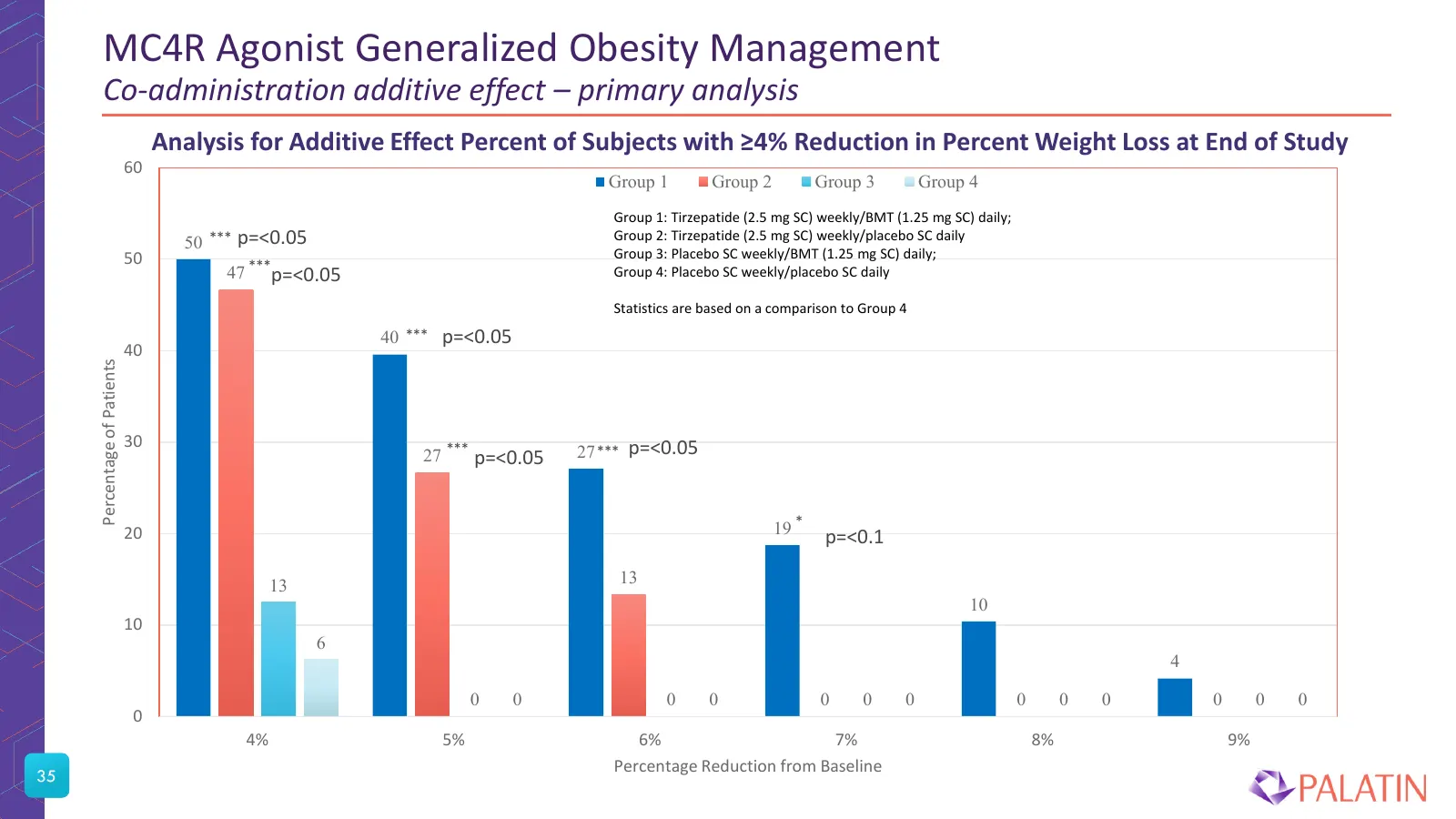
MC4R Agonist Generalized Obesity Management Co-administration additive effect – primary analysis Analysis for Additive Effect Percent of Subjects with ≥4% Reduction in Percent Weight Loss at End of Study 60 Group 1 Group 2 Group 3 Group 4 Group 1: Tirzepatide (2.5 mg SC) weekly/BMT (1.25 mg SC) dail
Slide 36: Effect of co-administration on increased weight loss
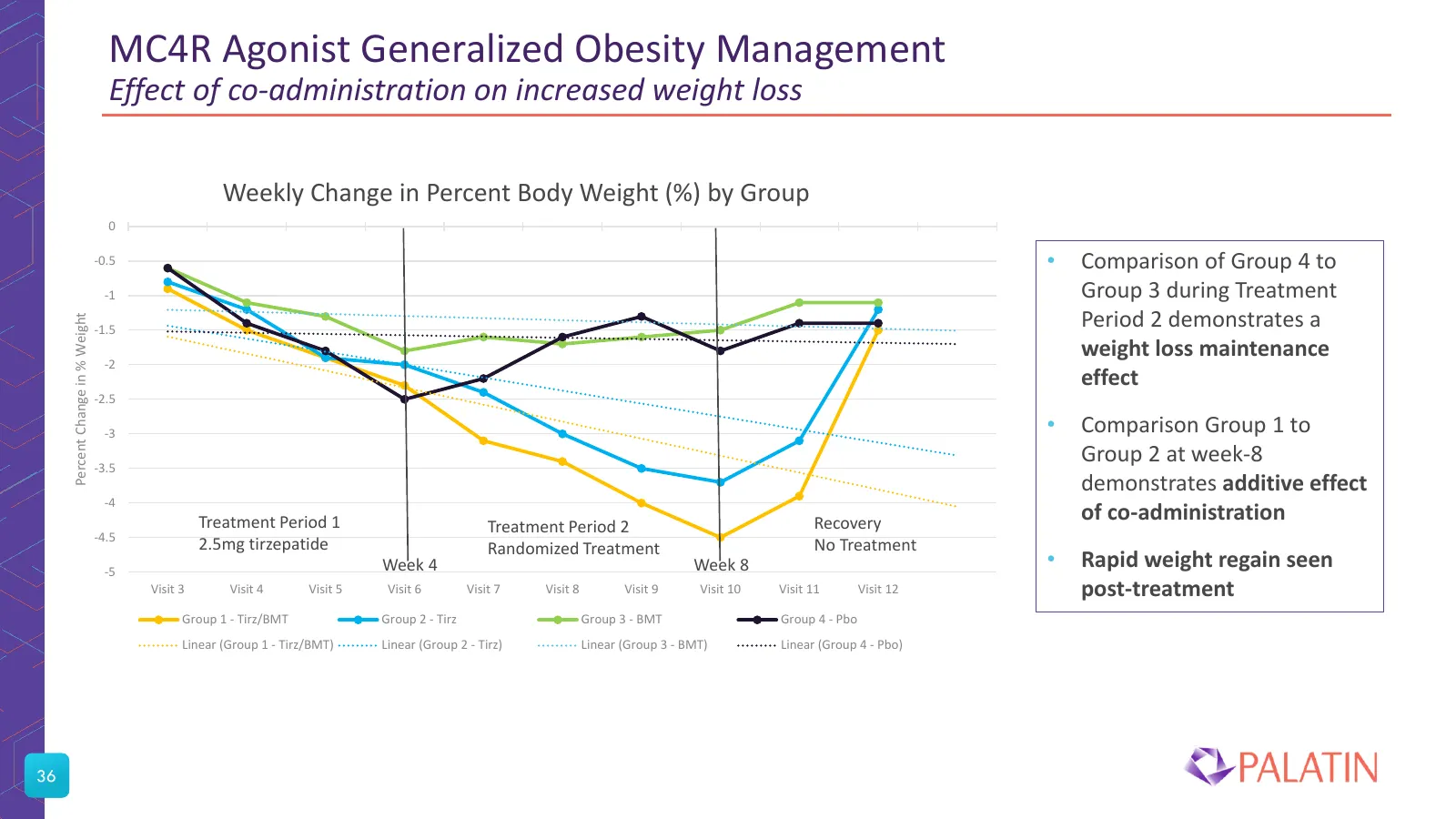
MC4R Agonist Generalized Obesity Management Effect of co-administration on increased weight loss Weekly Change in Percent Body Weight (%) by Group 0 -0.5 • Comparison of Group 4 to -1 Group 3 during Treatment Period 2 demonstrates a Percent Change in % Weight -1.5 weight loss maintenance -2 effect -
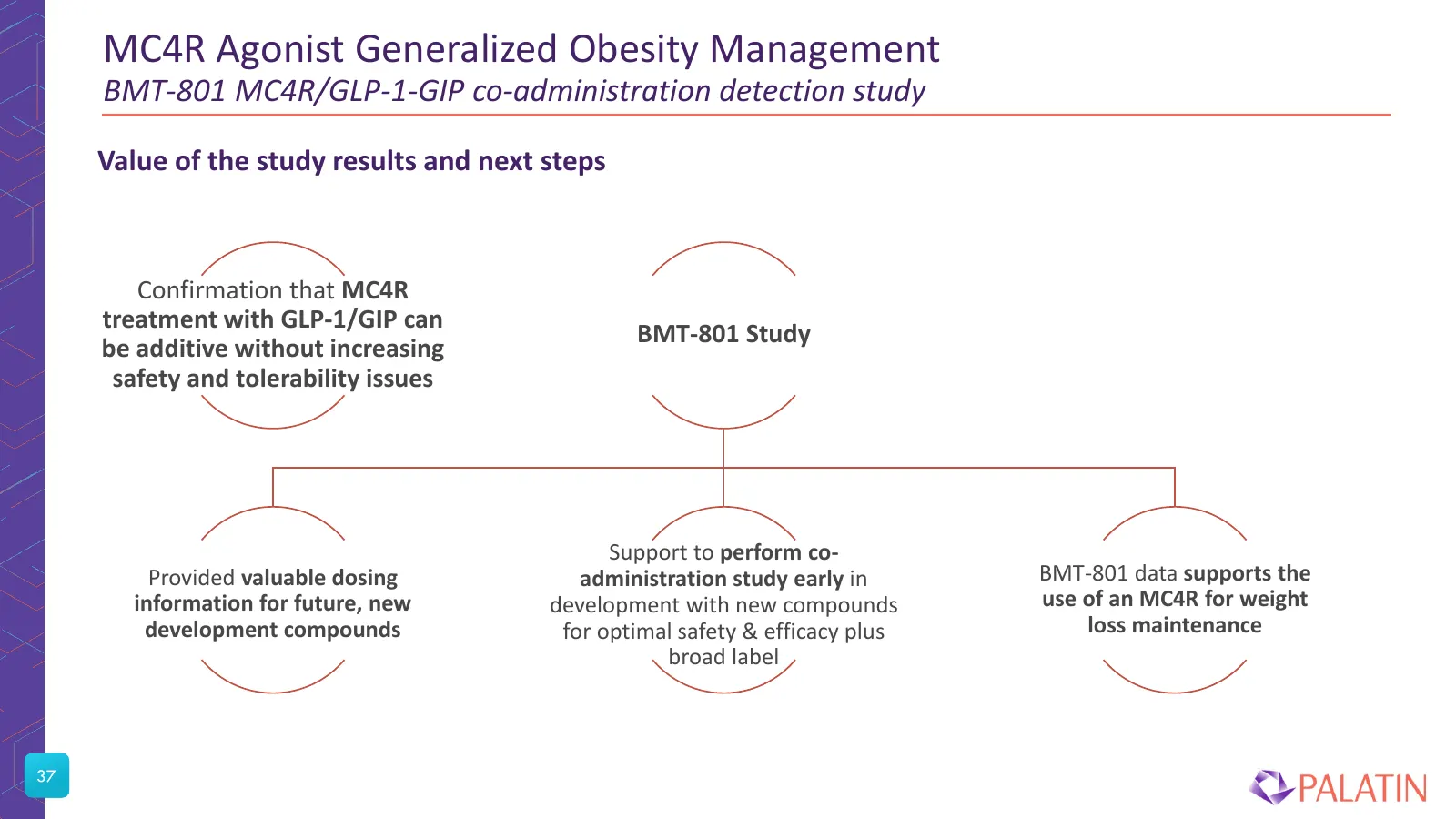
Slide 37: Value of the study results and next steps
MC4R Agonist Generalized Obesity Management BMT-801 MC4R/GLP-1-GIP co-administration detection study Value of the study results and next steps Confirmation that MC4R treatment with GLP-1/GIP can BMT-801 Study be additive without increasing safety and tolerability issues Support to perform co- Provid
Slide 38: Financial and Corporate, Spin-Out / Out-License Programs
Financial and Corporate Spin-Out / Out-License Programs Development Programs Overview Milestones Recap
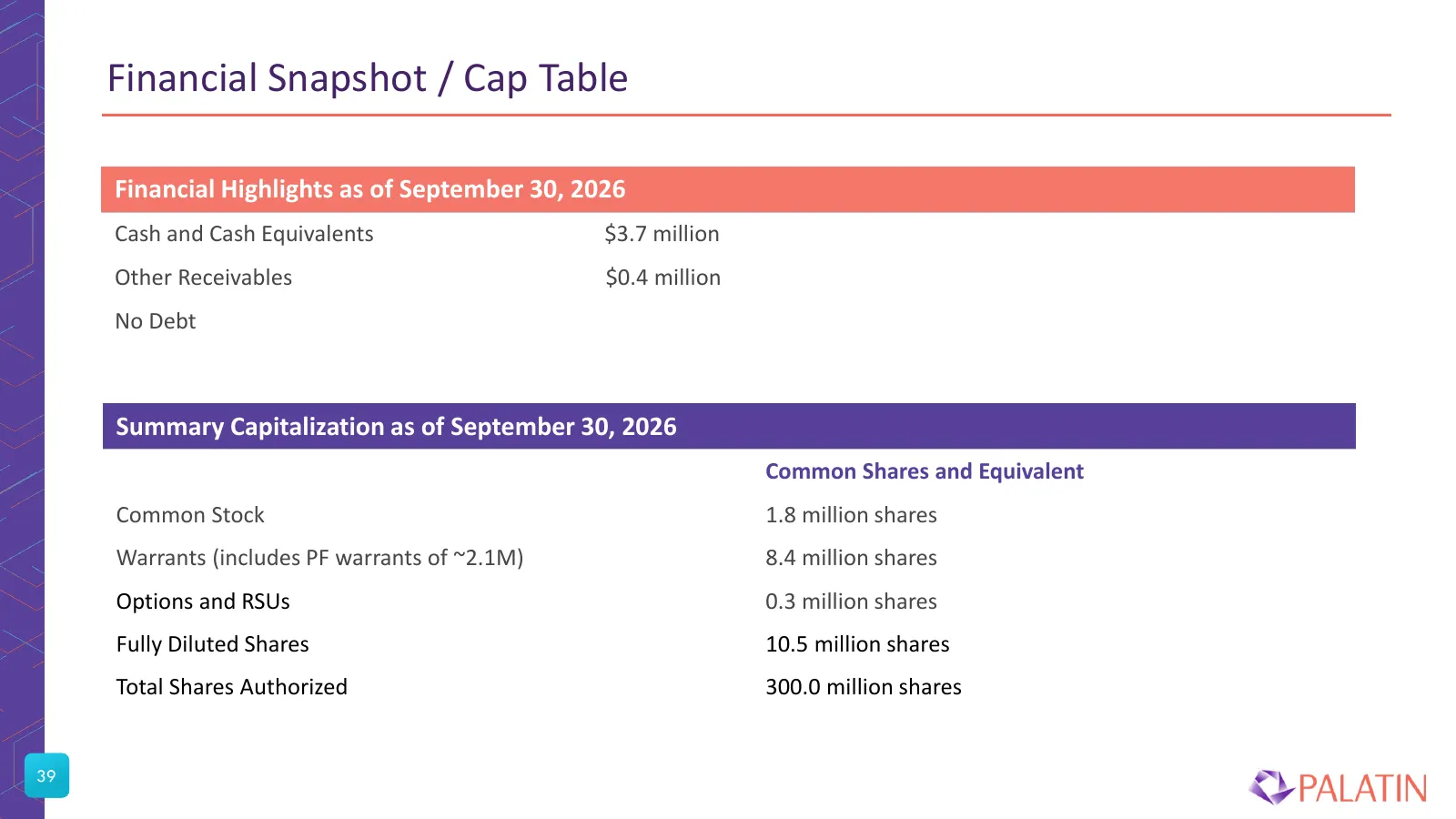
Slide 39: Financial Snapshot / Cap Table
Financial Snapshot / Cap Table Financial Highlights as of September 30, 2026 Cash and Cash Equivalents $3.7 million Other Receivables $0.4 million No Debt Summary Capitalization as of September 30, 2026 Common Shares and Equivalent Common Stock 1.8 million shares Warrants (includes PF warrants of ~2
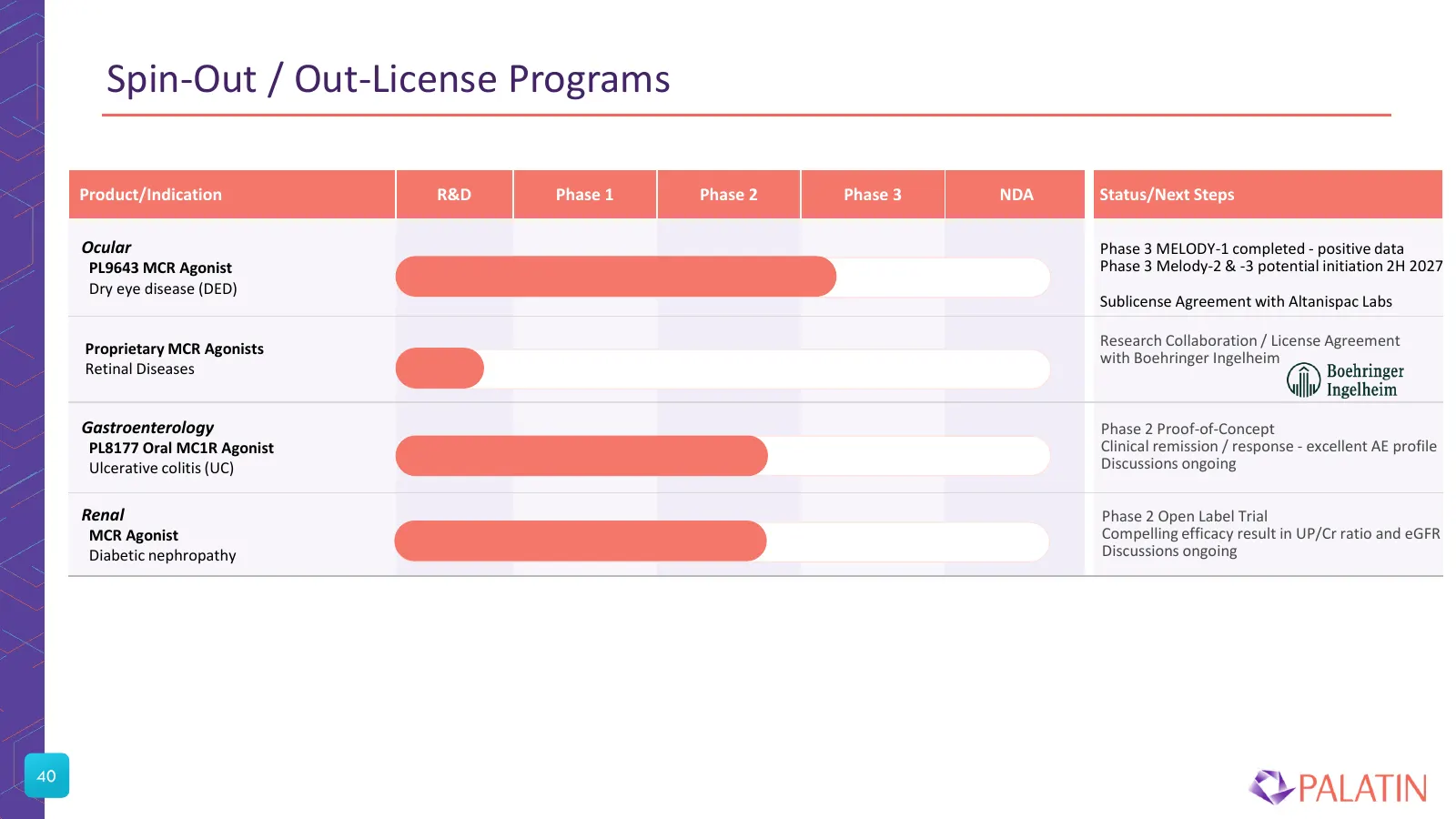
Slide 40: Spin-Out / Out-License Programs
Spin-Out / Out-License Programs Product/Indication R&D Phase 1 Phase 2 Phase 3 NDA Status/Next Steps Ocular Phase 3 MELODY-1 completed - positive data PL9643 MCR Agonist Phase 3 Melody-2 & -3 potential initiation 2H 2027 Dry eye disease (DED) Sublicense Agreement with Altanispac Labs Research Collab
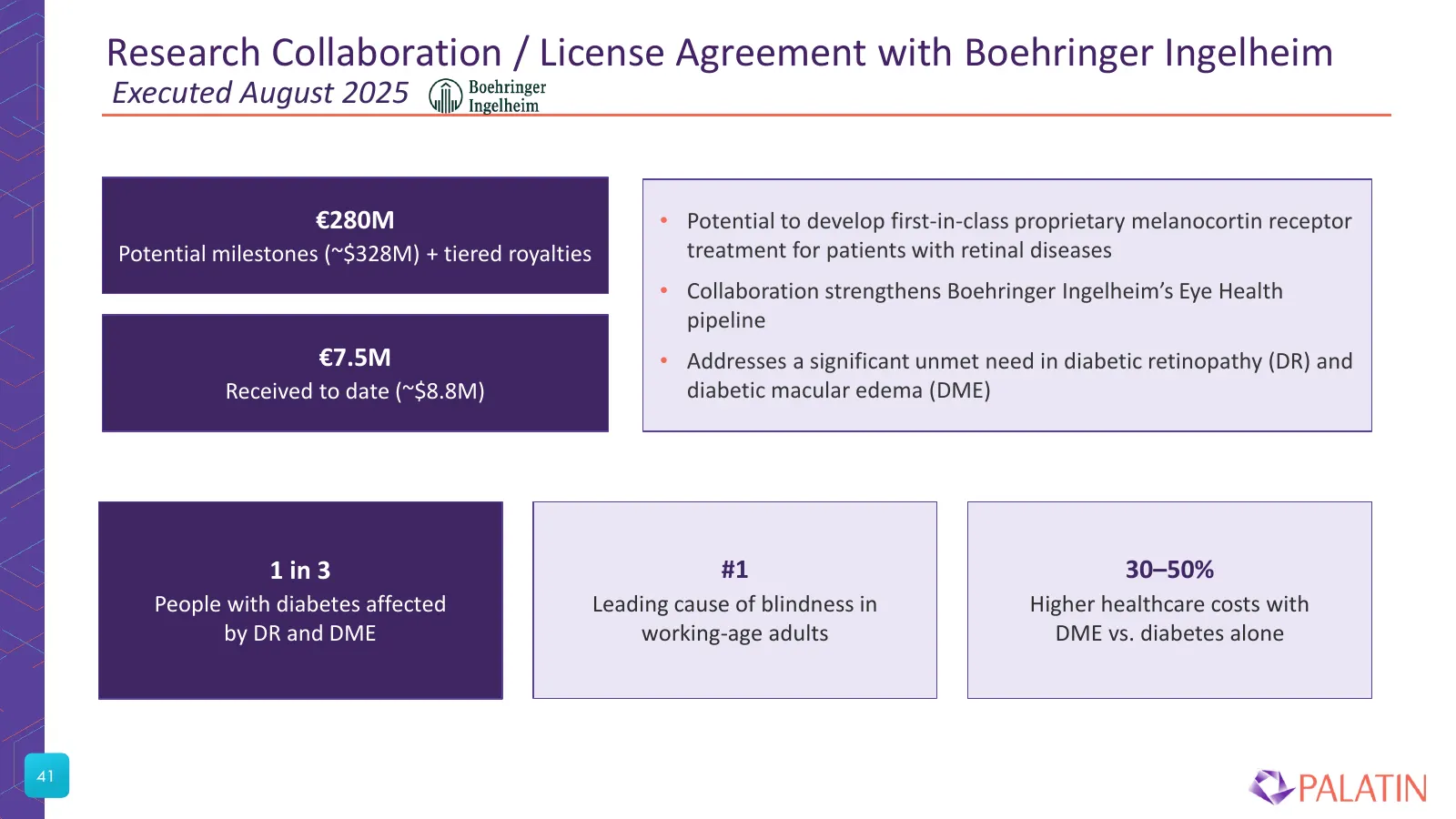
Slide 41: Research Collaboration / License Agreement with Boehringer Ingelheim
Research Collaboration / License Agreement with Boehringer Ingelheim Executed August 2025 €280M • Potential to develop first-in-class proprietary melanocortin receptor Potential milestones (~$328M) + tiered royalties treatment for patients with retinal diseases • Collaboration strengthens Boehringer
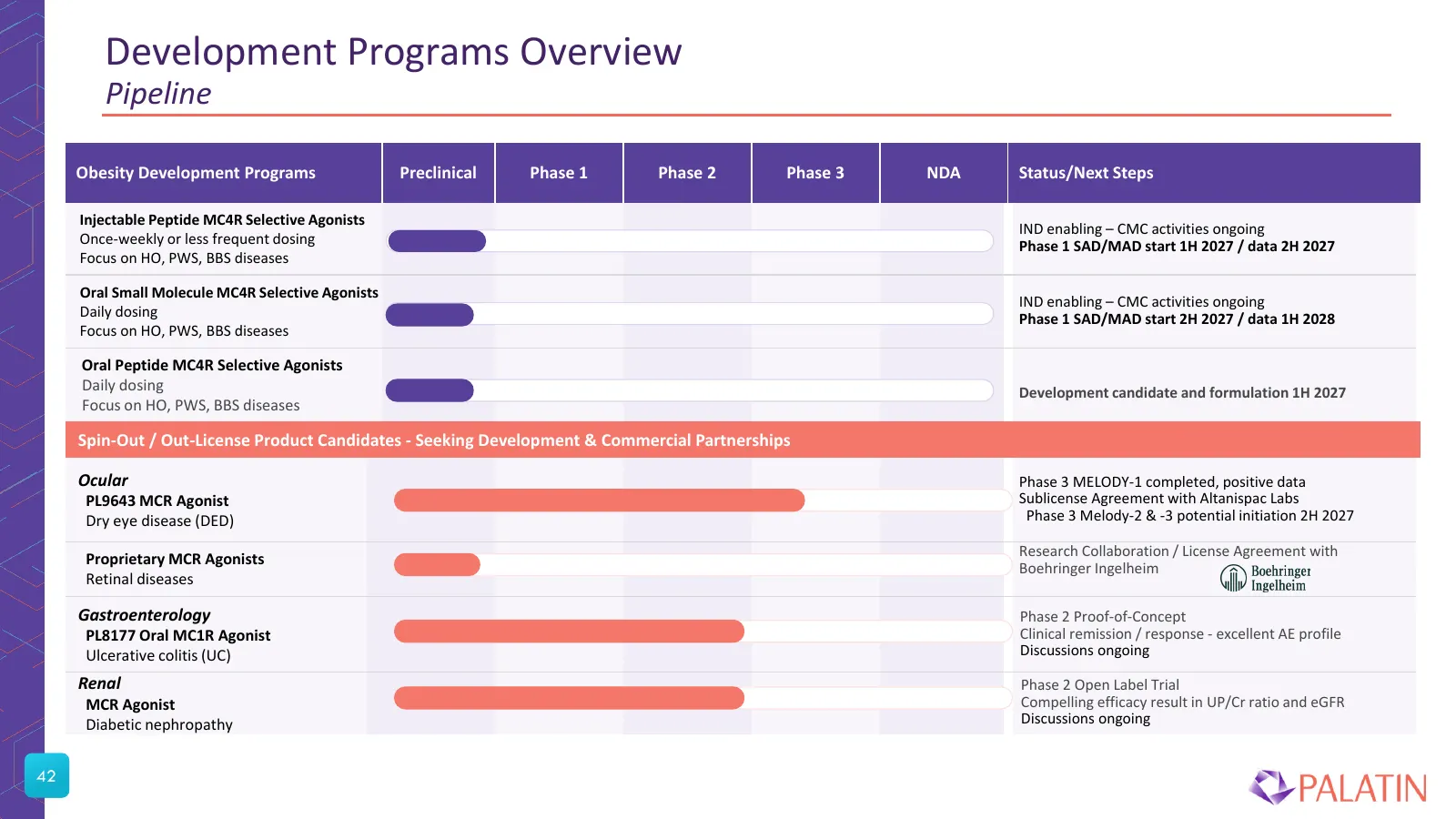
Slide 42: Development Programs Overview
Development Programs Overview Pipeline Obesity Development Programs Preclinical Phase 1 Phase 2 Phase 3 NDA Status/Next Steps Injectable Peptide MC4R Selective Agonists IND enabling – CMC activities ongoing Once-weekly or less frequent dosing Phase 1 SAD/MAD start 1H 2027 / data 2H 2027 Focus on HO,
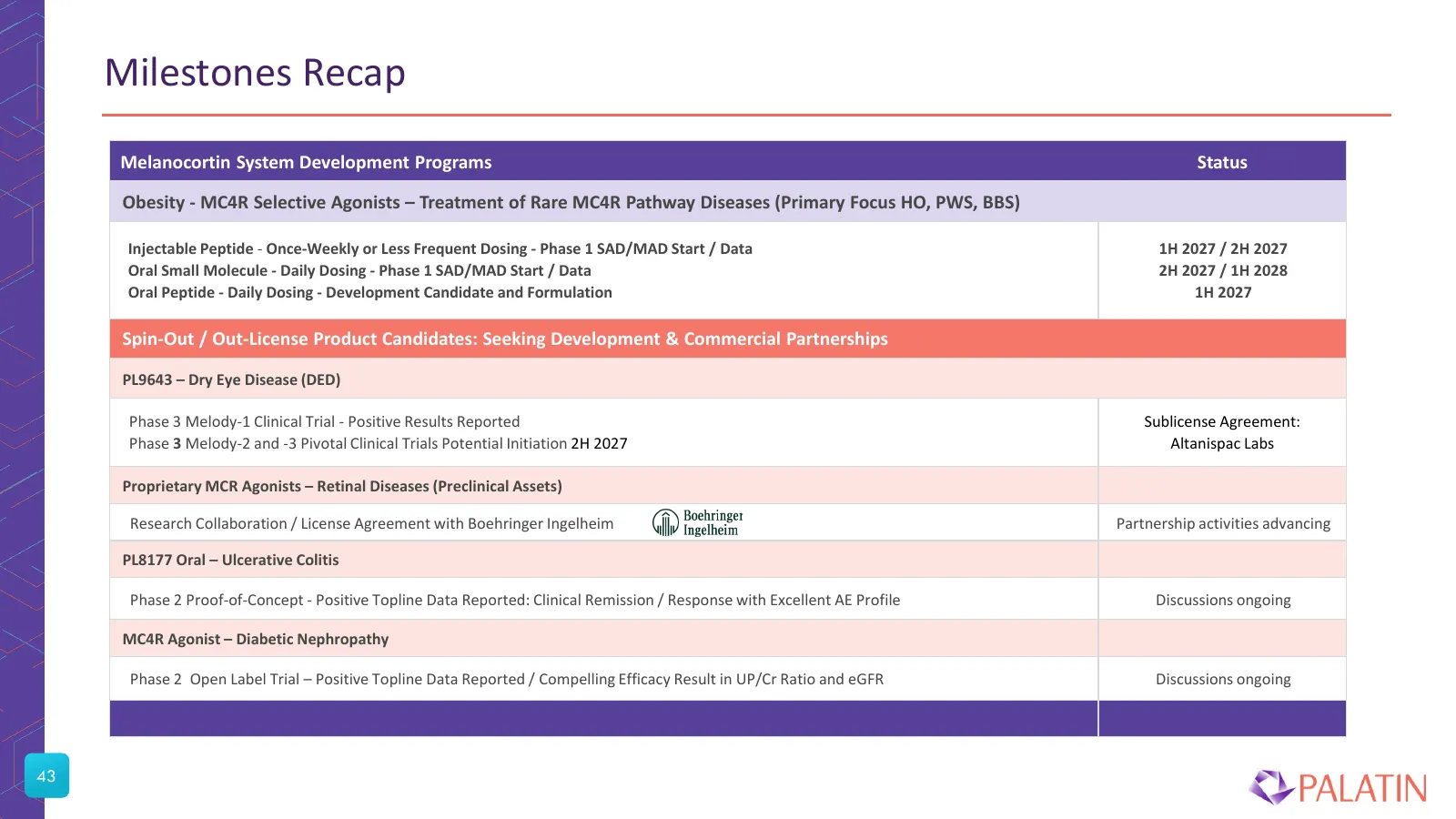
Slide 43: Milestones Recap
Milestones Recap Melanocortin System Development Programs Status Obesity - MC4R Selective Agonists – Treatment of Rare MC4R Pathway Diseases (Primary Focus HO, PWS, BBS) Injectable Peptide - Once-Weekly or Less Frequent Dosing - Phase 1 SAD/MAD Start / Data 1H 2027 / 2H 2027 Oral Small Molecule - Da

Slide 44: Thank You
Thank You & PALATIN
Source: company website
More decks from Palatin Technologies, Inc.
 Investor Presentation (October 2026)47 slides · October 2026
 Investor Presentation (September 2026)42 slides · September 2026
 Investor Presentation (August 2026)40 slides · August 2026
 Investor Presentation (June 2026)40 slides · June 2026
 Investor Presentation (March 2026)40 slides · March 2026
 Investor Presentation (January 2026)38 slides · January 2026