Curis, Inc. · NASDAQ:CRIS
Curis — Investor Presentation (October 2009)
37 slides from Curis's investor presentation, Oct 23, 2009
Slide 1: Corporate Overview
Corporate Overview October 23, 2009 NASDAQ: CRIS
Slide 2: Forward Looking Statements
Forward Looking Statements This presentation contains statements about Curis’ future expectations, plans and prospects that constitute forward-looking statements for purposes of the safe harbor provisions of the Private Securities Litigation Reform Act of 1995. Actual results may differ materially f
Slide 3: Curis – Innovative Cancer Therapies Developed With Balanced Business Model
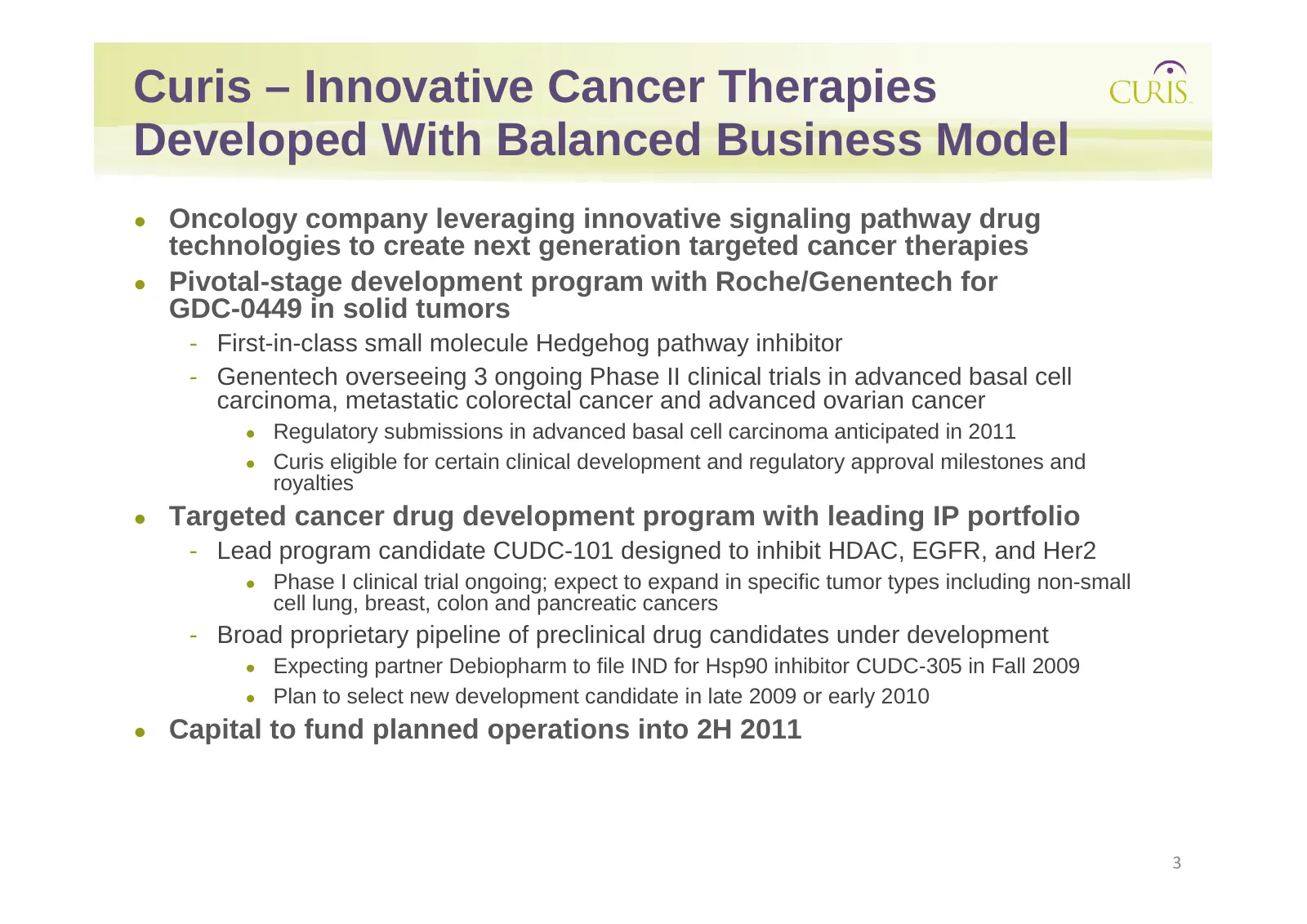
Curis – Innovative Cancer Therapies Developed With Balanced Business Model ● Oncology company leveraging innovative signaling pathway drug technologies to create next generation targeted cancer therapies ● Pivotal-stage development program with Roche/Genentech for GDC-0449 in solid tumors - First-in
Slide 4: Curis Pipeline
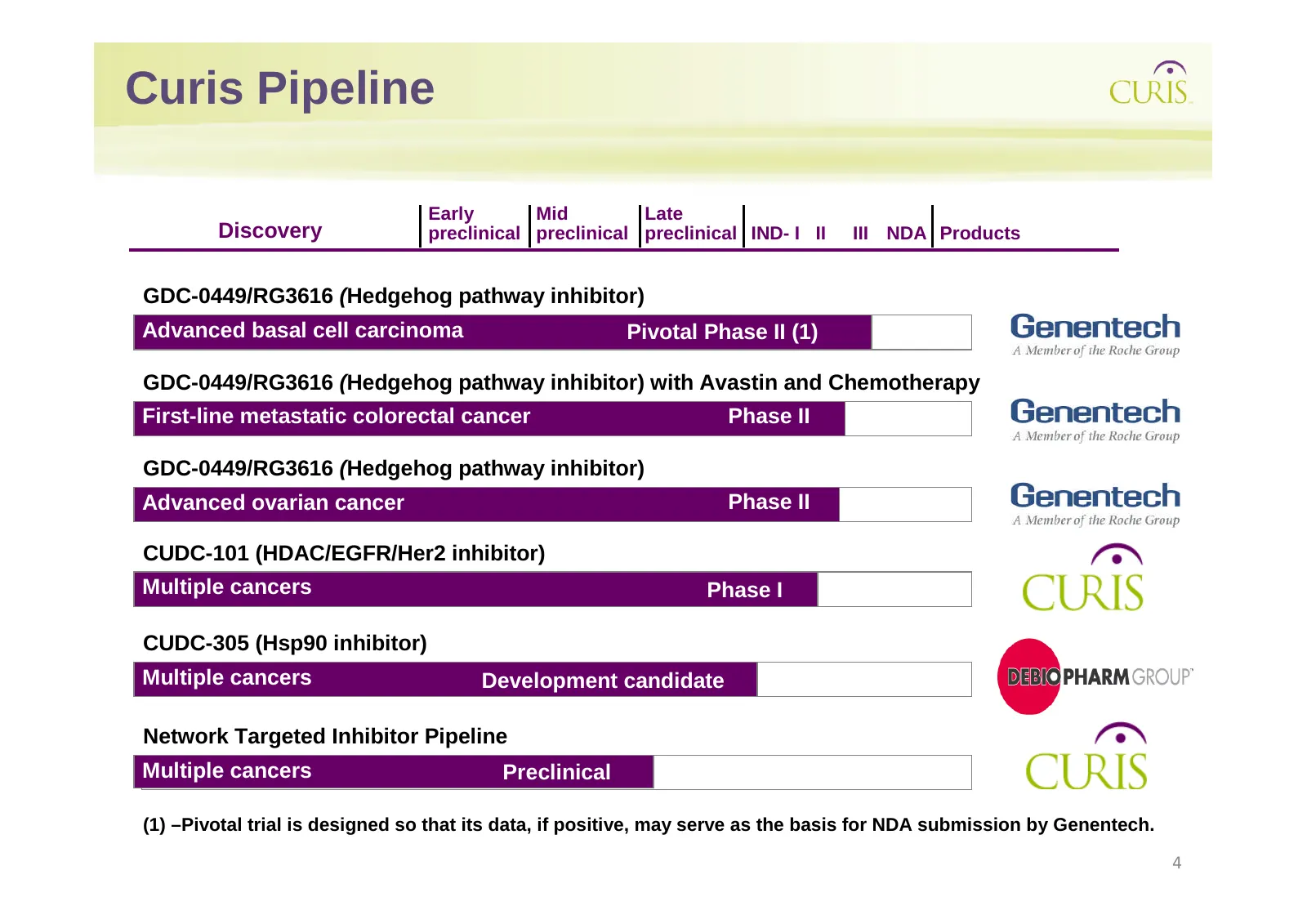
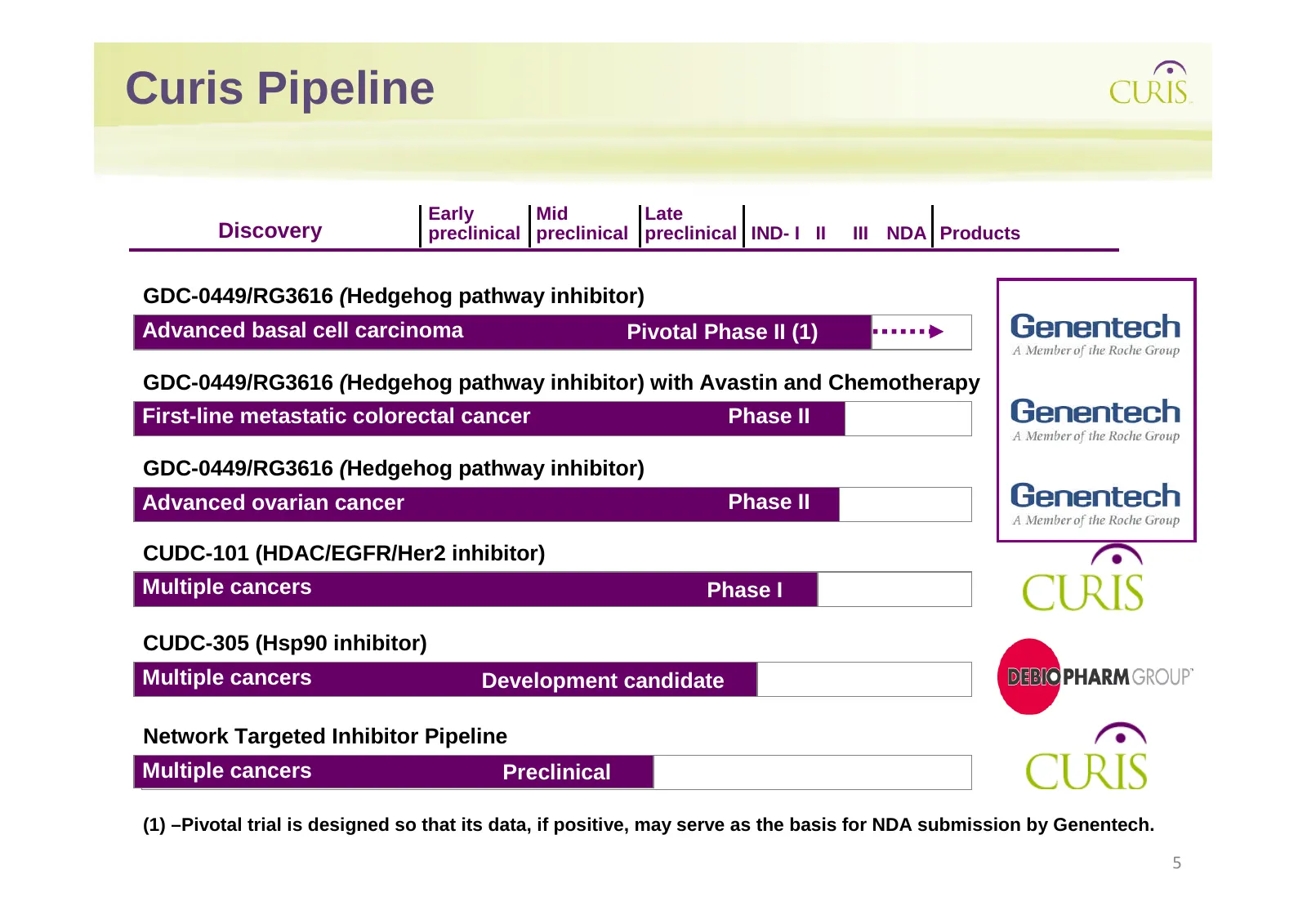
Curis Pipeline Early Mid Late Discovery preclinical preclinical preclinical IND- I II III NDA Products GDC-0449/RG3616 (Hedgehog pathway inhibitor) Phase I expansion Phase cohort II Cancer Advanced basal cell carcinoma Preclinical Pivotal Phase II (1) Phase II* GDC-0449/RG3616 (Hedgehog pathway inhi
Slide 5: Curis Pipeline
Curis Pipeline Early Mid Late Discovery preclinical preclinical preclinical IND- I II III NDA Products GDC-0449/RG3616 (Hedgehog pathway inhibitor) Phase I expansion Phase cohort II Cancer Advanced basal cell carcinoma Preclinical Pivotal Phase II (1) Phase II* GDC-0449/RG3616 (Hedgehog pathway inhi
Slide 6: GDC-0449 (RG3616): First-in-Class Hedgehog Pathway Inhibitor
GDC-0449 (RG3616): First-in-Class Hedgehog Pathway Inhibitor 6
Slide 7: Hedgehog-Associated Cancers
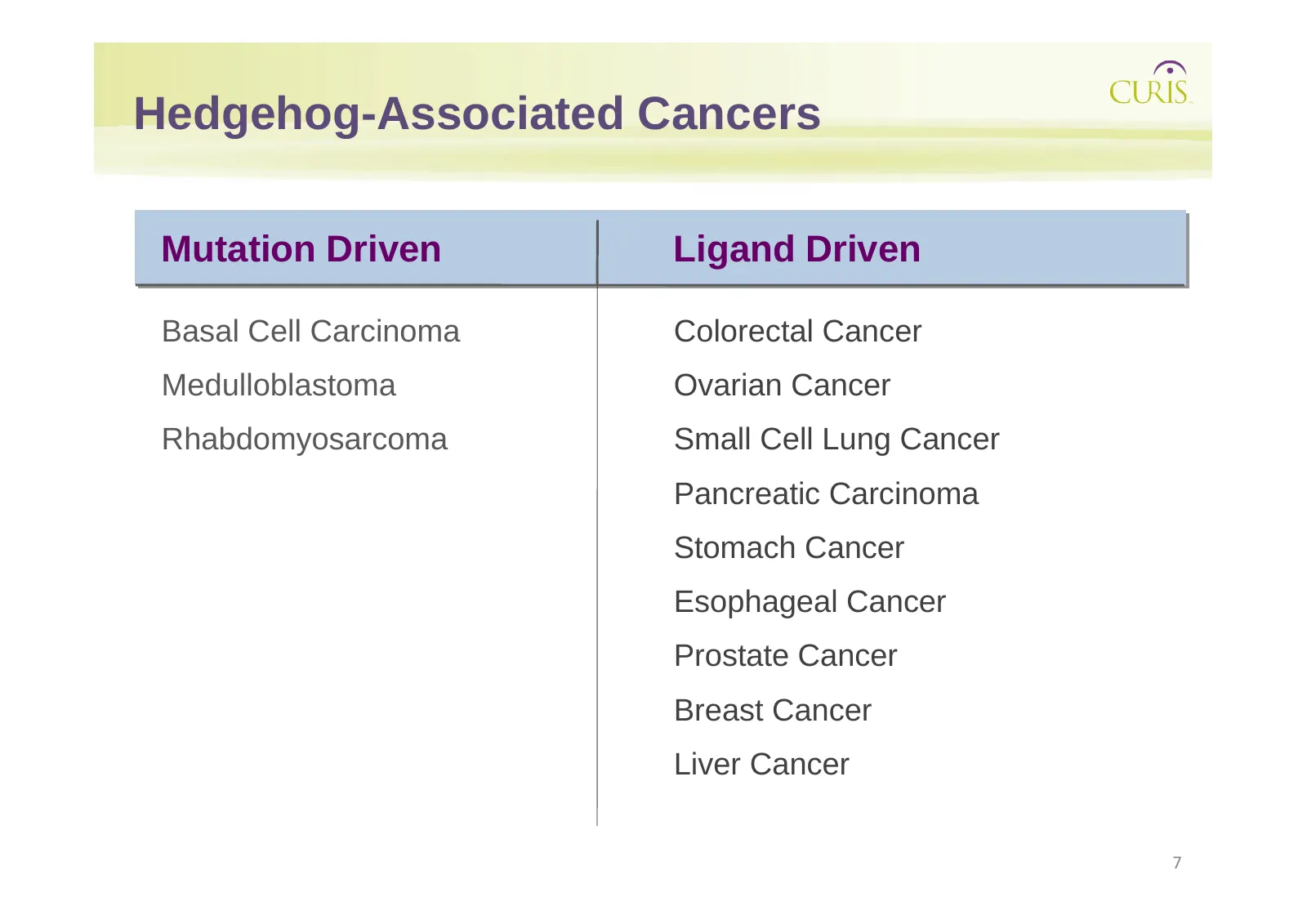
Hedgehog-Associated Cancers Mutation Driven Ligand Driven Basal Cell Carcinoma Colorectal Cancer Medulloblastoma Ovarian Cancer Rhabdomyosarcoma Small Cell Lung Cancer Pancreatic Carcinoma Stomach Cancer Esophageal Cancer Prostate Cancer Breast Cancer Liver Cancer 7
Slide 8: GDC-0449 Overview First-in-class and Potentially Best-in-Class Hedgehog Pathway Inhibitor
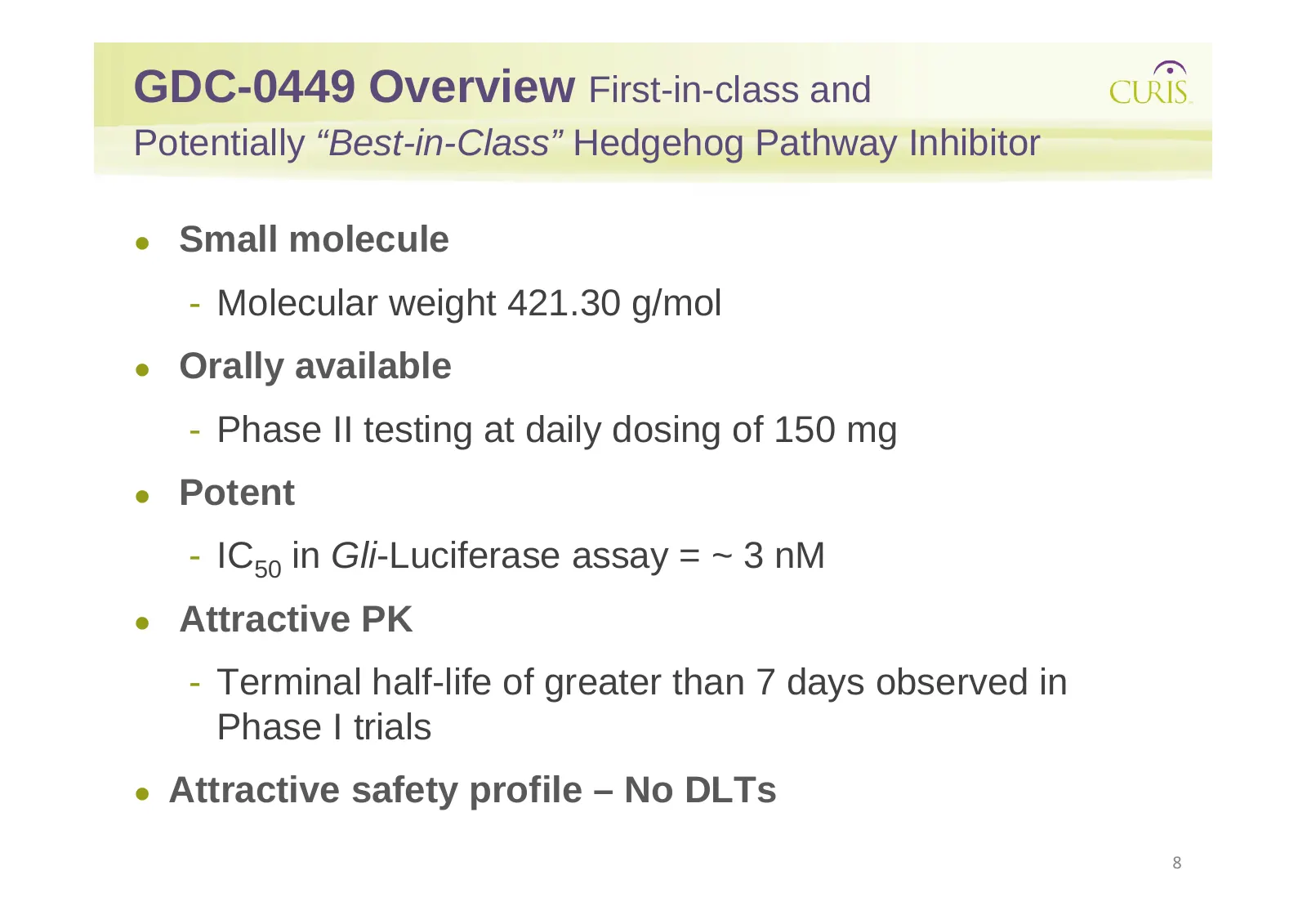
GDC-0449 Overview First-in-class and Potentially “Best-in-Class” Hedgehog Pathway Inhibitor ● Small molecule - Molecular weight 421.30 g/mol ● Orally available - Phase II testing at daily dosing of 150 mg ● Potent - IC50 in Gli-Luciferase assay = ~ 3 nM ● Attractive PK - Terminal half-life of greate
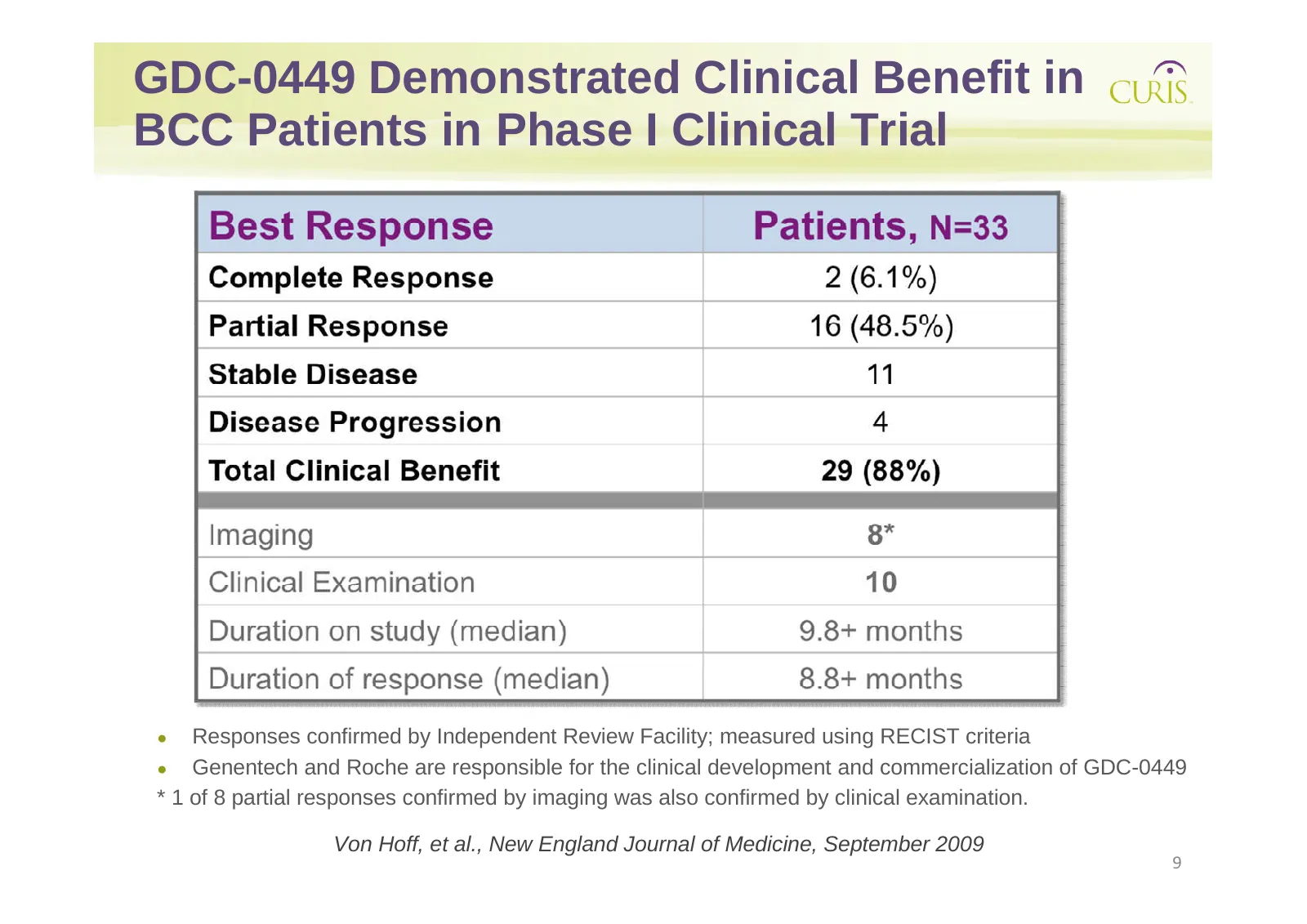
Slide 9: GDC-0449 Demonstrated Clinical Benefit in BCC Patients in Phase I Clinical Trial
GDC-0449 Demonstrated Clinical Benefit in BCC Patients in Phase I Clinical Trial ● Responses confirmed by Independent Review Facility; measured using RECIST criteria ● Genentech and Roche are responsible for the clinical development and commercialization of GDC-0449 * 1 of 8 partial responses confir
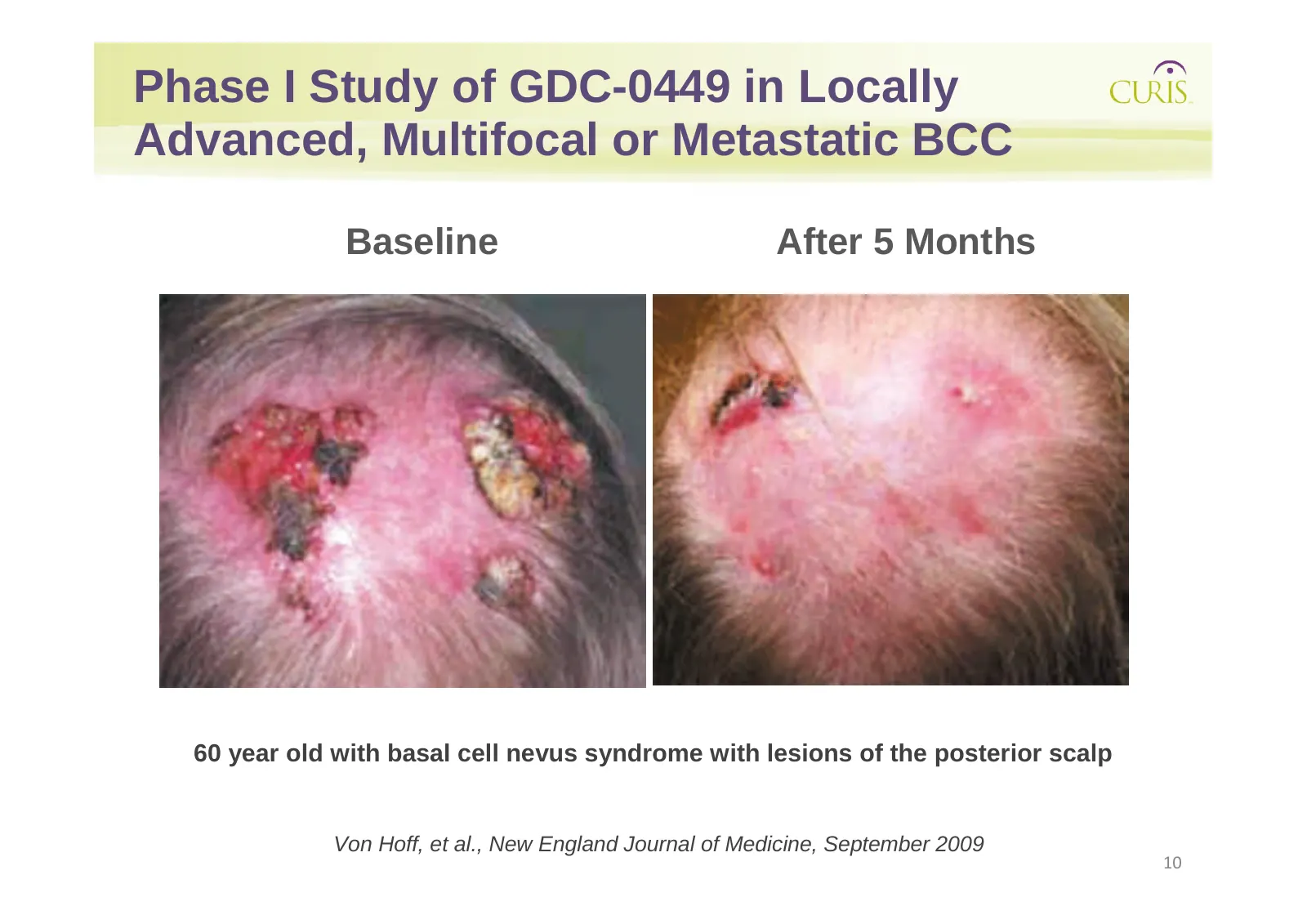
Slide 10: Phase I Study of GDC-0449 in Locally Advanced, Multifocal or Metastatic BCC
Phase I Study of GDC-0449 in Locally Advanced, Multifocal or Metastatic BCC Baseline After 5 Months 60 year old with basal cell nevus syndrome with lesions of the posterior scalp Von Hoff, et al., New England Journal of Medicine, September 2009 10
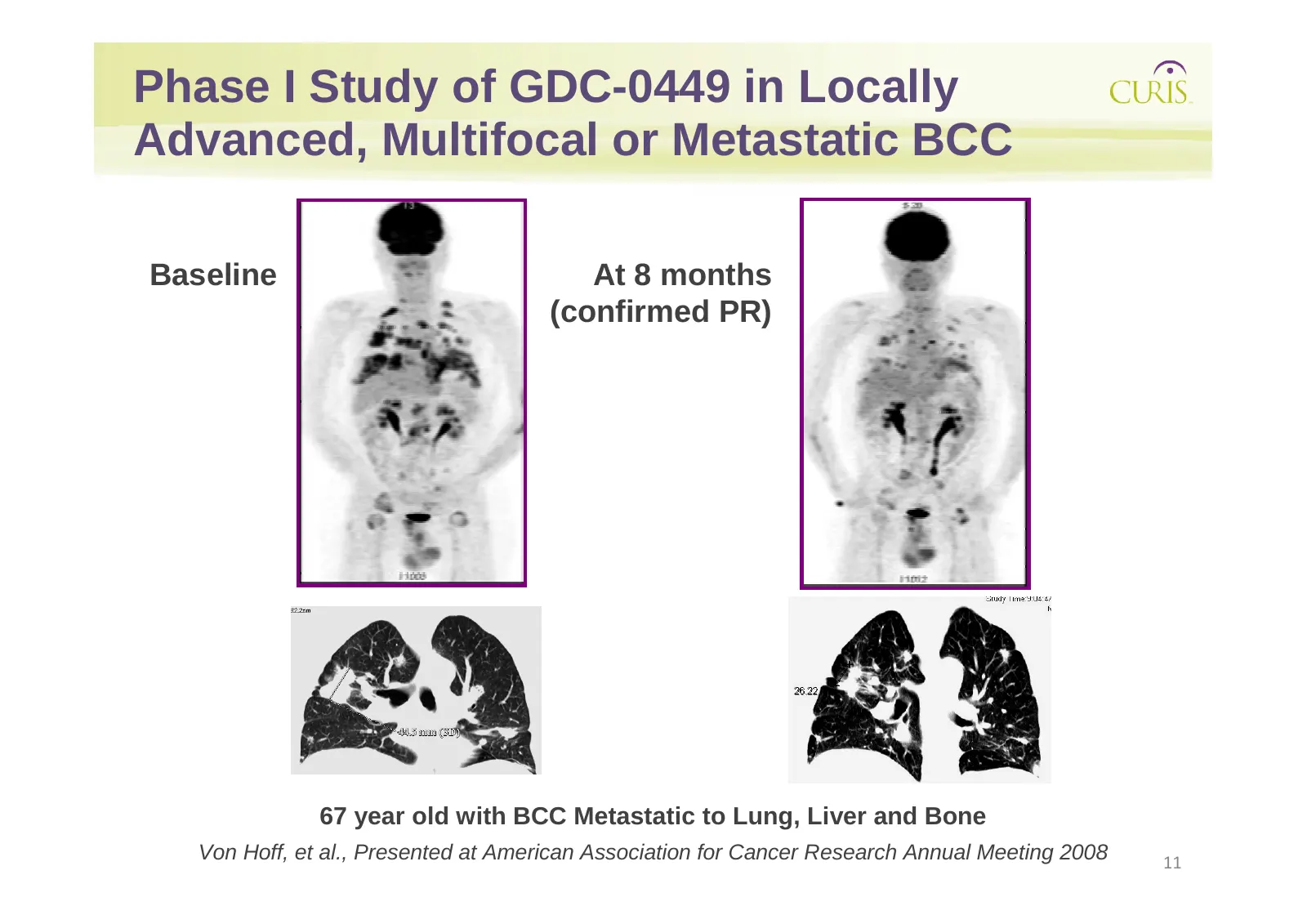
Slide 11: Phase I Study of GDC-0449 in Locally Advanced, Multifocal or Metastatic BCC
Phase I Study of GDC-0449 in Locally Advanced, Multifocal or Metastatic BCC Baseline At 8 months (confirmed PR) 67 year old with BCC Metastatic to Lung, Liver and Bone Von Hoff, et al., Presented at American Association for Cancer Research Annual Meeting 2008 11
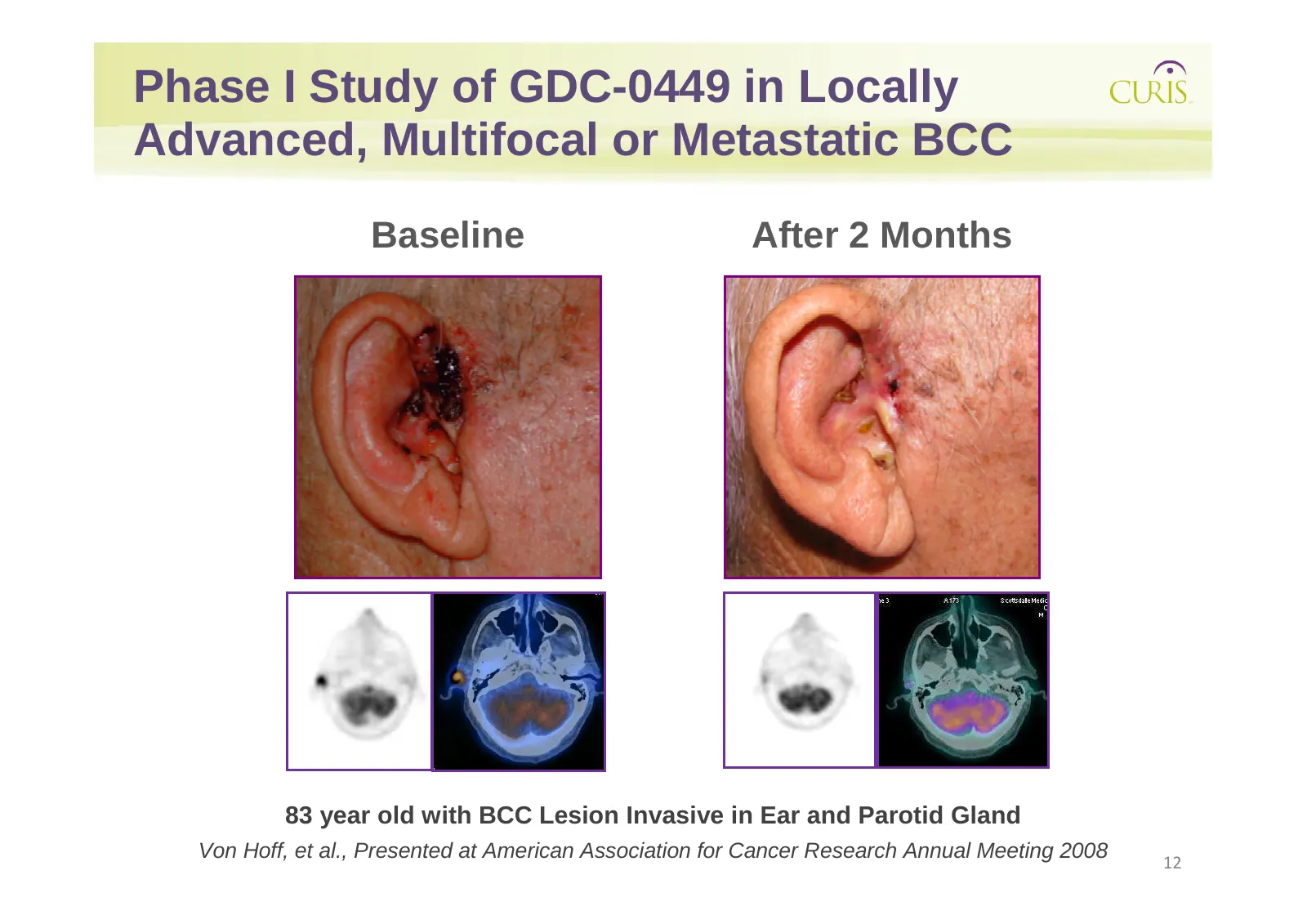
Slide 12: Phase I Study of GDC-0449 in Locally Advanced, Multifocal or Metastatic BCC
Phase I Study of GDC-0449 in Locally Advanced, Multifocal or Metastatic BCC Baseline After 2 Months 83 year old with BCC Lesion Invasive in Ear and Parotid Gland Von Hoff, et al., Presented at American Association for Cancer Research Annual Meeting 2008 12
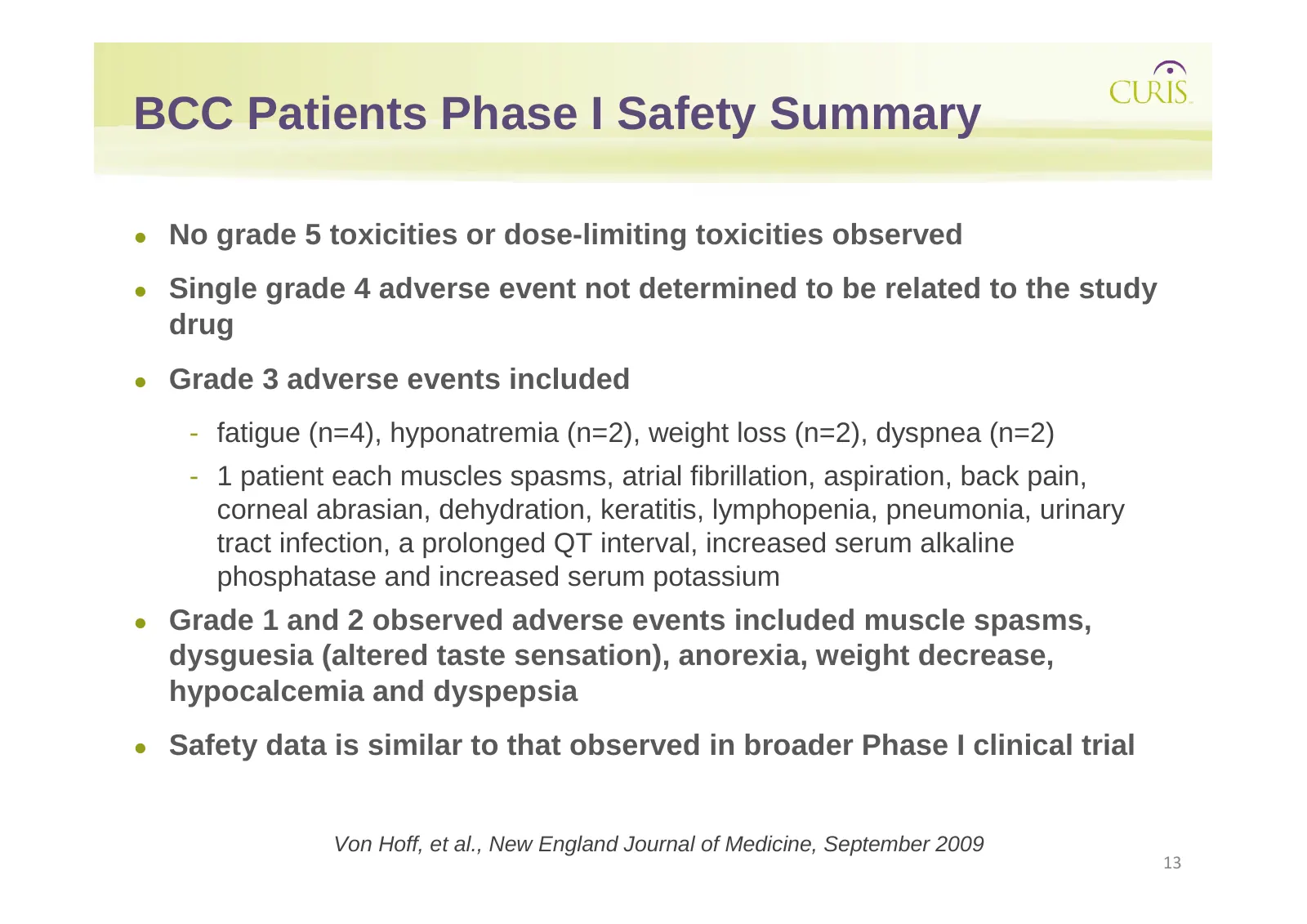
Slide 13: BCC Patients Phase I Safety Summary
BCC Patients Phase I Safety Summary ● No grade 5 toxicities or dose-limiting toxicities observed ● Single grade 4 adverse event not determined to be related to the study drug ● Grade 3 adverse events included - fatigue (n=4), hyponatremia (n=2), weight loss (n=2), dyspnea (n=2) - 1 patient each musc
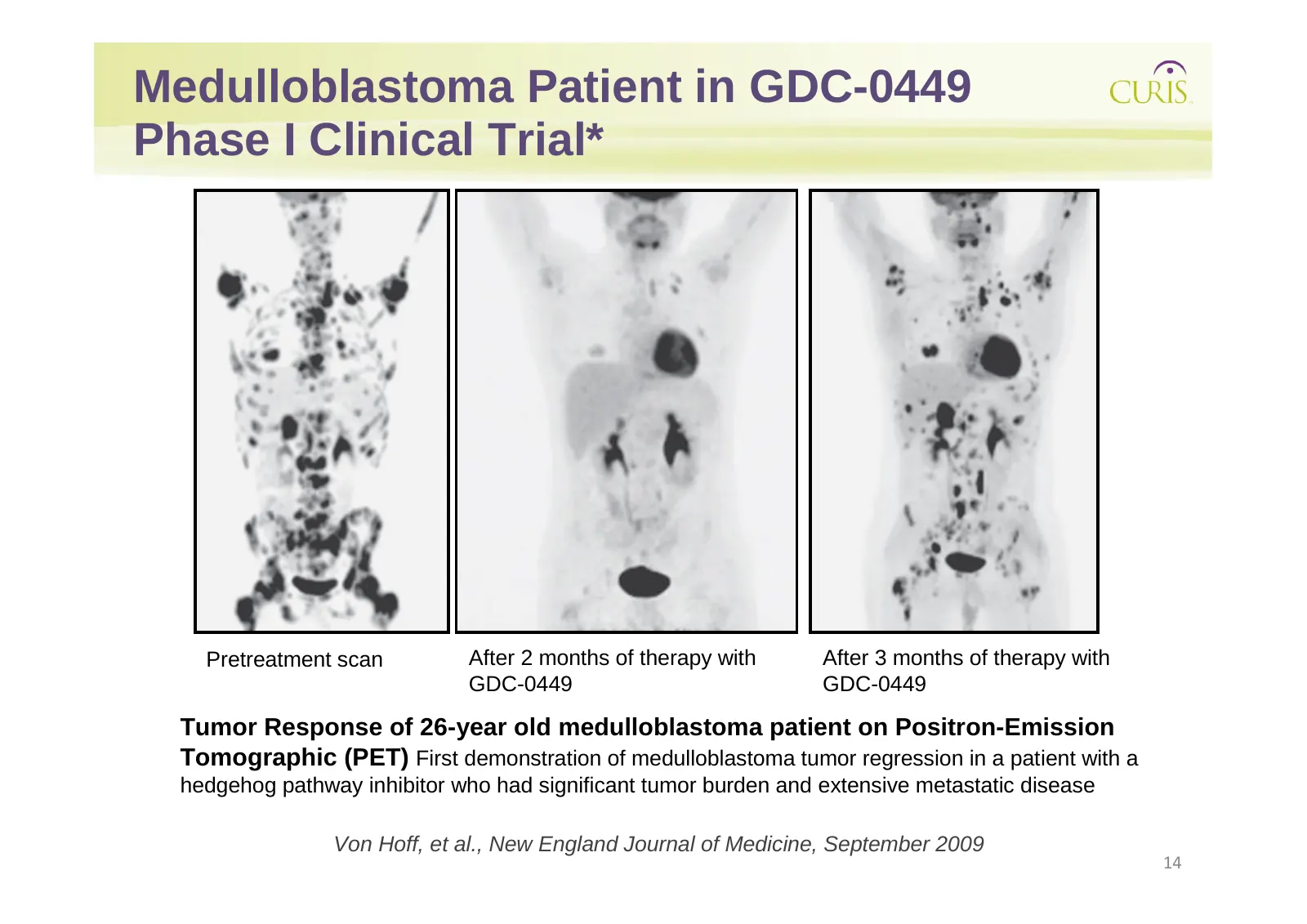
Slide 14: Medulloblastoma Patient in GDC-0449 Phase I Clinical Trial
Medulloblastoma Patient in GDC-0449 Phase I Clinical Trial* Pretreatment scan After 2 months of therapy with After 3 months of therapy with GDC-0449 GDC-0449 Tumor Response of 26-year old medulloblastoma patient on Positron-Emission Tomographic (PET) First demonstration of medulloblastoma tumor regr
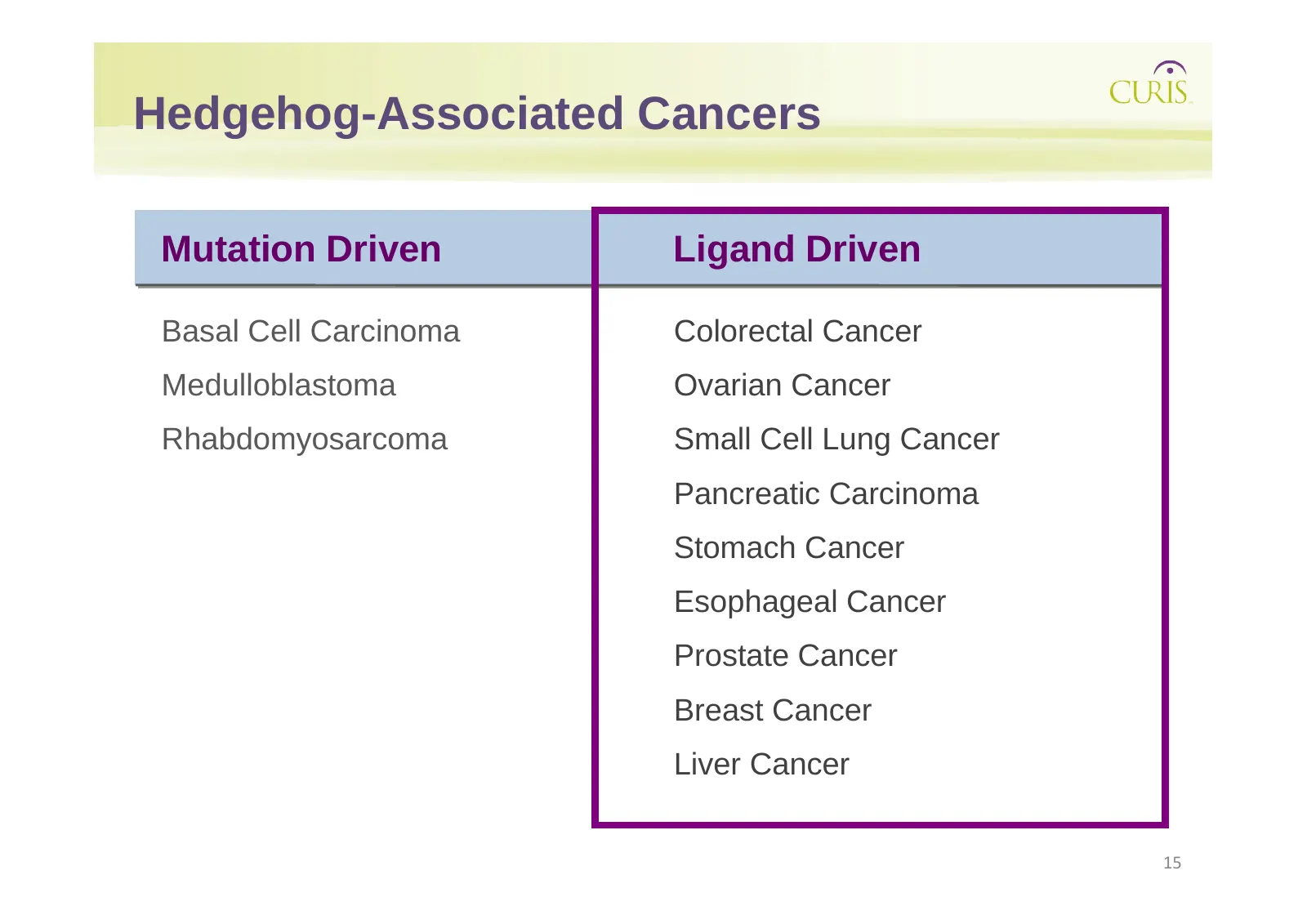
Slide 15: Hedgehog-Associated Cancers
Hedgehog-Associated Cancers Mutation Driven Ligand Driven Basal Cell Carcinoma Colorectal Cancer Medulloblastoma Ovarian Cancer Rhabdomyosarcoma Small Cell Lung Cancer Pancreatic Carcinoma Stomach Cancer Esophageal Cancer Prostate Cancer Breast Cancer Liver Cancer 15
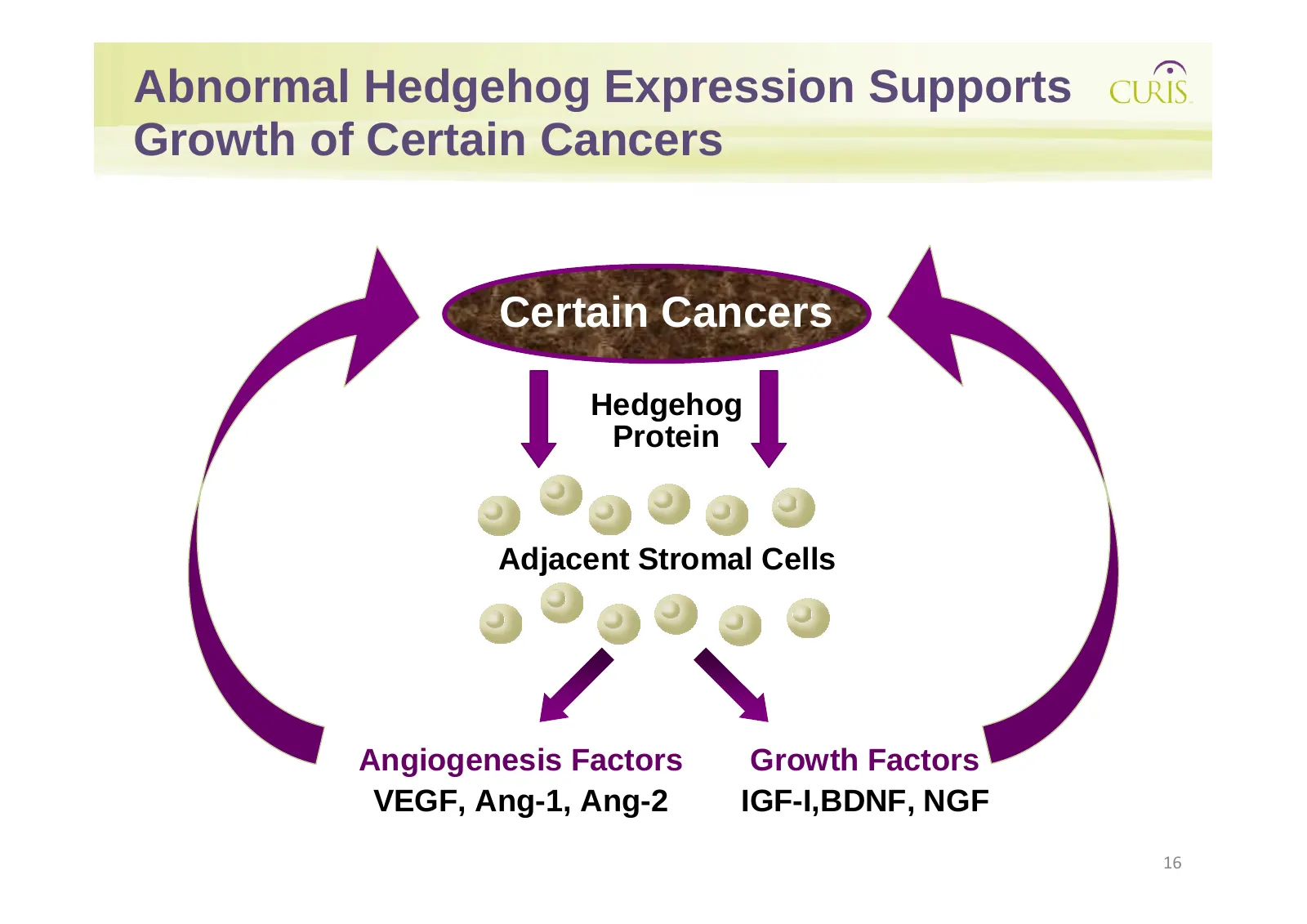
Slide 16: Abnormal Hedgehog Expression Supports Growth of Certain Cancers
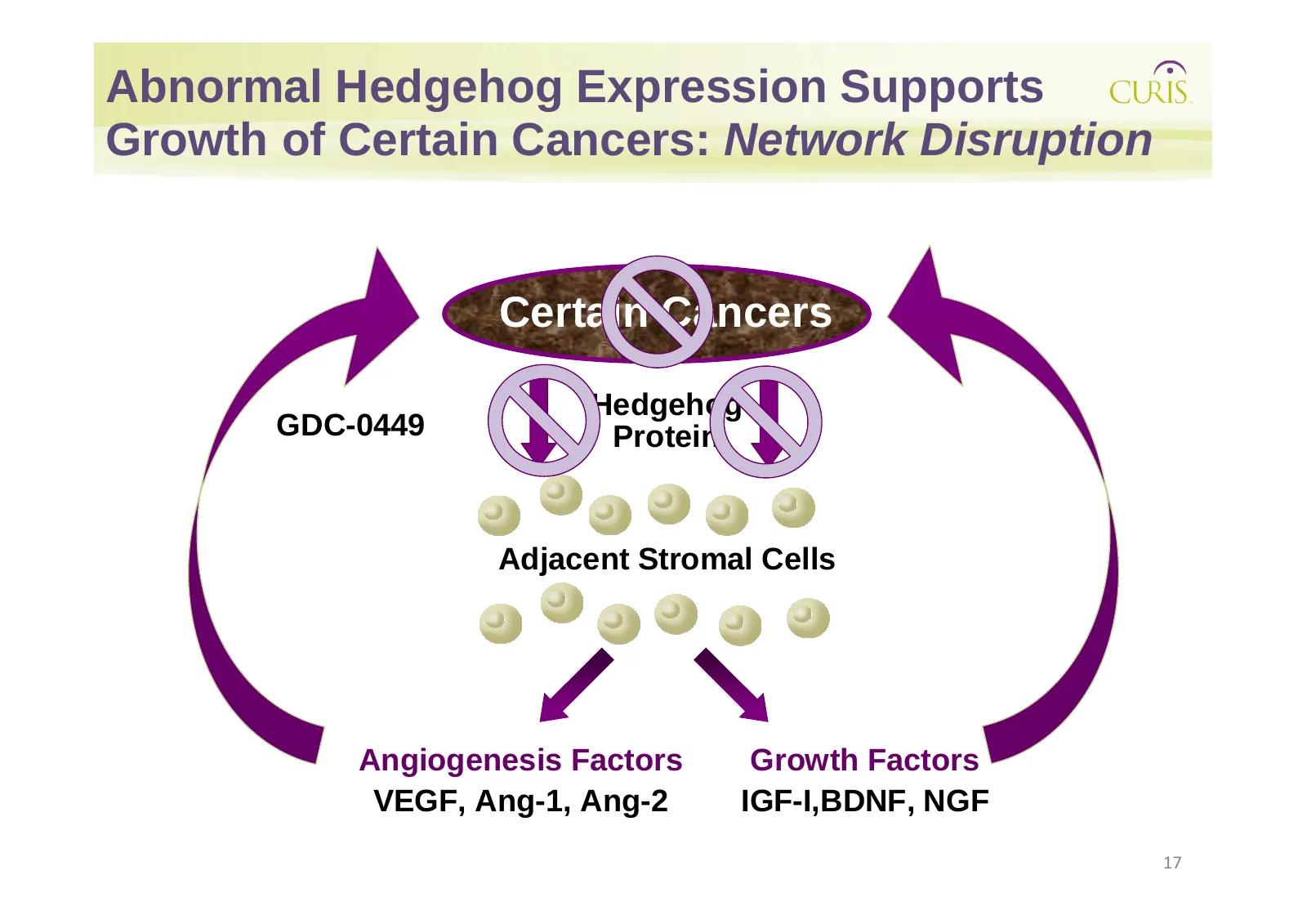
Abnormal Hedgehog Expression Supports Growth of Certain Cancers Certain Cancers Hedgehog Protein Adjacent Stromal Cells Angiogenesis Factors Growth Factors VEGF, Ang-1, Ang-2 IGF-I,BDNF, NGF 16
Slide 17: Abnormal Hedgehog Expression Supports Growth of Certain Cancers: Network Disruption
Abnormal Hedgehog Expression Supports Growth of Certain Cancers: Network Disruption Certain Cancers Hedgehog GDC-0449 Protein Adjacent Stromal Cells Angiogenesis Factors Growth Factors VEGF, Ang-1, Ang-2 IGF-I,BDNF, NGF 17
Slide 18: Phase II Clinical Trial Status
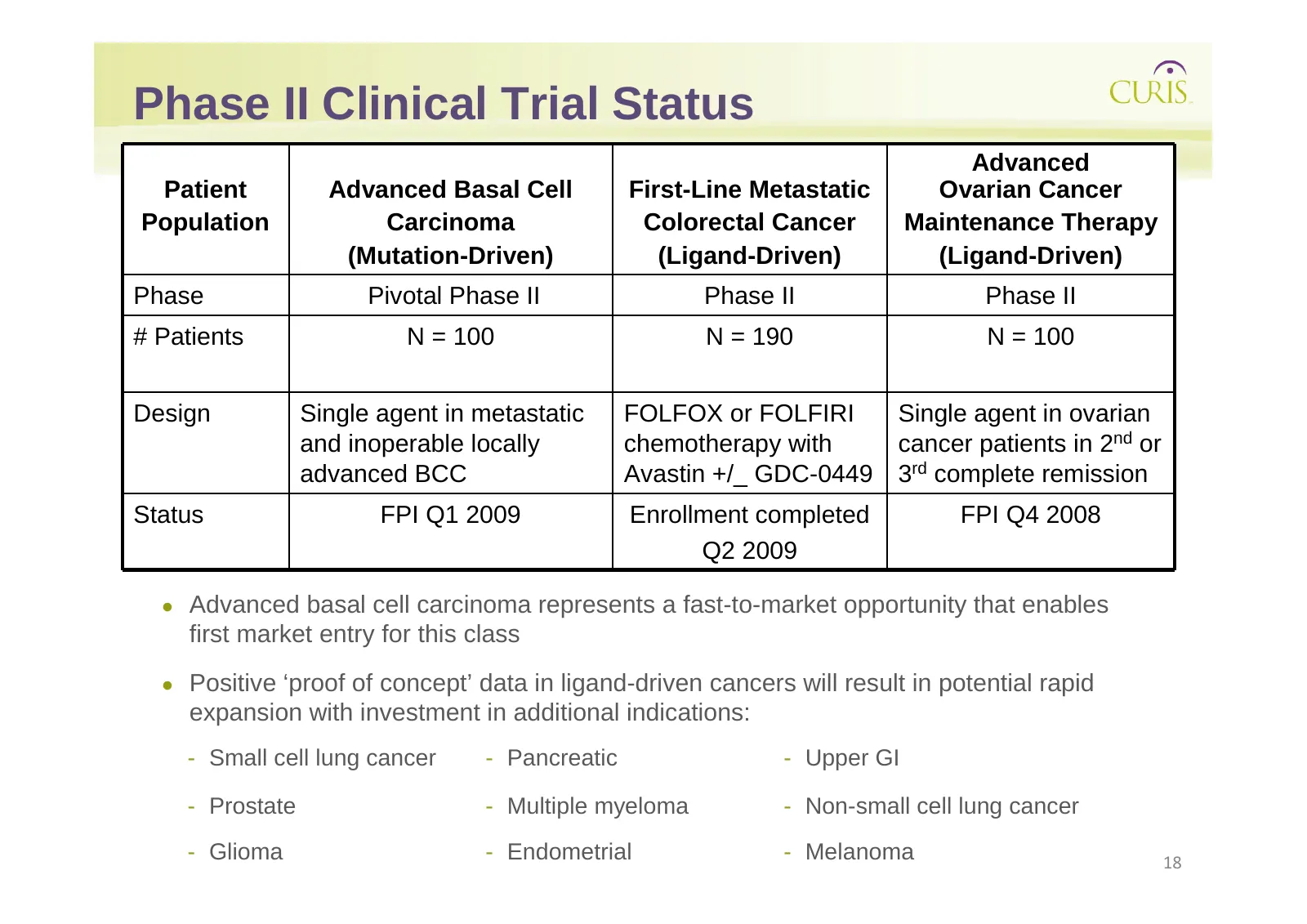
Phase II Clinical Trial Status Advanced Patient Advanced Basal Cell First-Line Metastatic Ovarian Cancer Population Carcinoma Colorectal Cancer Maintenance Therapy (Mutation-Driven) (Ligand-Driven) (Ligand-Driven) Phase Pivotal Phase II Phase II Phase II # Patients N = 100 N = 190 N = 100 Design Sin
Slide 19: Curis Pipeline – Proprietary Platform
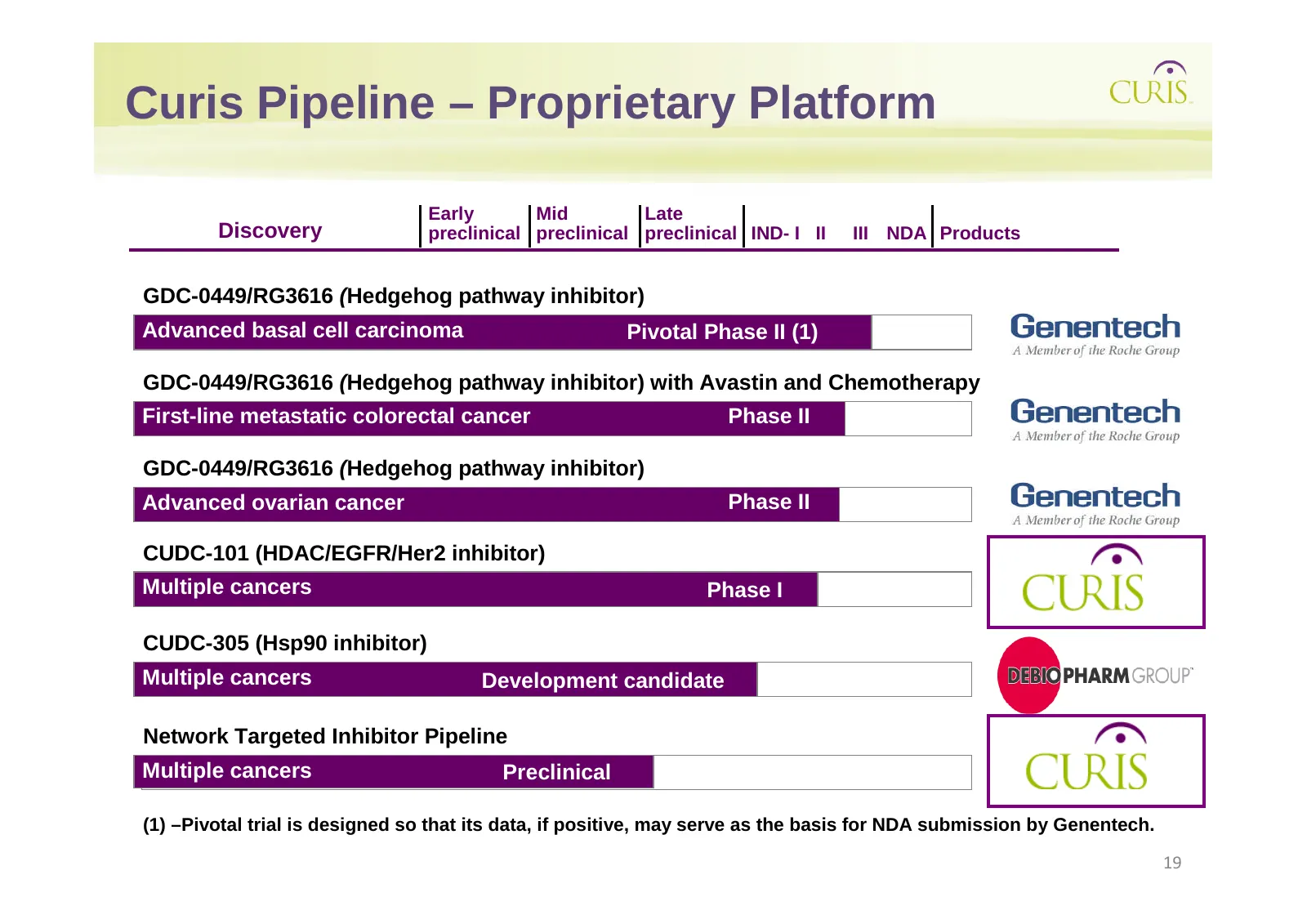
Curis Pipeline – Proprietary Platform Early Mid Late Discovery preclinical preclinical preclinical IND- I II III NDA Products GDC-0449/RG3616 (Hedgehog pathway inhibitor) Phase I expansion Phase cohort II Cancer Advanced basal cell carcinoma Preclinical Pivotal Phase II (1) Phase II* GDC-0449/RG3616
Slide 20: EGFR and HER2 Tyrosine Kinases As Cancer Targets: Clinical Benefit and Challenges
EGFR and HER2 Tyrosine Kinases (RTK) As Cancer Targets: Clinical Benefit and Challenges ● Aberrant EGFR/HER2 signaling can lead to tumor growth via enhanced cellular proliferation, survival, and metastasis ● Several EGFR, HER2 and EGFR/Her2 inhibitors approved are generally less toxic than chemother
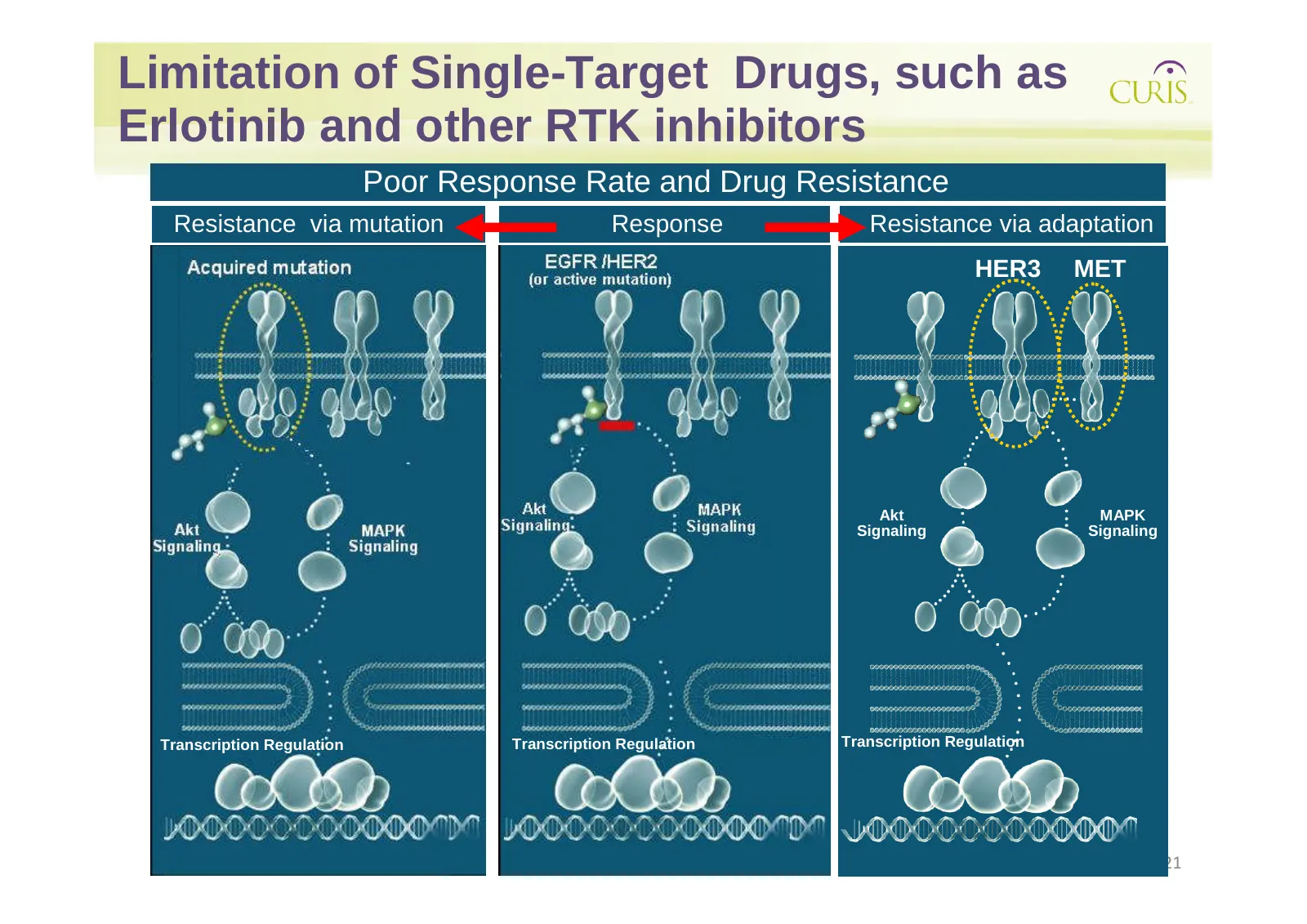
Slide 21: Limitation of Single-Target Drugs, such as Erlotinib and other RTK inhibitors
Limitation of Single-Target Drugs, such as Erlotinib and other RTK inhibitors Poor Response Rate and Drug Resistance Resistance via mutation Response Resistance via adaptation HER3 MET HER3 MET Akt MAPK Signaling Signaling Transcription Regulation Transcription Regulation Transcription Regulation 21
Slide 22: Rationale for Multi-Targeted Inhibitors of HDAC and Receptor Tyrosine Kinases
Rationale for Multi-Targeted Inhibitors of HDAC and Receptor Tyrosine Kinases ● Dysregulation of histone deacetylase (HDAC) activity plays a role in tumor onset and tumor progression ● HDAC inhibitors suppress tumor cell growth/survival via: - Histone acetylation to reverse aberrant epigenetic chang
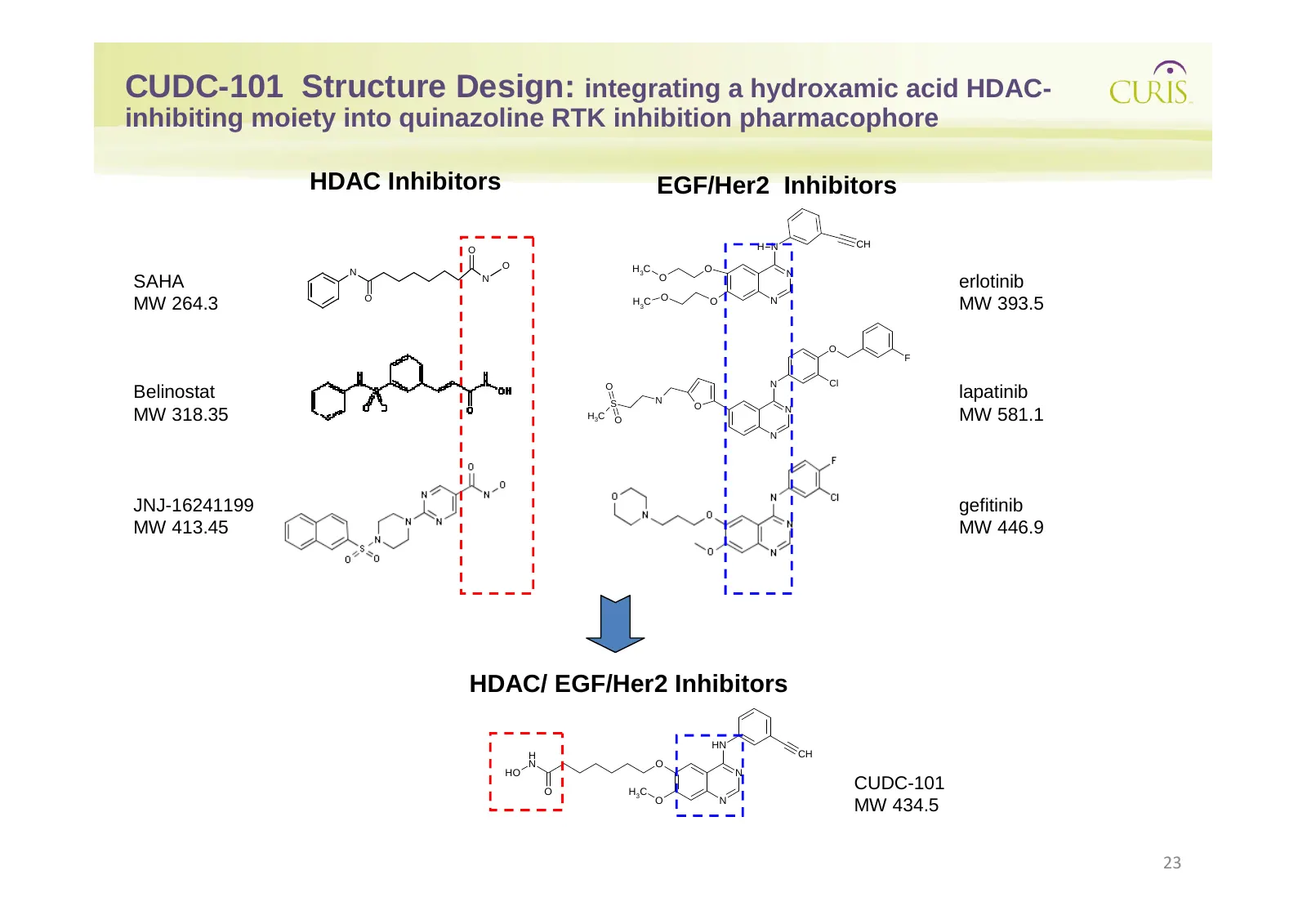
Slide 23: CUDC-101 Structure Design
CUDC-101 Structure Design: integrating a hydroxamic acid HDAC- inhibiting moiety into quinazoline RTK inhibition pharmacophore HDAC Inhibitors EGF/Her2 Inhibitors H N CH O O H3C O N N O SAHA N erlotinib MW 264.3 O H3C O O N MW 393.5 O F O N Cl Belinostat S N lapatinib O N MW 318.35 H3 C O MW 581.1 N
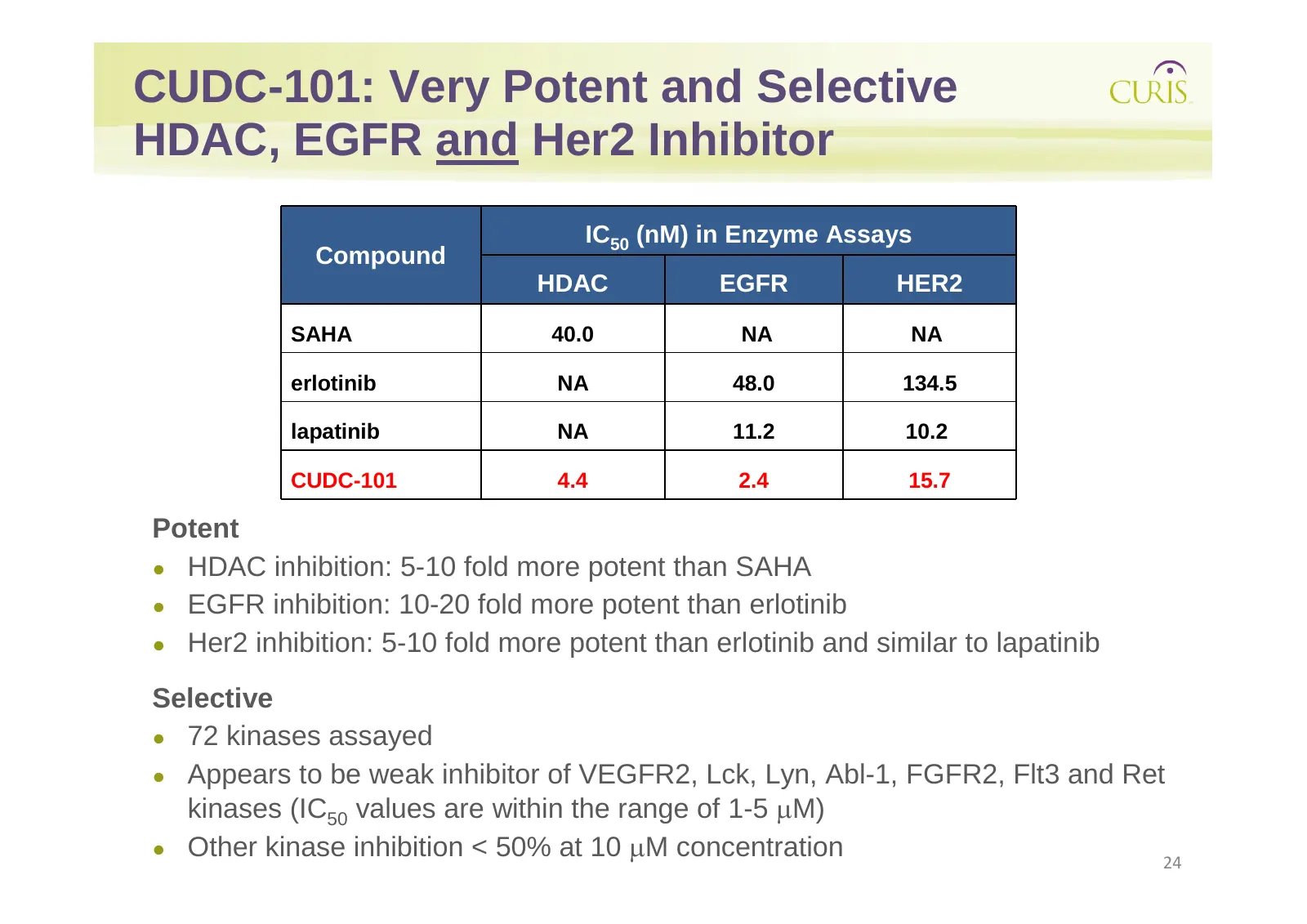
Slide 24: CUDC-101: Very Potent and Selective HDAC, EGFR and Her2 Inhibitor
CUDC-101: Very Potent and Selective HDAC, EGFR and Her2 Inhibitor IC50 (nM) in Enzyme Assays Compound HDAC EGFR HER2 SAHA 40.0 NA NA erlotinib NA 48.0 134.5 lapatinib NA 11.2 10.2 CUDC-101 4.4 2.4 15.7 Potent ● HDAC inhibition: 5-10 fold more potent than SAHA ● EGFR inhibition: 10-20 fold more poten
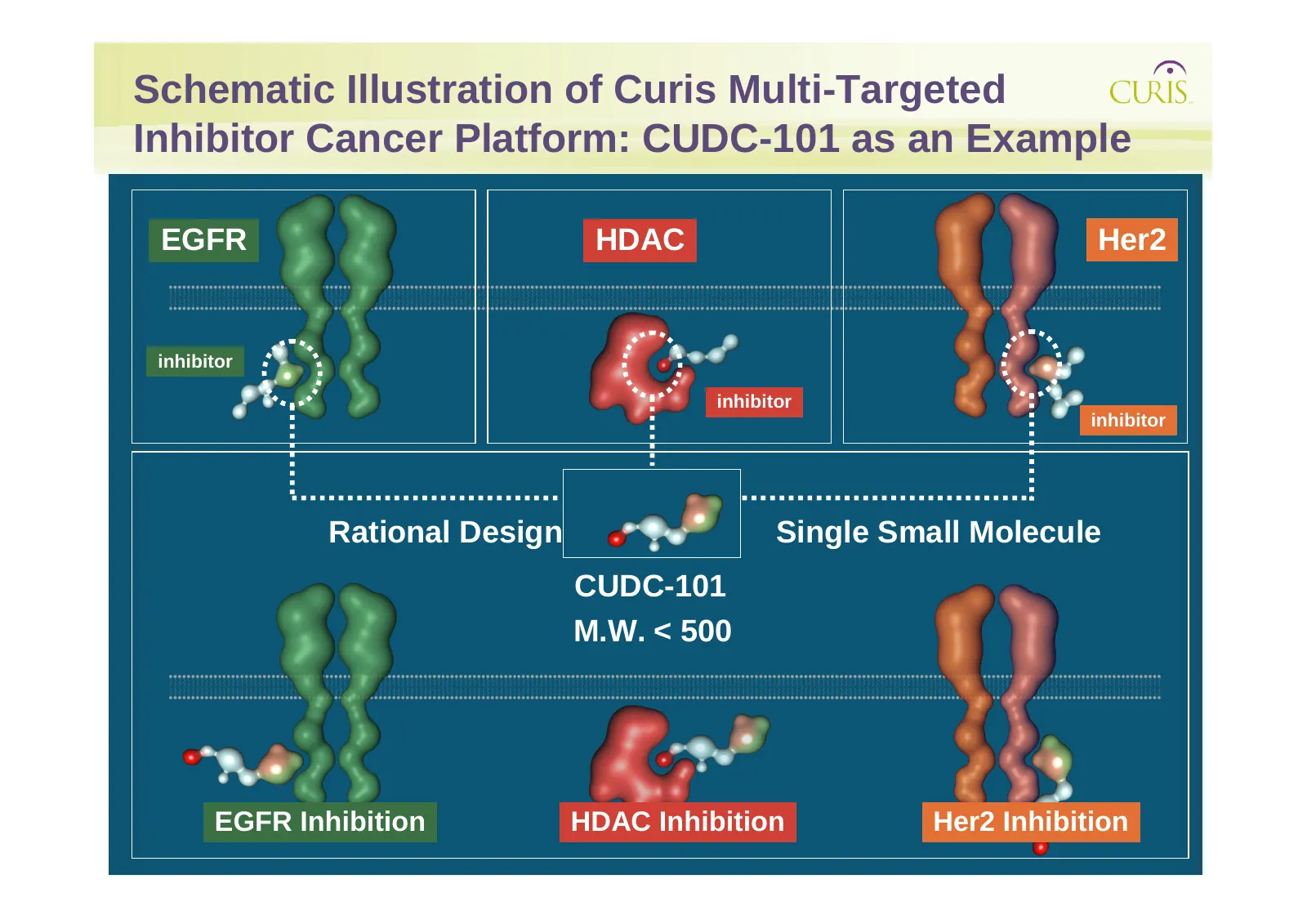
Slide 25: Schematic Illustration of Curis Multi-Targeted Inhibitor Cancer Platform
Schematic Illustration of Curis Multi-Targeted Inhibitor Cancer Platform: CUDC-101 as an Example EGFR HDAC Her2 inhibitor inhibitor inhibitor Rational Design Single Small Molecule CUDC-101 M.W. < 500 EGFR Inhibition HDAC Inhibition Her2 Inhibition 25
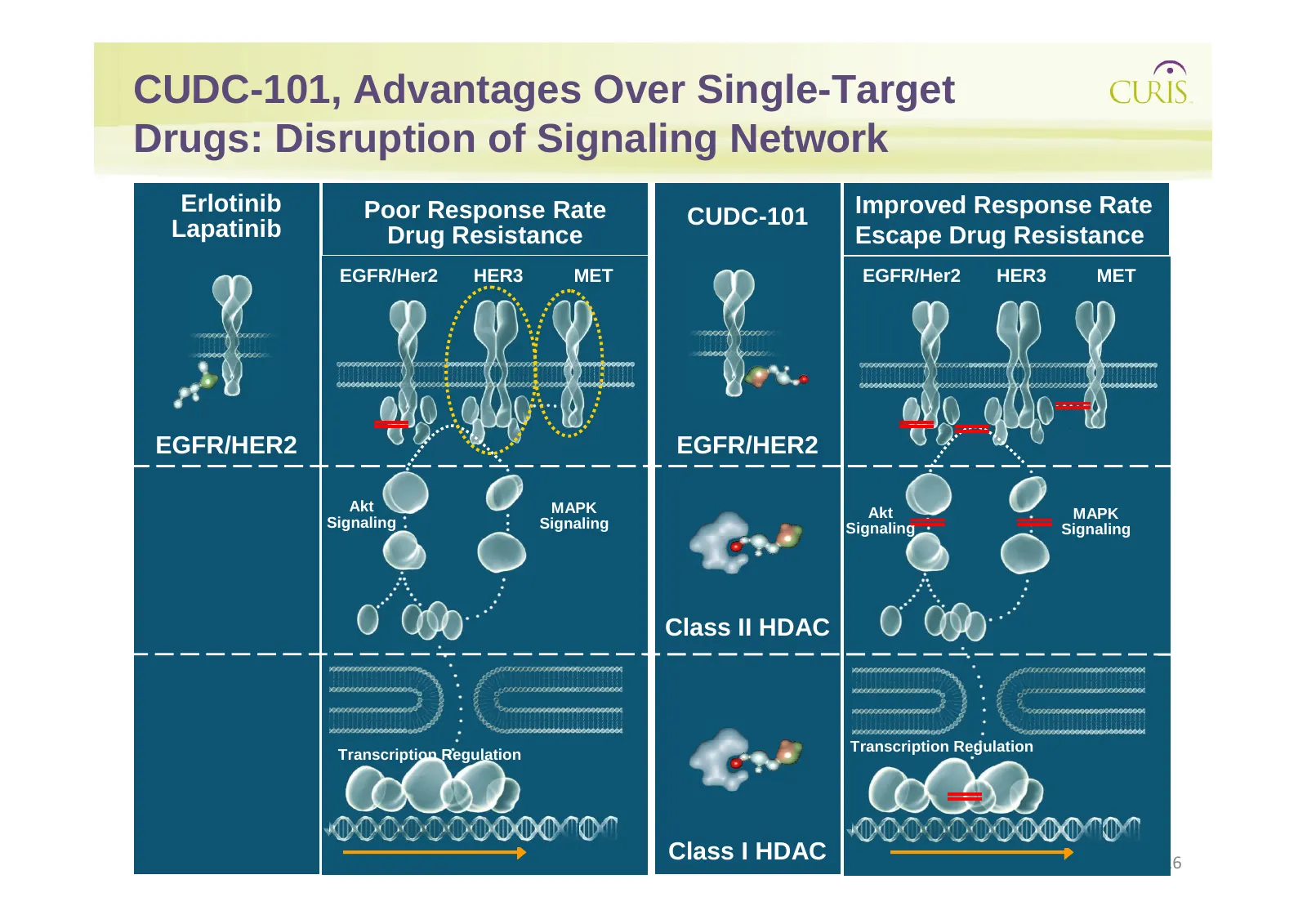
Slide 26: CUDC-101, Advantages Over Single-Target Drugs: Disruption of Signaling Network
CUDC-101, Advantages Over Single-Target Drugs: Disruption of Signaling Network Erlotinib Poor Response Rate Improved Response Rate CUDC-101 Lapatinib Drug Resistance Escape Drug Resistance EGFR/Her2 HER3 MET EGFR/Her2 HER3 MET EGFR/HER2 EGFR/HER2 Akt MAPK Akt MAPK Signaling Signaling Signaling Signa
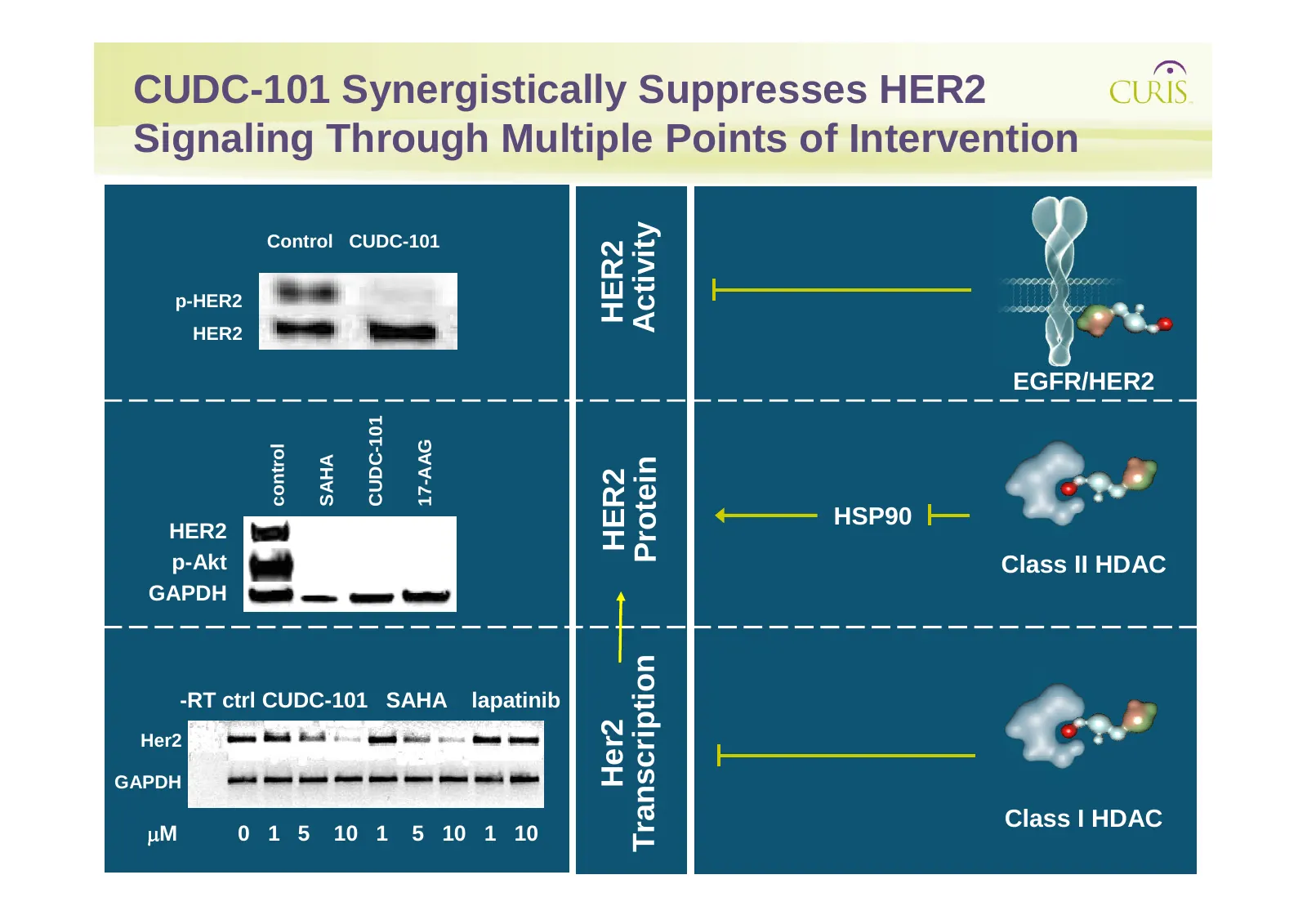
Slide 27: CUDC-101 Synergistically Suppresses HER2 Signaling Through Multiple Points of Intervention
CUDC-101 Synergistically Suppresses HER2 Signaling Through Multiple Points of Intervention Activity Control CUDC-101 HER2 p-HER2 HER2 CUDC-101 EGFR/HER2 17-AAG control SAHA Protein HER2 HSP90 HER2 p-Akt Class II HDAC GAPDH Transcription -RT ctrl CUDC-101 SAHA lapatinib Her2 Her2 GAPDH Class I HDAC
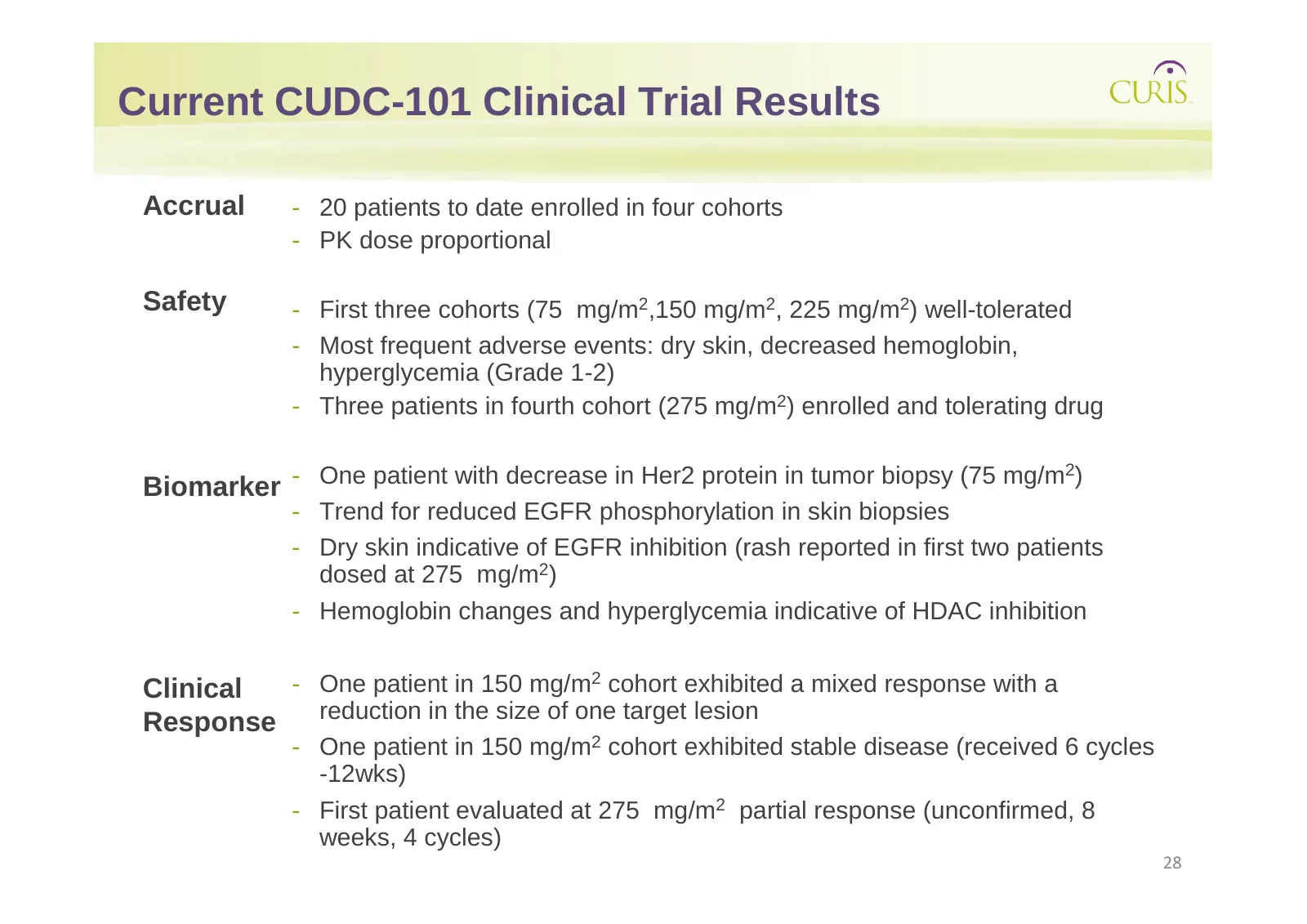
Slide 28: Current CUDC-101 Clinical Trial Results
Current CUDC-101 Clinical Trial Results Accrual - 20 patients to date enrolled in four cohorts Completed Progress - PK dose proportional Well Tolerated Safety 75 mg/ m2 150 mg/2 m2 - First three cohorts (75 mg/m2,150 mg/m , 225 mg/m2) well-tolerated - Most frequent adverse events: dry skin, decrease
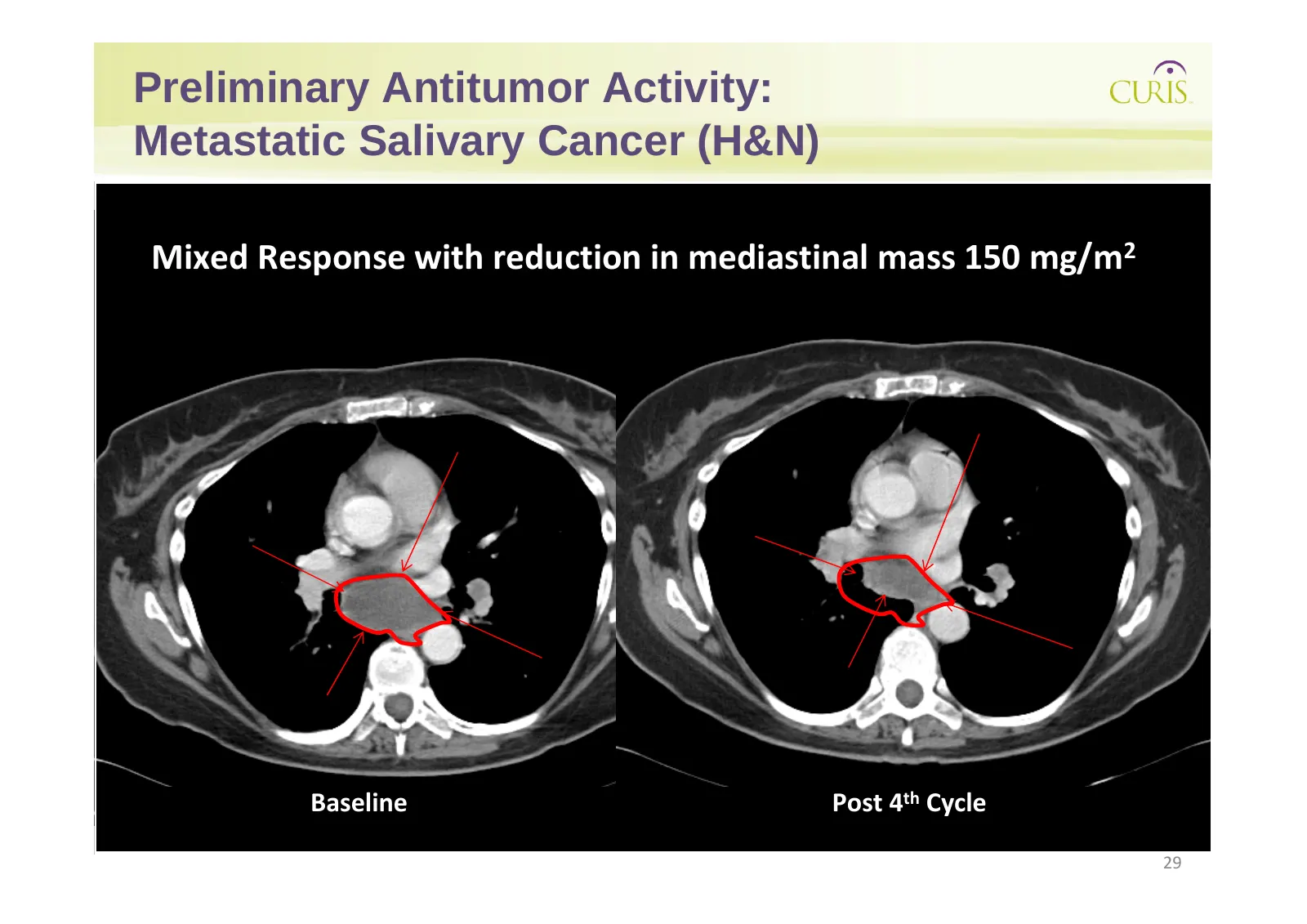
Slide 29: Preliminary Antitumor Activity: Metastatic Salivary Cancer (H&N)
Preliminary Antitumor Activity: Metastatic Salivary Cancer (H&N) Mixed Response with reduction in mediastinal mass 150 mg/m2 Baseline Post 4th Cycle 29
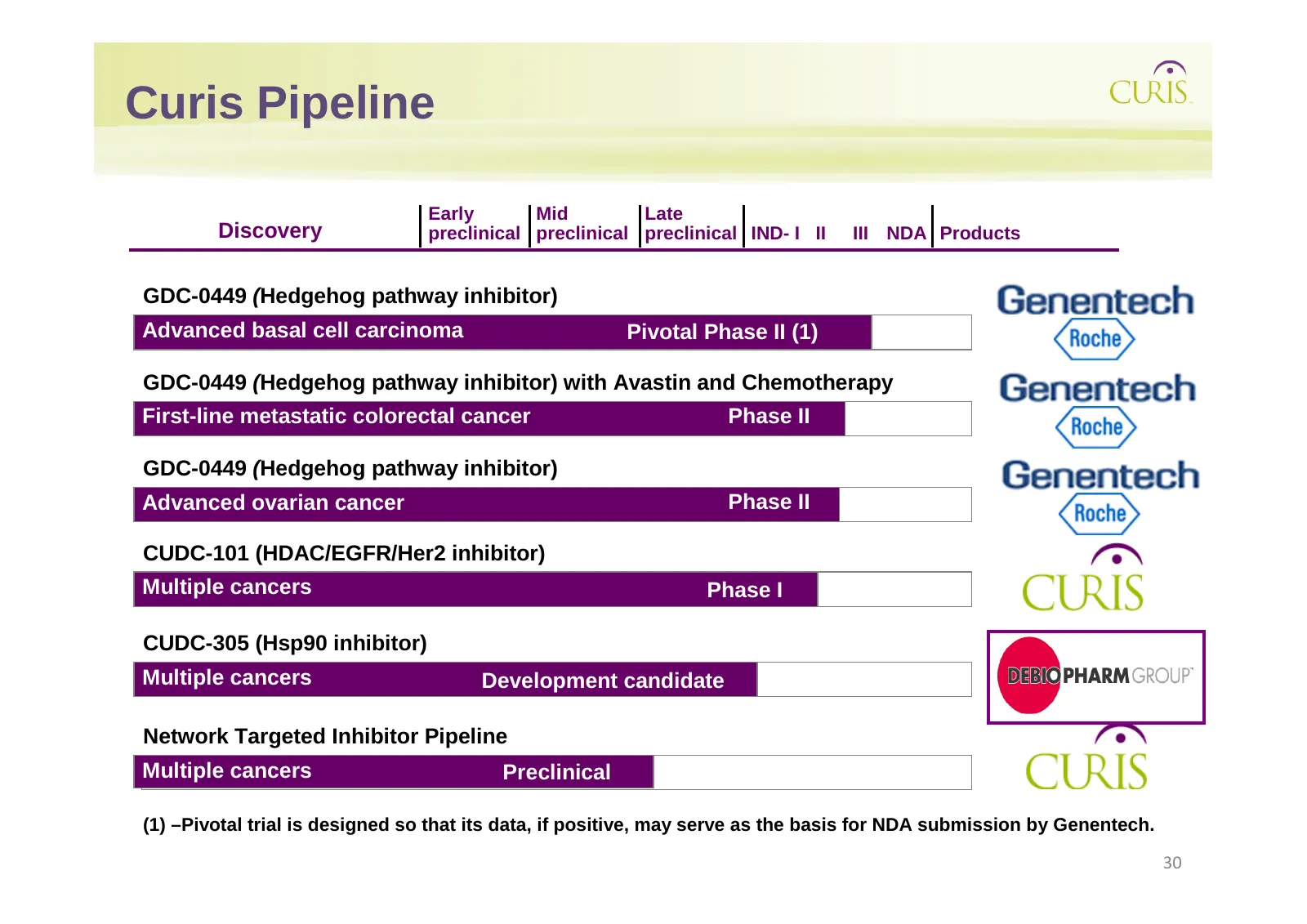
Slide 30: Curis Pipeline
Curis Pipeline Early Mid Late Discovery preclinical preclinical preclinical IND- I II III NDA Products GDC-0449 (Hedgehog pathway inhibitor) Phase I expansion Phase cohort II Cancer Advanced basal cell carcinoma Preclinical Pivotal Phase II (1) Phase II* GDC-0449 (Hedgehog pathway inhibitor) with Av
Slide 31: CUDC-305: Potential Best-in-Class HSP90 inhibitor
CUDC-305: Potential Best-in-Class HSP90 inhibitor 31
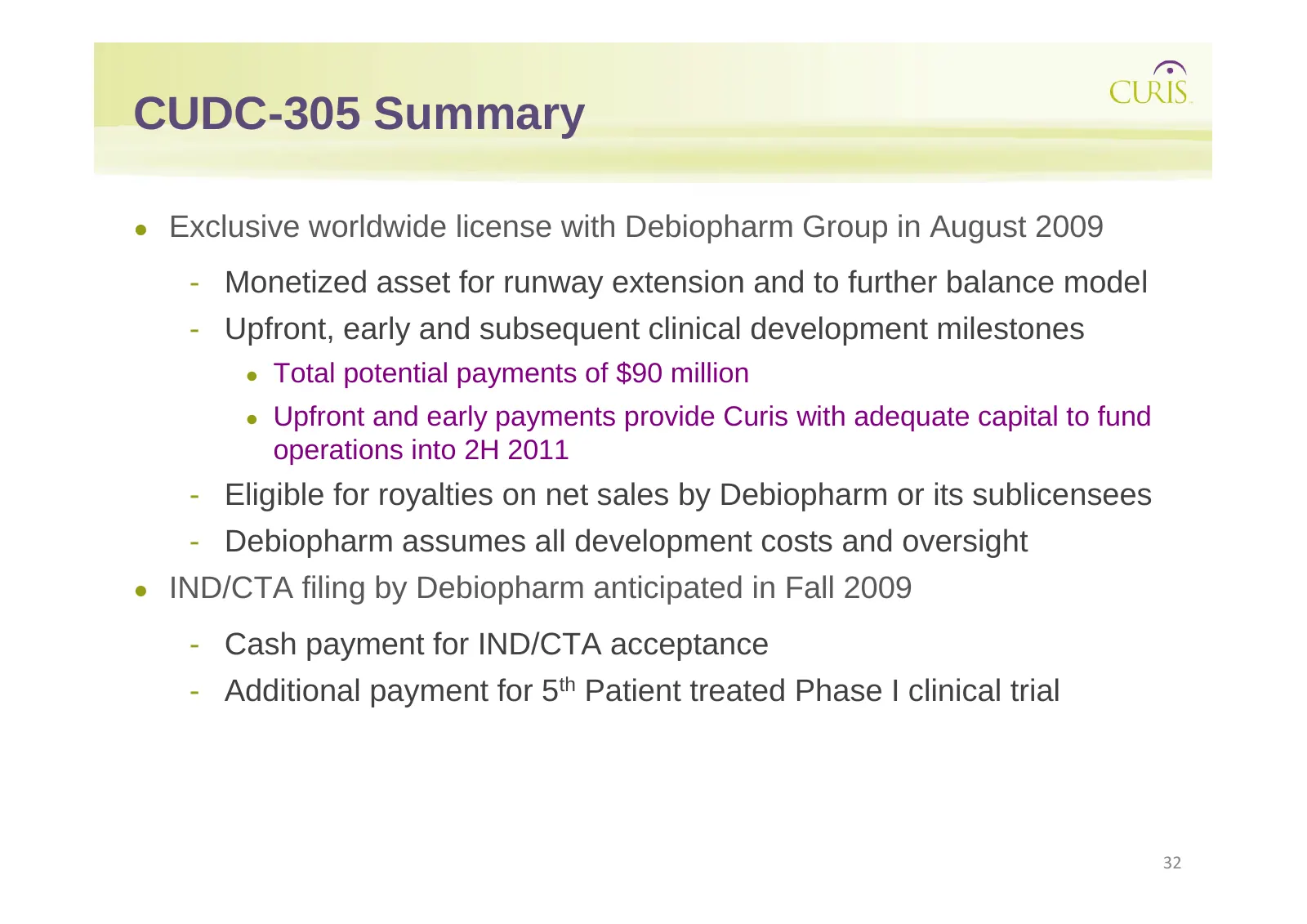
Slide 32: CUDC-305 Summary
CUDC-305 Summary ● Exclusive worldwide license with Debiopharm Group in August 2009 - Monetized asset for runway extension and to further balance model - Upfront, early and subsequent clinical development milestones ● Total potential payments of $90 million ● Upfront and early payments provide Curis
Slide 33: CUDC-305 Overview
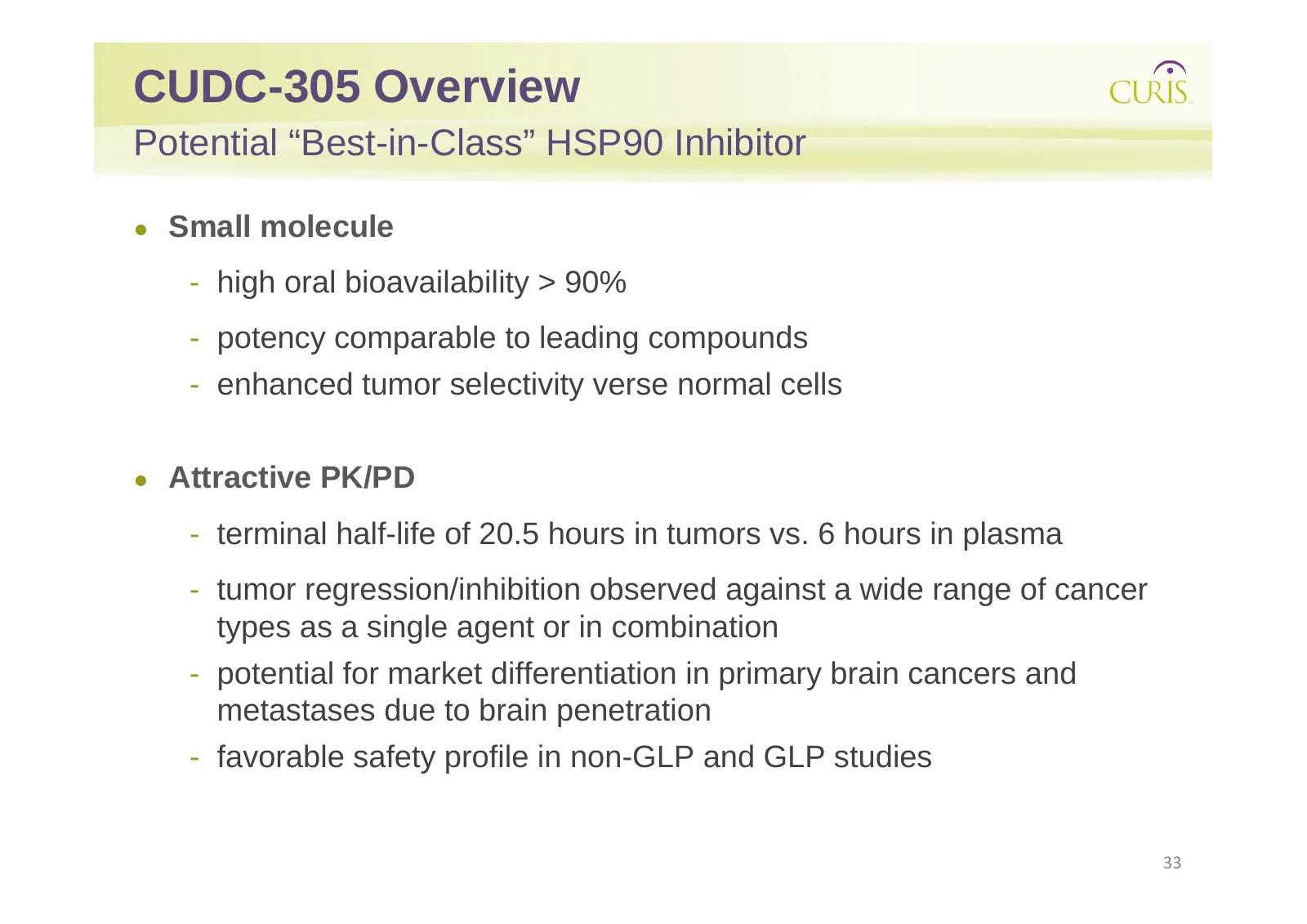
CUDC-305 Overview Potential “Best-in-Class” HSP90 Inhibitor ● Small molecule - high oral bioavailability > 90% - potency comparable to leading compounds - enhanced tumor selectivity verse normal cells ● Attractive PK/PD - terminal half-life of 20.5 hours in tumors vs. 6 hours in plasma - tumor regre

Slide 34: Corporate
Corporate CURIS.
Slide 35: Financial Data
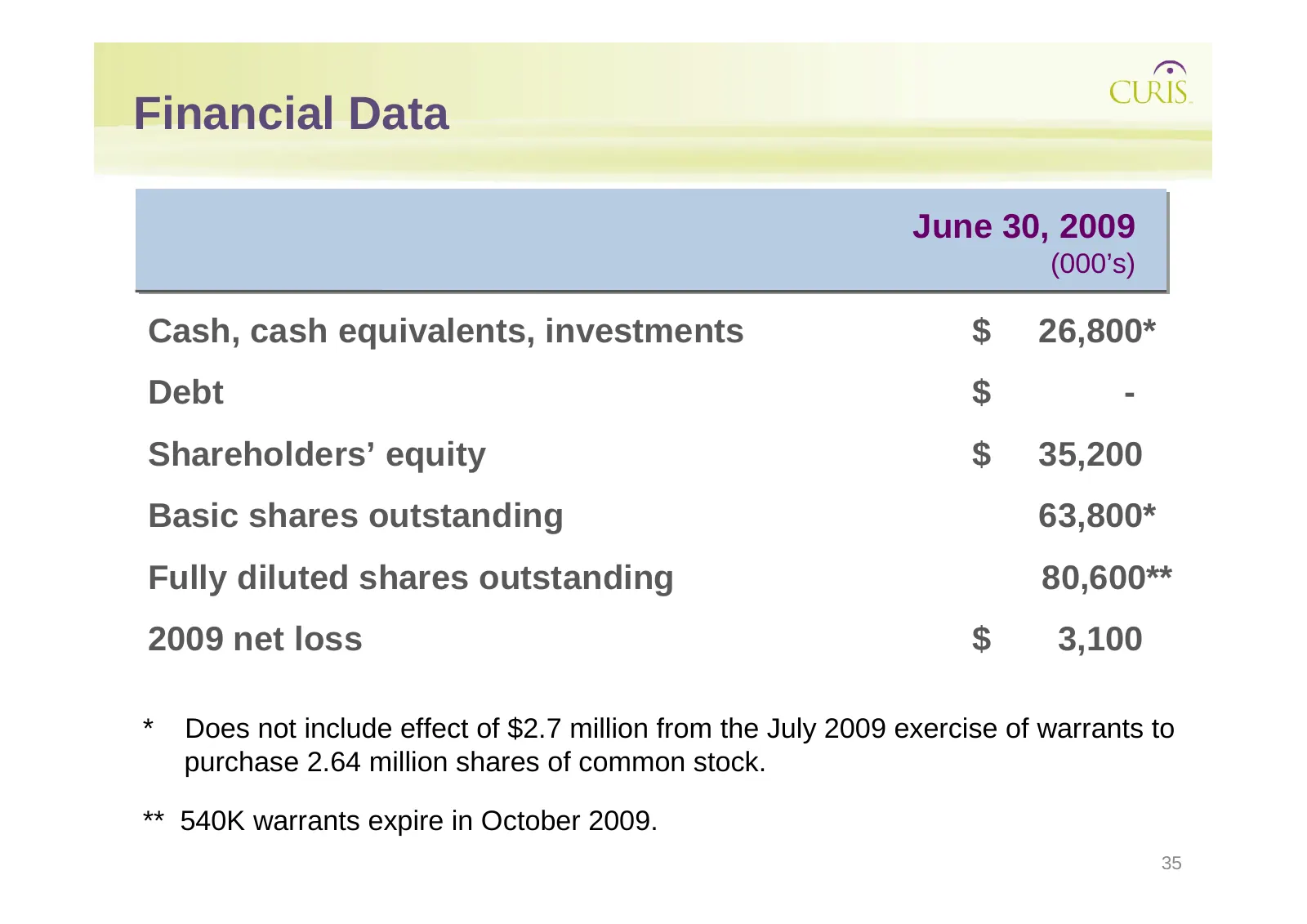
Financial Data June 30, 2009 (000’s) Cash, cash equivalents, investments $ 26,800* Debt $ - Shareholders’ equity $ 35,200 Basic shares outstanding 63,800* Fully diluted shares outstanding 80,600** 2009 net loss $ 3,100 * Does not include effect of $2.7 million from the July 2009 exercise of warrants
Slide 36: Near-Term Corporate Objectives
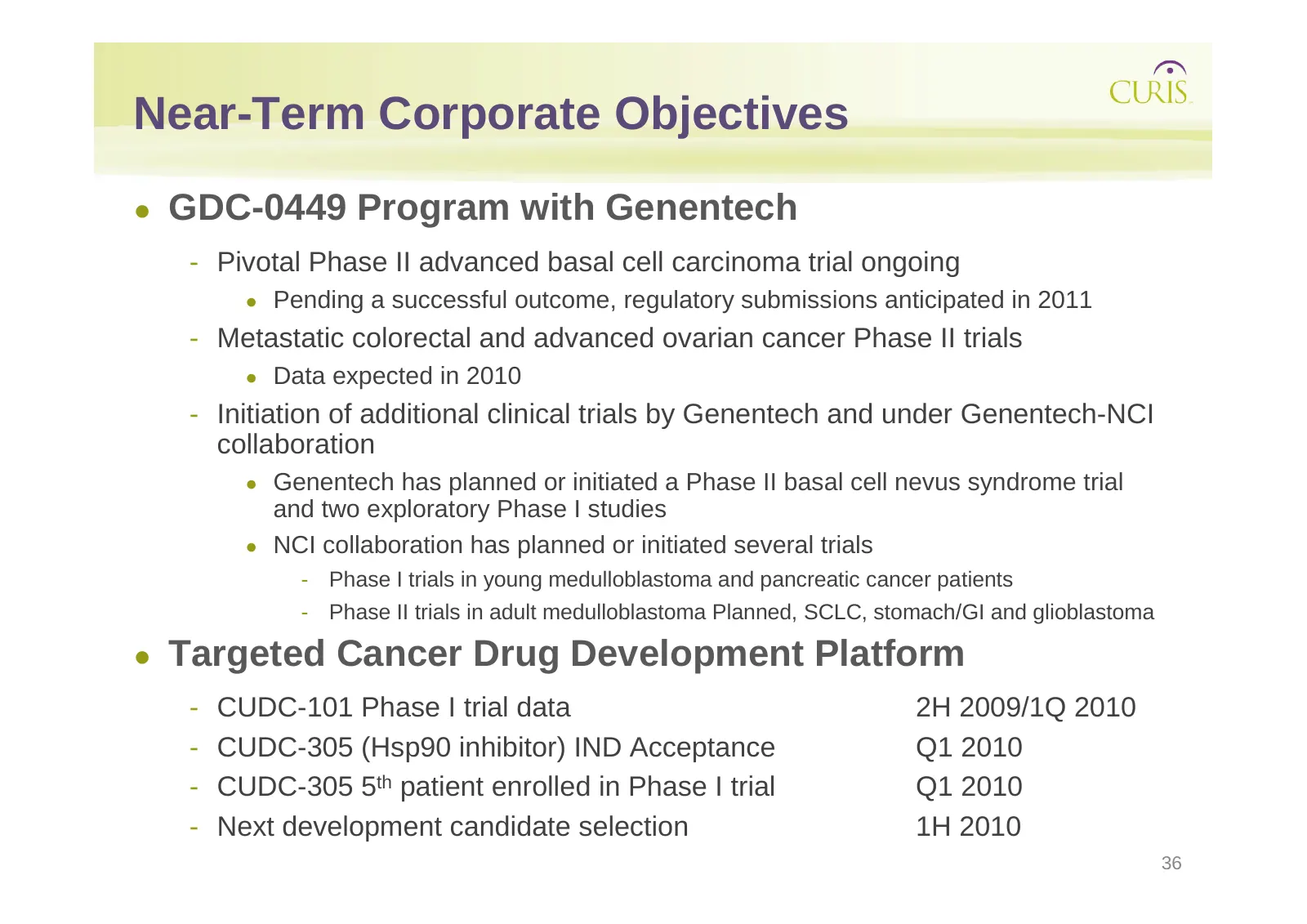
Near-Term Corporate Objectives ● GDC-0449 Program with Genentech - Pivotal Phase II advanced basal cell carcinoma trial ongoing ● Pending a successful outcome, regulatory submissions anticipated in 2011 - Metastatic colorectal and advanced ovarian cancer Phase II trials ● Data expected in 2010 - Ini
Slide 37: Corporate Overview
Corporate Overview October 23, 2009 NASDAQ: CRIS
Source: Internet Archive copy of curis.com
More decks from Curis, Inc.
 Investor Presentation (July 2026)31 slides · July 2026
 Investor Presentation (June 2026)31 slides · June 2026
 Q1 2026 Earnings Presentation32 slides · May 12, 2026
 Investor Presentation (May 2026)32 slides · May 2026
 Investor Presentation (March 2026)32 slides · March 2026
 Investor Presentation (November 2025)31 slides · November 2025