Ventyx Biosciences — Investor Day (January 2023)
72 slides from Ventyx Biosciences's investor day presentation, Jan 26, 2023

Slide 1: Ventyx Biosciences 2023 R&D Day
Exhibit 99.1 Ventyx Biosciences 2023 R&D Day January 26, 2023 1
Slide 2: Forward Looking Statements
Forward Looking Statements Ventyx Biosciences, Inc. (“Ventyx” or the “Company”) cautions you that statements contained in this presentation regarding matters that are not historical facts are forward-looking statements. These statements are based on the Company’s current beliefs and expectations. Su
Slide 3: R&D Day Logistics
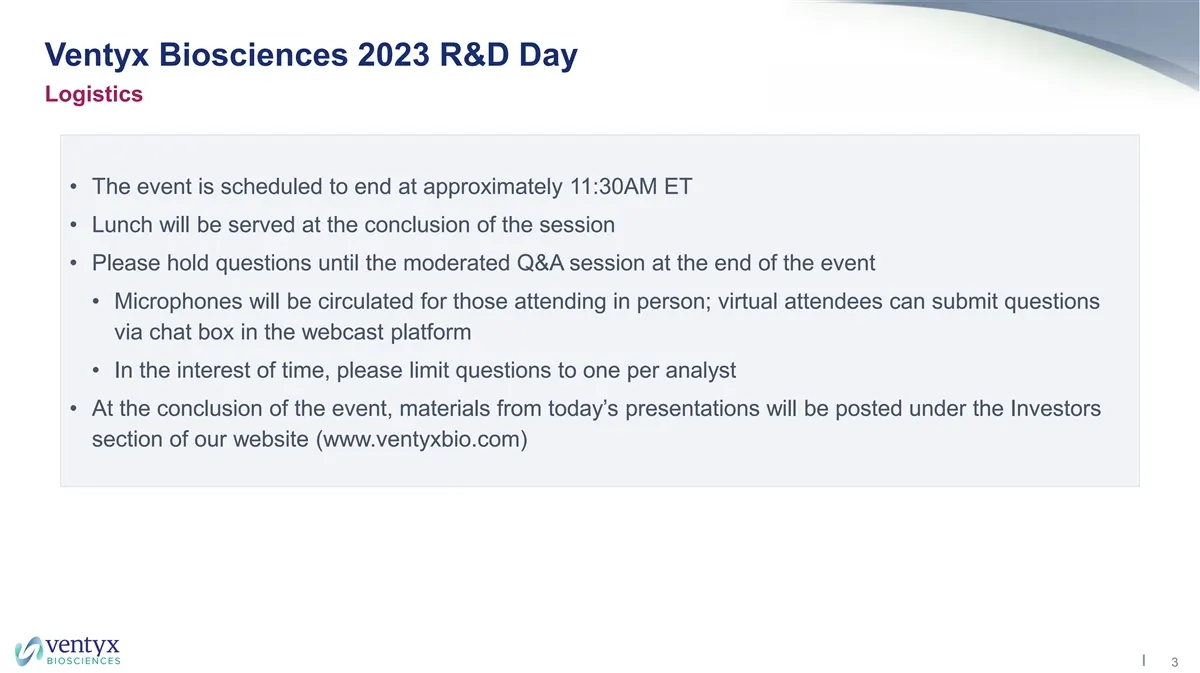
Ventyx Biosciences 2023 R&D Day Logistics • The event is scheduled to end at approximately 11:30AM ET • Lunch will be served at the conclusion of the session • Please hold questions until the moderated Q&A session at the end of the event • Microphones will be circulated for those attending in person
Slide 4: Speakers and Participants
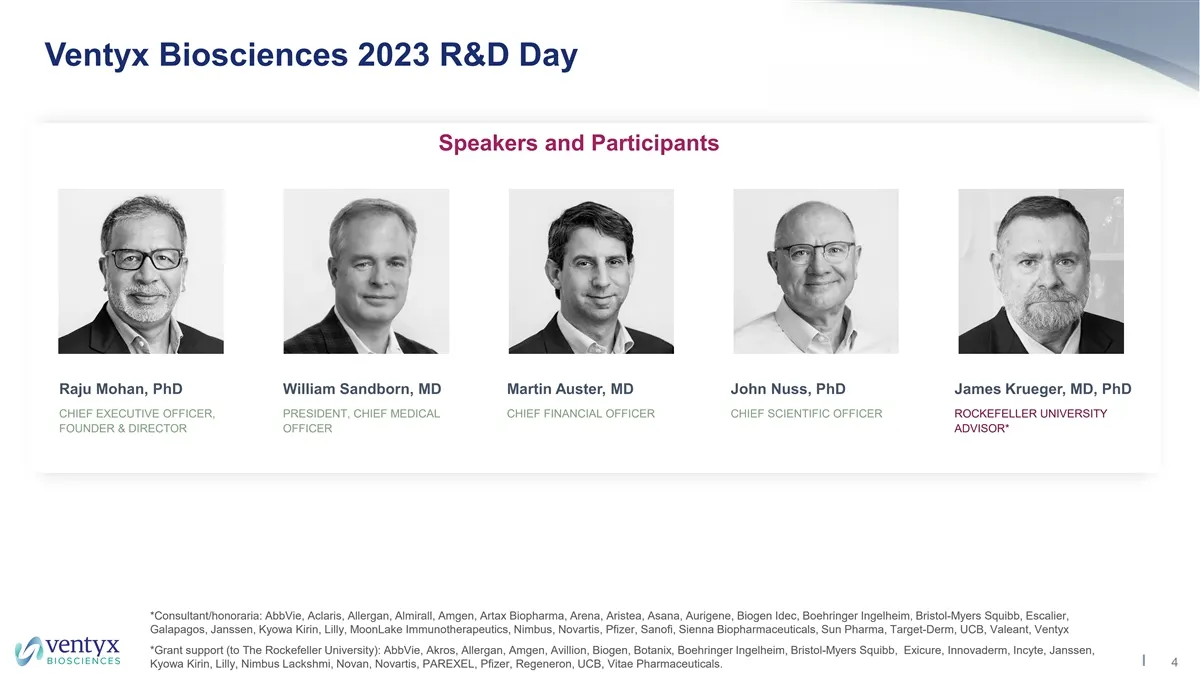
Ventyx Biosciences 2023 R&D Day Speakers and Participants Raju Mohan, PhD William Sandborn, MD Martin Auster, MD John Nuss, PhD James Krueger, MD, PhD CHIEF EXECUTIVE OFFICER, PRESIDENT, CHIEF MEDICAL CHIEF FINANCIAL OFFICER CHIEF SCIENTIFIC OFFICER ROCKEFELLER UNIVERSITY FOUNDER & DIRECTOR OFFICER
Slide 5: Agenda
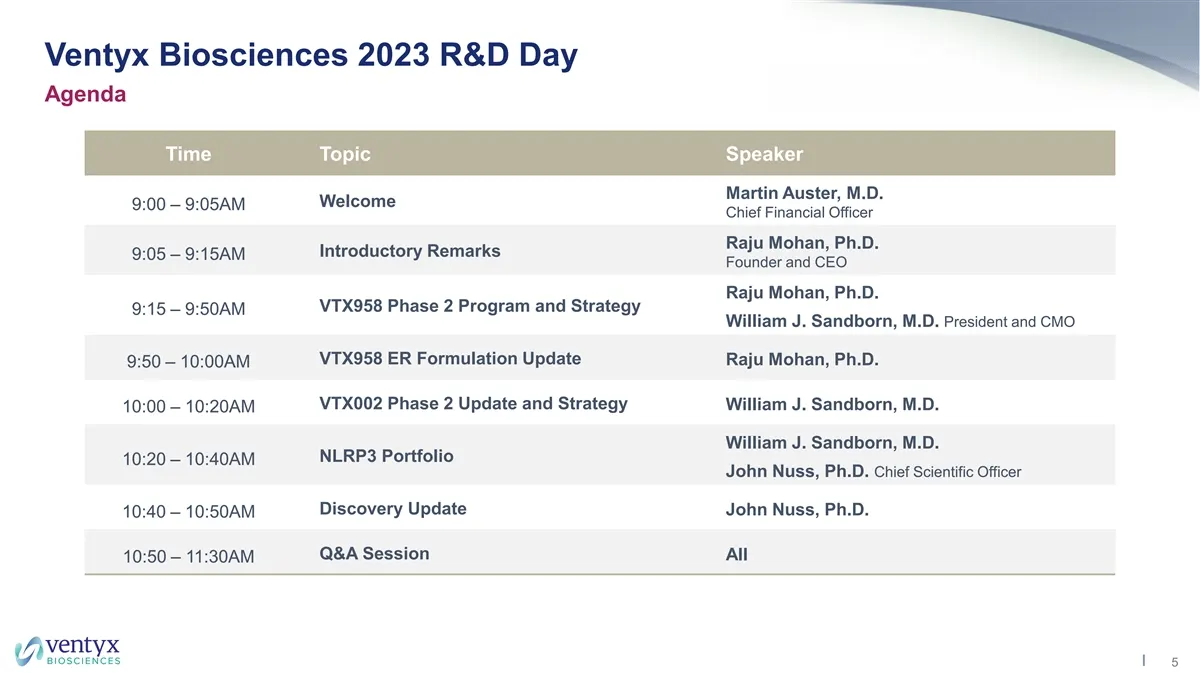
Ventyx Biosciences 2023 R&D Day Agenda Time Topic Speaker Martin Auster, M.D. Welcome 9:00 – 9:05AM Chief Financial Officer Raju Mohan, Ph.D. Introductory Remarks 9:05 – 9:15AM Founder and CEO Raju Mohan, Ph.D. VTX958 Phase 2 Program and Strategy 9:15 – 9:50AM William J. Sandborn, M.D. President and

Slide 6: Introduction
Introduction Raju Mohan, Ph.D. Founder and Chief Executive Officer 6
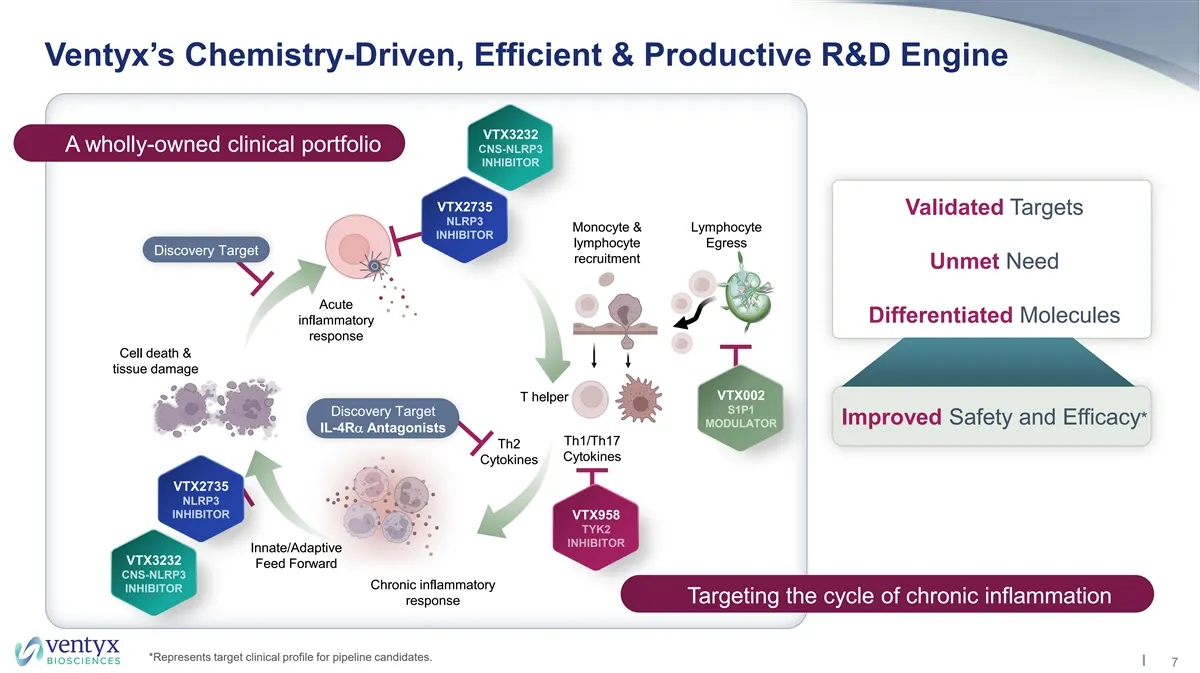
Slide 7: Ventyx's Chemistry-Driven, Efficient & Productive R&D Engine
Ventyx’s Chemistry-Driven, Efficient & Productive R&D Engine VTX3232 A wholly-owned clinical portfolio CNS-NLRP3 INHIBITOR VTX2735 Validated Targets NLRP3 Monocyte & Lymphocyte INHIBITOR lymphocyte Egress Discovery Target recruitment Unmet Need Acute Differentiated Molecules inflammatory response Ce
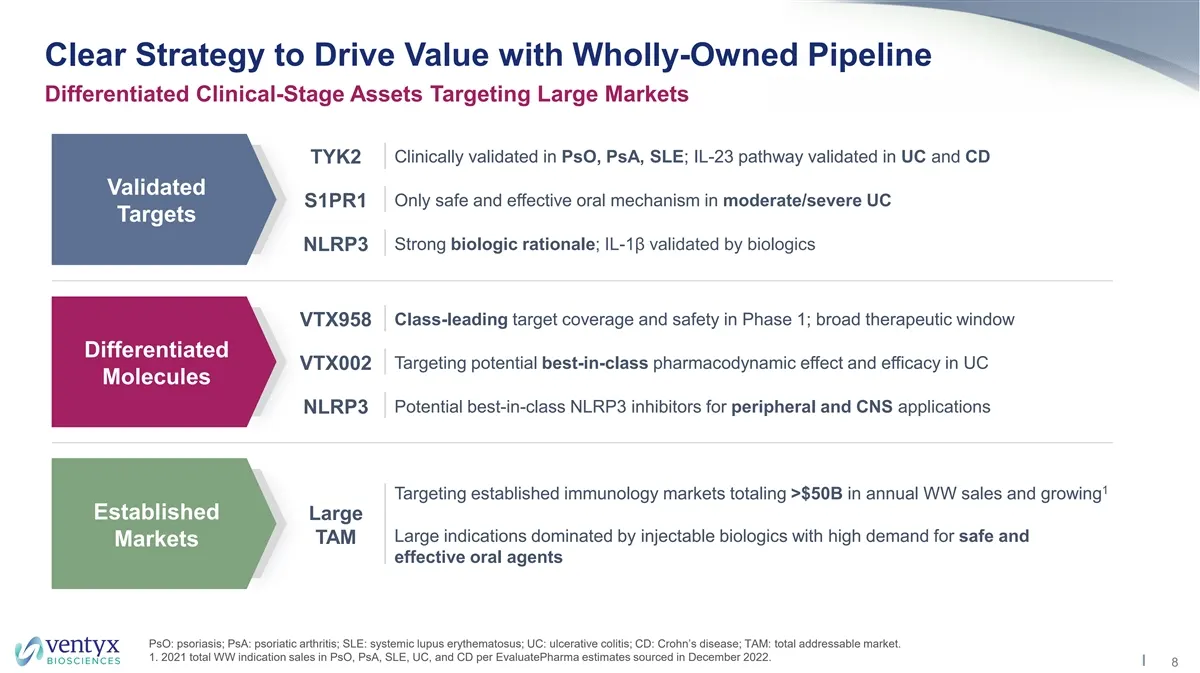
Slide 8: Clear Strategy to Drive Value with Wholly-Owned Pipeline
Clear Strategy to Drive Value with Wholly-Owned Pipeline Differentiated Clinical-Stage Assets Targeting Large Markets Clinically validated in PsO, PsA, SLE; IL-23 pathway validated in UC and CD TYK2 Validated Only safe and effective oral mechanism in moderate/severe UC S1PR1 Targets Strong biologic
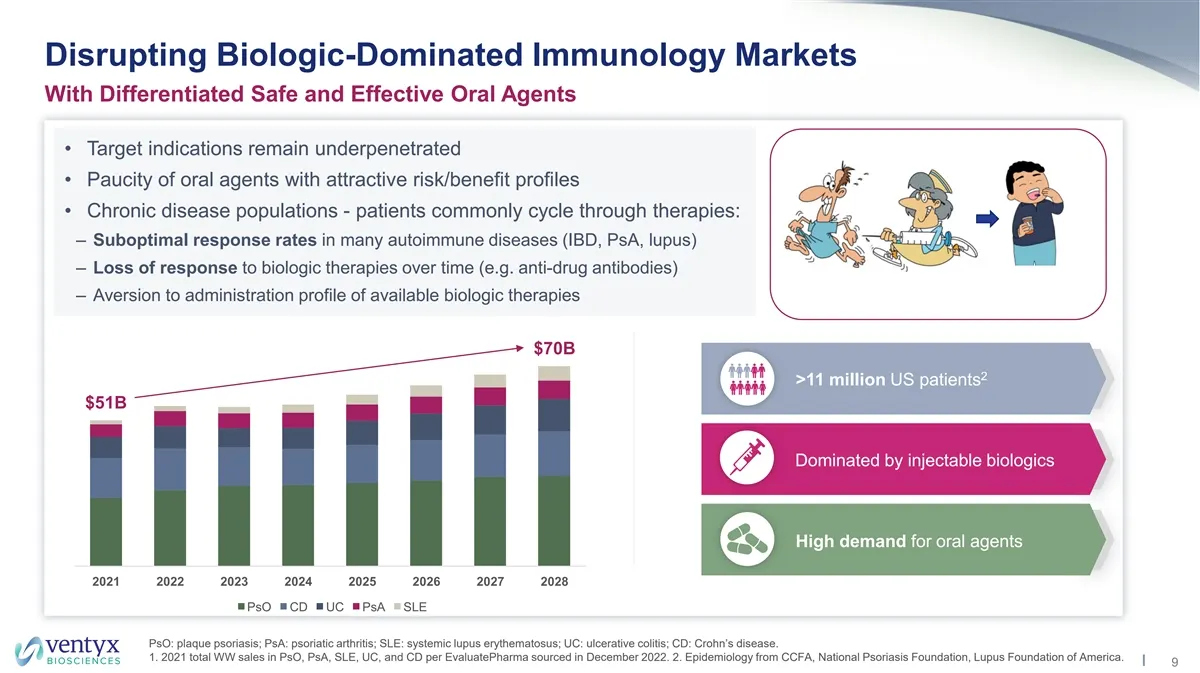
Slide 9: Disrupting Biologic-Dominated Immunology Markets With Oral Agents
Disrupting Biologic-Dominated Immunology Markets With Differentiated Safe and Effective Oral Agents • Target indications remain underpenetrated • Paucity of oral agents with attractive risk/benefit profiles • Chronic disease populations - patients commonly cycle through therapies: – Suboptimal respo
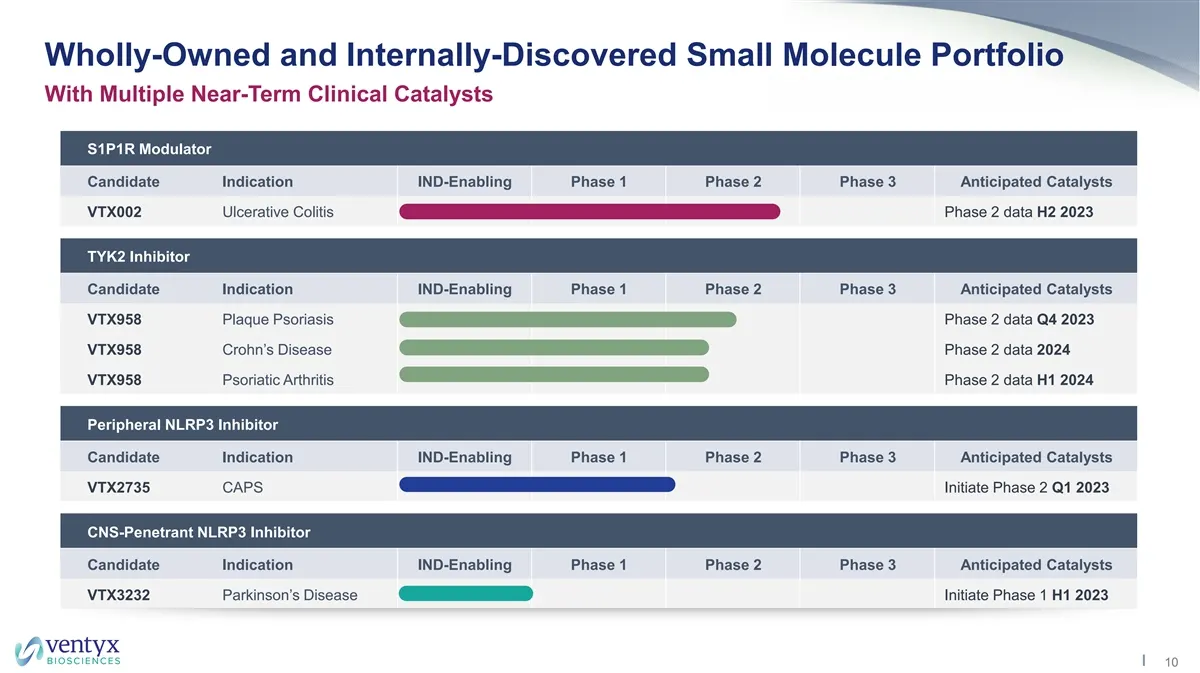
Slide 10: Small Molecule Portfolio With Multiple Near-Term Clinical Catalysts
Wholly-Owned and Internally-Discovered Small Molecule Portfolio With Multiple Near-Term Clinical Catalysts S1P1R Modulator Candidate Indication IND-Enabling Phase 1 Phase 2 Phase 3 Anticipated Catalysts VTX002 Ulcerative Colitis Phase 2 data H2 2023 TYK2 Inhibitor Candidate Indication IND-Enabling P
Slide 11: TYK2 Inhibitor VTX958
TYK2 Inhibitor VTX958 Raju Mohan, Ph.D. Founder and CEO 11
Slide 12: VTX958 Is a Potential Best-in-Class Allosteric TYK2 Inhibitor
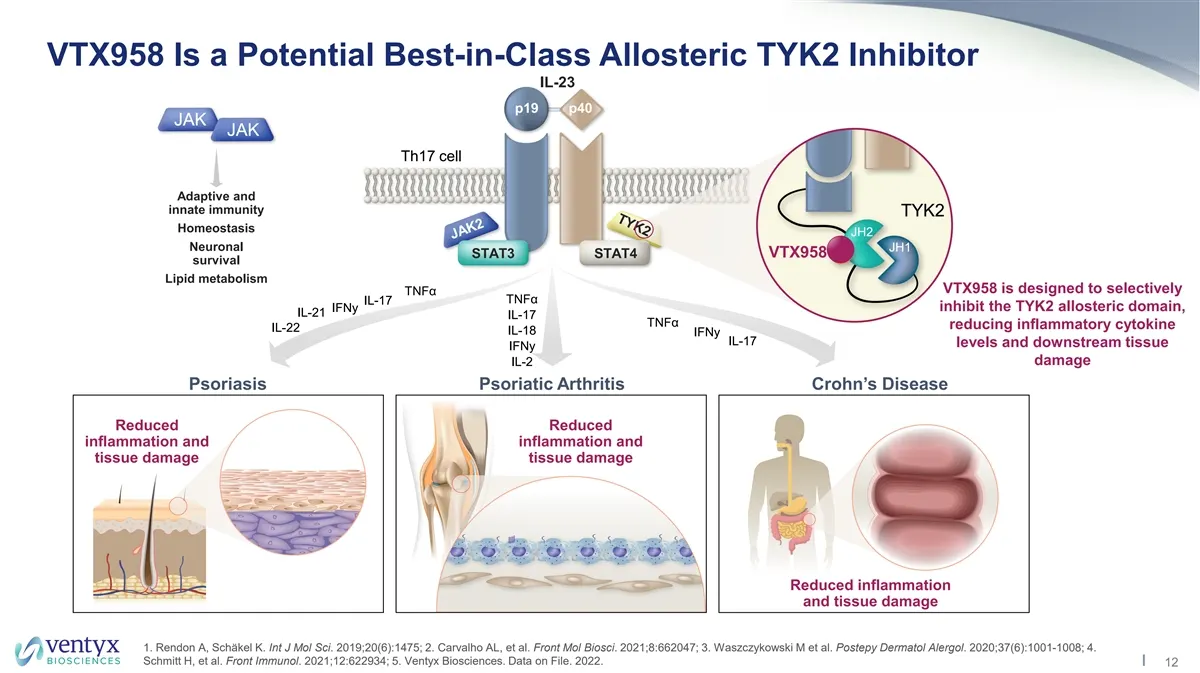
VTX958 Is a Potential Best-in-Class Allosteric TYK2 Inhibitor IL-23 p19 p40 JAK JAK Th17 cell Adaptive and innate immunity TYK2 Homeostasis JH2 Neuronal JH1 VTX958 STAT3 STAT4 survival Lipid metabolism VTX958 is designed to selectively TNFα TNFα IL-17 inhibit the TYK2 allosteric domain, IFNy IL-21 I
Slide 13: Sotyktu Label Differentiates TYK2 from JAK Inhibitor Class
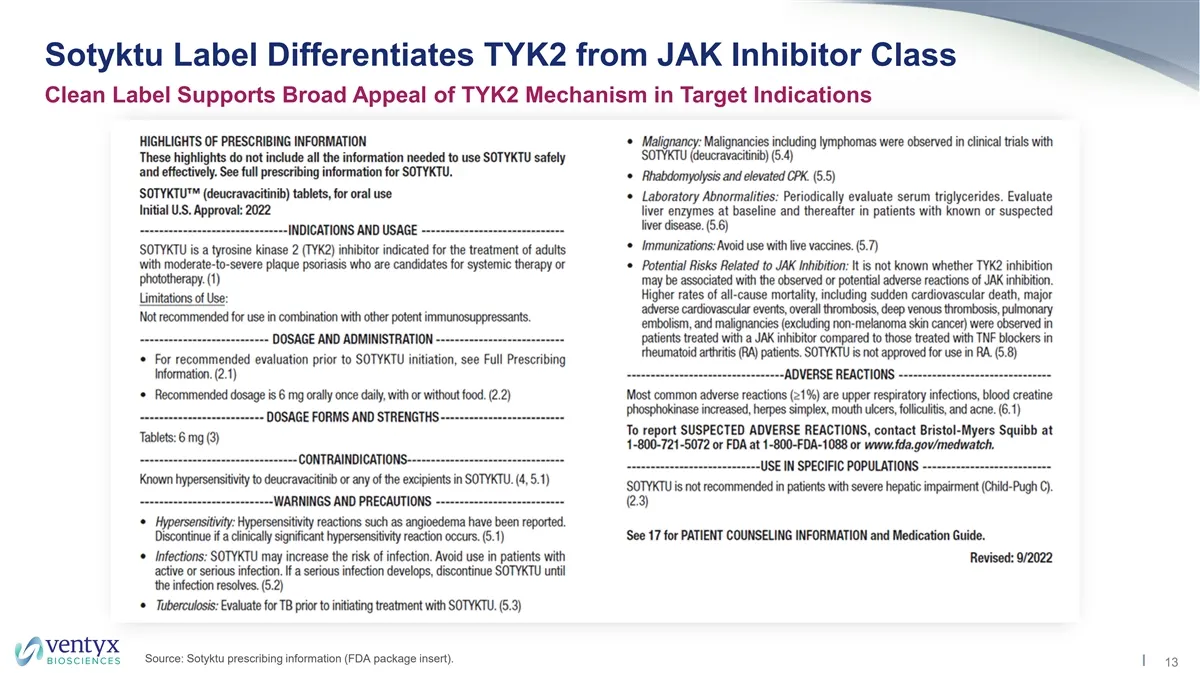
Sotyktu Label Differentiates TYK2 from JAK Inhibitor Class Clean Label Supports Broad Appeal of TYK2 Mechanism in Target Indications Source: Sotyktu prescribing information (FDA package insert). 13
Slide 14: Highly Selective for TYK2 JH2 Domain
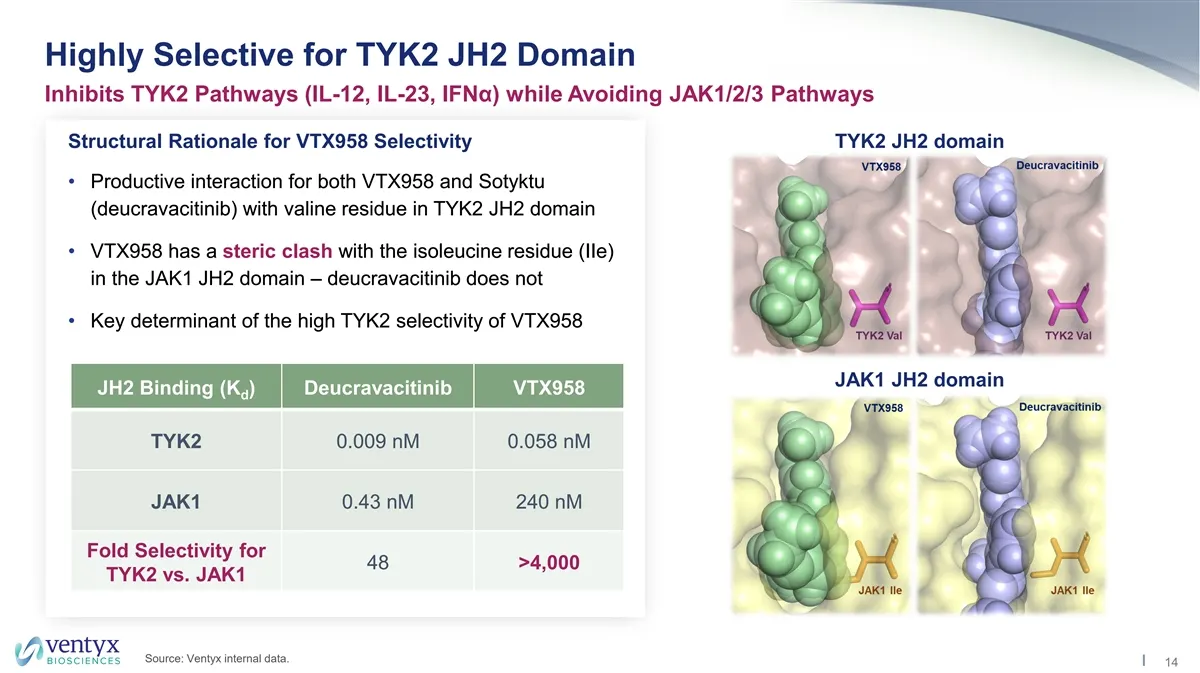
Highly Selective for TYK2 JH2 Domain Inhibits TYK2 Pathways (IL-12, IL-23, IFNα) while Avoiding JAK1/2/3 Pathways Structural Rationale for VTX958 Selectivity TYK2 JH2 domain • Productive interaction for both VTX958 and Sotyktu (deucravacitinib) with valine residue in TYK2 JH2 domain • VTX958 has a s
Slide 15: Selectively Inhibits IL-12, IL-23 and IFNα Signaling
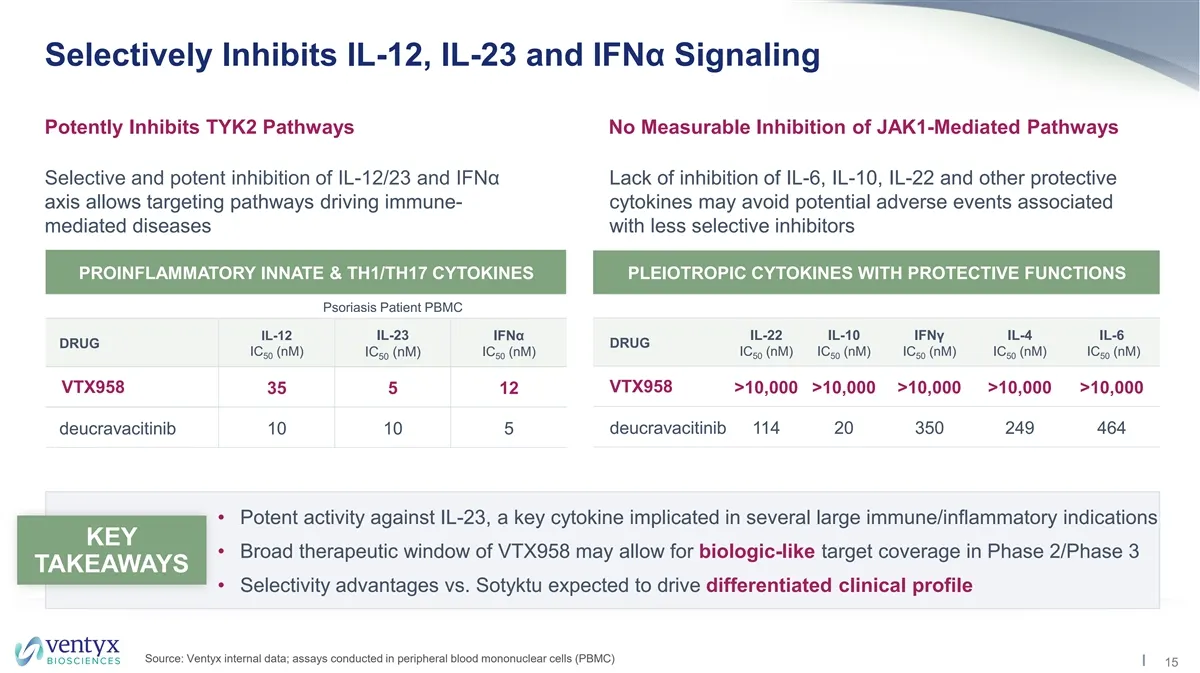
Selectively Inhibits IL-12, IL-23 and IFNα Signaling Potently Inhibits TYK2 Pathways No Measurable Inhibition of JAK1-Mediated Pathways Selective and potent inhibition of IL-12/23 and IFNα Lack of inhibition of IL-6, IL-10, IL-22 and other protective axis allows targeting pathways driving immune- cy
Slide 16: Class-Leading Target Coverage
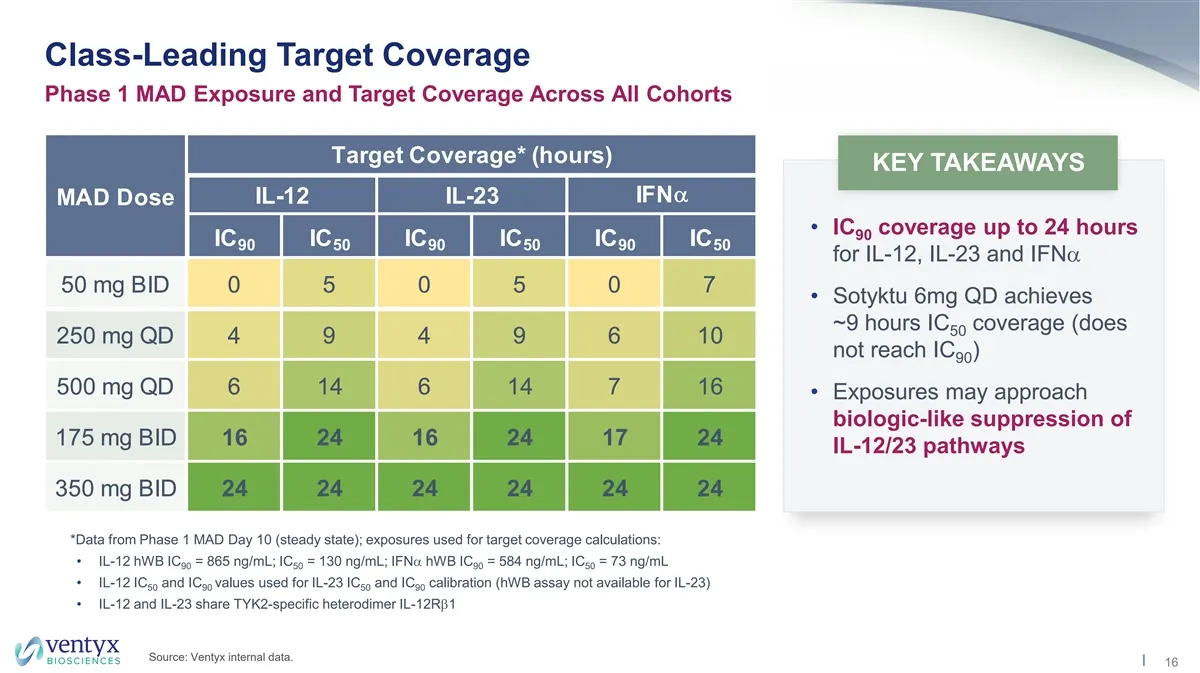
Class-Leading Target Coverage Phase 1 MAD Exposure and Target Coverage Across All Cohorts Target Coverage* (hours) KEY TAKEAWAYS IFNa IL-12 IL-23 MAD Dose • IC coverage up to 24 hours 90 IC IC IC IC IC IC 90 50 90 50 90 50 for IL-12, IL-23 and IFNa 50 mg BID 0 5 0 5 0 7 • Sotyktu 6mg QD achieves ~9
Slide 17: Robust Dose-Dependent Validation of Target Coverage
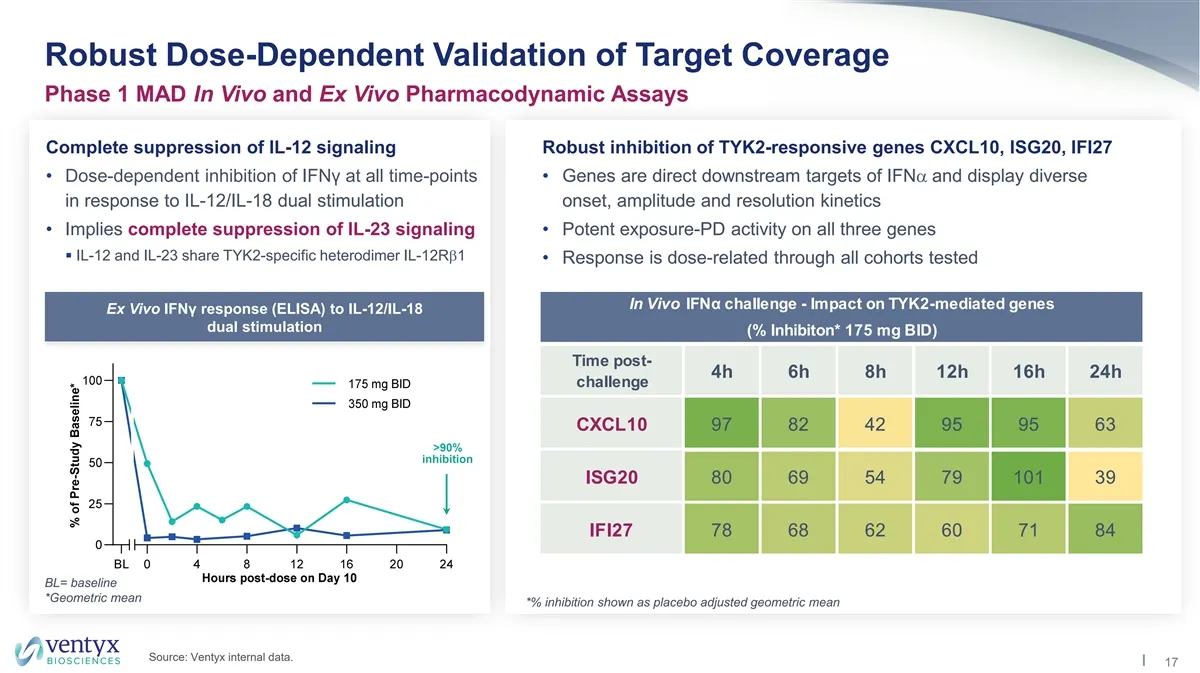
Robust Dose-Dependent Validation of Target Coverage Phase 1 MAD In Vivo and Ex Vivo Pharmacodynamic Assays Complete suppression of IL-12 signaling Robust inhibition of TYK2-responsive genes CXCL10, ISG20, IFI27 • Dose-dependent inhibition of IFNγ at all time-points • Genes are direct downstream targ

Slide 18: VTX958 Phase 2 Clinical Program
VTX958 Phase 2 Clinical Program William J. Sandborn, M.D. President and CMO 18
Slide 19: Moderate to Severe Plaque Psoriasis Landscape
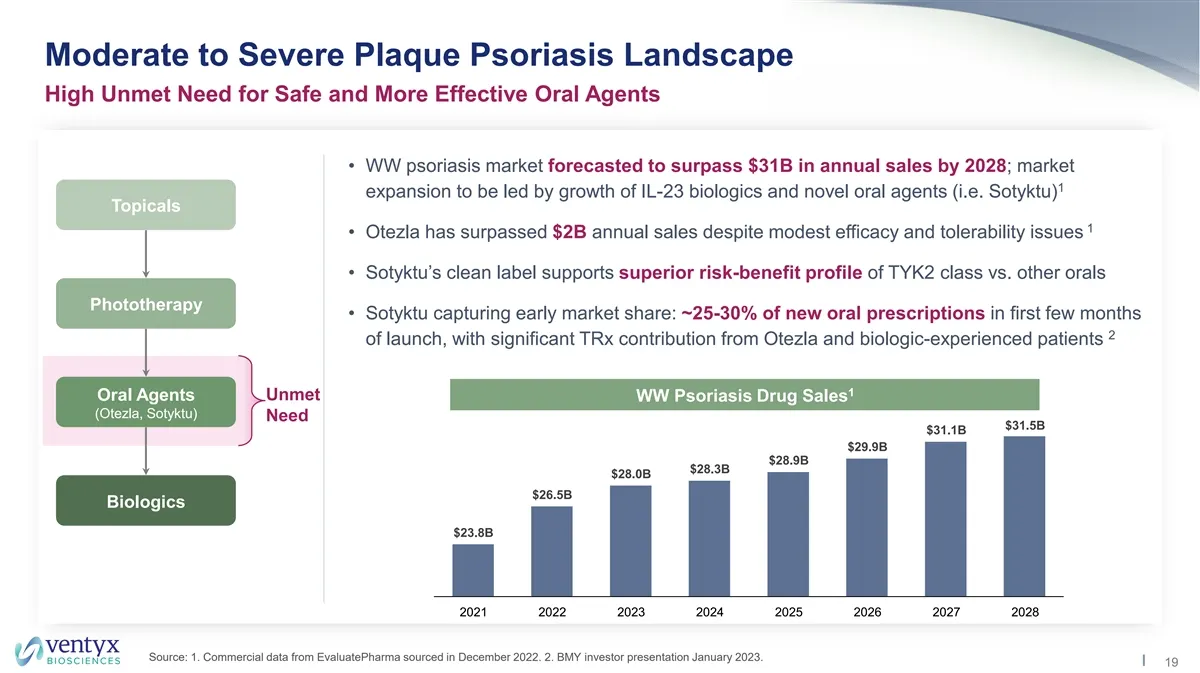
Moderate to Severe Plaque Psoriasis Landscape High Unmet Need for Safe and More Effective Oral Agents • WW psoriasis market forecasted to surpass $31B in annual sales by 2028; market 1 expansion to be led by growth of IL-23 biologics and novel oral agents (i.e. Sotyktu) Topicals 1 • Otezla has surpa
Slide 20: Phase 2 SERENITY PsO Trial
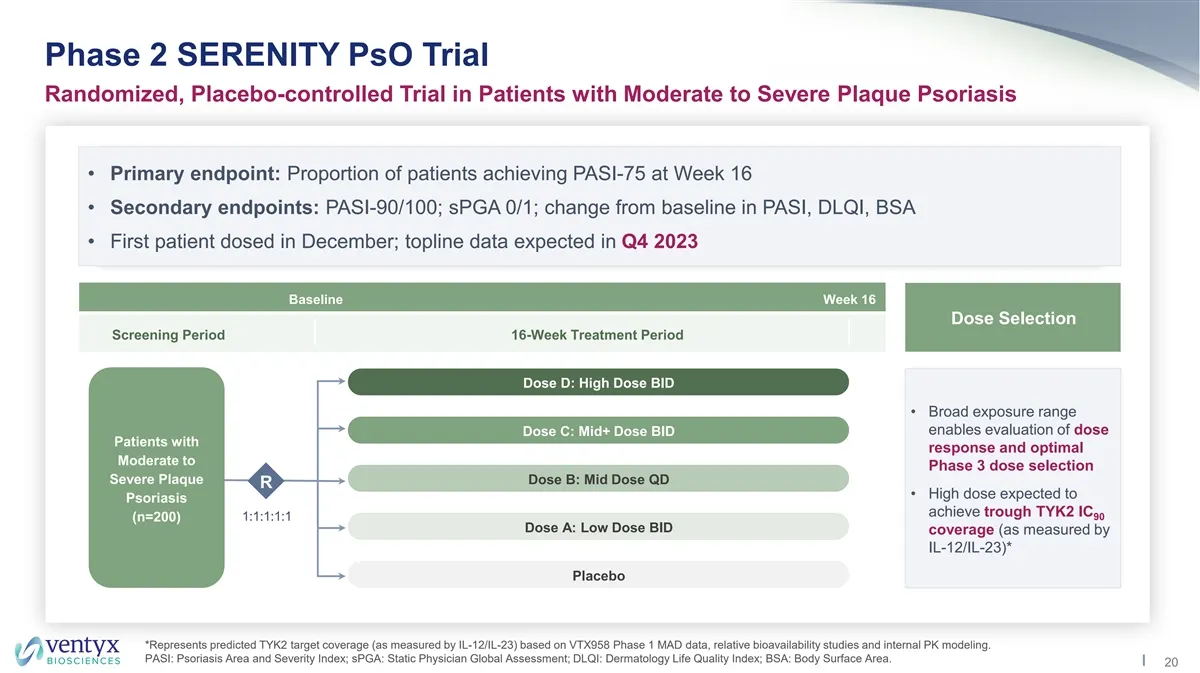
Phase 2 SERENITY PsO Trial Randomized, Placebo-controlled Trial in Patients with Moderate to Severe Plaque Psoriasis • Primary endpoint: Proportion of patients achieving PASI-75 at Week 16 • Secondary endpoints: PASI-90/100; sPGA 0/1; change from baseline in PASI, DLQI, BSA • First patient dosed in
Slide 21: Target Profile Expected to Drive Clinical Differentiation
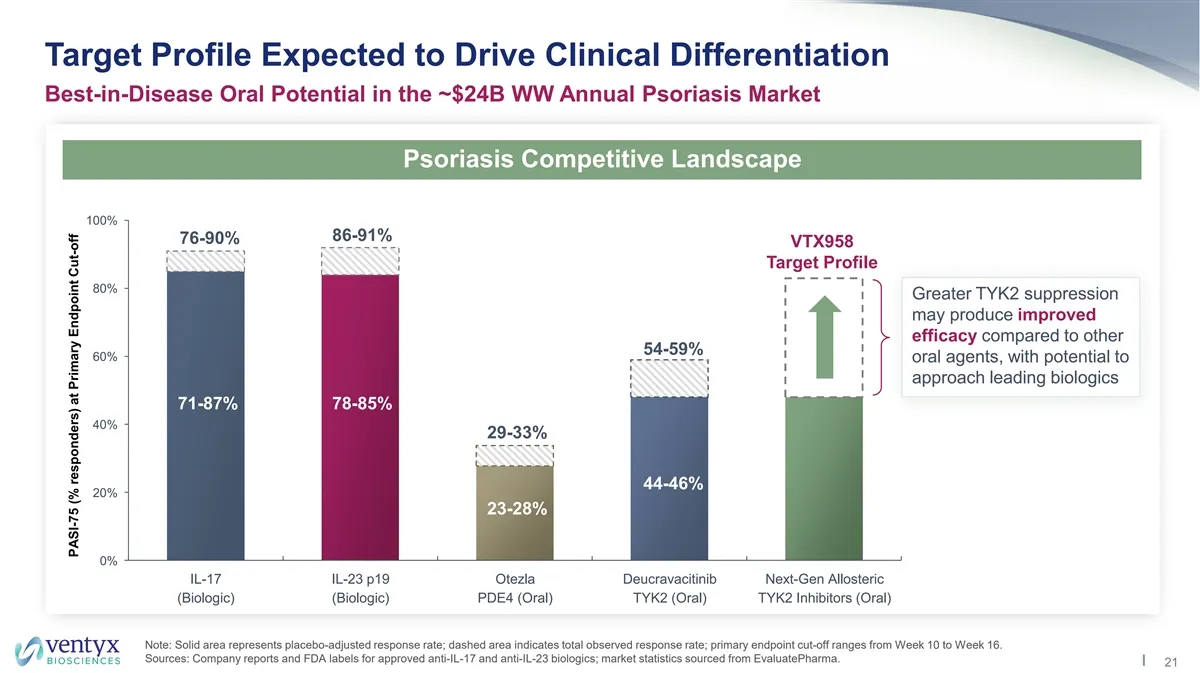
Target Profile Expected to Drive Clinical Differentiation Best-in-Disease Oral Potential in the ~$24B WW Annual Psoriasis Market Psoriasis Competitive Landscape 100% 86-91% 76-90% VTX958 Target Profile 80% Greater TYK2 suppression may produce improved efficacy compared to other 54-59% 60% oral agent
Slide 22: Skyrizi Data Illustrate Dose Response of IL-23 Pathway in PsO
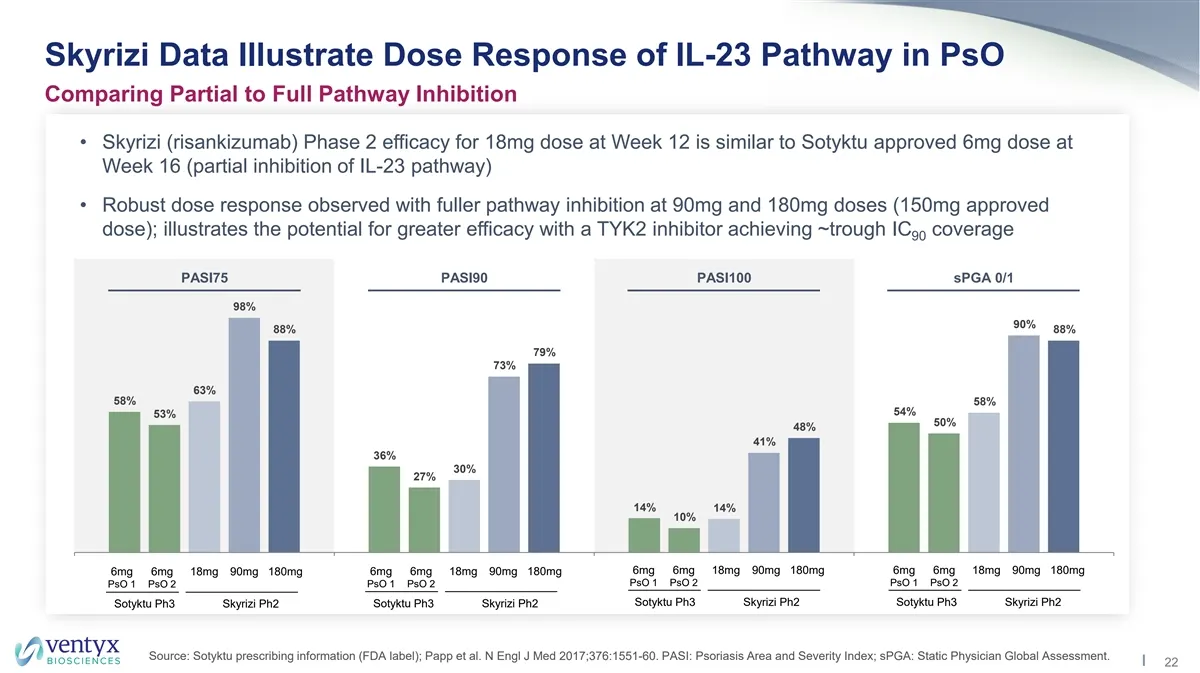
Skyrizi Data Illustrate Dose Response of IL-23 Pathway in PsO Comparing Partial to Full Pathway Inhibition • Skyrizi (risankizumab) Phase 2 efficacy for 18mg dose at Week 12 is similar to Sotyktu approved 6mg dose at Week 16 (partial inhibition of IL-23 pathway) • Robust dose response observed with
Slide 23: Moderate to Severe Crohn's Disease Landscape
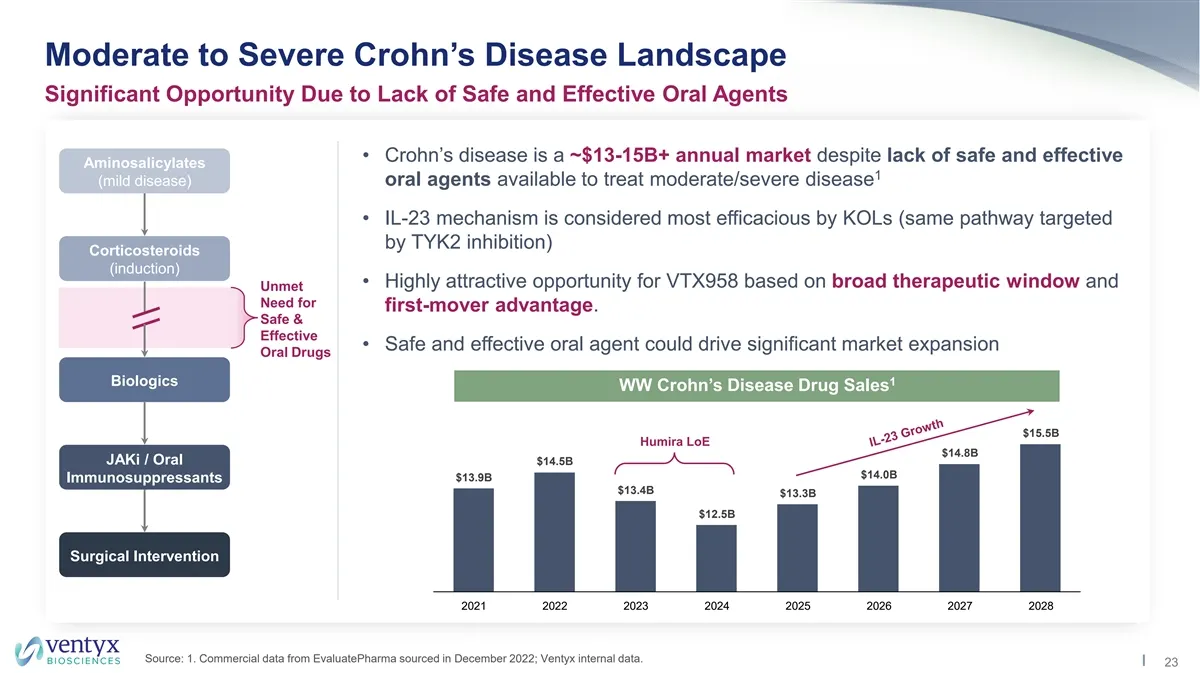
Moderate to Severe Crohn’s Disease Landscape Significant Opportunity Due to Lack of Safe and Effective Oral Agents • Crohn’s disease is a ~$13-15B+ annual market despite lack of safe and effective Aminosalicylates 1 (mild disease) oral agents available to treat moderate/severe disease • IL-23 mechan
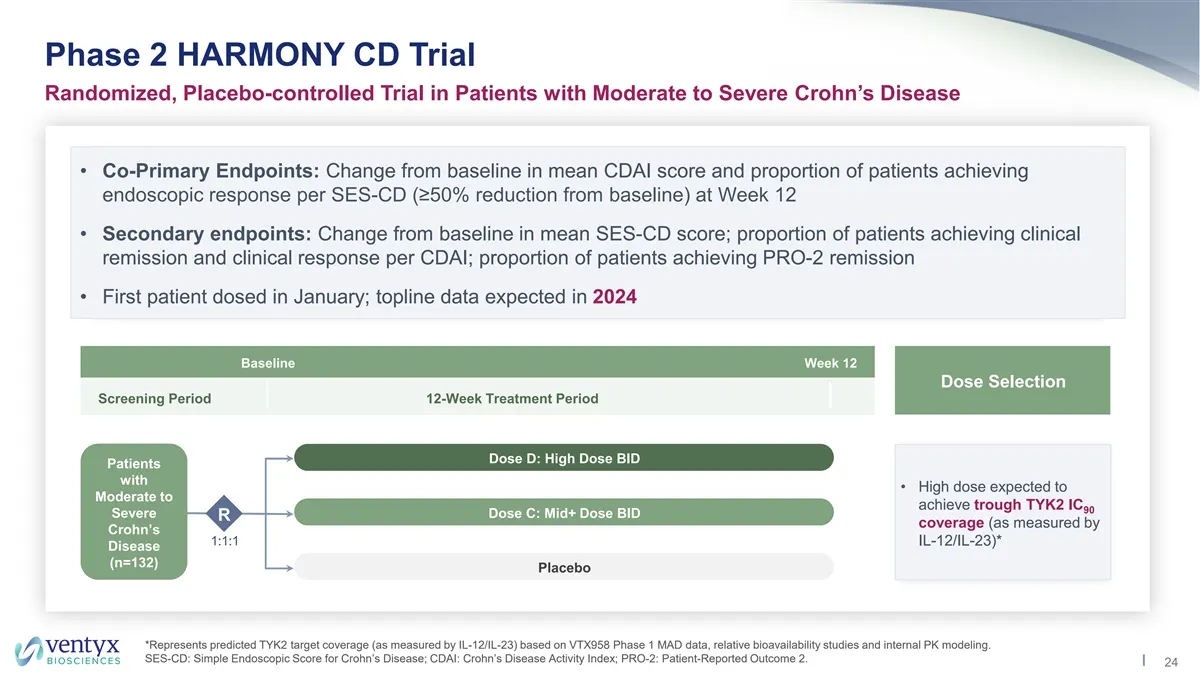
Slide 24: Phase 2 HARMONY CD Trial
Phase 2 HARMONY CD Trial Randomized, Placebo-controlled Trial in Patients with Moderate to Severe Crohn’s Disease • Co-Primary Endpoints: Change from baseline in mean CDAI score and proportion of patients achieving endoscopic response per SES-CD (≥50% reduction from baseline) at Week 12 • Secondary
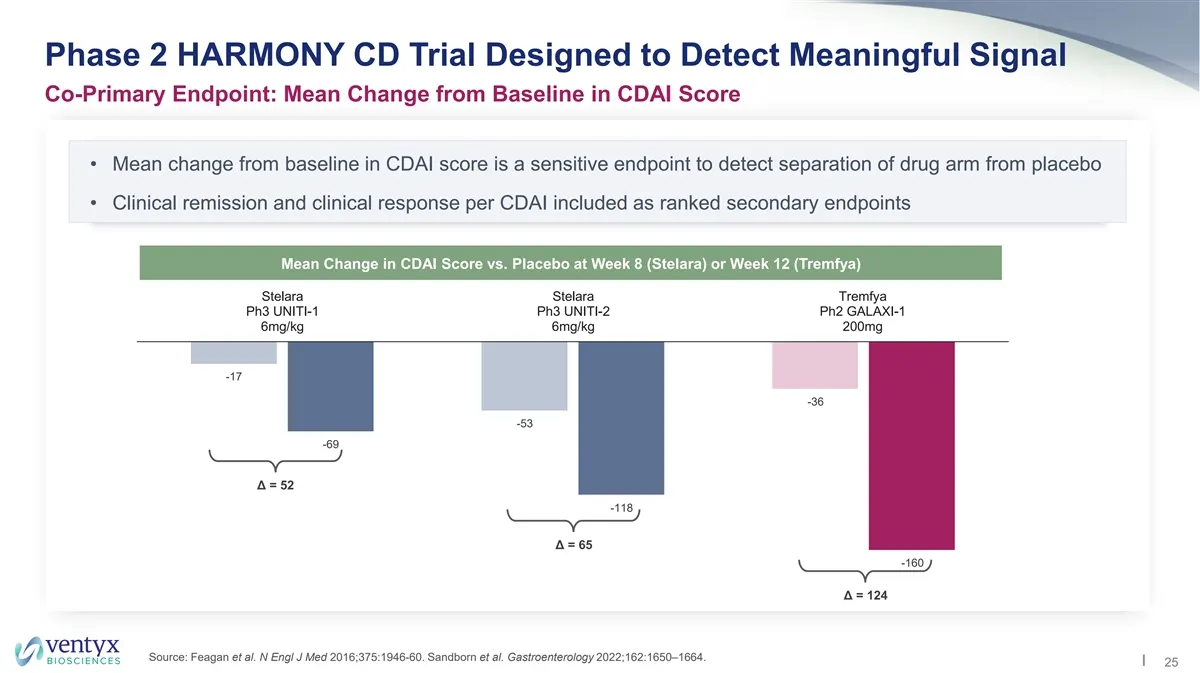
Slide 25: HARMONY CD Trial Designed to Detect Meaningful Signal: CDAI
Phase 2 HARMONY CD Trial Designed to Detect Meaningful Signal Co-Primary Endpoint: Mean Change from Baseline in CDAI Score • Mean change from baseline in CDAI score is a sensitive endpoint to detect separation of drug arm from placebo • Clinical remission and clinical response per CDAI included as r
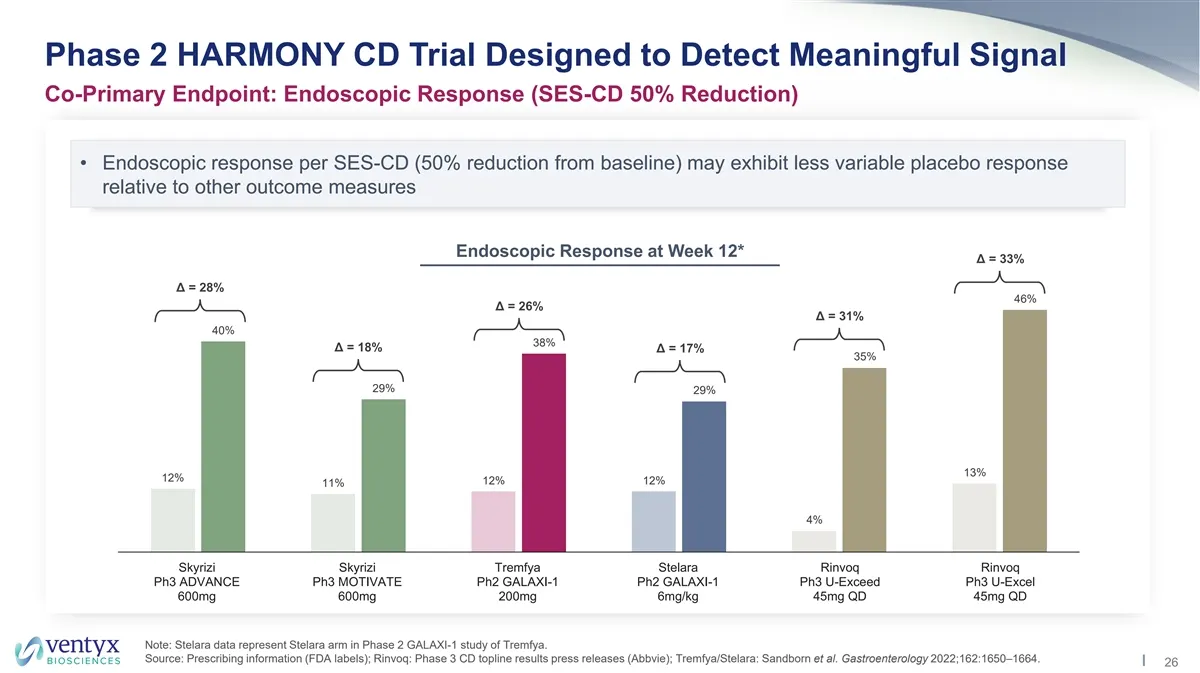
Slide 26: HARMONY CD Trial Designed to Detect Meaningful Signal: Endoscopic Response
Phase 2 HARMONY CD Trial Designed to Detect Meaningful Signal Co-Primary Endpoint: Endoscopic Response (SES-CD 50% Reduction) • Endoscopic response per SES-CD (50% reduction from baseline) may exhibit less variable placebo response relative to other outcome measures Endoscopic Response at Week 12* Δ
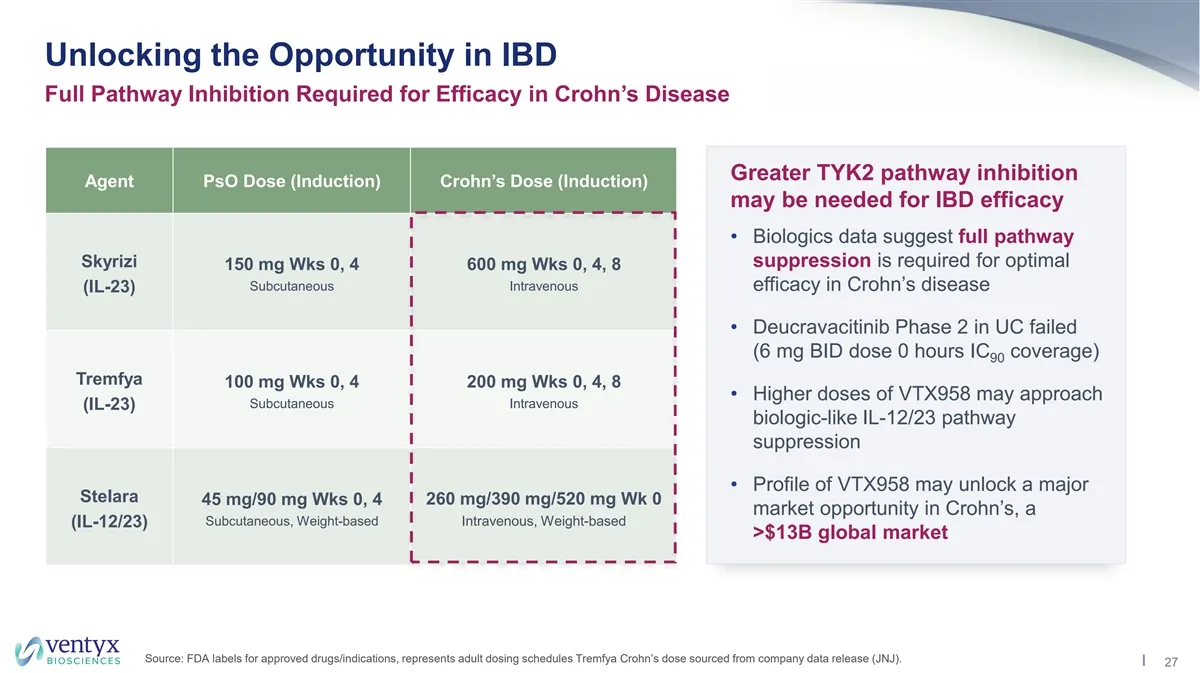
Slide 27: Unlocking the Opportunity in IBD
Unlocking the Opportunity in IBD Full Pathway Inhibition Required for Efficacy in Crohn’s Disease Greater TYK2 pathway inhibition Agent PsO Dose (Induction) Crohn’s Dose (Induction) may be needed for IBD efficacy • Biologics data suggest full pathway Skyrizi suppression is required for optimal 150 m
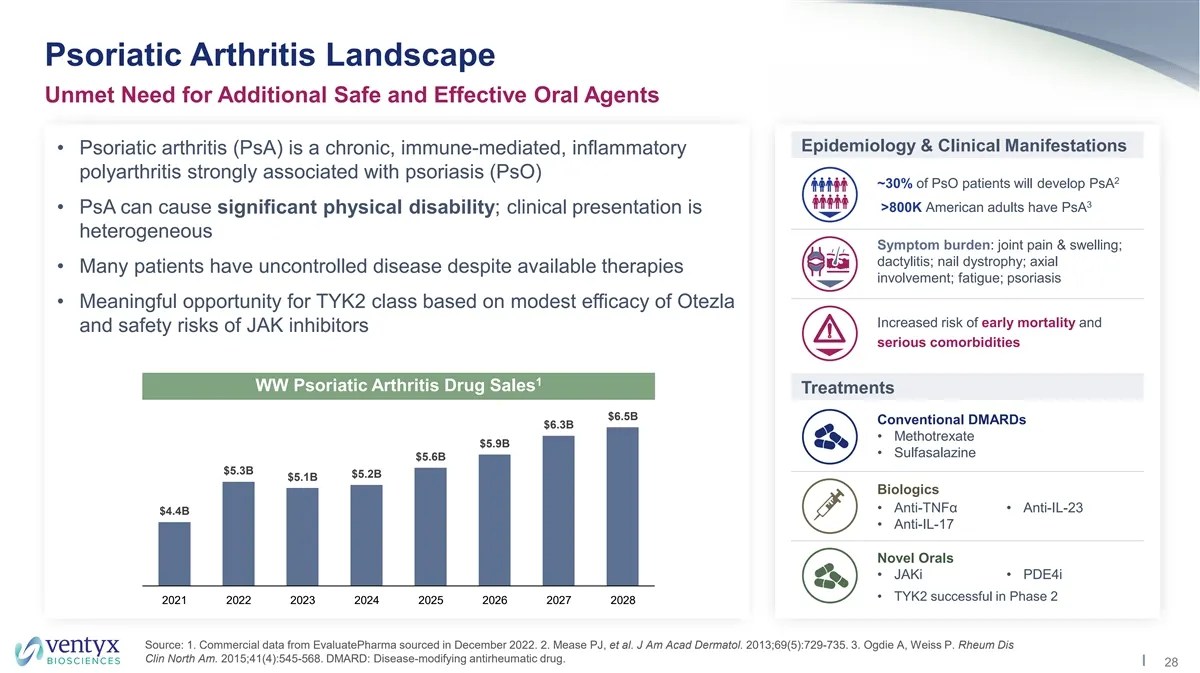
Slide 28: Psoriatic Arthritis Landscape
Psoriatic Arthritis Landscape Unmet Need for Additional Safe and Effective Oral Agents Epidemiology & Clinical Manifestations • Psoriatic arthritis (PsA) is a chronic, immune-mediated, inflammatory polyarthritis strongly associated with psoriasis (PsO) 2 ~30% of PsO patients will develop PsA 3 >800K
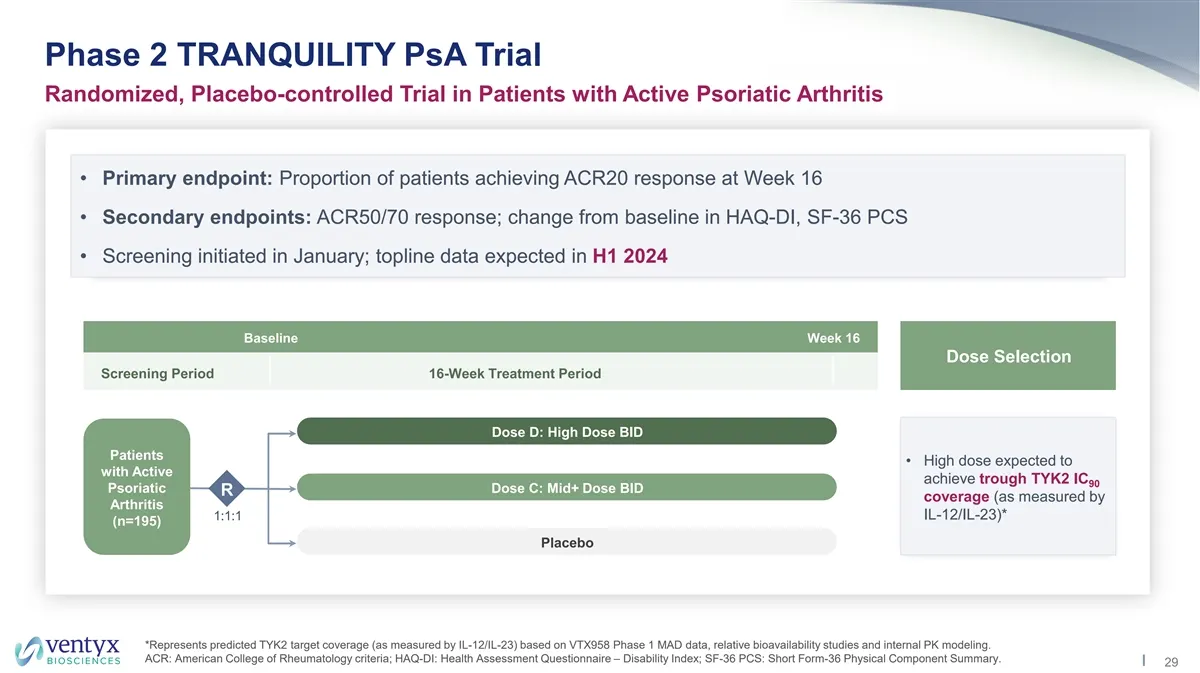
Slide 29: Phase 2 TRANQUILITY PsA Trial
Phase 2 TRANQUILITY PsA Trial Randomized, Placebo-controlled Trial in Patients with Active Psoriatic Arthritis • Primary endpoint: Proportion of patients achieving ACR20 response at Week 16 • Secondary endpoints: ACR50/70 response; change from baseline in HAQ-DI, SF-36 PCS • Screening initiated in J
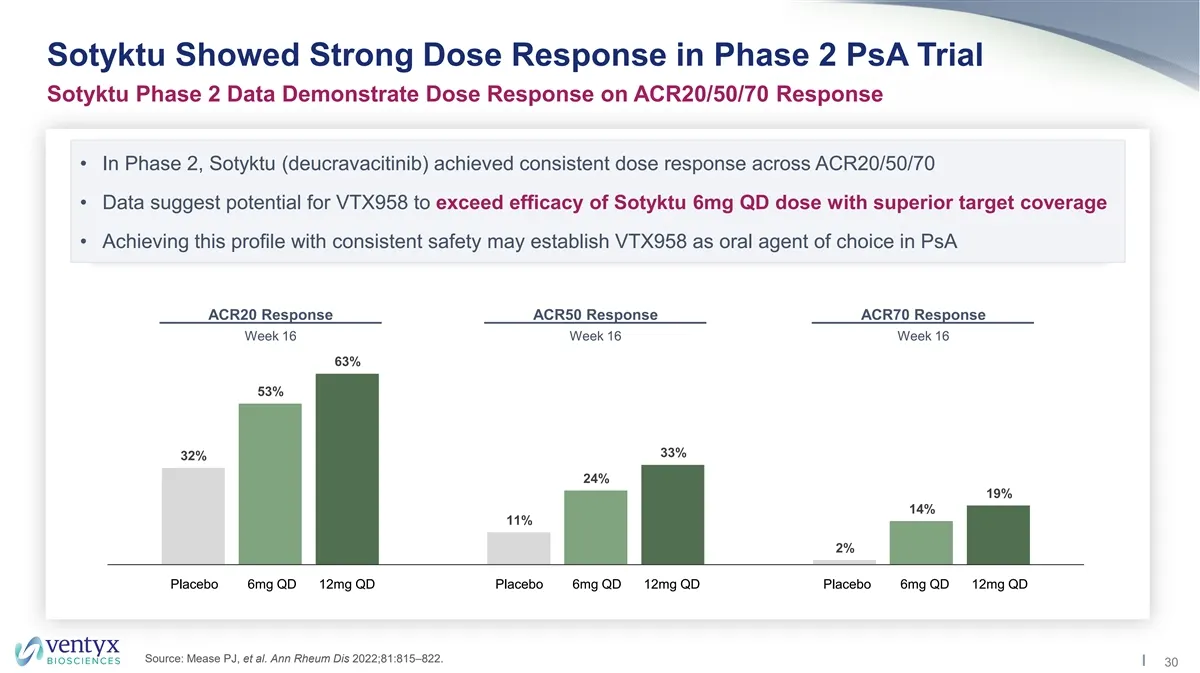
Slide 30: Sotyktu Showed Strong Dose Response in Phase 2 PsA Trial
Sotyktu Showed Strong Dose Response in Phase 2 PsA Trial Sotyktu Phase 2 Data Demonstrate Dose Response on ACR20/50/70 Response • In Phase 2, Sotyktu (deucravacitinib) achieved consistent dose response across ACR20/50/70 • Data suggest potential for VTX958 to exceed efficacy of Sotyktu 6mg QD dose w
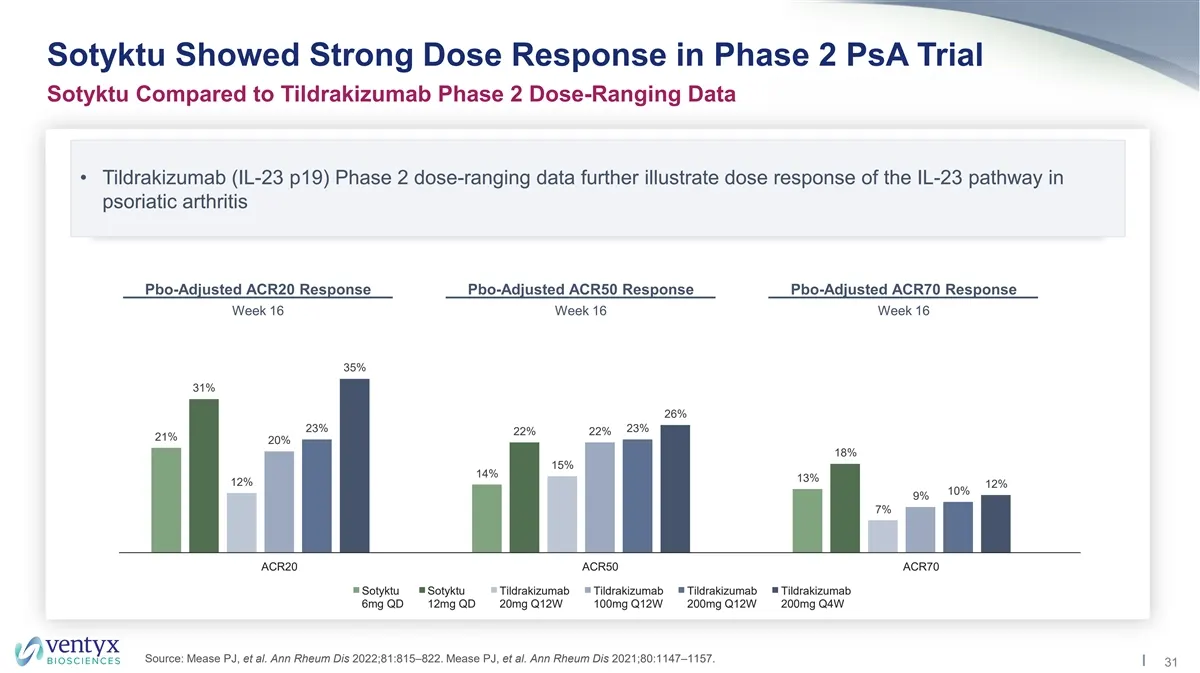
Slide 31: Sotyktu Compared to Tildrakizumab Phase 2 Dose-Ranging Data
Sotyktu Showed Strong Dose Response in Phase 2 PsA Trial Sotyktu Compared to Tildrakizumab Phase 2 Dose-Ranging Data • Tildrakizumab (IL-23 p19) Phase 2 dose-ranging data further illustrate dose response of the IL-23 pathway in psoriatic arthritis Pbo-Adjusted ACR20 Response Pbo-Adjusted ACR50 Respo
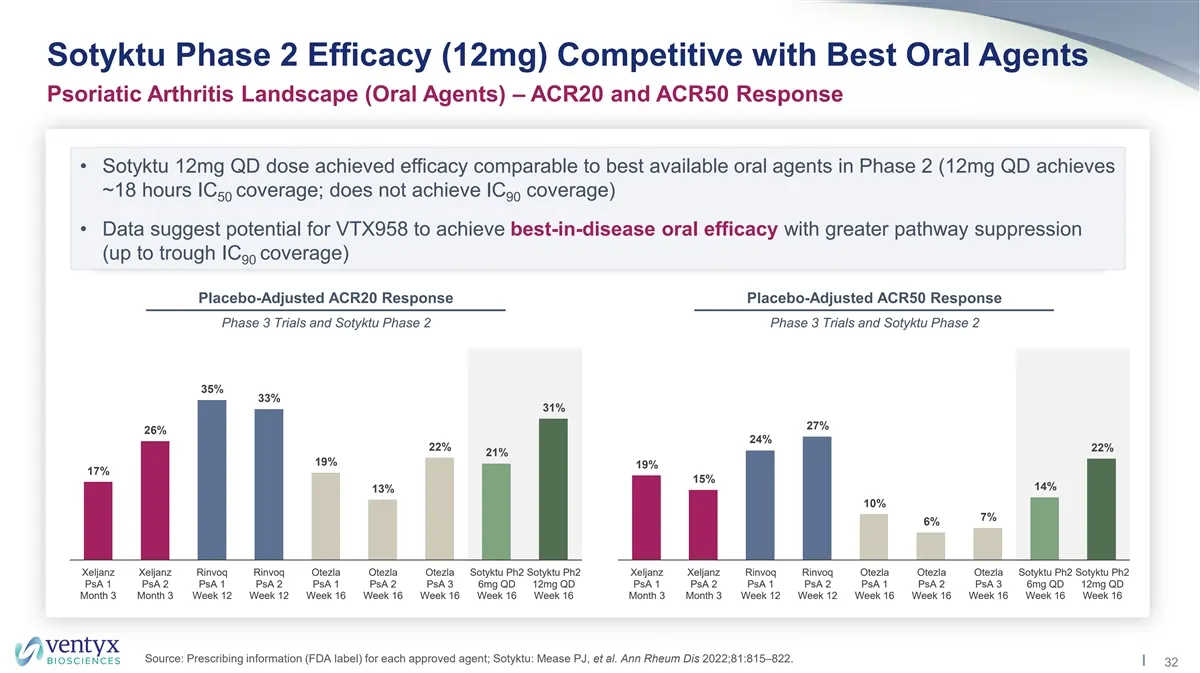
Slide 32: Sotyktu Phase 2 Efficacy Competitive with Best Oral Agents
Sotyktu Phase 2 Efficacy (12mg) Competitive with Best Oral Agents Psoriatic Arthritis Landscape (Oral Agents) – ACR20 and ACR50 Response • Sotyktu 12mg QD dose achieved efficacy comparable to best available oral agents in Phase 2 (12mg QD achieves ~18 hours IC coverage; does not achieve IC coverage)

Slide 33: VTX958 Extended Release Formulation Development
VTX958 Extended Release (ER) Formulation Development Raju Mohan, Ph.D. Founder and CEO 33
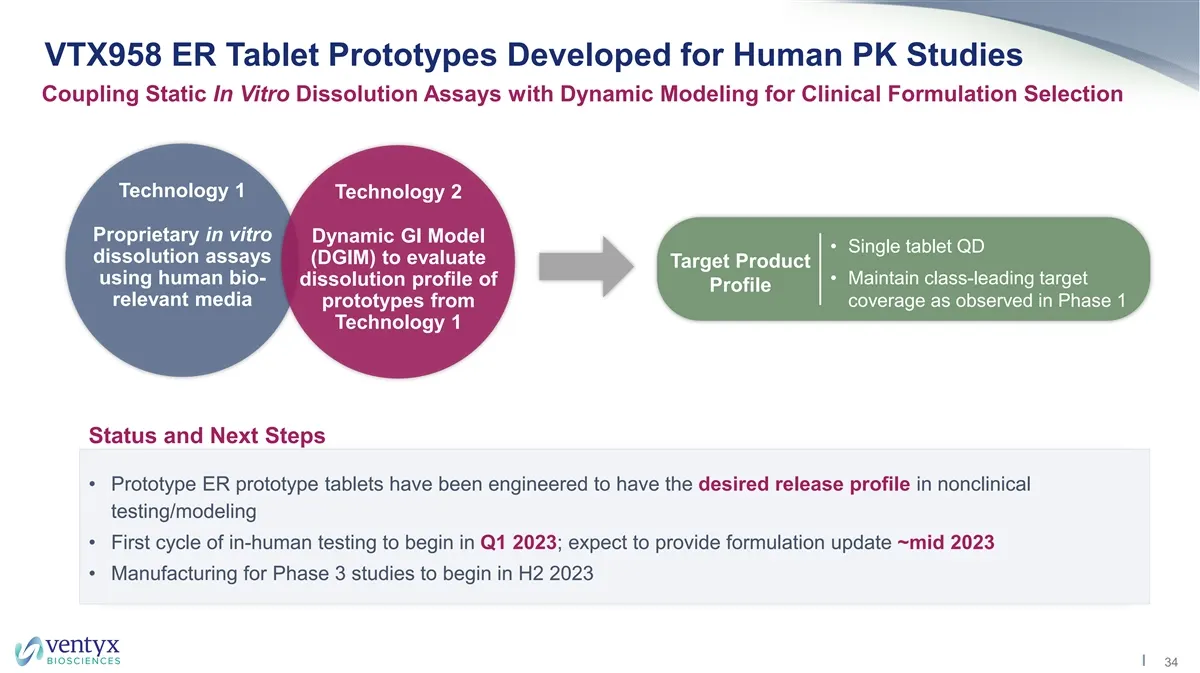
Slide 34: VTX958 ER Tablet Prototypes Developed for Human PK Studies
VTX958 ER Tablet Prototypes Developed for Human PK Studies Coupling Static In Vitro Dissolution Assays with Dynamic Modeling for Clinical Formulation Selection Technology 1 Technology 2 Proprietary in vitro Dynamic GI Model • Single tablet QD dissolution assays (DGIM) to evaluate Target Product usin
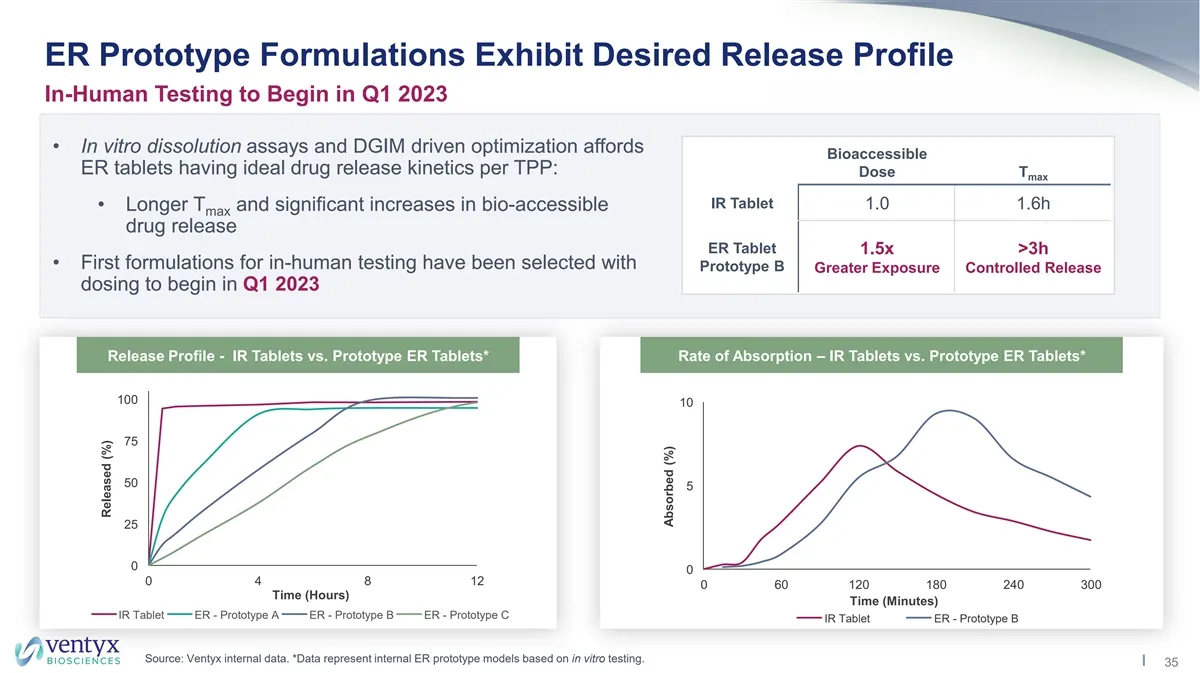
Slide 35: ER Prototype Formulations Exhibit Desired Release Profile
ER Prototype Formulations Exhibit Desired Release Profile In-Human Testing to Begin in Q1 2023 • In vitro dissolution assays and DGIM driven optimization affords Bioaccessible ER tablets having ideal drug release kinetics per TPP: Dose T max IR Tablet 1.0 1.6h • Longer T and significant increases in
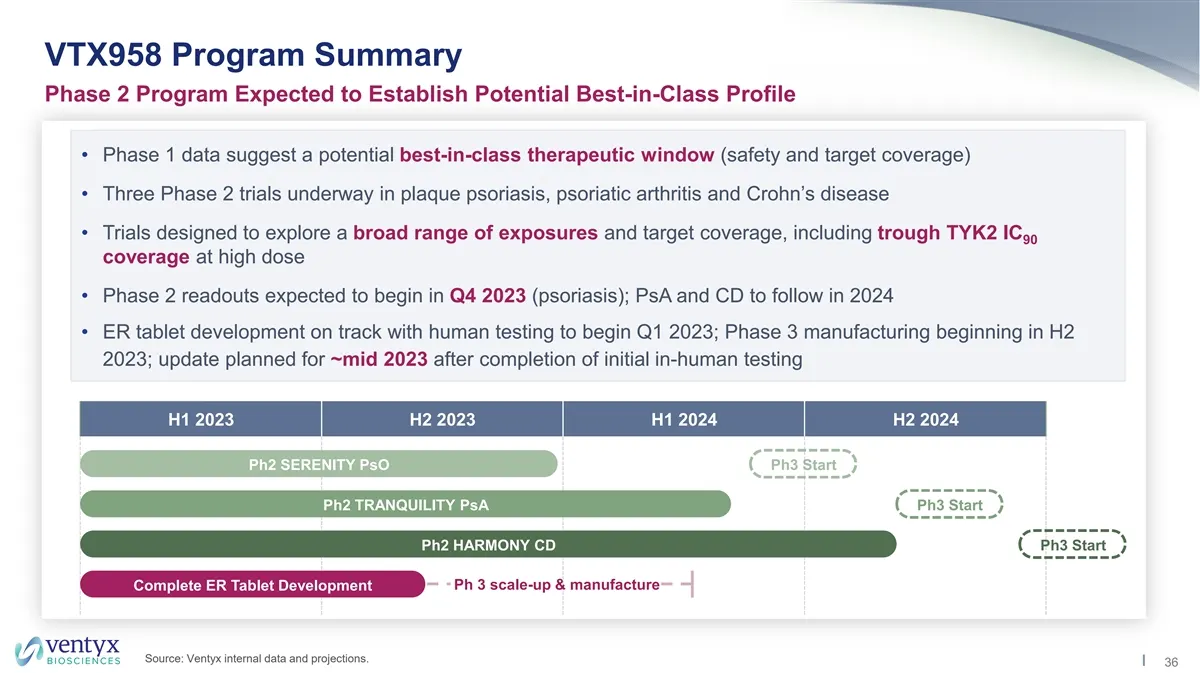
Slide 36: VTX958 Program Summary
VTX958 Program Summary Phase 2 Program Expected to Establish Potential Best-in-Class Profile • Phase 1 data suggest a potential best-in-class therapeutic window (safety and target coverage) • Three Phase 2 trials underway in plaque psoriasis, psoriatic arthritis and Crohn’s disease • Trials designed

Slide 37: VTX002 Development and Strategy
VTX002 Development and Strategy William J. Sandborn, M.D. President and CMO 37
Slide 38: S1P1 Receptor Modulation Is a Validated Mechanism
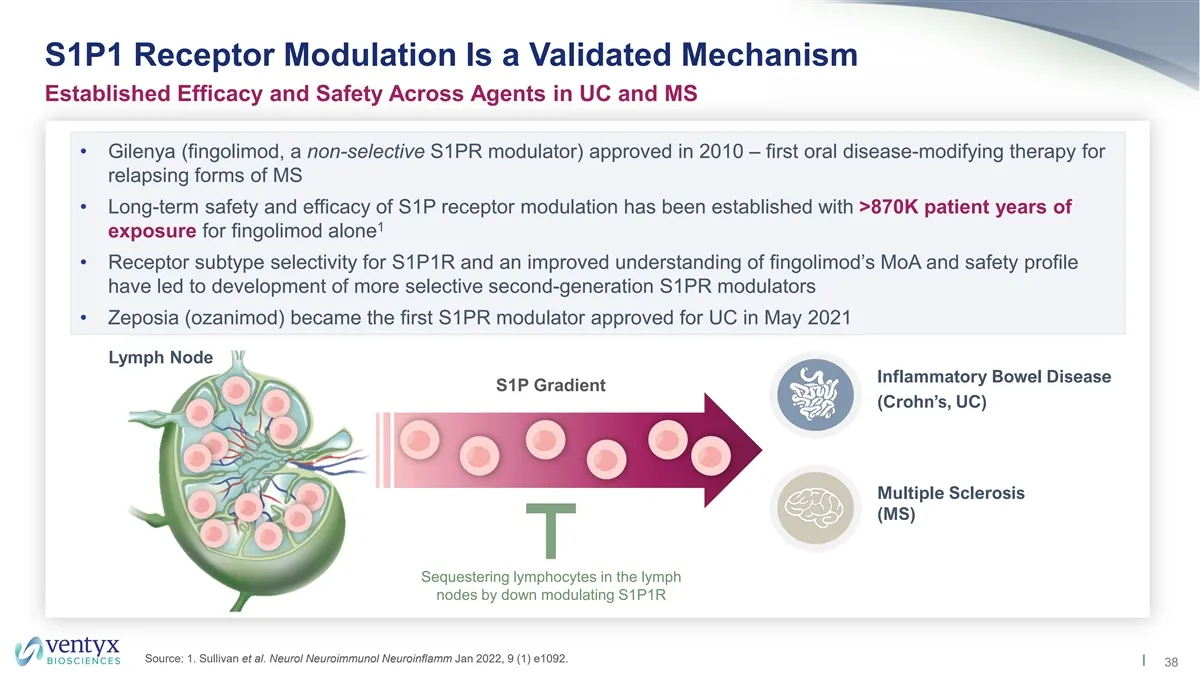
S1P1 Receptor Modulation Is a Validated Mechanism Established Efficacy and Safety Across Agents in UC and MS • Gilenya (fingolimod, a non-selective S1PR modulator) approved in 2010 – first oral disease-modifying therapy for relapsing forms of MS • Long-term safety and efficacy of S1P receptor modula
Slide 39: VTX002 Is Engineered for Maximal Safety, PD and Efficacy
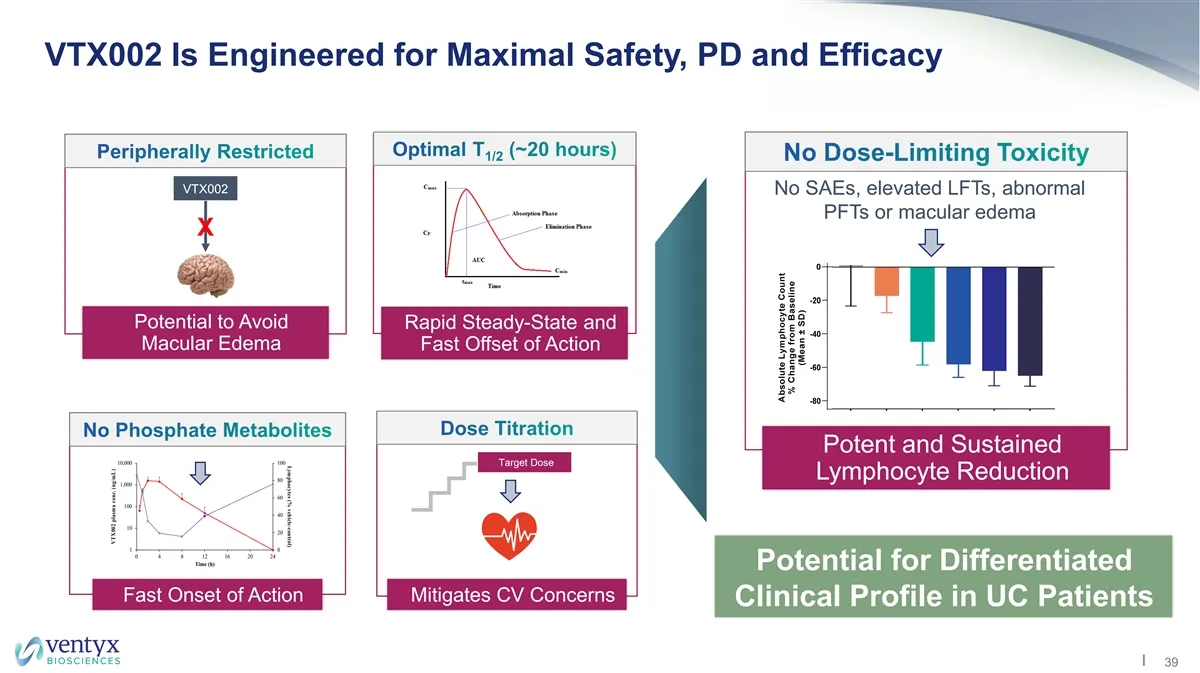
Lymphocytes (% vehicle-control) VTX002 Is Engineered for Maximal Safety, PD and Efficacy VTX002 No SAEs, elevated LFTs, abnormal PFTs or macular edema X Potential to Avoid Rapid Steady-State and Macular Edema Fast Offset of Action Potent and Sustained 10,000 100 Target Dose Lymphocyte Reduction 80 1
Slide 40: Phase 1 Trials Informed Phase 2 Dose Selection
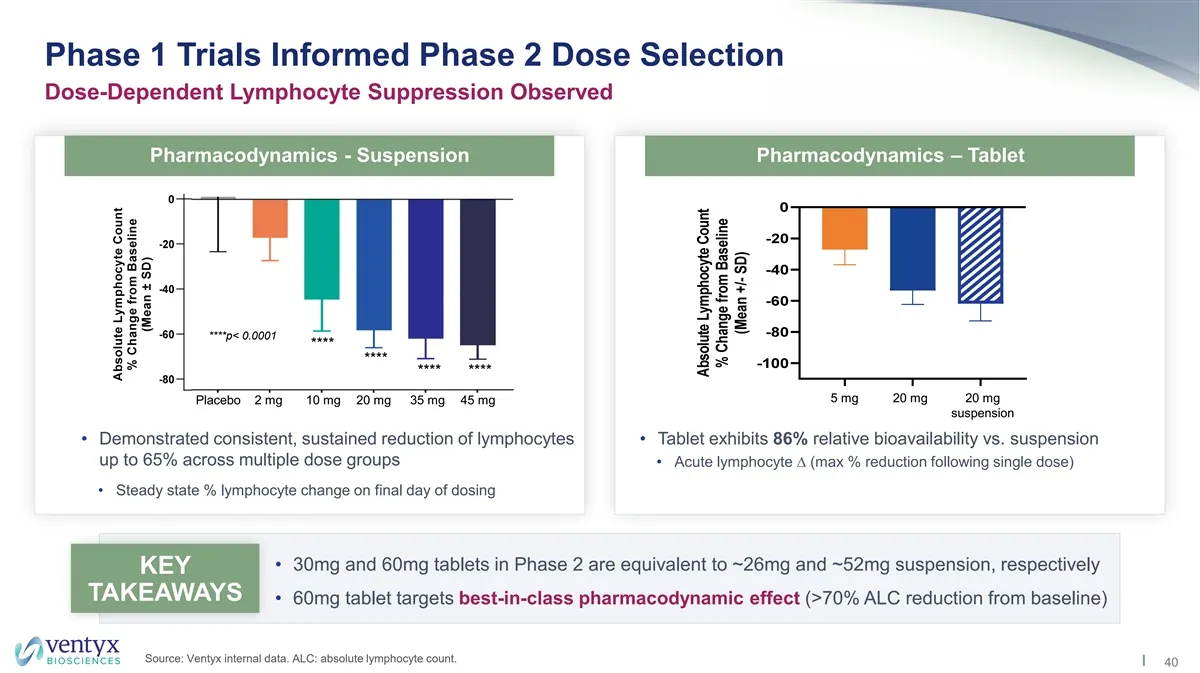
Phase 1 Trials Informed Phase 2 Dose Selection Dose-Dependent Lymphocyte Suppression Observed Pharmacodynamics - Suspension Pharmacodynamics – Tablet ****p< 0.0001 **** **** **** **** 5 mg 20 mg 20 mg Placebo 2 mg 10 mg 20 mg 35 mg 45 mg suspension • Demonstrated consistent, sustained reduction of l
Slide 41: Targeting Best-in-Class PD Effect in Ulcerative Colitis
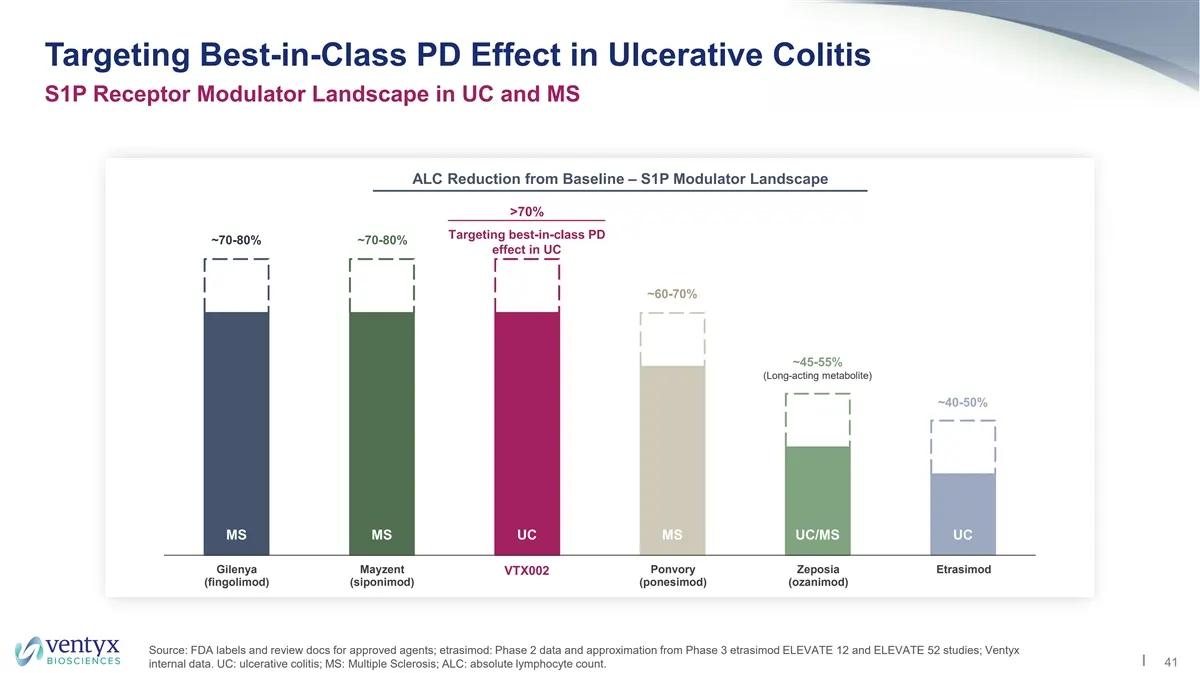
Targeting Best-in-Class PD Effect in Ulcerative Colitis S1P Receptor Modulator Landscape in UC and MS ALC Reduction from Baseline – S1P Modulator Landscape >70% Targeting best-in-class PD ~70-80% ~70-80% effect in UC ~60-70% ~45-55% (Long-acting metabolite) ~40-50% MS MS UC MS UC/MS UC Gilenya Mayze
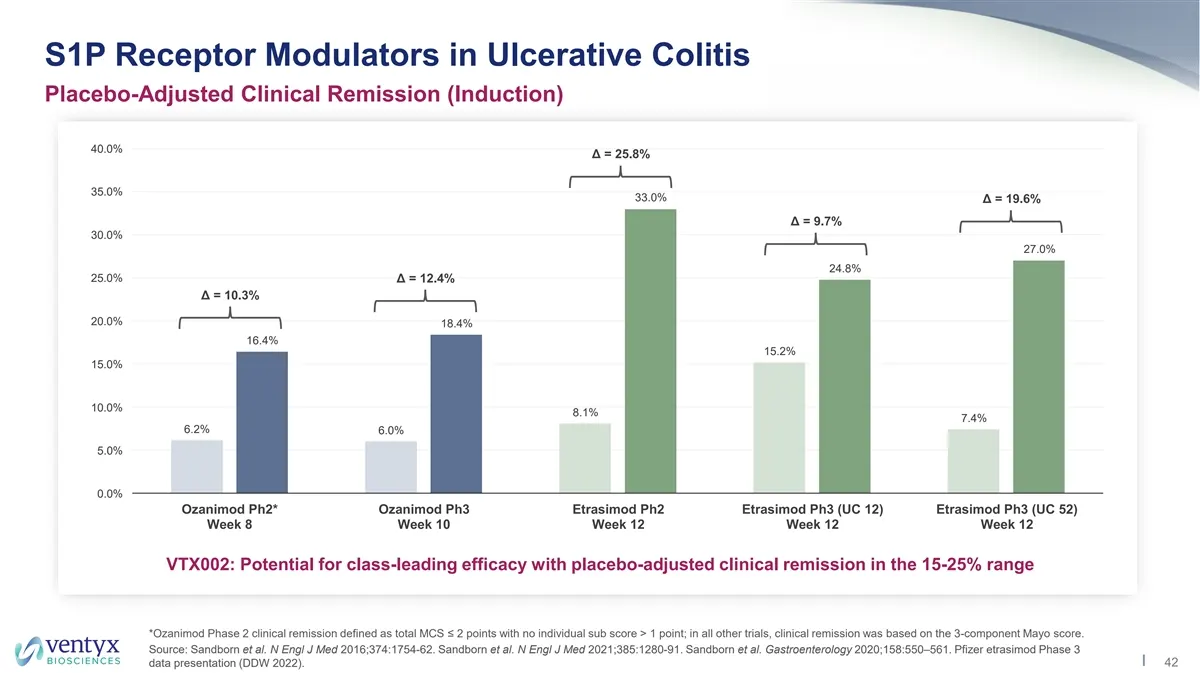
Slide 42: S1P Receptor Modulators in Ulcerative Colitis
S1P Receptor Modulators in Ulcerative Colitis Placebo-Adjusted Clinical Remission (Induction) 40.0% Δ = 25.8% 35.0% 33.0% Δ = 19.6% Δ = 9.7% 30.0% 27.0% 24.8% 25.0% Δ = 12.4% Δ = 10.3% 20.0% 18.4% 16.4% 15.2% 15.0% 10.0% 8.1% 7.4% 6.2% 6.0% 5.0% 0.0% Ozanimod Ph2* Ozanimod Ph3 Etrasimod Ph2 Etrasimo
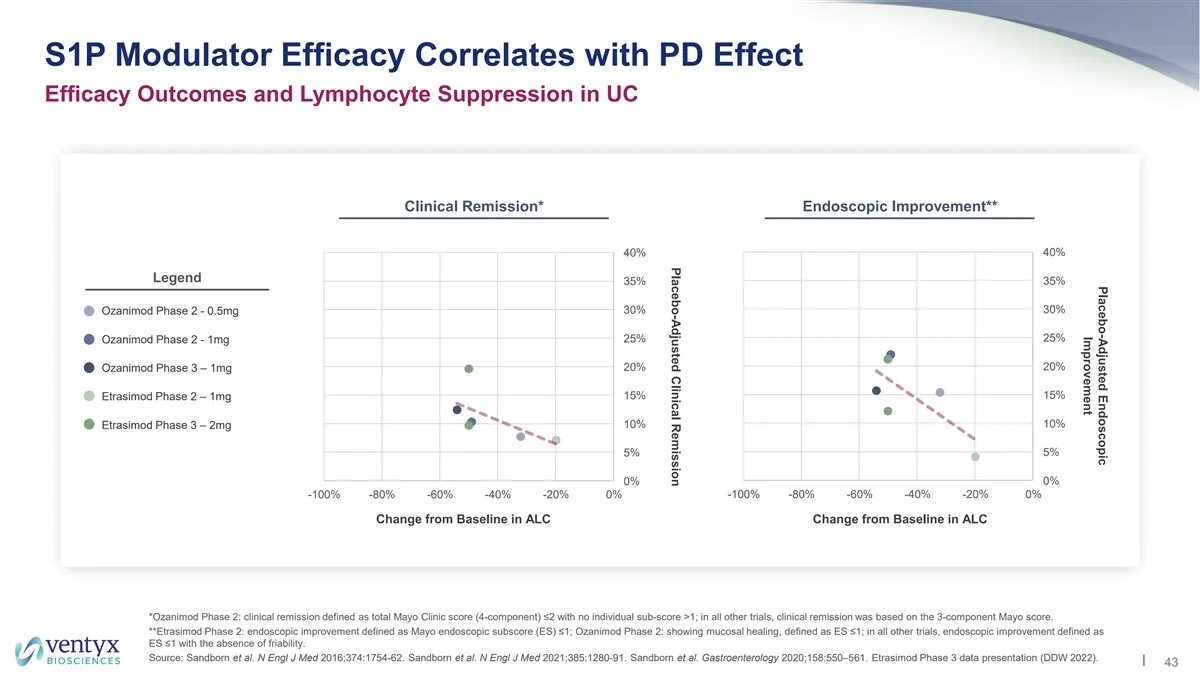
Slide 43: S1P Modulator Efficacy Correlates with PD Effect
Placebo-Adjusted Endoscopic Improvement Placebo-Adjusted Clinical Remission S1P Modulator Efficacy Correlates with PD Effect Efficacy Outcomes and Lymphocyte Suppression in UC Clinical Remission* Endoscopic Improvement** 40% 40% Legend 35% 35% 30% 30% Ozanimod Phase 2 - 0.5mg 25% 25% Ozanimod Phase
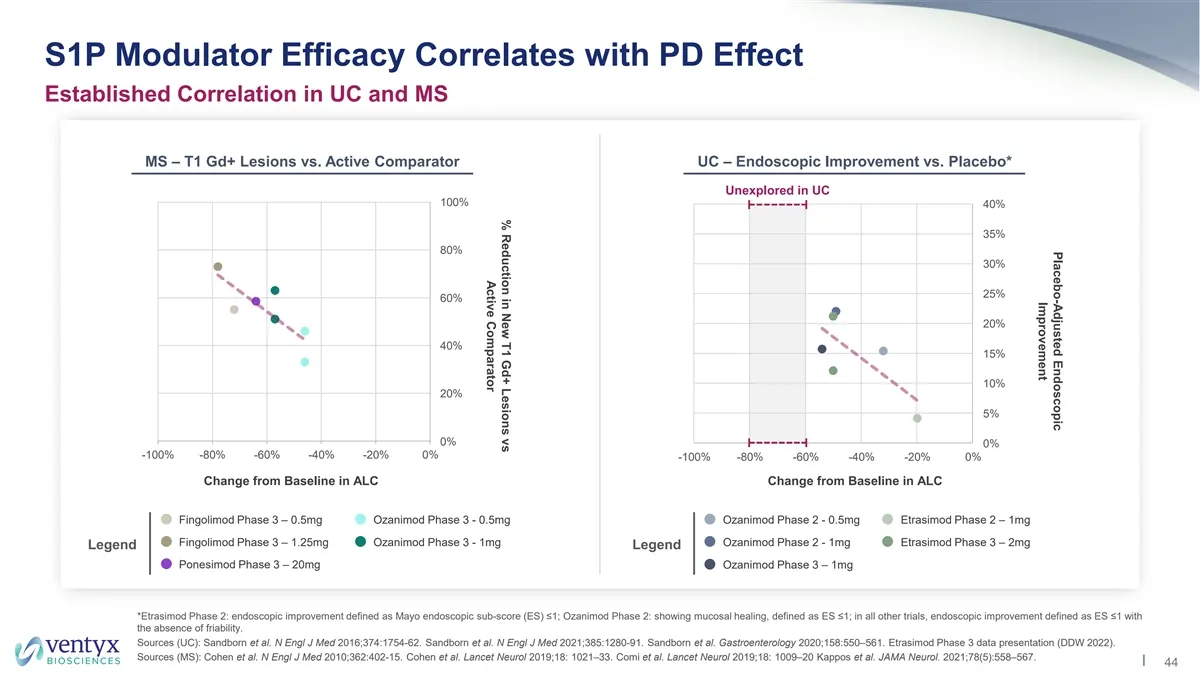
Slide 44: S1P Modulator Efficacy Correlates with PD Effect: UC and MS
Placebo-Adjusted Endoscopic Improvement % Reduction in New T1 Gd+ Lesions vs Active Comparator S1P Modulator Efficacy Correlates with PD Effect Established Correlation in UC and MS MS – T1 Gd+ Lesions vs. Active Comparator UC – Endoscopic Improvement vs. Placebo* Unexplored in UC 100% 40% 35% 80% 30
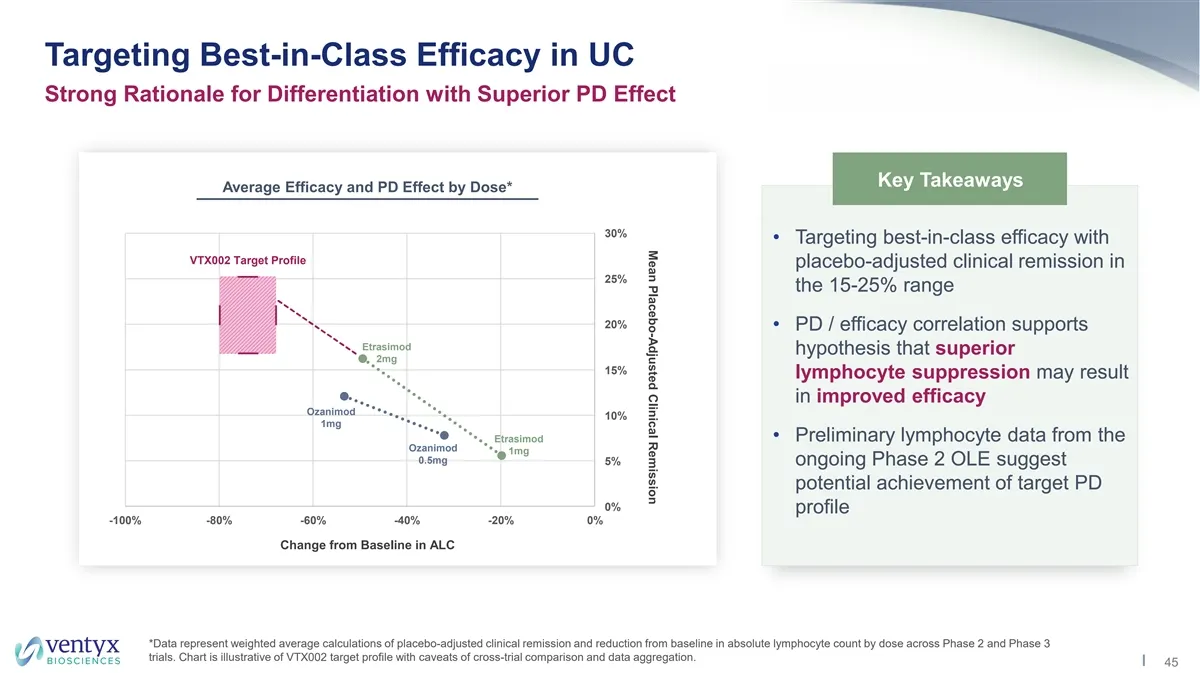
Slide 45: Targeting Best-in-Class Efficacy in UC
Mean Placebo-Adjusted Clinical Remission Targeting Best-in-Class Efficacy in UC Strong Rationale for Differentiation with Superior PD Effect Key Takeaways Average Efficacy and PD Effect by Dose* 30% • Targeting best-in-class efficacy with VTX002 Target Profile placebo-adjusted clinical remission in
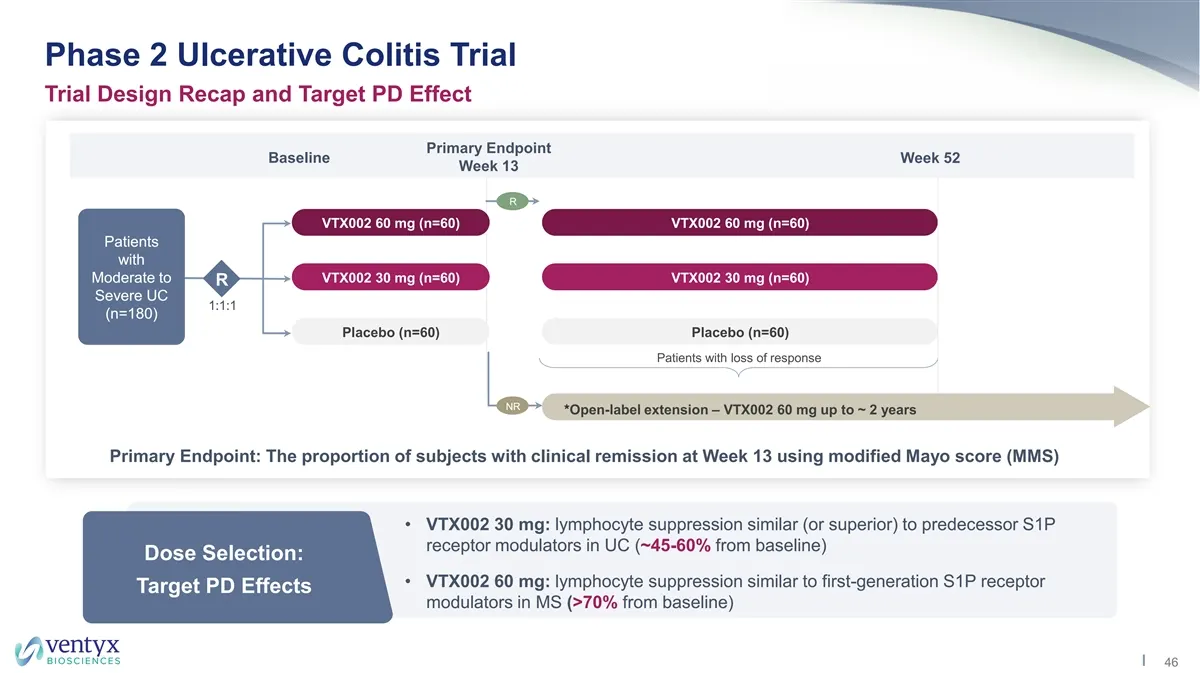
Slide 46: Phase 2 Ulcerative Colitis Trial Design
Phase 2 Ulcerative Colitis Trial Trial Design Recap and Target PD Effect Primary Endpoint Baseline Week 52 Week 13 R VTX002 60 mg (n=60) VTX002 60 mg (n=60) Patients with VTX002 30 mg (n=60) VTX002 30 mg (n=60) Moderate to R Severe UC 1:1:1 (n=180) Placebo (n=60) Placebo (n=60) Patients with loss of
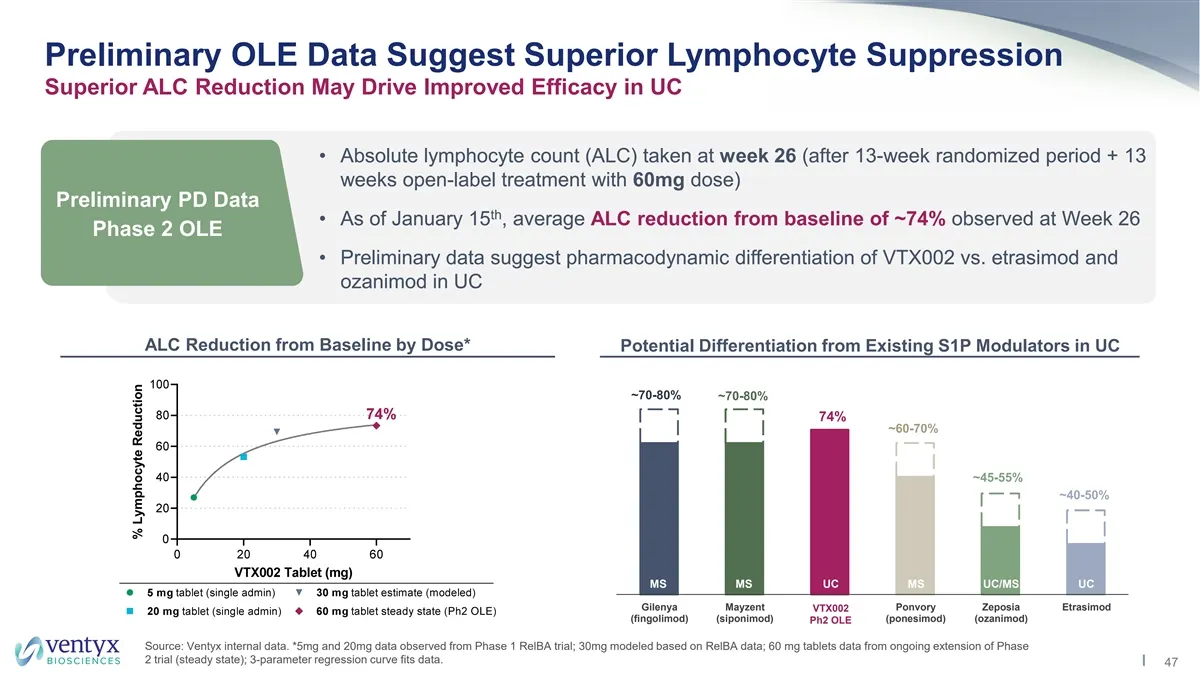
Slide 47: Preliminary OLE Data Suggest Superior Lymphocyte Suppression
Preliminary OLE Data Suggest Superior Lymphocyte Suppression Superior ALC Reduction May Drive Improved Efficacy in UC • Absolute lymphocyte count (ALC) taken at week 26 (after 13-week randomized period + 13 weeks open-label treatment with 60mg dose) Preliminary PD Data th • As of January 15 , averag
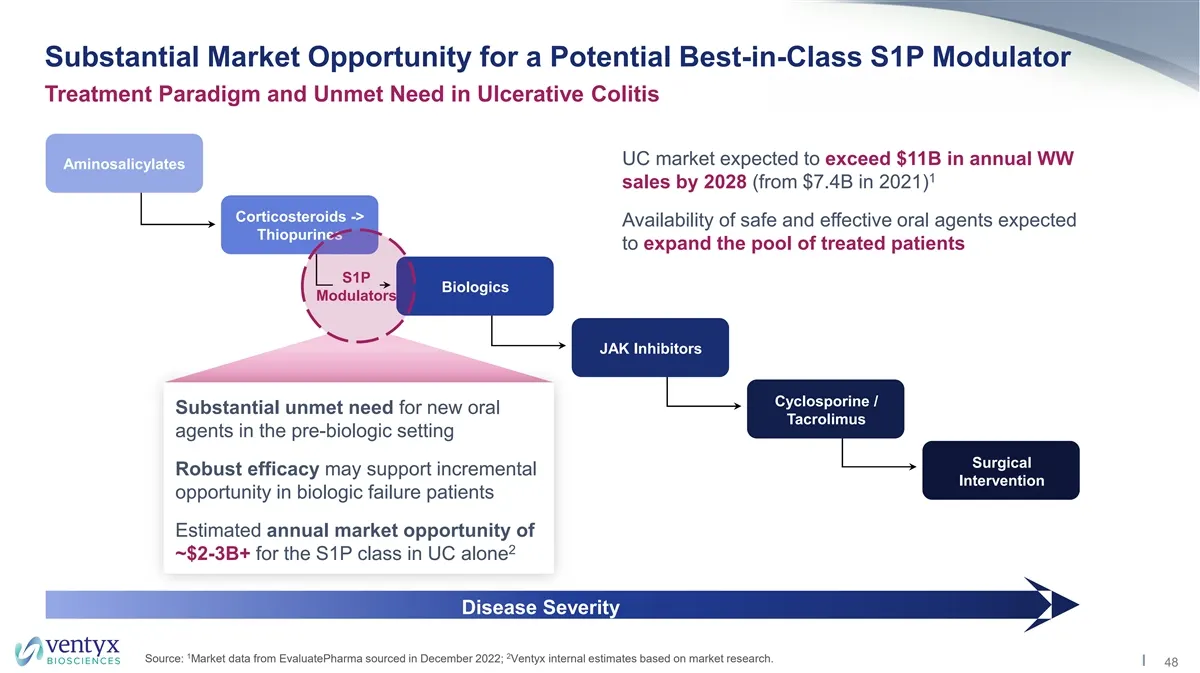
Slide 48: Substantial Market Opportunity for a Potential Best-in-Class S1P Modulator
Substantial Market Opportunity for a Potential Best-in-Class S1P Modulator Treatment Paradigm and Unmet Need in Ulcerative Colitis UC market expected to exceed $11B in annual WW Aminosalicylates 1 sales by 2028 (from $7.4B in 2021) Corticosteroids -> Availability of safe and effective oral agents ex
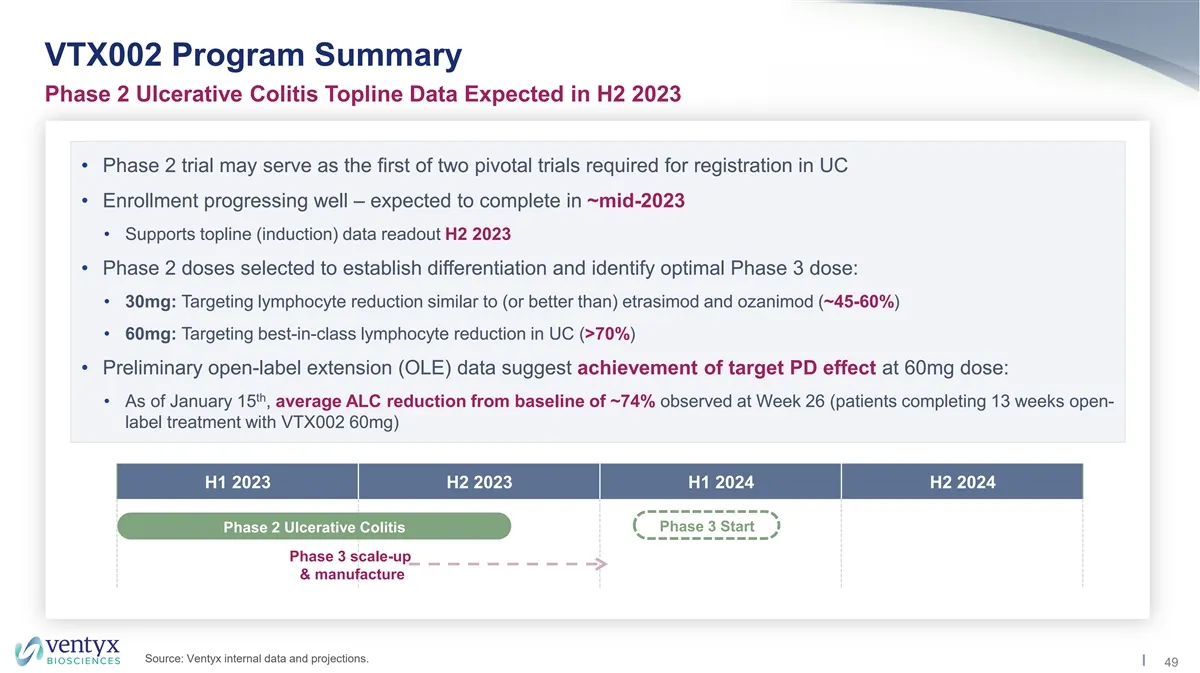
Slide 49: VTX002 Program Summary
VTX002 Program Summary Phase 2 Ulcerative Colitis Topline Data Expected in H2 2023 • Phase 2 trial may serve as the first of two pivotal trials required for registration in UC • Enrollment progressing well – expected to complete in ~mid-2023 • Supports topline (induction) data readout H2 2023 • Phas
Slide 50: NLRP3 Inhibitor Portfolio
NLRP3 Inhibitor Portfolio William J. Sandborn, M.D. John Nuss, Ph.D. President and CMO Chief Scientific Officer 50
Slide 51: Advantages of NLRP3 Inhibition vs. IL-1β Antibody Approach
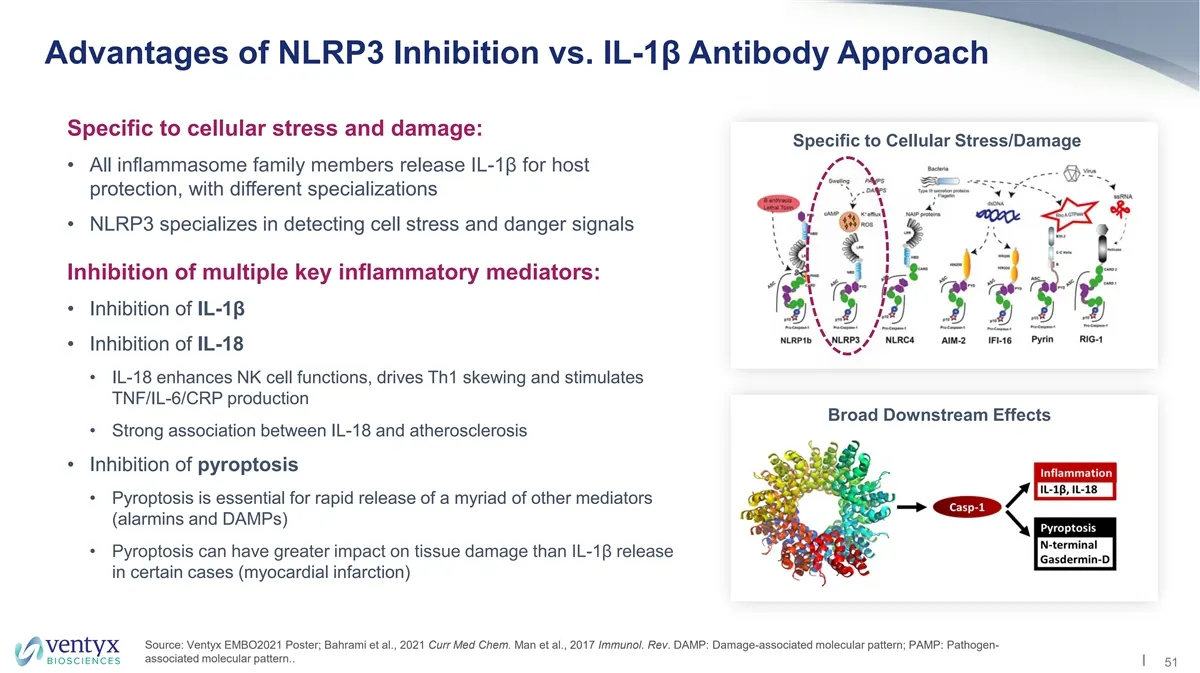
Advantages of NLRP3 Inhibition vs. IL-1β Antibody Approach Specific to cellular stress and damage: Specific to Cellular Stress/Damage • All inflammasome family members release IL-1β for host protection, with different specializations • NLRP3 specializes in detecting cell stress and danger signals In
Slide 52: Targeting a Broad Range of Major Inflammatory Diseases
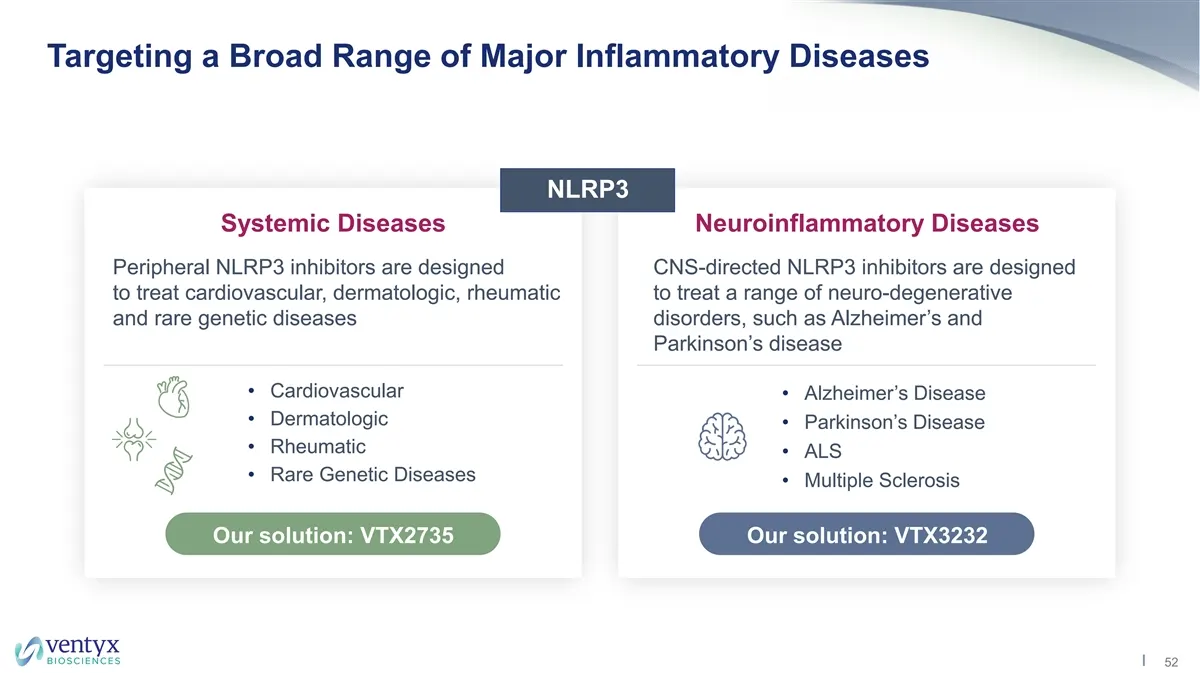
Targeting a Broad Range of Major Inflammatory Diseases NLRP3 Systemic Diseases Neuroinflammatory Diseases Peripheral NLRP3 inhibitors are designed CNS-directed NLRP3 inhibitors are designed to treat cardiovascular, dermatologic, rheumatic to treat a range of neuro-degenerative and rare genetic disea
Slide 53: Potent and Selective Peripheral NLRP3 Inhibitor VTX2735
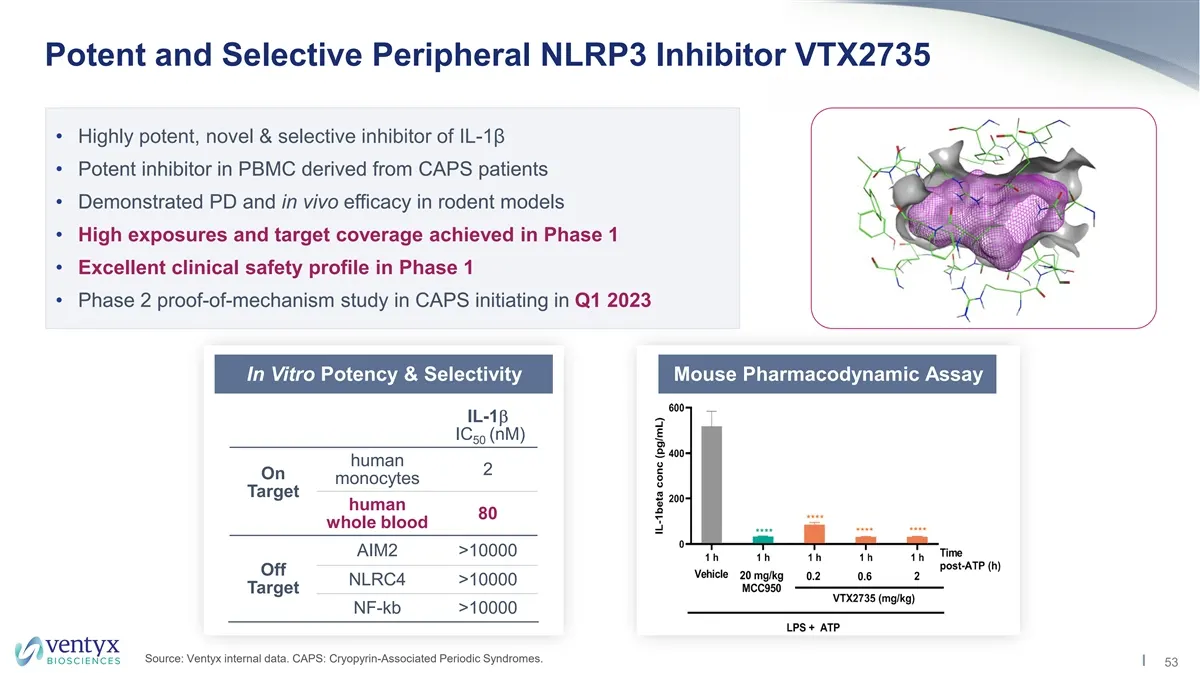
Potent and Selective Peripheral NLRP3 Inhibitor VTX2735 • Highly potent, novel & selective inhibitor of IL-1β • Potent inhibitor in PBMC derived from CAPS patients • Demonstrated PD and in vivo efficacy in rodent models • High exposures and target coverage achieved in Phase 1 • Excellent clinical sa
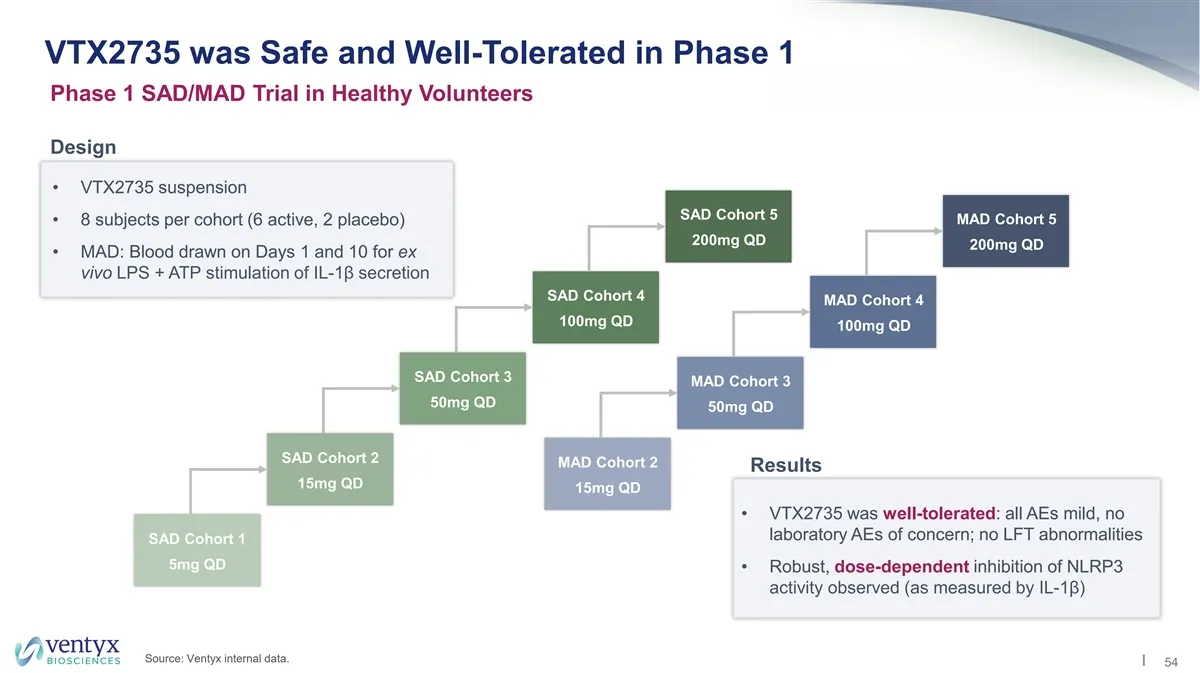
Slide 54: VTX2735 was Safe and Well-Tolerated in Phase 1
VTX2735 was Safe and Well-Tolerated in Phase 1 Phase 1 SAD/MAD Trial in Healthy Volunteers Design • VTX2735 suspension SAD Cohort 5 MAD Cohort 5 • 8 subjects per cohort (6 active, 2 placebo) 200mg QD 200mg QD • MAD: Blood drawn on Days 1 and 10 for ex vivo LPS + ATP stimulation of IL-1β secretion SA
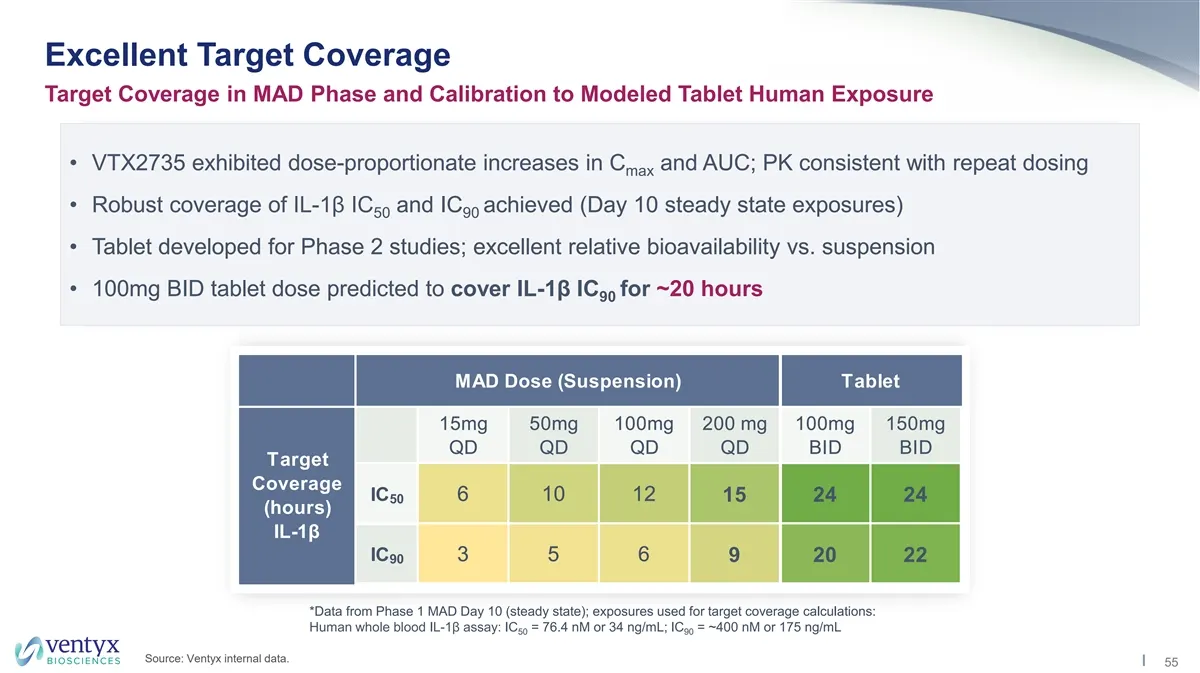
Slide 55: Excellent Target Coverage
Excellent Target Coverage Target Coverage in MAD Phase and Calibration to Modeled Tablet Human Exposure • VTX2735 exhibited dose-proportionate increases in C and AUC; PK consistent with repeat dosing max • Robust coverage of IL-1β IC and IC achieved (Day 10 steady state exposures) 50 90 • Tablet dev
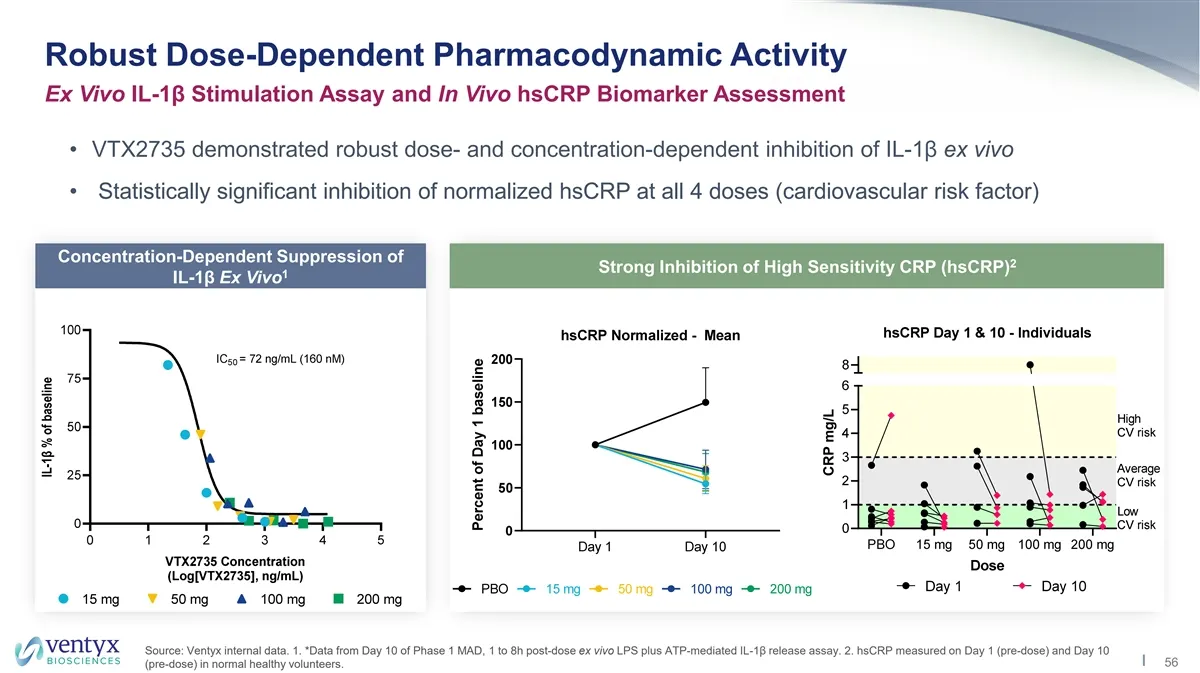
Slide 56: Robust Dose-Dependent Pharmacodynamic Activity
Robust Dose-Dependent Pharmacodynamic Activity Ex Vivo IL-1β Stimulation Assay and In Vivo hsCRP Biomarker Assessment • VTX2735 demonstrated robust dose- and concentration-dependent inhibition of IL-1β ex vivo • Statistically significant inhibition of normalized hsCRP at all 4 doses (cardiovascular
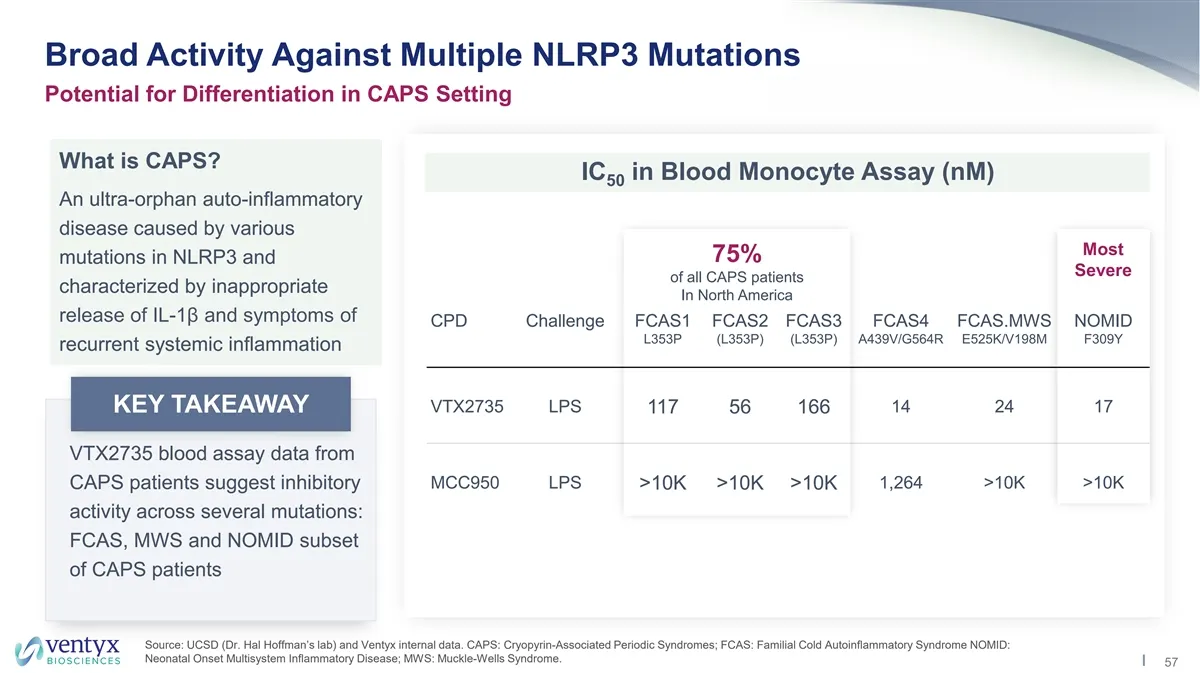
Slide 57: Broad Activity Against Multiple NLRP3 Mutations
Broad Activity Against Multiple NLRP3 Mutations Potential for Differentiation in CAPS Setting What is CAPS? IC in Blood Monocyte Assay (nM) 50 An ultra-orphan auto-inflammatory disease caused by various Most 75% mutations in NLRP3 and Severe of all CAPS patients characterized by inappropriate In Nor
Slide 58: Phase 2 CAPS Trial Designed to Establish Proof-of-Mechanism
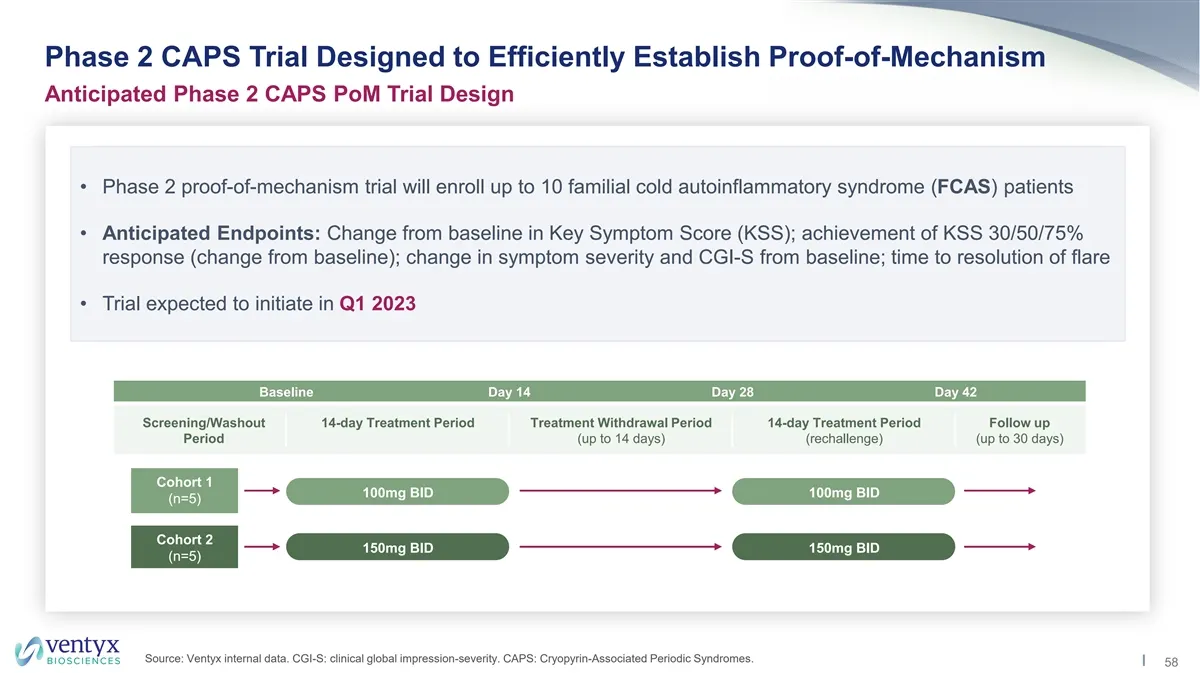
Phase 2 CAPS Trial Designed to Efficiently Establish Proof-of-Mechanism Anticipated Phase 2 CAPS PoM Trial Design • Phase 2 proof-of-mechanism trial will enroll up to 10 familial cold autoinflammatory syndrome (FCAS) patients • Anticipated Endpoints: Change from baseline in Key Symptom Score (KSS);
Slide 59: VTX2735 Program Summary
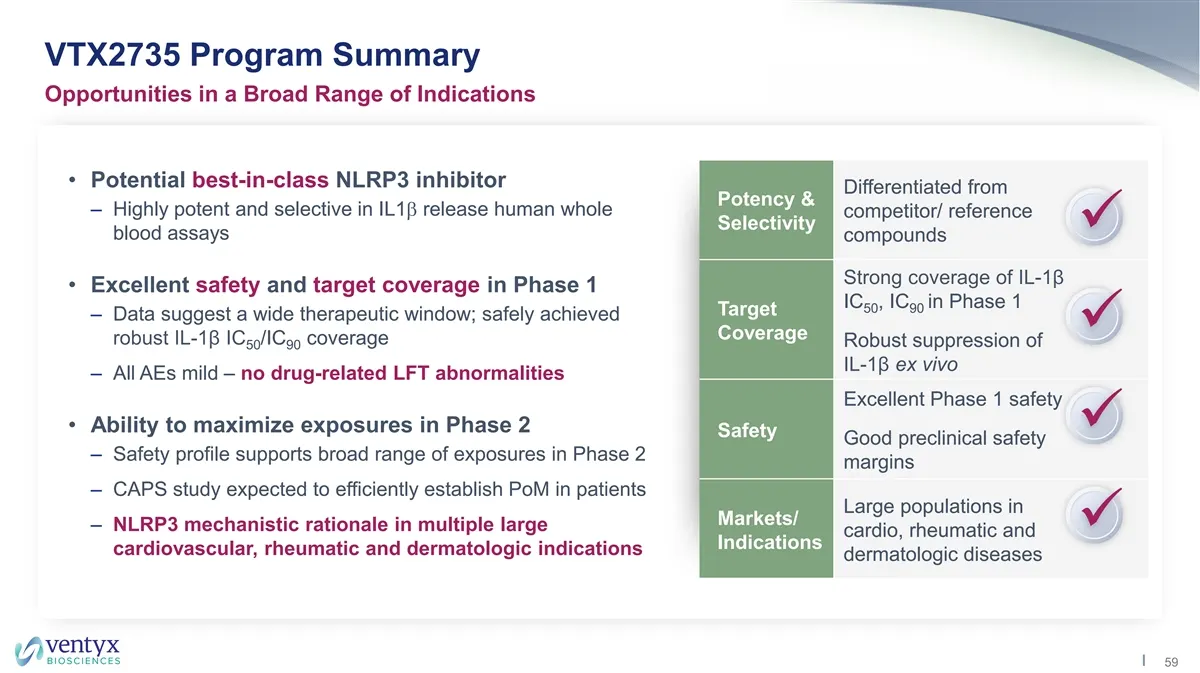
VTX2735 Program Summary Opportunities in a Broad Range of Indications • Potential best-in-class NLRP3 inhibitor Differentiated from Potency & – Highly potent and selective in IL1b release human whole competitor/ reference Selectivity ü blood assays compounds Strong coverage of IL-1β • Excellent safe
Slide 60: Novel CNS-Penetrant NLRP3 Inhibitor VTX3232
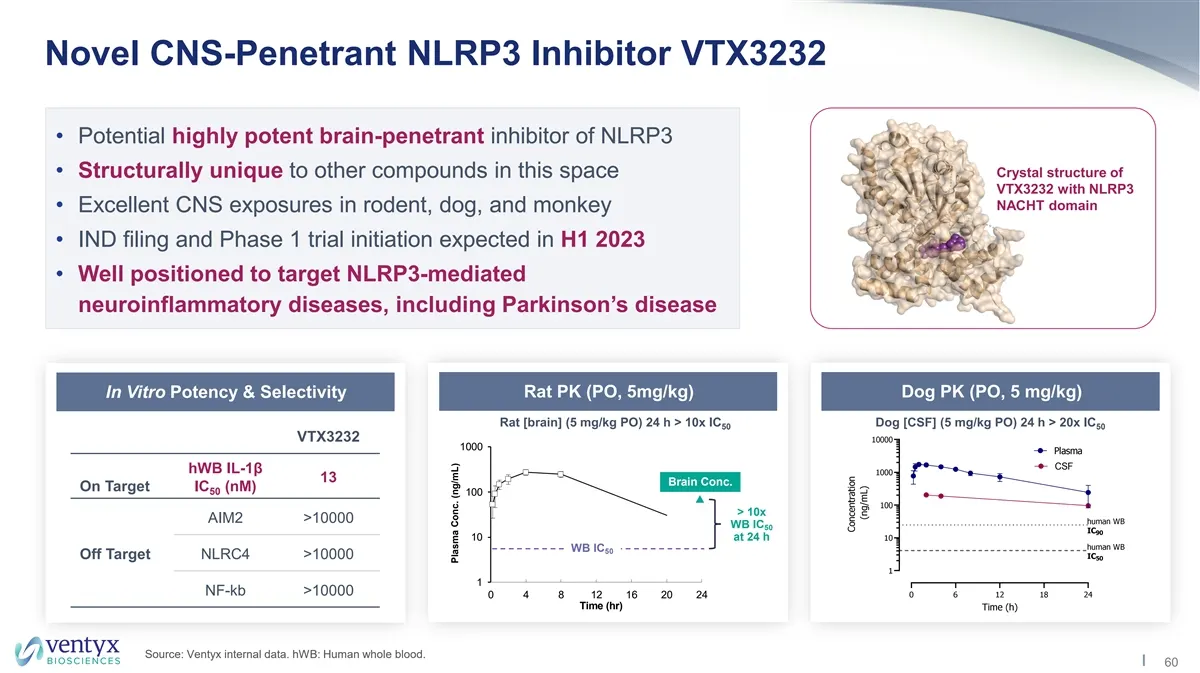
Novel CNS-Penetrant NLRP3 Inhibitor VTX3232 • Potential highly potent brain-penetrant inhibitor of NLRP3 Crystal structure of • Structurally unique to other compounds in this space VTX3232 with NLRP3 NACHT domain • Excellent CNS exposures in rodent, dog, and monkey • IND filing and Phase 1 trial ini
Slide 61: NLRP3 Is Implicated in Multiple Neuroinflammatory Diseases
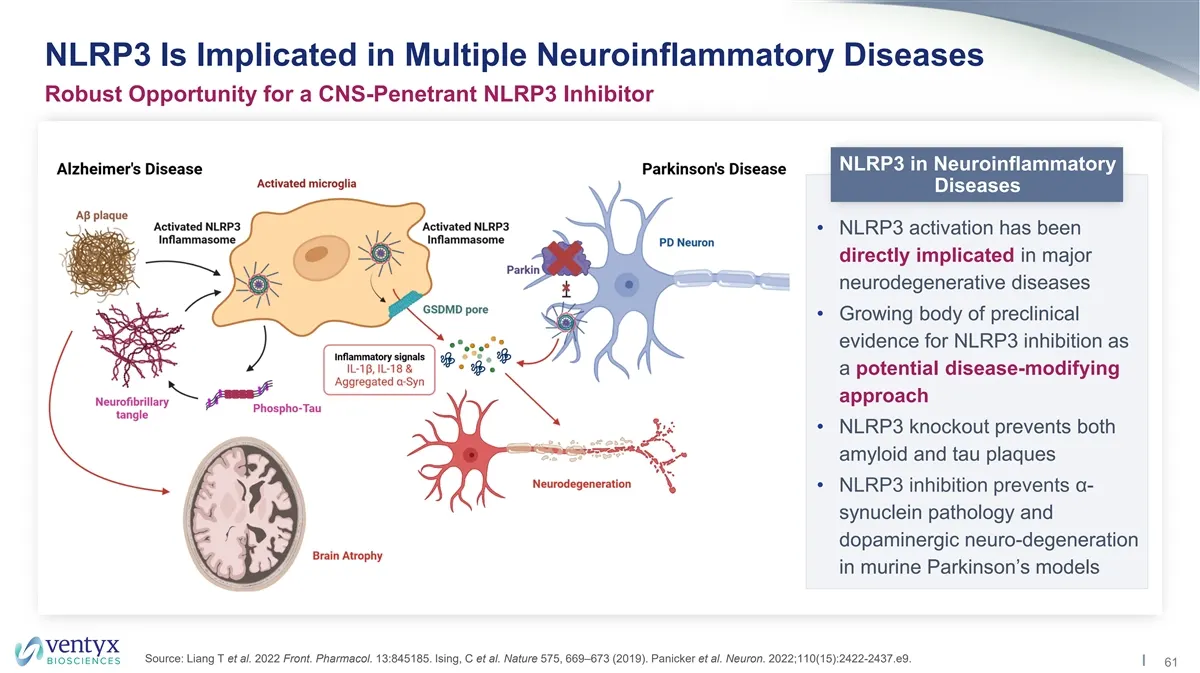
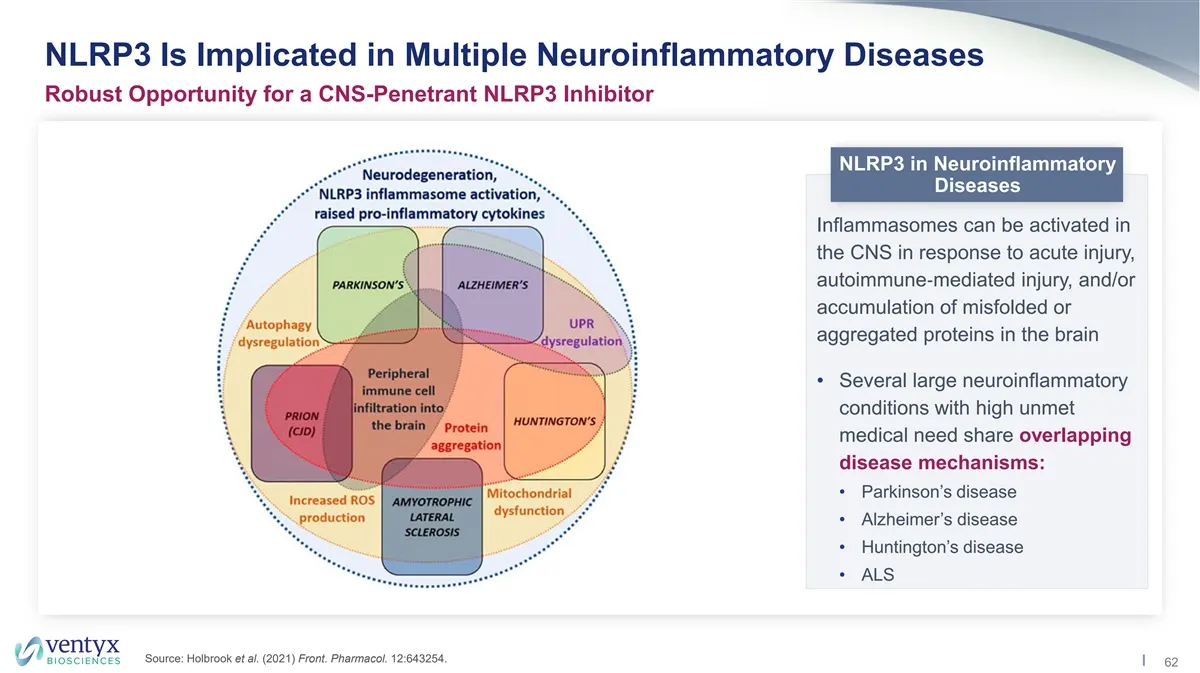
NLRP3 Is Implicated in Multiple Neuroinflammatory Diseases Robust Opportunity for a CNS-Penetrant NLRP3 Inhibitor NLRP3 in Neuroinflammatory Diseases • NLRP3 activation has been directly implicated in major neurodegenerative diseases • Growing body of preclinical evidence for NLRP3 inhibition as a p
Slide 62: NLRP3 Is Implicated in Multiple Neuroinflammatory Diseases
NLRP3 Is Implicated in Multiple Neuroinflammatory Diseases Robust Opportunity for a CNS-Penetrant NLRP3 Inhibitor NLRP3 in Neuroinflammatory Diseases Inflammasomes can be activated in the CNS in response to acute injury, autoimmune‐mediated injury, and/or accumulation of misfolded or aggregated prot
Slide 63: VTX3232 Exhibits Optimal CNS Drug Characteristics
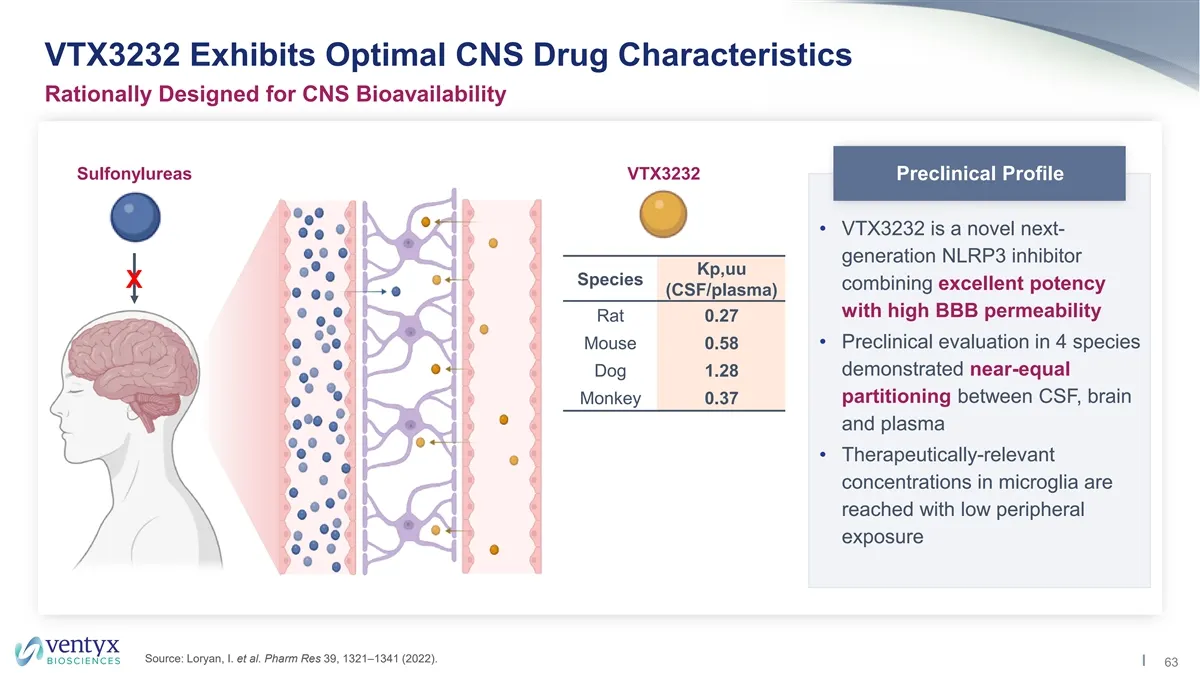
VTX3232 Exhibits Optimal CNS Drug Characteristics Rationally Designed for CNS Bioavailability Sulfonylureas VTX3232 Preclinical Profile • VTX3232 is a novel next- generation NLRP3 inhibitor Kp,uu Species X combining excellent potency (CSF/plasma) with high BBB permeability Rat 0.27 • Preclinical eva
Slide 64: X-Ray Crystal Structure Illuminates Key NLRP3 Interactions
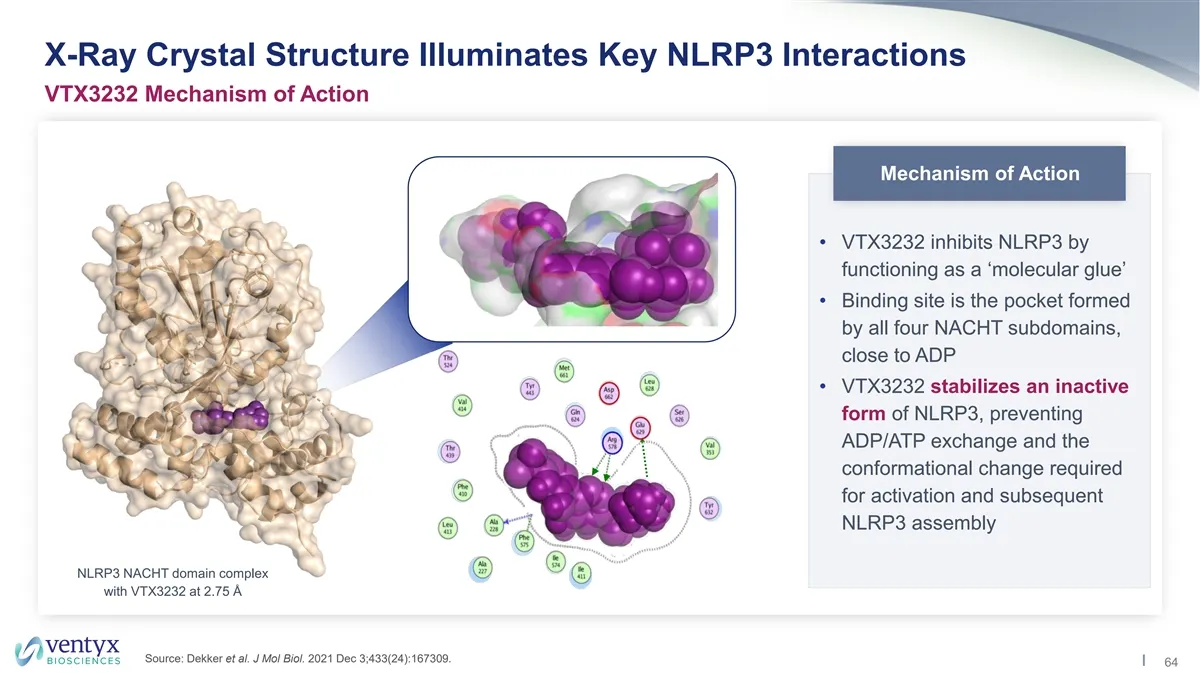
X-Ray Crystal Structure Illuminates Key NLRP3 Interactions VTX3232 Mechanism of Action Mechanism of Action • VTX3232 inhibits NLRP3 by c functioning as a ‘molecular glue’ • Binding site is the pocket formed by all four NACHT subdomains, close to ADP • VTX3232 stabilizes an inactive form of NLRP3, pr
Slide 65: Inhibiting Neuroinflammation in Preclinical Models
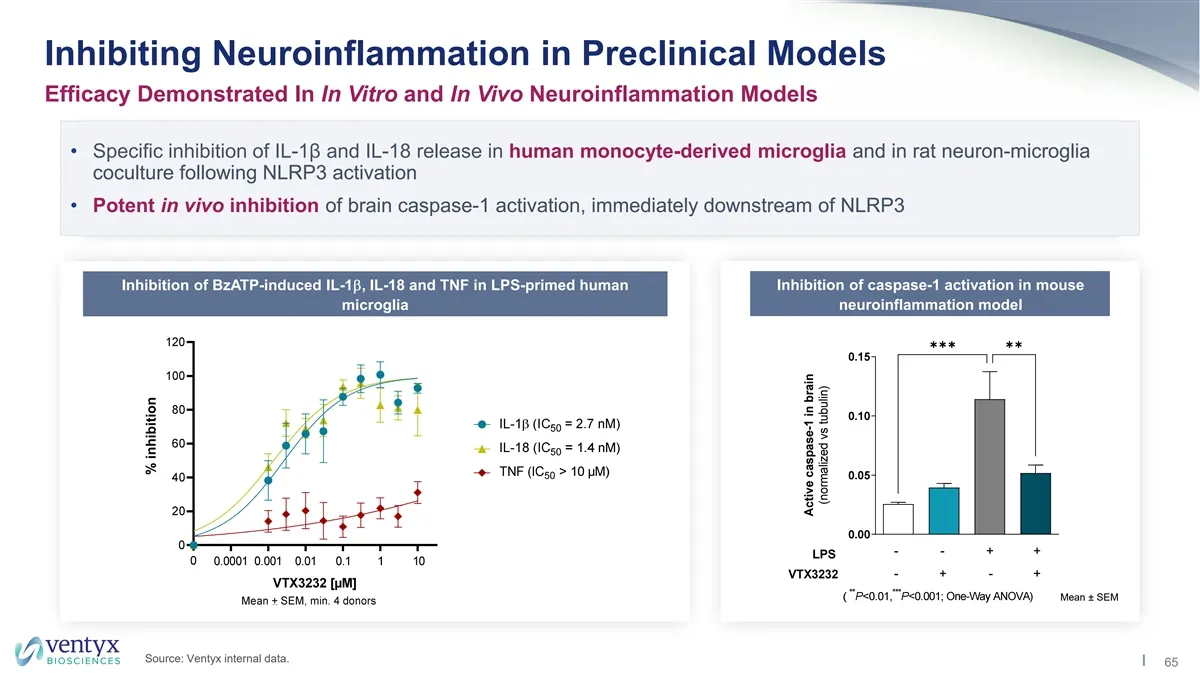
Inhibiting Neuroinflammation in Preclinical Models Efficacy Demonstrated In In Vitro and In Vivo Neuroinflammation Models • Specific inhibition of IL-1β and IL-18 release in human monocyte-derived microglia and in rat neuron-microglia coculture following NLRP3 activation • Potent in vivo inhibition
Slide 66: Phase 1 Trial to Explore CNS Drug Exposure and PD Effect
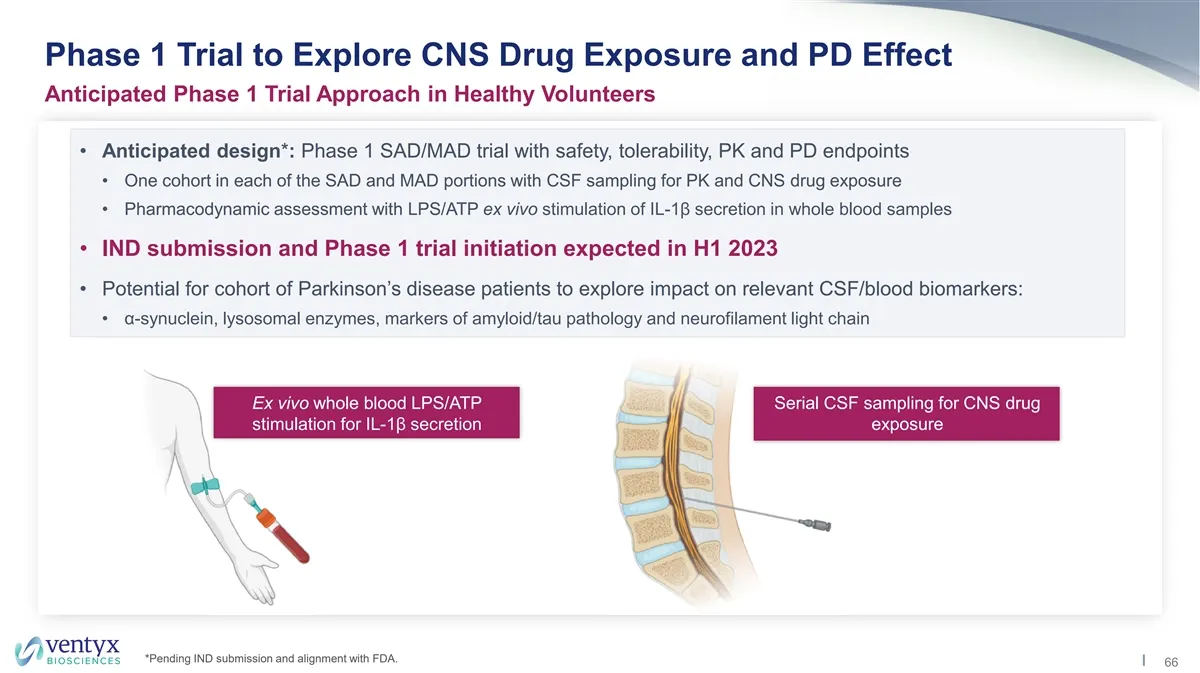
Phase 1 Trial to Explore CNS Drug Exposure and PD Effect Anticipated Phase 1 Trial Approach in Healthy Volunteers • Anticipated design*: Phase 1 SAD/MAD trial with safety, tolerability, PK and PD endpoints • One cohort in each of the SAD and MAD portions with CSF sampling for PK and CNS drug exposur

Slide 67: Discovery Update
Discovery Update John Nuss, Ph.D. Chief Scientific Officer 67
Slide 68: Chemistry-Driven, Efficient & Productive R&D Engine
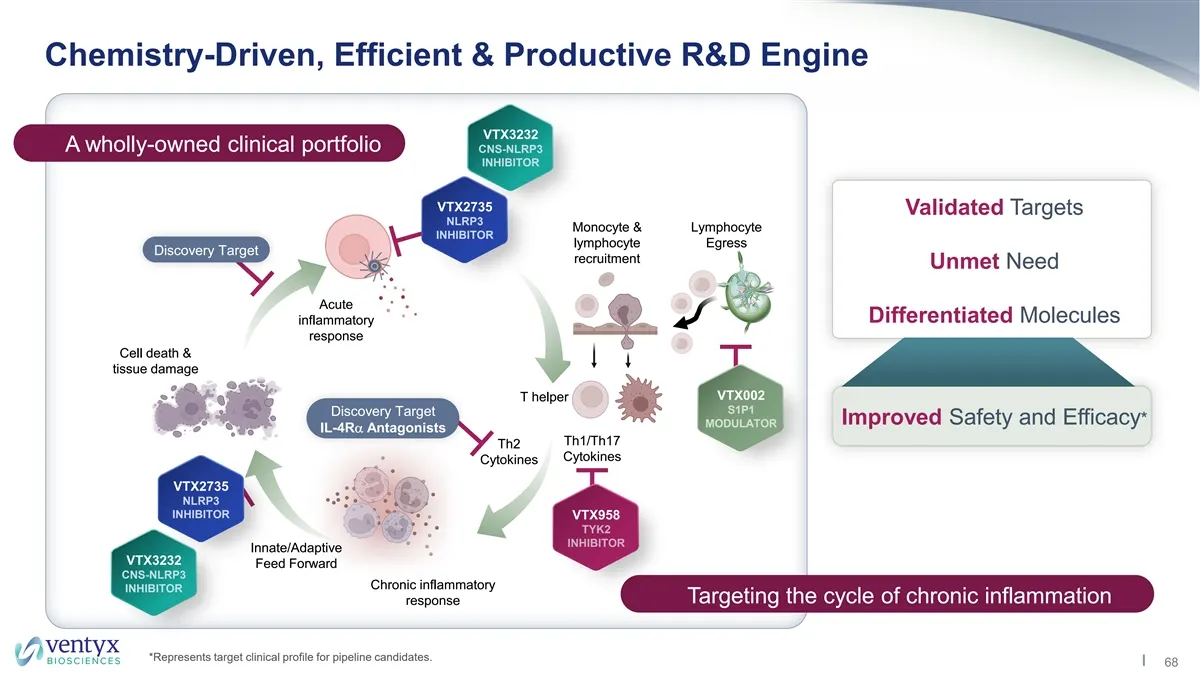
Chemistry-Driven, Efficient & Productive R&D Engine VTX3232 A wholly-owned clinical portfolio CNS-NLRP3 INHIBITOR VTX2735 Validated Targets NLRP3 Monocyte & Lymphocyte INHIBITOR lymphocyte Egress Discovery Target recruitment Unmet Need Acute Differentiated Molecules inflammatory response Cell death
Slide 69: Targeting IL-4Rα with Small Molecule Antagonists
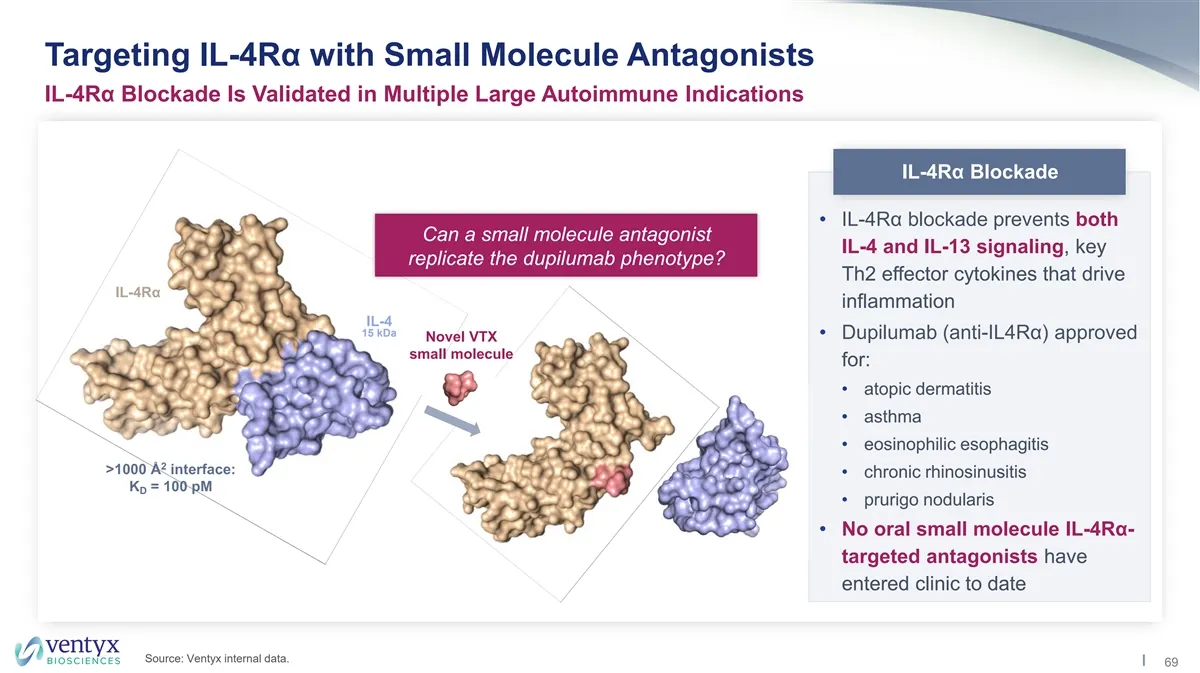
Targeting IL-4Rα with Small Molecule Antagonists IL-4Rα Blockade Is Validated in Multiple Large Autoimmune Indications IL-4Rα Blockade • IL-4Rα blockade prevents both Can a small molecule antagonist IL-4 and IL-13 signaling, key replicate the dupilumab phenotype? Th2 effector cytokines that drive IL
Slide 70: Optimizing Small Molecule IL-4Rα Antagonists
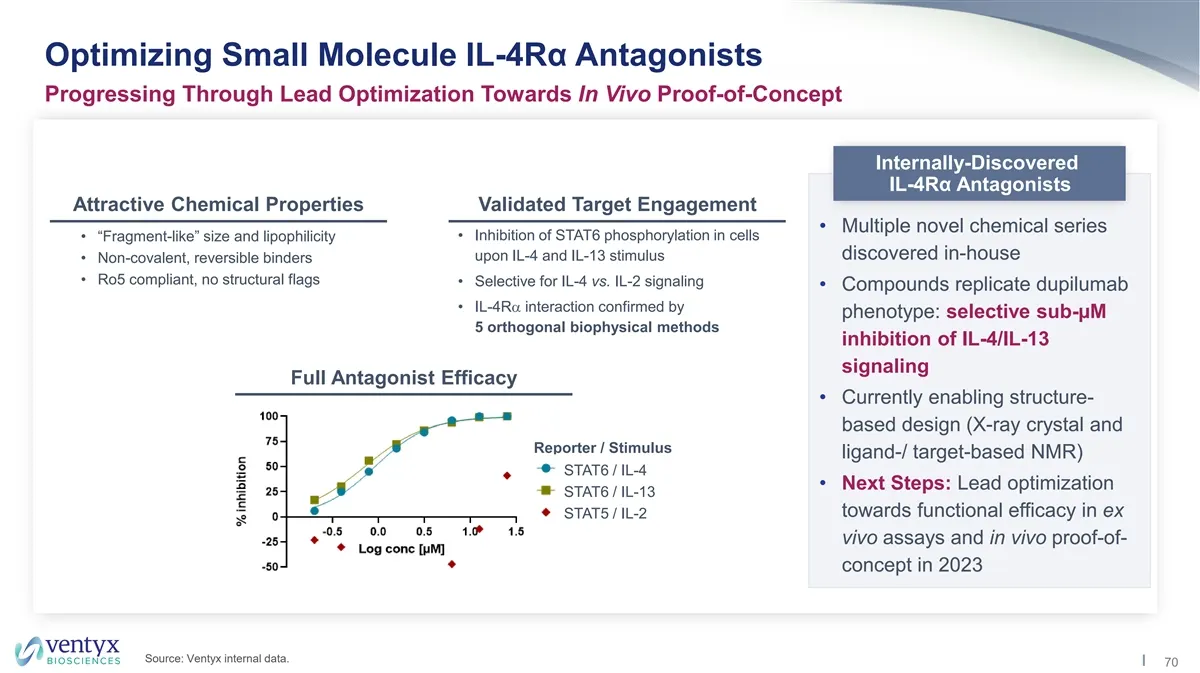
Optimizing Small Molecule IL-4Rα Antagonists Progressing Through Lead Optimization Towards In Vivo Proof-of-Concept Internally-Discovered IL-4Rα Antagonists Attractive Chemical Properties Validated Target Engagement • Multiple novel chemical series • “Fragment-like” size and lipophilicity • Inhibiti
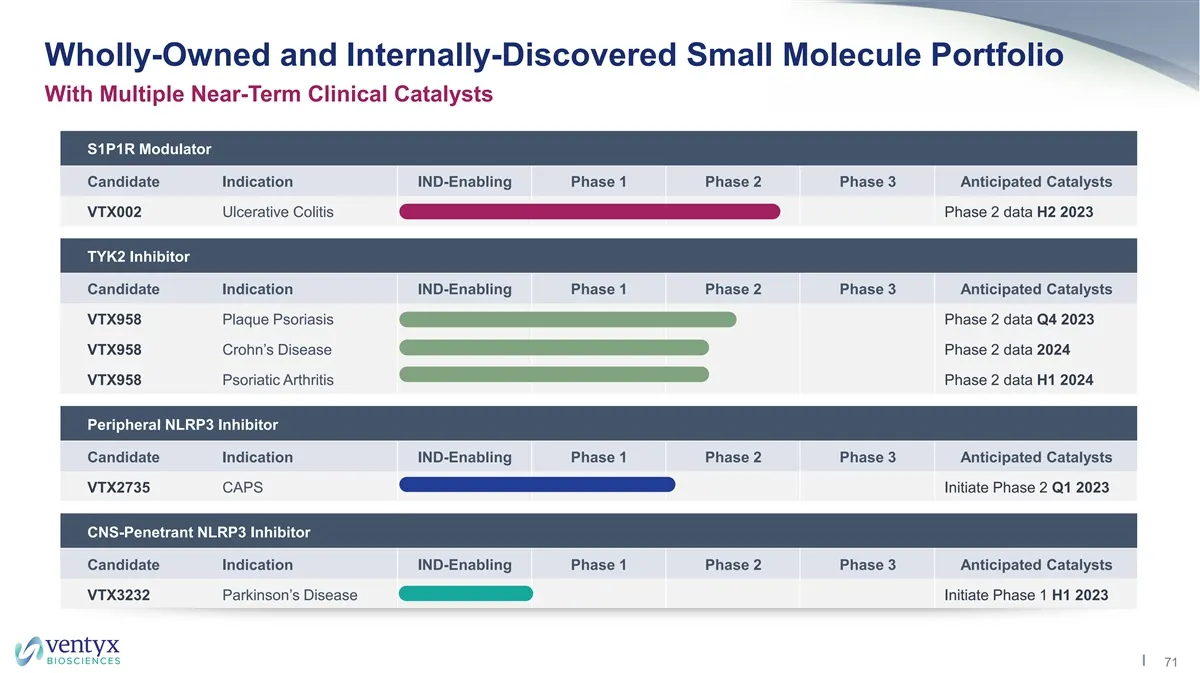
Slide 71: Small Molecule Portfolio With Multiple Near-Term Clinical Catalysts
Wholly-Owned and Internally-Discovered Small Molecule Portfolio With Multiple Near-Term Clinical Catalysts S1P1R Modulator Candidate Indication IND-Enabling Phase 1 Phase 2 Phase 3 Anticipated Catalysts VTX002 Ulcerative Colitis Phase 2 data H2 2023 TYK2 Inhibitor Candidate Indication IND-Enabling P

Slide 72: Questions?
Urventy yx BIOSCIENCES Questions? Answers.
Source: SEC EDGAR · 8-K filed Jan 26, 2023
More decks from Ventyx Biosciences Inc
 Technical Presentation (October 2025)30 slides · Oct 22, 2025
 Investor Presentation (January 2025)40 slides · Jan 14, 2025
 Technical Presentation (November 2023)14 slides · Nov 6, 2023
 Technical Presentation (October 2023)20 slides · Oct 10, 2023
 Investor Presentation (November 2022)44 slides · Nov 30, 2022
 Investor Presentation (June 2022)37 slides · Jun 29, 2022