Agios Pharmaceuticals, Inc. · NASDAQ:AGIO
Agios Pharmaceuticals — European Haematology Association (EHA) Virtual Congress 2021
21 slides from Agios Pharmaceuticals's conference presentation, June 2021
Slide 1: ACTIVATE: Phase 3 Study of Mitapivat in PK Deficiency
Oral Presentation # S270 ACTIVATE: A Phase 3, Randomized, Multicenter, Double-blind, Placebo-Controlled Study Of Mitapivat In Adults With Pyruvate Kinase Deficiency Who Are Not Regularly Transfused Hanny Al-Samkari, MD,1 Frédéric Galactéros, MD, PhD,2 Andreas Glenthøj, MD,3 Jennifer A. Rothman, MD,4
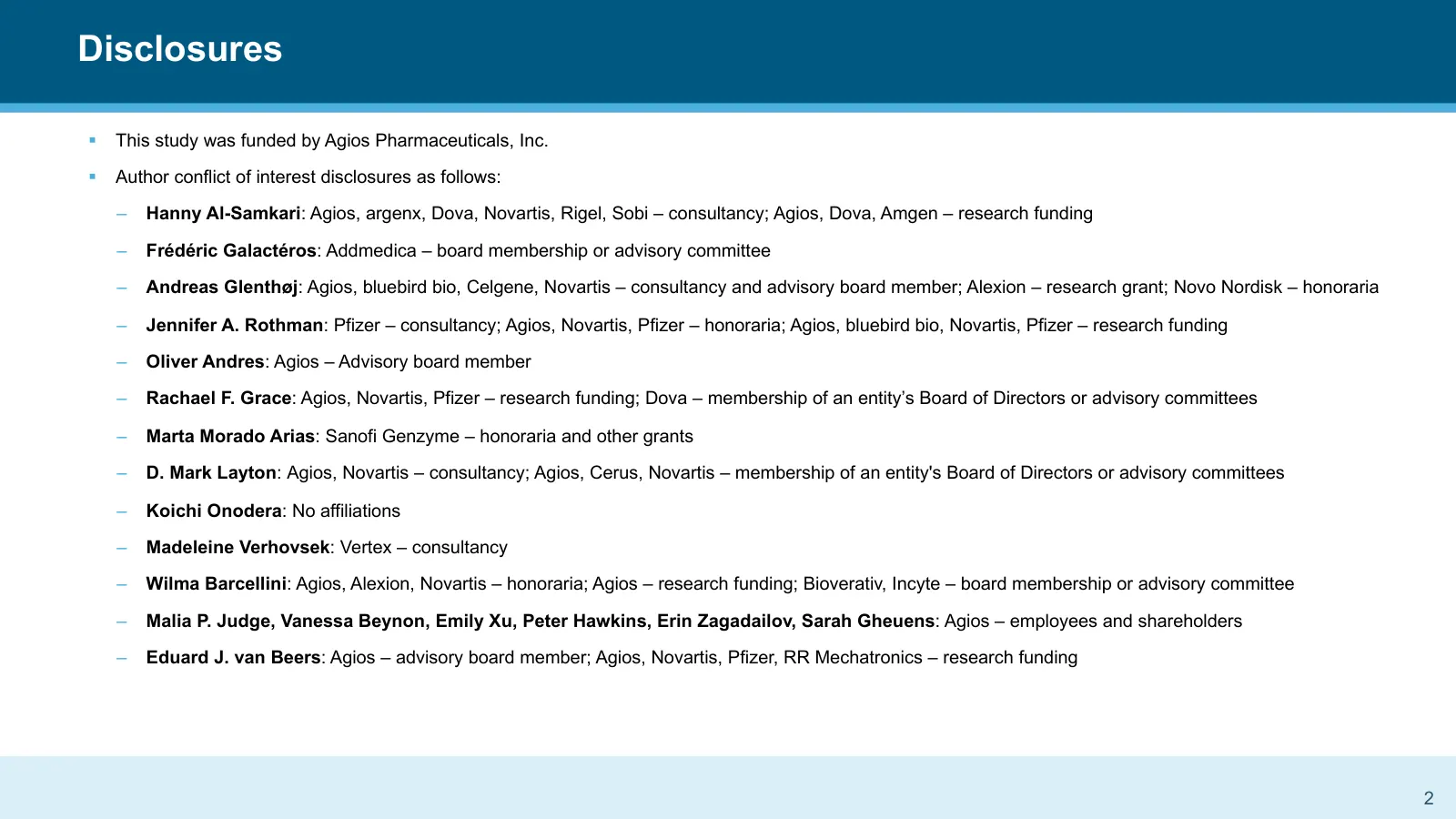
Slide 2: Disclosures
Disclosures § This study was funded by Agios Pharmaceuticals, Inc. § Author conflict of interest disclosures as follows: – Hanny Al-Samkari: Agios, argenx, Dova, Novartis, Rigel, Sobi – consultancy; Agios, Dova, Amgen – research funding – Frédéric Galactéros: Addmedica – board membership or advisory
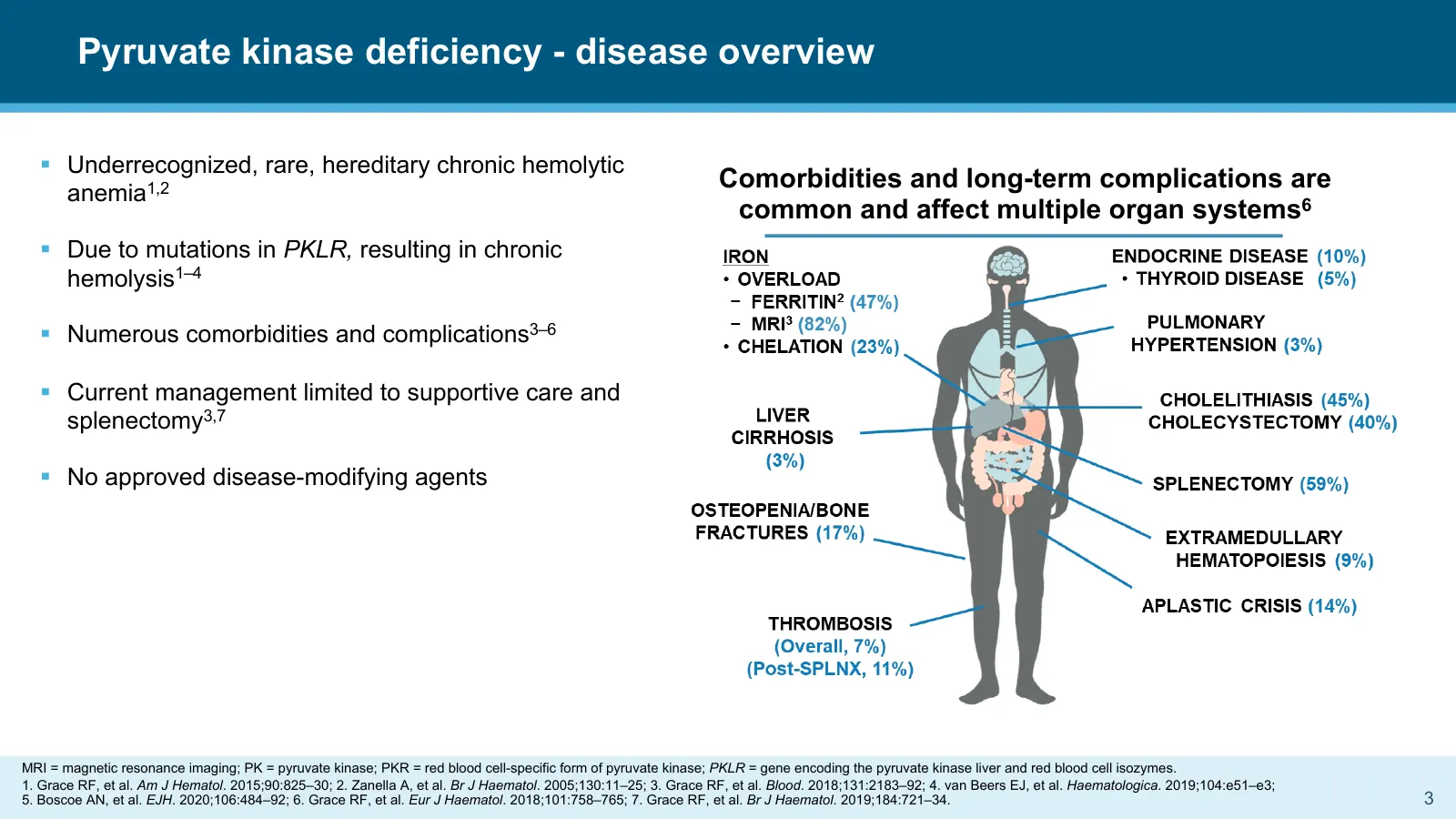
Slide 3: Pyruvate kinase deficiency - disease overview
Pyruvate kinase deficiency - disease overview § Underrecognized, rare, hereditary chronic hemolytic Comorbidities and long-term complications are anemia1,2 common and affect multiple6 organ systems6 § Due to mutations in PKLR, resulting in chronic hemolysis1–4 § Numerous comorbidities and complicati
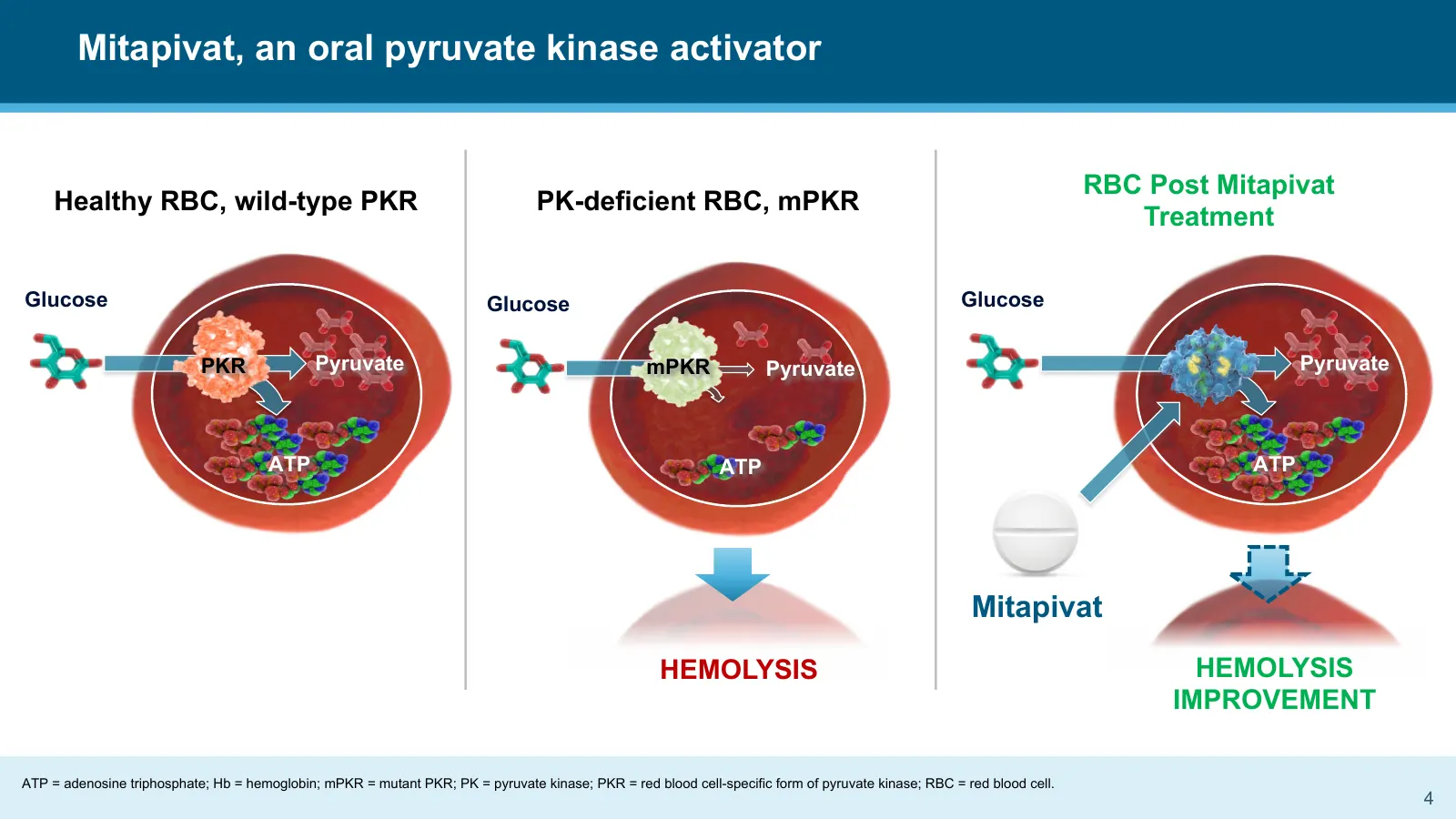
Slide 4: Mitapivat, an oral pyruvate kinase activator
Mitapivat, an oral pyruvate kinase activator RBC Post Mitapivat Healthy RBC, wild-type PKR PK-deficient RBC, mPKR Treatment Glucose Glucose Glucose PKR Pyruvate mPKR PKR Pyruvate Pyruvate ATP ATP ATP Mitapivat HEMOLYSIS HEMOLYSIS IMPROVEMENT ATP = adenosine triphosphate; Hb = hemoglobin; mPKR = muta
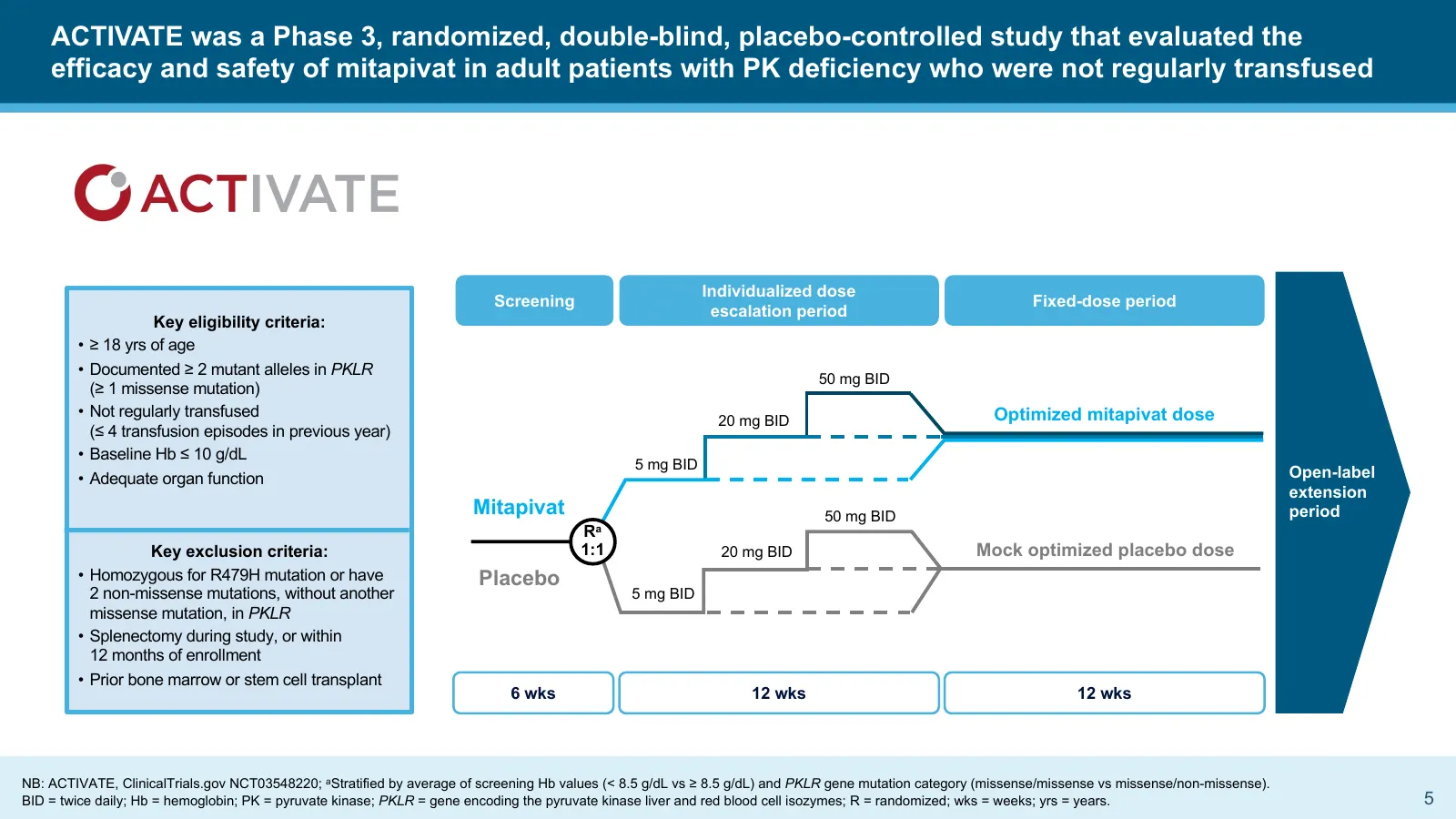
Slide 5: ACTIVATE Phase 3 study design
ACTIVATE was a Phase 3, randomized, double-blind, placebo-controlled study that evaluated the efficacy and safety of mitapivat in adult patients with PK deficiency who were not regularly transfused Individualized dose Screening Fixed-dose period escalation period Key eligibility criteria: • ≥ 18 yrs
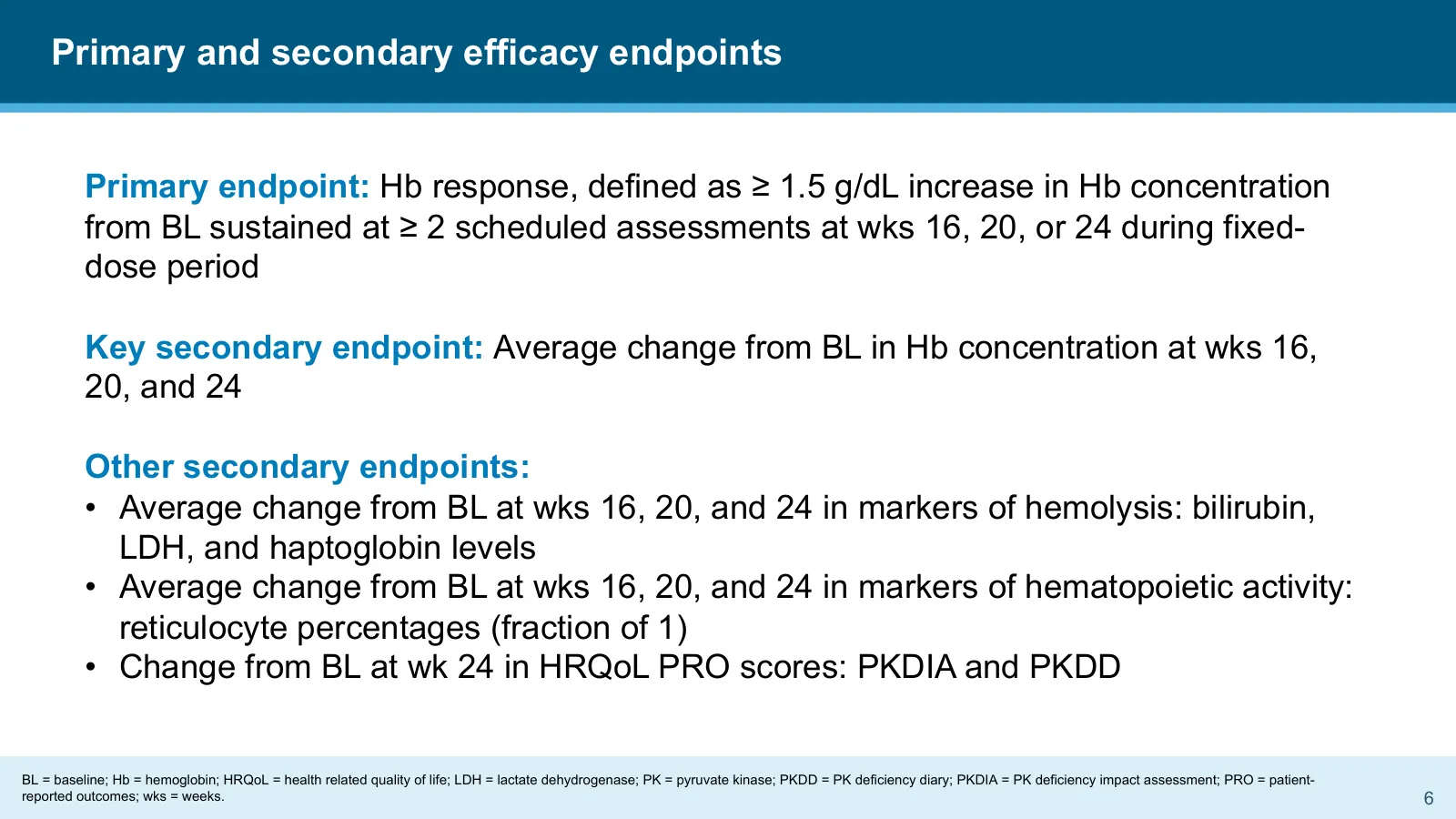
Slide 6: Primary and secondary efficacy endpoints
Primary and secondary efficacy endpoints Primary endpoint: Hb response, defined as ≥ 1.5 g/dL increase in Hb concentration from BL sustained at ≥ 2 scheduled assessments at wks 16, 20, or 24 during fixed- dose period Key secondary endpoint: Average change from BL in Hb concentration at wks 16, 20, a
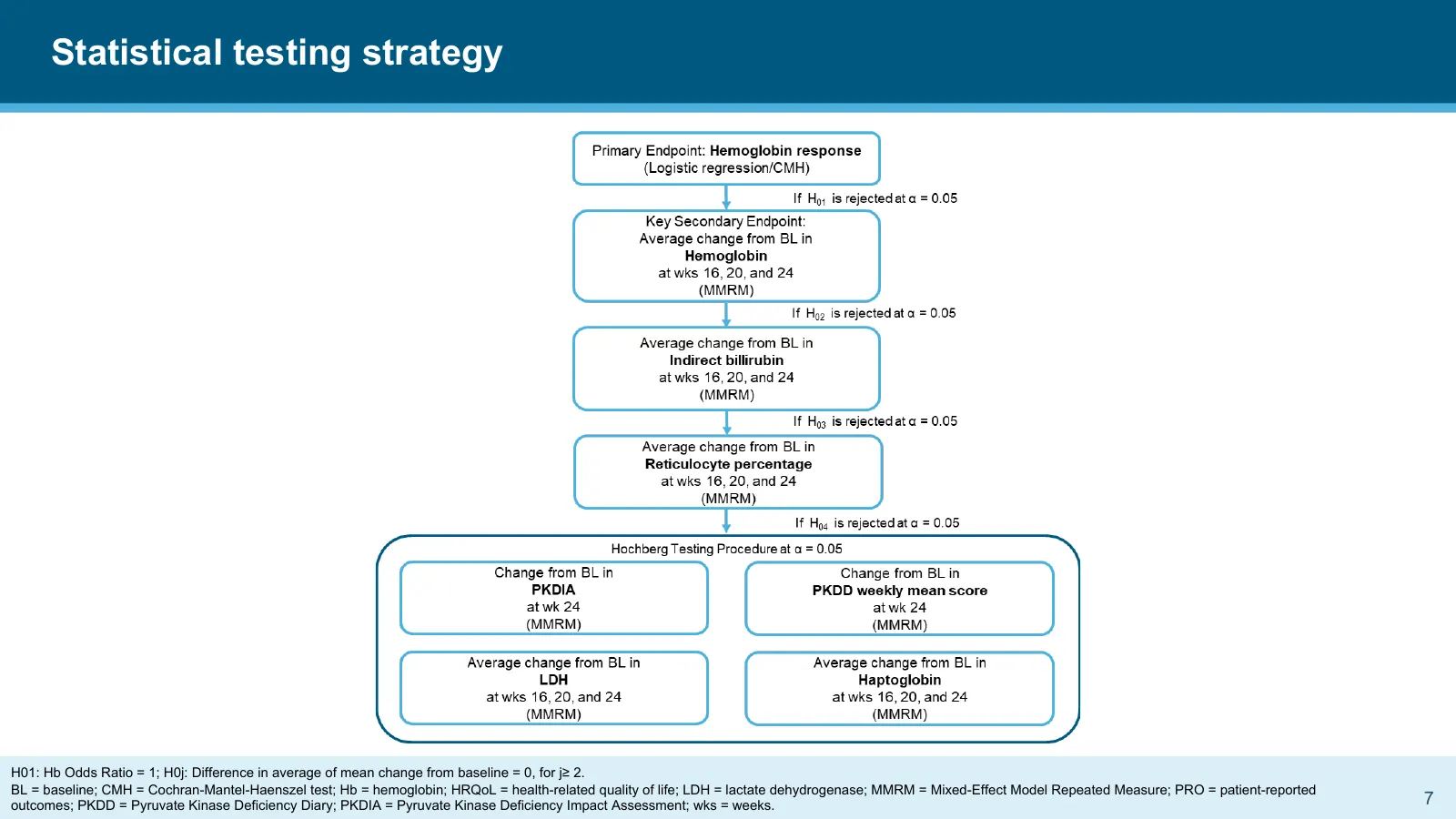
Slide 7: Statistical testing strategy
Statistical testing strategy H01: Hb Odds Ratio = 1; H0j: Difference in average of mean change from baseline = 0, for j≥ 2. BL = baseline; CMH = Cochran-Mantel-Haenszel test; Hb = hemoglobin; HRQoL = health-related quality of life; LDH = lactate dehydrogenase; MMRM = Mixed-Effect Model Repeated Meas
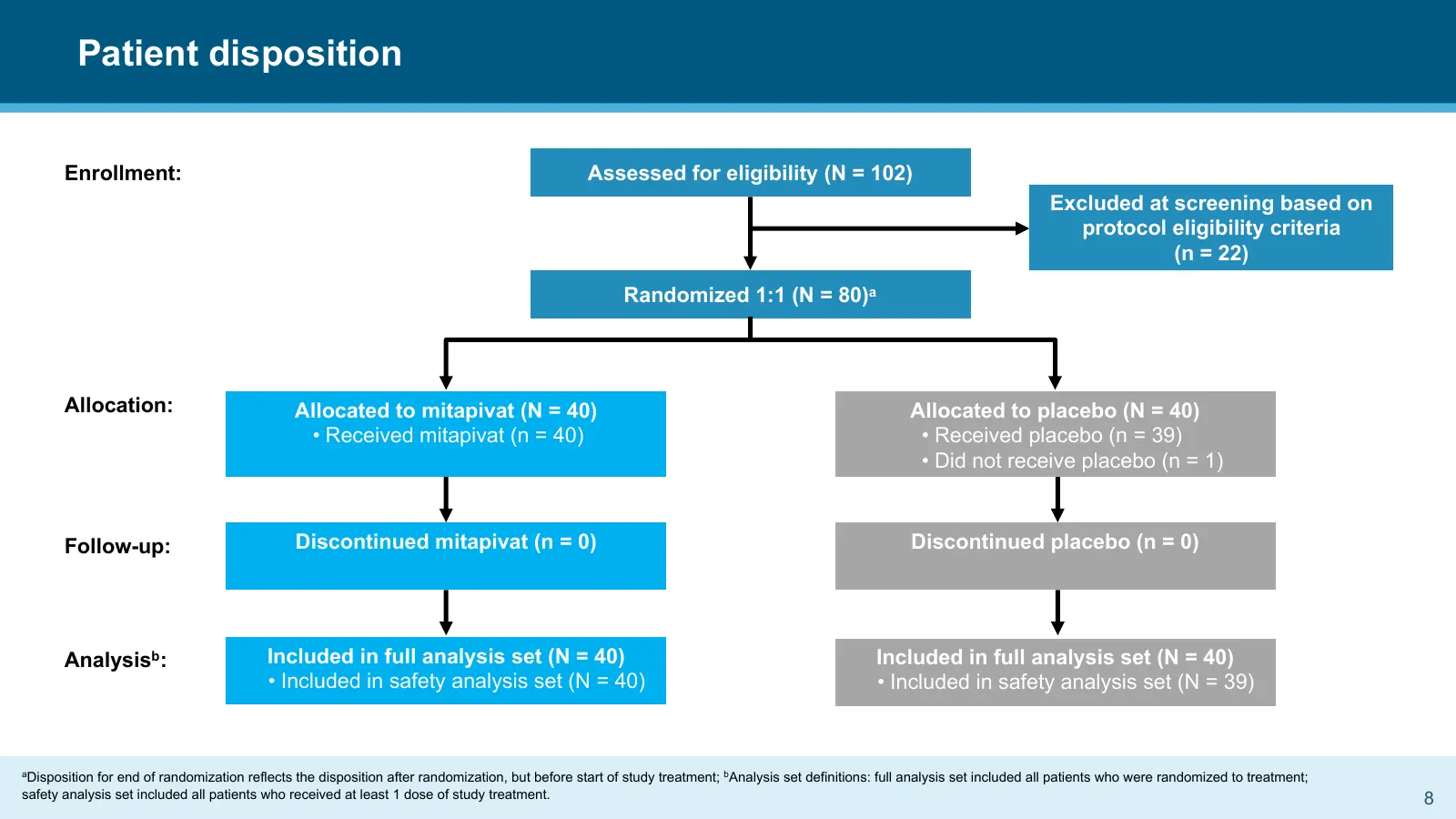
Slide 8: Patient disposition
Patient disposition Enrollment: Assessed for eligibility (N = 102) Excluded at screening based on protocol eligibility criteria (n = 22) Randomized 1:1 (N = 80)a Allocation: Allocated to mitapivat (N = 40) Allocated to placebo (N = 40) • Received mitapivat (n = 40) • Received placebo (n = 39) • Did
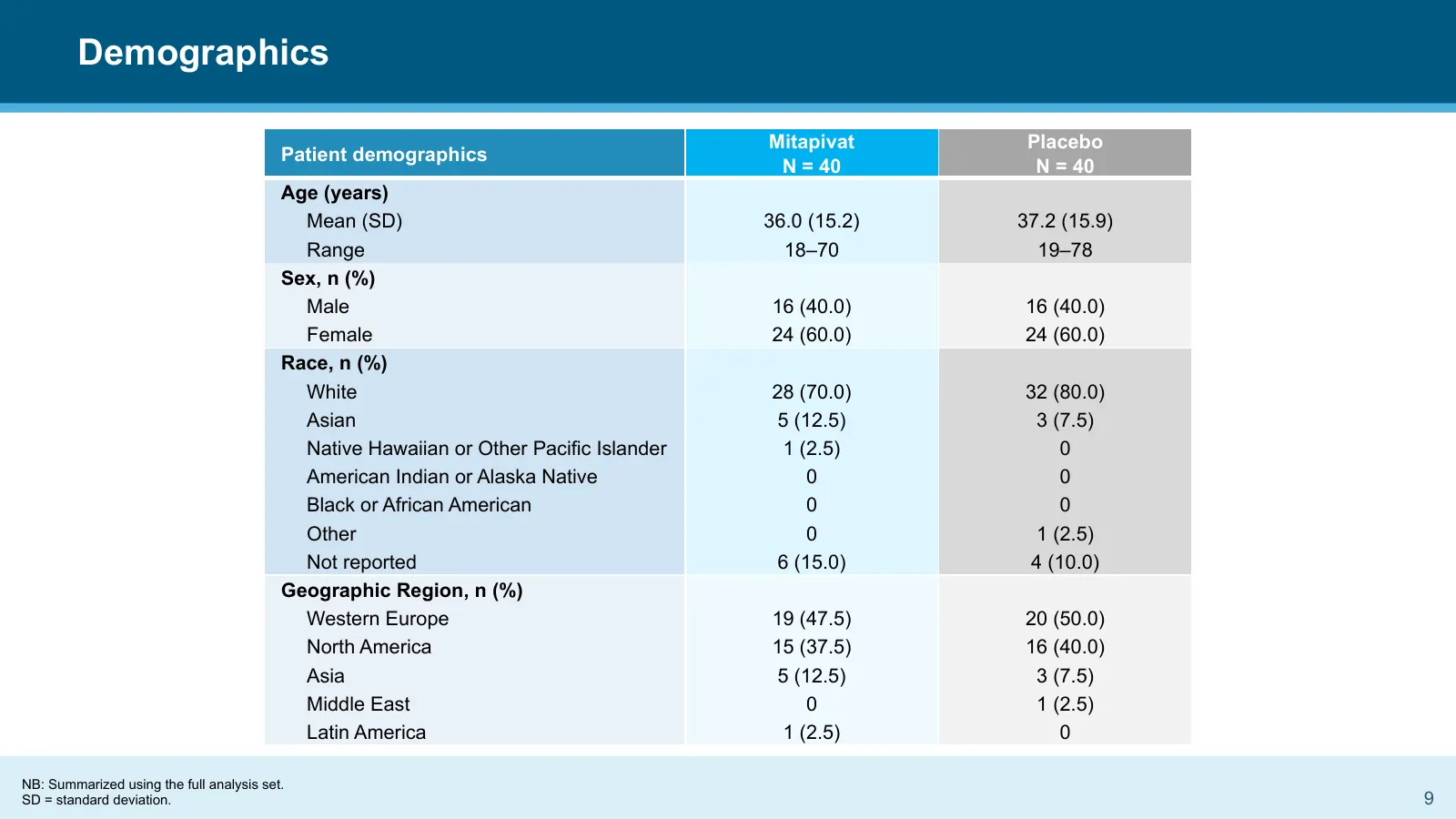
Slide 9: Demographics
Demographics Mitapivat Placebo Patient demographics N = 40 N = 40 Age (years) Mean (SD) 36.0 (15.2) 37.2 (15.9) Range 18–70 19–78 Sex, n (%) Male 16 (40.0) 16 (40.0) Female 24 (60.0) 24 (60.0) Race, n (%) White 28 (70.0) 32 (80.0) Asian 5 (12.5) 3 (7.5) Native Hawaiian or Other Pacific Islander 1 (2
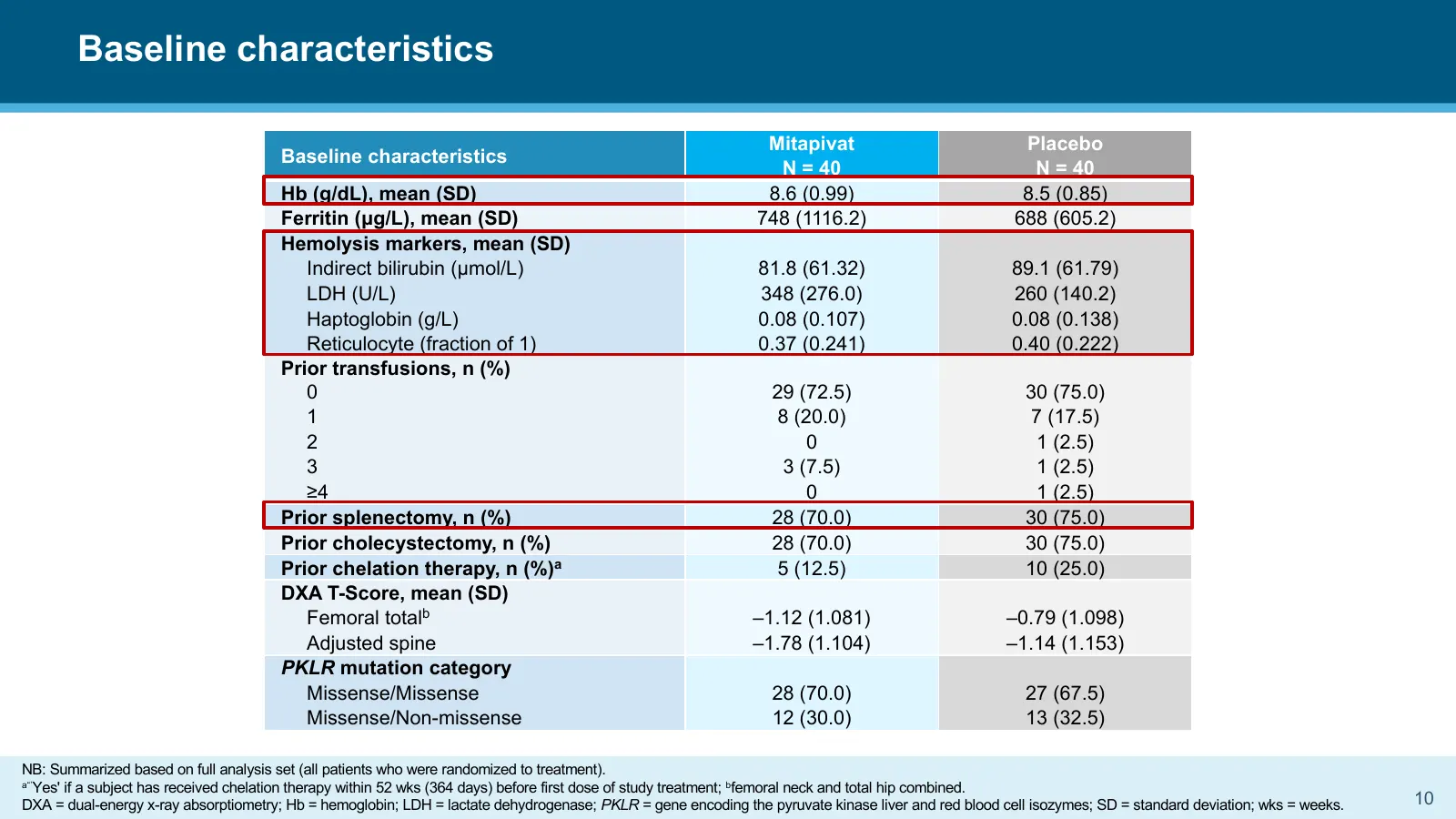
Slide 10: Baseline characteristics
Baseline characteristics Mitapivat Placebo Baseline characteristics N = 40 N = 40 Hb (g/dL), mean (SD) 8.6 (0.99) 8.5 (0.85) Ferritin (μg/L), mean (SD) 748 (1116.2) 688 (605.2) Hemolysis markers, mean (SD) Indirect bilirubin (µmol/L) 81.8 (61.32) 89.1 (61.79) LDH (U/L) 348 (276.0) 260 (140.2) Haptog
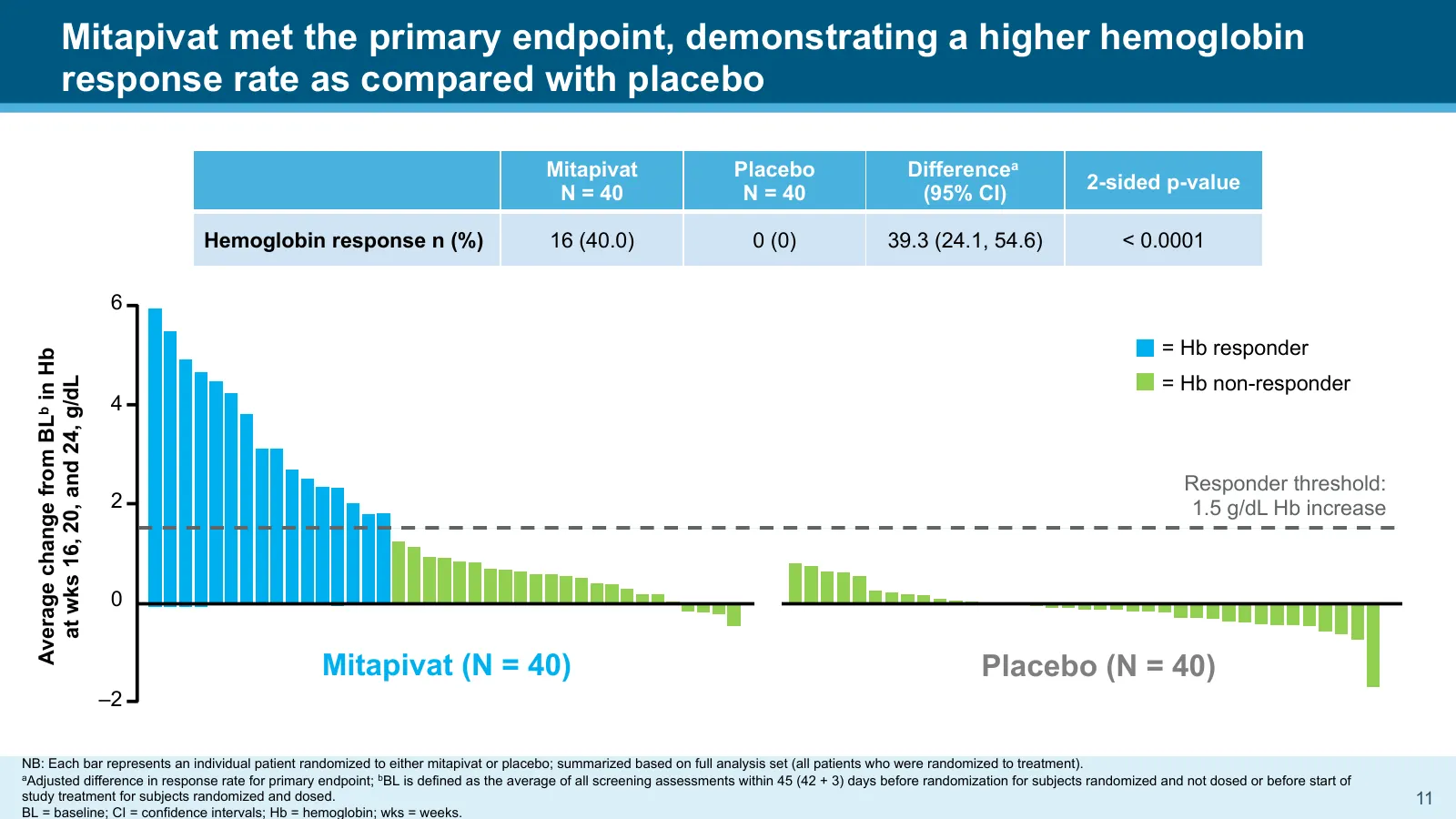
Slide 11: Mitapivat met the primary endpoint of hemoglobin response
Mitapivat met the primary endpoint, demonstrating a higher hemoglobin response rate as compared with placebo Mitapivat Placebo Differencea 2-sided p-value N = 40 N = 40 (95% CI) Hemoglobin response n (%) 16 (40.0) 0 (0) 39.3 (24.1, 54.6) < 0.0001 6 = Hb responder Average change from BLb in Hb = Hb n
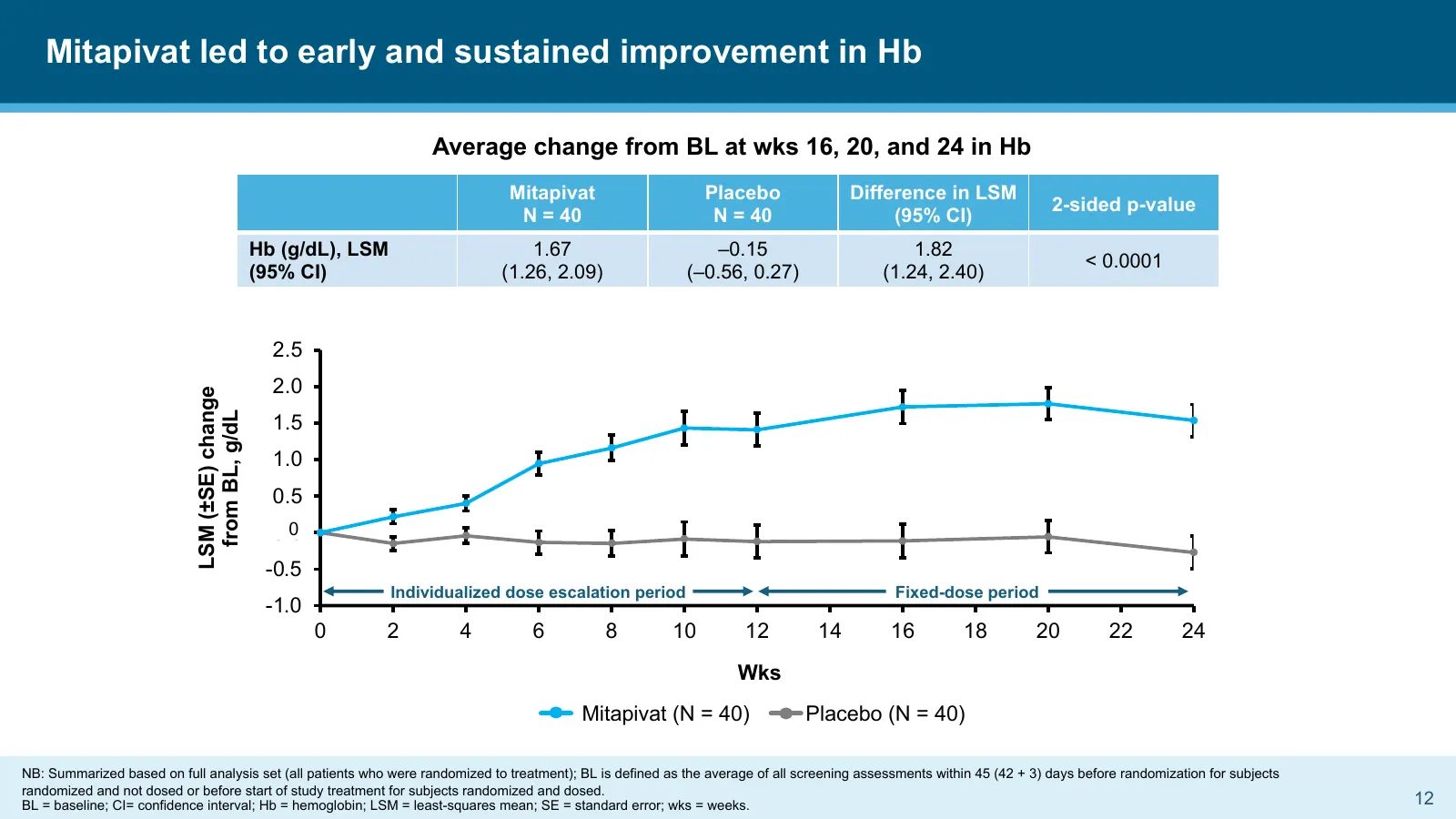
Slide 12: Mitapivat led to early and sustained improvement in Hb
Mitapivat led to early and sustained improvement in Hb Average change from BL at wks 16, 20, and 24 in Hb Mitapivat Placebo Difference in LSM 2-sided p-value N = 40 N = 40 (95% CI) Hb (g/dL), LSM 1.67 –0.15 1.82 < 0.0001 (95% CI) (1.26, 2.09) (–0.56, 0.27) (1.24, 2.40) 2.5 2.0 LSM (±SE) change from
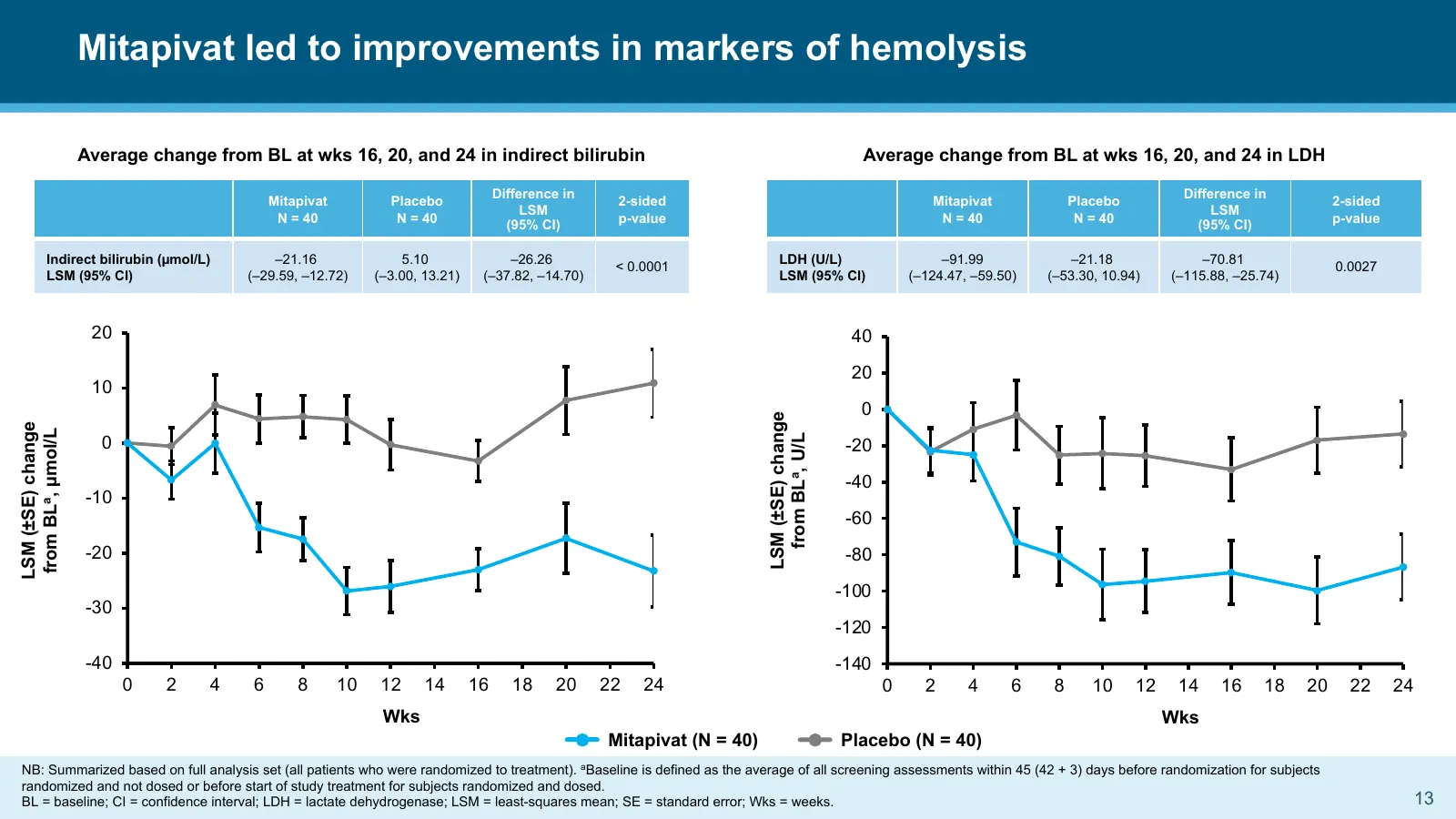
Slide 13: Mitapivat led to improvements in markers of hemolysis
Mitapivat led to improvements in markers of hemolysis Average change from BL at wks 16, 20, and 24 in indirect bilirubin Average change from BL at wks 16, 20, and 24 in LDH Difference in Difference in Mitapivat Placebo 2-sided Mitapivat Placebo 2-sided LSM LSM N = 40 N = 40 p-value N = 40 N = 40 p-v
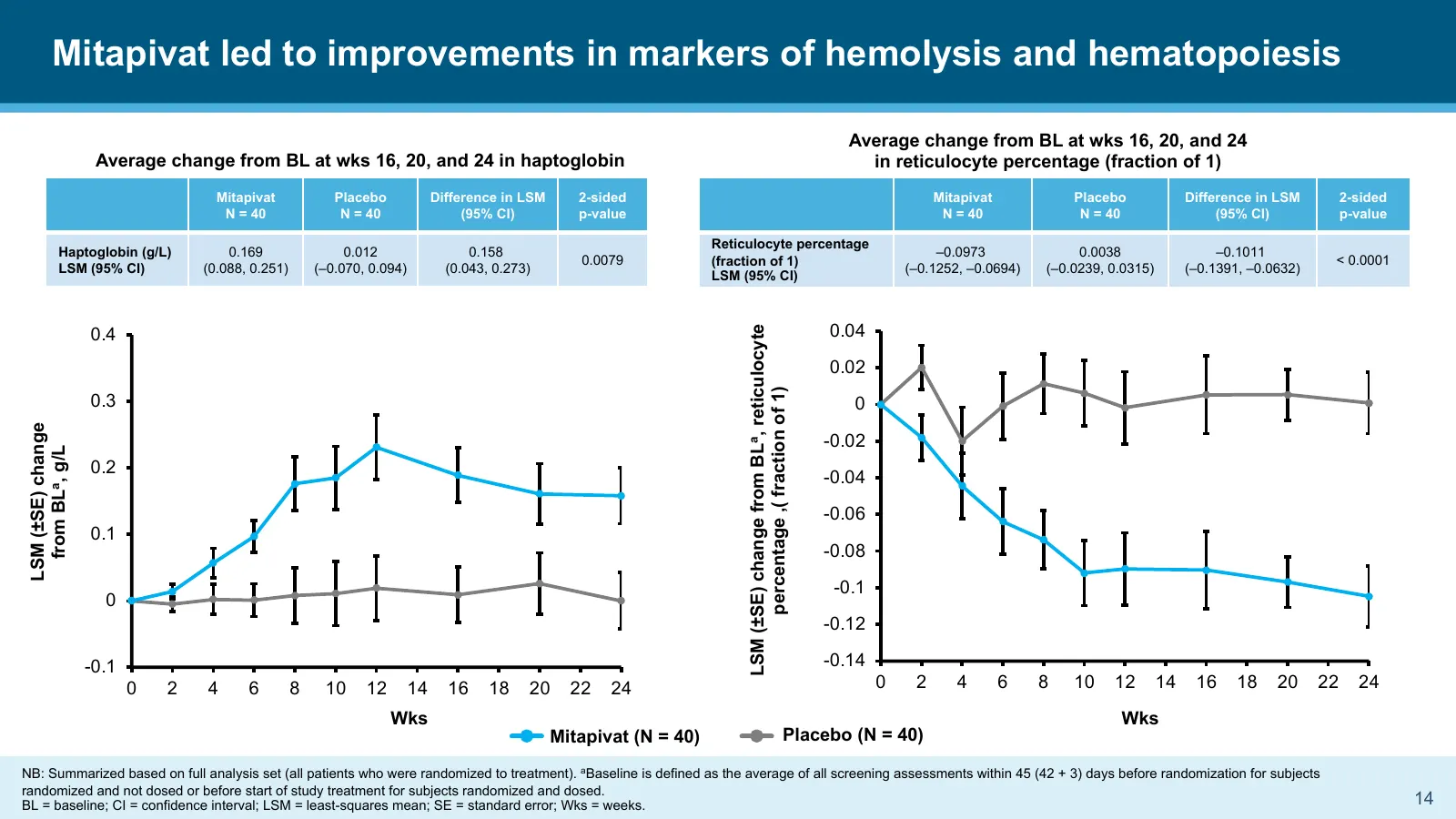
Slide 14: Improvements in markers of hemolysis and hematopoiesis
Mitapivat led to improvements in markers of hemolysis and hematopoiesis Average change from BL at wks 16, 20, and 24 Average change from BL at wks 16, 20, and 24 in haptoglobin in reticulocyte percentage (fraction of 1) Mitapivat Placebo Difference in LSM 2-sided Mitapivat Placebo Difference in LSM
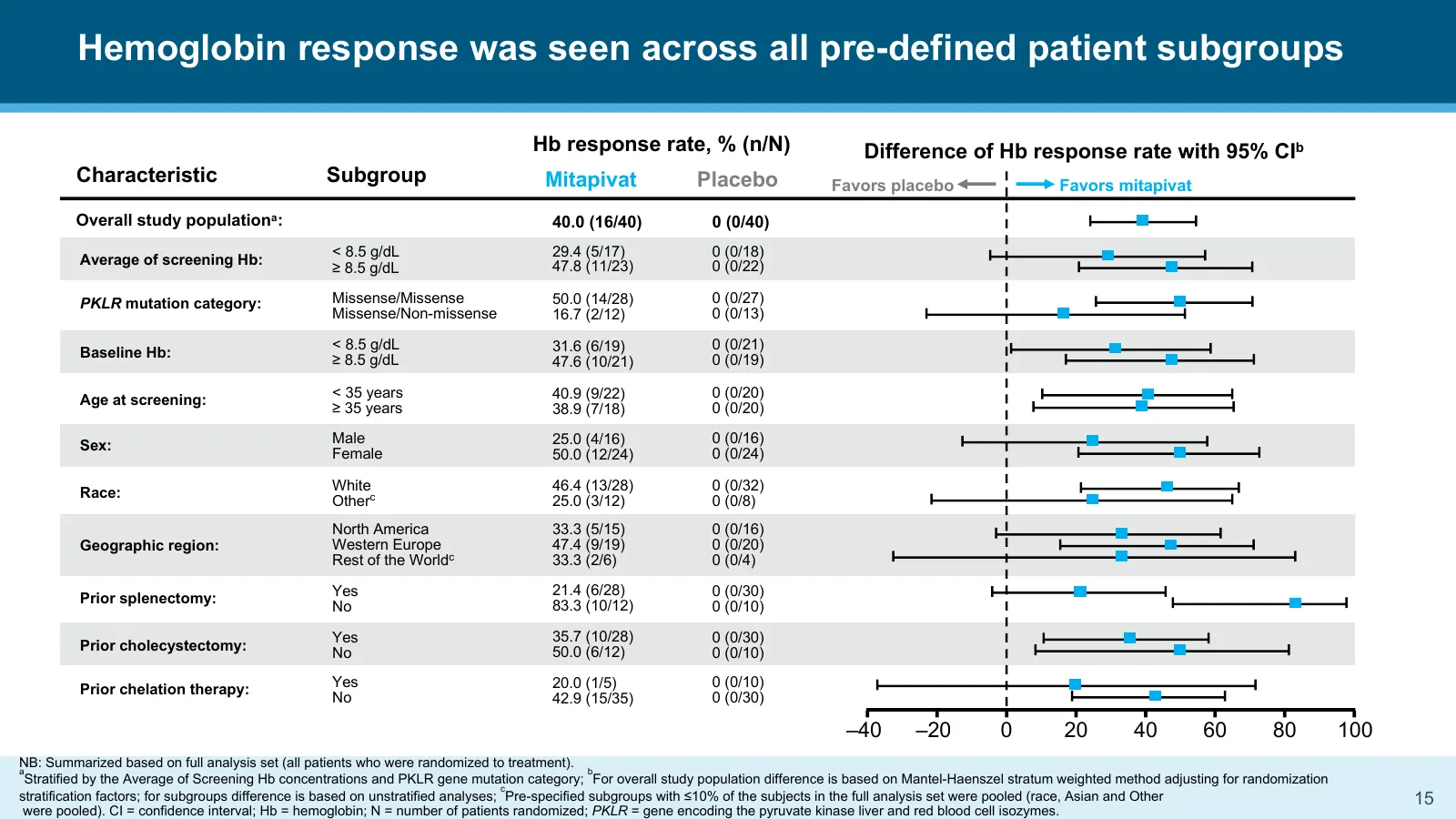
Slide 15: Hemoglobin response seen across all pre-defined subgroups
Hemoglobin response was seen across all pre-defined patient subgroups Hb response rate, % (n/N) Difference of Hb response rate with 95% CIb Characteristic Subgroup Mitapivat Placebo Favors placebo Favors mitapivat Overall study populationa: 40.0 (16/40) 0 (0/40) < 8.5 g/dL 29.4 (5/17) 0 (0/18) Avera
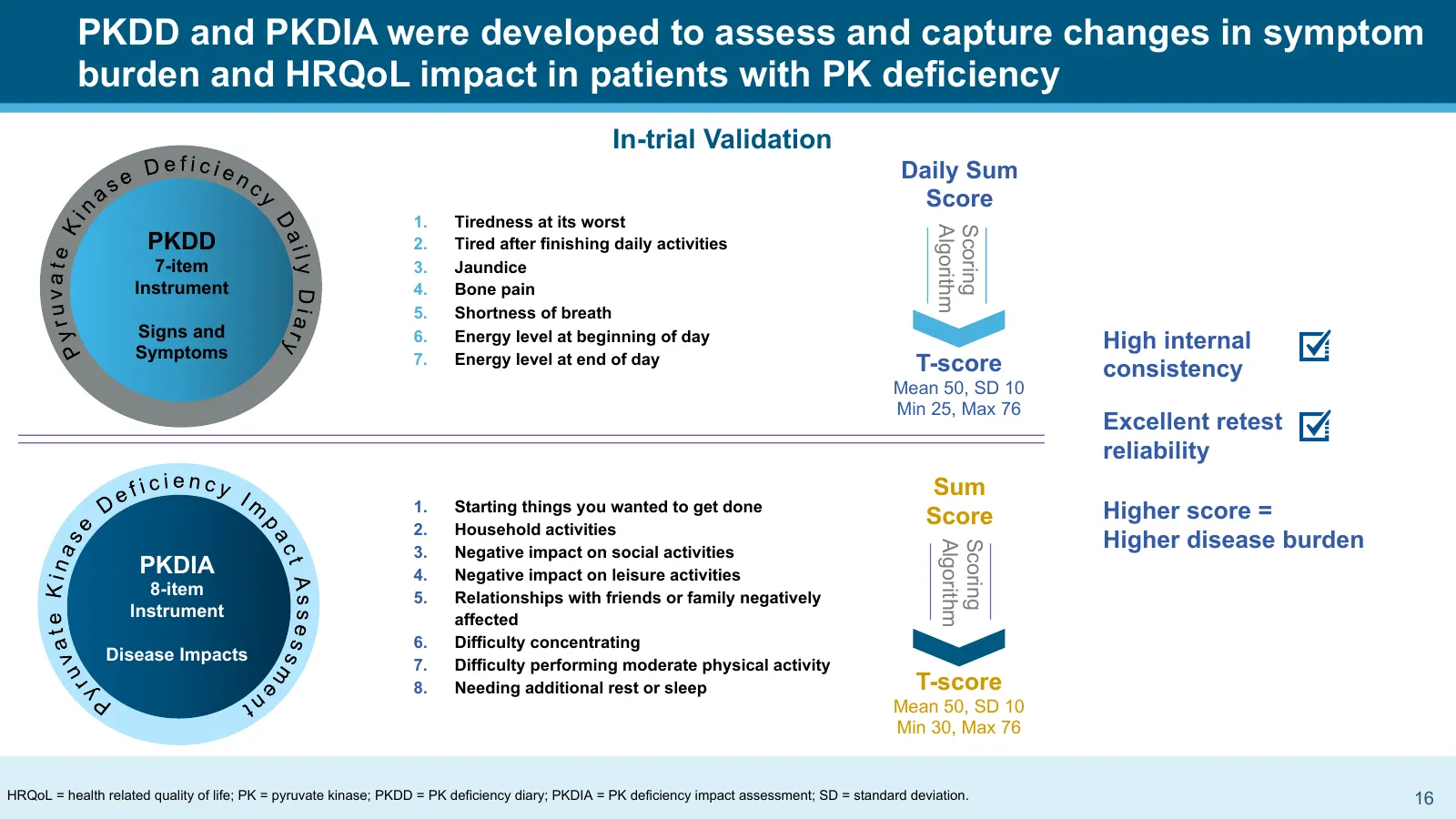
Slide 16: PKDD and PKDIA patient-reported outcome instruments
PKDD and PKDIA were developed to assess and capture changes in symptom burden and HRQoL impact in patients with PK deficiency In-trial Validation Daily Sum Score 1. Tiredness at its worst Algorithm Scoring PKDD 2. Tired after finishing daily activities 7-item 3. Jaundice Instrument 4. Bone pain 5. S
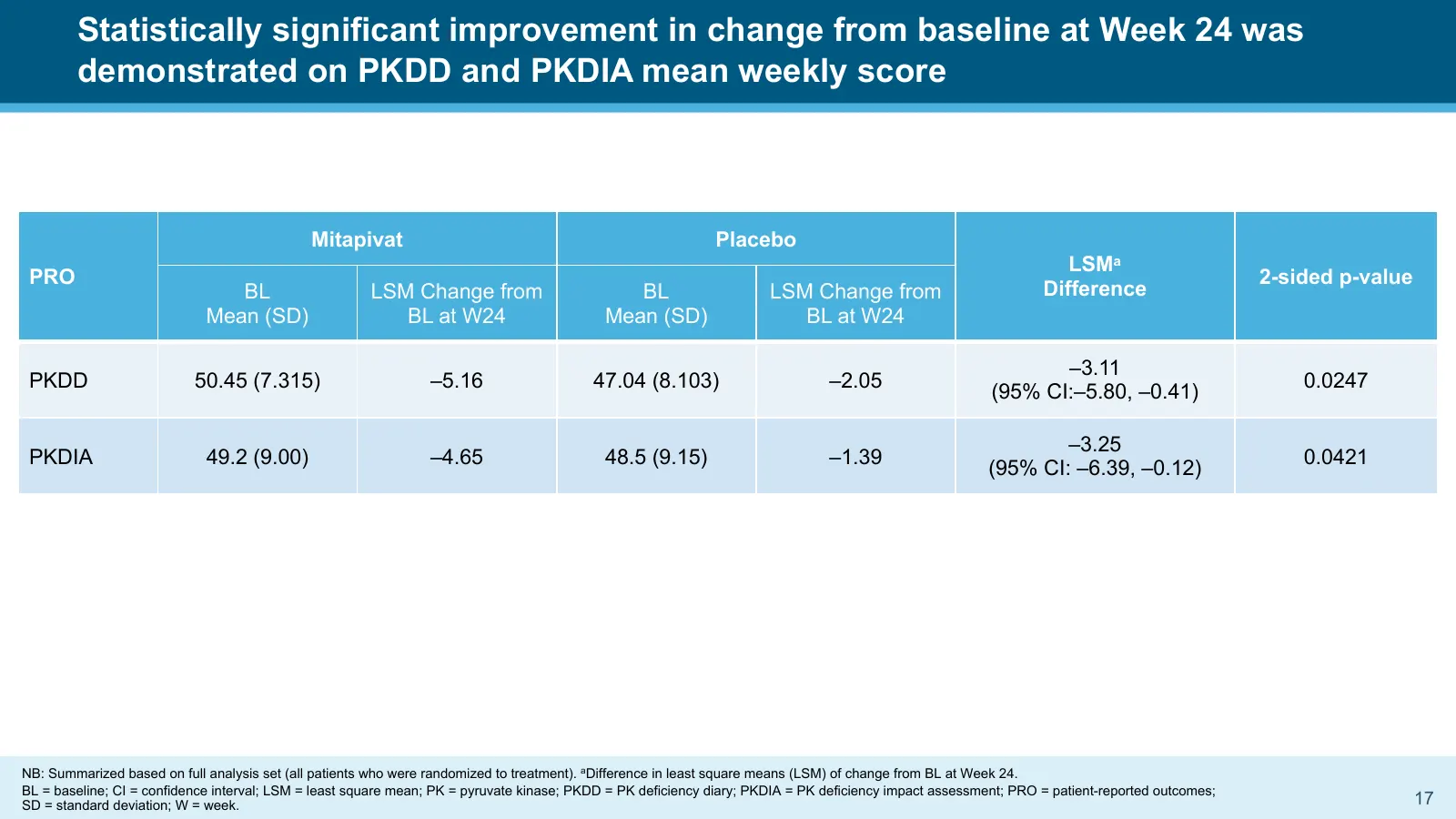
Slide 17: Improvement on PKDD and PKDIA mean weekly score
Statistically significant improvement in change from baseline at Week 24 was demonstrated on PKDD and PKDIA mean weekly score Mitapivat Placebo LSMa PRO 2-sided p-value BL LSM Change from BL LSM Change from Difference Mean (SD) BL at W24 Mean (SD) BL at W24 –3.11 PKDD 50.45 (7.315) –5.16 47.04 (8.10
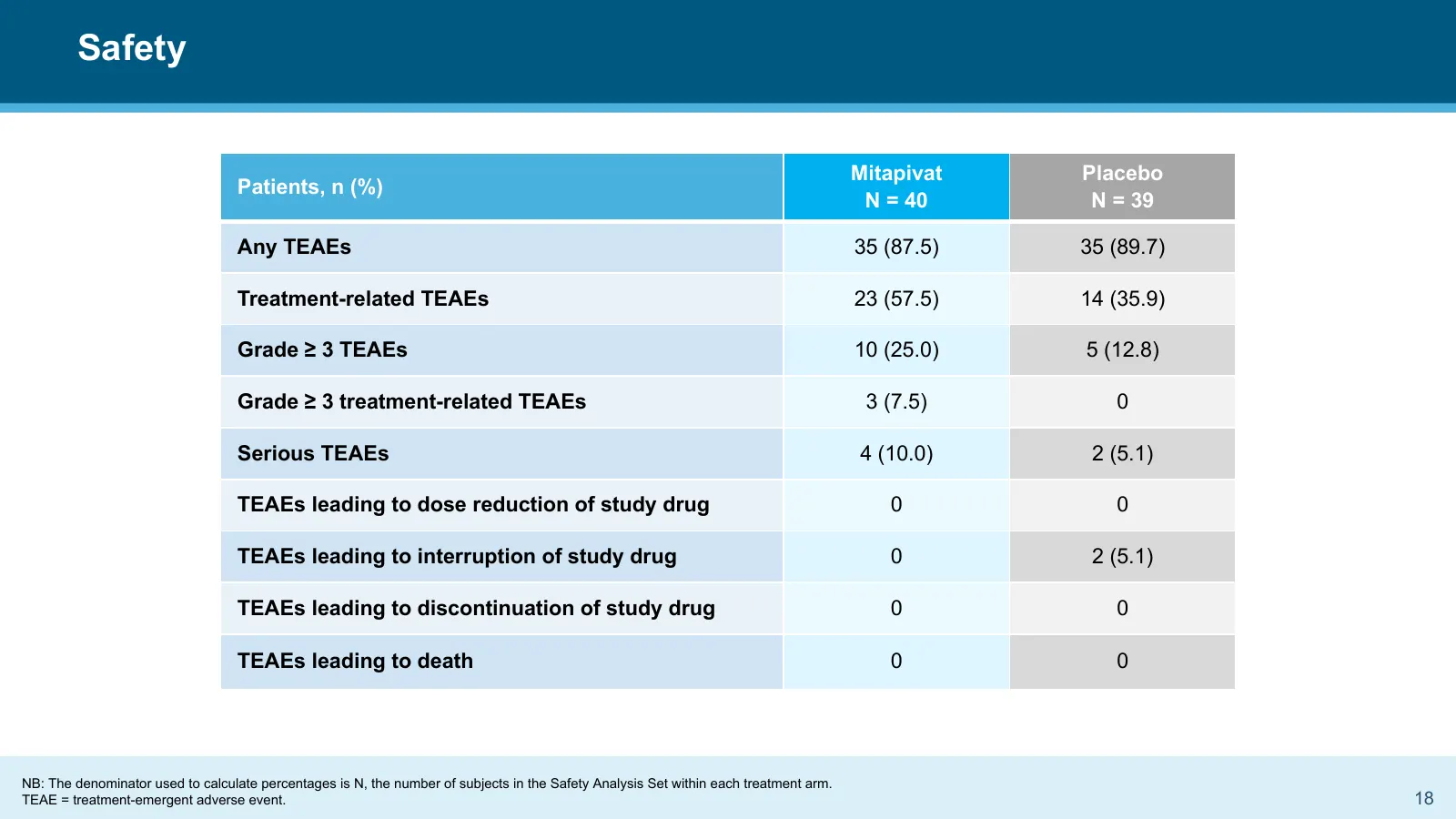
Slide 18: Safety
Safety Mitapivat Placebo Patients, n (%) N = 40 N = 39 Any TEAEs 35 (87.5) 35 (89.7) Treatment-related TEAEs 23 (57.5) 14 (35.9) Grade ≥ 3 TEAEs 10 (25.0) 5 (12.8) Grade ≥ 3 treatment-related TEAEs 3 (7.5) 0 Serious TEAEs 4 (10.0) 2 (5.1) TEAEs leading to dose reduction of study drug 0 0 TEAEs leadi
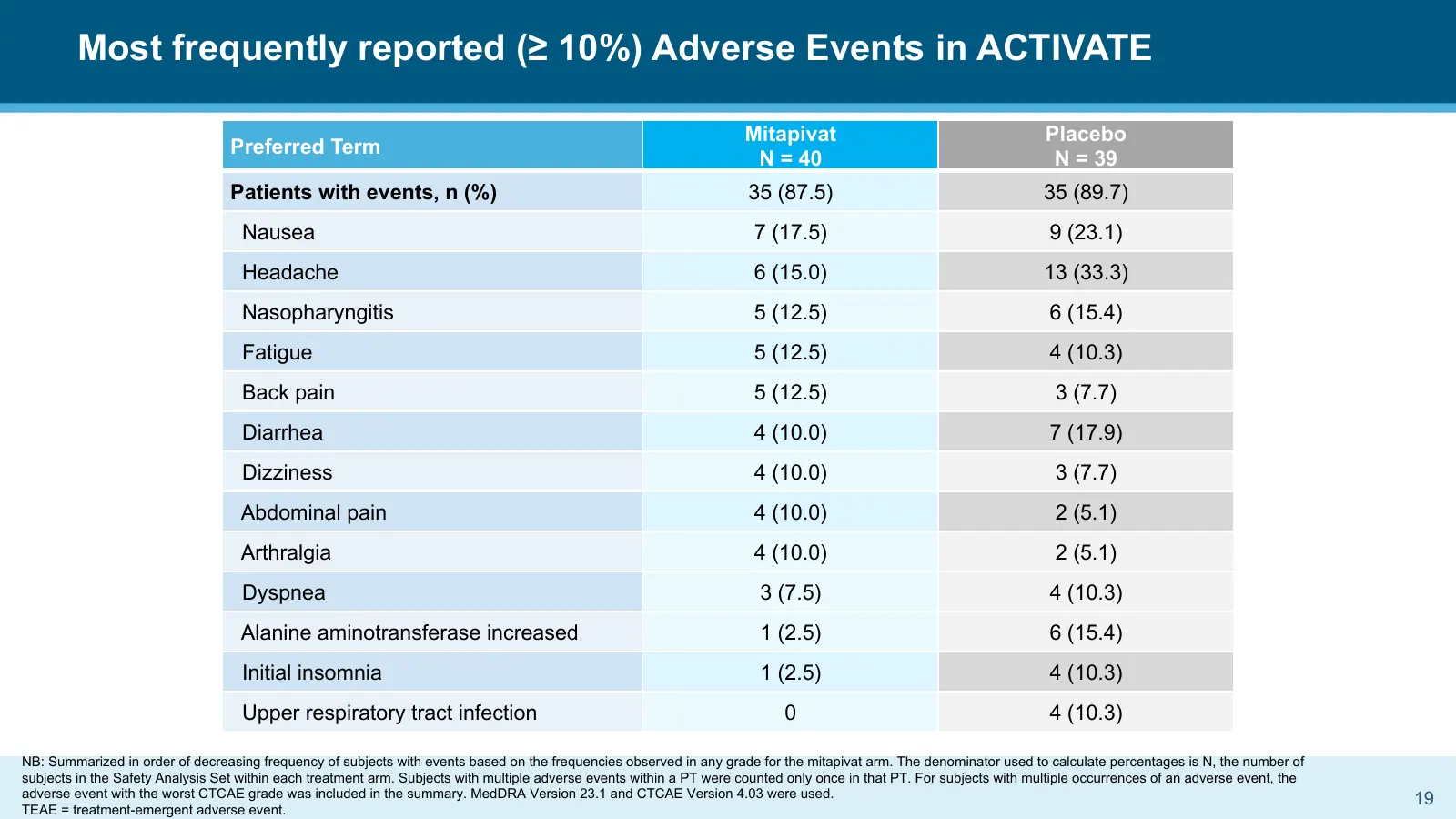
Slide 19: Most frequently reported Adverse Events in ACTIVATE
Most frequently reported (≥ 10%) Adverse Events in ACTIVATE Mitapivat Placebo Preferred Term N = 40 N = 39 Patients with events, n (%) 35 (87.5) 35 (89.7) Nausea 7 (17.5) 9 (23.1) Headache 6 (15.0) 13 (33.3) Nasopharyngitis 5 (12.5) 6 (15.4) Fatigue 5 (12.5) 4 (10.3) Back pain 5 (12.5) 3 (7.7) Diarr
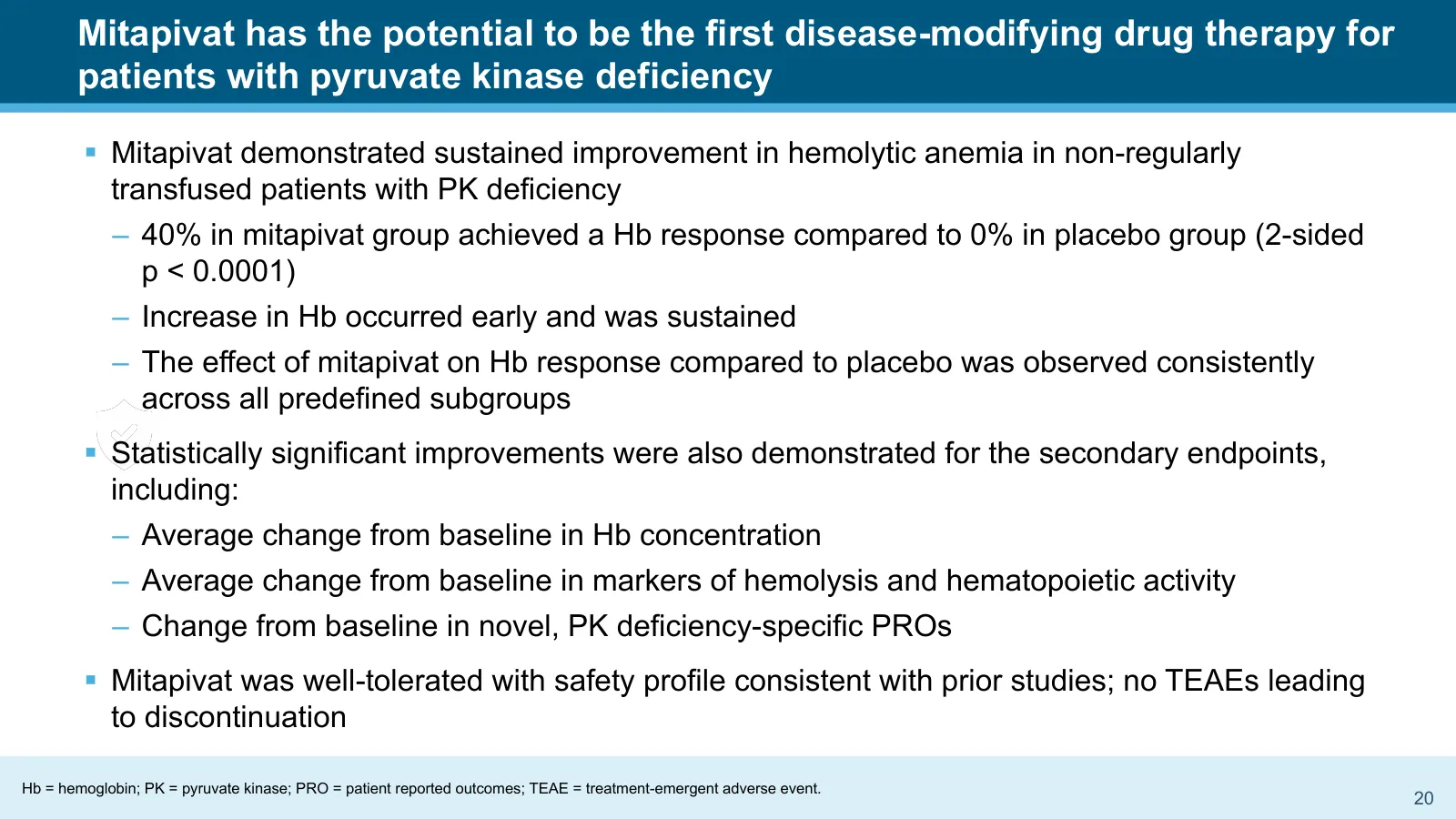
Slide 20: Mitapivat potential first disease-modifying therapy for PK deficiency
Mitapivat has the potential to be the first disease-modifying drug therapy for patients with pyruvate kinase deficiency § Mitapivat demonstrated sustained improvement in hemolytic anemia in non-regularly transfused patients with PK deficiency – 40% in mitapivat group achieved a Hb response compared
Slide 21: Acknowledgements
Acknowledgements § We would like to thank the patients taking part in this study § This study was funded by Agios Pharmaceuticals, Inc. § Editorial assistance was provided by Onyx Medica, London, UK, and supported by Agios Pharmaceuticals, Inc. 21
Source: Internet Archive copy of agios.com
More decks from Agios Pharmaceuticals, Inc.
 Q2 2026 Earnings Presentation26 slides · Jul 30, 2026
 Technical Presentation (June 2026)18 slides · June 2026
 EHA 2026 Congress24 slides · June 2026
 Q1 2026 Earnings Presentation25 slides · Apr 29, 2026
 Q4 2025 Earnings Presentation26 slides · Feb 12, 2026
 J.P. Morgan Healthcare Conference 202633 slides · Jan 14, 2026