Tcr2 Therapeutics — Investor Day (October 2021)
65 slides from Tcr2 Therapeutics's investor day presentation, Oct 20, 2021
Slide 1: R&D Day October 2021
R&D Day October 2021 Exhibit 99.2
Slide 2: Forward Looking Statements
Forward Looking Statements This presentation has been prepared by TCR2 Therapeutics Inc. (“we,” “us,” or “our”) and contains forward-looking statements within the meaning of the Private Securities Litigation Reform Act of 1995 and other federal securities laws. Forward-looking statements are neither
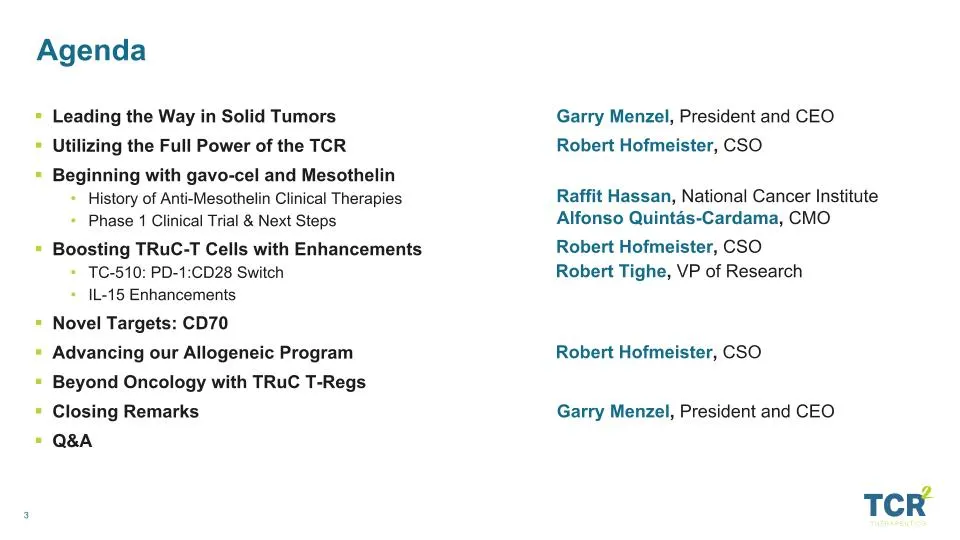
Slide 3: Agenda
Agenda Leading the Way in Solid Tumors Utilizing the Full Power of the TCR Beginning with gavo-cel and Mesothelin History of Anti-Mesothelin Clinical Therapies Phase 1 Clinical Trial & Next Steps Boosting TRuC-T Cells with Enhancements TC-510: PD-1:CD28 Switch IL-15 Enhancements Novel Targets: CD70
Slide 4: Leading the Way in Solid Tumors
Leading the Way in Solid Tumors Garry Menzel, Ph.D. President and Chief Executive Officer
Slide 5: A Focused Solid Tumor T Cell Therapy Company
A Focused Solid Tumor T Cell Therapy Company We discover. We innovate. We are redefining the TCR complex. We are changing what it means to be diagnosed with solid tumors. Our mission is to deliver the promise of tomorrow to patients.
Slide 6: The Solid Tumor Market Is a Significant and Open Opportunity
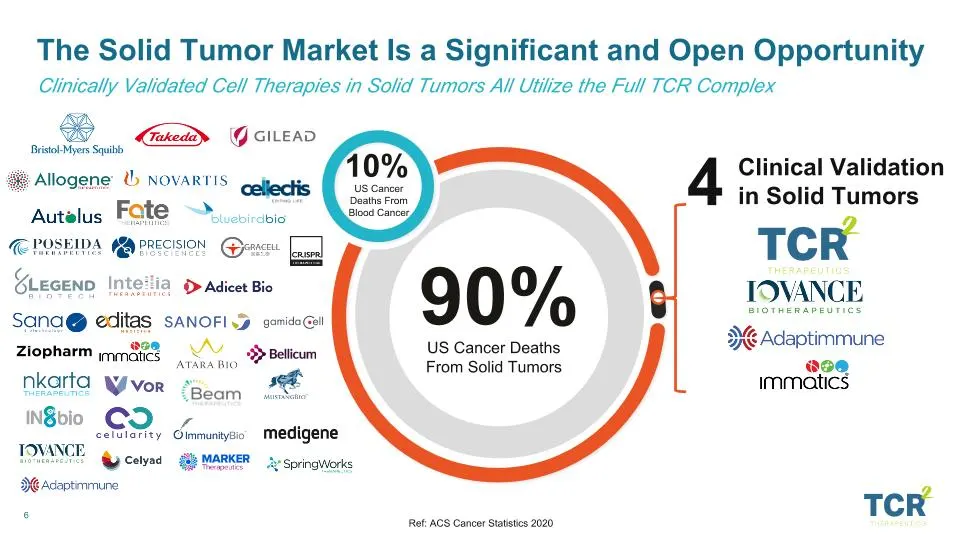
90% US Cancer Deaths From Solid Tumors Clinical Validation in Solid Tumors 4 The Solid Tumor Market Is a Significant and Open Opportunity 10% US Cancer Deaths From Blood Cancer Ref: ACS Cancer Statistics 2020 Clinically Validated Cell Therapies in Solid Tumors All Utilize the Full TCR Complex
Slide 7: Advancing a Diverse Pipeline of Solid Tumor Programs
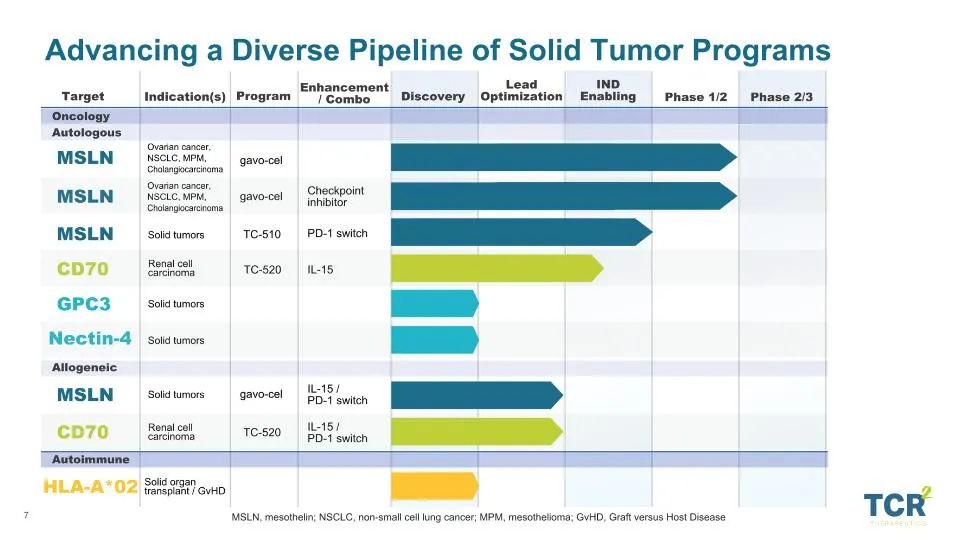
Advancing a Diverse Pipeline of Solid Tumor Programs MSLN, mesothelin; NSCLC, non-small cell lung cancer; MPM, mesothelioma; GvHD, Graft versus Host Disease
Slide 8: Executing Pipeline Value Strategy
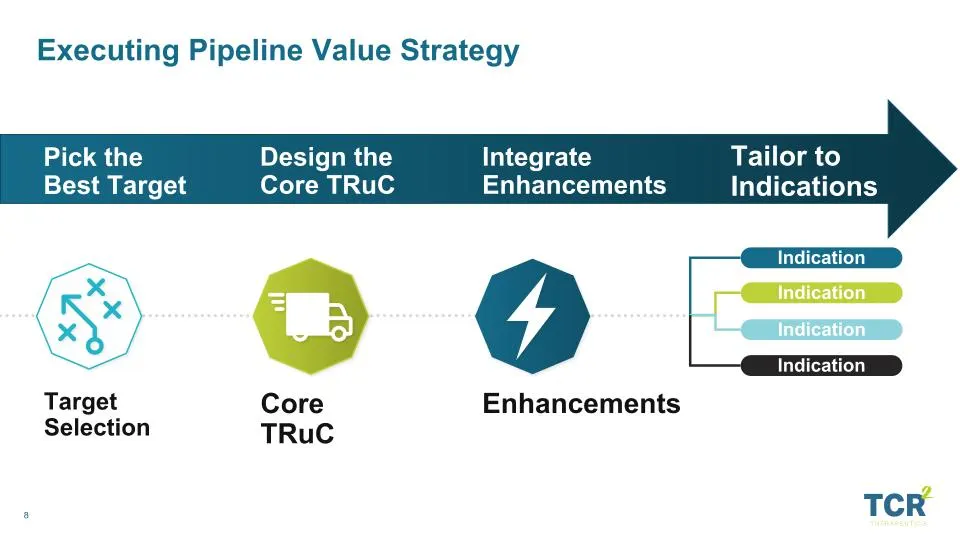
Executing Pipeline Value Strategy Target Selection Core TRuC Enhancements Indication Indication Indication Indication Pick the Best Target Design the Core TRuC Integrate Enhancements Tailor to Indications
Slide 9: Advancing a Differentiated Approach in Cell Therapy
Advancing a Differentiated Approach in Cell Therapy Utilizing the Full Power of the TCR Robert Hofmeister, Ph.D. Chief Scientific Officer
Slide 10: TCR-Based Therapies: An Innovative Approach in Solid Tumors
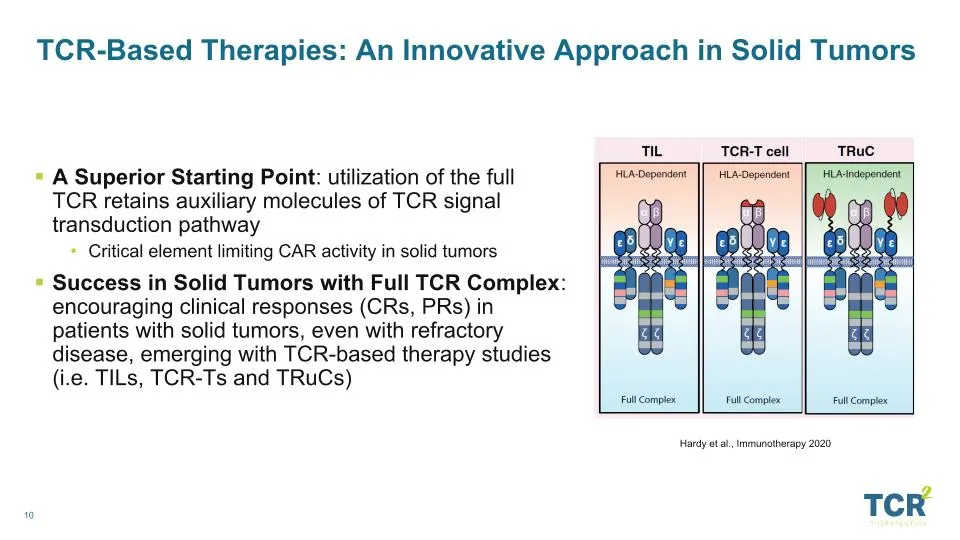
TCR-Based Therapies: An Innovative Approach in Solid Tumors A Superior Starting Point: utilization of the full TCR retains auxiliary molecules of TCR signal transduction pathway Critical element limiting CAR activity in solid tumors Success in Solid Tumors with Full TCR Complex: encouraging clinical
Slide 11: Evolving the Natural Power of the TCR
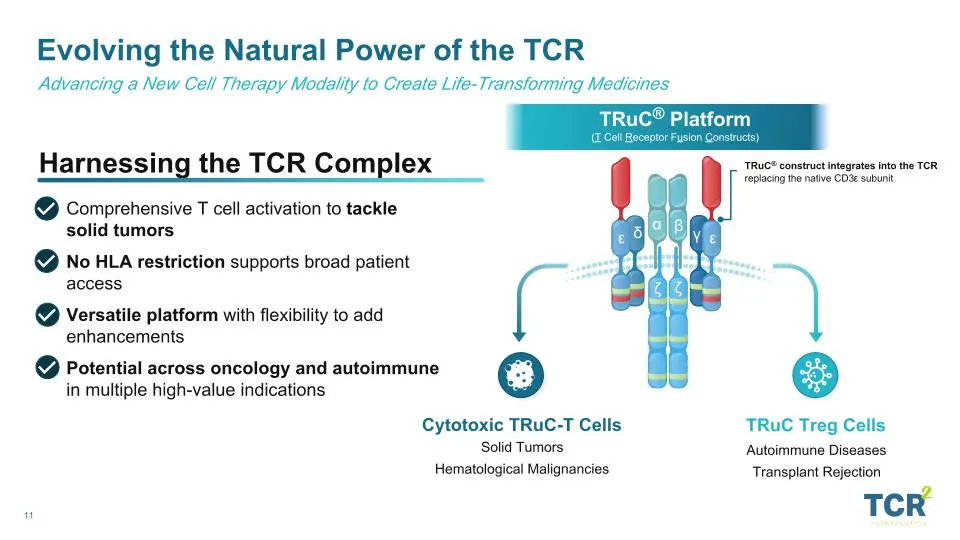
Evolving the Natural Power of the TCR Harnessing the TCR Complex Comprehensive T cell activation to tackle solid tumors No HLA restriction supports broad patient access Versatile platform with flexibility to add enhancements Potential across oncology and autoimmune in multiple high-value indications
Slide 12: Mesothelin Targeted Therapies
Mesothelin Targeted Therapies Raffit Hassan, M.D. Chief of Thoracic and GI Malignancies Branch at the National Cancer Institute
Slide 13: gavo-cel Clinical Update
gavo-cel Clinical Update Alfonso Quintás-Cardama, M.D. Chief Medical Officer Identification of RP2D within Reach
Slide 14: gavo-cel patient characteristics
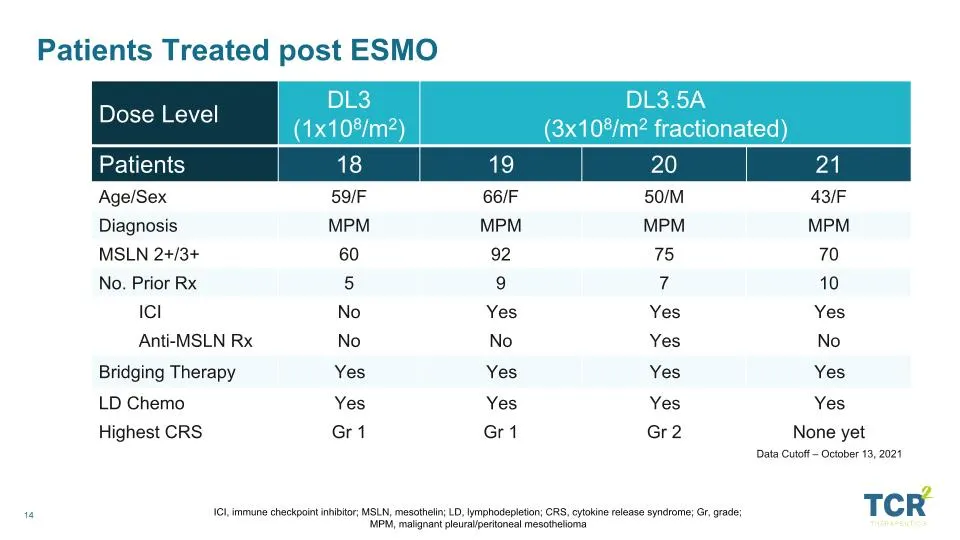
ICI, immune checkpoint inhibitor; MSLN, mesothelin; LD, lymphodepletion; CRS, cytokine release syndrome; Gr, grade; MPM, malignant pleural/peritoneal mesothelioma Data Cutoff – October 13, 2021 Dose Level DL3 (1x10⁸/m2) DL3.5A (3x10⁸/m2 fractionated) DL3.5A DL3.5A Patients 18 19 20 21 Age/Sex 59/F 6
Slide 15: gavo-cel Phase Summary and Next Steps
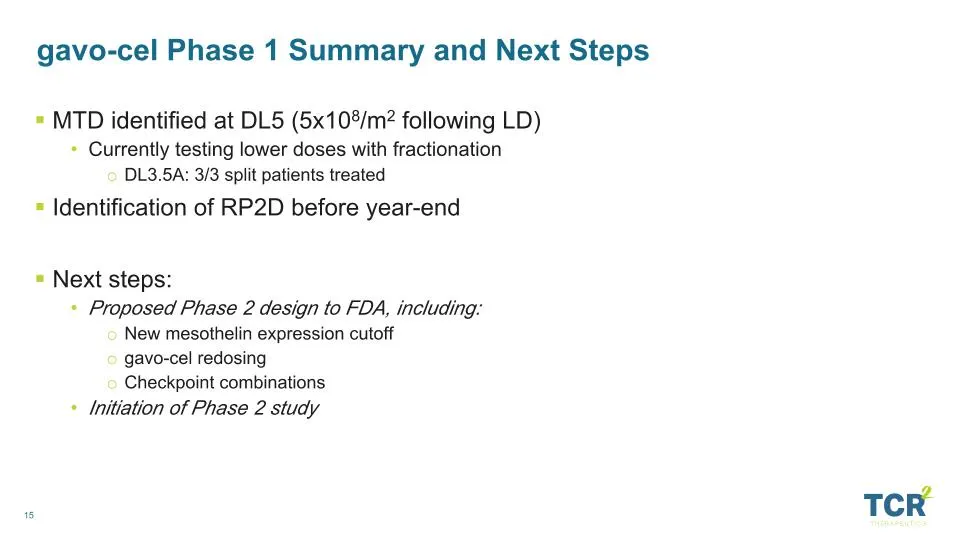
gavo-cel Phase 1 Summary and Next Steps MTD identified at DL5 (5x10⁸/m2 following LD) Currently testing lower doses with fractionation DL3.5A: 3/3 split patients treated Identification of RP2D before year-end Next steps: Proposed Phase 2 design to FDA, including: New mesothelin expression cutoff gav
Slide 16: gavo-cel + Checkpoint Inhibitor Combination Rationale
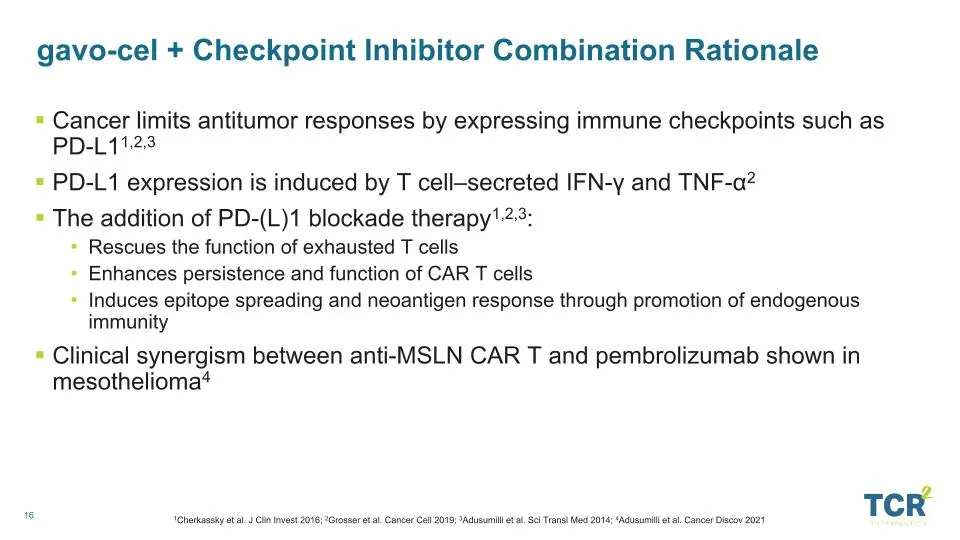
gavo-cel + Checkpoint Inhibitor Combination Rationale Cancer limits antitumor responses by expressing immune checkpoints such as PD-L11,2,3 PD-L1 expression is induced by T cell–secreted IFN-γ and TNF-α2 The addition of PD-(L)1 blockade therapy1,2,3: Rescues the function of exhausted T cells Enhance
Slide 17: Boosting TRuC-T Cells with Enhancements
Matching Enhancements with Indication Specific Biology Boosting TRuC-T Cells with Enhancements Robert Hofmeister, Ph.D. Chief Scientific Officer
Slide 18: The TRuC Platform Has Exponential Options
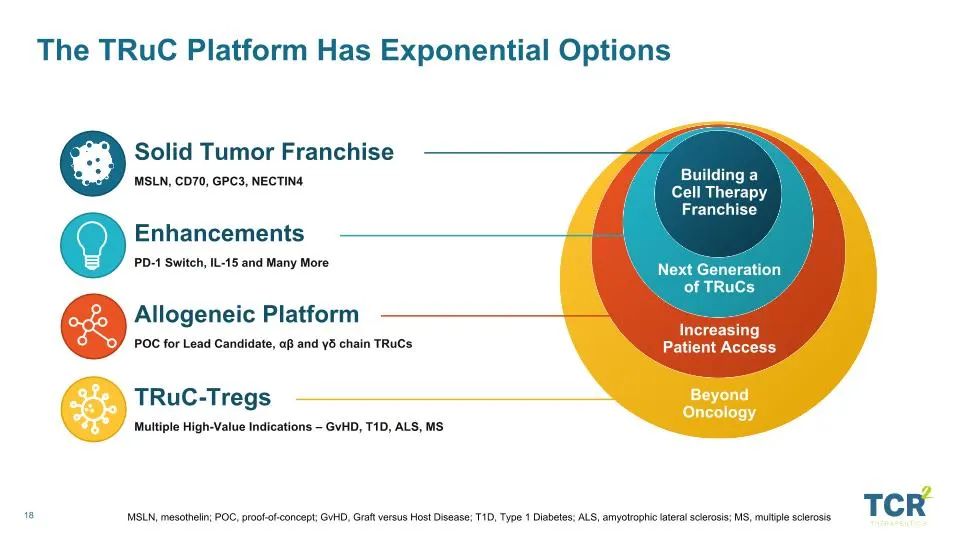
The TRuC Platform Has Exponential Options TRuC-Tregs Multiple High-Value Indications – GvHD, T1D, ALS, MS Solid Tumor Franchise MSLN, CD70, GPC3, NECTIN4 Building a Cell Therapy Franchise Next Generation of TRuCs Beyond Oncology Increasing Patient Access Enhancements PD-1 Switch, IL-15 and Many More
Slide 19: Immunosuppressive Mechanisms in Solid Tumors Drive T Cells into Dysfunction
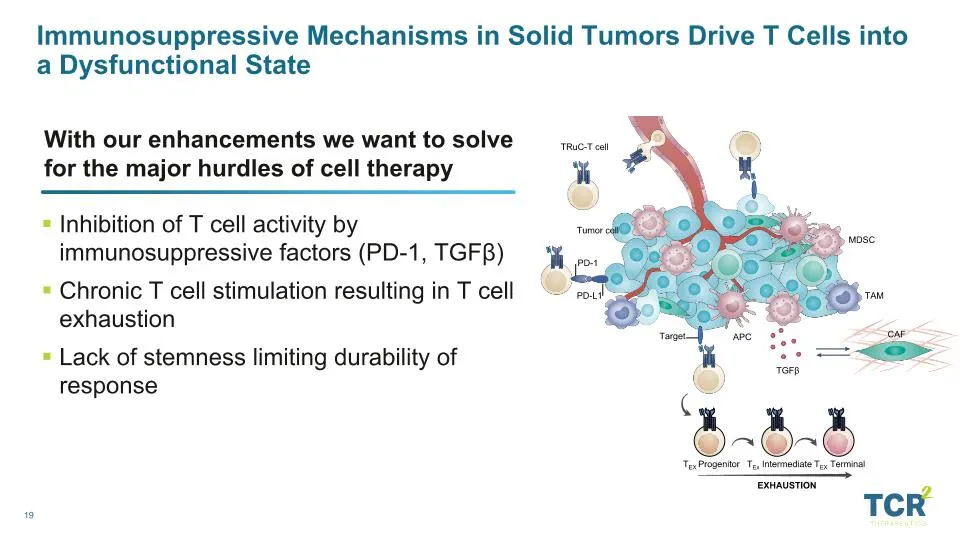
Inhibition of T cell activity by immunosuppressive factors (PD-1, TGFβ) Chronic T cell stimulation resulting in T cell exhaustion Lack of stemness limiting durability of response Immunosuppressive Mechanisms in Solid Tumors Drive T Cells into a Dysfunctional State PD-1 PD-L1 CAF TAM MDSC APC Target
Slide 20: Enhancements Endow TRuC-T Cells with Improved Characteristics
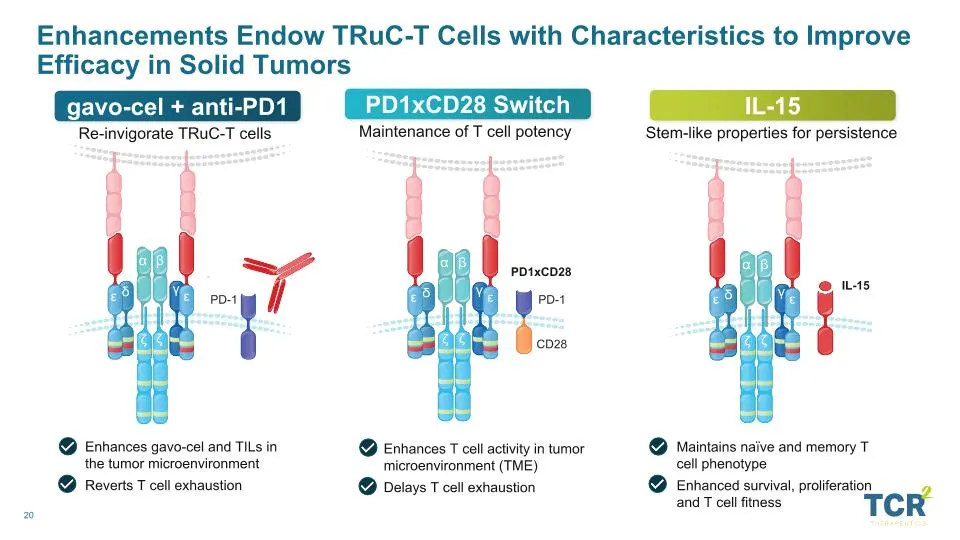
Enhancements Endow TRuC-T Cells with Characteristics to Improve Efficacy in Solid Tumors PD-1 Re-invigorate TRuC-T cells gavo-cel + anti-PD1 Enhances gavo-cel and TILs in the tumor microenvironment Reverts T cell exhaustion PD-1 CD28 PD1xCD28 Maintenance of T cell potency PD1xCD28 Switch Enhances T
Slide 21: PD1xCD28 & IL-15 Suited for Different Tumor Environments
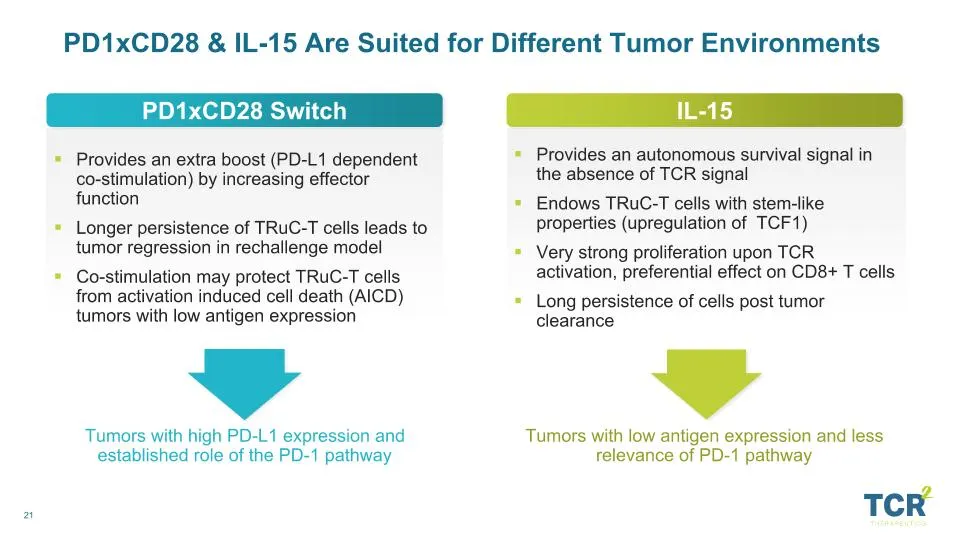
PD1xCD28 & IL-15 Are Suited for Different Tumor Environments Tumors with low antigen expression and less relevance of PD-1 pathway Provides an autonomous survival signal in the absence of TCR signal Endows TRuC-T cells with stem-like properties (upregulation of TCF1) Very strong proliferation upon T
Slide 22: TC-510: gavo-cel + PD1xCD28 Switch
Expanding our Reach into Mesothelin-Expressing Tumors TC-510: gavo-cel + PD1xCD28 Switch Robert Tighe Vice President of Research
Slide 23: Enhancing gavo-cel with a PD1xCD28 Switch Receptor
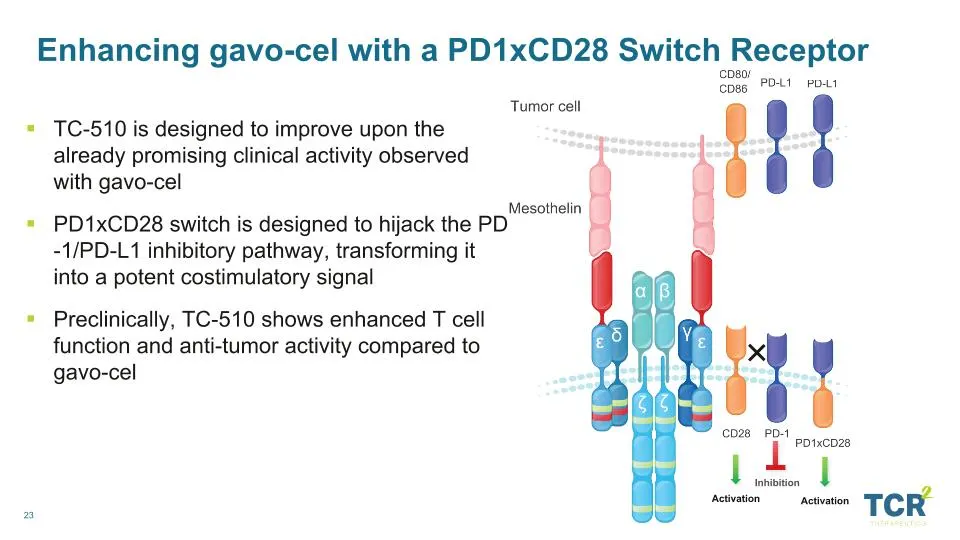
Enhancing gavo-cel with a PD1xCD28 Switch Receptor TC-510 is designed to improve upon the already promising clinical activity observed with gavo-cel PD1xCD28 switch is designed to hijack the PD-1/PD-L1 inhibitory pathway, transforming it into a potent costimulatory signal Preclinically, TC-510 shows
Slide 24: Elucidating TC-510's Mechanism of Action
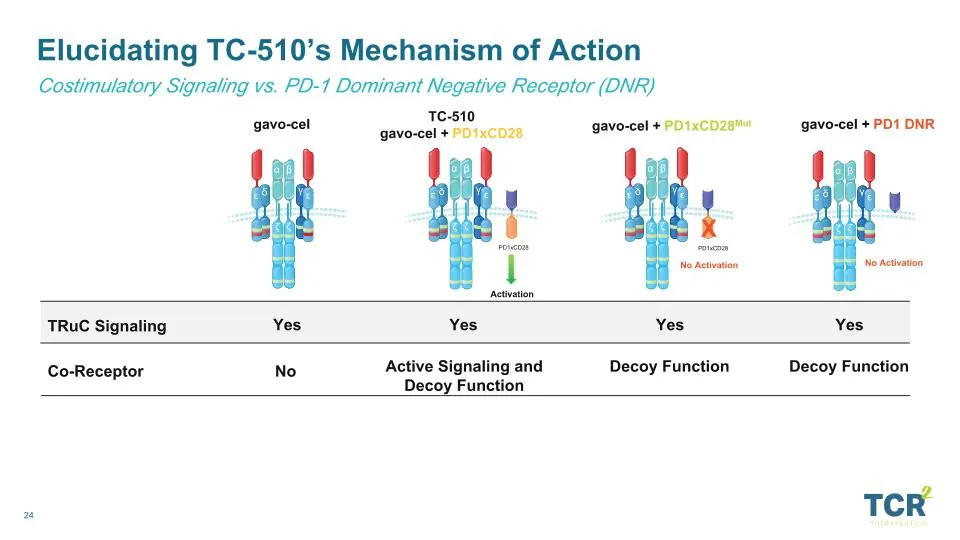
Elucidating TC-510’s Mechanism of Action Active Signaling and Decoy Function TRuC Signaling Co-Receptor No Yes Yes gavo-cel TC-510 gavo-cel + PD1xCD28 PD1xCD28 Activation Decoy Function Yes gavo-cel + PD1 DNR No Activation Decoy Function Yes gavo-cel + PD1xCD28Mut X No Activation PD1xCD28 Costimulat
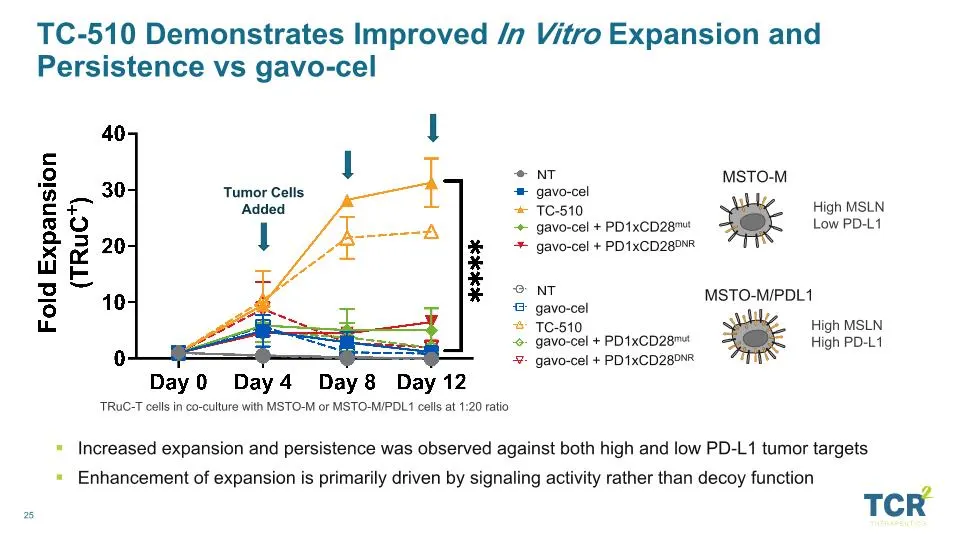
Slide 25: TC-510 Improved In Vitro Expansion and Persistence
TRuC + PD1xCD28Mut NT MSLN εTRuC TRuC + PD1xCD28 TRuC + PD1DNR NT MSLN εTRuC TRuC + PD1xCD28 TRuC + PD1xCD28Mut TRuC + PD1DNR MSTO-M High MSLN Low PD-L1 MSTO-M/PDL1 High MSLN High PD-L1 Increased expansion and persistence was observed against both high and low PD-L1 tumor targets Enhancement of expa
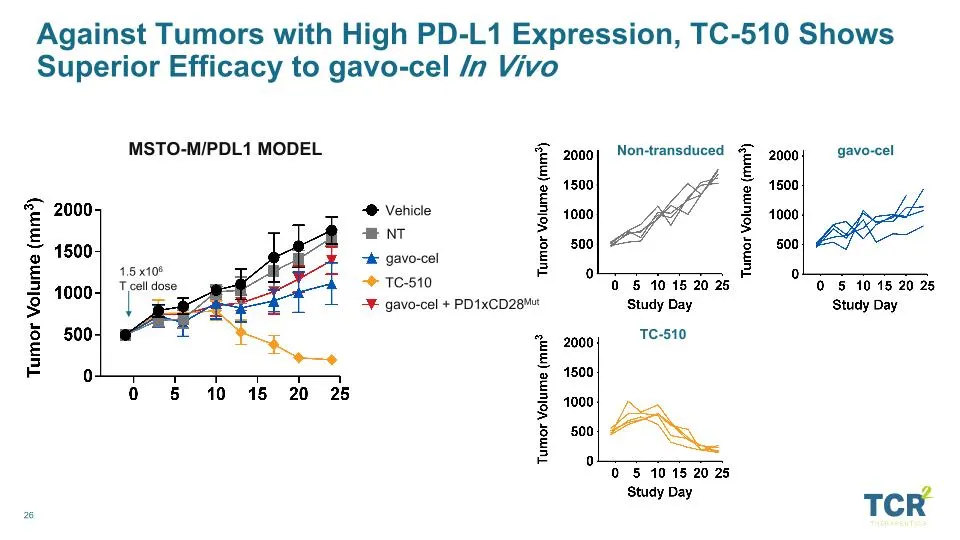
Slide 26: TC-510 Superior Efficacy to gavo-cel In Vivo
Non-transduced gavo-cel TC-510 NT gavo-cel TC-510 Vehicle gavo-cel + PD1xCD28Mut 1.5 x10⁶ T cell dose MSTO-M/PDL1 MODEL Against Tumors with High PD-L1 Expression, TC-510 Shows Superior Efficacy to gavo-cel In Vivo
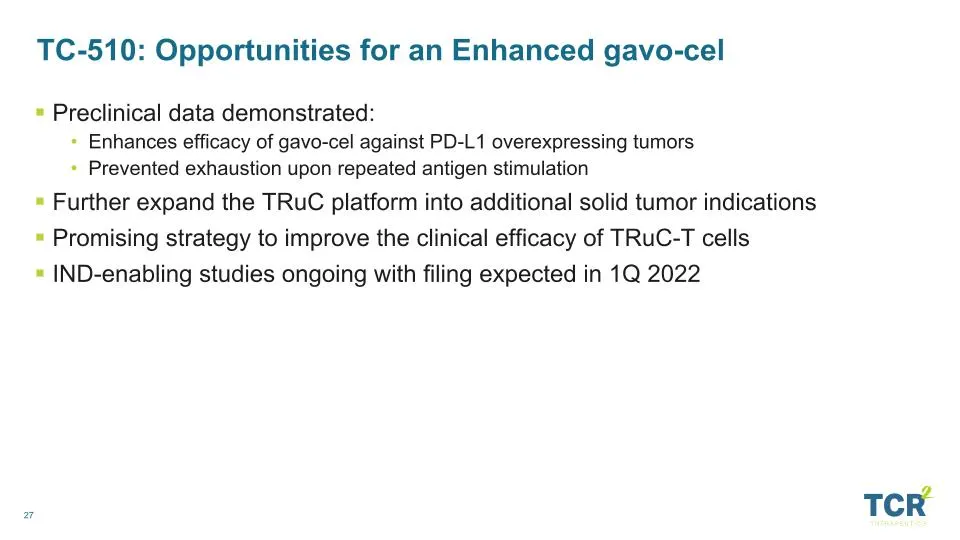
Slide 27: TC-510: Opportunities for an Enhanced gavo-cel
TC-510: Opportunities for an Enhanced gavo-cel Preclinical data demonstrated: Enhances efficacy of gavo-cel against PD-L1 overexpressing tumors Prevented exhaustion upon repeated antigen stimulation Further expand the TRuC platform into additional solid tumor indications Promising strategy to improv
Slide 28: IL-15 Enhancements
Evolving TRuC-T Cell Persistence and Phenotype with IL-15 IL-15 Enhancements Robert Tighe Vice President of Research
Slide 29: IL-15 as an Enhancement for T Cell Function
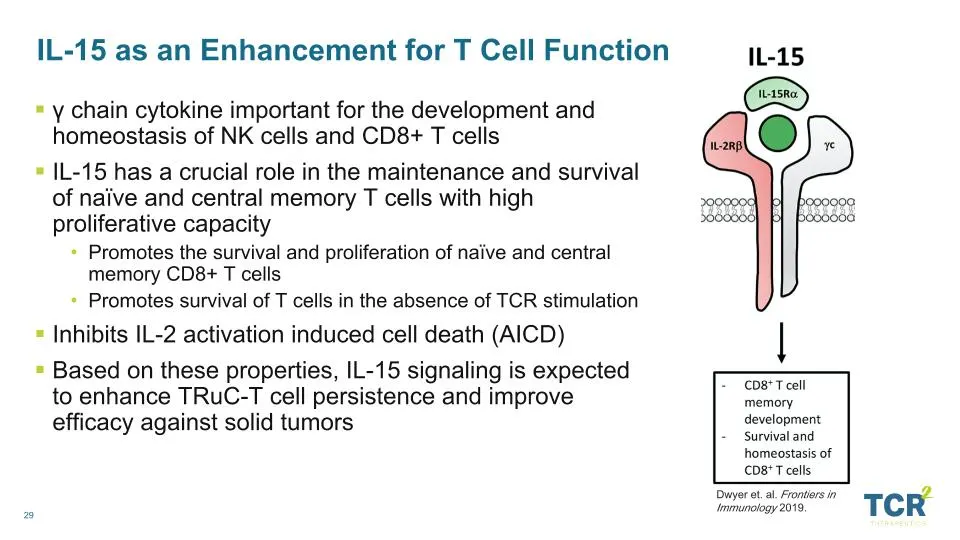
IL-15 as an Enhancement for T Cell Function γ chain cytokine important for the development and homeostasis of NK cells and CD8+ T cells IL-15 has a crucial role in the maintenance and survival of naïve and central memory T cells with high proliferative capacity Promotes the survival and proliferatio
Slide 30: Head-to-Head Testing of Two IL-15 Concepts
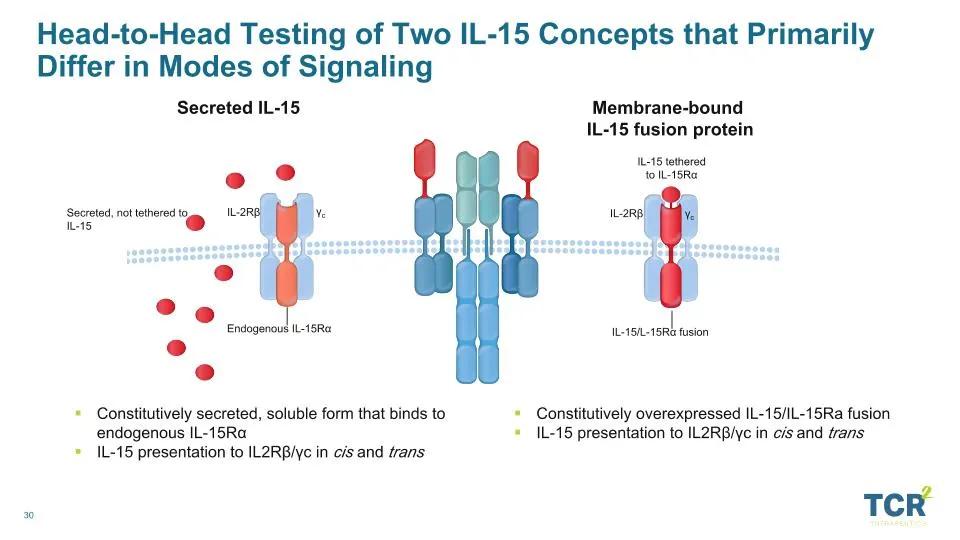
Constitutively secreted, soluble form that binds to endogenous IL-15Rα IL-15 presentation to IL2Rβ/γc in cis and trans Constitutively overexpressed IL-15/IL-15Ra fusion IL-15 presentation to IL2Rβ/γc in cis and trans Secreted IL-15 Membrane-bound IL-15 fusion protein IL-15 tethered to IL-15Rα Secret
Slide 31: IL-15 TRuC-T Cells Upregulate Stemness Markers and Persist In Vitro
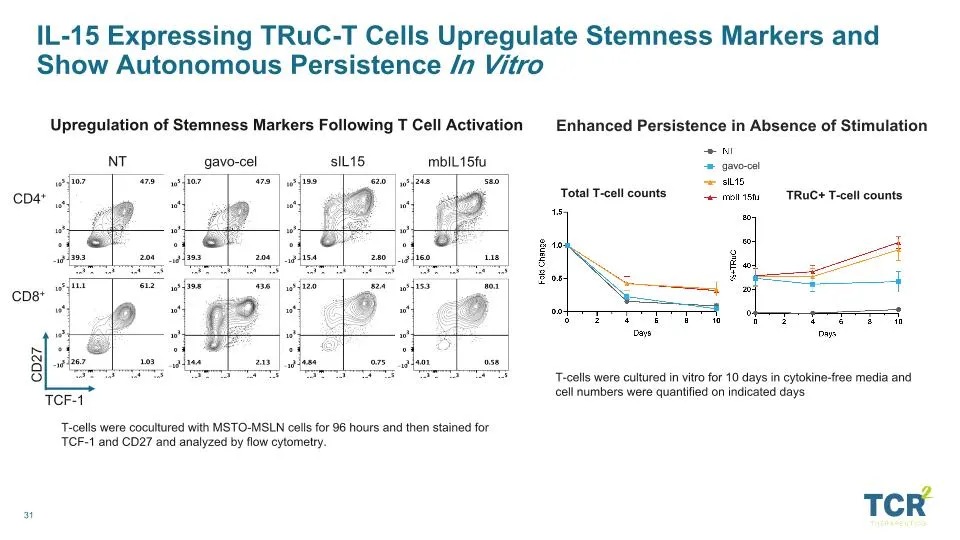
IL-15 Expressing TRuC-T Cells Upregulate Stemness Markers and Show Autonomous Persistence In Vitro gavo-cel sIL15 mbIL15fu TCF-1 CD27 NT CD4+ CD8+ Upregulation of Stemness Markers Following T Cell Activation T-cells were cocultured with MSTO-MSLN cells for 96 hours and then stained for TCF-1 and CD2
Slide 32: IL-15 Enhanced TRuCs Show Durable Persistence In Vivo
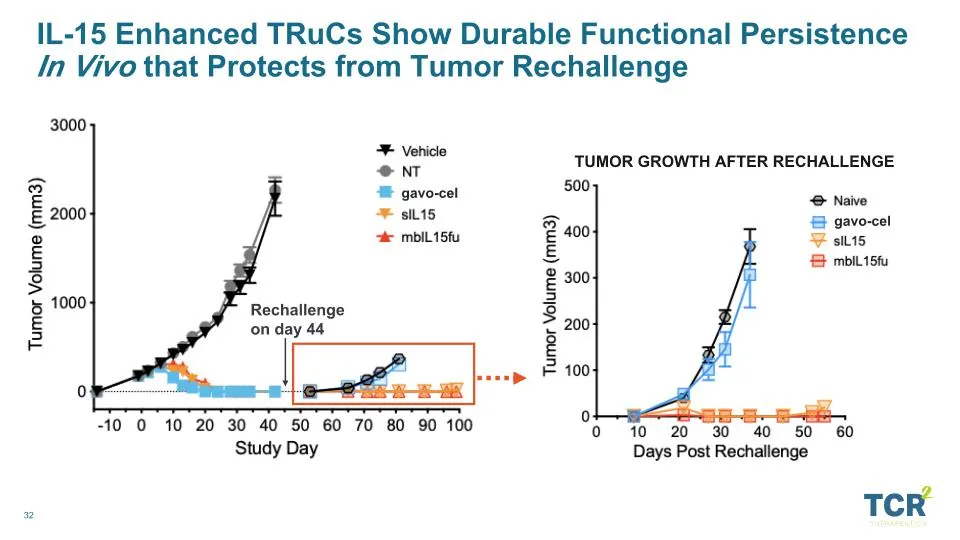
Rechallenge on day 44 Tumor Growth After Rechallenge IL-15 Enhanced TRuCs Show Durable Functional Persistence In Vivo that Protects from Tumor Rechallenge gavo-cel gavo-cel
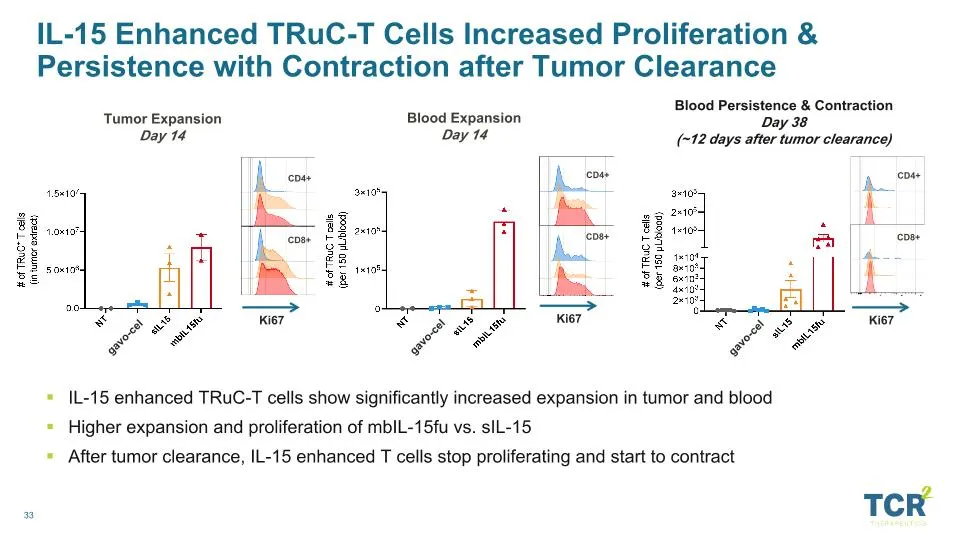
Slide 33: IL-15 Enhanced TRuC-T Cells Increased Proliferation & Persistence
Tumor Expansion Day 14 Blood Expansion Day 14 Ki67 CD4+ CD8+ Ki67 IL-15 enhanced TRuC-T cells show significantly increased expansion in tumor and blood Higher expansion and proliferation of mbIL-15fu vs. sIL-15 After tumor clearance, IL-15 enhanced T cells stop proliferating and start to contract CD
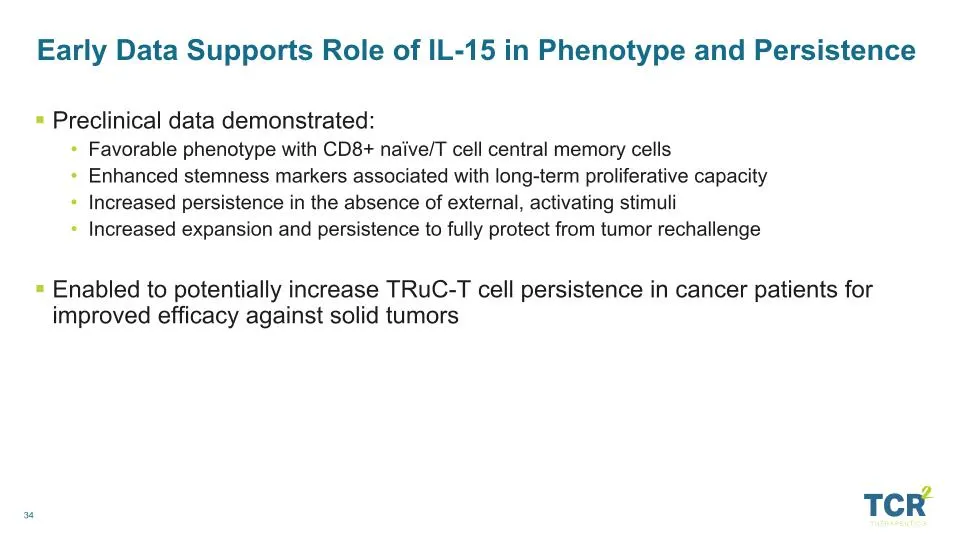
Slide 34: Early Data Supports Role of IL-15 in Phenotype and Persistence
Preclinical data demonstrated: Favorable phenotype with CD8+ naïve/T cell central memory cells Enhanced stemness markers associated with long-term proliferative capacity Increased persistence in the absence of external, activating stimuli Increased expansion and persistence to fully protect from tum
Slide 35: Identification of Novel Targets
CD70, GPC3, NECTIN4 Identification of Novel Targets Robert Tighe Vice President of Research
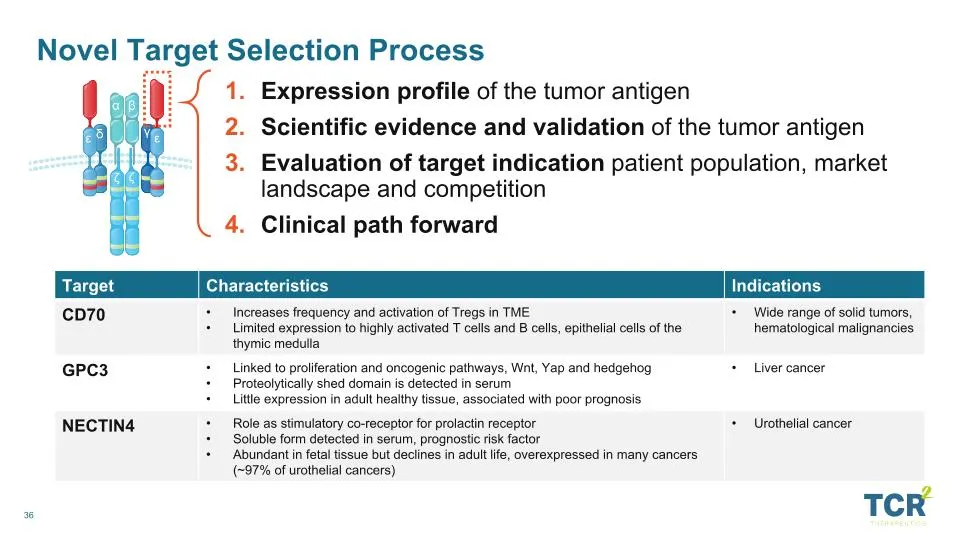
Slide 36: Novel Target Selection Process
Novel Target Selection Process Expression profile of the tumor antigen Scientific evidence and validation of the tumor antigen Evaluation of target indication patient population, market landscape and competition Clinical path forward Target Characteristics Indications CD70 Increases frequency and ac
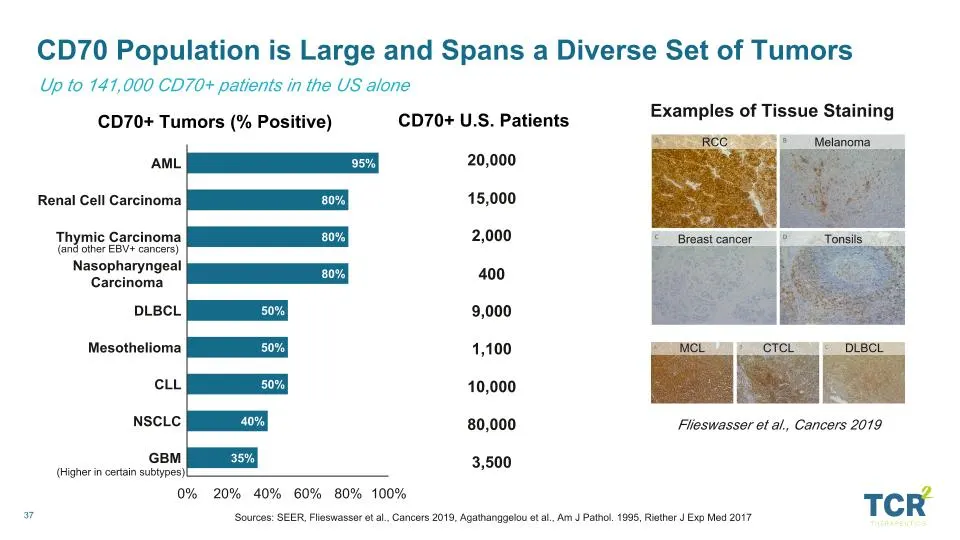
Slide 37: CD70 Population is Large and Spans Diverse Tumors
CD70+ Tumors (% Positive) CD70+ U.S. Patients 15,000 20,000 2,000 9,000 1,100 10,000 80,000 3,500 400 (and other EBV+ cancers) (Higher in certain subtypes) Sources: SEER, Flieswasser et al., Cancers 2019, Agathanggelou et al., Am J Pathol. 1995, Riether J Exp Med 2017 RCC Melanoma Breast cancer Tons
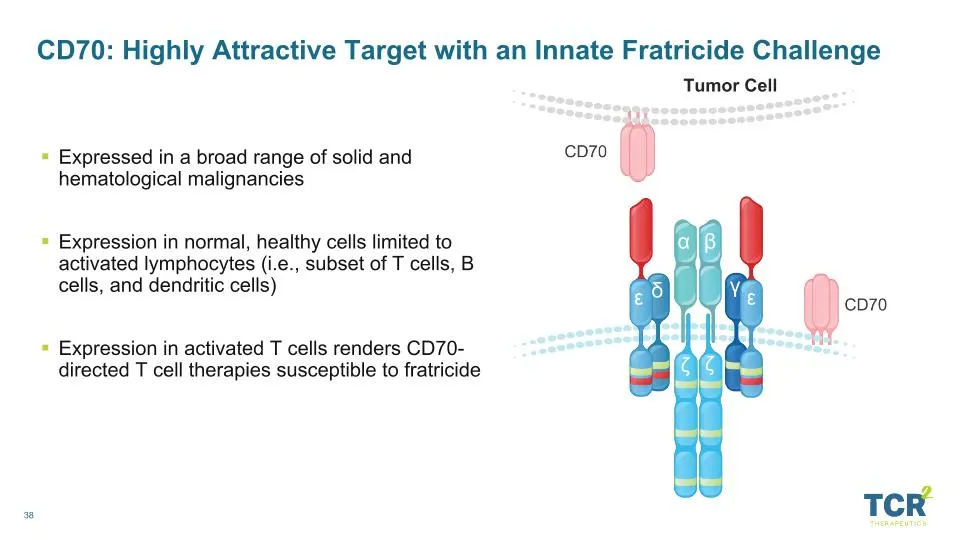
Slide 38: CD70: Highly Attractive Target with Innate Fratricide Challenge
Expressed in a broad range of solid and hematological malignancies Expression in normal, healthy cells limited to activated lymphocytes (i.e., subset of T cells, B cells, and dendritic cells) Expression in activated T cells renders CD70-directed T cell therapies susceptible to fratricide Tumor Cell
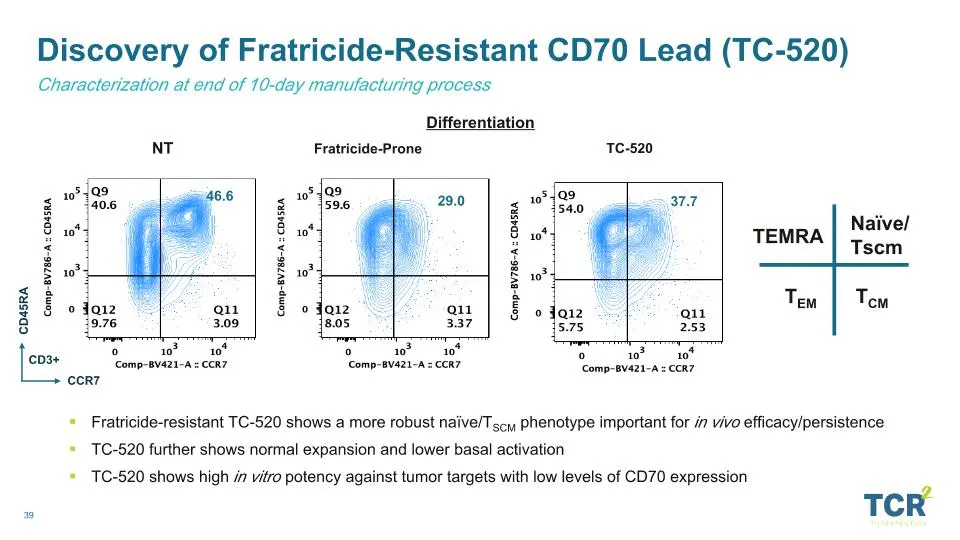
Slide 39: Discovery of Fratricide-Resistant CD70 Lead (TC-520)
Discovery of Fratricide-Resistant CD70 Lead (TC-520) NT Fratricide-Prone TC-520 CCR7 CD45RA CD3+ 46.6 29.0 37.7 Differentiation Fratricide-resistant TC-520 shows a more robust naïve/TSCM phenotype important for in vivo efficacy/persistence TC-520 further shows normal expansion and lower basal activa
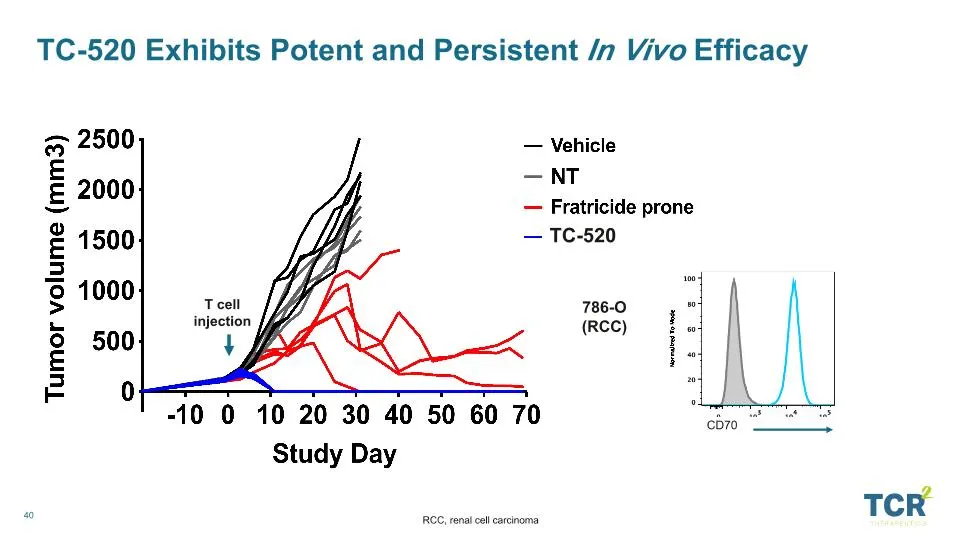
Slide 40: TC-520 Exhibits Potent and Persistent In Vivo Efficacy
RCC, renal cell carcinoma T cell injection TC-520 786-O (RCC) CD70 TC-520 Exhibits Potent and Persistent In Vivo Efficacy
Slide 41: TC-520 Potent Efficacy in Low and Moderate Expression Models
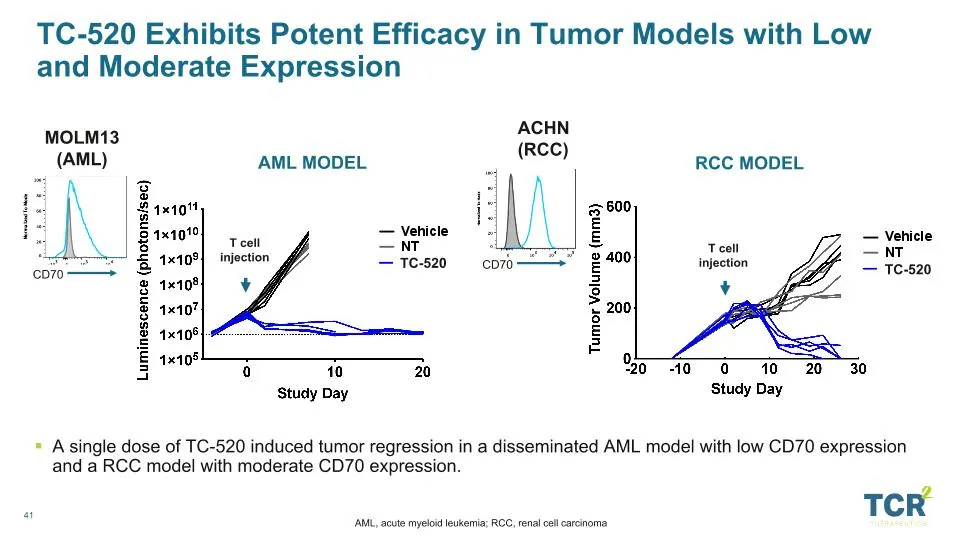
TC-520 Exhibits Potent Efficacy in Tumor Models with Low and Moderate Expression A single dose of TC-520 induced tumor regression in a disseminated AML model with low CD70 expression and a RCC model with moderate CD70 expression. T cell injection MOLM13 (AML) TC-520 CD70 AML MODEL T cell injection A
Slide 42: IL-15 Enhancement Improves TC-520 Phenotype and Function
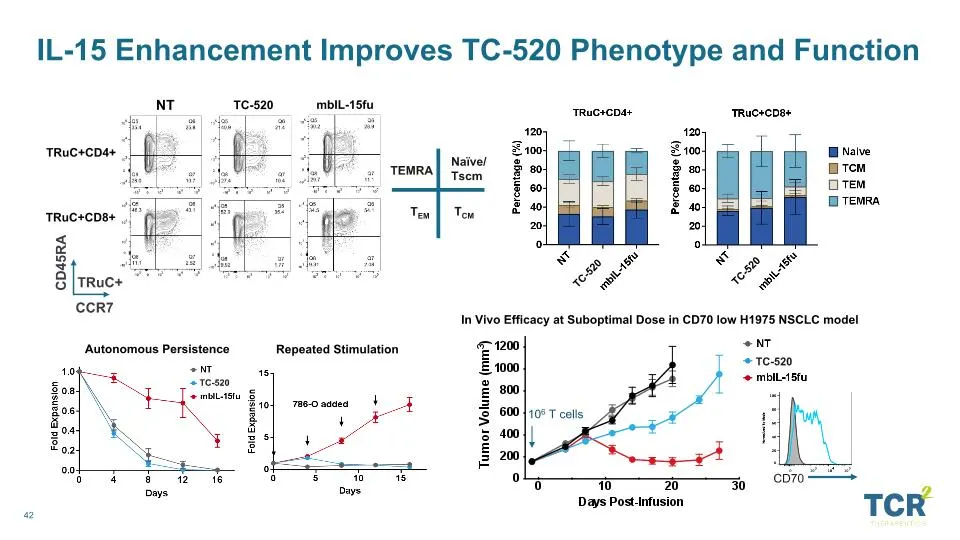
NT TC-520 mbIL-15fu TRuC+CD4+ TRuC+CD8+ CCR7 CD45RA TRuC+ Autonomous Persistence Repeated Stimulation TC-520 In Vivo Efficacy at Suboptimal Dose in CD70 low H1975 NSCLC model CD70 106 T cells TC-520 IL-15 Enhancement Improves TC-520 Phenotype and Function TEMRA Naïve/ Tscm TCM TEM TC-520 TC-520
Slide 43: TC-520: Pursuing Path Forward with Enhancements
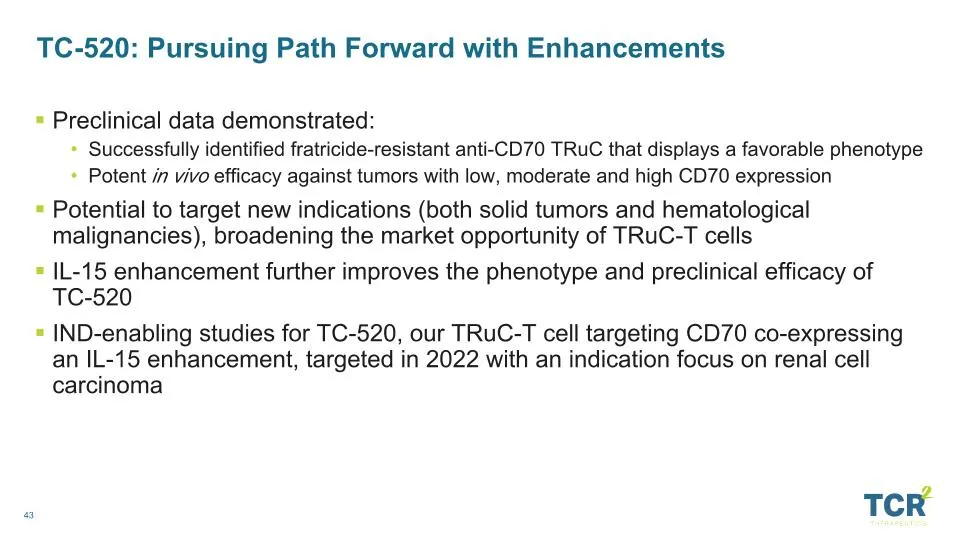
Preclinical data demonstrated: Successfully identified fratricide-resistant anti-CD70 TRuC that displays a favorable phenotype Potent in vivo efficacy against tumors with low, moderate and high CD70 expression Potential to target new indications (both solid tumors and hematological malignancies), br
Slide 44: Allogeneic TRuCs
Broadening Platform, Increasing Patient Access Allogeneic TRuCs Robert Hofmeister, Ph.D. Chief Scientific Officer
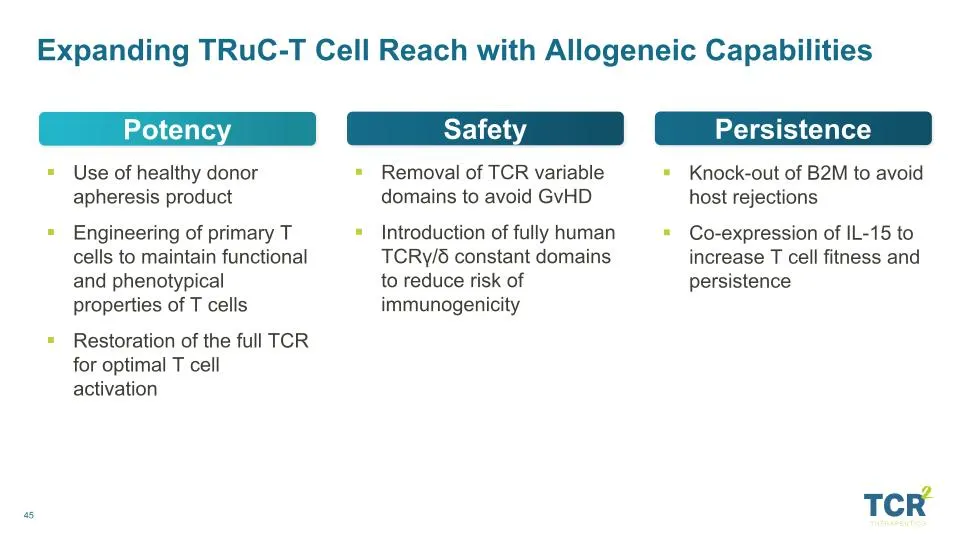
Slide 45: Expanding TRuC-T Cell Reach with Allogeneic Capabilities
Expanding TRuC-T Cell Reach with Allogeneic Capabilities Use of healthy donor apheresis product Engineering of primary T cells to maintain functional and phenotypical properties of T cells Restoration of the full TCR for optimal T cell activation Potency Removal of TCR variable domains to avoid GvHD
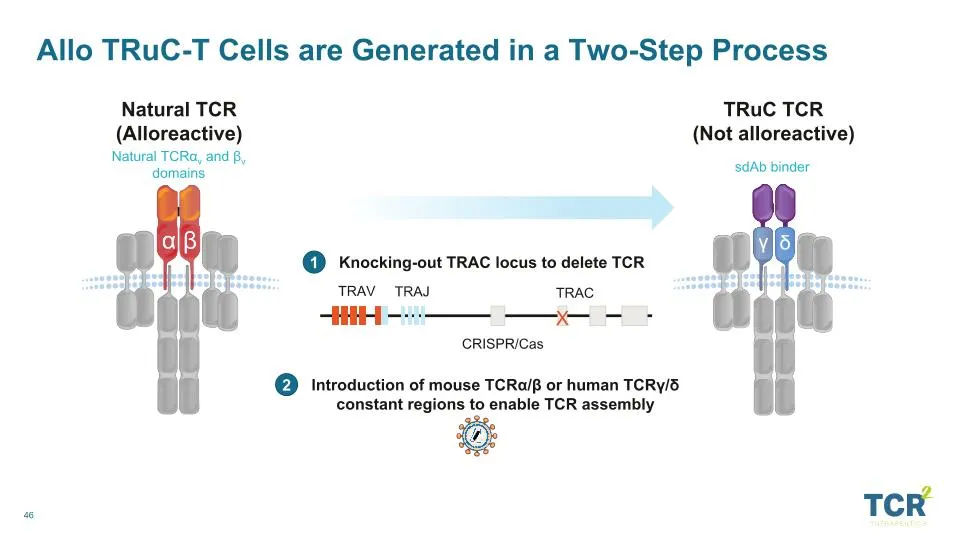
Slide 46: Allo TRuC-T Cells are Generated in a Two-Step Process
Allo TRuC-T Cells are Generated in a Two-Step Process Knocking-out TRAC locus to delete TCR 1 TRAV TRAJ TRAC X CRISPR/Cas Introduction of mouse TCRα/β or human TCRγ/δ constant regions to enable TCR assembly 2 γ δ sdAb binder TRuC TCR (Not alloreactive) Natural TCRαv and βv domains Natural TCR (Allor
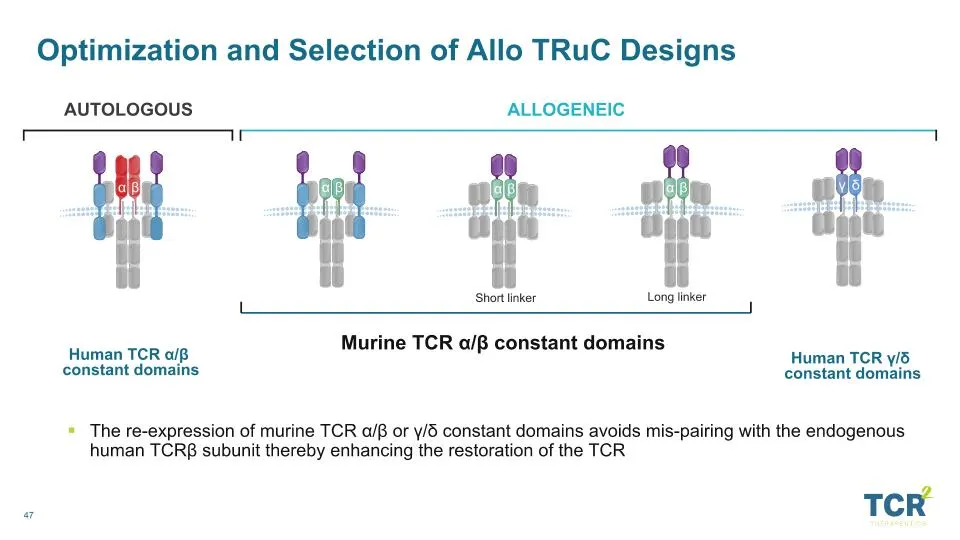
Slide 47: Optimization and Selection of Allo TRuC Designs
Optimization and Selection of Allo TRuC Designs Murine TCR α/β constant domains Human TCR γ/δ constant domains Human TCR α/β constant domains Autologous Allogeneic Long linker Short linker α β α β α β γ δ α β The re-expression of murine TCR α/β or γ/δ constant domains avoids mis-pairing with the end
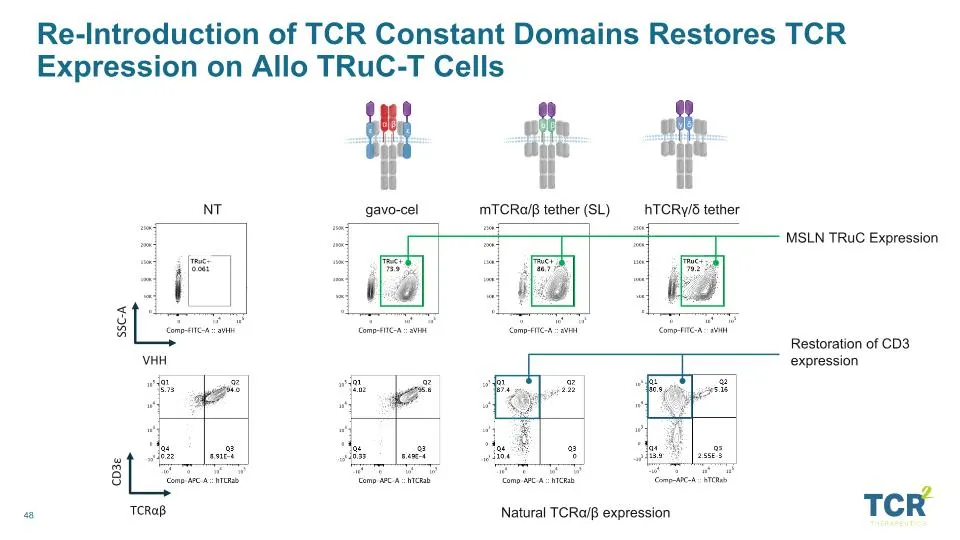
Slide 48: Re-Introduction of TCR Constant Domains Restores TCR Expression
NT gavo-cel α β α β TCRαβ CD3ε VHH SSC-A ε ε mTCRα/β tether (SL) γ δ hTCRγ/δ tether MSLN TRuC Expression Restoration of CD3 expression Natural TCRα/β expression Re-Introduction of TCR Constant Domains Restores TCR Expression on Allo TRuC-T Cells
Slide 49: Mesothelin-Specific Allo TRuC-T Cells Do Not Cause GvHD
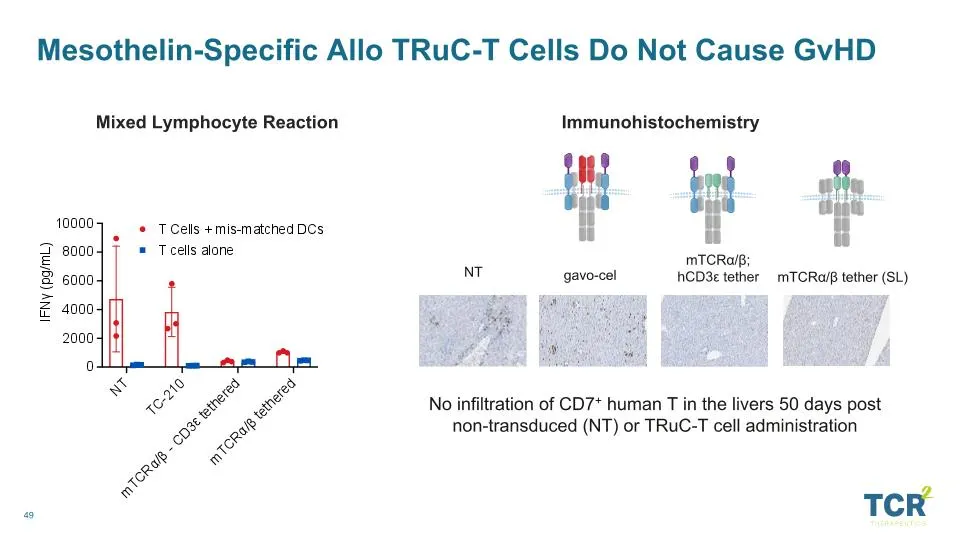
NT No infiltration of CD7+ human T in the livers 50 days post non-transduced (NT) or TRuC-T cell administration Immunohistochemistry gavo-cel mTCRα/β; hCD3ε tether mTCRα/β tether (SL) Mixed Lymphocyte Reaction Mesothelin-Specific Allo TRuC-T Cells Do Not Cause GvHD
Slide 50: Equivalent Anti-Tumor Activity of gavo-cel with Allogeneic TRuC-T Cells
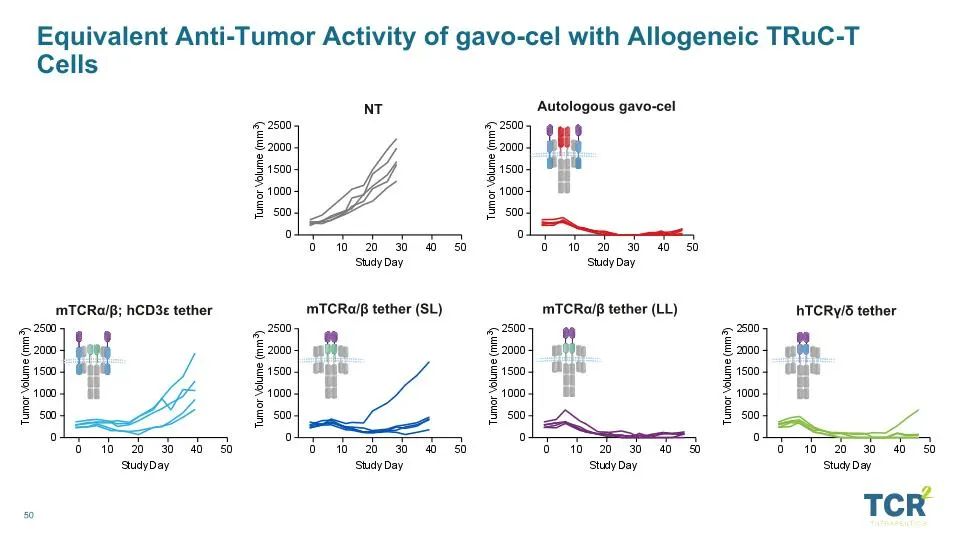
Autologous gavo-cel mTCRα/β; hCD3ε tether mTCRα/β tether (LL) hTCRγ/δ tether mTCRα/β tether (SL) NT Equivalent Anti-Tumor Activity of gavo-cel with Allogeneic TRuC-T Cells
Slide 51: Allogeneic Platform Further Expands Patient Reach
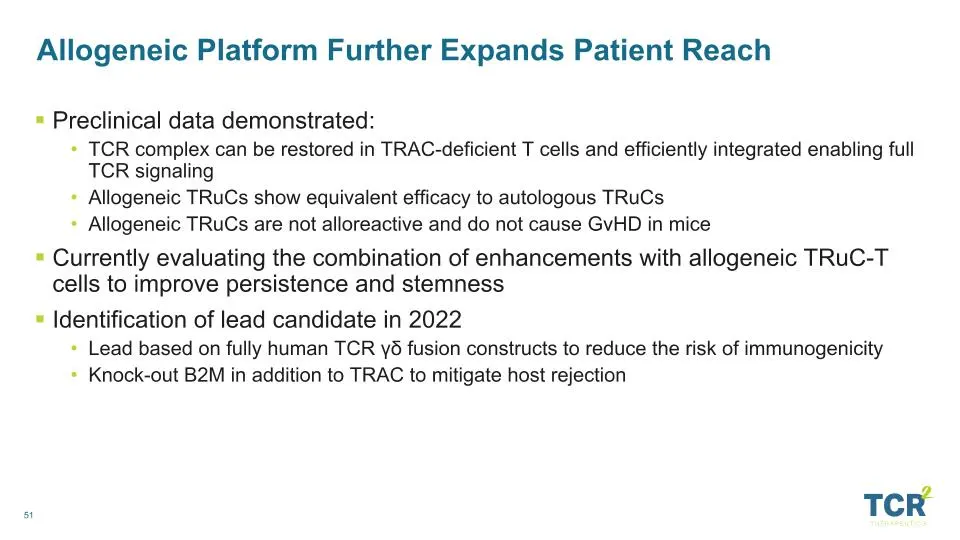
Preclinical data demonstrated: TCR complex can be restored in TRAC-deficient T cells and efficiently integrated enabling full TCR signaling Allogeneic TRuCs show equivalent efficacy to autologous TRuCs Allogeneic TRuCs are not alloreactive and do not cause GvHD in mice Currently evaluating the combi
Slide 52: TRuC Tregs: Diversification Opportunity in Autoimmune Diseases
Diversification Opportunity in Autoimmune Diseases TRuC Tregs Robert Hofmeister, Ph.D. Chief Scientific Officer
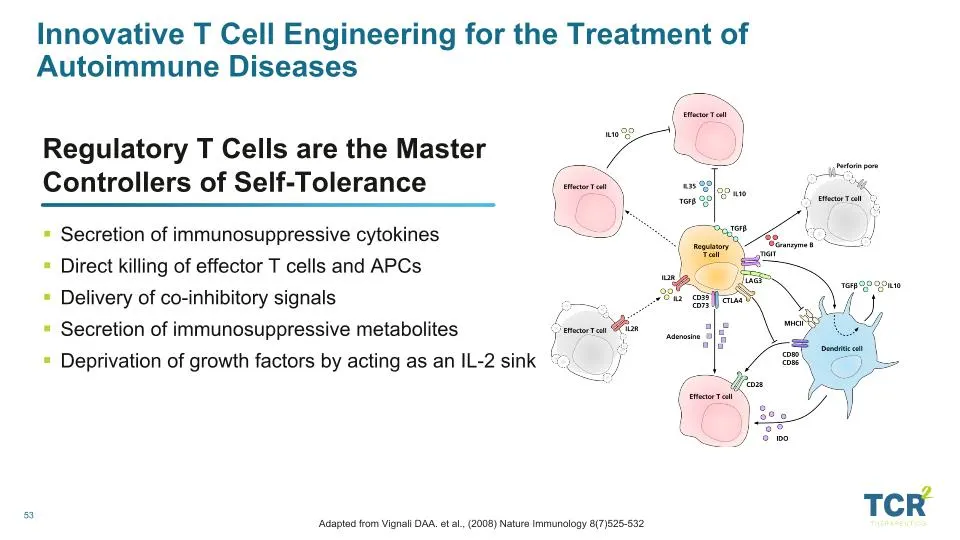
Slide 53: Innovative T Cell Engineering for the Treatment of Autoimmune Diseases
Innovative T Cell Engineering for the Treatment of Autoimmune Diseases Adapted from Vignali DAA. et al., (2008) Nature Immunology 8(7)525-532 Regulatory T Cells are the Master Controllers of Self-Tolerance Secretion of immunosuppressive cytokines Direct killing of effector T cells and APCs Delivery
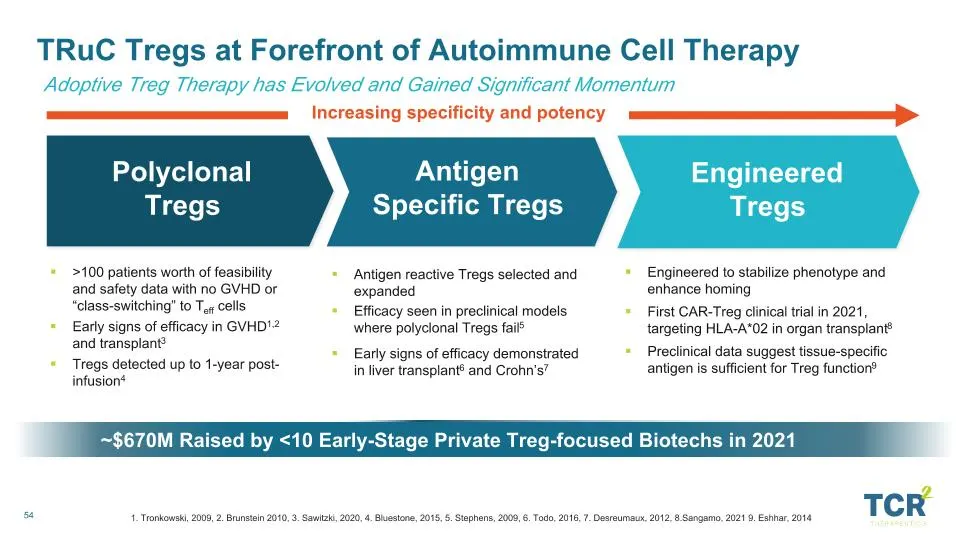
Slide 54: TRuC Tregs at Forefront of Autoimmune Cell Therapy
TRuC Tregs at Forefront of Autoimmune Cell Therapy Increasing specificity and potency Polyclonal Tregs Antigen Specific Tregs Engineered Tregs >100 patients worth of feasibility and safety data with no GVHD or “class-switching” to Teff cells Early signs of efficacy in GVHD1,2 and transplant3 Tregs d
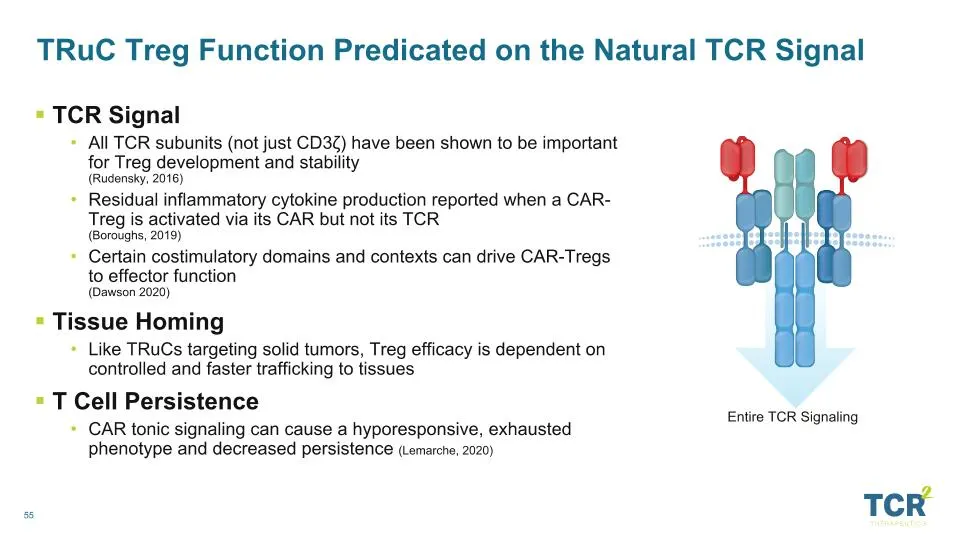
Slide 55: TRuC Treg Function Predicated on the Natural TCR Signal
TCR Signal All TCR subunits (not just CD3ζ) have been shown to be important for Treg development and stability (Rudensky, 2016) Residual inflammatory cytokine production reported when a CAR-Treg is activated via its CAR but not its TCR (Boroughs, 2019) Certain costimulatory domains and contexts can
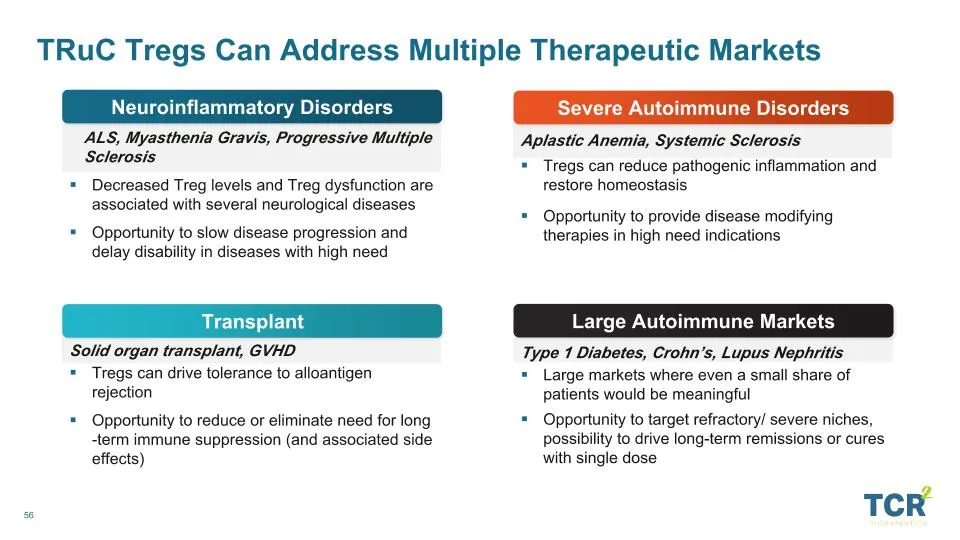
Slide 56: Treg Opportunities Across Autoimmune and Transplant Indications
Neuroinflammatory Disorders ALS, Myasthenia Gravis, Progressive Multiple Sclerosis Decreased Treg levels and Treg dysfunction are associated with several neurological diseases Opportunity to slow disease progression and delay disability in diseases with high need Transplant Solid organ transplant, G
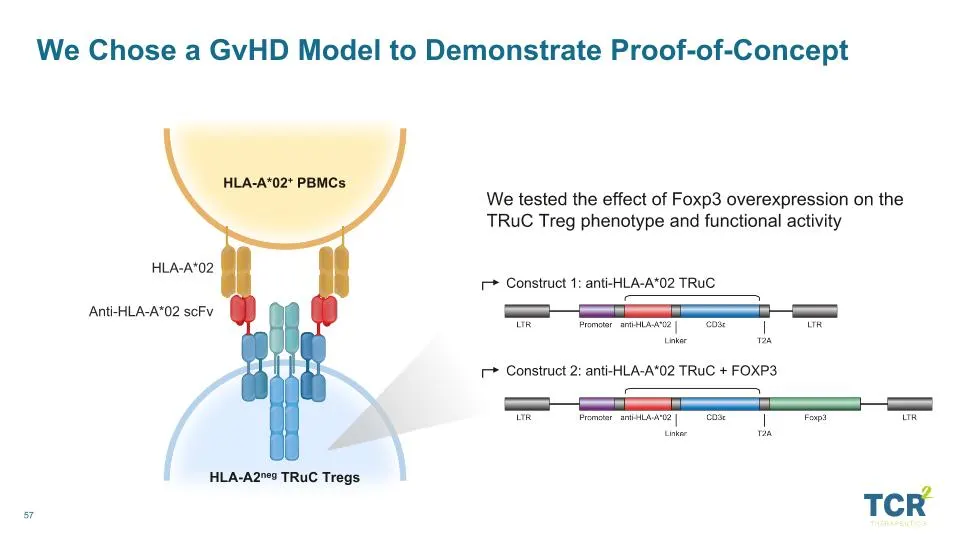
Slide 57: We Chose a GvHD Model to Demonstrate Proof-of-Concept
HLA-A*02 Anti-HLA-A*02 scFv Construct 1: anti-HLA-A*02 TRuC Construct 2: anti-HLA-A*02 TRuC + FOXP3 HLA-A*02+ PBMCs HLA-A2neg TRuC Tregs We tested the effect of Foxp3 overexpression on the TRuC Treg phenotype and functional activity We Chose a GvHD Model to Demonstrate Proof-of-Concept
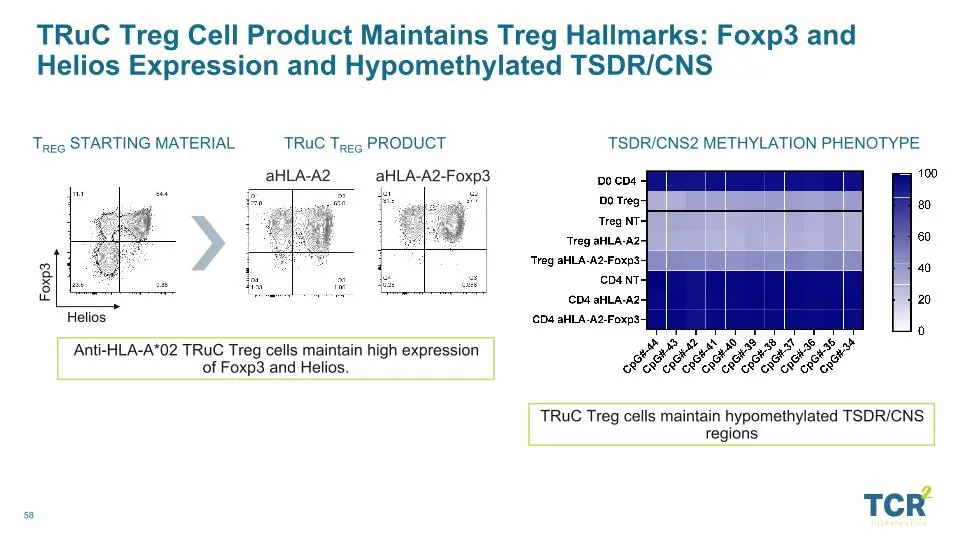
Slide 58: TRuC Treg Product Maintains Treg Hallmarks
TSDR/CNS2 Methylation Phenotype Helios Foxp3 Treg Starting Material TRuC Treg Product aHLA-A2 aHLA-A2-Foxp3 Anti-HLA-A*02 TRuC Treg cells maintain high expression of Foxp3 and Helios. TRuC Treg cells maintain hypomethylated TSDR/CNS regions TRuC Treg Cell Product Maintains Treg Hallmarks: Foxp3 and
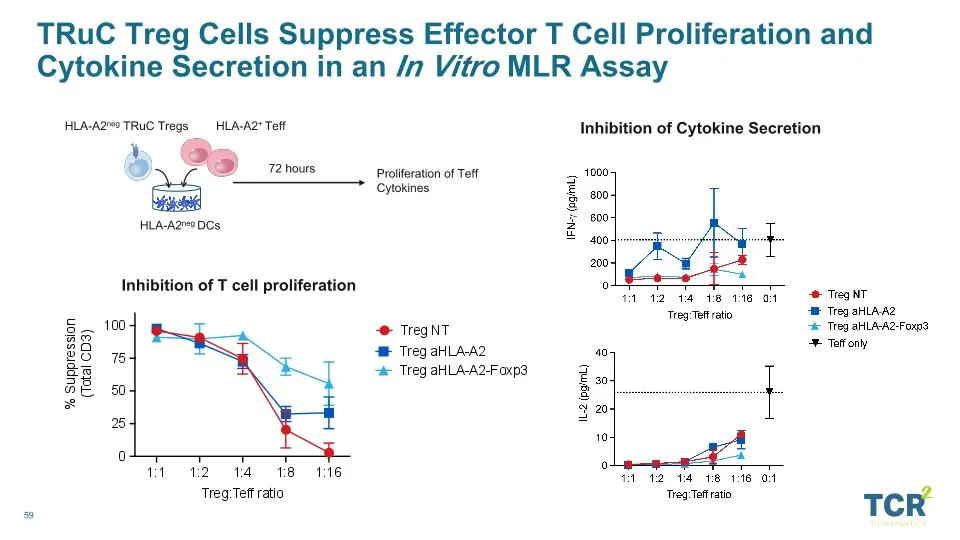
Slide 59: TRuC Treg Cells Suppress Effector T Cell Proliferation and Cytokines
Inhibition of T cell proliferation Inhibition of Cytokine Secretion HLA-A2+ Teff HLA-A2neg DCs HLA-A2neg TRuC Tregs 72 hours Proliferation of Teff Cytokines TRuC Treg Cells Suppress Effector T Cell Proliferation and Cytokine Secretion in an In Vitro MLR Assay
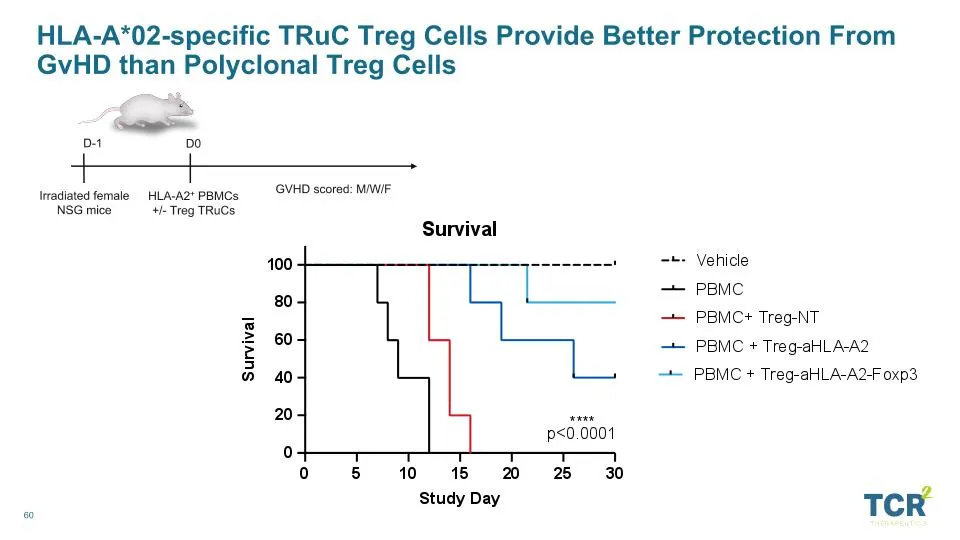
Slide 60: HLA-A*02-specific TRuC Tregs Provide Better Protection From GvHD
HLA-A*02-specific TRuC Treg Cells Provide Better Protection From GvHD than Polyclonal Treg Cells GVHD scored: M/W/F D-1 D0 Irradiated female NSG mice HLA-A2+ PBMCs +/- Treg TRuCs
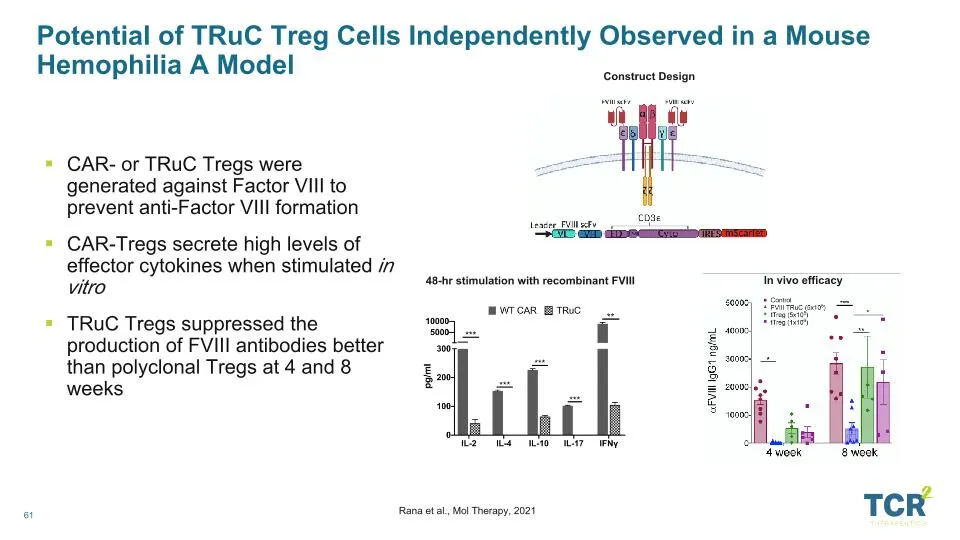
Slide 61: Potential of TRuC Treg Cells Observed in Hemophilia A Model
CAR- or TRuC Tregs were generated against Factor VIII to prevent anti-Factor VIII formation CAR-Tregs secrete high levels of effector cytokines when stimulated in vitro TRuC Tregs suppressed the production of FVIII antibodies better than polyclonal Tregs at 4 and 8 weeks Rana et al., Mol Therapy, 20
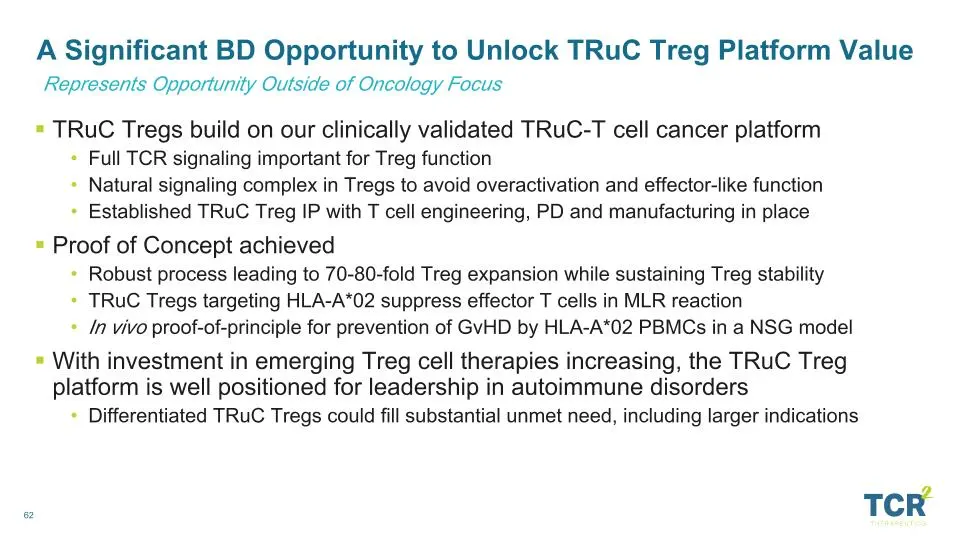
Slide 62: A Significant BD Opportunity to Unlock TRuC Treg Platform Value
A Significant BD Opportunity to Unlock TRuC Treg Platform Value TRuC Tregs build on our clinically validated TRuC-T cell cancer platform Full TCR signaling important for Treg function Natural signaling complex in Tregs to avoid overactivation and effector-like function Established TRuC Treg IP with
Slide 63: Closing Remarks
Closing Remarks Garry Menzel, Ph.D. President and Chief Executive Officer
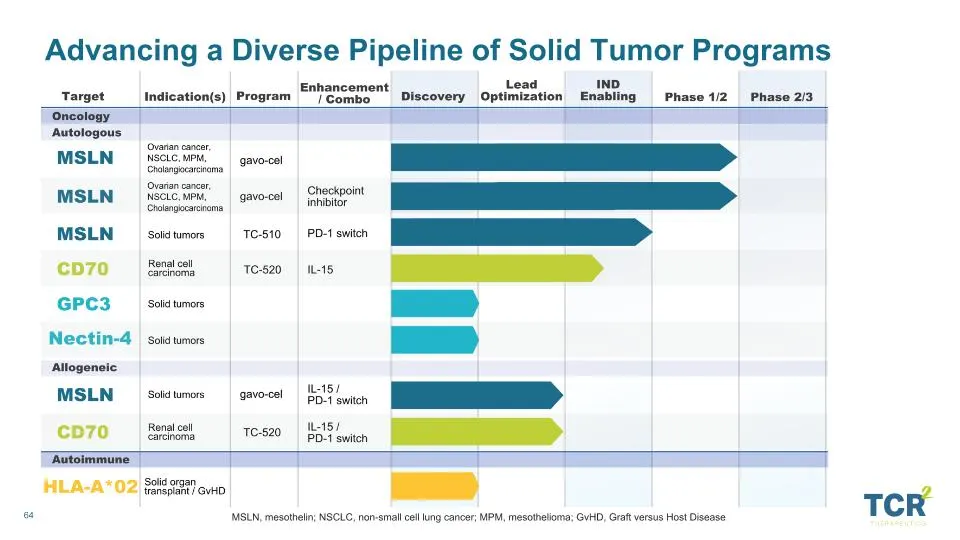
Slide 64: Advancing a Diverse Pipeline of Solid Tumor Programs
Advancing a Diverse Pipeline of Solid Tumor Programs MSLN, mesothelin; NSCLC, non-small cell lung cancer; MPM, mesothelioma; GvHD, Graft versus Host Disease
Slide 65: Q&A
Q&A TCR2 Management and Dr. Hassan
Source: SEC EDGAR · 8-K filed Oct 20, 2021